SB 562: Bail.
- Session Year: 2025-2026
- House: Senate
- Latest Version Date: 2026-06-16
Current Status:
In Progress
(2026-08-13: August 13 hearing: Held in committee and under submission.)
Introduced
In Committee
Awaiting First Chamber Vote
Passed First Chamber
In Committee
Awaiting Second Chamber Vote
Passed Second Chamber
Enacted
What does this bill do?
The bill lets a court order a bail company to refund up to 80% of the fee (premium) a defendant paid if, within 21 days after posting bail, the bond’s terms are changed or the charges are dismissed and, after a hearing, the court finds one party unfairly benefited. The court cannot order any refund if more than 30 days have passed since the bond was posted, and being jailed on separate charges does not by itself make the bail company owe a refund.
The summary is provided by generative AI which can make mistakes. For original language, please view the details in the table below.
Existing law provides for the procedure of approving and accepting bail, and issuing an order for the appearance and release of an arrested person. Existing law requires the superior court judges in each county to prepare, adopt, and annually revise a uniform countywide schedule of bail, as specified, and requires the superior court judges, when adopting that schedule, to consider the seriousness of the offense charged and assign an additional amount of required bail for each aggravating or enhancing factor chargeable in the complaint, as specified.
This bill would, if a prosecuting agency files a motion to dismiss a complaint or indictment within 21 days of the defendants original arraignment and the defendants bond has been exonerated, or if the prosecuting agency fails to file charges within 21 days of the posting of the arrestees bail surety bond, the arrestee has not missed any court appearances where the arrestees presence is mandatory, and the arrestees bond has been exonerated, require the court to order the licensed bail surety agent to provide a refund to the entities or persons who were billed the money or property to the bail bond licensee of an amount equal to any bail premium paid, less an administrative reimbursement for an amount equal to 2% of the bond liability amount and the premium tax paid to the state by a licensed surety company in connection with the posting of the bail bond. The bill would apply only to a bail surety bond entered into on or after January 1, 2026.This bill would make these provisions severable.This bill would require a court, if, within 21 days after the posting of a bond by a defendant, the terms and conditions of the bond are changed or altered or the charges against the defendant are dismissed, either by order of the court or upon the motion of the district attorney, after a hearing, to order a compensated surety to refund up to 80% of the premium paid by a defendant, if necessary and supported by factual findings, if the court finds that one party unfairly benefits or receives something of value at another partys expense, and the interests of justice require them to return the maximum allowable premium or otherwise compensate the other party. The bill would prohibit a court from ordering a refund of any premium if more than 30 days have elapsed after posting of a bond by a defendant.
Existing law provides for the procedure of approving and accepting bail, and issuing an order for the appearance and release of an arrested person. Existing law requires the superior court judges in each county to prepare, adopt, and annually revise a uniform countywide schedule of bail, as specified, and requires the superior court judges, when adopting that schedule, to consider the seriousness of the offense charged and assign an additional amount of required bail for each aggravating or enhancing factor chargeable in the complaint, as specified.
This bill would, if a prosecuting agency files a motion to dismiss a complaint or indictment within 21 days of the defendants original arraignment and the defendants bond has been exonerated, or if the prosecuting agency fails to file charges within 21 days of the posting of the arrestees bail surety bond and bond, the arrestee has not missed any court appearances where the arrestees presence is mandatory, and the arrestees bond has been exonerated, require the court to exonerate the bond and order the licensed bail surety agent to provide a refund to the entities or persons who were billed the money or property to the bail bond licensee of an amount equal to any bail premium paid, less an administrative reimbursement for an amount equal to 2% of the bond liability amount and the premium tax paid to the state by a licensed surety company in connection with the posting of the bail bond. The bill would apply only to a bail surety bond entered into on or after January 1, 2026.
This bill would make these provisions severable.
Existing law provides for the procedure of approving and accepting bail, and issuing an order for the appearance and release of an arrested person. Existing law requires the superior court judges in each county to prepare, adopt, and annually revise a uniform countywide schedule of bail, as specified, and requires the superior court judges, when adopting that schedule, to consider the seriousness of the offense charged and assign an additional amount of required bail for each aggravating or enhancing factor chargeable in the complaint, as specified.
This bill would, if a prosecuting agency files a motion to dismiss a complaint or indictment within 21 days of the defendants arraignment and the defendants bond has been exonerated, or if the prosecuting agency fails to file charges within 21 days of the posting of the arrestees bail surety bond and the arrestee has not missed any court appearances where the arrestees presence is mandatory, authorize the defendant or arrestee to apply to the court for relief within 30 days of being eligible for that relief. The bill would require the court, on receiving this application for relief, require the court to exonerate the bond and order the licensed bail surety agent to provide a refund to the entities or persons who were billed the money or property to the bail bond licensee of an amount equal to any bail premium paid, less an administrative reimbursement for an amount equal to 2% of the bond liability amount and the premium tax paid to the state by a licensed surety company in connection with the posting of the bail bond.
Existing law provides for the procedure of approving and accepting bail, and issuing an order for the appearance and release of an arrested person. Existing law requires the superior court judges in each county to prepare, adopt, and annually revise a uniform countywide schedule of bail, as specified, and requires the superior court judges, when adopting that schedule, to consider the seriousness of the offense charged and assign an additional amount of required bail for each aggravating or enhancing factor chargeable in the complaint, as specified.
This bill would, if a prosecuting agency files a motion to dismiss a complaint or indictment within 21 days of the defendants arraignment and the defendants bond has been exonerated, or if the prosecuting agency fails to file charges within 21 days of the posting of the arrestees bail surety bond, bond and the arrestee has not missed any court appearances where the arrestees presence is mandatory, authorize the defendant or arrestee to apply to the court for relief within 30 days of being eligible for that relief. The bill would require the court, on receiving this application for relief, to exonerate the bond and order the licensed bail surety agent to provide a refund to the entity or person who was entities or persons who were billed the money or property to the bail bond licensee of an amount equal to any bail premium billed, paid, less an administrative reimbursement for an amount equal to 2% of the bond liability amount and the premium tax paid to the state by a licensed surety company in connection with the posting of the bail bond.
Existing law provides for the procedure of approving and accepting bail, and issuing an order for the appearance and release of an arrested person. Existing law requires the superior court judges in each county to prepare, adopt, and annually revise a uniform countywide schedule of bail, as specified, and requires the superior court judges, when adopting that schedule, to consider the seriousness of the offense charged and assign an additional amount of required bail for each aggravating or enhancing factor chargeable in the complaint, as specified.
This bill would require the court to order a return of money or property paid to a bail bond licensee by or on behalf of the arrestee to obtain bail if the initial arraignment hearing after the arrest results in no charges being filed. The bill would require the order to entitle the bail bond licensee to retain a surcharge not to exceed 10% of what the bail bond licensee billed the arrestee or a person paying on behalf of the arrestee plus an amount equal to any court fees paid by the bail bond licensee on behalf of the arrestee. The bill would require the court to order this return of money or property only for a bail contract entered into on or after January 1, 2026.This bill would, if a prosecuting agency files a motion to dismiss a complaint or indictment within 21 days of the defendants arraignment or fails to file charges within 21 days of the posting of the arrestees bail surety bond, authorize the defendant or arrestee to apply to the court for relief within 30 days of being eligible for that relief. The bill would require the court, on receiving this application for relief, to order the licensed bail surety agent to provide a refund to the entity or person who was billed the money or property to the bail bond licensee of an amount equal to any bail premium billed, less an administrative reimbursement for an amount equal to 2% of the bond liability amount and the premium tax paid to the state by a licensed surety company in connection with the posting of the bail bond.
Existing law provides for the procedure of approving and accepting bail, and issuing an order for the appearance and release of an arrested person. Existing law requires the superior court judges in each county to prepare, adopt, and annually revise a uniform countywide schedule of bail, as specified, and requires the superior court judges, when adopting that schedule, to consider the seriousness of the offense charged and assign an additional amount of required bail for each aggravating or enhancing factor chargeable in the complaint, as specified.
This bill would require the court to order a return of money or property paid to a bail bond licensee by or on behalf of the arrestee to obtain bail if the courts disposition of the arrest the initial arraignment hearing after the arrest results in no charges being filed. The bill would require the order to entitle the bail bond licensee to retain a surcharge not to exceed 10% of what the bail bond licensee billed the arrestee or a person paying on behalf of the arrestee plus an amount equal to any court fees paid by the bail bond licensee on behalf of the arrestee. The bill would require the court to order this return of money or property only for a bail contract entered into on or after January 1, 2026.
Existing law provides for the procedure of approving and accepting bail, and issuing an order for the appearance and release of an arrested person. Existing law requires the superior court judges in each county to prepare, adopt, and annually revise a uniform countywide schedule of bail, as specified, and requires the superior court judges, when adopting that schedule, to consider the seriousness of the offense charged and assign an additional amount of required bail for each aggravating or enhancing factor chargeable in the complaint, as specified.
This bill would require the court to order a return of money or property paid to a bail bond licensee by or on behalf of the arrestee to obtain bail if the courts disposition of the arrest results in no charges being filed. The bill would require the order to entitle the bail bond licensee to retain a surcharge not to exceed 10% of what the bail bond licensee billed the arrestee or a person paying on behalf of the arrestee plus an amount equal to any court fees paid by the bail bond licensee on behalf of the arrestee. The bill would require the court to order this return of money or property only for a bail contract entered into on or after January 1, 2026.
(a)If, within 21 days after the posting of a bond by a defendant, the terms and conditions of the bond are changed or altered or the charges against the defendant are dismissed, either by the order of court or upon the motion of the district attorney, the court, after a hearing, shall order a compensated surety to refund up to 80 percent of the premium amount paid by the defendant if necessary and supported by factual findings, if the court finds that one party unfairly benefits or receives something of value at another partys expense, and the interests of justice require them to return the maximum allowable premium or otherwise compensate the other party. If more than 30 days have elapsed after posting a bond by a defendant, the court shall not order the refund of any premium.
(b)Reincarceration of the defendant on separate charges is not included among the additional grounds for exoneration of the surety.
(c)The 30-day limitation applies only to the interval between the posting of the bond and any changes in its terms or conditions, and not to the time within which an order for refund of bond premium shall be entered.
(a)A court shall order relief for a defendant or arrestee pursuant to subdivision (c) under any of the following circumstances:
(1)The prosecuting agency files a motion to dismiss a complaint or indictment within 21 days of the defendants original arraignment and the defendants bond has been exonerated.
(2)The prosecuting agency fails to file charges within 21 days of the posting of the arrestees bail surety bond and bond, the arrestee has not missed any court appearances where the arrestees presence is mandatory. mandatory, and the arrestees bond has been exonerated.
(b)The court shall order the relief for the defendant or arrestee within 30 days of the defendant or arrestee becoming eligible pursuant to subdivision (a).
(c)(1)For a defendant eligible pursuant to paragraph (1) of subdivision (a), the court shall order the licensed bail surety agent to provide a refund to the entities or persons who were billed the money or property to the bail bond licensee of an amount equal to any bail premium paid, less an administrative reimbursement for an amount equal to 2 percent of the bond liability amount and the premium tax paid to the state by a licensed surety company in connection with the posting of the bail bond.
(2)For an arrestee eligible pursuant to paragraph (2) of subdivision (a), the court shall exonerate the bond and order the licensed bail surety agent to provide a refund to the entities or persons who were billed the money or property to the bail bond licensee of an amount equal to any bail premium paid, less an administrative reimbursement for an amount equal to 2 percent of the bond liability amount and the premium tax paid to the state by a licensed surety company in connection with the posting of the bail bond.
(d)The provisions of this section are severable. If any provisions of this section or its application is held invalid, that invalidity shall not affect other provisions or applications that can be given effect without the invalid provision or application.
(d)(e)This section shall only apply to a bail surety bond entered into on or after January 1, 2026.
(a)A defendant or arrestee may apply to the court for A court shall order relief for a defendant or arrestee pursuant to subdivision (c) under any of the following circumstances:
(1)The prosecuting agency files a motion to dismiss a complaint or indictment within 21 days of the defendants arraignment and the defendants bond has been exonerated.
(2)The prosecuting agency fails to file charges within 21 days of the posting of the arrestees bail surety bond and the arrestee has not missed any court appearances where the arrestees presence is mandatory.
(b)In order to receive relief pursuant to subdivision (c), a defendant or arrestee shall file for that relief within 30 days of being The court shall order the relief for the defendant or arrestee within 30 days of the defendant or arrestee becoming eligible pursuant to subdivision (a).
(c)(1)Upon receiving an application For a defendant eligible pursuant to paragraph (1) of subdivision (a), the court shall order the licensed bail surety agent to provide a refund to the entities or persons who were billed the money or property to the bail bond licensee of an amount equal to any bail premium paid, less an administrative reimbursement for an amount equal to 2 percent of the bond liability amount and the premium tax paid to the state by a licensed surety company in connection with the posting of the bail bond.
(2)Upon receiving an application For an arrestee eligible pursuant to paragraph (2) of subdivision (a), the court shall exonerate the bond and order the licensed bail surety agent to provide a refund to the entities or persons who were billed the money or property to the bail bond licensee of an amount equal to any bail premium paid, less an administrative reimbursement for an amount equal to 2 percent of the bond liability amount and the premium tax paid to the state by a licensed surety company in connection with the posting of the bail bond.
(d)This section shall only apply to a bail contract surety bond entered into on or after January 1, 2026.
(a)A defendant or arrestee may apply to the court for relief pursuant to subdivision (c) under any of the following circumstances:
(1)The prosecuting agency files a motion to dismiss a complaint or indictment within 21 days of the defendants arraignment. arraignment and the defendants bond has been exonerated.
(2)The prosecuting agency fails to file charges within 21 days of the posting of the arrestees bail surety bond. bond and the arrestee has not missed any court appearances where the arrestees presence is mandatory.
(b)In order to receive relief pursuant to subdivision (c), a defendant or arrestee shall file for that relief within 30 days of being eligible pursuant to subdivision (a).
(c)(1)Upon receiving an application pursuant to paragraph (1) of subdivision (a), the court shall order the licensed bail surety agent to provide a refund to the entity or person who was entities or persons who were billed the money or property to the bail bond licensee of an amount equal to any bail premium billed, paid, less an administrative reimbursement for an amount equal to 2 percent of the bond liability amount and the premium tax paid to the state by a licensed surety company in connection with the posting of the bail bond.
(2)Upon receiving an application pursuant to paragraph (2) of subdivision (a), the court shall exonerate the bond and order the licensed bail surety agent to provide a refund to the entities or persons who were billed the money or property to the bail bond licensee of an amount equal to any bail premium paid, less an administrative reimbursement for an amount equal to 2 percent of the bond liability amount and the premium tax paid to the state by a licensed surety company in connection with the posting of the bail bond.
(d)This section shall only apply to a bail contract entered into on or after January 1, 2026.
(a)A defendant or arrestee may apply to the court for relief pursuant to subdivision (c) under any of the following circumstances:
(1)The prosecuting agency files a motion to dismiss a complaint or indictment within 21 days of the defendants arraignment.
(2)The prosecuting agency fails to file charges within 21 days of the posting of the arrestees bail surety bond.
(b)In order to receive relief pursuant to subdivision (c), a defendant or arrestee shall file for that relief within 30 days of being eligible pursuant to subdivision (a).
(c)Upon receiving an application pursuant to subdivision (a), the court shall order the licensed bail surety agent to provide a refund to the entity or person who was billed the money or property to the bail bond licensee of an amount equal to any bail premium billed, less an administrative reimbursement for an amount equal to 2 percent of the bond liability amount and the premium tax paid to the state by a licensed surety company in connection with the posting of the bail bond.
(d)This section shall only apply to a bail contract entered into on or after January 1, 2026.
(a)The court shall order a return of money or property paid to a bail bond licensee by or on behalf of the arrestee to obtain bail if the courts disposition of the arrest the initial arraignment hearing after the arrest results in no charges being filed.
(b)The court order issued pursuant to subdivision (a) shall entitle the bail bond licensee to retain a surcharge not to exceed 10 percent of what the bail bond licensee billed the arrestee or a person paying on behalf of the arrestee plus an amount equal to any court fees paid by the bail bond licensee on behalf of the arrestee.
(c)The court order issued pursuant to subdivision (a) shall require the money or property to be returned to the entity or person who paid the money or property to the bail bond licensee within 30 days of the order.
(d)A court shall order a return of money or property pursuant to this section only for a bail contract entered into on or after January 1, 2026.
(a)The court shall order a return of money or property paid to a bail bond licensee by or on behalf of the arrestee to obtain bail if the courts disposition of the arrest results in no charges being filed.
(b)The court order issued pursuant to subdivision (a) shall entitle the bail bond licensee to retain a surcharge not to exceed 10 percent of what the bail bond licensee billed the arrestee or a person paying on behalf of the arrestee plus an amount equal to any court fees paid by the bail bond licensee on behalf of the arrestee.
(c)The court order issued pursuant to subdivision (a) shall require the money or property to be returned to the entity or person who paid the money or property to the bail bond licensee within 30 days of the order.
(d)A court shall order a return of money or property pursuant to this section only for a bail contract entered into on or after January 1, 2026.
|
Date
|
Status
|
|---|---|
| Aug 13, 2026 | August 13 hearing: Held in committee and under submission. |
| Aug 5, 2026 | August 5 set for first hearing. Placed on suspense file. |
| Jun 16, 2026 | Read second time and amended. Re-referred to Com. on APPR. |
| Jun 15, 2026 | From committee: Do pass as amended and re-refer to Com. on APPR. (Ayes 5. Noes 2.) (June 9). |
| Jul 15, 2025 | July 15 set for second hearing canceled at the request of author. |
| Jul 8, 2025 | From committee with author's amendments. Read second time and amended. Re-referred to Com. on PUB. S. |
| Jul 1, 2025 | July 1 set for first hearing canceled at the request of author. |
| Jun 16, 2025 | Referred to Coms. on PUB. S. and APPR. |
| Jun 5, 2025 | In Assembly. Read first time. Held at Desk. |
| Jun 4, 2025 | Read third time. Passed. (Ayes 25. Noes 11. Page 1505.) Ordered to the Assembly. |
| May 27, 2025 | Read second time. Ordered to third reading. |
| May 23, 2025 | From committee: Do pass as amended. (Ayes 5. Noes 1. Page 1204.) (May 23). |
| May 23, 2025 | Read second time and amended. Ordered to second reading. |
| May 16, 2025 | Set for hearing May 23. |
| May 5, 2025 | May 5 hearing: Placed on APPR. suspense file. |
| Apr 29, 2025 | Set for hearing May 5. |
| Apr 24, 2025 | Read second time and amended. Re-referred to Com. on APPR. |
| Apr 23, 2025 | From committee: Do pass as amended and re-refer to Com. on APPR. (Ayes 4. Noes 1. Page 841.) (April 22). |
| Apr 10, 2025 | From committee with author's amendments. Read second time and amended. Re-referred to Com. on PUB. S. |
| Apr 9, 2025 | Set for hearing April 22. |
| Apr 2, 2025 | April 8 set for first hearing canceled at the request of author. |
| Mar 27, 2025 | Set for hearing April 8. |
| Mar 26, 2025 | From committee with author's amendments. Read second time and amended. Re-referred to Com. on PUB. S. |
| Mar 5, 2025 | Referred to Coms. on PUB. S. and APPR. |
| Feb 21, 2025 | From printer. May be acted upon on or after March 23. |
| Feb 20, 2025 | Introduced. Read first time. To Com. on RLS. for assignment. To print. |
|
Date
|
Description
|
Location
|
Votes
|
|
|---|---|---|---|---|
| Jun 9, 2026 | Do pass as amended and be re-referred to the Committee on [Appropriations] | Assembly Standing Committee on Public Safety |
Passed |
|
| Jun 4, 2025 | Senate 3rd Reading SB562 Ashby | Senate Floor |
Passed |
|
| May 23, 2025 | Do pass as amended | Senate Standing Committee on Appropriations |
Passed |
|
| May 5, 2025 | Placed on suspense file | Senate Standing Committee on Appropriations |
Passed |
|
| Apr 22, 2025 | Do pass as amended, but first amend, and re-refer to the Committee on [Appropriations] | Senate Standing Committee on Public Safety |
Passed |
This list shows positions taken on this bill by organizations on the date displayed, which is linked to the original source.
Positions by individuals are not included.
|
Organization
|
Position
|
Date
|
|---|---|---|
| 5 private individuals | ** Against | |
| A Bail Bond Agency | ** Against | |
| Afuera Bail Bonds | ** Against | |
| All American Bail Bonds | ** Against | |
| All Pro Bail Bonds | ** Against | |
| ALL-PRO BAIL BONDS, INC. | ** Against | |
| Alvarado Bail Bonds | ** Against | |
| American Bail Coalition | ** Against | |
| Angels Bail Bonds | ** Against | |
| Anti-Recidivism Coalition | ** Support | |
| Arcadia Police Officers' Association | ** Against | |
| Armando Espinoza Bail Bonds | ** Against | |
| ARMANDO S ESPINOZA BAIL BONDS | ** Against | |
| Armando S. Espinoza Bail Bonds | ** Against | |
| Bad Boys Bail Bonds | ** Against | |
| BAIL BOND PROFESSIONALS | ** Against | |
| Bail Bond Woman | ** Against | |
| Bob Drake Bail Bonds | ** Against | |
| Brea Police Association | ** Against | |
| Burbank Police Officers' Association | ** Against | |
| California Attorneys For Criminal Justice | ** Support | |
| California Bail Agent Association | ** Against | |
| California Bail Agents Association | ** Against | |
| California Civil Liberties Advocacy | ** Support | |
| California Department of Justice | ** Support | |
| California District Attorneys Association | ** Against | |
| California Narcotic Officers' Association | ** Against | |
| California Partnership To End Domestic Violence | ** Against | |
| California Public Defenders Association | ** Support | |
| California Reserve Peace Officers Association | ** Against | |
| Californians for Safety and Justice | ** Support | |
| Californians for Safety and Justice (CSJ) | ** Support | |
| Carson Bail Bonds | ** Against | |
| Claremont Police Officers' Association | ** Against | |
| Corona Police Officers' Association | ** Against | |
| Courage California | ** Support | |
| COW BOY BAIL BONDS | ** Against | |
| Cow-Boy Bail Bonds | ** Against | |
| Crime Survivors Resource Center | ** Against | |
| Crime Victims United Of California | ** Against | |
| Culver City Police Officers' Association | ** Against | |
| Debt Free Justice California | ** Support | |
| Ella Baker Center For Human Rights | ** Support | |
| Exit Bail Bonds | ** Against | |
| Fullerton Police Officers' Association | ** Against | |
| GLORIA MITCHELL BAIL BONDS | ** Against | |
| Glory Mitchell Bail Bonds | ** Against | |
| Golden State Bail Agents Association, Inc. | ** Against | |
| Greater Sacramento Urban League | ** Support | |
| Holly Bail Bonds INC. | ** Against | |
| Holly Bail Bonds, INC. | ** Against | |
| Homequest Bail Bonds | ** Against | |
| Initiate Justice | ** Support | |
| Initiate Justice Action | ** Support | |
| Intrastate Bail Bonds | ** Against | |
| Iron Bail Bonds | ** Against | |
| Justice2jobs Coalition | ** Support | |
| Kenny Ware Bail Bonds | ** Against | |
| LA Defensa | ** Support | |
| Lexington National Insurance Corporation | ** Against | |
| Licensed Bail Agent | ** Against | |
| Lil' Zeke's Bail Bonds | ** Against | |
| Local 148 Los Angeles County Public Defender's Union | ** Support | |
| Los Angeles Community College District | ** Support | |
| McMains Bail Bonds | ** Against | |
| Multiple Individuals | ** Against | |
| Murrieta Police Officers' Association | ** Against | |
| NASW California | ** Support | |
| Newport Beach Police Association | ** Against | |
| Orange County Business Council | ** Against | |
| Palos Verdes Police Officers' Association | ** Against | |
| Placer County Deputy Sheriffs' Association | ** Against | |
| Pomona Police Officers' Association | ** Against | |
| Redwood Bail Bonds Inc. | ** Against | |
| Riverside Police Officers' Association | ** Against | |
| Riverside Sheriffs' Association | ** Against | |
| Rubicon Programs | ** Support | |
| Sacramento County Sheriff Jim Cooper | ** Against | |
| San Diego County Sheriff's Office | ** Against | |
| Smart Justice California, a Project of Beyond Impact | ** Support | |
| Smokin' Ace Bail Bonds | ** Against | |
| Superior Bail Bonds | ** Against | |
| T. Jennings Bail Bonds | ** Against | |
| TRINITY BAIL BONDS | ** Against | |
| Two Jinn Inc. | ** Against | |
| Vera Institute Of Justice | ** Support | |
| western center on law & poverty | ** Support | |
| YUSEF ODEH BAIL BONDS | ** Against | |
| Zenith Bail Bonds | ** Against |
Date of Hearing: August 5, 2026
ASSEMBLY COMMITTEE ON APPROPRIATIONS
Buffy Wicks, Chair
SBPCA Bill Id:SB 562
Author:(Ashby) – As Amended Ver:June 16, 2026
Policy Committee: | Public Safety | Vote: | 5 - 2 |
|
| ||
|
|
Urgency: No State Mandated Local Program: No Reimbursable: No
SUMMARY:
This bill requires a court, after a hearing and on specified findings, to order a compensated bail surety to refund up to 80% of the premium a defendant paid.
Specifically, this bill (a) requires the court to order the surety to refund up to 80% of the premium where the court finds that one party unfairly benefits or receives something of value at another party’s expense and that the interests of justice require return of the premium or other compensation, but only if, within 21 days after a bond is posted, the bond’s terms and conditions are changed or altered or the changes are dismissed, and (b) prohibits any refund where more than 30 days have elapsed after the bond was posted; and provides that reincarceration of the defendant on separate charges is not a ground for exoneration of the surety.
FISCAL EFFECT:
- Trial court cost pressures of an unknown amount, potentially significant in the aggregate, to conduct the hearings this bill requires before a refund may be ordered (Trial Court Trust Fund, General Fund). Each qualifying case requires a hearing at which the court receives evidence, makes the specified factual findings, and determines the refund amount, and at which the surety — the party ordered to refund — would receive notice and an opportunity to be heard. The aggregate workload depends on the number of cases in which a bond’s terms change or charges are dismissed within 21 days of posting. While trial courts are not funded on a workload basis, an increase in hearings could pressure the General Fund to backfill trial court operations.
- Costs to the California Department of Insurance (CDI) of $51,000 in fiscal year 2026-27, $132,000 in fiscal year 2027-28, and $61,000 in fiscal year 2028-29 and ongoing (Insurance Fund). According to CDI, the higher figure in 2027-28 reflects one-time costs associated with reviewing rate filings submitted by surety companies to incorporate this bill’s requirements. The ongoing costs reflect an anticipated increase in enforcement complaints.
COMMENTS:
- Purpose. According to the author, SB 562 is a “financial justice bill” that “seeks to remedy the very narrow and unjust circumstance where someone is arrested, pays a fee to a bail bond agency to secure their release but then no charges are filed against them, or charges are dismissed before trial.”
- Background. A defendant released through a commercial bail surety pays the surety a premium, conventionally a percentage of the bond amount, which the surety retains as the price of assuming the bond obligation. This bill directs the court, on the findings described above, to order the surety to refund up to 80% of that premium when a bond’s terms change or the charges are dismissed within 21 days of posting.
- Support and Opposition. The bill is supported by the California Department of Justice, the California Public Defenders Association, Californians for Safety and Justice, the Western Center on Law & Poverty, and a range of criminal justice and civil rights organizations, which argue the bill addresses the circumstance in which a person pays a nonrefundable bail premium but is never charged or has the charges dismissed. The bill is opposed by bail surety agents and the American Bail Coalition, the California District Attorneys Association, numerous law enforcement associations, and victim organizations. Opponents argue sureties will restrict bond issuance in cases perceived as likely to be dismissed, leaving lower-income arrestees in custody; that the measure may conflict with Proposition 103; and that victim-notice interests under Marsy’s Law are implicated where a defendant’s release status is affected.
Analysis Prepared by: Shiran Zohar / APPR. / (916) 319-2081
Date of Hearing: June 9, 2026
Counsel: Kimberly Horiuchi
ASSEMBLY COMMITTEE ON PUBLIC SAFETY
Nick Schultz, Chair
SBPCA Bill Id:SB 562
Author:(Ashby) – As Amended Ver:July 8, 2025
SUMMARY: Requires a court to order a refund to an arrestee or defendant of any money paid to a licensed bail surety agent within 30 days in specific circumstances. Specifically, this bill:
- Requires a court to order a refund of the bail premium paid to a bail bond company under any of the following circumstances:
- The prosecuting agency files a motion to dismiss a complaint or indictment within 21 days of the defendant’s original arraignment, and the defendant’s bond has been exonerated.
- The prosecuting agency fails to file charges within 21 days of the posting of the arrestee’s bail surety bond and the arrestee has not missed any court appearances where the arrestee’s presence is mandatory, and the arrestee’s bond has been exonerated.
- Provides that for an arrestee that is not charged within 21 days, the court shall order the licensed bail surety agent to provide a refund to the entities or persons who were billed the money or property of an amount equal to any bail premium paid, less an administrative reimbursement equal to two percent of the bond liability amount and the premium tax paid to the state by a licensed surety company in connection with the posting of the bond.
- Provides that for a defendant who has their case dismissed within 21 days, the court shall order the licensed bail surety agent to provide a refund to the entities or persons who were billed the money or property of an amount equal to any bail premium paid, less an administrative reimbursement for an amount equal to two percent of the bond liability amount and the premium tax paid to the state by a licensed surety company in connection with the posting of the bond.
- Specifies that a court shall order a return of money or property only for a bail surety bond entered into on or after January 1, 2026.
- Contains a severability clause.
EXISTING LAW:
- Prohibits excessive bail. (U.S. Const., 8th Amend. & Cal. Const., art. I, § 12.)
- States that a person shall be granted release on bail except for the following crimes when the facts are evident or the presumption great:
- Capital crimes;
- Felonies involving violence or sexual assault if the court finds by clear and convincing evidence that there is a substantial likelihood the person's release would result in great bodily harm to others; or,
- Felonies where the court finds by clear and convincing evidence that the person has threatened another with great bodily harm and that there is a substantial likelihood that the person would carry out the threat if released. (Cal. Const., art. I, § 12.)
- States that in setting, reducing or denying bail, the judge or magistrate shall take into consideration the protection of the public, the safety of the victim, the seriousness of the offense charged, the previous criminal record of the defendant, and the probability of their appearing at the trial or hearing of the case; public safety and the safety of the victim shall be the primary considerations. (Cal. Const., art. I, § 28, subd. (f)(3).)
- Requires the court to consider the safety of the victim and the victim's family in setting bail and release conditions for a defendant. (Cal. Const., art. I, § 28, subd. (b)(3).)
- Provides that the Judicial Council shall adopt rules for court administration, practice and procedure, and perform other functions prescribed by statute. (Cal. Const., art. VI, § 6, subd. (d).)
- Requires the superior court judges in each county to prepare, adopt, and annually revise a uniform, countywide bail schedule. (Pen. Code, § 1269b, subd. (c).)
- Specifies if a defendant has appeared before a judge of the court on the charge contained in the complaint, indictment, or information, the bail shall be in the amount fixed by the judge at the time of the appearance. If that appearance has not been made, the bail shall be in the amount fixed in the warrant of arrest or, if no warrant of arrest has been issued, the amount of bail shall be pursuant to the uniform countywide schedule of bail for the county in which the defendant is required to appear, previously fixed and approved. (Pen. Code, § 1269b, subd. (b).)
- Provides that an arrested person must be taken before the magistrate with 48 hours of arrest, excluding Sundays and holidays. (Pen. Code, § 825, subd. (a).)
- Authorizes the officer in charge of a jail, or the clerk of the superior court to approve and accept bail in the amount fixed by the arrest warrant, the bail schedule, or an order admitting to bail in case or surety bond, and to issue and sign an order for the release of the arrested person, and to set a time and place for the person’s appearance in court. (Pen. Code, § 1269b, subd. (a).)
- States that if a defendant is arrested without a warrant for a bailable felony offense or for the misdemeanor offense of violating a domestic violence restraining order, and a peace officer has reasonable cause to believe that the amount of bail set forth in the schedule of bail for that offense is insufficient to ensure the defendant’s appearance or to ensure the protection of a victim, or family member of a victim, of domestic violence, the officer shall file a declaration with the judge requesting an order setting a higher bail. (Pen. Code, § 1269c.)
- Allows a defendant to ask the judge for release on bail lower than that provided in the schedule of bail or on his or her own recognizance and states that the judge is authorized to set bail in an amount that he or she deems sufficient to ensure the defendant’s appearance or to ensure the protection of a victim, or family member of a victim, of domestic violence, and to set bail on the terms and conditions that he or she, in his or her discretion, deems appropriate, or he or she may authorize the defendant’s release on his or her own recognizance. (Pen. Code, § 1269c.)
- Provides that, after a defendant has been admitted to bail upon an indictment or information, the Court in which the charge is pending may, upon good cause shown, either increase or reduce the amount of bail. If the amount be increased, the Court may order the defendant to be committed to actual custody, unless he give bail in such increased amount. (Pen. Code, § 1289.)
- States if money has been deposited instead of bail, and the defendant, at any time before the forfeiture thereof, surrenders [themselves] to the officer to whom the commitment was directed, as specified, the court shall order a return of the deposit to the defendant or to the person or persons found by the court to have deposited said money on behalf of the defendant, upon the production of the certificate of the officer showing the surrender, and upon a notice of five days to the district attorney, with a copy of the certificate. (Pen. Code, § 1302.)
- States if an action or proceeding against a defendant who has been admitted to bail is dismissed, the bail shall not be exonerated until a period of 15 days has elapsed since the entry of the order of dismissal. If, within such period, the defendant is arrested and charged with a public offense arising out of the same act or omission upon which the action or proceeding was based, the bail shall be applied to that offense. If an undertaking of bail is on file, the clerk of the court shall promptly mail notice to the surety on the bond and the bail agent who posted the bond whenever the bail is applied to an offense, as specified. (Pen. Code, § 1303.)
- Prohibits the release of a defendant on his or her own recognizance (OR) for any violent felony until a hearing is held in open court and the prosecuting attorney is given notice and an opportunity to be heard on the matter. (Pen. Code, § 1319.)
- Specifies conditions for a defendant's release on OR. (Pen. Code, § 1318.)
- Provides that a defendant released on bail for a felony who willfully fails to appear in court, as specified, is guilty of a crime. (Pen. Code, § 1320.5.)
- Specifies that if an on-bail defendant fails to appear for any scheduled court appearance, the bail is forfeited unless the clerk of the court fails to give proper notice to the surety or depositor within 30 days, or the defendant is brought before the court within 180 days. (Pen. Code, § 1305, subds. (a) & (b).)
FISCAL EFFECT: Unknown.
COMMENTS:
- Sponsor: Author-sponsored.
- Author's Statement: According to the author, “SB 562 is a financial justice bill. This bill allows a person to receive a refund from a bail bond company if: 1) the person uses a bail bond agency to secure their release and 2) no charges are filed by the prosecuting agency within 21 days of the posting of the bond, or the charges are dismissed within 21 days of the arraignment hearing. “Under current law, when no charges are filed or charges are dismissed, the person who uses a bail bond company to secure their release does not get any of their money back. SB 562 simply seeks to remedy this very narrow and unjust circumstance by allowing the person to receive their bonded money back, excluding state tax and administration fees, equal to 2% of the surety bond paid, by the bail bond company.”
- Bail Generally: In California, bail is a constitutional right except when the defendant is charged with: (a) a capital crime; (b) a felony involving violence or sex and the court finds that the person’s release would result in great bodily harm to another; or (c) when the defendant has threatened another and the court finds it likely that the defendant might carry out that threat. The constitution also allows for an arrestee to be released upon a written promise to appear, known as release on own recognizance. The constitution prohibits excessive bail. (Cal. Const. art. I, § 12.)
Courts require many defendants to deposit monetary bail in order to be released from custody. Bail is intended to act as a financial guarantee to the court that the defendant will appear for all required court hearings. An arrestee may post bail with his or her own cash, or may post bail using a bail bond.
Currently, each county sets a bail schedule based exclusively on the charged offense. The bail schedule is used by the arresting officer to allow an arrestee to post bail before their arraignment. Once a defendant is brought before the court, there must be an individualized determination of the appropriate amount of bail, or if a defendant is eligible for a recognizance release. The defendant, or someone acting on their behalf, may deposit cash with the court in lieu of obtaining a bail bond. The cash must be the sum fixed by the bail order or schedule. Jailers are also authorized to accept cash. However, the clerk of the court may not accept a general assistance check for any part of the deposit. (See Pen. Code, § 1295, subd. (c).)
If a bail bond is posted by a surety (bail agency), it remains in effect until the completion of the pronouncement of judgment or grant of probation or until a new bond is required due to an increase or a forfeiture of bail. (See People v. Allied Fidelity Ins. Co. (1978) 82 Cal. App. 3d 242, 246–247.) A bail bond is commonly provided by a commercial bonder, acting as an agent for an insurer. (See Ins. Code, § 1800 et seq.)
The professional surety charges the defendant a nonrefundable fee, usually ten percent of the face value of the bond, and usually requires the defendant to post security. If the defendant is unable or unwilling to obtain a commercial bond, he or she may seek the aid of a private surety (third party individual with money). Such a surety must be a resident, householder, or freeholder within the state, and, at the court’s discretion, within the county where the bail is offered. (Pen. Code, § 1279.)
Exoneration releasing the surety from obligations on the bail bond or deposit occurs after the defendant appears, as required. For example, if the defendant pleads guilty and is sentenced at a scheduled court state, the bond is exonerated. (See Pen. Code, § 1195.)
Bail is also exonerated when a case is dismissed unless the court orders the case re-submitted. A court must exonerate bail within 15 days after a court directs a complaint to be dismissed, unless the defendant is arrested and charged with a new offense arising out of the original act or omission. In such a case, the bail is applied against the new charge. (See Pen. Code, § 1302.)[1]
A bond may be forfeited if a defendant fails to appear without justification. Thereafter, the defendant or the bail agent has 180 days to bring the defendant before the court or the bail amount posted by the surety is forfeited. (Pen. Code, § 1305, subd. (a).)
- Regulation of Bail Rates: The amount a surety may charge for bail is set by the California Insurance Commissioner (CIC). According to the CIC website:
Bail bonds are negotiated in several ways. Bail agents usually charge ten percent of the bail amount as the fee. For example, on a $25,000 bail the ten percent fee is $2,500. However, to become more competitive, a bail agent may choose to negotiate a lower fee by rebating, as allowed by Proposition 103. This is accomplished by calculating a lower fee percentage as a ‘rebate’ back to the bailee. Prevailing market conditions often dictate how much a bail agent must rebate in order to remain competitive. Thus, the amount of the fee can be lowered anywhere from an eight percent fee to a two percent fee (i.e., 8% of $25,000 is $2,000 and 2% is $500.) Some bail bond companies also offer “credit bail,” where a down payment is made and partial payments are accepted until fully paid.[2]
The Bail Bond Regulatory Act was first adopted in 1937 and provided the statutory framework to regulate the bail bond business under the California Department of Insurance (CDI). The law also provided CDI with the authority to adopt administrative regulations. CDI's Licensing Services Division is responsible for licensing bail agents.
In 1988, the voters approved Proposition 103, an initiative measure entitled the Insurance Rate Reduction and Reform Act. Among other provisions affecting certain types of insurance, Proposition 103 imposed a rate rollback and required that any subsequent rate increase, prior to its use, be approved by the CIC. Section 8, subdivision (b) of Proposition 103 provides: “The provisions of this act shall not be amended by the Legislature except to further its purposes.”
Proposition 103 also requires a system wherein the CIC must approve a rate applied for by an insurer, known as the “prior approval” system, before an insurer can implement property and casualty insurance rates. The following lines of insurance are regulated by Proposition 103: Personal automobile, dwelling fire, earthquake, homeowners, inland marine, and umbrella; Commercial aircraft, automobile, boiler and machinery, burglary and theft, business owners, earthquake, farm owners, some fidelity, fire, glass, inland marine, medical malpractice, miscellaneous, multi-peril, other liability, professional liability, special multi-peril, umbrella, and coverage under the United States Longshoremen's & Harbor Workers' Compensation Act.
In 1995, the California Supreme Court struck down a bill that would have exempted surety companies from the requirements of Proposition 103. (See Amwest Sur. Ins. Co. v. Wilson (1995) 11 Cal.4th 1243, 1265.) Accordingly, surety companies, including bail sureties, are subject to CIC rate-setting.
This bill arguably changes the rate set by the CIC of 10% and allows the payee to receive all but 2% back in specific circumstances. While that may act as a ceiling, not a floor, this bill may be a mandatory rate change in any case in which a defendant is not charged in a timely fashion or the charges are dismissed. Accordingly, this bill may violate the requirements of Proposition 103. According to the author, the Insurance Commissioner suggested this does not violate Proposition 103.
- Bail Reform Efforts: There are a number of challenges in the money bail system. A growing number of people acknowledge that the bail system has a negative impact on communities of color and those who come from the lower end of the socio-economic spectrum. In short, those who have money have the ability to confront their criminal charges while free from confinement in county jail.
Those who are too poor to post bail are forced to remain incarcerated, and are more likely to plead guilty in order to get out of custody. Prior to the initial court appearance, the determination as to who remains detained while awaiting resolution of criminal charges is made based on money, and not whether the person is a present danger to the community or whether the person will return to court. The ability to be out of custody while facing criminal charges carries a number of inherent advantages. A defendant who is released on bail is able to carry on with his or her life while awaiting the disposition of the criminal case. For instance, criminal defendants who are out on bail are not only able to maintain employment but are also encouraged to do so. According to a 2023 Report issued by the California Penal Code Revision Commission:
(1) Pretrial detention is often the single best predictor of case outcomes. It increases the likelihood of a conviction and the severity of a conviction and sentence while reducing future employment and access to social safety nets.[3]
(2) Rates of pretrial detention are higher on average for people of color and bail amounts are also consistently higher for Black and Latino defendants.[4]
(3) The severity of pretrial detention and cascading negative consequences from being incarcerated can often exert undue pressure on people held in custody to plead guilty.[5]
(4) According to the Prison Policy Initiative, pretrial detention has negative consequences for public safety. Any time spent in pretrial detention beyond 23 hours is associated with a consistent and significant increase in the likelihood of future re-arrest.[6]
(5) According to Advancing Pretrial Policy and Research, excessive conditions of pretrial release do not appear to reduce re-arrest rates, but instead unnecessarily subject people to technical violations and revocation of bail.[7]
(6) A law requiring a 60-day automatic conditions review hearing for pretrial electronic monitoring was passed in Illinois in 2021.[8] Michigan has introduced comparable policy this session.[9]
The Budget Act of 2019 (AB 74 (Ting), Ch. 23, Stats. 2019) allocated $75 million to the Judicial Council to launch and evaluate two-year pretrial projects in local trial courts.[10] The projects sought to increase the release of arrestees before trial in a safe and efficient manner, use the least restrictive monitoring practices possible while protecting public safety and ensuring court appearances, validate and expand the use of risk assessment tools, and assess any bias. In August 2019, the Judicial Council approved and distributed funding to the 16 pilot projects selected for participation in the Pretrial Pilot Program. By the conclusion of the pilot program, 14 of 16 pilot projects had implemented a court date reminder system which provides text message and phone call notifications to all individuals as pretrial release. Initial data showed that court appearances after the implementation of a court date reminder system increased significantly.
The final report on the Pretrial Pilot Program issued in 2023 suggested an overall positive impact of the program including increased pretrial release and a decrease in re-arrest rates for misdemeanors and felonies. The Budget Act of 2021 allocated ongoing funding to the Judicial Council for the implementation or expansion of pretrial programs in all California courts.
In 2021, the California Supreme Court also held that mere inability to afford bail is not a constitutional basis to hold a defendant pre-trial. The court in In re Humphreys held:
The common practice of conditioning freedom solely on whether an arrestee can afford bail is unconstitutional. Other conditions of release—such as electronic monitoring, regular check-ins with a pretrial case manager, community housing or shelter, and drug and alcohol treatment—can in many cases protect public and victim safety as well as assure the arrestee's appearance at trial. What we hold is that where a financial condition is nonetheless necessary, the court must consider the arrestee's ability to pay the stated amount of bail—and may not effectively detain the arrestee “solely because” the arrestee “lacked the resources” to post bail. (In re Humphrey (2021) 11 Cal.5th 135, 143.)
While California continues to allow for money bail, it also has created alternate avenues for low-income defendants who do not pose a public safety risk to be released from custody without having to post any type of bail. Importantly, low income defendants often have no means to post bail at all. Low income defendants have to either remain in jail for the duration of their case or wait for arraignment and hope for an own recognizance release. This bill appears to more likely benefit arrestees that have the means to post bail before arraignment or who are able to post bail at all.
- SB 10 and 2020 Referendum: SB 10 (Hertzberg), Chapter 244, Statutes of 2018 was signed into law on August 28, 2018. SB 10 eliminated cash bail in California. In its place, SB 10 created a risk-based non-monetary pre-arraignment and pretrial release system for people arrested for criminal offenses including preventative detention procedures for person’s determined to be too high a risk to assure public safety if released.
A veto referendum to overturn the law was filed on August 29, 2018. On January 16, 2019, the California Secretary of State reported that the estimated number of valid signatures exceeded 110 percent of the 365,880 required signatures, putting the targeted law, SB 10, on hold until the November 2020 election. The referendum was identified as Proposition 25 on the ballot. A “Yes” vote indicated a preference to uphold the statutory changes made by SB 10 and end the use of cash bail in California.
Voters rejected SB 10 by a margin of 55% to 45%. The voters’ veto of SB 10 maintained the existing structure of cash bail for criminal defendants in California. In the case of Assembly v. Deukmajian, the California Supreme Court provided the following guidance to the Legislature when it seeks to enact new legislation in an area where the voters have rejected an earlier legislative effort by means of a referendum:
Unless the new measure is ‘essentially different’ from the rejected provision and is enacted ‘not in bad faith, and not with intent to evade the effect of the referendum petition,’ it is invalid.’[11]
In this case, this bill is likely substantially different than anything having to do with direct money bail. Rather, it just allows for the return of a bail surety if a defendant is not charged or charges are dismissed in a specific timeframe. However, despite admitted concerns with the discriminatory nature of money bail, the voters appear to approve of it.
In 2022, the Legislature again attempted to address bail. SB 262 (Hertzberg) would have proposed, in part, something similar to this bill but with a few important differences. First, SB 262 spent most of the Legislature year as requiring zero bail for all offenses except serious or violent felonies, violations of specified protective orders, stalking, looting, battery against a spouse, sex offenses and driving under the influence, among others. The proposed return of bail money language similar to this bill was just one part of that bill.
Additionally, SB 262 required a court to order a return of money or property paid to a bail bond company when an individual makes all court appearances in a criminal case charged in connection with the arrest or where no charges are filed within 60 days. However, it also stated that a bail bond licensee is entitled to retain a surcharge not to exceed 10 percent of the amount paid by the arrestee or on behalf of the arrestee. This bill is different in various ways including requiring return of all but a two percent administrative fee based on the bail liability.
This bill proposes to allow the surety to retain "two percent of the bond liability amount.” The bond liability amount refers to the total coverage of the bond, the maximum amount payable by the surety if the principal defaults on their obligations. So, if the bail amount set by the court is $1,000 – a bond in California would likely be $100 (the amount the arrestee pays plus any needed collateral to make up the entire $1000). Under the terms of this bill, two percent of the bond liability amount would be two percent of $1000, or $20.
Therefore, this bill is quite a bit different than SB 262 (Hertzberg) which attempted to address the inequities and discrimination around bail generally in the criminal justice system.
- Marsy’s Law: In 2008, the voters passed Proposition 7, known as Marsy’s Law, to enshrine victim rights into the California Constitution. Marsy’s Law requires, among other things, that victims be consulted and have input in the criminal justice system. Section 28, subdivision (f) expressly deals with bail and pre-trial release and states:
Public Safety Bail. A person may be released on bail by sufficient sureties, except for capital crimes when the facts are evident or the presumption great. Excessive bail may not be required. In setting, reducing or denying bail, the judge or magistrate shall take into consideration the protection of the public, the safety of the victim, the seriousness of the offense charged, the previous criminal record of the defendant, and the probability of his or her appearing at the trial or hearing of the case. Public safety and the safety of the victim shall be the primary considerations.
A person may be released on his or her own recognizance in the court’s discretion, subject to the same factors considered in setting bail.
Before any person arrested for a serious felony may be released on bail, a hearing may be held before the magistrate or judge, and the prosecuting attorney and the victim shall be given notice and reasonable opportunity to be heard on the matter.
When a judge or magistrate grants or denies bail or release on a person’s own recognizance, the reasons for that decision shall be stated in the record and included in the court’s minutes. (Emphasis added.) (Cal. Const., art. 1, § 28, subd. (f)(3).)
According to several bail surety groups, the exoneration of bail and the return of any premium necessarily means the defendant is released from the care and custody of the surety and either returned to custody or released on their own recognizance, regardless of any public safety considerations.
Accordingly, this bill may violate the constitutional requirements of Marsy’s Law because it does not require any hearing on the record as to whether a person’s risk to public safety counsels against an own recognizance release. This bill only requires, in relevant part, that a person who is arrested not been charged within 21 days and made all their appearances. In most cases, however, when a person is released on bail, their subsequent court dates may be delayed more than a month to accommodate in-custody arraignments. It is not clear whether a defendant who bails out before being charged will be returned to court in less than 21 days. According to the California District Attorneys Association:
It is not uncommon for prosecutor’s offices to delay filing charges to conduct additional investigation and properly determine whether charges are legally warranted. Law enforcement and district attorney resource issues may also delay charging beyond the 21-day period contemplated in [this] bill. When these delays occur, arrestees who have posted bond, are released from custody, and then receive a letter to appear in court. When this letter is issued, the bail company has a vested interest in securing the defendant's appearance and will make efforts to do so. Under this bill, since the bond is exonerated after 21 days, bail companies will no longer have any interest in the case, and defendants will more frequently fail to appear in court due to both inadvertence and willful absence. This in turn will increase in the issuance of warrants and only add to the already huge backlog of unserved arrest warrants. Inevitably, [this] bill will serve to increase public safety risks and create more delays in the justice system…
- In re Kowalczyk: On April 30, 2026, the Supreme Court laid out the constitutional requirements of bail in relationship to Marsy’s Law. As noted above, In re Humphrey held that the defendant’s financial ability to pay must be a factor in setting bail. Mr. Kowalczyk, a homeless mentally ill person, was arrested for trying to use two lost credit cards at a fast food restaurant but was ultimately unsuccessful. The court initially set his bail at $75,000 and then denied bail based on the defendant’s long criminal history of petty crimes. The Court considered to what extent, if at all, Article I, section 28, subdivision (f) change the requirements of bail in section 12. The court stated:
In Humphrey, we held that the common practice of detaining criminal defendants based solely on their financial condition violated state and federal equal protection and due process principles. To protect against this violation, we held that courts may not condition release on posting bail unless they “consider an arrestee’s ability to pay alongside the efficacy of less restrictive alternatives” to money bail. (Humphrey at p. 152.) We also held that while constitutional principles did not “categorically prohibit the government from ordering pretrial detention, … ‘[i]n our society liberty is the norm, and detention prior to trial or without trial is the carefully limited exception.’” (In re Kowalczyk, 2026 Cal. LEXIS 2206, *5, citing Humphrey at p. 155.)
The Court determined that Article I, section 12, subdivision (a) and (b) are the stated grounds to deny bail or impose an unreachable bail. Article I, section 12 states:
A person shall be released on bail by sufficient sureties, except for:
Capital crimes when the facts are evident or the presumption great;
offenses involving acts of violence on another person, or felony sexual assault offenses on another person, when the facts are evident or the presumption great and the court finds based upon clear and convincing evidence that there is a substantial likelihood the person’s release would result in great bodily harm to others; or
felony offenses when the facts are evident or the presumption great and the court finds based on clear and convincing evidence that the person has threatened another with great bodily harm and that there is a substantial likelihood that the person would carry out the threat if released.
Excessive bail may not be required. In fixing the amount of bail, the court shall take into consideration the seriousness of the offense charged, the previous criminal record of the defendant, and the probability of his or her appearing at the trial or hearing of the case.
A person may be released on his or her own recognizance in the court’s discretion. (Cal. Const., art. I, § 12.)
The Kowalczyk court reconciled section 12 with section 28 explaining that the two sections are not mutually exclusive. Marsy’s law, as noted, focuses on public safety in determining bail. The Court explained that section 28 did not expand the list of offenses for which a court may deny bail. Therefore, section 12 still controls the types of offenses for which the court may deny bail – either in fact or by imposing an excessive bail.
We conclude that section 12, subdivisions (b) and (c) and section 28(f)(3) can be reconciled in the following manner: In noncapital cases, a trial court has the authority to deny bail only as to offenses specified in section 12, subdivisions (b) and (c). Section 28(f)(3) refers to the possibility that a defendant “may” be released on bail and mandates that a trial court place primary importance on public and victim safety in making bail determinations. However, section 28(f)(3) does not expand the list of offenses for which release on bail may be denied beyond those delineated in section 12, subdivisions (b) and (c). (In re Kowalczyk, 2026 Cal. LEXIS 2206, *6.)
- Possible Contracts Clause Issue: The U.S. Constitution states that “no state shall . . . pass any . . . law impairing the obligation of contracts.” (U.S. Const., art. I, Sec. 10, cl. 1.) Similarly, the California Constitution states that “A . . . law impairing the obligation of contracts may not be passed.” (Cal. Const. art. I, § 9.) The U.S. Supreme Court held, “The laws which exist at the time and place of the making of a contract, and where it is to be performed, enter into and form a part of it.” (Wood v. Phillips (1941) 313 U.S. 362, 370.) As Justice Holmes stated, however, “One whose rights . . . are subject to state restriction, cannot remove them from the power of the State by making a contract about them.” (Hudson County Water Co. v. McCarter (1908) 209 U.S. 349, 357.) In a case where the Court found states have some power to pass laws that impact private contracts, the Court also wrote, “The obligations of a contract are impaired by a law which renders them invalid, or releases or extinguishes them.” (Home Building. & Loan Assn. v. Blaisdell (1934) 290 U.S. 398, 431.)
The Court applies a two-part test to determine whether a law impairs a contract. (Sveen v. Mellin (2018) 584 U.S. 811.) The first part of the test asks whether state law must operate as a “substantial impairment” of a contractual relationship. (Ibid.) To determine whether a substantial impairment has occurred, the Court considers the extent to which the law undermines the contractual bargain, interferes with a party's reasonable expectations, and prevents the party from safeguarding or reinstating [their] rights. (Ibid.) The second part says if substantial impairment is present, then the means and ends of the legislation is analyzed to determine whether the impairment violates the Contracts Clause. (Ibid.) Here, courts evaluate whether the state law is an appropriate and reasonable means of advancing “a significant and legitimate public purpose.” (Energy Reserves Group, Ltd. v. Kansas Power and Light Co. (1983) 459 U.S. 400, 411.)
In this case, if a prosecutor does not file charges against an arrestee within 21 days and the arrestee has made their court appearances, the court must order reimbursement of the bond amount.[12] The bail reimbursement appears to operate as a matter of law at 30 days. As noted above, there is no hearing in which a bail company may be heard as to the harm imposed if the contract is voided and the bond is reimbursed. Since California still has a money bail system, bail agencies are lawfully allowed to contract with arrestees for services at a fair price. Furthermore, bail companies are just sureties. Bail companies obtain funds from other financial institutions, such as banks and other insurance companies.
A contracts clause claim requires a law to substantially impair a contractual agreement. While this bill states it only applies to bail set on or after January 1, 2026, surety contracts with financial institutions may pre-date a change in the law. If a bail agency is required to reimburse the bond minus the 2% administrative fee, it may impair the bail agency’s agreement with their financial lender and reduce their overall capitalization, resulting in their breach of an existing lending agreement.
- Argument in Support: According to Californians for Safety and Justice, “When an individual is arrested and the court determines the bail amount, they typically have two options: pay the full bail amount directly to the court or use a bail bond agency to secure their release. Bail amounts vary greatly depending on the alleged crime, ranging from thousands to millions of dollars for more serious offenses.
“Many people from low-income and marginalized communities are much more likely to secure their release through a bail bond agency, because they do not have enough money to pay the court in full. The only alternative – staying in jail – can lead to losing jobs, missing rent payments, and facing other life-altering consequences.
“Californians for Safety and Justice has helped drive many of the policies that have made the state the nation’s leader in ending the overuse of incarceration. We work to replace prison and justice system waste with common sense solutions that create safe neighborhoods through policy advocacy, grassroots organizing, public education, community-based partnerships and support for local best practices. We promote strategies to stop the cycle of crime, reduce reliance on incarceration, and build healthy communities.
“At the heart of it, SB 562 is a financial justice bill. SB 562 seeks to remedy the very narrow and unjust circumstance where someone is arrested, pays a fee to a bail bond agency to secure their release but then no charges are filed against them, or charges are dismissed before trial. By allowing the person to receive their bonded money back, excluding administration fees to the bail bond agency, SB 562 seeks to ensure a narrowly tailored group of people are not burdened with a lifetime of debt.”
- Argument in Opposition: According to the Riverside Sheriff’s Association, “SB 562 requires the court to order, in essence, a refund of 80% of the premium paid if the case is dismissed or charges are not filed within 21 days of the defendant’s arraignment or the posting of the bail bond. As a result, bail companies are likely to restrict their issuance of bonds to those cases where the defendant is most likely to be charged.
“Such a decision would lead to the opposite result this bill seeks to obtain. Bail companies are likely to conclude that the financial risk of issuing bail bonds in these cases is not worth the 2% of the bail amount that they would receive. People who cannot afford to post the entire bail amount will be forced to remain in jail, even if their cases are either not filed or dismissed. This will exacerbate current jail overcrowding conditions. Conversely (and ironically), bail agents would be more likely to provide bail to those who will stand trial and, in many instances, be convicted of the crimes they are alleged to have committed.
“Additionally, SB 562 limits the way courts process matters through hearings, which improperly impacts victims by precluding their statutorily-authorized participation under “Marsy’s Law,” potentially denying them information in cases involving the release of the person who allegedly committed a crime against them, and not providing clarity for release conditions on those for whom charges may be fully filed after the bill’s 21-day time period. While our organizations rarely weigh in on business-related issues, we cannot remain neutral
concerning the impact SB 562 will have on our jails and the criminal justice system overall.”
- Related Legislation:
- AB 1877 (Stefani) provides that if there is an allegation that the defendant violated a restraining order or protective order and it resulted in a physical injury to the victim, the court, in considering the seriousness of the offense charged and the protection of the public, shall include consideration of the violation of the protective order or stay-away order and alleged injury to the victim in setting, reducing or denying bail. AB 1877 has been referred to the Senate Public Safety Committee.
- AB 1927 (Krell) creates the Bail Consumer Protection Act and prohibits a bail agent or someone impersonating a bail agent from engaging in authorized solicitation of bail to a family member or known contact of an arrested individual for purposes of bail bond services. AB 1927 has been referred to the Senate Public Safety Committee.
- AB 1877 (Stefani) provides that if there is an allegation that the defendant violated a restraining order or protective order and it resulted in a physical injury to the victim, the court, in considering the seriousness of the offense charged and the protection of the public, shall include consideration of the violation of the protective order or stay-away order and alleged injury to the victim in setting, reducing or denying bail. AB 1877 has been referred to the Senate Public Safety Committee.
- Prior Legislation:
- AB 2391 (V. Fong), of the 2023-2024 Legislative Session, would have amended the definition of “public safety” to include protection from physical or economic injury for the purpose of the court determining whether a defendant should be released on their own recognizance in a misdemeanor case. AB 2391 was referred to, but never heard in the Assembly Committee on Public Safety.
- SB 1133 (Becker), of the 2023-2024 Legislative Session, would have required, at an automatic bail review hearing, a court to determine whether there remains clear and convincing evidence of a risk to public safety or the victim, or a risk of flight, and that no less restrictive alternative can reasonably protect against that risk, and entitles a defendant who has nonmonetary conditions of release, other than those specified, to an automatic review of those conditions at the next regularly scheduled court date after the defendant has been in compliance with those conditions for 60 days. SB 1133 was vetoed.
- AB 329 (Bonta), of the 2021-2022 Legislative Session, would have required bail to be set at $0 for all offenses except, among others, serious or violent felonies, violations of specified protective orders, battery against a spouse, sex offenses, and driving under the influence. AB 329 was never heard in the Assembly Appropriations Committee.
- SB 262 (Hertzberg), of the 2021-2022 Legislative Session, would have required zero bail for all offenses except serious or violent felonies, violations of specified protective orders, stalking, looting, battery against a spouse, sex offenses and driving under the influence, among others. SB 262 failed passage on the Assembly floor.
- AB 2391 (V. Fong), of the 2023-2024 Legislative Session, would have amended the definition of “public safety” to include protection from physical or economic injury for the purpose of the court determining whether a defendant should be released on their own recognizance in a misdemeanor case. AB 2391 was referred to, but never heard in the Assembly Committee on Public Safety.
REGISTERED SUPPORT / OPPOSITION:
Support
Anti-recidivism Coalition
California Attorneys for Criminal Justice
California Civil Liberties Advocacy
California Department of Justice
California Public Defenders Association
California Public Defenders Association (CPDA)
Californians for Safety and Justice (CSJ)
Courage California
Debt Free Justice California
Ella Baker Center for Human Rights
Greater Sacramento Urban League
Initiate Justice
Initiate Justice Action
Justice2jobs Coalition
LA Defensa
Local 148 Los Angeles County Public Defender's Union
Nasw California
Rubicon Programs
Smart Justice California, a Project of Beyond Impact
Vera Institute of Justice
Western Center on Law & Poverty, INC.
Opposition
A Bail Bond Agency
Afuera Bail Bonds
All American Bail Bonds
All Pro Bail Bonds
All-pro Bail Bonds, INC.
Alvarado Bail Bonds
American Bail Coalition
Angels Bail Bonds
Arcadia Police Officers' Association
Armando S. Espinoza Bail Bonds
Bad Boys Bail Bonds
Bail Bond Professionals
Bail Bond Woman
Bob Drake Bail Bonds
Brea Police Association
Burbank Police Officers' Association
California Bail Agent Association
California Bail Agents Association
California District Attorneys Association
California Narcotic Officers' Association
California Partnership to End Domestic Violence
California Reserve Peace Officers Association
Carson Bail Bonds
Claremont Police Officers Association
Corona Police Officers Association
Cow-boy Bail Bonds
Crime Survivors Resource Center
Crime Victims United of California
Culver City Police Officers' Association
Exit Bail Bonds
Fullerton Police Officers' Association
Gloria Mitchell Bail Bonds
Golden State Bail Agents Association, INC.
Holly Bail Bonds INC.
Homequest Bail Bonds
Intrastate Bail Bonds
Iron Bail Bonds
Kenny Ware Bail Bonds
Lexington National Insurance Corporation
Licensed Bail Agent
Lil' Zeke's Bail Bonds
Mcmains Bail Bonds
Murrieta Police Officers' Association
Newport Beach Police Association
Orange County Business Council
Palos Verdes Police Officers Association
Placer County Deputy Sheriffs' Association
Pomona Police Officers' Association
Redwood Bail Bonds INC.
Riverside Police Officers Association
Riverside Sheriffs' Association
Sacramento County Sheriff Jim Cooper
San Diego County Sheriff's Office
Smokin' Ace Bail Bonds
Superior Bail Bonds
T. Jennings Bail Bonds
Trinity Bail Bonds
Two Jinn INC.
Yusef Odeh Bail Bonds
Zenith Bail Bonds
5 private individuals
Analysis Prepared by: Kimberly Horiuchi / PUB. S. / (916) 319-3744
See generally, chrome-extension://efaidnbmnnnibpcajpcglclefindmkaj/https://www.insurance.ca.gov/0400-news/0100-press-releases/archives/upload/California-Department-of-Insurance-An-Exploration-of-California-s-Bail-System-Overview-1-31-17.pdf ↑
Ibid. ↑
California Committee on Revision of the Penal Code, 2023 Annual Report and Recommendations, p. 55. ↑
California Committee on Revision of the Penal Code, 2022 Annual Report and Recommendations, p. 66. ↑
California Committee on Revision of the Penal Code, 2023 Annual Report and Recommendations, p. 55. ↑
Prison Policy Initiative, “Releasing people pretrial doesn’t harm public safety,” July 6, 2023. ↑
Advancing Pretrial Policy and Research, Pretrial Research Summary: Pretrial Monitoring, p. 3. ↑
2021 (Illinois State Legislature, HB 3653 (Public Act 101-0652), 101st General Assembly, 2021,
ilga.gov/legislation/BillStatus.asp?DocNum=3653&GAID=15&DocTypeID=HB&LegId=120371&SessionID=108&GA=101). ↑
(Michigan State House of Representatives, House Bill 4656, 102nd Legislature, 2023, legislature.mi.gov/documents/2023-2024/billintroduced/House/pdf/2023-HIB-4656.pdf). ↑
https://courts.ca.gov/sites/default/files/courts/default/2024-12/pretrial-pilot-program_final-report.pdf ↑
Assembly v. Deukmejian (1982), 30 Cal.3d 638, 678 (citing Reagan v. City of Sausalito (1962), 210 Cal.App.2d 618, 629-631 and Martin v. Smith (1959), 176 Cal.App.2d 115, 118-119. ↑
In a misdemeanor case, even if a defendant is out on bail, the prosecutor must file charges within 25 days, or the defendant must be re-arrested again. (Pen. Code, § 853.6, subd. (e)(3).) The Sixth Amendment right to a speedy trial demands that those arrested must be charged within 72 hours if the person is in custody. (People v. Buchanan (2022) 85 Cal.App.5th 186, 193.) However, on a felony, a prosecutor may delay in charging the defendant assuming they are out of custody on bail and there is sufficient probable cause to support the arrest. (See People v. Spicer (2015) 235 Cal.App.4th 1359, 1373.) ↑
Date of Hearing: July 15, 2025
Counsel: Kimberly Horiuchi
ASSEMBLY COMMITTEE ON PUBLIC SAFETY
Nick Schultz, Chair
SBPCA Bill Id:SB 562
Author:(Ashby) – As Amended Ver:July 8, 2025
SUMMARY: Requires a court to order a refund to an arrestee or defendant of any money paid to a licensed bail surety agent within 30 days in specific circumstances. Specifically, this bill:
- Requires a court to order a refund of the bail premium paid to a bail bond company under any of the following circumstances:
- The prosecuting agency files a motion to dismiss a complaint or indictment within 21 days of the defendant’s original arraignment, and the defendant’s bond has been exonerated.
- The prosecuting agency fails to file charges within 21 days of the posting of the arrestee’s bail surety bond and the arrestee has not missed any court appearances where the arrestee’s presence is mandatory, and the arrestee’s bond has been exonerated.
- Provides that for an arrestee that is not charged within 21 days, the court shall order the licensed bail surety agent to provide a refund to the entities or persons who were billed the money or property of an amount equal to any bail premium paid, less an administrative reimbursement equal to two percent of the bond liability amount and the premium tax paid to the state by a licensed surety company in connection with the posting of the bond.
- Provides that for a defendant who has their case dismissed within 21 days, the court shall order the licensed bail surety agent to provide a refund to the entities or persons who were billed the money or property of an amount equal to any bail premium paid, less an administrative reimbursement for an amount equal to two percent of the bond liability amount and the premium tax paid to the state by a licensed surety company in connection with the posting of the bond.
- Specifies that a court shall order a return of money or property only for a bail surety bond entered into on or after January 1, 2026.
- Contains a severability clause.
EXISTING LAW:
- Prohibits excessive bail. (U.S. Const., 8th Amend. & Cal. Const., art. I, § 12.)
- States that a person shall be granted release on bail except for the following crimes when the facts are evident or the presumption great:
- Capital crimes;
- Felonies involving violence or sexual assault if the court finds by clear and convincing evidence that there is a substantial likelihood the person's release would result in great bodily harm to others; or,
- Felonies where the court finds by clear and convincing evidence that the person has threatened another with great bodily harm and that there is a substantial likelihood that the person would carry out the threat if released. (Cal. Const., art. I, § 12.)
- States that in setting, reducing or denying bail, the judge or magistrate shall take into consideration the protection of the public, the safety of the victim, the seriousness of the offense charged, the previous criminal record of the defendant, and the probability of their appearing at the trial or hearing of the case; public safety and the safety of the victim shall be the primary considerations. (Cal. Const., art. I, § 28, subd. (f)(3).)
- Requires the court to consider the safety of the victim and the victim's family in setting bail and release conditions for a defendant. (Cal. Const., art. I, § 28, subd. (b)(3).)
- Provides that the Judicial Council shall adopt rules for court administration, practice and procedure, and perform other functions prescribed by statute. (Cal. Const., art. VI, § 6, subd. (d).)
- Requires the superior court judges in each county to prepare, adopt, and annually revise a uniform, countywide bail schedule. (Pen. Code, § 1269b, subd. (c).)
- Specifies if a defendant has appeared before a judge of the court on the charge contained in the complaint, indictment, or information, the bail shall be in the amount fixed by the judge at the time of the appearance. If that appearance has not been made, the bail shall be in the amount fixed in the warrant of arrest or, if no warrant of arrest has been issued, the amount of bail shall be pursuant to the uniform countywide schedule of bail for the county in which the defendant is required to appear, previously fixed and approved. (Pen. Code, § 1269b, subd. (b).)
- Provides that an arrested person must be taken before the magistrate with 48 hours of arrest, excluding Sundays and holidays. (Pen. Code, § 825, subd. (a).)
- Authorizes the officer in charge of a jail, or the clerk of the superior court to approve and accept bail in the amount fixed by the arrest warrant, the bail schedule, or an order admitting to bail in case or surety bond, and to issue and sign an order for the release of the arrested person, and to set a time and place for the person’s appearance in court. (Pen. Code, § 1269b, subd. (a).)
- States that if a defendant is arrested without a warrant for a bailable felony offense or for the misdemeanor offense of violating a domestic violence restraining order, and a peace officer has reasonable cause to believe that the amount of bail set forth in the schedule of bail for that offense is insufficient to ensure the defendant’s appearance or to ensure the protection of a victim, or family member of a victim, of domestic violence, the officer shall file a declaration with the judge requesting an order setting a higher bail. (Pen. Code, § 1269c.)
- Allows a defendant to ask the judge for release on bail lower than that provided in the schedule of bail or on his or her own recognizance and states that the judge is authorized to set bail in an amount that he or she deems sufficient to ensure the defendant’s appearance or to ensure the protection of a victim, or family member of a victim, of domestic violence, and to set bail on the terms and conditions that he or she, in his or her discretion, deems appropriate, or he or she may authorize the defendant’s release on his or her own recognizance. (Pen. Code, § 1269c.)
- Provides that, after a defendant has been admitted to bail upon an indictment or information, the Court in which the charge is pending may, upon good cause shown, either increase or reduce the amount of bail. If the amount be increased, the Court may order the defendant to be committed to actual custody, unless he give bail in such increased amount. (Pen. Code, § 1289.)
- States if money has been deposited instead of bail, and the defendant, at any time before the forfeiture thereof, surrenders [themselves] to the officer to whom the commitment was directed, as specified, the court shall order a return of the deposit to the defendant or to the person or persons found by the court to have deposited said money on behalf of the defendant, upon the production of the certificate of the officer showing the surrender, and upon a notice of five days to the district attorney, with a copy of the certificate. (Pen. Code, § 1302.)
- States if an action or proceeding against a defendant who has been admitted to bail is dismissed, the bail shall not be exonerated until a period of 15 days has elapsed since the entry of the order of dismissal. If, within such period, the defendant is arrested and charged with a public offense arising out of the same act or omission upon which the action or proceeding was based, the bail shall be applied to that offense. If an undertaking of bail is on file, the clerk of the court shall promptly mail notice to the surety on the bond and the bail agent who posted the bond whenever the bail is applied to an offense, as specified. (Pen. Code, § 1303.)
- Prohibits the release of a defendant on his or her own recognizance (OR) for any violent felony until a hearing is held in open court and the prosecuting attorney is given notice and an opportunity to be heard on the matter. (Pen. Code, § 1319.)
- Specifies conditions for a defendant's release on OR. (Pen. Code, § 1318.)
- Provides that a defendant released on bail for a felony who willfully fails to appear in court, as specified, is guilty of a crime. (Pen. Code, § 1320.5.)
- Specifies that if an on-bail defendant fails to appear for any scheduled court appearance, the bail is forfeited unless the clerk of the court fails to give proper notice to the surety or depositor within 30 days, or the defendant is brought before the court within 180 days. (Pen. Code, § 1305, subds. (a) & (b).)
FISCAL EFFECT: Unknown.
COMMENTS:
- Author's Statement: According to the author, “SB 562 is a financial justice bill. This bill allows a person to receive a refund from a bail bond company if: 1) the person uses a bail bond agency to secure their release and 2) no charges are filed by the prosecuting agency within 21 days of the posting of the bond, or the charges are dismissed within 21 days of the arraignment hearing.
“Under current law, when no charges are filed or charges are dismissed, the person who uses a bail bond company to secure their release does not get any of their money back. SB 562 simply seeks to remedy this very narrow and unjust circumstance by allowing the person to receive their bonded money back, excluding state tax and administration fees, equal to 2% of the surety bond paid, by the bail bond company.”
- Bail Generally: In California, bail is a constitutional right except when the defendant is charged with: (a) a capital crime; (b) a felony involving violence or sex and the court finds that the person’s release would result in great bodily harm to another; or (c) when the defendant has threatened another and the court finds it likely that the defendant might carry out that threat. The constitution also allows for an arrestee to be released upon a written promise to appear, known as release on own recognizance. The constitution prohibits excessive bail. (Cal. Const. art. I, § 12.)
Courts require many defendants to deposit monetary bail in order to be released from custody. Bail is intended to act as a financial guarantee to the court that the defendant will appear for all required court hearings. An arrestee may post bail with his or her own cash, or may post bail using a bail bond.
Currently, each county sets a bail schedule based exclusively on the charged offense. The bail schedule is used by the arresting officer to allow an arrestee to post bail before their arraignment. Once a defendant is brought before the court, there must be an individualized determination of the appropriate amount of bail, or if a defendant is eligible for a recognizance release. The defendant, or someone acting on their behalf, may deposit cash with the court in lieu of obtaining a bail bond. The cash must be the sum fixed by the bail order or schedule. Jailers are also authorized to accept cash. However, the clerk of the court may not accept a general assistance check for any part of the deposit. (See Pen. Code, § 1295, subd. (c).)
If a bail bond is posted by a surety (bail agency), it remains in effect until the completion of the pronouncement of judgment or grant of probation or until a new bond is required due to an increase or a forfeiture of bail. (See People v. Allied Fidelity Ins. Co. (1978) 82 Cal. App. 3d 242, 246–247.) A bail bond is commonly provided by a commercial bonder, acting as an agent for an insurer. (See Ins. Code, § 1800 et seq.)
The professional surety charges the defendant a nonrefundable fee, usually ten percent of the face value of the bond, and usually requires the defendant to post security. If the defendant is unable or unwilling to obtain a commercial bond, he or she may seek the aid of a private surety (third party individual with money). Such a surety must be a resident, householder, or freeholder within the state, and, at the court’s discretion, within the county where the bail is offered. (Pen. Code, § 1279.)
Exoneration releasing the surety from obligations on the bail bond or deposit occurs after the defendant appears, as required. For example, if the defendant pleads guilty and is sentenced at a scheduled court state, the bond is exonerated. (See Pen. Code, § 1195.)
Bail is also exonerated when a case is dismissed unless the court orders the case resubmitted. A court must exonerate bail within 15 days after a court directs a complaint to be dismissed, unless the defendant is arrested and charged with a new offense arising out of the original act or omission. In such a case, the bail is applied against the new charge. (See Pen. Code, § 1302.)[1]
A bond may forfeited if a defendant fails to appear without justification. Thereafter, the defendant or the bail agent has 180 days to bring the defendant before the court or the bail amount posted by the surety is forfeited. (Pen. Code, § 1305, subd. (a).)
- Regulation of Bail Rates: The amount a surety may charge for bail is set by the California Insurance Commissioner (CIC). According to the CIC website:
Bail bonds are negotiated in several ways. Bail agents usually charge ten percent of the bail amount as the fee. For example, on a $25,000 bail the ten percent fee is $2,500. However, to become more competitive, a bail agent may choose to negotiate a lower fee by rebating, as allowed by Proposition 103. This is accomplished by calculating a lower fee percentage as a ‘rebate’ back to the bailee. Prevailing market conditions often dictate how much a bail agent must rebate in order to remain competitive. Thus, the amount of the fee can be lowered anywhere from an eight percent fee to a two percent fee (i.e., 8% of $25,000 is $2,000 and 2% is $500.) Some bail bond companies also offer “credit bail,” where a down payment is made and partial payments are accepted until fully paid.[2]
The Bail Bond Regulatory Act was first adopted in 1937 and provided the statutory framework to regulate the bail bond business under the California Department of Insurance (CDI). The law also provided CDI with the authority to adopt administrative regulations. CDI's Licensing Services Division is responsible for licensing bail agents.
In 1988, the voters approved Proposition 103, an initiative measure entitled the Insurance Rate Reduction and Reform Act. Among other provisions affecting certain types of insurance, Proposition 103 imposed a rate rollback and required that any subsequent rate increase, prior to its use, be approved by the CIC. Section 8, subdivision (b) of Proposition 103 provides: “The provisions of this act shall not be amended by the Legislature except to further its purposes.”
Proposition 103 also requires a system wherein the CIC must approve a rate applied for by an insurer, known as the “prior approval” system, before an insurer can implement property and casualty insurance rates. The following lines of insurance are regulated by Proposition 103: Personal automobile, dwelling fire, earthquake, homeowners, inland marine, and umbrella; Commercial aircraft, automobile, boiler and machinery, burglary and theft, business owners, earthquake, farm owners, some fidelity, fire, glass, inland marine, medical malpractice, miscellaneous, multi-peril, other liability, professional liability, special multi-peril, umbrella, and coverage under the United States Longshoremen's & Harbor Workers' Compensation Act.
In 1995, the California Supreme Court struck down a bill that would have exempted surety companies from the requirements of Proposition 103. (See Amwest Sur. Ins. Co. v. Wilson (1995) 11 Cal.4th 1243, 1265.) Accordingly, surety companies, including bail sureties, are subject to CIC rate-setting.
This bill arguably changes the rate set by the CIC of 10% and allows the payee to receive all but 2% back in specific circumstances. While that may act as a ceiling, not a floor, this bill may be a mandatory rate change in any case in which a defendant is not charged in a timely fashion or the charges are dismissed. Accordingly, this bill may violate the requirements of Proposition 103. According to the author, the Insurance Commissioner suggested this does not violate Proposition 103.
- Bail Reform Efforts: There are a number of challenges in the money bail system. A growing number of people acknowledge that the bail system has a negative impact on communities of color and those who come from the lower end of the socio-economic spectrum. In short, those who have money have the ability to confront their criminal charges while free from confinement in county jail.
Those who are too poor to post bail are forced to remain incarcerated, and are more likely to plead guilty in order to get out of custody. Prior to the initial court appearance, the determination as to who remains detained while awaiting resolution of criminal charges is made based on money, and not whether the person is a present danger to the community or whether the person will return to court. The ability to be out of custody while facing criminal charges carries a number of inherent advantages. A defendant who is released on bail is able to carry on with his or her life while awaiting the disposition of the criminal case. For instance, criminal defendants who are out on bail are not only able to maintain employment but they are also encouraged to do so. According to a 2023 Report issued by the California Penal Code Revision Commission:
“(1) Pretrial detention is often the single best predictor of case outcomes. It increases the likelihood of a conviction and the severity of a conviction and sentence while reducing future employment and access to social safety nets.[3]
(2) Rates of pretrial detention are higher on average for people of color and bail amounts are also consistently higher for Black and Latino defendants.[4]
(3) The severity of pretrial detention and cascading negative consequences from being incarcerated can often exert undue pressure on people held in custody to plead guilty.[5]
(b) According to the Prison Policy Initiative, pretrial detention has negative consequences for public safety. Any time spent in pretrial detention beyond 23 hours is associated with a consistent and significant increase in the likelihood of future re-arrest.[6]
(c) According to Advancing Pretrial Policy and Research, excessive conditions of pretrial release do not appear to reduce re-arrest rates, but instead unnecessarily subject people to technical violations and revocation of bail.[7]
A law requiring a 60-day automatic conditions review hearing for pretrial electronic monitoring was passed in Illinois in 2021.[8] Michigan has introduced comparable policy this session.[9]
The Budget Act of 2019 (AB 74 (Ting), Ch. 23, Stats. 2019) allocated $75 million to the Judicial Council to launch and evaluate two-year pretrial projects in local trial courts.[10] The projects sought to increase the release of arrestees before trial in a safe and efficient manner, use the least restrictive monitoring practices possible while protecting public safety and ensuring court appearances, validate and expand the use of risk assessment tools, and assess any bias. In August 2019, the Judicial Council approved and distributed funding to the 16 pilot projects selected for participation in the Pretrial Pilot Program. By the conclusion of the pilot program, 14 of 16 pilot projects had implemented a court date reminder system which provides text message and phone call notifications to all individuals as pretrial release. Initial data showed that court appearances after the implementation of a court date reminder system increased significantly.
The final report on the Pretrial Pilot Program issued in 2023 suggested an overall positive impact of the program including increased pretrial release and a decrease in re-arrest rates for misdemeanors and felonies. The Budget Act of 2021 allocated ongoing funding to the Judicial Council for the implementation or expansion of pretrial programs in all California courts.
In 2021, the California Supreme Court also held that mere inability to afford bail is not a constitutional basis to hold a defendant pre-trial. The court in In re Humphreys held:
“The common practice of conditioning freedom solely on whether an arrestee can afford bail is unconstitutional. Other conditions of release—such as electronic monitoring, regular check-ins with a pretrial case manager, community housing or shelter, and drug and alcohol treatment—can in many cases protect public and victim safety as well as assure the arrestee's appearance at trial. What we hold is that where a financial condition is nonetheless necessary, the court must consider the arrestee's ability to pay the stated amount of bail—and may not effectively detain the arrestee “solely because” the arrestee “lacked the resources” to post bail. (In re Humphrey (2021) 11 Cal.5th 135, 143.)
While California continues to allow for money bail, it also has created alternate avenues for low-income defendants who do not pose a public safety risk to be released from custody without having to post any type of bail. Importantly, low income defendants often have no means to post bail at all. Low income defendants have to either remain in jail for the duration of their case or wait for arraignment and hope for an own recognizance release. This bill appears to more likely benefit arrestees that have the means to post bail before arraignment or who are able to post bail at all.
- SB 10 and 2020 Referendum: SB 10 (Hertzberg), Chapter 244, Statutes of 2018 was signed into law on August 28, 2018. SB 10 eliminated cash bail in California. In its place, SB 10 created a risk-based non-monetary pre-arraignment and pretrial release system for people arrested for criminal offenses including preventative detention procedures for person’s determined to be too high a risk to assure public safety if released.
A veto referendum to overturn the law was filed on August 29, 2018. On January 16, 2019, the California Secretary of State reported that the estimated number of valid signatures exceeded 110 percent of the 365,880 required signatures, putting the targeted law, SB 10, on hold until the November 2020 election. The referendum was identified as Proposition 25 on the ballot. A “Yes” vote indicated a preference to uphold the statutory changes made by SB 10 and end the use of cash bail in California.
Voters rejected SB 10 by a margin of 55% to 45%. The voters’ veto of SB 10 maintained the existing structure of cash bail for criminal defendants in California. In the case of Assembly v. Deukmajian, the California Supreme Court provided the following guidance to the Legislature when it seeks to enact new legislation in an area where the voters have rejected an earlier legislative effort by means of a referendum:
“Unless the new measure is ‘essentially different’ from the rejected provision and is enacted ‘not in bad faith, and not with intent to evade the effect of the referendum petition,’ it is invalid.”’[11]
In this case, this bill is likely substantially different than anything having to do with direct money bail. Rather, it just allows for the return of a bail surety if a defendant is not charged or charges are dismissed in a specific timeframe. However, despite admitted concerns with the discriminatory nature of money bail, the voters appear to approve of it.
In 2022, the Legislature again attempted to address bail. SB 262 (Hertzberg) would have proposed, in part, something similar to this bill but with a few important differences. First, SB 262 spent most of the Legislature year as requiring zero bail for all offenses except serious or violent felonies, violations of specified protective orders, stalking, looting, battery against a spouse, sex offenses and driving under the influence, among others. The proposed return of bail money language similar to this bill was just one part of that bill.
Additionally, SB 262 required a court to order a return of money or property paid to a bail bond company when an individual makes all court appearances in a criminal case charged in connection with the arrest or where no charges are filed within 60 days. However, it also stated that a bail bond licensee is entitled to retain a surcharge not to exceed 10 percent of the amount paid by the arrestee or on behalf of the arrestee. This bill is different in various ways including requiring return of all but a two percent administrative fee based on the bail liability.
This bill proposes to allow the surety to retain "two percent of the bond liability amount.” The bond liability amount refers to the total coverage of the bond, the maximum amount payable by the surety if the principal defaults on their obligations. So, if the bail amount set by the court is $1,000 – a bond in California would likely be $100 (the amount the arrestee pays plus any needed collateral to make up the entire $1000). Under the terms of this bill, two percent of the bond liability amount would be two percent of $1000, or $20.
Therefore, this bill is quite a bit different than SB 262 (Hertzberg) which attempted to address the inequities and discrimination around bail generally in the criminal justice system.
- Marsy’s Law: In 2008, the voters passed Proposition 7, known as Marsy’s Law, to enshrine victim rights into the California Constitution. Marsy’s Law requires, among other things, that victims be consulted and have input in the criminal justice system. Section 28, subdivision (f) expressly deals with bail and pre-trial release and states:
Public Safety Bail. A person may be released on bail by sufficient sureties, except for capital crimes when the facts are evident or the presumption great. Excessive bail may not be required. In setting, reducing or denying bail, the judge or magistrate shall take into consideration the protection of the public, the safety of the victim, the seriousness of the offense charged, the previous criminal record of the defendant, and the probability of his or her appearing at the trial or hearing of the case. Public safety and the safety of the victim shall be the primary considerations.
A person may be released on his or her own recognizance in the court’s discretion, subject to the same factors considered in setting bail.
Before any person arrested for a serious felony may be released on bail, a hearing may be held before the magistrate or judge, and the prosecuting attorney and the victim shall be given notice and reasonable opportunity to be heard on the matter.
When a judge or magistrate grants or denies bail or release on a person’s own recognizance, the reasons for that decision shall be stated in the record and included in the court’s minutes. (Emphasis added.) (Cal. Const., art. 1, § 28, subd. (f)(3).)
According to several bail surety groups, the exoneration of bail and the return of any premium necessarily means the defendant is released from the care and custody of the surety and either returned to custody or released on their own recognizance, regardless of any public safety considerations.
Accordingly, this bill may violate the constitutional requirements of Marsy’s Law because it does not require any hearing on the record as to whether a person’s risk to public safety counsels against an own recognizance release. This bill only requires, in relevant part, that a person who is arrested not been charged within 21 days and made all their appearances. In most cases, however, when a person is released on bail, their subsequent court dates may be delayed more than a month to accommodate in-custody arraignments. It is not clear whether a defendant who bails out before being charged will be returned to court in less than 21 days. According to the California District Attorneys Association:
It is not uncommon for prosecutor’s offices to delay filing charges to conduct additional investigation and properly determine whether charges are legally warranted. Law enforcement and district attorney resource issues may also delay charging beyond the 21-day period contemplated in [this] bill. When these delays occur, arrestees who have posted bond, are released from custody, and then receive a letter to appear in court. When this letter is issued, the bail company has a vested interest in securing the defendant's appearance and will make efforts to do so. Under this bill, since the bond is exonerated after 21 days, bail companies will no longer have any interest in the case, and defendants will more frequently fail to appear in court due to both inadvertence and willful absence. This in turn will increase in the issuance of warrants and only add to the already huge backlog of unserved arrest warrants. Inevitably, [this] bill will serve to increase public safety risks and create more delays in the justice system…
- Possible Contracts Clause Issue: The US Constitution states that “no state shall . . . pass any . . . law impairing the obligation of contracts.” (U.S. Const., art. I, Sec. 10, cl. 1.) Similarly, the California Constitution states that “A . . . law impairing the obligation of contracts may not be passed.” (Cal. Const. art. I, § 9.) The U.S. Supreme Court held, “The laws which exist at the time and place of the making of a contract, and where it is to be performed, enter into and form a part of it.” (Wood v. Phillips (1941) 313 U.S. 362, 370.) As Justice Holmes stated, however, “One whose rights . . . are subject to state restriction, cannot remove them from the power of the State by making a contract about them.” (Hudson County Water Co. v. McCarter (1908) 209 U.S. 349, 357.) In a case where the Court found states have some power to pass laws that impact private contracts, the Court also wrote, “The obligations of a contract are impaired by a law which renders them invalid, or releases or extinguishes them.” (Home Building. & Loan Assn. v. Blaisdell (1934) 290 U.S. 398, 431.)
The Court applies a two-part test to determine whether a law impairs a contract. (Sveen v. Mellin (2018) 584 U.S. 811.) The first part of the test asks whether state law must operate as a “substantial impairment” of a contractual relationship. (Ibid.) To determine whether a substantial impairment has occurred, the Court considers the extent to which the law undermines the contractual bargain, interferes with a party's reasonable expectations, and prevents the party from safeguarding or reinstating [their] rights. (Ibid.) The second part says if substantial impairment is present, then the means and ends of the legislation is analyzed to determine whether the impairment violates the Contracts Clause. (Ibid.) Here, courts evaluate whether the state law is an appropriate and reasonable means of advancing “a significant and legitimate public purpose.” (Energy Reserves Group, Ltd. v. Kansas Power and Light Co. (1983) 459 U.S. 400, 411.)
In this case, if a prosecutor does not file charges against an arrestee within 21 days and the arrestee has made their court appearances, the court must order reimbursement of the bond amount.[12] The bail reimbursement appears to operate as a matter of law at 30 days. As noted above, there is no hearing in which a bail company may be heard as to the harm imposed if the contract is voided and the bond is reimbursed. Since California still has a money bail system, bail agencies are lawfully allowed to contract with arrestees for services at a fair price. Furthermore, bail companies are just sureties. Bail companies obtain funds from other financial institutions, such as banks and other insurance companies.
A contracts clause claim requires a law to substantially impair a contractual agreement. While this bill states it only applies to bail set on or after January 1, 2026, surety contracts with financial institutions may pre-date a change in the law. If a bail agency is required to reimburse the bond minus the 2% administrative fee, it may impair the bail agency’s agreement with their financial lender and reduce their overall capitalization, resulting in their breach of an existing lending agreement.
- Argument in Support: According to Anti-Recidivism Coalition: “At ARC, we work closely with system-impacted individuals and families throughout California. Some of our members have endured the stress and trauma of arrest, paid thousands of dollars to bail out, only to have charges dropped or never filed at all. Despite never being prosecuted, they are left with permanent financial consequences that can damage their credit, threaten housing opportunities, and impact their ability to support themselves and their families. SB 562 is a commonsense step toward correcting this injustice. When an individual is arrested and the court determines the bail amount, they typically have two options: pay the full bail amount directly to the court or use a bail bond agency to secure their release. Bail amounts vary greatly depending on the alleged crime, ranging from thousands to millions of dollars for more serious offenses.
“When an individual is arrested and the court determines the bail amount, they typically have two options: Pay the full bail amount directly to the court or use a bail bond agency to secure their release. Bail amounts vary greatly depending on the alleged crime, ranging from thousands to millions of dollars for more serious offenses. Many people from low-income and marginalized communities are much more likely to secure their release through a bail bond agency, because they do not have enough money to pay the court in full. The only alternative – staying in jail – can lead to losing jobs, missing rent payments, and facing other life-altering consequences.
“At the heart of it, SB 562 is a financial justice bill. SB 562 seeks to remedy the very narrow and unjust circumstance where someone is arrested, pays a fee to a bail bond agency to secure their release but then no charges are filed against them, or charges are dismissed before trial. By allowing the person to receive their bonded money back, excluding administration fees to the bail bond agency, SB 562 seeks to ensure a narrowly tailored group of people are not burdened with a lifetime of debt.”
- Argument in Opposition: According to the San Diego County Sheriff’s Office: “This bill presents a serious and immediate threat to the effective operation of the pretrial release system and risks creating unintended consequences that will strain public safety infrastructure and undem1ine judicial efficiency. By altering the issuing bail bonds, SB 562 would disincentivize bail companies from providing timely services- particularly before charges are filed or during the early stages of court proceedings.
“If passed, this measure will likely cause bond providers to delay or suspend services, resulting in longer detention periods for individuals who would otherwise be eligible for release. From a law enforcement perspective, this is deeply problematic: it exacerbates overcrowding in already burdened local detention facilities and removes an informal, yet critical, incentive for defendants to appear in court- potentially increasing the number of failures to appear and outstanding warrants.
“To illustrate the impact, in 2024, the San Diego County Sheriff’s Office processed over 12,500 bail postings, with an average stay of only three days. Any delay or disruption in bail service access could significantly extend these stays, adding further pressure to facilities still grappling with capacity issues following the passage of Proposition 36. While I respect the intent behind SB 562, the real-world implications are deeply concerning and ultimately counterproductive to both public safety and justice system efficiency.”
- Prior Legislation:
- AB 2391 (V. Fong), of the 2023-2024 Legislative Session, would have amended the definition of “public safety” to include protection from physical or economic injury for the purpose of the court determining whether a defendant should be released on their own recognizance in a misdemeanor case. AB 2391 was referred to, but never heard in the Assembly Committee on Public Safety.
- SB 1133 (Becker), of the 2023-2024 Legislative Session, would have required, at an automatic bail review hearing, a court to determine whether there remains clear and convincing evidence of a risk to public safety or the victim, or a risk of flight, and that no less restrictive alternative can reasonably protect against that risk, and entitles a defendant who has nonmonetary conditions of release, other than those specified, to an automatic review of those conditions at the next regularly scheduled court date after the defendant has been in compliance with those conditions for 60 days. SB 1133 was vetoed.
- AB 329 (Bonta), of the 2021-2022 Legislative Session, would have required bail to be set at $0 for all offenses except, among others, serious or violent felonies, violations of specified protective orders, battery against a spouse, sex offenses, and driving under the influence. AB 329 was never heard in the Assembly Appropriations Committee.
- SB 262 (Hertzberg), of the 2021-2022 Legislative Session, would have required zero bail for all offenses except serious or violent felonies, violations of specified protective orders, stalking, looting, battery against a spouse, sex offenses and driving under the influence, among others. SB 262 failed passage on the Assembly floor.
REGISTERED SUPPORT / OPPOSITION:
Support
Anti Recidivism Coalition
California Attorneys for Criminal Justice
California Civil Liberties Advocacy
California Public Defenders Association
California Public Defenders Association (CPDA)
Californians for Safety and Justice (CSJ)
Debt Free Justice California
Ella Baker Center for Human Rights
Greater Sacramento Urban League
Initiate Justice
Initiate Justice Action
Justice2jobs Coalition
LA Defensa
Local 148 LA County Public Defenders Union
Los Angeles Community College District
Rubicon Programs
Smart Justice California, a Project of Tides Advocacy
Vera Institute of Justice
Oppose
Afuera Bail Bonds
All Pro Bail Bonds
Alvarado Bail Bonds
American Bail Coalition
Angels Bail Bonds
Armando S. Espinoza Bail Bonds
Bail Bond Professionals
Bail Bond Woman
California Bail Agents Association
California District Attorneys Association
Cow-boy Bail Bonds
Crime Survivors Resource Center
Crime Victims United of California
Exit Bail Bonds
Gloria Mitchell Bail Bonds
Golden State Bail Agents Association, INC.
Holly Bail Bonds INC.
Homequest Bail Bonds
Iron Bail Bonds
Lexington National Insurance Corporation
Licensed Bail Agent
Mcmains Bail Bonds
Orange County Business Council
Redwood Bail Bonds INC.
Sacramento County Sheriff Jim Cooper
San Diego County Sheriff's Office
Superior Bail Bonds
T. Jennings Bail Bonds
Trinity Bail Bonds
Two Jinn INC.
Yusef Odeh Bail Bonds
Zenith Bail Bonds
Analysis Prepared by: Kimberly Horiuchi / PUB. S. / (916) 319-3744
See generally, chrome-extension://efaidnbmnnnibpcajpcglclefindmkaj/https://www.insurance.ca.gov/0400-news/0100-press-releases/archives/upload/California-Department-of-Insurance-An-Exploration-of-California-s-Bail-System-Overview-1-31-17.pdf ↑
Ibid. ↑
California Committee on Revision of the Penal Code, 2023 Annual Report and Recommendations, p. 55. ↑
California Committee on Revision of the Penal Code, 2022 Annual Report and Recommendations, p. 66. ↑
California Committee on Revision of the Penal Code, 2023 Annual Report and Recommendations, p. 55. ↑
Prison Policy Initiative, “Releasing people pretrial doesn’t harm public safety,” July 6, 2023. ↑
Advancing Pretrial Policy and Research, Pretrial Research Summary: Pretrial Monitoring, p. 3. ↑
2021 (Illinois State Legislature, HB 3653 (Public Act 101-0652), 101st General Assembly, 2021,
ilga.gov/legislation/BillStatus.asp?DocNum=3653&GAID=15&DocTypeID=HB&LegId=120371&SessionID=108&GA=101). ↑
(Michigan State House of Representatives, House Bill 4656, 102nd Legislature, 2023, legislature.mi.gov/documents/2023-2024/billintroduced/House/pdf/2023-HIB-4656.pdf). ↑
https://courts.ca.gov/sites/default/files/courts/default/2024-12/pretrial-pilot-program_final-report.pdf ↑
Assembly v. Deukmejian (1982), 30 Cal.3d 638, 678 (citing Reagan v. City of Sausalito (1962), 210 Cal.App.2d 618, 629-631 and Martin v. Smith (1959), 176 Cal.App.2d 115, 118-119. ↑
In a misdemeanor case, even if a defendant is out on bail, the prosecutor must file charges within 25 days, or the defendant must be re-arrested again. (Pen. Code, § 853.6, subd. (e)(3).) The Sixth Amendment right to a speedy trial demands that those arrested must be charged within 72 hours if the person is in custody. (People v. Buchanan (2022) 85 Cal.App.5th 186, 193.) However, on a felony, a prosecutor may delay in charging the defendant assuming they are out of custody on bail and there is sufficient probable cause to support the arrest. (See People v. Spicer (2015) 235 Cal.App.4th 1359, 1373.) ↑
SENATE RULES COMMITTEE Office of Senate Floor Analyses (916) 651-1520 Fax: (916) 327-4478 | SB 562 |
THIRD READING
Bill No: SB 562
Author: Ashby (D)
Amended: 5/23/25
Vote: 21
SENATE PUBLIC SAFETY COMMITTEE: 4-1, 4/22/25
AYES: Arreguín, Gonzalez, Pérez, Wiener
NOES: Seyarto
NO VOTE RECORDED: Caballero
SENATE APPROPRIATIONS COMMITTEE: 5-1, 5/23/25
AYES: Caballero, Cabaldon, Grayson, Richardson, Wahab
NOES: Seyarto
NO VOTE RECORDED: Dahle
SUBJECT: Bail
SOURCE: Author
DIGEST:
This bill requires the court to grant a refund of bail premium paid to a bail bond licensee under specified circumstances.
ANALYSIS:
Existing law:
- Prohibits excessive bail. (California (Cal.) Constitution (Const.), art. I, § 12 and 28(f)(3).)
- Declares that a person shall be released on bail by sufficient sureties, except for:
- Capital crimes when the facts are evident or the presumption great;
- Felony offenses involving acts of violence on another person, or felony sexual assault offenses on another person, when the facts are evident or the presumption great and the court finds based upon clear and convincing evidence that there is a substantial likelihood the person's release would result in great bodily harm to others; or
- Felony offenses when the facts are evident or the presumption great and the court finds based on clear and convincing evidence that the person has threatened another with great bodily harm and that there is a substantial likelihood that the person would carry out the threat if released. (Cal. Const., art. I, § 12.)
- Provides that in setting, reducing or denying bail, the judge or magistrate shall take into consideration the protection of the public, the safety of the victim, the seriousness of the offense charged, the previous criminal record of the defendant, and the probability of his or her appearing at the trial or hearing of the case. Public safety and the safety of the victim shall be the primary considerations. A person may be released on his or her own recognizance (OR) in the court’s discretion, subject to the same factors considered in setting bail. (Cal. Const., art. I, § 28(f)(3).)
- Requires the licensure of bail companies by the California Department of Insurance, and provides for the regulation of such licensees. (Insurance (Ins.) Code, §§ 1800 – 1823.)
- States that the admission to bail is the order of a competent court or magistrate that the defendant be discharged from actual custody upon bail. (Penal (Pen.) Code, § 1268.)
- Authorizes the officer in charge of a jail or the clerk of the superior court to approve and accept bail in the amount fixed by the arrest warrant, schedule of bail, or an order admitting to bail in cash or surety bond and to issue and sign an order for the release of the arrested person and to set a time and place for the appearance of the arrested person in court. (Pen. Code, § 1269b, subd. (a).)
- Provides that if a defendant has appeared before a judge of the court on the charge contained in the complaint, indictment, or information, the bail shall be in the amount fixed by the judge at the time of the appearance. If that appearance has not been made, the bail shall be in the amount fixed in the warrant of arrest or, if no warrant of arrest has been issued, the amount of bail shall be pursuant to the uniform countywide schedule of bail for the county in which the defendant is required to appear. (Pen. Code, § 1269b, subd. (b).)
- States that it is the duty of the superior court judges in each county to prepare, adopt, and annually revise a uniform countywide schedule of bail for all bailable felony offenses and for all misdemeanor and infraction offenses except Vehicle Code infractions. The penalty schedule for infraction violations of the Vehicle Code shall be established by the Judicial Council. (Pen. Code, § 1269b, subd. (c).)
- Requires the countywide bail schedule to contain a list of the offenses and the amounts of bail applicable for each as the judges determine to be appropriate. If the schedule does not list all offenses specifically, it shall contain a general clause for designated amounts of bail as the judges of the county determine to be appropriate for all the offenses not specifically listed in the schedule. A copy of the countywide bail schedule shall be sent to the officer in charge of the county jail, to the officer in charge of each city jail within the county, to each superior court judge and commissioner in the county, and to the Judicial Council. (Pen. Code, § 1269b, subd. (f).)
- Provides that upon posting bail, the defendant or arrested person shall be discharged from custody as to the offense on which the bail is posted, and that all money and surety bonds so deposited with an officer authorized to receive bail shall be transmitted immediately to the judge or clerk of the court by which the order was made or warrant issued or bail schedule fixed. If, in the case of felonies, an indictment is filed, the judge or clerk of the court shall transmit all of the money and surety bonds to the clerk of the court. (Pen. Code, § 1269b, subd. (g).)
- Provides that any person who has been arrested for, or charged with, any offense other than a capital offense may be released on his or her own recognizance, and that a defendant who is in custody and is arraigned on a complaint alleging a misdemeanor shall be entitled to an own recognizance release unless the court makes a finding, on the record, that such a release will compromise public safety or will not reasonably assure the appearance of the defendant. If the court makes one of those findings, the court shall then set bail and specify the conditions, if any, where under the defendant shall be released. (Pen. Code, § 1270.)
- Requires the court to hold a bail hearing in open court for individuals arrested for specified crimes prior to releasing the individual on bail, as specified, or on own recognizance release. (Pen. Code, § 1270.1.)
- Requires an automatic review, not more than five days from the original order fixing the bail amount, when a person is detained in custody on a criminal charge for want of bail. The defendant may waive this review. (Pen. Code, § 1270.2.)
- Provides that if the charge in question is for any offense other than an offense punishable by death, the person charged may be admitted to bail before conviction, as a matter of right. (Pen. Code, § 1271.)
- States that in setting, reducing, or denying bail, a judge or magistrate shall take into consideration the protection of the public, the seriousness of the offense charged, the previous criminal record of the defendant, and the probability of their appearance at trial or at a hearing of the case. The public safety shall be the primary consideration. In setting bail, a judge or magistrate may consider factors such as information in the pretrial release report. (Pen. Code, § 1275, subd. (a)(1).)
- States that in considering the seriousness of the offense charged, a judge or magistrate shall include consideration of the alleged injury to the victim, and alleged threats to the victim or a witness to the crime charged, the alleged use of a firearm or other deadly weapon in the commission of the crime charged, and the alleged use or possession of controlled substances by the defendant. (Pen. Code, § 1275, subd. (a)(2).)
- Provides that a bail bond or undertaking of bail of an admitted surety insurer shall be accepted or approved by a court or magistrate without further acknowledgment if executed by a licensed bail agent of the insurer under penalty of perjury. (Pen. Code, § 1276.)
- Provides that no insurer, bail agent, or other bail licensee shall enter into a contract, agreement, or undertaking of bail that requires the payment of more than one premium for the duration of the agreement, and the duration of the agreement shall be until bail is exonerated, and that no insurer, bail agent, or other bail licensee, shall charge, collect, or receive a renewal premium in connection with a contract, agreement, or undertaking of bail. (Pen. Code, § 1276.1.)
- Provides that bail is put in by a written undertaking, executed by two sufficient sureties, and acknowledged before the court or magistrate, in a specified form. (Pen. Code, § 1277.)
- Provides that the defendant, or any other person, at any time after an order admitting defendant to bail or after the arrest and booking of a defendant for having committed a misdemeanor, instead of giving bail may deposit, with the clerk of the court in which the defendant is held to answer or notified to appear for arraignment, the sum mentioned in the order or, if no order, in the schedule of bail previously fixed by the judges of the court. (Pen. Code, § 1295.)
- Sets forth the procedure for exoneration of bail. (Pen. Code, §§ 1300 – 1304.)
- Provides that if money has been deposited instead of bail, and the defendant, at any time before the forfeiture thereof, surrenders himself or herself to the officer to whom the commitment was directed, as specified, the court shall order a return of the deposit to the defendant or to the person or persons found by the court to have deposited said money on behalf of the defendant, as specified. (Pen. Code, § 1302.)
This bill:
- Provides that a court must order a refund of the bail premium paid to a bail bond company under any of the following circumstances:
- The prosecuting agency files a motion to dismiss a complaint or indictment within 21 days of the defendant’s arraignment, and the defendant’s bond has been exonerated.
- The prosecuting agency fails to file charges within 21 days of the posting of the arrestee’s bail surety bond and the arrestee has not missed any court appearances where the arrestee’s presence is mandatory.
- Provides that the court shall order the refund for the defendant or arrestee within 30 days of the defendant or arrestee becoming eligible pursuant to the above.
- Provides that for a defendant eligible pursuant to (1)(a) above, the court shall order the licensed bail surety agent to provide a refund to the entities or persons who were billed the money or property to the bail bond licensee of an amount equal to any bail premium paid, less an administrative reimbursement for an amount equal to 2 percent of the bond liability amount and the premium tax paid to the state by a licensed surety company in connection with the posting of the bond.
- Provides that for an arrestee eligible pursuant to (1)(b) above, the court shall exonerate the bond and order the licensed bail surety agent to provide a refund to the entities or persons who were billed the money or property to the bail bond licensee of an amount equal to any bail premium paid, less an administrative reimbursement for an amount equal to 2 percent of the bond liability amount and the premium tax paid to the state by a licensed surety company in connection with the posting of the bond.
- Specifies that a court shall order a return of money or property pursuant to its provisions only for a bail surety bond entered into on or after January 1, 2026.
Comments
The California Constitution provides that, with limited exceptions, a criminal defendant has a right to be released on bail, and sets forth various factors the court must consider in determining whether an individual is not entitled to bail or in fixing the bail amount. In fixing the amount of bail, the California Constitution directs judges to consider the seriousness of the offense charged, the defendant’s criminal record, and the probability of the defendant appearing in court. The Constitution also permits own recognizance release in the court’s discretion.
Existing California law prescribes the process whereby a court may set a bail amount or a criminal defendant and provides that defendant may post bail by depositing cash or an equivalent form of currency, provide a security in real property, or undertake bail using a bail bond. Generally, to obtain a bail bond, an arrestee pays a licensed bail agent a non-refundable premium (usually a percentage of the total bail amount) in exchange for the bail agent agreeing to pay the full bail amount to the court in the event that the arrestee fails to appear (bail bonds are explained further in Comment 4). Existing law provides that the taking of bail consists in the acceptance by the court of “sufficient bail for the appearance of the defendant,” or that “the bail will pay to the people of this state a specified sum”. Thus, in California law, “bail” can refer to both the money or property deposited with the court to ensure the defendant’s appearance or to the party that has secured this obligation on the defendant’s behalf.
Bail is set via “bail schedules” that list preset amounts for various crimes. These schedules, revised annually, are promulgated by a committee of judges in each county, and apply county-wide. Existing law requires judges to consider the seriousness of each crime, and assign an additional amount of required bail for aggravating or enhancing factors. When bail is set in a given criminal case, a defendant or the prosecution can move the judge presiding over a particular case to raise or lower the amount of bail, or the defendant can request OR release. When a defendant remains detained in custody for want of bail, the law entitles the defendant to an automatic review within 5 days of setting bail. Additional statutory rules apply if the defendant is charged with a serious felony or domestic violence, the central component of which is the requirement that bail hearing be held prior to any release on bail. A court may also, upon good cause shown, either increase or reduce the amount of bail after a defendant has been admitted to bail.
Existing law permits several different entities to accept and approve bail, including specified law enforcement officials at jail facilities or who otherwise oversee bail and superior court clerks. This provision is central to understanding the various points during the criminal process at which an arrestee may be bailed out. That is, when an individual is arrested for an offense for which they must be booked into county jail (as opposed to a “cite & release offense”), existing law provides that the person must be brought before a judge within 48 hours of their arrest, excluding Sundays and holidays. If the district attorney has filed charges by this first court hearing, the defendant will be arraigned on those charges. Often, however, arrestees seek to be bailed out during the period after arrest but prior to the first court hearing, in which case the common practice is that the arrestee will receive a notice to appear in court to be arraigned on any charges at a later date. To bail out during this pre-arraignment period, the bail amount corresponding to the charge for which the person was arrested must be submitted to the law enforcement entity overseeing the jail, and may be submitted via cash deposit or bail bond. Theoretically, this pre-arraignment period is also when courts should hold a “Humphrey hearing” to determine whether an arrestee is being kept in custody solely because they do not have the financial resources to post bail.
When the prosecuting agency initiates a criminal case by filing charges against an arrestee, the first court hearing in that case is the arraignment, where the arrestee (now “defendant”) is formally charged and typically enters a plea. A judge may also use an arraignment to informally address the issue of bail (via the process discussed above), though a formal bail hearing may also take place at a later date at the request of the defendant or prosecution. If a defendant fails to make any required court appearance without sufficient excuse, the court must declare the forfeiture of bail or any deposit in lieu of bail, though existing law provides many avenues for relief from forfeiture. Once a case has been resolved, or one of several other statutorily specified conditions has been met, the court may exonerate the bond. If the defendant obtained a bail bond, exonerations ends a bail company’s obligations to the defendant and to the court, and if the defendant deposited money in lieu of a bond, exoneration requires that the money be returned to the defendant.
By far the common method of posting bail in California is via a bail bond, which is essentially a private-party contract that provides the court with a guarantee that the defendant will appear for a hearing or trial. A defendant or arrestee pays a licensed bail agent a percentage of the total amount of bail ordered as a non-refundable fee – usually around 8-10% of the total bail amount. Commercial bail bonds are underwritten and issued by licensed bail agents who act as the appointed representatives of licensed surety insurance companies. To secure release for a detained individual, a bail company issues the bond, usually in the form of a promissory note to the court that it will ensure the defendant’s or arrestee’s appearance, which the court may only accept if it is convinced that no part of the bond is from a felonious source. The bond basically acts as an insurance policy, providing that if the defendant fails to appear, the county will receive the full amount of bail set by the court. As designed, the bail system often allows the court to rely on the private sector to ensure appearances and provide a means for the county to be made whole in the event that a person fails to appear.
This bill requires a court to order a refund of almost all of an arrestee or defendant’s bail premium under two circumstances: first, if the prosecuting agency files a motion to dismiss charges within 21 days of the defendant’s arraignment on those charges and the defendant’s bond has been exonerated, and second, if the prosecuting agency fails to file charges within 21 days of the posting of the arrestee’s bail bond. This bill establishes a 30-day window within which a court must order the refund once the arrestee or defendant becomes eligible under the circumstances above. In addition, this bill requires a court, upon receiving an application for a refund, to order a bail company to provide the refund to the person who paid the premium, but allows the bail company to retain an administrative reimbursement of 2% of the total bond liability amount plus the amount of the premium tax paid to the state.
FISCAL EFFECT: Appropriation: No Fiscal Com.: No Local: No
According to the Senate Appropriations Committee:
Unknown, potentially significant costs to the state funded trial court system (Trial Court Trust Fund, General Fund) to make the orders exonerating bail as provided in this bill.
SUPPORT: (Verified 5/23/25)
Anti-Recidivism Coalition
California Attorneys for Criminal Justice
California Civil Liberties Advocacy
California Public Defenders Association
Californians for Safety and Justice
Debt Free Justice
Ella Baker Center for Human Rights
Greater Sacramento Urban League
Initiate Justice
Initiate Justice Action
Justice2Jobs Coalition
LA County Public Defenders Union, Local 148
LA Defensa
Rubicon Programs
Smart Justice California
OPPOSITION: (Verified 5/23/25)
Afuera Bail Bonds
Alvarado Bail Bonds
American Bail Coalition
Armando Espinoza Bail Bonds
Bail Bond Professionals
Bail Bond Woman
California Bail Agents Association
California District Attorneys Association
Cow-Boy Bail Bonds
Crime Victims United of California
Golden State Bail Agents Association, INC.
Gloria Mitchell Bail Bonds
Holly Bail Bonds, INC.
Iron Bail Bonds
Lexington National Insurance Corporation
McMains Bail Bonds
Redwood Bail Bonds Inc.
Superior Bail Bonds
Trinity Bail Bonds
Yusef Odeh Bail Bonds
Multiple Individuals
Prepared by: Alex Barnett / PUB. S. /
6/3/25 9:46:16
**** END ****
SENATE RULES COMMITTEE Office of Senate Floor Analyses (916) 651-1520 Fax: (916) 327-4478 | SB 562 |
THIRD READING
Bill No: SB 562
Author: Ashby (D)
Amended: 5/23/25
Vote: 21
SENATE PUBLIC SAFETY COMMITTEE: 4-1, 4/22/25
AYES: Arreguín, Gonzalez, Pérez, Wiener
NOES: Seyarto
NO VOTE RECORDED: Caballero
SENATE APPROPRIATIONS COMMITTEE: 5-1, 5/23/25
AYES: Caballero, Cabaldon, Grayson, Richardson, Wahab
NOES: Seyarto
NO VOTE RECORDED: Dahle
SUBJECT: Bail
SOURCE: Author
DIGEST:
This bill authorizes an individual to apply to the court for, and requires the court to grant, a refund of bail premium paid to a bail bond licensee under specified circumstances.
ANALYSIS:
Existing law:
- Prohibits excessive bail. (California (Cal.) Constitution (Const.), art. I, § 12 and 28(f)(3).)
- Declares that a person shall be released on bail by sufficient sureties, except for:
- Capital crimes when the facts are evident or the presumption great;
- Felony offenses involving acts of violence on another person, or felony sexual assault offenses on another person, when the facts are evident or the presumption great and the court finds based upon clear and convincing evidence that there is a substantial likelihood the person's release would result in great bodily harm to others; or
- Felony offenses when the facts are evident or the presumption great and the court finds based on clear and convincing evidence that the person has threatened another with great bodily harm and that there is a substantial likelihood that the person would carry out the threat if released. (Cal. Const., art. I, § 12.)
- Provides that in setting, reducing or denying bail, the judge or magistrate shall take into consideration the protection of the public, the safety of the victim, the seriousness of the offense charged, the previous criminal record of the defendant, and the probability of his or her appearing at the trial or hearing of the case. Public safety and the safety of the victim shall be the primary considerations. A person may be released on his or her own recognizance (OR) in the court’s discretion, subject to the same factors considered in setting bail. (Cal. Const., art. I, § 28(f)(3).)
- Requires the licensure of bail companies by the California Department of Insurance, and provides for the regulation of such licensees. (Insurance (Ins.) Code, §§ 1800 – 1823.)
- States that the admission to bail is the order of a competent court or magistrate that the defendant be discharged from actual custody upon bail. (Penal (Pen.) Code, § 1268.)
- Authorizes the officer in charge of a jail or the clerk of the superior court to approve and accept bail in the amount fixed by the arrest warrant, schedule of bail, or an order admitting to bail in cash or surety bond and to issue and sign an order for the release of the arrested person and to set a time and place for the appearance of the arrested person in court. (Pen. Code, § 1269b, subd. (a).)
- Provides that if a defendant has appeared before a judge of the court on the charge contained in the complaint, indictment, or information, the bail shall be in the amount fixed by the judge at the time of the appearance. If that appearance has not been made, the bail shall be in the amount fixed in the warrant of arrest or, if no warrant of arrest has been issued, the amount of bail shall be pursuant to the uniform countywide schedule of bail for the county in which the defendant is required to appear. (Pen. Code, § 1269b, subd. (b).)
- States that it is the duty of the superior court judges in each county to prepare, adopt, and annually revise a uniform countywide schedule of bail for all bailable felony offenses and for all misdemeanor and infraction offenses except Vehicle Code infractions. The penalty schedule for infraction violations of the Vehicle Code shall be established by the Judicial Council. (Pen. Code, § 1269b, subd. (c).)
- Requires the countywide bail schedule to contain a list of the offenses and the amounts of bail applicable for each as the judges determine to be appropriate. If the schedule does not list all offenses specifically, it shall contain a general clause for designated amounts of bail as the judges of the county determine to be appropriate for all the offenses not specifically listed in the schedule. A copy of the countywide bail schedule shall be sent to the officer in charge of the county jail, to the officer in charge of each city jail within the county, to each superior court judge and commissioner in the county, and to the Judicial Council. (Pen. Code, § 1269b, subd. (f).)
- Provides that upon posting bail, the defendant or arrested person shall be discharged from custody as to the offense on which the bail is posted, and that all money and surety bonds so deposited with an officer authorized to receive bail shall be transmitted immediately to the judge or clerk of the court by which the order was made or warrant issued or bail schedule fixed. If, in the case of felonies, an indictment is filed, the judge or clerk of the court shall transmit all of the money and surety bonds to the clerk of the court. (Pen. Code, § 1269b, subd. (g).)
- Provides that any person who has been arrested for, or charged with, any offense other than a capital offense may be released on his or her own recognizance, and that a defendant who is in custody and is arraigned on a complaint alleging a misdemeanor shall be entitled to an own recognizance release unless the court makes a finding, on the record, that such a release will compromise public safety or will not reasonably assure the appearance of the defendant. If the court makes one of those findings, the court shall then set bail and specify the conditions, if any, where under the defendant shall be released. (Pen. Code, § 1270.)
- Requires the court to hold a bail hearing in open court for individuals arrested for specified crimes prior to releasing the individual on bail, as specified, or on own recognizance release. (Pen. Code, § 1270.1.)
- Requires an automatic review, not more than five days from the original order fixing the bail amount, when a person is detained in custody on a criminal charge for want of bail. The defendant may waive this review. (Pen. Code, § 1270.2.)
- Provides that if the charge in question is for any offense other than an offense punishable by death, the person charged may be admitted to bail before conviction, as a matter of right. (Pen. Code, § 1271.)
- States that in setting, reducing, or denying bail, a judge or magistrate shall take into consideration the protection of the public, the seriousness of the offense charged, the previous criminal record of the defendant, and the probability of their appearance at trial or at a hearing of the case. The public safety shall be the primary consideration. In setting bail, a judge or magistrate may consider factors such as information in the pretrial release report. (Pen. Code, § 1275, subd. (a)(1).)
- States that in considering the seriousness of the offense charged, a judge or magistrate shall include consideration of the alleged injury to the victim, and alleged threats to the victim or a witness to the crime charged, the alleged use of a firearm or other deadly weapon in the commission of the crime charged, and the alleged use or possession of controlled substances by the defendant. (Pen. Code, § 1275, subd. (a)(2).)
- Provides that a bail bond or undertaking of bail of an admitted surety insurer shall be accepted or approved by a court or magistrate without further acknowledgment if executed by a licensed bail agent of the insurer under penalty of perjury. (Pen. Code, § 1276.)
- Provides that no insurer, bail agent, or other bail licensee shall enter into a contract, agreement, or undertaking of bail that requires the payment of more than one premium for the duration of the agreement, and the duration of the agreement shall be until bail is exonerated, and that no insurer, bail agent, or other bail licensee, shall charge, collect, or receive a renewal premium in connection with a contract, agreement, or undertaking of bail. (Pen. Code, § 1276.1.)
- Provides that bail is put in by a written undertaking, executed by two sufficient sureties, and acknowledged before the court or magistrate, in a specified form. (Pen. Code, § 1277.)
- Provides that the defendant, or any other person, at any time after an order admitting defendant to bail or after the arrest and booking of a defendant for having committed a misdemeanor, instead of giving bail may deposit, with the clerk of the court in which the defendant is held to answer or notified to appear for arraignment, the sum mentioned in the order or, if no order, in the schedule of bail previously fixed by the judges of the court. (Pen. Code, § 1295.)
- Sets forth the procedure for exoneration of bail. (Pen. Code, §§ 1300 – 1304.)
- Provides that if money has been deposited instead of bail, and the defendant, at any time before the forfeiture thereof, surrenders himself or herself to the officer to whom the commitment was directed, as specified, the court shall order a return of the deposit to the defendant or to the person or persons found by the court to have deposited said money on behalf of the defendant, as specified. (Pen. Code, § 1302.)
This bill:
- Provides that a court must order a refund of the bail premium paid to a bail bond company under any of the following circumstances:
- The prosecuting agency files a motion to dismiss a complaint or indictment within 21 days of the defendant’s arraignment, and the defendant’s bond has been exonerated.
- The prosecuting agency fails to file charges within 21 days of the posting of the arrestee’s bail surety bond and the arrestee has not missed any court appearances where the arrestee’s presence is mandatory.
- Provides that the court shall order the refund for the defendant or arrestee within 30 days of the defendant or arrestee becoming eligible pursuant to the above.
- Provides that for a defendant eligible pursuant to (1)(a) above, the court shall order the licensed bail surety agent to provide a refund to the entities or persons who were billed the money or property to the bail bond licensee of an amount equal to any bail premium paid, less an administrative reimbursement for an amount equal to 2 percent of the bond liability amount and the premium tax paid to the state by a licensed surety company in connection with the posting of the bond.
- Provides that for an arrestee eligible pursuant to (1)(b) above, the court shall exonerate the bond and order the licensed bail surety agent to provide a refund to the entities or persons who were billed the money or property to the bail bond licensee of an amount equal to any bail premium paid, less an administrative reimbursement for an amount equal to 2 percent of the bond liability amount and the premium tax paid to the state by a licensed surety company in connection with the posting of the bond.
- Specifies that a court shall order a return of money or property pursuant to its provisions only for a bail surety bond entered into on or after January 1, 2026.
Comments
The California Constitution provides that, with limited exceptions, a criminal defendant has a right to be released on bail, and sets forth various factors the court must consider in determining whether an individual is not entitled to bail or in fixing the bail amount. In fixing the amount of bail, the California Constitution directs judges to consider the seriousness of the offense charged, the defendant’s criminal record, and the probability of the defendant appearing in court. The Constitution also permits own recognizance release in the court’s discretion.
Existing California law prescribes the process whereby a court may set a bail amount or a criminal defendant and provides that defendant may post bail by depositing cash or an equivalent form of currency, provide a security in real property, or undertake bail using a bail bond. Generally, to obtain a bail bond, an arrestee pays a licensed bail agent a non-refundable premium (usually a percentage of the total bail amount) in exchange for the bail agent agreeing to pay the full bail amount to the court in the event that the arrestee fails to appear (bail bonds are explained further in Comment 4). Existing law provides that the taking of bail consists in the acceptance by the court of “sufficient bail for the appearance of the defendant,” or that “the bail will pay to the people of this state a specified sum”. Thus, in California law, “bail” can refer to both the money or property deposited with the court to ensure the defendant’s appearance or to the party that has secured this obligation on the defendant’s behalf.
Bail is set via “bail schedules” that list preset amounts for various crimes. These schedules, revised annually, are promulgated by a committee of judges in each county, and apply county-wide. Existing law requires judges to consider the seriousness of each crime, and assign an additional amount of required bail for aggravating or enhancing factors. When bail is set in a given criminal case, a defendant or the prosecution can move the judge presiding over a particular case to raise or lower the amount of bail, or the defendant can request OR release. When a defendant remains detained in custody for want of bail, the law entitles the defendant to an automatic review within 5 days of setting bail. Additional statutory rules apply if the defendant is charged with a serious felony or domestic violence, the central component of which is the requirement that bail hearing be held prior to any release on bail. A court may also, upon good cause shown, either increase or reduce the amount of bail after a defendant has been admitted to bail.
Existing law permits several different entities to accept and approve bail, including specified law enforcement officials at jail facilities or who otherwise oversee bail and superior court clerks. This provision is central to understanding the various points during the criminal process at which an arrestee may be bailed out. That is, when an individual is arrested for an offense for which they must be booked into county jail (as opposed to a “cite & release offense”), existing law provides that the person must be brought before a judge within 48 hours of their arrest, excluding Sundays and holidays. If the district attorney has filed charges by this first court hearing, the defendant will be arraigned on those charges. Often, however, arrestees seek to be bailed out during the period after arrest but prior to the first court hearing, in which case the common practice is that the arrestee will receive a notice to appear in court to be arraigned on any charges at a later date. To bail out during this pre-arraignment period, the bail amount corresponding to the charge for which the person was arrested must be submitted to the law enforcement entity overseeing the jail, and may be submitted via cash deposit or bail bond. Theoretically, this pre-arraignment period is also when courts should hold a “Humphrey hearing” to determine whether an arrestee is being kept in custody solely because they do not have the financial resources to post bail.
When the prosecuting agency initiates a criminal case by filing charges against an arrestee, the first court hearing in that case is the arraignment, where the arrestee (now “defendant”) is formally charged and typically enters a plea. A judge may also use an arraignment to informally address the issue of bail (via the process discussed above), though a formal bail hearing may also take place at a later date at the request of the defendant or prosecution. If a defendant fails to make any required court appearance without sufficient excuse, the court must declare the forfeiture of bail or any deposit in lieu of bail, though existing law provides many avenues for relief from forfeiture. Once a case has been resolved, or one of several other statutorily specified conditions has been met, the court may exonerate the bond. If the defendant obtained a bail bond, exonerations ends a bail company’s obligations to the defendant and to the court, and if the defendant deposited money in lieu of a bond, exoneration requires that the money be returned to the defendant.
By far the common method of posting bail in California is via a bail bond, which is essentially a private-party contract that provides the court with a guarantee that the defendant will appear for a hearing or trial. A defendant or arrestee pays a licensed bail agent a percentage of the total amount of bail ordered as a non-refundable fee – usually around 8-10% of the total bail amount. Commercial bail bonds are underwritten and issued by licensed bail agents who act as the appointed representatives of licensed surety insurance companies. To secure release for a detained individual, a bail company issues the bond, usually in the form of a promissory note to the court that it will ensure the defendant’s or arrestee’s appearance, which the court may only accept if it is convinced that no part of the bond is from a felonious source. The bond basically acts as an insurance policy, providing that if the defendant fails to appear, the county will receive the full amount of bail set by the court. As designed, the bail system often allows the court to rely on the private sector to ensure appearances and provide a means for the county to be made whole in the event that a person fails to appear.
This bill requires a court to order a refund of almost all of an arrestee or defendant’s bail premium under two circumstances: first, if the prosecuting agency files a motion to dismiss charges within 21 days of the defendant’s arraignment on those charges and the defendant’s bond has been exonerated, and second, if the prosecuting agency fails to file charges within 21 days of the posting of the arrestee’s bail bond. This bill establishes a 30-day window within which a court must order the refund once the arrestee or defendant becomes eligible under the circumstances above. In addition, this bill requires a court, upon receiving an application for a refund, to order a bail company to provide the refund to the person who paid the premium, but allows the bail company to retain an administrative reimbursement of 2% of the total bond liability amount plus the amount of the premium tax paid to the state.
FISCAL EFFECT: Appropriation: No Fiscal Com.: No Local: No
According to the Senate Appropriations Committee:
Unknown, potentially significant costs to the state funded trial court system (Trial Court Trust Fund, General Fund) to make the orders exonerating bail as provided in this bill.
SUPPORT: (Verified 5/23/25)
Anti-Recidivism Coalition
California Attorneys for Criminal Justice
California Civil Liberties Advocacy
California Public Defenders Association
Californians for Safety and Justice
Debt Free Justice
Ella Baker Center for Human Rights
Greater Sacramento Urban League
Initiate Justice
Initiate Justice Action
Justice2Jobs Coalition
LA County Public Defenders Union, Local 148
LA Defensa
Rubicon Programs
Smart Justice California
OPPOSITION: (Verified 5/23/25)
Afuera Bail Bonds
Alvarado Bail Bonds
American Bail Coalition
Armando Espinoza Bail Bonds
Bail Bond Professionals
Bail Bond Woman
California Bail Agents Association
California District Attorneys Association
Cow-Boy Bail Bonds
Crime Victims United of California
Golden State Bail Agents Association, INC.
Gloria Mitchell Bail Bonds
Holly Bail Bonds, INC.
Iron Bail Bonds
Lexington National Insurance Corporation
McMains Bail Bonds
Redwood Bail Bonds Inc.
Superior Bail Bonds
Trinity Bail Bonds
Yusef Odeh Bail Bonds
Multiple Individuals
Prepared by: Alex Barnett / PUB. S. /
5/27/25 13:05:27
**** END ****
SENATE COMMITTEE ON
Senator Anna Caballero, Chair
2025 - 2026 Regular Session
SB 562 (Ashby) - Bail
Version: | Policy Vote: |
Urgency: | Mandate: |
Hearing Date: | Consultant: |
Bill Summary:
: SB 562 requires the court to exonerate bond and order the licensed bail surety agent to provide a refund, as specified, if the prosecution dismisses charges, as specified, or if the prosecution fails to file charges, as specified.
*********** ANALYSIS ADDENDUM – SUSPENSE FILE ***********
The following information is revised to reflect amendments
adopted by the committee on May 23, 2025
Fiscal Impact:
Fiscal Impact: Unknown, potentially significant costs to the state funded trial court system (Trial Court Trust Fund, General Fund) to make the orders exonerating bail as provided in this bill.
Author Amendments:
Strike the provisions authorizing the defendant or arrestee to apply to the court for relief and instead require the court to exonerate the bond and order the bail agent to provide a refund.
-- END --
SENATE COMMITTEE ON
Senator Anna Caballero, Chair
2025 - 2026 Regular Session
SB 562 (Ashby) - Bail
Version: | Policy Vote: |
Urgency: | Mandate: |
Hearing Date: | Consultant: |
Bill Summary:
SB 562 allows a person to seek a refund of bail if no charges are filed against them.
Fiscal Impact:
Unknown, potentially significant costs to the state funded trial court system (Trial Court Trust Fund, General Fund) to adjudicate applications for relief created by this bill. The fiscal impact of this bill to the courts will depend on many unknown factors, including the number of arrests and the factors unique to each case. An eight-hour court day costs approximately $10,500 in staff in workload. If court days exceed 10, costs to the trial courts could reach hundreds of thousands of dollars. In 2023–24, over 4.8 million cases were filed statewide in the superior courts. Filings increased over the past year, driven mostly by misdemeanors and infractions, and civil limited cases. The increase in filings from the previous year is greater than 5% for civil limited and unlimited, appellate division appeals, juvenile delinquency, misdemeanors and infractions, and probate. While the courts are not funded on a workload basis, an increase in workload could result in delayed court services and would put pressure on the General Fund to fund additional staff and resources and to increase the amount appropriated to backfill for trial court operations. The Governor’s 2025-26 budget proposes a $40 million ongoing increase in discretionary funding from the General Fund to help pay for increased trial court operation costs beginning in 2025-26.
Background:
Under current law, when an individual is arrested and the court determines the bail amount, they typically have three options: (1) pay the full bail amount directly to the court, (2) use a bail bond agency to secure their release, or (3) remain incarcerated. Bail amounts vary greatly. Often unable to pay the court in full for these large bail sums, most people from low-income and marginalized incomes secure their release through a bail bond agency. As such, many arrested individuals and their families are left with no choice but to secure release through a bail bond agency, even at the expense of incurring debt.
Proposed Law:
- Allows a defendant or arrestee to apply to the court for relief pursuant to under any of the following circumstances:
- The prosecuting agency files a motion to dismiss a complaint or indictment within 21 days of the defendant’s arraignment and the defendant’s bond has been exonerated; Upon receiving an application he court shall order the licensed bail surety agent to provide a refund to the entities or persons who were billed the money or property to the bail bond licensee of an amount equal to any bail premium paid, less an administrative reimbursement for an amount equal to 2 percent of the bond liability amount and the premium tax paid to the state by a licensed surety company in connection with the posting of the bail bond; or,
- The prosecuting agency fails to file charges within 21 days of the posting of the arrestee’s bail surety bond and the arrestee has not missed any court appearances where the arrestee’s presence is mandatory. Upon receiving an application the court shall exonerate the bond and order the licensed bail surety agent to provide a refund to the entities or persons who were billed the money or property to the bail bond licensee of an amount equal to any bail premium paid, less an administrative reimbursement for an amount equal to 2 percent of the bond liability amount and the premium tax paid to the state by a licensed surety company in connection with the posting of the bail bond.
- In order to receive relief, a defendant or arrestee must file for that relief within 30 days of being eligible.
-- END --
SENATE COMMITTEE ON PUBLIC SAFETY
Senator Jesse Arreguín, Chair
2025 - 2026 Regular
Bill No: SB 562 Hearing Date: April 22, 2025
Author: | Ashby | ||
Version: | April 10, 2025 | ||
Urgency: | No | Fiscal: | No |
Consultant: | AB | ||
Subject: Bail
HISTORY
Source: Author
Prior Legislation: SB 1133 (Becker), vetoed by the Governor, 2024
SB 262 (Hertzberg), failed passage Assem. Floor, 2022
AB 1347 (Jones-Sawyer), Ch. 444, Stats. 2021
SB 10 (Hertzberg), Chapter 644, Stats. 2018, repealed by referendum
AB 805 (Jones-Sawyer), Ch. 17, Stats. 2013
Support: Anti-Recidivism Coalition; California Attorneys for Criminal Justice; California Civil Liberties Advocacy; California Public Defenders Association; Californians for Safety and Justice; Debt Free Justice; Ella Baker Center for Human Rights; Greater Sacramento Urban League; Initiate Justice; Initiate Justice Action; LA County Public Defenders Union, Local 148; Rubicon Programs; Smart Justice California
Opposition: American Bail Coalition; California Bail Agents Association; Cowboy Bail Bonds; Crime Victims United of California; Golden State Bail Agents Association, INC.; Glory Mitchell Bail Bonds; Holly Bail Bonds, INC.; Iron Bail Bonds; Lexington National Insurance Corporation; McMains Bail Bonds; Superior Bail Bonds; Trinity Bail Bonds; Multiple Individuals
PURPOSE
The purpose of this bill is to require a court to order a refund of money or property paid to a bail bond licensee by or on behalf of an arrestee to obtain bail if no charges are filed against the arrestee within 21 days of the arrestee’s posting of a surety bond, or if charges are dismissed within 21 days of the defendant’s arraignment, as specified.
Existing law prohibits excessive bail. (Cal. Const., art. I, § 12 and 28(f)(3).)
Existing law declares that a person shall be released on bail by sufficient sureties, except for:
- Capital crimes when the facts are evident or the presumption great;
- Felony offenses involving acts of violence on another person, or felony sexual assault offenses on another person, when the facts are evident or the presumption great and the court finds based upon clear and convincing evidence that there is a substantial likelihood the person's release would result in great bodily harm to others; or
- Felony offenses when the facts are evident or the presumption great and the court finds based on clear and convincing evidence that the person has threatened another with great bodily harm and that there is a substantial likelihood that the person would carry out the threat if released.
(Cal. Const., art. I, § 12.)
Existing law provides that in setting, reducing or denying bail, the judge or magistrate shall take into consideration the protection of the public, the safety of the victim, the seriousness of the offense charged, the previous criminal record of the defendant, and the probability of his or her appearing at the trial or hearing of the case. Public safety and the safety of the victim shall be the primary considerations. A person may be released on his or her own recognizance (OR) in the court’s discretion, subject to the same factors considered in setting bail. (Cal. Const., art. I, § 28(f)(3).)
Existing law requires the licensure of bail companies by the California Department of Insurance, and provides for the regulation of such licensees. (Ins. Code, §§ 1800 – 1823.)
Existing law states that the admission to bail is the order of a competent court or magistrate that the defendant be discharged from actual custody upon bail. (Pen. Code, § 1268.)
Existing law authorizes the officer in charge of a jail or the clerk of the superior court to approve and accept bail in the amount fixed by the arrest warrant, schedule of bail, or an order admitting to bail in cash or surety bond and to issue and sign an order for the release of the arrested person and to set a time and place for the appearance of the arrested person in court. (Pen. Code, § 1269b, subd. (a).)
Existing law provides that if a defendant has appeared before a judge of the court on the charge contained in the complaint, indictment, or information, the bail shall be in the amount fixed by the judge at the time of the appearance. If that appearance has not been made, the bail shall be in the amount fixed in the warrant of arrest or, if no warrant of arrest has been issued, the amount of bail shall be pursuant to the uniform countywide schedule of bail for the county in which the defendant is required to appear. (Pen. Code, § 1269b, subd. (b).)
Existing law states that it is the duty of the superior court judges in each county to prepare, adopt, and annually revise a uniform countywide schedule of bail for all bailable felony offenses and for all misdemeanor and infraction offenses except Vehicle Code infractions. The penalty schedule for infraction violations of the Vehicle Code shall be established by the Judicial Council. (Pen. Code, § 1269b, subd. (c).)
Existing law requires the countywide bail schedule to contain a list of the offenses and the amounts of bail applicable for each as the judges determine to be appropriate. If the schedule does not list all offenses specifically, it shall contain a general clause for designated amounts of bail as the judges of the county determine to be appropriate for all the offenses not specifically listed in the schedule. A copy of the countywide bail schedule shall be sent to the officer in charge of the county jail, to the officer in charge of each city jail within the county, to each superior court judge and commissioner in the county, and to the Judicial Council. (Pen. Code, § 1269b, subd. (f).)
Existing law provides that upon posting bail, the defendant or arrested person shall be discharged from custody as to the offense on which the bail is posted, and that all money and surety bonds so deposited with an officer authorized to receive bail shall be transmitted immediately to the judge or clerk of the court by which the order was made or warrant issued or bail schedule fixed. If, in the case of felonies, an indictment is filed, the judge or clerk of the court shall transmit all of the money and surety bonds to the clerk of the court. (Pen. Code, § 1269b, subd. (g).)
Existing law provides that any person who has been arrested for, or charged with, any offense other than a capital offense may be released on his or her own recognizance, and that a defendant who is in custody and is arraigned on a complaint alleging a misdemeanor shall be entitled to an own recognizance release unless the court makes a finding, on the record, that such a release will compromise public safety or will not reasonably assure the appearance of the defendant. If the court makes one of those findings, the court shall then set bail and specify the conditions, if any, where under the defendant shall be released. (Pen. Code, § 1270.)
Existing law requires the court to hold a bail hearing in open court for individuals arrested for specified crimes prior to releasing the individual on bail, as specified, or on own recognizance release. (Pen. Code, § 1270.1.)
Existing law requires an automatic review, not more than five days from the original order fixing the bail amount, when a person is detained in custody on a criminal charge for want of bail. The defendant may waive this review. (Pen. Code, § 1270.2.)
Existing law provides that if the charge in question is for any offense other than an offense punishable by death, the person charged may be admitted to bail before conviction, as a matter of right. (Pen. Code, § 1271.)
Existing law states that in setting, reducing, or denying bail, a judge or magistrate shall take into consideration the protection of the public, the seriousness of the offense charged, the previous criminal record of the defendant, and the probability of their appearance at trial or at a hearing of the case. The public safety shall be the primary consideration. In setting bail, a judge or magistrate may consider factors such as information in the pretrial release report. (Pen. Code, § 1275, subd. (a)(1).)
Existing law states that in considering the seriousness of the offense charged, a judge or magistrate shall include consideration of the alleged injury to the victim, and alleged threats to the victim or a witness to the crime charged, the alleged use of a firearm or other deadly weapon in the commission of the crime charged, and the alleged use or possession of controlled substances by the defendant. (Pen. Code, § 1275, subd. (a)(2).)
Existing law provides that a bail bond or undertaking of bail of an admitted surety insurer shall be accepted or approved by a court or magistrate without further acknowledgment if executed by a licensed bail agent of the insurer under penalty of perjury. (Pen. Code, § 1276.)
Existing law provides that no insurer, bail agent, or other bail licensee shall enter into a contract, agreement, or undertaking of bail that requires the payment of more than one premium for the duration of the agreement, and the duration of the agreement shall be until bail is exonerated, and that no insurer, bail agent, or other bail licensee, shall charge, collect, or receive a renewal premium in connection with a contract, agreement, or undertaking of bail. (Pen. Code, § 1276.1.)
Existing law provides that bail is put in by a written undertaking, executed by two sufficient sureties, and acknowledged before the court or magistrate, in a specified form. (Pen. Code, § 1277.)
Existing law provides that the defendant, or any other person, at any time after an order admitting defendant to bail or after the arrest and booking of a defendant for having committed a misdemeanor, instead of giving bail may deposit, with the clerk of the court in which the defendant is held to answer or notified to appear for arraignment, the sum mentioned in the order or, if no order, in the schedule of bail previously fixed by the judges of the court. (Pen. Code, § 1295.)
Existing law sets forth the procedure for exoneration of bail. (Pen. Code, §§ 1300 – 1304.)
Existing law provides that if money has been deposited instead of bail, and the defendant, at any time before the forfeiture thereof, surrenders himself or herself to the officer to whom the commitment was directed, as specified, the court shall order a return of the deposit to the defendant or to the person or persons found by the court to have deposited said money on behalf of the defendant, as specified. (Pen. Code, § 1302.)
This bill provides that a defendant or arrestee may apply to the court for a partial refund of the bail premium paid to a bail bond company under any of the following circumstances:
- The prosecuting agency files a motion to dismiss a complaint or indictment within 21 days of the defendant’s arraignment.
- The prosecuting agency fails to file charges within 21 days of the posting of the arrestee’s bail surety bond.
This bill provides that in order to receive the refund, a defendant or arrestee must file the application with the court within 30 days of becoming eligible.
This bill provides that upon receiving an application for a refund, the court shall order the licensed bail surety agent to provide a refund to the entity or person who was billed the money or property to the bail bond licensee of an amount equal to any bail premium billed, less an administrative reimbursement for an amount equal to 2 percent of the bond liability amount and the premium tax paid to the state by a licensed surety company in connection with the posting of the bond.
This bill specifies that a court shall order a return of money or property pursuant to its provisions only for a bail contract entered into on or after January 1, 2026.
COMMENTS
- Need for This Bill
According to the Author:
SB 562 is a financial justice bill. This bill allows a person to apply to the court for a refund from a bail bond company if: 1) the person uses a bail bond agency to secure their release and 2) no charges are filed by the prosecuting agency within 21 days of the posting of the bond, or the charges are dismissed within 21 days of the arraignment hearing. Under current law, when no charges are filed or charges are dismissed, the person who uses a bail bond company to secure their release does not get any of their money back. SB 562 simply seeks to remedy this very narrow and unjust circumstance by allowing the person to receive their bonded money back, excluding state tax and administration fees, equal to 2% of the surety bond paid, by the bail bond company.
- Overview of the Bail System in California
The California Constitution provides that, with limited exceptions, a criminal defendant has a right to be released on bail, and sets forth various factors the court must consider in determining whether an individual is not entitled to bail or in fixing the bail amount. In fixing the amount of bail, the California Constitution directs judges to consider the seriousness of the offense charged, the defendant’s criminal record, and the probability of the defendant appearing in court. The Constitution also permits own recognizance release in the court’s discretion.[1]
Existing California law prescribes the process whereby a court may set a bail amount or a criminal defendant and provides that defendant may post bail by depositing cash or an equivalent form of currency, provide a security in real property, or undertake bail using a bail bond. Generally, to obtain a bail bond, an arrestee pays a licensed bail agent a non-refundable premium (usually a percentage of the total bail amount) in exchange for the bail agent agreeing to pay the full bail amount to the court in the event that the arrestee fails to appear (bail bonds are explained further in Comment 4). Existing law provides that the taking of bail consists in the acceptance by the court of “sufficient bail for the appearance of the defendant,” or that “the bail will pay to the people of this state a specified sum”[2] Thus, in California law, “bail” can refer to both the money or property deposited with the court to ensure the defendant’s appearance or to the party that has secured this obligation on the defendant’s behalf.
Bail is set via “bail schedules” that list preset amounts for various crimes. These schedules, revised annually, are promulgated by a committee of judges in each county, and apply county-wide. Existing law requires judges to consider the seriousness of each crime, and assign an additional amount of required bail for aggravating or enhancing factors.[3] When bail is set in a given criminal case, a defendant or the prosecution can move the judge presiding over a particular case to raise or lower the amount of bail, or the defendant can request OR release. When a defendant remains detained in custody for want of bail, the law entitles the defendant to an automatic review within 5 days of setting bail. Additional statutory rules apply if the defendant is charged with a serious felony or domestic violence, the central component of which is the requirement that bail hearing be held prior to any release on bail. A court may also, upon good cause shown, either increase or reduce the amount of bail after a defendant has been admitted to bail.[4]
Existing law permits several different entities to accept and approve bail, including specified law enforcement officials at jail facilities or who otherwise oversee bail and superior court clerks.[5] This provision is central to understanding the various points during the criminal process at which an arrestee may be bailed out. That is, when an individual is arrested for an offense for which they must be booked into county jail (as opposed to a “cite & release offense”), existing law provides that the person must be brought before a judge within 48 hours of their arrest, excluding Sundays and holidays.[6] If the district attorney has filed charges by this first court hearing, the defendant will be arraigned on those charges. Often, however, arrestees seek to be bailed out during the period after arrest but prior to the first court hearing, in which case the common practice is that the arrestee will receive a notice to appear in court to be arraigned on any charges at a later date. To bail out during this pre-arraignment period, the bail amount corresponding to the charge for which the person was arrested must be submitted to the law enforcement entity overseeing the jail, and may be submitted via cash deposit or bail bond. Theoretically, this pre-arraignment period is also when courts should hold a “Humphrey hearing” to determine whether an arrestee is being kept in custody solely because they do not have the financial resources to post bail (see Comment 3 for more on Humphrey).
When the prosecuting agency initiates a criminal case by filing charges against an arrestee, the first court hearing in that case is the arraignment, where the arrestee (now “defendant”) is formally charged and typically enters a plea. A judge may also use an arraignment to informally address the issue of bail (via the process discussed above), though a formal bail hearing may also take place at a later date at the request of the defendant or prosecution. If a defendant fails to make any required court appearance without sufficient excuse, the court must declare the forfeiture of bail or any deposit in lieu of bail, though existing law provides many avenues for relief from forfeiture.[7] Once a case has been resolved, or one of several other statutorily specified conditions has been met, the court may exonerate the bond. If the defendant obtained a bail bond, exonerations ends a bail company’s obligations to the defendant and to the court, and if the defendant deposited money in lieu of a bond, exoneration requires that the money be returned to the defendant.[8]
- Humphrey Case and Relevant Prior Legislation
For many years, a central criticism of the bail system, in California and elsewhere, had been that it created a two-tiered criminal justice system, in which those who could afford it bailed out and those who could not languished in jail before trial. In 2021, lawyers for Kenneth Humphrey, a 66-year-old San Francisco man who was arrested for robbery and elder abuse and remained in jail for over a year before trial because he could not afford the $350,000 bail, challenged the constitutionality of setting bail without considering a defendant’s ability to pay. The case was ultimately heard by the California Supreme Court, which held that detaining a person pretrial solely because they cannot afford bail violates due process and equal protection, and consequently, that California courts must consider ability to pay when setting bail and cannot set unaffordable bail that would result in pretrial detention unless specified standards are met.[9]
In reaching its decision, the court noted the “immense and profound” harms associated with pretrial detention, including impairment of defense preparation, loss of a job, home or custody of a child, and a higher likelihood of reoffending, thereby “beginning anew a vicious cycle.” The court cited the heavy burden that such a system places on taxpayers, who end up footing the bill for feeding and housing arrestees who could be properly released, and adduced data showing that although California denies bail at roughly the same rate as other states, median bail amounts in this state are 5 times higher than the median bail amount nationally. Put differently, the accused in California are no more dangerous than elsewhere in the country (otherwise bail would be denied at a higher rate), but California charges a 500% premium.[10]
The year the Humphrey decision came down, the Legislature considered SB 262 (Hertzberg, 2021), which ultimately died in the Assembly. Earlier versions of SB 262 sought to codify the ability-to-pay component of the Humphrey decision, but those provisions were removed from the bill – what remained in the most recent version were the following: a provision prohibiting courts from imposing costs on defendants associated with conditions of pretrial release (such as ankle monitors) as well as a provision almost identical to the contents of this bill. Specifically, SB 262 would have required a court to return money or property paid to a bail bond licensee by or on behalf of the arrestee if 1) an action or proceeding against an arrestee for whom a bond had been posted was dismissed, or 2) no charges were filed against the arrestee within 60 days of the arrest. In instances where a refund was ordered, SB 262 allowed bail licensees to retain a surcharge of 10% of the amount initially paid by or on behalf of the arrestee.
- Bail Bonds and Effect of This Bill
By far the common method of posting bail in California is via a bail bond, which is essentially a private-party contract that provides the court with a guarantee that the defendant will appear for a hearing or trial. A defendant or arrestee pays a licensed bail agent a percentage of the total amount of bail ordered as a non-refundable fee – usually around 8-10% of the total bail amount. Commercial bail bonds are underwritten and issued by licensed bail agents who act as the appointed representatives of licensed surety insurance companies. To secure release for a detained individual, a bail company issues the bond, usually in the form of a promissory note to the court that it will ensure the defendant’s or arrestee’s appearance, which the court may only accept if it is convinced that no part of the bond is from a felonious source.[11] The bond basically acts as an insurance policy, providing that if the defendant fails to appear, the county will receive the full amount of bail set by the court. As designed, the bail system often allows the court to rely on the private sector to ensure appearances and provide a means for the county to be made whole in the event that a person fails to appear.
Bail industry practices have been the topic of much debate in recent years. The industry’s proponents assert that bail companies help guarantee an individual’s constitutional right to bail and provide an invaluable service to law enforcement and the courts by ensuring court appearances and monitoring defendants before trial. Conversely, critics of the bail system argue that it unfairly punishes low-income individuals by keeping them in jail solely because they cannot afford to pay, an unjust framework upon which the bail industry turns a profit, and one that leads to coerced guilty pleas and deepened racial and economic disparities.[12] In support of her bill, Author echoes many of these criticisms:
[In California], individuals using a bail bonds agency must repay the bondsman for the entire 10% of the bonded amount, regardless if they are charged with a crime or not. For many, the initial 10% non-refundable initial fee is too high, so requiring payment of the entire 10% fee if not charged is unjust. This creates significant hardship for individuals of a lower income, as having to pay the entirety of the bail amount can have long term financial consequences. For low-income individuals, paying the full bail amount could be an overwhelming burden, especially in California, where the average bail amount is $50,000.
This bill allows an arrestee or defendant to apply to the court for a refund of almost all of their bail premium under two circumstances: first, if the prosecuting agency files a motion to dismiss charges within 21 days of the defendant’s arraignment on those charges, and second, if the prosecuting agency fails to file charges within 21 days of the posting of the arrestee’s bail bond. The bill establishes a 30-day window within which a defendant or arrestee must apply once they become eligible under the circumstances above. In addition, the bill requires a court, upon receiving an application for a refund, to order a bail company to provide the refund to the person who paid the premium, but allows the bail company to retain an administrative reimbursement of 2% of the total bond liability amount plus the amount of the premium tax paid to the state.
Precedent and Policy Considerations
A state law requiring bail companies to issue a refund to defendants is not entirely without precedent. In Colorado, if a bail company is exonerated by surrendering a defendant prior to the initial appearance date, the court, after a hearing, may require the bail company to refund part or all of the bond premium it necessary to prevent unjust enrichment. The defendant also may be entitled to a partial refund if, within 14 days after posting a bond, the terms and conditions of the bond are changed or altered by order of the court or upon motion of the prosecutor or defendant.[13] However, while this bill also allows for refunds of a bail premium in limited situations, that is where the similarity between the bill and the Colorado law end. The Author and Committee should be aware of several policy issues and practical implications raised by this bill’s particular approach to bail refunds.
As described above, this bill allows arrestees or defendants to apply for a refund of bail premium in two scenarios: when the prosecutor files a motion to dismiss within 21 days of the defendant’s arraignment and when the prosecutor fails to file charges within 21 days of the posting of the arrestee’s bail bond. Each of these scenarios raises different policy questions and will be discussed in turn.
Under the first scenario, a defendant may apply for a refund if a prosecutor files a motion to dismiss within 21 days of the defendant’s arraignment. However, existing law provides that if a case against a defendant who has been admitted to bail is dismissed, the court cannot exonerate the bail until a period of 15 days has elapsed since the order of dismissal, and provides that if the defendant is arrested and charged with a crime within that period that arises out of the same act or omission as that charged in the original case, the bail must be applied to the new crime.[14] The application of this provision in conjunction with this bill could lead to a situation where the defendant receives a refund, but the bail bond remains in force. For instance, if arraignment occurs on Day 1, and the case is dismissed on Day 7, the defendant could conceivably apply for and receive a refund on Day 9/10, but the prosecutor could refile the case on any day before Day 22, extending the life of that original bail bond. This could be remedied by allowing the bail company to wait to comply with a court-ordered refund until that 15-day period has elapsed and the case has not been refiled, or by requiring 16 days to elapse before the defendant is eligible to apply for a refund under that provision.
Under the second, and possibly more problematic scenario, an arrestee may apply for a refund if the prosecuting agency fails to file charges within 21 days of the posting of the arrestee’s bail bond. It should be noted that prosecutors may file charges for an offense any time within that crime’s statutorily designated statute of limitations.[15] As groups opposed to the bill correctly point out, bail companies have no input or control over district attorney filing decisions, and many counties struggle with a significant backlog of cases such that, for out-of-custody defendants, filings occur many months after the offense was committed. These backlogs mean that when an arrestee bails out and receives a notice to appear in court at a specified date, it is entirely possible that no charges have been filed by that date, and the arrestee will be ordered to appear at some later date. This bill could lead to a situation similar to that described above where an arrestee receives a refund but a bail bond remains in force, leaving the bail company on the hook for the entire bond amount. For instance, if a person is arrested on Day 1, bails out that same day and receives a notice to appear in court on Day 36, the first open arraignment calendar, they could receive their refund and still be out of custody on an active bond for months until the district attorney files charges.
Possible remedies to this provision include significantly increasing the timeframe in which the district attorney may file charges before an arrestee is eligible for a refund, or requiring that a refund under the bill is contingent upon exoneration of the bond, or both. Alternatively, the bill could be amended to provide judges with greater discretion to determine when a refund of bail may be appropriate in a given case, which more closely resembles the Colorado approach.
The provision of this bill requiring the court to order a refund and specifying the amount of the refund also raises certain policy questions. This provision requires the court to order a bail company to refund the entity or person who was billed the money or property the full bail premium amount, less an administrative reimbursement equal to 2% of the bond amount plus the premium tax paid to the state. To provide an example, for a 10% premium paid on a $50,000 bond ($5,000), and assuming the constitutional gross premium tax rate of 2.35%[16], the total refund would be $ 3,882.50. The opposition argues that the amount retained as “administrative reimbursement” is insufficient to cover basic business expenses and would be fundamentally damaging to bail businesses in California. This point is arguable, but the refund calculation provision raises other questions, such as what happens if the premium is not paid in one lump sum, but rather in installments as part of a payment plan? The bill specifies that the defendant or arrestee is entitled to “any bail premium billed” – so if the full amount is billed, but only part of the premium is paid pursuant to a payment plan, to which amount does the calculation apply? What happens in situations where there is more than one payor, which is often the case in bail contracts? One possible solution to these issues is to give the judge broader discretion to determine a refund amount given the particular facts of each case and bail contract.
- Argument in Support
According to the California Public Defender’s Association:
Many individuals who have been arrested or their families are forced to scrape together the money to pay bail rather than wait in custody for their arraignment because a few days of lost work can mean the loss of their employment or housing.Under the current cash bail system, accused people often lack sufficient financial resources to post bail. This system forces accused people and their families into entering bail bond contracts to avoid pretrial detention. According to a 2017 University of California, Los Angeles (UCLA) study, cash bail disproportionately harms low-income people and communities of color as bail amounts assigned to Black men average 35% higher than those for White men, even when controlling for the seriousness of the offense.
Bail agents typically charge a consumer 10% of the total bail amount as the non-refundable bail bond fee. For example, on a $25,000 bail, the 10% fee is $2,500. Bail agents may additionally require the bond to be secured through collateral such as a lien on a defendant’s house. SB 562 is smart effective legislation which would allow bail bonds licensees to make a fair return on their short term bond while allowing low-income people the ability to avoid pretrial detention when the charges are going to be dismissed or not filed.
- Argument in Opposition
According to the Golden State Bail Agents Association:
Law enforcement officers decide when to make an arrest. District attorneys decide if/when charges are filed. Judges decide bail amounts in accordance with county-approved schedules. Bail agents and sureties have NO control over any of these decisions. We only provide the service of bailing a defendant out of jail and guaranteeing that defendant’s appearance for all court dates. Bail Agents earn the full premium upon release of the defendant from jail even if charges are never filed because bail agents are exposed to the full risk of bail forfeiture if the defendant does not appear in court. Bail bond forfeitures are often more than $100,000.
Bail bonds are an insurance product and like all insurance, the concept of risk pooling is essential to the bail bond business model. Risk-pooling is where the financial burden of the loss is shared among all members of the pool, not just the individual who experienced the loss. Premiums from the bonds that do not forfeit are used to cover the claims of those that do forfeit, spreading the financial burden across the entire group.
SB 562 destroys risk-pooling and our business model because it calls for 90 percent of the premium paid to be refunded if/when charges are not filed---a decision made by district attorneys. Again, we have NO control over when or if charges will be filed. No other insurance product is forced to operate in this manner. As an analogy, you do not get 90% of your house insurance premium back if your house does not burn down this year.
-- END –
Cal. Const., art. I, § 12. See also art. 1, §28. There is some debate among legal scholars as to which constitutional provision governs bail release in California, though a recounting or resolution of this debate unnecessary for the purposes of this analysis. For more information, see Zukowski, David. “Article 1, section 28 – not section 12 – controls bail under the California constitution.” SCOCAblog. 8 February 2022. Article 1, section 28 — not section 12 — controls bail under the California constitution | SCOCAblog; see also In re Kowalczyk (2022) 85 Cal.App.5th 667. ↑
Pen. Code, § 1269. ↑
Pen. Code, § 1269b. ↑
Pen. Code, §§ 1275, 1270.2, 1270.1, 1289. ↑
Pen. Code, § 1269b(a). ↑
Pen. Code, § 825(a). ↑
Pen. Code, §§ 1305 – 1308. ↑
Pen. Code, §§ 1300 – 1302. Exoneration of the bond is required under a host of circumstances, including in certain instances when a case is dismissed (Pen. Code, §§ 1538.5(k), (l), 1385, 995), when the defendant is declared incompetent (Pen. Code, §§ 1368 et. seq.), when the defendant is ordered into a drug diversion program (Pen. Code, § 1000), when the defendant is surrendered into custody (Pen. Code, § 1300), and others. ↑
In re Humphrey 482 P.3d 1008 (Cal.2021), at 1012-1013. ↑
Id. at 1015-1016. ↑
Pen. Code, §1275.1(a). ↑
The following report is emblematic of the criticism leveled against the bail industry in recent years: “Profit Over People: The Commercial Bail Industry Fueling America’s Cash Bail Systems.” Center for American Progress. 6 July 2022. Profit Over People: The Commercial Bail Industry Fueling America’s Cash Bail Systems - Center for American Progress ↑
CO Rev Stat § 16-4-110 (2021). ↑
Pen. Code, § 1303. ↑
As an example, most misdemeanors must be filed within 1 year after the commission of the offense. See Pen. Code, § 802. By contrast, murder has no statute of limitations. ↑
Cal. Const., Art. XIII, § 28. ↑
SENATE COMMITTEE ON PUBLIC SAFETY
Senator Jesse Arreguín, Chair
2025 - 2026 Regular
Bill No: SB 562 Hearing Date: April 22, 2025
Author: | Ashby | ||
Version: | April 10, 2025 | ||
Urgency: | No | Fiscal: | No |
Consultant: | AB | ||
Subject: Bail
HISTORY
Source: Author
Prior Legislation: SB 1133 (Becker), vetoed by the Governor, 2024
SB 262 (Hertzberg), failed passage Assem. Floor, 2022
AB 1347 (Jones-Sawyer), Ch. 444, Stats. 2021
SB 10 (Hertzberg), Chapter 644, Stats. 2018, repealed by referendum
AB 805 (Jones-Sawyer), Ch. 17, Stats. 2013
Support: Anti-Recidivism Coalition; California Attorneys for Criminal Justice; California Civil Liberties Advocacy; California Public Defenders Association; Californians for Safety and Justice; Debt Free Justice; Ella Baker Center for Human Rights; Greater Sacramento Urban League; Initiate Justice; Initiate Justice Action; LA County Public Defenders Union, Local 148; Rubicon Programs; Smart Justice California
Opposition: American Bail Coalition; California Bail Agents Association; California Partnership to End Domestic Violence (unless amended); Cowboy Bail Bonds; Crime Victims United of California; Golden State Bail Agents Association, INC.; Glory Mitchell Bail Bonds; Holly Bail Bonds, INC.; Iron Bail Bonds; Lexington National Insurance Corporation; McMains Bail Bonds; Superior Bail Bonds; Trinity Bail Bonds; Multiple Individuals
PURPOSE
The purpose of this bill is to require a court to order a refund of money or property paid to a bail bond licensee by or on behalf of an arrestee to obtain bail if no charges are filed against the arrestee within 21 days of the arrestee’s posting of a surety bond, or if charges are dismissed within 21 days of the defendant’s arraignment, as specified.
Existing law prohibits excessive bail. (Cal. Const., art. I, § 12 and 28(f)(3).)
Existing law declares that a person shall be released on bail by sufficient sureties, except for:
- Capital crimes when the facts are evident or the presumption great;
- Felony offenses involving acts of violence on another person, or felony sexual assault offenses on another person, when the facts are evident or the presumption great and the court finds based upon clear and convincing evidence that there is a substantial likelihood the person's release would result in great bodily harm to others; or
- Felony offenses when the facts are evident or the presumption great and the court finds based on clear and convincing evidence that the person has threatened another with great bodily harm and that there is a substantial likelihood that the person would carry out the threat if released.
(Cal. Const., art. I, § 12.)
Existing law provides that in setting, reducing or denying bail, the judge or magistrate shall take into consideration the protection of the public, the safety of the victim, the seriousness of the offense charged, the previous criminal record of the defendant, and the probability of his or her appearing at the trial or hearing of the case. Public safety and the safety of the victim shall be the primary considerations. A person may be released on his or her own recognizance (OR) in the court’s discretion, subject to the same factors considered in setting bail. (Cal. Const., art. I, § 28(f)(3).)
Existing law requires the licensure of bail companies by the California Department of Insurance, and provides for the regulation of such licensees. (Ins. Code, §§ 1800 – 1823.)
Existing law states that the admission to bail is the order of a competent court or magistrate that the defendant be discharged from actual custody upon bail. (Pen. Code, § 1268.)
Existing law authorizes the officer in charge of a jail or the clerk of the superior court to approve and accept bail in the amount fixed by the arrest warrant, schedule of bail, or an order admitting to bail in cash or surety bond and to issue and sign an order for the release of the arrested person and to set a time and place for the appearance of the arrested person in court. (Pen. Code, § 1269b, subd. (a).)
Existing law provides that if a defendant has appeared before a judge of the court on the charge contained in the complaint, indictment, or information, the bail shall be in the amount fixed by the judge at the time of the appearance. If that appearance has not been made, the bail shall be in the amount fixed in the warrant of arrest or, if no warrant of arrest has been issued, the amount of bail shall be pursuant to the uniform countywide schedule of bail for the county in which the defendant is required to appear. (Pen. Code, § 1269b, subd. (b).)
Existing law states that it is the duty of the superior court judges in each county to prepare, adopt, and annually revise a uniform countywide schedule of bail for all bailable felony offenses and for all misdemeanor and infraction offenses except Vehicle Code infractions. The penalty schedule for infraction violations of the Vehicle Code shall be established by the Judicial Council. (Pen. Code, § 1269b, subd. (c).)
Existing law requires the countywide bail schedule to contain a list of the offenses and the amounts of bail applicable for each as the judges determine to be appropriate. If the schedule does not list all offenses specifically, it shall contain a general clause for designated amounts of bail as the judges of the county determine to be appropriate for all the offenses not specifically listed in the schedule. A copy of the countywide bail schedule shall be sent to the officer in charge of the county jail, to the officer in charge of each city jail within the county, to each superior court judge and commissioner in the county, and to the Judicial Council. (Pen. Code, § 1269b, subd. (f).)
Existing law provides that upon posting bail, the defendant or arrested person shall be discharged from custody as to the offense on which the bail is posted, and that all money and surety bonds so deposited with an officer authorized to receive bail shall be transmitted immediately to the judge or clerk of the court by which the order was made or warrant issued or bail schedule fixed. If, in the case of felonies, an indictment is filed, the judge or clerk of the court shall transmit all of the money and surety bonds to the clerk of the court. (Pen. Code, § 1269b, subd. (g).)
Existing law provides that any person who has been arrested for, or charged with, any offense other than a capital offense may be released on his or her own recognizance, and that a defendant who is in custody and is arraigned on a complaint alleging a misdemeanor shall be entitled to an own recognizance release unless the court makes a finding, on the record, that such a release will compromise public safety or will not reasonably assure the appearance of the defendant. If the court makes one of those findings, the court shall then set bail and specify the conditions, if any, where under the defendant shall be released. (Pen. Code, § 1270.)
Existing law requires the court to hold a bail hearing in open court for individuals arrested for specified crimes prior to releasing the individual on bail, as specified, or on own recognizance release. (Pen. Code, § 1270.1.)
Existing law requires an automatic review, not more than five days from the original order fixing the bail amount, when a person is detained in custody on a criminal charge for want of bail. The defendant may waive this review. (Pen. Code, § 1270.2.)
Existing law provides that if the charge in question is for any offense other than an offense punishable by death, the person charged may be admitted to bail before conviction, as a matter of right. (Pen. Code, § 1271.)
Existing law states that in setting, reducing, or denying bail, a judge or magistrate shall take into consideration the protection of the public, the seriousness of the offense charged, the previous criminal record of the defendant, and the probability of their appearance at trial or at a hearing of the case. The public safety shall be the primary consideration. In setting bail, a judge or magistrate may consider factors such as information in the pretrial release report. (Pen. Code, § 1275, subd. (a)(1).)
Existing law states that in considering the seriousness of the offense charged, a judge or magistrate shall include consideration of the alleged injury to the victim, and alleged threats to the victim or a witness to the crime charged, the alleged use of a firearm or other deadly weapon in the commission of the crime charged, and the alleged use or possession of controlled substances by the defendant. (Pen. Code, § 1275, subd. (a)(2).)
Existing law provides that a bail bond or undertaking of bail of an admitted surety insurer shall be accepted or approved by a court or magistrate without further acknowledgment if executed by a licensed bail agent of the insurer under penalty of perjury. (Pen. Code, § 1276.)
Existing law provides that no insurer, bail agent, or other bail licensee shall enter into a contract, agreement, or undertaking of bail that requires the payment of more than one premium for the duration of the agreement, and the duration of the agreement shall be until bail is exonerated, and that no insurer, bail agent, or other bail licensee, shall charge, collect, or receive a renewal premium in connection with a contract, agreement, or undertaking of bail. (Pen. Code, § 1276.1.)
Existing law provides that bail is put in by a written undertaking, executed by two sufficient sureties, and acknowledged before the court or magistrate, in a specified form. (Pen. Code, § 1277.)
Existing law provides that the defendant, or any other person, at any time after an order admitting defendant to bail or after the arrest and booking of a defendant for having committed a misdemeanor, instead of giving bail may deposit, with the clerk of the court in which the defendant is held to answer or notified to appear for arraignment, the sum mentioned in the order or, if no order, in the schedule of bail previously fixed by the judges of the court. (Pen. Code, § 1295.)
Existing law sets forth the procedure for exoneration of bail. (Pen. Code, §§ 1300 – 1304.)
Existing law provides that if money has been deposited instead of bail, and the defendant, at any time before the forfeiture thereof, surrenders himself or herself to the officer to whom the commitment was directed, as specified, the court shall order a return of the deposit to the defendant or to the person or persons found by the court to have deposited said money on behalf of the defendant, as specified. (Pen. Code, § 1302.)
This bill provides that a defendant or arrestee may apply to the court for a partial refund of the bail premium paid to a bail bond company under any of the following circumstances:
- The prosecuting agency files a motion to dismiss a complaint or indictment within 21 days of the defendant’s arraignment.
- The prosecuting agency fails to file charges within 21 days of the posting of the arrestee’s bail surety bond.
This bill provides that in order to receive the refund, a defendant or arrestee must file the application with the court within 30 days of becoming eligible.
This bill provides that upon receiving an application for a refund, the court shall order the licensed bail surety agent to provide a refund to the entity or person who was billed the money or property to the bail bond licensee of an amount equal to any bail premium billed, less an administrative reimbursement for an amount equal to 2 percent of the bond liability amount and the premium tax paid to the state by a licensed surety company in connection with the posting of the bond.
This bill specifies that a court shall order a return of money or property pursuant to its provisions only for a bail contract entered into on or after January 1, 2026.
COMMENTS
- Need for This Bill
According to the Author:
SB 562 is a financial justice bill. This bill allows a person to apply to the court for a refund from a bail bond company if: 1) the person uses a bail bond agency to secure their release and 2) no charges are filed by the prosecuting agency within 21 days of the posting of the bond, or the charges are dismissed within 21 days of the arraignment hearing. Under current law, when no charges are filed or charges are dismissed, the person who uses a bail bond company to secure their release does not get any of their money back. SB 562 simply seeks to remedy this very narrow and unjust circumstance by allowing the person to receive their bonded money back, excluding state tax and administration fees, equal to 2% of the surety bond paid, by the bail bond company.
- Overview of the Bail System in California
The California Constitution provides that, with limited exceptions, a criminal defendant has a right to be released on bail, and sets forth various factors the court must consider in determining whether an individual is not entitled to bail or in fixing the bail amount. In fixing the amount of bail, the California Constitution directs judges to consider the seriousness of the offense charged, the defendant’s criminal record, and the probability of the defendant appearing in court. The Constitution also permits own recognizance release in the court’s discretion.[1]
Existing California law prescribes the process whereby a court may set a bail amount or a criminal defendant and provides that defendant may post bail by depositing cash or an equivalent form of currency, provide a security in real property, or undertake bail using a bail bond. Generally, to obtain a bail bond, an arrestee pays a licensed bail agent a non-refundable premium (usually a percentage of the total bail amount) in exchange for the bail agent agreeing to pay the full bail amount to the court in the event that the arrestee fails to appear (bail bonds are explained further in Comment 4). Existing law provides that the taking of bail consists in the acceptance by the court of “sufficient bail for the appearance of the defendant,” or that “the bail will pay to the people of this state a specified sum”[2] Thus, in California law, “bail” can refer to both the money or property deposited with the court to ensure the defendant’s appearance or to the party that has secured this obligation on the defendant’s behalf.
Bail is set via “bail schedules” that list preset amounts for various crimes. These schedules, revised annually, are promulgated by a committee of judges in each county, and apply county-wide. Existing law requires judges to consider the seriousness of each crime, and assign an additional amount of required bail for aggravating or enhancing factors.[3] When bail is set in a given criminal case, a defendant or the prosecution can move the judge presiding over a particular case to raise or lower the amount of bail, or the defendant can request OR release. When a defendant remains detained in custody for want of bail, the law entitles the defendant to an automatic review within 5 days of setting bail. Additional statutory rules apply if the defendant is charged with a serious felony or domestic violence, the central component of which is the requirement that bail hearing be held prior to any release on bail. A court may also, upon good cause shown, either increase or reduce the amount of bail after a defendant has been admitted to bail.[4]
Existing law permits several different entities to accept and approve bail, including specified law enforcement officials at jail facilities or who otherwise oversee bail and superior court clerks.[5] This provision is central to understanding the various points during the criminal process at which an arrestee may be bailed out. That is, when an individual is arrested for an offense for which they must be booked into county jail (as opposed to a “cite & release offense”), existing law provides that the person must be brought before a judge within 48 hours of their arrest, excluding Sundays and holidays.[6] If the district attorney has filed charges by this first court hearing, the defendant will be arraigned on those charges. Often, however, arrestees seek to be bailed out during the period after arrest but prior to the first court hearing, in which case the common practice is that the arrestee will receive a notice to appear in court to be arraigned on any charges at a later date. To bail out during this pre-arraignment period, the bail amount corresponding to the charge for which the person was arrested must be submitted to the law enforcement entity overseeing the jail, and may be submitted via cash deposit or bail bond. Theoretically, this pre-arraignment period is also when courts should hold a “Humphrey hearing” to determine whether an arrestee is being kept in custody solely because they do not have the financial resources to post bail (see Comment 3 for more on Humphrey).
When the prosecuting agency initiates a criminal case by filing charges against an arrestee, the first court hearing in that case is the arraignment, where the arrestee (now “defendant”) is formally charged and typically enters a plea. A judge may also use an arraignment to informally address the issue of bail (via the process discussed above), though a formal bail hearing may also take place at a later date at the request of the defendant or prosecution. If a defendant fails to make any required court appearance without sufficient excuse, the court must declare the forfeiture of bail or any deposit in lieu of bail, though existing law provides many avenues for relief from forfeiture.[7] Once a case has been resolved, or one of several other statutorily specified conditions has been met, the court may exonerate the bond. If the defendant obtained a bail bond, exonerations ends a bail company’s obligations to the defendant and to the court, and if the defendant deposited money in lieu of a bond, exoneration requires that the money be returned to the defendant.[8]
- Humphrey Case and Relevant Prior Legislation
For many years, a central criticism of the bail system, in California and elsewhere, had been that it created a two-tiered criminal justice system, in which those who could afford it bailed out and those who could not languished in jail before trial. In 2021, lawyers for Kenneth Humphrey, a 66-year-old San Francisco man who was arrested for robbery and elder abuse and remained in jail for over a year before trial because he could not afford the $350,000 bail, challenged the constitutionality of setting bail without considering a defendant’s ability to pay. The case was ultimately heard by the California Supreme Court, which held that detaining a person pretrial solely because they cannot afford bail violates due process and equal protection, and consequently, that California courts must consider ability to pay when setting bail and cannot set unaffordable bail that would result in pretrial detention unless specified standards are met.[9]
In reaching its decision, the court noted the “immense and profound” harms associated with pretrial detention, including impairment of defense preparation, loss of a job, home or custody of a child, and a higher likelihood of reoffending, thereby “beginning anew a vicious cycle.” The court cited the heavy burden that such a system places on taxpayers, who end up footing the bill for feeding and housing arrestees who could be properly released, and adduced data showing that although California denies bail at roughly the same rate as other states, median bail amounts in this state are 5 times higher than the median bail amount nationally. Put differently, the accused in California are no more dangerous than elsewhere in the country (otherwise bail would be denied at a higher rate), but California charges a 500% premium.[10]
The year the Humphrey decision came down, the Legislature considered SB 262 (Hertzberg, 2021), which ultimately died in the Assembly. Earlier versions of SB 262 sought to codify the ability-to-pay component of the Humphrey decision, but those provisions were removed from the bill – what remained in the most recent version were the following: a provision prohibiting courts from imposing costs on defendants associated with conditions of pretrial release (such as ankle monitors) as well as a provision almost identical to the contents of this bill. Specifically, SB 262 would have required a court to return money or property paid to a bail bond licensee by or on behalf of the arrestee if 1) an action or proceeding against an arrestee for whom a bond had been posted was dismissed, or 2) no charges were filed against the arrestee within 60 days of the arrest. In instances where a refund was ordered, SB 262 allowed bail licensees to retain a surcharge of 10% of the amount initially paid by or on behalf of the arrestee.
- Bail Bonds and Effect of This Bill
By far the common method of posting bail in California is via a bail bond, which is essentially a private-party contract that provides the court with a guarantee that the defendant will appear for a hearing or trial. A defendant or arrestee pays a licensed bail agent a percentage of the total amount of bail ordered as a non-refundable fee – usually around 8-10% of the total bail amount. Commercial bail bonds are underwritten and issued by licensed bail agents who act as the appointed representatives of licensed surety insurance companies. To secure release for a detained individual, a bail company issues the bond, usually in the form of a promissory note to the court that it will ensure the defendant’s or arrestee’s appearance, which the court may only accept if it is convinced that no part of the bond is from a felonious source.[11] The bond basically acts as an insurance policy, providing that if the defendant fails to appear, the county will receive the full amount of bail set by the court. As designed, the bail system often allows the court to rely on the private sector to ensure appearances and provide a means for the county to be made whole in the event that a person fails to appear.
Bail industry practices have been the topic of much debate in recent years. The industry’s proponents assert that bail companies help guarantee an individual’s constitutional right to bail and provide an invaluable service to law enforcement and the courts by ensuring court appearances and monitoring defendants before trial. Conversely, critics of the bail system argue that it unfairly punishes low-income individuals by keeping them in jail solely because they cannot afford to pay, an unjust framework upon which the bail industry turns a profit, and one that leads to coerced guilty pleas and deepened racial and economic disparities.[12] In support of her bill, Author echoes many of these criticisms:
[In California], individuals using a bail bonds agency must repay the bondsman for the entire 10% of the bonded amount, regardless if they are charged with a crime or not. For many, the initial 10% non-refundable initial fee is too high, so requiring payment of the entire 10% fee if not charged is unjust. This creates significant hardship for individuals of a lower income, as having to pay the entirety of the bail amount can have long term financial consequences. For low-income individuals, paying the full bail amount could be an overwhelming burden, especially in California, where the average bail amount is $50,000.
This bill allows an arrestee or defendant to apply to the court for a refund of almost all of their bail premium under two circumstances: first, if the prosecuting agency files a motion to dismiss charges within 21 days of the defendant’s arraignment on those charges, and second, if the prosecuting agency fails to file charges within 21 days of the posting of the arrestee’s bail bond. The bill establishes a 30-day window within which a defendant or arrestee must apply once they become eligible under the circumstances above. In addition, the bill requires a court, upon receiving an application for a refund, to order a bail company to provide the refund to the person who paid the premium, but allows the bail company to retain an administrative reimbursement of 2% of the total bond liability amount plus the amount of the premium tax paid to the state.
Precedent and Policy Considerations
A state law requiring bail companies to issue a refund to defendants is not entirely without precedent. In Colorado, if a bail company is exonerated by surrendering a defendant prior to the initial appearance date, the court, after a hearing, may require the bail company to refund part or all of the bond premium it necessary to prevent unjust enrichment. The defendant also may be entitled to a partial refund if, within 14 days after posting a bond, the terms and conditions of the bond are changed or altered by order of the court or upon motion of the prosecutor or defendant.[13] However, while this bill also allows for refunds of a bail premium in limited situations, that is where the similarity between the bill and the Colorado law end. The Author and Committee should be aware of several policy issues and practical implications raised by this bill’s particular approach to bail refunds.
As described above, this bill allows arrestees or defendants to apply for a refund of bail premium in two scenarios: when the prosecutor files a motion to dismiss within 21 days of the defendant’s arraignment and when the prosecutor fails to file charges within 21 days of the posting of the arrestee’s bail bond. Each of these scenarios raises different policy questions and will be discussed in turn.
Under the first scenario, a defendant may apply for a refund if a prosecutor files a motion to dismiss within 21 days of the defendant’s arraignment. However, existing law provides that if a case against a defendant who has been admitted to bail is dismissed, the court cannot exonerate the bail until a period of 15 days has elapsed since the order of dismissal, and provides that if the defendant is arrested and charged with a crime within that period that arises out of the same act or omission as that charged in the original case, the bail must be applied to the new crime.[14] The application of this provision in conjunction with this bill could lead to a situation where the defendant receives a refund, but the bail bond remains in force. For instance, if arraignment occurs on Day 1, and the case is dismissed on Day 7, the defendant could conceivably apply for and receive a refund on Day 9/10, but the prosecutor could refile the case on any day before Day 22, extending the life of that original bail bond. This could be remedied by allowing the bail company to wait to comply with a court-ordered refund until that 15-day period has elapsed and the case has not been refiled, or by requiring 16 days to elapse before the defendant is eligible to apply for a refund under that provision.
Under the second, and possibly more problematic scenario, an arrestee may apply for a refund if the prosecuting agency fails to file charges within 21 days of the posting of the arrestee’s bail bond. It should be noted that prosecutors may file charges for an offense any time within that crime’s statutorily designated statute of limitations.[15] As groups opposed to the bill correctly point out, bail companies have no input or control over district attorney filing decisions, and many counties struggle with a significant backlog of cases such that, for out-of-custody defendants, filings occur many months after the offense was committed. These backlogs mean that when an arrestee bails out and receives a notice to appear in court at a specified date, it is entirely possible that no charges have been filed by that date, and the arrestee will be ordered to appear at some later date. This bill could lead to a situation similar to that described above where an arrestee receives a refund but a bail bond remains in force, leaving the bail company on the hook for the entire bond amount. For instance, if a person is arrested on Day 1, bails out that same day and receives a notice to appear in court on Day 36, the first open arraignment calendar, they could receive their refund and still be out of custody on an active bond for months until the district attorney files charges.
Possible remedies to this provision include significantly increasing the timeframe in which the district attorney may file charges before an arrestee is eligible for a refund, or requiring that a refund under the bill is contingent upon exoneration of the bond, or both. Alternatively, the bill could be amended to provide judges with greater discretion to determine when a refund of bail may be appropriate in a given case, which more closely resembles the Colorado approach.
The provision of this bill requiring the court to order a refund and specifying the amount of the refund also raises certain policy questions. This provision requires the court to order a bail company to refund the entity or person who was billed the money or property the full bail premium amount, less an administrative reimbursement equal to 2% of the bond amount plus the premium tax paid to the state. To provide an example, for a 10% premium paid on a $50,000 bond ($5,000), and assuming the constitutional gross premium tax rate of 2.35%[16], the total refund would be $ 3,882.50. The opposition argues that the amount retained as “administrative reimbursement” is insufficient to cover basic business expenses and would be fundamentally damaging to bail businesses in California. This point is arguable, but the refund calculation provision raises other questions, such as what happens if the premium is not paid in one lump sum, but rather in installments as part of a payment plan? The bill specifies that the defendant or arrestee is entitled to “any bail premium billed” – so if the full amount is billed, but only part of the premium is paid pursuant to a payment plan, to which amount does the calculation apply? What happens in situations where there is more than one payor, which is often the case in bail contracts? One possible solution to these issues is to give the judge broader discretion to determine a refund amount given the particular facts of each case and bail contract.
- Argument in Support
According to the California Public Defender’s Association:
Many individuals who have been arrested or their families are forced to scrape together the money to pay bail rather than wait in custody for their arraignment because a few days of lost work can mean the loss of their employment or housing.Under the current cash bail system, accused people often lack sufficient financial resources to post bail. This system forces accused people and their families into entering bail bond contracts to avoid pretrial detention. According to a 2017 University of California, Los Angeles (UCLA) study, cash bail disproportionately harms low-income people and communities of color as bail amounts assigned to Black men average 35% higher than those for White men, even when controlling for the seriousness of the offense.
Bail agents typically charge a consumer 10% of the total bail amount as the non-refundable bail bond fee. For example, on a $25,000 bail, the 10% fee is $2,500. Bail agents may additionally require the bond to be secured through collateral such as a lien on a defendant’s house. SB 562 is smart effective legislation which would allow bail bonds licensees to make a fair return on their short term bond while allowing low-income people the ability to avoid pretrial detention when the charges are going to be dismissed or not filed.
- Argument in Opposition
According to the Golden State Bail Agents Association:
Law enforcement officers decide when to make an arrest. District attorneys decide if/when charges are filed. Judges decide bail amounts in accordance with county-approved schedules. Bail agents and sureties have NO control over any of these decisions. We only provide the service of bailing a defendant out of jail and guaranteeing that defendant’s appearance for all court dates. Bail Agents earn the full premium upon release of the defendant from jail even if charges are never filed because bail agents are exposed to the full risk of bail forfeiture if the defendant does not appear in court. Bail bond forfeitures are often more than $100,000.
Bail bonds are an insurance product and like all insurance, the concept of risk pooling is essential to the bail bond business model. Risk-pooling is where the financial burden of the loss is shared among all members of the pool, not just the individual who experienced the loss. Premiums from the bonds that do not forfeit are used to cover the claims of those that do forfeit, spreading the financial burden across the entire group.
SB 562 destroys risk-pooling and our business model because it calls for 90 percent of the premium paid to be refunded if/when charges are not filed---a decision made by district attorneys. Again, we have NO control over when or if charges will be filed. No other insurance product is forced to operate in this manner. As an analogy, you do not get 90% of your house insurance premium back if your house does not burn down this year.
-- END –
Cal. Const., art. I, § 12. See also art. 1, §28. There is some debate among legal scholars as to which constitutional provision governs bail release in California, though a recounting or resolution of this debate unnecessary for the purposes of this analysis. For more information, see Zukowski, David. “Article 1, section 28 – not section 12 – controls bail under the California constitution.” SCOCAblog. 8 February 2022. Article 1, section 28 — not section 12 — controls bail under the California constitution | SCOCAblog; see also In re Kowalczyk (2022) 85 Cal.App.5th 667. ↑
Pen. Code, § 1269. ↑
Pen. Code, § 1269b. ↑
Pen. Code, §§ 1275, 1270.2, 1270.1, 1289. ↑
Pen. Code, § 1269b(a). ↑
Pen. Code, § 825(a). ↑
Pen. Code, §§ 1305 – 1308. ↑
Pen. Code, §§ 1300 – 1302. Exoneration of the bond is required under a host of circumstances, including in certain instances when a case is dismissed (Pen. Code, §§ 1538.5(k), (l), 1385, 995), when the defendant is declared incompetent (Pen. Code, §§ 1368 et. seq.), when the defendant is ordered into a drug diversion program (Pen. Code, § 1000), when the defendant is surrendered into custody (Pen. Code, § 1300), and others. ↑
In re Humphrey 482 P.3d 1008 (Cal.2021), at 1012-1013. ↑
Id. at 1015-1016. ↑
Pen. Code, §1275.1(a). ↑
The following report is emblematic of the criticism leveled against the bail industry in recent years: “Profit Over People: The Commercial Bail Industry Fueling America’s Cash Bail Systems.” Center for American Progress. 6 July 2022. Profit Over People: The Commercial Bail Industry Fueling America’s Cash Bail Systems - Center for American Progress ↑
CO Rev Stat § 16-4-110 (2021). ↑
Pen. Code, § 1303. ↑
As an example, most misdemeanors must be filed within 1 year after the commission of the offense. See Pen. Code, § 802. By contrast, murder has no statute of limitations. ↑
Cal. Const., Art. XIII, § 28. ↑
Discussed in Hearing
 27MIN
Assembly Standing Committee on Public Safety
 4MIN
Senate Floor
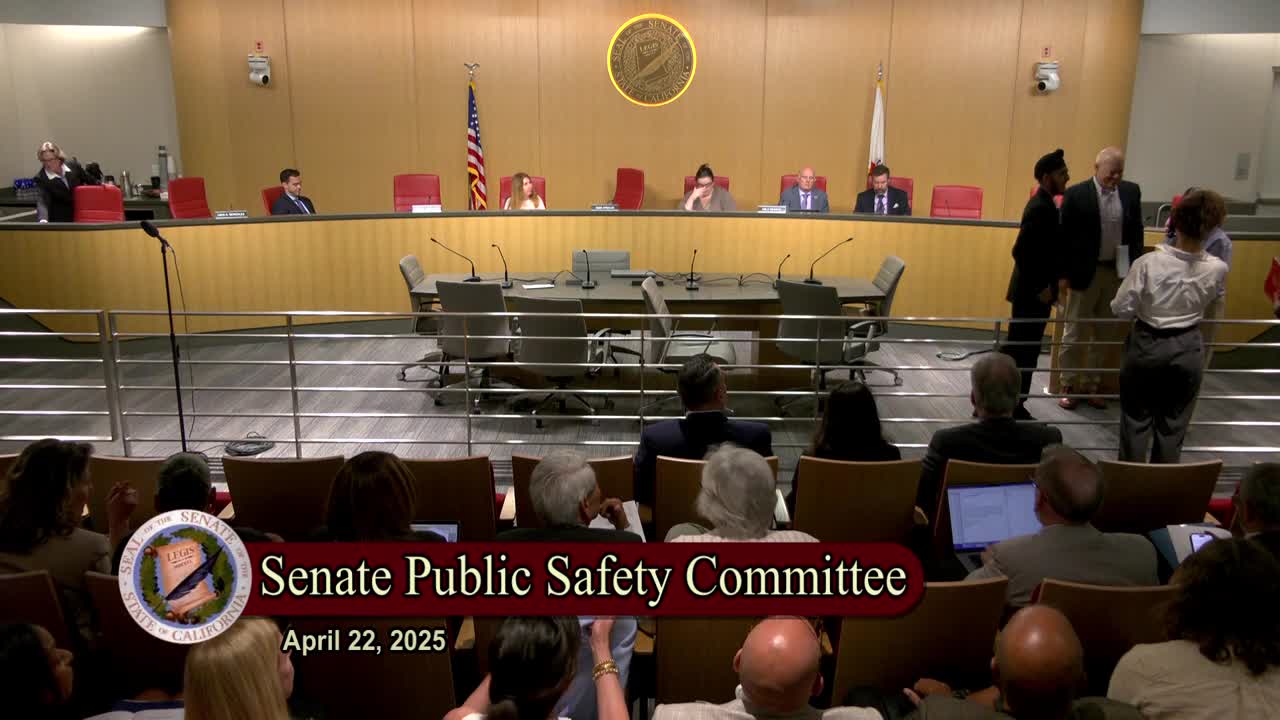 30MIN
Senate Standing Committee on Public Safety
Bill Author

Bill Co-Author(s):