SB 675: Imperial County Air Pollution Control District: members and duties.
- Session Year: 2025-2026
- House: Senate
- Latest Version Date: 2026-08-31
Current Status:
In Progress
(2026-09-20: In Senate. Consideration of Governor's veto pending.)
Introduced
In Committee
Awaiting First Chamber Vote
Passed First Chamber
In Committee
Awaiting Second Chamber Vote
Passed Second Chamber
Enacted
Existing law provides for the establishment of air pollution control districts and air quality management districts and prescribes the membership of the governing boards of air pollution control districts and air quality management districts. Those governing boards comprise combinations of mayors, city council members, and county supervisors, selected as prescribed, except for the governing board of the San Diego County Air Pollution Control District, which has a differently prescribed membership and certain specified duties.
This bill would, as of July 1, 2027, prescribe the membership of the governing board of the Imperial County Air Pollution Control District (air district) and prescribe many of those same duties as are required for the San Diego County Air Pollution Control District. In particular, the bill would require the air district to appoint a specified liaison to consult with the United States Navy and the United States Marine Corps, as specified, and create and maintain an internet website providing access to specified information, including, among other information, the agendas and minutes of the governing board of the air district and all current and pending permit information and settled enforcement actions. The bill would require the district, in establishing the internet website, to establish a process for permitholders that have sensitive operations to request that physical identifying information be redacted from the publicly posted information. The bill would require that air monitoring data be made available to the public on the internet website within a reasonable period of time, as specified, and would require the governing board of the district to establish an air monitoring data program, as provided. The bill would require the air district, by January 1, 2029, to post all applications for an authority to construct or permit to operate. By requiring local governments to appoint members to the air district governing board in a specified manner and by adding to the duties of the air district, this bill would impose a state-mandated local program.
This bill would specify the continuing funding sources for the air district.
This bill would make certain provisions inoperative on July 1, 2027, and would repeal these provisions as of January 1, 2028.
This bill would make legislative findings and declarations as to the necessity of a special statute for the Imperial County Air Pollution Control District.
The California Constitution requires local agencies, for the purpose of ensuring public access to the meetings of public bodies and the writings of public officials and agencies, to comply with a statutory enactment that amends or enacts laws relating to public records or open meetings and contains findings demonstrating that the enactment furthers the constitutional requirements relating to this purpose.
This bill would make legislative findings to that effect.
The California Constitution requires the state to reimburse local agencies and school districts for certain costs mandated by the state. Statutory provisions establish procedures for making that reimbursement.
This bill would provide that, with regard to certain mandates, no reimbursement is required by this act for a specified reason.
With regard to any other mandates, this bill would provide that, if the Commission on State Mandates determines that the bill contains costs so mandated by the state, reimbursement for those costs shall be made pursuant to the statutory provisions noted above.
Existing law provides for the establishment of air pollution control districts and air quality management districts and prescribes the membership of the governing boards of air pollution control districts and air quality management districts. Those governing boards comprise combinations of mayors, city council members, and county supervisors, selected as prescribed, except for the governing board of the San Diego County Air Pollution Control District, which has a differently prescribed membership and certain specified duties.
This bill would, as of July 1, 2027, prescribe the membership of the governing board of the Imperial County Air Pollution Control District (air district) and prescribe many of those same duties as are required for the San Diego County Air Pollution Control District. In particular, the bill would require the air district to appoint a specified liaison to consult with the United States Navy and the United States Marine Corps, as specified; specified, and create and maintain an internet website separate from the County of Imperial internet website and post providing access to specified information, including, among other information, the agendas and minutes of the governing board of the air district and all current and pending permit information and settled enforcement actions; apply for statewide grant and incentive programs; evaluate the current public complaint process, as specified; develop a plan for a comprehensive air monitoring program, as specified; and publish an annual air quality report, as specified. actions. The bill would require the district, in establishing the internet website, to establish a process for permitholders that have sensitive operations to request that physical identifying information be redacted from the publicly posted information. The bill would require that air monitoring data be made available to the public on the internet website within a reasonable period of time, as specified, and would require the governing board of the district to establish an air monitoring data program, as provided. The bill would require the air district, by July 1, 2027, January 1, 2029, to post all applications for an authority to construct or permit to operate within 3 business days of receipt and to accept and consider all public comments received before taking final action on the applications. The bill would require the air district to prepare a report for consideration by the governing board summarizing all actions taken on applications in the 2027 calendar year and to consider, based upon the report, amendments to the district rules to ensure adequate opportunity for public comment on applications. operate. By requiring local governments to appoint members to the air district governing board in a specified manner and by adding to the duties of the air district, this bill would impose a state-mandated local program.
This bill would specify the continuing funding sources for the air district.
This bill would make certain provisions inoperative on July 1, 2027, and would repeal these provisions as of January 1, 2028.
This bill would make legislative findings and declarations as to the necessity of a special statute for the Imperial County Air Pollution Control District.
The California Constitution requires local agencies, for the purpose of ensuring public access to the meetings of public bodies and the writings of public officials and agencies, to comply with a statutory enactment that amends or enacts laws relating to public records or open meetings and contains findings demonstrating that the enactment furthers the constitutional requirements relating to this purpose.
This bill would make legislative findings to that effect.
The California Constitution requires the state to reimburse local agencies and school districts for certain costs mandated by the state. Statutory provisions establish procedures for making that reimbursement.
This bill would provide that, with regard to certain mandates, no reimbursement is required by this act for a specified reason.
With regard to any other mandates, this bill would provide that, if the Commission on State Mandates determines that the bill contains costs so mandated by the state, reimbursement for those costs shall be made pursuant to the statutory provisions noted above.
Existing law provides for the establishment of air pollution control districts and air quality management districts and prescribes the membership of the governing boards of air pollution control districts and air quality management districts. Those governing boards comprise combinations of mayors, city council members, and county supervisors, selected as prescribed, except for the governing board of the San Diego County Air Pollution Control District, which has a differently prescribed membership and certain specified duties.
This bill would, as of March 1, 2028, July 1, 2027, prescribe the membership of the governing board of the Imperial County Air Pollution Control District (air district) and prescribe many of those same duties as are required for the San Diego County Air Pollution Control District. In particular, the bill would require the air district to appoint a specified liaison to consult with the United States Navy and the United States Marine Corps, as specified; create and maintain an internet website separate from the County of Imperial internet website and post specified information, including, among other information, the agendas and minutes of the governing board of the air district and all current and pending permit information and settled enforcement actions; apply for statewide grant and incentive programs; evaluate the current public complaint process, as specified; develop a plan for a comprehensive air monitoring program, as specified; and publish an annual air quality report, as specified. The bill would require the air district, by July 1, 2027, to post all applications for an authority to construct or permit to operate within 3 business days of receipt and to accept and consider all public comments received before taking final action on the applications. The bill would require the air district to prepare a report for consideration by the governing board summarizing all actions taken on applications in the 2027 calendar year and to consider, based upon the report, amendments to the district rules to ensure adequate opportunity for public comment on applications. By requiring local governments to appoint members to the air district governing board in a specified manner and by adding to the duties of the air district, this bill would impose a state-mandated local program.
This bill would specify the continuing funding sources for the air district.
Existing law authorizes air districts to establish a permit system to require, with specified exceptions, that a person obtain a permit before constructing or operating any article, machine, equipment, or contrivance that may cause the issuance of air contaminants. Existing law prohibits an air district from issuing a permit to a Title V source, as defined, if the Administrator of the United States Environmental Protection Agency objects to its issuance, as specified.This bill would prohibit the Imperial County Air Pollution Control District from issuing a permit to a Title V source, as provided.This bill would make legislative findings to that effect.This bill would make legislative findings and declarations as to the necessity of a special statute for the Imperial County Air Pollution Control District.The California Constitution requires local agencies, for the purpose of ensuring public access to the meetings of public bodies and the writings of public officials and agencies, to comply with a statutory enactment that amends or enacts laws relating to public records or open meetings and contains findings demonstrating that the enactment furthers the constitutional requirements relating to this purpose.The California Constitution requires the state to reimburse local agencies and school districts for certain costs mandated by the state. Statutory provisions establish procedures for making that reimbursement.This bill would make this provision inoperative on March 1, 2028, and would repeal it as of January 1, 2029.This bill would provide that with regard to certain mandates no reimbursement is required by this act for specified reasons.With regard to any other mandates, this bill would provide that, if the Commission on State Mandates determines that the bill contains costs so mandated by the state, reimbursement for those costs shall be made pursuant to the statutory provisions noted above.This bill would make certain provisions inoperative on July 1, 2027, and would repeal these provisions as of January 1, 2028.
This bill would make legislative findings and declarations as to the necessity of a special statute for the Imperial County Air Pollution Control District.
The California Constitution requires local agencies, for the purpose of ensuring public access to the meetings of public bodies and the writings of public officials and agencies, to comply with a statutory enactment that amends or enacts laws relating to public records or open meetings and contains findings demonstrating that the enactment furthers the constitutional requirements relating to this purpose.
This bill would make legislative findings to that effect.
The California Constitution requires the state to reimburse local agencies and school districts for certain costs mandated by the state. Statutory provisions establish procedures for making that reimbursement.
This bill would provide that, with regard to certain mandates, no reimbursement is required by this act for a specified reason.
With regard to any other mandates, this bill would provide that, if the Commission on State Mandates determines that the bill contains costs so mandated by the state, reimbursement for those costs shall be made pursuant to the statutory provisions noted above.
Existing law provides for the establishment of air pollution control districts and air quality management districts and prescribes the membership of the governing boards of air pollution control districts and air quality management districts. Those governing boards comprise combinations of mayors, city council members, and county supervisors, selected as prescribed, except for the governing board of the San Diego County Air Pollution Control District, which has a differently prescribed membership and certain specified duties.
This bill would, as of March 1, 2028, prescribe the membership of the governing board of the Imperial County Air Pollution Control District (air district) and prescribe many of those same duties as are required for the San Diego County Air Pollution Control District. In particular, the bill would require the air district to appoint a specified liaison to consult with the United States Navy and the United States Marine Corps, as specified; create and maintain an internet website separate from the County of Imperial internet website and post specified information, including, among other information, the agendas and minutes of the governing board of the air district and all current and pending permit information and settled enforcement actions; apply for statewide grant and incentive programs; evaluate the current public complaint process, as specified; develop a plan for a comprehensive air monitoring program, as specified; and publish an annual air quality report, as specified. The bill would require the air district, by July 1, 2027, to post all applications for an authority to construct or permit to operate within 3 business days of receipt and to accept and consider all public comments received before taking final action on the applications. The bill would require the air district to prepare a report for consideration by the governing board summarizing all actions taken on applications in the 2027 calendar year and to consider, based upon the report, amendments to the district rules to ensure adequate opportunity for public comment on applications. By requiring local governments to appoint members to the air district governing board in a specified manner and by adding to the duties of the air district, this bill would impose a state-mandated local program.
This bill would specify the continuing funding sources for the air district.
Existing law authorizes air districts to establish a permit system to require, with specified exceptions, that a person obtain a permit before constructing or operating any article, machine, equipment, or contrivance that may cause the issuance of air contaminants. Existing law prohibits an air district from issuing a permit to a Title V source, as defined, if the Administrator of the United States Environmental Protection Agency objects to its issuance, as specified.
This bill would prohibit the Imperial County Air Pollution Control District from issuing a permit to a Title V source, as provided.
This bill would make legislative findings to that effect.
This bill would make legislative findings and declarations as to the necessity of a special statute for the Imperial County Air Pollution Control District.
The California Constitution requires local agencies, for the purpose of ensuring public access to the meetings of public bodies and the writings of public officials and agencies, to comply with a statutory enactment that amends or enacts laws relating to public records or open meetings and contains findings demonstrating that the enactment furthers the constitutional requirements relating to this purpose.
The California Constitution requires the state to reimburse local agencies and school districts for certain costs mandated by the state. Statutory provisions establish procedures for making that reimbursement.
This bill would make this provision inoperative on March 1, 2028, and would repeal it as of January 1, 2029.
This bill would provide that with regard to certain mandates no reimbursement is required by this act for specified reasons.
With regard to any other mandates, this bill would provide that, if the Commission on State Mandates determines that the bill contains costs so mandated by the state, reimbursement for those costs shall be made pursuant to the statutory provisions noted above.
The California Environmental Quality Act (CEQA) requires a lead agency, as defined, to prepare, or cause to be prepared, and certify the completion of an environmental impact report on a project that it proposes to carry out or approve that may have a significant effect on the environment or to adopt a negative declaration if it finds that the project will not have that effect. CEQA also requires a lead agency to prepare a mitigated negative declaration for a project that may have a significant effect on the environment if revisions in the project would avoid or mitigate that effect and there is no substantial evidence that the project, as revised, would have a significant effect on the environment.The Jobs and Economic Improvement Through Environmental Leadership Act of 2021 authorizes the Governor, until January 1, 2032, to certify environmental leadership development projects that meet specified requirements for certain streamlining benefits related to CEQA.This bill would provide additional streamlining benefits to Waterfront Environmental Leadership Development Projects (WELDPs), as defined, that, among other specified conditions, are certified by the Governor and located on more than 50 acres of land and water within the Central Embarcadero Planning District of the San Diego Unified Port District within the County of San Diego. The bill would provide that the streamlining benefits include a requirement that the California Coastal Commission provide specific and substantive comments or objections for certain documents within 60 days, as provided. The bill would require a lead agency or applicant to, within 30 days after the certification of the environmental impact report by the lead agency, file required application forms and materials for a port master plan amendment with the commission. The bill would authorize the commission, if a certain condition is met, to charge a fee to an applicant for the reasonable costs incurred by the commission for processing documents for review or the application of the WELDP. By placing new duties on local agencies related to the streamlining benefits, this bill would impose a state-mandated local program.This bill would make legislative findings and declarations as to the necessity of a special statute for the urban waterfront in the County of San Diego.The California Constitution requires the state to reimburse local agencies and school districts for certain costs mandated by the state. Statutory provisions establish procedures for making that reimbursement.This bill would provide that no reimbursement is required by this act for a specified reason.The California Environmental Quality Act (CEQA) requires a lead agency, as defined, to prepare, or cause to be prepared, and certify the completion of an environmental impact report on a project that it proposes to carry out or approve that may have a significant effect on the environment or to adopt a negative declaration if it finds that the project will not have that effect. CEQA also requires a lead agency to prepare a mitigated negative declaration for a project that may have a significant effect on the environment if revisions in the project would avoid or mitigate that effect and there is no substantial evidence that the project, as revised, would have a significant effect on the environment.
The Jobs and Economic Improvement Through Environmental Leadership Act of 2021 authorizes the Governor, until January 1, 2032, to certify environmental leadership development projects that meet specified requirements for certain streamlining benefits related to CEQA.
This bill would provide additional streamlining benefits to Waterfront Environmental Leadership Development Projects (WELDPs), as defined, that, among other specified conditions, are certified by the Governor and located on more than 50 acres of land and water within the Central Embarcadero Planning District of the San Diego Unified Port District within the County of San Diego. The bill would provide that the streamlining benefits include a requirement that the California Coastal Commission provide specific and substantive comments or objections for certain documents within 60 days, as provided. The bill would require a lead agency or applicant to, within 30 days after the certification of the environmental impact report by the lead agency, file required application forms and materials for a port master plan amendment with the commission. The bill would authorize the commission, if a certain condition is met, to charge a fee to an applicant for the reasonable costs incurred by the commission for processing documents for review or the application of the WELDP. By placing new duties on local agencies related to the streamlining benefits, this bill would impose a state-mandated local program.
This bill would make legislative findings and declarations as to the necessity of a special statute for the urban waterfront in the County of San Diego.
The California Constitution requires the state to reimburse local agencies and school districts for certain costs mandated by the state. Statutory provisions establish procedures for making that reimbursement.
This bill would provide that no reimbursement is required by this act for a specified reason.
The California Environmental Quality Act (CEQA) requires a lead agency, as defined, to prepare, or cause to be prepared, and certify the completion of an environmental impact report on a project that it proposes to carry out or approve that may have a significant effect on the environment or to adopt a negative declaration if it finds that the project will not have that effect. CEQA also requires a lead agency to prepare a mitigated negative declaration for a project that may have a significant effect on the environment if revisions in the project would avoid or mitigate that effect and there is no substantial evidence that the project, as revised, would have a significant effect on the environment.
The Jobs and Economic Improvement Through Environmental Leadership Act of 2021 authorizes the Governor, until January 1, 2032, to certify environmental leadership development projects that meet specified requirements for certain streamlining benefits related to CEQA.
This bill would provide additional streamlining benefits to Waterfront Environmental Leadership Development Projects (WELDPs), as defined, that, among other specified conditions, are certified by the Governor and located on more than 50 acres of land and water within the Central Embarcadero Planning District of the San Diego Unified Port District of within the County of San Diego. The bill would provide that the streamlining benefits include a requirement that the California Coastal Commission provide specific and substantive comments or objections for certain documents within 60 days, as provided. The bill would require a lead agency or applicant to, within 30 days after the certification of the environmental impact report by the lead agency, file required application forms and materials for a port master plan amendment with the commission. The bill would authorize the commission, if a certain condition is met, to charge a fee to an applicant for the reasonable costs incurred by the commission for processing documents for review or the application of the WELDP. By placing new duties on local agencies related to the streamlining benefits, this bill would impose a state-mandated local program.
This bill would make legislative findings and declarations as to the necessity of a special statute for the urban waterfront in the County of San Diego.
The California Constitution requires the state to reimburse local agencies and school districts for certain costs mandated by the state. Statutory provisions establish procedures for making that reimbursement.
This bill would provide that no reimbursement is required by this act for a specified reason.
The California Environmental Quality Act (CEQA) requires a lead agency, as defined, to prepare, or cause to be prepared, and certify the completion of an environmental impact report on a project that it proposes to carry out or approve that may have a significant effect on the environment or to adopt a negative declaration if it finds that the project will not have that effect. CEQA also requires a lead agency to prepare a mitigated negative declaration for a project that may have a significant effect on the environment if revisions in the project would avoid or mitigate that effect and there is no substantial evidence that the project, as revised, would have a significant effect on the environment.
The Jobs and Economic Improvement Through Environmental Leadership Act of 2021 authorizes the Governor, until January 1, 2032, to certify environmental leadership development projects that meet specified requirements for certain streamlining benefits related to CEQA.
This bill would provide additional streamlining benefits to environmental leadership development projects Waterfront Environmental Leadership Development Projects (WELDPs), as defined, that, among other specified conditions, are certified by the Governor that require discretionary approvals by a lead agency and one or more responsible agencies, including and located on more than 50 acres of land and water within the Central Embarcadero Planning District of the San Diego Unified Port District of the County of San Diego. The bill would provide that the streamlining benefits include a requirement that responsible agencies shall the California Coastal Commission provide specific and substantive comments or objections for certain documents within 60 days, as provided. The bill would require a lead agency or applicant to, no later than within 30 days after the certification of the environmental impact report by the lead agency, file required application forms and materials with the responsible agency. The bill would prohibit the responsible agency from denying an environmental leadership project approved by the lead agency or imposing conditions or mitigation measures that would render the project infeasible unless the responsible agency makes a specified finding. commission. The bill would authorize responsible agencies, the commission, if a certain condition is met, to charge a fee to an applicant for the reasonable costs incurred by the responsible agency commission for processing documents for review or the application of the environmental leadership project. WELDP. By placing new duties on local agencies related to the streamlining benefits, this bill would impose a state-mandated local program.
The California Constitution requires the state to reimburse local agencies and school districts for certain costs mandated by the state. Statutory provisions establish procedures for making that reimbursement.
This bill would provide that no reimbursement is required by this act for a specified reason.
The California Environmental Quality Act (CEQA) requires a lead agency, as defined, to prepare, or cause to be prepared, and certify the completion of an environmental impact report on a project that it proposes to carry out or approve that may have a significant effect on the environment or to adopt a negative declaration if it finds that the project will not have that effect. CEQA also requires a lead agency to prepare a mitigated negative declaration for a project that may have a significant effect on the environment if revisions in the project would avoid or mitigate that effect and there is no substantial evidence that the project, as revised, would have a significant effect on the environment.
The Jobs and Economic Improvement Through Environmental Leadership Act of 2021 authorizes the Governor, until January 1, 2032, to certify environmental leadership development projects that meet specified requirements for certain streamlining benefits related to CEQA.
This bill would provide additional streamlining benefits to environmental leadership development projects certified by the Governor that require discretionary approvals by a lead agency and one or more responsible agencies, including a requirement that responsible agencies shall provide specific and substantive comments or objections for certain documents within 60 days, as provided. The bill would require a lead agency or applicant to, no later than 30 days after the certification of the environmental impact report by the lead agency, file required application forms and materials with the responsible agency. The bill would prohibit the responsible agency from denying an environmental leadership project approved by the lead agency or imposing conditions or mitigation measures that would render the project infeasible unless the responsible agency makes a specified finding. The bill would authorize responsible agencies, if a certain condition is met, to charge a fee to an applicant for the reasonable costs incurred by the responsible agency for processing documents for review or the application of the environmental leadership project. By placing new duties on local agencies related to the streamlining benefits, this bill would impose a state-mandated local program.
The California Constitution requires the state to reimburse local agencies and school districts for certain costs mandated by the state. Statutory provisions establish procedures for making that reimbursement.
This bill would provide that no reimbursement is required by this act for a specified reason.
The California Beverage Container Recycling and Litter Reduction Act requires a beverage manufacturer to pay to the Department of Resources Recycling and Recovery a processing fee for each beverage container, as defined, sold or transferred in this state. The act requires the department to deposit the fee into the California Beverage Container Recycling Fund, a continuously appropriated fund. The act requires the department to pay processing payments to processors and recycling centers from the fund, as specified. The act requires the processing payment to be at least equal to the difference between the scrap value of the beverage containers and the sum of certain actual operational costs for certified recycling centers and a reasonable financial return for recycling centers, as specified. Existing regulations require a reasonable financial return for recycling centers equal to 10% of certain statewide averages. The act requires the processing fee to be 65% of the processing payment, except as specified.This bill would specify, for purposes of calculating the processing payment, that 10% is a reasonable financial return for recycling centers.The California Beverage Container Recycling and Litter Reduction Act requires a beverage manufacturer to pay to the Department of Resources Recycling and Recovery a processing fee for each beverage container, as defined, sold or transferred in this state. The act requires the department to deposit the fee into the California Beverage Container Recycling Fund, a continuously appropriated fund. The act requires the department to pay processing payments to processors and recycling centers from the fund, as specified. The act requires the processing payment to be at least equal to the difference between the scrap value of the beverage containers and the sum of certain actual operational costs for certified recycling centers and a reasonable financial return for recycling centers, as specified. Existing regulations require a reasonable financial return for recycling centers equal to 10% of certain statewide averages. The act requires the processing fee to be 65% of the processing payment, except as specified.
This bill would specify, for purposes of calculating the processing payment, that 10% is a reasonable financial return for recycling centers.
It is the intent of the Legislature that the County of Imperial employees who currently work for the Imperial County Air Pollution Control District will not be affected by the governing boards expansion and that their jobs will be safe.
SEC. 2.Section 40100 of the Health and Safety Code is amended to read:40100.(a)Except as provided in Sections 40100.5 and 40100.6, a county board of supervisors shall be ex officio the county district board of the county.
(b)This section shall become inoperative on July 1, 2027, and, as of January 1, 2028, is repealed.
SEC. 3.Section 40100 is added to the Health and Safety Code, to read:40100.(a)Except as provided in Sections 40100.5, 40100.6, and 40100.8, a county board of supervisors shall be ex officio the county district board of the county.
(b)This section shall become operative on July 1, 2027.
SEC. 4.Section 40100.5 of the Health and Safety Code is amended to read:40100.5.(a)The membership of the governing board of each county district shall include (1) one or more members who are mayors, city council members, or both, and (2) one or more members who are county supervisors.
(b)The number of those members and their composition shall be determined jointly by the county and the cities within the district, and shall be approved by the county and by a majority of the cities that contain a majority of the population in the incorporated area of the district.
(c)The governing board shall reflect, to the extent feasible and practicable, the geographic diversity of the district and the variation of population between the cities in the district.
(d)(1)The members of the governing board who are mayors or city council members shall be selected by the city selection committee. When selecting a member of the governing board, the city selection committee may also select a mayor or another city council member as an alternate to serve and vote in place of the member who is absent or disqualified from participating.
(2)In districts where the county and the cities have agreed that each city shall be represented on the governing board, each city shall select its own representative to the governing board. When selecting a member of the governing board, each city may also select its mayor or another city council member as an alternate to serve and vote in place of the member who is absent or is disqualified from participating.
(3)The members of the governing board who are county supervisors shall be selected by the county.
(e)(1)This section does not apply to any district in which the population of the incorporated area of the county is 35 percent or less of the total county population, as determined by the district on June 30, 1994.
(2)The membership of the governing board for the San Diego County Air Pollution Control District shall be determined pursuant to Section 40100.6.
(f)If a district fails to comply with subdivisions (a) and (b), the membership of the governing board shall be determined as follows:
(1)In districts in which the population in the incorporated areas represents between 36 and 50 percent of the total county population, one-third of the members of the governing board shall be mayors or city council members, and two-thirds shall be county supervisors.
(2)In districts in which the population in the incorporated areas represents more than 50 percent of the total county population, one-half of the members of the governing board shall be mayors or city council members, and one-half shall be county supervisors.
(3)The number of those members shall be determined as provided in subdivision (b), and the members shall be selected pursuant to subdivision (d).
(4)For purposes of paragraphs (1) and (2), if any number that is not a whole number results from the application of the term one-third, one-half, or two-thirds, the number of county supervisors shall be increased to the nearest integer, and the number of mayors or city council members decreased to the nearest integer.
(g)This section shall become inoperative on July 1, 2027, and, as of January 1, 2028, is repealed.
SEC. 5.Section 40100.5 is added to the Health and Safety Code, to read:40100.5.(a)The membership of the governing board of each county district shall include (1) one or more members who are mayors, city council members, or both, and (2) one or more members who are county supervisors.
(b)The number of those members and their composition shall be determined jointly by the county and the cities within the district, and shall be approved by the county and by a majority of the cities that contain a majority of the population in the incorporated area of the district.
(c)The governing board shall reflect, to the extent feasible and practicable, the geographic diversity of the district and the variation of population between the cities in the district.
(d)(1)The members of the governing board who are mayors or city council members shall be selected by the city selection committee. When selecting a member of the governing board, the city selection committee may also select a mayor or another city council member as an alternate to serve and vote in place of the member who is absent or disqualified from participating.
(2)In districts where the county and the cities have agreed that each city shall be represented on the governing board, each city shall select its own representative to the governing board. When selecting a member of the governing board, each city may also select its mayor or another city council member as an alternate to serve and vote in place of the member who is absent or is disqualified from participating.
(3)The members of the governing board who are county supervisors shall be selected by the county.
(e)(1)This section does not apply to any district in which the population of the incorporated area of the county is 35 percent or less of the total county population, as determined by the district on June 30, 1994.
(2)The membership of the governing board for the San Diego County Air Pollution Control District shall be determined pursuant to Section 40100.6.
(3)The membership of the governing board for the Imperial County Air Pollution Control District shall be determined pursuant to Section 40100.8.
(f)If a district fails to comply with subdivisions (a) and (b), the membership of the governing board shall be determined as follows:
(1)In districts in which the population in the incorporated areas represents between 36 and 50 percent of the total county population, one-third of the members of the governing board shall be mayors or city council members, and two-thirds shall be county supervisors.
(2)In districts in which the population in the incorporated areas represents more than 50 percent of the total county population, one-half of the members of the governing board shall be mayors or city council members, and one-half shall be county supervisors.
(3)The number of those members shall be determined as provided in subdivision (b), and the members shall be selected pursuant to subdivision (d).
(4)For purposes of paragraphs (1) and (2), if any number that is not a whole number results from the application of the term one-third, one-half, or two-thirds, the number of county supervisors shall be increased to the nearest integer, and the number of mayors or city council members decreased to the nearest integer.
(g)This section shall become operative on July 1, 2027.
SEC. 6.Section 40100.8 is added to the Health and Safety Code, to read:40100.8.(a)The 11 members of the Imperial County Air Pollution Control District governing board shall be appointed as follows:
(1)One member representing the board of supervisors as appointed by a majority of the board of supervisors.
(2)(A)One city council member from each of the five supervisorial districts. Those five members shall be selected by city selection committees representing the cities of that supervisorial district.
(B)A city shall not have more than two members.
(3)A representative from an irrigation district that provides water and retail power services in the County of Imperial and is a member of the governing board of a water agency pursuant to Section 12512 of the Water Code, as appointed by a majority of the governing board of the special district.
(4)Four public members shall be appointed by members appointed pursuant to paragraphs (1) and (2) at a public hearing. The public members shall be appointed according to the following:
(A)One public member shall be a physician or public health professional actively practicing within the boundaries of the Imperial County Air Pollution Control District. The members specialty shall be in the health effects of air pollution on vulnerable populations.
(B)One public member shall be a person representing environmental justice interests and who works directly with communities within the boundaries of the Imperial County Air Pollution Control District that are most significantly burdened by, and vulnerable to, high levels of pollution, including communities with diverse racial and ethnic populations and communities with low-income populations. This member may be a resident of that community and have a demonstrated record of community leadership.
(C)One public member shall be a person with a background in labor that understands worker health and safety.
(D)One public member shall be a person actively working in commercial agricultural commodity production and who has experience with lands that serve an agricultural use. Agricultural commodity means any and all animals, animal products, and plants produced in this state for commercial purposes, including plant products for biofuels and industrial hemp. Agricultural use means use of land, including greenhouses, for the purpose of producing an agricultural commodity for commercial purposes.
(b)All members shall be appointed on the basis of their demonstrated interest and proven ability in the field of air pollution control and their understanding of the needs of the general public in connection with the air pollution problems of the Imperial Air Basin.
(c)All members shall reside within the boundaries of the Imperial County Air Pollution Control District.
(d)Each member of the Imperial County Air Pollution Control District shall serve a four-year term and until that members successor is appointed.
(e)Each member of the Imperial County Air Pollution Control District governing board shall receive compensation of up to one hundred dollars ($100) for each day, or a portion thereof, but not to exceed one thousand dollars ($1,000) per month, while attending meetings of the district governing board or any committee of the district governing board or, upon authorization of the district governing board, while on official business of the Imperial County Air Pollution Control District, and the actual and necessary expenses incurred in performing the members official duties. An increase in compensation to an amount greater than one hundred dollars ($100) for each day or one thousand dollars ($1,000) per month shall be approved by the district governing board at an open regular meeting.
(f)(1)A vacancy on Imperial County Air Pollution Control District governing board shall be filled by appointment in the same manner as the vacating member was appointed.
(2)A member of the Imperial County Air Pollution Control District governing board may be removed at any time in the same manner as the member was appointed.
(g)(1)The Imperial County Air Pollution Control District governing board shall consult with the United States Navy and the United States Marine Corps on all permitting, rules, regulations, and planning issues that have the potential to impact the mission of the United States Navy and the United States Marine Corps.
(2)The Imperial County Air Pollution Control District governing board shall designate, after consultation with the United States Armed Forces, one member to serve as the liaison to the United States Navy and the United States Marine Corps. The liaison shall report to the Imperial County Air Pollution Control District governing board as necessary to inform the governing board of any issues with the activities described in paragraph (1) and of any potential resolution to those issues.
(h)This section shall become operative on July 1, 2027.
SEC. 7.Section 40100.8.5 is added to the Health and Safety Code, to read:40100.8.5.The Imperial County Air Pollution Control District, in addition to all other duties required of the Imperial County Air Pollution Control District pursuant to this division and any other law, shall do all of the following:
(a)Create and maintain an internet website providing public access to Imperial County Air Pollution Control District data, including all of the following:
(1)Agendas and minutes of the governing board of the Imperial County Air Pollution Control District.
(2)All current permit information in a format that allows that information to be downloadable and searchable by address or ZIP Code, facility name, pollutant, permit number, and equipment or process. Permitted potential maximum emissions shall be included along with actual emissions if available.
(3)By January 1, 2029, the Imperial County Air Pollution Control District shall post all applications for an authority to construct or a permit to operate.
(4)All settled enforcement actions in a format that allows that information to be downloadable and searchable by address or ZIP Code, facility name, pollutant, permit number, and equipment or process.
(5)(A)The face sheets of notices of violation or notices to comply.
(B)The district shall post the face sheets 30 days after the issuance of the notices. Notices found to be issued in error within 30 days of issuance shall not be posted.
(6)By January 1, 2029, all documents related to the Air Toxics Hot Spots Information and Assessment Act of 1987 (Part 6 (commencing with Section 44300)), including all of the following:
(A)Air toxics emissions inventory reports and plans submitted by each facility pursuant to Chapter 3 (commencing with Section 44340) of Part 6 that are completed and approved by the district.
(B)Completed health risk assessments submitted by each facility pursuant to Chapter 4 (commencing with Section 44360) of Part 6.
(C)A copy of the public notification provided by facility, as required by the Imperial County Air Pollution Control Districts rules and guidelines, and documentation of the required notice to exposed persons.
(D)Airborne toxic risk reduction audit and plans submitted by each facility pursuant to Chapter 6 (commencing with Section 44390) of Part 6 that are completed and approved by the district.
(7)The Imperial County Air Pollution Control District budget, including revenue and expense projections and actuals.
(b)In creating the internet website pursuant to subdivision (a), the Imperial County Air Pollution Control District shall establish a process for permitholders that have sensitive operations, including, but not limited to, animal husbandry, to request that physical identifying information such as an address be redacted from the publicly posted information. Facilities granted a redaction of identifying information still need to be identified at least by ZIP Code on the internet website. This process does not preclude the ability of the public to request information on a facility, including its address, by submitting a public records request.
(c)Air monitoring data shall be made available to the public on the Imperial County Air Pollution Control District internet website within a reasonable period of time not to exceed 14 months from the date of collection. The governing board of the Imperial County Air Pollution Control District shall establish an air monitoring data program that will define reasonable timeframes for the posting of all air monitoring data based on testing methodology and ensure data is accessible and understandable to the public.
SEC. 8.Section 40701.5 of the Health and Safety Code is amended to read:40701.5.(a)Funding for a district may be provided by, but is not limited to, any one or any combination of the following sources:
(1)Grants.
(2)Subventions.
(3)Permit fees.
(4)Penalties.
(5)A surcharge or fee pursuant to Section 41081 or 44223 on motor vehicles registered in the district.
(b)Expenses of a district that are not met by the funding sources identified in subdivision (a) shall be provided by an annual per capita assessment on those cities that have agreed to have a member on the district board for purposes of Section 40100.5, 40100.6, 40152, 40322.5, 40704.5, or 40980 and on the county or counties included within the district. Any annual per capita assessment imposed by the district on those cities and counties included within the district shall be imposed on an equitable per capita basis.
(c)Subdivision (b) does not apply to the San Joaquin Valley Unified Air Pollution Control District or, if that unified district ceases to exist, the San Joaquin Valley Air Quality Management District, if that district is created.
(d)(1)Notwithstanding subdivision (b), expenses of the San Diego County Air Pollution Control District that are not met by the funding sources identified in subdivision (a) shall be provided by an annual per capita assessment imposed on an equitable per capita basis on each city and county included in the San Diego County Air Pollution Control District by the governing board of the San Diego County Air Pollution Control District created pursuant to Section 40100.6.
(2)At least 30 days before the assessment is imposed, the governing board shall hold a public hearing that shall include data supporting the annual per capita assessment and any schedule that may apply.
(e)This section shall become inoperative on July 1, 2027, and, as of January 1, 2028, is repealed.
SEC. 9.Section 40701.5 is added to the Health and Safety Code, to read:40701.5.(a)Funding for a district may be provided by, but is not limited to, any one or any combination of the following sources:
(1)Grants.
(2)Subventions.
(3)Permit fees.
(4)Penalties.
(5)A surcharge or fee pursuant to Section 41081 or 44223 on motor vehicles registered in the district.
(b)Expenses of a district that are not met by the funding sources identified in subdivision (a) shall be provided by an annual per capita assessment on those cities that have agreed to have a member on the district board for purposes of Section 40100.5, 40100.6, 40100.8, 40152, 40322.5, 40704.5, or 40980 and on the county or counties included within the district. Any annual per capita assessment imposed by the district on those cities and counties included within the district shall be imposed on an equitable per capita basis.
(c)Subdivision (b) does not apply to the San Joaquin Valley Unified Air Pollution Control District or, if that unified district ceases to exist, the San Joaquin Valley Air Quality Management District, if that district is created.
(d)(1)Notwithstanding subdivision (b), expenses of the San Diego County Air Pollution Control District that are not met by the funding sources identified in subdivision (a) shall be provided by an annual per capita assessment imposed on an equitable per capita basis on each city and county included in the San Diego County Air Pollution Control District by the governing board of the San Diego County Air Pollution Control District created pursuant to Section 40100.6.
(2)At least 30 days before the assessment is imposed, the governing board shall hold a public hearing that shall include data supporting the annual per capita assessment and any schedule that may apply.
(e)(1)Notwithstanding subdivision (b), expenses of the Imperial County Air Pollution Control District that are not met by the funding sources identified in subdivision (a) shall be provided by an annual per capita assessment imposed on an equitable per capita basis on each city and county included in the Imperial County Air Pollution Control District by the governing board of the Imperial County Air Pollution Control District created pursuant to Section 40100.8.
(2)At least 30 days before the assessment is imposed, the governing board shall hold a public hearing that shall include data supporting the annual per capita assessment and any schedule that may apply.
(f)This section shall become operative on July 1, 2027.
SEC. 10.The Legislature finds and declares that a special statute is necessary and that a general statute cannot be made applicable within the meaning of Section 16 of Article IV of the California Constitution because of the growing population of the County of Imperial and its goal of addressing climate change and air pollution.
SEC. 11.The Legislature finds and declares that Section 7 of this act, which adds Section 40100.8.5 to the Health and Safety Code, furthers, within the meaning of paragraph (7) of subdivision (b) of Section 3 of Article I of the California Constitution, the purposes of that constitutional section as it relates to the right of public access to the meetings of local public bodies or the writings of local public officials and local agencies. Pursuant to paragraph (7) of subdivision (b) of Section 3 of Article I of the California Constitution, the Legislature makes the following findings:
By requiring the Imperial County Air Pollution Control District to post specified information on its internet website, this act increases public access to public records, and thereby furthers the purposes of paragraph (7) of subdivision (b) of Section 3 of Article I of the California Constitution.
SEC. 12.No reimbursement is required by this act pursuant to Section 6 of Article XIIIB of the California Constitution because a local agency or school district has the authority to levy service charges, fees, or assessments sufficient to pay for the program or level of service mandated by this act, within the meaning of Section 17556 of the Government Code.
No reimbursement is required by this act pursuant to Section 6 of Article XIII B of the California Constitution because the only costs that may be incurred by a local agency or school district under this act would result from a legislative mandate that is within the scope of paragraph (7) of subdivision (b) of Section 3 of Article I of the California Constitution.
However, if the Commission on State Mandates determines that this act contains other costs mandated by the state, reimbursement to local agencies and school districts for those costs shall be made pursuant to Part 7 (commencing with Section 17500) of Division 4 of Title 2 of the Government Code.
It is the intent of the Legislature that the County of Imperial employees who currently work for the Imperial County Air Pollution Control District will not be affected by the governing boards expansion and that their jobs will be safe.
SEC. 2.Section 40100 of the Health and Safety Code is amended to read:40100.(a)Except as provided in Sections 40100.5 and 40100.6, a county board of supervisors shall be ex officio the county district board of the county.
(b)This section shall become inoperative on July 1, 2027, and, as of January 1, 2028, is repealed.
SEC. 3.Section 40100 is added to the Health and Safety Code, to read:40100.(a)Except as provided in Sections 40100.5, 40100.6, and 40100.8, a county board of supervisors shall be ex officio the county district board of the county.
(b)This section shall become operative on July 1, 2027.
SEC. 4.Section 40100.5 of the Health and Safety Code is amended to read:40100.5.(a)The membership of the governing board of each county district shall include (1) one or more members who are mayors, city council members, or both, and (2) one or more members who are county supervisors.
(b)The number of those members and their composition shall be determined jointly by the county and the cities within the district, and shall be approved by the county and by a majority of the cities that contain a majority of the population in the incorporated area of the district.
(c)The governing board shall reflect, to the extent feasible and practicable, the geographic diversity of the district and the variation of population between the cities in the district.
(d)(1)The members of the governing board who are mayors or city council members shall be selected by the city selection committee. When selecting a member of the governing board, the city selection committee may also select a mayor or another city council member as an alternate to serve and vote in place of the member who is absent or disqualified from participating.
(2)In districts where the county and the cities have agreed that each city shall be represented on the governing board, each city shall select its own representative to the governing board. When selecting a member of the governing board, each city may also select its mayor or another city council member as an alternate to serve and vote in place of the member who is absent or is disqualified from participating.
(3)The members of the governing board who are county supervisors shall be selected by the county.
(e)(1)This section does not apply to any district in which the population of the incorporated area of the county is 35 percent or less of the total county population, as determined by the district on June 30, 1994.
(2)The membership of the governing board for the San Diego County Air Pollution Control District shall be determined pursuant to Section 40100.6.
(f)If a district fails to comply with subdivisions (a) and (b), the membership of the governing board shall be determined as follows:
(1)In districts in which the population in the incorporated areas represents between 36 and 50 percent of the total county population, one-third of the members of the governing board shall be mayors or city council members, and two-thirds shall be county supervisors.
(2)In districts in which the population in the incorporated areas represents more than 50 percent of the total county population, one-half of the members of the governing board shall be mayors or city council members, and one-half shall be county supervisors.
(3)The number of those members shall be determined as provided in subdivision (b), and the members shall be selected pursuant to subdivision (d).
(4)For purposes of paragraphs (1) and (2), if any number that is not a whole number results from the application of the term one-third, one-half, or two-thirds, the number of county supervisors shall be increased to the nearest integer, and the number of mayors or city council members decreased to the nearest integer.
(g)This section shall become inoperative on July 1, 2027, and, as of January 1, 2028, is repealed.
SEC. 5.Section 40100.5 is added to the Health and Safety Code, to read:40100.5.(a)The membership of the governing board of each county district shall include (1) one or more members who are mayors, city council members, or both, and (2) one or more members who are county supervisors.
(b)The number of those members and their composition shall be determined jointly by the county and the cities within the district, and shall be approved by the county and by a majority of the cities that contain a majority of the population in the incorporated area of the district.
(c)The governing board shall reflect, to the extent feasible and practicable, the geographic diversity of the district and the variation of population between the cities in the district.
(d)(1)The members of the governing board who are mayors or city council members shall be selected by the city selection committee. When selecting a member of the governing board, the city selection committee may also select a mayor or another city council member as an alternate to serve and vote in place of the member who is absent or disqualified from participating.
(2)In districts where the county and the cities have agreed that each city shall be represented on the governing board, each city shall select its own representative to the governing board. When selecting a member of the governing board, each city may also select its mayor or another city council member as an alternate to serve and vote in place of the member who is absent or is disqualified from participating.
(3)The members of the governing board who are county supervisors shall be selected by the county.
(e)(1)This section does not apply to any district in which the population of the incorporated area of the county is 35 percent or less of the total county population, as determined by the district on June 30, 1994.
(2)The membership of the governing board for the San Diego County Air Pollution Control District shall be determined pursuant to Section 40100.6.
(3)The membership of the governing board for the Imperial County Air Pollution Control District shall be determined pursuant to Section 40100.8.
(f)If a district fails to comply with subdivisions (a) and (b), the membership of the governing board shall be determined as follows:
(1)In districts in which the population in the incorporated areas represents between 36 and 50 percent of the total county population, one-third of the members of the governing board shall be mayors or city council members, and two-thirds shall be county supervisors.
(2)In districts in which the population in the incorporated areas represents more than 50 percent of the total county population, one-half of the members of the governing board shall be mayors or city council members, and one-half shall be county supervisors.
(3)The number of those members shall be determined as provided in subdivision (b), and the members shall be selected pursuant to subdivision (d).
(4)For purposes of paragraphs (1) and (2), if any number that is not a whole number results from the application of the term one-third, one-half, or two-thirds, the number of county supervisors shall be increased to the nearest integer, and the number of mayors or city council members decreased to the nearest integer.
(g)This section shall become operative on July 1, 2027.
SEC. 6.Section 40100.8 is added to the Health and Safety Code, to read:40100.8.(a)The 10 11 members of the Imperial County Air Pollution Control District governing board shall be appointed as follows:
(1)One member representing the board of supervisors as appointed by a majority of the board of supervisors.
(2)(A)One city council member from each of the five supervisorial districts. Those five members shall be selected by city selection committees representing the cities of that supervisorial district.
(B)A city shall not have more than two members.
(3)A representative from an irrigation district that provides water and retail power services in the County of Imperial and is a member of the governing board of a water agency pursuant to Section 12512 of the Water Code, as appointed by a majority of the governing board of the special district.
(3)(4)Four public members shall be appointed by members appointed pursuant to paragraphs (1) and (2) at a public hearing. The public members shall be appointed according to the following:
(A)One public member shall be a physician or public health professional actively practicing within the boundaries of the Imperial County Air Pollution Control District. The members specialty shall be in the health effects of air pollution on vulnerable populations.
(B)One public member shall be a person representing environmental justice interests and who works directly with communities within the boundaries of the Imperial County Air Pollution Control District that are most significantly burdened by, and vulnerable to, high levels of pollution, including communities with diverse racial and ethnic populations and communities with low-income populations. This member may be a resident of that community and have a demonstrated record of community leadership.
(C)One public member shall be a person with a background in labor that understands worker health and safety.
(D)One public member shall be a person with a background in agricultural practices. actively working in commercial agricultural commodity production and who has experience with lands that serve an agricultural use. Agricultural commodity means any and all animals, animal products, and plants produced in this state for commercial purposes, including plant products for biofuels and industrial hemp. Agricultural use means use of land, including greenhouses, for the purpose of producing an agricultural commodity for commercial purposes.
(b)All members shall be appointed on the basis of their demonstrated interest and proven ability in the field of air pollution control and their understanding of the needs of the general public in connection with the air pollution problems of the Imperial Air Basin.
(c)All members shall reside within the boundaries of the Imperial County Air Pollution Control District.
(d)Each member of the Imperial County Air Pollution Control District shall serve a four-year term and until that members successor is appointed.
(e)Each member of the Imperial County Air Pollution Control District governing board shall receive compensation of up to one hundred dollars ($100) for each day, or a portion thereof, but not to exceed one thousand dollars ($1,000) per month, while attending meetings of the district governing board or any committee of the district governing board or, upon authorization of the district governing board, while on official business of the Imperial County Air Pollution Control District, and the actual and necessary expenses incurred in performing the members official duties. An increase in compensation to an amount greater than one hundred dollars ($100) for each day or one thousand dollars ($1,000) per month shall be approved by the district governing board at an open regular meeting.
(f)(1)A vacancy on Imperial County Air Pollution Control District governing board shall be filled by appointment in the same manner as the vacating member was appointed.
(2)A member of the Imperial County Air Pollution Control District governing board may be removed at any time in the same manner as the member was appointed.
(g)(1)The Imperial County Air Pollution Control District governing board shall consult with the United States Navy and the United States Marine Corps on all permitting, rules, regulations, and planning issues that have the potential to impact the mission of the United States Navy and the United States Marine Corps.
(2)The Imperial County Air Pollution Control District governing board shall designate, after consultation with the United States Armed Forces, one member to serve as the liaison to the United States Navy and the United States Marine Corps. The liaison shall report to the Imperial County Air Pollution Control District governing board as necessary to inform the governing board of any issues with the activities described in paragraph (1) and of any potential resolution to those issues.
(h)This section shall become operative on July 1, 2027.
SEC. 7.Section 40100.8.5 is added to the Health and Safety Code, to read:40100.8.5.The Imperial County Air Pollution Control District, in addition to all other duties required of the Imperial County Air Pollution Control District pursuant to this division and any other law, shall do all of the following:
(a)Create and maintain an internet website separate from the County of Imperial internet website and migrate all of the existing providing public access to Imperial County Air Pollution Control District data to the newer internet website by January 1, 2028, data, including all of the following:
(1)Agendas and minutes of the governing board of the Imperial County Air Pollution Control District.
(2)All current permit information in a format that allows that information to be downloadable and searchable by address, address or ZIP Code, facility name, pollutant, permit number, and equipment or process. Permitted potential maximum emissions shall be included along with actual emissions if available.
(3)(A)All applications for an authority to construct or a permit to operate.(B)(3)By July 1, 2027, January 1, 2029, the Imperial County Air Pollution Control District shall post all applications for an authority to construct or a permit to operate within three business days of their receipt and shall accept and consider all public comments received before the district takes final action on the approval of the applications. This clause does not require the Imperial County Air Pollution Control District to respond to comments except as otherwise provided by law. operate.
(4)All settled enforcement actions in a format that allows that information to be downloadable and searchable by address, address or ZIP Code, facility name, pollutant, permit number, and equipment or process.
(5)(A)The face sheets of notices of violation or notices to comply.
(B)The district shall post the face sheets 30 days after the issuance of the notices. Notices found to be issued in error within 30 days of issuance shall not be posted.
(6)All By January 1, 2029, all documents related to the Air Toxics Hot Spots Information and Assessment Act of 1987 (Part 6 (commencing with Section 44300)), including all of the following:
(A)Air toxics emissions inventory reports and plans submitted by each facility pursuant to Chapter 3 (commencing with Section 44340) of Part 6 that are completed and approved by the district.
(B)Completed health risk assessments submitted by each facility pursuant to Chapter 4 (commencing with Section 44360) of Part 6.
(C)A copy of the public notification provided by facility, as required by the Imperial County Air Pollution Control Districts rules and guidelines, and documentation of the required notice to exposed persons.
(D)Airborne toxic risk reduction audit and plans submitted by each facility pursuant to Chapter 6 (commencing with Section 44390) of Part 6 that are completed and approved by the district.
(7)The Imperial County Air Pollution Control District budget, including revenue and expense projections and actuals.
(b)Apply for statewide grant and incentive programs, including, but not limited to, all of the following:(1)Programs allocating moneys from the Greenhouse Gas Reduction Fund, created pursuant to Section 16428.8 of the Government Code.(2)Programs administered by the state board.(3)Programs administered by the United States Environmental Protection Agency.(4)Enhanced Fleet Modernization Program (Article 11 (commencing with Section 44124) of Chapter 5 of Part 5).(c)Evaluate the current public complaint process and provide, by December 2028, a recommended plan for updating that public complaint process, including all of the following components:(1)A 24-hour hotline.(2)Response to complaints within 48 hours or less.(3)Whistleblower and public complainant protections.(4)(A)The posting of complaints and their resolution on the Imperial County Air Pollution Control District internet website, required pursuant to subdivision (a).(B)Information regarding the complaints that are posted shall consist of all the following:(i)The date and time of the complaint.(ii)The general nature of the complaint.(iii)The closest intersection to the site of the complaint.(iv)The name of the company or facility that is the subject of the complaint shall not be posted.(d)(1)Develop, no later than December 2028, a plan for a comprehensive air monitoring program. The plan shall include an evaluation of monitor locations in the most impacted communities and the monitoring of other air pollutants, such as speciated carbon particulate matter and toxic air contaminants, including metals.(b)In creating the internet website pursuant to subdivision (a), the Imperial County Air Pollution Control District shall establish a process for permitholders that have sensitive operations, including, but not limited to, animal husbandry, to request that physical identifying information such as an address be redacted from the publicly posted information. Facilities granted a redaction of identifying information still need to be identified at least by ZIP Code on the internet website. This process does not preclude the ability of the public to request information on a facility, including its address, by submitting a public records request.
(2)(c)Air monitoring data shall be made available to the public on the Imperial County Air Pollution Control District internet website within a reasonable period of time not to exceed 14 months from the date of collection. The governing board of the Imperial County Air Pollution Control District shall establish an air monitoring data program that will define reasonable timeframes for the posting of all air monitoring data based on testing methodology and ensure data is accessible and understandable to the public.
(e)Publish an annual air quality report that includes all of the following:(1)Levels of criteria and noncriteria air pollutants, air toxics from monitors, and other sources of information.(2)Enforcement actions.(3)Revenue secured.(4)Program outcomes.(5)Emissions reduction progress.(f)(1)Prepare, no later than July 1, 2028, a report for consideration by the Imperial County Air Pollution Control District governing board that summarizes all of the actions taken on applications for an authority to construct or a permit to operate in the 2027 calendar year, including the number of applications, timing of actions on applications, and number of public comments submitted.(2)Consider, based upon the report prepared pursuant to paragraph (1), amendments to Imperial County Air Pollution Control District rules to ensure adequate opportunity for public comment on applications within the districts deadline for action on those applications.SEC. 8.Section 40701.5 of the Health and Safety Code is amended to read:40701.5.(a)Funding for a district may be provided by, but is not limited to, any one or any combination of the following sources:
(1)Grants.
(2)Subventions.
(3)Permit fees.
(4)Penalties.
(5)A surcharge or fee pursuant to Section 41081 or 44223 on motor vehicles registered in the district.
(b)Expenses of a district that are not met by the funding sources identified in subdivision (a) shall be provided by an annual per capita assessment on those cities that have agreed to have a member on the district board for purposes of Section 40100.5, 40100.6, 40152, 40322.5, 40704.5, or 40980 and on the county or counties included within the district. Any annual per capita assessment imposed by the district on those cities and counties included within the district shall be imposed on an equitable per capita basis.
(c)Subdivision (b) does not apply to the San Joaquin Valley Unified Air Pollution Control District or, if that unified district ceases to exist, the San Joaquin Valley Air Quality Management District, if that district is created.
(d)(1)Notwithstanding subdivision (b), expenses of the San Diego County Air Pollution Control District that are not met by the funding sources identified in subdivision (a) shall be provided by an annual per capita assessment imposed on an equitable per capita basis on each city and county included in the San Diego County Air Pollution Control District by the governing board of the San Diego County Air Pollution Control District created pursuant to Section 40100.6.
(2)At least 30 days before the assessment is imposed, the governing board shall hold a public hearing that shall include data supporting the annual per capita assessment and any schedule that may apply.
(e)This section shall become inoperative on July 1, 2027, and, as of January 1, 2028, is repealed.
SEC. 9.Section 40701.5 is added to the Health and Safety Code, to read:40701.5.(a)Funding for a district may be provided by, but is not limited to, any one or any combination of the following sources:
(1)Grants.
(2)Subventions.
(3)Permit fees.
(4)Penalties.
(5)A surcharge or fee pursuant to Section 41081 or 44223 on motor vehicles registered in the district.
(b)Expenses of a district that are not met by the funding sources identified in subdivision (a) shall be provided by an annual per capita assessment on those cities that have agreed to have a member on the district board for purposes of Section 40100.5, 40100.6, 40100.8, 40152, 40322.5, 40704.5, or 40980 and on the county or counties included within the district. Any annual per capita assessment imposed by the district on those cities and counties included within the district shall be imposed on an equitable per capita basis.
(c)Subdivision (b) does not apply to the San Joaquin Valley Unified Air Pollution Control District or, if that unified district ceases to exist, the San Joaquin Valley Air Quality Management District, if that district is created.
(d)(1)Notwithstanding subdivision (b), expenses of the San Diego County Air Pollution Control District that are not met by the funding sources identified in subdivision (a) shall be provided by an annual per capita assessment imposed on an equitable per capita basis on each city and county included in the San Diego County Air Pollution Control District by the governing board of the San Diego County Air Pollution Control District created pursuant to Section 40100.6.
(2)At least 30 days before the assessment is imposed, the governing board shall hold a public hearing that shall include data supporting the annual per capita assessment and any schedule that may apply.
(e)(1)Notwithstanding subdivision (b), expenses of the Imperial County Air Pollution Control District that are not met by the funding sources identified in subdivision (a) shall be provided by an annual per capita assessment imposed on an equitable per capita basis on each city and county included in the Imperial County Air Pollution Control District by the governing board of the Imperial County Air Pollution Control District created pursuant to Section 40100.8.
(2)At least 30 days before the assessment is imposed, the governing board shall hold a public hearing that shall include data supporting the annual per capita assessment and any schedule that may apply.
(f)This section shall become operative on July 1, 2027.
SEC. 10.The Legislature finds and declares that a special statute is necessary and that a general statute cannot be made applicable within the meaning of Section 16 of Article IV of the California Constitution because of the growing population of the County of Imperial and its goal of addressing climate change and air pollution.
SEC. 11.The Legislature finds and declares that Section 7 of this act, which adds Section 40100.8.5 to the Health and Safety Code, furthers, within the meaning of paragraph (7) of subdivision (b) of Section 3 of Article I of the California Constitution, the purposes of that constitutional section as it relates to the right of public access to the meetings of local public bodies or the writings of local public officials and local agencies. Pursuant to paragraph (7) of subdivision (b) of Section 3 of Article I of the California Constitution, the Legislature makes the following findings:
By requiring the Imperial County Air Pollution Control District to post specified information on its internet website, this act increases public access to public records, and thereby furthers the purposes of paragraph (7) of subdivision (b) of Section 3 of Article I of the California Constitution.
SEC. 12.No reimbursement is required by this act pursuant to Section 6 of Article XIIIB of the California Constitution because a local agency or school district has the authority to levy service charges, fees, or assessments sufficient to pay for the program or level of service mandated by this act, within the meaning of Section 17556 of the Government Code.
No reimbursement is required by this act pursuant to Section 6 of Article XIII B of the California Constitution because the only costs that may be incurred by a local agency or school district under this act would result from a legislative mandate that is within the scope of paragraph (7) of subdivision (b) of Section 3 of Article I of the California Constitution.
However, if the Commission on State Mandates determines that this act contains other costs mandated by the state, reimbursement to local agencies and school districts for those costs shall be made pursuant to Part 7 (commencing with Section 17500) of Division 4 of Title 2 of the Government Code.
It is the intent of the Legislature that the County of Imperial employees who currently work for the Imperial County Air Pollution Control District will not be affected by the governing boards expansion and that their jobs will be safe.
SEC. 2.Section 40100 of the Health and Safety Code is amended to read:40100.(a)Except as provided in Sections 40100.5 and 40100.6, a county board of supervisors shall be ex officio the county district board of the county.
(b)This section shall become inoperative on March 1, 2028, and, as of January 1, 2029, is repealed.(b)This section shall become inoperative on July 1, 2027, and, as of January 1, 2028, is repealed.
SEC. 3.Section 40100 is added to the Health and Safety Code, to read:40100.(a)Except as provided in Sections 40100.5, 40100.6, and 40100.8, a county board of supervisors shall be ex officio the county district board of the county.
(b)This section shall become operative on March 1, 2028. July 1, 2027.
SEC. 4.Section 40100.5 of the Health and Safety Code is amended to read:40100.5.(a)The membership of the governing board of each county district shall include (1) one or more members who are mayors, city council members, or both, and (2) one or more members who are county supervisors.
(b)The number of those members and their composition shall be determined jointly by the county and the cities within the district, and shall be approved by the county and by a majority of the cities that contain a majority of the population in the incorporated area of the district.
(c)The governing board shall reflect, to the extent feasible and practicable, the geographic diversity of the district and the variation of population between the cities in the district.
(d)(1)The members of the governing board who are mayors or city council members shall be selected by the city selection committee. When selecting a member of the governing board, the city selection committee may also select a mayor or another city council member as an alternate to serve and vote in place of the member who is absent or disqualified from participating.
(2)In districts where the county and the cities have agreed that each city shall be represented on the governing board, each city shall select its own representative to the governing board. When selecting a member of the governing board, each city may also select its mayor or another city council member as an alternate to serve and vote in place of the member who is absent or is disqualified from participating.
(3)The members of the governing board who are county supervisors shall be selected by the county.
(e)(1)This section does not apply to any district in which the population of the incorporated area of the county is 35 percent or less of the total county population, as determined by the district on June 30, 1994.
(2)The membership of the governing board for the San Diego County Air Pollution Control District shall be determined pursuant to Section 40100.6.
(f)If a district fails to comply with subdivisions (a) and (b), the membership of the governing board shall be determined as follows:
(1)In districts in which the population in the incorporated areas represents between 36 and 50 percent of the total county population, one-third of the members of the governing board shall be mayors or city council members, and two-thirds shall be county supervisors.
(2)In districts in which the population in the incorporated areas represents more than 50 percent of the total county population, one-half of the members of the governing board shall be mayors or city council members, and one-half shall be county supervisors.
(3)The number of those members shall be determined as provided in subdivision (b), and the members shall be selected pursuant to subdivision (d).
(4)For purposes of paragraphs (1) and (2), if any number that is not a whole number results from the application of the term one-third, one-half, or two-thirds, the number of county supervisors shall be increased to the nearest integer, and the number of mayors or city council members decreased to the nearest integer.
(g)This section shall become inoperative on March 1, 2028, and, as of January 1, 2029, is repealed.(g)This section shall become inoperative on July 1, 2027, and, as of January 1, 2028, is repealed.
SEC. 5.Section 40100.5 is added to the Health and Safety Code, to read:40100.5.(a)The membership of the governing board of each county district shall include (1) one or more members who are mayors, city council members, or both, and (2) one or more members who are county supervisors.
(b)The number of those members and their composition shall be determined jointly by the county and the cities within the district, and shall be approved by the county and by a majority of the cities that contain a majority of the population in the incorporated area of the district.
(c)The governing board shall reflect, to the extent feasible and practicable, the geographic diversity of the district and the variation of population between the cities in the district.
(d)(1)The members of the governing board who are mayors or city council members shall be selected by the city selection committee. When selecting a member of the governing board, the city selection committee may also select a mayor or another city council member as an alternate to serve and vote in place of the member who is absent or disqualified from participating.
(2)In districts where the county and the cities have agreed that each city shall be represented on the governing board, each city shall select its own representative to the governing board. When selecting a member of the governing board, each city may also select its mayor or another city council member as an alternate to serve and vote in place of the member who is absent or is disqualified from participating.
(3)The members of the governing board who are county supervisors shall be selected by the county.
(e)(1)This section does not apply to any district in which the population of the incorporated area of the county is 35 percent or less of the total county population, as determined by the district on June 30, 1994.
(2)The membership of the governing board for the San Diego County Air Pollution Control District shall be determined pursuant to Section 40100.6.
(3)The membership of the governing board for the Imperial County Air Pollution Control District shall be determined pursuant to Section 40100.8.
(f)If a district fails to comply with subdivisions (a) and (b), the membership of the governing board shall be determined as follows:
(1)In districts in which the population in the incorporated areas represents between 36 and 50 percent of the total county population, one-third of the members of the governing board shall be mayors or city council members, and two-thirds shall be county supervisors.
(2)In districts in which the population in the incorporated areas represents more than 50 percent of the total county population, one-half of the members of the governing board shall be mayors or city council members, and one-half shall be county supervisors.
(3)The number of those members shall be determined as provided in subdivision (b), and the members shall be selected pursuant to subdivision (d).
(4)For purposes of paragraphs (1) and (2), if any number that is not a whole number results from the application of the term one-third, one-half, or two-thirds, the number of county supervisors shall be increased to the nearest integer, and the number of mayors or city council members decreased to the nearest integer.
(g)This section shall become operative on March 1, 2028. July 1, 2027.
SEC. 6.Section 40100.8 is added to the Health and Safety Code, to read:40100.8.(a)The 10 members of the Imperial County Air Pollution Control District governing board shall be appointed as follows:
(1)One member representing the board of supervisors as appointed by a majority of the board of supervisors.
(2)(A)One city council member from each of the five supervisorial districts. Those five members shall be selected by city selection committees representing the cities of that supervisorial district.
(B)A city shall not have more than two members.
(3)Four public members shall be appointed by members appointed pursuant to paragraphs (1) and (2) at a public hearing. The public members shall be appointed according to the following:
(A)One public member shall be a physician or public health professional actively practicing within the boundaries of the Imperial County Air Pollution Control District. The members specialty shall be in the health effects of air pollution on vulnerable populations.
(B)One public member shall be a person representing environmental justice interests and who works directly with communities within the boundaries of the Imperial County Air Pollution Control District that are most significantly burdened by, and vulnerable to, high levels of pollution, including communities with diverse racial and ethnic populations and communities with low-income populations. This member may be a resident of that community and have a demonstrated record of community leadership.
(C)One public member shall be a person with a background in labor that understands worker health and safety.
(D)One public member shall be a person with a background in agricultural practices.
(b)All members shall be appointed on the basis of their demonstrated interest and proven ability in the field of air pollution control and their understanding of the needs of the general public in connection with the air pollution problems of the Imperial Air Basin.
(c)All members shall reside within the boundaries of the Imperial County Air Pollution Control District.
(d)Each member of the Imperial County Air Pollution Control District shall serve a four-year term and until that members successor is appointed.
(e)Each member of the Imperial County Air Pollution Control District governing board shall receive compensation of up to one hundred dollars ($100) for each day, or a portion thereof, but not to exceed one thousand dollars ($1,000) per month, while attending meetings of the district governing board or any committee of the district governing board or, upon authorization of the district governing board, while on official business of the Imperial County Air Pollution Control District, and the actual and necessary expenses incurred in performing the members official duties. An increase in compensation to an amount greater than one hundred dollars ($100) for each day or one thousand dollars ($1,000) per month shall be approved by the district governing board at an open regular meeting.
(f)(1)A vacancy on Imperial County Air Pollution Control District governing board shall be filled by appointment in the same manner as the vacating member was appointed.
(2)A member of the Imperial County Air Pollution Control District governing board may be removed at any time in the same manner as the member was appointed.
(g)(1)The Imperial County Air Pollution Control District governing board shall consult with the United States Navy and the United States Marine Corps on all permitting, rules, regulations, and planning issues that have the potential to impact the mission of the United States Navy and the United States Marine Corps.
(2)The Imperial County Air Pollution Control District governing board shall designate, after consultation with the United States Armed Forces, one member to serve as the liaison to the United States Navy and the United States Marine Corps. The liaison shall report to the Imperial County Air Pollution Control District governing board as necessary to inform the governing board of any issues with the activities described in paragraph (1) and of any potential resolution to those issues.
(h)This section shall become operative on March 1, 2028. July 1, 2027.
SEC. 7.Section 40100.8.2 is added to the Health and Safety Code, to read:40100.8.2.(a)The Imperial County Air Pollution Control District shall not issue any major air permit. For purposes of this subdivision, major air permit means a permit, including an authority to construct and permit to operate, issued to a Title V source.(b)This section shall become inoperative on March 1, 2028, and, as of January 1, 2029, is repealed.SEC. 8.SEC. 7.Section 40100.8.5 is added to the Health and Safety Code, to read:40100.8.5.The Imperial County Air Pollution Control District, in addition to all other duties required of the Imperial County Air Pollution Control District pursuant to this division and any other law, shall do all of the following:
(a)Create and maintain an internet website separate from the County of Imperial internet website and migrate all of the existing Imperial County Air Pollution Control District data to the newer internet website by December January 1, 2028, including all of the following:
(1)Agendas and minutes of the governing board of the Imperial County Air Pollution Control District.
(2)All current permit information in a format that allows that information to be downloadable and searchable by address, facility name, pollutant, permit number, and equipment or process. Permitted potential maximum emissions shall be included along with actual emissions if available.
(3)(A)All applications for an authority to construct or a permit to operate.
(B)By July 1, 2027, the Imperial County Air Pollution Control District shall post all applications for an authority to construct or a permit to operate within three business days of their receipt and shall accept and consider all public comments received before the district takes final action on the approval of the applications. This clause does not require the Imperial County Air Pollution Control District to respond to comments except as otherwise provided by law.
(4)All settled enforcement actions in a format that allows that information to be downloadable and searchable by address, facility name, pollutant, permit number, and equipment or process.
(5)(A)The face sheets of notices of violation or notices to comply.
(B)The district shall post the face sheets 30 days after the issuance of the notices. Notices found to be issued in error within 30 days of issuance shall not be posted.
(6)All documents related to the Air Toxics Hot Spots Information and Assessment Act of 1987 (Part 6 (commencing with Section 44300)), including all of the following:
(A)Air toxics emissions inventory reports and plans submitted by each facility pursuant to Chapter 3 (commencing with Section 44340) of Part 6 that are completed and approved by the district.
(B)Completed health risk assessments submitted by each facility pursuant to Chapter 4 (commencing with Section 44360) of Part 6.
(C)A copy of the public notification provided by facility, as required by the Imperial County Air Pollution Control Districts rules and guidelines, and documentation of the required notice to exposed persons.
(D)Airborne toxic risk reduction audit and plans submitted by each facility pursuant to Chapter 6 (commencing with Section 44390) of Part 6 that are completed and approved by the district.
(7)The Imperial County Air Pollution Control District budget, including revenue and expense projections and actuals.
(b)Apply for statewide grant and incentive programs, including, but not limited to, all of the following:
(1)Programs allocating moneys from the Greenhouse Gas Reduction Fund, created pursuant to Section 16428.8 of the Government Code.
(2)Programs administered by the state board.
(3)Programs administered by the United States Environmental Protection Agency.
(4)Enhanced Fleet Modernization Program (Article 11 (commencing with Section 44124) of Chapter 5 of Part 5).
(c)Evaluate the current public complaint process and provide, by December 2028, a recommended plan for updating that public complaint process, including all of the following components:
(1)A 24-hour hotline.
(2)Response to complaints within 48 hours or less.
(3)Whistleblower and public complainant protections.
(4)(A)The posting of complaints and their resolution on the Imperial County Air Pollution Control District internet website, required pursuant to subdivision (a).
(B)Information regarding the complaints that are posted shall consist of all the following:
(i)The date and time of the complaint.
(ii)The general nature of the complaint.
(iii)The closest intersection to the site of the complaint.
(iv)The name of the company or facility that is the subject of the complaint shall not be posted.
(d)(1)Develop, no later than December 2028, a plan for a comprehensive air monitoring program. The plan shall include an evaluation of monitor locations in the most impacted communities and the monitoring of other air pollutants, such as speciated carbon particulate matter and toxic air contaminants, including metals.
(2)Air monitoring data shall be made available to the public on the Imperial County Air Pollution Control District internet website within a reasonable period of time not to exceed 14 months from the date of collection. The governing board of the Imperial County Air Pollution Control District shall establish an air monitoring data program that will define reasonable timeframes for the posting of all air monitoring data based on testing methodology and ensure data is accessible and understandable to the public.
(e)Publish an annual air quality report that includes all of the following:
(1)Levels of criteria and noncriteria air pollutants, air toxics from monitors, and other sources of information.
(2)Enforcement actions.
(3)Revenue secured.
(4)Program outcomes.
(5)Emissions reduction progress.
(f)(1)Prepare, no later than July 1, 2028, a report for consideration by the Imperial County Air Pollution Control District governing board that summarizes all of the actions taken on applications for an authority to construct or a permit to operate in the 2027 calendar year, including the number of applications, timing of actions on applications, and number of public comments submitted.
(2)Consider, based upon the report prepared pursuant to paragraph (1), amendments to Imperial County Air Pollution Control District rules to ensure adequate opportunity for public comment on applications within the districts deadline for action on those applications.
SEC. 9.SEC. 8.Section 40701.5 of the Health and Safety Code is amended to read:40701.5.(a)Funding for a district may be provided by, but is not limited to, any one or any combination of the following sources:
(1)Grants.
(2)Subventions.
(3)Permit fees.
(4)Penalties.
(5)A surcharge or fee pursuant to Section 41081 or 44223 on motor vehicles registered in the district.
(b)Expenses of a district that are not met by the funding sources identified in subdivision (a) shall be provided by an annual per capita assessment on those cities that have agreed to have a member on the district board for purposes of Section 40100.5, 40100.6, 40152, 40322.5, 40704.5, or 40980 and on the county or counties included within the district. Any annual per capita assessment imposed by the district on those cities and counties included within the district shall be imposed on an equitable per capita basis.
(c)Subdivision (b) does not apply to the San Joaquin Valley Unified Air Pollution Control District or, if that unified district ceases to exist, the San Joaquin Valley Air Quality Management District, if that district is created.
(d)(1)Notwithstanding subdivision (b), expenses of the San Diego County Air Pollution Control District that are not met by the funding sources identified in subdivision (a) shall be provided by an annual per capita assessment imposed on an equitable per capita basis on each city and county included in the San Diego County Air Pollution Control District by the governing board of the San Diego County Air Pollution Control District created pursuant to Section 40100.6.
(2)At least 30 days before the assessment is imposed, the governing board shall hold a public hearing that shall include data supporting the annual per capita assessment and any schedule that may apply.
(e)This section shall become inoperative on March 1, 2028, and, as of January 1, 2029, is repealed.(e)This section shall become inoperative on July 1, 2027, and, as of January 1, 2028, is repealed.
SEC. 10.SEC. 9.Section 40701.5 is added to the Health and Safety Code, to read:40701.5.(a)Funding for a district may be provided by, but is not limited to, any one or any combination of the following sources:
(1)Grants.
(2)Subventions.
(3)Permit fees.
(4)Penalties.
(5)A surcharge or fee pursuant to Section 41081 or 44223 on motor vehicles registered in the district.
(b)Expenses of a district that are not met by the funding sources identified in subdivision (a) shall be provided by an annual per capita assessment on those cities that have agreed to have a member on the district board for purposes of Section 40100.5, 40100.6, 40100.8, 40152, 40322.5, 40704.5, or 40980 and on the county or counties included within the district. Any annual per capita assessment imposed by the district on those cities and counties included within the district shall be imposed on an equitable per capita basis.
(c)Subdivision (b) does not apply to the San Joaquin Valley Unified Air Pollution Control District or, if that unified district ceases to exist, the San Joaquin Valley Air Quality Management District, if that district is created.
(d)(1)Notwithstanding subdivision (b), expenses of the San Diego County Air Pollution Control District that are not met by the funding sources identified in subdivision (a) shall be provided by an annual per capita assessment imposed on an equitable per capita basis on each city and county included in the San Diego County Air Pollution Control District by the governing board of the San Diego County Air Pollution Control District created pursuant to Section 40100.6.
(2)At least 30 days before the assessment is imposed, the governing board shall hold a public hearing that shall include data supporting the annual per capita assessment and any schedule that may apply.
(e)(1)Notwithstanding subdivision (b), expenses of the Imperial County Air Pollution Control District that are not met by the funding sources identified in subdivision (a) shall be provided by an annual per capita assessment imposed on an equitable per capita basis on each city and county included in the Imperial County Air Pollution Control District by the governing board of the Imperial County Air Pollution Control District created pursuant to Section 40100.8.
(2)At least 30 days before the assessment is imposed, the governing board shall hold a public hearing that shall include data supporting the annual per capita assessment and any schedule that may apply.
(f)This section shall become operative on March 1, 2028. July 1, 2027.
SEC. 11.SEC. 10.The Legislature finds and declares that a special statute is necessary and that a general statute cannot be made applicable within the meaning of Section 16 of Article IV of the California Constitution because of the growing population of the County of Imperial and its goal of addressing climate change and air pollution.
SEC. 12.SEC. 11.The Legislature finds and declares that Section 8 7 of this act, which adds Section 40100.8.5 to the Health and Safety Code, furthers, within the meaning of paragraph (7) of subdivision (b) of Section 3 of Article I of the California Constitution, the purposes of that constitutional section as it relates to the right of public access to the meetings of local public bodies or the writings of local public officials and local agencies. Pursuant to paragraph (7) of subdivision (b) of Section 3 of Article I of the California Constitution, the Legislature makes the following findings:
By requiring the Imperial County Air Pollution Control District to post specified information on its internet website, this act increases public access to public records, and thereby furthers the purposes of paragraph (7) of subdivision (b) of Section 3 of Article I of the California Constitution.
SEC. 13.If the Commission on State Mandates determines that certain provisions of this act contains costs mandated by the state, reimbursement to local agencies and school districts for those costs shall be made pursuant to Part 7 (commencing with Section 17500) of Division 4 of Title 2 of the Government Code.No reimbursement is required by certain provisions of this act pursuant to Section 6 of Article XIIIB of the California Constitution because a local agency or school district has the authority to levy service charges, fees, or assessments sufficient to pay for the program or level of service mandated by this act, within the meaning of Section 17556 of the Government Code.No reimbursement is required by certain provisions of this act pursuant to Section 6 of Article XIIIB of the California Constitution because the only costs that may be incurred by a local agency or school district under this act would result from a legislative mandate that is within the scope of paragraph (7) of subdivision (b) of Section 3 of Article I of the California Constitution.SEC. 12.No reimbursement is required by this act pursuant to Section 6 of Article XIIIB of the California Constitution because a local agency or school district has the authority to levy service charges, fees, or assessments sufficient to pay for the program or level of service mandated by this act, within the meaning of Section 17556 of the Government Code.
No reimbursement is required by this act pursuant to Section 6 of Article XIII B of the California Constitution because the only costs that may be incurred by a local agency or school district under this act would result from a legislative mandate that is within the scope of paragraph (7) of subdivision (b) of Section 3 of Article I of the California Constitution.
However, if the Commission on State Mandates determines that this act contains other costs mandated by the state, reimbursement to local agencies and school districts for those costs shall be made pursuant to Part 7 (commencing with Section 17500) of Division 4 of Title 2 of the Government Code.
It is the intent of the Legislature that the County of Imperial employees who currently work for the Imperial County Air Pollution Control District will not be affected by the governing boards expansion and that their jobs will be safe.
SEC. 2.Section 40100 of the Health and Safety Code is amended to read:40100.(a)Except as provided in Sections 40100.5 and 40100.6, a county board of supervisors shall be ex officio the county district board of the county.
(b)The This section shall become operative inoperative on March 1, 2021. 2028, and, as of January 1, 2029, is repealed.
SEC. 3.Section 40100 is added to the Health and Safety Code, to read:40100.(a)Except as provided in Sections 40100.5, 40100.6, and 40100.8, a county board of supervisors shall be ex officio the county district board of the county.
(b)This section shall become operative on March 1, 2028.
SEC. 4.Section 40100.5 of the Health and Safety Code is amended to read:40100.5.(a)The membership of the governing board of each county district shall include (1) one or more members who are mayors, city council members, or both, and (2) one or more members who are county supervisors.
(b)The number of those members and their composition shall be determined jointly by the county and the cities within the district, and shall be approved by the county and by a majority of the cities that contain a majority of the population in the incorporated area of the district.
(c)The governing board shall reflect, to the extent feasible and practicable, the geographic diversity of the district and the variation of population between the cities in the district.
(d)(1)The members of the governing board who are mayors or city council members shall be selected by the city selection committee. When selecting a member of the governing board, the city selection committee may also select a mayor or another city council member as an alternate to serve and vote in place of the member who is absent or disqualified from participating.
(2)In districts where the county and the cities have agreed that each city shall be represented on the governing board, each city shall select its own representative to the governing board. When selecting a member of the governing board, each city may also select its mayor or another city council member as an alternate to serve and vote in place of the member who is absent or is disqualified from participating.
(3)The members of the governing board who are county supervisors shall be selected by the county.
(e)(1)This section does not apply to any district in which the population of the incorporated area of the county is 35 percent or less of the total county population, as determined by the district on June 30, 1994.
(2)The membership of the governing board for the San Diego County Air Pollution Control District shall be determined pursuant to Section 40100.6.
(f)If a district fails to comply with subdivisions (a) and (b), the membership of the governing board shall be determined as follows:
(1)In districts in which the population in the incorporated areas represents between 36 and 50 percent of the total county population, one-third of the members of the governing board shall be mayors or city council members, and two-thirds shall be county supervisors.
(2)In districts in which the population in the incorporated areas represents more than 50 percent of the total county population, one-half of the members of the governing board shall be mayors or city council members, and one-half shall be county supervisors.
(3)The number of those members shall be determined as provided in subdivision (b), and the members shall be selected pursuant to subdivision (d).
(4)For purposes of paragraphs (1) and (2), if any number that is not a whole number results from the application of the term one-third, one-half, or two-thirds, the number of county supervisors shall be increased to the nearest integer, and the number of mayors or city council members decreased to the nearest integer.
(g)This section shall become operative inoperative on March 1, 2021. 2028, and, as of January 1, 2029, is repealed.
SEC. 5.Section 40100.5 is added to the Health and Safety Code, to read:40100.5.(a)The membership of the governing board of each county district shall include (1) one or more members who are mayors, city council members, or both, and (2) one or more members who are county supervisors.
(b)The number of those members and their composition shall be determined jointly by the county and the cities within the district, and shall be approved by the county and by a majority of the cities that contain a majority of the population in the incorporated area of the district.
(c)The governing board shall reflect, to the extent feasible and practicable, the geographic diversity of the district and the variation of population between the cities in the district.
(d)(1)The members of the governing board who are mayors or city council members shall be selected by the city selection committee. When selecting a member of the governing board, the city selection committee may also select a mayor or another city council member as an alternate to serve and vote in place of the member who is absent or disqualified from participating.
(2)In districts where the county and the cities have agreed that each city shall be represented on the governing board, each city shall select its own representative to the governing board. When selecting a member of the governing board, each city may also select its mayor or another city council member as an alternate to serve and vote in place of the member who is absent or is disqualified from participating.
(3)The members of the governing board who are county supervisors shall be selected by the county.
(e)(1)This section does not apply to any district in which the population of the incorporated area of the county is 35 percent or less of the total county population, as determined by the district on June 30, 1994.
(2)The membership of the governing board for the San Diego County Air Pollution Control District shall be determined pursuant to Section 40100.6.
(3)The membership of the governing board for the Imperial County Air Pollution Control District shall be determined pursuant to Section 40100.8.
(f)If a district fails to comply with subdivisions (a) and (b), the membership of the governing board shall be determined as follows:
(1)In districts in which the population in the incorporated areas represents between 36 and 50 percent of the total county population, one-third of the members of the governing board shall be mayors or city council members, and two-thirds shall be county supervisors.
(2)In districts in which the population in the incorporated areas represents more than 50 percent of the total county population, one-half of the members of the governing board shall be mayors or city council members, and one-half shall be county supervisors.
(3)The number of those members shall be determined as provided in subdivision (b), and the members shall be selected pursuant to subdivision (d).
(4)For purposes of paragraphs (1) and (2), if any number that is not a whole number results from the application of the term one-third, one-half, or two-thirds, the number of county supervisors shall be increased to the nearest integer, and the number of mayors or city council members decreased to the nearest integer.
(g)This section shall become operative on March 1, 2028.
SEC. 6.Section 40100.8 is added to the Health and Safety Code, to read:40100.8.(a)The 10 members of the Imperial County Air Pollution Control District governing board shall be appointed as follows:
(1)One member representing the board of supervisors as appointed by a majority of the board of supervisors.
(2)(A)One city council member from each of the five supervisorial districts. Those five members shall be selected by city selection committees representing the cities of that supervisorial district.
(B)A city shall not have more than two members.
(3)Four public members shall be appointed by members appointed pursuant to paragraphs (1) and (2) at a public hearing. The public members shall be appointed according to the following:
(A)One public member shall be a physician or public health professional actively practicing within the boundaries of the Imperial County Air Pollution Control District. The members specialty shall be in the health effects of air pollution on vulnerable populations.
(B)One public member shall be a person representing environmental justice interests and who works directly with communities within the boundaries of the Imperial County Air Pollution Control District that are most significantly burdened by, and vulnerable to, high levels of pollution, including communities with diverse racial and ethnic populations and communities with low-income populations. This member may be a resident of that community and have a demonstrated record of community leadership.
(C)One public member shall be a person with a background in labor that understands worker health and safety.
(D)One public member shall be a person with a background in agricultural practices.
(b)All members shall be appointed on the basis of their demonstrated interest and proven ability in the field of air pollution control and their understanding of the needs of the general public in connection with the air pollution problems of the Imperial Air Basin.
(c)All members shall reside within the boundaries of the Imperial County Air Pollution Control District.
(d)Each member of the Imperial County Air Pollution Control District shall serve a four-year term and until that members successor is appointed.
(e)Each member of the Imperial County Air Pollution Control District governing board shall receive compensation of up to one hundred dollars ($100) for each day, or a portion thereof, but not to exceed one thousand dollars ($1,000) per month, while attending meetings of the district governing board or any committee of the district governing board or, upon authorization of the district governing board, while on official business of the Imperial County Air Pollution Control District, and the actual and necessary expenses incurred in performing the members official duties. An increase in compensation to an amount greater than one hundred dollars ($100) for each day or one thousand dollars ($1,000) per month shall be approved by the district governing board at an open regular meeting.
(f)(1)A vacancy on Imperial County Air Pollution Control District governing board shall be filled by appointment in the same manner as the vacating member was appointed.
(2)A member of the Imperial County Air Pollution Control District governing board may be removed at any time in the same manner as the member was appointed.
(g)(1)The Imperial County Air Pollution Control District governing board shall consult with the United States Navy and the United States Marine Corps on all permitting, rules, regulations, and planning issues that have the potential to impact the mission of the United States Navy and the United States Marine Corps.
(2)The Imperial County Air Pollution Control District governing board shall designate, after consultation with the United States Armed Forces, one member to serve as the liaison to the United States Navy and the United States Marine Corps. The liaison shall report to the Imperial County Air Pollution Control District governing board as necessary to inform the governing board of any issues with the activities described in paragraph (1) and of any potential resolution to those issues.
(h)This section shall become operative on March 1, 2028.
SEC. 7.Section 40100.8.2 is added to the Health and Safety Code, to read:40100.8.2.(a)The Imperial County Air Pollution Control District shall not issue any major air permit. For purposes of this subdivision, major air permit means a permit, including an authority to construct and permit to operate, issued to a Title V source.
(b)This section shall become inoperative on March 1, 2028, and, as of January 1, 2029, is repealed.
SEC. 8.Section 40100.8.5 is added to the Health and Safety Code, to read:40100.8.5.The Imperial County Air Pollution Control District, in addition to all other duties required of the Imperial County Air Pollution District pursuant to this division and any other law, shall do all of the following:
(a)Create and maintain an internet website separate from the County of Imperial internet website and migrate all of the existing Imperial County Air Pollution Control District data to the newer internet website by December 2028, including all of the following:
(1)Agendas and minutes of the governing board of the Imperial County Air Pollution Control District.
(2)All current permit information in a format that allows that information to be downloadable and searchable by address, facility name, pollutant, permit number, and equipment or process. Permitted potential maximum emissions shall be included along with actual emissions if available.
(3)(A)All applications for an authority to construct or a permit to operate.
(B)By July 1, 2027, the Imperial County Air Pollution Control District shall post all applications for an authority to construct or a permit to operate within three business days of their receipt and shall accept and consider all public comments received before the district takes final action on the approval of the applications. This clause does not require the Imperial County Air Pollution Control District to respond to comments except as otherwise provided by law.
(4)All settled enforcement actions in a format that allows that information to be downloadable and searchable by address, facility name, pollutant, permit number, and equipment or process.
(5)(A)The face sheets of notices of violation or notices to comply.
(B)The district shall post the face sheets 30 days after the issuance of the notices. Notices found to be issued in error within 30 days of issuance shall not be posted.
(6)All documents related to the Air Toxics Hot Spots Information and Assessment Act of 1987 (Part 6 (commencing with Section 44300)), including all of the following:
(A)Air toxics emissions inventory reports and plans submitted by each facility pursuant to Chapter 3 (commencing with Section 44340) of Part 6 that are completed and approved by the district.
(B)Completed health risk assessments submitted by each facility pursuant to Chapter 4 (commencing with Section 44360) of Part 6.
(C)A copy of the public notification provided by facility, as required by the Imperial County Air Pollution Control Districts rules and guidelines, and documentation of the required notice to exposed persons.
(D)Airborne toxic risk reduction audit and plans submitted by each facility pursuant to Chapter 6 (commencing with Section 44390) of Part 6 that are completed and approved by the district.
(7)The Imperial County Air Pollution Control District budget, including revenue and expense projections and actuals.
(b)Apply for statewide grant and incentive programs, including, but not limited to, all of the following:
(1)Programs allocating moneys from the Greenhouse Gas Reduction Fund, created pursuant to Section 16428.8 of the Government Code.
(2)Programs administered by the state board.
(3)Programs administered by the United States Environmental Protection Agency.
(4)Enhanced Fleet Modernization Program (Article 11 (commencing with Section 44124) of Chapter 5 of Part 5).
(c)Evaluate the current public complaint process and provide, by December 2028, a recommended plan for updating that public complaint process, including all of the following components:
(1)A 24-hour hotline.
(2)Response to complaints within 48 hours or less.
(3)Whistleblower and public complainant protections.
(4)(A)The posting of complaints and their resolution on the Imperial County Air Pollution Control District internet website, required pursuant to subdivision (a).
(B)Information regarding the complaints that are posted shall consist of all the following:
(i)The date and time of the complaint.
(ii)The general nature of the complaint.
(iii)The closest intersection to the site of the complaint.
(iv)The name of the company or facility that is the subject of the complaint shall not be posted.
(d)(1)Develop, no later than December 2028, a plan for a comprehensive air monitoring program. The plan shall include an evaluation of monitor locations in the most impacted communities and the monitoring of other air pollutants, such as speciated carbon particulate matter and toxic air contaminants, including metals.
(2)Air monitoring data shall be made available to the public on the Imperial County Air Pollution Control District internet website within a reasonable period of time not to exceed 14 months from the date of collection. The governing board of the Imperial County Air Pollution Control District shall establish an air monitoring data program that will define reasonable timeframes for the posting of all air monitoring data based on testing methodology and ensure data is accessible and understandable to the public.
(e)Publish an annual air quality report that includes all of the following:
(1)Levels of criteria and noncriteria air pollutants, air toxics from monitors, and other sources of information.
(2)Enforcement actions.
(3)Revenue secured.
(4)Program outcomes.
(5)Emissions reduction progress.
(f)(1)Prepare, no later than July 1, 2028, a report for consideration by the Imperial County Air Pollution Control District governing board that summarizes all of the actions taken on applications for an authority to construct or a permit to operate in the 2027 calendar year, including the number of applications, timing of actions on applications, and number of public comments submitted.
(2)Consider, based upon the report prepared pursuant to paragraph (1), amendments to Imperial County Air Pollution Control District rules to ensure adequate opportunity for public comment on applications within the districts deadline for action on those applications.
SEC. 9.Section 40701.5 of the Health and Safety Code is amended to read:40701.5.(a)Funding for a district may be provided by, but is not limited to, any one or any combination of the following sources:
(1)Grants.
(2)Subventions.
(3)Permit fees.
(4)Penalties.
(5)A surcharge or fee pursuant to Section 41081 or 44223 on motor vehicles registered in the district.
(b)Expenses of a district that are not met by the funding sources identified in subdivision (a) shall be provided by an annual per capita assessment on those cities that have agreed to have a member on the district board for purposes of Section 40100.5, 40100.6, 40152, 40322.5, 40704.5, or 40980 and on the county or counties included within the district. Any annual per capita assessment imposed by the district on those cities and counties included within the district shall be imposed on an equitable per capita basis.
(c)Subdivision (b) does not apply to the San Joaquin Valley Unified Air Pollution Control District or, if that unified district ceases to exist, the San Joaquin Valley Air Quality Management District, if that district is created.
(d)(1)Notwithstanding subdivision (b), expenses of the San Diego County Air Pollution Control District that are not met by the funding sources identified in subdivision (a) shall be provided by an annual per capita assessment imposed on an equitable per capita basis on each city and county included in the San Diego County Air Pollution Control District by the governing board of the San Diego County Air Pollution Control District created pursuant to Section 40100.6.
(2)At least 30 days before the assessment is imposed, the governing board shall hold a public hearing which that shall include data supporting the annual per capita assessment and any schedule that may apply.
(e)This section shall become operative inoperative on March 1, 2021. 2028, and, as of January 1, 2029, is repealed.
SEC. 10.Section 40701.5 is added to the Health and Safety Code, to read:40701.5.(a)Funding for a district may be provided by, but is not limited to, any one or any combination of the following sources:
(1)Grants.
(2)Subventions.
(3)Permit fees.
(4)Penalties.
(5)A surcharge or fee pursuant to Section 41081 or 44223 on motor vehicles registered in the district.
(b)Expenses of a district that are not met by the funding sources identified in subdivision (a) shall be provided by an annual per capita assessment on those cities that have agreed to have a member on the district board for purposes of Section 40100.5, 40100.6, 40100.8, 40152, 40322.5, 40704.5, or 40980 and on the county or counties included within the district. Any annual per capita assessment imposed by the district on those cities and counties included within the district shall be imposed on an equitable per capita basis.
(c)Subdivision (b) does not apply to the San Joaquin Valley Unified Air Pollution Control District or, if that unified district ceases to exist, the San Joaquin Valley Air Quality Management District, if that district is created.
(d)(1)Notwithstanding subdivision (b), expenses of the San Diego County Air Pollution Control District that are not met by the funding sources identified in subdivision (a) shall be provided by an annual per capita assessment imposed on an equitable per capita basis on each city and county included in the San Diego County Air Pollution Control District by the governing board of the San Diego County Air Pollution Control District created pursuant to Section 40100.6.
(2)At least 30 days before the assessment is imposed, the governing board shall hold a public hearing that shall include data supporting the annual per capita assessment and any schedule that may apply.
(e)(1)Notwithstanding subdivision (b), expenses of the Imperial County Air Pollution Control District that are not met by the funding sources identified in subdivision (a) shall be provided by an annual per capita assessment imposed on an equitable per capita basis on each city and county included in the Imperial County Air Pollution Control District by the governing board of the Imperial County Air Pollution Control District created pursuant to Section 40100.8.
(2)At least 30 days before the assessment is imposed, the governing board shall hold a public hearing that shall include data supporting the annual per capita assessment and any schedule that may apply.
(f)This section shall become operative on March 1, 2028.
SEC. 11.The Legislature finds and declares that a special statute is necessary and that a general statute cannot be made applicable within the meaning of Section 16 of Article IV of the California Constitution because of the growing population of the County of Imperial and its goal of addressing climate change and air pollution.
SEC. 12.The Legislature finds and declares that Section 8 of this act, which adds Section 40100.8.5 to the Health and Safety Code, furthers, within the meaning of paragraph (7) of subdivision (b) of Section 3 of Article I of the California Constitution, the purposes of that constitutional section as it relates to the right of public access to the meetings of local public bodies or the writings of local public officials and local agencies. Pursuant to paragraph (7) of subdivision (b) of Section 3 of Article I of the California Constitution, the Legislature makes the following findings:
By requiring the Imperial County Air Pollution Control District to post specified information on its internet website, this act increases public access to public records, and thereby furthers the purposes of paragraph (7) of subdivision (b) of Section 3 of Article I of the California Constitution.
SEC. 13.If the Commission on State Mandates determines that certain provisions of this act contains costs mandated by the state, reimbursement to local agencies and school districts for those costs shall be made pursuant to Part 7 (commencing with Section 17500) of Division 4 of Title 2 of the Government Code.
No reimbursement is required by certain provisions of this act pursuant to Section 6 of Article XIIIB of the California Constitution because a local agency or school district has the authority to levy service charges, fees, or assessments sufficient to pay for the program or level of service mandated by this act, within the meaning of Section 17556 of the Government Code.
No reimbursement is required by certain provisions of this act pursuant to Section 6 of Article XIIIB of the California Constitution because the only costs that may be incurred by a local agency or school district under this act would result from a legislative mandate that is within the scope of paragraph (7) of subdivision (b) of Section 3 of Article I of the California Constitution.
SECTION 1.Section 21185.5 is added to the Public Resources Code, to read:21185.5.(a)For purposes of this section, the following definitions apply:(1)Coastal Commission means the California Coastal Commission.(2)Final action on the appeal means approval, approval with conditions, or denial of a coastal development permit under de novo review.(3)Objective standard means a verifiable external standard, knowable by the public, that does not require subjective judgment.(4)Port means the San Diego Unified Port District as lead agency.(5)Waterfront Environmental Leadership Development Project or WELDP means a project to construct a mixed-use project on the waterfront that meets all of the following conditions:(A)Is certified by the Governor pursuant to this chapter as an environmental leadership development project.(B)Proposes to construct 1,000,000 or more square feet of new development on the waterfront.(C)Enhances public access to the waterfront.(D)Is located on more than 50 acres of land and water within the Central Embarcadero Planning District of the port within the County of San Diego.(b)A WELDP shall be eligible for streamlining as follows:(1)As provided in Section 21185.(2)Before the certification of an environmental impact report for a WELDP, the Coastal Commission shall review and process relevant technical reports, memoranda, plans, and submittals by a lead agency or applicant for a WELDP following certification by the Governor and before an application is submitted to the Coastal Commission, and provide specific and substantive comments or objections, if any, within 60 days of receiving those documents. Coastal Commission comments or objections on the submitted technical reports, memoranda, plans, and submittals not provided before certification of the environmental impact report shall be deemed waived. The waiver shall not apply to any new information that arises after the Coastal Commission comment or objection period ends.(c)(1)Within 30 days after the certification of the environmental impact report by the lead agency, the lead agency or applicant shall file required application forms and materials for a port master plan amendment with the Coastal Commission.(2)Within 30 days of the submittal of a port master plan amendment to the Coastal Commission for a WELDP, the Coastal Commission shall provide a list of all technical reports, memoranda, plans, and submittals needed by the Coastal Commission to evaluate the consistency of the port master plan amendment with the California Coastal Act of 1976 (Division 20 (commencing with Section 30000)). The Coastal Commission shall not request additional materials beyond those identified in the list unless significant changes are made to the port master plan amendment or the WELDP after the materials are submitted.(3)The port master plan amendment shall include, but not be limited to, clear objective standards for building heights, setbacks, step-backs, view corridors, lower cost overnight accommodations and mitigation, and mitigation ratios for project-specific impacts to marine and coastal habitats.(4)Notwithstanding any other law that imposes a timeframe on the Coastal Commission to approve, disapprove, or conditionally approve a project, the Coastal Commission shall make a final determination on a port master plan amendment for a WELDP within 90 days of the date the Coastal Commission receives the materials on the list of all technical reports, memoranda, plans, and submittals pursuant to paragraph (2).(d)If the Coastal Commission finds that an appeal of a coastal development permit for a WELDP raises a substantial issue pursuant to the California Coastal Act of 1976 (Division 20 (commencing with Section 30000)), the Coastal Commission shall take final action on the appeal within 180 days. If a WELDP is consistent with the objective standards in the certified port master plan, as amended, those issues shall not be grounds for a finding of substantial issue.(e)The Coastal Commission shall not constructively deny a WELDP by imposing conditions as part of a conditional approval of a coastal development permit under de novo review that are not objectively necessary to assure consistency with the certified port master plan and the provisions of Chapter 3 (commencing with 30200) of Division 20, and that serve to render the project, that is the subject of the permit application, practically infeasible.SEC. 2.Section 21185.6 is added to the Public Resources Code, to read:21185.6.The California Coastal Commission may charge a fee to an applicant pursuant to this chapter for the reasonable costs incurred by the Coastal Commission for processing documents for review or the application of the WELDP pursuant to Section 21185.5. Before charging the fee, the fee or rate shall be set forth in a written agreement with the applicant that may be amended from time to time.SEC. 3.The Legislature finds and declares that a special statute is necessary and that a general statute cannot be made applicable within the meaning of Section 16 of Article IV of the California Constitution because of the unique needs related to the urban waterfront in the County of San Diego.SEC. 4.No reimbursement is required by this act pursuant to Section 6 of Article XIIIB of the California Constitution because a local agency or school district has the authority to levy service charges, fees, or assessments sufficient to pay for the program or level of service mandated by this act, within the meaning of Section 17556 of the Government Code.(a)For purposes of this section, the following definitions apply:
(1)Coastal Commission means the California Coastal Commission.
(2)Final action on the appeal means approval, approval with conditions, or denial of a coastal development permit under de novo review.
(3)Objective standard means a verifiable external standard, knowable by the public, that does not require subjective judgment.
(2)(4)Port means the San Diego Unified Port District as lead agency.
(3)(5)Waterfront Environmental Leadership Development Project or WELDP means a project to construct a mixed-use project on the waterfront that meets all of the following conditions:
(A)Is certified by the Governor pursuant to this chapter as an environmental leadership development project.
(B)Proposes to construct 1,000,000 or more square feet of new development on the waterfront.
(C)Enhances public access to the waterfront.
(D)Is located on more than 50 acres of land and water within the Central Embarcadero Planning District of the port within the County of San Diego.
(b)A WELDP shall be eligible for streamlining as follows:
(1)As provided in Section 21185.
(2)Before the certification of an environmental impact report for a WELDP, the Coastal Commission shall review and process relevant technical reports, memoranda, plans, and submittals by a lead agency or applicant for a WELDP following certification by the Governor and before an application is submitted to the Coastal Commission, and provide specific and substantive comments or objections, if any, within 60 days of receiving those documents. Coastal Commission comments or objections on the submitted technical reports, memoranda, plans, and submittals not provided before certification of the environmental impact report shall be deemed waived. The waiver shall not apply to any new information that arises after the Coastal Commission comment or objection period ends.
(c)(1)Within 30 days after the certification of the environmental impact report by the lead agency, the lead agency or applicant shall file required application forms and materials for a port master plan amendment with the Coastal Commission.
(2)Within 30 days of the submittal of a port master plan amendment to the Coastal Commission for a WELDP, the Coastal Commission shall provide a list of all technical reports, memoranda, plans, and submittals needed by the Coastal Commission to evaluate the consistency of the port master plan amendment with the California Coastal Act of 1976 (Division 20 (commencing with Section 30000)). The Coastal Commission shall not request additional materials beyond those identified in the list unless significant changes are made to the port master plan amendment or the WELDP after the materials are submitted.
(3)The port master plan amendment shall include, but not be limited to, clear objective standards for building heights, setbacks, step-backs, view corridors, lower cost overnight accommodations and mitigation, and mitigation ratios for project-specific impacts to marine and coastal habitats.
(4)Notwithstanding any other law that imposes a timeframe on the Coastal Commission to approve, disapprove, or conditionally approve a project, the Coastal Commission shall make a final determination on a port master plan amendment for a WELDP within 90 days of the date the Coastal Commission receives the materials on the list of all technical reports, memoranda, plans, and submittals pursuant to paragraph (2).
(d)If the Coastal Commission finds that an appeal of a coastal development permit for a WELDP raises a substantial issue pursuant to the California Coastal Act of 1976 (Division 20 (commencing with Section 30000)), the Coastal Commission shall take final action on the appeal within 180 days. If a WELDP is consistent with the objective standards in the certified port master plan, as amended, those issues shall not be grounds for a finding of substantial issue. For purposes of this section, objective standards are verifiable external standards knowable by the public that do not require subjective judgment.
(e)The Coastal Commission shall not constructively deny a WELDP by imposing conditions as part of a conditional approval of a coastal development permit under de novo review that are not objectively necessary to assure consistency with the certified port master plan and the provisions of Chapter 3 (commencing with 30200) of Division 20, and that serve to render the project, that is the subject of the permit application, practically infeasible.
SEC. 2.Section 21185.6 is added to the Public Resources Code, to read:21185.6.The California Coastal Commission may charge a fee to an applicant pursuant to this chapter for the reasonable costs incurred by the Coastal Commission for processing documents for review or the application of the WELDP pursuant to Section 21185.5. Before charging the fee, the fee or rate shall be set forth in a written agreement with the applicant that may be amended from time to time.
SEC. 3.The Legislature finds and declares that a special statute is necessary and that a general statute cannot be made applicable within the meaning of Section 16 of Article IV of the California Constitution because of the unique needs related to the urban waterfront in the County of San Diego.
SEC. 4.No reimbursement is required by this act pursuant to Section 6 of Article XIIIB of the California Constitution because a local agency or school district has the authority to levy service charges, fees, or assessments sufficient to pay for the program or level of service mandated by this act, within the meaning of Section 17556 of the Government Code.
(a)For purposes of this section, Waterfront the following definitions apply:
(1)Coastal Commission means the California Coastal Commission.
(2)Port means the San Diego Unified Port District as lead agency.
(3)Waterfront Environmental Leadership Development Project or WELDP means a project to construct a mixed-use project on the waterfront that meets all of the following conditions:
(1)(A)Is certified by the Governor pursuant to this chapter as an environmental leadership development project.
(2)(B)Proposes to construct 1,000,000 or more square feet of new development on the waterfront.
(3)(C)Enhances public access to the waterfront.
(4)(D)Is located on more than 50 acres of land and water within the Central Embarcadero Planning District of the San Diego Unified Port District of port within the County of San Diego.
(b)A WELDP shall be eligible for streamlining as follows:
(1)As provided in Section 21185.
(2)(A)The California Coastal Commission or Coastal Commission Before the certification of an environmental impact report for a WELDP, the Coastal Commission shall review and process relevant technical reports, memoranda, plans, and submittals by a lead agency or applicant for a WELDP following certification by the Governor and before an application is submitted to the Coastal Commission, and provide specific and substantive comments or objections, if any, within 60 days of receiving those documents. Coastal Commission comments or objections on the submitted technical reports, memoranda, plans, and submittals not provided prior to before certification of the environmental impact report shall be deemed waived. Said The waiver shall not apply to any new information that arises after the Coastal Commission comment or objection period herein ends.
(B)It is the intent of the Senate Natural Resources and Water Committee to insert language that would specify that subparagraph (A) also applies to any technical reports, memoranda, plans, and submittals provided to the Coastal Commission for purposes of any approvals required pursuant to the California Coastal Act of 1976 (Division 20 (commencing with Section 30000)).(3)(c)(1)Within 30 days after the certification of the environmental impact report by the lead agency, the lead agency or applicant shall file required application forms and materials for a port master plan amendment with the Coastal Commission.
(2)Within 30 days of the submittal of a port master plan amendment to the Coastal Commission for a WELDP, the Coastal Commission shall provide a list of all technical reports, memoranda, plans, and submittals needed by the Coastal Commission to evaluate the consistency of the port master plan amendment with the California Coastal Act of 1976 (Division 20 (commencing with Section 30000)). The Coastal Commission shall not request additional materials beyond those identified in the list unless significant changes are made to the port master plan amendment or the WELDP after the materials are submitted.
(3)The port master plan amendment shall include, but not be limited to, clear objective standards for building heights, setbacks, step-backs, view corridors, lower cost overnight accommodations and mitigation, and mitigation ratios for project-specific impacts to marine and coastal habitats.
(4)Notwithstanding any other law that imposes a timeframe on the Coastal Commission to approve, disapprove, or conditionally approve a project, the Coastal Commission shall make a final determination on any project-related approval, including any administrative appeals, within 180 days of the date the lead agency or applicant filed the application, or, if the Coastal Commission has only appellate authority over a project-related approval, from the date the appeal was filed. This paragraph shall not apply where the Coastal Commission files an action challenging the adequacy of an environmental impact report or negative declaration, prepares a subsequent environmental impact report, or assumes the lead agency role in accordance with applicable requirements. a port master plan amendment for a WELDP within 90 days of the date the Coastal Commission receives the materials on the list of all technical reports, memoranda, plans, and submittals pursuant to paragraph (2).
(5)It is the intent of Senate Natural Resources and Water Committee to insert language that would limit the Coastal Commissions ability to deny a WELDP or impose conditions that render the project infeasible unless the Coastal Commission makes specific findings that the project is inconsistent with the California Coastal Act of 1976 (Division 20 (commencing with Section 30000)) or the certified port master plan or has adverse impacts on public health or safety.(d)If the Coastal Commission finds that an appeal of a coastal development permit for a WELDP raises a substantial issue pursuant to the California Coastal Act of 1976 (Division 20 (commencing with Section 30000)), the Coastal Commission shall take final action on the appeal within 180 days. If a WELDP is consistent with the objective standards in the certified port master plan, as amended, those issues shall not be grounds for a finding of substantial issue. For purposes of this section, objective standards are verifiable external standards knowable by the public that do not require subjective judgment.
SEC. 2.Section 21185.6 is added to the Public Resources Code, to read:21185.6.The California Coastal Commission may charge a fee to an applicant pursuant to this chapter for the reasonable costs incurred by the Coastal Commission for processing documents for review or the application of the WELDP pursuant to Section 21185.5. Before charging the fee, the fee or rate shall be set forth in a written agreement, agreement with the applicant that may be amended from time to time, with the applicant. time.
SEC. 3.The Legislature finds and declares that a special statute is necessary and that a general statute cannot be made applicable within the meaning of Section 16 of Article IV of the California Constitution because of the unique needs related to the urban waterfront in the County of San Diego.
SEC. 3.SEC. 4.No reimbursement is required by this act pursuant to Section 6 of Article XIIIB of the California Constitution because a local agency or school district has the authority to levy service charges, fees, or assessments sufficient to pay for the program or level of service mandated by this act, within the meaning of Section 17556 of the Government Code.
(a)For purposes of this section, Waterfront Environmental Leadership Development Project or WELDP means a project to construct a mixed-use project on the waterfront that meets all of the following conditions:
(1)Is certified by the Governor pursuant to this chapter as an environmental leadership development project.
(2)Proposes to construct 1,000,000 or more square feet of new development on the waterfront.
(3)Enhances public access to the waterfront.
(4)Is located on more than 50 acres of land and water within the Central Embarcadero Planning District of the San Diego Unified Port District of the County of San Diego.
(b)A WELDP shall be eligible for streamlining as follows:
(a)(1)As provided in Section 21185.
(b)Responsible agencies shall(2)(A)The California Coastal Commission or Coastal Commission shall review and process relevant technical reports, memoranda, plans, and submittals by a lead agency or applicant for an environmental leadership project a WELDP following certification by the Governor and before an application is submitted to the responsible agency, Coastal Commission, and provide specific and substantive comments or objections, if any, within 60 days of receiving those documents. Any responsible agency Coastal Commission comments or objections on the submitted technical reports, memoranda, plans, and submittals not provided within 60 days of receiving those documents prior to certification of the environmental impact report shall be deemed waived. Said waiver shall not apply to any new information that arises after the Coastal Commission comment or objection period herein ends.
(B)It is the intent of the Senate Natural Resources and Water Committee to insert language that would specify that subparagraph (A) also applies to any technical reports, memoranda, plans, and submittals provided to the Coastal Commission for purposes of any approvals required pursuant to the California Coastal Act of 1976 (Division 20 (commencing with Section 30000)).
(c)No later than 30(3)Within 30 days after the certification of the environmental impact report by the lead agency, the lead agency or applicant shall file required application forms and materials with the responsible agency. Coastal Commission.
(d)(4)Notwithstanding any other law, the responsible agency law that imposes a timeframe on the Coastal Commission to approve, disapprove, or conditionally approve a project, the Coastal Commission shall make a final determination on any project-related approval, including any administrative appeals, within 180 days of the date the lead agency or applicant filed the application, or, if the responsible agency Coastal Commission has only appellate authority over a project-related approval, from the date the appeal was filed. This paragraph shall not apply where the Coastal Commission files an action challenging the adequacy of an environmental impact report or negative declaration, prepares a subsequent environmental impact report, or assumes the lead agency role in accordance with applicable requirements.
(e)Notwithstanding any other law, the responsible agency shall not deny an environmental leadership project approved by the lead agency or impose conditions or mitigation measures that would render the project infeasible unless it makes at least one of the following findings:(1)Significant environmental impacts not considered by the lead agency cannot be mitigated to a less than significant level and the responsible agency determines that findings pursuant to subdivision (b) of Section 21081 for those impacts not considered by the lead agency are not supported by substantial evidence in the record.(2)The environmental leadership project is inconsistent with the objective standards applicable to the responsible agency decision. For purposes of this paragraph, objective means with reference to verifiable external standards knowable by the public that do not require subjective judgment. Those objective standards shall be codified or subject to written policies as they existed on the date the application or appeal was filed with the responsible agency.(3)The environmental leadership project would have a specific, adverse impact on public health or safety unless the project is disapproved, or approved upon the condition or with mitigation that renders the project infeasible. The responsible agency shall further find that there is no feasible method to satisfactorily mitigate or avoid the specific, adverse impact other than the disapproval of the project. As used in this paragraph, specific, adverse impact means a significant, quantifiable, direct, and unavoidable impact, based on objective, identified written public health or safety standards, policies, or conditions as they existed on the date the application or appeal was submitted to the responsible agency.(5)It is the intent of Senate Natural Resources and Water Committee to insert language that would limit the Coastal Commissions ability to deny a WELDP or impose conditions that render the project infeasible unless the Coastal Commission makes specific findings that the project is inconsistent with the California Coastal Act of 1976 (Division 20 (commencing with Section 30000)) or the certified port master plan or has adverse impacts on public health or safety.
SEC. 2.Section 21185.6 is added to the Public Resources Code, to read:21185.6.A responsible agency The Coastal Commission may charge a fee to an applicant pursuant to this chapter for the reasonable costs incurred by the responsible agency Coastal Commission for processing documents for review or the application of the environmental leadership project WELDP pursuant to Section 21185.5. Before charging the fee, the fee or rate shall be set forth in a written agreement agreement, that may be amended from time to time, with the applicant.
SEC. 3.No reimbursement is required by this act pursuant to Section 6 of Article XIIIB of the California Constitution because a local agency or school district has the authority to levy service charges, fees, or assessments sufficient to pay for the program or level of service mandated by this act, within the meaning of Section 17556 of the Government Code.
An environmental leadership development project certified by the Governor pursuant to this chapter that requires discretionary approvals by a lead agency and one or more responsible agencies shall be eligible for streamlining as follows:
(a)As provided in Section 21185.
(b)Responsible agencies shall review and process relevant technical reports, memoranda, plans, and submittals by a lead agency or applicant for an environmental leadership project following certification by the Governor and before an application is submitted to the responsible agency, and provide specific and substantive comments or objections, if any, within 60 days of receiving those documents. Any responsible agency comments or objections not provided within 60 days of receiving those documents shall be deemed waived.
(c)No later than 30 days after the certification of the environmental impact report by the lead agency, the lead agency or applicant shall file required application forms and materials with the responsible agency.
(d)Notwithstanding any other law, the responsible agency shall make a final determination on any project-related approval, including any administrative appeals, within 180 days of the date the lead agency or applicant filed the application, or, if the responsible agency has only appellate authority over a project-related approval, from the date the appeal was filed.
(e)Notwithstanding any other law, the responsible agency shall not deny an environmental leadership project approved by the lead agency or impose conditions or mitigation measures that would render the project infeasible unless it makes at least one of the following findings:
(1)Significant environmental impacts not considered by the lead agency cannot be mitigated to a less than significant level and the responsible agency determines that findings pursuant to subdivision (b) of Section 21081 for those impacts not considered by the lead agency are not supported by substantial evidence in the record.
(2)The environmental leadership project is inconsistent with the objective standards applicable to the responsible agency decision. For purposes of this paragraph, objective means with reference to verifiable external standards knowable by the public that do not require subjective judgment. Those objective standards shall be codified or subject to written policies as they existed on the date the application or appeal was filed with the responsible agency.
(3)The environmental leadership project would have a specific, adverse impact on public health or safety unless the project is disapproved, or approved upon the condition or with mitigation that renders the project infeasible. The responsible agency shall further find that there is no feasible method to satisfactorily mitigate or avoid the specific, adverse impact other than the disapproval of the project. As used in this paragraph, specific, adverse impact means a significant, quantifiable, direct, and unavoidable impact, based on objective, identified written public health or safety standards, policies, or conditions as they existed on the date the application or appeal was submitted to the responsible agency.
SEC. 2.Section 21185.6 is added to the Public Resources Code, to read:21185.6.A responsible agency may charge a fee to an applicant pursuant to this chapter for the reasonable costs incurred by the responsible agency for processing documents for review or the application of the environmental leadership project pursuant to Section 21185.5. Before charging the fee, the fee or rate shall be set forth in a written agreement with the applicant.
SEC. 3.No reimbursement is required by this act pursuant to Section 6 of Article XIIIB of the California Constitution because a local agency or school district has the authority to levy service charges, fees, or assessments sufficient to pay for the program or level of service mandated by this act, within the meaning of Section 17556 of the Government Code.
SECTION 1.Section 14575 of the Public Resources Code is amended to read:14575.(a)If any type of empty beverage container with a refund value established pursuant to Section 14560 has a scrap value less than the cost of recycling, the department shall, on January 1, 2000, and on or before January 1 annually thereafter, establish a processing fee and a processing payment for the container by the type of the material of the container.(b)The processing payment shall be at least equal to the difference between the scrap value offered to a statistically significant sample of recyclers by willing purchasers, and except for the initial calculation made pursuant to subdivision (d), the sum of both of the following:(1)The actual cost for certified recycling centers, excluding centers receiving a handling fee, of receiving, handling, storing, transporting, and maintaining equipment for each container sold for recycling or, only if the container is not recyclable, the actual cost of disposal, calculated pursuant to subdivision (c). The department shall determine the statewide weighted average cost to recycle each beverage container type, which shall serve as the actual recycling costs for purposes of paragraph (2) of subdivision (c), by conducting a survey of the costs of a statistically significant sample of certified recycling centers, excluding those recycling centers receiving a handling fee, for receiving, handling, storing, transporting, and maintaining equipment.(2)A reasonable financial return of 10 percent for recycling centers.(c)The department shall base the processing payment pursuant to this section upon all of the following:(1)Except as provided in paragraph (2), for calculating processing payments that will be in effect on and after January 1, 2004, the department shall determine the actual costs for certified recycling centers, every second year, pursuant to paragraph (1) of subdivision (b). The department shall adjust the recycling costs annually to reflect changes in the cost of living, as measured by the Bureau of Labor Statistics of the United States Department of Labor or a successor agency of the United States government.(2)On and after January 1, 2010, the department shall use the most recently published, measured actual costs of recycling for a specific beverage container material type if the department determines the number of beverage containers for that material type that is returned for recycling pursuant to Section 14551, based on the most recently published calendar year number of beverage containers returned for recycling, is less than 5 percent of the total number of beverage containers returned for recycling for all material types. The department shall determine the actual recycling cost to be used for calculating processing payments for those beverage containers in the following manner:(A)The department shall adjust the costs of recycling that material type every second year by the percentage change in the most recently measured cost of recycling HDPE plastic beverage containers, as determined by the department. The department shall use the percentage change in costs of recycling HDPE plastic beverage containers for this purpose, even if HDPE plastic beverage containers are less than 5 percent of the total volume of returned beverage containers.(B)The department shall adjust the recycling costs annually for that material type to reflect changes in the cost of living, as measured by the Bureau of Labor Statistics of the United States Department of Labor or a successor agency of the United States government.(d)Except as specified in subdivision (e), the actual processing fee paid by a beverage manufacturer shall equal 65 percent of the processing payment calculated pursuant to subdivision (b).(e)The department, consistent with Section 14581 and subject to the availability of funds, shall reduce the processing fee paid by beverage manufacturers by expending funds in each material processing fee account, in the following manner:(1)On January 1, 2005, and annually thereafter, the processing fee shall equal the following amounts:(A)Ten percent of the processing payment for a container type with a recycling rate equal to or greater than 75 percent.(B)Eleven percent of the processing payment for a container type with a recycling rate equal to or greater than 65 percent, but less than 75 percent.(C)Twelve percent of the processing payment for a container type with a recycling rate equal to or greater than 60 percent, but less than 65 percent.(D)Thirteen percent of the processing payment for a container type with a recycling rate equal to or greater than 55 percent, but less than 60 percent.(E)Fourteen percent of the processing payment for a container type with a recycling rate equal to or greater than 50 percent, but less than 55 percent.(F)Fifteen percent of the processing payment for a container type with a recycling rate equal to or greater than 45 percent, but less than 50 percent.(G)Eighteen percent of the processing payment for a container type with a recycling rate equal to or greater than 40 percent, but less than 45 percent.(H)Twenty percent of the processing payment for a container type with a recycling rate equal to or greater than 30 percent, but less than 40 percent.(I)Sixty-five percent of the processing payment for a container type with a recycling rate less than 30 percent.(2)The department shall calculate the recycling rate for purposes of paragraph (1) based on the 12-month period ending on June 30 that directly precedes the date of the January 1 processing fee determination.(f)Not more than once every three months, the department may make an adjustment in the amount of the processing payment established pursuant to this section for any beverage container, based on the applicable preceding 12-month average scrap value or the preceding 3-month average scrap value, whichever is lower. Quarterly adjustments made pursuant to this subdivision shall not cause a change in the annual January 1 processing fee established by this section.(g)(1)Except as provided in paragraphs (2) and (3), every beverage manufacturer shall pay to the department the applicable processing fee for each container sold or transferred to a distributor or dealer within 40 days of the sale in the form and in the manner that the department may prescribe.(2)(A)Notwithstanding Section 14506, with respect to the payment of processing fees for beer and other malt beverages manufactured outside the state, the beverage manufacturer shall be deemed to be the person or entity named on the certificate of compliance issued pursuant to Section 23671 of the Business and Professions Code. With respect to the payment of processing fees for beverages manufactured outside the state and sold directly to consumers within the state with a direct shipper permit, the beverage manufacturer shall be deemed to be the person or entity named on the direct shipper permit issued pursuant to Section 23661.3 of the Business and Professions Code, and shall be responsible for paying to the department the total processing fee payment for all sales and transfers made directly to consumers in the state. If the department is unable to collect the processing fee from the person or entity named on the certificate of compliance or direct shipper permit, the department shall give written notice by certified mail, return receipt requested, to that person or entity. The notice shall state that the processing fee shall be remitted in full within 30 days of issuance of the notice or the person or entity shall not be permitted to offer that beverage brand for sale within the state. If the person or entity fails to remit the processing fee within 30 days of issuance of the notice, the department shall notify the Department of Alcoholic Beverage Control that the certificate holder has failed to comply, and the Department of Alcoholic Beverage Control shall prohibit the offering for sale of that beverage brand within the state.(B)The department shall enter into a contract with the Department of Alcoholic Beverage Control, pursuant to Section 14536.5, concerning the implementation of this paragraph, which shall include a provision reimbursing the Department of Alcoholic Beverage Control for its costs incurred in implementing this paragraph.(3)(A)Notwithstanding paragraph (1), if a beverage manufacturer displays a pattern of operation in compliance with this division and the regulations adopted pursuant to this division, to the satisfaction of the department, the beverage manufacturer may make a single annual payment of processing fees, if the beverage manufacturer meets either of the following conditions:(i)If the redemption payment and refund value is not increased pursuant to paragraph (3) of subdivision (a) of Section 14560, the beverage manufacturers projected processing fees for a calendar year total less than ten thousand dollars ($10,000).(ii)If the redemption payment and refund value is increased pursuant to paragraph (3) of subdivision (a) of Section 14560, the beverage manufacturers projected processing fees for a calendar year total less than fifteen thousand dollars ($15,000).(B)An annual processing fee payment made pursuant to this paragraph is due and payable on or before February 1 for every beverage container sold or transferred by the beverage manufacturer to a distributor or dealer in the previous calendar year.(C)A beverage manufacturer shall notify the department of its intent to make an annual processing fee payment pursuant to this paragraph on or before January 31 of the calendar year for which the payment will be due.(4)The department shall pay the processing payments on redeemed containers to processors, in the same manner as it pays refund values pursuant to Sections 14573 and 14573.5. The processor shall pay the recycling center the entire processing payment representing the actual costs and financial return incurred by the recycling center, as specified in subdivision (b).(h)When assessing processing fees pursuant to subdivision (a), the department shall assess the processing fee on each container sold, as provided in subdivisions (d) and (e), by the type of material of the container, assuming that every container sold will be redeemed for recycling, whether or not the container is actually recycled.(i)The container manufacturer, or a designated agent, shall pay to, or credit, the account of the beverage manufacturer in an amount equal to the processing fee.(j)If, at the end of any calendar year for which glass recycling rates equal or exceed 45 percent and sufficient surplus funds remain in the glass processing fee account to make the reduction pursuant to this subdivision or if, at the end of any calendar year for which PET recycling rates equal or exceed 45 percent and sufficient surplus funds remain in the PET processing fee account to make the reduction pursuant to this subdivision, the department shall use these surplus funds in the respective processing fee accounts in the following calendar year to reduce the amount of the processing fee that would otherwise be due from glass or PET beverage manufacturers pursuant to this subdivision.(1)The department shall reduce the glass or PET processing fee amount pursuant to this subdivision in addition to any reduction for which the glass or PET beverage container qualifies under subdivision (e).(2)The department shall determine the processing fee reduction by dividing two million dollars ($2,000,000) from each processing fee account by an estimate of the number of containers sold or transferred to a distributor during the previous calendar year, based upon the latest available data.(k)(1)Commencing January 1, 2024, a processing fee equivalent to the processing fee applied to HDPE beverage containers shall be applied to a beverage container that is a box, bladder, or pouch, or similar container, containing wine or distilled spirits, as described in paragraph (12) of subdivision (a) of Section 14504.(2)Commencing January 1, 2024, a processing payment equal to the processing payment applied to HDPE beverage containers shall be applied to a beverage container that is a box, bladder, or pouch, or similar container, containing wine or distilled spirits, as described in paragraph (12) of subdivision (a) of Section 14504.(3)This subdivision shall become inoperative on January 1, 2026.(a)If any type of empty beverage container with a refund value established pursuant to Section 14560 has a scrap value less than the cost of recycling, the department shall, on January 1, 2000, and on or before January 1 annually thereafter, establish a processing fee and a processing payment for the container by the type of the material of the container.
(b)The processing payment shall be at least equal to the difference between the scrap value offered to a statistically significant sample of recyclers by willing purchasers, and except for the initial calculation made pursuant to subdivision (d), the sum of both of the following:
(1)The actual cost for certified recycling centers, excluding centers receiving a handling fee, of receiving, handling, storing, transporting, and maintaining equipment for each container sold for recycling or, only if the container is not recyclable, the actual cost of disposal, calculated pursuant to subdivision (c). The department shall determine the statewide weighted average cost to recycle each beverage container type, which shall serve as the actual recycling costs for purposes of paragraph (2) of subdivision (c), by conducting a survey of the costs of a statistically significant sample of certified recycling centers, excluding those recycling centers receiving a handling fee, for receiving, handling, storing, transporting, and maintaining equipment.
(2)A reasonable financial return of 10 percent for recycling centers.
(c)The department shall base the processing payment pursuant to this section upon all of the following:
(1)Except as provided in paragraph (2), for calculating processing payments that will be in effect on and after January 1, 2004, the department shall determine the actual costs for certified recycling centers, every second year, pursuant to paragraph (1) of subdivision (b). The department shall adjust the recycling costs annually to reflect changes in the cost of living, as measured by the Bureau of Labor Statistics of the United States Department of Labor or a successor agency of the United States government.
(2)On and after January 1, 2010, the department shall use the most recently published, measured actual costs of recycling for a specific beverage container material type if the department determines the number of beverage containers for that material type that is returned for recycling pursuant to Section 14551, based on the most recently published calendar year number of beverage containers returned for recycling, is less than 5 percent of the total number of beverage containers returned for recycling for all material types. The department shall determine the actual recycling cost to be used for calculating processing payments for those beverage containers in the following manner:
(A)The department shall adjust the costs of recycling that material type every second year by the percentage change in the most recently measured cost of recycling HDPE plastic beverage containers, as determined by the department. The department shall use the percentage change in costs of recycling HDPE plastic beverage containers for this purpose, even if HDPE plastic beverage containers are less than 5 percent of the total volume of returned beverage containers.
(B)The department shall adjust the recycling costs annually for that material type to reflect changes in the cost of living, as measured by the Bureau of Labor Statistics of the United States Department of Labor or a successor agency of the United States government.
(d)Except as specified in subdivision (e), the actual processing fee paid by a beverage manufacturer shall equal 65 percent of the processing payment calculated pursuant to subdivision (b).
(e)The department, consistent with Section 14581 and subject to the availability of funds, shall reduce the processing fee paid by beverage manufacturers by expending funds in each material processing fee account, in the following manner:
(1)On January 1, 2005, and annually thereafter, the processing fee shall equal the following amounts:
(A)Ten percent of the processing payment for a container type with a recycling rate equal to or greater than 75 percent.
(B)Eleven percent of the processing payment for a container type with a recycling rate equal to or greater than 65 percent, but less than 75 percent.
(C)Twelve percent of the processing payment for a container type with a recycling rate equal to or greater than 60 percent, but less than 65 percent.
(D)Thirteen percent of the processing payment for a container type with a recycling rate equal to or greater than 55 percent, but less than 60 percent.
(E)Fourteen percent of the processing payment for a container type with a recycling rate equal to or greater than 50 percent, but less than 55 percent.
(F)Fifteen percent of the processing payment for a container type with a recycling rate equal to or greater than 45 percent, but less than 50 percent.
(G)Eighteen percent of the processing payment for a container type with a recycling rate equal to or greater than 40 percent, but less than 45 percent.
(H)Twenty percent of the processing payment for a container type with a recycling rate equal to or greater than 30 percent, but less than 40 percent.
(I)Sixty-five percent of the processing payment for a container type with a recycling rate less than 30 percent.
(2)The department shall calculate the recycling rate for purposes of paragraph (1) based on the 12-month period ending on June 30 that directly precedes the date of the January 1 processing fee determination.
(f)Not more than once every three months, the department may make an adjustment in the amount of the processing payment established pursuant to this section for any beverage container, based on the applicable preceding 12-month average scrap value or the preceding 3-month average scrap value, whichever is lower. Quarterly adjustments made pursuant to this subdivision shall not cause a change in the annual January 1 processing fee established by this section.
(g)(1)Except as provided in paragraphs (2) and (3), every beverage manufacturer shall pay to the department the applicable processing fee for each container sold or transferred to a distributor or dealer within 40 days of the sale in the form and in the manner that the department may prescribe.
(2)(A)Notwithstanding Section 14506, with respect to the payment of processing fees for beer and other malt beverages manufactured outside the state, the beverage manufacturer shall be deemed to be the person or entity named on the certificate of compliance issued pursuant to Section 23671 of the Business and Professions Code. With respect to the payment of processing fees for beverages manufactured outside the state and sold directly to consumers within the state with a direct shipper permit, the beverage manufacturer shall be deemed to be the person or entity named on the direct shipper permit issued pursuant to Section 23661.3 of the Business and Professions Code, and shall be responsible for paying to the department the total processing fee payment for all sales and transfers made directly to consumers in the state. If the department is unable to collect the processing fee from the person or entity named on the certificate of compliance or direct shipper permit, the department shall give written notice by certified mail, return receipt requested, to that person or entity. The notice shall state that the processing fee shall be remitted in full within 30 days of issuance of the notice or the person or entity shall not be permitted to offer that beverage brand for sale within the state. If the person or entity fails to remit the processing fee within 30 days of issuance of the notice, the department shall notify the Department of Alcoholic Beverage Control that the certificate holder has failed to comply, and the Department of Alcoholic Beverage Control shall prohibit the offering for sale of that beverage brand within the state.
(B)The department shall enter into a contract with the Department of Alcoholic Beverage Control, pursuant to Section 14536.5, concerning the implementation of this paragraph, which shall include a provision reimbursing the Department of Alcoholic Beverage Control for its costs incurred in implementing this paragraph.
(3)(A)Notwithstanding paragraph (1), if a beverage manufacturer displays a pattern of operation in compliance with this division and the regulations adopted pursuant to this division, to the satisfaction of the department, the beverage manufacturer may make a single annual payment of processing fees, if the beverage manufacturer meets either of the following conditions:
(i)If the redemption payment and refund value is not increased pursuant to paragraph (3) of subdivision (a) of Section 14560, the beverage manufacturers projected processing fees for a calendar year total less than ten thousand dollars ($10,000).
(ii)If the redemption payment and refund value is increased pursuant to paragraph (3) of subdivision (a) of Section 14560, the beverage manufacturers projected processing fees for a calendar year total less than fifteen thousand dollars ($15,000).
(B)An annual processing fee payment made pursuant to this paragraph is due and payable on or before February 1 for every beverage container sold or transferred by the beverage manufacturer to a distributor or dealer in the previous calendar year.
(C)A beverage manufacturer shall notify the department of its intent to make an annual processing fee payment pursuant to this paragraph on or before January 31 of the calendar year for which the payment will be due.
(4)The department shall pay the processing payments on redeemed containers to processors, in the same manner as it pays refund values pursuant to Sections 14573 and 14573.5. The processor shall pay the recycling center the entire processing payment representing the actual costs and financial return incurred by the recycling center, as specified in subdivision (b).
(h)When assessing processing fees pursuant to subdivision (a), the department shall assess the processing fee on each container sold, as provided in subdivisions (d) and (e), by the type of material of the container, assuming that every container sold will be redeemed for recycling, whether or not the container is actually recycled.
(i)The container manufacturer, or a designated agent, shall pay to, or credit, the account of the beverage manufacturer in an amount equal to the processing fee.
(j)If, at the end of any calendar year for which glass recycling rates equal or exceed 45 percent and sufficient surplus funds remain in the glass processing fee account to make the reduction pursuant to this subdivision or if, at the end of any calendar year for which PET recycling rates equal or exceed 45 percent and sufficient surplus funds remain in the PET processing fee account to make the reduction pursuant to this subdivision, the department shall use these surplus funds in the respective processing fee accounts in the following calendar year to reduce the amount of the processing fee that would otherwise be due from glass or PET beverage manufacturers pursuant to this subdivision.
(1)The department shall reduce the glass or PET processing fee amount pursuant to this subdivision in addition to any reduction for which the glass or PET beverage container qualifies under subdivision (e).
(2)The department shall determine the processing fee reduction by dividing two million dollars ($2,000,000) from each processing fee account by an estimate of the number of containers sold or transferred to a distributor during the previous calendar year, based upon the latest available data.
(k)(1)Commencing January 1, 2024, a processing fee equivalent to the processing fee applied to HDPE beverage containers shall be applied to a beverage container that is a box, bladder, or pouch, or similar container, containing wine or distilled spirits, as described in paragraph (12) of subdivision (a) of Section 14504.
(2)Commencing January 1, 2024, a processing payment equal to the processing payment applied to HDPE beverage containers shall be applied to a beverage container that is a box, bladder, or pouch, or similar container, containing wine or distilled spirits, as described in paragraph (12) of subdivision (a) of Section 14504.
(3)This subdivision shall become inoperative on January 1, 2026.
|
Date
|
Status
|
|---|---|
| Sep 20, 2026 | In Senate. Consideration of Governor's veto pending. |
| Sep 20, 2026 | Vetoed by the Governor. |
| Sep 4, 2026 | Enrolled and presented to the Governor at 2 p.m. |
| Aug 28, 2026 | Assembly amendments concurred in. (Ayes 30. Noes 10.) Ordered to engrossing and enrolling. |
| Aug 28, 2026 | Assembly amendments concurred in. (Ayes 30. Noes 10. Page 6082.) Ordered to engrossing and enrolling. |
| Aug 27, 2026 | From committee: That the Assembly amendments be concurred in. (Ayes 4. Noes 2.) |
| Aug 27, 2026 | From committee: That the Assembly amendments be concurred in. (Ayes 4. Noes 2. Page 6045.) |
| Aug 26, 2026 | Re-referred to Com. on RLS. pursuant to Senate Rule 29.10(d). |
| Aug 26, 2026 | From committee: Be re-referred to Com. on E.Q. pursuant to Senate Rule 29.10(d). (Ayes 5. Noes 0.) Re-referred to Com. on E.Q. |
| Aug 26, 2026 | From committee: Be re-referred to Com. on E.Q. pursuant to Senate Rule 29.10(d). (Ayes 5. Noes 0. Page 5823.) Re-referred to Com. on E.Q. |
| Aug 25, 2026 | In Senate. Concurrence in Assembly amendments pending. |
| Aug 25, 2026 | Read third time. Passed. Ordered to the Senate. |
| Aug 25, 2026 | Read third time. Passed. (Ayes 58. Noes 19. Page 6470.) Ordered to the Senate. |
| Aug 17, 2026 | Read second time. Ordered to third reading. |
| Aug 13, 2026 | Read second time and amended. Ordered to second reading. |
| Aug 13, 2026 | From committee: Do pass as amended. (Ayes 11. Noes 4.) (August 13). |
| Aug 13, 2026 | Assembly Rule 63 suspended. |
| Jul 1, 2026 | July 1 set for first hearing. Placed on suspense file. |
| Jun 18, 2026 | Read second time and amended. Re-referred to Com. on APPR. |
| Jun 17, 2026 | From committee: Do pass as amended and re-refer to Com. on APPR. (Ayes 9. Noes 4.) (June 8). |
| Jun 1, 2026 | From committee with author's amendments. Read second time and amended. Re-referred to Com. on NAT. RES. |
| Jul 15, 2025 | July 14 set for first hearing canceled at the request of author. |
| Jul 7, 2025 | From committee with author's amendments. Read second time and amended. Re-referred to Com. on NAT. RES. |
| Jun 16, 2025 | Referred to Com. on NAT. RES. |
| Jun 5, 2025 | In Assembly. Read first time. Held at Desk. |
| Jun 4, 2025 | Read third time. Passed. (Ayes 39. Noes 0. Page 1515.) Ordered to the Assembly. |
| May 27, 2025 | Read second time. Ordered to third reading. |
| May 23, 2025 | Read second time and amended. Ordered to second reading. |
| May 23, 2025 | From committee: Do pass as amended. (Ayes 5. Noes 0. Page 1209.) (May 23). |
| May 20, 2025 | Set for hearing May 23. |
| May 19, 2025 | May 19 hearing: Placed on APPR. suspense file. |
| May 9, 2025 | Set for hearing May 19. |
| May 1, 2025 | Read second time and amended. Re-referred to Com. on APPR. |
| Apr 30, 2025 | From committee: Do pass as amended and re-refer to Com. on APPR. (Ayes 7. Noes 0. Page 969.) (April 30). |
| Apr 25, 2025 | Set for hearing April 30. |
| Apr 24, 2025 | Set for hearing April 28. |
| Apr 24, 2025 | Re-referred to Com. on N.R. & W. |
| Apr 24, 2025 | April 28 hearing postponed by committee. |
| Apr 23, 2025 | From committee: Do pass and re-refer to Com. on RLS. (Ayes 8. Noes 0. Page 867.) (April 23). Re-referred to Com. on RLS. |
| Apr 10, 2025 | From committee with author's amendments. Read second time and amended. Re-referred to Com. on E.Q. |
| Apr 2, 2025 | Set for hearing April 23. |
| Mar 20, 2025 | April 2 hearing postponed by committee. |
| Mar 11, 2025 | Set for hearing April 2. |
| Mar 5, 2025 | Referred to Com. on E.Q. |
| Feb 24, 2025 | Read first time. |
| Feb 24, 2025 | From printer. May be acted upon on or after March 24. |
| Feb 21, 2025 | Introduced. To Com. on RLS. for assignment. To print. |
|
Date
|
Description
|
Location
|
Votes
|
|
|---|---|---|---|---|
| Aug 28, 2026 | Unfinished Business SB675 Padilla Concurrence | Senate Floor |
Passed |
|
| Aug 27, 2026 | That the Assembly amendments be concurred in | Senate Standing Committee on Environmental Quality |
Passed |
|
| Aug 25, 2026 | SB 675 Padilla Senate Third Reading By Mark González | Assembly Floor |
Passed |
|
| Aug 13, 2026 | Do pass as amended. | Assembly Standing Committee on Appropriations |
Passed |
|
| Jun 8, 2026 | Do pass as amended and be re-referred to the Committee on [Appropriations] | Assembly Standing Committee on Natural Resources |
Passed |
|
| Jun 4, 2025 | Senate 3rd Reading SB675 Padilla | Senate Floor |
Passed |
|
| May 23, 2025 | Do pass as amended | Senate Standing Committee on Appropriations |
Passed |
|
| May 19, 2025 | Placed on suspense file | Senate Standing Committee on Appropriations |
Passed |
|
| Apr 30, 2025 | Do pass as amended, but first amend, and re-refer to the Committee on [Appropriations] | Senate Standing Committee on Natural Resources and Water |
Passed |
|
| Apr 23, 2025 | Do pass, but first be re-referred to the Committee on [Rules] | Senate Standing Committee on Environmental Quality |
Passed |
This list shows positions taken on this bill by organizations on the date displayed, which is linked to the original source.
Positions by individuals are not included.
|
Organization
|
Position
|
Date
|
|---|---|---|
| 1HWY1, LLC | ** Support | |
| Access to Thrive, INC | ** Support | |
| Alianza Coachella Valley | ** Support | |
| Audubon California | ** Support | |
| California Chamber Of Commerce | ** Against | |
| California Coastal Protection Network | ** Against | |
| California State Association Of Electrical Workers | ** Support | |
| California State Pipe Trades Council | ** Support | |
| Californians Against Waste | ** Support | |
| City Of Calipatria | ** Support | |
| City of Imperial | ** Support | |
| City Of San Diego | ** Support | |
| Controlled Thermal Resources (US) INC. | ** Against | |
| County of Imperial | ** Against | |
| Defenders Of Wildlife | ** Against | |
| Downtown San Diego Partnership | ** Support | |
| Duggins Construction INC. | ** Against | |
| Embarcadero Coalition of San Diego | ** Against | |
| Environmental Center of San Diego | ** Against | |
| Imperial County Farm Bureau | ** Against | |
| Imperial Valley Equity & Justice Coalition | ** Support | |
| Planning And Conservation League | ** Against | |
| San Diego Building and Construction Trades Council | ** Support | |
| San Diego County Board of Supervisors, District 3 - Terra Lawson-Remer | ** Support | |
| San Diego County Building and Construction Trades Council | ** Support | |
| San Diego Economic Development Corporation | ** Support | |
| San Diego Regional Chamber Of Commerce | ** Support | |
| San Diego Regional Economic Development Corporation | ** Support | |
| San Diego Unified School District | ** Support | |
| San Diego Waterfront Coalition | ** Against | |
| Sierra Club California | ** Support | |
| Unite Here International Union, Afl-Cio | ** Support | |
| Western States Council Sheet Metal, Air, Rail And Transportation | ** Support |
SENATE RULES COMMITTEE Office of Senate Floor Analyses (916) 651-4171 | SB 675 |
VETO
Bill No: SB 675
Author: Padilla (D)
Enrolled: 8/31/26
Vote: 27
SENATE ENVIRONMENTAL QUALITY COMMITTEE: 8-0, 4/23/25
AYES: Blakespear, Valladares, Dahle, Gonzalez, Hurtado, Menjivar, Padilla, Pérez
SENATE NATURAL RES. & WATER COMMITTEE: 7-0, 4/30/25
AYES: Limón, Seyarto, Allen, Grove, Hurtado, Laird, Stern
SENATE APPROPRIATIONS COMMITTEE: 5-0, 5/23/25
AYES: Caballero, Cabaldon, Grayson, Richardson, Wahab
NO VOTE RECORDED: Seyarto, Dahle
SENATE FLOOR: 39-0, 6/4/25
AYES: Allen, Alvarado-Gil, Archuleta, Arreguín, Ashby, Becker, Blakespear, Cabaldon, Caballero, Cervantes, Choi, Cortese, Dahle, Durazo, Gonzalez, Grayson, Grove, Hurtado, Jones, Laird, Limón, McGuire, McNerney, Menjivar, Niello, Ochoa Bogh, Padilla, Pérez, Richardson, Rubio, Seyarto, Smallwood-Cuevas, Stern, Strickland, Umberg, Valladares, Wahab, Weber Pierson, Wiener
NO VOTE RECORDED: Reyes
SENATE ENVIRONMENTAL QUALITY COMMITTEE: 4-2, 8/27/26
AYES: Blakespear, Allen, Gonzalez, Menjivar
NOES: Valladares, Dahle
NO VOTE RECORDED: Hurtado
SENATE FLOOR: 30-10, 8/28/26
AYES: Allen, Archuleta, Arreguín, Ashby, Becker, Blakespear, Cabaldon, Caballero, Cervantes, Cortese, Durazo, Gonzalez, Grayson, Hurtado, Laird, Limón, McGuire, McNerney, Menjivar, Padilla, Pérez, Reyes, Richardson, Rubio, Smallwood-Cuevas, Stern, Umberg, Wahab, Weber Pierson, Wiener
NOES: Alvarado-Gil, Choi, Dahle, Grove, Jones, Niello, Ochoa Bogh, Seyarto, Strickland, Valladares
ASSEMBLY FLOOR: 58-19, 8/25/26 - See last page for vote
SUBJECT: Imperial County Air Pollution Control District: members and duties
SOURCE: City of Imperial
DIGEST:
This bill restructures the governing board of the Imperial County Air Pollution Control District (district) from the five-member county board of supervisors to an 11-member board consisting of one county, five city, and four public members, effective July 1, 2027, and imposes several new reporting and planning duties on the district.
Assembly Amendments
rewrite the bill to the governing board of the Imperial County Air Pollution Control District (district) from the five-member county board of supervisors to an 11-member board consisting of one county, five city, and four public members. Previously, the bill provided streamlining benefits to Waterfront Environmental Leadership Development Projects (WELDPs).
ANALYSIS:
Existing law:
- Provides the California Air Resources Board (CARB) with primary responsibility for control of mobile source air pollution and provides that local air districts have primary responsibility for controlling air pollution from all sources other than emissions from mobile sources, and establishes certain powers, duties, and requirements for those districts. (Health and Safety Code (HSC) §§39500, et seq. and 40000, et seq.)
- Creates 35 air districts with the state, including districts that cover a single county, as well as unified and regional districts that cover multiple counties. (HSC §40000, et seq.)
- For a single county district, except for San Diego, provides that the county board of supervisors is ex officio of the county district board. Includes specified exceptions whereby other county district governing boards must include city council members or mayors. However, these requirements for city representation do not apply to “rural” county districts (i.e., where population of the incorporated area of the county is 35 percent or less of the total county population). (HSC §40100, et seq.)
- For multi-county districts, there are a variety of different governing board appointment schemes, including county and city officials, public members, and appointment by the Governor, the Senate Rules Committee, and the Speaker of the Assembly. The governing boards of the multi-county districts are typically larger, with as many as 24 board members, and all include city representation, including some with a majority of city representatives. (HSC §40150, et seq.)
- Defines, under Title V of the federal Clean Air Act, major stationary sources as those sources with a potential to emit that exceeds a specified threshold of air pollutants per year, depending on the attainment status of the air district, and creates an operating permits program for those sources, and specified other sources, to be implemented by state and local permitting authorities. (42 U.S.C. §7401, et seq.)
This bill:
- Requires, effective July 1, 2027, 11 members of the district board to be appointed as follows:
- One member representing the board of supervisors, appointed by a majority of supervisors;
- One city council member from each of the five supervisorial districts. Those five members shall be selected by city selection committees representing the cities of that supervisorial district;
- One representative from an irrigation district that provides water and retail power services to the district;
- Four public members, appointed by the supervisor and city council members at a public hearing, according to the following:
- A physician or public health professional actively practicing within the district and specializing in the health effects of air pollution on vulnerable populations.
- A person representing environmental justice interests and who works directly with communities within the district that are most significantly burdened by, and vulnerable to, high levels of pollution.
- A person with a background in labor that understands worker health and safety.
- A person with a background in agricultural practices.
- Requires all members to be appointed on the basis of their demonstrated interest and proven ability in the field of air pollution control and their understanding of the needs of the general public in connection with the air pollution problems of the Imperial Air Basin.
- Requires all members to reside within the district boundaries.
- Provides board members compensation of $100 per day, not to exceed $1,000 per month, for attending district board or committee meetings and board-approved district business, as well as actual and necessary expenses.
- Requires a governing board vacancy to be filled by appointment in the same manner as the vacating member was appointed.
- Permits a governing board member to be removed at any time in the same manner as the member was appointed.
- Requires the governing board to consult with the United States Navy and the United States Marine Corps on all permitting, rules, regulations, and planning issues that have the potential to impact the mission of the United States Navy and the United States Marine Corps, and to designate one member to serve as the liaison to the United States Navy and the United States Marine Corps.
- Requires the district to do all of the following:
- Create an internet website separate from the Imperial County internet website and post all the following:
- Agendas and minutes of the district board;
- All current permit information, as specified;
- All applications for an authority to construct or permit to operate, by January 1, 2029;
- All settled enforcement actions, as specified;
- The face sheets of notices of violation or notices to comply;
- All documents related to the Air Toxics “Hot Spots” Information and Assessment Act of 1987, by January 1, 2029; and
- The district budget, including revenue and expense projections and actuals.
- Create a process for permitholders to request sensitive information be redacted from the internet website, as specified.
- Create an internet website separate from the Imperial County internet website and post all the following:
- Requires all district expenses that are not met by existing district funding sources (i.e., grants, subventions, permit fees, penalties, and specified surcharges or fees) to be provided by an annual per capita assessment on each city and county included in the district.
- Declares the intent of the Legislature that the Imperial County employees who currently work for the district will not be affected by the governing board’s expansion and their jobs will be safe.
Background
California air districts. There are 35 air districts covering California’s 58 counties. Of the 21 single county districts, eight have boards with city representation and 13, including Imperial, have boards that are only county supervisors.
Imperial County lies in the southeast corner of California, bordered by San Diego County to the west, Riverside County to the north, Arizona to the east, and Baja California to the south. Imperial County faces unique air pollution challenges, such as hard to regulate sources including fugitive dust from the Salton Sea dry lakebed, cross-border traffic, and emissions from sources in Mexico.
Like other rural, single-county air districts, the district is governed by the county board of supervisors. Imperial is the most populous county (181,000) with a district governed solely by the county board of supervisors. The county also has relatively more complex and challenging air pollution issues than other rural counties.
In 2019, AB 423 (Gloria, Chapter 744, Statutes of 2019) restructured the governing board of the San Diego County Air Pollution Control District to be governed by an 11-member board consisting of two county supervisors, six council members or mayors from specified cities, and three public members. San Diego has the largest population (3.3 million) by far of any county air district.[1] Prior to AB 423, San Diego was the only urban county air district with no city representation. This bill is largely based on AB 423.
Comments
- Purpose of Bill. According to the author, “The residents of Imperial County are uniquely situated at an intersection of multiple air quality issues. The county has some of the worst air pollution in the country, the lakebed of the receding Salton Sea and dust storms contributing to some of the highest asthma hospitalization rates in the state. Imperial County’s Air Pollution Control District board should properly reflect the region’s diverse range of voices on air quality issues.”
- Unprecedented, but necessary, representation. Like AB 423, this bill shifts the balance of district governing power from county supervisors to city and public members. In San Diego, the district board moved from the five county supervisors to an 11-member board consisting of two county supervisors, six city council members or mayors, and three public members. In this bill, the shift is more pronounced, as county supervisors would go from 100% of the board to 10%. Thus, this bill shifts the Imperial district from the most populous air district with a county-only board to the most rural district with a non-county majority. Additionally, this bill’s public member slots for physician and environmental justice representative are consistent with San Diego. The public member slots for labor and agriculture representatives are unprecedented.
Finally, Imperial County has a population significantly smaller than San Diego County (181,000 residents compared to 3.3 million residents, according to the US Census).[2] Therefore, SB 675 creates a governing board equal in size to the San Diego County Air Pollution Control District for a population which is 18 times smaller. However, while Imperial County has a smaller population, the county has extraordinary air pollution concerns which may require a larger and more representative board than status quo.[3] The National Institute of Environmental Health Sciences reports:
“Air pollution is a major concern for residents of Imperial County, California. The county not only experiences consistently high levels of air pollution, but also has one of the state’s highest rates of asthma hospitalization and emergency room visits for school-aged children. […]
“Air pollution in Imperial County comes from agricultural burns, diesel fumes, and other sources such as automobile exhaust. Spanning over 4,000 square miles, the county contains a limited number of regulatory air pollution monitors operated by the Imperial County Air Pollution Control District and the California Air Resources Board. These regulatory monitors provide minimal information about neighborhood-level air pollution in the primarily Latino communities, many of which have high rates of unemployment and poverty.” [4]
FISCAL EFFECT: Appropriation: No Fiscal Com.: Yes Local: Yes
According to the Assembly Appropriations Committee:
“The ICAPCD preliminarily anticipates substantial one-time and ongoing annual costs in the tens of millions of dollars to implement the requirements of this bill and contends that the bill’s proposed timelines are both stringent and infeasible for a rural district like ICAPCD without significant new funding and implementation support. Among a lengthy list of cost-drivers, the district estimates approximately $1.5 million in one-time information technology (IT)-related costs, $4.5 million in ongoing annual costs for additional positions and services previously provided through the county, significant one-time facility costs “to meet current and mandated expansion needs,” $410,000 annually for monitoring, numerous costs associated with establishing and supporting the new 10-member governing board, complaint system upgrades (including 24-hour hotline capacity), new public comment tracking and response procedures, creation of searchable public permit and enforcement databases, annual air quality reporting, and other tasks.
“The ICAPD insists that the resources it requires to implement this bill are not absorbable within its existing budget or recoverable through fees. If the Commission on State Mandates determines these costs to be a reimbursable state mandate, the state would be obligated to reimburse the county for its expenses (General Fund). See background below for a discussion of ICAPD’s reasoning.”
SUPPORT: (Verified 9/25/26)
City of Calipatria
Access to Thrive, INC
OPPOSITION: (Verified 9/26/26)
Controlled Thermal Resources (US) INC.
Duggins Construction INC.
County of Imperial
GOVERNOR'S VETO MESSAGE:
I am returning Senate Bill 675 without my signature.
This bill would restructure the governing board of the Imperial County Air Pollution Control District (APCD) and impose new reporting and planning duties.
The Imperial County APCD plays a critical role in improving air quality and protecting public health in a county disproportionately impacted by severe air quality challenges. While increasing representation and transparency on governing boards is important work, change of this magnitude requires sufficient support and resources.
I am concerned that this bill would impose significant new financial obligations on the County, its cities, and ultimately its residents, without identifying a funding source to meet them.
For these reasons, I cannot sign this bill.
ASSEMBLY FLOOR: 58-19, 8/25/26
AYES: Addis, Aguiar-Curry, Ahrens, Alvarez, Arambula, Bains, Bauer-Kahan, Bennett, Berman, Boerner, Bonta, Bryan, Calderon, Caloza, Carrillo, Connolly, Elhawary, Fong, Gabriel, Garcia, Gipson, Mark González, Haney, Harabedian, Hart, Irwin, Jackson, Kalra, Krell, Lee, Lowenthal, Muratsuchi, Nguyen, Ortega, Pacheco, Papan, Patel, Pellerin, Petrie-Norris, Quirk-Silva, Ramos, Ransom, Celeste Rodriguez, Michelle Rodriguez, Rogers, Blanca Rubio, Schiavo, Schultz, Sharp-Collins, Solache, Soria, Stefani, Valencia, Ward, Wicks, Wilson, Zbur, Rivas
NOES: Alanis, Ávila Farías, Castillo, Chen, Davies, DeMaio, Dixon, Ellis, Jeff Gonzalez, Hadwick, Hoover, Johnson, Lackey, Macedo, Patterson, Sanchez, Ta, Tangipa, Wallis
NO VOTE RECORDED: Flora, McKinnor
Prepared by: Alyssa Poletti / E.Q. / (916) 651-4108
10/2/26 12:38:44
**** END ****
Census Quick Facts, San Diego County. (2025) https://www.census.gov/quickfacts/fact/table/sandiegocountycalifornia/PST045225 ↑
Census Quick Facts, Imperial County (2025) https://www.census.gov/quickfacts/fact/table/imperialcountycalifornia/PST045225 ↑
Aguilera, E. (2019) What keeps familiars in one of the most polluted places in California? Calmatters. https://calmatters.org/health/2019/01/what-keeps-families-in-one-of-the-most-polluted-places-in-california/ ↑
Imperial County Community Air Monitoring Project, National Institute of Environmental Health Services. https://www.niehs.nih.gov/research/supported/translational/community/imperial ↑
SENATE RULES COMMITTEE Office of Senate Floor Analyses (916) 651-4171 | SB 675 |
UNFINISHED BUSINESS
Bill No: SB 675
Author: Padilla (D)
Amended: 8/13/26
Vote: 21
Prior votes not relevant.
SENATE ENVIRONMENTAL QUAL. COMMITTEE: 4-2, 8/27/26
AYES: Blakespear, Allen, Gonzalez, Menjivar
NOES: Valladares, Dahle
NO VOTE RECORDED: Hurtado
ASSEMBLY FLOOR: 58-19, 8/25/26 - See last page for vote
SUBJECT: Imperial County Air Pollution Control District: members and duties
SOURCE: Author
DIGEST:
This bill restructures the governing board of the Imperial County Air Pollution Control District (district) from the five-member county board of supervisors to an 11-member board consisting of one county, five city, and four public members, effective July 1, 2027, and imposes several new reporting and planning duties on the district.
Assembly Amendments
rewrite this bill to the governing board of the Imperial County Air Pollution Control District (district) from the five-member county board of supervisors to an 11-member board consisting of one county, five city, and four public members. Previously, this bill provided streamlining benefits to Waterfront Environmental Leadership Development Projects (WELDPs).
ANALYSIS:
Existing law:
- Provides the California Air Resources Board (CARB) with primary responsibility for control of mobile source air pollution and provides that local air districts have primary responsibility for controlling air pollution from all sources other than emissions from mobile sources, and establishes certain powers, duties, and requirements for those districts. (Health and Safety Code (HSC) § 39500, et seq. and 40000, et seq.)
- Creates 35 air districts with the state, including districts that cover a single county, as well as unified and regional districts that cover multiple counties. (HSC § 40000, et seq.)
- Provides that the county board of supervisors, or a single county district, except for San Diego, is ex officio of the county district board. Includes specified exceptions whereby other county district governing boards must include city council members or mayors. However, these requirements for city representation do not apply to “rural” county districts (i.e., where population of the incorporated area of the county is 35 percent or less of the total county population). (HSC § 40100, et seq.)
- For multi-county districts, there are a variety of different governing board appointment schemes, including county and city officials, public members, and appointment by the Governor, the Senate Rules Committee, and the Speaker of the Assembly. The governing boards of the multi-county districts are typically larger, with as many as 24 board members, and all include city representation, including some with a majority of city representatives. (HSC § 40150, et seq.)
- Defines, under Title V of the federal Clean Air Act, major stationary sources as those sources with a potential to emit that exceeds a specified threshold of air pollutants per year, depending on the attainment status of the air district, and creates an operating permits program for those sources, and specified other sources, to be implemented by state and local permitting authorities. (42 United States Code (U.S.C.) § 7401, et seq.)
This bill:
- Requires, effective July 1, 2027, 11 members of the district board to be appointed as follows:
- One member representing the board of supervisors, appointed by a majority of supervisors;
- One city council member from each of the five supervisorial districts. Those five members shall be selected by city selection committees representing the cities of that supervisorial district;
- One representative from an irrigation district that provides water and retail power services to the district;
- Four public members, appointed by the supervisor and city council members at a public hearing, according to the following:
- A physician or public health professional actively practicing within the district and specializing in the health effects of air pollution on vulnerable populations.
- A person representing environmental justice interests and who works directly with communities within the district that are most significantly burdened by, and vulnerable to, high levels of pollution.
- A person with a background in labor that understands worker health and safety.
- A person with a background in agricultural practices.
- Requires all members to be appointed on the basis of their demonstrated interest and proven ability in the field of air pollution control and their understanding of the needs of the general public in connection with the air pollution problems of the Imperial Air Basin.
- Requires all members to reside within the district boundaries.
- Provides board members compensation of $100 per day, not to exceed $1,000 per month, for attending district board or committee meetings and board-approved district business, as well as actual and necessary expenses.
- Requires a governing board vacancy to be filled by appointment in the same manner as the vacating member was appointed.
- Permits a governing board member to be removed at any time in the same manner as the member was appointed.
- Requires the governing board to consult with the United States Navy and the United States Marine Corps on all permitting, rules, regulations, and planning issues that have the potential to impact the mission of the United States Navy and the United States Marine Corps, and to designate one member to serve as the liaison to the United States Navy and the United States Marine Corps.
- Requires the district to do all of the following:
- Create an internet website separate from the Imperial County internet website and post all the following:
- Agendas and minutes of the district board;
- All current permit information, as specified;
- All applications for an authority to construct or permit to operate, by January 1, 2029;
- All settled enforcement actions, as specified;
- The face sheets of notices of violation or notices to comply;
- All documents related to the Air Toxics “Hot Spots” Information and Assessment Act of 1987, by January 1, 2029; and
- The district budget, including revenue and expense projections and actuals.
- Create a process for permitholders to request sensitive information be redacted from the internet website, as specified.
- Create an internet website separate from the Imperial County internet website and post all the following:
- Requires all district expenses that are not met by existing district funding sources (i.e., grants, subventions, permit fees, penalties, and specified surcharges or fees) to be provided by an annual per capita assessment on each city and county included in the district.
- Declares the intent of the Legislature that the Imperial County employees who currently work for the district will not be affected by the governing board’s expansion and their jobs will be safe.
Background
California air districts. There are 35 air districts covering California’s 58 counties. Of the 21 single county districts, eight have boards with city representation and 13, including Imperial, have boards that are only county supervisors.
Imperial County lies in the southeast corner of California, bordered by San Diego County to the west, Riverside County to the north, Arizona to the east, and Baja California to the south. Imperial County faces unique air pollution challenges, such as hard to regulate sources including fugitive dust from the Salton Sea dry lakebed, cross-border traffic, and emissions from sources in Mexico.
Like other rural, single-county air districts, the district is governed by the county board of supervisors. Imperial is the most populous county (181,000) with a district governed solely by the county board of supervisors. The county also has relatively more complex and challenging air pollution issues than other rural counties.
In 2019, AB 423 (Gloria, Chapter 744, Statutes of 2019) restructured the governing board of the San Diego County Air Pollution Control District to be governed by an 11-member board consisting of two county supervisors, six council members or mayors from specified cities, and three public members. San Diego has the largest population (3.3 million) by far of any county air district.[1] Prior to AB 423, San Diego was the only urban county air district with no city representation. This bill is largely based on AB 423.
Comments
Purpose of Bill. According to the author, “The residents of Imperial County are uniquely situated at an intersection of multiple air quality issues. The county has some of the worst air pollution in the country, the lakebed of the receding Salton Sea and dust storms contributing to some of the highest asthma hospitalization rates in the state. Imperial County’s Air Pollution Control District board should properly reflect the region’s diverse range of voices on air quality issues.”
Unprecedented, but necessary, representation. Like AB 423, this bill shifts the balance of district governing power from county supervisors to city and public members. In San Diego, the district board moved from the five county supervisors to an 11-member board consisting of two county supervisors, six city council members or mayors, and three public members. In this bill, the shift is more pronounced, as county supervisors would go from 100% of the board to 10%. Thus, this bill would shift the Imperial district from the most populous air district with a county-only board to the most rural district with a non-county majority. Additionally, this bill’s public member slots for physician and environmental justice representative are consistent with San Diego. The public member slots for labor and agriculture representatives are unprecedented.
Finally, Imperial County has a population significantly smaller than San Diego County (181,000 residents compared to 3.3 million residents, according to the US Census).[2] Therefore, SB 675 creates a governing board equal in size to the San Diego County Air Pollution Control District for a population which is 18 times smaller. However, while Imperial County has a smaller population, the county has extraordinary air pollution concerns which may require a larger and more representative board than status quo.[3] The National Institute of Environmental Health Sciences reports:
“Air pollution is a major concern for residents of Imperial County, California. The county not only experiences consistently high levels of air pollution, but also has one of the state’s highest rates of asthma hospitalization and emergency room visits for school-aged children. […]
“Air pollution in Imperial County comes from agricultural burns, diesel fumes, and other sources such as automobile exhaust. Spanning over 4,000 square miles, the county contains a limited number of regulatory air pollution monitors operated by the Imperial County Air Pollution Control District and the California Air Resources Board. These regulatory monitors provide minimal information about neighborhood-level air pollution in the primarily Latino communities, many of which have high rates of unemployment and poverty.” [4]
FISCAL EFFECT: Appropriation: No Fiscal Com.: Yes Local: Yes
According to the Assembly Appropriations Committee:
“The ICAPCD preliminarily anticipates substantial one-time and ongoing annual costs in the tens of millions of dollars to implement the requirements of this bill and contends that the bill’s proposed timelines are both stringent and infeasible for a rural district like ICAPCD without significant new funding and implementation support. Among a lengthy list of cost-drivers, the district estimates approximately $1.5 million in one-time information technology (IT)-related costs, $4.5 million in ongoing annual costs for additional positions and services previously provided through the county, significant one-time facility costs “to meet current and mandated expansion needs,” $410,000 annually for monitoring, numerous costs associated with establishing and supporting the new 10-member governing board, complaint system upgrades (including 24-hour hotline capacity), new public comment tracking and response procedures, creation of searchable public permit and enforcement databases, annual air quality reporting, and other tasks.
“The ICAPD insists that the resources it requires to implement this bill are not absorbable within its existing budget or recoverable through fees. If the Commission on State Mandates determines these costs to be a reimbursable state mandate, the state would be obligated to reimburse the county for its expenses (General Fund). See background below for a discussion of ICAPD’s reasoning.”
SUPPORT: (Verified 8/25/26)
City of Calipatria
Access to Thrive, INC
OPPOSITION: (Verified 8/25/26)
Controlled Thermal Resources (US) INC.
Duggins Construction INC.
County of Imperial
ASSEMBLY FLOOR: 58-19, 8/25/26
AYES: Addis, Aguiar-Curry, Ahrens, Alvarez, Arambula, Bains, Bauer-Kahan, Bennett, Berman, Boerner, Bonta, Bryan, Calderon, Caloza, Carrillo, Connolly, Elhawary, Fong, Gabriel, Garcia, Gipson, Mark González, Haney, Harabedian, Hart, Irwin, Jackson, Kalra, Krell, Lee, Lowenthal, Muratsuchi, Nguyen, Ortega, Pacheco, Papan, Patel, Pellerin, Petrie-Norris, Quirk-Silva, Ramos, Ransom, Celeste Rodriguez, Michelle Rodriguez, Rogers, Blanca Rubio, Schiavo, Schultz, Sharp-Collins, Solache, Soria, Stefani, Valencia, Ward, Wicks, Wilson, Zbur, Rivas
NOES: Alanis, Ávila Farías, Castillo, Chen, Davies, DeMaio, Dixon, Ellis, Jeff Gonzalez, Hadwick, Hoover, Johnson, Lackey, Macedo, Patterson, Sanchez, Ta, Tangipa, Wallis
NO VOTE RECORDED: Flora, McKinnor
Prepared by: Alyssa Poletti / E.Q. / (916) 651-4108
9/21/26 11:59:03
**** END ****
Census Quick Facts, San Diego County. (2025) https://www.census.gov/quickfacts/fact/table/sandiegocountycalifornia/PST045225 ↑
Census Quick Facts, Imperial County (2025) https://www.census.gov/quickfacts/fact/table/imperialcountycalifornia/PST045225 ↑
Aguilera, E. (2019) What keeps familiars in one of the most polluted places in California? Calmatters. https://calmatters.org/health/2019/01/what-keeps-families-in-one-of-the-most-polluted-places-in-california/ ↑
Imperial County Community Air Monitoring Project, National Institute of Environmental Health Services. https://www.niehs.nih.gov/research/supported/translational/community/imperial ↑
SENATE RULES COMMITTEE Office of Senate Floor Analyses (916) 651-4171 | SB 675 |
UNFINISHED BUSINESS
Bill No: SB 675
Author: Padilla (D)
Amended: 8/13/26
Vote: 21
Prior votes not relevant.
SENATE ENVIRONMENTAL QUAL. COMMITTEE: 4-2, 8/27/26
AYES: Blakespear, Allen, Gonzalez, Menjivar
NOES: Valladares, Dahle
NO VOTE RECORDED: Hurtado
ASSEMBLY FLOOR: 58-19, 8/25/26 - See last page for vote
SUBJECT: Imperial County Air Pollution Control District: members and duties
SOURCE: Author
DIGEST:
This bill restructures the governing board of the Imperial County Air Pollution Control District (district) from the five-member county board of supervisors to an 11-member board consisting of one county, five city, and four public members, effective July 1, 2027, and imposes several new reporting and planning duties on the district.
Assembly Amendments
rewrite this bill to the governing board of the Imperial County Air Pollution Control District (district) from the five-member county board of supervisors to an 11-member board consisting of one county, five city, and four public members. Previously, this bill provided streamlining benefits to Waterfront Environmental Leadership Development Projects (WELDPs).
ANALYSIS:
Existing law:
- Provides the California Air Resources Board (CARB) with primary responsibility for control of mobile source air pollution and provides that local air districts have primary responsibility for controlling air pollution from all sources other than emissions from mobile sources, and establishes certain powers, duties, and requirements for those districts. (Health and Safety Code (HSC) § 39500, et seq. and 40000, et seq.)
- Creates 35 air districts with the state, including districts that cover a single county, as well as unified and regional districts that cover multiple counties. (HSC § 40000, et seq.)
- Provides that the county board of supervisors, or a single county district, except for San Diego, is ex officio of the county district board. Includes specified exceptions whereby other county district governing boards must include city council members or mayors. However, these requirements for city representation do not apply to “rural” county districts (i.e., where population of the incorporated area of the county is 35 percent or less of the total county population). (HSC § 40100, et seq.)
- For multi-county districts, there are a variety of different governing board appointment schemes, including county and city officials, public members, and appointment by the Governor, the Senate Rules Committee, and the Speaker of the Assembly. The governing boards of the multi-county districts are typically larger, with as many as 24 board members, and all include city representation, including some with a majority of city representatives. (HSC § 40150, et seq.)
- Defines, under Title V of the federal Clean Air Act, major stationary sources as those sources with a potential to emit that exceeds a specified threshold of air pollutants per year, depending on the attainment status of the air district, and creates an operating permits program for those sources, and specified other sources, to be implemented by state and local permitting authorities. (42 United States Code (U.S.C.) § 7401, et seq.)
This bill:
- Requires, effective July 1, 2027, 11 members of the district board to be appointed as follows:
- One member representing the board of supervisors, appointed by a majority of supervisors;
- One city council member from each of the five supervisorial districts. Those five members shall be selected by city selection committees representing the cities of that supervisorial district;
- One representative from an irrigation district that provides water and retail power services to the district;
- Four public members, appointed by the supervisor and city council members at a public hearing, according to the following:
- A physician or public health professional actively practicing within the district and specializing in the health effects of air pollution on vulnerable populations.
- A person representing environmental justice interests and who works directly with communities within the district that are most significantly burdened by, and vulnerable to, high levels of pollution.
- A person with a background in labor that understands worker health and safety.
- A person with a background in agricultural practices.
- Requires all members to be appointed on the basis of their demonstrated interest and proven ability in the field of air pollution control and their understanding of the needs of the general public in connection with the air pollution problems of the Imperial Air Basin.
- Requires all members to reside within the district boundaries.
- Provides board members compensation of $100 per day, not to exceed $1,000 per month, for attending district board or committee meetings and board-approved district business, as well as actual and necessary expenses.
- Requires a governing board vacancy to be filled by appointment in the same manner as the vacating member was appointed.
- Permits a governing board member to be removed at any time in the same manner as the member was appointed.
- Requires the governing board to consult with the United States Navy and the United States Marine Corps on all permitting, rules, regulations, and planning issues that have the potential to impact the mission of the United States Navy and the United States Marine Corps, and to designate one member to serve as the liaison to the United States Navy and the United States Marine Corps.
- Requires the district to do all of the following:
- Create an internet website separate from the Imperial County internet website and post all the following:
- Agendas and minutes of the district board;
- All current permit information, as specified;
- All applications for an authority to construct or permit to operate, by January 1, 2029;
- All settled enforcement actions, as specified;
- The face sheets of notices of violation or notices to comply;
- All documents related to the Air Toxics “Hot Spots” Information and Assessment Act of 1987, by January 1, 2029; and
- The district budget, including revenue and expense projections and actuals.
- Create a process for permitholders to request sensitive information be redacted from the internet website, as specified.
- Create an internet website separate from the Imperial County internet website and post all the following:
- Requires all district expenses that are not met by existing district funding sources (i.e., grants, subventions, permit fees, penalties, and specified surcharges or fees) to be provided by an annual per capita assessment on each city and county included in the district.
- Declares the intent of the Legislature that the Imperial County employees who currently work for the district will not be affected by the governing board’s expansion and their jobs will be safe.
Background
California air districts. There are 35 air districts covering California’s 58 counties. Of the 21 single county districts, eight have boards with city representation and 13, including Imperial, have boards that are only county supervisors.
Imperial County lies in the southeast corner of California, bordered by San Diego County to the west, Riverside County to the north, Arizona to the east, and Baja California to the south. Imperial County faces unique air pollution challenges, such as hard to regulate sources including fugitive dust from the Salton Sea dry lakebed, cross-border traffic, and emissions from sources in Mexico.
Like other rural, single-county air districts, the district is governed by the county board of supervisors. Imperial is the most populous county (181,000) with a district governed solely by the county board of supervisors. The county also has relatively more complex and challenging air pollution issues than other rural counties.
In 2019, AB 423 (Gloria, Chapter 744, Statutes of 2019) restructured the governing board of the San Diego County Air Pollution Control District to be governed by an 11-member board consisting of two county supervisors, six council members or mayors from specified cities, and three public members. San Diego has the largest population (3.3 million) by far of any county air district.[1] Prior to AB 423, San Diego was the only urban county air district with no city representation. This bill is largely based on AB 423.
Comments
Purpose of Bill. According to the author, “The residents of Imperial County are uniquely situated at an intersection of multiple air quality issues. The county has some of the worst air pollution in the country, the lakebed of the receding Salton Sea and dust storms contributing to some of the highest asthma hospitalization rates in the state. Imperial County’s Air Pollution Control District board should properly reflect the region’s diverse range of voices on air quality issues.”
Unprecedented, but necessary, representation. Like AB 423, this bill shifts the balance of district governing power from county supervisors to city and public members. In San Diego, the district board moved from the five county supervisors to an 11-member board consisting of two county supervisors, six city council members or mayors, and three public members. In this bill, the shift is more pronounced, as county supervisors would go from 100% of the board to 10%. Thus, this bill would shift the Imperial district from the most populous air district with a county-only board to the most rural district with a non-county majority. Additionally, this bill’s public member slots for physician and environmental justice representative are consistent with San Diego. The public member slots for labor and agriculture representatives are unprecedented.
Finally, Imperial County has a population significantly smaller than San Diego County (181,000 residents compared to 3.3 million residents, according to the US Census).[2] Therefore, SB 675 creates a governing board equal in size to the San Diego County Air Pollution Control District for a population which is 18 times smaller. However, while Imperial County has a smaller population, the county has extraordinary air pollution concerns which may require a larger and more representative board than status quo.[3] The National Institute of Environmental Health Sciences reports:
“Air pollution is a major concern for residents of Imperial County, California. The county not only experiences consistently high levels of air pollution, but also has one of the state’s highest rates of asthma hospitalization and emergency room visits for school-aged children. […]
“Air pollution in Imperial County comes from agricultural burns, diesel fumes, and other sources such as automobile exhaust. Spanning over 4,000 square miles, the county contains a limited number of regulatory air pollution monitors operated by the Imperial County Air Pollution Control District and the California Air Resources Board. These regulatory monitors provide minimal information about neighborhood-level air pollution in the primarily Latino communities, many of which have high rates of unemployment and poverty.” [4]
FISCAL EFFECT: Appropriation: No Fiscal Com.: Yes Local: Yes
According to the Assembly Appropriations Committee:
“The ICAPCD preliminarily anticipates substantial one-time and ongoing annual costs in the tens of millions of dollars to implement the requirements of this bill and contends that the bill’s proposed timelines are both stringent and infeasible for a rural district like ICAPCD without significant new funding and implementation support. Among a lengthy list of cost-drivers, the district estimates approximately $1.5 million in one-time information technology (IT)-related costs, $4.5 million in ongoing annual costs for additional positions and services previously provided through the county, significant one-time facility costs “to meet current and mandated expansion needs,” $410,000 annually for monitoring, numerous costs associated with establishing and supporting the new 10-member governing board, complaint system upgrades (including 24-hour hotline capacity), new public comment tracking and response procedures, creation of searchable public permit and enforcement databases, annual air quality reporting, and other tasks.
“The ICAPD insists that the resources it requires to implement this bill are not absorbable within its existing budget or recoverable through fees. If the Commission on State Mandates determines these costs to be a reimbursable state mandate, the state would be obligated to reimburse the county for its expenses (General Fund). See background below for a discussion of ICAPD’s reasoning.”
SUPPORT: (Verified 8/25/26)
City of Calipatria
Access to Thrive, INC
OPPOSITION: (Verified 8/25/26)
Controlled Thermal Resources (US) INC.
Duggins Construction INC.
County of Imperial
Prepared by: Alyssa Poletti / E.Q. / (916) 651-4108
8/27/26 13:58:18
**** END ****
Census Quick Facts, San Diego County. (2025) https://www.census.gov/quickfacts/fact/table/sandiegocountycalifornia/PST045225 ↑
Census Quick Facts, Imperial County (2025) https://www.census.gov/quickfacts/fact/table/imperialcountycalifornia/PST045225 ↑
Aguilera, E. (2019) What keeps familiars in one of the most polluted places in California? Calmatters. https://calmatters.org/health/2019/01/what-keeps-families-in-one-of-the-most-polluted-places-in-california/ ↑
Imperial County Community Air Monitoring Project, National Institute of Environmental Health Services. https://www.niehs.nih.gov/research/supported/translational/community/imperial ↑
SENATE COMMITTEE ON ENVIRONMENTAL QUALITY
Senator Blakespear, Chair
2025 - 2026 Regular
Bill No: SB 675
Author: | Padilla | ||
Version: | 8/13/2026 | Hearing Date: | 8/27/2026 |
Urgency: | No | Fiscal: | Yes |
Consultant: | Alyssa Poletti | ||
SUBJECT: Imperial County Air Pollution Control District: members and duties
DIGEST: This bill restructures the governing board of the Imperial County Air Pollution Control District (district) from the five-member county board of supervisors to an 11-member board consisting of one county, five city, and four public members, effective July 1, 2027, and imposes several new reporting and planning duties on the district.
ANALYSIS:
- Provides the California Air Resources Board (CARB) with primary responsibility for control of mobile source air pollution and provides that local air districts have primary responsibility for controlling air pollution from all sources other than emissions from mobile sources, and establishes certain powers, duties, and requirements for those districts. (Health and Safety Code (HSC) 39500, et seq. and 40000, et seq.)
- Creates 35 air districts with the state, including districts that cover a single county, as well as unified and regional districts that cover multiple counties. (HSC 40000, et seq.)
- For a single county district, except for San Diego, provides that the county board of supervisors is ex officio of the county district board. Includes specified exceptions whereby other county district governing boards must include city council members or mayors. However, these requirements for city representation do not apply to “rural” county districts (i.e., where population of the incorporated area of the county is 35 percent or less of the total county population). (HSC 40100, et seq.)
- For multi-county districts, there are a variety of different governing board appointment schemes, including county and city officials, public members, and appointment by the Governor, the Senate Rules Committee, and the Speaker of the Assembly. The governing boards of the multi-county districts are typically larger, with as many as 24 board members, and all include city representation, including some with a majority of city representatives. (HSC 40150, et seq.)
- Defines, under Title V of the federal Clean Air Act, major stationary sources as those sources with a potential to emit that exceeds a specified threshold of air pollutants per year, depending on the attainment status of the air district, and creates an operating permits program for those sources, and specified other sources, to be implemented by state and local permitting authorities. (42 U.S.C. 7401, et seq.)
This bill:
- Requires, effective July 1, 2027, 11 members of the district board to be appointed as follows:
- One member representing the board of supervisors, appointed by a majority of supervisors;
- One city council member from each of the five supervisorial districts. Those five members shall be selected by city selection committees representing the cities of that supervisorial district;
- One representative from an irrigation district that provides water and retail power services to the district;
- Four public members, appointed by the supervisor and city council members at a public hearing, according to the following:
- A physician or public health professional actively practicing within the district and specializing in the health effects of air pollution on vulnerable populations.
- A person representing environmental justice interests and who works directly with communities within the district that are most significantly burdened by, and vulnerable to, high levels of pollution.
- A person with a background in labor that understands worker health and safety.
- A person with a background in agricultural practices.
- Requires all members to be appointed on the basis of their demonstrated interest and proven ability in the field of air pollution control and their understanding of the needs of the general public in connection with the air pollution problems of the Imperial Air Basin.
- Requires all members to reside within the district boundaries.
- Provides board members compensation of $100 per day, not to exceed $1,000 per month, for attending district board or committee meetings and board-approved district business, as well as actual and necessary expenses.
- Requires a governing board vacancy to be filled by appointment in the same manner as the vacating member was appointed.
- Permits a governing board member to be removed at any time in the same manner as the member was appointed.
- Requires the governing board to consult with the United States Navy and the United States Marine Corps on all permitting, rules, regulations, and planning issues that have the potential to impact the mission of the United States Navy and the United States Marine Corps, and to designate one member to serve as the liaison to the United States Navy and the United States Marine Corps.
- Requires the district to do all of the following:
- Create an internet website separate from the Imperial County internet website and post all the following:
- Agendas and minutes of the district board;
- All current permit information, as specified;
- All applications for an authority to construct or permit to operate, by January 1, 2029;
- All settled enforcement actions, as specified;
- The face sheets of notices of violation or notices to comply;
- All documents related to the Air Toxics “Hot Spots” Information and Assessment Act of 1987, by January 1, 2029; and
- The district budget, including revenue and expense projections and actuals.
- Create a process for permitholders to request sensitive information be redacted from the internet website, as specified.
- Create an internet website separate from the Imperial County internet website and post all the following:
- Requires all district expenses that are not met by existing district funding sources (i.e., grants, subventions, permit fees, penalties, and specified surcharges or fees) to be provided by an annual per capita assessment on each city and county included in the district.
- Declares the intent of the Legislature that the Imperial County employees who currently work for the district will not be affected by the governing board’s expansion and their jobs will be safe.
Background
- California air districts. There are 35 air districts covering California’s 58 counties. Of the 21 single county districts, eight have boards with city representation and 13, including Imperial, have boards that are only county supervisors.
Imperial County lies in the southeast corner of California, bordered by San Diego County to the west, Riverside County to the north, Arizona to the east, and Baja California to the south. Imperial County faces unique air pollution challenges, such as hard to regulate sources including fugitive dust from the Salton Sea dry lakebed, cross-border traffic, and emissions from sources in Mexico.
Like other rural, single-county air districts, the district is governed by the county board of supervisors. Imperial is the most populous county (181,000) with a district governed solely by the county board of supervisors. The county also has relatively more complex and challenging air pollution issues than other rural counties.
In 2019, AB 423 ((Gloria), Chapter 744, Statutes of 2019) restructured the governing board of the San Diego County Air Pollution Control District to be governed by an 11-member board consisting of two county supervisors, six council members or mayors from specified cities, and three public members. San Diego has the largest population (3.3 million) by far of any county air district.[1] Prior to AB 423, San Diego was the only urban county air district with no city representation. This bill is largely based on AB 423.
Comments
- Purpose of Bill. According to the author, “The residents of Imperial County are uniquely situated at an intersection of multiple air quality issues. The county has some of the worst air pollution in the country, the lakebed of the receding Salton Sea and dust storms contributing to some of the highest asthma hospitalization rates in the state. Imperial County’s Air Pollution Control District board should properly reflect the region’s diverse range of voices on air quality issues.”
- Unprecedented, but necessary, representation. Like AB 423, this bill shifts the balance of district governing power from county supervisors to city and public members. In San Diego, the district board moved from the five county supervisors to an 11-member board consisting of two county supervisors, six city council members or mayors, and three public members. In this bill, the shift is more pronounced, as county supervisors would go from 100% of the board to 10%. Thus, the bill would shift the Imperial district from the most populous air district with a county-only board to the most rural district with a non-county majority. Additionally, this bill’s public member slots for physician and environmental justice representative are consistent with San Diego. The public member slots for labor and agriculture representatives are unprecedented.
Finally, Imperial County has a population significantly smaller than San Diego County (181,000 residents compared to 3.3 million residents, according to the US Census).[2] Therefore, SB 675 creates a governing board equal in size to the San Diego County Air Pollution Control District for a population which is 18 times smaller. However, while Imperial County has a smaller population, the county has extraordinary air pollution concerns which may require a larger and more representative board than status quo.[3] The National Institute of Environmental Health Sciences reports:
“Air pollution is a major concern for residents of Imperial County, California. The county not only experiences consistently high levels of air pollution, but also has one of the state’s highest rates of asthma hospitalization and emergency room visits for school-aged children. […]
“Air pollution in Imperial County comes from agricultural burns, diesel fumes, and other sources such as automobile exhaust. Spanning over 4,000 square miles, the county contains a limited number of regulatory air pollution monitors operated by the Imperial County Air Pollution Control District and the California Air Resources Board. These regulatory monitors provide minimal information about neighborhood-level air pollution in the primarily Latino communities, many of which have high rates of unemployment and poverty.” [4]
Related/Prior Legislation
AB 423 (Gloria, Chapter 744, Statutes of 2019) restructured the governing board of the San Diego County Air Pollution Control District to be governed by an 11-member board consisting of two county supervisors, six council members or mayors from specified cities, and three public members.
AB 2588 (Connelly, Chapter 1252, Statutes of 1987) The Air Toxics “Hot Spots” Information and Assessment Act of 1987 requires the state board to compile a list of substances that present a chronic or acute threat to public health when present in the ambient air, and to prepare and submit to an air district a proposed comprehensive emissions inventory plan, for approval by the district.
SOURCE:
Author
SUPPORT:
Access to Thrive, INC
OPPOSITION:
Controlled Thermal Resources (US) INC.
Duggins Construction INC.
County of Imperial
-- END --
Census Quick Facts, San Diego County. (2025) https://www.census.gov/quickfacts/fact/table/sandiegocountycalifornia/PST045225 ↑
Census Quick Facts, Imperial County (2025) https://www.census.gov/quickfacts/fact/table/imperialcountycalifornia/PST045225 ↑
Aguilera, E. (2019) What keeps familiars in one of the most polluted places in California? Calmatters. https://calmatters.org/health/2019/01/what-keeps-families-in-one-of-the-most-polluted-places-in-california/ ↑
Imperial County Community Air Monitoring Project, National Institute of Environmental Health Services. https://www.niehs.nih.gov/research/supported/translational/community/imperial ↑
SENATE RULES COMMITTEE Office of Senate Floor Analyses (916) 651-4171 | SB 675 |
UNFINISHED BUSINESS
Bill No: SB 675
Author: Padilla (D)
Amended: 8/13/26
Vote: 21
SENATE ENVIRONMENTAL QUALITY COMMITTEE: 8-0, 4/23/25
AYES: Blakespear, Valladares, Dahle, Gonzalez, Hurtado, Menjivar, Padilla, Pérez
SENATE NATURAL RES. & WATER COMMITTEE: 7-0, 4/30/25
AYES: Limón, Seyarto, Allen, Grove, Hurtado, Laird, Stern
SENATE APPROPRIATIONS COMMITTEE: 5-0, 5/23/25
AYES: Caballero, Cabaldon, Grayson, Richardson, Wahab
NO VOTE RECORDED: Seyarto, Dahle
SENATE FLOOR: 39-0, 6/4/25
AYES: Allen, Alvarado-Gil, Archuleta, Arreguín, Ashby, Becker, Blakespear, Cabaldon, Caballero, Cervantes, Choi, Cortese, Dahle, Durazo, Gonzalez, Grayson, Grove, Hurtado, Jones, Laird, Limón, McGuire, McNerney, Menjivar, Niello, Ochoa Bogh, Padilla, Pérez, Richardson, Rubio, Seyarto, Smallwood-Cuevas, Stern, Strickland, Umberg, Valladares, Wahab, Weber Pierson, Wiener
NO VOTE RECORDED: Reyes
ASSEMBLY FLOOR: Passed, 8/25/26
SUBJECT: Imperial County Air Pollution Control District: members and duties
SOURCE: Author
DIGEST:
This bill restructures the governing board of the Imperial County Air Pollution Control District (district) from the five-member county board of supervisors to an 11-member board consisting of one county, five city, and four public members, effective July 1, 2027, and imposes several new reporting and planning duties on the district.
Assembly Amendments
rewrite the bill to the governing board of the Imperial County Air Pollution Control District (district) from the five-member county board of supervisors to an 11-member board consisting of one county, five city, and four public members. Previously, the bill provided streamlining benefits to Waterfront Environmental Leadership Development Projects (WELDPs).
ANALYSIS:
Existing law:
- Provides the California Air Resources Board (CARB) with primary responsibility for control of mobile source air pollution and provides that local air districts have primary responsibility for controlling air pollution from all sources other than emissions from mobile sources, and establishes certain powers, duties, and requirements for those districts. (Health and Safety Code (HSC) 39500, et seq. and 40000, et seq.)
- Creates 35 air districts with the state, including districts that cover a single county, as well as unified and regional districts that cover multiple counties. (HSC 40000, et seq.)
- Provides that the county board of supervisors, or a single county district, except for San Diego, is ex officio of the county district board. Includes specified exceptions whereby other county district governing boards must include city council members or mayors. However, these requirements for city representation do not apply to “rural” county districts (i.e., where population of the incorporated area of the county is 35 percent or less of the total county population). (HSC 40100, et seq.)
- For multi-county districts, there are a variety of different governing board appointment schemes, including county and city officials, public members, and appointment by the Governor, the Senate Rules Committee, and the Speaker of the Assembly. The governing boards of the multi-county districts are typically larger, with as many as 24 board members, and all include city representation, including some with a majority of city representatives. (HSC 40150, et seq.)
- Defines, under Title V of the federal Clean Air Act, major stationary sources as those sources with a potential to emit that exceeds a specified threshold of air pollutants per year, depending on the attainment status of the air district, and creates an operating permits program for those sources, and specified other sources, to be implemented by state and local permitting authorities. (42 U.S.C. 7401, et seq.)
This bill:
- Requires, effective July 1, 2027, 11 members of the district board to be appointed as follows:
- One member representing the board of supervisors, appointed by a majority of supervisors;
- One city council member from each of the five supervisorial districts. Those five members shall be selected by city selection committees representing the cities of that supervisorial district;
- One representative from an irrigation district that provides water and retail power services to the district;
- Four public members, appointed by the supervisor and city council members at a public hearing, according to the following:
- A physician or public health professional actively practicing within the district and specializing in the health effects of air pollution on vulnerable populations.
- A person representing environmental justice interests and who works directly with communities within the district that are most significantly burdened by, and vulnerable to, high levels of pollution.
- A person with a background in labor that understands worker health and safety.
- A person with a background in agricultural practices.
- Requires all members to be appointed on the basis of their demonstrated interest and proven ability in the field of air pollution control and their understanding of the needs of the general public in connection with the air pollution problems of the Imperial Air Basin.
- Requires all members to reside within the district boundaries.
- Provides board members compensation of $100 per day, not to exceed $1,000 per month, for attending district board or committee meetings and board-approved district business, as well as actual and necessary expenses.
- Requires a governing board vacancy to be filled by appointment in the same manner as the vacating member was appointed.
- Permits a governing board member to be removed at any time in the same manner as the member was appointed.
- Requires the governing board to consult with the United States Navy and the United States Marine Corps on all permitting, rules, regulations, and planning issues that have the potential to impact the mission of the United States Navy and the United States Marine Corps, and to designate one member to serve as the liaison to the United States Navy and the United States Marine Corps.
- Requires the district to do all of the following:
- Create an internet website separate from the Imperial County internet website and post all the following:
- Agendas and minutes of the district board;
- All current permit information, as specified;
- All applications for an authority to construct or permit to operate, by January 1, 2029;
- All settled enforcement actions, as specified;
- The face sheets of notices of violation or notices to comply;
- All documents related to the Air Toxics “Hot Spots” Information and Assessment Act of 1987, by January 1, 2029; and
- The district budget, including revenue and expense projections and actuals.
- Create a process for permitholders to request sensitive information be redacted from the internet website, as specified.
- Create an internet website separate from the Imperial County internet website and post all the following:
- Requires all district expenses that are not met by existing district funding sources (i.e., grants, subventions, permit fees, penalties, and specified surcharges or fees) to be provided by an annual per capita assessment on each city and county included in the district.
- Declares the intent of the Legislature that the Imperial County employees who currently work for the district will not be affected by the governing board’s expansion and their jobs will be safe.
Background
California air districts. There are 35 air districts covering California’s 58 counties. Of the 21 single county districts, eight have boards with city representation and 13, including Imperial, have boards that are only county supervisors.
Imperial County lies in the southeast corner of California, bordered by San Diego County to the west, Riverside County to the north, Arizona to the east, and Baja California to the south. Imperial County faces unique air pollution challenges, such as hard to regulate sources including fugitive dust from the Salton Sea dry lakebed, cross-border traffic, and emissions from sources in Mexico.
Like other rural, single-county air districts, the district is governed by the county board of supervisors. Imperial is the most populous county (181,000) with a district governed solely by the county board of supervisors. The county also has relatively more complex and challenging air pollution issues than other rural counties.
In 2019, AB 423 ((Gloria), Chapter 744, Statutes of 2019) restructured the governing board of the San Diego County Air Pollution Control District to be governed by an 11-member board consisting of two county supervisors, six council members or mayors from specified cities, and three public members. San Diego has the largest population (3.3 million) by far of any county air district.[1] Prior to AB 423, San Diego was the only urban county air district with no city representation. This bill is largely based on AB 423.
Comments
- Purpose of Bill. According to the author, “The residents of Imperial County are uniquely situated at an intersection of multiple air quality issues. The county has some of the worst air pollution in the country, the lakebed of the receding Salton Sea and dust storms contributing to some of the highest asthma hospitalization rates in the state. Imperial County’s Air Pollution Control District board should properly reflect the region’s diverse range of voices on air quality issues.”
- Unprecedented, but necessary, representation. Like AB 423, this bill shifts the balance of district governing power from county supervisors to city and public members. In San Diego, the district board moved from the five county supervisors to an 11-member board consisting of two county supervisors, six city council members or mayors, and three public members. In this bill, the shift is more pronounced, as county supervisors would go from 100% of the board to 10%. Thus, the bill would shift the Imperial district from the most populous air district with a county-only board to the most rural district with a non-county majority. Additionally, this bill’s public member slots for physician and environmental justice representative are consistent with San Diego. The public member slots for labor and agriculture representatives are unprecedented.
Finally, Imperial County has a population significantly smaller than San Diego County (181,000 residents compared to 3.3 million residents, according to the US Census).[2] Therefore, SB 675 creates a governing board equal in size to the San Diego County Air Pollution Control District for a population which is 18 times smaller. However, while Imperial County has a smaller population, the county has extraordinary air pollution concerns which may require a larger and more representative board than status quo.[3] The National Institute of Environmental Health Sciences reports:
“Air pollution is a major concern for residents of Imperial County, California. The county not only experiences consistently high levels of air pollution, but also has one of the state’s highest rates of asthma hospitalization and emergency room visits for school-aged children. […]
“Air pollution in Imperial County comes from agricultural burns, diesel fumes, and other sources such as automobile exhaust. Spanning over 4,000 square miles, the county contains a limited number of regulatory air pollution monitors operated by the Imperial County Air Pollution Control District and the California Air Resources Board. These regulatory monitors provide minimal information about neighborhood-level air pollution in the primarily Latino communities, many of which have high rates of unemployment and poverty.” [4]
FISCAL EFFECT: Appropriation: No Fiscal Com.: Yes Local: Yes
According to the Assembly Appropriations Committee:
“The ICAPCD preliminarily anticipates substantial one-time and ongoing annual costs in the tens of millions of dollars to implement the requirements of this bill and contends that the bill’s proposed timelines are both stringent and infeasible for a rural district like ICAPCD without significant new funding and implementation support. Among a lengthy list of cost-drivers, the district estimates approximately $1.5 million in one-time information technology (IT)-related costs, $4.5 million in ongoing annual costs for additional positions and services previously provided through the county, significant one-time facility costs “to meet current and mandated expansion needs,” $410,000 annually for monitoring, numerous costs associated with establishing and supporting the new 10-member governing board, complaint system upgrades (including 24-hour hotline capacity), new public comment tracking and response procedures, creation of searchable public permit and enforcement databases, annual air quality reporting, and other tasks.
“The ICAPD insists that the resources it requires to implement this bill are not absorbable within its existing budget or recoverable through fees. If the Commission on State Mandates determines these costs to be a reimbursable state mandate, the state would be obligated to reimburse the county for its expenses (General Fund). See background below for a discussion of ICAPD’s reasoning.”
SUPPORT: (Verified 8/25/2026)
City of Calipatria
Access to Thrive, INC
OPPOSITION: (Verified 8/25/2026)
Controlled Thermal Resources (US) INC.
Duggins Construction INC.
County of Imperial
Prepared by: Alyssa Poletti / E.Q. / (916) 651-4108
8/25/26 15:29:47
**** END ****
Census Quick Facts, San Diego County. (2025) https://www.census.gov/quickfacts/fact/table/sandiegocountycalifornia/PST045225 ↑
Census Quick Facts, Imperial County (2025) https://www.census.gov/quickfacts/fact/table/imperialcountycalifornia/PST045225 ↑
Aguilera, E. (2019) What keeps familiars in one of the most polluted places in California? Calmatters. https://calmatters.org/health/2019/01/what-keeps-families-in-one-of-the-most-polluted-places-in-california/ ↑
Imperial County Community Air Monitoring Project, National Institute of Environmental Health Services. https://www.niehs.nih.gov/research/supported/translational/community/imperial ↑
SENATE THIRD READING
STR Bill Id:SB 675
Author:(Padilla)
As Amended Ver:August 13, 2026
Majority vote
SUMMARY
Restructures the governing board of the Imperial County Air Pollution Control District (district) from the five-member county board of supervisors to a 11-member board consisting of one county, five city, one irrigation district, and four public members. Imposes several new reporting and planning duties on the district
Major Provisions
- Requires, effective July 1, 2027, 11 members of the district board to be appointed as follows:
- One member representing the board of supervisors, appointed by a majority of supervisors.
- One city council member from each of the five supervisorial districts. Those five members shall be selected by city selection committees representing the cities of that supervisorial district.
- A representative from an irrigation district that provides water and retail power services in Imperial County (i.e., Imperial Irrigation District).
- Four public members, appointed by the supervisor and city council members at a public hearing, according to the following:
- A physician or public health professional actively practicing within the district and specializing in the health effects of air pollution on vulnerable populations.
- A person representing environmental justice interests and who works directly with communities within the district that are most significantly burdened by, and vulnerable to, high levels of pollution.
- A person with a background in labor that understands worker health and safety.
- A person actively working in commercial agricultural commodity production.
- Requires all members to be appointed on the basis of their demonstrated interest and proven ability in the field of air pollution control and their understanding of the needs of the general public in connection with the air pollution problems of the Imperial Air Basin.
- Requires all members to reside within the district boundaries.
- Provides board members compensation of $100 per day, not to exceed $1,000 per month, for attending district board or committee meetings and board-approved district business, as well as actual and necessary expenses.
- Requires a governing board vacancy to be filled by appointment in the same manner as the vacating member was appointed.
- Permits a governing board member to be removed at any time in the same manner as the member was appointed.
- Requires the governing board to consult with the United States Navy and the United States Marine Corps on all permitting, rules, regulations, and planning issues that have the potential to impact the mission of the United States Navy and the United States Marine Corps, and to designate one member to serve as the liaison to the United States Navy and the United States Marine Corps.
- Requires the district to do all of the following:
- Create an internet website providing public access to air district data, including all the following:
- Agendas and minutes of the district board.
- All current permit information, as specified.
- All settled enforcement actions, as specified.
- The face sheets of notices of violation or notices to comply.
- All documents related to the Air Toxics "Hot Spots" Information and Assessment Act of 1987.
- The district budget, including revenue and expense projections and actuals.
- Create an internet website providing public access to air district data, including all the following:
- Requires all district expenses that not met by existing district funding sources (i.e., grants, subventions, permit fees, penalties, and specified surcharges or fees) to be provided by an annual per capita assessment on each city and county included in the district.
- Declares the intent of the Legislature that the Imperial County employees who currently work for the district will not be affected by the governing board's expansion and their jobs will be safe.
COMMENTS
There are 35 air districts covering California's 58 counties. Of the 21 single county districts, eight have boards with city representation and 13, including Imperial, have boards that are only county supervisors.
Imperial County lies in the southeast corner of California, bordered by San Diego County to the west, Riverside County to the north, Arizona to the east, and Baja California to the south. Imperial County faces unique air pollution challenges, such as hard to regulate sources including fugitive dust from the Salton Sea dry lakebed, cross-border traffic, and emissions from sources in Mexico.
Like other rural, single-county air districts, the district is governed by the county board of supervisors. Imperial is the most populous county (181,000) with a district governed solely by the county board of supervisors. The county also has relatively more complex and challenging air pollution issues than other rural counties.
In 2019, AB 423 (Gloria), Chapter 744, Statutes of 2019, restructured the governing board of the San Diego County Air Pollution Control District to be governed by an 11-member board consisting of two county supervisors, six council members or mayors from specified cities, and three public members. San Diego has the largest population (3.3 million) by far of any county air district. Prior to AB 423, San Diego was the only urban county air district with no city representation. This bill is largely based on AB 423.
Like AB 423, this bill shifts the balance of district governing power from county supervisors to city and public members. In San Diego, the district board moved from the five county supervisors to an 11-member board consisting of two county supervisors, six city council members or mayors, and three public members. In this bill, the shift is more pronounced, as county supervisors would go from 100% of the board to 10%. Thus, the bill would shift the Imperial district from the most populous air district with a county-only board to the most rural district with a non-county majority. This bill's public member slots for physician and environmental justice representative are consistent with San Diego. The public member slots for labor and agriculture representatives are unprecedented.
According to the Author
The residents of Imperial County are uniquely situated at an intersection of multiple air quality issues. The county has some of the worst air pollution in the country, the lakebed of the receding Salton Sea and dust storms contributing to some of the highest asthma hospitalization rates in the state. Imperial County's Air Pollution Control District board should properly reflect the region's diverse range of voices on air quality issues.
Arguments in Support
Among others in support of the bill, the City of Imperial writes that its residents, who continually deal with poor air quality, find it difficult to get information about pollution sources from the Imperial County Air District and "feel disconnected from oversight of pollution sources given the structure of the (district) board." The city argues that restructuring the district's governing board from the current makeup of five county supervisors and replacing it with 10 members representing the county, cities in the valley, and community members that have relevant expertise will result in "a broader representation of community interests." The city further contends that this bill addresses transparency issues by requiring the district to post on its website "information on all current permits, pending applications, as well as enforcement actions. Additionally, detailed budget information for the district will need to be publicly available as well."
Arguments in Opposition
Among others in opposition to the bill, the Imperial County Board of Supervisors writes that restructuring the governing board represents a significant shift away from local accountability and County oversight over an agency "that is closely tied to land use, agriculture, public health, emergency response, infrastructure, economy development, Lithium Valley implementation, and regional planning." The county states it is afraid this governance change "could create uncertainty regarding administrative responsibility, staffing, legal oversight, fiscal accountability, and coordination with County priorities." Finally, the county notes it "has serious concerns regarding the bill's unfunded mandates."
FISCAL COMMENTS
According to the Assembly Appropriations Committee, one-time and ongoing annual costs of an unknown but potentially significant amount for the Imperial County Air District to implement the requirements of this bill. If the Commission on State Mandates determines these costs to be a reimbursable state mandate, the state would be obligated to reimburse Imperial County for its expenses (General Fund).
VOTES
SENATE FLOOR: 39-0-1
YES: Allen, Alvarado-Gil, Archuleta, Arreguín, Ashby, Becker, Blakespear, Cabaldon, Caballero, Cervantes, Choi, Cortese, Dahle, Durazo, Gonzalez, Grayson, Grove, Hurtado, Jones, Laird, Limón, McGuire, McNerney, Menjivar, Niello, Ochoa Bogh, Padilla, Pérez, Richardson, Rubio, Seyarto, Smallwood-Cuevas, Stern, Strickland, Umberg, Valladares, Wahab, Weber Pierson, Wiener
ABS, ABST OR NV: Reyes
ASM NATURAL RESOURCES: 9-4-1
YES: Bryan, Connolly, Garcia, Haney, Kalra, Pellerin, Schultz, Wicks, Zbur
NO: Ellis, Alanis, Hoover, Macedo
ABS, ABST OR NV: Muratsuchi
ASM APPROPRIATIONS: 11-4-0
YES: Wicks, Arambula, Calderon, Caloza, Fong, Mark González, Krell, Pacheco, Pellerin, Sharp-Collins, Solache
NO: Hoover, Dixon, Ta, Tangipa
UPDATED
VERSION: August 13, 2026
CONSULTANT: Lawrence Lingbloom / NAT. RES. / (916) 319-2092 FN: 0003617
Date of Hearing: July 1, 2026
ASSEMBLY COMMITTEE ON APPROPRIATIONS
Buffy Wicks, Chair
SBPCA Bill Id:SB 675
Author:(Padilla) – As Amended Ver:June 18, 2026
Policy Committee: | Natural Resources | Vote: | 9 - 4 |
|
| ||
|
|
Urgency: No State Mandated Local Program: Yes Reimbursable: Yes
SUMMARY:
This bill prescribes the membership of the governing board of the Imperial County Air Pollution Control District (ICAPCD or district) and imposes several new reporting and planning duties on the district.
Specifically, this bill, among other things:
- Requires, effective July 1, 2027, 10 members of the ICAPCD governing board be appointed as follows: (a) one member representing the board of supervisors, appointed by a majority of the board of supervisors; (b) one city council member from each of the five supervisorial districts, as specified; and (c) four public members with specified areas of expertise, appointed by the supervisor and city council members at a public hearing.
- Specifies additional requirements, qualifications, term limits, compensation amounts, and vacancy appointment procedures for board members, including that the governing board designate one member to serve as the liaison to the U.S. Navy and the U.S. Marine Corps and that the board consult with the Navy and Marine Corps on all permitting, rules, regulations, and planning issues that have the potential to impact the mission of the Navy and Marine Corps.
- Requires the ICAPCD to do the following by specified deadlines: (a) create a website separate from the Imperial County website and post specified information, including information related to permits and enforcement actions, face sheets of notices of violation or notices to comply, and the district budget, including revenue and expense projections and actuals; (b) apply for specified statewide grant and incentive programs; (c) evaluate the current public complaint process and provide a plan for updating the process; (d) develop a plan for a comprehensive air monitoring program; (e) publish an annual air quality report; and (f) prepare a report for consideration by the ICAPCD governing board that summarizes all of the actions taken on applications for an authority to construct or a permit to operate in the 2027 calendar year and consider, based on this report, amendments to district rules to ensure adequate opportunity for public comment on applications within the district’s deadline for action on those applications.
4) Requires expenses of the ICAPCD not met by specified existing district funding sources be provided by an annual assessment imposed on an equitable per-capita basis on each city and county included in the district, as specified.
FISCAL EFFECT:
The ICAPCD preliminarily anticipates substantial one-time and ongoing annual costs in the tens of millions of dollars to implement the requirements of this bill and contends that the bill’s proposed timelines are both stringent and infeasible for a rural district like ICAPCD without significant new funding and implementation support. Among a lengthy list of cost-drivers, the district estimates approximately $1.5 million in one-time information technology (IT)-related costs, $4.5 million in ongoing annual costs for additional positions and services previously provided through the county, significant one-time facility costs “to meet current and mandated expansion needs,” $410,000 annually for monitoring, numerous costs associated with establishing and supporting the new 10-member governing board, complaint system upgrades (including 24-hour hotline capacity), new public comment tracking and response procedures, creation of searchable public permit and enforcement databases, annual air quality reporting, and other tasks.
The ICAPD insists that the resources it requires to implement this bill are not absorbable within its existing budget or recoverable through fees. If the Commission on State Mandates determines these costs to be a reimbursable state mandate, the state would be obligated to reimburse the county for its expenses (General Fund). See background below for a discussion of ICAPD’s reasoning.
COMMENTS:
1) Purpose. According to the author:
The residents of Imperial County are uniquely situated at an intersection of multiple air quality issues. The county has some of the worst air pollution in the country, the lakebed of the receding Salton Sea and dust storms contributing to some of the highest asthma hospitalization rates in the state. Imperial County’s Air Pollution Control District board should properly reflect the region’s diverse range of voices on air quality issues.
2) Background. ICAPCD. Like other rural, single-county air districts, the ICAPCD is governed by the county board of supervisors. Imperial is the most populous county with a district governed solely by the county board of supervisors. The county also has relatively more complex and challenging air pollution issues than other rural counties.
San Diego Model. In 2019, AB 423 (Gloria), Chapter 744, Statutes of 2019, restructured the governing board of the San Diego County Air Pollution Control District (SDAPCD) to be governed by an 11-member board consisting of two county supervisors, six council members or mayors from specified cities, and three public members. Prior to AB 423, SDAPCD was the only urban county air district with no city representation. This bill is largely based on AB 423.
ICAPCD’s Costs. While the ICAPCD may levy fees and charges to offset any administrative costs imposed by the bill, and while the bill explicitly states that expenses of the district not met by existing funding sources (such as grants, subventions, permit fees, penalties, and certain surcharges or fees) shall be provided by an annual per-capita assessment imposed on each city and county included in the ICAPCD by the governing board, the ICAPCD insists that the resources it requires to implement this bill are not absorbable within its existing budget or recoverable through fees.
Specifically, the district argues it has limited administrative capacity and many of its funding sources are legally restricted, program-specific, grant-dependent, variable, or tied to specific regulatory purposes. The district contends that penalties are not a stable or appropriate funding source for ongoing operations and permit fees also cannot automatically be used as a catch-all funding source for broad new governance, transparency, website, complaint-response, monitoring, public records, reporting, facility, and administrative mandates. Any fee increases or new fee structure, according to the ICAPCD, would require legal and fiscal analysis, including nexus and proportionality considerations and would also likely require a fee study, public process, and board approval. Preliminary analysis by the ICAPCD indicates the district may need to increase fees (on local businesses, farmers, public agencies, energy producers, agricultural processors, and other permittees) by approximately 40% to meet the mandates in this bill. As for the authority to impose an annual per-capita assessment, Imperial County writes it is “concerned that the bill could effectively shift state-mandated implementation costs onto local governments without a dedicated state appropriation, reimbursement mechanism, or clear fiscal framework.” For example, the district preliminarily estimates it would need to charge the City of El Centro about $880,00 annually to meet its needs.
For context and comparison, AB 423 included similar requirements for the SDAPCD, which incurred one-time implementation costs of about $1.3 million for IT projects as well as ongoing annual costs of $3 million for eight new positions and independent financial audits and insurance. SDAPCD reports its one-time costs were absorbed within its existing budget and its ongoing costs are being included as overhead in its existing fees; the district is not charging any new fees to recover these costs.
3) Support and Opposition. Among others in support of the bill, the City of Imperial writes that its residents, who continually deal with poor air quality, find it difficult to get information about pollution sources from the ICAPCD and “feel disconnected from oversight of pollution sources given the structure of the [ICAPCD] board.” The city argues that restructuring the district’s governing board from the current makeup of five county supervisors and replacing it with 10 members representing the county, cities in the valley, and community members that have relevant expertise will result in “a broader representation of community interests.” The city further contends that this bill addresses transparency issues by requiring the district to post on its website “information on all current permits, pending applications, as well as enforcement actions. Additionally, detailed budget information for the district will need to be publicly available as well.”
A coalition of organizations opposed to the bill objected to a provision that prohibited the ICAPCD from issuing any “major air permit” until March 1, 2028. This provision has since been removed from the bill. Among others in opposition to the bill, the Imperial County Board of Supervisors writes that restructuring the governing board represents a significant shift away from local accountability and County oversight over an agency “that is closely tied to land use, agriculture, public health, emergency response, infrastructure, economy development, Lithium Valley implementation, and regional planning.” The county states it is afraid this governance change “could create uncertainty regarding administrative responsibility, staffing, legal oversight, fiscal accountability, and coordination with County priorities.” Finally, the county notes it “has serious concerns regarding the bill’s unfunded mandates.”
Analysis Prepared by: Nikita Koraddi / APPR. / (916) 319-2081
Date of Hearing: June 8, 2026
ASSEMBLY COMMITTEE ON NATURAL RESOURCES
Isaac G. Bryan, Chair
SBPCA Bill Id:SB 675
Author:(Padilla) – As Amended Ver:June 1, 2026
SENATE VOTE: 39-0 (not relevant)
SUBJECT: Imperial County Air Pollution Control District: members and duties
SUMMARY: Effective March 1, 2028, restructures the governing board of the Imperial County Air Pollution Control District (district) from the five-member county board of supervisors to a 10-member board consisting of one county, five city, and four public members. Prohibits, until March 1, 2028, the district from issuing any major permit, as defined. Imposes several new reporting and planning duties on the district.
EXISTING LAW:
- Provides the Air Resources Board (ARB) with primary responsibility for control of mobile source air pollution and provides that local air districts have primary responsibility for controlling air pollution from all sources, other than emissions from mobile sources, and establishes certain powers, duties, and requirements for those districts. (Health and Safety Code (HSC) 39500, et seq. and 40000, et seq.)
- Creates 35 air districts with the state, including districts that cover a single county, as well as unified and regional districts that cover multiple counties. (HSC 40000, et seq.)
- For a single county district, except for San Diego, provides that the county board of supervisors is ex officio of the county district board. Includes specified exceptions whereby other county district governing boards must include city council members or mayors. However, these requirements for city representation do not apply to “rural” county districts (i.e., where population of the incorporated area of the county is 35 percent or less of the total county population). (HSC 40100, et seq.)
- For multi-county districts, there are a variety of different governing board appointment schemes, including county and city officials, public members, and appointment by the Governor, the Senate Rules Committee, and the Speaker of the Assembly. The governing boards of the multi-county districts are typically larger, with as many as 24 board members, and all include city representation, including some with a majority of city representatives. (HSC 40150, et seq.)
- Defines, under Title V of the federal Clean Air Act, major stationary sources as those sources with a potential to emit that exceeds a specified threshold of air pollutants per year, depending on the attainment status of the air district, and creates an operating permits program for those sources, and specified other sources, to be implemented by state and local permitting authorities. (42 U.S.C. 7401, et seq.)
THIS BILL:
- Requires, effective March 1, 2028, 10 members of the district board to be appointed as follows:
- One member representing the board of supervisors, appointed by a majority of supervisors.
- One city council member from each of the five supervisorial districts. Those five members shall be selected by city selection committees representing the cities of that supervisorial district.
- Four public members, appointed by the supervisor and city council members at a public hearing, according to the following:
- A physician or public health professional actively practicing within the district and specializing in the health effects of air pollution on vulnerable populations.
- A person representing environmental justice interests and who works directly with communities within the district that are most significantly burdened by, and vulnerable to, high levels of pollution.
- A person with a background in labor that understands worker health and safety.
- A person with a background in agricultural practices.
- Requires all members to be appointed on the basis of their demonstrated interest and proven ability in the field of air pollution control and their understanding of the needs of the general public in connection with the air pollution problems of the Imperial Air Basin.
- Requires all members to reside within the district boundaries.
- Provides board members compensation of $100 per day, not to exceed $1,000 per month, for attending district board or committee meetings and board-approved district business, as well as actual and necessary expenses.
- Requires a governing board vacancy to be filled by appointment in the same manner as the vacating member was appointed.
- Permits a governing board member to be removed at any time in the same manner as the member was appointed.
- Requires the governing board to consult with the United States Navy and the United States Marine Corps on all permitting, rules, regulations, and planning issues that have the potential to impact the mission of the United States Navy and the United States Marine Corps, and to designate one member to serve as the liaison to the United States Navy and the United States Marine Corps.
- Prohibits the district from issuing any “major air permit” (a permit issued to a Title V source) until March 1, 2028.
- Requires the district to do all of the following:
- Create an internet website separate from the Imperial County internet website and post all the following:
- Agendas and minutes of the district board.
- All current permit information, as specified.
- All applications for an authority to construct or permit to operate, as specified.
- All settled enforcement actions, as specified.
- The face sheets of notices of violation or notices to comply.
- All documents related to the Air Toxics “Hot Spots” Information and Assessment Act of 1987.
- The district budget, including revenue and expense projections and actuals.
- Apply for specified statewide grant and incentive programs.
- Evaluate the current public complaint and comment process and provide a plan for updating the process, as specified.
- Develop a plan for a comprehensive air monitoring program, as specified.
- Publish an annual air quality report, as specified.
- Prepare a report for consideration by the governing board that summarizes all of the actions taken on applications for an authority to construct or a permit to operate in the 2027 calendar year.
- Consider, based upon this report, amendments to district rules to ensure adequate opportunity for public comment on applications within the district’s deadline for action on those applications.
- Create an internet website separate from the Imperial County internet website and post all the following:
- Requires all district expenses that not met by existing district funding sources (i.e., grants, subventions, permit fees, penalties, and specified surcharges or fees) to be provided by an annual per capita assessment on each city and county included in the district.
- Declares the intent of the Legislature that the Imperial County employees who currently work for the district will not be affected by the governing board’s expansion and their jobs will be safe.
FISCAL EFFECT: Unknown
COMMENTS:
- Author’s statement:
The residents of Imperial County are uniquely situated at an intersection of multiple air quality issues. The county has some of the worst air pollution in the country, the lakebed of the receding Salton Sea and dust storms contributing to some of the highest asthma hospitalization rates in the state. Imperial County’s Air Pollution Control District board should properly reflect the region’s diverse range of voices on air quality issues.
- Background. There are 35 air districts covering California’s 58 counties. Of the 21 single county districts, eight have boards with city representation and 13, including Imperial, have boards that are only county supervisors.
Imperial County lies in the southeast corner of California, bordered by San Diego County to the west, Riverside County to the north, Arizona to the east, and Baja California to the south. Imperial County faces unique air pollution challenges, such as hard to regulate sources including fugitive dust from the Salton Sea dry lakebed, cross-border traffic, and emissions from sources in Mexico.
Like other rural, single-county air districts, the district is governed by the county board of supervisors. Imperial is the most populous county (181,000) with a district governed solely by the county board of supervisors. The county also has relatively more complex and challenging air pollution issues than other rural counties.
In 2019, AB 423 (Gloria), Chapter 744, Statutes of 2019, restructured the governing board of the San Diego County Air Pollution Control District to be governed by an 11-member board consisting of two county supervisors, six council members or mayors from specified cities, and three public members. San Diego has the largest population (3.3 million) by far of any county air district. Prior to AB 423, San Diego was the only urban county air district with no city representation. This bill is largely based on AB 423.
- Shifting the balance. Like AB 423, this bill shifts the balance of district governing power from county supervisors to city and public members. In San Diego, the district board moved from the five county supervisors to an 11-member board consisting of two county supervisors, six city council members or mayors, and three public members. In this bill, the shift is more pronounced, as county supervisors would go from 100% of the board to 10%. Thus, the bill would shift the Imperial district from the most populous air district with a county-only board to the most rural district with a non-county majority. This bill’s public member slots for physician and environmental justice representative are consistent with San Diego. The public member slots for labor and agriculture representatives are unprecedented.
- Title V permit time out. Title V, added to the federal Clean Air Act in the 1990 amendments, establishes a comprehensive federal permitting program, implemented by states and districts, requiring major sources to obtain an operating permit that consolidates all air quality requirements. Facilities classified as “major sources” of air pollution must obtain an operating permit that outlines their emissions limits and compliance obligations. This includes sources that emit or have the potential to emit significant amounts of criteria pollutants or hazardous air pollutants. The default Title V emissions threshold is 100 tons per year of any criteria pollutant. More stringent thresholds apply in nonattainment areas.
States are responsible for developing and implementing Title V permit programs, which must be approved by USEPA. If a state fails to establish a program, USEPA can implement a federal permit program. In the Imperial district, Rule 900 implements Title V.
According to the district, existing Imperial County Title V sources are as follows:
United States Gypsum Co.
Imperial Irrigation District El Centro Generating Station
Imperial Irrigation District Rockwood
Spreckels Sugar
SFPP, L.P.
Imperial Irrigation District Niland
Imperial Landfill
Western Mesquite Mine
This bill prohibits the district from issuing any permit to a Title V source until March 1, 2028. The apparent intent is to prevent the current board from rushing to approve permits before the board required by this bill is installed. By applying to any permit, this provision captures both new and existing Title V facilities. This may prevent timely approval of necessary maintenance and required upgrades, with the potential to delay projects and frustrate implementation of Clean Air Act requirements. The author and the committee may wish to consider alternatives to this moratorium during the transition to the new board, such requiring the current board to establish an ad hoc committee of city and public members to advise on new Title V permits and/or requiring a transition period that is less than the current 14 months.
REGISTERED SUPPORT / OPPOSITION:
Support
City of Imperial (sponsor)
Alianza Coachella Valley
Audubon California
Imperial Valley Equity & Justice Coalition
Sierra Club California
Opposition
California Chamber of Commerce
Imperial County Board of Supervisors
Imperial County Farm Bureau
Analysis Prepared by: Lawrence Lingbloom / NAT. RES. /
Date of Hearing: July 14, 2025
ASSEMBLY COMMITTEE ON NATURAL RESOURCES
Isaac G. Bryan, Chair
SBPCA Bill Id:SB 675
Author:(Padilla) – As Amended Ver:July 7, 2025
SENATE VOTE: 39-0
SUBJECT: California Environmental Quality Act: environmental leadership development projects: streamlining
SUMMARY: Provides permit review streamlining benefits to Waterfront Environmental Leadership Development Projects (WELDPs) within the Central Embarcadero Planning District of the San Diego Unified Port District within the County of San Diego.
EXISTING LAW:
Pursuant to the California Coastal Act of 1976 (Coastal Act):
- Regulates development in the coastal zone and requires a new development to comply with specified requirements. (Public Resources Code (PRC) 30000)
- Requires any person wishing to perform or undertake any development in the coastal zone, in addition to obtaining any other permit required by law from any local government or from any state, regional, or local agency, to obtain a coastal development permit (CDP). (PRC 30600)
- Defines “development” to mean, among other things, the placement or erection of any solid material or structure on land or in water. “Structure” includes, but is not limited to, any building, road, pipe, flume, conduit, siphon, aqueduct, telephone line, and electrical power transmission and distribution line. (PRC 30106)
- Requires a port master plan (PMP) to be prepared and adopted by each port governing body, and for informational purposes, requires each city, county, or city and county which has a port within its jurisdiction to incorporate the certified PMP in its local coastal program (LCP). Requires a PMP to include: (1) The proposed uses of land and water areas, where known; (2) The projected design and location of port land areas, water areas, berthing, and navigation ways and systems intended to serve commercial traffic within the area of jurisdiction of the port governing body; (3) An estimate of the effect of development on habitat areas and the marine environment, a review of existing water quality, habitat areas, and quantitative and qualitative biological inventories, and proposals to minimize and mitigate any substantial adverse impact; (4) Proposed projects listed as appealable; and, (5) Provisions for adequate public hearings and public participation in port planning and development decisions. (PRC 30711)
- Requires the California Coastal Commission (Commission), within 90 days after the submittal, and after a public hearing, to certify the PMP or portion of a plan and reject any portion of a plan which is not certified. (PRC 30714)
- Authorizes a certified PMP to be amended by the port governing body, but prohibits an amendment from taking effect until it has been certified by the Commission. Requires any proposed amendment to be submitted to, and processed by, the Commission in the same manner as provided for submission and certification of a PMP (90-days). (PRC 30716 (a))
- Authorizes, after certification of its local coastal plan (LCP), an action taken by a local government on a CDP application to be appealed to the Commission for only the following types of developments:
- Developments approved by the local government between the sea and the first public road paralleling the sea or within 300 feet of the inland extent of any beach or of the mean high tideline of the sea where there is no beach, whichever is the greater distance;
- Developments approved by the local government not included within (a) that are located on tidelands, submerged lands, public trust lands, within 100 feet of any wetland, estuary, or stream, or within 300 feet of the top of the seaward face of any coastal bluff;
- Developments approved by the local government not included within paragraph (a) or (b) that are located in a sensitive coastal resource area;
- Any development approved by a coastal county that is not designated as the principal permitted use under the zoning ordinance or approved zoning district map; or,
- Any development which constitutes a major public works project or a major energy facility. (PRC 30603)
Pursuant to the California Environmental Quality Act (CEQA):
- Requires a lead agency, as defined, to prepare, or cause to be prepared, and certify the completion of an environmental impact report (EIR) on a project that it proposes to carry out or approve that may have a significant effect on the environment or to adopt a negative declaration if it finds that the project will not have that effect.
- Requires a lead agency to prepare a mitigated negative declaration for a project that may have a significant effect on the environment if revisions in the project would avoid or mitigate that effect and there is no substantial evidence that the project, as revised, would have a significant effect on the environment.
- Requires the Judicial Council to adopt a rule of court to establish procedures that require actions or proceedings brought to attack, review, set aside, void, or annul the certification of an EIR report for an environmental leadership development project (ELDP) certified by the Governor or the granting of any project approvals that require the actions or proceedings, including any potential appeals to the court of appeal or the Supreme Court, to be resolved, to the extent feasible, within 270 days of the filing of the certified record of proceedings with the court. (PRC 21185)
Pursuant to the Public Trust Doctrine:
- Protects, pursuant to the common law doctrine of the public trust (Public Trust Doctrine), the public's right to use California's waterways for commerce, navigation, fishing, boating, natural habitat protection, and other water oriented activities. The Public Trust Doctrine provides that filled and unfilled tide and submerged lands and the beds of lakes, streams, and other navigable waterways (public trust lands) are to be held in trust by the state for the benefit of the people of California. (National Audubon Society v. Superior Court (1983) 33 Cal.3d 419)
- Establishes that State Lands Commission (SLC) as the steward and manager of the state's public trust lands. SLC has direct administrative control over the state's public trust lands and oversight authority over public trust lands granted by the Legislature to local public agencies (granted lands). (PRC 6009)
- Authorizes SLC to enter into an exchange, with any person or any private or public entity, of filled or reclaimed tide and submerged lands or beds of navigable waterways, or interests in these lands, that are subject to the public trust for commerce, navigation, and fisheries, for other lands or interests in lands, if specified conditions are met. (PRC 6307)
Pursuant to Chapter 67 of the Statutes of 1962, First Extraordinary Session:
- Establishes the San Diego Unified Port District (Port District) for the acquisition, construction, maintenance, operation, development, and regulation of harbor works and improvements for the harbor of San Diego and for the promotion of commerce, navigation, fisheries, and recreation.
- Specifies the territory to be included in the Port District and grants and conveys in trust to the Port District all the right, title, and interest of the State of California acquired by the state pursuant to specified deeds. Requires the Port District to develop a master plan for harbor and port improvement, referred to as the Port Master Plan (separate from the PMP under the Coastal Act).
- Authorizes SLC to consider whether the submission of the Port Master Plan, pursuant to Section 19, meets the requirements of, and therefore may be considered, a trust lands use plan for trust lands granted.
THIS BILL:
- Defines the Port District as the lead agency.
- Defines the following terms:
- “Final action on the appeal” as approval, approval with conditions, or denial of a CDP under de novo review.
- “Objective standard” as a verifiable external standard, knowable by the public that does not require subjective judgment.
- “Waterfront Environmental Leadership Development Project” means a project to construct a mixed-use project on the waterfront that meets all of the following conditions:
- Is certified by the Governor pursuant to this chapter as an environmental leadership development project;
- Proposes to construct 1,000,000 or more square feet of new development on the waterfront;
- Enhances public access to the waterfront; and,
- Is located on more than 50 acres of land and water within the Central Embarcadero Planning District of the port within the County of San Diego.
- Requires a WELDP to be eligible for streamlining as follows:
- As provided in PRC 21185; and,
- Before the certification of an EIR for a WELDP, requires the Commission to review and process relevant technical reports, memoranda, plans, and submittals by a lead agency or applicant for a WELDP following certification by the Governor and before an application is submitted to the Commission, and provide specific and substantive comments or objections, if any, within 60 days of receiving those documents. Provides that Commission comments or objections on the submitted technical reports, memoranda, plans, and submittals not provided before certification of the EIR are deemed waived. The waiver shall not apply to any new information that arises after the Commission comment or objection period ends.
- Requires, within 30 days after the certification of the EIR by the lead agency, the lead agency or applicant to file required application forms and materials for a PMP amendment with the Commission.
- Requires, within 30 days of the submittal of a PMP amendment to the Commission for a WELDP, the Commission to provide a list of all technical reports, memoranda, plans, and submittals needed by the Commission to evaluate the consistency of the PMP amendment with the Coastal Act. Prohibits the Commission from requesting additional materials beyond those identified in the list unless significant changes are made to the PMP amendment or the WELDP after the materials are submitted.
- Requires the PMP amendment to include, but not be limited to, clear objective standards for building heights, setbacks, step-backs, view corridors, lower cost overnight accommodations and mitigation, and mitigation ratios for project-specific impacts to marine and coastal habitats.
- Requires, notwithstanding any other law that imposes a timeframe on the Commission to approve, disapprove, or conditionally approve a project, the Commission to make a final determination on a PMP amendment for a WELDP within 90 days of the date the Commission receives the materials on the list of all technical reports, memoranda, plans, and submittals.
- Requires, if the Commission finds that an appeal of a CDP for a WELDP raises a substantial issue pursuant to the Coastal Act, the Commission to take final action on the appeal within 180 days. Prohibits, if a WELDP is consistent with the objective standards in the certified PMP, as amended, those issues from being grounds for a finding of substantial issue.
- Prohibits the Commission from constructively denying a WELDP by imposing conditions as part of a conditional approval of a CDP under de novo review that are not objectively necessary to assure consistency with the certified PMP and that serve to render the project, that is the subject of the permit application, practically infeasible.
- Authorizes the Commission to charge a fee to an applicant for the reasonable costs incurred for processing documents for review or the application of the WELDP. Requires the fee or rate to be set forth in a written agreement with the applicant that may be amended from time to time.
- Finds and declare that a special statute is necessary and that a general statute cannot be made applicable within the meaning of Section 16 of Article IV of the California Constitution because of the unique needs related to the urban waterfront in the County of San Diego.
- Provides that no reimbursement is required by this act pursuant to Section 6 of Article XIII B of the California Constitution.
FISCAL EFFECT: According to the Senate Appropriations Committee, this bill will result in limited-term costs likely in the hundreds of thousands of dollars each year for several years (General Fund) for the Commission to implement the provisions of this bill. In addition, there could be unknown, potentially intermittent costs for the Commission associated with possible appeals of individual CDPs for certain projects, which would need to be acted on within a specified timeframe. Some of these costs may be partially offset by applicant fees. Additionally, there could be unknown, potentially significant costs (General Fund) for the State Lands Commission related to the implementation of the provisions of this bill.
COMMENTS:
- Author’s statement:
California can and must continue to aggressively address climate change, protect resources and defend equitable access to our coast, waterways and bays. At the same time we face a housing and economic recovery challenge that demands we support housing and the creation sustainable jobs. This means we must fairly consider and support projects that are both environmentally exceptional, sustainable and job-creating.
The comprehensive redevelopment of Seaport Village on the San Diego waterfront is such a project with the potential to address many of the longstanding issues of the area while generating thousands of high-wage construction jobs and permanent employment opportunities. However, without procedural efficiency, critical projects like this one risk dying on the vine. SB 675 will assure this project receives timely and fair consideration to move forward as a potentially transformative development, promote transparency, reduce duplicative work, and gives its applicants clarity and predictability.
- Coastal Act. The Commission administers the Coastal Act and regulates proposed development along the coast and in nearby areas. Generally, any development activity in the coastal zone requires a CDP from the Commission or local government with a certified LCP. Eighty-eight percent of the coastal zone is currently governed by LCPs drafted by cities and counties, and certified by the Commission. In these certified jurisdictions, local governments issue CDP detailed planning and design standards. There are 14 jurisdictions (out of 76 coastal cities and counties) without LCPs – also known as “uncertified” jurisdictions – where the Commission is still the permitting authority for CDPs.
- ELDP. Initially created by AB 900 (Buchanan), Chapter 354, Statutes of 2011, for job-creating projects during the Great Recession, the ELDP law authorizes the governor to certify certain qualifying projects for CEQA benefits, including housing projects. Once certified, a project receives reduced time for the resolution of trial and appellate court CEQA lawsuits, from approximately three years to 270 days. Projects initially included professional sports venues as well as a few office/mixed-use projects that typically operated under significant time constraints (e.g., deadlines established by professional sports associations); projects that occurred in "infill" locations within regions with substantial union workforces; and, projects that were aimed at higher-income tenants and guests. The original ELDP program excluded residential uses. SB 7 (Atkins), Chapter 9, Statutes of 2021, the Jobs and Economic Improvement Through Environmental Leadership Act of 2021, extended the expiration date the EDLP certification program under AB 900 to January 1, 2024, and expanded the law to also include a broad mix of uses, such as residential, retail, commercial, sports, cultural, entertainment and recreational uses (including mixes of these uses). Qualifying projects must result in an investment of at least $100 million in California upon completion of construction.
SB 7 allows much smaller residential and mixed-use projects resulting in an investment of $15 million to $100 million to participate in ELDP, provided that these projects include at least 15% low-income housing, preclude short-term rentals, include at least two-thirds residential use, exclude manufacturing and industrial mixed uses, and provide "unbundled" parking for market-rate housing. Qualified projects also have to reduce greenhouse gas emissions.
The current ELDP process does not distinguish between coastal and inland projects. The intent of the ELDP certification process was to spur economic development and living-wage job creation by reducing CEQA litigation timelines, while keeping the CEQA review and entitlement process intact.
This bill creates a new category of projects – Waterfront Environmental Leadership Development Projects – and ties the certification of these projects as ELDPs in the coastal zone in San Diego to customized review by the Commission.
- Seaport Village. While the bill is drafted to apply to prospective projects in the Central Embarcadero Planning District of the Port District that meet specified criteria, this committee is aware of only project that would be covered: Seaport Village redevelopment project (project).
Seaport Village is currently a 14 acre waterfront shopping, dining, and entertainment complex that opened in 1980. It includes 54 shops, 13 casual dining eateries, four fine dining waterfront restaurants, and is located in close proximity to local hotels. According to representatives of 1HWY1, the developer of the redevelopment project, the project would be located on Port of San Diego tidelands along the downtown San Diego waterfront. The project site as proposed is comprised of approximately 75 acres of land and water areas, consisting of approximately 39 acres of land area and 36 acres of water area in the Port District. The project currently consists of commercial fish processing, retail, restaurant, recreation and park uses, as well as open water areas, piers, marinas, and floating docks within San Diego Bay. The project proposes to demolish approximately 125,000 square feet (SF) of existing land-side development and redevelop the Project Site with approximately 2.7 million SF of mixed-use development.
The project’s land-side developments would include a mix of hotel, retail, restaurant, health and wellness, blue/marine technology offices, environmental education, entertainment, signature attractions and recreational/open space uses, such as walkways, piers, marinas, plazas, parks, and a public urban beach. The water-side developments of the project would involve construction of approximately 561,400 SF of floating docks and fixed piers to support a variety of vessels, water taxis, and fishing boats within San Diego Bay.
- Public Trusted Lands. The foundational principle of the common law Public Trust Doctrine is that it is an affirmative duty of the state to protect the people’s common heritage in navigable waters for their common use. Initial Public Trust uses were limited to commerce, navigation and fishing, but in recent decades the Doctrine has expanded to include water-oriented recreation, retention as open space and habitat protection for wildlife and plant preservation, and for scientific study and visitor-serving amenities. The courts have also found that preservation of these lands in their natural state, so that they may serve as ecological units for scientific study, as open space, and as environments that provide food and habitat for birds and marine life, are appropriate uses under the common law Public Trust Doctrine. Courts have also made clear that sovereign lands subject to the Public Trust Doctrine cannot be sold into private ownership. More difficult issues arise with commercial and retail establishments, which must primarily serve visitors to the waterfront rather than local residents, and with recreational venues, which must have a connection to the water that enhances the public's use and enjoyment of the water or waterfront.
For more than 100 years, the Legislature has granted public trust lands to local governments so the lands can be managed locally for the benefit of the people of California. There are more than 70 local trustees in the state, including the ports of Los Angeles, Long Beach, San Diego, San Francisco, Oakland, Richmond, Benicia, and Eureka. While these trust lands are managed locally, SLC has oversight authority to ensure those local trustees are complying with the Public Trust Doctrine and the applicable granting statutes.
- Port District. In 1962, the Legislature created the Port District and granted certain filled and unfilled tidelands and submerged lands within San Diego Bay to the Port District to hold in trust subject to the terms of the granting statute and the Public Trust Doctrine. Generally, the lands granted include filled and unfilled tide and submerged lands from the ordinary high water mark to the pier head line, with the remaining portions of San Diego Bay under the SLC’s direct leasing authority. The cities of San Diego, Chula Vista, Coronado, National City, and Imperial Beach were required to convey to the Port District all the right, title, and interest in, and to, the tidelands and submerged lands in these cities, with certain exceptions.
The Seaport Village project is located on filled tidelands, but some of it will be in the water as well. At the developer’s request, SLC provided a preliminary Trust Consistency Review. That January 2022 review, which is not a guarantee or declaration of trust consistency, but rather a tool to help the Port District determine whether and how the Project complies with the Public Trust Doctrine, notes that the uses allowed under the Port District’s grant are expansive and so the limitations of the grant are considered coextensive with the limits of the Public Trust Doctrine.
- Development appeals. The Coastal Act allows an action taken by a local government on a CDP application to be appealed to the Commission, on the grounds the action is inconsistent with the LCP or public access laws on certain types of development, including those in designated areas between the sea and the first public road; developments located on tidelands, submerged lands, public trust lands, within 100 feet of any wetland, estuary, or stream, or within 300 feet of the top of the seaward face of any coastal bluff; developments located in a sensitive coastal resource area; and/or, major public works project or a major energy facility.
Under this bill, the Commission will have 180-days to take final action on an appeal to the CDP for WELDP. Under current law, an appeal must be filed with the Commission within 10 days of local approval. The Commission has 49 days from the day an appeal is filed to determine whether or not an appeal raises a substantial issue under the PMP. If it doesn’t, the appeal is rejected and the local approval stands. If the Commission determines that the appeal raises a substantial issue in terms of its conformance with the PMP, the Commission works with the applicant to address the issues and brings it to a de novo hearing when an agreement is reached with an applicant on how to resolve the issue. At the de novo hearing, the certified PMP is the standard of review. The Commission cannot impose any conditions when it certifies a PMP (PRC 30714), and the Commission can only impose conditions to ensure a project is consistent with the Port’s PMP (which the Commission cannot modify).
- CEQA. The bill requires the Commission, before the certification of an EIR for a WELDP and after the Governor certifies the project as an ELDP, to review and process relevant technical reports, memoranda, plans, and submittals by the applicant and provide specific and substantive comments or objections within 60-days. Any new comments or objections on the submitted documents not provided before certification of the EIR are waived from consideration.
The bill does not specify how the Commission’s 60-day document review tracks with EIR timelines. The author explains the Commission review can overlap, but does not need to precede initiation of the EIR process. Because the Commission has no role under CEQA, it is imperative that this bill does not create any unintended confusion as it relates to the CEQA process.
- Tightening the Commission’s timeframes for review. There are numerous bills currently being considered by this Legislature to reduce the Commission’s timeframes for reviewing documents under their purview, including CDPs, LCPs, PMPs, long range development plans, amendments to all of the aforementioned planning documents, and appeals. Reviewed individually, the Legislature may determine the proposed abbreviated timeframe(s) for approval or denial is appropriate and/or achievable, but these bills should not be considered in a vacuum. Commission staff that review these documents are responsible for assessing the thoroughness of the applications and the consistency with the Coastal Act before taking action. To reduce the various timeframes concurrently would logjam Commission staff and stymie their ability to thoroughly review these lengthy applications and appeals.
- Special rules for one project. While this bill tailors special rules for a single project, it would set a statutory precedent for other ELDPs proposed in the coastal zone, or for any large project in the coastal zone seeking special statutory carve-outs for permit review.
- Is this bill needed? If the developer complies with the Coastal Act, arguably there is no need for this legislation. No objective problem has been identified that needs to be resolved other than the author’s concerns with the subjectivity of the Coastal Act (which applies to all CDP applicants) and the developer’s desire for definitive timelines. For example, the Coastal Act protects coastal access (among many other things), which is inherently subjective when one entity’s goal is to protect it and another entity’s objective is to make money from developing around it.
Projects of significant size have been approved in the coastal zone by the Commission under existing statutory and regulatory timeframes, including Spanish Bay at Pebble Beach (resort and golf course) adjacent to Asilomar State Beach in Monterey County. As a result of the Commission’s review, the project included critical restoration of native plant communities and critical protections for native dunes habitat.
AB 1023 (Gipson) was introduced this year to give the Los Angeles Harbor Department the sole authority to review and issue a CDP permit for a port project at the Los Angeles Port. The Los Angeles Port and the Commission ultimately identified a more efficient and productive path forward administratively, obviating the need for the author to advance legislation.
A memorandum of understanding (MOU) between the Commission and Seaport Village developer to establish agreed upon objective standards and review timelines is a much more appropriate approach than legislating special rules for a single project.
- Committee amendments. The committee may wish to consider adopting clarifying amendments to the bill that require the Commission and the developer of the Seaport Village to enter an MOU to effectuate agreed upon terms for Coastal Act compliance and timelines for Commission review.
- Related legislation:
- AB 357 (Alvarez) requires, within 90 days of submittal of a complete application for a CDP for a student housing project or a faculty and staff housing project the Commission to approve or deny the application. This bill is referred to the Senate Natural Resources and Water Committee.
- AB 1023 (Gipson) would have required a CDP associated with the Zero Emissions Port Electrification and Operations project, to be considered to be within the boundaries of the Los Angeles Harbor District, and would provide the Los Angeles Harbor Department the sole authority to review the permit application and issue an associated CDP on behalf of all jurisdictions ordinarily required to review the application. This bill is a two-year bill.
- SB 484 (Laird) requires the Commission, in consultation with the Department of Housing and Community Development, by July 1, 2027, to identify infill areas within at least three local jurisdictions that do not have a certified LCP for a categorical exclusion from the CDP requirement. This bill is referred to the Senate Housing and Community Development and Natural Resources and Water Committees.
REGISTERED SUPPORT / OPPOSITION:
Support
1HWY1, LLC
City of San Diego
Downtown San Diego Partnership
San Diego County Board of Supervisors, District 3 - Terra Lawson-Remer
San Diego County Building and Construction Trades Council
San Diego Regional Chamber of Commerce
San Diego Regional Economic Development Corporation
San Diego Unified School District
Unite Here International Union, AFL-CIO
Opposition
Embarcadero Coalition of San Diego
Analysis Prepared by: Paige Brokaw / NAT. RES. /
SENATE RULES COMMITTEE Office of Senate Floor Analyses (916) 651-1520 Fax: (916) 327-4478 | SB 675 |
THIRD READING
Bill No: SB 675
Author: Padilla (D)
Amended: 5/23/25
Vote: 21
SENATE ENVIRONMENTAL QUALITY COMMITTEE: 8-0, 4/23/25
AYES: Blakespear, Valladares, Dahle, Gonzalez, Hurtado, Menjivar, Padilla, Pérez
SENATE NATURAL RES. & WATER COMMITTEE: 7-0, 4/30/25
AYES: Limón, Seyarto, Allen, Grove, Hurtado, Laird, Stern
SENATE APPROPRIATIONS COMMITTEE: 5-0, 5/23/25
AYES: Caballero, Cabaldon, Grayson, Richardson, Wahab
NO VOTE RECORDED: Seyarto, Dahle
SUBJECT: California Environmental Quality Act: environmental leadership development projects: streamlining
SOURCE: Author
DIGEST:
This bill provides additional streamlining benefits under the California Environmental Quality Act (CEQA) and the California Coastal Act to Waterfront Environmental Leadership Development Projects (WELDPs), as defined, including the Seaport San Diego Redevelopment Project.
ANALYSIS:
Existing law:
- CEQA requires lead agencies with the principal responsibility for carrying out or approving a project to prepare a negative declaration (ND), mitigated negative declaration (MND), or environmental impact report (EIR) for the project, unless the project is exempt from CEQA. (Public Resources Code (PRC) §21000 et seq.). If a project may have a significant effect on the environment, the lead agency must prepare a draft EIR. (CEQA Guidelines §15064(a)(1), (f)(1))
- Establishes the role of responsible agency, which includes all public agencies other than the lead agency that have discretionary approval power over the project and prescribes the following duties for the responsible agency (California Code of Regulations (CCR) § 15906):
- Requires the responsible agency to consult with the lead agency on whether the lead agency should prepare an EIR or negative declaration. If the responsible agency disagrees with the lead agency’s proposal to prepare a negative declaration, the responsible agency should identify the significant environmental impacts on which the agency bases its disagreement. (CCR § 15906(b)(1)
- Requires the responsible agency to specify the scope and content of environmental information that is germane to the responsible agency’s jurisdiction in the EIR, within 30 days or receiving a notice of preparation.
- Requires the responsible agency to designate a person to attend meetings requested by the lead agency to discuss the scope and content of the EIR.
- Requires a responsible agency to review and comment on draft EIRs and negative declarations for projects which the responsible agency would later be asked to approve.
- Specifies that if a responsible agency believes that the final EIR or negative declaration prepared by the lead agency is not adequate for use by the responsible agency, the responsible agency must:
- Take the issue to court within 30 days after the lead agency files a notice of determination;
- Prepare a subsequent EIR if permissible under Section 15162;
- Assume the lead agency role as provided; and
- Be deemed to have waived any objection to the adequacy of the EIR or negative declaration.
- Requires that the responsible agency shall not approve the project as proposed if they find any feasible alternative or feasible mitigation measures within its powers that would substantially lessen or avoid any significant effect the project would have on the environment.
- Establishes the Jobs and Economic Improvement Through Environmental Leadership Act of 2011 (AB 900, Buchanan, Chapter 354, Statutes of 2011), which established CEQA administrative and judicial review procedures for an environmental leadership development program (ELDP) projects. The Act was later extended and modified in 2021 (SB 7, Atkins, Chapter 19, Statutes of 2021). (PRC §21178 et seq.)
- Establishes the Permit Streamlining Act, (Government Code § 65920 et seq.) which establishes, among other provisions, timelines for responsible agencies to approve or deny projects after the lead agency approves a project. These timelines require the responsible agency to approve or disapprove the project (Government Code § 65952):
- Within 180 days from the date on which the lead agency has approved the project; or.
- Within 180 days of the date on which the completed application for the development project has been received and accepted as complete by that responsible agency.
- Specifies that responsible agencies, other than the Coastal Commission, to approve or disapprove development projects within 90 days of the lead agency's approval or the date the application is deemed complete, whichever is longer.
- Establishes the Coastal Commission in the California Natural Resources Agency and vests the Coastal Commission with the responsibility of implementing the Coastal Act. The Coastal Act establishes numerous policies relating to public access, recreation, and development, among other topic.
This Bill:
- Defines a “Waterfront Environmental Leadership Development Project” or “WELDP” as a project to construct a mixed-use project on the waterfront that meets all of the following conditions:
- Is certified by the Governor as an environmental leadership development project, as provided.
- Proposes to construct 1 million or more square feet of new development on the waterfront.
- Enhances public access to the waterfront.
- Is located on more than 50 acres of land and water within the Central Embarcadero Planning District of the San Diego Unified Port District within the County of San Diego.
- Provides that streamlining benefits for a certified WELDP include:
- Requiring the Coastal Commission to provide specific and substantive comments or objections on certain documents within 60 days of those documents being submitted by the lead agency or project applicant, as provided, prior to the EIR being certified.
- Requiring a lead agency or applicant to, within 30 days after the certification of the environmental impact report by the lead agency, file required application forms and materials with the commission.
- Requiring the Coastal Commission to provide a list of all materials, such as technical reports, plans, or other documents needed to evaluate the port master plan amendment’s consistency with the Coastal Act within 30 days of submittal of the port master plan amendments.
- Specifies that the Coastal Commission cannot request additional materials beyond those identified in this list unless there are additional significant changes to the port master plan amendment or WELDP.
- Requires that the port master plan amendment shall include clear objective standard, for building and mitigation requirements, as described.
- Requires that the Coastal Commission approve, disapprove, or conditionally approve a port master plan amendment for a WELDP within 90 days of receiving the materials on the list of technical reports provided pursuant to (c) above.
- Requires the Coastal Commission to take final action on any appeal for a coastal development permit for a WELDP within 180 days.
- Specifies that if a WELDP is consistent with objective standards, as defined, in the certified port master plan, those issues shall not be grounds for finding a substantial issue.
- Authorizes the commission, if a certain condition is met, to charge a fee to an applicant for the reasonable costs incurred by commission for processing documents for review or the application of the WELDP.
Background
- Role of the responsible agency under CEQA. Under CEQA, a lead agency is the public agency principally responsible for carrying out or approving a project that is subject to CEQA.
A responsible agency is an entity that has some stake in the project and may be responsible for approving or denying permits required as part of the CEQA documents. The responsible agency also consults with the lead agency and provides comments on the appropriateness of an ND, MND, or full EIR. The responsible agency can also provide comments on any of those documents, but they are limited to its area of expertise, or to parts of the project that are required to be carried out or approved by the responsible agency.
This feedback and comments from the responsible agencies have to be taken seriously, however: if a responsible agency believes that the final EIR prepared by the lead agency is not adequate for use by the responsible agency, the responsible agency has three options, they can:
- Take the issue to court within 30 days after the lead agency files a notice of determination;
- Prepare a subsequent EIR if permissible;
- Assume the lead agency role as provided;
- Be deemed to have waived any objection to the adequacy of the EIR or negative declaration.
- CEQA timelines and the responsible agency. CEQA establishes some timelines for lead and responsible agencies. Lead agencies are required to adopt a ND in 180 days and certify an EIR within a year unless there are compelling circumstances to extend this timeline and the project applicant consents. CEQA also sets timelines for public comment and timelines on which to bring CEQA lawsuits.
The responsible agency participates in all phases of CEQA review. Within 30 days of receiving a notice of preparation from the lead agency on their intent for the project, the responsible agency has to provide the lead agency with the scope and content of the environmental review that is germane to the responsible agency. The responsible agency also has to designate a representative to attend meetings regarding the scope and content of the EIR. The responsible agency can weigh in on materials from the lead agency prior to the draft EIR being developed in their consultation role with the lead agency.
Once the draft EIR has been released for public comment, the responsible agency can provide public comments, and can request specific changes in the project or impose particular mitigation measures: the draft EIR public review period is typically open for 30-60 days.
After the public comment period ends, the lead agency reviews the comments received, prepares responses, finalizes the analysis, and prepares the final EIR. If a responsible agency believes that the final EIR prepared by the lead agency is not adequate for use by the responsible agency, the responsible agency has 30 days to take the issue to court (or they may prepare a subsequent EIR, take on the role of the lead agency, or waive their right to object).
- CEQA streamlining. The Legislature has developed streamlining measures to speed CEQA lawsuits against specified projects through the courts. In current law, CEQA streamlining entails both judicial and administrative streamlining. Judicial streamlining requires that a CEQA lawsuit be heard in 270 days, including all appeals, as feasible. Administrative streamlining requires projects to prepare the administrative record, the comprehensive document at the heart of a CEQA case, at the same time as the environmental review documents are prepared. Preparing these documents concurrently, instead of sequentially, saves time if there is a lawsuit. These streamlining measures shorten what is potentially the lengthiest portion of the CEQA process—litigation—while retaining the full environmental review and public engagement offered under CEQA.
In 2011, the Legislature passed the first CEQA streamlining certification program with the Jobs and Economic Improvement Through Environmental Leadership Act (Leadership Act), which created CEQA streamlining for residential, retail, commercial, sports, and recreational use projects that were certified as Environmental Leadership Development Projects (ELDP) by the Governor (AB 900, Buchanan, Chapter 354, Statutes of 2011). The ELDP program was further extended and modified in 2021 with (SB 7, Atkins, Chapter 19, Statutes of 2021). In 2023, The Legislature expanded these same streamlining provisions for certain energy, transportation, and water infrastructure projects (SB 149, Caballero, Chapter 60, Statutes of 2023).
The specific criteria that projects must meet to be eligible for CEQA streamlining varies by project and process, but all are intended to ensure that projects meet high environmental and labor standards.
- Coastal Commission and the Coastal Act. The Coastal Act is a Certified Regulatory Program and issues such as public access, coastal hazards, lower-cost overnight accommodations, and lower cost visitor-serving opportunities are specific and unique to the Coastal Act and are addressed during the Coastal Commission’s review of a project.
Development activities in the coastal zone generally require a coastal development permit (CDP) issued by the Coastal Commission or by a local government with a local coastal program (LCP) certified by the Coastal Commission. Additionally, Chapter 8 of the Coastal Act (commencing with Section 30700 of the PRC) governs California’s 4 deepwater ports in the Coastal zone: the Ports of San Diego, Long Beach, Los Angeles, and Hueneme. The Ports are required to prepare Port Master Plans (PMPs) that include the proposed land uses within the Port boundaries (PRC §30711). The PMP is a long-term planning document that contains goals and policies regulating development within a port district, describes the proposed uses of land and water, and identifies projects likely to be developed within the specified planning horizon.
Any changes to the PMP must be approved by the Coastal Commission as a PMP amendment. Some permits approved by the port can be appealed to the Coastal Commission depending on the type of development, such as non-port related development. The San Diego Port Master Plan was originally certified by the Coastal Commission in 1981, and has been amended numerous times.
- Seaport Village. Seaport Village is currently a 14 acre waterfront shopping, dining, and entertainment complex that opened in 1980. It includes 54 unique, one-of-a-kind shops, 13 casual dining eateries, 4 fine dining waterfront restaurants, and is located in close proximity to local hotels. Over the past several years there have been efforts to replace and redevelop the existing Seaport Village as the Seaport San Diego Redevelopment Project (Project or Seaport San Diego). According to an article posted on the Project’s website,[1] the project “is intended to include as many as 2,050 hotel rooms in seven hotels dispersed among 5 buildings,” including lower-cost options, an “iconic tower” that would “consist of a 410,405 SF, 34-story structure that would include 400 guest rooms beneath the tower, a 43,000 SF observation deck, restaurants, a 30,000 SF art exhibition space, a 4,000 SF atrium, and about 3,000 SF of retail/health and wellness space.” The project will also include a “540,000 SF ‘Blue Campus’ that would include a 201,830 SF aquarium, a 26,123 SF Butterfly Pavilion Learning Center, and a 220, 067 SF Blue Tech Innovation Center.” Seaport San Diego will require a Port Master Plan amendment.
Comments
- Purpose of Bill. According to the author, “California faces urgent needs to address climate change, housing, and economic recovery through projects that are both environmentally sustainable and job-creating. To meet these challenges, the state must support high-impact developments that deliver broad public benefits while maintaining strong environmental protections. SB 675 builds on existing Environmental Leadership Development Project (ELDP) law by streamlining approval processes for projects that meet the state’s most rigorous environmental and labor standards. This bill shortens responsible agency decision timelines to 180 days, encourages early collaboration, and limits grounds for denial of certified projects. By improving efficiency without compromising CEQA review, SB 675 helps move critical, climate-forward projects forward in a timely and coordinated manner.”
- Speeding up Seaport San Diego. SB 675 sets a number of timelines and process for the Coastal Commission to follow in their role as responsible agency under CEQA for the Seaport San Diego project. It also establishes timelines and process for the Coastal Commission to follow in evaluating and ultimately approving, denying, conditionally approving, or appealing a port master plan amendment for Seaport San Diego. This will ensure prompt and clear communication between the project applicant and the coastal commission while retaining necessary environmental protections and state oversight of the project.
FISCAL EFFECT: Appropriation: No Fiscal Com.: Yes Local: Yes
According to the Senate appropriations committee: “The California Coastal Commission estimates limited term costs of about $220,000 each year for 3 – 4 years (General Fund) and one position to review and comment on all documents on an accelerated timeline, work with stakeholders, and prepare a staff report for a final hearing before the Commission within 180 days. In addition, the Coastal Commission anticipates unknown, potentially intermittent costs associated with possible appeals of individual Coastal Development Permits (CDPs) for certain projects, which would need to be acted on within 180 days. Some of these costs may be partially offset by applicant fees.
SUPPORT (Verified 5/24/25)
1hwy1, LLC
California State Association of Electrical Workers
California State Pipe Trades Council
Californians Against Waste
City of San Diego
Downtown San Diego Partnership
San Diego Building and Construction Trades Council
San Diego Economic Development Corporation
San Diego Regional Chamber of Commerce
Unite Here, Local 30
Western States Council Sheet Metal, Air, Rail and Transportation
OPPOSITION: (Verified 5/24/25)
Embarcadero Coalition of San Diego
Environmental Center of San Diego
California Coastal Protection Network
Defenders of Wildlife
Planning and Conservation League
Prepared by: Brynn Cook / E.Q. / (916) 651-4108
5/27/25 13:24:03
**** END ****
Port Extends Negotiation Agreement Seaport San Diego, https://www.seaportsandiego.com/news; accessed 4/25/25 ↑
SENATE COMMITTEE ON
Senator Anna Caballero, Chair
2025 - 2026 Regular Session
SB 675 (Padilla) - California Environmental Quality Act: environmental leadership development projects: streamlining
Version: | Policy Vote: |
Urgency: | Mandate: |
Hearing Date: | Consultant: |
Bill Summary:
This bill would provide additional streamlining benefits under the California Environmental Quality Act (CEQA) and the California Coastal Act to Waterfront Environmental Leadership Development Projects (WELDPs), as defined, including the Seaport San Diego Redevelopment Project.
*********** ANALYSIS ADDENDUM – SUSPENSE FILE ***********
The following information is revised to reflect amendments
adopted by the committee on May 23, 2025
Fiscal Impact:
- Limited-term costs likely in the hundreds of thousands of dollars each year for several years (General Fund) for the California Coastal Commission to implement the provisions of this bill. In addition, there could be unknown, potentially intermittent costs for the Coastal Commission associated with possible appeals of individual Coastal Development Permits for certain projects, which would need to be acted on within a specified timeframe. Some of these costs may be partially offset by applicant fees.
- Unknown, potentially significant costs (General Fund) for the State Lands Commission related to the implementation of the provisions of this bill.
Amendments:
Amendments would require the Coastal Commission to provide a list documents needed to determine port master plan amendment consistency with the California Coastal Act, require the Commission to make the consistency determination within 90 days, require the port master plan amendment to include specified clear objective standards, and require the Commission to take final action on certain project appeals within 180 days.
-- END --
SENATE COMMITTEE ON APPROPRIATIONS
Senator Anna Caballero, Chair
2025 - 2026 Regular Session
SB 675 (Padilla) - California Environmental Quality Act: environmental leadership development projects: streamlining
Version: May 1, 2025 | Policy Vote: E.Q. 8 - 0, N.R. & W. 7 - 0 |
Urgency: No | Mandate: Yes |
Hearing Date: May 19, 2025 | Consultant: Ashley Ames |
Bill Summary:
This bill would provide additional streamlining benefits under the California Environmental Quality Act (CEQA) and the California Coastal Act to Waterfront Environmental Leadership Development Projects (WELDPs), as defined, including the Seaport San Diego Redevelopment Project.
Fiscal Impact:
- The California Coastal Commission estimates limited term costs of about $220,000 each year for 3 – 4 years (General Fund) and one position to review and comment on all documents on an accelerated timeline, work with stakeholders, and prepare a staff report for a final hearing before the Commission within 180 days. In addition, the Coastal Commission anticipates unknown, potentially intermittent costs associated with possible appeals of individual Coastal Development Permits (CDPs) for certain projects, which would need to be acted on within 180 days. Some of these costs may be partially offset by applicant fees.
- Unknown, potentially significant costs (General Fund) for the State Lands Commission related to the implementation of the provisions of this bill.
Background:
California Coastal Commission (Coastal Commission) and the California Coastal Act of 1976 (Coastal Act). The Coastal Commission was established by voter initiative in 1972. The Legislature later made the Coastal Commission permanent through the adoption of the Coastal Act (PRC §§30000 et seq.). The Coastal Commission plans for and regulates the use of land and water in the coastal zone (which excludes the San Francisco Bay).
The Coastal Commission is an independent, quasi-judicial state agency, and its mission statement states that it “is committed to protecting and enhancing California’s coast and ocean for present and future generations.” The commission does so “through careful planning and regulation of environmentally sustainable development, rigorous use of science, strong public participation, education, and effective intergovernmental coordination.”
The Coastal Act is a Certified Regulatory Program and issues such as public access, coastal hazards, lower-cost overnight accommodations, and lower cost visitor-serving opportunities are specific and unique to the Coastal Act and are addressed during the Coastal Commission’s review of a project. Coastal Act policies are the standards the Coastal Commission uses to determine the permissibility of proposed developments subject to its jurisdiction.
Development activities in the coastal zone generally require a coastal development permit (CDP) issued by the Coastal Commission or by a local government with a local coastal program (LCP) certified by the Coastal Commission. Additionally, Chapter 8 of the Coastal Act (commencing with Section 30700 of the PRC) governs California’s 4 deepwater ports in the Coastal zone: the Ports of San Diego, Long Beach, Los Angeles, and Hueneme. The Ports are required to prepare Port Master Plans (PMPs) that include the proposed land uses within the Port boundaries (PRC §30711). The PMP is a long-term planning document that contains goals and policies regulating development within a port district, describes the proposed uses of land and water, and identifies projects likely to be developed within the specified planning horizon. The PMP must contain enough information so that the Coastal Commission can determine whether it is consistent with the Coastal Act. Once certified by the Coastal Commission, development included in the PMP can proceed without a CDP from the Coastal Commission (PRC §30702). However, any changes to the PMP must be approved by the Coastal Commission as a PMP amendment. Some permits approved by the port can be appealed to the Coastal Commission depending on the type of development, such as non-port related development (PRC §30715).
The San Diego Port Master Plan was originally certified by the Coastal Commission in 1981, and has been amended numerous times. Seaport San Diego will require a PMP amendment.
California Environmental Quality Act (CEQA). CEQA provides a process for evaluating the environmental effects of a project, and includes statutory exemptions, as well as categorical exemptions in the CEQA guidelines. If a project is not exempt from CEQA, an initial study is prepared to determine whether a project may have a significant effect on the environment. If the initial study shows that there would not be a significant effect on the environment, the lead agency must prepare a negative declaration (ND). If the initial study shows that the project may have a significant effect on the environment, the lead agency must prepare an environmental impact report (EIR).
Generally, an EIR must accurately describe the proposed project, identify and analyze each significant environmental impact expected to result from the proposed project, identify mitigation measures to reduce those impacts to the extent feasible, and evaluate a range of reasonable alternatives to the proposed project.
State Lands Commission. The State Lands Commission was created in 1938 by the Legislature. The Legislature delegated to the State Lands Commission exclusive jurisdiction over all state-owned ungranted tidelands and submerged lands as well as all jurisdiction remaining to the state on granted tidelands and submerged lands and on tidelands and submerged lands that will be granted (Public Resources Code (PRC) §6301). There are about 4 million acres of granted and ungranted tide and submerged lands statewide.
The Legislature may grant tidelands and submerged lands in trust to local entities. Granted lands remain subject to state supervision. The state acts as both the trustor and the representative of the people as beneficiaries of the public trust for the granted lands, and the grantee acts as a trustee (PRC §6009.1). Grantees must manage granted lands in a manner “consistent with the terms and obligations of their grants and the public trust” (PRC §6009). As a result, grantees may neither use state-granted lands for non-trust uses nor apply revenues generated by such lands for purely local, non-trust purposes. Uses of public trust lands that provide only a local benefit are inconsistent with the public trust doctrine. However, a use that is purely local in benefit or is otherwise not a recognized public trust use may still be permissible if it is incidental to a legitimate statewide public trust use.
There are about 80 grantees of public trust lands, and some have multiple chaptered granting statutes. A legislative grant of sovereign lands to a local entity does not place the lands beyond the supervision of the state. The state has a duty to protect the public trust on behalf of all of the people of California.
The San Diego Unified Port District (Port) is the grantee for certain tide and submerged lands within the San Diego Bay.
Proposed Law:
This bill would provide additional streamlining benefits under CEQA and the Coastal Act to WELDPs, including the Seaport San Diego Redevelopment Project. Specifically, it would:
- Define a “Waterfront Environmental Leadership Development Project” or “WELDP” as a project to construct a mixed-use project on the waterfront that meets all of the following conditions:
- Is certified by the Governor as an environmental leadership development project, as provided.
- Proposes to construct 1,000,000 or more square feet of new development on the waterfront.
- Enhances public access to the waterfront.
- Is located on more than 50 acres of land and water within the Central Embarcadero Planning District of the San Diego Unified Port District of the County of San Diego.
- Provide that streamlining benefits for a WELDP include:
- Requiring the Coastal Commission to provide specific and substantive comments or objections for certain documents within 60 days, as provided.
- Require a lead agency or applicant to, within 30 days after the certification of the environmental impact report by the lead agency, file required application forms and materials with the commission.
- Authorize the commission, if a certain condition is met, to charge a fee to an applicant for the reasonable costs incurred by commission for processing documents for review or the application of the WELDP.
Related Legislation:
SB 7 (Atkins, Chapter 19, Statutes of 2021) extends and expands expedited CEQA administrative and judicial review procedures in the Leadership Act for ELDPs. Additionally, this bill expands the Leadership Act to include smaller housing projects.
-- END --
SENATE COMMITTEE ON NATURAL RESOURCES AND WATER
Senator Monique Limón, Chair
2025 - 2026 Regular
Bill No: SB 675 Hearing Date: April 30, 2025
Author: | Padilla | ||
Version: | April 10, 2025 Amended | ||
Urgency: | No | Fiscal: | Yes |
Consultant: | Genevieve Wong | ||
Subject: California Environmental Quality Act: environmental leadership development projects: streamlining
SUMMARY
This bill would provide streamlining benefits to a specific Waterfront Environmental Leadership Development Project located in the County of San Diego that are in addition to those provided pursuant to the Jobs and Economic Improvement Through Environmental Leadership Act of 2021. Specifically, the bill would require responsible agencies to review and process relevant project related documents submitted by the lead agency or applicant for the Waterfront Environmental Leadership Development Project, require the responsible agency to provide specific and substantive comments or objections within 60 days, and would deem any responsible agency comments or objections not provided before certification of the environmental impact report waived. The bill would also require a responsible agency to make a final determination on a project-related approval within 180 days of the date the application is filed and would prohibit a responsible agency from denying any necessary additional permitting for a lead agency-approved Waterfront Environmental Leadership Development Project or impose conditions or mitigation measures that would render the project infeasible unless certain findings are made.
BACKGROUND AND EXISTING LAW
Seaport Village. Seaport Village is currently a 14 acre waterfront shopping, dining, and entertainment complex that opened in 1980. It includes 54 unique, one-of-a-kind shops, 13 casual dining eateries, 4 fine dining waterfront restaurants, and is located in close proximity to local hotels. A photo of the existing Seaport Village is shown below.

*Taken from Seaport Village website,
Over the past several years there have been efforts to replace and redevelop the existing Seaport Village as the Seaport San Diego Redevelopment Project (Project or Seaport San Diego), as described below.
According to representatives of 1HWY1, the developer of Seaport San Diego, the project would be located on Port of San Diego tidelands along the downtown San Diego waterfront. The Project site as proposed is comprised of approximately 75 acres of land and water areas, consisting of approximately 39 acres of land area and 36 acres of water area in the San Diego Unified Port District in San Diego County. The Project Site currently consists of commercial fish processing, retail, restaurant, recreation and park uses, as well as open water areas, piers, marinas, and floating docks within San Diego Bay. The Project proposes to demolish approximately 125,000 square feet (SF) of existing land-side development and redevelop the Project Site with approximately 2.7 million SF of mixed-use development.
The Project proposes a mix of uses including plazas, parks and promenades, piers, and marinas, hospitality, retail and restaurants, commercial fishing uses, multiple attractions, an urban beach, and educational uses. The Project’s land-side improvements would include a mix of hotel, retail, restaurant, health and wellness, blue/marine technology offices, environmental education, entertainment, signature attractions and Recreational Open Space (ROS) uses, such as walkways, piers, marinas, plazas, parks, and a public urban beach. The water-side improvements of the Project would involve construction of approximately 561,400 SF of floating docks and fixed piers to support a variety of vessels, water taxis, and fishing boats within San Diego Bay. A table summarizing the development is below.
Development Summary Table
PROGRAM | AREA |
Hotels | 1,301,145 square feet (1,891 rooms) |
Attractions | 113,327 square feet |
Meeting Space/Event Space | 182,168 square feet |
Aquarium | 201,239 square feet |
Learning Center | 37,078 square feet |
Office | 226,998 square feet |
Retail | 56,892 square feet |
Restaurant | 271,199 square feet* |
Commercial Fishing | 41,353 square feet** |
Supporting Program | 16,923 square feet*** |
Back of House | 393,963 square feet |
Parks and Recreational Area | Approx. 17 acres |
Urban Beach | 105,000 square feet |
Living Shoreline | 45,000 square feet |
Boat Slips | 37 to 48 new recreational boat slips (in addition to 100 existing commercial fishing boat slips) |
Parking | Total of 1,965 public parking spaces |
TOTAL INTERIOR SF | 2,773,034 square feet |
*Restaurant includes 58,726 sf of outdoor dining
**Commercial fishing includes 10,525 SF of outdoor Tuna Harbor Dockside Market
***Supporting program includes 8,968 SF public facilities (restrooms) and 7,955 SF private marina facilities
According to an article posted on the Project’s website,[1] the project “is intended to include as many as 2,050 hotel rooms in seven hotels dispersed among 5 buildings,” including lower-cost options, an “iconic tower” that would “consist of a 410,405 SF, 34-story structure that would include 400 guest rooms beneath the tower, a 43,000 SF observation deck, restaurants, a 30,000 SF art exhibition space, a 4,000 SF atrium, and about 3,000 SF of retail/health and wellness space.” The project will also include a “540,000 SF ‘Blue Campus’ that would include a 201,830 SF aquarium, a 26,123 SF Butterfly Pavilion Learning Center, and a 220, 067 SF Blue Tech Innovation Center.”
Below are 2 project renderings, both which can also be found on the Project’s website.


Sovereign Lands and the Public Trust Doctrine. California acquired title to all tidelands, submerged lands, and the beds of all inland navigable waters within its borders as an incident of its sovereignty when it was admitted to the Union on September 9, 1850. The state owns these tidelands and submerged lands – sovereign lands – as a trustee for, and the public holds an easement over these lands for, statewide public purposes. These public rights are expressed in federal law, California’s Act of Admission, the California Constitution, court opinions, and state statutes.
The common law public trust doctrine has traditionally defined these public trust uses as water-related commerce, navigation, and fishing. However, California courts have recognized that public trust uses are “sufficiently flexible to encompass changing needs” (Marks v. Whitney, 6 Cal.3d at p. 259). As a result, California courts have also recognized bathing, swimming, boating, and other recreational purposes, as well as preservation of these lands in their natural state for scenic, scientific study, open space, and habitat values, as public trust uses. Recognized public trust uses must benefit all people of the state – in other words, they have statewide benefit.
State Lands Commission. The State Lands Commission was created in 1938 by the Legislature. The Legislature delegated to the State Lands Commission exclusive jurisdiction over all state-owned ungranted tidelands and submerged lands as well as all jurisdiction remaining to the state on granted tidelands and submerged lands and on tidelands and submerged lands that will be granted (Public Resources Code (PRC) §6301). There are about 4 million acres of granted and ungranted tide and submerged lands statewide.
The Legislature may grant tidelands and submerged lands in trust to local entities. Granted lands remain subject to state supervision. The state acts as both the trustor and the representative of the people as beneficiaries of the public trust for the granted lands, and the grantee acts as a trustee (PRC §6009.1). Grantees must manage granted lands in a manner “consistent with the terms and obligations of their grants and the public trust” (PRC §6009). As a result, grantees may neither use state-granted lands for non-trust uses nor apply revenues generated by such lands for purely local, non-trust purposes. Uses of public trust lands that provide only a local benefit are inconsistent with the public trust doctrine. However, a use that is purely local in benefit or is otherwise not a recognized public trust use may still be permissible if it is incidental to a legitimate statewide public trust use.[2]
There are about 80 grantees of public trust lands, and some have multiple chaptered granting statutes. A legislative grant of sovereign lands to a local entity does not place the lands beyond the supervision of the state. The state has a duty to protect the public trust on behalf of all of the people of California.[3]
The San Diego Unified Port District (Port) is the grantee for certain tide and submerged lands within the San Diego Bay.
California Coastal Commission (Coastal Commission) and the California Coastal Act of 1976 (Coastal Act). The Coastal Commission was established by voter initiative in 1972. The Legislature later made the Coastal Commission permanent through the adoption of the Coastal Act (PRC §§30000 et seq.). The Coastal Commission plans for and regulates the use of land and water in the coastal zone (which excludes the San Francisco Bay).
The Coastal Commission is an independent, quasi-judicial state agency, and its mission statement states that it “is committed to protecting and enhancing California’s coast and ocean for present and future generations.” The commission does so “through careful planning and regulation of environmentally sustainable development, rigorous use of science, strong public participation, education, and effective intergovernmental coordination.”
The Coastal Act is a Certified Regulatory Program and issues such as public access, coastal hazards, lower-cost overnight accommodations, and lower cost visitor-serving opportunities are specific and unique to the Coastal Act and are addressed during the Coastal Commission’s review of a project. Coastal Act policies are the standards the Coastal Commission uses to determine the permissibility of proposed developments subject to its jurisdiction.
Development activities in the coastal zone generally require a coastal development permit (CDP) issued by the Coastal Commission or by a local government with a local coastal program (LCP) certified by the Coastal Commission. Additionally, Chapter 8 of the Coastal Act (commencing with Section 30700 of the PRC) governs California’s 4 deepwater ports in the Coastal zone: the Ports of San Diego, Long Beach, Los Angeles, and Hueneme. The Ports are required to prepare Port Master Plans (PMPs) that include the proposed land uses within the Port boundaries (PRC §30711). The PMP is a long-term planning document that contains goals and policies regulating development within a port district, describes the proposed uses of land and water, and identifies projects likely to be developed within the specified planning horizon. The PMP must contain enough information so that the Coastal Commission can determine whether it is consistent with the Coastal Act. Once certified by the Coastal Commission, development included in the PMP can proceed without a CDP from the Coastal Commission (PRC §30702). However, any changes to the PMP must be approved by the Coastal Commission as a PMP amendment. Some permits approved by the port can be appealed to the Coastal Commission depending on the type of development, such as non-port related development (PRC §30715).
The San Diego Port Master Plan was originally certified by the Coastal Commission in 1981, and has been amended numerous times. Seaport San Diego will require a PMP amendment.
California Environmental Quality Act (CEQA). CEQA provides a process for evaluating the environmental effects of a project, and includes statutory exemptions, as well as categorical exemptions in the CEQA guidelines. If a project is not exempt from CEQA, an initial study is prepared to determine whether a project may have a significant effect on the environment. If the initial study shows that there would not be a significant effect on the environment, the lead agency must prepare a negative declaration (ND). If the initial study shows that the project may have a significant effect on the environment, the lead agency must prepare an environmental impact report (EIR).
Generally, an EIR must accurately describe the proposed project, identify and analyze each significant environmental impact expected to result from the proposed project, identify mitigation measures to reduce those impacts to the extent feasible, and evaluate a range of reasonable alternatives to the proposed project.
Role of the responsible agency. Under CEQA, a lead agency is the public agency principally responsible for carrying out or approving a project that is subject to CEQA.
A responsible agency is an entity that may be responsible for approving or denying permits required as part of CEQA documents but can also have permitting responsibilities related to the project that operate outside of CEQA . The responsible agency also consults with the lead agency and provides comments on the appropriateness of an ND, mitigated ND, or EIR. The responsible agency can also provide comment on any of these documents, but are limited to its area of expertise or to parts of the project that are required to be carried out or approved by the responsible agency.
A responsible agency participates in all phases of CEQA review. Within 30 days of receiving a notice of preparation from the lead agency on their intent for a project, the responsible agency is required to provide the lead agency with the scope and content of the environmental review that is germane to the responsible agency. The responsible agency can also weigh in on materials from the lead agency before the draft EIR is developed in their consultation role with the lead agency.
Once the draft EIR has been released for public comment, the responsible agency may provide public comments, and can request specific changes to the project or impose mitigation measures.
After the public comment period ends, the lead agency reviews the comments received, prepares responses, finalizes the analysis, and prepares the final EIR. If a responsible agency believes that the final EIR prepared by the lead agency is not adequate for use by the responsible agency, the responsible agency has 30 days to either challenge the EIR in court, prepare a subsequent EIR, take the role of the lead agency, or waive their right to object.
Responsible agencies for Seaport San Diego may include California Department of Fish and Wildlife, Coastal Commission, and the State Lands Commission, among others depending on the environmental impacts of the project (e.g. California Air Resources Board if there are air quality impacts, State Water Resources Control Board (State Water Board) if any impacts to water, etc.).
Existing law:
- Prohibits an individual, partnership, or corporation, claiming or possessing the frontage or tidal lands of a harbor, bay, inlet, estuary, or other navigable water in this State, from excluding the right of way to such water whenever it is required for any public purpose, nor to destroy or obstruct the free navigation of such water; and requires the Legislature to enact such laws as will give the most liberal construction to this provision, so that access to the navigable waters of this State shall always be attainable for the people thereof. (California Constitution, Article X, Section 4)
- Establishes the Coastal Commission in the California Natural Resources Agency (CNRA) and vests the Coastal Commission with the responsibility of implementing the Coastal Act. The Coastal Act establishes numerous policies relating to public access, recreation, and development, among other topics, including:
- That the scenic and visual qualities of coastal areas shall be considered and protected as a resource of public importance. (PRC §30251).
- Where appropriate, to protect special communities and neighborhoods that are popular visitor destination points due to their unique characteristics. (PRC §30253).
- Defines the “public trust doctrine” to mean the common law doctrine, as enunciated by the court in National Audubon Soc. v. Superior Court (1983) 33 Cal.3d 419, and other relevant judicial decisions, specifying the state’s authority as sovereign to exercise continuous supervision and control over the navigable waters of the state, the lands underlying those waters, and nonnavigable tributaries to navigable waters, including the protection of maritime or water-dependent commerce, navigation, and fisheries, and the preservation of the lands in their natural state for scientific study, open space, wildlife habitat, and water-oriented recreation. (Chapter 628, Statutes of 2014, §2).
- Establishes the State Lands Commission in the CNRA and grants the State Lands Commission exclusive jurisdiction over all ungranted tidelands and submerged lands owned by the state, including public trust lands. Provides the State Lands Commission with oversight authority over public trust lands granted by the Legislature to local public agencies. (PRC §§6009, 6101, and 6301).
- Under CEQA:
- Requires lead agencies with the principal responsibility for carrying out or approving a project to prepare a ND, mitigated ND, or EIR for the project unless the project is exempt from CEQA. (PRC §§21000 et seq.).
- If a project may have a significant effect on the environment, the lead agency must prepare a draft EIR. (CEQA Guidelines §§15064(a)(1), (f)(1)).
- Requires the lead agency, before determining whether an ND or EIR is required for a project, to consult with all responsible agencies and trustee agencies. (PRC §21080.3).
- Requires a responsible agency; which is a public agency, other than the lead agency, which has responsibility for carrying out or approving a project; to review and comment on draft EIRs and NDs for projects which the responsible agency would later be asked to approve. (PRC §§21069, 21104).
- Requires that a responsible agency shall not approve the project as proposed if they find any feasible alternative or feasible mitigation measures within its powers that would substantially lessen or avoid any significant effect the project would have on the environment. (Title 14, California Code of Regulations, §15096).
- Establishes the Jobs and Economic Improvement Through Environmental Leadership Act of 2011 (AB 900, Buchanan, Chapter 354, Statutes of 2011), which established CEQA administrative and judicial review procedures for an environmental leadership development project (ELDP). The Act was later extended and modified in 2021 (SB 7, Atkins, Chapter 19, Statutes of 2021). (PRC §§21178 et seq.).
- Under the Permit Streamlining Act,
- Establishes specific timelines for responsible agencies to approve or deny projects after the lead agency approves a project, not including certain housing projects. (Government Code (GOV) §65952).
- Requires a responsible agency, other than the Coastal Commission, for specified housing or mixed-use development projects that have been approved by the lead agency to approve or deny the housing project within certain timeframes. (GOV §65952).
- Establishes specific timelines for responsible agencies to approve or deny projects after the lead agency approves a project, not including certain housing projects. (Government Code (GOV) §65952).
PROPOSED LAW
This bill would apply specified “streamlining” benefits to a Waterfront Environmental Leadership Development Project, as defined by the bill. Specifically, the bill would:
- Define “Waterfront Environmental Leadership Development Project” (WELDP) to mean a project to construct a mixed-use project on the waterfront that meets all of the following conditions:[4]
- Certified by the Governor pursuant to the Jobs and Economic Improvement Through Environmental Leadership Act of 2021 as an ELDP.
- Proposed to construct one million or more square feet of new development on the waterfront.
- Enhances public access to the waterfront.
- Located in the County of San Diego.
- Require actions or proceedings to challenge the certification of an EIR for a WELDP or challenge the project approval of the ELDP be resolved, to the extent feasible, within 270 days.
- Require responsible agencies to review and process relevant technical reports, memoranda, plans, and submittals by a lead agency or applicant for a WELDP and provide specific and substantive comments or objections, if any, within 60 days of receiving those documents. Any comments or objections not provided before certification of the EIR are deemed waived.
- Require the lead agency or applicant, within 30 days of the certification of the EIR by the lead agency, to file required application forms and materials with the responsible agency.
- Require the responsible agency to make a final determination on any project-related approval, including any administrative appeals, within 180 days of when the lead agency or applicant filed the application, or, if the responsible agency only has appellate authority over a project-related approval, from the date the appeal was filed.
- Prohibit a responsible agency from denying an WELDP approved by the lead agency or impose conditions or mitigation measures that would render the project infeasible unless it finds at least one of the following:
- Significant environmental impacts not considered by the lead agency cannot be mitigated to a less than significant level and the responsible agency determines that certain findings of the lead agency are not supported by substantial evidence.
- The WELDP is inconsistent with the objective standards applicable to the responsible agency decision.
- Would specify that objective means with reference to verifiable external standards knowable by the public that do not require subjective judgment. Would require that the objective standards be codified or subject to written policies as they existed on the date the application or appeal was filed with the responsible agency.
- Would specify that objective means with reference to verifiable external standards knowable by the public that do not require subjective judgment. Would require that the objective standards be codified or subject to written policies as they existed on the date the application or appeal was filed with the responsible agency.
- The WELDP would have a specific, adverse impact on public health or safety unless the project is disapproved, or approved upon the condition or with mitigation that renders the project infeasible. Would require the responsible agency to find that there is no feasible method to satisfactorily mitigate or avoid the specific, adverse impact other than the disapproval of the project. Would define “specific, adverse impact” as a significant, quantifiable, direct, and unavoidable impact, based on objective, identified, written public health or safety standards, policies, or conditions as they existed on the date the application or appeal was submitted to the responsible agency.
- Significant environmental impacts not considered by the lead agency cannot be mitigated to a less than significant level and the responsible agency determines that certain findings of the lead agency are not supported by substantial evidence.
- Authorize a responsible agency to charge a fee to an applicant for the reasonable costs incurred for processing documents for review or the application of the WELDP. Would require that before the agency can charge the fee, the fee or rate be set forth in a written agreement with the applicant.
ARGUMENTS IN SUPPORT
According to the author, “California can and must continue to aggressively address climate change, protect resources and defend equitable access to our coast, waterways and bays. At the same time we face a housing and economic recovery challenge that demands we support housing and the creation [of] sustainable jobs. This means we must fairly consider and support projects that are both environmentally exceptional, sustainable and job-creating.
The comprehensive redevelopment of Seaport Village on the San Diego waterfront is such a project with the potential to address many of the longstanding issues of the area while generating thousands of high-wage construction jobs and permanent employment opportunities. However, without procedural efficiency, critical projects like this one risk dying on the vine. SB 675 will assure this project receives timely and fair consideration to move forward as a potentially transformative development, promote transparency, reduce duplicative work, and gives its applicants clarity and predictability.”
According to 1HWY1, the developer of the Seaport San Diego Redevelopment Project, “Seaport San Diego is a transformative development project that will enhance the downtown San Diego Bayfront with a mix of cultural, entertainment, and recreational uses for residents and visitors. Seaport San Diego expands public access to the coast with over 17 acres of public open space, including a new urban beach, living shoreline, and expanded waterfront promenade with new bike plan.”
According to the City of San Diego, “SB 675 would establish a clear 180-day timeframe for responsible agencies to issue discretionary approvals following certification of an [EIR] and project approval by the lead agency. This is a vital step forward in ensuring that environmentally responsible projects do not face unnecessary delays after meeting all substantive CEQA requirements” and that “SB 675 promotes early collaboration by requiring responsible agencies to review and comment on project materials prior to the filing of a formal application. This “early engagement will improve coordination, reduce redundant feedback later in the process, and provide applicants with the critical input needed to proactively address agency concerns.”
ARGUMENTS IN OPPOSITION
Environmental Center of San Diego describes Seaport Village as “a favorite San Diego shorefront destination [with] more than 60 shops and cafes, art galleries, and a century old carousel,” that has “scenic public views of the water from throughout the development” and is “a beloved destination for both visitors and residents.” The letter expresses concern that because Seaport San Diego will have multiple high-rise hotels and commercial spaces that it “will dramatically change the San Diego skyline” and the ocean views will be blocked by large structures. The letter states, “the Coastal Commission would have little or no ability to add conditions to address [Coastal Act issues], or to deny the project if impacts could not be fully mitigated” and expresses concern that SB 675 could set precedent for future projects. The group contends that “[p]reserving the Coastal Commission’s ability to look out for public access, wetlands, lower-cost recreational and visitor serving opportunities and lower-cost overnight rooms will be essential to the final design of this project” and worry that if SB 675 passes, the Port and Developer “will make little attempt to work with the Commission or attempt to meet Coastal Act mandates.”
Defenders of Wildlife, Planning and Conservation League, and California Coastal Protection Network, referencing Section 21185.5(e), writes that the “problem with this language is that it overrides other state laws (e.g., the California Endangered Species Act (CESA), the Lakes and Streambed Alteration Act, Porter Cologne Act, the California Coastal Act, etc.) that responsible agencies are charged with implementing.”
COMMENTS
This bill is double referred. This bill is double referred with the Senate Environmental Quality Committee, with this committee being the committee of second referral. Elements of this bill under the jurisdiction of the Senate Environmental Quality Committee are included here for context and completeness only. This bill was heard in the Senate Environmental Quality Committee on April 23, 2025, and passed out with a vote of 6 - 0.
Senate Environmental Quality Committee Amendments. Due to the short time period between when this bill was heard in the Senate Environmental Quality Committee and this committee’s hearing of the bill, there was not adequate time to process amendments that were accepted in that committee. As such, this committee will be processing the amendments on the prior committee’s behalf. Senate Environmental Quality Committee amendments narrowed the bill’s application to a specific project located within the County of San Diego (Seaport San Diego Redevelopment project or WELDP or Project or Seaport San Diego) [see Amendments 1, specifically Section 21185.5(a)] and provide that any responsible agency comments or objections not provided before the certification of an EIR are deemed waived [see Amendment 1, specifically Section 21185.5(b)(2)].
This analysis is written to the bill, as amended by Senate Environmental Quality Committee.
Limiting applicability to Seaport San Diego. The Senate Environmental Quality Committee analysis states that it is the intent to narrow the scope of the bill to pertain to just the project that is the primary impetus for this legislation. That project is Seaport San Diego. Although the amendments limit the bill’s application to a project located within the County of San Diego, the language could apply to another, future project located within the County of San Diego and that meets all of the other requirements.
To achieve the intent of the Senate Environmental Quality committee amendments, additional language should be added that would tie the bill specifically to Seaport San Diego.
Scope of committee analysis. This bill would impact the ability of any responsibility agency for the WELDP, including CDFW, State Water Board, Coastal Commission, and State Lands Commission, among others, all of which might be impacted in different ways, to perform certain regulatory duties. It is difficult to predict all the different responsible agencies that might be impacted and whether they are within this committee’s jurisdiction. However, given the project’s location, the Coastal Commission is likely a responsible agency due to the project’s interaction with Coastal Act, as well as CDFW for most or all of the WELDP’s biological impacts. Also, due to location of the project, there may Public Trust Doctrine considerations.
Coastal Commission Letter of Concern. Although the Coastal Commission has not taken a formal position on the bill, Commission leadership has submitted a letter of concern with some preliminary observations on SB 675’s interactions with the Coastal Act. The letter’s concerns are summarized below:
- According to the letter, by requiring that a final determination on a project approval, including administrative appeals, be made within 180 days of the application being filed, instead of being deemed complete, SB 675 will force agencies to act on incomplete information. This would normally result in a higher rate of project denials since regulatory agencies cannot make findings to support their actions without substantial evidence in the record to support it, but SB 675 could also prohibit a responsible agency from denying a WELDP (see next point).
- The prohibition against denying a WELDP or conditioning its approval in a way that makes the project infeasible unless specific findings are made may lead to the Coastal Commission being forced to approve projects that are unsupported by evidence in the record and may not meet the legal standard of review under the Coastal Act. This can lead to projects being vulnerable to litigation and increased delays for projects. In a prior version of the letter, the Coastal Commission expressed concern that this could constrain the commission’s ability to ensure project compliance with the Coastal Act. The letter points out that an EIR may overlook or not fully consider resources and priorities that are unique to the Coastal Act and that Coastal Act issues, such as pubic access, coastal hazards, lower-cost overnight accommodations and lower cost visitor-serving opportunities are specific and unique to the Coastal Act. Put another way, an EIR would not need to include information necessary for the Coastal Commission to meet its statutory responsibilities. This could result in a de facto exemption from Coastal Act policies.
- Ambiguity around the term “infeasible” could lead to project delays and regulatory decisions that are vulnerable to legal challenges.
What is subdivision (e)’s impact on responsible agencies? Proposed Section 21185.5(e), as that section exists in version 98 of the bill,[5] would prohibit a responsible agency from denying an approved WELDP or impose conditions or mitigation measures that would render the project infeasible unless certain findings are made relating to a statement of overriding consideration, inconsistency with objective standards, or public health or safety. This limitation on a responsible agency has brought up a number of questions including its interaction with the Public Trust Doctrine, whether it could override other environmental laws, and on what basis something is considered “infeasible.”
Could SB 675 interfere with the State’s ability to uphold the Public Trust doctrine? As discussed above, the state has a duty to protect the public trust on behalf of all of the people of California. Although the Port, as grantee/trustee, is responsible to ensure its actions are consistent with the Public Trust Doctrine and its granting statute, any government agency that is making a decision that affects public trust resources is required to comply with the Public Trust Doctrine. Thus, any responsible agency for the WELDP, to the extent their jurisdiction over the project impacts public trust resources, will need to take the doctrine into account when making their project-related approvals.
It’s noted that the State Lands Commission is required to provide oversight to ensure that granted lands are used consistent with the public trust and the granting statutes, and is the arbiter (outside of the courts) for public trust consistency. As such, the State Lands Commission has discretion to review the Port’s trust consistency determination and is able to intervene if there is potentially a Public Trust doctrine issue.
A question has been raised if proposed Section 21185.5(e), as it exists in version 98 of the bill, by requiring the responsible agency to make certain findings, could hinder a responsibility agency’s ability to protect the public trust.
The first potential finding is that significant environmental impacts not considered by the lead agency cannot be mitigated and the responsible agency determines that the findings in the lead agency’s statement of overriding considerations are not supported by substantial evidence. It is not clear that the Public Trust Doctrine would be considered a “significant environmental impact.” Therefore, a responsible agency would potentially be unable to use this finding to protect the public trust considerations of commerce, navigation, fisheries, and others.
The second specified finding is that the project is inconsistent with objective standards applicable to the responsible agency decision. The Public Trust Doctrine consistency analysis is not static and the determination is often based on a totality of the circumstances. Further, this finding requires that the objective standards be codified or subject to written policies. The Public Trust Doctrine is evolving, and based on common law. Thus, a responsible agency would not be able to utilize this finding.
The third finding is that the project would have a specific, adverse impact on public health and safety. The Public Trust Doctrine is not about health and safety but about ensuring that all people have access to the state’s resources. A responsible agency would not be able to utilize this finding.
Thus, as discussed above, while the Port conducts the initial evaluation of trust consistency, the State is required to ensure that the public trust is maintained pursuant to its duty to protect the public trust on behalf of all the people of California and cannot waive its sovereignty.[6] However, the authorized findings do not align with the state’s obligations under the Public Trust Doctrine.
Could SB 675 override the implementation of other environmental laws such as the Coastal Act? Similar to the Public Trust Doctrine concerns, groups in opposition have voiced concern that the proposed language in subdivision (e) could hinder a responsible agency, specifically the Coastal Commission, from being able to fulfill its obligations pursuant to other environmental laws, such as the Coastal Act. This is due to the “notwithstanding any other law” language combined with the limited scope of the specified findings, which are the only authorized bases a responsible agency can use to deny a permit or require additional mitigation.
Findings may not align with how other environmental laws are enforced. It is unclear if a responsible agency, such as the Coastal Commission, using its current regulatory practices, would be able to make any of the specified findings in order to protect the environmental resources it has been charged with protecting.
Specifically, with regard to the findings related to unconsidered environmental impacts and the statement of overriding considerations, some policies of the Coastal Act, such as promoting lower-cost overnight accommodations and lower-cost visitor serving opportunities, are not typically considered an environmental impact. If the Coastal Commission tries to condition the approval of the WELDP to ensure consistency with the Coastal Act to achieve these purposes, it would not be able to utilize this finding to justify those conditions.
With regard to the findings relating to objective standards, local governments’ LCPs, PMPs, and the Coastal Act contain a mixture of objective and non-objective standards. Many of the state’s coastal policy priorities, found in Chapter 3 of the Coastal Act, which the Coastal Act, PMPs, and LCPs promote and regulate may be difficult to reduce to objective standards. An example of this is public coastal access, which is more than its literal meaning. While the Coastal Act requires new development in the coastal zone to maximize public access (PRC §§30210, 30212(a)), it also requires lower cost visitor and recreational facilities to be protected, encouraged, and provided (PRC §30213). These are the policies against which the Coastal Commission evaluates the public access impacts and benefits of a proposed project. It could be difficult to translate these policies into numbers; each development project is unique and the specific components of a project will uniquely have direct and indirect impacts to public access and all the components of “public access” under the Coastal Act.
With regard to the findings relating to public health and safety, if the Coastal Commission tries to uphold the Coastal Act policy of protecting lower cost visitor and recreational facilities, it would be unable to utilize this finding since it is not about “health and safety.”
Analyzing on the dais. Subdivision (e) may also lead to instances where commissioners are required to determine whether their decision comports with subdivision (e) without adequate information. At times, commissioners may want to modify a project to address new information that is brought forward during a Coastal Commission hearing. A subdivision (e) analysis is one that commissioners may not want to make without adequate information. Would commissioners have to decide between not addressing the new information, which could potentially violate the Coastal Act, or putting the project over to a subsequent hearing, leading to delays?
This situation could also apply to projects whose PMP-issued permits can be appealed to the Coastal Commission (see PMP permit discussion under Background section of this analysis).
Infeasible according to whom? As the Senate Environmental Quality Committee points out in its analysis of this bill, “[i]t is not clear how infeasibility would be evaluated, or what entity would make such an evaluation. It seems unlikely that the responsible agency would agree with an assessment that their proposed mitigation measures “render the project infeasible.” The ambiguity of this process could lead to confusion and litigation.
Waiving objections or comments. This bill would also require responsible agencies to review and provide comments on the WELDP project materials within 60 days and any comments or objections not provided before EIR certification are deemed waived. There has been concern that this could preclude a responsible agency from raising additional comments or concerns later in the process, including new information or information that may not be covered by the EIR. Project representatives contend that this would help promote early collaboration. Also according to project representatives, this limitation on comments and objections only applies to the extent such documents are provided to the responsible agency.
The language is unclear, however, if this limitation would apply to information that is not typically a part of the CEQA process. For example, if an applicant submits a document relating to the project’s lower cost visitor and recreational facilities, would the responsible agency be required to provide comments or objections before the EIR certification? According to the author, the intent is to apply this timeframe in these circumstances.
It is of note that not all projects are created equal and more complicated projects may involve more technical, complicated documents. A lead agency or applicant could submit multiple technical, complicated, and lengthy documents simultaneously to the responsible agency. Regardless of the length or number of documents submitted, the responsible agency would still be required to respond within 60 days.
On the other hand, supporters of the bill also point to the potential for having to wait for an agency to engage for an unreasonable amount of time and the need for timely responses from those agencies.
Requiring responsible agencies to make final determinations within 180 days. PRC §21185.5(d), as it exists in version 98 of the bill,[7] requires, notwithstanding any other law, that a responsible agency make a final determination on any project-related approval, including administrative appeals, within 180 days of the date the lead agency or applicants files an application, or, if the responsible agency has appellate authority over a project-related approval, from the date the appeal was filed.
However, by referencing “any other law,” it is unclear what other statutes this provision may impact. Staff is aware of certain Permit Streamlining Act provisions and Coastal Act provisions (see GOV §65952 and PRC §30715, respectively) to which it would apply.
With regard to GOV §65952, this requirement requires the 180-day timeframe to start when the lead agency or applicant files the application, instead of when the application is deemed complete as is required under the PSA (GOV §65952(a)).
Supporters of the bill argue that it is appropriate to start the timeframe when the applicant files the application, otherwise the applicant may be subject to an indeterminate number of additional requests from the responsible agency, never getting to a point where the application is deemed “complete.” On the other hand, it could be argued that a responsible agency cannot properly process the application without all of the necessary information.
This requirement also imposes the 180-day timeframe on responsible agencies to approve or disapprove certain housing and mixed-use development projects, instead of the 90-days provided by GOV §65952(b). This bill would lengthen that process.
This requirement also subjects the Coastal Commission to the 180-day timeframe for the determination of the certain housing and mixed-use development projects, whereas the Coastal Commission was specifically excluded from such timeframes under GOV §65952(b).
With regard to PRC §30621, in the context of the Seaport San Diego project, this provision would require the Coastal Commission to resolve an appeal to a Port-approved permit within 180 days. As noted above in the background section of this analysis, some permits approved by the Port can be appealed to the Coastal Commission depending on the type of development. It is unclear if 180 days is adequate time for the Coastal Commission to review a project and determine Coastal Act consistency. Some appeals may be resolved quickly where others may raise substantial and complicated issues that may need longer periods to address.
Other laws that could potentially be impacted include State Water Resources Control Board permits, CDFW permits, even local permits, and any instance where a responsible agency makes a “final determination.”
Reimbursement of responsible agency costs. SB 675 authorizes a responsible agency to charge a fee to an applicant for the reasonable costs incurred for processing documents for review. SB 675 also requires, before charging the fee, that the fee or rate be set in a written agreement with the application. This provision raises a number of questions:
- What happens if the responsible agency and applicant cannot agree on a rate?
- How does the inability to agree on a rate interplay with the 60-day timeframe in which the responsible agency is required to provide comments on submitted documents? Because the documents have been submitted, does the 60-day clock begin, regardless if the responsible agency and applicant have reached an agreement on a fee or rates or if the document is complete?
- What if processing and review of documents ends up necessitating additional money than what was initially agreed upon? Or the document itself requires additional information? Is there a way for the responsible agency to ensure they are fully reimbursed for their costs?
According to Project representatives, there are already practices in place which an agency would be able to recoup any additional costs that occur. However, this is not clear from the language in print.
Invitation to litigate? The intent of this bill is to expedite Seaport San Diego and require timely responses from responsible agencies. As discussed above, the Coastal Act is rooted in the Constitutional provision providing for the public right to coastal access, which includes the Coastal Act policies described above, and the Public Trust Doctrine is a common law doctrine entrusting the State with the responsibility of ensuring that sovereign lands are used for purposes that benefit the statewide public and that the public has the right to use its waterways to engage in commerce, navigation, and fisheries, among other uses. If, under the provisions of SB 675, the State is unable to protect the resources that it is the trustee of, could it be considered a violation of the duty they hold to the people of California, opening the door to litigation and increased delays?
Author and Committee amendments. The author and the Chair reached an agreement on a series of amendments to the bill that address many of the concerns raised above. The committee may wish to amend the bill as follows:
- Amend the bill to specifically apply to the California Coastal Commission. [See Amendment 1 and 2]
- To specifically tie SB 675 to Seaport San Diego, amend the definition of “Waterfront Environmental Leadership Development Project” to include that it is “located on more than 50 acres of land and water within the Central Embarcadero Planning District of the San Diego Unified Port District of the County of San Diego.” [See Amendment 1, specifically Section 21185.5(a)(4)].
- To ensure that the bill does not impact the effectiveness of other environmental laws, temporarily remove Section 21185.5(b)(5) from the bill and insert intent language that would declare the intent of the committee to insert certain language relating the Coastal Commission’s review of a WELDP. [See Amendment 1, specifically Section 21185.5(b)(5)].
- To clarify what comments and objections would be deemed waived, amend the bill to clarify that it applies to comments and objections on the submitted technical reports, memoranda, plans, and submittals; and specify that the waiver does not apply to new information that arises after certification of the EIR. Add language that would declare the intent of the committee to insert language that would specify that this provision applies to documents submitted to the Coastal Commission for purposes of the Coastal Act. [See Amendment 1, specifically Section 21185.5(b)(2)].
- To narrow the application of the 180-day timeframe, specify that the provision is notwithstanding any law that imposes a timeframe on the Coastal Commission to approve, disapprove, or conditionally approve a project; and also specify that the timeframe doesn’t apply to where a responsible agency files an action challenging the adequacy of an EIR or ND, prepares a subsequent EIR, or assumes the lead agency role in accordance with applicable requirements. [See Amendment 1, specifically Section 21185.5(b)(4)].
- To ensure that the Coastal Commission is able to be reimbursed for its costs of reviewing any submitted documents, amend the bill to specify that the written agreement may be amended from time to time. [See Amendment 2, specifically 21185.6].
Work in progress. In light of the issues identified above, the committee and author will to continue to work collaboratively to resolve any outstanding concerns.
SUGGESTED AMENDMENTS
AMENDMENT 1
Amend Section 21185.5 of the Public Resources Code as follows:
21185.5. (a) For purposes of this section, “Waterfront Environmental Leadership Development Project” or “WELDP” shall mean a project to construct a mixed-use project on the waterfront that meets all of the following conditions:
(1) Certified by the Governor pursuant to this chapter as an environmental leadership development project.
(2) Proposed to construct one million or more square feet of new development on the waterfront.
(3) Enhances public access to the waterfront.
(4) Located on more than 50 acres of land and water within the Central Embarcadero Planning District of the San Diego Unified Port District of the County of San Diego.
(b) An environmental leadership development project A Waterfront Environmental Leadership Development Project certified by the Governor pursuant to this chapter that requires discretionary approvals by a lead agency and one or more responsible agencies shall be eligible for streamlining as follows:
(a) (1). As provided in Section 21185.
(b) (2)(A). Responsible agencies The California Coastal Commission or “Coastal Commission” shall review and process relevant technical reports, memoranda, plans, and submittals by a lead agency or applicant for an environmental leadership project a WELDP following certification by the Governor and before an application is submitted to the responsible agency Coastal Commission, and provide specific and substantive comments or objections, if any, within 60 days of receiving those documents. Any responsible agency Coastal Commission comments or objections on the submitted technical reports, memoranda, plans, and submittals not provided within 60 days of receiving those documents prior to certification of the environmental impact report shall be deemed waived. Said waiver shall not apply to any new information that arises after the Coastal Commission comment or objection period herein ends.
(B). It is the intent of the Senate Natural Resources and Water Committee to insert language that would specify that subparagraph (A) also applies to any technical reports, memoranda, plans, and submittals provided to the Coastal Commission for purposes of any approvals required pursuant to the California Coastal Act (Division 20 (commencing with Section 30000).
(c) (3) Not later than Within 30 days after the certification of the environmental impact report by the lead agency, the lead agency or applicant shall file required application forms and materials with the responsible agency Coastal Commission.
(d) (4) Notwithstanding any other law that imposes a timeframe on a responsible agency to approve, disapprove, or conditionally approve a project, the responsible agency Coastal Commission shall make a final determination on any project-related approval, including any administrative appeals, within 180 days of the date the lead agency or applicant filed the application, or, if the responsible agency Coastal Commission has only appellate authority over a project-related approval, from the date the appeal was filed. This paragraph shall not apply where the Coastal Commission files an action challenging the adequacy of an environmental impact report or negative declaration, prepares subsequent environmental impact report, or assumes the lead agency role in accordance with applicable requirements.
(e) Notwithstanding any other law, the responsible agency shall not … .
(1) Significant environmental impacts … .
(2) The environmental leadership project is inconsistent … .
(3) The environmental leadership project would have … .
(5) It is the intent of the Senate Natural Resources and Water Committee to insert language that would limit the Coastal Commission’s ability to deny a WELDP or impose conditions that render the project infeasible unless the Coastal Commission makes specific findings that the project is inconsistent with the California Coastal Act or the Certified Port Master Plan or has adverse impacts on public health or safety.
AMENDMENT 2
Amend Section 21185.6 of the Public Resources Code as follows:
21185.6. A responsible agency The Coastal Commission may charge a fee to an applicant pursuant to this chapter for the reasonable costs incurred by the responsible agency Coastal Commission for processing documents for review or the application of the environmental leadership project WELDP pursuant to Section 21185.5. Before charging the fee, the fee or rate shall be set forth in a written agreement, that may be amended from time to time, with the applicant.
SUPPORT
1HWY1, LLC
California State Association of Electrical Workers
California State Pipe Trades Council
City of San Diego
Downtown San Diego Partnership
San Diego Building and Construction Trades Council
San Diego Economic Development Corporation
San Diego Regional Chamber of Commerce
Unite Here, Local 30
Western States Council Sheet Metal, Air, Rail and Transportation
OPPOSITION
California Coastal Protection Network (unless amended)
Defenders of Wildlife (unless amended)
Embarcadero Coalition of San Diego Environmental Center of San Diego Planning and Conservation League (unless amended)
San Diego Waterfront Coalition
23 individuals
-- END --
Port Extends Negotiation Agreement Seaport San Diego, https://www.seaportsandiego.com/news; accessed 4/25/25 ↑
People v. City of Long Beach (1959) 51 Cal.2d 875, 879 – 880) for a facility in a harbor providing lodging and recreation for certain sailors and seamen. Haggerty v. City of Oakland (1958) 161 Cal.App.2d 407, 413 – 414 for a convention, banquet, and exposition facilities in the City’s port area held incidental to public trust use as facilities would encourage interested persons to learn about port facilities. ↑
Illinois Central R.R. Co. v. Illinois (1892) 146 U.S. 387, 452 – 453, among others. ↑
As amended by Senate Environmental Quality Committee on April 23, 2025. ↑
As proposed to be amended by the Senate Environmental Quality Committee, amendments which will be taken in this committee, subdivision (e) will be renumbered as 21185.5(b)(5). ↑
Illinois Central R.R. Co. v. Illinois (1892) 146 U.S. 387, 452 – 453, among others. ↑
As amended by the Senate Environmental Quality Committee, subdivision (d) would be renumbered as (b)(4). ↑
SENATE COMMITTEE ON NATURAL RESOURCES AND WATER
Senator Monique Limón, Chair
2025 - 2026 Regular
Bill No: SB Hearing Date: April 30, 2025
Author: | |||
Version: | Amended | ||
Urgency: | Fiscal: | ||
Consultant: | |||
Subject: California Environmental Quality Act: environmental leadership development projects: streamlining
SUMMARY
This bill would provide streamlining benefits to a specific Waterfront Environmental Leadership Development Project located in the County of San Diego that are in addition to those provided pursuant to the Jobs and Economic Improvement Through Environmental Leadership Act of 2021. Specifically, the bill would require responsible agencies to review and process relevant project related documents submitted by the lead agency or applicant for the Waterfront Environmental Leadership Development Project, require the responsible agency to provide specific and substantive comments or objections within 60 days, and would deem any responsible agency comments or objections not provided before certification of the environmental impact report waived. The bill would also require a responsible agency to make a final determination on a project-related approval within 180 days of the date the application is filed and would prohibit a responsible agency from denying any necessary additional permitting for a lead agency-approved Waterfront Environmental Leadership Development Project or impose conditions or mitigation measures that would render the project infeasible unless certain findings are made.
BACKGROUND AND EXISTING LAW
Seaport Village. Seaport Village is currently a 14 acre waterfront shopping, dining, and entertainment complex that opened in 1980. It includes 54 unique, one-of-a-kind shops, 13 casual dining eateries, 4 fine dining waterfront restaurants, and is located in close proximity to local hotels. A photo of the existing Seaport Village is shown below.
*Taken from Seaport Village website,
Over the past several years there have been efforts to replace and redevelop the existing Seaport Village as the Seaport San Diego Redevelopment Project (Project or Seaport San Diego), as described below.
According to representatives of 1HWY1, the developer of Seaport San Diego, the project would be located on Port of San Diego tidelands along the downtown San Diego waterfront. The Project site as proposed is comprised of approximately 75 acres of land and water areas, consisting of approximately 39 acres of land area and 36 acres of water area in the San Diego Unified Port District in San Diego County. The Project Site currently consists of commercial fish processing, retail, restaurant, recreation and park uses, as well as open water areas, piers, marinas, and floating docks within San Diego Bay. The Project proposes to demolish approximately 125,000 square feet (SF) of existing land-side development and redevelop the Project Site with approximately 2.7 million SF of mixed-use development.
The Project proposes a mix of uses including plazas, parks and promenades, piers, and marinas, hospitality, retail and restaurants, commercial fishing uses, multiple attractions, an urban beach, and educational uses. The Project’s land-side improvements would include a mix of hotel, retail, restaurant, health and wellness, blue/marine technology offices, environmental education, entertainment, signature attractions and Recreational Open Space (ROS) uses, such as walkways, piers, marinas, plazas, parks, and a public urban beach. The water-side improvements of the Project would involve construction of approximately 561,400 SF of floating docks and fixed piers to support a variety of vessels, water taxis, and fishing boats within San Diego Bay. A table summarizing the development is below.
Development Summary Table
PROGRAM | AREA |
Hotels | 1,301,145 square feet (1,891 rooms) |
Attractions | 113,327 square feet |
Meeting Space/Event Space | 182,168 square feet |
Aquarium | 201,239 square feet |
Learning Center | 37,078 square feet |
Office | 226,998 square feet |
Retail | 56,892 square feet |
Restaurant | 271,199 square feet* |
Commercial Fishing | 41,353 square feet** |
Supporting Program | 16,923 square feet*** |
Back of House | 393,963 square feet |
Parks and Recreational Area | Approx. 17 acres |
Urban Beach | 105,000 square feet |
Living Shoreline | 45,000 square feet |
Boat Slips | 37 to 48 new recreational boat slips (in addition to 100 existing commercial fishing boat slips) |
Parking | Total of 1,965 public parking spaces |
TOTAL INTERIOR SF | 2,773,034 square feet |
*Restaurant includes 58,726 sf of outdoor dining
**Commercial fishing includes 10,525 SF of outdoor Tuna Harbor Dockside Market
***Supporting program includes 8,968 SF public facilities (restrooms) and 7,955 SF private marina facilities
According to an article posted on the Project’s website,[1] the project “is intended to include as many as 2,050 hotel rooms in seven hotels dispersed among 5 buildings,” including lower-cost options, an “iconic tower” that would “consist of a 410,405 SF, 34-story structure that would include 400 guest rooms beneath the tower, a 43,000 SF observation deck, restaurants, a 30,000 SF art exhibition space, a 4,000 SF atrium, and about 3,000 SF of retail/health and wellness space.” The project will also include a “540,000 SF ‘Blue Campus’ that would include a 201,830 SF aquarium, a 26,123 SF Butterfly Pavilion Learning Center, and a 220, 067 SF Blue Tech Innovation Center.”
Below are 2 project renderings, both which can also be found on the Project’s website.
Sovereign Lands and the Public Trust Doctrine. California acquired title to all tidelands, submerged lands, and the beds of all inland navigable waters within its borders as an incident of its sovereignty when it was admitted to the Union on September 9, 1850. The state owns these tidelands and submerged lands – sovereign lands – as a trustee for, and the public holds an easement over these lands for, statewide public purposes. These public rights are expressed in federal law, California’s Act of Admission, the California Constitution, court opinions, and state statutes.
The common law public trust doctrine has traditionally defined these public trust uses as water-related commerce, navigation, and fishing. However, California courts have recognized that public trust uses are “sufficiently flexible to encompass changing needs” (Marks v. Whitney, 6 Cal.3d at p. 259). As a result, California courts have also recognized bathing, swimming, boating, and other recreational purposes, as well as preservation of these lands in their natural state for scenic, scientific study, open space, and habitat values, as public trust uses. Recognized public trust uses must benefit all people of the state – in other words, they have statewide benefit.
State Lands Commission. The State Lands Commission was created in 1938 by the Legislature. The Legislature delegated to the State Lands Commission exclusive jurisdiction over all state-owned ungranted tidelands and submerged lands as well as all jurisdiction remaining to the state on granted tidelands and submerged lands and on tidelands and submerged lands that will be granted (Public Resources Code (PRC) §6301). There are about 4 million acres of granted and ungranted tide and submerged lands statewide.
The Legislature may grant tidelands and submerged lands in trust to local entities. Granted lands remain subject to state supervision. The state acts as both the trustor and the representative of the people as beneficiaries of the public trust for the granted lands, and the grantee acts as a trustee (PRC §6009.1). Grantees must manage granted lands in a manner “consistent with the terms and obligations of their grants and the public trust” (PRC §6009). As a result, grantees may neither use state-granted lands for non-trust uses nor apply revenues generated by such lands for purely local, non-trust purposes. Uses of public trust lands that provide only a local benefit are inconsistent with the public trust doctrine. However, a use that is purely local in benefit or is otherwise not a recognized public trust use may still be permissible if it is incidental to a legitimate statewide public trust use.[2]
There are about 80 grantees of public trust lands, and some have multiple chaptered granting statutes. A legislative grant of sovereign lands to a local entity does not place the lands beyond the supervision of the state. The state has a duty to protect the public trust on behalf of all of the people of California.[3]
The San Diego Unified Port District (Port) is the grantee for certain tide and submerged lands within the San Diego Bay.
California Coastal Commission (Coastal Commission) and the California Coastal Act of 1976 (Coastal Act). The Coastal Commission was established by voter initiative in 1972. The Legislature later made the Coastal Commission permanent through the adoption of the Coastal Act (PRC §§30000 et seq.). The Coastal Commission plans for and regulates the use of land and water in the coastal zone (which excludes the San Francisco Bay).
The Coastal Commission is an independent, quasi-judicial state agency, and its mission statement states that it “is committed to protecting and enhancing California’s coast and ocean for present and future generations.” The commission does so “through careful planning and regulation of environmentally sustainable development, rigorous use of science, strong public participation, education, and effective intergovernmental coordination.”
The Coastal Act is a Certified Regulatory Program and issues such as public access, coastal hazards, lower-cost overnight accommodations, and lower cost visitor-serving opportunities are specific and unique to the Coastal Act and are addressed during the Coastal Commission’s review of a project. Coastal Act policies are the standards the Coastal Commission uses to determine the permissibility of proposed developments subject to its jurisdiction.
Development activities in the coastal zone generally require a coastal development permit (CDP) issued by the Coastal Commission or by a local government with a local coastal program (LCP) certified by the Coastal Commission. Additionally, Chapter 8 of the Coastal Act (commencing with Section 30700 of the PRC) governs California’s 4 deepwater ports in the Coastal zone: the Ports of San Diego, Long Beach, Los Angeles, and Hueneme. The Ports are required to prepare Port Master Plans (PMPs) that include the proposed land uses within the Port boundaries (PRC §30711). The PMP is a long-term planning document that contains goals and policies regulating development within a port district, describes the proposed uses of land and water, and identifies projects likely to be developed within the specified planning horizon. The PMP must contain enough information so that the Coastal Commission can determine whether it is consistent with the Coastal Act. Once certified by the Coastal Commission, development included in the PMP can proceed without a CDP from the Coastal Commission (PRC §30702). However, any changes to the PMP must be approved by the Coastal Commission as a PMP amendment. Some permits approved by the port can be appealed to the Coastal Commission depending on the type of development, such as non-port related development (PRC §30715).
The San Diego Port Master Plan was originally certified by the Coastal Commission in 1981, and has been amended numerous times. Seaport San Diego will require a PMP amendment.
California Environmental Quality Act (CEQA). CEQA provides a process for evaluating the environmental effects of a project, and includes statutory exemptions, as well as categorical exemptions in the CEQA guidelines. If a project is not exempt from CEQA, an initial study is prepared to determine whether a project may have a significant effect on the environment. If the initial study shows that there would not be a significant effect on the environment, the lead agency must prepare a negative declaration (ND). If the initial study shows that the project may have a significant effect on the environment, the lead agency must prepare an environmental impact report (EIR).
Generally, an EIR must accurately describe the proposed project, identify and analyze each significant environmental impact expected to result from the proposed project, identify mitigation measures to reduce those impacts to the extent feasible, and evaluate a range of reasonable alternatives to the proposed project.
Role of the responsible agency. Under CEQA, a lead agency is the public agency principally responsible for carrying out or approving a project that is subject to CEQA.
A responsible agency is an entity that may be responsible for approving or denying permits required as part of CEQA documents but can also have permitting responsibilities related to the project that operate outside of CEQA . The responsible agency also consults with the lead agency and provides comments on the appropriateness of an ND, mitigated ND, or EIR. The responsible agency can also provide comment on any of these documents, but are limited to its area of expertise or to parts of the project that are required to be carried out or approved by the responsible agency.
A responsible agency participates in all phases of CEQA review. Within 30 days of receiving a notice of preparation from the lead agency on their intent for a project, the responsible agency is required to provide the lead agency with the scope and content of the environmental review that is germane to the responsible agency. The responsible agency can also weigh in on materials from the lead agency before the draft EIR is developed in their consultation role with the lead agency.
Once the draft EIR has been released for public comment, the responsible agency may provide public comments, and can request specific changes to the project or impose mitigation measures.
After the public comment period ends, the lead agency reviews the comments received, prepares responses, finalizes the analysis, and prepares the final EIR. If a responsible agency believes that the final EIR prepared by the lead agency is not adequate for use by the responsible agency, the responsible agency has 30 days to either challenge the EIR in court, prepare a subsequent EIR, take the role of the lead agency, or waive their right to object.
Responsible agencies for Seaport San Diego may include California Department of Fish and Wildlife, Coastal Commission, and the State Lands Commission, among others depending on the environmental impacts of the project (e.g. California Air Resources Board if there are air quality impacts, State Water Resources Control Board (State Water Board) if any impacts to water, etc.).
Existing law:
- Prohibits an individual, partnership, or corporation, claiming or possessing the frontage or tidal lands of a harbor, bay, inlet, estuary, or other navigable water in this State, from excluding the right of way to such water whenever it is required for any public purpose, nor to destroy or obstruct the free navigation of such water; and requires the Legislature to enact such laws as will give the most liberal construction to this provision, so that access to the navigable waters of this State shall always be attainable for the people thereof. (California Constitution, Article X, Section 4)
- Establishes the Coastal Commission in the California Natural Resources Agency (CNRA) and vests the Coastal Commission with the responsibility of implementing the Coastal Act. The Coastal Act establishes numerous policies relating to public access, recreation, and development, among other topics, including:
- That the scenic and visual qualities of coastal areas shall be considered and protected as a resource of public importance. (PRC §30251).
- Where appropriate, to protect special communities and neighborhoods that are popular visitor destination points due to their unique characteristics. (PRC §30253).
- Defines the “public trust doctrine” to mean the common law doctrine, as enunciated by the court in National Audubon Soc. v. Superior Court (1983) 33 Cal.3d 419, and other relevant judicial decisions, specifying the state’s authority as sovereign to exercise continuous supervision and control over the navigable waters of the state, the lands underlying those waters, and nonnavigable tributaries to navigable waters, including the protection of maritime or water-dependent commerce, navigation, and fisheries, and the preservation of the lands in their natural state for scientific study, open space, wildlife habitat, and water-oriented recreation. (Chapter 628, Statutes of 2014, §2).
- Establishes the State Lands Commission in the CNRA and grants the State Lands Commission exclusive jurisdiction over all ungranted tidelands and submerged lands owned by the state, including public trust lands. Provides the State Lands Commission with oversight authority over public trust lands granted by the Legislature to local public agencies. (PRC §§6009, 6101, and 6301).
- Under CEQA:
- Requires lead agencies with the principal responsibility for carrying out or approving a project to prepare a ND, mitigated ND, or EIR for the project unless the project is exempt from CEQA. (PRC §§21000 et seq.).
- If a project may have a significant effect on the environment, the lead agency must prepare a draft EIR. (CEQA Guidelines §§15064(a)(1), (f)(1)).
- Requires the lead agency, before determining whether an ND or EIR is required for a project, to consult with all responsible agencies and trustee agencies. (PRC §21080.3).
- Requires a responsible agency; which is a public agency, other than the lead agency, which has responsibility for carrying out or approving a project; to review and comment on draft EIRs and NDs for projects which the responsible agency would later be asked to approve. (PRC §§21069, 21104).
- Requires that a responsible agency shall not approve the project as proposed if they find any feasible alternative or feasible mitigation measures within its powers that would substantially lessen or avoid any significant effect the project would have on the environment. (Title 14, California Code of Regulations, §15096).
- Establishes the Jobs and Economic Improvement Through Environmental Leadership Act of 2011 (AB 900, Buchanan, Chapter 354, Statutes of 2011), which established CEQA administrative and judicial review procedures for an environmental leadership development project (ELDP). The Act was later extended and modified in 2021 (SB 7, Atkins, Chapter 19, Statutes of 2021). (PRC §§21178 et seq.).
- Under the Permit Streamlining Act,
- Establishes specific timelines for responsible agencies to approve or deny projects after the lead agency approves a project, not including certain housing projects. (Government Code (GOV) §65952).
- Requires a responsible agency, other than the Coastal Commission, for specified housing or mixed-use development projects that have been approved by the lead agency to approve or deny the housing project within certain timeframes. (GOV §65952).
- Establishes specific timelines for responsible agencies to approve or deny projects after the lead agency approves a project, not including certain housing projects. (Government Code (GOV) §65952).
PROPOSED LAW
This bill would apply specified “streamlining” benefits to a Waterfront Environmental Leadership Development Project, as defined by the bill. Specifically, the bill would:
- Define “Waterfront Environmental Leadership Development Project” (WELDP) to mean a project to construct a mixed-use project on the waterfront that meets all of the following conditions:[4]
- Certified by the Governor pursuant to the Jobs and Economic Improvement Through Environmental Leadership Act of 2021 as an ELDP.
- Proposed to construct one million or more square feet of new development on the waterfront.
- Enhances public access to the waterfront.
- Located in the County of San Diego.
- Require actions or proceedings to challenge the certification of an EIR for a WELDP or challenge the project approval of the ELDP be resolved, to the extent feasible, within 270 days.
- Require responsible agencies to review and process relevant technical reports, memoranda, plans, and submittals by a lead agency or applicant for a WELDP and provide specific and substantive comments or objections, if any, within 60 days of receiving those documents. Any comments or objections not provided before certification of the EIR are deemed waived.
- Require the lead agency or applicant, within 30 days of the certification of the EIR by the lead agency, to file required application forms and materials with the responsible agency.
- Require the responsible agency to make a final determination on any project-related approval, including any administrative appeals, within 180 days of when the lead agency or applicant filed the application, or, if the responsible agency only has appellate authority over a project-related approval, from the date the appeal was filed.
- Prohibit a responsible agency from denying an WELDP approved by the lead agency or impose conditions or mitigation measures that would render the project infeasible unless it finds at least one of the following:
- Significant environmental impacts not considered by the lead agency cannot be mitigated to a less than significant level and the responsible agency determines that certain findings of the lead agency are not supported by substantial evidence.
- The WELDP is inconsistent with the objective standards applicable to the responsible agency decision.
- Would specify that objective means with reference to verifiable external standards knowable by the public that do not require subjective judgment. Would require that the objective standards be codified or subject to written policies as they existed on the date the application or appeal was filed with the responsible agency.
- Would specify that objective means with reference to verifiable external standards knowable by the public that do not require subjective judgment. Would require that the objective standards be codified or subject to written policies as they existed on the date the application or appeal was filed with the responsible agency.
- The WELDP would have a specific, adverse impact on public health or safety unless the project is disapproved, or approved upon the condition or with mitigation that renders the project infeasible. Would require the responsible agency to find that there is no feasible method to satisfactorily mitigate or avoid the specific, adverse impact other than the disapproval of the project. Would define “specific, adverse impact” as a significant, quantifiable, direct, and unavoidable impact, based on objective, identified, written public health or safety standards, policies, or conditions as they existed on the date the application or appeal was submitted to the responsible agency.
- Significant environmental impacts not considered by the lead agency cannot be mitigated to a less than significant level and the responsible agency determines that certain findings of the lead agency are not supported by substantial evidence.
- Authorize a responsible agency to charge a fee to an applicant for the reasonable costs incurred for processing documents for review or the application of the WELDP. Would require that before the agency can charge the fee, the fee or rate be set forth in a written agreement with the applicant.
ARGUMENTS IN SUPPORT
According to the author, “California can and must continue to aggressively address climate change, protect resources and defend equitable access to our coast, waterways and bays. At the same time we face a housing and economic recovery challenge that demands we support housing and the creation [of] sustainable jobs. This means we must fairly consider and support projects that are both environmentally exceptional, sustainable and job-creating.
The comprehensive redevelopment of Seaport Village on the San Diego waterfront is such a project with the potential to address many of the longstanding issues of the area while generating thousands of high-wage construction jobs and permanent employment opportunities. However, without procedural efficiency, critical projects like this one risk dying on the vine. SB 675 will assure this project receives timely and fair consideration to move forward as a potentially transformative development, promote transparency, reduce duplicative work, and gives its applicants clarity and predictability.”
According to 1HWY1, the developer of the Seaport San Diego Redevelopment Project, “Seaport San Diego is a transformative development project that will enhance the downtown San Diego Bayfront with a mix of cultural, entertainment, and recreational uses for residents and visitors. Seaport San Diego expands public access to the coast with over 17 acres of public open space, including a new urban beach, living shoreline, and expanded waterfront promenade with new bike plan.”
According to the City of San Diego, “SB 675 would establish a clear 180-day timeframe for responsible agencies to issue discretionary approvals following certification of an [EIR] and project approval by the lead agency. This is a vital step forward in ensuring that environmentally responsible projects do not face unnecessary delays after meeting all substantive CEQA requirements” and that “SB 675 promotes early collaboration by requiring responsible agencies to review and comment on project materials prior to the filing of a formal application. This “early engagement will improve coordination, reduce redundant feedback later in the process, and provide applicants with the critical input needed to proactively address agency concerns.”
ARGUMENTS IN OPPOSITION
Environmental Center of San Diego describes Seaport Village as “a favorite San Diego shorefront destination [with] more than 60 shops and cafes, art galleries, and a century old carousel,” that has “scenic public views of the water from throughout the development” and is “a beloved destination for both visitors and residents.” The letter expresses concern that because Seaport San Diego will have multiple high-rise hotels and commercial spaces that it “will dramatically change the San Diego skyline” and the ocean views will be blocked by large structures. The letter states, “the Coastal Commission would have little or no ability to add conditions to address [Coastal Act issues], or to deny the project if impacts could not be fully mitigated” and expresses concern that SB 675 could set precedent for future projects. The group contends that “[p]reserving the Coastal Commission’s ability to look out for public access, wetlands, lower-cost recreational and visitor serving opportunities and lower-cost overnight rooms will be essential to the final design of this project” and worry that if SB 675 passes, the Port and Developer “will make little attempt to work with the Commission or attempt to meet Coastal Act mandates.”
Defenders of Wildlife, Planning and Conservation League, and California Coastal Protection Network, referencing Section 21185.5(e), writes that the “problem with this language is that it overrides other state laws (e.g., the California Endangered Species Act (CESA), the Lakes and Streambed Alteration Act, Porter Cologne Act, the California Coastal Act, etc.) that responsible agencies are charged with implementing.”
COMMENTS
This bill is double referred. This bill is double referred with the Senate Environmental Quality Committee, with this committee being the committee of second referral. Elements of this bill under the jurisdiction of the Senate Environmental Quality Committee are included here for context and completeness only. This bill was heard in the Senate Environmental Quality Committee on April 23, 2025, and passed out with a vote of 6 - 0.
Senate Environmental Quality Committee Amendments. Due to the short time period between when this bill was heard in the Senate Environmental Quality Committee and this committee’s hearing of the bill, there was not adequate time to process amendments that were accepted in that committee. As such, this committee will be processing the amendments on the prior committee’s behalf. Senate Environmental Quality Committee amendments narrowed the bill’s application to a specific project located within the County of San Diego (Seaport San Diego Redevelopment project or WELDP or Project or Seaport San Diego) [see Amendments 1, specifically Section 21185.5(a)] and provide that any responsible agency comments or objections not provided before the certification of an EIR are deemed waived [see Amendment 1, specifically Section 21185.5(b)(2)].
This analysis is written to the bill, as amended by Senate Environmental Quality Committee.
Limiting applicability to Seaport San Diego. The Senate Environmental Quality Committee analysis states that it is the intent to narrow the scope of the bill to pertain to just the project that is the primary impetus for this legislation. That project is Seaport San Diego. Although the amendments limit the bill’s application to a project located within the County of San Diego, the language could apply to another, future project located within the County of San Diego and that meets all of the other requirements.
To achieve the intent of the Senate Environmental Quality committee amendments, additional language should be added that would tie the bill specifically to Seaport San Diego.
Scope of committee analysis. This bill would impact the ability of any responsibility agency for the WELDP, including CDFW, State Water Board, Coastal Commission, and State Lands Commission, among others, all of which might be impacted in different ways, to perform certain regulatory duties. It is difficult to predict all the different responsible agencies that might be impacted and whether they are within this committee’s jurisdiction. However, given the project’s location, the Coastal Commission is likely a responsible agency due to the project’s interaction with Coastal Act, as well as CDFW for most or all of the WELDP’s biological impacts. Also, due to location of the project, there may Public Trust Doctrine considerations.
Coastal Commission Letter of Concern. Although the Coastal Commission has not taken a formal position on the bill, Commission leadership has submitted a letter of concern with some preliminary observations on SB 675’s interactions with the Coastal Act. The letter’s concerns are summarized below:
- According to the letter, by requiring that a final determination on a project approval, including administrative appeals, be made within 180 days of the application being filed, instead of being deemed complete, SB 675 will force agencies to act on incomplete information. This would normally result in a higher rate of project denials since regulatory agencies cannot make findings to support their actions without substantial evidence in the record to support it, but SB 675 could also prohibit a responsible agency from denying a WELDP (see next point).
- The prohibition against denying a WELDP or conditioning its approval in a way that makes the project infeasible unless specific findings are made may lead to the Coastal Commission being forced to approve projects that are unsupported by evidence in the record and may not meet the legal standard of review under the Coastal Act. This can lead to projects being vulnerable to litigation and increased delays for projects. In a prior version of the letter, the Coastal Commission expressed concern that this could constrain the commission’s ability to ensure project compliance with the Coastal Act. The letter points out that an EIR may overlook or not fully consider resources and priorities that are unique to the Coastal Act and that Coastal Act issues, such as pubic access, coastal hazards, lower-cost overnight accommodations and lower cost visitor-serving opportunities are specific and unique to the Coastal Act. Put another way, an EIR would not need to include information necessary for the Coastal Commission to meet its statutory responsibilities. This could result in a de facto exemption from Coastal Act policies.
- Ambiguity around the term “infeasible” could lead to project delays and regulatory decisions that are vulnerable to legal challenges.
What is subdivision (e)’s impact on responsible agencies? Proposed Section 21185.5(e), as that section exists in version 98 of the bill,[5] would prohibit a responsible agency from denying an approved WELDP or impose conditions or mitigation measures that would render the project infeasible unless certain findings are made relating to a statement of overriding consideration, inconsistency with objective standards, or public health or safety. This limitation on a responsible agency has brought up a number of questions including its interaction with the Public Trust Doctrine, whether it could override other environmental laws, and on what basis something is considered “infeasible.”
Could SB 675 interfere with the State’s ability to uphold the Public Trust doctrine? As discussed above, the state has a duty to protect the public trust on behalf of all of the people of California. Although the Port, as grantee/trustee, is responsible to ensure its actions are consistent with the Public Trust Doctrine and its granting statute, any government agency that is making a decision that affects public trust resources is required to comply with the Public Trust Doctrine. Thus, any responsible agency for the WELDP, to the extent their jurisdiction over the project impacts public trust resources, will need to take the doctrine into account when making their project-related approvals.
It’s noted that the State Lands Commission is required to provide oversight to ensure that granted lands are used consistent with the public trust and the granting statutes, and is the arbiter (outside of the courts) for public trust consistency. As such, the State Lands Commission has discretion to review the Port’s trust consistency determination and is able to intervene if there is potentially a Public Trust doctrine issue.
A question has been raised if proposed Section 21185.5(e), as it exists in version 98 of the bill, by requiring the responsible agency to make certain findings, could hinder a responsibility agency’s ability to protect the public trust.
The first potential finding is that significant environmental impacts not considered by the lead agency cannot be mitigated and the responsible agency determines that the findings in the lead agency’s statement of overriding considerations are not supported by substantial evidence. It is not clear that the Public Trust Doctrine would be considered a “significant environmental impact.” Therefore, a responsible agency would potentially be unable to use this finding to protect the public trust considerations of commerce, navigation, fisheries, and others.
The second specified finding is that the project is inconsistent with objective standards applicable to the responsible agency decision. The Public Trust Doctrine consistency analysis is not static and the determination is often based on a totality of the circumstances. Further, this finding requires that the objective standards be codified or subject to written policies. The Public Trust Doctrine is evolving, and based on common law. Thus, a responsible agency would not be able to utilize this finding.
The third finding is that the project would have a specific, adverse impact on public health and safety. The Public Trust Doctrine is not about health and safety but about ensuring that all people have access to the state’s resources. A responsible agency would not be able to utilize this finding.
Thus, as discussed above, while the Port conducts the initial evaluation of trust consistency, the State is required to ensure that the public trust is maintained pursuant to its duty to protect the public trust on behalf of all the people of California and cannot waive its sovereignty.[6] However, the authorized findings do not align with the state’s obligations under the Public Trust Doctrine.
Could SB 675 override the implementation of other environmental laws such as the Coastal Act? Similar to the Public Trust Doctrine concerns, groups in opposition have voiced concern that the proposed language in subdivision (e) could hinder a responsible agency, specifically the Coastal Commission, from being able to fulfill its obligations pursuant to other environmental laws, such as the Coastal Act. This is due to the “notwithstanding any other law” language combined with the limited scope of the specified findings, which are the only authorized bases a responsible agency can use to deny a permit or require additional mitigation.
Findings may not align with how other environmental laws are enforced. It is unclear if a responsible agency, such as the Coastal Commission, using its current regulatory practices, would be able to make any of the specified findings in order to protect the environmental resources it has been charged with protecting.
Specifically, with regard to the findings related to unconsidered environmental impacts and the statement of overriding considerations, some policies of the Coastal Act, such as promoting lower-cost overnight accommodations and lower-cost visitor serving opportunities, are not typically considered an environmental impact. If the Coastal Commission tries to condition the approval of the WELDP to ensure consistency with the Coastal Act to achieve these purposes, it would not be able to utilize this finding to justify those conditions.
With regard to the findings relating to objective standards, local governments’ LCPs, PMPs, and the Coastal Act contain a mixture of objective and non-objective standards. Many of the state’s coastal policy priorities, found in Chapter 3 of the Coastal Act, which the Coastal Act, PMPs, and LCPs promote and regulate may be difficult to reduce to objective standards. An example of this is public coastal access, which is more than its literal meaning. While the Coastal Act requires new development in the coastal zone to maximize public access (PRC §§30210, 30212(a)), it also requires lower cost visitor and recreational facilities to be protected, encouraged, and provided (PRC §30213). These are the policies against which the Coastal Commission evaluates the public access impacts and benefits of a proposed project. It could be difficult to translate these policies into numbers; each development project is unique and the specific components of a project will uniquely have direct and indirect impacts to public access and all the components of “public access” under the Coastal Act.
With regard to the findings relating to public health and safety, if the Coastal Commission tries to uphold the Coastal Act policy of protecting lower cost visitor and recreational facilities, it would be unable to utilize this finding since it is not about “health and safety.”
Analyzing on the dais. Subdivision (e) may also lead to instances where commissioners are required to determine whether their decision comports with subdivision (e) without adequate information. At times, commissioners may want to modify a project to address new information that is brought forward during a Coastal Commission hearing. A subdivision (e) analysis is one that commissioners may not want to make without adequate information. Would commissioners have to decide between not addressing the new information, which could potentially violate the Coastal Act, or putting the project over to a subsequent hearing, leading to delays?
This situation could also apply to projects whose PMP-issued permits can be appealed to the Coastal Commission (see PMP permit discussion under Background section of this analysis).
Infeasible according to whom? As the Senate Environmental Quality Committee points out in its analysis of this bill, “[i]t is not clear how infeasibility would be evaluated, or what entity would make such an evaluation. It seems unlikely that the responsible agency would agree with an assessment that their proposed mitigation measures “render the project infeasible.” The ambiguity of this process could lead to confusion and litigation.
Waiving objections or comments. This bill would also require responsible agencies to review and provide comments on the WELDP project materials within 60 days and any comments or objections not provided before EIR certification are deemed waived. There has been concern that this could preclude a responsible agency from raising additional comments or concerns later in the process, including new information or information that may not be covered by the EIR. Project representatives contend that this would help promote early collaboration. Also according to project representatives, this limitation on comments and objections only applies to the extent such documents are provided to the responsible agency.
The language is unclear, however, if this limitation would apply to information that is not typically a part of the CEQA process. For example, if an applicant submits a document relating to the project’s lower cost visitor and recreational facilities, would the responsible agency be required to provide comments or objections before the EIR certification? According to the author, the intent is to apply this timeframe in these circumstances.
It is of note that not all projects are created equal and more complicated projects may involve more technical, complicated documents. A lead agency or applicant could submit multiple technical, complicated, and lengthy documents simultaneously to the responsible agency. Regardless of the length or number of documents submitted, the responsible agency would still be required to respond within 60 days.
On the other hand, supporters of the bill also point to the potential for having to wait for an agency to engage for an unreasonable amount of time and the need for timely responses from those agencies.
Requiring responsible agencies to make final determinations within 180 days. PRC §21185.5(d), as it exists in version 98 of the bill,[7] requires, notwithstanding any other law, that a responsible agency make a final determination on any project-related approval, including administrative appeals, within 180 days of the date the lead agency or applicants files an application, or, if the responsible agency has appellate authority over a project-related approval, from the date the appeal was filed.
However, by referencing “any other law,” it is unclear what other statutes this provision may impact. Staff is aware of certain Permit Streamlining Act provisions and Coastal Act provisions (see GOV §65952 and PRC §30715, respectively) to which it would apply.
With regard to GOV §65952, this requirement requires the 180-day timeframe to start when the lead agency or applicant files the application, instead of when the application is deemed complete as is required under the PSA (GOV §65952(a)).
Supporters of the bill argue that it is appropriate to start the timeframe when the applicant files the application, otherwise the applicant may be subject to an indeterminate number of additional requests from the responsible agency, never getting to a point where the application is deemed “complete.” On the other hand, it could be argued that a responsible agency cannot properly process the application without all of the necessary information.
This requirement also imposes the 180-day timeframe on responsible agencies to approve or disapprove certain housing and mixed-use development projects, instead of the 90-days provided by GOV §65952(b). This bill would lengthen that process.
This requirement also subjects the Coastal Commission to the 180-day timeframe for the determination of the certain housing and mixed-use development projects, whereas the Coastal Commission was specifically excluded from such timeframes under GOV §65952(b).
With regard to PRC §30621, in the context of the Seaport San Diego project, this provision would require the Coastal Commission to resolve an appeal to a Port-approved permit within 180 days. As noted above in the background section of this analysis, some permits approved by the Port can be appealed to the Coastal Commission depending on the type of development. It is unclear if 180 days is adequate time for the Coastal Commission to review a project and determine Coastal Act consistency. Some appeals may be resolved quickly where others may raise substantial and complicated issues that may need longer periods to address.
Other laws that could potentially be impacted include State Water Resources Control Board permits, CDFW permits, even local permits, and any instance where a responsible agency makes a “final determination.”
Reimbursement of responsible agency costs. SB 675 authorizes a responsible agency to charge a fee to an applicant for the reasonable costs incurred for processing documents for review. SB 675 also requires, before charging the fee, that the fee or rate be set in a written agreement with the application. This provision raises a number of questions:
- What happens if the responsible agency and applicant cannot agree on a rate?
- How does the inability to agree on a rate interplay with the 60-day timeframe in which the responsible agency is required to provide comments on submitted documents? Because the documents have been submitted, does the 60-day clock begin, regardless if the responsible agency and applicant have reached an agreement on a fee or rates or if the document is complete?
- What if processing and review of documents ends up necessitating additional money than what was initially agreed upon? Or the document itself requires additional information? Is there a way for the responsible agency to ensure they are fully reimbursed for their costs?
According to Project representatives, there are already practices in place which an agency would be able to recoup any additional costs that occur. However, this is not clear from the language in print.
Invitation to litigate? The intent of this bill is to expedite Seaport San Diego and require timely responses from responsible agencies. As discussed above, the Coastal Act is rooted in the Constitutional provision providing for the public right to coastal access, which includes the Coastal Act policies described above, and the Public Trust Doctrine is a common law doctrine entrusting the State with the responsibility of ensuring that sovereign lands are used for purposes that benefit the statewide public and that the public has the right to use its waterways to engage in commerce, navigation, and fisheries, among other uses. If, under the provisions of SB 675, the State is unable to protect the resources that it is the trustee of, could it be considered a violation of the duty they hold to the people of California, opening the door to litigation and increased delays?
Author and Committee amendments. The author and the Chair reached an agreement on a series of amendments to the bill that address many of the concerns raised above. The committee may wish to amend the bill as follows:
- Amend the bill to specifically apply to the California Coastal Commission. [See Amendment 1 and 2]
- To specifically tie SB 675 to Seaport San Diego, amend the definition of “Waterfront Environmental Leadership Development Project” to include that it is “located on more than 50 acres of land and water within the Central Embarcadero Planning District of the San Diego Unified Port District of the County of San Diego.” [See Amendment 1, specifically Section 21185.5(a)(4)].
- To ensure that the bill does not impact the effectiveness of other environmental laws, temporarily remove Section 21185.5(b)(5) from the bill and insert intent language that would declare the intent of the committee to insert certain language relating the Coastal Commission’s review of a WELDP. [See Amendment 1, specifically Section 21185.5(b)(5)].
- To clarify what comments and objections would be deemed waived, amend the bill to clarify that it applies to comments and objections on the submitted technical reports, memoranda, plans, and submittals; and specify that the waiver does not apply to new information that arises after certification of the EIR. Add language that would declare the intent of the committee to insert language that would specify that this provision applies to documents submitted to the Coastal Commission for purposes of the Coastal Act. [See Amendment 1, specifically Section 21185.5(b)(2)].
- To narrow the application of the 180-day timeframe, specify that the provision is notwithstanding any law that imposes a timeframe on the Coastal Commission to approve, disapprove, or conditionally approve a project; and also specify that the timeframe doesn’t apply to where a responsible agency files an action challenging the adequacy of an EIR or ND, prepares a subsequent EIR, or assumes the lead agency role in accordance with applicable requirements. [See Amendment 1, specifically Section 21185.5(b)(4)].
- To ensure that the Coastal Commission is able to be reimbursed for its costs of reviewing any submitted documents, amend the bill to specify that the written agreement may be amended from time to time. [See Amendment 2, specifically 21185.6].
Work in progress. In light of the issues identified above, the committee and author will to continue to work collaboratively to resolve any outstanding concerns.
SUGGESTED AMENDMENTS
AMENDMENT 1
Amend Section 21185.5 of the Public Resources Code as follows:
21185.5. (a) For purposes of this section, “Waterfront Environmental Leadership Development Project” or “WELDP” shall mean a project to construct a mixed-use project on the waterfront that meets all of the following conditions:
(1) Certified by the Governor pursuant to this chapter as an environmental leadership development project.
(2) Proposed to construct one million or more square feet of new development on the waterfront.
(3) Enhances public access to the waterfront.
(4) Located on more than 50 acres of land and water within the Central Embarcadero Planning District of the San Diego Unified Port District of the County of San Diego.
(b) An environmental leadership development project A Waterfront Environmental Leadership Development Project certified by the Governor pursuant to this chapter that requires discretionary approvals by a lead agency and one or more responsible agencies shall be eligible for streamlining as follows:
(a) (1). As provided in Section 21185.
(b) (2)(A). Responsible agencies The California Coastal Commission or “Coastal Commission” shall review and process relevant technical reports, memoranda, plans, and submittals by a lead agency or applicant for an environmental leadership project a WELDP following certification by the Governor and before an application is submitted to the responsible agency Coastal Commission, and provide specific and substantive comments or objections, if any, within 60 days of receiving those documents. Any responsible agency Coastal Commission comments or objections on the submitted technical reports, memoranda, plans, and submittals not provide within 60 days of receiving those documents prior to certification of the environmental impact report shall be deemed waived. Said waiver shall not apply to any new information that arises after the Coastal Commission comment or objection period herein ends.
(B). It is the intent of the Senate Natural Resources and Water Committee to insert language that would specify that subparagraph (A) also applies to any technical reports, memoranda, plans, and submittals provided to the Coastal Commission for purposes of any approvals required pursuant to the California Coastal Act (Division 20 (commencing with Section 30000).
(c) (3) Not later than Within 30 days after the certification of the environmental impact report by the lead agency, the lead agency or applicant shall file required application forms and materials with the responsible agency Coastal Commission.
(d) (4) Notwithstanding any other law that imposes a timeframe on a responsible agency to approve, disapprove, or conditionally approve a project, the responsible agency Coastal Commission shall make a final determination on any project-related approval, including any administrative appeals, within 180 days of the date the lead agency or applicant filed the application, or, if the responsible agency Coastal Commission has only appellate authority over a project-related approval, from the date the appeal was filed. This paragraph shall not apply where the Coastal Commission files an action challenging the adequacy of an environmental impact report or negative declaration, prepares subsequent environmental impact report, or assumes the lead agency role in accordance with applicable requirements.
(e) (5) Notwithstanding any other law, the responsible agency shall not deny an environmental leadership project a WELDP approved by the lead agency … .
(1) (A) … .
(2) (B) The environmental leadership project WELDP is inconsistent with objective standards applicable to the responsible agency decision. … Those objective standards shall be codified, part of common law, or subject to written policies … .
(3) (C) The environmental leadership project WELDP would have … .
(5) It is the intent of the Senate Natural Resources and Water Committee to insert language that would limit the Coastal Commission’s ability to deny a WELDP or impose conditions that render the project infeasible unless the Coastal Commission makes specific findings that the project is inconsistent with the California Coastal Act or the Certified Port Master Plan or has adverse impacts on public health or safety.
AMENDMENT 2
Amend Section 21185.6 of the Public Resources Code as follows:
21185.6. A responsible agency The Coastal Commission may charge a fee to an applicant pursuant to this chapter for the reasonable costs incurred by the responsible agency Coastal Commission for processing documents for review or the application of the environmental leadership project WELDP pursuant to Section 21185.5. Before charging the fee, the fee or rate shall be set forth in a written agreement, that may be amended from time to time, with the applicant.
SUPPORT
1HWY1, LLC
California State Association of Electrical Workers
California State Pipe Trades Council
City of San Diego
Downtown San Diego Partnership
San Diego Building and Construction Trades Council
San Diego Economic Development Corporation
San Diego Regional Chamber of Commerce
Unite Here, Local 30
Western States Council Sheet Metal, Air, Rail and Transportation
OPPOSITION
California Coastal Protection Network (unless amended)
Defenders of Wildlife (unless amended)
Embarcadero Coalition of San Diego Environmental Center of San Diego Planning and Conservation League (unless amended)
San Diego Waterfront Coalition
23 individuals
-- END --
Port Extends Negotiation Agreement Seaport San Diego, https://www.seaportsandiego.com/news; accessed 4/25/25 ↑
People v. City of Long Beach (1959) 51 Cal.2d 875, 879 – 880) for a facility in a harbor providing lodging and recreation for certain sailors and seamen. Haggerty v. City of Oakland (1958) 161 Cal.App.2d 407, 413 – 414 for a convention, banquet, and exposition facilities in the City’s port area held incidental to public trust use as facilities would encourage interested persons to learn about port facilities. ↑
Illinois Central R.R. Co. v. Illinois (1892) 146 U.S. 387, 452 – 453, among others. ↑
As amended by Senate Environmental Quality Committee on April 23, 2025. ↑
As proposed to be amended by the Senate Environmental Quality Committee, amendments which will be taken in this committee, subdivision (e) will be renumbered as 21185.5(b)(5). ↑
Illinois Central R.R. Co. v. Illinois (1892) 146 U.S. 387, 452 – 453, among others. ↑
As amended by the Senate Environmental Quality Committee, subdivision (d) would be renumbered as (b)(4). ↑
SENATE COMMITTEE ON ENVIRONMENTAL QUALITY
Senator Blakespear, Chair
2025 - 2026 Regular
Bill No: SB 675
Author: | Padilla | ||
Version: | 4/10/2025 | Hearing Date: | 4/23/2025 |
Urgency: | No | Fiscal: | Yes |
Consultant: | Brynn Cook | ||
SUBJECT: California Environmental Quality Act: environmental leadership development projects: streamlining
DIGEST: This bill limits the authority of a responsible agency acting under the California Environmental Quality Act (CEQA) to object to, provide comments on, propose mitigation measures for, or deny Environmental Leadership Development projects.
ANALYSIS:
Existing law:
- CEQA requires lead agencies with the principal responsibility for carrying out or approving a project to prepare a negative declaration (ND), mitigated negative declaration (MND), or environmental impact report (EIR) for the project, unless the project is exempt from CEQA. (Public Resources Code (PRC) §21000 et seq.). If a project may have a significant effect on the environment, the lead agency must prepare a draft EIR. (CEQA Guidelines §15064(a)(1), (f)(1))
- Establishes the role of responsible agency, which includes all public agencies other than the lead agency that have discretionary approval power over the project and prescribes the following duties for the responsible agency (CCR 15906):
- Requires the responsible agency to consult with the lead agency on whether the lead agency should prepare an EIR or negative declaration. If the responsible agency disagrees with the lead agency’s proposal to prepare a negative declaration, the responsible agency should identify the significant environmental impacts on which the agency bases its disagreement. (CCR15906(b)(1)
- Requires the responsible agency to specify the scope and content of environmental information that is germane to the responsible agency’s jurisdiction in the EIR, within 30 days or receiving a notice of preparation.
- Requires the responsible agency to designate a person to attend meetings requested by the lead agency to discuss the scope and content of the EIR.
- Requires a responsible agency to review and comment on draft EIRs and negative declarations for projects which the responsible agency would later be asked to approve.
- Specifies that if a responsible agency believes that the final EIR or negative declaration prepared by the lead agency is not adequate for use by the responsible agency, the responsible agency must:
- Take the issue to court within 30 days after the lead agency files a notice of determination;
- Prepare a subsequent EIR if permissible under Section 15162;
- Assume the lead agency role as provided; and
- Be deemed to have waived any objection to the adequacy of the EIR or negative declaration.
- Requires that the responsible agency shall not approve the project as proposed if they find any feasible alternative or feasible mitigation measures within its powers that would substantially lessen or avoid any significant effect the project would have on the environment.
- CEQA prohibits a public agency from approving or carrying out a project for which a certified EIR has identified one or more significant effects on the environment unless those effects are mitigated or specific economic, legal, social, technological, or other considerations make mitigation measures or alternatives identified in the EIR infeasible. In this situation, the public agency must author a “statement of overriding consideration” explaining why those specific considerations outweigh the significant effects on the environment. (California Code of Regulations (CCR) tit. 14 § 15090)
- Established the Jobs and Economic Improvement Through Environmental Leadership Act of 2011 (AB 900, Buchanan, Chapter 354, Statutes of 2011), which established CEQA administrative and judicial review procedures for an environmental leadership development program (ELDP) projects. The Act was later extended and modified in 2021 (SB 7, Atkins, Chapter 19, Statutes of 2021). (PRC §21178 et seq.)
- Establishes CEQA ELDP streamlining provisions for a broad swath of energy, transportation, water, and semiconductor projects eligible for expedited judicial review under CEQA in SB 149 (Caballero, Chapter 60, Statutes of 2023). Projects must meet certain environmental and labor criteria to be eligible for this certification. The streamlining certification ends January 1, 2033.
- Establishes the Permit Streamlining Act (PSA), (Government Code § 65920 et seq.) which establishes, among other provisions, timelines for responsible agencies to approve or deny projects after the lead agency approves a project. These timelines require the responsible agency to approve or disapprove the project (Government Code § 65952):
- Within 180 days from the date on which the lead agency has approved the project; or.
- Within 180 days of the date on which the completed application for the development project has been received and accepted as complete by that responsible agency.
- The California Coastal Commission shall approve or disapprove the development project on a shorter timeline of 90 days after the lead agency has approved the project or 90 days after the responsible agency has deemed the application complete.
This bill:
- Requires that the responsible agency must respond with feedback on pre-application materials from the lead agency within 60 days of receiving documents, or their feedback on those documents shall be deemed waived for ELDP projects.
- Requires the lead agency to file an application for a project with the responsible agency within 30 days of certifying the EIR for ELDP projects.
- Requires the responsible agency to make a final determination on any project-related approval, including any administrative appeals, within 180 days of the date the lead agency or applicant filed the application, or, if the responsible agency has only appellate authority over a project-related approval, from the date the appeal was filed for ELDP projects.
- Limits the authority of the responsible agency to deny ELDP projects or impose mitigation measures or approval conditions that ‘render the project infeasible’ unless the responsible agency finds:
- Significant environmental impacts that were not considered by the lead agency cannot be mitigated to less than significant levels and the responsible agency finds that the lead agencies’ rationale for their ‘statement of overriding consideration’ is not supported by substantial evidence in the record.
- The project is inconsistent with the ‘objective standards’ applicable to the responsible agency decision, and defines “objective standards”
- The project would have an adverse impact on public health or safety unless the project is disapproved, or “approved upon the condition or with mitigation that renders the project infeasible”.
- The responsible agency shall find that there is no feasible method to satisfactorily mitigate or avoid the “specific, adverse impact”, as defined, other than the disapproval of the project.
- Authorizes a responsible agency to charge a fee to a project applicant for the
costs incurred for reviewing an ELDP application.
Background
- The A, B, C’s of CEQA. CEQA is designed to (a) make government agencies and the public aware of the environmental impacts of a proposed project, (b) ensure the public can take part in the review process, and (c) identify and implement measures to mitigate or eliminate any negative impact the project may have on the environment. CEQA is enforced by civil lawsuits that can challenge any project’s environmental review.
Under CEQA, projects (unless they have a specific exemption) must undergo environmental analysis. This process starts with an initial study which determines what level of further environmental review is needed for a given project. If a project has no significant effects on the environment, or if those effects can be fully mitigated, the project can move forward with a negative declaration (ND) or mitigated negative declaration (MND). If the initial study finds that the project has potential significant effects on the environment, then a full EIR is conducted. An EIR provides thorough environmental review of a proposed project, analyzing the significant direct and indirect environmental impacts of a proposed project on water quality, transportation, air quality and greenhouse gas emissions, terrestrial and aquatic biological resources, surface and subsurface hydrology, land use and agricultural resources, aesthetics, geology and soils, recreation, public services and utilities such as water supply and wastewater disposal, and cultural resources, among other factors.
The EIR also includes proposed mitigation measures for any significant effects that it identifies and considers alternatives to the proposed project.
- Role of the responsible agency. Under CEQA, a lead agency is the public agency principally responsible for carrying out or approving a project that is subject to CEQA.
A responsible agency is an entity that has some stake in the project and may be responsible for approving or denying permits required as part of the CEQA documents. The responsible agency also consults with the lead agency and provides comments on the appropriateness of an ND, MND, or full EIR. The responsible agency can also provide comments on any of those documents, but they are limited to its area of expertise, or to parts of the project that are required to be carried out or approved by the responsible agency.
This feedback and comments from the responsible agencies have to be taken seriously, however: if a responsible agency believes that the final EIR prepared by the lead agency is not adequate for use by the responsible agency, the responsible agency has three options, they can:
- Take the issue to court within 30 days after the lead agency files a notice of determination;
- Prepare a subsequent EIR if permissible;
- Assume the lead agency role as provided;
- Be deemed to have waived any objection to the adequacy of the EIR or negative declaration.
- CEQA timelines and the responsible agency. CEQA establishes some timelines for lead and responsible agencies. Lead agencies are required to adopt a ND in 180 days and certify an EIR within a year unless there are compelling circumstances to extend this timeline and the project applicant consents. CEQA also sets timelines for public comment and timelines on which to bring CEQA lawsuits.
The responsible agency participates in all phases of CEQA review. Within 30 days of receiving a notice of preparation from the lead agency on their intent for the project, the responsible agency has to provide the lead agency with the scope and content of the environmental review that is germane to the responsible agency. The responsible agency also has to designate a representative to attend meetings regarding the scope and content of the EIR. The responsible agency can weigh in on materials from the lead agency prior to the draft EIR being developed in their consultation role with the lead agency.
Once the draft EIR has been released for public comment, the responsible agency can provide public comments, and can request specific changes in the project or impose particular mitigation measures: the draft EIR public review period is typically open for 30-60 days.
After the public comment period ends, the lead agency reviews the comments received, prepares responses, finalizes the analysis, and prepares the final EIR. If a responsible agency believes that the final EIR prepared by the lead agency is not adequate for use by the responsible agency, the responsible agency has 30 days to take the issue to court (or they may prepare a subsequent EIR, take on the role of the lead agency, or waive their right to object).
- CEQA streamlining. The Legislature has developed streamlining measures to speed CEQA lawsuits against specified projects through the courts. In current law, CEQA streamlining entails both judicial and administrative streamlining. Judicial streamlining requires that a CEQA lawsuit be heard in 270 days, including all appeals, as feasible. Administrative streamlining requires projects to prepare the administrative record, the comprehensive document at the heart of a CEQA case, at the same time as the environmental review documents are prepared. Preparing these documents concurrently, instead of sequentially, saves time if there is a lawsuit. These streamlining measures shorten what is potentially the lengthiest portion of the CEQA process—litigation—while retaining the full environmental review and public engagement offered under CEQA.
In 2011, the Legislature passed the first CEQA streamlining certification program with the Jobs and Economic Improvement Through Environmental Leadership Act (Leadership Act), which created CEQA streamlining for residential, retail, commercial, sports, and recreational use projects that were certified as Environmental Leadership Development Projects (ELDP) by the Governor (AB 900, Buchanan, Chapter 354, Statutes of 2011). The ELDP program was further extended and modified in 2021 with (SB 7, Atkins, Chapter 19, Statutes of 2021).
In 2023, The Legislature expanded these same streamlining provisions for certain energy, transportation, and water infrastructure projects (SB 149, Caballero, Chapter 60, Statutes of 2023).
The specific criteria that projects must meet to be eligible for CEQA streamlining varies by project and process, but all are intended to ensure that projects meet high environmental and labor standards. In current law environmental criteria for streamlining includes requirements such as achieving Leadership in Energy and Environmental Design (LEED) Gold certification and being greenhouse gas neutral. SB 149 (Caballero, Chapter 60, Statutes of 2023) also includes a specific equity provision which requires that projects both minimize significant environmental impacts in disadvantaged communities and take mitigation measures that directly benefit the affected community.
- Permit Streamlining Act. The PSA was enacted in 1977 in order to expedite the processing of permits for development projects. The PSA sets time limits for government agencies, including responsible agencies, to approve or deny permits. Under the PSA, an agency has 30 days after an application is submitted to respond to the applicant and tell them whether or not the application is complete. If the agency doesn’t respond to the applicant in that timeframe, the application is deemed complete (even if the application is incomplete).
After an application is determined complete, the PSA sets time limits on development project permit applications. The timeline on which a decision must be made on an application depends on the level of environmental review under CEQA governing the project.
Responsible agencies, except for the Coastal Commission, are required to approve or disapprove a development project that has been approved by the lead agency within 180 days from either the date on which the lead agency approved the project or the date on which the application for the project is accepted as complete by the responsible agency.
Existing law specifies that the Coastal Commission has a more limited 90 days from either the date on which the lead agency approved the project or the date on which the responsible agency deemed the application complete to approve or disapprove a project.
Comments
- Purpose of Bill. According to the author, “California faces urgent needs to address climate change, housing, and economic recovery through projects that are both environmentally sustainable and job-creating. To meet these challenges, the state must support high-impact developments that deliver broad public benefits while maintaining strong environmental protections. SB 675 builds on existing Environmental Leadership Development Project (ELDP) law by streamlining approval processes for projects that meet the state’s most rigorous environmental and labor standards. The bill shortens responsible agency decision timelines to 180 days, encourages early collaboration, and limits grounds for denial of certified projects. By improving efficiency without compromising CEQA review, SB 675 helps move critical, climate-forward projects forward in a timely and coordinated manner.”
- Shortcuts lead to long delays. Putting responsible agencies on a timeline to provide feedback to lead agencies prior to the draft EIR being published could ensure timely review and responsiveness from those responsible agencies.
However, the method by which SB 675 enforces this timeline—waiving the responsible agencies' ability to comment or object on material later on in the CEQA process if they ‘miss the boat’ –could erode the relationship between responsible and lead agencies and ultimately lead to delays. Because this timeline is prior to the final EIR being drafted, the material presented may be significantly different or configured with other aspects of the projects in a different manner than originally presented to the responsible agency.
A cautious responsible agency would provide comments noting potential concerns on every document in such case in order to retain their right to object later as the plan for the project becomes solidified and its impacts on the environment become more clear.
As a result, enforcing timelines during the formative consultation period by revoking the right to provide comments or objections later in the process not only undercuts collaborative and iterative environmental review—it may result in a lengthier timeline, not a shorter one.
Limiting the ability of the responsible agency to provide comments may also lead to litigation. Existing case law finds that responsible agency must make specific findings as to each potentially significant impact of its permit identified in the lead agencies’ EIR (We Advocate Through Environmental Review v. City of Mt. Shasta, 78 Cal. App. 5th 629 (2022)). Failure to make findings on each potentially significant impact in a permit the responsible agency considers could lead to lawsuits on the adequacy of the environmental review—however, under SB 675, the responsible agency may be specifically prohibited from providing comment or objections on each significant impact if they did not respond to the lead agencies pre-application materials within 60 days.
The author and committee may wish to specify that the responsible agency’s limit on response only applies prior to certification of the EIR so that it does not encompass the responsible agencies’ right to deny projects.
- Changing the PSA. Under the PSA, responsible agencies are required to approve or disapprove a development project that has been approved by the lead agency within 180 days from either the date on which the lead agency approved the project or the date on which the application for the project is accepted as complete by the responsible agency.
SB 675 removes the provision that the application must be complete before the 180-day shot clock starts.
If an application is not complete, the responsible agency may simply deny the project rather than work with the lead agency collaboratively to make sure it is complete in order to avoid hitting a time limit while the lead agency is still adding materials to the application.
Furthermore, SB 675’s 180-day shot clock includes administrative appeals. Limiting administrative solutions pushes responsible agencies towards judicial solutions: if disagreements cannot be resolved internally, they may be taken to court.
In addition, the 180-day timeline, disregarding completeness of the application submitted, applies to all responsible agencies. Under existing law through the PSA, the Coastal Commission, which frequently acts as a responsible agency, has only 90 days to make a final determination on a project, meaning that this measure would double the amount of time that the Coastal Commission has to approve or deny projects compared to current law.
As the bill continues through the legislative process, the author may wish to consider establishing an alternative process to deem applications complete..
- Undercutting the role of responsible agency. SB 675 limits responsible agencies’ authority to deny projects, and ties their hands on proposing mitigation measures. Restricting the responsible agencies’ right to propose mitigation measures is only triggered if the mitigation measures ‘render the project infeasible.’
It is not clear how infeasibility would be evaluated, or what entity would make such an evaluation. It seems unlikely that the responsible agency would agree with an assessment that their proposed mitigation measures “render the project infeasible.” The ambiguity of this process could lead to confusion and litigation.
Responsible agencies’ authority to propose mitigation measures or ultimately deny projects that they deem to have significant, unmitigated effects on the environment in their bailiwick serves as an important environmental backstop to ensure that entities whose missions or mandates are to protect the environment have the ultimate decision on whether or not to approve a project that impacts their jurisdiction.
As the bill moves through the legislative process, the author may wish to consider how to define what actions could render a project infeasible.
- Narrowing the scope. The scope of SB 675 is limited to ELDPs, projects that must meet high environmental and labor criteria. ELDP requirements include mitigating impacts to disadvantaged communities or being LEED certified, depending on the type of project.
However, ELDP projects are also large, impactful, have significant effects, and are often extremely controversial. Projects applying for ELDP certification, with its promise of streamlined judicial review, are projects that are likely to be sued. One example of a high-profile project that has received the ELDP certification for CEQA streamlining is the Sites Reservoir, which was contested by environmental and other groups for years prior to its ELDP certification. It would be a misconception to assume that these projects are not environmentally impactful.
Recent legislation, SB 149, greatly expanded the scope of projects that could apply for ELDP certification to include a large swath of clean energy projects, water projects, and transportation projects among others.
In addition, there are nearly two dozen public agencies that commonly act as responsible agencies, including the California Coastal Commission and State Lands Commission, alongside air quality management districts and air pollution control districts, Delta Protection Commission, Department of Fish and Wildlife, Department of Conservation and numerous other state agencies and boards.
The scope of SB 675, at the nexus of a select but potentially large number of impactful and contentious projects overseen by numerous potential responsible agencies, raise concerns on the potential harm to the environment that could be caused by tying the hands of the responsible agencies to provide comments, objections, mitigation measures or ultimately deny ELDP projects overall.
To address this concern, the author and committee may wish to narrow the scope of the bill to pertain to just the project that is the primary impetus for this legislation—the SeaPort Village project in San Diego.
6) Committee amendments. Staff recommends the committee adopt the bolded amendments contained in comment 2 and 5 above.
DOUBLE REFERRAL
If this measure is approved by the Senate Environmental Quality Committee, the do pass motion must include the action to re-refer the bill to the Senate Rules Committee.
Related/Prior Legislation
SB 7 (Atkins, Chapter 19, Statutes of 2021) extends and expands expedited CEQA administrative and judicial review procedures in the Leadership Act for ELDPs. Additionally, this bill expands the Leadership Act to include smaller housing projects.
SOURCE:
Author
SUPPORT:
California State Association of Electrical Workers
California State Pipe Trades Council
Californians Against Waste
City of San Diego
San Diego Building and Construction Trades Council
San Diego Economic Development Corporation
Unite Here, Local 30
Western States Council Sheet Metal, Air, Rail and Transportation
OPPOSITION:
None received
-- END –
Discussed in Hearing
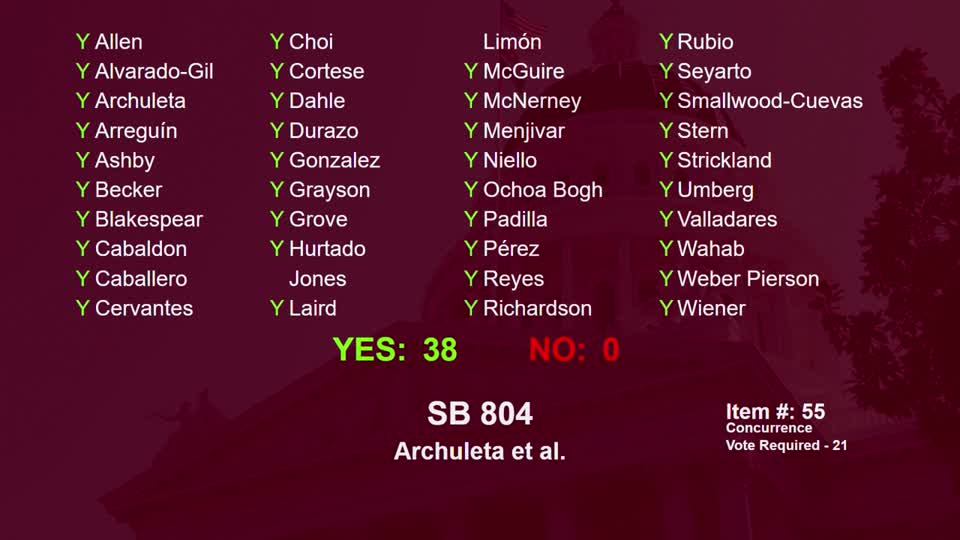 3MIN
Senate Floor
 17MIN
Senate Standing Committee on Environmental Quality
 4MIN
Assembly Floor
 1MIN
Assembly Standing Committee on Appropriations
 15MIN
Assembly Standing Committee on Natural Resources
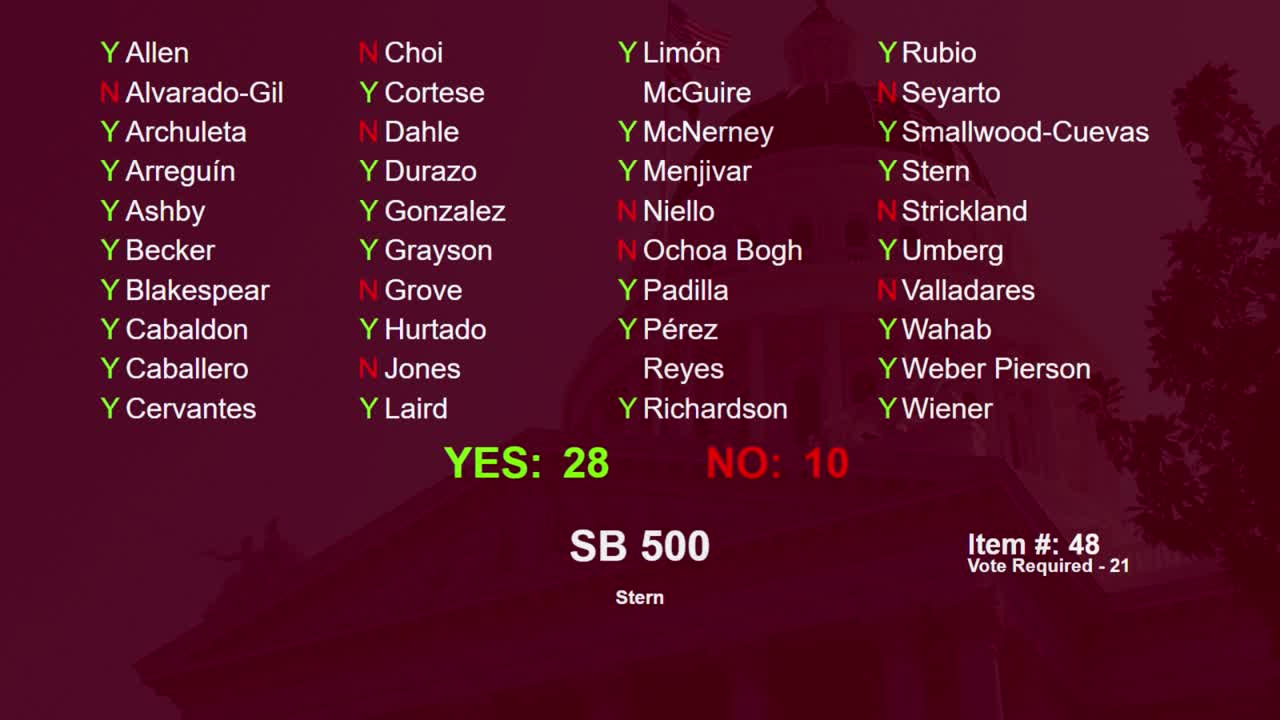 1MIN
Senate Floor
 26MIN
Senate Standing Committee on Natural Resources and Water
 17MIN
Senate Standing Committee on Environmental Quality
Bill Author

Bill Co-Author(s):