SB 87: Sales and Use Tax Law: consumer designation: all-volunteer fire departments.
- Session Year: 2025-2026
- House: Senate
- Latest Version Date: 2025-10-01
Current Status:
Passed
(2025-10-01: Chaptered by Secretary of State. Chapter 212, Statutes of 2025.)
Introduced
In Committee
Awaiting First Chamber Vote
Passed First Chamber
In Committee
Awaiting Second Chamber Vote
Passed Second Chamber
Enacted
What does this bill do?
The bill extends through January 1, 2031 the rule that treats all‑volunteer fire departments as consumers, not retailers, of goods they sell when all profits go to the department, so those sales are exempt from sales and use tax. It also requires the state tax agency to annually estimate and report the revenue loss from this exemption and says the state will not reimburse local governments for any lost local sales tax revenue.
The summary is provided by generative AI which can make mistakes. For original language, please view the details in the table below.
Existing sales and use tax laws, among other things, impose a tax on retailers measured by the gross receipts from their sales of tangible personal property sold at retail in this state. The Sales and Use Tax Law makes certain sellers of tangible personal property consumers, and not retailers, of the tangible personal property they sell, including, until January 1, 2026, an all-volunteer fire department, as defined, if the profits are used solely and exclusively in furtherance of the purposes of the all-volunteer fire department, as prescribed.
This bill would extend the sunset described above until January 1, 2031.
Existing law requires any bill authorizing a new tax expenditure to contain, among other things, specific goals, purposes, and objectives that the tax expenditure will achieve, detailed performance indicators, and data collection requirements.
The bill also would include additional information required for any bill authorizing a new tax expenditure.
The Bradley-Burns Uniform Local Sales and Use Tax Law authorizes counties and cities to impose local sales and use taxes in conformity with the Sales and Use Tax Law, and existing laws authorize districts, as specified, to impose transactions and use taxes in accordance with the Transactions and Use Tax Law, which generally conforms to the Sales and Use Tax Law. Amendments to the Sales and Use Tax Law are automatically incorporated into the local tax laws.
Existing law requires the state to reimburse counties and cities for revenue losses caused by the enactment of sales and use tax exemptions.
This bill would provide that, notwithstanding Section 2230 of the Revenue and Taxation Code, no appropriation is made and the state shall not reimburse any local agencies for sales and use tax revenues lost by them pursuant to this bill.
This bill would take effect immediately as a tax levy.
Existing sales and use tax laws, among other things, impose a tax on retailers measured by the gross receipts from their sales of tangible personal property sold at retail in this state. The Sales and Use Tax Law makes certain sellers of tangible personal property consumers, and not retailers, of the tangible personal property they sell, including, until January 1, 2026, an all-volunteer fire department, as defined, if the profits are used solely and exclusively in furtherance of the purposes of the all-volunteer fire department, as prescribed.
This bill would extend the sunset described above until January 1, 2031.
Existing law requires any bill authorizing a new tax expenditure to contain, among other things, specific goals, purposes, and objectives that the tax expenditure will achieve, detailed performance indicators, and data collection requirements.
The bill also would include additional information required for any bill authorizing a new tax expenditure.
The Bradley-Burns Uniform Local Sales and Use Tax Law authorizes counties and cities to impose local sales and use taxes in conformity with the Sales and Use Tax Law, and existing laws authorize districts, as specified, to impose transactions and use taxes in accordance with the Transactions and Use Tax Law, which generally conforms to the Sales and Use Tax Law. Amendments to the Sales and Use Tax Law are automatically incorporated into the local tax laws.
Existing law requires the state to reimburse counties and cities for revenue losses caused by the enactment of sales and use tax exemptions.
This bill would provide that, notwithstanding Section 2230 of the Revenue and Taxation Code, no appropriation is made and the state shall not reimburse any local agencies for sales and use tax revenues lost by them pursuant to this bill.
This bill would take effect immediately as a tax levy.
Existing sales and use tax laws, among other things, impose a tax on retailers measured by the gross receipts from their sales of tangible personal property sold at retail in this state. The Sales and Use Tax Law makes certain sellers of tangible personal property consumers, and not retailers, of the tangible personal property they sell, including, until January 1, 2026, an all-volunteer fire department, as defined, if the profits are used solely and exclusively in furtherance of the purposes of the all-volunteer fire department, as prescribed.
This bill would delete extend the sunset provision described above. above until January 1, 2031.
Existing law requires any bill authorizing a new tax expenditure to contain, among other things, specific goals, purposes, and objectives that the tax expenditure will achieve, detailed performance indicators, and data collection requirements.
The bill also would include additional information required for any bill authorizing a new tax expenditure.
The Bradley-Burns Uniform Local Sales and Use Tax Law authorizes counties and cities to impose local sales and use taxes in conformity with the Sales and Use Tax Law, and existing laws authorize districts, as specified, to impose transactions and use taxes in accordance with the Transactions and Use Tax Law, which generally conforms to the Sales and Use Tax Law. Amendments to the Sales and Use Tax Law are automatically incorporated into the local tax laws.
Existing law requires the state to reimburse counties and cities for revenue losses caused by the enactment of sales and use tax exemptions.
This bill would provide that, notwithstanding Section 2230 of the Revenue and Taxation Code, no appropriation is made and the state shall not reimburse any local agencies for sales and use tax revenues lost by them pursuant to this bill.
This bill would take effect immediately as a tax levy.
Existing sales and use tax laws, among other things, impose a tax on retailers measured by the gross receipts from their sales of tangible personal property sold at retail in this state. The Sales and Use Tax Law makes certain sellers of tangible personal property consumers, and not retailers, of the tangible personal property they sell, including, until January 1, 2026, an all-volunteer fire department, as defined, if the profits are used solely and exclusively in furtherance of the purposes of the all-volunteer fire department, as prescribed.
This bill would delete the sunset provision described above.
Existing law requires any bill authorizing a new tax expenditure to contain, among other things, specific goals, purposes, and objectives that the tax expenditure will achieve, detailed performance indicators, and data collection requirements.
The bill also would include additional information required for any bill authorizing a new tax expenditure.
The Bradley-Burns Uniform Local Sales and Use Tax Law authorizes counties and cities to impose local sales and use taxes in conformity with the Sales and Use Tax Law, and existing laws authorize districts, as specified, to impose transactions and use taxes in accordance with the Transactions and Use Tax Law, which generally conforms to the Sales and Use Tax Law. Amendments to the Sales and Use Tax Law are automatically incorporated into the local tax laws.
Existing law requires the state to reimburse counties and cities for revenue losses caused by the enactment of sales and use tax exemptions.
This bill would provide that, notwithstanding Section 2230 of the Revenue and Taxation Code, no appropriation is made and the state shall not reimburse any local agencies for sales and use tax revenues lost by them pursuant to this bill.
This bill would take effect immediately as a tax levy.
Existing sales and use tax laws, among other things, impose a tax on retailers measured by the gross receipts from their sales of tangible personal property sold at retail in this state. The Sales and Use Tax Law makes certain sellers of tangible personal property consumers, and not retailers, of the tangible personal property they sell, including, until January 1, 2026, an all-volunteer fire department, as defined, if the profits are used solely and exclusively in furtherance of the purposes of the all-volunteer fire department, as prescribed.
This bill would delete the sunset provision described above.
Existing law requires any bill authorizing a new tax expenditure to contain, among other things, specific goals, purposes, and objectives that the tax expenditure will achieve, detailed performance indicators, and data collection requirements.
The bill also would include additional information required for any bill authorizing a new tax expenditure.
The Bradley-Burns Uniform Local Sales and Use Tax Law authorizes counties and cities to impose local sales and use taxes in conformity with the Sales and Use Tax Law, and existing laws authorize districts, as specified, to impose transactions and use taxes in accordance with the Transactions and Use Tax Law, which generally conforms to the Sales and Use Tax Law. Amendments to the Sales and Use Tax Law are automatically incorporated into the local tax laws.
Existing law requires the state to reimburse counties and cities for revenue losses caused by the enactment of sales and use tax exemptions.
This bill would provide that, notwithstanding Section 2230 of the Revenue and Taxation Code, no appropriation is made and the state shall not reimburse any local agencies for sales and use tax revenues lost by them pursuant to this bill.
This bill would take effect immediately as a tax levy.
(a)An all-volunteer fire department is a consumer, and shall not be considered a retailer within this part, of all tangible personal property sold by it, including, but not limited to, hot prepared food products and clothing, if the profits are used solely and exclusively in furtherance of the purposes of the all-volunteer fire department.
(b)For purposes of this section, an all-volunteer fire department means an organization that meets all of the following requirements:
(1)A member shall not be paid a regular salary, but a member may be compensated on an hourly or per incident basis.
(2)The purpose of the organization is to protect the lives, property, and environment within a designated geographical area from fires, disasters, and emergency incidents through education, prevention, training, and emergency response.
(3)The organization is regularly organized for volunteer fire department purposes and qualifies as an exempt organization, either under Section 23701d or 23701f of this code or under Section 501(c)(3) or 501(c)(4) of the Internal Revenue Code, having official recognition and full or partial support of the government of the county, city, or district in which the volunteer fire department is located, and that has functions having an exclusive connection with the prevention and extinguishing of fires within the area of the county, city, or district extending official recognition for the benefit of the public generally and to lessen the burdens of the entity of government that would otherwise be obligated to furnish that fire protection.
(c)This section shall not apply if an all-volunteer fire department, in each of the two preceding calendar years, has gross receipts from the sale of tangible personal property of one hundred thousand dollars ($100,000) or more.
(d)For the purpose of complying with Section 41, with respect to the tax expenditure authorized by this section, the Legislature finds and declares all of the following:
(1)The specific purposes of this tax expenditure are all of the following:
(A)To ensure that the entire gross amount of fundraisers continues to stay with all-volunteer fire departments and helps provide critically needed equipment and services.
(B)To help all-volunteer fire departments through this critical time.
(C)To ensure all-volunteer fire departments can afford necessary equipment during fire season.
(2)For the purpose of aiding the Legislature in determining whether this section accomplishes the purposes described in paragraph (1), the California Department of Tax and Fee Administration shall annually estimate the revenue loss associated with the tax expenditure created by this section.
(3)The California Department of Tax and Fee Administration shall report, pursuant to Section 9795 of the Government Code, the information described in paragraph (2) to the Legislature before each year beginning on or after January 1, 2026.
(e)This section shall remain in effect only until January 1, 2031, and as of that date is repealed.
SEC. 2.Notwithstanding Section 2230 of the Revenue and Taxation Code, no appropriation is made by this act and the state shall not reimburse any local agency for any sales and use tax revenues lost by it under this act.
SEC. 3.This act provides for a tax levy within the meaning of Article IV of the California Constitution and shall go into immediate effect.
(a)An all-volunteer fire department is a consumer, and shall not be considered a retailer within this part, of all tangible personal property sold by it, including, but not limited to, hot prepared food products and clothing, if the profits are used solely and exclusively in furtherance of the purposes of the all-volunteer fire department.
(b)For purposes of this section, an all-volunteer fire department means an organization that meets all of the following requirements:
(1)A member shall not be paid a regular salary, but a member may be compensated on an hourly or per incident basis.
(2)The purpose of the organization is to protect the lives, property, and environment within a designated geographical area from fires, disasters, and emergency incidents through education, prevention, training, and emergency response.
(3)The organization is regularly organized for volunteer fire department purposes and qualifies as an exempt organization, either under Section 23701d or 23701f of this code or under Section 501(c)(3) or 501(c)(4) of the Internal Revenue Code, having official recognition and full or partial support of the government of the county, city, or district in which the volunteer fire department is located, and that has functions having an exclusive connection with the prevention and extinguishing of fires within the area of the county, city, or district extending official recognition for the benefit of the public generally and to lessen the burdens of the entity of government that would otherwise be obligated to furnish that fire protection.
(c)This section shall not apply if an all-volunteer fire department, in each of the two preceding calendar years, has gross receipts from the sale of tangible personal property of one hundred thousand dollars ($100,000) or more.
(d)For the purpose of complying with Section 41, with respect to the tax expenditure authorized by this section, the Legislature finds and declares all of the following:
(1)The specific purposes of this tax expenditure are all of the following:
(A)To ensure that the entire gross amount of fundraisers continues to stay with all-volunteer fire departments and helps provide critically needed equipment and services.
(B)To help all-volunteer fire departments through this critical time.
(C)To ensure all-volunteer fire departments can afford necessary equipment during fire season.
(2)For the purpose of aiding the Legislature in determining whether this section accomplishes the purposes described in paragraph (1), the California Department of Tax and Fee Administration shall annually estimate the revenue loss associated with the tax expenditure created by this section.
(3)The California Department of Tax and Fee Administration shall report, pursuant to Section 9795 of the Government Code, the information described in paragraph (2) to the Legislature before each year beginning on or after January 1, 2026.
(e)This section shall remain in effect only until January 1, 2031, and as of that date is repealed.
SEC. 2.Notwithstanding Section 2230 of the Revenue and Taxation Code, no appropriation is made by this act and the state shall not reimburse any local agency for any sales and use tax revenues lost by it under this act.
SEC. 3.This act provides for a tax levy within the meaning of Article IV of the California Constitution and shall go into immediate effect.
(a)An all-volunteer fire department is a consumer, and shall not be considered a retailer within this part, of all tangible personal property sold by it, including, but not limited to, hot prepared food products and clothing, if the profits are used solely and exclusively in furtherance of the purposes of the all-volunteer fire department.
(b)For purposes of this section, an all-volunteer fire department means an organization that meets all of the following requirements:
(1)A member shall not be paid a regular salary, but a member may be compensated on an hourly or per incident basis.
(2)The purpose of the organization is to protect the lives, property, and environment within a designated geographical area from fires, disasters, and emergency incidents through education, prevention, training, and emergency response.
(3)The organization is regularly organized for volunteer fire department purposes and qualifies as an exempt organization, either under Section 23701d or 23701f of this code or under Section 501(c)(3) or 501(c)(4) of the Internal Revenue Code, having official recognition and full or partial support of the government of the county, city, or district in which the volunteer fire department is located, and that has functions having an exclusive connection with the prevention and extinguishing of fires within the area of the county, city, or district extending official recognition for the benefit of the public generally and to lessen the burdens of the entity of government that would otherwise be obligated to furnish that fire protection.
(c)This section shall not apply if an all-volunteer fire department, in each of the two preceding calendar years, has gross receipts from the sale of tangible personal property of one hundred thousand dollars ($100,000) or more.
(d)For the purpose of complying with Section 41, with respect to the tax expenditure authorized by this section, the Legislature finds and declares all of the following:
(1)The specific purposes of this tax expenditure are all of the following:
(A)To ensure that the entire gross amount of fundraisers continues to stay with all-volunteer fire departments and helps provide critically needed equipment and services.
(B)To help all-volunteer fire departments through this critical time.
(C)To ensure all-volunteer fire departments can afford necessary equipment during fire season.
(2)For the purpose of aiding the Legislature in determining whether this section accomplishes the purposes described in paragraph (1), the California Department of Tax and Fee Administration shall annually estimate the revenue loss associated with the tax expenditure created by this section.
(3)The California Department of Tax and Fee Administration shall report, pursuant to Section 9795 of the Government Code, the information described in paragraph (2) to the Legislature before each year beginning on or after January 1, 2026.
(e)This section shall remain in effect only until January 1, 2031, and as of that date is repealed.
SEC. 2.Notwithstanding Section 2230 of the Revenue and Taxation Code, no appropriation is made by this act and the state shall not reimburse any local agency for any sales and use tax revenues lost by it under this act.
SEC. 3.This act provides for a tax levy within the meaning of Article IV of the California Constitution and shall go into immediate effect.
(a)An all-volunteer fire department is a consumer, and shall not be considered a retailer within the provisions of this part, of all tangible personal property sold by it, including, but not limited to, hot prepared food products and clothing, if the profits are used solely and exclusively in furtherance of the purposes of the all-volunteer fire department.
(b)For purposes of this section, an all-volunteer fire department means an organization that meets all of the following requirements:
(1)A member shall not be paid a regular salary, but a member may be compensated on an hourly or per incident basis.
(2)The purpose of the organization is to protect the lives, property, and environment within a designated geographical area from fires, disasters, and emergency incidents through education, prevention, training, and emergency response.
(3)The organization is regularly organized for volunteer fire department purposes and qualifies as an exempt organization, either under Section 23701d or 23701f of this code or under Section 501(c)(3) or 501(c)(4) of the Internal Revenue Code, having official recognition and full or partial support of the government of the county, city, or district in which the volunteer fire department is located, and that has functions having an exclusive connection with the prevention and extinguishing of fires within the area of the county, city, or district extending official recognition for the benefit of the public generally and to lessen the burdens of the entity of government that would otherwise be obligated to furnish that fire protection.
(c)This section shall not apply if an all-volunteer fire department, in each of the two preceding calendar years, has gross receipts from the sale of tangible personal property of one hundred thousand dollars ($100,000) or more.
(d)For the purpose of complying with Section 41, with respect to the tax expenditure authorized by this section, the Legislature finds and declares all of the following:
(1)The specific purposes of this tax expenditure are all of the following:
(A)To ensure that the entire gross amount of fundraisers continues to stay with all-volunteer fire departments and helps provide critically needed equipment and services.
(B)To help all-volunteer fire departments through this critical time.
(C)To ensure all-volunteer fire departments can afford necessary equipment during fire season.
(2)For the purpose of aiding the Legislature in determining whether this section accomplishes the purposes described in paragraph (1), the California Department of Tax and Fee Administration shall annually estimate the revenue loss associated with the tax expenditure created by this section.
(3)The California Department of Tax and Fee Administration shall report, pursuant to Section 9795 of the Government Code, the information described in paragraph (2) to the Legislature before each year beginning on or after January 1, 2026.
SEC. 2.Notwithstanding Section 2230 of the Revenue and Taxation Code, no appropriation is made by this act and the state shall not reimburse any local agency for any sales and use tax revenues lost by it under this act.
SEC. 3.This act provides for a tax levy within the meaning of Article IV of the California Constitution and shall go into immediate effect.
(a)An all volunteer all-volunteer fire department is a consumer, and shall not be considered a retailer within the provisions of this part, of all tangible personal property sold by it, including, but not limited to, hot prepared food products and clothing, if the profits are used solely and exclusively in furtherance of the purposes of the all volunteer all-volunteer fire department.
(b)For purposes of this section, an all volunteer all-volunteer fire department means an organization that meets all of the following requirements:
(1)A member shall not be paid a regular salary, but a member may be compensated on an hourly or per incident basis.
(2)The purpose of the organization is to protect the lives, property, and environment within a designated geographical area from fires, disasters, and emergency incidents through education, prevention, training, and emergency response.
(3)The organization is regularly organized for volunteer fire department purposes and qualifies as an exempt organization, either under Section 23701d or 23701f of this code or under Section 501(c)(3) or 501(c)(4) of the Internal Revenue Code, having official recognition and full or partial support of the government of the county, city, or district in which the volunteer fire department is located, and that has functions having an exclusive connection with the prevention and extinguishing of fires within the area of the county, city, or district extending official recognition for the benefit of the public generally and to lessen the burdens of the entity of government that would otherwise be obligated to furnish that fire protection.
(c)This section shall not apply if an all volunteer all-volunteer fire department, in each of the two preceding calendar years, has gross receipts from the sale of tangible personal property of one hundred thousand dollars ($100,000) or more.
(d)This section shall remain in effect only until January 1, 2026, and as of that date is repealed.(d)For the purpose of complying with Section 41, with respect to the tax expenditure authorized by this section, the Legislature finds and declares all of the following:
(1)The specific purposes of this tax expenditure are all of the following:
(A)To ensure that the entire gross amount of fundraisers continues to stay with all-volunteer fire departments and helps provide critically needed equipment and services.
(B)To help all-volunteer fire departments through this critical time.
(C)To ensure all-volunteer fire departments can afford necessary equipment during fire season.
(2)For the purpose of aiding the Legislature in determining whether this section accomplishes the purposes described in paragraph (1), the California Department of Tax and Fee Administration shall annually estimate the revenue loss associated with the tax expenditure created by this section.
(3)The California Department of Tax and Fee Administration shall report, pursuant to Section 9795 of the Government Code, the information described in paragraph (2) to the Legislature before each year beginning on or after January 1, 2026.
SEC. 2.Notwithstanding Section 2230 of the Revenue and Taxation Code, no appropriation is made by this act and the state shall not reimburse any local agency for any sales and use tax revenues lost by it under this act.
SEC. 3.This act provides for a tax levy within the meaning of Article IV of the California Constitution and shall go into immediate effect.
|
Date
|
Status
|
|---|---|
| Oct 1, 2025 | Chaptered by Secretary of State. Chapter 212, Statutes of 2025. |
| Oct 1, 2025 | Approved by the Governor. |
| Sep 9, 2025 | Enrolled and presented to the Governor at 2 p.m. |
| Sep 3, 2025 | Assembly amendments concurred in. (Ayes 40. Noes 0. Page 2467.) Ordered to engrossing and enrolling. |
| Aug 28, 2025 | In Senate. Concurrence in Assembly amendments pending. |
| Aug 28, 2025 | Read third time. Passed. (Ayes 75. Noes 0. Page 2767.) Ordered to the Senate. |
| Jul 3, 2025 | Read second time. Ordered to third reading. |
| Jul 2, 2025 | From committee: Do pass. (Ayes 14. Noes 0.) (July 2). |
| Jun 24, 2025 | From committee: Do pass and re-refer to Com. on APPR. (Ayes 5. Noes 0.) (June 23). Re-referred to Com. on APPR. |
| Jun 12, 2025 | From committee with author's amendments. Read second time and amended. Re-referred to Com. on REV. & TAX. |
| Jun 5, 2025 | Referred to Com. on REV. & TAX. |
| May 29, 2025 | In Assembly. Read first time. Held at Desk. |
| May 29, 2025 | Read third time. Passed. (Ayes 38. Noes 0. Page 1323.) Ordered to the Assembly. |
| May 27, 2025 | Ordered to special consent calendar. |
| May 23, 2025 | Read second time. Ordered to third reading. |
| May 23, 2025 | From committee: Do pass. (Ayes 6. Noes 0. Page 1191.) (May 23). |
| May 16, 2025 | Set for hearing May 23. |
| Apr 7, 2025 | April 7 hearing: Placed on APPR. suspense file. |
| Mar 28, 2025 | Set for hearing April 7. |
| Mar 12, 2025 | From committee: Do pass and re-refer to Com. on APPR. with recommendation: To consent calendar. (Ayes 5. Noes 0.) (March 12). Re-referred to Com. on APPR. |
| Feb 26, 2025 | Set for hearing March 12. |
| Feb 24, 2025 | From committee with author's amendments. Read second time and amended. Re-referred to Com. on REV. & TAX. |
| Jan 29, 2025 | Referred to Com. on REV. & TAX. |
| Jan 22, 2025 | From printer. May be acted upon on or after February 21. |
| Jan 21, 2025 | Introduced. Read first time. To Com. on RLS. for assignment. To print. |
|
Date
|
Description
|
Location
|
Votes
|
|
|---|---|---|---|---|
| Sep 3, 2025 | Unfinished Business SB87 Seyarto et al. Concurrence | Senate Floor |
Passed |
|
| Aug 28, 2025 | SB 87 Seyarto Senate Third Reading By Alanis | Assembly Floor |
Passed |
|
| Jul 2, 2025 | Do pass. | Assembly Standing Committee on Appropriations |
Passed |
|
| Jun 23, 2025 | Do pass and be re-referred to the Committee on [Appropriations] | Assembly Standing Committee on Revenue and Taxation |
Passed |
|
| May 29, 2025 | Special Consent SB87 Seyarto et al. | Senate Floor |
Passed |
|
| May 23, 2025 | Do pass | Senate Standing Committee on Appropriations |
Passed |
|
| Apr 7, 2025 | Placed on suspense file | Senate Standing Committee on Appropriations |
Passed |
|
| Mar 12, 2025 | Do pass, but first be re-referred to the Committee on [Appropriations] with the recommendation: To Consent Calendar | Senate Standing Committee on Revenue and Taxation |
Passed |
This list shows positions taken on this bill by organizations on the date displayed, which is linked to the original source.
Positions by individuals are not included.
|
Organization
|
Position
|
Date
|
|---|---|---|
| California Forestry Association | ** Support | |
| California Special Districts Association | ** Support | |
| California State Firefighters' Association | ** Support | |
| Howard Jarvis Taxpayers Association | ** Support | |
| Kings Mountain Volunteer Fire Department | ** Support | |
| La Honda Fire Brigade | ** Support |
SENATE RULES COMMITTEE Office of Senate Floor Analyses (916) 651-1520 Fax: (916) 327-4478 | SB 87 |
UNFINISHED BUSINESS
Bill No: SB 87
Author: Seyarto (R), et al.
Amended: 6/12/25
Vote: 21
SENATE REVENUE AND TAXATION COMMITTEE: 5-0, 3/12/25
AYES: McNerney, Valladares, Ashby, Grayson, Umberg
SENATE APPROPRIATIONS COMMITTEE: 6-0, 5/23/25
AYES: Caballero, Seyarto, Cabaldon, Grayson, Richardson, Wahab
NO VOTE RECORDED: Dahle
SENATE FLOOR: 38-0, 5/29/25
AYES: Allen, Alvarado-Gil, Archuleta, Arreguín, Ashby, Becker, Blakespear, Cabaldon, Caballero, Cervantes, Choi, Cortese, Dahle, Durazo, Gonzalez, Grayson, Grove, Hurtado, Jones, Laird, McGuire, McNerney, Menjivar, Niello, Ochoa Bogh, Padilla, Pérez, Richardson, Rubio, Seyarto, Smallwood-Cuevas, Stern, Strickland, Umberg, Valladares, Wahab, Weber Pierson, Wiener
NO VOTE RECORDED: Limón, Reyes
ASSEMBLY FLOOR: 75-0, 8/28/25 - See last page for vote
SUBJECT: Sales and Use Tax Law: consumer designation: all-volunteer fire departments
SOURCE: Author
DIGEST:
This bill extends the sunset provision for the designation of a qualifying volunteer fire department as a consumer, not a retailer, under the Sales and Use Tax Law, until January 1, 2031.
Assembly Amendments
of 6/12/25 extend the consumer designation of volunteer fire departments to January 1, 2031; the version of the measure the Senate approved repealed the sunset.
ANALYSIS:
Existing law:
- Imposes the sales tax on every retailer “engaged in business in this state” that sells tangible personal property, and requires them to register with the California Department of Tax and Fee Administration (CDTFA), as well as remit taxes collected from purchasers to CDTFA.
- Applies the sales tax whenever a retail sale occurs, which is generally any sale other than one for resale in the regular course of business.
- Provides that unless the purchaser pays the sales tax to the retailer, they are liable for the use tax, which is imposed on any person consuming tangible personal property in the state, and requires the purchaser to remit use tax to CDTFA.
- Sets the state sales and use tax rate at 7.25% of the sales price of the property sold or used, of which 3.9375% flows to the state General Fund.
- Allows cities, counties, and specified special districts to increase the sales and use tax, also known as district or transactions and use taxes, up to a 2% countywide cap, with some exceptions.
- Requires retailers to obtain a seller’s permit and report to CDTFA any sales tax collected from purchasers quarterly on a return.
- Treats nonprofits, public agencies, and charities generally the same way as any other retailer by not providing blanket exemptions from collecting and remitting the tax on their purchases or sales of taxable goods.
- Designates certain sellers as “consumers,” meaning that the law considers the tax paid when they purchase property, and the seller neither obtains a permit, nor collects and remits to CDTFA any tax from the purchaser at sale, including:
- Licensed medical and veterinary professionals dispensing specified products during the course of performing professional services;
- Nonprofit associations and organizations performing auxiliary services to any city or county museum in this state, where the profits are used for purposes of the organization;
- Non-profit veteran organizations that sell flags of the United States of America;
- The Department of Transportation’s leases and sales of automobiles; and
- Nonprofit youth organizations that intermittently or irregularly sell food, nonalcoholic beverages, and other property made by the organization’s members.
- Designates all-volunteer fire departments as consumers, and not retailers, under the Sales and Use Tax Law for all its sales of tangible personal property, so long as its profits are solely and exclusively used to further the department’s purposes (SB 598, Hill, Chapter 248, Statutes of 2015, and SB 38 Hill, Chapter 78, Statutes of 2020). To qualify, a volunteer fire department must:
- Pay its members hourly or per incident, not with a regular salary;
- Have as its purpose the protection of life, property, and the environment within a designated geographic area from fires, disasters, and emergency incidents through education, prevention, training, and emergency response;
- Be organized as a tax exempt organization for state and federal purposes; and
- Meet the definition of “volunteer fire department,” used in the welfare exemption from property tax.
- Provides that the designation does not apply when the volunteer fire department has gross receipts from the sales of property that exceeds $100,000 in each of the two preceding calendar years.
- Sunsets the designation of all-volunteer fire departments as consumers under the Sales and Use Tax Law on January 1, 2026.
This bill:
- Extends the current sunset date of January 1, 2026, to January 1, 2031, for a volunteer fire department’s designation as a consumer under the Sales and Use Tax Law.
- Makes legislative findings and declarations supporting its purposes to comply with Section 41 of the Revenue and Taxation Code, specifically to direct CDTFA to submit a report to the Legislature before each year beginning on or after January 1, 2026 regarding the annual revenue loss associated with the tax expenditure created by this section.
Background
Without consumer treatment, a volunteer fire department would have to obtain a seller’s permit from CDTFA and use a resale certificate to sell items at a fundraiser. If the fire department intends to hold a barbecue fundraiser, it would show the resale certificate to the supplier when purchasing hot dogs and hamburgers, and the supplier would not charge the department the sales tax at purchase. When the fire department sold the food at the fundraiser, it would collect tax from the purchaser in an amount equal to the combined state and local rate for that jurisdiction multiplied by the purchase price, then remit the total tax amount from all its quarterly sales to CDTFA. The fire department would have to collect and remit the tax even if someone donated the hot dogs and hamburgers. Under SB 87, the fire department would continue to pay the supplier the tax, as part of its purchase of hot dogs and hamburgers, and would not need to collect and remit tax from its sales at the barbecue fundraiser; instead, the food supplier would remit taxes due on the sale of those products to CDTFA.
Volunteer fire department report that most of their fundraising results from pancake breakfasts, crab, or pasta feeds. For example, departments can raise anywhere from $2,000 to $6,000 by selling tickets to between 200 and 300 people for a price between $10 and $20. The department may also sell t-shirts, hats, aprons, sweatshirts, and cups, which can generate between $1,000 and $5,000. The resulting funds help departments update, replace, and acquire critical firefighting equipment and can help support the purchase of expensive essentials like fire engines.
FISCAL EFFECT: Appropriation: No Fiscal Com.: Yes Local: No
According to the Assembly Appropriations Committee, this bill will result in an annual General Fund revenue loss of approximately $59,000 and an annual local government revenue loss of approximately $71,000. CDTFA would incur absorbable costs to annually report revenue loss to the Legislature.
SUPPORT: (Verified 8/28/25)
California Forestry Association
California Special Districts Association
California State Firefighters' Association
Howard Jarvis Taxpayers Association
Kings Mountain Volunteer Fire Department
LA Honda Fire Brigade
OPPOSITION: (Verified 8/28/25)
None received
ARGUMENTS IN SUPPORT: According to the author, “SB-87 is vital legislation that ensures the survival and effectiveness of California's all-volunteer fire departments. These dedicated firefighters protect our communities without compensation, relying on local fundraising events to purchase essential equipment and maintain their operations. Making their sales tax exemption permanent, rather than requiring periodic renewals, provides the stability these departments need to plan for the future. This isn't just about tax policy – it's about supporting the brave men and women who voluntarily put their lives on the line to keep our neighborhoods safe. SB-87 represents California's enduring commitment to these selfless public servants and the communities they protect.”
ASSEMBLY FLOOR: 75-0, 8/28/25
Ayes: Addis, Aguiar-Curry, Ahrens, Alanis, Arambula, Ávila Farías, Bains, Bauer-Kahan, Bennett, Boerner, Bonta, Bryan, Calderon, Caloza, Carrillo, Castillo, Chen, Connolly, Davies, DeMaio, Dixon, Elhawary, Ellis, Flora, Fong, Gabriel, Gallagher, Garcia, Gipson, Jeff Gonzalez, Mark González, Hadwick, Haney, Harabedian, Hart, Hoover, Irwin, Jackson, Kalra, Krell, Lackey, Lowenthal, Macedo, McKinnor, Muratsuchi, Nguyen, Ortega, Pacheco, Papan, Patel, Patterson, Pellerin, Petrie-Norris, Quirk-Silva, Ramos, Ransom, Celeste Rodriguez, Michelle Rodriguez, Rogers, Blanca Rubio, Sanchez, Schiavo, Schultz, Sharp-Collins, Solache, Soria, Stefani, Ta, Tangipa, Wallis, Ward, Wicks, Wilson, Zbur, Rivas
No Vote Recorded: Alvarez, Berman, Lee, Valencia
Prepared by: Haley Summers / REV. & TAX. / (916) 651-4117
7/21/26 14:56:39
**** END ****
SENATE RULES COMMITTEE Office of Senate Floor Analyses (916) 651-1520 Fax: (916) 327-4478 | SB 87 |
UNFINISHED BUSINESS
Bill No: SB 87
Author: Seyarto (R), et al.
Amended: 6/12/25 in Assembly
Vote: 21
SENATE REVENUE AND TAXATION COMMITTEE: 5-0, 3/12/25
AYES: McNerney, Valladares, Ashby, Grayson, Umberg
SENATE APPROPRIATIONS COMMITTEE: 6-0, 5/23/25
AYES: Caballero, Seyarto, Cabaldon, Grayson, Richardson, Wahab
NO VOTE RECORDED: Dahle
SENATE FLOOR: 38-0, 5/29/25
AYES: Allen, Alvarado-Gil, Archuleta, Arreguín, Ashby, Becker, Blakespear, Cabaldon, Caballero, Cervantes, Choi, Cortese, Dahle, Durazo, Gonzalez, Grayson, Grove, Hurtado, Jones, Laird, McGuire, McNerney, Menjivar, Niello, Ochoa Bogh, Padilla, Pérez, Richardson, Rubio, Seyarto, Smallwood-Cuevas, Stern, Strickland, Umberg, Valladares, Wahab, Weber Pierson, Wiener
NO VOTE RECORDED: Limón, Reyes
ASSEMBLY FLOOR: 75-0, 8/28/25 - See last page for vote
SUBJECT: Sales and Use Tax Law: consumer designation: all-volunteer fire departments
SOURCE: Author
DIGEST:
This bill extends the sunset provision for the designation of a qualifying volunteer fire department as a consumer, not a retailer, under the Sales and Use Tax Law, until January 1, 2031.
Assembly Amendments
of 6/12/25 extend the consumer designation of volunteer fire departments to January 1, 2031; the version of the measure the Senate approved repealed the sunset.
ANALYSIS:
Existing law:
- Imposes the sales tax on every retailer “engaged in business in this state” that sells tangible personal property, and requires them to register with the California Department of Tax and Fee Administration (CDTFA), as well as remit taxes collected from purchasers to CDTFA.
- Applies the sales tax whenever a retail sale occurs, which is generally any sale other than one for resale in the regular course of business.
- Provides that unless the purchaser pays the sales tax to the retailer, they are liable for the use tax, which is imposed on any person consuming tangible personal property in the state, and requires the purchaser to remit use tax to CDTFA.
- Sets the state sales and use tax rate at 7.25% of the sales price of the property sold or used, of which 3.9375% flows to the state General Fund.
- Allows cities, counties, and specified special districts to increase the sales and use tax, also known as district or transactions and use taxes, up to a 2% countywide cap, with some exceptions.
- Requires retailers to obtain a seller’s permit and report to CDTFA any sales tax collected from purchasers quarterly on a return.
- Treats nonprofits, public agencies, and charities generally the same way as any other retailer by not providing blanket exemptions from collecting and remitting the tax on their purchases or sales of taxable goods.
- Designates certain sellers as “consumers,” meaning that the law considers the tax paid when they purchase property, and the seller neither obtains a permit, nor collects and remits to CDTFA any tax from the purchaser at sale, including:
- Licensed medical and veterinary professionals dispensing specified products during the course of performing professional services;
- Nonprofit associations and organizations performing auxiliary services to any city or county museum in this state, where the profits are used for purposes of the organization;
- Non-profit veteran organizations that sell flags of the United States of America;
- The Department of Transportation’s leases and sales of automobiles; and
- Nonprofit youth organizations that intermittently or irregularly sell food, nonalcoholic beverages, and other property made by the organization’s members.
- Designates all-volunteer fire departments as consumers, and not retailers, under the Sales and Use Tax Law for all its sales of tangible personal property, so long as its profits are solely and exclusively used to further the department’s purposes (SB 598, Hill, Chapter 248, Statutes of 2015, and SB 38 Hill, Chapter 78, Statutes of 2020). To qualify, a volunteer fire department must:
- Pay its members hourly or per incident, not with a regular salary;
- Have as its purpose the protection of life, property, and the environment within a designated geographic area from fires, disasters, and emergency incidents through education, prevention, training, and emergency response;
- Be organized as a tax exempt organization for state and federal purposes; and
- Meet the definition of “volunteer fire department,” used in the welfare exemption from property tax.
- Provides that the designation does not apply when the volunteer fire department has gross receipts from the sales of property that exceeds $100,000 in each of the two preceding calendar years.
- Sunsets the designation of all-volunteer fire departments as consumers under the Sales and Use Tax Law on January 1, 2026.
This bill:
- Extends the current sunset date of January 1, 2026, to January 1, 2031, for a volunteer fire department’s designation as a consumer under the Sales and Use Tax Law.
- Makes legislative findings and declarations supporting its purposes to comply with Section 41 of the Revenue and Taxation Code, specifically to direct CDTFA to submit a report to the Legislature before each year beginning on or after January 1, 2026 regarding the annual revenue loss associated with the tax expenditure created by this section.
Background
Without consumer treatment, a volunteer fire department would have to obtain a seller’s permit from CDTFA and use a resale certificate to sell items at a fundraiser. If the fire department intends to hold a barbecue fundraiser, it would show the resale certificate to the supplier when purchasing hot dogs and hamburgers, and the supplier would not charge the department the sales tax at purchase. When the fire department sold the food at the fundraiser, it would collect tax from the purchaser in an amount equal to the combined state and local rate for that jurisdiction multiplied by the purchase price, then remit the total tax amount from all its quarterly sales to CDTFA. The fire department would have to collect and remit the tax even if someone donated the hot dogs and hamburgers. Under SB 87, the fire department would continue to pay the supplier the tax, as part of its purchase of hot dogs and hamburgers, and would not need to collect and remit tax from its sales at the barbecue fundraiser; instead, the food supplier would remit taxes due on the sale of those products to CDTFA.
Volunteer fire department report that most of their fundraising results from pancake breakfasts, crab, or pasta feeds. For example, departments can raise anywhere from $2,000 to $6,000 by selling tickets to between 200 and 300 people for a price between $10 and $20. The department may also sell t-shirts, hats, aprons, sweatshirts, and cups, which can generate between $1,000 and $5,000. The resulting funds help departments update, replace, and acquire critical firefighting equipment and can help support the purchase of expensive essentials like fire engines.
FISCAL EFFECT: Appropriation: No Fiscal Com.: Yes Local: No
According to the Assembly Appropriations Committee, this bill will result in an annual General Fund revenue loss of approximately $59,000 and an annual local government revenue loss of approximately $71,000. CDTFA would incur absorbable costs to annually report revenue loss to the Legislature.
SUPPORT: (Verified 8/28/25)
California Forestry Association
California Special Districts Association
California State Firefighters' Association
Howard Jarvis Taxpayers Association
Kings Mountain Volunteer Fire Department
LA Honda Fire Brigade
OPPOSITION: (Verified 8/28/25)
None received
ARGUMENTS IN SUPPORT: According to the author, “SB-87 is vital legislation that ensures the survival and effectiveness of California's all-volunteer fire departments. These dedicated firefighters protect our communities without compensation, relying on local fundraising events to purchase essential equipment and maintain their operations. Making their sales tax exemption permanent, rather than requiring periodic renewals, provides the stability these departments need to plan for the future. This isn't just about tax policy – it's about supporting the brave men and women who voluntarily put their lives on the line to keep our neighborhoods safe. SB-87 represents California's enduring commitment to these selfless public servants and the communities they protect.”
Prepared by: Haley Summers / REV. & TAX. / (916) 651-4117
8/28/25 16:49:578/28/25 16:49:57
**** END ****
Date of Hearing: June 23, 2025
ASSEMBLY COMMITTEE ON REVENUE AND TAXATION
Mike Gipson, Chair
SBPCA Bill Id:SB 87
Author:(Seyarto) – As Amended Ver:June 12, 2025
Majority vote. Tax levy. Fiscal committee.
SENATE VOTE: 38-0
SUBJECT: Sales and Use Tax Law: consumer designation: all-volunteer fire departments
SUMMARY: Extends the ability of an all-volunteer fire department (AVFD) to fundraise by selling tangible personal property (TPP) without incurring the obligation to collect and remit sales and use (SUT) taxes on those sales. Specifically, this bill:
- Extends, from January 1, 2026, to January 1, 2031, the designation that a qualifying AVFD is a consumer, and not a retailer, of TPP it sells provided that the profits are used solely and exclusively in furtherance of the AVFD's purposes.
- Provides that, notwithstanding existing law, the state shall not reimburse any local agency for any SUT revenues lost as a result of this bill.
- Takes immediate effect as a tax levy.
EXISTING LAW:
- Imposes a sales tax on retailers for the privilege of selling TPP, absent a specific exemption. The tax is based upon the retailer's gross receipts from TPP sales in California. (Revenue and Taxation Code (R&TC) Section 6001 et seq.)
- Imposes a complimentary use tax on the storage, use, or other consumption of TPP purchased out-of-state and brought into California. The use tax is set at the same rate as the state's sales tax and both must generally be remitted to the California Department of Tax and Fee Administration (CDTFA). (R&TC Section 6201 et seq.)
- Designates several entities as consumers, and not retailers, of specified TPP they use or furnish in the performance of their professional services. (R&TC Section 6018 et seq.)
- Provides a property tax exemption for the property of a volunteer fire department that is used exclusively for volunteer fire department purposes, provided the department qualifies for exemption under R&TC Section 23701d or 23701f or under Internal Revenue Code (IRC) Section 501(c)(3) or 501(c)(4). (R&TC Section 213.7.)
- Designates, for purposes of the SUT Law, an AVFD as a consumer of all TPP it sells, including hot prepared food products and clothing, if the profits are used solely and exclusively in furtherance of the purposes of the AVFD. (R&TC Section 6018.10.)
- Defines an "AVFD" as an organization that meets all the following requirements:
- All members shall not be paid a regular salary, but may be compensated on an hourly or per incident basis;
- The organization's purpose is to protect the lives, property, and environment within a designated geographical area from fires, disasters, and emergency incidents through education, prevention, training, and emergency response;
- The organization is regularly organized for volunteer fire department purposes that qualifies [sic] as an exempt organization, either under R&TC Section 23701d or 23701f or under IRC Section 501(c)(3) or 501(c)(4);
- The organization enjoys official recognition and full or partial support of the government of the county, city, or district in which the volunteer fire department is located;
- The organization's functions have an exclusive connection with the prevention and extinguishing of fires within the area of the county, city, or district extending official recognition for the benefit of the public generally and to lessen the burdens of the entity of government that would otherwise be obligated to furnish that fire protection; and,
- Provides that this preferential tax status shall not apply if an AVFD, in each of the two preceding calendar years, has receipts from the sale of TPP of $100,000 or more.
- Provides that this designation shall remain in effect until January 1, 2026, and is repealed as of that date.
- Requires, for purposes of complying with R&TC Section 41, the CDTFA to annually estimate the revenue loss associated with this designation and report that information to the Legislature on an annual basis.
FISCAL EFFECT: The CDTFA estimates this bill would result in a revenue loss of $130,000 in fiscal year 2025-26.
COMMENTS:
- The author has provided the following statement in support of this bill:
SB 87 is vital legislation that ensures the survival and effectiveness of California's all-volunteer fire departments. These dedicated firefighters protect our communities without compensation, relying on local fundraising events to purchase essential equipment and maintain their operations. Extending their sales tax exemption for another five years will provide these departments with the continued stability they need to effectively serve their communities. This isn't just about tax policy – it's about supporting the brave men and women who voluntarily put their lives on the line to keep our neighborhoods safe. SB-87 represents California's enduring commitment to these selfless public servants and the communities they protect.
- This bill is supported by the La Honda Fire Brigade, which notes:
California’s AVFDs play a vital role in protecting residents in rural and unincorporated areas, often with minimal resources and without paid staff. Since 2015, state law has wisely exempted AVFDs from collecting sales tax on fundraising income, allowing departments to allocate more funds toward operational needs like equipment, fire engines, and emergency medical supplies. However, the current exemption is set to expire in 2026. SB 87 provides a necessary continuation of this relief by authorizing the exemption for five additional years. Without this action, AVFDs would once again face sales tax obligations on community-based fundraising efforts—such as pancake breakfasts, T-shirt sales, and holiday events—that often serve as their primary revenue sources. With the costs of emergency response equipment continuing to rise, it is imperative that these departments retain every dollar they raise.
- Committee Staff Comments:
- What is a "tax expenditure"? Existing law provides various credits, deductions, exclusions, and exemptions for particular taxpayer groups. In the late 1960s, U.S. Treasury officials began arguing that these features of the tax law should be referred to as "expenditures" since they are generally enacted to accomplish some governmental purpose and there is a determinable cost associated with each (in the form of foregone revenues).
As the Department of Finance notes in its annual Tax Expenditure Report, there are several key differences between tax expenditures and direct expenditures. First, tax expenditures are typically reviewed less frequently than direct expenditures. Second, there is generally no control over the amount of revenue losses associated with any given tax expenditure. Finally, it should also be noted that, once enacted, it takes a two-thirds vote to rescind an existing tax expenditure absent a sunset date. This effectively results in a "one-way ratchet" whereby tax expenditures can be conferred by majority vote, but cannot be rescinded, irrespective of their efficacy or cost, without a supermajority vote.
- Retailers are generally responsible for SUT: Existing law imposes the sales tax on every retailer "engaged in business in this state" that sells TPP and requires them to register with the CDTFA to obtain a seller's permit. In general, it is the retailer's responsibility to collect the appropriate tax at purchase and remit collected amounts to the CDTFA on a quarterly basis. Sales tax applies whenever a retail sale occurs in this state, which is generally any sale other than one for resale in the regular course of business. The current statewide sales tax rate is 7.25%. Additionally, cities, counties, and specified special districts may levy additional increments of sales tax with voter approval, also known as district taxes or transactions and use taxes.
Generally, if an organization makes three or more sales of items subject to California SUT tax in a 12-month period, it is required to register for a California seller's permit and pay tax on its taxable sales. However, if the organization is selling items at a location for less than 90 days, it is considered a temporary seller and is required to hold a temporary seller's permit. Organizations that already hold a seller's permit are required to obtain a sub-permit for each temporary location. Some of the most common types of sellers who may need a temporary seller's permit include firework and holiday tree stands, garage sales and flea markets, and crafts sold at farmers markets and other special events. - Exceptions for certain entities: Nonprofits, public agencies, and charities are generally treated the same way as any other retailer and do not have blanket exemptions from collecting and remitting SUT. However, state law designates certain sellers as "consumers," meaning that the law considers the tax paid when they purchase property, and the seller neither obtains a permit nor collects and remits to CDTFA any tax from the purchaser at the point of sale. This approach helps reduce the compliance burden for certain organizations and businesses that may find it difficult to manage tax collection and remittance processes. By shifting the tax responsibility to the point of sale, tax is still collected, but regulatory compliance is simplified for designated consumers.
- Retailers are generally responsible for SUT: Existing law imposes the sales tax on every retailer "engaged in business in this state" that sells TPP and requires them to register with the CDTFA to obtain a seller's permit. In general, it is the retailer's responsibility to collect the appropriate tax at purchase and remit collected amounts to the CDTFA on a quarterly basis. Sales tax applies whenever a retail sale occurs in this state, which is generally any sale other than one for resale in the regular course of business. The current statewide sales tax rate is 7.25%. Additionally, cities, counties, and specified special districts may levy additional increments of sales tax with voter approval, also known as district taxes or transactions and use taxes.
Designated "consumers" include, among others:
- Licensed medical and veterinary professionals dispensing specified products during the course of performing professional services;
- Nonprofit associations and organizations performing auxiliary services to any city or county museum in this state, where the profits are used for purposes of the organization;
- Non-profit veteran organizations that sell flags of the United States of America;
- The Department of Transportation's leases and sales of automobiles; and,
- Nonprofit youth organizations that intermittently or irregularly sell food, nonalcoholic beverages, and other property made by the organization's members.
- Licensed medical and veterinary professionals dispensing specified products during the course of performing professional services;
- Funding for AVFDs: There are numerous AVFDs throughout California and they play an important role in California's overall ability to respond to fires that have been increasing in severity and frequency due to climate change. These entities, which primarily serve rural areas, protect lives and property by fighting fires and responding to other emergency incidents. To accomplish their mission, AVFDs require critical firefighting equipment, which is often expensive, wears out from repeated use, and needs periodic replacement. These organizations have no salaried employees and often operate on extremely limited budgets, with funds obtained through public financial support, fundraising activities, and grants.
AVFDs employ various fundraising strategies, but some of the most popular and effective methods include hosting community events where items that are typically subject to sales tax are sold. Some examples include selling food at a barbeque or seafood boil, selling jurisdiction-themed merchandise (e.g. branded shirts, coffee mugs, calendars, etc.), and selling items such as art that have been donated for auction. - Lightening the load: Recognizing the critical role of AVFDs, the Legislature passed SB 598 (Hill), Chapter 248, Statutes of 2015, designating AVFDs as consumers, not retailers, under the SUT Law for all its sales of TPP, so long as its profits are solely and exclusively used to further the department's purposes. Additionally, to qualify for the consumer designation, an AVFD must do all of the following:
- Pay its members hourly or per incident, not with a regular salary;
- Have as its purpose the protection of life, property, and the environment within a designated geographic area from fires, disasters, and emergency incidents through education, prevention, training, and emergency response;
- Be organized as a tax-exempt organization for state and federal purposes;
- Meet the definition of "volunteer fire department" used in the welfare exemption from property tax; and,
- Receive less than $100,000 in gross receipts from the sale of TPP.
- How does it work? Without consumer treatment, an AVFD would have to obtain either a temporary or standard seller's permit from CDTFA and use a resale certificate to purchase items for subsequent sale at a fundraiser. If the AVFD intends to hold a fundraiser where they sell branded items like clothing and mugs, it would show the resale certificate to the supplier when purchasing those items and the supplier would not charge the AVFD the sales tax at time of purchase. When the fire department sold the branded items at the fundraiser, it would collect tax from the purchaser in an amount equal to the combined state and local rate for that jurisdiction multiplied by the purchase price, then remit the total tax amount from all of its quarterly sales to the CDTFA. The AVFD would have to collect and remit the tax even if someone donated the branded merchandise.
Under the provision of existing law that SB 87 extends, the AVFD would continue to pay the supplier the tax as part of its purchase of hot dogs and hamburgers, and would not need to collect and remit tax from its sales at the barbeque fundraiser; instead, the food supplier would remit taxes due on the sale of those products to CDTFA. This significantly reduces the complexity of holding a fundraiser for an AVFD that involves selling TPP.
- Committee's tax expenditure policy: Both R&TC Section 41 and Committee policy require any tax expenditure bill to outline specific goals, purposes, and objectives that the tax expenditure will achieve, along with detailed performance indicators for the Legislature to use when measuring whether the tax expenditure meets those stated goals, purposes, and objectives. A tax expenditure bill will not be eligible for a Committee vote unless it has complied with these requirements.
In addition to the R&TC Section 41 requirements, this Committee's policy also requires that all tax expenditure proposals contain an appropriate sunset provision to be eligible for a vote. According to this policy, an "appropriate sunset provision" means five years, except in the case of a tax expenditure measure providing relief to California veterans, in which case "appropriate sunset provision" means ten years.
Absent a sunset date, tax expenditure programs like the one this bill proposes cannot be revoked without a supermajority vote. Thus, this Committee has a longstanding practice of including sunset dates in tax expenditure bills to allow the Legislature periodically to review the cost and efficacy of such expenditures, as well as whether technical changes are needed due to evolving circumstances. As recently amended, this bill complies with the Committee's policy on sunset dates. - A slippery slope? In general, whether an organization is recognized as a tax-exempt entity is not relevant for the SUT Law. Nonprofits and public agencies engaged in the sale of TPP are treated similarly to private businesses. It does not matter, for SUT purposes, whether the organization has volunteers or employees, what its mission is, or any number of other factors. Paying, collecting, and remitting tax is a burden, but it is necessary to ensure adequate funding of public services and promote equity between competitors. While volunteer fire districts argue that complying with current requirements diverts funds away from better uses, the same could be said for many other organizations that engage in charitable or community-service work. The Committee may wish to consider the extension of this designation in the context of other entities that may be similarly situated.
- Prior legislation:
- SB 38 (Hill), Chapter 78, Statutes of 2020, extended the sunset date of the consumer designation for qualifying AVFD's until January 1, 2026 and incorporated Section 41 language.
- SB 598 (Hill), Chapter 248, Statutes of 2015, designated, until January 1, 2021, that a qualifying AVFD is a consumer, and not a retailer, of TPP it sells provided that the profits are used solely and exclusively in furtherance of the AVFD's purposes.
- Committee's tax expenditure policy: Both R&TC Section 41 and Committee policy require any tax expenditure bill to outline specific goals, purposes, and objectives that the tax expenditure will achieve, along with detailed performance indicators for the Legislature to use when measuring whether the tax expenditure meets those stated goals, purposes, and objectives. A tax expenditure bill will not be eligible for a Committee vote unless it has complied with these requirements.
REGISTERED SUPPORT / OPPOSITION:
Support
California Forestry Association
California Special Districts Association
Howard Jarvis Taxpayers Association (HJTA)
La Honda Fire Brigade
Opposition
None on file
Analysis Prepared by: Wesley Whitaker / REV. & TAX. / (916) 319-2098
SENATE RULES COMMITTEE Office of Senate Floor Analyses (916) 651-1520 Fax: (916) 327-4478 | SB 87 |
THIRD READING
Bill No: SB 87
Author: Seyarto (R), et al.
Amended: 2/24/25
Vote: 21
SENATE REVENUE AND TAXATION COMMITTEE: 5-0, 3/12/25
AYES: McNerney, Valladares, Ashby, Grayson, Umberg
SENATE APPROPRIATIONS COMMITTEE: 6-0, 5/23/25
AYES: Caballero, Seyarto, Cabaldon, Grayson, Richardson, Wahab
NO VOTE RECORDED: Dahle
SUBJECT: Sales and Use Tax Law: consumer designation: all-volunteer fire departments
SOURCE: Author
DIGEST:
This bill repeals the sunset provision on the designation of a qualifying volunteer fire department as a consumer, not a retailer, under the Sales and Use Tax Law.
ANALYSIS:
Existing law:
- Imposes the sales tax on every retailer “engaged in business in this state” that sells tangible personal property, and requires them to register with the California Department of Tax and Fee Administration (CDTFA), as well as remit taxes collected from purchasers to CDTFA.
- Applies the sales tax whenever a retail sale occurs, which is generally any sale other than one for resale in the regular course of business.
- Provides that unless the purchaser pays the sales tax to the retailer, they are liable for the use tax, which is imposed on any person consuming tangible personal property in the state, and requires the purchaser to remit use tax to CDTFA.
- Sets the state sales and use tax rate at 7.25% of the sales price of the property sold or used, of which 3.9375% flows to the state General Fund.
- Allows cities, counties, and specified special districts to increase the sales and use tax, also known as district or transactions and use taxes, up to a 2% countywide cap, with some exceptions.
- Requires retailers to obtain a seller’s permit, and report to CDTFA any sales tax collected from purchasers quarterly on a return.
- Treats nonprofits, public agencies, and charities generally the same way as any other retailer by not providing blanket exemptions from collecting and remitting the tax on their purchases or sales of taxable goods.
- Designates certain sellers as “consumers,” meaning that the law considers the tax paid when they purchase property, and the seller neither obtains a permit, nor collects and remits to CDTFA any tax from the purchaser at sale, including:
- Licensed medical and veterinary professionals dispensing specified products during the course of performing professional services;
- Nonprofit associations and organizations performing auxiliary services to any city or county museum in this state, where the profits are used for purposes of the organization;
- Non-profit veteran organizations that sell flags of the United States of America;
- The Department of Transportation’s leases and sales of automobiles; and
- Nonprofit youth organizations that intermittently or irregularly sell food, nonalcoholic beverages, and other property made by the organization’s members.
- Designates all-volunteer fire departments as consumers, and not retailers, under the Sales and Use Tax Law for all its sales of tangible personal property, so long as its profits are solely and exclusively used to further the department’s purposes (SB 598, Hill, Chapter 248, Statutes of 2015) and SB 38 Hill (Chapter 78, Statutes of 2020). To qualify, a volunteer fire department must:
- Pay its members hourly or per incident, not with a regular salary;
- Have as its purpose the protection of life, property, and the environment within a designated geographic area from fires, disasters, and emergency incidents through education, prevention, training, and emergency response;
- Be organized as a tax exempt organization for state and federal purposes; and
- Meet the definition of “volunteer fire department,” used in the welfare exemption from property tax.
- Provides that the designation does not apply when the volunteer fire department has gross receipts from the sales of property that exceeds $100,000 in each of the two preceding calendar years.
- Sunsets the designation of all-volunteer fire departments as consumers under the Sales and Use Tax Law on January 1, 2026.
This bill:
- Removes the current sunset date of January 1, 2026, on a volunteer fire department’s designation as a consumer under the Sales and Use Tax Law.
- Makes legislative findings and declarations supporting its purposes to comply with Section 41 of the Revenue and Taxation Code, specifically to direct CDTFA to submit a report to the Legislature before each year beginning on or after January 1, 2026 regarding the annual revenue loss associated with the tax expenditure created by this section.
Background
Without consumer treatment, a volunteer fire department would have to obtain a seller’s permit from CDTFA and use a resale certificate to sell items at a fundraiser. If the fire department intends to hold a barbecue fundraiser, it would show the resale certificate to the supplier when purchasing hot dogs and hamburgers, and the supplier would not charge the department the sales tax at purchase. When the fire department sold the food at the fundraiser, it would collect tax from the purchaser in an amount equal to the combined state and local rate for that jurisdiction multiplied by the purchase price, then remit the total tax amount from all its quarterly sales to CDTFA. The fire department would have to collect and remit the tax even if someone donated the hot dogs and hamburgers. Under SB 87, the fire department would continue to pay the supplier the tax, as part of its purchase of hot dogs and hamburgers, and would not need to collect and remit tax from its sales at the barbecue fundraiser; instead, the food supplier would remit taxes due on the sale of those products to CDTFA.
Volunteer fire department report that most of their fundraising results from pancake breakfasts, crab, or pasta feeds. For example, departments can raise anywhere from $2,000 to $6,000 by selling tickets to between 200 and 300 people for a price between $10 and $20. The department may also sell t-shirts, hats, aprons, sweatshirts, and cups, which can generate between $1,000 and $5,000. The resulting funds help departments update, replace, and acquire critical firefighting equipment and can help support the purchase of expensive essentials like fire engines.
FISCAL EFFECT: Appropriation: No Fiscal Com.: Yes Local: No
According to the Senate Appropriations Committee, the CDTFA indicates that this bill would result in an annual revenue loss of $130,000, $59,000 of which would come from the General Fund. CDTFA would incur absorbable costs updating publications and the department’s website and answering inquiries.
SUPPORT: (Verified 5/23/25)
California State Firefighters’ Association
Howard Jarvis Taxpayers Association
Kings Mountain Volunteer Fire Department
LA Honda Fire Brigade
OPPOSITION: (Verified 5/23/25)
None received
ARGUMENTS IN SUPPORT: According to the author, “SB-87 is vital legislation that ensures the survival and effectiveness of California's all-volunteer fire departments. These dedicated firefighters protect our communities without compensation, relying on local fundraising events to purchase essential equipment and maintain their operations. Making their sales tax exemption permanent, rather than requiring periodic renewals, provides the stability these departments need to plan for the future. This isn't just about tax policy – it's about supporting the brave men and women who voluntarily put their lives on the line to keep our neighborhoods safe. SB-87 represents California's enduring commitment to these selfless public servants and the communities they protect.”
Prepared by: Haley Summers / REV. & TAX. / (916) 651-4117
5/25/25 13:41:17
**** END ****
SENATE COMMITTEE ON
Senator Anna Caballero, Chair
2025 - 2026 Regular Session
SB 87 (Seyarto) - Sales and Use Tax Law: consumer designation: all-volunteer fire departments
Version: | Policy Vote: |
Urgency: | Mandate: |
Hearing Date: | Consultant: |
Bill Summary:
SB 87 would repeal, under the Sales and Use Tax Law, the sunset provision on the designation of a qualifying volunteer fire department (VFD) as a consumer, as opposed to a retailer.
Fiscal Impact:
The California Department of Tax and Fee Administration (CDTFA) indicates that this bill would result in an annual revenue loss of $130,000, $59,000 of which would come from the General Fund. CDTFA would incur absorbable costs updating publications and the department’s website and answering inquiries.
Background:
Except where a specific exemption or exclusion is provided, current law imposes SUT on all retailers for the privilege of selling tangible personal property (TPP) at retail in California, or on the storage, use, or other consumption in this state of TPP purchased from a retailer. Unless purchasers pay the sales tax to the retailer, they are liable for the use tax, which the law imposes on any person consuming tangible personal property in the state. The use tax is the same rate as the sales tax.
After CDTFA collects SUT revenue ($80 billion in 2022-23), it allocates the money to various state and local funds. Roughly half—collected from an approximately 3.9 percent rate—goes to the General Fund and can be spent on any state program, such as education, health care, and criminal justice. Another 1.25 percent, known as the Bradley-Burns rate, goes to cities and counties for general purposes. Three sales tax funds have uniform state rates and support specified programs—a 1.0625 percent rate for 2011 realignment (county-administered criminal justice, mental health, and social service programs); a 0.5 percent rate for 1991 realignment (county-administered health and social services programs); and a 0.5 percent rate for city and county public safety programs pursuant to Proposition 172 (1993). Additionally, some local governments levy optional local rates—known as Transactions and Use Taxes (TUTs)—and a small portion of these funds are used for general purposes. As of December 31, 2024, the average statewide SUT rate was 8.71 percent.
Generally, retailers must obtain a seller’s permit and report to CDTFA any sales tax collected from purchasers quarterly on a return. Nonprofits, public agencies, and charities are generally treated the same way as any other retailer and do not have blanket exemptions from collecting and remitting the tax. However, state law designates certain sellers as “consumers,” meaning that the law considers the tax paid when they purchase property, and the seller neither obtains a permit nor collects and remits to CDTFA any tax from the purchaser at the point of sale. This method helps reduce the compliance burden for certain organizations and businesses that may find it difficult to manage tax collection and remittance processes. By shifting the tax responsibility to the point of sale, tax is still collected, but regulatory compliance is simplified for such entities designated as consumers.
Rural areas of the State often rely on volunteer fire departments (VFDs) to provide fire prevention and emergency response. VFDs are generally comprised of residents who voluntarily provide this public service, and many have grown over time into present-day fire districts. While some districts are funded and overseen by counties, many districts must solicit donations and sell items at fundraisers to fund themselves. However, as noted above, selling TPP in California requires the seller to register with CDTFA and collect and remit tax, which can be a burden for districts with less administrative support than larger agencies.
In 2015, the Legislature designated all-volunteer fire departments as consumers, not retailers, under the Sales and Use Tax Law for all its sales of TPP, so long as its profits are solely and exclusively used to further the department’s purposes (SB 598, Hill). To qualify, a VFD must (1) pay its members hourly or per incident, not with a regular salary, (2) have as its purpose the protection of life, property, and the environment within a designated geographic area from fires, disasters, and emergency incidents through education, prevention, training, and emergency response, (3) be organized as a tax-exempt organization for state and federal purposes, (4) meet the definition of “volunteer fire department” used in the welfare exemption from property tax, and (5) have less TPP.
SB 598’s provisions were extended by SB 38 (Hill, 2020), but will sunset on January 1, 2026. Consequently, VFDs will generally be treated as retailers after that date, unless the consumer designation is extended.
Proposed Law:
This bill would remove the sunset provision on the designation of a qualifying VFD as a consumer, not a retailer, under the Sales and Use Tax Law.
Related Legislation:
- SB 38 (Hill, Chapter 78, Statutes of 2020) extended the repeal date regarding designating VFDs as consumers, instead of retailers, from January 1, 2021, until January 1, 2026.
- SB 598 (Hill, Chapter 248, Statutes of 2015) designated designate VFDs as consumers, instead of retailers, of all TPP sold by it under certain conditions until January 1, 2021.
Staff Comments:
CDTFA notes that it lacks data regarding the mark-up on VFD purchases that are subsequently resold at fundraisers. Instead, its revenue estimate assumes no tax is paid on the sale or purchase of items sold at VFD fundraisers. To the extent some tax is paid on consumer purchases subsequently resold, its estimate could be overstated.
-- END --
SENATE COMMITTEE ON REVENUE AND TAXATION
Senator Jerry McNerney, Chair
2025 - 2026 Regular
Bill No: | SB 87 | Hearing Date: | 3/12/25 |
Author: | Seyarto | Tax Levy: | Yes |
Version: | 2/24/25 | Fiscal: | Yes |
Consultant: | Summers | ||
Sales and Use Tax Law: consumer designation: all-volunteer fire departments
Repeals the sunset provision on the designation of a qualifying volunteer fire department as a consumer, not a retailer, under the Sales and Use Tax Law.
Background
State law imposes the sales tax on every retailer “engaged in business in this state” that sells tangible personal property and requires them to register with the California Department of Tax and Fee Administration (CDTFA), as well as collect appropriate tax at purchase and remit the amount to CDTFA. Sales tax applies whenever a retail sale occurs, which is generally any sale other than one for resale in the regular course of business. The current rate is 7.25%. Additionally, cities, counties, and specified special districts may increase the sales and use tax, also known as district taxes or transactions and use taxes.
Generally, retailers must obtain a seller’s permit and report to CDTFA any sales tax collected from purchasers quarterly on a return. Nonprofits, public agencies, and charities are generally treated the same way as any other retailer and do not have blanket exemptions from collecting and remitting the tax. However, state law designates certain sellers as “consumers,” meaning that the law considers the tax paid when they purchase property, and the seller neither obtains a permit nor collects and remits to CDTFA any tax from the purchaser at the point of sale. This approach helps reduce the compliance burden for certain organizations and businesses that may find it difficult to manage tax collection and remittance processes. By shifting the tax responsibility to the point of sale, tax is still collected, but regulatory compliance is simplified for designated consumers.
Designated “consumers” include, among others:
- Licensed medical and veterinary professionals dispensing specified products during the course of performing professional services;
- Nonprofit associations and organizations performing auxiliary services to any city or county museum in this state, where the profits are used for purposes of the organization;
- Non-profit veteran organizations that sell flags of the United States of America;
- The Department of Transportation’s leases and sales of automobiles; and
- Nonprofit youth organizations that intermittently or irregularly sell food, nonalcoholic beverages, and other property made by the organization’s members.
Volunteer fire departments tax challenges. Many parts of California, especially rural areas, rely on volunteer fire departments to provide fire prevention and emergency response. These departments are mostly comprised of residents who voluntarily band together to provide this vital public service, and many have grown over time into present-day fire districts. A volunteer fire department is currently eligible for the welfare exemption from property tax for property it owns that is used for departmental purposes. While some districts are funded and overseen by counties, many districts must solicit donations and sell items at fundraisers to fund themselves. However, selling property in California requires the seller to register with CDTFA and collect and remit tax, which can be a burden for districts with less administrative support than larger agencies.
Legislative history. In 2015, the Legislature designated all-volunteer fire departments as consumers, not retailers, under the Sales and Use Tax Law for all its sales of tangible personal property, so long as its profits are solely and exclusively used to further the department’s purposes (SB 598, Hill). To qualify, a volunteer fire department must:
- Pay its members hourly or per incident, not with a regular salary;
- Have as its purpose the protection of life, property, and the environment within a designated geographic area from fires, disasters, and emergency incidents through education, prevention, training, and emergency response;
- Be organized as a tax-exempt organization for state and federal purposes;
- Meet the definition of “volunteer fire department” used in the welfare exemption from property tax;
- Have less than $100,000 in gross receipts from the sale of tangible personal property.
SB 598’s provisions were extended by SB 38 (Hill, 2020), but will sunset on January 1, 2026. As a result, volunteer fire departments will generally be treated as retailers after that date, unless the consumer designation is extended. The author wants to remove sunset, thereby making the consumer treatment permanent.
Proposed Law
Senate Bill 87 removes the sunset provision on the designation of a qualifying volunteer fire department as a consumer, not a retailer, under the Sales and Use Tax Law.
State Revenue Impact
According to CDTFA, SB 87 will result in a revenue loss of $130,000 in the fiscal year 2025-26. However, CDTFA could not find any current data for fundraising sales and notes that this estimate may be overstated. Further, CDTFA would incur absorbable costs updating publications and the department’s website and answering inquiries.
Comments
1. Purpose of the bill. According to the author, “SB-87 is vital legislation that ensures the survival and effectiveness of California's all-volunteer fire departments. These dedicated firefighters protect our communities without compensation, relying on local fundraising events to purchase essential equipment and maintain their operations. Making their sales tax exemption permanent, rather than requiring periodic renewals, provides the stability these departments need to plan for the future. This isn't just about tax policy – it's about supporting the brave men and women who voluntarily put their lives on the line to keep our neighborhoods safe. SB-87 represents California's enduring commitment to these selfless public servants and the communities they protect.”
2. Equal treatment. The Sales and Use Tax Law generally applies equal treatment regardless of whether a public or private entity buys or sells property, and usually imposes the same standards on retailers regardless of their size. Paying, collecting, and remitting tax is a burden, but it is necessary to ensure adequate funding of public services and promote equity between competitors. While volunteer fire districts argue that complying with current requirements diverts funds away from better uses, the same could be said for many other organizations. The Committee may wish to consider which characteristics, such as size, charitable purpose, or administrative burden, should qualify an organization for relief from the collection and remission requirements.
3. Equity. Rural areas often have smaller budgets and lower tax bases, making it financially challenging to support full-time, salaried fire departments. Volunteer departments provide a cost-effective solution by relying on the community members who volunteer their time, reducing the need for extensive municipal funding. Volunteer fire departments, especially in rural areas, are integral in combating increasingly frequent and intense wildfires. Additionally, volunteer fire departments routinely combat fires with local agencies in other cities and counties when destructive wildfires threaten our state's lives, homes, and natural resources. By easing the financial and administrative burdens associated with tax obligations on fundraising activities, this bill helps ensure these departments can continue to fund necessary equipment and operations, thereby enhancing their readiness and response capabilities to protect California communities effectively.
4. How does this work? Without consumer treatment, a volunteer fire department would have to obtain a seller’s permit from CDTFA and use a resale certificate to sell items at a fundraiser. If the fire department intends to hold a barbeque fundraiser, it would show the resale certificate to the supplier when purchasing hot dogs and hamburgers, and the supplier would not charge the department the sales tax at purchase. When the fire department sold the food at the fundraiser, it would collect tax from the purchaser in an amount equal to the combined state and local rate for that jurisdiction multiplied by the purchase price, then remit the total tax amount from all its quarterly sales to CDTFA. The fire department would have to collect and remit the tax even if someone donated the hot dogs and hamburgers. Under SB 87, the fire department would continue to pay the supplier the tax, as part of its purchase of hot dogs and hamburgers, and would not need to collect and remit tax from its sales at the barbeque fundraiser; instead, the food supplier would remit taxes due on the sale of those products to CDTFA.
The volunteer fire department seeking to eliminate the sunset date reports that most of their fundraising results from pancake breakfasts, crab, or pasta feeds. For example, departments can raise anywhere from $2,000 to $6,000 by selling tickets to between 200 and 300 people for a price between $10 and $20. The department may also sell t-shirts, hats, aprons, sweatshirts, and cups, which can generate between $1,000 and $5,000. The resulting funds help departments update, replace, and acquire critical firefighting equipment and can help support the purchase of expensive essentials like fire engines.
5. Section 41. Section 41 of the Revenue and Taxation Code requires any bill enacting a new tax expenditure to contain, among other things, specific goals, purposes, and objectives that the tax expenditure will achieve and detailed performance indicators, along with data collection and reporting requirements (SB 1335, Leno, 2014). A bill that would authorize a new gross income exclusion is exempt from the requirement that the bill contain detailed performance indicators and data collection reporting if the Legislature determines there is no available data to collect and report (AB 3289, Committee on Revenue and Taxation, 2024). To satisfy these requirements, SB 87 states as its goal, purpose, and objective:
- To ensure that the entire gross amount of fundraisers continues to stay with all volunteer fire departments and helps provide critically needed equipment and services.
- To help all volunteer fire departments through this critical time.
- To ensure all volunteer fire departments can afford necessary equipment during fire season.
To aid the Legislature in determining whether this act meets the goals, purposes, and objectives listed in the subdivision:
- The CDTFA shall annually estimate the revenue loss associated with the tax expenditure created by this act.
The bill then directs the CDTFA to submit a report to the Legislature with the above information each year beginning on or after January 1, 2023, and before January 1, 2026. The Legislature has not received a report pursuant to the Section 41 requirements of SB 38 (Hill, 2020) for this consumer designation.
Support and Opposition
(3/5/25)
Support: California State Firefighters' Association
Howard Jarvis Taxpayers Association (HJTA)
Kings Mountain Volunteer Fire Department
LA Honda Fire Brigade
Opposition: None submitted.
-- END --
SENATE COMMITTEE ON REVENUE AND TAXATION
Senator Jerry McNerney, Chair
2025 - 2026 Regular
Bill No: | SB 87 | Hearing Date: | 3/12/25 |
Author: | Seyarto | Tax Levy: | Yes |
Version: | 2/24/25 | Fiscal: | Yes |
Consultant: | Summers | ||
Sales and Use Tax Law: consumer designation: all-volunteer fire departments
Repeals the sunset provision on the designation of a qualifying volunteer fire department as a consumer, not a retailer, under the Sales and Use Tax Law.
Background
State law imposes the sales tax on every retailer “engaged in business in this state” that sells tangible personal property and requires them to register with the California Department of Tax and Fee Administration (CDTFA), as well as collect appropriate tax at purchase and remit the amount to CDTFA. Sales tax applies whenever a retail sale occurs, which is generally any sale other than one for resale in the regular course of business. The current rate is 7.25%. Additionally, cities, counties, and specified special districts may increase the sales and use tax, also known as district taxes or transactions and use taxes.
Generally, retailers must obtain a seller’s permit and report to CDTFA any sales tax collected from purchasers quarterly on a return. Nonprofits, public agencies, and charities are generally treated the same way as any other retailer and do not have blanket exemptions from collecting and remitting the tax. However, state law designates certain sellers as “consumers,” meaning that the law considers the tax paid when they purchase property, and the seller neither obtains a permit nor collects and remits to CDTFA any tax from the purchaser at the point of sale. This approach helps reduce the compliance burden for certain organizations and businesses that may find it difficult to manage tax collection and remittance processes. By shifting the tax responsibility to the point of sale, tax is still collected, but regulatory compliance is simplified for designated consumers.
Designated “consumers” include, among others:
- Licensed medical and veterinary professionals dispensing specified products during the course of performing professional services;
- Nonprofit associations and organizations performing auxiliary services to any city or county museum in this state, where the profits are used for purposes of the organization;
- Non-profit veteran organizations that sell flags of the United States of America;
- The Department of Transportation’s leases and sales of automobiles; and
- Nonprofit youth organizations that intermittently or irregularly sell food, nonalcoholic beverages, and other property made by the organization’s members.
Volunteer fire departments tax challenges. Many parts of California, especially rural areas, rely on volunteer fire departments to provide fire prevention and emergency response. These departments are mostly comprised of residents who voluntarily band together to provide this vital public service, and many have grown over time into present-day fire districts. A volunteer fire department is currently eligible for the welfare exemption from property tax for property it owns that is used for departmental purposes. While some districts are funded and overseen by counties, many districts must solicit donations and sell items at fundraisers to fund themselves. However, selling property in California requires the seller to register with CDTFA and collect and remit tax, which can be a burden for districts with less administrative support than larger agencies.
Legislative history. In 2015, the Legislature designated all-volunteer fire departments as consumers, not retailers, under the Sales and Use Tax Law for all its sales of tangible personal property, so long as its profits are solely and exclusively used to further the department’s purposes (SB 598, Hill). To qualify, a volunteer fire department must:
- Pay its members hourly or per incident, not with a regular salary;
- Have as its purpose the protection of life, property, and the environment within a designated geographic area from fires, disasters, and emergency incidents through education, prevention, training, and emergency response;
- Be organized as a tax-exempt organization for state and federal purposes;
- Meet the definition of “volunteer fire department” used in the welfare exemption from property tax;
- Have less than $100,000 in gross receipts from the sale of tangible personal property.
SB 598’s provisions were extended by SB 38 (Hill, 2020), but will sunset on January 1, 2026. As a result, volunteer fire departments will generally be treated as retailers after that date, unless the consumer designation is extended. The author wants to remove sunset, thereby making the consumer treatment permanent.
Proposed Law
Senate Bill 87 removes the sunset provision on the designation of a qualifying volunteer fire department as a consumer, not a retailer, under the Sales and Use Tax Law.
State Revenue Impact
According to CDTFA, SB 87 will result in a revenue loss of $130,000 in the fiscal year 2025-26. However, CDTFA could not find any current data for fundraising sales and notes that this estimate may be overstated. Further, CDTFA would incur absorbable costs updating publications and the department’s website and answering inquiries.
Comments
1. Purpose of the bill. According to the author, “SB-87 is vital legislation that ensures the survival and effectiveness of California's all-volunteer fire departments. These dedicated firefighters protect our communities without compensation, relying on local fundraising events to purchase essential equipment and maintain their operations. Making their sales tax exemption permanent, rather than requiring periodic renewals, provides the stability these departments need to plan for the future. This isn't just about tax policy – it's about supporting the brave men and women who voluntarily put their lives on the line to keep our neighborhoods safe. SB-87 represents California's enduring commitment to these selfless public servants and the communities they protect.”
2. Equal treatment. The Sales and Use Tax Law generally applies equal treatment regardless of whether a public or private entity buys or sells property, and usually imposes the same standards on retailers regardless of their size. Paying, collecting, and remitting tax is a burden, but it is necessary to ensure adequate funding of public services and promote equity between competitors. While volunteer fire districts argue that complying with current requirements diverts funds away from better uses, the same could be said for many other organizations. The Committee may wish to consider which characteristics, such as size, charitable purpose, or administrative burden, should qualify an organization for relief from the collection and remission requirements.
3. Equity. Rural areas often have smaller budgets and lower tax bases, making it financially challenging to support full-time, salaried fire departments. Volunteer departments provide a cost-effective solution by relying on the community members who volunteer their time, reducing the need for extensive municipal funding. Volunteer fire departments, especially in rural areas, are integral in combating increasingly frequent and intense wildfires. Additionally, volunteer fire departments routinely combat fires with local agencies in other cities and counties when destructive wildfires threaten our state's lives, homes, and natural resources. By easing the financial and administrative burdens associated with tax obligations on fundraising activities, this bill helps ensure these departments can continue to fund necessary equipment and operations, thereby enhancing their readiness and response capabilities to protect California communities effectively.
4. How does this work? Without consumer treatment, a volunteer fire department would have to obtain a seller’s permit from CDTFA and use a resale certificate to sell items at a fundraiser. If the fire department intends to hold a barbeque fundraiser, it would show the resale certificate to the supplier when purchasing hot dogs and hamburgers, and the supplier would not charge the department the sales tax at purchase. When the fire department sold the food at the fundraiser, it would collect tax from the purchaser in an amount equal to the combined state and local rate for that jurisdiction multiplied by the purchase price, then remit the total tax amount from all its quarterly sales to CDTFA. The fire department would have to collect and remit the tax even if someone donated the hot dogs and hamburgers. Under SB 87, the fire department would continue to pay the supplier the tax, as part of its purchase of hot dogs and hamburgers, and would not need to collect and remit tax from its sales at the barbeque fundraiser; instead, the food supplier would remit taxes due on the sale of those products to CDTFA.
The volunteer fire department seeking to eliminate the sunset date reports that most of their fundraising results from pancake breakfasts, crab, or pasta feeds. For example, departments can raise anywhere from $2,000 to $6,000 by selling tickets to between 200 and 300 people for a price between $10 and $20. The department may also sell t-shirts, hats, aprons, sweatshirts, and cups, which can generate between $1,000 and $5,000. The resulting funds help departments update, replace, and acquire critical firefighting equipment and can help support the purchase of expensive essentials like fire engines.
5. Section 41. Section 41 of the Revenue and Taxation Code requires any bill enacting a new tax expenditure to contain, among other things, specific goals, purposes, and objectives that the tax expenditure will achieve and detailed performance indicators, along with data collection and reporting requirements (SB 1335, Leno, 2014). A bill that would authorize a new gross income exclusion is exempt from the requirement that the bill contain detailed performance indicators and data collection reporting if the Legislature determines there is no available data to collect and report (AB 3289, Committee on Revenue and Taxation, 2024). To satisfy these requirements, SB 87 states as its goal, purpose, and objective:
- To ensure that the entire gross amount of fundraisers continues to stay with all volunteer fire departments and helps provide critically needed equipment and services.
- To help all volunteer fire departments through this critical time.
- To ensure all volunteer fire departments can afford necessary equipment during fire season.
To aid the Legislature in determining whether this act meets the goals, purposes, and objectives listed in the subdivision:
- The CDTFA shall annually estimate the revenue loss associated with the tax expenditure created by this act.
The bill then directs the CDTFA to submit a report to the Legislature with the above information each year beginning on or after January 1, 2023, and before January 1, 2026. The Legislature has not received a report pursuant to the Section 41 requirements of SB 38 (Hill, 2020) for this consumer designation.
Support and Opposition
(3/5/25)
Support: California State Firefighters' Association
Howard Jarvis Taxpayers Association (HJTA)
LA Honda Fire Brigade
Opposition: None submitted.
-- END --
Discussed in Hearing
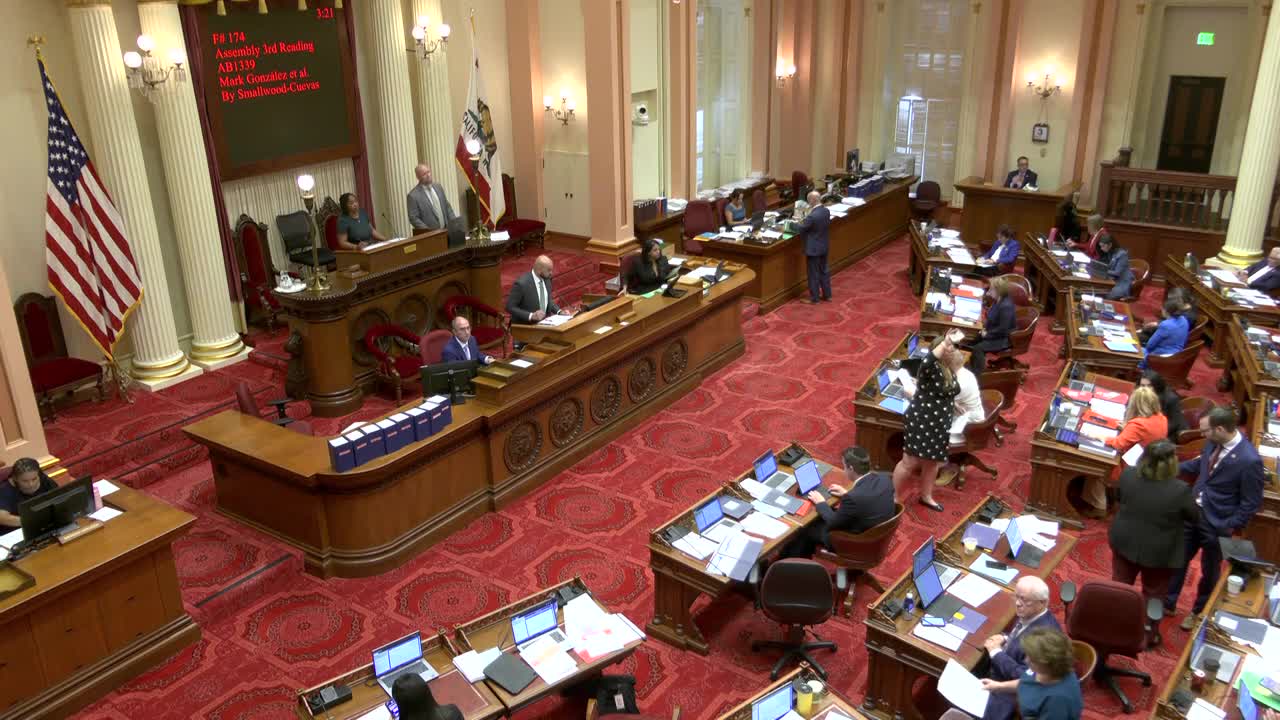 2MIN
Senate Floor
 1MIN
Assembly Floor
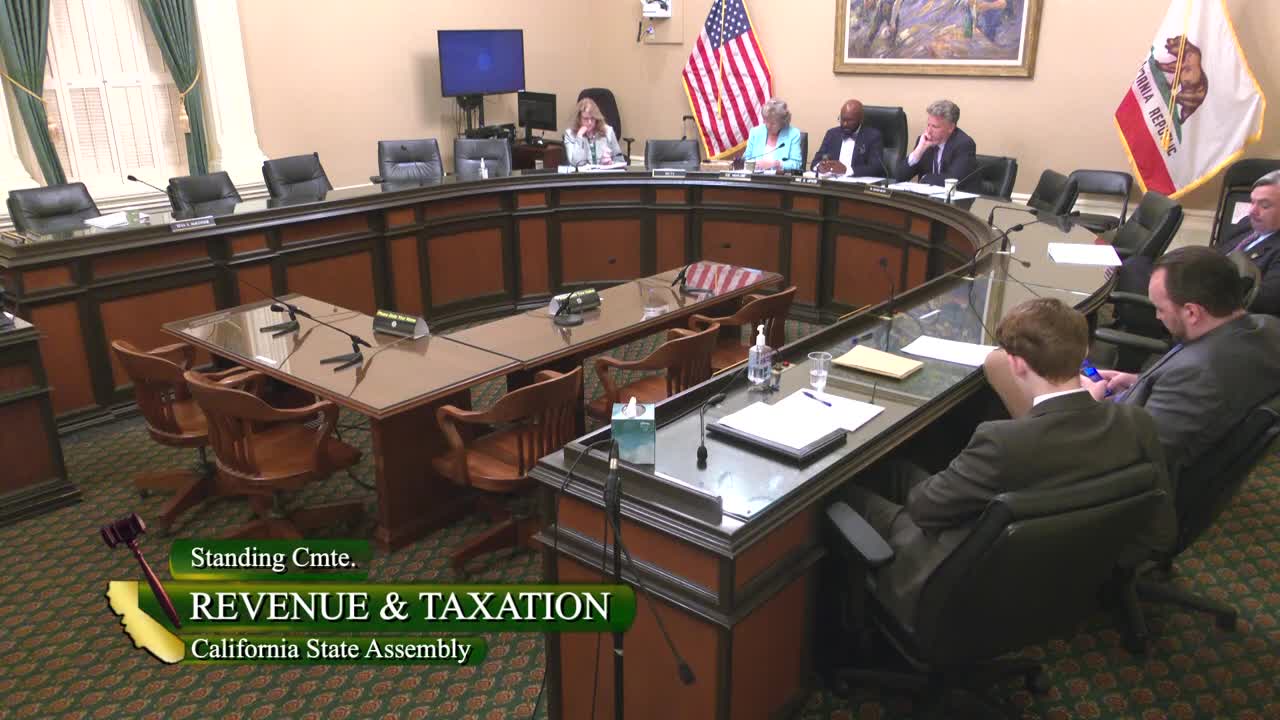 2MIN