AB 1078: Teachers: evaluations.
- Session Year: 2015-2016
- House: Assembly
- Latest Version Date: 2015-02-27
(1)Existing law requires the State Board of Education to develop guidelines that school districts may use in the development of teacher evaluation procedures, and distribute such guidelines to every school district.
This bill would require the state board to revise, update, and adopt guidelines that school districts may use in the development of teacher evaluation procedures by July 1, 2016. The bill would also require that the updated guidelines include a determination of a teachers overall performance, as specified.
(2)Existing law authorizes the governing board of a school district or a county board of education, as specified, after a public hearing on the matter, to request the state board to waive all or part of any section of the Education Code or any regulation adopted by the state board that implements a provision of the Education Code that may be waived, except for specified provisions.
This bill would prohibit the state board from granting any waiver request by a governing board of a school district if the state board finds that the governing board of the school district is out of compliance with specified requirements relating to teacher evaluation.
(3)Existing law states the intent of the Legislature that governing boards of school districts establish a uniform system of evaluation and assessment of the performance of all certificated personnel within each school district of the state. Existing law requires the governing board of each school district to establish standards of expected pupil achievement at each grade level in each area of study and to evaluate and assess certificated employee performance on a continuing basis as it reasonably relates to the progress of pupils toward the established standards and, if applicable, the state adopted academic content standards as measured by state adopted criterion referenced assessments, the instructional techniques and strategies used by the employee, the employees adherence to curricular objectives, and the establishment and maintenance of a suitable learning environment, within the scope of the employees responsibilities. Existing law authorizes school district governing boards to develop and adopt additional evaluation and assessment guidelines or criteria.
This bill would encourage the governing board of a school district to use peer observation and surveys of parents and pupils as part of the evaluation and assessment guidelines and criteria.
(4)Existing law requires that an evaluation and assessment of the performance of a certificated employee be made on a continuing basis, as provided.
This bill would instead require an annual evaluation and assessment of the performance of a certificated employee. The bill would require the evaluation and assessment to include a determination of the teachers performance, as specified. By requiring school districts to perform additional duties, this bill would impose a state-mandated local program. The bill would provide that, to the extent these provisions conflict with any provision of a collective bargaining agreement entered into before January 1, 2016, by a public school employer and an exclusive bargaining representative, the provisions shall not apply to the school district until the expiration or renewal of that collective bargaining agreement.
(5)This bill would update cross-references and would make other nonsubstantive changes.
(6)The California Constitution requires the state to reimburse local agencies and school districts for certain costs mandated by the state. Statutory provisions establish procedures for making that reimbursement.
This bill would provide that, if the Commission on State Mandates determines that the bill contains costs mandated by the state, reimbursement for those costs shall be made pursuant to these statutory provisions.
The State Board of Education By July 1, 2016, the state board shall develop revise, update, and adopt guidelines which that school districts may use in the development of teacher evaluation procedures pursuant to Article 11 (commencing with Section 44660) of Chapter 1 of Part 25 of Division 3 of this title, 3, and shall distribute such those guidelines to every school district. The updated guidelines shall include, but not necessarily be limited to, a determination that a teachers overall performance is highly effective, effective, minimally effective, or ineffective.
SEC. 2.Section 33050 of the Education Code is amended to read:33050.(a)The governing board of a school district or a county board of education, on a districtwide or countywide basis or on behalf of one or more of its schools or programs, after a public hearing on the matter, may request the State Board of Education state board to waive all or part of any section of this code or any regulation adopted by the State Board of Education state board that implements a provision of this code that may be waived, except:
(1)Article 1 (commencing with Section 15700) and Article 2 (commencing with Section 15780) of Chapter 4 of Part 10. 10 of Division 1 of Title 1.
(2)Chapter 6 (commencing with Section 16000) of Part 10. 10 of Division 1 of Title 1.
(3)Chapter 12 (commencing with Section 17000), Chapter 12.5 (commencing with Section 17070.10), and Chapter 14 (commencing with Section 17085) of Part 10. 10 of Division 1 of Title 1.
(4)Part 13 (commencing with Section 22000), Part 13.5 (commencing with Section 25900), and Part 14 (commencing with Section 26000). 26000) of Division 1 of Title 1.
(5)Section 35735.1.
(6)Paragraph (8) of subdivision (a) of Section 37220.
(7)The following provisions of Part 10.5 (commencing with Section 17211): 17210) of Division 1 of Title 1.
(A)Chapter 1 (commencing with Section 17211). 17210).
(B)Article 1 (commencing with Section 17251) to Article 6 (commencing with Section 17365), inclusive, of Chapter 3.
(C)Sections 17416 to 17429, inclusive; Sections 17459 and 17462 and 17462; subdivision (a) of Section 17464; and Sections 17582 to 17592, 17591, inclusive.
(8)The following provisions of Part 24 (commencing with Section 41000): 41000) of Division 3:
(A)Sections 41000 to 41360, inclusive.
(B)Sections 41420 to 41423, inclusive.
(C)Sections 41600 to 41866, 41863, inclusive.
(D)Sections 41920 to 42911, 41930 to 42850, inclusive.
(9)Sections 44504 and 44505.
(10)Article 3 (commencing with Section 44930) of Chapter 4 of Part 25 of Division 3 and regulations in Title 5 of the California Code of Regulations adopted pursuant to Article 3 (commencing with Section 44930) of Chapter 4 of Part 25. 25 of Division 3.
(11)Part 26 (commencing with Section 46000). 46000) of Division 4.
(12)Chapter 6 (commencing with Section 48900) and Chapter 6.5 (commencing with Section 49060) of Part 27. 27 of Division 4.
(13)Section 51513.
(14)Chapter 6.10 (commencing with Section 52120) of Part 28, relating to class size reduction.
(15)
(14)Section 52163.
(16)
(15)The identification and assessment criteria relating to any categorical aid program, including Sections 52164.1 and 52164.6.
(17)
(16)Sections 52165, 52166, and 52178.
(18)
(17)Article 3 (commencing with Section 52850) of Chapter 12 of Part 28. 28 of Division 4.
(19)
(18)Section 56364.1, except that this restriction shall not prohibit the State Board of Education state board from approving any waiver of Section 56364 or 56364.2, as applicable, 56364.2, relating to full inclusion.
(20)
(19)Article 4 (commencing with Section 60640) of Chapter 5 of Part 33, 33 of Division 4, relating to the STAR Program, California Assessment of Student Performance and Progress (CAASPP), and any other provisions of Chapter 5 (commencing with Section 60600) of Part 33 33 of Division 4 that establish requirements for the STAR Program. CAASPP.
(b)Any waiver of provisions related to the programs identified in Section 52851 shall be granted only pursuant to Article 3 (commencing with Section 52850) of Chapter 12 of Part 28. 28 of Division 4.
(c)The waiver of an advisory committee required by law shall be granted only pursuant to Article 4 (commencing with Section 52870) of Chapter 12 of Part 28. 28 of Division 4.
(d)Any A request for a waiver submitted by the governing board of a school district or a county board of education pursuant to subdivision (a) shall include a written statement as to both of the following:
(1)Whether the exclusive representative of employees, if any, as provided in Chapter 10.7 (commencing with Section 3540) of Division 4 of Title 1 of the Government Code, participated in the development of the waiver.
(2)The exclusive representatives position regarding the waiver.
(e)Any A request for a waiver submitted pursuant to subdivision (a) relating to a regional occupational center or program established pursuant to Article 1 (commencing with Section 52300) of Chapter 9 of Part 28, that 28 of Division 4, which is operated by a joint powers entity established pursuant to Chapter 5 (commencing with Section 6500) of Division 7 of Title 1 of the Government Code, shall be submitted as a joint waiver request for each participating school district and shall meet both of the following conditions:
(1)Each joint waiver request shall comply with all of the requirements of this article.
(2)The submission of a joint waiver request shall be approved by a unanimous vote of the governing board of the joint powers agency.
(f)The governing board of any a school district requesting a waiver under this section of any a provision of Article 5 (commencing with Section 39390) of Chapter 3 of Part 23 23 of Division 4 shall provide written notice of any a public hearing it conducted pursuant to subdivision (a), at least 30 days prior to before the hearing, to each public agency identified under Section 39394.
(g)The state board shall not grant any waiver request by a governing board of a school district under this section if the state board finds the governing board of the school district to be out of compliance with subdivision (a) or paragraph (1) of subdivision (b) of Section 44662, or out of compliance with the requirement to confer with a certificated employee making specific recommendations as to areas of improvement in the certificated employees performance and endeavor to assist the certificated employee in his or her performance pursuant to subdivision (b) of Section 44664.
SEC. 3.Section 44662 of the Education Code is amended to read:44662.(a)The governing board of each school district shall establish standards of expected pupil achievement at each grade level in each area of study.
(b)The governing board of each school district shall evaluate and assess certificated employee performance as it reasonably relates to:
(1)The progress of pupils toward the standards established pursuant to subdivision (a) and, if applicable, the state adopted academic content standards as measured by state adopted criterion referenced assessments.
(2)The instructional techniques and strategies used by the employee.
(3)The employees adherence to curricular objectives.
(4)The establishment and maintenance of a suitable learning environment, within the scope of the employees responsibilities.
(c)The governing board of each school district shall establish and define job responsibilities for certificated noninstructional personnel, including, but not limited to, supervisory and administrative personnel, whose responsibilities cannot be evaluated appropriately under the provisions of subdivision (b) and shall evaluate and assess the performance of those noninstructional certificated employees as it reasonably relates to the fulfillment of those responsibilities.
(d)Results of an employees participation in the California Peer Assistance and Review Program for Teachers established by Article 4.5 (commencing with Section 44500) shall be made available as part of the evaluation conducted pursuant to this section.
(e)The evaluation and assessment of certificated employee performance pursuant to this section shall not include the use of publishers norms established by standardized tests.
(f)(1)Nothing in this section shall be construed as in any way limiting the authority of school district the governing boards board of a school district to develop and adopt additional evaluation and assessment guidelines or criteria.
(2)The governing board of a school district is encouraged to use peer observation and surveys of parents and pupils as part of the evaluation and assessment guidelines or criteria.
SEC. 4.Section 44664 of the Education Code is amended to read:44664.(a)Evaluation and assessment of the performance of each certificated employee shall be made on a continuing basis as follows: annually, and shall result in a determination of highly effective, effective, minimally effective, or ineffective, in accordance with guidelines adopted by the state board pursuant to Section 33039.
(1)At least once each school year for probationary personnel.
(2)At least every other year for personnel with permanent status.
(3)At least every five years for personnel with permanent status who have been employed at least 10 years with the school district, are highly qualified, if those personnel occupy positions that are required to be filled by a highly qualified professional by the federal No Child Left Behind Act of 2001 (20 U.S.C. Sec. 6301, et seq.), as defined in 20 U.S.C. Sec. 7801, and whose previous evaluation rated the employee as meeting or exceeding standards, if the evaluator and certificated employee being evaluated agree. The certificated employee or the evaluator may withdraw consent at any time.
(b)The evaluation shall include recommendations, if necessary, as to areas of improvement in the performance of the certificated employee. If an a certificated employee is not performing his or her duties in a satisfactory manner according to the standards prescribed by the governing board, has received an unsatisfactory evaluation, the employing authority shall notify the employee in writing of that fact and describe the unsatisfactory performance. The employing authority shall thereafter confer with the certificated employee making specific recommendations as to areas of improvement in the employees performance and endeavor to assist the employee in his or her performance. If any a permanent certificated employee has received an unsatisfactory evaluation, the employing authority shall annually evaluate the employee until the employee achieves a positive evaluation or is separated from the district.
(c)Any An evaluation performed pursuant to this article which that contains an unsatisfactory rating of an a certificated employees performance in the area of teaching methods or instruction may include the requirement that the certificated employee shall, as determined necessary by the employing authority, participate in a program designed to improve appropriate areas of the employees performance and to further pupil achievement and the instructional objectives of the employing authority. If a district participates in the California Peer Assistance and Review Program for Teachers established pursuant to Article 4.5 (commencing with Section 44500), any a certificated employee who receives an unsatisfactory rating on an evaluation performed pursuant to this section shall participate in the California Peer Assistance and Review Program for Teachers.
(d)Hourly and temporary hourly certificated employees, other than those employed in adult education classes who are excluded by the provisions of Section 44660, and substitute teachers may be excluded from the provisions of this section at the discretion of the governing board.
(e)For purposes of this section, unsatisfactory means an evaluation that results in a determination of ineffective or minimally effective, and satisfactory means an evaluation that results in a determination of effective or highly effective.
(f)To the extent that this section as amended by Assembly Bill ____ of the 201516 Regular Session conflicts with a provision of a collective bargaining agreement entered into by a public school employer and an exclusive bargaining representative before January 1, 2016, pursuant to Chapter 10.7 (commencing with Section 3540) of Division 4 of Title 1 of the Government Code, the changes made to this section by Assembly Bill ____ of the 201516 Regular Session shall not apply to the school district until expiration or renewal of that collective bargaining agreement.
SEC. 5.If the Commission on State Mandates determines that this act contains costs mandated by the state, reimbursement to local agencies and school districts for those costs shall be made pursuant to Part 7 (commencing with Section 17500) of Division 4 of Title 2 of the Government Code.
|
Date
|
Status
|
|---|---|
| Feb 27, 2015 | Introduced. To print. |
| Mar 1, 2015 | From printer. May be heard in committee March 31. |
| Mar 2, 2015 | Read first time. |
| Apr 9, 2015 | Referred to Com. on ED. |
| May 4, 2015 | From committee: That the measure be retained in committee, and that the subject matter be referred to the Committee on Rules for assignment to the proper committee for study. (Ayes 4. Noes 3.) (April 29). |
| Jan 31, 2016 | Died pursuant to Article IV, Sec. 10(c) of the Constitution. |
| Feb 1, 2016 | From committee: Filed with the Chief Clerk pursuant to Joint Rule 56. |
|
Date
|
Description
|
Location
|
Votes
|
|
|---|---|---|---|---|
| Apr 29, 2015 | Bill measure be retained in committee, and subject matter be referred to Rules Committee for assignment to the proper committee. | Assembly Standing Committee on Education |
Passed |
This list shows positions taken on this bill by organizations on the date displayed, which is linked to the original source.
Positions by individuals are not included.
|
Organization
|
Position
|
Date
|
|---|---|---|
| Antioch Education Association | * Against | Apr 29, 2015 |
| Antioch Unified School District | * Against | Apr 29, 2015 |
| Brentwood Union School District | * Against | Apr 29, 2015 |
| Cajon Valley Education Association | * Against | Apr 29, 2015 |
| CalChamber | * Support | Apr 29, 2015 |
| California Chamber Of Commerce | * Support | Apr 29, 2015 |
| California Federation Of Teachers | * Against | Apr 29, 2015 |
| California School Employees Association | * Against | Apr 29, 2015 |
| California Teachers Association | * Against | Apr 29, 2015 |
| Cupertino Education Association | * Against | Apr 29, 2015 |
| Edvoice | * Support | Apr 29, 2015 |
| Fontana School District | * Against | Apr 29, 2015 |
| Grossmont Union High School District, San Diego, CA | * Against | Apr 29, 2015 |
| Hayward Education Association | * Against | Apr 29, 2015 |
| Houston High School | * Support | Apr 29, 2015 |
| Hueneme Unified School District | * Against | Apr 29, 2015 |
| Irvington High School, Fremont, CA | * Against | Apr 29, 2015 |
| Kings Canyon Unified School District | * Against | Apr 29, 2015 |
| Livermore Valley Joint Unified School District | * Against | Apr 29, 2015 |
| Martinez Unified School District | * Against | Apr 29, 2015 |
| Mt. Diablo Education Association | * Against | Apr 29, 2015 |
| Mt. Diablo Unified School District | * Against | Apr 29, 2015 |
| Orange Unified School District, Santa Ana, Orange County, Ca | * Against | Apr 29, 2015 |
| Orinda Union School District | * Against | Apr 29, 2015 |
| Paradise Unified School District, Paradise, CA | * Against | Apr 29, 2015 |
| Parents Advocate League | * Support | Apr 29, 2015 |
| Parkmont Elementary School, Fremont, CA | * Against | Apr 29, 2015 |
| Penn Valley Union Elementary School District | * Against | Apr 29, 2015 |
| Pittsburg Unified School District | * Against | Apr 29, 2015 |
| San Ramon Valley Education Association | * Against | Apr 29, 2015 |
| San Ramon Valley Unified School District | * Against | Apr 29, 2015 |
| Savannah School District, Anaheim, CA | * Against | Apr 29, 2015 |
| Stockton Teachers Association | * Against | Apr 29, 2015 |
| Students Matter | * Support | Apr 29, 2015 |
| Studentsfirst | * Support | Apr 29, 2015 |
| Sweetwater Union High School District | * Against | Apr 29, 2015 |
| United Teachers Los Angeles | * Against | Apr 29, 2015 |
AB 1078
Page 5
Date of Hearing: April 29, 2015
ASSEMBLY COMMITTEE ON EDUCATION
Patrick O'Donnell, Chair
AB 1078
(Olsen) – As Introduced February 27, 2015
SUBJECT: Teachers: evaluations
SUMMARY: Makes changes to the certificated employee evaluation system, known as the Stull Act. Specifically, this bill:
Requires the State Board of Education (SBE), by July 1, 2016 to revise, update and adopt guidelines that school districts may use in the development of teacher evaluation procedures; and, requires the updated guidelines to include, but not necessarily be limited to, a determination that a teacher's overall performance is highly effective, effective, minimally effective or ineffective.
Prohibits the SBE from granting any waiver request by a governing board of a school district if the state board finds the governing board of the school district to be out of compliance with subdivision (a) or paragraph (1) of subdivision (b) of Section 44662, or out of compliance with the requirement to confer with a certificated employee making specific recommendations as to areas of improvement in the certificated employee’s performance and endeavor to assist the certificated employee in his or her performance.
Encourages the governing board of a school district to use peer observation and surveys of parents and students as part of the evaluation and assessment guidelines or criteria for certificated employees.
Requires all certificated employees to be evaluated annually, which shall result in a determination of highly effective, effective, minimally effective or ineffective.
Defines "unsatisfactory" to mean an evaluation that results in a determination of ineffective or minimally effective; and, defines "satisfactory" to mean an evaluation that results in a determination of effective or highly effective.
Specifies to the extent that this bill conflicts with a provision of a collective bargaining agreement entered into by a public school employer and an exclusive bargaining representative before January 1, 2016, pursuant to Chapter 10.7 (commencing with Section 3540) of Division 4 of Title 1 of the Government Code, the changes made to by this bill shall not apply to the school district until expiration or renewal of that collective bargaining agreement.
EXISTING LAW:
Establishes the Stull Act, enacted in 1971, which governs certificated employee evaluations and requires school districts to evaluate and assess teacher performance as it reasonability relates to pupil performance on criterion referenced tests, teacher technique and strategies, curricular objectives, and the maintenance of a suitable learning environment. Specifies that in the development and adoption of evaluation guidelines and procedures, the governing board shall avail itself of the advice of the certificated instructional personnel in the district's organization of certificated personnel pursuant to collective bargaining statutes. Specifies that a school district may, by mutual agreement between the exclusive representative of the certificated employees of the school district and the governing board of the school district, include any objective standards from the National Board for Professional Teaching Standards or any objective standards from the California Standards for the Teaching Profession. Specifies that teacher evaluations shall be made on a continuing basis at least once each school year for probationary personnel; at least every other year for personnel with permanent status; and, at least every five years for personnel with permanent status who have been employed at least 10 years with the school district, are highly qualified, if those personnel occupy positions that are required to be filled by a highly qualified professional, and whose previous evaluation rated the employee as meeting or exceeding standards, if the evaluator and certificated employee being evaluated agree. Specifies that an employee who receives an unsatisfactory rating in the area of teaching methods or instruction may be required to participate in a program designed to improve appropriate areas of the employee's performance; and, requires if a school district participates in the Peer Assistance and Review Program for Teachers (PAR), employees who receive an unsatisfactory rating shall participate in PAR. (Education Code 44660 et. seq.)
Establishes the Peer Assistance and Review Program for Teachers (PAR) by authorizing school districts and the exclusive representative of the certificated employees to develop and implement the program locally. Specifies that assistance and review shall include multiple observations of a teacher during periods of classroom instruction. Specifies the program shall expect and strongly encourage a cooperative relationship between the consulting teacher and the principal with respect to the process of peer assistance and review. Specifies the school district shall provide sufficient staff development activities to assist a teacher to improve his or her teaching skills and knowledge. Specifies the final evaluation of a teacher's participation in the program shall be made available for placement in the personnel file of the teacher receiving assistance. (Education Code 44505)
FISCAL EFFECT: Legislative counsel has keyed this bill a state mandated local program.
COMMENTS: This bill makes changes to the certificated employee evaluation system, known as the Stull Act.
According to the author, The Stull Act was passed in 1971 to provide school districts with a timeline for teacher evaluations, and to designate the importance of peer review and student academic performance in such evaluations. However, the Act lacks definition and guidelines, and school districts have largely ignored its provisions. AB 1078 would improve teacher evaluations by modernizing the Stull Act to develop meaningful teacher evaluations that will help both teachers and students continue on the path to success.
Operative Date: If enacted, this bill has as operative January 1, 2016, but the revised SBE guidance is not available until July 1, 2016. The committee should consider whether the revised SBE guidance should be published and distributed to school districts before the operative date of the bill.
SBE Waivers: This bill prohibits all SBE waivers from being granted if a school district does not do both of the following:
Establish standards of expected pupil achievement at each grade level in each area of study.
Evaluate and assess certificated employee performance as it reasonably relates to the progress of pupils toward the standards, the state adopted academic content standards as measured by state adopted criterion referenced assessments.
Under this provision, it is unclear what the status of existing SBE waivers would hold. Would the SBE waivers that have been approved to date, be void?
Research on Evaluation: Several research studies detail the essential principals and components of a strong teacher evaluation system. The National Comprehensive Center for Teacher Quality argues a strong evaluation system must: "involve teachers and stakeholders in developing the system; use multiple indicators; and give teachers opportunities to improve in the areas in which they score poorly." Likewise, the New Teacher Project states "evaluations should provide all teachers with regular feedback that helps them grow as professionals, no matter how long they have been in the classroom. The primary purpose of evaluations should not be punitive. Good evaluations identify excellent teachers and help teachers of all skill levels understand how they can improve." This bill does not implement multiple indicators for teacher evaluation.
According to StudentsFirst, "A growing body of research on teacher evaluation measures and best practices from other states across the country supports the use of standards-based observation tools and objective measures of student growth for evaluating teacher performance. However, AB 1078 does not include requirements that districts utilize research-based measures of teacher performance within locally adopted teacher evaluation systems and provides no guidance for how each of these measures should be weighted in the final rating."
Evaluation Frequency: This bill requires annual evaluation of all certificated employees. Currently, permanent teachers are evaluated at least every other year; and, teachers with more than 10 years of experience are authorized to be evaluated every five years. This bill will require experienced teachers to be evaluated more frequently. It is unclear how many teachers are currently evaluated every other year versus every five years and thus it is unclear how this bill will affect administrator work load to complete the increased number of evaluations. It is unclear whether our current administrative organization at schools will allow for annual evaluations of every teacher. The committee should consider whether this will be possible given the fact that many schools have a single principal. If the committee agrees that annual evaluation is appropriate, the committee should further consider whether it will be possible for principals to receive enough support from the district to accomplish this starting year one.
Professional Development: This bill specifies that teachers who receive an unsatisfactory rating on their evaluation (those deemed ineffective and minimally effective), if a school district has a PAR program in place, they must refer teachers who receive an unsatisfactory review to the PAR program for improvement. The bill does not specify the process if a teacher continues to receive unsatisfactory evaluations after the PAR program is complete. It is unclear whether school districts should begin dismissal proceedings, or provide further instructional support for the teacher.
Performance Bands: This bill requires the state prescribed evaluation system to use four prescribed performance bands which include: "highly effective," "effective," "minimally effective," and "ineffective." The committee should consider whether four performance levels would be the appropriate number, and whether the four levels specified in the bill are the most effective performance level descriptors that should be used state-wide.
Parent and Student Surveys and Peer Observations: This bill encourages the use of peer evaluations and surveys from parents and pupils in certificated employee evaluations. The committee should consider whether it is appropriate to include peer observations, if those peers are not involved in appropriate training. The committee should also consider whether it is appropriate to include surveys from parents and students in certificated employee evaluations. The committee should consider whether it is possible for a particularly "tough" teacher that assigns robust homework to receive negative survey comments, when they are a very effective teacher and how this would impact the overall evaluation of that teacher. Likewise, if surveys from parents and students included in a principal's evaluation, comment on suspensions and expulsions, is that appropriate?
Charter Schools: This bill requires all traditional public schools in the state to adopt the changes to the teacher evaluation system, but the committee should note that the Stull Act and the changes made in this bill do not apply to charter schools. The committee should consider whether charter schools teachers should be left out of this opportunity for annual evaluations and support.
Related Legislation: AB 575 (O'Donnell & Atkins) from 2015, which is pending in the Assembly, would require the governing board of each school district and the governing body of each charter school to adopt and implement a best practices teacher and administrator evaluation system by July 1, 2018.
AB 1495 (Weber) from 2015, which is pending in the Assembly, would make changes to the certificated employee evaluation system, known as the Stull Act.
SB 499 (Liu & DeLeon) from 2015, which is pending in the Senate, would require the governing board of each school district to adopt and implement a best practices teacher and administrator evaluation system by July 1, 2016.
AB 430 (Olsen) from 2013, which was held by the author in the Assembly Education Committee, would have established the Teacher Professional Growth Plan, as specified.
AB 5 (Fuentes) from 2009, which was held by the author on the Senate Floor, would have required the governing board of each school district to adopt and implement a best practices teacher evaluation system, as specified.
REGISTERED SUPPORT / OPPOSITION:
Support
CalChamber
EdVoice
Students Matter
Opposition
California Federation of Teachers
California Teachers Association
Analysis Prepared by: Chelsea Kelley / ED. / (916) 319-2087
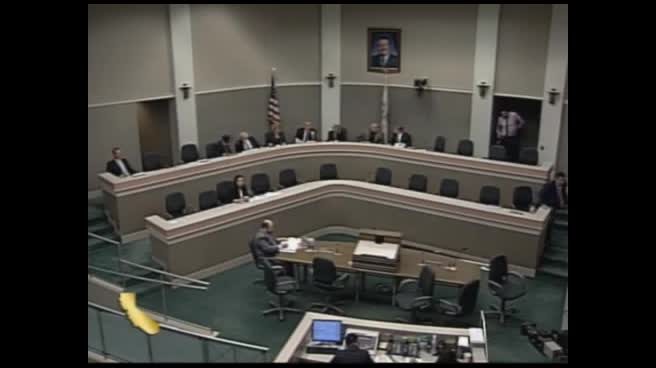
Discussed in Hearing
 36MIN