AB 1214: Probation sentencing report: good cause continuance.
- Session Year: 2015-2016
- House: Assembly
- Latest Version Date: 2015-02-27
Existing law provides that, if a person is convicted of a felony and is eligible for probation, the court is required to refer the matter to a probation officer to create a probation sentencing report containing specified information that may be considered either in aggravation or mitigation of the punishment before judgment is pronounced. Existing law requires the probation sentencing report to be provided to the court and to the parties at least 5 days, or upon request of the defendant or prosecuting attorney, 9 days, before the sentencing hearing unless the deadline is waived by the parties, as specified. Existing law provides that generally, a person seeking to continue a hearing in a criminal proceeding is required to file and serve a written notice to all parties at least 2 court days before the hearing that is to be continued.
This bill would authorize a court to grant the defendants request for continuance when the probation department fails to provide the report by the 5-day or 9-day deadline only if the court finds good cause to grant the continuance.
(a)As used in this code, probation means the suspension of the imposition or execution of a sentence and the order of conditional and revocable release in the community under the supervision of a probation officer. As used in this code, conditional sentence means the suspension of the imposition or execution of a sentence and the order of revocable release in the community subject to conditions established by the court without the supervision of a probation officer. It is the intent of the Legislature that both conditional sentence and probation are authorized whenever probation is authorized in any code as a sentencing option for infractions or misdemeanors.
(b)(1)Except as provided in subdivision (j), if a person is convicted of a felony and is eligible for probation, before judgment is pronounced, the court shall immediately refer the matter to a probation officer to investigate and report to the court, at a specified time, upon the circumstances surrounding the crime and the prior history and record of the person, which may be considered either in aggravation or mitigation of the punishment.
(2)(A)The probation officer shall immediately investigate and make a written report to the court of his or her findings and recommendations, including his or her recommendations as to the granting or denying of probation and the conditions of probation, if granted.
(B)Pursuant to Section 828 of the Welfare and Institutions Code, the probation officer shall include in his or her report any information gathered by a law enforcement agency relating to the taking of the defendant into custody as a minor, which shall be considered for purposes of determining whether adjudications of commissions of crimes as a juvenile warrant a finding that there are circumstances in aggravation pursuant to Section 1170 or to deny probation.
(C)If the person was convicted of an offense that requires him or her to register as a sex offender pursuant to Sections 290 to 290.023, inclusive, or if the probation report recommends that registration be ordered at sentencing pursuant to Section 290.006, the probation officers report shall include the results of the State-Authorized Risk Assessment Tool for Sex Offenders (SARATSO) administered pursuant to Sections 290.04 to 290.06, inclusive, if applicable.
(D)The probation officer may also include in the report his or her recommendation of both of the following:
(i)The amount the defendant should be required to pay as a restitution fine pursuant to subdivision (b) of Section 1202.4.
(ii)Whether the court shall require, as a condition of probation, restitution to the victim or to the Restitution Fund and the amount thereof.
(E)The report shall be made available to the court and the prosecuting and defense attorneys at least five days, or upon request of the defendant or prosecuting attorney nine days, prior to the time fixed by the court for the hearing and determination of the report, and shall be filed with the clerk of the court as a record in the case at the time of the hearing. The time within which the report shall be made available and filed may be waived by written stipulation of the prosecuting and defense attorneys that is filed with the court or an oral stipulation in open court that is made and entered upon the minutes of the court. A request for a continuance of the hearing based on a failure to make the report available to the parties within the deadlines specified above may be granted by the court only upon a finding of good cause.
(3)At a time fixed by the court, the court shall hear and determine the application, if one has been made, or, in any case, the suitability of probation in the particular case. At the hearing, the court shall consider any report of the probation officer, including the results of the SARATSO, if applicable, and shall make a statement that it has considered the report, which shall be filed with the clerk of the court as a record in the case. If the court determines that there are circumstances in mitigation of the punishment prescribed by law or that the ends of justice would be served by granting probation to the person, it may place the person on probation. If probation is denied, the clerk of the court shall immediately send a copy of the report to the Department of Corrections and Rehabilitation at the prison or other institution to which the person is delivered.
(4)The preparation of the report or the consideration of the report by the court may be waived only by a written stipulation of the prosecuting and defense attorneys that is filed with the court or an oral stipulation in open court that is made and entered upon the minutes of the court, except that a waiver shall not be allowed unless the court consents thereto. However, if the defendant is ultimately sentenced and committed to the state prison, a probation report shall be completed pursuant to Section 1203c.
(c)If a defendant is not represented by an attorney, the court shall order the probation officer who makes the probation report to discuss its contents with the defendant.
(d)If a person is convicted of a misdemeanor, the court may either refer the matter to the probation officer for an investigation and a report or summarily pronounce a conditional sentence. If the person was convicted of an offense that requires him or her to register as a sex offender pursuant to Sections 290 to 290.023, inclusive, or if the probation officer recommends that the court, at sentencing, order the offender to register as a sex offender pursuant to Section 290.006, the court shall refer the matter to the probation officer for the purpose of obtaining a report on the results of the State-Authorized Risk Assessment Tool for Sex Offenders administered pursuant to Sections 290.04 to 290.06, inclusive, if applicable, which the court shall consider. If the case is not referred to the probation officer, in sentencing the person, the court may consider any information concerning the person that could have been included in a probation report. The court shall inform the person of the information to be considered and permit him or her to answer or controvert the information. For this purpose, upon the request of the person, the court shall grant a continuance before the judgment is pronounced.
(e)Except in unusual cases where the interests of justice would best be served if the person is granted probation, probation shall not be granted to any of the following persons:
(1)Unless the person had a lawful right to carry a deadly weapon, other than a firearm, at the time of the perpetration of the crime or his or her arrest, any person who has been convicted of arson, robbery, carjacking, burglary, burglary with explosives, rape with force or violence, torture, aggravated mayhem, murder, attempt to commit murder, trainwrecking, kidnapping, escape from the state prison, or a conspiracy to commit one or more of those crimes and who was armed with the weapon at either of those times.
(2)Any person who used, or attempted to use, a deadly weapon upon a human being in connection with the perpetration of the crime of which he or she has been convicted.
(3)Any person who willfully inflicted great bodily injury or torture in the perpetration of the crime of which he or she has been convicted.
(4)Any person who has been previously convicted twice in this state of a felony or in any other place of a public offense which, if committed in this state, would have been punishable as a felony.
(5)Unless the person has never been previously convicted once in this state of a felony or in any other place of a public offense which, if committed in this state, would have been punishable as a felony, any person who has been convicted of burglary with explosives, rape with force or violence, torture, aggravated mayhem, murder, attempt to commit murder, trainwrecking, extortion, kidnapping, escape from the state prison, a violation of Section 286, 288, 288a, or 288.5, or a conspiracy to commit one or more of those crimes.
(6)Any person who has been previously convicted once in this state of a felony or in any other place of a public offense which, if committed in this state, would have been punishable as a felony, if he or she committed any of the following acts:
(A)Unless the person had a lawful right to carry a deadly weapon at the time of the perpetration of the previous crime or his or her arrest for the previous crime, he or she was armed with a weapon at either of those times.
(B)The person used, or attempted to use, a deadly weapon upon a human being in connection with the perpetration of the previous crime.
(C)The person willfully inflicted great bodily injury or torture in the perpetration of the previous crime.
(7)Any public official or peace officer of this state or any city, county, or other political subdivision who, in the discharge of the duties of his or her public office or employment, accepted or gave or offered to accept or give any bribe, embezzled public money, or was guilty of extortion.
(8)Any person who knowingly furnishes or gives away phencyclidine.
(9)Any person who intentionally inflicted great bodily injury in the commission of arson under subdivision (a) of Section 451 or who intentionally set fire to, burned, or caused the burning of, an inhabited structure or inhabited property in violation of subdivision (b) of Section 451.
(10)Any person who, in the commission of a felony, inflicts great bodily injury or causes the death of a human being by the discharge of a firearm from or at an occupied motor vehicle proceeding on a public street or highway.
(11)Any person who possesses a short-barreled rifle or a short-barreled shotgun under Section 33215, a machinegun under Section 32625, or a silencer under Section 33410.
(12)Any person who is convicted of violating Section 8101 of the Welfare and Institutions Code.
(13)Any person who is described in subdivision (b) or (c) of Section 27590.
(f)When probation is granted in a case which comes within subdivision (e), the court shall specify on the record and shall enter on the minutes the circumstances indicating that the interests of justice would best be served by that disposition.
(g)If a person is not eligible for probation, the judge shall refer the matter to the probation officer for an investigation of the facts relevant to determination of the amount of a restitution fine pursuant to subdivision (b) of Section 1202.4 in all cases where the determination is applicable. The judge, in his or her discretion, may direct the probation officer to investigate all facts relevant to the sentencing of the person. Upon that referral, the probation officer shall immediately investigate the circumstances surrounding the crime and the prior record and history of the person and make a written report to the court of his or her findings. The findings shall include a recommendation of the amount of the restitution fine as provided in subdivision (b) of Section 1202.4.
(h)If a defendant is convicted of a felony and a probation report is prepared pursuant to subdivision (b) or (g), the probation officer may obtain and include in the report a statement of the comments of the victim concerning the offense. The court may direct the probation officer not to obtain a statement if the victim has in fact testified at any of the court proceedings concerning the offense.
(i)A probationer shall not be released to enter another state unless his or her case has been referred to the Administrator of the Interstate Probation and Parole Compacts, pursuant to the Uniform Act for Out-of-State Probationer or Parolee Supervision (Article 3 (commencing with Section 11175) of Chapter 2 of Title 1 of Part 4) and the probationer has reimbursed the county that has jurisdiction over his or her probation case the reasonable costs of processing his or her request for interstate compact supervision. The amount and method of reimbursement shall be in accordance with Section 1203.1b.
(j)In any court where a county financial evaluation officer is available, in addition to referring the matter to the probation officer, the court may order the defendant to appear before the county financial evaluation officer for a financial evaluation of the defendants ability to pay restitution, in which case the county financial evaluation officer shall report his or her findings regarding restitution and other court-related costs to the probation officer on the question of the defendants ability to pay those costs.
Any order made pursuant to this subdivision may be enforced as a violation of the terms and conditions of probation upon willful failure to pay and at the discretion of the court, may be enforced in the same manner as a judgment in a civil action, if any balance remains unpaid at the end of the defendants probationary period.
(k)Probation shall not be granted to, nor shall the execution of, or imposition of sentence be suspended for, any person who is convicted of a violent felony, as defined in subdivision (c) of Section 667.5, or a serious felony, as defined in subdivision (c) of Section 1192.7, and who was on probation for a felony offense at the time of the commission of the new felony offense.
|
Date
|
Status
|
|---|---|
| Feb 27, 2015 | Introduced. To print. |
| Mar 1, 2015 | From printer. May be heard in committee March 31. |
| Mar 2, 2015 | Read first time. |
| Mar 23, 2015 | Referred to Com. on PUB. S. |
| Apr 14, 2015 | In committee: Set, first hearing. Hearing canceled at the request of author. |
| Apr 21, 2015 | In committee: Set, second hearing. Hearing canceled at the request of author. |
| Jan 31, 2016 | Died pursuant to Article IV, Sec. 10(c) of the Constitution. |
| Feb 1, 2016 | From committee: Filed with the Chief Clerk pursuant to Joint Rule 56. |
This list shows positions taken on this bill by organizations on the date displayed, which is linked to the original source.
Positions by individuals are not included.
|
Organization
|
Position
|
Date
|
|---|---|---|
| California District Attorneys Association | * Against | Jun 26, 2018 |
| California Public Defenders Association | * Support | Jun 26, 2018 |
| Los Angeles County District Attorney'S Office | * Against | Jun 26, 2018 |
AB 1214
Page 6
Date of Hearing: April 21, 2015
Counsel: David Billingsley
ASSEMBLY COMMITTEE ON PUBLIC SAFETY
Bill Quirk, Chair
AB 1214
(Achadjian) – As Introduced February 27, 2015
SUMMARY:
This bill would require a court to find good cause to grant a defendant’s request for continuance of their sentencing hearing when the probation department fails to provide the probation report by the statutory timeline.
EXISTING LAW:
Defines "probation" as the suspension of the imposition or execution of a sentence and the order of conditional and revocable release in the community under the supervision of a probation officer. As used in this code, "conditional sentence" means the suspension of the imposition or execution of a sentence and the order of revocable release in the community subject to conditions established by the court without the supervision of a probation officer. It is the intent of the Legislature that both conditional sentence and probation are authorized whenever probation is authorized in any code as a sentencing option for infractions or misdemeanors. (Pen. Code, § 1203, subd. (a).)
States that except as specified, if a person is convicted of a felony and is eligible for probation, before judgment is pronounced, the court shall immediately refer the matter to a probation officer to investigate and report to the court, at a specified time, upon the circumstances surrounding the crime and the prior history and record of the person, which may be considered either in aggravation or mitigation of the punishment. (Pen. Code, § 1203, subd. (b)(1).)
Requires the probation officer to immediately investigate and make a written report to the court of his or her findings and recommendations, including his or her recommendations as to the granting or denying of probation and the conditions of probation, if granted. (Pen. Code, § 1203, subd. (b)(2)(A).
Requires the probation officer to include in his or her report any information gathered by a law enforcement agency relating to the taking of the defendant into custody as a minor, which shall be considered for purposes of determining whether adjudications of commissions of crimes as a juvenile warrant a finding that there are circumstances in aggravation, or to deny probation. (Pen. Code, § 1203, subd. (b)(2)(B).
States that if the person was convicted of an offense that requires him or her to register as a sex offender or if the probation report recommends that registration be ordered at sentencing, the probation officer's report shall include the results of the State-Authorized Risk Assessment Tool for Sex Offenders (SARATSO). (Pen. Code, § 1203, subd. (b)(2)(C).
Allows the probation officer to include in the report his or her recommendation of both of the following:
The amount the defendant should be required to pay as a restitution fine. (Pen. Code, § 1203, subd. (b)(2)(D)(i).)
Whether the court shall require, as a condition of probation, restitution to the victim or to the Restitution Fund and the amount thereof. (Pen. Code, § 1203, subd. (b)(2)(D)(ii).)
Mandates that the report be made available to the court and the prosecuting and defense attorneys at least five days, or upon request of the defendant or prosecuting attorney nine days, prior to the time fixed by the court for the hearing and determination of the report, and shall be filed with the clerk of the court as a record in the case at the time of the hearing. The time within which the report shall be made available and filed may be waived by written stipulation of the prosecuting and defense attorneys that is filed with the court or an oral stipulation in open court that is made and entered upon the minutes of the court. (Pen. Code, § 1203, subd. (b)(2)(E).
Specifies that at a time fixed by the court, the court shall hear and determine the application, if one has been made, or, in any case, the suitability of probation in the particular case. At the hearing, the court shall consider any report of the probation officer, including the results of the SARATSO, if applicable, and shall make a statement that it has considered the report, which shall be filed with the clerk of the court as a record in the case. If the court determines that there are circumstances in mitigation of the punishment prescribed by law or that the ends of justice would be served by granting probation to the person, it may place the person on probation. If probation is denied, the clerk of the court shall immediately send a copy of the report to the Department of Corrections and Rehabilitation at the prison or other institution to which the person is delivered. (Pen. Code, § 1203, subd. (b)(3).)
States that the preparation of the report or the consideration of the report by the court may be waived only by a written stipulation of the prosecuting and defense attorneys that is filed with the court or an oral stipulation in open court that is made and entered upon the minutes of the court, except that a waiver shall not be allowed unless the court consents thereto. However, if the defendant is ultimately sentenced and committed to the state prison, a probation report shall be completed pursuant to Section 1203c. (Pen. Code, § 1203, subd. (b)(4).)
Provides that if a defendant is not represented by an attorney, the court shall order the probation officer who makes the probation report to discuss its contents with the defendant. (Pen. Code, § 1203, subd. (c).)
Specifies that if a person is convicted of a misdemeanor, the court may either refer the matter to the probation officer for an investigation and a report or summarily pronounce a conditional sentence. If the person was convicted of an offense that requires him or her to register as a sex offender, or if the probation officer recommends that the court, at sentencing, order the offender to register as a sex offender, the court shall refer the matter to the probation officer for the purpose of obtaining a report on the results of the State-Authorized Risk Assessment Tool for Sex Offenders, which the court shall consider. If the case is not referred to the probation officer, in sentencing the person, the court may consider any information concerning the person that could have been included in a probation report. The court shall inform the person of the information to be considered and permit him or her to answer or controvert the information. For this purpose, upon the request of the person, the court shall grant a continuance before the judgment is pronounced. (Pen. Code, § 1203, subd. (d).
States that if a person is not eligible for probation, the judge shall refer the matter to the probation officer for an investigation of the facts relevant to determination of the amount of a restitution fine in all cases where the determination is applicable. The judge, in his or her discretion, may direct the probation officer to investigate all facts relevant to the sentencing of the person. Upon that referral, the probation officer shall immediately investigate the circumstances surrounding the crime and the prior record and history of the person and make a written report to the court of his or her findings. The findings shall include a recommendation of the amount of the restitution fine. (Pen. Code, § 1203, subd. (g).)
Specifies that if a defendant is convicted of a felony and a probation report is prepared, the probation officer may obtain and include in the report a statement of the comments of the victim concerning the offense. The court may direct the probation officer not to obtain a statement if the victim has in fact testified at any of the court proceedings concerning the offense. (Pen. Code, § 1203, subd. (h).)
States that to continue any hearing in a criminal proceeding, including the trial, (1) a written notice shall be filed and served on all parties to the proceeding at least two court days before the hearing sought to be continued, together with affidavits or declarations detailing specific facts showing that a continuance is necessary and (2) within two court days of learning that he or she has a conflict in the scheduling of any court hearing, including a trial, an attorney shall notify the calendar clerk of each court involved, in writing, indicating which hearing was set first. (Pen. Code, § 1050, subd. (b).)
States that a party shall not be deemed to have been served within the meaning of this section until that party actually has received a copy of the documents to be served, unless the party, after receiving actual notice of the request for continuance, waives the right to have the documents served in a timely manner. Regardless of the proponent of the motion, the prosecuting attorney shall notify the people's witnesses and the defense attorney shall notify the defense's witnesses of the notice of motion, the date of the hearing, and the witnesses' right to be heard by the court. (Pen. Code, § 1050, subd. (b).)
Allows a party to make a motion for a continuance without complying with the requirements of that subdivision. However, unless the moving party shows good cause for the failure to comply with those requirements, the court may impose sanctions as provided in Section 1050.5. (Pen. Code, § 1050, subd. (c).)
Requires the court to hold a hearing, if a party makes a motion for a continuance without complying with the requirements, on whether there is good cause for the failure to comply with those requirements. At the conclusion of the hearing, the court shall make a finding whether good cause has been shown and, if it finds that there is good cause, shall state on the record the facts proved that justify its finding. A statement of the finding and a statement of facts proved shall be entered in the minutes. If the moving party is unable to show good cause for the failure to give notice, the motion for continuance shall not be granted. (Pen. Code, § 1050, subd. (d).)
Requires that continuances be granted only upon a showing of good cause. Neither the convenience of the parties nor a stipulation of the parties is in and of itself good cause. (Pen. Code, § 1050, subd. (e).)
Requires that at the conclusion of the motion for continuance, the court make a finding whether good cause has been shown and, if it finds that there is good cause, shall state on the record the facts proved that justify its finding. A statement of facts proved shall be entered in the minutes. (Pen. Code, § 1050, subd. (f).)
States that when deciding whether or not good cause for a continuance has been shown, the court shall consider the general convenience and prior commitments of all witnesses, including peace officers. Both the general convenience and prior commitments of each witness also shall be considered in selecting a continuance date if the motion is granted. The facts as to inconvenience or prior commitments may be offered by the witness or by a party to the case. (Pen. Code, § 1050, subd. (g)(1).)
States that a continuance shall be granted only for that period of time necessary by the evidence considered at the hearing on the motion. Whenever any continuance is granted, the court shall state on the record the facts proved that justify the length of the continuance, and those facts shall be entered in the minutes. (Pen. Code, § 1050, subd. (i).)
FISCAL EFFECT:
Unknown
COMMENTS:
Author's Statement: According to the author, "AB 1214 ensures courts have the discretion to determine on a case by case basis whether a continuance due to noncompliance with the probation report deadline is justified. As a result, AB 1214 brings efficiencies to the courts by eliminating extraneous sentencing proceedings as well as easing the administrative burdens associated with unnecessary remands for sentencing at the same time; AB 1214 protects the defendant’s right to have sufficient opportunity to evaluate the probation report by preserving the right to request a continuance for good cause.”
Defendant’s Right to Have the Probation Report Prior to Sentencing. California requires that that the probation report be provided to a defendant’s attorney five days prior to sentencing, or nine days upon defense request. (Pen. Code, § 1203, subd. (b)(1)(E).) Penal Code section 1203 was amended in 1969 to provide that the report of the probation officer had to be made available to the court and attorneys at least two days "or, upon the request of the defendant, five days" prior to the time fixed for hearing and determination of such report. It was amended again in 1977 to provide the present nine-day time limit. When the Legislature amended this section in 1969 it made the following statement: "The Legislature, by this act, does not intend that the preparation or submission of probation reports be accelerated in relation to present law and practice. It is the intention of the Legislature that the courts exercise their discretion in fixing dates for pronouncing judgments five or more days after all the interested parties have received copies of probation reports so that such parties have adequate time to evaluate such reports." (Stats. 1969, ch. 522).
Courts have held that a failure to provide the probation report within the statutory guidelines, is grounds for a continuance of a sentencing hearing, without requiring any showing of good cause. In People v. Leffel, (1987) 196 Cal.App.3d 1310, the defendant did not receive the probation report within the time frame required by law. The defendant made a proper objection to this error, indicated that they were not prepared to proceed, and requested a continuance. The court refused the request for a continuance and moved forward to sentence the defendant. The appellate court in Leffel, found that the failure to grant a continuance rendered the sentencing hearing fundamentally unfair. Id. at 1319. The court found that “. . . the possibilities for prejudice are clear and the actual prejudice suffered is a matter of conjecture. What the defendant might have been able to object to or to add further to the report cannot be determined because he was not afforded the proper opportunity to comprehend, analyze, investigate and evaluate the report. It is clear that the Legislature intended that he be given this opportunity.” Id. at 1318.
The defense attorney is the party in the criminal proceeding responsible for knowing how much time he or she needs within the statutory framework to adequately address the issues that will be raised in a probation report. The law has a default requiring the probation report five days prior to the sentencing. However, if the defense attorney in evaluating the issues that are likely to be raised in the probation report, needs more time, they can request that the report be provided nine days in advance of the sentencing hearing. On the other hand, if the defense attorney in evaluating their case does not need the statutory time to review the probation report, the defense attorney can waive the right to have the sentencing report provided by the statutory deadline. (Pen. Code, § 1203, subd. (b)(1)(E).)
Argument in Support: According to The Judicial Council of California, “Under current law, probation sentencing reports must be provided to the parties at least five days before the sentencing hearing unless the deadline is waived by the parties either in writing or by oral stipulation in open court. (Pen. Code, § 1203(b)(2)(E).) The purpose of the deadline is to afford defendants a “proper opportunity to comprehend, analyze, investigate and evaluate the report.” (People v. Bohannon (2000) 82 Cal.App.4th 798, 808-809; People v. Leffell (1987) 196 Cal.App.3d 1310, 1318.) If the probation department does not provide the report by the deadline and the defendant objects and request a continuance, failure by the court to grant the continuance entitles the defendant to a remand for sentencing. (People v. Bohannon, supra, 82 Cal.App.4th at pp.808-809.) Defendants are not required to show actual prejudice as a result of the late probation report when requesting a continuance. (Id. at 809.) As a result, court routinely grant automatic continuances whenever the statutory deadline for probation reports is missed, regardless of whether the missed deadline had any impact on the defendant’s ability to review and investigate the probation report.
"AB 1214 vests courts with discretion to decide on a case by case basis whether the circumstances of a particular case warrant a continuance, rather than requiring courts to grant automatic continuances without regard to actual prejudice. For example, even if the deadline is missed, a defendant may still have adequate time to review the report and raise concerns about the report’s contents, in which case AB 1214 would give the court authority to deny a request for continuance. In contrast, if the lateness of a report impacts the ability of the defendant to report and raise concerns about the report, AB 1214 would give the court discretion to continue the sentencing hearing.
"AB 1214 brings efficiencies to the courts by eliminating
unnecessary continuances of sentencing proceedings and easing the
administrative burdens associated with unnecessary remands for
sentencing, without compromising the defendant’s right to have
sufficient opportunity to evaluate a probation report by preserving
the right to request a continuance for good cause.
Argument in Opposition: According to The California Public Defenders Association, “Penal Code section 1203 provides that, prior to sentencing on a felony, the probation officer must prepare a report to be provided to the court and to the parties at least 5 days, or 9 days upon request of the defendant or prosecuting attorney, before the sentencing hearing.
“This bill would authorize a court to grant the defendant’s request for continuance when the probation department fails to provide the report by the 5-day or 9-day deadline, only if the court finds good cause to grant the continuance.
“This bill is not needed. Penal Code section 1050, subdivision (d) already provides that the court cannot continue a criminal hearing unless it finds good cause.
“There is no need to separately state that again in Penal Code
section 1203. Our Penal Code is already way too long and prolix. It
does not need repetitive verbiage.”
Prior Legislation: SB 794 (Evans), of the 2013-2014 Legislative Session, would have proposed to limit the defendant is to five preemptory challenges in any criminal case where the offense was punishable with a maximum term of imprisonment of one year or less. SB 794 was never heard in the Assembly Public Safety Committee.
REGISTERED SUPPORT / OPPOSITION:
Support
Judicial Council of California
California District Attorneys Association
Opposition
California Attorneys for Criminal Justice
California Public
Defenders Association
Analysis Prepared by:
David Billingsley / PUB. S. / (916) 319-3744
Discussed in Hearing
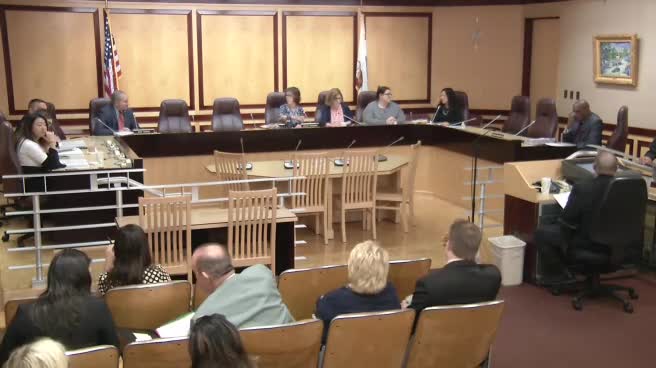 16MIN
Senate Standing Committee on Public Safety
Bill Author

Bill Co-Author(s):