AB 2410: Early learning: school readiness.
- Session Year: 2015-2016
- House: Assembly
- Latest Version Date: 2016-04-27
Existing law, the Child Care and Development Services Act, among other things, requires the State Department of Education to develop prekindergarten learning development guidelines in accordance with specified criteria. The act also requires the Superintendent of Public Instruction to ensure that all contracts for child care and development programs include a requirement that each public or private provider maintain a developmental profile to appropriately identify the emotional, social, physical, and cognitive growth of each child in order to promote the childs success in the public schools.
This bill would enact the Local Control School Readiness Act of 2016. The bill would require the department to develop prekindergarten learning development guidelines, focused on preparing 4- and 5-year-old children for kindergarten, based on current science that reflects how publicly funded programs can close the school readiness gap. The bill would authorize a local educational agency, as defined, in partnership with community-based organizations, to apply to the State Board of Education for a waiver from the departments Desired Results Quality Improvement System. The bill would specify material to be submitted with such a waiver request.
The bill would require the department, on or before March 1, 2017, to convene the California Committee for Kindergarten Readiness, created by this bill, to convene on or before March 1, 2017, Readiness stakeholder group to evaluate and develop recommendations on what constitutes kindergarten readiness and would require the committee to submit to the state board, board and the appropriate policy committees of the Legislature, on or before January 1, 2018, a kindergarten readiness definition that has clear benchmarks for skills that are predictive of later success in academics and social-emotional and executive functioning skills as evidenced by current research. The bill would specify the membership of the committee and would repeal these provisions on January 1, 2019.
Existing law, the Child Care and Development Services Act, among other things, requires the State Department of Education to develop prekindergarten learning development guidelines in accordance with specified criteria. The act also requires the Superintendent of Public Instruction to ensure that all contracts for child care and development programs include a requirement that each public or private provider maintain a developmental profile to appropriately identify the emotional, social, physical, and cognitive growth of each child in order to promote the childs success in the public schools.
This bill would enact the Local Control School Readiness Act of 2016. The bill would require the department to develop prekindergarten learning development guidelines, focused on preparing 4- and 5-year-old children for kindergarten, based on current science that reflects how publicly funded programs can close the school readiness gap. The bill would authorize a local educational agency, as defined, in partnership with community-based organizations, to apply to the State Board of Education for a waiver from the departments Desired Results Quality Improvement System. The bill would specify material to be submitted with such a waiver request.
The bill would require the department to California Committee for Kindergarten Readiness, created by this bill, to convene on or before March 1, 2017, and to submit to the state board, by July 1, 2018, on or before January 1, 2018, a kindergarten readiness definition that has clear benchmarks for skills that are predictive of later success in academics and social-emotional, health, social-emotional and executive functioning skills as evidenced by current research. The bill would specify the membership of the committee and would repeal these provisions on January 1, 2019.
Existing law, the Child Care and Development Services Act, among other things, requires the State Department of Education to develop prekindergarten learning development guidelines in accordance with specified criteria. The act also requires the Superintendent of Public Instruction to ensure that all contracts for child care and development programs include a requirement that each public or private provider maintain a developmental profile to appropriately identify the emotional, social, physical, and cognitive growth of each child in order to promote the childs success in the public schools.
This bill would enact the Local Control School Readiness Act of 2016. The bill would require the department to develop prekindergarten learning development guidelines, focused on preparing 4- and 5-year-old children for kindergarten, based on current science that reflects how publicly funded programs can close the school readiness gap. The bill would authorize a local educational agency, as defined, in partnership with community-based organizations, to apply to the State Board of Education for a waiver from the departments Desired Results Quality Improvement System. The bill would specify material to be submitted with such a waiver request.
The bill would require the department to submit to the state board, by July 1, 2018, a kindergarten readiness definition that has clear benchmarks for skills that are predictive of later success in academics and social-emotional, health, and executive functioning skills as evidenced by current research.
(a)This act shall be known, and may be cited, as the Local Control School Readiness Act of 2016.
(b)The
SECTION 1.(a)The Legislature finds and declares all of the following:
(1)High-quality, early learning experiences have been shown to produce substantial short-term gains in childrens early language, literacy, mathematics, and social skills as well as long-term effects on a wide range of school, health, and behavioral outcomes that persist into adulthood, as has been demonstrated in studies produced by numerous scholars.
(2)The Desired Results Developmental Profile was implemented in 2000 and is a formative assessment instrument developed by the State Department of Education for young children and their families to be used to inform instruction and program development. It is also a requirement for compliance with state preschool contracts. The Desired Results Developmental Profile for preschool children currently contains 54 areas of inquiry within eight domains. Beginning in the 201617 fiscal year, the State Department of Education will require contractors to cover the five fundamental domains the department indicates are research-based predictors of school readiness and success and that are consistent with the National Education Goals Panel and the federal Race to the Top Early Learning Challenge. The remaining domains may be used by a contractor voluntarily. This preschool fundamental view will reduce the number of assessment measures from 54 to 29. The State Department of Education has responded to concerns from the field that the Desired Results Developmental Profile is time consuming and has revised the assessment to ensure that it is a more effective formative assessment for children.
(2)
(3)Californias investments in early learning should focus on gains in school and behavioral outcomes that support low-income California children, English learners, and children of color advancing with their peers.
(3)
(4)One feature of high-quality early learning programs is alignment with the K3rd grade education that preschoolers will soon enter. Preschool to 3rd grade alignment is critical in the areas of standards, curriculum, instructional practice, professional development, family engagement, and assessments.
(4)For public K12 education, in determining what pupils should learn and how they should learn it, the role of the state is to set standards, curriculum frameworks, and standardized assessments for select grade levels. Local educational agencies (LEAs) select curriculum, instructional materials and methods, provide professional development, and monitor pupil progress through formative assessments.
(5)For Californias early learning programs, the role of the state extends far beyond its role in K12 education, and it falls short in one key area. In addition to early learning standards and curriculum frameworks, the State Department of Education develops, adopts, and mandates specific formative assessments to be used on pupils, specific assessments for classroom environments, specific professional development for instructional staff, and specific parent satisfaction surveys. While these are important components of a high-quality early learning program, LEAs and other local preschool providers cannot tailor these to meet the unique needs of their pupils nor to align with K3rd grade education. Nor do these compliance-focused regulations support an outcome of school readiness for low-income children in California. The state-mandated assessments and professional development are often done for compliance purposes only, do not improve the quality of early learning programs, and are an undue administrative burden on LEAs and preschool providers.
(6)Where the state falls short: California
(5)California does not have a clear definition for what pupils need to know to be ready for kindergarten. Without this definition, the impact of Californias early learning programs on school readiness is unknown. California invests over $1.6 billion in state preschool and transitional kindergarten, and there is no information on what percentage of pupils start school ready for success.
(c)
(b)Therefore, it is the intent of the Legislature to accomplish both of the following:
(1)Empower LEAs and their nonprofit partners or subcontractors to decide how best to prepare their preschool pupils for success in school and align their preschool programs with K3rd grade education.
(2)Begin begin to shift the role of the state from a compliance-based early learning system to one that focuses on child outcomes. The first step in this process is to mandate the State Department of Education to conduct a study for establishing a kindergarten readiness definition to be considered for adoption by the State Board of Education by July 1, 2018.
SEC. 2.Section 8203.3 of the Education Code is amended to read:8203.3.(a)(1)The department shall develop prekindergarten learning development guidelines. The guidelines shall focus on preparing four- and five-year-old children for kindergarten, based on current science that reflects how publicly funded programs can close the school readiness gap.
(2)The guidelines developed under this section shall identify appropriate developmental milestones for each age, how to assess where children are in relation to the milestones, and suggested methods for achieving the milestones. In addition, the guidelines shall identify any basic beginning skills needed to prepare children for kindergarten or first grade, and methods for teaching these basic skills. The guidelines shall be articulated with the academic content and performance standards adopted by the state board for kindergarten and grades 1 to 12, inclusive. The department may contract with an appropriate public or private agency to develop the guidelines.
(b)In future expenditure plans for quality improvement activities, the department shall include funding for periodically updating the guidelines consistent with academic and performance standards and relevant research, broadly distributing the guidelines, and providing education, outreach, and training services to implement the guidelines.
(c)Programs funded by the department under Article 6 (commencing with Section 8230), Article 7 (commencing with Section 8235), and Article 8 (commencing with Section 8240) shall use the prekindergarten learning development guidelines developed pursuant to this section.
SEC. 3.Section 8203.6 is added to the Education Code, to read:8203.6.(a)A local educational agency, including a school district, charter school, and county office of education, in partnership with community-based organizations, may apply to the state board for a waiver from the departments Desired Results Quality Improvement System, which includes the developmental profile. A Local Control Quality Improvement Plan shall be submitted with the waiver request, and shall include all of the following:
(1)At least one formative assessment tool that is used no less than three times a year to monitor childrens developmental progress. This assessment shall be valid, reliable, including inter-rater reliability, and linguistically, culturally, and developmentally appropriate, and include a benchmark for kindergarten readiness.
(2)A regular process for reviewing the assessment data with teachers and adult caregivers.
(3)A plan for providing coaching and professional development to support teachers to meet pupil needs.
(4)A plan for parent engagement and support that includes at least two parent conferences each year to review childrens developmental progress and school-home linkages to support learning, and an annual parent satisfaction survey.
(b)Once a waiver is approved under subdivision (a), the local educational agency shall submit an annual continuous quality improvement plan to the department, and shall participate in a stakeholder group to share data and findings with the state.
(c)To enable waiver applicants to continue to participate in the Quality Rating and Improvement System (QRIS), they may substitute the developmental profile with their own kindergarten readiness outcomes or formative assessment tool.
SEC. 4.SEC. 3.Section 8203.7 is added to the Education Code, to read:8203.7.(a)On or before March 1, 2017, the department shall convene the California Committee for Kindergarten Readiness, hereby created, shall convene. Readiness stakeholder group to evaluate and develop recommendations on what constitutes kindergarten readiness. On or before January 1, 2018, the committee shall submit to the state board and the appropriate policy committees of the Legislature a kindergarten readiness definition that has clear benchmarks for skills that are predictive of later success in academics and social-emotional and executive functioning skills as evidenced by current research. The committee department may contract with an appropriate public or private agency for purposes of developing a kindergarten readiness definition.
(b)The California Committee for Kindergarten Readiness shall be composed of the following 10 members:
(1)The president of the state board, or his or her designee.
(2)The chair of the California Children and Families Commission, or his or her designee.
(3)The Superintendent, or his or her designee.
(4)The chair of the State Advisory Council on Early Learning and Care, or his or her designee.
(5)An expert on early childhood brain development, appointed by the Speaker of the Assembly. development.
(6)An expert on kindergarten readiness standards, appointed by the Speaker of the Assembly. standards.
(7)A preschool or kindergarten teacher, appointed by the Speaker of the Assembly. teacher.
(8)An expert on dual language learners, appointed by the President pro Tempore of the Senate. learners.
(9)An expert on family engagement and support, appointed by the President pro Tempore of the Senate. support.
(10)A preschool or kindergarten teacher, appointed by the President pro Tempore of the Senate. teacher.
(c)The members specified in paragraphs (1) to (3), inclusive, of subdivision (b) shall be cochairs of the committee.
(d)This section is repealed on January 1, 2019.
(a)This act shall be known, and may be cited, as the Local Control School Readiness Act of 2016.
(b)The Legislature finds and declares all of the following:
(1)High-quality, early learning experiences have been shown to produce substantial short-term gains in childrens early language, literacy, mathematics, and social skills as well as long-term effects on a wide range of school, health, and behavioral outcomes that persist into adulthood, as has been demonstrated in studies produced by numerous scholars.
(2)Californias investments in early learning should focus on gains in school and behavioral outcomes that support low-income California children, English language learners, and children of color advancing with their peers.
(3)One feature of high-quality early learning programs is alignment with the K3rd grade education that preschoolers will soon enter. Preschool to 3rd grade alignment is critical in the areas of standards, curriculum, instructional practice, professional development, family engagement, and assessments.
(4)For public K12 education, in determining what pupils should learn and how they should learn it, the role of the state is to set standards, curriculum frameworks, and standardized assessments for select grade levels. Local educational agencies (LEAs) select curriculum, instructional materials and methods, provide professional development, and monitor pupil progress through diagnostic formative assessments.
(5)For Californias early learning programs, the role of the state extends far beyond its role in K12 education, and it falls short in one key area. In addition to early learning standards and curriculum frameworks, the State Department of Education develops, adopts, and mandates specific diagnostic formative assessments to be used on pupils, specific assessments for classroom environments, specific professional development for instructional staff, and specific parent satisfaction surveys. While these are important components of a high-quality early learning program, LEAs and other local preschool providers cannot tailor these to meet the unique needs of their pupils nor to align with kindergarten-3rd grade. K3rd grade education. Nor do these compliance-focused regulations support an outcome of school readiness for low-income children in California. The state-mandated assessments and professional development are often done for compliance purposes only, do not improve the quality of early learning programs, and are an undue administrative burden on LEAs and preschool providers.
(6)Where the state falls short: California does not have a clear definition for what pupils need to know to be ready for kindergarten. Without this definition, the impact of Californias early learning programs on school readiness is unknown. California invests over $1.6 billion in state preschool and transitional kindergarten, and there is no information on what percentage of pupils start school ready for success.
(c)Therefore, it is the intent of the Legislature to accomplish both of the following:
(1)Empower LEAs and their nonprofit partners or subcontractors to decide how best to prepare their preschool pupils for success in school and align their preschool programs with K3rd grade. grade education.
(2)Begin to shift the role of the state from a compliance-based early learning system to one that focuses on child outcomes. The first step in this process is to mandate the State Department of Education to conduct a study for establishing a kindergarten readiness definition to be considered for adoption by the State Board of Education by July 1, 2018.
SEC. 2.Section 8203.3 of the Education Code is amended to read:8203.3.(a)(1)The department shall develop prekindergarten learning development guidelines. The guidelines shall focus on preparing four- and five-year-old children for kindergarten, based on current science that reflects how publicly funded programs can close the school readiness gap.
(2)The guidelines developed under this section shall identify appropriate developmental milestones for each age, how to assess where children are in relation to the milestones, and suggested methods for achieving the milestones. In addition, the guidelines shall identify any basic beginning skills needed to prepare children for kindergarten or first grade, and methods for teaching these basic skills. The guidelines shall be articulated with the academic content and performance standards adopted by the state board for kindergarten and grades 1 to 12, inclusive. The department may contract with an appropriate public or private agency to develop the guidelines.
(b)In future expenditure plans for quality improvement activities, the department shall include funding for periodically updating the guidelines consistent with academic and performance standards and relevant research, broadly distributing the guidelines, and providing education, outreach, and training services to implement the guidelines.
(c)Programs funded by the department under Article 6 (commencing with Section 8230), Article 7 (commencing with Section 8235), and Article 8 (commencing with Section 8240) shall use the prekindergarten learning development guidelines developed pursuant to this section.
SEC. 3.Section 8203.6 is added to the Education Code, to read:8203.6.(a)A local educational agency, including a school district, charter school, and county office of education, in partnership with community-based organizations, may apply to the state board for a waiver from the departments Desired Results Quality Improvement System, which includes the developmental profile. A Local Control Quality Improvement Plan shall be submitted with the waiver request, and shall include all of the following:
(1)At least one diagnostic formative assessment tool that is used no less than three times a year to monitor childrens developmental progress. This assessment shall be valid, reliable, including inter-rater reliability, and linguistically, culturally culturally, and developmentally appropriate, and include a benchmark for kindergarten readiness.
(2)A regular process for reviewing the assessment data with teachers and adult caregivers.
(3)A plan for providing coaching and professional development to support teachers to meet pupil needs.
(4)A plan for parent engagement and support that includes at least two parent conferences each year to review childrens developmental progress and school-home linkages to support learning, and an annual parent satisfaction survey.
(b)Once a waiver is approved under subdivision (a), the local educational agency shall submit an annual continuous quality improvement plan to the department. department, and shall participate in a stakeholder group to share data and findings with the state.
(c)To enable waiver applicants to continue to participate in the Quality Rating and Improvement System (QRIS), they may substitute the developmental profile with their own kindergarten readiness outcomes or diagnostic formative assessment tool.
SEC. 4.Section 8203.7 is added to the Education Code, to read:8203.7.By July 1, 2018, the department (a)On or before March 1, 2017, the California Committee for Kindergarten Readiness, hereby created, shall convene. On or before January 1, 2018, the committee shall submit to the state board a kindergarten readiness definition that has clear benchmarks for skills that are predictive of later success in academics and social-emotional, health, social-emotional and executive functioning skills as evidenced by current research. The department committee may contract with an appropriate public or private agency. agency for purposes of developing a kindergarten readiness definition.
(b)The California Committee for Kindergarten Readiness shall be composed of the following 10 members:
(1)The president of the state board, or his or her designee.
(2)The chair of the California Children and Families Commission, or his or her designee.
(3)The Superintendent, or his or her designee.
(4)The chair of the State Advisory Council on Early Learning and Care, or his or her designee.
(5)An expert on early childhood brain development, appointed by the Speaker of the Assembly.
(6)An expert on kindergarten readiness standards, appointed by the Speaker of the Assembly.
(7)A preschool or kindergarten teacher, appointed by the Speaker of the Assembly.
(8)An expert on dual language learners, appointed by the President pro Tempore of the Senate.
(9)An expert on family engagement and support, appointed by the President pro Tempore of the Senate.
(10)A preschool or kindergarten teacher, appointed by the President pro Tempore of the Senate.
(c)The members specified in paragraphs (1) to (3), inclusive, of subdivision (b) shall be cochairs of the committee.
(d)This section is repealed on January 1, 2019.
(a)This act shall be known, and may be cited, as the Local Control School Readiness Act of 2016.
(b)The Legislature finds and declares all of the following:
(1)High-quality, early learning experiences have been shown to produce substantial short-term gains in childrens early language, literacy, mathematics, and social skills as well as long-term effects on a wide range of school, health, and behavioral outcomes that persist into adulthood, as has been demonstrated in studies produced by numerous scholars.
(2)Californias investments in early learning should focus on gains in school and behavioral outcomes that support low-income California children, English language learners, and children of color advancing with their peers.
(3)One feature of high-quality early learning programs is alignment with the K-3rd grade education that preschoolers will soon enter. Preschool to 3rd grade alignment is critical in the areas of standards, curriculum, instructional practice, professional development, family engagement, and assessments.
(4)For public K-12 education, in determining what pupils should learn and how they should learn it, the role of the state is to set standards, curriculum frameworks, and standardized assessments for select grade levels. Local educational agencies (LEAs) select curriculum, instructional materials and methods, provide professional development, and monitor pupil progress through diagnostic assessments.
(5)For Californias early learning programs, the role of the state extends far beyond its role in K-12 education, and it falls short in one key area. In addition to early learning standards and curriculum frameworks, the State Department of Education develops, adopts, and mandates specific diagnostic assessments to be used on pupils, specific assessments for classroom environments, specific professional development for instructional staff, and specific parent satisfaction surveys. While these are important components of a high-quality early learning program, LEAs and other local preschool providers cannot tailor these to meet the unique needs of their pupils nor to align with kindergarten-3rd grade. Nor do these compliance-focused regulations support an outcome of school readiness for low-income children in California. The state-mandated assessments and professional development are often done for compliance purposes only, do not improve the quality of early learning programs, and are an undue administrative burden on LEAs and preschool providers.
(6)Where the state falls short: California does not have a clear definition for what pupils need to know to be ready for kindergarten. Without this definition, the impact of Californias early learning programs on school readiness is unknown. California invests over $1.6 billion in state preschool and transitional kindergarten, and there is no information on what percentage of pupils start school ready for success.
(c)Therefore, it is the intent of the Legislature to accomplish both of the following:
(1)Empower LEAs and their nonprofit partners or subcontractors to decide how best to prepare their preschool pupils for success in school and align their preschool programs with K-3rd grade.
(2)Begin to shift the role of the state from a compliance-based early learning system to one that focuses on child outcomes. The first step in this process is to mandate the State Department of Education to conduct a study for establishing a kindergarten readiness definition to be considered for adoption by the State Board of Education by July 1, 2018.
SEC. 2.Section 8203.3 of the Education Code is amended to read:8203.3.(a)On or before June 30, 1999, the State Department of Education (1)The department shall develop prekindergarten learning development guidelines. The development of these guidelines shall be funded from funds appropriated for this purpose in the Budget Act of 1998. The guidelines shall focus on preparing four- and five-year-old children for kindergarten. The kindergarten, based on current science that reflects how publicly funded programs can close the school readiness gap.
(2)The guidelines developed under this section shall identify appropriate developmental milestones for each age, how to assess where children are in relation to the milestones, and suggested methods for achieving the milestones. In addition, the guidelines shall identify any basic beginning skills needed to prepare children for kindergarten or first grade, and methods for teaching these basic skills. The guidelines shall be articulated with the academic content and performance standards adopted by the State Board of Education state board for kindergarten and grades 1 to 12, inclusive. The State Department of Education department may contract with an appropriate public or private agency to develop the guidelines.
(b)In future expenditure plans for quality improvement activities, the State Department of Education department shall include funding for periodically updating the guidelines consistent with academic and performance standards and relevant research, broadly distributing the guidelines, and providing education, outreach, and training services to implement the guidelines.
(c)Programs funded by the State Department of Education department under Article 6 (commencing with Section 8230), Article 7 (commencing with Section 8235), and Article 8 (commencing with Section 8240) shall use the prekindergarten learning development guidelines developed pursuant to this section.
SEC. 3.Section 8203.6 is added to the Education Code, to read:8203.6.(a)A local educational agency, including a school district, charter school, and county office of education, in partnership with community-based organizations, may apply to the state board for a waiver from the departments Desired Results Quality Improvement System, which includes the developmental profile. A Local Control Quality Improvement Plan shall be submitted with the waiver request, and shall include all of the following:
(1)At least one diagnostic assessment tool that is used no less than three times a year to monitor childrens developmental progress. This assessment shall be valid, reliable, including inter-rater reliability, and linguistically, culturally and developmentally appropriate, and include a benchmark for kindergarten readiness.
(2)A regular process for reviewing the assessment data with teachers and adult caregivers.
(3)A plan for providing coaching and professional development to support teachers to meet pupil needs.
(4)A plan for parent engagement and support that includes at least two parent conferences each year to review childrens developmental progress and school-home linkages to support learning, and an annual parent satisfaction survey.
(b)Once a waiver is approved under subdivision (a), the local educational agency shall submit an annual continuous quality improvement plan to the department.
(c)To enable waiver applicants to continue to participate in the Quality Rating and Improvement System (QRIS), they may substitute the developmental profile with their own kindergarten readiness outcomes or diagnostic assessment tool.
SEC. 4.Section 8203.7 is added to the Education Code, to read:8203.7.By July 1, 2018, the department shall submit to the state board a kindergarten readiness definition that has clear benchmarks for skills that are predictive of later success in academics and social-emotional, health, and executive functioning skills as evidenced by current research. The department may contract with an appropriate public or private agency.
|
Date
|
Status
|
|---|---|
| Feb 19, 2016 | Introduced. To print. |
| Feb 21, 2016 | From printer. May be heard in committee March 22. |
| Feb 22, 2016 | Read first time. |
| Mar 8, 2016 | Referred to Coms. on HUM. S. and ED. |
| Mar 28, 2016 | Re-referred to Com. on ED. pursuant to Assembly Rule 96. |
| Mar 29, 2016 | In committee: Hearing postponed by committee. |
| Apr 7, 2016 | From committee chair, with author's amendments: Amend, and re-refer to Com. on ED. Read second time and amended. |
| Apr 11, 2016 | Re-referred to Com. on ED. |
| Apr 26, 2016 | From committee: Amend, and do pass as amended and re-refer to Com. on APPR. (Ayes 7. Noes 0.) (April 20). |
| Apr 27, 2016 | Read second time and amended. |
| Apr 28, 2016 | Re-referred to Com. on APPR. |
| May 11, 2016 | In committee: Set, first hearing. Referred to APPR. suspense file. |
| May 27, 2016 | In committee: Held under submission. |
|
Date
|
Description
|
Location
|
Votes
|
|
|---|---|---|---|---|
| Apr 20, 2016 | Do pass as amended and be re-referred to the Committee on [Appropriations] | Assembly Standing Committee on Education |
Passed |
This list shows positions taken on this bill by organizations on the date displayed, which is linked to the original source.
Positions by individuals are not included.
|
Organization
|
Position
|
Date
|
|---|---|---|
| Children Now | * Support | Apr 20, 2016 |
| Early Edge California | * Support | Apr 20, 2016 |
Date of Hearing: May 11, 2016
ASSEMBLY COMMITTEE ON APPROPRIATIONS
Lorena Gonzalez, Chair
ABPCA Bill Id:AB 2410
Author:(Bonta) – As Amended Ver:April 27, 2016
Policy Committee: | Education | Vote: | 7 - 0 |
Urgency: No State Mandated Local Program: No Reimbursable: No
SUMMARY:
This bill establishes a 10-member advisory committee to develop recommendations for defining kindergarten readiness. This definition is intended to inform future efforts focused on child outcomes. Specifically, this bill:
- Specifies Legislative intent to shift the role of the state from a compliance-based early learning system to one that focuses on child outcomes.
- Establishes a 10-member California Committee for Kindergarten Readiness (Committee) comprised of early education stakeholders, as specified. Requires the California Department of Education (CDE) to convene the Committee, on or before March 1, 2017, to evaluate and develop recommendations on what constitutes kindergarten readiness.
- Requires the Committee, on or before January 1, 2018, to submit to the State Board of Education (SBE), and the appropriate policy committees of the Legislature, a kindergarten readiness definition, as specified. Requires the SBE to consider this definition by July 1, 2018.
- Authorizes CDE to contract with an appropriate public or private agency for purposes of developing this definition.
- Repeals the provisions of this bill on January 1, 2019.
FISCAL EFFECT:
One-time General Fund administrative costs to CDE of approximately $1.4 million (over two years), to develop a new kindergarten readiness definition. This definition is required to set clear skill benchmarks and inform an outcome-based early learning system. The CDE will need to hire a contractor with specific expertise to assist with developing the definition and benchmarks. There will also be costs associated with convening and staffing the Committee.
COMMENTS:
- Purpose. According to the author, high quality, early learning experiences have been shown to produce substantial short-term benefits for children’s early language, literacy, mathematics and social skills as well as long-term effects on a wide range of school, health behavioral outcomes that persist into adulthood. Unfortunately, those who start behind often stay behind. Supporters of this bill, including Early Edge California, believe a statewide kindergarten readiness definition can ensure that state-funded prekindergarten programs focus on preparing California’s diverse population of young learners for kindergarten.
- Background. Current law requires the CDE to develop prekindergarten learning development guidelines and requires the guidelines to do the following:
- Focus on preparing four- and five-year-old children for kindergarten.
- Identify appropriate developmental milestones for each age, how to assess where children are in relation to the milestones, and suggested methods for achieving the milestones.
- Identify any basic beginning skills needed to prepare children for kindergarten or first grade, and methods for teaching these basic skills.
- Be articulated with the academic content and performance standards adopted by the SBE for kindergarten and grades 1 through 12.
In 2008, the CDE released three series of the Preschool Learning Foundations. Volume 1 focuses on the domains of social-emotional development, language and literacy, English-language development, and mathematics, and provides a comprehensive understanding of what children learn in these four domains. Volume 2 covers the skills and knowledge that children attain at around 36 months and 48 months in the areas of visual and performing arts, physical development, and health. Volume 3 covers the skills and knowledge that children attain at around 36 months and 48 months in the areas of history–social science and science.
The Preschool Learning Foundations would need to be reviewed in the context of the new kindergarten readiness definition and may need to be updated accordingly.
- Suggested amendments. This bill requires the Committee to submit the definition of kindergarten readiness to the SBE. Committees do not generally present recommendations to the SBE. The CDE is the appropriate body to present formal recommendations. Staff recommends an amendment to clarify this issue.
According to the CDE, the development of this definition would necessitate a two year process. The CDE is requesting the timeline for the SBE to consider adoption of the definition to be extended from July 1, 2018 to July 1, 2019. The repeal date in the bill would also need to be extended to January 1, 2020.
Analysis Prepared by: Misty Feusahrens / APPR. / (916) 319-2081
Date of Hearing: April 20, 2016
ASSEMBLY COMMITTEE ON EDUCATION
Patrick O'Donnell, Chair
ABPCA Bill Id:AB 2410 (
Author:Bonta) – As Amended Ver:April 7, 2016
SUBJECT: Early learning: Local Control School Readiness Act of 2016
SUMMARY: Authorizes a local educational agency (LEA), in partnership with community-based organizations, to apply to the State Board of Education (SBE) for a waiver from the requirement to administer the childcare and development Desired Results Quality Improvement System and establishes the California Committee for Kindergarten Readiness to develop a definition for kindergarten readiness. Specifically, this bill:
- Makes the following findings and declarations:
- Preschool to 3rd grade alignment is critical in the areas of standards, curriculum, instruction practice, professional development, family engagement, and assessment.
- The California Department of Education's (CDE's) requirement that early learning programs use specified formative assessments for pupils, classroom environments, professional development and parent satisfaction survey prevent LEAs and other local preschool providers from meeting the needs of their pupils and to align with K-3rd grade education.
- The mandated assessments and professional developments are often done for compliance purposes only, do not improve the quality of early learning programs, and are an undue administrative burden on LEAs and preschool providers.
- The state is falling short by not having a clear definition for what pupils need to know to be ready for kindergarten. Without this definition, the impact of California's early learning programs on school readiness is unknown. California invests over $1.6 billion in state preschool and transitional kindergarten, and there is no information on what percentage of pupils start school ready for success.
- Authorizes a LEA, including a school district, charter school, and county office of education (COE), in partnership with community-based organizations, to apply to the SBE for a waiver from the CDE's Desired Results Quality Improvement System, which includes the developmental profile. Requires the submission of A Local Control Quality Improvement Plan that shall include all of the following:
- At least one formative assessment tool that is used no less than three times a year to monitor children’s developmental progress. This assessment shall be valid, reliable, including inter-rater reliability, and linguistically, culturally, and developmentally appropriate, and include a benchmark for kindergarten readiness;
- A regular process for reviewing the assessment data with teachers and adult caregivers;
- A plan for providing coaching and professional development to support teachers to meet pupil needs; and,
- A plan for parent engagement and support that includes at least two parent conferences each year to review children’s developmental progress and school-home linkages to support learning, and an annual parent satisfaction survey.
- Provides that once a waiver is approved, the LEA shall submit an annual continuous quality improvement plan to the CDE, and shall participate in a stakeholder group to share data and findings with the state.
- Authorizes a waiver applicant to substitute the developmental profile with their own kindergarten readiness outcomes or formative assessment tool in order to continue participation in the Quality Rating and Improvement System (QRIS).
- Establishes the California Committee for Kindergarten Readiness and requires the Committee to convene on or before March 1, 2017. Requires on or before January 1, 2018, the committee to submit to the SBE a kindergarten readiness definition that has clear benchmarks for skills that are predictive of later success in academics and social-emotional and executive functioning skills as evidenced by current research. Authorizes the Committee to contract with an appropriate public or private agency for purposes of developing a kindergarten readiness definition.
- Requires the California Committee for Kindergarten Readiness to be composed of the following 10 members:
- The president of the SBE, or his or her designee, who shall be a co-chair.
- The chair of the California Children and Families Commission, or his or her designee, who shall be a co-chair.
- The Superintendent, or his or her designee, who shall be a co-chair.
- The chair of the State Advisory Council on Early Learning and Care, or his or her designee.
- An expert on early childhood brain development, appointed by the Speaker of the Assembly.
- An expert on kindergarten readiness standards, appointed by the Speaker of the Assembly.
- A preschool or kindergarten teacher, appointed by the Speaker of the Assembly.
- An expert on dual language learners, appointed by the President pro Tempore of the Senate.
- An expert on family engagement and support, appointed by the President pro Tempore of the Senate.
- A preschool or kindergarten teacher, appointed by the President pro Tempore of the Senate.
- Repeals the Committee and the requirements associated with the Committee on January 1, 2019.
EXISTING LAW:
- Establishes eligibility for child care services and child development programs administered by the CDE and requires the Superintendent of Public Instruction (SPI) to adopt rules and regulations on eligibility, enrollment and priority of services needed for implementation (Education Code (EC) Section 8263).
- Specifies that in order to be eligible for federal and state subsidized child development services, families must meet at least one requirement in each of the following areas:
- A family is (A) a current aid recipient, (B) income eligible, (C) homeless or (D) one whose children are recipients of protective services, or whose children have been identified as being abused, neglected, or exploited, or at risk of being abused, neglected, or exploited; and,
- A family needs the child care services (A) because the child is identified by a legal, medical, social services agency, or emergency shelter as (i) a recipient of protective services or (ii) being neglected, abused, or exploited, or at risk of neglect, abuse or exploitation, or (B) because the parents are (i) engaged in vocational training leading directly to a recognized trade, paraprofession or profession, (ii) employed or seeking employment, (iii) seeking permanent housing for family stability, or (iv) incapacitated. (EC Section 8263(a))
- Establishes the California State Preschool Program and provides that the programs shall include, but not be limited to, part-day age and developmentally appropriate programs designed to facilitate the transition to kindergarten for three- and four-year-old children in educational development, health services, social services, nutritional services, parent education and parent participation, evaluation, and staff development. (EC Section 8235)
- Defines "income eligible" as a family whose adjusted monthly income is at or below 70% of the state median income (SMI), adjusted for family size, and adjusted annually. For the 2012-13, 2013-14, 2014-15, and 2015-16 fiscal years, the income eligibility is 70% of the SMI that was in use for the 2007-08 fiscal year, adjusted for family size. (EC Section 8263.1)
- Requires, on or before June 30, 1999, the CDE to develop prekindergarten learning development guidelines. Requires the guidelines to do the following:
- Focus on preparing four- and five-year-old children for kindergarten.
- Identify appropriate developmental milestones for each age, how to assess where children are in relation to the milestones, and suggested methods for achieving the milestones.
- Identify any basic beginning skills needed to prepare children for kindergarten or first grade, and methods for teaching these basic skills.
- Be articulated with the academic content and performance standards adopted by the SBE for kindergarten and grades 1 through 12. (EC Section 8203.3)
- Requires the SPI to ensure that all contracts for child care and development programs include a requirement that each public or private provider maintain a developmental profile to appropriately identify the emotional, social, physical, and cognitive growth of each child served in order to promote the child's success in the public schools. To the extent possible, the department shall provide a developmental profile to all public and private providers using existing profile instruments that are most cost efficient. The provider of any program to be responsible for maintaining developmental profiles upon entry through exit from a child development program. (EC Section 8203.5)
FISCAL EFFECT: Unknown
COMMENTS: Background on child care and development programs. The CDE administers a child care and development system, maintaining over 1,301 service contracts with approximately 750 public and private agencies supporting and providing services to children from birth through 12 years of age. Contractors include school districts, COEs, cities, colleges, other public entities, community-based organizations, and private agencies. According to the Legislative Analyst's Office, overall funding for the child care and development programs decreased by almost $1 billion between 2008-09 and 2012-13, with the elimination of 110,000 slots. Over the last two years, state funds have restored some of the funding and slots, with combined federal and state funding totaling $3.6 billion (state funds of $2.7 billion and federal funds of $938 million), offering 436,185 slots.
This bill has two parts. The bill allows a LEA to seek a waiver from the SBE from the requirement to administer the Desired Results Developmental Profile (DRDP) and requires an appointed committee to develop a definition for kindergarten readiness.
DRDP. The DRDP was implemented in 2000 and is a formative assessment instrument developed by the CDE for young children and their families to be used to inform instruction and program development. Children are assessed upon enrollment in a state subsidized program and then every six months. The instrument is observation based and allows teachers to indicate the level a child is "Responding," "Exploring," "Building" or "Integrating" to eight domains, which include the following:
- Approaches to learning – self regulation
- Social and emotional development
- Language and literacy development
- English-Language development
- Cognition, including math and science
- Physical development – health
- History-social science
- Visual and performing arts
According to the author, the state's requirement for contractors to assess children with the DRDP is time consuming. However, if waivers are allowed, it is unclear how the CDE will be able to keep track of potentially hundreds of different assessment systems. The DRDP was developed with experts from UC Berkeley and is valid and reliable. The CDE may be required to contract with outside entities to evaluate a proposed assessment system to ensure its validity and to ensure that it meets the state's standards, which may be costly.
The CDE is already responding to concerns that the DRDP is too long. The DRDP for preschool children currently contains 54 areas of inquiry within the eight domains. Beginning in the 2016-17 fiscal year, contractors will be required to cover the "fundamental" domains, which will be comprised of the following:
- Approaches to Learning – Self-regulation
- Social and Emotional Development
- Language and Literacy Development
- Cognition
- Physical Development – Health
The CDE indicates that these five domains are those that research says are most predictive of school readiness and success and are consistent with National Goals Panel and the federal Race to the Top-Early Learning Challenge. The remaining domains may be used by the contractor voluntarily. The "Preschool Fundamental View" will reduce the number of assessment measures from 54 to 29. As such, the author has agreed to strike the waiver provision of the bill in order to work with CDE in ensuring that the DRDP is useful and manageable. Staff recommends striking the waiver provision of the bill.
Kindergarten readiness. The second component of this bill requires an appointed committee to develop a definition of kindergarten readiness that has "clear benchmarks for skills that are predictive of later success in academics and social-emotional and executive funding skills as evidenced by current research." The bill authorizes the committee to contract with an appropriate public or private agency for purposes of developing a kindergarten readiness definition.
Preschool Learning Foundations. Current law requires the CDE to develop prekindergarten learning development guidelines and requires the guidelines to do the following:
- Focus on preparing four- and five-year-old children for kindergarten.
- Identify appropriate developmental milestones for each age, how to assess where children are in relation to the milestones, and suggested methods for achieving the milestones.
- Identify any basic beginning skills needed to prepare children for kindergarten or first grade, and methods for teaching these basic skills.
- Be articulated with the academic content and performance standards adopted by the SBE for kindergarten and grades 1 through 12.
In 2008, the CDE released three series of the Preschool Learning Foundations. Volume 1 focuses on the domains of social-emotional development, language and literacy, English-language development, and mathematics, and provide a comprehensive understanding of what children learn in these four domains. Volume 2 covers the skills and knowledge that children attain at around 36 months and 48 months in the areas of visual and performing arts, physical development, and health. Volume 3 covers the skills and knowledge that children attain at around 36 months and 48 months in the areas of history–social science and science. According to the CDE, "The researchers who wrote the preschool learning foundations made a conscious effort to align the preschool foundations with the kindergarten content standards and the infant/toddler foundations. The terminology in the preschool foundations represents an amalgam of developmental concepts that preschool educators use, concepts from the infant/toddler foundations that apply to the entire birth-to-five age range, and concepts from the kindergarten content standards." The CDE also reports that the Preschool Learning Foundations are aligned with the Common Core State Standards.
Committee. This bill establishes the California Committee for Kindergarten Readiness, co-chaired by the president of the SBE, the SPI, and the president of the First 5 Commission, with specified appointments by the Speaker of the State Assembly and the President pro Tem of the State Senate. Rather than establishing a formal appointed committee, staff recommends requiring the CDE to establish a stakeholder group comprised of the representatives specified in the bill, and in addition to submitting a recommendation to the SBE, require the stakeholder group to submit recommendations to the appropriate policy committees of the Legislature. This process is similar to that established through the Budget Act.
The author states, "High quality, early learning experiences have been shown to produce substantial short-term benefits for children’s early language, literacy, mathematics and social skills as well as long-term effects on a wide range of school, health behavioral outcomes that persist into adulthood. Without access to high-quality school readiness programs, low-income children, children of color and English learners enter school at a disadvantage. Unfortunately, those who start behind often stay behind; evidence of this school readiness gap is apparent by age 4, when low-income children are already 18 months behind their more affluent peers. Establishing a Kindergarten Readiness definition rooted in evidence-based research that shows skills predictive of later success will help providers and teachers to be coordinated and aligned in making sure every child in California starts kindergarten with the skills and experiences they need to succeed."
REGISTERED SUPPORT / OPPOSITION:
Support
Children Now
Early Edge California
Opposition
None on file
Analysis Prepared by: Sophia Kwong Kim / ED. / (916) 319-2087
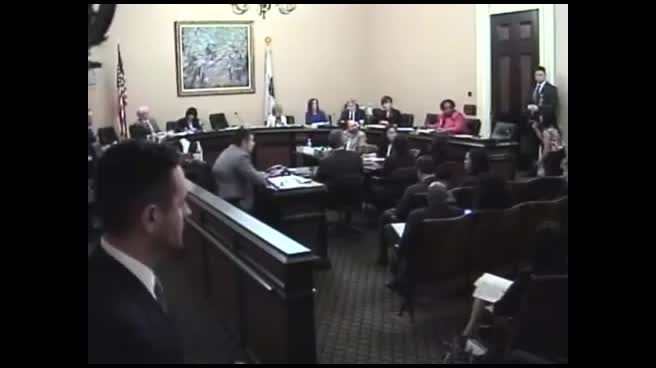
Bill Author

Bill Co-Author(s):