AB 2433: Voter registration database: Electronic Registration Information Center.
- Session Year: 2015-2016
- House: Assembly
- Latest Version Date: 2016-04-14
Existing law requires the Secretary of State to establish a statewide system to facilitate removal of duplicate or prior voter registrations, to facilitate the reporting of election results and voter and candidate information, and to otherwise administer and enhance election administration. Existing law also requires certain affidavit of voter registration information to be provided to, among others, any person for election, scholarly, journalistic, or political purposes, or for governmental purposes, as determined by the secretary.
This bill would require authorize the Secretary of State to enter into agreements to share information or data with other states or groups of states in order to improve the accuracy of the statewide voter registration database, as specified. apply for membership with the Electronic Registration Information Center and, if that application is approved, authorize the Secretary of State to execute a membership agreement with the Electronic Registration Information Center on behalf of the state. The bill would require the secretary to ensure that any confidential information or data provided by another state remains confidential while in his or her possession, and would authorize the secretary to transmit confidential information or data pursuant to those agreements. that agreement. The bill would also authorize the Secretary of State to adopt regulations necessary to implement these provisions.
Existing law requires the Secretary of State to establish a statewide system to facilitate removal of duplicate or prior voter registrations, to facilitate the reporting of election results and voter and candidate information, and to otherwise administer and enhance election administration. Existing law also requires certain affidavit of voter registration information to be provided to, among others, any person for election, scholarly, journalistic, or political purposes, or for governmental purposes, as determined by the secretary.
This bill would require the Secretary of State to enter into agreements to share information or data with other states or groups of states in order to improve the accuracy of the statewide voter registration database, as specified. The bill would require the secretary to ensure that any confidential information or data provided by another state remains confidential while in his or her possession, and would authorize the secretary to transmit confidential information or data pursuant to those agreements. The bill would also authorize the Secretary of State to adopt regulations necessary to implement these provisions.
(a)The Secretary of State shall enter into agreements to share information or data that is in the possession of the Secretary of State with other states or groups of states in order to improve the accuracy of the statewide voter registration database described in subdivision (b) of Section 2187, as follows:
(1)
(a)The Secretary of State shall may apply for membership with the Electronic Registration Information Center. If the membership application is approved, the Secretary of State shall may execute a membership agreement with the Electronic Registration Information Center on behalf of the state.
(2)The Secretary of State shall execute a Memorandum of Understanding on behalf of the state to participate in the Interstate Voter Registration Data Crosscheck Program.
(b)The Secretary of State shall ensure that any confidential information or data provided by another state to the Secretary of State remains confidential while in his or her possession.
(c)Notwithstanding subdivision (c) of Section 6254.4 of the Government Code, paragraph (1) of subdivision (b) of Section 2194, or any other law, the Secretary of State may provide confidential information or data to persons or organizations pursuant to an agreement entered into under this section.
(d)The Secretary of State may adopt regulations necessary to implement this section.
(a)The Secretary of State shall enter into agreements to share information or data that is in the possession of the Secretary of State with other states or groups of states in order to improve the accuracy of the statewide voter registration database described in subdivision (b) of Section 2187, as follows:
(1)The Secretary of State shall apply for membership with the Electronic Registration Information Center. If the membership application is approved, the Secretary of State shall execute a membership agreement with the Electronic Registration Information Center on behalf of the state.
(2)The Secretary of State shall execute a Memorandum of Understanding on behalf of the state to participate in the Interstate Voter Registration Data Crosscheck Program.
(b)The Secretary of State shall ensure that any confidential information or data provided by another state to the Secretary of State remains confidential while in his or her possession.
(c)Notwithstanding subdivision (c) of Section 6254.4 of the Government Code, paragraph (1) of subdivision (b) of Section 2194, or any other law, the Secretary of State may provide confidential information or data to persons or organizations pursuant to an agreement entered into under this section.
(d)The Secretary of State may adopt regulations necessary to implement this section.
|
Date
|
Status
|
|---|---|
| Feb 19, 2016 | Introduced. To print. |
| Feb 21, 2016 | From printer. May be heard in committee March 22. |
| Feb 22, 2016 | Read first time. |
| Mar 8, 2016 | Referred to Coms. on E. & R. and P. & C.P. |
| Mar 30, 2016 | In committee: Set, first hearing. Hearing canceled at the request of author. |
| Apr 13, 2016 | From committee: Amend, and do pass as amended and re-refer to Com. on P. & C.P. (Ayes 7. Noes 0.) (April 13). |
| Apr 14, 2016 | Read second time and amended. |
| Apr 18, 2016 | Re-referred to Com. on P. & C.P. |
| Apr 20, 2016 | From committee: Do pass and re-refer to Com. on APPR. (Ayes 8. Noes 1.) (April 19). Re-referred to Com. on APPR. |
| May 18, 2016 | In committee: Set, first hearing. Referred to APPR. suspense file. |
| May 27, 2016 | In committee: Held under submission. |
|
Date
|
Description
|
Location
|
Votes
|
|
|---|---|---|---|---|
| Apr 19, 2016 | Do pass and be re-referred to the Committee on [Appropriations] | Assembly Standing Committee on Privacy and Consumer Protection |
Passed |
|
| Apr 13, 2016 | Do pass as amended and be re-referred to the Committee on [Privacy and Consumer Protection] | Assembly Standing Committee on Elections and Redistricting |
Passed |
This list shows positions taken on this bill by organizations on the date displayed, which is linked to the original source.
Positions by individuals are not included.
|
Organization
|
Position
|
Date
|
|---|---|---|
| ACLU | ** Against | May 18, 2016 |
| American Civil Liberties Union of California | ** Against | May 18, 2016 |
| FairVote | ** Support | May 18, 2016 |
| Howard Jarvis Taxpayers Association | ** Support | May 18, 2016 |
| Los Angeles County Board of Supervisors | * Support | May 18, 2016 |
| One individual | ** Support | May 18, 2016 |
| Pew Charitable Trusts; The | * Support | May 18, 2016 |
Date of Hearing: May 18, 2016
ASSEMBLY COMMITTEE ON APPROPRIATIONS
Lorena Gonzalez, Chair
ABPCA Bill Id:AB 2433
Author:(Travis Allen) – As Amended Ver:April 14, 2016
Policy Committee: | Elections and Redistricting | Vote: | 7 - 0 |
Privacy and Consumer Protection | 8 - 1 |
Urgency: No State Mandated Local Program: No Reimbursable: No
SUMMARY:
This bill authorizes the Secretary of State (SOS) to join an interstate voter data exchange, the Electronic Registration Information Center (ERIC), and waives all California voter confidentiality and voter data security laws in order to allow the SOS to share confidential voter records with ERIC. Specifically, this bill:
- Authorizes the SOS to apply for membership with ERIC and to execute a membership agreement with ERIC on behalf of the state.
- Requires the SOS to ensure that any confidential information or data provided by another state to the SOS remains confidential while in his or her possession.
- Authorizes the SOS, notwithstanding any other law, to provide confidential information or data to persons or organizations pursuant to an agreement entered into under this bill.
FISCAL EFFECT:
Ongoing General Fund costs for the SOS to contact, as required by ERIC, all unregistered Californians identified by ERIC as eligible to register. These costs are estimated at $1.7 million to $2.5 million, in the first year, for four million to six million mailings. Subsequent mailings could decline significantly over time as more persons register. Partially offsetting these costs would be savings averaging around $220,000 annually from the SOS discontinuing a contract with the Employment Development Department to verify voter records against the National Change of Address database.
The SOS would also have one-time General Fund costs of $55,000 to promulgate regulations and $25,000 for the initial membership fee with ERIC. Subsequent annual dues to ERIC would be an additional $50,000.
COMMENTS:
- Background. ERIC is a non-profit organization with the mission of assisting states to improve the accuracy of America's voter rolls and increase access to voter registration for all eligible citizens. With the assistance of the PEW Charitable Trust, ERIC was formed in 2013 and is owned, governed, and funded by the states that choose to join. As of December 2015, Washington D.C. and 15 states are members of ERIC.
According to information provided on the ERIC website, the ERIC data center allows states to securely and safely compare voter data, thereby improving the accuracy of the voter rolls. States that choose to participate in ERIC are able to compare information on eligible voters from official data sources submitted by the states. Each member state submits at a minimum its voter registration and motor vehicle department's data. These records go through a data-matching exchange that crosschecks the information against lists from other member states as well as other data sources. ERIC then reports back to the states where there is a “highly confident match” indicating a voter moved or died, or the existence of a duplicate record. Once states receive the reports they can then begin the process to clean up the voter rolls, subject to state and federal law. Participating states also receive information on unregistered individuals who are potentially eligible to vote, which allows them to reach out to those citizens to encourage them to register to vote.
- Purpose. The author cites a report issued by the Presidential Commission on Election Administration, which was established in 2013 by Executive Order with the mission to identify best practices in election administration and to make recommendations to improve the voting experience. One of the main recommendations reported by the Commission focused on voter registration, specifically voter roll accuracy. In an effort to increase the accuracy of voter rolls, the Commission’s report, in part, recommended that interstate exchanges of voter registration information should be expanded.
- Current Voter Registration Maintenance. In March, California deployed its new statewide voter registration system, called VoteCal, which, in part, will make it easier and more efficient for elections officials to do "list maintenance," including identifying and eliminating duplicate registrations, transferring a voter's record from one county to another when the voter moves, and canceling the registrations of individuals who are no longer eligible to vote. In addition to VoteCal, California has numerous other processes for removing duplicate voter records, deceased voters, felons, and people who have moved. These checks are conducted with data from federal agencies, including the Social Security Administration, the United States Post Office National Change of Address Program. California also checks voter registration data against information from Department of Vital Statistics, DMV, the Department of Corrections and Rehabilitation, and the Department of Health Services. In addition, all county elections officials receive reports from superior courts of individuals convicted of felonies.
- Change in Privacy Policy. Current law requires voters’ California driver's license numbers, social security numbers, and signatures to be kept strictly confidential and not disclosed. Since participation in ERIC would include this as part of the information about the state's 17 million voters that the SOS would have to provide, this bill changes state policy of protecting certain personal identifying voter information from disclosure.
- Opposition. The American Civil Liberties Union opposes the bill based on privacy concerns.
Analysis Prepared by: Chuck Nicol / APPR. / (916) 319-2081
Date of Hearing: April 19, 2016
ASSEMBLY COMMITTEE ON PRIVACY AND CONSUMER PROTECTION
Ed Chau, Chair
ABPCA Bill Id:AB 2433 (
Author:Travis Allen) – As Amended Ver:April 14, 2016
SUBJECT: Voter registration database: Electronic Registration Information Center
SUMMARY: Authorizes the Secretary of State (SOS) to join an interstate voter data exchange, called the Electronic Registration Information Center (ERIC) and waives all California voter confidentiality and voter data security laws in order to allow the SOS to share confidential voter records with ERIC. Specifically, this bill:
- Authorizes the SOS to apply for membership with ERIC and requires the SOS, if the membership application is approved, to execute a membership agreement with ERIC on behalf of the state.
- Requires the SOS to ensure that any confidential information or data provided by another state to the SOS remains confidential while in his or her possession.
- Authorizes the SOS, notwithstanding any other law, to provide confidential information or data to persons or organizations pursuant to an agreement entered into under this bill.
- Permits the SOS to adopt regulations necessary to implement the provisions of this bill.
EXISTING LAW:
- Requires each state, pursuant to the federal Help America Vote Act of 2002 (HAVA), to implement a single, uniform, official, centralized, interactive computerized statewide voter registration list at the state level that contains the name and voter registration information, including the full California driver’s license or identification number (CDL/ID) and last four digits of the Social Security number (SSN4), of every legally registered voter in the state. (42 U.S.C. Sections 15301-15545)
- Provides that a person entitled to register to vote shall be a United States citizen, a resident of California, not in prison or on parole for the conviction of a felony, and at least 18 years of age at the time of the next election. (Elections Code (EC) Section 2000)
- Authorizes certain voter registration information, such as the name, home address, telephone number, email address, and party affiliation, to be shared specifically for election, scholarly, journalistic, or political purposes, or for governmental purposes. (Government Code (GC) Section 6254.4(a), EC 2194)
- Requires, notwithstanding any other provision of law, a voter’s CDL/ID, SSN4, and signature to be confidential and not disclosed. (EC 2138.5, EC 2194(b), GC 6254.4(c))
- Provides for confidential voter registration for certain voters, including victims of domestic violence, reproductive health care workers, public safety officers, and elected officials (EC 2166, 2166.5, and 2166.7)
- Prohibits voter information from being shared outside the U.S., including the provision of access to voter information on the Internet. (EC 2188.5)
FISCAL EFFECT: Unknown
COMMENTS:
- Purpose of the Bill. This bill is intended to help ensure California has accurate voter rolls. This bill is author-sponsored.
- Author's statement. According to the author, "The Presidential Commission on Election Administration submitted a report in 2014 stating the importance of accurate voter rolls in state voter registration systems in order to ensure the utmost integrity and participation in elections. The report continues to explain that the decentralized nature of the administration of American elections may have its most pronounced and demonstrable effects in the registration system. Unlike other countries, the United States does not maintain a list of registered voters at the national level."
"Elections in our state are constantly evolving through online registration, social media, the rise of online marketing campaigns; we are changing the way in which our state engages in the democratic process. Unfortunately, voter registration systems remain largely based on outdated programs and tools. For example, 1 in 8 voter registration records in America contain a serious error, such as a wrong address or which county a voter is residing in. In addition, more than 51 million citizens, or 25 percent, remain unregistered to vote.
"The Commission concludes their report referenced above by recommending that states participate in interstate coordination programs that empower states to work together to ensure they are utilizing the most up-to-date information for the country’s voters. This will ensure the best voter experience…promoting trust and engagement in the election process."
- 2014 Presidential Commission report. In 2013, the Presidential Commission on Election Administration (Commission) was established by Executive Order with the mission to identify best practices in election administration and to make recommendations to improve the voting experience.
The Commission submitted a report in January 2014 entitled, "The American Voting Experience: Report and Recommendations of the Presidential Commission on Election Administration." One of the main recommendations reported by the Commission focused on voter registration, specifically voter roll accuracy. In an effort to increase the accuracy of voter rolls, the Commission report makes the following recommendations with respect to voter registration: 1) States should adopt online registration, 2) Interstate exchanges of voter registration information should be expanded, and, 3) States should seamlessly integrate voter data acquired through the DMV with their statewide voter registration lists. - ERIC. ERIC is a non-profit organization with the mission of assisting states to improve the accuracy of America's voter rolls and increase access to voter registration for all eligible citizens. With the assistance of the PEW Charitable Trust, ERIC was formed in 2013 and is owned, governed, and funded by the states that choose to join. As of December 2015, Washington D.C. and 15 states are members of ERIC, including Alabama, Colorado, Connecticut, Delaware, Louisiana, Illinois, Maryland, Minnesota, Nevada, Oregon, Pennsylvania, Rhode Island, Utah, Virginia, and Washington.
According to information provided on the ERIC website, the ERIC data center allows states to securely and safely compare voter data, thereby improving the accuracy of the voter rolls. States that choose to participate in ERIC are able to compare information on eligible voters from official data sources submitted by the states. Each member state submits at a minimum its voter registration and motor vehicles department data. The data includes names, addresses, date of births, driver's license or state identification number, and last four digits of the social security number (SSN4). Other information, such as phone numbers, email addresses, and record status are also submitted as available. According to the ERIC website, ERIC has safeguards in place that anonymize sensitive identifying data by converting it into indecipherable characters that is unreadable and unusable to potential hackers, such as "one-way hashing."
These records go through a data-matching exchange that crosschecks the information against lists from other member states as well as other data sources such as the National Change of Address data from the United States Postal Service and other existing government databases, such as death records from the Social Security Administration. ERIC then reports back to the states where there is a “highly confident match” indicating a voter moved or died, or the existence of a duplicate record. It is unclear, however, exactly how many data points constitute a match. Once states receive the reports they can then begin the process to clean up the voter rolls, subject to state and federal law. Participating states also receive information on unregistered individuals who are potentially eligible to vote. This information will allow states to reach out to those citizens to encourage them to register to vote. Member states pay annual dues which vary depending on the population size of the state. Large states usually pay more than small states.
This bill authorizes the SOS to apply for membership to the ERIC program and, if approved, requires SOS to execute a membership agreement with ERIC on behalf of the state. The bill contains a provision that undermines all state laws designed to protect voter privacy and the confidentiality of sensitive voter data, such as Social Security numbers and driver’s license numbers. Specifically, this bill authorizes the SOS, notwithstanding specific voter privacy laws, Government Code 6254.4(c) and Elections Code 2194(b), or “any other law,” to provide confidential information or data to persons or organizations if an agreement is entered into to participate in ERIC. - Privacy risks of releasing confidential voter registration data. Current law permits only certain voter information, such as the name, home address, telephone number, email address, and party affiliation, to be shared specifically for “election, scholarly, journalistic, or political purposes, or for governmental purposes.” Existing law explicitly requires voters’ CDL/ID numbers, social security numbers, and signatures to be kept strictly confidential and not disclosed. This bill changes California's longstanding policy to protect certain personal identifying voter information from disclosure. In effect, this bill would overturn California’s voter privacy laws to allow the SOS to provide confidential voter data to an out-of-state nongovernmental organization. The ERIC bylaws require the SOS to provide the following data fields of all 17 million of California’s registered voters:
- All name fields, all address fields;
- Full CDL/ID;
- SSN4;
- Date of birth;
- Current record status;
- Affirmative documentation of citizenship;
- Title/type of affirmative documentation of citizenship presented;
- Phone number; and
- Email address.
The bill does not contain any requirements for the SOS to inform a voter that their personal voter registration information is being shared, nor does the bill require a voter to consent to their information being shared.
- Data security risks. According to documents from the ERIC website, there are three primary components to ERIC's data matching process: data collection, anonymization, and file transfer.
To secure sensitive information, such as last four digits of the SSN and DL number, ERIC provides an anonymization application to each participating jurisdiction. The anonymization, also known as "one-way hashing," converts sensitive identifying data into indecipherable characters that is unreadable and unusable to potential hackers. Documents state that to further strengthen the security measures around the data, all records are sent through the anonymization process twice – once at the state level, before data is ever sent to ERIC, and once by ERIC as it receives data. States are then given account credentials to access a secure file transfer protocol (sFTP) site where their anonymized files are uploaded to a state-specific location. ERIC proceeds to run and generate reports that are available for state-specific download on the same sFTP site. According the ERIC's membership agreement, participating states are required to upload all voter data every 60 days.
The author and the Committee may wish to consider whether 17 million California voter records should be released to an out-of-state nongovernmental entity, which may or may not have sufficient cybersecurity countermeasures in place to protect sensitive voter data, such as full CDL/ID numbers and SSN4s.
- Is this bill needed? Federal law, HAVA, required every state to implement a computerized statewide voter registration database. California recently deployed its new statewide voter registration system, called VoteCal, which as of March 2016 is live in all 58 counties. VoteCal made much-needed improvements to the administration of elections in California by streamlining the voter registration process; allowing voters to update their voter registration records seamlessly when they update their address with the Department of Motor Vehicles (DMV) or with the state's Employment Development Department; and by making it easier and more efficient for elections officials to do "list maintenance," including identifying and eliminating duplicate registrations, transferring a voter's record from one county to another when the voter moves, and canceling the registrations of individuals who are no longer eligible to vote.
Aside from the benefits VoteCal provides, California already has numerous processes in place for removing duplicate voter records, deceased voters, felons, and people who have moved. These checks are conducted with data from federal agencies, including the Social Security Administration, the United States Post Office National Change of Address Program. California also checks voter registration data against information from Department of Vital Statistics, DMV, the Department of Corrections and Rehabilitation, and the Department of Health Services. In addition, all county elections officials receive reports from superior courts of individuals convicted of felonies.
According to a 2014 National Conference of State Legislatures report, states already cooperate in a wide variety of ways to ensure the accuracy of voter data and to prevent duplicate voter records. For instance, if a new voter in a state fills out a voter registration form and indicates that he or she was registered in another state previously, the jurisdiction informs the other state that the voter has moved. This is already current practice in California.
- Arguments in opposition: The American Civil Liberties Union (ACLU) opposes this bill, not only because confidential voter data would be shared but also because ERIC calls for states to share DMV records as well. ACLU notes that “ERIC’s promotional publications explaining how ERIC functions underscore the central role of motor vehicle agency data. Specifically highlighted is address data from motor vehicle agencies. However, the California DMV is explicitly prohibited from sharing residence address data. California Vehicle Code Section 1808.21(a) states, “Any residence address in any record of the department is confidential and shall not be disclosed to any person, except a court, law enforcement agency, or other government agency, or as authorized in Section 1808.22 or 1808.23.” [These] sections create exceptions that would not apply to ERIC.”
“ERIC requires member states to send to ERIC voter file data and motor vehicle data. It requires member states to use their “best efforts” to transmit data from all agencies that “perform any voter registration functions,” including but not limited to NVRA agencies. This “best efforts” requirement, if complied with, presumably implicates a variety of California state agencies and departments. California has a blanket ban on state agencies sharing data. California Civil Code Section 1798.24 states “No agency may disclose any personal information in a manner that would link the information disclosed to the individual to whom it pertains.” That code section includes a list of exceptions, none of which would include ERIC.”
- Double-referral. This bill was double-referred to the Assembly Elections Committee where it was heard on April 13, 2016, and passed 7-0.
REGISTERED SUPPORT / OPPOSITION:
Support
None on file.
Opposition
ACLU
Analysis Prepared by: Jennie Bretschneider / P. & C.P. / (916) 319-2200
Date of Hearing: April 13, 2016
ASSEMBLY COMMITTEE ON ELECTIONS AND REDISTRICTING
Shirley Weber, Chair
ABPCA Bill Id:AB 2433 (
Author:Travis Allen) – As Introduced Ver:February 19, 2016
SUBJECT: Voter registration database: interstate exchange of voter registration information.
SUMMARY: Requires the Secretary of State (SOS) to enter into agreements to share voter registration information or data with other states or groups of states in order to improve the accuracy of voter registration lists, as specified. Specifically, this bill:
- Requires the SOS to enter into agreements to share information or data that is in the possession of the SOS with other states or groups of states in order to improve the accuracy of the statewide voter registration database, as required under existing law, as follows:
- Requires the SOS to apply for membership with the Electronic Registration Information Center (ERIC). Requires the SOS, if the membership application is approved, to execute a membership agreement with ERIC on behalf of the state.
- Requires the SOS to execute a memorandum of understanding on behalf of the state to participate in the Interstate Voter Registration Data Crosscheck Program (Crosscheck).
- Requires the SOS to ensure that any confidential information or data provided by another state to the SOS remains confidential while in his or her possession.
- Authorizes the SOS, notwithstanding specified provisions of existing law or any other law, to provide confidential information or data to persons or organizations pursuant to an agreement entered into under the provisions of this bill.
- Permits the SOS to adopt regulations necessary to implement the provisions of this bill.
EXISTING LAW:
- Provides that a person entitled to register to vote shall be a United States citizen, a resident of California, not in prison or on parole for the conviction of a felony, and at least 18 years of age at the time of the next election.
- Requires a county elections official to cancel the registration of any person if the mental incompetency of that person is legally established, as provided.
- Requires each state, pursuant to the federal Help America Vote Act of 2002 (HAVA), to implement a single, uniform, official, centralized, interactive computerized statewide voter registration list defined, maintained, and administered at the state level that contains the name and registration information of every legally registered voter in the state and assigns a unique identifier to each legally registered voter in the state.
- Requires certain information on affidavits of voter registration, such as the name, home address, telephone number, email address, and party affiliation, to be provided to, among others, any person for election, scholarly, journalistic, or political purposes, or for governmental purposes, as determined by the SOS.
- Requires an affiant's driver's license number, identification card number, social security number, and the signature contained on an affidavit of registration or voter registration card to be confidential and not be disclosed, as specified.
FISCAL EFFECT: Unknown
COMMENTS:
- Purpose of the Bill: According to the author:
The Presidential Commission on Election Administration submitted a report in 2014 stating the importance of accurate voter rolls in state voter registration systems in order to ensure the utmost integrity and participation in elections. The report continues to explain that the decentralized nature of the administration of American elections may have its most pronounced and demonstrable effects in the registration system. Unlike other countries, the United States does not maintain a list of registered voters at the national level.
Elections in our state are constantly evolving through online registration, social media, the rise of online marketing campaigns; we are changing the way in which our state engages in the democratic process. Unfortunately, voter registration systems remain largely based on outdated programs and tools. The inherent inefficiencies in our system result in unnecessarily high costs, and make it difficult to validate voter rolls. For example, 1 in 8 voter registration records in America contain a serious error, such as a wrong address or which county a voter is residing in. In addition, more than 51 million citizens, or 25 percent, remain unregistered to vote.
The Commission concludes their report referenced above by recommending that states participate in interstate coordination programs that empower states to work together to ensure they are utilizing the most up-to-date information for the country’s voters. This will ensure the best voter experience, thus further promoting trust and engagement in the election process.
California will be joining Alabama, Nevada, Colorado, Oregon Connecticut, Rhode Island, Delaware, Utah, Louisiana, Virginia, Maryland, Washington, Minnesota, Washington D.C., and more in these significant advances to bring our voter registration process into the modern era.
- Election Registration Information Center (ERIC): The ERIC program is a non-profit organization with the sole mission of assisting states to improve the accuracy of America's voter rolls and increase access to voter registration for all eligible citizens. With the assistance of the PEW Charitable Trust, ERIC was formed in 2013 and is owned, governed, and funded by the states who choose to join. As of December 2015, Washington D.C. and 15 states are members of ERIC (Alabama, Colorado, Connecticut, Delaware, Louisiana, Illinois, Maryland, Minnesota, Nevada, Oregon, Pennsylvania, Rhode Island, Utah, Virginia, and Washington.).
According to information provided on the ERIC website, the ERIC data center allows states to securely and safely compare voter data, thereby improving the accuracy of the voter rolls. States that choose to participate in ERIC are able to compare information on eligible voters from official data sources submitted by the states. Each member state submits at a minimum its voter registration and motor vehicles department data. The data includes names, addresses, date of births, driver's license (DL) or state identification number, and last four digits of the social security number (SSN). Other information, such as phone numbers, emails addresses, and record status, are also submitted as available. Materials further state that ERIC has safeguards in place that anonymizes sensitive identifying data by converting it into indecipherable characters that is unreadable and unusable to potential hackers, such as "one-way hashing."
These records go through a data-matching exchange that cross checks the information against lists from other member states as well as other data sources such as the National Change of Address data from the United States Postal Service and other existing government databases, such as death records from the Social Security Administration. ERIC then reports back to the states where there is a highly confident match indicating a voter moved or died, or the existence of a duplicate record. It is unclear, however, exactly how many data points constitute a match. Once States receive the reports they can then begin the process under federal and state law to clean up the voter rolls. Participating states also receive information on unregistered individuals who are potentially eligible to vote. This information will allow them to reach out to those citizens to encourage them to register to vote. Member states pay annual dues which vary depending on the population size of the state. Large states usually pay more than small states.
This bill requires the SOS to enter into agreements to share information or data that is in the possession of the SOS with other states or groups of states in order to improve the voter registration database. Specifically, this bill requires the SOS to apply for membership to the ERIC program and, if approved, this bill requires the SOS to execute a membership agreement with ERIC on behalf of the state. Additionally, this bill authorizes the SOS, notwithstanding existing law or any other law, to provide confidential information or data to persons or organizations if an agreement is entered into to participate in ERIC. - Kansas Interstate Crosscheck Program (Crosscheck): In addition to applying for membership in the ERIC program, this bill also explicitly requires the SOS to execute a memorandum of understanding on behalf of the state to participate in Crosscheck. The Crosscheck program was launched in December of 2005 by the Kansas Secretary of State's office. Crosscheck is a state-to-state matching program that compares a state's voter list to the lists from other participating states for the purpose of identifying possible double voting, where a voter has allegedly cast ballots in multiple states during the same election, as well as to identify duplicate voting records. According to Crosscheck's 2014 participation guide, 28 states are currently participating (Alaska, Arizona, Arkansas, Colorado, Florida, Georgia, Idaho, Illinois, Indiana, Iowa, Kansas, Kentucky, Louisiana, Michigan, Mississippi, Missouri, Nebraska, Nevada, North Carolina, Ohio, Oklahoma, Oregon, Pennsylvania, South Carolina, South Dakota, Tennessee, Virginia and Washington). Oregon and Florida recently ended their participation with Crosscheck. According to media articles, Oregon left Crosscheck because the data they received was unreliable and they felt joining the ERIC project would better meet their needs.
Crosscheck is run solely by the Kansas Secretary of State’s office. According to the 2014 participation guide, participating states are required to provide their voter list data, which includes names, addresses, date of births, voter identification number, last four digits of the SSN, date of registration, and whether or not the person voted in the last general election. Crosscheck matches a state’s voter list against lists from other participating states and reports are sent to states indicating “matches” or voters who appear to be registered to vote in more than one state. Under Crosscheck, a match is identified when three fields (first name, last name, and date of birth) are matched. Other information such as the middle name, name suffix and the last four digits of the SSN are also included on the report, however, those data points are not used to indicate a match. Critics contend, however, that without additional criteria, such as the last four digits of a voter’s SSN being required in order to generate a match, there are more chances for this approach to produce data which, if used improperly, could lead states to remove otherwise valid voters. Crosscheck's guide admits that the program generates a high number of false positives, many of which are the result of errors - voters sign the wrong line in the poll book, election clerks scan the wrong line with a barcode scanner, or there is confusion over the father/son voters (Sr. and Jr.).
While there is no direct cost to participate in Crosscheck, staff time and resources are required to rigorously perform list maintenance evaluation of the data received from Crosscheck. Furthermore, the 2014 participant guide states that processing the duplicate registrations and researching possible double votes requires a commitment of time at state and local levels and suggests that given the effort required to process the information accurately, some states may not be able to commit the resources to process the results in a given year. - Access to Confidential Voter Registration Information: Current law requires certain information from affidavits of voter registration, such as the name, home address, telephone number, email address, and party affiliation, to be provided to, among others, any person for election, scholarly, journalistic, or political purposes, or for governmental purposes, as determined by the SOS. Existing law explicitly requires an affiant's driver's license number, identification card number, social security number, and the signature contained on an affidavit of registration or voter registration card to be confidential and not be disclosed, as specified.
This bill changes California's longstanding policy to keep certain personal identifying voter information confidential. As mentioned above, this bill requires the SOS to apply for membership to the ERIC program and to execute a MOU to participate in the Crosscheck, as specified, and authorizes the SOS to provide confidential information or data to persons or organizations if an agreement is entered into to participate in ERIC and Crosscheck.
The ERIC bylaws require the SOS to provide the following data fields, if available, for both the voter registration lists and DMV lists: all name fields, all address fields, DL or state identification number, last four digits of the SSN, date of birth, activity dates as defined by the ERIC Board of Directors, current record status, affirmative documentation of citizenship, the title/type of affirmative documentation of citizenship presented, phone number, and email address or other electronic contact method. Crosscheck requires participating states to share the following data fields: first name, middle name, last name, suffix name, addresses, date of births, voter identification number, last four digits of the SSN, date of registration, and whether or not the person voted in the last general election.
In order to participate in both programs, the SOS would be required to share personal identifying information such as a voter's DL number, SSN, and date of birth, two of which are currently prohibited by law from being disclosed.
Furthermore, the bill does not contain any requirements for the SOS to inform a voter that their personal voter registration information is being shared, nor does the bill require a voter to consent to their information being shared. The committee may wish to consider whether this policy change will set a new precedent that allows a voter's personal information to be shared without their consent. - Protecting Confidential Voter Registration Information: Despite requests from committee staff, no evidence was shared with the committee to demonstrate that both ERIC and Crosscheck have security measures in place to ensure California voter's personal identifiable information is protected. According to documents from the ERIC website, there are three primary components to ERIC's data matching process: data collection, anonymization, and file transfer. To ensure sensitive information, such as last four digits of the SSN and DL number, ERIC provides an anonymization application to each participating jurisdiction. The anonymization, also known as "one-way hashing," converts sensitive identifying data into indecipherable characters that is unreadable and unusable to potential hackers. Documents state that to further strengthen the security measures around the data, all records are sent through the anonymization process twice – once at the state level, before data is ever sent to ERIC, and once by ERIC as it receives data. States are then given account credentials to access a secure file transfer protocol (sFTP) site where their anonymized files are uploaded to a state-specific location. ERIC proceeds to run and generate reports that are available for state-specific download on the same sFTP site. According the ERIC's membership agreement, participating states are required to upload voter data every 60 days.
According to Crosscheck's 2014 participant guide, participating states are required, once a year in January, to upload their voter registration files, using prescribed formats, to a sFTP site that is hosted by the state of Arkansas. Once data is uploaded, the state of Kansas then downloads the files, deletes everything from the sFTP site, runs the data comparison, and uploads individual state result files back to the sFTP site. According to the guide, at each stage of the process, data files are encrypted and zipped, however no detailed information is provided as to how that is accomplished. After data files are uploaded back onto the sFTP site, participating states download the results and process the results in accordance with state and federal laws and regulations. Once that is completed, Kansas deletes all other states' data. - Statewide Voter Registration Database: On October 29, 2002, President George W. Bush signed HAVA. Enacted partially in response to the 2000 Presidential election, HAVA was designed to improve the administration of federal elections. Among other provisions, HAVA requires every state to implement a computerized statewide voter registration list maintained at the state level. This statewide voter registration list will serve as the official list of eligible voters for any federal election held within the state.
At the time HAVA was approved, California was already using a statewide voter registration system, known as Calvoter, which achieved some of the goals of the voter registration list required by HAVA. However, Calvoter did not satisfy many of the requirements in that law, including requirements that the database be fully interactive and have the capability of storing a complete voter registration history for every voter.
After a number of delays, the VoteCal system has finally been developed, and as of March of this year, is live in all 58 counties and all deployment waves are complete. Over the next few months VoteCal will need to complete many more tasks before it can be certified as the system of record for voter registration information in California. Tasks and testing include mock elections, on-going performance testing, and analyzing and monitoring the data in VoteCal. The current project schedule provides for certification to occur by June 2016.
The implementation of VoteCal will make much needed improvements to the administration of elections in California. For instance, VoteCal will help streamline the voter registration process, including allowing voters to update their voter registration records seamlessly when they update their address with the Department of Motor Vehicles or with the state's Employment Development Department. VoteCal will also make it easier and more efficient for elections officials to do "list maintenance," including identifying and eliminating duplicate registrations, transferring a voter's record from one county to another when the voter moves, and canceling the registrations of individuals who are no longer eligible to vote.
Moreover, VoteCal will have the capability of storing a complete voter registration history for every voter. Whenever a voter reregisters or transfers his or her registration from one precinct to another the voter's registration history will be maintained and updated in the state voter registration database, rather than requiring a voter's prior registration to be canceled. - Voter File Maintenance: A variety of methods are used to ensure voter registration rolls are accurate and up-to-date with the goal of maintaining an accurate list to prevent ineligible people from voting, prevent anyone from voting twice, and to reduce inaccuracies and speed up the voter check-in process at polling places. States vary on how this is accomplished, but most generally have processes in place for removing duplicate records, deceased voters, felons, and people who have moved. These checks can be conducted with data from federal agencies, state agencies, and other states. In California, federal agencies used to verify voter information include the Social Security Administration, the United States Post Office and National Change of Address files. On the state level, voter registration data is cross-checked with information from Department of Vital Statistics, Department of Motor Vehicles (DMV), the Department of Corrections and Rehabilitation, and the Department of Health Services. On the local level, current law requires the clerk of the superior court of each county to provide reports to the county elections officials that list individuals convicted of felonies and requires county elections officials to conduct a pre-election residency confirmation procedure by the 90th day before each statewide primary election, as specified.
According to a 2014 National Conference of State Legislatures report, states also cooperate in a variety of ways to ensure accuracy of voter registration and to prevent duplicate vote records. For instance, if a new voter in a state fills out a voter registration form and indicates that he or she was registered in another state previously, jurisdictions will typically inform the other state that the voter has moved. That is the current practice in California. However, according to the report, in recent years there has also been an increased focus on interstate database comparisons such as ERIC and Crosscheck. These allow participating states to directly compare their data to identify potential duplicate registrations or inaccuracies. In order to participate in these programs some states have needed to pass authorizing legislation while others are able to participate without legislation. - Presidential Commission: In 2013, the Presidential Commission on Election Administration (Commission) was established by Executive Order with the mission to identify best practices in election administration and to make recommendations to improve the voting experience. The Commission submitted a report in January 2014 entitled, "The American Voting Experience: Report and Recommendations of the Presidential Commission on Election Administration." One of the main recommendations reported by the Commission focused on voter registration, specifically voter roll accuracy. The report states that voter lists are essential to the management of elections and accurate lists can affect the ability of people to vote, of elections offices to detect problems, and of courts and others monitoring elections to detect election fraud or irregularities. Moreover, the report contends that states, counties and local elections officials face two major challenges – outdated paper-based registration record keeping systems and a fairly mobile population. According to the report, while the country is now much better off with the statewide voter registration lists mandated by HAVA, prior to HAVA, counties were in charge of voter registration lists in most states and voters who moved between counties or states would sometimes appear on two county registration lists for a considerable time. In an effort to increase the accuracy of voter rolls, the Commission report makes the following recommendations with respect to voter registration: 1) States should adopt online registration, 2) Interstate exchanges of voter registration information should be expanded, and, 3) States should seamlessly integrate voter data acquired through the DMV with their statewide voter registration lists.
- Arguments in Opposition: In opposition, the American Civil Liberties Union of California writes:
Crosscheck is used by participating states for voter list maintenance purposes. Unfortunately, Crosscheck has the potential to be used to improperly purge voters, and therefore joining Crosscheck could disenfranchise thousands of California voters, a disproportionate number of whom are people of color.
States participating in Crosscheck share data in an attempt to identify voters who have moved between participating states or who may be registered or have voted in multiple states. The standard procedure used by Crosscheck for identifying such a voter compares only first name, last name, and date of birth. Statistical research demonstrates that many individuals share these data points, which increases the difficulty of precise list matching procedures. One example that illustrates the difficulty of relying upon a match of minimum categories is the purging of Florida Governor Rick Scott from the voter rolls in 2006 due to a mistaken belief that he was dead. Another example is Chesterfield County, Virginia, which found a 17% error rate among active voters on their matches from Crosscheck.
Additionally, Crosscheck has been shown to disproportionately match non-white voters. A 2014 report by Al Jazeera found that black voters were 45% over represented in Crosscheck “matches.” Hispanic (24% overrepresented) and Asian (31% overrepresented) voters were also disproportionately matched on the lists of suspected double voters identified by Crosscheck.
- Double Referral: This bill is double-referred to the Assembly Privacy and Consumer Protection Committee.
REGISTERED SUPPORT / OPPOSITION:
Support
FairVote
Howard Jarvis Taxpayers Association
One individual
Opposition
American Civil Liberties Union of California
Analysis Prepared by: Nichole Becker / E. & R. / (916) 319-2094
Discussed in Hearing
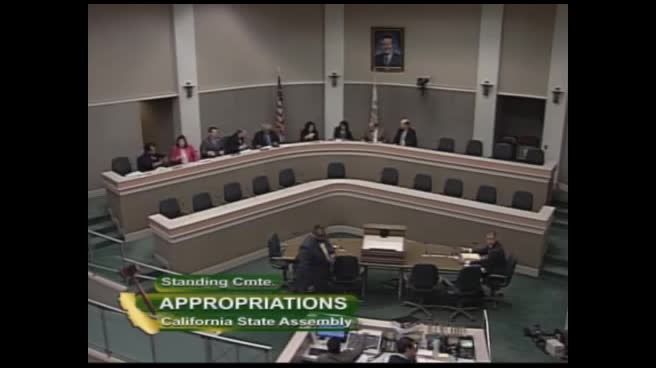 11MIN
Assembly Standing Committee on Appropriations
Bill Author

Bill Co-Author(s):