AB 2603: Public Utilities Commission: Passenger Charter-party Carriers’ Act: complaint registration and resolution mechanism.
- Session Year: 2015-2016
- House: Assembly
- Latest Version Date: 2016-04-11
Charter-party carriers of passengers, including transportation network companies, are subject to the jurisdiction and control of the Public Utilities Commission under the Passenger Charter-party Carriers Act.
This bill would require the commission to establish a telephone communications service, with a designated telephone number, that would be available to members of the public to communicate to the commission any concerns, or register complaints, regarding service provided by charter-party carriers of passengers, including transportation network companies. The bill would require each charter-party carrier of passengers to include the telephone number designated by the commission on all contracts for service made after January 1, 2018, and for a transportation network company or other charter-party carrier of passengers that arranges for transportation utilizing application software, commonly termed an app, the bill would require that the customer be notified of the existence of, and purpose for, the telephone number as part of the electronic transaction. The bill would require the commission to maintain a record of all concerns and complaints communicated to the commission and to establish rules or guidelines as to what concerns and complaints do or do not raise matters of serious concern. As to those concerns and complaints that do not raise a matter of serious concern, the commission staff would be required to diligently attempt to informally resolve the concern or complaint. The bill would require the commission to investigate each concern or complaint that raises a matter of serious concern and initiate and conclude appropriate enforcement action with respect to any violation of the act or a rule adopted by the commission pursuant to the act.
Under existing law, a violation of the Passenger Charter-party Carriers Act or an order or direction of the commission pursuant to the act is a crime.
Because the provisions of this bill are within the act and require action by the commission to implement its requirements, a violation of these provisions would impose a state-mandated local program by creating a new crime.
The California Constitution requires the state to reimburse local agencies and school districts for certain costs mandated by the state. Statutory provisions establish procedures for making that reimbursement.
This bill would provide that no reimbursement is required by this act for a specified reason.
Under existing law, the Public Utilities Commission has broad regulatory authority pursuant to the California Constitution and the Public Utilities Act over public utilities, as defined, including common carriers, toll bridge corporations, electrical corporations, gas corporations, pipeline corporations, telephone corporations, telegraph corporations, water corporations, sewer system corporations, and heat corporations. In addition, the commission has more limited authority over certain other corporations, including charter-party carriers of passengers. Existing law provides compensation for reasonable advocates fees, reasonable expert witness fees, and other reasonable costs to public utility customers and representatives of customers for participation or intervention in formal proceedings of the commission involving electrical, gas, water, telegraph, and telephone public utilities.
This bill would additionally authorize compensation to be awarded by the commission for reasonable advocates fees, reasonable expert witness fees, and other reasonable costs to customers and representatives of customers for participation or intervention in formal proceedings of the commission involving a corporation that is subject to regulation by the commission pursuant to the Passenger Charter-Party Carriers Act.
Existing law requires the commission to deny compensation to any customer who attempts to delay or obstruct the orderly and timely fulfillment of the commissions responsibilities.
This bill would require the commission to deny any claim for compensation for contributions to a closed proceeding unless otherwise specified.
(a)The commission shall establish a telephone communications service that is available to members of the public to communicate to the commission any concerns, or register complaints, regarding service provided by charter-party carriers of passengers, including transportation network companies. The commission shall designate a telephone number for members of the public to dial to communicate their concerns or complaints. The commission shall require each charter-party carrier of passengers to include the telephone number designated by the commission on all contracts for service made after January 1, 2018. For a transportation network company or other charter-party carrier of passengers that arrange for transportation utilizing application software, commonly termed an app, the commission shall require that the customer be notified of the existence of, and purpose for, the telephone number as part of the electronic transaction. The commission may maintain additional, alternative means for members of the public to express concerns or register complaints.
(b)The commission shall maintain a record of all concerns and complaints communicated to the commission relative to charter-party carriers of passengers, including transportation network companies. The commission shall establish rules or guidelines as to what concerns and complaints do or do not raise matters of serious concern. As to those concerns and complaints that do not raise a matter of serious concern, the commission staff shall diligently attempt to informally resolve the concern or complaint and shall maintain a record of whether the concern or complaint was resolved. The commission shall investigate each concern or complaint made to the commission that raises a matter of serious concern and initiate and conclude appropriate enforcement action with respect to any violation of this act or a rule adopted by the commission pursuant to this act. The commission shall maintain a record of all concerns and complaints that result in an investigation, a description of the investigation conducted by the commission, and the result of the investigation.
SEC. 2.No reimbursement is required by this act pursuant to Section 6 of Article XIIIB of the California Constitution because the only costs that may be incurred by a local agency or school district will be incurred because this act creates a new crime or infraction, eliminates a crime or infraction, or changes the penalty for a crime or infraction, within the meaning of Section 17556 of the Government Code, or changes the definition of a crime within the meaning of Section 6 of Article XIIIB of the California Constitution.
SECTION 1.Section 1801.3 of the Public Utilities Code is amended to read:1801.3.It is the intent of the Legislature that:
(a)The provisions of this article shall apply to all formal proceedings of the commission involving electrical, gas, water, telegraph, and telephone corporations and to corporations that are subject to regulation by the commission pursuant to Chapter 8 (commencing with Section 5351) of Division 2.
(b)The provisions of this article shall be administered in a manner that encourages the effective and efficient participation of all groups that have a stake in the public utility regulation process.
(c)The process for finding eligibility for intervenor compensation be streamlined, by simplifying the preliminary showing by an intervenor of issues, budget, and costs.
(d)Intervenors be compensated for making a substantial contribution to proceedings of the commission, as determined by the commission in its orders and decisions.
(e)Intervenor compensation be awarded to eligible intervenors in a timely manner, within a reasonable period after the intervenor has made the substantial contribution to a proceeding that is the basis for the compensation award.
(f)This article shall be administered in a manner that avoids unproductive or unnecessary participation that duplicates the participation of similar interests otherwise adequately represented or participation that is not necessary for a fair determination of the proceeding.
SEC. 2.Section 1802 of the Public Utilities Code is amended to read:1802.As used in this article:
(a)Compensation means payment for all or part, as determined by the commission, of reasonable advocates fees, reasonable expert witness fees, and other reasonable costs of preparation for and participation in a proceeding, and includes the fees and costs of obtaining an award under this article and of obtaining judicial review, if any.
(b)(1)Customer means any of the following:
(A)A participant representing consumers, customers, or subscribers of any electrical, gas, telephone, telegraph, or water corporation or representing consumers, customers, or passengers of any corporation subject to regulation by the commission pursuant to Chapter 8 (commencing with Section 5351) of Division 2.
(B)A representative who has been authorized by a customer.
(C)A representative of a group or organization authorized pursuant to its articles of incorporation or bylaws to represent the interests of residential customers, or to represent small commercial customers who receive bundled electric service from an electrical corporation.
(2)Customer does not include any state, federal, or local government agency, any publicly owned public utility, or any entity that, in the commissions opinion, was established or formed by a local government entity for the purpose of participating in a commission proceeding.
(c)Expert witness fees means recorded or billed costs incurred by a customer for an expert witness.
(d)Other reasonable costs means reasonable out-of-pocket expenses directly incurred by a customer that are directly related to the contentions or recommendations made by the customer that resulted in a substantial contribution.
(e)Party means any interested party, respondent public utility, or commission staff in a hearing or proceeding.
(f)Proceeding means an application, complaint, or investigation, rulemaking, alternative dispute resolution procedures in lieu of formal proceedings as may be sponsored or endorsed by the commission, or other formal proceeding before the commission.
(g)Significant financial hardship means either that the customer cannot afford, without undue hardship, to pay the costs of effective participation, including advocates fees, expert witness fees, and other reasonable costs of participation, or that, in the case of a group or organization, the economic interest of the individual members of the group or organization is small in comparison to the costs of effective participation in the proceeding.
(h)Small commercial customer means any nonresidential customer with a maximum peak demand of less than 50 kilowatts. The commission may establish rules to modify or change the definition of small commercial customer, including use of criteria other than a peak demand threshold, if the commission determines that the modification or change will promote participation in proceedings at the commission by organizations representing small businesses, without incorporating large commercial and industrial customers.
(i)Substantial contribution means that, in the judgment of the commission, the customers presentation has substantially assisted the commission in the making of its order or decision because the order or decision has adopted in whole or in part one or more factual contentions, legal contentions, or specific policy or procedural recommendations presented by the customer. Where the customers participation has resulted in a substantial contribution, even if the decision adopts that customers contention or recommendations only in part, the commission may award the customer compensation for all reasonable advocates fees, reasonable expert fees, and other reasonable costs incurred by the customer in preparing or presenting that contention or recommendation.
SEC. 3.Section 1809 is added to the Public Utilities Code, to read:1809.The commission shall deny any claim for compensation for contributions to a closed proceeding unless otherwise specified in this article.
It is the intent of the Legislature that:
(a)The provisions of this article shall apply to all formal proceedings of the commission involving electric, electrical, gas, water, telegraph, and telephone utilities. corporations and to corporations that are subject to regulation by the commission pursuant to Chapter 8 (commencing with Section 5351) of Division 2.
(b)The provisions of this article shall be administered in a manner that encourages the effective and efficient participation of all groups that have a stake in the public utility regulation process.
(c)The process for finding eligibility for intervenor compensation be streamlined, by simplifying the preliminary showing by an intervenor of issues, budget, and costs.
(d)Intervenors be compensated for making a substantial contribution to proceedings of the commission, as determined by the commission in its orders and decisions.
(e)Intervenor compensation be awarded to eligible intervenors in a timely manner, within a reasonable period after the intervenor has made the substantial contribution to a proceeding that is the basis for the compensation award.
(f)This article shall be administered in a manner that avoids unproductive or unnecessary participation that duplicates the participation of similar interests otherwise adequately represented or participation that is not necessary for a fair determination of the proceeding.
SEC. 2.Section 1802 of the Public Utilities Code is amended to read:1802.As used in this article:
(a)Compensation means payment for all or part, as determined by the commission, of reasonable advocates fees, reasonable expert witness fees, and other reasonable costs of preparation for and participation in a proceeding, and includes the fees and costs of obtaining an award under this article and of obtaining judicial review, if any.
(b)(1)Customer means any of the following:
(A)A participant representing consumers, customers, or subscribers of any electrical, gas, telephone, telegraph, or water corporation that is subject to the jurisdiction of the commission. corporation or representing consumers, customers, or passengers of any corporation subject to regulation by the commission pursuant to Chapter 8 (commencing with Section 5351) of Division 2.
(B)A representative who has been authorized by a customer.
(C)A representative of a group or organization authorized pursuant to its articles of incorporation or bylaws to represent the interests of residential customers, or to represent small commercial customers who receive bundled electric service from an electrical corporation.
(2)Customer does not include any state, federal, or local government agency, any publicly owned public utility, or any entity that, in the commissions opinion, was established or formed by a local government entity for the purpose of participating in a commission proceeding.
(c)Expert witness fees means recorded or billed costs incurred by a customer for an expert witness.
(d)Other reasonable costs means reasonable out-of-pocket expenses directly incurred by a customer that are directly related to the contentions or recommendations made by the customer that resulted in a substantial contribution.
(e)Party means any interested party, respondent public utility, or commission staff in a hearing or proceeding.
(f)Proceeding means an application, complaint, or investigation, rulemaking, alternative dispute resolution procedures in lieu of formal proceedings as may be sponsored or endorsed by the commission, or other formal proceeding before the commission.
(g)Significant financial hardship means either that the customer cannot afford, without undue hardship, to pay the costs of effective participation, including advocates fees, expert witness fees, and other reasonable costs of participation, or that, in the case of a group or organization, the economic interest of the individual members of the group or organization is small in comparison to the costs of effective participation in the proceeding.
(h)Small commercial customer means any nonresidential customer with a maximum peak demand of less than 50 kilowatts. The commission may establish rules to modify or change the definition of small commercial customer, including use of criteria other than a peak demand threshold, if the commission determines that the modification or change will promote participation in proceedings at the commission by organizations representing small businesses, without incorporating large commercial and industrial customers.
(i)Substantial contribution means that, in the judgment of the commission, the customers presentation has substantially assisted the commission in the making of its order or decision because the order or decision has adopted in whole or in part one or more factual contentions, legal contentions, or specific policy or procedural recommendations presented by the customer. Where the customers participation has resulted in a substantial contribution, even if the decision adopts that customers contention or recommendations only in part, the commission may award the customer compensation for all reasonable advocates fees, reasonable expert fees, and other reasonable costs incurred by the customer in preparing or presenting that contention or recommendation.
SEC. 3.Section 1809 is added to the Public Utilities Code, to read:1809.The commission shall deny any claim for compensation for contributions to a closed proceeding unless otherwise specified in this article.
|
Date
|
Status
|
|---|---|
| Feb 19, 2016 | Introduced. To print. |
| Feb 21, 2016 | From printer. May be heard in committee March 22. |
| Feb 22, 2016 | Read first time. |
| Mar 10, 2016 | Referred to Com. on U. & C. |
| Apr 5, 2016 | In committee: Set, first hearing. Hearing canceled at the request of author. |
| Apr 11, 2016 | From committee chair, with author's amendments: Amend, and re-refer to Com. on U. & C. Read second time and amended. |
| Apr 12, 2016 | Re-referred to Com. on U. & C. |
| Apr 20, 2016 | In committee: Set, second hearing. Held without recommendation. |
This list shows positions taken on this bill by organizations on the date displayed, which is linked to the original source.
Positions by individuals are not included.
|
Organization
|
Position
|
Date
|
|---|---|---|
| Technet | * Against | Apr 20, 2016 |
Date of Hearing: April 20, 2016
ASSEMBLY COMMITTEE ON UTILITIES AND COMMERCE
Mike Gatto, Chair
ABPCA Bill Id:AB 2603 (
Author:Nazarian) – As Amended Ver:April 11, 2016
SUBJECT: Public Utilities Commission: Passenger Charter-party Carriers' Act: complaint registration and resolution mechanism
SUMMARY: Requires the California Public Utilities Commission (CPUC) to establish a telephone communication service for the public to communicate any concern or complaints related to charter party carriers (CPCs), including transportation network companies (TNCs). Specifically, this bill:
- Requires the CPUC to establish a telephone communications service that is available to members of the public to communicate to the CPUC any concerns, or register complaints, regarding service provided by CPCs, including TNCs.
- Requires the CPUC to designate a telephone number for members of the public to dial to communicate their concerns or complaints.
- Requires the CPUC to require each CPC to include the telephone number designated by the CPUC on all contracts for service made after January 1, 2018.
- Requires the CPUC to require that the customer, of a TNC or other CPC that arranges for transportation utilizing application software, be notified of the existence of, and purpose for, the telephone number as part of the electronic transaction.
- Authorizes the CPUC to maintain additional, alternative means for members of the public to express concerns or register complaints.
- Requires the CPUC to maintain a record of all concerns and complaints communicated to the CPUC relative to CPCs, including TNCs.
- Requires the CPUC to establish rules or guidelines as to what concerns and complaints do or do not raise matters of serious concern.
- Requires the CPUC to diligently attempt to informally resolve the concern or complaints, that do not raise a matter of serious concern, and requires the CPUC to maintain a record of whether the concern or complaint was resolved.
- Requires the CPUC to investigate each concern or complaint made to the CPUC that raises a matter of serious concern and initiate and conclude appropriate enforcement action with respect to any specified violation or a specified rule adopted by the CPUC.
- Requires the CPUC to maintain a record of all concerns and complaints that result in an investigation, a description of the investigation conducted by the CPUC, and the result of the investigation.
EXISTING LAW:
- Establishes the "Passenger Charter-Party Carriers Act," which directs the CPUC to issue permits or certificates to CPCs, investigate complaints against carriers, and cancel, revoke, or suspend permits and certificates for specific violations. (Public Utilities Code Section 5381 et seq.)
- Defines "charter party carriers of passengers" as every person engaged in the transportation of person by motor vehicle for compensation, whether in common or contract carriage, over any public highway in the state. (Public Utilities Code Section 5360)
- Defines a "transportation network company" to mean an organization, including, but not limited to, a corporation, limited liability company, partnership, sole proprietor, or any other entity, operating in California that provides prearranged transportation services for compensation using an online-enabled application or platform to connect passengers with drivers using a personal vehicle. (Public Utilities Code Section 5431)
FISCAL EFFECT: Unknown.
COMMENTS:
- Background: California Constitution, Article XII establishes the CPUC and grants it the authority to regulate public utilities. In addition, the CPUC has more limited authority over other corporations, including railroads, rail transit, and CPCs, among others. Beginning as early as 2009, a new model of transportation known as TNCs allowed patrons to prearrange transportation services through an online application on their smartphone or computer. Although TNCs do not neatly fall into the conventional definition of a CPC, the CPUC believes that TNCs are currently providing passengers transportation for compensation, and reasonably concludes that TNCs are CPCs, therefore, falling under the CPUC's existing jurisdiction over such services.
- CPUC Transportation Consumer Complaint Unit: The CPUC's Transportation Consumer Complaint Unit (Complaint Unit) is tasked with resolving consumer complaints regarding transportation service, costs, fraud and other issues. The Complaint Unit has an individual 800 number to receive complaints regarding passenger carriers and a second 800 number for complaints regarding moving companies. If the Complaint Unit receives a complaint regarding an unlicensed carrier, the complaint is referred to the Transportation Enforcement Unit for investigation.
According to the CPUC, in 2015 it received 489 complaints related to moving companies and passenger carriers. The CPUC requires moving companies to provide consumers with a guide which includes the Transportation Consumer Complaint 800 numbers. The CPUC also requires TNCs to provide the 800 number regarding passenger carriers to its consumers.
This bill requires the CPUC to establish a telephone communications service that is available to members of the public to communicate to the CPUC any concerns, or register complaints, regarding service provided by CPCs, including TNCs, as specified.
- Licensing and Regulatory Number: Until recently, the CPUC also maintained a phone line for carriers with questions regarding the status of the license approval or guidance on how to comply with regulatory requirements. Due to the high volume of applications and request, as well as the lack of staff resources, the CPUC closed the carrier phone line and instructed carriers to visit the CPUC Web site for FAQs, or email their question to a designed inbox. It is unclear if a dedicated phone line is still the best option for carriers and consumers to adequately request and receive information. It is also unclear if the CPUC has the necessary staff to resolve consumer complaints in a timely manner.
This bill requires the CPUC to maintain all records and resolve, or investigate, all complaints related to CPCs and TNCs, as specified.
- 2014 State Auditor Report: In June 2014, the California State Auditor release a report examining the CPUC's Transportation Enforcement Branch, within the Safety and Enforcement Division, effort to regulate passenger carriers, as well as its use of fees collected from carriers. The report found that the branch did not provide sufficient oversight of CPCs and Passenger Stage Corporations to ensure consumer safety and issued a series or recommendation to address the issues.
- Arguments in Support: According to the Greater California Livery Association, "California citizens and visitors utilizing the service of the State of California sanctioned and regulated transportation services should have the opportunity to share concerns, comments, and complaints regarding the drivers and/or vehicles providing those transportation services; and be comforted to know that those concerns, comments and complaints are being addressed … Assembly Bill 2603 will aid the CPUC in the licensing, regulation and enforcement of regulations pertinent to the charter-party carrier industry."
- Prior Legislation:
SB 541 (Hill), Chapter 718, Statute of 2015: Codifies the State Auditor report's recommendation on strengthening the CPUC's oversight of transportation related activities.
REGISTERED SUPPORT / OPPOSITION:
Support
Greater California Livery Association
Opposition
None on file.
Analysis Prepared by: Edmond Cheung / U. & C. / (916) 319-2083
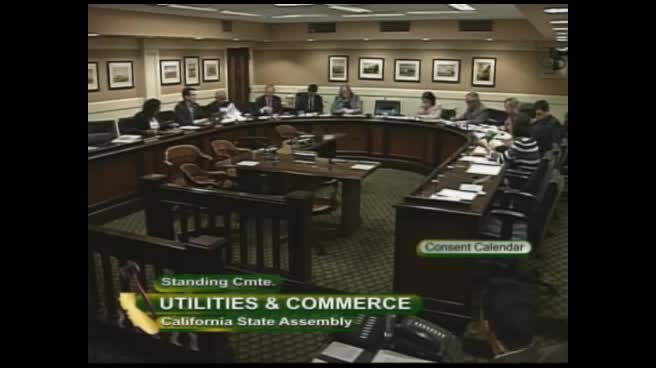
Discussed in Hearing
 11MIN
Assembly Standing Committee on Utilities and Commerce
Bill Author

Bill Co-Author(s):