AB 2658: California Coastal Commission: ex parte communications.
- Session Year: 2015-2016
- House: Assembly
- Latest Version Date: 2016-04-12
The California Coastal Act of 1976, for purposes of the act, defines an ex parte communication as any oral or written communication between a member of the California Coastal Commission and an interested person about a matter within the commissions jurisdiction, which does not occur in a public hearing, workshop, or other official proceeding, or on the official record of the proceeding on the matter, but excludes from that definition any communication between a staff member acting in his or her official capacity and any commission member or interested person. The act prohibits a member of the commission and an interested person from conducting an ex parte communication, unless the member fully discloses and makes public the ex parte communication, as specified.
This bill would also make provisions prohibiting ex parte communications applicable to communications between a commission staff member and an interested party.
This bill would require commission staff members to maintain records and disclose any communication with an interested person pertaining to a matter before the commission by including specified information about the communication in staff reports provided to commission members.
Existing law authorizes any person to testify at a hearing or other official proceeding of the commission and to submit written comments for the record on a matter before the commission.
This bill would require transcripts video or audio recordings of those proceedings to be promptly posted on the commissions Internet Web site to allow for public comment, as specified. within 72 hours after the proceeding and would require written and electronic communications submitted to the commission as part of those proceedings to be posted on the commissions Internet Web site within 7 days of receipt.
The California Coastal Act of 1976, for purposes of the act, defines an ex parte communication as any oral or written communication between a member of the California Coastal Commission and an interested person about a matter within the commissions jurisdiction, which does not occur in a public hearing, workshop, or other official proceeding, or on the official record of the proceeding on the matter, but excludes from that definition any communication between a staff member acting in his or her official capacity and any commission member or interested person. The act prohibits a member of the commission and an interested person from conducting an ex parte communication, unless the member fully discloses and makes public the ex parte communication, as specified.
This bill would also make provisions prohibiting ex parte communications applicable to communications between a commission staff member and an interested party.
Existing law authorizes any person to testify at a hearing or other official proceeding of the commission and to submit written comments for the record on a matter before the commission.
This bill would require transcripts or audio recordings of those proceedings to be promptly posted on the commissions Internet Web site to allow for public comment, as specified.
(a)For purposes of this article, except as provided in subdivision (b), an ex parte communication is any oral or written communication between a member of the commission or a member of the commission staff and an interested person, about a matter within the commissions jurisdiction, which does not occur in a public hearing, workshop, or other official proceeding, or on the official record of the proceeding on the matter.
(b)The following communications are not ex parte communications:
(1)Any communication between a staff member acting in his or her official capacity and any commission member.
(2)Any communication limited entirely to procedural issues, including, but not limited to, the hearing schedule, location, format, or filing date.
(3)Any communication which takes place on the record during an official proceeding of a state, regional, or local agency that involves a member of the commission who also serves as an official of that agency.
(4)Any communication between a member of the commission, with regard to any action of another state agency or of a regional or local agency of which the member is an official, and any other official or employee of that agency, including any person who is acting as an attorney for the agency.
(5)Any communication between a nonvoting commission member and a staff member of a state agency where both the commission member and the staff member are acting in an official capacity.
(6)Any communication to a nonvoting commission member relating to an action pending before the commission, where the nonvoting commission member does not participate in that action, either through written or verbal communication, on or off the record, with other members of the commission.
SEC. 2.Section 30324 of the Public Resources Code is amended to read:30324.(a)No commission member or commission staff member, nor any interested person, shall conduct an ex parte communication unless the commission member or commission staff member fully discloses and makes public the ex parte communication by providing a full report of the communication to the executive director within seven days after the communication or, if the communication occurs within seven days of the next commission hearing, to the commission on the record of the proceeding at that hearing.
(b)(1)The commission shall adopt standard disclosure forms for reporting ex parte communications which shall include, but not be limited to, all of the following information:
(A)The date, time, and location of the communication.
(B)(i)The identity of the person or persons initiating and the person or persons receiving the communication.
(ii)The identity of the person on whose behalf the communication was made.
(iii)The identity of all persons present during the communication.
(C)A complete, comprehensive description of the content of the ex parte communication, including a complete set of all text and graphic material that was part of the communication.
(2)The executive director shall place in the public record any report of an ex parte communication.
(c)Communications shall cease to be ex parte communications when fully disclosed and placed in the commissions official record.
SECTION 1.Section 30324.1 is added to the Public Resources Code, to read:30324.1.A commission staff member shall maintain records of and disclose any communication between the staff member acting in his or her official capacity and an interested person pertaining to a matter before the commission by including the following information in staff reports provided to commission members:
(a)The date of the communication with an interested person.
(b)The name of the interested person with whom the staff member communicated.
(c)The matter to which the communication applies.
(d)A statement of the interested persons position with regard to the matter discussed and whether he or she represents another person or entity in the matter.
SEC. 3.SEC. 2.Section 30325 of the Public Resources Code is amended to read:30325.(a)Nothing in this article prohibits any person or any interested person from testifying at a commission hearing, workshop, or other official proceeding, or from submitting written comments for the record on a matter before the commission.
(b)Transcripts Video or audio recordings of all hearings, workshops, or other written proceedings shall be promptly posted on the commissions Internet Web site to allow for public comment. within 72 hours after the proceeding. Written and electronic communications that are submitted to the commission as part of any such proceeding shall be posted on the commissions Internet Web site within seven days of receipt.
(c)Written comments shall be submitted by mail or delivered to a commission office, or may be delivered to the commission at the time and place of a scheduled hearing or within 30 days after the hearing.
(a)For purposes of this article, except as provided in subdivision (b), an ex parte communication is any oral or written communication between a member of the commission or a member of the commission staff and an interested person, about a matter within the commissions jurisdiction, which does not occur in a public hearing, workshop, or other official proceeding, or on the official record of the proceeding on the matter.
(b)The following communications are not ex parte communications:
(1)Any communication between a staff member acting in his or her official capacity and any commission member or interested person. member.
(2)Any communication limited entirely to procedural issues, including, but not limited to, the hearing schedule, location, format, or filing date.
(3)Any communication which takes place on the record during an official proceeding of a state, regional, or local agency that involves a member of the commission who also serves as an official of that agency.
(4)Any communication between a member of the commission, with regard to any action of another state agency or of a regional or local agency of which the member is an official, and any other official or employee of that agency, including any person who is acting as an attorney for the agency.
(5)Any communication between a nonvoting commission member and a staff member of a state agency where both the commission member and the staff member are acting in an official capacity.
(6)Any communication to a nonvoting commission member relating to an action pending before the commission, where the nonvoting commission member does not participate in that action, either through written or verbal communication, on or off the record, with other members of the commission.
SEC. 2.Section 30324 of the Public Resources Code is amended to read:30324.(a)No commission member, member or commission staff member, nor any interested person, shall conduct an ex parte communication unless the commission member or commission staff member fully discloses and makes public the ex parte communication by providing a full report of the communication to the executive director within seven days after the communication or, if the communication occurs within seven days of the next commission hearing, to the commission on the record of the proceeding at that hearing.
(b)(1)The commission shall adopt standard disclosure forms for reporting ex parte communications which shall include, but not be limited to, all of the following information:
(A)The date, time, and location of the communication.
(B)(i)The identity of the person or persons initiating and the person or persons receiving the communication.
(ii)The identity of the person on whose behalf the communication was made.
(iii)The identity of all persons present during the communication.
(C)A complete, comprehensive description of the content of the ex parte communication, including a complete set of all text and graphic material that was part of the communication.
(2)The executive director shall place in the public record any report of an ex parte communication.
(c)Communications shall cease to be ex parte communications when fully disclosed and placed in the commissions official record.
SEC. 3.Section 30325 of the Public Resources Code is amended to read:30325.(a)Nothing in this article prohibits any person or any interested person from testifying at a commission hearing, workshop, or other official proceeding, or from submitting written comments for the record on a matter before the commission. Written
(b)Transcripts or audio recordings of all hearings, workshops, or other written proceedings shall be promptly posted on the commissions Internet Web site to allow for public comment.
(c)Written comments shall be submitted by mail or delivered to a commission office, or may be delivered to the commission at the time and place of a scheduled hearing or within 30 days after the hearing.
|
Date
|
Status
|
|---|---|
| Feb 19, 2016 | Introduced. To print. |
| Feb 21, 2016 | From printer. May be heard in committee March 22. |
| Feb 22, 2016 | Read first time. |
| Mar 10, 2016 | Referred to Com. on NAT. RES. |
| Apr 12, 2016 | From committee chair, with author's amendments: Amend, and re-refer to Com. on NAT. RES. Read second time and amended. |
| Apr 13, 2016 | Re-referred to Com. on NAT. RES. |
| Apr 18, 2016 | In committee: Set, first hearing. Hearing canceled at the request of author. |
This list shows positions taken on this bill by organizations on the date displayed, which is linked to the original source.
Positions by individuals are not included.
|
Organization
|
Position
|
Date
|
|---|---|---|
| California Credit Union League | * Support | Jun 26, 2018 |
Date of Hearing: April 18, 2016
ASSEMBLY COMMITTEE ON NATURAL RESOURCES
Das Williams, Chair
ABPCA Bill Id:AB 2658 (
Author:Maienschein) – As Introduced Ver:April 12, 2016
SUBJECT: California Coastal Commission: ex parte communications: meetings
SUMMARY: Requires Coastal Commission (Commission) staff to disclose in their staff reports any communication on a matter before the Commission between the staff member acting in his or her official capacity and an interested person. Imposes time limits for posting recordings and materials on the Commission website.
EXISTING LAW:
- Requires a member of the Commission to disclose and make public any ex parte communication by providing a full report of the communication to the executive director within seven days of the communication or, if the communication occurs within seven days of the next Commission hearing, to the Commission on the record of the proceeding at that hearing.
- Defines an "ex parte communication," for the purposes of communications related to actions of the Commission, as any oral or written communication between a member of the Commission and an interested person about a matter within the Commission's jurisdiction, which does not occur in a public hearing, workshop, or other official proceeding, or that is not on the record at such a proceeding.
- Defines an "interested person" as (a) any applicant, applicant's agent or representative, or participant in a Commission proceeding, (b) any person with a financial interest in a matter before the Commission, or his/her agent or employee, or (c) a representative acting on behalf of any civic, environmental, neighborhood, business, labor, trade, or similar organization who intends to influence the decision of a Commissioner.
- Defines a "matter within the Commission's jurisdiction" as any permit action, federal consistency review, appeal, local coastal program, port master plan, public works plan, or any other quasi-judicial matter requiring Commission action, for which an application has been submitted to the Commission.
- Prohibits a Commissioner who has knowingly had an ex parte communication that has not been reported, as required, from voting on the matter or influencing the Commission in any way. Provides that knowing violations of the disclosure or recusal requirements can result in fines of up to $7,500, and a court order for the Commission to revoke its action and rehear the matter.
THIS BILL:
- Requires Commission staff to maintain records of and disclose any communication between the staff member acting in his or her official capacity and an interested person pertaining to a matter before the Commission by including the following information:
- The date of the communication with an interested person;
- The name of the interested person with whom the staff member communicated;
- The matter to which the communication applies; and,
- A statement of the interested person’s position with regard to the matter discussed and whether he or she represents another person or entity in the matter.
- Requires video or audio recordings of all hearings, workshops, or other proceedings to be posted on the Commission’s internet website within 72 hours of the proceeding.
- Requires written and electronic communications submitted to the Commission as part of a proceeding to be posted on the Commission’s website with seven days of receipt.
FISCAL EFFECT: Unknown
COMMENTS:
- Author’s statement:
The recent, very public firing of the Coastal Commission Executive Director brought to light a number of transparency issues within the organization. The lack of openness regarding communications between Coastal Commission staff and interested parties, the availability of information online for public comment, and the limited information available to the Commissioners themselves are just a few examples.
Currently, the Coastal Commission experiences very limited oversight and is not subject to current law that governs the actions of many similar entities such as the State Water Board. This bill will help address some of the problems they currently face.
Specifically, AB 2658 will bring Coastal Commission staff under the same umbrella regarding ex parte communications that the Commissioners themselves must follow. Additionally, this bill requires that all transcripts or audio recordings of all hearings, workshops, or other written proceedings are posted on the Commission website in a timely manner, allowing for more public access/comment.
- Coastal Commission. The Commission was established by voter initiative in 1972 (Proposition 20) and later made permanent by the Legislature through adoption of the California Coastal Act of 1976 (Coastal Act). In partnership with coastal cities and counties, the Commission plans and regulates the use of land and water in the coastal zone. Development activities, which are broadly defined by the Coastal Act to include construction of buildings, divisions of land, and activities that change the intensity of use of land or public access to coastal waters, generally require a Coastal Development Permit (CDP) from either the Commission or the local government with a certified Local Coastal Program (LCP).
The Commission is an independent, quasi-judicial state agency composed of 12 voting members, appointed equally (4 each) by the Governor, the Senate Rules Committee, and the Speaker of the Assembly. Six of the voting commissioners are locally elected officials and six are appointed from the public at large. Three ex officio (non-voting) members represent the Natural Resources Agency, the California State Transportation Agency, and the State Lands Commission.
According to the Commission’s mission statement:
The Commission is committed to protecting and enhancing California’s coast and ocean for present and future generations. It does so through careful planning and regulation of environmentally-sustainable development, rigorous use of science, strong public participation, education, and effective intergovernmental coordination.
- Ex parte communications. Ex parte communications refer to any communication made in private (i.e., off the record and without notice and opportunity for all parties to participate) between an interested party in a decision-making process and any state official in a decision-making position. Ex parte communication disclosure requirements for state policy makers are intended to provide the public with information relating to a decision and to prevent bias in decision makers. Prior to 1992, there was no mention of ex parte communications in the Coastal Act. There were claims of frequent unreported ex parte communications at the Commission. In 1992, basic ex parte communications reporting was added to the Coastal Act. In 2014, AB 474 (Stone), Chapter 125, Statutes of 2014, improved ex parte communications reporting requirements. The additions to the reporting requirements included the identity of the person on whose behalf the communication was made, the identity of all persons present during the communication, and a complete, comprehensive description of the content of the ex parte communication, including a complete set of all text and graphic material that was part of the communication. However, concerns remain about ex parte communications at the Commission. Those concerns include the quality of the oral reports that are required within a week of a meeting and the ability of the public to find specific ex parte communication reports.
- This bill. The author claims the Commission experiences very limited oversight and is not subject to current law that governs the actions of many similar entities such as the State Water Resources Control Board (SWRCB). However, SWRCB does not follow many of the provisions of this bill. Unlike the Commission, many of SWRCB regional boards do not make video or audio recordings of their hearings. In addition, SWRCB does not require staff to report ex parte communications. Ex parte communications are intended for the decision-makers. Staff members at the Commission are not decision makers, the Commissioners are. It may be appropriate to include which interested parties have communicated with staff in the staff report. However, this bill requires an onerous level of detail, and might deter Commission staff from working with interested parties. In addition, nothing in existing law prohibits Commissioners from asking for this information from staff.
- Related legislation.
SB 1190 (Jackson) prohibits all ex parte communications at the Commission. This bill is awaiting hearing in the Senate Appropriations Committee.
AB 2002 (Stone) provides that communicating with the California Coastal Commission in order to influence specified actions can result in a person being considered a “lobbyist” under the Political Reform Act. This bill prohibits an ex parte communication with a Commissioner regarding a matter during the 24 hours before that matter will be discussed at a Commission hearing. This bill is scheduled to be heard in this committee on April 18, 2016.
REGISTERED SUPPORT / OPPOSITION:
Support
None on file
Opposition
Audubon California
Azul
California Coastal Protection Network
California League of Conservation Voters
Coastal Environmental Rights Foundation
Committee for Green Foothills
Courage Campaign
Day One
Endangered Habitats League
Environment California
Heal the Bay
Surfrider Foundation
The City Project
Western Alliance for Nature
One individual
Analysis Prepared by: Michael Jarred / NAT. RES. / (916) 319-2092
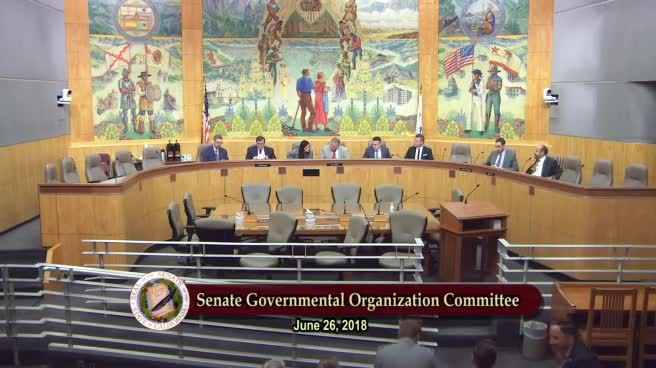
Discussed in Hearing
 1MIN
Senate Standing Committee on Governmental Organization
Bill Author

Bill Co-Author(s):