AB 2698: School accountability: school climate and restorative justice: assessments.
- Session Year: 2015-2016
- House: Assembly
- Latest Version Date: 2016-04-27
(1)Existing law establishes the Public Schools Accountability Act of 1999 to, among other things, ensure that each child in California receives a high-quality education consistent with all statewide content and performance standards, as specified.
This bill would require high-need low-achieving schools, as defined, on or before September 1, 2017, to begin and, on or before July 1, 2018, to complete a school climate assessment, as specified. The bill would require every assessed school to take steps to ensure that responses to school climate assessments remain anonymous and that no individual is identified. The bill would require these schools to publish the results of the assessment on their Internet Web sites, provided that personally identifiable information or information that can reasonably lead a reader to identify an individual is not shared. The bill would require the outcomes resulting from a school climate assessment to be shared through meaningful engagement and collaboration with pupils, parents, teachers, and school personnel in order to develop corrective action recommendations that address the assessment outcomes and would require the recommendations to be incorporated and implemented by the school district no later than one year after completion of the assessment, except as provided. By imposing additional duties on school officials, the bill would impose a state-mandated local program.
The bill would require the State Department of Education to develop and post to an easily accessible page on the departments Internet Web site a listing of available school climate assessment instruments and organizations. The bill would require the department to convene an advisory committee comprised of stakeholders and professionals who have participated in the development and expansion of alternative discipline programs, such as restorative justice and positive behavioral interventions and supports, to make recommendations to the department. The bill would require the Legislative Analysts Office, on or before January 1, 2023, to compile data of the changes in pupil academic achievement at targeted high-need low-achieving schools, including a breakdown by pupil ethnicity, and chronic absenteeism, suspension, expulsion, and dropout rates of the targeted schools and provide a report to the department, the Governor, and the appropriate legislative budget and policy committees, as specified.
The bill would repeal these provisions on July 1, 2023.
(2)The California Constitution requires the state to reimburse local agencies and school districts for certain costs mandated by the state. Statutory provisions establish procedures for making that reimbursement.
This bill would provide that, if the Commission on State Mandates determines that the bill contains costs mandated by the state, reimbursement for those costs shall be made pursuant to these statutory provisions.
(1)Existing law establishes the Public Schools Accountability Act of 1999 to, among other things, ensure that each child in California receives a high-quality education consistent with all statewide content and performance standards, as specified.
This bill would, on or before September 1, 2017, would require low-performing high-need schools, as designated by the State Department of Education, defined, on or before September 1, 2017, to conduct begin and, on or before July 1, 2018, to complete a school climate assessment, as specified. The bill would require every assessed school to take steps to ensure that responses to school climate assessments remain anonymous and that no individual is identified. The bill would require these schools to publish the results of the assessment on their Internet Web sites, provided that personally identifiable information or information that can reasonably lead a reader to identify an individual is not shared. The bill would require the outcomes resulting from a school climate assessment to be shared through meaningful engagement and collaboration with pupils, parents, faculty, teachers, and staff school personnel to develop corrective action recommendations that address the assessment outcomes and would require the recommendations to be incorporated and implemented by the school district no later than one year after completion of the assessment, except as provided. By imposing additional duties on school officials, the bill would impose a state-mandated local program. The bill would require the Legislative Analyst, on or before January 1, 2022, to compile data of changes in pupil academic achievement levels at low-performing schools, including a breakdown by pupil ethnicity, and provide a report to the department, the Governor, and the appropriate legislative budget and policy committees.
(2)Existing law establishes various professional development and training programs for certificated employees of local educational agencies.
This bill would require the State Department of Education to oversee the establishment of specific professional development activities and workshops that result in professional development support programs and a network of trainers to expand restorative justice programs, pupil social and emotional support, trauma-informed practices, and cultural competency in regions of the state with identified low-performing schools, as specified. The bill would require the department to convene an advisory committee comprised of stakeholders and professionals who have participated in the development and expansion of these programs to assist in the professional development planning and implementation. The bill would require low-performing schools designated by the department to provide identified professional development programs on or before September 1, 2018. By imposing additional duties on school officials, the bill would impose a state-mandated local program. The bill would require the Legislative Analyst, on or before January 1, 2022, to compile data of the chronic absenteeism, suspension, expulsion, and dropout rates of the targeted schools and provide a report to the department, the Governor, and the appropriate legislative budget and policy committees, as specified.
The bill would require the State Department of Education to develop and post to an easily accessible page on the departments Internet Web site a listing of available school climate assessment instruments and organizations. The bill would require the department to convene an advisory committee comprised of stakeholders and professionals who have participated in the development and expansion of alternative discipline programs, such as restorative justice and positive behavioral interventions and supports, to make recommendations to the department. The bill would require the Legislative Analysts Office, on or before January 1, 2023, to compile data of the changes in pupil academic achievement at targeted high-need schools, including a breakdown by pupil ethnicity, and chronic absenteeism, suspension, expulsion, and dropout rates of the targeted schools and provide a report to the department, the Governor, and the appropriate legislative budget and policy committees, as specified.
The bill would repeal these provisions on July 1, 2023.
(3)This bill would provide that its provisions shall not be implemented unless funding is provided for its purposes in the annual Budget Act or another enacted statute. The bill would also make legislative findings and declarations relating to its provisions.
(4)
(2)The California Constitution requires the state to reimburse local agencies and school districts for certain costs mandated by the state. Statutory provisions establish procedures for making that reimbursement.
This bill would provide that, if the Commission on State Mandates determines that the bill contains costs mandated by the state, reimbursement for those costs shall be made pursuant to these statutory provisions.
(1)Existing law establishes the Public Schools Accountability Act of 1999 to, among other things, ensure that each child in California receives a high-quality education consistent with all statewide content and performance standards, as specified.
This bill would, on or before September 1, 2017, require low-performing schools, as designated by the State Department of Education, to conduct a school climate assessment, as specified. The bill would require every assessed school to take steps to ensure that responses to school climate assessments remain anonymous and that no individual is identified. The bill would require these schools to publish the results of the assessment on their Internet Web sites, provided that personally identifiable information or information that can reasonably lead a reader to identify an individual is not shared. The bill would require the outcomes resulting from a school climate assessment to be shared through meaningful engagement and collaboration with pupils, parents, faculty, and staff to develop corrective action recommendations that address the assessment outcomes and would require the recommendations to be incorporated and implemented by the school no later than one year after completion of the assessment, except as provided. By imposing additional duties on school officials, the bill would impose a state-mandated local program. The bill would require the Legislative Analyst, on or before January 1, 2022, to compile data of changes in pupil academic achievement levels at low-performing schools, including a breakdown by pupil ethnicity, and provide a report to the department, the Governor, and the appropriate legislative budget and policy committees.
(2)Existing law establishes various professional development and training programs for certificated employees of local educational agencies.
This bill would require the State Department of Education to oversee the establishment of specific professional development activities and workshops that result in professional development support programs and a network of trainers to expand restorative justice programs, pupil social and emotional support, trauma-informed practices, and cultural competency in regions of the state with identified low-performing schools, as specified. The bill would require the department to convene an advisory committee comprised of stakeholders and professionals who have participated in the development and expansion of these programs to assist in the professional development planning and implementation. The bill would require low-performing schools designated by the department to provide identified professional development programs on or before September 1, 2018. By imposing additional duties on school officials, the bill would impose a state-mandated local program. The bill would require the Legislative Analyst, on or before January 1, 2022, to compile data of the chronic absenteeism, suspension, expulsion, and dropout rates of the targeted schools and provide a report to the department, the Governor, and the appropriate legislative budget and policy committees, as specified.
(3)This bill would provide that its provisions shall not be implemented unless funding is provided for its purposes in the annual Budget Act or another enacted statute. The bill would also make legislative findings and declarations relating to its provisions.
(4)The California Constitution requires the state to reimburse local agencies and school districts for certain costs mandated by the state. Statutory provisions establish procedures for making that reimbursement.
This bill would provide that, if the Commission on State Mandates determines that the bill contains costs mandated by the state, reimbursement for those costs shall be made pursuant to these statutory provisions.
Existing law requires the governing board of each school district to adopt a local control and accountability plan using a template adopted by the State Board of Education.
This bill would make nonsubstantive changes to that provision.
Existing law requires the governing board of each school district to adopt a local control and accountability plan using a template adopted by the State Board of Education.
This bill would make nonsubstantive changes to that provision.
(a)It is the intent of the Legislature to improve pupil academic outcomes at high-need, low-achieving schools by improving school climates to provide a strong foundation for academic improvement efforts.
(b)The Legislature finds and declares all of the following relating to school climate:
(1)A schools climate is a social justice issue, as the state loses generations of pupils from poor and underserved communities with few options but to enroll in high-need, low-achieving schools.
(2)Over 20 years of research has confirmed that a positive school climate is directly related to pupil academic achievement and that school climate is the single most dominant predictor we now have of pupil academic achievement levels.
(3)The United States Department of Education recommends school climate reform as an evidence-based strategy to prevent school violence.
(4)The federal Centers for Disease Control and Prevention recommends school climate reform as a scientifically sound strategy that promotes healthy relationships, school connectedness, and pupil retention.
(5)The federal Institute of Education Sciences includes school climate as a strategy for dropout prevention.
(6)Perceptions about school climate impact teacher morale and pupil achievement. A positive school climate benefits pupils, teachers, school administrators, school personnel, and parents; teachers are motivated to teach and pupils are motivated to learn.
(7)Without school climate assessments, teachers and education leaders lack a comprehensive understanding of the tools and steps needed to address low pupil achievement levels, pupil dropout rates, pupil suspensions, and pupil chronic absenteeism.
(8)The use of school climate assessments is an effective data-driven strategy that engages pupils, teachers, school administrators, school personnel, and parents working together to create safe, supportive, engaging, and successful schools.
(9)Positive school climates are stable over time absent any systematic effort to change climate components.
(10)The meaningful input and perspectives of pupils, commonly absent in school decisionmaking, are essential components of school climate assessments to improve pupil emotional and social well-being.
(11)No instances of successful turnaround schools, which are schools that transformed from high-need, low-achieving schools into high-performing schools, have been found that did not address school climate.
(12)Factors affecting a schools climate that recognize the social, emotional, and academic aspects of K12 pupil learning can be accurately measured and assessed.
(c)The Legislature finds and declares that creating a sustainable, positive school climate fosters youth development; higher pupil achievement; lower dropout, suspension, and absenteeism rates; decreased incidences of violence; and increased teacher retention and results in the following outcomes that directly impact K12 pupils, teachers, school administrators, school personnel, and parents:
(1)Pupils, teachers, school administrators, school personnel, and parents are engaged and respected.
(2)Individuals feel socially, emotionally, and physically safe and relationships with and among youth are prioritized.
(3)Pupils, teachers, school administrators, school personnel, and parents work together to develop and contribute to a shared school vision.
(4)Teachers and school administrators, incorporating the views of pupils, model and nurture attitudes that emphasize the benefits and satisfaction gained from learning based on high academic expectations.
(5)Each individual contributes to the operations and climate of the school.
(6)Disciplinary practices are assessed and an effort is made to utilize practices that promote positive interventions.
(7)Collaboration and cooperation replace a school climate of confrontation and mistrust, and inclusiveness becomes the norm.
(c)
(d)The Legislature finds and declares all of the following regarding alternative discipline programs, such as restorative justice and positive behavioral interventions and supports:
(1)California K12 schools issued more than half a million suspensions in the 201314 school year, with pupils of color disproportionately subjected to out-of-school suspensions.
(2)African American pupils are three times more likely to be suspended than all other pupils, and studies show that pupils of color are disciplined more harshly than other pupils, resulting in serious, negative educational consequences.
(3)A recent University of California, Los Angeles study concluded that African American pupils who are expelled from school have a 90-percent likelihood of being placed in a state correctional institution.
(4)Exclusionary school removals cause a number of correlated negative educational, economic, and social problems, including school avoidance, an increased likelihood of dropping out, and engagement with the juvenile justice system. This civil rights crisis has come to be known as the school-to-prison pipeline.
(5)The American Academy of Pediatrics has found that suspension can increase stress and may predispose pupils to antisocial behavior and suicidal ideation.
(6)Psychologists have found that disciplinary exclusion can increase pupil shame, alienation, rejection, and the breaking of healthy adult bonds, thereby exacerbating negative mental health outcomes for young people.
(7)Alternative discipline programs, such as restorative justice and positive behavioral interventions and supports, are healing practices that focus on repairing harm and preventing its recurrence.
(8)Restorative practice, which builds upon restorative justice, is used to build a sense of school community and restore positive relationships through the use of restorative circles where pupils and teachers work together to set academic goals, develop classroom core values, and resolve conflicts.
(9)A 201114 study prepared for the United States Department for Educations Office for Civil Rights on restorative justice in the Oakland Unified School District (OUSD) concluded that (A) the discipline gap between white and African American pupils decreased significantly for OUSD pupils who participated in restorative justice programs, but remained unchanged for pupils who did not participate in these programs, (B) that there was a 128-percent increase in the reading levels of 9th grade pupils at OUSD schools with restorative justice programs, compared to an 11-percent increase in schools without such programs, and (C) four-year graduation rates increased by 60 percent at OUSD restorative justice schools compared to 7 percent for nonrestorative justice schools.
(e)The Legislature finds and declares that alternative discipline programs and practices foster all of the following:
(1)Positive relationships among pupils, teachers, school administrators, school personnel, and parents.
(2)A school community based on trust, respect, and inclusion.
(3)A reduction in pupil disciplinary actions, expulsions, suspensions, and chronic absenteeism and the lowering of stress and antisocial behavior.
(4)Improved mental health and pupil academic outcomes.
SEC. 2.Chapter 6.5 (commencing with Section 52080) is added to Part 28 of Division 4 of Title 2 of the Education Code, to read:6.5.School Climate and Student AchievementAct Achievement Act52080.This chapter shall be known, and may be cited, as the School Climate and Student Achievement Act.
52081.(a)The Legislature finds that creating a sustainable, positive school climate fosters youth development; higher pupil achievement; lower dropout, suspension, and absenteeism rates; decreased incidences of violence; and increased teacher retention and results in the following outcomes that directly impact K12 pupils, teachers, school administrators, school personnel, and parents:
(1)Pupils, teachers, school administrators, school personnel, and parents are engaged and respected.
(2)Individuals feel socially, emotionally, and physically safe and relationships with and among youth are prioritized.
(3)Pupils, teachers, school administrators, school personnel, and parents work together to develop and contribute to a shared school vision.
(4)Teachers and school administrators, incorporating the views of pupils, model and nurture attitudes that emphasize the benefits and satisfaction gained from learning based on high academic expectations.
(5)Each individual contributes to the operations and climate of the school.
(6)Disciplinary practices are assessed and an effort is made to utilize practices that promote positive interventions.
(7)Collaboration and cooperation replace a school climate of confrontation and mistrust, and inclusiveness becomes the norm.
(b)The Legislature finds that alternative discipline programs and practices foster all of the following:
(1)Positive relationships among pupils, teachers, school administrators, school personnel, and parents.
(2)A school community based on trust, respect, and inclusion.
(3)A reduction in pupil disciplinary actions, expulsions, suspensions, and chronic absenteeism and the lowering of stress and antisocial behavior.
(4)Improved mental health and pupil academic outcomes.
52082.52081.For purposes of this chapter, the following terms have the following meanings:
(a)(1)High-need schools, as also defined by the federal Every Student Succeeds Act (20 U.S.C. Sec. 6301 et seq.), means a public elementary or secondary school that is located in an area in which the percentage of pupils from families with incomes below the poverty line is 30 percent or more.
(a)(1)Low-achieving school means a school that is identified by the Superintendent or the state board as being in the lowest performing 5 percent of all schools and that is identified for comprehensive support and improvement pursuant to the accountability system requirements of the federal Elementary and Secondary Education Act of 1965 (20 U.S.C. Sec. 6311), as amended by the federal Every Student Succeeds Act (Public Law 114-95).
(2)A high-need low-achieving school could be a school operated by a school district, a school operated by a county office of education, or a charter school.
(b)School climate means the quality, culture, and character of school life, based on the patterns of pupils, teachers, school personnels, and parents school life perceptions and experiences, and reflects a schools norms, goals, values, expectations for behavior, interpersonal relationships, teaching and learning practices, safety, and organizational structures. School climate is a learning environment created through the interaction of personal relationships, physical setting, and psychological conditions.
(c)School climate assessment means an evaluation of a schools climate, as defined pursuant to subdivision (b), to assess existing school culture and to provide information to influence pupil academic outcome improvements, and that incorporates the use of pupil, teacher, school administrator, school personnel, and parent individual and group school climate surveys, interviews, school data analysis, and direct observations.
(d)Alternative discipline programs, such as restorative justice and positive behavioral interventions and supports, means a set of ethical principles and practices grounded in the values of showing respect, taking responsibility, and strengthening pupil relationships that prevent, respond to, and repair harmful pupil behaviors, enabling school personnel to intervene more effectively by increasing pupil support without compromising accountability.
52083.52082.(a)On or before September 1, 2017, high-need low-achieving schools shall begin and, on or before July 1, 2018, complete a school climate assessment, consistent with the provisions of this chapter.
(b)(1)Every assessed school shall take do all of the following:
(1)Take steps to ensure that responses to school climate assessments remain anonymous and that no individual is identified. These schools shall publish the results of the assessment on their Internet Web sites, provided that personally identifiable information or information that can reasonably lead a reader to identify an individual shall not be shared.
(2)Outcomes Share the outcomes resulting from a school climate assessment shall be shared through meaningful engagement and collaboration with pupils, teachers, school personnel, and parents in order to develop corrective action recommendations through school district local control and accountability plan committees that address the assessment outcomes. recommendations.
(3)Share the outcomes and corrective action recommendations with the school district local control and accountability plan committees.
(A)
(c)(1)The recommendations shared pursuant to paragraph (3) of subdivision (b) shall be incorporated and implemented by the school district no later than one year after completion of the assessment.
(B)
(2)If the recommendations are not implemented within one year of the completion of the assessment, the governing board of the school district shall, within 60 days, hold a public meeting explaining its reasons for not executing corrective actions.
52084.52083.(a)The department shall develop and post to an easily accessible page on the departments Internet Web site a listing of available school climate assessment instruments and organizations.
(b)The department shall convene an advisory committee comprised of stakeholders and professionals who have participated in the development and expansion of alternative discipline programs, such as restorative justice and positive behavioral interventions and supports, to make recommendations to the department that take into account the following:
(1)Improving pupil social and emotional support and expanding trauma-informed practices and cultural competency in regions of the state with identified high-need low-achieving schools.
(2)Collecting best practices of existing districtwide, countywide, and charterwide alternative discipline programs and ensuring these best practices are widely disseminated.
(3)Developing a network of teachers who have effectively implemented these best practices and can provide training to other schools and school districts, county offices of education, and charter schools.
(4)Developing evaluation tools to measure the effectiveness of research-based alternative discipline strategies.
(c)On or before January 1, 2023, the Legislative Analysts Office shall compile data of the changes in pupil academic achievement at targeted high-need low-achieving schools, including a breakdown by pupil ethnicity, and chronic absenteeism, suspension, expulsion, and dropout rates of the targeted schools and provide a report to the department, the Governor, and the appropriate legislative budget and policy committees. The report shall also compile a list of best practices include profiles of schools that implemented a school climate assessment and strategies used to accomplish improvements in academic outcomes and a reduction in disciplinary actions.
52085.52084.This chapter shall remain in effect only until July 1, 2023, and as of that date is repealed, unless a later enacted statute, that is enacted before July 1, 2023, deletes or extends that date.
SEC. 3.If the Commission on State Mandates determines that this act contains costs mandated by the state, reimbursement to local agencies and school districts for those costs shall be made pursuant to Part 7 (commencing with Section 17500) of Division 4 of Title 2 of the Government Code.
(a)It is the intent of the Legislature to improve pupil academic outcomes at low-performing high-need, low-achieving schools by improving school climates to provide a strong foundation for academic improvement efforts.
(b)The Legislature finds and declares all of the following relating to school climate:
(1)A schools climate is a social justice issue, as the state loses generations of pupils from poor and underserved communities with few options but to enroll in low-performing high-need, low-achieving schools.
(2)Over 20 years of research has confirmed that a positive school climate is directly related to pupil academic achievement and that school climate is the single most dominant predictor we now have of pupil academic achievement levels.
(3)The United States Department of Education recommends school climate reform as an evidence-based strategy to prevent school violence.
(4)The federal Centers for Disease Control and Prevention recommends school climate reform as a scientifically sound strategy that promotes healthy relationships, school connectedness, and pupil retention.
(5)The federal Institute of Education Sciences includes school climate as a strategy for dropout prevention.
(6)Perceptions about school climate impact teacher morale and pupil achievement. A positive school climate benefits pupils, teachers, school administrators, school personnel, and parents; teachers are motivated to teach and pupils are motivated to learn.
(7)Without school climate assessments, educators teachers and education leaders lack a comprehensive understanding of the tools and steps needed to address low pupil achievement levels, pupil dropout rates, pupil suspensions, and pupil chronic absenteeism.
(8)School The use of school climate assessments are is an effective data-driven strategy that engage engages pupils, teachers, school administrators, school personnel, and parents working together to create safe, supportive, engaging, and successful schools.
(9)Positive school climates are stable over time absent any systematic effort to change climate components.
(10)The meaningful input and perspectives of pupils, commonly absent in school decisionmaking, are essential components of school climate assessments to improve pupil emotional and social well-being.
(11)No instances of successful turnaround schools, which are schools that transformed low-performing, high-poverty from high-need, low-achieving schools into high-performing schools, have been found that did not address school climate.
(12)Factors affecting a schools climate that recognize the social, emotional, and academic aspects of K12 pupil learning can be accurately measured and assessed.
(c)The Legislature finds and declares all of the following regarding alternative discipline programs, such as restorative justice: justice and positive behavioral interventions and supports:
(1)California K12 schools issued more than half a million suspensions in the 201314 school year, with pupils of color disproportionately subjected to out-of-school suspensions.
(2)African American pupils are three times more likely to be suspended than all other pupils, and studies show that pupils of color are disciplined more harshly than other pupils, resulting in serious, negative educational consequences.
(3)A recent UCLA University of California, Los Angeles study concluded that African American pupils who are expelled from school have a 90-percent likelihood of being placed in a state correctional institution.
(4)Exclusionary school removals cause a number of correlated negative educational, economic, and social problems, including school avoidance, an increased likelihood of dropping out, and engagement with the juvenile justice system. This civil rights crisis has come to be known as the school-to-prison pipeline.
(5)The American Academy of Pediatrics has found that suspension can increase stress and may predispose pupils to antisocial behavior and suicidal ideation.
(6)Psychologists have found that disciplinary exclusion can increase pupil shame, alienation, rejection, and the breaking of healthy adult bonds, thereby exacerbating negative mental health outcomes for young people.
(7)Restorative Alternative discipline programs, such as restorative justice programs and positive behavioral interventions and supports, are a healing practice practices that focus on repairing harm and preventing their its recurrence.
(8)Restorative practice, which builds upon restorative justice, is used to build a sense of school community and restore positive relationships through the use of restorative circles where pupils and educators teachers work together to set academic goals, develop classroom core values, and resolve conflicts.
(9)A 201114 study prepared for the United States Department for Educations Office for Civil Rights on restorative justice in the Oakland Unified School District (OUSD) concluded that (A) the discipline gap between white and African American pupils decreased significantly for OUSD pupils who participated in restorative justice programs, but remained unchanged for pupils who did not participate in these programs, (B) that there was a 128-percent increase in the reading levels of 9th grade pupils at OUSD schools with restorative justice programs, compared to an 11-percent increase in schools without such programs, and (C) four-year graduation rates increased by 60 percent at OUSD restorative justice schools compared to 7 percent for nonrestorative justice schools.
SEC. 2.Chapter 6.5 (commencing with Section 52080) is added to Part 28 of Division 4 of Title 2 of the Education Code, to read:6.5.School Climate and Restorative Justice Student AchievementAct52080.This chapter shall be known, and may be cited, as the School Climate and Restorative Justice Student Achievement Act.
52081.(a)The Legislature finds that creating a sustainable, positive school climate fosters youth development; higher pupil achievement; lower dropout, suspension, and absenteeism rates; decreased incidences of violence; and increased teacher retention and includes results in the following factors outcomes that directly impact K12 pupils, teachers, school administrators, school personnel, and parents:
(1)Whether pupils, educators, Pupils, teachers, school administrators, school personnel, and parents are engaged and respected.
(2)Whether individuals Individuals feel socially, emotionally, and physically safe and whether relations and relationships with and among youth are prioritized.
(3)Whether pupils, educators, Pupils, teachers, school administrators, school personnel, and parents work together to develop and contribute to a shared school vision.
(4)Whether educators Teachers and school administrators, incorporating the views of pupils, model and nurture attitudes that emphasize the benefits and satisfaction gained from learning based on high academic expectations.
(5)Whether each Each individual contributes to the operations and climate of the school.
(6)Whether disciplinary Disciplinary practices are assessed and an effort is made to utilize practices that promote positive interventions.
(7)Whether collaboration Collaboration and cooperation replace a school climate of confrontation and mistrust, and inclusiveness becomes the norm.
(b)The Legislature finds that restorative justice alternative discipline programs and practices foster all of the following:
(1)Positive relationships among pupils, educators, teachers, school administrators, school personnel, and parents.
(2)A school community based on trust, respect, and inclusion.
(3)A reduction in pupil disciplinary actions, expulsions, suspensions, and chronic absenteeism and the lowering of stress and antisocial behavior.
(4)Improved mental health and pupil academic outcomes.
52082.For purposes of this chapter, the following terms have the following meanings:
(a)(1)Low-performing school means a low-performing school, as designated by the department, which shall incorporate chronic absenteeism rates, suspension rates, expulsion rates, and dropout rates in making its designations. High-need schools, as also defined by the federal Every Student Succeeds Act (20 U.S.C. Sec. 6301 et seq.), means a public elementary or secondary school that is located in an area in which the percentage of pupils from families with incomes below the poverty line is 30 percent or more.
(2)A low-performing high-need school could be a school operated by a school district, a school operated by a county office of education, or a charter school.
(b)School climate means the quality, culture, and character of school life, based on the patterns of pupils, teachers, school personnels, and parents school life perceptions and experiences, and reflects a schools norms, goals, values, expectations for behavior, interpersonal relationships, teaching and learning practices, safety, and organizational structures. School climate is a learning environment created through the interaction of personal relationships, physical setting, and psychological conditions.
(c)School climate assessment means an evaluation of a schools climate climate, as defined pursuant to subdivision (b), to assess existing school climate and culture and to inform school provide information to influence pupil academic outcome improvements, and that incorporates the use of pupil, teacher, school administrator, school personnel, and parent individual and group surveys, interviews, school data, data analysis, and direct observations.
(d)Restorative justice Alternative discipline programs, such as restorative justice and positive behavioral interventions and supports, means a set of ethical principles and practices grounded in the values of showing respect, taking responsibility, and strengthening pupil relationships that prevent, respond to, and repair harmful pupil behaviors, enabling school personnel to intervene more effectively by increasing pupil support without compromising accountability.
52083.(a)On or before September 1, 2017, low-performing high-need schools shall conduct begin and, on or before July 1, 2018, complete a school climate assessment, consistent with the provisions of this chapter.
(b)(1)Every assessed school shall take steps to ensure that responses to school climate assessments remain anonymous and that no individual is identified. These schools shall publish the results of the assessment on their Internet Web sites, provided that personally identifiable information or information that can reasonably lead a reader to identify an individual shall not be shared.
(2)Outcomes resulting from a school climate assessment shall be shared through meaningful engagement and collaboration with pupils, parents, faculty, teachers, school personnel, and staff parents to develop corrective action recommendations through school district local control and accountability plan committees that address the assessment outcomes.
(A)The recommendations shall be incorporated and implemented by the school district no later than one year after completion of the assessment.
(B)If the recommendations are not implemented, implemented within one year of the completion of the assessment, the governing board of the school shall provide a report to the department district shall, within 60 days, hold a public meeting explaining its reasons for not executing corrective actions.
(c)On or before January 1, 2022, the Legislative Analysts Office shall compile data of changes in pupil academic achievement levels at low-performing schools, including a breakdown by pupil ethnicity, and provide a report to the department, the Governor, and the appropriate legislative budget and policy committees.
52084.(a)(1)The department shall oversee the establishment of specific professional development activities and workshops that result in professional development support programs and a network of trainers to expand restorative justice programs, pupil social and emotional support, trauma-informed practices, and cultural competency in regions of the state with identified low-performing schools. develop and post to an easily accessible page on the departments Internet Web site a listing of available school climate assessment instruments and organizations.
(2)
(b)The department shall convene an advisory committee comprised of stakeholders and professionals who have participated in the development and expansion of these programs alternative discipline programs, such as restorative justice and positive behavioral interventions and supports, to assist in the professional development planning and implementation. make recommendations to the department that take into account the following:
(3)Low-performing schools designated by the department shall provide identified professional development programs on or before September 1, 2018.
(b)In the development of these programs, the department shall take into account the following:
(1)Linking research-based strategies with local control and accountability plans and local control funding formula apportionments, specifically with respect to school climate and meaningful pupil engagement.
(2)Stipends for release time for school personnel attending identified professional development programs.
(1)Improving pupil social and emotional support and expanding trauma-informed practices and cultural competency in regions of the state with identified high-need schools.
(3)
(2)Collecting best practices of existing districtwide, countywide, or and charterwide alternative discipline programs and ensuring these best practices are widely disseminated.
(4)
(3)Developing a network of educators teachers who have effectively implemented these best practices and can provide training to other schools and school districts, county offices of education, and charter schools.
(5)
(4)Developing evaluation tools to measure the effectiveness of research-based alternative discipline strategies.
(c)On or before January 1, 2022, 2023, the Legislative Analysts Office shall compile data of the changes in pupil academic achievement at targeted high-need schools, including a breakdown by pupil ethnicity, and chronic absenteeism, suspension, expulsion, and dropout rates of the targeted schools and provide a report to the department, the Governor, and the appropriate legislative budget and policy committees. The report shall also compile a list of best practices used to accomplish improvements in academic outcomes and a reduction in disciplinary actions.
52085.This chapter shall not be implemented unless funding is provided for its purposes in the annual Budget Act or another enacted statute. remain in effect only until July 1, 2023, and as of that date is repealed, unless a later enacted statute, that is enacted before July 1, 2023, deletes or extends that date.
SEC. 3.If the Commission on State Mandates determines that this act contains costs mandated by the state, reimbursement to local agencies and school districts for those costs shall be made pursuant to Part 7 (commencing with Section 17500) of Division 4 of Title 2 of the Government Code.
(a)It is the intent of the Legislature to improve pupil academic outcomes at low-performing schools by improving school climates to provide a strong foundation for academic improvement efforts.
(b)The Legislature finds and declares all of the following relating to school climate:
(1)A schools climate is a social justice issue, as the state loses generations of pupils from poor and underserved communities with few options but to enroll in low-performing schools.
(2)Over 20 years of research has confirmed that a positive school climate is directly related to pupil academic achievement and that school climate is the single most dominant predictor we now have of pupil academic achievement levels.
(3)The United States Department of Education recommends school climate reform as an evidence-based strategy to prevent school violence.
(4)The federal Centers for Disease Control and Prevention recommends school climate reform as a scientifically sound strategy that promotes healthy relationships, school connectedness, and pupil retention.
(5)The federal Institute of Education Sciences includes school climate as a strategy for dropout prevention.
(6)Perceptions about school climate impact teacher morale and pupil achievement. A positive school climate benefits pupils, teachers, school administrators, school personnel, and parents; teachers are motivated to teach and pupils are motivated to learn.
(7)Without school climate assessments, educators and education leaders lack a comprehensive understanding of the tools and steps needed to address low pupil achievement levels, pupil dropout rates, pupil suspensions, and pupil chronic absenteeism.
(8)School climate assessments are an effective data-driven strategy that engage pupils, teachers, school administrators, school personnel, and parents working together to create safe, supportive, engaging, and successful schools.
(9)Positive school climates are stable over time absent any systematic effort to change climate components.
(10)The meaningful input and perspectives of pupils, commonly absent in school decisionmaking, are essential components of school climate assessments to improve pupil emotional and social well-being.
(11)No instances of successful turnaround schools, which are schools that transformed low-performing, high-poverty schools into high-performing schools, have been found that did not address school climate.
(12)Factors affecting a schools climate that recognize the social, emotional, and academic aspects of K12 pupil learning can be accurately measured and assessed.
(c)The Legislature finds and declares all of the following regarding restorative justice:
(1)California K12 schools issued more than half a million suspensions in the 201314 school year, with pupils of color disproportionately subjected to out-of-school suspensions.
(2)African American pupils are three times more likely to be suspended than all other pupils, and studies show that pupils of color are disciplined more harshly than other pupils, resulting in serious, negative educational consequences.
(3)A recent UCLA study concluded that African American pupils who are expelled from school have a 90-percent likelihood of being placed in a state correctional institution.
(4)Exclusionary school removals cause a number of correlated negative educational, economic, and social problems, including school avoidance, an increased likelihood of dropping out, and engagement with the juvenile justice system. This civil rights crisis has come to be known as the school-to-prison pipeline.
(5)The American Academy of Pediatrics has found that suspension can increase stress and may predispose pupils to antisocial behavior and suicidal ideation.
(6)Psychologists have found that disciplinary exclusion can increase pupil shame, alienation, rejection, and the breaking of healthy adult bonds, thereby exacerbating negative mental health outcomes for young people.
(7)Restorative justice programs are a healing practice that focus on repairing harm and preventing their recurrence.
(8)Restorative practice, which builds upon restorative justice, is used to build a sense of school community and restore positive relationships through the use of restorative circles where pupils and educators work together to set academic goals, develop classroom core values, and resolve conflicts.
(9)A 201114 study prepared for the United States Department for Educations Office for Civil Rights on restorative justice in the Oakland Unified School District (OUSD) concluded that (A) the discipline gap between white and African American pupils decreased significantly for OUSD pupils who participated in restorative justice programs, but remained unchanged for pupils who did not participate in these programs, (B) that there was a 128-percent increase in the reading levels of 9th grade pupils at OUSD schools with restorative justice programs, compared to an 11-percent increase in schools without such programs, and (C) four-year graduation rates increased by 60 percent at OUSD restorative justice schools compared to 7 percent for nonrestorative justice schools.
SEC. 2.Chapter 6.5 (commencing with Section 52080) is added to Part 28 of Division 4 of Title 2 of the Education Code, to read:6.5.School Climate and Restorative Justice Act52080.This chapter shall be known, and may be cited, as the School Climate and Restorative Justice Act.
52081.(a)The Legislature finds that a sustainable, positive school climate fosters youth development; higher pupil achievement; lower dropout, suspension, and absenteeism rates; decreased incidences of violence; and increased teacher retention and includes the following factors that directly impact K12 pupils, teachers, school administrators, school personnel, and parents:
(1)Whether pupils, educators, school administrators, school personnel, and parents are engaged and respected.
(2)Whether individuals feel socially, emotionally, and physically safe and whether relations and relationships with and among youth are prioritized.
(3)Whether pupils, educators, school administrators, school personnel, and parents work together to develop and contribute to a shared school vision.
(4)Whether educators and school administrators, incorporating the views of pupils, model and nurture attitudes that emphasize the benefits and satisfaction gained from learning based on high academic expectations.
(5)Whether each individual contributes to the operations and climate of the school.
(6)Whether disciplinary practices are assessed and an effort is made to utilize practices that promote positive interventions.
(7)Whether collaboration and cooperation replace a school climate of confrontation and mistrust, and inclusiveness becomes the norm.
(b)The Legislature finds that restorative justice programs and practices foster all of the following:
(1)Positive relationships among pupils, educators, school administrators, school personnel, and parents.
(2)A school community based on trust, respect, and inclusion.
(3)A reduction in pupil disciplinary actions, expulsions, suspensions, and chronic absenteeism and the lowering of stress and antisocial behavior.
(4)Improved mental health and pupil academic outcomes.
52082.For purposes of this chapter, the following terms have the following meanings:
(a)(1)Low-performing school means a low-performing school, as designated by the department, which shall incorporate chronic absenteeism rates, suspension rates, expulsion rates, and dropout rates in making its designations.
(2)A low-performing school could be a school operated by a school district, a school operated by a county office of education, or a charter school.
(b)School climate means the quality, culture, and character of school life, based on the patterns of pupils, school personnels, and parents school life perceptions and experiences, and reflects a schools norms, goals, values, expectations for behavior, interpersonal relationships, teaching and learning practices, safety, and organizational structures. School climate is a learning environment created through the interaction of personal relationships, physical setting, and psychological conditions.
(c)School climate assessment means an evaluation of a schools climate to assess existing school climate and culture to inform school academic improvements, and that incorporates the use of pupil, teacher, school administrator, school personnel, and parent individual and group surveys, interviews, school data, and direct observations.
(d)Restorative justice means a set of ethical principles and practices grounded in the values of showing respect, taking responsibility, and strengthening pupil relationships that prevent, respond to, and repair harmful pupil behaviors, enabling school personnel to intervene more effectively by increasing pupil support without compromising accountability.
52083.(a)On or before September 1, 2017, low-performing schools shall conduct a school climate assessment, consistent with the provisions of this chapter.
(b)(1)Every assessed school shall take steps to ensure that responses to school climate assessments remain anonymous and that no individual is identified. These schools shall publish the results of the assessment on their Internet Web sites, provided that personally identifiable information or information that can reasonably lead a reader to identify an individual shall not be shared.
(2)Outcomes resulting from a school climate assessment shall be shared through meaningful engagement and collaboration with pupils, parents, faculty, and staff to develop corrective action recommendations that address the assessment outcomes.
(A)The recommendations shall be incorporated and implemented by the school no later than one year after completion of the assessment.
(B)If the recommendations are not implemented, the school shall provide a report to the department explaining its reasons for not executing corrective actions.
(c)On or before January 1, 2022, the Legislative Analysts Office shall compile data of changes in pupil academic achievement levels at low-performing schools, including a breakdown by pupil ethnicity, and provide a report to the department, the Governor, and the appropriate legislative budget and policy committees.
52084.(a)(1)The department shall oversee the establishment of specific professional development activities and workshops that result in professional development support programs and a network of trainers to expand restorative justice programs, pupil social and emotional support, trauma-informed practices, and cultural competency in regions of the state with identified low-performing schools.
(2)The department shall convene an advisory committee comprised of stakeholders and professionals who have participated in the development and expansion of these programs to assist in the professional development planning and implementation.
(3)Low-performing schools designated by the department shall provide identified professional development programs on or before September 1, 2018.
(b)In the development of these programs, the department shall take into account the following:
(1)Linking research-based strategies with local control and accountability plans and local control funding formula apportionments, specifically with respect to school climate and meaningful pupil engagement.
(2)Stipends for release time for school personnel attending identified professional development programs.
(3)Collecting best practices of existing districtwide, countywide, or charterwide programs and ensuring these best practices are widely disseminated.
(4)Developing a network of educators who have effectively implemented these best practices and can provide training to other schools and school districts, county offices of education, and charter schools.
(5)Developing evaluation tools to measure the effectiveness of research-based strategies.
(c)On or before January 1, 2022, the Legislative Analysts Office shall compile data of the chronic absenteeism, suspension, expulsion, and dropout rates of the targeted schools and provide a report to the department, the Governor, and the appropriate legislative budget and policy committees. The report shall also compile a list of best practices used to accomplish improvements in academic outcomes and a reduction in disciplinary actions.
52085.This chapter shall not be implemented unless funding is provided for its purposes in the annual Budget Act or another enacted statute.
SEC. 3.If the Commission on State Mandates determines that this act contains costs mandated by the state, reimbursement to local agencies and school districts for those costs shall be made pursuant to Part 7 (commencing with Section 17500) of Division 4 of Title 2 of the Government Code.
SECTION 1.Section 52060 of the Education Code is amended to read:52060.(a)On or before July 1, 2014, the governing board of each school district shall adopt a local control and accountability plan using a template adopted by the state board.
(b)A local control and accountability plan adopted by the governing board of a school district shall be effective for a period of three years, and shall be updated on or before July 1 of each year.
(c)A local control and accountability plan adopted by the governing board of a school district shall include, for the school district and each school within the school district, both of the following:
(1)A description of the annual goals, for all pupils and each subgroup of pupils identified pursuant to Section 52052, to be achieved for each of the state priorities identified in subdivision (d) and for any additional local priorities identified by the governing board of the school district. For purposes of this article, a subgroup of pupils identified pursuant to Section 52052 shall be a numerically significant pupil subgroup as specified in paragraphs (2) and (3) of subdivision (a) of Section 52052.
(2)A description of the specific actions the school district will take during each year of the local control and accountability plan to achieve the goals identified in paragraph (1), including the enumeration of any specific actions necessary for that year to correct any deficiencies in regard to the state priorities listed in paragraph (1) of subdivision (d). The specific actions shall not supersede the provisions of existing local collective bargaining agreements within the jurisdiction of the school district.
(d)All of the following are state priorities:
(1)The degree to which the teachers of the school district are appropriately assigned in accordance with Section 44258.9, and fully credentialed in the subject areas, and, for the pupils they are teaching, every pupil in the school district has sufficient access to the standards-aligned instructional materials as determined pursuant to Section 60119, and school facilities are maintained in good repair, as defined in subdivision (d) of Section 17002.
(2)Implementation of the academic content and performance standards adopted by the state board, including how the programs and services will enable English learners to access the common core academic content standards adopted pursuant to Section 60605.8 and the English language development standards adopted pursuant to former Section 60811.3, as that section read on June 30, 2013, or Section 60811.4, for purposes of gaining academic content knowledge and English language proficiency.
(3)Parental involvement, including efforts the school district makes to seek parent input in making decisions for the school district and each individual schoolsite, and including how the school district will promote parental participation in programs for unduplicated pupils and individuals with exceptional needs.
(4)Pupil achievement, as measured by all of the following, as applicable:
(A)Statewide assessments administered pursuant to Article 4 (commencing with Section 60640) of Chapter 5 of Part 33 or any subsequent assessment, as certified by the state board.
(B)The Academic Performance Index, as described in Section 52052.
(C)The percentage of pupils who have successfully completed courses that satisfy the requirements for entrance to the University of California and the California State University, or career technical education sequences or programs of study that align with state board-approved career technical education standards and frameworks, including, but not limited to, those described in subdivision (a) of Section 52302, subdivision (a) of Section 52372.5, or paragraph (2) of subdivision (e) of Section 54692.
(D)The percentage of English learner pupils who make progress toward English proficiency as measured by the California English Language Development Test or any subsequent assessment of English proficiency, as certified by the state board.
(E)The English learner reclassification rate.
(F)The percentage of pupils who have passed an advanced placement examination with a score of 3 or higher.
(G)The percentage of pupils who participate in, and demonstrate college preparedness pursuant to, the Early Assessment Program, as described in Chapter 6 (commencing with Section 99300) of Part 65 of Division 14 of Title 3, or any subsequent assessment of college preparedness.
(5)Pupil engagement, as measured by all of the following, as applicable:
(A)School attendance rates.
(B)Chronic absenteeism rates.
(C)Middle school dropout rates, as described in paragraph (3) of subdivision (a) of Section 52052.1.
(D)High school graduation rates.
(E)High school dropout rates.
(6)School climate, as measured by all of the following, as applicable:
(A)Pupil suspension rates.
(B)Pupil expulsion rates.
(C)Other local measures, including surveys of pupils, parents, and teachers on the sense of safety and school connectedness.
(7)The extent to which pupils have access to, and are enrolled in, a broad course of study that includes all of the subject areas described in Section 51210 and subdivisions (a) to (i), inclusive, of Section 51220, as applicable, including the programs and services developed and provided to unduplicated pupils and individuals with exceptional needs, and the programs and services that are provided to benefit these pupils as a result of the funding received pursuant to Section 42238.02, as implemented by Section 42238.03.
(8)Pupil outcomes, if available, in the subject areas described in Section 51210 and subdivisions (a) to (i), inclusive, of Section 51220, as applicable.
(e)For purposes of the descriptions required by subdivision (c), the governing board of a school district may consider qualitative information, including, but not limited to, findings that result from school quality reviews conducted pursuant to subparagraph (J) of paragraph (4) of subdivision (a) of Section 52052 or any other reviews.
(f)To the extent practicable, data reported in a local control and accountability plan shall be reported in a manner consistent with how information is reported on a school accountability report card.
(g)The governing board of a school district shall consult with teachers, principals, administrators, other school personnel, local bargaining units of the school district, parents, and pupils in developing a local control and accountability plan.
(h)A school district may identify local priorities, goals in regard to the local priorities, and the method for measuring the school districts progress toward achieving those goals.
(a)On or before July 1, 2014, the governing board of each school district shall adopt a local control and accountability plan using a template adopted by the state board.
(b)A local control and accountability plan adopted by the governing board of a school district shall be effective for a period of three years, and shall be updated on or before July 1 of each year.
(c)A local control and accountability plan adopted by the governing board of a school district shall include, for the school district and each school within the school district, both of the following:
(1)A description of the annual goals, for all pupils and each subgroup of pupils identified pursuant to Section 52052, to be achieved for each of the state priorities identified in subdivision (d) and for any additional local priorities identified by the governing board of the school district. For purposes of this article, a subgroup of pupils identified pursuant to Section 52052 shall be a numerically significant pupil subgroup as specified in paragraphs (2) and (3) of subdivision (a) of Section 52052.
(2)A description of the specific actions the school district will take during each year of the local control and accountability plan to achieve the goals identified in paragraph (1), including the enumeration of any specific actions necessary for that year to correct any deficiencies in regard to the state priorities listed in paragraph (1) of subdivision (d). The specific actions shall not supersede the provisions of existing local collective bargaining agreements within the jurisdiction of the school district.
(d)All of the following are state priorities:
(1)The degree to which the teachers of the school district are appropriately assigned in accordance with Section 44258.9, and fully credentialed in the subject areas, and, for the pupils they are teaching, every pupil in the school district has sufficient access to the standards-aligned instructional materials as determined pursuant to Section 60119, and school facilities are maintained in good repair, as defined in subdivision (d) of Section 17002.
(2)Implementation of the academic content and performance standards adopted by the state board, including how the programs and services will enable English learners to access the common core academic content standards adopted pursuant to Section 60605.8 and the English language development standards adopted pursuant to former Section 60811.3, as that section read on June 30, 2013, or Section 60811.4, for purposes of gaining academic content knowledge and English language proficiency.
(3)Parental involvement, including efforts the school district makes to seek parent input in making decisions for the school district and each individual schoolsite, and including how the school district will promote parental participation in programs for unduplicated pupils and individuals with exceptional needs.
(4)Pupil achievement, as measured by all of the following, as applicable:
(A)Statewide assessments administered pursuant to Article 4 (commencing with Section 60640) of Chapter 5 of Part 33 or any subsequent assessment, as certified by the state board.
(B)The Academic Performance Index, as described in Section 52052.
(C)The percentage of pupils who have successfully completed courses that satisfy the requirements for entrance to the University of California and the California State University, or career technical education sequences or programs of study that align with state board-approved career technical education standards and frameworks, including, but not limited to, those described in subdivision (a) of Section 52302, subdivision (a) of Section 52372.5, or paragraph (2) of subdivision (e) of Section 54692.
(D)The percentage of English learner pupils who make progress toward English proficiency as measured by the California English Language Development Test or any subsequent assessment of English proficiency, as certified by the state board.
(E)The English learner reclassification rate.
(F)The percentage of pupils who have passed an advanced placement examination with a score of 3 or higher.
(G)The percentage of pupils who participate in, and demonstrate college preparedness pursuant to, the Early Assessment Program, as described in Chapter 6 (commencing with Section 99300) of Part 65 of Division 14 of Title 3, or any subsequent assessment of college preparedness.
(5)Pupil engagement, as measured by all of the following, as applicable:
(A)School attendance rates.
(B)Chronic absenteeism rates.
(C)Middle school dropout rates, as described in paragraph (3) of subdivision (a) of Section 52052.1.
(D)High school dropout rates.High school graduation rates.
(E)High school graduation rates.High school dropout rates.
(6)School climate, as measured by all of the following, as applicable:
(A)Pupil suspension rates.
(B)Pupil expulsion rates.
(C)Other local measures, including surveys of pupils, parents, and teachers on the sense of safety and school connectedness.
(7)The extent to which pupils have access to, and are enrolled in, a broad course of study that includes all of the subject areas described in Section 51210 and subdivisions (a) to (i), inclusive, of Section 51220, as applicable, including the programs and services developed and provided to unduplicated pupils and individuals with exceptional needs, and the programs and services that are provided to benefit these pupils as a result of the funding received pursuant to Section 42238.02, as implemented by Section 42238.03.
(8)Pupil outcomes, if available, in the subject areas described in Section 51210 and subdivisions (a) to (i), inclusive, of Section 51220, as applicable.
(e)For purposes of the descriptions required by subdivision (c), the governing board of a school district may consider qualitative information, including, but not limited to, findings that result from school quality reviews conducted pursuant to subparagraph (J) of paragraph (4) of subdivision (a) of Section 52052 or any other reviews.
(f)To the extent practicable, data reported in a local control and accountability plan shall be reported in a manner consistent with how information is reported on a school accountability report card.
(g)The governing board of a school district shall consult with teachers, principals, administrators, other school personnel, local bargaining units of the school district, parents, and pupils in developing a local control and accountability plan.
(h)A school district may identify local priorities, goals in regard to the local priorities, and the method for measuring the school districts progress toward achieving those goals.
|
Date
|
Status
|
|---|---|
| Feb 19, 2016 | Introduced. To print. |
| Feb 21, 2016 | From printer. May be heard in committee March 22. |
| Feb 22, 2016 | Read first time. |
| Mar 17, 2016 | Referred to Com. on ED. |
| Mar 18, 2016 | From committee chair, with author's amendments: Amend, and re-refer to Com. on ED. Read second time and amended. |
| Mar 28, 2016 | Re-referred to Com. on ED. |
| Apr 11, 2016 | From committee chair, with author's amendments: Amend, and re-refer to Com. on ED. Read second time and amended. |
| Apr 12, 2016 | Re-referred to Com. on ED. |
| Apr 26, 2016 | From committee: Amend, and do pass as amended and re-refer to Com. on APPR. (Ayes 7. Noes 0.) (April 20). |
| Apr 27, 2016 | Read second time and amended. |
| Apr 28, 2016 | Re-referred to Com. on APPR. |
| May 18, 2016 | In committee: Set, first hearing. Referred to APPR. suspense file. |
| May 27, 2016 | In committee: Held under submission. |
|
Date
|
Description
|
Location
|
Votes
|
|
|---|---|---|---|---|
| Apr 20, 2016 | Do pass as amended and be re-referred to the Committee on [Appropriations] | Assembly Standing Committee on Education |
Passed |
This list shows positions taken on this bill by organizations on the date displayed, which is linked to the original source.
Positions by individuals are not included.
|
Organization
|
Position
|
Date
|
|---|---|---|
| Alliance for Education Solutions | ** Support | Apr 20, 2016 |
| Alliance For Education Solutions (Aes) | * Support | Apr 20, 2016 |
| Black Parallel School board | * Support | Apr 20, 2016 |
| Delores Huerta Foundation | ** Support | Apr 20, 2016 |
| Our Family Coalition | ** Support | Apr 20, 2016 |
| Public Advocates | * Support | Apr 20, 2016 |
| Restorative Schools Vision Project | ** Support | Apr 20, 2016 |
| Santa Ana Boys and Men of Color | ** Support | Apr 20, 2016 |
Date of Hearing: May 18, 2016
ASSEMBLY COMMITTEE ON APPROPRIATIONS
Lorena Gonzalez, Chair
ABPCA Bill Id:AB 2698
Author:(Weber) – As Amended Ver:April 27, 2016
Policy Committee: | Education | Vote: | 7 - 0 |
|
| ||
|
|
Urgency: No State Mandated Local Program: Yes Reimbursable: Yes
SUMMARY:
This bill establishes the School Climate and Student Achievement Act, and requires low-achieving schools, as defined, to begin an assessment of school climate on or before September 1, 2017, and complete this assessment by July 1, 2018. Specifically, this bill:
- Requires every school assessed for school climate to do the following:
- Requires schools to publish the results of the assessment on the school website, provided that personally identifiable information is not shared.
- Share the school climate assessment results through meaningful engagement and collaboration with pupils, teachers, school personnel, and parents in order to develop corrective action recommendations.
- Share the outcomes and corrective action recommendations with school district local control accountability plan (LCAP) committees. Requires the school district to incorporate these recommendations and implement them no later than one year after completion of the assessment. If the recommendations are not implemented in the first year, the school district is required to hold a meeting within 60 days to explain why corrective actions were not implemented.
- Requires the California Department of Education (CDE) to develop and post on the department's website, an easily accessible page listing available school climate assessment instruments and organizations.
- Requires the CDE to convene an advisory committee comprised of stakeholders and professionals who have participated in the development and expansion of alternative discipline programs, such as restorative justice and positive behavioral interventions and supports.
- Requires the committee to make recommendations on a variety of issues including: improving pupil social and emotional support; expanding trauma-informed practices and cultural competency; collecting best practices of alternative discipline; developing a network of teachers who have effectively implemented these best practices and can provide training to other schools and school districts, county offices of education, and charter schools; and developing evaluation tools to measure the effectiveness of alternative discipline strategies.
- Requires, on or before January 1, 2023, the Legislative Analyst's Office (LAO) to compile data of the changes in pupil academic achievement at targeted low-achieving schools, and provide a report on implementation and strategies, as specified, to the CDE, the Governor, and the appropriate legislative budget and policy committees.
- Defines "low-achieving schools", "school climate" and "school climate assessment" for purposes of the bill. Sunsets provisions of the bill on July 1, 2023.
FISCAL EFFECT:
- Unknown Proposition 98/GF state-mandated costs, likely in the hundreds of thousands of dollars, for the lowest 5% of schools, as specified, to conduct school climate assessments. There are approximately 10,000 schools in California. Costs can range from $300 to $1,000 per assessment. Assuming 500 schools were required to conduct the assessments, costs could range from $150,000 to $500,000. Actual costs will depend on the number of schools identified as the lowest 5% in need of comprehensive support and the cost of each local assessment.
- Proposition 98/GF cost pressures, in the millions of dollars, to implement recommendations from the school climate assessments. If 50 schools invested $100,000 to $175,000 each, costs could range from $5 million to $8.7 million.
- General Fund administrative costs to the CDE of approximately $170,000 to convene the advisory group, to develop and post assessment instruments online, and to provide technical assistance to schools.
COMMENTS:
- Purpose. According to the co-sponsor, the Alliance for Education Solutions, positive school climate, including the use of alternative disciplinary practices, such as restorative justice and positive behavioral interventions and supports, is critical for improving student achievement and reducing student suspensions and expulsions. The sponsors state school climate assessments are needed to provide educators and education leaders a comprehensive understanding of the tools and steps needed to address low student achievement levels, student dropout rates, student suspensions and chronic absenteeism.
- Safe supportive schools (S3) grants. This bill is modeled after the Safe Supportive Schools (S3) grant process. In October 2010, California became one of 11 states selected to receive an S3 grant from the U.S. Department of Education, Office of Safe and Drug-Free Schools. This four-year grant was intended to support statewide measurement of conditions for learning (known also as school climate), as well as targeted programmatic interventions to improve those conditions. The S3 grant addressed issues of school safety and bullying, substance abuse, positive relationships, other learning support, and student engagement. The grant targeted California's comprehensive high schools (grades nine through twelve) with the greatest needs in multiple areas of school climate.
The CDE invited 98 districts with the lowest achieving high schools to participate in the S3 Program and 58 accepted the invitation. Fifty-eight programmatic intervention schools received a three-year grant ranging from $100,000 to $175,000 depending on their school size. The grant period ran from October 2010 through September 2014 and the S3 grants officially closed out in September 2015.
- Comments. This bill requires the LAO to compile data about the changes in academic achievement and other variables (including truancy and expulsion) at high-needs schools that implement school climate changes and submit a report outlining best practices by July 1, 2023.
The CDE currently compiles much of the data the LAO would need to access to do this report. The bill also creates an advisory committee, under the advisement of the CDE, to make recommendations on a variety of issues including best practices.
The committee may wish to consider requiring the CDE to collect the data and report recommendations from the advisory committee, rather than require the LAO do a separate report.
Analysis Prepared by: Misty Feusahrens / APPR. / (916) 319-2081
Date of Hearing: April 20, 2016
ASSEMBLY COMMITTEE ON EDUCATION
Patrick O'Donnell, Chair
ABPCA Bill Id:AB 2698 (
Author:Weber) – As Amended Ver:April 11, 2016
SUBJECT: School accountability: school climate and restorative justice: assessments
SUMMARY: Establishes the School Climate and Student Achievement Act and requires high-need schools to conduct a school climate assessment. Specifically, this bill:
- Establishes the following definitions:
- “High-need schools,” as also defined by the federal Every Student Succeeds Act (ESSA) (20 U.S.C. Sec. 6301 et seq.), means a public elementary or secondary school operated by a school district, county office of education or charter school that is located in an area in which the percentage of pupils from families with incomes below the poverty line is 30 percent or more.
- “School climate” means the quality, culture, and character of school life, based on the patterns of pupils’, teachers’, school personnel’s, and parents’ school life perceptions and experiences, and reflects a school’s norms, goals, values, expectations for behavior, interpersonal relationships, teaching and learning practices, safety, and organizational structures. School climate is a learning environment created through the interaction of personal relationships, physical setting, and psychological conditions.
- “School climate assessment” means an evaluation of a school’s climate, to assess existing school culture and to provide information to influence pupil academic outcome improvements, and that incorporates the use of pupil, teacher, school administrator, school personnel, and parent individual and group surveys, interviews, school data analysis, and direct observations.
- “Alternative discipline programs, such as restorative justice and positive behavioral interventions and supports,” means a set of ethical principles and practices grounded in the values of showing respect, taking responsibility, and strengthening pupil relationships that prevent, respond to, and repair harmful pupil behaviors, enabling school personnel to intervene more effectively by increasing pupil support without compromising accountability.
- Requires, on or before September 1, 2017, high-need schools to begin and, on or before July 1, 2018, to complete a school climate assessment.
- Requires every assessed school to take steps to ensure that responses to school climate assessments remain anonymous and that no individual is identified. Requires these schools to publish the results of the assessment on their Internet Web sites, provided that personally identifiable information or information that can reasonably lead a reader to identify an individual shall not be shared.
- Requires outcomes resulting from a school climate assessment to be shared through meaningful engagement and collaboration with pupils, teachers, school personnel, and parents to develop corrective action recommendations through school district local control and accountability plan (LCAP) committees that address the assessment outcomes.
- Requires the recommendations to be incorporated and implemented by the school district no later than one year after completion of the assessment.
- Specifies that if the recommendations are not implemented within one year of the completion of the assessment, the governing board of the school district shall, within 60 days, hold a public meeting explaining its reasons for not executing corrective actions.
- Requires the California Department of Education (CDE) to develop and post to an easily accessible page on the CDE’s Internet Web site a listing of available school climate assessment instruments and organizations.
- Requires the CDE to convene an advisory committee comprised of stakeholders and professionals who have participated in the development and expansion of alternative discipline programs, such as restorative justice and positive behavioral interventions and supports, to make recommendations to the CDE that take into account the following:
- Improving pupil social and emotional support and expanding trauma-informed practices and cultural competency in regions of the state with identified high-need schools.
- Collecting best practices of existing districtwide, countywide, and charterwide alternative discipline programs and ensuring these best practices are widely disseminated.
- Developing a network of teachers who have effectively implemented these best practices and can provide training to other schools and school districts, county offices of education, and charter schools.
- Developing evaluation tools to measure the effectiveness of research-based alternative discipline strategies.
- Requires, on or before January 1, 2023, the Legislative Analyst’s Office to compile data of the changes in pupil academic achievement at targeted high-need schools, including a breakdown by pupil ethnicity, and chronic absenteeism, suspension, expulsion, and dropout rates of the targeted schools and provide a report to the CDE, the Governor, and the appropriate legislative budget and policy committees. Requires the report to also compile a list of best practices used to accomplish improvements in academic outcomes and a reduction in disciplinary actions.
- Makes uncodified findings and declarations regarding the impact of school climate on student achievement and the ability of alternative disciplinary programs such as restorative justice and positive behavioral interventions and supports to close the discipline gap between white and African American students.
- Makes codified findings regarding positive school climate where pupils, teachers, school administrators, school personnel and parents are engaged and respected; individuals feel socially, emotionally and physically safe; and alternative discipline programs reduce suspensions and expulsions and foster positive relationships.
- Sunsets on July 1, 2023, and as of that date is repealed, unless a later enacted statute, that is enacted before July 1, 2023, deletes or extends that date.
EXISTING LAW:
- Authorizes or requires a principal or a superintendent of schools to suspend or expel a student committing any of a number of specified acts. (Education Code (EC) Sections 48900, 48900.2, 48900.3, 48900.4, 48900.7, 48915)
- Specifies that suspensions shall be imposed only when other means of correction fail to bring about proper conduct. Specifies that other means of correction include, but are not limited to, a conference between school personnel, the pupil's parent or guardian, and pupil; referrals to the school counselor, psychologist, social worker, child welfare attendance personnel, or other school support services personnel; study teams or other intervention-related teams; referral for a psychosocial or psychoeducational assessment; participation in a restorative justice program; a positive behavior support approach with tiered interventions; after school programs that address behavior issues; or other alternatives involving community service. (EC Section 48900.5)
- Requires school districts and county offices of education to adopt and annually update LCAPs. Requires each LCAP to address eight state priorities, including school climate. Requires measures of school climate to include, among other indicators, surveys of pupils, parents, and teacher on the sense of safety and school connectedness. (EC Section 52060)
FISCAL EFFECT: Unknown
COMMENTS: According to the co-sponsor, the Alliance for Education Solutions, positive school climate, including the use of alternative disciplinary practices such as restorative justice and positive behavioral interventions and supports, is critical for improving student achievement and reducing student suspensions and expulsions. This bill requires a high-need school, defined by the ESSA as a school located in an area in which the percentage of pupils from families with incomes below the poverty line is 30 percent or more, to conduct a school climate assessment. The assessment is an evaluation of a school's culture and climate and shall include the use of surveys, interviews, direct observations, and data analysis (e.g., suspension/expulsion rate). The bill requires the results of the assessment to be shared with pupils, teachers, school personnel, and parents and for recommendations for corrective action to be developed through the district's LCAP committees. The bill requires corrective actions to be implemented within one year after completion of the assessment.
The bill defines school climate as the quality, culture, and character of school life, based on the life perceptions and experiences of the school community, and reflects a school's norms, values, expectations for behavior, interpersonal relationships, teaching and learning practices, safety, and organizational structures.
Alternative disciplinary practices. Over the last several years, a number of legislation has focused on alternative disciplinary practices that are believed to be and are based on positive practices and school cultures. Restorative justice practices and Schoolwide Positive Behavior Intervention and Support are examples of such programs. A number of districts have implemented such models, including Los Angeles, San Diego, San Francisco, Santa Ana, Oakland, Elk Grove, and Irvine Unified School Districts. Restorative justice is a set of principles and practices grounded in the values of showing respect, taking responsibility, and strengthening relationships. Restorative practices, applied on a schoolwide context, are used to build a sense of school community and resolve conflict by repairing harm and restoring positive relationships.
Types of surveys. The bill requires, as part of the assessment, for the school to conduct a survey, but the bill does not specify the type of surveys required to be used. California, in coordination with WestEd, developed the California Healthy Kids Survey (CHKS) in 1998, which was administered on a voluntary basis until 2003, when it became a requirement for school districts that received federal No Child Left Behind (NCLB) Act Title IV funds (Safe and Drug-Free Schools and Communities Program). Title IV required states to establish a uniform management information and reporting system that includes, among others, the "incidence and prevalence, age of onset, perception of health risk, and perception of social disapproval of drug use and violence by youth in schools and communities". Title IV also required compilation of statistics that included "incident reports by school officials, anonymous student surveys, and anonymous teacher surveys." California received $28 million annually from Title IV funds, the majority of which were allocated to districts to implement programs to address school safety and alcohol and drug use. The CHKS was used to measure progress and collect data and to comply with the NCLB requirements. According to the Superintendent of Public Instruction Tom Torlakson, the CHKS is an exemplary program, recognized by President Barack Obama's administration as a model survey for the nation.
The CHKS is administered biennially to pupils in grades 5, 7, 9, and 11, although some school districts conducted the survey annually. The voluntary survey is anonymous and confidential, with three versions available for elementary, middle, and high school kids. The survey assesses health risks, with specific focus on alcohol, tobacco, and drug use; school violence; physical health; resilience and youth development; and school climate. Schools can add questions as appropriate for the age group; for example, the high school survey can be supplemented with questions relating to sex education, suicide, gang involvement and issues related to the achievement gap. Title IV funds that triggered the survey requirement expired in 2010. However, according to the CDE, over 900 school districts continue to administer the survey voluntarily.
The CHKS is one component of the California School Climate, Health, and Learning Survey System (Cal-SCHLS). The other two surveys that make up the system are the California School Parent Survey (CSPS), which assesses the perceptions of parents related to school climate, parent outreach, and pupil achievement; and the California School Climate Survey (CSCS), which is a staff survey to guide school improvement efforts to foster positive learning and teaching environments.
It is unclear whether a school would comply with this bill if it already administers CHKS, CSPS, and CSCS.
According to the sponsor, other available school climate surveys include the School Climate Assessment Instrument developed by the Alliance for the Study of School Climate at the California State University, Los Angeles.
Example of the process. In 2011, through federal funds, 58 high schools in California received Safe and Supportive Schools grants to improve school climate. Low achieving schools with poor school climates, as determined by the CHKS, implemented an evidence-based action process called the School Climate by Design. With technical assistance from WestEd, a team of teachers, administrators, students, and parents evaluated data, including those from the CHKS, obtained student input, and developed action plans for each school. WestEd reports that between 2011-and 2013, the Academic Performance Index across all grantees increased 15 points, from 689 to 704. According to WestEd, schools reported the following components as contributing to their improvement in school culture and student achievement:
- A school-wide commitment to, and integration of, school climate into school improvement plans, including leadership by a School Climate Team of stakeholders.
- Engaging in a systematic data-driven action planning process, beginning with an in-depth needs assessment (e.g., the Cal-SCHLS) and incorporating student voice through the Student Listening Circle.
- Developmental supports (caring adult relationships, high expectations, and meaningful participation) that research has identified as mitigating against existing risk factors, promoting resilience, and fostering positive academic, social-emotional, and healthy outcomes, including school connectedness.
- A multi-tiered system of supports that provides universal strategies for all students but also includes interventions targeting high-risk populations.
- Implementation of evidence-based programs that address the needs identified by the assessment process.
- Parent and community engagement.
This bill is modeled after this process. The Committee may wish to consider the impact that technical assistance provided by WestEd and additional funding provided by the grant had on effecting change. The schools required to conduct the assessment pursuant to this bill will not receive similar benefits.
Other factors affecting student achievement. While positive school climate has been shown to be associated with academic achievement, the Committee may wish to consider other factors such as adequate resources and the role of leadership. Schools that have turned around school climate or improved achievement is frequently associated with great leadership.
The co-sponsor, Alliance for Education Solutions, states, "School climate assessments are needed to provide educators and education leaders a comprehensive understanding of the tools and steps needed to address low student achievement levels, student dropout rates, student suspensions and student chronic absenteeism."
Committee amendments:
- The bill requires high poverty schools, as defined by ESSA, to conduct the school assessment. While poverty may be correlated with low-achieving, staff recommends changing the trigger to the lowest performing five percent of all schools, to be determined by the SPI and the SBE, as required by the ESSA.
- Staff recommends changing the use of pupil, teacher, school administrator, school personnel, and parent individual and group surveys to "school climate survey".
- Rather than requiring the district LCAP committees to develop recommendations for corrective actions for each low-performing school, staff recommends requiring the school to develop an action plan to be submitted to the LCAP committees.
- The bill requires the CDE to convene an advisory committee to make recommendations that include collecting best practices of existing discipline programs and disseminating best practices. The bill also requires the LAO to compile a list of best practices. Instead of requiring two bodies to do similar things, staff recommends requiring the LAO to profile some of the schools.
- Staff recommends uncodifying the codified findings.
Related legislation and funding. The 2015-16 budget provides $10 million to provide training and professional development activities and for the implementation of schoolwide, data-driven systems of learning and behavioral supports.
AB 2489 (McCarty), pending in the Assembly Appropriations Committee, requires the CDE to evaluate school districts' implementation of restorative justice practices, and either develop standard models or recommendations for effective implementation.
AB 2527 (Weber), pending in this Committee, requires the Superintendent of Public Instruction (SPI), after receiving guidance from an advisory committee, as specified, to recommend model school climate surveys to the State Board of Education by July 1, 2017.
SB 463 (Hancock), pending in the Assembly Education Committee, establishes the Safe and Supportive Schools Train the Trainer Program and requires a designated county office of education to be responsible for the development or identification of professional development activities that are available as a statewide training resource.
AB 1025 (Thurmond), held in the Senate Appropriations Committee suspense file in 2015, establishes a three-year pilot program in school districts to encourage inclusive practices that integrate mental health, special education, and school climate interventions following a multi-tiered framework.
SB 1396 (Hancock), held in the Assembly Appropriations Committee suspense file in 2014, would have provided funding to a designated county office of education for the purposes of establishing a multitiered intervention and support program that includes, but is not limited, the Schoolwide Positive Behavior Intervention and Support program.
AB 2167 (Muratsuchi), held in the Assembly Appropriations Committee suspense file in 2014, would have codified the CHKS.
REGISTERED SUPPORT / OPPOSITION:
Support
Alliance for Education Solutions
Restorative Schools Vision Project (co-sponsor)
Delores Huerta Foundation
Our Family Coalition
Public Advocates
Santa Ana Boys and Men of Color
Opposition
None on file
Analysis Prepared by: Sophia Kwong Kim / ED. / (916) 319-2087
Discussed in Hearing
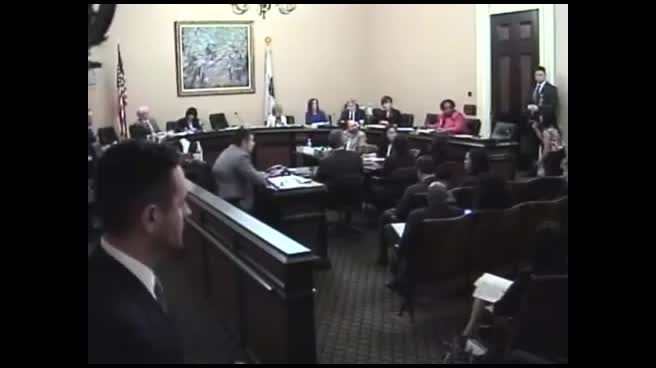 10MIN
Assembly Standing Committee on Education
Bill Author

Bill Co-Author(s):