AB 2699: Contractors’ State License Board: solar energy systems companies: regulations.
- Session Year: 2015-2016
- House: Assembly
- Latest Version Date: 2016-04-13
Existing law provides for the licensure and regulation of various professions and vocations by boards within the Department of Consumer Affairs. Existing law, the Contractors State License Law, provides for the licensure and regulation of contractors by the Contractors State License Board. Existing law requires licensed contractors to be classified and authorizes them to be classified as, among other things, a solar contractor. Under existing law, a solar contractor installs, modifies, maintains, and repairs thermal and photovoltaic solar energy systems. Existing law prohibits a solar contractor from performing building or construction trades, crafts, or skills, except when required to install a thermal or photovoltaic solar energy system.
This bill would, among other things, require a solar company selling, financing, or leasing a solar energy system, as defined, to provide each customer with would require, on or before July 1, 2017, the board to develop and make available on its Internet Web site a specified solar energy system disclosure document. The bill would also require the Department of Consumer Affairs to adopt a regulation that includes a specified Department of Consumer Affairs solar energy system disclosure document informing customers of the risks and rewards of solar energy system ownership and warranty issues, and protecting those customers from unscrupulous or unfair business practices. The bill would require these disclosures this disclosure document to be provided by the solar energy systems company to the customer consumer prior to the completion of a sale, finance, financing, or lease of a solar energy system. The bill would make a violation of these provisions by a solar company punishable by an unspecified fine. The bill would also authorize a customer damaged by a willful violation of these provisions to bring a civil cause of action against a solar company for specified damages.
This bill would also declare the intent of the Legislature to enact legislation that would require the Department of Consumer Affairs to certify a solar company and establish an insurance pool for customers to access in order to obtain compensation for solar energy system claims, as provided.
Existing law requires a home improvement contract to contain, as specified, a notice stating that the owner or tenant has the right to require the contractor to have a performance and payment bond.
The bill would require the board to establish through regulation requirements for a contractor to maintain a blanket performance and payment bond for the purpose of solar installation.
Existing law prohibits the downpayment for a home improvement contract from exceeding $1,000 or 10% of the contract amount, whichever is less. Existing law exempts from this restriction a contractor who, among other things, furnishes a blanket performance and payment bond.
The bill would subject a contractor for the installation of a solar energy system to the restriction despite having those performance and payment arrangements.
Existing law provides for the licensure and regulation of various professions and vocations by boards within the Department of Consumer Affairs. Existing law, the Contractors State License Law, provides for the licensure and regulation of contractors by the Contractors State License Board. Existing law requires licensed contractors to be classified and authorizes them to be classified as, among other things, a solar contractor. Under existing law, a solar contractor installs, modifies, maintains, and repairs thermal and photovoltaic solar energy systems. Existing law prohibits a solar contractor from performing building or construction trades, crafts, or skills, except when required to install a thermal or photovoltaic solar energy system.
This bill would, among other things, require a solar company selling, financing, or leasing a solar energy system, as defined, to provide each customer with a specified solar energy system disclosure document. The bill would also require the Department of Consumer Affairs to adopt a regulation that includes a specified Department of Consumer Affairs solar energy system disclosure document informing customers of the risks and rewards of solar energy system ownership and warranty issues, and protecting those customers from unscrupulous or unfair business practices. The bill would require these disclosures to be provided by the solar company to the customer prior to the sale, finance, or lease of a solar energy system. The bill would make a violation of these provisions by a solar company punishable by an unspecified fine. The bill would also authorize a customer damaged by a willful violation of these provisions to bring a civil cause of action against a solar company for specified damages.
This bill would also declare the intent of the Legislature to enact legislation that would require the Department of Consumer Affairs to certify a solar company and establish an insurance pool for customers to access in order to obtain compensation for solar energy system claims, as provided.
This section applies to all home improvement contracts, as defined in Section 7151.2, between an owner or tenant and a contractor, whether a general contractor or a specialty contractor, that is licensed or subject to be licensed pursuant to this chapter with regard to the transaction.
(a)Failure by the licensee or a person subject to be licensed under this chapter, or by his or her agent or salesperson, to comply with the following provisions is cause for discipline:
(1)The contract shall be in writing and shall include the agreed contract amount in dollars and cents. The contract amount shall include the entire cost of the contract, including profit, labor, and materials, but excluding finance charges.
(2)If there is a separate finance charge between the contractor and the person contracting for home improvement, the finance charge shall be set out separately from the contract amount.
(3)If a downpayment will be charged, the downpayment may not exceed one thousand dollars ($1,000) or 10 percent of the contract amount, whichever is less.
(4)If, in addition to a downpayment, the contract provides for payments to be made prior to completion of the work, the contract shall include a schedule of payments in dollars and cents specifically referencing the amount of work or services to be performed and any materials and equipment to be supplied.
(5)Except for a downpayment, the contractor may neither request nor accept payment that exceeds the value of the work performed or material delivered.
(6)Upon any payment by the person contracting for home improvement, and prior to any further payment being made, the contractor shall, if requested, obtain and furnish to the person a full and unconditional release from any potential lien claimant claim or mechanics lien authorized pursuant to Sections 8400 and 8404 of the Civil Code for any portion of the work for which payment has been made. The person contracting for home improvement may withhold all further payments until these releases are furnished.
(7)If the contract provides for a payment of a salespersons commission out of the contract price, that payment shall be made on a pro rata basis in proportion to the schedule of payments made to the contractor by the disbursing party in accordance with paragraph (4).
(8)A Except as provided by Section 7171, a contractor furnishing a performance and payment bond, lien and completion bond, or a bond equivalent or joint control approved by the registrar covering full performance and payment is exempt from paragraphs (3), (4), and (5), and need not include, as part of the contract, the statement regarding the downpayment specified in subparagraph (C) of paragraph (8) of subdivision (d) of Section 7159, the details and statement regarding progress payments specified in paragraph (9) of subdivision (d) of Section 7159, or the Mechanics Lien Warning specified in paragraph (4) of subdivision (e) of Section 7159. A contractor furnishing these bonds, bond equivalents, or a joint control approved by the registrar may accept payment prior to completion. If the contract provides for a contractor to furnish joint control, the contractor shall not have any financial or other interest in the joint control.
(b)A violation of paragraph (1), (3), or (5) of subdivision (a) by a licensee or a person subject to be licensed under this chapter, or by his or her agent or salesperson, is a misdemeanor punishable by a fine of not less than one hundred dollars ($100) nor more than five thousand dollars ($5,000), or by imprisonment in a county jail not exceeding one year, or by both that fine and imprisonment.
(1)An indictment or information against a person who is not licensed but who is required to be licensed under this chapter shall be brought, or a criminal complaint filed, for a violation of this section, in accordance with paragraph (4) of subdivision (d) of Section 802 of the Penal Code, within four years from the date of the contract or, if the contract is not reduced to writing, from the date the buyer makes the first payment to the contractor.
(2)An indictment or information against a person who is licensed under this chapter shall be brought, or a criminal complaint filed, for a violation of this section, in accordance with paragraph (2) of subdivision (d) of Section 802 of the Penal Code, within two years from the date of the contract or, if the contract is not reduced to writing, from the date the buyer makes the first payment to the contractor.
(3)The limitations on actions in this subdivision shall not apply to any administrative action filed against a licensed contractor.
(c)Any person who violates this section as part of a plan or scheme to defraud an owner or tenant of a residential or nonresidential structure, including a mobilehome or manufactured home, in connection with the offer or performance of repairs to the structure for damage caused by a natural disaster, shall be ordered by the court to make full restitution to the victim based on the persons ability to pay, as defined in subdivision (e) of Section 1203.1b of the Penal Code. In addition to full restitution, and imprisonment authorized by this section, the court may impose a fine of not less than five hundred dollars ($500) nor more than twenty-five thousand dollars ($25,000), based upon the defendants ability to pay. This subdivision applies to natural disasters for which a state of emergency is proclaimed by the Governor pursuant to Section 8625 of the Government Code, or for which an emergency or major disaster is declared by the President of the United States.
SEC. 2.Section 7169 is added to the Business and Professions Code, to read:7169.On or before July 1, 2017, the board shall develop, and make available on its Internet Web site, a solar energy system disclosure document which a solar energy systems company must provide to a consumer prior to completion of a sale, financing, or lease of a solar energy system. The solar energy system disclosure document shall include the following information:
(a)The amounts and sources of financing obtained.
(b)The total cost and payments for the system, including financing costs.
(c)The calculations used by the home improvement salesperson to determine how many panels the homeowner needs to install.
(d)The calculations used by the home improvement salesperson to determine how much energy the panels will generate.
(e)Any additional monthly fees the homeowners electric company may bill, any turn-on charges, and any fees added for the use of an Internet monitoring system of the panels or inverters.
(f)The terms and conditions of any guaranteed rebate.
(g)The final contract price, without the inclusion of possible rebates.
(h)The solar energy system companys contractor license number.
(i)The impacts of solar energy system installations not performed to code.
(j)Types of solar energy system malfunctions.
(k)Information about the difference between a solar energy system lease and a solar energy system purchase.
(l)Information on how and to whom consumers may provide complaints.
SEC. 3.Section 7170 is added to the Business and Professions Code, to read:7170.The board shall establish through regulation requirements for a contractor to maintain a blanket performance and payment bond for the purpose of solar energy systems installation.
SEC. 4.Section 7171 is added to the Business and Professions Code, to read:7171.Notwithstanding paragraph (8) of subdivision (a) of Section 7159.5, a contractor installing a solar energy system shall be subject to the down payment restrictions in paragraph (3) of subdivision (a) of Section 7159.5.
SECTION 1.(a)The Legislature finds and declares that the Governor set a goal of one million solar rooftop systems installed by 2018. As of November 2015, this state leads the nation in the installation of residential and business distributed solar projects with approximately 438,250 solar projects.
(b)It is the intent of the Legislature to enact this act to ensure that prospective solar customers are provided accurate, clear, and concise information to make an informed decision about solar energy system installation, and to ensure that new solar energy systems continue to reliably provide clean power to millions of Californians for many years.
SEC. 2.Chapter 2.4 (commencing with Section 18892) is added to Division 8 of the Business and Professions Code, to read:2.4.Solar Companies18892.(a)As used in this section, the following terms have the following meanings:
(1)Customer shall include any person, firm, corporation, or other entity that is solicited by, inquires about, or seeks the services of a solar company for the purchase, financing, or lease of a solar energy system.
(2)Department means the Department of Consumer Affairs.
(3)Solar company means any company and its broker, brokers, or agents that sell, finance, or lease solar energy systems.
(4)Solar energy system has the same meaning as set forth in paragraphs (1) and (2) of subdivision (a) of Section 801.5 of the Civil Code.
(b)(1)Prior to completion of a sale, financing, or lease of a solar energy system to a customer, a solar company shall provide each customer with a solar energy system disclosure document, which shall include all of the following information:
(A)A list of current residential or business electric rates by kilowatthour, as established by the applicable Public Utilities Commission tariff or other regulatory rate document.
(B)If a payback calculation for the solar energy system is provided, the calculation must be based on the customers current electric rate, which shall be disclosed to the customer.
(C)A notification that electric rates are subject to change in the future and that estimates of savings are based on todays electric rates. If a payback calculation is included, the notification shall be located immediately next to the payback calculation.
(D)A link to a page on the customers electricity providers Internet Web site that provides information about the electrical providers filings regarding future rates.
(E)A description of the solar companys contractors license issued pursuant to Chapter 9 (commencing with Section 7000) of Division 3, license number, and name of the license qualifier for each of the solar companys licenses for solar system installation.
(F)Valid, current certificates of insurance for the solar companys commercial general liability and workers compensation insurance policies.
(G)A description of the average level of electricity per month that would be produced by the solar panels planned for installation given the actual physical limitations and conditions specific to the customer.
(H)A notification that, when renewable energy attributes are retained by the solar company, the customer is not buying solar power, nor buying renewable energy.
(I)A notification that the balance of any financing or lease arrangement is payable to the solar company in the event of the death of the customer during the term of the agreement.
(J)An estimate of the cost of removing and reinstalling solar panels in the event that the roof material beneath solar panels is replaced.
(K)An explanation of the potential change in electricity production of a solar energy system if the panels become dirty or covered with debris, and instructions on how to maintain the solar energy system.
(L)An explanation that if a solar system installation is financed by a loan that requires a superpriority lien on the homeowners mortgage, the homeowner may be unable to refinance his or her mortgage because of this financing.
(M)A notification that customer bill credits are compensated by other customers of the electricity provider.
(2)A solar company that sells, finances, or leases a solar energy system to a customer primarily in Spanish, Chinese, Tagalog, Vietnamese, or Korean, whether orally or in writing, shall be required to provide the disclosure document in paragraph (1) in that same language.
(c)Subject to the Administrative Procedure Act (Chapter 3.5 (commencing with Section 11340) of Part 1 of Division 3 of Title 2 of the Government Code), the department shall adopt a regulation that includes a Department of Consumer Affairs solar energy system disclosure document informing customers of the risks and rewards of solar energy system ownership and warranty issues, and protecting those customers from unscrupulous or unfair business practices. The solar company shall provide this disclosure document developed by the department at the same time that the disclosure document in subdivision (b) is provided to the customer. The disclosure document developed by the department shall include, but shall not be limited to, information about all of the following:
(1)Solar energy system malfunctions.
(2)Installations not performed to code.
(3)Roof intrusions and related structural concerns.
(4)Bankruptcy, insolvency, default, takeover, or closure of a solar company with existing customers, especially with respect to solar companies who lease systems.
(5)Loss of warranty on solar energy systems caused by bankruptcy, insolvency, default, takeover, or closure of a solar company or a solar manufacturer.
(d)It is the intent of the Legislature to enact legislation that would (1) require the department to certify a solar company and (2) establish an insurance pool for customers to access in order to obtain compensation for solar energy system claims, the funds for which shall be raised yearly from all solar companies actively doing business in this state at the time of assessment.
(e)When marketing its services to customers, solar companies shall not use the trade dress of other energy providers such that it creates a likelihood of confusion that an affiliation or connection exists between a solar company and the electrical corporation, unless the solar company has express authorization from the electrical corporation to do so.
(f)A violation of this section by a solar company is punishable by a fine of not less than ___ ($___) and not more than ___ ($___), which shall be in addition to any other punishment imposed for a violation of this section. All fines collected by the department pursuant to this subdivision shall be deposited in the Professions and Vocations Fund described in Section 205, and these fines shall be subject to appropriation by the Legislature.
(g)(1)In addition to the authority granted to the department in subdivision (f), a customer damaged by a willful violation of the provisions of this chapter may bring a civil cause of action against a solar company for damages, including, but not limited to, general damages, special damages, and punitive damages.
(2)The court in an action pursuant to this section may award equitable relief, including, but not limited to, an injunction, costs, and any other relief the court deems proper.
(3)The rights and remedies provided in this chapter are in addition to any other rights and remedies provided by law.
(a)The Legislature finds and declares that the Governor set a goal of one million solar rooftop systems installed by 2018. As of November 2015, this state leads the nation in the installation of residential and business distributed solar projects with approximately 438,250 solar projects.
(b)It is the intent of the Legislature to enact this act to ensure that prospective solar customers are provided accurate, clear, and concise information to make an informed decision about solar energy system installation, and to ensure that new solar energy systems continue to reliably provide clean power to millions of Californians for many years.
SEC. 2.Chapter 2.4 (commencing with Section 18892) is added to Division 8 of the Business and Professions Code, to read:2.4.Solar Companies18892.(a)As used in this section, the following terms have the following meanings:
(1)Customer shall include any person, firm, corporation, or other entity that is solicited by, inquires about, or seeks the services of a solar company for the purchase, financing, or lease of a solar energy system.
(2)Department means the Department of Consumer Affairs.
(3)Solar company means any company and its broker, brokers, or agents that sell, finance, or lease solar energy systems.
(4)Solar energy system has the same meaning as set forth in paragraphs (1) and (2) of subdivision (a) of Section 801.5 of the Civil Code.
(b)(1)Prior to completion of a sale, financing, or lease of a solar energy system to a customer, a solar company shall provide each customer with a solar energy system disclosure document, which shall include all of the following information:
(A)A list of current residential or business electric rates by kilowatthour, as established by the applicable Public Utilities Commission tariff or other regulatory rate document.
(B)If a payback calculation for the solar energy system is provided, the calculation must be based on the customers current electric rate, which shall be disclosed to the customer.
(C)A notification that electric rates are subject to change in the future and that estimates of savings are based on todays electric rates. If a payback calculation is included, the notification shall be located immediately next to the payback calculation.
(D)A link to a page on the customers electricity providers Internet Web site that provides information about the electrical providers filings regarding future rates.
(E)A description of the solar companys contractors license issued pursuant to Chapter 9 (commencing with Section 7000) of Division 3, license number, and name of the license qualifier for each of the solar companys licenses for solar system installation.
(F)Valid, current certificates of insurance for the solar companys commercial general liability and workers compensation insurance policies.
(G)A description of the average level of electricity per month that would be produced by the solar panels planned for installation given the actual physical limitations and conditions specific to the customer.
(H)A notification that, when renewable energy attributes are retained by the solar company, the customer is not buying solar power, nor buying renewable energy.
(I)A notification that the balance of any financing or lease arrangement is payable to the solar company in the event of the death of the customer during the term of the agreement.
(J)An estimate of the cost of removing and reinstalling solar panels in the event that the roof material beneath solar panels is replaced.
(K)An explanation of the potential change in electricity production of a solar energy system if the panels become dirty or covered with debris, and instructions on how to maintain the solar energy system.
(L)An explanation that if a solar system installation is financed by a loan that requires a superpriority lien on the homeowners mortgage, the homeowner may be unable to refinance his or her mortgage because of this financing.
(M)A notification that customer bill credits are compensated by other customers of the electricity provider.
(2)A solar company that sells, finances, or leases a solar energy system to a customer primarily in Spanish, Chinese, Tagalog, Vietnamese, or Korean, whether orally or in writing, shall be required to provide the disclosure document in paragraph (1) in that same language.
(c)Subject to the Administrative Procedure Act (Chapter 3.5 (commencing with Section 11340) of Part 1 of Division 3 of Title 2 of the Government Code), the department shall adopt a regulation that includes a Department of Consumer Affairs solar energy system disclosure document informing customers of the risks and rewards of solar energy system ownership and warranty issues, and protecting those customers from unscrupulous or unfair business practices. The solar company shall provide this disclosure document developed by the department at the same time that the disclosure document in subdivision (b) is provided to the customer. The disclosure document developed by the department shall include, but shall not be limited to, information about all of the following:
(1)Solar energy system malfunctions.
(2)Installations not performed to code.
(3)Roof intrusions and related structural concerns.
(4)Bankruptcy, insolvency, default, takeover, or closure of a solar company with existing customers, especially with respect to solar companies who lease systems.
(5)Loss of warranty on solar energy systems caused by bankruptcy, insolvency, default, takeover, or closure of a solar company or a solar manufacturer.
(d)It is the intent of the Legislature to enact legislation that would (1) require the department to certify a solar company and (2) establish an insurance pool for customers to access in order to obtain compensation for solar energy system claims, the funds for which shall be raised yearly from all solar companies actively doing business in this state at the time of assessment.
(e)When marketing its services to customers, solar companies shall not use the trade dress of other energy providers such that it creates a likelihood of confusion that an affiliation or connection exists between a solar company and the electrical corporation, unless the solar company has express authorization from the electrical corporation to do so.
(f)A violation of this section by a solar company is punishable by a fine of not less than ___ ($___) and not more than ___ ($___), which shall be in addition to any other punishment imposed for a violation of this section. All fines collected by the department pursuant to this subdivision shall be deposited in the Professions and Vocations Fund described in Section 205, and these fines shall be subject to appropriation by the Legislature.
(g)(1)In addition to the authority granted to the department in subdivision (f), a customer damaged by a willful violation of the provisions of this chapter may bring a civil cause of action against a solar company for damages, including, but not limited to, general damages, special damages, and punitive damages.
(2)The court in an action pursuant to this section may award equitable relief, including, but not limited to, an injunction, costs, and any other relief the court deems proper.
(3)The rights and remedies provided in this chapter are in addition to any other rights and remedies provided by law.
|
Date
|
Status
|
|---|---|
| Feb 19, 2016 | Introduced. To print. |
| Feb 21, 2016 | From printer. May be heard in committee March 22. |
| Feb 22, 2016 | Read first time. |
| Mar 10, 2016 | Referred to Coms. on B. & P. and JUD. |
| Apr 12, 2016 | From committee: Amend, and do pass as amended and re-refer to Com. on JUD. (Ayes 15. Noes 0.) (April 12). |
| Apr 13, 2016 | Read second time and amended. |
| Apr 14, 2016 | Re-referred to Com. on JUD. |
| Apr 18, 2016 | Re-referred to Com. on APPR. pursuant to Assembly Rule 96. |
| May 18, 2016 | In committee: Set, first hearing. Referred to APPR. suspense file. |
| May 27, 2016 | In committee: Held under submission. |
|
Date
|
Description
|
Location
|
Votes
|
|
|---|---|---|---|---|
| Apr 12, 2016 | Do pass as amended and be re-referred to the Committee on [Judiciary] | Assembly Standing Committee on Business and Professions |
Passed |
This list shows positions taken on this bill by organizations on the date displayed, which is linked to the original source.
Positions by individuals are not included.
|
Organization
|
Position
|
Date
|
|---|---|---|
| Northern California Power Agency | * Support | Apr 12, 2016 |
| Solar City Corporation | * Support | Apr 12, 2016 |
| Sun Run | * Neutral | Apr 12, 2016 |
Date of Hearing: May 18, 2016
ASSEMBLY COMMITTEE ON APPROPRIATIONS
Lorena Gonzalez, Chair
ABPCA Bill Id:AB 2699
Author:(Gonzalez) – As Amended Ver:April 13, 2016
Policy Committee: | Business and Professions | Vote: | 15 - 0 |
Urgency: No State Mandated Local Program: No Reimbursable: No
SUMMARY:
This bill strengthens protections and disclosures for consumers with respect to purchase and installation of solar panels. Specifically, this bill:
- Requires the Contractor's State Licensing Board (Board) to develop a disclosure form related to solar panel purchase, including information about financing, terms, rebates, risks, fees, where to file complaints, and related information. Specifies a solar energy systems company must provide the form to a consumer prior to completion of a sale, financing, or lease of a solar energy system.
- Requires the Board to establish through regulation requirements for a contractor to maintain a blanket performance and payment bond for the purpose of solar energy systems installation.
- Requires a contractor installing a solar energy system to be subject to disclosures in existing law related to downpayments.
FISCAL EFFECT:
The Board anticipates a cost of $285,000 in the first year of implementation and $260,000 ongoing for licensing and enforcement staff (Contractors License Fund).
COMMENTS:
- Purpose. This bill intends to update disclosure laws and consumer protection in order to keep pace with a growing industry. The author indicates while the growth in residential solar is important to meet renewable energy goals, consumers have sometimes been surprised by the long-term financial impacts of these systems, and have complained about a lack of clarity and information related to effects on their ability to stay in or sell their home, and about the risks and benefits of the systems.
- Solar Panels. The popularity of rooftop solar panels has grown rapidly, as has third-party ownership of residential systems, which allows individuals to lease the systems at a lower or no up-front cost. Systems must be installed by licensed contractors and a solar salesperson also must register as a home improvement salesperson with the Board. Criticism has been levied about deceptive marketing practices that over-promise savings and under-inform about risk. Hundreds of complaints about solar marketing and installation have been received by the Board since 2010.
- Support and Opposition. The California Municipal Utilities Association and the California Environmental Justice Alliance support this bill, noting the benefit of improved disclosure for consumers. The Silicon Valley Leadership Forum opposes unless amended, seeking amendments to narrow the bill to residential solar, require the disclosure to be provided by the contractor before installation, and require a 10-year warranty.
Analysis Prepared by: Lisa Murawski / APPR. / (916) 319-2081
Date of Hearing:
ASSEMBLY COMMITTEE ON BUSINESS AND PROFESSIONS
Rudy Salas, Chair
ABPCA Bill Id:AB 2699
Author:(Gonzalez) – As Introduced Ver:February 19, 2016
NOTE: This bill is double-referred, and if passed by this Committee, it will be referred to the Assembly Committee on Judiciary.
SUBJECT: Department of Consumer Affairs: solar companies: solar energy systems.
SUMMARY: Requires the Department of Consumer Affairs (DCA) to create a "Department of Consumer Affairs solar energy system disclosure" document containing specified information about solar energy systems; requires a solar company to provide to the consumer the DCA disclosure and a separate solar company disclosure document prior to a sale, lease or financing of a solar system; provides specified legal remedies for solar customers for damages; states the intent of the Legislature for the DCA to certify a solar company and establish an insurance pool for solar system customers, as specified; makes findings and declarations relating to solar systems and use in California.
EXISTING LAW:
- Provides for the licensure and regulation of contractors, including home improvement contractors, under the Contractors' State License Law (Contractors Law) by the CSLB within the DCA. The CSLB is under the direction of the registrar of contractors. (Business and Professions Code (BPC) Section 7000 et seq.)
- Defines a HIS as a person employed by a home improvement contractor licensed under the Contractors Law to solicit, sell, negotiate, or execute contracts for home improvements, for the sale, installation or furnishing of home improvement goods or services, or of swimming pools, spas, or hot tubs, except as specified. (BPC Section 7152)
- Provides that it is a misdemeanor for any person to engage in the occupation of a salesperson for one or more home improvement contractors within this state without having a registration issued by the Registrar for each of the home improvement contractors by whom he or she is employed as a HIS. (BPC Section 7153)
- Establishes the DCA to advance the interests of consumers by facilitating the proper functioning of the free enterprise market economy by educating consumers, fostering competition, and promoting the consumers’ interest. (BPC Section 300)
THIS BILL:
- Defines the following:
- "Customer" to mean any person, firm, corporation, or other entity that is solicited by, inquires about, or seeks the service of a solar company for the purchase, financing, or lease of a solar energy system;
- "Department" means the DCA; and,
- "Solar company" to mean any company and its broker, brokers, or agents that sell, finance, or lease solar energy systems.
- Requires a solar company, prior to the completion of sale, financing, or lease of a solar energy system, to provide each customer with a "solar energy system disclosure document" (disclosure).
- Requires the disclosure to include all of the following information:
- A list of current residential or business electric rates by kilowatt hour, as specified;
- If a payback calculation for the solar energy system is provided, the calculation must be based on the customer's current electric rate;
- A notification that electric rates are subject to change in the future and that estimates of savings are based on today's electric rates, as specified;
- A link to a page on the customer's electricity provider's Internet Web site that provides information about the electrical providers filings regarding future rates;
- A description of the solar company's contractor's license, license number, and name of the qualifier for each of the solar company's licenses for solar system installation;
- Valid, current certificate of insurance for the solar company's commercial general liability and workers compensation insurance policies;
- A description of the average level of electricity per month that would be produced by the solar panels planned for installation; given the actual physical limitations and conditions specific to the customer;
- A notification that, when renewable energy attributes are retained by the solar company, the customer is not buying solar power, nor buying renewable energy;
- A notification that the balance of any financing or lease arrangement is payable to the solar company in the event of the death of the customer during the term of the agreement;
- An estimate of the cost of removing and reinstalling solar panels in the event that the roof material beneath the solar panel is replaced;
- An explanation of the potential change in electricity production of a solar energy system if the panels become dirty, along with instructions on how to maintain the solar energy system; and,
- A notification that customer bill credits are compensated by other customers of the electricity provider.
- Requires a solar company that sells, finances, or leases a solar energy system to a customer primarily in Spanish, Chinese, Tagalog, Vietnamese, or Korean, whether orally or in writing, to provide the disclosure in that same language.
- Requires the DCA, subject to the Administrative Procedures Act, to adopt a regulation that includes a "Department of Consumer Affairs solar energy system disclosure document" informing customers of the risks and rewards of solar energy system ownership and warrant issues, and protecting those customers from unscrupulous or unfair business practices.
- Requires the solar company to provide both disclosures at the same time.
- Requires the disclosure created by the DCA to include, but not be limited to, information about the following:
- Solar energy system malfunctions;
- Installations not performed to code;
- Roof intrusions and related structural concerns;
- Bankruptcy, insolvency, default takeover, or closure of a solar company with existing customers, especially with respect to solar companies who lease systems; and,
- Loss of warrant on solar energy systems caused by bankruptcy, insolvency, default, takeover, or closure of a solar company or a solar manufacturer.
- Prohibits solar companies from using the trade dress of other energy providers, as specified, when marketing its services to customers.
- States that a violation of the disclosure requirements is punishable by an undisclosed fine amount.
- Authorizes, in addition to the fine in number 9 above, a customer damaged by a willful violation of the disclosure requirements, may bring a civil cause of action against a solar company for damages, including, but not limited to general damages, special damages, and punitive damages.
- States that a court may award equitable relief, including, but not limited to an injunction, costs and any other relief the court deems proper, and the rights and remedies are in addition to any other rights and remedies provided by the law.
- States that it is the intent of the legislature to enact legislation that would require the DCA to certify a solar company and establish an insurance pool, as specified.
- Makes findings and declarations relative to the million solar rooftop initiative and the need to ensure that solar customers are provided accurate, clear, and concise information to make informed decisions about solar energy system installation.
FISCAL EFFECT: Unknown. This bill is keyed fiscal by the Legislative Counsel.
COMMENTS:
Purpose. This bill seeks to increase consumer awareness about solar energy systems by requiring the DCA to create a “DCA solar energy system disclosure" (disclosure) document which a solar company must provide to a customer prior to the completion of the sale, financing, or lease of a solar energy system. In addition, solar companies will be required to provide their own additional disclosure document. The disclosure documents are intended to inform consumers about the potential risks and rewards of solar energy systems. The disclosure must contain specified information about electric rates, payback calculations, the contractor's license information, information about a person's electricity provider, information about lease arrangements in the event of a leaseholder's death, estimates for removal and reinstallation of roofing materials, explanation about loans and potential changes in electricity production, among others. In addition, this bill states it is the intent of the legislature to establish an insurance pool for customers of solar energy systems, under specified circumstances, and provides specified legal remedies for solar customers for damages.
This bill is sponsored by the author. According to the author, "Californians are committed to aggressive action to address the ongoing threats of climate change, including the adoption of aggressive goals for renewable energy production. These benchmarks serve as a model for the entire world and continue to motivate entire countries to take stronger steps of their own.
Essential to achieving these goals and mitigating the dangerous impact people are having on our climate is ongoing investment in home solar systems. To their credit, Californians across the state have embraced this challenge enthusiastically, leading to a major boom in the solar industry. It’s critical that our oversight and disclosure keep pace. As is too often the case, rapid expansion has led to uncertainty and occasional bad actors in the marketplace, where multiple incentive programs have presented the general public with unprecedented options but often without the levels of clarity or disclosure those other large-scale financial products carry. As a result, many consumers have been surprised by long-term financial impacts, often hindering their ability to stay in or sell their homes. Complaints have been lodged nationwide over the lack of clear disclosures, prompting widespread efforts to improve consumer protections. We can't rely on commission-driven salespeople in an under-regulated industry to ensure that all customers reliably receive all the information they need to make informed, responsible decisions. California has wisely used its legislative influence to help spur the growth of the home solar market, and now has an obligation to ensure that home solar customers receive accurate, clear, concise information about the installation of home solar systems."
Solar Industry. According to the Solar Industries Association, California continues to be the leading solar market in the United States. The California Solar Initiative program provides incentives for solar systems installed on existing residential homes, existing and new commercial, industrial, government, non-profit, and agricultural properties within the service territories of the state’s three investor-owned utilities: Pacific Gas and Electric Company Southern California Edison and San Diego Gas and Electric.
Information retrieved from the U.S. Energy Information Administration stated that "One of the biggest developments in the U.S. residential solar photovoltaic (PV) market over the past few years has been the significant growth of residential solar PV systems not owned by homeowners. These are often referred to as third-party-owned systems. Data from the California Solar Initiative (CSI) program, the largest and longest-running residential and commercial solar incentive program in the United States, show that third-party-owned residential installations grew rapidly as the solar industry created and refined the third-party ownership model. In 2012 and 2013, more than two-thirds of residential installations in the CSI program were third-party owned. Industry reports have indicated that the growth in popularity of third-party-owned residential solar PV systems is occurring in other states as well."
The need for information to be provided to consumers regarding, the installation, purchase or lease options, and professional licensing about solar energy systems is intended to enhance awareness about the options of solar energy systems and the types of financing options available to consumers. According to information provided by the author, installation companies, driven mainly by the “rooftop” sector, are responsible for 54 percent of all solar jobs in California, totaling 40,597, and saw a 29 percent growth rate in 2015. There are over 1,000 contractors or installers in California. The rooftop solar industry has a limited track record and limited regulatory oversight. Since the early bloom in the rooftop solar industry, it has been criticized for its business and deceptive marketing practices.
According to the July 15, 2014, article by National Public Radio titled Leased Solar Panels Can Cast A Shadow Over A Home's Value, "Installing solar panels on a house to generate electricity often costs $20,000 or more, and many homeowners have turned to leasing programs to avoid those upfront costs. But most leases are for 20 years, and that can present problems if someone wants to sell the house before the lease is completed."
In order to help consumers navigate the complex system of choosing to purchase or lease a solar system, this bill will requires consumers be provided with specific information about sale and leased systems, along with information about energy rate calculations, maintenance of the solar systems, electric rate fluctuations, the contractor's license number, and a notification about the balance of lease agreements upon death.
Licensure and Registration Requirements for Solar Installers. Except for those systems that are self-installed, all systems must be installed by appropriately licensed California contractors in accordance with rules and regulations adopted by the CSLB. Installation contractors must have licenses specific to PV systems. All systems must be installed in conformance with the manufacturer's specifications and with all applicable electrical and building code standards. This bill will not alter current licensing or other requirements for installers of solar systems or companies that offer the sale of solar services, this bill will require consumer disclosures be provided with disclosure documents containing relevant information about the installation of solar systems in California
According to information provided by the CSLB, between 2010 and October 2015, the CSLB received 802 complaints against licensees connected to a contract for solar construction. Misleading power generation claims, cost savings that do not match what has been promised, and hard-sell, deceptive financing are the leading cause of solar complaints filed with CSLB.
Many of these complaints relate to leases and power purchase agreements. Consumers often are not provided a clear explanation between customer-owned, leased and power purchase agreements, as well as the terms of purchase contracts and equipment leases. Additionally, the CSLB noted that it has investigated several reports of consumers who have signed leases with companies that dispatch a licensed contractor to install a system, but are not licensed themselves.
Contractors State Licensing Board. The CSLB is within the DCA and is responsible for implementation and enforcement of the Contractor's State License Law; the laws and regulations related to the licensure, practice and discipline of the construction industry in California. All businesses and individuals who construct or alter, or offer to construct or alter, any building, highway, road, parking facility, railroad, excavation, or other structure in California must be licensed by the CSLB if the total cost (labor and materials) of one or more contracts on the project is $500 or more.
The Board licenses approximately 290,000 contractors in 44 license classifications and two
certifications. In addition, the CSLB registers some 9,600 home improvement salespersons who are engaged in the sale of home improvement goods and services.
According to information from the CSLB, only contractors with specified license classifications are authorized to perform solar construction or installation. Those without any of these license classifications are not authorized to perform this type of work. Those licenses include: "A" General Engineering, "B" General Building, or C-46 Solar licenses can perform solar construction and installation. Contractors with a C-4 Boiler, Hot-Water Heating and Steam Fitting; C-10 Electrical; C-36 Plumbing or C-53 Swimming Pool license can only do solar work within their classification as defined by CSLB regulations
Solar sales and financing personnel must register as home improvement salespersons with CSLB
A person who solicits door-to-door or negotiates the terms of a contract is required to be a registered home improvement salesperson. A registered salesperson is less likely to mislead or misinform potential customers about the benefits of installing a solar system. Although this bill does not revise current licensure requirements for solar companies, it does require the disclosure to contain a contractor's license number and the name of the qualifier for each of the solar company's licenses for solar system installation.
ARGUMENTS IN SUPPORT:
The California Municipal Utilities Association (CMUA) writes in support, "The [CMUA], representing over 60 locally owned electric utilities, utility districts and water agencies writes in support of AB 2699 (Gonzalez) a bill to require solar companies selling or leasing solar roofs to provide a specified disclosure document to prospective customers. This bill also requires the [DCA] to create a disclosure document. CMUA members value our customers and the choices they make. As locally owned utilities and water agencies, we often help consumers with incentives, rebates and giveaways on energy and water efficient appliances and fixtures, all in an effort to help customers conserve energy and water. Our intent is to provide additional services and incentives that are fully disclosed to our customers that provide a benefit."
ARGUMENTS IN OPPOSITION:
None on file.
POLICY ISSUE(S) FOR CONSIDERATION:
This bill requires the DCA to adopt a regulation to include a "Department of Consumer Affairs solar energy system disclosure document" that must be presented to a customer prior to the sale, lease or financing of a solar system. At that same time, a solar company would be required to provide a separate "solar energy system disclosure document." Both disclosures are similarly titled and would possibly contain overlapping or inconsistent information. In addition, many of the disclosure requirements are applicable to individual customers and contain information that may change frequently. In order to alleviate any unnecessary confusion for the consumer, it may be beneficial to create one standardized disclosure document. In addition, it may be more appropriate to require a regulatory entity within the DCA to create the consumer disclosure document. Given that the CSLB has primary jurisdiction over the licensing and enforcement of contractors, the CSLB may be better suited to create and make available to its licensees a standard solar disclosure document for consumers which must be provided to a consumer prior to the completion of a sale, financing, or lease of a solar energy system.
This bill requires the DCA to establish an insurance pool for customers to access in order to obtain compensation for solar energy claims. Instead of this model, the author would like to require a performance bond for a solar installation.
AMENDMENTS:
In order to address the policy issues raised above, the author should consider amending the bill to delete the requirement for the DCA to develop, through a regulation, a disclosure document which must be provided to a consumer in addition to the disclosure provided by a solar company, delete the penalty provision, delete the intent language for the DCA to establish an insurance pool and certify solar companies, delete the legal remedies for consumers against solar companies, and instead require the CSLB to develop and make available on its website, a disclosure document which a solar company must provide to consumers prior to the completion of a sale, lease or the financing of a solar energy system, and per the author's request, require the CSLB to establish a requirement to for a performance bond.
On or before July 1, 2017, the CSLB shall develop, and make available on its website, a “solar energy system disclosure document” which a solar company must provide to a consumer prior to completion of a sale, lease or the financing of a solar energy system.
The “solar energy system disclosure” shall include the following information:
- How much and from whom the financing is obtained, the disclosure shall include the total cost and payments for the system, including financing costs;
- The calculations used by the home improvement salesperson to determine how many panels the homeowner needs to install;
- The calculations used by the home improvement salesperson to determine how much energy the panels will generate;
- A disclosure of any additional monthly fee’s the homeowner’s electric company may bill, any turn-on charges, and any fees added for the use of an internet monitoring system of the panels or inverters;
- The terms and conditions of any guaranteed rebate;
- Disclosure of the final contract price, without the inclusion of possible rebates.
- The solar company's contractor license number;
- Impacts on solar system installations not performed to code;
- Types of solar energy system malfunctions;
- Information about the difference between a solar energy system lease and a solar energy system purchase; and,
- Information for consumers to provide complaints.
The CSLB shall establish through regulations requirements for contractors to maintain blanket performance and payment bond for the purpose of solar installation.
Contractors installing a solar energy system shall be subject to the down payment restrictions in Section 7159.5(a)(3)
REGISTERED SUPPORT:
California Municipal Utilities Association
Northern California Power Agency
REGISTERED OPPOSITION:
None on file.
Analysis Prepared by: Elissa Silva / B. & P. / (916) 319-3301
Discussed in Hearing
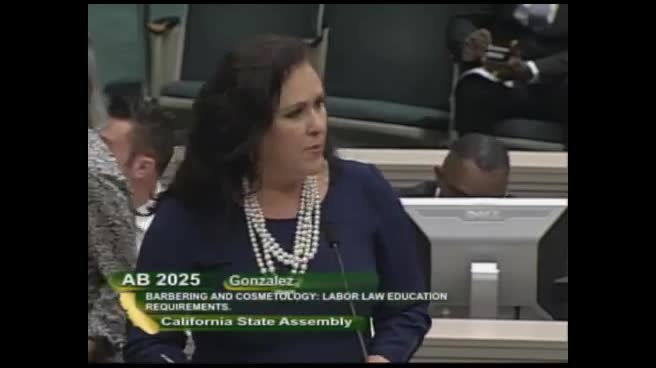 11MIN
Assembly Standing Committee on Business and Professions
Bill Author

Bill Co-Author(s):
