AB 480: School districts: reorganization: study of benefits and impacts of unification.
- Session Year: 2015-2016
- House: Assembly
- Latest Version Date: 2015-05-20
Existing law establishes procedures for the reorganization of school districts, including, but not limited to, unifying school districts by consolidating all or part of one or more school districts, as specified. Existing law establishes the County Office Fiscal Crisis and Management Assistance Team (FCMAT) to, among other things, review the fiscal and administrative condition of any county office of education, school district, or charter school.
This bill would require the Legislative Analysts Office County Office Fiscal Crisis and Management Assistance Team (FCMAT) to conduct a study of on the potential benefits and impacts of school district unification. The bill would specify require certain topics to be included in the study. study, including the benefits of school district unification. The bill would require FCMAT to submit the study to certain committees of the Legislature and specified other state agencies within one year of funds being appropriated by the Legislature to implement the bills provisions. By imposing new duties on a local educational agency, the bill would impose a state-mandated local program. The provisions of the bill would be repealed on January 1, 2021.
The California Constitution requires the state to reimburse local agencies and school districts for certain costs mandated by the state. Statutory provisions establish procedures for making that reimbursement.
This bill would provide that, if the Commission on State Mandates determines that the bill contains costs mandated by the state, reimbursement for those costs shall be made pursuant to these statutory provisions.
Existing law establishes procedures for the reorganization of school districts, including, but not limited to, unifying school districts by consolidating all or part of one or more school districts, as specified.
This bill would express the Legislatures intent to enact legislation regarding school district consolidation and unification require the Legislative Analysts Office to conduct a study of potential benefits and impacts of school district unification. The bill would specify topics to be included in the study.
Existing law establishes procedures for the reorganization of school districts, including, but not limited to, unifying school districts by consolidating all or part of one or more school districts, as specified.
This bill would express the Legislatures intent to enact legislation regarding school district consolidation and unification.
(a)The County Office Fiscal Crisis and Management Assistance Team (FCMAT) shall conduct a study on the potential benefits and impacts of school district unification. The study shall include, but is not limited to, discussions of management and fiscal topics.
(b)Management topics shall include all of the following:
(1)The benefits of school district unification for purposes of matriculation and the implementation of local control and accountability plans.
(2)The benefits of having a uniform school calendar for all grade levels.
(3)To the extent data on this topic is readily available, the benefits of combined maintenance and operation of schools within a unified school district.
(4)The benefits of school district unification for purposes of facilities management.
(c)Fiscal topics shall include all of the following:
(1)The impact of school district unification on overall costs, including, but not limited to, the impact on certificated salary schedules, classified salaries and positions, certificated administrative positions, classified administrative positions, and governing boards.
(2)The impact on the application of the local control funding formula.
(d)Within one year of funds being appropriated by the Legislature to implement the provisions of this section, FCMAT shall complete the study and shall submit the study to the appropriate fiscal and policy committees of the Legislature, the Legislative Analysts Office, the State Department of Education, and the Department of Finance.
(e)This section is subject to appropriation by the Legislature of funds to FCMAT for purposes of administering this section.
(f)This section is repealed on January 1, 2021.
SEC. 2.If the Commission on State Mandates determines that this act contains costs mandated by the state, reimbursement to local agencies and school districts for those costs shall be made pursuant to Part 7 (commencing with Section 17500) of Division 4 of Title 2 of the Government Code.
SECTION 1.The Legislative Analysts Office shall conduct a study of the potential benefits and impacts of school district unification. The study shall include, but not necessarily be limited to, discussions of all of the following topics:
(a)The benefits of school district unification for purposes of matriculation.
(b)The benefits of having a uniform school calendar for all grade levels.
(c)The benefits of combined maintenance and operation of schools within a unified school district.
(d)The benefits of school district unification for purposes of facilities management.
(e)The impact of school district unification on overall costs, including, but not necessarily limited to, the impacts on certificated salary schedules, classified salaries and positions, and certificated administrative positions.
(f)The impact on the application of the local control funding formula.
(g)The short-term and long-term benefits of school district unification over periods of 5, 10, and 15 years.
The Legislative Analysts Office shall conduct a study of the potential benefits and impacts of school district unification. The study shall include, but not necessarily be limited to, discussions of all of the following topics:
(a)The benefits of school district unification for purposes of matriculation.
(b)The benefits of having a uniform school calendar for all grade levels.
(c)The benefits of combined maintenance and operation of schools within a unified school district.
(d)The benefits of school district unification for purposes of facilities management.
(e)The impact of school district unification on overall costs, including, but not necessarily limited to, the impacts on certificated salary schedules, classified salaries and positions, and certificated administrative positions.
(f)The impact on the application of the local control funding formula.
(g)The short-term and long-term benefits of school district unification over periods of 5, 10, and 15 years.
SECTION 1.It is the intent of the Legislature to enact legislation regarding school district consolidation and unification.
It is the intent of the Legislature to enact legislation regarding school district consolidation and unification.
|
Date
|
Status
|
|---|---|
| Feb 23, 2015 | Read first time. To print. |
| Feb 24, 2015 | From printer. May be heard in committee March 26. |
| Mar 26, 2015 | From committee chair, with author's amendments: Amend, and re-refer to Com. on ED. Read second time and amended. |
| Mar 26, 2015 | Referred to Com. on ED. |
| Apr 6, 2015 | Re-referred to Com. on ED. |
| May 19, 2015 | From committee: Amend, and do pass as amended. (Ayes 7. Noes 0.) (May 13). |
| May 20, 2015 | Read second time and amended. Ordered returned to second reading. |
| May 21, 2015 | Re-referred to Com. on APPR. pursuant to Joint Rule 10.5. |
| May 21, 2015 | Read second time. Ordered to third reading. |
| May 27, 2015 | In committee: Set, first hearing. Referred to APPR. suspense file. |
| May 28, 2015 | In committee: Held under submission. |
| May 28, 2015 | Joint Rule 62(a), file notice suspended. |
| May 28, 2015 | Joint Rule 62(a), file notice suspended. (Page 1613.) |
| Jan 31, 2016 | Died pursuant to Article IV, Sec. 10(c) of the Constitution. |
| Feb 1, 2016 | From committee: Filed with the Chief Clerk pursuant to Joint Rule 56. |
|
Date
|
Description
|
Location
|
Votes
|
|
|---|---|---|---|---|
| May 13, 2015 | Do pass as amended. | Assembly Standing Committee on Education |
Passed |
This list shows positions taken on this bill by organizations on the date displayed, which is linked to the original source.
Positions by individuals are not included.
|
Organization
|
Position
|
Date
|
|---|---|---|
| School Employers Association Of California | * Indeterminate | May 13, 2015 |
| Small School Districts Association | * Indeterminate | May 13, 2015 |
AB 480
Page 2
Date of Hearing: May 27, 2015
ASSEMBLY COMMITTEE ON APPROPRIATIONS
Jimmy Gomez, Chair
AB 480
(Harper) – As Amended May 20, 2015
Policy Committee: |
Education |
Vote: |
7 - 0 |
|
|
|
|
|
|
|
|
Urgency: No State Mandated Local Program: Yes Reimbursable: Yes
SUMMARY:
This bill requires the County Office Fiscal Crisis and Management Assistance Team (FCMAT) to conduct a study on the potential benefits and impacts of school district unification. Specifically, this bill:
Requires the study to look at the benefits of school district unification for purposes of matriculation and the implementation of local control and accountability plans; the benefits of a uniform school calendar for all grade levels; to the extent data on this topic is readily available, the benefits of combined maintenance and operation of schools within a unified school district; and the benefits of school district unification for purposes of facilities management.
Requires the study to look at certain fiscal topics, including the impact of school district unification on overall costs, including, but not limited to, certificated salary schedules, classified salaries and positions, certificated administrative positions, classified administrative positions, and governing boards; and the impact on the application of the local control funding formula.
Requires FCMAT to complete the study within one year of an appropriation by the Legislature for this purpose. Further requires the study to be submitted to the appropriate fiscal and policy committees of the Legislature, the Legislative Analyst’s Office, the State Department of Education, and the Department of Finance. Sunsets provisions providing for the study on January 1, 2021.
FISCAL EFFECT:
One-time General Fund costs to FCMAT, not likely in excess of $100,000.
COMMENTS:
Purpose. The author’s office states that the intent of this bill is to examine ways in which school districts can reduce costs through unification. The author’s office offers as examples of possible cost savings such as bulk ordering, textbook purchasing, administrative services, food services, and credential and assignment monitoring. Further, the author notes that unification might reduce the need for administrative staff and the election of governing board members, and that unification might provide more uniformity in curriculum across schools.
Analysis Prepared by: Misty Feusahrens / APPR. / (916) 319-2081
AB 480
Page 3
Date of Hearing: May 13, 2015
ASSEMBLY COMMITTEE ON EDUCATION
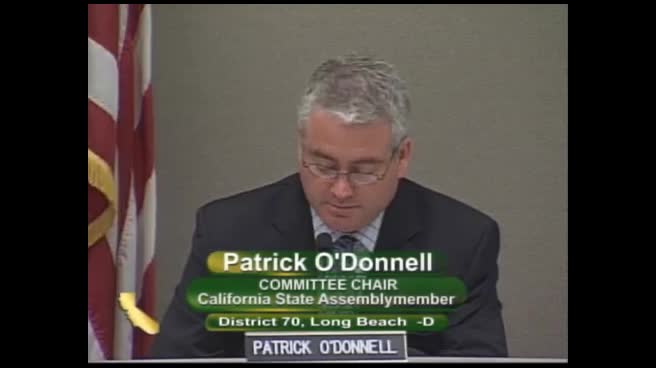
Patrick O'Donnell, Chair
AB 480
(Harper) – As Amended March 26, 2015
SUBJECT: School districts: reorganization: study of benefits and impacts of unification
SUMMARY: Requires the Legislative Analyst’s Office (LAO) to conduct a study of the potential benefits and impacts of school district unification. Specifically, this bill:
Requires the LAO to conduct a study of the potential benefits and impacts of school district unification.
Requires the study to include discussion of all of the following topics:
the benefits of school district unification for purposes of matriculation
the benefits of having a uniform school calendar for all grade levels
the benefits of combined maintenance and operation of schools within a unified school district
the benefits of school district unification for purposes of facilities management
the impact of school district unification on overall costs, including the impacts on certificated salary schedules, classified salaries and positions, and certificated administrative positions
the impact on the application of the Local Control Funding Formula
the short-term and long-term benefits of school district unification over periods of 5, 10, and 15 years
EXISTING LAW:
Prescribes procedures for school district reorganization, depending on the type of reorganization (transfer of territory, unification, etc.) and the method by which the reorganization was initiated (petition, school board resolution, etc.).
Requires each county to establish a County Committee on School District Organization (CCSDO), made up of county school board members or their designees.
Establishes a process whereby locally developed reorganization petitions dealing with a transfer of territory are reviewed by the CCSDO for approval or disapproval in a public hearing, and allows for the county committee decision on a petition dealing with a transfer of territory to be appealed to the SBE for review and consideration.
Establishes a process whereby locally developed reorganization petitions dealing with all other district organizational issues are reviewed by the county committee in public hearing and submitted with a recommendation to the SBE, and requires the SBE to hear such petitions in public hearing, receive a recommendation from California Department of Education (CDE) staff, and formally approve or disapprove those petitions.
Subjects these petitions to review under California Environmental Quality Act (CEQA).
Requires the return of approved petitions to the local jurisdiction, where the county superintendent of schools is required to call for an election at which the petition is put to a vote of the affected electorate.
Authorizes a CCSDO to approve petitions to create new school districts without having to submit the proposal to the State Board of Education when the governing boards of the affected districts consent and the county superintendent(s) with jurisdiction over the affected districts approve, and where there is an agreement to share the costs of complying with the requirements of the CEQA.
FISCAL EFFECT: This bill has been keyed non-fiscal by the Office of Legislative Counsel.
COMMENTS:
Need for the bill. The author’s office states that the intent of this bill is to examine ways in which school districts can reduce costs through unification. The author’s office offers as examples of possible cost savings bulk ordering, textbook purchasing, administrative services, food services, and credential and assignment monitoring. The author’s office also notes that unification might reduce the need for administrative staff and the election of governing board members, and that unification might provide more uniformity in curriculum across schools.
2011 LAO study answers some questions raised by this bill. The Supplemental Report of the 2010–11 Budget Act directed the LAO to study school district consolidation and determine whether the state should more actively promote consolidating small districts into larger districts.
This report addressed the merits of consolidation, spending patterns, student performance, incentives and disincentives to consolidate, and concluded that “neither the academic research nor our own review offers persuasive evidence that consolidating small districts would necessarily result in substantial savings or notably better outcomes for students.”
The report noted that the state has about half as many districts as it did fifty years ago (963 in 2009–10 compared to 2,091 in 1950–51), largely as a result of state policies to encourage consolidation. The LAO noted that throughout the 1950’s and 1960’s the state provided a number of fiscal incentives for consolidation, including increasing the funding rates for unified districts and funding transportation costs associated with unifications.
The LAO found that small districts currently tend not to pursue consolidation because the state provides fiscal incentives for districts to remain small and disincentives for consolidation. The report found that these incentives are strongest in very small school districts, which on average receive more than twice as much funding per pupil compared to middle and large sized districts. The LAO also found that “certain state laws, including those related to environmental reviews and district staffing, coupled with community preferences for small districts, serve as disincentives for districts to consolidate.” The report recommended eliminating fiscal advantages provided for districts to remain small.
The LAO has indicated to staff that it does not view additional analysis of this topic a priority, and does not have more to report on this topic. In view of the work that the LAO has already done, and their lack of further comment on the issue, staff recommends that the bill be amended to make an agency other than the LAO responsible for this report. The Fiscal Crisis Management Assistance Team (FCMAT), which is charged with providing management and fiscal advice and assistance to school districts, may be the more appropriate agency to conduct this study.
Unification under the LCFF. The Local Control Funding Formula (LCFF) enacted in 2013 changed the allocation of K-12 funding by creating base, supplemental, and concentration grants in place of most previously existing K–12 funding streams, including revenue limits and most state categorical programs. Base grants vary by grade span, supplemental grants are allocated based on the number of “unduplicated pupils” who are low income, English learners, and in foster care, and concentration grants are provided to school districts with unduplicated students comprising more than 55% of their enrollment.
The LAO report was completed before the LCFF was enacted, and the new funding system may alter some of the factors involved school district unification. This may pose some interesting questions for research, especially with regard to fiscal incentives and disincentives for unification.
Recommended amendments. Staff recommends the following amendments to address issues discussed above:
Change the agency responsible for producing the study from the LAO to the FCMAT.
Focus the requirements of the study around two topics involved in school district unification: management and finance. Related amendments are recommended to focus the topics outlined in the bill around issues the FCMAT can adequately address given the data available to it.
Make the implementation of the bill contingent upon appropriation of funding for this purpose.
REGISTERED SUPPORT / OPPOSITION:
Support
None on file
Opposition
None on file
Analysis Prepared by: Tanya Lieberman / ED. / (916) 319-2087
Discussed in Hearing
 2MIN
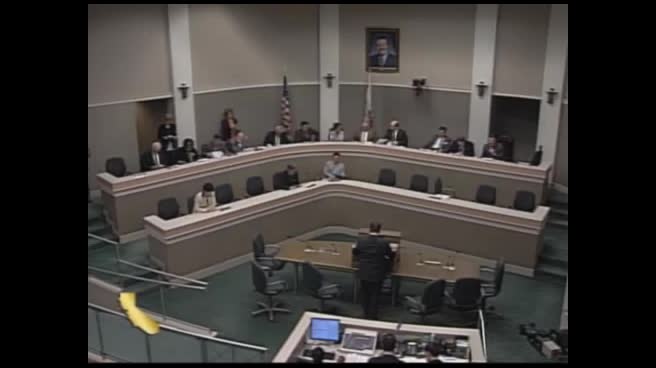
Assembly Standing Committee on Appropriations
 4MIN
Assembly Standing Committee on Education
Bill Author

Bill Co-Author(s):