AB 711: School curriculum: foreign languages.
- Session Year: 2015-2016
- House: Assembly
- Latest Version Date: 2015-04-23
Existing law requires the State Board of Education, on or before June 1, 2009, to adopt content standards for teaching foreign languages in kindergarten and grades 1 to 12, inclusive, pursuant to recommendations developed by the Superintendent of Public Instruction.
This
Unless AB 740 of the 201516 Regular Session is enacted and becomes operative, this bill would require the state board, on or before January September 1, 2017, to adopt or reject specified national content standards for teaching foreign languages in kindergarten and grades 1 to 12, inclusive, pursuant to recommendations developed by the Superintendent. If AB 740 of the 201516 Regular Session is enacted and becomes operative, the bill would require the state board to appoint an advisory committee to recommend updated national content standards for teaching foreign language in kindergarten and grades 1 to 12, inclusive, to the state board and would require the state board to adopt or reject those content standards, as specified.
Existing law requires the State Board of Education, on or before June 1, 2009, to adopt content standards for teaching foreign languages in kindergarten and grades 1 to 12, inclusive, pursuant to recommendations developed by the Superintendent of Public Instruction.
This bill would require the state board, on or before January 1, 2017, to adopt specified national content standards for teaching foreign languages in kindergarten and grades 1 to 12, inclusive, pursuant to recommendations developed by the Superintendent.
The Legislature finds and declares all of the following:
(a)The national World-Readiness Standards for Learning Languages are in the process of being published. Those standards reflect new research on best practices for teaching languages and cultures and offer a sound vision for program goal setting, teaching and facilitating learning, and assessing the standards pupils know and applying that knowledge in global settings. Those standards have now been adopted in total or with minor modifications in 40 states.
(b)The national World-Readiness Standards for Learning Languages are based on the original national standards, publish published in 1996, that stood the test of time in providing common language and descriptors for world languages and cultures education.
(c)Pupils will benefit from the clarity that will arise from following the widely adopted and updated national standards. World language and culture educators in California, as of January 1, 2016, need to navigate between national and state standards as they read and research professional documents, collaborate with other world language and culture educators from other states and nations, and engage in other professional standards-based work, including national assessments for assessing learners proficiency in world languages and cultures.
(d)If the World-Readiness Standards for Learning Languages are adopted by the State Board of Education by June 1, September 1, 2017, the standards and framework could be developed in tandem, rather than revising the standards adopted as of January 1, 2016, to reflect new framework and research, resulting in significant cost savings for the state.
(e)The national World-Readiness Standards for Learning Languages provide pupils friendly and clearly stated functional learning goals and assessment tasks through a series of I can statements based on predictable descriptors of language development.
SEC. 2.Section 60605.3 of the Education Code is amended to read:60605.3.(a)(1)On or before June 1, September 1, 2017, the state board shall adopt or reject national content standards in accordance with the World-Readiness Standards for Learning Languages, published, in 2015, published in 2015 by the American Council for the Teaching of Foreign Languages, pursuant to recommendations developed by the Superintendent, for teaching foreign languages in kindergarten and grades 1 to 12, inclusive.
(2)If the state board rejects the national content standards, it shall submit a written explanation to the Superintendent, the Governor, and the Legislature of the reasons why the proposed content standards were rejected.
(3)This subdivision shall not become operative if Assembly Bill 740 of the 201516 Regular Session is enacted and becomes operative.
(b)(1)The state board shall appoint an advisory committee to recommend updated national content standards for teaching foreign language in kindergarten and grades 1 to 12, inclusive, to the state board. The advisory committee shall consist of 21 members, appointed as follows:
(A)Ten members appointed by the Governor.
(B)Four members appointed by the Senate Committee on Rules.
(C)Four members appointed by the Speaker of the Assembly.
(D)Three members appointed by the Superintendent.
(2)Members of the advisory committee shall serve at the pleasure of the appointing authority.
(3)Not less than one-half of the members appointed by each of the appointing authorities pursuant to paragraph (1) shall be current public school elementary or secondary classroom teachers who have a professional credential under state law, and meet the definition of highly qualified under federal law.
(4)The advisory committee shall review the content standards established in its particular subject matter and shall prepare updates to the content standards as the committee deems necessary.
(5)When making its recommendation, the advisory committee shall consider both of the following criteria:
(A)The extent to which its proposed updates reflect current and confirmed research in the subject area under consideration.
(B)The impact that the proposed updates will have upon school districts and existing curricula and assessments.
(6)The advisory committee shall conduct at least two, and no more than six, in-person meetings that are open to the public and include opportunities for public input. The advisory committee may convene additional meetings by teleconference or the Internet subject to the requirements of Article 9 (commencing with Section 11120) of Chapter 1 of Part 1 of Division 3 of Title 2 of the Government Code.
(7)Upon completing this review, the terms of the members of the advisory committee shall cease.
(8)Upon updating the content standards, the advisory committee shall forward them to the state board, which shall do either of the following within 120 days of the receipt:
(A)Adopt the proposed updates as proposed by the advisory committee.
(B)Reject the proposed updates as proposed by the advisory committee. If the state board rejects the content standards, it shall provide a specific written explanation to the Superintendent, the Governor, and the Legislature of the reasons why the proposed content standards were rejected.
(9)Prior to final action pursuant to paragraph (4), the department shall post on its Internet Web site the updates proposed by the advisory committee for a minimum of 60 days. The department shall include a link by which members of the public may submit comments on the proposed updates.
(10)Members of the advisory committee shall serve without compensation, except for actual and necessary travel expenses and substitute costs.
(11)This subdivision shall become operative only if Assembly Bill 740 of the 201516 Regular Session is enacted and becomes operative.
(b)
(c)The content standards adopted pursuant to subdivisions (a) or (b) shall support the goals of Section 51212 and subdivision (c) of Section 51220 by including all of the following:
(1)A summary of the language goals which recognizes that instruction may begin in elementary or secondary school.
(2)A description of individual language skills that should be taught and attained at each level.
(3)Course content that is aligned with findings from research on second language acquisition and education.
(4)Course content that is aligned with the admission requirements for the California State University and the University of California.
(c)
(d)The content standards adopted pursuant to subdivisions (a) or (b) may be used by school districts to develop language programs and course assessments but are not mandatory.
The Legislature finds and declares all of the following:
(a)The national World-Readiness Standards for Learning Languages are in the process of being published. Those standards reflect new research on best practices for teaching languages and cultures and offer a sound vision for program goal setting, teaching and facilitating learning, and assessing the standards pupils know and applying that knowledge in global settings. Those standards have now been adopted in total or with minor modifications in 40 states.
(b)The national World-Readiness Standards for Learning Languages are based on the original national standards, publish in 1996, that stood the test of time in providing common language and descriptors for world languages and cultures education.
(c)Pupils will benefit from the clarity that will arise from following the widely adopted and updated national standards. World language and culture educators in California, as of January 1, 2016, need to navigate between national and state standards as they read and research professional documents, collaborate with other world language and culture educators from other states and nations, and engage in other professional standards-based work, including national assessments for assessing learners proficiency in world languages and cultures.
(d)If the World-Readiness Standards for Learning Languages are adopted by the State Board of Education by June 1, 2017, the standards and framework could be developed in tandem, rather than revising the standards adopted as of January 1, 2016, to reflect new framework and research, resulting in significant cost savings for the state.
(e)The national World-Readiness Standards for Learning Languages provide pupils friendly and clearly stated functional learning goals and assessment tasks through a series of I can statements based on predictable descriptors of language development.
SEC. 2.Section 60605.3 of the Education Code is amended to read:60605.3.(a)On or before June 1, 2009, 2017, the State Board of Education state board shall adopt national content standards in accordance with the World-Readiness Standards for Learning Languages, published, in 2015, by the American Council for the Teaching of Foreign Languages, pursuant to recommendations developed by the Superintendent of Public Instruction, Superintendent, for teaching foreign languages in kindergarten and grades 1 to 12, inclusive.
(b)The content standards shall support the goals of Section 51212 and subdivision (c) of Section 51220 by including all of the following:
(1)A summary of the language goals which recognizes that instruction may begin in elementary or secondary school.
(2)A description of individual language skills that should be taught and attained at each level.
(3)Course content that is aligned with findings from research on second language acquisition and education.
(4)Course content that is aligned with the admission requirements for the California State University and the University of California.
(c)The content standards may be used by school districts to develop language programs and course assessments but are not mandatory.
|
Date
|
Status
|
|---|---|
| Feb 25, 2015 | Read first time. To print. |
| Feb 26, 2015 | From printer. May be heard in committee March 28. |
| Mar 12, 2015 | Referred to Com. on ED. |
| Apr 22, 2015 | From committee: Amend, and do pass as amended and re-refer to Com. on APPR. (Ayes 7. Noes 0.) (April 8). |
| Apr 23, 2015 | Read second time and amended. |
| Apr 27, 2015 | Re-referred to Com. on APPR. |
| May 6, 2015 | In committee: Set, first hearing. Referred to APPR. suspense file. |
| May 28, 2015 | In committee: Held under submission. |
| Jan 31, 2016 | Died pursuant to Article IV, Sec. 10(c) of the Constitution. |
| Feb 1, 2016 | From committee: Filed with the Chief Clerk pursuant to Joint Rule 56. |
|
Date
|
Description
|
Location
|
Votes
|
|
|---|---|---|---|---|
| Apr 8, 2015 | Do pass as amended and be re-referred to the Committee on [Appropriations] | Assembly Standing Committee on Education |
Passed |
This list shows positions taken on this bill by organizations on the date displayed, which is linked to the original source.
Positions by individuals are not included.
|
Organization
|
Position
|
Date
|
|---|---|---|
| California Language Teachers' Association | * Support | Apr 8, 2015 |
| California Language Teachers' Association | * Indeterminate | Apr 8, 2015 |
| California School Boards Association | * Indeterminate | Apr 8, 2015 |
| California Teachers Association | * Indeterminate | Apr 8, 2015 |
| Los Angeles Unified School District | * Indeterminate | Apr 8, 2015 |
AB 711
Page 2
Date of Hearing: May 6, 2015
ASSEMBLY COMMITTEE ON APPROPRIATIONS
Jimmy Gomez, Chair
AB 711
(Santiago) – As Amended April 23, 2015
Policy Committee: |
Education |
Vote: |
7 - 0 |
|
|
|
|
|
|
|
|
Urgency: No State Mandated Local Program: No Reimbursable: No
SUMMARY:
This bill requires the State Board of Education (SBE), on or before September 1, 2017, to adopt or reject national content standards for teaching foreign languages, pursuant to recommendations of the Superintendent of Public Instruction (SPI). These requirements would occur only if AB 740 (Weber) of this session is not enacted. If AB 740 is enacted, this bill would require the SBE to appoint an advisory committee to recommend updated national foreign language content standards.
FISCAL EFFECT:
If AB 740 is enacted, the fiscal effect of this bill is as follows:
Annual General Fund administrative costs of approximately $800,000 to develop a new Content Standards Unit within the California Department of Education.
One-time costs of approximately $100,000 (GF/non-98) to convene each Academic Content Standards Advisory Committee. There are currently ten subjects that could be updated.
If AB 740 is not enacted, the fiscal effect of this bill is approximately $700,000 GF in the first year and $570,000 GF in the second year to support staffing costs associated with the SPI recommendations to the SBE to either reject or adopt World-Readiness Standards for Learning Languages.
The adoption of new content standards has a multiplier effect that will lead to additional costs. Once new curriculum standards are adopted, frameworks aligned to those standards must be adopted. After frameworks are adopted, instructional materials adoption follows. General Fund administrative costs for these activities average about $1 million each. In addition to these costs, local education agencies would incur additional Proposition 98/GF costs to purchase instructional materials and provide professional development
COMMENTS:
Purpose. The California World Language Content Standards were adopted by the SBE in 2009. According to the author, the current state standards for foreign languages are in need of revision to align them with the Common Core State Standards (CCSS).
Amendments. There are three bills introduced this Session that would require the adoption of new standards (AB 711, Santiago; AB 740, Webber; and SB 725, Hancock). Each takes a different approach with respect to designating the authority which prepares the revised set of standards to recommend to the SBE.
Recent amendments include provisions that mirror the same advisory committee structure in AB 740 with regard to review and adoption of content standards. According to policy committee staff, the amendments are intended to include an alternative process for rejection or adoption of the World-Readiness Standards for Learning if AB 740 is signed into law.
As currently drafted, there are no dates specified for the adoption or rejection of updated standards in the event that AB 740 is enacted and an advisory committee is enacted. It is also not clear that the revised standards be consistent with the World-Readiness Standards for Learning Languages. Staff proposes clarifying amendments to include a date by which this action is to occur and that the revision be based on the above standards.
Related legislation.
AB 740 (Webber) of this Session requires the SPI, by January 1, 2017, to recommend to the SBE a schedule for the regular update of academic content standards. This bill grants the SBE the authority to convene academic content standards advisory committees to update the standards, and requires that the SBE adopt or reject them. This bill is pending on the Suspense file in this committee.
SB 725 (Hancock) of this Session would require the SBE, by June 30, 2017, to adopt, reject, or modify visual and performing arts standards submitted by the SPI. This bill is pending in the Senate Appropriations Committee.
Analysis Prepared by: Misty Feusahrens / APPR. / (916) 319-2081
AB 711
Page 4
Date of Hearing: April 8, 2015
ASSEMBLY COMMITTEE ON EDUCATION
Patrick O'Donnell, Chair
AB 711
(Santiago) – As Introduced February 25, 2015
SUBJECT: School curriculum: foreign languages
SUMMARY: Requires the State Board of Education (SBE) to adopt World Languages content standards which are in accordance with the World-Readiness Standards for Learning Languages by June 1, 2017, pursuant to the recommendations of the Superintendent of Public Instruction (SPI). Specifically, this bill:
Makes findings and declarations relative to the national World-Readiness Standards for Learning Languages, which will be published in 2015.
Requires, on or before June 1, 2017, the SBE to adopt national content standards for teaching foreign languages in kindergarten and grades 1 to 12.
Requires that those standards be in accordance with the World-Readiness Standards for Learning Languages, published, in 2015, by the American Council for the Teaching of Foreign Languages.
Requires that the SBE act pursuant to recommendations developed by the Superintendent of Public Instruction.
EXISTING LAW:
Requires the SBE to adopt content standards for teaching foreign languages in grades K-12 by June 1, 2009.
Requires that these standards include all of the following:
A summary of the language goals which recognizes that instruction may begin in elementary or secondary school.
A description of individual language skills that should be taught and attained at each level.
Course content that is aligned with findings from research on second language acquisition and education.
Course content that is aligned with the admission requirements for the California State University and the University of California.
Allows the content standards to be used by school districts to develop language programs and course assessments but are not mandatory.
FISCAL EFFECT: Unknown
COMMENTS:
Need for the bill. The author’s office states, “The current state standards for foreign languages are in need of revision to align them with the Common Core State Standards (CCSS), as well as other standards.
The California World Language Content Standards were adopted by the SBE in 2009. Since the California Language World Content Standards were adopted much later than national standards, many teachers and school districts in California were already using national standards by default. This has created some challenges and difficulties for educators and school districts that had already aligned their curricula goals to the national standards. Furthermore, world language and culture educators in California currently must navigate between national and state standards as they read research and professional documents, collaborate with other educators from other states, and engage in other professional standards-based work, such as national assessments for assessing learner’s proficiency in world languages and cultures.
AB 711 will enable California to benefit from these newly-revised national standards. California will be able to focus on developing curriculum framework that will concentrate on making world language learning a reality for all language learners and support educators, as well as schools and districts”
Standards adoption dates by subject area. The most recent adoption (original or update) of content standards in each subject area is shown below.
1998: History-Social Science
2001: Visual and Performing Arts
2005: Physical Education
2008: Health Education
2009: World Languages
2010: English Language Arts
2010: Mathematics
2012: English Language Development
2013: Career Technical Education
2013: Science
Current schedule for framework adoption. Curriculum frameworks are revised and adopted on an eight-year cycle, and instructional materials adoptions take place after new frameworks are adopted. Standards adoptions precede the development of the frameworks. The next frameworks set for revision are as follows:
2016: History-Social Science, Science
2018: Health
2019: World Languages
2020: Math, Visual and Performing Arts
2021: Physical Education
2022: English Language Arts/English Language Development
The author argues that the revising of the standards by June 1, 2017 would allow the framework revision scheduled for 2019 to be aligned and even developed “in tandem” with the standards, and that this may provide some cost savings to the state. The Committee may also wish to consider that, while the World Languages standards are not the most out-of-date set of content standards, if the standards are not updated before the framework revision in 2019, the opportunity to align California’s framework and instructional materials with nationally-recognized standards may be lost.
World-Readiness Standards for Learning Languages vs. California’s standards. The World-Readiness Standards for Learning Languages are published by the American Council for the Teaching of Foreign Languages. According to the author, while the California standards are aligned conceptually with the World-Readiness standards, the national standards incorporate recent research findings on second language acquisition and brain research, and have a greater focus on career readiness and how learners learn can apply the world languages and cultures in academic and professional settings. The new standards are also aligned with the Common Core State Standards. Thirty-two other states have adopted the World-Readiness Standards for Learning Languages and more are expected to do so in coming years.
Timeframe needs modification. The CDE advises that the time frame in this bill needs modification to reflect their estimate of the time required to complete a standards revision. To reflect CDE’s estimate of an expedited revision process (14 months), and to account for any appropriation required for this purpose, staff recommends that this bill be amended to specify an adoption date of September, 1, 2017.
Who recommends standards to the SBE? There are three bills introduced this Session which would require the adoption of new standards (AB 711, Santiago; AB 740, Webber; and SB 725, Hancock). Each takes a different approach with respect to designating the authority which prepares the revised set of standards to recommend to the SBE. AB 711 tasks the SPI (presumably through the Instructional Quality Commission and an advisory group) with recommending standards to the SBE. AB 740 would have the SBE convene academic content standards advisory committees to revise the standards and recommend them to the SBE. SB 745 requires the SPI and an expert panel in visual and performing arts to recommend standards to the SBE. Staff recommends that this bill be amended to reflect the proposed advisory committee structure in AB 740 by requiring – if that measure is enacted - the convening of an academic content standards advisory committee with the same composition and responsibilities as specified in that measure.
Adopt, reject, or modify? These three bills also provide different authority to the SBE in acting on the revised standards. AB 711 requires the SBE to adopt World Languages standards. AB 740 requires the SBE to adopt or reject revised standards. SB 725 requires the SBE to adopt, reject, or modify standards in visual and performing arts. Reflecting the approach taken in the Common Core State Standards revision process, staff recommends that this bill be amended to require the SBE to either adopt or reject the revised standards, and if the standards are rejected to require the SBE to provide a specific written explanation to the SPI, the Governor, and the Legislature of the reasons why the proposed standards were rejected.
Related legislation: AB 740 (Webber) of this Session would require the SPI, by January 1, 2017, to recommend to the SBE a schedule for the regular update of academic content standards. This bill grants the SBE the authority to convene academic content standards advisory committees to update the standards, and requires that the SBE adopt or reject them. SB 745 (Hancock) of this Session would require the SBE, by June 30, 2017, to adopt, reject, or modify visual and performing arts standards submitted by the SPI.
REGISTERED SUPPORT / OPPOSITION:
Support
California Language Teachers Association (sponsor)
Several individuals
Opposition
None on file
Analysis Prepared by: Tanya Lieberman / ED. / (916) 319-2087
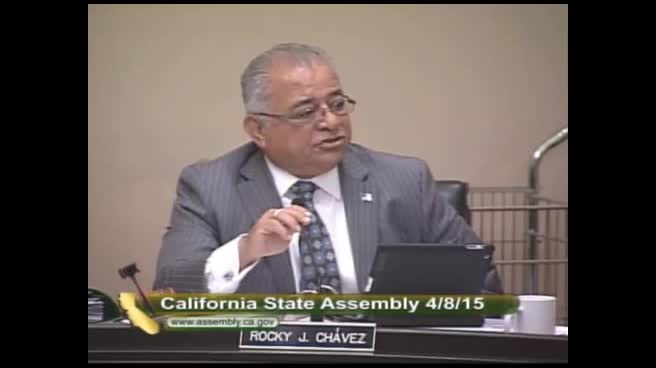
Bill Author

Bill Co-Author(s):