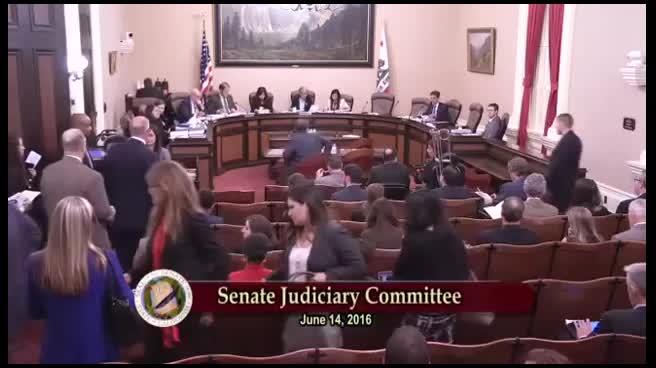
AB 797: Motor vehicles: rescue or provision of care for animal: civil and criminal liability.
- Session Year: 2015-2016
- House: Assembly
- Latest Version Date: 2016-09-24
Existing law authorizes a peace officer, humane officer, or animal control officer to take all steps reasonably necessary to remove an animal from a motor vehicle because the animals safety appears to be in immediate danger of specified harm. Existing law requires those persons who remove an animal from a vehicle to take the animal to an animal shelter or other place of safekeeping or, if deemed necessary, to a veterinary hospital for treatment, and to leave a notice in the vehicle that notifies the owner of, among other things, the location where the animal may be claimed. Existing law authorizes the owner to claim the animal only after paying all charges that have accrued for the maintenance, care, medical treatment, or impoundment of the animal.
This bill would expand the authorization and requirements applicable to a peace officer, humane officer, or animal control officer described above to include a firefighter or other emergency responder. The bill would additionally provide that a person may be required to pay for charges that have accrued for the maintenance, care, medical treatment, or impoundment of the animal removed from the vehicle. The bill would exempt a person from criminal liability for actions taken reasonably and in good faith to remove an animal from a vehicle under the circumstances described above if the person satisfies specified conditions, including immediately turning the animal over to a representative from law enforcement, animal control, or other emergency responder who responds to the scene. The bill would exempt a person from civil liability for property damage or trespass to a motor vehicle if the property damage or trespass occurred while the person was rescuing an animal pursuant to these provisions.
Existing law authorizes a peace officer, humane officer, or animal control officer to take all steps reasonably necessary to remove an animal from a motor vehicle because the animals safety appears to be in immediate danger of specified harm. Existing law requires those persons who remove an animal from a vehicle to take the animal to an animal shelter or other place of safekeeping or, if deemed necessary, to a veterinary hospital for treatment, and to leave a notice in the vehicle that notifies the owner of, among other things, the location where the animal may be claimed. Existing law authorizes the owner to claim the animal only after paying all charges that have accrued for the maintenance, care, medical treatment, or impoundment of the animal.
This bill would expand the authorization and requirements applicable to a peace officer, humane officer, or animal control officer described above to include a fire fighter firefighter or other emergency responder. The bill would additionally provide that a person may be required to pay for charges that have accrued for the maintenance, care, medical treatment, or impoundment of the animal removed from the vehicle. The bill would require a person who removes an animal from a vehicle under the circumstances described above to immediately turn the animal over to a representative from law enforcement, animal control, or other emergency responder who responds to the scene and would exempt the a person from criminal liability for removal of the actions taken reasonably and in good faith to remove an animal from a vehicle under the circumstances described above if the person satisfies specified conditions. conditions, including immediately turning the animal over to a representative from law enforcement, animal control, or other emergency responder who responds to the scene. The bill would exempt a person from civil liability for property damage or trespass to a motor vehicle if the property damage or trespass occurred while the person was rescuing an animal pursuant to these provisions.
Existing law authorizes a peace officer, humane officer, or animal control officer to take all steps reasonably necessary to remove an animal from a motor vehicle because the animals safety appears to be in immediate danger of specified harm. Existing law requires those persons who remove an animal from a vehicle to take the animal to an animal shelter or other place of safekeeping or, if deemed necessary, to a veterinary hospital for treatment, and to leave a notice in the vehicle that notifies the owner of, among other things, the location where the animal may be claimed. Existing law authorizes the owner to claim the animal only after paying all charges that have accrued for the maintenance, care, medical treatment, or impoundment of the animal.
This bill would expand the authorization and requirements applicable to a peace officer, humane officer, or animal control officer described above to include a fire fighter or other emergency responder. The bill would additionally provide that a person may be required to pay for charges that have accrued for the maintenance, care, medical treatment, or impoundment of the animal removed from the vehicle. The bill would require a person who removes an animal from a vehicle under the circumstances described above to immediately turn the animal over to a representative from law enforcement, animal control, or other emergency responder who responds to the scene and would exempt the person from criminal liability for removal of the animal from a vehicle if the person satisfies specified conditions. The bill would exempt a person from civil liability for property damage or trespass to a motor vehicle if the property damage or trespass occurred while the person was rescuing an animal pursuant to these provisions.
(1)Existing law limits the civil liability of a person who in good faith, and not for compensation, renders emergency medical or nonmedical care at the scene of an emergency, as specified.
This bill would prohibit any civil liability or cause of action against a person for damage to a motor vehicle, if the damage was caused while the person was rescuing or providing care to a minor who, or animal that, was located inside the motor vehicle and the person had taken specific steps, including, among others, determining the motor vehicle was locked or there was no reasonable method for the minor or animal to exit the motor vehicle without assistance, and to the extent practicable, contacted a law enforcement agency, fire department, or the emergency 911 telephone number before damaging the motor vehicle.
(2)This bill would declare that it is to take effect immediately as an urgency statute.
Existing
(1)Existing law limits the civil liability of a person who in good faith, and not for compensation, renders emergency medical or nonmedical care at the scene of an emergency, as specified.
This bill would prohibit any civil liability or cause of action against a person for damage to a motor vehicle, if the damage was caused while the person was in good faith taking necessary action to enter the motor vehicle for the purpose of rescuing or providing care to an unattended child a minor who, or animal that, was located inside the motor vehicle and it was reasonable to believe that the health or well-being of the child or animal was endangered due to heat, cold, lack of adequate ventilation, or other circumstances that could reasonably be expected to cause suffering, disability, or death to the child or animal. the person had taken specific steps, including, among others, determining the motor vehicle was locked or there was no reasonable method for the minor or animal to exit the motor vehicle without assistance, and to the extent practicable, contacted a law enforcement agency, fire department, or the emergency 911 telephone number before damaging the motor vehicle.
(2)This bill would declare that it is to take effect immediately as an urgency statute.
Existing law limits the civil liability of a person who in good faith, and not for compensation, renders emergency medical or nonmedical care at the scene of an emergency, as specified.
This bill would prohibit any civil liability or cause of action against a person for damage to a motor vehicle, if the damage was caused while the person was in good faith taking necessary action to enter the motor vehicle for the purpose of rescuing or providing care to an unattended child or animal and it was reasonable to believe that the health or well-being of the child or animal was endangered due to heat, cold, lack of adequate ventilation, or other circumstances that could reasonably be expected to cause suffering, disability, or death to the child or animal.
The Administrative Procedure Act governs the procedure for the adoption, amendment, or repeal of regulations by state agencies and for the review of those regulatory actions by the Office of Administrative Law. That act requires an agency, prior to submitting a proposal to adopt, amend, or repeal an administrative regulation, to determine the economic impact of that regulation, in accordance with certain procedures. The act defines a major regulation as a regulation that the agency determines has an expected economic impact on California business enterprises and individuals estimated to exceed $50,000,000. The act requires the office to transmit a copy of a regulation to the Secretary of State for filing if the office approves the regulation or fails to act on it within 30 days. The act provides that a regulation or an order of repeal of a regulation becomes effective on a quarterly basis, as prescribed, except in specified instances.
This bill would require the office to submit to the appropriate policy committees of each house of the Legislature for review a copy of each major regulation that it submits to the Secretary of State. The bill would add another exception to those currently provided that specifies that a regulation does not become effective if the Legislature passes a statute to override the regulation.
The Administrative Procedure Act governs the procedure for the adoption, amendment, or repeal of regulations by state agencies and for the review of those regulatory actions by the Office of Administrative Law. That act requires an agency, prior to submitting a proposal to adopt, amend, or repeal an administrative regulation, to determine the economic impact of that regulation, in accordance with certain procedures. The act defines a major regulation as a regulation that the agency determines has an expected economic impact on California business enterprises and individuals estimated to exceed $50,000,000. The act requires the office to transmit a copy of a regulation to the Secretary of State for filing if the office approves the regulation or fails to act on it within 30 days. The act provides that a regulation or an order of repeal of a regulation becomes effective on a quarterly basis, as prescribed, except in specified instances, including if a regulation adopted by the Fish and Game Commission requires a different effective date to conform with federal law. instances.
This bill would require the office to submit to the appropriate policy committees of each house of the Legislature for review a copy of each major regulation that it submits to the Secretary of State. The bill would eliminate the quarterly schedule pursuant to which regulations and orders of repeal become effective, as well as the provisions specifically addressing the effective dates of regulations adopted by the Fish and Game Commission. The bill would, instead, provide that a regulation or order of repeal required to be filed with the Secretary of State generally becomes effective the 90th day after the date of filing, subject to certain exceptions. The bill would add another exception to those currently provided that specifies that a regulation does not become effective if the Legislature passes a statute to override the regulation.
The Administrative Procedure Act governs the procedure for the adoption, amendment, or repeal of regulations by state agencies and for the review of those regulatory actions by the Office of Administrative Law. That act requires an agency, prior to submitting a proposal to adopt, amend, or repeal an administrative regulation, to determine the economic impact of that regulation, in accordance with certain procedures. The act defines a major regulation as a regulation that the agency determines has an expected economic impact on California business enterprises and individuals estimated to exceed $50,000,000. The act requires the office to transmit a copy of a regulation to the Secretary of State for filing if the office approves the regulation or fails to act on it within 30 days. The act provides that a regulation or an order of repeal of a regulation becomes effective on a quarterly basis, as prescribed, except in specified instances, including if a regulation adopted by the Fish and Game Commission requires a different effective date to conform with federal law.
This bill would require the office to submit to each house of the Legislature for review a copy of each major regulation that it submits to the Secretary of State. The bill would eliminate the quarterly schedule pursuant to which regulations and orders of repeal become effective, as well as the provisions specifically addressing the effective dates of regulations adopted by the Fish and Game Commission. The bill would, instead, provide that a regulation or order of repeal required to be filed with the Secretary of State generally becomes effective the 90th day after the date of filing, subject to certain exceptions. The bill would add another exception to those currently provided that specifies that a regulation does not become effective if the Legislature passes a statute to override the regulation.
(a)There shall not be any civil liability on the part of, and no cause of action shall accrue against, a person for property damage or trespass to a motor vehicle, if the damage was caused while the person was rescuing an animal in accordance with subdivision (b) of Section 597.7 of the Penal Code.
(b)The immunity from civil liability for property damage to a motor vehicle that is established by subdivision (a) does not affect a persons civil liability or immunity from civil liability for rendering aid to an animal.
SEC. 2.Section 597.7 of the Penal Code is amended to read:597.7.(a)A person shall not leave or confine an animal in any unattended motor vehicle under conditions that endanger the health or well-being of an animal due to heat, cold, lack of adequate ventilation, or lack of food or water, or other circumstances that could reasonably be expected to cause suffering, disability, or death to the animal.
(b)(1)This section does not prevent a person from taking reasonable steps that are necessary to remove an animal from a motor vehicle if the person holds a reasonable belief that the animals safety is in immediate danger from heat, cold, lack of adequate ventilation, lack of food or water, or other circumstances that could reasonably be expected to cause suffering, disability, or death to the animal.
(2)A person who removes an animal from a vehicle in accordance with paragraph (1) is not criminally liable for actions taken reasonably and in good faith if the person does all of the following:
(A)Determines the vehicle is locked or there is otherwise no reasonable manner for the animal to be removed from the vehicle.
(B)Has a good faith belief that forcible entry into the vehicle is necessary because the animal is in imminent danger of suffering harm if it is not immediately removed from the vehicle, and, based upon the circumstances known to the person at the time, the belief is a reasonable one.
(C)Has contacted a local law enforcement agency, the fire department, animal control, or the 911 emergency service prior to forcibly entering the vehicle.
(D)Remains with the animal in a safe location, out of the elements but reasonably close to the vehicle, until a peace officer, humane officer, animal control officer, or another emergency responder arrives.
(E)Used no more force to enter the vehicle and remove the animal from the vehicle than was necessary under the circumstances.
(F)Immediately turns the animal over to a representative from law enforcement, animal control, or another emergency responder who responds to the scene.
(c)Unless the animal suffers great bodily injury, a first conviction for violation of this section is punishable by a fine not exceeding one hundred dollars ($100) per animal. If the animal suffers great bodily injury, a violation of this section is punishable by a fine not exceeding five hundred dollars ($500), imprisonment in a county jail not exceeding six months, or by both a fine and imprisonment. Any subsequent violation of this section, regardless of injury to the animal, is also punishable by a fine not exceeding five hundred dollars ($500), imprisonment in a county jail not exceeding six months, or by both a fine and imprisonment.
(d)(1)This section does not prevent a peace officer, firefighter, humane officer, animal control officer, or other emergency responder from removing an animal from a motor vehicle if the animals safety appears to be in immediate danger from heat, cold, lack of adequate ventilation, lack of food or water, or other circumstances that could reasonably be expected to cause suffering, disability, or death to the animal.
(2)A peace officer, firefighter, humane officer, animal control officer, or other emergency responder who removes an animal from a motor vehicle, or who takes possession of an animal that has been removed from a motor vehicle, shall take it to an animal shelter or other place of safekeeping or, if the officer deems necessary, to a veterinary hospital for treatment. The owner of the animal removed from the vehicle may be required to pay for charges that have accrued for the maintenance, care, medical treatment, or impoundment of the animal.
(3)A peace officer, firefighter, humane officer, animal control officer, or other emergency responder is authorized to take all steps that are reasonably necessary for the removal of an animal from a motor vehicle, including, but not limited to, breaking into the motor vehicle, after a reasonable effort to locate the owner or other person responsible.
(4)A peace officer, firefighter, humane officer, animal control officer, or other emergency responder who removes an animal from a motor vehicle or who receives an animal rescued from a vehicle from another person shall, in a secure and conspicuous location on or within the motor vehicle, leave written notice bearing his or her name and office, and the address of the location where the animal can be claimed. The animal may be claimed by the owner only after payment of all charges that have accrued for the maintenance, care, medical treatment, or impoundment of the animal.
(5)Except as provided in subdivision (b), this section does not affect in any way existing liabilities or immunities in current law, or create any new immunities or liabilities.
(e)Nothing in this section shall preclude prosecution under both this section and Section 597 or any other provision of law, including city or county ordinances.
(f)Nothing in this section shall be deemed to prohibit the transportation of horses, cattle, pigs, sheep, poultry, or other agricultural animals in motor vehicles designed to transport such animals for agricultural purposes.
(a)There shall not be any civil liability on the part of, and no cause of action shall accrue against, a person, including a peace officer, fire fighter, humane officer, animal control officer, or other emergency responder, person for property damage or trespass to a motor vehicle, if the damage was caused while the person was rescuing an animal pursuant to in accordance with subdivision (b) or (d) of Section 597.7 of the Penal Code.
(b)The immunity from civil liability for property damage or trespass to a motor vehicle established by this section subdivision (a) does not affect a persons civil liability or immunity from civil liability for rendering aid to an animal pursuant to Section 597.7 of the Penal Code. animal.
SEC. 2.Section 597.7 of the Penal Code is amended to read:597.7.(a)A person shall not leave or confine an animal in any unattended motor vehicle under conditions that endanger the health or well-being of an animal due to heat, cold, lack of adequate ventilation, or lack of food or water, or other circumstances that could reasonably be expected to cause suffering, disability, or death to the animal.
(b)(1)This section does not prevent a person from taking all reasonable steps that are reasonably necessary to remove an animal from a motor vehicle if the person holds a reasonable belief that the animals safety appears to be is in immediate danger from heat, cold, lack of adequate ventilation, lack of food or water, or other circumstances that could reasonably be expected to cause suffering, disability, or death to the animal.
(2)If a person described in paragraph (1) removes the animal from a vehicle he or she shall immediately turn the animal over to a representative from law enforcement, animal control, or another emergency responder who responds to the scene.
(3)(A)A person acting under this subdivision, and in accordance with subparagraph (B), is not criminally liable for actions taken reasonably and in good faith in acting in accordance with this subdivision.
(B)Subparagraph (A) applies if the person does all of the following:
(2)A person who removes an animal from a vehicle in accordance with paragraph (1) is not criminally liable for actions taken reasonably and in good faith if the person does all of the following:
(1)
(A)Determines the vehicle is locked or there is otherwise no reasonable manner for the animal to be removed from the vehicle.
(2)
(B)Has a good faith belief that forcible entry into the vehicle is necessary because the animal is in imminent danger of suffering harm if it is not immediately removed from the vehicle, and, based upon the circumstances known to the person at the time, the belief is a reasonable one.
(3)
(C)Has contacted a local law enforcement agency, the fire department, animal control, or the 911 emergency service prior to forcibly entering the vehicle.
(4)
(D)Remains with the animal in a safe location, out of the elements but reasonably close to the vehicle, until a peace officer, humane officer, animal control officer, or another emergency responder arrives.
(5)
(E)Used no more force to enter the vehicle and remove the animal from the vehicle than was necessary under the circumstances.
(F)Immediately turns the animal over to a representative from law enforcement, animal control, or another emergency responder who responds to the scene.
(c)Unless the animal suffers great bodily injury, a first conviction for violation of this section is punishable by a fine not exceeding one hundred dollars ($100) per animal. If the animal suffers great bodily injury, a violation of this section is punishable by a fine not exceeding five hundred dollars ($500), imprisonment in a county jail not exceeding six months, or by both a fine and imprisonment. Any subsequent violation of this section, regardless of injury to the animal, is also punishable by a fine not exceeding five hundred dollars ($500), imprisonment in a county jail not exceeding six months, or by both a fine and imprisonment.
(d)(1)This section does not prevent a peace officer, fire fighter, firefighter, humane officer, animal control officer, or other emergency responder from removing an animal from a motor vehicle if the animals safety appears to be in immediate danger from heat, cold, lack of adequate ventilation, lack of food or water, or other circumstances that could reasonably be expected to cause suffering, disability, or death to the animal.
(2)A peace officer, fire fighter, firefighter, humane officer, animal control officer, or other emergency responder who removes an animal from a motor vehicle, or who takes possession of an animal that has been removed from a motor vehicle, shall take it to an animal shelter or other place of safekeeping or, if the officer deems necessary, to a veterinary hospital for treatment. The owner of the animal removed from the vehicle may be required to pay for charges that have accrued for the maintenance, care, medical treatment, or impoundment of the animal.
(3)A peace officer, fire fighter, firefighter, humane officer, animal control officer, or other emergency responder is authorized to take all steps that are reasonably necessary for the removal of an animal from a motor vehicle, including, but not limited to, breaking into the motor vehicle, after a reasonable effort to locate the owner or other person responsible.
(4)A peace officer, fire fighter, firefighter, humane officer, animal control officer, or other emergency responder who removes an animal from a motor vehicle or who receives an animal rescued from a vehicle from another person shall, in a secure and conspicuous location on or within the motor vehicle, leave written notice bearing his or her name and office, and the address of the location where the animal can be claimed. The animal may be claimed by the owner only after payment of all charges that have accrued for the maintenance, care, medical treatment, or impoundment of the animal.
(5)This Except as provided in subdivision (b), this section does not affect in any way existing liabilities or immunities in current law, or create any new immunities or liabilities.
(e)Nothing in this section shall preclude prosecution under both this section and Section 597 or any other provision of law, including city or county ordinances.
(f)Nothing in this section shall be deemed to prohibit the transportation of horses, cattle, pigs, sheep, poultry poultry, or other agricultural animals in motor vehicles designed to transport such animals for agricultural purposes.
(a)There shall not be any civil liability on the part of, and no cause of action shall accrue against, a person, including a peace officer, fire fighter, humane officer, animal control officer, or other emergency responder, for property damage or trespass to a motor vehicle, if the damage was caused while the person was rescuing an animal pursuant to subdivision (b) or (d) of Section 597.7 of the Penal Code.
(b)The immunity from civil liability for property damage or trespass to a motor vehicle established by this section does not affect a persons civil liability or immunity from civil liability for rendering aid to an animal pursuant to Section 597.7 of the Penal Code.
SEC. 2.Section 597.7 of the Penal Code is amended to read:597.7.(a)No A person shall not leave or confine an animal in any unattended motor vehicle under conditions that endanger the health or well-being of an animal due to heat, cold, lack of adequate ventilation, or lack of food or water, or other circumstances that could reasonably be expected to cause suffering, disability, or death to the animal.
(b)(1)This section does not prevent a person from taking all steps that are reasonably necessary to remove an animal from a motor vehicle if the animals safety appears to be in immediate danger from heat, cold, lack of adequate ventilation, lack of food or water, or other circumstances that could reasonably be expected to cause suffering, disability, or death to the animal.
(2)If a person described in paragraph (1) removes the animal from a vehicle he or she shall immediately turn the animal over to a representative from law enforcement, animal control, or another emergency responder who responds to the scene.
(3)(A)A person acting under this subdivision, and in accordance with subparagraph (B), is not criminally liable for actions taken reasonably and in good faith in acting in accordance with this subdivision.
(B)Subparagraph (A) applies if the person does all of the following:
(1)Determines the vehicle is locked or there is otherwise no reasonable manner for the animal to be removed from the vehicle.
(2)Has a good faith belief that forcible entry into the vehicle is necessary because the animal is in imminent danger of suffering harm if it is not immediately removed from the vehicle, and, based upon the circumstances known to the person at the time, the belief is a reasonable one.
(3)Has contacted a local law enforcement agency, the fire department, animal control, or the 911 emergency service prior to forcibly entering the vehicle.
(4)Remains with the animal in a safe location, out of the elements but reasonably close to the vehicle, until a peace officer, humane officer, animal control officer, or another emergency responder arrives.
(5)Used no more force to enter the vehicle and remove the animal from the vehicle than was necessary under the circumstances.
(b)
(c)Unless the animal suffers great bodily injury, a first conviction for violation of this section is punishable by a fine not exceeding one hundred dollars ($100) per animal. If the animal suffers great bodily injury, a violation of this section is punishable by a fine not exceeding five hundred dollars ($500), imprisonment in a county jail not exceeding six months, or by both a fine and imprisonment. Any subsequent violation of this section, regardless of injury to the animal, is also punishable by a fine not exceeding five hundred dollars ($500), imprisonment in a county jail not exceeding six months, or by both a fine and imprisonment.
(c)
(d)(1)Nothing in this section shall This section does not prevent a peace officer, fire fighter, humane officer, or an animal control officer animal control officer, or other emergency responder from removing an animal from a motor vehicle if the animals safety appears to be in immediate danger from heat, cold, lack of adequate ventilation, lack of food or water, or other circumstances that could reasonably be expected to cause suffering, disability, or death to the animal.
(2)A peace officer, fire fighter, humane officer, or animal control officer who animal control officer, or other emergency responder who removes an animal from a motor vehicle vehicle, or who takes possession of an animal that has been removed from a motor vehicle, shall take it to an animal shelter or other place of safekeeping or, if the officer deems necessary, to a veterinary hospital for treatment. The owner of the animal removed from the vehicle may be required to pay for charges that have accrued for the maintenance, care, medical treatment, or impoundment of the animal.
(3)A peace officer, fire fighter, humane officer, or animal control officer animal control officer, or other emergency responder is authorized to take all steps that are reasonably necessary for the removal of an animal from a motor vehicle, including, but not limited to, breaking into the motor vehicle, after a reasonable effort to locate the owner or other person responsible.
(4)A peace officer, fire fighter, humane officer, or animal control officer animal control officer, or other emergency responder who removes an animal from a motor vehicle shall, in a secure and conspicuous location on or within the motor vehicle, leave written notice bearing his or her name and office, and the address of the location where the animal can be claimed. The animal may be claimed by the owner only after payment of all charges that have accrued for the maintenance, care, medical treatment, or impoundment of the animal.
(5)This section does not affect in any way existing liabilities or immunities in current law, or create any new immunities or liabilities.
(d)
(e)Nothing in this section shall preclude prosecution under both this section and Section 597 or any other provision of law, including city or county ordinances.
(e)
(f)Nothing in this section shall be deemed to prohibit the transportation of horses, cattle, pigs, sheep, poultry or other agricultural animals in motor vehicles designed to transport such animals for agricultural purposes.
SECTION 1.Section 43.100 is added to the Civil Code, to read:43.100.(a)There shall not be any civil liability on the part of, and no cause of action shall accrue against, a person for damage to a motor vehicle, if the damage was caused while the person was rescuing or providing care to a minor who, or animal that, was located inside the motor vehicle and the person had done all of the following:
(1)Reasonably believed that the health or well-being of the minor or animal was endangered due to heat, cold, lack of adequate ventilation, or other circumstances that could reasonably be expected to cause suffering, disability, or death to the minor or animal.
(2)Determined the motor vehicle was locked or there was no reasonable method for the minor or animal to exit the motor vehicle without assistance.
(3)Contacted, to the extent practicable, a law enforcement agency, fire department, or the emergency 911 telephone number before damaging the motor vehicle.
(4)Took necessary action, in good faith, to enter the motor vehicle for the purpose of rescuing or providing care to the minor or animal.
(5)Remained with the minor or animal in a safe location, either inside or outside, but reasonably close to, the motor vehicle, to the extent practicable, until a law enforcement officer, fire department personnel, or other emergency responder arrived.
(b)The immunity for civil liability for damage to a motor vehicle provided by this section shall not affect a persons civil liability or immunity from civil liability for rendering aid to a minor or animal in addition to the aid described by this section.
SEC. 2.This act is an urgency statute necessary for the immediate preservation of the public peace, health, or safety within the meaning of Article IV of the Constitution and shall go into immediate effect. The facts constituting the necessity are:
In order to limit civil liability against a person who rescues or provides care for a minor or animal reasonably at risk of being endangered inside a motor vehicle during the hottest months of the year, it is necessary for this act to take effect immediately.
(a)There shall not be any civil liability on the part of, and no cause of action shall accrue against, a person for damage to a motor vehicle, if the damage was caused while the person was in good faith taking necessary action to enter the motor vehicle for the purpose of rescuing or providing care to an unattended child a minor who, or animal that, was located inside the motor vehicle and it was reasonable to believe that the health or well-being of the child or animal was endangered due to heat, cold, lack of adequate ventilation, or other circumstances that could reasonably be expected to cause suffering, disability, or death to the child or animal. the person had done all of the following:
(1)Reasonably believed that the health or well-being of the minor or animal was endangered due to heat, cold, lack of adequate ventilation, or other circumstances that could reasonably be expected to cause suffering, disability, or death to the minor or animal.
(2)Determined the motor vehicle was locked or there was no reasonable method for the minor or animal to exit the motor vehicle without assistance.
(3)Contacted, to the extent practicable, a law enforcement agency, fire department, or the emergency 911 telephone number before damaging the motor vehicle.
(4)Took necessary action, in good faith, to enter the motor vehicle for the purpose of rescuing or providing care to the minor or animal.
(5)Remained with the minor or animal in a safe location, either inside or outside, but reasonably close to, the motor vehicle, to the extent practicable, until a law enforcement officer, fire department personnel, or other emergency responder arrived.
(b)The immunity for civil liability for damage to a motor vehicle provided by this section shall not affect a persons civil liability or immunity from civil liability for rendering aid to a minor or animal in addition to the aid described by this section.
SEC. 2.This act is an urgency statute necessary for the immediate preservation of the public peace, health, or safety within the meaning of Article IV of the Constitution and shall go into immediate effect. The facts constituting the necessity are:
In order to limit civil liability against a person who rescues or provides care for a minor or animal reasonably at risk of being endangered inside a motor vehicle during the hottest months of the year, it is necessary for this act to take effect immediately.
There shall not be any civil liability on the part of, and no cause of action shall accrue against, a person for damage to a motor vehicle, if the damage was caused while the person was in good faith taking necessary action to enter the motor vehicle for the purpose of rescuing or providing care to an unattended child or animal and it was reasonable to believe that the health or well-being of the child or animal was endangered due to heat, cold, lack of adequate ventilation, or other circumstances that could reasonably be expected to cause suffering, disability, or death to the child or animal.
SECTION 1.Section 11343.4 of the Government Code is amended to read:11343.4.(a)Except as otherwise provided in subdivision (b), a regulation or an order of repeal required to be filed with the Secretary of State shall become effective on a quarterly basis as follows:
(1)January 1 if the regulation or order of repeal is filed on September 1 to November 30, inclusive.
(2)April 1 if the regulation or order of repeal is filed on December 1 to February 29, inclusive.
(3)July 1 if the regulation or order of repeal is filed on March 1 to May 31, inclusive.
(4)October 1 if the regulation or order of repeal is filed on June 1 to August 31, inclusive.
(b)The effective dates in subdivision (a) shall not apply in all of the following:
(1)The effective date is specifically provided by the statute pursuant to which the regulation or order of repeal was adopted, in which event it becomes effective on the day prescribed by the statute.
(2)A later date is prescribed by the state agency in a written instrument filed with, or as part of, the regulation or order of repeal.
(3)The agency makes a written request to the office demonstrating good cause for an earlier effective date, in which case the office may prescribe an earlier date.
(4)(A)A regulation adopted by the Fish and Game Commission pursuant to Article 1 (commencing with Section 200) of Chapter 2 of Division 1 of the Fish and Game Code.
(B)A regulation adopted by the Fish and Game Commission that requires a different effective date in order to conform to a federal regulation.
(5)The Legislature passes a statute to override the regulation.
SEC. 2.Section 11349.3 of the Government Code is amended to read:11349.3.(a)(1)The office shall either approve a regulation submitted to it for review and transmit it to the Secretary of State for filing or disapprove it within 30 working days after the regulation has been submitted to the office for review. If the office fails to act within 30 days, the regulation shall be deemed to have been approved and the office shall transmit it to the Secretary of State for filing.
(2)The office shall submit a copy of each major regulation submitted to the Secretary of State pursuant to paragraph (1) to the appropriate policy committees with responsibility for the subject matter of the regulation of each house of the Legislature for review.
(b)If the office disapproves a regulation, it shall return it to the adopting agency within the 30-day period specified in subdivision (a) accompanied by a notice specifying the reasons for disapproval. Within seven calendar days of the issuance of the notice, the office shall provide the adopting agency with a written decision detailing the reasons for disapproval. No regulation shall be disapproved except for failure to comply with the standards set forth in Section 11349.1 or for failure to comply with this chapter.
(c)If an agency determines, on its own initiative, that a regulation submitted pursuant to subdivision (a) should be returned by the office prior to completion of the offices review, it may request the return of the regulation. All requests for the return of a regulation shall be memorialized in writing by the submitting agency no later than one week following the request. Any regulation returned pursuant to this subdivision shall be resubmitted to the office for review within the one-year period specified in subdivision (b) of Section 11346.4 or shall comply with Article 5 (commencing with Section 11346) prior to resubmission.
(d)The office shall not initiate the return of a regulation pursuant to subdivision (c) as an alternative to disapproval pursuant to subdivision (b).
A regulation or an order of repeal required to be filed with the Secretary of State shall become effective on the 90th day after the date of filing unless any of the following occur:
(a)The statute pursuant to which the regulation or order of repeal was adopted specifically provides otherwise, in which event it becomes effective on the day prescribed by the statute.
(b)A later date is prescribed by the state agency in a written instrument filed with, or as part of, the regulation or order of repeal.
(c)The agency makes a written request to the office demonstrating good cause for an earlier effective date, in which case the office may prescribe an earlier date.
(d)The Legislature passes a statute to override the regulation.
SECTION 1.Section 11343.4 of the Government Code is amended to read:11343.4.(a)Except as otherwise provided in subdivision (b), a regulation or an order of repeal required to be filed with the Secretary of State shall become effective on a quarterly basis as follows:
(1)January 1 if the regulation or order of repeal is filed on September 1 to November 30, inclusive.
(2)April 1 if the regulation or order of repeal is filed on December 1 to February 29, inclusive.
(3)July 1 if the regulation or order of repeal is filed on March 1 to May 31, inclusive.
(4)October 1 if the regulation or order of repeal is filed on June 1 to August 31, inclusive.
(b)The effective dates in subdivision (a) shall not apply in all of the following:
(1)The effective date is specifically provided by the statute pursuant to which the regulation or order of repeal was adopted, in which event it becomes effective on the day prescribed by the statute.
(2)A later date is prescribed by the state agency in a written instrument filed with, or as part of, the regulation or order of repeal.
(3)The agency makes a written request to the office demonstrating good cause for an earlier effective date, in which case the office may prescribe an earlier date.
(4)(A)A regulation adopted by the Fish and Game Commission pursuant to Article 1 (commencing with Section 200) of Chapter 2 of Division 1 of the Fish and Game Code.
(B)A regulation adopted by the Fish and Game Commission that requires a different effective date in order to conform to a federal regulation.
(5)The Legislature passes a statute to override the regulation.
SEC. 2.Section 11349.3 of the Government Code is amended to read:11349.3.(a)(1)The office shall either approve a regulation submitted to it for review and transmit it to the Secretary of State for filing or disapprove it within 30 working days after the regulation has been submitted to the office for review. If the office fails to act within 30 days, the regulation shall be deemed to have been approved and the office shall transmit it to the Secretary of State for filing.
(2)The office shall submit a copy of each major regulation submitted to the Secretary of State pursuant to paragraph (1) to the appropriate policy committees with responsibility for the subject matter of the regulation of each house of the Legislature for review.
(b)If the office disapproves a regulation, it shall return it to the adopting agency within the 30-day period specified in subdivision (a) accompanied by a notice specifying the reasons for disapproval. Within seven calendar days of the issuance of the notice, the office shall provide the adopting agency with a written decision detailing the reasons for disapproval. No regulation shall be disapproved except for failure to comply with the standards set forth in Section 11349.1 or for failure to comply with this chapter.
(c)If an agency determines, on its own initiative, that a regulation submitted pursuant to subdivision (a) should be returned by the office prior to completion of the offices review, it may request the return of the regulation. All requests for the return of a regulation shall be memorialized in writing by the submitting agency no later than one week following the request. Any regulation returned pursuant to this subdivision shall be resubmitted to the office for review within the one-year period specified in subdivision (b) of Section 11346.4 or shall comply with Article 5 (commencing with Section 11346) prior to resubmission.
(d)The office shall not initiate the return of a regulation pursuant to subdivision (c) as an alternative to disapproval pursuant to subdivision (b).
(a)Except as otherwise provided in subdivision (b), a A regulation or an order of repeal required to be filed with the Secretary of State shall become effective on a quarterly basis as follows: the 90th day after the date of filing unless any of the following occur:
(1)January 1 if the regulation or order of repeal is filed on September 1 to November 30, inclusive.
(2)April 1 if the regulation or order of repeal is filed on December 1 to February 29, inclusive.
(3)July 1 if the regulation or order of repeal is filed on March 1 to May 31, inclusive.
(4)October 1 if the regulation or order of repeal is filed on June 1 to August 31, inclusive.
(b)The effective dates in subdivision (a) shall not apply in all of the following:
(1)The effective date is specifically provided by the
(a)The statute pursuant to which the regulation or order of repeal was adopted specifically provides otherwise, in which event it becomes effective on the day prescribed by the statute.
(2)
(b)A later date is prescribed by the state agency in a written instrument filed with, or as part of, the regulation or order of repeal.
(3)
(c)The agency makes a written request to the office demonstrating good cause for an earlier effective date, in which case the office may prescribe an earlier date.
(4)(A)A regulation adopted by the Fish and Game Commission pursuant to Article 1 (commencing with Section 200) of Chapter 2 of Division 1 of the Fish and Game Code.
(B)A regulation adopted by the Fish and Game Commission that requires a different effective date in order to conform to a federal regulation.
(d)The Legislature passes a statute to override the regulation.
SEC. 2.Section 11349.3 of the Government Code is amended to read:11349.3.(a)(1)The office shall either approve a regulation submitted to it for review and transmit it to the Secretary of State for filing or disapprove it within 30 working days after the regulation has been submitted to the office for review. If the office fails to act within 30 days, the regulation shall be deemed to have been approved and the office shall transmit it to the Secretary of State for filing.
(2)The office shall submit a copy of each major regulation submitted to the Secretary of State pursuant to paragraph (1) to each house of the Legislature for review.
(b)If the office disapproves a regulation, it shall return it to the adopting agency within the 30-day period specified in subdivision (a) accompanied by a notice specifying the reasons for disapproval. Within seven calendar days of the issuance of the notice, the office shall provide the adopting agency with a written decision detailing the reasons for disapproval. No regulation shall be disapproved except for failure to comply with the standards set forth in Section 11349.1 or for failure to comply with this chapter.
(c)If an agency determines, on its own initiative, that a regulation submitted pursuant to subdivision (a) should be returned by the office prior to completion of the offices review, it may request the return of the regulation. All requests for the return of a regulation shall be memorialized in writing by the submitting agency no later than one week following the request. Any regulation returned pursuant to this subdivision shall be resubmitted to the office for review within the one-year period specified in subdivision (b) of Section 11346.4 or shall comply with Article 5 (commencing with Section 11346) prior to resubmission.
(d)The office shall not initiate the return of a regulation pursuant to subdivision (c) as an alternative to disapproval pursuant to subdivision (b).
|
Date
|
Status
|
|---|---|
| Aug 15, 2016 | Read third time. Passed. Ordered to the Assembly. |
| Jan 28, 2016 | Re-referred to Com. on JUD. |
| May 23, 2016 | From committee chair, with author's amendments: Amend, and re-refer to committee. Read second time, amended, and re-referred to Com. on JUD. |
| Jun 6, 2016 | From committee chair, with author's amendments: Amend, and re-refer to committee. Read second time, amended, and re-referred to Com. on JUD. |
| Jun 15, 2016 | From committee: Do pass and re-refer to Com. on RLS. (Ayes 7. Noes 0.) (June 14). Re-referred to Com. on RLS. |
| Jun 15, 2016 | Re-referred to Com. on PUB. S. |
| Jun 29, 2016 | From committee: Do pass. (Ayes 7. Noes 0.) (June 28). |
| Jun 30, 2016 | Read second time. Ordered to third reading. |
| Aug 1, 2016 | Read third time and amended. Ordered to second reading. |
| Aug 2, 2016 | Read second time. Ordered to third reading. |
| Aug 31, 2015 | From committee chair, with author's amendments: Amend, and re-refer to committee. Read second time, amended, and re-referred to Com. on RLS. |
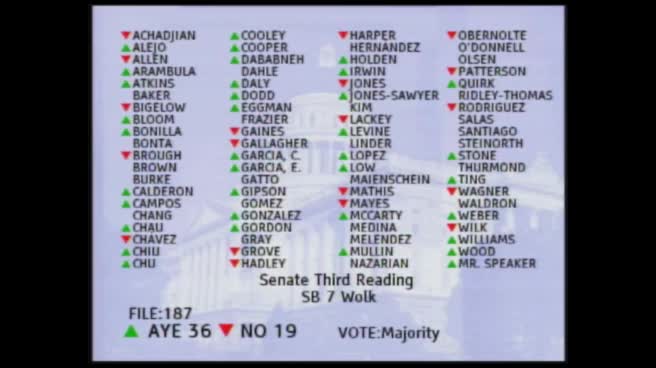
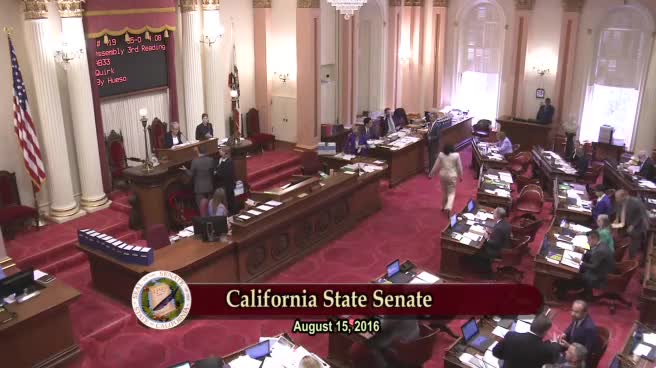
| Aug 15, 2016 | Read third time. Passed. Ordered to the Assembly. (Ayes 37. Noes 0. Page 4969.). |
| Aug 15, 2016 | Read third time. Passed. Ordered to the Assembly. (Ayes 37. Noes 0.). |
| Aug 16, 2016 | In Assembly. Concurrence in Senate amendments pending. May be considered on or after August 18 pursuant to Assembly Rule 77. |
| Aug 18, 2016 | Re-referred to Com. on JUD. pursuant to Assembly Rule 77.2. |
| Aug 24, 2016 | From committee: That the Senate amendments be concurred in. (Ayes 8. Noes 0.) (August 23). |
| Aug 25, 2016 | Senate amendments concurred in. To Engrossing and Enrolling. |
| Aug 25, 2016 | Senate amendments concurred in. To Engrossing and Enrolling. (Ayes 77. Noes 0. Page 6282.). |
| Sep 1, 2016 | Enrolled and presented to the Governor at 4:30 p.m. |
| Apr 30, 2015 | In Senate. Read first time. To Com. on RLS. for assignment. |
| Feb 27, 2015 | From printer. May be heard in committee March 29. |
| Mar 12, 2015 | Referred to Com. on A. & A.R. |
| Apr 6, 2015 | From committee chair, with author's amendments: Amend, and re-refer to Com. on A. & A.R. Read second time and amended. |
| Apr 7, 2015 | Re-referred to Com. on A. & A.R. |
| Apr 15, 2015 | From committee: Do pass and re-refer to Com. on APPR. (Ayes 9. Noes 0.) (April 15). Re-referred to Com. on APPR. |
| Apr 15, 2015 | From committee: Do pass and re-refer to Com. on APPR. with recommendation: To Consent Calendar. (Ayes 9. Noes 0.) (April 15). Re-referred to Com. on APPR. |
| Apr 22, 2015 | From committee: Do pass. To Consent Calendar. (Ayes 17. Noes 0.) (April 22). |
| Apr 23, 2015 | Read second time. Ordered to Consent Calendar. |
| Feb 26, 2015 | Read first time. To print. |
| Apr 30, 2015 | Read third time. Passed. Ordered to the Senate. |
| Apr 30, 2015 | Read third time. Passed. Ordered to the Senate. (Ayes 77. Noes 0. Page 1225.) |
| May 14, 2015 | Referred to Com. on G.O. |
| Jun 8, 2015 | In committee: Hearing postponed by committee. |
| Jun 19, 2015 | In committee: Set, first hearing. Hearing canceled at the request of author. |
| Aug 17, 2015 | From committee chair, with author's amendments: Amend, and re-refer to committee. Read second time, amended, and re-referred to Com. on G.O. |
| Aug 18, 2015 | Re-referred to Com. on RLS. |
| Aug 18, 2015 | Withdrawn from committee. |
|
Date
|
Description
|
Location
|
Votes
|
|
|---|---|---|---|---|
| Aug 25, 2016 | AB 797 STEINORTH Concurrence in Senate Amendments | Assembly Floor |
Passed |
|
| Aug 23, 2016 | With recommendation: That Senate amendments be concurred in. | Assembly Standing Committee on Judiciary |
Passed |
|
| Aug 15, 2016 | Assembly 3rd Reading AB797 Steinorth By Glazer | Senate Floor |
Passed |
|
| Jun 28, 2016 | Do pass | Senate Standing Committee on Public Safety |
Passed |
|
| Jun 14, 2016 | Do pass, but first be re-referred to the Committee on [Rules] | Senate Standing Committee on Judiciary |
Passed |
|
| Apr 30, 2015 | AB 797 STEINORTH Consent Calendar Second Day Regular Session | Assembly Floor |
Passed |
|
| Apr 22, 2015 | Do pass. To Consent Calendar. | Assembly Standing Committee on Appropriations |
Passed |
|
| Apr 15, 2015 | Do pass and be re-referred to the Committee on [Appropriations] with recommendation: To Consent Calendar | Assembly Standing Committee on Accountability and Administrative Review |
Passed |
This list shows positions taken on this bill by organizations on the date displayed, which is linked to the original source.
Positions by individuals are not included.
|
Organization
|
Position
|
Date
|
|---|---|---|
| American Chemistry Council | ** Support | Jun 14, 2016 |
| American Kennel Club | ** Against | Aug 24, 2016 |
| ASPCA | ** Support | Aug 24, 2016 |
| Associated Builders And Contractors Of California | ** Support | Jun 14, 2016 |
| Best Friends Animal Society | * Support | Aug 24, 2016 |
| California Association of Boutique & Breakfast Inns | ** Support | Jun 14, 2016 |
| California Business Properties Association | ** Support | Jun 14, 2016 |
| California Business Roundtable | ** Support | Jun 14, 2016 |
| California Chamber Of Commerce | ** Support | Jun 14, 2016 |
| California Federation of Dog Clubs | ** Against | Aug 15, 2016 |
| California Hotel & Lodging Association | ** Support | Jun 14, 2016 |
| California League of Food Processors | ** Support | Jun 14, 2016 |
| California Veterinary Medical Association | * Support | Jun 14, 2016 |
| Civil Justice Association | * Support | Aug 24, 2016 |
| Civil Justice Association Of California | * Support | Aug 24, 2016 |
| Consumer Specialty Products Association | ** Support | Jun 14, 2016 |
| Councilmember David J. Toro, City of Colton | ** Support | Aug 24, 2016 |
| County Of Los Angeles District Attorney'S Office | * Support | Aug 24, 2016 |
| Humane Society Of The United States, The | * Support | Aug 24, 2016 |
| Humane Society Veterinary Medical Association | ** Support | Aug 24, 2016 |
| Los Angeles County District Attorney | * Support | Aug 24, 2016 |
| Los Angeles County Economic Development Corporation | ** Support | Jun 14, 2016 |
| Marin Humane Society | ** Support | Aug 24, 2016 |
| National Federation Of Independent Business | ** Support | Jun 14, 2016 |
| One individual | ** Support | Aug 15, 2016 |
| Performing Animal Welfare Society | * Support | Jun 14, 2016 |
| Sacramento Council of Dog Clubs | * Support | Jun 14, 2016 |
| San Bernardino County Sheriff John McMahon | ** Support | Aug 24, 2016 |
| San Diego County District Attorney's Office | ** Support | Aug 24, 2016 |
| San Diego District Attorney | * Support | Jun 28, 2016 |
| San Diego Humane Society | * Support | Aug 24, 2016 |
| San Francisco Spca | * Support | Aug 24, 2016 |
| Shack State Humane Association of California | * Support | Jun 14, 2016 |
| Social Compassion In Legislation | ** Support | Aug 24, 2016 |
| Southwest California Legislative Council | ** Support | Jun 14, 2016 |
| The Animal Council | ** Against | Aug 15, 2016 |
| USANA Health Sciences, Inc. | ** Support | Jun 14, 2016 |
| Western Growers Association | ** Support | Jun 14, 2016 |
CONCURRENCE IN SENATE AMENDMENTS
CSA2 Bill Id:AB 797
Author:(Steinorth and Santiago)
As Amended Ver:August 1, 2016
Majority vote
ASSEMBLY: |
| (April 30, 2015) | SENATE: | 37-0 | (August 15, 2016) |
(vote not relevant)
COMMITTEE VOTE: | 8-0 | (August 23, 2016) | RECOMMENDATION: | concur |
(Jud.)
Original Committee Reference: A. & A.R.
SUMMARY: Exempts a person from civil and criminal liability for property damage or trespass to a motor vehicle if the property damage or trespass occurred while the person was rescuing an animal under specified circumstances.
The Senate amendments delete the Assembly version of this bill, and instead:
- Provide that a person is not prevented from taking reasonable steps that are necessary to remove an animal from a motor vehicle if the person holds a reasonable belief that the animal's safety is in immediate danger from heat, cold, lack of adequate ventilation, lack of food or water, or other circumstances that could reasonably be expected to cause suffering, disability, or death to the animal.
- Provide that a person who removes an animal from a vehicle in accordance with 1) above, is not criminally liable for actions taken reasonably and in good faith if the person does all of the following:
- Determines the vehicle is locked or there is otherwise no reasonable manner for the animal to be removed from the vehicle.
- Has a good faith belief that forcible entry into the vehicle is necessary because the animal is in imminent danger of suffering harm if it is not immediately removed from the vehicle, and, based upon the circumstances known to the person at the time, the belief is a reasonable one.
- Has contacted a local law enforcement agency, the fire department, animal control, or the "911" emergency service prior to forcibly entering the vehicle.
- Remains with the animal in a safe location, out of the elements but reasonably close to the vehicle, until a peace officer, humane officer, animal control officer, or another emergency responder arrives.
- Used no more force to enter the vehicle and remove the animal from the vehicle than was necessary under the circumstances.
- Immediately turns the animal over to a representative from law enforcement, animal control, or another emergency responder who responds to the scene.
- Provide that there shall not be any civil liability on the part of, and no cause of action shall accrue against, a person for property damage or trespass to a motor vehicle, if the damage was caused while the person was rescuing an animal in accordance with the provisions specified in 2) above. Clarify that this immunity from civil liability for property damage to a motor vehicle does not affect a person's civil liability or immunity from civil liability for rendering aid to an animal.
- Clarify that firefighters are included among those public officers that are authorized under existing law to follow specified procedures to rescue an animal from a motor vehicle.
EXISTING LAW:
- Prohibits a person from leaving or confining an animal in any unattended motor vehicle under conditions that endanger the health or well-being of an animal due to heat, cold, lack of adequate ventilation, or lack of food or water, or other circumstances that could reasonably be expected to cause suffering, disability, or death to the animal. (Penal Code Section (PEN) 597.7 (a).)
- Provides that a first conviction for violation of the above rule is punishable by a fine not exceeding $100 per animal, unless the animal suffers great bodily injury, in which case the violation is punishable by a fine not exceeding $500, imprisonment in a county jail not exceeding six months, or by both a fine and imprisonment. Further provides that any subsequent violation of this section, regardless of injury to the animal, is also punishable by a fine not exceeding $500, imprisonment in a county jail not exceeding six months, or by both a fine and imprisonment. (PEN 597.7 (b).)
- Clarifies that these provisions do not prevent any peace officer, humane officer, or animal control officer from following specified procedures to rescue an animal from a motor vehicle. (PEN 597.7 (c).)
FISCAL EFFECT: None
COMMENTS: This bill, co-sponsored by the Humane Society of the United States and the Los Angeles County District Attorney (LACDA), seeks to establish specified immunity from civil and criminal liability for any person who acts to rescue an animal facing imminent danger while left unattended in a motor vehicle.
According to the author: "California's existing 'Good Samaritan' statute does not protect a person from liability from acting to rescue an animal facing imminent danger from being trapped in a hot car. As a result, well-intentioned people who notice an animal illegally left in an unattended vehicle are unable to act to save the pet from potential heat exhaustion or death in the event that law enforcement or emergency responders are unable to arrive in time to act."
According to LACDA, existing law should be updated to remove the fear of liability as a deterrent against rescuing animals in unattended vehicles from dangerous conditions. They state: "One of the most common questions our Animal Cruelty Coordinator gets from members of the public is whether they can legally make entry into a vehicle to save an animal. When our office tells them that the law only allows law enforcement and animal control officers to forcibly remove an animal from a vehicle, most express frustration and say they are often torn about what action, if any, to take when they see an animal in a hot car. As much as people would like to help an animal trapped in a vehicle, they are often deterred from taking action due to fear of being sued and/or arrested."
In order to encourage the rescue of animals in such circumstances, this bill would authorize a person to take reasonable steps that are necessary to remove an animal from a motor vehicle if the person holds a reasonable belief that the animal's safety is in immediate danger from heat, cold, lack of adequate ventilation, lack of food or water, or other circumstances that could reasonably be expected to cause suffering, disability, or death to the animal.
In order to receive immunity from criminal and civil liability under this bill, a person seeking to rescue an animal must strictly follow specific steps identified by this bill prior to entering the vehicle, including: 1) determining the vehicle is locked or that there is otherwise no reasonable manner for the animal to be removed from the vehicle; 2) having a good faith belief that forcible entry into the vehicle is necessary because the animal is in imminent danger of suffering harm if not immediately removed from the vehicle, and based upon the circumstances known to the person at the time, the belief is reasonable; and 3) contacting local law enforcement prior to forcibly entering the vehicle. In addition, the person is required: 4) to use no more force than necessary to enter the vehicle and remove the animal from the vehicle; 5) to remain with the animal at a safe location after gaining entry into the vehicle, reasonably close to the vehicle, until an emergency responder arrives; and 6) immediately turn the animal over to law enforcement or other emergency responder who responds to the scene.
If all of these steps are followed, this bill provides the rescuing person immunity from civil liability for property damage or trespass to the vehicle. Importantly, however, this bill is crafted to ensure that this qualified immunity does not affect a person's civil liability for rendering aid to the animal itself. Thus, a person still has a duty to act reasonably in rendering aid to the animal itself, or potentially be held liable for any injury or harm arising from rendering such aid (as this bill only provides immunity for damage to the vehicle.)
This bill also provides immunity from criminal liability for actions taken reasonably and in good faith if the person follows the above specified steps in removing an animal from an unattended vehicle. According to the LACDA, a rescuer acting reasonably and in good faith would lack the specific intent which is an element of most crimes that could be charged against a person for breaking into a vehicle. However, there may be some general intent crimes that could conceivably be charged. While it is unlikely that a person acting in good faith to rescue an animal would be charged with a crime or sued in any case, this bill will remove the possibility by immunizing the rescuer as long as he or she follows the steps set forth in this bill.
This bill also makes clarifying amendments to existing law outlining the responsibilities of law enforcement and other public officers in removing animals from a motor vehicle. First, this bill clarifies that firefighters and other emergency responders are included among those public officers that are authorized under existing law to follow specified procedures to rescue an animal from a motor vehicle. Second, this bill clarifies that certain responsibilities apply not only when the official directly removes an animal from a vehicle, but also when the official indirectly takes possession of or receives an animal that has been removed from a vehicle by another person. Finally, this bill clarifies that the owner of an animal removed from a vehicle may be required to pay for charges that have accrued for the maintenance, care, medical treatment, or impoundment of the animal after an emergency responder has taken the animal to a shelter or veterinary hospital pursuant to this bill.
Analysis Prepared by: Anthony Lew / JUD. / (916) 319-2334 FN: 0004831
Date of Hearing: August 23, 2016
ASSEMBLY COMMITTEE ON JUDICIARY
Mark Stone, Chair
ABPCA Bill Id:AB 797
Author:(Steinorth) – As Amended Ver:August 1, 2016
FOR CONCURRENCE
SUBJECT: MOTOR VEHICLES: RESCUE OR PROVISION OF CARE FOR ANIMAL: CIVIL AND CRIMINAL LIABILITY
KEY ISSUE: SHOULD a person who reasonably and in good faith believes that an animal is in immediate danger if not removed from a locked vehicle be immunized from civil and criminal liability if he or she follows specified steps to forcibly gain entry to the vehicle and rescue the animal?
SYNOPSIS
Despite existing law that prohibits pet owners from leaving an animal unattended in a vehicle under dangerous conditions, and despite public awareness campaigns warning against this practice, proponents of this bill report that citizens continue to call law enforcement hundreds of times per year to help rescue animals from unattended vehicles because they believe are endangered, usually because of hot temperatures inside. These proponents, including the Humane Society of the United States and the Los Angeles County District Attorney, also contend that many of these callers express the desire to rescue the animals themselves by breaking into the vehicle, but are deterred from taking action due to fear of being sued or possibly arrested. Indeed, while existing law does not prevent law enforcement and emergency responders from forcibly entering a vehicle to rescue an animal, a bystander who takes matters into his or her own hands and breaks into a car to rescue an animal potentially faces civil or criminal liability, depending on the circumstances. The goal of this bill--to encourage people to take action to potentially save the life of an animal left unattended in a vehicle and facing immediate danger—appears to be in line with other measures passed by the Legislature in recent years that provide immunity from liability for lay people who voluntarily do something they are not obligated to do, such as render medical aid in certain emergency situations, in order to prevent death and injury.
Accordingly, in order to encourage bystanders to rescue endangered animals from vehicles and prevent unnecessary suffering and death of animals, this bill seeks to establish qualified immunity from civil and criminal liability for property damage or trespass to a vehicle for any person who reasonably and in good faith takes prescribed steps to rescue an animal facing imminent danger from an unattended motor vehicle. The specific steps outlined by this bill include, among other things: (1) determining the vehicle is locked or that there is otherwise no reasonable manner for the animal to be removed from the vehicle; (2) contacting local law enforcement prior to forcibly entering the vehicle; (3) using no more force than necessary to enter the vehicle; and (4) immediately turning the animal over to law enforcement personnel who respond to the scene. The civil and criminal immunity provided by this bill is contingent upon all of the specified steps being followed, but only extends to property damage or trespass to a vehicle, and not more broadly to rendering aid to the animal itself or any other liability that may arise. The bill is opposed by groups of dog owners, including the American Kennel Club and the California Federation of Dog Clubs, who contend that rescuing animals should strictly be handled by law enforcement responders, not Good Samaritans, and that the bill could have unintended consequences.
SUMMARY: Exempts a person from civil and criminal liability for property damage or trespass to a motor vehicle if the property damage or trespass occurred while the person was rescuing an animal under specified circumstances. Specifically, this bill:
- Provides that a person is not prevented from taking reasonable steps that are necessary to remove an animal from a motor vehicle if the person holds a reasonable belief that the animal’s safety is in immediate danger from heat, cold, lack of adequate ventilation, lack of food or water, or other circumstances that could reasonably be expected to cause suffering, disability, or death to the animal.
- Provides that a person who removes an animal from a vehicle in accordance with 1) above is not criminally liable for actions taken reasonably and in good faith if the person does all of the following:
- Determines the vehicle is locked or there is otherwise no reasonable manner for the animal to be removed from the vehicle.
- Has a good faith belief that forcible entry into the vehicle is necessary because the animal is in imminent danger of suffering harm if it is not immediately removed from the vehicle, and, based upon the circumstances known to the person at the time, the belief is a reasonable one.
- Has contacted a local law enforcement agency, the fire department, animal control, or the “911” emergency service prior to forcibly entering the vehicle.
- Remains with the animal in a safe location, out of the elements but reasonably close to the vehicle, until a peace officer, humane officer, animal control officer, or another emergency responder arrives.
- Used no more force to enter the vehicle and remove the animal from the vehicle than was necessary under the circumstances.
- Immediately turns the animal over to a representative from law enforcement, animal control, or another emergency responder who responds to the scene.
- Provides that there shall not be any civil liability on the part of, and no cause of action shall accrue against, a person for property damage or trespass to a motor vehicle, if the damage was caused while the person was rescuing an animal in accordance with the provisions specified in 2) above. Clarify that this immunity from civil liability for property damage to a motor vehicle does not affect a person’s civil liability or immunity from civil liability for rendering aid to an animal.
- Clarifies that firefighters are included among those public officers that are authorized under existing law to follow specified procedures to rescue an animal from a motor vehicle.
EXISTING LAW:
- Prohibits a person from leaving or confining an animal in any unattended motor vehicle under conditions that endanger the health or well-being of an animal due to heat, cold, lack of adequate ventilation, or lack of food or water, or other circumstances that could reasonably be expected to cause suffering, disability, or death to the animal. (Penal Code Section 597.7 (a). All further references are to this code unless otherwise stated.)
- Provides that a first conviction for violation of the above rule is punishable by a fine not exceeding one hundred dollars ($100) per animal, unless the animal suffers great bodily injury, in which case the violation is punishable by a fine not exceeding five hundred dollars ($500), imprisonment in a county jail not exceeding six months, or by both a fine and imprisonment. Further provides that any subsequent violation of this section, regardless of injury to the animal, is also punishable by a fine not exceeding five hundred dollars ($500), imprisonment in a county jail not exceeding six months, or by both a fine and imprisonment. (Section 597.7 (b).)
- Provides that these provisions do not prevent any peace officer, humane officer, or animal control officer from following specified procedures to rescue an animal from a motor vehicle. (Section 597.7 (c).)
FISCAL EFFECT: As currently in print this bill is keyed non-fiscal.
COMMENTS: This bill co-sponsored by the Humane Society of the United States and the Los Angeles County District Attorney, seeks to establish qualified immunity from civil and criminal liability for property damage or trespass to a motor vehicle for any person who reasonably and in good faith takes prescribed steps to rescue an animal facing imminent danger from an unattended motor vehicle. According to the author:
Leaving an animal unattended in a vehicle in harmful conditions is currently against the law. Unfortunately, many pet owners are unaware of how quickly temperatures rise inside of a car, even on a mildly warm day. The statistics are staggering: Even when it is 80 degrees outside, a car can heat up to 99 degrees in just 10 minutes, and can reach 114 degrees in 30 minutes. [citation omitted.]
Citizens call law enforcement hundreds of times per year to report dogs stuck suffering in hot cars. Unfortunately, these cases are not always the top priority of our law enforcement, and they may not arrive in time to save the animal’s life – meanwhile, the Good Samaritan citizen is left standing by, watching an animal suffer, scared to act out of a legitimate fear for legal repercussions. AB 797 establishes civil and criminal legal immunity for any person who acts to rescue an animal facing imminent danger while left unattended in a vehicle. . . (The bill) provides legal assurance to Good Samaritan citizens that if they take action to save an animal from a cruel, hot-car death, they cannot be sued for rescue-related vehicle damages.
Background on liability associated with unattended animals in motor vehicles. In 2006, the Legislature enacted SB 1806 (Figueroa), Ch. 431, Stats. 2006, which prohibits any person from leaving or confining an animal in any unattended motor vehicle under conditions that endanger the health or well-being of an animal due to heat, cold, lack of adequate ventilation, or lack of food or water, or other circumstances that could reasonably be expected to cause suffering, disability, or death to the animal. Under this statute, Penal Code Section 597.7, a person who violates this law faces criminal penalties from up to $100 for a first conviction if the animal does not suffer great bodily injury, or up to $500 and six months' in county jail, or both, if the animal does suffer great bodily injury.
At the same time, SB 1806 created a framework for peace officers, humane officers, and animal control officers to legally remove an animal from a motor vehicle if the animal’s safety appears to be in immediate danger, as specified. Under Section 597.7, an officer is authorized to take all steps that are reasonably necessary for the removal of an animal from a motor vehicle, including, but not limited to, breaking into the motor vehicle, after a reasonable effort to locate the owner or other person responsible. In addition, the officer must take the animal to an animal shelter or other place of safekeeping, or, if deemed necessary, to a veterinary hospital for treatment.
While SB 1806 initially authorized both civil and criminal immunity, the bill was subsequently amended to remove the immunity language. Instead, the bill was amended to say that it does not affect existing liabilities or immunities in current law, or create any new immunities or liabilities. (Section 597.7 (c)(5).) Put another way, the legislation deliberately sought to not affect existing liability or immunity from liability for damaging a car to rescue an animal; for injury to an animal being rescued; or for injury to another person caused by the "rescued" animal after being freed from confinement in the vehicle (e.g. an escaped dog at-large).
Background on immunity from liability under Good Samaritan laws. Generally speaking, under California law, everyone is responsible for the result of his or her willful acts, and for an injury occasioned to another by his or her want of ordinary care or skill in the management of his or her property or person. (Civil Code Section 1714 (a).) Existing law also establishes that every person has a duty to abstain from injuring the person or property of another, or infringing upon any of his or her rights. (Civil Code Section 1708.) Case law provides that an otherwise lawful act can become unlawful when it causes damage to the property of another. (See Colton v. Onderdonk (1886) 69 Cal. 155, 159.) In general, if a voluntary act, lawful in itself, may naturally result in the injury of another, or in the violation of his or her legal rights, the actor must see to it that such injury or violation does not follow, or must expect to be liable for damages—regardless of his or her motive or the degree of care with which he or she performed the act. (See McKenna v. Pacific E. R. Co. (1930) 104 Cal.App. 538, 542.)
Under existing common law tort rules, a person who voluntarily comes to the aid of another person suffering a medical emergency is immune from liability so long as that person acts in a reasonably prudent manner under the circumstances. In addition, in 2009, California adopted a so-called "Good Samaritan" statute which grants qualified immunity to any person who renders medical or non-medical aid in an emergency, so long as that person acts in good faith and not for compensation, and so long as that person's conduct is not grossly negligent or willful or wanton. (Health & Safety Code Section 1799.102.) Notably, this statute applies to the rendering of "emergency medical or non-medical care," which has never been interpreted to apply to the rescue of an animal, rather than a human being.
In recent years this Committee has heard, and the Legislature has enacted, legislation providing immunity from liability for lay people who voluntarily render medical aid in certain emergency situations, such as administering cardiopulmonary resuscitation (CPR) or applying an automated external defibrillator (AED). In each of those cases, qualified immunity from liability was approved in order to promote the policy goal of encouraging bystanders to intervene in an emergency situation to render assistance and even save the life of another person. In the same vein, this bill seeks similar qualified immunity to encourage people to take action to potentially save the life of an animal left unattended in a vehicle and facing immediate danger.
Anecdotal evidence indicates continuing need to encourage rescue of animals from unattended vehicles. Despite existing law that prohibits leaving animals unattended in dangerous conditions, and despite education campaigns warning against this practice, proponents of this bill report that animals continue to be left in unattended vehicles in alarming numbers. According to “My Dog Is Cool,” an organized campaign which seeks to educate citizens about the dangers of hot-car animal deaths: (1) the Sacramento, CA region reported receiving 50 calls to 9-1-1 about dogs left in hot cars in June 2014; (2) the British Columbia SPCA reported receiving 228 calls to rescue dogs that had been left in hot cars in June 2014; and (3) the Davis County Animal Care and Control in Salt Lake City, UT reported receiving 150 calls about dogs being left in cars from June to Aug 2013. (See http://mydogiscool.com/newsroom/hot-car-incidents.)
According to the Los Angeles County District Attorney’s Office (LACDA), existing law should be updated to remove the fear of liability as a deterrent against rescuing animals in unattended vehicles from dangerous conditions. They state:
One of the most common questions our Animal Cruelty Coordinator gets from members of the public is whether they can legally make entry into a vehicle to save an animal. When our office tells them that the law only allows law enforcement and animal control officers to forcibly remove an animal from a vehicle, most express frustration and say they are often torn about what action, if any, to take when they see an animal in a hot car. As much as people would like to help an animal trapped in a vehicle, they are often deterred from taking action due to fear of being sued and/or arrested.
In (one) tragic case, a bystander noticed a dog that had collapsed on the floor of a locked vehicle on a warm summer day. The bystander called 911 and waited for emergency service personnel to arrive. As the bystander waited other people gathered around the vehicle waiting for emergency services to arrive. As they waited, they watched as the animal continued to suffer and eventually die. The bystanders told law enforcement that they considered entering into the vehicle but decided against taking action because they were afraid of being arrested or sued.
Specified steps for receiving qualified immunity for rescuing an animal from an unattended vehicle. In order to further encourage the rescue of animals in such circumstances, this bill would authorize a person to take reasonable steps that are necessary to remove an animal from a motor vehicle if the person holds a reasonable belief that the animal’s safety is in immediate danger from heat, cold, lack of adequate ventilation, lack of food or water, or other circumstances that could reasonably be expected to cause suffering, disability, or death to the animal.
In order to receive immunity from criminal and civil liability under this bill, a person seeking to rescue an animal must strictly follow specific steps identified by this bill prior to entering the vehicle, including: 1) determine the vehicle is locked or that there is otherwise no reasonable manner for the animal to be removed from the vehicle; 2) have a good faith belief that forcible entry into the vehicle is necessary because the animal is in imminent danger of suffering harm if not immediately removed from the vehicle, and based upon the circumstances known to the person at the time, the belief is reasonable; and 3) contact local law enforcement prior to forcibly entering the vehicle. In addition, the person is required: 4) to use no more force than necessary to enter the vehicle and remove the animal from the vehicle; 5) to remain with the animal at a safe location after gaining entry into the vehicle, reasonably close to the vehicle, until an emergency responder arrives; and 6) immediately turn the animal over to law enforcement or other emergency responder who responds to the scene.
If all of these steps are followed, the bill provides the rescuing person immunity from civil liability for property damage or trespass to the vehicle. Importantly, however, the bill is crafted to ensure that this qualified immunity does not affect a person's civil liability for rendering aid to the animal itself. Thus, a person still has a duty to act reasonably in rendering aid to the animal itself, or potentially be held liable for any injury or harm arising from rendering such aid (as the bill only provides immunity for damage to the vehicle.)
The bill also provides immunity from criminal liability for actions taken reasonably and in good faith if the person follows the above specified steps in removing an animal from an unattended vehicle. According to the LACDA, a rescuer acting reasonably and in good faith would lack the specific intent which is an element of most crimes that could be charged against a person for breaking into a vehicle. However, there may be some general intent crimes that could conceivably be charged. While it is unlikely that a person acting in good faith to rescue an animal would be charged with a crime or sued in any case, this bill will remove the possibility by immunizing the rescuer as long as he or she follows the steps set forth in the bill.
Other clarifying amendments. The bill also makes clarifying amendments to existing law outlining the responsibilities of law enforcement and other public officers in removing animals from a motor vehicle. First, the bill clarifies that firefighters and other emergency responders are included among those public officers that are authorized under existing law to follow specified procedures to rescue an animal from a motor vehicle. Second, the bill clarifies that certain responsibilities apply not only when the official directly removes an animal from a vehicle, but also when the official indirectly takes possession of or receives an animal that has been removed from a vehicle by another person. Finally, the bill clarifies that the owner of an animal removed from a vehicle may be required to pay for charges that have accrued for the maintenance, care, medical treatment, or impoundment of the animal after an emergency responder has taken the animal to a shelter or veterinary hospital pursuant to this bill.
ARGUMENTS IN SUPPORT: The bill is supported by a number of animal welfare and advocacy groups, including the ASPCA, the Humane Society Veterinary Medical Association, and the Humane Society of the United States. HSUS writes in support:
(This bill) increases protection for animals but also prevents vigilantism. Intervention is carefully defined and kept as a last resort only to be used when all other options have been exhausted and the animal is in visible distress. This bill also spells out steps for after an animal has been removed to ensure that emergency care is provided and pets are returned to their owners appropriately.
Every year, thousands of our companion animals succumb to heatstroke in hot, unattended vehicles. Many times concerned citizens and law enforcement can locate the car’s owner in time to take the necessary steps to keep the animal safe. However, there are situations when concerned citizens are unable to find the owner or law enforcement or animal control is tending to other priorities and can’t arrive in time to rescue the animal. And minutes do matter when an animal is trapped in a hot car. Protecting animals from an agonizing death is a problem we can all agree to prevent. AB 797 is an important, bi-partisan step toward achieving a more humane California, and a chance to avoid unnecessary animal suffering.
ARGUMENTS IN OPPOSITION: The bill is opposed by the American Kennel Club (AKC), the Animal Council, and the California Federation of Dog Clubs (CFODC), who contend that the bill could result in unintended consequences. CFODC states:
When was the last time you left your dog supplied with food and water in the car while you made a quick stop at the market on a cool day? There have already been many cases where well-intended bystanders broke into a vehicle to "rescue" a dog, alarmed simply because it may be exhibiting normal, non-distressed behavior like panting or parking, or may be safely confined in a crate. A "rescuer" could put himself at risk of being bitten, put the dog at risk of being lost or hit by a car, and put the public at risk due to an escaped dog-at-large. The unfortunate owner could find himself liable for unwarranted damages to his property, suffering the loss of his pet and would have no recourse for damage to the car or loss or death of his dog in the course of the "rescue."
This bill is of particular concern to those who participate in dog events and activities involving multiple dogs which may spend time being responsibly housed in a motor home or other vehicle. Dog enthusiasts are highly aware of the dangers of temperature extremes in vehicles, and are rarely guilty of putting their valued animals at-risk in such dangerous situations. The CFODC believes that "rescue" should be handled by professionals who, in the vast majority of cases, can be on the scene within minutes, and who are better prepared and equipped to deal with assessment and intervention in such situations.
REGISTERED SUPPORT / OPPOSITION:
Support
Humane Society of the United States (co-sponsor)
Los Angeles County District Attorney (co-sponsor)
ASPCA
Best Friends Animal Society
Civil Justice Association of California
Councilmember David J. Toro, City of Colton
Humane Society Veterinary Medical Association
Marin Humane Society
San Bernardino County Sheriff John McMahon
San Diego County District Attorney’s Office
San Diego Humane Society
San Francisco SPCA
Social Compassion in Legislation
Opposition
American Kennel Club
California Federation of Dog Clubs
The Animal Council
Analysis Prepared by: Anthony Lew / JUD. / (916) 319-2334
CONCURRENCE IN SENATE AMENDMENTS
CSA1 Bill Id:AB 797
Author:(Steinorth and Santiago)
As Amended Ver:August 1, 2016
Majority vote
ASSEMBLY: |
| (April 30, 2015) | SENATE: | 37-0 | (August 15, 2016) |
(vote not relevant)
Original Committee Reference: A. & A.R.
SUMMARY: Exempts a person from civil and criminal liability for property damage or trespass to a motor vehicle if the property damage or trespass occurred while the person was rescuing an animal under specified circumstances.
The Senate amendments delete the Assembly version of this bill, and instead:
- Provide that a person is not prevented from taking reasonable steps that are necessary to remove an animal from a motor vehicle if the person holds a reasonable belief that the animal's safety is in immediate danger from heat, cold, lack of adequate ventilation, lack of food or water, or other circumstances that could reasonably be expected to cause suffering, disability, or death to the animal.
- Provide that a person who removes an animal from a vehicle in accordance with 1), above is not criminally liable for actions taken reasonably and in good faith if the person does all of the following:
- Determines the vehicle is locked or there is otherwise no reasonable manner for the animal to be removed from the vehicle.
- Has a good faith belief that forcible entry into the vehicle is necessary because the animal is in imminent danger of suffering harm if it is not immediately removed from the vehicle, and, based upon the circumstances known to the person at the time, the belief is a reasonable one.
- Has contacted a local law enforcement agency, the fire department, animal control, or the "911" emergency service prior to forcibly entering the vehicle.
- Remains with the animal in a safe location, out of the elements but reasonably close to the vehicle, until a peace officer, humane officer, animal control officer, or another emergency responder arrives.
- Used no more force to enter the vehicle and remove the animal from the vehicle than was necessary under the circumstances.
- Immediately turns the animal over to a representative from law enforcement, animal control, or another emergency responder who responds to the scene.
- Provide that there shall not be any civil liability on the part of, and no cause of action shall accrue against, a person for property damage or trespass to a motor vehicle, if the damage was caused while the person was rescuing an animal in accordance with the provisions specified in 2) above. Clarify that this immunity from civil liability for property damage to a motor vehicle does not affect a person's civil liability or immunity from civil liability for rendering aid to an animal.
- Clarify that firefighters are included among those public officers that are authorized under existing law to follow specified procedures to rescue an animal from a motor vehicle.
EXISTING LAW:
- Prohibits a person from leaving or confining an animal in any unattended motor vehicle under conditions that endanger the health or well-being of an animal due to heat, cold, lack of adequate ventilation, or lack of food or water, or other circumstances that could reasonably be expected to cause suffering, disability, or death to the animal. (Penal Code Section (PEN) 597.7 (a).)
- Provides that a first conviction for violation of the above rule is punishable by a fine not exceeding $100 per animal, unless the animal suffers great bodily injury, in which case the violation is punishable by a fine not exceeding $500, imprisonment in a county jail not exceeding six months, or by both a fine and imprisonment. Further provides that any subsequent violation of this section, regardless of injury to the animal, is also punishable by a fine not exceeding $500, imprisonment in a county jail not exceeding six months, or by both a fine and imprisonment. (PEN 597.7 (b).)
- Clarifies that these provisions do not prevent any peace officer, humane officer, or animal control officer from following specified procedures to rescue an animal from a motor vehicle. (PEN 597.7 (c).)
FISCAL EFFECT: None
COMMENTS: This bill, co-sponsored by the Humane Society of the United States and the Los Angeles District Attorney, seeks to establish specified immunity from civil and criminal liability for any person who acts to rescue an animal facing imminent danger while left unattended in a motor vehicle.
According to the author: "California's existing 'Good Samaritan' statute does not protect a person from liability from acting to rescue an animal facing imminent danger from being trapped in a hot car. As a result, well-intentioned people who notice an animal illegally left in an unattended vehicle are unable to act to save the pet from potential heat exhaustion or death in the event that law enforcement or emergency responders are unable to arrive in time to act."
Existing law prohibits any person from leaving or confining an animal in any unattended motor vehicle under conditions that endanger the health or well-being of an animal due to heat, cold, lack of adequate ventilation, or lack of food or water, or other circumstances that could reasonably be expected to cause suffering, disability, or death to the animal. Violations of this rule range from up to $100 for a first conviction if the animal does not suffer great bodily injury, or up to $500 and six months' in county jail, or both, if the animal does suffer great bodily injury. In order to encourage the rescue of animals in such circumstances, this bill would authorize a person to take reasonable steps that are necessary to remove an animal from a motor vehicle if the person holds a reasonable belief that the animal's safety is in immediate danger from heat, cold, lack of adequate ventilation, lack of food or water, or other circumstances that could reasonably be expected to cause suffering, disability, or death to the animal.
In order to receive immunity from criminal and civil liability under this bill, a person seeking to rescue an animal must strictly follow specific steps identified by this bill prior to entering the vehicle, including: 1) determining the vehicle is locked or that there is otherwise no reasonable manner for the animal to be removed from the vehicle; 2) having a good faith belief that forcible entry into the vehicle is necessary because the animal is in imminent danger of suffering harm if not immediately removed from the vehicle, and based upon the circumstances known to the person at the time, the belief is reasonable; and 3) contacting local law enforcement prior to forcibly entering the vehicle.
In addition, the person is required to use no more force than necessary to enter the vehicle and remove the animal from the vehicle. Following entry into the vehicle to rescue the animal, the person is required to remain with the animal at a safe location, out of the elements but reasonably close to the vehicle, until an emergency responder arrives.
Analysis Prepared by: Anthony Lew / JUD. / (916) 319-2334 FN: 0003736
Office of Senate Floor Analyses (916) 651-1520 Fax: (916) 327-4478 | AB |
THIRD READING
Bill No: AB 797
:
SENATE JUDICIARY COMMITTEE: 7-0, 6/14/16
AYES: Jackson, Moorlach, Anderson, Hertzberg, Leno, Monning, Wieckowski
SENATE PUBLIC SAFETY COMMITTEE: 7-0, 6/28/16
AYES: Hancock, Anderson, Glazer, Leno, Liu, Monning, Stone
ASSEMBLY FLOOR: 77-0, 4/30/15 (Consent) - See last page for vote
SOURCE: Humane Society of the United States
Los Angeles County District Attorney
DIGEST: This bill provides a person civil immunity from any property damage or trespass to a motor vehicle, if the damage was caused while the person was rescuing an animal in accordance with specified law. This bill also provides that such immunity does not affect a person’s civil liability or immunity from civil liability for rendering aid to an animal. Additionally, this bill: (1) applies existing law responsibilities of peace officers, humane officers, or animal control officers who remove an animal from a vehicle to firefighters or other emergency responders as well; (2) specifies that existing law does not prevent a person from taking reasonable steps that are necessary to remove an animal from a motor vehicle if the person holds a reasonable belief that the animal’s safety appears to be in immediate danger, as specified; and (3) provides that such a person is not criminally liable for actions taken reasonably and in good faith, as specified.
Senate Floor Amendments of 8/1/16 add a coauthor and make a technical change.
Existing law:
- Provides, generally, that every person has, subject to the qualifications and restrictions provided by law, the right of protection from bodily restraint or harm, personal insult, defamation, and injury to his personal relations.
- Provides that every person is bound, without contract, to abstain from injuring the person or property of another, or infringing upon any of his or her rights. Existing case law provides that an act, which in many cases is itself lawful, becomes unlawful when by [the act] damages have accrued to the property of another. (Colton v. Onderdonk (1886) 69 Cal. 155, 159.) Existing case law provides that, in general, if a voluntary act, lawful in itself, may naturally result in the injury of another, or in the violation of his legal rights, the actor must at his peril see to it that such injury or violation does not follow, or he must expect to respond in damages therefor, regardless of the motive or degree of care with which the act is performed. (McKenna v. Pacific E. R. Co. (1930) 104 Cal.App. 538, 542 (internal citation omitted).)
- Provides that everyone is responsible, not only for the result of his or her willful acts, but also for an injury to another caused by his or her lack of ordinary care or skill in the management of his or her property or person, except so far as the latter has, willfully or from lack of ordinary care, brought the injury upon himself or herself.
- Provides that the ownership of a thing is the right of one or more persons to possess and use it to the exclusion of others. In the Civil Code, the thing of which there may be ownership is called property. Provides, separately, that there may be ownership of all inanimate things which are capable of appropriation or of manual delivery; of all domestic animals; of all obligations; of such products of labor or skill as the composition of an author, the good will of a business, trademarks and signs, and of rights created or granted by statute. Provides that property is either: (a) real or immovable; or (b) personal or movable. Provides that every kind of property that is not real is personal.
- Provides, under Section 597.7 of the Penal Code, that no person shall leave or confine an animal in any unattended motor vehicle under conditions that endanger the health or well-being of an animal due to heat, cold, lack of adequate ventilation, or lack of food or water, or other circumstances that could reasonably be expected to cause suffering, disability, or death to the animal. A person who violates this law would be subject to specified fines and penalties.
- Provides, under Section 597.7 of the Penal Code, that nothing in this law prevents a peace officer, humane officer, or an animal control officer from removing an animal from a motor vehicle if the animal’s safety appears to be in immediate danger from heat, cold, lack of adequate ventilation, lack of food or water, or other circumstances that could reasonably be expected to cause suffering, disability, or death to the animal. Authorizes the officer to take all steps that are reasonably necessary for the removal of an animal from a motor vehicle, including, but not limited to, breaking into the motor vehicle, after a reasonable effort to locate the owner or other person responsible. Requires, further, the officer to take the animal to an animal shelter or other place of safekeeping or, if the officer deems necessary, to a veterinary hospital for treatment, and to leave a written notice on the car, as specified, including the address of the location where the animal can be claimed.
- Provides that Section 597.7 does not affect in any way existing liabilities or immunities in current law, or create any new immunities or liabilities.
This bill:
- Applies the provisions of Section 597.7, above, for peace, humane, and animal control officers to firefighters and other emergency responders, as well.
- Provides that Section 597.7 does not prevent a person from taking reasonable steps that are necessary to remove an animal from a motor vehicle if the person holds a reasonable belief that the animal’s safety is in immediate danger from heat, cold, lack of adequate ventilation, lack of food or water, or other circumstances that could reasonably be expected to cause suffering, disability, or death to the animal. Provides, further, that a person who removes an animal in accordance with that provision is not criminally liable for actions taken reasonably and in good faith, if the person meets certain other requirements. For example, the person must:
- Determine the vehicle is locked or there is otherwise no reasonable manner for the animal to be removed from the vehicle;
- Contact a local law enforcement agency, the fire department, animal control, or the “911” emergency service prior to forcibly entering the vehicle;
- Use no more force to enter the vehicle and remove the animal from the vehicle than was necessary under the circumstances; and
- Immediately turn the animal over to a representative from law enforcement, animal control, or another emergency responder who responds to the scene.
- Adds a new civil statute to provide that there shall not be any civil liability on the part of, and no cause of action shall accrue against, a person for property damage or trespass to a motor vehicle, if the damage was caused while the person was rescuing an animal in accordance with the standards in the Penal Code provisions, above. Provides that this immunity does not affect a person’s civil liability or immunity from civil liability for rendering aid to an animal.
- Makes other conforming and technical changes.
Background
In 2006, recognizing that animals left unattended inside closed vehicles in the heat, even for short periods of time, can suffer severe injury and death and that even moderately warm temperatures outside can quickly lead to deadly temperatures inside a closed car, California enacted SB 1806 (Figueroa, Chapter 431, Statutes of 2006) to prohibit a person from leaving or confining an animal in any unattended motor vehicle under conditions that endanger the health or well-being of an animal due to heat, cold, lack of adequate ventilation, lack of food or water, or other circumstances that could reasonably be expected to cause suffering, disability, or death to the animal. SB 1806, establishing Section 597.7 of the Penal Code, among other things, established various criminal fines and penalties for anyone who violated that law and expressly stated that the resulting statute does not prevent a peace officer, humane officers, or animal control officers from removing an animal from a motor vehicle if the animal’s safety appears to be in immediate danger, as specified. In doing so, however, the bill further required that the peace officer, humane officer, or animal control officer take the animal to an animal shelter or other place of safekeeping, or, if the officer deems necessary, to a veterinary hospital for treatment. Pursuant to Section 597.7, an officer is authorized to take all steps that are reasonably necessary for the removal of an animal from a motor vehicle, including, but not limited to, breaking into the motor vehicle, after a reasonable effort to locate the owner or other person responsible. While the bill originally provided for both civil and criminal immunity, ultimately, it was amended to remove that language. The resulting statute, in fact, expressly states that it does not affect in any way existing liabilities or immunities in current law, or create any new immunities or liabilities. (See Pen. Code Sec. 597.7.)
According to the proponents of this bill, co-sponsored by the Los Angeles County District Attorney’s Office (LADA) and the Humane Society of the United States, animals continue to be left in unattended vehicles, despite educational efforts and the fact that owners risk fines and imprisonment. At the same time, bystanders hesitate to take life-saving actions to rescue an animal whose safety is in immediate danger out of fear of both civil and criminal liability. The LADA cites an example with current law that their office was made aware of: “In this tragic case a bystander noticed a dog that had collapsed on the floor of a locked vehicle on a warm summer day. The bystander called 911 and waited for emergency service personnel to arrive. As the bystander waited other people gathered around the vehicle waiting for emergency services to arrive. As the[y] waited, they watched as the animal continued to suffer and eventually die. The bystanders told law enforcement that they considered making entry to the vehicle but decided against taking action because they were afraid of being arrested or sued.”
Accordingly, this bill now seeks to grant immunity from both civil and criminal liability to any person who takes reasonable steps that are necessary to remove an animal from a motor vehicle if the person holds a reasonable belief that the animal’s safety is in immediate danger from heat, cold, lack of adequate ventilation, lack of food or water, or other circumstances that could reasonably be expected to cause suffering, disability, or death to the animal, and the person meets certain statutory requirements. Those requirements include, among other things, that the person: (1) contacts a local law enforcement agency, the fire department, animal control, or the “911” emergency service prior to forcibly entering the vehicle; (2) uses no more force to enter the vehicle and remove the animal from the vehicle than was necessary under the circumstances; and (3) immediately turns the animal over to a representative from law enforcement, animal control, or another emergency responder who responds to the scene.
Comments
As stated by the author:
California’s existing “Good Samaritan” statute does not protect a person from liability from acting to rescue an animal facing imminent danger from being trapped in a hot car. As a result, well-intentioned people who notice an animal illegally left in an unattended vehicle are unable to act to save the pet from potential heat exhaustion or death in the event that law enforcement or emergency responders are unable to arrive in time to act.
AB 797 establishes immunity from civil liability for any person who acts to rescue an animal facing imminent danger while left unattended in a vehicle. In order to receive such legal immunity, the person must follow specific steps identified in this legislation prior to entering the vehicle. These steps include:
- Determining the vehicle is locked or there is otherwise no reasonable manner for the animal to be removed from the vehicle;
- Have a good faith belief that forcible entry into the vehicle is necessary because the animal is in imminent danger of suffering harm if not immediately removed from the vehicle, and based upon the circumstances known to the person at the time, the belief is reasonable;
- Contact local law enforcement prior to forcibly entering the vehicle.
To enter the vehicle, the person is required to use no more force than necessary to enter the vehicle and remove the animal from the vehicle. Following entry into the vehicle to rescue the animal, the person is required to remain with the animal at a safe location, out of the elements but reasonably close to the vehicle, until an emergency responder arrives.
The person rescuing the animal will only receive criminal and civil immunity if each and every one of the above steps are followed. [Emphasis in original.]
FISCAL EFFECT: Appropriation: Fiscal Com.: Local:
Humane Society of the United States (co-source)
Los Angeles County District Attorney (co-source)
ASPCA
Best Friends Animal Society
Civil Justice Association of California
Councilmember David J. Toro, City of Colton
Humane Society Veterinary Medical Association
Marin Humane Society
San Bernardino County Sheriff John McMahon
San Diego County District Attorney’s Office
San Diego Humane Society
San Francisco SPCA
Social Compassion in Legislation
One individual
American Kennel Club
California Federation of Dog Clubs
The Animal Council
ARGUMENTS IN SUPPORT: The Los Angeles County District Attorney’s Office, co-sponsor of this bill, writes that:
Every year, hundreds of animals suffer, and many die, in Los Angeles County from being left in hot vehicles. Even when temperatures are in the low 70s and a car’s windows are left slightly open, a vehicle can heat up more than 40 degrees within an hour. If an animal’s safety appears to be in immediate danger, California Penal Code [S]ection 597.7 allows peace officers, human officers, and animal control officers to take any reasonable steps to remove the animal from a vehicle, including, but not limited to, breaking into the vehicle. The section does not, however, allow civilians to physically remove an animal from a vehicle, regardless of how urgent or life-threatening the situation is. Currently, civilians in California who observe an animal in immediate danger are not permitted to do anything, other than attempt to find the animal’s owner (which can prove to be difficult, if not impossible, and time-consuming) and/or notify the authorities. By the time a citizen spots an animal trapped in a hot vehicle, the situation is often dire, and requires immediate action. Because a call of this nature is not a priority for law enforcement, peace officers may not respond in time. Due to the very limited resources of animal control agencies across the state, as much as animal control officers would like to respond quickly to a call of an animal in a hot vehicle, it is not always feasible.” [ . . . ]
The co-sponsor, Humane Society of the United States, writes that “[p]lenty of Californians have come across animals in need of rescue from parked cars on hot days, but aren’t sure what to do and fear being sued or arrested if they take unauthorized steps to free an animal. [ . . . ] AB 797 includes thoughtful language that increases protection for animals but also prevents vigilantism. Intervention is carefully defined and kept as a last resort only to be used when all other options have been exhausted and the animal is in visible distress. This bill also spells out steps for after an animal has been removed to ensure that emergency care is provided and pets are returned to their owners appropriately.”
ARGUMENTS IN OPPOSITION: The California Federation of Dog Clubs (CFODC) states in opposition:
It would be impossible in most cases to determine if a dog is in “imminent danger from heat, cold, lack of adequate ventilation, lack of food or water, or other [undefined] circumstances that could reasonably be expected to cause suffering, disability, or death to the animal.” [ . . . ] There have already been many cases where well-intended bystanders broke into a vehicle to “rescue” a dog, alarmed because it may be exhibiting normal, non-distressed behavior like panting or barking, or may be safely confined in a crate. A “rescuer” could put himself at risk of being bitten, put the dog at risk of being lost or hit by a car, and put the public at risk due to an escaped dog-at-large. The unfortunate owner could find himself liable for unwarranted damages to his property, suffering the loss of his pet and would have no recourse for damage to the car or the loss or death of his dog in the course of the “rescue.” He may even find himself sued for a dog bite situation!
This bill is of particular concern to those who participate in dog events and activities involving multiple dogs which may spend time being responsibly housed in a motor home or other vehicle. Dog enthusiasts are highly aware of the dangers of temperature extremes in vehicles, and are rarely guilty of putting their valued animals at-risk in such dangerous situations.
The CFODC believes that “rescue” should be handled by professionals who, in the vast majority of cases, can be on the scene within minutes, and who are better prepared and equipped to deal with assessment and intervention in such situations. [Emphasis omitted.]
ASSEMBLY FLOOR: 77-0, 4/30/15
AYES: Achadjian, Alejo, Travis Allen, Baker, Bigelow, Bloom, Bonilla, Bonta, Brough, Brown, Burke, Calderon, Chang, Chau, Chiu, Chu, Cooley, Cooper, Dababneh, Dahle, Daly, Dodd, Eggman, Frazier, Beth Gaines, Gallagher, Cristina Garcia, Eduardo Garcia, Gatto, Gipson, Gonzalez, Gordon, Gray, Grove, Hadley, Harper, Roger Hernández, Holden, Irwin, Jones, Jones-Sawyer, Kim, Lackey, Levine, Linder, Lopez, Low, Maienschein, Mathis, Mayes, McCarty, Medina, Melendez, Mullin, Nazarian, Obernolte, O'Donnell, Olsen, Patterson, Perea, Quirk, Rendon, Ridley-Thomas, Rodriguez, Salas, Santiago, Steinorth, Mark Stone, Thurmond, Ting, Wagner, Waldron, Weber, Wilk, Williams, Wood, Atkins
NO VOTE RECORDED: Campos, Chávez, Gomez
Prepared by: Ronak Daylami / JUD. / (916) 651-4113
8/3/16 18:43:13
**** END ****
Office of Senate Floor Analyses (916) 651-1520 Fax: (916) 327-4478 | AB |
THIRD READING
Bill No: AB 797
:
SENATE JUDICIARY COMMITTEE: 7-0, 6/14/16
AYES: Jackson, Moorlach, Anderson, Hertzberg, Leno, Monning, Wieckowski
SENATE PUBLIC SAFETY COMMITTEE: 7-0, 6/28/16
AYES: Hancock, Anderson, Glazer, Leno, Liu, Monning, Stone
ASSEMBLY FLOOR: 77-0, 4/30/15 (Consent) - See last page for vote
SOURCE: Humane Society of the United States
Los Angeles County District Attorney
DIGEST: This bill provides a person civil immunity from any property damage or trespass to a motor vehicle, if the damage was caused while the person was rescuing an animal in accordance with specified law. This bill also provides that such immunity does not affect a person’s civil liability or immunity from civil liability for rendering aid to an animal. Additionally, this bill: (1) applies existing law responsibilities of peace officers, humane officers, or animal control officers who remove an animal from a vehicle to firefighters or other emergency responders as well; (2) specifies that existing law does not prevent a person from taking reasonable steps that are necessary to remove an animal from a motor vehicle if the person holds a reasonable belief that the animal’s safety appears to be in immediate danger, as specified; and (3) provides that such a person is not criminally liable for actions taken reasonably and in good faith, as specified.
Existing law:
- Provides, generally, that every person has, subject to the qualifications and restrictions provided by law, the right of protection from bodily restraint or harm, personal insult, defamation, and injury to his personal relations.
- Provides that every person is bound, without contract, to abstain from injuring the person or property of another, or infringing upon any of his or her rights. Existing case law provides that an act, which in many cases is itself lawful, becomes unlawful when by [the act] damages have accrued to the property of another. (Colton v. Onderdonk (1886) 69 Cal. 155, 159.) Existing case law provides that, in general, if a voluntary act, lawful in itself, may naturally result in the injury of another, or in the violation of his legal rights, the actor must at his peril see to it that such injury or violation does not follow, or he must expect to respond in damages therefor, regardless of the motive or degree of care with which the act is performed. (McKenna v. Pacific E. R. Co. (1930) 104 Cal.App. 538, 542 (internal citation omitted).)
- Provides that everyone is responsible, not only for the result of his or her willful acts, but also for an injury to another caused by his or her lack of ordinary care or skill in the management of his or her property or person, except so far as the latter has, willfully or from lack of ordinary care, brought the injury upon himself or herself.
- Provides that the ownership of a thing is the right of one or more persons to possess and use it to the exclusion of others. In the Civil Code, the thing of which there may be ownership is called property. Provides, separately, that there may be ownership of all inanimate things which are capable of appropriation or of manual delivery; of all domestic animals; of all obligations; of such products of labor or skill as the composition of an author, the good will of a business, trademarks and signs, and of rights created or granted by statute. Provides that property is either: (a) real or immovable; or (b) personal or movable. Provides that every kind of property that is not real is personal.
- Provides, under Section 597.7 of the Penal Code, that no person shall leave or confine an animal in any unattended motor vehicle under conditions that endanger the health or well-being of an animal due to heat, cold, lack of adequate ventilation, or lack of food or water, or other circumstances that could reasonably be expected to cause suffering, disability, or death to the animal. A person who violates this law would be subject to specified fines and penalties.
- Provides, under Section 597.7 of the Penal Code, that nothing in this law prevents a peace officer, humane officer, or an animal control officer from removing an animal from a motor vehicle if the animal’s safety appears to be in immediate danger from heat, cold, lack of adequate ventilation, lack of food or water, or other circumstances that could reasonably be expected to cause suffering, disability, or death to the animal. Authorizes the officer to take all steps that are reasonably necessary for the removal of an animal from a motor vehicle, including, but not limited to, breaking into the motor vehicle, after a reasonable effort to locate the owner or other person responsible. Requires, further, the officer to take the animal to an animal shelter or other place of safekeeping or, if the officer deems necessary, to a veterinary hospital for treatment, and to leave a written notice on the car, as specified, including the address of the location where the animal can be claimed.
- Provides that Section 597.7 does not affect in any way existing liabilities or immunities in current law, or create any new immunities or liabilities.
This bill:
- Applies the provisions of Section 597.7, above, for peace, humane, and animal control officers to firefighters and other emergency responders, as well.
- Provides that Section 597.7 does not prevent a person from taking reasonable steps that are necessary to remove an animal from a motor vehicle if the person holds a reasonable belief that the animal’s safety is in immediate danger from heat, cold, lack of adequate ventilation, lack of food or water, or other circumstances that could reasonably be expected to cause suffering, disability, or death to the animal. Provides, further, that a person who removes an animal in accordance with that provision is not criminally liable for actions taken reasonably and in good faith, if the person meets certain other requirements. For example, the person must:
- Determine the vehicle is locked or there is otherwise no reasonable manner for the animal to be removed from the vehicle;
- Contact a local law enforcement agency, the fire department, animal control, or the “911” emergency service prior to forcibly entering the vehicle;
- Use no more force to enter the vehicle and remove the animal from the vehicle than was necessary under the circumstances; and
- Immediately turn the animal over to a representative from law enforcement, animal control, or another emergency responder who responds to the scene.
- Adds a new civil statute to provide that there shall not be any civil liability on the part of, and no cause of action shall accrue against, a person for property damage or trespass to a motor vehicle, if the damage was caused while the person was rescuing an animal in accordance with the standards in the Penal Code provisions, above. Provides that this immunity does not affect a person’s civil liability or immunity from civil liability for rendering aid to an animal.
- Makes other conforming and technical changes.
Background
In 2006, recognizing that animals left unattended inside closed vehicles in the heat, even for short periods of time, can suffer severe injury and death and that even moderately warm temperatures outside can quickly lead to deadly temperatures inside a closed car, California enacted SB 1806 (Figueroa, Chapter 431, Statutes of 2006) to prohibit a person from leaving or confining an animal in any unattended motor vehicle under conditions that endanger the health or well-being of an animal due to heat, cold, lack of adequate ventilation, lack of food or water, or other circumstances that could reasonably be expected to cause suffering, disability, or death to the animal. SB 1806, establishing Section 597.7 of the Penal Code, among other things, established various criminal fines and penalties for anyone who violated that law and expressly stated that the resulting statute does not prevent a peace officer, humane officers, or animal control officers from removing an animal from a motor vehicle if the animal’s safety appears to be in immediate danger, as specified. In doing so, however, the bill further required that the peace officer, humane officer, or animal control officer take the animal to an animal shelter or other place of safekeeping, or, if the officer deems necessary, to a veterinary hospital for treatment. Pursuant to Section 597.7, an officer is authorized to take all steps that are reasonably necessary for the removal of an animal from a motor vehicle, including, but not limited to, breaking into the motor vehicle, after a reasonable effort to locate the owner or other person responsible. While the bill originally provided for both civil and criminal immunity, ultimately, it was amended to remove that language. The resulting statute, in fact, expressly states that it does not affect in any way existing liabilities or immunities in current law, or create any new immunities or liabilities. (See Pen. Code Sec. 597.7.)
According to the proponents of this bill, co-sponsored by the Los Angeles County District Attorney’s Office (LADA) and the Humane Society of the United States, animals continue to be left in unattended vehicles, despite educational efforts and the fact that owners risk fines and imprisonment. At the same time, bystanders hesitate to take life-saving actions to rescue an animal whose safety is in immediate danger out of fear of both civil and criminal liability. The LADA cites an example with current law that their office was made aware of: “In this tragic case a bystander noticed a dog that had collapsed on the floor of a locked vehicle on a warm summer day. The bystander called 911 and waited for emergency service personnel to arrive. As the bystander waited other people gathered around the vehicle waiting for emergency services to arrive. As the[y] waited, they watched as the animal continued to suffer and eventually die. The bystanders told law enforcement that they considered making entry to the vehicle but decided against taking action because they were afraid of being arrested or sued.”
Accordingly, this bill now seeks to grant immunity from both civil and criminal liability to any person who takes reasonable steps that are necessary to remove an animal from a motor vehicle if the person holds a reasonable belief that the animal’s safety is in immediate danger from heat, cold, lack of adequate ventilation, lack of food or water, or other circumstances that could reasonably be expected to cause suffering, disability, or death to the animal, and the person meets certain statutory requirements. Those requirements include, among other things, that the person: (1) contacts a local law enforcement agency, the fire department, animal control, or the “911” emergency service prior to forcibly entering the vehicle; (2) uses no more force to enter the vehicle and remove the animal from the vehicle than was necessary under the circumstances; and (3) immediately turns the animal over to a representative from law enforcement, animal control, or another emergency responder who responds to the scene.
Comments
As stated by the author:
California’s existing “Good Samaritan” statute does not protect a person from liability from acting to rescue an animal facing imminent danger from being trapped in a hot car. As a result, well-intentioned people who notice an animal illegally left in an unattended vehicle are unable to act to save the pet from potential heat exhaustion or death in the event that law enforcement or emergency responders are unable to arrive in time to act.
AB 797 establishes immunity from civil liability for any person who acts to rescue an animal facing imminent danger while left unattended in a vehicle. In order to receive such legal immunity, the person must follow specific steps identified in this legislation prior to entering the vehicle. These steps include:
- Determining the vehicle is locked or there is otherwise no reasonable manner for the animal to be removed from the vehicle;
- Have a good faith belief that forcible entry into the vehicle is necessary because the animal is in imminent danger of suffering harm if not immediately removed from the vehicle, and based upon the circumstances known to the person at the time, the belief is reasonable;
- Contact local law enforcement prior to forcibly entering the vehicle.
To enter the vehicle, the person is required to use no more force than necessary to enter the vehicle and remove the animal from the vehicle. Following entry into the vehicle to rescue the animal, the person is required to remain with the animal at a safe location, out of the elements but reasonably close to the vehicle, until an emergency responder arrives.
The person rescuing the animal will only receive criminal and civil immunity if each and every one of the above steps are followed. [Emphasis in original.]
FISCAL EFFECT: Appropriation: Fiscal Com.: Local:
Humane Society of the United States (co-source)
Los Angeles County District Attorney (co-source)
ASPCA
Best Friends Animal Society
Civil Justice Association of California
Councilmember David J. Toro, City of Colton
Humane Society Veterinary Medical Association
Marin Humane Society
San Bernardino County Sheriff John McMahon
San Diego County District Attorney’s Office
San Diego Humane Society
San Francisco SPCA
Social Compassion in Legislation
One individual
OPPOSITION: (Verified 7/18/16)
American Kennel Club
California Federation of Dog Clubs
The Animal Council
ARGUMENTS IN SUPPORT: The Los Angeles County District Attorney’s Office, co-sponsor of this bill, writes that:
Every year, hundreds of animals suffer, and many die, in Los Angeles County from being left in hot vehicles. Even when temperatures are in the low 70s and a car’s windows are left slightly open, a vehicle can heat up more than 40 degrees within an hour. If an animal’s safety appears to be in immediate danger, California Penal Code [S]ection 597.7 allows peace officers, human officers, and animal control officers to take any reasonable steps to remove the animal from a vehicle, including, but not limited to, breaking into the vehicle. The section does not, however, allow civilians to physically remove an animal from a vehicle, regardless of how urgent or life-threatening the situation is. Currently, civilians in California who observe an animal in immediate danger are not permitted to do anything, other than attempt to find the animal’s owner (which can prove to be difficult, if not impossible, and time-consuming) and/or notify the authorities. By the time a citizen spots an animal trapped in a hot vehicle, the situation is often dire, and requires immediate action. Because a call of this nature is not a priority for law enforcement, peace officers may not respond in time. Due to the very limited resources of animal control agencies across the state, as much as animal control officers would like to respond quickly to a call of an animal in a hot vehicle, it is not always feasible.” [ . . . ]
The co-sponsor, Humane Society of the United States, writes that “[p]lenty of Californians have come across animals in need of rescue from parked cars on hot days, but aren’t sure what to do and fear being sued or arrested if they take unauthorized steps to free an animal. [ . . . ] AB 797 includes thoughtful language that increases protection for animals but also prevents vigilantism. Intervention is carefully defined and kept as a last resort only to be used when all other options have been exhausted and the animal is in visible distress. This bill also spells out steps for after an animal has been removed to ensure that emergency care is provided and pets are returned to their owners appropriately.”
ARGUMENTS IN OPPOSITION: The California Federation of Dog Clubs (CFODC) states in opposition:
It would be impossible in most cases to determine if a dog is in “imminent danger from heat, cold, lack of adequate ventilation, lack of food or water, or other [undefined] circumstances that could reasonably be expected to cause suffering, disability, or death to the animal.” [ . . . ] There have already been many cases where well-intended bystanders broke into a vehicle to “rescue” a dog, alarmed because it may be exhibiting normal, non-distressed behavior like panting or barking, or may be safely confined in a crate. A “rescuer” could put himself at risk of being bitten, put the dog at risk of being lost or hit by a car, and put the public at risk due to an escaped dog-at-large. The unfortunate owner could find himself liable for unwarranted damages to his property, suffering the loss of his pet and would have no recourse for damage to the car or the loss or death of his dog in the course of the “rescue.” He may even find himself sued for a dog bite situation!
This bill is of particular concern to those who participate in dog events and activities involving multiple dogs which may spend time being responsibly housed in a motor home or other vehicle. Dog enthusiasts are highly aware of the dangers of temperature extremes in vehicles, and are rarely guilty of putting their valued animals at-risk in such dangerous situations.
The CFODC believes that “rescue” should be handled by professionals who, in the vast majority of cases, can be on the scene within minutes, and who are better prepared and equipped to deal with assessment and intervention in such situations. [Emphasis omitted.]
ASSEMBLY FLOOR: 77-0, 4/30/15
AYES: Achadjian, Alejo, Travis Allen, Baker, Bigelow, Bloom, Bonilla, Bonta, Brough, Brown, Burke, Calderon, Chang, Chau, Chiu, Chu, Cooley, Cooper, Dababneh, Dahle, Daly, Dodd, Eggman, Frazier, Beth Gaines, Gallagher, Cristina Garcia, Eduardo Garcia, Gatto, Gipson, Gonzalez, Gordon, Gray, Grove, Hadley, Harper, Roger Hernández, Holden, Irwin, Jones, Jones-Sawyer, Kim, Lackey, Levine, Linder, Lopez, Low, Maienschein, Mathis, Mayes, McCarty, Medina, Melendez, Mullin, Nazarian, Obernolte, O'Donnell, Olsen, Patterson, Perea, Quirk, Rendon, Ridley-Thomas, Rodriguez, Salas, Santiago, Steinorth, Mark Stone, Thurmond, Ting, Wagner, Waldron, Weber, Wilk, Williams, Wood, Atkins
NO VOTE RECORDED: Campos, Chávez, Gomez
Prepared by: Ronak Daylami / JUD. / (916) 651-4113
7/29/16 10:43:33
**** END ****
SENATE COMMITTEE ON PUBLIC SAFETY
Senator Loni Hancock, Chair
2015 - 2016 Regular
Bill No: AB 797 Hearing Date: June 28, 2016
Author: | Steinorth | ||
Version: | June 6, 2016 | ||
Urgency: | No | Fiscal: | No |
Consultant: | JRD | ||
Subject: Motor Vehicles: Rescue or Provision of Care For Animal's: Civil and Criminal Liability
HISTORY
Source: Los Angeles County District Attorney’s Office; Human Society of the United States
Prior Legislation: SB 1806 (Figueroa) – Ch. 431, Stats. 2006
Support: ASPCA; Best Friends Animal Society; California Federation of Dog Clubs; Civil Justice Association of California; Humane Society Veterinary Medical Association; Marin Humane Society; San Diego District Attorney’s Office; Sacramento Council of Dog Clubs, Inc.; San Diego Humane Society; San Francisco SPCA; Social Compassion in Legislation; San Bernardino County Sheriff’s Department
Opposition: California Federation of Dog Clubs; The Animal Council
Assembly Floor Vote: 77 - 0
PURPOSE
The purpose of this bill is to provide that existing law does not prevent a person from taking the reasonable steps necessary to remove an animal from a motor vehicle if the person holds a reasonable belief that the animal’s safety is in immediate danger from heat, cold, lack of adequate ventilation, lack of food or water, or other circumstances that could reasonably be expected to cause suffering, disability, or death to the animal, as specified.
Existing law provides that, besides the personal rights mentioned or recognized in the Government Code, every person has, subject to the qualifications and restrictions provided by law, the right of protection from bodily restraint or harm, from personal insult, from defamation, and from injury to his personal relations. (Civil Code § 43.)
Existing law provides that every person is bound, without contract, to abstain from injuring the person or property of another, or infringing upon any of his or her rights. (Civil Code § 1708.)
Existing law provides that everyone is responsible, not only for the result of his or her willful acts, but also for an injury to another caused by his or her lack of ordinary care or skill in the management of his or her property or person, except so far as the latter has, willfully or from lack of ordinary care, brought the injury upon himself or herself. (Civil Code § 1714(a).)
Existing law provides that the ownership of a thing is the right of one or more persons to possess and use it to the exclusion of others. In the Civil Code, the thing of which there may be ownership is called property. (Civil Code § 654.) Existing law provides that there may be ownership of all inanimate things which are capable of appropriation or of manual delivery; of all domestic animals; of all obligations; of such products of labor or skill as the composition of an author, the good will of a business, trademarks and signs, and of rights created or granted by statute. (Civil Code § 655.) Existing law provides that property is either: (1) real or immovable; or (2) personal or movable. (Civil Code § 657.) Existing law provides that every kind of property that is not real is personal. (Civil Code § 663.)
Existing law, Section 597.7 of the Penal Code, provides that no person shall leave or confine an animal in any unattended motor vehicle under conditions that endanger the health or well-being of an animal due to heat, cold, lack of adequate ventilation, or lack of food or water, or other circumstances that could reasonably be expected to cause suffering, disability, or death to the animal. A person who violates this law would be subject to specified fines and penalties. (Penal Code § 597.7(a) and (b).)
Existing law further provides that nothing in this law prevents a peace officer, humane officer, or an animal control officer from removing an animal from a motor vehicle if the animal’s safety appears to be in immediate danger from heat, cold, lack of adequate ventilation, lack of food or water, or other circumstances that could reasonably be expected to cause suffering, disability, or death to the animal. Existing law authorizes the officer to take all steps that are reasonably necessary for the removal of an animal from a motor vehicle, including, but not limited to, breaking into the motor vehicle, after a reasonable effort to locate the owner or other person responsible. Existing law further requires the officer to take the animal to an animal shelter or other place of safekeeping or, if the officer deems necessary, to a veterinary hospital for treatment, and to leave a written notice on the car, as specified, including the address of the location where the animal can be claimed. (Penal Code § 597.7(c).)
Existing law provides that Section 597.7 does not affect in any way existing liabilities or immunities in current law, or create any new immunities or liabilities. (Penal Code § 597.7(c)(5).)
This bill applies the provisions, above, for peace officers, humane officers, and animal control officers to firefighters and other emergency responders, as well.
This bill provides that Section 597.7 does not prevent a person from taking the reasonable steps necessary to remove an animal from a motor vehicle if the person holds a reasonable belief that the animal’s safety is in immediate danger from heat, cold, lack of adequate ventilation, lack of food or water, or other circumstances that could reasonably be expected to cause suffering, disability, or death to the animal.
This bill further provides that a person who removes an animal in accordance with that provision is not criminally liable for actions taken reasonably and in good faith, if the person does the following:
- Determines the vehicle is locked or there is otherwise no reasonable manner for the animal to be removed from the vehicle;
- Contacts a local law enforcement agency, the fire department, animal control, or the “911” emergency service prior to forcibly entering the vehicle;
- Uses no more force to enter the vehicle and remove the animal from the vehicle than was necessary under the circumstances; and,
- Immediately turns the animal over to a representative from law enforcement, animal control, or another emergency responder who responds to the scene.
This bill adds a new civil statute to provide that there shall not be any civil liability on the part of, and no cause of action shall accrue against, a person for property damage or trespass to a motor vehicle, if the damage was caused while the person was rescuing an animal in accordance with the standards in the Penal Code provisions, above. This bill would further provide that this immunity from civil liability for property damage to a motor vehicle established does not affect a person’s civil liability or immunity from civil liability for rendering aid to an animal.
This bill makes other conforming and technical changes.
RECEIVERSHIP/OVERCROWDING CRISIS AGGRAVATION
For the past several years this Committee has scrutinized legislation referred to its jurisdiction for any potential impact on prison overcrowding. Mindful of the United States Supreme Court ruling and federal court orders relating to the state’s ability to provide a constitutional level of health care to its inmate population and the related issue of prison overcrowding, this Committee has applied its “ROCA” policy as a content-neutral, provisional measure necessary to ensure that the Legislature does not erode progress in reducing prison overcrowding.
On February 10, 2014, the federal court ordered California to reduce its in-state adult institution population to 137.5% of design capacity by February 28, 2016, as follows:
- 143% of design bed capacity by June 30, 2014;
- 141.5% of design bed capacity by February 28, 2015; and,
- 137.5% of design bed capacity by February 28, 2016.
In December of 2015 the administration reported that as “of December 9, 2015, 112,510 inmates were housed in the State’s 34 adult institutions, which amounts to 136.0% of design bed capacity, and 5,264 inmates were housed in out-of-state facilities. The current population is 1,212 inmates below the final court-ordered population benchmark of 137.5% of design bed capacity, and has been under that benchmark since February 2015.” (Defendants’ December 2015 Status Report in Response to February 10, 2014 Order, 2:90-cv-00520 KJM DAD PC, 3-Judge Court, Coleman v. Brown, Plata v. Brown (fn. omitted).) One year ago, 115,826 inmates were housed in the State’s 34 adult institutions, which amounted to 140.0% of design bed capacity, and 8,864 inmates were housed in out-of-state facilities. (Defendants’ December 2014 Status Report in Response to February 10, 2014 Order, 2:90-cv-00520 KJM DAD PC, 3-Judge Court, Coleman v. Brown, Plata v. Brown (fn. omitted).)
While significant gains have been made in reducing the prison population, the state must stabilize these advances and demonstrate to the federal court that California has in place the “durable solution” to prison overcrowding “consistently demanded” by the court. (Opinion Re: Order Granting in Part and Denying in Part Defendants’ Request For Extension of December 31, 2013 Deadline, NO. 2:90-cv-0520 LKK DAD (PC), 3-Judge Court, Coleman v. Brown, Plata v. Brown (2-10-14). The Committee’s consideration of bills that may impact the prison population therefore will be informed by the following questions:
- Whether a proposal erodes a measure which has contributed to reducing the prison population;
- Whether a proposal addresses a major area of public safety or criminal activity for which there is no other reasonable, appropriate remedy;
- Whether a proposal addresses a crime which is directly dangerous to the physical safety of others for which there is no other reasonably appropriate sanction;
- Whether a proposal corrects a constitutional problem or legislative drafting error; and
- Whether a proposal proposes penalties which are proportionate, and cannot be achieved through any other reasonably appropriate remedy.
COMMENTS
1. Need for Legislation
According to the author:
In California it is a crime to leave an animal unattended in a vehicle under any conditions that could cause harm to the animal – including lack of adequate ventilation, lack of food or water, and heat.
Every year, hundreds of animals suffer, and many die, in Los Angeles County from being left in hot vehicles. Even when temperatures are in the low 70s and a car’s windows are left slightly open, a vehicle can heat up more than 40 degrees within an hour.
If an animal’s safety appears to be in immediate danger, California Penal Code section 597.7 allows peace officers, humane officers, and animal control officers to take any reasonable steps to remove the animal from a vehicle including, but not limited to, breaking into the vehicle. The section does not, however, allow civilians to physically remove an animal from a vehicle, regardless how urgent or life-threatening the situation is. Currently, civilians in California who observe an animal in immediate danger are not legally permitted to do anything, other than attempt to find the animal’s owner (which can prove to be difficult, if not impossible, and time-consuming) and/or notify the authorities.
By the time a citizen spots an animal trapped in a hot vehicle the situation is often dire, and requires immediate action. Because a call of this nature is not a priority for law enforcement, peace officers may not respond in time. Due to the very limited resources of animal control agencies across the state, as much as animal control officers would like to respond quickly to a call of an animal in a hot vehicle, it is not always feasible.
One of the most common questions advocates gets from members of the public (especially during the summer months) is whether they can legally make entry into a vehicle to save an animal. When they are told the law only allows law enforcement and animal control officers to forcibly remove an animal from a vehicle most express frustration and say that they are often torn about what action, if any, to take when they see an animal in a hot car; as much people would like to help an animal trapped in a vehicle, they are often deterred from taking action due to fear of being sued and/or arrested.
An example of the problem with current law can best be seen in a case involving a dog that was left unattended in a shopping mall parking lot. In this tragic case a bystander noticed a dog that had collapsed on the floor of a locked vehicle on a warm summer day. The bystander called 911 and waited for emergency service personnel to arrive. As the bystander waited other people gathered around the vehicle waiting for emergency services to arrive. As the bystanders waited they watched as the animal continued to suffer and eventually die. The bystanders told law enforcement that they considered making entry to the vehicle but decided against taking action because they were afraid of being arrested or sued.
AB 797 will provide a legal framework for a Good Samaritan to follow in order to remove an animal from a hot vehicle, without fear of legal repercussions.
2. Effect of This Legislation
Penal Code section 597.7 makes it unlawful for a person to “leave or confine an animal in any unattended motor vehicle under conditions that endanger the health or well-being of an animal due to heat, cold, lack of adequate ventilation, or lack of food or water, or other circumstances that could reasonably be expected to cause suffering, disability, or death to the animal.” While this law authorizes peace officers, animal control officers, and humane officers to take reasonable steps to save the life of an animal trapped in an unattended vehicle, even if they must break into the car to do so, it is silent on the ability of citizen bystanders to act to save the life of the animal in the same situation. To address this issue, this legislation would make an individual immune from criminal liability if the person breaks into the car and rescues a dog, so long as the person is acting reasonably and in good faith, and does the following:
- Determines the vehicle is locked or there is otherwise no reasonable manner for the animal to be removed from the vehicle;
- Contacts a local law enforcement agency, the fire department, animal control, or the “911” emergency service prior to forcibly entering the vehicle;
- Uses no more force to enter the vehicle and remove the animal from the vehicle than was necessary under the circumstances; and,
- Immediately turns the animal over to a representative from law enforcement, animal control, or another emergency responder who responds to the scene.
3. Argument in Opposition
The California Federation of Dog Clubs states in opposition:
It would be impossible in most cases to determine if a dog is in “imminent danger from heat, cold, lack of adequate ventilation, lack of food or water, or other [undefined] circumstances that could reasonably be expected to cause suffering, disability, or death to the animal.”
When was the last time you left your dog supplied with food and water in the car while you made a quick stop at the market on a cool day? There have already been many cases where well-intended bystanders broke into a vehicle to “rescue” a dog, alarmed because it may be exhibiting normal, non-distressed behavior like panting or barking, or may be safely confined in a crate. A “rescuer” could put himself at risk of being bitten, put the dog at risk of being lost or hit by a car, and put the public at risk due to an escaped dog-at-large. The unfortunate owner could find himself liable for unwarranted damages to his property, suffering the loss of his pet and would have no recourse for damage to the car or the loss or death of his dog in the course of the “rescue.” He may even find himself sued for a dog bite situation!
This bill is of particular concern to those who participate in dog events and activities involving multiple dogs which may spend time being responsibly housed in a motor home or other vehicle. Dog enthusiasts are highly aware of the dangers of temperature extremes in vehicles, and are rarely guilty of putting their valued animals at-risk in such dangerous situations.
The CFODC believes that “rescue” should be handled by professionals who, in the vast majority of cases, can be on the scene within minutes, and who are better prepared and equipped to deal with assessment and intervention in such situations.
-- END –
Senator Hannah-Beth Jackson, Chair
2015-2016 Regular Session
Bill No: AB 797 (Author:Steinorth and Santiago)
Version: June 6, 2016
Hearing Date: June 14, 2016
Fiscal: No
Urgency: No
Consultant: RD
SUBJECT
Motor vehicles: rescue or provision of care for animal: civil and criminal liability
DESCRIPTION
This bill would provide a person civil immunity from any property damage or trespass to a motor vehicle, if the damage was caused while the person was rescuing an animal in accordance with specified law. This bill would also provide, however, that such immunity does not affect a person’s civil liability or immunity from civil liability for rendering aid to an animal.
Additionally, this bill would: (1) expand existing provisions applying to the responsibilities of peace officers, humane officers, or animal control officers upon removing an animal from a vehicle to also apply to firefighters or other emergency responders; (2) specify that existing law does not prevent a person from taking reasonable steps that are necessary to remove an animal from a motor vehicle if the person holds a reasonable belief that the animal’s safety appears to be in immediate danger, as specified; and (3) would provide that such a person is not criminally liable for actions taken reasonably and in good faith, as specified.
BACKGROUND
In 2006, recognizing that animals left unattended inside closed vehicles in the heat, even for short periods of time, can suffer severe injury and death and that even moderately warm temperatures outside can quickly lead to deadly temperatures inside a closed car, California enacted SB 1806 (Figueroa, Ch. 431, Stats. 2006) to prohibit a person from leaving or confining an animal in any unattended motor vehicle under conditions that endanger the health or well-being of an animal due to heat, cold, lack of adequate ventilation, lack of food or water, or other circumstances that could reasonably be expected to cause suffering, disability, or death to the animal. SB 1806, establishing Section 597.7 of the Penal Code, among other things, established various criminal fines and penalties for anyone who violated that law and expressly stated that the resulting statute does not prevent a peace officer, humane officers, or animal control officers from removing an animal from a motor vehicle if the animal’s safety appears to be in immediate danger, as specified. In doing so, however, the bill further required that the peace officer, humane officer, or animal control officer take the animal to an animal shelter or other place of safekeeping, or, if the officer deems necessary, to a veterinary hospital for treatment. Pursuant to Section 597.7, an officer is authorized to take all steps that are reasonably necessary for the removal of an animal from a motor vehicle, including, but not limited to, breaking into the motor vehicle, after a reasonable effort to locate the owner or other person responsible. While the bill originally provided for both civil and criminal immunity, ultimately, it was amended to remove that language. The resulting statute, in fact, expressly states that it does not affect in any way existing liabilities or immunities in current law, or create any new immunities or liabilities. (See Pen. Code Sec. 597.7.)
According to the proponents of this bill, co-sponsored by the Los Angeles County District Attorney’s Office and the Humane Society of the United States, animals continue to be left in unattended vehicles, despite educational efforts and the fact that owners risk fines and imprisonment. At the same time, bystanders hesitate to take life-saving actions to rescue an animal whose safety is in immediate danger out of fear of both civil and criminal liability. The Los Angeles County District Attorney’s Office cites an example with current law that their office was made aware of: “In this tragic case a bystander noticed a dog that had collapsed on the floor of a locked vehicle on a warm summer day. The bystander called 911 and waited for emergency service personnel to arrive. As the bystander waited other people gathered around the vehicle waiting for emergency services to arrive. As the[y] waited, they watched as the animal continued to suffer and eventually die. The bystanders told law enforcement that they considered making entry to the vehicle but decided against taking action because they were afraid of being arrested or sued.”
Accordingly, this bill now seeks to grant immunity from both civil and criminal liability to any person who takes reasonable steps that are necessary to remove an animal from a motor vehicle if the person holds a reasonable belief that the animal’s safety is in immediate danger from heat, cold, lack of adequate ventilation, lack of food or water, or other circumstances that could reasonably be expected to cause suffering, disability, or death to the animal, and the person meets certain statutory requirements. Those requirements include, among other things, that the person: (1) contacts a local law enforcement agency, the fire department, animal control, or the “911” emergency service prior to forcibly entering the vehicle; (2) uses no more force to enter the vehicle and remove the animal from the vehicle than was necessary under the circumstances; and (3) immediately turns the animal over to a representative from law enforcement, animal control, or another emergency responder who responds to the scene.
CHANGES TO EXISTING LAW
Existing law provides that, besides the personal rights mentioned or recognized in the Government Code, every person has, subject to the qualifications and restrictions provided by law, the right of protection from bodily restraint or harm, from personal insult, from defamation, and from injury to his personal relations. (Civ. Code Sec. 43.)
Existing law provides that every person is bound, without contract, to abstain from injuring the person or property of another, or infringing upon any of his or her rights. (Civ. Code Sec. 1708.) Existing case law provides that an act, which in many cases is itself lawful, becomes unlawful when by [the act] damages have accrued to the property of another. (Colton v. Onderdonk (1886) 69 Cal. 155, 159.) Existing case law provides that, in general, if a voluntary act, lawful in itself, may naturally result in the injury of another, or in the violation of his legal rights, the actor must at his peril see to it that such injury or violation does not follow, or he must expect to respond in damages therefor, regardless of the motive or degree of care with which the act is performed. (McKenna v. Pacific E. R. Co. (1930) 104 Cal.App. 538, 542 (internal citation omitted).)
Existing law provides that everyone is responsible, not only for the result of his or her willful acts, but also for an injury to another caused by his or her lack of ordinary care or skill in the management of his or her property or person, except so far as the latter has, willfully or from lack of ordinary care, brought the injury upon himself or herself. (Civ. Code Sec. 1714(a).)
Existing law provides that the ownership of a thing is the right of one or more persons to possess and use it to the exclusion of others. In the Civil Code, the thing of which there may be ownership is called property. (Civ. Code Sec. 654.) Existing law provides that there may be ownership of all inanimate things which are capable of appropriation or of manual delivery; of all domestic animals; of all obligations; of such products of labor or skill as the composition of an author, the good will of a business, trademarks and signs, and of rights created or granted by statute. (Civ. Code Sec. 655.) Existing law provides that property is either: (1) real or immovable; or (2) personal or movable. (Civ. Code Sec. 657.) Existing law provides that every kind of property that is not real is personal. (Civ. Code Sec. 663.)
Existing law, Section 597.7 of the Penal Code, provides that no person shall leave or confine an animal in any unattended motor vehicle under conditions that endanger the health or well-being of an animal due to heat, cold, lack of adequate ventilation, or lack of food or water, or other circumstances that could reasonably be expected to cause suffering, disability, or death to the animal. A person who violates this law would be subject to specified fines and penalties. (Pen. Code Sec. 597.7(a), (b).)
Existing law further provides that nothing in this law prevents a peace officer, humane officer, or an animal control officer from removing an animal from a motor vehicle if the animal’s safety appears to be in immediate danger from heat, cold, lack of adequate ventilation, lack of food or water, or other circumstances that could reasonably be expected to cause suffering, disability, or death to the animal. Existing law authorizes the officer to take all steps that are reasonably necessary for the removal of an animal from a motor vehicle, including, but not limited to, breaking into the motor vehicle, after a reasonable effort to locate the owner or other person responsible. Existing law further requires the officer to take the animal to an animal shelter or other place of safekeeping or, if the officer deems necessary, to a veterinary hospital for treatment, and to leave a written notice on the car, as specified, including the address of the location where the animal can be claimed. (Pen. Code Sec. 597.7(c).)
Existing law provides that Section 597.7 does not affect in any way existing liabilities or immunities in current law, or create any new immunities or liabilities. (Pen. Code Sec. 597.7(c)(5).)
This bill would apply the provisions, above, for peace officers, humane officers, and animal control officers to firefighters and other emergency responders, as well.
This bill would provide that Section 597.7 does not prevent a person from taking reasonable steps that are necessary to remove an animal from a motor vehicle if the person holds a reasonable belief that the animal’s safety is in immediate danger from heat, cold, lack of adequate ventilation, lack of food or water, or other circumstances that could reasonably be expected to cause suffering, disability, or death to the animal.
This bill would further provide that a person who removes an animal in accordance with that provision is not criminally liable for actions taken reasonably and in good faith, if the person meets certain other requirements. For example, the person must:
- determine the vehicle is locked or there is otherwise no reasonable manner for the animal to be removed from the vehicle;
- contact a local law enforcement agency, the fire department, animal control, or the “911” emergency service prior to forcibly entering the vehicle;
- use no more force to enter the vehicle and remove the animal from the vehicle than was necessary under the circumstances; and
- immediately turn the animal over to a representative from law enforcement, animal control, or another emergency responder who responds to the scene.
This bill would add a new civil statute to provide that there shall not be any civil liability on the part of, and no cause of action shall accrue against, a person for property damage or trespass to a motor vehicle, if the damage was caused while the person was rescuing an animal in accordance with the standards in the Penal Code provisions, above. This bill would further provide that this immunity from civil liability for property damage to a motor vehicle established does not affect a person’s civil liability or immunity from civil liability for rendering aid to an animal.
This bill would make other conforming and technical changes.
COMMENT
1. Stated need for the bill
According to the author:
California’s existing “Good Samaritan” statute does not protect a person from liability from acting to rescue an animal facing imminent danger from being trapped in a hot car. As a result, well-intentioned people who notice an animal illegally left in an unattended vehicle are unable to act to save the pet from potential heat exhaustion or death in the event that law enforcement or emergency responders are unable to arrive in time to act.
AB 797 establishes immunity from civil liability for any person who acts to rescue an animal facing imminent danger while left unattended in a vehicle. In order to receive such legal immunity, the person must follow specific steps identified in this legislation prior to entering the vehicle. These steps include:
- Determining the vehicle is locked or there is otherwise no reasonable manner for the animal to be removed from the vehicle;
- Have a good faith belief that forcible entry into the vehicle is necessary because the animal is in imminent danger of suffering harm if not immediately removed from the vehicle, and based upon the circumstances known to the person at the time, the belief is reasonable;
- Contact local law enforcement prior to forcibly entering the vehicle.
To enter the vehicle, the person is required to use no more force than necessary to enter the vehicle and remove the animal from the vehicle. Following entry into the vehicle to rescue the animal, the person is required to remain with the animal at a safe location, out of the elements but reasonably close to the vehicle, until an emergency responder arrives.
The person rescuing the animal will only receive criminal and civil immunity if each and every one of the above steps are followed. [Emphasis in original.]
The Los Angeles County District Attorney’s Office, co-sponsor of this bill, writes that:
Every year, hundreds of animals suffer, and many die, in Los Angeles County from being left in hot vehicles. Even when temperatures are in the low 70s and a car’s windows are left slightly open, a vehicle can heat up more than 40 degrees within an hour. If an animal’s safety appears to be in immediate danger, California Penal Code [S]ection 597.7 allows peace officers, human officers, and animal control officers to take any reasonable steps to remove the animal from a vehicle, including, but not limited to, breaking into the vehicle. The section does not, however, allow civilians to physically remove an animal from a vehicle, regardless of how urgent or life-threatening the situation is. Currently, civilians in California who observe an animal in immediate danger are not permitted to do anything, other than attempt to find the animal’s owner (which can prove to be difficult, if not impossible, and time-consuming) and/or notify the authorities. By the time a citizen spots an animal trapped in a hot vehicle, the situation is often dire, and requires immediate action. Because a call of this nature is not a priority for law enforcement, peace officers may not respond in time. Due to the very limited resources of animal control agencies across the state, as much as animal control officers would like to respond quickly to a call of an animal in a hot vehicle, it is not always feasible.” Accordingly, they write, “AB 797 will provide a legal framework for a Good Samaritan to follow in order to remove an animal from a hot car, without fear of legal repercussions.”
2. Civil liability and Good Samaritan laws, generally
Civil liability has the primary effect of ensuring that some measure of recourse exists for those persons injured by the negligent or willful acts of others, and the risk of that liability has the primary effect of ensuring parties act reasonably to avoid harm to those to whom they owe a duty. Fundamentally, California law provides as a general rule that everyone is responsible, for both the result of his or her willful acts, and for an injury occasioned to another by his or her want of ordinary care or skill in the management of his or her property or person. (Civ. Code Sec. 1714(a); though the statute recognizes an exception to this rule where the person injured has, willfully or from lack of ordinary care, brought the injury upon him or herself.) California law also provides that the duty of every person to abstain from injuring the person or property of another, or infringing upon any of his or her rights. (Civ. Code Sec. 1708.) Indeed, under case law, it is clear that an otherwise lawful act can become unlawful when it causes damage to the property of another. (See Colton v. Onderdonk (1886) 69 Cal. 155, 159.) In general, if a voluntary act, lawful in itself, may naturally result in the injury of another, or in the violation of his legal rights, the actor must see to it that such injury or violation does not follow, or he must expect to be liable for damages—regardless of his motive or the degree of care with which he performed the act. (See McKenna v. Pacific E. R. Co. (1930) 104 Cal.App. 538, 542 (internal citation omitted).)
Although immunity provisions are rarely preferable because they, by their nature, prevent an injured party from seeking a particular type of recovery, the Legislature has, in limited scenarios, approved limited immunity from liability (as opposed to blanket immunities) to promote other policy goals that could benefit the public. Along these lines, this Legislature has, on multiple occasions, enacted legislation that encourages the use of life saving medications or medical interventions (such as automatic external defibrillators (AEDs), epinephrine auto-injectors (epi-pens), and opioid antagonists) in order to avoid preventable deaths by limiting the liability of “Good Samaritans,” as long as certain minimal requirements are met. In most of those scenarios, the qualified immunity does not apply in the case of personal injury or wrongful death which results from the gross negligence or willful or wanton misconduct by the person who renders the care. (See e.g. Civ. Code Sec. 1714.21.)
This bill seeks to now provide Good Samaritans who act reasonably to save the life of an animal whose life is in immediate danger, as specified, with immunity from civil and criminal liability.
3. Bill appears to craft a narrow immunity for the reasonable actions of a Good Samaritan to rescue an animal whose safety is in immediate danger
Currently, California law Section 597.7 of the Penal Code makes it unlawful for a person to leave their animals unattended in a vehicle under conditions that endanger the health or well-being of an animal due to heat, cold, lack of adequate ventilation, or lack of food or water, or other circumstances that could reasonably be expected to cause suffering, disability, or death to the animal. While this law authorizes peace officers, animal control officers, and humane officers to take reasonable steps to save the life of an animal trapped in an unattended vehicle, even if they must break into the car to do so, it is silent on the ability of citizen bystanders to act to save the life of the animal in the same situation. As a practical matter, the only legally-sound options available to a bystander are to attempt to track down the owner or to call for help. Some might argue that a reasonable person in this situation would even go as far as to break into the car to save the animal’s life in the circumstances described by proponents, but, ultimately, there is no assurance that a court would agree if the person were to in fact be sued by the animal’s owner for the damage caused to their car.
Accordingly, this bill would create a new civil immunity provision to encourage Good Samaritans to act when it becomes clear that the animal’s life is in immediate danger. At the same time, however, the bill appears to base that immunity narrowly on the reasonableness of the person’s actions, the person’s reasonable and good faith belief that the animal’s safety was in immediate danger, and the person’s compliance with certain enumerated requirements.
Specifically, this bill would provide that a person is not civilly liable for property damage or trespass to a motor vehicle, if the damage was caused while the person was rescuing an animal in accordance with certain provisions in the Penal Code. By making the immunity contingent upon acting in accordance with the proposed Penal Code provisions, the bill ensures that the person has to take the same actions that are necessary for the person to avoid criminal liability in order to enjoy civil immunity for the damages they cause to the motor vehicle in rescuing an animal whose safety is in immediate danger. Those Penal Code provisions at the outset require that the person held a reasonable belief that the animal’s safety is in immediate danger from heat, cold, lack of adequate ventilation, lack of food or water, or other circumstances that could reasonably be expected to cause suffering, disability, or death to the animal, and that the person took reasonable steps that are necessary to remove the animal from the motor vehicle. Even then, the person would only be immune for those actions taken reasonably and in good faith, if he or she:
- determines the vehicle is locked or there is otherwise no reasonable manner for the animal to be removed from the vehicle;
- has a good faith belief that forcible entry into the vehicle is necessary because the animal is in imminent danger of suffering harm if it is not immediately removed from the vehicle, and, based upon the circumstances known to the person at the time, the belief is a reasonable one;
- has contacted a local law enforcement agency, the fire department, animal control, or the “911” emergency service prior to forcibly entering the vehicle;
- remains with the animal in a safe location, out of the elements but reasonably close to the vehicle, until a peace officer, humane officer, animal control officer, or another emergency responder arrives;
- used no more force to enter the vehicle and remove the animal from the vehicle than was necessary under the circumstances; and
- immediately turns the animal over to a representative from law enforcement, animal control, or another emergency responder who responds to the scene.
At the same time, this bill would also ensure that by creating civil immunity for property damage to the motor vehicle when saving an animal in accordance with the requirements above, it does not in any way affect either the liability or immunity that a person might hold under existing law in rendering aid to the animal. In support, co-sponsor Humane Society of the United States writes:
Plenty of Californians have come across animals in need of rescue from parked cars on hot days, but aren’t sure what to do and fear being sued or arrested if they take unauthorized steps to free an animal. [ . . . ] First responders on the scene to rescue animals left in hot cars have given firsthand accounts of the suffering that a dog left in a hot car endures. They have described the claw marks left on the door with nail particles still stuck in them made by trapped animals, the contorted body shapes of those desperately trying to get out, and what it looks like when they do not. They have described the look of horror on a person’s face when they find out this happened to their dog, because of their mistake, and how the guilt, the sadness and the remorse can eat away at them over time, and how the emotions, public shaming and legal prosecution can destroy their lives. And they have stressed how utterly unnecessary it all is.
A number of states, such as Tennessee, Wisconsin, Michigan, and Florida, recently enacted similar legislation with bipartisan support. And a similar bill is on the Ohio governor’s desk now. Good Samaritan bills addressing children left in hot cars have a long history and it makes sense to apply the same concept to the common problem of pets being left in hot cars. AB 797 includes thoughtful language that increases protection for animals but also prevents vigilantism. Intervention is carefully defined and kept as a last resort only to be used when all other options have been exhausted and the animal is in visible distress. This bill also spells out steps for after an animal has been removed to ensure that emergency care is provided and pets are returned to their owners appropriately.
4. Definition of “animal”
The authors may wish to amend this bill to apply to only domesticated or household animals, so as to avoid any unintended consequences or confusion as to damage caused to a motor vehicle hauling, for example, livestock, horses, or other agricultural animals.
5. Support if amended letter
The State Humane Association of California’s Board of Directors writes a support if amended letter requesting that the bill be amended to ensure that all people – including bystanders, officers, and employees – and the agencies, organizations and companies that employ them are immune from civil and criminal liability when acting in good faith to rescue an animal or child from a car. Staff notes that under the Government Tort Claims Act (Gov. Code Sec. 810 et seq.), public entities and employees are generally not liable for an injury, except as otherwise provided by statute, and that ultimately, the problems described with respect to inaction on the part of Good Samaritans do not appear to exist in the context of professionals who respond to these scenes in their professional capacities.
6. Bill should be sent back to Senate Rules for consideration of request from Senate Committee on Public Safety
In addition to establishing a specified civil immunity for persons who rescue an animal pursuant to a reasonable belief that the animal’s safety is in immediate danger, this bill would provide for a criminal immunity as well under the Penal Code. That immunity, like the civil immunity, is contingent upon the person meeting certain requirements. Additionally, as with the civil immunity provision, as a threshold matter, the person is only permitted to take “reasonable steps necessary” to rescue the animal if he or she “holds a reasonable belief” that animal’s safety is in immediate danger.
If approved by this Committee, the Senate Rules Committee has directed that AB 797 be sent back to Rules Committee for consideration of the Senate Committee on Public Safety’s re-referral request.
Support: ASPCA; Best Friends Animal Society; Council Member David J. Toro - City of Colton; Civil Justice Association of California; Humane Society Veterinary Medical Association; Marin Humane Society; Office of the San Diego County District Attorney’s Office; San Bernardino County Sheriff John McMahon; San Diego Humane Society; San Francisco SPCA; Social Compassion in Legislation; State Humane Association of California (support if amended); one individual
Opposition: None Known
HISTORY
Source: Humane Society of the United States; Los Angeles District Attorney
Related Pending Legislation: None Known
Prior Legislation: SB 1806 (Figueroa, Ch. 431, Stats. 2006) See Background. Earlier versions of the bill also provided for civil and criminal immunity, but that language was ultimately removed coming out of the Senate Public Safety Committee, and was therefore not heard in this Committee.
Prior Vote:
Assembly Floor (Ayes 77, Noes 0)
Assembly Appropriations Committee (Ayes 17, Noes 0)
Assembly Accountability and Administrative Review Committee (Ayes 9, Noes 0)
**************
AB 797
Page 1
Date of Hearing: April 22, 2015
ASSEMBLY COMMITTEE ON APPROPRIATIONS
Jimmy Gomez, Chair
AB 797
(Steinorth) – As Amended April 6, 2015
Policy Committee: |
Accountability and Administrative Review |
Vote: |
9 - 0 |
|
|
|
|
|
|
|
|
Urgency: No State Mandated Local Program: No Reimbursable: >
SUMMARY: This bill requires a copy of each major regulation submitted to the Secretary of State (SOS) by the Office of Administrative Law (OAL) to also be submitted to the appropriate Legislative policy committees responsible for the subject matter of the regulation for review.
FISCAL EFFECT:
Minor and absorbable costs to the Office of Administrative Law. OAL indicates that of the approximately 600 regulatory actions they receive each year, fewer than 15 would likely be impacted by this bill at the current economic impact threshold of $50 million.
COMMENTS:
Purpose and Background. The author argues that the bill improves transparency of the rule making process and accountability to ensure that major government regulations, those with a fiscal impact on California's economy of $50 million or greater, face careful scrutiny by elected officials. In 2011, the Little Hoover Commission issued a report, Better Regulation: Improving California's Rulemaking Process, and recommended major regulations be sent to the Legislature for review.
Currently, the OAL publishes all adopted regulations, including major regulations, in the California Regulatory Notice Register. Additionally, the Department of Finance posts a list of major regulations on its website.
Analysis Prepared by: Jennifer Swenson / APPR. / (916) 319-2081
AB 797
Page 2
Date of Hearing: April 15, 2015
ASSEMBLY COMMITTEE ON ACCOUNTABILITY AND ADMINISTRATIVE REVIEW
Rudy Salas, Chair
AB 797
(Steinorth) – As Amended April 6, 2015
SUBJECT: Regulations: effective dates and legislative review
SUMMARY: Requires a copy of each major regulation submitted to the Secretary of State (SOS) by the Office of Administrative Law (OAL) to also be submitted to the appropriate Legislative policy committees responsible for the subject matter of the regulation for review.
EXISTING LAW: Requires the OAL to file a regulation or an order of repeal with the SOS as specified. The Constitution of the State of California grants the authority to the Legislature to create, amend or repeal statute, as specified.
FISCAL EFFECT: Unknown
COMMENTS: The author argues that the bill improves transparency of the rule making process and accountability to ensure that major government regulations, those with a fiscal impact on California's economy of $50 million or greater, face careful scrutiny by elected officials. In 2011 the Little Hoover Commission issued a report, Better Regulation: Improving California's Rulemaking Process, and recommended major regulations be sent to the Legislature for review.
Currently the OAL publishes all adopted regulations, including major regulations, in the California Regulatory Notice Register. Additionally, the Department of Finance posts a list of major regulations on its website.
REGISTERED SUPPORT / OPPOSITION:
Support
American Chemistry Council
Associated Builders and Contractors of California
California Association of Boutique & Breakfast Inns
California Business Properties Association
California Business Roundtable
California Chamber of Commerce
California Hotel & Lodging Association
California League of Food Processors
California Manufacturers & Technology Association
Consumer Specialty Products Association
Los Angeles County Economic Development Corporation
National Federation of Independent Business
Southwest California Legislative Council
USANA Health Sciences, Inc.
Western Growers Association
Opposition
None on file
Analysis Prepared by: William Herms / A. & A.R. / (916) 319-3600