SB 11: Peace officer training: mental health.
- Session Year: 2015-2016
- House: Senate
- Latest Version Date: 2015-10-03
Existing law requires specified categories of law enforcement officers to meet training standards pursuant to courses of training certified by the Commission on Peace Officer Standards and Training (POST). Existing law requires POST to include in its basic training course adequate instruction in the handling of persons with developmental disabilities or mental illness, or both. Existing law also requires POST to establish and keep updated a continuing education classroom training course relating to law enforcement interaction with developmentally disabled and mentally ill persons.
This bill would require POST to review the training module relating to persons with a mental illness, intellectual disability, or substance abuse disorder in its basic training course, and develop additional training to better prepare law enforcement officers to recognize, deescalate, and appropriately respond to persons with mental illness, intellectual disability, or substance use disorders. The bill would require that this training be at least 15 hours, address issues relating to stigma, be culturally relevant and appropriate, include training scenarios and facilitated learning activities, and be included in the current hour requirement of the regular basic course.
The bill would also require POST to establish and keep updated a classroom-based continuing training course that includes instructor-led active learning relating to behavioral health and law enforcement interaction with persons with mental illness, intellectual disabilities, and substance use disorders. The bill would require that this continuing training course be at least 3 consecutive hours. The bill would require this course be made available to each law enforcement officer with a rank of supervisor or below and who is assigned to patrol duties or to supervise officers who are assigned to patrol duties.
This bill would require implementation of the training module and continuing training course no later than August 1, 2016.
Existing law requires specified categories of law enforcement officers to meet training standards pursuant to courses of training certified by the Commission on Peace Officer Standards and Training (POST). Existing law requires POST to include in its basic training course adequate instruction in the handling of persons with developmental disabilities or mental illness, or both. Existing law also requires POST to establish and keep updated a continuing education classroom training course relating to law enforcement interaction with developmentally disabled and mentally ill persons.
This bill would require POST to review the training module relating to persons with a mental illness, intellectual disability, or substance abuse disorder in its basic training course, and develop additional training to better prepare law enforcement officers to recognize, deescalate, and appropriately respond to persons with mental illness, intellectual disability, or substance use disorders. The bill would require that this training be at least 15 hours, address issues relating to stigma, be culturally relevant and appropriate, include training scenarios and facilitated learning activities, and be included in the current hour requirement of the regular basic course.
The bill would also require POST to establish and keep updated a classroom-based continuing training course that includes instructor-led active learning relating to behavioral health and law enforcement interaction with persons with mental illness, intellectual disabilities, and substance use disorders. The bill would require that this continuing training course be at least 3 consecutive hours. The bill would require this course be made available to each law enforcement officer with a rank of supervisor or below and who is assigned to patrol duties or to supervise officers who are assigned to patrol duties to complete this course every 4 years. duties.
This bill would require implementation of the training module and continuing training course no later than August 1, 2016.
By imposing additional training costs on local law enforcement agencies, the bill would impose a state-mandated local program.
The California Constitution requires the state to reimburse local agencies and school districts for certain costs mandated by the state. Statutory provisions establish procedures for making that reimbursement.
This bill would provide that, if the Commission on State Mandates determines that the bill contains costs mandated by the state, reimbursement for those costs shall be made pursuant to these statutory provisions.
Existing law requires specified categories of law enforcement officers to meet training standards pursuant to courses of training certified by the Commission on Peace Officer Standards and Training (POST). Existing law requires POST to include in its basic training course adequate instruction in the handling of persons with developmental disabilities or mental illness, or both. Existing law also requires POST to establish and keep updated a continuing education classroom training course relating to law enforcement interaction with developmentally disabled and mentally ill persons.
This bill would require POST to include review the training module relating to persons with a mental illness, intellectual disability, or substance abuse disorder in its basic training course a promising or evidence-based behavioral health classroom training course and instructor-led active learning, such as scenario-based training, to train course, and develop additional training to better prepare law enforcement officers to recognize, deescalate, and refer deescalate, and appropriately respond to persons with mental illness or illness, intellectual disability who are in crisis. disability, or substance use disorders. The bill would require that this promising or evidence-based behavioral health classroom training course and instructor-led active learning take place in the academy, be 20 hours long, training be at least 15 hours, address issues relating to stigma, be culturally relevant and appropriate, include training scenarios and facilitated learning activities, and be in addition to included in the current hour requirement leading to the basic certificate issued by POST. of the regular basic course.
The bill would also require POST to establish and keep updated a promising or evidence-based behavioral health a classroom-based continuing training course that is equivalent in importance to the perishable skills training provided by POST. that includes instructor-led active learning relating to behavioral health and law enforcement interaction with persons with mental illness, intellectual disabilities, and substance use disorders. The bill would require that this promising or evidence-based behavioral health continuing training course be 4 at least 3 consecutive hours. The bill would require each law enforcement officer with a rank of supervisor or below and who is assigned to patrol duties or to supervise officers who are assigned to patrol duties to complete this course every 4 years.
This bill would require implementation of the training module and continuing training course no later than August 1, 2016.
By imposing additional training costs on local law enforcement agencies, the bill would impose a state-mandated local program.
The California Constitution requires the state to reimburse local agencies and school districts for certain costs mandated by the state. Statutory provisions establish procedures for making that reimbursement.
This bill would provide that, if the Commission on State Mandates determines that the bill contains costs mandated by the state, reimbursement for those costs shall be made pursuant to these statutory provisions.
Existing law requires specified categories of law enforcement officers to meet training standards pursuant to courses of training certified by the Commission on Peace Officer Standards and Training (POST). Existing law requires POST to include in its basic training course adequate instruction in the handling of persons with developmental disabilities or mental illness, or both. Existing law also requires POST to establish and keep updated a continuing education classroom training course relating to law enforcement interaction with developmentally disabled and mentally ill persons.
This bill would require POST to include in its basic training course a promising or evidence-based behavioral health classroom training course and instructor-led active learning, such as scenario-based training, to train law enforcement officers to recognize, deescalate, and refer persons with mental illness or intellectual disability who are in crisis. The bill would require that this promising or evidence-based behavioral health classroom training course and instructor-led active learning take place in the academy, be at least 20 hours long, and be in addition to the current hour requirement leading to the basic certificate issued by POST.
The bill would also require POST to establish and keep updated a promising or evidence-based behavioral health continuing training course that is equivalent in importance to the perishable skills training provided by POST. The bill would require that this promising or evidence-based behavioral health continuing training course be a minimum of 4 consecutive hours. The bill would require each law enforcement officer with a rank of supervisor or below and who is assigned to patrol duties or to supervise officers who are assigned to patrol duties to complete this course every 4 years.
By imposing additional training costs on local law enforcement agencies, the bill would impose a state-mandated local program.
The California Constitution requires the state to reimburse local agencies and school districts for certain costs mandated by the state. Statutory provisions establish procedures for making that reimbursement.
This bill would provide that, if the Commission on State Mandates determines that the bill contains costs mandated by the state, reimbursement for those costs shall be made pursuant to these statutory provisions.
Existing law requires specified categories of law enforcement officers to meet training standards pursuant to courses of training certified by the Commission on Peace Officer Standards and Training (POST). Existing law requires POST to include in its basic training course adequate instruction in the handling of persons with developmental disabilities or mental illness, or both. Existing law also requires POST to establish and keep updated a continuing education classroom training course relating to law enforcement interaction with developmentally disabled and mentally ill persons.
This bill would require POST to include in its basic training course an a promising or evidence-based behavioral health classroom training course and instructor-led active learning, such as scenario-based training, to train law enforcement officers to recognize, deescalate, and refer persons with mental illness or intellectual disability who are in crisis. The bill would require that this promising or evidence-based behavioral health classroom training course and instructor-led active learning take place in the academy, be at least 20 hours long, and be in addition to the basic training courses current hour requirement leading to the basic certificate issued by POST.
The bill would also require POST to establish and keep updated an a promising or evidence-based behavioral health continuing training course as part of its perishable skills training under its continuing professional training requirement that is equivalent in importance to the perishable skills training provided by POST. The bill would require that this promising or evidence-based behavioral health continuing training course be a minimum of 4 consecutive hours of the total hours required in each 4-year period for perishable skills training. hours. The bill would require each law enforcement officer with a rank of supervisor or below and who is assigned to patrol duties or to supervise officers who are assigned to patrol duties to complete this course every 4 years.
By imposing additional training costs on local law enforcement agencies, the bill would impose a state-mandated local program.
The California Constitution requires the state to reimburse local agencies and school districts for certain costs mandated by the state. Statutory provisions establish procedures for making that reimbursement.
This bill would provide that, if the Commission on State Mandates determines that the bill contains costs mandated by the state, reimbursement for those costs shall be made pursuant to these statutory provisions.
Existing law requires specified categories of law enforcement officers to meet training standards pursuant to courses of training certified by the Commission on Peace Officer Standards and Training (POST). Existing law requires POST to include in its basic training course adequate instruction in the handling of persons with developmental disabilities or mental illness, or both. Existing law also requires POST to establish and keep updated a continuing education classroom training course relating to law enforcement interaction with developmentally disabled and mentally ill persons.
This bill would require POST to include in its basic training course an evidence-based behavioral health classroom training course and instructor-led active learning, such as scenario-based training, to train law enforcement officers to recognize, deescalate, and refer persons with mental illness or intellectual disability who are in crisis. The bill would require that this evidence-based behavioral health classroom training course and instructor-led active learning be 20 hours long and be in addition to the basic training courses current hour requirement.
The bill would also require POST to establish and keep updated an evidence-based behavioral health training course as part of its perishable skills training under its continuing professional training requirement. The bill would require that this evidence-based behavioral health training course be a minimum of 4 consecutive hours of the total hours required in each 4-year period for perishable skills training.
By imposing additional training costs on local law enforcement agencies, the bill would impose a state-mandated local program.
The California Constitution requires the state to reimburse local agencies and school districts for certain costs mandated by the state. Statutory provisions establish procedures for making that reimbursement.
This bill would provide that, if the Commission on State Mandates determines that the bill contains costs mandated by the state, reimbursement for those costs shall be made pursuant to these statutory provisions.
Existing law requires specified categories of law enforcement officers to meet training standards pursuant to courses of training certified by the Commission on Peace Officer Standards and Training (POST). Existing law requires POST to include in its basic training course adequate instruction in the handling of persons with developmental disabilities or mental illness, or both. Existing law also requires POST to establish and keep updated a continuing education classroom training course relating to law enforcement interaction with developmentally disabled and mentally ill persons.
This bill would require POST to include in its basic training course an evidence-based behavioral health classroom training course to train law enforcement officers to recognize, deescalate, and refer persons with mental illness or intellectual disability who are in crisis. The bill would require that this evidence-based behavioral health classroom training course be 20 hours long and be in addition to the basic training courses current hour requirement.
The bill would also require POST to establish and keep updated an evidence-based behavioral health training course as part of its perishable skills training under its continuing professional training requirement. The bill would require that this evidence-based behavioral health training course be a minimum of 4 consecutive hours of the total hours required in each 4-year period for perishable skills training.
By imposing additional training costs on local law enforcement agencies, the bill would impose a state-mandated local program.
The California Constitution requires the state to reimburse local agencies and school districts for certain costs mandated by the state. Statutory provisions establish procedures for making that reimbursement.
This bill would provide that, if the Commission on State Mandates determines that the bill contains costs mandated by the state, reimbursement for those costs shall be made pursuant to these statutory provisions.
Existing law requires the Commission on Peace Officer Standards and Training to establish and keep updated a continuing education classroom training course for peace officer interactions with persons with mental disabilities. Under existing law, this course consists of classroom instruction and utilizes interactive training methods to ensure that training is as realistic as possible. Under existing law, this course includes training in identifying indicators of mental disability, conflict resolution techniques, and alternatives to lethal force.
This bill would declare the intent of the Legislature to enact legislation to increase the minimum mental health training standard for California peace officers.
(a)The commission shall review the training module in the regular basic course relating to persons with a mental illness, intellectual disability, or substance use disorder, and analyze existing training curricula in order to identify areas where additional training is needed to better prepare law enforcement to effectively address incidents involving mentally disabled persons.
(b)Upon identifying what additional training is needed, the commission shall update the training in consultation with appropriate community, local, and state organizations, and agencies that have expertise in the area of mental illness, intellectual disability, and substance use disorders, and with appropriate consumer and family advocate groups.
(c)The training shall address issues related to stigma, shall be culturally relevant and appropriate, and shall include all of the following topics:
(1)Recognizing indicators of mental illness, intellectual disability, and substance use disorders.
(2)Conflict resolution and deescalation techniques for potentially dangerous situations.
(3)Use of force options and alternatives.
(4)The perspective of individuals or families who have experiences with persons with mental illness, intellectual disability, and substance use disorders.
(5)Mental health resources available to the first responders to events that involve mentally disabled persons.
(d)The course of instruction shall be at least 15 hours, and shall include training scenarios and facilitated learning activities relating to law enforcement interaction with persons with mental illness, intellectual disability, and substance use disorders.
(e)The course shall be presented within the existing hours allotted for the regular basic course.
(f)The commission shall implement this section on or before August 1, 2016.
SEC. 2.Section 13515.27 is added to the Penal Code, to read:13515.27.(a)The commission shall establish and keep updated a classroom-based continuing training course that includes instructor-led active learning, such as scenario-based training, relating to behavioral health and law enforcement interaction with persons with mental illness, intellectual disability, and substance use disorders.
(b)This course shall be at least three consecutive hours, may include training scenarios and facilitated learning activities, shall address issues related to stigma, shall be culturally relevant and appropriate, and shall include all of the following topics:
(1)The cause and nature of mental illness, intellectual disability, and substance use disorders.
(2)Indicators of mental illness, intellectual disability, and substance use disorders.
(3)Appropriate responses to a variety of situations involving persons with mental illness, intellectual disability, and substance use disorders.
(4)Conflict resolution and deescalation techniques for potentially dangerous situations.
(5)Appropriate language usage when interacting with potentially emotionally distressed persons.
(6)Resources available to serve persons with mental illness or intellectual disability.
(7)The perspective of individuals or families who have experiences with persons with mental illness, intellectual disability, and substance use disorders.
(c)The course described in subdivisions (a) and (b) shall be made available by the commission to each law enforcement officer with a rank of supervisor or below and who is assigned to patrol duties or to supervise officers who are assigned to patrol duties.
(d)The commission shall implement this section on or before August 1, 2016.
(a)The commission shall review the training module in the regular basic course relating to persons with a mental illness, intellectual disability, or substance use disorder, and analyze existing training curricula in order to identify areas where additional training is needed to better prepare law enforcement to effectively address incidents involving mentally disabled persons.
(b)Upon identifying what additional training is needed, the commission shall update the training in consultation with appropriate community, local, and state organizations, and agencies that have expertise in the area of mental illness, intellectual disability, and substance use disorders, and with appropriate consumer and family advocate groups.
(c)The training shall address issues related to stigma, shall be culturally relevant and appropriate, and shall include all of the following topics:
(1)Recognizing indicators of mental illness, intellectual disability, and substance use disorders.
(2)Conflict resolution and deescalation techniques for potentially dangerous situations.
(3)Use of force options and alternatives.
(4)The perspective of individuals or families who have experiences with persons with mental illness, intellectual disability, and substance use disorders.
(5)Mental health resources available to the first responders to events that involve mentally disabled persons.
(d)The course of instruction shall be at least 15 hours, and shall include training scenarios and facilitated learning activities relating to law enforcement interaction with persons with mental illness, intellectual disability, and substance use disorders.
(e)The course shall be presented within the existing hours allotted for the regular basic course.
(f)The commission shall implement this section on or before August 1, 2016.
SEC. 2.Section 13515.27 is added to the Penal Code, to read:13515.27.(a)The commission shall establish and keep updated a classroom-based continuing training course that includes instructor-led active learning, such as scenario-based training, relating to behavioral health and law enforcement interaction with persons with mental illness, intellectual disability, and substance use disorders.
(b)This course shall be at least three consecutive hours, may include training scenarios and facilitated learning activities, shall address issues related to stigma, shall be culturally relevant and appropriate, and shall include all of the following topics:
(1)The cause and nature of mental illness, intellectual disability, and substance use disorders.
(2)Indicators of mental illness, intellectual disability, and substance use disorders.
(3)Appropriate responses to a variety of situations involving persons with mental illness, intellectual disability, and substance use disorders.
(4)Conflict resolution and deescalation techniques for potentially dangerous situations.
(5)Appropriate language usage when interacting with potentially emotionally distressed persons.
(6)Resources available to serve persons with mental illness or intellectual disability.
(7)The perspective of individuals or families who have experiences with persons with mental illness, intellectual disability, and substance use disorders.
(c)Each The course described in subdivisions (a) and (b) shall be made available by the commission to each law enforcement officer with a rank of supervisor or below and who is assigned to patrol duties or to supervise officers who are assigned to patrol duties shall complete the course described in subdivisions (a) and (b) every four years. duties.
(d)The commission shall implement this section on or before August 1, 2016.
SEC. 3.If the Commission on State Mandates determines that this act contains costs mandated by the state, reimbursement to local agencies and school districts for those costs shall be made pursuant to Part 7 (commencing with Section 17500) of Division 4 of Title 2 of the Government Code.
(a)The Commission on Peace Officer Standards and Training shall establish and keep updated a promising or evidence-based behavioral health classroom training course and instructor-led active learning, such as scenario-based training, relating to law enforcement interaction with persons with mental illness as part of its basic training course for law enforcement officers. This promising or evidence-based behavioral health classroom training course and instructor-led active learning shall train officers to recognize, deescalate, and refer persons with mental illness or intellectual disability who are in crisis.
(b)This promising or evidence-based behavioral health classroom training course and instructor-led active learning shall address issues relating to stigma, shall be culturally relevant and appropriate, and shall include all of the following topics:
(1)The cause and nature of mental illnesses and intellectual disabilities.
(2)(A)How to identify indicators of mental illness, intellectual disability, and substance use disorders.
(B)How to distinguish between mental illness, intellectual disability, and substance use disorders.
(C)How to respond appropriately in a variety of situations involving persons with mental illness, intellectual disability, and substance use disorders.
(3)Conflict resolution and deescalation techniques for potentially dangerous situations.
(4)Appropriate language usage when interacting with potentially emotionally distressed persons.
(5)Community and state resources available to serve persons with mental illness or intellectual disability, and how these resources can be best utilized by law enforcement.
(6)The perspective of individuals and families with lived experiences with persons with mental illness, intellectual disability, and substance use disorders.
(c)This promising or evidence-based behavioral health classroom training course and instructor-led active learning which will take place in the academy shall be 20 hours long and shall be in addition to the current hour requirement leading to the basic certificate issued by the Commission on Peace Officer Standards and Training.
SECTION 1.Section 13515.26 is added to the Penal Code, to read:13515.26.(a)The commission shall review the training module in the regular basic course relating to persons with a mental illness, intellectual disability, or substance use disorder, and analyze existing training curricula in order to identify areas where additional training is needed to better prepare law enforcement to effectively address incidents involving mentally disabled persons.
(b)Upon identifying what additional training is needed, the commission shall update the training in consultation with appropriate community, local, and state organizations, and agencies that have expertise in the area of mental illness, intellectual disability, and substance use disorders, and with appropriate consumer and family advocate groups.
(c)The training shall address issues related to stigma, shall be culturally relevant and appropriate, and shall include all of the following topics:
(1)Recognizing indicators of mental illness, intellectual disability, and substance use disorders.
(2)Conflict resolution and deescalation techniques for potentially dangerous situations.
(3)Use of force options and alternatives.
(4)The perspective of individuals or families who have experiences with persons with mental illness, intellectual disability, and substance use disorders.
(5)Mental health resources available to the first responders to events that involve mentally disabled persons.
(d)The course of instruction shall be at least 15 hours, and shall include training scenarios and facilitated learning activities relating to law enforcement interaction with persons with mental illness, intellectual disability, and substance use disorders.
(e)The course shall be presented within the existing hours allotted for the regular basic course.
(f)The commission shall implement this section on or before August 1, 2016.
SEC. 2.Section 13515.27 is added to the Penal Code, to read:13515.27.(a)The Commission on Peace Officer Standards and Training commission shall establish and keep updated a promising or evidence-based behavioral health classroom-based continuing training course that includes instructor-led active learning, such as scenario-based training, relating to behavioral health and law enforcement interaction with persons with mental illness that is equivalent in its importance to the perishable skills training provided by the Commission on Peace Officer Standards and Training. illness, intellectual disability, and substance use disorders.
(b)This course shall be four consecutive hours and at least three consecutive hours, may include training scenarios and facilitated learning activities, shall address issues related to stigma, shall be culturally relevant and appropriate, and shall include all of the following topics:
(1)The cause and nature of mental illness, intellectual disability, and substance use disorders.
(2)(A)How to identify indicators of mental illness, intellectual disability, and substance use disorders.
(B)How to distinguish between mental illness, intellectual disability, and substance use disorders.
(C)How to respond appropriately in a variety of situations involving persons with mental illness, intellectual disability, and substance use disorders.
(2)Indicators of mental illness, intellectual disability, and substance use disorders.
(3)Appropriate responses to a variety of situations involving persons with mental illness, intellectual disability, and substance use disorders.
(3)
(4)Conflict resolution and deescalation techniques for potentially dangerous situations.
(4)
(5)Appropriate language usage when interacting with potentially emotionally distressed persons.
(5)Community and state resources
(6)Resources available to serve persons with mental illness or intellectual disability, and how these resources can be best utilized by law enforcement. disability.
(6)
(7)The perspective of individuals and families with lived or families who have experiences with persons with mental illness, intellectual disability, and substance use disorders.
(c)Each law enforcement officer with a rank of supervisor or below and who is assigned to patrol duties or to supervise officers who are assigned to patrol duties shall complete the course described in subdivisions (a) and (b) every four years.
(d)The commission shall implement this section on or before August 1, 2016.
SEC. 3.If the Commission on State Mandates determines that this act contains costs mandated by the state, reimbursement to local agencies and school districts for those costs shall be made pursuant to Part 7 (commencing with Section 17500) of Division 4 of Title 2 of the Government Code.
(a)The Commission on Peace Officer Standards and Training shall establish and keep updated a promising or evidence-based behavioral health classroom training course and instructor-led active learning, such as scenario-based training, relating to law enforcement interaction with persons with mental illness as part of its basic training course for law enforcement officers. This promising or evidence-based behavioral health classroom training course and instructor-led active learning shall train officers to recognize, deescalate, and refer persons with mental illness or intellectual disability who are in crisis.
(b)This promising or evidence-based behavioral health classroom training course and instructor-led active learning shall address issues relating to stigma, shall be culturally relevant and appropriate, and shall include all of the following topics:
(1)The cause and nature of mental illnesses and intellectual disabilities.
(2)(A)How to identify indicators of mental illness, intellectual disability, and substance use disorders.
(B)How to distinguish between mental illness, intellectual disability, and substance use disorders.
(C)How to respond appropriately in a variety of situations involving persons with mental illness, intellectual disability, and substance use disorders.
(3)Conflict resolution and deescalation techniques for potentially dangerous situations.
(4)Appropriate language usage when interacting with potentially emotionally distressed persons.
(5)Community and state resources available to serve persons with mental illness or intellectual disability, and how these resources can be best utilized by law enforcement.
(6)The perspective of individuals and families with lived experiences with persons with mental illness, intellectual disability, and substance use disorders.
(c)This promising or evidence-based behavioral health classroom training course and instructor-led active learning which will take place in the academy shall be at least 20 hours long and shall be in addition to the current hour requirement leading to the basic certificate issued by the Commission on Peace Officer Standards and Training.
SEC. 2.Section 13515.27 is added to the Penal Code, to read:13515.27.(a)The Commission on Peace Officer Standards and Training shall establish and keep updated a promising or evidence-based behavioral health continuing training course relating to law enforcement interaction with persons with mental illness that is equivalent in its importance to the perishable skills training provided by the Commission on Peace Officer Standards and Training.
(b)This course shall be at least four consecutive hours and address issues related to stigma, shall be culturally relevant and appropriate, and shall include all of the following topics:
(1)The cause and nature of mental illness, intellectual disability, and substance use disorders.
(2)(A)How to identify indicators of mental illness, intellectual disability, and substance use disorders.
(B)How to distinguish between mental illness, intellectual disability, and substance use disorders.
(C)How to respond appropriately in a variety of situations involving persons with mental illness, intellectual disability, and substance use disorders.
(3)Conflict resolution and deescalation techniques for potentially dangerous situations.
(4)Appropriate language usage when interacting with potentially emotionally distressed persons.
(5)Community and state resources available to serve persons with mental illness or intellectual disability, and how these resources can be best utilized by law enforcement.
(6)The perspective of individuals and families with lived experiences with persons with mental illness, intellectual disability, and substance use disorders.
(c)Each law enforcement officer with a rank of supervisor or below and who is assigned to patrol duties or to supervise officers who are assigned to patrol duties shall complete the course described in subdivisions (a) and (b) every four years.
SEC. 3.If the Commission on State Mandates determines that this act contains costs mandated by the state, reimbursement to local agencies and school districts for those costs shall be made pursuant to Part 7 (commencing with Section 17500) of Division 4 of Title 2 of the Government Code.
(a)The Commission on Peace Officer Standards and Training shall establish and keep updated an a promising or evidence-based behavioral health classroom training course and instructor-led active learning, such as scenario-based training, relating to law enforcement interaction with persons with mental illness as part of its basic training course for law enforcement officers. This promising or evidence-based behavioral health classroom training course and instructor-led active learning shall train officers to recognize, deescalate, and refer persons with mental illness or intellectual disability who are in crisis.
(b)This promising or evidence-based behavioral health classroom training course and instructor-led active learning shall address issues relating to stigma, shall be culturally relevant and appropriate, and shall include all of the following topics:
(1)The cause and nature of mental illnesses and intellectual disabilities.
(2)(A)How to identify indicators of mental illness, intellectual disability, and substance use disorders.
(B)How to distinguish between mental illness, intellectual disability, and substance use disorders.
(C)How to respond appropriately in a variety of situations involving persons with mental illness, intellectual disability, and substance use disorders.
(3)Conflict resolution and deescalation techniques for potentially dangerous situations.
(4)Appropriate language usage when interacting with potentially emotionally distressed persons.
(5)Community and state resources available to serve persons with mental illness or intellectual disability, and how these resources can be best utilized by law enforcement.
(6)The perspective of individuals and families with lived experiences with persons with mental illness, intellectual disability, and substance use disorders.
(c)This promising or evidence-based behavioral health classroom training course and instructor-led active learning which will take place in the academy shall be at least 20 hours long and shall be in addition to the basic training courses current hour requirement leading to the basic certificate issued by the Commission on Peace Officer Standards and Training.
SEC. 2.Section 13515.27 is added to the Penal Code, to read:13515.27.(a)The Commission on Peace Officer Standards and Training shall establish and keep updated an a promising or evidence-based behavioral health continuing training course relating to law enforcement interaction with persons with mental illness as part of its perishable skills training under its continuing professional training requirement. that is equivalent in its importance to the perishable skills training provided by the Commission on Peace Officer Standards and Training.
(b)Of the total hours required in each four-year period for perishable skills training, a minimum of four consecutive hours shall be dedicated to the evidence-based behavioral health training course.
(c)
(b)This evidence-based behavioral health training course shall be at least four consecutive hours and address issues related to stigma, shall be culturally relevant and appropriate, and shall include all of the following topics:
(1)The cause and nature of mental illness, intellectual disability, and substance use disorders.
(2)(A)How to identify indicators of mental illness, intellectual disability, and substance use disorders.
(B)How to distinguish between mental illness, intellectual disability, and substance use disorders.
(C)How to respond appropriately in a variety of situations involving persons with mental illness, intellectual disability, and substance use disorders.
(3)Conflict resolution and deescalation techniques for potentially dangerous situations.
(4)Appropriate language usage when interacting with potentially emotionally distressed persons.
(5)Community and state resources available to serve persons with mental illness or intellectual disability, and how these resources can be best utilized by law enforcement.
(6)The perspective of individuals and families with lived experiences with persons with mental illness, intellectual disability, and substance use disorders.
(c)Each law enforcement officer with a rank of supervisor or below and who is assigned to patrol duties or to supervise officers who are assigned to patrol duties shall complete the course described in subdivisions (a) and (b) every four years.
SEC. 3.If the Commission on State Mandates determines that this act contains costs mandated by the state, reimbursement to local agencies and school districts for those costs shall be made pursuant to Part 7 (commencing with Section 17500) of Division 4 of Title 2 of the Government Code.
(a)The Commission on Peace Officer Standards and Training shall establish and keep updated an evidence-based behavioral health classroom training course and instructor-led active learning, such as scenario-based training, relating to law enforcement interaction with persons with mental illness as part of its basic training course for law enforcement officers. This evidence-based behavioral health classroom training course and instructor-led active learning shall train officers to recognize, deescalate, and refer persons with mental illness or intellectual disability who are in crisis.
(b)This evidence-based behavioral health classroom training course and instructor-led active learning shall address issues relating to stigma, shall be culturally relevant and appropriate, and shall include all of the following topics:
(1)The cause and nature of mental illnesses and intellectual disabilities.
(2)(A)How to identify indicators of mental illness, intellectual disability, and substance use disorders.
(B)How to distinguish between mental illness, intellectual disability, and substance use disorders.
(C)How to respond appropriately in a variety of situations involving persons with mental illness, intellectual disability, and substance use disorders.
(3)Conflict resolution and deescalation techniques for potentially dangerous situations.
(4)Appropriate language usage when interacting with potentially emotionally distressed persons.
(5)Community and state resources available to serve persons with mental illness or intellectual disability, and how these resources can be best utilized by law enforcement.
(6)The perspective of individuals and families with lived experiences with persons with mental illness, intellectual disability, and substance use disorders.
(c)This evidence-based behavioral health classroom training course and instructor-led active learning shall be 20 hours long and shall be in addition to the basic training courses current hour requirement.
SEC. 2.Section 13515.27 is added to the Penal Code, to read:13515.27.(a)The Commission on Peace Officer Standards and Training shall establish and keep updated an evidence-based behavioral health training course relating to law enforcement interaction with persons with mental illness as part of its perishable skills training under its continuing professional training requirement.
(b)Of the total hours required in each four-year period for perishable skills training, a minimum of four consecutive hours shall be dedicated to the evidence-based behavioral health training course.
(c)This evidence-based behavioral health training course shall address issues related to stigma, shall be culturally relevant and appropriate, and shall include all of the following topics:
(1)The cause and nature of mental illness, intellectual disability, and substance use disorders.
(2)(A)How to identify indicators of mental illness, intellectual disability, and substance use disorders.
(B)How to distinguish between mental illness, intellectual disability, and substance use disorders.
(C)How to respond appropriately in a variety of situations involving persons with mental illness, intellectual disability, and substance use disorders.
(3)Conflict resolution and deescalation techniques for potentially dangerous situations.
(4)Appropriate language usage when interacting with potentially emotionally distressed persons.
(5)Community and state resources available to serve persons with mental illness or intellectual disability, and how these resources can be best utilized by law enforcement.
(6)The perspective of individuals and families with lived experiences with persons with mental illness, intellectual disability, and substance use disorders.
SEC. 3.If the Commission on State Mandates determines that this act contains costs mandated by the state, reimbursement to local agencies and school districts for those costs shall be made pursuant to Part 7 (commencing with Section 17500) of Division 4 of Title 2 of the Government Code.
(a)The Commission on Peace Officer Standards and Training shall establish and keep updated an evidence-based behavioral health classroom training course relating to law enforcement interaction with persons with mental illness as part of its basic training course for law enforcement officers. This evidence-based behavioral health classroom training course shall train officers to recognize, deescalate, and refer persons with mental illness or intellectual disability who are in crisis.
(b)This evidence-based behavioral health classroom training course shall address issues relating to stigma, shall be culturally relevant and appropriate, and shall include all of the following topics:
(1)The cause and nature of mental illnesses and intellectual disabilities.
(2)(A)How to identify indicators of mental illness, intellectual disability, and substance use disorders.
(B)How to distinguish between mental illness, intellectual disability, and substance use disorders.
(C)How to respond appropriately in a variety of situations involving persons with mental illness, intellectual disability, and substance use disorders.
(3)Conflict resolution and deescalation techniques for potentially dangerous situations.
(4)Appropriate language usage when interacting with potentially emotionally distressed persons.
(5)Community and state resources available to serve persons with mental illness or intellectual disability, and how these resources can be best utilized by law enforcement.
(6)The perspective of individuals and families with lived experiences with persons with mental illness, intellectual disability, and substance use disorders.
(c)This evidence-based behavioral health classroom training course shall be 20 hours long and shall be in addition to the basic training courses current hour requirement.
SEC. 2.Section 13515.27 is added to the Penal Code, to read:13515.27.(a)The Commission on Peace Officer Standards and Training shall establish and keep updated an evidence-based behavioral health training course relating to law enforcement interaction with persons with mental illness as part of its perishable skills training under its continuing professional training requirement.
(b)Of the total hours required in each four-year period for perishable skills training, a minimum of four consecutive hours shall be dedicated to the evidence-based behavioral health training course.
(c)This evidence-based behavioral health training course shall address issues related to stigma, shall be culturally relevant and appropriate, and shall include all of the following topics:
(1)The cause and nature of mental illness, intellectual disability, and substance use disorders.
(2)(A)How to identify indicators of mental illness, intellectual disability, and substance use disorders.
(B)How to distinguish between mental illness, intellectual disability, and substance use disorders.
(C)How to respond appropriately in a variety of situations involving persons with mental illness, intellectual disability, and substance use disorders.
(3)Conflict resolution and deescalation techniques for potentially dangerous situations.
(4)Appropriate language usage when interacting with potentially emotionally distressed persons.
(5)Community and state resources available to serve persons with mental illness or intellectual disability, and how these resources can be best utilized by law enforcement.
(6)The perspective of individuals and families with lived experiences with persons with mental illness, intellectual disability, and substance use disorders.
SEC. 3.If the Commission on State Mandates determines that this act contains costs mandated by the state, reimbursement to local agencies and school districts for those costs shall be made pursuant to Part 7 (commencing with Section 17500) of Division 4 of Title 2 of the Government Code.
SECTION 1.It is the intent of the Legislature to enact legislation to increase the minimum mental health training standard for California peace officers in order to address officer and community safety and achieve better outcomes when interacting with persons with mental illness.
It is the intent of the Legislature to enact legislation to increase the minimum mental health training standard for California peace officers in order to address officer and community safety and achieve better outcomes when interacting with persons with mental illness.
|
Date
|
Status
|
|---|---|
| Sep 1, 2015 | In Senate. Concurrence in Assembly amendments pending. |
| Jun 15, 2015 | Referred to Com. on PUB. S. |
| Jun 30, 2015 | June 30 set for first hearing canceled at the request of author. |
| Jul 8, 2015 | From committee with author's amendments. Read second time and amended. Re-referred to Com. on PUB. S. |
| Jul 14, 2015 | From committee: Do pass and re-refer to Com. on APPR. (Ayes 7. Noes 0.) (July 14). Re-referred to Com. on APPR. |
| Aug 19, 2015 | August 19 set for first hearing. Placed on APPR. suspense file. |
| Aug 28, 2015 | From committee: Do pass as amended. (Ayes 17. Noes 0.) (August 27). |
| Aug 28, 2015 | Read second time and amended. Ordered to second reading. |
| Aug 31, 2015 | Read second time. Ordered to third reading. |
| Jun 2, 2015 | Read third time. Passed. (Ayes 38. Noes 0.) Ordered to the Assembly. |
| Sep 1, 2015 | Read third time. Passed. Ordered to the Senate. |
| Sep 1, 2015 | Read third time. Passed. (Ayes 79. Noes 1. Page 2722.) Ordered to the Senate. |
| Sep 2, 2015 | Assembly amendments concurred in. (Ayes 40. Noes 0. Page 2417.) Ordered to engrossing and enrolling. |
| Sep 2, 2015 | Assembly amendments concurred in. (Ayes 40. Noes 0.) Ordered to engrossing and enrolling. |
| Sep 8, 2015 | Enrolled and presented to the Governor at 4:30 p.m. |
| Oct 3, 2015 | Approved by the Governor. |
| Oct 3, 2015 | Chaptered by Secretary of State. Chapter 468, Statutes of 2015. |
| May 1, 2015 | Set for hearing May 11. |
| Dec 2, 2014 | From printer. May be acted upon on or after January 1. |
| Jan 15, 2015 | Referred to Com. on RLS. |
| Feb 26, 2015 | From committee with author's amendments. Read second time and amended. Re-referred to Com. on RLS. |
| Mar 5, 2015 | Re-referred to Com. on PUB. S. |
| Mar 11, 2015 | Set for hearing April 7. |
| Mar 23, 2015 | From committee with author's amendments. Read second time and amended. Re-referred to Com. on PUB. S. |
| Apr 14, 2015 | From committee: Do pass as amended and re-refer to Com. on APPR. (Ayes 7. Noes 0. Page 507.) (April 7). |
| Apr 15, 2015 | Read second time and amended. Re-referred to Com. on APPR. |
| Dec 1, 2014 | Introduced. Read first time. To Com. on RLS. for assignment. To print. |
| May 11, 2015 | May 11 hearing: Placed on APPR. suspense file. |
| May 23, 2015 | Set for hearing May 28. |
| May 28, 2015 | From committee: Do pass as amended. (Ayes 7. Noes 0. Page 1145.) (May 28). |
| May 28, 2015 | From committee: Do pass as amended. (Ayes 7. Noes 0.) (May 28). |
| Jun 1, 2015 | Read second time and amended. Ordered to third reading. |
| Jun 2, 2015 | In Assembly. Read first time. Held at Desk. |
| Jun 2, 2015 | Read third time. Passed. (Ayes 38. Noes 0. Page 1248.) Ordered to the Assembly. |
|
Date
|
Description
|
Location
|
Votes
|
|
|---|---|---|---|---|
| Sep 2, 2015 | Unfinished Business SB11 Beall Concurrence | Senate Floor |
Passed |
|
| Sep 1, 2015 | SB 11 Beall Senate Third Reading By MAIENSCHEIN | Assembly Floor |
Passed |
|
| Aug 27, 2015 | Do pass as amended. | Assembly Standing Committee on Appropriations |
Passed |
|
| Jul 14, 2015 | Do pass and be re-referred to the Committee on [Appropriations] | Assembly Standing Committee on Public Safety |
Passed |
|
| Jun 2, 2015 | Senate 3rd Reading SB11 Beall | Senate Floor |
Passed |
|
| May 28, 2015 | Do pass as amended | Senate Standing Committee on Appropriations |
Passed |
|
| May 11, 2015 | Placed on suspense file | Senate Standing Committee on Appropriations |
Passed |
|
| Apr 7, 2015 | Do pass as amended, but first amend, and re-refer to the Committee on [Appropriations] | Senate Standing Committee on Public Safety |
Passed |
This list shows positions taken on this bill by organizations on the date displayed, which is linked to the original source.
Positions by individuals are not included.
|
Organization
|
Position
|
Date
|
|---|---|---|
| American Civil Liberties Union of California | ** Support | Sep 2, 2015 |
| American Federation of State, County and Municipal Employees | ** Support | Sep 2, 2015 |
| Association For Los Angeles Deputy Sheriffs | ** Support | Sep 2, 2015 |
| Association Of Regional Center Agencies | ** Support | Sep 2, 2015 |
| California Association Of Code Enforcement Officers | ** Support | Sep 2, 2015 |
| California Association Of Highway Patrolmen | ** Support | Sep 2, 2015 |
| California Attorneys For Criminal Justice | ** Support | Sep 2, 2015 |
| California Child Care Health Program | ** Support | Sep 2, 2015 |
| California Coalition for Mental Health | ** Support | Sep 2, 2015 |
| California College And University Police Chiefs Association | ** Support | Sep 2, 2015 |
| California Correctional Supervisors Organization, Inc. | ** Support | Sep 2, 2015 |
| California Council Of Community Mental Health Agencies | ** Support | Sep 2, 2015 |
| California Crisis Intervention Training Association | ** Support | Sep 2, 2015 |
| California Division of the American Association for Marriage and Family Therapy | * Support | Aug 19, 2015 |
| California Medical Association, Inc. | ** Support | Sep 2, 2015 |
| California Public Defenders Association | ** Support | Sep 2, 2015 |
| California State Lodge, Fraternal Order of Police | ** Support | Sep 2, 2015 |
| California State Sheriffs' Association | ** Against | Aug 19, 2015 |
| Contra Costa County Board of Supervisors | ** Support | Aug 19, 2015 |
| County Behavioral Health Directors Association | ** Support | Sep 2, 2015 |
| Deputy Sheriffs' Association | ** Support | Aug 19, 2015 |
| Disability Action Coalition | ** Support | Sep 2, 2015 |
| Disability Rights California | ** Support | Sep 2, 2015 |
| Donald Rocha, San Jose City Councilmember | ** Support | Sep 2, 2015 |
| Donald Rocha, San Jose City Councilmember, District 9 | ** Support | Aug 19, 2015 |
| Long Beach Police Officers Association | ** Support | Sep 2, 2015 |
| Los Angeles County Professional Peace Officers Association | ** Support | Sep 2, 2015 |
| Los Angeles Deputy Sheriffs | ** Support | Sep 2, 2015 |
| Los Angeles Police Protective League | ** Support | Sep 2, 2015 |
| Los Angeles Urban League | ** Support | Sep 2, 2015 |
| Mental Health America of California | ** Support | Sep 2, 2015 |
| National Alliance on Mental Illness | ** Support | Sep 2, 2015 |
| National Association of Social Workers | ** Support | Sep 2, 2015 |
| National Association Of Social Workers, California Chapter | * Support | Apr 7, 2015 |
| North Los Angeles County Regional Center | ** Support | Sep 2, 2015 |
| Palo Alto, City Of | * Support | Aug 19, 2015 |
| PUB. S. | ** Against | Aug 19, 2015 |
| Sacramento County Deputy Sheriffs' Association | ** Support | Sep 2, 2015 |
| San Jose, City Of | ** Support | Sep 2, 2015 |
| Santa Ana Police Officers Association | ** Support | Sep 2, 2015 |
| Santa Clara County District Attorney | ** Support | Aug 19, 2015 |
| Santa Clara Mental Health Department | * Support | Aug 19, 2015 |
| Santa Clara; County Of | ** Support | Sep 2, 2015 |
| State Council on Developmental Disabilities | ** Support | Sep 2, 2015 |
| Steinberg Institute | ** Support | Sep 2, 2015 |
| The Arc and United Cerebral Palsy California Collaboration | ** Support | Sep 2, 2015 |
| United Domestic Workers Of America | ** Support | Sep 2, 2015 |
SB 11
Page 9
|
Office of Senate Floor Analyses (916) 651-1520 Fax: (916) 327-4478 |
UNFINISHED BUSINESS
Bill No: SB 11
Author: Beall (D) and Mitchell (D), et al.
Amended: 8/28/15
SENATE PUBLIC SAFETY COMMITTEE: 7-0, 4/7/15
AYES: Hancock, Anderson, Leno, Liu, McGuire, Monning, Stone
SENATE APPROPRIATIONS COMMITTEE: 7-0, 5/28/15
AYES: Lara, Bates, Beall, Hill, Leyva, Mendoza, Nielsen
SENATE FLOOR: 38-0, 6/2/15
AYES: Allen, Anderson, Bates, Beall, Berryhill, Block, Cannella, De León, Fuller, Gaines, Galgiani, Glazer, Hall, Hancock, Hernandez, Hertzberg, Hill, Hueso, Huff, Jackson, Lara, Leno, Leyva, Liu, McGuire, Mendoza, Mitchell, Monning, Moorlach, Morrell, Nguyen, Nielsen, Pavley, Roth, Stone, Vidak, Wieckowski, Wolk
NO VOTE RECORDED: Pan, Runner
ASSEMBLY FLOOR: 79-1, 9/1/15 - See last page for vote
SUBJECT: Peace officer training: mental health
SOURCE: United Domestic Workers of America
DIGEST: This bill requires the Commission on Peace Officer Standards and Training (POST) to: (1) establish a training course, that is at least 15 hours on law enforcement interaction with persons with mental illness, as part of its basic training course; and, (2) have a three-hour continuing education course on the same subject matter.
Assembly Amendments (1) reduce the required 20-hour evidence-based behavioral health classroom training course during basic training to 15 hours; (2) state that the 15 hours is part of the current hourly training requirement; and, (3) reduce the required four-hour evidence-based behavioral health continual training to three hours.
Existing law:
Requires every undersheriff or deputy sheriff of a county, any police officer of a city, and any police officer of a district authorized by statute to maintain a police department, and is responsible for the prevention and detection of crime and the general enforcement of the criminal laws of this state, to obtain the basic certificate issued by the POST within 18 months of his or her employment in order to continue to exercise the powers of a peace officer after the expiration of the 18-month period. (Penal Code § 832.4(a).)
Requires every peace officer listed in subdivision (a) of Penal Code Section 830.1, as specified, to obtain the basic certificate issued by POST upon completion of probation, but in no case later than 24 months after his or her employment, in order to continue to exercise the powers of a peace officer after the expiration of the 24-month period. (Penal Code § 832.4 (b).)
Requires, in Section 1011 of Title 11 of the California Code of Regulations,with limited exceptions:
Every peace officer listed in Penal Code Section 830.1(a) to obtain the POST basic certificate in order to continue to exercise peace officer powers.
Pursuant to Penal Code Section 832.4(c), as a condition of continued employment, each police chief, or any other person in charge of a local law enforcement agency, who is appointed on or after January 1, 1999, to possess the POST basic certificate within two years of appointment.
Every peace officer appointed by a department participating in the POST Program must possess the appropriate basic certificate.
Requires, in Section 1011 of Title 11 of the California Code of Regulations, applicants for the award of a basic certificate to:
Be employed as a full-time peace officer by a POST-participating department.
Completed the Regular Basic Course, which is the entry-level training requirement for many California peace officers, as specified in POST Regulation 1005.
Complete the current employing department’s probationary period of not less than 12 months.
Requires POST to include in the basic training course for law enforcement officers, adequate instruction in the handling of persons with developmental disabilities or mental illness, or both. The course of instruction relating to the handling of developmentally disabled or mentally ill persons must be developed by POST in consultation with appropriate groups and individuals having an interest and expertise in this area. In addition to providing instruction on the handling of these persons, the course must also include information on the cause and nature of developmental disabilities and mental illness, as well as the community resources available to serve these persons. (Penal Code § 13519.2)
Requires POST to establish and keep updated a continuing education classroom training course relating to law enforcement interaction with mentally disabled persons. The training course is required to be developed in consultation with appropriate community, local, and state organizations and agencies that have expertise in the area of mental illness and developmental disability, and with appropriate consumer and family advocate groups. POST is required to make the course available to law enforcement agencies in California. This course must consist of classroom instruction and utilize interactive training methods to ensure that the training is as realistic as possible. The course must include, at a minimum, core instruction in the following: (a) the cause and nature of mental illnesses and developmental disabilities; (b) how to identify indicators of mental disability and how to respond appropriately in a variety of common situations; (c) conflict resolution and de-escalation techniques for potentially dangerous situations involving mentally disabled persons; (d) appropriate language usage when interacting with mentally disabled persons; (e) alternatives to lethal force when interacting with potentially dangerous mentally disabled persons; (f) community and state resources available to serve mentally disabled persons and how these resources can be best utilized by law enforcement to benefit the mentally disabled community; and, (g) the fact that a crime committed in whole or in part because of an actual or perceived disability of the victim is a hate. (Penal Code § 13515.25.)
Requires all peace officers (except reserve officers) below the middle management position and assigned to patrol, traffic, or investigation who routinely effect the physical arrest of criminal suspects are required to complete Perishable Skills and Communications training. In-lieu of completing the training, the requirement may be met by successfully passing a presenter-developed test that measures the approved training objectives. Perishable skills training consists of a minimum of 12 hours in each two-year period. Of the total 12 hours required, a minimum of four hours of each of the three following topical areas must be completed: (a) Arrest and Control; (b) Driver Training/Awareness or Driving Simulator; and, (c) Tactical Firearms or Force Options Simulator. (11 C.C.R. 1005 (2015).)
This bill:
Requires POST to review the training module in the regular basic course relating to persons with a mental illness, intellectual disability, or substance use disorder, and analyze existing training curricula in order to identify areas where additional training is needed to better prepare law enforcement to effectively address incidents involving mentally disabled persons.
Specifies that upon identifying what additional training is needed, the commission shall update the training in consultation with appropriate community, local, and state organizations, and agencies that have expertise in the area of mental illness, intellectual disability, and substance use disorders, and with appropriate consumer and family advocate groups.
States that the training shall address issues related to stigma, shall be culturally relevant and appropriate, and shall include all of the following topics:
Recognizing indicators of mental illness, intellectual disability, and substance use disorders;
Conflict resolution and de-escalation techniques for potentially dangerous situations;
Use of force options and alternatives;
The perspective of individuals and/or families with experiences with persons with mental illness, intellectual disability, and substance use disorders; and,
Mental health resources available to the first responders of events that involve mentally disabled persons.
Requires the course of instruction to be at least 15 hours, and shall include training scenarios and facilitated learning activities relating to law enforcement interaction with persons with mental illness, intellectual disability, and substance use disorders.
Specifies that the course shall be presented within the existing hours allotted for the regular basic law enforcement training course.
States that POST shall implement this course on, or before, August 1, 2016.
Specifies that POST shall establish and keep updated a promising or evidence-based behavioral health continuing training course relating to law enforcement interaction with persons with mental illness.
Requires that the continuing training course be three consecutive hours and address issues related to stigma, as specified.
Requires POST to make the continuing training course on mental illness available to every law enforcement officer with the rank of supervisor or below and who is assigned to patrol duties or to supervise officers who are assigned to patrol duties.
Background
Currently, law enforcement officers receive six hours of POST approved training on how to interact with persons with mental illnesses and developmental disabilities during their Regular Basic Training course, as required by Penal Code Section 13519.2. While there is no mandatory continuing education requirement, POST offers a variety of courses relating to mental health. According to information provided by POST, there are currently 38 mental health certified courses available to California law enforcement. These courses range from four to 40 hours. This bill increases the amount of behavioral health training that officers receive during regular basic training and mandates three consecutive hours of behavioral health training.
FISCAL EFFECT: Appropriation: No Fiscal Com.: Yes Local: No
Unknown due to recent amendments.
United Domestic Workers of America (source)
American Association for Marriage and Family Therapy, California Division
American Civil Liberties Union of California
American Federation of State, County and Municipal Employees
Association for Los Angeles Deputy Sheriffs
Association of Regional Center Agencies
California Association of Code Enforcement Officers
California Association of Highway Patrolmen
California Attorneys for Criminal Justice
California Child Care Health Program
California Coalition for Mental Health
California College and University Police Chiefs Association
California Correctional Supervisors Organization
California Council of Community Mental Health Agencies
California Crisis Intervention Training Association
California Long-Term Care Ombudsman Association
California Medical Association
California Narcotics Officers Association
California Public Defenders Association
California State Lodge, Fraternal Order of Police
City of San Jose
County Behavioral Health Directors Association
County of Santa Clara
Disability Action Coalition
Disability Rights California
Donald Rocha, San Jose City Councilmember
Jeffrey F. Rosen, District Attorney of Santa Clara County
Long Beach Police Officers Association
Los Angeles County Professional Peace Officers Association
Los Angeles Deputy Sheriffs
Los Angeles Police Protective League
Los Angeles Urban League
Mental Health America of California
National Alliance on Mental Illness
National Association of Social Workers
North Los Angeles County Regional Center
Riverside Sheriffs Association
Sacramento County Deputy Sheriffs’ Association
Santa Ana Police Officers Association
State Council on Developmental Disabilities
Steinberg Institute
The Arc and United Cerebral Palsy California Collaboration
California State Sheriffs Association
ARGUMENTS IN SUPPORT: According to County Behavioral Health Directors Association:
There is a growing recognition among law enforcement nationwide of the need for more behavioral health training for officers. The existing California Peace Officer Standards and Training (POST) curriculum includes only 6 hours of mental health training out of a total of 664 hours of mandated training for peace officers, which is clearly not sufficient. SB 11 would require POST to include in its basic training course an evidence-based behavioral health classroom training course to train law enforcement officers to recognize, deescalate, and refer persons with mental illness or intellectual disability who are in crisis. The bill would require that this evidence-based behavioral health classroom training course be 20 hours long and be in addition to the basic training course’s current hour requirement. The bill would also require POST to establish an evidence-based behavioral health training course as part of its perishable skills training under its continuing professional education requirement.
ARGUMENTS IN OPPOSITION: According to the California State Sheriffs’ Association:
On behalf of the California State Sheriffs’ Association (CSSA), we must respectfully oppose Senate Bill 11, which would mandate increased training for law enforcement officers on mental health issues.
To be clear, CSSA recognizes the importance of appropriate training of law enforcement officers. We also acknowledge that mental health issues have grown in significance in recent years. California peace officers are among the best trained in the nation because of the rigorous and comprehensive education and training regimen overseen by the Commission on Peace Officer Standards and Training (POST). Proper training prepares officers for the daily dangers of their jobs, builds trust with the community members protected by law enforcement, and provides appropriate standards for peace officer behavior.
Currently, significant training on mental health issues is required of prospective and employed peace officers. The basic POST academy includes mandatory training on mental health issues and includes a scenario-based test that must be passed in order to graduate from an academy. Additionally, law enforcement agencies around the state offer ongoing POST-certified crisis intervention training on mental health and require their officers to complete additional mental health training in addition to the state-mandated minimums.
SB 11 would require 20 additional hours of training as part of basic peace officer education and four additional hours of perishable skills training on mental health issues. While CSSA does not necessarily oppose alterations to training requirements, this bill simply adds a time-based requirement without the benefit of knowing where gaps and deficiencies in existing training mandates may exist. More training for the sake of more training may not be beneficial and may come at the expense of other, more necessary training.
POST, in conjunction with law enforcement, is in the process of examining mental health training courses and requirements to ascertain if there are issues that need to be addressed. Although we appreciate the desire to improve interactions between law enforcement and persons with mental health issues, SB 11 represents a premature, unfunded mandate that offers no guarantee of providing the appropriate training to the right officers.
ASSEMBLY FLOOR: 79-1, 9/01/15
AYES: Achadjian, Alejo, Travis Allen, Baker, Bigelow, Bloom, Bonilla, Bonta, Brough, Brown, Burke, Calderon, Campos, Chang, Chau, Chávez, Chiu, Chu, Cooley, Cooper, Dababneh, Dahle, Daly, Dodd, Eggman, Frazier, Beth Gaines, Gallagher, Cristina Garcia, Eduardo Garcia, Gatto, Gipson, Gomez, Gonzalez, Gordon, Grove, Hadley, Harper, Roger Hernández, Holden, Irwin, Jones, Jones-Sawyer, Kim, Lackey, Levine, Linder, Lopez, Low, Maienschein, Mathis, Mayes, McCarty, Medina, Melendez, Mullin, Nazarian, Obernolte, O'Donnell, Olsen, Patterson, Perea, Quirk, Rendon, Ridley-Thomas, Rodriguez, Salas, Santiago, Steinorth, Mark Stone, Thurmond, Ting, Wagner, Waldron, Weber, Wilk, Williams, Wood, Atkins
NOES: Gray
Prepared by: Jessica Devencenzi / PUB. S. /
9/2/15 9:24:05
**** END ****
SB 11
Page 9
|
Office of Senate Floor Analyses (916) 651-1520 Fax: (916) 327-4478 |
UNFINISHED BUSINESS
Bill No: SB 11
Author: Beall (D) and Mitchell (D), et al.
Amended: 8/28/15
SENATE PUBLIC SAFETY COMMITTEE: 7-0, 4/7/15
AYES: Hancock, Anderson, Leno, Liu, McGuire, Monning, Stone
SENATE APPROPRIATIONS COMMITTEE: 7-0, 5/28/15
AYES: Lara, Bates, Beall, Hill, Leyva, Mendoza, Nielsen
SENATE FLOOR: 38-0, 6/2/15
AYES: Allen, Anderson, Bates, Beall, Berryhill, Block, Cannella, De León, Fuller, Gaines, Galgiani, Glazer, Hall, Hancock, Hernandez, Hertzberg, Hill, Hueso, Huff, Jackson, Lara, Leno, Leyva, Liu, McGuire, Mendoza, Mitchell, Monning, Moorlach, Morrell, Nguyen, Nielsen, Pavley, Roth, Stone, Vidak, Wieckowski, Wolk
NO VOTE RECORDED: Pan, Runner
ASSEMBLY FLOOR: 79-1, 9/1/15 - See last page for vote
SUBJECT: Peace officer training: mental health
SOURCE: United Domestic Workers of America
DIGEST: This bill requires the Commission on Peace Officer Standards and Training (POST) to: (1) establish a training course, that is at least 15 hours on law enforcement interaction with persons with mental illness, as part of its basic training course; and, (2) have a three-hour continuing education course on the same subject matter.
Assembly Amendments (1) reduce the required 20-hour evidence-based behavioral health classroom training course during basic training to 15 hours; (2) state that the 15 hours is part of the current hourly training requirement; and, (3) reduce the required four-hour evidence-based behavioral health continual training to three hours.
Existing law:
Requires every undersheriff or deputy sheriff of a county, any police officer of a city, and any police officer of a district authorized by statute to maintain a police department, and is responsible for the prevention and detection of crime and the general enforcement of the criminal laws of this state, to obtain the basic certificate issued by the POST within 18 months of his or her employment in order to continue to exercise the powers of a peace officer after the expiration of the 18-month period. (Penal Code § 832.4(a).)
Requires every peace officer listed in subdivision (a) of Penal Code Section 830.1, as specified, to obtain the basic certificate issued by POST upon completion of probation, but in no case later than 24 months after his or her employment, in order to continue to exercise the powers of a peace officer after the expiration of the 24-month period. (Penal Code § 832.4 (b).)
Requires, in Section 1011 of Title 11 of the California Code of Regulations,with limited exceptions:
Every peace officer listed in Penal Code Section 830.1(a) to obtain the POST basic certificate in order to continue to exercise peace officer powers.
Pursuant to Penal Code Section 832.4(c), as a condition of continued employment, each police chief, or any other person in charge of a local law enforcement agency, who is appointed on or after January 1, 1999, to possess the POST basic certificate within two years of appointment.
Every peace officer appointed by a department participating in the POST Program must possess the appropriate basic certificate.
Requires, in Section 1011 of Title 11 of the California Code of Regulations, applicants for the award of a basic certificate to:
Be employed as a full-time peace officer by a POST-participating department.
Completed the Regular Basic Course, which is the entry-level training requirement for many California peace officers, as specified in POST Regulation 1005.
Complete the current employing department’s probationary period of not less than 12 months.
Requires POST to include in the basic training course for law enforcement officers, adequate instruction in the handling of persons with developmental disabilities or mental illness, or both. The course of instruction relating to the handling of developmentally disabled or mentally ill persons must be developed by POST in consultation with appropriate groups and individuals having an interest and expertise in this area. In addition to providing instruction on the handling of these persons, the course must also include information on the cause and nature of developmental disabilities and mental illness, as well as the community resources available to serve these persons. (Penal Code § 13519.2)
Requires POST to establish and keep updated a continuing education classroom training course relating to law enforcement interaction with mentally disabled persons. The training course is required to be developed in consultation with appropriate community, local, and state organizations and agencies that have expertise in the area of mental illness and developmental disability, and with appropriate consumer and family advocate groups. POST is required to make the course available to law enforcement agencies in California. This course must consist of classroom instruction and utilize interactive training methods to ensure that the training is as realistic as possible. The course must include, at a minimum, core instruction in the following: (a) the cause and nature of mental illnesses and developmental disabilities; (b) how to identify indicators of mental disability and how to respond appropriately in a variety of common situations; (c) conflict resolution and de-escalation techniques for potentially dangerous situations involving mentally disabled persons; (d) appropriate language usage when interacting with mentally disabled persons; (e) alternatives to lethal force when interacting with potentially dangerous mentally disabled persons; (f) community and state resources available to serve mentally disabled persons and how these resources can be best utilized by law enforcement to benefit the mentally disabled community; and, (g) the fact that a crime committed in whole or in part because of an actual or perceived disability of the victim is a hate. (Penal Code § 13515.25.)
Requires all peace officers (except reserve officers) below the middle management position and assigned to patrol, traffic, or investigation who routinely effect the physical arrest of criminal suspects are required to complete Perishable Skills and Communications training. In-lieu of completing the training, the requirement may be met by successfully passing a presenter-developed test that measures the approved training objectives. Perishable skills training consists of a minimum of 12 hours in each two-year period. Of the total 12 hours required, a minimum of four hours of each of the three following topical areas must be completed: (a) Arrest and Control; (b) Driver Training/Awareness or Driving Simulator; and, (c) Tactical Firearms or Force Options Simulator. (11 C.C.R. 1005 (2015).)
This bill:
Requires POST to review the training module in the regular basic course relating to persons with a mental illness, intellectual disability, or substance use disorder, and analyze existing training curricula in order to identify areas where additional training is needed to better prepare law enforcement to effectively address incidents involving mentally disabled persons.
Specifies that upon identifying what additional training is needed, the commission shall update the training in consultation with appropriate community, local, and state organizations, and agencies that have expertise in the area of mental illness, intellectual disability, and substance use disorders, and with appropriate consumer and family advocate groups.
States that the training shall address issues related to stigma, shall be culturally relevant and appropriate, and shall include all of the following topics:
Recognizing indicators of mental illness, intellectual disability, and substance use disorders;
Conflict resolution and de-escalation techniques for potentially dangerous situations;
Use of force options and alternatives;
The perspective of individuals and/or families with experiences with persons with mental illness, intellectual disability, and substance use disorders; and,
Mental health resources available to the first responders of events that involve mentally disabled persons.
Requires the course of instruction to be at least 15 hours, and shall include training scenarios and facilitated learning activities relating to law enforcement interaction with persons with mental illness, intellectual disability, and substance use disorders.
Specifies that the course shall be presented within the existing hours allotted for the regular basic law enforcement training course.
States that POST shall implement this course on, or before, August 1, 2016.
Specifies that POST shall establish and keep updated a promising or evidence-based behavioral health continuing training course relating to law enforcement interaction with persons with mental illness.
Requires that the continuing training course be three consecutive hours and address issues related to stigma, as specified.
Requires POST to make the continuing training course on mental illness available to every law enforcement officer with the rank of supervisor or below and who is assigned to patrol duties or to supervise officers who are assigned to patrol duties.
Background
Currently, law enforcement officers receive six hours of POST approved training on how to interact with persons with mental illnesses and developmental disabilities during their Regular Basic Training course, as required by Penal Code Section 13519.2. While there is no mandatory continuing education requirement, POST offers a variety of courses relating to mental health. According to information provided by POST, there are currently 38 mental health certified courses available to California law enforcement. These courses range from four to 40 hours. This bill increases the amount of behavioral health training that officers receive during regular basic training and mandates three consecutive hours of behavioral health training.
FISCAL EFFECT: Appropriation: No Fiscal Com.: Yes Local: No
According to the Assembly Appropriations Committee:
Reimbursable state mandated costs in the $7 million (GF) range for the initial refresher course and in the $2 million (GF) range ongoing for the refresher course every four years. There are currently 482 cities and 58 counties in California employing about 77,000 sworn peace officers. To the extent local agency expenditures qualify as a reimbursable state mandate, agencies could claim reimbursement of those costs for missed work hours for all officers with rank supervisor or below.
Course development cost of $350,000 (Post Officer Training Fund) to POST for the refresher course.
United Domestic Workers of America (source)
American Association for Marriage and Family Therapy, California Division
American Civil Liberties Union of California
American Federation of State, County and Municipal Employees
Association for Los Angeles Deputy Sheriffs
Association of Regional Center Agencies
California Association of Code Enforcement Officers
California Association of Highway Patrolmen
California Attorneys for Criminal Justice
California Child Care Health Program
California Coalition for Mental Health
California College and University Police Chiefs Association
California Correctional Supervisors Organization
California Council of Community Mental Health Agencies
California Crisis Intervention Training Association
California Long-Term Care Ombudsman Association
California Medical Association
California Narcotics Officers Association
California Public Defenders Association
California State Lodge, Fraternal Order of Police
City of San Jose
County Behavioral Health Directors Association
County of Santa Clara
Disability Action Coalition
Disability Rights California
Donald Rocha, San Jose City Councilmember
Jeffrey F. Rosen, District Attorney of Santa Clara County
Long Beach Police Officers Association
Los Angeles County Professional Peace Officers Association
Los Angeles Deputy Sheriffs
Los Angeles Police Protective League
Los Angeles Urban League
Mental Health America of California
National Alliance on Mental Illness
National Association of Social Workers
North Los Angeles County Regional Center
Riverside Sheriffs Association
Sacramento County Deputy Sheriffs’ Association
Santa Ana Police Officers Association
State Council on Developmental Disabilities
Steinberg Institute
The Arc and United Cerebral Palsy California Collaboration
California State Sheriffs Association
ARGUMENTS IN SUPPORT: According to County Behavioral Health Directors Association:
There is a growing recognition among law enforcement nationwide of the need for more behavioral health training for officers. The existing California Peace Officer Standards and Training (POST) curriculum includes only 6 hours of mental health training out of a total of 664 hours of mandated training for peace officers, which is clearly not sufficient. SB 11 would require POST to include in its basic training course an evidence-based behavioral health classroom training course to train law enforcement officers to recognize, deescalate, and refer persons with mental illness or intellectual disability who are in crisis. The bill would require that this evidence-based behavioral health classroom training course be 20 hours long and be in addition to the basic training course’s current hour requirement. The bill would also require POST to establish an evidence-based behavioral health training course as part of its perishable skills training under its continuing professional education requirement.
ARGUMENTS IN OPPOSITION: According to the California State Sheriffs’ Association:
On behalf of the California State Sheriffs’ Association (CSSA), we must respectfully oppose Senate Bill 11, which would mandate increased training for law enforcement officers on mental health issues.
To be clear, CSSA recognizes the importance of appropriate training of law enforcement officers. We also acknowledge that mental health issues have grown in significance in recent years. California peace officers are among the best trained in the nation because of the rigorous and comprehensive education and training regimen overseen by the Commission on Peace Officer Standards and Training (POST). Proper training prepares officers for the daily dangers of their jobs, builds trust with the community members protected by law enforcement, and provides appropriate standards for peace officer behavior.
Currently, significant training on mental health issues is required of prospective and employed peace officers. The basic POST academy includes mandatory training on mental health issues and includes a scenario-based test that must be passed in order to graduate from an academy. Additionally, law enforcement agencies around the state offer ongoing POST-certified crisis intervention training on mental health and require their officers to complete additional mental health training in addition to the state-mandated minimums.
SB 11 would require 20 additional hours of training as part of basic peace officer education and four additional hours of perishable skills training on mental health issues. While CSSA does not necessarily oppose alterations to training requirements, this bill simply adds a time-based requirement without the benefit of knowing where gaps and deficiencies in existing training mandates may exist. More training for the sake of more training may not be beneficial and may come at the expense of other, more necessary training.
POST, in conjunction with law enforcement, is in the process of examining mental health training courses and requirements to ascertain if there are issues that need to be addressed. Although we appreciate the desire to improve interactions between law enforcement and persons with mental health issues, SB 11 represents a premature, unfunded mandate that offers no guarantee of providing the appropriate training to the right officers.
ASSEMBLY FLOOR: 79-1, 9/01/15
AYES: Achadjian, Alejo, Travis Allen, Baker, Bigelow, Bloom, Bonilla, Bonta, Brough, Brown, Burke, Calderon, Campos, Chang, Chau, Chávez, Chiu, Chu, Cooley, Cooper, Dababneh, Dahle, Daly, Dodd, Eggman, Frazier, Beth Gaines, Gallagher, Cristina Garcia, Eduardo Garcia, Gatto, Gipson, Gomez, Gonzalez, Gordon, Grove, Hadley, Harper, Roger Hernández, Holden, Irwin, Jones, Jones-Sawyer, Kim, Lackey, Levine, Linder, Lopez, Low, Maienschein, Mathis, Mayes, McCarty, Medina, Melendez, Mullin, Nazarian, Obernolte, O'Donnell, Olsen, Patterson, Perea, Quirk, Rendon, Ridley-Thomas, Rodriguez, Salas, Santiago, Steinorth, Mark Stone, Thurmond, Ting, Wagner, Waldron, Weber, Wilk, Williams, Wood, Atkins
NOES: Gray
Prepared by: Jessica Devencenzi / PUB. S. /
9/1/15 21:12:40
**** END ****
SB 11
Page 4
SENATE THIRD READING
SB 11
(Beall and Mitchell)
As Amended August 28, 2015
Majority vote
SENATE VOTE: 38-0
Committee |
Votes |
Ayes |
Noes |
Public Safety |
7-0 |
Quirk, Melendez, Jones-Sawyer, Lackey, Lopez, Low, Santiago |
|
Appropriations |
17-0 |
Gomez, Bigelow, Bloom, Bonta, Calderon, Chang, Nazarian, Eggman, Gallagher, Eduardo Garcia, Holden, Jones, Quirk, Rendon, Wagner, Weber, Wood |
|
SUMMARY: Requires The Commission on Peace Officer Standards and Training (POST) to establish a training course on law enforcement interaction with persons with mental illness as part of its basic training course, that is at least 15 hours. Requires POST to have a three hour continuing education course on the same subject matter. Specifically, this bill:
Requires POST to review the training module in the regular basic course relating to persons with a mental illness, intellectual disability, or substance use disorder, and analyze existing training curricula in order to identify areas where additional training is needed to better prepare law enforcement to effectively address incidents involving mentally disabled persons.
Specifies that upon identifying what additional training is needed, the commission shall update the training in consultation with appropriate community, local, and state organizations, and agencies that have expertise in the area of mental illness, intellectual disability, and substance use disorders, and with appropriate consumer and family advocate groups.
States that the training shall address issues related to stigma, shall be culturally relevant and appropriate, and shall include all of the following topics:
Recognizing indicators of mental illness, intellectual disability, and substance use disorders;
Conflict resolution and de-escalation techniques for potentially dangerous situations;
Use of force options and alternatives;
The perspective of individuals and/or families with experiences with persons with mental illness, intellectual disability, and substance use disorders; and,
Mental health resources available to the first responders of events that involve mentally disabled persons.
Requires the course of instruction to be at least 15 hours, and shall include training scenarios and facilitated learning activities relating to law enforcement interaction with persons with mental illness, intellectual disability, and substance use disorders.
Specifies that the course shall be presented within the existing hours allotted for the regular basic law enforcement training course.
States that POST shall implement this course on, or before, August 1, 2016.
Specifies that POST shall establish and keep updated a promising or evidence-based behavioral health continuing training course relating to law enforcement interaction with persons with mental illness.
Requires that the continuing training course be three consecutive hours and address issues related to stigma, shall be culturally relevant and appropriate, and shall include all of the following topics:
The cause and nature of mental illness, intellectual disability, and substance use disorders;
How to identify indicators of mental illness, intellectual disability, and substance use disorders;
How to distinguish between mental illness, intellectual disability, and substance use disorders;
How to respond appropriately in a variety of situations involving persons with mental illness, intellectual disability, and substance use disorders;
Conflict resolution and de-escalation techniques for potentially dangerous situations;
Appropriate language usage when interacting with potentially emotionally distressed persons;
Community and state resources available to serve persons with mental illness or intellectual disability, and how these resources can be best utilized by law enforcement; and,
The perspective of individuals and families with lived experiences with persons with mental illness, intellectual disability, and substance use disorders.
Requires POST to make the continuing training course on mental illness available to every law enforcement officer with the rank of supervisor or below and who is assigned to patrol duties or to supervise officers who are assigned to patrol duties..
EXISTING LAW:
Establishes the Commission on Peace Officer Training and Standards.
Requires all peace officers to complete an introductory course of training prescribed by POST, demonstrated by passage of an appropriate examination developed by POST.
Empowers POST to develop and implement programs to increase the effectiveness of law enforcement.
States that POST shall include in the basic training course for law enforcement officers, adequate instruction in the handling of persons with developmental disabilities or mental illness, or both. In addition to providing instruction on the handling of these persons, the course must also include information on the cause and nature of developmental disabilities and mental illness, as well as the community resources available to serve these persons.
Requires POST to establish and keep updated a continuing education classroom training course relating to law enforcement interaction with mentally disabled persons. The training course is required to be developed in consultation with appropriate community, local, and state organizations and agencies that have expertise in the area of mental illness and developmental disability, and with appropriate consumer and family advocate groups. POST is required to make the course available to law enforcement agencies in California. This course must consist of classroom instruction and utilize interactive training methods to ensure that the training is as realistic as possible. The course must include, at a minimum, core instruction in the following:
The cause and nature of mental illnesses and developmental disabilities;
How to identify indicators of mental disability and how to respond appropriately in a variety of common situations;
Conflict resolution and de-escalation techniques for potentially dangerous situations involving mentally disabled persons;
Appropriate language usage when interacting with mentally disabled persons;
Alternatives to lethal force when interacting with potentially dangerous mentally disabled persons;
Community and state resources available to serve mentally disabled persons and how these resources can be best utilized by law enforcement to benefit the mentally disabled community; and
The fact that a crime committed in whole or in part because of an actual or perceived disability of the victim is a hate crime.
FISCAL EFFECT: According to the Assembly Appropriations Committee, course development cost of $350,000 (Post Officer Training Fund) to POST for the refresher course.
COMMENTS: According to the author, "People with mental illnesses or intellectual disabilities are involved in nearly half of all police shootings. Yet the California Peace Officer Standard and Training Curriculum mandates only six hours of mental health training; and there is no requirement to include mental health training in an officer's continuing education. SB 11 responds to the public's demand to increase safety by mandating stronger evidence-based behavioral health training that has proven to reduce volatile confrontations between peace officers and people with mental illnesses or intellectual disabilities. Equally important, SB 11 acknowledges California's diverse populations by requiring training to be culturally appropriate."
Analysis Prepared by: David Billingsley / PUB. S. / (916) 319-3744 FN: 0001683
Date of Hearing: August 19, 2015
ASSEMBLY COMMITTEE ON APPROPRIATIONS
Jimmy Gomez, Chair
SB 11
(Beall) – As Amended July 8, 2015
Policy Committee: |
Public Safety |
Vote: |
7 - 0 |
|
|
|
|
|
|
|
|
Urgency: No State Mandated Local Program: Yes Reimbursable: Yes
SUMMARY:
This bill:
Requires the Commission on Peace Officer Standards and Training (POST) to establish a training course that is at least 15 hours on law enforcement interaction with persons with mental illness as part of its basic training course.
Requires POST to develop and provide a three hour continuing education course on the same subject matter.
FISCAL EFFECT:
Reimbursable state mandated costs in the $7 million (GF) range for the initial refresher course and in the $2 million (GF) range ongoing for the refresher course every four years. There are currently 482 cities and 58 counties in California employing about 77,000 sworn peace officers. To the extent local agency expenditures qualify as a reimbursable state mandate, agencies could claim reimbursement of those costs for missed work hours for all officers with rank supervisor or below.
Course development cost of $350,000 (Post Officer Training Fund) to POST for the refresher course.
COMMENTS:
Purpose. According to the author, POST training mandates six hours of mental health training, and no ongoing training, yet people with mental illness of intellectual disabilities are involved in almost 50 percent of all police shootings.
"SB 11 responds to the public’s demand to increase safety by mandating stronger evidence-based behavioral health training that has proven to reduce volatile confrontations between peace officers and people with mental illnesses or intellectual disabilities. Equally important, SB 11 acknowledges California’s diverse populations by requiring training to be culturally appropriate.”
Background. According to the POST Web site, the Regular Basic Course Training includes 42 separate topics, ranging from juvenile law and procedure to search and seizure.
POST introductory training includes a section called, Individuals with Disabilities. It is the segment of academy training focused on police officers’ interactions with people with disabilities. These six hours of instruction cover a wide spectrum of disability-related topics, including understanding and identifying various types of disabilities (developmental, physical and psychiatric) and reviewing state and federal disability laws and individuals' rights protections. Also included in the six hours is instruction on interacting with people with mental health disabilities and the involuntary commitment process.
While there is no mandatory continuing education requirement, POST offers a variety of courses relating to mental health. According to information provided by POST, there are currently 38 mental health certified courses available to California law enforcement. These courses range in duration from four to 40 hours.
Argument in Support: According to California Coalition for Mental Health (CCMH), “As you know, in the course of their duties, law enforcement officers often encounter persons living with a mental health condition. Unfortunately, new officers are sent into the field with very little training on how best to interact with persons who may be experiencing issues related to their mental health. Of similar concern is the fact that existing officers receive little if any ongoing training in this important skill set after they leave their academies. CCMH believes that mandating increased training for officers is an essential part of a broader strategy to reduce the likelihood of tragic encounters between law enforcement and persons experiencing mental health issues.”
Argument in Opposition: According to the California State Sheriffs’ Association, “Currently, significant training on mental health issues is required of prospective and employed peace officers. The basic POST academy includes mandatory training on mental health issues and includes a scenario-based test that must be passed in order to graduate from academy. Additionally, law enforcement agencies around the state offer ongoing POST-certified crisis intervention training on mental health and require their officers to complete additional mental health training in addition to the state-mandated minimums."
Related Legislation: SB 29 (Beall), also on today's agenda, requires eight hours of POST training for field training to deal the individuals with mental health issues.
Prior Legislation: AB 1718 (Hertzberg), Chapter 95, Statutes of 2000, required that POST establish, and keep updated, a continuing education classroom training course related to law enforcement intervention with developmentally disabled and mentally ill persons and that the course be developed in consultation with specified groups and entities.
Analysis Prepared by: Pedro R. Reyes / APPR. / (916) 319-2081
SB 11
Page 9
Date of Hearing: July 14, 2015
Counsel: David Billingsley
ASSEMBLY COMMITTEE ON PUBLIC SAFETY
Bill Quirk, Chair
SB 11
(Beall) – As Amended July 8, 2015
SUMMARY: Requires The Commission on Peace Officer Standards and Training (POST) to establish a training course on law enforcement interaction with persons with mental illness as part of its basic training course, that is at least 15 hours. Requires POST to have a three hour continuing education course on the same subject matter. Specifically, this bill:
Requires POST to review the training module in the regular basic course relating to persons with a mental illness, intellectual disability, or substance use disorder, and analyze existing training curricula in order to identify areas where additional training is needed to better prepare law enforcement to effectively address incidents involving mentally disabled persons.
Specifies that upon identifying what additional training is needed, the commission shall update the training in consultation with appropriate community, local, and state organizations, and agencies that have expertise in the area of mental illness, intellectual disability, and substance use disorders, and with appropriate consumer and family advocate groups.
States that the training shall address issues related to stigma, shall be culturally relevant and appropriate, and shall include all of the following topics:
Recognizing indicators of mental illness, intellectual disability, and substance use disorders;
Conflict resolution and de-escalation techniques for potentially dangerous situations;
Use of force options and alternatives;
The perspective of individuals and/or families with
livedexperiences with persons with mental illness, intellectual disability, and substance use disorders; and,
Mental health resources available to the first responders of events that involve mentally disabled persons.
Requires the course of instruction to be at least 15 hours, and shall include training scenarios and facilitated learning activities relating to law enforcement interaction with persons with mental illness, intellectual disability, and substance use disorders.
Specifies that the course shall be presented within the existing hours allotted for the regular basic law enforcement training course.
States that POST shall implement this course on, or before, August 1, 2016.
Specifies that POST shall establish and keep updated a promising or evidence-based behavioral health continuing training course relating to law enforcement interaction with persons with mental illness.
Requires that the continuing training course be three consecutive hours and address issues related to stigma, shall be culturally relevant and appropriate, and shall include all of the following topics:
The cause and nature of mental illness, intellectual disability, and substance use disorders;
How to identify indicators of mental illness, intellectual disability, and substance use disorders;
How to distinguish between mental illness, intellectual disability, and substance use disorders;
How to respond appropriately in a variety of situations involving persons with mental illness, intellectual disability, and substance use disorders;
Conflict resolution and de-escalation techniques for potentially dangerous situations;
Appropriate language usage when interacting with potentially emotionally distressed persons;
Community and state resources available to serve persons with mental illness or intellectual disability, and how these resources can be best utilized by law enforcement; and,
The perspective of individuals and families with lived experiences with persons with mental illness, intellectual disability, and substance use disorders.
Requires each law enforcement officer with a rank of supervisor or below and who is assigned to patrol duties or to supervise officers who are assigned to patrol duties to complete the continuing training course every four years.
EXISTING LAW:
Establishes the Commission on Peace Officer Training and Standards. (Pen. Code, § 13500.)
Requires all peace officers to complete an introductory course of training prescribed by POST, demonstrated by passage of an appropriate examination developed by POST. (Pen. Code, § 832, subd. (a).)
Empowers POST to develop and implement programs to increase the effectiveness of law enforcement. (Pen. Code, §13503.)
Authorizes POST, for the purpose of raising the level of competence of local law enforcement officers, to adopt rules establishing minimum standards related to physical, mental and moral fitness and training that shall govern the recruitment of any peace officers in California. (Pen. Code, § 13510, subd. (a).)
Requires POST to conduct research concerning job-related educational standards and job-related selection standards to include vision, hearing, physical ability, and emotional stability and adopt standards supported by this research. (Pen. Code, § 13510, subd. (b).)
Requires POST to establish a certification program for peace officers, which shall be considered professional certificates. (Pen. Code, § 13510.1, subd. (a).)
Requires POST to prepare guidelines establishing standard procedures which may be followed by police agencies in the detection, investigation, and response to cases in which a minor is a victim of an act of abuse or neglect prohibited by this code. POST is additionally required to include adequate instruction in these procedures in the course of training leading to the basic certificate issued by POST. (Pen. Code, § 13517.)
States that POST shall include in the basic training course for law enforcement officers, adequate instruction in the handling of persons with developmental disabilities or mental illness, or both. In addition to providing instruction on the handling of these persons, the course must also include information on the cause and nature of developmental disabilities and mental illness, as well as the community resources available to serve these persons. (Pen. Code, § 13519.2)
Specifies that POST implement a course or courses of instruction for the training of law enforcement officers, as specified, in California in the handling of domestic violence complaints. The course or courses of instruction must stress enforcement of criminal laws in domestic violence situations, availability of civil remedies and community resources, and protection of the victim. (Pen. Code, § 13519.)
Requires POST to develop guidelines and a course of instruction and training for law enforcement officers who are employed as peace officers, or who are not yet employed as a peace officer but are enrolled in a training academy for law enforcement officers, addressing hate crimes. (Pen. Code, § 13519.6.)
States that POST to develop and disseminate guidelines and training for all law enforcement officers, as specified, on the racial and cultural differences among the residents of this state. The course or courses of instruction and the guidelines are required to stress understanding and respect for racial and cultural differences, and development of effective, noncombative methods of carrying out law enforcement duties in a racially and culturally diverse environment. (Pen. Code, § 13519.4.)
Requires POST to prepare guidelines establishing standard procedures which may be followed by police agencies in the investigation of sexual assault cases, and cases involving the sexual exploitation or sexual abuse of children, including, police response to, and treatment of, victims of these crimes. The course of training leading to the basic certificate issued by the commission must include adequate instruction in these procedures. (Pen. Code, § 13516.)
Requires POST to establish and keep updated a continuing education classroom training course relating to law enforcement interaction with mentally disabled persons. The training course is required to be developed in consultation with appropriate community, local, and state organizations and agencies that have expertise in the area of mental illness and developmental disability, and with appropriate consumer and family advocate groups. POST is required to make the course available to law enforcement agencies in California. This course must consist of classroom instruction and utilize interactive training methods to ensure that the training is as realistic as possible. The course must include, at a minimum, core instruction in the following:
The cause and nature of mental illnesses and developmental disabilities; (Pen.Code, § 13515.25.)
How to identify indicators of mental disability and how to respond appropriately in a variety of common situations; (Pen.Code, § 13515.25.)
Conflict resolution and de-escalation techniques for potentially dangerous situations involving mentally disabled persons; (Pen.Code, § 13515.25.)
Appropriate language usage when interacting with mentally disabled persons; (Pen.Code, § 13515.25.)
Alternatives to lethal force when interacting with potentially dangerous mentally disabled persons; (Pen.Code, § 13515.25.)
Community and state resources available to serve mentally disabled persons and how these resources can be best utilized by law enforcement to benefit the mentally disabled community; and, (Pen.Code, § 13515.25.)
The fact that a crime committed in whole or in part because of an actual or perceived disability of the victim is a hate crime. (Pen.Code, § 13515.25.)
FISCAL EFFECT: Unknown.
COMMENTS:
Author's Statement: According to the author, "People with mental illnesses or intellectual disabilities are involved in nearly half of all police shootings. Yet the California Peace Officer Standard and Training Curriculum mandates only six hours of mental health training; and there is no requirement to include mental health training in an officer’s continuing education. SB 11 responds to the public’s demand to increase safety by mandating stronger evidence-based behavioral health training that has proven to reduce volatile confrontations between peace officers and people with mental illnesses or intellectual disabilities. Equally important, SB 11 acknowledges California’s diverse populations by requiring training to be culturally appropriate.”
POST Training Requirements: POST was created by the legislature in 1959 to set minimum selection and training standards for California law enforcement. (Pen. Code, § 13500, subd. (a).) Their mandate includes establishing minimum standards for training of peace officers in California. (Pen. Code § 13510, subd. (a).) As of 1989, all peace officers in California are required to complete an introductory course of training prescribed by POST, and demonstrate completion of that course by passing an examination. (Pen. Code, § 832, subd. (a).)
According to the POST Web site, the Regular Basic Course Training includes 42 separate topics, ranging from juvenile law and procedure to search and seizure. (POST, Regular Basic Course Training Specifications; http://post.ca.gov/regular-basic-course-training-specifications.aspx.) These topics are taught during a minimum of 664 hours of training. [POST, Regular Basic Course, Course Formats, available at: (http://post.ca.gov/regular-basic-course.aspx.) Over the course of the training, individuals are trained not only on policing skills such as crowd control, evidence collection and patrol techniques, they are also required to recall the basic definition of a crime and know the elements of major crimes. This requires knowledge of the California Penal code specificallyCurrent Mandatory POST Instruction Related to Mental Health Issues: POST introductory training includes a section called, Individuals with Disabilities. It is the segment of academy training focused on police officers’ interactions with people with disabilities. These six hours of instruction (less than ten percent of academy training hours) cover a wide spectrum of disability-related topics, including understanding and identifying various types of disabilities (developmental, physical and psychiatric) and reviewing state and federal disability laws and individuals rights protections. Also included in the six hours is instruction on interacting with people with mental health disabilities and the involuntary commitment process. Aside from the material contained in this six hours of instruction, there is no requirement in California law or by POST that officers receive any additional or periodic refresher training in interacting with individuals with a mental health disability. (An Ounce of Prevention: Law Enforcement Training Mental Health Crisis Intervention, (2014) Disability Rights California, p. 7.) http://www.disabilityrightsca.org/pubs/CM5101.pdf
This training in Individuals with Disabilities is not narrowly focused on matters pertaining to individuals with mental health disabilities. It covers all types of disabilities (physical, sensory, cognitive, developmental and mental) and includes an overview of federal and state disability laws. This is a daunting amount of material that does not include a mandate for instruction of best practice training techniques like de-escalation techniques and crisis intervention.
Discretionary POST Instruction Related to Mental Health Issues: According to POST representatives, there are currently 38 mental health training courses that have been certified by POST available statewide to law enforcement officers and dispatchers. Although training resources exists, there is no standardized mental health training curriculum statewide other than the mandatory 6 hours in the Academy. The lack of uniformity creates a patchwork of training programs offered by California law enforcement agencies. Some agencies offer robust training programs while others offer far less. Every officer, from Susanville to San Diego, needs to be provided with the most current effective tools to interact safely with people with mental illnesses especially given the frequency of contacts with people with a mental illness (POST estimates 10-15%).
Frequency of Law Enforcement Contacts Involving Mental Health Issues: Law enforcement officers are often the first responders to mental health crisis calls; they respond to 911 calls ranging from suicide attempts to individuals potentially endangering themselves or others. Studies confirm that the volume of calls to law enforcement involving crisis mental health concerns have been increasing in the past decade. Mental health crisis calls also take more officer time to resolve. More than eighty percent of the agencies that Disability Rights California surveyed report that officers spend more time on these calls. Nearly 4 out of 10 agencies estimated that officers spend two hours or more on mental health calls. This means that on a typical day, officers can spend 1/3 of their time in interactions which would necessitate skills in crisis intervention and de-escalation. Beyond crisis calls, officers routinely respond to calls where they are required to determine whether a person meets the criteria for involuntary detention for psychiatric assessment and treatment (otherwise known as 5150). Even standard crime scene calls require officers to use skills to de-escalate potentially volatile situations when interacting with members of the public. (An Ounce of Prevention: Law Enforcement Training Mental Health Crisis Intervention, (2014) Disability Rights California, p. 37.)
Recognizing the inadequacy of academy training requirements, many law enforcement agencies throughout the state have augmented their training programs to provide officers with additional training after the academy in responding to people with mental health disabilities in crisis. Augmented training varies widely but generally includes information on recognizing the symptoms of a psychiatric disability and methods for how to interact with an individual in crisis, including specific de-escalation techniques. Topics covered in a typical Crisis Intervention Training (CIT) training program are not otherwise mandated in California or required at any level of officer training. Police chiefs and senior officers consistently report that their personnel are better equipped at handling mental health crisis calls after participating in CIT training. Furthermore, jurisdictions in which officers receive CIT training report fewer injuries, fewer incidents requiring use of force, and better outcomes for their officers and community members. (An Ounce of Prevention: Law Enforcement Training Mental Health Crisis Intervention, (2014) Disability Rights California, p. 38-39.)
Interim Report of the President’s Task Force on 21st Century Policing (2013): The Task Force was Co-Chaired by Charles Ramsey, Commissioner, Philadelphia Police Department and Laurie Robinson, Professor, George Mason University. The nine members of the task force included individuals from law enforcement and civil rights communities. The stated goal of the task force was “. . . to strengthen community policing and trust among law enforcement officers and the communities they served, especially in light of recent events around the county that have underscored the need for and importance of lasting collaborative relationships between local police and the public.” (Interim Report of the President’s Task Force on 21st Century Policing (2015), p. v.) Based on based on their investigation, the Task Force provided thoughts and recommendations on a variety of issues. Following is the Task Force’s recommendation on Crisis Intervention Training:
5.6 RECOMMENDATION: POSTs should make Crisis Intervention Training (CIT) a part of both basic recruit and in-service officer training. Crisis intervention training (CIT) was developed in Memphis, Tennessee, in 1988 and has been shown to improve police ability to recognize symptoms of a mental health crisis, enhance their confidence in addressing such an emergency, and reduce inaccurate beliefs about mental illness. It has been found that after completing CIT orientation, officers felt encouraged to interact with people suffering a mental health crisis and to delay their “rush to resolution.” Dr. Randolph Dupont, Chair of the Department of Criminology and Criminal Justice at the University of Memphis, spoke to the task force about the effectiveness of the Memphis Crisis Intervention Team (CIT), which stresses verbal intervention and other de-escalation techniques. Noting that empathy training is an important component, Dr. Dupont said the Memphis CIT includes personal interaction between officers and individuals with mental health problems. Officers who had contact with these individuals felt more comfortable with them, and hospital mental health staff who participated with the officers had more positive views of law enforcement. CIT also provides a unique opportunity to develop cross-disciplinary training and partnerships. (Interim Report of the President’s Task Force on 21st Century Policing (2015), p. 56.)
Amendments: The amendments of July 8, 2015, reduced the mental health training requirement to a minimum of 15 hours for new law enforcement officers. The amendments also reduced the length of the continuing education course to three hours.
Argument in Support: According to California Coalition for Mental Health (CCMH), “As you know, in the course of their duties, law enforcement officers often encounter persons living with a mental health condition. Unfortunately, new officers are sent into the field with a very little training on how best to interact with persons who may be experiencing issues related to their mental health. Of similar concern is the fact that existing officers receive little if any ongoing training in this important skill set after they leave their academies. CCMH believes that mandating increased training for officers is an essential part of a broader strategy to reduce the likelihood of tragic encounters between law enforcement and persons experiencing mental health issues.”
Argument in Opposition: According to According to California State Sheriffs’ Association, “Currently, Significant training on mental health issues is required of prospective and employed peace officers. The basic POST academy includes mandatory training on mental health issues and includes a scenario-based test that must be passed in order to graduate from academy. Additionally, law enforcement agencies around the state offer ongoing POST-certified crisis intervention training on mental health and require their officers to complete additional mental health training in addition to the state-mandated minimums.
“SB 11 would require 20 additional hours of training as part of basic peace officer education and four additional hours of perishable skills training on mental health issues. While CSSA does not necessarily oppose alterations to training requirements, this bill simply adds a time-based requirement without the benefit of knowing where gaps and deficiencies in existing training mandates may exist. More training for the sake of more training may not be beneficial and may come at the expense of other, more necessary training.
“POST, in conjunction with law enforcement, is in the process of examining mental health training courses and requirements to ascertain if there are issues that need to be addressed. Although we appreciate the desire to improve interactions between law enforcement and persons with mental health issues, SB 29 represents a premature, unfunded mandate that offers no guarantee of providing the appropriate training to the right officers.”
Related Legislation: SB 29 (Beal), of the 2015-16 Legislative Session, would require 20 hours of POST training for field in to deal the individuals with mental health issues. SB 29 will be heard in this committee today.
Prior Legislation: AB 1718 (Hertzberg), Chapter 95, Statutes of 2000, required that POST establish, and keep updated, a continuing education classroom training course related to law enforcement intervention with developmentally disabled and mentally ill persons and that the course be developed in consultation with specified groups and entities.
REGISTERED SUPPORT / OPPOSITION:
Support
United
Domestic Workers of America/AFSCME Local 3930 (Co-Sponsor)
America
Association for Marriage and Family Therapy, California
Division
American Civil Liberties Union of
California
AFSCME
Association for Los Angeles Deputy
Sheriffs
Association of Regional Center Agencies
The Arc
and United Cerebral Palsy California Collaboration
California
Association of Code Enforcement Officers
California Association
of Highway Patrolmen
California Attorneys for Criminal
Justice
California College and University Police Chiefs
Association
California Council of Community Mental Health
Agencies
California Coalition for Mental Health
California
Correctional Supervisors Organization
California Crisis
Intervention Training Association
California Long-Term Care
Ombudsman Association
California Medical Association
California
Narcotics Officers Association
California Public Defenders
Association
California State Lodge, Fraternal Order of Police
City of San Jose
Contra Costa County Board of
Supervisors
County Behavioral Health Directors
Association
Deputy Sheriffs’ Association
Disability
Action Coalition
Disability Rights California
Long Beach
Police Officers Association
Los Angeles County Professional
Peace Officers Association
Los Angeles Police Protective
League
Mental Health America of California
National
Alliance on Mental Illness – California
National Alliance on
Mental Illness – San Fernando Valley
National Alliance on
Mental Illness – Santa Clara
National Alliance on Mental
Illness – Ventura County
National Association of Social
Workers
Donald Rocha, San Jose City Councilmember, District
9
Riverside Sheriffs Association
Steinberg
Institute
Sacramento County Deputy Sheriffs’ Association
Santa
Ana Police Officers Association
Santa Clara County District
Attorney
Steinberg Institute
2 Private Individuals
Opposition
California State
Sheriffs’ Association
Analysis Prepared by: David Billingsley / PUB. S. / (916) 319-3744
SB 11
Page 8
|
Office of Senate Floor Analyses (916) 651-1520 Fax: (916) 327-4478 |
THIRD READING
Bill No: SB 11
Author: Beall (D) and Mitchell (D), et al.
Amended: 6/1/15
SENATE PUBLIC SAFETY COMMITTEE: 7-0, 4/7/15
AYES: Hancock, Anderson, Leno, Liu, McGuire, Monning, Stone
SENATE APPROPRIATIONS COMMITTEE: 7-0, 5/28/15
AYES: Lara, Bates, Beall, Hill, Leyva, Mendoza, Nielsen
SUBJECT: Peace officer training: mental health
SOURCE: United Domestic Workers of America
DIGEST: This bill requires peace officers to participate in: (1) a 20-hour evidence-based behavioral health classroom training course, as specified, in addition to the basic training course’s current hour requirement; and, (2) a four-hour evidence-based behavioral health training course, as specified, as part of the total hours required for perishable skills training.
Existing law:
Requires every undersheriff or deputy sheriff of a county, any police officer of a city, and any police officer of a district authorized by statute to maintain a police department, and is responsible for the prevention and detection of crime and the general enforcement of the criminal laws of this state, to obtain the basic certificate issued by the Commission on Peace Officer Standards and Training (POST) within 18 months of his or her employment in order to continue to exercise the powers of a peace officer after the expiration of the 18-month period. (Penal Code § 832.4(a).)
Requires every peace officer listed in subdivision (a) of Penal Code Section 830.1, as specified, to obtain the basic certificate issued by POST upon completion of probation, but in no case later than 24 months after his or her employment, in order to continue to exercise the powers of a peace officer after the expiration of the 24-month period. (Penal Code § 832.4 (b).)
Requires, with limited exceptions:
Every peace officer listed in Penal Code Section 830.1(a) to obtain the POST basic certificate in order to continue to exercise peace officer powers.
Pursuant to Penal Code Section 832.4(c), as a condition of continued employment, each police chief, or any other person in charge of a local law enforcement agency, who is appointed on or after January 1, 1999, to possess the POST basic certificate within two years of appointment.
Every peace officer appointed by a department participating in the POST Program must possess the appropriate basic certificate.
(11 C.C.R. 1011 (2015).)
Requires applicants for the award of a basic certificate to:
Be employed as a full-time peace officer by a POST-participating department.
Completed the Regular Basic Course, which is the entry-level training requirement for many California peace officers, as specified in POST Regulation 1005. There are 39 POST-certified basic training academies in California. The Standard Format of the Regular Basic Course is delivered in a one-part instructional sequence with a minimum requirement of 664 hours. (https://post.ca.gov/regular-basic-course.aspx.)
Complete the current employing department’s probationary period of not less than 12 months.
(11 C.C.R. 1011 (2015).)
Requires POST to include in the basic training course for law enforcement officers, adequate instruction in the handling of persons with developmental disabilities or mental illness, or both. The course of instruction relating to the handling of developmentally disabled or mentally ill persons must be developed by POST in consultation with appropriate groups and individuals having an interest and expertise in this area. In addition to providing instruction on the handling of these persons, the course must also include information on the cause and nature of developmental disabilities and mental illness, as well as the community resources available to serve these persons. (Penal Code § 13519.2)
Requires POST to establish and keep updated a continuing education classroom training course relating to law enforcement interaction with mentally disabled persons. The training course is required to be developed in consultation with appropriate community, local, and state organizations and agencies that have expertise in the area of mental illness and developmental disability, and with appropriate consumer and family advocate groups. POST is required to make the course available to law enforcement agencies in California. This course must consist of classroom instruction and utilize interactive training methods to ensure that the training is as realistic as possible. The course must include, at a minimum, core instruction in the following: (a) the cause and nature of mental illnesses and developmental disabilities; (b) how to identify indicators of mental disability and how to respond appropriately in a variety of common situations; (c) conflict resolution and de-escalation techniques for potentially dangerous situations involving mentally disabled persons; (d) appropriate language usage when interacting with mentally disabled persons; (e) alternatives to lethal force when interacting with potentially dangerous mentally disabled persons; (f) community and state resources available to serve mentally disabled persons and how these resources can be best utilized by law enforcement to benefit the mentally disabled community; and, (g) the fact that a crime committed in whole or in part because of an actual or perceived disability of the victim is a hate. (Penal Code § 13515.25.)
Requires all peace officers (except reserve officers) below the middle management position and assigned to patrol, traffic, or investigation who routinely effect the physical arrest of criminal suspects are required to complete Perishable Skills and Communications training. In-lieu of completing the training, the requirement may be met by successfully passing a presenter-developed test that measures the approved training objectives. Perishable skills training consists of a minimum of 12 hours in each two-year period. Of the total 12 hours required, a minimum of four hours of each of the three following topical areas must be completed: (a) Arrest and Control; (b) Driver Training/Awareness or Driving Simulator; and, (c) Tactical Firearms or Force Options Simulator. (11 C.C.R. 1005 (2015).)
This bill:
Requires POST to include in its basic training course a promising or evidence-based behavioral health classroom training course to train law enforcement officers to recognize, deescalate, and refer persons with mental illness or intellectual disability who are in crisis. Requires that this evidence-based behavioral health classroom training course be 20 hours long and be in addition to the basic training course’s current hour requirement.
Requires POST to establish and keep updated an evidence-based behavioral health continuing training course.
Requires that this evidence-based behavioral health training course be a minimum of four consecutive hours every four years.
Background
Currently, law enforcement officers receive six hours of POST approved training on how to interact with persons with mental illnesses and developmental disabilities during their Regular Basic Training course, as required by Penal Code Section 13519.2. While there is no mandatory continuing education requirement, POST offers a variety of courses relating to mental health. According to information provided by POST, there are currently 38 mental health certified courses available to California law enforcement. These courses range from four to 40 hours. This bill increases the amount of behavioral health training that officers receive during regular basic training and mandates four consecutive hours of behavioral health training every four years.
FISCAL EFFECT: Appropriation: No Fiscal Com.: Yes Local: Yes
According to the Senate Appropriations Committee:
POST impact: One-time costs for course development of $120,000 to $350,000 (Peace Officers’ Training Fund). Ongoing annual costs of $525,000 (Peace Officers’ Training Fund), increasing in future years to reflect enrollment growth.
Mandated law enforcement training: Potentially major state-reimbursable local costs in the low millions of dollars annually to backfill for missed work hours for officers to attend the continuing education training. There are currently 482 cities and 58 counties in California employing about 77,000 sworn peace officers. To the extent local agency expenditures qualify as a reimbursable state mandate, agencies could claim reimbursement of those costs (General Fund). Costs to backfill for missed work hours for all officers with rank supervisor or below are estimated to cost in the range of $10 million over a four-year period.
May Revision 2015-16: Reflects the continued suspension of reimbursements to local law enforcement to backfill behind officers participating in training. Reimbursement for per diem and travel will be reinstated however, and these costs are not included in the potential state-reimbursable mandated costs noted above.
Senate Budget Subcommittee No. 5 action: Rejected $40 million in city law enforcement grants and instead approved $10 million General Fund to POST to assist in funding the initial costs of the provisions of this bill and SB 29 (Beall, 2015).
United Domestic Workers of America (source)
American Association for Marriage and Family Therapy, California Division
American Civil Liberties Union of California
American Federation of State, County and Municipal Employees
Association for Los Angeles Deputy Sheriffs
Association of Regional Center Agencies
California Association of Code Enforcement Officers
California Association of Highway Patrolmen
California Attorneys for Criminal Justice
California Child Care Health Program
California Coalition for Mental Health
California College and University Police Chiefs Association
California Correctional Supervisors Organization
California Council of Community Mental Health Agencies
California Crisis Intervention Training Association
California Long-Term Care Ombudsman Association
California Medical Association
California Narcotics Officers Association
California Public Defenders Association
California State Lodge, Fraternal Order of Police
City of San Jose
County Behavioral Health Directors Association
County of Santa Clara
Disability Action Coalition
Disability Rights California
Donald Rocha, San Jose City Councilmember
Jeffrey F. Rosen, District Attorney of Santa Clara County
Long Beach Police Officers Association
Los Angeles County Professional Peace Officers Association
Los Angeles Deputy Sheriffs
Los Angeles Police Protective League
Mental Health America of California
National Alliance on Mental Illness
National Association of Social Workers
North Los Angeles County Regional Center
Riverside Sheriffs Association
Sacramento County Deputy Sheriffs’ Association
Santa Ana Police Officers Association
Steinberg Institute
The Arc and United Cerebral Palsy California Collaboration
OPPOSITION: (Verified 5/28/15)
California State Sheriffs’ Association
ARGUMENTS IN SUPPORT:
According to County Behavioral Health Directors Association:
There is a growing recognition among law enforcement nationwide of the need for more behavioral health training for officers. The existing California Peace Officer Standards and Training (POST) curriculum includes only 6 hours of mental health training out of a total of 664 hours of mandated training for peace officers, which is clearly not sufficient. SB 11 would require POST to include in its basic training course an evidence-based behavioral health classroom training course to train law enforcement officers to recognize, deescalate, and refer persons with mental illness or intellectual disability who are in crisis. The bill would require that this evidence-based behavioral health classroom training course be 20 hours long and be in addition to the basic training course’s current hour requirement. The bill would also require POST to establish an evidence-based behavioral health training course as part of its perishable skills training under its continuing professional education requirement.
ARGUMENTS IN OPPOSITION:
According to the California State Sheriffs’ Association:
On behalf of the California State Sheriffs’ Association (CSSA), we must respectfully oppose Senate Bill 11, which would mandate increased training for law enforcement officers on mental health issues.
To be clear, CSSA recognizes the importance of appropriate training of law enforcement officers. We also acknowledge that mental health issues have grown in significance in recent years. California peace officers are among the best trained in the nation because of the rigorous and comprehensive education and training regimen overseen by the Commission on Peace Officer Standards and Training (POST). Proper training prepares officers for the daily dangers of their jobs, builds trust with the community members protected by law enforcement, and provides appropriate standards for peace officer behavior.
Currently, significant training on mental health issues is required of prospective and employed peace officers. The basic POST academy includes mandatory training on mental health issues and includes a scenario-based test that must be passed in order to graduate from an academy. Additionally, law enforcement agencies around the state offer ongoing POST-certified crisis intervention training on mental health and require their officers to complete additional mental health training in addition to the state-mandated minimums.
SB 11 would require 20 additional hours of training as part of basic peace officer education and four additional hours of perishable skills training on mental health issues. While CSSA does not necessarily oppose alterations to training requirements, this bill simply adds a time-based requirement without the benefit of knowing where gaps and deficiencies in existing training mandates may exist. More training for the sake of more training may not be beneficial and may come at the expense of other, more necessary training.
POST, in conjunction with law enforcement, is in the process of examining mental health training courses and requirements to ascertain if there are issues that need to be addressed. Although we appreciate the desire to improve interactions between law enforcement and persons with mental health issues, SB 11 represents a premature, unfunded mandate that offers no guarantee of providing the appropriate training to the right officers.
Prepared by: Jessica Devencenzi / PUB. S. /
6/1/15 11:21:29
SB 11 (Beall) Page 4 of 4
SENATE COMMITTEE ON APPROPRIATIONS
Senator Ricardo Lara, Chair
2015 - 2016 Regular Session
SB 11 (Beall) - Peace officer training: mental health
|
|
Version: April 15, 2015 |
Policy Vote: PUB. S. 7 - 0 |
Urgency: No |
Mandate: Yes |
Hearing Date: May 28, 2015 |
Consultant: Jolie Onodera |
SUSPENSE FILE. AS AMENDED.
Bill Summary:
SB 11 would require the Commission on Peace Officer Standards and Training (POST) to develop behavioral health training courses, as specified, to be completed by law enforcement officers, as follows:
Twenty additional hours of behavioral health classroom training in addition to the current hour requirement for peace officers in the academy.
Four consecutive hours of behavioral health continuing training every four years, as specified, as part of the requirement for perishable skills training for all officers with rank of supervisor or below, as specified.
Fiscal Impact (as approved May 28, 2015):
POST impact: One-time costs for course development of $120,000 to $350,000 (Special Fund*). Ongoing annual costs of $525,000 (Special Fund*), increasing in future years to reflect enrollment growth.
Mandated law enforcement training: Potentially major state-reimbursable local costs in the low millions of dollars annually to backfill for missed work hours for officers to attend the continuing education training. There are currently 482 cities and 58 counties in California employing about 77,000 sworn peace officers. To the extent local agency expenditures qualify as a reimbursable state mandate, agencies could claim reimbursement of those costs (General Fund). Costs to backfill for missed work hours for all officers with rank supervisor or below are estimated to cost in the range of $10 million over a four-year period.
May Revision 2015-16: Reflects the continued suspension of reimbursements to local law enforcement to backfill behind officers participating in training. Reimbursement for per diem and travel will be reinstated however, and these costs are not included in the potential state-reimbursable mandated costs noted above.
Senate Budget Subcommittee No. 5 action: Rejected $40 million in city law enforcement grants and instead approved $10 million General Fund to POST to assist in funding the initial costs of the provisions of this measure and SB 29 (Beall).
*Peace Officers’ Training Fund
Background:
Existing law requires specified categories of law enforcement officers to meet training standards pursuant to courses of training certified by the Commission on Peace Officer Standards and Training (POST). Existing law requires POST to include in its basic training course adequate instruction in the handling of persons with developmental disabilities or mental illness, or both. Existing law also requires POST to establish and keep updated a continuing education classroom training course relating to law enforcement interaction with developmentally disabled and mentally ill persons.
The current POST training curriculum for prospective officers mandates 664 hours (16 weeks) of training. Under current law, officers receive six hours of POST-approved training on how to interact with persons with mental illness and developmental disabilities as part of the Regular Basic Training Course, as required by Penal Code § 13519.2. While there is no mandatory continuing education requirement, POST offers a variety of courses relating to mental health. According to information provided by POST, there are currently 38 mental health certified courses available to California law enforcement. These courses range in duration from four to 40 hours.
The 2015-16 May Revision budget for POST reflects a slight increase to the current reduction of contracted, non‑mandated training courses and continuation of the suspension of reimbursements for local law enforcement to backfill behind officers participating in training. The proposed reduction should not further impact the current training services offered, as it is a continuation of existing reductions or reduced level of services. The proposed reduction, coupled with the delinquent‑debt amnesty program, will allow the Commission to reinstate reimbursement of travel and per diem costs of approximately $4.4 million— a reimbursement that has been suspended since January 2014 — which will help reduce the cost of training for local law enforcement agencies.
Proposed Law:
This bill would mandate the following behavioral health training for peace officers:
Requires POST to establish and keep updated a promising or evidence-based behavioral health classroom training course to train law enforcement officers to recognize, deescalate, and refer persons with mental illness or intellectual disability who are in crisis.
Requires that the behavioral health classroom training course to take place in the academy, be at least 20 hours long, and be in addition to the basic training course’s current hour requirement.
Requires POST to establish and keep updated a behavioral health continuing training course relating to law enforcement interaction with persons with mental illness that is equivalent in its importance to perishable skills training.
Requires the course to be at least four consecutive hours in duration and address issues related to stigma, be culturally relevant and appropriate, and included specified topics.
Requires each law enforcement officer with a rank of supervisor or below and who is assigned to patrol duties or to supervise officers who are assigned to patrol duties to complete the course every four years.
Related Legislation:
SB 29 (Beall) 2015 would mandate field training requirements. This bill is scheduled to be heard today by this Committee.
Prior Legislation: AB 1718 (Hertzberg) Chapter 95/2000 required POST to establish and update a continuing education classroom training course regarding persons with developmental disabilities or mental illness.
SB 2049 (Vasconcellos) 1998 would have required the POST to provide a training course on persons with developmental disabilities or mental illness to law enforcement officers every four years and to require that custodial staff employed in private correctional companies receive the training certified under the CCPOST. This bill was vetoed by the Governor with the following message:
This bill would require the Commission on Peace Officer Standards and Training (POST), to provide additional training every four years in the handling of persons with developmental disabilities or mental illness. This bill would also require custodial officers employed in privately operated correctional facilities housing state inmates, to satisfactorily complete a basic course of training certified by the Commission on Correctional Peace Officers' Standards and Training
(CPOST).
This bill is unnecessary. Current law (Penal Code Section 13519.2), already requires POST to include within their basic training course for law enforcement officers adequate instruction in the handling of persons with developmental disabilities or mental illness, or both. That same Penal Code Section requires additional training to update this instruction as necessary.
POST has developed telecourses on this topic in 1990 and 1995. This bill would impose an unfunded mandate on local law enforcement agencies and hamper their flexibility to provide local training needs that may have a higher priority.
The Department of Corrections currently requires custodial officers employed in privately operated correctional facilities housing state inmates, to complete the Correctional Monitor Training course provided by the Board of Corrections. I am in favor of ensuring that those individuals are properly trained. However, as these custodial officers are not designated as
peace officers, significant differences exist between their duties and powers and those of correctional officers employed in state prisons. As such, I am not convinced that CPOST is the appropriate entity to be establishing those standards.
Staff Comments:
POST has indicated this bill does not provide supplemental funding for development of the training. Dependent on the type of training developed by POST to satisfy the proposed training requirement, the cost to POST could range from $120,000 to $350,000.
The cost to increase the minimum hours of the basic training by 20 hours would be approximately $150 per student. With an average of 3,500 students per year that attend the regular basic course, the average annual reimbursement expense to POST could be as high as $525,000. This figure will rise as enrollments continue to increase. POST has indicated concerns due to the continuing decline in revenue to the State Penalty Fund, which is the source from which the Peace Officers’ Training Fund receives the funding for POST operations and provides aid to local law enforcement agencies that participate in the POST Program.
The 2015-16 Governor’s Budget includes a reduction of $5.3 million and 36.9 positions beginning in 2015-16 to help with the long-term solvency of the Peace Officers' Training Fund (POTF). Staff notes the POTF continues to operate at a deficit, with a projected year-end balance of $7.1 million in 2014-15, declining further to $3.6 million in 2015-16.
In addition to the costs to POST, law enforcement agencies would incur additional costs to backfill for hours that the officers spend in the continuing education training. Several test claims related to law enforcement training (elder abuse, racial profiling, and sexual harassment) have been determined by the Commission on State Mandates to be reimbursable state mandates, requiring reimbursement from the state for associated costs. It is estimated the provisions of this bill would result in ongoing costs likely in the low millions of dollars annually for these activities. As the bill authorizes mandated training of at least four hours, to the extent the training hours established exceed four hours, the level of potentially state-reimbursable costs would also increase.
Author amendments (as adopted May 28, 2015):
Strike out the words “at least” in two sections of the bill to clarify only 20 additional hours of training in the academy and only four hours of behavioral health continuing education training every four years.
Add coauthors.
-- END --
SB 11 (Beall) Page 4 of 4
SENATE COMMITTEE ON APPROPRIATIONS
Senator Ricardo Lara, Chair
2015 - 2016 Regular Session
SB 11 (Beall) - Peace officer training: mental health
|
|
Version: April 15, 2015 |
Policy Vote: PUB. S. 7 - 0 |
Urgency: No |
Mandate: Yes |
Hearing Date: May 11, 2015 |
Consultant: Jolie Onodera |
This bill meets the criteria for referral to the Suspense File.
Bill Summary:
SB 11 would require the Commission on Peace Officer Standards and Training (POST) to develop behavioral health training courses, as specified, to be completed by law enforcement officers, as follows:
At least 20 additional hours of behavioral health classroom training in addition to the current hour requirement for peace officers in the academy.
At least four consecutive hours of behavioral health continuing training every four years, as specified, as part of the requirement for perishable skills training for all officers with rank of supervisor or below, as specified.
Fiscal Impact:
POST impact: One-time costs for course development of $120,000 to $350,000 (Special Fund*). Ongoing annual costs of, at a minimum, $525,000 (Special Fund*), increasing in future years to reflect enrollment growth.
Mandated law enforcement training: Potentially major state-reimbursable local costs in the low millions of dollars annually to backfill for missed work hours for officers to attend the continuing education training. There are currently 482 cities and 58 counties in California employing about 77,000 sworn peace officers. To the extent local agency expenditures qualify as a reimbursable state mandate, agencies could claim reimbursement of those costs (General Fund). Costs to backfill for missed work hours for all officers with rank supervisor or below are estimated to cost in the range of $10 million over a four-year period. To the extent the continuing training established is greater than four hours, the estimated costs would be commensurately greater.
*Peace Officers’ Training Fund
Background:
Existing law requires specified categories of law enforcement officers to meet training standards pursuant to courses of training certified by the Commission on Peace Officer Standards and Training (POST). Existing law requires POST to include in its basic training course adequate instruction in the handling of persons with developmental disabilities or mental illness, or both. Existing law also requires POST to establish and keep updated a continuing education classroom training course relating to law enforcement interaction with developmentally disabled and mentally ill persons.
The current POST training curriculum for prospective officers mandates 664 hours (16 weeks) of training. Under current law, officers receive six hours of POST-approved training on how to interact with persons with mental illness and developmental disabilities as part of the Regular Basic Training Course, as required by Penal Code § 13519.2. While there is no mandatory continuing education requirement, POST offers a variety of courses relating to mental health. According to information provided by POST, there are currently 38 mental health certified courses available to California law enforcement. These courses range in duration from four to 40 hours.
Proposed Law:
This bill would mandate the following behavioral health training for peace officers:
Requires POST to establish and keep updated a promising or evidence-based behavioral health classroom training course to train law enforcement officers to recognize, deescalate, and refer persons with mental illness or intellectual disability who are in crisis.
Requires that the behavioral health classroom training course to take place in the academy, be at least 20 hours long, and be in addition to the basic training course’s current hour requirement.
Requires POST to establish and keep updated a behavioral health continuing training course relating to law enforcement interaction with persons with mental illness that is equivalent in its importance to perishable skills training.
Requires the course to be at least four consecutive hours in duration and address issues related to stigma, be culturally relevant and appropriate, and included specified topics.
Requires each law enforcement officer with a rank of supervisor or below and who is assigned to patrol duties or to supervise officers who are assigned to patrol duties to complete the course every four years.
Related Legislation:
SB 29 (Beall) 2015 would mandate field training requirements. This bill is scheduled to be heard today by this Committee.
Prior Legislation: AB 1718 (Hertzberg) Chapter 95/2000 required POST to establish and update a continuing education classroom training course regarding persons with developmental disabilities or mental illness.
SB 2049 (Vasconcellos) 1998 would have required the POST to provide a training course on persons with developmental disabilities or mental illness to law enforcement officers every four years and to require that custodial staff employed in private correctional companies receive the training certified under the CCPOST. This bill was vetoed by the Governor with the following message:
This bill would require the Commission on Peace Officer Standards and Training (POST), to provide additional training every four years in the handling of persons with developmental disabilities or mental illness. This bill would also require custodial officers employed in privately operated correctional facilities housing state inmates, to satisfactorily complete a basic course of training certified by the Commission on Correctional Peace Officers' Standards and Training
(CPOST).
This bill is unnecessary. Current law (Penal Code Section 13519.2), already requires POST to include within their basic training course for law enforcement officers adequate instruction in the handling of persons with developmental disabilities or mental illness, or both. That same Penal Code Section requires additional training to update this instruction as necessary.
POST has developed telecourses on this topic in 1990 and 1995. This bill would impose an unfunded mandate on local law enforcement agencies and hamper their flexibility to provide local training needs that may have a higher priority.
The Department of Corrections currently requires custodial officers employed in privately operated correctional facilities housing state inmates, to complete the Correctional Monitor Training course provided by the Board of Corrections. I am in favor of ensuring that those individuals are properly trained. However, as these custodial officers are not designated as
peace officers, significant differences exist between their duties and powers and those of correctional officers employed in state prisons. As such, I am not convinced that CPOST is the appropriate entity to be establishing those standards.
Staff Comments:
POST has indicated this bill does not provide supplemental funding for development of the training. Dependent on the type of training developed by POST to satisfy the proposed training requirement, the cost to POST could range from $120,000 to $350,000.
The cost to increase the minimum hours of the basic training by 20 hours would be approximately $150 per student. With an average of 3,500 students per year that attend the regular basic course, the average annual reimbursement expense to POST could be as high as $525,000. This figure will rise as enrollments continue to increase. POST has indicated concerns due to the continuing decline in revenue to the State Penalty Fund, which is the source from which the Peace Officers’ Training Fund receives the funding for POST operations and provides aid to local law enforcement agencies that participate in the POST Program.
The 2015-16 Governor’s Budget includes a reduction of $5.3 million and 36.9 positions beginning in 2015-16 to help with the long-term solvency of the Peace Officers' Training Fund (POTF). Staff notes the POTF continues to operate at a deficit, with a projected year-end balance of $7.1 million in 2014-15, declining further to $3.6 million in 2015-16.
In addition to the costs to POST, law enforcement agencies would incur additional costs to backfill for hours that the officers spend in the continuing education training. Several test claims related to law enforcement training (elder abuse, racial profiling, and sexual harassment) have been determined by the Commission on State Mandates to be reimbursable state mandates, requiring reimbursement from the state for associated costs. It is estimated the provisions of this bill would result in ongoing costs likely in the low millions of dollars annually for these activities. As the bill authorizes mandated training of at least four hours, to the extent the training hours established exceed four hours, the level of potentially state-reimbursable costs would also increase.
-- END --
SB 11 (Beall ) Page 12 of 12
SENATE COMMITTEE ON PUBLIC SAFETY
Senator Loni Hancock, Chair
2015 - 2016 Regular
Bill No: SB 11 Hearing Date: April 7, 2015
Author: |
Beall |
||
Version: |
March 23, 2015 |
||
Urgency: |
No |
Fiscal: |
Yes |
Consultant: |
JRD |
||
Subject: Peace Officer Training: Mental Health
HISTORY
Source: Author
Prior Legislation: AB 1718 (Hertzberg) ― Chapter 95, Statutes of 2000
SB 2049 (Vasconcellos) ― Vetoed by Governor in 1998
Support: Association for Los Angeles Deputy Sheriffs; Association of Regional Center Agencies; The Arc and United Cerebral Palsy California Collaboration; California Association of Code Enforcement Officers; California Attorneys for Criminal Justice; California College and University Police Chiefs Association; California Correctional Supervisors Organization; California Medical Association; California Narcotics Officers Association; California Public Defenders Association; California State Lodge, Fraternal Order of Police; County Behavioral Health Directors Association; Disability Rights California; Long Beach Police Officers Association; Los Angeles County Professional Peace Officers Association; Los Angeles Police Protective League; Riverside Sheriffs Association; Sacramento County Deputy Sheriffs’ Association; Santa Ana Police Officers Association; Steinberg Institute; United Domestic Workers of America
Opposition: California State Sheriffs’ Association
PURPOSE
The purpose of this legislation is to require peace officers to participate in: (1) a 20 hour evidence-based behavioral health classroom training course, as specified, in addition to the basic training course’s current hour requirement; and, (2) a 4 hour evidence-based behavioral health training course, as specified, as part of the total hours required for perishable skills training.
Peace Officer Standards and Training
Existing law creates, in the Department of Justice, a Commission on Peace Officer Standards and Training (POST). The POST commission consists of 15 members appointed by the Governor, after consultation with, and with the advice of, the Attorney General and with the advice and consent of the Senate. Racial, gender, and ethnic diversity must be considered for all appointments to the commission. (Penal Code § 13500.)
Existing law provides POST with the following powers:
To meet at those times and places as it may deem proper.
To employ an executive secretary and, pursuant to civil service, those clerical and technical assistants as may be necessary.
To contract with other agencies, public or private, or persons as it deems necessary, for the rendition and affording of those services, facilities, studies, and reports to the commission as will best assist it to carry out its duties and responsibilities.
To cooperate with and to secure the cooperation of county, city, city and county, and other local law enforcement agencies in investigating any matter within the scope of its duties and responsibilities, and in performing its other functions.
To develop and implement programs to increase the effectiveness of law enforcement and when those programs involve training and education courses to cooperate with and secure the cooperation of state-level officers, agencies, and bodies having jurisdiction over systems of public higher education in continuing the development of college-level training and education programs.
To cooperate with and secure the cooperation of every department, agency, or instrumentality in the state government.
To do any and all things necessary or convenient to enable it fully and adequately to perform its duties and to exercise the power granted to it.
The commission does not have the authority to adopt or carry out a regulation that authorizes the withdrawal or revocation of a certificate previously issued to a peace officer.
Except as specifically provided by law, the commission does not have the authority to cancel a certificate previously issued to a peace officer.
(Penal Code § 13503.)
Current law requires POST to endeavor to minimize costs of administration so that a maximum amount of funds can be expended for the purpose of providing training and other services to local law enforcement agencies. (Penal Code § 13505.)
Existing law requires POST to adopt rules establishing minimum standards relating to physical, mental, and moral fitness that govern the recruitment of any city police officers, peace officer members of a county sheriff's office, marshals or deputy marshals, and other specified peace officers. (Penal Code § 13510.)
POST Basic Certificate
Existing
law requires every undersheriff
or deputy sheriff of a county, any police officer of a city, and any
police officer of a district authorized by statute to maintain a
police department, and is responsible for the prevention and
detection of crime and the general enforcement of the criminal laws
of this state, to obtain the basic
certificate issued by the
Commission on Peace Officer Standards and Training within 18 months
of his or her employment in order to continue to exercise the powers
of a peace officer after the expiration of the 18-month period.
(Penal Code § 832.4(a).)
Existing
law requires every peace officer listed in subdivision (a) of
Section 830.1, as specified, to obtain the basic
certificate issued by the Commission on Peace Officer
Standards and Training upon completion of probation, but in no case
later than 24 months after his or her employment, in order to
continue to exercise the powers of a peace officer after the
expiration of the 24-month period. (Penal Code § 832.4 (b).)
Existing regulations require, with limited
exceptions:
Every peace officer listed in Penal Code section 830.1(a), with limited exceptions, to obtain the POST basic certificate in order to continue to exercise peace officer powers.
Pursuant to Penal Code section 832.4(c), as a condition of continued employment, each police chief, or any other person in charge of a local law enforcement agency, who is appointed on or after January 1, 1999, to possess the POST basic certificate within two years of appointment.
Every peace officer appointed by a department participating in the POST Program must possess the appropriate basic certificate.
(11 C.C.R. 1011 (2015).)
Existing regulations require applicants for the award of a basic certificate to:
Be employed as a full-time peace officer by a POST-participating department.
Completed the Regular Basic Course.1
Complete the current employing department’s probationary period of not less than 12 months.
(11 C.C.R. 1011 (2015).)
Legislatively Mandated Basic Training Requirements
Existing law requires the POST basic training course, and other training courses as the commission determines appropriate, to include instruction on the identification and handling of possible carcinogenic materials and the potential health hazards associated with these materials, protective equipment, and clothing available to minimize contamination, handling, and disposing of materials and measures and procedures that can be adopted to minimize exposure to possible hazardous materials. (Health and Safety Code § 1797.187.)
Existing law allows a peace officer, as specified, to purchase, possess, transport, and use tear gas or a tear gas weapon if the person has satisfactorily completed a course of instruction approved by POST in the use of tear gas. (Penal Code § 22820.)
Existing law requires POST to prepare guidelines establishing standard procedures which may be followed by police agencies in the detection, investigation, and response to cases in which a minor is a victim of an act of abuse or neglect prohibited by this code. POST is additionally required to include adequate instruction in these procedures in the course of training leading to the basic certificate issued by POST. (Penal Code § 13517.)
Existing law requires POST to include in the basic training course for law enforcement officers, adequate instruction in the handling of persons with developmental disabilities or mental illness, or both. The course of instruction relating to the handling of developmentally disabled or mentally ill persons must be developed by POST in consultation with appropriate groups and individuals having an interest and expertise in this area. In addition to providing instruction on the handling of these persons, the course must also include information on the cause and nature of developmental disabilities and mental illness, as well as the community resources available to serve these persons. (Penal Code § 13519.2)
Existing law requires POST to implement a course or courses of instruction for the training of law enforcement officers, as specified, in California in the handling of domestic violence complaints. The course or courses of instruction must stress enforcement of criminal laws in domestic violence situations, availability of civil remedies and community resources, and protection of the victim. (Penal Code § 13519.)
Existing law requires every city police officer or deputy sheriff at a supervisory level and below who is assigned field or investigative duties to complete an elder and dependent adult abuse training course certified by POST. The training must, at a minimum, include the following subjects: (1) Relevant laws; (2) Recognition of elder and dependent adult abuse; (3) Reporting requirements and procedures; (4) Neglect of elders and dependent adults; (5) Fraud of elders and dependent adults; (6) Physical abuse of elders and dependent adults; (7) Psychological abuse of elders and dependent adults; (8) The role of the local adult protective services and public guardian offices; and, (9) The legal rights of, and remedies available to, victims of elder or dependent adult abuse. (Penal Code § 13515.)
Existing law requires every city police officer, sheriff, deputy sheriff, marshal, deputy marshal, peace officer member of the Department of the California Highway Patrol, and police officer of a district authorized by statute to maintain a police department, except those whose duties are primarily clerical or administrative, to meet the training standards prescribed by the Emergency Medical Services Authority for the administration of first aid and cardiopulmonary resuscitation. (Penal Code § 13518.)
Existing law requires POST to implement a course or courses of instruction to provide ongoing training to the appropriate peace officers on methods of gang and drug law enforcement. (Penal Code § 13519.5.)
Existing law requires POST to develop guidelines and a course of instruction and training for law enforcement officers who are employed as peace officers, or who are not yet employed as a peace officer but are enrolled in a training academy for law enforcement officers, addressing hate crimes. (Penal Code § 13519.6.)
Existing law requires every law enforcement officer testifying as to hearsay statements to either have five years of law enforcement experience or have completed a training course certified by the POST that includes training in the investigation and reporting of cases and testifying at preliminary hearings. (Penal Code § 872.)
Existing law requires POST to implement a course or courses of instruction for the training of law enforcement officers and law enforcement dispatchers, as specified, in the handling of missing person and runaway cases. (Penal Code §13519.1.)
Existing law requires POST to develop and disseminate guidelines and training for all law enforcement officers, as specified, on the racial and cultural differences among the residents of this state. The course or courses of instruction and the guidelines are required to stress understanding and respect for racial and cultural differences, and development of effective, noncombative methods of carrying out law enforcement duties in a racially and culturally diverse environment. (Penal Code § 13519.4.)
Existing law requires POST to implement a course or courses of instruction for the training of law enforcement officers in the handling of acts of civil disobedience and adopt guidelines that may be followed by police agencies in responding to acts of civil disobedience. (Penal Code § 13514.5.)
Existing law requires POST to implement a course or courses of instruction for the regular and periodic training of law enforcement officers in the handling of high-speed vehicle pursuits. (Penal Code § 13519.8.)
Existing law requires POST to prepare guidelines establishing standard procedures which may be followed by police agencies in the investigation of sexual assault cases, and cases involving the sexual exploitation or sexual abuse of children, including, police response to, and treatment of, victims of these crimes. The course of training leading to the basic certificate issued by the commission must include adequate instruction in these procedures. (Penal Code § 13516.)
Existing law requires POST to develop complaint guidelines to be followed by city police departments, county sheriffs’ departments, districts, and state university departments, for peace officers who are victims of sexual harassment in the workplace. The course of basic training for law enforcement officers must include instruction on sexual harassment in the workplace. (Penal Code § 13519.7.)
Existing law allows peace officer members of a police department, sheriff's office, marshal's office, the California Highway Patrol, the Department of Justice, or the Department of Corrections and Rehabilitation, to possess short-barreled rifles and short-barreled shotguns when on duty and the use is authorized by the agency and is within the course and scope of their duties, and the officers have completed a training course in the use of these weapons certified by POST. (Penal Code § 33220.)
Existing law requires POST to establish, for those specified peace officers, a course on the nature of sudden infant death syndrome and the handling of cases involving the sudden deaths of infants. The course must include information on the community resources available to assist families and child care providers who have lost a child to sudden infant death syndrome. Officers must complete a course in sudden infant death syndrome prior to the issuance of the POST basic certificate. (Penal Code § 13519.3.)
Existing
law
requires the Office of Emergency Services, in coordination with the
State Fire Marshal’s office, the Department of the California
Highway Patrol, the Commission on Peace Officer Standards and
Training, the Emergency Medical Services Authority, and all other
interested state agencies with designated response roles in the state
emergency plan, to jointly develop an approved course of instruction
for use in training all emergency response personnel, consisting of
the concepts and procedures associated with the standardized
emergency management system. (Government Code § 8607.)
Existing law permits a peace officer who has successfully completed a course or courses of instruction, approved by POST, in the investigation of traffic accidents may prepare, in triplicate, on a form approved by the Judicial Council, a written notice to appear when the peace officer has reasonable cause to believe that any person involved in a traffic accident has violated a provision of this code not declared to be a felony or a local ordinance and the violation was a factor in the occurrence of the traffic accident. (Vehicle Code § 40600.)
This bill would require POST to include in its basic training course an evidence-based behavioral health classroom training course to train law enforcement officers to recognize, deescalate, and refer persons with mental illness or intellectual disability who are in crisis. The bill would require that this evidence-based behavioral health classroom training course be 20 hours long and be in addition to the basic training course’s current hour requirement.
Continuing Training
Existing law requires POST to establish and keep updated a continuing education classroom training course relating to law enforcement interaction with mentally disabled persons. The training course is required to be developed in consultation with appropriate community, local, and state organizations and agencies that have expertise in the area of mental illness and developmental disability, and with appropriate consumer and family advocate groups. POST is required to make the course available to law enforcement agencies in California. This course must consist of classroom instruction and utilize interactive training methods to ensure that the training is as realistic as possible. The course must include, at a minimum, core instruction in the following: (1) the cause and nature of mental illnesses and developmental disabilities; (2) how to identify indicators of mental disability and how to respond appropriately in a variety of common situations; (3) conflict resolution and de-escalation techniques for potentially dangerous situations involving mentally disabled persons; (4) appropriate language usage when interacting with mentally disabled persons; (5) alternatives to lethal force when interacting with potentially dangerous mentally disabled persons; (6) community and state resources available to serve mentally disabled persons and how these resources can be best utilized by law enforcement to benefit the mentally disabled community; and, (7) the fact that a crime committed in whole or in part because of an actual or perceived disability of the victim is a hate. (Penal Code § 13515.25.)
Existing
regulations require
all peace officers (except reserve officers) below the middle
management position and assigned to patrol, traffic, or investigation
who routinely effect the physical arrest of criminal suspects are
required to complete Perishable
Skills and
Communications training. In-lieu of completing the training, the
requirement may be met by successfully passing a presenter-developed
test that measures the approved training objectives. Perishable
skills training
consists of a minimum of 12 hours in each two-year period. Of the
total 12 hours required, a minimum of 4 hours of each of the three
following topical areas must be completed: 1. Arrest and Control; 2.
Driver Training/Awareness or Driving Simulator; and,
3. Tactical
Firearms or Force Options Simulator. (11 C.C.R. 1005 (2015).)
The bill would require POST to establish and keep updated an evidence-based behavioral health training course as part of its perishable skills training. The bill would require that this evidence-based behavioral health training course be a minimum of 4 consecutive hours every 4 years.
RECEIVERSHIP/OVERCROWDING CRISIS AGGRAVATION
For the past eight years, this Committee has scrutinized legislation referred to its jurisdiction for any potential impact on prison overcrowding. Mindful of the United States Supreme Court ruling and federal court orders relating to the state’s ability to provide a constitutional level of health care to its inmate population and the related issue of prison overcrowding, this Committee has applied its “ROCA” policy as a content-neutral, provisional measure necessary to ensure that the Legislature does not erode progress in reducing prison overcrowding.
On February 10, 2014, the federal court ordered California to reduce its in-state adult institution population to 137.5% of design capacity by February 28, 2016, as follows:
143% of design bed capacity by June 30, 2014;
141.5% of design bed capacity by February 28, 2015; and,
137.5% of design bed capacity by February 28, 2016.
In February of this year the administration reported that as “of February 11, 2015, 112,993 inmates were housed in the State’s 34 adult institutions, which amounts to 136.6% of design bed capacity, and 8,828 inmates were housed in out-of-state facilities. This current population is now below the court-ordered reduction to 137.5% of design bed capacity.”( Defendants’ February 2015 Status Report In Response To February 10, 2014 Order, 2:90-cv-00520 KJM DAD PC, 3-Judge Court, Coleman v. Brown, Plata v. Brown (fn. omitted).
While significant gains have been made in reducing the prison population, the state now must stabilize these advances and demonstrate to the federal court that California has in place the “durable solution” to prison overcrowding “consistently demanded” by the court. (Opinion Re: Order Granting in Part and Denying in Part Defendants’ Request For Extension of December 31, 2013 Deadline, NO. 2:90-cv-0520 LKK DAD (PC), 3-Judge Court, Coleman v. Brown, Plata v. Brown (2-10-14). The Committee’s consideration of bills that may impact the prison population therefore will be informed by the following questions:
Whether a proposal erodes a measure which has contributed to reducing the prison population;
Whether a proposal addresses a major area of public safety or criminal activity for which there is no other reasonable, appropriate remedy;
Whether a proposal addresses a crime which is directly dangerous to the physical safety of others for which there is no other reasonably appropriate sanction;
Whether a proposal corrects a constitutional problem or legislative drafting error; and
Whether a proposal proposes penalties which are proportionate, and cannot be achieved through any other reasonably appropriate remedy.
COMMENTS
1. Need for This Legislation
According to the author:
Day by day there is a growing recognition throughout law enforcement nationwide of the value of behavioral health training for officers. SB 11 responds to the public’s heightened distrust by mandating stronger evidence-based behavioral health training that has proven to reduce volatile confrontations between peace officers and people with mental illnesses or intellectual disabilities. Equally important, the bill recognizes California’s cultural diversity and requires training to be culturally appropriate.
Specifically, SB 11 mandates:
20 hours additional hours of universal evidence-based behavioral health classroom-training and instructor led active learning such as scenario-based training in the Academy so that all officers can recognize, de-escalate and refer people with mental illnesses who are in crisis.
Designates behavioral health training as a perishable skill under continuing education and mandates peace officers to take 4 hours of continuing education regarding persons with mental illness once every four years.
The existing California Peace Officer Standards and Training curriculum for prospective officers mandates 664 hours (16 weeks) of training. This includes 72 hours on how to handle firearms and pepper spray; 40 hours for investigative report writing; 40 hours on fitness; and 40 hours on driving -- but just six hours of mental health training. This training is not narrowly focused on matters pertaining to individuals with mental health disabilities but covers all types of disabilities (physical, sensory, cognitive, developmental and mental) and includes an overview of federal and state disability laws. This is a daunting amount of material that does not include a mandate for instruction of best practice training techniques like de-escalation techniques and crisis intervention.
Furthermore, there are no mandates that require behavioral health training for advanced officer continuing education coursework and no mandatory perishable skills behavioral health training.
According to POST representatives, there are currently 38 mental health training courses that have been certified by POST available statewide to law enforcement officers and dispatchers. Although training resources exists, there is no standardized mental health training curriculum statewide other than the mandatory 6 hours in the Academy. The lack of uniformity creates a patchwork of training programs offered by California law enforcement agencies. Some agencies offer robust training programs while others offer far less. Every officer, from Susanville to San Diego, needs to be provided with the most current effective tools to interact safely with people with mental illnesses especially given the frequency of contacts with people with a mental illness (POST estimates 10-15%).
2. Effect of the Legislation
Currently, law enforcement officers receive six hours of POST approved training on how to interact with persons with mental illnesses and developmental disabilities during their Regular Basic Training course, as required by Penal Code section 13519.2. While there is no mandatory continuing education requirement, POST offers a variety of courses relating to mental health. According to information provided by POST, there are currently 38 mental health certified courses available to California law enforcement. These courses range from four to forty hours.
According to a recent study conducted by Disability Rights California, who support this legislation:
Frequently, police officers respond to mental health related calls and incidents, many of which can be time consuming. At least one jurisdiction reported to Disability Rights California that mental health calls constitute up to one third of all calls for service that they receive. In 2008, the federal Bureau of Justice Affairs reported that “behaviors resulting in mental illness are a factor in 3 to 7 percent of all law enforcement calls for service.” And more recent media accounts say that these calls are on the rise. More than 80 percent of agencies responding to Disability Rights California’s survey reported that officers spend more time on these calls than other calls for service. Typical scenarios that trigger a police response:
A father calls 911 because he is not sure who else to call or how to access immediate help after his adult son stops taking his medication and refuses to come out of his bedroom for several days.
A woman perches on the ledge of a freeway overpass, crying and repeating that she feels like life is hopeless and she wants to jump.
A store owner calls the police about a disheveled and dirty man pacing outside of his storefront, yelling profanities, talking to an unseen person, and refusing to leave the premises.
A neighbor calls the police after he hears his next door neighbor, who lives alone, screaming and breaking things.
On a hot summer day, officers encounter a homeless man who appears emaciated, shuffling behind a shopping cart laden with trash. He is wearing a down parka over layers of clothes, despite the 90 degree heat.
(An Ounce of Prevention: Law Enforcement Training and Mental Health Crisis Intervention, Disability Rights California, August 2014.)
According to those in support of this legislation, officers need to be better prepared to respond appropriately when dealing with individuals in scenarios like these. To this end, this legislation would increase the amount of behavioral health training that officers receive during regular basic training and would mandate four consecutive hours of behavioral health training every four years.
SHOULD OFFICERS BE REQUIRED TO HAVE 20 HOURS OF BEHAVIORAL HEALTH TRAINING AS PART OF THE REGULAR BASIC TRAINING COURSE?
SHOULD OFFICERS BE REQUIRED TO HAVE FOUR CONSECUTIVE HOURS OF CONTINUING BEHAVIORAL HEALTH TRAINING EVERY FOUR YEARS?
3. Issues and Concerns
Evidence-Based Training
SB 11 would require that officers be provided evidence-based behavioral health classroom training course to train them to recognize, deescalate, and refer persons with mental illness or intellectual disability who are in crisis. Requiring evidence-based training could limit the use of high-quality, promising behavioral health training.2 Members may wish to recommend an amendment that would permit “promising evidence-based or evidence-based training.”
Regular Basic Training Course: Definition and Hours
This legislation requires the “basic training course for law enforcement officers” include 20 hours of behavior health training. The author clearly intends to require additional training for officers who are required to go through Regular Basic Training. To ensure that the author’s intent is made clear in the legislation, members may wish to consider an amendment that requires officers to have an additional 20 hours of behavioral health training “in the course of training leading to the basic certificate issued by POST.”
This legislation, additionally, requires that the behavioral health training be 20 hours long. As drafted, this legislation would require exactly 20 hours of additional training, members may wish to consider an amendment to give POST the flexibility to go beyond 20 hours, if necessary.
Continuing Training
Perishable skills training is mandated in POST regulations, which require a certain number of hours every two years. Given that the training required by this legislation has different timeframes (four consecutive hours every four years), members may wish to consider an amendment making the four consecutive hours of behavioral health training every 4 years a continuing education requirement, similar to the domestic violence continuing education requirement described in Penal Code 13519.
4. Argument in Support
According to County Behavioral Health Directors Association:
There is a growing recognition among law enforcement nationwide of the need for more behavioral health training for officers. The existing California Peace Officer Standards and Training (POST) curriculum includes only 6 hours of mental health training out of a total of 664 hours of mandated training for peace officers, which is clearly not sufficient. SB 11 would require POST to include in its basic training course an evidence-based behavioral health classroom training course to train law enforcement officers to recognize, deescalate, and refer persons with mental illness or intellectual disability who are in crisis. The bill would require that this evidence-based behavioral health classroom training course be 20 hours long and be in addition to the basic training course’s current hour requirement. The bill would also require POST to establish an evidence-based behavioral health training course as part of its perishable skills training under its continuing professional education requirement.
5. Argument in Opposition
According to the California State Sheriffs’ Association:
On behalf of the California State Sheriffs' Association (CSSA), we must respectfully oppose Senate Bill 11, which would mandate increased training for law enforcement officers on mental health issues.
To be clear, CSSA recognizes the importance of appropriate training of law enforcement officers. We also acknowledge that mental health issues have grown in significance in recent years. California peace officers are among the best trained in the nation because of the rigorous and comprehensive education and training regimen overseen by the Commission on Peace Officer Standards and Training (POST). Proper training prepares officers for the daily dangers of their jobs, builds trust with the community members protected by law enforcement, and provides appropriate standards for peace officer behavior.
Currently, significant training on mental health issues is required of prospective and employed peace officers. The basic POST academy includes mandatory training on mental health issues and includes a scenario-based test that must be passed in order to graduate from an academy. Additionally, law enforcement agencies around the state offer ongoing POST-certified crisis intervention training on mental health and require their officers to complete additional mental health training in addition to the state-mandated minimums.
SB 11 would require 20 additional hours of training as part of basic peace officer education and four additional hours of perishable skills training on mental health issues. While CSSA does not necessarily oppose alterations to training requirements, this bill simply adds a time-based requirement without the benefit of knowing where gaps and deficiencies in existing training mandates may exist. More training for the sake of more training may not be beneficial and may come at the expense of other, more necessary training.
POST, in conjunction with law enforcement, is in the process of examining mental health training courses and requirements to ascertain if there are issues that need to be addressed. Although we appreciate the desire to improve interactions between law enforcement and persons with mental health issues, SB 11 represents a premature, unfunded mandate that offers no guarantee of providing the appropriate training to the right officers.
-- END --
1 The Regular Basic Course (academy) is the entry-level training requirement for many California peace officers, as specified in POST Regulation 1005. There are 39 POST-certified basic training academies in California. The Standard Format of the Regular Basic Course is delivered in a one-part instructional sequence with a minimum requirement of 664 hours. (https://post.ca.gov/regular-basic-course.aspx.)
2 U.S. Department of Health and Human Services (HHS) has defined a promising practice as one with at least preliminary evidence of effectiveness in small-scale interventions or for which there is potential for generating data that will be useful for making decisions about taking the intervention to scale and generalizing the results to diverse populations and settings.
Discussed in Hearing
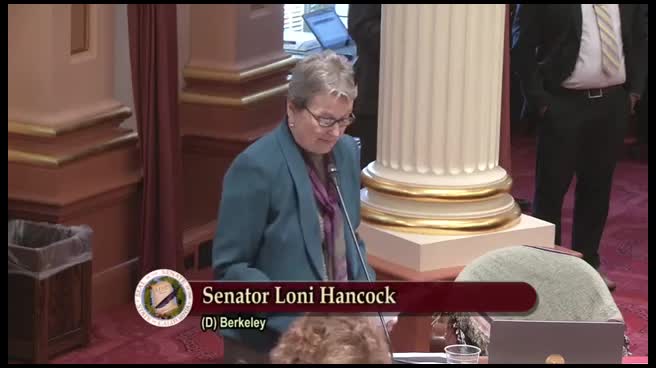 2MIN
Senate Floor
 1MIN
Assembly Floor
 15MIN
Assembly Standing Committee on Appropriations
Senate Floor
 25MIN