SB 1141: State highways: transfer to local agencies: pilot program.
- Session Year: 2015-2016
- House: Senate
- Latest Version Date: 2016-04-05
Existing law provides that the Department of Transportation has full possession and control of all state highways and associated property, and sets forth the powers and duties with respect to operation, maintenance, and improvement of state highways. Existing law authorizes the California Transportation Commission to exercise various powers and duties on transportation matters, including the allocation of certain transportation capital improvement funds available to the state.
This bill would require the department to participate in a pilot program over a 5-year period under which 2 counties, one in northern California and one in southern California, are may be selected to operate, maintain, and make improvements to all state highways, including freeways, in the affected county. The bill would require the department, with respect to those counties, for the duration of the pilot program, to convey all of its authority and responsibility over state highways in the county to the county or to a regional transportation agency that has jurisdiction in the county. The bill would require the commission to administer and oversee the pilot program and to select the county or counties that will participate participating in the program. program by January 1, 2018, from applications received, but would provide that participation of a county in the pilot program is voluntary. The bill would require certain moneys to be appropriated for these purposes as a block grant in the annual Budget Act to a participating county, as specified. The bill would authorize any cost savings realized by a participating county to be used by the county for other transportation priorities. The bill would require the participating counties to report to the Legislature upon the conclusion of the pilot program. The bill would provide that its provisions shall become inoperative on January 15, 2018, if the commission is unable to select at least one county to participate in the pilot program because no county has submitted an application to the commission.
Existing law provides that the Department of Transportation has full possession and control of all state highways and associated property, and sets forth the powers and duties with respect to operation, maintenance, and improvement of state highways. Existing law authorizes the California Transportation Commission to exercise various powers and duties on transportation matters, including the allocation of certain transportation capital improvement funds available to the state.
This bill would require the department to participate in a pilot program over a 5-year period under which 2 counties, one in northern California and one in southern California, are selected to operate, maintain, and make improvements to all state highways, including freeways, in the affected county. The bill would require the department, with respect to those counties, for the duration of the pilot program, to convey all of its authority and responsibility over state highways in the county to the county or to a regional transportation agency that has jurisdiction in the county. The bill would require the commission to administer and oversee the pilot program and to select the counties that will participate in the program. The bill would require certain moneys to be appropriated for these purposes as a block grant in the annual Budget Act to a participating county, as specified. The bill would authorize any cost savings realized by a participating county to be used by the county for other transportation priorities. The bill would require the participating counties to report to the Legislature upon the conclusion of the pilot program.
(a)The department shall participate in a pilot program over a five-year period under which two counties, one in northern California and one in southern California, shall may be selected pursuant to subdivision (b) to operate, maintain, and make improvements to all state highways, including freeways, in the affected county. The department, with respect to those counties, shall, for the duration of the pilot program, convey all of its authority and responsibility over state highways in the county to the county or to a regional transportation agency that has jurisdiction in the county. The pilot program shall commence no later than January 1, 2018.
(b)The commission shall administer and oversee the pilot program and shall, from applications received, select the county or counties that will participate in the program. program no later than January 1, 2018. The commission shall exercise the same level of oversight over expenditure of state highway resources in a participating county as it exercises over the department with respect to state highways in nonparticipating counties. Participation of a county in the pilot program is voluntary.
(c)If the commission is unable to select at least one county to participate in the pilot program by January 1, 2018, because no county has submitted an application to the commission, this section shall become inoperative on January 15, 2018.
(c)
(d)For the duration of the pilot program, moneys shall be appropriated as a block grant in the annual Budget Act to a participating county in an amount equivalent to federal and state funds otherwise to be expended by the department on the state highways in the county, including, among other things, funding for operations, maintenance, capital outlay support, the State Highway Operation and Protection Program, and the State Transportation Improvement Program. The commission, in consultation with the department, shall determine the applicable grant amounts for each participating county and shall submit its recommendations to the Governor and the Legislature.
(d)
(e)Any cost savings realized by a participating county, compared to comparable expenditures that otherwise would have been undertaken by the department on state highways in the county in the absence of the pilot program, may be used by the county for other transportation priorities consistent with eligible expenditures for the funding source involved, subject to approval by the commission.
(e)
(f)The participating counties shall report to the Legislature upon the conclusion of the pilot program, in the manner provided in Section 9795 of the Government Code.
(a)The department shall participate in a pilot program over a five-year period under which two counties, one in northern California and one in southern California, shall be selected to operate, maintain, and make improvements to all state highways, including freeways, in the affected county. The department, with respect to those counties, shall, for the duration of the pilot program, convey all of its authority and responsibility over state highways in the county to the county or to a regional transportation agency that has jurisdiction in the county. The pilot program shall commence no later than January 1, 2018.
(b)The commission shall administer and oversee the pilot program and shall, from applications received, select the counties that will participate in the program. The commission shall exercise the same level of oversight over expenditure of state highway resources in a participating county as it exercises over the department with respect to state highways in nonparticipating counties.
(c)For the duration of the pilot program, moneys shall be appropriated as a block grant in the annual Budget Act to a participating county in an amount equivalent to federal and state funds otherwise to be expended by the department on the state highways in the county, including, among other things, funding for operations, maintenance, capital outlay support, the State Highway Operation and Protection Program, and the State Transportation Improvement Program. The commission, in consultation with the department, shall determine the applicable grant amounts for each participating county and shall submit its recommendations to the Governor and the Legislature.
(d)Any cost savings realized by a participating county, compared to comparable expenditures that otherwise would have been undertaken by the department on state highways in the county in the absence of the pilot program, may be used by the county for other transportation priorities consistent with eligible expenditures for the funding source involved, subject to approval by the commission.
(e)The participating counties shall report to the Legislature upon the conclusion of the pilot program, in the manner provided in Section 9795 of the Government Code.
|
Date
|
Status
|
|---|---|
| Feb 18, 2016 | Introduced. Read first time. To Com. on RLS. for assignment. To print. |
| Feb 19, 2016 | From printer. May be acted upon on or after March 20. |
| Mar 3, 2016 | Referred to Com. on T. & H. |
| Mar 29, 2016 | Set for hearing April 19. |
| Apr 5, 2016 | From committee with author's amendments. Read second time and amended. Re-referred to Com. on T. & H. |
| Apr 20, 2016 | April 19 set for first hearing. Failed passage in committee. (Ayes 2. Noes 8. Page 3616.) Reconsideration granted. |
| Apr 20, 2016 | April 19 set for first hearing. Failed passage in committee. (Ayes 2. Noes 8.) Reconsideration granted. |
|
Date
|
Description
|
Location
|
Votes
|
|
|---|---|---|---|---|
| Apr 19, 2016 | [First] hearing set for [04-20-2016]: Failed passage in Committee. Reconsideration granted | Senate Standing Committee on Transportation and Housing |
Passed |
|
| Apr 19, 2016 | Do pass, but first be re-referred to the Committee on [Appropriations] | Senate Standing Committee on Transportation and Housing |
Failed |
This list shows positions taken on this bill by organizations on the date displayed, which is linked to the original source.
Positions by individuals are not included.
|
Organization
|
Position
|
Date
|
|---|---|---|
| Orange County Employees Association | ** Against | Apr 19, 2016 |
| Professional Engineers In California Government | ** Against | Apr 19, 2016 |
SENATE COMMITTEE ON TRANSPORTATION AND HOUSING
Senator Jim Beall, Chair
2015 - 2016 Regular
Bill No: Hearing Date: 4/19/2016
Author: | Moorlach | ||
Version: | 4/5/2016 | ||
Urgency: | No | Fiscal: | Yes |
Consultant: | Manny Leon | ||
SUBJECT:
DIGEST: This bill establishes a pilot program administered by the California Transportation Commission (CTC) to allow two counties to operate, maintain, and make improvements to the state highway system within their jurisdictions.
ANALYSIS:
Existing law:
- Provides that the State Department of Transportation (Caltrans) has full possession and control of all state highways and associated property and further sets forth the powers and duties with respect to operation, maintenance, and improvement of state highways.
- Authorizes the CTC to exercise various powers and duties on transportation matters, including the allocation of certain transportation capital improvement funds available to the state.
- Provides that county boards of supervisors have general supervision, management, and control of county highways within their jurisdictions.
This bill:
- Establishes a pilot program administered by the CTC to allow two counties, one northern and one southern, to operate, maintain, and make improvements to the state highway system within their jurisdictions, and additionally allows any cost savings generated under the pilot program to be used for other transportation projects, as specified.
- Requires Caltrans to release all of its authority and responsibility over the state highway system within the selected counties’ jurisdictions, as specified.
- Specifies that if no counties apply by January 1, 2018, the pilot program shall not go into effect.
COMMENTS:
- Purpose. The author notes, “The earliest predecessor of Caltrans was intended to create a state-wide system of roads, a responsibility deemed too daunting for an ad hoc coalition of local agencies. Now that California has a complete highway system, with no new state-wide traditional road projects underway, it is reasonable that some authority could be handed back to local agencies.” The author further asserts that “within Caltrans districts, the spread of funding and other resources may be inequitable. Handing control of and funding back to smaller agencies would ensure that local agencies are able to best serve their respective populations.”
- Is there a demand for local control? This bill allows a local county to participate in a pilot program to take over the state highway system within its jurisdictional boundaries. However, it is unclear whether, in a period of declining transportation revenues for both state and local programs coupled with an ongoing increase in transportation infrastructure and maintenance needs, that a local agency would willingly take on the additional responsibility of managing a portion of the state highway system. Additionally, county agencies lack the legal, programming, and engineering resources and expertise to effectively manage the state highway system. If a county was to participate in the pilot program, it is unclear whether the county would have to hire additional employees and/or purchase additional equipment to carry out the abovementioned functions. At the writing of this analysis, no county had provided the committee with an jexpressed interest in participating in this pilot program.
- Contracting out squared. This bill, in its current form, specifies that a county is required to apply to the pilot program, then subsequently authorizes a county or regional transportation agency (RTPA) to manage the state highway system over the five-year duration of the program. Being that RTPAs are responsible for programming a portion of state transportation revenues and many administer local sales tax measures that provide funding for highway improvements, RTPAs may arguably be better equipped to manage the state highway system. However, it is unclear whether a county entering into the pilot program — then turning around and contracting out responsibilities to an RTPA — is more efficient than the existing process. Furthermore, it is unclear if an RTPA would have the resources to take on additional responsibilities on top of administering its existing local transportation programs.
- Cost savings? This bill requires CTC, in consultation with Caltrans, to determine the necessary amount of funds to be allocated to a participating county in the form of an annual block grant. This bill also specifies that a participating county may use any generated cost savings for other relevant transportation priorities. However, the resources required to develop and administer this specific block grant, the potential need by a local agency to employ additional staff, and the potential need to purchase additional equipment are all unknown. Moreover, this bill is unclear on what becomes of state employees if a county elects to participate in the pilot program. Presumably, at the very minimum, the state would be responsible for the employment and salaries of Caltrans employees for a period of time during the pilot program’s implementation. Furthermore, federal law identifies Caltrans as the designated recipient of federal transportation funds. Yet, if a county was to participate in the pilot program specified in this bill, it is unclear how federal funds would be allocated to highway projects in that region. Would Caltrans still be responsible for administering funds from federal programs while the county would be managing the state highways?
FISCAL EFFECT: Appropriation: No Fiscal Com.: Yes Local: No
POSITIONS: (Communicated to the committee before noon on Wednesday,
April 13, 2016.)
SUPPORT:
None received
OPPOSITION:
Orange County Employees Association
Professional Engineers in California Government
-- END --
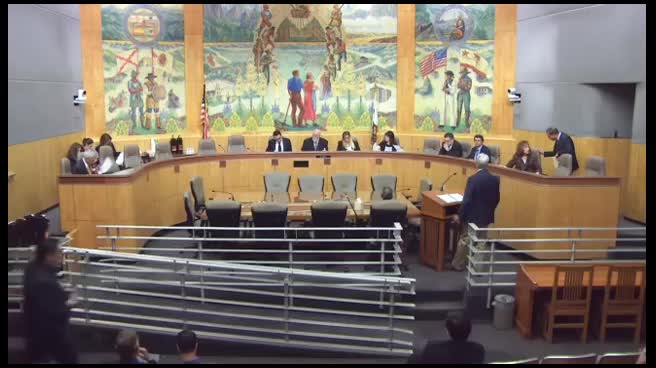
Discussed in Hearing
 12MIN
Senate Standing Committee on Transportation and Housing
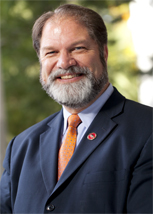
Bill Author
Bill Co-Author(s):