SB 1373: CalWORKs: welfare-to-work: supportive services.
- Session Year: 2015-2016
- House: Senate
- Latest Version Date: 2016-03-31
(1)Existing law requires each county to provide cash assistance and other social services to needy families through the California Work Opportunity and Responsibility to Kids (CalWORKs) program using federal Temporary Assistance to Needy Families block grant program, state, and county funds. Existing law generally requires a recipient of CalWORKs benefits to participate in welfare-to-work activities as a condition of eligibility for aid. Existing law requires that necessary supportive services be available to participants in welfare-to-work activities, including transportation costs and ancillary expenses, which include the cost of books, as provided in the welfare-to-work plan entered into between the county and the participant.
This bill would require that a standard allowance for transportation costs be advanced to a participant at the beginning of each month in an amount that is equal to the cost of a monthly pass for the county public transit system, or if a county does not have a public transit system, in the amount of $100 per month. The bill would also require that a participant who has been assigned to an educational activity in a postsecondary school full time, as defined by the school, receive a standard allowance of $500 for books and supplies, or $250 if the participant has been assigned to an educational activity part time, as defined by the school, adjusted annually as specified, specified. The bill would require the educational allowance to be paid at least 15 days before the start of the semester. The bill would authorize the participant to opt out of these standard allowances at any time and make a reimbursement claim for actual costs, and to submit this claim to the county by mail, in person, or or, if the county already has the technological capacity to do so, via the countys Internet Web site. By increasing the duties of counties administering these services, this bill would impose a state-mandated local program.
(2)Existing law continuously appropriates moneys from the General Fund to defray a portion of county costs under the CalWORKs program.
This bill would instead provide that the continuous appropriation would not be made for purposes of implementing the bill.
(3)The California Constitution requires the state to reimburse local agencies and school districts for certain costs mandated by the state. Statutory provisions establish procedures for making that reimbursement.
This bill would provide that, if the Commission on State Mandates determines that the bill contains costs mandated by the state, reimbursement for those costs shall be made pursuant to these statutory provisions.
(1)Existing law requires each county to provide cash assistance and other social services to needy families through the California Work Opportunity and Responsibility to Kids (CalWORKs) program using federal Temporary Assistance to Needy Families block grant program, state, and county funds. Existing law generally requires a recipient of CalWORKs benefits to participate in welfare-to-work activities as a condition of eligibility for aid. Existing law requires that necessary supportive services be available to participants in welfare-to-work activities, including transportation costs and ancillary expenses, which include the cost of books, as provided in the welfare-to-work plan entered into between the county and the participant.
This bill would require that a standard allowance for transportation costs be advanced to a participant at the beginning of each month in an amount that is equal to the cost of a monthly pass for the county public transit system, or if a county does not have a public transit system, in the amount of $100 per month. The bill would also require that a participant who has been assigned to an educational activity in a postsecondary school receive a standard allowance of $500 for books and supplies, adjusted annually as specified, at least 15 days before the start of the semester. The bill would authorize the participant to opt out of these standard allowances at any time and make a reimbursement claim for actual costs, and to submit this claim to the county by mail, in person, or via the countys Internet Web site. By increasing the duties of counties administering these services, this bill would impose a state-mandated local program.
(2)Existing law continuously appropriates moneys from the General Fund to defray a portion of county costs under the CalWORKs program.
This bill would instead provide that the continuous appropriation would not be made for purposes of implementing the bill.
(3)The California Constitution requires the state to reimburse local agencies and school districts for certain costs mandated by the state. Statutory provisions establish procedures for making that reimbursement.
This bill would provide that, if the Commission on State Mandates determines that the bill contains costs mandated by the state, reimbursement for those costs shall be made pursuant to these statutory provisions.
(a)Necessary supportive services shall be available to every participant in order to participate in the program activity to which he or she is assigned or to accept employment or the participant shall have good cause for not participating under subdivision (f) of Section 11320.3. As provided in the welfare-to-work plan entered into between the county and participant pursuant to this article, supportive services shall include all of the following:
(1)Child care.
(A)Paid child care shall be available to every participant with a dependent child in the assistance unit who needs paid child care if the child is 10 years of age or under, or requires child care or supervision due to a physical, mental, or developmental disability or other similar condition as verified by the county welfare department, or who is under court supervision.
(B)To the extent funds are available, paid child care shall be available to a participant with a dependent child in the assistance unit who needs paid child care if the child is 11 or 12 years of age.
(C)Necessary child care services shall be available to every former recipient for up to two years, pursuant to Article 15.5 (commencing with Section 8350) of Chapter 2 of Part 6 of Division 1 of Title 1 of the Education Code.
(D)A child in foster care receiving benefits under Title IV-E of the federal Social Security Act (42 U.S.C. Sec. 670 et seq.) or a child who would become a dependent child except for the receipt of federal Supplemental Security Income benefits pursuant to Title XVI of the federal Social Security Act (42 U.S.C. Sec. 1381 et seq.) shall be deemed to be a dependent child for the purposes of this paragraph.
(E)The provision of care and payment rates under this paragraph shall be governed by Article 15.5 (commencing with Section 8350) of Chapter 2 of Part 6 of Division 1 of Title 1 of the Education Code. Parent fees shall be governed by subdivisions (g) and (h) of Section 8263 of the Education Code.
(2)(A)Transportation costs, which shall be governed by regional market rates as determined in accordance with regulations established by the department.
(B)A standard allowance for transportation costs shall be issued in advance to a participant at the beginning of each month in an the amount that is equal to the cost of a monthly pass for the county public transit system. If a county does not have a public transit system, the participant shall receive of one hundred dollars ($100) per month. A participant is entitled to opt out of the standard allowance at any time and make a reimbursement claim for the actual costs of transportation, and may submit this claim to the county by mail, in person, or or, if the county already has the technological capacity to do so, via the countys Internet Web site.
(3)(A)Ancillary expenses, which shall include the cost of books, tools, clothing specifically required for the job, fees, and other necessary costs.
(B)A participant who has been assigned to an educational activity in a full time, as defined by the postsecondary school school, shall receive a standard allowance of five hundred dollars ($500) ($500). If the participant has been assigned to an educational activity part time, as defined by the postsecondary school, he or she shall receive a standard allowance of two hundred fifty dollars ($250). An allowance paid pursuant to this subparagraph shall be paid no later than 15 days before the start of the semester to ensure that the participant has the funds necessary to purchase books and supplies required by the educational institution. The standard allowance shall be adjusted annually for inflation according to the California Consumer Price Index. A participant is entitled to opt out of the standard allowance at any time and make a reimbursement claim for the actual costs of books and supplies, and may submit this claim to the county by mail, in person, or or, if the county already has the technological capacity to do so, via the countys Internet Web site.
(4)Personal counseling. A participant who has personal or family problems that would affect the outcome of the welfare-to-work plan entered into pursuant to this article shall, to the extent available, receive necessary counseling or therapy to help him or her and his or her family adjust to his or her job or training assignment.
(b)If provided in a county plan, the county may continue to provide case management and supportive services under this section to former participants who become employed. The county may provide these services for up to the first 12 months of employment to the extent they are not available from other sources and are needed for the individual to retain the employment.
SEC. 2.Notwithstanding the rulemaking provisions of the Administrative Procedure Act (Chapter 3.5 (commencing with Section 11340) of Part 1 of Division 3 of Title 2 of the Government Code), the department may implement this act through an all-county letter or similar instruction from the director. The all-county letter or similar instruction shall be issued no later than April 1, 2017.
SEC. 3.No appropriation pursuant to Section 15200 of the Welfare and Institutions Code shall be made for purposes of implementing this act.
SEC. 4.If the Commission on State Mandates determines that this act contains costs mandated by the state, reimbursement to local agencies and school districts for those costs shall be made pursuant to Part 7 (commencing with Section 17500) of Division 4 of Title 2 of the Government Code.
(a)Necessary supportive services shall be available to every participant in order to participate in the program activity to which he or she is assigned or to accept employment or the participant shall have good cause for not participating under subdivision (f) of Section 11320.3. As provided in the welfare-to-work plan entered into between the county and participant pursuant to this article, supportive services shall include all of the following:
(1)Child care.
(A)Paid child care shall be available to every participant with a dependent child in the assistance unit who needs paid child care if the child is 10 years of age or under, or requires child care or supervision due to a physical, mental, or developmental disability or other similar condition as verified by the county welfare department, or who is under court supervision.
(B)To the extent funds are available available, paid child care shall be available to a participant with a dependent child in the assistance unit who needs paid child care if the child is 11 or 12 years of age.
(C)Necessary child care services shall be available to every former recipient for up to two years, pursuant to Article 15.5 (commencing with Section 8350) of Chapter 2 of Part 6 of Division 1 of Title 1 of the Education Code.
(D)A child in foster care receiving benefits under Title IV-E of the federal Social Security Act (42 U.S.C. Sec. 670 et seq.) or a child who would become a dependent child except for the receipt of federal Supplemental Security Income benefits pursuant to Title XVI of the federal Social Security Act (42 U.S.C. Sec. 1381 et seq.) shall be deemed to be a dependent child for the purposes of this paragraph.
(E)The provision of care and payment rates under this paragraph shall be governed by Article 15.5 (commencing with Section 8350) of Chapter 2 of Part 6 of Division 1 of Title 1 of the Education Code. Parent fees shall be governed by subdivisions (g) and (h) of Section 8263 of the Education Code.
(2)(A)Transportation costs, which shall be governed by regional market rates as determined in accordance with regulations established by the department.
(B)A standard allowance for transportation costs shall be issued in advance to a participant at the beginning of each month in an amount that is equal to the cost of a monthly pass for the county public transit system. If a county does not have a public transit system, the participant shall receive one hundred dollars ($100) per month. A participant is entitled to opt out of the standard allowance at any time and make a reimbursement claim for the actual costs of transportation, and may submit this claim to the county by mail, in person, or via the countys Internet Web site.
(3)(A)Ancillary expenses, which shall include the cost of books, tools, clothing specifically required for the job, fees, and other necessary costs.
(B)A participant who has been assigned to an educational activity in a postsecondary school shall receive a standard allowance of five hundred dollars ($500) 15 days before the start of the semester to ensure that the participant has the funds necessary to purchase books and supplies required by the educational institution. The standard allowance shall be adjusted annually for inflation according to the California Consumer Price Index. A participant is entitled to opt out of the standard allowance at any time and make a reimbursement claim for the actual costs of books and supplies, and may submit this claim to the county by mail, in person, or via the countys Internet Web site.
(4)Personal counseling. A participant who has personal or family problems that would affect the outcome of the welfare-to-work plan entered into pursuant to this article shall, to the extent available, receive necessary counseling or therapy to help him or her and his or her family adjust to his or her job or training assignment.
(b)If provided in a county plan, the county may continue to provide case management and supportive services under this section to former participants who become employed. The county may provide these services for up to the first 12 months of employment to the extent they are not available from other sources and are needed for the individual to retain the employment.
SEC. 2.Notwithstanding the rulemaking provisions of the Administrative Procedure Act (Chapter 3.5 (commencing with Section 11340) of Part 1 of Division 3 of Title 2 of the Government Code), the department may implement this act through an all-county letter or similar instruction from the director. The all-county letter or similar instruction shall be issued no later than April 1, 2017.
SEC. 3.No appropriation pursuant to Section 15200 of the Welfare and Institutions Code shall be made for purposes of implementing this act.
SEC. 4.If the Commission on State Mandates determines that this act contains costs mandated by the state, reimbursement to local agencies and school districts for those costs shall be made pursuant to Part 7 (commencing with Section 17500) of Division 4 of Title 2 of the Government Code.
|
Date
|
Status
|
|---|---|
| Feb 19, 2016 | Introduced. To Com. on RLS. for assignment. To print. |
| Feb 22, 2016 | From printer. May be acted upon on or after March 23. |
| Feb 22, 2016 | Read first time. |
| Mar 3, 2016 | Referred to Com. on HUMAN S. |
| Mar 10, 2016 | Set for hearing March 29. |
| Mar 30, 2016 | From committee: Do pass as amended and re-refer to Com. on APPR. (Ayes 4. Noes 0. Page 3312.) (March 29). |
| Mar 30, 2016 | From committee: Do pass as amended and re-refer to Com. on APPR. (Ayes 4. Noes 0.) (March 29). |
| Mar 31, 2016 | Read second time and amended. Re-referred to Com. on APPR. |
| Apr 8, 2016 | Set for hearing April 18. |
| Apr 18, 2016 | April 18 hearing: Placed on APPR. suspense file. |
| May 20, 2016 | Set for hearing May 27. |
| May 27, 2016 | May 27 hearing: Held in committee and under submission. |
|
Date
|
Description
|
Location
|
Votes
|
|
|---|---|---|---|---|
| Apr 18, 2016 | Placed on suspense file | Senate Standing Committee on Appropriations |
Passed |
|
| Mar 29, 2016 | Do pass as amended, but first amend, and re-refer to the Committee on [Appropriations] | Senate Standing Committee on Human Services |
Passed |
This list shows positions taken on this bill by organizations on the date displayed, which is linked to the original source.
Positions by individuals are not included.
|
Organization
|
Position
|
Date
|
|---|---|---|
| California Alternative Payment Program Association | * Support | Mar 29, 2016 |
SENATE COMMITTEE ON HUMAN SERVICES
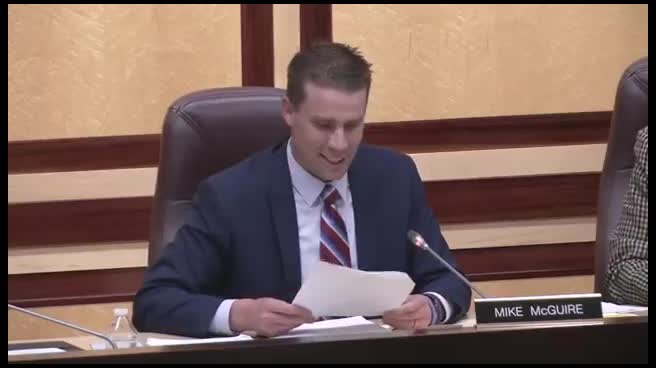
Senator McGuire, Chair
2015 - 2016 Regular
Bill No: SB 1373
Author: | Stone | ||
Version: | February 19, 2016 | Hearing Date: | March 29, 2016 |
Urgency: | No | Fiscal: | Yes |
Consultant: | Taryn Smith | ||
Subject: CalWORKs: welfare-to-work: supportive services
SUMMARY
This bill requires that a standard allowance for transportation costs be advanced to a Welfare-to-Work participant at the beginning of each month in an amount that is equal to the cost of a monthly pass for the county public transit system, or if a county does not have a public transit system, in the amount of $100 per month. It also requires that a participant who has been assigned to an educational activity in a postsecondary school receive a standard allowance of $500 for books and supplies, adjusted annually as specified, at least 15 days before the start of the semester. The bill authorizes the participant to opt out of these standard allowances at any time and make a reimbursement claim for actual costs, as specified.
ABSTRACT
Existing law:
- Establishes the federal Temporary Assistance for Needy Families (TANF) program, which permits states to implement the program under a state plan. (42 USC § 601 et seq.)
- Establishes in state law the California Work Opportunity and Responsibility to Kids (CalWORKs) program to provide cash assistance and other social services for low-income families through the federal Temporary Assistance for Needy Families (TANF) program. Under CalWORKs, each county provides assistance through a combination of state, county and federal TANF funds. (WIC 10530)
- Generally requires a recipient of CalWORKs benefits to participate in welfare-to-work activities as a condition of eligibility for aid. (WIC 11320 et. seq.)
- Requires that necessary supportive services be available to participants in welfare-to-work activities, including transportation costs and ancillary expenses, which include the cost of books, as provided in the welfare-to-work plan entered into between the county and participant (WIC 11323.2)
- Requires that payments for supportive services shall be advanced to the participant, wherever necessary, and when desired by the participant, so that the participant need not use his or her funds to pay for these services. (WIC 11323.4(a))
This bill:
- Requires that a standard allowance for transportation costs be advanced to a participant at the beginning of each month in an amount that is equal to the cost of a monthly pass for the county public transit system, or if a county does not have a public transit system, in the amount of $100 per month.
- Allows that a participant is entitled to opt out of the standard allowance at any time and make a reimbursement claim for the actual costs of transportation, and may submit this claim to the county by mail, in person, or via the county’s Internet Web site.
- Requires that a participant who has been assigned to an educational activity in a postsecondary school receive a standard allowance of $500 for books and supplies, adjusted annually as specified, at least 15 days before the start of the semester.
- Requires that the standard allowance be adjusted annually for inflation according to the California Consumer Price Index.
- Authorizes the participant to opt out of these standard allowances at any time and make a reimbursement claim for actual costs, and to submit this claim to the county by mail, in person, or via the county’s Internet Web site.
- Authorizes CDSS to implement this act through an all-county letter or similar instruction from the director no later than April 1, 2017.
FISCAL IMPACT
This bill has not been analyzed by a fiscal committee.
BACKGROUND AND DISCUSSION
Purpose of the bill:
According to the author, CalWORKs recipients who are participating in Welfare-to-Work (WTW) activities sometimes have to “dip into their fixed incomes” to pay for transportation costs to and from their WTW activities. According to the author, “It can be weeks and sometimes months before ancillary payments are issued to pay for the books required by college instructors.” SB 1373 would facilitate advance payments to WTW participants for their transportation and textbook costs.
CalWORKs
California has the highest poverty rate in the nation – just under one-quarter of residents are living at or below the federal poverty level (FPL) according to the national Supplemental Poverty Measure. According to California Public Policy Institute, 23.9% of California’s children were living in poverty in 2013. These families earn no more than $20,160 per year for a family of three. During and after the Great Recession, California saw growing rates of childhood deep poverty – those living below 50 percent of the federal poverty line. One of California’s most essential anti-poverty strategies is the CalWORKs program, which provides cash assistance to approximately 540,000 families – including more than 1 million children, according to 2014 federal data.
CalWORKs implements the federal TANF program in California. In addition to temporary cash assistance to meet basic family needs, CalWORKs provides education, employment and training programs. CDSS is the designated state agency responsible for program supervision at the state level. The counties are responsible for administering the caseloads at the local level. The CalWORKs program is funded with a mix of federal, state, and county funds.
State law provides for a cumulative 48-month lifetime limit on cash aid for adults. During those 48 months, adults may receive a total of 24 months of Welfare-to-Work (WTW) services and activities. WTW activities include subsidized and unsubsidized employment, community service, adult basic education, community college, job skills, training, mental health counseling, substance abuse treatment and other activities necessary to assist recipients in obtaining employment. Once the 24 months of WTW activities have been exhausted, adults must meet the stricter federal work participation requirements (20, 30, or 35 hours weekly, depending on family composition) unless they are exempt or receive an extension.
In order to be eligible for CalWORKs, families must meet income and asset tests. In addition, children must be deprived of parental support and care due to the incapacity, death or absence of apparent or unemployment of the principal wage-earner. Persons fleeing to avoid prosecution, custody or confinement after conviction of a felony are not eligible for CalWORKs. Per the 2016-2017 Governor’s budget, the average monthly grant for a CalWORKs household is $497.35 and the maximum aid payment for a family of three is $704, or 42 percent of FPL.
Supportive Services for WTW Participants
Under current law, payments for supportive services (including costs for textbooks and transportation) “shall be advanced to the participant, wherever necessary, and when desired by the participant, so that the participant need not use his or her funds to pay for these services.” Expenses for transportation can include but are not limited to gas for a vehicle, a bus pass, taxi fare, parking costs, etc., necessary to complete WTW activities. Ancillary services are books, tools and other expenses related to welfare-to-work activities. These expenses are reimbursed at the actual costs and there is no cap. While SB 1373 doesn’t institute a cap, it would provide upfront funds and also allow recipient households to be reimbursed for costs exceeding those upfront costs.
CDSS activity reports show there were 162,617 WTW households in January 2016. Of those households, 56,575 received assistance for transportation and 13,778 received assistance for ancillary services.
According to the sponsor and the department, there is no statewide standard for requesting, processing and issuing advance payments for supportive services. Additionally, there is no data on how often such advance payments are made or the dollar amount paid.
Related legislation:
AB 492 (Gonzalez and Gomez, 2016) would provide diaper-needs benefit in the amount of $50.00 per month for diapers for every child two years of age or younger enrolled in child care.
COMMENTS
The author requests the following amendments:
Amendment #1:
In order to simplify and make uniform the advance for transportation costs:
11323.2(a)(2)(B) A standard allowance for transportation costs shall be issued in advance to a participant at the beginning of each month in an amount that is equal to the cost of a monthly pass for the county public transit system. If a county does not have a public transit system, the participant shall receive of one hundred dollars ($100) per month. A participant is entitled to opt out of the standard allowance at any time and make a reimbursement claim for the actual costs of transportation, and may submit this claim to the county by mail, in person, or via the county’s Internet Web site if the county already has the technological capacity to do so.
Amendment #2:
In order to differentiate payments for full-time versus part-time students:
11322.2 (a)(3) (B) A participant who has been assigned to an educational activity full-time as defined by the in a postsecondary school shall receive a standard allowance of five hundred dollars ($500) and $250 for part-time student as defined by the postsecondary school no later than 15 days before the start of the semester to ensure that the participant has the funds necessary to purchase books and supplies required by the educational institution. The standard allowance shall be adjusted annually for inflation according to the California Consumer Price Index. A participant is entitled to opt out of the standard allowance at any time and make a reimbursement claim for the actual costs of books and supplies, and may submit this claim to the county by mail, in person, or via the county’s Internet Web site, if the county already has the capacity to do so.
POSITIONS
Support:
Coalition of Welfare Rights Organizations (Sponsor)
Western Center on Law and Poverty (Sponsor)
Courage Campaign
Food for People
National Association of Social Workers
Oppose:
None received.
-- END --
SENATE COMMITTEE ON
Senator Ricardo Lara, Chair
2015 - 2016 Regular Session
SB 1373 (Stone) - CalWORKs: welfare-to-work: supportive services
Version: | Policy Vote: |
Urgency: | Mandate: |
Hearing Date: April 18, 2016 | Consultant: |
This bill meets the criteria for referral to the Suspense File.
Bill Summary:
SB 1373 would require a standard allowance of $100 per month for transportation costs to be advanced to CalWORKs welfare-to-work (WTW) participants at the beginning of each month, as specified. This bill would additionally require a standard allowance of $500 for books and supplies to participants assigned to an educational activity full time, and would require the standard allowance to be adjusted annually for inflation, as specified.
Fiscal Impact:
- Transportation standard allowance: Major ongoing increase in CalWORKs supportive services expenditures in the tens of millions of dollars annually from the CalWORKs Single Allocation (Federal Funds/General Fund) for transportation costs, based on the difference between the $100 monthly standard allowance and the average monthly transportation cost of $87 for 66,000 current participants, as well as an estimated increase in the current utilization rate of 57 percent under advance payment in lieu of reimbursement for these costs. To the extent the Single Allocation would not have been fully expended, the costs imposed by this bill would be funded by a combination of unspent federal TANF funds that otherwise would have been reallocated and carried forward to future years, and unspent funds that would have reverted to the General Fund. Any costs expended above the Single Allocation would be borne entirely by the General Fund.
- Book/supplies standard allowance: Future ongoing increase in CalWORKs supportive services expenditures for the specified ancillary services in the millions of dollars annually from the CalWORKs Single Allocation (Federal Funds/General Fund). While the average cost of books and supplies is estimated to be comparable to the proposed standard allowance, to the extent the requirement to provide a standard allowance in advance results in greater utilization (current rate is less than 12 percent) of this supportive service currently serving 15,000 participants than through the existing reimbursement process, could result in additional increases in expenditures.
- Annual adjustment by the California CPI: Ongoing future annual increases potentially in the millions of dollars. As drafted, it is unclear whether the annual adjustment is to be applied only to the standard allowance for books/supplies or additionally to the transportation allowance. For context, a 2 percent adjustment on the existing transportation standard allowance of $100 would increase costs at the current utilization rate by nearly $1.6 million.
- CalWORKs program impact: Potential reduction in sanction rates and improvement in work participation rates to the extent the provision of necessary supportive services are made available and provided timely to a greater number of CalWORKs WTW participants.
- County administration: Potentially significant increase in county administration costs, potentially state-reimbursable (General Fund) to the extent the mandate imposed on counties to provide advance payment to all participants, irrespective of need, as well as to allow participants to choose the method of submitting reimbursement claims results in additional workload, resource needs, and changes to existing reimbursement claim processes. As there is currently no statewide standard for accepting, processing, and issuing advance payments, the administrative impact to each county could vary widely.
Background:
Existing state law establishes the California Work Opportunity and Responsibility to Kids (CalWORKs) program to provide cash assistance and other social services to low-income families through the federal Temporary Assistance for Needy Families (TANF) program. CalWORKs program costs are funded through a combination of federal TANF block grant funds, state, and county funds.
Under existing law, necessary supportive services are required to be made available to participants engaged in welfare-to-work activities, including transportation costs and ancillary expenses, which include the cost of books, tools, clothing specifically required for the job, fees, and other necessary costs, as provided in the welfare-to-work plan entered into between the county and the participant. (WIC § 11323.2(a)(2)-(3).)
Existing law requires payments for supportive services to be advanced to a participant wherever necessary, and when desired by the participant, so the participant need not use his or her own funds to pay for these services. (WIC § 11323.4(a).)
Proposed Law:
This bill would require a county to provide a standard allowance of $100 per month for transportation costs to be advanced to CalWORKs welfare-to-work participants at the beginning of each month. Additionally, this bill:
- Allows a participant to opt out of the standard allowance for transportation costs at any time and make a reimbursement claim for the actual costs of transportation, and may submit this claim to the county by mail, in person, or if the county already has the technological capacity to do so, via the county’s internet website.
- Requires a participant who has been assigned to an educational activity full time, as defined by the postsecondary school, to receive a standard allowance of $500 per semester for ancillary expenses. For participants assigned to educational activities part time, as defined by the secondary school, the bill requires a standard allowance of $250 per semester to the participant.
- Requires the ancillary expenses standard allowance to be paid no later than 15 days before the start of the semester to ensure the participant has the funds necessary to purchase books and supplies required by the educational institution.
- Allows a participant to opt out of the standard allowance for books and supplies at any time and make a reimbursement claim for the actual costs of books and supplies, and may submit the claim to the county by mail, in person, or, if the county already has the technological capacity to do so, via the county’s internet website.
- Requires the standard allowance to be adjusted annually for inflation by the California Consumer Price Index.
- Authorizes the Department of Social Services (DSS) to implement the provisions of the bill through an all-county letter or similar instructions, and requires the letter or instruction to be issued no later than April 1, 2017.
Staff Comments:
By advancing a standard allowance for transportation costs and for ancillary services to CalWORKs WTW participants assigned to educational activities, as well as adjusting the standard allowances annually for inflation, this bill could result in significant increases in CalWORKs employment services expenditures in the tens of millions of dollars annually. Within the Single Allocation, counties have the discretion to expend funds as they deem necessary to best meet the needs of their CalWORKs participants and are not required to spend a specified amount for services, child care and administration.
To the extent the Single Allocation would not have been fully expended under the provisions of this bill, the additional costs imposed by this bill would be funded by a combination of unspent federal TANF funds that otherwise would have been reallocated and carried forward to future years, and a portion would be funded with unspent funds that would have reverted to the General Fund. Alternatively, to the extent counties fully expend their allocations, any additional costs would be borne by the General Fund.
CalWORKs employment services are administered locally by county welfare departments and funded through the CalWORKs Single Allocation. The Quarterly CalWORKs Report, State Fiscal Year 2015-16, July-September, released in March 2016, indicates the Single Allocation for FY 2015-16 of $2.02 billion. CalWORKs employment services serve individuals in the CalWORKs WTW program, and include a variety of work, educational, and training activities, including the transportation and ancillary services addressed in this measure. Based on prior fiscal year 4th quarter data from Quarterly CalWORKs Reports, unspent funds from the Single Allocation ranged from $286 million in FY 2013-14 to $679 million in FY 2014-15.
There is currently no specified process mandated on counties for accepting, processing, and issuing advance payments for supportive services. Additionally, the number of participants that request advance payment and the amount of advance payments issued to participants is not tracked. By requiring counties to provide advance payment to all participants, irrespective of need, within specified time periods, as well as requiring counties to allow participants to choose the method of submitting reimbursement for claims, this bill could potentially result in significant increases in county administration costs, which are potentially state-reimbursable (General Fund), for additional workload and/or resources or other operational needs to accommodate changes to existing reimbursement claim processes. As there is currently no statewide standard for the processing of these payments, the administrative impact to each county could vary widely.
Recommended amendments: As drafted, it is unclear whether the bill requires the annual adjustment for inflation based on the California CPI to apply solely to the standard allowance for books and supplies, or if the annual adjustment is to be applied to the standard allowance for transportation costs as well. Staff recommends clarifying language to clearly identify to which standard allowance the CPI is to be applied: ancillary services, transportation costs, or both.
-- END --
Discussed in Hearing
 3MIN
Senate Standing Committee on Human Services
Bill Author

Bill Co-Author(s):