SB 1454: Pharmacy.
- Session Year: 2015-2016
- House: Senate
- Latest Version Date: 2016-03-31
Existing law, the Pharmacy Law, provides for the licensure and regulation of pharmacists and pharmacies by the California State Board of Pharmacy. Existing law imposes requirements on audits of pharmacy services provided to beneficiaries of a health benefit plan, as specified.
This bill would prohibit a pharmacy benefit manager, as defined, from requiring that a pharmacist or pharmacy provide reimbursement to the pharmacy benefit manager for the cost of any drug dispensed to a patient that was properly adjudicated, as defined, except upon a showing of fraud or malfeasance. The bill would require any improper reimbursement made under those provisions during a specified 5-year period to be refunded to the pharmacist or pharmacy, as specified.
The Pharmacy Law establishes in the Department of Consumer Affairs the California State Board of Pharmacy, which consists of 13 members.
This bill would make a nonsubstantive change to these provisions.
The Pharmacy Law establishes in the Department of Consumer Affairs the California State Board of Pharmacy, which consists of 13 members.
This bill would make a nonsubstantive change to these provisions.
For purposes of this chapter, the following definitions shall apply:
(a)Improper reimbursement means a pharmacy benefit manager has requested and received reimbursement from a pharmacist or pharmacy in its network for the cost of a drug dispensed to a patient that was previously authorized and properly adjudicated, in violation of subdivision (a) of Section 4451.
(b)Pharmacist or pharmacy has the same meaning as set forth in Chapter 9 (commencing with Section 4000), and is a person or entity located in this state that participates in the network of a pharmacy benefit manager.
(c)Pharmacy benefit manager means an entity that performs pharmacy benefits management.
(d)Pharmacy benefits management means the administration or management of prescription drug benefits, including, but not limited to, the procurement of prescription drugs at a negotiated rate for dispensation within this state, the processing of prescription drug claims, and the administration of payments related to prescription drug claims.
(e)Properly adjudicated means the pharmacist or pharmacy was explicitly authorized by the pharmacy benefit manager to dispense a drug to a patient through its network, and the pharmacist or pharmacy was entitled to the payment that was provided, at that point in time, by the pharmacy benefit manager, pursuant to that authorization.
(f)Reimbursement means the amount that was previously paid by a pharmacy benefit manager to a contracted pharmacist or pharmacy for the cost of a drug dispensed to a patient that was authorized to be dispensed as a covered drug and properly adjudicated.
4451.(a)Notwithstanding any other law, a pharmacy benefit manager is prohibited from requiring that a pharmacist or pharmacy provide reimbursement to the pharmacy benefit manager for the cost of any drug dispensed to a patient that was properly adjudicated, except upon a showing of fraud or malfeasance.
(b)No contract entered into on or after January 1, 2017, between a pharmacy benefit manager and a pharmacist or pharmacy shall include a provision that conflicts with the prohibition set forth in subdivision (a).
4452.(a)Notwithstanding any other law, a pharmacy benefit manager that administers pharmacy benefits management in this state that has requested and received any improper reimbursements from a pharmacist or pharmacy pursuant to the prohibition set forth in subdivision (a) of Section 4451 shall refund that payment to the pharmacist or pharmacy.
(b)Subdivision (a) shall apply only to those improper reimbursements that were received by the pharmacy benefit manager between January 1, 2012, and January 1, 2017.
SECTION 1.Section 4001 of the Business and Professions Code is amended to read:4001.(a)There is in the Department of Consumer Affairs a California State Board of Pharmacy in which the administration and enforcement of this chapter is vested. The board is composed of 13 members.
(b)The Governor shall appoint seven competent pharmacists who reside in different parts of the state to serve as members of the board. The Governor shall appoint four public members, and the Senate Committee on Rules and the Speaker of the Assembly shall each appoint a public member who shall not be a licensee of the board, any other board under this division, or any board referred to in Section 1000 or 3600.
(c)At least five of the seven pharmacist appointees to the board shall be pharmacists who are actively engaged in the practice of pharmacy. Additionally, the membership of the board shall include at least one pharmacist representative from each of the following practice settings: an acute care hospital, an independent community pharmacy, a chain community pharmacy, and a long-term health care or skilled nursing facility. The pharmacist appointees shall also include a pharmacist who is a member of a labor union that represents pharmacists. For the purposes of this subdivision, a chain community pharmacy means a chain of 75 or more stores in California under the same ownership, and an independent community pharmacy means a pharmacy owned by a person or entity who owns no more than four pharmacies in California.
(d)Members of the board shall be appointed for a term of four years. No person shall serve as a member of the board for more than two consecutive terms. Each member shall hold office until the appointment and qualification of his or her successor or until one year shall have elapsed since the expiration of the term for which the member was appointed, whichever first occurs. Vacancies occurring shall be filled by appointment for the unexpired term.
(e)Each member of the board shall receive a per diem and expenses as provided in Section 103.
(f)This section shall remain in effect only until January 1, 2017, and as of that date is repealed, unless a later enacted statute, that is enacted before January 1, 2017, deletes or extends that date. Notwithstanding any other provision of law, the repeal of this section renders the board subject to review by the appropriate policy committees of the Legislature.
(a)There is in the Department of Consumer Affairs a California State Board of Pharmacy in which the administration and enforcement of this chapter is vested. The board consists is composed of 13 members.
(b)The Governor shall appoint seven competent pharmacists who reside in different parts of the state to serve as members of the board. The Governor shall appoint four public members, and the Senate Committee on Rules and the Speaker of the Assembly shall each appoint a public member who shall not be a licensee of the board, any other board under this division, or any board referred to in Section 1000 or 3600.
(c)At least five of the seven pharmacist appointees to the board shall be pharmacists who are actively engaged in the practice of pharmacy. Additionally, the membership of the board shall include at least one pharmacist representative from each of the following practice settings: an acute care hospital, an independent community pharmacy, a chain community pharmacy, and a long-term health care or skilled nursing facility. The pharmacist appointees shall also include a pharmacist who is a member of a labor union that represents pharmacists. For the purposes of this subdivision, a chain community pharmacy means a chain of 75 or more stores in California under the same ownership, and an independent community pharmacy means a pharmacy owned by a person or entity who owns no more than four pharmacies in California.
(d)Members of the board shall be appointed for a term of four years. No person shall serve as a member of the board for more than two consecutive terms. Each member shall hold office until the appointment and qualification of his or her successor or until one year shall have elapsed since the expiration of the term for which the member was appointed, whichever first occurs. Vacancies occurring shall be filled by appointment for the unexpired term.
(e)Each member of the board shall receive a per diem and expenses as provided in Section 103.
(f)This section shall remain in effect only until January 1, 2017, and as of that date is repealed, unless a later enacted statute, that is enacted before January 1, 2017, deletes or extends that date. Notwithstanding any other provision of law, the repeal of this section renders the board subject to review by the appropriate policy committees of the Legislature.
|
Date
|
Status
|
|---|---|
| Feb 19, 2016 | Introduced. To Com. on RLS. for assignment. To print. |
| Feb 22, 2016 | From printer. May be acted upon on or after March 23. |
| Feb 22, 2016 | Read first time. |
| Mar 10, 2016 | Referred to Com. on RLS. |
| Mar 31, 2016 | From committee with author's amendments. Read second time and amended. Re-referred to Com. on RLS. |
| Apr 7, 2016 | Re-referred to Com. on B., P. & E.D. |
| Apr 8, 2016 | Set for hearing April 18. |
| Apr 19, 2016 | April 18 set for first hearing canceled at the request of author. |
This list shows positions taken on this bill by organizations on the date displayed, which is linked to the original source.
Positions by individuals are not included.
SENATE COMMITTEE ON
BUSINESS, PROFESSIONS AND ECONOMIC DEVELOPMENT
Senator Jerry Hill, Chair
2015 - 2016 Regular
Bill No: SB 1454 Hearing Date: April 18, 2016
Author: | Stone | ||
Version: |
| ||
Urgency: | Fiscal: | ||
Consultant: | |||
Subject: Pharmacy
SUMMARY:
Prohibits a pharmacy benefits manager (PBM) from requiring reimbursement from pharmacists or pharmacies for certain payments, as specified; authorizes reimbursement to a pharmacy or pharmacist for prior year payments; and prohibits any future contract provisions that conflict with this bill.
Existing law:
- Defines a “pharmacy audit” as an audit, either onsite or remotely, of any records of a pharmacy conducted by or on behalf of a carrier or a BPM, or a representative thereof, for prescription drugs that were dispensed by that pharmacy to beneficiaries of a health benefit plan pursuant to a contract with the health benefit plan or the issuer or administrator thereof. “Pharmacy audit” does not include a concurrent review or desk audit that occurs within three business days of transmission of a claim, or a concurrent review or desk audit where no chargeback or recoupment is demanded. (Business and Professions Code (BPC) § 4430)
- Defines a “PBM” as a person, business, or other entity that, pursuant to a contract or under an employment relationship with a carrier, health benefit plan sponsor, or other third-party payer, either directly or through an intermediary, manages the prescription drug coverage provided by the carrier, plan sponsor, or other third-party payer, including, but not limited to, the processing and payment of claims for prescription drugs, the performance of drug utilization review, the processing of drug prior authorization requests, the adjudication of appeals or grievances related to prescription drug coverage, contracting with network pharmacies, and controlling the cost of covered prescription drugs. (BPC § 4430)
- Specifies terms under which an entity may be compensated for an audit.
(BPC § 4433) - Establishes requirements for an audit, including prior notification, delegation of clinical judgment, appropriate evidence, appeals procedures, and reimbursement parameters. (BPC §§ 4434 – 4440)
This bill:
- Defines “improper reimbursement” to means a PBM has requested and received reimbursement from a pharmacist or pharmacy in its network for the cost of a drug dispensed to a patient that was previously authorized and properly adjudicated, as specified.
- Defines a “PBM” as an entity that performs pharmacy benefits management.
- Defines “pharmacy benefits management” to mean the administration or management of prescription drug benefits, including, but not limited to, the procurement of prescription drugs at a negotiated rate for dispensation within this state, the processing of prescription drug claims, and the administration of payments related to prescription drug claims.
- Defines “properly adjudicated” to mean that the pharmacist or pharmacy was explicitly authorized by the PBM to dispense a drug to a patient through its network, and the pharmacist or pharmacy was entitled to the payment that was provided, at that point in time, by the PBM, pursuant to that authorization.
- Prohibits, regardless of existing law, a PBM from requiring that a pharmacist or pharmacy provide reimbursement to the PBM for the cost of any drug dispensed to a patient that was properly adjudicated, except upon a showing of fraud or malfeasance.
- Prohibits a contract entered into on or after January 1, 2017, between a PBM and a pharmacist or pharmacy, from including a provision that conflicts with the prohibition set forth in Item # 5), above.
- Requires, regardless of existing law, a PBM to refund any improper reimbursements received between January 1, 2012 and January 1, 2017.
FISCAL EFFECT:
This bill is keyed “nonfiscal” by the Legislative Counsel.
COMMENTS:
- Purpose. This bill is sponsored by the Author. According to the Author’s office, “Currently, there is an audit system in place between pharmacists and PBMs for certain types of issues, ranging from clerical oversight to fraud and abuse. Senator Stone does not believe that the audit system takes into account situations where a pharmacist has dispensed a drug that has been properly adjudicated through an online process with a PBM. SB 1454 would give pharmacists a far more fair playing field with PBMs by stating that it would prohibit a PBM from requiring that a pharmacist provide reimbursement to the PBM for the cost of any drug dispensed to a patient that was properly adjudicated, except upon a showing of fraud or malfeasance.”
- Regulation of PBMs. PBMs are third-party administrators of prescription drug programs. PBMs work on behalf of payors to control prescription drug costs by various means, including managing formularies, processing authorizations and payments, negotiating prices with drug manufacturers, and contracting with pharmacies and pharmacists.
While various federal laws govern PBM actions generally, such as Medicare and Medicaid fraud and abuse statutes and anti-kickback rules, there is no single federal entity responsible for regulating the business as a whole. State regulation varies; some states do not regulate PBMs at all, others broadly (Iowa requires that PBMs “shall perform the pharmacy benefits manager’s duties exercising good faith and fair dealing in the performance of its contractual obligations,” Iowa Code Ann. § 510B.4), and others, such as California, specify terms only for certain business practices.
- PBM audits. Payments from PBMs to pharmacies are determined by contract, and audits are standard industry practice to validate data entry and documentation to ensure pharmacies are meeting regulatory and contractual requirements. While a pharmacist may get immediate authority from a PBM at the point of sale for dispensing a drug (the term for this first approval is “adjudication”), the typical process for finalizing payments includes an audit and an appeals process. One major PBM states in its standard contract that, “All claims are subject to audit regardless of whether or not a claim successfully adjudicates, and PBM reserves the right to review (i.e., audit) any claim.”
PBMs perform automated concurrent reviews of drugs furnished, less formal “desk audits,” and the more formal audits covered by California law. California law requires that pharmacies get prior written notice, establishes time periods for the audit, sets reporting requirements, provides for an appeals process, and states that reimbursements may not be compelled until after the appeals process is completed.
- Prior Legislation. SB 1195 (Price, Chapter 705, Statutes of 2012) required a contract that is issued, amended, or renewed on or after January 1, 2013, between a pharmacy and a carrier or a PBM to provide pharmacy services to beneficiaries of a health benefit plan to comply with standards and audit requirements as specified in this bill. Includes provisions relating to the following: commissions or financial incentives, recoupment of funds for clerical errors, confidentiality of information, scheduling of audits, permissible documents for purposes of audits, timeframes of audits, standards for submission of preliminary and final reports, validation of claims and orders, and requirements for audit appeals.
- Arguments in Opposition. CVS Health, Express Scripts, and the Pharmaceutical Care Management Association write, “The auditing of payments to pharmacies is common both in public and private pharmaceutical benefit programs to combat fraud, waste and abuse. These audits have uncovered tens of millions of dollars in waste, fraud and abuse. SB 1454 will effectively destroy the value of audits. More troubling, it will require PBM clients to repay tens of millions back to pharmacists for valid recoupments since 2012.
“As a practical matter, this bill will prevent PBM’s from recouping incorrect, but not fraudulent payments– a process that in 2015 resulted in $98 million in savings in drug costs for the clients of one PBM alone.
“As the result of annual audits of all Medi-Cal providers, the California Department of Health Care Services estimates that there are payment errors 6.05% of the time at a cost of $1.25 billion a year. Non-fraud payments account for over half of those errors -- 3.77% of the payments for an estimated cost of $780 million a year. For the same reason, clients demand that PBMs audit their payments to pharmacies and seek recoupment of payment errors.
“Each year PBMs combined, process billions of pharmacy claims. Government and Commercial payors require, by contract, that their PBM will have oversight and quality assurance checks of claims adjudicating in the pharmacy network. Not surprisingly, some errors are missed. After-the-fact audits are used to uncover those errors. Here are just two examples of non-fraud errors:
- A pharmacy dispenses and is paid, the patient fails to pick up the prescription and then the pharmacy fails to reverse the billing. The rate of primary non-adherence, that is, the percentage of first-time prescriptions abandoned by patients (and thus not picked up at pharmacies), can range as high as 30 percent among some classes of medication, according to recent research.
- A pharmacy dispenses a drug that is available over-the-counter at a cost much higher than available on the shelves.
“The author’s office argues that it is simply not fair to pharmacists to force them to pay back to the PBM for drugs that they have already provided to a patient. But this is not a new issue. Under legislation, sponsored by the California Pharmacists Association, passed just four years ago (SB 1195, Price), the auditing of payments to pharmacists is strictly regulated. Among other things, the bill creates an appeals process to allow pharmacists to make the case that the recoupment is unfair. In fact, the law specifically deals with the issue by not allowing a recoupment until the appeal process had been completed:
B&P Sec 4438 (c) An entity conducting a pharmacy audit, a carrier, a health benefit plan sponsor, or other third-party payer, or any person acting on behalf of those entities, shall not attempt to make chargebacks or seek recoupment from a pharmacy, or assess or collect penalties from a pharmacy, until the time period for filing an appeal to a final audit report has passed, or until the appeal process has been exhausted, whichever is later.
“For these reasons, the above referenced entities respectfully urge a NO vote on SB 1454.”
- Policy Issues. This bill invalidates the audit process by stating that payments are final at the point in which a claim is initially approved, except in the case of fraud or malfeasance. “Malfeasance” is not defined and other definitions in this bill conflict with existing definitions of the same terms.
Although the Author states that this bill will present pharmacists with “a far more fair playing field,” there is no indication of how the current audit process fails pharmacists. This bill could potentially impede countless contracts with PBMs and nullify existing law absent evidence of any specific harm caused by the current statutory scheme.
SUPPORT AND OPPOSITION:
Support: None on file as of April 12, 2016.
Opposition:
CVS Health
Express Scripts
Pharmaceutical Care Management Association
-- END --
Discussed in Hearing
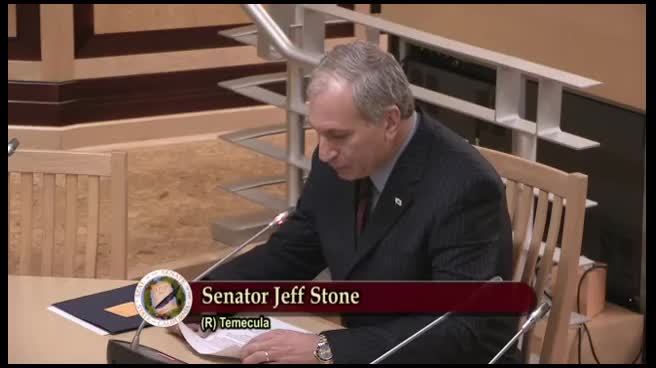 3MIN
Senate Standing Committee on Business, Professions and Economic Development
Bill Author

Bill Co-Author(s):