SB 1472: Los Angeles County Metropolitan Transportation Authority.
- Session Year: 2015-2016
- House: Senate
- Latest Version Date: 2016-06-01
Existing law creates the Los Angeles County Metropolitan Transportation Authority with specified powers and duties relative to transportation planning, programming, and operations in the County of Los Angeles. The authority is governed by a 14-member board of directors, including the Mayor of the City of Los Angeles, 2 public members and one Los Angeles city council member appointed by the mayor, 4 members appointed from the other cities in the county, the 5 members of the board of supervisors, and one nonvoting member appointed by the Governor.
This bill would expand the board of directors to 16 22 members by adding 2 members that reside in the County of Los Angeles, one member appointed by the Speaker of the Assembly and one member appointed by the Senate Committee on Rules Rules, selected from a list of candidates submitted by the Los Angeles County City Selection Committee, and would prohibit these members from residing in the same city as another member of the authority, as specified. The bill would instead provide for the appointment of 8 members from the other cities in the county, 2 from each sector, as prescribed. The bill would also add as members of the board of directors the Mayor of the City of Long Beach and one additional public member.
By requiring the board membership to be expanded, the bill would thereby impose a state-mandated local program.
The California Constitution requires the state to reimburse local agencies and school districts for certain costs mandated by the state. Statutory provisions establish procedures for making that reimbursement.
This bill would provide that, if the Commission on State Mandates determines that the bill contains costs mandated by the state, reimbursement for those costs shall be made pursuant to these statutory provisions.
Existing law creates the Los Angeles County Metropolitan Transportation Authority with specified powers and duties relative to transportation planning, programming, and operations in the County of Los Angeles. The authority is governed by a 14-member board of directors, including the Mayor of the City of Los Angeles, 2 public members and one Los Angeles city council member appointed by the mayor, 4 members appointed from the other cities in the county, the 5 members of the board of supervisors, and one nonvoting member appointed by the Governor.
This bill would expand the board of directors to 16 members by adding 2 members that reside in the County of Los Angeles, one member appointed by the Speaker of the Assembly and one member appointed by the Senate Committee on Rules and would prohibit these members from residing in the same city as another member of the authority, as specified.
By requiring the board membership to be expanded, the bill would thereby impose a state-mandated local program.
The California Constitution requires the state to reimburse local agencies and school districts for certain costs mandated by the state. Statutory provisions establish procedures for making that reimbursement.
This bill would provide that, if the Commission on State Mandates determines that the bill contains costs mandated by the state, reimbursement for those costs shall be made pursuant to these statutory provisions.
Existing law, the Flood Control Law of 1946, authorizes, on a project-by-project basis, and in accordance with designated plans, state participation in federal flood control projects, and specifies the degree of cooperation to be assumed by the state and local agencies in connection with those projects. Existing law provides that the Legislature intends to pay from the General Fund for the construction of flood control projects adopted and authorized by the Congress of the United States, recommended by the Department of Water Resources, and approved by the Legislature.
This bill would make nonsubstantive changes in these provisions.
The Los Angeles County Metropolitan Transportation Authority consists of 16 22 members, as follows:
(a)Five members of the Los Angeles County Board of Supervisors.
If the number of members of the Los Angeles County Board of Supervisors is increased, the authority shall, within 60 days of the increase, submit a plan to the Legislature for revising the composition of the authority.
(b)The Mayor of the City of Los Angeles.
(c)Two Three public members and one member of the City Council of the City of Los Angeles appointed by the Mayor of the City of Los Angeles.
(d)The Mayor of the City of Long Beach.
(d)Four
(e)Eight members, two from each sector, each of whom shall be a mayor or a member of a city council, appointed by the Los Angeles County City Selection Committee. For purposes of the selection of these four eight members, the County of Los Angeles, excluding the City of Los Angeles, Los Angeles and the City of Long Beach, shall be divided into the following four sectors:
(1)The North County/San Fernando Valley sector.
(2)The Southwest Corridor sector.
(3)The San Gabriel Valley sector.
(4)The Southeast Long Beach sector.
The League of California Cities, Los Angeles County Division, shall define the sectors. Every city within a sector shall be entitled to vote to nominate one or more candidates from that sector for consideration for appointment by the Los Angeles County City Selection Committee. A citys vote shall be weighted in the same proportion that its population bears to the total population of all cities within the sector.
The members appointed pursuant to this subdivision shall be appointed by the Los Angeles County City Selection Committee upon an affirmative vote of its members which represent a majority of the population of all cities within the county, excluding the City of Los Angeles. Los Angeles and the City of Long Beach.
The members selected by the city selection committee shall serve four-year terms with no limitation on the number of terms that may be served by any individual. The city selection committee may shorten the initial four-year term for one or more of the members for the purpose of ensuring that the members will serve staggered terms.
(e)
(f)If the population of the City of Los Angeles, at any time, becomes less than 35 percent of the combined population of all cities in the county, the position of one of the two three public members appointed pursuant to subdivision (c), as determined by the Mayor of the City of Los Angeles by lot, shall be vacated, and the vacant position shall be filled by appointment by the city selection committee pursuant to subdivision (d) (e) from a city not represented by any other member appointed pursuant to subdivision (d). (e).
(f)
(g)Two members that reside in the County of Los Angeles, one member appointed by the Speaker of the Assembly and one member appointed by the Senate Committee on Rules. At the time a member is appointed pursuant to this subdivision, the member shall not reside in the same city as another member of the authority. These members shall be selected from a list submitted by the Los Angeles County City Selection Committee that contains two or more candidates from each sector. The Los Angeles County City Selection Committee shall submit lists of candidates to the Senate Committee on Rules and the Speaker of the Assembly until the appointments are made.
(g)
(h)One nonvoting member appointed by the Governor.
SEC. 2.If the Commission on State Mandates determines that this act contains costs mandated by the state, reimbursement to local agencies and school districts for those costs shall be made pursuant to Part 7 (commencing with Section 17500) of Division 4 of Title 2 of the Government Code.
The Los Angeles County Metropolitan Transportation Authority consists of 14 16 members, as follows:
(a)Five members of the Los Angeles County Board of Supervisors.
If the number of members of the Los Angeles County Board of Supervisors is increased, the authority shall, within 60 days of the increase, submit a plan to the Legislature for revising the composition of the authority.
(b)The Mayor of the City of Los Angeles.
(c)Two public members and one member of the City Council of the City of Los Angeles appointed by the Mayor of the City of Los Angeles.
(d)Four members, each of whom shall be a mayor or a member of a city council, appointed by the Los Angeles County City Selection Committee. For purposes of the selection of these four members, the County of Los Angeles, excluding the City of Los Angeles, shall be divided into the following four sectors:
(1)The North County/San Fernando Valley sector.
(2)The Southwest Corridor sector.
(3)The San Gabriel Valley sector.
(4)The Southeast Long Beach sector.
The League of California Cities, Los Angeles County Division, shall define the sectors. Every city within a sector shall be entitled to vote to nominate one or more candidates from that sector for consideration for appointment by the Los Angeles County City Selection Committee. A citys vote shall be weighted in the same proportion that its population bears to the total population of all cities within the sector.
The members appointed pursuant to this subdivision shall be appointed by the Los Angeles County City Selection Committee upon an affirmative vote of its members which represent a majority of the population of all cities within the county, excluding the City of Los Angeles.
The members selected by the city selection committee shall serve four-year terms with no limitation on the number of terms that may be served by any individual. The city selection committee may shorten the initial four-year term for one or more of the members for the purpose of ensuring that the members will serve staggered terms.
(e)If the population of the City of Los Angeles, at any time, becomes less than 35 percent of the combined population of all cities in the county, the position of one of the two public members appointed pursuant to subdivision (c), as determined by the Mayor of the City of Los Angeles by lot, shall be vacated, and the vacant position shall be filled by appointment by the city selection committee pursuant to subdivision (d) from a city not represented by any other member appointed pursuant to subdivision (d).
(f)Two members that reside in the County of Los Angeles, one member appointed by the Speaker of the Assembly and one member appointed by the Senate Committee on Rules. At the time a member is appointed pursuant to this subdivision, the member shall not reside in the same city as another member of the authority.
(f)
(g)One nonvoting member appointed by the Governor.
SEC. 2.If the Commission on State Mandates determines that this act contains costs mandated by the state, reimbursement to local agencies and school districts for those costs shall be made pursuant to Part 7 (commencing with Section 17500) of Division 4 of Title 2 of the Government Code.
SECTION 1.Section 12803 of the Water Code is amended to read:12803.The Legislature intends to make allocations from the General Fund for flood control projects to pay for the cost of all lands, easements, and rights-of-way necessary for the construction of flood control projects adopted and authorized by the Legislature prior to March 12, 1946, and also those adopted and authorized on or after that date by the Congress of the United States, recommended by the department, and approved by the Legislature, in the order in which the Congress makes available funds for the projects construction.
The Legislature intends that from time to time by law to make allocations from the General Fund for flood control projects will be made to pay for the cost of all lands, easements, and rights-of-way necessary for the construction of flood control projects adopted and authorized by the Legislature prior to March 12, 1946, and also those adopted and authorized on or after that date by the Congress of the United States, recommended by the department, and approved by the Legislature, in the order in which the Congress makes available funds for their the projects construction.
|
Date
|
Status
|
|---|---|
| Feb 19, 2016 | Introduced. To Com. on RLS. for assignment. To print. |
| Feb 22, 2016 | From printer. May be acted upon on or after March 23. |
| Feb 22, 2016 | Read first time. |
| Mar 10, 2016 | Referred to Com. on RLS. |
| Apr 11, 2016 | From committee with author's amendments. Read second time and amended. Re-referred to Com. on RLS. |
| Apr 14, 2016 | Re-referred to Com. on T. & H. |
| Apr 15, 2016 | Set for hearing April 19. |
| Apr 20, 2016 | From committee: Do pass and re-refer to Com. on APPR. (Ayes 6. Noes 3. Page 3617.) (April 19). Re-referred to Com. on APPR. |
| Apr 20, 2016 | From committee: Do pass and re-refer to Com. on APPR. (Ayes 6. Noes 3.) (April 19). Re-referred to Com. on APPR. |
| May 13, 2016 | Set for hearing May 23. |
| May 23, 2016 | May 23 hearing: Placed on APPR. suspense file. (Ayes 7. Noes 0.) |
| May 24, 2016 | Set for hearing May 27. |
| May 31, 2016 | From committee: Do pass as amended. (Ayes 5. Noes 1. Page 4011.) (May 27). |
| May 31, 2016 | From committee: Do pass as amended. (Ayes 5. Noes 1.) (May 27). |
| Jun 1, 2016 | Read second time and amended. Ordered to third reading. |
| Jun 2, 2016 | Ordered to inactive file on request of Senator Mendoza. |
|
Date
|
Description
|
Location
|
Votes
|
|
|---|---|---|---|---|
| May 27, 2016 | Do pass as amended | Senate Standing Committee on Appropriations |
Passed |
|
| May 23, 2016 | Placed on suspense file | Senate Standing Committee on Appropriations |
Passed |
|
| Apr 19, 2016 | Do pass, but first be re-referred to the Committee on [Appropriations] | Senate Standing Committee on Transportation and Housing |
Passed |
This list shows positions taken on this bill by organizations on the date displayed, which is linked to the original source.
Positions by individuals are not included.
|
Organization
|
Position
|
Date
|
|---|---|---|
| Ara Najarian, Councilmember, City of Glendale | ** Against | Jun 2, 2016 |
| Buena Park, city of | ** Support | Jun 2, 2016 |
| City of Downey | ** Support | Jun 2, 2016 |
| Eco-Rapid Transit Board of Directors | ** Support | Jun 2, 2016 |
| Hilda Solis, Los Angeles County Supervisor, First District | ** Against | Jun 2, 2016 |
| Honorable Mark Ridley-Thomas, Chair, METRO Board of Directors | ** Against | Jun 2, 2016 |
| International Brotherhood of Electrical Workers, Local 11 | ** Against | Jun 2, 2016 |
| Los Angeles County Board of Supervisors | ** Against | Jun 2, 2016 |
| Los Angeles County Metropolitan Transportation Authority | ** Against | Jun 2, 2016 |
| Los Angeles, City Of | ** Against | Jun 2, 2016 |
| Malibu; City Of | * Support | Apr 19, 2016 |
| Mobility 21 | ** Against | Jun 2, 2016 |
| Torrance, City Of | ** Support | Jun 2, 2016 |
Office of Senate Floor Analyses (916) 651-1520 Fax: (916) 327-4478 | SB |
THIRD READING
Bill No: SB 1472
:
SENATE TRANS. & HOUSING COMMITTEE: 6-3, 4/19/16
AYES: Beall, Cannella, Leyva, McGuire, Mendoza, Wieckowski
NOES: Allen, Gaines, Galgiani
NO VOTE RECORDED: Bates, Roth
SENATE APPROPRIATIONS COMMITTEE: 5-1, 5/27/16
AYES: Lara, Beall, Hill, McGuire, Mendoza
NOES: Nielsen
NO VOTE RECORDED: Bates
DIGEST: This bill expands the governing board of the Los Angeles Metropolitan Transportation Authority (METRO) from 14 to 22 members, as specified.
Existing law:
- Establishes the County Transportation Commissions Act, which provides for the creation of county transportation commissions in the Counties of Los Angeles, Orange, Riverside, San Bernardino, and Ventura, with various powers and duties relative to transportation planning and funding, as specified.
- Establishes METRO, which is the successor agency to the Southern California Rapid Transit District and the Los Angeles County Transportation Commission.
- Provides METRO with specified powers and duties relative to transportation planning, programming, and operations in the County of Los Angeles.
- Specifies the METRO Board of Directors is comprised of 14 members consisting of:
- Five members of the Los Angeles Board of Supervisors
- The Mayor of Los Angeles
- Two public members and one Los Angeles City Council Member, appointed by the Mayor of Los Angeles
- Four members selected by the Los Angeles County City Selection Committee
- One non-voting member appointed by the Governor
This bill:
- Expands the METRO governing board from 14 to 22 voting members, specifically adding the following members:
- An additional public member appointed by the Mayor of Los Angeles
- The Mayor from the City of Long Beach
- Four additional members selected by the Los Angeles County City Selection Committee
- One member appointed by the Speaker of the California State Assembly and one member appointed by the Senate Rules Committee
- Requires that the two appointed board members by the State Legislature reside in Los Angeles County and are not to hold residence in the same city as any other METRO Board member at the time of appointment and further specifies the appointed board members are to be selected from a list of candidates provided by the Los Angeles County City Selection Committee.
Background
METRO is a multimodal transportation agency providing a variety of transportation-related services and functions for Los Angeles County. These services/functions include transportation planning, transit services (both bus and light rail), capital construction projects, and administering several local sales tax measures.
Comments
Purpose. The author notes, “As the regional transportation planner for all of Los Angeles County, METRO serves more than 9.6 million people — nearly one-third of California’s residents — who live, work, and play within its 1,433-square-mile service area. METRO develops and oversees transportation plans, policies, funding programs, and both short-term and long-range solutions that address the County’s increasing mobility, accessibility, and environmental needs. It is critical that the Board delivers on the needs of residents across the entire county. Currently, transportation decisions and investments made by the METRO must be aligned with the California Transportation Plan in an effort to meet statewide transportation needs. Under current law, METRO must seek authority from the state to impose, with voter approval, additional sales tax revenues for transportation projects and programs because L.A. County has reached its transactions and use tax limit.”
Other local transportation boards. The governing boards of local transportation agencies vary across the state. For example, the Orange County Transportation Authority is comprised of 18 board members that include members from the County Board of Supervisors; members selected by the city selection committee, with several board members selected based on population and several others based on city representation; two public members appointed by the board; and the State Department of Transportation (Caltrans) district director (non-voting member). Whereas the Bay Area Metropolitan Transportation Commission (MTC) is comprised of 21 commissioners that include members from various Bay Area counties and cities; Mayor’s appointees from the cities of Oakland, San Francisco, and San Jose; a member representing the Council of Governments; and the Caltrans district director for the region (non-voting member). Thus, the board composition of these respective agencies is reflective of the regional needs and functions they carry out and is typical of other local transportation agencies throughout the state.
State’s existing role. Governing boards for local county transportation commissions (CTC) and regional transportation planning agencies (RTPA) are identified in statute and primarily consist of locally elected officials and public members who are either appointed by an elected official, selected by a county/city selection committee, or who have a designated seat specified in statue (e.g., Mayor of Los Angeles). While the Governor does have a designated appointment on most CTCs and RTPAs throughout the state, those appointments are non-voting (ex officio) board members and are typically the State Department of Transportation’s (Caltrans) district director for that specific region/county. Currently, there is not a local transportation or transit governing board that has a state-appointed voting board member.
Legislature’s role. Presently, both the Assembly Speaker and Senate Rules Committee do in fact have the authority to appoint members to various state boards and commissions. For example, both have the authority to appoint a member to the California Transportation Commission. Under the existing framework, the Governor appoints nine members to the Commission, while the Senate Rules Committee and Assembly Speaker each appoint one member. In addition to these 11 voting members, two ex officio, non-voting members sit on the CTC, which are the Chairs of the Senate and Assembly Transportation Committees.
This bill, in addition to the new locally appointed and selected members, expands the Legislature’s role by authorizing the Speaker of the State Assembly and the Senate Rules Committee to each appoint a governing board member with voting authority to METRO, a local transportation agency. This bill further specifies that these appointments are to be selected from a designated list generated by the Los Angeles County City Selection Committee.
FISCAL EFFECT: Appropriation: Fiscal Com.: Local:
According to the Senate Appropriations Committee:
- There would be unknown local costs, some of which may be reimbursable by the state General Fund.
- Potentially reimbursable costs could be in the low hundreds of thousands in a given year.
- If METRO were to submit a reimbursement claim, actual costs would depend upon a determination by the Commission on State Mandates (Commission) regarding what expenses incurred by METRO are deemed to be subject to state reimbursement.
City of Bellflower
City of Buena Park
City of Downey
City of Pico Rivera
City of Torrance
Eco-Rapid Transit Board of Directors
Ara Najarian, Councilmember, City of Glendale
City of Los Angeles
Honorable Eric Garcetti, Second Vice-Chair, METRO Board of Directors
Honorable John Fasana, First Vice-Chair, METRO Board of Directors
Honorable Mark Ridley-Thomas, Chair, METRO Board of Directors
International Brotherhood of Electrical Workers, Local 11
Los Angeles County Board of Supervisors
Los Angeles and Orange County Building and Construction Trades Council
Hilda Solis, Los Angeles County Supervisor, First District
Mobility 21
6/2/16 11:55:31
**** END ****
Office of Senate Floor Analyses (916) 651-1520 Fax: (916) 327-4478 | SB |
THIRD READING
Bill No: SB 1472
:
SENATE TRANS. & HOUSING COMMITTEE: 6-3, 4/19/16
AYES: Beall, Cannella, Leyva, McGuire, Mendoza, Wieckowski
NOES: Allen, Gaines, Galgiani
NO VOTE RECORDED: Bates, Roth
SENATE APPROPRIATIONS COMMITTEE: 5-1, 5/27/16
AYES: Lara, Beall, Hill, McGuire, Mendoza
NOES: Nielsen
NO VOTE RECORDED: Bates
DIGEST: This bill expands the governing board of the Los Angeles Metropolitan Transportation Authority (METRO) from 14 to 22 members, as specified.
Existing law:
- Establishes the County Transportation Commissions Act, which provides for the creation of county transportation commissions in the Counties of Los Angeles, Orange, Riverside, San Bernardino, and Ventura, with various powers and duties relative to transportation planning and funding, as specified.
- Establishes METRO, which is the successor agency to the Southern California Rapid Transit District and the Los Angeles County Transportation Commission.
- Provides METRO with specified powers and duties relative to transportation planning, programming, and operations in the County of Los Angeles.
- Specifies the METRO Board of Directors is comprised of 14 members consisting of:
- Five members of the Los Angeles Board of Supervisors
- The Mayor of Los Angeles
- Two public members and one Los Angeles City Council Member, appointed by the Mayor of Los Angeles
- Four members selected by the Los Angeles County City Selection Committee
- One non-voting member appointed by the Governor
This bill:
- Expands the METRO governing board from 14 to 22 voting members, specifically adding the following members:
- An additional public member appointed by the Mayor of Los Angeles
- The Mayor from the City of Long Beach
- Four additional members selected by the Los Angeles County City Selection Committee
- One member appointed by the Speaker of the California State Assembly and one member appointed by the Senate Rules Committee
- Requires that the two appointed board members by the State Legislature reside in Los Angeles County and are not to hold residence in the same city as any other METRO Board member at the time of appointment and further specifies the appointed board members are to be selected from a list of candidates provided by the Los Angeles County City Selection Committee.
Background
METRO is a multimodal transportation agency providing a variety of transportation-related services and functions for Los Angeles County. These services/functions include transportation planning, transit services (both bus and light rail), capital construction projects, and administering several local sales tax measures.
Comments
Purpose. The author notes, “As the regional transportation planner for all of Los Angeles County, METRO serves more than 9.6 million people — nearly one-third of California’s residents — who live, work, and play within its 1,433-square-mile service area. METRO develops and oversees transportation plans, policies, funding programs, and both short-term and long-range solutions that address the County’s increasing mobility, accessibility, and environmental needs. It is critical that the Board delivers on the needs of residents across the entire county. Currently, transportation decisions and investments made by the METRO must be aligned with the California Transportation Plan in an effort to meet statewide transportation needs. Under current law, METRO must seek authority from the state to impose, with voter approval, additional sales tax revenues for transportation projects and programs because L.A. County has reached its transactions and use tax limit.”
Other local transportation boards. The governing boards of local transportation agencies vary across the state. For example, the Orange County Transportation Authority is comprised of 18 board members that include members from the County Board of Supervisors; members selected by the city selection committee, with several board members selected based on population and several others based on city representation; two public members appointed by the board; and the State Department of Transportation (Caltrans) district director (non-voting member). Whereas the Bay Area Metropolitan Transportation Commission (MTC) is comprised of 21 commissioners that include members from various Bay Area counties and cities; Mayor’s appointees from the cities of Oakland, San Francisco, and San Jose; a member representing the Council of Governments; and the Caltrans district director for the region (non-voting member). Thus, the board composition of these respective agencies is reflective of the regional needs and functions they carry out and is typical of other local transportation agencies throughout the state.
State’s existing role. Governing boards for local county transportation commissions (CTC) and regional transportation planning agencies (RTPA) are identified in statute and primarily consist of locally elected officials and public members who are either appointed by an elected official, selected by a county/city selection committee, or who have a designated seat specified in statue (e.g., Mayor of Los Angeles). While the Governor does have a designated appointment on most CTCs and RTPAs throughout the state, those appointments are non-voting (ex officio) board members and are typically the State Department of Transportation’s (Caltrans) district director for that specific region/county. Currently, there is not a local transportation or transit governing board that has a state-appointed voting board member.
Legislature’s role. Presently, both the Assembly Speaker and Senate Rules Committee do in fact have the authority to appoint members to various state boards and commissions. For example, both have the authority to appoint a member to the California Transportation Commission. Under the existing framework, the Governor appoints nine members to the Commission, while the Senate Rules Committee and Assembly Speaker each appoint one member. In addition to these 11 voting members, two ex officio, non-voting members sit on the CTC, which are the Chairs of the Senate and Assembly Transportation Committees.
This bill, in addition to the new locally appointed and selected members, expands the Legislature’s role by authorizing the Speaker of the State Assembly and the Senate Rules Committee to each appoint a governing board member with voting authority to METRO, a local transportation agency. This bill further specifies that these appointments are to be selected from a designated list generated by the Los Angeles County City Selection Committee.
FISCAL EFFECT: Appropriation: Fiscal Com.: Local:
According to the Senate Appropriations Committee:
- There would be unknown local costs, some of which may be reimbursable by the state General Fund.
- Potentially reimbursable costs could be in the low hundreds of thousands in a given year.
- If METRO were to submit a reimbursement claim, actual costs would depend upon a determination by the Commission on State Mandates (Commission) regarding what expenses incurred by METRO are deemed to be subject to state reimbursement.
City of Bellflower
City of Buena Park
City of Downey
City of Pico Rivera
City of Torrance
Eco-Rapid Transit Board of Directors
OPPOSITION: (Verified: 5/23/16)
Ara Najarian, Councilmember, City of Glendale
City of Los Angeles
Los Angeles County Board of Supervisors
Los Angeles County Metropolitan transportation Authority
Los Angeles and Orange County Building and Construction Trades Council
Hilda Solis, Los Angeles County Supervisor, First District
Mobility 21
6/1/16 18:41:40
**** END ****
SENATE COMMITTEE ON APPROPRIATIONS
Senator Ricardo Lara, Chair
2015 - 2016 Regular Session
SB 1472 (Mendoza) - Los Angeles County Metropolitan Transportation Authority
Version: April 11, 2016 | Policy Vote: T. & H. 6 - 3 |
Urgency: No | Mandate: Yes |
Hearing Date: May 27, 2016 | Consultant: Mark McKenzie |
Bill Summary:
SB 1472 would add two appointed members to the Los Angeles Metropolitan Transportation Authority (MTA) governing board, as specified.
*********** ANALYSIS ADDENDUM – SUSPENSE FILE ***********
The following information is revised to reflect amendments
adopted by the committee on May 27, 2016
Fiscal Impact:
Unknown local costs, some of which may be reimbursable by the state General Fund. Potentially reimbursable costs could be in the low hundreds of thousands in a given year. If MTA were to submit a reimbursement claim, actual costs would depend upon a determination by the Commission on State Mandates (Commission) regarding what expenses incurred by MTA are deemed to be subject to state reimbursement.
Committee Amendments:
Specify that the legislative appointments be made from a list of candidates selected by the Los Angeles County City Selection Committee, and add the following six additional members to the MTA governing board:
- The Mayor of Long Beach.
- One additional public member appointment by the Mayor of Los Angeles.
- Four additional members selected by the Los Angeles County City Selection Committee, one additional member from each of four specified regions.
-- END --
SENATE COMMITTEE ON
Senator Ricardo Lara, Chair
2015 - 2016 Regular Session
SB 1472 (Mendoza) - Los Angeles County Metropolitan Transportation Authority
Version: | Policy Vote: |
Urgency: | Mandate: |
Hearing Date: | Consultant: |
This bill does not meet the criteria for referral to the Suspense File.
Bill Summary:
AB 1472 would add two appointed members to the Los Angeles Metropolitan Transportation Authority (MTA) governing board, as specified.
Fiscal Impact:
Unknown local costs, some of which may be reimbursable by the state General Fund. Potentially reimbursable costs are not likely to exceed $50,000 in a given year. If MTA were to submit a reimbursement claim, actual costs would depend upon a determination by the Commission on State Mandates (Commission) regarding what expenses incurred by MTA are deemed to be subject to state reimbursement. See staff comments.
Background:
Existing law provides for the creation of county transportation commissions in the Counties of Los Angeles, Orange, Riverside, San Bernardino, and Ventura, and vests the commissions with various powers and duties relative to transportation planning and funding. The MTA was established in 1992 as the successor agency to the Southern California Rapid Transit District and the Los Angeles County Transportation Commission to consolidate transportation services and functions in the county, including transportation planning, bus and rail transit services, capital construction, and administering local transportation sales tax measures.
The MTA governing board consists of the following 14 members, each of whom serves four-year terms, except as specified:
- Five members of the Los Angeles County Board of Supervisors.
- The Mayor of the City of Los Angeles.
- Two public members appointed by the Mayor of Los Angeles.
- One Los Angeles City Council member appointed by the Mayor.
- Four members selected by the Los Angeles County City Selection Committee, as specified.
- One non-voting member appointed by the Governor.
The four City Selection Committee members are mayors or city council members selected from each of the following four regions of the county, excluding the City of Los Angeles: (1) North County/San Fernando Valley; (2) Southwest Corridor; (3) San Gabriel Valley; and (4) Southeast Long Beach. Every city in each of the four regions is entitled to vote to nominate one or more candidates from that region for consideration by the City Selection Committee. A city’s vote is weighted in proportion to its population relative to the populations of all cities in the region.
The membership of county transportation agencies’ governing boards in the state varies: Los Angeles County (14 members), Orange County (18 members), Riverside County (36 members), San Bernardino County (31 members), San Diego (23 members), and Ventura County (18 members). The composition of those boards varies as well; all have some representation by the board of supervisors and non-voting Governor appointees, while city representation varies, with some having representation by each city in the county.
Proposed Law:
SB 1472 would expand the MTA governing board from 14 to 16 members, and require the two new members to reside in Los Angeles County, but not in the same city as another member at the time of the appointment. The new board members would be appointed by the Speaker of the Assembly and the Senate Rules Committee, respectively.
Staff Comments:
This bill would expand the size of the MTA board in an attempt to diversify representation by ensuring the new board members are not from cities that are currently represented on the board. Specifically, SB 1472 would expand the size of MTA’s board of directors from 14 to 16 members, and require the two new board members to be appointed by the Speaker of the Assembly and Senate Rules Committee, respectively. The MTA indicates that it expects to incur annual expenses related to each new board member for per diem compensation, reimbursements for actual and necessary expenses incurred by each board member, partial funding for staff of the new board members, as well as additional administrative costs for enforcing ethics provisions and potential one-time costs to reconfigure board room space to accommodate the new members.
Under the mandate determination process, local governments may file test claims with the Commission on State Mandates alleging that statutes, regulations, and executive orders impose new programs or increased levels of service upon local entities. The Commission primarily relies on Article XIII of the California Constitution and related case law to make determinations. Reimbursement is required under Article XIII B, section 6 only when the local agency is subject to constitutional tax and spend limitations. An eligible local agency may file a test claim if mandated costs exceed $1,000.
To the extent the MTA files a test claim alleging that SB 1472 imposes a higher level of service, and the Commission on State Mandates finds that MTA is an eligible claimant and determines that certain costs are subject to state reimbursement, this bill could result in state General Fund costs. Staff notes that some of the costs cited by MTA above are not likely to be found reimbursable since they are not mandated in statute. The imposition of additional costs alone is not grounds for reimbursement. The California Supreme Court has opined that “simply because a state law or order may increase the costs borne by local government in providing services, this does not necessarily establish that the law or order constitutes an increased or higher level of the resulting service to the public under article XIII B, section 6, and Government Code section 17514.” (San Diego Unified School Dist. v. Commission on State Mandates (2004) 33 Cal.4th 859, 877). Staff estimates any reimbursable costs would be minor. Actual costs would be dependent upon what the Commission determines are eligible mandated costs subject to reimbursement, if MTA files a successful claim.
-- END --
SENATE COMMITTEE ON TRANSPORTATION AND HOUSING
Senator Jim Beall, Chair
2015 - 2016 Regular
Bill No: Hearing Date: 4/19/2016
Author: | Mendoza | ||
Version: | 4/11/2016 | ||
Urgency: | No | Fiscal: | Yes |
Consultant: | Manny Leon | ||
SUBJECT:
DIGEST: This bill expands the governing board of the Los Angeles Metropolitan Transportation Authority (METRO) from 14 to 16 members, as specified.
ANALYSIS:
METRO is a multimodal transportation agency providing a variety of transportation-related services and functions for Los Angeles County. These services/functions include transportation planning, transit services (both bus and light rail), capital construction projects, and administering several local sales tax measures.
Existing law:
- Establishes the County Transportation Commissions Act, which provides for the creation of county transportation commissions in the Counties of Los Angeles, Orange, Riverside, San Bernardino, and Ventura, with various powers and duties relative to transportation planning and funding, as specified.
- Establishes METRO, which is the successor agency to the Southern California Rapid Transit District and the Los Angeles County Transportation Commission.
- Provides METRO with specified powers and duties relative to transportation planning, programming, and operations in the County of Los Angeles.
- Specifies the METRO Board of Directors is comprised of 14 members consisting of:
- Five members of the Los Angeles Board of Supervisors
- The Mayor of Los Angeles
- Two public members and one Los Angeles City Council Member, appointed by the Mayor of Los Angeles
- Four members selected by the Los Angeles County City Selection Committee
- One non-voting member appointed by the Governor
This bill:
- Expands the METRO governing board from 14 to 16 members with one voting member appointed by the Speaker of the California State Assembly and one voting member appointed by the Senate Rules Committee.
- Requires that the two abovementioned appointed members reside in Los Angeles County and are not to hold residence in the same city as any other METRO Board member at the time of appointment.
COMMENTS:
- Purpose. The author notes, “as the regional transportation planner for all of Los Angeles County, METRO serves more than 9.6 million people — nearly one-third of California’s residents — who live, work, and play within its 1,433-square-mile service area. METRO develops and oversees transportation plans, policies, funding programs, and both short-term and long-range solutions that address the County’s increasing mobility, accessibility, and environmental needs. It is critical that the Board delivers on the needs of residents across the entire county. Currently, transportation decisions and investments made by the METRO must be aligned with the California Transportation Plan in an effort to meet statewide transportation needs. Under current law, METRO must seek authority from the state to impose, with voter approval, additional sales tax revenues for transportation projects and programs because L.A. County has reached its transactions and use tax limit.”
The author further asserts, “This bill ensures that the distribution of members on the METRO Board of Directors fairly represents the entire County of Los Angeles by adding two public members who will reside in a city other than those already represented by sitting board members. This will improve the County’s ability to develop a regional transit plan and provide for the transit needs of all county residents.”
- Other local transportation boards. The governing boards of local transportation agencies vary across the state. For example, the Orange County Transportation Authority is comprised of 18 board members that include members from the County Board of Supervisors; members selected by the city selection committee, with several board members selected based on population and several others based on city representation; two public members appointed by the board; and the State Department of Transportation (Caltrans) district director (nonvoting member). Whereas the Bay Area Metropolitan Transportation Commission (MTC) is comprised of 21 commissioners that include members from various Bay Area counties and cities, Mayor’s appointees from the cities of Oakland, San Francisco, and San Jose, a member representing the Council of Governments, and the Caltrans district director for the region (non-voting member). Thus, the board composition of these respective agencies is reflective of the regional needs and functions they carry out and is typical of other local transportation agencies throughout the state.
- State’s existing role. Governing boards for local county transportation commissions (CTC) and regional transportation planning agencies (RTPA) are identified in statute and primarily consist of locally elected officials and public members who are either appointed by an elected official, selected by a county/city selection committee, or who have a designated seat specified in statue (e.g., Mayor of Los Angeles). While the Governor does have a designated appointment on most CTCs and RTPAs throughout the state, those appointments are non-voting (ex officio) board members and are typically the State Department of Transportation’s (Caltrans) district director for that specific region/county. Currently, there is not a local transportation or transit governing board that has a state-appointed voting board member.
- Legislature’s role? Presently, both the Assembly Speaker and Senate Rules Committee do in fact have the authority to appoint members to various state boards and commissions. For example, both have the authority to appoint a member to the California Transportation Commission. Under the existing framework, the Governor appoints nine members to the Commission, while the Senate Rules Committee and Assembly Speaker each appoint one member. In addition to these 11 voting members, two ex officio, non-voting members sit on the CTC, which are the Chairs of the Senate and Assembly Transportation Committees. This bill, on the other hand, directs both the Speaker of the State Assembly and the Senate Rules Committee to each appoint a governing board member with voting authority to METRO, a local transportation agency. As a result, this bill would set a precedent by expanding the Legislature’s role into participating in the governance structure of a local transportation agency.
FISCAL EFFECT: Appropriation: No Fiscal Com.: Yes Local: Yes
POSITIONS: (Communicated to the committee before noon on Wednesday,
April 13, 2016.)
SUPPORT:
None received
OPPOSITION:
None received
-- END --
Discussed in Hearing
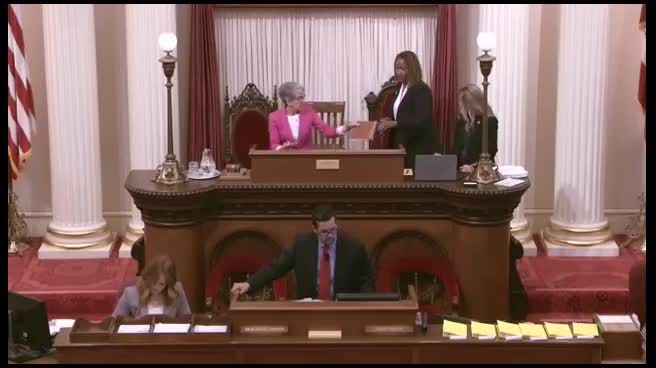 10MIN
Senate Floor
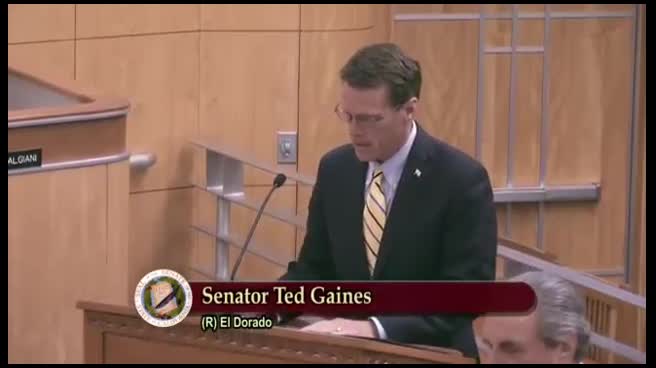 11MIN
Senate Standing Committee on Transportation and Housing

Bill Co-Author(s):