SB 203: Sugar-sweetened beverages: safety warnings.
- Session Year: 2015-2016
- House: Senate
- Latest Version Date: 2015-04-06
(1)Existing federal law, the federal Federal Food, Drug, and Cosmetic Act, regulates, among other things, the quality and packaging of foods introduced or delivered for introduction into interstate commerce and generally prohibits the misbranding of food. Existing federal law, the Nutrition Labeling and Education Act of 1990, governs state and local labeling requirements, including those that characterize the relationship of any nutrient specified in the labeling of food to a disease or health-related condition. Existing state law, the Sherman Food, Drug, and Cosmetic Law, generally regulates misbranded food and provides that any food is misbranded if its labeling does not conform with the requirements for nutrient content or health claims as set forth in the federal Federal Food, Drug, and Cosmetic Act and the regulations adopted pursuant to that federal act. Existing law requires that a food facility, as defined, make prescribed disclosures and warnings to consumers, as specified. A violation of these provisions is a crime.
Existing state law, the Pupil Nutrition, Health, and Achievement Act of 2001, also requires the sale of only certain beverages to pupils at schools. The beverages that may be sold include fruit-based and vegetable-based drinks, drinking water with no added sweetener, milk, and in middle and high schools, an electrolyte replacement beverage if those beverages meet certain nutritional requirements.
This bill would establish the Sugar-Sweetened Beverages Safety Warning Act, which would prohibit a person from distributing, selling, or offering for sale a sugar-sweetened beverage in a sealed beverage container, or a multipack of sugar-sweetened beverages, in this state unless the beverage container or multipack bears a safety warning, as prescribed. The bill also would require every person who owns, leases, or otherwise legally controls the premises where a vending machine or beverage dispensing machine is located, or where a sugar-sweetened beverage is sold in an unsealed container to place a specified safety warning in certain locations, including on the exterior of any vending machine that includes a sugar-sweetened beverage for sale.
(2)Under existing law, the State Department of Public Health, upon the request of a health officer, as defined, may authorize the local health department of a city, county, city and county, or local health district to enforce the provisions of the Sherman Food, Drug, and Cosmetic Law. Existing law authorizes the State Department of Public Health to assess a civil penalty against any person in an amount not to exceed $1,000 per day, except as specified. Existing law authorizes the Attorney General or any district attorney, on behalf of the State Department of Public Health, to bring an action in a superior court to grant a temporary or permanent injunction restraining a person from violating any provision of the Sherman Food, Drug, and Cosmetic Law.
This bill, commencing July 1, 2016, would provide that any violation of the provisions described in (1) above, or regulations adopted pursuant to those provisions, is punishable by a civil penalty of not less than $50, but no greater than $500.
This bill would also create the Sugar-Sweetened Beverages Safety Warning Fund for the receipt of all moneys collected for violations of those provisions. The bill would allocate moneys in this fund, upon appropriation by the Legislature, to the department for the purpose of enforcing those provisions.
The bill would make legislative findings and declarations relating to the consumption of sugar-sweetened beverages, obesity, and dental disease.
(1)Existing federal law, the federal Food, Drug, and Cosmetic Act, regulates, among other things, the quality and packaging of foods introduced or delivered for introduction into interstate commerce and generally prohibits the misbranding of food. Existing federal law, the Nutrition Labeling and Education Act of 1990, governs state and local labeling requirements, including those that characterize the relationship of any nutrient specified in the labeling of food to a disease or health-related condition. Existing state law, the Sherman Food, Drug, and Cosmetic Law, generally regulates misbranded food and provides that any food is misbranded if its labeling does not conform with the requirements for nutrient content or health claims as set forth in the federal Food, Drug, and Cosmetic Act and the regulations adopted pursuant to that federal act. Existing law requires that a food facility, as defined, make prescribed disclosures and warnings to consumers, as specified. A violation of these provisions is a crime.
Existing state law, the Pupil Nutrition, Health, and Achievement Act of 2001, also requires the sale of only certain beverages to pupils at schools. The beverages that may be sold include fruit-based and vegetable-based drinks, drinking water with no added sweetener, milk, and in middle and high schools, an electrolyte replacement beverage if those beverages meet certain nutritional requirements.
This bill would establish the Sugar-Sweetened Beverages Safety Warning Act, which would prohibit a person from distributing, selling, or offering for sale a sugar-sweetened beverage in a sealed beverage container, or a multipack of sugar-sweetened beverages, in this state unless the beverage container or multipack bears a safety warning, as prescribed. The bill also would require every person who owns, leases, or otherwise legally controls the premises where a vending machine or beverage dispensing machine is located, or where a sugar-sweetened beverage is sold in an unsealed container to place a specified safety warning in certain locations, including on the exterior of any vending machine that includes a sugar-sweetened beverage for sale.
(2)Under existing law, the State Department of Public Health, upon the request of a health officer, as defined, may authorize the local health department of a city, county, city and county, or local health district to enforce the provisions of the Sherman Food, Drug, and Cosmetic Law. Existing law authorizes the State Department of Public Health to assess a civil penalty against any person in an amount not to exceed $1,000 per day, except as specified. Existing law authorizes the Attorney General or any district attorney, on behalf of the State Department of Public Health, to bring an action in a superior court to grant a temporary or permanent injunction restraining a person from violating any provision of the Sherman Food, Drug, and Cosmetic Law.
This bill, commencing July 1, 2016, would provide that any violation of the provisions described in (1) above, or regulations adopted pursuant to those provisions, is punishable by a civil penalty of not less than $50, but no greater than $500.
This bill would also create the Sugar-Sweetened Beverages Safety Warning Fund for the receipt of all moneys collected for violations of those provisions. The bill would allocate moneys in this fund, upon appropriation by the Legislature, to the department for the purpose of enforcing those provisions.
The bill would make legislative findings and declarations relating to the consumption of sugar-sweetened beverages, obesity, and dental disease.
The Legislature finds and declares all of the following:
(a)Over the past 30 years, adult diabetes rates have nearly tripled in the United States. Currently, one in 9 percent of adults in the United States has have diabetes and more than one-third have prediabetes. In California, an estimated 14 percent of adults have diabetes. Over the past 10 years, the percentage of teens nationwide that have diabetes or prediabetes has increased from 9 percent to 23 percent. One in three children born today, including one-half of African American and Latino children, is expected to develop diabetes in their lifetime. Complications of diabetes include heart disease, nerve damage, gum infections, kidney disease, hearing impairment, blindness, amputation of toes, feet, or legs, and increased risk of Alzheimers disease.
(b)Diabetes costs the state at least $24.5 billion each year in total health care expenses and lost productivity. Average medical expenditures for people with diabetes are 2.3 times higher than for those without diabetes. One in three California hospital stays is for people with diabetes. Hospital stays for patients with diabetes, regardless of the primary diagnosis, cost $2,200 more than other patients, which adds an extra $1.6 billion each year to Californias hospitalization costs, including $254 million in Medi-Cal costs alone.
(c)The prevalence of obesity in the United States has increased dramatically over the past 30 years. In California, 60 percent of adults are overweight or obese and adult obesity rates have nearly tripled increasing from 8.9 percent in 1984 to 25.0 percent in 2012, and if current trends continue, the rate is expected to increase to 46.6 percent in 2030. Nearly 40 percent of California children are currently overweight or obese and obesity rates have tripled for adolescents and quadrupled for 6 to 11 year olds. Although no group has escaped the epidemic, low income and communities of color are disproportionately affected.
(d)The obesity epidemic is of particular concern because obesity increases the risk of diabetes, heart disease, arthritis, asthma, and certain types of cancer. Depending on their level of obesity, from 60 percent to over 80 percent of obese adults currently suffer from type 2 diabetes, high blood cholesterol, high blood pressure, or other related conditions.
(e)The medical costs for people who are obese are dramatically higher than those of normal weight. Overweight and obesity account for $147 billion in health care costs nationally, or 9 percent of all medical spending, with one-half of these costs paid publicly through the Medicare and Medicaid programs.
(f)There is overwhelming evidence of the link between obesity and the consumption of sweetened beverages, such as soft drinks, energy drinks, sweet teas, and sports drinks. The 2010 Dietary Guidelines for Americans recommend that everyone reduce their intake of sugar-sweetened beverages. California adults who drink one soda or more per day are 27 percent more likely to be overweight or obese, regardless of income or ethnicity.
(g)According to nutrition experts, sweetened beverages, such as soft drinks, energy drinks, sweet teas, and sports drinks, offer little or no nutritional value, but massive quantities of added sugars. A 20-ounce bottle of soda contains the equivalent of approximately 17 teaspoons of sugar. Yet, the American Heart Association recommends that Americans consume no more than five to nine teaspoons of sugar per day.
(h)Sugar-sweetened beverages are the single largest source of added sugars in the American diet, with the average American drinking nearly 42 gallons of sweetened beverages a year, the equivalent of 39 pounds of extra sugar every year. Over 50 percent of the United States population drinks one or more sugar-sweetened beverages per day.
(i)In California, 19 percent of two to five year olds drink a sugar-sweetened beverage each day. That number climbs to 32 percent among 6 to 11 year olds, and 65 percent among 12 to 17 year olds. Additionally, major disparities now exist between races and ethnicities. Seventy-four percent of African American adolescents drink at least one sugar-sweetened beverage each day, compared to 73 percent of Latinos, 63 percent of Asians, and 56 percent of whites.
(j)Sugar-sweetened beverages are a unique contributor to excess caloric consumption. Research shows that calories from sugar-sweetened beverages do not satisfy hunger the way calories from solid food or fat or protein-containing beverages, such as those containing milk and plant-based proteins, do. As a result, sugar-sweetened beverages tend to add to the calories people consume rather than replace them. Drinking one or two sodas a day increases the risk of developing type 2 diabetes by 26 percent. Drinking just one soda a day increases an adults likelihood of being overweight by 27 percent, and for children the likelihood doubles to 55 percent.
(k)Consistent evidence shows a positive relationship between sugar intake and dental caries (cavities) in adults and fewer caries when sugar intake is restricted. Children who frequently consume beverages high in sugar are at an increased risk for dental caries. Untreated dental caries can lead to pain, infection, tooth loss, and in severe cases, death.
(l)Evidence suggests that health warnings can increase knowledge and reduce consumption of harmful products. Studies show that prominent health warnings on the face of cigarette packages can increase health knowledge, perceptions of risk, and can promote smoking cessation of both youth and adults.
SEC. 2.Article 15 (commencing with Section 111224) is added to Chapter 5 of Part 5 of Division 104 of the Health and Safety Code, to read:15.Sugar-Sweetened Beverages Safety Warning Act111224.This article shall be known and may be cited as the Sugar-Sweetened Beverages Safety Warning Act.
111224.05.It is the intent of the Legislature, by enacting this article, to protect consumers and to promote informed purchasing decisions by requiring a warning about the harmful health effects that result from the consumption of drinks with added sugars.
111224.10.For purposes of this article, unless the context clearly requires otherwise, the following definitions shall apply:
(a)Animal milk means natural liquid milk, which is secreted by an animal and consumed by humans. For purposes of this definition, animal milk includes natural milk concentrate and dehydrated natural milk, whether or not reconstituted.
(b)Beverage container means any sealed or unsealed container regardless of size or shape, including, without limitation, those made of glass, metal, paper, plastic, or any other material or combination of materials that is used or intended to be used to hold a sugar-sweetened beverage for individual sale to a consumer.
(c)Beverage dispensing machine means any device that mixes concentrate with any one or more other ingredients and dispenses the resulting mixture into an unsealed container as a ready-to-drink beverage.
(d)Caloric sweetener means any substance containing calories, suitable for human consumption, that humans perceive as sweet and includes, without limitation, sucrose, fructose, glucose, and other sugars and fruit juice concentrates. Caloric means a substance that adds calories to the diet of a person who consumes that substance.
(e)Concentrate means a syrup or powder that is used or intended to be used for mixing, compounding, or making a sugar-sweetened beverage.
(f)Consumer means a person who purchases a sugar-sweetened beverage for a purpose other than resale in the ordinary course of business.
(g)Department means the State Department of Public Health, and any agency or person lawfully designated by the department to enforce or implement this article pursuant to Section 111020.
(h)Distribute means to sell or otherwise provide a product to any person for resale in the ordinary course of business to a consumer within this state.
(i)Milk substitute means a plant-based beverage in which the principal ingredients by weight are (1) water and (2) grains, nuts, legumes, or seeds. For purposes of this definition, milk substitute includes, without limitation, almond milk, coconut milk, flax milk, hazelnut milk, oat milk, rice milk, and soy milk.
(j)Natural fruit juice means the original liquid resulting from the pressing of fruit, the liquid resulting from the reconstitution of natural fruit juice concentrate, or the liquid resulting from the restoration of water to dehydrated natural fruit juice.
(k)Natural vegetable juice means the original liquid resulting from the pressing of vegetables, the liquid resulting from the reconstitution of natural vegetable juice concentrate, or the liquid resulting from the restoration of water to dehydrated natural vegetable juice.
(l)Person means any natural person, partnership, cooperative association, limited liability company, corporation, personal representative, receiver, trustee, assignee, any other legal entity, any city, county, city and county, district, commission, the state, or any department, agency, or political subdivision thereof, any interstate body, and, to the extent permitted by federal law, the United States and its agencies and instrumentalities.
(m)Powder means a solid mixture with added caloric sweetener used in making, mixing, or compounding a sugar-sweetened beverage by mixing the powder with any one or more other ingredients, including, without limitation, water, ice, syrup, simple syrup, fruits, vegetables, fruit juice, or carbonation or other gas.
(n)Sale or sell means any distribution or transfer for a business purpose, whether or not consideration is received.
(o)Sealed beverage container means a beverage container holding a beverage that is closed or sealed before being offered for sale to a consumer.
(p)(1)Sugar-sweetened beverage means any sweetened nonalcoholic beverage, carbonated or noncarbonated, sold intended for human consumption that has added caloric sweeteners and contains 75 calories or more per 12 fluid ounces. Nonalcoholic beverage means any beverage that contains less than one-half of 1 percent alcohol per volume.
(2)Sugar-sweetened beverage does not include any of the following:
(A)Any beverage containing 100 percent natural fruit juice or natural vegetable juice with no added caloric sweeteners.
(B)Any liquid product manufactured for any of the following uses and commonly referred to as a dietary aid:
(i)An oral nutritional therapy for persons who cannot absorb or metabolize dietary nutrients from food or beverages.
(ii)A source of necessary nutrition used as a result of a medical condition.
(iii)An oral electrolyte solution for infants and children formulated to prevent dehydration due to illness.
(C)Any product for consumption by infants and that is commonly referred to as infant formula.
(D)Any beverage whose principal ingredient by weight is animal milk or a milk substitute.
(q)Syrup means a liquid mixture with added caloric sweetener used in making, mixing, or compounding a sugar-sweetened beverage by mixing the syrup with any one or more other ingredients, including, without limitation, water, ice, powder, simple syrup, fruits, vegetables, fruit juice, vegetable juice, or carbonation or other gas.
(r)Unsealed beverage container means a beverage container into which a beverage is dispensed or poured at the business premises where the beverage is purchased, including, without limitation, a container for fountain drinks.
111224.15.(a)A person shall not distribute, sell, or offer for sale a sugar-sweetened beverage in a sealed beverage container in this state unless the container bears the following safety warning and otherwise meets all of the requirements under this section:
STATE OF CALIFORNIA SAFETY WARNING: Drinking beverages with added sugar(s) contributes to obesity, diabetes, and tooth decay.
(b)(1)The safety warning required by subdivision (a) shall be prominently displayed and readily legible under ordinary conditions on the front of the sealed beverage container, separate and apart from all other information, and shall be on a contrasting background. The first five words of the safety warning required under subdivision (a), STATE OF CALIFORNIA SAFETY WARNING shall appear in capital letters. The entire safety warning shall appear in bold type.
(2)The safety warning required under subdivision (a) shall appear in a font type size and in a maximum number of characters (i.e., letters, numbers, and marks) per inch, as follows:
(A)For beverage containers of 8 fluid ounces or less, the safety warning shall be in script, type, or printing not smaller than 1 millimeter, and there shall be no more than 40 characters per linear inch.
(B)For beverage containers of more than 8 fluid ounces and less than 1 liter, the safety warning shall be in script, type, or printing not smaller than 2 millimeters, and there shall be no more than 25 characters per linear inch.
(C)For beverage containers of 1 liter or more, the safety warning shall be in script, type, or printing not smaller than 3 millimeters, and there shall be no more than 12 characters per linear inch.
(c)If the safety warning required under subdivision (a) is not printed directly on the beverage container, the safety warning shall be affixed to the beverage container in such a manner that it cannot be removed without thorough application of water or other solvents.
(d)A person shall not distribute, sell, or offer for sale a multipack of sugar-sweetened beverages in sealed beverage containers in this state unless the multipack of beverages bears the safety warning required under subdivision (a). The safety warning shall be posted conspicuously on at least two sides of the multipack, in addition to being posted on each individual sealed beverage container.
(e)A person shall not distribute, sell, or offer for sale a concentrate in this state unless the packaging of the concentrate, which is intended for retail sale, bears the safety warning required under subdivision (a). The safety warning shall be posted conspicuously on the front of the packaging of the concentrate.
111224.20.(a)Every person who owns, leases, or otherwise legally controls the premises where a vending machine or beverage dispensing machine is located, or where a sugar-sweetened beverage is sold in an unsealed beverage container, shall place, or cause to be placed, a safety warning in each of the following locations:
(1)On the exterior of any vending machine that includes a sugar-sweetened beverage for sale.
(2)On the exterior of any beverage dispensing machine used by a consumer to dispense a sugar-sweetened beverage through self-service.
(3)At the point-of-purchase where any consumer purchases a sugar-sweetened beverage in an unsealed beverage container, when the unsealed beverage container is filled by an employee of a food establishment rather than the consumer.
(b)The safety warning required by subdivision (a) shall contain the following language:
STATE OF CALIFORNIA SAFETY WARNING: Drinking beverages with added sugar(s) contributes to obesity, diabetes, and tooth decay.
(c)The safety warning required by subdivision (a) shall be prominently displayed and readily legible under ordinary conditions, separate and apart from all other information, and shall be on a contrasting background. The first five words of the safety warning in subdivision (b), STATE OF CALIFORNIA SAFETY WARNING shall appear in capital letters. The entire safety warning shall appear in bold type.
111224.30.(a)Notwithstanding Section 111825, subdivision (b) of Section 111855, or any other law, commencing July 1, 2016, any violation of this article, or a regulation adopted pursuant to this article, is punishable by a civil penalty of not less than fifty dollars ($50), but no greater than five hundred dollars ($500). The department may assess the civil penalty according to the procedures set forth in Section 111855. A person shall not be found to violate this article more than once during any one inspection visit.
(b)There is hereby created in the State Treasury the Sugar-Sweetened Beverages Safety Warning Fund. The fund shall consist of moneys collected for the violation of this article. The department shall remit to the Treasurer any civil penalties collected pursuant to subdivision (a) on a biannual basis, no later than March 15 and September 15 of each year. Notwithstanding any other law, moneys in the fund, upon appropriation by the Legislature, shall be allocated to the department for the purpose of enforcing this article.
111224.35.Notwithstanding Section 111224.15 or 111224.20, if, after appropriate investigation and consultation with the state health officer, the department finds that available scientific information would justify a change in the language of the safety warnings set forth in Sections 111224.15 and 111224.20, the department may adopt regulations to develop new language for the safety warning and may require that the alternative language be adopted in lieu of the language set forth in Sections 111224.15 and 111224.20.
111224.40.It is the intent of the Legislature that nothing in this article shall be construed to preempt or prohibit the adoption and implementation of local ordinances related to sugar-sweetened beverages, except any local ordinance that is inconsistent with this article. An ordinance is not deemed inconsistent with this article if it affords greater protection than the requirements set forth in this article.
SEC. 3.The provisions of this act are severable. If any provision of this act or its application is held invalid, that invalidity shall not affect other provisions or applications that can be given effect without the invalid provision or application.
The Legislature finds and declares all of the following:
(a)Over the past 30 years, adult diabetes rates have nearly tripled in the United States. Currently, one in 9 adults in the United States has diabetes and more than one-third have prediabetes. In California, 14 percent of adults have diabetes. Over the past 10 years, the percentage of teens nationwide that have diabetes or prediabetes has increased from 9 percent to 23 percent. One in three children born today, including one-half of African American and Latino children, is expected to develop diabetes in their lifetime. Complications of diabetes include heart disease, nerve damage, gum infections, kidney disease, hearing impairment, blindness, amputation of toes, feet, or legs, and increased risk of Alzheimers disease.
(b)Diabetes costs the state at least $24.5 billion each year in total health care expenses and lost productivity. Average medical expenditures for people with diabetes are 2.3 times higher than for those without diabetes. One in three California hospital stays is for people with diabetes. Hospital stays for patients with diabetes, regardless of the primary diagnosis, cost $2,200 more than other patients, which adds an extra $1.6 billion each year to Californias hospitalization costs, including $254 million in Medi-Cal costs alone.
(c)The prevalence of obesity in the United States has increased dramatically over the past 30 years. In California, 60 percent of adults are overweight or obese and adult obesity rates have nearly tripled increasing from 8.9 percent in 1984 to 25.0 percent in 2012, and if current trends continue, the rate is expected to increase to 46.6 percent in 2030. Nearly 40 percent of California children are currently overweight or obese and obesity rates have tripled for adolescents and quadrupled for 6 to 11 year olds. Although no group has escaped the epidemic, low income and communities of color are disproportionately affected.
(d)The obesity epidemic is of particular concern because obesity increases the risk of diabetes, heart disease, arthritis, asthma, and certain types of cancer. Depending on their level of obesity, from 60 percent to over 80 percent of obese adults currently suffer from type 2 diabetes, high blood cholesterol, high blood pressure, or other related conditions.
(e)The medical costs for people who are obese are dramatically higher than those of normal weight. Overweight and obesity account for $147 billion in health care costs nationally, or 9 percent of all medical spending, with one-half of these costs paid publicly through the Medicare and Medicaid programs.
(f)There is overwhelming evidence of the link between obesity and the consumption of sweetened beverages, such as soft drinks, energy drinks, sweet teas, and sports drinks. The 2010 Dietary Guidelines for Americans recommend that everyone reduce their intake of sugar-sweetened beverages. California adults who drink one soda or more per day are 27 percent more likely to be overweight or obese, regardless of income or ethnicity.
(g)According to nutrition experts, sweetened beverages, such as soft drinks, energy drinks, sweet teas, and sports drinks, offer little or no nutritional value, but massive quantities of added sugars. A 20-ounce bottle of soda contains the equivalent of approximately 17 teaspoons of sugar. Yet, the American Heart Association recommends that Americans consume no more than five to nine teaspoons of sugar per day.
(h)Sugar-sweetened beverages are the single largest source of added sugars in the American diet, with the average American drinking nearly 42 gallons of sweetened beverages a year, the equivalent of 39 pounds of extra sugar every year. Over 50 percent of the United States population drinks one or more sugar-sweetened beverages per day.
(i)In California, 19 percent of two to five year olds drink a sugar-sweetened beverage each day. That number climbs to 32 percent among 6 to 11 year olds, and 65 percent among 12 to 17 year olds. Additionally, major disparities now exist between races and ethnicities. Seventy-four percent of African American adolescents drink at least one sugar-sweetened beverage each day, compared to 73 percent of Latinos, 63 percent of Asians, and 56 percent of whites.
(j)Sugar-sweetened beverages are a unique contributor to excess caloric consumption. Research shows that calories from sugar-sweetened beverages do not satisfy hunger the way calories from solid food or fat or protein-containing beverages, such as those containing milk and plant-based proteins, do. As a result, sugar-sweetened beverages tend to add to the calories people consume rather than replace them. Drinking one or two sodas a day increases the risk of developing type 2 diabetes by 26 percent. Drinking just one soda a day increases an adults likelihood of being overweight by 27 percent, and for children the likelihood doubles to 55 percent.
(k)Consistent evidence shows a positive relationship between sugar intake and dental caries (cavities) in adults and fewer caries when sugar intake is restricted. Children who frequently consume beverages high in sugar are at an increased risk for dental caries. Untreated dental caries can lead to pain, infection, tooth loss, and in severe cases, death.
(l)Evidence suggests that health warnings can increase knowledge and reduce consumption of harmful products. Studies show that prominent health warnings on the face of cigarette packages can increase health knowledge, perceptions of risk, and can promote smoking cessation of both youth and adults.
SEC. 2.Article 15 (commencing with Section 111224) is added to Chapter 5 of Part 5 of Division 104 of the Health and Safety Code, to read:15.Sugar-Sweetened Beverages Safety Warning Act111224.This article shall be known and may be cited as the Sugar-Sweetened Beverages Safety Warning Act.
111224.05.It is the intent of the Legislature, by enacting this article, to protect consumers and to promote informed purchasing decisions by requiring a warning about the harmful health effects that result from the consumption of drinks with added sugars.
111224.10.For purposes of this article, unless the context clearly requires otherwise, the following definitions shall apply:
(a)Animal milk means natural liquid milk, which is secreted by an animal and consumed by humans. For purposes of this definition, animal milk includes natural milk concentrate and dehydrated natural milk, whether or not reconstituted.
(b)Beverage container means any sealed or unsealed container regardless of size or shape, including, without limitation, those made of glass, metal, paper, plastic, or any other material or combination of materials that is used or intended to be used to hold a sugar-sweetened beverage for individual sale to a consumer.
(c)Beverage dispensing machine means any device that mixes concentrate with any one or more other ingredients and dispenses the resulting mixture into an unsealed container as a ready-to-drink beverage.
(d)Caloric sweetener means any substance containing calories, suitable for human consumption, that humans perceive as sweet and includes, without limitation, sucrose, fructose, glucose, and other sugars and fruit juice concentrates. Caloric means a substance that adds calories to the diet of a person who consumes that substance.
(e)Concentrate means a syrup or powder that is used or intended to be used for mixing, compounding, or making a sugar-sweetened beverage.
(f)Consumer means a person who purchases a sugar-sweetened beverage for a purpose other than resale in the ordinary course of business.
(g)Department means the State Department of Public Health, and any agency or person lawfully designated by the department to enforce or implement this article pursuant to Section 111020.
(h)Distribute means to sell or otherwise provide a product to any person for resale in the ordinary course of business to a consumer within this state.
(i)Milk substitute means a plant-based beverage in which the principal ingredients by weight are (1) water and (2) grains, nuts, legumes, or seeds. For purposes of this definition, milk substitute includes, without limitation, almond milk, coconut milk, flax milk, hazelnut milk, oat milk, rice milk, and soy milk.
(j)Natural fruit juice means the original liquid resulting from the pressing of fruit, the liquid resulting from the reconstitution of natural fruit juice concentrate, or the liquid resulting from the restoration of water to dehydrated natural fruit juice.
(k)Natural vegetable juice means the original liquid resulting from the pressing of vegetables, the liquid resulting from the reconstitution of natural vegetable juice concentrate, or the liquid resulting from the restoration of water to dehydrated natural vegetable juice.
(l)Person means any natural person, partnership, cooperative association, limited liability company, corporation, personal representative, receiver, trustee, assignee, any other legal entity, any city, county, city and county, district, commission, the state, or any department, agency, or political subdivision thereof, any interstate body, and, to the extent permitted by federal law, the United States and its agencies and instrumentalities.
(m)Powder means a solid mixture with added caloric sweetener used in making, mixing, or compounding a sugar-sweetened beverage by mixing the powder with any one or more other ingredients, including, without limitation, water, ice, syrup, simple syrup, fruits, vegetables, fruit juice, or carbonation or other gas.
(n)Sale or sell means any distribution or transfer for a business purpose, whether or not consideration is received.
(o)Sealed beverage container means a beverage container holding a beverage that is closed or sealed before being offered for sale to a consumer.
(p)(1)Sugar-sweetened beverage means any sweetened nonalcoholic beverage, carbonated or noncarbonated, sold for human consumption that has added caloric sweeteners and contains 75 calories or more per 12 fluid ounces. Nonalcoholic beverage means any beverage that contains less than one-half of 1 percent alcohol per volume.
(2)Sugar-sweetened beverage does not include any of the following:
(A)Any beverage containing 100 percent natural fruit juice or natural vegetable juice with no added caloric sweeteners.
(B)Any liquid product manufactured for any of the following uses and commonly referred to as a dietary aid:
(i)An oral nutritional therapy for persons who cannot absorb or metabolize dietary nutrients from food or beverages.
(ii)A source of necessary nutrition used as a result of a medical condition.
(iii)An oral electrolyte solution for infants and children formulated to prevent dehydration due to illness.
(C)Any product for consumption by infants and that is commonly referred to as infant formula.
(D)Any beverage whose principal ingredient by weight is animal milk or a milk substitute.
(q)Syrup means a liquid mixture with added caloric sweetener used in making, mixing, or compounding a sugar-sweetened beverage by mixing the syrup with any one or more other ingredients, including, without limitation, water, ice, powder, simple syrup, fruits, vegetables, fruit juice, vegetable juice, or carbonation or other gas.
(r)Unsealed beverage container means a beverage container into which a beverage is dispensed or poured at the business premises where the beverage is purchased, including, without limitation, a container for fountain drinks.
111224.15.(a)A person shall not distribute, sell, or offer for sale a sugar-sweetened beverage in a sealed beverage container in this state unless the container bears the following safety warning and otherwise meets all of the requirements under this section:
STATE OF CALIFORNIA SAFETY WARNING: Drinking beverages with added sugar(s) contributes to obesity, diabetes, and tooth decay.
(b)(1)The safety warning required by subdivision (a) shall be prominently displayed and readily legible under ordinary conditions on the front of the sealed beverage container, separate and apart from all other information, and shall be on a contrasting background. The first five words of the safety warning required under subdivision (a), STATE OF CALIFORNIA SAFETY WARNING shall appear in capital letters. The entire safety warning shall appear in bold type.
(2)The safety warning required under subdivision (a) shall appear in a font size and in a maximum number of characters (i.e., letters, numbers, and marks) per inch, as follows:
(A)For beverage containers of 8 fluid ounces or less, the safety warning shall be in script, type, or printing not smaller than 1 millimeter, and there shall be no more than 40 characters per linear inch.
(B)For beverage containers of more than 8 fluid ounces and less than 1 liter, the safety warning shall be in script, type, or printing not smaller than 2 millimeters, and there shall be no more than 25 characters per linear inch.
(C)For beverage containers of 1 liter or more, the safety warning shall be in script, type, or printing not smaller than 3 millimeters, and there shall be no more than 12 characters per linear inch.
(c)If the safety warning required under subdivision (a) is not printed directly on the beverage container, the safety warning shall be affixed to the beverage container in such a manner that it cannot be removed without thorough application of water or other solvents.
(d)A person shall not distribute, sell, or offer for sale a multipack of sugar-sweetened beverages in sealed beverage containers in this state unless the multipack of beverages bears the safety warning required under subdivision (a). The safety warning shall be posted conspicuously on at least two sides of the multipack, in addition to being posted on each individual sealed beverage container.
(e)A person shall not distribute, sell, or offer for sale a concentrate in this state unless the packaging of the concentrate, which is intended for retail sale, bears the safety warning required under subdivision (a). The safety warning shall be posted conspicuously on the front of the packaging of the concentrate.
111224.20.(a)Every person who owns, leases, or otherwise legally controls the premises where a vending machine or beverage dispensing machine is located, or where a sugar-sweetened beverage is sold in an unsealed beverage container, shall place, or cause to be placed, a safety warning in each of the following locations:
(1)On the exterior of any vending machine that includes a sugar-sweetened beverage for sale.
(2)On the exterior of any beverage dispensing machine used by a consumer to dispense a sugar-sweetened beverage through self-service.
(3)At the point-of-purchase where any consumer purchases a sugar-sweetened beverage in an unsealed beverage container, when the unsealed beverage container is filled by an employee of a food establishment rather than the consumer.
(b)The safety warning required by subdivision (a) shall contain the following language:
STATE OF CALIFORNIA SAFETY WARNING: Drinking beverages with added sugar(s) contributes to obesity, diabetes, and tooth decay.
(c)The safety warning required by subdivision (a) shall be prominently displayed and readily legible under ordinary conditions, separate and apart from all other information, and shall be on a contrasting background. The first five words of the safety warning in subdivision (b), STATE OF CALIFORNIA SAFETY WARNING shall appear in capital letters. The entire safety warning shall appear in bold type.
111224.30.(a)Notwithstanding Section 111825, subdivision (b) of Section 111855, or any other law, commencing July 1, 2016, any violation of this article, or a regulation adopted pursuant to this article, is punishable by a civil penalty of not less than fifty dollars ($50), but no greater than five hundred dollars ($500). The department may assess the civil penalty according to the procedures set forth in Section 111855. A person shall not be found to violate this article more than once during any one inspection visit.
(b)There is hereby created in the State Treasury the Sugar-Sweetened Beverages Safety Warning Fund. The fund shall consist of moneys collected for the violation of this article. The department shall remit to the Treasurer any civil penalties collected pursuant to subdivision (a) on a biannual basis, no later than March 15 and September 15 of each year. Notwithstanding any other law, moneys in the fund, upon appropriation by the Legislature, shall be allocated to the department for the purpose of enforcing this article.
111224.35.Notwithstanding Section 111224.15 or 111224.20, if, after appropriate investigation and consultation with the state health officer, the department finds that available scientific information would justify a change in the language of the safety warnings set forth in Sections 111224.15 and 111224.20, the department may adopt regulations to develop new language for the safety warning and may require that the alternative language be adopted in lieu of the language set forth in Sections 111224.15 and 111224.20.
111224.40.It is the intent of the Legislature that nothing in this article shall be construed to preempt or prohibit the adoption and implementation of local ordinances related to sugar-sweetened beverages, except any local ordinance that is inconsistent with this article. An ordinance is not deemed inconsistent with this article if it affords greater protection than the requirements set forth in this article.
SEC. 3.The provisions of this act are severable. If any provision of this act or its application is held invalid, that invalidity shall not affect other provisions or applications that can be given effect without the invalid provision or application.
|
Date
|
Status
|
|---|---|
| Feb 11, 2015 | Introduced. Read first time. To Com. on RLS. for assignment. To print. |
| Feb 12, 2015 | From printer. May be acted upon on or after March 14. |
| Feb 19, 2015 | Referred to Com. on HEALTH. |
| Mar 18, 2015 | Set for hearing April 22. |
| Apr 6, 2015 | From committee with author's amendments. Read second time and amended. Re-referred to Com. on HEALTH. |
| Apr 21, 2015 | April 22 set for first hearing canceled at the request of author. |
| Apr 22, 2015 | Set for hearing April 29. |
| Apr 30, 2015 | April 29 set for second hearing. Failed passage in committee. Reconsideration granted. |
| Apr 30, 2015 | April 29 set for second hearing. Failed passage in committee. (Ayes 4. Noes 1. Page 860.) Reconsideration granted. |
| Feb 1, 2016 | Returned to Secretary of Senate pursuant to Joint Rule 56. |
|
Date
|
Description
|
Location
|
Votes
|
|
|---|---|---|---|---|
| Apr 29, 2015 | [Second] hearing set for [04-30-2015]: Failed passage in Committee. Reconsideration granted | Senate Standing Committee on Health |
Passed |
|
| Apr 29, 2015 | Do pass, but first be re-referred to the Committee on [Appropriations] | Senate Standing Committee on Health |
Failed |
This list shows positions taken on this bill by organizations on the date displayed, which is linked to the original source.
Positions by individuals are not included.
|
Organization
|
Position
|
Date
|
|---|---|---|
| 47 Games, Inc. | ** Support | Apr 29, 2015 |
| Action Network | ** Support | Apr 29, 2015 |
| Alameda County Board of Supervisors | * Support | Apr 29, 2015 |
| Alameda County Public Health Department | ** Support | Apr 29, 2015 |
| Altamed Health Services Corporation | ** Support | Apr 29, 2015 |
| American Beverage Association | * Against | Apr 29, 2015 |
| American Cancer Society Cancer Action Network Inc. | * Support | Apr 29, 2015 |
| American Diabetes Association | ** Support | Apr 29, 2015 |
| American Federation Of State, County And Municipal Employees, Afl-Cio | ** Support | Apr 29, 2015 |
| American Heart Association | * Support | Apr 29, 2015 |
| American Stroke Association | * Support | Apr 29, 2015 |
| Asian and pacific islander american health forum | ** Support | Apr 29, 2015 |
| Asian and Pacific Islander Obesity Prevention Alliance | ** Support | Apr 29, 2015 |
| Asian Law Alliance | ** Support | Apr 29, 2015 |
| Association of California Healthcare Districts | ** Support | Apr 29, 2015 |
| Association Of California Healthcare Districts (Achd) | * Support | Apr 29, 2015 |
| Berkeley Media Studies Group | ** Support | Apr 29, 2015 |
| Blue Shield Of California | * Support | Apr 29, 2015 |
| Board Of Supervisors For Napa County | * Support | Apr 29, 2015 |
| CalAsian Chamber of Commerce | ** Against | Apr 29, 2015 |
| California Academy Of Family Physicians | * Support | Apr 29, 2015 |
| California Academy of Physician Assistants | * Support | Apr 29, 2015 |
| California Asian Pacific Chamber Of Commerce | * Against | Apr 29, 2015 |
| California Automatic Vendors Council | ** Against | Apr 29, 2015 |
| California Black Health Network | * Support | Apr 29, 2015 |
| California Center for Public Health Advocacy | * Support | Apr 29, 2015 |
| California Chamber Of Commerce | * Against | Apr 29, 2015 |
| California chapter of the American College of Cardiology | ** Support | Apr 29, 2015 |
| California Children'S Hospital Association | * Support | Apr 29, 2015 |
| California Chiropractic Association | ** Support | Apr 29, 2015 |
| California Chronic Care Coalition | ** Support | Apr 29, 2015 |
| California Dental Association | * Support | Apr 29, 2015 |
| California Dietetic Association | ** Support | Apr 29, 2015 |
| California Food Policy Advocates | ** Support | Apr 29, 2015 |
| California Grocers Association | * Against | Apr 29, 2015 |
| California Hotel and Lodging Association | ** Against | Apr 29, 2015 |
| California Immigrant Policy Center | ** Support | Apr 29, 2015 |
| California Independent Oil Marketers Association | ** Against | Apr 29, 2015 |
| California League of Food Processors | * Against | Apr 29, 2015 |
| California Manufacturers And Technology Association | ** Against | Apr 29, 2015 |
| California Medical Association, Inc. | * Support | Apr 29, 2015 |
| California Naturopathic Doctors Association | ** Support | Apr 29, 2015 |
| California Nevada Beverage Association | * Against | Apr 29, 2015 |
| California Nurses Association | * Support | Apr 29, 2015 |
| California Optometric Association | ** Support | Apr 29, 2015 |
| California Pan-Ethnic Health Network | * Support | Apr 29, 2015 |
| California Park & Recreation Society | ** Support | Apr 29, 2015 |
| California Pharmacists Association | * Support | Apr 29, 2015 |
| California Physical Therapy Association | ** Support | Apr 29, 2015 |
| California Primary Care Association | ** Support | Apr 29, 2015 |
| California Project Lean | ** Support | Apr 29, 2015 |
| California Public Health Association - North | ** Support | Apr 29, 2015 |
| California Restaurant Association | * Against | Apr 29, 2015 |
| California Retailers Association | ** Against | Apr 29, 2015 |
| California Rural Legal Assistance Foundation, Inc. | * Support | Apr 29, 2015 |
| California School Nurses Organization | * Support | Apr 29, 2015 |
| California School-Based Health Alliance | ** Support | Apr 29, 2015 |
| California Service Station and Auto Repair Association | ** Against | Apr 29, 2015 |
| California State Alliance Of Ymca'S | * Support | Apr 29, 2015 |
| California Teamsters Public Affairs Council | ** Against | Apr 29, 2015 |
| California Travel Association | ** Against | Apr 29, 2015 |
| California Wic Association | * Support | Apr 29, 2015 |
| Can Manufacturers Association | ** Against | Apr 29, 2015 |
| Center for Collaborative Solutions | ** Support | Apr 29, 2015 |
| Center for Communications, Health & the Environment | ** Support | Apr 29, 2015 |
| Center for Ecoliteracy | ** Support | Apr 29, 2015 |
| Center for Science in the Public Interest | ** Support | Apr 29, 2015 |
| Central California Alliance For Health | ** Support | Apr 29, 2015 |
| ChangeLab Solutions | ** Support | Apr 29, 2015 |
| Charles R. Drew University Of Medicine And Science | ** Support | Apr 29, 2015 |
| Children Now | ** Support | Apr 29, 2015 |
| Children'S Hospital Oakland | * Support | Apr 29, 2015 |
| Civil Justice Association Of California | * Against | Apr 29, 2015 |
| Community Bridges | ** Support | Apr 29, 2015 |
| Community Health Councils | ** Support | Apr 29, 2015 |
| Community Health Improvement Partners | ** Support | Apr 29, 2015 |
| Consumer Federation Of California | ** Support | Apr 29, 2015 |
| County Health Executives Association | * Support | Apr 29, 2015 |
| Cultiva La Salud | ** Support | Apr 29, 2015 |
| Day One | ** Support | Apr 29, 2015 |
| Dignity Health | ** Support | Apr 29, 2015 |
| First 5 Association Of California | ** Support | Apr 29, 2015 |
| First 5 Monterey County | ** Support | Apr 29, 2015 |
| Grocery Manufacturers Association | ** Against | Apr 29, 2015 |
| Having Our Say Coalition | ** Support | Apr 29, 2015 |
| Health Access California | * Support | Apr 29, 2015 |
| Health Improvement Partnership of Santa Cruz County | ** Support | Apr 29, 2015 |
| Health Officers Association Of California | ** Support | Apr 29, 2015 |
| Healthy & Active Before 5 | ** Support | Apr 29, 2015 |
| Hunger Action Los Angeles | ** Support | Apr 29, 2015 |
| International Franchise Association | ** Against | Apr 29, 2015 |
| Juice Products Association | ** Against | Apr 29, 2015 |
| Junior League of Monterey County | ** Support | Apr 29, 2015 |
| Junior League of Napa-Sonoma | ** Support | Apr 29, 2015 |
| Khmer Girls in Action | ** Support | Apr 29, 2015 |
| Latino Coalition for a Healthy California | * Support | Apr 29, 2015 |
| Latino Coalition for Healthy California | * Support | Apr 29, 2015 |
| Latino Health Access | * Support | Apr 29, 2015 |
| Los Angeles Area Chamber Of Commerce | ** Against | Apr 29, 2015 |
| Los Angeles County Business Federation | ** Against | Apr 29, 2015 |
| Los Angeles Latino Chamber of Commerce | ** Against | Apr 29, 2015 |
| Lucille Packard Children's Hospital Stanford | ** Support | Apr 29, 2015 |
| Maternal and Child Health Access | ** Support | Apr 29, 2015 |
| Monterey County Board of Supervisors | ** Support | Apr 29, 2015 |
| Morgan Hill Unified School District | ** Support | Apr 29, 2015 |
| Napa County Board of Supervisors | * Support | Apr 29, 2015 |
| National Automatic Merchandising Association | ** Against | Apr 29, 2015 |
| National Coalition for 100 Black Women Sacramento | ** Support | Apr 29, 2015 |
| National Federation Of Independent Business | ** Against | Apr 29, 2015 |
| National Nurses United | ** Support | Apr 29, 2015 |
| Network of Ethnic Physician Organizations | ** Support | Apr 29, 2015 |
| Nevada Beverage Association | ** Against | Apr 29, 2015 |
| One individual | ** Support | Apr 29, 2015 |
| Pacoima Beautiful | ** Support | Apr 29, 2015 |
| Pajaro Valley Community Health Trust | ** Support | Apr 29, 2015 |
| Physicians for Social Responsibility | ** Support | Apr 29, 2015 |
| Prevention Institute | ** Support | Apr 29, 2015 |
| Public Health Institute | ** Support | Apr 29, 2015 |
| Public Health Institute in California | * Support | Apr 29, 2015 |
| Richmond, City Of | ** Support | Apr 29, 2015 |
| Roots of Change | * Support | Apr 29, 2015 |
| San Diego County Childhood Obesity Initiative | ** Support | Apr 29, 2015 |
| San Diego Hunger Coalition | ** Support | Apr 29, 2015 |
| San Francisco Medical Society | ** Support | Apr 29, 2015 |
| San Francisco Unified School District | * Support | Apr 29, 2015 |
| Santa Ana, City Of | ** Support | Apr 29, 2015 |
| Santa Clara County Board of Supervisors | ** Support | Apr 29, 2015 |
| Santa Cruz County Children's Network | ** Support | Apr 29, 2015 |
| Santa Monica Family YMCA | ** Support | Apr 29, 2015 |
| Shape Up San Francisco Coalition | ** Support | Apr 29, 2015 |
| Simi Valley Chamber of Commerce | ** Against | Apr 29, 2015 |
| South Asian Network | ** Support | Apr 29, 2015 |
| South El Monte; City Of | ** Support | Apr 29, 2015 |
| Southern California Public Health Association | ** Support | Apr 29, 2015 |
| Southwest California Legislative Council | ** Against | Apr 29, 2015 |
| SPI: The Plastic Industry Trade Association | ** Against | Apr 29, 2015 |
| Strategic Alliance for Healthy Food and Activity Environments | ** Support | Apr 29, 2015 |
| Sunnyvale School District Board of Education | ** Support | Apr 29, 2015 |
| Torrance Area Chamber of Commerce | ** Against | Apr 29, 2015 |
| VALLEY INDUSTRY AND COMMERCE ASSOCIATION | ** Against | Apr 29, 2015 |
| Venice Family Clinic | ** Support | Apr 29, 2015 |
| Ventura County Department of Public Health | ** Support | Apr 29, 2015 |
| Vice Mayor Linda Maio, City of Berkeley | ** Support | Apr 29, 2015 |
| Vista Community Clinic | ** Support | Apr 29, 2015 |
| YMCA of Anaheim | ** Support | Apr 29, 2015 |
| YMCA of Burbank California | ** Support | Apr 29, 2015 |
| YMCA of Greater Long Beach | ** Support | Apr 29, 2015 |
| YMCA of Greater Whittier | ** Support | Apr 29, 2015 |
| YMCA of Metropolitan Los Angeles | ** Support | Apr 29, 2015 |
| YMCA of Orange County | ** Support | Apr 29, 2015 |
| YMCA of the Central Bay Area | ** Support | Apr 29, 2015 |
| YMCA of the Central Coast | ** Support | Apr 29, 2015 |
| YMCA of the Channel Islands | ** Support | Apr 29, 2015 |
| YMCA of the East Bay | ** Support | Apr 29, 2015 |
| YWCA of Watsonville | ** Support | Apr 29, 2015 |
| Zevia | ** Support | Apr 29, 2015 |
| Zion Hill Baptist Church | ** Support | Apr 29, 2015 |
SB 203 (Monning) Page 9 of 9
SENATE COMMITTEE ON HEALTH
Senator Ed Hernandez, O.D., Chair
BILL NO: SB 203
AUTHOR: |
Monning |
||
VERSION: |
April 6, 2015 |
||
HEARING DATE: |
April 29, 2015 |
|
|
CONSULTANT: |
Reyes Diaz |
||
SUBJECT: Sugar-sweetened beverages: safety warnings.
SUMMARY:
Establishes the Sugar-Sweetened Beverages Safety Warning Act, to be administered by the Department of Public Health, and requires a safety warning on all sealed sugar-sweetened beverage containers, as specified. Requires the warning label to be posted in a place that is easily visible at the point-of-purchase of an establishment where a beverage container is not filled by the consumer.
Existing law:
Establishes the Department of Public Health (DPH) to protect and improve the health of communities through education, promotion of healthy lifestyles, and research for disease and injury prevention.
Establishes the Sherman Food, Drug, and Cosmetic Law (Sherman Act), which is administered by DPH, to regulate the contents, packaging, labeling, and advertising of food, drugs, and cosmetics in California.
Allows DPH, upon the request of a health officer, to authorize the local health department of a city, county, city and county, or local health district to enforce the provisions of the Sherman Act and its regulations that pertain to retail food establishments, as defined, if DPH determines that the local health department has sufficient personnel with adequate training to do so, and requires that the enforcement be limited to the area under the jurisdiction of the local health department.
This bill:
Establishes the Sugar-Sweetened Beverages Safety Warning Act (SSBSWA) whereby a person, as defined, is prohibited from distributing, selling, or offering for sale in the state sugar-sweetened beverages (SSBs) in a sealed beverage container; in a multipack of sealed beverage containers; in concentrate form, as defined; on the premises where a vending machine or beverage dispensing machine, as defined, is located; and where SSBs are sold in unsealed beverage containers unless the container bears a safety warning, as specified, or the safety warning is posted on the premises, as specified, and otherwise meets all the requirements of this bill.
Defines “sugar-sweetened beverage” as any sweetened non-alcoholic beverage, carbonated or non-carbonated, sold for human consumption that has added caloric sweeteners and contains 75 calories or more per 12 fluid ounces. Specifies that SSBs do not include any beverage containing 100 percent natural fruit juice or natural vegetable juice with no added caloric sweeteners; any liquid product commonly referred to as a dietary aid; any product for consumption by infants and that is commonly referred to as infant formula; or any beverage whose principal ingredient by weight is animal milk or a milk substitute. Defines “animal milk” as natural liquid milk secreted by an animal and consumed by humans, including natural milk concentrate and dehydrated natural milk, whether or not reconstituted. Defines “milk substitute” as a plant-based beverage in which principal ingredients by weight are (1) water and (2) grains, nuts, legumes, or seeds, including, without limitation, almond, coconut, flax, hazelnut, oat, rice, and soy milks.
Defines “non-alcoholic beverage” as any beverage that contains less than one-half of one percent alcohol per volume. Defines “caloric sweetener” as any substance containing calories suitable for human consumption that humans perceive as sweet and includes, without limitation, sucrose, fructose, glucose, and other sugars and fruit juice concentrates. Defines “caloric” as a substance that adds calories to the diet of a person who consumes that substance.
Requires the safety warning to read “STATE OF CALIFORIA SAFETY WARNING: Drinking beverages with added sugar(s) contributes to obesity, diabetes, and tooth decay” on the front of SSB sealed beverage containers, separate and apart from all other information, on a contrasting background, and entirely in bold type; to be affixed to an SSB beverage container in a manner that it cannot be removed without thorough application of water or other solvents if the warning is not printed directly on a sealed container; to be printed on at least two sides of an SSB multipack and on each individual sealed container inside the multipack; and to be printed on the front of the packaging of a concentrate, as defined.
Requires every person who owns, leases, or otherwise legally controls the premises where a vending machine or beverage dispensing machine is located, or where SSBs are sold in an unsealed container, to place, or cause to be placed, a safety warning a) on the exterior of any vending machine that includes SSBs, b) on the exterior of any self-serve beverage dispensing machine, and, c) at the point-of-purchase where any consumer purchases an SSB in an unsealed beverage container, when the container is filled by an employee of a food establishment rather than by the consumer.
Allows DPH to assess a civil penalty of not less than $50 but no greater than $500 for any violation of the SSBSWA or any regulation by DPH. Specifies that a person is not to be found in violation of the SSBSWA more than once during any one inspection visit.
Creates in the State Treasury the Sugar-Sweetened Beverages Safety Warning Fund consisting of moneys collected for the violation of the SSBSWA, which is to be appropriated by the Legislature for allocation to DPH for the purpose of enforcing the SSBSWA.
Requires DPH to adopt regulations to implement the SSBSWA. Allows the department to adopt regulations to develop new language for the safety warning, after appropriate investigation and consultation with the State Health Officer.
Makes findings and declarations about obesity and type 2 diabetes rates and resulting health costs in the state, as well as the link among obesity, diabetes, and dental caries and SSB consumption.
Specifies that the provisions of the SSBSWA are severable and that any provision or its application that is held invalid cannot affect other provisions or applications that can be given effect without the invalid provision or application.
FISCAL EFFECT:
This bill has not been analyzed by a fiscal committee.
COMMENTS:
Author’s statement. According to the author, California is in the midst of an obesity and diabetes epidemic that is wreaking havoc on the public’s health. SSBs are a major contributor to the problem. SB 203 would provide information to consumers to make informed choices by requiring warning labels—similar to those on tobacco and alcohol—that explain the proven health risks associated with drinking SSBs. The science is clear and conclusive. Overwhelming research has unequivocally shown that SSBs are major contributors to obesity, diabetes, and tooth decay, which cost California billions of dollars in health care and lost productivity annually.
Nearly 40 percent of California children are currently overweight or obese. Liquid sugar has a unique role in driving today’s skyrocketing cases of preventable diabetes. Individuals who drink one or two sugary drinks per day have a 26 percent higher risk for developing type 2 diabetes. If current trends are not reversed, it is predicted that one in three children—and nearly half of Latino and African-American children—born in the year 2000 will develop type 2 diabetes in their lifetime. SSBs are the biggest contributor of added calories in the American diet and are unique in not providing any nutritional value.
SSB consumption. According to the U.S. Department of Agriculture, in 2009, Americans consumed 13.8 billion gallons of SSBs, which equates to nearly 45 gallons per capita annually of SSBs with added caloric sweeteners. According to the UCLA Center for Health Policy Research, in California, 41 percent of children ages 2-11 and 62 percent of adolescents ages 12-17 drink at least one SSB every day. In addition, 24 percent of adults drink at least one SSB on average per day. Adults who drink SSBs occasionally (not every day) are 15 percent more likely to be overweight or obese, and adults who drink one or more SSBs per day are 27 percent more likely to be overweight or obese than adults who do not. According to a report produced by the Robert Wood Johnson Scholar’s Program, SSBs were the single largest contributor to energy intake during the last decade, and SSB consumption has increased by almost 500 percent during the past 50 years.
Obesity and other chronic diseases. DPH issued a study, The Burden of Chronic Disease and Injury, in 2013 that highlights some of the leading causes of death, such as heart disease, cancer, stroke, and respiratory disease, all of which have a strong connection to obesity. Diabetes is another serious chronic disease stemming from obesity that adversely affects quality of life and results in serious medical costs. The last decade has witnessed a 32 percent rise in diabetes prevalence, affecting some 3.9 million people and costing upwards of $24 billion per year. According to the Centers for Disease Control and Prevention, more than one-third of U.S. adults are obese, and approximately 12.5 million children and adolescents ages 2 to 19 years are obese. Research indicates a tripling in the youth obesity rate over the past three decades. While this increase has stabilized between the years 2005 and 2010, in 2010, 38 percent of public school children were overweight and obese. Overweight youth face increased risks for many serious detrimental health conditions that do not commonly occur during childhood, including high cholesterol and type 2 diabetes. Additionally, more than 80 percent of obese adolescents remain obese as adults.
Consumer view of SSBs. In February 2014, the Field Research Corporation released a poll of 1,002 registered voters in California on behalf of The California Endowment. The poll found that, statewide, 74 percent of voters support a requirement that beverage companies post health warning labels on SSBs to alert consumers that their daily consumption contributes to diabetes, obesity, and tooth decay. The requirement also carries strong bipartisan support. The poll also found that nearly two in three voters continue to support taxing the sale of SSBs and to use the proceeds for school nutrition and physical activity programs for kids and distributing the revenues to schools, public health departments, and local community programs across the state based on each community’s diabetes and obesity rates, so places with higher rates would get more. Further, the poll found that seven in 10 Californians support changing the rules governing the food assistance program so that recipients cannot use the food assistance benefit to buy SSBs.
The Rudd Center for Food Policy & Obesity at the University of Connecticut released a study in which 982 parents with at least one child aged two to 17, from an ethnically diverse population sample, were asked about SSBs. The survey found that one-third or more of parents relied on packing claims, such as “low-calorie,” “real/natural,” and “vitamin C,” to influence SSB purchasing decisions. Many parents believe that SSBs with such marketing claims, which may imply they provide essential nutrition, are a healthy option for their children, particularly flavored waters and fruit and sports drinks.
Nutrition Facts label update. In February 2014, the FDA announced an update to the Nutrition Facts label on food packages to reflect new public health and scientific information, including evidence on nutrition, obesity, and chronic diseases. According to the FDA Web site, the update will reflect amounts of food people are actually eating and drinking now as opposed to 20 years ago when the Nutrition Facts label was first introduced. The FDA further states that serving sizes must be based on amounts of food and drink that people customarily consume, not on what people should be eating. People are generally eating more today than 20 years ago. The FDA set current reference values in 1994, based primarily on Nationwide Food Consumption Surveys conducted in 1977-78 and 1987-88, according to the FDA's Web site. The FDA states that the pending changes reflect new dietary recommendations, consensus reports, and national survey data and also reflect input obtained through four advance notices of proposed rulemaking and numerous citizens' petitions.
According to the FDA, Americans on average eat 16 percent of their total calories from added sugars, the major sources being soda, energy and sports drinks, grain-based desserts, sugar-sweetened fruit drinks, dairy-based desserts, and candy. The proposed requirement to declare "added sugars" in addition to the total sugar requirement on the Nutrition Facts label was decided after taking into account new data and information, including U.S. consensus reports and recommendations, a citizen’s petition, and public comments, according to the FDA.
In an April 2015 email from Nutrition Programs staff in the Office of Nutrition, Labeling, and Dietary Supplements, FDA Center for Food Safety and Applied Nutrition, the FDA states that it is working on drafting a final rule for the Nutrition Facts label regulation. Final rules become effective 60 days after the final rule’s publication in the Federal Register with a compliance date two years after the effective date, according to the FDA.
Providing understandable caloric information to consumers. A study published in December 2014 in the American Journal of Public Health, “Reducing [SSB] Consumption by Providing Caloric Information: How Black Adolescents Alter their Purchases and Whether the Effects Persist,” concluded that one promising environmental program to reduce consumption of SSBs is to provide consumers with easily interpretable caloric information. In an area with six corner stores close to middle and high schools in Maryland, consumers were presented with information about caloric intake on signs posted on the stores’ beverages cases that included the time necessary to burn off those calories in the form of a physical activity, such as running or walking. When provided with easily understandable caloric information, consumers purchased smaller servings of SSBs, switched from an SSB to a beverage with no calories, or opted not to purchase a beverage at all. The study found that providing the easily understandable caloric information had a persistent effect on reducing SSB purchases for approximately six weeks after the signs with the caloric information were removed.
Related legislation. AB 1357 (Bloom), establishes the Children and Family Health Promotion Program within DPH and consists of a competitive grant process in which grants are awarded to counties, cities, nonprofit organizations, community-based organizations, and licensed clinics that seek to invest in childhood obesity and diabetes prevention activities and oral health programs. This bill makes legislative findings and declarations relating to the consumption of SSBs, childhood obesity, and dental disease. AB 1357 is set for hearing in the Assembly Health Committee on April 21, 2015.
SCR 34 (Monning), proclaims the month of September 2015, and each year thereafter, as Childhood Obesity Awareness Month, and expresses the Legislature’s support of various programs that work to reduce obesity among children, including those that increase access to affordable healthful foods and beverages and provide less access to high-calorie foods and SSBs. SCR 34 has been ordered to third reading in the Senate.
Prior legislation. SB 1000 (Monning), of 2014, was identical to this bill. SB 1000 failed passage in the Assembly Health Committee.
SB 622 (Monning), of 2013, would have enacted the Sweetened Beverage Tax Law, which imposed a one-cent per fluid ounce tax on any beverage that adds caloric sweeteners, such as sodas, energy drinks, sweet teas, and sports drinks. SB 622 would have required funds generated by the Sweetened Beverage Tax to be directed to the newly created Children’s Health Promotion Fund and allocated to statewide childhood obesity prevention activities and programs. SB 622 was held under submission in the Senate Appropriations Committee.
AB 1746 (Williams), of 2012, would have, commencing July 1, 2013, restricted the sale of electrolyte replacement beverages in middle schools and high schools to specified times before and after school. AB 1746 was held under submission in the Assembly Appropriations Committee.
AB 669 (Monning), of 2011, was SB
622’s predecessor. AB
669 was held in the Assembly Revenue and Taxation Committee.
AB
2100 (Coto), of 2010, would have imposed a one cent tax per teaspoon
of added sweetener in a bottled sweetened beverage or in a sweetened
concentrate. AB 2100
was held in the Assembly Revenue and Taxation Committee.
SB
1210 (Florez), of 2010, was a measure similar to SB 622. SB
1210 was placed on the former Senate Revenue and Taxation Committee’s
suspense file.
Support. Supporters of the bill argue that consumption of SSBs has been linked to the development of obesity, diabetes, and tooth decay, as well as other health-related issues. They state that the prevalence of overweight children has more than quadrupled and that research indicates taste preference and lifelong habits are formed in early childhood. Supporters further argue that health-relates illnesses linked to SSB consumption are having a disastrous effect on public health and health care costs, citing that the average cost for a hospitalization of a patient with diabetes is about $2,200 more than for patients without diabetes.
Opposition. Opponents argue that this bill exposes manufacturers and retailers of SSBs to significant liability and litigation just because a consumer chose to consume an SSB. They also claim that this bill would have a negative impact on jobs in the state and say that education, rather than regulation, should be the goal in providing consumers with information about SSBs. The California/Nevada Beverage Association cites a recent RAND Corp. study on the fast-food ban in South Los Angeles that concluded there is no simple resolution to a complex public health challenge like obesity and diabetes.
SUPPORT AND OPPOSITION:
Support: California Black Health Network (cosponsor)
California Center for Public Health Advocacy (cosponsor)
Health Officers Association of California (cosponsor)
Latino Health Access (cosponsor)
Action Network
Alameda County Board of Supervisors
Alameda County Public Health Department
AltaMed Health Services Corporation
American Cancer Society Cancer Action Network
American Diabetes Association
American Federation of State, County and Municipal Employees, AFL-CIO
American Heart Association/American Stroke Association
Asian Law Alliance
Asian and Pacific Islander American Health Forum
Asian and Pacific Islander Obesity Prevention Alliance
Association of California Healthcare Districts
Berkeley Media Studies Group
Blue Shield of California
California Academy of Family Physicians
California Academy of Physician Assistants
California Association for Health, Physical Education, Recreation and Dance
California Chapter of the American Association of Clinical Endocrinologists
California Chapter of the American College of Cardiology
California Children’s Hospital Association
California Chiropractic Association
California Chronic Care Coalition
California Dental Association
California Dental Hygienists’ Association
California Dietetic Association
California Food Policy Advocates
California Immigrant Policy Center
California Medical Association
California Naturopathic Doctors Association
California Nurses Association/National Nurses United
California Optometric Association
California Pan-Ethnic Health Network
California Park & Recreation Society
California Pharmacists Association
California Physical Therapy Association
California Primary Care Association
California Project LEAN (Leaders Encouraging Activity and Nutrition)
California Public Health Association - North
California Rural Legal Assistance Foundation
California School-Based Health Alliance
California School Nurses Organization
California State Alliance of YMCAs
California WIC Association
Center for Collaborative Solutions
Center for Communications, Health & the Environment
Center for Ecoliteracy
Center for Science in the Public Interest
Central California Alliance for Health
ChangeLab Solutions
Charles R. Drew University of Medicine and Science
Children Now
Children’s Hospital Oakland
City of Richmond
City of Santa Ana
City of South El Monte
Community Bridges
Community Health Councils
Community Health Improvement Partners
Consumer Federation of California
Contra Costa County
Councilmember Laurie Capitelli, City of Berkeley
Cultiva La Salud
Day One
Diabetes Coalition of California
Dignity Health
First 5 Association of California
First 5 Monterey County
47 Games, Inc.
Having Our Say Coalition
Health Access California
Health Improvement Partnership of Santa Cruz County
Healthy & Active Before 5
Hunger Action Los Angeles
Junior League of Monterey County
Junior League of Napa-Sonoma
Khmer Girls in Action
Latino Coalition for a Healthy California
Latino Health Access
Lucille Packard Children’s Hospital Stanford
Maternal and Child Health Access
Monterey County Board of Supervisors
Morgan Hill Unified School District
Napa County Board of Supervisors
National Coalition for 100 Black Women Sacramento
Network of Ethnic Physician Organizations
Pacoima Beautiful
Pajaro Valley Community Health Trust
Physicians for Social Responsibility
Prevention Institute
Public Health Institute
Roots of Change
San Diego County Childhood Obesity Initiative
San Diego Hunger Coalition
San Francisco Medical Society
San Francisco Unified School District
Santa Clara County Board of Supervisors
Santa Cruz County Children’s Network
Santa Monica Family YMCA
SEIU California
Shape Up San Francisco Coalition
South Asian Network
Southern California Public Health Association
Strategic Alliance for Healthy Food and Activity Environments
Sunnyvale School District Board of Education
UCLA Housing & Hospitality Services Department
Venice Family Clinic
Ventura County Department of Public Health
Vice Mayor Linda Maio, City of Berkeley
Vista Community Clinic
YMCA of Anaheim
YMCA of Burbank California
YMCA of the Central Bay Area
YMCA of the Central Coast
YMCA of the Channel Islands
YMCA of the East Bay
YMCA of Greater Long Beach
YMCA of Greater Whittier
YMCA of Metropolitan Los Angeles
YMCA of Orange County
YWCA of Watsonville
Zevia
Zion Hill Baptist Church
One individual
Oppose: CalAsian Chamber of Commerce
California Automatic Vendors Council
California Chamber of Commerce
California Grocers Association
California Hotel and Lodging Association
California Hispanic Chambers of Commerce
California Independent Oil Marketers Association
California League of Food Processors
California Manufacturers and Technology Association
California/Nevada Beverage Association
California Retailers Association
California Restaurant Association
California Service Station and Auto Repair Association
California Teamsters Public Affairs Council
California Travel Association
Can Manufacturers Association
Civil Justice Association of California
Grocery Manufacturers Association
International Franchise Association
Juice Products Association
Los Angeles Area Chamber of Commerce
Los Angeles County Business Federation
Los Angeles Latino Chamber of Commerce
National Automatic Merchandising Association
National Federation of Independent Business
Simi Valley Chamber of Commerce
Southwest California Legislative Council
SPI: The Plastic Industry Trade Association
Torrance Area Chamber of Commerce
Valley Industry and Commerce Association
7-Eleven
-- END --
SB 203 (Monning) Page 9 of 9
SENATE COMMITTEE ON HEALTH
Senator Ed Hernandez, O.D., Chair
BILL NO: SB 203
AUTHOR: |
Monning |
||
VERSION: |
April 6, 2015 |
||
HEARING DATE: |
April 22, 2015 |
|
|
CONSULTANT: |
Reyes Diaz |
||
SUBJECT: Sugar-sweetened beverages: safety warnings.
SUMMARY:
Establishes the Sugar-Sweetened Beverages Safety Warning Act, to be administered by the Department of Public Health, and requires a safety warning on all sealed sugar-sweetened beverage containers, as specified. Requires the warning label to be posted in a place that is easily visible at the point-of-purchase of an establishment where a beverage container is not filled by the consumer.
Existing law:
Establishes the Department of Public Health (DPH) to protect and improve the health of communities through education, promotion of healthy lifestyles, and research for disease and injury prevention.
Establishes the Sherman Food, Drug, and Cosmetic Law (Sherman Act), which is administered by DPH, to regulate the contents, packaging, labeling, and advertising of food, drugs, and cosmetics in California.
Allows DPH, upon the request of a health officer, to authorize the local health department of a city, county, city and county, or local health district to enforce the provisions of the Sherman Act and its regulations that pertain to retail food establishments, as defined, if DPH determines that the local health department has sufficient personnel with adequate training to do so, and requires that the enforcement be limited to the area under the jurisdiction of the local health department.
This bill:
Establishes the Sugar-Sweetened Beverages Safety Warning Act (SSBSWA) whereby a person, as defined, is prohibited from distributing, selling, or offering for sale in the state sugar-sweetened beverages (SSBs) in a sealed beverage container; in a multipack of sealed beverage containers; in concentrate form, as defined; on the premises where a vending machine or beverage dispensing machine, as defined, is located; and where SSBs are sold in unsealed beverage containers unless the container bears a safety warning, as specified, or the safety warning is posted on the premises, as specified, and otherwise meets all the requirements of this bill.
Defines “sugar-sweetened beverage” as any sweetened non-alcoholic beverage, carbonated or non-carbonated, sold for human consumption that has added caloric sweeteners and contains 75 calories or more per 12 fluid ounces. Specifies that SSBs do not include any beverage containing 100 percent natural fruit juice or natural vegetable juice with no added caloric sweeteners; any liquid product commonly referred to as a dietary aid; any product for consumption by infants and that is commonly referred to as infant formula; or any beverage whose principal ingredient by weight is animal milk or a milk substitute. Defines “animal milk” as natural liquid milk secreted by an animal and consumed by humans, including natural milk concentrate and dehydrated natural milk, whether or not reconstituted. Defines “milk substitute” as a plant-based beverage in which principal ingredients by weight are (1) water and (2) grains, nuts, legumes, or seeds, including, without limitation, almond, coconut, flax, hazelnut, oat, rice, and soy milks.
Defines “non-alcoholic beverage” as any beverage that contains less than one-half of one percent alcohol per volume. Defines “caloric sweetener” as any substance containing calories suitable for human consumption that humans perceive as sweet and includes, without limitation, sucrose, fructose, glucose, and other sugars and fruit juice concentrates. Defines “caloric” as a substance that adds calories to the diet of a person who consumes that substance.
Requires the safety warning to read “STATE OF CALIFORIA SAFETY WARNING: Drinking beverages with added sugar(s) contributes to obesity, diabetes, and tooth decay” on the front of SSB sealed beverage containers, separate and apart from all other information, on a contrasting background, and entirely in bold type; to be affixed to an SSB beverage container in a manner that it cannot be removed without thorough application of water or other solvents if the warning is not printed directly on a sealed container; to be printed on at least two sides of an SSB multipack and on each individual sealed container inside the multipack; and to be printed on the front of the packaging of a concentrate, as defined.
Requires every person who owns, leases, or otherwise legally controls the premises where a vending machine or beverage dispensing machine is located, or where SSBs are sold in an unsealed container, to place, or cause to be placed, a safety warning a) on the exterior of any vending machine that includes SSBs, b) on the exterior of any self-serve beverage dispensing machine, and, c) at the point-of-purchase where any consumer purchases an SSB in an unsealed beverage container, when the container is filled by an employee of a food establishment rather than by the consumer.
Allows DPH to assess a civil penalty of not less than $50 but no greater than $500 for any violation of the SSBSWA or any regulation by DPH. Specifies that a person is not to be found in violation of the SSBSWA more than once during any one inspection visit.
Creates in the State Treasury the Sugar-Sweetened Beverages Safety Warning Fund consisting of moneys collected for the violation of the SSBSWA, which is to be appropriated by the Legislature for allocation to DPH for the purpose of enforcing the SSBSWA.
Requires DPH to adopt regulations to implement the SSBSWA. Allows the department to adopt regulations to develop new language for the safety warning, after appropriate investigation and consultation with the State Health Officer.
Makes findings and declarations about obesity and type 2 diabetes rates and resulting health costs in the state, as well as the link among obesity, diabetes, and dental caries and SSB consumption.
Specifies that the provisions of the SSBSWA are severable and that any provision or its application that is held invalid cannot affect other provisions or applications that can be given effect without the invalid provision or application.
FISCAL EFFECT:
This bill has not been analyzed by a fiscal committee.
COMMENTS:
Author’s statement. According to the author, California is in the midst of an obesity and diabetes epidemic that is wreaking havoc on the public’s health. SSBs are a major contributor to the problem. SB 203 would provide information to consumers to make informed choices by requiring warning labels—similar to those on tobacco and alcohol—that explain the proven health risks associated with drinking SSBs. The science is clear and conclusive. Overwhelming research has unequivocally shown that SSBs are major contributors to obesity, diabetes, and tooth decay, which cost California billions of dollars in health care and lost productivity annually.
Nearly 40 percent of California children are currently overweight or obese. Liquid sugar has a unique role in driving today’s skyrocketing cases of preventable diabetes. Individuals who drink one or two sugary drinks per day have a 26 percent higher risk for developing type 2 diabetes. If current trends are not reversed, it is predicted that one in three children—and nearly half of Latino and African-American children—born in the year 2000 will develop type 2 diabetes in their lifetime. SSBs are the biggest contributor of added calories in the American diet and are unique in not providing any nutritional value.
SSB consumption. According to the U.S. Department of Agriculture, in 2009, Americans consumed 13.8 billion gallons of SSBs, which equates to nearly 45 gallons per capita annually of SSBs with added caloric sweeteners. According to the UCLA Center for Health Policy Research, in California, 41 percent of children ages 2-11 and 62 percent of adolescents ages 12-17 drink at least one SSB every day. In addition, 24 percent of adults drink at least one SSB on average per day. Adults who drink SSBs occasionally (not every day) are 15 percent more likely to be overweight or obese, and adults who drink one or more SSBs per day are 27 percent more likely to be overweight or obese than adults who do not. According to a report produced by the Robert Wood Johnson Scholar’s Program, SSBs were the single largest contributor to energy intake during the last decade, and SSB consumption has increased by almost 500 percent during the past 50 years.
Obesity and other chronic diseases. DPH issued a study, The Burden of Chronic Disease and Injury, in 2013 that highlights some of the leading causes of death, such as heart disease, cancer, stroke, and respiratory disease, all of which have a strong connection to obesity. Diabetes is another serious chronic disease stemming from obesity that adversely affects quality of life and results in serious medical costs. The last decade has witnessed a 32 percent rise in diabetes prevalence, affecting some 3.9 million people and costing upwards of $24 billion per year. According to the Centers for Disease Control and Prevention, more than one-third of U.S. adults are obese, and approximately 12.5 million children and adolescents ages 2 to 19 years are obese. Research indicates a tripling in the youth obesity rate over the past three decades. While this increase has stabilized between the years 2005 and 2010, in 2010, 38 percent of public school children were overweight and obese. Overweight youth face increased risks for many serious detrimental health conditions that do not commonly occur during childhood, including high cholesterol and type 2 diabetes. Additionally, more than 80 percent of obese adolescents remain obese as adults.
Consumer view of SSBs. In February 2014, the Field Research Corporation released a poll of 1,002 registered voters in California on behalf of The California Endowment. The poll found that, statewide, 74 percent of voters support a requirement that beverage companies post health warning labels on SSBs to alert consumers that their daily consumption contributes to diabetes, obesity, and tooth decay. The requirement also carries strong bipartisan support. The poll also found that nearly two in three voters continue to support taxing the sale of SSBs and to use the proceeds for school nutrition and physical activity programs for kids and distributing the revenues to schools, public health departments, and local community programs across the state based on each community’s diabetes and obesity rates, so places with higher rates would get more. Further, the poll found that seven in 10 Californians support changing the rules governing the food assistance program so that recipients cannot use the food assistance benefit to buy SSBs.
The Rudd Center for Food Policy & Obesity at the University of Connecticut released a study in which 982 parents with at least one child aged two to 17, from an ethnically diverse population sample, were asked about SSBs. The survey found that one-third or more of parents relied on packing claims, such as “low-calorie,” “real/natural,” and “vitamin C,” to influence SSB purchasing decisions. Many parents believe that SSBs with such marketing claims, which may imply they provide essential nutrition, are a healthy option for their children, particularly flavored waters and fruit and sports drinks.
Nutrition Facts label update. In February 2014, the FDA announced an update to the Nutrition Facts label on food packages to reflect new public health and scientific information, including evidence on nutrition, obesity, and chronic diseases. According to the FDA Web site, the update will reflect amounts of food people are actually eating and drinking now as opposed to 20 years ago when the Nutrition Facts label was first introduced. The FDA further states that serving sizes must be based on amounts of food and drink that people customarily consume, not on what people should be eating. People are generally eating more today than 20 years ago. The FDA set current reference values in 1994, based primarily on Nationwide Food Consumption Surveys conducted in 1977-78 and 1987-88, according to the FDA's Web site. The FDA states that the pending changes reflect new dietary recommendations, consensus reports, and national survey data and also reflect input obtained through four advance notices of proposed rulemaking and numerous citizens' petitions.
According to the FDA, Americans on average eat 16 percent of their total calories from added sugars, the major sources being soda, energy and sports drinks, grain-based desserts, sugar-sweetened fruit drinks, dairy-based desserts, and candy. The proposed requirement to declare "added sugars" in addition to the total sugar requirement on the Nutrition Facts label was decided after taking into account new data and information, including U.S. consensus reports and recommendations, a citizen’s petition, and public comments, according to the FDA.
In an April 2015 email from Nutrition Programs staff in the Office of Nutrition, Labeling, and Dietary Supplements, FDA Center for Food Safety and Applied Nutrition, the FDA states that it is working on drafting a final rule for the Nutrition Facts label regulation. Final rules become effective 60 days after the final rule’s publication in the Federal Register with a compliance date two years after the effective date, according to the FDA.
Providing understandable caloric information to consumers. A study published in December 2014 in the American Journal of Public Health, “Reducing [SSB] Consumption by Providing Caloric Information: How Black Adolescents Alter their Purchases and Whether the Effects Persist,” concluded that one promising environmental program to reduce consumption of SSBs is to provide consumers with easily interpretable caloric information. In an area with six corner stores close to middle and high schools in Maryland, consumers were presented with information about caloric intake on signs posted on the stores’ beverages cases that included the time necessary to burn off those calories in the form of a physical activity, such as running or walking. When provided with easily understandable caloric information, consumers purchased smaller servings of SSBs, switched from an SSB to a beverage with no calories, or opted not to purchase a beverage at all. The study found that providing the easily understandable caloric information had a persistent effect on reducing SSB purchases for approximately six weeks after the signs with the caloric information were removed.
Related legislation. AB 1357 (Bloom), establishes the Children and Family Health Promotion Program within DPH and consists of a competitive grant process in which grants are awarded to counties, cities, nonprofit organizations, community-based organizations, and licensed clinics that seek to invest in childhood obesity and diabetes prevention activities and oral health programs. This bill makes legislative findings and declarations relating to the consumption of SSBs, childhood obesity, and dental disease. AB 1357 is set for hearing in the Assembly Health Committee on April 21, 2015.
SCR 34 (Monning), proclaims the month of September 2015, and each year thereafter, as Childhood Obesity Awareness Month, and expresses the Legislature’s support of various programs that work to reduce obesity among children, including those that increase access to affordable healthful foods and beverages and provide less access to high-calorie foods and SSBs. SCR 34 has been ordered to third reading in the Senate.
Prior legislation. SB 1000 (Monning), of 2014, was identical to this bill. SB 1000 failed passage in the Assembly Health Committee.
SB 622 (Monning), of 2013, would have enacted the Sweetened Beverage Tax Law, which imposed a one-cent per fluid ounce tax on any beverage that adds caloric sweeteners, such as sodas, energy drinks, sweet teas, and sports drinks. SB 622 would have required funds generated by the Sweetened Beverage Tax to be directed to the newly created Children’s Health Promotion Fund and allocated to statewide childhood obesity prevention activities and programs. SB 622 was held under submission in the Senate Appropriations Committee.
AB 1746 (Williams), of 2012, would have, commencing July 1, 2013, restricted the sale of electrolyte replacement beverages in middle schools and high schools to specified times before and after school. AB 1746 was held under submission in the Assembly Appropriations Committee.
AB 669 (Monning), of 2011, was SB
622’s predecessor. AB
669 was held in the Assembly Revenue and Taxation Committee.
AB
2100 (Coto), of 2010, would have imposed a one cent tax per teaspoon
of added sweetener in a bottled sweetened beverage or in a sweetened
concentrate. AB 2100
was held in the Assembly Revenue and Taxation Committee.
SB
1210 (Florez), of 2010, was a measure similar to SB 622. SB
1210 was placed on the former Senate Revenue and Taxation Committee’s
suspense file.
Support. Supporters of the bill argue that consumption of SSBs has been linked to the development of obesity, diabetes, and tooth decay, as well as other health-related issues. They state that the prevalence of overweight children has more than quadrupled and that research indicates taste preference and lifelong habits are formed in early childhood. Supporters further argue that health-relates illnesses linked to SSB consumption are having a disastrous effect on public health and health care costs, citing that the average cost for a hospitalization of a patient with diabetes is about $2,200 more than for patients without diabetes.
Opposition. Opponents argue that this bill exposes manufacturers and retailers of SSBs to significant liability and litigation just because a consumer chose to consume an SSB. They also claim that this bill would have a negative impact on jobs in the state and say that education, rather than regulation, should be the goal in providing consumers with information about SSBs. The California/Nevada Beverage Association cites a recent RAND Corp. study on the fast-food ban in South Los Angeles that concluded there is no simple resolution to a complex public health challenge like obesity and diabetes.
SUPPORT AND OPPOSITION:
Support: California Black Health Network (cosponsor)
California Center for Public Health Advocacy (cosponsor)
Health Officers Association of California (cosponsor)
Latino Health Access (cosponsor)
Action Network
Alameda County Board of Supervisors
AltaMed Health Services Corporation
American Cancer Society Cancer Action Network
American Diabetes Association
American Federation of State, County and Municipal Employees, AFL-CIO
American Heart Association/American Stroke Association
Asian Law Alliance
Asian and Pacific Islander American Health Forum
Asian and Pacific Islander Obesity Prevention Alliance
Berkeley Media Studies Group
Blue Shield of California
California Academy of Family Physicians
California Academy of Physician Assistants
California Association for Health, Physical Education, Recreation and Dance
California Chapter of the American Association of Clinical Endocrinologists
California Chapter of the American College of Cardiology
California Children’s Hospital Association
California Chiropractic Association
California Dental Association
California Dental Hygienists’ Association
California Dietetic Association
California Food Policy Advocates
California Immigrant Policy Center
California Medical Association
California Naturopathic Doctors Association
California Nurses Association/National Nurses United
California Pan-Ethnic Health Network
California Park & Recreation Society
California Pharmacists Association
California Physical Therapy Association
California Primary Care Association
California Project LEAN (Leaders Encouraging Activity and Nutrition)
California Public Health Association - North
California Rural Legal Assistance Foundation
California School-Based Health Alliance
California School Nurses Organization
California State Alliance of YMCAs
California WIC Association
Center for Collaborative Solutions
Center for Communications, Health & the Environment
Center for Ecoliteracy
Center for Science in the Public Interest
Central California Alliance for Health
ChangeLab Solutions
Charles R. Drew University of Medicine and Science
Children Now
Children’s Hospital Oakland
City of Richmond
City of South El Monte
Community Bridges
Contra Costa County
Councilmember Laurie Capitelli, City of Berkeley
Cultiva La Salud
Day One
Diabetes Coalition of California
Dignity Health
First 5 Association of California
First 5 Monterey County
47 Games, Inc.
Having Our Say Coalition
Health Access California
Health Improvement Partnership of Santa Cruz County
Healthy & Active Before 5
Hunger Action Los Angeles
Junior League of Monterey County
Khmer Girls in Action
Latino Coalition for a Healthy California
Latino Health Access
Lucille Packard Children’s Hospital Stanford
Maternal and Child Health Access
Napa County Board of Supervisors
National Coalition for 100 Black Women Sacramento
Network of Ethnic Physician Organizations
Pacoima Beautiful
Physicians for Social Responsibility
Prevention Institute
Public Health Institute
Roots of Change
San Diego Hunger Coalition
San Francisco Medical Society
San Francisco Unified School District
Santa Clara County Board of Supervisors
Santa Monica Family YMCA
SEIU California
Shape Up San Francisco Coalition
South Asian Network
Southern California Public Health Association
Strategic Alliance for Healthy Food and Activity Environments
Sunnyvale School District Board of Education
UCLA Housing & Hospitality Services Department
Venice Family Clinic
Vice Mayor Linda Maio, City of Berkeley
YMCA of Burbank California
YMCA of the Central Coast
YMCA of the Channel Islands
YMCA of Greater Long Beach
YMCA of Greater Whittier
YMCA of Metropolitan Los Angeles
YWCA of Watsonville
Zion Hill Baptist Church
One individual
Oppose: CalAsian Chamber of Commerce
California Automatic Vendors Council
California Chamber of Commerce
California Grocers Association
California Hotel and Lodging Association
California Hispanic Chambers of Commerce
California Independent Oil Marketers Association
California League of Food Processors
California Manufacturers and Technology Association
California/Nevada Beverage Association
California Retailers Association
California Restaurant Association
California Service Station and Auto Repair Association
California Teamsters Public Affairs Council
California Travel Association
Can Manufacturers Association
Civil Justice Association of California
Grocery Manufacturers Association
International Franchise Association
Juice Products Association
Los Angeles Area Chamber of Commerce
Los Angeles County Business Federation
National Automatic Merchandising Association
National Federation of Independent Business
SPI: The Plastic Industry Trade Association
Valley Industry and Commerce Association
7-Eleven
-- END --
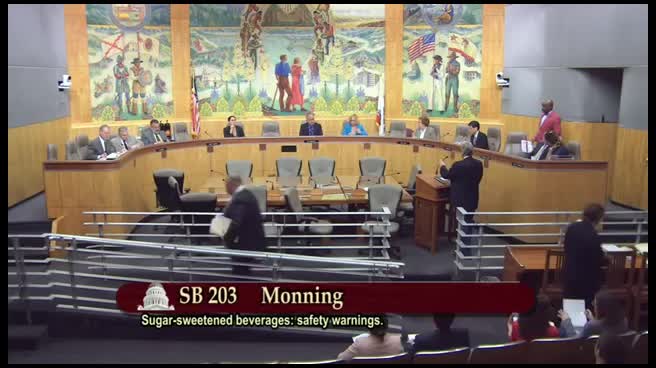
Bill Author

Bill Co-Author(s):