SB 312: Public assistance: personal interviews.
- Session Year: 2015-2016
- House: Senate
- Latest Version Date: 2015-04-23
Existing law provides for protection, care, and assistance for people of the state by providing appropriate aid and services to the needy and distressed. Programs established for this purpose include the California Work Opportunity and Responsibility to Kids program (CalWORKs), which provides cash assistance and other social services to needy families, using federal Temporary Assistance for Needy Families (TANF) block grant program, state, and county funds. Existing law prohibits an applicant from being granted public assistance under CalWORKs until he or she is personally interviewed by the county welfare department human services agency or state hospital staff.
This bill would authorize the county welfare department human services agency or state hospital staff to conduct this personal interview telephonically or through electronic means if the county welfare department determines that a personal interview by telephone or electronic means would be more efficient. means. The bill would require a face-to-face interview to be conducted if requested by an applicant or recipient. By imposing a higher level of service on county human services agencies administering the CalWORKs program, this bill would impose a state-mandated local program. The bill would authorize the State Department of Social Services to implement the bill by means of all-county letters or similar instructions. The bill would also delete an obsolete cross-reference.
The California Constitution requires the state to reimburse local agencies and school districts for certain costs mandated by the state. Statutory provisions establish procedures for making that reimbursement.
This bill would provide that, if the Commission on State Mandates determines that the bill contains costs mandated by the state, reimbursement for those costs shall be made pursuant to these statutory provisions.
Existing law provides for protection, care, and assistance for people of the state by providing appropriate aid and services to the needy and distressed. Programs established for this purpose include the California Work Opportunity and Responsibility to Kids program (CalWORKs), which provides cash assistance and other social services to needy families, using federal Temporary Assistance for Needy Families (TANF) block grant program, state, and county funds. Existing law prohibits an applicant from being granted public assistance under CalWORKs until he or she is personally interviewed by the county welfare department or state hospital staff.
This bill would authorize the county welfare department to conduct this personal interview telephonically or through electronic means if the county welfare department determines that a personal interview by telephone or electronic means would be more efficient. The bill would authorize the State Department of Social Services to implement the bill by means of all-county letters or similar instructions. The bill would also delete an obsolete cross-reference.
(a)An applicant shall not be granted public assistance under Chapter 2 (commencing with Section 11200) until he or she is first personally interviewed by the office of the county welfare department human services agency or state staff for patients in state hospitals. The personal interview shall be conducted promptly following the application for assistance. The county welfare department assistance and may conduct the personal interview be conducted by telephone or through electronic means if the county welfare department determines that a personal interview by telephone or electronic means will be more efficient. means. If an applicant is incapable of acting in his or her own behalf, the county welfare department human services agency shall verify this fact by personal contact with the applicant before aid is authorized. As used in this section, the term public assistance does not include health care as provided by Chapter 7 (commencing with Section 14000).
(b)The interview conducted pursuant to this section shall occur within seven days after the time of application unless there are extenuating circumstances that justify further delay.
(c)A face-to-face interview shall be conducted if requested by an applicant or recipient.
SEC. 3.Notwithstanding the rulemaking provisions of the Administrative Procedure Act (Chapter 3.5 (commencing with Section 11340) of Part 1 of Division 3 of Title 2 of the Government Code), the State Department of Social Services may implement this act through an all-county letter or similar instruction from the director. The all-county letter or similar instruction shall be issued no later than April 1, 2016.
SEC. 4.If the Commission on State Mandates determines that this act contains costs mandated by the state, reimbursement to local agencies and school districts for those costs shall be made pursuant to Part 7 (commencing with Section 17500) of Division 4 of Title 2 of the Government Code.
No (a)An applicant shall not be granted public assistance under Chapters Chapter 2 (commencing with Section 11200) and 5 (commencing with Section 13000) of this part until he or she is first personally interviewed by the office of the county welfare department or state staff for patients in state hospitals. The personal interview shall be conducted promptly following the application for assistance. The county welfare department may conduct the personal interview by telephone or through electronic means if the county welfare department determines that a personal interview by telephone or electronic means will be more efficient. If an applicant is incapable of acting in his or her own behalf, the county welfare department shall verify this fact by personal contact with the applicant before aid is authorized. As used in this section, the term public assistance does not include health care as provided by Chapter 7 (commencing with Section 14000).
The
(b)The interview conducted pursuant to this section shall occur within seven days after the time of application unless there are extenuating circumstances that justify further delay.
SEC. 3.Notwithstanding the rulemaking provisions of the Administrative Procedure Act (Chapter 3.5 (commencing with Section 11340) of Part 1 of Division 3 of Title 2 of the Government Code), the State Department of Social Services may implement this act through an all-county letter or similar instruction from the director. The all-county letter or similar instruction shall be issued no later than April 1, 2016.
|
Date
|
Status
|
|---|---|
| Feb 23, 2015 | Introduced. Read first time. To Com. on RLS. for assignment. To print. |
| Feb 24, 2015 | From printer. May be acted upon on or after March 26. |
| Mar 5, 2015 | Referred to Com. on HUMAN S. |
| Mar 6, 2015 | Set for hearing April 14. |
| Apr 14, 2015 | April 14 hearing postponed by committee. |
| Apr 15, 2015 | Set for hearing April 21. |
| Apr 22, 2015 | From committee: Do pass as amended and re-refer to Com. on APPR. (Ayes 3. Noes 1. Page 726.) (April 21). |
| Apr 23, 2015 | Read second time and amended. Re-referred to Com. on APPR. |
| May 1, 2015 | Set for hearing May 11. |
| May 11, 2015 | May 11 hearing: Placed on APPR. suspense file. |
| May 23, 2015 | Set for hearing May 28. |
| May 28, 2015 | May 28 hearing: Held in committee and under submission. |
| Feb 1, 2016 | Returned to Secretary of Senate pursuant to Joint Rule 56. |
|
Date
|
Description
|
Location
|
Votes
|
|
|---|---|---|---|---|
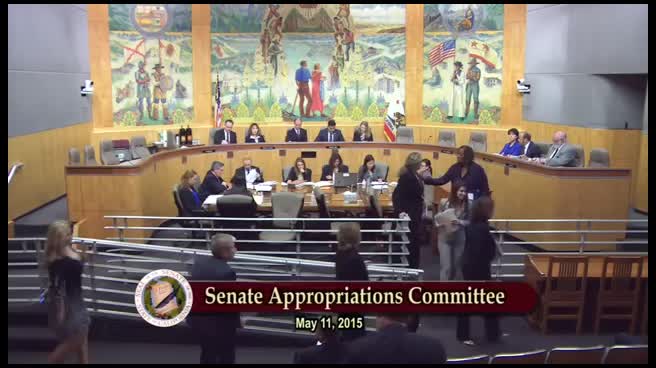
| May 11, 2015 | Placed on suspense file | Senate Standing Committee on Appropriations |
Passed |
|
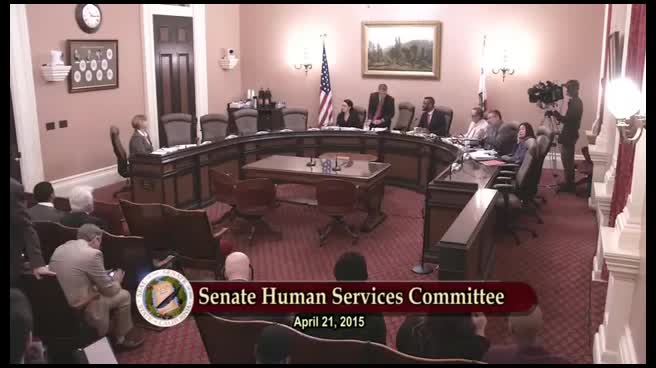
| Apr 21, 2015 | Do pass as amended, but first amend, and re-refer to the Committee on [Appropriations] | Senate Standing Committee on Human Services |
Passed |
This list shows positions taken on this bill by organizations on the date displayed, which is linked to the original source.
Positions by individuals are not included.
|
Organization
|
Position
|
Date
|
|---|---|---|
| California Association Of Food Banks | * Support | Apr 21, 2015 |
| Coalition of California Welfare Rights Organizations | ** Support | Apr 21, 2015 |
| County Welfare Directors Association Of California (Cwda) | * Indeterminate | May 11, 2015 |
| National Association Of Social Workers, California Chapter | * Support | Apr 21, 2015 |
| United Ways Of California | * Support | Apr 21, 2015 |
| Western Center On Law And Poverty Inc. | * Indeterminate | May 11, 2015 |
SENATE COMMITTEE ON
Senator Ricardo Lara, Chair
2015 - 2016 Regular Session
SB 312 (Pan) - Public assistance: personal interviews
Version: | Policy Vote: |
Urgency: | Mandate: |
Hearing Date: | Consultant: |
This bill meets the criteria for referral to the Suspense File.
Bill Summary:
SB 312 would provide that county human services agencies are required to conduct the required personal interview with an applicant for CalWORKs benefits either by telephone or through electronic means. This bill would provide that a face-to-face interview shall be conducted if requested by an applicant or recipient.
Fiscal Impact:
- Interview via telephonic/electronic means: Potentially significant future costs to county agencies to enable interviews by telephone or through “electronic means”. To the extent county agencies incur up-front costs for equipment, staffing, and/or training, these costs could potentially qualify as a reimbursable state mandate (General Fund), as county agencies are required to conduct interviews by one of these two methods. To the extent conducting interviews by telephone or electronic means results in administrative efficiencies, counties could realize significant future cost savings.
- CalWORKs benefits: Potential increases and decreases in CalWORKs benefits (General Fund) to the extent conducting interviews by telephone or electronic means results in a greater or lesser number of applications for aid granted. To the extent this bill removes barriers to applying for and being granted assistance, CalWORKs program costs could increase. However, as this bill only provides for a face-to-face interview upon applicant request, to the extent a county cannot verify or clarify a condition of eligibility through a face-to-face interview (as allowable for CalFresh), additional applications that otherwise may have been approved could potentially be denied.
Background:
Existing law provides that no applicant shall be granted CalWORKs benefits until he or she is first personally interviewed by the office of the county department or state staff for patients in state hospitals. Under existing law, if an applicant is incapable of acting in his or her own behalf, the county department shall verify this fact by personal contact with the applicant before aid is authorized. (Welfare and Institutions Code (WIC) § 11052.5.)
Existing state regulations require a face-to-face interview with the applicant prior to the granting of aid. (DSS Manual of Policy and Procedures 40-131.11.)
Proposed Law:
This bill would require a county human services agency or state staff for patients in state hospitals to conduct the required personal interview with an applicant for CalWORKs benefits either by telephone or through electronic means. This bill would require a face-to-face interview if requested by an applicant or recipient.
Related Legislation:
SB 297 (McGuire) 2015 would require DSS to establish an electronic signature storage hub to enable counties to record telephonic and electronic signatures during a CalFresh interview. This bill would also require county eligibility workers to conduct a CalFresh application interview by telephone, and would allow the interview be
Prior Legislation: AB 1970 (Skinner) 2012 would have required counties to use electronic methods of communication for the application and recertification process in CalWORKs and CalFresh upon applicant or recipient request, and would have established alternatives to in-person interviews for applications and redeterminations. This bill was held on the Suspense File of this Committee.
Staff Comments:
This bill provides that the personal interview for a CalWORKs applicant shall be conducted promptly following the application for assistance and may be conducted by telephone or electronic means. As drafted, the provisions of this measure appear to restrict local agencies’ ability to conduct face-to-face interviews with CalWORKs applicants, with the exception of upon applicant request. As a result, to the extent county agencies incur up-front costs for equipment, staffing, and/or training to implement the process of interviews via telephone or electronic means, which is undefined, these costs could potentially qualify as a reimbursable state mandate (General Fund). Staff notes that to the extent conducting interviews by telephone or electronic means results in administrative efficiencies, counties could realize significant future cost savings.
The provisions of this bill could result in potential increases and decreases in CalWORKs benefits of an unknown, but potentially significant amount. To the extent conducting interviews by telephone or electronic means results in applicants receiving benefits sooner than they otherwise would have under existing law due to the removal of existing barriers to application, CalWORKs program costs could increase. However, to the extent the restriction on face-to-face interviews only upon applicant request prohibit a county from verifying or clarifying a condition of eligibility through a face-to-face interview (as allowable for CalFresh), additional applications that otherwise may have been approved could potentially be denied.
Recommended Amendments: This bill amends Article 2 (“Applications”) of Chapter 1 of Part 3 of Division 9 of WIC. As this Article is specific to applications, staff recommends an amendment to delete the reference to CalWORKs recipients.
On page 3, in line 2, delete “or recipient”.
-- END --
SB 312 (Pan) Page 2 of 2
SENATE COMMITTEE ON APPROPRIATIONS
Senator Ricardo Lara, Chair
2015 - 2016 Regular Session
SB 312 (Pan) - Public assistance: personal interviews
|
|
Version: April 23, 2015 |
Policy Vote: HUMAN S. 3 - 1 |
Urgency: No |
Mandate: Yes |
Hearing Date: May 11, 2015 |
Consultant: Jolie Onodera |
This bill meets the criteria for referral to the Suspense File.
Bill Summary:
SB 312 would provide that county human services agencies are required to conduct the required personal interview with an applicant for CalWORKs benefits either by telephone or through electronic means. This bill would provide that a face-to-face interview shall be conducted if requested by an applicant or recipient.
Fiscal Impact:
Interview via telephonic/electronic means: Potentially significant future costs to county agencies to enable interviews by telephone or through “electronic means”. To the extent county agencies incur up-front costs for equipment, staffing, and/or training, these costs could potentially qualify as a reimbursable state mandate (General Fund), as county agencies are required to conduct interviews by one of these two methods. To the extent conducting interviews by telephone or electronic means results in administrative efficiencies, counties could realize significant future cost savings.
CalWORKs benefits: Potential increases and decreases in CalWORKs benefits (General Fund) to the extent conducting interviews by telephone or electronic means results in a greater or lesser number of applications for aid granted. To the extent this bill removes barriers to applying for and being granted assistance, CalWORKs program costs could increase. However, as this bill only provides for a face-to-face interview upon applicant request, to the extent a county cannot verify or clarify a condition of eligibility through a face-to-face interview (as allowable for CalFresh), additional applications that otherwise may have been approved could potentially be denied.
Background:
Existing law provides that no applicant shall be granted CalWORKs benefits until he or she is first personally interviewed by the office of the county department or state staff for patients in state hospitals. Under existing law, if an applicant is incapable of acting in his or her own behalf, the county department shall verify this fact by personal contact with the applicant before aid is authorized. (Welfare and Institutions Code (WIC) § 11052.5.)
Existing state regulations require a face-to-face interview with the applicant prior to the granting of aid. (DSS Manual of Policy and Procedures 40-131.11.)
Proposed Law:
This bill would require a county human services agency or state staff for patients in state hospitals to conduct the required personal interview with an applicant for CalWORKs benefits either by telephone or through electronic means. This bill would require a face-to-face interview if requested by an applicant or recipient.
Related Legislation:
SB 297 (McGuire) 2015 would require DSS to establish an electronic signature storage hub to enable counties to record telephonic and electronic signatures during a CalFresh interview. This bill would also require county eligibility workers to conduct a CalFresh application interview by telephone, and would allow the interview be
Prior Legislation: AB 1970 (Skinner) 2012 would have required counties to use electronic methods of communication for the application and recertification process in CalWORKs and CalFresh upon applicant or recipient request, and would have established alternatives to in-person interviews for applications and redeterminations. This bill was held on the Suspense File of this Committee.
Staff Comments:
This bill provides that the personal interview for a CalWORKs applicant shall be conducted promptly following the application for assistance and may be conducted by telephone or electronic means. As drafted, the provisions of this measure appear to restrict local agencies’ ability to conduct face-to-face interviews with CalWORKs applicants, with the exception of upon applicant request. As a result, to the extent county agencies incur up-front costs for equipment, staffing, and/or training to implement the process of interviews via telephone or electronic means, which is undefined, these costs could potentially qualify as a reimbursable state mandate (General Fund). Staff notes that to the extent conducting interviews by telephone or electronic means results in administrative efficiencies, counties could realize significant future cost savings.
The provisions of this bill could result in potential increases and decreases in CalWORKs benefits of an unknown, but potentially significant amount. To the extent conducting interviews by telephone or electronic means results in applicants receiving benefits sooner than they otherwise would have under existing law due to the removal of existing barriers to application, CalWORKs program costs could increase. However, to the extent the restriction on face-to-face interviews only upon applicant prohibit a county from verifying or clarifying a condition of eligibility through a face-to-face interview (as allowable for CalFresh), additional applications that otherwise may have been approved could potentially be denied.
Recommended Amendments: This bill amends Article 2 (“Applications”) of Chapter 1 of Part 3 of Division 9 of WIC. As this Article is specific to applications, staff recommends an amendment to delete the reference to CalWORKs recipients.
On page 3, in line 2, delete “or recipient”.
-- END --
SB 312 (Pan) Page 5 of 5
SENATE COMMITTEE ON HUMAN SERVICES
Senator McGuire, Chair
2015 - 2016 Regular
Bill No: SB 312
Author: |
Pan |
||
Version: |
February 23, 2015 |
Hearing Date: |
April 21, 2015 |
Urgency: |
No |
Fiscal: |
Yes |
Consultant: |
Mareva Brown |
||
Subject: Public assistance: personal interviews
SUMMARY
This bill would authorize the county welfare department to conduct a required personal interview with an applicant for CalWORKs benefits either telephonically or through electronic means, if the county welfare department determines that such an interview would be more efficient. The bill would also delete a cross-reference to an obsolete section of statute.
ABSTRACT
Existing law:
Establishes in state law the CalWORKs program to provide cash assistance and other social services for low-income families through the federal Temporary Assistance for Needy Families (TANF) program. Under CalWORKs, each county provides assistance through a combination of state, county and federal TANF funds. (WIC 10530)
Prohibits an applicant for CalWORKs from being granted assistance until he or she is first personally interviewed by the office of the county welfare department or by state staff for patients in state hospitals. (WIC 11052.5)
Requires the personal interview to be conducted promptly following the application for assistance. If an applicant is incapable of acting in his or her own behalf, the county department shall verify this fact by personal contact with the applicant before aid is authorized. (WIC 11052.5)
Establishes under federal law the Supplemental Nutrition Assistance Program (SNAP) within the US Department of Agriculture (USDA) to promote the general welfare and to safeguard the health and wellbeing of the nation’s population by raising the levels of nutrition among low-income households. It establishes SNAP eligibility requirements, including income that is at or below 130 percent of the federal poverty level and is determined to be a substantial limiting factor in permitting a recipient to obtain a more nutritious diet (7 CFR 271.1; 7 CFR 273.9)
Establishes in California statute the CalFresh program to administer the provision of federal SNAP benefits to families and individuals meeting specified criteria. (WIC 18900 et seq.)
Establishes in CalFresh statute the option for a county welfare department to exempt an applicant for food benefits from complying with face-to-face interview requirements for purposes of determining eligibility at initial application and recertification. (WIC 18901.1)
This bill:
Names this bill the County Option of Efficient Interviewing of CalWORKs Applicants Act of 2015.
Deletes an obsolete reference to an amended section of statute, per legislative counsel.
Permits a county welfare department to conduct an applicant’s required personal interview by telephone or through electronic means if the county welfare department determines that method will be more efficient.
FISCAL IMPACT
This bill has not been analyzed by a fiscal committee.
BACKGROUND AND DISCUSSION
Purpose of the bill:
According to the author, counties that have set up the infrastructure to do telephone interviews for CalFresh, or food stamp, applicants should have the option to do the same for CalWORKs applicants if it would achieve administrative efficiency. The author also states that telephone interviews would be beneficial to beneficiaries who live in rural California, where the cost of transportation to an in-person interview can be burdensome.
Poverty
California has the highest poverty rate of any state in the nation, with nearly one-quarter of residents living at or below the federal poverty level (FPL) according to the national Supplemental Poverty Measure. A family of three living at the FPL earns no more than $20,090 per year. During and after the Great Recession, California saw growing rates of deep poverty – those living below 50 percent of the federal poverty line.
Additionally, 26.3 percent of young children – aged 6 or younger – were below poverty under the recently created California Poverty Measure that is calculated by researchers at Stanford and the Public Policy Institute of California. While California’s child poverty rate is much worse than the national average, there are pockets of poverty within this state where children are especially needy. In 2013, researchers found that Merced County had a childhood poverty rate of 40.6 percent, while more than one in three children in Fresno, Kern, Tulare, Lake, and Mendocino counties live below the poverty line.1 California’s young children are at the greatest risk: More than 11 percent of young children statewide experienced deep poverty in 2013, according to research provided by Stanford University’s poverty center. The Stanford researchers found that rates of deep poverty grew most steeply among young children during and after the Great Recession.
TANF and CalWORKs
One of California’s most essential anti-poverty strategies is the California Work Opportunity and Responsibility to Kids program (CalWORKs), which provides state and federal cash assistance to approximately 540,000 families, including more than 1 million children. A grant to a family of three in a high-cost California county currently is $704 per month, or approximately 42 percent of the federal poverty level (FPL). In 1989, a similar grant was worth about 81 percent of FPL, and 55 percent in 1997.
The CalWORKs program is funded through a combination of state funds and a fixed federal block grant through the federal Temporary Assistance to Needy Families (TANF) program. The TANF program, created through the Personal Responsibility and Work Opportunity Reconciliation Act or PRWORA (42 U.S.C. 601), permits recipients to receive aid for up to 60 months. The program was designed to give states flexibility in setting eligibility and guidelines. Under PRWORA, as long as states meet maintenance of effort requirements and adhere to federal work participation requirements, they receive federal funding. California’s CalWORKs statute has been revised repeatedly over the last decade and most notably in response to the state’s fiscal crisis during the Great Recession. Currently, a recipient may remain on aid for 48 months so long as during the last 24 of those months the participant is meeting strict federal work requirements. An array of services and supports is designed to identify and address any individual challenges clients face during the first 24 months.
CalFresh
The USDA’s Supplemental Nutrition Assistance Program (SNAP) funds 100 percent of food benefits to eligible households nationwide. California, its 58 counties and the federal government share the cost of administering the program, which is known as CalFresh. Specific eligibility requirements are set by the USDA, including gross- and net-income asset tests for most recipients, work requirements and specific documentation requirements. Approximately 4.4 million Californians receive CalFresh benefits, according to USDA data. Many CalWORKs participants also receive CalFresh benefits.
Use of telephone interviews
Under a federal USDA waiver2 and under current regulatory requirements,3 California’s county human services agencies have the option to allow CalFresh applicants to satisfy the interview requirement over the telephone rather than mandating a face-to-face interview. CDSS instructed counties in February 20144 that they were permitted to complete a telephone interview without having an applicant schedule an appointment by calling a county call center or other number specified by the county. The applicant also has the option of scheduling appointments or requesting an accommodation, if they have special needs.
Yet the use of a telephonic interview is not permitted in the CalWORKs program. Per CDSS guidance, if an applicant is applying for both programs together, which is common, county human services agencies must conduct the interview in person, to comply with CalWORKs state law and regulation.5
Efficiencies within the TANF program
A research paper prepared for the US Administration on Children and Families in 2014 focused on state’s efforts to serve TANF recipients in the wake of significant cuts to grants, program staff and constricted job opportunities nationwide. The researchers surveyed 30 states, including California, and found, among other things, that states had made explicit efforts to reduce program costs in part by reducing administrative and program staffing. In California that included furloughs and unfilled vacancies. Even with an improving economy, most states still struggle with fewer staff and less to offer poor participants. The researchers identified five strategies to improve TANF programs, including use of more efficient business practices.
Improving the efficiency of business processes could help agencies engage TANF recipients more quickly and consistently or could free up funds which could then be re-invested in other TANF services.6
Related legislation
SB 297 (McGuire 2015) would require CDSS to establish an electronic signature storage hub to enable counties to record telephonic and electronic signatures during a CalFresh interview.
AB 1970 (Skinner, 2012) would have permitted counties to use electronic methods of communication for the application and recertification processes in CalWORKs and CalFresh, and would have established alternatives to in-person interviews for applications and redeterminations. It died in the Senate Appropriations Committee.
COMMENTS
The author is seeking to align CalWORKs interviewing requirements with those existing in the CalFresh program, which currently requires that county human services agencies use a telephonic verification, unless certain circumstances exist. Staff recommends the following amendments to clarify the bill’s intent:
11052.5. (a) An applicant shall
not be granted public assistance under
Chapter 2 (commencing with Section 11200)
until he or she is first personally interviewed by the office
of the county welfare
department human
services agency or state staff for patients in state
hospitals. The personal interview shall be conducted promptly
following the application for assistance.
The county welfare
department may
conduct the personal interview
and may be conducted by
telephone or through electronic means. If
the county welfare department determines that a personal interview by
telephone or electronic means will be more efficient.
If an applicant is incapable of acting in his or her own behalf, the
county welfare department
human services agency shall
verify this fact by personal contact with the applicant before aid is
authorized. As used in this section, the term public assistance does
not include health care as provided by Chapter 7 (commencing with
Section 14000).
(b) The interview conducted pursuant to this section shall occur within seven days after the time of application unless there are extenuating circumstances that justify further delay.
(c) A face-to-face interview shall be conducted if requested by an applicant or recipient.
POSITIONS
Support:
Coalition of California Welfare Rights Organizations (Sponsor – Support)
Western Center on Law and Poverty (Sponsor- Support)
Oppose:
None.
-- END --
1 Bohn, Sarah and Matt Levin, “Child Poverty in California,” Public Policy Institute of California, August 2013.
2 USDA Food and Nutrition Services Waiver #2130007, implemented August 1, 2013.
3 US 7 CFR 273.2(e)(3) and California Manual of Policies and Procedures Section 63-300.46
4 CDSS All County Letter # 14-20, February 27, 2014
5 Manuals of Policies and Procedures 40-131; CDSS All County Information Notice I-15-03, March 28, 2003
6 Brown, Elizabeth and Michelle Derr, “Serving TANF Recipients in a Post-Recession Environment,” Mathematica Policy Research on behalf of the Office of Planning, Research and Evaluation (OPRE) in the US Administration for Children and Families, February 2015
Discussed in Hearing
 3MIN
Senate Standing Committee on Appropriations
 7MIN
Senate Standing Committee on Human Services
Bill Author

Bill Co-Author(s):