SB 449: State contracts: telecommunications: callback features.
- Session Year: 2015-2016
- House: Senate
- Latest Version Date: 2015-04-08
Existing law governing the state acquisition of telecommunication services and goods, generally requires contracts for the acquisition of those goods and services, whether by lease or purchase, to be made by, or be made under the supervision of, the Department of Technology.
This bill would, on and after January 1, 2016, require any contract for the acquisition of telecommunications services, or any renewal of a contract for telecommunications services, for a state agency agency, as defined, that interacts with, or receives inquiries from, the general public to provide for a queue callback feature, as described.
Existing law governing the state acquisition of telecommunication services and goods, generally requires contracts for the acquisition of those goods and services, whether by lease or purchase, to be made by, or be made under the supervision of, the Department of Technology.
This bill would, on and after January 1, 2016, require any contract for the acquisition of telecommunications services, or any renewal of a contract for telecommunications services, for a state agency that interacts with, or receives inquiries from, the general public to provide for a queue callback feature, as described.
(a)On and after January 1, 2016, any contract for the acquisition of telecommunications services, or any renewal of a contract for telecommunications services, for a state agency that interacts with, or receives inquiries from, the general public shall provide for a queue callback feature that allows customers calling the state agency to be offered the option of receiving a call back from a representative of the state agency rather than wait on the telephone line for the next available representative.
(b)For purposes of this section, state agency means every state office, department, division, bureau, board, and commission, but does not include the Legislature and, notwithstanding Section 19204, does not include the courts or an entity in the judicial branch of government.
On and after January 1, 2016, any contract for the acquisition of telecommunications services, or any renewal of a contract for telecommunications services, for a state agency that interacts with, or receives inquiries from, the general public shall provide for a queue callback feature that allows customers calling the state agency to be offered the option of receiving a call back from a representative of the state agency rather than wait on the telephone line for the next available representative.
|
Date
|
Status
|
|---|---|
| Feb 25, 2015 | Introduced. Read first time. To Com. on RLS. for assignment. To print. |
| Feb 26, 2015 | From printer. May be acted upon on or after March 28. |
| Mar 5, 2015 | Referred to Com. on G.O. |
| Mar 12, 2015 | Set for hearing April 14. |
| Apr 8, 2015 | From committee with author's amendments. Read second time and amended. Re-referred to Com. on G.O. |
| Apr 14, 2015 | From committee: Do pass and re-refer to Com. on APPR. (Ayes 11. Noes 0. Page 592.) (April 14). Re-referred to Com. on APPR. |
| Apr 17, 2015 | Set for hearing April 27. |
| Apr 27, 2015 | April 27 hearing: Placed on APPR. suspense file. |
| May 23, 2015 | Set for hearing May 28. |
| May 28, 2015 | May 28 hearing: Held in committee and under submission. |
| Feb 1, 2016 | Returned to Secretary of Senate pursuant to Joint Rule 56. |
|
Date
|
Description
|
Location
|
Votes
|
|
|---|---|---|---|---|
| Apr 27, 2015 | Placed on suspense file | Senate Standing Committee on Appropriations |
Passed |
|
| Apr 14, 2015 | Do pass, but first be re-referred to the Committee on [Appropriations] | Senate Standing Committee on Governmental Organization |
Passed |
This list shows positions taken on this bill by organizations on the date displayed, which is linked to the original source.
Positions by individuals are not included.
|
Organization
|
Position
|
Date
|
|---|---|---|
| Howard Jarvis Taxpayers Association | * Support | Apr 14, 2015 |
| Howard Jarvis Taxpayers Association | * Indeterminate | Apr 14, 2015 |
SB 449 (Nielsen) Page 2 of 2
SENATE COMMITTEE ON APPROPRIATIONS
Senator Ricardo Lara, Chair
2015 - 2016 Regular Session
SB 449 (Nielsen) - State contracts: telecommunications: callback features
|
|
Version: April 8, 2015 |
Policy Vote: G.O. 11 - 0 |
Urgency: No |
Mandate: No |
Hearing Date: April 27, 2015 |
Consultant: Mark McKenzie |
This bill meets the criteria for referral to the Suspense File.
Bill Summary:
SB 449 would require state agency contracts for the acquisition of telecommunications services, including contract renewals, to provide for a queue callback feature, as specified, beginning in 2016.
Fiscal Impact:
Unknown, potentially significant costs in a given fiscal year, depending on the number of agencies enter into telecommunications contracts, the functionality of an agency’s current systems, and the volume of calls fielded by a particular agency.
Based upon experiences in several departments that have implemented queue callback systems, one-time costs for a single agency could range from $150,000 to $600,000, with ongoing costs in the low to high hundreds of thousands. In the aggregate, ongoing costs would likely exceed $1 million, to the extent state agencies would not have implemented a queue callback feature absent the bill. (see staff comments)
Background:
Existing law requires the Department of Technology (Department) to establish policies and procedures regarding the acquisition of telecommunications goods and services. Existing law generally requires the Department to act as the contracting entity on behalf of state agencies for the acquisition of telecommunications goods and services, or to supervise those contracts.
Proposed Law:
On or after January 1, 2016, SB 449 would require any contract for the acquisition of telecommunications services, including contract renewals, for a state agency that interacts with the general public to provide for a queue callback feature that allows callers to have the option of receiving a call back from an agency representative, rather than waiting on hold for the next available representative. The bill exempts the Legislature, as well as courts and other judicial entities, from the new requirement.
Staff Comments:
This bill is intended to improve the efficiency of state agency staff interactions with the general public, and make state government more user-friendly.
Queue callback features are intended to work in the following manner: when a customer calls a particular entity and all of the entity’s representatives are busy, the customer is given the option of either staying on the line or receiving a call back once a representative becomes available. If the customer chooses the callback option, he or she would hang up the phone and the system would call the customer back and connect him or her to an available customer service representative.
The Department of Motor Vehicles began offering a queue callback feature in 2011, which offers a customer the option of receiving a call back if the average wait times exceed five minutes. DMV indicates their system has a 75 percent “take rate” of customers requesting a call back. DMV one-time costs to develop and implement a “virtual hold solution” system were $150,000, and annual ongoing costs are approximately $800,000, including platform costs and monthly call volume charges. DMV has abnormally busy call centers, fielding an average of 20,000 calls per day.
The Employment Development Department (EDD) implemented a voice call back feature into existing call centers in September of 2014. A companion “scheduled call back feature,” which provides the option to make an appointment to speak to an agent, is scheduled for implementation in September of 2015. To date, EDD indicates their system has a 38 percent “take rate,” queueing about 1.2 million calls since implementation. EDD reports one-time costs to develop and implement a queue call back system was approximately $600,000, with annual ongoing costs of approximately $423,000, based upon expected transactions and annual platform costs.
Staff notes that this bill would likely apply to over 200 state entities. It is unknown how many currently have telecommunications features that are in compliance with the requirements of the bill. If even a small number of state agencies that field significant call volume from the public were to implement queue call back features, one-time costs in a given year could be significant. Ongoing aggregate costs are likely to reach the millions in future years. There could be some savings related to efficiencies and workload management benefits, but these are unquantifiable at this time.
-- END --
SB 449 (Nielsen) Page 3 of 3
SENATE COMMITTEE ON GOVERNMENTAL ORGANIZATION
Senator Isadore Hall, III
Chair
2015 - 2016 Regular
Bill No: SB 449 Hearing Date: 4/14/2015
Author: |
Nielsen |
||
Version: |
04/08/2015 |
||
Urgency: |
No |
Fiscal: |
Yes |
Consultant: |
Felipe Lopez |
||
SUBJECT: State contracts: telecommunications: callback features.
DIGEST: This bill requires that any contract or renewal of a contract for a state agency, on and after January 1, 2016, provide for a queue callback feature, as described.
ANALYSIS:
Existing law:
Requires contracts for the acquisition of telecommunication services and goods, whether by lease or purchase, to be made by, or be made under the supervision of, the Department of Technology (CalTech).
Specifies that CalTech shall have responsibility for the establishment of policy and procedures for telecommunications.
Specifies that the Trustees of the California State University and the Board of Governors of the California Community Colleges shall assume the functions of the agency with regard to acquisition of telecommunications goods and services by the California State University and the California Community Colleges, respectively.
This bill:
Requires that for any contract, on and after January 1, 2016, for the acquisition of telecommunication services, or any renewal of a contract for telecommunications services, for a state agency that interacts with, or receives inquiries from, the general public shall provide for a queue callback feature.
Describes a queue callback feature as a feature that allows customers calling the state agency to be offered the option of receiving a callback from a representative of the state agency rather than wait on the telephone line for the next available representative.
Defines a “state agency” as every state office, department, division, bureau, board, and commission, but does not include the Legislature and does not include the courts or an entity in the judicial branch of government.
Background
Purpose of the bill: According to the author, while not all state agencies have the manpower to immediately answer all telephone calls, now with the assistance of technology, agents can respond in a timely manner, and without the burdening wait times. The author further contends that this bill seeks to make state agencies more efficient by upgrading agency telephone systems to an improved technology, which will in turn improve the constituent experience and result in less wasted time spent listening to hold music.
The author concludes that this bill will improve agency operations by providing a tool that assists agents to more efficiently serve their constituency.
Queue callback features: The queue callback feature has been widely available at various different private and public entities for quite some time. Though the feature might vary slightly, ultimately the feature works in the following manner: when a customer calls a particular entity and all of the entity’s representatives are busy, the customer is given the option of either staying on the line or receiving a call back once a representative becomes available. If the customer decides the callback option, he or she would hang up the phone and receive a call once a representative becomes available.
This option gives customers the opportunity to go about their day without the need to stay on hold. Businesses and public agencies benefit by having such a system in a couple of ways. First, the queue callback feature results in less irritated customers. In addition, since there are fewer customers on hold, a callback feature lowers the telecommunication costs.
California Department of Motor Vehicles (DMV) callback feature: In 2011 the DMV began to offer a callback feature for its customers. Rather than waiting on the line and waiting for the next available customer agent, customers were given the option of receiving a callback. The system is set to offer this option when the average wait time exceeds 5 minutes.
This new queue callback feature lets customers hang up and go about their day. When an agent becomes available, the system automatically calls the DMV back. To the DMV agent, it looks like any other inbound call.
This new feature has been a great success for the DMV and has received positive reviews by DMV customers.
Prior/Related Legislation
AB 2523 (Cooley), Chapter 391, Statutes of 2014. The bill requires the Director of CalTech to establish a unit, within CalTech, of consulting information technology experts to serve as support for state agencies.
FISCAL EFFECT: Appropriation: No Fiscal Com.: Yes Local: No
SUPPORT:
Howard Jarvis Taxpayers Association
OPPOSITION:
None received
ARGUMENTS IN SUPPORT: The Howard Jarvis Taxpayers Association states that in an effort to promote transparency and put the taxpayer first, a queue callback feature allows calls to be returned when it is convenient for the individual needing service. They further argue that government seems to have forgotten their job is to serve the taxpayers that support them and that SB 449 will help address the problem.
Discussed in Hearing
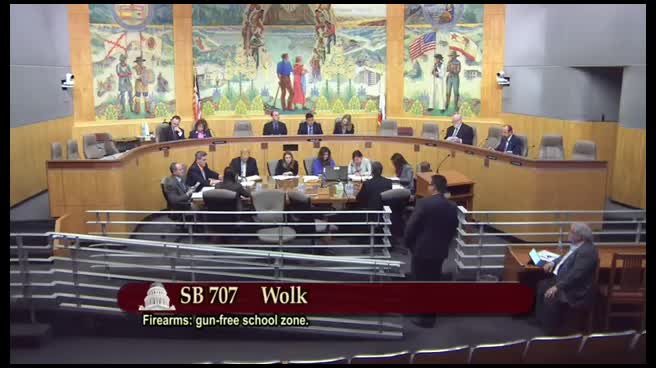 4MIN
Senate Standing Committee on Appropriations
 1MIN
Senate Standing Committee on Governmental Organization
Bill Author


