SB 553: Water conservation.
- Session Year: 2015-2016
- House: Senate
- Latest Version Date: 2015-02-26
Existing law requires the Department of General Services to provide planning, acquisition, construction, and maintenance of state buildings and property. Existing law requires the department, in consultation with the State Energy Resources Conservation and Development Commission, and with the concurrence of the Department of Finance, to identify each public building in the departments state property inventory where it is feasible for that building to reduce energy consumption and achieve energy efficiencies, as specified, and to retrofit those buildings, as specified.
The Water Conservation in Landscaping Act requires the Department of Water Resources, to the extent funds are appropriated, not later than January 1, 2009, to update a model water efficient landscape ordinance to meet specified requirements. The act requires a local agency, not later than January 1, 2010, to adopt the updated model ordinance or other water efficient landscape ordinance that is at least as effective in conserving water as the updated model ordinance.
This bill would require the Department of General Services to identify each public property in the departments state property inventory where it is feasible for water consumption to be reduced and water efficiencies to be achieved through implementation of the relevant recommendations made in the model water efficient landscape ordinance and would require the department to implement the relevant recommendations where feasible, except as specified.
The Legislature hereby finds and declares:
(a)California is prone to cycles of drought and water shortage.
(b)According to the Department of Water Resources, landscape irrigation represents 43 percent of urban water use.
(c)The state must take a leadership role in implementing water efficient landscape practices.
SEC. 2.Article 6.5 (commencing with Section 14714) is added to Chapter 2 of Part 5.5 of Division 3 of Title 2 of the Government Code, to read:6.5.State Property Water Use14714.(a)The department shall identify each public property in the departments state property inventory where it is feasible for water consumption to be reduced and water efficiencies to be achieved through implementation of the relevant recommendations made in the model water efficient landscape ordinance adopted by the Department of Water Resources pursuant to Sections 65595 and 65596. These recommendations shall include, but not be limited to, recommendations regarding the replacement of landscaping with drought tolerant plants.
(b)The department shall implement the relevant recommendations for each public property identified pursuant to subdivision (a) to reduce overall water consumption where feasible, except that work on public property of the California State University shall be subject to the consent of the California State University.
(c)For purposes of this section, feasible means capable of being accomplished in a successful manner within a reasonable period of time, taking into account life-cycle cost analyses, and environmental, social, and technological factors.
|
Date
|
Status
|
|---|---|
| Feb 26, 2015 | Introduced. Read first time. To Com. on RLS. for assignment. To print. |
| Feb 27, 2015 | From printer. May be acted upon on or after March 29. |
| Mar 12, 2015 | Referred to Com. on G.O. |
| Apr 16, 2015 | Set for hearing April 28. |
| Apr 28, 2015 | From committee: Do pass and re-refer to Com. on APPR. (Ayes 8. Noes 0. Page 796.) (April 28). Re-referred to Com. on APPR. |
| May 1, 2015 | Set for hearing May 11. |
| May 11, 2015 | May 11 hearing: Placed on APPR. suspense file. |
| May 23, 2015 | Set for hearing May 28. |
| May 28, 2015 | May 28 hearing: Held in committee and under submission. |
| Feb 1, 2016 | Returned to Secretary of Senate pursuant to Joint Rule 56. |
|
Date
|
Description
|
Location
|
Votes
|
|
|---|---|---|---|---|
| May 11, 2015 | Placed on suspense file | Senate Standing Committee on Appropriations |
Passed |
|
| Apr 28, 2015 | Do pass, but first be re-referred to the Committee on [Appropriations] | Senate Standing Committee on Governmental Organization |
Passed |
This list shows positions taken on this bill by organizations on the date displayed, which is linked to the original source.
Positions by individuals are not included.
|
Organization
|
Position
|
Date
|
|---|---|---|
| Association Of California Water Agencies | ** Support | Apr 28, 2015 |
| California Municipal Utilities Association | * Support | Apr 28, 2015 |
| California Municipal Utilities Association | * Indeterminate | Apr 28, 2015 |
| San Diego Water Authority | ** Support | Apr 28, 2015 |
| Sierra Club of California | ** Support | Apr 28, 2015 |
| The Metropolitan Water District Of Southern California | ** Support | Apr 28, 2015 |
SB 553 (Wolk) Page 2 of 2
SENATE COMMITTEE ON APPROPRIATIONS
Senator Ricardo Lara, Chair
2015 - 2016 Regular Session
SB 553 (Wolk) - Water conservation
|
|
Version: February 26, 2015 |
Policy Vote: G.O. 8 - 0 |
Urgency: No |
Mandate: No |
Hearing Date: May 11, 2015 |
Consultant: Mark McKenzie |
This bill meets the criteria for referral to the Suspense File.
Bill Summary:
SB 553 would require the Department of General Services (DGS) to identify state properties where it is feasible to reduce water consumption, and to replace landscaping with drought tolerant plants and implement other recommended strategies to save water at those locations based upon a specified water efficient landscape ordinance.
Fiscal Impact:
Unknown costs to DGS, likely in the low millions, to identify state properties, evaluate the needs at each location, and implement recommended water conservation measures on approximately 2,900 state properties. (General Fund)
Unknown future savings related to reduced water consumption on state properties.
Background:
Existing law requires DGS to provide planning, acquisition, construction, and maintenance of state buildings and property. Existing law requires DGS to identify each public building in the DGS’s state property inventory where it is feasible for that building to reduce energy consumption and achieve energy efficiencies, as specified, and to retrofit those buildings. Existing law, under the Water Conservation in Landscaping Act, required the Department of Water Resources (DWR) to update a model water efficient landscape ordinance to meet specified requirements by January 1, 2009, to the extent funds are appropriated for that purpose.
The Model Water Efficient Landscape Ordinance (MWELO) was updated by DWR in 2010 with the aim to promote water conservation, prevent water waste and protect water quality. It includes provisions for water conservation and the appropriate use of plants that are well adapted to particular environments including climate, soil, or topographic conditions. The MWELO establishes the maximum amount of water used by the irrigation system, based on climate, landscape, size, irrigation efficiency, and plant needs. It also includes provisions for the use of automatic irrigation systems and irrigation schedules based on climatic conditions, specific terrains and soil types, and other environmental conditions as well as references to local, state, and federal regulations regarding standards for water conserving irrigation equipment.
Proposed Law:
SB 553 would require DGS to implement water saving strategies on state properties, where feasible. Specifically, this bill would:
Require DGS to identify each public property in the department’s state property inventory where it is feasible for water consumption to be reduced and water efficiencies to be achieved through implementation of the relevant recommendations made in the model water efficient landscape ordinance adopted by the DWR.
Explicitly require the implemented recommendations to include the replacement of landscaping with drought tolerant plants.
Require DGS to implement the relevant recommendations for each public property identified to reduce overall water consumption where feasible, except that work on California State University (CSU) property is subject to CSU consent.
Define “feasible” as capable of being accomplished in a successful manner within a reasonable period of time, taking into account life-cycle cost analyses, and environmental, social, and technological factors.
Staff Comments:
This bill would require DGS to implement water conservation on state properties, using DWR’s most recently updated Model Water Efficient Landscaping Ordinance. According to DGS’s statewide property inventory, there are currently 2,903 real properties and over 24,000 structures across 42 state entities, not all of which are under direct DGS control.
SB 553 would require DGS to coordinate closely with these entities to survey the status of each property’s landscaping and irrigation, evaluate the needs to make those properties compliant with the MWELO, and replace infrastructure and plants as necessary. DGS indicates that has been in the process of undertaking landscape water conservation measures at over 70 locations, but most of the focus has been on the installation of smart irrigation systems rather than replacing landscaping with drought tolerant plants. DGS costs to identify properties, evaluate the needs at each location, and implement the recommendations of the MWELO are unknown at this time. Staff estimates that such an effort would at least require resources in the low millions of dollars in the aggregate. Actual costs would be informed by an evaluation of the inventory and assessment of needs, which are currently unavailable.
-- END --
SB 553 (Wolk) Page 4 of 4
SENATE COMMITTEE ON GOVERNMENTAL ORGANIZATION
Senator Isadore Hall, III
Chair
2015 - 2016 Regular
Bill No: SB 553 Hearing Date: 4/28/2015
Author: |
Wolk |
||
Version: |
2/26/2015 |
||
Urgency: |
No |
Fiscal: |
Yes |
Consultant: |
Felipe Lopez |
||
SUBJECT: Water conservation
DIGEST: This bill requires the Department of General Services (DGS) to identify each public property in the department’s state property inventory where it is feasible for water consumption to be reduced and water efficiencies to be achieved through implementation of the relevant recommendations made in the model water efficient landscape ordinance and would require DGS to implement relevant recommendations where feasible, except as specified.
ANALYSIS:
Existing law:
Requires DGS to provide planning, acquisition, construction, and maintenance of state buildings and property.
Requires DGS, in consultation with the State Energy Resources Conservation and Development Commission, and with the concurrence of the Department of Finance, to identify each public building in the DGS’s state property inventory where it is feasible for that building to reduce energy consumption and achieve energy efficiencies, as specified, and to retrofit those buildings, as specified.
Requires, under the Water Conservation in Landscaping Act, for the Department of Water Resources (DWR) to the extent funds are appropriated, no later than January 1, 2009, to update a model water efficient landscape ordinance to meet specified requirements.
Requires, under the Water Conservation in Landscaping Act, for a local agency, no later than January 1, 2010, to adopt the updated model ordinance or other water efficient landscape ordinance that is at least as effective in conserving water as the updated model ordinance.
This bill:
Requires DGS to identify each public property in the department’s state property inventory where it is feasible for water consumption to be reduced and water efficiencies to be achieved through implementation of the relevant recommendations made in the model water efficient landscape ordinance adopted by the DWR. These recommendations shall include, but not be limited to, recommendations regarding the replacement of landscaping with drought tolerant plants.
Requires DGS to implement the relevant recommendations for each public property identified to reduce overall water consumption where feasible, except that work on public property of the California State University (CSU) shall be subject to the consent of the CSU.
Defines “feasible” to mean capable of being accomplished in a successful manner within a reasonable period of time, taking into account life-cycle cost analyses, and environmental, social, and technological factors.
Background
Purpose of the bill: According to the author, in order to weather California’s frequent and increasingly severe droughts, all water use should be efficient. The DWR has developed a model landscape ordinance that local water agencies and local governments have implemented to varying degrees.
The author further argues that DGS should achieve efficient outdoor landscaping for state owned properties, and that the landscaping should be at least as efficient as required by the DWR developed model landscape ordinance.
Model Water Efficient Landscape Ordinance (MWELO): The MWELO was updated by the DWR in 2010 with the aim to promote water conservation, prevent water waste and protect water quality. It includes provisions for water conservation and the appropriate use of plants that are well adapted to particular environments including climate, soil, or topographic conditions. The MWELO establishes the maximum amount of water used by the irrigation system, based on climate, landscape, size, irrigation efficiency, and plant needs. The model includes provisions for the use of automatic irrigation systems and irrigation schedules based on climatic conditions, specific terrains and soil types, and other environmental conditions as well as references to local, state, and federal regulations regarding standards for water conserving irrigation equipment.
Statewide Property Inventory: According to DGS’ Internet Web site, the State of California currently owns 2,905 real estate properties throughout the state. This translates to 6,948,913 square feet. In addition, the state currently leases a total of 2,290 properties which total 16,013,179 square feet of leased office space.
In Sacramento County alone the state has a total of 382 leases totaling a total of 7,341,462 square feet of leased office space.
Prior/Related Legislation
AB 566 (Plescia), Chapter 319, Statutes of 2007. The bill required the DWR to develop a standard data protocol for the transmission of evapotranspiration data and continue operating the California Irrigation Management Information System.
AB 1881 (Laird), Chapter 559, Statutes of 2006. The bill reauthorized the DWR to prepare a new and undated model local water efficient landscape ordinance for adoption by local governments.
AB 325 (Clute), Chapter 1125, Statutes of 1990. The bill required the DWR to convene an advisory task force to develop and adopt a Model Ordinance by January 1, 1992.
FISCAL EFFECT: Appropriation: No Fiscal Com.: Yes Local: No
SUPPORT:
Association of California Water Agencies
California Municipal Utilities Association
San Diego Water Authority
Sierra Club of California
The Metropolitan Water District of Southern California
OPPOSITION:
None received
ARGUMENTS IN SUPPORT: The San Diego County Water Authority writes in support of the bill stating that given that landscape irrigation represents approximately 43 percent of urban water use, according to the DWR, and that California is prone to cycles of drought and water shortage, such as the prolonged multi-year drought the state is presently experiencing, SB 553 would ensure the state takes an important leadership role in implementing water efficient landscape practices.
The California Municipal Utilities Association (CMUA) argues that as California enters the fourth year of an unprecedented drought, it is critical that stakeholders, including the state, maximize all water conservation opportunities. CMUA further argues that DGS can take a leadership role in water saving activities outlined in the bill, such as the implementation of water efficient landscape practices in DGS’ state property inventory.
Discussed in Hearing
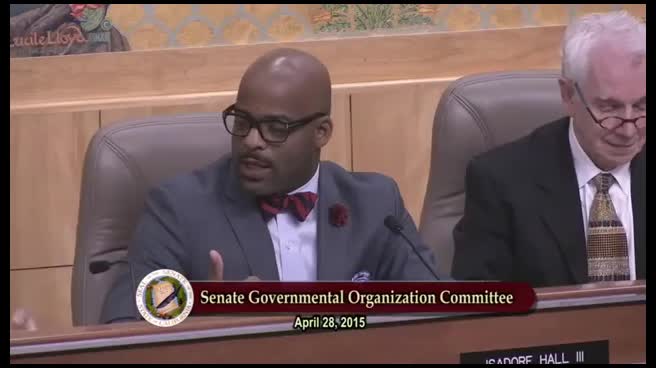 4MIN
Senate Standing Committee on Governmental Organization
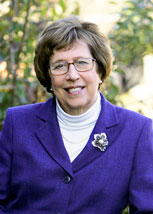
Bill Author
Bill Co-Author(s):