SB 689: Veterans: housing.
- Session Year: 2015-2016
- House: Senate
- Latest Version Date: 2015-04-15
Existing law requires the California Housing Finance Agency, the Department of Housing and Community Development, and the Department of Veterans Affairs to establish and implement housing programs that focus on veterans at risk for homelessness or experiencing temporary or chronic homelessness. Existing law requires the departments, to the extent feasible, to prioritize projects that combine housing and supportive services, including, but not limited to, job training, mental health and drug treatment, case management, care coordination, or physical rehabilitation.
This bill would instruct the departments to also prioritize projects that keep a mental health professional on staff or contract for the services of a mental health professional. require a project, in order to qualify for prioritization due to mental health and drug treatment services, to either accept only residents who are prequalified to receive mental health care and drug treatment services from the federal Department of Veterans Affairs, or, if the project accepts residents who receive mental health care and drug treatment services from agencies or providers other than the federal Department of Veterans Affairs, the project to ensure it augments those services by either maintaining a qualified mental health professional on staff or by contracting for the services of a qualified mental health professional. This bill would include psychologists, professional clinical counselors, social workers, marriage and family therapists, and psychiatrists as mental health professionals for its purposes.
Existing law requires the California Housing Finance Agency, the Department of Housing and Community Development, and the Department of Veterans Affairs to establish and implement housing programs that focus on veterans at risk for homelessness or experiencing temporary or chronic homelessness. Existing law requires the departments, to the extent feasible, to prioritize projects that combine housing and supportive services, including, but not limited to, job training, mental health and drug treatment, case management, care coordination, or physical rehabilitation.
This bill would instruct the departments to also prioritize projects that keep a mental health professional on staff or contract for the services of a mental health professional. This bill would include psychologists, professional clinical counselors, social workers, marriage and family therapists, and psychiatrists as mental health professionals for its purposes.
(a)The departments shall establish and implement programs pursuant to the purposes of this article that focus on veterans at risk for homelessness or experiencing temporary or chronic homelessness. To the extent feasible, the departments shall establish and implement programs that, among other things, do the following:
(1)Leverage public (federal, state, and local), private, and nonprofit program and fiscal resources.
(2)Prioritize projects that combine housing and supportive services, including, but not limited to, job training, mental health and drug treatment, case management, care coordination, or physical rehabilitation. Notwithstanding any other program requirements, to qualify for prioritization under this paragraph for mental health and drug treatment services, a projects mental health and drug treatment component shall meet either of the following standards:
(A)The project accepts only residents who are prequalified to receive mental health care and drug treatment services from the federal Department of Veterans Affairs and the projects housing location and transportation plan ensure that the federal departments services are available and accessible to the residents.
(B)If the project accepts residents who receive mental health care and drug treatment services from agencies or providers other than the federal Department of Veterans Affairs, the project shall ensure that it augments those services either by maintaining a qualified mental health professional on staff or by contracting for the services of a qualified mental health professional. For the purposes of this paragraph, a qualified mental health professional shall have the equivalent of at least two years of full-time relevant experience providing services to veterans and is any of the following:
(3)Prioritize projects that keep a mental health professional on staff or contract for the services of a mental health professional. For the purposes of this paragraph a mental health professional shall mean any of the following:
(A)
(i)A licensed psychologist as defined in Chapter 6.6 (commencing with Section 2900) of Division 2 of the Business and Professions Code.
(B)
(ii)A licensed professional clinical counselor as defined in Chapter 16 (commencing with Section 4999.10) of Division 2 of the Business and Professions Code.
(C)
(iii)A licensed social worker as defined in Chapter 14 (commencing with Section 4991) of Division 2 of the Business and Professions Code.
(D)
(iv)A licensed marriage and family therapist as defined in Chapter 13 (commencing with Section 4980) of Division 2 of the Business and Professions Code.
(E)
(v)A licensed physician and surgeon who is board certified in psychiatry by the American Board of Psychiatry and Neurology.
(4)
(3)Promote public and private partnerships.
(5)
(4)Foster innovative financing opportunities.
(6)
(5)Ensure program guidelines and terms provide threshold requirements or scoring criteria, or both, to advance applicants with experience in combining permanent or transitional housing, or both, with supportive services for veterans, or for partnering with housing developers or service providers with experience offering housing or services to veterans.
(b)The departments shall ensure at least 50 percent of funds awarded for capital development under this article provide housing to veteran households with extremely low incomes, as defined in Section 50106 of the Health and Safety Code.
(1)In determining whether a potential tenant is eligible for supportive, affordable, or transitional housing targeted to extremely low income households under this provision, eligibility shall take into consideration all of a households income sources upon initial tenancy.
(2)At least 60 percent of units funded targeting extremely low income households shall be supportive housing.
(3)This section shall not deter the departments from funding projects serving mixed-income populations.
(c)The departments may review, adopt, amend, and repeal guidelines or terms, or both, to implement this article. Any guidelines or terms adopted to implement this article shall not be subject to Chapter 3.5 (commencing with Section 11340) of Part 1 of Division 3 of Title 2 of the Government Code.
(d)Nothing in this article permits the departments or the board to purchase, operate, or manage properties except in the event of a foreclosure on a borrower or grantee.
(a)The departments shall establish and implement programs pursuant to the purposes of this article that focus on veterans at risk for homelessness or experiencing temporary or chronic homelessness. To the extent feasible, the departments shall establish and implement programs that, among other things, do the following:
(1)Leverage public (federal, state, and local), private, and nonprofit program and fiscal resources.
(2)Prioritize projects that combine housing and supportive services, including, but not limited to, job training, mental health and drug treatment, case management, care coordination, or physical rehabilitation.
(3)Prioritize projects that keep a mental health professional on staff or contract for the services of a mental health professional. For the purposes of this paragraph a mental health professional shall mean any of the following:
(A)A licensed psychologist as defined in Chapter 6.6 (commencing with Section 2900) of Division 2 of the Business and Professions Code.
(B)A licensed professional clinical counselor as defined in Chapter 16 (commencing with Section 4999.10) of Division 2 of the Business and Professions Code.
(C)A licensed social worker as defined in Chapter 14 (commencing with Section 4991) of Division 2 of the Business and Professions Code.
(D)A licensed marriage and family therapist as defined in Chapter 13 (commencing with Section 4980) of Division 2 of the Business and Professions Code.
(E)A licensed physician and surgeon who is board certified in psychiatry by the American Board of Psychiatry and Neurology.
(3)
(4)Promote public and private partnerships.
(4)
(5)Foster innovative financing opportunities.
(5)
(6)Ensure program guidelines and terms provide threshold requirements or scoring criteria, or both, to advance applicants with experience in combining permanent or transitional housing, or both, with supportive services for veterans, or for partnering with housing developers or service providers with experience offering housing or services to veterans.
(b)The departments shall ensure at least 50 percent of funds awarded for capital development under this article provide housing to veteran households with extremely low incomes, as defined in Section 50106 of the Health and Safety Code.
(1)In determining whether a potential tenant is eligible for supportive, affordable, or transitional housing targeted to extremely low income households under this provision, eligibility shall take into consideration all of a households income sources upon initial tenancy.
(2)At least 60 percent of units funded targeting extremely low income households shall be supportive housing.
(3)This section shall not deter the departments from funding projects serving mixed-income populations.
(c)The departments may review, adopt, amend, and repeal guidelines or terms, or both, to implement this article. Any guidelines or terms adopted to implement this article shall not be subject to Chapter 3.5 (commencing with Section 11340) of Part 1 of Division 3 of Title 2 of the Government Code.
(d)Nothing in this article permits the departments or the board to purchase, operate, or manage properties except in the event of a foreclosure on a borrower or grantee.
|
Date
|
Status
|
|---|---|
| Feb 27, 2015 | Introduced. To Com. on RLS. for assignment. To print. |
| Mar 2, 2015 | From printer. May be acted upon on or after April 1. |
| Mar 2, 2015 | Read first time. |
| Mar 19, 2015 | Referred to Coms. on T. & H. and V.A. |
| Apr 6, 2015 | Re-referred to Coms. on V.A. and T. & H. |
| Apr 6, 2015 | Withdrawn from committee. |
| Apr 7, 2015 | Set for hearing April 14. |
| Apr 14, 2015 | From committee: Do pass as amended and re-refer to Com. on T. & H. (Ayes 5. Noes 0. Page 596.) (April 14). |
| Apr 15, 2015 | Read second time and amended. Re-referred to Com. on T. & H. |
| Apr 22, 2015 | Set for hearing April 28. |
| Apr 28, 2015 | April 28 set for first hearing canceled at the request of author. |
| Feb 1, 2016 | Returned to Secretary of Senate pursuant to Joint Rule 56. |
|
Date
|
Description
|
Location
|
Votes
|
|
|---|---|---|---|---|
| Apr 14, 2015 | Do pass as amended, but first amend, and re-refer to the Committee on [Transportation and Housing] | Senate Standing Committee on Veterans Affairs |
Passed |
This list shows positions taken on this bill by organizations on the date displayed, which is linked to the original source.
Positions by individuals are not included.
SB 689 (Huff) Page 6 of 6
SENATE COMMITTEE ON TRANSPORTATION AND HOUSING
Senator Jim Beall, Chair
2015 - 2016 Regular
Bill No: SB 689 Hearing Date: 4/28/2015
Author: |
Huff |
||
Version: |
4/15/2015 |
||
Urgency: |
No |
Fiscal: |
No |
Consultant: |
Alison Dinmore |
||
SUBJECT: Veterans: housing
DIGEST: This bill requires state agencies to prioritize projects under the Veterans Housing and Homeless Prevention Act of 2014 that, for the purposes of providing mental health and drug services, either: 1) accept only residents that are prequalified to receive services from the US Department of Veterans Affairs (VA), or 2) if they accept residents who receive services from agencies other than the VA, employ on staff or contract for a qualified mental health professional with at least two years’ full-time relevant experience providing services to veterans.
ANALYSIS:
Existing law:
In November 2014, voters approved the Veterans Housing and Homeless Prevention Bond Act of 2014 (VHHP), also known as Proposition 41, which authorized the issuance of $600 million in general obligation bonds to provide multifamily housing to veterans pursuant to the VHHP. The VHHP required the California Housing Finance Agency (CalHFA), California Department of Housing and Community Development (HCD), and California Department of Veterans Affairs (CDVA) to establish and implement a program that focuses on veterans at risk of homelessness or experiencing temporary or chronic homelessness. This program will fund the acquisition, construction, rehabilitation, and preservation of affordable multifamily supportive housing, affordable transitional housing, affordable rental housing, or related facilities for veterans and their families to allow veterans to access and maintain housing stability.
The act requires the program to:
Leverage public, private, and nonprofit funding sources
Prioritize projects that combine housing and supportive services, including but not limited to: job training, mental health, drug treatment, case management, care coordination, or physical rehabilitation
Ensure that program guidelines and terms provide requirements or scoring criteria to advance applicants with that combine permanent or transitional housing, or both, with supportive services for veterans, or for partnering with housing developers or service providers that offer housing or services to veterans
Existing law defines “supportive housing” as housing occupied by the target population and that is linked to on- or off-site services that assist the resident in retaining the housing, improving his or her health status, and maximizing his or her ability to live and, when possible, work in the community. The intent is to enable residents to maintain stable lives and places no limit on the length of stay.
Existing law defines “transitional housing” and “transitional housing development” as a rental housing development that operates under program requirements that call for the termination of assistance and recirculation of the assisted unit to another eligible program recipient at a predetermined future point in time, but not less than six months.
This bill requires CalHFA, HCD, and CDVA to prioritize projects under the VHHP that provide drug and mental health treatment services that meet one of the following standards:
If the project accepts only residents who are prequalified to receive mental health and drug treatment services from the VA, the project shall be located near or accessible to those services.
If a project accepts residents who receive mental health and drug treatment services from agencies or providers other than the VA, the project shall ensure that it also provides a qualified mental health professional on staff or by contracting for the services of a qualified mental health professional. A qualified mental health professional shall have the equivalent of at least two years’ experience working with veterans and must be a licensed psychologist, clinical counselor, social worker, marriage and family therapist, or psychiatrist.
COMMENTS:
Purpose of the bill. According to the U.S. Department of Housing and Urban Development, there are more than 12,000 homeless veterans in California, many of whom are in need of mental health services. According to the author, since projects receiving funds from Proposition 41 bonds will be capturing some of California’s homeless veteran population by providing them with housing, the state can and should provide them with the opportunity to also obtain mental health services.
The author states that the statute is vague on awarding Proposition 41 funds to projects as it relates to mental health. While it mentions there is prioritization for projects including mental health services, it does not provide a clear definition of those services. This bill helps guide CDVA, HCD, and CalHFA in giving priority to projects with bona fide mental health treatment intentions including the use of certified, credentialed professionals to meet the special needs of veterans.
Access to VA services. Due to unique circumstances that veterans experience upon returning home from deployment, veterans require unique services to help them integrate back into society, receive benefits and job training, and maintain mental and physical stability. The VA offers services and benefits that are tailored specifically for veterans, and for this reason, access to these services is important. While the VA has health-care facilities across the country, some facilities are difficult for veterans in rural areas to access. A recent change in federal law permits veterans, in certain circumstances, to receive non-federal VA health care rather than waiting for a VA appointment or traveling to a VA facility.
The author accepted amendments in the Veterans Affairs Committee, and these amendments prioritize projects with a mental health and drug treatment component to either: 1) be located near and provide access to VA facilities, or 2) to employ on staff or contract for a qualified mental health professional, such as a therapist or psychiatrist, with at least two years’ full-time relevant experience providing services to veterans.
VHHP guidance about mental health services. On February 18, 2015, HCD adopted its initial program guidelines, which, among other things: 1) prioritize projects that combine housing and supportive services, and 2) establish application selection criteria that integrate prioritization criteria expressed through preference-point weighting. Under these guidelines, applications are rated with a maximum total score of 133 points for projects including supportive housing or transitional housing, or both, and 105 points for other projects.
Among other things, to be eligible for funding, projects must:
“Utilize a Lead Service Provider with at least four years’ experience providing services to homeless people that includes comprehensive case management” for projects providing supportive housing or transitional housing, and
“Involve a development site that is reasonably accessible to services and amenities appropriate for the proposed tenant population …”
Projects that have supportive housing or transitional housing, or both, must comply with the following relevant requirements:
Provide case management services on-site. At least one member of the case management staff shall have a master’s degree in appropriate disciplines.
Provide appropriate transportation so residents can access off-site services.
Provide the following minimum services, either directly or through commitment letters or formal agreements with other agencies:
Intensive case management to engage with each veteran and jointly develop an individual service plan
Benefits counseling and advocacy, including assistance in enrolling in Medi-Cal and obtaining other mainstream services, as well as VA system navigation and assistance in obtaining discharge upgrade and veterans benefits
Mental health care, such as assessment, crisis counseling, individual and group therapy, and support groups
Substance use services, such as treatment, relapse prevention, and support groups
Is there a problem to solve? The current statute and guidelines pursuant to that statute require a project with supportive services or transitional housing to: 1) utilize a Lead Service Provider with at least four years’ experience providing services to homeless people, 2) provide at least one on-site case manager with a master’s degree in the appropriate disciplines, 3) provide transportation to off-site services, 4) provide mental health services, and 5) provide benefits counseling, including connecting veterans with the VA.
This bill would further require that if a project accepts residents who receive mental health and drug treatment services from agencies or providers other than the VA, the project shall ensure that it also provides a qualified mental health professional, such as a psychologist or psychiatrist, on staff or by contracting for those services. Given that the guidelines already require at least one case manager on staff with a master’s degree, require transportation to off-site services, and require benefits counseling including connecting veterans with the VA, the committee may wish to consider whether there is a need for this bill.
5) Too soon? The VHHP program guidelines, which establish terms, conditions and procedures for funds awarded under the VHHP, were released on February 18, 2015. These guidelines were drafted following a public process in which the departments received input from veterans and housing stakeholders across the state. The Notice of Funding Availability for the first $75 million of the bond money was released shortly thereafter, and requires applicants to submit applications by April 27, 2015. The awards for the first round of funding will be made sometime this summer.
Generally, with new programs such as this, it takes applicants one or two funding rounds to fully understand the requirements that a state agency puts in place. Some projects that applied for funding this first round may not fully understand the guidelines and will need to make changes in their application for the next round. Others may choose to wait to apply until the second round to fully understand the program requirements. In fact, given the novelty of the program, the application deadline was moved back a week from the original April 20, 2015 deadline. Making changes to the statute will likely require the departments make changes to the guidelines and undergo the public review process, which could lead to uncertainty for those seeking funding and further delay the awarding of funding. Given that the first round of funding applications are due the day before this bill is heard in committee, the committee may wish to consider holding this bill and revisiting the statutory requirements after one or two funding rounds have been completed and after the departments and the legislature have had a chance to evaluate the program.
Related Legislation:
SB 384 (Leyva) – would require a percentage of all funds for multifamily housing units for veterans acquired, constructed, rehabilitated, or preserved on or after January 1, 2016, to be reserved for underserved veterans. Senator Leyva decided to make this a 2-year bill; she wants to see what kinds of projects are awarded funds this year and wait to make changes to the statute until after the legislature has had time to evaluate the program.
AB 639 (Perez, Chapter 727, Statutes of 2013) – created the Veterans Housing and Homeless Prevention Act of 2014 and allows for $600 million in bonds to be used for housing homeless and low-income veterans.
FISCAL EFFECT: Appropriation: No Fiscal Com.: No Local: No
POSITIONS: (Communicated to the committee before noon on Wednesday,
April 22, 2015.)
SUPPORT:
American Legion — Department of California
AMVETS — Department of California
California Association of County Veterans Service Officers
California Council of Chapters
California Council of Community Mental Health Agencies
California State Commanders Veterans Council
Care Possible
College Hospital Costa Mesa
Military Officers Association of America
Mental Health America of California
National Alliance on Mental Illness
Share Our Selves
VFW — Department of California
Vietnam Veterans of America — California State Council
43 Individuals
OPPOSITION:
None received
-- END --
SB 689 (Huff) Page 6 of 6
SENATE COMMITTEE ON VETERANS AFFAIRS
Senator Jim Nielsen, Chair
2015 - 2016 Regular
Bill No: SB 689 Hearing Date: 4/14/15
Author: |
Huff |
||
Version: |
2/27/15 |
||
Urgency: |
No |
Fiscal: |
No |
Consultant: |
Wade Teasdale |
||
Subject: Veterans: housing
DESCRIPTION
Summary:
Regarding the Veterans Housing and Homelessness Prevention (VHHP) Act, this bill requires prioritization that given to applications for proposed housing projects that would maintain a qualified mental health professional, as defined, on staff or on contract for services.
Existing law:
Requires specified state departments to establish and implement housing programs that focus on veterans at risk for homelessness or experiencing temporary or chronic homelessness.
Requires the departments, to the extent feasible, to prioritize projects that combine housing and supportive services, including, but not limited to, job training, mental health and drug treatment, case management, care coordination, or physical rehabilitation.
This bill:
Grants priority consideration for applications for VHHP projects that include supportive services if the projects would maintain any specified mental health professionals on staff or contract for services from such professionals:
Licensed psychologist.
Licensed professional clinical counselor.
Licensed social worker.
Licensed marriage and family therapist.
Licensed physician and surgeon who is board certified in psychiatry.
BACKGROUND
Housing Programs - General
In most years, about 150,000 houses and apartments are built in California. Most of these housing units are built entirely with private dollars. Some, however, receive financial help from federal, state, or local governments. For example, the state provides local governments, nonprofits, and private developers with low-cost loans to fund a portion of the housing units’ construction costs. Typically, housing built with these funds must be sold or rented to Californians with low incomes. A portion of housing units built with state funds is set aside for homeless Californians. These include homeless shelters, short-term housing, and supportive housing. A January 2013 federal government survey identified 137,000 homeless Californians, including about 15,000 veterans. (Source: LAO Analysis, Proposition 41, June 2014 statewide ballot pamphlet).
Supportive housing is permanent rental housing linked to a range of onsite or offsite support services, including mental and physical health care, drug and alcohol abuse counseling, and job training programs, designed to enable residents to maintain stable lives. There is no limit on length of stay.
Transitional housing is a type of supportive housing used to facilitate the movement of homeless individuals and families to permanent housing. A homeless person may live in a transitional apartment for a specified period of time, while receiving supportive services that enable independent living. These are buildings configured and operated as rental housing developments, but are operated under program requirements that call for the termination of assistance and recirculation of the housing unit to another eligible program participant at some predetermined future point in time – which shall be no less than six months and often capped at two years. The intent is to provide extended shelter and supportive services for homeless individuals and/or families with the goal of helping them live independently and transition into permanent housing.
A relatively recent innovation in serving homeless populations, “Housing First” provides an alternative to progressive systems based on the emergency shelter/transitional housing model. Rather than moving homeless individuals or households through different "levels" of housing and eventually to "independent housing," the Housing First approach immediately moves the homeless from the streets or shelters into their own apartments. Housing First programs share critical elements:
A focus on helping individuals and families access and sustain permanent rental housing as quickly as possible without time limits.
A variety of services delivered to promote housing stability and individual well-being on an as-needed basis.
A standard lease agreement to housing – as opposed to mandated therapy or services compliance.
While all Housing First programs share these critical elements, specific models vary significantly depending upon the population served.
Veterans’ nontraditional housing needs
According to a federal agency report to the Congress:
A veteran is 50 percent more likely to be homeless than a non-veteran. Although only eight percent of adults in the United States are veterans, federal surveys suggest that veterans represent up to 16 percent of America’s homeless population.
Rates of homelessness among veterans living in poverty are particularly high for veterans identifying as Hispanic/Latino (1:4) or African-American (1:4).
Two groups of homeless veterans – women and people between ages 18 and 30 – are small in number. However, female veterans and young veterans are at high risk of becoming homeless, and both groups are growing within the overall veteran population.
According to major point-in-time survey, nearly half of homeless veterans on a given night were located in four states: California, Florida, Texas, and New York. Only 28 percent of all veterans were located in those same four states.
(Source: “Veteran Homelessness: A Supplemental Report to the 2009 Annual Homeless Assessment Report to Congress,” U.S. Dept of Housing and Urban Development/U.S. Department of Veterans Affairs.)
Federal Housing Assistance/Supportive Services for Veterans
The U.S. Department of Housing and Urban Development (HUD) partners with the U.S. Department of Veterans Affairs’ (USDVA) Supportive Housing Program to manage the HUD-VASH program, which serves the most vulnerable veterans, and provides special services for women veterans, those recently returning from combat zones, and veterans with disabilities.
As of September 30, 2013, HUD had allocated more than 58,000 Housing Choice vouchers across the country, which allows veterans and their families to live in market-rate rental housing, while receiving USDVA-provided case management for clinical and supportive services. A housing subsidy is paid to the landlord directly by the local public housing authority on behalf of the participating veteran. The veteran then pays the difference between the actual rent charged by the landlord and the amount subsidized by the program.
Veterans Housing and Homelessness Prevention Act
AB 639 (J. Pérez, 2013) became Proposition 41 on the June 2014 statewide ballot and received voter approval. The measure authorizes issuance of $600 million in general obligation (GO) bonds to fund the acquisition, construction, rehabilitation, and preservation of multifamily supportive housing, affordable transitional housing, affordable rental housing, and related facilities for veterans and their families.
The law requires the California Department of Veterans Affairs (CalVet), Department of Housing and Community Development (HCD), and California Housing Finance Agency (CHFA) to jointly design the program, which then will be implemented by HCD. Affordable housing developers then partner with veterans service providers to build affordable housing dwellings, including supportive housing, which will provide housing and services to veterans who are homeless or who have extremely low income to assist the veterans to achieve housing stability and improve self-sufficiency.
In February 2015, HCD adopted its initial program guidelines, which, among other things, (a) adopt Housing First principles and practices and (b) establish “application selection criteria” that integrate prioritization criteria expressed through preference-point weighting.
Under the guidelines, applications are rated with a maximum total score of 133 for projects including Supportive Housing and/or Transitional Housing, and 105 for other projects. Those totals include points awarded to an application’s supportive services plan (up to 20 points for projects that include supportive housing or transitional housing, and up to 10 points for other projects). Applications for projects that include supportive housing or transitional housing (which may also include other units) will be scored on those components as indicated in the following excerpt from the HCD guidelines:
Quality and Quantity of Services (12 points maximum).
The quality and quantity of services provided, including staffing patterns and experience, and the degree to which services are specific to veterans.
The appropriateness of the service delivery model, including the extent to which evidence-based or best practices (Critical Time Intervention, Peer Support, Trauma-Informed Care, SSI/SSDI Outreach, Access, and Recovery (SOAR), Motivational Interviewing, voluntary moving-on strategies, etc.) will be employed.
The accessibility of federal VA and other services, whether they are on-site or in close proximity to the project, including the hours they are available, and the frequency, travel time and cost of transportation required to access them, including both public transportation and private transportation services (e.g. van owned by the provider).
Adherence to Housing First principles in provision of services, including provision of flexible services that facilitate permanent housing access and housing stability.
The degree to which the physical building space supports social interaction and supports the provision of services.
The levels of linkages with local systems for ending homelessness and serving veterans, including:
Participation, verified by the local Continuum of Care, in a local coordinated access system that is fully established.
The degree of coordination with VA Medical Centers, VA Homeless Program Coordinators, SSVF, Homeless Veterans’ Reintegration Program and other VA programs.
The degree of coordination on benefit education and advocacy, discharge upgrade advocacy and other advocacy efforts on behalf of veteran tenants with County Veteran Services Offices (CVSOs), legal services and others, and participation in local Continuum of Care, Veterans Stand Down, and other community ending homelessness efforts.
COMMENT
Author’s Statement:
Providing the option of mental health treatment to our veterans is of the utmost importance. The impact of their service has lifelong effects and for some veterans the impacts can manifest into mental health problems and homelessness. While it is great to have this housing bond, which I wholeheartedly support, I think we owe it to the veteran and the taxpayer to maximize this opportunity by opening a gateway for those who may need mental health services. This measure certainly will not preclude other worthy projects, but will simply give more points to projects with a serious mental health plan. Knowing we will have access to homeless veterans who may be the most in need of mental health services (those that are homeless), should give us moment to pause and think outside of the box on how to effectively offer mental health services to them. It makes sense to incorporate voluntary mental health services with a veterans housing facility.
Committee Staff Comments:
Suggested amendments for consideration: The author’s office has emphasized that the intent is to guarantee a high quality of mental health care and drug treatment services to veterans residing in VHHP housing, especially when those services are delivered by providers other than the USDVA. The author should consider amending the bill to require that services provided by non-USDVA providers be augmented by having – either on-staff or on-contract – mental health professionals who have prior veteran-specific experience, at least the equivalent of two years of full-time experience.
Related Legislation
SB 384 (Leyva, pending Senate Vet Affairs, 2015): To help meet the specific housing needs of underserved veterans, this bill sets aside a percentage of any state funds being used to acquire, construct, rehabilitate or preserve multifamily housing units for veterans, in general.
AB 639 (J. Pérez, Ch. 727, Stats. 2013): The VHHP Act of 2014 authorizes issuance of $600 million in general obligation (GO) bonds to fund the acquisition, construction, rehabilitation, and preservation of multifamily supportive housing, affordable transitional housing, affordable rental housing, and related facilities for veterans and their families, if approved by the voters at the June, 2014, statewide election. (As Proposition 41, the measure was approved by the voters 65.4% to 34.6%.)
POSITIONS
Sponsor: Author
Support:
CarePossible
CA Council of Community Mental Health Agencies (CCMHA)
Mental Health America of CA
American Legion - Department of CA
AMVETS - Department of CA
CA Association of County Veterans Service Officers (CACVSO)
CA State Commanders Veteran Council
Military Officers Association of America - CA Council of Chapters
Veterans of Foreign Wars - Department of CA
Vietnam Veterans of American - CA State Council
Oppose: None on file
-- END --
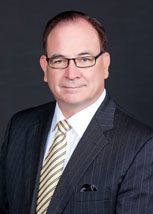
Bill Author
Bill Co-Author(s):