SR 84
- Session Year: 2015-2016
- House: Senate
- Latest Version Date: 2016-08-04
WHEREAS, Homelessness is one of the most pervasive issues facing California today; and
WHEREAS, According to the United States Department of Housing and Urban Development, there were 115,738 homeless people in California in 2015, by far the most of any state in the nation; and
WHEREAS, Rising rents, rapidly declining numbers of low-income housing units, and slow wage growth have all contributed to homelessness; and
WHEREAS, Of the nations top 10 most expensive rental markets, four are located in California; and
WHEREAS, The median rent for a one-bedroom apartment is $3,590 in San Francisco, $2,290 in San Jose, $2,270 in Oakland, and $1,970 in Los Angeles; and
WHEREAS, San Franciscos Point-in-Time Homeless Count in 2015 identified 7,539 homeless adults and youth, a 7-percent increase since 2005; and
WHEREAS, A report by the San Francisco Budget and Legislative Analysts Office found that while the initial costs associated with housing homeless residents increased when those individuals entered supportive housing, the citys costs were reduced drastically as those formerly homeless individuals were stabilized; and
WHEREAS, The County of Los Angeles now has an estimated 46,874 homeless people on any given night, up nearly 6 percent from last year, according to the Los Angeles Homeless Services Authority; and
WHEREAS, On any given night in Sacramento, more than 2,500 individuals are without a home, and an estimated 5,200 more will become homeless over the course of the next year; and
WHEREAS, San Diegos homeless population rose to 8,742 in 2015 from 8,506 in 2014, a 2.8 percent increase that makes the homeless population in San Diego one of the top four in the nation, and 1,100 of that homeless population are veterans; and
WHEREAS, In 2015, the homeless population in Fresno increased for the first time in almost eight years; and
WHEREAS, Homelessness has risen to historic levels throughout the state, and now is the time for state action; and
WHEREAS, Being homeless is dangerous, especially for youth in San Francisco who experience a mortality rate more than 10 times higher than that of the states general youth population; and
WHEREAS, In March of 2016, the San Francisco Board of Supervisors requested Governor Brown to issue a statewide declaration of emergency to help coordinate the response and resources for homeless individuals and families; and
WHEREAS, The Los Angeles Board of Supervisors unanimously approved an unprecedented plan to address the crisis in the county by allocating $100 million in one-time funding for homeless services; and
WHEREAS, The City of Los Angeles has already declared a state of emergency as it relates to the lack of shelter for homeless in the city; now, therefore, be it
Resolved by the Senate of the State of California, That the Senate respectfully requests that Governor Brown declare a state of emergency on homelessness; and be it further
Resolved, That the Senate recognizes that the challenge of confronting homelessness requires the active engagement and leadership of all branches of government; and be it further
Resolved, That the Senate must prioritize taking action on homelessness prior to the adjournment of the 201516 Regular Session of the Legislature; and be it further
Resolved, That the Secretary of the Senate transmit copies of this resolution to the Governor and to the author for appropriate distribution.
|
Date
|
Status
|
|---|---|
| Aug 4, 2016 | Introduced. Referred to Com. on RLS. |
| Aug 9, 2016 | Re-referred to Com. on T. & H. |
| Aug 9, 2016 | Set for hearing August 11. |
| Aug 11, 2016 | August 11 hearing canceled at the request of author. |
This list shows positions taken on this bill by organizations on the date displayed, which is linked to the original source.
Positions by individuals are not included.
SENATE COMMITTEE ON TRANSPORTATION AND HOUSING
Senator Jim Beall, Chair
2015 - 2016 Regular
Bill No: SR 84 Hearing Date: 8/11/2016
Author: | Hall | ||
Version: | 8/4/2016 | ||
Urgency: | No | Fiscal: | No |
Consultant: | Alison Dinmore | ||
SUBJECT: State of Emergency: Homelessness
DIGEST: This resolution requests that the Governor declare a state of emergency on homelessness.
ANALYSIS:
Existing law:
- Creates the California Emergency Services Act, which empowers the Governor to proclaim a state of emergency in an area affected or likely to be affected thereby when:
- He finds that a “state of emergency” exists. Defines “state of emergency” as the duly proclaimed existence of conditions of disaster or of extreme peril to the safety of persons and property within the state caused by such conditions as air pollution, fire, flood, storm, epidemic, riot, drought, sudden and severe energy shortage, plant or animal infestation or disease, the Governor’s warning of an earthquake or volcanic prediction, an earthquake, or other conditions, which, by reason of their magnitude, are or are likely to be beyond the control of the services, personnel, equipment, and facilities of any single local jurisdiction and require the combined forces of a mutual aid region or regions to combat.
- He is requested to do so in the case of a city by the mayor or chief executive or in the case of a county by the chairman of the board of supervisors or the county administrative officer.
- He finds that local authority is inadequate to cope with the emergency.
- Permits the Governor, during a state of emergency, to the extent he deems necessary, to have complete authority over all agencies of the state government and the right to exercise all police power vested in the state Constitution and laws of the State of California to effectuate the purposes of the emergency declaration. In exercise thereof, he shall promulgate, issue, and enforce such orders and regulations as he deems necessary.
- Permits the Governor, during a state of emergency, to direct all agencies of the state government to utilize and employ state personnel, equipment, and facilities for the performance of any and all activities to prevent or alleviate actual and threatened damage due to the emergency; and he may direct such agencies to provide supplemental services and equipment to political subdivisions to restore any services which must be restored in order to provide for the health and safety of the citizens of the affected area. Any agency so directed by the Governor may expend any of the funds which have been appropriated to it in performing such activities, irrespective of the particular purpose for which the money was appropriated.
- Requires the Governor to proclaim the termination of a state of emergency at the earliest possible date that conditions warrant. All of the powers granted to the Governor terminate when the state of emergency has been terminated by proclamation of the Governor or by concurrent resolution of the Legislature declaring it at an end.
This resolution:
- Requests that the Governor declare a state of emergency on homelessness.
- Resolves that the Senate recognizes that the challenge of confronting homelessness requires the active engagement and leadership of all branches of government.
- Resolves that the Senate must prioritize taking action on homelessness prior to the adjournment of the 2015-16 Regular Session of the Legislature.
COMMENTS:
- Purpose. According to the author, homelessness in California has risen to historic levels and accounts for 21% of the nation’s homeless population. There are over 115,000 homeless individuals in the state, and nearly 47,000 of them are in Los Angeles County. The homeless crisis endangers the health and safety of thousands of California residents, including veterans, women, children, LGBT youth, seniors, and persons with disabilities. The tremendous scale of homelessness throughout the state and Los Angeles County threatens economic stability by burdening public safety, emergency medical services, and social services infrastructure.
- California Emergency Services Act (Act). The stated purpose of the Act is “to mitigate the effects of natural, manmade, or war-caused emergencies that result in conditions of disaster or in extreme peril to life, property, and the resources of the state, and generally to protect the health and safety and preserve the lives and property of the people of the state.” Specifically, the statute lists a number of conditions of disaster as examples, primarily natural disasters, including floods, drought, or earthquakes. Recently, the Governor declared states of emergency in Kern County for the Erskine fire (2016), San Bernardino County for the San Bernardino Waterman incident (2015), and Napa and Solano counties for the Napa earthquake (2014). Recent statewide emergencies were declared for the ongoing drought (2014), which is enumerated in the Act, and the El Niño floods (1997).
- Broad authority to the Governor. Under the Act, a declaration of emergency grants the Governor powers necessary to address the needs of the emergency. The Act explicitly grants the Governor complete authority over all agencies of the state government and to promulgate, issue, and enforce such orders and regulations as he deems necessary. The Governor may direct all agencies of the state government to utilize and employ state personnel, equipment, and facilities to prevent or alleviate the emergency. Additionally, the Governor maintains these powers until the emergency is ended as determined by the Governor or a concurrent resolution by the Legislature.
This authority could be used to draft new regulations, or waive existing state statutes or local laws to deal with homelessness. Given that homelessness has been exacerbated by the lack of affordable housing in California, the solution to ending homelessness is to create more affordable housing. One way to encourage housing is to reduce regulatory barriers to construction, including waiving environmental laws such as CEQA or the Endangered Species Act, or reducing or waiving local zoning laws. Additionally, unlike the natural disasters enumerated in the Act, it is difficult to measure the end of “homelessness,” which means the state of emergency could continue indefinitely. The committee may wish to consider the implications of encouraging the Governor to take advantage of an unchecked delegation of authority when there could be no clear end date.
- Precedent setting. States of emergency in California have been declared for natural disasters, generally isolated to the specific locality where the disaster took place. The authority granted under the Act provides immediate assistance to local jurisdictions when they cannot help themselves. “Homelessness” is not an enumerated type of emergency within the Act and the Governor would have to determine that it is an “other condition” that poses a disaster or extreme peril to the safety of people or property that is beyond the control of the services, personnel, equipment, and facilities of any single locality.
There is no question that homelessness is a chronic problem that needs real and lasting solutions, and that expeditious action by the state is necessary. Additionally, California, unlike other states in the nation, has seen a rise in homelessness over the last year. This resolution, however, seeks to address a chronic problem and not an acute one that is traditionally considered an emergency. Arguably, California faces many chronic social issues worthy of addressing, including poverty, hunger, and drug abuse. The committee may wish to consider whether such a request of the Governor may set a precedent for other social crises that were likely not enumerated in the Act as written.
- Impact of a Senate Resolution. The Legislature does not have the power to declare a state of emergency; that authority rests only with the Governor. In fact, under existing law, the Governor has the ability to declare a state of emergency on homelessness if he deems it necessary. The Legislature has the power to pass resolutions, which are measures for stating policies and expressing the views of the house. When the Assembly passed HR 56 urging Governor Brown to declare a state of emergency on homelessness, it was expressing its opinion that homelessness is beyond the control of local authority and requires state emergency assistance. This resolution would send a message that the Senate believes the Governor should take any measures he deems necessary to unilaterally combat homelessness.
- Fiscal impacts. Given the broad language in this resolution, the Department of Finance (DOF) was unable to provide a fiscal estimate to the state, but stated it could cost anywhere between $0 and billions of dollars.
According to the Office of Emergency Services, it is unlikely a declaration of a state of emergency for homelessness would free up any additional federal dollars to combat homelessness. In order to receive federal dollars, California would have to be declared a “federal disaster area” to qualify, and homelessness is unlikely to qualify as a “federal disaster.” Further, according to DOF, it is unlikely that funds in the California Disaster Assistance Act (CDAA) account could be used for addressing homelessness if a state of emergency were declared. CDAA funds, which are continuously appropriated by the legislature, are used for response and re-building costs from natural disasters such as fires and floods.
- Governor’s response. Earlier this year, the Assembly passed HR 56 (Santiago), which was identical to this resolution. On June 16, 2016, the Los Angeles Times reported: “In a statement via a spokeswoman, the Governor said [that day] that a gubernatorial declaration of emergency ‘is not appropriate.’” The statement went on to say that the Governor “recognize[s] the importance of addressing homelessness in our cities and will continue to support local governments, which remain best positioned to tackle challenges like this and tailor solutions to the needs of their communities.”[1] The article was titled “Governor Jerry Brown again refuses to declare a state of emergency on homelessness,” which indicates this is not the first time he has contemplated and rejected the idea.
- States of emergency for homelessness elsewhere. The City and County of Los Angeles, like many other cities and counties in California, are experiencing a homelessness crisis. Economic shifts in the state have made even the most basic housing unaffordable for many Californians, forcing them to live out in the open. Recently, the Los Angeles City Council declared a state of emergency on homelessness and called for the expenditure of $100 million to help address the crisis. Similarly, the City of Seattle declared the city’s growing homelessness an emergency and the mayor presented a $5.3 million plan to respond to the growing demand for shelters.
Similarly, the Governor of the State of Hawaii declared a state of emergency due to the “homeless situation.” The Hawaii state statutes authorize the Governor to declare a state of emergency if the Governor finds that an emergency or disaster has occurred or that there is an imminent danger or threat of an emergency or disaster in any portion of the state. A disaster is defined as “any emergency, or imminent threat thereof, which results or may likely result in loss of life or property and requires, or may require, assistance from other counties or states or from the federal government.[2]” An emergency is defined as “any occurrence, or imminent threat thereof, which results or may likely result in substantial injury or harm to the population or substantial harm to or loss of property.[3]” The governor is the sole judge of the existence of the danger, threat, or circumstances that gives rise to the declaration of a state of emergency.[4]
This language is considerably broader than the corresponding California statute. To declare a state of emergency in California due to homelessness, homelessness would need to qualify as a condition of disaster or of extreme peril to the safety of persons and property within the state, and homelessness would need to be beyond, or likely to be beyond, the control of the services, personnel, equipment, and facilities of any single county, city and county, or city and require the forces of a mutual aid region or regions to combat. This is a much more stringent test than Hawaii’s.
- Opposition. This resolution was referred to the committee on August 10, and thus the committee was not able to receive input from all interested stakeholders before the hearing. Environmental groups may raise concerns over the Governor’s ability to waive existing environmental laws that must be considered when building housing. Local jurisdictions may raise concerns over the Governor’s ability to waive local zoning ordinances, which have traditionally been part of their police powers. Housing organizations and homeless advocacy groups may have concerns over the ability for the Governor to draft emergency regulations, which provide less time for public input.
Related Legislation:
HR 56 (Santiago, 2016) — recognizes that the challenge of confronting homelessness requires the active engagement and leadership of all arms of government and requests that Governor Brown declare a state of emergency on homelessness. This resolution passed the Assembly on June 30, 2016.
FISCAL EFFECT: Appropriation: Fiscal Com.: No Local: No
POSITIONS: (Communicated to the committee before noon on Wednesday,
August 10, 2016.)
SUPPORT:
Los Angeles County Board of Supervisors (sponsor)
California State Association of Counties
Urban Counties of California
24,305 individuals (change.org petition)
OPPOSITION:
None received
-- END --
Gov. Jerry Brown again refuses to declare a state of emergency on homelessness. Los Angeles Times. June 16, 2016. Accessed on August 9 here: http://www.latimes.com/local/lanow/la-me-ln-governor-homelessness-emergency-20160616-snap-story.html ↑
Hawaii Revised Statutes §127A-2 ↑
Id. ↑
Hawaii Revised Statutes §127A-14(c) ↑
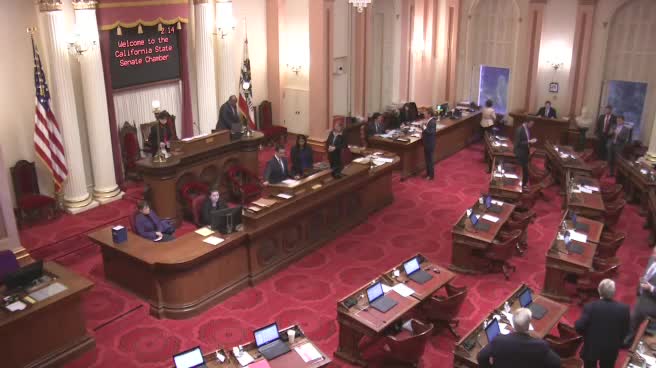
Bill Author
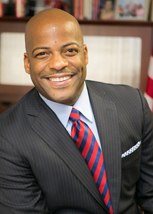
Bill Co-Author(s):