AB 1089: Local elective offices: contribution limitations.
- Session Year: 2017-2018
- House: Assembly
- Latest Version Date: 2017-02-17
The Political Reform Act of 1974 prohibits a person, other than a small contributor committee or political party committee, from making to a candidate for elective state office, for statewide elective office, or for office of the Governor, and prohibits those candidates from accepting from a person, a contribution totaling more than a specified amount per election. For a candidate for elective state office other than a candidate for statewide elective office, the limitation on contributions is $3,000 per election, as that amount is adjusted by the Fair Political Practices Commission in January of every odd-numbered year.
Existing law authorizes a county, city, or district to limit campaign contributions in local elections. Existing law authorizes the governing board of a school district or of a community college district to limit campaign expenditures or contributions in elections to district offices. The act specifies that it does not prevent the Legislature or any other state or local agency from imposing additional requirements on a person if the requirements do not prevent the person from complying with the act, and that the act does not nullify contribution limitations or prohibitions by any local jurisdiction that apply to elections for local elective office, as specified.
This bill, commencing January 1, 2019, instead would prohibit a person from making to a candidate for local elective office, and would prohibit a candidate for local elective office from accepting from a person, a contribution totaling more than the amount set forth in the act for limitations on contributions to a candidate for elective state office. This bill would also authorize a county, city, special district, or school district to impose a limitation that is different from the limitation imposed by this bill. This bill would repeal the authorization for the governing board of a school district or of a community college district to limit campaign expenditures in elections to district offices. This bill would make specified provisions of the act relating to contribution limitations applicable to a candidate for a local elective office, except as specified.
The act makes a violation of its provisions punishable as a misdemeanor and subject to specified penalties.
This bill would add the contribution limitation imposed by the bill to the acts provisions, thereby making a violation of the limitation punishable as a misdemeanor and subject to specified penalties. However, the bill would specify that a violation of a limitation imposed by a local government is not subject to the acts enforcement provisions. The bill would authorize a local government that imposes a limitation that is different from the limitation imposed by this bill to adopt enforcement standards for a violation of the limitation imposed by the local government agency, including administrative, civil, or criminal penalties. By expanding the scope of an existing crime with regard to a violation of a contribution limitation imposed by the bill, the bill would impose a state-mandated local program.
The California Constitution requires the state to reimburse local agencies and school districts for certain costs mandated by the state. Statutory provisions establish procedures for making that reimbursement.
This bill would provide that no reimbursement is required by this act for a specified reason.
The Political Reform Act of 1974, an initiative measure, provides that the Legislature may amend the act to further the acts purposes upon a 2/3 vote of each house of the Legislature and compliance with specified procedural requirements.
This bill would declare that it furthers the purposes of the act.
The Legislature finds and declares all of the following:
(a)Most states impose limitations on contributions to candidates for local elective offices. California is among the minority of states without these contribution limitations.
(b)Most local governments in this state have not independently imposed limitations on contributions to candidates for local elective offices.
(c)In local jurisdictions in this state that have not imposed limitations on contributions, candidates for local elective offices often receive contributions that would exceed the limitations for a state Senate campaign, even though most local jurisdictions contain far fewer people than the average state Senate district.
(d)In local jurisdictions in this state that have not imposed limitations on contributions, candidates for local elective office sometimes raise 40 percent or more of their total campaign funds from a single contributor.
(e)A system allowing unlimited contributions to a candidate for local elective office creates the risk and the perception that local elected officials are beholden to their contributors and will act in the best interest of those contributors at the expense of the people.
(f)This state has a statewide interest in preventing actual corruption and the appearance of corruption at all levels of government.
(g)This act establishes a limitation on contributions to a candidate for local elective office in a jurisdiction in which the local government has not established a limitation. However, a local government may establish a different limitation that is more precisely tailored to the needs of its communities.
SEC. 2.Section 35177 of the Education Code is amended to read:35177.(a)The governing board of a district may by resolution limit campaign expenditures or contributions in elections to district offices.
(b)This section shall remain in effect only until January 1, 2019, and as of that date is repealed, unless a later enacted statute, that is enacted before January 1, 2019, deletes or extends that date.
SEC. 3.Section 72029 of the Education Code is amended to read:72029.(a)The governing board of a community college district may by resolution limit campaign expenditures or contributions in elections to district offices.
(b)This section shall remain in effect only until January 1, 2019, and as of that date is repealed, unless a later enacted statute, that is enacted before January 1, 2019, deletes or extends that date.
SEC. 4.Section 10003 of the Elections Code is amended to read:10003.(a)A county may by ordinance or resolution limit campaign contributions in county elections.
(b)This section shall remain in effect only until January 1, 2019, and as of that date is repealed, unless a later enacted statute, that is enacted before January 1, 2019, deletes or extends that date.
SEC. 5.Section 10202 of the Elections Code is amended to read:10202.(a)A city may, by ordinance or resolution, limit campaign contributions in municipal elections.
(b)This section shall remain in effect only until January 1, 2019, and as of that date is repealed, unless a later enacted statute, that is enacted before January 1, 2019, deletes or extends that date.
SEC. 6.Section 10544 of the Elections Code is amended to read:10544.(a)A governing body of a district may, by resolution, limit campaign contributions in elections to district offices.
(b)This section shall remain in effect only until January 1, 2019, and as of that date is repealed, unless a later enacted statute, that is enacted before January 1, 2019, deletes or extends that date.
SEC. 7.Section 85301 of the Government Code is amended to read:85301.(a)A person, other than a small contributor committee or political party committee, may shall not make to any a candidate for elective state office other than a candidate for statewide elective office, and a candidate for elective state office other than a candidate for statewide elective office may shall not accept from a person, any a contribution totaling more than three thousand dollars ($3,000) per election.
(b)Except to a candidate for Governor, a person, other than a small contributor committee or political party committee, may shall not make to any a candidate for statewide elective office, and except a candidate for Governor, a candidate for statewide elective office may shall not accept from a person other than a small contributor committee or a political party committee, any a contribution totaling more than five thousand dollars ($5,000) per election.
(c)A person, other than a small contributor committee or political party committee, may shall not make to any a candidate for Governor, and a candidate for governor may Governor shall not accept from any person other than a small contributor committee or political party committee, any a contribution totaling more than twenty thousand dollars ($20,000) per election.
(d)(1)A person shall not make to a candidate for local elective office, and a candidate for local elective office shall not accept from a person, a contribution totaling more than the amount set forth in subdivision (a) per election, as that amount is adjusted by the commission pursuant to Section 83124. This subdivision does not apply in a jurisdiction in which the local government imposes a limit on contributions pursuant to Section 85702.5.
(2)This subdivision shall become operative on January 1, 2019.
(d)(e)The provisions of this section do not apply to a candidates contributions of his or her personal funds to his or her own campaign.
SEC. 8.Section 85305 of the Government Code is amended to read:85305.(a)A candidate for elective state office or committee controlled by that candidate may shall not make any contribution to any other candidate for elective state office in excess of the limits set forth in subdivision (a) of Section 85301.
(b)This section shall remain in effect only until January 1, 2019, and as of that date is repealed, unless a later enacted statute, that is enacted before January 1, 2019, deletes or extends that date.
SEC. 9.Section 85305 is added to the Government Code, to read:85305.(a)A candidate for elective office or committee controlled by that candidate shall not make a contribution to any other candidate for elective office in excess of the limits set forth in subdivision (a) of Section 85301. This section does not apply in a jurisdiction in which the local government imposes a limit on contributions pursuant to Section 85702.5.
(b)This section shall become operative on January 1, 2019.
SEC. 10.Section 85306 of the Government Code is amended to read:85306.(a)A candidate may transfer campaign funds from one controlled committee to a controlled committee for elective state office of the same candidate. Contributions transferred shall be attributed to specific contributors using a last in, first out or first in, first out accounting method, and these attributed contributions when aggregated with all other contributions from the same contributor may shall not exceed the limits set forth in Section 85301 or 85302.
(b)Notwithstanding subdivision (a), a candidate for elective state office, other than a candidate for statewide elective office, who possesses campaign funds on January 1, 2001, may use those funds to seek elective office without attributing the funds to specific contributors.
(c)Notwithstanding subdivision (a), a candidate for statewide elective office who possesses campaign funds on November 6, 2002, may use those funds to seek elective office without attributing the funds to specific contributors.
(d)This section shall remain in effect only until January 1, 2019, and as of that date is repealed, unless a later enacted statute, that is enacted before January 1, 2019, deletes or extends that date.
SEC. 11.Section 85306 is added to the Government Code, to read:85306.(a)A candidate may transfer campaign funds from one controlled committee to a controlled committee for elective office of the same candidate. Contributions transferred shall be attributed to specific contributors using a last in, first out or first in, first out accounting method, and these attributed contributions when aggregated with all other contributions from the same contributor shall not exceed the limits set forth in Section 85301 or 85302.
(b)Notwithstanding subdivision (a), a candidate for elective state office, other than a candidate for statewide elective office, who possesses campaign funds on January 1, 2001, may use those funds to seek elective office without attributing the funds to specific contributors.
(c)Notwithstanding subdivision (a), a candidate for statewide elective office who possesses campaign funds on November 6, 2002, may use those funds to seek elective office without attributing the funds to specific contributors.
(d)This section does not apply in a jurisdiction in which the local government imposes a limit on contributions pursuant to Section 85702.5.
(e)This section shall become operative on January 1, 2019.
SEC. 12.Section 85307 of the Government Code is amended to read:85307.(a)The provisions of this article regarding loans apply to extensions of credit, but do not apply to loans made to a candidate by a commercial lending institution in the lenders regular course of business on terms available to members of the general public for which the candidate is personally liable.
(b)Notwithstanding subdivision (a), a candidate for elective state office may shall not personally loan to his or her campaign, including the proceeds of a loan obtained by the candidate from a commercial lending institution, an amount, the outstanding balance of which exceeds one hundred thousand dollars ($100,000). A candidate may shall not charge interest on any loan he or she made to his or her campaign.
(c)This section shall remain in effect only until January 1, 2019, and as of that date is repealed, unless a later enacted statute, that is enacted before January 1, 2019, deletes or extends that date.
SEC. 13.Section 85307 is added to the Government Code, to read:85307.(a)The provisions of this article regarding loans apply to extensions of credit, but do not apply to loans made to a candidate by a commercial lending institution in the lenders regular course of business on terms available to members of the general public for which the candidate is personally liable.
(b)Notwithstanding subdivision (a), a candidate for elective office shall not personally loan to his or her campaign, including the proceeds of a loan obtained by the candidate from a commercial lending institution, an amount, the outstanding balance of which exceeds one hundred thousand dollars ($100,000). A candidate shall not charge interest on any loan he or she made to his or her campaign. This subdivision does not apply to a jurisdiction in which the local government imposes a limit on contributions pursuant to Section 85702.5.
(c)This section shall become operative on January 1, 2019.
SEC. 14.Section 85315 of the Government Code is amended to read:85315.(a)Notwithstanding any other provision of this chapter, an elected state officer may establish a committee to oppose the qualification of a recall measure, and the recall election. This committee may be established when the elected state officer receives a notice of intent to recall pursuant to Section 11021 of the Elections Code. An elected state officer may accept campaign contributions to oppose the qualification of a recall measure, and if qualification is successful, the recall election, without regard to the campaign contributions limits set forth in this chapter. The voluntary expenditure limits do not apply to expenditures made to oppose the qualification of a recall measure or to oppose the recall election.
(b)After the failure of a recall petition or after the recall election, the committee formed by the elected state officer shall wind down its activities and dissolve. Any remaining funds shall be treated as surplus funds and shall be expended within 30 days after the failure of the recall petition or after the recall election for a purpose specified in subdivision (b) of Section 89519.
(c)This section shall remain in effect only until January 1, 2019, and as of that date is repealed, unless a later enacted statute, that is enacted before January 1, 2019, deletes or extends that date.
SEC. 15.Section 85315 is added to the Government Code, to read:85315.(a)Notwithstanding any other provision of this chapter, an elected officer may establish a committee to oppose the qualification of a recall measure, and the recall election. This committee may be established when the elected officer receives a notice of intent to recall pursuant to Section 11021 of the Elections Code. An elected officer may accept campaign contributions to oppose the qualification of a recall measure, and if qualification is successful, the recall election, without regard to the campaign contribution limits set forth in this chapter. The voluntary expenditure limits do not apply to expenditures made to oppose the qualification of a recall measure or to oppose the recall election.
(b)After the failure of a recall petition or after the recall election, the committee formed by the elected officer shall wind down its activities and dissolve. Any remaining funds shall be treated as surplus funds and shall be expended within 30 days after the failure of the recall petition or after the recall election for a purpose specified in subdivision (b) of Section 89519.
(c)This section does not apply in a jurisdiction in which the local government imposes a limit on contributions pursuant to Section 85702.5.
(d)This section shall become operative on January 1, 2019.
SEC. 16.Section 85316 of the Government Code is amended to read:85316.(a)Except as provided in subdivision (b), a contribution for an election may be accepted by a candidate for elective state office after the date of the election only to the extent that the contribution does not exceed net debts outstanding from the election, and the contribution does not otherwise exceed the applicable contribution limit for that election.
(b)Notwithstanding subdivision (a), an elected state officer may accept contributions after the date of the election for the purpose of paying expenses associated with holding the office provided that the contributions are not expended for any contribution to any state or local committee. Contributions received pursuant to this subdivision shall be deposited into a bank account established solely for the purposes specified in this subdivision.
(1)No A person shall not make, and no an elected state officer shall not receive from a person, a contribution pursuant to this subdivision totaling more than the following amounts per calendar year:
(A)Three thousand dollars ($3,000) in the case of an elected state officer of the Assembly or Senate.
(B)Five thousand dollars ($5,000) in the case of a statewide elected state officer other than the Governor.
(C)Twenty thousand dollars ($20,000) in the case of the Governor.
(2)No An elected state officer shall not receive contributions pursuant to paragraph (1) that, in the aggregate, total more than the following amounts per calendar year:
(A)Fifty thousand dollars ($50,000) in the case of an elected state officer of the Assembly or Senate.
(B)One hundred thousand dollars ($100,000) in the case of a statewide elected state officer other than the Governor.
(C)Two hundred thousand dollars ($200,000) in the case of the Governor.
(3)Any contribution received pursuant to this subdivision shall be deemed to be a contribution to that candidate for election to any state office that he or she may seek during the term of office to which he or she is currently elected, including, but not limited to, reelection to the office he or she currently holds, and shall be subject to any applicable contribution limit provided in this title. If a contribution received pursuant to this subdivision exceeds the allowable contribution limit for the office sought, the candidate shall return the amount exceeding the limit to the contributor on a basis to be determined by the Commission. None of the expenditures made by elected state officers pursuant to this subdivision shall be subject to the voluntary expenditure limitations in Section 85400.
(4)The commission shall adjust the calendar year contribution limitations and aggregate contribution limitations set forth in this subdivision in January of every odd-numbered year to reflect any increase or decrease in the Consumer Price Index. Those adjustments shall be rounded to the nearest one hundred dollars ($100).
(c)This section shall remain in effect only until January 1, 2019, and as of that date is repealed, unless a later enacted statute, that is enacted before January 1, 2019, deletes or extends that date.
SEC. 17.Section 85316 is added to the Government Code, to read:85316.(a)Except as provided in subdivision (b), a contribution for an election may be accepted by a candidate for elective office after the date of the election only to the extent that the contribution does not exceed net debts outstanding from the election, and the contribution does not otherwise exceed the applicable contribution limit for that election.
(b)Notwithstanding subdivision (a), an elected state officer may accept contributions after the date of the election for the purpose of paying expenses associated with holding the office provided that the contributions are not expended for any contribution to any state or local committee. Contributions received pursuant to this subdivision shall be deposited into a bank account established solely for the purposes specified in this subdivision.
(1)A person shall not make, and an elected state officer shall not receive from a person, a contribution pursuant to this subdivision totaling more than the following amounts per calendar year:
(A)Three thousand dollars ($3,000) in the case of an elected state officer of the Assembly or Senate.
(B)Five thousand dollars ($5,000) in the case of a statewide elected state officer other than the Governor.
(C)Twenty thousand dollars ($20,000) in the case of the Governor.
(2)An elected state officer shall not receive contributions pursuant to paragraph (1) that, in the aggregate, total more than the following amounts per calendar year:
(A)Fifty thousand dollars ($50,000) in the case of an elected state officer of the Assembly or Senate.
(B)One hundred thousand dollars ($100,000) in the case of a statewide elected state officer other than the Governor.
(C)Two hundred thousand dollars ($200,000) in the case of the Governor.
(3)Any contribution received pursuant to this subdivision shall be deemed to be a contribution to that candidate for election to any state office that he or she may seek during the term of office to which he or she is currently elected, including, but not limited to, reelection to the office he or she currently holds, and shall be subject to any applicable contribution limit provided in this title. If a contribution received pursuant to this subdivision exceeds the allowable contribution limit for the office sought, the candidate shall return the amount exceeding the limit to the contributor on a basis to be determined by the Commission. None of the expenditures made by elected state officers pursuant to this subdivision shall be subject to the voluntary expenditure limitations in Section 85400.
(4)The commission shall adjust the calendar year contribution limitations and aggregate contribution limitations set forth in this subdivision in January of every odd-numbered year to reflect any increase or decrease in the Consumer Price Index. Those adjustments shall be rounded to the nearest one hundred dollars ($100).
(c)This section does not apply in a jurisdiction in which the local government imposes a limit on contributions pursuant to Section 85702.5.
(d)This section shall become operative on January 1, 2019.
SEC. 18.Section 85317 of the Government Code is amended to read:85317.(a)Notwithstanding subdivision (a) of Section 85306, a candidate for elective state office may carry over contributions raised in connection with one election for elective state office to pay campaign expenditures incurred in connection with a subsequent election for the same elective state office.
(b)This section shall remain in effect only until January 1, 2019, and as of that date is repealed, unless a later enacted statute, that is enacted before January 1, 2019, deletes or extends that date.
SEC. 19.Section 85317 is added to the Government Code, to read:85317.(a)Notwithstanding subdivision (a) of Section 85306, a candidate for elective office may carry over contributions raised in connection with one election for elective office to pay campaign expenditures incurred in connection with a subsequent election for the same elective office. This section does not apply in a jurisdiction in which the local government imposes a limit on contributions pursuant to Section 85702.5.
(b)This section shall become operative on January 1, 2019.
SEC. 20.Section 85318 of the Government Code is amended to read:85318.(a)A candidate for elective state office may raise contributions for a general election prior to the primary election, and for a special general election prior to a special primary election, for the same elective state office if the candidate sets aside these contributions and uses these contributions for the general election or special general election. If the candidate for elective state office is defeated in the primary election or special primary election, or otherwise withdraws from the general election or special general election, the general election or special general election funds shall be refunded to the contributors on a pro rata basis less any expenses associated with the raising and administration of general election or special general election contributions. Notwithstanding Section 85201, candidates for elective state office may establish separate campaign contribution accounts for the primary and general elections or special primary and special general elections.
(b)This section shall remain in effect only until January 1, 2019, and as of that date is repealed, unless a later enacted statute, that is enacted before January 1, 2019, deletes or extends that date.
SEC. 21.Section 85318 is added to the Government Code, to read:85318.(a)A candidate for elective office may raise contributions for a general election prior to the primary election, and for a special general election prior to a special primary election, for the same elective office if the candidate sets aside these contributions and uses these contributions for the general election or special general election. If the candidate for elective office is defeated in the primary election or special primary election, or otherwise withdraws from the general election or special general election, the general election or special general election funds shall be refunded to the contributors on a pro rata basis less any expenses associated with the raising and administration of general election or special general election contributions. Notwithstanding Section 85201, candidates for elective office may establish separate campaign contribution accounts for the primary and general elections or special primary and special general elections.
(b)This section does not apply in a jurisdiction in which the local government imposes a limit on contributions pursuant to Section 85702.5.
(c)This section shall become operative on January 1, 2019.
SEC. 22.Section 85702.5 is added to the Government Code, to read:85702.5.(a)A local government agency may, by ordinance or resolution, impose a limit on contributions to a candidate for local elective office that is different from the limit set forth in subdivision (d) of Section 85301. The limitation may also be imposed by means of a local initiative measure.
(b)A local government agency that establishes a contribution limit pursuant to subdivision (a) may adopt enforcement standards for a violation of that limit, which may include administrative, civil, or criminal penalties.
(c)The commission is not responsible for the administration or enforcement of a contribution limit adopted pursuant to subdivision (a).
(d)This section shall become operative on January 1, 2019. A local government agencys limit on contributions to a candidate for local elective office that is in effect on the operative date of this section shall be deemed to be a limit imposed pursuant to subdivision (a).
SEC. 23.No reimbursement is required by this act pursuant to Section 6 of Article XIIIB of the California Constitution because the only costs that may be incurred by a local agency or school district will be incurred because this act creates a new crime or infraction, eliminates a crime or infraction, or changes the penalty for a crime or infraction, within the meaning of Section 17556 of the Government Code, or changes the definition of a crime within the meaning of Section 6 of Article XIIIB of the California Constitution.
SEC. 24.The Legislature finds and declares that this bill furthers the purposes of the Political Reform Act of 1974 within the meaning of subdivision (a) of Section 81012 of the Government Code.
REVISIONS: HeadingLines 2 and 3.|
Date
|
Status
|
|---|---|
| Feb 1, 2018 | From committee: Filed with the Chief Clerk pursuant to Joint Rule 56. |
| Jan 31, 2018 | Died pursuant to Art. IV, Sec. 10(c) of the Constitution. |
| Jun 20, 2017 | Coauthors revised. |
| May 26, 2017 | In committee: Held under submission. |
| Apr 5, 2017 | In committee: Set, first hearing. Referred to APPR. suspense file. |
| Mar 22, 2017 | From committee: Do pass and re-refer to Com. on APPR. (Ayes 6. Noes 1.) (March 22). Re-referred to Com. on APPR. |
| Mar 6, 2017 | Referred to Com. on E. & R. |
| Feb 19, 2017 | From printer. May be heard in committee March 21. |
| Feb 17, 2017 | Read first time. To print. |
|
Date
|
Description
|
Location
|
Votes
|
|
|---|---|---|---|---|
| Mar 22, 2017 | Do pass and be re-referred to the Committee on [Appropriations] | Assembly Standing Committee on Elections and Redistricting |
Passed |
This list shows positions taken on this bill by organizations on the date displayed, which is linked to the original source.
Positions by individuals are not included.
|
Organization
|
Position
|
Date
|
|---|---|---|
| California Church Impact | ** Support | Mar 21, 2017 |
| California Clean Money Campaign | ** Support | Mar 21, 2017 |
| California Common Cause | ** Support | Mar 21, 2017 |
| California League Of Conservation Voters | ** Support | Mar 21, 2017 |
| Campaign Legal Center | ** Support | Mar 21, 2017 |
| Friends Of The Earth | ** Support | Mar 21, 2017 |
| League Of Women Voters Of California | * Support | Mar 22, 2017 |
| MOVI, Money Out Voters In | ** Support | Mar 21, 2017 |
| Represent Us | ** Support | Mar 21, 2017 |
| Take Back Our Republic | ** Support | Mar 21, 2017 |
Date of Hearing: April 5, 2017
ASSEMBLY COMMITTEE ON APPROPRIATIONS
Lorena Gonzalez Fletcher, Chair
ABPCA Bill Id:AB 1089
Author:(Mullin) – As Introduced Ver:February 17, 2017
Policy Committee: | Elections and Redistricting | Vote: | 6 - 1 |
Urgency: No State Mandated Local Program: Yes Reimbursable: No
SUMMARY:
This bill establishes default campaign contribution limits for local office at the same level as the limit on contributions from individuals to candidates for Senate and Assembly ($4,400 per contributor, per election), effective January 1, 2019. This bill also continues to permit a local jurisdiction to establish its own contribution limits, which prevail over the default limits contained in this bill.
FISCAL EFFECT:
GF costs of about $1 million annually for eight new positions at the Fair Political Practices Commission (FPPC) for enforcement activities in local jurisdiction that do not adopt their own campaign contribution limits and would, therefore, be subject to the statewide contribution limits under this bill.
COMMENTS:
- Background. Existing law permits a county or city to limit campaign contributions in its local elections. Permits a special district, school district, or community college district to limit campaign contributions in elections to district offices. However, many cities, counties, and special districts have not established campaign contribution limits. Existing law establishes certain campaign contribution limits for statewide offices. The FPPC is responsible for ensuring compliance with statewide campaign contribution limits and investigates potential violations of those limits.
- Purpose. This bill requires the state campaign contribution limits for candidates for Senate and Assembly to also apply to local office, if the city, county, or special district has not adopted their own contribution limits.
According to the author, by establishing a default local campaign contribution limit, AB 1089 safeguards our democracy down to the local level. More money should not equal more representation, even at the lowest level of elected office. California needs a standard in place to ensure that local candidates are not overly reliant upon a select few wealthy donors. Only 22 percent of cities and 30 percent of counties have established contribution limits. The percentage of districts with limits is much lower.
In the past few election cycles, there have been numerous examples of candidates running for local office receiving $20,000, $50,000, or even $90,000 contributions. In some cases, more than 50 percent of a candidate’s campaign funds may come from just one or two contributors. Contributions of this magnitude harm public trust in the democratic process by deepening the perception or the possibility that candidates will be more responsive to their financial backers than to their constituents. For this reason, state law prevents individuals from contributing more than $4,400 to candidates running for the State Assembly or State Senate.
Analysis Prepared by: Jessica Peters / APPR. / (916) 319-2081
Date of Hearing: March 22, 2017
ASSEMBLY COMMITTEE ON ELECTIONS AND REDISTRICTING
Evan Low, Chair
ABPCA Bill Id:AB 1089 (
Author:Mullin) – As Introduced Ver:February 17, 2017
SUBJECT: Local elective offices: contribution limitations.
SUMMARY: Establishes default campaign contribution limits for local office at the same level as the limit on contributions from individuals to candidates for Senate and Assembly, effective January 1, 2019. Permits a local jurisdiction to establish its own contribution limits, which prevail over the default limits contained in this bill. Specifically, this bill:
- Prohibits a person from making to a candidate for local elective office, and prohibits a candidate for local elective office from accepting from a person, a contribution totaling more than the limit on contributions to candidates for state Senate and Assembly from persons other than small contributor committees and political party committees, as adjusted by the Fair Political Practices Commission (FPPC), as specified. The current limit under this provision is $4,400 per contributor per election. Provides that these limits become effective January 1, 2019.
- Permits a local government agency, by ordinance or resolution, to impose a limit on contributions to a candidate for local elective office which prevails over the limit otherwise imposed by this bill, and allows the local government to adopt enforcement standards for violations, which may include administrative, civil, or criminal penalties. Permits the limitation to be imposed by a local initiative measure. Provides that the FPPC is not responsible for the administration or enforcement of such a local government ordinance or resolution. Provides that local contribution limits that are in effect on January 1, 2019, shall prevail over the default contribution limits imposed by this bill.
- Prohibits a candidate for any elective office, or a committee controlled by such a candidate, from making a contribution to any other candidate for elective office in an amount greater than the limit on contributions to candidates for state Senate and Assembly from persons other than small contributor committees and political party committees, as adjusted by the FPPC, as specified, beginning January 1, 2019. A similar prohibition currently applies to contributions made by candidates for elective state office (or their controlled committees) to other candidates for elective state office. Provides that this restriction does not apply in a jurisdiction in which the local government imposes its own limits on campaign contributions.
- Makes conforming changes to various state laws related to contribution limits, including rules governing the transfer of campaign funds from one controlled committee to another controlled committee for the same candidate; the acceptance of campaign contributions for an election after that election has occurred; the carryover of contributions raised in connection with one election for an elective office to pay campaign expenditures incurred in connection with a subsequent election to the same office; the acceptance of campaign contributions for a general election prior to the primary election; and personal loans made by a candidate to his or her campaign committee.
- Provides that the contribution limits in this bill do not apply to contributions made to oppose a recall against a local elected official, as specified.
- Makes various findings and declarations.
- Makes corresponding and technical changes.
EXISTING LAW:
- Permits a county or city to limit campaign contributions in its local elections. Permits a special district, school district, or community college district to limit campaign contributions in elections to district offices.
- Creates the FPPC, and makes it responsible for the impartial, effective administration and implementation of the Political Reform Act (PRA).
- Requires any local government agency that has enacted, enacts, amends, or repeals an ordinance or other provision of law affecting campaign contributions and expenditures to file a copy of the action with the FPPC.
- Prohibits a local government agency from enacting a campaign finance ordinance that imposes campaign reporting requirements that are additional to or different from those set forth in the PRA for elections held in its jurisdiction unless the additional or different requirements apply only to the candidates seeking election in that jurisdiction, their controlled committees or committees formed or existing primarily to support or oppose their candidacies, and to committees formed or existing primarily to support or oppose a candidate or to support or oppose the qualification or passage of a local ballot measure which is being voted on only in that jurisdiction, and to city or county general purpose committees active only in that city or county, respectively.
- Provides that nothing in the PRA shall nullify contribution limitations or prohibitions of any local jurisdiction that apply to elections for local elective office, except that these limitations and prohibitions may not conflict with a specified provision of the PRA dealing with "member communications."
- Prohibits a person, other than a small contributor committee or political party committee, from making any contribution totaling more than $4,400 to any candidate for elective state office other than statewide elective office, and prohibits candidates from accepting a contribution that exceeds that amount. Requires the FPPC to adjust this limit in January of every odd-numbered year to reflect any increase or decrease in the Consumer Price Index, and requires those adjustments to be rounded to the nearest $100.
FISCAL EFFECT: Unknown. State-mandated local program; contains a crimes and infractions disclaimer.
COMMENTS:
- Purpose of the Bill: According to the author:
By establishing a default local campaign contribution limit, AB 1089 safeguards our democracy down to the local level. More money should not equal more representation, even at the lowest level of elected office.
California needs a standard in place to ensure that local candidates are not overly reliant upon a select few wealthy donors. Only 22% of cities and 30% of counties have established contribution limits. The percentage of districts with limits is much lower. Most jurisdictions have enacted no limits whatsoever; in these jurisdictions, contributors can give unlimited amounts to candidates for office. In the past few election cycles, there have been numerous examples of candidates running for local office receiving $20,000, $50,000, or even $90,000 contributions. In some cases, more than 50 percent of a candidate’s campaign funds may come from just one or two contributors.
Contributions of this magnitude harm public trust in the democratic process by deepening the perception or the possibility that candidates will be more responsive to their financial backers than to their constituents. For this reason, state law prevents individuals from contributing more than $4,400 to candidates running for the State Assembly or State Senate.
AB 1089 establishes a reasonable cap, in line with that of candidates for the Legislature, to prevent excessive contributions in jurisdictions that have no limits, while maintaining and encouraging local jurisdictions’ ability to enact their own contribution limits tailored to the needs of their communities.
- History of Local Contribution Limits: In 1988, voters approved Proposition 73, a campaign finance initiative that prohibited public funding of campaigns and established contribution limits for state and local elections, among other provisions. Under Proposition 73, contributions from a person to a candidate for state or local office were limited to $1,000 per fiscal year, while political parties and certain political committees could give higher amounts.
Many of the provisions of Proposition 73, including the campaign contribution limits, were ultimately ruled unconstitutional by the federal courts. Because Proposition 73 limited the amount that a contributor could give in each fiscal year, rather than limiting the amount that a contributor could give in each election, the courts found that the contribution limits discriminated in favor of incumbents, since incumbents were much more likely than challengers to fundraise in non-election years.
The federal case ended in 1993 when the United States Supreme Court denied certiorari in Service Employees International Union v. FPPC. The only provisions of Proposition 73 to survive legal challenge were contribution limits for special elections (those limits were on a per-election basis, rather than a per-year basis), limits on gifts and honoraria to state and local elected officials, restrictions on certain mass mailings by officeholders, and a prohibition on the use of public money for campaign purposes. State and local elections were conducted under the Proposition 73 contribution limits for most of the 1990 election cycle, though the limits were struck down for the last six weeks before the 1990 general election.
In 1996, California voters approved Proposition 208, which proposed significant changes to the PRA, including establishing new contribution limits for state and local elections. Proposition 208 prohibited any person other than a political party or a small contributor committee from making contributions of more than $100 per election to candidates in small local districts (less than 100,000 residents); $250 per election for Senate, Assembly, Board of Equalization and large local districts; and $500 per election for statewide office. These limits were increased to $250, $500, and $1,000, respectively, for candidates who agreed to abide by specified voluntary expenditure limits.
On January 6, 1998, the United States District Court for the Eastern District of California entered a preliminary injunction barring the enforcement of Proposition 208. The Legislature subsequently placed Proposition 34 on the November 2000 ballot through passage of SB 1223 (Burton), Chapter 102, Statutes of 2000. The proposition, which passed with 60.1% of the vote, revised state laws on political campaigns for state elective offices and ballot propositions, and repealed almost all of Proposition 208, which was still enjoined from enforcement.
While Proposition 34 established new campaign contribution limits for elections to state office, it did not contain contribution limits for elections to local office. The limits on contributions by individuals contained in Proposition 34 ranged from $3,000 (for candidates for Assembly and Senate) to $20,000 per election (for candidates for Governor), and are required to be adjusted for inflation every two years. For 2017 and 2018, these limits range from $4,400 per election for candidates for Assembly and Senate to $29,200 for candidates for Governor. While local governments have the authority to adopt contribution limits for elections to local offices in their jurisdictions, state law does not impose limits on contributions to candidates for local office.
- Local Campaign Ordinances: Under existing law, local government agencies have the ability to adopt campaign ordinances that apply to elections within their jurisdictions, though the PRA imposes certain limited restrictions on those local ordinances. For instance, SB 726 (McCorquodale), Chapter 1456, Statutes of 1985, limited the ability of local jurisdictions to impose campaign filing requirements that differed from those in the PRA, while AB 1430 (Garrick), Chapter 708, Statutes of 2007, prohibits local governments from adopting rules governing member communications that are different than the rules that govern member communications at the state level.
Aside from these restrictions, however, local government agencies generally have a significant amount of latitude when developing local campaign finance ordinances that apply to elections in those agencies' jurisdictions. Any jurisdiction that adopts or amends a local campaign finance ordinance is required to file a copy of that ordinance with the FPPC, and the FPPC posts those ordinances on its website. The FPPC's website currently includes campaign finance ordinances from 22 counties, 146 cities, and two special districts.
The campaign ordinances adopted by local governments in California vary significantly in terms of their scope. Some local ordinances are very limited, while others are much more extensive. In some cases, the ordinances include campaign contribution limits, reporting and disclosure requirements that supplement the requirements of the PRA, temporal restrictions on when campaign funds may be raised, and voluntary public financing of local campaigns, among other provisions. In many cases, local campaign finance ordinances are enforced by the district attorney of the county or by the city attorney. In at least a few cases, however, local jurisdictions have set up independent boards or commissions to enforce the local campaign finance laws.
According to a 2016 report prepared by California Common Cause, approximately 23 percent of cities and 28 percent of counties in the state have adopted local campaign contribution limits. Of the 124 local jurisdictions identified in the report as having adopted local campaign contribution limits, only one (Alameda County) has a limit on campaign contributions from individuals that is higher than the $4,400 per election limit that would be imposed by this bill. More than 90 percent of the cities that have adopted contribution limits have limits of $1,000 or less. By contrast, about half of the counties that adopted contribution limits have limits of $1,000 or less. - Arguments in Support: In support of this bill, California Common Cause writes:
Allowing unlimited campaign contributions has a corrupting influence on local democracy, and contributes to voter cynicism with government. AB 1089 provides a reasonable contribution cap to stop the worst contribution abuses in jurisdictions without limits, while respecting local governments’ autonomy to set contribution limits more precisely tailored to the needs of their communities, whether lower or higher than the default cap.
Under current law, local governments may enact local contribution limits, but the vast majority have not done so. Seventy-eight percent of cities and 72 percent of counties have no local limits; the percentage of districts without limits is even higher. In jurisdictions without limits, contributors can give any amount to candidates for local office – even contributions exceeding the average Californian’s annual salary. Common Cause’s research of local contributions found many examples of contributors giving five- and six-figure contributions directly to candidates, including one astounding $242,000 contribution. In some cases, more than 50 percent of a candidate’s campaign war chest came from just one or two contributors.
- Previous Legislation: This bill is substantially similar to the final version of AB 2523 (Mullin) of 2016. AB 2523 failed passage on the Senate Floor on a 25-14 vote. Because AB 2523 proposed to amend the PRA without being submitted to voters for their approval, it required a two-thirds vote of each house of the Legislature for passage (27 votes in the case of the Senate).
- Political Reform Act of 1974: California voters passed an initiative, Proposition 9, in 1974 that created the FPPC and codified significant restrictions and prohibitions on candidates, officeholders and lobbyists. That initiative is commonly known as the PRA. Amendments to the PRA that are not submitted to the voters, such as those contained in this bill, must further the purposes of the initiative and require a two-thirds vote of both houses of the Legislature.
REGISTERED SUPPORT / OPPOSITION:
Support
California Church IMPACT
California Clean Money Campaign
California Common Cause
California League of Conservation Voters
Campaign Legal Center
Friends of the Earth
League of Women Voters of California
MOVI, Money Out Voters In
Represent Us
Take Back Our Republic
Opposition
None on file.
Analysis Prepared by: Ethan Jones / E. & R. / (916) 319-2094
Discussed in Hearing
 1H
Assembly Standing Committee on Appropriations
 12MIN
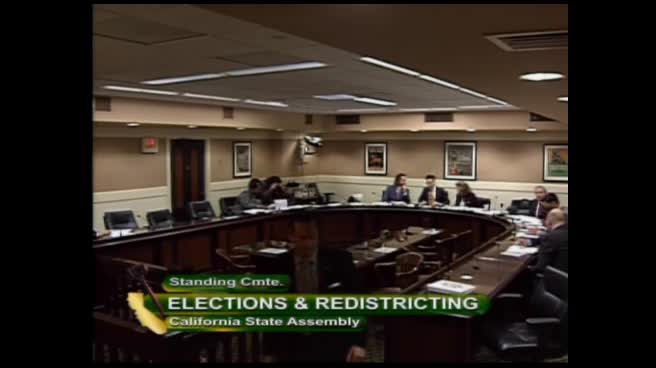
Assembly Standing Committee on Elections and Redistricting
Bill Author

Bill Co-Author(s):






