AB 1095: Alcoholism or drug abuse recovery or treatment facilities.
- Session Year: 2017-2018
- House: Assembly
- Latest Version Date: 2017-02-17
Existing law provides for the licensure, certification, and regulation of alcoholism or drug abuse recovery or treatment facilities, as defined, administered by the State Department of Health Care Services. Existing law requires an alcoholism or drug abuse recovery or treatment facility that serves 6 or fewer persons to be considered a residential use of property, as specified, and requires the residents and operators of the facility to be considered a family for the purposes of any law or zoning ordinance that relates to the residential use of property.
This bill would provide that the above provision does not apply to integral facilities, which is a combination of 2 or more facilities that provide treatment and recovery services for 7 or more persons.
(a) As used in this chapter, alcoholism or the following terms have the following meanings:
(1)Alcoholism or drug abuse recovery or treatment facility or facility means any premises, place, or building that provides 24-hour residential nonmedical services to adults who are recovering from problems related to alcohol, drug, or alcohol and drug misuse or abuse, and who need alcohol, drug, or alcohol and drug recovery treatment or detoxification services.
(b) As used in this chapter, adults(2)Adults may include, but is not limited to, all of the following:
(1)(A) Mothers over 18 years of age and their children.
(2)(B) Emancipated minors, which may include, but is not limited to, mothers under 18 years of age and their children.
(c) As used in this chapter, emancipated(3)Emancipated minors means persons under 18 years of age who have acquired emancipation status pursuant to Section 7002 of the Family Code.
(4)Integral facilities means any combination of two or more facilities located on the same or different parcels that collectively serve seven or more persons, not including the licensee or members of the licensees family or persons employed as facility staff, and that are under the control or management of the same owner, operator, management company, or licensee, or any affiliate of any of them, or which together comprise one operation or enterprise. Integral facilities shall include, but not be limited to, the provision of housing in one facility and recovery programming, treatment, meals, or any other service at another facility or facilities, or by assigning staff or a consultant to provide services to or in more than one facility.
(d)(b) Notwithstanding paragraph (1) of subdivision (a), an alcoholism or drug abuse recovery or treatment facility may serve adolescents upon the issuance of a waiver granted by the department pursuant to regulations adopted under subdivision (c) of Section 11834.50.
SEC. 2.Section 11834.23 of the Health and Safety Code is amended to read:11834.23.(a)Whether or not unrelated persons are living together, an alcoholism or drug abuse recovery or treatment facility that serves six or fewer persons shall be considered a residential use of property for the purposes of this article. In addition, the residents and operators of the facility shall be considered a family for the purposes of any law or zoning ordinance that relates to the residential use of property pursuant to this article.
(b)For the purpose of all local ordinances, an alcoholism or drug abuse recovery or treatment facility that serves six or fewer persons shall not be included within the definition of a boarding house, rooming house, institution or home for the care of minors, the aged, or persons with mental health disorders, foster care home, guest home, rest home, community residence, or other similar term that implies that the alcoholism or drug abuse recovery or treatment home is a business run for profit or differs in any other way from a single-family residence.
(c)This section shall not be construed to forbid a city, county, or other local public entity from placing restrictions on building heights, setback, lot dimensions, or placement of signs of an alcoholism or drug abuse recovery or treatment facility that serves six or fewer persons as long as the restrictions are identical to those applied to other single-family residences.
(d)This section shall not be construed to forbid the application to an alcoholism or drug abuse recovery or treatment facility of any local ordinance that deals with health and safety, building standards, environmental impact standards, or any other matter within the jurisdiction of a local public entity. However, the ordinance shall not distinguish alcoholism or drug abuse recovery or treatment facilities that serve six or fewer persons from other single-family dwellings or distinguish residents of alcoholism or drug abuse recovery or treatment facilities from persons who reside in other single-family dwellings.
(e)No conditional use permit, zoning variance, or other zoning clearance shall be required of an alcoholism or drug abuse recovery or treatment facility that serves six or fewer persons that is not required of a single-family residence in the same zone.
(f)Use of a single-family dwelling for purposes of an alcoholism or drug abuse recovery facility serving six or fewer persons shall not constitute a change of occupancy for purposes of Part 1.5 (commencing with Section 17910) of Division 13 or local building codes. However, nothing in this section is intended to supersede Section 13143 or 13143.6, to the extent those sections are applicable to alcoholism or drug abuse recovery or treatment facilities serving six or fewer residents.
(g)This section shall not apply to integral facilities, as defined in subdivision (a) of Section 11834.02.
REVISIONS: HeadingLine 2.|
Date
|
Status
|
|---|---|
| Feb 1, 2018 | From committee: Filed with the Chief Clerk pursuant to Joint Rule 56. |
| Jan 31, 2018 | Died pursuant to Art. IV, Sec. 10(c) of the Constitution. |
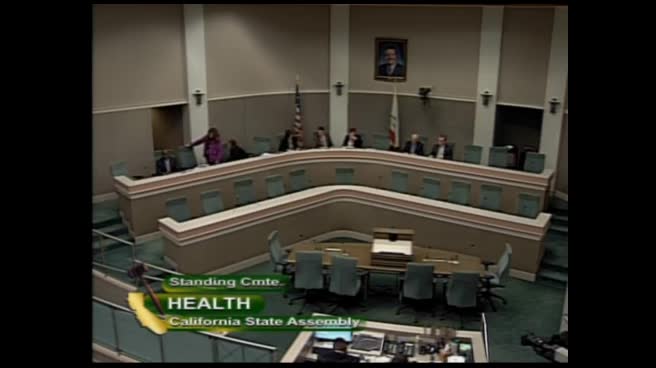
| Mar 28, 2017 | In committee: Set, first hearing. Failed passage. Reconsideration granted. |
| Mar 21, 2017 | Coauthors revised. |
| Mar 6, 2017 | Referred to Com. on HEALTH. |
| Feb 19, 2017 | From printer. May be heard in committee March 21. |
| Feb 17, 2017 | Read first time. To print. |
|
Date
|
Description
|
Location
|
Votes
|
|
|---|---|---|---|---|
| Mar 28, 2017 | Do pass. | Assembly Standing Committee on Health |
Failed |
This list shows positions taken on this bill by organizations on the date displayed, which is linked to the original source.
Positions by individuals are not included.
|
Organization
|
Position
|
Date
|
|---|---|---|
| Advocates for Responsible Treatment | ** Support | Mar 24, 2017 |
| Association of California Cities Orange County | ** Support | Mar 24, 2017 |
| Association of California Cities - Orange County | ** Support | Mar 24, 2017 |
| Capo Cares | ** Support | Mar 24, 2017 |
| Cliffside Malibu | ** Against | Mar 24, 2017 |
| Coalition of California Communities | ** Support | Mar 24, 2017 |
| County Behavioral Health Directors Association | ** Against | Mar 24, 2017 |
| Disability Rights California | ** Against | Mar 24, 2017 |
| League Of California Cities | * Support | Mar 28, 2017 |
| San Clemente Cares | ** Support | Mar 24, 2017 |
Date of Hearing: March 28, 2017
ASSEMBLY COMMITTEE ON HEALTH
Jim Wood, Chair
ABPCA Bill Id:AB 1095
Author:(Harper) – As Introduced Ver:February 17, 2017
SUBJECT: Alcoholism or drug abuse recovery or treatment facilities.
SUMMARY: Defines integral alcohol and drug abuse treatment facilities (integral facilities) for purposes of licensure by the Department of Health Care Services (DHCS) as any combination of two or more facilities located on the same or different parcels that collectively serve seven or more persons, as specified, including the provision of housing in one facility and recovery programming or related services at another facility or facilities. Excludes integral facilities, as defined, from being considered a residential use of property, and therefore permits them to be subject to conditional use permits and zoning clearances, or prohibitions by local governments.
EXISTING LAW:
- Establishes DHCS to license adult alcoholism or drug abuse recovery or treatment facilities. Permits new licenses to be issued for a period of two years and requires DHCS to conduct onsite program visits for compliance at least once during the two year licensing period.
- Defines “alcoholism or drug abuse recovery or treatment facility” (treatment facility) as any premise, place, or building that provides 24-hour residential, nonmedical services to adults who are recovering from problems related to alcohol, drug, or alcohol and drug misuse or abuse, and who need alcohol, drug, or alcohol and drug recovery treatment or detoxification services.
- Establishes requirements for application for licensure of a facility, requires DHCS to terminate licensure if these requirements are not met, and authorizes DHCS to deny a license of applicants that do not demonstrate an ability to comply with specified requirements.
- Requires, if an applicant intends to provide incidental medical services such as obtaining medical histories, monitoring health status, testing associated with detoxification from alcohol or drugs, and overseeing patient self-administered medications, evidence of a valid license of a physician and surgeon who will provide or oversee those services, and any other information deemed appropriate by DHCS, as specified.
- Permits DHCS to issue single licenses to residential facilities and a facility where separate buildings or portions of a residential facility are integral components of a single treatment facility and all of the components of the facility are managed by the same licensee.
- Authorizes DHCS to assess civil penalties on facilities that provide alcoholism or drug abuse recovery, treatment, or detoxification services without a license.
- Requires a treatment facility that serves six or fewer persons to be considered a residential use of property whether or not unrelated persons are living together. Requires the residents and operators of the facility to be considered a family for the purposes of any law or zoning ordinance that relates to the residential use of property.
- Excludes, for the purposes of local ordinances, a treatment facility that serves six or fewer persons from the definition of a boarding house, rooming house, institution, or home for the care of minors, the aged, or persons with mental health disorders, foster care home, guest home, rest home, community residence, or other similar term that implies that the alcoholism or drug abuse recovery or treatment home is a business run for profit or differs in any other way from a single-family residence.
- Authorizes a city, county, or other local public entity from placing restrictions on building heights, setback, lot dimensions, or placement of signs of a treatment facility that serves six or fewer persons as long as the restrictions are identical to those applied to other single-family residences.
- Specifies that any local ordinance that deals with health and safety, building standards, environmental impact standards, or any other matter within the jurisdiction of a local public entity also applies to a treatment facility, however, local ordinances cannot distinguish treatment facilities that serve six or fewer persons from other single-family dwellings or distinguish residents of treatment facilities from persons who reside in other single-family dwellings.
- Prohibits a conditional use permit, zoning variance, or other zoning clearance from being required of an alcoholism or drug abuse recovery or treatment facility that serves six or fewer persons that is not required of a single-family residence in the same zone.
- Prohibits, under the California Fair Employment and Housing Act (FEHA), discrimination against any person in any housing accommodation on the basis of race, color, religion, sex, marital status, national origin, ancestry, familial status, or disability. Specifies that discriminatory land use regulations, zoning laws, and restrictive covenants are unlawful acts.
- Prohibits under the federal Americans with Disabilities Act of 1990 (ADA), discrimination by any public entity by reason of an individual’s disability. Makes it unlawful, under the federal Fair Housing Act (FHA), to make unavailable or deny, a dwelling to any buyer or renter because of a disability.
FISCAL EFFECT: None
COMMENTS:
- PURPOSE OF THIS BILL. According to the author, licensed treatment homes provide valuable support services and can be beneficial. However, some business owners have found loopholes within the existing laws and have exploited them for personal gain. Specifically, some owners have created multi-structure, campus-style facilities within a residentially zoned neighborhood, changing the character of the neighborhood. This bill will help mitigate overconcentration, maintain a quiet neighborhood, and give those who are in recovery what they are paying for.
2) BACKGROUND.
- Licensed Facilities. Licensed alcoholism or drug abuse recovery or treatment facilities provide 24-hour non-medical care and specialize in providing services to chemically dependent adults who do not require treatment in an acute-care medical facility on an inpatient, intensive outpatient, outpatient, and partial hospitalization basis. These facilities range in size from six-bed facilities in residential neighborhoods to centers that accommodate more than 100 beds. The basic services provided by facilities include group, individual, and educational sessions, alcoholism or drug abuse, recovery and treatment planning. Detoxification services are also provided and are defined by DHCS as services to support and assist an individual in the alcohol and/or drug withdrawal process and to explore plans for continued treatment. These services can be provided by a variety of health care providers such as alcohol and drug counselors, mental health therapists, social workers, psychologists, nurses, and physicians.
- Unlicensed sober living homes. A sober living home is a residence for people in recovery from substance abuse. It may serve as support for individuals undergoing treatment but it does not provide treatment or care, whether medical or personal (as in an assisted living facility). The state laws and licensing requirements that govern treatment and care facilities do not currently include sober living homes. Therefore, the state does not keep any list of registered sober living homes, conduct inspections of sober living homes, or perform any of the other activities associated with licensing facilities. A sober living home may be completely self-governed or have formal on-site management, but in the latter case, the managers’ duties relate to the administration of the house rather than the tenants or their recovery (as in “case management”). The tenants of a sober living home pay rent and abide by house rules, which always include maintenance of sobriety and participation in a self-help program. Multiple studies have shown the effectiveness of this kind of environment as a support for people transitioning out of drug or alcohol treatment. The effectiveness of sober living as one component of a person’s successful recovery program is not controversial. The California Research Bureau estimates that there are at least 12,000 sober living beds in the state to serve an eligible population of between 25,000 and 35,000 individuals.
c) Recent substance use treatment reforms. On August 13, 2015, DHCS announced that the Centers for Medicare & Medicaid Services (CMS) approved California's Drug Medi-Cal Organized Delivery System (DMC-ODS) Waiver. Counties participating in the DMC-ODS waiver program will administer, or arrange for, substance use disorder (SUD) treatment for Medi-Cal beneficiaries. The DMC-ODS demonstration project will be elective for five years.
The DMC-ODS waiver provides a continuum of care modeled after the American Society of Addiction Medicine (ASAM) Criteria for SUD treatment services. As part of their participation in the DMC-ODS, CMS requires all residential providers to meet the ASAM requirements and obtain a DHCS-issued ASAM designation. The ASAM criterion is a nationally accepted set of treatment criteria for SUD care and is being adopted beyond Medi-Cal beneficiaries as the SUD industry standard. As of March 14, 2017, DHCS has designated 168 residential alcohol and/or other drug treatment facilities with the appropriate ASAM level of care. DHCS has initiated a phased-in implementation of the DMC-ODS waiver and established five regions throughout the state. DHCS determined the order of implementation based on location, population, and county and provider readiness, in five phases.
d) ADA, FHA, and Equal Protection. The FHA makes it illegal to engage in various discriminatory practices relating to the sale and rental of housing based on race, color, religion, sex, marital status, national origin, ancestry, familial status, or disability. FEHA also prohibits land use regulations, zoning ordinances, and restrictive covenants from discriminating in housing on the basis of the aforementioned categories. FEHA also states that groups of people with disabilities living together in a single dwelling unit are considered a family.
In addition, the ADA gives civil rights protection to individuals with disabilities, similar to the protections provided to individuals on the basis of race, sex, national origin, and religion. Under the ADA, an individual with a “disability” is someone who has a current “physical or mental impairment” that “substantially limits” one or more of that person’s “major life activities,” such as caring for one’s self, working, etc., or has a record of such a substantially limiting impairment, or is regarded as having such an impairment. The protections of the ADA apply to those who have successfully completed a drug rehabilitation program or who are currently enrolled in such programs. Alcoholics and addicts – as long as they are trying to recover and have not been convicted of major drug crimes – constitute a protected class of disabled persons under state and federal law.
e) Pacific Shores Properties v. City of Newport Beach (Pacific Shores). In the late 1990s, the number of residential facilities for recovering drug and alcohol abusers began to increase in the City of Newport Beach. By April of 2007, 73 homes existed in the city, only 48 of which were licensed. Among these homes were Pacific Shores Properties LLC, Newport Coast Recovery LLC (NCR), and Yellowstone Women’s First Step House, Inc. (collectively, the “Group Homes”). Pacific Shores and Yellowstone were unlicensed, while NCR provided services to more than seven individuals at a time and was therefore a state-licensed facility. As a result of the increasing number of group homes, the City’s residents began voicing hostile complaints and concerns. In 2008, responding to resident discontent, the City of Newport Beach drafted an ordinance that subjected “residential care facilities” to strict zoning requirements and significantly limited both the continued existence of group homes and the creation of new ones. These new restrictions had an almost immediate impact on residential treatment facilities, and by 2009, the number of group housing opportunities was reduced by 40% and altogether about one-third of group homes were shut down. In 2010, the Group Homes filed suit against the City alleging discrimination under the FHA, the ADA, FEHA, and the Equal Protection Clause. While the district court ruled in favor of the City of Newport Beach, the Group Homes appealed this decision to the United States Court of Appeals for the Ninth Circuit. In 2013, the Ninth Circuit Court of Appeals reversed the district court’s decision and held that the ordinance enacted by the City of Newport discriminated against residential treatment facilities on the basis of disability, and that its enactment and enforcement harmed a protected class and was therefore in violation of federal law.
f) Siting Difficulties. A report published by the U.S. Department of Health and Human Services (DHHS) entitled “Siting Drug and Alcohol Treatment Programs: Legal Challenges to the NIMBY Syndrome,” states that community opposition to alcohol and drug treatment programs also known as ‘not in my backyard (NIMBY)’, prevents or delays the siting of treatment programs, even when an already existing program tries to relocate. NIMBY is often targeted toward other types of health and social service facilities, like shelters for the homeless, group homes for the mentally ill, halfway houses for ex-offenders, and health-related facilities for those with AIDS. According to DHHS, many discriminatory zoning ordinances and practices may be unlawful under the FHA and the ADA. It is also noted that communities often fear the decline of property values and increased crime because of residential treatment facilities in the neighborhood. However, the DHHS document states that in almost every instance a community’s fears are unfounded, as residential treatment facilities pose no danger to the health and welfare of neighbors nor draw substance abusers to the area.
3) SUPPORT. The League of California Cities (LCC) states that this bill helps maintain residential neighborhoods as a therapeutic environment for the social integration of individuals seeking treatment for substance abuse disorders. Residential group homes provide valuable rehabilitation and support services in a therapeutic environment, which can benefit both individual patients and the greater community. LCC argues that some group homeowners have found loopholes within existing law that diminish the therapeutic environment for patients. Over-concentrated campus style facilities can drastically change the character of a neighborhood, causing it to become more similar to a hospital zone or busy commercial center. LCC argues that the campus style facilities eliminate a vital benefit to the patient, which is to become part of the fabric of a community and that the intent of this bill is to promote the interest of the protected class (recovering patient) by preserving the integrity of the therapeutic environment of the residential neighborhoods, a core component of the social model of group homes.
4) OPPOSITION. The California Behavioral Health Directors Association (CBHDA) states that this bill reflects a long and unfortunate history of stigma attached to individuals in recovery from substance use disorders. Many people in recovery or in treatment reside in sober living homes because they want to live in an environment that supports their recovery. In fact, they are often good neighbors who volunteer to perform important community services in their neighborhoods. County Behavioral Health Departments recognize the need for more of these recovery resources as part of the continuum of care to support an increasing number of individuals receiving SUD treatment services who need an alcohol and drug free environment in which to recover. CBHDA states that by amending code to require that all treatment facilities or sober living homes affiliated through common ownership or management be relicensed as a single facilities, this bill would eliminate the exemption for a large number of sober living homes throughout the state and gives cities or local communities the power to use their zoning laws to disallow these homes.
5) RELATED LEGISLATION.
a) AB 285 (Melendez) establishes a voluntary certification process for drug and alcohol free residences (recovery residences) and defines "drug and alcohol free residence." AB 285 passed out of the Assembly Health Committee with a unanimous vote of 15-0 on March 21, 2017, and is pending in the Assembly Appropriations Committee.
- PREVIOUS LEGISLATION.
- AB 2255 (Waldron) of 2016 was a substantially similar bill that would have established state oversight of “drug and alcohol free residences” or sober living homes. AB 2255 was held in the Assembly Appropriations Committee.
- AB 2403 (Bloom) of 2016 would have established a new definition of "integral facility" for licensure purposes, and a prohibition on licensure approval for facilities whose siting would result in overconcentration, as defined. AB 2403 was held in the Assembly Appropriations Committee.
- SB 1283 (Bates) of 2016 would have allowed a city, county, or city and county to adopt, by ordinance, health and safety standards and enforcement mechanisms for structured sober living homes, as defined. SB 1283 failed passage in the Senate Health Committee.
- AB 2491 (Nestande) of 2014 would have exempted sober living homes from licensure as an adult alcoholism or drug abuse recovery or treatment facility and required sober living homes to meet specified requirements, including the active participation of residents in legitimate recovery programs and the maintenance of meeting attendance records. AB 2491 was held under submission in the Senate Appropriations Committee.
- AB 1983 (Mansoor) of 2012 would have defined integral alcohol and drug abuse treatment facilities for purposes of licensure by the Department of Alcohol and Drug Programs (DADP) and excluded integral facilities from being considered a residential use of property. AB 1983 failed passage in the Assembly Health Committee.
- AB 1284 (Huffman) of 2009 would have required DADP to notify the appropriate city or county planning agency of a proposed facility's application for licensure as a residential treatment facility if it operates as an integral component of an existing licensed facility managed by the same licensee and is located within 300 feet of the existing facility. AB 1284 died on the Assembly Appropriations Committee Suspense File.
- SB 1000 (Harman) of 2008 would have required applicants seeking a treatment facility license from DADP to certify that the facility is consistent with local zoning ordinances and would have required DADP to verify the certification. SB 1000 failed passage in the Senate Health Committee.
- POLICY COMMENTS
- Discriminatory Policy. As discussed above, individuals recovering from alcohol or drug dependency problems are deemed to be a protected class and have been extended civil rights protections under the ADA, FEHA, and other state anti-discriminatory laws. The recent Ninth Circuit decision in Pacific Shores further strengthened the protections available to this class of individuals by the Court’s nullification of a city ordinance that imposed zoning requirements on these types of treatment facilities. As such, this bill could violate state and federal anti-discrimination laws.
- Increased Need. As noted above, the California Research Bureau estimates that there is significant need for sober living residences, with only 12,000 sober living beds in the state to serve an eligible population of between 25,000 and 35,000 individuals. This bill would make it easier for local governments to place restrictions on sober living homes when there is a demonstrated significant need for more services.
- Certification requirements. As discussed above, DHCS is in the middle of overhauling the licensing process for residential treatment facilities with the implementation of the DMC-ODS Waiver. It is unclear what, if any, impact the requirements of this bill would have on the current overhaul of the licensing process.
REGISTERED SUPPORT / OPPOSITION:
Support
Advocates for Responsible Treatment
Association of California Cities – Orange County
Capo Cares
Coalition of California Communities
League of California Cities
San Clemente Cares
Numerous Individuals
Opposition
Cliffside Malibu
County Behavioral Health Directors Association
Disability Rights California
Analysis Prepared by: Paula Villescaz / HEALTH / (916) 319-2097
Bill Author

Bill Co-Author(s):
