AB 1234: Political Reform Act of 1974: contribution limitations.
- Session Year: 2017-2018
- House: Assembly
- Latest Version Date: 2017-02-17
The Political Reform Act of 1974 prohibits a public officer from expending or accepting any public moneys for the purpose of seeking elective office. The act imposes various limitations on contributions that may be made to, or accepted by, candidates for elective office, for statewide elective office, and for Governor. The act exempts a political party committee from these contribution limitations.
The act makes a violation of its provisions punishable as a misdemeanor and subject to specified penalties.
This bill instead would make political party committees subject to these contribution limitations. By expanding the scope of an existing crime with regard to a violation of the contribution limitation, the bill would impose a state-mandated local program.
The California Constitution requires the state to reimburse local agencies and school districts for certain costs mandated by the state. Statutory provisions establish procedures for making that reimbursement.
This bill would provide that no reimbursement is required by this act for a specified reason.
The Political Reform Act of 1974, an initiative measure, provides that the act may be amended by a statute that becomes effective upon approval of the voters.
This bill would call a special election to be consolidated with the statewide direct primary scheduled for June 5, 2018. It would require the Secretary of State to submit the provisions of the bill that would amend the Political Reform Act of 1974 to the voters for approval at that election.
This bill would declare that it is to take effect immediately as an act calling an election.
(a)A person, other than a small contributor committee or political party committee, may committee, shall not make to any candidate for elective state office other than a candidate for statewide elective office, and a candidate for elective state office other than a candidate for statewide elective office may shall not accept from a person, any contribution totaling more than three thousand dollars ($3,000) per election.
(b)Except to a candidate for Governor, a person, other than a small contributor committee or political party committee, may committee, shall not make to any candidate for statewide elective office, and except a candidate for Governor, a candidate for statewide elective office may shall not accept from a person other than a small contributor committee or a political party committee, any contribution totaling more than five thousand dollars ($5,000) per election.
(c)A person, other than a small contributor committee or political party committee, may committee, shall not make to any candidate for Governor, and a candidate for governor may shall not accept from any person other than a small contributor committee or political party committee, any contribution totaling more than twenty thousand dollars ($20,000) per election.
(d)The provisions of this section do not apply to a candidates contributions of his or her personal funds to his or her own campaign.
SEC. 2.No reimbursement is required by this act pursuant to Section 6 of Article XIIIB of the California Constitution because the only costs that may be incurred by a local agency or school district will be incurred because this act creates a new crime or infraction, eliminates a crime or infraction, or changes the penalty for a crime or infraction, within the meaning of Section 17556 of the Government Code, or changes the definition of a crime within the meaning of Section 6 of Article XIIIB of the California Constitution.
SEC. 3.(a)A special election is hereby called to be held throughout the state on June 5, 2018. The election shall be consolidated with the statewide direct primary election to be held on that date. The consolidated election shall be held and conducted in all aspects as if there were only one election, and only one form of ballot shall be used.
(b)Notwithstanding Section 9040 of the Elections Code or any other provision of law, the Secretary of State shall, pursuant to subdivision (b) of Section 81012 of the Government Code, submit Section 1 of this act to the voters for approval at the June 5, 2018, statewide direct primary election.
SEC. 4.This act calls an election within the meaning of Article IV of the California Constitution and shall go into immediate effect.
REVISIONS: HeadingLine 2.|
Date
|
Status
|
|---|---|
| Feb 1, 2018 | From committee: Filed with the Chief Clerk pursuant to Joint Rule 56. |
| Jan 31, 2018 | Died pursuant to Art. IV, Sec. 10(c) of the Constitution. |
| May 26, 2017 | In committee: Held under submission. |
| May 10, 2017 | In committee: Set, first hearing. Referred to APPR. suspense file. |
| Apr 27, 2017 | From committee: Do pass and re-refer to Com. on APPR. (Ayes 6. Noes 1.) (April 26). Re-referred to Com. on APPR. |
| Mar 9, 2017 | Referred to Com. on E. & R. |
| Feb 19, 2017 | From printer. May be heard in committee March 21. |
| Feb 17, 2017 | Read first time. To print. |
|
Date
|
Description
|
Location
|
Votes
|
|
|---|---|---|---|---|
| Apr 26, 2017 | Do pass and be re-referred to the Committee on [Appropriations] | Assembly Standing Committee on Elections and Redistricting |
Passed |
This list shows positions taken on this bill by organizations on the date displayed, which is linked to the original source.
Positions by individuals are not included.
|
Organization
|
Position
|
Date
|
|---|---|---|
| California Common Cause | ** Support | Apr 24, 2017 |
| California Teachers Association | ** Against | Apr 24, 2017 |
Date of Hearing: May 10, 2017
ASSEMBLY COMMITTEE ON APPROPRIATIONS
Lorena Gonzalez Fletcher, Chair
ABPCA Bill Id:AB 1234
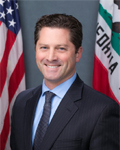
Author:(Levine) – As Introduced Ver:February 17, 2017
Policy Committee: | Elections and Redistricting | Vote: | 6 - 1 |
|
| ||
|
|
Urgency: No State Mandated Local Program: Yes Reimbursable: No
SUMMARY:
This bill makes campaign contributions from political parties to candidates for elective state office subject to existing contribution limits. Specifically, this bill:
- Makes campaign contributions made by political parties to candidates for elective state office subject to the same contribution limits that apply to all other persons, other than small contributor committees.
- Calls a special election for June 5, 2018, to be consolidated with the statewide primary election held on that day, and requires the provisions of this bill to be submitted to the voters for their consideration at that election.
FISCAL EFFECT:
- One-time GF costs of several hundred thousands of dollars for printing and mailing costs to place the measure on the ballot on June 5, 2018. For example, at a cost of $69,000 per page in the voter guide, assuming a total of four pages, the cost would be $276,000 to place this measure on the ballot. The actual costs would depend on the length of the title and summary, analysis by the Legislative Analyst’s Office, proponent and opponent arguments, and text of the proposal.
- Annual costs to the Fair Political Practices Commission of about $140,000 to enforce the contribution limits, primarily for one staff position.
COMMENTS:
- Background. Existing law prohibits a person, other than a small contributor committee or political party committee, from making a contribution to a candidate for elective state office, and prohibits a candidate from accepting a contribution from such a person, that exceeds amounts specified in state law and adjusted for inflation every other year. Currently, these contributions limits are:
- $29,200 per election to candidates for candidates for Governor;
- $7,300 per election to candidates for other statewide offices, including Attorney General, Insurance Commissioner, Controller, Secretary of State, Treasurer, Superintendent of Public Instruction, or member of the Board of Equalization;
- $4,400 per election to candidates for state Senate or Assembly, Board of Administration of the Public Employees Retirements System, or the Teachers' Retirement Board of the State Teachers' Retirement System.
- $29,200 per election to candidates for candidates for Governor;
- Purpose. According to the author, this bill “will allow citizens' individual contributions to have the same weight as that of political parties.”
Analysis Prepared by: Jessica Peters / APPR. / (916) 319-2081
Date of Hearing: April 26, 2017
ASSEMBLY COMMITTEE ON ELECTIONS AND REDISTRICTING
Marc Berman, Chair
ABPCA Bill Id:AB 1234 (
Author:Levine) – As Introduced Ver:February 17, 2017
SUBJECT: Political Reform Act of 1974: contribution limitations.
SUMMARY: Makes campaign contributions from political parties to candidates for elective state office subject to existing contribution limits. Specifically, this bill:
- Makes campaign contributions made by political parties to candidates for elective state office subject to the same contribution limits that apply to all other persons, other than small contributor committees.
- Calls a special election for June 5, 2018, to be consolidated with the statewide primary election held on that day, and requires the provisions of this bill to be submitted to the voters for their consideration at that election.
EXISTING LAW:
- Creates the Fair Political Practices Commission (FPPC), and makes it responsible for the impartial, effective administration and implementation of the Political Reform Act (PRA).
- Prohibits a person, other than a small contributor committee or political party committee, from making a contribution to a candidate for elective state office, and prohibits a candidate from accepting a contribution from such a person, that exceeds the following amounts:
- For candidates for Governor, $29,200 per election;
- For candidates for Attorney General, Insurance Commissioner, Controller, Secretary of State, Treasurer, Superintendent of Public Instruction, or member of the Board of Equalization (BOE), $7,300 per election; and,
- For candidates for state Senate or Assembly, for member elected to the Board of Administration of the Public Employees Retirements System, or for member elected to the Teachers' Retirement Board of the State Teachers' Retirement System, $4,400 per election.
- For candidates for Governor, $29,200 per election;
- Prohibits a person from making a contribution to a political party committee that is for the purpose of making contributions for the support or defeat of candidates for elective state office, and prohibits a political party committee from accepting a contribution from such a person, that totals more than $36,500 per calendar year.
- Requires the contribution limits described above to be adjusted by the FPPC in January of every odd-numbered year to reflect any increase or decrease in the Consumer Price Index. Requires the adjustments to be rounded to the nearest $100.
FISCAL EFFECT: Unknown. State-mandated local program; contains a crimes and infractions disclaimer.
COMMENTS:
- Purpose of the Bill: According to the author:
Individuals in California have strict contribution limits that curtail the amount that can be spent on state races. When these limits were passed, they created an exemption for political parties, who have taken advantage of this loophole. Last year, the California Democratic Party contributed $21.4 million directly to Democratic Assembly and Senate Campaigns. The Republican Party donated $8.5 million directly to Republican Assembly and Senate Campaigns. While the Citizens United court case is an easy target for campaign finance reform, closing this loophole will allow citizens' individual contributions to have the same weight as that of political parties.
- Proposition 34 & History of Contribution Limits: In 2000, the Legislature passed and Governor Davis signed SB 1223 (Burton), Chapter 102, Statutes of 2000, which became Proposition 34 on the November 2000 general election ballot. The proposition, which passed with 60 percent of the vote, made numerous substantive changes to the PRA, including enacting new campaign disclosure requirements and establishing new campaign contribution limits, limiting the amount that individuals could contribute to state campaigns (ranging from $3,000 to $20,000 per election at the time, depending on the office).
The passage of Proposition 34 followed the invalidation of prior efforts to establish campaign contribution limits for elections for state office in California. Proposition 73 of 1988, limited contributions from a person to a candidate for state or local office to $1,000 per fiscal year, while political parties and certain political committees could give higher amounts. Many of the provisions of Proposition 73, including the campaign contribution limits, were ultimately ruled unconstitutional by the federal courts. In 1996, California voters approved Proposition 208, which prohibited any person other than a political party or a small contributor committee from making contributions of more than $250 per election for Senate, Assembly, and BOE; and $500 per election for statewide office. These limits were increased to $250, $500, and $1,000, respectively, for candidates who agreed to abide by specified voluntary expenditure limits. Contributions from political parties were limited under Proposition 208, though the limits were considerably higher than the limits for contributions by individuals. Proposition 208 was enjoined from enforcement in January 1998, and most of the provisions of Proposition 208 subsequently were repealed by Proposition 34.
While Proposition 34 imposed limits on campaign contributions from individuals and small contributor committees to candidates for elective state office, it did not limit the amount that a political party could contribute to a candidate for elective state office. Proposition 34 did, however, limit the amount that an individual could contribute to a political party for the purpose of making contributions for the support or defeat of candidates for elective state office. The text of Proposition 34 included a finding that "[p]olitical parties play an important role in the American political process and help insulate candidates from the potential corrupting influence of large contributions." Furthermore, one of the stated purposes of Proposition 34 was "[t]o strengthen the role of political parties in financing political campaigns by means of reasonable limits on contributions to political party committees and by limiting restrictions on contributions to, and expenditures on behalf of, party candidates, to a full, complete, and timely disclosure to the public." - Independent Expenditures and Self-Funded Candidates: While Proposition 34 did not restrict campaign contributions made by political parties to candidates for elective state office, expenditures by political parties are neither the only source nor the largest source of unlimited campaign spending in campaigns for elective state office. Instead, two other sources of campaign spending—independent expenditures and contributions by candidates to their own campaigns—frequently are much larger sources of spending in campaigns for elective state office than money spent by political parties. Courts have ruled, however, that spending on independent expenditures or on the amount that a candidate contributes to his or her own campaign cannot be limited, finding that such limits would impermissibly infringe upon the rights of free speech and association.
Since campaign contribution limits went into effect in California with the passage of Proposition 34, the amount of campaign spending done through independent expenditures increased considerably. In hotly contested campaigns for seats in the Legislature, it is not uncommon for spending through independent expenditures to exceed the total amount of spending by all candidates in the race. On the other hand, prior to the enactment of contribution limits as a part of Proposition 34, independent expenditures were relatively rare. In the March 2000 and November 2000 elections, the last two elections that were not subject to the Proposition 34 campaign contribution limits, the total amount of money spent on independent expenditures for all legislative races was less than $500,000. By comparison, almost $80 million was spent on independent expenditures for legislative races in 2016.
Since the passage of Proposition 34, political parties frequently have made sizeable campaign contributions to candidates who have faced significant unlimited spending opposing their candidacies. For example, in a Legislative race in 2004, an unsuccessful candidate contributed more than $6.7 million to his own campaign, which accounted for more than 90% of the amount spent on his campaign. By contrast, the other main candidate in that race—the candidate who ultimately was victorious—received about 40% of the $2 million that his campaign spent from political parties. More recently, in a 2016 Legislative race, a candidate faced more than $2.3 million in independent expenditures opposing her campaign or supporting her opponent, compared to independent expenditures supporting her campaign or opposing her opponent of less than $70,000 in total. When excluding contributions received from political parties, the total amount raised by that candidate was less than half the amount spent on independent expenditures opposing her candidacy or supporting her opponent. By limiting the amount that political parties can contribute to candidates for elective state office, this bill could increase the role that independent expenditures play in elections for state office, and could make it more difficult for candidates to compete effectively against self-funded candidates. - Arguments in Support: In support of this bill, California Common Cause writes:
Political parties, which can receive unlimited amounts of special interest money, should not enjoy a unique exemption to turn around and directly contribute unlimited amounts to candidates for state office. This exemption gives parties wildly disproportionate influence in California elections over other political actors, especially at a time when "no party preference" voters are an increasing share of the electorate… The party exemption has also become a well-recognized vehicle for special interests to illegally circumvent existing limits by funneling money through the parties, undermining the integrity of California's existing campaign finance laws as a whole.
- Arguments in Opposition: In opposition to this bill, the California Teachers Association (CTA) writes:
[O]ur oppose position is based on our organizational policy stating: "CTA believes that members participating in political parties (state and national conventions, central committees, etc.) strengthens our involvement in the political process." We believe our members participating at the grassroots level in local campaigns would be adversely impacted by the inclusion [of] political party committees in current financial contribution limitations… Additionally… not imposing the same limits on independent expenditure committees creates an unlevel playing field that we must oppose.
- Political Reform Act of 1974: California voters passed an initiative, Proposition 9, in 1974 that created the FPPC and codified significant restrictions and prohibitions on candidates, officeholders, and lobbyists. That initiative is commonly known as the PRA. Amendments to the PRA by the Legislature must further the purposes of the proposition and require a two-thirds vote of each house of the Legislature, or the Legislature may propose amendments to the proposition that do not further the purposes of the act by a majority vote, but such amendments must be approved by the voters to take effect. This bill would only take effect if approved by the voters.
- Bill Calling an Election: Because this bill calls an election within the meaning of Article IV of the Constitution, it would go into immediate effect if chaptered. The contribution limits imposed by this bill, however, would only become effective upon voter approval.
REGISTERED SUPPORT / OPPOSITION:
Support
California Common Cause
Opposition
California Teachers Association
Analysis Prepared by: Ethan Jones / E. & R. / (916) 319-2094
Discussed in Hearing
 1H
Assembly Standing Committee on Appropriations
Bill Author