AB 1490: State Water Resources Control Board: school drinking water.
- Session Year: 2017-2018
- House: Assembly
- Latest Version Date: 2017-04-17
Existing law establishes the State Water Resources Control Board and the 9 California regional water quality control boards as the principal state agencies with authority over matters relating to water quality. Existing law requires the State Water Resources Control Board to formulate and adopt state policy for water quality control. Existing law requires each regional board to formulate and adopt water quality control plans for all areas within the region and prohibits a water quality control plan or a revision of the plan adopted by a regional board from becoming effective unless it is approved by the state board.
This bill would require the state board, before adopting or approving a water quality control plan, water quality objectives, or a program of implementation, to evaluate impacts on primary drinking water standards and secondary drinking water standards for, and impacts on groundwater basins that provide drinking water to, impacted local education agencies located in whole or in part in a disadvantaged community. no later than July 1, 2018, to prepare and submit to the Legislature a report evaluating potential adverse impacts resulting from the implementation of the Bay-Delta Water Quality Control Plan on the quality and supply of drinking water provided to schools in disadvantaged communities, as defined, in the state, including a summary describing any measures that may be implemented to address any adverse impacts identified in the report. The bill would require the state board, to the extent that funds are available, to provide financial assistance to schools in disadvantaged communities to address any adverse impacts on the supply and quality of drinking water provided to schools identified in the report.
Existing law establishes the State Water Resources Control Board and the 9 California regional water quality control boards as the principal state agencies with authority over matters relating to water quality. Existing law requires the State Water Resources Control Board to formulate and adopt state policy for water quality control. Existing law requires each regional board to formulate and adopt water quality control plans for all areas within the region and prohibits a water quality control plan or a revision of the plan adopted by a regional board from becoming effective unless it is approved by the state board.
Existing law, the California Environmental Quality Act (CEQA), requires a lead agency, as defined, to prepare, or cause to be prepared, and certify the completion of an environmental impact report (EIR) on a project that it proposes to carry out or approve that may have a significant effect on the environment or to adopt a negative declaration if it finds that the project will not have that effect. CEQA also requires a lead agency to prepare a mitigated negative declaration for a project that may have a significant effect on the environment if revisions in the project would avoid or mitigate that effect and there is no substantial evidence that the project, as revised, would have a significant effect on the environment. CEQA authorizes a public agency to approve a project that would result in significant effects on the environment that are not feasible to mitigate by issuing a statement of overriding consideration making a finding that specific overriding economic, legal, social, technological, or other benefits of the project outweigh the significant effects on the environment.This bill would require the state board, before adopting or approving a water quality control plan, water quality objectives, or a program of implementation, to evaluate impacts on primary drinking water standards and secondary drinking water standards for, and impacts on groundwater basins that provide drinking water to, impacted local education agencies located in whole or in part in a disadvantaged community. The bill, if the state board finds any defined significant effect in this evaluation, would prohibit the state board from adopting a statement of overriding consideration.
Existing law establishes the State Water Resources Control Board and the 9 California regional water quality control boards as the principal state agencies with authority over matters relating to water quality. Existing law requires the State Water Resources Control Board to formulate and adopt state policy for water quality control. Existing law requires each regional board to formulate and adopt water quality control plans for all areas within the region and prohibits a water quality control plan or a revision of the plan adopted by a regional board from becoming effective unless it is approved by the state board.
Existing law, the California Environmental Quality Act (CEQA), requires a lead agency, as defined, to prepare, or cause to be prepared, and certify the completion of an environmental impact report (EIR) on a project that it proposes to carry out or approve that may have a significant effect on the environment or to adopt a negative declaration if it finds that the project will not have that effect. CEQA also requires a lead agency to prepare a mitigated negative declaration for a project that may have a significant effect on the environment if revisions in the project would avoid or mitigate that effect and there is no substantial evidence that the project, as revised, would have a significant effect on the environment. CEQA authorizes a public agency to approve a project that would result in significant effects on the environment that are not feasible to mitigate by issuing a statement of overriding consideration making a finding that specific overriding economic, legal, social, technological, or other benefits of the project outweigh the significant effects on the environment.
This bill would require the state board, before adopting or approving a water quality control plan, water quality objectives, or a program of implementation, to evaluate impacts on primary drinking water standards and secondary drinking water standards for, and impacts on groundwater basins that provide drinking water to, impacted local education agencies located in whole or in part in a disadvantaged community. The bill, if the state board finds any defined significant effect in this evaluation, would prohibit the state board from adopting a statement of overriding consideration.
(a)For purposes of this section:
(1)Disadvantaged section, disadvantaged community means a community identified pursuant to subdivision (aa) of Section 39711 116275 of the Health and Safety Code.
(2)Primary drinking water standard has the same meaning as provided in Section 116275 of the Health and Safety Code.(3)Secondary drinking water standard has the same meaning as provided in Section 116275 of the Health and Safety Code.(4)Significant effect means a substantial or potentially substantial adverse change.(b)Before adopting or approving a water quality control plan, water quality objectives, or a program of implementation, the state board shall evaluate impacts on primary drinking water standards and secondary drinking water standards for, and impacts on groundwater basins that provide drinking water to, impacted local educational agencies located, in whole or in part, in a disadvantaged community.(b)(1)The state board, no later than July 1, 2018, shall prepare and submit to the Legislature a report evaluating potential adverse impacts resulting from the implementation of the Bay-Delta Water Quality Control Plan on the quality and supply of drinking water provided to schools in disadvantaged communities in the state, including a summary describing any measures that may be implemented to address any adverse impacts identified in the report.
(2)To the extent that funds are available, the state board shall provide financial assistance to schools in disadvantaged communties to address any adverse impacts on the supply and quality of drinking water provided to schools identified in the report prepared pursuant to paragraph (1).
(a)For purposes of this section:
(1)Disadvantaged community means a community identified pursuant to Section 39711 of the Health and Safety Code.
(2)Primary drinking water standard has the same meaning as provided in Section 116275 of the Health and Safety Code.
(3)Secondary drinking water standard has the same meaning as provided in Section 116275 of the Health and Safety Code.
(4)Significant effect means a substantial or potentially substantial adverse change.
(b)Before adopting or approving a water quality control plan, water quality objectives, or a program of implementation, the state board shall evaluate impacts on primary drinking water standards and secondary drinking water standards for, and impacts on groundwater basins that provide drinking water to, impacted local educational agencies located, in whole or in part, in a disadvantaged community.
(c)If pursuant to subdivision (b), the state board finds any significant effect on a groundwater basin, primary drinking water standard, or secondary drinking water standard, the state board shall not adopt a statement of overriding consideration pursuant to Section 21081 of the Public Resources Code.(a)For purposes of this section:
(1)Disadvantaged community means a community identified pursuant to Section 39711 of the Health and Safety Code.
(2)Primary drinking water standard has the same meaning as provided in Section 116275 of the Health and Safety Code.
(3)Secondary drinking water standard has the same meaning as provided in Section 116275 of the Health and Safety Code.
(4)Significant effect means a substantial or potentially substantial adverse change.
(b)Before adopting or approving a water quality control plan, water quality objectives, or a program of implementation, the state board shall evaluate impacts on primary drinking water standards and secondary drinking water standards for, and impacts on groundwater basins that provide drinking water to, impacted local educational agencies located, in whole or in part, in a disadvantaged community.
(c)If pursuant to subdivision (b), the state board finds any significant effect on a groundwater basin, primary drinking water standard, or secondary drinking water standard, the state board shall not adopt a statement of overriding consideration pursuant to Section 21081 of the Public Resources Code.
|
Date
|
Status
|
|---|---|
| Feb 1, 2018 | From committee: Filed with the Chief Clerk pursuant to Joint Rule 56. |
| Jan 31, 2018 | Died pursuant to Art. IV, Sec. 10(c) of the Constitution. |
| May 26, 2017 | In committee: Held under submission. |
| May 24, 2017 | In committee: Set, first hearing. Referred to APPR. suspense file. |
| Apr 26, 2017 | From committee: Do pass and re-refer to Com. on APPR. (Ayes 5. Noes 0.) (April 25). Re-referred to Com. on APPR. |
| Apr 18, 2017 | Re-referred to Com. on E.S. & T.M. |
| Apr 17, 2017 | From committee chair, with author's amendments: Amend, and re-refer to Com. on E.S. & T.M. Read second time and amended. |
| Apr 3, 2017 | Re-referred to Com. on E.S. & T.M. |
| Mar 30, 2017 | In committee: Set, first hearing. Hearing canceled at the request of author. |
| Mar 16, 2017 | Referred to Coms. on E.S. & T.M. and NAT. RES. |
| Feb 19, 2017 | From printer. May be heard in committee March 21. |
| Feb 17, 2017 | Read first time. To print. |
|
Date
|
Description
|
Location
|
Votes
|
|
|---|---|---|---|---|
| Apr 25, 2017 | Do pass and be re-referred to the Committee on [Appropriations] | Assembly Standing Committee on Environmental Safety and Toxic Materials |
Passed |
This list shows positions taken on this bill by organizations on the date displayed, which is linked to the original source.
Positions by individuals are not included.
|
Organization
|
Position
|
Date
|
|---|---|---|
| Clean Water Action | ** Against | Apr 23, 2017 |
| Community Water Center | ** Against | Apr 23, 2017 |
| Natural Resources Defense Council | ** Against | Apr 23, 2017 |
| Sierra Club California | ** Against | Apr 23, 2017 |
Date of Hearing: May 24, 2017
ASSEMBLY COMMITTEE ON APPROPRIATIONS
Lorena Gonzalez Fletcher, Chair
ABPCA Bill Id:AB 1490
Author:(Gray) – As Amended Ver:April 17, 2017
Policy Committee: | Environmental Safety and Toxic Materials | Vote: | 5 - 0 |
|
| ||
|
|
Urgency: No State Mandated Local Program: No Reimbursable: No
SUMMARY:
This bill requires the State Water Resources Control Board (SWRCB) to evaluate the potential adverse impacts resulting from the implementation of the Bay-Delta Water Quality Control Plan on the quality and supply of drinking water provided to schools in disadvantaged communities in the state, including a summary describing any measures that may be implemented to address them, in a report to the Legislature, by July 1, 2018. This bill also requires SWRCB, to the extent funds are available, to provide financial assistance to schools in disadvantaged communities to address adverse impacts identified in the report.
FISCAL EFFECT:
- Unknown costs pressures to provide financial assistance to schools identified in the report.
- Increased one-time GF costs of $140,000 for 1 PY and $200,000 in contracts for SWRCB to develop the report.
COMMENTS:
- Purpose. According to the author, "The State Water Resources Control Board has proposed a revision to the Water Quality Control Plan for the San Francisco Bay/Sacramento-San Joaquin Delta Estuary (Bay-Delta Plan) to double unimpaired river flows along the Stanislaus, Tuolumne, and Merced rivers. If implemented, the plan calls for a reduction in surface water deliveries to impacted communities of approximately 350,000 acre-feet – equivalent to the entire storage capacity of the Hetch Hetchy Reservoir…
The State Water Board has failed to identify drinking water impacts to schools, and proposes no form of mitigation to assist drinking water supplies compromised by the proposed Bay-Delta Plan update. AB 1490 requires the State Water Board to identify drinking water impacts to schools when evaluating water quality control plans."
- Background. The Bay Delta Plan identifies beneficial uses of water in the Bay Delta, water quality objectives for the reasonable protection of those beneficial uses, and a program of implementation for achieving the water quality objectives.
SWRCB is responsible for developing and modifying the Bay Delta Water Quality Control Plan, which establishes water quality control measures needed to provide reasonable protection of beneficial uses of water in the Bay Delta Watershed. SWRCB also implements the Bay Delta Plan through water rights and other measures and administers water rights in the Bay Delta Watershed.
SWRCB is in the process of developing and implementing updates to the Bay Delta Plan and flow objectives for priority tributaries to the Delta to protect beneficial uses in the Bay Delta watershed. Phase 1 of this work involves updating San Joaquin River flow and southern Delta water quality requirements included in the Bay Delta Plan. Phase 2 involves other comprehensive changes to the Bay Delta Plan to protect beneficial uses not addressed in Phase 1 (Delta outflows, Sacramento River inflows, Suisun Marsh salinity, Delta Cross Channel Gate closure, export limits, reverse flows). Phase 3 involves changes to water rights and other measures to implement changes to the Bay Delta Plan from Phases 1 and 2. Phase 4 involves developing and implementing flow objectives for priority Delta tributaries outside of the Bay Delta Plan updates.
Analysis Prepared by: Jennifer Galehouse / APPR. / (916) 319-2081
Date of Hearing: April 25, 2017
ASSEMBLY COMMITTEE ON ENVIRONMENTAL SAFETY AND TOXIC MATERIALS
Bill Quirk, Chair
ABPCA Bill Id:AB 1490 (
Author:Gray) – As Amended Ver:April 17, 2017
SUBJECT: State Water Resources Control Board: school drinking water
SUMMARY: Requires the State Water Resources Control Board (State Water Board) to, no later than July 1, 2018, prepare and submit to the Legislature a report evaluating potential adverse impacts resulting from the implementation of the Bay-Delta Water Quality Control Plan on the quality and supply of drinking water provided to schools in disadvantaged communities. Specifically, this bill:
1) Requires the State Water Board to, no later than July 1, 2018, prepare and submit to the Legislature a report evaluating potential adverse impacts resulting from the implementation of the Bay-Delta Water Quality Control Plan on the quality and supply of drinking water provided to schools in disadvantaged communities, including a summary describing any measures that may be implemented to address any adverse impacts identified by the State Water Board.
2) Requires the State Water Board, to the extent that funds are available, to provide financial assistance to schools in disadvantaged communities to address any adverse impacts on the supply and quality of drinking water provided to schools identified by the State Water Board.
EXISTING LAW:
- Establishes the California Safe Drinking Water Act (SDWA) and requires the State Water Board to maintain a drinking water program. (Health & Safety Code (HSC) § 116270, et seq.)
- Defines a public water system as a system for the provision of water for human consumption through pipes or other constructed conveyances that has 15 or more service connections or regularly serves at least 25 individuals daily at least 60 days out of the year. (HSC § 116275)
- Establishes the Safe Drinking Water State Revolving Fund (SDWSRF) to provide financial assistance for community water systems to achieve compliance with the SWDA. (HSC §116760 et seq.)
- Allows costs incurred by a community and not-for-profit noncommunity public water system for planning and preliminary engineering studies, project design, and construction to be funded from the SDWSRF by loans or other repayable financing. (HSC § 116761.20 (a))
- Requires a school district to notify parents, pupils, teachers, and other school personnel of drinking water results immediately if the school district is required to provide alternative drinking water sources, and authorizes a school district to comply with that requirement by providing notification of the test results during the next regularly scheduled public school meeting. (HSC § 116450)
- Requires the State Water Board to establish a program, in consultation with the State Department of Education, to award grants to local educational agencies for the purposes of improving access to, and the quality of, drinking water in public schools. (HSC § 116276)
- Requires a school district to provide access to free, fresh drinking water during meal times in the food service areas of the schools under its jurisdiction, including, but not necessarily limited to, areas where reimbursable meals under the National School Lunch Program or the federal School Breakfast Program are served or consumed. Authorizes a school district to comply with this requirement by, among other means, providing cups and containers of water or soliciting or receiving donated bottled water. (Education Code § 38086)
- States that it is the policy of the State of California is to reduce reliance on the Delta in meeting California’s future water supply needs through a statewide strategy of investing in improved regional supplies, conservation, and water use efficiency. Each region that depends on water from the Delta watershed shall improve its regional self-reliance for water through investment in water use efficiency, water recycling, advanced water technologies, local and regional water supply projects, and improved regional coordination of local and regional water supply efforts. (Water Code (WC) § 85021)
- Requires the State Water Board to, pursuant to its public trust obligations, develop new flow criteria for the Delta ecosystem necessary to protect public trust resources. Requires the State Water Board to review existing water quality objectives and use the best available scientific information. Requires the flow criteria for the Delta ecosystem to include the volume, quality, and timing of water necessary for the Delta ecosystem under different conditions. Requires the flow criteria to be developed in a public process by the State Water Board. (WC § 85086)
FISCAL EFFECT: Unknown.
COMMENTS:
Need for the bill: According to the author,
"The State Water Resources Control Board has proposed a revision to the Water Quality Control Plan for the San Francisco Bay/Sacramento-San Joaquin Delta Estuary (Bay-Delta Plan) to double unimpaired river flows along the Stanislaus, Tuolumne, and Merced rivers. If implemented, the plan calls for a reduction in surface water deliveries to impacted communities of approximately 350,000 acre-feet – equivalent to the entire storage capacity of the Hetch Hetchy Reservoir…
Particularly in Merced County, local schools have already received notices from the Division of Drinking Water that require them to develop drought contingency plans, because they have only a single source of water. Some schools have also received notices regarding the safety and adequacy of their water supplies. These schools are predominantly located in disadvantaged communities with few resources to address an elimination of their existing water supplies…
For example, 100 severely disabled students attend Floyd A. Shelby School in Livingston which receives drinking water and water for restrooms from a single well on campus…The water level in this well is rapidly dropping and the school is 10 miles from the city water supply. The reduction of surface water recharge proposed in the revised Bay-Delta Plan would likely eliminate the school’s only water source…
The State Water Board has failed to identify drinking water impacts to schools, and proposes no form of mitigation to assist drinking water supplies compromised by the proposed Bay-Delta Plan update. AB 1490 requires the State Water Board to identify drinking water impacts to schools when evaluating water quality control plans."
Human right to water: On September 12, 2012, Governor Edmund G. Brown Jr. signed AB 685, making California the first state in the nation to legislatively recognize the human right to water. The bill statutorily recognizes that "every human being has the right to safe, clean, affordable, and accessible water adequate for human consumption, cooking, and sanitary purposes." The human right to water extends to all Californians, including disadvantaged individuals and groups and communities in rural and urban areas.
Bay Delta Plan: The Bay Delta Plan identifies beneficial uses of water in the Bay Delta, water quality objectives for the reasonable protection of those beneficial uses, and a program of implementation for achieving the water quality objectives.
The State Water Board is responsible for developing and modifying the Bay Delta Water Quality Control Plan, which establishes water quality control measures needed to provide reasonable protection of beneficial uses of water in the Bay Delta Watershed. The State Water Board also implements the Bay Delta Plan through water rights and other measures and otherwise administers water rights in the Bay Delta Watershed.
The State Water Board is in the process of developing and implementing updates to the Bay Delta Plan and flow objectives for priority tributaries to the Delta to protect beneficial uses in the Bay Delta watershed. Phase 1 of this work involves updating San Joaquin River flow and southern Delta water quality requirements included in the Bay Delta Plan. Phase 2 involves other comprehensive changes to the Bay Delta Plan to protect beneficial uses not addressed in Phase 1 (Delta outflows, Sacramento River inflows, Suisun Marsh salinity, Delta Cross Channel Gate closure, export limits, reverse flows). Phase 3 involves changes to water rights and other measures to implement changes to the Bay Delta Plan from Phases 1 and 2. Phase 4 involves developing and implementing flow objectives for priority Delta tributaries outside of the Bay Delta Plan updates.
Need for flow objectives in the Bay Delta Plan: There are several reasons why revised flow objectives are needed to reasonably protect fish and wildlife in the three eastside, salmon-bearing tributaries and the Lower San Joaquin River. The Bay Delta is in ecological crisis, resulting in conflicts over the competing uses of water. Fish species have not shown signs of recovery since adoption of the 1995 Bay Delta Plan objectives intended to protect fish and wildlife. Several species of fish have been listed as protected species under the California Endangered Species Act and the Federal Endangered Species Act. These two laws and other regulatory constraints have restricted water diversions from the Delta in an effort to prevent further harm to the protected species.
The California Legislature acknowledged the crisis in the Delta Watershed in adopting the
Sacramento-San Joaquin Reform Act of 2009 (2009 Delta Reform Act). The 2009 Delta Reform Act established "coequal goals" for the Delta—"two goals of providing a more reliable water supply for California and protecting, restoring, and enhancing the Delta ecosystem." The Delta Stewardship Council, established under the 2009 Delta Reform Act, has identified updating the water quality objectives as an important element of protecting the Delta ecosystem and the reliability of the Delta’s water supplies. In addition, the California Water Action Plan, which establishes actions to sustainably manage California’s water resources, identifies completion of the Bay Delta Plan update as a key element to achieve the coequal goals for the Delta.
The current drought has highlighted the need to establish flows that, in conjunction with nonflow actions, provide reasonable protection for fish and wildlife during dry periods, while also illuminating the competing critical water supply needs exacerbated by the drought. Reservoirs in the plan area are at historic low levels, and there have been large surface water supply deficits. Surface water supply deficits resulting from the drought have led to potentially unsustainable levels of groundwater pumping in the plan area and adjacent areas served by the same groundwater sources. The drought, and the water supply responses to the drought, has also provided greater insight into how the area responds to reduced water supply. This new information, incorporated into the analyses, is useful in informing consideration of the plan amendments.
Safe Drinking Water Act: The federal Safe Drinking Water Act (SDWA) was enacted in 1974 to protect public health by regulating drinking water. California has enacted its own safe drinking water act to implement the federal law and establish state standards. The United States Environmental Protection Agency (US EPA) enforces the federal SDWA at the national level. Most states, including California, have been granted "primacy" by the US EPA, giving them the authority to implement and enforce the federal SDWA at the state level. In accordance with the federal SDWA, the US EPA provides funds to states for their drinking water loan programs, conducts an annual oversight review of each state’s SDWSRF program, and issues an annual program evaluation report.
Safe Drinking Water State Revolving Fund (SDWSRF): The SDWSRF provides low-interest loans, zero-interest loans, debt refinancing, principal forgiveness, and grants to public water systems for infrastructure improvements to correct system deficiencies and improve drinking water quality. Eligible projects include the planning, design, and construction of drinking water projects such as water treatment systems, distribution systems, and consolidations of two or more water systems. Eligible applicants for SDWSRF monies include publicly owned community water systems (counties, cities, and districts), privately owned community water systems (for-profit water utilities, nonprofit mutual water companies), and nonprofit or publicly owned noncommunity water systems (public school districts). The school districts identified by the author could be eligible for funds under the SDWSRF.
Drinking water grant program for schools: The State Water Board created the Drinking Water For Schools Grant Program to provide $9.5 million in funding to improve access to, and the quality of, drinking water in public schools. The grant program awards grants to local educational agencies for the purpose of improving access to, and the quality of drinking water in public schools. The grant program gives priority to projects for schools within or serving pupils from a small disadvantaged community and projects that have a high effectiveness in increasing access to safe drinking water at schools. The school districts identified by the author could be eligible for funds under the State Water Board’s schools grant program.
Ensuring that all Californians have access to safe, clean, affordable drinking water has been a priority of the Legislature for many years and will likely continue to be a top priority. There are many factors that contribute to the degradation of a community’s water supply including contamination, over pumping of groundwater, and the recent drought, which reduced many communities’ water supplies. AB 1490 requires the State Water Board to evaluate potential impacts of the Bay Delta Plan on the drinking water supplied to schools in disadvantaged communities. The State Water Board is the ideal agency to make such an evaluation as it has responsibility over the state’s drinking water program as well as authority regarding water rights, which is a key component of implementing the Bay Delta Plan.
Related legislation:
SB 1 7th Extraordinary Session (Simitian and Steinberg, Chapter 5, Statutes of 2009). Enacted the Sacramento-San Joaquin Delta Reform Act of 2009. Required the State Water Board to develop new flow criteria for the Delta ecosystem. Established coequal goals for the Delta by providing a more reliable water supply for California and protecting, restoring, and enhancing the Delta ecosystem.
REGISTERED SUPPORT / OPPOSITION:
Support
None on file.
Opposition
Clean Water Action
Community Water Center
Natural Resources Defense Council
Sierra Club California
Analysis Prepared by: Josh Tooker / E.S. & T.M. /
Discussed in Hearing
 1H
Assembly Standing Committee on Appropriations
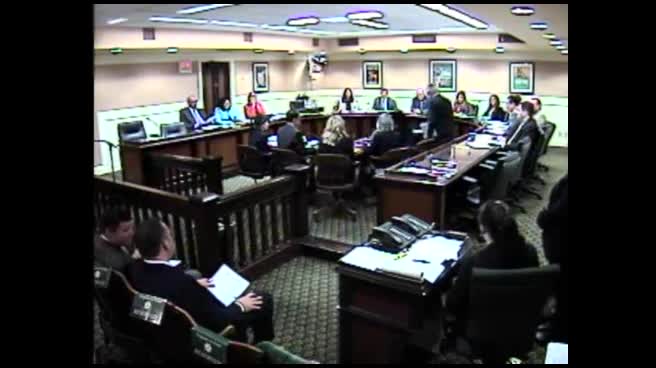 15MIN
Assembly Standing Committee on Environmental Safety and Toxic Materials
Bill Author

Bill Co-Author(s):