AB 1524: Political Reform Act of 1974: mass mailing prohibitions.
- Session Year: 2017-2018
- House: Assembly
- Latest Version Date: 2017-02-17
The Political Reform Act of 1974 prohibits sending mass mailings at public expense. The act defines agency as any state agency or local government agency and mass mailing as over 200 substantially similar pieces of mail not including form letters or other mail that is sent in response to an unsolicited request, letter, or other inquiry. Existing regulations of the Fair Political Practices Commission add further definitional criteria for mass mailings and specify certain forms of mass mailing that are not subject to the acts prohibition against mass mailings.
This bill would prohibit, within 90 days preceding an election, the sending of a mass mailing by either (1) a candidate, or on his or her behalf, if the candidates name will be on the ballot at that election, or (2) an agency, if a measure on the ballot at that election will have a direct financial impact on the agency, except as specified.
A willful violation of the acts provisions is punishable as a misdemeanor. By expanding the scope of an existing crime, this bill would impose a state-mandated local program.
The California Constitution requires the state to reimburse local agencies and school districts for certain costs mandated by the state. Statutory provisions establish procedures for making that reimbursement.
This bill would provide that no reimbursement is required by this act for a specified reason.
The Political Reform Act of 1974, an initiative measure, provides that the Legislature may amend the act to further the acts purposes upon a 2/3 vote of each house of the Legislature and compliance with specified procedural requirements.
This bill would declare that it furthers the purposes of the act.
(a)Within 90 days preceding an election, a mass mailing shall not be sent by either of the following:
(1)A candidate, or on his or her behalf, if the candidates name will be on the ballot at that election.
(2)An agency, if a measure on the ballot at that election will have a direct financial impact on the agency, unless it is a school district or community college district providing information to the public about the possible effects of a bond issue or other ballot measure consistent with the criteria set forth in subdivision (b) of Section 7054 of the Education Code.
(b)Subdivision (a) does not apply to a mass mailing that is required by law to be sent to members of the public within 90 days preceding an election.
(c)For purposes of this section, mass mailing means a mass mailing, as defined by Section 82041.5, that is consistent with the criteria of subdivision (a) of Section 18901 of Title 2 of the California Code of Regulations and, pursuant to subdivision (b) of that section, is not prohibited by Section 89001.
SEC. 2.No reimbursement is required by this act pursuant to Section 6 of Article XIIIB of the California Constitution because the only costs that may be incurred by a local agency or school district will be incurred because this act creates a new crime or infraction, eliminates a crime or infraction, or changes the penalty for a crime or infraction, within the meaning of Section 17556 of the Government Code, or changes the definition of a crime within the meaning of Section 6 of Article XIIIB of the California Constitution.
SEC. 3.The Legislature finds and declares that this bill furthers the purposes of the Political Reform Act of 1974 within the meaning of subdivision (a) of Section 81012 of the Government Code.
|
Date
|
Status
|
|---|---|
| Feb 1, 2018 | From committee: Filed with the Chief Clerk pursuant to Joint Rule 56. |
| Jan 31, 2018 | Died pursuant to Art. IV, Sec. 10(c) of the Constitution. |
| Apr 26, 2017 | In committee: Set, first hearing. Testimony taken. |
| Mar 16, 2017 | Referred to Com. on E. & R. |
| Feb 19, 2017 | From printer. May be heard in committee March 21. |
| Feb 17, 2017 | Read first time. To print. |
This list shows positions taken on this bill by organizations on the date displayed, which is linked to the original source.
Positions by individuals are not included.
|
Organization
|
Position
|
Date
|
|---|---|---|
| California School Boards Association | ** Against | Apr 24, 2017 |
| Two individuals | ** Support | Apr 24, 2017 |
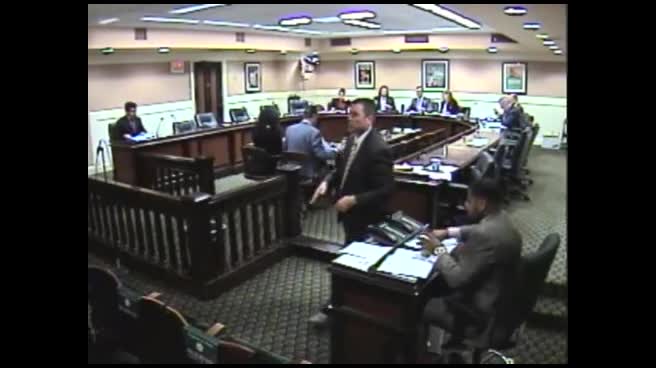
Date of Hearing: April 26, 2017
ASSEMBLY COMMITTEE ON ELECTIONS AND REDISTRICTING
Marc Berman, Chair
ABPCA Bill Id:AB 1524 (
Author:Brough) – As Introduced Ver:February 17, 2017
SUBJECT: Political Reform Act of 1974: mass mailing prohibitions.
SUMMARY: Prohibits a mass mailing that is permitted to be sent under existing regulations adopted by the Fair Political Practices Commission (FPPC) from being sent at public expense within 90 days preceding an election under specified conditions. Specifically, this bill:
- Prohibits specified mass mailings from being sent at public expense by either of the following within 90 days preceding an election:
- A candidate, on his or her behalf, if the candidate's name will be on the ballot at that election; or,
- An agency, if a measure on the ballot at that election will have a direct financial impact on the agency, unless it is a school district or community college district providing information to the public about the possible effects of a bond issue or other ballot measure consistent with criteria set forth in a specified provision of law.
- Specifies that the types of mass mailings that are restricted by this bill are those mailings which are generally permitted to be sent at public expense pursuant to a specified regulation adopted by the FPPC, notwithstanding a general prohibition against mass mailings being sent at public expense. Under that regulation, a mass mailing that features or otherwise includes reference to an elected officer affiliated with an agency is permitted to be sent by the agency using public resources if the mailing is any of the following:
- An item in which the elected officer's name appears only in the letterhead, logotype, and envelopes of the agency, or in a roster listing containing the names of all elected officers of the agency, as specified;
- A press release sent to members of the media;
- Any item sent in the normal course of business from one governmental entity or officer to another governmental entity or officer;
- Any intra-agency communication sent in the normal course of business to employees, officers, deputies, and other staff;
- Any item sent in connection with the payment or collection of funds by the agency sending the mailing, if the use of the elected officer's name, office, title, or signature is necessary to the payment or collection of the funds, as specified;
- Any item sent by an agency responsible for administering a government program, to persons subject to that program, in any instance where the mailing of such item is essential to the functioning of the program, if the elected officer's name, office, title, or signature is necessary to the functioning of the program, as specified;
- Any legal notice or other item sent as required in which use of the elected officer's name, office, title, or signature is necessary in the notice or other mailing, as specified;
- A telephone directory, organization chart, or similar listing or roster which includes the names of elected officers as well as other individuals in the agency sending the mailing, as specified;
- An announcement of an official agency meeting or event, as specified;
- An agenda or other writing that is required to be made available as specified, or a bill, file, history, journal, committee analysis, floor analysis, agenda of an interim or special hearing of a committee of the Legislature, or index of legislation, published by the Legislature; or,
- A business card which does not contain the elected officer's photograph or more than one mention of the elected officer's name.
- An item in which the elected officer's name appears only in the letterhead, logotype, and envelopes of the agency, or in a roster listing containing the names of all elected officers of the agency, as specified;
- Provides that the provisions of this bill do not apply to a mass mailing that is required by law to be sent to members of the public within 90 days preceding an election.
EXISTING LAW:
- Creates the FPPC, and makes it responsible for the impartial, effective administration and implementation of the Political Reform Act (PRA).
- Prohibits, pursuant to the PRA, any newsletter or other mass mailing from being sent at public expense. Defines "mass mailing," for the purposes of the PRA, as over 200 substantially similar pieces of mail not including mail that is sent in response to an unsolicited request, letter, or other inquiry. Provides, pursuant to regulations adopted by the FPPC, that a mailing is prohibited by this provision of the PRA if all of the following criteria are met:
- A tangible item is delivered to a recipient at his or her residence, place of business, or post office box, as specified;
- The item either features an elected officer affiliated with the agency or includes specified identifying information about an elected officer affiliated with the agency and the officer is involved in preparing or sending the item, as specified;
- Any distribution costs are paid for with public moneys, or more than $50 in design, production, and printing costs are paid with public moneys with the intent of sending the item other than as permitted; and,
- More than 200 substantially similar items are sent in a calendar month, excluding items sent in response to an unsolicited request, or items that are otherwise explicitly permitted by another specified FPPC regulation.
- Provides that a mass mailing which otherwise would be prohibited from being sent at public expense under the PRA and the regulation detailed above, is nonetheless permitted to be sent using public resources if it complies with one of 11 specified conditions, as listed above in item 2) a) through k) of the summary of this bill.
- Prohibits any elected state or local officer from using or permitting others to use public resources for a campaign activity. Provides that "campaign activity" means an activity constituting a contribution or expenditure as defined under the PRA. Provides that the use of public resources to provide information to the public about the possible effects of any bond issue or other ballot measure on state activities, operations, or policies is not prohibited provided that the informational activities are otherwise authorized by law, and the information provided constitutes a fair and impartial presentation of relevant facts.
- Prohibits an officer, employee, or consultant of a local agency from expending or authorizing the expenditure of local agency funds to support or oppose the approval or rejection of a ballot measure, or the election or defeat of a candidate. Provides that the expenditure of local agency funds to provide information to the public about the possible effects of a ballot measure on the activities, operations, or policies of the local agency is not prohibited provided that the informational activities are not otherwise prohibited by law, and the information provided constitutes a fair and impartial presentation of relevant facts.
- Prohibits school district or community college district funds, services, supplies, or equipment from being used for the purpose of urging the support or defeat of any ballot measure or candidate. Provides that the use of public resources to provide information to the public about the possible effects of any bond issue or other ballot measure is not prohibited if the informational activities are otherwise authorized by law, and the information provided constitutes a fair and impartial presentation of relevant facts.
FISCAL EFFECT: Unknown. State-mandated local program; contains a crimes and infractions disclaimer.
COMMENTS:
- Purpose of the Bill: According to the author:
AB 1524 will help increase governmental accountability and regain public trust in our electoral system. AB 1524 would put more restrictions on the time frame when public offices and officials could send mass mail while also running a campaign. The fact is, politicians, agencies and special interests take direct and unfair advantage to influence voters and elections by flooding mailboxes with political material or disguised as official government correspondence. It's time to call this what it is and put a stop to it. Government agencies need to stop this unethical practice that's sole purpose is to secure taxpayer votes with taxpayer dollars.
- Mass Mailings and the FPPC: California voters passed Proposition 73 in 1988 which, among other things, prohibited sending mass mailings at public expense. The broad nature of this prohibition had the potential to prevent governmental bodies from performing essential functions. For example, if interpreted strictly, the ban on mass mailings could prohibit county elections officials from mailing vote by mail ballots to voters, or could prohibit income tax refunds from being mailed. In an effort to make sense out of and apply context to the extremely broad prohibition, the FPPC enacted a regulation designed to identify mailings that were still permitted, notwithstanding the provisions of Proposition 73. The FPPC website describes the regulation as follows:
Which Mailings are Prohibited?
A mailing is prohibited under the [PRA] if each of the following criteria is met, unless the item meets one or more exceptions.
(1) Delivery. A tangible item, such as a newsletter or brochure, is delivered, by any means, including by transmission of a fax, to a person's residence, place of employment or business, or post office box. Note: Emails, website postings, text messages, and recorded telephone messages/robocalls are not considered tangible items and therefore, not subject to the [PRA's] mass mailing at public expense restrictions.
(2) Item Features an Elected Officer. The item sent either features an elected officer affiliated with the agency (by including the officer's photo or signature, or singling out the officer by the manner his or her name or office is displayed), or the item includes a reference to an elected officer affiliated with the agency and the item is prepared or sent in cooperation with the elected officer.
(3) Public Moneys. Any of the costs of distribution are paid for with public moneys, or if public funds are not used for the actual distribution, in excess of $50 in public moneys is used to design, produce, or print the item and the design, production, or printing is done with the intent of sending the item other than as permitted by Regulation 18901.
(4) Mass Mailing. More than 200 substantially similar items are sent in a calendar month, excluding any item sent in response to an unsolicited request.
Exceptions - Permissible Mailings
Letterhead - A mailing in which an elected officer's name appears only in the letterhead or logotype of the stationery, forms, and envelopes of the agency, or in a roster listing containing the names of all elected officers of the agency is permissible. The names of all elected officers must appear in the same size, font type, color, and location. The item may not contain an elected officer's photo, signature, or any other reference to the officer.
Meeting Announcement - A "public meeting" announcement sent only to an elected officer's constituents is permitted so long as the meeting is directly related to the elected officer's governmental duties and he or she intends to attend. The item may not contain the elected officer's photo or signature and may include only a single mention of the elected officer.
Event Announcement - An announcement of any official agency event or events for which the agency is providing the use of its facilities or staff, or other financial support is permitted. The item may not contain the elected officer's photo or signature and may include only a single mention of the elected officer.
Normal Agency Business Practices
The following items are not restricted by the Act's mass mailing prohibition.
- Press releases sent to members of the media
- Any item sent in the normal course of business from one governmental entity or officer to another governmental entity or officer
- Any intra-agency communication sent in the normal course of business to employees, officers, deputies, and other staff
- Tax bills, checks, and similar documents, in any instance where use of the elected officer's name, office, title, or signature is necessary to the payment or collection of the funds
- A telephone directory, organization chart, or similar listing or roster that includes the names of elected officers as well as other individuals in the agency sending the mailing
- Business cards that do not contain an elected officer's photo or more than one mention of the elected officer's name
Constituent Requests
Responses to unsolicited requests are not subject to the Act's mass mailing restrictions. "Unsolicited request" means a written or oral communication that specifically requests a response and that is not requested or induced by the elected officer or any third person acting at the officer's behest. If a person requests continuing information, an elected officer may send multiple responses directly related to that subject for up to 24 months.
Example:
A city councilmember received calls from 50 constituents with questions related to a nearby retail shopping center project. The councilmember may send a response (e.g., flyer), which directly addresses their questions, to those 50 people. The 50 flyers would not be subject to the Act's mass mailing restrictions and therefore, could contain the councilmember's photo and/or signature. In addition, the 50 flyers would not count toward the 200 item per calendar month limit, so the councilmember could send the flyer (or a substantially similar item) to up to 200 other constituents.
- Existing Restrictions on the Use of Public Funds for Campaign Activity: In addition to the existing restrictions on mass mailings, there are a number of provisions of California law that generally restrict the use of public funds for campaign activity, as detailed above. Notwithstanding the author's concern that public officials and agencies seek to "influence voters and elections by flooding mailboxes with political material or disguised as official government correspondence," these restrictions already impose strict constraints on the use of public funds in ways that might influence the outcome of an election. While public agencies have some flexibility under the law to create and disseminate communications relating to ballot measures, those communications are permitted only when they are informational material containing a fair and impartial presentation of relevant facts.
The author has not provided the committee with any examples of communications that he finds to be objectionable and that this bill would serve to restrict. To the extent that the communications that prompted the author to introduce this bill promoted particular candidates or a particular position on a ballot measure, it is possible that those communications are already illegal under existing law. - Broad Restrictions on Mass Mailings Could Prevent Governmental Agencies from Conducting Business: Although this bill includes a provision specifying that it does not prohibit a mass mailing that is required by law to be sent to members of the public, the broad nature of mailings that are restricted by this bill could, nonetheless, significantly restrict the ability of governmental agencies to conduct agency business in the 90 days before an election. As detailed above, the types of communications that are permitted under existing law pursuant to FPPC regulations, but that could be prohibited by this bill, include the following:
- Press releases sent to members of the media;
- Paychecks sent to governmental employees and staff;
- Items sent by an agency responsible for administering a governmental program to persons subject to that program, even where the mailing of such items is essential to the functioning of the program;
- Intra-agency communications sent in the normal course of business to employees and staff of a governmental agency; and,
- Bills, committee analyses, floor analyses, and legislative committee hearing agendas.
Prohibiting governmental agencies from being able to send the types of mailings detailed above within 90 days before an election could significantly hamper the ability of those agencies to perform their core functions. In even-numbered years, when there are two scheduled statewide elections, the mass mailing blackout period proposed by this bill would restrict governmental mailings for almost half the year.
This is particularly true given the broad nature of the language that triggers the mass mailing blackout period imposed by this bill. Under this bill, an agency is prohibited from sending out a mass mailing described above in the 90 days before an election if there is a measure on the ballot that "will have a direct financial impact on the agency," except as specified. The term "direct financial impact" is not defined by this bill, but it could reasonably be expected that most ballot measures that appear on the ballot in a jurisdiction would have a direct financial impact on the agency that oversees that jurisdiction. In fact, there could even be a direct financial impact on an agency as the result of a measure that was on the ballot in a different jurisdiction; for example, certain state ballot measures could have a direct financial impact on many local governmental agencies within the state. Furthermore, it should be noted that the mass mailing blackout period proposed by this bill is not limited to mailings that mention a candidate or ballot measure that will appear on the ballot, nor is it limited to mailings that discuss subjects related to a measure that will appear on the ballot. Instead, this bill would prohibit mass mailings during the 90 day period before an election even where those mailings did not mention candidates that were going to be on the ballot, and even where the content of those mailings was completely unrelated to any measures that were going to appear on the ballot. - Future Changes to FPPC Regulations: Because this bill defines the types of mailings that it prohibits by virtue of a reference to regulations adopted by the FPPC, future changes to those regulations by the FPPC could change the effect of this bill, even in the absence of further Legislative action. The committee may wish to consider whether it is appropriate to give the FPPC the authority to effectively change the effect of state statute in such a manner.
- Arguments in Opposition: In opposition to this bill, the California School Boards Association (CSBA) writes:
As written, this bill would significantly impair the ability of local educational agencies [LEAs] to communicate vital information to students and parents during the period of time shortly before and after the start of the school year. CSBA urges the author to adopt the approach of SB 45 (Mendoza) as amended on April 17, 2017. Senator Mendoza sought extensive stakeholder input and as a result was able to craft a similar bill that preserves the ability of LEAs and governing board members to continue to conduct necessary work during the 90 days preceding an election.
- Related Legislation: SB 45 (Mendoza), which is pending in the Senate Appropriations Committee, codifies the FPPC regulation regarding mass mailings sent at public expense and prohibits specified mass mailings from being sent within the 90 days preceding an election by or on behalf of a state or local candidate whose name will appear on the ballot.
- Political Reform Act of 1974: California voters passed an initiative, Proposition 9, in 1974 that created the FPPC and codified significant restrictions and prohibitions on candidates, officeholders and lobbyists. That initiative is commonly known as the PRA. Amendments to the PRA that are not submitted to the voters, such as those contained in this bill, must further the purposes of the initiative and require a two-thirds vote of both houses of the Legislature.
REGISTERED SUPPORT / OPPOSITION:
Support
Two individuals
Opposition
California School Boards Association
Analysis Prepared by: Ethan Jones / E. & R. / (916) 319-2094
Discussed in Hearing
 16MIN
Assembly Standing Committee on Elections and Redistricting
Bill Author

Bill Co-Author(s):