AB 1763: Pupil instruction: college and career preparedness information.
- Session Year: 2017-2018
- House: Assembly
- Latest Version Date: 2018-04-09
Existing law requires a pupil to complete specified courses as a condition of receiving a diploma of graduation from high school.
The bill would require, commencing with the 202021 school year, the governing board of a school district and the governing body of a charter school to require pupils to successfully complete a course in college and career preparedness education in order to receive a diploma of graduation from high school, ensure that pupils receive information on college and career preparedness at least once in grades 9 to 12, inclusive, as specified. By imposing new duties on school districts, this bill would impose a state-mandated local program.
The California Constitution requires the state to reimburse local agencies and school districts for certain costs mandated by the state. Statutory provisions establish procedures for making that reimbursement.
This bill would provide that, if the Commission on State Mandates determines that the bill contains costs mandated by the state, reimbursement for those costs shall be made pursuant to the statutory provisions noted above.
Existing law requires a pupil to complete specified courses as a condition of receiving a diploma of graduation from high school.
The bill would require, commencing with the 202021 school year, the governing board of a school district and the governing body of a charter school to require pupils to successfully complete a course in college and career preparedness education in order to receive a diploma of graduation from high school, as specified. By imposing new duties on school districts, this bill would impose a state-mandated local program.
The California Constitution requires the state to reimburse local agencies and school districts for certain costs mandated by the state. Statutory provisions establish procedures for making that reimbursement.
This bill would provide that, if the Commission on State Mandates determines that the bill contains costs mandated by the state, reimbursement for those costs shall be made pursuant to the statutory provisions noted above.
(a) Notwithstanding any other law, commencing with the 202021 school year, the governing board of a school district and the governing body of a charter school shall require pupils to successfully complete a course in college and career preparedness education in order to receive a diploma of graduation from high school. The course shall include, but not necessarily be limited to, all of the following: ensure that pupils receive information on college and career preparedness at least once in grades 9 to 12, inclusive. The manner in which this information is provided shall be at the discretion of the governing board of a school district or the governing body of a charter school and may include, but not necessarily be limited to, information dissemination through school counseling services, an existing course, or an existing program. The information provided shall include, but not be limited to, all of the following:
(1)An overview of the types of higher education available and general application processes.
(2)Information on available state and federal state, federal, and private financial assistance programs to offset the costs of postsecondary education at public and private institutions of higher education, including, but not necessarily limited to, trade schools, technical schools, and vocational schools.
(3)College and career options for pupils through career assessments approved by the governing board of the school district or the governing body of the charter school, as applicable, Information on college and career options, including career and technical education opportunities. This information may be provided in a variety of ways, including, but not limited to career assessments, Career Day events featuring guest speakers, and meetings with career counselors, and counselors or internship representatives.
(b)Before the commencement of the 202021 school year, the department shall provide guidance on how to implement this section, including, but not necessarily limited to, who may provide instruction pursuant to this section.(c)An existing course or program that provides the same general information listed in paragraphs (1) to (3), inclusive, of subdivision (a) may satisfy the requirements of this section.(d)The course required pursuant to this section may be combined with an existing course or program.(e)The governing board of a school district or the governing body of a charter school may evaluate an existing course or program to determine whether it meets the requirements of this section.(f)The governing board of a school district or the governing body of a charter school may adopt policies to implement this section.SEC. 2.If the Commission on State Mandates determines that this act contains costs mandated by the state, reimbursement to local agencies and school districts for those costs shall be made pursuant to Part 7 (commencing with Section 17500) of Division 4 of Title 2 of the Government Code.
(a) Notwithstanding any other law, commencing with the 202021 school year, the governing board of a school district and the governing body of a charter school shall require pupils to successfully complete a course in college and career preparedness education in order to receive a diploma of graduation from high school. The course shall include, but not necessarily be limited to, all of the following:
(1)An overview of the types of higher education available and general application processes.
(2)Information on available state and federal financial assistance programs to offset the costs of postsecondary education at public and private institutions of higher education, including, but not necessarily limited to, trade schools, technical schools, and vocational schools.
(3)College and career options for pupils through career assessments approved by the governing board of the school district or the governing body of the charter school, as applicable, Career Day events featuring guest speakers, and meetings with career counselors, and internship representatives.
(b)Before the commencement of the 202021 school year, the department shall provide guidance on how to implement this section, including, but not necessarily limited to, who may provide instruction pursuant to this section.
(c)An existing course or program that provides the same general information listed in paragraphs (1) to (3), inclusive, of subdivision (a) may satisfy the requirements of this section.
(d)The course required pursuant to this section may be combined with an existing course or program.
(e)The governing board of a school district or the governing body of a charter school may evaluate an existing course or program to determine whether it meets the requirements of this section.
(f)The governing board of a school district or the governing body of a charter school may adopt policies to implement this section.
SEC. 2.If the Commission on State Mandates determines that this act contains costs mandated by the state, reimbursement to local agencies and school districts for those costs shall be made pursuant to Part 7 (commencing with Section 17500) of Division 4 of Title 2 of the Government Code.
|
Date
|
Status
|
|---|---|
| May 25, 2018 | In committee: Held under submission. |
| May 9, 2018 | In committee: Set, first hearing. Referred to APPR. suspense file. |
| Apr 26, 2018 | From committee: Do pass and re-refer to Com. on APPR. (Ayes 6. Noes 1.) (April 25). Re-referred to Com. on APPR. |
| Apr 10, 2018 | Re-referred to Com. on ED. |
| Apr 9, 2018 | From committee chair, with author's amendments: Amend, and re-refer to Com. on ED. Read second time and amended. |
| Jan 16, 2018 | Referred to Com. on ED. |
| Jan 5, 2018 | From printer. May be heard in committee February 4. |
| Jan 4, 2018 | Read first time. To print. |
|
Date
|
Description
|
Location
|
Votes
|
|
|---|---|---|---|---|
| Apr 25, 2018 | Do pass and be re-referred to the Committee on [Appropriations] | Assembly Standing Committee on Education |
Passed |
This list shows positions taken on this bill by organizations on the date displayed, which is linked to the original source.
Positions by individuals are not included.
|
Organization
|
Position
|
Date
|
|---|---|---|
| California Teacher's Association | * Support | Apr 25, 2018 |
| State Building and Construction Trades Council | * Support | Apr 25, 2018 |
Date of Hearing: May 9, 2018
ASSEMBLY COMMITTEE ON APPROPRIATIONS
Lorena Gonzalez Fletcher, Chair
ABPCA Bill Id:AB 1763
Author:(Chu) – As Amended Ver:April 9, 2018
Policy Committee: | Education | Vote: | 6 - 1 |
Urgency: No State Mandated Local Program: Yes Reimbursable: Yes
SUMMARY: This bill requires the governing boards of local education agencies (LEAs) to ensure that students receive information on college and career preparedness at least once in grades 9-12, beginning with the 2020-21 school year. Specifically, this bill requires information on the types of higher education available, including career technical education, and the general application processes, private financial assistance programs, and information on college and career options.
FISCAL EFFECT:
Ongoing Proposition 98 GF ongoing cost pressures, likely in the low hundreds of thousands of dollars, for LEAs to provide information on certain higher education topics at least once to students in grades 9-12. (Many LEAs already are required to provide similar information to students if they offer student counseling. This estimate assumes a quarter of LEAs do not already provide this information to students once in grades 9-12 through counseling.) The state would need to reimburse these costs to LEAs, if the Commission on State Mandates determines the bill’s requirements to be a reimbursable state mandate. LEAs generally are reimbursed for state mandates through the K-12 Mandate Block Grant, as described in more detail below.
COMMENTS:
- K-12 Mandate Block Grant. To address various concerns with the traditional mandate claims process, such as the disincentive for LEAs to perform mandated tasks efficiently, the state created the K-12 Mandate Block Grant in the 2012-13 budget. The amount of funding available in the block grant annually is tied to the number of mandates the CSM has found to be reimbursable and the mandate’s statewide cost. (Typically, when the CSM has determined a claim filed by an LEA to be reimbursable, it has developed a statewide cost estimate for performing the mandate and the state has added the estimated amount or a portion of the estimated amount to the block grant as part of its annual budget process.) School districts that choose to participate in the block grant program receive per-student funding to cover the cost of state-mandated activities in lieu of submitting ongoing mandate claims for reimbursement. Charter schools also may participate in the block grant, but they may not submit mandate claims or receive reimbursement for mandate costs.
School districts receive from the block grant a per-student funding rate for K-8 students of about $30, with about $60 provided for high school students. Charter schools receive half the K‑8 per-student funding rate of school districts, because about half of K-8 mandates apply to them. Similarly, about half of high school mandates apply to charter schools, but their grades 9‑12 rate is more than half the district rate, or about $40, because of the treatment of certain mandates.
- Current Law. Current law requires LEAs that offer educational counseling to provide information to students on academic planning for higher education programs, financial aid, career technical education, and admission and enrollment procedures.
Current law also requires LEAs offering grades 9-12 to annually provide the parent or guardian of each student enrolled in any of those grades with written notification that includes an explanation of the college admission requirements, information about higher education options including career technical education, and information about how students may meet with counselors to meet admissions requirements.
- Staff Comments. Schools that offer counseling already are required to provide students with information similar to the information provided by this bill. However, not all schools provide counseling. Currently, LEAs must provide written notification of the areas outlined in this bill. However, this information is provided in writing to parents or guardians, not directly to students.
Analysis Prepared by: Natasha Collins / APPR. / (916) 319-2081
Date of Hearing: April 25, 2018
ASSEMBLY COMMITTEE ON EDUCATION
Patrick O'Donnell, Chair
ABPCA Bill Id:AB 1763 (
Author:Chu) – As Amended Ver:April 9, 2018
SUBJECT: Pupil instruction: college and career preparedness information
SUMMARY: Requires the governing boards of school districts and charter schools to ensure that students receive information on college and career preparedness at least once in grades 9-12. Specifically, this bill:
- Requires the governing boards of school districts and charter schools to ensure that pupils receive information on college and career preparedness at least once in grades 9-12, beginning with the 2020-21 school year.
- Specifies that the manner in which information on college and career preparedness is provided is at the discretion of the governing board or body of a school district or charter school, and may include school counseling services, existing courses, or existing programs.
- Requires information on college and career preparedness to include the following components:
- An overview of the types of higher education available and general application processes.
- Information on state, federal, and private financial assistance programs that may offset the costs associated with postsecondary education at public and private institutions of higher education, including, but not limited to, trade schools, technical schools, and vocational schools.
- Information on college and career options, including career and technical education opportunities, which may be provided in a variety of ways, including, but not limited to, career assessments, Career Day events, and meetings with career counselors or internship representatives.
EXISTING LAW:
- Requires the California Department of Education (CDE) to administer the California Career Pathways Trust as a competitive grant program, for the purpose of establishing or expanding career pathway programs in grades 9-14 and preparing students for high-skill, high wage jobs in emerging and growing industry sectors (EC 53011).
- Establishes the 21st Century High School After School Safety and Enrichment for Teens program, for the purpose of supporting college and career readiness and providing after school enrichment, academic support, and safe alternatives for high school students after school hours (EC 8421).
- Requires a school to include in its School Accountability Report Card, the availability of qualified personnel to provide counseling and other pupil support services, including the ratio of academic counselors per pupil (EC 33126).
- Establishes the California Career Resource Network as a program within CDE, to provide all persons in California with career development information and resources to help them reach their career goals, and to distribute career information, resources, and training materials to middle and high school counselors, educators, and administrators for the purpose of guiding student career development (EC 53086).
- Authorizes the governing board of a school district to provide a comprehensive educational counseling program for all pupils enrolled in the district (EC 49600).
- Requires educational counseling to include academic counseling, in which pupils receive counseling on the following (EC 49600):
- Development and implementation, with parental involvement, of the pupil’s immediate and long-range educational plans.
- Completion of the required curriculum in accordance with the pupil’s needs, abilities, interests, and aptitudes.
- Academic planning for access and success in higher education programs, including advisement on courses needed for admission to public colleges and universities, standardized tests, and financial aid.
- Career and vocational counseling, in which pupils are assisted in doing the following:
- Planning for the future, including identifying personal interests, skills, and abilities, career planning, course selection, and career transition.
- Becoming aware of personal preferences and interests that influence educational and occupational exploration, career choice, and career success.
- Understanding the relationship between academic achievement and career success, and the importance of maximizing career options.
- Understanding the value of participating in career technical education.
- Understanding the variety of four-year colleges and universities and community college vocational and technical preparation programs, as well as admission criteria and enrollment procedures.
FISCAL EFFECT: This bill has been keyed a state-mandated local program by the Office of Legislative Counsel.
COMMENTS:
Need for the bill. The author’s office states: “Currently, schools offer various opportunities to obtain valuable information on higher education, financial aid, and career technical education. Students can participate in programs, classes, or meet with their school counselors to obtain information on college and career pathways. In addition, higher education and career technical trainings provide opportunities in the workforce and higher paid jobs for individuals. However, one of the biggest hurdles in pursuing higher education is the cost, and this is especially true for first-generation college students. While there are myriad financial assistance programs for students to attend college or trade schools, not all students are aware of those opportunities. The Campaign for College Opportunity has done extensive research on access to higher education in their series of reports titled The State of Higher Education in California. While the reports looked at various ethnic/racial groups and barriers those groups face, one of the recommendations that appeared on all those reports was the need to provide more information to students in middle and high schools.”
College and career readiness is a state priority. The U.S. Department of Education (DOE) asserts that in many states, curricular standards often do not reflect the knowledge or skills needed for success after high school, whether students pursue further education or jobs. According to DOE, four out of every ten new college students take remedial courses, and “many employers comment on the inadequate preparation of high school graduates.” The Public Policy Institute of California states that college preparation during high school has a large impact on the likelihood that a student will graduate and the duration of time that it takes a student to finish his or her degree.
With the implementation of Local Control and Accountability Plans (LCAPs), California now requires local educational agencies (LEAs) to demonstrate, among other priorities, how they are ensuring that all students are being prepared to be college and career ready. In addition, in recent years the state has placed particular focus on preparing high school students for high paying careers through initiatives that support career technical education (CTE), which, according to CDE, is a program of study that involves a multiyear sequence of courses that integrates core academic knowledge with technical and occupational knowledge, to provide students with a pathway to postsecondary education and careers.” For example:
- In 2015, Superintendent of Public Instruction (SPI) Tom Torlakson established the California Career Readiness Initiative, which is composed of 21 key objectives to support, sustain, and strengthen CTE.
- In 2014, CDE invited applications for the state’s $250 million Career Pathway Trust Grants, intended to create programs and partnerships linking “rigorous academic standards to career pathways in high-need and high-growth sectors of the economy.”
The College and Career Readiness Index displayed on each LEA’s dashboard includes data on the number of students completing a CTE pathway. CDE notes that over 90% of districts report that CTE is now embedded into their LCAP.
California lags in providing pupils access to school counselors. According to the CDE, 29 percent of California school districts have no counseling programs at all. When counseling programs exist, counselors are often asked to add administrative duties such as testing, supervising, and class scheduling. The ratio of students per counselor in this state averages 945 to 1, compared to the national average of 477 to 1, ranking California last in the nation. Clearly, California schools lack sufficient numbers of trained personnel to meet the social, emotional needs of over six million pupils.
Related legislation. AB 2015 (Reyes) of this Session, which is pending before this Committee, requires the governing board of a school district or the governing body of a charter school that offers an economics course that is limited to grade 12 to include, as part of that course, instruction on how to complete the Free Application for Federal Student Aid (FAFSA) and the California Dream Act Application.
AB 2471 (Thurmond) of this Session requires the transfer of funds from the Youth, Education, Prevention, Early Intervention and Treatment Account established through the passage of the Control, Regulate and Tax Adult Use of Marijuana Act to the California Department of Education (CDE) to establish a grant program which would allow schools to provide in-school support services to pupils. This bill is pending before this committee.
AB 1743 (O’Donnell) of this Session extends funding for the Career Technical Education Incentive Grant (CTEIG) Program at $500 million per year and establishes funding of $12 million per year for regional technical assistance.
Previous legislation. AB 104 (Education Omnibus Trailer Bill), Chapter 13, Statutes of 2015 established the California Career Technical Education Incentive Grant Program (CTEIG), a competitive grant program administered by the CDE to provide support for career technical education in grades K-12, and provides $400 million in 2015-16, $300 million in 2016-17, and $200 million in 2017-18 for this program.
AB 86 (Education Omnibus Trailer Bill), Chapter 48, Statutes of 2013, created the California Career Pathway Trust (CCPT). The 2013 Budget Act provided $250 million in Proposition 98 General Fund for the SPI to award one-time regional and local implementation grants to school districts, county offices, charter schools and community colleges for the CCPT program.
SB 858 (Education Omnibus Trailer Bill), Chapter 32, Statutes of 2014 appropriated an additional $250 million for a second round of CCPT grant awards.
REGISTERED SUPPORT / OPPOSITION:
Support
None on file.
Opposition
None on file.
Analysis Prepared by: Naomi Ondrasek / ED. / (916) 319-2087
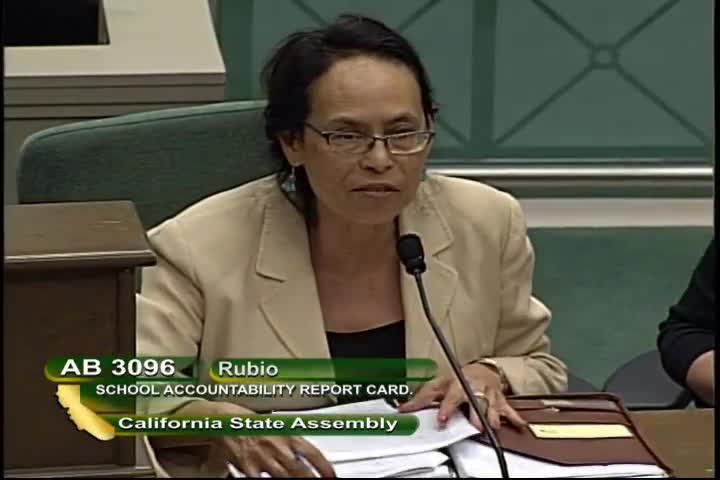
Bill Author

Bill Co-Author(s):