AB 1862: Community colleges: waiver of student fees.
- Session Year: 2017-2018
- House: Assembly
- Latest Version Date: 2018-08-15
Existing law establishes the California Community Colleges, under the administration of the Board of Governors of the California Community Colleges, as one of the segments of public postsecondary education in this state. Existing law authorizes the establishment of community college districts under the administration of community college governing boards, and authorizes these districts to provide instruction at community college campuses throughout the state. Existing law requires community college district governing boards to charge students an enrollment fee of $46 per unit per semester. Existing law requires the board of governors to waive this fee for students meeting prescribed requirements.
Existing law also establishes the California College Promise, administered by the Chancellor of the California Community Colleges, which distributes funding, upon appropriation by the Legislature, to each community college meeting prescribed requirements to be used to, among other things, accomplish specified policy goals and waive student fees for one academic year for first-time students who are enrolled in 12 or more semester units or the equivalent at the college and complete and submit either a Free Application for Federal Student Aid or a California Dream Act application.
This bill would express the intent of the Legislature to enact later legislation to waive student fees for 2 academic years of attendance at any community college in California.
Existing law establishes the California Community Colleges, under the administration of the Board of Governors of the California Community Colleges, as one of the segments of public postsecondary education in this state. Existing law authorizes the establishment of community college districts under the administration of community college governing boards, and authorizes these districts to provide instruction at community college campuses throughout the state. Existing law requires community college district governing boards to charge students an enrollment fee of $46 per unit per semester. Existing law requires the board of governors to waive this fee for students meeting prescribed requirements.
Existing law also establishes the California College Promise, administered by the Chancellor of the California Community Colleges, which distributes funding, upon appropriation by the Legislature, to each community college meeting prescribed requirements to be used to, among other things, accomplish specified policy goals and waive student fees for one academic year for first-time students who are enrolled in 12 or more semester units or the equivalent at the college and complete and submit either a Free Application for Federal Student Aid or a California Dream Act application.
This bill would express the intent of the Legislature to enact legislation to waive student fees for 2 academic years of attendance at any community college in California.
Existing federal law establishes the Temporary Protected Status (TPS) program that authorizes the United States Secretary of Homeland Security to designate a foreign country for TPS due to conditions in the country that temporarily prevent the country's nationals from returning safely or if the country is unable to handle the return of its nationals adequately, as specified. The TPS program authorizes eligible nationals from TPS designated foreign countries to remain in the United States on a temporary and renewable basis.Existing law requires the State Department of Social Services, subject to the availability of funding, to provide grants to qualified organizations, as specified, to be used to provide persons living in California with specified services, including, among others, services to assist with the application process for initial or renewal requests of deferred action under the prior federal Deferred Action for Childhood Arrivals (DACA) policy, and to provide legal training and technical assistance to other qualified organizations.This bill would appropriate $10,000,000 from the General Fund to the department for the 201819 fiscal year for immigration services funding to be available for payment to existing entities under contract pursuant to the provisions described above for work on behalf of clients who are current or former recipients of federal Temporary Protected Status.This bill would declare that it is to take effect immediately as an urgency statute.Existing federal law establishes the Temporary Protected Status (TPS) program that authorizes the United States Secretary of Homeland Security to designate a foreign country for TPS due to conditions in the country that temporarily prevent the country's nationals from returning safely or if the country is unable to handle the return of its nationals adequately, as specified. The TPS program authorizes eligible nationals from TPS designated foreign countries to remain in the United States on a temporary and renewable basis.
Existing law requires the State Department of Social Services, subject to the availability of funding, to provide grants to qualified organizations, as specified, to be used to provide persons living in California with specified services, including, among others, services to assist with the application process for initial or renewal requests of deferred action under the prior federal Deferred Action for Childhood Arrivals (DACA) policy, and to provide legal training and technical assistance to other qualified organizations.
This bill would appropriate $10,000,000 from the General Fund to the department for the 201718 201819 fiscal year for immigration services funding to be available for payment to existing entities under contract pursuant to the provisions described above for work on behalf of clients who are current or former recipients of federal Temporary Protected Status.
This bill would declare that it is to take effect immediately as an urgency statute.
Existing federal law establishes the Temporary Protected Status (TPS) program that authorizes the United States Secretary of Homeland Security to designate a foreign country for TPS due to conditions in the country that temporarily prevent the country's nationals from returning safely or if the country is unable to handle the return of its nationals adequately, as specified. The TPS program authorizes eligible nationals from TPS designated foreign countries to remain in the United States on a temporary and renewable basis.
Existing law requires the State Department of Social Services, subject to the availability of funding, to provide grants to qualified organizations, as specified, to be used to provide persons living in California with specified services, including, among others, services to assist with the application process for initial or renewal requests of deferred action under the prior federal Deferred Action for Childhood Arrivals (DACA) policy, and to provide legal training and technical assistance to other qualified organizations.
This bill would appropriate $10,000,000 from the General Fund to the department for the 201718 fiscal year for immigration services funding to be available for payment to existing entities under contract pursuant to the provisions described above for work on behalf of clients who are current or former recipients of federal Temporary Protected Status.
This bill would declare that it is to take effect immediately as an urgency statute.
Existing federal law establishes the Temporary Protected Status (TPS) program that authorizes the United States Secretary of Homeland Security to designate a foreign country for TPS due to conditions in the country that temporarily prevent the country's nationals from returning safely or if the country is unable to handle the return of its nationals adequately, as specified. The TPS program authorizes eligible nationals from TPS designated foreign counties countries to remain in the United States on a temporary and renewable basis. The TPS designation for El Salvador was terminated by the United States Secretary of Homeland Security on January 8, 2018.
Existing law requires the State Department of Social Services, subject to the availability of funding, to provide grants to qualified organizations, as specified, to be used to provide persons living in California with specified services, including, among others, services to assist with the application process for initial or renewal requests of deferred action under the prior federal Deferred Action for Childhood Arrivals (DACA) policy, and to provide legal training and technical assistance to other qualified organizations.
This bill would amend these provisions to include legal assistance to individuals affected by the termination of the TPS designation for El Salvador in the list of specified services to be provided by the qualified organizations described above.This bill would appropriate $10,000,000 from the General Fund to the department for the 20172018 201718 fiscal year for purposes of providing grants to qualified organizations that provide legal assistance to individuals affected by the termination of the federal Temporary Protected Status designation for El Salvador. immigration services funding to be available for payment to existing entities under contract pursuant to the provisions described above for work on behalf of clients who are current or former recipients of federal Temporary Protected Status.
This bill would declare that it is to take effect immediately as an urgency statute.
Existing federal law establishes the Temporary Protected Status (TPS) program that authorizes the United States Secretary of Homeland Security to designate a foreign country for TPS due to conditions in the country that temporarily prevent the country's nationals from returning safely or if the country is unable to handle the return of its nationals adequately, as specified. The TPS program authorizes eligible nationals from TPS designated foreign counties to remain in the United States on a temporary and renewable basis. The TPS designation for El Salvador was terminated by the United States Secretary of Homeland Security on January 8, 2018.
Existing law requires the State Department of Social Services, subject to the availability of funding, to provide grants to qualified organizations, as specified, to be used to provide persons living in California with specified services, including, among others, services to assist with the application process for initial or renewal requests of deferred action under the prior federal Deferred Action for Childhood Arrivals (DACA) policy, and to provide legal training and technical assistance to other qualified organizations.
This bill would amend these provisions to include legal assistance to individuals affected by the termination of the TPS designation for El Salvador in the list of specified services to be provided by the qualified organizations described above.
This bill would appropriate $10,000,000 from the General Fund to the department for the 20172018 fiscal year for purposes of providing grants to qualified organizations that provide legal assistance to individuals affected by the termination of the federal Temporary Protected Status designation for El Salvador.
This bill would declare that it is to take effect immediately as an urgency statute.
It is the intent of the Legislature to enact later legislation to waive student fees for two academic years of attendance at any community college in California.
It is the intent of the Legislature to enact legislation to waive student fees for two academic years of attendance at any community college in California.
SECTION 1.Section 13303 of the Welfare and Institutions Code is amended to read:13303.(a)Subject to the availability of funding in the act that added this section or the annual Budget Act, the department shall provide grants, as described in subdivision (b), to organizations qualified under Section 13304.(b)Grants provided in accordance with subdivision (a) shall be for the purpose of providing one or more of the following services, as determined by the department:(1)Services to persons residing in, or formerly residing in, California, including, but not limited to, any of the following:(A)Services to assist with the application process for initial or renewal requests of deferred action under the DACA policy with the United States Citizenship and Immigration Services.(B)Services to obtain other immigration remedies.(C)Services to assist with the naturalization process and any appeals arising from the process.(2)Services to provide legal training and technical assistance.(3)(A)(i)Funds available for the purposes of this section shall not be used to provide legal services to an individual who has been convicted of, or who is currently appealing a conviction for, a violent felony, as defined in subdivision (c) of Section 667.5 of the Penal Code, or a serious felony, as defined in subdivision (c) of Section 1192.7 of the Penal Code.(ii)For the purposes of this subparagraph, legal services does not include activities relating to client intake, which shall be provided regardless of an individuals criminal history.(B)Notwithstanding subparagraph (A), nothing in this section shall be construed to prohibit eligibility for services pursuant to this section for individuals whose criminal records are shown to be inaccurate.(c)For purposes of this chapter, the following terms shall have the following meanings:(1)DACA refers to Deferred Action for Childhood Arrivals status as described in guidelines issued by the United States Department of Homeland Security.(2)Services to assist includes, but is not limited to, outreach, workshop presentations, document review, Freedom of Information Act requests, and screening services that seek to assist individuals with the services described in subdivision (b).(3)Legal training and technical assistance includes, but is not limited to, educational and capacity building activities that will augment the competent provision of legal services to immigrants, including for organizations located in and serving underserved communities.(4)Immigration remedies include, but shall not be limited to, U-visas, T-visas, special immigrant juvenile status, Violence Against Women Act self-petitions, family-based petitions, cancellation of removal, and asylum, or other remedies that may also include remedies necessary to enable pursuit of immigration protections.(d)No more than 40 percent of grant funds awarded to an organization qualified under Section 13304 shall be advanced to that organization.(e)The department shall update the Legislature on the following information in the course of budget hearings:(1)The timeline for implementation and administration of this section, including important upcoming dates.(2)The participating organizations awarded contracts or grants, and the aggregate amounts awarded for each service described in subdivision (b).(3)The number of applications submitted, and the aggregate amounts requested for each service described in subdivision (b).(4)The number of clients served.(5)The types of services provided and in what language or languages.(6)The regions served.(7)The ethnic communities served.(8)The identification of further barriers and challenges to the provision of services described in subdivision (b).(f)In accordance with Section 1621(d) of Title 8 of the United States Code, this section provides services for undocumented persons.(g)The sum of twenty million dollars ($20,000,000) is hereby appropriated to the Department of Social Services in the 201718 fiscal year for immigration services funding to be available for payment to existing entities under contract pursuant to this section for work on behalf of clients involved in, applying for, or subject to, federal Deferred Action for Childhood Arrivals status.(h)The sum of ten million dollars ($10,000,000) is hereby appropriated to the Department of Social Services in the 201819 fiscal year for immigration services funding to be available for payment to existing entities under contract pursuant to this section for work on behalf of clients who are current or former recipients of federal Temporary Protected Status.(i)Notwithstanding any other law, payments shall be made by the Controller to existing entities under contract pursuant to this chapter upon receipt of written notification from the State Department of Social Services of the amounts, contractors, and timing of the payments.SEC. 2.This act is an urgency statute necessary for the immediate preservation of the public peace, health, or safety within the meaning of Article IV of the California Constitution and shall go into immediate effect. The facts constituting the necessity are:In order to assist California residents with legal complications arising from the termination or potential termination of the federal Temporary Protected Status designation by the United States Secretary of Homeland Security, it is necessary that this act take effect immediately.(a)Subject to the availability of funding in the act that added this section or the annual Budget Act, the department shall provide grants, as described in subdivision (b), to organizations qualified under Section 13304.
(b)Grants provided in accordance with subdivision (a) shall be for the purpose of providing one or more of the following services, as determined by the department:
(1)Services to persons residing in, or formerly residing in, California, including, but not limited to, any of the following:
(A)Services to assist with the application process for initial or renewal requests of deferred action under the DACA policy with the United States Citizenship and Immigration Services.
(B)Services to obtain other immigration remedies.
(C)Services to assist with the naturalization process and any appeals arising from the process.
(2)Services to provide legal training and technical assistance.
(3)(A)(i)Funds available for the purposes of this section shall not be used to provide legal services to an individual who has been convicted of, or who is currently appealing a conviction for, a violent felony, as defined in subdivision (c) of Section 667.5 of the Penal Code, or a serious felony, as defined in subdivision (c) of Section 1192.7 of the Penal Code.
(ii)For the purposes of this subparagraph, legal services does not include activities relating to client intake, which shall be provided regardless of an individuals criminal history.
(B)Notwithstanding subparagraph (A), nothing in this section shall be construed to prohibit eligibility for services pursuant to this section for individuals whose criminal records are shown to be inaccurate.
(c)For purposes of this chapter, the following terms shall have the following meanings:
(1)DACA refers to Deferred Action for Childhood Arrivals status as described in guidelines issued by the United States Department of Homeland Security.
(2)Services to assist includes, but is not limited to, outreach, workshop presentations, document review, Freedom of Information Act requests, and screening services that seek to assist individuals with the services described in subdivision (b).
(3)Legal training and technical assistance includes, but is not limited to, educational and capacity building activities that will augment the competent provision of legal services to immigrants, including for organizations located in and serving underserved communities.
(4)Immigration remedies include, but shall not be limited to, U-visas, T-visas, special immigrant juvenile status, Violence Against Women Act self-petitions, family-based petitions, cancellation of removal, and asylum, or other remedies that may also include remedies necessary to enable pursuit of immigration protections.
(d)No more than 40 percent of grant funds awarded to an organization qualified under Section 13304 shall be advanced to that organization.
(e)The department shall update the Legislature on the following information in the course of budget hearings:
(1)The timeline for implementation and administration of this section, including important upcoming dates.
(2)The participating organizations awarded contracts or grants, and the aggregate amounts awarded for each service described in subdivision (b).
(3)The number of applications submitted, and the aggregate amounts requested for each service described in subdivision (b).
(4)The number of clients served.
(5)The types of services provided and in what language or languages.
(6)The regions served.
(7)The ethnic communities served.
(8)The identification of further barriers and challenges to the provision of services described in subdivision (b).
(f)In accordance with Section 1621(d) of Title 8 of the United States Code, this section provides services for undocumented persons.
(g)The sum of twenty million dollars ($20,000,000) is hereby appropriated to the Department of Social Services in the 201718 fiscal year for immigration services funding to be available for payment to existing entities under contract pursuant to this section for work on behalf of clients involved in, applying for, or subject to, federal Deferred Action for Childhood Arrivals status.
(h)The sum of ten million dollars ($10,000,000) is hereby appropriated to the Department of Social Services in the 201718 201819 fiscal year for immigration services funding to be available for payment to existing entities under contract pursuant to this section for work on behalf of clients who are current or former recipients of federal Temporary Protected Status.
(i)Notwithstanding any other law, payments shall be made by the Controller to existing entities under contract pursuant to this chapter upon receipt of written notification from the State Department of Social Services of the amounts, contractors, and timing of the payments.
SEC. 2.This act is an urgency statute necessary for the immediate preservation of the public peace, health, or safety within the meaning of Article IV of the California Constitution and shall go into immediate effect. The facts constituting the necessity are:
In order to assist California residents with legal complications arising from the termination or potential termination of the federal Temporary Protected Status designation by the United States Secretary of Homeland Security, it is necessary that this act take effect immediately.
REVISIONS: HeadingLine 4.(a)Subject to the availability of funding in the act that added this section or the annual Budget Act, the department shall provide grants, as described in subdivision (b), to organizations qualified under Section 13304.
(b)Grants provided in accordance with subdivision (a) shall be for the purpose of providing one or more of the following services, as determined by the department:
(1)Services to persons residing in, or formerly residing in, California, including, but not limited to, any of the following:
(A)Services to assist with the application process for initial or renewal requests of deferred action under the DACA policy with the United States Citizenship and Immigration Services.
(B)Services to obtain other immigration remedies.
(C)Services to assist with the naturalization process and any appeals arising from the process.
(2)Services to provide legal training and technical assistance.
(3)(A)(i)Funds available for the purposes of this section shall not be used to provide legal services to an individual who has been convicted of, or who is currently appealing a conviction for, a violent felony, as defined in subdivision (c) of Section 667.5 of the Penal Code, or a serious felony, as defined in subdivision (c) of Section 1192.7 of the Penal Code.
(ii)For the purposes of this subparagraph, legal services does not include activities relating to client intake, which shall be provided regardless of an individuals criminal history.
(B)Notwithstanding subparagraph (A), nothing in this section shall be construed to prohibit eligibility for services pursuant to this section for individuals whose criminal records are shown to be inaccurate.
(c)For purposes of this chapter, the following terms shall have the following meanings:
(1)DACA refers to Deferred Action for Childhood Arrivals status as described in guidelines issued by the United States Department of Homeland Security.
(2)Services to assist includes, but is not limited to, outreach, workshop presentations, document review, Freedom of Information Act requests, and screening services that seek to assist individuals with the services described in subdivision (b).
(3)Legal training and technical assistance includes, but is not limited to, educational and capacity building activities that will augment the competent provision of legal services to immigrants, including for organizations located in and serving underserved communities.
(4)Immigration remedies include, but shall not be limited to, U-visas, T-visas, special immigrant juvenile status, Violence Against Women Act self-petitions, family-based petitions, cancellation of removal, and asylum, or other remedies that may also include remedies necessary to enable pursuit of immigration protections.
(d)No more than 40 percent of grant funds awarded to an organization qualified under Section 13304 shall be advanced to that organization.
(e)The department shall update the Legislature on the following information in the course of budget hearings:
(1)The timeline for implementation and administration of this section, including important upcoming dates.
(2)The participating organizations awarded contracts or grants, and the aggregate amounts awarded for each service described in subdivision (b).
(3)The number of applications submitted, and the aggregate amounts requested for each service described in subdivision (b).
(4)The number of clients served.
(5)The types of services provided and in what language or languages.
(6)The regions served.
(7)The ethnic communities served.
(8)The identification of further barriers and challenges to the provision of services described in subdivision (b).
(f)In accordance with Section 1621(d) of Title 8 of the United States Code, this section provides services for undocumented persons.
(g)The sum of twenty million dollars ($20,000,000) is hereby appropriated to the Department of Social Services in the 201718 fiscal year for immigration services funding to be available for payment to existing entities under contract pursuant to this section for work on behalf of clients involved in, applying for, or subject to, federal Deferred Action for Childhood Arrivals status.
(h)The sum of ten million dollars ($10,000,000) is hereby appropriated to the Department of Social Services in the 201718 fiscal year for immigration services funding to be available for payment to existing entities under contract pursuant to this section for work on behalf of clients who are current or former recipients of federal Temporary Protected Status.
(i)Notwithstanding any other law, payments shall be made by the Controller to existing entities under contract pursuant to this chapter upon receipt of written notification from the State Department of Social Services of the amounts, contractors, and timing of the payments.
SEC. 2.This act is an urgency statute necessary for the immediate preservation of the public peace, health, or safety within the meaning of Article IV of the California Constitution and shall go into immediate effect. The facts constituting the necessity are:
In order to assist California residents with legal complications arising from the termination of the or potential termination of the federal Temporary Protected Status designation for El Salvador by the United States Secretary of Homeland Security on January 8, 2018, Security, it is necessary that this act take effect immediately.
(a)Subject to the availability of funding in the act that added this section or the annual Budget Act, the department shall provide grants, as described in subdivision (b), to organizations qualified under Section 13304.
(b)Grants provided in accordance with subdivision (a) shall be for the purpose of providing one or more of the following services, as determined by the department:
(1)Services to persons residing in, or formerly residing in, California, including, but not limited to, any of the following:
(A)Services to assist with the application process for initial or renewal requests of deferred action under the DACA policy with the United States Citizenship and Immigration Services.
(B)Services to obtain other immigration remedies.
(C)Services to assist with the naturalization process and any appeals arising from the process.
(D)Services to provide legal assistance to individuals affected by the termination of the federal Temporary Protected Status designation for El Salvador.(2)Services to provide legal training and technical assistance.
(3)(A)(i)Funds available for the purposes of this section shall not be used to provide legal services to an individual who has been convicted of, or who is currently appealing a conviction for, a violent felony, as defined in subdivision (c) of Section 667.5 of the Penal Code, or a serious felony, as defined in subdivision (c) of Section 1192.7 of the Penal Code.
(ii)For the purposes of this subparagraph, legal services does not include activities relating to client intake, which shall be provided regardless of an individuals criminal history.
(B)Notwithstanding subparagraph (A), nothing in this section shall be construed to prohibit eligibility for services pursuant to this section for individuals whose criminal records are shown to be inaccurate.
(c)For purposes of this chapter, the following terms shall have the following meanings:
(1)DACA refers to Deferred Action for Childhood Arrivals status as described in guidelines issued by the United States Department of Homeland Security.
(2)Services to assist includes, but is not limited to, outreach, workshop presentations, document review, Freedom of Information Act requests, and screening services that seek to assist individuals with the services described in subdivision (b).
(3)Legal training and technical assistance includes, but is not limited to, educational and capacity building activities that will augment the competent provision of legal services to immigrants, including for organizations located in and serving underserved communities.
(4)Immigration remedies include, but shall not be limited to, U-visas, T-visas, special immigrant juvenile status, Violence Against Women Act self-petitions, family-based petitions, cancellation of removal, and asylum, or other remedies that may also include remedies necessary to enable pursuit of immigration protections.
(d)No more than 40 percent of grant funds awarded to an organization qualified under Section 13304 shall be advanced to that organization.
(e)The department shall update the Legislature on the following information in the course of budget hearings:
(1)The timeline for implementation and administration of this section, including important upcoming dates.
(2)The participating organizations awarded contracts or grants, and the aggregate amounts awarded for each service described in subdivision (b).
(3)The number of applications submitted, and the aggregate amounts requested for each service described in subdivision (b).
(4)The number of clients served.
(5)The types of services provided and in what language or languages.
(6)The regions served.
(7)The ethnic communities served.
(8)The identification of further barriers and challenges to the provision of services described in subdivision (b).
(f)In accordance with Section 1621(d) of Title 8 of the United States Code, this section provides services for undocumented persons.
(g)The sum of twenty million dollars ($20,000,000) is hereby appropriated to the Department of Social Services in the 201718 fiscal year for immigration services funding to be available for payment to existing entities under contract pursuant to this section for work on behalf of clients involved in, applying for, or subject to, federal Deferred Action for Childhood Arrivals status.
(h)The sum of ten million dollars ($10,000,000) is hereby appropriated to the Department of Social Services in the 20172018 201718 fiscal year for the purpose of providing grants to organizations qualified pursuant to Section 13304 that provide legal assistance to individuals affected by the termination of the federal Temporary Protected Status designation for El Salvador pursuant to subparagraph (D) of paragraph (1) of subdivision (b). immigration services funding to be available for payment to existing entities under contract pursuant to this section for work on behalf of clients who are current or former recipients of federal Temporary Protected Status.
(i)Notwithstanding any other law, payments shall be made by the Controller to existing entities under contract pursuant to this chapter upon receipt of written notification from the State Department of Social Services of the amounts, contractors, and timing of the payments.
SEC. 2.This act is an urgency statute necessary for the immediate preservation of the public peace, health, or safety within the meaning of Article IV of the California Constitution and shall go into immediate effect. The facts constituting the necessity are:
In order to assist California residents with legal complications arising from the termination of the Temporary Protected Status designation for El Salvador by the United States Secretary of Homeland Security on January 8, 2018, it is necessary that this act take effect immediately.
(a)Subject to the availability of funding in the act that added this section or the annual Budget Act, the department shall provide grants, as described in subdivision (b), to organizations qualified under Section 13304.
(b)Grants provided in accordance with subdivision (a) shall be for the purpose of providing one or more of the following services, as determined by the department:
(1)Services to persons residing in, or formerly residing in, California, including, but not limited to, any of the following:
(A)Services to assist with the application process for initial or renewal requests of deferred action under the DACA policy with the United States Citizenship and Immigration Services.
(B)Services to obtain other immigration remedies.
(C)Services to assist with the naturalization process and any appeals arising from the process.
(D)Services to provide legal assistance to individuals affected by the termination of the federal Temporary Protected Status designation for El Salvador.
(2)Services to provide legal training and technical assistance.
(3)(A)(i)Funds available for the purposes of this section shall not be used to provide legal services to an individual who has been convicted of, or who is currently appealing a conviction for, a violent felony, as defined in subdivision (c) of Section 667.5 of the Penal Code, or a serious felony, as defined in subdivision (c) of Section 1192.7 of the Penal Code.
(ii)For the purposes of this subparagraph, legal services does not include activities relating to client intake, which shall be provided regardless of an individuals criminal history.
(B)Notwithstanding subparagraph (A), nothing in this section shall be construed to prohibit eligibility for services pursuant to this section for individuals whose criminal records are shown to be inaccurate.
(c)For purposes of this chapter, the following terms shall have the following meanings:
(1)DACA refers to Deferred Action for Childhood Arrivals status as described in guidelines issued by the United States Department of Homeland Security.
(2)Services to assist includes, but is not limited to, outreach, workshop presentations, document review, Freedom of Information Act requests, and screening services that seek to assist individuals with the services described in subdivision (b).
(3)Legal training and technical assistance includes, but is not limited to, educational and capacity building activities that will augment the competent provision of legal services to immigrants, including for organizations located in and serving underserved communities.
(4)Immigration remedies include, but shall not be limited to, U-visas, T-visas, special immigrant juvenile status, Violence Against Women Act self-petitions, family-based petitions, cancellation of removal, and asylum, or other remedies that may also include remedies necessary to enable pursuit of immigration protections.
(d)No more than 40 percent of grant funds awarded to an organization qualified under Section 13304 shall be advanced to that organization.
(e)The department shall update the Legislature on the following information in the course of budget hearings:
(1)The timeline for implementation and administration of this section, including important upcoming dates.
(2)The participating organizations awarded contracts or grants, and the aggregate amounts awarded for each service described in subdivision (b).
(3)The number of applications submitted, and the aggregate amounts requested for each service described in subdivision (b).
(4)The number of clients served.
(5)The types of services provided and in what language or languages.
(6)The regions served.
(7)The ethnic communities served.
(8)The identification of further barriers and challenges to the provision of services described in subdivision (b).
(f)In accordance with Section 1621(d) of Title 8 of the United States Code, this section provides services for undocumented persons.
(g)The sum of twenty million dollars ($20,000,000) is hereby appropriated to the Department of Social Services in the 201718 fiscal year for immigration services funding to be available for payment to existing entities under contract pursuant to this section for work on behalf of clients involved in, applying for, or subject to, federal Deferred Action for Childhood Arrivals status.
(h)The sum of ten million dollars ($10,000,000) is hereby appropriated to the Department of Social Services in the 20172018 fiscal year for the purpose of providing grants to organizations qualified pursuant to Section 13304 that provide legal assistance to individuals affected by the termination of the federal Temporary Protected Status designation for El Salvador pursuant to subparagraph (D) of paragraph (1) of subdivision (b).
(h)(i)Notwithstanding any other law, payments shall be made by the Controller to existing entities under contract pursuant to this chapter upon receipt of written notification from the State Department of Social Services of the amounts, contractors, and timing of the payments.
SEC. 2.This act is an urgency statute necessary for the immediate preservation of the public peace, health, or safety within the meaning of Article IV of the California Constitution and shall go into immediate effect. The facts constituting the necessity are:
In order to assist California residents with legal complications arising from the termination of the Temporary Protected Status designation for El Salvador by the United States Secretary of Homeland Security on January 8, 2018, it is necessary that this act take effect immediately.
|
Date
|
Status
|
|---|---|
| Aug 15, 2018 | From committee chair, with author's amendments: Amend, and re-refer to committee. Read second time, amended, and re-referred to Com. on RLS. |
| Aug 8, 2018 | Withdrawn from committee. |
| Aug 7, 2018 | From committee chair, with author's amendments: Amend, and re-refer to committee. Read second time, amended, and re-referred to Com. on APPR. |
| Aug 6, 2018 | In committee: Set, first hearing. Hearing canceled at the request of author. |
| Jun 27, 2018 | From committee: Do pass and re-refer to Com. on APPR. (Ayes 5. Noes 2.) (June 26). Re-referred to Com. on APPR. |
| Jun 13, 2018 | From committee: Do pass and re-refer to Com. on JUD. (Ayes 6. Noes 0.) (June 12). Re-referred to Com. on JUD. |
| Jun 7, 2018 | Referred to Coms. on HUMAN S. and JUD. |
| May 31, 2018 | In Senate. Read first time. To Com. on RLS. for assignment. |
| May 30, 2018 | Read third time. Urgency clause adopted. Passed. Ordered to the Senate. |
| May 25, 2018 | Coauthors revised. |
| Apr 25, 2018 | In committee: Set, first hearing. Referred to APPR. suspense file. |
| Apr 16, 2018 | Re-referred to Com. on APPR. |
| Apr 12, 2018 | Read second time and amended. |
| Apr 11, 2018 | From committee: Amend, and do pass as amended and re-refer to Com. on APPR. (Ayes 6. Noes 0.) (April 10). |
| Mar 22, 2018 | Re-referred to Com. on HUM. S. |
| Mar 21, 2018 | Read second time and amended. |
| Mar 20, 2018 | From committee: Amend, and do pass as amended and re-refer to Com. on HUM. S. (Ayes 8. Noes 1.) (March 20). |
| Mar 6, 2018 | Re-referred to Com. on JUD. |
| Mar 5, 2018 | From committee chair, with author's amendments: Amend, and re-refer to Com. on JUD. Read second time and amended. |
| Jan 29, 2018 | Referred to Coms. on JUD. and HUM. S. |
| Jan 12, 2018 | From printer. May be heard in committee February 11. |
| Jan 11, 2018 | Read first time. To print. |
|
Date
|
Description
|
Location
|
Votes
|
|
|---|---|---|---|---|
| Jun 26, 2018 | Do pass, but first be re-referred to the Committee on [Appropriations] | Senate Standing Committee on Judiciary |
Passed |
|
| Jun 12, 2018 | Do pass, but first be re-referred to the Committee on [Judiciary] | Senate Standing Committee on Human Services |
Passed |
|
| May 30, 2018 | AB 1862 SANTIAGO Third Reading Urgency | Assembly Floor |
Passed |
|
| May 25, 2018 | Do pass. | Assembly Standing Committee on Appropriations |
Passed |
|
| Apr 10, 2018 | Do pass as amended and be re-referred to the Committee on [Appropriations] | Assembly Standing Committee on Human Services |
Passed |
|
| Mar 20, 2018 | Do pass as amended and be re-referred to the Committee on [Human Services] | Assembly Standing Committee on Judiciary |
Passed |
This list shows positions taken on this bill by organizations on the date displayed, which is linked to the original source.
Positions by individuals are not included.
|
Organization
|
Position
|
Date
|
|---|---|---|
| ACLU California | * Support | Jun 26, 2018 |
| American Jewish Committee | ** Support | Jun 8, 2018 |
| California Asian Pacific Chamber Of Commerce | ** Support | Jun 8, 2018 |
| California Immigrant Policy Center | ** Support | Jun 8, 2018 |
| CARECEN International TPS Alliance | * Support | Mar 20, 2018 |
| Catholic Charities Of Los Angeles | ** Support | Jun 8, 2018 |
| Coalition for Humane Immigrant Rights | ** Support | Jun 8, 2018 |
| Jewish Public Affairs Committee Of California | ** Support | Jun 8, 2018 |
| Korean Resource Center | ** Support | Jun 8, 2018 |
| Los Angeles County Board of Supervisors | * Support | Apr 10, 2018 |
| Los Angeles Unified School District | ** Support | Jun 8, 2018 |
| Oakland Privacy | ** Support | Jun 8, 2018 |
| Silicon Valley Community Foundation | ** Support | Jun 8, 2018 |
| the california catholic conference | ** Support | Jun 8, 2018 |
| The Central American Resource Center | ** Support | Jun 8, 2018 |
| The Los Angeles County Board of Supervisors | ** Support | Jun 8, 2018 |
Senator Hannah-Beth Jackson, Chair
2017-2018 Regular Session
Bill No: AB 1862 (Author:Santiago)
Version: April 12, 2018
Hearing Date: June 26, 2018
Fiscal: Yes
Urgency: Yes
Consultant: MEC
SUBJECT
Immigration services: grants
DESCRIPTION
In order to assist California residents with legal complications arising from the termination or potential termination of the federal Temporary Protected Status designation by the United States Secretary of Homeland Security, this bill would appropriate $10,000,000 to the Department of Social Services in the 2018–19 fiscal year for immigration legal services funding for work on behalf of clients who are current or former recipients of federal Temporary Protected Status.
BACKGROUND
From time to time, major natural disasters or extreme civil conflict have made it unsafe for some foreign nationals living in the United States to return to their countries of origin. In response to these humanitarian crises, the U.S. federal government has permitted those foreign nationals to apply for special authorization to remain in this country until a designated date. (8 U.S.C. Sec. 1254a.) These programs and the authorization they convey are known as “Temporary Protected Status,” or TPS. The federal government may renew any country’s TPS for additional periods if it concludes that conditions in that country have not improved sufficiently to permit safe return. (8 U.S.C. Sec. 1254a(b)(3).)
Currently, the United States provides TPS to approximately 437,000 foreign nationals from 10 countries: El Salvador, Haiti, Honduras, Nepal, Nicaragua, Somalia, South Sudan, Sudan, Syria, and Yemen. Though, as its names suggests, TPS was created with temporary immigration protections in mind, conditions in some of the TPS countries have been slow to recover from the calamities that initially triggered their TPS designation. Consequently the U.S. government, under both Republican and Democratic administrations, has almost always renewed the TPS programs for these countries each time the expiration dates have come up. At the same time, through the natural course of life, TPS holders have set down roots and become integral parts of the U.S. communities they inhabit. They have, among other things, bought homes, fallen in love, married, had children, furthered their education, obtained professional degrees, and opened businesses.
Since the inauguration of President Donald Trump in January 2017, the federal government has departed from the longstanding prior practice of renewing the TPS programs in the absence of clear indications that conditions have improved dramatically in the corresponding countries. Most notably, starting in October 2017, the Secretary of Homeland Security began to announce plans to terminate the TPS programs for four countries: El Salvador, Haiti, Nicaragua, and Sudan, meaning that 326,790 individuals will lose their status. Another 86,600 Hondurans will lose their TPS status if the Trump administration elects to terminate that country’s program when it expires on July 5, 2018.
Provided they take swift action and benefit from the assistance of competent legal counsel, some of these TPS holders may discover that they have other legal grounds on which to stay in the United States. Many thousands, however, will face an agonizing choice: give up all of their family and community connections here and return to their countries of origin to face an uncertain future, or, remain in the United States without legal authorization to work and under the constant threat of detention or deportation.
In order to assist California residents with legal complications arising from the termination or potential termination of the federal Temporary Protected Status designation by the United States Secretary of Homeland Security, this urgency bill would appropriate $10,000,000 to the Department of Social Services in the 2018–19 fiscal year for immigration legal services funding for work on behalf of clients who are current or former recipients of federal Temporary Protected Status.
CHANGES TO EXISTING LAW
Existing law allows specified foreign nationals to apply for “Temporary Protected Status,” which is time-limited authorization to reside and work in the United States while their countries of origin recover from the impact of major natural disasters or extreme civil conflict. (8 U.S.C. Sec. 1254a.)
Existing law permits the U.S. government to extend “Temporary Protected Status” for additional intervals if the corresponding country of origin has not recovered sufficiently from the major natural disaster or extreme civil conflict to permit safe return. (8 U.S.C. Sec. 1254a(b)(3).)
Existing law terminates the Temporary Protected Status program for El Salvador, effective September 9, 2019. (83 Fed.Reg. 2654 (Jan. 18, 2018).)
Existing law terminates the Temporary Protected Status program for Haiti, effective July 22, 2019. (83 Fed.Reg. 2654 (Jan. 18, 2018).)
Existing law terminates the Temporary Protected Status program for Nicaragua, effective January 5, 2019. (83 Fed.Reg. 2654 (Dec. 15, 2017).)
Existing law terminates the Temporary Protected Status program for Sudan, effective November 2, 2018. (83 Fed.Reg. 2654 (Oct. 11, 2017).)
Existing law establishes programs within the Department of Social Services (DSS) to aid immigrants, including unaccompanied minors, those seeking asylum, those seeking victims of crime immigration relief, those seeking human trafficking immigration relief, those seeking Violence Against Women Act immigration relief, those eligible for the Deferred Action for Childhood Arrivals, and other immigration remedies. ( Welf. & Inst. Code Sec. 1303.)
This bill would provide that the sum of $10,000,000 is appropriated to DSS in the 2018-19 fiscal year for immigration services funding to be available for payment to existing entities under contract pursuant to the above program for work on behalf of clients who are current or former recipients of federal Temporary Protected Status (TPS).
COMMENT
1. Stated need for the bill
According to Assemblymember Miguel Santiago, an author of the bill:
Salvadoran TPS recipients have lived and worked in the U.S. legally since 2001 and their Haitian counterparts have lived in the U.S. since 2010. These Salvadoran TPS recipients are parents to 190,000 U.S.-born children. Entire generations have grown up only knowing the United States as home. If their parents are forced to exit the country, thousands of families will be torn apart. Moreover, removal of this population will hurt the economy as 88 percent of the TPS Salvadoran population participates actively in the workforce and a quarter of them have mortgages. Unless Nicaraguan, Haitian, and Salvadoran TPS recipients find a way to adjust their residency status, they will be forced to leave the country by 2019. Those deported will return to countries still affected by natural disasters, environmental challenges, food insecurity, and high unemployment and crime rates.
Additional funding is necessary to diversify and strengthen current efforts to assist groups targeted for removal. AB 1862 would provide an additional $10 million to the California Department of Social Services to ensure our vulnerable immigrant population receives the necessary services to remain in California.
According to Assemblymember Wendy Carrillo, an author of the bill:
The United States has an estimated 200,000 Salvadoran TPS recipients and California is home to the vast majority, with 49,000 of them. TPS refugees in the United States came here seeking asylum from violence and poverty. Now through no fault of their own, they are being targeted for expulsion from the United States and faced with a perilous return to a country that is no longer their home. AB 1862 gives these refugees a fair chance to resist an unjust order that has put their lives in jeopardy. This bill will ensure that these people are not doomed by a unilateral order, but rather have a chance to avail themselves of our justice system through legal assistance. AB 1862 will allow the Department of Social Services to make funds available to organizations that provide much-needed legal assistance to these deserving individuals.
In support, the Central American Resource Center (CARECEN) writes:
California is home to approximately 55,000 TPS holders and over 30,000 US citizen children of parents with TPS. The legal service needs of this population are vast. Our organization estimates that around 15% of current TPS holders may be eligible to adjust to lawful permanent resident status with adequate legal representation. Providing representation while TPS beneficiaries remain in status is critical. Moreover, many TPS holders have complex immigration histories, and a significant percentage are subject to final orders of deportation. Without time-intensive legal representation, these individuals will be at imminent risk of deportation when TPS lapses.
AB 1862 provides critical funding for these TPS beneficiaries who remain vulnerable to deportation despite residing lawfully in our country and state for two decades. Low-income TPS beneficiaries will receive the legal representation they need to remain in the U.S., while helping to spare thousands of U.S. citizen children from the devastation of seeing their parents deported. California’s strong support for TPS beneficiaries also sends an important message to Washington D.C.
2. Background on Temporary Protected Status
To be eligible for TPS, applicants must demonstrate to the Department of Homeland Security that:
- they are a national of a country designated for TPS, or a person without nationality who last habitually resided in the designated country;
- they have been residing in the United States and have been continuously physically present (with specified exceptions for brief, casual and innocent departures) since the dates specified for each country (which are near the time that the countries were designated for TPS);
- they are not “inadmissible” to the United States based on one of the grounds enumerated in 8 U.S.C. 212 relating primarily to health, crime, national security, and likelihood of becoming a public charge;
- they are not subject to any of the mandatory bars to asylum, such as participation in the persecution of another individual or engaging in or inciting terrorist activity; and
- they have not been convicted of any felony or two or more misdemeanors committed in the United States.
To obtain TPS, an eligible person must submit a complete application form, supporting documents, and the filing fees. For first time applicants, the fee to seek TPS is $50. There is no fee to apply for renewal of TPS once it is approved, but all TPS applicants must submit a biometric screening fee every time. That fee is currently $85. If TPS applicants also wish to obtain Employment Authorization documents, they have to submit the application for that in addition, and pay the associated $410 filing fee. For those who qualify, fee waivers are available.
Once their application is submitted, TPS applicants receive a biometric screening appointment at their local U.S. Citizenship and Immigration Services (USCIS) Application Support Center. During the appointment, USCIS takes applicants’ photo and fingerprints and may collect a signature. USCIS uses these biometrics for USCIS to confirm applicants’ identity as well as to run required background and security checks.
TPS is only available to eligible individuals. There is no derivative TPS status, meaning that the spouse, children or parents of a TPS holder cannot obtain TPS simply by virtue of their relationship to the TPS holder; each one must qualify individually for TPS to receive it.
3. Terminated TPS programs
At 262,500 individuals, Salvadorans are the nationality with the biggest population impacted by the Trump administration’s termination of TPS. The Salvadoran TPS population is by far the largest of the terminated programs and there is a large Salvadoran community in California. El Salvador is not the only country for which the Trump administration has terminated TPS, however. The U.S. Department of Homeland Security announced termination of the TPS designation for Haiti, impacting 58,550 individuals, around the same time it terminated the designation for El Salvador. Even before that, the Trump administration had announced the end of TPS for Sudanese and Nicaraguan individuals.
- El Salvador
The U.S. government granted TPS to Salvadoran nationals living in the United States after a series of devastating earthquakes rocked the country in early 2001. Those earthquakes killed more than 1,150 people and displaced over a million others from their homes.[1] For the past 17 years, the U.S. government has repeatedly renewed El Salvador’s TPS designation. 262,500 individuals will lose TPS as a result of the program’s termination.
In its official announcement regarding termination of the program, the U.S. Department of Homeland Security stated that:
Recovery efforts relating to the 2001 earthquakes have largely been completed. The social and economic conditions affected by the earthquakes have stabilized, and people are able to conduct their daily activities without impediments directly related to damage from the earthquakes. (83 FR 2654, Jan. 18, 2018)
Meanwhile, the U.S. Department of State urges U.S. nationals thinking of traveling to El Salvador to reconsider. As part of its description of current conditions in the country, it writes that:
Violent crime, such as murder, assault, rape, and armed robbery, is common. Gang activity, such as extortion, violent street crime, and narcotics and arms trafficking, is widespread. Local police may lack the resources to respond effectively to serious criminal incidents. [2]
- Haiti
The U.S. government granted TPS to Haitian nationals living in the United States after a massive earthquake struck Haiti in January 2010. That earthquake killed between 220,000 and 320,000 people and displaced 1.5 million others from their homes.[3] For the past 8 years, the U.S. government has repeatedly renewed Haiti’s TPS designation. The termination of the designation impacts 58,550 people.
In its official announcement regarding termination of the program, the U.S. Department of Homeland Security stated that:
Haiti has made progress recovering from the 2010 earthquake and subsequent effects that formed the basis for its designation. For example, the number of internally displaced persons (IDP) from the earthquake has continued to decline—98 percent of IDP sites have closed, and only approximately 38,000 of the estimated 2 million Haitians who lost their homes in the earthquake were still living in camps as of June 2017. In October 2017, the United Nations withdrew its peacekeeping mission, noting the mission had achieved its goals. The peacekeeping mission has been replaced by a successor operation that is a police-only force focused on strengthening rule of law, promoting human rights and supporting the Haitian National Police. (3 FR 2648, Jan. 18, 2018)
Meanwhile, in urging U.S. nationals to “reconsider” any plans they might have to travel to Haiti, the U.S. Department of State includes the following description of current conditions there:
Violent crime, such as armed robbery, is common. Local police may lack the resources to respond effectively to serious criminal incidents or emergencies. Protests, tire burning, and road blockages are frequent and often spontaneous. Violent crime, such as murder, assault, rape, and armed robbery, is common. Gang activity, such as extortion, violent street crime, and narcotics and arms trafficking, is widespread. Medical facilities, including ambulance services, are scarce and generally sub-standard, especially outside the capital.[4]
- Nicaragua
The U.S. government granted TPS to Nicaraguans living in the United States after Hurricane Mitch and its resulting mudslides and flooding struck that country in late 1998. Within Nicaragua, Hurricane Mitch killed 3,054 people and left 725,000 people without homes.[5] For nearly two straight decades, the U.S. government has repeatedly renewed Nicaragua’s TPS designation. The termination of the designation impacts 5,300 individuals.
In its official announcement regarding termination of the program, the U.S. Department of Homeland Security stated that:
Recovery efforts relating to Hurricane Mitch have largely been completed. The social and economic conditions affected by Hurricane Mitch have stabilized, and people are able to conduct their daily activities without impediments directly related to damage from the storm. Nicaragua received a significant amount of international aid to assist in its Hurricane Mitch-related recovery efforts, and many reconstruction projects have now been completed. Hundreds of homes destroyed by the storm have been rebuilt. The government of Nicaragua has been working to improve access to remote communities and has built new roads in many of the areas affected by Hurricane Mitch, including the first paved road to connect the Pacific side of the country to the Caribbean Coast, which is nearly completed. Access to drinking water and sanitation has improved. Electrification of the country has increased from 50% of the country in 2007 to 90% today. Nearly 1.5 million textbooks have been provided to 225,000 primary students of the poorest regions of the country. Internet access is also now widely available. (82 FR 59636, Dec. 15, 2017)
The U.S. State Department, meanwhile, recommends that U.S. nationals thinking of traveling to Nicaragua “exercise increased caution.” Included among its conclusions about current conditions there, the U.S. State Department writes:
The Government of Nicaragua is authoritarian, limits freedom of expression and peaceful assembly, represses internal dissent, and monitors and responds to perceived threats to authority. Nicaragua’s Sovereign Security Law allows for discretionary interpretation of unlawful activities that threaten the peace and economic stability of Nicaragua. Violent crime, such as armed robbery, is common. Local police may lack the resources to respond effectively to serious criminal incidents or emergencies. Protests, tire burning, and road blockages are frequent and often spontaneous. Violent crime, such as murder, assault, rape, and armed robbery, is common. Gang activity, such as extortion, violent street crime, and narcotics and arms trafficking, is widespread. Medical facilities, including ambulance services, are scarce and generally sub-standard, especially outside the capital.[6]
- Sudan
The U.S. government granted TPS to Sudanese nationals living in the United States as a result of the armed civil conflict and genocide there in the mid-1990s. The estimated death toll varies widely from 10,000 individuals to as many as 300,000. Another 2.5 million Sudanese were displaced by the violence.[7] For over two decades, the U.S. government has repeatedly renewed Sudan’s TPS designation. The termination of the designation impacts 1,040 individuals.
In its official announcement regarding termination of the program, the U.S. Department of Homeland Security stated that:
The ongoing armed conflict no longer prevents the return of nationals of Sudan to all regions of Sudan without posing a serious threat to their personal safety. Further, extraordinary and temporary conditions within Sudan no longer prevent nationals from returning in safety to all regions of Sudan. Conflict in Sudan is limited to Darfur and the Two Areas (South Kordofan and Blue Nile states). As a result of the continuing armed conflict in these regions, hundreds of thousands of Sudanese have fled to neighboring countries. However, in Darfur, toward the end of 2016 and through the first half of 2017, parties to the conflict renewed a series of time-limited unilateral cessation of hostilities declarations, resulting in a reduction in violence and violent rhetoric from the parties to the conflict. The remaining conflict is limited and does not prevent the return of nationals of Sudan to all regions of Sudan without posing a serious threat to their personal safety. Above-average harvests have moderately improved food security across much of Sudan. While populations in conflict-affected areas continue to experience acute levels of food insecurity, there has also been some improvement in access for humanitarian actors to provide much-needed humanitarian aid. Although Sudan’s human rights record remains extremely poor in general, conditions on the ground no longer prevent all Sudanese nationals from returning in safety. (82 FR 47228, Oct. 11, 2017.)
The U.S. State Department, meanwhile, recommends that any U.S. nationals thinking of traveling to Sudan reconsider. Included among its conclusions about current conditions there, the U.S. State Department writes:
The possibility of violent civil unrest, armed conflict, and criminal activity are present in the contested regions in Darfur and in Blue Nile and South Kordofan states.[...] Intercommunal violence targets civilians in opposing villages and towns. Government and security facilities have been attacked. There are landmines in rural areas; Southern Kordofan and the Eastern States including along the Eritrean border are the most affected. Border closures may occur without notice. Terrorist groups are active in Sudan. [...] A state of emergency, which gives security forces greater powers of arrest, remains in place. Arbitrary detentions in different parts of the country... have been reported. Curfews may be imposed with little or no warning. [...] Violent crime is rampant throughout western Sudan, particularly in the Darfur and Chad–Sudan border regions, where several incidents have resulted in deaths. Rape is a serious problem throughout the country and sexual assault is more prevalent in areas of armed conflict. [...] Car jackings and armed robberies occur in western and eastern Sudan.[8]
4. Status of TPS for Honduras
In contrast to what it did to the TPS programs for El Salvador, Haiti, Nicaragua, and Sudan, the Trump administration did not immediately terminate the TPS program for Honduras when that program expired on January 5, 2018. Instead, the Trump administration made no determination about conditions in Honduras, resulting in an automatic TPS extension of 6 months for that country. (82 FR 59630, Dec. 15, 2017.) However, the Trump administration announced in early May 2018 that it was ending temporary protected status for thousands of Hondurans. TPS will terminate on January 5, 2020. The re-registration period for people who already have TPS is June 5, 2018 through August 6, 2018. The circumstances surrounding Honduran TPS are similar in many ways to those of the programs that the Trump administration has terminated. In fact, like Nicaraguan TPS, Honduran TPS was the result of the destruction wrought by Hurricane Mitch in 1998. Within Honduras alone, Mitch caused 5,657 deaths and displaced 3 million people.[9] The U.S. government has renewed Honduras’ TPS designation repeatedly over the past 19 years. If the Trump administration terminates the program in July, 86,000 individuals will be affected.
The U.S. State Department describes current country conditions in Honduras as follows:
Violent crime, such as homicide and armed robbery, is common. Violent gang activity, such as extortion, violent street crime, rape, and narcotics and human trafficking, is widespread. Local police and emergency services lack the resources to respond effectively to serious crime. Honduras lacks the infrastructure to maintain water purity and food safety. Diarrheal illness is very common even in large cities and luxury accommodations. Only sealed commercial water containers (bottles) are considered safe to drink. Air pollution can aggravate or lead to respiratory problems during the dry season due to widespread forest fires and agricultural burning.[10]
The similarities between the circumstances surrounding Honduran TPS and those surrounding the TPS designation for the other terminated countries may suggest that the Trump administration is likely to terminate the Honduran program as well.
5. Community and economic ties of TPS holders to California
TPS holders participate in the California and U.S. economies. For example, a 2017 Center for Migration Research study of 2,098 TPS holders from El Salvador, Honduras, and Nicaragua found that, collectively:
- about 94 percent of male and 82 percent of female TPS holders participate in the labor force;
- roughly 30 percent live in owner-occupied homes;
- approximately 90 percent file taxes every year;
- around 50 percent have furthered their education in the United States; and
- about 30 percent volunteer in their communities.
The study concluded: “TPS has contributed positively to the socioeconomic integration of these immigrants and therefore this legal status has benefitted these immigrants, their families, and U.S. society in general.”[11]
A 2017 Center for Migration Studies of New York study of TPS holders from El Salvador, Honduras, and Haiti found very similar levels of economic and civil engagement. Discussing data for all three countries, the report stated that the resulting “statistical portrait reveals a hard-working population with strong ties to the United States. In addition, high percentages have lived in the United States for 20 years or more, arrived as children, and have U.S. citizen children.” The study goes on to assert that the data suggests that, if the federal government takes no action to address the loss of TPS for all three countries:
the United States would lose hundreds of thousands of migrants who have been productive, tax-paying, law-abiding residents for many years. About 61,000 mortgages would suddenly be in jeopardy. Ending the TPS program could also force hundreds of thousands of long-term US residents, including 273,200 US-born children and 67,800 who were brought here as children, to move to a country that cannot safely and successfully reintegrate them.
Taken together, these reports appear to suggest that strong community ties, civic participation, and economic contribution are characteristic of TPS holders independent of their national origin.
6. California provides funding for legal services for immigrants
Immigration Services Funding (ISF)/One California
The California Department of Social Services (CDSS), through the “One California” program is authorized to award Immigration Services Funding (ISF) to qualified nonprofit organizations to provide one or more of the following categories:
- services to assist applicants seeking Deferred Action for Childhood Arrivals (DACA);
- services to assist applicants seeking naturalization;
- services to assist applicants seeking other immigration remedies;
- legal training and technical assistance services;
- education and outreach activities; and
- services to assist individuals with removal defense. (Welf. & Inst. Code Secs. 13302-13306.)
In 2017, CDSS awarded a total of $41,157,300 ISF grants to 92 nonprofit organizations, and in 2016, a total of $24,944,500 ISF funds were awarded to 80 nonprofit organizations. Nonprofit organizations give an invoice claim form to CDSS in order to receive reimbursement for the immigration services they provide.
Contractors under CDSS-administered immigration assistance programs must be nonprofit organizations with a minimum of three years’ experience handling immigration cases. Contractors must be recognized and accredited by the Board of Immigration Appeals under the U.S. Department of Justice’s Executive Office for Immigration Review, or meet the requirements to receive funding from the Trust Fund Program administered by the State Bar of California.
In 2015-16, the individuals served and activities provided were as follows:
- DACA: 2,862 Individuals;
- Naturalization: 35,006 Individuals;
- Other Immigration Remedies: 5,503 Individuals;
- Legal Training and Technical Assistance: 445 Activities; and
- Education and Outreach: 163,490 Individuals
In order to assist California residents with legal complications arising from the termination or potential termination of the federal Temporary Protected Status designation by the United States Secretary of Homeland Security, this bill would appropriate $10,000,000 to the DSS in the 2018–19 fiscal year for immigration legal services funding for work on behalf of clients who are current or former recipients of federal Temporary Protected Status.
Support: American Civil Liberties Union of California; American Jewish Committee; California Asian Pacific Chamber of Commerce; California Catholic Conference; California Immigrant Policy Center; Catholic Charities of Los Angeles; Central American Resource Center; Coalition for Humane Immigrant Rights; Jewish Pacific Affairs Committee of California; Korean Resource Center; Los Angeles County Board of Supervisors; Los Angeles Unified School District; Oakland Privacy; SALVA; Silicon Valley Community Foundation
Opposition: None Known
HISTORY
Source: Author
Related Pending Legislation:
SJR 16 (Wilk, 2018) & SJR 17 (Hueso, 2018) would make a series of findings about the community ties and positive contributions made by immigrants authorized to live and work in the United States through the humanitarian “Temporary Protected Status” program. SJR 16 is on third reading of the Assembly Floor. SJR 17 is on the inactive file of the Senate Floor.
HR 69 (Carrillo, 2018) would make a series of findings about the number and contributions of TPS holders from El Salvador residing in California. It would urge the U.S. President to reverse his decision to terminate the TPS program for El Salvador and urge the U.S. President and Congress to create a permanent legal solution for Salvadoran TPS holders. HR 69 is currently pending consideration on the Assembly Floor.
Prior Legislation: None Known
Prior Vote:
Senate Human Services Committee (Ayes 6, Noes 0)
Assembly Floor (Ayes 58, Noes 16)
Assembly Appropriations Committee (Ayes 12, Noes 3)
Assembly Human Services Committee (Ayes 6, Noes 0)
Assembly Judiciary Committee (Ayes 8, Noes 1)
**************
TIMELINE: Latin American Earthquakes Since 1970 (Aug. 16, 2007) Reuters <https://www.reuters.com/
article/us-peru-earthquake-factbox/timeline-latin-american-earthquakes-since-1970-idUSN1633320120070816> (as of Mar.22, 2018). ↑
El Salvador Country Information, U.S. Department of State <https://travel.state.gov/content/
travel/en/international-travel/International-Travel-Country-Information-Pages/ElSalvador.html>
(as of Mar. 22, 2018). ↑
Haiti Earthquake Fast Facts (Dec. 20, 2017) CNN <https://www.cnn.com/2013/12/12/world/haiti-earthquake-fast-facts/index.htm> (as of Mar. 22, 2018). ↑
Haiti Country Information, U.S. Department of State <https://travel.state.gov/content/travel/en/
international-travel/International-Travel-Country-Information-Pages/Haiti.html> (as of Mar. 22, 2018). ↑
Mitch: A Path of Destruction (Dec. 3, 1998) BBC News <http://news.bbc.co.uk/2/hi/americas/
202395.stm> (as of Mar. 22, 2018). ↑
Nicaragua Country Information, U.S. Department of State <https://travel.state.gov/content/travel/en/
international-travel/International-Travel-Country-Information-Pages/Nicaragua.html> (as of Mar. 22, 2018). ↑
Q&A: Sudan's Darfur Conflict (Feb. 23, 2010) BBC News <http://news.bbc.co.uk/2/hi/africa/
3496731.stm> (as of Mar. 22, 2018). ↑
Sudan Country Information, U.S. Department of State <https://travel.state.gov/content/travel/en/international-travel/International-Travel-Country-Information-Pages/Sudan.htm> (as of Mar. 22, 2018). ↑
Mitch: A Path of Destruction (Dec. 3, 1998) BBC News <http://news.bbc.co.uk/2/hi/americas/
202395.stm> (as of Mar. 22, 2018). ↑
Honduras Country Information, U.S. Department of State <https://travel.state.gov/content/travel/en/
international-travel/International-Travel-Country-Information-Pages/Honduras.html> (as of Mar. 22, 2018). ↑
Menjivar, Temporary Protected Status in the United States: The Experiences of Honduran and Salvadoran Immigrants (May 2017) Center for Migration Research, University of Kansas <http://ipsr.ku.edu/migration/pdf/TPS_Report.pdf> (as of Mar. 23, 2018). ↑
SENATE COMMITTEE ON HUMAN SERVICES
Senator Wiener, Chair
2017 - 2018 Regular
Bill No: AB 1862
Author: | Santiago | ||
Version: | April 12, 2018 | Hearing Date: | June 12, 2018 |
Urgency: | Yes | Fiscal: | Yes |
Consultant: | Marisa Shea | ||
Subject: Immigration services: grants.
SUMMARY
This bill appropriates $10 million to the California Department of Social Services (CDSS) in Fiscal Year (FY) 2017-18 to be made available to entities under contract with CDSS to provide services on behalf of clients who are current or former recipients of federal Temporary Protected Status (TPS) and enacts this bill as an urgency statute, as specified.
ABSTRACT
Existing law:
- Requires CDSS, subject to the availability of funding, to contract with qualified nonprofit legal services organizations to provide legal services to unaccompanied undocumented minors who are transferred to the care and custody of the federal Office of Refugee Resettlement and who are present in California, and stipulates requirements for the fulfillment of these contracts, as specified. (WIC 13300-13301)
- Requires CDSS, subject to the availability of funding, to provide grants to qualified organizations for the provision of services to persons residing, or who formerly resided, in California that include, but are not limited to the following services, as specified: assist initial or renewal requests of deferred action under Deferred Action for Childhood Arrivals (DACA); obtain other immigration remedies; assist with the naturalization process and related appeals; and provide legal training and technical assistance. Further, stipulates requirements for the fulfillment of these grants and requires CDSS to update the Legislature on information related to the implementation and administration of these grants, as specified. (WIC 13303-13304)
- Appropriates $20 million to CDSS in the Fiscal Year (FY) 2017-18 for immigration services funding to be available for payment to existing entities under contract for immigration services to provide services for clients involved in, applying for, or subject to federal DACA status, as specified. (WIC 13303(g))
- Requires CDSS to, subject to the availability of funding, provide grants to qualified organizations to provide education and outreach information, services, and materials regarding CDSS-funded immigration services provided through grantees and requires this education and outreach funding to only be provided to nonprofit organizations that have at least three years’ experience both conducting education and outreach with immigration populations and conducting outreach for government benefits and programs, as specified. (WIC 13305-13306)
- Authorizes CDSS to transfer funds appropriated for purposes of funding undocumented unaccompanied minors (UUM) and immigration services grants and contracts among services in response to the results of requests for applications received or to changing state or federal law, and requires CDSS to notify the Joint Legislative Budget Committee and, in some cases, the Department of Finance, of any such transfer, as specified. (WIC 13307)
- Delineates, as part of the federal Immigration and Nationality Act, categories of deportable non-citizen or non-national of the United States who is in and admitted to the United States and provides for waivers to deportation in certain instances and under certain circumstances, as specified. (8 U.S.C. § 1227)
- Authorizes, as part of the federal Immigration and Nationality Act, the Attorney General to grant temporary protected status (TPS) to, and not remove from the United States during the period in which such status is in effect, a non-citizen or non-national of the United States who is a national of any foreign state designated according to federal law for this purpose, as specified. Further, requires the Attorney General to authorize an individual who has been granted TPS to engage in employment in the United States throughout the period during which the individual is in such status, as specified. (8 U.S.C. § 1254(a))
- Authorizes, as part of the federal Immigration and Nationality Act, the Attorney General, after consultation with appropriate governmental agencies, to designate any foreign states for purposes of TPS only if the Attorney General finds one of the following, as specified:
- That there is ongoing armed conflict within the state that would pose a threat to the safety of nationals required to return to that state;
- That a foreign state has experienced an environmental disaster resulting in substantial, but temporary, disruption of living conditions and, as a result, the state is at the time unable to adequately manage the return of nationals to the state and the state has requested TPS designation; or
- That extraordinary and temporary conditions exist in a foreign state that prevent nationals from safely returning to the state, unless the Attorney General finds that letting such nationals of the foreign state remain in the United States is contrary to the United States’ national interest. (8 U.S.C. § 1254(b))
- Stipulates, as part of the federal Immigration and Nationality Act, that the designation of a foreign state for TPS shall remain in effect until the effective date that the designation is terminated and further, stipulates that the initial designation of a foreign state, or part thereof, shall be at least six months and not more than 18 months, after which time, the designation may be extended, as specified. (8 U.S.C. § 1254(b))
This bill:
- Appropriates $10 million dollars to CDSS in FY 2018-19 for immigration services funding to be available for payment to existing entities under contract, as specified, for work on behalf of clients who are current or former recipients of federal TPS.
- Is an urgency statute and will thus, if signed into law, take effect immediately.
FISCAL IMPACT
According to the Assembly Committee on Appropriations on May 9, 2018 this bill may result in the following costs:
- Unknown onetime costs, likely less than $1 million (local funds/General Fund) statewide, for counties to develop and implement the required MOUs; and
- Unknown onetime costs, likely less than $1 million (General Fund), to the California Health and Human Services Agency and the Superintendent of Public Instruction to establish the joint interagency resolution team and perform the required duties, including assisting counties with developing their MOUs, developing a multi-year plan, and reporting to the Legislature.
BACKGROUND AND DISCUSSION
Purpose of the bill:
In November 2017, the U.S. Secretary of Homeland Security announced an end to TPS protections for nearly 60,000 Haitians and 2,500 Nicaraguans. Then on January 8, 2018, the U.S. Secretary of Homeland Security also terminated the TPS designation for El Salvador, leaving approximately 262,000 Salvadorian immigrants without legal protections by the fall of next year. According to the author, unless Nicaraguan, Haitian, and Salvadoran TPS recipients find a way to adjust their residency status, they will be forced to leave the country by 2019.
“TPS recipients have lived and worked in the U.S. legally for years, and are the parents of an estimated 190,000 U.S.-born children. Entire generations have grown up only knowing the United States as home. AB 1862 will diversify and strengthen current efforts to assist groups targeted for removal. This bill will increase funding to provide services to individuals affected by the termination of TPS designations,” states the author.
Immigration in California
According to a recent report by the Public Policy Institute of California, California is home to more than 10 million immigrants, about one-fourth of the nation’s total.[1] This study further showed that about half (49 percent) of California’s immigrant population are naturalized United States citizens, while another 26 percent have some other legal status, including green cards and visas. This suggests that about 25 percent of California’s immigrant population is undocumented.[2]
CDSS Immigration Services Funding
Within CDSS, the Immigration Services Unit oversees programs and funding initiatives aimed at supporting legal services, outreach and education, and other immigrant integration efforts. Existing law authorizes CDSS, through the efforts of this Unit, to award Immigration Services Funding to qualified nonprofit organizations for one, or more, of the following six service categories:
- Services to assist applicants seeking DACA status;
- Services to assist applicants seeking naturalizations;
- Services to assist applicants seeking other immigration remedies;
- Legal training and technical assistance services;
- Education and outreach activities; and
- Services to assist individuals with removal defense. (See WIC 13302-13306)
CDSS may only award these funds to nonprofit organizations with a minimum of three years’ experience handling immigration cases. Additionally, these organizations must be recognized and accredited by the Board of Immigration Appeals under the U.S. Department of Justice’s Executive Office for Immigration Review or meet the requirements to receive funding from the Trust Fund Program administered by the State Bar of California, as specified.
In 2017, CDSS award a total of $41.2 million in Immigration Services Funding grants to 92 nonprofit organizations. This was an increase from a total of $24.9 million being awarded to 80 nonprofit organizations in 2016. The following table shows the number of individuals that CDSS reports were served in FY 2015-16, across four of the six categories:
For the number of individuals served, by immigration service category, in FY 2015-1, see the below table.
Service Category | Number of Individuals |
DACA | 2,862 |
Other Immigration Remedies | 5,503 |
Naturalization | 35,006 |
Education and Outreach | 163,490 |
CDSS Unaccompanied Undocumented Minors (UUMs)
In addition to Immigration Services Funding, CDSS contracts with nonprofit legal services organization to provide legal services to eligible UUMs. UUMs are undocumented children and youth who have come to the United States without a parent or guardian. CDSS serves those who are in California and, upon being apprehended, are either transferred to the care and custody of the federal Office of Refugee Resettlement or are living with a sponsor. According to CDSS, the funding for this program “is for the sole purpose of providing legal representation for UUMs in the filing of, preparation for, and representation in administrative and/or judicial proceedings for the following immigration statuses: asylum, T-Visa, U-Visa, Special Immigrant Juvenile Status (SIJS) and/or other affirmative remedies.” The legal services include culturally and linguistically appropriate services provided by attorneys, paralegals, interpreters, and other support staff for state court proceedings, federal immigration proceedings, and any appeals arising from those proceedings. For FY 2017-18, CDSS is awarding $2.9 million to 20 nonprofit legal organizations across the state, with an expected total caseload of 580 UUMs at a cost of $5,000 each.
Temporary Protected Status
In response to certain humanitarian crises, the U.S. federal government has permitted those foreign nationals living in the United States to apply for special authorization to remain in this country until a designated date. (See the federal Immigration Act of 1990, P.L. 101-649) This program is known as Temporary Protected Status (TPS) and typically provides protected status and work authorization to a non-citizen or non-national in the United States who is a national of a county designated for the purposes of this program because one of the following applies:
- There is ongoing armed conflict within the state that would pose a threat to the safety of nationals required to return to that state;
- The foreign state has experienced an environmental disaster resulting in substantial, but temporary, disruption of living conditions and, as a result, the state is at the time unable to adequately manage the return of nationals to the state and the state has requested TPS designation; or
- Extraordinary and temporary conditions exist in a foreign state that prevent nationals from safely returning to the state, unless the Attorney General finds that letting such nationals of the foreign state remain in the United States is contrary to the United States’ national interest.
TPS is a temporary designation and does not lead to lawful permanent residence. However, registration for TPS does not preclude an individual from applying for other applicable immigration benefits or protections. Federal law stipulates that the designation of a foreign state for TPS shall remain in effect until the designation is terminated. Initial designation of a foreign state, or part thereof, shall be at least six months and not more than 18 months, after which time, the designation may be extended. Thus, most countries have original TPS designations and periodic extensions, for which individuals must re-register.
Once a TPS application is submitted, applicants must complete biometric screening appointments at their local U.S. Citizenship and Immigration Services (USCIS) Application Support Center. During that appointment, USCIS takes their photo, fingerprints and may collect a signature. These biometrics are then used by USCIS to confirm the applicant’s identity, as well as to run any required background and security checks. TPS is only available to eligible individuals. There is no derivative TPS status, meaning that the spouse, children, or parents of a TPS holder cannot obtain TPS simply by virtue of their relationship to the TPS holder; each one must qualify individually.
There are currently ten countries that are designated for TPS: El Salvador, Haiti, Honduras, Nepal, Nicaragua, Somalia, South Sudan, Sudan, Syria, and Yemen. Approximately 437,000 foreign nationals living in the United States have TPS. It is estimated that 55,000 TPS recipients reside in California, over 49,000 of whom are from El Salvador.
In September 2017, the Department of Homeland Security announced that it was terminating TPS for Sudan based on an assessment of country conditions. Sudan’s TPS designation was extended for 12 months in order to allow for transition, and individuals with TPS were required to re-register in late 2017. In November of 2017, the Acting Secretary of the Department of Homeland Security terminated TPS for Nicaragua and Haiti based on an assessment of each country’s disaster-related conditions. The effective date of termination was delayed until January 2019 for Nicaragua and until July 2019 for Haiti. However, TPS recipients from both countries were required to re-register by early 2018. In January of this year, the Department of Homeland Security announced that it was ending TPS for El Salvador, effective September of 2019. Salvadorans in the United States under TPS were required to re-register by March 19, 2018. TPS for Honduras was automatically extended for six months through July 2018 because no decision about its termination was made by the statutory deadline of November 2017. There is concern among some observers that Hondurans may see their status terminated in the coming year as well. The following table indicates, by country, the number of individuals under TPS and the date at which TPS is terminated or through which it is extended for those countries that have not had their status terminated.
Country | Number of individuals in the U.S. with TPS (as of October 2017) | Date of TPS termination/ Date TPS extended through |
El Salvador | 262,526 | Termination: Sept. 9, 2019 |
Haiti | 58,557 | Termination: July 22, 2019 |
Honduras | 86,031 | Extended through: July 5, 2018 |
Nepal | 14,791 | Extended through: June 24, 2018 |
Nicaragua | 5,305 | Termination: Jan. 5, 2019 |
Somalia | 499 | Extended through: Sept. 17, 2018 |
South Sudan | 77 | Extended through: May 2, 2019 |
Sudan | 1,048 | Termination: Nov. 2, 2018 |
Syria | 6,916 | Extended through: Sept. 30, 2019 |
Yemen | 1,116 | Extended through: Sept. 3, 2018 |
Related legislation:
H.R. 69 (Carrillo and Santiago, 2018) urges the President to reverse his administration's decision to terminate the TPS designation for El Salvador. It was adopted on February 26, 2018.
AB 130 (Assembly Committee on Budget, Chapter 251, Statutes of 2017) among a number of other things, appropriated $20 million in FY 2017-18 to CDSS for payments to existing entities for work on behalf of clients involved in, applying for, or subject to federal DACA status.
SB 89 (Senate Committee on Budget and Fiscal Review, Chapter 24, Statutes of 2017) among a number of other things, adopted changes to CDSS immigration services funding by: expanding the definition of legal services to include additional immigration remedies; making services available to individuals currently or formerly living in California; prohibiting the use of immigration services grants to provide legal services to individuals convicted of a violent or serious felony; authorizing CDSS to transfer appropriated funds among services in response to the results of requests for applications received or in response to changing state or federal law and adopting reporting and notification requirements related to these transfers; and declaring that provisions of the chapter establishing the CDSS- administered UUM and immigration services contracts and grants are severable.
SB 79 (Senate Committee on Budget and Fiscal Review, Chapter 20, Statutes of 2015) among a number of other things, required CDSS, subject to the availability of funding, to provide grants to qualified organizations to supply immigration services to persons residing in California, including: services to assist with the application process for initial or renewal requests of deferred action under the DACA and Deferred Action for Parents of Americans and Lawful Permanent Residents (DAPA) policies; legal training and technical assistance to other qualified organizations; and free education and outreach information, services, and materials about DACA, DAPA, naturalization, or other immigration remedies.
SB 873 (Senate Committee on Budget and Fiscal Review, Chapter 685, Statutes of 2014) among a number of other things, required CDSS, subject to the availability of funding, to contract with qualified non-profit legal services organizations to provide legal services to unaccompanied undocumented minors who are transferred to the care and custody of the federal Office of Refugee Resettlement and who are present in the state.
COMMENTS
Double Referral: This bill has been double-referred. Should this bill pass out of this committee, it will be referred to the Senate Committee on Public Safety.
This bill would allocate $10 million from the General Fund to CDSS for the purpose of assisting TPS recipients obtain immigration services so that they may explore other options for legally remaining in the United States.
PRIOR VOTES
Assembly Floor: | 58 - 16 |
Assembly Appropriations Committee: | 12 - 3 |
Assembly Judiciary Committee: | 8 - 1 |
POSITIONS
Support:
Coalition for Humane Immigrant Rights
The American Civil Liberties Union of California
American Jewish Committee
California Immigrant Policy Center
California Asian Pacific Chamber of Commerce
Catholic Charities of Los Angeles
Korean Resource Center
The Central American Resource Center
The California catholic Conference
Jewish Public Affairs Committee of California
The Los Angeles County Board of Supervisors
Los Angeles Unified School District
Oakland Privacy
Silicon Valley Community Foundation
Oppose:
None received
-- END --
ASSEMBLY THIRD READING
ATR Bill Id:AB 1862
Author:(Santiago and Carrillo)
As Amended Ver:April 12, 2018
2/3 vote. Urgency
Committee | Votes | Ayes | Noes |
Judiciary | 8-1 | Mark Stone, Calderon, Berman, Gonzalez Fletcher, Holden, Kalra, Maienschein, Reyes | Obernolte |
Human Services | 6-0 | Rubio, Arambula, Maienschein, Reyes, Mark Stone, Thurmond | |
Appropriations | 12-3 | Gonzalez Fletcher, Bloom, Bonta, Calderon, Carrillo, Chau, Eggman, Friedman, Eduardo Garcia, Nazarian, Quirk, Reyes | Bigelow, Gallagher, Obernolte |
SUMMARY: Funds qualified organizations to contract with the Department of Social Services (DSS) to provide immigration services for persons who are current or former recipients of federal Temporary Protected Status (TPS). Specifically, this bill:
- Appropriates $10 million dollars to the Department of Social Services in the 2018–19 fiscal year for immigration services funding to be available for payment to existing entities under contract to work on behalf of clients who are current or former recipients of federal TPS.
- Declares that this bill is an urgency statute, citing the need to assist California residents with legal complications arising from the termination or potential termination of federal TPS.
FISCAL EFFECT: According to the Assembly Appropriations Committee, appropriates $10 million (General Fund (GF)) to DSS in 2018-19 for immigration services funding.
The bill's author, along with Assemblymember Carrillo, submitted a similar budget request for $10 million as a legislative augmentation. The request was heard in the Assembly Budget Subcommittee No.1 on April 4, 2018. The issue was held open.
COMMENTS: This bill seeks to ensure greater state funding for qualified organizations to provide immigration services for persons who are facing legal complications from the termination of federal Temporary Protected Status (TPS). Specifically, the bill would appropriate $10 million dollars to DSS to be available for payment to existing organizations under contract with DSS to provide immigration services, so that their work may be extended to assist clients who are current or former recipients of TPS.
According to the author: "Unless Nicaraguan, Haitian, and Salvadoran TPS recipients find a way to adjust their residency status, they will be forced to leave the country by 2019. Those deported will return to countries still affected by natural disasters, environmental challenges, food insecurity, and high unemployment and crime rates. Additional funding is necessary to diversify and strengthen current efforts to assist groups targeted for removal. AB 1862 would provide an additional $10 million to the Department of Social Services to ensure our vulnerable immigrant population receives the necessary services to remain in California."
Federal Law on Temporary Protected Status. Under the federal Immigration and Nationalization Act (INA), 8 United States Code (U.S.C.) Section 1254A, the Secretary of Homeland Security may designate a foreign country for Temporary Protected Status due to conditions in the country that temporarily prevent the country's nationals from returning safely, or in certain circumstances, where the country is unable to handle the return of its nationals adequately. The Secretary may designate a country for TPS due to temporary conditions in the country, such as (1) ongoing armed conflict (such as civil war); (2) an environmental disaster (such as earthquake or hurricane) or epidemic; or (3) other extraordinary and temporary conditions.
During the designated period, individuals who are TPS beneficiaries or who are found preliminarily eligible for TPS upon initial review of their cases are not removable from the United States, may obtain an employment authorization document (EAD), and may be granted travel authorization. In addition, an individual who has been granted TPS cannot be detained by DHS on the basis of his or her immigration status in the United States.
The INA also requires the Secretary, after consultation with appropriate governmental agencies, to periodically review the conditions in the foreign state for which the TPS designation is in effect, and to determine whether the conditions for such designation continue to be met. The Act authorizes the Secretary to terminate the TPS designation if he or she determines that the foreign state no longer continues to meet the conditions for TPS designation by publishing notice in the Federal Register of such determination at least 60 days before the termination becomes effective.
Although Section 1254A expressly delegates authority to designate and terminate TPS status to the Attorney General of the United States, under 8 U.S.C. Section 1103(a), the Secretary of Homeland Security is charged with the administration and enforcement of this and all other laws relating to the immigration and naturalization of aliens. Accordingly, termination of TPS designation is made by Secretary of Homeland Security Kirstjen M. Nielsen, appointed by President Trump late last year.
Background on Current TPS beneficiaries from El Salvador, Haiti, and Honduras. A recent report by the Center for Migration Studies (CMS) provides a detailed look at demographic characteristics of TPS beneficiaries from El Salvador, Haiti, and Honduras. (Data on Nicaraguan TPS recipients, however, was not included.) The Trump administration has terminated TPS designation for El Salvador, Haiti, and Nicaragua, effective in 2019, and on May 4, 2018, it terminated TPS designation for Honduras, effective January 5, 2020.
According to the CMS report, as of January 2017, approximately 55,000 TPS recipients from El Salvador, Haiti, and Honduras live in California—a higher total than any other state. TPS recipients from these three countries reside in 206,000 households and have an estimated 273,000 U.S.-born children (who are not themselves holders of TPS because they are citizens not subject to deportation). An estimated 61,100 (about 30%) of these households have mortgages, and the labor force participation rate of the TPS population from these three countries ranges from 81 to 88%, which exceeds the rate for the total United States (U.S.) population (63%) and the foreign-born population (66%). About 68,000 (22%) of the TPS population from these nations arrived as children under the age of 16, and more than one-half of El Salvadoran and Honduran, and 16% of the Haitian TPS beneficiaries have resided in the United States for 20 years or more. (Robert Warren and Donald Kerwin, "A Statistical and Demographic Profile of the U.S. Temporary Protected Status Populations from El Salvador, Honduras, and Haiti." Journal on Migration and Human Security (2017), Vol. 5 No. 3: 577-592.)
Background on Current Immigration Services Funding. Under the "One California" Immigration Services Funding (ISF) program, DSS is authorized to award to qualified nonprofit organizations to provide one or more of the following six (6) service categories: 1) services to assist applicants seeking Deferred Action for Childhood Arrivals (DACA); 2) services to assist applicants seeking naturalization; 3) services to assist applicants seeking other immigration remedies; 4) legal training and technical assistance services; 5) education and outreach activities; and 6) services to assist individuals with removal defense. Contractors under DSS-administered immigration assistance programs must be nonprofit organizations with a minimum of three years' experience handling immigration cases. Contractors must be recognized and accredited by the Board of Immigration Appeals under the U.S. Department of Justice's Executive Office for Immigration Review or meet requirements to receive funding from the Trust Fund Program administered by the State Bar of California. Participating nonprofit organizations must submit an invoice claim to DSS in order to be reimbursed for the immigration services they provide.
According to DSS, the Budget Act authorized $15 million for immigration services for Fiscal Year (FY) 2015-16, $30 million for FY 2016-17, and $45 million for FY 2017-18. In FY 2015-16, DSS awarded $14,460,000 in ISF funds to 61 nonprofit organizations, which helped 2,862 individuals with DACA applications; helped 35,006 individuals with the application process for naturalization; and helped another 5,503 persons with other immigration remedies. (DSS, "Immigration Services Funding: Fact Sheet", July 2017.) In subsequent years, DSS has distributed almost all of its yearly funding to a greater number of organizations; in FY 2016-17, DSS awarded $24,944,500 to 80 nonprofit organizations, while in FY 2017-18, it awarded $41,157,300 to 92 nonprofit organizations.
This Bill Appropriates $10 Million to DSS to Help Provide Legal Services to Current or Former TPS Recipients. Under the INA, TPS is a temporary benefit that does not lead to lawful permanent resident status or confer any other immigration status upon a person from a TPS-designated foreign state. However, registration for TPS does not prevent that person from applying for nonimmigrant status, filing for adjustment of status based on an immigrant petition, or applying for any other immigration benefit or protection for which he or she may be eligible. (See https://www.uscis.gov/humanitarian/temporary-protected-status.) In order to do so, of course, it is almost essential for a person to have the assistance of an attorney or other advocate who is experienced in immigration law or in providing immigration services.
Accordingly, this bill appropriates ten million dollars ($10,000,000) to DSS in FY 2018-19 for immigration services funding to existing entities that contract with DSS for work on behalf of clients who are current or former TPS recipients. While this new funding is intended to serve a newly identified population (TPS recipients), this bill does not actually modify existing criteria for awarding grants to qualified nonprofits. The bill does not establish new grants to be awarded specifically for the purpose of providing legal assistance to TPS recipients; instead it makes these new funds available to nonprofits that are already qualified to receive grant funding for providing legal and other immigration services, as specified by Section 13303 of the Welfare and Institutions Code. In other words, the bill need not specify new types of legal services to be provided in order to assist TPS recipients, because the range of legal services specified by current law sufficiently covers the types of services needed to assist current or former TPS recipients deal with the loss of their status.
Analysis Prepared by: Anthony Lew / JUD. / (916) 319-2334 FN: 0003023
Date of Hearing: April 25, 2018
ASSEMBLY COMMITTEE ON APPROPRIATIONS
Lorena Gonzalez Fletcher, Chair
ABPCA Bill Id:AB 1862
Author:(Santiago) – As Amended Ver:April 12, 2018
Policy Committee: | Judiciary | Vote: | 8 - 1 |
Human Services | 6 - 0 |
Urgency: Yes State Mandated Local Program: No Reimbursable: No
SUMMARY:
This bill, an urgency measure, appropriates $10 million to the Department of Social Services (DSS) in FY 2018-19 to provide immigration services to persons who are current or former recipients of federal Temporary Protected Status (TPS).
FISCAL EFFECT:
Appropriates $10 million (GF) to DSS in 2018-19 for immigration services funding.
The bill’s author, along with Assemblymember Carrillo, submitted a similar budget request for $10 million as a legislative augmentation. The request was heard in the Assembly Budget Subcommittee No.1 on April 4, 2018. The issue was held open.
COMMENTS:
- Purpose. This bill seeks to strengthen current efforts to assist individuals affected by the recent termination of TPS designation for the counties of El Salvador, Haiti, and Nicaragua. According to the author:
Unless Nicaraguan, Haitian, and Salvadoran TPS recipients find a way to adjust their residency status, they will be forced to leave the country by 2019. Those deported will return to countries still affected by natural disasters, environmental challenges, food insecurity, and high unemployment and crime rates. Additional funding is necessary to diversify and strengthen current efforts to assist groups targeted for removal…[This bill will] ensure our vulnerable immigrant population receives the necessary services to remain in California.
- Temporary Protected Status. Under the federal Immigration and Nationalization Act, the Secretary of Homeland Security may designate a foreign country for TPS if conditions in the country are unsafe, or in certain circumstances, where the country is unable to handle the return of its nationals adequately (for example, ongoing armed conflict or environmental disaster).
During the designated period, TPS beneficiaries are not removable from the U.S., have authorization to work legally in the U.S., and may be granted travel authorization. In addition, once granted TPS, individuals cannot be detained by immigration officials on the basis of their immigration status in the U.S.
On January 8, 2018, the U.S. Secretary of Homeland Security, citing changed conditions in the country, announced the termination of the TPS designation for El Salvador, effective September 8, 2019. Earlier, in November 2017, the Secretary announced the termination of TPS protection for Haitians, effective July 22, 2019, and for Nicaraguans, effective January 5, 2019.
- Immigration Services Funding. Under the "One California" Immigration Services Funding (ISF) program, DSS is authorized to provide free immigration services through qualified nonprofits to increase access to Deferred Action for Childhood Arrivals (DACA) and other immigration remedies, naturalization, and removal defense.
DSS indicates the Budget Act authorized $15 million for immigration services in Fiscal Year (FY) 2015-16, $30 million in FY 2016-17, and $45 million in FY 2017-18. Additionally, AB 130 (Assembly Committee on Budget), Chapter 251, Statutes of 2017, appropriated $20 million in FY 2017-18 to DSS for payments on behalf of DACA clients.
This bill would provide an additional $10 million in funding to the ISF program specifically for existing organizations serving TPS clients. The author bases this amount on the number of TPS clients relative to the number of other clients using the ISF program.
- Related Legislation.
HR 69 (Carrillo and Santiago) urges the Trump Administration to reverse its decision to terminate TPS designation for El Salvador and to work with Congress to create a legislative solution to establish permanent legal status for holders of TPS from El Salvador. HR 69 was adopted by the Assembly on February 26, 2018.
AB 386 (Gonzalez Fletcher) requires the Department of Social Services to contract or subcontract with qualified nonprofit legal services organizations to provide legal services to deported veterans seeking to apply for reentry to the United States and makes an appropriation for this purpose. AB 386 is currently on the Senate inactive file.
Analysis Prepared by: Jennifer Swenson / APPR. / (916) 319-2081
Date of Hearing: April 10, 2018
ASSEMBLY COMMITTEE ON HUMAN SERVICES
Blanca Rubio, Chair
ABPCA Bill Id:AB 1862 (
Author:Santiago and Carrillo) – As Amended Ver:March 21, 2018
SUBJECT: Immigration services: grants
SUMMARY: Appropriates $10 million to the Department of Social Services (DSS) in Fiscal Year (FY) 2017-18 to be made available to entities under contract with DSS to provide services on behalf of clients who are current or former recipients of federal Temporary Protected Status (TPS) and enacts this bill as an urgency statute, as specified.
EXISTING LAW:
- Requires DSS, subject to the availability of funding, to contract with qualified nonprofit legal services organizations to provide legal services to unaccompanied undocumented minors (UUMs) who are transferred to the care and custody of the federal Office of Refugee Resettlement and who are present in California, and stipulates requirements for the fulfillment of these contracts, as specified. (WIC 13300-13301)
- Requires DSS, subject to the availability of funding, to provide grants to qualified organizations for the provision of services to persons residing, or who formerly resided, in California that include, but are not limited to services to, as specified: assist initial or renewal requests of deferred action under Deferred Action for Childhood Arrivals (DACA); obtain other immigration remedies; assist with the naturalization process and related appeals; and provide legal training and technical assistance. Further, stipulates requirements for the fulfillment of these grants and requires DSS to update the Legislature on information related to the implementation and administration of these grants, as specified. (WIC 13303-13304)
- Appropriates $20 million to DSS in the 2017-18 fiscal year for immigration services funding to be available for payment to existing entities under contract for immigration services to provide services for clients involved in, applying for, or subject to federal DACA status, as specified. (WIC 13303 (g))
- Requires DSS to, subject to the availability of funding, provide grants to qualified organizations to provide education and outreach information, services, and materials regarding DSS-funded immigration services provided through grantees and requires this education and outreach funding to only be provided to nonprofit organizations that have at least three years’ experience both conducting education and outreach with immigration populations and conducting outreach for government benefits and programs, as specified. (WIC 13305-13306)
- Authorizes DSS to transfer funds appropriated for purposes of funding UUM and immigration services grants and contracts among services in response to the results of requests for applications received or to changing state or federal law, and requires DSS to notify the Joint Legislative Budget Committee and, in some cases, the Department of Finance, of any such transfer, as specified. (WIC 13307)
- Delineates, as part of the federal Immigration and Nationality Act, categories of deportable non-citizen or -national of the United States who is in and admitted to the United States and provides for waivers to deportation in certain instances and under certain circumstances, as specified. (8 U.S.C. § 1227)
- Authorizes, as part of the federal Immigration and Nationality Act, the Attorney General to grant temporary protected status (TPS) to, and not remove from the United States during the period in which such status is in effect, a non-citizen or -national of the United States who is a national of any foreign state designated according to federal law for this purpose, as specified. Further, requires the Attorney General to authorize an individual who has been granted TPS to engage in employment in the United States throughout the period during which the individual is in such status, as specified. (8 U.S.C. § 1254 (a))
- Authorizes, as part of the federal Immigration and Nationality Act, the Attorney General, after consultation with appropriate governmental agencies, to designate any foreign states for purposes of TPS only if the Attorney General finds one of the following, as specified:
- That there is ongoing armed conflict within the state that would pose a threat to the safety of nationals required to return to that state;
- That a foreign state has experienced an environmental disaster resulting in substantial, but temporary, disruption of living conditions and, as a result, the state is at the time unable to adequately manage the return of nationals to the state and the state has requested TPS designation; or
- That extraordinary and temporary conditions exist in a foreign state that prevent nationals from safely returning to the state, unless the Attorney General finds that letting such nationals of the foreign state remain in the United States is contrary to the United States’ national interest. (8 U.S.C. § 1254 (b))
- Stipulates, as part of the federal Immigration and Nationality Act, that the designation of a foreign state for TPS shall remain in effect until the effective date that the designation is terminated and further, stipulates that the initial designation of a foreign state, or part thereof, shall be at least six months and not more than 18 months, after which time, the designation may be extended, as specified. (8 U.S.C. § 1254 (b))
FISCAL EFFECT: Unknown.
COMMENTS:
DSS Unaccompanied Undocumented Minors and Immigration Services Funding: The Immigration Services Unit with DSS oversees programs and funding initiatives aimed at supporting legal services, outreach and education, and other immigrant integration efforts. In particular, the Immigration Services Unit administers two grant/contract programs: one for unaccompanied undocumented minors (UUMs), and another for a variety of immigration services.
Through the UUM program, DSS contracts with nonprofit legal services organizations for the provision of legal services to eligible UUMs – undocumented children and youth who have come to the U.S. without a parent or guardian – who are in California and, upon being apprehended, are either transferred to the care and custody of the federal Office of Refugee Resettlement or are living with a sponsor. According to DSS, the funding for this program “is for the sole purpose of providing legal representation for UUMs in the filing of, preparation for and representation in administrative and/or judicial proceedings for the following immigration statuses: asylum, T-Visa, U-Visa, Special Immigrant Juvenile Status (SIJS) and/or other affirmative remedies. The legal services include culturally and linguistically appropriate services provided by attorneys, paralegals, interpreters and other support staff for state court proceedings, federal immigration proceedings, and any appeals arising from those proceedings.” For Fiscal Year (FY) 2017-18, DSS is awarding $2.9 million to 20 nonprofit legal organizations across the state, with an expected total caseload of 580 UUMs at a cost of $5,000 each.
Through the Immigration Services Funding program, DSS funds eligible nonprofit organizations to provide services to immigrants currently or formerly residing in California. The services each contract provides include one or more of the following:
- Services to assist applicants seeking DACA;
- Services to assist applicants seeking other immigration remedies;
- Services to assist with the naturalization application process and any appeals;
- Services to provide legal training and technical assistance;
- Services to provide education and outreach about immigration remedies and naturalization; and
- Services to assist individuals with removal defense.
For FY 2017-18, DSS is awarding $41.2 million to 92 nonprofit organizations throughout the state for the provision of immigration services across these six categories. The following table shows the number of individuals that DSS reports were served in FY 2015-16, across four of these categories:
Number of individuals served, by immigration service category, FY 2015-16
Service Category | Number of Individuals |
DACA | 2,862 |
Other Immigration Remedies | 5,503 |
Naturalization | 35,006 |
Education and Outreach | 163,490 |
The Budget Act has included funding for immigration services over the past three fiscal years in the following amounts: $15 million for 2015-16, $30 million for FY 2016-17, and $45 million for FY 2017-18 (the 2017-18 Budget also provided for ongoing funding of $45 million for each of FY 2018-19 and 2019-20). Additionally, AB 130 (Assembly Committee on Budget), Chapter 251, Statutes of 2017, appropriated $20 million in FY 2017-18 to DSS for payments to existing entities for work on behalf of clients involved in, applying for, or subject to federal DACA status.
Temporary Protected Status: The federal Immigration Act of 1990 (Public Law 101-649) established a program for granting temporary protected status (TPS) and work authorization to a non-citizen or non-national in the U.S. who is a national of a country designated for purposes of this program because one of the following applies:
- There is ongoing armed conflict within the state that would pose a threat to the safety of nationals required to return to that state;
- The foreign state has experienced an environmental disaster resulting in substantial, but temporary, disruption of living conditions and, as a result, the state is at the time unable to adequately manage the return of nationals to the state and the state has requested TPS designation; or
- Extraordinary and temporary conditions exist in a foreign state that prevent nationals from safely returning to the state, unless the Attorney General finds that letting such nationals of the foreign state remain in the United States is contrary to the United States’ national interest.
Generally, individuals who are granted TPS are not removable from the U.S., can obtain an employment authorization document, and may be granted travel authorization. While TPS designation is temporary and does not lead to lawful permanent residence, registration for TPS does not preclude an individual from applying for other applicable immigration benefits or protections. Federal law stipulates that the designation of a foreign state for TPS shall remain in effect until the effective date that the designation is terminated and further, stipulates that the initial designation of a foreign state, or part thereof, shall be at least six months and not more than 18 months, after which time, the designation may be extended. Therefore, most countries have original TPS designation dates and periodic extensions, for which individuals must re-register.
There are currently ten countries that are designated for TPS: El Salvador, Haiti, Honduras, Nepal, Nicaragua, Somalia, South Sudan, Sudan, Syria, and Yemen. Approximately 437,000 foreign nationals living in the U.S. have TPS. In September 2017, the Department of Homeland Security announced that it was terminating TPS for Sudan based on an assessment of country conditions; the TPS designation was extended for 12 months in order to allow for transition, and individuals with TPS were required to re-register in late 2017. In November of 2017, the Acting Secretary of the Department of Homeland Security terminated TPS for Nicaragua and Haiti based on an assessment of each country’s disaster-related conditions. The effective date of termination for Nicaragua was delayed until January 2019 and until July 2019 for Haiti; however, individuals under TPS from both countries were required to re-register by early 2018. In January of this year, the Department of Homeland Security announced that it was ending TPS for El Salvador, effective September of 2019; Salvadorans in the U.S. under TPS were required to re-register by March 19th. TPS for Honduras was automatically extended for six months through July 2018 because no decision about its termination was made by the statutory deadline in November 2017; there is concern among some observers that Hondurans may see their status terminated in the coming year as well. The following table indicates, by country, the number of individuals under TPS and the date at which TPS is terminated or through which it is extended (for countries that have not had their status terminated).
Country | Number of individuals in the U.S. with TPS (as of October 2017) | Date of TPS termination/ Date TPS extended through |
El Salvador | 262,526 | Termination: Sept. 9, 2019 |
Haiti | 58,557 | Termination: July 22, 2019 |
Honduras | 86,031 | Extended through: July 5, 2018 |
Nepal | 14,791 | Extended through: June 24, 2018 |
Nicaragua | 5,305 | Termination: Jan. 5, 2019 |
Somalia | 499 | Extended through: Sept. 17, 2018 |
South Sudan | 77 | Extended through: May 2, 2019 |
Sudan | 1,048 | Termination: Nov. 2, 2018 |
Syria | 6,916 | Extended through: Sept. 30, 2019 |
Yemen | 1,116 | Extended through: Sept. 3, 2018 |
It is estimated that approximately 55,000 individuals with TPS live in California, over 49,000 of whom are from El Salvador.
Need for this bill: While the period for TPS re-registration has passed for individuals from countries that have had their TPS terminated, the authors contend that immigration services, including removal defense, are still urgently needed by these populations in order for them to continue living and working, as many have done for numerous years, in California. According to Assemblymember Santiago, an author of this bill, “Salvadoran TPS recipients have lived and worked in the U.S. legally since 2001 and their Haitian counterparts have lived in the U.S. since 2010. These Salvadoran TPS recipients are parents to 190,000 U.S.-born children. Entire generations have grown up only knowing the United States as home. If their parents are forced to exit the country, thousands of families will be torn apart. Moreover, removal of this population will hurt the economy as 88% of the TPS Salvadoran population participates actively in the workforce and a quarter of them have mortgages. Unless Nicaraguan, Haitian, and Salvadoran TPS recipients find a way to adjust their residency status, they will be forced to leave the country by 2019. Those deported will return to countries still affected by natural disasters, environmental challenges, food insecurity, and high unemployment and crime rates. Additional funding is necessary to diversify and strengthen current efforts to assist groups targeted for removal. [This bill] would provide an additional $10 million to the California Department of Social Services to ensure our vulnerable immigrant population receives the necessary services to remain in California.”
According to Assemblymember Carrillo, also a lead author of this bill, “The United States has an estimated 200,000 Salvadoran TPS recipients and California is home to the vast majority, with 49,000 of them. TPS refugees in the United States came here seeking asylum from violence and poverty. Now through no fault of their own, they are being targeted for expulsion from the United States and faced with a perilous return to a country that is no longer their home. [This bill] gives these refugees a fair chance to resist an unjust order that has put their lives in jeopardy. This bill will ensure that these people are not doomed by a unilateral order, but rather have a chance to avail themselves of our justice system through legal assistance. [This bill] will allow the Department of Social Services to make funds available to organizations that provide much-needed legal assistance to these deserving individuals.”
Recommended amendments: In order to ensure that DSS has sufficient time to amend contracts for the disbursement of the additional $10 million appropriated pursuant to this bill, committee staff recommends the following amendment on line 20 of page 4 of the bill:
19
(h) The sum of ten million dollars ($10,000,000) is hereby
20
appropriated to the Department of Social Services in the 2017–18 2018-19
21
fiscal year for immigration services funding to be available for
22
payment to existing entities under contract pursuant to this section
23
for work on behalf of clients who are current or former recipients
24
of federal Temporary Protected Status.
PRIOR LEGISLATION:
HR 69 (Carrillo and Santiago), 2018, urges the President to reverse his administration's decision to terminate the TPS designation for El Salvador. It was adopted on February 26, 2018.
AB 130 (Assembly Committee on Budget), Chapter 251, Statutes of 2017, among a number of other things, appropriated $20 million in fiscal year 2017-18 to DSS for payments to existing entities for work on behalf of clients involved in, applying for, or subject to federal DACA status.
SB 89 (Senate Committee on Budget and Fiscal Review), Chapter 24, Statutes of 2017, among a number of other things, adopted changes to DSS immigration services funding by: expanding the definition of legal services to include additional immigration remedies; making services available to individuals currently or formerly living in California; prohibiting the use of immigration services grants to provide legal services to individuals convicted of a violent or serious felony; authorizing DSS to transfer appropriated funds among services in response to the results of requests for applications received or in response to changing state or federal law and adopting reporting and notification requirements related to these transfers; and declaring that provisions of the chapter establishing the DSS- administered UUM and immigration services contracts and grants are severable.
SB 79 (Senate Committee on Budget and Fiscal Review), Chapter 20, Statutes of 2015, among a number of other things, required DSS, subject to the availability of funding, to provide grants to qualified organizations to supply immigration services to persons residing in California, including: services to assist with the application process for initial or renewal requests of deferred action under the DACA and Deferred Action for Parents of Americans and Lawful Permanent Residents (DAPA) policies; legal training and technical assistance to other qualified organizations; and free education and outreach information, services, and materials about DACA, DAPA, naturalization, or other immigration remedies.
SB 873 (Senate Committee on Budget and Fiscal Review), Chapter 685, Statutes of 2014, among a number of other things, required DSS, subject to the availability of funding, to contract with qualified non-profit legal services organizations to provide legal services to unaccompanied undocumented minors who are transferred to the care and custody of the federal Office of Refugee Resettlement and who are present in the state.
SECOND COMMITTEE OF REFERENCE. This bill was previously heard in the Assembly Judiciary Committee on March 20, 2018 and was approved on an 8-1 vote.
REGISTERED SUPPORT / OPPOSITION:
Support
American Jewish Committee
California Asian Pacific Chamber of Commerce
California Immigrant Policy Center
Oakland Privacy
Silicon Valley Community Foundation
Opposition
None on file.
Analysis Prepared by: Daphne Hunt / HUM. S. / (916) 319-2089
Date of Hearing: March 20, 2018
ASSEMBLY COMMITTEE ON JUDICIARY
Mark Stone, Chair
ABPCA Bill Id:AB 1862
Author:(Santiago and Carrillo) – As Amended Ver:March 5, 2018
As Proposed to be Amended
SUBJECT: IMMIGRATION SERVICES: FUNDING: RECIPIENTS OF TEMPORARY PROTECTED STATUS
KEY ISSUE: in order to ASSIST CALIFORNIA RESIDENTS FACING TERMINATION OF THEIR FEDERAL TEMPORARY PROTECTED STATUS (TPS), SHOULD The legislature appropriate ten million dollars TO the DEPARTMENT OF SOCIAL SERVICES to fund qualified organizations to PROVIDE IMMIGRATION SERVICES TO PERSONS WHO ARE CURRENT OR FORMER RECIPIENTS OF TPS?
SYNOPSIS
Under the federal Immigration and Nationalization Act, the Secretary of Homeland Security (DHS) may designate a foreign country for Temporary Protected Status (TPS) due to conditions in the country that temporarily prevent the country's nationals from returning safely, or in certain circumstances, where the country is unable to handle the return of its nationals adequately (for example, ongoing armed conflict or environmental disaster). During the designated period, individuals who are TPS beneficiaries are not removable from the United States, may obtain an employment authorization document, and may be granted travel authorization. In addition, once granted TPS, an individual also cannot be detained by immigration officials on the basis of his or her immigration status in the U.S. Since November 2017, Secretary of Homeland Security Kirstjen M. Nielsen has announced her department’s decision to terminate TPS designation for the countries of El Salvador, Haiti, and Nicaragua, effective at different dates in 2019.
These announcements by DHS mean that tens of thousands of TPS beneficiaries from these three countries who live in California face imminent removal unless they find a way to adjust their residency status. The author contends that those deported will return to countries still affected by natural disasters, environmental challenges, and high unemployment and crime rates, and that additional funding is necessary to bolster current programs to assist groups targeted for removal. Accordingly, this bill would provide an additional $10 million in funding to the "One California" Immigration Services Funding (ISF) program, which authorizes the Department of Social Services (DSS) to contract with qualified nonprofit organizations to provide specified types of services, including, among other things, legal assistance with applying for adjustment of immigration status. Under this bill, the additional funding would specifically help provide immigration services for California residents facing the termination of their Temporary Protected Status. The bill is supported by immigration advocates, the ACLU, and the Los Angeles County Board of Supervisors, among others, and has no registered opposition. Should this bill be approved by this Committee, it will be referred to the Assembly Human Services Committee.
SUMMARY: Funds qualified organizations to contract with the Department of Social Services (DSS) to provide immigration services for persons who are current or former recipients of federal Temporary Protected Status (TPS). Specifically, this bill:
- Appropriates ten million dollars ($10,000,000) to the Department of Social Services in the 2017–18 fiscal year for immigration services funding to be available for payment to existing entities under contract to work on behalf of clients who are current or former recipients of federal TPS.
- Declares that this bill is an urgency statute, citing the need to assist California residents with legal complications arising from the termination or potential termination of federal TPS.
EXISTING STATE LAW:
- Requires DSS, subject to the availability of funding from the annual Budget Act, to contract with qualified nonprofit legal services organizations to provide legal services to unaccompanied undocumented minors who are transferred to the care and custody of the federal Office of Refugee Resettlement and who are present in California. (Welfare & Institutions Code (WIC) Section 13300 (a). All further references are to this code unless otherwise stated.)
- Requires DSS, subject to the availability of funding from the annual Budget Act, to contract with qualified nonprofit legal services organizations to provide legal services to Californians applying for Deferred Action for Parents of Americans (DAPA), Deferred Action for Childhood Arrivals (DACA), naturalization, and other immigration relief. (Sections 13303 to 13306.)
- Appropriates twenty million dollars ($20,000,000) to DSS in the 2017–18 fiscal year for immigration services funding to be available for payment to existing entities under contract for work on behalf of clients involved in, applying for, or subject to, federal Deferred Action for Childhood Arrivals status. (Section 13303 (g).)
- Provides that contracts or grants awarded pursuant to 1) and 2) above shall be exempt from personal services contracting requirements, the Public Contract Code and the State Contracting Manual, and shall not be subject to the approval of the Department of General Services. Further provides that the state shall be immune from liability resulting from implementation of Chapter 5.6 (which includes this bill). (Section 13302.)
EXISTING FEDERAL LAW, the Immigration and Naturalization Act:
- Specifies conditions for deportability of aliens who have been admitted to the United States, including applicable waivers to these provisions. (Section 237 of the Immigration and Nationality Act (8 U.S.C. Sec. 1227).)
- Authorizes the Secretary of Homeland Security (Secretary) to designate a foreign state for TPS due to conditions in the country that temporarily prevent the country's nationals from returning safely, including where there has been an earthquake, flood, drought, epidemic, or other environmental disaster in the foreign state resulting in a substantial, but temporary, disruption of living conditions in the area affected, and the foreign state is unable to handle the return of its nationals adequately. (8 U.S.C. Sec. 1254a (b)(1).)
- Specifies eligibility criteria for a person who is a national of a foreign state designated for TPS to be granted individual temporary protected status in the United States. (8 U.S.C. Sec. 1254a (c).)
- Authorizes the Secretary to grant temporary protected status to a person meeting the eligibility criteria in 2) above. Additionally, prohibits the removal of the person from the U.S. during the period in which TPS is in effect, and authorizes the person to engage in employment in the U.S. under an appropriate work permit, as specified. (8 U.S.C. Sec. 1254a (a)(1).)
- Requires the Secretary, after consultation with appropriate governmental agencies and at least 60 days before end of the period of designation, to review the conditions in the foreign state for which the TPS designation is in effect, and to determine whether the conditions for such designation continue to be met. (8 U.S.C. Sec. 1254a (b)(3)(A).)
- Authorizes the Secretary to terminate the TPS designation if he or she determines that the foreign state no longer continues to meet the conditions for designation under 2) above, and by publishing notice in the Federal Register of such determination at least 60 days before the termination becomes effective. (8 U.S.C. Sec. 1254a (b)(3)(B).)
FISCAL EFFECT: As currently in print this bill is keyed fiscal.
COMMENTS: This bill seeks to ensure greater state funding for qualified organizations to provide immigration services for persons who are facing legal complications from the termination of federal Temporary Protected Status (TPS). Specifically, the bill would appropriate ten million dollars ($10,000,000) to the Department of Social Services to be available for payment to existing organizations under contract with DSS to provide immigration services, so that their work may be extended to assist clients who are current or former recipients of TPS.
Federal Law on Temporary Protected Status. Under the federal Immigration and Nationalization Act (INA), 8 U.S.C. Sec. 1254A, the Secretary of Homeland Security may designate a foreign country for Temporary Protected Status due to conditions in the country that temporarily prevent the country's nationals from returning safely, or in certain circumstances, where the country is unable to handle the return of its nationals adequately. The Secretary may designate a country for TPS due to temporary conditions in the country, such as (1) ongoing armed conflict (such as civil war); (2) an environmental disaster (such as earthquake or hurricane) or epidemic; or (3) other extraordinary and temporary conditions.
During the designated period, individuals who are TPS beneficiaries or who are found preliminarily eligible for TPS upon initial review of their cases are not removable from the United States, may obtain an employment authorization document (EAD), and may be granted travel authorization. In addition, an individual who has been granted TPS cannot be detained by DHS on the basis of his or her immigration status in the United States.
The INA also requires the Secretary, after consultation with appropriate governmental agencies, to periodically review the conditions in the foreign state for which the TPS designation is in effect, and to determine whether the conditions for such designation continue to be met. The Act authorizes the Secretary to terminate the TPS designation if he or she determines that the foreign state no longer continues to meet the conditions for TPS designation by publishing notice in the Federal Register of such determination at least 60 days before the termination becomes effective.
Although Section 1254A expressly delegates authority to designate and terminate TPS status to the Attorney General of the United States, under 8 U.S.C. Sec. 1103(a), the Secretary of Homeland Security is charged with the administration and enforcement of this and all other laws relating to the immigration and naturalization of aliens. Accordingly, the termination of TPS designation was made by Secretary of Homeland Security Kirstjen M. Nielsen, appointed by President Trump late last year.
Termination of TPS designation of Haiti, Nicaragua, and El Salvador by current administration. On January 8, 2018, Secretary Nielsen, citing changed conditions in the country, announced her determination to terminate TPS designation for El Salvador pursuant to the Immigration and Nationality Act, effective as of September 8, 2019. Several months earlier, in November 2017, the Secretary announced the termination of TPS protection for Haitians, effective July 22, 2019, and for Nicaraguans, effective January 5, 2019.
It should be noted that TPS designation for El Salvador was originally extended by the George W. Bush Administration in 2001 after several strong earthquakes devastated the country. Since 2001, TPS designation for Salvadorans has been renewed several times by both Republican and Democratic administrations in recognition of conditions in El Salvador remaining unsafe and therefore meeting the criteria for TPS designation. Similarly, Honduras was originally designated for TPS in 1999, and its status has been renewed several times by administrations of both parties.
Author's Statement. According to the author: "Unless Nicaraguan, Haitian, and Salvadoran TPS recipients find a way to adjust their residency status, they will be forced to leave the country by 2019. Those deported will return to countries still affected by natural disasters, environmental challenges, food insecurity, and high unemployment and crime rates. Additional funding is necessary to diversify and strengthen current efforts to assist groups targeted for removal. AB 1862 would provide an additional $10 million to the Department of Social Services to ensure our vulnerable immigrant population receives the necessary services to remain in California."
Background on Current TPS beneficiaries from El Salvador, Haiti, and Honduras. A recent report by the Center for Migration Studies (CMS) provides a detailed look at demographic characteristics of TPS beneficiaries from El Salvador, Haiti, and Honduras. (Data on Nicaraguan TPS recipients, however, was not included.) As noted previously, the Trump administration has already terminated TPS designation for El Salvador, Haiti, and Nicaragua, effective in 2019, and, according to the author, it is expected that TPS designation for Honduras will also be terminated sometime this year.
According to the CMS report, as of January 2017, approximately 55,000 TPS recipients from El Salvador, Haiti, and Honduras live in California—a higher total than any other state. TPS recipients from these three countries reside in 206,000 households and have an estimated 273,000 U.S.-born children (who are not themselves holders of TPS because they are citizens not subject to deportation). An estimated 61,100 (about 30%) of these households have mortgages, and the labor force participation rate of the TPS population from these three countries ranges from 81 to 88 percent, which exceeds the rate for the total U.S. population (63%) and the foreign-born population (66%). About 68,000 (22%) of the TPS population from these nations arrived as children under the age of 16, and more than one-half of El Salvadoran and Honduran, and 16 percent of the Haitian TPS beneficiaries have resided in the United States for 20 years or more. (Robert Warren and Donald Kerwin, "A Statistical and Demographic Profile of the U.S. Temporary Protected Status Populations from El Salvador, Honduras, and Haiti." Journal on Migration and Human Security (2017), Vol. 5 No. 3: 577-592.)
Background on Current Immigration Services Funding. Under the "One California" Immigration Services Funding (ISF) program, DSS is authorized to award to qualified nonprofit organizations to provide one or more of the following six (6) service categories: 1) services to assist applicants seeking Deferred Action for Childhood Arrivals (DACA); 2) services to assist applicants seeking naturalization; 3) services to assist applicants seeking other immigration remedies; 4) legal training and technical assistance services; 5) education and outreach activities; and 6) services to assist individuals with removal defense. (Sections 13302 to 13306.)
Contractors under DSS-administered immigration assistance programs must be nonprofit organizations with a minimum of three years’ experience handling immigration cases. Contractors must be recognized and accredited by the Board of Immigration Appeals under the U.S. Department of Justice’s Executive Office for Immigration Review or meet requirements to receive funding from the Trust Fund Program administered by the State Bar of California. Participating nonprofit organizations must submit an invoice claim to DSS in order to receive reimbursement for the immigration services they provide.
According to DSS, the Budget Act authorized $15 million for immigration services for Fiscal Year (FY) 2015-16, $30 million for FY 2016-17, and $45 million for FY 2017-18. In FY 2015-16, DSS awarded $14,460,000 in ISF funds to 61 nonprofit organizations, which helped 2,862 individuals with DACA applications; helped 35,006 individuals with the application process for naturalization; and helped another 5,503 persons with other immigration remedies. (DSS, "Immigration Services Funding: Fact Sheet", July 2017.) In subsequent years, DSS has distributed almost all of its yearly funding to a greater number of organizations; in FY 2016-17, DSS awarded $24,944,500 to 80 nonprofit organizations, while in FY 2017-18, it awarded $41,157,300 to 92 nonprofit organizations.
This Bill Appropriates $10 Million to DSS to Help Provide Legal Services to Current or Former TPS Recipients. Under the INA, TPS is a temporary benefit that does not lead to lawful permanent resident status or confer any other immigration status upon a person from a TPS-designated foreign state. However, registration for TPS does not prevent that person from applying for nonimmigrant status, filing for adjustment of status based on an immigrant petition, or applying for any other immigration benefit or protection for which he or she may be eligible. (See https://www.uscis.gov/humanitarian/temporary-protected-status.) In order to do so, of course, it is almost essential for a person to have the assistance of an attorney or other advocate who is experienced in immigration law or in providing immigration services.
Accordingly, this bill appropriates ten million dollars ($10,000,000) to DSS in FY 2017-18 for immigration services funding to existing entities that contract with DSS for work on behalf of clients who are current or former TPS recipients. Recent amendments clarify that while this new funding is intended to serve a newly identified population (TPS recipients), this bill does not actually modify existing criteria for awarding grants to qualified nonprofits. The bill does not establish new grants to be awarded specifically for the purpose of providing legal assistance to TPS recipients; instead it clarifies that these new funds are available to nonprofits that are already qualified to receive grant funding for providing legal and other immigration services, as specified by Section 13303 of the Welfare and Institutions Code. In other words, the bill need not specify new types of legal services to be provided in order to assist TPS recipients, because the range of legal services specified by current law sufficiently covers the types of services needed to assist current or former TPS recipients deal with the loss of their status.
Proposed Technical Amendment. In order to revise the urgency clause to reflect recent amendments to the bill, the author proposes the following additional amendment:
On page 5, delete lines 10 through 14, and replace with "In order to assist California residents with legal complications arising from the termination or potential termination of federal Temporary Protected Status by the Secretary of Homeland Security, it is necessary that this act take effect immediately."
ARGUMENTS IN SUPPORT: Supporters of the bill note the impact that the loss of TPS designation will have not only upon affected families, but upon the larger workforce and economy in California. For example, the California Asian Pacific Chamber of Commerce writes in support:
The federal government recently announced that it would be ending the TPS designation for individuals coming from the country of El Salvador. This decision would affect nearly 200,000 individuals, with potentially 50,000 El Salvadoran migrants being forced to leave California. Not only will this have a devastating impact on our families and communities, but it will have an adverse impact on our workforce and business community as well.
As the largest ethnic chamber representing a minority community, the CalAsian Chamber is concerned with the federal administration’s sentiments when it comes to ending the TPS designation. Many of those who came from El Salvador came at a young age to escape instability and in search of economic opportunity. The termination of the TPS designation for El Salvador puts their welfare at risk, and the CalAsian Chamber supports access to legal assistance for affected individuals.
The California Immigrant Policy Center (CIPC) also writes in support:
TPS recipients have lived and work in the U.S. since 2001. Entire generations have grown up only knowing the United States as home. If their parents are put at risk of deportation, thousands of families will be torn apart. With the largest TPS population in the nation at 55,000 recipients, California has much as stake. By appropriating additional funding, AB 1862 will strengthen current efforts through the “One California” program to assist Californians targeted for deportation due to the termination of TPS.
Prior Related Legislation. HR 69 (Carrillo and Santiago) urges the Trump Administration to reverse its decision to terminate TPS designation for El Salvador, and to work with Congress to create a legislative solution to establish permanent legal status for holders of TPS from El Salvador. HR 69 was adopted by the Assembly on February 26, 2018.
AB 386 (Gonzalez Fletcher) requires the Department of Social Services to contract or subcontract with qualified nonprofit legal services organizations to provide legal services to deported veterans seeking to apply for reentry to the United States, and makes an appropriation for this purpose. AB 386 is currently on the Senate Inactive file.
REGISTERED SUPPORT / OPPOSITION:
Support
ACLU
American Jewish Committee
California Asian Pacific Chamber of Commerce
California Catholic Charities
California Immigrant Policy Center
Catholic Charities of Los Angeles
Central American Resource Center of California
Coalition for Humane Immigrant Rights of Los Angeles (CHIRLA)
Korean Resource Center
Los Angeles County Board of Supervisors
Silicon Valley Community Foundation
Opposition
None on file
Analysis Prepared by: Anthony Lew / JUD. / (916) 319-2334
Discussed in Hearing
 1MIN
Senate Standing Committee on Judiciary
 6MIN
Assembly Floor
 3MIN
Assembly Standing Committee on Human Services
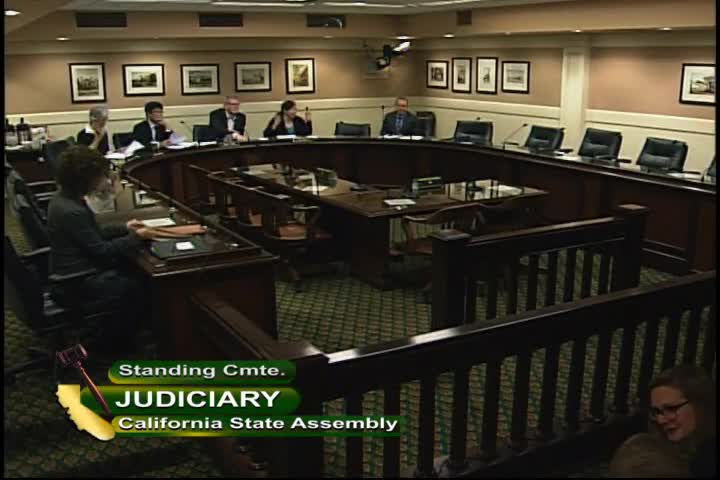 11MIN