AB 198: Personal income taxes: deductions: first-time home buyers.
- Session Year: 2017-2018
- House: Assembly
- Latest Version Date: 2017-04-17
The Personal Income Tax Law, in modified conformity with federal income tax laws, allows various deductions from gross income in computing adjusted gross income under that law, including deductions for payments to individual retirement accounts, alimony payments, and interest on educational loans.
This bill, for taxable years beginning on or after January 1, 2017, and before January 1, 2022, would allow a deduction in computing adjusted gross income for those amounts paid or incurred by a qualified first-time home buyer, as defined, during the taxable year for qualified home-buying expenses, as provided.
This bill would take effect immediately as a tax levy.
The Personal Income Tax Law, in modified conformity with federal income tax laws, allows various deductions from gross income in computing adjusted gross income under that law, including deductions for payments to individual retirement accounts, alimony payments, and interest on educational loans.
This bill, for taxable years beginning on or after January 1, 2017, would allow a deduction in computing adjusted gross income for those amounts paid or incurred by a qualified first-time home buyer, as defined, during the taxable year for qualified home-buying expenses, as provided.
This bill would take effect immediately as a tax levy.
(a)Section 62 of the Internal Revenue Code, relating to adjusted gross income defined, shall apply, except as otherwise provided.
(b)Section 62(a)(2)(D) of the Internal Revenue Code, relating to certain expenses of elementary and secondary school teachers, shall not apply.
(c)Section 62(a)(21) of the Internal Revenue Code, relating to attorneys fees relating to awards to whistleblowers, shall not apply.
(d)For taxable years beginning on or after January 1, 2017, and before January 1, 2022, Section 62(a) of the Internal Revenue Code is modified to provide that the deduction under Section 17206.2 shall be allowed in determining adjusted gross income.
SEC. 2.Section 17206.2 is added to the Revenue and Taxation Code, to read:17206.2.(a)For taxable years beginning on or after January 1, 2017, and before January 1, 2022, there shall be allowed as a deduction the amount paid or incurred by a qualified first-time home buyer during the taxable year for qualified principal home-buying expenses for the purchase of a qualified residence. principal residence that is purchased that taxable year.
(b)For the purposes of this section:
(1) Qualified first-time home buyer means any individual, or the individuals spouse, who has never had an ownership interest in a principal residence. residence and who is eligible for the homeowners property tax exemption, with regard to the qualified principal residence, for the taxable year in which the deduction is claimed.
(2)Qualified home-buying expenses means the one-time costs paid or incurred by the qualified first-time home buyer relating to the purchase of a qualified principal residence during the taxable year, including, but not limited to, closing costs, notarization fees, and home inspection fees. Qualified home-buying expenses shall not include a downpayment on the qualified principal residence. Qualified home-buying expenses may be paid or incurred during the preceding 12-month period ending on the date of the purchase of the qualified principal residence.
(3)Qualified principal residence means a single-family residence, whether detached or attached, that is purchased to be the principal residence of the taxpayer for a minimum of two years and is eligible for the homeowners exemption under Section 218. meets all of the following requirements:
(A)It is purchased to be the qualified principal residence of the taxpayer for a minimum of two years.
(B)It is eligible for the homeowners exemption under Section 218.
(C)The purchase price does not exceed the amount established as the conforming loan limit, as determined by Section 1454(a)(2) of Title 12 of the United States Code, for that type of residence.
(c)This section shall remain in effect only until December 1, 2022, and as of that date is repealed.
SEC. 3.This act provides for a tax levy within the meaning of Article IV of the California Constitution and shall go into immediate effect.
(a)Section 62 of the Internal Revenue Code, relating to adjusted gross income defined, shall apply, except as otherwise provided.
(b)Section 62(a)(2)(D) of the Internal Revenue Code, relating to certain expenses of elementary and secondary school teachers, shall not apply.
(c)Section 62(a)(21) of the Internal Revenue Code, relating to attorneys fees relating to awards to whistleblowers, shall not apply.
(d)Section 62(a) of the Internal Revenue Code is modified to provide that the deduction under Section 17206.2 shall be allowed in determining adjusted gross income.
SEC. 2.Section 17206.2 is added to the Revenue and Taxation Code, to read:17206.2.(a)For taxable years beginning on or after January 1, 2017, there shall be allowed as a deduction the amount paid or incurred by a qualified first-time home buyer during the taxable year for qualified principal home-buying expenses for the purchase of a qualified residence.
(b)For the purposes of this section:
(1) Qualified first-time home buyer means any individual, or the individuals spouse, who had no present ownership interest in a principal residence during the preceding three-year period ending on the date of the purchase of the qualified principal residence. has never had an ownership interest in a principal residence.
(2)Qualified home-buying expenses means the one-time costs paid or incurred by the qualified first-time home buyer relating to the purchase of a qualified residence during the taxable year, including, but not limited to, closing costs, notarization fees, and home inspection fees. Qualified home-buying expenses shall not include a downpayment on the qualified principal residence. Qualified home-buying expenses may be paid or incurred during the preceding 12-month period ending on the date of the purchase of the qualified principal residence.
(3)Qualified principal residence means a single-family residence, whether detached or attached, that is purchased to be the principal residence of the taxpayer for a minimum of two years and is eligible for the homeowners exemption under Section 218.
SEC. 3.This act provides for a tax levy within the meaning of Article IV of the California Constitution and shall go into immediate effect.
(a)Section 62 of the Internal Revenue Code, relating to adjusted gross income defined, shall apply, except as otherwise provided.
(b)Section 62(a)(2)(D) of the Internal Revenue Code, relating to certain expenses of elementary and secondary school teachers, shall not apply.
(c)Section 62(a)(21) of the Internal Revenue Code, relating to attorneys fees relating to awards to whistleblowers, shall not apply.
(d)Section 62(a) of the Internal Revenue Code is modified to provide that the deduction under Section 17206.2 shall be allowed in determining adjusted gross income.
SEC. 2.Section 17206.2 is added to the Revenue and Taxation Code, to read:17206.2.(a)For taxable years beginning on or after January 1, 2017, there shall be allowed as a deduction the amount paid or incurred by a qualified first-time home buyer during the taxable year for qualified principal home-buying expenses for the purchase of a qualified residence.
(b)For the purposes of this section:
(1) Qualified first-time home buyer means any individual, or the individuals spouse, who had no present ownership interest in a principal residence during the preceding three-year period ending on the date of the purchase of the qualified principal residence.
(2)Qualified home-buying expenses means the one-time costs paid or incurred by the qualified first-time home buyer relating to the purchase of a qualified residence during the taxable year, including, but not limited to, closing costs, notarization fees, and home inspection fees. Qualified home-buying expenses shall not include a downpayment on the qualified principal residence. Qualified home-buying expenses may be paid or incurred during the preceding 12-month period ending on the date of the purchase of the qualified principal residence.
(3)Qualified principal residence means a single-family residence, whether detached or attached, that is purchased to be the principal residence of the taxpayer for a minimum of two years and is eligible for the homeowners exemption under Section 218.
SEC. 3.This act provides for a tax levy within the meaning of Article IV of the California Constitution and shall go into immediate effect.
REVISIONS: HeadingLines 2 and 3.|
Date
|
Status
|
|---|---|
| Feb 1, 2018 | From committee: Filed with the Chief Clerk pursuant to Joint Rule 56. |
| Jan 31, 2018 | Died pursuant to Art. IV, Sec. 10(c) of the Constitution. |
| May 26, 2017 | In committee: Held under submission. |
| Apr 26, 2017 | In committee: Set, first hearing. Referred to APPR. suspense file. |
| Apr 18, 2017 | Re-referred to Com. on APPR. |
| Apr 17, 2017 | From committee chair, with author's amendments: Amend, and re-refer to Com. on APPR. Read second time and amended. |
| Mar 21, 2017 | Re-referred to Com. on APPR. |
| Mar 20, 2017 | Read second time and amended. |
| Mar 16, 2017 | From committee: Amend, and do pass as amended and re-refer to Com. on APPR. (Ayes 6. Noes 1.) (March 13). |
| Mar 6, 2017 | Coauthors revised. |
| Feb 6, 2017 | Referred to Com. on REV. & TAX. |
| Jan 24, 2017 | From printer. May be heard in committee February 23. |
| Jan 23, 2017 | Read first time. To print. |
|
Date
|
Description
|
Location
|
Votes
|
|
|---|---|---|---|---|
| Mar 13, 2017 | Do pass as amended and be re-referred to the Committee on [Appropriations] | Assembly Standing Committee on Revenue and Taxation |
Passed |
This list shows positions taken on this bill by organizations on the date displayed, which is linked to the original source.
Positions by individuals are not included.
|
Organization
|
Position
|
Date
|
|---|---|---|
| California Association Of Realtors | ** Support | Mar 10, 2017 |
| California Association Of Realtors | ** Support | Mar 10, 2017 |
| California Building Industry Association | ** Support | Mar 10, 2017 |
| California Building Industry Association | ** Support | Mar 10, 2017 |
| California Credit Union League | * Support | Apr 26, 2017 |
| California Tax Reform Association | ** Against | Mar 10, 2017 |
| California Tax Reform Association | ** Against | Mar 10, 2017 |
| Fresno Chamber of Commerce | ** Support | Mar 10, 2017 |
| Fresno Chamber of Commerce | ** Support | Mar 10, 2017 |
| League Of California Cities | ** Support | Mar 10, 2017 |
| League Of California Cities | ** Support | Mar 10, 2017 |
Date of Hearing: April 26, 2017
ASSEMBLY COMMITTEE ON APPROPRIATIONS
Lorena Gonzalez Fletcher, Chair
ABPCA Bill Id:AB 198
Author:(Patterson) – As Amended Ver:April 17, 2017
Policy Committee: | Revenue and Taxation | Vote: | 6 - 1 |
|
|
Urgency: Yes State Mandated Local Program: No Reimbursable: No
SUMMARY:
This bill allows a Personal Income Tax (PIT) deduction for the amount a qualified first-time homeowner spends on certain home-buying expenses. Specifically, this bill:
- Allows, for taxable years starting on January 1, 2017, and before January 1, 2022, a PIT deduction for first-time homeowners equal to the amount spent on closing costs, notarization fees, and home inspection fees.
- Defines a "qualified principal residence" as a single-family residence, whether detached or attached, that is purchased to be the principal residence of the taxpayer for a minimum of two years, is eligible for the homeowner's exemption under Revenue & Taxation Code Section 218, and whose purchase price does not exceed the amount established as the conforming loan limit as determined by Section 1454(a)(2) of Title 12 of the United States Code.
FISCAL EFFECT:
- Significant one-time administrative costs in excess of $150,000 (GF) for the Franchise Tax Board (FTB) to administer the provisions of this bill.
- Significant revenue loss (GF) in excess of $100 million annually beginning in 2017-18.
COMMENTS:
- Purpose. According to the author, AB 198 will provide an incentive-based approach to help alleviate the financial burdens for families struggling to afford a home in California’s expensive housing market. This bill will allow first-time homeowners to reduce their state tax liability by deducting certain one-time fees associated with purchasing a home. The author notes that these fees can run up to 3% of the loan amount.
- Fiscal Implications of Tax Expenditures. Existing law provides various credits, deductions, exclusions, and exemptions for particular taxpayer groups. These features of tax law are referred to as "expenditures" since they are generally enacted to accomplish some governmental purpose and there is a determinable cost associated with each (in the form of foregone revenues). One ongoing concern about tax expenditures is the lack of control over revenue losses, since the number of taxpayers taking advantage of any given tax expenditure can vary each year. This bill enacts a new tax expenditure program, in the form of a PIT deduction, to help new homeowners purchase a home.
- Above-the-Line Deductions. AB 198 creates an “above-the-line” deduction, which is a deduction that reduces adjusted gross income (AGI) and can be claimed by all taxpayers, regardless of whether or not they itemize their deductions or use the standard deduction. Examples of other above-the-line deductions include deductions for moving expenses, payments to individual retirement accounts, and paid interest on student loans. In contrast, a “below-the-line” deduction allows taxpayers to adjust their taxable income once AGI is calculated. Examples include the standard deduction and itemized deductions such as the mortgage interest deduction.
Analysis Prepared by: Luke Reidenbach / APPR. / (916) 319-2081
Date of Hearing: March 13, 2017
ASSEMBLY COMMITTEE ON REVENUE AND TAXATION
Sebastian Ridley-Thomas, Chair
ABPCA Bill Id:AB 198 (
Author:Patterson) – As Introduced Ver:January 23, 2017
Majority vote. Tax levy. Fiscal committee.
SUBJECT: Personal income taxes: deductions: first-time home buyers
SUMMARY: Allows an "above-the-line" deduction in calculating adjusted gross income (AGI) for amounts paid or incurred by a qualified first-time home buyer during the taxable year for qualified home-buying expenses. Specifically, this bill:
- Allows, for taxable years beginning on or after January 1, 2017, a deduction in calculating AGI for amounts paid or incurred by a qualified first-time home buyer during the taxable year for qualified home-buying expenses for the purchase of the qualified principal residence.
- Defines a "qualified first-time home buyer" as any individual, or the individual's spouse, who had no present ownership interest in a principal residence during the preceding three-year period ending on the date of the purchase of the qualified principal residence.
- Defines "qualified home-buying expenses" as one-time costs paid or incurred by the qualified first-time home buyer relating to the purchase of a qualified residence during the taxable year, including, but not limited to, closing costs, notarization fees, and home inspection fees.
- Specifies that "qualified home-buying expenses" shall not include a down payment on the qualified principal residence.
- Allows "qualified home-buying expenses" to be paid or incurred during the preceding 12-month period ending on the date of the purchase of the qualified principal residence.
- Defines a "qualified principal residence" as a single-family residence, whether detached or attached, that is purchased to be the principal residence of the taxpayer for a minimum of two years and is eligible for the homeowner's exemption under Revenue & Taxation Code Section 218.
- Takes immediate effect as a tax levy.
EXISTING LAW:
- Allows for the deduction of certain expenses when calculating AGI under state and federal law. These above-the-line deductions can be claimed by all taxpayers with specified expenses, such as specified moving expenses, payments to individual retirement accounts, and interest on education loans, regardless of whether the taxpayer itemizes deductions or uses the standard deduction.
- Allows individuals to deduct certain expenses after AGI is calculated to arrive at taxable income under state and federal law. These "below-the-line" deductions include standard deductions, a fixed dollar amount intended to approximate deductible living expenses, and itemized deductions for various specific expenses, such as medical expenses, mortgage interest, and real estate taxes.
- Allows various deductions that may be claimed by home buyers generally, but lacks a specific deduction for home-buying expenses incurred by first-time home buyers.
FISCAL EFFECT: The Franchise Tax Board (FTB) is unable to determine a revenue estimate because the determination is dependent upon how implementation concerns identified in its analysis of this bill are resolved.
COMMENTS:
- Author's Statement: The author has provided the following statement in support of this bill:
California's expensive housing market has dashed many people's American dream of home ownership, affecting both the middle class and lower income families alike. Families work hard to put towards savings so that they may buy a home, yet a number of fees and home-related expenses quickly add up and add to the barriers of owning a home. For every $1,000 increase in the cost of a home there are 15,000 California families priced out of a home, according to the National Association of Home Builders. The numerous one time fees alone, which are often 2-3% of a loan amount, price tens of thousands of Californian families out of home ownership.
In addition to the funds needed for a down payment, would be home buyers must also come up with cash for a number of one time fees associated with purchasing a home including, but not limited to, lender application fee, lender origination fee, lender processing fee, documentation preparation fee, loan broker or lender fee, underwriting fee, appraisal and review appraisal fees, credit report fee, flood determination fee, mortgage recording fee, tax service fee, flood determination fee, escrow fees, owners title policy fee, home inspection, pest inspection, city transfer fee, county transfer fee, recording fees, and certain HOA related fees (if applicable). Most of these fees are considered the "closing costs" of purchasing a home and typically are estimated to run up to 2-3% of one's loan amount. Given how high home prices are, the expensive nature of the fees alone is pricing out thousands of Californian families.
AB 198 provides an incentive based approach to help alleviate the financial burdens for Californian families by reducing the state tax liability on adjusted gross income for first-time home owners by the amount they spend on one-time fees related to purchasing a home.
- Committee Staff Comments:
- Arguments in Support: Supporters of this bill state that most homeowners "are making the largest investment of their lives when they purchase their home" and that many times the purchase "comes with expenses that make the experience unnecessarily costly, so the ability to help deduct any expenses helps relieve first-time homeowners of what can be a significant amount cost during the purchasing process."
- Arguments in Opposition: Opponents of this bill state that "homebuyers already receive numerous tax benefits, particularly the mortgage interest deduction, capital gains break when they sell, and locked-in property taxes under Proposition 13" and that "often some of the closing costs are rolled into the mortgage and therefore generate tax benefits from the mortgage interest deduction."
- What is a "Tax Expenditure"? Existing law provides various credits, deductions, exclusions, and exemptions for particular taxpayer groups. In the late 1960s, United States Treasury officials began arguing that these features of the tax law should be referred to as "expenditures" since they are generally enacted to accomplish some governmental purpose and there is a determinable cost associated with each of them (in the form of forgone revenues). This bill would enact a new tax expenditure program in the form of a deduction for qualified home-buying expenses paid or incurred by a qualified first-time home buyer.
- Tax Expenditure vs. Direct Expenditure: As the Department of Finance notes in its annual Tax Expenditure Report, there are several key differences between tax expenditures and direct expenditures. First, tax expenditures are reviewed less frequently than direct expenditures once they are put in place. This can offer taxpayers greater certainty, but it can also result in tax expenditures remaining part of the tax code without demonstrating any public benefit. Second, there is generally no control over the amount of revenue losses associated with any given tax expenditure. Finally, it should also be noted that, once enacted, it takes a two-thirds vote to rescind an existing tax expenditure absent a sunset date.
This bill does not include a sunset date. The Committee may wish to consider including a sunset date to allow for proper legislative review of the benefits and costs of this tax expenditure in the future. - Conformity Issues: California generally conforms to federal law regarding tax deductions. In general, state conformity with federal law promotes greater simplicity and eases administration of complex tax laws. Federal law does not allow a specific deduction for home-buying expenses incurred by first-time home buyers so the deduction proposed by this bill would bring California further out of conformity with federal law.
- Scope of This Deduction: As noted in the FTB's analysis of this bill, the definition of "qualified home-buying expenses" lacks clarity and could result in administrative disputes with taxpayers. For example, "one-time costs" could be argued to include expenses for repairs, renovations, new appliances, and general moving expenses. Additionally, some "one-time costs" associated with a new home purchase may already be deducted, such as origination fees or moving expenses if the move is necessary to start work at a new job location, thus allowing some taxpayers to claim multiple tax benefits for the same item of expense. This bill also specifies that "qualified home-buying expenses" are those "relating" to the purchase of a qualified residence but does not limit application of the deduction to costs specifically associated with the home ultimately purchased as the qualified principal residence, thus allowing some taxpayers to claim a deduction for costs associated with a range of properties. Similarly, this bill specifies that "qualified home-buying expenses" may be paid or incurred during the 12 months preceding purchase of the qualified principal residence, but does not limit application of the deduction to costs within the 12 month look-back period, thus allowing some taxpayers to claim a deduction for costs over a range of years. Furthermore, this bill lacks a limit on the total amount of qualified home-buying expenses that could be deducted, potentially incentivizing the addition of unnecessary costs to the home-buying process, and it is unclear whether closing costs negotiated to be paid by the seller, and not the home buyer, would qualify for the deduction.
The definition of "qualified principal residence" specifies that the residence is "purchased to be the principal residence of the taxpayer for a minimum of two years" but it is unclear how this intent would be implemented. Would the taxpayer have to file an amended return if the home was rented or sold after only one year? Lastly, because this bill allows the deduction for taxable years beginning on or after January 1, 2017, this bill would provide a tax benefit for first-time home buyers who already purchased a home prior to its enactment. The author may wish to consider narrowing the scope of this deduction to ensure the benefit is clearly defined for taxpayers and administrators alike. - Affording Home Ownership: Although this above-the-line tax deduction would be available to all taxpayers, regardless of whether they take the standard deduction or itemized deductions, deductions generally are more valuable for households that fall into higher tax brackets. The value of a deduction to a taxpayer (the amount by which the deduction reduces the taxpayer's tax liability) generally may be estimated by multiplying the deduction by the taxpayer's highest marginal tax rate. For example, the approximate state tax savings to a person in the 12.30% tax bracket who deducts a $100 expense is $12.30, whereas a taxpayer in a lower tax bracket would experience lower savings. Although lower income homebuyers may experience savings from this deduction, higher income homebuyers would experience the greatest benefit, especially since this bill does not set a maximum deduction amount or cap the price of a qualified principal residence. Instead of forgoing General Fund revenues in a manner that predominantly favors higher income taxpayers, the Committee may wish to consider whether funds would be better spent on other programs that promote first-time homeownership for middle income or lower income families.
Furthermore, some economists have argued that tax subsidies for homeownership, such as the mortgage interest deduction, are factored into the price of housing and, thus, essentially inflate the prices of homes. This preferential tax treatment may encourage households to over-invest in housing and invest less in business enterprises that might contribute more to the nation's productivity and output. The Committee may wish to consider whether this tax deduction might have a similar impact on the housing market and simply push home prices higher. - Technical Amendments: Committee staff recommends the following technical amendments:
- On Page 2, Line 19, strike "principal";
- On Page 2, Line 20, insert "principal" between "qualified" and "residence";
- On Page 2, Line 24, insert "qualified" between "a" and "principal";
- On Page 2, Line 29, insert "principal" between "qualified" and "residence"; and,
- On Page 3, Line 1, insert "qualified" between "the" and "principal".
REGISTERED SUPPORT / OPPOSITION:
Support
California Association of Realtors
California Building Industry Association
Fresno Chamber of Commerce
League of California Cities
Opposition
California Tax Reform Association
Analysis Prepared by: Irene Ho / REV. & TAX. / (916) 319-2098
Discussed in Hearing
 1H
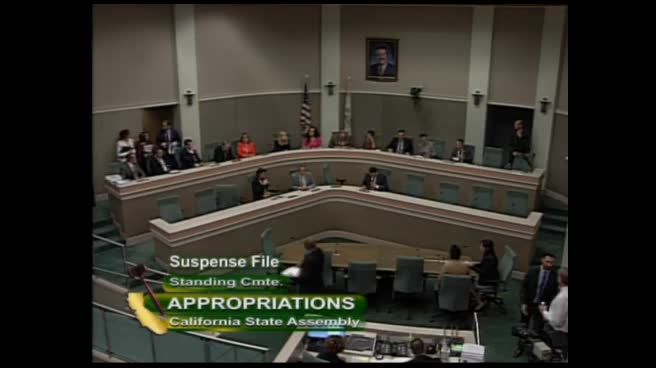
Assembly Standing Committee on Appropriations
 4MIN
Assembly Standing Committee on Appropriations
 28MIN














