AB 232: Department of Finance: homelessness relief.
- Session Year: 2017-2018
- House: Assembly
- Latest Version Date: 2017-05-01
Existing law creates the Department of Finance and provides that the department has general powers of supervision over all matters concerning the financial and business policies of the state.
This bill would enact the Homeless Relief Act of 2017. The bill would appropriate $500,000,000 from the General Fund to the Department of Finance for expenditure for the purpose of relieving homelessness in this state, to be allocated regionally to unspecified entities in accordance with a prescribed schedule. to local continuums of care based on a formula developed by the Department of Housing and Community Development.
Existing law creates the Department of Finance and provides that the department has general powers of supervision over all matters concerning the financial and business policies of the state.
This bill would enact the Homeless Relief Act of 2017. The bill would appropriate $500,000,000 from the General Fund to the Department of Finance for expenditure for the purpose of relieving homelessness in this state, to be allocated regionally to unspecified entities in accordance with a prescribed schedule.
Existing law establishes the Office of Statewide Health Planning and Development in the California Health and Human Services Agency. Existing law vests in the office powers and duties relating to the construction of various health facilities, including publishing building standards for those facilities.This bill would express the intent of the Legislature to enact legislation that would require the Office of Statewide Health Planning and Development to revise the facility plan review service provided by the office, known as Over-The-Counter review, and to enact legislation that would authorize an increased fee for that service.Existing law establishes the Office of Statewide Health Planning and Development in the California Health and Human Services Agency. Existing law vests in the office powers and duties relating to the construction of various health facilities, including publishing building standards for those facilities.
This bill would express the intent of the Legislature to enact legislation that would require the Office of Statewide Health Planning and Development to revise the facility plan review service provided by the office, known as Over-The-Counter review, and to enact legislation that would authorize an increased fee for that service.
(a)The Legislature finds and declares the following:
(1)California has by far the largest homeless population in the nation.
(2)Factors that contribute to the homelessness crisis include the expensive rental market, rapidly declining numbers of low-income housing units, and slow wage growth.
(b)It is the intent of the Legislature to address the homelessness crisis in California by allocating five hundred million dollars ($500,000,000) to joint powers agencies formed to relieve homelessness and to individual counties where no joint powers agency exists for that purpose. address this crisis.
SEC. 2.This act shall be known and may be cited as the Homeless Relief Act of 2017.
SEC. 3.Section 13805 is added to the Government Code, to read:13805.The sum of five hundred million dollars ($500,000,000) is hereby appropriated from the General Fund to the Department of Finance for expenditure for the purpose of relieving homelessness in this state, to be allocated regionally in accordance with the following: proportional to need to local continuums of care based on a formula developed by the Department of Housing and Community Development. The Department of Housing and Community Development shall take into consideration when developing the formula the ability of local continuums of care to leverage funding. Funding shall be used to support Housing First, as defined in subdivision (d) of Section 8255 of the Welfare and Institutions Code, an evidence-based model to address homelessness.
(a)____ million dollars ($____) to____.(b)____ million dollars ($____) to____.(a)The Legislature finds and declares the following:
(1)California has by far the largest homeless population in the nation.
(2)Factors that contribute to the homelessness crisis include the expensive rental market, rapidly declining numbers of low-income housing units, and slow wage growth.
(b)It is the intent of the Legislature to address the homelessness crisis in California by allocating five hundred million dollars ($500,000,000) to joint powers agencies formed to relieve homelessness and to individual counties where no joint powers agency exists for that purpose.
SEC. 2.This act shall be known and may be cited as the Homeless Relief Act of 2017.
SEC. 3.Section 13805 is added to the Government Code, to read:13805.The sum of five hundred million dollars ($500,000,000) is hereby appropriated from the General Fund to the Department of Finance for expenditure for the purpose of relieving homelessness in this state, to be allocated regionally in accordance with the following:
(a)____ million dollars ($____) to____.
(b)____ million dollars ($____) to____.
SECTION 1.It is the intent of the Legislature to enact legislation that would require the Office of Statewide Health Planning and Development to revise the facility plan review service provided by the office, known as Over-The-Counter review, and to enact legislation that would authorize an increased fee for that service.It is the intent of the Legislature to enact legislation that would require the Office of Statewide Health Planning and Development to revise the facility plan review service provided by the office, known as Over-The-Counter review, and to enact legislation that would authorize an increased fee for that service.
|
Date
|
Status
|
|---|---|
| Feb 1, 2018 | From committee: Filed with the Chief Clerk pursuant to Joint Rule 56. |
| Jan 31, 2018 | Died pursuant to Art. IV, Sec. 10(c) of the Constitution. |
| May 26, 2017 | In committee: Held under submission. |
| May 10, 2017 | In committee: Set, first hearing. Referred to APPR. suspense file. |
| May 2, 2017 | Re-referred to Com. on APPR. |
| May 1, 2017 | Read second time and amended. |
| Apr 27, 2017 | From committee: Amend, and do pass as amended and re-refer to Com. on APPR. (Ayes 6. Noes 0.) (April 26). |
| Mar 23, 2017 | From committee chair, with author's amendments: Amend, and re-refer to Com. on H. & C.D. Read second time and amended. |
| Mar 27, 2017 | Re-referred to Com. on H. & C.D. |
| Mar 23, 2017 | Referred to Com. on H. & C.D. |
| Jan 27, 2017 | From printer. May be heard in committee February 26. |
| Jan 26, 2017 | Read first time. To print. |
|
Date
|
Description
|
Location
|
Votes
|
|
|---|---|---|---|---|
| Apr 26, 2017 | Do pass as amended and be re-referred to the Committee on [Appropriations] | Assembly Standing Committee on Housing and Community Development |
Passed |
This list shows positions taken on this bill by organizations on the date displayed, which is linked to the original source.
Positions by individuals are not included.
|
Organization
|
Position
|
Date
|
|---|---|---|
| California Apartment Association | ** Support | Apr 24, 2017 |
| United Ways Of California | * Support | Apr 26, 2017 |
Date of Hearing: May 10, 2017
ASSEMBLY COMMITTEE ON APPROPRIATIONS
Lorena Gonzalez Fletcher, Chair
ABPCA Bill Id:AB 232
Author:(Ridley-Thomas) – As Amended Ver:May 1, 2017
Policy Committee: | Housing and Community Development | Vote: | 6 - 0 |
|
| ||
|
|
Urgency: No State Mandated Local Program: No Reimbursable: No
SUMMARY:
This bill establishes the Homeless Relief Act of 2017 and appropriates $500 million from the General Fund (GF) to the Department of Finance (DOF) for the purpose of relieving homelessness in the state, to be allocated proportional to need to local continuums of care based on a formula developed by the Department of Housing and Community Development (HCD) that considers the ability of continuums of care to leverage funding. The bill requires the funds to be used to support Housing First.
FISCAL EFFECT:
Appropriates $500 million (GF) to DOF for the purpose of relieving homelessness in the state.
COMMENTS:
- Purpose. According to the author, "There are over 115,000 men, women and children who are homeless and lack basic human services in California. On any given night in Los Angeles, 47,000 people live in utter squalor, many of them sleeping on sidewalks, and park benches, in cars or under bridges, not only on Skid Row but also in suburban neighborhoods. In San Francisco, nearly 7,000 people go without a home every night, despite the city spending about $250 million a year on homelessness."
- Background. California is home to 21% of the nation's homeless population. On average on any given night, 115,738 people experience homelessness. California leads the nation in the number of chronic homeless with 29,178 chronically homeless residents at any given point in time, 31% of the nation's total. California also has 28% of the nation's homeless youth population.
The state has a variety of programs to address homelessness operated by multiple agencies and departments, including the Veterans Housing and Homeless Prevention Program, the CalWorks Housing Program, the Mental Health Services Act, the and Multi-family Housing Program with Supportive Services. In 2016, the Governor signed No Place Like Home, that dedicated $2 billion in bond proceeds to invest in permanent supportive housing for persons who are in need of mental health services and are experiencing homelessness, chronic homelessness, or who are at risk of chronic homelessness.
Last year, the Legislature prioritized coordination of resources to address homelessness through the creation the Homeless Coordinating and Financing Council (Coordinating Council) as well as the use of housing first evidence-based approaches to addressing homelessness.
Housing First is an evidence-based model that uses housing as a tool, rather than a reward for recovery. It connects homeless people to housing as quickly as possible and does not make housing contingent on participation in services. Housing First includes time-limited rental or services assistance, so long as the housing and service provider assists the recipient in accessing permanent housing and in securing longer-term rental assistance, income assistance, or employment.
This bill appropriates $500 million from the GF and states the intent to allocate that money to local continuums of care to be used to support Housing First.
- Related legislation. AB 71 (Chiu) eliminates the mortgage interest deduction on second homes, increases the state Low-Income Housing Tax Credit (LIHTC) Program by $300 million, and makes changes to the LIHTC. This bill is pending hearing in the Assembly Revenue and Taxation Committee.
AB 74 (Chiu) creates the Housing for a Healthy California Program (Program) to provide rental assistance to individuals who are homeless and receive services from the Whole Person Care pilot program, Health Homes, or another locally controlled funding source. This bill is pending on the Suspense File in this Committee.
AB 1406 (Gloria) establishes the Homeless Youth Housing Program to be administered by the Department of Housing and Community Development (HCD) and Office of Emergency Services (OES) to provide grants to organizations that reduce youth homelessness to be used to pay for the cost of housing homeless youth. This bill is pending hearing in this Committee.
SB 1380 (Mitchell) Chapter 847, Statues of 2016, requires a state agency or department that funds, implements, or administers a state program that provides housing or housing-related services to people experiencing homelessness or at risk of homelessness to adopt guidelines and regulations to include Housing First policies and establishes Coordinating Council to oversee implementation of the Housing First regulations and identify resources, benefits, and services that can be accessed to prevent and end homelessness in California.
Analysis Prepared by: Jennifer Swenson / APPR. / (916) 319-2081
Date of Hearing: April 26, 2017
ASSEMBLY COMMITTEE ON HOUSING AND COMMUNITY DEVELOPMENT
David Chiu, Chair
ABPCA Bill Id:AB 232 (
Author:Ridley-Thomas) – As Amended Ver:March 23, 2017
SUBJECT: Department of Finance: homelessness relief
SUMMARY: Establishes the Homeless Relief Act of 2017 and appropriates $500 million from the General Fund (GF) to the Department of Finance (DOF) for the purpose of relieving homelessness in the state to be allocated regionally in an unspecified formula. Specifically, this bill:
- Makes legislative findings and declarations including the following:
- California has by far the largest homeless population in the nation; and
- Factors that contribute to the homelessness crisis include the expensive rental market, rapidly declining numbers of low-income housing units, and slow wage growth.
- Provides that it is the intent of the Legislature to address the homelessness crisis in California by allocating $500 million to joint powers agencies formed to relieve homelessness and to individual counties where no joint powers agency exists for that purpose.
- Appropriates $500 million from the GF to DOF for the purpose of relieving homelessness in the state to be allocated regionally in an unspecified formula.
EXISTING LAW:
- Defines “Housing First” as the evidence-based model that uses housing as a tool, rather than a reward for recovery. It connects homeless people to housing as quickly as possible and does not make housing contingent on participation in services. Housing First includes time-limited rental or services assistance, so long as the housing and service provider assists the recipient in accessing permanent housing and in securing longer-term rental assistance, income assistance, or employment.
- Defines “Core Components of Housing First” to mean all of the following:
- Tenant screening and selection practices that promote accepting applicants regardless of their sobriety or use of substances, completion of treatment, or participation in services;
- Applicants are not rejected on the basis of poor credit or financial history, poor or lack of rental history, criminal convictions unrelated to tenancy, or behaviors that indicate a lack of “housing readiness;”
- Acceptance of referrals directly from shelters, street outreach, drop-in centers, and other parts of crisis response systems frequented by vulnerable people experiencing homelessness;
- Supportive services that emphasize engagement and problem-solving over therapeutic goals and service plans that are highly tenant-driven without predetermined goals;
- Participation in services or program compliance is not a condition of permanent housing tenancy;
- Tenants have a lease and all the rights and responsibilities of tenancy, as outlined in the Civil Code, Health and Safety Code, and Government codes;
- The use of alcohol or drugs in and of itself, without other lease violations, is not grounds for eviction;
- In communities with coordinated assessment with entry systems, incentives for funding promote tenant selection plans for supportive housing that prioritize eligible tenants based on criteria other than “first-come-first-serve,” including, but not limited to, the duration or frequency of homelessness, vulnerability to early mortality, or high utilization of crisis services. Prioritization may include triage tools, developed through local data, to identify high-cost, high-need homeless residents;
- Case managers and service coordinators who are trained in and actively employ evidence-based practices;
- Services are informed by a harm-reduction philosophy that recognizes drug and alcohol use and addiction as part of tenants’ lives, where tenants are engaged in non-judgmental communication regarding drug and alcohol use, and where tenants are offered education regarding how to avoid risky behaviors and engage in safer practices, as well as participating in evidence-based treatment if the tenant so chooses; and
- The project and specific apartment may include special features that accommodate disabilities, reduce harm, and promote health and community and independence among tenants.
- Creates the Homeless Coordinating and Financing Council (Coordinating Council), with the goals of:
- Identifying mainstream resources, benefits, and services that can be assessed to prevent and end homelessness in California;
- Creating partnerships among state agencies and departments, local government agencies, participants in the U.S Department of Housing and Urban Development (HUD) Continuum of Care Program, federal agencies, the U.S. Interagency Council on Homelessness (US ICH), nonprofit entities working to end homelessness, and the private sector, for purposes of arriving at specific strategies to end homelessness;
- Promoting systems integration to increase efficiency and effectiveness;
- Coordinating existing funding and applications for competitive funding. Any action taken shall not restructure or change any existing allocations or allocation formula;
- Making policy and procedural recommendations to legislators and other government entities;
- Identifying and seek funding opportunities for state entities that have programs to end homelessness and facilitate and coordinate those state entities’ efforts to obtain funding;
- Brokering agreements between state agencies, departments and local jurisdictions to align and coordinate resources, reduce administrative burdens of accessing existing resources, and foster common applications to services, operating, and capital funding;
- Serving as a statewide homelessness planning and policy development resource;
- Reporting to the Governor, federal Cabinet members, and the Legislature on homelessness and work to reduce homelessness; and
- Ensuring accountability and results in meeting the strategies and goals of the council.
FISCAL EFFECT: Appropriates $500 million from the General Fund to address homelessness.
COMMENTS:
Purpose of this bill: According to the author, "there are over 115,000 men, women and children who are homeless and lack basic human services in California. That is enough homeless men, women, and children to fill every seat at the Memorial Coliseum in Oakland combined. On any given night in Los Angeles, 47,000 people live in utter squalor, many of them sleeping on sidewalks, and park benches, in cars or under bridges, not only on Skid Row but also in suburban neighborhoods. In San Francisco, nearly 7,000 people go without a home every night, despite the city spending about $250 million a year on homelessness."
Background: California is home to 21% of the nation's homeless population. On average on any given night, 115,738 people experience homelessness. California leads the nation in the number of chronic homeless with 29,178 chronically homeless residents at any given point in time which is 31% of the nation's total. California also has 28% of the nation's homeless youth population. The state has a variety of programs to address homelessness operated by multiple agencies and departments, including the Veterans Housing and Homeless Prevention Program, the CalWorks Housing Program, the Mental Health Services Act, the and Multi-family Housing Program with Supportive Services. In 2016, the Governor signed No Place Like Home, that dedicated $2 billion in bond proceeds to invest in the development of permanent supportive housing for persons who are in need of mental health services and are experiencing homelessness, chronic homelessness, or who are at risk of chronic homelessness. The bonds are repaid by funding from the Mental Health Services Act (MHSA). Counties are eligible applicants and must commit to providing mental health services and help coordinate access to other community-based supportive services
In 2016, the SB 1380 (Mitchell) established a state Homeless Coordinating and Financing Council (Coordinating Council) to oversee implementation of Housing First regulations and, among other things, identify resources, benefits, and services that can be accessed to prevent and end homelessness in California. SB 1380 also requires a state agency or department that funds, implements, or administers a state program that provides housing or housing-related services to people experiencing homelessness or at risk of homelessness, except as specified, to adopt guidelines and regulations to include Housing First policies.
Housing First Approach: Housing First is an evidence-based housing model that centers on
providing people experiencing homelessness with housing as quickly as possible and then
providing services as needed. A core component of Housing First includes a tenant screening
process that promotes accepting applicants regardless of their sobriety or use of substances,
completion of treatment, or participation in services. This model recognizes that an individual
experiencing homelessness should be provided shelter and stability before underlying issues can
be successfully tackled. The housing first model is contrasted with a model known as “housing
readiness,” which is exhibited in some transitional housing models. This model requires
homeless people to earn their way into transitional housing and make progress on certain goals;
when they are deemed well enough; they earn their spot in permanent housing. The Federal government through the leadership of the US Interagency Council of Homelessness has successfully integrated the housing first approach into programs at the federal level.
AB 232 proposes to appropriate $500 million from GF to joint powers agencies formed to relive homelessness and where no joint powers agencies exists for this purpose to counties. The Los Angeles Homeless Services Agency (LAHSA) is a joint powers agency of the City and County of Los Angeles and is the lead agency in the HUD-funded Los Angeles Continuum of Care (which includes 85 cities and the unincorporated areas of Los Angeles County, excluding the cities of Glendale, Long Beach and Pasadena), and coordinates and manages more than $132 million annually in federal, state, county and city funds for programs providing shelter, housing and services to homeless persons. LAHSA is the only joint powers agency in the state that services as the continuum care for a city and county.
Staff comments: AB 232 does not provide any direction to counties regarding how to use the proposed allocation of $500 million in GF resources to address homelessness. Last year, the Legislature prioritized coordination of resources to address homelessness through the creation of the Coordinating Council as well as the use of housing first evidence-based approaches to addressing homelessness. If the committee chooses to move this bill forward and prioritize $500 million in funding from the GF it may wish to consider creating some parameters around how the funding would be used. The committee may wish to consider amending this bill to require funding to be allocated to local continuums of care through a formula developed by the Department of Housing and Community Development. In addition, the committee may wish to amend the bill to require the funding formula take into consideration the ability of local continuums of care to leverage other sources of funding. Finally, the committee may wish to consider requiring the appropriation to support "housing first" evidenced solutions to address homelessness. With these amendments, this bill still needs substantially more work to make it an effective use of GF to address homelessness.
Related legislation:
AB 71 (Chiu) (2017) –Eliminates the mortgage interest deduction on second homes, increases the state Low-Income Housing Tax Credit (LIHTC) Program by $300 million, and makes changes to the LIHTC. This bill is in Assembly Revenue and Taxation Committee.
AB 74 (Chiu) (2017) –Creates the Housing for a Healthy California Program (Program) to provide rental assistance to individuals who are homeless and receive services from the Whole Person Care pilot program, Health Homes, or another locally controlled funding source. This bill in the Assembly Appropriations Committee.
AB 1406 (Gloria) (2017) –Establishes the Homeless Youth Housing Program to be administered by the Department of Housing and Community Development (HCD) and Office of Emergency Services (OES) to provide grants to organizations that reduce youth homelessness to be used to pay for the cost of housing homeless youth.
SB 1380 (Mitchell) Chapter 847, Statues of 2016 –Required a state agency or department that funds, implements, or administers a state program that provides housing or housing-related services to people experiencing homelessness or at risk of homelessness, except as specified, to adopt guidelines and regulations to include Housing First policies and establishes the Homeless Coordinating and Financing Council (Coordinating Council) to oversee implementation of the Housing First regulations and, among other things, identify resources, benefits, and services that can be accessed to prevent and end homelessness in California.
REGISTERED SUPPORT / OPPOSITION:
Support
California Apartment Association
Opposition
None on file
Analysis Prepared by: Lisa Engel / H. & C.D. / (916) 319-2085
Discussed in Hearing
 1H
Assembly Standing Committee on Appropriations
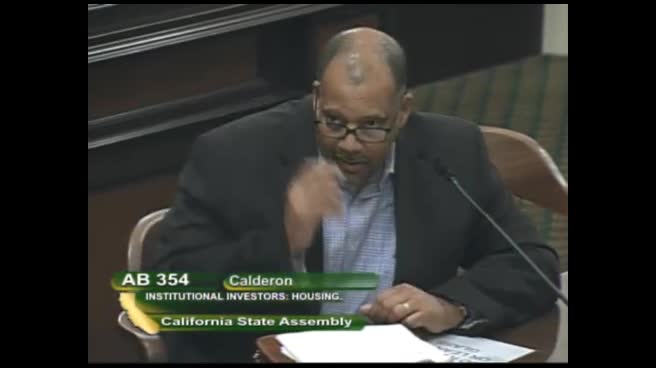 11MIN
Assembly Standing Committee on Housing and Community Development
Bill Author





