AB 2512: United States Senate vacancy.
- Session Year: 2017-2018
- House: Assembly
- Latest Version Date: 2018-02-14
Under existing law, when a vacancy occurs in the office of Representative to Congress, or in either house of the Legislature, the Governor is required, within 14 calendar days after the occurrence of the vacancy, to call an election to fill the vacancy, as specified. With regard to a vacancy in the office of the United States Senate, however, existing law authorizes the Governor to appoint a person to fill the vacancy, as specified.
This bill would instead require that a vacancy in the United States Senate be filled in the same manner as a vacancy in a congressional representative or state legislative office. The bill would make conforming and technical changes.
The Governor shall call all statewide special elections by issuing a proclamation pursuant to Section 12000. Except as provided by Chapter 3 2 (commencing with Section 10730), in the case of a vacancy in a congressional or legislative office the Governor shall issue a proclamation, within 14 calendar days of the occurrence of the vacancy, calling a special election in accordance with Section 10703. A copy of the proclamation shall be sent to the board of supervisors of each affected county.
SEC. 2.Section 10702 of the Elections Code is amended to read:10702.Except as provided by Chapter 3 2 (commencing with Section 10730), this chapter provides the procedures for nomination and election of candidates at any special election to fill a vacancy in the office of Representative in Congress, United States Senator, State Senator, or Member of the Assembly.
SEC. 3.Section 10703 of the Elections Code is amended to read:10703.(a)A (1)Except as provided in paragraph (2), a special election to fill a vacancy in the office of Representative in Congress, United States Senator, State Senator, or Member of the Assembly shall be conducted on a Tuesday at least 126 days, but not more than 140 days, following the issuance of an election proclamation by the Governor pursuant to Section 1773 of the Government Code, except that the special code.
(2)A special election to fill a vacancy in an office listed in paragraph (1) may be conducted within 180 days following the proclamation in order that to consolidate the election or the primary election may be consolidated with the next regularly scheduled statewide election or local election occurring wholly or partially within the same territory in which the vacancy exists, provided that the voters eligible to vote in the local election comprise at least 50 percent of all the voters eligible to vote on the vacancy.
(b)Except as provided in Chapter 3 2 (commencing with Section 10730), a special election or a primary election may not be conducted on the day after a state holiday.
(c)(1)A special election described in this section may be conducted as an all-mailed ballot election pursuant to Section 4000.5.
(2)This subdivision shall remain in effect only until January 1, 2020, and as of that date is repealed, unless a later enacted statute, that is enacted before January 1, 2020, deletes or extends that date.
SEC. 4.Chapter 2 (commencing with Section 10720) of Part 6 of Division 10 of the Elections Code is repealed.SEC. 5.The heading of Chapter 3 (commencing with Section 10730) of Part 6 of Division 10 of the Elections Code is amended and renumbered to read:3.2.Vacancies in Congressional Offices caused by CatastropheSEC. 6.Section 1773 of the Government Code is amended to read:1773.(a)When a vacancy occurs in the office of Representative to Congress, United States Senator, or in either house of the Legislature, the Governor shall within 14 calendar days after the occurrence of the vacancy issue a writ of proclamation calling an election to fill the vacancy; provided, that when such vacancy vacancy.
(1)If the vacancy occurs in a congressional office after the close of the nomination period in the final year of the term of office, a special election may be held, at the Governors discretion; and provided, further, that when a vacancy discretion.
(2)If the vacancy occurs in a legislative office after the close of the nomination period in the final year of the term of office, no a special election shall not be held.
(b)The Governor shall issue the election proclamation under his or her hand and the Great Seal of the state, and shall transmit copies to the board of supervisors of the counties in which the election is to be held.
|
Date
|
Status
|
|---|---|
| May 14, 2018 | From committee: Without further action pursuant to Joint Rule 62(a). |
| Apr 11, 2018 | In committee: Set, first hearing. Failed passage. |
| Mar 5, 2018 | Referred to Com. on E. & R. |
| Feb 15, 2018 | From printer. May be heard in committee March 17. |
| Feb 14, 2018 | Read first time. To print. |
|
Date
|
Description
|
Location
|
Votes
|
|
|---|---|---|---|---|
| Apr 11, 2018 | Do pass and be re-referred to the Committee on [Appropriations] | Assembly Standing Committee on Elections and Redistricting |
Failed |
This list shows positions taken on this bill by organizations on the date displayed, which is linked to the original source.
Positions by individuals are not included.
|
Organization
|
Position
|
Date
|
|---|---|---|
| 319-2094 | ** Against | Apr 9, 2018 |
| California Common Cause | * Support | Apr 11, 2018 |
| E. & R. | ** Against | Apr 9, 2018 |
Date of Hearing: April 11, 2018
ASSEMBLY COMMITTEE ON ELECTIONS AND REDISTRICTING
Marc Berman, Chair
ABPCA Bill Id:AB 2512 (
Author:Kiley) – As Introduced Ver:February 14, 2018
SUBJECT: United States Senate vacancy.
SUMMARY: Eliminates the ability of the Governor to temporarily fill a vacancy in one of California's United States (US) Senate seats by appointment, and instead requires all such vacancies to be filled by a special election. Specifically, this bill:
- Repeals provisions of law that allow the Governor to appoint a person to fill a vacancy that occurs in the representation of California in the US Senate.
- Requires vacancies in the office of US Senate to be filled through a special election, and requires such a special election to be conducted in the same manner and on the same timeframe as currently applies for elections to fill vacancies in the Legislature and in the US House of Representatives.
- Makes conforming and technical changes.
EXISTING LAW:
- Requires, pursuant to the US Constitution, that the US Senate be composed of two Senators from each state, elected by the people thereof, for six years. Provides that when a vacancy happens in the representation of any state in the Senate, the executive authority of the state shall issue a writ of election to fill such a vacancy, provided, however, that the Legislature of a state may allow the executive to make a temporary appointment until the people fill the vacancies by election as the Legislature may direct.
- Requires, pursuant to the US Constitution, that the US House of Representatives be composed of members chosen every second year by the people. Requires, when a vacancy happens in the representation from any state, that the executive authority of the state issue a writ of election to fill such a vacancy.
- Requires the Governor to call an election to fill any vacancy in the Legislature, except as specified.
- Permits the Governor to appoint an elector of the state who possesses the qualifications for office to fill a vacancy in the representation of California in the US Senate until his or her successor is qualified and admitted to the US Senate. Requires an election be held to fill the vacancy at the first general election after the occurrence of the vacancy or at any special election unless the vacancy occurs during a term that will expire on January 3 following the next general election, in which case the person appointed holds office for the remainder of the unexpired term unless the vacancy is filled at a special election held prior to that general election.
- Requires the Governor to issue a proclamation calling a special election within 14 calendar days of the occurrence of a vacancy in the Legislature and in the US House of Representatives. Provides that no special election is held if a vacancy occurs in the Legislature after the close of the nomination period in the final year of the term of office. Provides that if a vacancy occurs in the US House of Representatives after the close of the nomination period in the final year of the term of office, a special election may be held at the Governor’s discretion.
- Requires a special election held to fill a vacancy in the Legislature or the US House of Representatives to be conducted on a Tuesday that is at least 126 days, but not more than 140 days, following the Governor’s issuance of the proclamation calling the special election. Permits the special election to be conducted within 180 days following the proclamation if it allows the special primary or special runoff election to be consolidated with the next regularly scheduled statewide election or the next regularly scheduled local election that comprises at least 50 percent of all the voters eligible to vote on the vacancy.
- Requires a special primary election to be held either nine weeks or ten weeks prior to the date that is set by the Governor for the special runoff election, as specified.
FISCAL EFFECT: Unknown
COMMENTS:
- Purpose of the Bill: According to the author:
U.S. Senators serve six-year terms with no term limits, the longest of any elected office in the country. In the event that a Senator leaves office early, voters are left without a voice in who succeeds that representative until the next election, which may not occur for many years. Furthermore, the appointment process gives the governor, rather than the people, significant authority over choosing who will serve as Senator for the foreseeable future since incumbent candidates have significant electoral advantages over their non-incumbent counterparts. This undermines the democratic process and reduces the power of voting Californians. AB 2512 would strengthen California’s democratic process by requiring the Governor to call a special election, rather than make an appointment, in the case of a vacancy in the United States Senate.
- Filling Vacancies in Elective Office: Under existing law, when a vacancy occurs in an elective office in California, there are four main ways that such a vacancy is handled, with the applicable procedure typically depending on the office in question and on the timing of the vacancy. In most cases, a vacancy is filled either by an appointment or by holding a special election. Less commonly, a specified public official is designated to take over an office in the event of a vacancy in that office (most notably, the Lieutenant Governor takes over when there’s a vacancy in the office of Governor). In a few instances, state law allows the elective office to remain vacant for the remainder of the term of office (typically, this applies in situations where a vacancy occurs near the end of a term of office).
Each of these procedures for dealing with a vacancy in an elective office presents tradeoffs. Allowing vacancies to be filled by appointment means that those vacancies can be filled quickly and at little expense, thereby ensuring that a person is in place to perform the duties of that office and to represent the public in a timely manner. On the other hand, filling vacancies by appointment means that the voters do not have the opportunity to choose the person who represents them for a period of time. Furthermore, allowing a vacancy to be filled by appointment can present questions about whether the appointee will represent the interests of the voters, or of the officer (or entity) who appointed that person.
Requiring a special election to be held to fill a vacancy means that the voters always make the ultimate decision about who represents them in elective office. When vacancies can only be filled through a special election, however, voters go without any representation in that office until a special election can be held. Furthermore, special elections can be costly and can suffer from low and non-representative voter participation, particularly in situations where the election cannot be consolidated with a regularly scheduled election.
In some cases, state law allows a vacancy in an elective office to be handled using a combination of procedures. For instance, state law may allow a person to be temporarily appointed to fill a vacancy in a public office until an election is held to choose the person who will serve out the remainder of the term of office. The procedure for filling US Senate vacancies is an example of such a situation.
Under California law, when a vacancy occurs in the US Senate, the Governor is permitted to appoint a person to fill that vacancy. If the term of office for that US Senate seat ends in the January after the next scheduled statewide election, then the Governor’s appointee serves for the remainder of the term, and no election is required to be held, though the Governor has the option of calling a special election to fill the vacancy if he or she desires. If the term of office for the US Senate seat does not end in the January after the next scheduled statewide election, however, then the Governor’s appointee serves only until an election is held and the successful candidate in that election is sworn-in to the Senate. The election to fill the remainder of the Senate term may either be held at the next scheduled statewide general election, or at a statewide special election that is called by the Governor. - Legislative and US House Vacancies Must be Filled by Election: As detailed above, the California Constitution requires that any vacancy in either house of the state Legislature be filled by a special election. Similarly, the US Constitution requires that vacancies in the US House of Representatives be filled by election. Allowing vacancies in these seats to be filled by appointment would require an amendment to the California Constitution (in the case of Legislative vacancies) or the US Constitution (in the case of the US House of Representatives); a statutory change would be insufficient to permit those vacancies to be filled by appointment.
On the other hand, the US Constitution originally required the US Senators representing a state to be chosen by the Legislature of that state. The Seventeenth Amendment to the US Constitution, which was adopted in 1913, ended that practice and required members of the US Senate to be directly elected by the people. The Seventeenth Amendment requires the Governor of a state to call an election to fill a vacancy in the US Senate, but it also permits state Legislatures to empower the Governor of their state to make temporary appointments until an election is held to fill the vacancy as the Legislature directs. - US Senate Vacancies: According to the US Senate Historical Office, since the adoption of the Seventeenth Amendment to the US Constitution in 1913, California has had five vacancies in its representation in the US Senate that were filled by a gubernatorial appointment. (This total does not include so-called “technical resignations” in which a Senator who was retiring chose to resign after the election of his or her successor, but before the expiration of the term. In such situations, the Senator-elect was appointed to serve out the remainder of the unexpired term, thereby giving the incoming Senator the benefits of additional seniority. According to information from the Congressional Research Service, the practice of “technical resignations” ended in 1980 when the major parties agreed that Senators-elect would no longer accrue seniority through appointment because of a technical resignation.)
In the case of one of the five vacancies in California’s representation in the US Senate that was filled by appointment, the vacancy occurred after the general election was held for the next full term of office for that seat. The person who was appointed had not run as a candidate for the full term of office. In the other four cases, the person who was appointed to the US Senate subsequently ran at the election to fill the remainder of the unexpired term. In two instances, the appointee was successfully elected, and in two cases, the appointee was unsuccessful. The most recent vacancy in California’s representation in the US Senate occurred when Pete Wilson resigned as US Senator to be sworn in as Governor. On January 7, 1991, Governor Wilson appointed John Seymour to fill the vacancy in the US Senate. Senator Seymour unsuccessfully ran to serve the remainder of the unexpired term, and served in the Senate until his duly elected successor qualified on November 10, 1992.
According to information from U.S. Senate Vacancies: Contemporary Developments and Perspectives, a report prepared by the Congressional Research Service in January 2018, individuals who are appointed to fill vacancies in the US Senate often are unsuccessful when they pursue election to the US Senate after having been appointed. According to the report, of the 118 Senators appointed prior to 2017 who subsequently sought election, 52.5% who pursued election were successful, while 47.5% were defeated, often in the primary election. - Statewide Special Election Costs and Logistical Issues: Under existing law, when there is a vacancy in California’s representation in the US Senate, the Governor has the option of calling a statewide special election to elect the person who will serve out the remainder of the unexpired term. Such a situation, however, has never occurred. Instead, in every instance where an election was held to choose a person to serve out the remainder of an unexpired US Senate term, that election was conducted at the same time as and was held in coordination with the next occurring statewide general election.
Under this bill, any vacancy that occurred in the US Senate almost certainly would require at least one standalone statewide special election to be held, and in many circumstances, two separate standalone statewide special elections would need to be held. Even if a special primary or special runoff election could be consolidated with a regularly occurring statewide election, the timelines in this bill would not allow both the primary and the runoff election to be consolidated with regularly occurring statewide elections.
Although the exact cost of conducting a standalone, statewide special election is unknown, based on the costs of California's standalone presidential primary election in February 2008 and of the statewide special election held in May 2009, the costs of a single statewide special election likely would be at least $70 million, and could be closer to $100 million. If the state were required to hold two separate standalone statewide special elections (a special primary and a special runoff election), the costs would increase accordingly.
Furthermore, requiring the state and county elections officials to conduct two statewide special elections in a nine to ten week period (as would be required if a US Senate vacancy election went to a runoff election) could create significant logistical challenges, and could increase the risk of significant election process failures and of voter confusion. The Elections Code gives elections officials 30 days to complete post-election canvass activities that are required by state law for most elections. While elections officials sometimes are able to complete those activities more quickly following special vacancy elections, many counties typically require the full amount of time provided to complete post-election canvass activities after a statewide election. Furthermore, elections officials begin preparations for statewide elections months in advance, including beginning the mailing of ballots to military and overseas voters 60 days before an election (under federal law, ballots are required to be sent to military and overseas voters no later than 45 days before a federal election for those voters who have requested a mailed ballot as of that date). At least some of these timelines may need to be adjusted to make it logistically possible to conduct a statewide special primary election and a statewide runoff election in a nine to ten week period. - Extended Vacancies and California Representation in the United States Senate: Under the existing procedure for calling special elections to fill vacancies in the State Legislature and in the US House of Representatives—which would apply to US Senate vacancies under this bill—the soonest that a special primary election can be held to fill a vacancy is 56 days after the occurrence of the vacancy, and a special primary election may occur as long as 131 days after the vacancy occurs. A special runoff election—which is required if no candidate receives greater than 50% of the votes in the special primary election—is held between 126 and 194 days after the occurrence of the vacancy. Factoring in the time necessary for elections officials to process ballots and finalize election results, and depending on whether the US Senate is willing to seat a Senator-elect before elections officials finalized their required post-election tasks, it could be several days to several weeks after a special election was held until the Senator-elect was able to be sworn in to the US Senate.
Because each state, regardless of population, is entitled to two seats in the US Senate, states with larger populations have less representation in the Senate relative to their populations than states with smaller populations. As the most-populous state in the nation, California has the lowest level of per-capita representation in the US Senate of any state in the nation.
If this bill were to become law, and any vacancy in the state’s representation in the US Senate could be filled only by an election, any such vacancy would result in California being without representation in that seat for at least two months, and potentially for as long as seven months. During that time, California’s already low level of representation in the US Senate relative to its population would be even lower. - Other States: According to information from U.S. Senate Vacancies: Contemporary Developments and Perspectives, a report prepared by the Congressional Research Service in January 2018, 45 states permit some form of appointment by their Governor to fill US Senate vacancies, including all 19 states with a population of six million people or more. Five states (North Dakota, Oklahoma, Oregon, Rhode Island, and Wisconsin) currently do not allow an appointment to fill a vacancy in the US Senate under any circumstances and require all such vacancies to be filled only by an election.
Of the 45 states that authorize their Governors to fill Senate vacancies by appointment, 36 states allow the appointed Senator to serve the balance of the term or until the next statewide general election, and nine states provide for gubernatorial appointments but also require a special election to be conducted on an accelerated schedule. In four states, any person appointed by the Governor to fill a vacancy in the US Senate must be of the same political party as the person who vacated the seat.
- Arguments in Support: In support of this bill, California Common Cause writes:
A special election is more democratic than an appointment. Appointments are effectively elections with an electorate of one, and there is no check or safeguard in the current process against the governor appointing a senator whose views and not representative of the state electorate. The appointed Senator would also receive a major but unearned incumbency advantage in retaining their seat by having up to a two year head start in building up name recognition, soliciting campaign contributions from a position of power, and garnering endorsements.
California Common Cause supports AB 2512, which protects Californians' right to choose who represents them in Washington.
- Related Legislation: AB 2095 (Quirk-Silva), which is also being heard in this committee today, provides additional flexibility in scheduling special elections to fill vacancies in the Legislature or in the House of Representatives in order to increase the number of situations where those special elections can be consolidated with regularly scheduled statewide or local elections.
SCA 18 (Allen), which is pending in the Senate Elections & Constitutional Amendments Committee, allows the Governor to fill a vacancy in either house of the Legislature by appointment within 45 days of the date of the vacancy or by a special election, as specified.
REGISTERED SUPPORT / OPPOSITION:
Support Opposition
California Common Cause None on file.
Analysis Prepared by: Ethan Jones / E. & R. / (916) 319-2094
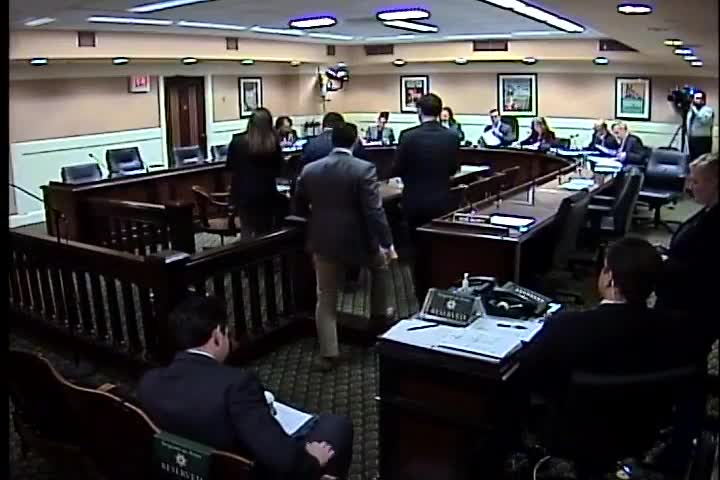
Discussed in Hearing
 13MIN
Assembly Standing Committee on Elections and Redistricting
Bill Author

Bill Co-Author(s):