AB 2648: Civil actions: limitations: real property.
- Session Year: 2017-2018
- House: Assembly
- Latest Version Date: 2018-04-12
Existing law prohibits an action from being brought to recover damages from any person, or the persons surety, who develops real property or performs or furnishes the design, specifications, surveying, planning, supervision, testing, or observation of construction or construction of an improvement to real property more than 10 years after the substantial completion of the development or improvement, as specified. Existing law provides that the 10-year statute of limitation does not apply to actions based on willful misconduct or fraudulent concealment.
This bill would similarly provide that the 10-year statute of limitation does not apply to an action for a personal injury resulting from water contamination, an action for personal injury resulting from water contamination must be commenced no later than 10 years after the plaintiff discovered the injury, and would make technical, nonsubstantive changes to the provisions.
Existing law prohibits an action from being brought to recover damages from any person, or the persons surety, who develops real property or performs or furnishes the design, specifications, surveying, planning, supervision, testing, or observation of construction or construction of an improvement to real property more than 10 years after the substantial completion of the development or improvement, as specified. Existing law provides that the 10-year statute of limitation does not apply to actions based on willful misconduct or fraudulent concealment.
This bill would similarly provide that the 10-year statute of limitation does not apply to an action for an a personal injury resulting from water contamination, and would make technical, nonsubstantive changes to the provisions.
Existing law prohibits an action from being brought to recover damages from any person, or the persons surety, who develops real property or performs or furnishes the design, specifications, surveying, planning, supervision, testing, or observation of construction or construction of an improvement to real property more than 10 years after the substantial completion of the development or improvement, as specified. Existing law provides that the 10-year statute of limitation does not apply to actions based on willful misconduct or fraudulent concealment.
This bill would similarly provide that the 10-year statute of limitation does not apply to an action for an injury resulting from water contamination, and would make technical, nonsubstantive changes to the provisions.
(a)No action may be brought to recover damages from any person, or the surety of a person, who develops real property or performs or furnishes the design, specifications, surveying, planning, supervision, testing, or observation of construction or construction of an improvement to real property more than 10 years after the substantial completion of the development or improvement for any of the following:
(1)A latent deficiency in the design, specification, surveying, planning, supervision, or observation of construction or construction of an improvement to, or survey of, real property.
(2)Injury to property, real or personal, arising out of a latent deficiency.
(b)As used in this section, latent deficiency means a deficiency that is not apparent by reasonable inspection.
(c)As used in this section, action includes an action for indemnity brought against a person arising out of that persons performance or furnishing of services or materials referred to in this section, except that a cross-complaint for indemnity may be filed pursuant to subdivision (b) of Section 428.10 in an action that has been brought within the time period specified in subdivision (a).
(d)This section shall not be construed as extending the period prescribed by the laws of this state for bringing an action.
(e)The limitation prescribed by this section shall not be asserted by way of defense by a person in actual possession or the control, as owner, tenant or otherwise, of such an improvement, at the time a deficiency in the improvement constitutes the proximate cause for which it is proposed to bring an action.
(f)This section does not apply to: to actions based on willful misconduct or fraudulent concealment.
(1)An action based on willful misconduct or fraudulent concealment.(2)An action for a personal injury resulting from water contamination.(g)(1)The 10-year period specified in subdivision (a) shall commence upon substantial completion of the improvement, but not later than the date of one of the following, whichever first occurs:
(A)The date of final inspection by the applicable public agency.
(B)The date of recordation of a valid notice of completion.
(C)The date of use or occupation of the improvement.
(D)One year after termination or cessation of work on the improvement.
(2)The date of substantial completion shall relate specifically to the performance or furnishing design, specifications, surveying, planning, supervision, testing, observation of construction or construction services by each profession or trade rendering services to the improvement.
(h)In an action for personal injury resulting from water contamination, the time for commencement of the action shall be no later than 10 years from the date the plaintiff became aware of the injury.
(a)No action may be brought to recover damages from any person, or the surety of a person, who develops real property or performs or furnishes the design, specifications, surveying, planning, supervision, testing, or observation of construction or construction of an improvement to real property more than 10 years after the substantial completion of the development or improvement for any of the following:
(1)A latent deficiency in the design, specification, surveying, planning, supervision, or observation of construction or construction of an improvement to, or survey of, real property.
(2)Injury to property, real or personal, arising out of a latent deficiency.
(b)As used in this section, latent deficiency means a deficiency that is not apparent by reasonable inspection.
(c)As used in this section, action includes an action for indemnity brought against a person arising out of that persons performance or furnishing of services or materials referred to in this section, except that a cross-complaint for indemnity may be filed pursuant to subdivision (b) of Section 428.10 in an action that has been brought within the time period specified in subdivision (a).
(d)This section shall not be construed as extending the period prescribed by the laws of this state for bringing an action.
(e)The limitation prescribed by this section shall not be asserted by way of defense by a person in actual possession or the control, as owner, tenant or otherwise, of such an improvement, at the time a deficiency in the improvement constitutes the proximate cause for which it is proposed to bring an action.
(f)This section does not apply to:
(1)An action based on willful misconduct or fraudulent concealment.
(2)An action for an a personal injury resulting from water contamination.
(g)(1)The 10-year period specified in subdivision (a) shall commence upon substantial completion of the improvement, but not later than the date of one of the following, whichever first occurs:
(A)The date of final inspection by the applicable public agency.
(B)The date of recordation of a valid notice of completion.
(C)The date of use or occupation of the improvement.
(D)One year after termination or cessation of work on the improvement.
(2)The date of substantial completion shall relate specifically to the performance or furnishing design, specifications, surveying, planning, supervision, testing, observation of construction or construction services by each profession or trade rendering services to the improvement.
(a)No action may be brought to recover damages from any person, or the surety of a person, who develops real property or performs or furnishes the design, specifications, surveying, planning, supervision, testing, or observation of construction or construction of an improvement to real property more than 10 years after the substantial completion of the development or improvement for any of the following:
(1)Any A latent deficiency in the design, specification, surveying, planning, supervision, or observation of construction or construction of an improvement to, or survey of, real property.
(2)Injury to property, real or personal, arising out of any such a latent deficiency.
(b)As used in this section, latent deficiency means a deficiency which that is not apparent by reasonable inspection.
(c)As used in this section, action includes an action for indemnity brought against a person arising out of that persons performance or furnishing of services or materials referred to in this section, except that a cross-complaint for indemnity may be filed pursuant to subdivision (b) of Section 428.10 in an action which that has been brought within the time period set forth specified in subdivision (a) of this section. (a).
(d)Nothing in this This section shall not be construed as extending the period prescribed by the laws of this state for bringing any an action.
(e)The limitation prescribed by this section shall not be asserted by way of defense by any a person in actual possession or the control, as owner, tenant or otherwise, of such an improvement, at the time any a deficiency in the improvement constitutes the proximate cause for which it is proposed to bring an action.
(f)This section shall does not apply to actions to:
(1)An action based on willful misconduct or fraudulent concealment.
(2)An action for an injury resulting from water contamination.
(g)(1)The 10-year period specified in subdivision (a) shall commence upon substantial completion of the improvement, but not later than the date of one of the following, whichever first occurs:
(1)(A)The date of final inspection by the applicable public agency.
(2)(B)The date of recordation of a valid notice of completion.
(3)(C)The date of use or occupation of the improvement.
(4)(D)One year after termination or cessation of work on the improvement.
The(2)The date of substantial completion shall relate specifically to the performance or furnishing design, specifications, surveying, planning, supervision, testing, observation of construction or construction services by each profession or trade rendering services to the improvement.
|
Date
|
Status
|
|---|---|
| Apr 16, 2018 | In committee: Set, first hearing. Hearing canceled at the request of author. |
| Apr 16, 2018 | Re-referred to Com. on JUD. |
| Apr 12, 2018 | Read second time and amended. |
| Apr 11, 2018 | From committee: Amend, and do pass as amended and re-refer to Com. on JUD. (Ayes 4. Noes 2.) (April 10). |
| Apr 3, 2018 | Re-referred to Com. on E.S. & T.M. |
| Apr 2, 2018 | From committee chair, with author's amendments: Amend, and re-refer to Com. on E.S. & T.M. Read second time and amended. |
| Mar 8, 2018 | Referred to Coms. on E.S. & T.M. and JUD. |
| Feb 16, 2018 | From printer. May be heard in committee March 18. |
| Feb 15, 2018 | Read first time. To print. |
|
Date
|
Description
|
Location
|
Votes
|
|
|---|---|---|---|---|
| Apr 10, 2018 | Do pass as amended and be re-referred to the Committee on [Judiciary] | Assembly Standing Committee on Environmental Safety and Toxic Materials |
Passed |
This list shows positions taken on this bill by organizations on the date displayed, which is linked to the original source.
Positions by individuals are not included.
|
Organization
|
Position
|
Date
|
|---|---|---|
| American Council Of Engineering Companies California | * Against | Apr 10, 2018 |
| American Subcontractors Association | ** Against | Apr 7, 2018 |
| associated builders and contractors - northern california chapter | ** Against | Apr 7, 2018 |
| Associated General Contractors Of California | ** Against | Apr 7, 2018 |
| Building Owners and Managers Association of California | ** Against | Apr 7, 2018 |
| California Apartment Association | ** Against | Apr 7, 2018 |
| California Association of Specialty Contractors | ** Against | Apr 7, 2018 |
| California Building Industry Association | * Against | Apr 10, 2018 |
| California Business Properties Association | ** Against | Apr 7, 2018 |
| California Chamber Of Commerce | ** Against | Apr 7, 2018 |
| California Chapters of the National Electrical Contractors Association | ** Against | Apr 7, 2018 |
| California Sheet Metal & Air Conditioning Contractors | ** Against | Apr 7, 2018 |
| Clean Water Action | * Support | Apr 10, 2018 |
| Commercial Real Estate Development Association Of California | ** Against | Apr 7, 2018 |
| Construction Employers Association | ** Against | Apr 7, 2018 |
| International Council of Shopping Centers | ** Against | Apr 7, 2018 |
| Northern California Allied Trades | ** Against | Apr 7, 2018 |
| Sierra Club | * Support | Apr 10, 2018 |
| Southern California Contractors Association | ** Against | Apr 7, 2018 |
| United Contractors | ** Against | Apr 7, 2018 |
| Wall and Ceiling Alliance | ** Against | Apr 7, 2018 |
Date of Hearing: April 10, 2018
ASSEMBLY COMMITTEE ON ENVIRONMENTAL SAFETY AND TOXIC MATERIALS
Bill Quirk, Chair
ABPCA Bill Id:AB 2648 (
Author:Friedman) – As Amended Ver:April 2, 2018
SUBJECT: Civil actions: limitations: real property
SUMMARY: Provides that the 10-year statute of limitation does not apply to an action for a personal injury resulting from water contamination due to a latent construction defect.
EXISTING LAW:
- Requires that any claim resulting from a latent construction defect must be brought within 10 years after the substantial completion of the construction. (Code of Civil Procedure (CCP) § 337.15)
- Provides that the 10-year statute of limitation does not apply to an action based on willful misconduct or fraudulent concealment due to a latent construction defect. (CCP § 337.15 (f))
- Establishes the Carpenter-Presley-Tanner Hazardous Substance Account Act (HSAA) to provide for response authority for releases of hazardous substances, including spills and hazardous waste disposal sites that pose a threat to the public health or the environment. (Health and Safety Code (HSC) § 25300 et seq.)
- Provides that the Department of Toxic Substances Control (DTSC) or the State Regional Water Quality Control Board (Regional Water Board) shall bring an action for cost recovery due to a hazardous waste or hazardous substance within three years after completion of all response or corrective actions which have been certified by DTSC or the Regional Water Board. (HSC § 25360.4)
FISCAL EFFECT: Unknown.
COMMENTS:
Need for the bill: According to the author,
"California regulates and monitors pollution based on the type of pollution. Air pollution is monitored at its source to determine what is being released into the atmosphere and in what quantities. Water pollution, however, is monitored very differently. Most water pollution occurs as a result of contamination from some type of holding structure. Many of these structures, such as underground storage tanks, above ground storage tanks, and landfills all have their own sets of regulations and requirements they are subject to. When there are instances of water contamination state and local agencies determine which entity is responsible and oversee the clean-up process.
State and local agencies are subjected to different statutes of limitation which often don’t begin to accrue until discovery of the contamination. However, when the party seeking remediation is an individual rather than an agency, the statute of limitations is often less generous.
Under § 337.15 of the Code of Civil Procedure, any individual seeking damages for an injury resulting from a construction defect cannot bring such a claim unless suit is brought within 10 years of completion of construction. An issue arises when the injury is caused by water contamination, which often takes years—sometimes decades—to detect.
Because of the unique nature of water contamination, the length of time it often takes for a holding structure to fail and begin leaking, and the amount of time it takes to detect the effects of water contamination, it is necessary that California allow individuals a path to recover damages that result from such water contamination."
Hazardous substances/hazardous waste: There is the potential for public health and environmental harm that can be caused by various hazardous substances used in industrial, manufacturing, and other processes. According to the United State Environmental Protection Agency (US EPA), over the next several decades, federal, state, and local governments and private industry will commit billions of dollars annually to clean up sites contaminated with hazardous waste and petroleum products from a variety of industrial sources. Additionally, there could be as many as 355,000 contaminated sites in the United States that will require cleanup over the next 30 years and that the cost of this cleanup may amount to as much as $250 billion.
Hazardous substance is a broad term that includes many chemicals and materials that present an imminent and substantial danger to public health or welfare. Improper use and disposal of these products can result in hazardous waste. According to the US EPA, hazardous wastes or substances are potentially hazardous to human health or the environment when they are improperly managed. They possess at least one of following characteristics: ignitability, corrosiveness, reactivity, or toxicity, or they appear on special US EPA lists.
The Comprehensive Environmental Response, Compensation, and Liability Act (CERCLA): CERCLA or Superfund, provides a Federal "Superfund" to clean up uncontrolled or abandoned hazardous-waste sites as well as accidents, spills, and other emergency releases of pollutants and contaminants into the environment. Through CERCLA, the US EPA was given authority to seek out those parties responsible for any release and assure their cooperation in the cleanup.
The US EPA cleans up orphan sites when potentially responsible parties cannot be identified or located, or when they fail to act. Through various enforcement tools, the US EPA obtains private party cleanup through orders, consent decrees, and other small party settlements. The US EPA also recovers costs from financially viable individuals and companies once a response action has been completed. CERCLA defines liable parties as current owners and operators of a facility, former owners and operators of a facility at the time of disposal, persons who arranged for treatment or disposal of hazardous substances, and transporters of hazardous substances who selected the disposal site. A person who falls within the definition of one of these classes may be held liable under CERCLA. Under CERCLA, an initial action to recover costs from responsible parties must commence within three years of completing removal activities, or within six years of beginning the implementation of remedial activities.
Carpenter-Presley-Tanner Hazardous Substances Account Act (HSAA): State law provides DTSC with general administrative responsibility for overseeing the state’s responses to spills or releases of hazardous substances and for hazardous waste disposal sites that pose a threat to public health or the environment. DTSC use the HSAA for cleanup of contaminated sites. The HSAA is intended to provide compensation for out‑of‑pocket medical expenses and lost wages or business incomes resulting from injuries caused by exposure to hazardous substances. The HSAA provides DTSC with the authority, procedures, and standards to investigate, remove, and remediate contamination at sites; to issue and enforce a removal or remedial action order to any responsible party; and, to impose administrative or civil penalties for noncompliance with an order. Federal and state law also authorizes DTSC to recover costs and expenses it incurs in carrying out these activities.
Statute of limitations for a hazardous substance: Under the HSAA, DTSC or a Regional Water Board shall bring an action for cost recovery of a hazardous substance or hazardous waste within three years after completion of all response or corrective actions have been certified by DTSC or the Regional Water Board.
Groundwater in California: California depends heavily on groundwater to meet its water supply needs. Groundwater, which largely comes from rain and snow that percolates through soil and rock, supplies approximately 40 percent of the state water supply. Groundwater use increases during drought conditions. Groundwater pumped from more than 14,000 active public supply wells provides part or all of the drinking water to more than 80 percent of California residents. More than 6,000 wells have been shut down since the 1980s, many for water quality reasons. In addition, up to two million California residents are served either by the estimated 250,000 to 600,000 private domestic wells or by water systems serving fewer than 15 service connections. Unlike public drinking water systems, there are no federal or state regulations covering water quality served from private domestic wells.
Groundwater contamination: Most groundwater is brought to the surface by pumping it from a well. Groundwater quality can be contaminated by both naturally-occurring and man-made contaminants. Naturally-occurring chemicals typically come from dissolving rocks, soil, and decaying plant material. Fertilizers and pesticides contaminate groundwater when applied or used incorrectly. Leaking underground storage tanks, human waste from leaking septic tanks broken sewer pipes and wastewater systems, and contaminated irrigation water are also sources of contamination. All of these can result in contaminants entering groundwater including nitrate (fertilizers), salts, pesticides, pharmaceuticals, and bacteria. It can take years, even decades for these contaminants to reach and contaminate the groundwater.
Different rules for bringing an action regarding contamination: There are different statutes of limitations for dealing with contamination depending on the party bringing the action. The state Attorney General or a district attorney can bring an action under state or federal law for contamination, including water contamination, three years after the contamination has been cleaned up. This means that the contamination could have been ongoing for decades, yet there is no limitation for action until the contamination has been removed. However, for anyone else bringing an action, there is a 10 year limitation that starts when construction is complete. Construction of pipes, tanks, and other structures that hold various chemicals could begin leaking and the resulting contamination could take years, even decades before the contamination reaches groundwater and is detected. AB 2648 is seeking to provide people in California with the ability to bring an action against someone who caused water contamination and hold them responsible, regardless of when the structure that caused the contamination began to leak or fail.
No limit to bring an action: AB 2648 removes the statute of limitations for someone bringing an action for a personal injury resulting from water contamination. If there is no longer a limit, then someone could bring an action for contamination that may have happened and even been cleaned up decades ago. The author and Committee may wish to consider replacing some type of limit in statute, perhaps tying the limit to when the contamination was discovered.
Double referral: Should this bill be approved by this Committee, it will be heard next in the Assembly Judiciary Committee.
Related legislation: AB 1207 (Furatani, 2012). Would have clarified that the statute of repose regarding latent construction defects does not apply to actions for either damages for personal injury or wrongful death; or, personal injury or property damages caused or contributed to by exposure to any hazardous substance, pollutant, or contaminant released into the environment. This bill was held in Assembly Judiciary Committee.
REGISTERED SUPPORT / OPPOSITION:
Support
Sierra Club California
Opposition
American Council of Engineering Companies
Associated Builders and Contractors – Northern California Chapter
Associated General Contractors of California
American Subcontractors Association
Building Owners and Managers Association of California
California Apartment Association
California Association of Specialty Contractors
California Building Industry Association
California Business Properties Association
California Chamber of Commerce
California Chapters of the National Electrical Contractors Association
California Legislative Conference of the Plumbing, Heating and Piping Industry
California Sheet Metal & Air Conditioning Contractors
Commercial Real Estate Development Association of California
Construction Employers Association
International Council of Shopping Centers
Northern California Allied Trades
Southern California Contractors Association
United Contractors
Wall and Ceiling Alliance
Analysis Prepared by: Josh Tooker / E.S. & T.M. /
Discussed in Hearing
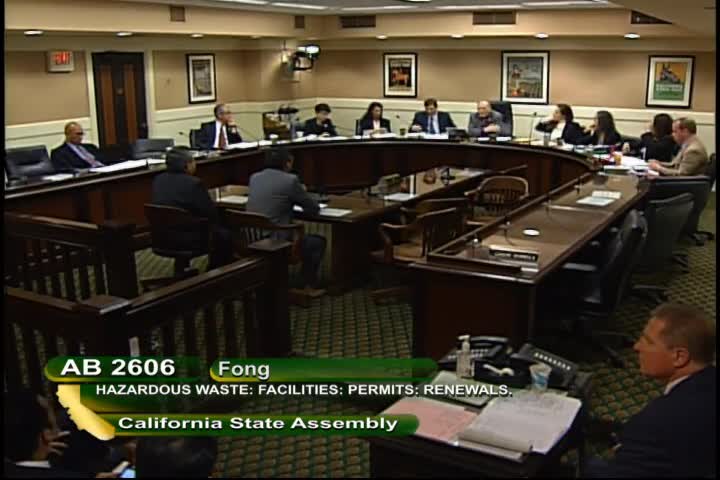 10MIN
Assembly Standing Committee on Environmental Safety and Toxic Materials
Bill Author

Bill Co-Author(s):