AB 2742: Elections: voter identification.
- Session Year: 2017-2018
- House: Assembly
- Latest Version Date: 2018-02-16
Existing law requires polling places to be open from 7 a.m. to 8 p.m. on election day and requires that voting commence as soon as polls are opened. Existing law requires a person desiring to vote to audibly announce his or her name and address, and requires a precinct board member to audibly repeat the voters name and address after finding the voters name in the index of voter registration. Existing law then requires the voter to write his or her name and residence address on a roster of voters, except as specified.
This bill would also require a voter to provide photographic identification at the polling place before receiving a ballot. The bill would specify the forms of photographic identification that are acceptable and would authorize the use of a photographic identification that has been expired for less than one year. The bill would require a precinct board to provide a voter who is unable to provide an acceptable form of photographic identification, and would require a voter who is provided a provisional ballot for this reason to present photographic identification to the elections official in order to have his or her provisional ballot counted. The bill would require that a voter be provided a free registered voter identification card that contains a photograph of the voter if the voter does not have an acceptable form of photographic identification. By expanding the duties of precinct board members and local elections officials, the bill would impose a state-mandated local program.
The California Constitution requires the state to reimburse local agencies and school districts for certain costs mandated by the state. Statutory provisions establish procedures for making that reimbursement.
This bill would provide that, if the Commission on State Mandates determines that the bill contains costs mandated by the state, reimbursement for those costs shall be made pursuant to the statutory provisions noted above.
(a)In addition to Section 14216, a person desiring to vote at a polling place shall present one of the following forms of identification to a member of the precinct board before receiving a ballot:
(1)A valid California drivers license.
(2)A valid California identification card.
(3)Any other form of photographic identification issued by the state or its political subdivisions.
(4)A valid United States passport.
(5)A valid tribal enrollment card containing a photograph of the voter.
(6)A valid student identification card containing a photograph of the voter that is issued by an institution of higher education in the state.
(7)A valid pupil identification card containing a photograph of the voter that is issued by a public or private school in the state.
(8)A valid employee identification card containing a photograph of the voter that is issued by the voters employer in the ordinary course of the employers business.
(b)A voter who presents one of the forms of identification specified in subdivision (a) that has been expired for less than one year shall receive a ballot.
(c)If a voter is unable to present one of the forms of identification specified in subdivision (a) to a precinct board member, the precinct board shall furnish the voter with a provisional ballot, in accordance with Section 14310. If a voter is issued a provisional ballot pursuant to this subdivision, the voter must present one of the forms of identification specified in subdivision (a) to the elections official in order for the voters provisional ballot to be counted.
(d)A voter who does not have one of the forms of identification described in subdivision (a) shall be provided a free registered voter identification card that contains a photograph of the voter.
SEC. 2.If the Commission on State Mandates determines that this act contains costs mandated by the state, reimbursement to local agencies and school districts for those costs shall be made pursuant to Part 7 (commencing with Section 17500) of Division 4 of Title 2 of the Government Code.
|
Date
|
Status
|
|---|---|
| Apr 25, 2018 | In committee: Set, first hearing. Hearing canceled at the request of author. |
| Mar 8, 2018 | Referred to Com. on E. & R. |
| Feb 17, 2018 | From printer. May be heard in committee March 19. |
| Feb 16, 2018 | Read first time. To print. |
This list shows positions taken on this bill by organizations on the date displayed, which is linked to the original source.
Positions by individuals are not included.
|
Organization
|
Position
|
Date
|
|---|---|---|
| California Federation Of Teachers | ** Against | Apr 23, 2018 |
| California Immigrant Policy Center | ** Against | Apr 23, 2018 |
| California Professional Firefighters | ** Against | Apr 23, 2018 |
| California Teachers Association | ** Against | Apr 23, 2018 |
| County of Santa Clara | ** Against | Apr 23, 2018 |
| Courage Campaign | ** Against | Apr 23, 2018 |
| Disability Rights California | ** Against | Apr 23, 2018 |
| League Of Women Voters Of California | ** Against | Apr 23, 2018 |
| Planned Parenthood Action Fund of the Pacific Southwest | ** Against | Apr 23, 2018 |
| Planned Parenthood Advocacy Project Los Angeles County | ** Against | Apr 23, 2018 |
| Planned Parenthood Affiliates Of California | ** Against | Apr 23, 2018 |
| Planned Parenthood Mar Monte | ** Against | Apr 23, 2018 |
| Secretary of State Alex Padilla | ** Against | Apr 23, 2018 |
| Service Employees International Union, Local 1000 | ** Against | Apr 23, 2018 |
Date of Hearing: April 25, 2018
ASSEMBLY COMMITTEE ON ELECTIONS AND REDISTRICTING
Marc Berman, Chair
ABPCA Bill Id:AB 2742 (
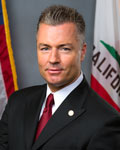
Author:Travis Allen) – As Introduced Ver:February 16, 2018
SUBJECT: Elections: voter identification.
SUMMARY: Requires a voter to provide specified identification in order to have his or her ballot counted. Specifically, this bill:
- Requires a person desiring to vote at a polling place to present one of the following forms of identification to a member of the precinct board before receiving a ballot:
- A valid California driver’s license;
- A valid California identification card;
- Any other form of photographic identification issued by the state or its political subdivisions;
- A valid United States (U.S.) passport;
- A valid tribal enrollment card containing a photograph of the voter;
- A valid student identification card containing a photograph of the voter that is issued by an institution of higher education in the state;
- A valid pupil identification card containing a photograph of the voter that is issued by a public or private school in the state; or,
- A valid employee identification card containing a photograph of the voter that is issued by the voter’s employer in the ordinary course of the employer’s business.
- Permits a voter who presents one of the forms of identification specified above that has been expired for less than one year to receive a ballot.
- Requires a precinct board, if a voter is unable to present one of the forms of identification specified above, to furnish the voter with a provisional ballot, in accordance with existing law. Requires a voter, if a voter is issued a provisional ballot, to present one of the forms of identification specified above to the elections official in order for the voter’s provisional ballot to be counted.
- Requires a voter who does not have one of the forms of identification described above to be provided a free registered voter identification card that contains a photograph of the voter.
EXISTING LAW:
- Requires a voter who appears at the polling place to vote to announce his or her name and address to a precinct officer. Requires the precinct officer, upon finding the name in the roster of voters, to repeat the voter's name and address. Requires the voter to then write his or her name and residence address on a roster of voters, whereupon the voter is provided a ballot.
- Permits a voter to vote a provisional ballot if his or her qualification or entitlement to vote cannot be immediately established upon examination of the roster of voters for the precinct or upon examination of the records on file with the county elections official.
- Authorizes a member of the precinct board to challenge the ability of a person to vote on various grounds, including that the voter is not the person whose name appears on the index, is not a precinct resident, is not a U.S. citizen, has already voted on that day, or is imprisoned or on parole for the conviction of a felony.
- Provides that any person who votes more than once, attempts to vote more than once, or impersonates or attempts to impersonate a voter at an election is guilty of a crime punishable by imprisonment for 16 months or two or three years, or in county jail not exceeding one year.
- Requires a voter who submits his or her voter registration form by mail and who has not previously voted to present one of a number of specified documents to establish identity before receiving a ballot. This requirement only applies the first time an individual votes in a federal election after registering to vote.
FISCAL EFFECT: Unknown. State-mandated local program; contains reimbursement direction.
COMMENTS:
- Purpose of the Bill: According to the author:
California currently has no ID requirements for an individual to cast a vote. Whether that individual is the listed voter, or even a citizen, is impossible to verify at the polling station, providing multiple opportunities for fraud and manipulation of results.
Anyone can register to vote without providing identification in the form of a Driver’s License or Social Security card, depending entirely on an internal “firewall” to prevent abuse of the public trust. In the case of intended manipulation, there is little that the system provides regarding oversight of accurate voter registration.
A simple and largely nonintrusive requirement for identification would prevent many opportunities for voter fraud and provide more confidence in the electoral process.
- Voter Fraud Allegations: Despite recent allegations of voter fraud, many elections experts and studies have concluded there is no evidence of massive voter fraud occurring, particularly in California. In fact, many have proven that voter fraud is extremely rare and in-person voter fraud is so rare as to be almost non-existent. Moreover, voter fraud allegations on examination often turn out to be caused by clerical or typographical errors by the individual voter or elections officials, or by bad data matches.
Last year the National Association of Secretaries of State, which represents 40 of the nation's chief state election officials, issued the following statement, "We are not aware of any evidence that supports the voter fraud claims made by President Trump, but we are open to learning more about the Administration’s concerns. In the lead up to the November 2016 election, secretaries of state expressed their confidence in the systemic integrity of our election process as a bipartisan group, and they stand behind that statement today.”
- Voter Fraud Prevention: The author's statement contends that this measure will prevent voter fraud and provide more confidence in the electoral process, however, the author has not provided the committee with any evidence that voter fraud of the type that would be prevented by identification requirements at the polls is a problem in need of a solution.
California law already requires a voter who wishes to vote at the polls on election day have and confirm his or her name and address on the roster of voters. If a voter's name is not on the roster, that person is allowed to vote a provisional ballot, which is later reviewed by the elections official to determine the person's right to vote, before being included in the official canvass. As such, the roster of voters plays a big role on election day to minimize the occurrence of fraud. Current law requires county elections officials to take several steps to ensure that the voter rolls are accurate, such as continuous review and maintenance of the rolls to remove obsolete, duplicative, and non-eligible names.
Other efforts required by law to reduce potential fraud include a voter fraud hotline maintained by the Secretary of State (SOS), the ability of a member of the precinct board to challenge any person attempting to vote at the polls if the voter's qualifications to vote are in question, and vigorous prosecutions by local law enforcement agencies working together with the SOS's office.
Furthermore, according to information provided by the SOS's Election Fraud Investigation Unit, over the course of 20 years, between 1994 and 2014, there were 7 convictions for fraudulent voting, 23 convictions for double voting, and 5 convictions for non-citizen voting. However, it is unclear whether these acts occurred while attempting to vote at the polls or if the violations occurred by a vote by mail voter. Given the small number of convictions in the past two decades, it is reasonable to believe that the current efforts to thwart voter fraud are working.
- Voters Who Lack ID: A November 2006 survey by the Brennan Center for Justice found that 11% of U.S. citizens do not have government-issued photo identification. To the extent that this figure is reflective of the California electorate, it is possible that a significant number of Californians who are eligible and registered to vote do not have a form of identification that would meet the requirements of this bill. This same survey also demonstrated that certain groups – primarily poor, elderly, and minority citizens – are less likely to possess these forms of identification.
Although this bill requires a voter who is unable to present one of the forms of identification required to be provided a free registered voter identification card that contains a photograph of the voter, it does not provide any detail as to who provides the free identification and what is required of a voter in order to obtain a free identification card. A voter could encounter financial and logistical hardships if the voter is required to provide certain documentation in order to obtain the free identification card. For example, in order to be issued a California identification card, an individual must go to a Department of Motor Vehicle's office during business hours and provide, among other things, verification of birth date by submitting documents such as a certified copy from the state or local vital statistics office of the individual's birth certificate. Such documentation may be difficult to obtain and typically requires an additional fee.
- Additional Logistical Issues: As mentioned above, this bill requires a poll worker to provide a voter with a provisional ballot if the voter is unable to present an acceptable form of identification. In order for the provisional ballot to be counted, this bill requires the voter to present an acceptable form of identification to the elections official. This bill, however, does not provide any timeframe for when the voter must follow up and present identification. If a voter is required to show proof of identity after election day they may need to travel to the elections official's office in order to do so. Again this could be burdensome and impose unnecessary costs on the voter to travel to the elections official's office.
Moreover, this bill requires a voter who does not have one of the acceptable forms of identification to be provided a free registered voter identification card that contains a photograph of the voter. Again, this bill does not provide any detail for this process. Who provides the free identification? When will the free identification be provided? Will the voter be able to vote in the current election or will the voter only be able to use the free identification card in future elections? - Other States: According to a 2017 report by the National Conference of State Legislatures, 34 states have laws requesting or requiring voters to show some form of identification at the polls, all of which are in effect as of this year. The remaining 16 states use other methods to verify the identity of voters, such as asking a voter to sign an affidavit asserting their eligibility to vote, comparing a voter's signature, or asking a voter to provide personal information, either verbally or in writing at the polls.
According to the report, those states who ask for identification can be categorized in two ways – states that ask for photo identification, such as a driver's license card, military or tribal identification, and states that accept identification without a photo, such as a bank statement with the name and address. According to the report, using this categorization for laws that are in effect in 2017, there are 17 states that ask for photo identification and 17 states that accept non-photo identification.
The report also discusses the procedures for when a voter does not have identification and categorizes the states in two ways – non-strict and strict. Non-strict states are those in which some voters without acceptable identification have an option to cast a ballot that will be counted without further action on the part of the voter. For instance, a voter may sign an affidavit of identity or a poll worker may vouch for the voter. Moreover, in some non-strict states, a voter without identification is permitted to cast a provisional ballot. The report categorizes a strict state as those that require a voter who is unable to provide acceptable identification to vote a provisional ballot and also take additional steps after election day for it to be counted. For instance, a voter may be required to return to an election office within a few days after the election and present acceptable identification to have the provisional ballot counted. However, if the voter does not come back to show identification, the provisional ballot is not counted. - Arguments in Opposition: In opposition, the California Immigrant Policy Center writes:
AB 2742 unnecessarily restricts voter participation by requiring registered voters to present photo identification at polling sites. Many voters who are elderly, low-income, or survivors of domestic violence do not have or cannot afford a driver’s license or a passport, or the underlying documents necessary to obtain such identification. Although AB 2742 provides for the provision of a free identification card, the legislation does not delineate what documentation is necessary to obtain this free identification or whether the costs associated with obtaining this documentation will be covered.
Voter identification laws like AB 2742 are a solution in search of a problem. California law already requires elections officials to take several steps to ensure accurate voter rolls, such as continuous review and maintenance of the rolls to remove obsolete, duplicative, and non-eligible names. And there is no evidence that the type of fraud AB 2742’s photo identification requirement purports to address—voters who misrepresent their identity—is anything but an anomaly. Instead, voter identification laws are expensive, unnecessary, and have a disproportionate impact on naturalized citizens who immigrated to the U.S. and voters of color. For example, people of color are more frequently questioned about their identification at the polls than white voters. Several studies found that photo identification laws have a particularly depressive effect on turnout amongst racial minorities and vulnerable groups, which exacerbates existing participation gaps.
- Previous Legislation: AB 985 (T. Allen) of 2017 contained similar provisions to this bill. AB 985 failed passage in this committee on a 1-5 vote.
AB 1157 (Jones) of 2013 contained similar provisions to this bill. AB 1157 failed passage in this committee on a 2-4 vote.
REGISTERED SUPPORT / OPPOSITION:
Support
None on file.
Opposition
California Federation of Teachers
California Immigrant Policy Center
California Professional Firefighters
California Teachers Association
County of Santa Clara
Courage Campaign
Disability Rights California
League of Women Voters of California
Planned Parenthood Action Fund of the Pacific Southwest
Planned Parenthood Advocacy Project Los Angeles County
Planned Parenthood Affiliates of California
Planned Parenthood Mar Monte
Service Employees International Union, Local 1000
Secretary of State Alex Padilla
Analysis Prepared by: Nichole Becker / E. & R. / (916) 319-2094
Bill Author
Bill Co-Author(s):