AB 2788: California School Employee Housing Assistance Grant Program.
- Session Year: 2017-2018
- House: Assembly
- Latest Version Date: 2018-04-12
Existing law establishes the Department of Housing and Community Development and requires it to administer various housing programs.
This bill would require the department to administer a program to provide financing assistance for the creation of affordable rental housing and downpayment assistance for employees of a qualified school district, as defined. The bill would require financing of rental housing assistance be in the form of specified types of loans. The bill would require downpayment assistance to only be provided to school district employees purchasing a single-family, one-unit residence of a specified value, and would require the department comply with specified requirements in providing that assistance. The bill would require the department department, when making loans to qualified developers under these provisions provisions, to use a project selection process that meets specified requirements. The bill would create in the State Treasury the California School Employee Housing Assistance Fund for these purposes, and would make implementation of these provisions subject to appropriation by the Legislature for that purpose. Legislature.
Existing law establishes the Department of Housing and Community Development and requires it to administer various housing programs.
This bill would require the department to administer a program to provide financing assistance for the creation of affordable rental housing and downpayment assistance for employees of a qualified school district, as defined. The bill would require financing of rental housing assistance be in the form of specified types of loans. The bill would require downpayment assistance to only be provided to school district employees purchasing a single-family, one-unit residence of a specified value, and would require the department comply with specified requirements in providing that assistance. The bill would require the department when making loans to qualified developers under these provisions to use a project selection process that meets specified requirements. The bill would create in the State Treasury the California School Employee Housing Assistance Fund for these purposes, and would make implementation of these provisions subject to appropriation by the Legislature for that purpose.
Existing law, the Teacher Housing Act of 2016, authorizes a school district to establish and implement programs, as provided, that address the housing needs of teachers and school district employees who face challenges in securing affordable housing.Existing law requires the Department of Housing and Community Development to administer various programs related to affordable housing.This bill would create the School Employee Housing Assistance Program, which would require the Department of Housing and Community Development to administer a program to provide assistance for the creation of affordable housing for school district employees.Existing law, the Teacher Housing Act of 2016, authorizes a school district to establish and implement programs, as provided, that address the housing needs of teachers and school district employees who face challenges in securing affordable housing.
Existing law requires the Department of Housing and Community Development to administer various programs related to affordable housing.
This bill would create the School Employee Housing Assistance Program, which would require the Department of Housing and Community Development to administer a program to provide assistance for the creation of affordable housing for school district employees.
Existing law establishes a system of public elementary and secondary schools in this state and authorizes local educational agencies throughout the state to operate schools and provide instruction to pupils in kindergarten and grades 1 to 12, inclusive. Existing law requires the Commission on Teacher Credentialing to, among other duties, establish standards for the issuance and renewal of credentials, certificates, and permits.This bill would express the intent of the Legislature to enact legislation that would help close the achievement gap by providing a teacher housing tool to school districts that addresses Californias current crisis of low recruitment and retention of teachers.Existing law establishes a system of public elementary and secondary schools in this state and authorizes local educational agencies throughout the state to operate schools and provide instruction to pupils in kindergarten and grades 1 to 12, inclusive. Existing law requires the Commission on Teacher Credentialing to, among other duties, establish standards for the issuance and renewal of credentials, certificates, and permits.
This bill would express the intent of the Legislature to enact legislation that would help close the achievement gap by providing a teacher housing tool to school districts that addresses Californias current crisis of low recruitment and retention of teachers.
For purposes of this chapter:
(a)Affordable rental housing means housing that serves persons and families of low or moderate income as defined by Section 50093.
(b)Qualified developer means a developer that has partnered with a qualified school district to create affordable rental housing for school district employees.
(c)Qualified school district means a school district that satisfies all of the following:
(1)Has acquired land that may be used to engage in a lease and development agreement, including, but not limited to, a joint occupancy agreement, for the purposes of design, construction, financing, and long-term operation of a housing development and amenities, from any of the following:
(A)A school district.
(B)A special district.
(C)A city.
(2)Demonstrates to the department that any project funded through a predevelopment loan pursuant to this chapter meets both of the following requirements:
(A)The project is subject to a project labor agreement, as defined in paragraph (1) of subdivision (b) of Section 2500 of the Public Contract Code.
(B)The project either is a public work for purposes of Article 2 (commencing with Section 1770) of Chapter 1 of Part 7 of Division 2 of the Labor Code or is otherwise subject to a legally binding requirement that prevailing wages be paid to all workers employed on the project.
(d)School district employees means any employees of the school district, including teachers, and any employees of an entity described in Section 421 of the Education Code that is located within the jurisdictional boundaries of the school district.
50571.(a)The department shall administer a program to provide financing assistance for the creation of affordable rental housing for school district employees and for downpayment assistance to school district employees, subject to the requirements in subdivision (e). employees. The financing of rental housing assistance shall be in the following forms:
(1)Loans for the payment of a feasibility study and an owners representative until the project is finished or until the project is rendered no longer feasible.
(2)Predevelopment loans to developers partnered with qualified school districts. A developer may partner with a qualified school district by entering into a memorandum of understanding with the qualified school district to create affordable rental housing for school district employees.
(3)Loans to qualified developers.
(b)The department shall do all of the following:
(1)Be responsible for overseeing the program.
(2)Award predevelopment loans as follows:
(A)Loans shall be awarded to qualified school districts and qualified developers in partnership.
(B)Loans shall be based on the accomplishment of predevelopment milestones, as determined by the department, including, but not limited to, engineering studies, architectural plans, application fees, legal services, permits, bonding, and site preparation.
(3)Make loans to qualified developers.
(4)Publish deadlines and written procedures for qualified school districts and qualified developers to apply for financing assistance.
(5)Require the affordability of units built with financing assistance pursuant to this chapter to be restricted for at least 55 years.
(c)A qualified school district seeking a grant shall apply for a predevelopment loan, in partnership with a qualified developer, in the form and manner prescribed by the department.
(d)A qualified developer seeking a loan shall apply for a loan in the form and manner prescribed by the department.
(e)The department shall provide funds to school district employees seeking downpayment assistance in purchasing a single-family, one-unit residence that is no higher than one million dollars ($1,000,000) in sale value. The school employee applicant shall occupy the property as a primary residence, and nonoccupant coborrowers are prohibited from occupying the residence that the downpayment assistance was provided for. The program shall comply with both of the following:(1)The downpayment assistance will be in the form of deferred-payment loans payable on sale or transfer of the homes, or when they cease to be owner occupied, or at maturity.(2)In developing the program, the department shall consult with the California Housing Finance Agency in order to accomplish both of the following:(A)Establish the administrative rules needed to implement this section.(B)Seek ways how both departments can maximize the opportunities for homeownership by school employees, including how existing programs can be bolstered and work in concert with one another.50572.(a)There is hereby created in the State Treasury the California School Employee Housing Assistance Fund. Moneys in the fund shall only be available for purposes of this chapter upon appropriation by the Legislature.
(b)For purposes of making the computations required by Section 8 of Article XVI of the California Constitution, an appropriation of funds from the California School Employee Housing Assistance Fund for purposes of this chapter shall not be deemed to be General Fund revenues appropriated for school districts, as defined in subdivision (c) of Section 41202 of the Education Code, for the 201718 fiscal year and annually thereafter, and shall not be included within the total allocations to school districts and community college districts from General Fund proceeds of taxes appropriated pursuant to Article XIII B, as defined in subdivision (e) of Section 41202 of the Education Code, for the 201617 fiscal year and annually thereafter.
50573.(a)The department shall make loans to qualified developers using a project selection process established by the department that meets all of the following requirements:
(1)To the extent feasible, ensures a reasonable geographic distribution of funds.
(2)Requires applications for projects to meet minimum threshold requirements, including, but not limited to, all of the following:
(A)The proposed project is located within reasonable proximity to public transportation and services.
(B)Development costs for the proposed project are reasonable compared to costs of comparable projects in the area.
(C)The proposed project is feasible.
(3)The proposed project leverages other funds where they are available.
(b)(1)Loans made pursuant to this section shall be for a term of not less than 55 years.
(2)Principal and accumulated interest is due and payable upon completion of the term of the loan. The loan shall bear simple interest at the rate of 3 percent per annum on the unpaid principal balance. The department shall require annual loan payments in a minimum amount necessary to cover the costs of project monitoring. For the first 30 years of the loan term, the amount of the required loan payments shall not exceed 0.42 percent per annum.
(3)Any moneys that the department receives in repayment of the loans, including interest, shall be deposited in the California School Employee Housing Assistance Fund. These moneys shall be used for the purposes of this chapter.
50574.Implementation of this chapter shall be subject to appropriation by the Legislature for the purposes of this chapter in the Budget Act or another statute.
For purposes of this chapter:
(a)Affordable rental housing means housing that serves persons and families of low or moderate income as defined by Section 50093.
(b)Qualified developer means a developer that has partnered with a qualified school district to create affordable rental housing for school district employees.
(c)Qualified school district means a school district that satisfies all of the following:
(1)Has acquired land that may be used to engage in a lease and development agreement, including, but not limited to, a joint occupancy agreement, for the purposes of design, construction, financing, and long-term operation of a housing development and amenities, from any of the following:
(A)A school district.
(B)A special district.
(C)A city.
(2)Demonstrates to the department that any project funded through a predevelopment loan pursuant to this chapter meets both of the following requirements:
(A)The project is subject to a project labor agreement, as defined in paragraph (1) of subdivision (b) of Section 2500 of the Public Contract Code.
(B)The project either is a public work for purposes of Article 2 (commencing with Section 1770) of Chapter 1 of Part 7 of Division 2 of the Labor Code or is otherwise subject to a legally binding requirement that prevailing wages be paid to all workers employed on the project.
(d)School district employees means any employees of the school district, including teachers, and any employees of an entity described in Section 421 of the Education Code that is located within the jurisdictional boundaries of the school district.
50571.(a)The department shall administer a program to provide financing assistance for the creation of affordable rental housing for school district employees and for downpayment assistance to school district employees, subject to the requirements in subdivision (e). The financing of rental housing assistance shall be in the following forms:
(1)Loans for the payment of a feasibility study and an owners representative until the project is finished or until the project is rendered no longer feasible.
(2)Predevelopment loans to developers partnered with qualified school districts. A developer may partner with a qualified school district by entering into a memorandum of understanding with the qualified school district to create affordable rental housing for school district employees.
(3)Loans to qualified developers.
(b)The department shall do all of the following:
(1)Be responsible for overseeing the program.
(2)Award predevelopment loans as follows:
(A)Loans shall be awarded to qualified school districts and qualified developers in partnership.
(B)Loans shall be based on the accomplishment of predevelopment milestones, as determined by the department, including, but not limited to, engineering studies, architectural plans, application fees, legal services, permits, bonding, and site preparation.
(3)Make loans to qualified developers.
(4)Publish deadlines and written procedures for qualified school districts and qualified developers to apply for financing assistance.
(5)Require the affordability of units built with financing assistance pursuant to this chapter to be restricted for at least 55 years.
(c)A qualified school district seeking a grant shall apply for a predevelopment loan, in partnership with a qualified developer, in the form and manner prescribed by the department.
(d)A qualified developer seeking a loan shall apply for a loan in the form and manner prescribed by the department.
(e)The department shall provide funds to school district employees seeking downpayment assistance in purchasing a single-family, one-unit residence that is no higher than one million dollars ($1,000,000) in sale value. The school employee applicant shall occupy the property as a primary residence, and nonoccupant coborrowers are prohibited from occupying the residence that the downpayment assistance was provided for. The program shall comply with both of the following:
(1)The downpayment assistance will be in the form of deferred-payment loans payable on sale or transfer of the homes, or when they cease to be owner occupied, or at maturity.
(2)In developing the program, the department shall consult with the California Housing Finance Agency in order to accomplish both of the following:
(A)Establish the administrative rules needed to implement this section.
(B)Seek ways how both departments can maximize the opportunities for homeownership by school employees, including how existing programs can be bolstered and work in concert with one another.
50572.(a)There is hereby created in the State Treasury the California School Employee Housing Assistance Fund. Moneys in the fund shall only be available for purposes of this chapter upon appropriation by the Legislature.
(b)For purposes of making the computations required by Section 8 of Article XVI of the California Constitution, an appropriation of funds from the California School Employee Housing Assistance Fund for purposes of this chapter shall not be deemed to be General Fund revenues appropriated for school districts, as defined in subdivision (c) of Section 41202 of the Education Code, for the 201718 fiscal year and annually thereafter, and shall not be included within the total allocations to school districts and community college districts from General Fund proceeds of taxes appropriated pursuant to Article XIII B, as defined in subdivision (e) of Section 41202 of the Education Code, for the 201617 fiscal year and annually thereafter.
50573.(a)The department shall make loans to qualified developers using a project selection process established by the department that meets all of the following requirements:
(1)To the extent feasible, ensures a reasonable geographic distribution of funds.
(2)Requires applications for projects to meet minimum threshold requirements, including, but not limited to, all of the following:
(A)The proposed project is located within reasonable proximity to public transportation and services.
(B)Development costs for the proposed project are reasonable compared to costs of comparable projects in the area.
(C)The proposed project is feasible.
(3)The proposed project leverages other funds where they are available.
(b)(1)Loans made pursuant to this section shall be for a term of not less than 55 years.
(2)Principal and accumulated interest is due and payable upon completion of the term of the loan. The loan shall bear simple interest at the rate of 3 percent per annum on the unpaid principal balance. The department shall require annual loan payments in a minimum amount necessary to cover the costs of project monitoring. For the first 30 years of the loan term, the amount of the required loan payments shall not exceed 0.42 percent per annum.
(3)Any moneys that the department receives in repayment of the loans, including interest, shall be deposited in the California School Employee Housing Assistance Fund. These moneys shall be used for the purposes of this chapter.
50574.Implementation of this chapter shall be subject to appropriation by the Legislature for the purposes of this chapter in the Budget Act or another statute.
SECTION 1.Chapter 4 (commencing with Section 50570) is added to Part 2 of Division 31 of the Health and Safety Code, to read:4.School Employee Housing Assistance Program50570.For purposes of this chapter, the following terms have the following meanings:(a)Affordable housing means housing that serves persons and families of low or moderate income as defined by Section 50093.(b)Qualified school district means a school district that has acquired land that may be used to engage in a lease and development agreement, including, but not limited to, a joint occupancy agreement, for the purposes of design, construction, financing, and long-term operation of a housing development and amenities. The land shall be acquired from any of the following:(1)A school district.(2)A special district.(3)A city.(c)School district employee means any employee of the school district, including teachers, and any employees of an entity described in Section 421 of the Education Code that is located within the jurisdictional boundaries of the school district.50571.(a)The department shall administer a program to provide assistance for the creation of affordable housing for school district employees.(b)The department shall adopt regulations for the administration of the program. The regulations shall address, but not be limited to, all of the following:(1)Deadlines and written procedures for qualified school districts and qualified developers to apply for assistance pursuant to this chapter.(2)To the extent feasible, procedures to ensure a reasonable geographic distribution of funds.(3)Threshold requirements for project applications including, but not limited to, all of the following:(A)A requirement that the proposed project be located within reasonable proximity to public transportation services.(B)A requirement that development costs for a project be reasonable compared to costs of comparable projects in the area.(C)Parameters for feasibility of the project.(D)A requirement that the project leverage other available funds.For purposes of this chapter, the following terms have the following meanings:
(a)Affordable housing means housing that serves persons and families of low or moderate income as defined by Section 50093.
(b)Qualified school district means a school district that has acquired land that may be used to engage in a lease and development agreement, including, but not limited to, a joint occupancy agreement, for the purposes of design, construction, financing, and long-term operation of a housing development and amenities. The land shall be acquired from any of the following:
(1)A school district.
(2)A special district.
(3)A city.
(c)School district employee means any employee of the school district, including teachers, and any employees of an entity described in Section 421 of the Education Code that is located within the jurisdictional boundaries of the school district.
50571.(a)The department shall administer a program to provide assistance for the creation of affordable housing for school district employees.
(b)The department shall adopt regulations for the administration of the program. The regulations shall address, but not be limited to, all of the following:
(1)Deadlines and written procedures for qualified school districts and qualified developers to apply for assistance pursuant to this chapter.
(2)To the extent feasible, procedures to ensure a reasonable geographic distribution of funds.
(3)Threshold requirements for project applications including, but not limited to, all of the following:
(A)A requirement that the proposed project be located within reasonable proximity to public transportation services.
(B)A requirement that development costs for a project be reasonable compared to costs of comparable projects in the area.
(C)Parameters for feasibility of the project.
(D)A requirement that the project leverage other available funds.
SECTION 1.It is the intent of the Legislature to enact legislation that would help close the achievement gap by providing a teacher housing tool to school districts that addresses Californias current crisis of low recruitment and retention of teachers.It is the intent of the Legislature to enact legislation that would help close the achievement gap by providing a teacher housing tool to school districts that addresses Californias current crisis of low recruitment and retention of teachers.
|
Date
|
Status
|
|---|---|
| May 25, 2018 | In committee: Held under submission. |
| May 9, 2018 | In committee: Set, first hearing. Referred to APPR. suspense file. |
| Apr 26, 2018 | From committee: Do pass and re-refer to Com. on APPR. (Ayes 6. Noes 1.) (April 25). Re-referred to Com. on APPR. |
| Apr 16, 2018 | Re-referred to Com. on ED. |
| Apr 12, 2018 | Read second time and amended. |
| Apr 11, 2018 | From committee: Amend, and do pass as amended and re-refer to Com. on ED. (Ayes 7. Noes 0.) (April 11). |
| Apr 4, 2018 | Re-referred to Com. on H. & C.D. |
| Apr 3, 2018 | From committee chair, with author's amendments: Amend, and re-refer to Com. on H. & C.D. Read second time and amended. |
| Apr 2, 2018 | Re-referred to Com. on H. & C.D. |
| Mar 22, 2018 | Referred to Coms. on H. & C.D. and ED. |
| Feb 17, 2018 | From printer. May be heard in committee March 19. |
| Feb 16, 2018 | Read first time. To print. |
|
Date
|
Description
|
Location
|
Votes
|
|
|---|---|---|---|---|
| Apr 25, 2018 | Do pass and be re-referred to the Committee on [Appropriations] | Assembly Standing Committee on Education |
Passed |
|
| Apr 11, 2018 | Do pass as amended and be re-referred to the Committee on [Education] | Assembly Standing Committee on Housing and Community Development |
Passed |
This list shows positions taken on this bill by organizations on the date displayed, which is linked to the original source.
Positions by individuals are not included.
|
Organization
|
Position
|
Date
|
|---|---|---|
| Alameda County Office Of Education | * Support | Apr 25, 2018 |
| California Apartment Association | ** Support | Apr 23, 2018 |
| California Federation Of Teachers | * Support | Apr 25, 2018 |
| City of Fremont | * Support | Apr 25, 2018 |
| Common Sense Kids Action | * Support | Apr 25, 2018 |
| DCG Strategies | * Indeterminate | Apr 11, 2018 |
| DCG Strategies | * Support | Apr 11, 2018 |
| Habitat For Humanity California | * Support | Apr 11, 2018 |
| Los Angeles Unified School District | * Support | Apr 25, 2018 |
| Oakland Unified School District | * Support | Apr 25, 2018 |
| San Diego Unified School District | * Support | Apr 25, 2018 |
| San Francisco Unified School District | * Support | Apr 25, 2018 |
| Santa Clara County Office Of Education | * Support | Apr 25, 2018 |
| School Employers Association Of California | * Support | Apr 25, 2018 |
| West Contra Costa Unified School District | * Support | Apr 11, 2018 |
Date of Hearing: May 9, 2018
ASSEMBLY COMMITTEE ON APPROPRIATIONS
Lorena Gonzalez Fletcher, Chair
ABPCA Bill Id:AB 2788
Author:(Thurmond) – As Amended Ver:April 12, 2018
Policy Committee: | Housing and Community Development | Vote: | 7 - 0 |
Education | 6 - 1 | ||
|
|
Urgency: No State Mandated Local Program: No Reimbursable: No
SUMMARY:
This bill requires the Department of Housing and Community Development (HCD) to administer the California School Employee Housing Assistance Program (Program), a predevelopment loan program to fund the creation of affordable rental housing for school district employees. The bill specifies that implementation is subject to an appropriation by the Legislature.
FISCAL EFFECT:
- Estimated annual costs of $1.1 million (GF) to HCD in the first year and $1.0 million (GF) ongoing for additional staff to implement the program. This estimate assumes the Legislature makes a one-time appropriation of $25 million to fund the program loans.
- Unknown annual costs to HCD for project monitoring partially offset by the 0.42 percent per annum payments allowed by the bill.
COMMENTS:
- Purpose. This bill seeks to increase the supply of affordable housing for school employees. According to the author:
[This bill] provides a tool to be used by school districts in order to increase recruitment and retention. The bill creates a program which will provide financial assistance to school districts to help fund the predevelopment and development of housing for school employees.
- Background. Last year, the Legislature passed a package of bills to address the housing affordability crisis. The package augmented funding for a variety of existing rental and homeownership programs across the state. Most notable was SB 3 (Beall), Chapter 365, Statutes of 2017, the Veterans and Affordable Housing Bond Act of 2018, which authorizes the issuance of $4 billion in GO Bonds, subject to approval by the voters in the November 6, 2018 general election. The bond includes $1.5 billion for the Multifamily Housing Program (MHP), which funds the acquisition, rehabilitation and construction of affordable housing to very low-, low- and moderate-income households.
HCD operates a predevelopment loan program that provides loans up to $100,000 to non-profit housing developers, local governments, housing cooperatives, or limited liability companies in which all the members are non-profits. The loans may be used for control, site acquisition for future low-income housing development, engineering studies, architectural plans, application fees, legal services, permits, bonding, and site preparation.
SB 2 (Atkins) Chapter 364, Statutes of 2017, creates a permanent funding source for affordable housing programs through a $75 recording fee on real estate documents and directs 70% of the funding to local governments to address affordable housing needs. Local governments have significant discretion on how to spend the 70% direct allocation.
This bill creates a program to fund affordable rental housing specifically for school district employees who earn up to 120% of the AMI of the county. Developers would partner with school districts that have land on which to build housing, and loans may be used for predevelopment costs.
- Related Legislation. This bill is substantially similar to AB 45 (Thurmond), of this legislative session, which was vetoed by the governor. The governor’s veto message read, in part:
I recently signed Senate Bill 2 into law which provides an ongoing funding source for housing. In the first year, SB 2 directs fifty percent of the funding to be made available to local governments for planning purposes. In subsequent years, seventy percent of the funding is directly allocated to local governments so they can address their own unique housing needs and fifteen percent of the funding will be targeted towards workforce housing through the California Housing Financing Authority.
Rather than creating a new program at this time, I encourage the author to work with the local governments in his district and collaborate with the California Housing Financing Authority to maximize the funding in SB 2.
- Prior Legislation.
This bill is substantially similar to AB 2200 (Thurmond), of the 2015-16 Legislative Session. AB 2200 was held on this committee’s Suspense File.
SB 1413 (Leno) Chapter 732, Statutes of 2016, established the Teacher Housing Act of 2016 to among other things make clear that housing provided exclusively for teachers could receive funding from the Low Income Housing Tax Credit program.
Analysis Prepared by: Jennifer Swenson / APPR. / (916) 319-2081
Date of Hearing: April 25, 2018
ASSEMBLY COMMITTEE ON EDUCATION
Patrick O'Donnell, Chair
ABPCA Bill Id:AB 2788 (
Author:Thurmond) – As Amended Ver:April 12, 2018
SUBJECT: California School Employee Housing Assistance Grant Program
[This bill was double referred to the Assembly Committee on Housing and Community Development as was heard by that committee as it relates to issues under its jurisdiction.]
SUMMARY: Requires the Department of Housing and Community Development (HCD) to administer the California School Employee Housing Assistance Program (Program), a predevelopment grant and loan program to fund the creation of affordable housing for school district employees, including teachers. Specifically, this bill:
- Defines "affordable housing" to mean housing that serves persons and families whose household income does not exceed 120% of the area median income (AMI).
- Defines "qualified developer" to mean a developer that has partnered with a "qualified school district."
- Defines "school district employees" to mean employees of a public or charter school district, including teachers located in the jurisdictional boundaries of the school district.
- Defines "qualified school district" to mean a school district that satisfies all of the following:
- Has acquired land from a school district, special district, or city that may be used to engage in a lease and development agreement, including but not limited to, a joint occupancy agreement for the purposes of design, construction, financing, and long-term operation of a housing development and amenities; and
- Demonstrates to HCD that the project is a public work or is subject to a project labor agreement.
- Requires HCD to provide financing for rental housing assistance in the following forms:
- Loans for a feasibility study and an owner's representative until the project is finished or is rendered no longer feasible;
- Predevelopment loans to developers partnered with qualified school districts through a memorandum of understanding; and
- Loans to qualified developers.
- Requires HCD to award predevelopment loans as follows:
- Loans shall be awarded to qualified school districts and qualified developers in partnership; and
- Loans shall be based on the accomplishment of predevelopment milestones as determined by HCD.
- Requires HCD to make loans to qualified developers using a project selection process that meets the following requirements:
- Ensures, to the extent feasible, a reasonable geographic distribution of funds;
- The proposed project is located within a reasonable proximity to public transportation and services;
- Development costs for the proposed project are reasonable compared to the cost of comparable projects in the area;
- The proposed project is feasible; and
- Affordability of units financed using predevelopment loans is restricted for 55 years.
- Provides that loans are for a term of not less than 55 years and principal and interest are due and payable upon completion of the loan. The loan shall bear simple interest at the rate of 3% per year on the unpaid principal balance.
- Provides that implementation of the program is subject to appropriation in the Budget Act or another bill.
- Provides that appropriations made to the program are not deemed "General Fund revenues appropriated for school districts" for the purposes of Proposition 98.
EXISTING LAW: Establishes the Multi-family Housing Program (MHP) to provide loans at a rate of 3% simple interest per year to fund the acquisition, rehabilitation, and construction of multi-family housing for persons at or below 60% area median income. (c) Principal and accumulated interest is due and payable upon completion of the term of the loan. HCD is authorized to forgive that portion of that loan that is used to cover costs of developing child care facilities. HCD requires annual loan payments in the minimum amount necessary to cover the costs of project monitoring. For the first 30 years of the loan term, the amount of the required loan payments shall not exceed forty-two hundredths of 1 percent (.42%) per annum.
FISCAL EFFECT: Unknown
COMMENTS: Background. Last year, the Legislature passed a package of bills to address the housing affordability crisis that includes SB 3 (Beall), Chapter 365, Statutes of 2017, the Veterans and Affordable Housing Bond Act of 2018 which authorizes the issuance of $4 billion in GO Bonds, subject to approval by the voters in the November 6, 2018 general election, for the following affordable housing purposes:
- Multi-family Rental Housing —$1.5 billion to the existing Multifamily Housing Program
- Transit Oriented Development Rental Housing—$150 million to the existing Transit-Oriented Development Implementation Program
- Infill Incentive Grant Program -- $300 million
- Joe Serna, Jr. Farmworker Housing Grant Fund —$3 million
- Local Housing Trust Fund Matching Grant Program -- $3 million
- CalHome Program —$3 million
- Self-Help Housing Fund for the Home Purchase Assistance Program -- $150 million
- CalVet Home Loan Program -- $1.0 billion
The bond includes a total of $450 million for homeownership programs. If approved, $150 million will go to CalHFA for the Home Purchase Assistance program and $300 million for the CalHOME program to fund homeownership programs including self-help mortgage assistance. The Home Purchase Assistance program provides down payment assistance to qualified low- and moderate-income homebuyers through a loan secured on the property that is repaid when a home sells. The bond also includes $1.5 billion for the MHP which funds the acquisition, rehabilitation and construction of affordable housing to very low-, low- and moderate-income households. MHP provides gap financing to affordable housing developers. The loans are made for 55 years at 3% interest per year on the outstanding balance of the loan. If the development cash flows it is required to pay on the outstanding debt. HCD also operates a predevelopment loan program that provides loans up to $100,000 to non-profit housing developers, local governments, housing cooperatives or limited liability companies in which all the members are non-profits. The loans may be used for control, site acquisition for future low-income housing development, engineering studies, architectural plans, application fees, legal services, permits, bonding, and site preparation.
SB 2 (Atkins) Chapter 364, Statutes of 2017, creates a permanent funding source for affordable housing programs through a $75 recording fee on real estate documents (excluding those at the time of sale of a property) and directs 70% of the funding in year two and beyond to locals to address affordable housing needs, including homeownership. Local governments have significant discretion on how to spend the 70% direct allocation. In addition, twenty percent of monies generated by SB 2 are required to go to affordable owner occupied workforce housing.
This bill creates a program to fund rental housing affordable for school district employees who earn up to 120% of the AMI of the county. Under that program, developers would partner with school districts that have land on which to build housing for teachers, and loans may be used for predevelopment costs.
Purpose of this bill. According to the author, "AB 45 provides a tool to be used by school districts in order to increase recruitment and retention. The bill creates a program which will provide financial assistance to school districts to help fund the predevelopment and development of housing for school employees, including teachers. Specifically, financial assistance is provided to school districts seeking to develop multifamily housing that have land available. Predevelopment assistance, excluding costs for land acquisition, is provided to developers who have partnered with qualified school districts. Development funds are provided to a developer partnered with a qualifying school district. Any development funded by this program must remain affordable for 55 years.
Related legislation. This bill is substantially similar to AB 45 (Thurmond) from last year which passed out of this committee on a 5-2 vote and was vetoed by the Governor. Below is the veto message:
I am returning Assembly Bill 45 without my signature.
This bill establishes a new program under the Department of Housing and Community Development for the purpose of providing predevelopment grants and loans to developers for the creation of affordable rental housing for school district employees.
I recently signed Senate Bill 2 into law which provides an ongoing funding source for housing. In the first year, SB 2 directs fifty percent of the funding to be made available to local governments for planning purposes. In subsequent years, seventy percent of the funding is directly allocated to local governments so they can address their own unique housing needs and fifteen percent of the funding will be targeted towards workforce housing through the California Housing Financing Authority.
Rather than creating a new program at this time, I encourage the author to work with the local governments in his district and collaborate with the California Housing Financing Authority to maximize the funding in SB 2.
Sincerely,
Edmund G. Brown Jr.
AB 2200 (Thurmond): This bill is also substantially similar to AB 2200 (Thurmond) in 2016, which was held on the suspense file in the Assembly Appropriations Committee.
SB 1413 (Leno) Chapter 732, Statutes of 2016 established the Teacher Housing Act of 2016 to among other things make clear that housing provided exclusively for teachers could receive funding from the Low Income Housing Tax Credit program.
REGISTERED SUPPORT / OPPOSITION:
Support
California Apartment Association
California Federation of Teachers
Oakland Unified School District
San Francisco Unified School District
Santa Clara County Office of Education
Opposition
None received
Analysis Prepared by: Rick Pratt / ED. / (916) 319-2087
Date of Hearing: April 11, 2018
ASSEMBLY COMMITTEE ON HOUSING AND COMMUNITY DEVELOPMENT
David Chiu, Chair
ABPCA Bill Id:AB 2788 (
Author:Thurmond) – As Amended Ver:April 3, 2018
SUBJECT: California School Employee Housing Assistance Grant Program
SUMMARY: Requires the Department of Housing and Community Development (HCD) to administer the California School Employee Housing Assistance Program (Program), a down payment assistance program and predevelopment grant and loan program to fund the creation of affordable housing for school district employees, including teachers. Specifically, this bill:
- Defines "affordable housing" to mean housing that serves persons and families whose household income does not exceed 120% of the area median income (AMI).
- Defines "qualified developer" to mean a developer that has partnered with a "qualified school district."
- Defines "school district employees" to mean employees of a public or charter school district, including teachers located in the jurisdictional boundaries of the school district.
- Defines "qualified school district" to mean a school district that satisfies all of the following:
- Has acquired land from a school district, special district, or city that may be used to engage in a lease and development agreement, including but not limited to, a joint occupancy agreement for the purposes of design, construction, financing, and long-term operation of a housing development and amenities; and
- Demonstrates to HCD that the project is a public work or is subject to a project labor agreement.
- Requires HCD to provide financing for rental housing assistance in the following forms:
- Loans for a feasibility study and an owner's representative until the project is finished or is rendered no longer feasible;
- Predevelopment loans to developers partnered with qualified school districts through a memorandum of understanding; and
- Loans to qualified developers.
- Requires HCD to award predevelopment loans as follows:
- Loans shall be awarded to qualified school districts and qualified developers in partnership; and
- Loans shall be based on the accomplishment of predevelopment milestones as determined by HCD.
- Requires HCD to make loans to qualified developers using a project selection process that meets the following requirements:
- Ensures, to the extent feasible, a reasonable geographic distribution of funds;
- The proposed project is located within a reasonable proximity to public transportation and services;
- Development costs for the proposed project are reasonable compared to the cost of comparable projects in the area;
- The proposed project is feasible; and
- Affordability of units financed using predevelopment loans is restricted for 55 years.
- Provides that loans are for a term of not less than 55 years and principal and interest are due and payable upon completion of the loan. The loan shall bear simple interest at the rate of 3% per year on the unpaid principal balance.
- Requires HCD to provide down payment assistance to school district employees seeking a down payment in purchasing a single-family, one-unit residence that is no higher than $1 million in sale value.
- Requires a school employee to occupy the property as a primary residence and non-occupant co-borrowers are prohibited from occupying the residence.
- Requires the downpayment to be in the form of a deferred-payment loan payable on sale or transfer of the home or when it ceases to be owner occupied, or when the loan matures.
- Requires HCD to consult with the California Housing Finance Agency (CalHFA) in order to establish the administrative rules to implement the program and seek ways that both departments can maximize opportunities for homeownership for school employees including how existing programs can be bolstered to work in concern with one another.
- Provides that implementation of the program is subject to appropriation in the Budget Act or another bill.
- Provides that appropriations made to the program are not deemed "General Fund revenues appropriated for school districts" for the purposes of Proposition 98.
EXISTING LAW: Establishes the Multi-family Housing Program (MHP) to provide loans at a rate of 3% simple interest per year to fund the acquisition, rehabilitation, and construction of multi-family housing for persons at or below 60% area median income. (c) Principal and accumulated interest is due and payable upon completion of the term of the loan. HCD is authorized to forgive that portion of that loan that is used to cover costs of developing child care facilities. HCD requires annual loan payments in the minimum amount necessary to cover the costs of project monitoring. For the first 30 years of the loan term, the amount of the required loan payments shall not exceed forty-two hundredths of 1 percent (.42%) per annum.
FISCAL EFFECT: Unknown.
COMMENTS:
Background: Last year, the Legislature passed a package of bills to address the housing affordability crisis that includes SB 3 (Beall), Chapter 365, Statutes of 2017, the Veterans and Affordable Housing Bond Act of 2018 which authorizes the issuance of $4 billion in GO Bonds, subject to approval by the voters in the November 6, 2018 general election, for the following affordable housing purposes:
- Multi-family Rental Housing —$1.5 billion to the existing Multifamily Housing Program
- Transit Oriented Development Rental Housing—$150 million to the existing Transit-Oriented Development Implementation Program
- Infill Incentive Grant Program -- $300 million
- Joe Serna, Jr. Farmworker Housing Grant Fund —$3 million
- Local Housing Trust Fund Matching Grant Program -- $3 million
- CalHome Program —$3 million
- Self-Help Housing Fund for the Home Purchase Assistance Program -- $150 million
- CalVet Home Loan Program -- $1.0 billion
The bond includes a total of $450 million for homeownership programs. If approved $150 million will go to CalHFA for the Home Purchase Assistance program and $300 million for the CalHOME program to fund homeownership programs including self-help mortgage assistance. The Home Purchase Assistance program provides down payment assistance to qualified low- and moderate-income homebuyers through a loan secured on the property that is repaid when a home sells. The bond also includes $1.5 billion for the MHP which funds the acquisition, rehabilitation and construction of affordable housing to very low-, low- and moderate-income households. MHP provides gap financing to affordable housing developers. The loans are made for 55 years at 3% interest per year on the outstanding balance of the loan. If the development cash flows it is required to pay on the outstanding debt. HCD also operates a predevelopment loan program that provides loans up to $100,000 to non-profit housing developers, local governments, housing cooperatives or limited liability companies in which all the members are non-profits. The loans may be used for control, site acquisition for future low-income housing development, engineering studies, architectural plans, application fees, legal services, permits, bonding, and site preparation.
SB 2 (Atkins) Chapter 364, Statutes of 2017, creates a permanent funding source for affordable housing programs through a $75 recording fee on real estate documents (excluding those at the time of sale of a property) and directs 70% of the funding in year two and beyond to locals to address affordable housing needs, including homeownership. Local governments have significant discretion on how to spend the 70% direct allocation. In addition, twenty percent of monies generated by SB 2 are required to go to affordable owner occupied workforce housing.
This bill would create two new programs at HCD – a program to fund rental housing affordable for school district employees who earn up to 120% of the AMI of the county, and a downpayment assistance program for school employees. For the rental housing program, developers would partner with school districts that have land on which to build housing for teachers, and loans may be used for predevelopment costs. The author's intent is that the loans also pay for the cost of construction however the bill is unclear on this point. The committee may wish to consider if the programs created by this bill are duplicative of existing programs.
This bill would also require HCD to create a downpayment assistance program for school employees. The sales price of a home would be capped at $1 million. The median salary of a teacher in Oakland, CA is $65,150. The bill does not cap the amount of downpayment an individual could receive. The committee may wish to consider if this program is duplicative of existing programs.
Purpose of this bill: According to the author, "AB 45 provides a tool to be used by school districts in order to increase recruitment and retention. The bill creates a program which will provide financial assistance to school districts to help fund the predevelopment and development of housing for school employees, including teachers. Specifically, financial assistance is provided to school districts seeking to develop multifamily housing that have land available. Predevelopment assistance, excluding costs for land acquisition, is provided to developers who have partnered with qualified school districts. Development funds are provided to a developer partnered with a qualifying school district. Any development funded by this program must remain affordable for 55 years. The program also establishes a program that will provide downpayment assistance to school employees. The program must be made to coordinate with CalHFA and its existing programs."
Committee amendments: The committee may wish to delete the downpayment component to this bill. Existing programs at both CalHFA and HCD to fund homeownership either through downpayment or self-mortgage that can be accessed by teachers and creating a new program is inefficient and duplicative.
Related legislation:
This bill is substantially similar to AB 45 (Thurmond) from last year which was vetoed by the Governor. Below is the veto message:
I am returning Assembly Bill 45 without my signature.
This bill establishes a new program under the Department of Housing and Community Development for the purpose of providing predevelopment grants and loans to developers for the creation of affordable rental housing for school district employees.
I recently signed Senate Bill 2 into law which provides an ongoing funding source for housing. In the first year, SB 2 directs fifty percent of the funding to be made available to local governments for planning purposes. In subsequent years, seventy percent of the funding is directly allocated to local governments so they can address their own unique housing needs and fifteen percent of the funding will be targeted towards workforce housing through the California Housing Financing Authority.
Rather than creating a new program at this time, I encourage the author to work with the local governments in his district and collaborate with the California Housing Financing Authority to maximize the funding in SB 2.
Sincerely,
Edmund G. Brown Jr.
AB 2200 (Thurmond): This bill is substantially similar to AB 2200 (Thurmond) (2016) which passed out of this committee 5-1. AB 2200 was held on the suspense file in the Assembly Appropriations Committee.
Previous legislation: SB 1413 (Leno) Chapter 732, Statutes of 2016 established the Teacher Housing Act of 2016 to among other things make clear that housing provided exclusively for teachers could receive funding from the Low Income Housing Tax Credit program.
Double-Referred: If AB 2788 passes out of this committee, the bill will be referred to the Committee on Education
REGISTERED SUPPORT / OPPOSITION:
Support
California Federation of Teachers (sponsor)
Opposition
None on file
Analysis Prepared by: Lisa Engel / H. & C.D. / (916) 319-2085
Discussed in Hearing
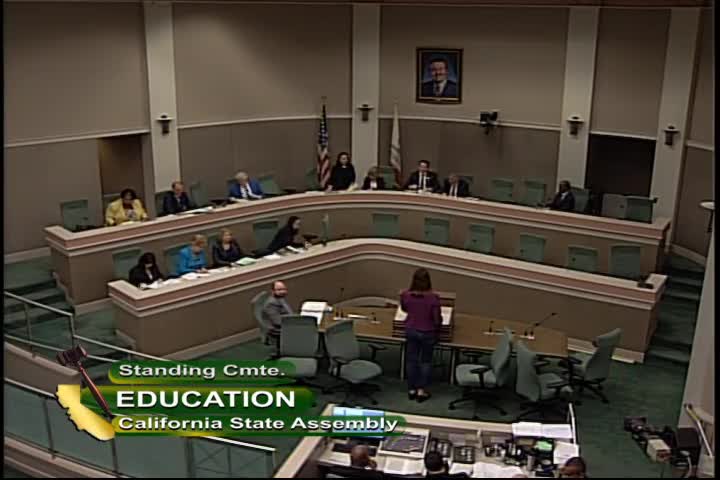 9MIN
Assembly Standing Committee on Education
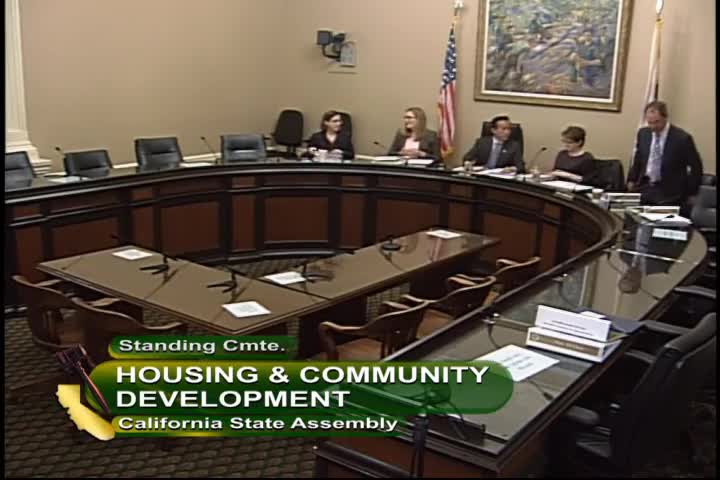 14MIN
Assembly Standing Committee on Housing and Community Development
Bill Author

Bill Co-Author(s):