AB 2839: Voter qualifications: domicile: sexually violent predators.
- Session Year: 2017-2018
- House: Assembly
- Latest Version Date: 2018-02-16
Existing law requires the Legislature to define residence and provide for registration and free elections for the purposes of voting in the state. Existing law defines a residence for voting purposes to mean a persons domicile, and provides that the domicile of a person is that place in which his or her habitation is fixed, wherein the person has the intention of remaining, and to which, whenever he or she is absent, the person has the intention of returning. Existing law provides that at a given time, a person may have only one domicile. Existing law provides that a person does not gain or lose a domicile solely by reason of his or her presence or absence from a place while kept in an asylum or prison.
Existing law defines sexually violent predator, for the purposes of, among other things, classifying persons for commitment to the custody of the State Department of State Hospitals for mental health treatment, as a person who has been convicted of a sexually violent offense against one or more victims and who has a diagnosed mental disorder that makes the person a danger to the health and safety of others in that it is likely that he or she will engage in sexually violent criminal behavior.
This bill would provide that the domicile of a person who has been adjudicated a sexually violent predator and who is committed for an indeterminate term to the custody of the department shall be the last known address of the person before his or her commitment.
The domicile of a person who has been adjudicated a sexually violent predator, as defined in Section 6600 of the Welfare and Institutions Code, and who is committed for an indeterminate term to the custody of the State Department of State Hospitals, shall be the last known address of the person before his or her commitment.
|
Date
|
Status
|
|---|---|
| Jun 14, 2018 | From committee: Without further action pursuant to Joint Rule 62(a). |
| May 9, 2018 | In committee: Set, first hearing. Failed passage. |
| Mar 8, 2018 | Referred to Com. on E. & R. |
| Feb 17, 2018 | From printer. May be heard in committee March 19. |
| Feb 16, 2018 | Read first time. To print. |
|
Date
|
Description
|
Location
|
Votes
|
|
|---|---|---|---|---|
| May 9, 2018 | Do pass. | Assembly Standing Committee on Elections and Redistricting |
Passed |
This list shows positions taken on this bill by organizations on the date displayed, which is linked to the original source.
Positions by individuals are not included.
|
Organization
|
Position
|
Date
|
|---|---|---|
| ACLU of California | * Against | May 9, 2018 |
| Alliance for Constitutional Sex Offense Laws | ** Against | May 7, 2018 |
| Association Of California Cities Allied With Public Safety | ** Support | May 7, 2018 |
| California Police Chiefs Association | ** Support | May 7, 2018 |
| California Public Defenders Association | ** Against | May 7, 2018 |
| Californians for Safety and Justice | ** Against | May 7, 2018 |
| City Of Coalinga | ** Support | May 7, 2018 |
| Disability Rights California | * Indeterminate | May 9, 2018 |
| Six Individuals | ** Against | May 7, 2018 |
Date of Hearing: May 9, 2018
ASSEMBLY COMMITTEE ON ELECTIONS AND REDISTRICTING
Marc Berman, Chair
ABPCA Bill Id:AB 2839 (
Author:Arambula) – As Introduced Ver:February 16, 2018
SUBJECT: Voter qualifications: domicile: sexually violent predators.
SUMMARY: Requires a person who has been adjudicated a sexually violent predator (SVP), as specified, and who is committed for an indeterminate term to the custody of the Department of State Hospitals (DSH), to be considered domiciled at the person's last known address before commitment to DSH.
EXISTING LAW:
- Requires an affidavit of voter registration to include the voter's place of residence.
- Provides that "residence" for voting purposes means a person's domicile.
- Describes the domicile of a person as that place in which his or her habitation is fixed, wherein the person has the intention of remaining, and to which, whenever he or she is absent, the person has the intention of returning.
- Describes the residence of a person as that place in which the person's habitation is fixed for some period of time, but wherein he or she does not have the intention of remaining.
- Provides that a person may have only one domicile at a given time, but may have more than one residence.
- Provides that a person who leaves his or her home to go into another state or precinct in the state for temporary purposes merely, with the intention of returning, does not lose his or her domicile.
- Provides that a person does not gain or lose a domicile solely by reason of his or her presence or absence from a place while kept in an almshouse, asylum, or prison.
- Establishes a rebuttable presumption, for a person who has more than one residence, that a residence in which the person has not resided within the immediate preceding year is not the person's domicile.
- Requires the Legislature to provide for the disqualification of electors while mentally incompetent or imprisoned or on parole for the conviction of a felony.
- Defines "sexually violent predator" as a person who has been convicted of a sexually violent offense against one or more victims and who has a diagnosed mental disorder that makes the person a danger to the health and safety of others in that it is likely that he or she will engage in sexually violent criminal behavior.
- Provides for the civil commitment of a prison inmate found to be an SVP after the person has served his or her prison sentence. Requires a person committed as an SVP to be provided with programming by DSH which shall afford the person with treatment for his or her diagnosed mental disorder.
- Permits a person committed as an SVP to be held for an indeterminate term upon commitment.
- Requires Coalinga State Hospital to be used whenever a person is committed to a secure facility for mental health treatment as an SVP, unless there are unique circumstances that would preclude the placement of a person at that facility.
FISCAL EFFECT: None. This bill is keyed non-fiscal by the Legislative Counsel.
COMMENTS:
- Purpose of the Bill: According to the author:
AB 2839 simply states that the voting domicile for a person who is classified as a sexually violent predator (SVP) and who is committed to an indeterminate term and in custody at a state hospital shall be the person's last known address or residence.
This bill will ensure that an SVP has to vote in the county and/or city where he or she last lived – before they were convicted of their sex offense – instead of the city/county where the state hospital is located. Court rulings have granted SVPs the right to vote, this measure clarifies the domicile of SVPs.
Existing law provides that a person does not gain or lose a domicile solely by reason of his or her presence or absence from a place while kept in an asylum or prison.
There are approximately 950 sexually violent predators in California that have been committed to indeterminate terms. All of them are housed at Coalinga State Hospital in Fresno County. Most of them, if not all of them, have no history of living in Fresno County or in the City of Coalinga.
Last year, the Coalinga City Council placed a measure on the ballot that would have increased the local sales tax by 1 percent. The sales tax was needed to address a budget deficit and would have allowed the city to retain 23 city positions, maintaining police officer and firefighter staffing levels.
The measure went before the voters in November 2017 and the sales tax measure failed by 37 votes, 582-545. According to the city, most of the state hospital's 304 registered voters voted against the tax.
As a result, the city was forced to cut the 23 positions and reduce the police force by about 25%.
The SVPs that voted against the ballot measure have absolutely no ties to Coalinga and no understanding of what the community needs. Instead, they made unreasonable demands for a shuttle service to the institution, access to taxi services and land for a visitor center.
It is unfortunate that the [SVPs] at the State Hospital were able to affect the outcome of an issue so important to the community – public safety. Their votes impacted the jobs of 23 police officers and fire fighters in a city that desperately needs them. The SVP are being housed at Coalinga State Hospital by court order and most, if not all of them, have never lived and probably never even visited Coalinga before being sent to the state institution.
- Sexually Violent Predators and Coalinga State Hospital: According to DSH, there are 35 sexually violent offenses that may qualify an individual as an SVP. By law, when an inmate in a California Department of Corrections and Rehabilitation (CDCR) facility with such a conviction comes within six months of parole, that inmate is referred to DSH for a mental health evaluation as a potential SVP. The criterion requires a diagnosable mental disorder and the likelihood that the person will engage in acts of sexual violence without appropriate in-custody treatment for their mental disorder.
Since 2012, state law has required individuals who are adjudicated as SVPs to be committed to Coalinga State Hospital unless there are unique circumstances that preclude the placement of a person at that facility. According to DSH, all male SVPs are treated at Coalinga State Hospital, and any female SVPs are treated at Patton State Hospital. As of April 30, 2018, DSH facilities housed 952 people who had been adjudicated as SVPs: 951 men housed at Coalinga State Hospital, and one woman housed at Patton State Hospital. In light of the state law governing the placement of individuals who are adjudicated as SVPs, it is likely that the vast majority of such individuals will continue to be housed at Coalinga State Hospital for the foreseeable future.
Not all individuals who have been committed to Coalinga State Hospital, however, are people who were adjudicated as SVPs. As of April 30, 2018, 951 of the 1315 patients at Coalinga State Hospital had been committed as SVPs. As currently drafted, this bill would not appear to change the determination of the domicile for voting purposes of patients at Coalinga State Hospital who were committed to the hospital for reasons other than adjudication as an SVP. It is likely, however, that a significant portion of the patients at Coalinga State Hospital who are not SVPs are ineligible to vote as a result of laws that provide for the disqualification of electors while mentally incompetent or while imprisoned on parole for the conviction of a felony. - Coalinga Annexation: Coalinga State Hospital is located on a 640-acre parcel of land owned by the State of California that also includes Pleasant Valley State Prison. That parcel, which is not contiguous with the primary land area that makes up the City of Coalinga, was annexed by Coalinga in 1999 after the approval of the Fresno County Local Agency Formation Commission (Fresno County LAFCO). Although state law generally prohibits territory from being annexed to a city unless it is contiguous to the city at the time the proposal is initiated, SB 2227 (Monteith), Chapter 590, Statutes of 1998, allowed the City of Coalinga to annex that parcel upon approval of the local agency formation commission.
When SB 2227 was enacted, Coalinga State Hospital had not yet been built, though the site was being considered as a potential location for a high-security state hospital. Pleasant Valley State Prison, however, was in operation on that parcel of land at the time of annexation. According to legislative analyses of SB 2227, the provision allowing the City of Coalinga to annex the parcel of land including the Pleasant Valley State Prison was similar to state laws that allowed nine other cities to annex noncontiguous land containing a nearby correctional facility. Legislative analyses, media reports, and written minutes from the Fresno County LAFCO meeting at which the annexation was approved indicate that the annexation of the prison site by the City of Coalinga resulted in an increase in state tax subventions to the city, since those subventions are based on population and the addition of the prisoners housed at Pleasant Valley State Prison increased Coalinga's population by nearly 80%. - Sexually Violent Predators and Voting Rights: Under California law, any person who is imprisoned or on parole for conviction of a felony is prohibited from voting. The term "imprisoned" is defined as serving a state or federal prison sentence, and "parole" is defined as a term of supervision by CDCR. While a person must have been convicted of a felony in order to be adjudicated as an SVP, a person does not get adjudicated as an SVP and committed to a state hospital until after their term of imprisonment for the felony conviction has ended, and the process of adjudicating a person as an SVP is not a criminal process, but rather a civil commitment process. As a result, individuals who have been committed to state hospitals as a result of being adjudicated as SVPs typically have the right to vote if they otherwise meet the eligibility criteria in state law.
- Domicile of Sexually Violent Predators: Some of the opponents have questioned whether this bill, by specifying that an SVP’s domicile for voting purposes is the last known address for the person prior to commitment to a state hospital, may prevent an SVP from voting altogether, since an SVP may not qualify as a legal resident at their last known address. Because this bill specifies that the last known address is the SVP’s domicile, however, this bill appears to provide a legal basis for an SVP to vote at that address even if the person otherwise would not be considered to be a legal resident at that address. Notwithstanding that fact, requiring an SVP to be considered to be domiciled at his or her last known address prior to commitment to a state hospital may create challenges for implementation, and may result in situations where the only legal address for an SVP for voting purposes is an address to which they no longer have any connection.
As detailed above, the process for determining whether a person is an SVP who will be committed to a state hospital generally occurs during the last six months of that person's term of imprisonment in state prison. If, as part of that process, DSH requests that a person be committed as an SVP, that person generally is detained in a secure facility until the adjudication process is completed. As a result, people who are adjudicated as SVPs typically go straight from the custody of CDCR to being held by DSH. Furthermore, people who have been adjudicated as SVPs often spend an extended period of time in a state hospital, and most individuals who have been adjudicated as SVPs have not been released, either conditionally or unconditionally. According to information from DSH, since 2006, there have been 1,058 patients committed to Coalinga State Hospital as a result of being adjudicated as SVPs. During that same period of time, 179 SVPs were unconditionally released and 41 were conditionally released from Coalinga State Hospital.
This bill requires the domicile for voting purposes of an SVP to be the last known address of the person before his or her commitment to a state hospital. In light of the information above, in most cases, the last location where an SVP lived prior to being committed to a state hospital typically was a state prison. Arguably, then, the last known address prior to commitment to a state hospital for most SVPs will be a state prison. It is unclear whether the intent of this bill is to require SVPs who wish to register to vote to register at the state prison at which they were incarcerated prior to being committed to a state hospital. Because state prisoners typically are ineligible to vote while they are in prison, this bill could create the unusual situation that the only people eligible to register to vote using the address of state prisons are SVPs who are no longer housed at those prisons.
Even if this bill does not require SVPs to use the address of a state prison when registering to vote, however, it does present questions about how this bill would be implemented. Given the length of time that may have passed since an SVP last lived anywhere other than a state hospital or a state prison, the last known address that an SVP would use for voting purposes under this bill may be an address to which the SVP no longer has any connection. The individuals living at that address may have no relation to or connection with the SVP. In some circumstances, the address may no longer be a residential address at all (or may no longer exist). Furthermore, in situations where SVPs no longer have a connection to the address that would be considered their domicile under this bill, those individuals may have little connection to or interest in the candidates and ballot measures for which they are eligible to vote based on the domicile that would be established by this bill.
- Pending Election Contest: As detailed in the author's statement above, last November, voters in the City of Coalinga voted on a ballot measure that would have increased the local sales tax by one percent. That measure—which required a majority of votes in order to pass—failed, with 545 votes in favor and 582 votes against the measure (approximately 48% in favor to 52% against).
On December 14, 2017, the five members of the Coalinga City Council filed an election contest in Fresno County Superior Court challenging the results of the vote on the tax measure, both in their personal and official capacities. That election contest alleges that not all patients at Coalinga State Hospital are domiciled in the City of Coalinga because they do not have a fixed habitation in the City, nor do they intend to remain in the City of Coalinga, and therefore the ballots cast by those patients were illegal. According to a statement of stipulated facts that were filed with the court as part of the election contest, as of November 7, 2017 (the date of the election on the tax measure), there were 322 patients at Coalinga State Hospital who were registered to vote, of which 178 cast ballots in the election. Because the Coalinga State Hospital comprises its own precinct, the results for that precinct reflect the votes of the 178 patient-voters who participated in the election on the tax measure. In all, 50 patient-voters voted in favor of the measure, and 127 patient-voters voted against the measure.
According to the contestants' brief in support of the election contest, only 35 patients at Coalinga State Hospital were domiciled in Fresno County prior to their commitment to the Hospital (DSH records specify the county of domicile for patients prior to their commitment to the state hospital, but not the city of domicile). The contestants note that even if all 35 of those patients were domiciled in Coalinga prior to their commitment, and even if all 35 voted against the tax measure, the tax measure would have passed if the votes of all other patient-voters at Coalinga State Hospital were disqualified on the grounds that those patient-voters were not domiciled in Fresno County (and thus, could not have been domiciled in the City of Coalinga).
On April 27, 2018, the Fresno County Superior Court heard arguments in the election contest, and took the case under advisement. The court had not issued a ruling in the election contest at the time this committee analysis was prepared. - Arguments in Support: In support of this bill, the California Police Chiefs Association writes:
California citizens are allowed to vote in local and statewide elections even those who have been classified as SVPs; however, if the SVP is in custody at a state hospital they should be allowed to vote from their last known address rather than from their current area of residence. Most patients in these cases have never lived in the location of their residency and should not be allowed to cast a vote on local matters while in custody.
- Arguments in Opposition: In opposition to this bill, the American Civil Liberties Union of California writes:
AB 2839 creates an intentionally fabricated domicile for a subset of California voters in order to exclude them from voting in the communities where they reside because of their civil commitment status. Under current law, SVPs have the option to register to vote at their previous domicile. However, given the significant lengths of time that SVPs are civilly committed, combined with the fact that this commitment follows their often-lengthy criminal incarceration, requiring their domicile to be their last known address is unsound public policy. Under this bill, state hospital patients may be effectively disenfranchised because they have nowhere to register to vote. Unless they happen to be from the area where their state hospital is located, they do not reside in their old communities and are likely not impacted by local policies and the decisions of local elected officials. A state hospital patient's last known address also may no longer physically exist and they may no longer have any family or community ties to that jurisdiction.
The bill also appears to be an attempt to punish voters because of the way they voted in a divisive local election. In November 2017, there was a tightly contested ballot measure in the City of Coalinga, where the Coalinga State Hospital is located. The measure sought to impose a one-cent sales tax on Coalinga residents. The measure would have affected purchases by hospital patients at Coalinga State Hospital. A representative group of these patients sent a letter to the city manager with concerns, as well as a list of needs of these patients, which the city declined to address. The patient group recommended a "no" vote, and the measure subsequently failed by just 33 votes (578 votes against to 545 in favor). Patients at Coalinga State Hospital publicly took credit for helping to defeat the measure.
REGISTERED SUPPORT / OPPOSITION:
Support
Association of California Cities Allied with Public Safety
California Police Chiefs Association
City of Coalinga
Opposition
Alliance for Constitutional Sex Offense Laws
American Civil Liberties Union of California
California Public Defenders Association
Californians for Safety and Justice
Disability Rights California
Six individuals
Analysis Prepared by: Ethan Jones / E. & R. / (916) 319-2094
Discussed in Hearing
 54MIN
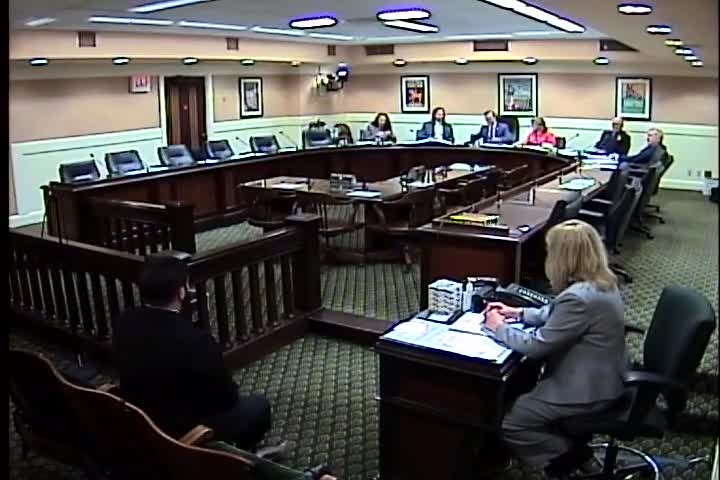
Assembly Standing Committee on Elections and Redistricting
Bill Author

Bill Co-Author(s):