AB 3176: Indian children.
- Session Year: 2017-2018
- House: Assembly
- Latest Version Date: 2018-09-27
(1)Existing federal law, the Indian Child Welfare Act of 1978 (ICWA), governs the proceedings for determining the placement of an Indian child when that child is removed from the custody of his or her parent or guardian. Existing law specifies that the state is committed to protecting the essential tribal relations and best interest of an Indian child by promoting practices in accordance with ICWA. Existing law requires a court in all Indian child custody proceedings to, among other things, comply with ICWA. Under existing law, a determination by an Indian tribe that an unmarried person who is under 18 years of age, is either a member of an Indian tribe, or is eligible for membership in an Indian tribe and a biological child of a member of an Indian tribe, constitutes a significant political affiliation with the tribe and requires application of ICWA to the proceedings.
Under existing law, a court, a county welfare department, and the probation department have an affirmative and continuing duty to inquire as to whether a child is or may be an Indian child in all dependency proceedings and in any juvenile wardship proceeding if the child is at risk of entering foster care or is in foster care. Under existing law, if a court, social worker, or probation officer knows or has reason to know that an Indian child is involved in a custody proceeding, a notice meeting specified requirements is required to be sent to the minors parents or legal guardian, Indian custodian, and the minors tribe. Existing law also requires the notice to be sent to all tribes of which the child may be a member or eligible for membership, as provided.
In accordance with federal law, this bill would revise and recast those provisions. Among other things, the bill would revise the specific steps a social worker, probation officer, or court is required to take in making an inquiry of a childs possible status as an Indian child. The bill would also revise the various notice requirements that are mandated during an Indian child custody proceeding, including a proceeding for an emergency removal of an Indian child from the custody of his or her parents or Indian custodian. The bill would require the State Department of Social Services to adopt any regulations necessary to implement these provisions, and would require the Judicial Council to adopt any forms or rules of court necessary to implement these provisions. The bill would make other conforming changes.
(2)This bill would incorporate additional changes to Section 212.5 of the Welfare and Institutions Code proposed by AB 1930 to be operative only if this bill and AB 1930 are enacted and this bill is enacted last.
(3)This bill would incorporate additional changes to Section 361.2 of the Welfare and Institutions Code proposed by AB 1930 to be operative only if this bill and AB 1930 are enacted and this bill is enacted last.
(4)By increasing the duties on county welfare departments, this bill would impose a state-mandated local program.
The California Constitution requires the state to reimburse local agencies and school districts for certain costs mandated by the state. Statutory provisions establish procedures for making that reimbursement.
This bill would provide that no reimbursement is required by this act for a specified reason.
(1)Existing federal law, the Indian Child Welfare Act of 1978 (ICWA), governs the proceedings for determining the placement of an Indian child when that child is removed from the custody of his or her parent or guardian. Existing law specifies that the state is committed to protecting the essential tribal relations and best interest of an Indian child by promoting practices in accordance with ICWA. Existing law requires a court in all Indian child custody proceedings to, among other things, comply with ICWA. Under existing law, a determination by an Indian tribe that an unmarried person who is under 18 years of age, is either a member of an Indian tribe, or is eligible for membership in an Indian tribe and a biological child of a member of an Indian tribe, constitutes a significant political affiliation with the tribe and requires application of ICWA to the proceedings.
Under existing law, a court, a county welfare department, and the probation department have an affirmative and continuing duty to inquire as to whether a child is or may be an Indian child in all dependency proceedings and in any juvenile wardship proceeding if the child is at risk of entering foster care or is in foster care. Under existing law, if a court, social worker, or probation officer knows or has reason to know that an Indian child is involved in a custody proceeding, a notice meeting specified requirements is required to be sent to the minors parents or legal guardian, Indian custodian, and the minors tribe. Existing law also requires the notice to be sent to all tribes of which the child may be a member or eligible for membership, as provided.
In accordance with federal law, this bill would revise and recast those provisions. Among other things, the bill would revise the specific steps a social worker, probation officer, or court is required to take in making an inquiry of a childs possible status as an Indian child. The bill would also revise the various notice requirements that are mandated during an Indian child custody proceeding, including a proceeding for an emergency removal of an Indian child from the custody of his or her parents or Indian custodian. The bill would require the State Department of Social Services to adopt any regulations necessary to implement these provisions, and would require the Judicial Council to adopt any forms or rules of court necessary to implement these provisions. The bill would make other conforming changes.
(2)This bill would incorporate additional changes to Section 212.5 of the Welfare and Institutions Code proposed by AB 1930 to be operative only if this bill and AB 1930 are enacted and this bill is enacted last.
(3)This bill would incorporate additional changes to Section 361.2 of the Welfare and Institutions Code proposed by AB 1930 to be operative only if this bill and AB 1930 are enacted and this bill is enacted last.
By(4)By increasing the duties on county welfare departments, this bill would impose a state-mandated local program.
The California Constitution requires the state to reimburse local agencies and school districts for certain costs mandated by the state. Statutory provisions establish procedures for making that reimbursement.
This bill would provide that no reimbursement is required by this act for a specified reason.
Existing federal law, the Indian Child Welfare Act of 1978 (ICWA), governs the proceedings for determining the placement of an Indian child when that child is removed from the custody of his or her parent or guardian. Existing law specifies that the state is committed to protecting the essential tribal relations and best interest of an Indian child by promoting practices in accordance with ICWA. Existing law requires a court in all Indian child custody proceedings to, among other things, comply with ICWA. Under existing law, a determination by an Indian tribe that an unmarried person who is under 18 years of age, is either a member of an Indian tribe, or is eligible for membership in an Indian tribe and a biological child of a member of an Indian tribe, constitutes a significant political affiliation with the tribe and requires application of ICWA to the proceedings.
Under existing law, a court, a county welfare department, and the probation department have an affirmative and continuing duty to inquire as to whether a child is or may be an Indian child in all dependency proceedings and in any juvenile wardship proceeding if the child is at risk of entering foster care or is in foster care. Under existing law, if a court, social worker, or probation officer knows or has reason to know that an Indian child is involved in a custody proceeding, a notice meeting specified requirements is required to be sent to the minors parents or legal guardian, Indian custodian, and the minors tribe. Existing law also requires the notice to be sent to all tribes of which the child may be a member or eligible for membership, as provided.
In accordance with federal law, this bill would revise and recast those provisions. Among other things, the bill would revise the specific steps a social worker, probation officer, or court is required to take in making an inquiry of a childs possible status as an Indian child. The bill would also revise the various notice requirements that are mandated during an Indian child custody proceeding, including a proceeding for an emergency removal of an Indian child from the custody of his or her parents or Indian custodian. The bill would require the State Department of Social Services to adopt any regulations necessary to implement these provisions, and would require the Judicial Council to adopt any forms or rules of court necessary to implement these provisions. The bill would make other conforming changes.
By increasing the duties on county welfare departments, the this bill would impose a state-mandated local program.
The California Constitution requires the state to reimburse local agencies and school districts for certain costs mandated by the state. Statutory provisions establish procedures for making that reimbursement.
This bill would provide that no reimbursement is required by this act for a specified reason.
Existing federal law, the Indian Child Welfare Act of 1978 (ICWA), governs the proceedings for determining the placement of an Indian child when that child is removed from the custody of his or her parent or guardian. Existing law specifies that the state is committed to protecting the essential tribal relations and best interest of an Indian child by promoting practices in accordance with ICWA. Existing law requires a court in all Indian child custody proceedings to, among other things, comply with ICWA. Under existing law, a determination by an Indian tribe that an unmarried person who is under 18 years of age, is either a member of an Indian tribe, or is eligible for membership in an Indian tribe and a biological child of a member of an Indian tribe, constitutes a significant political affiliation with the tribe and requires application of ICWA to the proceedings.
Under existing law, if an Indian child is a member of more than one tribe or is eligible for membership in more than one tribe, the court is required to make a determination, in writing together with the reasons for it, as to which tribe is the Indian childs tribe for purposes of an Indian child custody proceeding. Existing law requires the court to make that determination based on specified factors relating to his or her tribal membership, as specified.In accordance with federal law, this bill would revise and recast those provisions. Among other things, the bill would instead require, in the case that the Indian child may be placed with more than one tribe, that deference be given to the tribe of which the Indian child is already a member or citizen, unless otherwise agreed to by the tribes. If the child is a member or citizen of more than one tribe, the bill would authorize the tribes to reach an agreement on placement, as specified. Upon the failure to make an agreement, the bill would require the state court to consider certain factors with regard to placement, as specified.(2)Under existing law, if a court, social worker, or probation officer knows or has reason to know that an Indian child is involved in a custody proceeding, a notice meeting specified requirements is required to be sent to the minors parents or legal guardian, Indian custodian, and the minors tribe. Existing law also requires the notice to be sent to all tribes of which the child may be a member or eligible for membership, as provided.This bill would require the party seeking placement of the child to send notice of specified hearings to each tribe in which a child may be a member or citizen or is eligible for membership or citizenship, as specified, to the childs parents, and the childs Indian custodian.(3)Existing law also requires notice of an Indian child custody proceeding to be sent to the Sacramento Area Director of the Bureau of Indian Affairs, and if the identity or location of the parents, Indian custodians, or the tribe is known, a copy of the notice is required to be sent to the Secretary of the Interior, unless the secretary waives notice.The bill would require the notice to be sent to the Pacific Regional Office of the Bureau of Indian Affairs, and would require the notice to all of the parties described above to include additional information, including the time, date, and location of any scheduled hearings, and the name of the petitioner and the name and address of the petitioners attorney.(4)Under existing law, a court, a county welfare department, and the probation department have an affirmative and continuing duty to inquire whether a child is or may be an Indian child in all dependency proceedings and in any juvenile wardship proceeding if the child is at risk of entering foster care or is in foster care.This bill would provide that when a child is taken into temporary custody the child welfare agency has a duty to determine whether that child is an Indian child, as specified, and would set forth specific steps a social worker, probation officer, or court is further required to take in making an inquiry of a child who is the subject of an Indian child custody proceeding.(5)Existing law provides that a person who meets certain characteristics is most likely to meet the requirements of a qualified expert witness for purposes of Indian child custody proceedings.This bill would add to the list of qualified expert witnesses a person designated by the Indian childs tribe as being qualified to testify to the prevailing social and cultural standards of the Indian childs tribe.(6)Existing law sets forth placement preferences for an Indian child who is removed from the physical custody of his or her parents or Indian custodian parents. Existing law authorizes a court to determine that good cause exists not to follow those placement preferences.Among other things, this bill would require that, if a party asserts that good cause exists to not follow the placement preferences, the reason for that belief or assertion shall be stated orally on the record or provided in writing to the court and to the parties to the Indian child custody proceeding. The bill would require the person seeking departure from the placement preferences to bear the burden of proof, as provided.Under existing law, a court, a county welfare department, and the probation department have an affirmative and continuing duty to inquire as to whether a child is or may be an Indian child in all dependency proceedings and in any juvenile wardship proceeding if the child is at risk of entering foster care or is in foster care. Under existing law, if a court, social worker, or probation officer knows or has reason to know that an Indian child is involved in a custody proceeding, a notice meeting specified requirements is required to be sent to the minors parents or legal guardian, Indian custodian, and the minors tribe. Existing law also requires the notice to be sent to all tribes of which the child may be a member or eligible for membership, as provided.
In accordance with federal law, this bill would revise and recast those provisions. Among other things, the bill would revise the specific steps a social worker, probation officer, or court is required to take in making an inquiry of a childs possible status as an Indian child. The bill would also revise the various notice requirements that are mandated during an Indian child custody proceeding, including a proceeding for an emergency removal of an Indian child from the custody of his or her parents or Indian custodian. The bill would make other conforming changes.
(7)ByBy increasing the duties on county welfare departments, the bill would impose a state-mandated local program.
The California Constitution requires the state to reimburse local agencies and school districts for certain costs mandated by the state. Statutory provisions establish procedures for making that reimbursement.
This bill would provide that no reimbursement is required by this act for a specified reason.
(1)Existing federal law, the Indian Child Welfare Act of 1978 (ICWA), governs the proceedings for determining the placement of an Indian child when that child is removed from the custody of his or her parent or guardian. Existing law specifies that the state is committed to protecting the essential tribal relations and best interest of an Indian child by promoting practices in accordance with ICWA. Existing law requires a court in all Indian child custody proceedings to, among other things, comply with ICWA. Under existing law, a determination by an Indian tribe that an unmarried person who is under 18 years of age, is either a member of an Indian tribe, or is eligible for membership in an Indian tribe and a biological child of a member of an Indian tribe, constitutes a significant political affiliation with the tribe and requires application of ICWA to the proceedings.
Under existing law, if an Indian child is a member of more than one tribe or is eligible for membership in more than one tribe, the court is required to make a determination, in writing together with the reasons for it, as to which tribe is the Indian childs tribe for purposes of an Indian child custody proceeding. Existing law requires the court to make that determination based on specified factors relating to his or her tribal membership, as specified.
In accordance with federal law, this bill would revise and recast those provisions. Among other things, the bill would instead require, in the case that the Indian child may be placed with more than one tribe, that deference be given to the tribe of which the Indian child is already a member or citizen, unless otherwise agreed to by the tribes. If the child is a member or citizen of more than one tribe, the bill would authorize the tribes to reach an agreement on placement, as specified. Upon the failure to make an agreement, the bill would require the state court to consider certain factors with regard to placement, as specified.
Under(2)Under existing law, if a court, social worker, or probation officer knows or has reason to know that an Indian child is involved in a custody proceeding, a notice meeting specified requirements is required to be sent to the minors parents or legal guardian, Indian custodian, and the minors tribe. Existing law also requires the notice to be sent to all tribes of which the child may be a member or eligible for membership, as provided.
This bill would require the party seeking placement of the child to send notice of specified hearings to each tribe in which a child may be a member or citizen or is eligible for membership or citizenship if a biological parent is a member or citizen, citizenship, as specified, to the childs parents, and the childs Indian custodian, if applicable. custodian.
(2)(3)Existing law also requires notice of an Indian child custody proceeding to be sent to the Sacramento Area Director of the Bureau of Indian Affairs, and if the identity or location of the parents, Indian custodians, or the tribe is known, a copy of the notice is required to be sent to the Secretary of the Interior, unless the secretary waives notice.
The bill would require the notice to be sent to the Pacific Regional Office of the Bureau of Indian Affairs, and would require the notice to all of the parties described above to include additional information, including the time, date, and location of any scheduled hearings, and the name of the petitioner and the name and address of the petitioners attorney, and a notice that all parties are required to keep confidential the information contained in the notice. The bill would prohibit an Indian child custody proceeding from being held until at least 10 days after receipt of the notice by the parent, Indian custodian, tribe, or secretary. attorney.
(3)(4)Under existing law, a court, a county welfare department, and the probation department have an affirmative and continuing duty to inquire whether a child is or may be an Indian child in all dependency proceedings and in any juvenile wardship proceeding if the child is at risk of entering foster care or is in foster care.
This bill would declare that the duty to inquire begins upon the entitys first contact with the family provide that when a child is taken into temporary custody the child welfare agency has a duty to determine whether that child is an Indian child, as specified, and would set forth specific steps a social worker, probation officer, or court is further required to take to make that inquiry. in making an inquiry of a child who is the subject of an Indian child custody proceeding.
(4)Existing law requires a state or local authority who removes an Indian child, who is a ward of a tribal court, or who resides or is domiciled within a reservation of an Indian tribe that has exclusive jurisdiction over child custody proceedings, from the custody of his or her parents or Indian custodian to provide a notice of the removal to the tribe no later than the next working day following the removal of the child, as provided. Under existing law, if the tribe determines that the child is an Indian child, the state or local authority is required to transfer the child custody proceeding to the tribe within 24 hours after receipt of written notice from the tribe, unless the court finds good cause to deny the petition to transfer, as specified.This bill instead would require a court, if either the childs residence or domicile is on a reservation of which the tribe exercises exclusive jurisdiction over Indian child custody proceedings, or if a child is a ward of a tribal court to, upon confirmation from the tribal court, dismiss the state court Indian child custody proceeding and ensure that the tribal court is sent all information regarding the proceeding, unless the court determines that certain criteria are met, including that either parent objects to the transfer, the tribal court declines the transfer, or good cause exists to deny the transfer.(5)Existing law authorizes an emergency removal of an Indian child who is a ward of a tribal court or who resides or is domiciled within a reservation of an Indian tribe, but is temporarily located off the reservation, from a parent or Indian custodian, in order to prevent imminent physical damage or harm to the child.This bill would require a petition for a court order authorizing an emergency removal or continued emergency placement to contain a statement of the risk of imminent physical damage or harm to the Indian child, as specified. The bill would require the emergency removal or placement of an Indian child to terminate immediately if the removal or placement is no longer necessary to prevent imminent physical damage or harm to the child, as provided.(5)Existing law provides that a person who meets certain characteristics is most likely to meet the requirements of a qualified expert witness for purposes of Indian child custody proceedings.
This bill would add to the list of qualified expert witnesses a person designated by the Indian childs tribe as being qualified to testify to the prevailing social and cultural standards of the Indian childs tribe.
(6)Existing law sets forth placement preferences for an Indian child who is removed from the physical custody of his or her parents or Indian custodian parents. Existing law authorizes a court to determine that good cause exists not to follow those placement preferences.
ThisAmong other things, this bill would require that, if a party asserts that good cause exists to not follow the placement preferences, the reason for that belief or assertion shall be stated orally on the record or provided in writing to the court and to the parties to the Indian child custody proceeding. The bill would require the person seeking departure from the placement preferences to bear the burden of proof, as provided.
(7)By increasing the duties on county welfare departments, the bill would impose a state-mandated local program.
The California Constitution requires the state to reimburse local agencies and school districts for certain costs mandated by the state. Statutory provisions establish procedures for making that reimbursement.
This bill would provide that no reimbursement is required by this act for a specified reason.
(1)Existing federal law, the Indian Child Welfare Act of 1978 (ICWA), governs the proceedings for determining the placement of an Indian child when that child is removed from the custody of his or her parent or guardian. Existing law specifies that the state is committed to protecting the essential tribal relations and best interest of an Indian child by promoting practices in accordance with ICWA. Existing law requires a court in all Indian child custody proceedings to, among other things, comply with ICWA. Under existing law, a determination by an Indian tribe that an unmarried person who is under 18 years of age, is either a member of an Indian tribe, or is eligible for membership in an Indian tribe and a biological child of a member of an Indian tribe, constitutes a significant political affiliation with the tribe and requires application of ICWA to the proceedings.
Under existing law, if a court, social worker, or probation officer knows or has reason to know that an Indian child is involved in a custody proceeding, a notice meeting specified requirements is required to be sent to the minors parents or legal guardian, Indian custodian, and the minors tribe. Existing law also requires the notice to be sent to all tribes of which the child may be a member or eligible for membership, as provided.
This bill would require the party seeking placement of the child to send notice of specified hearings to each tribe in which a child may be a member or citizen or is eligible for membership or citizenship if a biological parent is a member, member or citizen, to the childs parents, and the childs Indian custodian, if applicable.
(2)Existing law also requires notice of an Indian child custody proceeding to be sent to the Sacramento Area Director of the Bureau of Indian Affairs, and if the identity or location of the parents, Indian custodians, or the tribe is known, a copy of the notice is required to be sent to the Secretary of the Interior, unless the secretary waives notice.
The bill would instead require notice to be sent to the appropriate Bureau of Indian Affairs regional director if the identity or location of the parents, Indian custodian, or tribe cannot be ascertained. The bill would require the notice to include additional information, including the name of the petitioner and the name and address of the petitioners attorney, and a notice that all parties are required to keep confidential the information contained in the notice. The bill would prohibit an Indian child custody proceeding from being held until at least 10 days after receipt of the notice by the parent, Indian custodian, tribe, or secretary.
(3)Under existing law, a court, a county welfare department, and the probation department have an affirmative and continuing duty to inquire whether a child is or may be an Indian child in all dependency proceedings and in any juvenile wardship proceeding if the child is at risk of entering foster care or is in foster care.
This bill would require those entities to inquire if a child is or may be an Indian child on the record at specified hearings. The bill would declare that the duty to inquire begins at the earliest possible moment upon the entitys first contact with the family and would set forth specific steps a social worker, probation officer, or court is required to take to make that inquiry.
(4)Existing law requires a state or local authority who removes an Indian child, who is a ward of a tribal court, or who resides or is domiciled within a reservation of an Indian tribe that has exclusive jurisdiction over child custody proceedings, from the custody of his or her parents or Indian custodian to provide a notice of the removal to the tribe no later than the next working day following the removal of the child, as provided. Under existing law, if the tribe determines that the child is an Indian child, the state or local authority is required to transfer the child custody proceeding to the tribe within 24 hours after receipt of written notice from the tribe, unless the court finds good cause to deny the petition to transfer, as specified.
This bill instead would require a court, if either the childs residence or domicile is on a reservation of which the tribe exercises exclusive jurisdiction over Indian child custody proceedings, or if a child is a ward of a tribal court, to court to, upon confirmation from the tribal court, dismiss the state court Indian child custody proceeding and ensure that the tribal court is sent all information regarding the proceeding, unless the court determines that certain criteria are met, including that either parent objects to the transfer, the tribal court declines the transfer, or good cause exists to deny the transfer.
(5)Existing law authorizes an emergency removal of an Indian child who is a ward of a tribal court or who resides or is domiciled within a reservation of an Indian tribe, but is temporarily located off the reservation, from a parent or Indian custodian, in order to prevent imminent physical damage or harm to the child.
This bill would require a petition for a court order authorizing an emergency removal or continued emergency placement to contain a statement of the risk of imminent physical damage or harm to the Indian child, as specified. The bill would require the emergency removal or placement of an Indian child to terminate immediately if the removal or placement is no longer necessary to prevent imminent physical damage or harm to the child, as provided.
(6)Existing law sets forth placement preferences for an Indian child who is removed from the physical custody of his or her parents or Indian custodian parents. Existing law authorizes a court to determine that good cause exists not to follow those placement preferences.
This bill would require that, if a party asserts that good cause exists to not follow the placement preferences, the reason for that belief or assertion shall be stated orally on the record or provided in writing to the court and to the parties to the Indian child custody proceeding. The bill would require the person seeking departure from the placement preferences to bear the burden of proof, as provided.
(7)By increasing the duties on county welfare departments, the bill would impose a state-mandated local program.
The California Constitution requires the state to reimburse local agencies and school districts for certain costs mandated by the state. Statutory provisions establish procedures for making that reimbursement.
This bill would provide that no reimbursement is required by this act for a specified reason.
(1)Existing federal law, the Indian Child Welfare Act of 1978 (ICWA), governs the proceedings for determining the placement of an Indian child when that child is removed from the custody of his or her parent or guardian. Existing law specifies that the state is committed to protecting the essential tribal relations and best interest of an Indian child by promoting practices in accordance with ICWA. Existing law requires a court in all Indian child custody proceedings to, among other things, comply with ICWA. Under existing law, a determination by an Indian tribe that an unmarried person who is under 18 years of age, is either a member of an Indian tribe, or is eligible for membership in an Indian tribe and a biological child of a member of an Indian tribe, constitutes a significant political affiliation with the tribe and requires application of ICWA to the proceedings.
Under existing law, if a court, social worker, or probation officer knows or has reason to know that an Indian child is involved in a custody proceeding, a notice meeting specified requirements is required to be sent to the minors parents or legal guardian, Indian custodian, and the minors tribe. Existing law also requires the notice to be sent to all tribes of which the child may be a member or eligible for membership, as provided.
This bill would require the party seeking placement of the child to send notice of specified hearings to each tribe in which a child may be a member or is eligible for membership if a biological parent is a member, to the childs parents, and the childs Indian custodian, if applicable.
(2)Existing law also requires notice of an Indian child custody proceeding to be sent to the Sacramento Area Director of the Bureau of Indian Affairs, and if the identity or location of the parents, Indian custodians, or the tribe is known, a copy of the notice is required to be sent to the Secretary of the Interior, unless the secretary waives notice.
The bill would instead require notice to be sent to the appropriate Bureau of Indian Affairs regional director if the identity or location of the parents, Indian custodian, or tribe cannot be ascertained. The bill would require the notice to include additional information, including the name of the petitioner and the name and address of the petitioners attorney, and a notice that all parties are required to keep confidential the information contained in the notice. The bill would prohibit an Indian child custody proceeding from being held until at least 10 days after receipt of the notice by the parent, Indian custodian, tribe, or secretary.
(3)Under existing law, a court, a county welfare department, and the probation department have an affirmative and continuing duty to inquire whether a child is or may be an Indian child in all dependency proceedings and in any juvenile wardship proceeding if the child is at risk of entering foster care or is in foster care.
This bill would require those entities to inquire if a child is or may be an Indian child on the record at specified hearings. The bill would declare that the duty to inquire begins at the earliest possible moment and would set forth specific steps a social worker, probation officer, or court is required to take to make that inquiry.
(4)Existing law requires a state or local authority who removes an Indian child, who is a ward of a tribal court, or who resides or is domiciled within a reservation of an Indian tribe that has exclusive jurisdiction over child custody proceedings, from the custody of his or her parents or Indian custodian to provide a notice of the removal to the tribe no later than the next working day following the removal of the child, as provided. Under existing law, if the tribe determines that the child is an Indian child, the state or local authority is required to transfer the child custody proceeding to the tribe within 24 hours after receipt of written notice from the tribe, unless the court finds good cause to deny the petition to transfer, as specified.
This bill instead would require a court, if either the childs residence or domicile is on a reservation of which the tribe exercises exclusive jurisdiction over child custody proceedings, or if a child is a ward of a tribal court, to dismiss the state court child custody proceeding and ensure that the tribal court is sent all information regarding the proceeding, unless the court determines that certain criteria are met, including that either parent objects to the transfer, the tribal court declines the transfer, or good cause exists to deny the transfer.
(5)Existing law authorizes an emergency removal of an Indian child who is a ward of a tribal court or who resides or is domiciled within a reservation of an Indian tribe, but is temporarily located off the reservation, from a parent or Indian custodian, in order to prevent imminent physical damage or harm to the child.
This bill would require a petition for a court order authorizing an emergency removal or continued emergency placement to contain a statement of the risk of imminent physical damage or harm to the Indian child, as specified. The bill would require the emergency removal or placement of an Indian child to terminate immediately if the removal or placement is no longer necessary to prevent imminent physical damage or harm to the child, as provided.
(6)Existing law sets forth placement preferences for an Indian child who is removed from the physical custody of his or her parents or Indian custodian parents. Existing law authorizes a court to determine that good cause exists not to follow those placement preferences.
This bill would require that, if a party asserts that good cause exists to not follow the placement preferences, the reason for that belief or assertion shall be stated orally on the record or provided in writing to the court and to the parties to the child custody proceeding. The bill would require the person seeking departure from the placement preferences to bear the burden of proof, as provided.
(7)By increasing the duties on county welfare departments, the bill would impose a state-mandated local program.
The California Constitution requires the state to reimburse local agencies and school districts for certain costs mandated by the state. Statutory provisions establish procedures for making that reimbursement.
This bill would provide that no reimbursement is required by this act for a specified reason.
Unless otherwise provided by law, a document in a juvenile court matter may be filed and served electronically as prescribed by Section 1010.6 of the Code of Civil Procedure, under the following conditions:
(a)Electronic service is authorized only if the county and the court permit electronic service.
(b)(1)On or before December 31, 2018, electronic service on a party or other person is permitted only if the party or other person has consented to accept electronic service in that specific action. A party or other person may subsequently withdraw its consent to electronic service.
(2)On or after January 1, 2019, electronic service on a party or other person is permitted only if the party or other person has expressly consented, as provided in Section 1010.6 of the Code of Civil Procedure. A party or other person may subsequently withdraw its consent to electronic service by completing the appropriate Judicial Council form.
(c)Consent, or the withdrawal of consent, to receive electronic service may be completed by a party or other person entitled to service, or that persons attorney.
(d)Electronic service shall be provided in the following manner:
(1)Electronic service is not permitted on any party or person who is under 10 years of age.
(2)Electronic service is not permitted on any party or person who is between 10 years of age and 15 years of age without the express consent of the minor and the minors attorney.
(3)Electronic service shall be permitted on any party or person who is 16 to 18 years of age only if the minor, after consultation with his or her attorney, consents. By January 1, 2019, the Judicial Council shall develop a rule of court on the duties of the minors attorney during the required consultation.
(4)Electronic service of psychological or medical documentation related to a minor shall not be permitted, other than the summary required pursuant to Section 16010 when included as part of a required report to the court.
(e)In the following matters, the party or other person shall be served by both electronic means and by other means specified by law if the document to be served is one of the following:
(1)A notice of hearing or an appellate advisement issued pursuant to subparagraph (A) of paragraph (3) of subdivision (l) of Section 366.26 for a hearing at which a social worker is recommending the termination of parental rights.
(2)A citation issued pursuant to Section 661.
(3)A notice of hearing pursuant to subdivision (d) of Section 777.
(f)If it is known or there is reason to know that the child is an Indian child, as defined by Section 224.1, and the hearing may culminate in an order for foster care placement, termination of parental rights, preadoptive placement, or adoptive placement as described in paragraph (1) of subdivision (d) of Section 224.1, service shall be made pursuant to Section 224.3.
(g)Electronic service and electronic filing shall be conducted in a manner that preserves and ensures the confidentiality of records by encryption.
(h)The requirements of this section shall be consistent with Section 1010.6 of the Code of Civil Procedure and rules of court adopted by the Judicial Council pursuant to that section.
SEC. 1.5.Section 212.5 of the Welfare and Institutions Code is amended to read:212.5.(a)Unless otherwise provided by law, a document in a juvenile court matter may be filed and served electronically, as prescribed by Section 1010.6 of the Code of Civil Procedure, under the following conditions:
(1)Electronic service is authorized only if the county and the court permit electronic service.
(2)(A)On or before December 31, 2018, electronic service on a party or other person is permitted only if the party or other person has consented to accept electronic service in that specific action. A party or other person may subsequently withdraw its consent to electronic service.
(B)On or after January 1, 2019, electronic service on a party or other person is permitted only if the party or other person has expressly consented, as provided in Section 1010.6 of the Code of Civil Procedure. A party or other person may subsequently withdraw its consent to electronic service by completing the appropriate Judicial Council form.
(3)Consent, or the withdrawal of consent, to receive electronic service may be completed by a party or other person entitled to service, or that persons attorney.
(4)Electronic service shall be provided in the following manner:
(A)Electronic service is not permitted on any party or person who is under 10 years of age.
(B)Electronic service is not permitted on any party or person who is between 10 years of age and 15 years of age without the express consent of the minor and the minors attorney.
(C)Electronic service shall be permitted on any party or person who is 16 to 18 years of age, inclusive, only if the minor, after consultation with his or her attorney, consents. By January 1, 2019, the Judicial Council shall develop a rule of court on the duties of the minors attorney during the required consultation.
(D)Electronic service of psychological or medical documentation related to a minor shall not be permitted, other than the summary required pursuant to Section 16010 when included as part of a required report to the court.
(5)In the following matters, the party or other person shall be served by both electronic means and by other means specified by law if the document to be served is one of the following:
(A)A notice of hearing or an appellate advisement issued pursuant to subparagraph (A) of paragraph (3) of subdivision (l) of Section 366.26 for a hearing at which a social worker is recommending the termination of parental rights.
(B)A citation issued pursuant to Section 661.
(C)A notice of hearing pursuant to subdivision (d) of Section 777.
(6)If it is known or there is reason to know that the child is an Indian child, as defined by Section 224.1, and the hearing may culminate in an order for foster care placement, termination of parental rights, preadoptive placement, or adoptive placement as described in paragraph (1) of subdivision (d) of Section 224.1, service shall be made pursuant to Section 224.3.
(7)Electronic service and electronic filing shall be conducted in a manner that preserves and ensures the confidentiality of records by encryption.
(8)The requirements of this section shall be consistent with Section 1010.6 of the Code of Civil Procedure and rules of court adopted by the Judicial Council pursuant to that section.
(b)This section does not preclude the use of electronic means to send information regarding the date, time, and place of a juvenile court hearing, without the need to comply with paragraphs (1) to (4), inclusive, of subdivision (a), provided that the requirement of paragraph (7) of subdivision (a) is met. However, information shared, as described in this subdivision, shall only be in addition to, and not in lieu of, any required service or notification made in accordance with any other law governing how that service or notification is provided.
SEC. 2.Section 224 of the Welfare and Institutions Code is amended to read:224.(a)The Legislature finds and declares the following:
(1)There is no resource that is more vital to the continued existence and integrity of Indian tribes than their children, and the State of California has an interest in protecting Indian children who are members or citizens of, or are eligible for membership or citizenship in, an Indian tribe. The state is committed to protecting the essential tribal relations and best interest of an Indian child by promoting practices, in accordance with the federal Indian Child Welfare Act of 1978 (25 U.S.C. Sec. 1901 et seq.) and other applicable state and federal law, designed to prevent the childs involuntary out-of-home placement and, whenever that placement is necessary or ordered, by placing the child, whenever possible, in a placement that reflects the unique values of the childs tribal culture and is best able to assist the child in establishing, developing, and maintaining a political, cultural, and social relationship with the childs tribe and tribal community.
(2)It is in the interest of an Indian child that the childs membership or citizenship in the childs Indian tribe and connection to the tribal community be encouraged and protected, regardless of whether the child is in the physical custody of an Indian parent or Indian custodian at the commencement of an Indian child custody proceeding, the parental rights of the childs parents have been terminated, or where the child has resided or been domiciled.
(b)In all Indian child custody proceedings, as defined in the federal Indian Child Welfare Act the court shall consider all of the findings contained in subdivision (a), strive to promote the stability and security of Indian tribes and families, comply with the federal Indian Child Welfare Act of 1978 and other applicable federal law, and seek to protect the best interest of the child. Whenever an Indian child is removed from a foster care home or institution, guardianship, or adoptive placement for the purpose of further foster care, guardianship, or adoptive placement, placement of the child shall be in accordance with the federal Indian Child Welfare Act of 1978 and other applicable state and federal law.
(c)A determination by an Indian tribe that an unmarried person, who is under the age of 18 years, is either (1) a member or citizen of an Indian tribe or (2) eligible for membership or citizenship in an Indian tribe and a biological child of a member or citizen of an Indian tribe shall constitute a significant political affiliation with the tribe and shall require the application of the federal Indian Child Welfare Act of 1978 and other applicable state and federal law to the proceedings.
(d)In any case in which this code or other applicable state or federal law provides a higher standard of protection to the rights of the parent or Indian custodian of an Indian child, or the Indian childs tribe, than the rights provided under the federal Indian Child Welfare Act of 1978, the court shall apply the higher standard.
(e)Any Indian child, the Indian childs tribe, or the parent or Indian custodian from whose custody the child has been removed, may petition the court to invalidate an action in an Indian child custody proceeding for foster care or guardianship placement or termination of parental rights if the action violated Section 1911, 1912, or 1913 of the federal Indian Child Welfare Act of 1978.
SEC. 3.Section 224.1 of the Welfare and Institutions Code is amended to read:224.1.(a)As used in this division, unless the context requires otherwise, the terms Indian, Indian child, Indian custodian, Indian tribe, reservation, and tribal court shall be defined as provided in Section 1903 of the federal Indian Child Welfare Act (25 U.S.C. Sec. 1901 et seq.).
(b)As used in connection with an Indian child custody proceeding, the term Indian child also means an unmarried person who is 18 years of age or over, but under 21 years of age, who is a member of an Indian tribe or eligible for membership in an Indian tribe and is the biological child of a member of an Indian tribe, and who is under the jurisdiction of the dependency court, unless that person or his or her attorney elects not to be considered an Indian child for purposes of the Indian child custody proceeding. All Indian child custody proceedings involving persons 18 years of age and older shall be conducted in a manner that respects the persons status as a legal adult.
(c)As used in connection with an Indian child custody proceeding, the terms extended family member and parent shall be defined as provided in Section 1903 of the federal Indian Child Welfare Act.
(d)(1)Indian child custody proceeding means a hearing during a juvenile court proceeding brought under this code, or a proceeding under the Probate Code or the Family Code, involving an Indian child, other than an emergency proceeding under Section 319, that may culminate in one of the following outcomes:
(A)Foster care placement, which includes removal of an Indian child from his or her parent, parents, or Indian custodian for placement in a foster home, institution, or the home of a guardian or conservator, in which the parent or Indian custodian may not have the child returned upon demand, but in which parental rights have not been terminated. Foster care placement does not include an emergency placement of an Indian child pursuant to Section 309 as long as the emergency proceeding requirements set forth in Section 319 are met.
(B)Termination of parental rights, which includes any action involving an Indian child resulting in the termination of the parent-child relationship.
(C)Preadoptive placement, which includes the temporary placement of an Indian child in a foster home or institution after the termination of parental rights, but prior to, or in lieu of, adoptive placement.
(D)Adoptive placement, which includes the permanent placement of an Indian child for adoption, including any action resulting in a final decree of adoption.
(E)If a child is placed in foster care or another out-of-home placement as a result of a status offense, that status offense proceeding is considered an Indian child custody proceeding.
(2)Indian child custody proceeding does not include a voluntary foster care or guardianship placement if the parent or Indian custodian retains the right to have the child returned upon demand.
(e)(1)Indian childs tribe means the Indian tribe in which an Indian child is a member or citizen or eligible for membership or citizenship, or in the case of an Indian child who is a member or citizen of, or eligible for membership or citizenship in, more than one tribe, the Indian tribe with which the Indian child has the more significant contacts.
(2)In the case of an Indian child who meets the definition of Indian child through more than one tribe, deference should be given to the tribe of which the Indian child is already a member or citizen, unless otherwise agreed to by the tribes.
(3)If an Indian child meets the definition of Indian child through more than one tribe because the child is a member or citizen of more than one tribe or the child is not a member or citizen but is eligible for membership or citizenship in more than one tribe, the court shall provide the tribes the opportunity to determine which tribe shall be designated as the Indian childs tribe.
(4)If the tribes are able to reach an agreement, the agreed-upon tribe shall be designated as the Indian childs tribe.
(5)If the tribes are unable to reach an agreement, the court shall designate as the Indian childs tribe, the tribe with which the Indian child has the more significant contacts, taking into consideration all of the following:
(A)Preference of the parents for membership of the child.
(B)Length of past domicile or residence on or near the reservation of each tribe.
(C)Tribal membership of the childs custodial parent or Indian custodian.
(D)Interest asserted by each tribe in the child custody proceeding.
(E)Whether there has been a previous adjudication with respect to the child by a court of one of the tribes.
(F)Self-identification by the child, if the child is of sufficient age and capacity to meaningfully self-identify.
(6)If an Indian child becomes a member of a tribe other than the one designated by the court as the Indian childs tribe under paragraph (5), actions taken based on the courts determination prior to the childs becoming a tribal member continue to be valid.
(7)A determination of the Indian childs tribe for purposes of the federal Indian Child Welfare Act does not constitute a determination for any other purpose.
(f)Active efforts means affirmative, active, thorough, and timely efforts intended primarily to maintain or reunite an Indian child with his or her family. If an agency is involved in an Indian child custody proceeding, active efforts shall involve assisting the parent, parents, or Indian custodian through the steps of a case plan and with accessing or developing the resources necessary to satisfy the case plan. To the maximum extent possible, active efforts shall be provided in a manner consistent with the prevailing social and cultural conditions and way of life of the Indian childs tribe and shall be conducted in partnership with the Indian child and the Indian childs parents, extended family members, Indian custodians, and tribe. Active efforts shall be tailored to the facts and circumstances of the case and may include, but are not limited to, any of the following:
(1)Conducting a comprehensive assessment of the circumstances of the Indian childs family, with a focus on safe reunification as the most desirable goal.
(2)Identifying appropriate services and helping the parents overcome barriers, including actively assisting the parents in obtaining those services.
(3)Identifying, notifying, and inviting representatives of the Indian childs tribe to participate in providing support and services to the Indian childs family and in family team meetings, permanency planning, and resolution of placement issues.
(4)Conducting or causing to be conducted a diligent search for the Indian childs extended family members, and contacting and consulting with extended family members to provide family structure and support for the Indian child and the Indian childs parents.
(5)Offering and employing all available and culturally appropriate family preservation strategies and facilitating the use of remedial and rehabilitative services provided by the childs tribe.
(6)Taking steps to keep siblings together whenever possible.
(7)Supporting regular visits with parents or Indian custodians in the most natural setting possible, as well as trial home visits of the Indian child during any period of removal, consistent with the need to ensure the health, safety, and welfare of the child.
(8)Identifying community resources, including housing, financial assistance, transportation, mental health and substance abuse services, and peer support services, and actively assisting the Indian childs parents or, when appropriate, the childs family, in utilizing and accessing those resources.
(9)Monitoring progress and participation in services.
(10)Considering alternative ways to address the needs of the Indian childs parents and, where appropriate, the family, if the optimum services do not exist or are not available.
(11)Providing postreunification services and monitoring.
(g)Assistant Secretary means the Assistant Secretary of the Bureau of Indian Affairs.
(h)Bureau of Indian Affairs means the Bureau of Indian Affairs of the Department of the Interior.
(i)Continued custody means physical custody or legal custody or both, under any applicable tribal law or tribal custom or state law, that a parent or Indian custodian already has or had at any time in the past. The biological mother of an Indian child is deemed to have had custody of the Indian child.
(j)Custody means physical custody or legal custody or both, under any applicable tribal law or tribal custom or state law.
(k)Domicile means either of the following:
(1)For a parent, Indian custodian, or legal guardian, the place that a person has been physically present and that the person regards as home. This includes a persons true, fixed, principal, and permanent home, to which that person intends to return and remain indefinitely even though the person may be currently residing elsewhere.
(2)For an Indian child, the domicile of the Indian childs parents, Indian custodian, or legal guardian. In the case of an Indian child whose parents are not married to each other, the domicile of the Indian child means the domicile of the Indian childs custodial parent.
(l)Emergency proceeding for purposes of juvenile dependency proceedings is the initial petition hearing held pursuant to Section 319.
(m)Indian foster home means a foster home where one or more of the licensed or approved foster parents is an Indian as defined in Section 3 of the federal Indian Child Welfare Act of 1978.
(n)Involuntary proceeding means an Indian child custody proceeding in which the parent does not consent of his or her free will to the foster care, preadoptive, or adoptive placement, or termination of parental rights. Involuntary proceeding also means an Indian child custody proceeding in which the parent consents to the foster care, preadoptive, or adoptive placement, under threat of removal of the child by a state court or agency.
(o)Status offense means an offense that would not be considered criminal if committed by an adult, including, but not limited to, school truancy and incorrigibility.
(p)Upon demand means, in the case of an Indian child, the parent or Indian custodian may regain physical custody during a voluntary proceeding simply upon verbal request, without any delay, formalities, or contingencies.
(q)Voluntary proceeding means an Indian child custody proceeding that is not an involuntary proceeding, including, but not limited to, a proceeding for foster care, preadoptive or adoptive placement that either parent, both parents, or the Indian custodian has, of his or her or their free will, without a threat of removal by a state agency, consented to for the Indian child, or a proceeding for voluntary termination of parental rights.
SEC. 4.Section 224.2 of the Welfare and Institutions Code is repealed.SEC. 5.Section 224.2 is added to the Welfare and Institutions Code, to read:224.2.(a)The court, county welfare department, and the probation department have an affirmative and continuing duty to inquire whether a child for whom a petition under Section 300, 601, or 602 may be or has been filed, is or may be an Indian child. The duty to inquire begins with the initial contact, including, but not limited to, asking the party reporting child abuse or neglect whether he or she has any information that the child may be an Indian child.
(b)If a child is placed into the temporary custody of a county welfare department pursuant to Section 306 or county probation department pursuant to Section 307, the county welfare department or county probation department has a duty to inquire whether that child is an Indian child. Inquiry includes, but is not limited to, asking the child, parents, legal guardian, Indian custodian, extended family members, others who have an interest in the child, and the party reporting child abuse or neglect, whether the child is, or may be, an Indian child and where the child, the parents, or Indian custodian is domiciled.
(c)At the first appearance in court of each party, the court shall ask each participant present in the hearing whether the participant knows or has reason to know that the child is an Indian child. The court shall instruct the parties to inform the court if they subsequently receive information that provides reason to know the child is an Indian child.
(d)There is reason to know a child involved in a proceeding is an Indian child under any of the following circumstances:
(1)A person having an interest in the child, including the child, an officer of the court, a tribe, an Indian organization, a public or private agency, or a member of the childs extended family informs the court that the child is an Indian child.
(2)The residence or domicile of the child, the childs parents, or Indian custodian is on a reservation or in an Alaska Native village.
(3)Any participant in the proceeding, officer of the court, Indian tribe, Indian organization, or agency informs the court that it has discovered information indicating that the child is an Indian child.
(4)The child who is the subject of the proceeding gives the court reason to know he or she is an Indian child.
(5)The court is informed that the child is or has been a ward of a tribal court.
(6)The court is informed that either parent or the child possess an identification card indicating membership or citizenship in an Indian tribe.
(e)If the court, social worker, or probation officer has reason to believe that an Indian child is involved in a proceeding, the court, social worker, or probation officer shall make further inquiry regarding the possible Indian status of the child, and shall make that inquiry as soon as practicable. Further inquiry includes, but is not limited to, all of the following:
(1)Interviewing the parents, Indian custodian, and extended family members to gather the information required in paragraph (5) of subdivision (a) of Section 224.3.
(2)Contacting the Bureau of Indian Affairs and the State Department of Social Services for assistance in identifying the names and contact information of the tribes in which the child may be a member, or eligible for membership in, and contacting the tribes and any other person that may reasonably be expected to have information regarding the childs membership status or eligibility.
(3)Contacting the tribe or tribes and any other person that may reasonably be expected to have information regarding the childs membership, citizenship status, or eligibility. Contact with a tribe shall, at a minimum, include telephone, facsimile, or electronic mail contact to each tribes designated agent for receipt of notices under the federal Indian Child Welfare Act of 1978 (25 U.S.C. Sec. 1901 et seq.). Contact with a tribe shall include sharing information identified by the tribe as necessary for the tribe to make a membership or eligibility determination, as well as information on the current status of the child and the case.
(f)If there is reason to know, as set forth in subdivision (d), that the child is an Indian child, the party seeking foster care placement shall provide notice in accordance with paragraph (5) of subdivision (a) of Section 224.3.
(g)If there is reason to know the child is an Indian child, but the court does not have sufficient evidence to determine that the child is or is not an Indian child, the court shall confirm, by way of a report, declaration, or testimony included in the record that the agency or other party used due diligence to identify and work with all of the tribes of which there is reason to know the child may be a member, or eligible for membership, to verify whether the child is in fact a member or whether a biological parent is a member and the child is eligible for membership.
(h)A determination by an Indian tribe that a child is or is not a member of, or eligible for membership in, that tribe, or testimony attesting to that status by a person authorized by the tribe to provide that determination, shall be conclusive. Information that the child is not enrolled, or is not eligible for enrollment in, the tribe is not determinative of the childs membership status unless the tribe also confirms in writing that enrollment is a prerequisite for membership under tribal law or custom.
(i)(1)When there is reason to know that the child is an Indian child, the court shall treat the child as an Indian child unless and until the court determines on the record and after review of the report of due diligence as described in subdivision (g), and a review of the copies of notice, return receipts, and tribal responses required pursuant to Section 224.3, that the child does not meet the definition of an Indian child as used in Section 224.1 and the federal Indian Child Welfare Act of 1978 (25 U.S.C. Sec. 1901 et seq.).
(2)If the court makes a finding that proper and adequate further inquiry and due diligence as required in this section have been conducted and there is no reason to know whether the child is an Indian child, the court may make a finding that the federal Indian Child Welfare Act of 1978 (25 U.S.C. Sec. 1901 et seq.) does not apply to the proceedings, subject to reversal based on sufficiency of the evidence. The court shall reverse its determination if it subsequently receives information providing reason to believe that the child is an Indian child and order the social worker or probation officer to conduct further inquiry pursuant to Section 224.3.
(j)Notwithstanding a determination that the federal Indian Child Welfare Act of 1978 does not apply to the proceedings, if the court, social worker, or probation officer subsequently receives any information required by Section 224.3 that was not previously available or included in the notice issued under Section 224.3, the party seeking placement shall provide the additional information to any tribes entitled to notice under Section 224.3 and to the Secretary of the Interiors designated agent.
SEC. 6.Section 224.3 of the Welfare and Institutions Code is repealed.SEC. 7.Section 224.3 is added to the Welfare and Institutions Code, to read:224.3.(a)If the court, a social worker, or probation officer knows or has reason to know, as described in subdivision (d) of Section 224.2, that an Indian child is involved, notice pursuant to Section 1912 of the federal Indian Child Welfare Act of 1978 (25 U.S.C. Sec. 1901 et seq.) shall be provided for hearings that may culminate in an order for foster care placement, termination of parental rights, preadoptive placement, or adoptive placement, as described in paragraph (1) of subdivision (d) of Section 224.1. The notice shall be sent to the minors parents or legal guardian, Indian custodian, if any, and the childs tribe. Copies of all notices sent shall be served on all parties to the dependency proceeding and their attorneys. Notice shall comply with all of the following requirements:
(1)Notice shall be sent by registered or certified mail with return receipt requested. Additional notice by first-class mail is recommended, but not required.
(2)Notice to the tribe shall be to the tribal chairperson, unless the tribe has designated another agent for service.
(3)Notice of all Indian child custody hearings shall be sent by the party seeking placement of the child to all of the following:
(A)All tribes of which the child may be a member or citizen, or eligible for membership or citizenship, unless either of the following occur:
(i)A tribe has made a determination that the child is not a member or citizen, or eligible for membership or citizenship.
(ii)The court makes a determination as to which tribe is the childs tribe in accordance with subdivision (e) of Section 224.1, after which notice need only be sent to the Indian childs tribe.
(B)The childs parents.
(C)The childs Indian custodian.
(4)Notice, to the extent required by federal law, shall be sent to the Secretary of the Interiors designated agent.
(5)In addition to the information specified in other sections of this article, notice shall include all of the following information:
(A)The name, birth date, and birthplace of the Indian child, if known.
(B)The name of the Indian tribe in which the child is a member, or may be eligible for membership, if known.
(C)All names known of the Indian childs biological parents, grandparents, and great-grandparents, or Indian custodians, including maiden, married, and former names or aliases, as well as their current and former addresses, birth dates, places of birth and death, tribal enrollment information of other direct lineal ancestors of the child, and any other identifying information, if known.
(D)A copy of the petition by which the proceeding was initiated.
(E)A copy of the childs birth certificate, if available.
(F)The location, mailing address, and telephone number of the court and all parties notified pursuant to this section.
(G)The information regarding the time, date, and any location of any scheduled hearings.
(H)A statement of all of the following:
(i)The name of the petitioner and the name and address of the petitioners attorney.
(ii)The absolute right of the childs parents, Indian custodians, and tribe to intervene in the proceeding.
(iii)The right of the childs parents, Indian custodians, and tribe to petition the court to transfer the proceeding to the tribal court of the Indian childs tribe, absent objection by either parent and subject to declination by the tribal court.
(iv)The right of the childs parents, Indian custodians, and tribe to, upon request, be granted up to an additional 20 days from the receipt of the notice to prepare for the proceeding.
(v)The potential legal consequences of the proceedings on the future custodial and parental rights of the childs parents or Indian custodians.
(vi)That if the parents or Indian custodians are unable to afford counsel, counsel will be appointed to represent the parents or Indian custodians pursuant to Section 1912 of the federal Indian Child Welfare Act of 1978.
(vii)In accordance with Section 827, the information contained in the notice, petition, pleading, and other court documents is confidential. Any person or entity notified shall maintain the confidentiality of the information contained in the notice concerning the particular proceeding and not reveal that information to anyone who does not need the information in order to exercise the tribes rights under the federal Indian Child Welfare Act of 1978.
(b)Notice shall be sent whenever it is known or there is reason to know that an Indian child is involved, and for every hearing that may culminate in an order for foster care placement, termination of parental rights, preadoptive placement, or adoptive placement, as described in paragraph (1) of subdivision (d) of Section 224.1, unless it is determined that the federal Indian Child Welfare Act of 1978 does not apply to the case in accordance with Section 224.2. After a tribe acknowledges that the child is a member of, or eligible for membership in, that tribe, or after a tribe intervenes in a proceeding, the information set out in subparagraphs (C), (D), (E), and (H) of paragraph (5) of subdivision (a) need not be included with the notice.
(c)Proof of the notice, including copies of notices sent and all return receipts and responses received, shall be filed with the court in advance of the hearing, except as permitted under subdivision (d).
(d)A proceeding shall not be held until at least 10 days after receipt of notice by the parent, Indian custodian, the tribe, or the Bureau of Indian Affairs, except for a hearing held pursuant to Section 319, provided that notice of the hearing held pursuant to Section 319 shall be given as soon as possible after the filing of the petition to declare the Indian child a dependent child. Notice to tribes of the hearing pursuant to Section 319 shall be consistent with the requirements for notice to parents set forth in Sections 290.1 and 290.2. With the exception of the hearing held pursuant to Section 319, the parent, Indian custodian, or tribe shall, upon request, be granted up to 20 additional days to prepare for that proceeding. This subdivision does not limit the rights of the parent, Indian custodian, or tribe to more than 10 days notice when a lengthier notice period is required by law.
(e)With respect to giving notice to Indian tribes, a party is subject to court sanctions if that person knowingly and willfully falsifies or conceals a material fact concerning whether the child is an Indian child, or counsels a party to do so.
(f)The inclusion of contact information of any adult or child that would otherwise be required to be included in the notification pursuant to this section shall not be required if that person is at risk of harm as a result of domestic violence, child abuse, sexual abuse, or stalking.
(g)For any hearing that does not meet the definition of an Indian child custody proceeding set forth in Section 224.1, or is not an emergency proceeding, notice to the childs parents, Indian custodian, and tribe shall be sent in accordance with Sections 292, 293, and 295.
SEC. 8.Section 224.6 of the Welfare and Institutions Code is amended to read:224.6.(a)When testimony of a qualified expert witness is required in an Indian child custody proceeding, a qualified expert witness shall be qualified to testify regarding whether continued custody of the child by the parent or Indian custodian is likely to result in serious emotional or physical damage to the child and shall be qualified to testify to the prevailing social and cultural standards of the Indian childs tribe. A person may be designated by the childs tribe as qualified to testify to the prevailing social and cultural standards of the Indian childs tribe. The individual may not be an employee of the person or agency recommending foster care placement or termination of parental rights.
(b)In considering whether to remove an Indian child from the custody of a parent or Indian custodian or to terminate the parental rights of the parent of an Indian child, the court shall do both of the following:
(1)Require that a qualified expert witness testify regarding whether continued custody of the child by the parent or Indian custodian is likely to result in serious emotional or physical damage to the child.
(2)Consider evidence concerning the prevailing social and cultural standards of the Indian childs tribe, including that tribes family organization and child-rearing practices.
(c)Persons with the following characteristics are most likely to meet the requirements for a qualified expert witness for purposes of Indian child custody proceedings:
(1)A person designated by the Indian childs tribe as being qualified to testify to the prevailing social and cultural standards of the Indian childs tribe.
(2)A member or citizen of the Indian childs tribe who is recognized by the tribal community as knowledgeable in tribal customs as they pertain to family organization and child-rearing practices.
(3)An expert witness having substantial experience in the delivery of child and family services to Indians, and extensive knowledge of prevailing social and cultural standards and child-rearing practices within the Indian childs tribe.
(d)The court or any party may request the assistance of the Indian childs tribe or Bureau of Indian Affairs agency serving the Indian childs tribe in locating persons qualified to serve as expert witnesses.
(e)The court may accept a declaration or affidavit from a qualified expert witness in lieu of testimony only if the parties have so stipulated in writing and the court is satisfied the stipulation is made knowingly, intelligently, and voluntarily.
SEC. 9.Section 290.1 of the Welfare and Institutions Code is amended to read:290.1.If the probation officer or social worker determines that the child shall be retained in custody, he or she shall immediately file a petition pursuant to Section 332 with the clerk of the juvenile court, who shall set the matter for hearing on the detention hearing calendar. The probation officer or social worker shall serve notice as prescribed in this section.
(a)Notice shall be given to the following persons whose whereabouts are known or become known prior to the initial petition hearing:
(1)The mother.
(2)The father or fathers, presumed and alleged.
(3)The legal guardian or guardians.
(4)The Indian custodian, if it is known that the child is an Indian child, as defined by Section 224.1.
(5)The child, if the child is 10 years of age or older.
(6)The childs tribe, if it is known that the child is an Indian child, as defined by Section 224.1.
(7)Any known sibling of the child who is the subject of the hearing if that sibling either is the subject of a dependency proceeding or has been adjudged to be a dependent child of the juvenile court. If the sibling is 10 years of age or older, the sibling, the siblings caregiver, and the siblings attorney. If the sibling is under 10 years of age, the siblings caregiver and the siblings attorney. However, notice is not required to be given to any sibling whose matter is calendared in the same court on the same day.
(8)If there is no parent or guardian residing in California, or if the residence is unknown, then to any adult relative residing within the county, or, if none, the adult relative residing nearest the court.
(9)The attorney for the parent or parents, legal guardian or guardians, or Indian custodian.
(10)The district attorney, if the district attorney has notified the clerk of the court that he or she wishes to receive the petition, containing the time, date, and place of the hearing.
(11)The probate department of the superior court that appointed the guardian, if the child is a ward of a guardian appointed pursuant to the Probate Code.
(b)No notice is required for a parent whose parental rights have been terminated.
(c)The notice shall be given as soon as possible after the filing of the petition.
(d)The notice of the initial petition hearing shall include all of the following:
(1)The date, time, and place of the hearing.
(2)The name of the child.
(3)A copy of the petition.
(e)Service of the notice shall be written or oral. If the person being served cannot read, notice shall be given orally.
(f)Notice shall not be served electronically under this section.
SEC. 10.Section 290.2 of the Welfare and Institutions Code is amended to read:290.2.Upon the filing of a petition by a probation officer or social worker, the clerk of the juvenile court shall issue notice, to which shall be attached a copy of the petition, and he or she shall cause the same to be served as prescribed in this section.
(a)Notice shall be given to the following persons whose address is known or becomes known prior to the initial petition hearing:
(1)The mother.
(2)The father or fathers, presumed and alleged.
(3)The legal guardian or guardians.
(4)The Indian custodian, if it is known that the child is an Indian child, as defined by Section 224.1.
(5)The child, if the child is 10 years of age or older.
(6)The childs tribe, if it is known that the child is an Indian child, as defined by Section 224.1.
(7)Any known sibling of the child who is the subject of the hearing if that sibling either is the subject of a dependency proceeding or has been adjudged to be a dependent child of the juvenile court. If the sibling is 10 years of age or older, the sibling, the siblings caregiver, and the siblings attorney. If the sibling is under 10 years of age, the siblings caregiver and the siblings attorney. However, notice is not required to be given to any sibling whose matter is calendared in the same court on the same day.
(8)If there is no parent or guardian residing in California, or, if the residence is unknown, to any adult relative residing within the county, or, if none, the adult relative residing nearest the court.
(9)Upon reasonable notification by counsel representing the child, parent, or guardian, the clerk of the court shall give notice to that counsel as soon as possible.
(10)The district attorney, if the district attorney has notified the clerk of the court that he or she wishes to receive the petition, containing the time, date, and place of the hearing.
(11)The probate department of the superior court that appointed the guardian, if the child is a ward of a guardian appointed pursuant to the Probate Code.
(b)Notice is not required for a parent whose parental rights have been terminated.
(c)Notice shall be served as follows:
(1)If the child is retained in custody, the notice shall be given to the persons required to be noticed as soon as possible, and at least five days before the hearing, unless the hearing is set to be heard in less than five days in which case notice shall be given at least 24 hours prior to the hearing.
(2)If the child is not retained in custody, the notice shall be given to those persons required to be noticed at least 10 days prior to the date of the hearing. If any person who is required to be given notice is known to reside outside of the county, the clerk of the juvenile court shall mail the notice and copy of the petition by first-class mail to that person as soon as possible after the filing of the petition and at least 10 days before the time set for hearing. Failure to respond to the notice is not cause for an arrest or detention. In the instance of a failure to appear after notice by first-class mail, the court shall direct that the notice and copy of the petition be personally served on all persons required to receive the notice and copy of the petition. For these purposes, personal service of the notice and copy of the petition outside of the county at least 10 days before the time set for hearing is equivalent to service by first-class mail. Service may be waived by any person by a voluntary appearance entered in the minutes of the court or by a written waiver of service filed with the clerk of the court at, or prior to, the hearing.
(3)Notice shall not be served electronically under this section.
(d)The notice of the initial petition hearing shall include all of the following:
(1)The date, time, and place of the hearing.
(2)The name of the child.
(3)A copy of the petition.
SEC. 11.Section 291 of the Welfare and Institutions Code is amended to read:291.After the initial petition hearing, the clerk of the court shall cause the notice to be served in the following manner:
(a)Notice of the hearing shall be given to the following persons:
(1)The mother.
(2)The father or fathers, presumed and alleged.
(3)The legal guardian or guardians.
(4)The Indian custodian, if it is known that the child is an Indian child, as defined by Section 224.1.
(5)The child, if the child is 10 years of age or older.
(6)The childs tribe, if known, and any tribe in which the child may be a member or eligible for membership if the specific tribe is not known, and it is known or there is reason to know that the child is an Indian child, as defined by Section 224.1.
(7)Any known sibling of the child who is the subject of the hearing if that sibling either is the subject of a dependency proceeding or has been adjudged to be a dependent child of the juvenile court. If the sibling is 10 years of age or older, the sibling, the siblings caregiver, and the siblings attorney. If the sibling is under 10 years of age, the siblings caregiver and the siblings attorney. However, notice is not required to be given to any sibling whose matter is calendared in the same court on the same day.
(8)Each attorney of record unless counsel of record is present in court when the hearing is scheduled, then no further notice need be given.
(9)If there is no parent or guardian residing in California, or if the residence is unknown, then to any adult relative residing within the county, or, if none, the adult relative residing nearest the court.
(10)If the hearing is a dispositional hearing that is also serving as a permanency hearing pursuant to subdivision (f) of Section 361.5, notice shall be given to the current caregiver for the child, including foster parents, relative caregivers, preadoptive parents, nonrelative extended family members, and resource family. Any person notified may attend all hearings and may submit any information he or she deems relevant to the court in writing.
(b)No notice is required for a parent whose parental rights have been terminated.
(c)Notice shall be served as follows:
(1)If the child is detained, the notice shall be given to the persons required to be noticed as soon as possible, and at least five days before the hearing, unless the hearing is set less than five days and then at least 24 hours before the hearing.
(2)If the child is not detained, the notice shall be given to those persons required to be noticed at least 10 days before the date of the hearing.
(d)The notice shall include all of the following:
(1)The name and address of the person notified.
(2)The nature of the hearing.
(3)Each section and subdivision under which the proceeding has been initiated.
(4)The date, time, and place of the hearing.
(5)The name of the child upon whose behalf the petition has been brought.
(6)A statement that:
(A)If they fail to appear, the court may proceed without them.
(B)The child, parent, guardian, Indian custodian, or adult relative to whom notice is required to be given pursuant to paragraph (1), (2), (3), (4), (5), or (9) of subdivision (a) is entitled to have an attorney present at the hearing.
(C)If the parent, guardian, Indian custodian, or adult relative noticed pursuant to paragraph (1), (2), (3), (4), or (9) of subdivision (a) is indigent and cannot afford an attorney, and desires to be represented by an attorney, the parent, guardian, Indian custodian, or adult relative shall promptly notify the clerk of the juvenile court.
(D)If an attorney is appointed to represent the parent, guardian, Indian custodian, or adult relative, the represented person shall be liable for all or a portion of the costs to the extent of his or her ability to pay.
(E)The parent, guardian, Indian custodian, or adult relative may be liable for the costs of support of the child in any out-of-home placement.
(7)A copy of the petition.
(e)Service of the notice of the hearing shall be given in the following manner:
(1)If the child is detained and the persons required to be noticed are not present at the initial petition hearing, they shall be noticed by personal service or by certified mail, return receipt requested.
(2)If the child is detained and the persons required to be noticed are present at the initial petition hearing, they shall be noticed by personal service, by first-class mail, or by electronic service pursuant to Section 212.5.
(3)If the child is not detained, the persons required to be noticed shall be noticed by personal service, by first-class mail, or by electronic service pursuant to Section 212.5, unless the person to be served is known to reside outside the county, in which case service shall be by first-class mail or by electronic service pursuant to Section 212.5.
(f)Any of the notices required to be given under this section or Sections 290.1 and 290.2 may be waived by a party in person or through his or her attorney, or by a signed written waiver filed on or before the date scheduled for the hearing.
(g)If it is known or there is reason to know that the child is an Indian child, as defined in Section 224.1, notice shall be given in accordance with Section 224.3.
SEC. 12.Section 292 of the Welfare and Institutions Code is amended to read:292.The social worker or probation officer shall give notice of the review hearing held pursuant to Section 364 in the following manner:
(a)Notice of the hearing shall be given to the following persons:
(1)The mother.
(2)The presumed father or any father receiving services.
(3)The legal guardian or guardians.
(4)The Indian custodian, if it is known that the child is an Indian child, as defined by Section 224.1.
(5)The child, if the child is 10 years of age or older.
(6)The childs tribe, if known, and it is known or there is reason to know that the child is an Indian child, as defined by Section 224.1.
(7)Any known sibling of the child who is the subject of the hearing if that sibling either is the subject of a dependency proceeding or has been adjudged to be a dependent child of the juvenile court. If the sibling is 10 years of age or older, the sibling, the siblings caregiver, and the siblings attorney. If the sibling is under 10 years of age, the siblings caregiver and the siblings attorney. However, notice is not required to be given to any sibling whose matter is calendared in the same court on the same day.
(8)Each attorney of record, if that attorney was not present at the time that the hearing was set by the court.
(b)No notice is required for a parent whose parental rights have been terminated.
(c)The notice of the hearing shall be served not earlier than 30 days, nor later than 15 days, before the hearing.
(d)The notice shall contain a statement regarding the nature of the hearing to be held and any change in the custody or status of the child being recommended by the supervising agency. The notice shall also include a statement that the child and the parent or parents or legal guardian or guardians have a right to be present at the hearing, to be represented by counsel at the hearing and the procedure for obtaining appointed counsel, and to present evidence regarding the proper disposition of the case. The notice shall also state that if the parent or parents or legal guardian or guardians fail to appear, the court may proceed without them.
(e)Service of the notice shall be by personal service, by first-class mail, or by certified mail with return receipt requested, addressed to the last known address of the person to be noticed, or by electronic service pursuant to Section 212.5.
SEC. 13.Section 293 of the Welfare and Institutions Code is amended to read:293.The social worker or probation officer shall give notice of the review hearings held pursuant to Section 366.21, 366.22, or 366.25 in the following manner:
(a)Notice of the hearing shall be given to the following persons:
(1)The mother.
(2)The presumed father or any father receiving services.
(3)The legal guardian or guardians.
(4)The Indian custodian, if it is known or there is reason to know that the child is an Indian child, as defined by Section 224.1.
(5)The child, if the child is 10 years of age or older.
(6)The childs tribe, if known, and it is known or there is reason to know that the child is an Indian child, as defined by Section 224.1.
(7)Any known sibling of the child who is the subject of the hearing if that sibling either is the subject of a dependency proceeding or has been adjudged to be a dependent child of the juvenile court. If the sibling is 10 years of age or older, the sibling, the siblings caregiver, and the siblings attorney. If the sibling is under 10 years of age, the siblings caregiver and the siblings attorney. However, notice is not required to be given to any sibling whose matter is calendared in the same court on the same day.
(8)In the case of a child removed from the physical custody of his or her parent or legal guardian, the current caregiver of the child, including the foster parents, relative caregivers, preadoptive parents, nonrelative extended family members, resource family, community care facility, or foster family agency having custody of the child. In a case in which a foster family agency is notified of the hearing pursuant to this section, and the child resides in a foster home certified by the foster family agency, the foster family agency shall provide timely notice of the hearing to the childs caregivers.
(9)Each attorney of record if that attorney was not present at the time that the hearing was set by the court.
(b)No notice is required for a parent whose parental rights have been terminated. On and after January 1, 2012, in the case of a nonminor dependent, as described in subdivision (v) of Section 11400, no notice is required for a parent.
(c)The notice of hearing shall be served not earlier than 30 days, nor later than 15 days, before the hearing.
(d)The notice shall contain a statement regarding the nature of the hearing to be held and any change in the custody or status of the child being recommended by the supervising agency. If the notice is to the child, parent or parents, or legal guardian or guardians, the notice shall also advise them of the right to be present, the right to be represented by counsel, the right to request counsel, and the right to present evidence. The notice shall also state that if the parent or parents or legal guardian or guardians fail to appear, the court may proceed without them.
(e)Service of the notice shall be by first-class mail addressed to the last known address of the person to be noticed, by personal service, or by electronic service pursuant to Section 212.5.
(f)Notice to the current caregiver of the child, including a foster parent, a relative caregiver, a preadoptive parent, a nonrelative extended family member, a resource family, a certified foster parent who has been approved for adoption, or the State Department of Social Services when it is acting as an adoption agency or by a county adoption agency, shall indicate that the person notified may attend all hearings or may submit any information he or she deems relevant to the court in writing.
SEC. 14.Section 294 of the Welfare and Institutions Code is amended to read:294.The social worker or probation officer shall give notice of a selection and implementation hearing held pursuant to Section 366.26 in the following manner:
(a)Notice of the hearing shall be given to the following persons:
(1)The mother.
(2)The fathers, presumed and alleged.
(3)The Indian custodian, if it is known or there is reason to know that the child is an Indian child, as defined by Section 224.1.
(4)The child, if the child is 10 years of age or older.
(5)The childs tribe, if known, and any tribe in which the child may be a member or eligible for membership if the specific tribe is not known, and it is known or there is reason to know that the child is an Indian child, as defined by Section 224.1.
(6)Any known sibling of the child who is the subject of the hearing if that sibling either is the subject of a dependency proceeding or has been adjudged to be a dependent child of the juvenile court. If the sibling is 10 years of age or older, the sibling, the siblings caregiver, and the siblings attorney. If the sibling is under 10 years of age, the siblings caregiver and the siblings attorney. However, notice is not required to be given to any sibling whose matter is calendared in the same court on the same day.
(7)The grandparents of the child, if their address is known and if the parents whereabouts are unknown.
(8)All counsel of record.
(9)To any unknown parent by publication, if ordered by the court pursuant to paragraph (2) of subdivision (g).
(10)The current caregiver of the child, including foster parents, relative caregivers, preadoptive parents, nonrelative extended family members, or resource family. Any person notified may attend all hearings and may submit any information he or she deems relevant to the court in writing.
(b)The following persons shall not be notified of the hearing:
(1)A parent who has relinquished the child to the State Department of Social Services, county adoption agency, or licensed adoption agency for adoption, and the relinquishment has been accepted and filed with notice as required under Section 8700 of the Family Code.
(2)An alleged father who has denied paternity and has executed a waiver of the right to notice of further proceedings.
(3)A parent whose parental rights have been terminated.
(c)(1)Service of the notice shall be completed at least 45 days before the hearing date. Service is deemed complete at the time the notice is personally delivered to the person named in the notice or 10 days after the notice has been placed in the mail or sent by electronic mail, or at the expiration of the time prescribed by the order for publication.
(2)Service of notice in cases where publication is ordered shall be completed at least 30 days before the date of the hearing.
(d)Regardless of the type of notice required, or the manner in which it is served, once the court has made the initial finding that notice has properly been given to the parent, or to any person entitled to receive notice pursuant to this section, subsequent notice for any continuation of a Section 366.26 hearing may be by first-class mail to any last known address, by an order made pursuant to Section 296, by electronic service pursuant to Section 212.5, or by any other means that the court determines is reasonably calculated, under any circumstance, to provide notice of the continued hearing. However, if the recommendation changes from the recommendation contained in the notice previously found to be proper, notice shall be provided to the parent, and to any person entitled to receive notice pursuant to this section, regarding that subsequent hearing.
(e)The notice shall contain the following information:
(1)The date, time, and place of the hearing.
(2)The right to appear.
(3)The parents right to counsel.
(4)The nature of the proceedings.
(5)The recommendation of the supervising agency.
(6)A statement that, at the time of hearing, the court is required to select a permanent plan of adoption, legal guardianship, placement with a fit and willing relative, or another planned permanent living arrangement, as appropriate, for the child.
(f)Notice to the parents may be given in any one of the following manners:
(1)If the parent is present at the hearing at which the court schedules a hearing pursuant to Section 366.26, the court shall advise the parent of the date, time, and place of the proceedings, their right to counsel, the nature of the proceedings, and the requirement that at the proceedings the court shall select and implement a plan of adoption, legal guardianship, placement with a fit and willing relative, or another planned permanent living arrangement, as appropriate, for the child. The court shall direct the parent to appear for the proceedings and then direct that the parent be notified thereafter only by first-class mail to the parents usual place of residence or business, or by electronic service pursuant to Section 212.5.
(2)Certified mail, return receipt requested, to the parents last known mailing address. This notice shall be sufficient if the child welfare agency receives a return receipt signed by the parent.
(3)Personal service to the parent named in the notice.
(4)Delivery to a competent person who is at least 18 years of age at the parents usual place of residence or business, and thereafter served on the parent named in the notice by first-class mail at the place where the notice was delivered or by electronic service pursuant to Section 212.5.
(5)If the residence of the parent is outside the state, service may be made as described in paragraph (1), (3), or (4) or by certified mail, return receipt requested.
(6)If the recommendation of the probation officer or social worker is legal guardianship, placement with a fit and willing relative, or another planned permanent living arrangement, as appropriate, service may be made by first-class mail to the parents usual place of residence or business or by electronic service pursuant to Section 212.5. In the case of an Indian child, if the recommendation of the probation officer or social worker is tribal customary adoption, service may be made by first-class mail to the parents usual place of residence or business.
(7)If a parents identity is known but his or her whereabouts are unknown and the parent cannot, with reasonable diligence, be served in any manner specified in paragraphs (1) to (6), inclusive, the petitioner shall file an affidavit with the court at least 75 days before the hearing date, stating the name of the parent and describing the efforts made to locate and serve the parent.
(A)If the court determines that there has been due diligence in attempting to locate and serve the parent and the probation officer or social worker recommends adoption, service shall be to that parents attorney of record, if any, by certified mail, return receipt requested. If the parent does not have an attorney of record, the court shall order that service be made by publication of citation requiring the parent to appear at the date, time, and place stated in the citation, and that the citation be published in a newspaper designated as most likely to give notice to the parent. Publication shall be made once a week for four consecutive weeks. Whether notice is to the attorney of record or by publication, the court shall also order that notice be given to the grandparents of the child, if their identities and addresses are known, by first-class mail or by electronic service pursuant to Section 212.5.
(B)If the court determines that there has been due diligence in attempting to locate and serve the parent and the probation officer or social worker recommends legal guardianship, placement with a fit and willing relative, or another planned permanent living arrangement, as appropriate, no further notice is required to the parent, but the court shall order that notice be given to the grandparents of the child, if their identities and addresses are known, by first-class mail or by electronic service pursuant to Section 212.5.
(C)In any case where the residence of the parent becomes known, notice shall immediately be served upon the parent as provided for in either paragraph (2), (3), (4), (5), or (6).
(g)(1)If the identity of one or both of the parents, or alleged parents, of the child is unknown, or if the name of one or both parents is uncertain, then that fact shall be set forth in the affidavit filed with the court at least 75 days before the hearing date and the court, consistent with Sections 7665 and 7666 of the Family Code, shall issue an order dispensing with notice to a natural parent or possible natural parent under this section if, after inquiry and a determination that there has been due diligence in attempting to identify the unknown parent, the court is unable to identify the natural parent or possible natural parent and no person has appeared claiming to be the natural parent.
(2)After a determination that there has been due diligence in attempting to identify an unknown parent pursuant to paragraph (1) and the probation officer or social worker recommends adoption, the court shall consider whether publication notice would be likely to lead to actual notice to the unknown parent. The court may order publication notice if, on the basis of all information before the court, the court determines that notice by publication is likely to lead to actual notice to the parent. If publication notice to an unknown parent is ordered, the court shall order the published citation to be directed to either the father or mother, or both, of the child, and to all persons claiming to be the father or mother of the child, naming and otherwise describing the child. An order of publication pursuant to this paragraph shall be based on an affidavit describing efforts made to identify the unknown parent or parents. Service made by publication pursuant to this paragraph shall require the unknown parent or parents to appear at the date, time, and place stated in the citation. Publication shall be made once a week for four consecutive weeks.
(3)If the court determines that there has been due diligence in attempting to identify one or both of the parents, or alleged parents, of the child and the probation officer or social worker recommends legal guardianship, placement with a fit and willing relative, or another planned permanent living arrangement, as appropriate, no further notice to the parent shall be required.
(h)Notice to all counsel of record shall be by first-class mail or by electronic service pursuant to Section 212.5.
(i)If it is known or there is reason to know that the child is an Indian child, as defined by Section 224.1, notice shall be given in accordance with Section 224.3.
(j)Notwithstanding subdivision (a), if the attorney of record is present at the time the court schedules a hearing pursuant to Section 366.26, no further notice is required, except as required by subparagraph (A) of paragraph (7) of subdivision (f).
(k)This section shall also apply to children adjudged wards pursuant to Section 727.31.
(l)The court shall state the reasons on the record explaining why good cause exists for granting any continuance of a hearing held pursuant to Section 366.26 to fulfill the requirements of this section.
(m)Notice of any hearing at which the county welfare department is recommending the termination of parental rights may only be served electronically if notice is also given by another means of service provided for in this section.
SEC. 15.Section 295 of the Welfare and Institutions Code is amended to read:295.The social worker or probation officer shall give notice of review hearings held pursuant to Sections 366.3 and 366.31 and for termination of jurisdiction hearings held pursuant to Section 391 in the following manner:
(a)Notice of the hearing shall be given to the following persons:
(1)The mother.
(2)The presumed father.
(3)The legal guardian or guardians.
(4)The Indian custodian, if it is known or there is reason to know that the child is an Indian child, as defined by Section 224.1.
(5)The child, if the child is 10 years of age or older, or a nonminor dependent.
(6)The childs tribe, if it is known or there is reason to know that the child is an Indian child, as defined by Section 224.1.
(7)Any known sibling of the child or nonminor dependent who is the subject of the hearing if that sibling either is the subject of a dependency proceeding or has been adjudged to be a dependent child of the juvenile court. If the sibling is 10 years of age or older, the sibling, the siblings caregiver, and the siblings attorney. If the sibling is under 10 years of age, the siblings caregiver and the siblings attorney. However, notice is not required to be given to any sibling whose matter is calendared in the same court on the same day.
(8)The current caregiver of the child, including the foster parents, relative caregivers, preadoptive parents, nonrelative extended family members, resource family, community care facility, or foster family agency having physical custody of the child if a child is removed from the physical custody of the parents or legal guardian. The person notified may attend all hearings and may submit any information he or she deems relevant to the court in writing.
(9)The current caregiver of a nonminor dependent, as described in subdivision (v) of Section 11400. The person notified may attend all hearings and may submit for filing an original and eight copies of written information he or she deems relevant to the court. The court clerk shall provide the current parties and attorneys of record with a copy of the written information immediately upon receipt and complete, file, and distribute a proof of service.
(10)The attorney of record if that attorney of record was not present at the time that the hearing was set by the court.
(11)The alleged father or fathers, but only if the recommendation is to set a new hearing pursuant to Section 366.26.
(b)No notice shall be required for a parent whose parental rights have been terminated or for the parent of a nonminor dependent, as described in subdivision (v) of Section 11400, unless the parent is receiving court-ordered family reunification services pursuant to Section 361.6.
(c)The notice of the review hearing shall be served no earlier than 30 days, nor later than 15 days, before the hearing.
(d)The notice of the review hearing shall contain a statement regarding the nature of the hearing to be held, any recommended change in the custody or status of the child, and any recommendation that the court set a new hearing pursuant to Section 366.26 in order to select a more permanent plan.
(e)Service of notice shall be by first-class mail addressed to the last known address of the person to be provided notice or by electronic service pursuant to Section 212.5.
(f)If the child is ordered into a permanent plan of legal guardianship, and subsequently a petition to terminate or modify the guardianship is filed, the probation officer or social worker shall serve notice of the petition not less than 15 court days before the hearing on all persons listed in subdivision (a) and on the court that established legal guardianship if it is in another county.
SEC. 16.Section 297 of the Welfare and Institutions Code is amended to read:297.(a)(1)A subsequent petition filed pursuant to Section 342 shall be noticed pursuant to Sections 290.1 and 290.2, except that service may be delivered by electronic service pursuant to Section 212.5.
(2)If it is known or there is reason to know that the child is an Indian child, as defined by Section 224.1, notice of the adjudication and disposition hearings on the subsequent petition shall be given in accordance with Section 224.3.
(b)(1)Upon the filing of a supplemental petition pursuant to Section 387, the clerk of the juvenile court shall immediately set the matter for hearing within 30 days of the date of the filing, and the social worker or probation officer shall cause notice thereof to be served upon the persons required by, and in the manner prescribed by, Sections 290.1, 290.2, and 291, except that service may be delivered by electronic service pursuant to Section 212.5.
(2)If it is known or there is reason to know that the child is an Indian child, as defined by Section 224.1, notice of the adjudication and disposition hearings on the supplemental petition shall be given in accordance with Section 224.3.
(c)(1)If a petition for modification has been filed pursuant to Section 388, and it appears that the best interest of the child may be promoted by the proposed change of the order, the recognition of a sibling relationship, or the termination of jurisdiction, the court shall order that a hearing be held and shall give prior notice, or cause prior notice to be given, to the social worker or probation officer and to the childs attorney of record, or if there is no attorney of record for the child, to the child, his or her parent or parents or legal guardian or guardians or Indian custodian, and the childs tribe in the manner prescribed by Section 291 unless a different manner is prescribed by the court.
(2)If it is known or there is reason to know that the child is an Indian child, as defined by Section 224.1, and the hearing on the petition for modification pursuant to Section 388 may culminate in an order for foster care placement, termination of parental rights, preadoptive placement, or adoptive placement, notice shall be given in accordance with Section 224.3.
(d)On and after January 1, 2012, if a petition for modification has been filed pursuant to subdivision (e) of Section 388 by a nonminor dependent, as described in subdivision (v) of Section 11400, no notice is required for a parent.
SEC. 17.Section 305.5 of the Welfare and Institutions Code is amended to read:305.5.(a)In any Indian child custody proceeding as defined by Section 224.1, the court shall determine the childs residence and domicile as defined in Section 224.1 and in the federal Indian Child Welfare Act of 1978 (25 U.S.C. Sec. 1901 et seq.).
(b)If at any stage of an Indian child custody proceeding as defined in Section 224.1 and in Section 1903 of the federal Indian Child Welfare Act of 1978, the court receives information from the child welfare agency or any other source that suggests an Indian child is already a ward of a tribal court or resides or is domiciled within a reservation of an Indian tribe that has exclusive jurisdiction over child custody proceedings, as recognized in Section 1911 of Title 25 of the United States Code, or reassumed exclusive jurisdiction over Indian child custody proceedings pursuant to Section 1918 of Title 25 of the United States Code, the state court shall expeditiously notify the tribe and the tribal court of the pending dismissal based on the tribes exclusive jurisdiction. The notification shall advise the tribe that the state court will dismiss the child custody proceeding upon receiving confirmation from the tribe that the child is a ward of a tribal court or subject to the tribes exclusive jurisdiction.
(c)Unless otherwise agreed upon by the state and the tribe pursuant to Section 1919 of Title 25 of the United States Code, upon receipt of confirmation that the child is already a ward of a tribal court or is subject to the exclusive jurisdiction of an Indian tribe as described in subdivision (b), the state court shall dismiss the child custody proceeding and ensure that the tribal court is sent all information regarding the proceeding, including, but not limited to, the pleadings and any state court record. If the local agency has not already transferred physical custody of the Indian child to the childs tribe, the state court shall order that the local agency do so forthwith and hold in abeyance any dismissal order pending confirmation that the Indian child is in the physical custody of the tribe. This subdivision does not preclude a state court from ordering an Indian child detained on an emergency basis pursuant to Section 319 if emergency removal is necessary to protect the child from imminent physical damage or harm and if more time is needed to facilitate the transfer of custody of the Indian child from the county welfare department to the tribe.
(d)In the case of an Indian child who is not a ward of a tribal court or subject to the exclusive jurisdiction of an Indian tribe, as described in subdivision (b), the state court shall transfer the proceeding to the jurisdiction of the childs tribe upon petition of either parent, the Indian custodian, or the childs tribe, unless the state court finds good cause not to transfer. The petition for transfer may be made orally on the record or in writing at any stage of the proceedings. Upon receipt of a petition for transfer, the state court shall terminate jurisdiction only after receiving confirmation that the tribal court has accepted the transfer. At the time that the state court terminates jurisdiction, the state court shall also do both of the following:
(1)Expeditiously provide the tribal court with all records related to the proceeding, including, but not limited to, the pleadings and any state court record.
(2)Work with the tribal court to ensure that the transfer of the child and of the proceeding is accomplished smoothly and in a way that minimizes the disruption of services to the family.
(e)(1)If a petition to transfer proceedings as described in subdivision (d) is made orally on the record or in writing, the state court shall find good cause to deny the petition if either of the following circumstances are shown to exist:
(A)One or both of the childs parents object to the transfer.
(B)The tribal court of the childs tribe declines the transfer.
(2)In determining whether good cause exists to deny a transfer, the state court shall not consider any of the following:
(A)Socioeconomic conditions and the perceived adequacy of tribal social services or judicial systems.
(B)Whether the child custody proceeding is at an advanced stage if the Indian childs parent, Indian custodian, or tribe did not receive notice of the child custody proceeding until an advanced stage. It shall not, in and of itself, be considered an unreasonable delay for a party to wait until reunification efforts have failed and reunification services have been terminated before filing a petition to transfer.
(C)Whether there have been prior proceedings involving the child for which no transfer petition was filed.
(D)Whether the transfer could affect the placement of the child.
(E)Whether the Indian child has cultural connections with the tribe or its reservation.
(3)The burden of establishing good cause not to transfer shall be on the party opposing the transfer. If the state court believes, or any party asserts, that good cause not to transfer exists, the reasons for that belief or assertion shall be stated orally on the record or in writing and made available to all parties who are petitioning for the transfer, and the petitioner shall have the opportunity to provide information or evidence in rebuttal of the belief or assertion.
(4)This section and Sections 1911 and 1918 of Title 25 of the United States Code shall not be construed as requiring a tribe to petition the Secretary of the Interior to reassume exclusive jurisdiction pursuant to Section 1918 of Title 25 of the United States Code prior to exercising jurisdiction over a proceeding transferred under subdivision (d).
(f)If any petitioner in an Indian child custody proceeding has improperly removed the child from the custody of the parent or Indian custodian or has improperly retained custody after a visit or other temporary relinquishment of custody, the state court shall decline jurisdiction over the petition and shall immediately return the child to his or her parent or Indian custodian, unless retaining the child outside the custody of his or her parent or Indian custodian is necessary to prevent imminent physical damage or harm.
(g)This section shall not be construed to prevent the emergency removal of an Indian child who is a ward of a tribal court or resides or is domiciled within a reservation of an Indian tribe that has exclusive jurisdiction over child custody proceedings, but is temporarily located off the reservation, from a parent or Indian custodian or the emergency placement of the child in a foster home or institution in order to prevent imminent physical damage or harm to the child. The state or local authority shall ensure that the emergency removal or placement terminates immediately when the removal or placement is no longer necessary to prevent imminent physical damage or harm to the child and shall expeditiously initiate an Indian child custody proceeding, transfer the child to the jurisdiction of the Indian childs tribe, or restore the child to the parent or Indian custodian, as may be appropriate.
(h)When an Indian child is transferred from a state court to an Indian tribe pursuant to subdivision (c), (d), or (g), the county shall, pursuant to Section 827.15, release the child case file to the tribe having jurisdiction.
SEC. 18.Section 305.6 of the Welfare and Institutions Code is amended to read:305.6.(a)Any peace officer may, without a warrant, take into temporary custody a child who is in a hospital if the release of the child to a prospective adoptive parent or a representative of a licensed adoption agency poses an immediate danger to the childs health or safety.
(b)Notwithstanding subdivision (a) and Section 305, a peace officer shall not, without a warrant, take into temporary custody a child who is in a hospital if all of the following conditions exist:
(1)The child is a newborn who tested positive for illegal drugs or whose birth mother tested positive for illegal drugs.
(2)The child is the subject of a proposed adoption and a Health Facility Minor Release Report, developed by the department, has been completed by the hospital, including the marking of the boxes applicable to an independent adoption or agency adoption planning, and signed by the placing birth parent or birth parents, as well as either the prospective adoptive parent or parents or an authorized representative of a licensed adoption agency, prior to the discharge of the birth parent or the child from the hospital. The Health Facility Minor Release Report shall include a notice written in at least 14-point pica type, containing substantially all of the following statements:
(A)That the Health Facility Minor Release Report does not constitute consent to adoption of the child by the prospective adoptive parent or parents, or any other person.
(B)That the Health Facility Minor Release Report does not constitute a relinquishment of parental rights for the purposes of adoption.
(C)That the birth parent or parents or any person authorized by the birth parent or parents may reclaim the child at any time from the prospective adoptive parent or parents or any other person to whom the child was released by the hospital, as provided in Section 8700, 8814.5, or 8815 of the Family Code.
(3)The release of the child to a prospective adoptive parent or parents or an authorized representative of a licensed adoption agency does not pose an immediate danger to the child.
(4)An attorney or an adoption agency has provided documentation stating that he or she, or the agency, is representing the prospective adoptive parent or parents for purposes of the adoption. In the case of an independent adoption, as defined in Section 8524 of the Family Code, the attorney or adoption agency shall provide documentation stating that the prospective adoptive parent or parents have been informed that the child may be eligible for benefits provided pursuant to the Adoption Assistance Program, as set forth in Chapter 2.1 (commencing with Section 16115) of Part 4 of Division 9, only if, at the time the adoption request is filed, the child has met the requirements to receive federal supplemental security income benefits pursuant to Subchapter XVI (commencing with Section 1381) of Chapter 7 of Title 42 of the United States Code, as determined and documented by the federal Social Security Administration.
(5)The prospective adoptive parent or parents or their representative, or an authorized representative of a licensed adoption agency, provides all of the following to the peace officer:
(A)A fully executed copy of the Health Facility Minor Release Report.
(B)A written form signed by either the prospective adoptive parent or parents or a representative of the licensed adoption agency, which shall include all of the following:
(i)A statement that the child is the subject of a proposed adoption.
(ii)A declaration that the signer or signers will immediately notify the county child welfare agency pursuant to Section 11165.9 of the Penal Code if the adoption plan is terminated for any reason, and will not release the child to the birth parent or parents or any designee of the birth parent or parents until the county child welfare agency or local law enforcement agency completes an investigation and determines that release of the child to the birth parent or parents or a designee of the birth parent or parents will not create an immediate risk to the health or safety of the child.
(iii)An agreement to provide a conformed copy of the adoption request or guardianship petition to the county child welfare agency within five business days after filing.
(iv)The names, identifying information, and contact information for the child, for each prospective adoptive parent, and for each birth parent, to the extent that information is known. In the case of an agency adoption where no prospective adoptive parent or parents are identified at the time of the childs release from the hospital, the licensed adoption agency may provide the information as it pertains to the licensed or certified foster home into which the agency intends to place the child.
(c)(1)In every independent adoption proceeding under this section, the prospective adoptive parent or parents shall file with the court either an adoption request within 10 working days after execution of an adoption placement agreement, or a guardianship petition within 30 calendar days after the childs discharge from the hospital, whichever is earlier.
(2)If the adoption plan for a child who was released from the hospital pursuant to subdivision (b) is terminated for any reason, the prospective adoptive parent or parents or licensed adoption agency shall immediately notify the county child welfare agency. The prospective adoptive parent or parents or licensed adoption agency may not release the child into the physical custody of the birth parent or parents, or any designee of the birth parent or parents, until the county child welfare agency or local law enforcement agency completes an investigation and determines that release of the child to the birth parent or parents or a designee of the birth parent or parents will not create an immediate risk to the health or safety of the child.
(d)Upon request by a birth parent or parents of the newborn child, the appropriate hospital personnel shall complete a Health Facility Minor Release Report and provide copies of the report to the birth parent or parents, and the person or persons who will receive physical custody of the child upon discharge pursuant to Section 1283 of the Health and Safety Code. Hospital personnel shall not refuse to complete a Health Facility Minor Release Report for any reason, even if the child is ineligible for release at that time. This section shall not be construed to require hospital personnel to release a child contrary to the directives of a child welfare agency.
(e)This section is not intended to create a duty that requires law enforcement to investigate the prospective adoptive parent or parents.
(f)This section does not suspend the requirements for voluntary adoptive placement under the federal Indian Child Welfare Act of 1978 (25 U.S.C. Sec. 1901 et seq.).
SEC. 19.Section 306 of the Welfare and Institutions Code is amended to read:306.(a)Any social worker in a county welfare department, or in an Indian tribe that has entered into an agreement pursuant to Section 10553.1 while acting within the scope of his or her regular duties under the direction of the juvenile court and pursuant to subdivision (b) of Section 272, may do all of the following:
(1)Receive and maintain, pending investigation, temporary custody of a child who is described in Section 300, and who has been delivered by a peace officer.
(2)Take into and maintain temporary custody of, without a warrant, a child who has been declared a dependent child of the juvenile court under Section 300 or who the social worker has reasonable cause to believe is a person described in subdivision (b) or (g) of Section 300, and the social worker has reasonable cause to believe that the child has an immediate need for medical care or is in immediate danger of physical or sexual abuse or the physical environment poses an immediate threat to the childs health or safety.
(b)Upon receiving temporary custody of a child, the county welfare department shall inquire pursuant to Section 224.2, whether the child is an Indian child.
(c)If it is known or if there is reason to know the child is an Indian child, any county social worker in a county welfare department may take into custody, and maintain temporary custody of, without a warrant, the Indian child if removing the child from the physical custody of his or her parent, parents, or Indian custodian is necessary to prevent imminent physical damage or harm to the Indian child. The temporary custody shall be considered an emergency removal under Section 1922 of the federal Indian Child Welfare Act (25 U.S.C. Sec. 1922).
(d)If a county social worker takes or maintains an Indian child into temporary custody under subdivision (a), and the social worker knows or has reason to believe the Indian child is already a ward of a tribal court, or resides or is domiciled within a reservation of an Indian tribe that has exclusive jurisdiction over child custody proceedings as recognized in Section 1911 of Title 25 of the United States Code, or reassumed exclusive jurisdiction over Indian child custody proceedings pursuant to Section 1918 of Title 25 of the United States Code, the county welfare agency shall notify the tribe that the child was taken into temporary custody no later than the next working day and shall provide all relevant documentation to the tribe regarding the temporary custody and the childs identity. If the tribe determines that the child is an Indian child who is already a ward of a tribal court or who is subject to the tribes exclusive jurisdiction, the county welfare agency shall transfer custody of the child to the tribe within 24 hours after learning of the tribes determination.
(e)If the social worker is unable to confirm that an Indian child is a ward of a tribal court or subject to the exclusive jurisdiction of an Indian tribe as described in subdivision (d), or is unable to transfer custody of the Indian child to the childs tribe, prior to the expiration of the period permitted by subdivision (a) of Section 313 for filing a petition to declare the Indian child a dependent of the juvenile court, the county welfare agency shall file the petition. The county welfare agency shall inform the state court in its report for the hearing pursuant to Section 319, that the Indian child may be a ward of a tribal court or subject to the exclusive jurisdiction of the childs tribe. If the child welfare agency receives confirmation that an Indian child is a ward of a tribal court or subject to the exclusive jurisdiction of the Indian childs tribe between the time of filing a petition and the initial petition hearing, the agency shall inform the state court, provide a copy of the written confirmation, if any, and move to dismiss the petition. This subdivision does not prevent the court from authorizing a state or local agency to maintain temporary custody of the Indian child for a period not to exceed 30 days in order to arrange for the Indian child to be placed in the custody of the childs tribe.
(f)Before taking a child into custody, a social worker shall consider whether the child may remain safely in his or her residence. The consideration of whether the child may remain safely at home shall include, but not be limited to, the following factors:
(1)Whether there are any reasonable services available to the worker which, if provided to the childs parent, guardian, caretaker, or to the child would eliminate the need to remove the child from the custody of his or her parent, guardian, Indian custodian, or other caretaker.
(2)Whether a referral to public assistance pursuant to Chapter 2 (commencing with Section 11200) of Part 3, Chapter 7 (commencing with Section 14000) of Part 3, Chapter 1 (commencing with Section 17000) of Part 5, and Chapter 10 (commencing with Section 18900) of Part 6, of Division 9 would eliminate the need to take temporary custody of the child. If those services are available they shall be utilized.
(3)Whether a nonoffending caretaker can provide for and protect the child from abuse and neglect and whether the alleged perpetrator voluntarily agrees to withdraw from the residence, withdraws from the residence, and is likely to remain withdrawn from the residence.
(4)If it is known or there is reason to know the child is an Indian child, the county social worker shall make active efforts to provide remedial services and rehabilitative programs designed to prevent the breakup of the Indian family prior to removal from the custody of a parent or parents or Indian custodian unless emergency removal is necessary to prevent imminent physical damage or harm to the Indian child.
SEC. 20.Section 309 of the Welfare and Institutions Code is amended to read:309.(a)Upon delivery to the social worker of a child who has been taken into temporary custody under this article, the social worker shall immediately investigate the circumstances of the child and the facts surrounding the childs being taken into custody and attempt to maintain the child with the childs family through the provision of services. The social worker shall immediately release the child to the custody of the childs parent, guardian, Indian custodian, or relative, regardless of the parents, guardians, Indian custodians, or relatives immigration status, unless one or more of the following conditions exist:
(1)The child has no parent, guardian, Indian custodian, or relative willing to provide care for the child.
(2)Continued detention of the child is a matter of immediate and urgent necessity for the protection of the child and there are no reasonable means by which the child can be protected in his or her home or the home of a relative.
(3)If it is known or there is reason to know the child is an Indian child, the child has been physically removed from the custody of a parent or parents or an Indian custodian, continued detention of the child continues to be necessary to prevent imminent physical damage or harm to the child, and there are no reasonable means by which the child can be protected if maintained in the physical custody of his or her parent or parents or Indian custodian.
(4)There is substantial evidence that a parent, guardian, or custodian of the child is likely to flee the jurisdiction of the court, and, in the case of an Indian child, fleeing the jurisdiction will place the child at risk of imminent physical damage or harm.
(5)The child has left a placement in which he or she was placed by the juvenile court.
(6)The parent or other person having lawful custody of the child voluntarily surrendered physical custody of the child pursuant to Section 1255.7 of the Health and Safety Code and did not reclaim the child within the 14-day period specified in subdivision (g) of that section.
(b)In any case in which there is reasonable cause for believing that a child who is under the care of a physician and surgeon or a hospital, clinic, or other medical facility, cannot be immediately moved, and is a person described in Section 300, the child shall be deemed to have been taken into temporary custody and delivered to the social worker for the purposes of this chapter while the child is at the office of the physician and surgeon or the medical facility.
(c)If the child is not released to his or her parent or guardian, the child shall be deemed detained for purposes of this chapter.
(d)(1)If a relative, as defined in Section 319, an extended family member of an Indian child, as defined in Section 224.1 and Section 1903 of the federal Indian Child Welfare Act of 1978 (25 U.S.C. Sec. 1901 et seq.), or a nonrelative extended family member, as defined in Section 362.7, is available and requests emergency placement of the child pending the detention hearing, or after the detention hearing and pending the dispositional hearing conducted pursuant to Section 358, the county welfare department shall initiate an assessment of the relatives or nonrelative extended family members suitability for emergency placement pursuant to Section 361.4.
(2)Upon completion of the assessment pursuant to Section 361.4, the child may be placed in the home on an emergency basis. Following the emergency placement of the child, the county welfare department shall evaluate and approve or deny the home pursuant to Section 16519.5. If the home in which the Indian child is placed is licensed or approved by the childs tribe, the provisions of Section 16519.5 do not apply for further approval. The county shall require the relative or nonrelative extended family member to submit an application for approval as a resource family and initiate the home environment assessment no later than five business days after the placement.
(e)(1)If the child is removed, the social worker shall conduct, within 30 days, an investigation in order to identify and locate all grandparents, parents of a sibling of the child, if the parent has legal custody of the sibling, adult siblings, other adult relatives of the child, as defined in paragraph (2) of subdivision (f) of Section 319, including any other adult relatives suggested by the parents, and, if it is known or there is reason to know the child is an Indian child, any extended family members as defined in Section 224.1 and Section 1903 of the federal Indian Child Welfare Act of 1978 (25 U.S.C. Sec. 1901 et seq.). As used in this section, sibling means a person related to the identified child by blood, adoption, or affinity through a common legal or biological parent. The social worker shall provide to all adult relatives who are located, except when that relatives history of family or domestic violence makes notification inappropriate, within 30 days of removal of the child, written notification and shall also, whenever appropriate, provide oral notification, in person or by telephone, of all the following information:
(A)The child has been removed from the custody of his or her parent or parents, guardian or guardians, or Indian custodian.
(B)An explanation of the various options to participate in the care and placement of the child and support for the childs family, including any options that may be lost by failing to respond. The notice shall provide information about providing care for the child while the family receives reunification services with the goal of returning the child to the parent or guardian, how to become a resource family, and additional services and support that are available in out-of-home placements, and, if it is known or there is reason to know the child is an Indian child, the option of obtaining approval for placement through the tribes license or approval procedure. The notice shall also include information regarding the Kin-GAP Program (Article 4.5 (commencing with Section 11360) of Chapter 2 of Part 3 of Division 9), the CalWORKs program for approved relative caregivers (Chapter 2 (commencing with Section 11200) of Part 3 of Division 9), adoption, and adoption assistance (Chapter 2.1 (commencing with Section 16115) of Part 4 of Division 9), as well as other options for contact with the child, including, but not limited to, visitation. The State Department of Social Services, in consultation with the County Welfare Directors Association of California and other interested stakeholders, shall develop the written notice.
(2)The social worker shall also provide the adult relatives notified pursuant to paragraph (1) with a relative information form to provide information to the social worker and the court regarding the needs of the child. The form shall include a provision whereby the relative may request the permission of the court to address the court, if the relative so chooses. The Judicial Council, in consultation with the State Department of Social Services and the County Welfare Directors Association of California, shall develop the form.
(3)The social worker shall use due diligence in investigating the names and locations of the relatives pursuant to paragraph (1), including, but not limited to, asking the child in an age-appropriate manner about relatives important to the child, consistent with the childs best interest, and obtaining information regarding the location of the childs adult relatives. Each county welfare department shall create and make public a procedure by which relatives of a child who has been removed from his or her parents or guardians may identify themselves to the county welfare department and be provided with the notices required by paragraphs (1) and (2).
SEC. 21.Section 315 of the Welfare and Institutions Code is amended to read:315.If a child has been taken into custody under this article and not released to a parent or guardian, the juvenile court shall hold a hearing (which shall be referred to as a detention hearing) to determine whether the child shall be further detained. This hearing shall be held as soon as possible, but not later than the expiration of the next judicial day after a petition to declare the child a dependent child has been filed. If the hearing is not held within the period prescribed by this section, the child shall be released from custody. In the case of an Indian child, the hearing pursuant to Section 319 shall be considered an emergency removal under Section 1922 of the federal Indian Child Welfare Act of 1978 (25 U.S.C. Sec. 1922).
SEC. 22.Section 319 of the Welfare and Institutions Code is amended to read:319.(a)At the initial petition hearing, the court shall examine the childs parents, guardians, Indian custodian, or other persons having relevant knowledge and hear the relevant evidence as the child, the childs parents or guardians, the childs Indian custodian, the petitioner, the Indian childs tribe, or their counsel desires to present. The court may examine the child, as provided in Section 350.
(b)The social worker shall report to the court on the reasons why the child has been removed from the parents, guardians, or Indian custodians, physical custody, the need, if any, for continued detention, the available services and the referral methods to those services that could facilitate the return of the child to the custody of the childs parents, guardians, or Indian custodian, and whether there are any relatives who are able and willing to take temporary physical custody of the child. If it is known or there is reason to know the child is an Indian child, the report shall also include all of the following:
(1)A statement of the risk of imminent physical damage or harm to the Indian child and any evidence that the emergency removal or placement continues to be necessary to prevent the imminent physical damage or harm to the child.
(2)The steps taken to provide notice to the childs parents, custodians, and tribe about the hearing pursuant to this section.
(3)If the childs parents and Indian custodians are unknown, a detailed explanation of what efforts have been made to locate and contact them, including contact with the appropriate Bureau of Indian Affairs regional director.
(4)The residence and the domicile of the Indian child.
(5)If either the residence or the domicile of the Indian child is believed to be on a reservation or in an Alaska Native village, the name of the tribe affiliated with that reservation or village.
(6)The tribal affiliation of the child and of the parents or Indian custodians.
(7)A specific and detailed account of the circumstances that caused the Indian child to be taken into temporary custody.
(8)If the child is believed to reside or be domiciled on a reservation in which the tribe exercises exclusive jurisdiction over child custody matters, a statement of efforts that have been made and that are being made to contact the tribe and transfer the child to the tribes jurisdiction.
(9)A statement of the efforts that have been taken to assist the parents or Indian custodians so the Indian child may safely be returned to their custody.
(c)The court shall order the release of the child from custody unless a prima facie showing has been made that the child comes within Section 300, the court finds that continuance in the parents or guardians home is contrary to the childs welfare, and any of the following circumstances exist:
(1)There is a substantial danger to the physical health of the child or the child is suffering severe emotional damage, and there are no reasonable means by which the childs physical or emotional health may be protected without removing the child from the parents or guardians physical custody.
(2)There is substantial evidence that a parent, guardian, or custodian of the child is likely to flee the jurisdiction of the court, and, in the case of an Indian child, fleeing the jurisdiction will place the child at risk of imminent physical damage or harm.
(3)The child has left a placement in which he or she was placed by the juvenile court.
(4)The child indicates an unwillingness to return home, if the child has been physically or sexually abused by a person residing in the home.
(d)If the court knows or there is reason to know the child is an Indian child, the court may only detain the Indian child if it also finds that detention is necessary to prevent imminent physical damage or harm. The court shall state on the record the facts supporting this finding.
(e)(1)If the hearing pursuant to this section is continued pursuant to Section 322 or for any other reason, the court shall find that the continuance of the child in the parents or guardians home is contrary to the childs welfare at the initial petition hearing or order the release of the child from custody.
(2)If the court knows or has reason to know the child is an Indian child, the hearing pursuant to this section may not be continued beyond 30 days unless the court finds all of the following:
(A)Restoring the child to the parent, parents, or Indian custodian would subject the child to imminent physical damage or harm.
(B)The court is unable to transfer the proceeding to the jurisdiction of the appropriate Indian tribe.
(C)It is not possible to initiate an Indian child custody proceeding as defined in Section 224.1.
(f)(1)The court shall also make a determination on the record, referencing the social workers report or other evidence relied upon, as to whether reasonable efforts were made to prevent or eliminate the need for removal of the child from his or her home, pursuant to subdivision (b) of Section 306, and whether there are available services that would prevent the need for further detention. Services to be considered for purposes of making this determination are case management, counseling, emergency shelter care, emergency in-home caretakers, out-of-home respite care, teaching and demonstrating homemakers, parenting training, transportation, and any other child welfare services authorized by the State Department of Social Services pursuant to Chapter 5 (commencing with Section 16500) of Part 4 of Division 9. The court shall also review whether the social worker has considered whether a referral to public assistance services pursuant to Chapter 2 (commencing with Section 11200) and Chapter 7 (commencing with Section 14000) of Part 3, Chapter 1 (commencing with Section 17000) of Part 5, and Chapter 10 (commencing with Section 18900) of Part 6 of Division 9 would have eliminated the need to take temporary custody of the child or would prevent the need for further detention.
(2)If the court knows or has reason to know the child is an Indian child, the court shall also determine whether the county welfare department made active efforts to provide remedial services and rehabilitation programs designed to prevent the breakup of the Indian family. The court shall order the county welfare department to initiate or continue services or programs pending disposition pursuant to Section 358.
(3)If the child can be returned to the custody of his or her parent, guardian, or Indian custodian through the provision of those services, the court shall place the child with his or her parent, guardian, or Indian custodian and order that the services shall be provided. If the child cannot be returned to the physical custody of his or her parent or guardian, the court shall determine if there is a relative who is able and willing to care for the child, and has been assessed pursuant to Section 361.4.
(4)In order to preserve the bond between the child and the parent and to facilitate family reunification, the court shall consider whether the child can be returned to the custody of his or her parent who is enrolled in a certified substance abuse treatment facility that allows a dependent child to reside with his or her parent. The fact that the parent is enrolled in a certified substance abuse treatment facility that allows a dependent child to reside with his or her parent shall not be, for that reason alone, prima facie evidence of substantial danger. The court shall specify the factual basis for its conclusion that the return of the child to the custody of his or her parent would pose a substantial danger or would not pose a substantial danger to the physical health, safety, protection, or physical or emotional well-being of the child.
(g)If a court orders a child detained, the court shall state the facts on which the decision is based, specify why the initial removal was necessary, reference the social workers report or other evidence relied upon to make its determination whether continuance in the home of the parent or legal guardian is contrary to the childs welfare, order temporary placement and care of the child to be vested with the county child welfare department pending the hearing held pursuant to Section 355 or further order of the court, and order services to be provided as soon as possible to reunify the child and his or her family if appropriate.
(h)(1)(A)If the child is not released from custody, the court may order the temporary placement of the child in any of the following for a period not to exceed 15 judicial days:
(i)The home of a relative, an extended family member as defined in Section 224.1 and Section 1903 of the federal Indian Child Welfare Act of 1978 (25 U.S.C. Sec. 1901 et seq.), or a nonrelative extended family member, as defined in Section 362.7, that has been assessed pursuant to Section 361.4.
(ii)The approved home of a resource family, as defined in Section 16519.5, or a home licensed or approved by the Indian childs tribe.
(iii)An emergency shelter or other suitable licensed place.
(iv)A place exempt from licensure designated by the juvenile court.
(B)A runaway and homeless youth shelter licensed by the State Department of Social Services pursuant to Section 1502.35 of the Health and Safety Code shall not be a placement option pursuant to this section.
(C)If the court knows or has reason to know that the child is an Indian child, the Indian child shall be detained in a home that complies with the placement preferences set forth in Section 361.31 and in the federal Indian Child Welfare Act of 1978, unless the court finds good cause exists pursuant to Section 361.31 not to follow the placement preferences. If the court finds good cause not to follow the placement preferences for detention, this finding does not affect the requirement that a diligent search be made for a subsequent placement within the placement preferences.
(2)Relatives shall be given preferential consideration for placement of the child. As used in this section, relative means an adult who is related to the child by blood, adoption, or affinity within the fifth degree of kinship, including stepparents, stepsiblings, and all relatives whose status is preceded by the words great, great-great, or grand, or the spouse of any of these persons, even if the marriage was terminated by death or dissolution.
(3)When placing in the home of a relative, an extended family member as defined in Section 224.1 and Section 1903 of the federal Indian Child Welfare Act of 1978, or nonrelative extended family member, the court shall consider the recommendations of the social worker based on the assessment pursuant to Section 361.4 of the home of the relative, extended family member, or nonrelative extended family member, including the results of a criminal records check and prior child abuse allegations, if any, prior to ordering that the child be placed with a relative or nonrelative extended family member. The court shall order the parent to disclose to the social worker the names, residences, and any known identifying information of any maternal or paternal relatives of the child. The social worker shall initiate the assessment pursuant to Section 361.3 of any relative to be considered for continuing placement.
(i)In the case of an Indian child, any order detaining the child pursuant to this section shall be considered an emergency removal within the meaning of Section 1922 of the federal Indian Child Welfare Act of 1978. The emergency proceeding shall terminate if the child is returned to the custody of the parent, parents, or Indian custodian, the child has been transferred to the custody and jurisdiction of the childs tribe, or the agency or another party to the proceeding recommends that the child be removed from the physical custody of his or her parent or parents or Indian custodian pursuant to Section 361 or 361.2.
(j)(1)At the initial hearing upon the petition filed in accordance with subdivision (c) of Rule 5.520 of the California Rules of Court or anytime thereafter up until the time that the minor is adjudged a dependent child of the court or a finding is made dismissing the petition, the court may temporarily limit the right of the parent or guardian to make educational or developmental services decisions for the child and temporarily appoint a responsible adult to make educational or developmental services decisions for the child if all of the following conditions are found:
(A)The parent or guardian is unavailable, unable, or unwilling to exercise educational or developmental services rights for the child.
(B)The county placing agency has made diligent efforts to locate and secure the participation of the parent or guardian in educational or developmental services decisionmaking.
(C)The childs educational and developmental services needs cannot be met without the temporary appointment of a responsible adult.
(2)If the court limits the parents educational rights under this subdivision, the court shall determine whether there is a responsible adult who is a relative, nonrelative extended family member, or other adult known to the child and who is available and willing to serve as the childs educational representative before appointing an educational representative or surrogate who is not known to the child.
(3)If the court cannot identify a responsible adult to make educational decisions for the child and the appointment of a surrogate parent, as defined in subdivision (a) of Section 56050 of the Education Code, is not warranted, the court may, with the input of any interested person, make educational decisions for the child. If the child is receiving services from a regional center, the provision of any developmental services related to the courts decision shall be consistent with the childs individual program plan and pursuant to the provisions of the Lanterman Developmental Disabilities Services Act (Division 4.5 (commencing with Section 4500)). If the court cannot identify a responsible adult to make developmental services decisions for the child, the court may, with the input of any interested person, make developmental services decisions for the child. If the court makes educational or developmental services decisions for the child, the court shall also issue appropriate orders to ensure that every effort is made to identify a responsible adult to make future educational or developmental services decisions for the child.
(4)A temporary appointment of a responsible adult and temporary limitation on the right of the parent or guardian to make educational or developmental services decisions for the child shall be specifically addressed in the court order. An order made under this section shall expire at the conclusion of the hearing held pursuant to Section 361 or upon dismissal of the petition. Upon the entering of disposition orders, additional needed limitation on the parents or guardians educational or developmental services rights shall be addressed pursuant to Section 361.
(5)This section does not remove the obligation to appoint surrogate parents for students with disabilities who are without parental representation in special education procedures as required by state and federal law, including Section 1415(b)(2) of Title 20 of the United States Code, Section 56050 of the Education Code, Section 7579.5 of the Government Code, and Rule 5.650 of the California Rules of Court.
(6)If the court appoints a developmental services decisionmaker pursuant to this section, he or she shall have the authority to access the childs information and records pursuant to subdivision (u) of Section 4514 and paragraph (23) of subdivision (a) of Section 5328, and to act on the childs behalf for the purposes of the individual program plan process pursuant to Sections 4646, 4646.5, and 4648 and the fair hearing process pursuant to Chapter 7 (commencing with Section 4700), and as set forth in the court order.
SEC. 23.Section 319.4 is added to the Welfare and Institutions Code, to read:319.4.If it is known or if there is reason to know the child is an Indian child, and the child has been ordered detained pursuant to Section 319, any party may request an ex parte hearing prior to disposition to present evidence to the court that the emergency placement is no longer necessary to prevent imminent physical damage or harm to the child. If the court determines placement is no longer necessary, it shall order the child returned to the physical custody of the parent or parents or Indian custodian. The Judicial Council shall develop a rule of court and forms for implementation of this section.
SEC. 24.Section 332 of the Welfare and Institutions Code is amended to read:332.A petition to commence proceedings in the juvenile court to declare a child a dependent child of the court shall be verified and shall contain all of the following:
(a)The name of the court to which it is addressed.
(b)The title of the proceeding.
(c)The code section and the subdivision under which the proceedings are instituted. If it is alleged that the child is a person described by subdivision (e) of Section 300, the petition shall include an allegation pursuant to that section.
(d)The name, age, and address, if any, of the child upon whose behalf the petition is brought. If it is known or there is reason to know the child is an Indian child, the petition shall also include the last known address of the child.
(e)The names and residence addresses, if known to the petitioner, of all parents, any guardian of the child, and any Indian custodian. If there is no parent, guardian, or Indian custodian residing within the state, or if his or her place of residence is not known to the petitioner, the petition shall also contain the name and residence address, if known, of any adult relative residing within the county, or, if there is none, the adult relative residing nearest to the location of the court. If it is known to the petitioner that one of the parents is a victim of domestic violence and that parent is currently living separately from the batterer-parent, the address of the victim-parent shall remain confidential.
(f)A concise statement of facts, separately stated, to support the conclusion that the child upon whose behalf the petition is being brought is a person within the definition of each of the sections and subdivisions under which the proceedings are being instituted.
(g)The fact that the child upon whose behalf the petition is brought is detained in custody or is not detained in custody, and if he or she is detained in custody, the date and the precise time the child was taken into custody.
(h)A notice to the father, mother, spouse, or other person liable for support of the child, of all of the following: (1) Section 903 makes that person, the estate of that person, and the estate of the child, liable for the cost of the care, support, and maintenance of the child in any county institution or any other place in which the child is placed, detained, or committed pursuant to an order of the juvenile court; (2) Section 903.1 makes that person, the estate of that person, and the estate of the child, liable for the cost to the county of legal services rendered to the child or the parent by a private attorney or a public defender appointed pursuant to the order of the juvenile court; (3) Section 903.2 makes that person, the estate of that person, and the estate of the child, liable for the cost to the county of the supervision of the child by the social worker pursuant to the order of the juvenile court; and (4) the liabilities established by these sections are joint and several.
SEC. 25.Section 352 of the Welfare and Institutions Code is amended to read:352.(a)(1)Upon request of counsel for the parent, guardian, minor, or petitioner, the court may continue any hearing under this chapter beyond the time limit within which the hearing is otherwise required to be held, provided that a continuance shall not be granted that is contrary to the interest of the minor. In considering the minors interests, the court shall give substantial weight to a minors need for prompt resolution of his or her custody status, the need to provide children with stable environments, and the damage to a minor of prolonged temporary placements.
(2)Continuances shall be granted only upon a showing of good cause and only for that period of time shown to be necessary by the evidence presented at the hearing on the motion for the continuance. Neither a stipulation between counsel nor the convenience of the parties is in and of itself a good cause. Further, neither a pending criminal prosecution nor family law matter shall be considered in and of itself as good cause. Whenever any continuance is granted, the facts proven which require the continuance shall be entered upon the minutes of the court.
(3)In order to obtain a motion for a continuance of the hearing, written notice shall be filed at least two court days prior to the date set for hearing, together with affidavits or declarations detailing specific facts showing that a continuance is necessary, unless the court for good cause entertains an oral motion for continuance.
(b)Notwithstanding any other law, if a minor has been removed from the parents or guardians custody, a continuance shall not be granted that would result in the dispositional hearing, held pursuant to Section 361, being completed longer than 60 days, or 30 days in the case of an Indian child, after the hearing at which the minor was ordered removed or detained, unless the court finds that there are exceptional circumstances requiring a continuance. If the court knows or has reason to know that the child is an Indian child, the absence of the opinion of a qualified expert witness shall not, in and of itself, support a finding that exceptional circumstances exist. The facts supporting a continuance shall be entered upon the minutes of the court. The court shall not grant continuances that would cause the hearing pursuant to Section 361 to be completed more than six months after the hearing pursuant to Section 319.
(c)In any case in which the parent, guardian, or minor is represented by counsel and no objection is made to an order continuing any such hearing beyond the time limit within which the hearing is otherwise required to be held, the absence of such an objection shall be deemed a consent to the continuance. The consent does not affect the requirements of subdivision (a).
SEC. 26.Section 354 of the Welfare and Institutions Code is amended to read:354.Except where a minor is in custody, any hearing on a petition filed pursuant to Article 8 (commencing with Section 325) of this chapter may be continued by the court for not more than 10 days in addition to any other continuance authorized in this chapter whenever the court is satisfied that an unavailable and necessary witness will be available within such time. If the court knows or has reason to know that the child is an Indian child, the failure to retain in a timely manner the services of a qualified expert witness shall not, in and of itself, demonstrate that a necessary witness is unavailable.
SEC. 27.Section 361 of the Welfare and Institutions Code is amended to read:361.(a)(1)In all cases in which a minor is adjudged a dependent child of the court on the ground that the minor is a person described by Section 300, the court may limit the control to be exercised over the dependent child by any parent, guardian, or Indian custodian and shall by its order clearly and specifically set forth all those limitations. Any limitation on the right of the parent, guardian, or Indian custodian to make educational or developmental services decisions for the child shall be specifically addressed in the court order. The limitations may not exceed those necessary to protect the child. If the court specifically limits the right of the parent, guardian, or Indian custodian to make educational or developmental services decisions for the child, or, for the nonminor dependent, if the court finds the appointment of a developmental services decisionmaker to be in the best interests of the nonminor dependent, the court shall at the same time appoint a responsible adult to make educational or developmental services decisions for the child or nonminor dependent until one of the following occurs:
(A)The minor reaches 18 years of age, unless the child or nonminor dependent chooses not to make educational or developmental services decisions for himself or herself, or is deemed by the court to be incompetent.
(B)Another responsible adult is appointed to make educational or developmental services decisions for the minor pursuant to this section.
(C)The right of the parent, guardian, or Indian custodian to make educational or developmental services decisions for the minor is fully restored.
(D)A successor guardian or conservator is appointed.
(E)The child is placed into a planned permanent living arrangement pursuant to paragraph (5) of subdivision (g) of Section 366.21, Section 366.22, Section 366.26, or subdivision (i) of Section 366.3, at which time, for educational decisionmaking, the foster parent, relative caretaker, or nonrelative extended family member as defined in Section 362.7, has the right to represent the child in educational matters pursuant to Section 56055 of the Education Code, and for decisions relating to developmental services, unless the court specifies otherwise, the foster parent, relative caregiver, or nonrelative extended family member of the planned permanent living arrangement has the right to represent the child or nonminor dependent in matters related to developmental services.
(2)An individual who would have a conflict of interest in representing the child or nonminor dependent shall not be appointed to make educational or developmental services decisions. For purposes of this section, an individual who would have a conflict of interest means a person having any interests that might restrict or bias his or her ability to make educational or developmental services decisions, including, but not limited to, those conflicts of interest prohibited by Section 1126 of the Government Code, and the receipt of compensation or attorneys fees for the provision of services pursuant to this section. A foster parent shall not be deemed to have a conflict of interest solely because he or she receives compensation for the provision of services pursuant to this section.
(3)Regardless of the person or persons currently holding the right to make educational decisions for the child, a foster parent, relative caregiver, nonrelated extended family member, or resource family shall retain rights and obligations regarding accessing and maintaining health and education information pursuant to Sections 49069.3 and 49076 of the Education Code and Section 16010 of this code.
(4)(A)If the court limits the parents, guardians, or Indian custodians educational rights pursuant to this subdivision, the court shall determine whether there is a responsible adult who is a relative, nonrelative extended family member, or other adult known to the child who is available and willing to serve as the childs educational representative before appointing an educational representative or surrogate who is not known to the child.
(B)If the court cannot identify a responsible adult who is known to the child and available to make educational decisions for the child, subparagraphs (A) to (E), inclusive, of paragraph (1) do not apply, and the child has either been referred to the local educational agency for special education and related services, or has a valid individualized education program, the court shall refer the child to the local educational agency for appointment of a surrogate parent pursuant to Section 7579.5 of the Government Code.
(C)If the court cannot identify a responsible adult to make educational decisions for the child, the appointment of a surrogate parent as defined in subdivision (a) of Section 56050 of the Education Code is not warranted, and there is no foster parent to exercise the authority granted by Section 56055 of the Education Code, the court may, with the input of any interested person, make educational decisions for the child.
(5)(A)If the court appoints a developmental services decisionmaker pursuant to this section, he or she shall have the authority to access the childs or nonminor dependents information and records pursuant to subdivision (u) of Section 4514 and paragraph (23) of subdivision (a) of Section 5328, and to act on the childs or nonminor dependents behalf for the purposes of the individual program plan process pursuant to Sections 4646, 4646.5, and 4648 and the fair hearing process pursuant to Chapter 7 (commencing with Section 4700) of Division 4.5, and as set forth in the court order.
(B)If the court cannot identify a responsible adult to make developmental services decisions for the child or nonminor dependent, the court may, with the input of any interested person, make developmental services decisions for the child or nonminor dependent. If the child is receiving services from a regional center, the provision of any developmental services related to the courts decision must be consistent with the childs or nonminor dependents individual program plan and pursuant to the provisions of the Lanterman Developmental Disabilities Services Act (Division 4.5 (commencing with Section 4500)).
(6)All educational and school placement decisions shall seek to ensure that the child is in the least restrictive educational programs and has access to the academic resources, services, and extracurricular and enrichment activities that are available to all pupils. In all instances, educational and school placement decisions shall be based on the best interests of the child. If an educational representative or surrogate is appointed for the child, the representative or surrogate shall meet with the child, shall investigate the childs educational needs and whether those needs are being met, and shall, prior to each review hearing held under this article, provide information and recommendations concerning the childs educational needs to the childs social worker, make written recommendations to the court, or attend the hearing and participate in those portions of the hearing that concern the childs education.
(7)Nothing in this section in any way removes the obligation to appoint surrogate parents for students with disabilities who are without parental representation in special education procedures as required by state and federal law, including Section 1415(b)(2) of Title 20 of the United States Code, Section 56050 of the Education Code, Section 7579.5 of the Government Code, and Rule 5.650 of the California Rules of Court.
(b)(1)Subdivision (a) does not limit the ability of a parent to voluntarily relinquish his or her child to the State Department of Social Services, to a county adoption agency, or to a licensed private adoption agency at any time while the child is the subject of a petition to declare him or her, or is, a dependent child of the juvenile court, if the department, county adoption agency, or licensed private adoption agency is willing to accept the relinquishment.
(2)When accepting the relinquishment of a child described in paragraph (1), the department or a county adoption agency shall comply with Section 8700 of the Family Code and, within five court days of accepting the relinquishment, shall file written notice of that fact with the court and all parties to the case and their counsel.
(3)When accepting the relinquishment of a child described in paragraph (1), a licensed private adoption agency shall comply with Section 8700 of the Family Code and, within 10 court days of accepting the relinquishment, shall file or allow another party or that partys counsel to file with the court one original and five copies of a request to approve the relinquishment. The clerk of the court shall file the request under seal, subject to examination only by the parties and their counsel or by others upon court approval. If the request is accompanied by the written agreement of all parties, the court may issue an ex parte order approving the relinquishment. Unless approved pursuant to that agreement, the court shall set the matter for hearing no later than 10 court days after filing, and shall provide notice of the hearing to all parties and their counsel, and to the licensed private adoption agency and its counsel. The licensed private adoption agency and any prospective adoptive parent or parents named in the relinquishment shall be permitted to attend the hearing and participate as parties regarding the strictly limited issue of whether the court should approve the relinquishment. The court shall issue an order approving or denying the relinquishment within 10 court days after the hearing.
(4)Nothing in this subdivision suspends the requirements for voluntary adoptive placement under the federal Indian Child Welfare Act of 1978 (25 U.S.C. Sec. 1901 et seq.).
(c)A dependent child shall not be taken from the physical custody of his or her parents, guardian or guardians, or Indian custodian with whom the child resides at the time the petition was initiated, unless the juvenile court finds clear and convincing evidence of any of the following circumstances listed in paragraphs (1) to (5), inclusive, and, where it is known or there is reason to know that the child is an Indian child, as defined by Section 224.1, paragraph (6):
(1)There is or would be a substantial danger to the physical health, safety, protection, or physical or emotional well-being of the minor if the minor were returned home, and there are no reasonable means by which the minors physical health can be protected without removing the minor from the minors parents, guardians, or Indian custodians physical custody. The fact that a minor has been adjudicated a dependent child of the court pursuant to subdivision (e) of Section 300 shall constitute prima facie evidence that the minor cannot be safely left in the physical custody of the parent, guardian, or Indian custodian with whom the minor resided at the time of injury. The court shall consider, as a reasonable means to protect the minor, each of the following:
(A)The option of removing an offending parent, guardian, or Indian custodian from the home.
(B)Allowing a nonoffending parent, guardian, or Indian custodian to retain physical custody as long as that parent, guardian, or Indian custodian presents a plan acceptable to the court demonstrating that he or she will be able to protect the child from future harm.
(2)The parent, guardian, or Indian custodian of the minor is unwilling to have physical custody of the minor, and the parent, guardian, or Indian custodian has been notified that if the minor remains out of their physical custody for the period specified in Section 366.26, the minor may be declared permanently free from their custody and control.
(3)The minor is suffering severe emotional damage, as indicated by extreme anxiety, depression, withdrawal, or untoward aggressive behavior toward himself or herself or others, and there are no reasonable means by which the minors emotional health may be protected without removing the minor from the physical custody of his or her parent, guardian, or Indian custodian.
(4)The minor or a sibling of the minor has been sexually abused, or is deemed to be at substantial risk of being sexually abused, by a parent, guardian, Indian custodian, or member of his or her household, or other person known to his or her parent, and there are no reasonable means by which the minor can be protected from further sexual abuse or a substantial risk of sexual abuse without removing the minor from his or her parent, guardian, or Indian custodian, or the minor does not wish to return to his or her parent, guardian, or Indian custodian.
(5)The minor has been left without any provision for his or her support, or a parent, guardian, or Indian custodian who has been incarcerated or institutionalized cannot arrange for the care of the minor, or a relative or other adult custodian with whom the child has been left by the parent, guardian, or Indian custodian is unwilling or unable to provide care or support for the child and the whereabouts of the parent, guardian, or Indian custodian is unknown and reasonable efforts to locate him or her have been unsuccessful.
(6)In an Indian child custody proceeding, continued custody of the child by the parent or Indian custodian is likely to result in serious emotional or physical damage to the child, and that finding is supported by testimony of a qualified expert witness as described in Section 224.6.
(A)For purposes of this paragraph, stipulation by the parent, Indian custodian, or the Indian childs tribe, or failure to object, may waive the requirement of producing evidence of the likelihood of serious damage only if the court is satisfied that the party has been fully advised of the requirements of the federal Indian Child Welfare Act of 1978 (25 U.S.C. Sec. 1901 et seq.), and has knowingly, intelligently, and voluntarily waived them.
(B)For purposes of this paragraph, failure to meet non-Indian family and child-rearing community standards, or the existence of other behavior or conditions that meet the removal standards of this section, will not support an order for placement in the absence of the finding in this paragraph.
(d)A dependent child shall not be taken from the physical custody of his or her parents, guardian, or Indian custodian with whom the child did not reside at the time the petition was initiated, unless the juvenile court finds clear and convincing evidence that there would be a substantial danger to the physical health, safety, protection, or physical or emotional well-being of the child for the parent, guardian, or Indian custodian to live with the child or otherwise exercise the parents, guardians, or Indian custodians right to physical custody, and there are no reasonable means by which the childs physical and emotional health can be protected without removing the child from the childs parents, guardians, or Indian custodians physical custody.
(e)The court shall make a determination as to whether reasonable efforts were made to prevent or to eliminate the need for removal of the minor from his or her home or, if the minor is removed for one of the reasons stated in paragraph (5) of subdivision (c), whether it was reasonable under the circumstances not to make any of those efforts, or, where it is known or there is reason to know that the child is an Indian child, as defined by Section 224.1, whether active efforts, as defined by Section 224.1 and as required in Section 361.7 were made and that these efforts have proved unsuccessful. The court shall state the facts on which the decision to remove the minor is based.
(f)The court shall make all of the findings required by subdivision (a) of Section 366 in either of the following circumstances:
(1)The minor has been taken from the custody of his or her parent, guardian, or Indian custodian and has been living in an out-of-home placement pursuant to Section 319.
(2)The minor has been living in a voluntary out-of-home placement pursuant to Section 16507.4.
SEC. 28.Section 361.2 of the Welfare and Institutions Code is amended to read:361.2.(a)When a court orders removal of a child pursuant to Section 361, the court shall first determine whether there is a parent of the child, with whom the child was not residing at the time that the events or conditions arose that brought the child within the provisions of Section 300, who desires to assume custody of the child. If that parent requests custody, the court shall place the child with the parent unless it finds that placement with that parent would be detrimental to the safety, protection, or physical or emotional well-being of the child. The fact that the parent is enrolled in a certified substance abuse treatment facility that allows a dependent child to reside with his or her parent shall not be, for that reason alone, prima facie evidence that placement with that parent would be detrimental.
(b)If the court places the child with that parent it may do any of the following:
(1)Order that the parent become legal and physical custodian of the child. The court may also provide reasonable visitation by the noncustodial parent. The court shall then terminate its jurisdiction over the child. The custody order shall continue unless modified by a subsequent order of the superior court. The order of the juvenile court shall be filed in any domestic relation proceeding between the parents.
(2)Order that the parent assume custody subject to the jurisdiction of the juvenile court and require that a home visit be conducted within three months. In determining whether to take the action described in this paragraph, the court shall consider any concerns that have been raised by the childs current caregiver regarding the parent. After the social worker conducts the home visit and files his or her report with the court, the court may then take the action described in paragraph (1), (3), or this paragraph. However, nothing in this paragraph shall be interpreted to imply that the court is required to take the action described in this paragraph as a prerequisite to the court taking the action described in either paragraph (1) or (3).
(3)Order that the parent assume custody subject to the supervision of the juvenile court. In that case the court may order that reunification services be provided to the parent or guardian from whom the child is being removed, or the court may order that services be provided solely to the parent who is assuming physical custody in order to allow that parent to retain later custody without court supervision, or that services be provided to both parents, in which case the court shall determine, at review hearings held pursuant to Section 366, which parent, if either, shall have custody of the child.
(c)The court shall make a finding either in writing or on the record of the basis for its determination under subdivisions (a) and (b).
(d)Part 6 (commencing with Section 7950) of Division 12 of the Family Code shall apply to the placement of a child pursuant to paragraphs (1) and (2) of subdivision (e).
(e)When the court orders removal pursuant to Section 361, the court shall order the care, custody, control, and conduct of the child to be under the supervision of the social worker who may place the child in any of the following:
(1)The home of a noncustodial parent as described in subdivision (a), regardless of the parents immigration status.
(2)The approved home of a relative, or the home of a relative who has been assessed pursuant to Section 361.4 and is pending approval pursuant to Section 16519.5, regardless of the relatives immigration status.
(3)The approved home of a nonrelative extended family member as defined in Section 362.7, or the home of a nonrelative extended family member who has been assessed pursuant to Section 361.4 and is pending approval pursuant to Section 16519.5.
(4)The approved home of a resource family as defined in Section 16519.5, or a home that is pending approval pursuant to paragraph (1) of subdivision (e) of Section 16519.5.
(5)A foster home considering first a foster home in which the child has been placed before an interruption in foster care, if that placement is in the best interest of the child and space is available.
(6)Where it is known or there is reason to know that the child is an Indian child, as defined by Section 224.1, a home or facility in accordance with the placement preferences contained in Section 361.31 and the federal Indian Child Welfare Act of 1978 (25 U.S.C. Sec. 1901 et seq.).
(7)A suitable licensed community care facility, except a runaway and homeless youth shelter licensed by the State Department of Social Services pursuant to Section 1502.35 of the Health and Safety Code.
(8)With a foster family agency, as defined in subdivision (g) of Section 11400 and paragraph (4) of subdivision (a) of Section 1502 of the Health and Safety Code, to be placed in a suitable family home certified or approved by the agency, with prior approval of the county placing agency.
(9)A community care facility licensed as a group home for children or a short-term residential therapeutic program, as defined in subdivision (ad) of Section 11400 of this code and paragraph (18) of subdivision (a) of Section 1502 of the Health and Safety Code. A child of any age who is placed in a community care facility licensed as a group home for children or a short-term residential therapeutic program shall have a case plan that indicates that placement is for purposes of providing short-term, specialized, and intensive treatment for the child, the case plan specifies the need for, nature of, and anticipated duration of this treatment, pursuant to paragraph (2) of subdivision (d) of Section 16501.1, and the case plan includes transitioning the child to a less restrictive environment and the projected timeline by which the child will be transitioned to a less restrictive environment. Any placement longer than six months shall be documented consistent with paragraph (3) of subdivision (a) of Section 16501.1 and, unless subparagraph (A) or (B) applies to the child, shall be approved by the deputy director or director of the county child welfare department no less frequently than every six months.
(A)A child under six years of age shall not be placed in a community care facility licensed as a group home for children, or a short-term residential therapeutic program except under the following circumstances:
(i)When the facility meets the applicable regulations adopted under Section 1530.8 of the Health and Safety Code and standards developed pursuant to Section 11467.1 of this code, and the deputy director or director of the county child welfare department has approved the case plan.
(ii)The short-term, specialized, and intensive treatment period shall not exceed 120 days, unless the county has made progress toward or is actively working toward implementing the case plan that identifies the services or supports necessary to transition the child to a family setting, circumstances beyond the countys control have prevented the county from obtaining those services or supports within the timeline documented in the case plan, and the need for additional time pursuant to the case plan is documented by the caseworker and approved by a deputy director or director of the county child welfare department.
(iii)To the extent that placements pursuant to this paragraph are extended beyond an initial 120 days, the requirements of clauses (i) and (ii) shall apply to each extension. In addition, the deputy director or director of the county child welfare department shall approve the continued placement no less frequently than every 60 days.
(iv)In addition, when a case plan indicates that placement is for purposes of providing family reunification services, the facility shall offer family reunification services that meet the needs of the individual child and his or her family, permit parents, guardians, or Indian custodians to have reasonable access to their children 24 hours a day, encourage extensive parental involvement in meeting the daily needs of their children, and employ staff trained to provide family reunification services. In addition, one of the following conditions exists:
(I)The childs parent, guardian, or Indian custodian is also under the jurisdiction of the court and resides in the facility.
(II)The childs parent, guardian, or Indian custodian is participating in a treatment program affiliated with the facility and the childs placement in the facility facilitates the coordination and provision of reunification services.
(III)Placement in the facility is the only alternative that permits the parent, guardian, or Indian custodian to have daily 24-hour access to the child in accordance with the case plan, to participate fully in meeting all of the daily needs of the child, including feeding and personal hygiene, and to have access to necessary reunification services.
(B)A child who is 6 to 12 years of age, inclusive, may be placed in a community care facility licensed as a group home for children or a short-term residential therapeutic program under the following conditions:
(i)The deputy director of the county welfare department shall approve the case prior to initial placement.
(ii)The short-term, specialized, and intensive treatment period shall not exceed six months, unless the county has made progress or is actively working toward implementing the case plan that identifies the services or supports necessary to transition the child to a family setting, circumstances beyond the countys control have prevented the county from obtaining those services or supports within the timeline documented in the case plan, and the need for additional time pursuant to the case plan is documented by the caseworker and approved by a deputy director or director of the county child welfare department.
(iii)To the extent that placements pursuant to this paragraph are extended beyond an initial six months, the requirements of this subparagraph shall apply to each extension. In addition, the deputy director or director of the county child welfare department shall approve the continued placement no less frequently than every 60 days.
(10)Any child placed in a short-term residential therapeutic program shall be either of the following:
(A)A child who has been assessed as meeting one of the placement requirements set forth in subdivisions (b) and (e) of Section 11462.01.
(B)A child under 6 years of age who is placed with his or her minor parent or for the purpose of reunification pursuant to clause (iv) of subparagraph (A) of paragraph (9).
(11)Nothing in this subdivision shall be construed to allow a social worker to place any dependent child outside the United States, except as specified in subdivision (f).
(f)(1) A child under the supervision of a social worker pursuant to subdivision (e) shall not be placed outside the United States prior to a judicial finding that the placement is in the best interest of the child, except as required by federal law or treaty.
(2)The party or agency requesting placement of the child outside the United States shall carry the burden of proof and shall show, by clear and convincing evidence, that placement outside the United States is in the best interest of the child.
(3)In determining the best interest of the child, the court shall consider, but not be limited to, the following factors:
(A)Placement with a relative.
(B)Placement of siblings in the same home.
(C)Amount and nature of any contact between the child and the potential guardian or caretaker.
(D)Physical and medical needs of the dependent child.
(E)Psychological and emotional needs of the dependent child.
(F)Social, cultural, and educational needs of the dependent child.
(G)Specific desires of any dependent child who is 12 years of age or older.
(4)If the court finds that a placement outside the United States is, by clear and convincing evidence, in the best interest of the child, the court may issue an order authorizing the social worker to make a placement outside the United States. A child subject to this subdivision shall not leave the United States prior to the issuance of the order described in this paragraph.
(5)For purposes of this subdivision, outside the United States shall not include the lands of any federally recognized American Indian tribe or Alaskan Natives.
(6)This subdivision shall not apply to the placement of a dependent child with a parent pursuant to subdivision (a).
(g)(1)If the child is taken from the physical custody of the childs parent, guardian, or Indian custodian and unless the child is placed with relatives, the child shall be placed in foster care in the county of residence of the childs parent, guardian, or Indian custodian in order to facilitate reunification of the family.
(2)In the event that there are no appropriate placements available in the parents, guardians, or Indian custodians county of residence, a placement may be made in an appropriate place in another county, preferably a county located adjacent to the parents, guardians, or Indian custodians community of residence.
(3)Nothing in this section shall be interpreted as requiring multiple disruptions of the childs placement corresponding to frequent changes of residence by the parent, guardian, or Indian custodian. In determining whether the child should be moved, the social worker shall take into consideration the potential harmful effects of disrupting the placement of the child and the parents, guardians, or Indian custodians reason for the move.
(4)When it has been determined that it is necessary for a child to be placed in a county other than the childs parents, guardians, or Indian custodians county of residence, the specific reason the out-of-county placement is necessary shall be documented in the childs case plan. If the reason the out-of-county placement is necessary is the lack of resources in the sending county to meet the specific needs of the child, those specific resource needs shall be documented in the case plan.
(5)When it has been determined that a child is to be placed out of county either in a group home or with a foster family agency for subsequent placement in a certified foster family home, and the sending county is to maintain responsibility for supervision and visitation of the child, the sending county shall develop a plan of supervision and visitation that specifies the supervision and visitation activities to be performed and specifies that the sending county is responsible for performing those activities. In addition to the plan of supervision and visitation, the sending county shall document information regarding any known or suspected dangerous behavior of the child that indicates the child may pose a safety concern in the receiving county. Upon implementation of the Child Welfare Services Case Management System, the plan of supervision and visitation, as well as information regarding any known or suspected dangerous behavior of the child, shall be made available to the receiving county upon placement of the child in the receiving county. If placement occurs on a weekend or holiday, the information shall be made available to the receiving county on or before the end of the next business day.
(6)When it has been determined that a child is to be placed out of county and the sending county plans that the receiving county shall be responsible for the supervision and visitation of the child, the sending county shall develop a formal agreement between the sending and receiving counties. The formal agreement shall specify the supervision and visitation to be provided the child, and shall specify that the receiving county is responsible for providing the supervision and visitation. The formal agreement shall be approved and signed by the sending and receiving counties prior to placement of the child in the receiving county. In addition, upon completion of the case plan, the sending county shall provide a copy of the completed case plan to the receiving county. The case plan shall include information regarding any known or suspected dangerous behavior of the child that indicates the child may pose a safety concern to the receiving county.
(h)Whenever the social worker must change the placement of the child and is unable to find a suitable placement within the county and must place the child outside the county, the placement shall not be made until he or she has served written notice on the parent, guardian, Indian custodian, the childs tribe, the childs attorney, and, if the child is 10 years of age or older, on the child, at least 14 days prior to the placement, unless the childs health or well-being is endangered by delaying the action or would be endangered if prior notice were given. The notice shall state the reasons that require placement outside the county. The child or parent, guardian, Indian custodian, or the childs tribe may object to the placement not later than seven days after receipt of the notice and, upon objection, the court shall hold a hearing not later than five days after the objection and prior to the placement. The court shall order out-of-county placement if it finds that the childs particular needs require placement outside the county.
(i)If the court has ordered removal of the child from the physical custody of his or her parents pursuant to Section 361, the court shall consider whether the family ties and best interest of the child will be served by granting visitation rights to the childs grandparents. The court shall clearly specify those rights to the social worker.
(j)If the court has ordered removal of the child from the physical custody of his or her parents pursuant to Section 361, the court shall consider whether there are any siblings under the courts jurisdiction, or any nondependent siblings in the physical custody of a parent subject to the courts jurisdiction, the nature of the relationship between the child and his or her siblings, the appropriateness of developing or maintaining the sibling relationships pursuant to Section 16002, and the impact of the sibling relationships on the childs placement and planning for legal permanence.
(k)(1)An agency shall ensure placement of a child in a home that, to the fullest extent possible, best meets the day-to-day needs of the child. A home that best meets the day-to-day needs of the child shall satisfy all of the following criteria:
(A)The childs caregiver is able to meet the day-to-day health, safety, and well-being needs of the child.
(B)The childs caregiver is permitted to maintain the least restrictive family setting that promotes normal childhood experiences and that serves the day-to-day needs of the child.
(C)The child is permitted to engage in reasonable, age-appropriate day-to-day activities that promote normal childhood experiences for the foster child.
(2)The foster childs caregiver shall use a reasonable and prudent parent standard, as defined in paragraph (2) of subdivision (a) of Section 362.04, to determine day-to-day activities that are age appropriate to meet the needs of the child. Nothing in this section shall be construed to permit a childs caregiver to permit the child to engage in day-to-day activities that carry an unreasonable risk of harm, or subject the child to abuse or neglect.
SEC. 28.5.Section 361.2 of the Welfare and Institutions Code is amended to read:361.2.(a)When a court orders removal of a child pursuant to Section 361, the court shall first determine whether there is a parent of the child, with whom the child was not residing at the time that the events or conditions arose that brought the child within the provisions of Section 300, who desires to assume custody of the child. If that parent requests custody, the court shall place the child with the parent unless it finds that placement with that parent would be detrimental to the safety, protection, or physical or emotional well-being of the child. The fact that the parent is enrolled in a certified substance abuse treatment facility that allows a dependent child to reside with his or her parent shall not be, for that reason alone, prima facie evidence that placement with that parent would be detrimental.
(b)If the court places the child with that parent it may do any of the following:
(1)Order that the parent become legal and physical custodian of the child. The court may also provide reasonable visitation by the noncustodial parent. The court shall then terminate its jurisdiction over the child. The custody order shall continue unless modified by a subsequent order of the superior court. The order of the juvenile court shall be filed in any domestic relation proceeding between the parents.
(2)Order that the parent assume custody subject to the jurisdiction of the juvenile court and require that a home visit be conducted within three months. In determining whether to take the action described in this paragraph, the court shall consider any concerns that have been raised by the childs current caregiver regarding the parent. After the social worker conducts the home visit and files his or her report with the court, the court may then take the action described in paragraph (1), (3), or this paragraph. However, nothing in this paragraph shall be interpreted to imply that the court is required to take the action described in this paragraph as a prerequisite to the court taking the action described in either paragraph (1) or (3).
(3)Order that the parent assume custody subject to the supervision of the juvenile court. In that case the court may order that reunification services be provided to the parent or guardian from whom the child is being removed, or the court may order that services be provided solely to the parent who is assuming physical custody in order to allow that parent to retain later custody without court supervision, or that services be provided to both parents, in which case the court shall determine, at review hearings held pursuant to Section 366, which parent, if either, shall have custody of the child.
(c)The court shall make a finding either in writing or on the record of the basis for its determination under subdivisions (a) and (b).
(d)Part 6 (commencing with Section 7950) of Division 12 of the Family Code shall apply to the placement of a child pursuant to paragraphs (1) and (2) of subdivision (e).
(e)When the court orders removal pursuant to Section 361, the court shall order the care, custody, control, and conduct of the child to be under the supervision of the social worker who may place the child in any of the following:
(1)The home of a noncustodial parent as described in subdivision (a), regardless of the parents immigration status.
(2)The approved home of a relative, or the home of a relative who has been assessed pursuant to Section 361.4 and is pending approval pursuant to Section 16519.5, regardless of the relatives immigration status.
(3)The approved home of a nonrelative extended family member as defined in Section 362.7, or the home of a nonrelative extended family member who has been assessed pursuant to Section 361.4 and is pending approval pursuant to Section 16519.5.
(4)The approved home of a resource family as defined in Section 16519.5, or a home that is pending approval pursuant to paragraph (1) of subdivision (e) of Section 16519.5.
(5)A foster home considering first a foster home in which the child has been placed before an interruption in foster care, if that placement is in the best interest of the child and space is available.
(6)Where it is known or there is reason to know that the child is an Indian child, as defined by Section 224.1, a home or facility in accordance with the placement preferences contained in Section 361.31 and the federal Indian Child Welfare Act (25 U.S.C. Sec. 1901 et seq.).
(7)A suitable licensed community care facility, except a runaway and homeless youth shelter licensed by the State Department of Social Services pursuant to Section 1502.35 of the Health and Safety Code.
(8)With a foster family agency, as defined in subdivision (g) of Section 11400 and paragraph (4) of subdivision (a) of Section 1502 of the Health and Safety Code, to be placed in a suitable family home certified or approved by the agency, with prior approval of the county placing agency.
(9)A community care facility licensed as a group home for children or a short-term residential therapeutic program, as defined in subdivision (ad) of Section 11400 of this code and paragraph (18) of subdivision (a) of Section 1502 of the Health and Safety Code. A child of any age who is placed in a community care facility licensed as a group home for children or a short-term residential therapeutic program shall have a case plan that indicates that placement is for purposes of providing short-term, specialized, and intensive treatment for the child, the case plan specifies the need for, nature of, and anticipated duration of this treatment, pursuant to paragraph (2) of subdivision (d) of Section 16501.1, and the case plan includes transitioning the child to a less restrictive environment and the projected timeline by which the child will be transitioned to a less restrictive environment. Any placement longer than six months shall be documented consistent with paragraph (3) of subdivision (a) of Section 16501.1 and, unless subparagraph (A) or (B) applies to the child, shall be approved by the deputy director or director of the county child welfare department no less frequently than every six months.
(A)A child under six years of age shall not be placed in a community care facility licensed as a group home for children, or a short-term residential therapeutic program except under the following circumstances:
(i)When the facility meets the applicable regulations adopted under Section 1530.8 of the Health and Safety Code and standards developed pursuant to Section 11467.1 of this code, and the deputy director or director of the county child welfare department has approved the case plan.
(ii)The short-term, specialized, and intensive treatment period shall not exceed 120 days, unless the county has made progress toward or is actively working toward implementing the case plan that identifies the services or supports necessary to transition the child to a family setting, circumstances beyond the countys control have prevented the county from obtaining those services or supports within the timeline documented in the case plan, and the need for additional time pursuant to the case plan is documented by the caseworker and approved by a deputy director or director of the county child welfare department.
(iii)To the extent that placements pursuant to this paragraph are extended beyond an initial 120 days, the requirements of clauses (i) and (ii) shall apply to each extension. In addition, the deputy director or director of the county child welfare department shall approve the continued placement no less frequently than every 60 days.
(iv)In addition, when a case plan indicates that placement is for purposes of providing family reunification services, the facility shall offer family reunification services that meet the needs of the individual child and his or her family, permit parents, guardians, or Indian custodians to have reasonable access to their children 24 hours a day, encourage extensive parental involvement in meeting the daily needs of their children, and employ staff trained to provide family reunification services. In addition, one of the following conditions exists:
(I)The childs parent, guardian, or Indian custodian is also under the jurisdiction of the court and resides in the facility.
(II)The childs parent, guardian, or Indian custodian is participating in a treatment program affiliated with the facility and the childs placement in the facility facilitates the coordination and provision of reunification services.
(III)Placement in the facility is the only alternative that permits the parent, guardian, or Indian custodian to have daily 24-hour access to the child in accordance with the case plan, to participate fully in meeting all of the daily needs of the child, including feeding and personal hygiene, and to have access to necessary reunification services.
(B)A child who is 6 to 12 years of age, inclusive, may be placed in a community care facility licensed as a group home for children or a short-term residential therapeutic program under the following conditions:
(i)The deputy director of the county welfare department shall approve the case prior to initial placement.
(ii)The short-term, specialized, and intensive treatment period shall not exceed six months, unless the county has made progress or is actively working toward implementing the case plan that identifies the services or supports necessary to transition the child to a family setting, circumstances beyond the countys control have prevented the county from obtaining those services or supports within the timeline documented in the case plan, and the need for additional time pursuant to the case plan is documented by the caseworker and approved by a deputy director or director of the county child welfare department.
(iii)To the extent that placements pursuant to this paragraph are extended beyond an initial six months, the requirements of this subparagraph shall apply to each extension. In addition, the deputy director or director of the county child welfare department shall approve the continued placement no less frequently than every 60 days.
(10)Any child placed in a short-term residential therapeutic program shall be either of the following:
(A)A child who has been assessed as meeting one of the placement requirements set forth in subdivisions (b) and (e) of Section 11462.01.
(B)A child under 6 years of age who is placed with his or her minor parent or for the purpose of reunification pursuant to clause (iv) of subparagraph (A) of paragraph (9).
(11)Nothing in this subdivision shall be construed to allow a social worker to place any dependent child outside the United States, except as specified in subdivision (f).
(f)(1) A child under the supervision of a social worker pursuant to subdivision (e) shall not be placed outside the United States prior to a judicial finding that the placement is in the best interest of the child, except as required by federal law or treaty.
(2)The party or agency requesting placement of the child outside the United States shall carry the burden of proof and shall show, by clear and convincing evidence, that placement outside the United States is in the best interest of the child.
(3)In determining the best interest of the child, the court shall consider, but not be limited to, the following factors:
(A)Placement with a relative.
(B)Placement of siblings in the same home.
(C)Amount and nature of any contact between the child and the potential guardian or caretaker.
(D)Physical and medical needs of the dependent child.
(E)Psychological and emotional needs of the dependent child.
(F)Social, cultural, and educational needs of the dependent child.
(G)Specific desires of any dependent child who is 12 years of age or older.
(4)If the court finds that a placement outside the United States is, by clear and convincing evidence, in the best interest of the child, the court may issue an order authorizing the social worker to make a placement outside the United States. A child subject to this subdivision shall not leave the United States prior to the issuance of the order described in this paragraph.
(5)For purposes of this subdivision, outside the United States shall not include the lands of any federally recognized American Indian tribe or Alaskan Natives.
(6)This subdivision shall not apply to the placement of a dependent child with a parent pursuant to subdivision (a).
(g)(1)If the child is taken from the physical custody of the childs parent, guardian, or Indian custodian and unless the child is placed with relatives, the child shall be placed in foster care in the county of residence of the childs parent, guardian, or Indian custodian in order to facilitate reunification of the family.
(2)In the event that there are no appropriate placements available in the parents, guardians, or Indian custodians county of residence, a placement may be made in an appropriate place in another county, preferably a county located adjacent to the parents, guardians, or Indian custodians community of residence.
(3)Nothing in this section shall be interpreted as requiring multiple disruptions of the childs placement corresponding to frequent changes of residence by the parent, guardian, or Indian custodian. In determining whether the child should be moved, the social worker shall take into consideration the potential harmful effects of disrupting the placement of the child and the parents, guardians, or Indian custodians reason for the move.
(4)When it has been determined that it is necessary for a child to be placed in a county other than the childs parents, guardians, or Indian custodians county of residence, the specific reason the out-of-county placement is necessary shall be documented in the childs case plan. If the reason the out-of-county placement is necessary is the lack of resources in the sending county to meet the specific needs of the child, those specific resource needs shall be documented in the case plan.
(5)When it has been determined that a child is to be placed out of county either in a group home or with a foster family agency for subsequent placement in a certified foster family home, and the sending county is to maintain responsibility for supervision and visitation of the child, the sending county shall develop a plan of supervision and visitation that specifies the supervision and visitation activities to be performed and specifies that the sending county is responsible for performing those activities. In addition to the plan of supervision and visitation, the sending county shall document information regarding any known or suspected dangerous behavior of the child that indicates the child may pose a safety concern in the receiving county. Upon implementation of the Child Welfare Services Case Management System, the plan of supervision and visitation, as well as information regarding any known or suspected dangerous behavior of the child, shall be made available to the receiving county upon placement of the child in the receiving county. If placement occurs on a weekend or holiday, the information shall be made available to the receiving county on or before the end of the next business day.
(6)When it has been determined that a child is to be placed out of county and the sending county plans that the receiving county shall be responsible for the supervision and visitation of the child, the sending county shall develop a formal agreement between the sending and receiving counties. The formal agreement shall specify the supervision and visitation to be provided the child, and shall specify that the receiving county is responsible for providing the supervision and visitation. The formal agreement shall be approved and signed by the sending and receiving counties prior to placement of the child in the receiving county. In addition, upon completion of the case plan, the sending county shall provide a copy of the completed case plan to the receiving county. The case plan shall include information regarding any known or suspected dangerous behavior of the child that indicates the child may pose a safety concern to the receiving county.
(h)(1)Subject to paragraph (2), whenever the social worker must change the placement of the child and is unable to find a suitable placement within the county and must place the child outside the county, the placement shall not be made until he or she has served written notice on the parent, guardian, Indian custodian, the childs tribe, the childs attorney, and, if the child is 10 years of age or older, on the child, at least 14 days prior to the placement, unless the childs health or well-being is endangered by delaying the action or would be endangered if prior notice were given. The notice shall state the reasons that require placement outside the county. The child or parent, guardian, Indian custodian, or the childs tribe may object to the placement not later than seven days after receipt of the notice and, upon objection, the court shall hold a hearing not later than five days after the objection and prior to the placement. The court shall order out-of-county placement if it finds that the childs particular needs require placement outside the county.
(2)(A)The notice required prior to placement, as described in paragraph (1), may be waived if the child and family team has determined that the identified placement is in the best interest of the child, no member of the child and family team objects to the placement, and the childs attorney has been informed of the intended placement and has no objection.
(B)If the child is transitioning from a temporary shelter care facility, as described in Section 11462.022, and all of the circumstances set forth in subparagraph (A) do not exist, the county shall provide oral notice to the childs parents or guardian, the childs attorney, and, if the child is 10 years of age or older, to the child no later than one business day after the determination that out-of-county placement is necessary and the circumstances in subparagraph (A) do not exist. The oral notice shall state the reasons that require placement outside the county and shall be immediately followed by written notice stating the reasons. The child, parent, or guardian may object to the placement not later than seven days after oral notice is provided and, upon objection, the court shall hold a hearing not later than two judicial days after the objection is made. The court may authorize that the child remain in the temporary shelter care facility pending the outcome of the hearing. The court shall order out-of-county placement if it finds that the childs particular needs require placement outside the county. This subparagraph does not preclude placement of the child without prior notice if the childs health or well-being is endangered by delaying the action or would be endangered if prior notice were given.
(i)If the court has ordered removal of the child from the physical custody of his or her parents pursuant to Section 361, the court shall consider whether the family ties and best interest of the child will be served by granting visitation rights to the childs grandparents. The court shall clearly specify those rights to the social worker.
(j)If the court has ordered removal of the child from the physical custody of his or her parents pursuant to Section 361, the court shall consider whether there are any siblings under the courts jurisdiction, or any nondependent siblings in the physical custody of a parent subject to the courts jurisdiction, the nature of the relationship between the child and his or her siblings, the appropriateness of developing or maintaining the sibling relationships pursuant to Section 16002, and the impact of the sibling relationships on the childs placement and planning for legal permanence.
(k)(1)An agency shall ensure placement of a child in a home that, to the fullest extent possible, best meets the day-to-day needs of the child. A home that best meets the day-to-day needs of the child shall satisfy all of the following criteria:
(A)The childs caregiver is able to meet the day-to-day health, safety, and well-being needs of the child.
(B)The childs caregiver is permitted to maintain the least restrictive family setting that promotes normal childhood experiences and that serves the day-to-day needs of the child.
(C)The child is permitted to engage in reasonable, age-appropriate day-to-day activities that promote normal childhood experiences for the foster child.
(2)The foster childs caregiver shall use a reasonable and prudent parent standard, as defined in paragraph (2) of subdivision (a) of Section 362.04, to determine day-to-day activities that are age appropriate to meet the needs of the child. This section does not permit a childs caregiver to permit the child to engage in day-to-day activities that carry an unreasonable risk of harm, or subject the child to abuse or neglect.
SEC. 29.Section 361.31 of the Welfare and Institutions Code is amended to read:361.31.(a)If an Indian child is removed from the physical custody of his or her parents or Indian custodian pursuant to Section 361, the childs placement shall comply with this section. The placement shall be analyzed each time there is a change in placement.
(b)Any foster care or guardianship placement of an Indian child, or any emergency removal of a child who is known to be, or if there is reason to know that the child is, an Indian child shall be in the least restrictive setting that most approximates a family situation and in which the childs special needs, if any, may be met. The child shall also be placed within reasonable proximity to the childs home, taking into account any special needs of the child. Preference shall be given to the childs placement with one of the following, in descending priority order:
(1)A member of the childs extended family, as defined in Section 1903 of the federal Indian Child Welfare Act of 1978 (25 U.S.C. Sec. 1901 et seq.).
(2)A foster home licensed, approved, or specified by the childs tribe.
(3)An Indian foster home licensed or approved by an authorized non-Indian licensing authority.
(4)An institution for children approved by an Indian tribe or operated by an Indian organization that has a program suitable to meet the Indian childs needs.
(c)In any adoptive placement of an Indian child, preference shall be given to a placement with one of the following, in descending priority order:
(1)A member of the childs extended family, as defined in Section 1903 of the federal Indian Child Welfare Act of 1978 (25 U.S.C. Sec. 1901 et seq.).
(2)Other members or citizens of the childs tribe.
(3)Another Indian family.
(d)Notwithstanding the placement preferences listed in subdivisions (b) and (c), if a different order of placement preference is established by the childs tribe, the court or agency effecting the placement shall follow the order of preference established by the tribe, so long as the placement is the least restrictive setting appropriate to the particular needs of the child as provided in subdivision (b).
(e)Where appropriate, the placement preference of the Indian child, if of sufficient age, or parent shall be considered. In applying the preferences, a consenting parents request for anonymity shall also be given weight by the court or agency effecting the placement.
(f)The prevailing social and cultural standards of the Indian community in which the parent or extended family members of an Indian child reside, or with which the parent or extended family members maintain social and cultural ties, or the prevailing social and cultural standards of the Indian childs tribe shall be applied in meeting the placement preferences under this section. A determination of the applicable prevailing social and cultural standards may be confirmed by the Indian childs tribe or by the testimony or other documented support of a qualified expert witness, as defined in subdivision (c) of Section 224.6, who is knowledgeable regarding the social and cultural standards of the Indian community.
(g)Any person or court involved in the placement of an Indian child shall use the services of the Indian childs tribe, whenever available through the tribe, in seeking to secure placement within the order of placement preference established in this section and in the supervision of the placement.
(h)If a party asserts that good cause not to follow the placement preferences exists, the reason for that assertion shall be stated orally on the record or provided in writing to the parties to the Indian child custody proceeding and the court.
(i)The party seeking departure from the placement preferences shall bear the burden of proving by clear and convincing evidence that there is good cause to depart from the placement preferences.
(j)A state courts determination of good cause to depart from the placement preferences shall be made on the record or in writing and shall be based on one or more of the following considerations:
(1)The request of one or both of the Indian childs parents, if they attest that they have reviewed the placement options, if any, that comply with the order of preference.
(2)The request of the child, if the child is of sufficient age and capacity to understand the decision that is being made.
(3)The presence of a sibling attachment that can be maintained only through a particular placement.
(4)The extraordinary physical, mental, or emotional needs of the Indian child, including specialized treatment services that may be unavailable in the community where families who meet the placement preferences live.
(5)The unavailability of a suitable placement after a determination by the court that a diligent search was conducted. For purposes of this paragraph, the standard for determining whether a placement is unavailable shall conform to the prevailing social and cultural standards of the Indian community in which the Indian childs parent or extended family resides or with which the Indian childs parent or extended family members maintain social and cultural ties.
(k)A placement shall not depart from the preferences based on the socioeconomic status of any placement relative to another placement.
(l)A placement shall not depart from the preferences based solely on ordinary bonding or attachment that flowed from time spent in a nonpreferred placement that was made in violation of the federal Indian Child Welfare Act of 1978 (25 U.S.C. Sec. 1901 et seq.).
(m)A record of each foster care placement or adoptive placement of an Indian child shall be maintained in perpetuity by the State Department of Social Services. The record shall document the active efforts to comply with the applicable order of preference specified in this section, and shall be made available within 14 days of a request by the childs tribe.
SEC. 30.Section 361.7 of the Welfare and Institutions Code is amended to read:361.7.(a)Notwithstanding Section 361.5, a party seeking an involuntary foster care placement of, or termination of parental rights over, an Indian child shall provide evidence to the court that active efforts have been made to provide remedial services and rehabilitative programs designed to prevent the breakup of the Indian family and that these efforts have proved unsuccessful. The active efforts shall be documented in detail in the record.
(b)What constitutes active efforts shall be assessed on a case-by-case basis. The active efforts shall be made in a manner that takes into account the prevailing social and cultural values, conditions, and way of life of the Indian childs tribe. Active efforts shall utilize the available resources of the Indian childs extended family, tribe, tribal and other Indian social service agencies, and individual Indian caregiver service providers.
(c)A foster care placement or guardianship shall not be ordered in the proceeding in the absence of a determination, supported by clear and convincing evidence, including testimony of a qualified expert witness, as defined in Section 224.6, that the continued custody of the child by the parent or Indian custodian is likely to result in serious emotional or physical damage to the child.
SEC. 31.Section 366 of the Welfare and Institutions Code is amended to read:366.(a)(1)The status of every dependent child in foster care shall be reviewed periodically as determined by the court but no less frequently than once every six months, as calculated from the date of the original dispositional hearing, until the hearing described in Section 366.26 is completed. The court shall consider the safety of the child and shall determine all of the following:
(A)The continuing necessity for and appropriateness of the placement.
(B)The extent of the agencys compliance with the case plan in making reasonable efforts, or, in the case of a child 16 years of age or older with another planned permanent living arrangement, the ongoing and intensive efforts, to return the child to a safe home and to complete any steps necessary to finalize the permanent placement of the child, including efforts to maintain relationships between a child who is 10 years of age or older and who has been in an out-of-home placement for six months or longer, and individuals other than the childs siblings who are important to the child, consistent with the childs best interests. Where it is known or there is reason to know that the child is an Indian child, as defined by Section 224.1, the court shall also determine whether the agency has made active efforts, as defined in Section 224.1 and as described in Section 361.7, to provide remedial services and rehabilitative programs designed to prevent the breakup of the Indian family.
(C)Whether there should be any limitation on the right of the parent, guardian, or Indian custodian to make educational decisions or developmental services decisions for the child. That limitation shall be specifically addressed in the court order and may not exceed those necessary to protect the child. Whenever the court specifically limits the right of the parent, guardian, or Indian custodian to make educational decisions or developmental services decisions for the child, the court shall at the same time appoint a responsible adult to make educational decisions or developmental services decisions for the child pursuant to Section 361.
(D)(i)Whether the child has other siblings under the courts jurisdiction, and, if any siblings exist, all of the following:
(I)The nature of the relationship between the child and his or her siblings.
(II)The appropriateness of developing or maintaining the sibling relationships pursuant to Section 16002.
(III)If the siblings are not placed together in the same home, why the siblings are not placed together and what efforts are being made to place the siblings together, or why those efforts are not appropriate.
(IV)If the siblings are not placed together, all of the following:
(ia)The frequency and nature of the visits between the siblings.
(ib)If there are visits between the siblings, whether the visits are supervised or unsupervised. If the visits are supervised, a discussion of the reasons why the visits are supervised, and what needs to be accomplished in order for the visits to be unsupervised.
(ic)If there are visits between the siblings, a description of the location and length of the visits.
(id)Any plan to increase visitation between the siblings.
(V)The impact of the sibling relationships on the childs placement and planning for legal permanence.
(VI)The continuing need to suspend sibling interaction, if applicable, pursuant to subdivision (c) of Section 16002.
(ii)The factors the court may consider in making a determination regarding the nature of the childs sibling relationships may include, but are not limited to, whether the siblings were raised together in the same home, whether the siblings have shared significant common experiences or have existing close and strong bonds, whether either sibling expresses a desire to visit or live with his or her sibling, as applicable, and whether ongoing contact is in the childs best emotional interests.
(E)The extent of progress that has been made toward alleviating or mitigating the causes necessitating placement in foster care.
(F)If the review hearing is the last review hearing to be held before the child attains 18 years of age, the court shall conduct the hearing pursuant to Section 366.31 or 366.32.
(2)The court shall project a likely date by which the child may be returned to and safely maintained in the home or placed for adoption, tribal customary adoption in the case of an Indian child, legal guardianship, placed with a fit and willing relative, or in another planned permanent living arrangement.
(b)Subsequent to the hearing, periodic reviews of each child in foster care shall be conducted pursuant to the requirements of Sections 366.3 and 16503.
(c)If the child has been placed out of state, each review described in subdivision (a) and any reviews conducted pursuant to Sections 366.3 and 16503 shall also address whether the out-of-state placement continues to be the most appropriate placement selection and in the best interests of the child.
(d)(1)A review described in subdivision (a) and any reviews conducted pursuant to Sections 366.3 and 16503 shall not result in a placement of a child outside the United States prior to a judicial finding that the placement is in the best interest of the child, except as required by federal law or treaty.
(2)The party or agency requesting placement of the child outside the United States shall carry the burden of proof and must show, by clear and convincing evidence, that a placement outside the United States is in the best interest of the child.
(3)In determining the best interest of the child, the court shall consider, but not be limited to, the following factors:
(A)Placement with a relative.
(B)Placement of siblings in the same home.
(C)Amount and nature of any contact between the child and the potential guardian or caretaker.
(D)Physical and medical needs of the dependent child.
(E)Psychological and emotional needs of the dependent child.
(F)Social, cultural, and educational needs of the dependent child.
(G)Specific desires of any dependent child who is 12 years of age or older.
(4)If the court finds that a placement outside the United States is, by clear and convincing evidence, in the best interest of the child, the court may issue an order authorizing the social worker or placing agency to make a placement outside the United States. A child subject to this subdivision shall not leave the United States prior to the issuance of the order described in this paragraph.
(5)For purposes of this subdivision, outside the United States shall not include the lands of any federally recognized American Indian tribe or Alaskan Natives.
(6)This section shall not apply to the placement of a dependent child with a parent.
(e)A child may not be placed in an out-of-state group home, or remain in an out-of-state group home, unless the group home is in compliance with Section 7911.1 of the Family Code.
(f)The status review of every nonminor dependent, as defined in subdivision (v) of Section 11400, shall be conducted pursuant to the requirements of Sections 366.3, 366.31, or 366.32, and 16503 until dependency jurisdiction is terminated pursuant to Section 391.
SEC. 32.Section 366.26 of the Welfare and Institutions Code is amended to read:366.26.(a)This section applies to children who are adjudged dependent children of the juvenile court pursuant to subdivision (d) of Section 360. The procedures specified in this section are the exclusive procedures for conducting these hearings. The procedures in Part 2 (commencing with Section 3020) of Division 8 of the Family Code are not applicable to these proceedings. Section 8616.5 of the Family Code is applicable and available to all dependent children meeting the requirements of that section, if the postadoption contact agreement has been entered into voluntarily. For children who are adjudged dependent children of the juvenile court pursuant to subdivision (d) of Section 360, this section, and Sections 8604, 8605, 8606, and 8700 of the Family Code and Chapter 5 (commencing with Section 7660) of Part 3 of Division 12 of the Family Code specify the exclusive procedures for permanently terminating parental rights with regard to, or establishing legal guardianship of, the child while the child is a dependent child of the juvenile court.
(b)At the hearing, which shall be held in juvenile court for all children who are dependents of the juvenile court, the court, in order to provide stable, permanent homes for these children, shall review the report as specified in Section 361.5, 366.21, 366.22, or 366.25, shall indicate that the court has read and considered it, shall receive other evidence that the parties may present, and then shall make findings and orders in the following order of preference:
(1)Terminate the rights of the parent or parents and order that the child be placed for adoption and, upon the filing of a petition for adoption in the juvenile court, order that a hearing be set. The court shall proceed with the adoption after the appellate rights of the natural parents have been exhausted.
(2)Order, without termination of parental rights, the plan of tribal customary adoption, as described in Section 366.24, through tribal custom, traditions, or law of the Indian childs tribe, and upon the court affording the tribal customary adoption order full faith and credit at the continued selection and implementation hearing, order that a hearing be set pursuant to paragraph (2) of subdivision (e).
(3)Appoint a relative or relatives with whom the child is currently residing as legal guardian or guardians for the child, and order that letters of guardianship issue.
(4)On making a finding under paragraph (3) of subdivision (c), identify adoption or tribal customary adoption as the permanent placement goal and order that efforts be made to locate an appropriate adoptive family for the child within a period not to exceed 180 days.
(5)Appoint a nonrelative legal guardian for the child and order that letters of guardianship issue.
(6)Order that the child be permanently placed with a fit and willing relative, subject to the periodic review of the juvenile court under Section 366.3.
(7)Order that the child remain in foster care, subject to the conditions described in paragraph (4) of subdivision (c) and the periodic review of the juvenile court under Section 366.3.
In choosing among the alternatives in this subdivision, the court shall proceed pursuant to subdivision (c).
(c)(1)If the court determines, based on the assessment provided as ordered under subdivision (i) of Section 366.21, subdivision (b) of Section 366.22, or subdivision (b) of Section 366.25, and any other relevant evidence, by a clear and convincing standard, that it is likely the child will be adopted, the court shall terminate parental rights and order the child placed for adoption. The fact that the child is not yet placed in a preadoptive home nor with a relative or foster family who is prepared to adopt the child, shall not constitute a basis for the court to conclude that it is not likely the child will be adopted. A finding under subdivision (b) or paragraph (1) of subdivision (e) of Section 361.5 that reunification services shall not be offered, under subdivision (e) of Section 366.21 that the whereabouts of a parent have been unknown for six months or that the parent has failed to visit or contact the child for six months, or that the parent has been convicted of a felony indicating parental unfitness, or, under Section 366.21 or 366.22, that the court has continued to remove the child from the custody of the parent or guardian and has terminated reunification services, shall constitute a sufficient basis for termination of parental rights. Under these circumstances, the court shall terminate parental rights unless either of the following applies:
(A)The child is living with a relative who is unable or unwilling to adopt the child because of circumstances that do not include an unwillingness to accept legal or financial responsibility for the child, but who is willing and capable of providing the child with a stable and permanent environment through legal guardianship, and the removal of the child from the custody of his or her relative would be detrimental to the emotional well-being of the child. For purposes of an Indian child, relative shall include an extended family member, as defined in the federal Indian Child Welfare Act of 1978 (25 U.S.C. Sec. 1903(2)).
(B)The court finds a compelling reason for determining that termination would be detrimental to the child due to one or more of the following circumstances:
(i)The parents have maintained regular visitation and contact with the child and the child would benefit from continuing the relationship.
(ii)A child 12 years of age or older objects to termination of parental rights.
(iii)The child is placed in a residential treatment facility, adoption is unlikely or undesirable, and continuation of parental rights will not prevent finding the child a permanent family placement if the parents cannot resume custody when residential care is no longer needed.
(iv)The child is living with a foster parent or Indian custodian who is unable or unwilling to adopt the child because of exceptional circumstances, that do not include an unwillingness to accept legal or financial responsibility for the child, but who is willing and capable of providing the child with a stable and permanent environment and the removal of the child from the physical custody of his or her foster parent or Indian custodian would be detrimental to the emotional well-being of the child. This clause does not apply to any child who is either (I) under six years of age or (II) a member of a sibling group where at least one child is under six years of age and the siblings are, or should be, permanently placed together.
(v)There would be substantial interference with a childs sibling relationship, taking into consideration the nature and extent of the relationship, including, but not limited to, whether the child was raised with a sibling in the same home, whether the child shared significant common experiences or has existing close and strong bonds with a sibling, and whether ongoing contact is in the childs best interest, including the childs long-term emotional interest, as compared to the benefit of legal permanence through adoption.
(vi)The child is an Indian child and there is a compelling reason for determining that termination of parental rights would not be in the best interest of the child, including, but not limited to:
(I)Termination of parental rights would substantially interfere with the childs connection to his or her tribal community or the childs tribal membership rights.
(II)The childs tribe has identified guardianship, foster care with a fit and willing relative, tribal customary adoption, or another planned permanent living arrangement for the child.
(III)The child is a nonminor dependent, and the nonminor and the nonminors tribe have identified tribal customary adoption for the nonminor.
(C)For purposes of subparagraph (B), in the case of tribal customary adoptions, Section 366.24 shall apply.
(D)If the court finds that termination of parental rights would be detrimental to the child pursuant to clause (i), (ii), (iii), (iv), (v), or (vi), it shall state its reasons in writing or on the record.
(2)The court shall not terminate parental rights if:
(A)At each hearing at which the court was required to consider reasonable efforts or services, the court has found that reasonable efforts were not made or that reasonable services were not offered or provided.
(B)In the case of an Indian child:
(i)At the hearing terminating parental rights, the court has found that active efforts were not made as required in Section 361.7.
(ii)The court does not make a determination at the hearing terminating parental rights, supported by evidence beyond a reasonable doubt, including testimony of one or more qualified expert witnesses as defined in Section 224.6, that the continued custody of the child by the parent is likely to result in serious emotional or physical damage to the child.
(iii)The court has ordered tribal customary adoption pursuant to Section 366.24.
(3)If the court finds that termination of parental rights would not be detrimental to the child pursuant to paragraph (1) and that the child has a probability for adoption but is difficult to place for adoption and there is no identified or available prospective adoptive parent, the court may identify adoption as the permanent placement goal and, without terminating parental rights, order that efforts be made to locate an appropriate adoptive family for the child, within the state or out of the state, within a period not to exceed 180 days. During this 180-day period, the public agency responsible for seeking adoptive parents for each child shall, to the extent possible, ask each child who is 10 years of age or older to identify any individuals, other than the childs siblings, who are important to the child, in order to identify potential adoptive parents. The public agency may ask any other child to provide that information, as appropriate. During the 180-day period, the public agency shall, to the extent possible, contact other private and public adoption agencies regarding the availability of the child for adoption. During the 180-day period, the public agency shall conduct the search for adoptive parents in the same manner as prescribed for children in Sections 8708 and 8709 of the Family Code. At the expiration of this period, another hearing shall be held and the court shall proceed pursuant to paragraph (1), (2), (3), (5), or (6) of subdivision (b). For purposes of this section, a child may only be found to be difficult to place for adoption if there is no identified or available prospective adoptive parent for the child because of the childs membership in a sibling group, or the presence of a diagnosed medical, physical, or mental handicap, or the child is seven years of age or older.
(4)(A)If the court finds that adoption of the child or termination of parental rights is not in the best interest of the child, because one of the conditions in clause (i), (ii), (iii), (iv), (v), or (vi) of subparagraph (B) of paragraph (1) or in paragraph (2) applies, the court shall order that the present caretakers or other appropriate persons shall become legal guardians of the child, or, in the case of an Indian child, consider a tribal customary adoption pursuant to Section 366.24. Legal guardianship shall be considered before continuing the child in foster care under any other permanent plan, if it is in the best interests of the child and if a suitable guardian can be found. If the child continues in foster care, the court shall make factual findings identifying any barriers to achieving adoption, tribal customary adoption in the case of an Indian child, legal guardianship, or placement with a fit and willing relative as of the date of the hearing. A child who is 10 years of age or older, shall be asked to identify any individuals, other than the childs siblings, who are important to the child, in order to identify potential guardians or, in the case of an Indian child, prospective tribal customary adoptive parents. The agency may ask any other child to provide that information, as appropriate.
(B)(i)If the child is living with an approved relative who is willing and capable of providing a stable and permanent environment, but not willing to become a legal guardian as of the hearing date, the court shall order a permanent plan of placement with a fit and willing relative, and the child shall not be removed from the home if the court finds the removal would be seriously detrimental to the emotional well-being of the child because the child has substantial psychological ties to the relative caretaker.
(ii)If the child is living with a nonrelative caregiver who is willing and capable of providing a stable and permanent environment, but not willing to become a legal guardian as of the hearing date, the court shall order that the child remain in foster care with a permanent plan of return home, adoption, legal guardianship, or placement with a fit and willing relative, as appropriate. If the child is 16 years of age or older, or a nonminor dependent, and no other permanent plan is appropriate at the time of the hearing, the court may order another planned permanent living arrangement, as described in paragraph (2) of subdivision (i) of Section 16501. Regardless of the age of the child, the child shall not be removed from the home if the court finds the removal would be seriously detrimental to the emotional well-being of the child because the child has substantial psychological ties to the caregiver.
(iii)If the child is living in a group home or, on or after January 1, 2017, a short-term residential therapeutic program, the court shall order that the child remain in foster care with a permanent plan of return home, adoption, tribal customary adoption in the case of an Indian child, legal guardianship, or placement with a fit and willing relative, as appropriate. If the child is 16 years of age or older, or a nonminor dependent, and no other permanent plan is appropriate at the time of the hearing, the court may order another planned permanent living arrangement, as described in paragraph (2) of subdivision (i) of Section 16501.
(C)The court shall also make an order for visitation with the parents or guardians unless the court finds by a preponderance of the evidence that the visitation would be detrimental to the physical or emotional well-being of the child.
(5)If the court finds that the child should not be placed for adoption, that legal guardianship shall not be established, that placement with a fit and willing relative is not appropriate as of the hearing date, and that there are no suitable foster parents except certified family homes or resource families of a foster family agency available to provide the child with a stable and permanent environment, the court may order the care, custody, and control of the child transferred from the county welfare department to a licensed foster family agency. The court shall consider the written recommendation of the county welfare director regarding the suitability of the transfer. The transfer shall be subject to further court orders.
The licensed foster family agency shall place the child in a suitable licensed or certified family home that has been certified by the agency as meeting licensing standards or with a resource family approved by the agency. The licensed foster family agency shall be responsible for supporting the child and providing appropriate services to the child, including those services ordered by the court. Responsibility for the support of the child shall not, in and of itself, create liability on the part of the foster family agency to third persons injured by the child. Those children whose care, custody, and control are transferred to a foster family agency shall not be eligible for foster care maintenance payments or child welfare services, except for emergency response services pursuant to Section 16504.
(d)The proceeding for the appointment of a guardian for a child who is a dependent of the juvenile court shall be conducted in the juvenile court. If the court finds pursuant to this section that legal guardianship is the appropriate permanent plan, it shall appoint the legal guardian and issue letters of guardianship. The assessment prepared pursuant to subdivision (g) of Section 361.5, subdivision (i) of Section 366.21, subdivision (c) of Section 366.22, and subdivision (b) of Section 366.25 shall be read and considered by the court prior to the appointment, and this shall be reflected in the minutes of the court. The assessment may also include the naming of a prospective successor guardian, if one is identified. In the event of the incapacity or death of the appointed guardian, the named successor guardian may be assessed and appointed pursuant to this section. The person preparing the assessment may be called and examined by any party to the proceeding.
(e)(1)The proceeding for the adoption of a child who is a dependent of the juvenile court shall be conducted in the juvenile court if the court finds pursuant to this section that adoption is the appropriate permanent plan and the petition for adoption is filed in the juvenile court. Upon the filing of a petition for adoption, the juvenile court shall order that an adoption hearing be set. The court shall proceed with the adoption after the appellate rights of the natural parents have been exhausted. The full report required by Section 8715 of the Family Code shall be read and considered by the court prior to the adoption and this shall be reflected in the minutes of the court. The person preparing the report may be called and examined by any party to the proceeding. It is the intent of the Legislature, pursuant to this subdivision, to give potential adoptive parents the option of filing in the juvenile court the petition for the adoption of a child who is a dependent of the juvenile court. Nothing in this section is intended to prevent the filing of a petition for adoption in any other court as permitted by law, instead of in the juvenile court.
(2)In the case of an Indian child, if the Indian childs tribe has elected a permanent plan of tribal customary adoption, the court, upon receiving the tribal customary adoption order will afford the tribal customary adoption order full faith and credit to the same extent that the court would afford full faith and credit to the public acts, records, judicial proceedings, and judgments of any other entity. Upon a determination that the tribal customary adoption order may be afforded full faith and credit, consistent with Section 224.5, the court shall thereafter order a hearing to finalize the adoption be set upon the filing of the adoption petition. The prospective tribal customary adoptive parents and the child who is the subject of the tribal customary adoption petition shall appear before the court for the finalization hearing. The court shall thereafter issue an order of adoption pursuant to Section 366.24.
(3)If a child who is the subject of a finalized tribal customary adoption shows evidence of a developmental disability or mental illness as a result of conditions existing before the tribal customary adoption to the extent that the child cannot be relinquished to a licensed adoption agency on the grounds that the child is considered unadoptable, and of which condition the tribal customary adoptive parent or parents had no knowledge or notice before the entry of the tribal customary adoption order, a petition setting forth those facts may be filed by the tribal customary adoptive parent or parents with the juvenile court that granted the tribal customary adoption petition. If these facts are proved to the satisfaction of the juvenile court, it may make an order setting aside the tribal customary adoption order. The set-aside petition shall be filed within five years of the issuance of the tribal customary adoption order. The court clerk shall immediately notify the childs tribe and the department in Sacramento of the petition within 60 days after the notice of filing of the petition. The department shall file a full report with the court and shall appear before the court for the purpose of representing the child. Whenever a final decree of tribal customary adoption has been vacated or set aside, the child shall be returned to the custody of the county in which the proceeding for tribal customary adoption was finalized. The biological parent or parents of the child may petition for return of custody. The disposition of the child after the court has entered an order to set aside a tribal customary adoption shall include consultation with the childs tribe.
(f)At the beginning of any proceeding pursuant to this section, if the child or the parents are not being represented by previously retained or appointed counsel, the court shall proceed as follows:
(1)In accordance with subdivision (c) of Section 317, if a child before the court is without counsel, the court shall appoint counsel unless the court finds that the child would not benefit from the appointment of counsel. The court shall state on the record its reasons for that finding.
(2)If a parent appears without counsel and is unable to afford counsel, the court shall appoint counsel for the parent, unless this representation is knowingly and intelligently waived. The same counsel shall not be appointed to represent both the child and his or her parent. The public defender or private counsel may be appointed as counsel for the parent.
(3)Private counsel appointed under this section shall receive a reasonable sum for compensation and expenses, the amount of which shall be determined by the court. The amount shall be paid by the real parties in interest, other than the child, in any proportions the court deems just. However, if the court finds that any of the real parties in interest are unable to afford counsel, the amount shall be paid out of the general fund of the county.
(g)The court may continue the proceeding for a period of time not to exceed 30 days as necessary to appoint counsel, and to enable counsel to become acquainted with the case.
(h)(1)At all proceedings under this section, the court shall consider the wishes of the child and shall act in the best interests of the child.
(2)In accordance with Section 349, the child shall be present in court if the child or the childs counsel so requests or the court so orders. If the child is 10 years of age or older and is not present at a hearing held pursuant to this section, the court shall determine whether the minor was properly notified of his or her right to attend the hearing and inquire as to the reason why the child is not present.
(3)(A)The testimony of the child may be taken in chambers and outside the presence of the childs parent or parents, if the childs parent or parents are represented by counsel, the counsel is present, and any of the following circumstances exist:
(i)The court determines that testimony in chambers is necessary to ensure truthful testimony.
(ii)The child is likely to be intimidated by a formal courtroom setting.
(iii)The child is afraid to testify in front of his or her parent or parents.
(B)After testimony in chambers, the parent or parents of the child may elect to have the court reporter read back the testimony or have the testimony summarized by counsel for the parent or parents.
(C)The testimony of a child also may be taken in chambers and outside the presence of the guardian or guardians of a child under the circumstances specified in this subdivision.
(i)(1)Any order of the court permanently terminating parental rights under this section shall be conclusive and binding upon the child, upon the parent or parents and, upon all other persons who have been served with citation by publication or otherwise as provided in this chapter. After making the order, the juvenile court shall have no power to set aside, change, or modify it, except as provided in paragraph (2), but nothing in this section shall be construed to limit the right to appeal the order.
(2)A tribal customary adoption order evidencing that the Indian child has been the subject of a tribal customary adoption shall be afforded full faith and credit and shall have the same force and effect as an order of adoption authorized by this section. The rights and obligations of the parties as to the matters determined by the Indian childs tribe shall be binding on all parties. A court shall not order compliance with the order absent a finding that the party seeking the enforcement participated, or attempted to participate, in good faith, in family mediation services of the court or dispute resolution through the tribe regarding the conflict, prior to the filing of the enforcement action.
(3)A child who has not been adopted after the passage of at least three years from the date the court terminated parental rights and for whom the court has determined that adoption is no longer the permanent plan may petition the juvenile court to reinstate parental rights pursuant to the procedure prescribed by Section 388. The child may file the petition prior to the expiration of this three-year period if the State Department of Social Services, county adoption agency, or licensed adoption agency that is responsible for custody and supervision of the child as described in subdivision (j) and the child stipulate that the child is no longer likely to be adopted. A child over 12 years of age shall sign the petition in the absence of a showing of good cause as to why the child could not do so. If it appears that the best interests of the child may be promoted by reinstatement of parental rights, the court shall order that a hearing be held and shall give prior notice, or cause prior notice to be given, to the social worker or probation officer and to the childs attorney of record, or, if there is no attorney of record for the child, to the child, and the childs tribe, if applicable, by means prescribed by subdivision (c) of Section 297. The court shall order the child or the social worker or probation officer to give prior notice of the hearing to the childs former parent or parents whose parental rights were terminated in the manner prescribed by subdivision (f) of Section 294 where the recommendation is adoption. The juvenile court shall grant the petition if it finds by clear and convincing evidence that the child is no longer likely to be adopted and that reinstatement of parental rights is in the childs best interest. If the court reinstates parental rights over a child who is under 12 years of age and for whom the new permanent plan will not be reunification with a parent or legal guardian, the court shall specify the factual basis for its findings that it is in the best interest of the child to reinstate parental rights. This subdivision is intended to be retroactive and applies to any child who is under the jurisdiction of the juvenile court at the time of the hearing regardless of the date parental rights were terminated.
(j)If the court, by order or judgment, declares the child free from the custody and control of both parents, or one parent if the other does not have custody and control, or declares the child eligible for tribal customary adoption, the court shall at the same time order the child referred to the State Department of Social Services, county adoption agency, or licensed adoption agency for adoptive placement by the agency. However, except in the case of a tribal customary adoption where there is no termination of parental rights, a petition for adoption may not be granted until the appellate rights of the natural parents have been exhausted. The State Department of Social Services, county adoption agency, or licensed adoption agency shall be responsible for the custody and supervision of the child and shall be entitled to the exclusive care and control of the child at all times until a petition for adoption or tribal customary adoption is granted, except as specified in subdivision (n). With the consent of the agency, the court may appoint a guardian of the child, who shall serve until the child is adopted.
(k)(1)Notwithstanding any other law, the application of any person who, as a relative caretaker or foster parent, has cared for a dependent child for whom the court has approved a permanent plan for adoption, or who has been freed for adoption, shall be given preference with respect to that child over all other applications for adoptive placement if the agency making the placement determines that the child has substantial emotional ties to the relative caretaker or foster parent and removal from the relative caretaker or foster parent would be seriously detrimental to the childs emotional well-being.
(2)As used in this subdivision, preference means that the application shall be processed and, if satisfactory, the family study shall be completed before the processing of the application of any other person for the adoptive placement of the child.
(l)(1)An order by the court that a hearing pursuant to this section be held is not appealable at any time unless all of the following apply:
(A)A petition for extraordinary writ review was filed in a timely manner.
(B)The petition substantively addressed the specific issues to be challenged and supported that challenge by an adequate record.
(C)The petition for extraordinary writ review was summarily denied or otherwise not decided on the merits.
(2)Failure to file a petition for extraordinary writ review within the period specified by rule, to substantively address the specific issues challenged, or to support that challenge by an adequate record shall preclude subsequent review by appeal of the findings and orders made pursuant to this section.
(3)The Judicial Council shall adopt rules of court, effective January 1, 1995, to ensure all of the following:
(A)A trial court, after issuance of an order directing a hearing pursuant to this section be held, shall advise all parties of the requirement of filing a petition for extraordinary writ review as set forth in this subdivision in order to preserve any right to appeal in these issues.
(i)If a party is present at the time of the making of the order, the notice shall be made orally to the party.
(ii)If the party is not present at the time of making the order, the notice shall be made by the clerk of the court by first-class mail to the last known address of a party or by electronic service pursuant to Section 212.5. If the notice is for a hearing at which the social worker will recommend the termination of parental rights, the notice may be electronically served pursuant to Section 212.5, but only in addition to service of the notice by first-class mail.
(B)The prompt transmittal of the records from the trial court to the appellate court.
(C)That adequate time requirements for counsel and court personnel exist to implement the objective of this subdivision.
(D)That the parent or guardian, or their trial counsel or other counsel, is charged with the responsibility of filing a petition for extraordinary writ relief pursuant to this subdivision.
(4)The intent of this subdivision is to do both of the following:
(A)Make every reasonable attempt to achieve a substantive and meritorious review by the appellate court within the time specified in Sections 366.21, 366.22, and 366.25 for holding a hearing pursuant to this section.
(B)Encourage the appellate court to determine all writ petitions filed pursuant to this subdivision on their merits.
(5)This subdivision shall only apply to cases in which an order to set a hearing pursuant to this section is issued on or after January 1, 1995.
(m)Except for subdivision (j), this section shall also apply to minors adjudged wards pursuant to Section 727.31.
(n)(1)Notwithstanding Section 8704 of the Family Code or any other law, the court, at a hearing held pursuant to this section or anytime thereafter, may designate a current caretaker as a prospective adoptive parent if the child has lived with the caretaker for at least six months, the caretaker currently expresses a commitment to adopt the child, and the caretaker has taken at least one step to facilitate the adoption process. In determining whether to make that designation, the court may take into consideration whether the caretaker is listed in the preliminary assessment prepared by the county department in accordance with subdivision (i) of Section 366.21 as an appropriate person to be considered as an adoptive parent for the child and the recommendation of the State Department of Social Services, county adoption agency, or licensed adoption agency.
(2)For purposes of this subdivision, steps to facilitate the adoption process include, but are not limited to, the following:
(A)Applying for an adoption homestudy.
(B)Cooperating with an adoption homestudy.
(C)Being designated by the court or the adoption agency as the adoptive family.
(D)Requesting de facto parent status.
(E)Signing an adoptive placement agreement.
(F)Engaging in discussions regarding a postadoption contact agreement.
(G)Working to overcome any impediments that have been identified by the State Department of Social Services, county adoption agency, or licensed adoption agency.
(H)Attending classes required of prospective adoptive parents.
(3)Prior to a change in placement and as soon as possible after a decision is made to remove a child from the home of a designated prospective adoptive parent, the agency shall notify the court, the designated prospective adoptive parent or the current caretaker, if that caretaker would have met the threshold criteria to be designated as a prospective adoptive parent pursuant to paragraph (1) on the date of service of this notice, the childs attorney, the child, if the child is 10 years of age or older, and, where it is known or there is reason to know that the child is an Indian child, as defined by Section 224.1, the childs tribe, of the proposal in the manner described in Section 16010.6.
(A)Within five court days or seven calendar days, whichever is longer, of the date of notification, the child, the childs attorney, the childs tribe, or the designated prospective adoptive parent may file a petition with the court objecting to the proposal to remove the child, or the court, upon its own motion, may set a hearing regarding the proposal. The court may, for good cause, extend the filing period. A caretaker who would have met the threshold criteria to be designated as a prospective adoptive parent pursuant to paragraph (1) on the date of service of the notice of proposed removal of the child may file, together with the petition under this subparagraph, a petition for an order designating the caretaker as a prospective adoptive parent for purposes of this subdivision.
(B)A hearing ordered pursuant to this paragraph shall be held as soon as possible and not later than five court days after the petition is filed with the court or the court sets a hearing upon its own motion, unless the court for good cause is unable to set the matter for hearing five court days after the petition is filed, in which case the court shall set the matter for hearing as soon as possible. At the hearing, the court shall determine whether the caretaker has met the threshold criteria to be designated as a prospective adoptive parent pursuant to paragraph (1), and whether the proposed removal of the child from the home of the designated prospective adoptive parent is in the childs best interest, and the child may not be removed from the home of the designated prospective adoptive parent unless the court finds that removal is in the childs best interest. If the court determines that the caretaker did not meet the threshold criteria to be designated as a prospective adoptive parent on the date of service of the notice of proposed removal of the child, the petition objecting to the proposed removal filed by the caretaker shall be dismissed. If the caretaker was designated as a prospective adoptive parent prior to this hearing, the court shall inquire into any progress made by the caretaker towards the adoption of the child since the caretaker was designated as a prospective adoptive parent.
(C)A determination by the court that the caretaker is a designated prospective adoptive parent pursuant to paragraph (1) or subparagraph (B) does not make the caretaker a party to the dependency proceeding nor does it confer on the caretaker any standing to object to any other action of the department, county adoption agency, or licensed adoption agency, unless the caretaker has been declared a de facto parent by the court prior to the notice of removal served pursuant to paragraph (3).
(D)If a petition objecting to the proposal to remove the child is not filed, and the court, upon its own motion, does not set a hearing, the child may be removed from the home of the designated prospective adoptive parent without a hearing.
(4)Notwithstanding paragraph (3), if the State Department of Social Services, county adoption agency, or licensed adoption agency determines that the child must be removed from the home of the caretaker who is or may be a designated prospective adoptive parent immediately, due to a risk of physical or emotional harm, the agency may remove the child from that home and is not required to provide notice prior to the removal. However, as soon as possible and not longer than two court days after the removal, the agency shall notify the court, the caretaker who is or may be a designated prospective adoptive parent, the childs attorney, and the child, if the child is 10 years of age or older, of the removal. Within five court days or seven calendar days, whichever is longer, of the date of notification of the removal, the child, the childs attorney, or the caretaker who is or may be a designated prospective adoptive parent may petition for, or the court on its own motion may set, a noticed hearing pursuant to paragraph (3). The court may, for good cause, extend the filing period.
(5)Except as provided in subdivision (b) of Section 366.28, an order by the court issued after a hearing pursuant to this subdivision shall not be appealable.
(6)Nothing in this section shall preclude a county child protective services agency from fully investigating and responding to alleged abuse or neglect of a child pursuant to Section 11165.5 of the Penal Code.
(7)When an Indian child is removed from the home of a prospective adoptive parent pursuant to this section, the placement preferences contained in Section 361.31 and the federal Indian Child Welfare Act of 1978 (25 U.S.C. Sec. 1901 et seq.) apply to the subsequent placement of the child.
(8)The Judicial Council shall prepare forms to facilitate the filing of the petitions described in this subdivision, which shall become effective on January 1, 2006.
SEC. 33.Section 381 of the Welfare and Institutions Code is amended to read:381.(a)If a case is dismissed by a state court because the child is already a ward of a tribal court or the tribe has exclusive jurisdiction over Indian child custody proceedings pursuant to subdivisions (b) and (c) of Section 305.5, the state court shall ensure that all state court records are transmitted to the tribal court pursuant to subdivision (c) of Section 305.5. The state court and the tribe shall each document the finding of the facts supporting jurisdiction over the minor. The state court and the county welfare department shall maintain a copy of the order of dismissal and the findings of fact.
(b)If a case is transferred from a state court to a tribal court pursuant to subdivisions (d) and (e) of Section 305.5, the state court shall issue an order of transfer of the case that states all of the findings, orders, or modification of orders that have been made in the case, and the name and address of the tribe having jurisdiction. All papers contained in the file shall be transferred to the tribe having jurisdiction. The transferring state court and county welfare department shall maintain a copy of the order of transfer and the findings of fact.
(c)If an order of transfer from a state court to a tribe is filed with the clerk of a juvenile court, the clerk shall place the transfer order on the calendar of the court, and, notwithstanding Section 378, that matter shall have precedence over all actions and civil proceedings not specifically given precedence by any other law and shall be heard by the court at the earliest possible moment after the order is filed.
SEC. 34.Section 16507.4 of the Welfare and Institutions Code is amended to read:16507.4.(a)Notwithstanding any other provisions of this chapter, voluntary family reunification services shall be provided without fee to families who qualify, or would qualify if application had been made therefor, as recipients of public assistance under the Aid to Families with Dependent Children program as described in the State Plan in effect on July 1, 1996. If the family is not qualified for aid, voluntary family reunification services may be utilized, provided that the county seeks reimbursement from the parent or guardian on a statewide sliding scale according to income as determined by the State Department of Social Services and approved by the Department of Finance. The fee may be waived if the social worker determines that the payment of the fee may be a barrier to reunification. Section 17552 of the Family Code shall also apply.
(b)An out-of-home placement of a minor without adjudication by the juvenile court may occur only when all of the following conditions exist:
(1)There is a mutual decision between the childs parent, Indian custodian, or guardian and the county welfare department in accordance with regulations promulgated by the State Department of Social Services.
(2)There is a written agreement between the county welfare department and the parent or guardian specifying the terms of the voluntary placement. The State Department of Social Services shall develop a form for voluntary placement agreements that shall be used by all counties. The form shall indicate that foster care under the Aid to Families with Dependent Children program is available to those children.
(3)In the case of an Indian child, in accordance with Section 1913 of the federal Indian Child Welfare Act of 1978 (25 U.S.C. Sec. 1901 et seq.), the following criteria are met:
(A)The parent or Indian custodians consent to the voluntary out-of-home placement is executed in writing at least 10 days after the childs birth and recorded before a judge.
(B)The judge certifies that the terms and consequences of the consent were fully explained in detail in English and were fully understood by the parent or that they were interpreted into a language that the parent understood.
(C)A parent of an Indian child may withdraw his or her consent to a voluntary foster care placement or voluntary termination of parental rights or relinquishment for any reason at any time and the child shall be returned to the parent.
(D)The placement complies with preferences set forth in Section 361.31.
(c)In the case of a voluntary placement pending relinquishment, a county welfare department shall have the option of delegating to a licensed private adoption agency the responsibility for placement by the county welfare department. If a delegation occurs, the voluntary placement agreement shall be signed by the county welfare department, the childs parent or guardian, and the licensed private adoption agency.
(d)The State Department of Social Services shall amend its plan pursuant to Part E (commencing with Section 670) of Subchapter IV of Chapter 7 of Title 42 of the United States Code in order to conform to mandates of Public Law 96-272 and Public Law 110-351 for federal financial participation in voluntary placements.
SEC. 35.(a)The State Department of Social Services shall adopt any regulations necessary to implement this act.
(b)Notwithstanding the rulemaking provisions of the Administrative Procedure Act (Chapter 3.5 (commencing with Section 11340) of Part 1 of Division 3 of Title 2 of the Government Code), the State Department of Social Services may implement and administer the changes made by this act through all-county letters or similar written instructions until regulations are adopted.
SEC. 36.The Judicial Council shall adopt any forms or rules of court necessary to implement this act.
SEC. 37.Section 1.5 of this bill incorporates amendments to Section 212.5 of the Welfare and Institutions Code proposed by both this bill and Assembly Bill 1930. That section of this bill shall only become operative if (1) both bills are enacted and become effective on or before January 1, 2019, (2) each bill amends Section 212.5 of the Welfare and Institutions Code, and (3) this bill is enacted after Assembly Bill 1930, in which case Section 1 of this bill shall not become operative.
SEC. 38.Section 28.5 of this bill incorporates amendments to Section 361.2 of the Welfare and Institutions Code proposed by both this bill and Assembly 1930. That section of this bill shall only become operative if (1) both bills are enacted and become effective on or before January 1, 2019, (2) each bill amends Section 361.2 of the Welfare and Institutions Code, and (3) this bill is enacted after Assembly Bill 1930, in which case Section 28 of this bill shall not become operative.
SEC. 39.No reimbursement is required by this act pursuant to Section 6 of Article XIIIB of the California Constitution because this act implements a federal law or regulation and results only in costs mandated by the federal government, within the meaning of Section 17556 of the Government Code.
With regard to other costs, to the extent that this act has an overall effect of increasing the costs already borne by a local agency for programs or levels of service mandated by the 2011 Realignment Legislation within the meaning of Section 36 of Article XIII of the California Constitution, it shall apply to local agencies only to the extent that the state provides annual funding for the cost increase. Any new program or higher level of service provided by a local agency pursuant to this act above the level for which funding has been provided shall not require a subvention of funds by the state or otherwise be subject to Section 6 of Article XIIIB of the California Constitution.
Unless otherwise provided by law, a document in a juvenile court matter may be filed and served electronically as prescribed by Section 1010.6 of the Code of Civil Procedure, under the following conditions:
(a)Electronic service is authorized only if the county and the court permit electronic service.
(b)(1)On or before December 31, 2018, electronic service on a party or other person is permitted only if the party or other person has consented to accept electronic service in that specific action. A party or other person may subsequently withdraw its consent to electronic service.
(2)On or after January 1, 2019, electronic service on a party or other person is permitted only if the party or other person has expressly consented, as provided in Section 1010.6 of the Code of Civil Procedure. A party or other person may subsequently withdraw its consent to electronic service by completing the appropriate Judicial Council form.
(c)Consent, or the withdrawal of consent, to receive electronic service may be completed by a party or other person entitled to service, or that persons attorney.
(d)Electronic service shall be provided in the following manner:
(1)Electronic service is not permitted on any party or person who is under 10 years of age.
(2)Electronic service is not permitted on any party or person who is between 10 years of age and 15 years of age without the express consent of the minor and the minors attorney.
(3)Electronic service shall be permitted on any party or person who is 16 to 18 years of age only if the minor, after consultation with his or her attorney, consents. By January 1, 2019, the Judicial Council shall develop a rule of court on the duties of the minors attorney during the required consultation.
(4)Electronic service of psychological or medical documentation related to a minor shall not be permitted, other than the summary required pursuant to Section 16010 when included as part of a required report to the court.
(e)In the following matters, the party or other person shall be served by both electronic means and by other means specified by law if the document to be served is one of the following:
(1)A notice of hearing or an appellate advisement issued pursuant to subparagraph (A) of paragraph (3) of subdivision (l) of Section 366.26 for a hearing at which a social worker is recommending the termination of parental rights.
(2)A citation issued pursuant to Section 661.
(3)A notice of hearing pursuant to subdivision (d) of Section 777.
(f)If it is known or there is reason to know that the child is an Indian child, as defined by Section 224.1, and the hearing may culminate in an order for foster care placement, termination of parental rights, preadoptive placement, or adoptive placement as described in paragraph (1) of subdivision (d) of Section 224.1, service shall be made pursuant to Section 224.3.
(g)Electronic service and electronic filing shall be conducted in a manner that preserves and ensures the confidentiality of records by encryption.
(h)The requirements of this section shall be consistent with Section 1010.6 of the Code of Civil Procedure and rules of court adopted by the Judicial Council pursuant to that section.
SEC. 1.5.Section 212.5 of the Welfare and Institutions Code is amended to read:212.5.(a)Unless otherwise provided by law, a document in a juvenile court matter may be filed and served electronically electronically, as prescribed by Section 1010.6 of the Code of Civil Procedure, under the following conditions:
(a)(1)Electronic service is authorized only if the county and the court permit electronic service.
(b)(1)(2)(A)On or before December 31, 2018, electronic service on a party or other person is permitted only if the party or other person has consented to accept electronic service in that specific action. A party or other person may subsequently withdraw its consent to electronic service.
(2)(B)On or after January 1, 2019, electronic service on a party or other person is permitted only if the party or other person has expressly consented, as provided in Section 1010.6 of the Code of Civil Procedure. A party or other person may subsequently withdraw its consent to electronic service by completing the appropriate Judicial Council form.
(c)(3)Consent, or the withdrawal of consent, to receive electronic service may be completed by a party or other person entitled to service, or that persons attorney.
(d)(4)Electronic service shall be provided in the following manner:
(1)(A)Electronic service is not permitted on any party or person who is under 10 years of age.
(2)(B)Electronic service is not permitted on any party or person who is between 10 years of age and 15 years of age without the express consent of the minor and the minors attorney.
(3)(C)Electronic service shall be permitted on any party or person who is 16 to 18 years of age age, inclusive, only if the minor, after consultation with his or her attorney, consents. By January 1, 2019, the Judicial Council shall develop a rule of court on the duties of the minors attorney during the required consultation.
(4)(D)Electronic service of psychological or medical documentation related to a minor shall not be permitted, other than the summary required pursuant to Section 16010 when included as part of a required report to the court.
(e)(5)In the following matters, the party or other person shall be served by both electronic means and by other means specified by law if the document to be served is one of the following:
(1)(A)A notice of hearing or an appellate advisement issued pursuant to subparagraph (A) of paragraph (3) of subdivision (l) of Section 366.26 for a hearing at which a social worker is recommending the termination of parental rights.
(2)(B)A citation issued pursuant to Section 661.
(3)(C)A notice of hearing pursuant to subdivision (d) of Section 777.
(f)(6)If the minor is an Indian child or the court has it is known or there is reason to know that an Indian child is involved, the child is an Indian child, as defined by Section 224.1, and the hearing may culminate in an order for foster care placement, termination of parental rights, preadoptive placement, or adoptive placement as described in paragraph (1) of subdivision (d) of Section 224.1, service shall be made pursuant to Section 224.2. 224.3.
(g)(7)Electronic service and electronic filing shall be conducted in a manner that preserves and ensures the confidentiality of records by encryption.
(h)(8)The requirements of this section shall be consistent with Section 1010.6 of the Code of Civil Procedure and rules of court adopted by the Judicial Council pursuant to that section.
(b)This section does not preclude the use of electronic means to send information regarding the date, time, and place of a juvenile court hearing, without the need to comply with paragraphs (1) to (4), inclusive, of subdivision (a), provided that the requirement of paragraph (7) of subdivision (a) is met. However, information shared, as described in this subdivision, shall only be in addition to, and not in lieu of, any required service or notification made in accordance with any other law governing how that service or notification is provided.
SEC. 2.Section 224 of the Welfare and Institutions Code is amended to read:224.(a)The Legislature finds and declares the following:
(1)There is no resource that is more vital to the continued existence and integrity of Indian tribes than their children, and the State of California has an interest in protecting Indian children who are members or citizens of, or are eligible for membership or citizenship in, an Indian tribe. The state is committed to protecting the essential tribal relations and best interest of an Indian child by promoting practices, in accordance with the federal Indian Child Welfare Act of 1978 (25 U.S.C. Sec. 1901 et seq.) and other applicable state and federal law, designed to prevent the childs involuntary out-of-home placement and, whenever that placement is necessary or ordered, by placing the child, whenever possible, in a placement that reflects the unique values of the childs tribal culture and is best able to assist the child in establishing, developing, and maintaining a political, cultural, and social relationship with the childs tribe and tribal community.
(2)It is in the interest of an Indian child that the childs membership or citizenship in the childs Indian tribe and connection to the tribal community be encouraged and protected, regardless of whether the child is in the physical custody of an Indian parent or Indian custodian at the commencement of an Indian child custody proceeding, the parental rights of the childs parents have been terminated, or where the child has resided or been domiciled.
(b)In all Indian child custody proceedings, as defined in the federal Indian Child Welfare Act the court shall consider all of the findings contained in subdivision (a), strive to promote the stability and security of Indian tribes and families, comply with the federal Indian Child Welfare Act of 1978 and other applicable federal law, and seek to protect the best interest of the child. Whenever an Indian child is removed from a foster care home or institution, guardianship, or adoptive placement for the purpose of further foster care, guardianship, or adoptive placement, placement of the child shall be in accordance with the federal Indian Child Welfare Act of 1978 and other applicable state and federal law.
(c)A determination by an Indian tribe that an unmarried person, who is under the age of 18 years, is either (1) a member or citizen of an Indian tribe or (2) eligible for membership or citizenship in an Indian tribe and a biological child of a member or citizen of an Indian tribe shall constitute a significant political affiliation with the tribe and shall require the application of the federal Indian Child Welfare Act of 1978 and other applicable state and federal law to the proceedings.
(d)In any case in which this code or other applicable state or federal law provides a higher standard of protection to the rights of the parent or Indian custodian of an Indian child, or the Indian childs tribe, than the rights provided under the federal Indian Child Welfare Act of 1978, the court shall apply the higher standard.
(e)Any Indian child, the Indian childs tribe, or the parent or Indian custodian from whose custody the child has been removed, may petition the court to invalidate an action in an Indian child custody proceeding for foster care or guardianship placement or termination of parental rights if the action violated Section 1911, 1912, or 1913 of the federal Indian Child Welfare Act of 1978.
SEC. 3.Section 224.1 of the Welfare and Institutions Code is amended to read:224.1.(a)As used in this division, unless the context requires otherwise, the terms Indian, Indian child, Indian custodian, Indian tribe, reservation, and tribal court shall be defined as provided in Section 1903 of the federal Indian Child Welfare Act (25 U.S.C. Sec. 1901 et seq.).
(b)As used in connection with an Indian child custody proceeding, the term Indian child also means an unmarried person who is 18 years of age or over, but under 21 years of age, who is a member of an Indian tribe or eligible for membership in an Indian tribe and is the biological child of a member of an Indian tribe, and who is under the jurisdiction of the dependency court, unless that person or his or her attorney elects not to be considered an Indian child for purposes of the Indian child custody proceeding. All Indian child custody proceedings involving persons 18 years of age and older shall be conducted in a manner that respects the persons status as a legal adult.
(c)As used in connection with an Indian child custody proceeding, the terms extended family member and parent shall be defined as provided in Section 1903 of the federal Indian Child Welfare Act.
(d)(1)Indian child custody proceeding means a hearing during a juvenile court proceeding brought under this code, or a proceeding under the Probate Code or the Family Code, involving an Indian child, other than an emergency proceeding under Section 319, that may culminate in one of the following outcomes:
(A)Foster care placement, which includes removal of an Indian child from his or her parent, parents, or Indian custodian for placement in a foster home, institution, or the home of a guardian or conservator, in which the parent or Indian custodian may not have the child returned upon demand, but in which parental rights have not been terminated. Foster care placement does not include an emergency placement of an Indian child pursuant to Section 309 as long as the emergency proceeding requirements set forth in Section 319 are met.
(B)Termination of parental rights, which includes any action involving an Indian child resulting in the termination of the parent-child relationship.
(C)Preadoptive placement, which includes the temporary placement of an Indian child in a foster home or institution after the termination of parental rights, but prior to, or in lieu of, adoptive placement.
(D)Adoptive placement, which includes the permanent placement of an Indian child for adoption, including any action resulting in a final decree of adoption.
(E)If a child is placed in foster care or another out-of-home placement as a result of a status offense, that status offense proceeding is considered an Indian child custody proceeding.
(2)Indian child custody proceeding does not include a voluntary foster care or guardianship placement if the parent or Indian custodian retains the right to have the child returned upon demand.
(e)(1)Indian childs tribe means the Indian tribe in which an Indian child is a member or citizen or eligible for membership or citizenship, or in the case of an Indian child who is a member or citizen of, or eligible for membership or citizenship in, more than one tribe, the Indian tribe with which the Indian child has the more significant contacts.
(2)In the case of an Indian child who meets the definition of Indian child through more than one tribe, deference should be given to the tribe of which the Indian child is already a member or citizen, unless otherwise agreed to by the tribes.
(3)If an Indian child meets the definition of Indian child through more than one tribe because the child is a member or citizen of more than one tribe or the child is not a member or citizen but is eligible for membership or citizenship in more than one tribe, the court shall provide the tribes the opportunity to determine which tribe shall be designated as the Indian childs tribe.
(4)If the tribes are able to reach an agreement, the agreed-upon tribe shall be designated as the Indian childs tribe.
(5)If the tribes are unable to reach an agreement, the court shall designate as the Indian child's tribe, the tribe with which the Indian child has the more significant contacts, taking into consideration all of the following:
(A)Preference of the parents for membership of the child.
(B)Length of past domicile or residence on or near the reservation of each tribe.
(C)Tribal membership of the child's custodial parent or Indian custodian.
(D)Interest asserted by each tribe in the child custody proceeding.
(E)Whether there has been a previous adjudication with respect to the child by a court of one of the tribes.
(F)Self-identification by the child, if the child is of sufficient age and capacity to meaningfully self-identify.
(6)If an Indian child becomes a member of a tribe other than the one designated by the court as the Indian childs tribe under paragraph (5), actions taken based on the courts determination prior to the childs becoming a tribal member continue to be valid.
(7)A determination of the Indian childs tribe for purposes of the federal Indian Child Welfare Act does not constitute a determination for any other purpose.
(f)Active efforts means affirmative, active, thorough, and timely efforts intended primarily to maintain or reunite an Indian child with his or her family. If an agency is involved in an Indian child custody proceeding, active efforts shall involve assisting the parent, parents, or Indian custodian through the steps of a case plan and with accessing or developing the resources necessary to satisfy the case plan. To the maximum extent possible, active efforts shall be provided in a manner consistent with the prevailing social and cultural conditions and way of life of the Indian childs tribe and shall be conducted in partnership with the Indian child and the Indian childs parents, extended family members, Indian custodians, and tribe. Active efforts shall be tailored to the facts and circumstances of the case and may include, but are not limited to, any of the following:
(1)Conducting a comprehensive assessment of the circumstances of the Indian childs family, with a focus on safe reunification as the most desirable goal.
(2)Identifying appropriate services and helping the parents overcome barriers, including actively assisting the parents in obtaining those services.
(3)Identifying, notifying, and inviting representatives of the Indian childs tribe to participate in providing support and services to the Indian childs family and in family team meetings, permanency planning, and resolution of placement issues.
(4)Conducting or causing to be conducted a diligent search for the Indian childs extended family members, and contacting and consulting with extended family members to provide family structure and support for the Indian child and the Indian childs parents.
(5)Offering and employing all available and culturally appropriate family preservation strategies and facilitating the use of remedial and rehabilitative services provided by the childs tribe.
(6)Taking steps to keep siblings together whenever possible.
(7)Supporting regular visits with parents or Indian custodians in the most natural setting possible, as well as trial home visits of the Indian child during any period of removal, consistent with the need to ensure the health, safety, and welfare of the child.
(8)Identifying community resources, including housing, financial assistance, transportation, mental health and substance abuse services, and peer support services, and actively assisting the Indian childs parents or, when appropriate, the childs family, in utilizing and accessing those resources.
(9)Monitoring progress and participation in services.
(10)Considering alternative ways to address the needs of the Indian childs parents and, where appropriate, the family, if the optimum services do not exist or are not available.
(11)Providing postreunification services and monitoring.
(g)Assistant Secretary means the Assistant Secretary of the Bureau of Indian Affairs.
(h)Bureau of Indian Affairs means the Bureau of Indian Affairs of the Department of the Interior.
(i)Continued custody means physical custody or legal custody or both, under any applicable tribal law or tribal custom or state law, that a parent or Indian custodian already has or had at any time in the past. The biological mother of an Indian child is deemed to have had custody of the Indian child.
(j)Custody means physical custody or legal custody or both, under any applicable tribal law or tribal custom or state law.
(k)Domicile means either of the following:
(1)For a parent, Indian custodian, or legal guardian, the place that a person has been physically present and that the person regards as home. This includes a persons true, fixed, principal, and permanent home, to which that person intends to return and remain indefinitely even though the person may be currently residing elsewhere.
(2)For an Indian child, the domicile of the Indian childs parents, Indian custodian, or legal guardian. In the case of an Indian child whose parents are not married to each other, the domicile of the Indian child means the domicile of the Indian childs custodial parent.
(l)Emergency proceeding for purposes of juvenile dependency proceedings is the initial petition hearing held pursuant to Section 319.
(m)Indian foster home means a foster home where one or more of the licensed or approved foster parents is an Indian as defined in Section 3 of the federal Indian Child Welfare Act of 1978.
(n)Involuntary proceeding means an Indian child custody proceeding in which the parent does not consent of his or her free will to the foster care, preadoptive, or adoptive placement, or termination of parental rights. Involuntary proceeding also means an Indian child custody proceeding in which the parent consents to the foster care, preadoptive, or adoptive placement, under threat of removal of the child by a state court or agency.
(o)Status offense means an offense that would not be considered criminal if committed by an adult, including, but not limited to, school truancy and incorrigibility.
(p)Upon demand means, in the case of an Indian child, the parent or Indian custodian may regain physical custody during a voluntary proceeding simply upon verbal request, without any delay, formalities, or contingencies.
(q)Voluntary proceeding means an Indian child custody proceeding that is not an involuntary proceeding, including, but not limited to, a proceeding for foster care, preadoptive or adoptive placement that either parent, both parents, or the Indian custodian has, of his or her or their free will, without a threat of removal by a state agency, consented to for the Indian child, or a proceeding for voluntary termination of parental rights.
SEC. 4.Section 224.2 of the Welfare and Institutions Code is repealed.SEC. 5.Section 224.2 is added to the Welfare and Institutions Code, to read:224.2.(a)The court, county welfare department, and the probation department have an affirmative and continuing duty to inquire whether a child for whom a petition under Section 300, 601, or 602 may be or has been filed, is or may be an Indian child. The duty to inquire begins with the initial contact, including, but not limited to, asking the party reporting child abuse or neglect whether he or she has any information that the child may be an Indian child.
(b)If a child is placed into the temporary custody of a county welfare department pursuant to Section 306 or county probation department pursuant to Section 307, the county welfare department or county probation department has a duty to inquire whether that child is an Indian child. Inquiry includes, but is not limited to, asking the child, parents, legal guardian, Indian custodian, extended family members, others who have an interest in the child, and the party reporting child abuse or neglect, whether the child is, or may be, an Indian child and where the child, the parents, or Indian custodian is domiciled.
(c)At the first appearance in court of each party, the court shall ask each participant present in the hearing whether the participant knows or has reason to know that the child is an Indian child. The court shall instruct the parties to inform the court if they subsequently receive information that provides reason to know the child is an Indian child.
(d)There is reason to know a child involved in a proceeding is an Indian child under any of the following circumstances:
(1)A person having an interest in the child, including the child, an officer of the court, a tribe, an Indian organization, a public or private agency, or a member of the childs extended family informs the court that the child is an Indian child.
(2)The residence or domicile of the child, the childs parents, or Indian custodian is on a reservation or in an Alaska Native village.
(3)Any participant in the proceeding, officer of the court, Indian tribe, Indian organization, or agency informs the court that it has discovered information indicating that the child is an Indian child.
(4)The child who is the subject of the proceeding gives the court reason to know he or she is an Indian child.
(5)The court is informed that the child is or has been a ward of a tribal court.
(6)The court is informed that either parent or the child possess an identification card indicating membership or citizenship in an Indian tribe.
(e)If the court, social worker, or probation officer has reason to believe that an Indian child is involved in a proceeding, the court, social worker, or probation officer shall make further inquiry regarding the possible Indian status of the child, and shall make that inquiry as soon as practicable. Further inquiry includes, but is not limited to, all of the following:
(1)Interviewing the parents, Indian custodian, and extended family members to gather the information required in paragraph (5) of subdivision (a) of Section 224.3.
(2)Contacting the Bureau of Indian Affairs and the State Department of Social Services for assistance in identifying the names and contact information of the tribes in which the child may be a member, or eligible for membership in, and contacting the tribes and any other person that may reasonably be expected to have information regarding the childs membership status or eligibility.
(3)Contacting the tribe or tribes and any other person that may reasonably be expected to have information regarding the childs membership, citizenship status, or eligibility. Contact with a tribe shall, at a minimum, include telephone, facsimile, or electronic mail contact to each tribes designated agent for receipt of notices under the federal Indian Child Welfare Act of 1978 (25 U.S.C. Sec. 1901 et seq.). Contact with a tribe shall include sharing information identified by the tribe as necessary for the tribe to make a membership or eligibility determination, as well as information on the current status of the child and the case.
(f)If there is reason to know, as set forth in subdivision (d), that the child is an Indian child, the party seeking foster care placement shall provide notice in accordance with paragraph (5) of subdivision (a) of Section 224.3.
(g)If there is reason to know the child is an Indian child, but the court does not have sufficient evidence to determine that the child is or is not an Indian child, the court shall confirm, by way of a report, declaration, or testimony included in the record that the agency or other party used due diligence to identify and work with all of the tribes of which there is reason to know the child may be a member, or eligible for membership, to verify whether the child is in fact a member or whether a biological parent is a member and the child is eligible for membership.
(h)A determination by an Indian tribe that a child is or is not a member of, or eligible for membership in, that tribe, or testimony attesting to that status by a person authorized by the tribe to provide that determination, shall be conclusive. Information that the child is not enrolled, or is not eligible for enrollment in, the tribe is not determinative of the childs membership status unless the tribe also confirms in writing that enrollment is a prerequisite for membership under tribal law or custom.
(i)(1)When there is reason to know that the child is an Indian child, the court shall treat the child as an Indian child unless and until the court determines on the record and after review of the report of due diligence as described in subdivision (g), and a review of the copies of notice, return receipts, and tribal responses required pursuant to Section 224.3, that the child does not meet the definition of an Indian child as used in Section 224.1 and the federal Indian Child Welfare Act of 1978 (25 U.S.C. Sec. 1901 et seq.).
(2)If the court makes a finding that proper and adequate further inquiry and due diligence as required in this section have been conducted and there is no reason to know whether the child is an Indian child, the court may make a finding that the federal Indian Child Welfare Act of 1978 (25 U.S.C. Sec. 1901 et seq.) does not apply to the proceedings, subject to reversal based on sufficiency of the evidence. The court shall reverse its determination if it subsequently receives information providing reason to believe that the child is an Indian child and order the social worker or probation officer to conduct further inquiry pursuant to Section 224.3.
(j)Notwithstanding a determination that the federal Indian Child Welfare Act of 1978 does not apply to the proceedings, if the court, social worker, or probation officer subsequently receives any information required by Section 224.3 that was not previously available or included in the notice issued under Section 224.3, the party seeking placement shall provide the additional information to any tribes entitled to notice under Section 224.3 and to the Secretary of the Interiors designated agent.
SEC. 6.Section 224.3 of the Welfare and Institutions Code is repealed.SEC. 7.Section 224.3 is added to the Welfare and Institutions Code, to read:224.3.(a)If the court, a social worker, or probation officer knows or has reason to know, as described in subdivision (d) of Section 224.2, that an Indian child is involved, notice pursuant to Section 1912 of the federal Indian Child Welfare Act of 1978 (25 U.S.C. Sec. 1901 et seq.) shall be provided for hearings that may culminate in an order for foster care placement, termination of parental rights, preadoptive placement, or adoptive placement, as described in paragraph (1) of subdivision (d) of Section 224.1. The notice shall be sent to the minors parents or legal guardian, Indian custodian, if any, and the childs tribe. Copies of all notices sent shall be served on all parties to the dependency proceeding and their attorneys. Notice shall comply with all of the following requirements:
(1)Notice shall be sent by registered or certified mail with return receipt requested. Additional notice by first-class mail is recommended, but not required.
(2)Notice to the tribe shall be to the tribal chairperson, unless the tribe has designated another agent for service.
(3)Notice of all Indian child custody hearings shall be sent by the party seeking placement of the child to all of the following:
(A)All tribes of which the child may be a member or citizen, or eligible for membership or citizenship, unless either of the following occur:
(i)A tribe has made a determination that the child is not a member or citizen, or eligible for membership or citizenship.
(ii)The court makes a determination as to which tribe is the childs tribe in accordance with subdivision (e) of Section 224.1, after which notice need only be sent to the Indian childs tribe.
(B)The childs parents.
(C)The childs Indian custodian.
(4)Notice, to the extent required by federal law, shall be sent to the Secretary of the Interiors designated agent.
(5)In addition to the information specified in other sections of this article, notice shall include all of the following information:
(A)The name, birth date, and birthplace of the Indian child, if known.
(B)The name of the Indian tribe in which the child is a member, or may be eligible for membership, if known.
(C)All names known of the Indian childs biological parents, grandparents, and great-grandparents, or Indian custodians, including maiden, married, and former names or aliases, as well as their current and former addresses, birth dates, places of birth and death, tribal enrollment information of other direct lineal ancestors of the child, and any other identifying information, if known.
(D)A copy of the petition by which the proceeding was initiated.
(E)A copy of the childs birth certificate, if available.
(F)The location, mailing address, and telephone number of the court and all parties notified pursuant to this section.
(G)The information regarding the time, date, and any location of any scheduled hearings.
(H)A statement of all of the following:
(i)The name of the petitioner and the name and address of the petitioners attorney.
(ii)The absolute right of the childs parents, Indian custodians, and tribe to intervene in the proceeding.
(iii)The right of the childs parents, Indian custodians, and tribe to petition the court to transfer the proceeding to the tribal court of the Indian childs tribe, absent objection by either parent and subject to declination by the tribal court.
(iv)The right of the childs parents, Indian custodians, and tribe to, upon request, be granted up to an additional 20 days from the receipt of the notice to prepare for the proceeding.
(v)The potential legal consequences of the proceedings on the future custodial and parental rights of the childs parents or Indian custodians.
(vi)That if the parents or Indian custodians are unable to afford counsel, counsel will be appointed to represent the parents or Indian custodians pursuant to Section 1912 of the federal Indian Child Welfare Act of 1978.
(vii)In accordance with Section 827, the information contained in the notice, petition, pleading, and other court documents is confidential. Any person or entity notified shall maintain the confidentiality of the information contained in the notice concerning the particular proceeding and not reveal that information to anyone who does not need the information in order to exercise the tribes rights under the federal Indian Child Welfare Act of 1978.
(b)Notice shall be sent whenever it is known or there is reason to know that an Indian child is involved, and for every hearing that may culminate in an order for foster care placement, termination of parental rights, preadoptive placement, or adoptive placement, as described in paragraph (1) of subdivision (d) of Section 224.1, unless it is determined that the federal Indian Child Welfare Act of 1978 does not apply to the case in accordance with Section 224.2. After a tribe acknowledges that the child is a member of, or eligible for membership in, that tribe, or after a tribe intervenes in a proceeding, the information set out in subparagraphs (C), (D), (E), and (H) of paragraph (5) of subdivision (a) need not be included with the notice.
(c)Proof of the notice, including copies of notices sent and all return receipts and responses received, shall be filed with the court in advance of the hearing, except as permitted under subdivision (d).
(d)A proceeding shall not be held until at least 10 days after receipt of notice by the parent, Indian custodian, the tribe, or the Bureau of Indian Affairs, except for a hearing held pursuant to Section 319, provided that notice of the hearing held pursuant to Section 319 shall be given as soon as possible after the filing of the petition to declare the Indian child a dependent child. Notice to tribes of the hearing pursuant to Section 319 shall be consistent with the requirements for notice to parents set forth in Sections 290.1 and 290.2. With the exception of the hearing held pursuant to Section 319, the parent, Indian custodian, or tribe shall, upon request, be granted up to 20 additional days to prepare for that proceeding. This subdivision does not limit the rights of the parent, Indian custodian, or tribe to more than 10 days notice when a lengthier notice period is required by law.
(e)With respect to giving notice to Indian tribes, a party is subject to court sanctions if that person knowingly and willfully falsifies or conceals a material fact concerning whether the child is an Indian child, or counsels a party to do so.
(f)The inclusion of contact information of any adult or child that would otherwise be required to be included in the notification pursuant to this section shall not be required if that person is at risk of harm as a result of domestic violence, child abuse, sexual abuse, or stalking.
(g)For any hearing that does not meet the definition of an Indian child custody proceeding set forth in Section 224.1, or is not an emergency proceeding, notice to the childs parents, Indian custodian, and tribe shall be sent in accordance with Sections 292, 293, and 295.
SEC. 8.Section 224.6 of the Welfare and Institutions Code is amended to read:224.6.(a)When testimony of a qualified expert witness is required in an Indian child custody proceeding, a qualified expert witness shall be qualified to testify regarding whether continued custody of the child by the parent or Indian custodian is likely to result in serious emotional or physical damage to the child and shall be qualified to testify to the prevailing social and cultural standards of the Indian childs tribe. A person may be designated by the childs tribe as qualified to testify to the prevailing social and cultural standards of the Indian childs tribe. The individual may not be an employee of the person or agency recommending foster care placement or termination of parental rights.
(b)In considering whether to remove an Indian child from the custody of a parent or Indian custodian or to terminate the parental rights of the parent of an Indian child, the court shall do both of the following:
(1)Require that a qualified expert witness testify regarding whether continued custody of the child by the parent or Indian custodian is likely to result in serious emotional or physical damage to the child.
(2)Consider evidence concerning the prevailing social and cultural standards of the Indian childs tribe, including that tribes family organization and child-rearing practices.
(c)Persons with the following characteristics are most likely to meet the requirements for a qualified expert witness for purposes of Indian child custody proceedings:
(1)A person designated by the Indian childs tribe as being qualified to testify to the prevailing social and cultural standards of the Indian childs tribe.
(2)A member or citizen of the Indian childs tribe who is recognized by the tribal community as knowledgeable in tribal customs as they pertain to family organization and child-rearing practices.
(3)An expert witness having substantial experience in the delivery of child and family services to Indians, and extensive knowledge of prevailing social and cultural standards and child-rearing practices within the Indian childs tribe.
(d)The court or any party may request the assistance of the Indian childs tribe or Bureau of Indian Affairs agency serving the Indian childs tribe in locating persons qualified to serve as expert witnesses.
(e)The court may accept a declaration or affidavit from a qualified expert witness in lieu of testimony only if the parties have so stipulated in writing and the court is satisfied the stipulation is made knowingly, intelligently, and voluntarily.
SEC. 9.Section 290.1 of the Welfare and Institutions Code is amended to read:290.1.If the probation officer or social worker determines that the child shall be retained in custody, he or she shall immediately file a petition pursuant to Section 332 with the clerk of the juvenile court, who shall set the matter for hearing on the detention hearing calendar. The probation officer or social worker shall serve notice as prescribed in this section.
(a)Notice shall be given to the following persons whose whereabouts are known or become known prior to the initial petition hearing:
(1)The mother.
(2)The father or fathers, presumed and alleged.
(3)The legal guardian or guardians.
(4)The Indian custodian, if it is known that the child is an Indian child, as defined by Section 224.1.
(5)The child, if the child is 10 years of age or older.
(6)The childs tribe, if it is known that the child is an Indian child, as defined by Section 224.1.
(7)Any known sibling of the child who is the subject of the hearing if that sibling either is the subject of a dependency proceeding or has been adjudged to be a dependent child of the juvenile court. If the sibling is 10 years of age or older, the sibling, the siblings caregiver, and the siblings attorney. If the sibling is under 10 years of age, the siblings caregiver and the siblings attorney. However, notice is not required to be given to any sibling whose matter is calendared in the same court on the same day.
(8)If there is no parent or guardian residing in California, or if the residence is unknown, then to any adult relative residing within the county, or, if none, the adult relative residing nearest the court.
(9)The attorney for the parent or parents, legal guardian or guardians, or Indian custodian.
(10)The district attorney, if the district attorney has notified the clerk of the court that he or she wishes to receive the petition, containing the time, date, and place of the hearing.
(11)The probate department of the superior court that appointed the guardian, if the child is a ward of a guardian appointed pursuant to the Probate Code.
(b)No notice is required for a parent whose parental rights have been terminated.
(c)The notice shall be given as soon as possible after the filing of the petition.
(d)The notice of the initial petition hearing shall include all of the following:
(1)The date, time, and place of the hearing.
(2)The name of the child.
(3)A copy of the petition.
(e)Service of the notice shall be written or oral. If the person being served cannot read, notice shall be given orally.
(f)Notice shall not be served electronically under this section.
SEC. 10.Section 290.2 of the Welfare and Institutions Code is amended to read:290.2.Upon the filing of a petition by a probation officer or social worker, the clerk of the juvenile court shall issue notice, to which shall be attached a copy of the petition, and he or she shall cause the same to be served as prescribed in this section.
(a)Notice shall be given to the following persons whose address is known or becomes known prior to the initial petition hearing:
(1)The mother.
(2)The father or fathers, presumed and alleged.
(3)The legal guardian or guardians.
(4)The Indian custodian, if it is known that the child is an Indian child, as defined by Section 224.1.
(5)The child, if the child is 10 years of age or older.
(6)The childs tribe, if it is known that the child is an Indian child, as defined by Section 224.1.
(7)Any known sibling of the child who is the subject of the hearing if that sibling either is the subject of a dependency proceeding or has been adjudged to be a dependent child of the juvenile court. If the sibling is 10 years of age or older, the sibling, the siblings caregiver, and the siblings attorney. If the sibling is under 10 years of age, the siblings caregiver and the siblings attorney. However, notice is not required to be given to any sibling whose matter is calendared in the same court on the same day.
(8)If there is no parent or guardian residing in California, or, if the residence is unknown, to any adult relative residing within the county, or, if none, the adult relative residing nearest the court.
(9)Upon reasonable notification by counsel representing the child, parent, or guardian, the clerk of the court shall give notice to that counsel as soon as possible.
(10)The district attorney, if the district attorney has notified the clerk of the court that he or she wishes to receive the petition, containing the time, date, and place of the hearing.
(11)The probate department of the superior court that appointed the guardian, if the child is a ward of a guardian appointed pursuant to the Probate Code.
(b)Notice is not required for a parent whose parental rights have been terminated.
(c)Notice shall be served as follows:
(1)If the child is retained in custody, the notice shall be given to the persons required to be noticed as soon as possible, and at least five days before the hearing, unless the hearing is set to be heard in less than five days in which case notice shall be given at least 24 hours prior to the hearing.
(2)If the child is not retained in custody, the notice shall be given to those persons required to be noticed at least 10 days prior to the date of the hearing. If any person who is required to be given notice is known to reside outside of the county, the clerk of the juvenile court shall mail the notice and copy of the petition by first-class mail to that person as soon as possible after the filing of the petition and at least 10 days before the time set for hearing. Failure to respond to the notice is not cause for an arrest or detention. In the instance of a failure to appear after notice by first-class mail, the court shall direct that the notice and copy of the petition be personally served on all persons required to receive the notice and copy of the petition. For these purposes, personal service of the notice and copy of the petition outside of the county at least 10 days before the time set for hearing is equivalent to service by first-class mail. Service may be waived by any person by a voluntary appearance entered in the minutes of the court or by a written waiver of service filed with the clerk of the court at, or prior to, the hearing.
(3)Notice shall not be served electronically under this section.
(d)The notice of the initial petition hearing shall include all of the following:
(1)The date, time, and place of the hearing.
(2)The name of the child.
(3)A copy of the petition.
SEC. 11.Section 291 of the Welfare and Institutions Code is amended to read:291.After the initial petition hearing, the clerk of the court shall cause the notice to be served in the following manner:
(a)Notice of the hearing shall be given to the following persons:
(1)The mother.
(2)The father or fathers, presumed and alleged.
(3)The legal guardian or guardians.
(4)The Indian custodian, if it is known that the child is an Indian child, as defined by Section 224.1.
(5)The child, if the child is 10 years of age or older.
(6)The childs tribe, if known, and any tribe in which the child may be a member or eligible for membership if the specific tribe is not known, and it is known or there is reason to know that the child is an Indian child, as defined by Section 224.1.
(7)Any known sibling of the child who is the subject of the hearing if that sibling either is the subject of a dependency proceeding or has been adjudged to be a dependent child of the juvenile court. If the sibling is 10 years of age or older, the sibling, the siblings caregiver, and the siblings attorney. If the sibling is under 10 years of age, the siblings caregiver and the siblings attorney. However, notice is not required to be given to any sibling whose matter is calendared in the same court on the same day.
(8)Each attorney of record unless counsel of record is present in court when the hearing is scheduled, then no further notice need be given.
(9)If there is no parent or guardian residing in California, or if the residence is unknown, then to any adult relative residing within the county, or, if none, the adult relative residing nearest the court.
(10)If the hearing is a dispositional hearing that is also serving as a permanency hearing pursuant to subdivision (f) of Section 361.5, notice shall be given to the current caregiver for the child, including foster parents, relative caregivers, preadoptive parents, nonrelative extended family members, and resource family. Any person notified may attend all hearings and may submit any information he or she deems relevant to the court in writing.
(b)No notice is required for a parent whose parental rights have been terminated.
(c)Notice shall be served as follows:
(1)If the child is detained, the notice shall be given to the persons required to be noticed as soon as possible, and at least five days before the hearing, unless the hearing is set less than five days and then at least 24 hours before the hearing.
(2)If the child is not detained, the notice shall be given to those persons required to be noticed at least 10 days before the date of the hearing.
(d)The notice shall include all of the following:
(1)The name and address of the person notified.
(2)The nature of the hearing.
(3)Each section and subdivision under which the proceeding has been initiated.
(4)The date, time, and place of the hearing.
(5)The name of the child upon whose behalf the petition has been brought.
(6)A statement that:
(A)If they fail to appear, the court may proceed without them.
(B)The child, parent, guardian, Indian custodian, or adult relative to whom notice is required to be given pursuant to paragraph (1), (2), (3), (4), (5), or (9) of subdivision (a) is entitled to have an attorney present at the hearing.
(C)If the parent, guardian, Indian custodian, or adult relative noticed pursuant to paragraph (1), (2), (3), (4), or (9) of subdivision (a) is indigent and cannot afford an attorney, and desires to be represented by an attorney, the parent, guardian, Indian custodian, or adult relative shall promptly notify the clerk of the juvenile court.
(D)If an attorney is appointed to represent the parent, guardian, Indian custodian, or adult relative, the represented person shall be liable for all or a portion of the costs to the extent of his or her ability to pay.
(E)The parent, guardian, Indian custodian, or adult relative may be liable for the costs of support of the child in any out-of-home placement.
(7)A copy of the petition.
(e)Service of the notice of the hearing shall be given in the following manner:
(1)If the child is detained and the persons required to be noticed are not present at the initial petition hearing, they shall be noticed by personal service or by certified mail, return receipt requested.
(2)If the child is detained and the persons required to be noticed are present at the initial petition hearing, they shall be noticed by personal service, by first-class mail, or by electronic service pursuant to Section 212.5.
(3)If the child is not detained, the persons required to be noticed shall be noticed by personal service, by first-class mail, or by electronic service pursuant to Section 212.5, unless the person to be served is known to reside outside the county, in which case service shall be by first-class mail or by electronic service pursuant to Section 212.5.
(f)Any of the notices required to be given under this section or Sections 290.1 and 290.2 may be waived by a party in person or through his or her attorney, or by a signed written waiver filed on or before the date scheduled for the hearing.
(g)If it is known or there is reason to know that the child is an Indian child, as defined in Section 224.1, notice shall be given in accordance with Section 224.3.
SEC. 12.Section 292 of the Welfare and Institutions Code is amended to read:292.The social worker or probation officer shall give notice of the review hearing held pursuant to Section 364 in the following manner:
(a)Notice of the hearing shall be given to the following persons:
(1)The mother.
(2)The presumed father or any father receiving services.
(3)The legal guardian or guardians.
(4)The Indian custodian, if it is known that the child is an Indian child, as defined by Section 224.1.
(5)The child, if the child is 10 years of age or older.
(6)The childs tribe, if known, and it is known or there is reason to know that the child is an Indian child, as defined by Section 224.1.
(7)Any known sibling of the child who is the subject of the hearing if that sibling either is the subject of a dependency proceeding or has been adjudged to be a dependent child of the juvenile court. If the sibling is 10 years of age or older, the sibling, the siblings caregiver, and the siblings attorney. If the sibling is under 10 years of age, the siblings caregiver and the siblings attorney. However, notice is not required to be given to any sibling whose matter is calendared in the same court on the same day.
(8)Each attorney of record, if that attorney was not present at the time that the hearing was set by the court.
(b)No notice is required for a parent whose parental rights have been terminated.
(c)The notice of the hearing shall be served not earlier than 30 days, nor later than 15 days, before the hearing.
(d)The notice shall contain a statement regarding the nature of the hearing to be held and any change in the custody or status of the child being recommended by the supervising agency. The notice shall also include a statement that the child and the parent or parents or legal guardian or guardians have a right to be present at the hearing, to be represented by counsel at the hearing and the procedure for obtaining appointed counsel, and to present evidence regarding the proper disposition of the case. The notice shall also state that if the parent or parents or legal guardian or guardians fail to appear, the court may proceed without them.
(e)Service of the notice shall be by personal service, by first-class mail, or by certified mail with return receipt requested, addressed to the last known address of the person to be noticed, or by electronic service pursuant to Section 212.5.
SEC. 13.Section 293 of the Welfare and Institutions Code is amended to read:293.The social worker or probation officer shall give notice of the review hearings held pursuant to Section 366.21, 366.22, or 366.25 in the following manner:
(a)Notice of the hearing shall be given to the following persons:
(1)The mother.
(2)The presumed father or any father receiving services.
(3)The legal guardian or guardians.
(4)The Indian custodian, if it is known or there is reason to know that the child is an Indian child, as defined by Section 224.1.
(5)The child, if the child is 10 years of age or older.
(6)The childs tribe, if known, and it is known or there is reason to know that the child is an Indian child, as defined by Section 224.1.
(7)Any known sibling of the child who is the subject of the hearing if that sibling either is the subject of a dependency proceeding or has been adjudged to be a dependent child of the juvenile court. If the sibling is 10 years of age or older, the sibling, the siblings caregiver, and the siblings attorney. If the sibling is under 10 years of age, the siblings caregiver and the siblings attorney. However, notice is not required to be given to any sibling whose matter is calendared in the same court on the same day.
(8)In the case of a child removed from the physical custody of his or her parent or legal guardian, the current caregiver of the child, including the foster parents, relative caregivers, preadoptive parents, nonrelative extended family members, resource family, community care facility, or foster family agency having custody of the child. In a case in which a foster family agency is notified of the hearing pursuant to this section, and the child resides in a foster home certified by the foster family agency, the foster family agency shall provide timely notice of the hearing to the childs caregivers.
(9)Each attorney of record if that attorney was not present at the time that the hearing was set by the court.
(b)No notice is required for a parent whose parental rights have been terminated. On and after January 1, 2012, in the case of a nonminor dependent, as described in subdivision (v) of Section 11400, no notice is required for a parent.
(c)The notice of hearing shall be served not earlier than 30 days, nor later than 15 days, before the hearing.
(d)The notice shall contain a statement regarding the nature of the hearing to be held and any change in the custody or status of the child being recommended by the supervising agency. If the notice is to the child, parent or parents, or legal guardian or guardians, the notice shall also advise them of the right to be present, the right to be represented by counsel, the right to request counsel, and the right to present evidence. The notice shall also state that if the parent or parents or legal guardian or guardians fail to appear, the court may proceed without them.
(e)Service of the notice shall be by first-class mail addressed to the last known address of the person to be noticed, by personal service, or by electronic service pursuant to Section 212.5.
(f)Notice to the current caregiver of the child, including a foster parent, a relative caregiver, a preadoptive parent, a nonrelative extended family member, a resource family, a certified foster parent who has been approved for adoption, or the State Department of Social Services when it is acting as an adoption agency or by a county adoption agency, shall indicate that the person notified may attend all hearings or may submit any information he or she deems relevant to the court in writing.
SEC. 14.Section 294 of the Welfare and Institutions Code is amended to read:294.The social worker or probation officer shall give notice of a selection and implementation hearing held pursuant to Section 366.26 in the following manner:
(a)Notice of the hearing shall be given to the following persons:
(1)The mother.
(2)The fathers, presumed and alleged.
(3)The Indian custodian, if it is known or there is reason to know that the child is an Indian child, as defined by Section 224.1.
(4)The child, if the child is 10 years of age or older.
(5)The childs tribe, if known, and any tribe in which the child may be a member or eligible for membership if the specific tribe is not known, and it is known or there is reason to know that the child is an Indian child, as defined by Section 224.1.
(6)Any known sibling of the child who is the subject of the hearing if that sibling either is the subject of a dependency proceeding or has been adjudged to be a dependent child of the juvenile court. If the sibling is 10 years of age or older, the sibling, the siblings caregiver, and the siblings attorney. If the sibling is under 10 years of age, the siblings caregiver and the siblings attorney. However, notice is not required to be given to any sibling whose matter is calendared in the same court on the same day.
(7)The grandparents of the child, if their address is known and if the parents whereabouts are unknown.
(8)All counsel of record.
(9)To any unknown parent by publication, if ordered by the court pursuant to paragraph (2) of subdivision (g).
(10)The current caregiver of the child, including foster parents, relative caregivers, preadoptive parents, nonrelative extended family members, or resource family. Any person notified may attend all hearings and may submit any information he or she deems relevant to the court in writing.
(b)The following persons shall not be notified of the hearing:
(1)A parent who has relinquished the child to the State Department of Social Services, county adoption agency, or licensed adoption agency for adoption, and the relinquishment has been accepted and filed with notice as required under Section 8700 of the Family Code.
(2)An alleged father who has denied paternity and has executed a waiver of the right to notice of further proceedings.
(3)A parent whose parental rights have been terminated.
(c)(1)Service of the notice shall be completed at least 45 days before the hearing date. Service is deemed complete at the time the notice is personally delivered to the person named in the notice or 10 days after the notice has been placed in the mail or sent by electronic mail, or at the expiration of the time prescribed by the order for publication.
(2)Service of notice in cases where publication is ordered shall be completed at least 30 days before the date of the hearing.
(d)Regardless of the type of notice required, or the manner in which it is served, once the court has made the initial finding that notice has properly been given to the parent, or to any person entitled to receive notice pursuant to this section, subsequent notice for any continuation of a Section 366.26 hearing may be by first-class mail to any last known address, by an order made pursuant to Section 296, by electronic service pursuant to Section 212.5, or by any other means that the court determines is reasonably calculated, under any circumstance, to provide notice of the continued hearing. However, if the recommendation changes from the recommendation contained in the notice previously found to be proper, notice shall be provided to the parent, and to any person entitled to receive notice pursuant to this section, regarding that subsequent hearing.
(e)The notice shall contain the following information:
(1)The date, time, and place of the hearing.
(2)The right to appear.
(3)The parents right to counsel.
(4)The nature of the proceedings.
(5)The recommendation of the supervising agency.
(6)A statement that, at the time of hearing, the court is required to select a permanent plan of adoption, legal guardianship, placement with a fit and willing relative, or another planned permanent living arrangement, as appropriate, for the child.
(f)Notice to the parents may be given in any one of the following manners:
(1)If the parent is present at the hearing at which the court schedules a hearing pursuant to Section 366.26, the court shall advise the parent of the date, time, and place of the proceedings, their right to counsel, the nature of the proceedings, and the requirement that at the proceedings the court shall select and implement a plan of adoption, legal guardianship, placement with a fit and willing relative, or another planned permanent living arrangement, as appropriate, for the child. The court shall direct the parent to appear for the proceedings and then direct that the parent be notified thereafter only by first-class mail to the parents usual place of residence or business, or by electronic service pursuant to Section 212.5.
(2)Certified mail, return receipt requested, to the parents last known mailing address. This notice shall be sufficient if the child welfare agency receives a return receipt signed by the parent.
(3)Personal service to the parent named in the notice.
(4)Delivery to a competent person who is at least 18 years of age at the parents usual place of residence or business, and thereafter served on the parent named in the notice by first-class mail at the place where the notice was delivered or by electronic service pursuant to Section 212.5.
(5)If the residence of the parent is outside the state, service may be made as described in paragraph (1), (3), or (4) or by certified mail, return receipt requested.
(6)If the recommendation of the probation officer or social worker is legal guardianship, placement with a fit and willing relative, or another planned permanent living arrangement, as appropriate, service may be made by first-class mail to the parents usual place of residence or business or by electronic service pursuant to Section 212.5. In the case of an Indian child, if the recommendation of the probation officer or social worker is tribal customary adoption, service may be made by first-class mail to the parents usual place of residence or business.
(7)If a parents identity is known but his or her whereabouts are unknown and the parent cannot, with reasonable diligence, be served in any manner specified in paragraphs (1) to (6), inclusive, the petitioner shall file an affidavit with the court at least 75 days before the hearing date, stating the name of the parent and describing the efforts made to locate and serve the parent.
(A)If the court determines that there has been due diligence in attempting to locate and serve the parent and the probation officer or social worker recommends adoption, service shall be to that parents attorney of record, if any, by certified mail, return receipt requested. If the parent does not have an attorney of record, the court shall order that service be made by publication of citation requiring the parent to appear at the date, time, and place stated in the citation, and that the citation be published in a newspaper designated as most likely to give notice to the parent. Publication shall be made once a week for four consecutive weeks. Whether notice is to the attorney of record or by publication, the court shall also order that notice be given to the grandparents of the child, if their identities and addresses are known, by first-class mail or by electronic service pursuant to Section 212.5.
(B)If the court determines that there has been due diligence in attempting to locate and serve the parent and the probation officer or social worker recommends legal guardianship, placement with a fit and willing relative, or another planned permanent living arrangement, as appropriate, no further notice is required to the parent, but the court shall order that notice be given to the grandparents of the child, if their identities and addresses are known, by first-class mail or by electronic service pursuant to Section 212.5.
(C)In any case where the residence of the parent becomes known, notice shall immediately be served upon the parent as provided for in either paragraph (2), (3), (4), (5), or (6).
(g)(1)If the identity of one or both of the parents, or alleged parents, of the child is unknown, or if the name of one or both parents is uncertain, then that fact shall be set forth in the affidavit filed with the court at least 75 days before the hearing date and the court, consistent with Sections 7665 and 7666 of the Family Code, shall issue an order dispensing with notice to a natural parent or possible natural parent under this section if, after inquiry and a determination that there has been due diligence in attempting to identify the unknown parent, the court is unable to identify the natural parent or possible natural parent and no person has appeared claiming to be the natural parent.
(2)After a determination that there has been due diligence in attempting to identify an unknown parent pursuant to paragraph (1) and the probation officer or social worker recommends adoption, the court shall consider whether publication notice would be likely to lead to actual notice to the unknown parent. The court may order publication notice if, on the basis of all information before the court, the court determines that notice by publication is likely to lead to actual notice to the parent. If publication notice to an unknown parent is ordered, the court shall order the published citation to be directed to either the father or mother, or both, of the child, and to all persons claiming to be the father or mother of the child, naming and otherwise describing the child. An order of publication pursuant to this paragraph shall be based on an affidavit describing efforts made to identify the unknown parent or parents. Service made by publication pursuant to this paragraph shall require the unknown parent or parents to appear at the date, time, and place stated in the citation. Publication shall be made once a week for four consecutive weeks.
(3)If the court determines that there has been due diligence in attempting to identify one or both of the parents, or alleged parents, of the child and the probation officer or social worker recommends legal guardianship, placement with a fit and willing relative, or another planned permanent living arrangement, as appropriate, no further notice to the parent shall be required.
(h)Notice to all counsel of record shall be by first-class mail or by electronic service pursuant to Section 212.5.
(i)If it is known or there is reason to know that the child is an Indian child, as defined by Section 224.1, notice shall be given in accordance with Section 224.3.
(j)Notwithstanding subdivision (a), if the attorney of record is present at the time the court schedules a hearing pursuant to Section 366.26, no further notice is required, except as required by subparagraph (A) of paragraph (7) of subdivision (f).
(k)This section shall also apply to children adjudged wards pursuant to Section 727.31.
(l)The court shall state the reasons on the record explaining why good cause exists for granting any continuance of a hearing held pursuant to Section 366.26 to fulfill the requirements of this section.
(m)Notice of any hearing at which the county welfare department is recommending the termination of parental rights may only be served electronically if notice is also given by another means of service provided for in this section.
SEC. 15.Section 295 of the Welfare and Institutions Code is amended to read:295.The social worker or probation officer shall give notice of review hearings held pursuant to Sections 366.3 and 366.31 and for termination of jurisdiction hearings held pursuant to Section 391 in the following manner:
(a)Notice of the hearing shall be given to the following persons:
(1)The mother.
(2)The presumed father.
(3)The legal guardian or guardians.
(4)The Indian custodian, if it is known or there is reason to know that the child is an Indian child, as defined by Section 224.1.
(5)The child, if the child is 10 years of age or older, or a nonminor dependent.
(6)The childs tribe, if it is known or there is reason to know that the child is an Indian child, as defined by Section 224.1.
(7)Any known sibling of the child or nonminor dependent who is the subject of the hearing if that sibling either is the subject of a dependency proceeding or has been adjudged to be a dependent child of the juvenile court. If the sibling is 10 years of age or older, the sibling, the siblings caregiver, and the siblings attorney. If the sibling is under 10 years of age, the siblings caregiver and the siblings attorney. However, notice is not required to be given to any sibling whose matter is calendared in the same court on the same day.
(8)The current caregiver of the child, including the foster parents, relative caregivers, preadoptive parents, nonrelative extended family members, resource family, community care facility, or foster family agency having physical custody of the child if a child is removed from the physical custody of the parents or legal guardian. The person notified may attend all hearings and may submit any information he or she deems relevant to the court in writing.
(9)The current caregiver of a nonminor dependent, as described in subdivision (v) of Section 11400. The person notified may attend all hearings and may submit for filing an original and eight copies of written information he or she deems relevant to the court. The court clerk shall provide the current parties and attorneys of record with a copy of the written information immediately upon receipt and complete, file, and distribute a proof of service.
(10)The attorney of record if that attorney of record was not present at the time that the hearing was set by the court.
(11)The alleged father or fathers, but only if the recommendation is to set a new hearing pursuant to Section 366.26.
(b)No notice shall be required for a parent whose parental rights have been terminated or for the parent of a nonminor dependent, as described in subdivision (v) of Section 11400, unless the parent is receiving court-ordered family reunification services pursuant to Section 361.6.
(c)The notice of the review hearing shall be served no earlier than 30 days, nor later than 15 days, before the hearing.
(d)The notice of the review hearing shall contain a statement regarding the nature of the hearing to be held, any recommended change in the custody or status of the child, and any recommendation that the court set a new hearing pursuant to Section 366.26 in order to select a more permanent plan.
(e)Service of notice shall be by first-class mail addressed to the last known address of the person to be provided notice or by electronic service pursuant to Section 212.5.
(f)If the child is ordered into a permanent plan of legal guardianship, and subsequently a petition to terminate or modify the guardianship is filed, the probation officer or social worker shall serve notice of the petition not less than 15 court days before the hearing on all persons listed in subdivision (a) and on the court that established legal guardianship if it is in another county.
SEC. 16.Section 297 of the Welfare and Institutions Code is amended to read:297.(a)(1)A subsequent petition filed pursuant to Section 342 shall be noticed pursuant to Sections 290.1 and 290.2, except that service may be delivered by electronic service pursuant to Section 212.5.
(2)If it is known or there is reason to know that the child is an Indian child, as defined by Section 224.1, notice of the adjudication and disposition hearings on the subsequent petition shall be given in accordance with Section 224.3.
(b)(1)Upon the filing of a supplemental petition pursuant to Section 387, the clerk of the juvenile court shall immediately set the matter for hearing within 30 days of the date of the filing, and the social worker or probation officer shall cause notice thereof to be served upon the persons required by, and in the manner prescribed by, Sections 290.1, 290.2, and 291, except that service may be delivered by electronic service pursuant to Section 212.5.
(2)If it is known or there is reason to know that the child is an Indian child, as defined by Section 224.1, notice of the adjudication and disposition hearings on the supplemental petition shall be given in accordance with Section 224.3.
(c)(1)If a petition for modification has been filed pursuant to Section 388, and it appears that the best interest of the child may be promoted by the proposed change of the order, the recognition of a sibling relationship, or the termination of jurisdiction, the court shall order that a hearing be held and shall give prior notice, or cause prior notice to be given, to the social worker or probation officer and to the childs attorney of record, or if there is no attorney of record for the child, to the child, his or her parent or parents or legal guardian or guardians or Indian custodian, and the childs tribe in the manner prescribed by Section 291 unless a different manner is prescribed by the court.
(2)If it is known or there is reason to know that the child is an Indian child, as defined by Section 224.1, and the hearing on the petition for modification pursuant to Section 388 may culminate in an order for foster care placement, termination of parental rights, preadoptive placement, or adoptive placement, notice shall be given in accordance with Section 224.3.
(d)On and after January 1, 2012, if a petition for modification has been filed pursuant to subdivision (e) of Section 388 by a nonminor dependent, as described in subdivision (v) of Section 11400, no notice is required for a parent.
SEC. 17.Section 305.5 of the Welfare and Institutions Code is amended to read:305.5.(a)In any Indian child custody proceeding as defined by Section 224.1, the court shall determine the childs residence and domicile as defined in Section 224.1 and in the federal Indian Child Welfare Act of 1978 (25 U.S.C. Sec. 1901 et seq.).
(b)If at any stage of an Indian child custody proceeding as defined in Section 224.1 and in Section 1903 of the federal Indian Child Welfare Act of 1978, the court receives information from the child welfare agency or any other source that suggests an Indian child is already a ward of a tribal court or resides or is domiciled within a reservation of an Indian tribe that has exclusive jurisdiction over child custody proceedings, as recognized in Section 1911 of Title 25 of the United States Code, or reassumed exclusive jurisdiction over Indian child custody proceedings pursuant to Section 1918 of Title 25 of the United States Code, the state court shall expeditiously notify the tribe and the tribal court of the pending dismissal based on the tribes exclusive jurisdiction. The notification shall advise the tribe that the state court will dismiss the child custody proceeding upon receiving confirmation from the tribe that the child is a ward of a tribal court or subject to the tribes exclusive jurisdiction.
(c)Unless otherwise agreed upon by the state and the tribe pursuant to Section 1919 of Title 25 of the United States Code, upon receipt of confirmation that the child is already a ward of a tribal court or is subject to the exclusive jurisdiction of an Indian tribe as described in subdivision (b), the state court shall dismiss the child custody proceeding and ensure that the tribal court is sent all information regarding the proceeding, including, but not limited to, the pleadings and any state court record. If the local agency has not already transferred physical custody of the Indian child to the childs tribe, the state court shall order that the local agency do so forthwith and hold in abeyance any dismissal order pending confirmation that the Indian child is in the physical custody of the tribe. This subdivision does not preclude a state court from ordering an Indian child detained on an emergency basis pursuant to Section 319 if emergency removal is necessary to protect the child from imminent physical damage or harm and if more time is needed to facilitate the transfer of custody of the Indian child from the county welfare department to the tribe.
(d)In the case of an Indian child who is not a ward of a tribal court or subject to the exclusive jurisdiction of an Indian tribe, as described in subdivision (b), the state court shall transfer the proceeding to the jurisdiction of the childs tribe upon petition of either parent, the Indian custodian, or the childs tribe, unless the state court finds good cause not to transfer. The petition for transfer may be made orally on the record or in writing at any stage of the proceedings. Upon receipt of a petition for transfer, the state court shall terminate jurisdiction only after receiving confirmation that the tribal court has accepted the transfer. At the time that the state court terminates jurisdiction, the state court shall also do both of the following:
(1)Expeditiously provide the tribal court with all records related to the proceeding, including, but not limited to, the pleadings and any state court record.
(2)Work with the tribal court to ensure that the transfer of the child and of the proceeding is accomplished smoothly and in a way that minimizes the disruption of services to the family.
(e)(1)If a petition to transfer proceedings as described in subdivision (d) is made orally on the record or in writing, the state court shall find good cause to deny the petition if either of the following circumstances are shown to exist:
(A)One or both of the childs parents object to the transfer.
(B)The tribal court of the childs tribe declines the transfer.
(2)In determining whether good cause exists to deny a transfer, the state court shall not consider any of the following:
(A)Socioeconomic conditions and the perceived adequacy of tribal social services or judicial systems.
(B)Whether the child custody proceeding is at an advanced stage if the Indian childs parent, Indian custodian, or tribe did not receive notice of the child custody proceeding until an advanced stage. It shall not, in and of itself, be considered an unreasonable delay for a party to wait until reunification efforts have failed and reunification services have been terminated before filing a petition to transfer.
(C)Whether there have been prior proceedings involving the child for which no transfer petition was filed.
(D)Whether the transfer could affect the placement of the child.
(E)Whether the Indian child has cultural connections with the tribe or its reservation.
(3)The burden of establishing good cause not to transfer shall be on the party opposing the transfer. If the state court believes, or any party asserts, that good cause not to transfer exists, the reasons for that belief or assertion shall be stated orally on the record or in writing and made available to all parties who are petitioning for the transfer, and the petitioner shall have the opportunity to provide information or evidence in rebuttal of the belief or assertion.
(4)This section and Sections 1911 and 1918 of Title 25 of the United States Code shall not be construed as requiring a tribe to petition the Secretary of the Interior to reassume exclusive jurisdiction pursuant to Section 1918 of Title 25 of the United States Code prior to exercising jurisdiction over a proceeding transferred under subdivision (d).
(f)If any petitioner in an Indian child custody proceeding has improperly removed the child from the custody of the parent or Indian custodian or has improperly retained custody after a visit or other temporary relinquishment of custody, the state court shall decline jurisdiction over the petition and shall immediately return the child to his or her parent or Indian custodian, unless retaining the child outside the custody of his or her parent or Indian custodian is necessary to prevent imminent physical damage or harm.
(g)This section shall not be construed to prevent the emergency removal of an Indian child who is a ward of a tribal court or resides or is domiciled within a reservation of an Indian tribe that has exclusive jurisdiction over child custody proceedings, but is temporarily located off the reservation, from a parent or Indian custodian or the emergency placement of the child in a foster home or institution in order to prevent imminent physical damage or harm to the child. The state or local authority shall ensure that the emergency removal or placement terminates immediately when the removal or placement is no longer necessary to prevent imminent physical damage or harm to the child and shall expeditiously initiate an Indian child custody proceeding, transfer the child to the jurisdiction of the Indian childs tribe, or restore the child to the parent or Indian custodian, as may be appropriate.
(h)When an Indian child is transferred from a state court to an Indian tribe pursuant to subdivision (c), (d), or (g), the county shall, pursuant to Section 827.15, release the child case file to the tribe having jurisdiction.
SEC. 18.Section 305.6 of the Welfare and Institutions Code is amended to read:305.6.(a)Any peace officer may, without a warrant, take into temporary custody a child who is in a hospital if the release of the child to a prospective adoptive parent or a representative of a licensed adoption agency poses an immediate danger to the childs health or safety.
(b)Notwithstanding subdivision (a) and Section 305, a peace officer shall not, without a warrant, take into temporary custody a child who is in a hospital if all of the following conditions exist:
(1)The child is a newborn who tested positive for illegal drugs or whose birth mother tested positive for illegal drugs.
(2)The child is the subject of a proposed adoption and a Health Facility Minor Release Report, developed by the department, has been completed by the hospital, including the marking of the boxes applicable to an independent adoption or agency adoption planning, and signed by the placing birth parent or birth parents, as well as either the prospective adoptive parent or parents or an authorized representative of a licensed adoption agency, prior to the discharge of the birth parent or the child from the hospital. The Health Facility Minor Release Report shall include a notice written in at least 14-point pica type, containing substantially all of the following statements:
(A)That the Health Facility Minor Release Report does not constitute consent to adoption of the child by the prospective adoptive parent or parents, or any other person.
(B)That the Health Facility Minor Release Report does not constitute a relinquishment of parental rights for the purposes of adoption.
(C)That the birth parent or parents or any person authorized by the birth parent or parents may reclaim the child at any time from the prospective adoptive parent or parents or any other person to whom the child was released by the hospital, as provided in Section 8700, 8814.5, or 8815 of the Family Code.
(3)The release of the child to a prospective adoptive parent or parents or an authorized representative of a licensed adoption agency does not pose an immediate danger to the child.
(4)An attorney or an adoption agency has provided documentation stating that he or she, or the agency, is representing the prospective adoptive parent or parents for purposes of the adoption. In the case of an independent adoption, as defined in Section 8524 of the Family Code, the attorney or adoption agency shall provide documentation stating that the prospective adoptive parent or parents have been informed that the child may be eligible for benefits provided pursuant to the Adoption Assistance Program, as set forth in Chapter 2.1 (commencing with Section 16115) of Part 4 of Division 9, only if, at the time the adoption request is filed, the child has met the requirements to receive federal supplemental security income benefits pursuant to Subchapter XVI (commencing with Section 1381) of Chapter 7 of Title 42 of the United States Code, as determined and documented by the federal Social Security Administration.
(5)The prospective adoptive parent or parents or their representative, or an authorized representative of a licensed adoption agency, provides all of the following to the peace officer:
(A)A fully executed copy of the Health Facility Minor Release Report.
(B)A written form signed by either the prospective adoptive parent or parents or a representative of the licensed adoption agency, which shall include all of the following:
(i)A statement that the child is the subject of a proposed adoption.
(ii)A declaration that the signer or signers will immediately notify the county child welfare agency pursuant to Section 11165.9 of the Penal Code if the adoption plan is terminated for any reason, and will not release the child to the birth parent or parents or any designee of the birth parent or parents until the county child welfare agency or local law enforcement agency completes an investigation and determines that release of the child to the birth parent or parents or a designee of the birth parent or parents will not create an immediate risk to the health or safety of the child.
(iii)An agreement to provide a conformed copy of the adoption request or guardianship petition to the county child welfare agency within five business days after filing.
(iv)The names, identifying information, and contact information for the child, for each prospective adoptive parent, and for each birth parent, to the extent that information is known. In the case of an agency adoption where no prospective adoptive parent or parents are identified at the time of the childs release from the hospital, the licensed adoption agency may provide the information as it pertains to the licensed or certified foster home into which the agency intends to place the child.
(c)(1)In every independent adoption proceeding under this section, the prospective adoptive parent or parents shall file with the court either an adoption request within 10 working days after execution of an adoption placement agreement, or a guardianship petition within 30 calendar days after the childs discharge from the hospital, whichever is earlier.
(2)If the adoption plan for a child who was released from the hospital pursuant to subdivision (b) is terminated for any reason, the prospective adoptive parent or parents or licensed adoption agency shall immediately notify the county child welfare agency. The prospective adoptive parent or parents or licensed adoption agency may not release the child into the physical custody of the birth parent or parents, or any designee of the birth parent or parents, until the county child welfare agency or local law enforcement agency completes an investigation and determines that release of the child to the birth parent or parents or a designee of the birth parent or parents will not create an immediate risk to the health or safety of the child.
(d)Upon request by a birth parent or parents of the newborn child, the appropriate hospital personnel shall complete a Health Facility Minor Release Report and provide copies of the report to the birth parent or parents, and the person or persons who will receive physical custody of the child upon discharge pursuant to Section 1283 of the Health and Safety Code. Hospital personnel shall not refuse to complete a Health Facility Minor Release Report for any reason, even if the child is ineligible for release at that time. This section shall not be construed to require hospital personnel to release a child contrary to the directives of a child welfare agency.
(e)This section is not intended to create a duty that requires law enforcement to investigate the prospective adoptive parent or parents.
(f)This section does not suspend the requirements for voluntary adoptive placement under the federal Indian Child Welfare Act of 1978 (25 U.S.C. Sec. 1901 et seq.).
SEC. 19.Section 306 of the Welfare and Institutions Code is amended to read:306.(a)Any social worker in a county welfare department, or in an Indian tribe that has entered into an agreement pursuant to Section 10553.1 while acting within the scope of his or her regular duties under the direction of the juvenile court and pursuant to subdivision (b) of Section 272, may do all of the following:
(1)Receive and maintain, pending investigation, temporary custody of a child who is described in Section 300, and who has been delivered by a peace officer.
(2)Take into and maintain temporary custody of, without a warrant, a child who has been declared a dependent child of the juvenile court under Section 300 or who the social worker has reasonable cause to believe is a person described in subdivision (b) or (g) of Section 300, and the social worker has reasonable cause to believe that the child has an immediate need for medical care or is in immediate danger of physical or sexual abuse or the physical environment poses an immediate threat to the childs health or safety.
(b)Upon receiving temporary custody of a child, the county welfare department shall inquire pursuant to Section 224.2, whether the child is an Indian child.
(c)If it is known or if there is reason to know the child is an Indian child, any county social worker in a county welfare department may take into custody, and maintain temporary custody of, without a warrant, the Indian child if removing the child from the physical custody of his or her parent, parents, or Indian custodian is necessary to prevent imminent physical damage or harm to the Indian child. The temporary custody shall be considered an emergency removal under Section 1922 of the federal Indian Child Welfare Act (25 U.S.C. Sec. 1922).
(d)If a county social worker takes or maintains an Indian child into temporary custody under subdivision (a), and the social worker knows or has reason to believe the Indian child is already a ward of a tribal court, or resides or is domiciled within a reservation of an Indian tribe that has exclusive jurisdiction over child custody proceedings as recognized in Section 1911 of Title 25 of the United States Code, or reassumed exclusive jurisdiction over Indian child custody proceedings pursuant to Section 1918 of Title 25 of the United States Code, the county welfare agency shall notify the tribe that the child was taken into temporary custody no later than the next working day and shall provide all relevant documentation to the tribe regarding the temporary custody and the childs identity. If the tribe determines that the child is an Indian child who is already a ward of a tribal court or who is subject to the tribes exclusive jurisdiction, the county welfare agency shall transfer custody of the child to the tribe within 24 hours after learning of the tribes determination.
(e)If the social worker is unable to confirm that an Indian child is a ward of a tribal court or subject to the exclusive jurisdiction of an Indian tribe as described in subdivision (d), or is unable to transfer custody of the Indian child to the childs tribe, prior to the expiration of the period permitted by subdivision (a) of Section 313 for filing a petition to declare the Indian child a dependent of the juvenile court, the county welfare agency shall file the petition. The county welfare agency shall inform the state court in its report for the hearing pursuant to Section 319, that the Indian child may be a ward of a tribal court or subject to the exclusive jurisdiction of the childs tribe. If the child welfare agency receives confirmation that an Indian child is a ward of a tribal court or subject to the exclusive jurisdiction of the Indian childs tribe between the time of filing a petition and the initial petition hearing, the agency shall inform the state court, provide a copy of the written confirmation, if any, and move to dismiss the petition. This subdivision does not prevent the court from authorizing a state or local agency to maintain temporary custody of the Indian child for a period not to exceed 30 days in order to arrange for the Indian child to be placed in the custody of the childs tribe.
(f)Before taking a child into custody, a social worker shall consider whether the child may remain safely in his or her residence. The consideration of whether the child may remain safely at home shall include, but not be limited to, the following factors:
(1)Whether there are any reasonable services available to the worker which, if provided to the childs parent, guardian, caretaker, or to the child would eliminate the need to remove the child from the custody of his or her parent, guardian, Indian custodian, or other caretaker.
(2)Whether a referral to public assistance pursuant to Chapter 2 (commencing with Section 11200) of Part 3, Chapter 7 (commencing with Section 14000) of Part 3, Chapter 1 (commencing with Section 17000) of Part 5, and Chapter 10 (commencing with Section 18900) of Part 6, of Division 9 would eliminate the need to take temporary custody of the child. If those services are available they shall be utilized.
(3)Whether a nonoffending caretaker can provide for and protect the child from abuse and neglect and whether the alleged perpetrator voluntarily agrees to withdraw from the residence, withdraws from the residence, and is likely to remain withdrawn from the residence.
(4)If it is known or there is reason to know the child is an Indian child, the county social worker shall make active efforts to provide remedial services and rehabilitative programs designed to prevent the breakup of the Indian family prior to removal from the custody of a parent or parents or Indian custodian unless emergency removal is necessary to prevent imminent physical damage or harm to the Indian child.
SEC. 20.Section 309 of the Welfare and Institutions Code is amended to read:309.(a)Upon delivery to the social worker of a child who has been taken into temporary custody under this article, the social worker shall immediately investigate the circumstances of the child and the facts surrounding the childs being taken into custody and attempt to maintain the child with the childs family through the provision of services. The social worker shall immediately release the child to the custody of the childs parent, guardian, Indian custodian, or relative, regardless of the parents, guardians, Indian custodians, or relatives immigration status, unless one or more of the following conditions exist:
(1)The child has no parent, guardian, Indian custodian, or relative willing to provide care for the child.
(2)Continued detention of the child is a matter of immediate and urgent necessity for the protection of the child and there are no reasonable means by which the child can be protected in his or her home or the home of a relative.
(3)If it is known or there is reason to know the child is an Indian child, the child has been physically removed from the custody of a parent or parents or an Indian custodian, continued detention of the child continues to be necessary to prevent imminent physical damage or harm to the child, and there are no reasonable means by which the child can be protected if maintained in the physical custody of his or her parent or parents or Indian custodian.
(4)There is substantial evidence that a parent, guardian, or custodian of the child is likely to flee the jurisdiction of the court, and, in the case of an Indian child, fleeing the jurisdiction will place the child at risk of imminent physical damage or harm.
(5)The child has left a placement in which he or she was placed by the juvenile court.
(6)The parent or other person having lawful custody of the child voluntarily surrendered physical custody of the child pursuant to Section 1255.7 of the Health and Safety Code and did not reclaim the child within the 14-day period specified in subdivision (g) of that section.
(b)In any case in which there is reasonable cause for believing that a child who is under the care of a physician and surgeon or a hospital, clinic, or other medical facility, cannot be immediately moved, and is a person described in Section 300, the child shall be deemed to have been taken into temporary custody and delivered to the social worker for the purposes of this chapter while the child is at the office of the physician and surgeon or the medical facility.
(c)If the child is not released to his or her parent or guardian, the child shall be deemed detained for purposes of this chapter.
(d)(1)If a relative, as defined in Section 319, an extended family member of an Indian child, as defined in Section 224.1 and Section 1903 of the federal Indian Child Welfare Act of 1978 (25 U.S.C. Sec. 1901 et seq.), or a nonrelative extended family member, as defined in Section 362.7, is available and requests emergency placement of the child pending the detention hearing, or after the detention hearing and pending the dispositional hearing conducted pursuant to Section 358, the county welfare department shall initiate an assessment of the relatives or nonrelative extended family members suitability for emergency placement pursuant to Section 361.4.
(2)Upon completion of the assessment pursuant to Section 361.4, the child may be placed in the home on an emergency basis. Following the emergency placement of the child, the county welfare department shall evaluate and approve or deny the home pursuant to Section 16519.5. If the home in which the Indian child is placed is licensed or approved by the childs tribe, the provisions of Section 16519.5 do not apply for further approval. The county shall require the relative or nonrelative extended family member to submit an application for approval as a resource family and initiate the home environment assessment no later than five business days after the placement.
(e)(1)If the child is removed, the social worker shall conduct, within 30 days, an investigation in order to identify and locate all grandparents, parents of a sibling of the child, if the parent has legal custody of the sibling, adult siblings, other adult relatives of the child, as defined in paragraph (2) of subdivision (f) of Section 319, including any other adult relatives suggested by the parents, and, if it is known or there is reason to know the child is an Indian child, any extended family members as defined in Section 224.1 and Section 1903 of the federal Indian Child Welfare Act of 1978 (25 U.S.C. Sec. 1901 et seq.). As used in this section, sibling means a person related to the identified child by blood, adoption, or affinity through a common legal or biological parent. The social worker shall provide to all adult relatives who are located, except when that relatives history of family or domestic violence makes notification inappropriate, within 30 days of removal of the child, written notification and shall also, whenever appropriate, provide oral notification, in person or by telephone, of all the following information:
(A)The child has been removed from the custody of his or her parent or parents, guardian or guardians, or Indian custodian.
(B)An explanation of the various options to participate in the care and placement of the child and support for the childs family, including any options that may be lost by failing to respond. The notice shall provide information about providing care for the child while the family receives reunification services with the goal of returning the child to the parent or guardian, how to become a resource family, and additional services and support that are available in out-of-home placements, and, if it is known or there is reason to know the child is an Indian child, the option of obtaining approval for placement through the tribes license or approval procedure. The notice shall also include information regarding the Kin-GAP Program (Article 4.5 (commencing with Section 11360) of Chapter 2 of Part 3 of Division 9), the CalWORKs program for approved relative caregivers (Chapter 2 (commencing with Section 11200) of Part 3 of Division 9), adoption, and adoption assistance (Chapter 2.1 (commencing with Section 16115) of Part 4 of Division 9), as well as other options for contact with the child, including, but not limited to, visitation. The State Department of Social Services, in consultation with the County Welfare Directors Association of California and other interested stakeholders, shall develop the written notice.
(2)The social worker shall also provide the adult relatives notified pursuant to paragraph (1) with a relative information form to provide information to the social worker and the court regarding the needs of the child. The form shall include a provision whereby the relative may request the permission of the court to address the court, if the relative so chooses. The Judicial Council, in consultation with the State Department of Social Services and the County Welfare Directors Association of California, shall develop the form.
(3)The social worker shall use due diligence in investigating the names and locations of the relatives pursuant to paragraph (1), including, but not limited to, asking the child in an age-appropriate manner about relatives important to the child, consistent with the childs best interest, and obtaining information regarding the location of the childs adult relatives. Each county welfare department shall create and make public a procedure by which relatives of a child who has been removed from his or her parents or guardians may identify themselves to the county welfare department and be provided with the notices required by paragraphs (1) and (2).
SEC. 21.Section 315 of the Welfare and Institutions Code is amended to read:315.If a child has been taken into custody under this article and not released to a parent or guardian, the juvenile court shall hold a hearing (which shall be referred to as a detention hearing) to determine whether the child shall be further detained. This hearing shall be held as soon as possible, but not later than the expiration of the next judicial day after a petition to declare the child a dependent child has been filed. If the hearing is not held within the period prescribed by this section, the child shall be released from custody. In the case of an Indian child, the hearing pursuant to Section 319 shall be considered an emergency removal under Section 1922 of the federal Indian Child Welfare Act of 1978 (25 U.S.C. Sec. 1922).
SEC. 22.Section 319 of the Welfare and Institutions Code is amended to read:319.(a)At the initial petition hearing, the court shall examine the childs parents, guardians, Indian custodian, or other persons having relevant knowledge and hear the relevant evidence as the child, the childs parents or guardians, the childs Indian custodian, the petitioner, the Indian childs tribe, or their counsel desires to present. The court may examine the child, as provided in Section 350.
(b)The social worker shall report to the court on the reasons why the child has been removed from the parents, guardians, or Indian custodians, physical custody, the need, if any, for continued detention, the available services and the referral methods to those services that could facilitate the return of the child to the custody of the childs parents, guardians, or Indian custodian, and whether there are any relatives who are able and willing to take temporary physical custody of the child. If it is known or there is reason to know the child is an Indian child, the report shall also include all of the following:
(1)A statement of the risk of imminent physical damage or harm to the Indian child and any evidence that the emergency removal or placement continues to be necessary to prevent the imminent physical damage or harm to the child.
(2)The steps taken to provide notice to the childs parents, custodians, and tribe about the hearing pursuant to this section.
(3)If the childs parents and Indian custodians are unknown, a detailed explanation of what efforts have been made to locate and contact them, including contact with the appropriate Bureau of Indian Affairs regional director.
(4)The residence and the domicile of the Indian child.
(5)If either the residence or the domicile of the Indian child is believed to be on a reservation or in an Alaska Native village, the name of the tribe affiliated with that reservation or village.
(6)The tribal affiliation of the child and of the parents or Indian custodians.
(7)A specific and detailed account of the circumstances that caused the Indian child to be taken into temporary custody.
(8)If the child is believed to reside or be domiciled on a reservation in which the tribe exercises exclusive jurisdiction over child custody matters, a statement of efforts that have been made and that are being made to contact the tribe and transfer the child to the tribes jurisdiction.
(9)A statement of the efforts that have been taken to assist the parents or Indian custodians so the Indian child may safely be returned to their custody.
(c)The court shall order the release of the child from custody unless a prima facie showing has been made that the child comes within Section 300, the court finds that continuance in the parents or guardians home is contrary to the childs welfare, and any of the following circumstances exist:
(1)There is a substantial danger to the physical health of the child or the child is suffering severe emotional damage, and there are no reasonable means by which the childs physical or emotional health may be protected without removing the child from the parents or guardians physical custody.
(2)There is substantial evidence that a parent, guardian, or custodian of the child is likely to flee the jurisdiction of the court, and, in the case of an Indian child, fleeing the jurisdiction will place the child at risk of imminent physical damage or harm.
(3)The child has left a placement in which he or she was placed by the juvenile court.
(4)The child indicates an unwillingness to return home, if the child has been physically or sexually abused by a person residing in the home.
(d)If the court knows or there is reason to know the child is an Indian child, the court may only detain the Indian child if it also finds that detention is necessary to prevent imminent physical damage or harm. The court shall state on the record the facts supporting this finding.
(e)(1)If the hearing pursuant to this section is continued pursuant to Section 322 or for any other reason, the court shall find that the continuance of the child in the parents or guardians home is contrary to the childs welfare at the initial petition hearing or order the release of the child from custody.
(2)If the court knows or has reason to know the child is an Indian child, the hearing pursuant to this section may not be continued beyond 30 days unless the court finds all of the following:
(A)Restoring the child to the parent, parents, or Indian custodian would subject the child to imminent physical damage or harm.
(B)The court is unable to transfer the proceeding to the jurisdiction of the appropriate Indian tribe.
(C)It is not possible to initiate an Indian child custody proceeding as defined in Section 224.1.
(f)(1)The court shall also make a determination on the record, referencing the social workers report or other evidence relied upon, as to whether reasonable efforts were made to prevent or eliminate the need for removal of the child from his or her home, pursuant to subdivision (b) of Section 306, and whether there are available services that would prevent the need for further detention. Services to be considered for purposes of making this determination are case management, counseling, emergency shelter care, emergency in-home caretakers, out-of-home respite care, teaching and demonstrating homemakers, parenting training, transportation, and any other child welfare services authorized by the State Department of Social Services pursuant to Chapter 5 (commencing with Section 16500) of Part 4 of Division 9. The court shall also review whether the social worker has considered whether a referral to public assistance services pursuant to Chapter 2 (commencing with Section 11200) and Chapter 7 (commencing with Section 14000) of Part 3, Chapter 1 (commencing with Section 17000) of Part 5, and Chapter 10 (commencing with Section 18900) of Part 6 of Division 9 would have eliminated the need to take temporary custody of the child or would prevent the need for further detention.
(2)If the court knows or has reason to know the child is an Indian child, the court shall also determine whether the county welfare department made active efforts to provide remedial services and rehabilitation programs designed to prevent the breakup of the Indian family. The court shall order the county welfare department to initiate or continue services or programs pending disposition pursuant to Section 358.
(3)If the child can be returned to the custody of his or her parent, guardian, or Indian custodian through the provision of those services, the court shall place the child with his or her parent, guardian, or Indian custodian and order that the services shall be provided. If the child cannot be returned to the physical custody of his or her parent or guardian, the court shall determine if there is a relative who is able and willing to care for the child, and has been assessed pursuant to Section 361.4.
(4)In order to preserve the bond between the child and the parent and to facilitate family reunification, the court shall consider whether the child can be returned to the custody of his or her parent who is enrolled in a certified substance abuse treatment facility that allows a dependent child to reside with his or her parent. The fact that the parent is enrolled in a certified substance abuse treatment facility that allows a dependent child to reside with his or her parent shall not be, for that reason alone, prima facie evidence of substantial danger. The court shall specify the factual basis for its conclusion that the return of the child to the custody of his or her parent would pose a substantial danger or would not pose a substantial danger to the physical health, safety, protection, or physical or emotional well-being of the child.
(g)If a court orders a child detained, the court shall state the facts on which the decision is based, specify why the initial removal was necessary, reference the social workers report or other evidence relied upon to make its determination whether continuance in the home of the parent or legal guardian is contrary to the childs welfare, order temporary placement and care of the child to be vested with the county child welfare department pending the hearing held pursuant to Section 355 or further order of the court, and order services to be provided as soon as possible to reunify the child and his or her family if appropriate.
(h)(1)(A)If the child is not released from custody, the court may order the temporary placement of the child in any of the following for a period not to exceed 15 judicial days:
(i)The home of a relative, an extended family member as defined in Section 224.1 and Section 1903 of the federal Indian Child Welfare Act of 1978 (25 U.S.C. Sec. 1901 et seq.), or a nonrelative extended family member, as defined in Section 362.7, that has been assessed pursuant to Section 361.4.
(ii)The approved home of a resource family, as defined in Section 16519.5, or a home licensed or approved by the Indian childs tribe.
(iii)An emergency shelter or other suitable licensed place.
(iv)A place exempt from licensure designated by the juvenile court.
(B)A runaway and homeless youth shelter licensed by the State Department of Social Services pursuant to Section 1502.35 of the Health and Safety Code shall not be a placement option pursuant to this section.
(C)If the court knows or has reason to know that the child is an Indian child, the Indian child shall be detained in a home that complies with the placement preferences set forth in Section 361.31 and in the federal Indian Child Welfare Act of 1978, unless the court finds good cause exists pursuant to Section 361.31 not to follow the placement preferences. If the court finds good cause not to follow the placement preferences for detention, this finding does not affect the requirement that a diligent search be made for a subsequent placement within the placement preferences.
(2)Relatives shall be given preferential consideration for placement of the child. As used in this section, relative means an adult who is related to the child by blood, adoption, or affinity within the fifth degree of kinship, including stepparents, stepsiblings, and all relatives whose status is preceded by the words great, great-great, or grand, or the spouse of any of these persons, even if the marriage was terminated by death or dissolution.
(3)When placing in the home of a relative, an extended family member as defined in Section 224.1 and Section 1903 of the federal Indian Child Welfare Act of 1978, or nonrelative extended family member, the court shall consider the recommendations of the social worker based on the assessment pursuant to Section 361.4 of the home of the relative, extended family member, or nonrelative extended family member, including the results of a criminal records check and prior child abuse allegations, if any, prior to ordering that the child be placed with a relative or nonrelative extended family member. The court shall order the parent to disclose to the social worker the names, residences, and any known identifying information of any maternal or paternal relatives of the child. The social worker shall initiate the assessment pursuant to Section 361.3 of any relative to be considered for continuing placement.
(i)In the case of an Indian child, any order detaining the child pursuant to this section shall be considered an emergency removal within the meaning of Section 1922 of the federal Indian Child Welfare Act of 1978. The emergency proceeding shall terminate if the child is returned to the custody of the parent, parents, or Indian custodian, the child has been transferred to the custody and jurisdiction of the childs tribe, or the agency or another party to the proceeding recommends that the child be removed from the physical custody of his or her parent or parents or Indian custodian pursuant to Section 361 or 361.2.
(j)(1)At the initial hearing upon the petition filed in accordance with subdivision (c) of Rule 5.520 of the California Rules of Court or anytime thereafter up until the time that the minor is adjudged a dependent child of the court or a finding is made dismissing the petition, the court may temporarily limit the right of the parent or guardian to make educational or developmental services decisions for the child and temporarily appoint a responsible adult to make educational or developmental services decisions for the child if all of the following conditions are found:
(A)The parent or guardian is unavailable, unable, or unwilling to exercise educational or developmental services rights for the child.
(B)The county placing agency has made diligent efforts to locate and secure the participation of the parent or guardian in educational or developmental services decisionmaking.
(C)The childs educational and developmental services needs cannot be met without the temporary appointment of a responsible adult.
(2)If the court limits the parents educational rights under this subdivision, the court shall determine whether there is a responsible adult who is a relative, nonrelative extended family member, or other adult known to the child and who is available and willing to serve as the childs educational representative before appointing an educational representative or surrogate who is not known to the child.
(3)If the court cannot identify a responsible adult to make educational decisions for the child and the appointment of a surrogate parent, as defined in subdivision (a) of Section 56050 of the Education Code, is not warranted, the court may, with the input of any interested person, make educational decisions for the child. If the child is receiving services from a regional center, the provision of any developmental services related to the courts decision shall be consistent with the childs individual program plan and pursuant to the provisions of the Lanterman Developmental Disabilities Services Act (Division 4.5 (commencing with Section 4500)). If the court cannot identify a responsible adult to make developmental services decisions for the child, the court may, with the input of any interested person, make developmental services decisions for the child. If the court makes educational or developmental services decisions for the child, the court shall also issue appropriate orders to ensure that every effort is made to identify a responsible adult to make future educational or developmental services decisions for the child.
(4)A temporary appointment of a responsible adult and temporary limitation on the right of the parent or guardian to make educational or developmental services decisions for the child shall be specifically addressed in the court order. An order made under this section shall expire at the conclusion of the hearing held pursuant to Section 361 or upon dismissal of the petition. Upon the entering of disposition orders, additional needed limitation on the parents or guardians educational or developmental services rights shall be addressed pursuant to Section 361.
(5)This section does not remove the obligation to appoint surrogate parents for students with disabilities who are without parental representation in special education procedures as required by state and federal law, including Section 1415(b)(2) of Title 20 of the United States Code, Section 56050 of the Education Code, Section 7579.5 of the Government Code, and Rule 5.650 of the California Rules of Court.
(6)If the court appoints a developmental services decisionmaker pursuant to this section, he or she shall have the authority to access the childs information and records pursuant to subdivision (u) of Section 4514 and paragraph (23) of subdivision (a) of Section 5328, and to act on the childs behalf for the purposes of the individual program plan process pursuant to Sections 4646, 4646.5, and 4648 and the fair hearing process pursuant to Chapter 7 (commencing with Section 4700), and as set forth in the court order.
SEC. 23.Section 319.4 is added to the Welfare and Institutions Code, to read:319.4.If it is known or if there is reason to know the child is an Indian child, and the child has been ordered detained pursuant to Section 319, any party may request an ex parte hearing prior to disposition to present evidence to the court that the emergency placement is no longer necessary to prevent imminent physical damage or harm to the child. If the court determines placement is no longer necessary, it shall order the child returned to the physical custody of the parent or parents or Indian custodian. The Judicial Council shall develop a rule of court and forms for implementation of this section.
SEC. 24.Section 332 of the Welfare and Institutions Code is amended to read:332.A petition to commence proceedings in the juvenile court to declare a child a dependent child of the court shall be verified and shall contain all of the following:
(a)The name of the court to which it is addressed.
(b)The title of the proceeding.
(c)The code section and the subdivision under which the proceedings are instituted. If it is alleged that the child is a person described by subdivision (e) of Section 300, the petition shall include an allegation pursuant to that section.
(d)The name, age, and address, if any, of the child upon whose behalf the petition is brought. If it is known or there is reason to know the child is an Indian child, the petition shall also include the last known address of the child.
(e)The names and residence addresses, if known to the petitioner, of all parents, any guardian of the child, and any Indian custodian. If there is no parent, guardian, or Indian custodian residing within the state, or if his or her place of residence is not known to the petitioner, the petition shall also contain the name and residence address, if known, of any adult relative residing within the county, or, if there is none, the adult relative residing nearest to the location of the court. If it is known to the petitioner that one of the parents is a victim of domestic violence and that parent is currently living separately from the batterer-parent, the address of the victim-parent shall remain confidential.
(f)A concise statement of facts, separately stated, to support the conclusion that the child upon whose behalf the petition is being brought is a person within the definition of each of the sections and subdivisions under which the proceedings are being instituted.
(g)The fact that the child upon whose behalf the petition is brought is detained in custody or is not detained in custody, and if he or she is detained in custody, the date and the precise time the child was taken into custody.
(h)A notice to the father, mother, spouse, or other person liable for support of the child, of all of the following: (1) Section 903 makes that person, the estate of that person, and the estate of the child, liable for the cost of the care, support, and maintenance of the child in any county institution or any other place in which the child is placed, detained, or committed pursuant to an order of the juvenile court; (2) Section 903.1 makes that person, the estate of that person, and the estate of the child, liable for the cost to the county of legal services rendered to the child or the parent by a private attorney or a public defender appointed pursuant to the order of the juvenile court; (3) Section 903.2 makes that person, the estate of that person, and the estate of the child, liable for the cost to the county of the supervision of the child by the social worker pursuant to the order of the juvenile court; and (4) the liabilities established by these sections are joint and several.
SEC. 25.Section 352 of the Welfare and Institutions Code is amended to read:352.(a)(1)Upon request of counsel for the parent, guardian, minor, or petitioner, the court may continue any hearing under this chapter beyond the time limit within which the hearing is otherwise required to be held, provided that a continuance shall not be granted that is contrary to the interest of the minor. In considering the minors interests, the court shall give substantial weight to a minors need for prompt resolution of his or her custody status, the need to provide children with stable environments, and the damage to a minor of prolonged temporary placements.
(2)Continuances shall be granted only upon a showing of good cause and only for that period of time shown to be necessary by the evidence presented at the hearing on the motion for the continuance. Neither a stipulation between counsel nor the convenience of the parties is in and of itself a good cause. Further, neither a pending criminal prosecution nor family law matter shall be considered in and of itself as good cause. Whenever any continuance is granted, the facts proven which require the continuance shall be entered upon the minutes of the court.
(3)In order to obtain a motion for a continuance of the hearing, written notice shall be filed at least two court days prior to the date set for hearing, together with affidavits or declarations detailing specific facts showing that a continuance is necessary, unless the court for good cause entertains an oral motion for continuance.
(b)Notwithstanding any other law, if a minor has been removed from the parents or guardians custody, a continuance shall not be granted that would result in the dispositional hearing, held pursuant to Section 361, being completed longer than 60 days, or 30 days in the case of an Indian child, after the hearing at which the minor was ordered removed or detained, unless the court finds that there are exceptional circumstances requiring a continuance. If the court knows or has reason to know that the child is an Indian child, the absence of the opinion of a qualified expert witness shall not, in and of itself, support a finding that exceptional circumstances exist. The facts supporting a continuance shall be entered upon the minutes of the court. The court shall not grant continuances that would cause the hearing pursuant to Section 361 to be completed more than six months after the hearing pursuant to Section 319.
(c)In any case in which the parent, guardian, or minor is represented by counsel and no objection is made to an order continuing any such hearing beyond the time limit within which the hearing is otherwise required to be held, the absence of such an objection shall be deemed a consent to the continuance. The consent does not affect the requirements of subdivision (a).
SEC. 26.Section 354 of the Welfare and Institutions Code is amended to read:354.Except where a minor is in custody, any hearing on a petition filed pursuant to Article 8 (commencing with Section 325) of this chapter may be continued by the court for not more than 10 days in addition to any other continuance authorized in this chapter whenever the court is satisfied that an unavailable and necessary witness will be available within such time. If the court knows or has reason to know that the child is an Indian child, the failure to retain in a timely manner the services of a qualified expert witness shall not, in and of itself, demonstrate that a necessary witness is unavailable.
SEC. 27.Section 361 of the Welfare and Institutions Code is amended to read:361.(a)(1)In all cases in which a minor is adjudged a dependent child of the court on the ground that the minor is a person described by Section 300, the court may limit the control to be exercised over the dependent child by any parent, guardian, or Indian custodian and shall by its order clearly and specifically set forth all those limitations. Any limitation on the right of the parent, guardian, or Indian custodian to make educational or developmental services decisions for the child shall be specifically addressed in the court order. The limitations may not exceed those necessary to protect the child. If the court specifically limits the right of the parent, guardian, or Indian custodian to make educational or developmental services decisions for the child, or, for the nonminor dependent, if the court finds the appointment of a developmental services decisionmaker to be in the best interests of the nonminor dependent, the court shall at the same time appoint a responsible adult to make educational or developmental services decisions for the child or nonminor dependent until one of the following occurs:
(A)The minor reaches 18 years of age, unless the child or nonminor dependent chooses not to make educational or developmental services decisions for himself or herself, or is deemed by the court to be incompetent.
(B)Another responsible adult is appointed to make educational or developmental services decisions for the minor pursuant to this section.
(C)The right of the parent, guardian, or Indian custodian to make educational or developmental services decisions for the minor is fully restored.
(D)A successor guardian or conservator is appointed.
(E)The child is placed into a planned permanent living arrangement pursuant to paragraph (5) of subdivision (g) of Section 366.21, Section 366.22, Section 366.26, or subdivision (i) of Section 366.3, at which time, for educational decisionmaking, the foster parent, relative caretaker, or nonrelative extended family member as defined in Section 362.7, has the right to represent the child in educational matters pursuant to Section 56055 of the Education Code, and for decisions relating to developmental services, unless the court specifies otherwise, the foster parent, relative caregiver, or nonrelative extended family member of the planned permanent living arrangement has the right to represent the child or nonminor dependent in matters related to developmental services.
(2)An individual who would have a conflict of interest in representing the child or nonminor dependent shall not be appointed to make educational or developmental services decisions. For purposes of this section, an individual who would have a conflict of interest means a person having any interests that might restrict or bias his or her ability to make educational or developmental services decisions, including, but not limited to, those conflicts of interest prohibited by Section 1126 of the Government Code, and the receipt of compensation or attorneys fees for the provision of services pursuant to this section. A foster parent shall not be deemed to have a conflict of interest solely because he or she receives compensation for the provision of services pursuant to this section.
(3)Regardless of the person or persons currently holding the right to make educational decisions for the child, a foster parent, relative caregiver, nonrelated extended family member, or resource family shall retain rights and obligations regarding accessing and maintaining health and education information pursuant to Sections 49069.3 and 49076 of the Education Code and Section 16010 of this code.
(4)(A)If the court limits the parents, guardians, or Indian custodians educational rights pursuant to this subdivision, the court shall determine whether there is a responsible adult who is a relative, nonrelative extended family member, or other adult known to the child who is available and willing to serve as the childs educational representative before appointing an educational representative or surrogate who is not known to the child.
(B)If the court cannot identify a responsible adult who is known to the child and available to make educational decisions for the child, subparagraphs (A) to (E), inclusive, of paragraph (1) do not apply, and the child has either been referred to the local educational agency for special education and related services, or has a valid individualized education program, the court shall refer the child to the local educational agency for appointment of a surrogate parent pursuant to Section 7579.5 of the Government Code.
(C)If the court cannot identify a responsible adult to make educational decisions for the child, the appointment of a surrogate parent as defined in subdivision (a) of Section 56050 of the Education Code is not warranted, and there is no foster parent to exercise the authority granted by Section 56055 of the Education Code, the court may, with the input of any interested person, make educational decisions for the child.
(5)(A)If the court appoints a developmental services decisionmaker pursuant to this section, he or she shall have the authority to access the childs or nonminor dependents information and records pursuant to subdivision (u) of Section 4514 and paragraph (23) of subdivision (a) of Section 5328, and to act on the childs or nonminor dependents behalf for the purposes of the individual program plan process pursuant to Sections 4646, 4646.5, and 4648 and the fair hearing process pursuant to Chapter 7 (commencing with Section 4700) of Division 4.5, and as set forth in the court order.
(B)If the court cannot identify a responsible adult to make developmental services decisions for the child or nonminor dependent, the court may, with the input of any interested person, make developmental services decisions for the child or nonminor dependent. If the child is receiving services from a regional center, the provision of any developmental services related to the courts decision must be consistent with the childs or nonminor dependents individual program plan and pursuant to the provisions of the Lanterman Developmental Disabilities Services Act (Division 4.5 (commencing with Section 4500)).
(6)All educational and school placement decisions shall seek to ensure that the child is in the least restrictive educational programs and has access to the academic resources, services, and extracurricular and enrichment activities that are available to all pupils. In all instances, educational and school placement decisions shall be based on the best interests of the child. If an educational representative or surrogate is appointed for the child, the representative or surrogate shall meet with the child, shall investigate the childs educational needs and whether those needs are being met, and shall, prior to each review hearing held under this article, provide information and recommendations concerning the childs educational needs to the childs social worker, make written recommendations to the court, or attend the hearing and participate in those portions of the hearing that concern the childs education.
(7)Nothing in this section in any way removes the obligation to appoint surrogate parents for students with disabilities who are without parental representation in special education procedures as required by state and federal law, including Section 1415(b)(2) of Title 20 of the United States Code, Section 56050 of the Education Code, Section 7579.5 of the Government Code, and Rule 5.650 of the California Rules of Court.
(b)(1)Subdivision (a) does not limit the ability of a parent to voluntarily relinquish his or her child to the State Department of Social Services, to a county adoption agency, or to a licensed private adoption agency at any time while the child is the subject of a petition to declare him or her, or is, a dependent child of the juvenile court, if the department, county adoption agency, or licensed private adoption agency is willing to accept the relinquishment.
(2)When accepting the relinquishment of a child described in paragraph (1), the department or a county adoption agency shall comply with Section 8700 of the Family Code and, within five court days of accepting the relinquishment, shall file written notice of that fact with the court and all parties to the case and their counsel.
(3)When accepting the relinquishment of a child described in paragraph (1), a licensed private adoption agency shall comply with Section 8700 of the Family Code and, within 10 court days of accepting the relinquishment, shall file or allow another party or that partys counsel to file with the court one original and five copies of a request to approve the relinquishment. The clerk of the court shall file the request under seal, subject to examination only by the parties and their counsel or by others upon court approval. If the request is accompanied by the written agreement of all parties, the court may issue an ex parte order approving the relinquishment. Unless approved pursuant to that agreement, the court shall set the matter for hearing no later than 10 court days after filing, and shall provide notice of the hearing to all parties and their counsel, and to the licensed private adoption agency and its counsel. The licensed private adoption agency and any prospective adoptive parent or parents named in the relinquishment shall be permitted to attend the hearing and participate as parties regarding the strictly limited issue of whether the court should approve the relinquishment. The court shall issue an order approving or denying the relinquishment within 10 court days after the hearing.
(4)Nothing in this subdivision suspends the requirements for voluntary adoptive placement under the federal Indian Child Welfare Act of 1978 (25 U.S.C. Sec. 1901 et seq.).
(c)A dependent child shall not be taken from the physical custody of his or her parents, guardian or guardians, or Indian custodian with whom the child resides at the time the petition was initiated, unless the juvenile court finds clear and convincing evidence of any of the following circumstances listed in paragraphs (1) to (5), inclusive, and, where it is known or there is reason to know that the child is an Indian child, as defined by Section 224.1, paragraph (6):
(1)There is or would be a substantial danger to the physical health, safety, protection, or physical or emotional well-being of the minor if the minor were returned home, and there are no reasonable means by which the minors physical health can be protected without removing the minor from the minors parents, guardians, or Indian custodians physical custody. The fact that a minor has been adjudicated a dependent child of the court pursuant to subdivision (e) of Section 300 shall constitute prima facie evidence that the minor cannot be safely left in the physical custody of the parent, guardian, or Indian custodian with whom the minor resided at the time of injury. The court shall consider, as a reasonable means to protect the minor, each of the following:
(A)The option of removing an offending parent, guardian, or Indian custodian from the home.
(B)Allowing a nonoffending parent, guardian, or Indian custodian to retain physical custody as long as that parent, guardian, or Indian custodian presents a plan acceptable to the court demonstrating that he or she will be able to protect the child from future harm.
(2)The parent, guardian, or Indian custodian of the minor is unwilling to have physical custody of the minor, and the parent, guardian, or Indian custodian has been notified that if the minor remains out of their physical custody for the period specified in Section 366.26, the minor may be declared permanently free from their custody and control.
(3)The minor is suffering severe emotional damage, as indicated by extreme anxiety, depression, withdrawal, or untoward aggressive behavior toward himself or herself or others, and there are no reasonable means by which the minors emotional health may be protected without removing the minor from the physical custody of his or her parent, guardian, or Indian custodian.
(4)The minor or a sibling of the minor has been sexually abused, or is deemed to be at substantial risk of being sexually abused, by a parent, guardian, Indian custodian, or member of his or her household, or other person known to his or her parent, and there are no reasonable means by which the minor can be protected from further sexual abuse or a substantial risk of sexual abuse without removing the minor from his or her parent, guardian, or Indian custodian, or the minor does not wish to return to his or her parent, guardian, or Indian custodian.
(5)The minor has been left without any provision for his or her support, or a parent, guardian, or Indian custodian who has been incarcerated or institutionalized cannot arrange for the care of the minor, or a relative or other adult custodian with whom the child has been left by the parent, guardian, or Indian custodian is unwilling or unable to provide care or support for the child and the whereabouts of the parent, guardian, or Indian custodian is unknown and reasonable efforts to locate him or her have been unsuccessful.
(6)In an Indian child custody proceeding, continued custody of the child by the parent or Indian custodian is likely to result in serious emotional or physical damage to the child, and that finding is supported by testimony of a qualified expert witness as described in Section 224.6.
(A)For purposes of this paragraph, stipulation by the parent, Indian custodian, or the Indian childs tribe, or failure to object, may waive the requirement of producing evidence of the likelihood of serious damage only if the court is satisfied that the party has been fully advised of the requirements of the federal Indian Child Welfare Act of 1978 (25 U.S.C. Sec. 1901 et seq.), and has knowingly, intelligently, and voluntarily waived them.
(B)For purposes of this paragraph, failure to meet non-Indian family and child-rearing community standards, or the existence of other behavior or conditions that meet the removal standards of this section, will not support an order for placement in the absence of the finding in this paragraph.
(d)A dependent child shall not be taken from the physical custody of his or her parents, guardian, or Indian custodian with whom the child did not reside at the time the petition was initiated, unless the juvenile court finds clear and convincing evidence that there would be a substantial danger to the physical health, safety, protection, or physical or emotional well-being of the child for the parent, guardian, or Indian custodian to live with the child or otherwise exercise the parents, guardians, or Indian custodians right to physical custody, and there are no reasonable means by which the childs physical and emotional health can be protected without removing the child from the childs parents, guardians, or Indian custodians physical custody.
(e)The court shall make a determination as to whether reasonable efforts were made to prevent or to eliminate the need for removal of the minor from his or her home or, if the minor is removed for one of the reasons stated in paragraph (5) of subdivision (c), whether it was reasonable under the circumstances not to make any of those efforts, or, where it is known or there is reason to know that the child is an Indian child, as defined by Section 224.1, whether active efforts, as defined by Section 224.1 and as required in Section 361.7 were made and that these efforts have proved unsuccessful. The court shall state the facts on which the decision to remove the minor is based.
(f)The court shall make all of the findings required by subdivision (a) of Section 366 in either of the following circumstances:
(1)The minor has been taken from the custody of his or her parent, guardian, or Indian custodian and has been living in an out-of-home placement pursuant to Section 319.
(2)The minor has been living in a voluntary out-of-home placement pursuant to Section 16507.4.
SEC. 28.Section 361.2 of the Welfare and Institutions Code is amended to read:361.2.(a)When a court orders removal of a child pursuant to Section 361, the court shall first determine whether there is a parent of the child, with whom the child was not residing at the time that the events or conditions arose that brought the child within the provisions of Section 300, who desires to assume custody of the child. If that parent requests custody, the court shall place the child with the parent unless it finds that placement with that parent would be detrimental to the safety, protection, or physical or emotional well-being of the child. The fact that the parent is enrolled in a certified substance abuse treatment facility that allows a dependent child to reside with his or her parent shall not be, for that reason alone, prima facie evidence that placement with that parent would be detrimental.
(b)If the court places the child with that parent it may do any of the following:
(1)Order that the parent become legal and physical custodian of the child. The court may also provide reasonable visitation by the noncustodial parent. The court shall then terminate its jurisdiction over the child. The custody order shall continue unless modified by a subsequent order of the superior court. The order of the juvenile court shall be filed in any domestic relation proceeding between the parents.
(2)Order that the parent assume custody subject to the jurisdiction of the juvenile court and require that a home visit be conducted within three months. In determining whether to take the action described in this paragraph, the court shall consider any concerns that have been raised by the childs current caregiver regarding the parent. After the social worker conducts the home visit and files his or her report with the court, the court may then take the action described in paragraph (1), (3), or this paragraph. However, nothing in this paragraph shall be interpreted to imply that the court is required to take the action described in this paragraph as a prerequisite to the court taking the action described in either paragraph (1) or (3).
(3)Order that the parent assume custody subject to the supervision of the juvenile court. In that case the court may order that reunification services be provided to the parent or guardian from whom the child is being removed, or the court may order that services be provided solely to the parent who is assuming physical custody in order to allow that parent to retain later custody without court supervision, or that services be provided to both parents, in which case the court shall determine, at review hearings held pursuant to Section 366, which parent, if either, shall have custody of the child.
(c)The court shall make a finding either in writing or on the record of the basis for its determination under subdivisions (a) and (b).
(d)Part 6 (commencing with Section 7950) of Division 12 of the Family Code shall apply to the placement of a child pursuant to paragraphs (1) and (2) of subdivision (e).
(e)When the court orders removal pursuant to Section 361, the court shall order the care, custody, control, and conduct of the child to be under the supervision of the social worker who may place the child in any of the following:
(1)The home of a noncustodial parent as described in subdivision (a), regardless of the parents immigration status.
(2)The approved home of a relative, or the home of a relative who has been assessed pursuant to Section 361.4 and is pending approval pursuant to Section 16519.5, regardless of the relatives immigration status.
(3)The approved home of a nonrelative extended family member as defined in Section 362.7, or the home of a nonrelative extended family member who has been assessed pursuant to Section 361.4 and is pending approval pursuant to Section 16519.5.
(4)The approved home of a resource family as defined in Section 16519.5, or a home that is pending approval pursuant to paragraph (1) of subdivision (e) of Section 16519.5.
(5)A foster home considering first a foster home in which the child has been placed before an interruption in foster care, if that placement is in the best interest of the child and space is available.
(6)Where it is known or there is reason to know that the child is an Indian child, as defined by Section 224.1, a home or facility in accordance with the placement preferences contained in Section 361.31 and the federal Indian Child Welfare Act of 1978 (25 U.S.C. Sec. 1901 et seq.).
(7)A suitable licensed community care facility, except a runaway and homeless youth shelter licensed by the State Department of Social Services pursuant to Section 1502.35 of the Health and Safety Code.
(8)With a foster family agency, as defined in subdivision (g) of Section 11400 and paragraph (4) of subdivision (a) of Section 1502 of the Health and Safety Code, to be placed in a suitable family home certified or approved by the agency, with prior approval of the county placing agency.
(9)A community care facility licensed as a group home for children or a short-term residential therapeutic program, as defined in subdivision (ad) of Section 11400 of this code and paragraph (18) of subdivision (a) of Section 1502 of the Health and Safety Code. A child of any age who is placed in a community care facility licensed as a group home for children or a short-term residential therapeutic program shall have a case plan that indicates that placement is for purposes of providing short-term, specialized, and intensive treatment for the child, the case plan specifies the need for, nature of, and anticipated duration of this treatment, pursuant to paragraph (2) of subdivision (d) of Section 16501.1, and the case plan includes transitioning the child to a less restrictive environment and the projected timeline by which the child will be transitioned to a less restrictive environment. Any placement longer than six months shall be documented consistent with paragraph (3) of subdivision (a) of Section 16501.1 and, unless subparagraph (A) or (B) applies to the child, shall be approved by the deputy director or director of the county child welfare department no less frequently than every six months.
(A)A child under six years of age shall not be placed in a community care facility licensed as a group home for children, or a short-term residential therapeutic program except under the following circumstances:
(i)When the facility meets the applicable regulations adopted under Section 1530.8 of the Health and Safety Code and standards developed pursuant to Section 11467.1 of this code, and the deputy director or director of the county child welfare department has approved the case plan.
(ii)The short-term, specialized, and intensive treatment period shall not exceed 120 days, unless the county has made progress toward or is actively working toward implementing the case plan that identifies the services or supports necessary to transition the child to a family setting, circumstances beyond the countys control have prevented the county from obtaining those services or supports within the timeline documented in the case plan, and the need for additional time pursuant to the case plan is documented by the caseworker and approved by a deputy director or director of the county child welfare department.
(iii)To the extent that placements pursuant to this paragraph are extended beyond an initial 120 days, the requirements of clauses (i) and (ii) shall apply to each extension. In addition, the deputy director or director of the county child welfare department shall approve the continued placement no less frequently than every 60 days.
(iv)In addition, when a case plan indicates that placement is for purposes of providing family reunification services, the facility shall offer family reunification services that meet the needs of the individual child and his or her family, permit parents, guardians, or Indian custodians to have reasonable access to their children 24 hours a day, encourage extensive parental involvement in meeting the daily needs of their children, and employ staff trained to provide family reunification services. In addition, one of the following conditions exists:
(I)The childs parent, guardian, or Indian custodian is also under the jurisdiction of the court and resides in the facility.
(II)The childs parent, guardian, or Indian custodian is participating in a treatment program affiliated with the facility and the childs placement in the facility facilitates the coordination and provision of reunification services.
(III)Placement in the facility is the only alternative that permits the parent, guardian, or Indian custodian to have daily 24-hour access to the child in accordance with the case plan, to participate fully in meeting all of the daily needs of the child, including feeding and personal hygiene, and to have access to necessary reunification services.
(B)A child who is 6 to 12 years of age, inclusive, may be placed in a community care facility licensed as a group home for children or a short-term residential therapeutic program under the following conditions:
(i)The deputy director of the county welfare department shall approve the case prior to initial placement.
(ii)The short-term, specialized, and intensive treatment period shall not exceed six months, unless the county has made progress or is actively working toward implementing the case plan that identifies the services or supports necessary to transition the child to a family setting, circumstances beyond the countys control have prevented the county from obtaining those services or supports within the timeline documented in the case plan, and the need for additional time pursuant to the case plan is documented by the caseworker and approved by a deputy director or director of the county child welfare department.
(iii)To the extent that placements pursuant to this paragraph are extended beyond an initial six months, the requirements of this subparagraph shall apply to each extension. In addition, the deputy director or director of the county child welfare department shall approve the continued placement no less frequently than every 60 days.
(10)Any child placed in a short-term residential therapeutic program shall be either of the following:
(A)A child who has been assessed as meeting one of the placement requirements set forth in subdivisions (b) and (e) of Section 11462.01.
(B)A child under 6 years of age who is placed with his or her minor parent or for the purpose of reunification pursuant to clause (iv) of subparagraph (A) of paragraph (9).
(11)Nothing in this subdivision shall be construed to allow a social worker to place any dependent child outside the United States, except as specified in subdivision (f).
(f)(1) A child under the supervision of a social worker pursuant to subdivision (e) shall not be placed outside the United States prior to a judicial finding that the placement is in the best interest of the child, except as required by federal law or treaty.
(2)The party or agency requesting placement of the child outside the United States shall carry the burden of proof and shall show, by clear and convincing evidence, that placement outside the United States is in the best interest of the child.
(3)In determining the best interest of the child, the court shall consider, but not be limited to, the following factors:
(A)Placement with a relative.
(B)Placement of siblings in the same home.
(C)Amount and nature of any contact between the child and the potential guardian or caretaker.
(D)Physical and medical needs of the dependent child.
(E)Psychological and emotional needs of the dependent child.
(F)Social, cultural, and educational needs of the dependent child.
(G)Specific desires of any dependent child who is 12 years of age or older.
(4)If the court finds that a placement outside the United States is, by clear and convincing evidence, in the best interest of the child, the court may issue an order authorizing the social worker to make a placement outside the United States. A child subject to this subdivision shall not leave the United States prior to the issuance of the order described in this paragraph.
(5)For purposes of this subdivision, outside the United States shall not include the lands of any federally recognized American Indian tribe or Alaskan Natives.
(6)This subdivision shall not apply to the placement of a dependent child with a parent pursuant to subdivision (a).
(g)(1)If the child is taken from the physical custody of the childs parent, guardian, or Indian custodian and unless the child is placed with relatives, the child shall be placed in foster care in the county of residence of the childs parent, guardian, or Indian custodian in order to facilitate reunification of the family.
(2)In the event that there are no appropriate placements available in the parents, guardians, or Indian custodians county of residence, a placement may be made in an appropriate place in another county, preferably a county located adjacent to the parents, guardians, or Indian custodians community of residence.
(3)Nothing in this section shall be interpreted as requiring multiple disruptions of the childs placement corresponding to frequent changes of residence by the parent, guardian, or Indian custodian. In determining whether the child should be moved, the social worker shall take into consideration the potential harmful effects of disrupting the placement of the child and the parents, guardians, or Indian custodians reason for the move.
(4)When it has been determined that it is necessary for a child to be placed in a county other than the childs parents, guardians, or Indian custodians county of residence, the specific reason the out-of-county placement is necessary shall be documented in the childs case plan. If the reason the out-of-county placement is necessary is the lack of resources in the sending county to meet the specific needs of the child, those specific resource needs shall be documented in the case plan.
(5)When it has been determined that a child is to be placed out of county either in a group home or with a foster family agency for subsequent placement in a certified foster family home, and the sending county is to maintain responsibility for supervision and visitation of the child, the sending county shall develop a plan of supervision and visitation that specifies the supervision and visitation activities to be performed and specifies that the sending county is responsible for performing those activities. In addition to the plan of supervision and visitation, the sending county shall document information regarding any known or suspected dangerous behavior of the child that indicates the child may pose a safety concern in the receiving county. Upon implementation of the Child Welfare Services Case Management System, the plan of supervision and visitation, as well as information regarding any known or suspected dangerous behavior of the child, shall be made available to the receiving county upon placement of the child in the receiving county. If placement occurs on a weekend or holiday, the information shall be made available to the receiving county on or before the end of the next business day.
(6)When it has been determined that a child is to be placed out of county and the sending county plans that the receiving county shall be responsible for the supervision and visitation of the child, the sending county shall develop a formal agreement between the sending and receiving counties. The formal agreement shall specify the supervision and visitation to be provided the child, and shall specify that the receiving county is responsible for providing the supervision and visitation. The formal agreement shall be approved and signed by the sending and receiving counties prior to placement of the child in the receiving county. In addition, upon completion of the case plan, the sending county shall provide a copy of the completed case plan to the receiving county. The case plan shall include information regarding any known or suspected dangerous behavior of the child that indicates the child may pose a safety concern to the receiving county.
(h)Whenever the social worker must change the placement of the child and is unable to find a suitable placement within the county and must place the child outside the county, the placement shall not be made until he or she has served written notice on the parent, guardian, Indian custodian, the childs tribe, the childs attorney, and, if the child is 10 years of age or older, on the child, at least 14 days prior to the placement, unless the childs health or well-being is endangered by delaying the action or would be endangered if prior notice were given. The notice shall state the reasons that require placement outside the county. The child or parent, guardian, Indian custodian, or the childs tribe may object to the placement not later than seven days after receipt of the notice and, upon objection, the court shall hold a hearing not later than five days after the objection and prior to the placement. The court shall order out-of-county placement if it finds that the childs particular needs require placement outside the county.
(i)If the court has ordered removal of the child from the physical custody of his or her parents pursuant to Section 361, the court shall consider whether the family ties and best interest of the child will be served by granting visitation rights to the childs grandparents. The court shall clearly specify those rights to the social worker.
(j)If the court has ordered removal of the child from the physical custody of his or her parents pursuant to Section 361, the court shall consider whether there are any siblings under the courts jurisdiction, or any nondependent siblings in the physical custody of a parent subject to the courts jurisdiction, the nature of the relationship between the child and his or her siblings, the appropriateness of developing or maintaining the sibling relationships pursuant to Section 16002, and the impact of the sibling relationships on the childs placement and planning for legal permanence.
(k)(1)An agency shall ensure placement of a child in a home that, to the fullest extent possible, best meets the day-to-day needs of the child. A home that best meets the day-to-day needs of the child shall satisfy all of the following criteria:
(A)The childs caregiver is able to meet the day-to-day health, safety, and well-being needs of the child.
(B)The childs caregiver is permitted to maintain the least restrictive family setting that promotes normal childhood experiences and that serves the day-to-day needs of the child.
(C)The child is permitted to engage in reasonable, age-appropriate day-to-day activities that promote normal childhood experiences for the foster child.
(2)The foster childs caregiver shall use a reasonable and prudent parent standard, as defined in paragraph (2) of subdivision (a) of Section 362.04, to determine day-to-day activities that are age appropriate to meet the needs of the child. Nothing in this section shall be construed to permit a childs caregiver to permit the child to engage in day-to-day activities that carry an unreasonable risk of harm, or subject the child to abuse or neglect.
SEC. 28.5.Section 361.2 of the Welfare and Institutions Code is amended to read:361.2.(a)When a court orders removal of a child pursuant to Section 361, the court shall first determine whether there is a parent of the child, with whom the child was not residing at the time that the events or conditions arose that brought the child within the provisions of Section 300, who desires to assume custody of the child. If that parent requests custody, the court shall place the child with the parent unless it finds that placement with that parent would be detrimental to the safety, protection, or physical or emotional well-being of the child. The fact that the parent is enrolled in a certified substance abuse treatment facility that allows a dependent child to reside with his or her parent shall not be, for that reason alone, prima facie evidence that placement with that parent would be detrimental.
(b)If the court places the child with that parent it may do any of the following:
(1)Order that the parent become legal and physical custodian of the child. The court may also provide reasonable visitation by the noncustodial parent. The court shall then terminate its jurisdiction over the child. The custody order shall continue unless modified by a subsequent order of the superior court. The order of the juvenile court shall be filed in any domestic relation proceeding between the parents.
(2)Order that the parent assume custody subject to the jurisdiction of the juvenile court and require that a home visit be conducted within three months. In determining whether to take the action described in this paragraph, the court shall consider any concerns that have been raised by the childs current caregiver regarding the parent. After the social worker conducts the home visit and files his or her report with the court, the court may then take the action described in paragraph (1), (3), or this paragraph. However, nothing in this paragraph shall be interpreted to imply that the court is required to take the action described in this paragraph as a prerequisite to the court taking the action described in either paragraph (1) or (3).
(3)Order that the parent assume custody subject to the supervision of the juvenile court. In that case the court may order that reunification services be provided to the parent or guardian from whom the child is being removed, or the court may order that services be provided solely to the parent who is assuming physical custody in order to allow that parent to retain later custody without court supervision, or that services be provided to both parents, in which case the court shall determine, at review hearings held pursuant to Section 366, which parent, if either, shall have custody of the child.
(c)The court shall make a finding either in writing or on the record of the basis for its determination under subdivisions (a) and (b).
(d)Part 6 (commencing with Section 7950) of Division 12 of the Family Code shall apply to the placement of a child pursuant to paragraphs (1) and (2) of subdivision (e).
(e)When the court orders removal pursuant to Section 361, the court shall order the care, custody, control, and conduct of the child to be under the supervision of the social worker who may place the child in any of the following:
(1)The home of a noncustodial parent as described in subdivision (a), regardless of the parents immigration status.
(2)The approved home of a relative, or the home of a relative who has been assessed pursuant to Section 361.4 and is pending approval pursuant to Section 16519.5, regardless of the relatives immigration status.
(3)The approved home of a nonrelative extended family member as defined in Section 362.7, or the home of a nonrelative extended family member who has been assessed pursuant to Section 361.4 and is pending approval pursuant to Section 16519.5.
(4)The approved home of a resource family as defined in Section 16519.5, or a home that is pending approval pursuant to paragraph (1) of subdivision (e) of Section 16519.5.
(5)A foster home considering first a foster home in which the child has been placed before an interruption in foster care, if that placement is in the best interest of the child and space is available.
(6)A Where it is known or there is reason to know that the child is an Indian child, as defined by Section 224.1, a home or facility in accordance with the placement preferences contained in Section 361.31 and the federal Indian Child Welfare Act (25 U.S.C. Sec. 1901 et seq.).
(7)A suitable licensed community care facility, except a runaway and homeless youth shelter licensed by the State Department of Social Services pursuant to Section 1502.35 of the Health and Safety Code.
(8)With a foster family agency, as defined in subdivision (g) of Section 11400 and paragraph (4) of subdivision (a) of Section 1502 of the Health and Safety Code, to be placed in a suitable family home certified or approved by the agency, with prior approval of the county placing agency.
(9)A community care facility licensed as a group home for children or a short-term residential therapeutic program, as defined in subdivision (ad) of Section 11400 of this code and paragraph (18) of subdivision (a) of Section 1502 of the Health and Safety Code. A child of any age who is placed in a community care facility licensed as a group home for children or a short-term residential therapeutic program shall have a case plan that indicates that placement is for purposes of providing short-term, specialized, and intensive treatment for the child, the case plan specifies the need for, nature of, and anticipated duration of this treatment, pursuant to paragraph (2) of subdivision (d) of Section 16501.1, and the case plan includes transitioning the child to a less restrictive environment and the projected timeline by which the child will be transitioned to a less restrictive environment. Any placement longer than six months shall be documented consistent with paragraph (3) of subdivision (a) of Section 16501.1 and, unless subparagraph (A) or (B) applies to the child, shall be approved by the deputy director or director of the county child welfare department no less frequently than every six months.
(A)A child under six years of age shall not be placed in a community care facility licensed as a group home for children, or a short-term residential therapeutic program except under the following circumstances:
(i)When the facility meets the applicable regulations adopted under Section 1530.8 of the Health and Safety Code and standards developed pursuant to Section 11467.1 of this code, and the deputy director or director of the county child welfare department has approved the case plan.
(ii)The short-term, specialized, and intensive treatment period shall not exceed 120 days, unless the county has made progress toward or is actively working toward implementing the case plan that identifies the services or supports necessary to transition the child to a family setting, circumstances beyond the countys control have prevented the county from obtaining those services or supports within the timeline documented in the case plan, and the need for additional time pursuant to the case plan is documented by the caseworker and approved by a deputy director or director of the county child welfare department.
(iii)To the extent that placements pursuant to this paragraph are extended beyond an initial 120 days, the requirements of clauses (i) and (ii) shall apply to each extension. In addition, the deputy director or director of the county child welfare department shall approve the continued placement no less frequently than every 60 days.
(iv)In addition, when a case plan indicates that placement is for purposes of providing family reunification services, the facility shall offer family reunification services that meet the needs of the individual child and his or her family, permit parents parents, guardians, or Indian custodians to have reasonable access to their children 24 hours a day, encourage extensive parental involvement in meeting the daily needs of their children, and employ staff trained to provide family reunification services. In addition, one of the following conditions exists:
(I)The childs parent parent, guardian, or Indian custodian is also under the jurisdiction of the court and resides in the facility.
(II)The childs parent parent, guardian, or Indian custodian is participating in a treatment program affiliated with the facility and the childs placement in the facility facilitates the coordination and provision of reunification services.
(III)Placement in the facility is the only alternative that permits the parent parent, guardian, or Indian custodian to have daily 24-hour access to the child in accordance with the case plan, to participate fully in meeting all of the daily needs of the child, including feeding and personal hygiene, and to have access to necessary reunification services.
(B)A child who is 6 to 12 years of age, inclusive, may be placed in a community care facility licensed as a group home for children or a short-term residential therapeutic program under the following conditions:
(i)The deputy director of the county welfare department shall approve the case prior to initial placement.
(ii)The short-term, specialized, and intensive treatment period shall not exceed six months, unless the county has made progress or is actively working toward implementing the case plan that identifies the services or supports necessary to transition the child to a family setting, circumstances beyond the countys control have prevented the county from obtaining those services or supports within the timeline documented in the case plan, and the need for additional time pursuant to the case plan is documented by the caseworker and approved by a deputy director or director of the county child welfare department.
(iii)To the extent that placements pursuant to this paragraph are extended beyond an initial six months, the requirements of this subparagraph shall apply to each extension. In addition, the deputy director or director of the county child welfare department shall approve the continued placement no less frequently than every 60 days.
(10)Any child placed in a short-term residential therapeutic program shall be either of the following:
(A)A child who has been assessed as meeting one of the placement requirements set forth in subdivisions (b) and (e) of Section 11462.01.
(B)A child under 6 years of age who is placed with his or her minor parent or for the purpose of reunification pursuant to clause (iv) of subparagraph (A) of paragraph (9).
(11)Nothing in this subdivision shall be construed to allow a social worker to place any dependent child outside the United States, except as specified in subdivision (f).
(f)(1) A child under the supervision of a social worker pursuant to subdivision (e) shall not be placed outside the United States prior to a judicial finding that the placement is in the best interest of the child, except as required by federal law or treaty.
(2)The party or agency requesting placement of the child outside the United States shall carry the burden of proof and shall show, by clear and convincing evidence, that placement outside the United States is in the best interest of the child.
(3)In determining the best interest of the child, the court shall consider, but not be limited to, the following factors:
(A)Placement with a relative.
(B)Placement of siblings in the same home.
(C)Amount and nature of any contact between the child and the potential guardian or caretaker.
(D)Physical and medical needs of the dependent child.
(E)Psychological and emotional needs of the dependent child.
(F)Social, cultural, and educational needs of the dependent child.
(G)Specific desires of any dependent child who is 12 years of age or older.
(4)If the court finds that a placement outside the United States is, by clear and convincing evidence, in the best interest of the child, the court may issue an order authorizing the social worker to make a placement outside the United States. A child subject to this subdivision shall not leave the United States prior to the issuance of the order described in this paragraph.
(5)For purposes of this subdivision, outside the United States shall not include the lands of any federally recognized American Indian tribe or Alaskan Natives.
(6)This subdivision shall not apply to the placement of a dependent child with a parent pursuant to subdivision (a).
(g)(1)If the child is taken from the physical custody of the childs parent or guardian parent, guardian, or Indian custodian and unless the child is placed with relatives, the child shall be placed in foster care in the county of residence of the childs parent or guardian parent, guardian, or Indian custodian in order to facilitate reunification of the family.
(2)In the event that there are no appropriate placements available in the parents or guardians parents, guardians, or Indian custodians county of residence, a placement may be made in an appropriate place in another county, preferably a county located adjacent to the parents or guardians parents, guardians, or Indian custodians community of residence.
(3)Nothing in this section shall be interpreted as requiring multiple disruptions of the childs placement corresponding to frequent changes of residence by the parent or guardian. parent, guardian, or Indian custodian. In determining whether the child should be moved, the social worker shall take into consideration the potential harmful effects of disrupting the placement of the child and the parents or guardians parents, guardians, or Indian custodians reason for the move.
(4)When it has been determined that it is necessary for a child to be placed in a county other than the childs parents or guardians parents, guardians, or Indian custodians county of residence, the specific reason the out-of-county placement is necessary shall be documented in the childs case plan. If the reason the out-of-county placement is necessary is the lack of resources in the sending county to meet the specific needs of the child, those specific resource needs shall be documented in the case plan.
(5)When it has been determined that a child is to be placed out of county either in a group home or with a foster family agency for subsequent placement in a certified foster family home, and the sending county is to maintain responsibility for supervision and visitation of the child, the sending county shall develop a plan of supervision and visitation that specifies the supervision and visitation activities to be performed and specifies that the sending county is responsible for performing those activities. In addition to the plan of supervision and visitation, the sending county shall document information regarding any known or suspected dangerous behavior of the child that indicates the child may pose a safety concern in the receiving county. Upon implementation of the Child Welfare Services Case Management System, the plan of supervision and visitation, as well as information regarding any known or suspected dangerous behavior of the child, shall be made available to the receiving county upon placement of the child in the receiving county. If placement occurs on a weekend or holiday, the information shall be made available to the receiving county on or before the end of the next business day.
(6)When it has been determined that a child is to be placed out of county and the sending county plans that the receiving county shall be responsible for the supervision and visitation of the child, the sending county shall develop a formal agreement between the sending and receiving counties. The formal agreement shall specify the supervision and visitation to be provided the child, and shall specify that the receiving county is responsible for providing the supervision and visitation. The formal agreement shall be approved and signed by the sending and receiving counties prior to placement of the child in the receiving county. In addition, upon completion of the case plan, the sending county shall provide a copy of the completed case plan to the receiving county. The case plan shall include information regarding any known or suspected dangerous behavior of the child that indicates the child may pose a safety concern to the receiving county.
(h)Whenever (1)Subject to paragraph (2), whenever the social worker must change the placement of the child and is unable to find a suitable placement within the county and must place the child outside the county, the placement shall not be made until he or she has served written notice on the parent or guardian, parent, guardian, Indian custodian, the childs tribe, the childs attorney, and, if the child is 10 years of age or older, on the child, at least 14 days prior to the placement, unless the childs health or well-being is endangered by delaying the action or would be endangered if prior notice were given. The notice shall state the reasons that require placement outside the county. The child or parent or guardian parent, guardian, Indian custodian, or the childs tribe may object to the placement not later than seven days after receipt of the notice and, upon objection, the court shall hold a hearing not later than five days after the objection and prior to the placement. The court shall order out-of-county placement if it finds that the childs particular needs require placement outside the county.
(2)(A)The notice required prior to placement, as described in paragraph (1), may be waived if the child and family team has determined that the identified placement is in the best interest of the child, no member of the child and family team objects to the placement, and the childs attorney has been informed of the intended placement and has no objection.
(B)If the child is transitioning from a temporary shelter care facility, as described in Section 11462.022, and all of the circumstances set forth in subparagraph (A) do not exist, the county shall provide oral notice to the childs parents or guardian, the childs attorney, and, if the child is 10 years of age or older, to the child no later than one business day after the determination that out-of-county placement is necessary and the circumstances in subparagraph (A) do not exist. The oral notice shall state the reasons that require placement outside the county and shall be immediately followed by written notice stating the reasons. The child, parent, or guardian may object to the placement not later than seven days after oral notice is provided and, upon objection, the court shall hold a hearing not later than two judicial days after the objection is made. The court may authorize that the child remain in the temporary shelter care facility pending the outcome of the hearing. The court shall order out-of-county placement if it finds that the childs particular needs require placement outside the county. This subparagraph does not preclude placement of the child without prior notice if the childs health or well-being is endangered by delaying the action or would be endangered if prior notice were given.
(i)If the court has ordered removal of the child from the physical custody of his or her parents pursuant to Section 361, the court shall consider whether the family ties and best interest of the child will be served by granting visitation rights to the childs grandparents. The court shall clearly specify those rights to the social worker.
(j)If the court has ordered removal of the child from the physical custody of his or her parents pursuant to Section 361, the court shall consider whether there are any siblings under the courts jurisdiction, or any nondependent siblings in the physical custody of a parent subject to the courts jurisdiction, the nature of the relationship between the child and his or her siblings, the appropriateness of developing or maintaining the sibling relationships pursuant to Section 16002, and the impact of the sibling relationships on the childs placement and planning for legal permanence.
(k)(1)An agency shall ensure placement of a child in a home that, to the fullest extent possible, best meets the day-to-day needs of the child. A home that best meets the day-to-day needs of the child shall satisfy all of the following criteria:
(A)The childs caregiver is able to meet the day-to-day health, safety, and well-being needs of the child.
(B)The childs caregiver is permitted to maintain the least restrictive family setting that promotes normal childhood experiences and that serves the day-to-day needs of the child.
(C)The child is permitted to engage in reasonable, age-appropriate day-to-day activities that promote normal childhood experiences for the foster child.
(2)The foster childs caregiver shall use a reasonable and prudent parent standard, as defined in paragraph (2) of subdivision (a) of Section 362.04, to determine day-to-day activities that are age appropriate to meet the needs of the child. Nothing in this section shall be construed to This section does not permit a childs caregiver to permit the child to engage in day-to-day activities that carry an unreasonable risk of harm, or subject the child to abuse or neglect.
SEC. 29.Section 361.31 of the Welfare and Institutions Code is amended to read:361.31.(a)If an Indian child is removed from the physical custody of his or her parents or Indian custodian pursuant to Section 361, the childs placement shall comply with this section. The placement shall be analyzed each time there is a change in placement.
(b)Any foster care or guardianship placement of an Indian child, or any emergency removal of a child who is known to be, or if there is reason to know that the child is, an Indian child shall be in the least restrictive setting that most approximates a family situation and in which the childs special needs, if any, may be met. The child shall also be placed within reasonable proximity to the childs home, taking into account any special needs of the child. Preference shall be given to the childs placement with one of the following, in descending priority order:
(1)A member of the childs extended family, as defined in Section 1903 of the federal Indian Child Welfare Act of 1978 (25 U.S.C. Sec. 1901 et seq.).
(2)A foster home licensed, approved, or specified by the childs tribe.
(3)An Indian foster home licensed or approved by an authorized non-Indian licensing authority.
(4)An institution for children approved by an Indian tribe or operated by an Indian organization that has a program suitable to meet the Indian childs needs.
(c)In any adoptive placement of an Indian child, preference shall be given to a placement with one of the following, in descending priority order:
(1)A member of the childs extended family, as defined in Section 1903 of the federal Indian Child Welfare Act of 1978 (25 U.S.C. Sec. 1901 et seq.).
(2)Other members or citizens of the childs tribe.
(3)Another Indian family.
(d)Notwithstanding the placement preferences listed in subdivisions (b) and (c), if a different order of placement preference is established by the childs tribe, the court or agency effecting the placement shall follow the order of preference established by the tribe, so long as the placement is the least restrictive setting appropriate to the particular needs of the child as provided in subdivision (b).
(e)Where appropriate, the placement preference of the Indian child, if of sufficient age, or parent shall be considered. In applying the preferences, a consenting parents request for anonymity shall also be given weight by the court or agency effecting the placement.
(f)The prevailing social and cultural standards of the Indian community in which the parent or extended family members of an Indian child reside, or with which the parent or extended family members maintain social and cultural ties, or the prevailing social and cultural standards of the Indian childs tribe shall be applied in meeting the placement preferences under this section. A determination of the applicable prevailing social and cultural standards may be confirmed by the Indian childs tribe or by the testimony or other documented support of a qualified expert witness, as defined in subdivision (c) of Section 224.6, who is knowledgeable regarding the social and cultural standards of the Indian community.
(g)Any person or court involved in the placement of an Indian child shall use the services of the Indian childs tribe, whenever available through the tribe, in seeking to secure placement within the order of placement preference established in this section and in the supervision of the placement.
(h)If a party asserts that good cause not to follow the placement preferences exists, the reason for that assertion shall be stated orally on the record or provided in writing to the parties to the Indian child custody proceeding and the court.
(i)The party seeking departure from the placement preferences shall bear the burden of proving by clear and convincing evidence that there is good cause to depart from the placement preferences.
(j)A state courts determination of good cause to depart from the placement preferences shall be made on the record or in writing and shall be based on one or more of the following considerations:
(1)The request of one or both of the Indian childs parents, if they attest that they have reviewed the placement options, if any, that comply with the order of preference.
(2)The request of the child, if the child is of sufficient age and capacity to understand the decision that is being made.
(3)The presence of a sibling attachment that can be maintained only through a particular placement.
(4)The extraordinary physical, mental, or emotional needs of the Indian child, including specialized treatment services that may be unavailable in the community where families who meet the placement preferences live.
(5)The unavailability of a suitable placement after a determination by the court that a diligent search was conducted. For purposes of this paragraph, the standard for determining whether a placement is unavailable shall conform to the prevailing social and cultural standards of the Indian community in which the Indian childs parent or extended family resides or with which the Indian childs parent or extended family members maintain social and cultural ties.
(k)A placement shall not depart from the preferences based on the socioeconomic status of any placement relative to another placement.
(l)A placement shall not depart from the preferences based solely on ordinary bonding or attachment that flowed from time spent in a nonpreferred placement that was made in violation of the federal Indian Child Welfare Act of 1978 (25 U.S.C. Sec. 1901 et seq.).
(m)A record of each foster care placement or adoptive placement of an Indian child shall be maintained in perpetuity by the State Department of Social Services. The record shall document the active efforts to comply with the applicable order of preference specified in this section, and shall be made available within 14 days of a request by the childs tribe.
SEC. 30.Section 361.7 of the Welfare and Institutions Code is amended to read:361.7.(a)Notwithstanding Section 361.5, a party seeking an involuntary foster care placement of, or termination of parental rights over, an Indian child shall provide evidence to the court that active efforts have been made to provide remedial services and rehabilitative programs designed to prevent the breakup of the Indian family and that these efforts have proved unsuccessful. The active efforts shall be documented in detail in the record.
(b)What constitutes active efforts shall be assessed on a case-by-case basis. The active efforts shall be made in a manner that takes into account the prevailing social and cultural values, conditions, and way of life of the Indian childs tribe. Active efforts shall utilize the available resources of the Indian childs extended family, tribe, tribal and other Indian social service agencies, and individual Indian caregiver service providers.
(c)A foster care placement or guardianship shall not be ordered in the proceeding in the absence of a determination, supported by clear and convincing evidence, including testimony of a qualified expert witness, as defined in Section 224.6, that the continued custody of the child by the parent or Indian custodian is likely to result in serious emotional or physical damage to the child.
SEC. 31.Section 366 of the Welfare and Institutions Code is amended to read:366.(a)(1)The status of every dependent child in foster care shall be reviewed periodically as determined by the court but no less frequently than once every six months, as calculated from the date of the original dispositional hearing, until the hearing described in Section 366.26 is completed. The court shall consider the safety of the child and shall determine all of the following:
(A)The continuing necessity for and appropriateness of the placement.
(B)The extent of the agencys compliance with the case plan in making reasonable efforts, or, in the case of a child 16 years of age or older with another planned permanent living arrangement, the ongoing and intensive efforts, to return the child to a safe home and to complete any steps necessary to finalize the permanent placement of the child, including efforts to maintain relationships between a child who is 10 years of age or older and who has been in an out-of-home placement for six months or longer, and individuals other than the childs siblings who are important to the child, consistent with the childs best interests. Where it is known or there is reason to know that the child is an Indian child, as defined by Section 224.1, the court shall also determine whether the agency has made active efforts, as defined in Section 224.1 and as described in Section 361.7, to provide remedial services and rehabilitative programs designed to prevent the breakup of the Indian family.
(C)Whether there should be any limitation on the right of the parent, guardian, or Indian custodian to make educational decisions or developmental services decisions for the child. That limitation shall be specifically addressed in the court order and may not exceed those necessary to protect the child. Whenever the court specifically limits the right of the parent, guardian, or Indian custodian to make educational decisions or developmental services decisions for the child, the court shall at the same time appoint a responsible adult to make educational decisions or developmental services decisions for the child pursuant to Section 361.
(D)(i)Whether the child has other siblings under the courts jurisdiction, and, if any siblings exist, all of the following:
(I)The nature of the relationship between the child and his or her siblings.
(II)The appropriateness of developing or maintaining the sibling relationships pursuant to Section 16002.
(III)If the siblings are not placed together in the same home, why the siblings are not placed together and what efforts are being made to place the siblings together, or why those efforts are not appropriate.
(IV)If the siblings are not placed together, all of the following:
(ia)The frequency and nature of the visits between the siblings.
(ib)If there are visits between the siblings, whether the visits are supervised or unsupervised. If the visits are supervised, a discussion of the reasons why the visits are supervised, and what needs to be accomplished in order for the visits to be unsupervised.
(ic)If there are visits between the siblings, a description of the location and length of the visits.
(id)Any plan to increase visitation between the siblings.
(V)The impact of the sibling relationships on the childs placement and planning for legal permanence.
(VI)The continuing need to suspend sibling interaction, if applicable, pursuant to subdivision (c) of Section 16002.
(ii)The factors the court may consider in making a determination regarding the nature of the childs sibling relationships may include, but are not limited to, whether the siblings were raised together in the same home, whether the siblings have shared significant common experiences or have existing close and strong bonds, whether either sibling expresses a desire to visit or live with his or her sibling, as applicable, and whether ongoing contact is in the childs best emotional interests.
(E)The extent of progress that has been made toward alleviating or mitigating the causes necessitating placement in foster care.
(F)If the review hearing is the last review hearing to be held before the child attains 18 years of age, the court shall conduct the hearing pursuant to Section 366.31 or 366.32.
(2)The court shall project a likely date by which the child may be returned to and safely maintained in the home or placed for adoption, tribal customary adoption in the case of an Indian child, legal guardianship, placed with a fit and willing relative, or in another planned permanent living arrangement.
(b)Subsequent to the hearing, periodic reviews of each child in foster care shall be conducted pursuant to the requirements of Sections 366.3 and 16503.
(c)If the child has been placed out of state, each review described in subdivision (a) and any reviews conducted pursuant to Sections 366.3 and 16503 shall also address whether the out-of-state placement continues to be the most appropriate placement selection and in the best interests of the child.
(d)(1)A review described in subdivision (a) and any reviews conducted pursuant to Sections 366.3 and 16503 shall not result in a placement of a child outside the United States prior to a judicial finding that the placement is in the best interest of the child, except as required by federal law or treaty.
(2)The party or agency requesting placement of the child outside the United States shall carry the burden of proof and must show, by clear and convincing evidence, that a placement outside the United States is in the best interest of the child.
(3)In determining the best interest of the child, the court shall consider, but not be limited to, the following factors:
(A)Placement with a relative.
(B)Placement of siblings in the same home.
(C)Amount and nature of any contact between the child and the potential guardian or caretaker.
(D)Physical and medical needs of the dependent child.
(E)Psychological and emotional needs of the dependent child.
(F)Social, cultural, and educational needs of the dependent child.
(G)Specific desires of any dependent child who is 12 years of age or older.
(4)If the court finds that a placement outside the United States is, by clear and convincing evidence, in the best interest of the child, the court may issue an order authorizing the social worker or placing agency to make a placement outside the United States. A child subject to this subdivision shall not leave the United States prior to the issuance of the order described in this paragraph.
(5)For purposes of this subdivision, outside the United States shall not include the lands of any federally recognized American Indian tribe or Alaskan Natives.
(6)This section shall not apply to the placement of a dependent child with a parent.
(e)A child may not be placed in an out-of-state group home, or remain in an out-of-state group home, unless the group home is in compliance with Section 7911.1 of the Family Code.
(f)The status review of every nonminor dependent, as defined in subdivision (v) of Section 11400, shall be conducted pursuant to the requirements of Sections 366.3, 366.31, or 366.32, and 16503 until dependency jurisdiction is terminated pursuant to Section 391.
SEC. 32.Section 366.26 of the Welfare and Institutions Code is amended to read:366.26.(a)This section applies to children who are adjudged dependent children of the juvenile court pursuant to subdivision (d) of Section 360. The procedures specified in this section are the exclusive procedures for conducting these hearings. The procedures in Part 2 (commencing with Section 3020) of Division 8 of the Family Code are not applicable to these proceedings. Section 8616.5 of the Family Code is applicable and available to all dependent children meeting the requirements of that section, if the postadoption contact agreement has been entered into voluntarily. For children who are adjudged dependent children of the juvenile court pursuant to subdivision (d) of Section 360, this section, and Sections 8604, 8605, 8606, and 8700 of the Family Code and Chapter 5 (commencing with Section 7660) of Part 3 of Division 12 of the Family Code specify the exclusive procedures for permanently terminating parental rights with regard to, or establishing legal guardianship of, the child while the child is a dependent child of the juvenile court.
(b)At the hearing, which shall be held in juvenile court for all children who are dependents of the juvenile court, the court, in order to provide stable, permanent homes for these children, shall review the report as specified in Section 361.5, 366.21, 366.22, or 366.25, shall indicate that the court has read and considered it, shall receive other evidence that the parties may present, and then shall make findings and orders in the following order of preference:
(1)Terminate the rights of the parent or parents and order that the child be placed for adoption and, upon the filing of a petition for adoption in the juvenile court, order that a hearing be set. The court shall proceed with the adoption after the appellate rights of the natural parents have been exhausted.
(2)Order, without termination of parental rights, the plan of tribal customary adoption, as described in Section 366.24, through tribal custom, traditions, or law of the Indian childs tribe, and upon the court affording the tribal customary adoption order full faith and credit at the continued selection and implementation hearing, order that a hearing be set pursuant to paragraph (2) of subdivision (e).
(3)Appoint a relative or relatives with whom the child is currently residing as legal guardian or guardians for the child, and order that letters of guardianship issue.
(4)On making a finding under paragraph (3) of subdivision (c), identify adoption or tribal customary adoption as the permanent placement goal and order that efforts be made to locate an appropriate adoptive family for the child within a period not to exceed 180 days.
(5)Appoint a nonrelative legal guardian for the child and order that letters of guardianship issue.
(6)Order that the child be permanently placed with a fit and willing relative, subject to the periodic review of the juvenile court under Section 366.3.
(7)Order that the child remain in foster care, subject to the conditions described in paragraph (4) of subdivision (c) and the periodic review of the juvenile court under Section 366.3.
In choosing among the alternatives in this subdivision, the court shall proceed pursuant to subdivision (c).
(c)(1)If the court determines, based on the assessment provided as ordered under subdivision (i) of Section 366.21, subdivision (b) of Section 366.22, or subdivision (b) of Section 366.25, and any other relevant evidence, by a clear and convincing standard, that it is likely the child will be adopted, the court shall terminate parental rights and order the child placed for adoption. The fact that the child is not yet placed in a preadoptive home nor with a relative or foster family who is prepared to adopt the child, shall not constitute a basis for the court to conclude that it is not likely the child will be adopted. A finding under subdivision (b) or paragraph (1) of subdivision (e) of Section 361.5 that reunification services shall not be offered, under subdivision (e) of Section 366.21 that the whereabouts of a parent have been unknown for six months or that the parent has failed to visit or contact the child for six months, or that the parent has been convicted of a felony indicating parental unfitness, or, under Section 366.21 or 366.22, that the court has continued to remove the child from the custody of the parent or guardian and has terminated reunification services, shall constitute a sufficient basis for termination of parental rights. Under these circumstances, the court shall terminate parental rights unless either of the following applies:
(A)The child is living with a relative who is unable or unwilling to adopt the child because of circumstances that do not include an unwillingness to accept legal or financial responsibility for the child, but who is willing and capable of providing the child with a stable and permanent environment through legal guardianship, and the removal of the child from the custody of his or her relative would be detrimental to the emotional well-being of the child. For purposes of an Indian child, relative shall include an extended family member, as defined in the federal Indian Child Welfare Act of 1978 (25 U.S.C. Sec. 1903(2)).
(B)The court finds a compelling reason for determining that termination would be detrimental to the child due to one or more of the following circumstances:
(i)The parents have maintained regular visitation and contact with the child and the child would benefit from continuing the relationship.
(ii)A child 12 years of age or older objects to termination of parental rights.
(iii)The child is placed in a residential treatment facility, adoption is unlikely or undesirable, and continuation of parental rights will not prevent finding the child a permanent family placement if the parents cannot resume custody when residential care is no longer needed.
(iv)The child is living with a foster parent or Indian custodian who is unable or unwilling to adopt the child because of exceptional circumstances, that do not include an unwillingness to accept legal or financial responsibility for the child, but who is willing and capable of providing the child with a stable and permanent environment and the removal of the child from the physical custody of his or her foster parent or Indian custodian would be detrimental to the emotional well-being of the child. This clause does not apply to any child who is either (I) under six years of age or (II) a member of a sibling group where at least one child is under six years of age and the siblings are, or should be, permanently placed together.
(v)There would be substantial interference with a childs sibling relationship, taking into consideration the nature and extent of the relationship, including, but not limited to, whether the child was raised with a sibling in the same home, whether the child shared significant common experiences or has existing close and strong bonds with a sibling, and whether ongoing contact is in the childs best interest, including the childs long-term emotional interest, as compared to the benefit of legal permanence through adoption.
(vi)The child is an Indian child and there is a compelling reason for determining that termination of parental rights would not be in the best interest of the child, including, but not limited to:
(I)Termination of parental rights would substantially interfere with the childs connection to his or her tribal community or the childs tribal membership rights.
(II)The childs tribe has identified guardianship, foster care with a fit and willing relative, tribal customary adoption, or another planned permanent living arrangement for the child.
(III)The child is a nonminor dependent, and the nonminor and the nonminors tribe have identified tribal customary adoption for the nonminor.
(C)For purposes of subparagraph (B), in the case of tribal customary adoptions, Section 366.24 shall apply.
(D)If the court finds that termination of parental rights would be detrimental to the child pursuant to clause (i), (ii), (iii), (iv), (v), or (vi), it shall state its reasons in writing or on the record.
(2)The court shall not terminate parental rights if:
(A)At each hearing at which the court was required to consider reasonable efforts or services, the court has found that reasonable efforts were not made or that reasonable services were not offered or provided.
(B)In the case of an Indian child:
(i)At the hearing terminating parental rights, the court has found that active efforts were not made as required in Section 361.7.
(ii)The court does not make a determination at the hearing terminating parental rights, supported by evidence beyond a reasonable doubt, including testimony of one or more qualified expert witnesses as defined in Section 224.6, that the continued custody of the child by the parent is likely to result in serious emotional or physical damage to the child.
(iii)The court has ordered tribal customary adoption pursuant to Section 366.24.
(3)If the court finds that termination of parental rights would not be detrimental to the child pursuant to paragraph (1) and that the child has a probability for adoption but is difficult to place for adoption and there is no identified or available prospective adoptive parent, the court may identify adoption as the permanent placement goal and, without terminating parental rights, order that efforts be made to locate an appropriate adoptive family for the child, within the state or out of the state, within a period not to exceed 180 days. During this 180-day period, the public agency responsible for seeking adoptive parents for each child shall, to the extent possible, ask each child who is 10 years of age or older to identify any individuals, other than the childs siblings, who are important to the child, in order to identify potential adoptive parents. The public agency may ask any other child to provide that information, as appropriate. During the 180-day period, the public agency shall, to the extent possible, contact other private and public adoption agencies regarding the availability of the child for adoption. During the 180-day period, the public agency shall conduct the search for adoptive parents in the same manner as prescribed for children in Sections 8708 and 8709 of the Family Code. At the expiration of this period, another hearing shall be held and the court shall proceed pursuant to paragraph (1), (2), (3), (5), or (6) of subdivision (b). For purposes of this section, a child may only be found to be difficult to place for adoption if there is no identified or available prospective adoptive parent for the child because of the childs membership in a sibling group, or the presence of a diagnosed medical, physical, or mental handicap, or the child is seven years of age or older.
(4)(A)If the court finds that adoption of the child or termination of parental rights is not in the best interest of the child, because one of the conditions in clause (i), (ii), (iii), (iv), (v), or (vi) of subparagraph (B) of paragraph (1) or in paragraph (2) applies, the court shall order that the present caretakers or other appropriate persons shall become legal guardians of the child, or, in the case of an Indian child, consider a tribal customary adoption pursuant to Section 366.24. Legal guardianship shall be considered before continuing the child in foster care under any other permanent plan, if it is in the best interests of the child and if a suitable guardian can be found. If the child continues in foster care, the court shall make factual findings identifying any barriers to achieving adoption, tribal customary adoption in the case of an Indian child, legal guardianship, or placement with a fit and willing relative as of the date of the hearing. A child who is 10 years of age or older, shall be asked to identify any individuals, other than the childs siblings, who are important to the child, in order to identify potential guardians or, in the case of an Indian child, prospective tribal customary adoptive parents. The agency may ask any other child to provide that information, as appropriate.
(B)(i)If the child is living with an approved relative who is willing and capable of providing a stable and permanent environment, but not willing to become a legal guardian as of the hearing date, the court shall order a permanent plan of placement with a fit and willing relative, and the child shall not be removed from the home if the court finds the removal would be seriously detrimental to the emotional well-being of the child because the child has substantial psychological ties to the relative caretaker.
(ii)If the child is living with a nonrelative caregiver who is willing and capable of providing a stable and permanent environment, but not willing to become a legal guardian as of the hearing date, the court shall order that the child remain in foster care with a permanent plan of return home, adoption, legal guardianship, or placement with a fit and willing relative, as appropriate. If the child is 16 years of age or older, or a nonminor dependent, and no other permanent plan is appropriate at the time of the hearing, the court may order another planned permanent living arrangement, as described in paragraph (2) of subdivision (i) of Section 16501. Regardless of the age of the child, the child shall not be removed from the home if the court finds the removal would be seriously detrimental to the emotional well-being of the child because the child has substantial psychological ties to the caregiver.
(iii)If the child is living in a group home or, on or after January 1, 2017, a short-term residential therapeutic program, the court shall order that the child remain in foster care with a permanent plan of return home, adoption, tribal customary adoption in the case of an Indian child, legal guardianship, or placement with a fit and willing relative, as appropriate. If the child is 16 years of age or older, or a nonminor dependent, and no other permanent plan is appropriate at the time of the hearing, the court may order another planned permanent living arrangement, as described in paragraph (2) of subdivision (i) of Section 16501.
(C)The court shall also make an order for visitation with the parents or guardians unless the court finds by a preponderance of the evidence that the visitation would be detrimental to the physical or emotional well-being of the child.
(5)If the court finds that the child should not be placed for adoption, that legal guardianship shall not be established, that placement with a fit and willing relative is not appropriate as of the hearing date, and that there are no suitable foster parents except certified family homes or resource families of a foster family agency available to provide the child with a stable and permanent environment, the court may order the care, custody, and control of the child transferred from the county welfare department to a licensed foster family agency. The court shall consider the written recommendation of the county welfare director regarding the suitability of the transfer. The transfer shall be subject to further court orders.
The licensed foster family agency shall place the child in a suitable licensed or certified family home that has been certified by the agency as meeting licensing standards or with a resource family approved by the agency. The licensed foster family agency shall be responsible for supporting the child and providing appropriate services to the child, including those services ordered by the court. Responsibility for the support of the child shall not, in and of itself, create liability on the part of the foster family agency to third persons injured by the child. Those children whose care, custody, and control are transferred to a foster family agency shall not be eligible for foster care maintenance payments or child welfare services, except for emergency response services pursuant to Section 16504.
(d)The proceeding for the appointment of a guardian for a child who is a dependent of the juvenile court shall be conducted in the juvenile court. If the court finds pursuant to this section that legal guardianship is the appropriate permanent plan, it shall appoint the legal guardian and issue letters of guardianship. The assessment prepared pursuant to subdivision (g) of Section 361.5, subdivision (i) of Section 366.21, subdivision (c) of Section 366.22, and subdivision (b) of Section 366.25 shall be read and considered by the court prior to the appointment, and this shall be reflected in the minutes of the court. The assessment may also include the naming of a prospective successor guardian, if one is identified. In the event of the incapacity or death of the appointed guardian, the named successor guardian may be assessed and appointed pursuant to this section. The person preparing the assessment may be called and examined by any party to the proceeding.
(e)(1)The proceeding for the adoption of a child who is a dependent of the juvenile court shall be conducted in the juvenile court if the court finds pursuant to this section that adoption is the appropriate permanent plan and the petition for adoption is filed in the juvenile court. Upon the filing of a petition for adoption, the juvenile court shall order that an adoption hearing be set. The court shall proceed with the adoption after the appellate rights of the natural parents have been exhausted. The full report required by Section 8715 of the Family Code shall be read and considered by the court prior to the adoption and this shall be reflected in the minutes of the court. The person preparing the report may be called and examined by any party to the proceeding. It is the intent of the Legislature, pursuant to this subdivision, to give potential adoptive parents the option of filing in the juvenile court the petition for the adoption of a child who is a dependent of the juvenile court. Nothing in this section is intended to prevent the filing of a petition for adoption in any other court as permitted by law, instead of in the juvenile court.
(2)In the case of an Indian child, if the Indian childs tribe has elected a permanent plan of tribal customary adoption, the court, upon receiving the tribal customary adoption order will afford the tribal customary adoption order full faith and credit to the same extent that the court would afford full faith and credit to the public acts, records, judicial proceedings, and judgments of any other entity. Upon a determination that the tribal customary adoption order may be afforded full faith and credit, consistent with Section 224.5, the court shall thereafter order a hearing to finalize the adoption be set upon the filing of the adoption petition. The prospective tribal customary adoptive parents and the child who is the subject of the tribal customary adoption petition shall appear before the court for the finalization hearing. The court shall thereafter issue an order of adoption pursuant to Section 366.24.
(3)If a child who is the subject of a finalized tribal customary adoption shows evidence of a developmental disability or mental illness as a result of conditions existing before the tribal customary adoption to the extent that the child cannot be relinquished to a licensed adoption agency on the grounds that the child is considered unadoptable, and of which condition the tribal customary adoptive parent or parents had no knowledge or notice before the entry of the tribal customary adoption order, a petition setting forth those facts may be filed by the tribal customary adoptive parent or parents with the juvenile court that granted the tribal customary adoption petition. If these facts are proved to the satisfaction of the juvenile court, it may make an order setting aside the tribal customary adoption order. The set-aside petition shall be filed within five years of the issuance of the tribal customary adoption order. The court clerk shall immediately notify the childs tribe and the department in Sacramento of the petition within 60 days after the notice of filing of the petition. The department shall file a full report with the court and shall appear before the court for the purpose of representing the child. Whenever a final decree of tribal customary adoption has been vacated or set aside, the child shall be returned to the custody of the county in which the proceeding for tribal customary adoption was finalized. The biological parent or parents of the child may petition for return of custody. The disposition of the child after the court has entered an order to set aside a tribal customary adoption shall include consultation with the childs tribe.
(f)At the beginning of any proceeding pursuant to this section, if the child or the parents are not being represented by previously retained or appointed counsel, the court shall proceed as follows:
(1)In accordance with subdivision (c) of Section 317, if a child before the court is without counsel, the court shall appoint counsel unless the court finds that the child would not benefit from the appointment of counsel. The court shall state on the record its reasons for that finding.
(2)If a parent appears without counsel and is unable to afford counsel, the court shall appoint counsel for the parent, unless this representation is knowingly and intelligently waived. The same counsel shall not be appointed to represent both the child and his or her parent. The public defender or private counsel may be appointed as counsel for the parent.
(3)Private counsel appointed under this section shall receive a reasonable sum for compensation and expenses, the amount of which shall be determined by the court. The amount shall be paid by the real parties in interest, other than the child, in any proportions the court deems just. However, if the court finds that any of the real parties in interest are unable to afford counsel, the amount shall be paid out of the general fund of the county.
(g)The court may continue the proceeding for a period of time not to exceed 30 days as necessary to appoint counsel, and to enable counsel to become acquainted with the case.
(h)(1)At all proceedings under this section, the court shall consider the wishes of the child and shall act in the best interests of the child.
(2)In accordance with Section 349, the child shall be present in court if the child or the childs counsel so requests or the court so orders. If the child is 10 years of age or older and is not present at a hearing held pursuant to this section, the court shall determine whether the minor was properly notified of his or her right to attend the hearing and inquire as to the reason why the child is not present.
(3)(A)The testimony of the child may be taken in chambers and outside the presence of the childs parent or parents, if the childs parent or parents are represented by counsel, the counsel is present, and any of the following circumstances exist:
(i)The court determines that testimony in chambers is necessary to ensure truthful testimony.
(ii)The child is likely to be intimidated by a formal courtroom setting.
(iii)The child is afraid to testify in front of his or her parent or parents.
(B)After testimony in chambers, the parent or parents of the child may elect to have the court reporter read back the testimony or have the testimony summarized by counsel for the parent or parents.
(C)The testimony of a child also may be taken in chambers and outside the presence of the guardian or guardians of a child under the circumstances specified in this subdivision.
(i)(1)Any order of the court permanently terminating parental rights under this section shall be conclusive and binding upon the child, upon the parent or parents and, upon all other persons who have been served with citation by publication or otherwise as provided in this chapter. After making the order, the juvenile court shall have no power to set aside, change, or modify it, except as provided in paragraph (2), but nothing in this section shall be construed to limit the right to appeal the order.
(2)A tribal customary adoption order evidencing that the Indian child has been the subject of a tribal customary adoption shall be afforded full faith and credit and shall have the same force and effect as an order of adoption authorized by this section. The rights and obligations of the parties as to the matters determined by the Indian childs tribe shall be binding on all parties. A court shall not order compliance with the order absent a finding that the party seeking the enforcement participated, or attempted to participate, in good faith, in family mediation services of the court or dispute resolution through the tribe regarding the conflict, prior to the filing of the enforcement action.
(3)A child who has not been adopted after the passage of at least three years from the date the court terminated parental rights and for whom the court has determined that adoption is no longer the permanent plan may petition the juvenile court to reinstate parental rights pursuant to the procedure prescribed by Section 388. The child may file the petition prior to the expiration of this three-year period if the State Department of Social Services, county adoption agency, or licensed adoption agency that is responsible for custody and supervision of the child as described in subdivision (j) and the child stipulate that the child is no longer likely to be adopted. A child over 12 years of age shall sign the petition in the absence of a showing of good cause as to why the child could not do so. If it appears that the best interests of the child may be promoted by reinstatement of parental rights, the court shall order that a hearing be held and shall give prior notice, or cause prior notice to be given, to the social worker or probation officer and to the childs attorney of record, or, if there is no attorney of record for the child, to the child, and the childs tribe, if applicable, by means prescribed by subdivision (c) of Section 297. The court shall order the child or the social worker or probation officer to give prior notice of the hearing to the childs former parent or parents whose parental rights were terminated in the manner prescribed by subdivision (f) of Section 294 where the recommendation is adoption. The juvenile court shall grant the petition if it finds by clear and convincing evidence that the child is no longer likely to be adopted and that reinstatement of parental rights is in the childs best interest. If the court reinstates parental rights over a child who is under 12 years of age and for whom the new permanent plan will not be reunification with a parent or legal guardian, the court shall specify the factual basis for its findings that it is in the best interest of the child to reinstate parental rights. This subdivision is intended to be retroactive and applies to any child who is under the jurisdiction of the juvenile court at the time of the hearing regardless of the date parental rights were terminated.
(j)If the court, by order or judgment, declares the child free from the custody and control of both parents, or one parent if the other does not have custody and control, or declares the child eligible for tribal customary adoption, the court shall at the same time order the child referred to the State Department of Social Services, county adoption agency, or licensed adoption agency for adoptive placement by the agency. However, except in the case of a tribal customary adoption where there is no termination of parental rights, a petition for adoption may not be granted until the appellate rights of the natural parents have been exhausted. The State Department of Social Services, county adoption agency, or licensed adoption agency shall be responsible for the custody and supervision of the child and shall be entitled to the exclusive care and control of the child at all times until a petition for adoption or tribal customary adoption is granted, except as specified in subdivision (n). With the consent of the agency, the court may appoint a guardian of the child, who shall serve until the child is adopted.
(k)(1)Notwithstanding any other law, the application of any person who, as a relative caretaker or foster parent, has cared for a dependent child for whom the court has approved a permanent plan for adoption, or who has been freed for adoption, shall be given preference with respect to that child over all other applications for adoptive placement if the agency making the placement determines that the child has substantial emotional ties to the relative caretaker or foster parent and removal from the relative caretaker or foster parent would be seriously detrimental to the childs emotional well-being.
(2)As used in this subdivision, preference means that the application shall be processed and, if satisfactory, the family study shall be completed before the processing of the application of any other person for the adoptive placement of the child.
(l)(1)An order by the court that a hearing pursuant to this section be held is not appealable at any time unless all of the following apply:
(A)A petition for extraordinary writ review was filed in a timely manner.
(B)The petition substantively addressed the specific issues to be challenged and supported that challenge by an adequate record.
(C)The petition for extraordinary writ review was summarily denied or otherwise not decided on the merits.
(2)Failure to file a petition for extraordinary writ review within the period specified by rule, to substantively address the specific issues challenged, or to support that challenge by an adequate record shall preclude subsequent review by appeal of the findings and orders made pursuant to this section.
(3)The Judicial Council shall adopt rules of court, effective January 1, 1995, to ensure all of the following:
(A)A trial court, after issuance of an order directing a hearing pursuant to this section be held, shall advise all parties of the requirement of filing a petition for extraordinary writ review as set forth in this subdivision in order to preserve any right to appeal in these issues.
(i)If a party is present at the time of the making of the order, the notice shall be made orally to the party.
(ii)If the party is not present at the time of making the order, the notice shall be made by the clerk of the court by first-class mail to the last known address of a party or by electronic service pursuant to Section 212.5. If the notice is for a hearing at which the social worker will recommend the termination of parental rights, the notice may be electronically served pursuant to Section 212.5, but only in addition to service of the notice by first-class mail.
(B)The prompt transmittal of the records from the trial court to the appellate court.
(C)That adequate time requirements for counsel and court personnel exist to implement the objective of this subdivision.
(D)That the parent or guardian, or their trial counsel or other counsel, is charged with the responsibility of filing a petition for extraordinary writ relief pursuant to this subdivision.
(4)The intent of this subdivision is to do both of the following:
(A)Make every reasonable attempt to achieve a substantive and meritorious review by the appellate court within the time specified in Sections 366.21, 366.22, and 366.25 for holding a hearing pursuant to this section.
(B)Encourage the appellate court to determine all writ petitions filed pursuant to this subdivision on their merits.
(5)This subdivision shall only apply to cases in which an order to set a hearing pursuant to this section is issued on or after January 1, 1995.
(m)Except for subdivision (j), this section shall also apply to minors adjudged wards pursuant to Section 727.31.
(n)(1)Notwithstanding Section 8704 of the Family Code or any other law, the court, at a hearing held pursuant to this section or anytime thereafter, may designate a current caretaker as a prospective adoptive parent if the child has lived with the caretaker for at least six months, the caretaker currently expresses a commitment to adopt the child, and the caretaker has taken at least one step to facilitate the adoption process. In determining whether to make that designation, the court may take into consideration whether the caretaker is listed in the preliminary assessment prepared by the county department in accordance with subdivision (i) of Section 366.21 as an appropriate person to be considered as an adoptive parent for the child and the recommendation of the State Department of Social Services, county adoption agency, or licensed adoption agency.
(2)For purposes of this subdivision, steps to facilitate the adoption process include, but are not limited to, the following:
(A)Applying for an adoption homestudy.
(B)Cooperating with an adoption homestudy.
(C)Being designated by the court or the adoption agency as the adoptive family.
(D)Requesting de facto parent status.
(E)Signing an adoptive placement agreement.
(F)Engaging in discussions regarding a postadoption contact agreement.
(G)Working to overcome any impediments that have been identified by the State Department of Social Services, county adoption agency, or licensed adoption agency.
(H)Attending classes required of prospective adoptive parents.
(3)Prior to a change in placement and as soon as possible after a decision is made to remove a child from the home of a designated prospective adoptive parent, the agency shall notify the court, the designated prospective adoptive parent or the current caretaker, if that caretaker would have met the threshold criteria to be designated as a prospective adoptive parent pursuant to paragraph (1) on the date of service of this notice, the childs attorney, the child, if the child is 10 years of age or older, and, where it is known or there is reason to know that the child is an Indian child, as defined by Section 224.1, the childs tribe, of the proposal in the manner described in Section 16010.6.
(A)Within five court days or seven calendar days, whichever is longer, of the date of notification, the child, the childs attorney, the childs tribe, or the designated prospective adoptive parent may file a petition with the court objecting to the proposal to remove the child, or the court, upon its own motion, may set a hearing regarding the proposal. The court may, for good cause, extend the filing period. A caretaker who would have met the threshold criteria to be designated as a prospective adoptive parent pursuant to paragraph (1) on the date of service of the notice of proposed removal of the child may file, together with the petition under this subparagraph, a petition for an order designating the caretaker as a prospective adoptive parent for purposes of this subdivision.
(B)A hearing ordered pursuant to this paragraph shall be held as soon as possible and not later than five court days after the petition is filed with the court or the court sets a hearing upon its own motion, unless the court for good cause is unable to set the matter for hearing five court days after the petition is filed, in which case the court shall set the matter for hearing as soon as possible. At the hearing, the court shall determine whether the caretaker has met the threshold criteria to be designated as a prospective adoptive parent pursuant to paragraph (1), and whether the proposed removal of the child from the home of the designated prospective adoptive parent is in the childs best interest, and the child may not be removed from the home of the designated prospective adoptive parent unless the court finds that removal is in the childs best interest. If the court determines that the caretaker did not meet the threshold criteria to be designated as a prospective adoptive parent on the date of service of the notice of proposed removal of the child, the petition objecting to the proposed removal filed by the caretaker shall be dismissed. If the caretaker was designated as a prospective adoptive parent prior to this hearing, the court shall inquire into any progress made by the caretaker towards the adoption of the child since the caretaker was designated as a prospective adoptive parent.
(C)A determination by the court that the caretaker is a designated prospective adoptive parent pursuant to paragraph (1) or subparagraph (B) does not make the caretaker a party to the dependency proceeding nor does it confer on the caretaker any standing to object to any other action of the department, county adoption agency, or licensed adoption agency, unless the caretaker has been declared a de facto parent by the court prior to the notice of removal served pursuant to paragraph (3).
(D)If a petition objecting to the proposal to remove the child is not filed, and the court, upon its own motion, does not set a hearing, the child may be removed from the home of the designated prospective adoptive parent without a hearing.
(4)Notwithstanding paragraph (3), if the State Department of Social Services, county adoption agency, or licensed adoption agency determines that the child must be removed from the home of the caretaker who is or may be a designated prospective adoptive parent immediately, due to a risk of physical or emotional harm, the agency may remove the child from that home and is not required to provide notice prior to the removal. However, as soon as possible and not longer than two court days after the removal, the agency shall notify the court, the caretaker who is or may be a designated prospective adoptive parent, the childs attorney, and the child, if the child is 10 years of age or older, of the removal. Within five court days or seven calendar days, whichever is longer, of the date of notification of the removal, the child, the childs attorney, or the caretaker who is or may be a designated prospective adoptive parent may petition for, or the court on its own motion may set, a noticed hearing pursuant to paragraph (3). The court may, for good cause, extend the filing period.
(5)Except as provided in subdivision (b) of Section 366.28, an order by the court issued after a hearing pursuant to this subdivision shall not be appealable.
(6)Nothing in this section shall preclude a county child protective services agency from fully investigating and responding to alleged abuse or neglect of a child pursuant to Section 11165.5 of the Penal Code.
(7)When an Indian child is removed from the home of a prospective adoptive parent pursuant to this section, the placement preferences contained in Section 361.31 and the federal Indian Child Welfare Act of 1978 (25 U.S.C. Sec. 1901 et seq.) apply to the subsequent placement of the child.
(8)The Judicial Council shall prepare forms to facilitate the filing of the petitions described in this subdivision, which shall become effective on January 1, 2006.
SEC. 33.Section 381 of the Welfare and Institutions Code is amended to read:381.(a)If a case is dismissed by a state court because the child is already a ward of a tribal court or the tribe has exclusive jurisdiction over Indian child custody proceedings pursuant to subdivisions (b) and (c) of Section 305.5, the state court shall ensure that all state court records are transmitted to the tribal court pursuant to subdivision (c) of Section 305.5. The state court and the tribe shall each document the finding of the facts supporting jurisdiction over the minor. The state court and the county welfare department shall maintain a copy of the order of dismissal and the findings of fact.
(b)If a case is transferred from a state court to a tribal court pursuant to subdivisions (d) and (e) of Section 305.5, the state court shall issue an order of transfer of the case that states all of the findings, orders, or modification of orders that have been made in the case, and the name and address of the tribe having jurisdiction. All papers contained in the file shall be transferred to the tribe having jurisdiction. The transferring state court and county welfare department shall maintain a copy of the order of transfer and the findings of fact.
(c)If an order of transfer from a state court to a tribe is filed with the clerk of a juvenile court, the clerk shall place the transfer order on the calendar of the court, and, notwithstanding Section 378, that matter shall have precedence over all actions and civil proceedings not specifically given precedence by any other law and shall be heard by the court at the earliest possible moment after the order is filed.
SEC. 34.Section 16507.4 of the Welfare and Institutions Code is amended to read:16507.4.(a)Notwithstanding any other provisions of this chapter, voluntary family reunification services shall be provided without fee to families who qualify, or would qualify if application had been made therefor, as recipients of public assistance under the Aid to Families with Dependent Children program as described in the State Plan in effect on July 1, 1996. If the family is not qualified for aid, voluntary family reunification services may be utilized, provided that the county seeks reimbursement from the parent or guardian on a statewide sliding scale according to income as determined by the State Department of Social Services and approved by the Department of Finance. The fee may be waived if the social worker determines that the payment of the fee may be a barrier to reunification. Section 17552 of the Family Code shall also apply.
(b)An out-of-home placement of a minor without adjudication by the juvenile court may occur only when all of the following conditions exist:
(1)There is a mutual decision between the childs parent, Indian custodian, or guardian and the county welfare department in accordance with regulations promulgated by the State Department of Social Services.
(2)There is a written agreement between the county welfare department and the parent or guardian specifying the terms of the voluntary placement. The State Department of Social Services shall develop a form for voluntary placement agreements that shall be used by all counties. The form shall indicate that foster care under the Aid to Families with Dependent Children program is available to those children.
(3)In the case of an Indian child, in accordance with Section 1913 of the federal Indian Child Welfare Act of 1978 (25 U.S.C. Sec. 1901 et seq.), the following criteria are met:
(A)The parent or Indian custodians consent to the voluntary out-of-home placement is executed in writing at least 10 days after the childs birth and recorded before a judge.
(B)The judge certifies that the terms and consequences of the consent were fully explained in detail in English and were fully understood by the parent or that they were interpreted into a language that the parent understood.
(C)A parent of an Indian child may withdraw his or her consent to a voluntary foster care placement or voluntary termination of parental rights or relinquishment for any reason at any time and the child shall be returned to the parent.
(D)The placement complies with preferences set forth in Section 361.31.
(c)In the case of a voluntary placement pending relinquishment, a county welfare department shall have the option of delegating to a licensed private adoption agency the responsibility for placement by the county welfare department. If a delegation occurs, the voluntary placement agreement shall be signed by the county welfare department, the childs parent or guardian, and the licensed private adoption agency.
(d)The State Department of Social Services shall amend its plan pursuant to Part E (commencing with Section 670) of Subchapter IV of Chapter 7 of Title 42 of the United States Code in order to conform to mandates of Public Law 96-272 and Public Law 110-351 for federal financial participation in voluntary placements.
SEC. 35.(a)The State Department of Social Services shall adopt any regulations necessary to implement this act.
(b)Notwithstanding the rulemaking provisions of the Administrative Procedure Act (Chapter 3.5 (commencing with Section 11340) of Part 1 of Division 3 of Title 2 of the Government Code), the State Department of Social Services may implement and administer the changes made by this act through all-county letters or similar written instructions until regulations are adopted.
SEC. 36.The Judicial Council shall adopt any forms or rules of court necessary to implement this act.
SEC. 37.Section 1.5 of this bill incorporates amendments to Section 212.5 of the Welfare and Institutions Code proposed by both this bill and Assembly Bill 1930. That section of this bill shall only become operative if (1) both bills are enacted and become effective on or before January 1, 2019, (2) each bill amends Section 212.5 of the Welfare and Institutions Code, and (3) this bill is enacted after Assembly Bill 1930, in which case Section 1 of this bill shall not become operative.
SEC. 38.Section 28.5 of this bill incorporates amendments to Section 361.2 of the Welfare and Institutions Code proposed by both this bill and Assembly 1930. That section of this bill shall only become operative if (1) both bills are enacted and become effective on or before January 1, 2019, (2) each bill amends Section 361.2 of the Welfare and Institutions Code, and (3) this bill is enacted after Assembly Bill 1930, in which case Section 28 of this bill shall not become operative.
SEC. 37.SEC. 39.No reimbursement is required by this act pursuant to Section 6 of Article XIIIB of the California Constitution because this act implements a federal law or regulation and results only in costs mandated by the federal government, within the meaning of Section 17556 of the Government Code.
With regard to other costs, to the extent that this act has an overall effect of increasing the costs already borne by a local agency for programs or levels of service mandated by the 2011 Realignment Legislation within the meaning of Section 36 of Article XIII of the California Constitution, it shall apply to local agencies only to the extent that the state provides annual funding for the cost increase. Any new program or higher level of service provided by a local agency pursuant to this act above the level for which funding has been provided shall not require a subvention of funds by the state or otherwise be subject to Section 6 of Article XIIIB of the California Constitution.
Unless otherwise provided by law, a document in a juvenile court matter may be filed and served electronically as prescribed by Section 1010.6 of the Code of Civil Procedure, under the following conditions:
(a)Electronic service is authorized only if the county and the court permit electronic service.
(b)(1)On or before December 31, 2018, electronic service on a party or other person is permitted only if the party or other person has consented to accept electronic service in that specific action. A party or other person may subsequently withdraw its consent to electronic service.
(2)On or after January 1, 2019, electronic service on a party or other person is permitted only if the party or other person has expressly consented, as provided in Section 1010.6 of the Code of Civil Procedure. A party or other person may subsequently withdraw its consent to electronic service by completing the appropriate Judicial Council form.
(c)Consent, or the withdrawal of consent, to receive electronic service may be completed by a party or other person entitled to service, or that persons attorney.
(d)Electronic service shall be provided in the following manner:
(1)Electronic service is not permitted on any party or person who is under 10 years of age.
(2)Electronic service is not permitted on any party or person who is between 10 years of age and 15 years of age without the express consent of the minor and the minors attorney.
(3)Electronic service shall be permitted on any party or person who is 16 to 18 years of age only if the minor, after consultation with his or her attorney, consents. By January 1, 2019, the Judicial Council shall develop a rule of court on the duties of the minors attorney during the required consultation.
(4)Electronic service of psychological or medical documentation related to a minor shall not be permitted, other than the summary required pursuant to Section 16010 when included as part of a required report to the court.
(e)In the following matters, the party or other person shall be served by both electronic means and by other means specified by law if the document to be served is one of the following:
(1)A notice of hearing or an appellate advisement issued pursuant to subparagraph (A) of paragraph (3) of subdivision (l) of Section 366.26 for a hearing at which a social worker is recommending the termination of parental rights.
(2)A citation issued pursuant to Section 661.
(3)A notice of hearing pursuant to subdivision (d) of Section 777.
(f)If the minor is an Indian child or the court has reason to know that an Indian child is involved, service shall be made pursuant to Section 224.2. it is known or there is reason to know that the child is an Indian child, as defined by Section 224.1, and the hearing may culminate in an order for foster care placement, termination of parental rights, preadoptive placement, or adoptive placement as described in paragraph (1) of subdivision (d) of Section 224.1, service shall be made pursuant to Section 224.3.
(g)Electronic service and electronic filing shall be conducted in a manner that preserves and ensures the confidentiality of records by encryption.
(h)The requirements of this section shall be consistent with Section 1010.6 of the Code of Civil Procedure and rules of court adopted by the Judicial Council pursuant to that section.
SECTION 1.SEC. 2.Section 224 of the Welfare and Institutions Code is amended to read:224.(a)The Legislature finds and declares the following:
(1)There is no resource that is more vital to the continued existence and integrity of Indian tribes than their children, and the State of California has an interest in protecting Indian children who are members or citizens of, or are eligible for membership or citizenship in, an Indian tribe. The state is committed to protecting the essential tribal relations and best interest of an Indian child by promoting practices, in accordance with the federal Indian Child Welfare Act of 1978 (25 U.S.C. Sec. 1901 et seq.) and other applicable state and federal law, designed to prevent the childs involuntary out-of-home placement and, whenever that placement is necessary or ordered, by placing the child, whenever possible, in a placement that reflects the unique values of the childs tribal culture and is best able to assist the child in establishing, developing, and maintaining a political, cultural, and social relationship with the childs tribe and tribal community.
(2)It is in the interest of an Indian child that the childs membership or citizenship in the childs Indian tribe and connection to the tribal community be encouraged and protected, regardless of whether the child is in the physical custody of an Indian parent or Indian custodian at the commencement of an Indian child custody proceeding, the parental rights of the childs parents have been terminated, or where the child has resided or been domiciled.
(b)In all Indian child custody proceedings, as defined in the federal Indian Child Welfare Act the court shall consider all of the findings contained in subdivision (a), strive to promote the stability and security of Indian tribes and families, comply with the federal Indian Child Welfare Act of 1978 and other applicable federal law, and seek to protect the best interest of the child. Whenever an Indian child is removed from a foster care home or institution, guardianship, or adoptive placement for the purpose of further foster care, guardianship, or adoptive placement, placement of the child shall be in accordance with the federal Indian Child Welfare Act of 1978 and other applicable state and federal law.
(c)A determination by an Indian tribe that an unmarried person, who is under the age of 18 years, is either (1) a member or citizen of an Indian tribe or (2) eligible for membership or citizenship in an Indian tribe and a biological child of a member or citizen of an Indian tribe shall constitute a significant political affiliation with the tribe and shall require the application of the federal Indian Child Welfare Act of 1978 and other applicable state and federal law to the proceedings.
(d)In any case in which this code or other applicable state or federal law provides a higher standard of protection to the rights of the parent or Indian custodian of an Indian child, or the Indian childs tribe, than the rights provided under the federal Indian Child Welfare Act of 1978, the court shall apply the higher standard.
(e)Any Indian child, the Indian childs tribe, or the parent or Indian custodian from whose custody the child has been removed, may petition the court to invalidate an action in an Indian child custody proceeding for foster care or guardianship placement or termination of parental rights if the action violated Section 1911, 1912, or 1913 of the federal Indian Child Welfare Act of 1978.
SEC. 2.SEC. 3.Section 224.1 of the Welfare and Institutions Code is amended to read:224.1.(a)As used in this division, unless the context requires otherwise, the terms Indian, Indian child, Indian custodian, Indian tribe, reservation, and tribal court shall be defined as provided in Section 1903 of the federal Indian Child Welfare Act (25 U.S.C. Sec. 1901 et seq.).
(b)As used in connection with an Indian child custody proceeding, the term Indian child also means an unmarried person who is 18 years of age or over, but under 21 years of age, who is a member of an Indian tribe or eligible for membership in an Indian tribe and is the biological child of a member of an Indian tribe, and who is under the jurisdiction of the dependency court, unless that person or his or her attorney elects not to be considered an Indian child for purposes of the Indian child custody proceeding. All Indian child custody proceedings involving persons 18 years of age and older shall be conducted in a manner that respects the persons status as a legal adult.
(c)As used in connection with an Indian child custody proceeding, the terms extended family member and parent shall be defined as provided in Section 1903 of the federal Indian Child Welfare Act.
(d)(1)Indian child custody proceeding means a hearing during a juvenile court proceeding brought under Sections 300, 601, or 602 this code, or a proceeding under the Probate Code or the Family Code, involving an Indian child, other than an emergency proceeding under Section 319, that may culminate in one of the following outcomes:
(A)Foster care placement, which includes removal of an Indian child from his or her parent, parents, or Indian custodian for placement in a foster home, institution, or the home of a guardian or conservator, in which the parent or Indian custodian may not have the child returned upon demand, but in which parental rights have not been terminated. Foster care placement does not include an emergency placement of an Indian child pursuant to Section 309 as long as the emergency proceeding requirements set forth in Section 319 are met.
(B)Termination of parental rights, which includes any action involving an Indian child resulting in the termination of the parent-child relationship.
(C)Preadoptive placement, which includes the temporary placement of an Indian child in a foster home or institution after the termination of parental rights, but prior to, or in lieu of, adoptive placement.
(D)Adoptive placement, which includes the permanent placement of an Indian child for adoption, including any action resulting in a final decree of adoption.
(E)If a child is placed in foster care or another out-of-home placement as a result of a status offense, that status offense proceeding is considered an Indian child custody proceeding.
(2)Indian child custody proceeding does not include a voluntary foster care or guardianship placement if the parent or Indian custodian retains the right to have the child returned upon demand.
(e)(1)Indian childs tribe means the Indian tribe in which an Indian child is a member or citizen or eligible for membership or citizenship, or in the case of an Indian child who is a member or citizen of, or eligible for membership or citizenship in, more than one tribe, the Indian tribe with which the Indian child has the more significant contacts.
(2)In the case of an Indian child who meets the definition of Indian child through more than one tribe, deference should be given to the tribe in of which the Indian child is already a member or citizen, unless otherwise agreed to by the tribes.
(3)If an Indian child meets the definition of Indian child through more than one tribe because the child is a member or citizen of more than one tribe or the child is not a member or citizen but is eligible for membership or citizenship in more than one tribe, the court shall provide the tribes the opportunity to determine which tribe shall be designated as the Indian childs tribe.
(4)If the tribes are able to reach an agreement, the agreed-upon tribe shall be designated as the Indian childs tribe.
(5)If the tribes are unable to reach an agreement, the court shall designate as the Indian child's tribe, the tribe with which the Indian child has the more significant contacts, taking into consideration all of the following:
(A)Preference of the parents for membership of the child.
(B)Length of past domicile or residence on or near the reservation of each tribe.
(C)Tribal membership of the child's custodial parent or Indian custodian.
(D)Interest asserted by each tribe in the child custody proceeding.
(E)Whether there has been a previous adjudication with respect to the child by a court of one of the tribes.
(F)Self-identification by the child, if the child is of sufficient age and capacity to meaningfully self-identify.
(6)If an Indian child becomes a member of a tribe other than the one designated by the court as the Indian childs tribe under paragraph (5), actions taken based on the courts determination prior to the childs becoming a tribal member continue to be valid.
(7)A determination of the Indian childs tribe for purposes of the federal Indian Child Welfare Act does not constitute a determination for any other purpose.
(f)Active efforts means affirmative, active, thorough, and timely efforts intended primarily to maintain or reunite an Indian child with his or her family. If an agency is involved in an Indian child custody proceeding, active efforts shall involve assisting the parent, parents, or Indian custodian through the steps of a case plan and with accessing or developing the resources necessary to satisfy the case plan. To the maximum extent possible, active efforts shall be provided in a manner consistent with the prevailing social and cultural conditions and way of life of the Indian childs tribe and shall be conducted in partnership with the Indian child and the Indian childs parents, extended family members, Indian custodians, and tribe. Active efforts shall be tailored to the facts and circumstances of the case and may include, but are not limited to, any of the following:
(1)Conducting a comprehensive assessment of the circumstances of the Indian childs family, with a focus on safe reunification as the most desirable goal.
(2)Identifying appropriate services and helping the parents overcome barriers, including actively assisting the parents in obtaining those services.
(3)Identifying, notifying, and inviting representatives of the Indian childs tribe to participate in providing support and services to the Indian childs family and in family team meetings, permanency planning, and resolution of placement issues.
(4)Conducting or causing to be conducted a diligent search for the Indian childs extended family members, and contacting and consulting with extended family members to provide family structure and support for the Indian child and the Indian childs parents.
(5)Offering and employing all available and culturally appropriate family preservation strategies and facilitating the use of remedial and rehabilitative services provided by the childs tribe.
(6)Taking steps to keep siblings together whenever possible.
(7)Supporting regular visits with parents or Indian custodians in the most natural setting possible, as well as trial home visits of the Indian child during any period of removal, consistent with the need to ensure the health, safety, and welfare of the child.
(8)Identifying community resources, including housing, financial assistance, transportation, mental health and substance abuse services, and peer support services, and actively assisting the Indian childs parents or, when appropriate, the childs family, in utilizing and accessing those resources.
(9)Monitoring progress and participation in services.
(10)Considering alternative ways to address the needs of the Indian childs parents and, where appropriate, the family, if the optimum services do not exist or are not available.
(11)Providing postreunification services and monitoring.
(g)Assistant Secretary means the Assistant Secretary of the Bureau of Indian Affairs.
(h)Bureau of Indian Affairs means the Bureau of Indian Affairs of the Department of the Interior.
(i)Continued custody means physical custody or legal custody or both, under any applicable tribal law or tribal custom or state law, that a parent or Indian custodian already has or had at any time in the past. The biological mother of an Indian child is deemed to have had custody of the Indian child.
(j)Custody means physical custody or legal custody or both, under any applicable tribal law or tribal custom or state law.
(k)Domicile means either of the following:
(1)For a parent, Indian custodian, or legal guardian, the place that a person has been physically present and that the person regards as home. This includes a persons true, fixed, principal, and permanent home, to which that person intends to return and remain indefinitely even though the person may be currently residing elsewhere.
(2)For an Indian child, the domicile of the Indian childs parents, Indian custodian, or legal guardian. In the case of an Indian child whose parents are not married to each other, the domicile of the Indian child means the domicile of the Indian childs custodial parent.
(l)Emergency proceeding for purposes of juvenile dependency proceedings is the initial petition hearing held pursuant to Section 319.
(m)Indian foster home means a foster home where one or more of the licensed or approved foster parents is an Indian as defined in Section 3 of the federal Indian Child Welfare Act of 1978.
(n)Involuntary proceeding means an Indian child custody proceeding in which the parent does not consent of his or her free will to the foster care, preadoptive, or adoptive placement, or termination of parental rights. Involuntary proceeding also means an Indian child custody proceeding in which the parent consents to the foster care, preadoptive, or adoptive placement, under threat of removal of the child by a state court or agency.
(o)Status offense means an offense that would not be considered criminal if committed by an adult, including, but not limited to, school truancy and incorrigibility.
(p)Upon demand means, in the case of an Indian child, the parent or Indian custodian may regain physical custody during a voluntary proceeding simply upon verbal request, without any delay, formalities, or contingencies.
(q)Voluntary proceeding means an Indian child custody proceeding that is not an involuntary proceeding, including, but not limited to, a proceeding for foster care, preadoptive or adoptive placement that either parent, both parents, or the Indian custodian has, of his or her or their free will, without a threat of removal by a state agency, consented to for the Indian child, or a proceeding for voluntary termination of parental rights.
SEC. 3.SEC. 4.Section 224.2 of the Welfare and Institutions Code is repealed.SEC. 4.SEC. 5.Section 224.2 is added to the Welfare and Institutions Code, to read:224.2.(a)The court, county welfare department, and the probation department have an affirmative and continuing duty to inquire whether a child for whom a petition under Section 300, 601, or 602 may be or has been filed, is or may be an Indian child. The duty to inquire begins with the initial contact. contact, including, but not limited to, asking the party reporting child abuse or neglect whether he or she has any information that the child may be an Indian child.
(b)If a child is placed into the temporary custody of a county welfare department pursuant to Section 306 or county probation department pursuant to Section 307, the county welfare department or county probation department has a duty to inquire whether that child is an Indian child. Inquiry starts by includes, but is not limited to, asking the child, parents, legal guardian, Indian custodian, extended family members, and others who have an interest in the child, and the party reporting child abuse or neglect, whether the child is, or may be, an Indian child and where the child, the parents, or Indian custodian is domiciled.
(c)At the first appearance in court of each party, the court shall ask each participant present in the hearing whether the participant knows or has reason to know that the child is an Indian child. The court shall instruct the parties to inform the court if they subsequently receive information that provides reason to know the child is an Indian child.
(d)The court has reason to know that There is reason to know a child involved in a proceeding is an Indian child under any of the following circumstances:
(1)A person having an interest in the child, including the child, an officer of the court, a tribe, an Indian organization, a public or private agency, or a member of the childs extended family informs the court that the child is an Indian child.
(2)The residence or domicile of the child, the childs parents, or Indian custodian is on a reservation or in an Alaska Native village.
(3)Any participant in the proceeding, officer of the court, Indian tribe, Indian organization, or agency informs the court that it has discovered information indicating that the child is an Indian child.
(4)The child who is the subject of the proceeding gives the court reason to know he or she is an Indian child.
(5)The court is informed that the child is or has been a ward of a tribal court.
(6)The court is informed that either parent or the child possess an identification card indicating membership or citizenship in an Indian tribe.
(e)If the court, social worker, or probation officer knows or has reason to believe that an Indian child is involved in a proceeding, the court, social worker worker, or probation officer shall make further inquiry regarding the possible Indian status of the child, and shall make that inquiry as soon as practicable. Further inquiry includes, but is not limited to, all of the following:
(1)Interviewing the parents, Indian custodian, and extended family members to gather the information required in paragraph (5) of subdivision (a) of Section 224.3.
(2)Contacting the Bureau of Indian Affairs and the State Department of Social Services for assistance in identifying the names and contact information of the tribes in which the child may be a member, or eligible for membership in, and contacting the tribes and any other person that may reasonably be expected to have information regarding the childs membership status or eligibility.
(3)Contacting the tribe or tribes and any other person that may reasonably be expected to have information regarding the childs membership, citizenship status, or eligibility. Contact with a tribe shall, at a minimum, include telephone, facsimile, or electronic mail contact to each tribes designated agent for receipt of notices under the federal Indian Child Welfare Act of 1978 (25 U.S.C. Sec. 1901 et seq.). Contact with a tribe shall include sharing information identified by the tribe as necessary for the tribe to make a membership or eligibility determination, as well as information on the current status of the child and the case.
(f)If there is reason to know, as set forth in subdivision (d), that the child is an Indian child, the party seeking foster care placement shall provide notice in accordance with paragraph (5) of subdivision (a) of Section 224.3.
(g)If there is reason to know the child is an Indian child, but the court does not have sufficient evidence to determine that the child is or is not an Indian child, the court shall confirm, by way of a report, declaration, or testimony included in the record that the agency or other party used due diligence to identify and work with all of the tribes of which there is reason to know the child may be a member, or eligible for membership, to verify whether the child is in fact a member or whether a biological parent is a member and the child is eligible for membership.
(h)The court shall treat the child as an Indian child unless and until the court determines that there is no reason to know that the child is an Indian child after review of the report of due diligence as described in subdivision (g), and a review of the copies of notice, return receipts, and tribal responses required pursuant to Section 224.3.(i)(h)A determination by an Indian tribe that a child is or is not a member of, or eligible for membership in, that tribe, or testimony attesting to that status by a person authorized by the tribe to provide that determination, shall be conclusive. Information that the child is not enrolled, or is not eligible for enrollment in, the tribe is not determinative of the childs membership status unless the tribe also confirms in writing that enrollment is a prerequisite for membership under tribal law or custom.
(i)(1)When there is reason to know that the child is an Indian child, the court shall treat the child as an Indian child unless and until the court determines on the record and after review of the report of due diligence as described in subdivision (g), and a review of the copies of notice, return receipts, and tribal responses required pursuant to Section 224.3, that the child does not meet the definition of an Indian child as used in Section 224.1 and the federal Indian Child Welfare Act of 1978 (25 U.S.C. Sec. 1901 et seq.).
(2)If the court makes a finding that proper and adequate further inquiry and due diligence as required in this section have been conducted and there is no reason to know whether the child is an Indian child, the court may make a finding that the federal Indian Child Welfare Act of 1978 (25 U.S.C. Sec. 1901 et seq.) does not apply to the proceedings, subject to reversal based on sufficiency of the evidence. The court shall reverse its determination if it subsequently receives information providing reason to believe that the child is an Indian child and order the social worker or probation officer to conduct further inquiry pursuant to Section 224.3.
(j)Notwithstanding a determination that the federal Indian Child Welfare Act of 1978 does not apply to the proceedings, if the court, social worker, or probation officer subsequently receives any information pursuant to required by Section 224.3 that was not previously available or included in the notice issued under Section 224.3, the party seeking placement shall provide the additional information to any tribes entitled to notice under Section 224.3 and to the Pacific Regional Office of the Bureau of Indian Affairs. Secretary of the Interiors designated agent.
SEC. 5.SEC. 6.Section 224.3 of the Welfare and Institutions Code is repealed.SEC. 6.SEC. 7.Section 224.3 is added to the Welfare and Institutions Code, to read:224.3.(a)If the court, a social worker, or probation officer knows or has reason to know, as described in subdivision (e) (d) of Section 224.2, that an Indian child is involved, notice pursuant to Section 1912 of the federal Indian Child Welfare Act of 1978 (25 U.S.C. Sec. 1901 et seq.) shall be provided for hearings that may culminate in an order for foster care placement, termination of parental rights, preadoptive placement, or adoptive placement, as described in paragraph (1) of subdivision (d) of Section 224.1. The notice shall be sent to the minors parents or legal guardian, Indian custodian, if any, and the childs tribe. Copies of all notices sent shall be served on all parties to the dependency proceeding and their attorneys. Notice shall comply with all of the following requirements:
(1)Notice shall be sent by registered or certified mail with return receipt requested. Additional notice by first-class mail is recommended, but not required.
(2)Notice to the tribe shall be to the tribal chairperson, unless the tribe has designated another agent for service.
(3)Notice of all Indian child custody hearings shall be sent by the party seeking placement of the child to all of the following:
(A)All tribes of which the child may be a member or citizen, or eligible for membership or citizenship, unless either of the following occur:
(i)A tribe has made a determination that the child is not a member or citizen, or eligible for membership or citizenship.
(ii)The court makes a determination as to which tribe is the childs tribe in accordance with subdivision (e) of Section 224.1, after which notice need only be sent to the Indian childs tribe.
(B)The childs parents.
(C)The childs Indian custodian.
(4)Notice, to the extent required by federal law, shall be sent to the Secretary of the Interiors designated agent, the Pacific Regional Office of the Bureau of Indian Affairs. agent.
(5)In addition to the information specified in other sections of this article, notice shall include all of the following information:
(A)The name, birth date, and birthplace of the Indian child, if known.
(B)The name of the Indian tribe in which the child is a member, or may be eligible for membership, if known.
(C)All names known of the Indian childs biological parents, grandparents, and great-grandparents, or Indian custodians, including maiden, married, and former names or aliases, as well as their current and former addresses, birth dates, places of birth and death, tribal enrollment information of other direct lineal ancestors of the child, and any other identifying information, if known.
(D)A copy of the petition by which the proceeding was initiated.
(E)A copy of the childs birth certificate, if available.
(F)The location, mailing address, and telephone number of the court and all parties notified pursuant to this section.
(G)The information regarding the time, date, and any location of any scheduled hearings.
(H)A statement of all of the following:
(i)The name of the petitioner and the name and address of the petitioners attorney.
(ii)The absolute right of the childs parents, Indian custodians, and tribe to intervene in the proceeding.
(iii)The right of the childs parents, Indian custodians, and tribe to petition the court to transfer the proceeding to the tribal court of the Indian childs tribe, absent objection by either parent and subject to declination by the tribal court.
(iv)The right of the childs parents, Indian custodians, and tribe to, upon request, be granted up to an additional 20 days from the receipt of the notice to prepare for the proceeding.
(v)The potential legal consequences of the proceedings on the future custodial and parental rights of the childs parents or Indian custodians.
(vi)That if the parents or Indian custodians are unable to afford counsel, counsel will be appointed to represent the parents or Indian custodians pursuant to Section 1912 of the federal Indian Child Welfare Act of 1978.
(vii)In accordance with Section 827, the information contained in the notice, petition, pleading, and other court documents is confidential. Any person or entity notified shall maintain the confidentiality of the information contained in the notice concerning the particular proceeding and not reveal that information to anyone who does not need the information in order to exercise the tribes rights under the federal Indian Child Welfare Act of 1978.
(b)Notice shall be sent whenever it is known or there is reason to know that an Indian child is involved, and for every hearing that may culminate in an order for foster care placement, termination of parental rights, preadoptive placement, or adoptive placement, as described in paragraph (1) of subdivision (d) of Section 224.1, unless it is determined that the federal Indian Child Welfare Act of 1978 does not apply to the case in accordance with Section 224.2. After a tribe acknowledges that the child is a member of, or eligible for membership in, that tribe, or after a tribe intervenes in a proceeding, the information set out in subparagraphs (C), (D), (E), and (H) of paragraph (5) of subdivision (a) need not be included with the notice.
(c)Proof of the notice, including copies of notices sent and all return receipts and responses received, shall be filed with the court in advance of the hearing, except as permitted under subdivision (d).
(d)A proceeding shall not be held until at least 10 days after receipt of notice by the parent, Indian custodian, the tribe, or the Bureau of Indian Affairs, except for a hearing held pursuant to Section 319, provided that notice of the hearing held pursuant to Section 319 shall be given as soon as possible after the filing of the petition to declare the Indian child a dependent child. Notice to tribes of the hearing pursuant to Section 319 shall be consistent with the requirements for notice to parents set forth in Sections 290.1 and 290.2. With the exception of the hearing held pursuant to Section 319, the parent, Indian custodian, or tribe shall, upon request, be granted up to 20 additional days to prepare for that proceeding. This subdivision does not limit the rights of the parent, Indian custodian, or tribe to more than 10 days notice when a lengthier notice period is required by statute. law.
(e)With respect to giving notice to Indian tribes, a party is subject to court sanctions if that person knowingly and willfully falsifies or conceals a material fact concerning whether the child is an Indian child, or counsels a party to do so.
(f)The inclusion of contact information of any adult or child that would otherwise be required to be included in the notification pursuant to this section shall not be required if that person is at risk of harm as a result of domestic violence, child abuse, sexual abuse, or stalking.
(g)For any hearing that does not meet the definition of an Indian child custody proceeding set forth in Section 224.1, or is not an emergency proceeding, notice to the childs parents, Indian custodian, and tribe shall be sent in accordance with Sections 292, 293, and 295.
SEC. 7.SEC. 8.Section 224.6 of the Welfare and Institutions Code is amended to read:224.6.(a)When testimony of a qualified expert witness is required in an Indian child custody proceeding, a qualified expert witness shall be qualified to testify regarding whether continued custody of the child by the parent or Indian custodian is likely to result in serious emotional or physical damage to the child and shall be qualified to testify to the prevailing social and cultural standards of the Indian childs tribe. A person may be designated by the childs tribe as qualified to testify to the prevailing social and cultural standards of the Indian childs tribe. The individual may not be an employee of the person or agency recommending foster care placement or termination of parental rights.
(b)In considering whether to remove an Indian child from the custody of a parent or Indian custodian or to terminate the parental rights of the parent of an Indian child, the court shall do both of the following:
(1)Require that a qualified expert witness testify regarding whether continued custody of the child by the parent or Indian custodian is likely to result in serious emotional or physical damage to the child.
(2)Consider evidence concerning the prevailing social and cultural standards of the Indian childs tribe, including that tribes family organization and child-rearing practices.
(c)Persons with the following characteristics are most likely to meet the requirements for a qualified expert witness for purposes of Indian child custody proceedings:
(1)A person designated by the Indian childs tribe as being qualified to testify to the prevailing social and cultural standards of the Indian childs tribe.
(2)A member or citizen of the Indian childs tribe who is recognized by the tribal community as knowledgeable in tribal customs as they pertain to family organization and childrearing child-rearing practices.
(3)An expert witness having substantial experience in the delivery of child and family services to Indians, and extensive knowledge of prevailing social and cultural standards and childrearing child-rearing practices within the Indian childs tribe.
(d)The court or any party may request the assistance of the Indian childs tribe or Bureau of Indian Affairs agency serving the Indian childs tribe in locating persons qualified to serve as expert witnesses.
(e)The court may accept a declaration or affidavit from a qualified expert witness in lieu of testimony only if the parties have so stipulated in writing and the court is satisfied the stipulation is made knowingly, intelligently, and voluntarily.
SEC. 9.Section 290.1 of the Welfare and Institutions Code is amended to read:290.1.If the probation officer or social worker determines that the child shall be retained in custody, he or she shall immediately file a petition pursuant to Section 332 with the clerk of the juvenile court, who shall set the matter for hearing on the detention hearing calendar. The probation officer or social worker shall serve notice as prescribed in this section.
(a)Notice shall be given to the following persons whose whereabouts are known or become known prior to the initial petition hearing:
(1)The mother.
(2)The father or fathers, presumed and alleged.
(3)The legal guardian or guardians.
(4)The Indian custodian, if it is known that the child is an Indian child, as defined by Section 224.1.
(4)(5)The child, if the child is 10 years of age or older.
(6)The childs tribe, if it is known that the child is an Indian child, as defined by Section 224.1.
(5)(7)Any known sibling of the child who is the subject of the hearing if that sibling either is the subject of a dependency proceeding or has been adjudged to be a dependent child of the juvenile court. If the sibling is 10 years of age or older, the sibling, the siblings caregiver, and the siblings attorney. If the sibling is under 10 years of age, the siblings caregiver and the siblings attorney. However, notice is not required to be given to any sibling whose matter is calendared in the same court on the same day.
(6)(8)If there is no parent or guardian residing in California, or if the residence is unknown, then to any adult relative residing within the county, or, if none, the adult relative residing nearest the court.
(7)(9)The attorney for the parent or parents, or legal guardian or guardians. guardians, or Indian custodian.
(8)(10)The district attorney, if the district attorney has notified the clerk of the court that he or she wishes to receive the petition, containing the time, date, and place of the hearing.
(9)(11)The probate department of the superior court that appointed the guardian, if the child is a ward of a guardian appointed pursuant to the Probate Code.
(b)No notice is required for a parent whose parental rights have been terminated.
(c)The notice shall be given as soon as possible after the filing of the petition.
(d)The notice of the initial petition hearing shall include all of the following:
(1)The date, time, and place of the hearing.
(2)The name of the child.
(3)A copy of the petition.
(e)Service of the notice shall be written or oral. If the person being served cannot read, notice shall be given orally.
(f)Notice shall not be served electronically under this section.
(g)If the probation officer or social worker knows or has reason to know that an Indian child is involved, notice shall be given in accordance with Section 224.2.SEC. 10.Section 290.2 of the Welfare and Institutions Code is amended to read:290.2.Upon the filing of a petition by a probation officer or social worker, the clerk of the juvenile court shall issue notice, to which shall be attached a copy of the petition, and he or she shall cause the same to be served as prescribed in this section.
(a)Notice shall be given to the following persons whose address is known or becomes known prior to the initial petition hearing:
(1)The mother.
(2)The father or fathers, presumed and alleged.
(3)The legal guardian or guardians.
(4)The Indian custodian, if it is known that the child is an Indian child, as defined by Section 224.1.
(4)(5)The child, if the child is 10 years of age or older.
(6)The childs tribe, if it is known that the child is an Indian child, as defined by Section 224.1.
(5)(7)Any known sibling of the child who is the subject of the hearing if that sibling either is the subject of a dependency proceeding or has been adjudged to be a dependent child of the juvenile court. If the sibling is 10 years of age or older, the sibling, the siblings caregiver, and the siblings attorney. If the sibling is under 10 years of age, the siblings caregiver and the siblings attorney. However, notice is not required to be given to any sibling whose matter is calendared in the same court on the same day.
(6)(8)If there is no parent or guardian residing in California, or, if the residence is unknown, to any adult relative residing within the county, or, if none, the adult relative residing nearest the court.
(7)(9)Upon reasonable notification by counsel representing the child, parent, or guardian, the clerk of the court shall give notice to that counsel as soon as possible.
(8)(10)The district attorney, if the district attorney has notified the clerk of the court that he or she wishes to receive the petition, containing the time, date, and place of the hearing.
(9)(11)The probate department of the superior court that appointed the guardian, if the child is a ward of a guardian appointed pursuant to the Probate Code.
(b)Notice is not required for a parent whose parental rights have been terminated.
(c)Notice shall be served as follows:
(1)If the child is retained in custody, the notice shall be given to the persons required to be noticed as soon as possible, and at least five days before the hearing, unless the hearing is set to be heard in less than five days in which case notice shall be given at least 24 hours prior to the hearing.
(2)If the child is not retained in custody, the notice shall be given to those persons required to be noticed at least 10 days prior to the date of the hearing. If any person who is required to be given notice is known to reside outside of the county, the clerk of the juvenile court shall mail the notice and copy of the petition by first-class mail to that person as soon as possible after the filing of the petition and at least 10 days before the time set for hearing. Failure to respond to the notice is not cause for an arrest or detention. In the instance of a failure to appear after notice by first-class mail, the court shall direct that the notice and copy of the petition be personally served on all persons required to receive the notice and copy of the petition. For these purposes, personal service of the notice and copy of the petition outside of the county at least 10 days before the time set for hearing is equivalent to service by first-class mail. Service may be waived by any person by a voluntary appearance entered in the minutes of the court or by a written waiver of service filed with the clerk of the court at, or prior to, the hearing.
(3)Notice shall not be served electronically under this section.
(d)The notice of the initial petition hearing shall include all of the following:
(1)The date, time, and place of the hearing.
(2)The name of the child.
(3)A copy of the petition.
(e)If the court knows or has reason to know that an Indian child is involved, notice shall be given in accordance with Section 224.2.SEC. 11.Section 291 of the Welfare and Institutions Code is amended to read:291.After the initial petition hearing, the clerk of the court shall cause the notice to be served in the following manner:
(a)Notice of the hearing shall be given to the following persons:
(1)The mother.
(2)The father or fathers, presumed and alleged.
(3)The legal guardian or guardians.
(4)The Indian custodian, if it is known that the child is an Indian child, as defined by Section 224.1.
(4)(5)The child, if the child is 10 years of age or older.
(6)The childs tribe, if known, and any tribe in which the child may be a member or eligible for membership if the specific tribe is not known, and it is known or there is reason to know that the child is an Indian child, as defined by Section 224.1.
(5)(7)Any known sibling of the child who is the subject of the hearing if that sibling either is the subject of a dependency proceeding or has been adjudged to be a dependent child of the juvenile court. If the sibling is 10 years of age or older, the sibling, the siblings caregiver, and the siblings attorney. If the sibling is under 10 years of age, the siblings caregiver and the siblings attorney. However, notice is not required to be given to any sibling whose matter is calendared in the same court on the same day.
(6)(8)Each attorney of record unless counsel of record is present in court when the hearing is scheduled, then no further notice need be given.
(7)(9)If there is no parent or guardian residing in California, or if the residence is unknown, then to any adult relative residing within the county, or, if none, the adult relative residing nearest the court.
(8)(10)If the hearing is a dispositional hearing that is also serving as a permanency hearing pursuant to subdivision (f) of Section 361.5, notice shall be given to the current caregiver for the child, including foster parents, relative caregivers, preadoptive parents, nonrelative extended family members, and resource family. Any person notified may attend all hearings and may submit any information he or she deems relevant to the court in writing.
(b)No notice is required for a parent whose parental rights have been terminated.
(c)Notice shall be served as follows:
(1)If the child is detained, the notice shall be given to the persons required to be noticed as soon as possible, and at least five days before the hearing, unless the hearing is set less than five days and then at least 24 hours before the hearing.
(2)If the child is not detained, the notice shall be given to those persons required to be noticed at least 10 days before the date of the hearing.
(d)The notice shall include all of the following:
(1)The name and address of the person notified.
(2)The nature of the hearing.
(3)Each section and subdivision under which the proceeding has been initiated.
(4)The date, time, and place of the hearing.
(5)The name of the child upon whose behalf the petition has been brought.
(6)A statement that:
(A)If they fail to appear, the court may proceed without them.
(B)The child, parent, guardian, Indian custodian, or adult relative to whom notice is required to be given pursuant to paragraph (1), (2), (3), (4), or (7) (5), or (9) of subdivision (a) is entitled to have an attorney present at the hearing.
(C)If the parent, guardian, Indian custodian, or adult relative noticed pursuant to paragraph (1), (2), (3), (4), or (7) (9) of subdivision (a) is indigent and cannot afford an attorney, and desires to be represented by an attorney, the parent, guardian, Indian custodian, or adult relative shall promptly notify the clerk of the juvenile court.
(D)If an attorney is appointed to represent the parent, guardian, Indian custodian, or adult relative, the represented person shall be liable for all or a portion of the costs to the extent of his or her ability to pay.
(E)The parent, guardian, Indian custodian, or adult relative may be liable for the costs of support of the child in any out-of-home placement.
(7)A copy of the petition.
(e)Service of the notice of the hearing shall be given in the following manner:
(1)If the child is detained and the persons required to be noticed are not present at the initial petition hearing, they shall be noticed by personal service or by certified mail, return receipt requested.
(2)If the child is detained and the persons required to be noticed are present at the initial petition hearing, they shall be noticed by personal service, by first-class mail, or by electronic service pursuant to Section 212.5.
(3)If the child is not detained, the persons required to be noticed shall be noticed by personal service, by first-class mail, or by electronic service pursuant to Section 212.5, unless the person to be served is known to reside outside the county, in which case service shall be by first-class mail or by electronic service pursuant to Section 212.5.
(f)Any of the notices required to be given under this section or Sections 290.1 and 290.2 may be waived by a party in person or through his or her attorney, or by a signed written waiver filed on or before the date scheduled for the hearing.
(g)If the court knows or has reason to know that an Indian child is involved, notice shall be given in accordance with Section 224.2. it is known or there is reason to know that the child is an Indian child, as defined in Section 224.1, notice shall be given in accordance with Section 224.3.
SEC. 12.Section 292 of the Welfare and Institutions Code is amended to read:292.The social worker or probation officer shall give notice of the review hearing held pursuant to Section 364 in the following manner:
(a)Notice of the hearing shall be given to the following persons:
(1)The mother.
(2)The presumed father or any father receiving services.
(3)The legal guardian or guardians.
(4)The Indian custodian, if it is known that the child is an Indian child, as defined by Section 224.1.
(4)(5)The child, if the child is 10 years of age or older.
(6)The childs tribe, if known, and it is known or there is reason to know that the child is an Indian child, as defined by Section 224.1.
(5)(7)Any known sibling of the child who is the subject of the hearing if that sibling either is the subject of a dependency proceeding or has been adjudged to be a dependent child of the juvenile court. If the sibling is 10 years of age or older, the sibling, the siblings caregiver, and the siblings attorney. If the sibling is under 10 years of age, the siblings caregiver and the siblings attorney. However, notice is not required to be given to any sibling whose matter is calendared in the same court on the same day.
(6)(8)Each attorney of record, if that attorney was not present at the time that the hearing was set by the court.
(b)No notice is required for a parent whose parental rights have been terminated.
(c)The notice of the hearing shall be served not earlier than 30 days, nor later than 15 days, before the hearing.
(d)The notice shall contain a statement regarding the nature of the hearing to be held and any change in the custody or status of the child being recommended by the supervising agency. The notice shall also include a statement that the child and the parent or parents or legal guardian or guardians have a right to be present at the hearing, to be represented by counsel at the hearing and the procedure for obtaining appointed counsel, and to present evidence regarding the proper disposition of the case. The notice shall also state that if the parent or parents or legal guardian or guardians fail to appear, the court may proceed without them.
(e)Service of the notice shall be by personal service, by first-class mail, or by certified mail with return receipt requested, addressed to the last known address of the person to be noticed, or by electronic service pursuant to Section 212.5.
(f)If the social worker or the probation officer knows or has reason to know that an Indian child is involved, notice shall be given in accordance with Section 224.2.SEC. 13.Section 293 of the Welfare and Institutions Code is amended to read:293.The social worker or probation officer shall give notice of the review hearings held pursuant to Section 366.21, 366.22, or 366.25 in the following manner:
(a)Notice of the hearing shall be given to the following persons:
(1)The mother.
(2)The presumed father or any father receiving services.
(3)The legal guardian or guardians.
(4)The Indian custodian, if it is known or there is reason to know that the child is an Indian child, as defined by Section 224.1.
(4)(5)The child, if the child is 10 years of age or older.
(6)The childs tribe, if known, and it is known or there is reason to know that the child is an Indian child, as defined by Section 224.1.
(5)(7)Any known sibling of the child who is the subject of the hearing if that sibling either is the subject of a dependency proceeding or has been adjudged to be a dependent child of the juvenile court. If the sibling is 10 years of age or older, the sibling, the siblings caregiver, and the siblings attorney. If the sibling is under 10 years of age, the siblings caregiver and the siblings attorney. However, notice is not required to be given to any sibling whose matter is calendared in the same court on the same day.
(6)(8)In the case of a child removed from the physical custody of his or her parent or legal guardian, the current caregiver of the child, including the foster parents, relative caregivers, preadoptive parents, nonrelative extended family members, resource family, community care facility, or foster family agency having custody of the child. In a case in which a foster family agency is notified of the hearing pursuant to this section, and the child resides in a foster home certified by the foster family agency, the foster family agency shall provide timely notice of the hearing to the childs caregivers.
(7)(9)Each attorney of record if that attorney was not present at the time that the hearing was set by the court.
(b)No notice is required for a parent whose parental rights have been terminated. On and after January 1, 2012, in the case of a nonminor dependent, as described in subdivision (v) of Section 11400, no notice is required for a parent.
(c)The notice of hearing shall be served not earlier than 30 days, nor later than 15 days, before the hearing.
(d)The notice shall contain a statement regarding the nature of the hearing to be held and any change in the custody or status of the child being recommended by the supervising agency. If the notice is to the child, parent or parents, or legal guardian or guardians, the notice shall also advise them of the right to be present, the right to be represented by counsel, the right to request counsel, and the right to present evidence. The notice shall also state that if the parent or parents or legal guardian or guardians fail to appear, the court may proceed without them.
(e)Service of the notice shall be by first-class mail addressed to the last known address of the person to be noticed, by personal service, or by electronic service pursuant to Section 212.5.
(f)Notice to the current caregiver of the child, including a foster parent, a relative caregiver, a preadoptive parent, a nonrelative extended family member, a resource family, a certified foster parent who has been approved for adoption, or the State Department of Social Services when it is acting as an adoption agency or by a county adoption agency, shall indicate that the person notified may attend all hearings or may submit any information he or she deems relevant to the court in writing.
(g)If the social worker or probation officer knows or has reason to know that an Indian child is involved, notice shall be given in accordance with Section 224.2.SEC. 14.Section 294 of the Welfare and Institutions Code is amended to read:294.The social worker or probation officer shall give notice of a selection and implementation hearing held pursuant to Section 366.26 in the following manner:
(a)Notice of the hearing shall be given to the following persons:
(1)The mother.
(2)The fathers, presumed and alleged.
(3)The Indian custodian, if it is known or there is reason to know that the child is an Indian child, as defined by Section 224.1.
(3)(4)The child, if the child is 10 years of age or older.
(5)The childs tribe, if known, and any tribe in which the child may be a member or eligible for membership if the specific tribe is not known, and it is known or there is reason to know that the child is an Indian child, as defined by Section 224.1.
(4)(6)Any known sibling of the child who is the subject of the hearing if that sibling either is the subject of a dependency proceeding or has been adjudged to be a dependent child of the juvenile court. If the sibling is 10 years of age or older, the sibling, the siblings caregiver, and the siblings attorney. If the sibling is under 10 years of age, the siblings caregiver and the siblings attorney. However, notice is not required to be given to any sibling whose matter is calendared in the same court on the same day.
(5)(7)The grandparents of the child, if their address is known and if the parents whereabouts are unknown.
(6)(8)All counsel of record.
(7)(9)To any unknown parent by publication, if ordered by the court pursuant to paragraph (2) of subdivision (g).
(8)(10)The current caregiver of the child, including foster parents, relative caregivers, preadoptive parents, nonrelative extended family members, or resource family. Any person notified may attend all hearings and may submit any information he or she deems relevant to the court in writing.
(b)The following persons shall not be notified of the hearing:
(1)A parent who has relinquished the child to the State Department of Social Services, county adoption agency, or licensed adoption agency for adoption, and the relinquishment has been accepted and filed with notice as required under Section 8700 of the Family Code.
(2)An alleged father who has denied paternity and has executed a waiver of the right to notice of further proceedings.
(3)A parent whose parental rights have been terminated.
(c)(1)Service of the notice shall be completed at least 45 days before the hearing date. Service is deemed complete at the time the notice is personally delivered to the person named in the notice or 10 days after the notice has been placed in the mail or sent by electronic mail, or at the expiration of the time prescribed by the order for publication.
(2)Service of notice in cases where publication is ordered shall be completed at least 30 days before the date of the hearing.
(d)Regardless of the type of notice required, or the manner in which it is served, once the court has made the initial finding that notice has properly been given to the parent, or to any person entitled to receive notice pursuant to this section, subsequent notice for any continuation of a Section 366.26 hearing may be by first-class mail to any last known address, by an order made pursuant to Section 296, by electronic service pursuant to Section 212.5, or by any other means that the court determines is reasonably calculated, under any circumstance, to provide notice of the continued hearing. However, if the recommendation changes from the recommendation contained in the notice previously found to be proper, notice shall be provided to the parent, and to any person entitled to receive notice pursuant to this section, regarding that subsequent hearing.
(e)The notice shall contain the following information:
(1)The date, time, and place of the hearing.
(2)The right to appear.
(3)The parents right to counsel.
(4)The nature of the proceedings.
(5)The recommendation of the supervising agency.
(6)A statement that, at the time of hearing, the court is required to select a permanent plan of adoption, legal guardianship, placement with a fit and willing relative, or another planned permanent living arrangement, as appropriate, for the child.
(f)Notice to the parents may be given in any one of the following manners:
(1)If the parent is present at the hearing at which the court schedules a hearing pursuant to Section 366.26, the court shall advise the parent of the date, time, and place of the proceedings, their right to counsel, the nature of the proceedings, and the requirement that at the proceedings the court shall select and implement a plan of adoption, legal guardianship, placement with a fit and willing relative, or another planned permanent living arrangement, as appropriate, for the child. The court shall direct the parent to appear for the proceedings and then direct that the parent be notified thereafter only by first-class mail to the parents usual place of residence or business, or by electronic service pursuant to Section 212.5.
(2)Certified mail, return receipt requested, to the parents last known mailing address. This notice shall be sufficient if the child welfare agency receives a return receipt signed by the parent.
(3)Personal service to the parent named in the notice.
(4)Delivery to a competent person who is at least 18 years of age at the parents usual place of residence or business, and thereafter served on the parent named in the notice by first-class mail at the place where the notice was delivered or by electronic service pursuant to Section 212.5.
(5)If the residence of the parent is outside the state, service may be made as described in paragraph (1), (3), or (4) or by certified mail, return receipt requested.
(6)If the recommendation of the probation officer or social worker is legal guardianship, placement with a fit and willing relative, or another planned permanent living arrangement, as appropriate, service may be made by first-class mail to the parents usual place of residence or business or by electronic service pursuant to Section 212.5. In the case of an Indian child, if the recommendation of the probation officer or social worker is tribal customary adoption, service may be made by first-class mail to the parents usual place of residence or business.
(7)If a parents identity is known but his or her whereabouts are unknown and the parent cannot, with reasonable diligence, be served in any manner specified in paragraphs (1) to (6), inclusive, the petitioner shall file an affidavit with the court at least 75 days before the hearing date, stating the name of the parent and describing the efforts made to locate and serve the parent.
(A)If the court determines that there has been due diligence in attempting to locate and serve the parent and the probation officer or social worker recommends adoption, service shall be to that parents attorney of record, if any, by certified mail, return receipt requested. If the parent does not have an attorney of record, the court shall order that service be made by publication of citation requiring the parent to appear at the date, time, and place stated in the citation, and that the citation be published in a newspaper designated as most likely to give notice to the parent. Publication shall be made once a week for four consecutive weeks. Whether notice is to the attorney of record or by publication, the court shall also order that notice be given to the grandparents of the child, if their identities and addresses are known, by first-class mail or by electronic service pursuant to Section 212.5.
(B)If the court determines that there has been due diligence in attempting to locate and serve the parent and the probation officer or social worker recommends legal guardianship, placement with a fit and willing relative, or another planned permanent living arrangement, as appropriate, no further notice is required to the parent, but the court shall order that notice be given to the grandparents of the child, if their identities and addresses are known, by first-class mail or by electronic service pursuant to Section 212.5.
(C)In any case where the residence of the parent becomes known, notice shall immediately be served upon the parent as provided for in either paragraph (2), (3), (4), (5), or (6).
(g)(1)If the identity of one or both of the parents, or alleged parents, of the child is unknown, or if the name of one or both parents is uncertain, then that fact shall be set forth in the affidavit filed with the court at least 75 days before the hearing date and the court, consistent with the provisions of Sections 7665 and 7666 of the Family Code, shall issue an order dispensing with notice to a natural parent or possible natural parent under this section if, after inquiry and a determination that there has been due diligence in attempting to identify the unknown parent, the court is unable to identify the natural parent or possible natural parent and no person has appeared claiming to be the natural parent.
(2)After a determination that there has been due diligence in attempting to identify an unknown parent pursuant to paragraph (1) and the probation officer or social worker recommends adoption, the court shall consider whether publication notice would be likely to lead to actual notice to the unknown parent. The court may order publication notice if, on the basis of all information before the court, the court determines that notice by publication is likely to lead to actual notice to the parent. If publication notice to an unknown parent is ordered, the court shall order the published citation to be directed to either the father or mother, or both, of the child, and to all persons claiming to be the father or mother of the child, naming and otherwise describing the child. An order of publication pursuant to this paragraph shall be based on an affidavit describing efforts made to identify the unknown parent or parents. Service made by publication pursuant to this paragraph shall require the unknown parent or parents to appear at the date, time, and place stated in the citation. Publication shall be made once a week for four consecutive weeks.
(3)If the court determines that there has been due diligence in attempting to identify one or both of the parents, or alleged parents, of the child and the probation officer or social worker recommends legal guardianship, placement with a fit and willing relative, or another planned permanent living arrangement, as appropriate, no further notice to the parent shall be required.
(h)Notice to all counsel of record shall be by first-class mail or by electronic service pursuant to Section 212.5.
(i)If the court knows or has reason to know that an Indian child is involved, notice shall be given in accordance with Section 224.2. it is known or there is reason to know that the child is an Indian child, as defined by Section 224.1, notice shall be given in accordance with Section 224.3.
(j)Notwithstanding subdivision (a), if the attorney of record is present at the time the court schedules a hearing pursuant to Section 366.26, no further notice is required, except as required by subparagraph (A) of paragraph (7) of subdivision (f).
(k)This section shall also apply to children adjudged wards pursuant to Section 727.31.
(l)The court shall state the reasons on the record explaining why good cause exists for granting any continuance of a hearing held pursuant to Section 366.26 to fulfill the requirements of this section.
(m)Notice of any hearing at which the county welfare department is recommending the termination of parental rights may only be served electronically if notice is also given by another means of service provided for in this section.
SEC. 15.Section 295 of the Welfare and Institutions Code is amended to read:295.The social worker or probation officer shall give notice of review hearings held pursuant to Sections 366.3 and 366.31 and for termination of jurisdiction hearings held pursuant to Section 391 in the following manner:
(a)Notice of the hearing shall be given to the following persons:
(1)The mother.
(2)The presumed father.
(3)The legal guardian or guardians.
(4)The Indian custodian, if it is known or there is reason to know that the child is an Indian child, as defined by Section 224.1.
(4)(5)The child, if the child is 10 years of age or older, or a nonminor dependent.
(6)The childs tribe, if it is known or there is reason to know that the child is an Indian child, as defined by Section 224.1.
(5)(7)Any known sibling of the child or nonminor dependent who is the subject of the hearing if that sibling either is the subject of a dependency proceeding or has been adjudged to be a dependent child of the juvenile court. If the sibling is 10 years of age or older, the sibling, the siblings caregiver, and the siblings attorney. If the sibling is under 10 years of age, the siblings caregiver and the siblings attorney. However, notice is not required to be given to any sibling whose matter is calendared in the same court on the same day.
(6)(8)The current caregiver of the child, including the foster parents, relative caregivers, preadoptive parents, nonrelative extended family members, resource family, community care facility, or foster family agency having physical custody of the child if a child is removed from the physical custody of the parents or legal guardian. The person notified may attend all hearings and may submit any information he or she deems relevant to the court in writing.
(7)(9)The current caregiver of a nonminor dependent, as described in subdivision (v) of Section 11400. The person notified may attend all hearings and may submit for filing an original and eight copies of written information he or she deems relevant to the court. The court clerk shall provide the current parties and attorneys of record with a copy of the written information immediately upon receipt and complete, file, and distribute a proof of service.
(8)(10)The attorney of record if that attorney of record was not present at the time that the hearing was set by the court.
(9)(11)The alleged father or fathers, but only if the recommendation is to set a new hearing pursuant to Section 366.26.
(b)No notice shall be required for a parent whose parental rights have been terminated or for the parent of a nonminor dependent, as described in subdivision (v) of Section 11400, unless the parent is receiving court-ordered family reunification services pursuant to Section 361.6.
(c)The notice of the review hearing shall be served no earlier than 30 days, nor later than 15 days, before the hearing.
(d)The notice of the review hearing shall contain a statement regarding the nature of the hearing to be held, any recommended change in the custody or status of the child, and any recommendation that the court set a new hearing pursuant to Section 366.26 in order to select a more permanent plan.
(e)Service of notice shall be by first-class mail addressed to the last known address of the person to be provided notice or by electronic service pursuant to Section 212.5. In the case of an Indian child, notice shall be by registered mail, return receipt requested.
(f)If the child is ordered into a permanent plan of legal guardianship, and subsequently a petition to terminate or modify the guardianship is filed, the probation officer or social worker shall serve notice of the petition not less than 15 court days before the hearing on all persons listed in subdivision (a) and on the court that established legal guardianship if it is in another county.
(g)If the social worker or probation officer knows or has reason to know that an Indian child is involved, notice shall be given in accordance with Section 224.2.SEC. 16.Section 297 of the Welfare and Institutions Code is amended to read:297.(a)(1)A subsequent petition filed pursuant to Section 342 shall be noticed pursuant to Sections 290.1 and 290.2, except that service may be delivered by electronic service pursuant to Section 212.5.
(2)If it is known or there is reason to know that the child is an Indian child, as defined by Section 224.1, notice of the adjudication and disposition hearings on the subsequent petition shall be given in accordance with Section 224.3.
(b)(1)Upon the filing of a supplemental petition pursuant to Section 387, the clerk of the juvenile court shall immediately set the matter for hearing within 30 days of the date of the filing, and the social worker or probation officer shall cause notice thereof to be served upon the persons required by, and in the manner prescribed by, Sections 290.1, 290.2, and 291, except that service may be delivered by electronic service pursuant to Section 212.5.
(2)If it is known or there is reason to know that the child is an Indian child, as defined by Section 224.1, notice of the adjudication and disposition hearings on the supplemental petition shall be given in accordance with Section 224.3.
(c)(1)If a petition for modification has been filed pursuant to Section 388, and it appears that the best interest of the child may be promoted by the proposed change of the order, the recognition of a sibling relationship, or the termination of jurisdiction, the court shall order that a hearing be held and shall give prior notice, or cause prior notice to be given, to the social worker or probation officer and to the childs attorney of record, or if there is no attorney of record for the child, to the child, and his or her parent or parents or legal guardian or guardians or Indian custodian, and the childs tribe in the manner prescribed by Section 291 unless a different manner is prescribed by the court.
(d)If the court knows or has reason to know that an Indian child is involved, notice shall be given in accordance with Section 224.2.(2)If it is known or there is reason to know that the child is an Indian child, as defined by Section 224.1, and the hearing on the petition for modification pursuant to Section 388 may culminate in an order for foster care placement, termination of parental rights, preadoptive placement, or adoptive placement, notice shall be given in accordance with Section 224.3.
(e)(d)On and after January 1, 2012, if a petition for modification has been filed pursuant to subdivision (e) of Section 388 by a nonminor dependent, as described in subdivision (v) of Section 11400, no notice is required for a parent.
SEC. 8.SEC. 17.Section 305.5 of the Welfare and Institutions Code is amended to read:305.5.(a)In any Indian child custody proceeding as defined by Section 224.1, the court shall determine the childs residence and domicile as defined in Section 224.1 and in the federal Indian Child Welfare Act of 1978 (25 U.S.C. Sec. 1901 et seq.).
(b)If at any stage of an Indian child custody proceeding as defined in Section 224.1 and in Section 1903 of the federal Indian Child Welfare Act of 1978, the court receives information from the child welfare agency or any other source that suggests an Indian child is already a ward of a tribal court or subject to the exclusive jurisdiction of an Indian tribe, resides or is domiciled within a reservation of an Indian tribe that has exclusive jurisdiction over child custody proceedings, as recognized in Section 1911 of Title 25 of the United States Code, or reassumed exclusive jurisdiction over Indian child custody proceedings pursuant to Section 1918 of Title 25 of the United States Code, the state court shall expeditiously notify the tribe and the tribal court of the pending dismissal based on the tribes exclusive jurisdiction. The notification shall advise the tribe that the state court will dismiss the child custody proceeding upon receiving confirmation from the tribe that the child is a ward of a tribal court or subject to the tribes exclusive jurisdiction.
(c)Unless otherwise agreed upon by the state and the tribe pursuant to Section 1919 of Title 25 of the United States Code, upon receipt of confirmation that the child is already a ward of a tribal court or is subject to the exclusive jurisdiction of an Indian tribe as described in subdivision (b), the state court shall dismiss the child custody proceeding and ensure that the tribal court is sent all information regarding the proceeding, including, but not limited to, the pleadings and any state court record. If the local agency has not already transferred physical custody of the Indian child to the childs tribe, the state court shall order that the local agency do so forthwith and hold in abeyance any dismissal order pending confirmation that the Indian child is in the physical custody of the tribe. This subdivision does not preclude a state court from ordering an Indian child detained on an emergency basis pursuant to Section 319 if emergency removal is necessary to protect the child from imminent physical damage or harm and if more time is needed to facilitate the transfer of custody of the Indian child from the county welfare department to the tribe.
(d)In the case of an Indian child who is not a ward of a tribal court or subject to the exclusive jurisdiction of an Indian tribe, as described in paragraph subdivision (b), the state court shall transfer the proceeding to the jurisdiction of the childs tribe upon petition of either parent, the Indian custodian, or the childs tribe, unless the state court finds good cause not to transfer. The petition for transfer may be made orally on the record or in writing at any stage of the proceedings. Upon receipt of a petition for transfer, the state court shall terminate jurisdiction only after receiving confirmation that the tribal court has accepted the transfer. At the time that the state court terminates jurisdiction, the state court shall also do both of the following:
(1)Expeditiously provide the tribal court with all records related to the proceeding, including, but not limited to, the pleadings and any state court record.
(2)Work with the tribal court to ensure that the transfer of the child and of the proceeding is accomplished smoothly and in a way that minimizes the disruption of services to the family.
(e)(1)If a petition to transfer proceedings as described in subdivision (d) is filed, made orally on the record or in writing, the state court shall find good cause to deny the petition if either of the following circumstances are shown to exist:
(A)One or both of the childs parents object to the transfer.
(B)The tribal court of the childs tribe declines the transfer.
(2)In determining whether good cause exists to deny a transfer, the state court shall not consider any of the following:
(A)Socioeconomic conditions and the perceived adequacy of tribal social services or judicial systems.
(B)Whether the child custody proceeding is at an advanced stage if the Indian childs parent, Indian custodian, or tribe did not receive notice of the child custody proceeding until an advanced stage. It shall not, in and of itself, be considered an unreasonable delay for a party to wait until reunification efforts have failed and reunification services have been terminated before filing a petition to transfer.
(C)Whether there have been prior proceedings involving the child for which no transfer petition was filed.
(D)Whether the transfer could affect the placement of the child.
(E)Whether the Indian child has cultural connections with the tribe or its reservation.
(3)The burden of establishing good cause not to transfer shall be on the party opposing the transfer. If the state court believes, or any party asserts, that good cause not to transfer exists, the reasons for that belief or assertion shall be stated orally on the record or in writing and made available to all parties who are petitioning for the transfer, and the petitioner shall have the opportunity to provide information or evidence in rebuttal of the belief or assertion.
(4)This section and Sections 1911 and 1918 of Title 25 of the United States Code shall not be construed as requiring a tribe to petition the Secretary of the Interior to reassume exclusive jurisdiction pursuant to Section 1918 of Title 25 of the United States Code prior to exercising jurisdiction over a proceeding transferred under subdivision (d).
(f)If any petitioner in an Indian child custody proceeding has improperly removed the child from the custody of the parent or Indian custodian or has improperly retained custody after a visit or other temporary relinquishment of custody, the state court shall decline jurisdiction over the petition and shall immediately return the child to his or her parent or Indian custodian, unless returning the child to the parent or Indian custodian would subject the child to a substantial and immediate danger or threat of danger. retaining the child outside the custody of his or her parent or Indian custodian is necessary to prevent imminent physical damage or harm.
(g)This section shall not be construed to prevent the emergency removal of an Indian child who is a ward of a tribal court or resides or is domiciled within a reservation of an Indian tribe that has exclusive jurisdiction over child custody proceedings, but is temporarily located off the reservation, from a parent or Indian custodian or the emergency placement of the child in a foster home or institution in order to prevent imminent physical damage or harm to the child. The state or local authority shall ensure that the emergency removal or placement terminates immediately when the removal or placement is no longer necessary to prevent imminent physical damage or harm to the child and shall expeditiously initiate an Indian child custody proceeding, transfer the child to the jurisdiction of the Indian childs tribe, or restore the child to the parent or Indian custodian, as may be appropriate.
(h)When an Indian child is transferred from a state court to an Indian tribe pursuant to subdivision (c), (d), or (g), the county shall, pursuant to Section 827.15, release the child case file to the tribe having jurisdiction.
SEC. 9.SEC. 18.Section 305.6 of the Welfare and Institutions Code is amended to read:305.6.(a)Any peace officer may, without a warrant, take into temporary custody a child who is in a hospital if the release of the child to a prospective adoptive parent or a representative of a licensed adoption agency poses an immediate danger to the childs health or safety.
(b)Notwithstanding subdivision (a) and Section 305, a peace officer shall not, without a warrant, take into temporary custody a child who is in a hospital if all of the following conditions exist:
(1)The child is a newborn who tested positive for illegal drugs or whose birth mother tested positive for illegal drugs.
(2)The child is the subject of a proposed adoption and a Health Facility Minor Release Report, developed by the department, has been completed by the hospital, including the marking of the boxes applicable to an independent adoption or agency adoption planning, and signed by the placing birth parent or birth parents, as well as either the prospective adoptive parent or parents or an authorized representative of a licensed adoption agency, prior to the discharge of the birth parent or the child from the hospital. The Health Facility Minor Release Report shall include a notice written in at least 14-point pica type, containing substantially all of the following statements:
(A)That the Health Facility Minor Release Report does not constitute consent to adoption of the child by the prospective adoptive parent or parents, or any other person.
(B)That the Health Facility Minor Release Report does not constitute a relinquishment of parental rights for the purposes of adoption.
(C)That the birth parent or parents or any person authorized by the birth parent or parents may reclaim the child at any time from the prospective adoptive parent or parents or any other person to whom the child was released by the hospital, as provided in Section 8700, 8814.5, or 8815 of the Family Code.
(3)The release of the child to a prospective adoptive parent or parents or an authorized representative of a licensed adoption agency does not pose an immediate danger to the child.
(4)An attorney or an adoption agency has provided documentation stating that he or she, or the agency, is representing the prospective adoptive parent or parents for purposes of the adoption. In the case of an independent adoption, as defined in Section 8524 of the Family Code, the attorney or adoption agency shall provide documentation stating that the prospective adoptive parent or parents have been informed that the child may be eligible for benefits provided pursuant to the Adoption Assistance Program, as set forth in Chapter 2.1 (commencing with Section 16115) of Part 4 of Division 9, only if, at the time the adoption request is filed, the child has met the requirements to receive federal supplemental security income benefits pursuant to Subchapter XVI (commencing with Section 1381) of Chapter 7 of Title 42 of the United States Code, as determined and documented by the federal Social Security Administration.
(5)The prospective adoptive parent or parents or their representative, or an authorized representative of a licensed adoption agency, provides all of the following to the peace officer:
(A)A fully executed copy of the Health Facility Minor Release Report.
(B)A written form signed by either the prospective adoptive parent or parents or a representative of the licensed adoption agency, which shall include all of the following:
(i)A statement that the child is the subject of a proposed adoption.
(ii)A declaration that the signer or signers will immediately notify the county child welfare agency pursuant to Section 11165.9 of the Penal Code if the adoption plan is terminated for any reason, and will not release the child to the birth parent or parents or any designee of the birth parent or parents until the county child welfare agency or local law enforcement agency completes an investigation and determines that release of the child to the birth parent or parents or a designee of the birth parent or parents will not create an immediate risk to the health or safety of the child.
(iii)An agreement to provide a conformed copy of the adoption request or guardianship petition to the county child welfare agency within five business days after filing.
(iv)The names, identifying information, and contact information for the child, for each prospective adoptive parent, and for each birth parent, to the extent that information is known. In the case of an agency adoption where no prospective adoptive parent or parents are identified at the time of the childs release from the hospital, the licensed adoption agency may provide the information as it pertains to the licensed or certified foster home into which the agency intends to place the child.
(c)(1)In every independent adoption proceeding under this section, the prospective adoptive parent or parents shall file with the court either an adoption request within 10 working days after execution of an adoption placement agreement, or a guardianship petition within 30 calendar days after the childs discharge from the hospital, whichever is earlier.
(2)If the adoption plan for a child who was released from the hospital pursuant to subdivision (b) is terminated for any reason, the prospective adoptive parent or parents or licensed adoption agency shall immediately notify the county child welfare agency. The prospective adoptive parent or parents or licensed adoption agency may not release the child into the physical custody of the birth parent or parents, or any designee of the birth parent or parents, until the county child welfare agency or local law enforcement agency completes an investigation and determines that release of the child to the birth parent or parents or a designee of the birth parent or parents will not create an immediate risk to the health or safety of the child.
(d)Upon request by a birth parent or parents of the newborn child, the appropriate hospital personnel shall complete a Health Facility Minor Release Report and provide copies of the report to the birth parent or parents, and the person or persons who will receive physical custody of the child upon discharge pursuant to Section 1283 of the Health and Safety Code. Hospital personnel shall not refuse to complete a Health Facility Minor Release Report for any reason, even if the child is ineligible for release at that time. This section shall not be construed to require hospital personnel to release a child contrary to the directives of a child welfare agency.
(e)This section is not intended to create a duty that requires law enforcement to investigate the prospective adoptive parent or parents.
(f)This section does not suspend the requirements for voluntary adoptive placement under the federal Indian Child Welfare Act of 1978 (25 U.S.C. Sec. 1901 et seq.).
SEC. 10.SEC. 19.Section 306 of the Welfare and Institutions Code is amended to read:306.(a)Any social worker in a county welfare department, or in an Indian tribe that has entered into an agreement pursuant to Section 10553.1 while acting within the scope of his or her regular duties under the direction of the juvenile court and pursuant to subdivision (b) of Section 272, may do all of the following:
(1)Receive and maintain, pending investigation, temporary custody of a child who is described in Section 300, and who has been delivered by a peace officer.
(2)Take into and maintain temporary custody of, without a warrant, a child who has been declared a dependent child of the juvenile court under Section 300 or who the social worker has reasonable cause to believe is a person described in subdivision (b) or (g) of Section 300, and the social worker has reasonable cause to believe that the child has an immediate need for medical care or is in immediate danger of physical or sexual abuse or the physical environment poses an immediate threat to the childs health or safety.
(b)Upon receiving temporary custody of a child, the county welfare department shall inquire pursuant to Section 224.2, whether the child is an Indian child.
(c)If it is known or if there is reason to know the child is an Indian child, any county social worker in a county welfare department may take into custody, and maintain temporary custody of, without a warrant, the Indian child if removing the child from the physical custody of his or her parent, parents, or Indian custodian is necessary to prevent imminent physical damage or harm to the Indian child. The temporary custody shall be considered an emergency removal under Section 1922 of the federal Indian Child Welfare Act (25 U.S.C. Sec. 1922).
(d)If a county social worker takes or maintains an Indian child into temporary custody under subdivision (a), and the social worker knows or has reason to believe the Indian child is already a ward of a tribal court, or resides or is domiciled within a reservation of an Indian tribe that has exclusive jurisdiction over child custody proceedings as recognized in Section 1911 of Title 25 of the United States Code, or reassumed exclusive jurisdiction over Indian child custody proceedings pursuant to Section 1918 of Title 25 of the United States Code, the county welfare agency shall notify the tribe that the child was taken into temporary custody no later than the next working day and shall provide all relevant documentation to the tribe regarding the temporary custody and the childs identity. If the tribe determines that the child is an Indian child who is already a ward of a tribal court or who is subject to the tribes exclusive jurisdiction, the county welfare agency shall transfer custody of the child to the tribe within 24 hours after learning of the tribes determination.
(e)If the social worker is unable to confirm that an Indian child is a ward of a tribal court or subject to the exclusive jurisdiction of an Indian tribe as described in paragraph subdivision (d), or is unable to transfer custody of the Indian child to the childs tribe, prior to the expiration of the period permitted by subdivision (a) of Section 313 for filing a petition to declare the Indian child a dependent of the juvenile court, the county welfare agency shall file the petition. The county welfare agency shall inform the state court in its report for the hearing pursuant to Section 319, that the Indian child may be a ward of a tribal court or subject to the exclusive jurisdiction of the childs tribe. If the child welfare agency receives confirmation that an Indian child is a ward of a tribal court or subject to the exclusive jurisdiction of the Indian childs tribe between the time of filing a petition and the initial petition hearing, the agency shall inform the state court, provide a copy of the written confirmation, if any, and move to dismiss the petition. This subdivision does not prevent the court from authorizing a state or local agency to maintain temporary custody of the Indian child for a period not to exceed 30 days in order to arrange for the Indian child to be placed in the custody of the childs tribe.
(f)Before taking a child into custody, a social worker shall consider whether the child may remain safely in his or her residence. The consideration of whether the child may remain safely at home shall include, but not be limited to, the following factors:
(1)Whether there are any reasonable services available to the worker which, if provided to the childs parent, guardian, caretaker, or to the child would eliminate the need to remove the child from the custody of his or her parent, guardian, Indian custodian, or other caretaker.
(2)Whether a referral to public assistance pursuant to Chapter 2 (commencing with Section 11200) of Part 3, Chapter 7 (commencing with Section 14000) of Part 3, Chapter 1 (commencing with Section 17000) of Part 5, and Chapter 10 (commencing with Section 18900) of Part 6, of Division 9 would eliminate the need to take temporary custody of the child. If those services are available they shall be utilized.
(3)Whether a nonoffending caretaker can provide for and protect the child from abuse and neglect and whether the alleged perpetrator voluntarily agrees to withdraw from the residence, withdraws from the residence, and is likely to remain withdrawn from the residence.
(4)If it is known or there is reason to know the child is an Indian child, the county social worker shall make active efforts to provide remedial services and rehabilitative programs designed to prevent the breakup of the Indian family prior to removal from the custody of a parent or parents or Indian custodian unless emergency removal is necessary to prevent imminent physical damage or harm to the Indian child.
SEC. 11.SEC. 20.Section 309 of the Welfare and Institutions Code is amended to read:309.(a)Upon delivery to the social worker of a child who has been taken into temporary custody under this article, the social worker shall immediately investigate the circumstances of the child and the facts surrounding the childs being taken into custody and attempt to maintain the child with the childs family through the provision of services. The social worker shall immediately release the child to the custody of the childs parent, guardian, Indian custodian, or relative, regardless of the parents, guardians, Indian custodians, or relatives immigration status, unless one or more of the following conditions exist:
(1)The child has no parent, guardian, Indian custodian, or relative willing to provide care for the child.
(2)Continued detention of the child is a matter of immediate and urgent necessity for the protection of the child and there are no reasonable means by which the child can be protected in his or her home or the home of a relative.
(3)If it is known or there is reason to know the child is an Indian child, the child has been physically removed from the custody of a parent or parents or an Indian custodian, continued detention of the child continues to be necessary to prevent imminent physical damage or harm to the child, and there are no reasonable means by which the child can be protected if maintained in the physical custody of his or her parent or parents or Indian custodian.
(4)There is substantial evidence that a parent, guardian, or custodian of the child is likely to flee the jurisdiction of the court, and, in the case of an Indian child, fleeing the jurisdiction will place the child at risk of imminent physical damage or harm.
(5)The child has left a placement in which he or she was placed by the juvenile court.
(6)The parent or other person having lawful custody of the child voluntarily surrendered physical custody of the child pursuant to Section 1255.7 of the Health and Safety Code and did not reclaim the child within the 14-day period specified in subdivision (e) (g) of that section.
(b)In any case in which there is reasonable cause for believing that a child who is under the care of a physician and surgeon or a hospital, clinic, or other medical facility, cannot be immediately moved, and is a person described in Section 300, the child shall be deemed to have been taken into temporary custody and delivered to the social worker for the purposes of this chapter while the child is at the office of the physician and surgeon or the medical facility.
(c)If the child is not released to his or her parent or guardian, the child shall be deemed detained for purposes of this chapter.
(d)(1)If a relative, as defined in Section 319, an extended family member of an Indian child, as defined in Section 224.1 and Section 1903 of the federal Indian Child Welfare Act of 1978 (25 U.S.C. Sec. 1901 et seq.), or a nonrelative extended family member, as defined in Section 362.7, is available and requests emergency placement of the child pending the detention hearing, or after the detention hearing and pending the dispositional hearing conducted pursuant to Section 358, the county welfare department shall initiate an assessment of the relatives or nonrelative extended family members suitability for emergency placement pursuant to Section 361.4.
(2)Upon completion of the assessment pursuant to Section 361.4, the child may be placed in the home on an emergency basis. Following the emergency placement of the child, the county welfare department shall evaluate and approve or deny the home pursuant to Section 16519.5. If the home in which the Indian child is placed is licensed or approved by the childs tribe, the provisions of Section 16519.5 do not apply for further approval. The county shall require the relative or nonrelative extended family member to submit an application for approval as a resource family and initiate the home environment assessment no later than five business days after the placement.
(e)(1)If the child is removed, the social worker shall conduct, within 30 days, an investigation in order to identify and locate all grandparents, parents of a sibling of the child, if the parent has legal custody of the sibling, adult siblings, other adult relatives of the child, as defined in paragraph (2) of subdivision (f) of Section 319, including any other adult relatives suggested by the parents, and, if it is known or there is reason to know the child is an Indian child, any extended family members as defined in Section 224.1 and Section 1903 of the federal Indian Child Welfare Act of 1978 (25 U.S.C. Sec. 1901 et seq.). As used in this section, sibling means a person related to the identified child by blood, adoption, or affinity through a common legal or biological parent. The social worker shall provide to all adult relatives who are located, except when that relatives history of family or domestic violence makes notification inappropriate, within 30 days of removal of the child, written notification and shall also, whenever appropriate, provide oral notification, in person or by telephone, of all the following information:
(A)The child has been removed from the custody of his or her parent or parents, guardian or guardians, or Indian custodian.
(B)An explanation of the various options to participate in the care and placement of the child and support for the childs family, including any options that may be lost by failing to respond. The notice shall provide information about providing care for the child while the family receives reunification services with the goal of returning the child to the parent or guardian, how to become a resource family, and additional services and support that are available in out-of-home placements, and, if it is known or there is reason to know the child is an Indian child, the option of obtaining approval for placement through the tribes license or approval procedure. The notice shall also include information regarding the Kin-GAP Program (Article 4.5 (commencing with Section 11360) of Chapter 2 of Part 3 of Division 9), the CalWORKs program for approved relative caregivers (Chapter 2 (commencing with Section 11200) of Part 3 of Division 9), adoption, and adoption assistance (Chapter 2.1 (commencing with Section 16115) of Part 4 of Division 9), as well as other options for contact with the child, including, but not limited to, visitation. The State Department of Social Services, in consultation with the County Welfare Directors Association of California and other interested stakeholders, shall develop the written notice.
(2)The social worker shall also provide the adult relatives notified pursuant to paragraph (1) with a relative information form to provide information to the social worker and the court regarding the needs of the child. The form shall include a provision whereby the relative may request the permission of the court to address the court, if the relative so chooses. The Judicial Council, in consultation with the State Department of Social Services and the County Welfare Directors Association of California, shall develop the form.
(3)The social worker shall use due diligence in investigating the names and locations of the relatives pursuant to paragraph (1), including, but not limited to, asking the child in an age-appropriate manner about relatives important to the child, consistent with the childs best interest, and obtaining information regarding the location of the childs adult relatives. Each county welfare department shall create and make public a procedure by which relatives of a child who has been removed from his or her parents or guardians may identify themselves to the county welfare department and be provided with the notices required by paragraphs (1) and (2).
SEC. 12.Section 313 of the Welfare and Institutions Code is amended to read:313.(a)Whenever a child is taken into custody by a peace officer, probation officer, or county or tribal social worker, except if the child willfully misrepresents himself or herself as 18 or more years of age, the child shall be released within 48 hours after having been taken into custody, excluding nonjudicial days, unless within that period of time a petition to declare him or her a dependent child has been filed pursuant to this chapter.(b)Whenever a child who has been held in custody for more than six hours by the probation officer is subsequently released and no petition is filed, the probation officer shall prepare a written explanation of why the child was held in custody for more than six hours. The written explanation shall be prepared within 72 hours after the child is released from custody and filed in the record of the case. A copy of the written explanation shall be sent to the parents, guardian, or other person having care or custody of the child.SEC. 13.SEC. 21.Section 315 of the Welfare and Institutions Code is amended to read:315.If a child has been taken into custody under this article and not released to a parent or guardian, the juvenile court shall hold a hearing (which shall be referred to as a detention hearing) to determine whether the child shall be further detained. This hearing shall be held as soon as possible, but not later than the expiration of the next judicial day after a petition to declare the child a dependent child has been filed. If the hearing is not held within the period prescribed by this section, the child shall be released from custody. In the case of an Indian child, the hearing pursuant to Section 319 shall be considered an emergency removal under Section 1922 of the federal Indian Child Welfare Act of 1978 (25 U.S.C. Sec. 1922).
SEC. 14.SEC. 22.Section 319 of the Welfare and Institutions Code is amended to read:319.(a)At the initial petition hearing, the court shall examine the childs parents, guardians, Indian custodian, or other persons having relevant knowledge and hear the relevant evidence as the child, the childs parents or guardians, the childs Indian custodian, the petitioner, the Indian childs tribe, or their counsel desires to present. The court may examine the child, as provided in Section 350.
(b)The social worker shall report to the court on the reasons why the child has been removed from the parents, guardians, or Indian custodians, physical custody, the need, if any, for continued detention, the available services and the referral methods to those services that could facilitate the return of the child to the custody of the childs parents, guardians, or Indian custodian, and whether there are any relatives who are able and willing to take temporary physical custody of the child. If it is known or there is reason to know the child is an Indian child, the report shall also include all of the following:
(1)A statement of the risk of imminent physical damage or harm to the Indian child and any evidence that the emergency removal or placement continues to be necessary to prevent the imminent physical damage or harm to the child.
(2)The steps taken to provide notice to the childs parents, custodians, and tribe about the hearing pursuant to this section.
(3)If the childs parents and Indian custodians are unknown, a detailed explanation of what efforts have been made to locate and contact them, including contact with the appropriate Bureau of Indian Affairs regional director.
(4)The residence and the domicile of the Indian child.
(5)If either the residence or the domicile of the Indian child is believed to be on a reservation or in an Alaska Native village, the name of the tribe affiliated with that reservation or village.
(6)The tribal affiliation of the child and of the parents or Indian custodians.
(7)A specific and detailed account of the circumstances that caused the Indian child to be taken into temporary custody.
(8)If the child is believed to reside or be domiciled on a reservation in which the tribe exercises exclusive jurisdiction over child custody matters, a statement of efforts that have been made and that are being made to contact the tribe and transfer the child to the tribes jurisdiction.
(9)A statement of the efforts that have been taken to assist the parents or Indian custodians so the Indian child may safely be returned to their custody.
(c)The court shall order the release of the child from custody unless a prima facie showing has been made that the child comes within Section 300, the court finds that continuance in the parents or guardians home is contrary to the childs welfare, and any of the following circumstances exist:
(1)There is a substantial danger to the physical health of the child or the child is suffering severe emotional damage, and there are no reasonable means by which the childs physical or emotional health may be protected without removing the child from the parents or guardians physical custody.
(2)There is substantial evidence that a parent, guardian, or custodian of the child is likely to flee the jurisdiction of the court. court, and, in the case of an Indian child, fleeing the jurisdiction will place the child at risk of imminent physical damage or harm.
(3)The child has left a placement in which he or she was placed by the juvenile court.
(4)The child indicates an unwillingness to return home, if the child has been physically or sexually abused by a person residing in the home.
(d)If the court knows or there is reason to know the child is an Indian child, the court may only detain the Indian child if it also finds that detention is necessary to prevent imminent physical damage or harm. The court shall state on the record the facts supporting this finding.
(e)(1)If the hearing pursuant to this section is continued pursuant to Section 322 or for any other reason, the court shall find that the continuance of the child in the parents or guardians home is contrary to the childs welfare at the initial petition hearing or order the release of the child from custody.
(2)If the court knows or has reason to know the child is an Indian child, the hearing pursuant to this section may not be continued beyond 30 days unless the court finds all of the following:
(A)Restoring the child to the parent, parents, or Indian custodian would subject the child to imminent physical damage or harm.
(B)The court is unable to transfer the proceeding to the jurisdiction of the appropriate Indian tribe.
(C)It is not possible to initiate an Indian child custody proceeding as defined in Section 224.1.
(f)(1)The court shall also make a determination on the record, referencing the social workers report or other evidence relied upon, as to whether reasonable efforts were made to prevent or eliminate the need for removal of the child from his or her home, pursuant to subdivision (b) of Section 306, and whether there are available services that would prevent the need for further detention. Services to be considered for purposes of making this determination are case management, counseling, emergency shelter care, emergency in-home caretakers, out-of-home respite care, teaching and demonstrating homemakers, parenting training, transportation, and any other child welfare services authorized by the State Department of Social Services pursuant to Chapter 5 (commencing with Section 16500) of Part 4 of Division 9. The court shall also review whether the social worker has considered whether a referral to public assistance services pursuant to Chapter 2 (commencing with Section 11200) and Chapter 7 (commencing with Section 14000) of Part 3, Chapter 1 (commencing with Section 17000) of Part 5, and Chapter 10 (commencing with Section 18900) of Part 6 of Division 9 would have eliminated the need to take temporary custody of the child or would prevent the need for further detention.
(2)If the court knows or has reason to know the child is an Indian child, the court shall also determine whether the county welfare department made active efforts to provide remedial services and rehabilitation programs designed to prevent the breakup of the Indian family. The court shall order the county welfare department to initiate or continue services or programs pending disposition pursuant to Section 358.
(3)If the child can be returned to the custody of his or her parent, guardian, or Indian custodian through the provision of those services, the court shall place the child with his or her parent, guardian, or Indian custodian and order that the services shall be provided. If the child cannot be returned to the physical custody of his or her parent or guardian, the court shall determine if there is a relative who is able and willing to care for the child, and has been assessed pursuant to Section 361.4.
(4)In order to preserve the bond between the child and the parent and to facilitate family reunification, the court shall consider whether the child can be returned to the custody of his or her parent who is enrolled in a certified substance abuse treatment facility that allows a dependent child to reside with his or her parent. The fact that the parent is enrolled in a certified substance abuse treatment facility that allows a dependent child to reside with his or her parent shall not be, for that reason alone, prima facie evidence of substantial danger. The court shall specify the factual basis for its conclusion that the return of the child to the custody of his or her parent would pose a substantial danger or would not pose a substantial danger to the physical health, safety, protection, or physical or emotional well-being of the child.
(g)If a court orders a child detained, the court shall state the facts on which the decision is based, specify why the initial removal was necessary, reference the social workers report or other evidence relied upon to make its determination whether continuance in the home of the parent or legal guardian is contrary to the childs welfare, order temporary placement and care of the child to be vested with the county child welfare department pending the hearing held pursuant to Section 355 or further order of the court, and order services to be provided as soon as possible to reunify the child and his or her family if appropriate.
(h)(1)(A)If the child is not released from custody, the court may order the temporary placement of the child in any of the following for a period not to exceed 15 judicial days:
(i)The home of a relative, an extended family member as defined in Section 224.1 and Section 1903 of the federal Indian Child Welfare Act of 1978 (25 U.S.C. Sec. 1901 et seq.), or a nonrelative extended family member, as defined in Section 362.7, that has been assessed pursuant to Section 361.4.
(ii)The approved home of a resource family, as defined in Section 16519.5, or a tribally approved home. home licensed or approved by the Indian childs tribe.
(iii)An emergency shelter or other suitable licensed place.
(iv)A place exempt from licensure designated by the juvenile court.
(B)A runaway and homeless youth shelter licensed by the State Department of Social Services pursuant to Section 1502.35 of the Health and Safety Code shall not be a placement option pursuant to this section.
(C)If the court knows or has reason to know that the child is an Indian child, the Indian child shall be detained in a home that complies with the placement preferences set forth in Section 361.31 and in the federal Indian Child Welfare Act of 1978, unless the court finds good cause exists pursuant to Section 361.31 not to follow the placement preferences. If the court finds good cause not to follow the placement preferences for detention, this finding does not affect the requirement that a diligent search be made for a subsequent placement within the placement preferences.
(2)Relatives shall be given preferential consideration for placement of the child. As used in this section, relative means an adult who is related to the child by blood, adoption, or affinity within the fifth degree of kinship, including stepparents, stepsiblings, and all relatives whose status is preceded by the words great, great-great, or grand, or the spouse of any of these persons, even if the marriage was terminated by death or dissolution.
(3)When placing in the home of a relative, an extended family member as defined in Section 224.1 and Section 1903 of the federal Indian Child Welfare Act of 1978, or nonrelative extended family member, the court shall consider the recommendations of the social worker based on the assessment pursuant to Section 361.4 of the home of the relative, extended family member, or nonrelative extended family member, including the results of a criminal records check and prior child abuse allegations, if any, prior to ordering that the child be placed with a relative or nonrelative extended family member. The court shall order the parent to disclose to the social worker the names, residences, and any known identifying information of any maternal or paternal relatives of the child. The social worker shall initiate the assessment pursuant to Section 361.3 of any relative to be considered for continuing placement.
(i)In the case of an Indian child, any proceeding in which the child is detained order detaining the child pursuant to this section shall be considered an emergency removal within the meaning of Section 1922 of the federal Indian Child Welfare Act of 1978. The emergency proceeding shall terminate if the child is returned to the custody of the parent, parents, or Indian custodian, the child has been transferred to the custody and jurisdiction of the childs tribe, or the agency or another party to the proceeding recommends that the child be removed from the physical custody of his or her parent or parents or Indian custodian pursuant to Section 361 or 361.2. A recommendation or request for removal of an Indian child pursuant to Section 361 or 361.2 shall be considered the initiation of an Indian child custody proceeding as described in Section 1911 of the federal Indian Child Welfare Act of 1978.
(j)(1)At the initial hearing upon the petition filed in accordance with subdivision (c) of Rule 5.520 of the California Rules of Court or anytime thereafter up until the time that the minor is adjudged a dependent child of the court or a finding is made dismissing the petition, the court may temporarily limit the right of the parent or guardian to make educational or developmental services decisions for the child and temporarily appoint a responsible adult to make educational or developmental services decisions for the child if all of the following conditions are found:
(A)The parent or guardian is unavailable, unable, or unwilling to exercise educational or developmental services rights for the child.
(B)The county placing agency has made diligent efforts to locate and secure the participation of the parent or guardian in educational or developmental services decisionmaking.
(C)The childs educational and developmental services needs cannot be met without the temporary appointment of a responsible adult.
(2)If the court limits the parents educational rights under this subdivision, the court shall determine whether there is a responsible adult who is a relative, nonrelative extended family member, or other adult known to the child and who is available and willing to serve as the childs educational representative before appointing an educational representative or surrogate who is not known to the child.
(3)If the court cannot identify a responsible adult to make educational decisions for the child and the appointment of a surrogate parent, as defined in subdivision (a) of Section 56050 of the Education Code, is not warranted, the court may, with the input of any interested person, make educational decisions for the child. If the child is receiving services from a regional center, the provision of any developmental services related to the courts decision shall be consistent with the childs individual program plan and pursuant to the provisions of the Lanterman Developmental Disabilities Services Act (Division 4.5 (commencing with Section 4500)). If the court cannot identify a responsible adult to make developmental services decisions for the child, the court may, with the input of any interested person, make developmental services decisions for the child. If the court makes educational or developmental services decisions for the child, the court shall also issue appropriate orders to ensure that every effort is made to identify a responsible adult to make future educational or developmental services decisions for the child.
(4)A temporary appointment of a responsible adult and temporary limitation on the right of the parent or guardian to make educational or developmental services decisions for the child shall be specifically addressed in the court order. An order made under this section shall expire at the conclusion of the hearing held pursuant to Section 361 or upon dismissal of the petition. Upon the entering of disposition orders, additional needed limitation on the parents or guardians educational or developmental services rights shall be addressed pursuant to Section 361.
(5)This section does not remove the obligation to appoint surrogate parents for students with disabilities who are without parental representation in special education procedures as required by state and federal law, including Section 1415(b)(2) of Title 20 of the United States Code, Section 56050 of the Education Code, Section 7579.5 of the Government Code, and Rule 5.650 of the California Rules of Court.
(6)If the court appoints a developmental services decisionmaker pursuant to this section, he or she shall have the authority to access the childs information and records pursuant to subdivision (u) of Section 4514 and subdivision (y) paragraph (23) of subdivision (a) of Section 5328, and to act on the childs behalf for the purposes of the individual program plan process pursuant to Sections 4646, 4646.5, and 4648 and the fair hearing process pursuant to Chapter 7 (commencing with Section 4700), and as set forth in the court order.
SEC. 15.SEC. 23.Section 319.4 is added to the Welfare and Institutions Code, to read:319.4.If it is known or if there is reason to know the child is an Indian child, and the child has been ordered detained pursuant to Section 319, any party may request an ex parte hearing prior to disposition to present evidence to the court that the emergency placement is no longer necessary to prevent imminent physical damage or harm to the child. If the court determines placement is no longer necessary, it shall order the child returned to the physical custody of the parent or parents or Indian custodian. The Judicial Council shall develop a rule of court and forms for implementation of this section.
SEC. 16.SEC. 24.Section 332 of the Welfare and Institutions Code is amended to read:332.A petition to commence proceedings in the juvenile court to declare a child a dependent child of the court shall be verified and shall contain all of the following:
(a)The name of the court to which it is addressed.
(b)The title of the proceeding.
(c)The code section and the subdivision under which the proceedings are instituted. If it is alleged that the child is a person described by subdivision (e) of Section 300, the petition shall include an allegation pursuant to that section.
(d)The name, age, and address, if any, of the child upon whose behalf the petition is brought. If it is known or there is reason to know the child is an Indian child, the petition shall also include the last known address of the child.
(e)The names and residence addresses, if known to the petitioner, of all parents, any guardian of the child, and any Indian custodian. If there is no parent, guardian, or Indian custodian residing within the state, or if his or her place of residence is not known to the petitioner, the petition shall also contain the name and residence address, if known, of any adult relative residing within the county, or, if there is none, the adult relative residing nearest to the location of the court. If it is known to the petitioner that one of the parents is a victim of domestic violence and that parent is currently living separately from the batterer-parent, the address of the victim-parent shall remain confidential.
(f)A concise statement of facts, separately stated, to support the conclusion that the child upon whose behalf the petition is being brought is a person within the definition of each of the sections and subdivisions under which the proceedings are being instituted.
(g)The fact that the child upon whose behalf the petition is brought is detained in custody or is not detained in custody, and if he or she is detained in custody, the date and the precise time the child was taken into custody.
(h)A notice to the father, mother, spouse, or other person liable for support of the child, of all of the following: (1) Section 903 makes that person, the estate of that person, and the estate of the child, liable for the cost of the care, support, and maintenance of the child in any county institution or any other place in which the child is placed, detained, or committed pursuant to an order of the juvenile court; (2) Section 903.1 makes that person, the estate of that person, and the estate of the child, liable for the cost to the county of legal services rendered to the child or the parent by a private attorney or a public defender appointed pursuant to the order of the juvenile court; (3) Section 903.2 makes that person, the estate of that person, and the estate of the child, liable for the cost to the county of the supervision of the child by the social worker pursuant to the order of the juvenile court; and (4) the liabilities established by these sections are joint and several.
SEC. 17.SEC. 25.Section 352 of the Welfare and Institutions Code is amended to read:352.(a)(1)Upon request of counsel for the parent, guardian, minor, or petitioner, the court may continue any hearing under this chapter beyond the time limit within which the hearing is otherwise required to be held, provided that a continuance shall not be granted that is contrary to the interest of the minor. In considering the minors interests, the court shall give substantial weight to a minors need for prompt resolution of his or her custody status, the need to provide children with stable environments, and the damage to a minor of prolonged temporary placements.
(2)Continuances shall be granted only upon a showing of good cause and only for that period of time shown to be necessary by the evidence presented at the hearing on the motion for the continuance. Neither a stipulation between counsel nor the convenience of the parties is in and of itself a good cause. Further, neither a pending criminal prosecution nor family law matter shall be considered in and of itself as good cause. Whenever any continuance is granted, the facts proven which require the continuance shall be entered upon the minutes of the court.
(3)In order to obtain a motion for a continuance of the hearing, written notice shall be filed at least two court days prior to the date set for hearing, together with affidavits or declarations detailing specific facts showing that a continuance is necessary, unless the court for good cause entertains an oral motion for continuance.
(b)Notwithstanding any other law, if a minor has been removed from the parents or guardians custody, a continuance shall not be granted that would result in the dispositional hearing, held pursuant to Section 361, being completed longer than 60 days, or 30 days in the case of an Indian child, after the hearing at which the minor was ordered removed or detained, unless the court finds that there are exceptional circumstances requiring a continuance. If the court knows or has reason to know that the child is an Indian child, the absence of the opinion of a qualified expert witness shall not, in and of itself, support a finding that exceptional circumstances exist. If the court knows or has reason to know the child is an Indian child, the court shall also make a finding that continued detention is required to prevent imminent physical damage or harm to the child. The facts supporting a continuance shall be entered upon the minutes of the court. The court shall not grant continuances that would cause the hearing pursuant to Section 361 to be completed more than six months after the hearing pursuant to Section 319.
(c)In any case in which the parent, guardian, or minor is represented by counsel and no objection is made to an order continuing any such hearing beyond the time limit within which the hearing is otherwise required to be held, the absence of such an objection shall be deemed a consent to the continuance. The consent does not affect the requirements of subdivision (a).
SEC. 26.Section 354 of the Welfare and Institutions Code is amended to read:354.Except where a minor is in custody, any hearing on a petition filed pursuant to Article 8 (commencing with Section 325) of this chapter may be continued by the court for not more than 10 days in addition to any other continuance authorized in this chapter whenever the court is satisfied that an unavailable and necessary witness will be available within such time. If the court knows or has reason to know that the child is an Indian child, the failure to retain in a timely manner the services of a qualified expert witness shall not, in and of itself, demonstrate that a necessary witness is unavailable.
SEC. 27.Section 361 of the Welfare and Institutions Code is amended to read:361.(a)(1)In all cases in which a minor is adjudged a dependent child of the court on the ground that the minor is a person described by Section 300, the court may limit the control to be exercised over the dependent child by any parent or guardian parent, guardian, or Indian custodian and shall by its order clearly and specifically set forth all those limitations. Any limitation on the right of the parent or guardian parent, guardian, or Indian custodian to make educational or developmental services decisions for the child shall be specifically addressed in the court order. The limitations may not exceed those necessary to protect the child. If the court specifically limits the right of the parent or guardian parent, guardian, or Indian custodian to make educational or developmental services decisions for the child, or, for the nonminor dependent, if the court finds the appointment of a developmental services decisionmaker to be in the best interests of the nonminor dependent, the court shall at the same time appoint a responsible adult to make educational or developmental services decisions for the child or nonminor dependent until one of the following occurs:
(A)The minor reaches 18 years of age, unless the child or nonminor dependent chooses not to make educational or developmental services decisions for himself or herself, or is deemed by the court to be incompetent.
(B)Another responsible adult is appointed to make educational or developmental services decisions for the minor pursuant to this section.
(C)The right of the parent or guardian parent, guardian, or Indian custodian to make educational or developmental services decisions for the minor is fully restored.
(D)A successor guardian or conservator is appointed.
(E)The child is placed into a planned permanent living arrangement pursuant to paragraph (5) of subdivision (g) of Section 366.21, Section 366.22, Section 366.26, or subdivision (i) of Section 366.3, at which time, for educational decisionmaking, the foster parent, relative caretaker, or nonrelative extended family member as defined in Section 362.7, has the right to represent the child in educational matters pursuant to Section 56055 of the Education Code, and for decisions relating to developmental services, unless the court specifies otherwise, the foster parent, relative caregiver, or nonrelative extended family member of the planned permanent living arrangement has the right to represent the child or nonminor dependent in matters related to developmental services.
(2)An individual who would have a conflict of interest in representing the child or nonminor dependent shall not be appointed to make educational or developmental services decisions. For purposes of this section, an individual who would have a conflict of interest means a person having any interests that might restrict or bias his or her ability to make educational or developmental services decisions, including, but not limited to, those conflicts of interest prohibited by Section 1126 of the Government Code, and the receipt of compensation or attorneys fees for the provision of services pursuant to this section. A foster parent shall not be deemed to have a conflict of interest solely because he or she receives compensation for the provision of services pursuant to this section.
(3)Regardless of the person or persons currently holding the right to make educational decisions for the child, a foster parent, relative caregiver, nonrelated extended family member, or resource family shall retain rights and obligations regarding accessing and maintaining health and education information pursuant to Sections 49069.3 and 49076 of the Education Code and Section 16010 of this code.
(4)(A)If the court limits the parents parents, guardians, or Indian custodians educational rights pursuant to this subdivision, the court shall determine whether there is a responsible adult who is a relative, nonrelative extended family member, or other adult known to the child who is available and willing to serve as the childs educational representative before appointing an educational representative or surrogate who is not known to the child.
(B)If the court cannot identify a responsible adult who is known to the child and available to make educational decisions for the child, subparagraphs (A) to (E), inclusive, of paragraph (1) do not apply, and the child has either been referred to the local educational agency for special education and related services, or has a valid individualized education program, the court shall refer the child to the local educational agency for appointment of a surrogate parent pursuant to Section 7579.5 of the Government Code.
(C)If the court cannot identify a responsible adult to make educational decisions for the child, the appointment of a surrogate parent as defined in subdivision (a) of Section 56050 of the Education Code is not warranted, and there is no foster parent to exercise the authority granted by Section 56055 of the Education Code, the court may, with the input of any interested person, make educational decisions for the child.
(5)(A)If the court appoints a developmental services decisionmaker pursuant to this section, he or she shall have the authority to access the childs or nonminor dependents information and records pursuant to subdivision (u) of Section 4514 and subdivision (y) paragraph (23) of subdivision (a) of Section 5328, and to act on the childs or nonminor dependents behalf for the purposes of the individual program plan process pursuant to Sections 4646, 4646.5, and 4648 and the fair hearing process pursuant to Chapter 7 (commencing with Section 4700) of Division 4.5, and as set forth in the court order.
(B)If the court cannot identify a responsible adult to make developmental services decisions for the child or nonminor dependent, the court may, with the input of any interested person, make developmental services decisions for the child or nonminor dependent. If the child is receiving services from a regional center, the provision of any developmental services related to the courts decision must be consistent with the childs or nonminor dependents individual program plan and pursuant to the provisions of the Lanterman Developmental Disabilities Services Act (Division 4.5 (commencing with Section 4500)).
(6)All educational and school placement decisions shall seek to ensure that the child is in the least restrictive educational programs and has access to the academic resources, services, and extracurricular and enrichment activities that are available to all pupils. In all instances, educational and school placement decisions shall be based on the best interests of the child. If an educational representative or surrogate is appointed for the child, the representative or surrogate shall meet with the child, shall investigate the childs educational needs and whether those needs are being met, and shall, prior to each review hearing held under this article, provide information and recommendations concerning the childs educational needs to the childs social worker, make written recommendations to the court, or attend the hearing and participate in those portions of the hearing that concern the childs education.
(7)Nothing in this section in any way removes the obligation to appoint surrogate parents for students with disabilities who are without parental representation in special education procedures as required by state and federal law, including Section 1415(b)(2) of Title 20 of the United States Code, Section 56050 of the Education Code, Section 7579.5 of the Government Code, and Rule 5.650 of the California Rules of Court.
(b)(1)Subdivision (a) does not limit the ability of a parent to voluntarily relinquish his or her child to the State Department of Social Services, to a county adoption agency, or to a licensed private adoption agency at any time while the child is the subject of a petition to declare him or her, or is, a dependent child of the juvenile court, if the department, county adoption agency, or licensed private adoption agency is willing to accept the relinquishment.
(2)When accepting the relinquishment of a child described in paragraph (1), the department or a county adoption agency shall comply with Section 8700 of the Family Code and, within five court days of accepting the relinquishment, shall file written notice of that fact with the court and all parties to the case and their counsel.
(3)When accepting the relinquishment of a child described in paragraph (1), a licensed private adoption agency shall comply with Section 8700 of the Family Code and, within 10 court days of accepting the relinquishment, shall file or allow another party or that partys counsel to file with the court one original and five copies of a request to approve the relinquishment. The clerk of the court shall file the request under seal, subject to examination only by the parties and their counsel or by others upon court approval. If the request is accompanied by the written agreement of all parties, the court may issue an ex parte order approving the relinquishment. Unless approved pursuant to that agreement, the court shall set the matter for hearing no later than 10 court days after filing, and shall provide notice of the hearing to all parties and their counsel, and to the licensed private adoption agency and its counsel. The licensed private adoption agency and any prospective adoptive parent or parents named in the relinquishment shall be permitted to attend the hearing and participate as parties regarding the strictly limited issue of whether the court should approve the relinquishment. The court shall issue an order approving or denying the relinquishment within 10 court days after the hearing.
(4)Nothing in this subdivision suspends the requirements for voluntary adoptive placement under the federal Indian Child Welfare Act of 1978 (25 U.S.C. Sec. 1901 et seq.).
(c)A dependent child shall not be taken from the physical custody of his or her parents or parents, guardian or guardians guardians, or Indian custodian with whom the child resides at the time the petition was initiated, unless the juvenile court finds clear and convincing evidence of any of the following circumstances listed in paragraphs (1) to (5), inclusive, and, in an Indian child custody proceeding, where it is known or there is reason to know that the child is an Indian child, as defined by Section 224.1, paragraph (6):
(1)There is or would be a substantial danger to the physical health, safety, protection, or physical or emotional well-being of the minor if the minor were returned home, and there are no reasonable means by which the minors physical health can be protected without removing the minor from the minors parents or guardians parents, guardians, or Indian custodians physical custody. The fact that a minor has been adjudicated a dependent child of the court pursuant to subdivision (e) of Section 300 shall constitute prima facie evidence that the minor cannot be safely left in the physical custody of the parent or guardian parent, guardian, or Indian custodian with whom the minor resided at the time of injury. The court shall consider, as a reasonable means to protect the minor, each of the following:
(A)The option of removing an offending parent or guardian parent, guardian, or Indian custodian from the home.
(B)Allowing a nonoffending parent or guardian parent, guardian, or Indian custodian to retain physical custody as long as that parent or guardian parent, guardian, or Indian custodian presents a plan acceptable to the court demonstrating that he or she will be able to protect the child from future harm.
(2)The parent or guardian parent, guardian, or Indian custodian of the minor is unwilling to have physical custody of the minor, and the parent or guardian parent, guardian, or Indian custodian has been notified that if the minor remains out of their physical custody for the period specified in Section 366.26, the minor may be declared permanently free from their custody and control.
(3)The minor is suffering severe emotional damage, as indicated by extreme anxiety, depression, withdrawal, or untoward aggressive behavior toward himself or herself or others, and there are no reasonable means by which the minors emotional health may be protected without removing the minor from the physical custody of his or her parent or guardian. parent, guardian, or Indian custodian.
(4)The minor or a sibling of the minor has been sexually abused, or is deemed to be at substantial risk of being sexually abused, by a parent, guardian, Indian custodian, or member of his or her household, or other person known to his or her parent, and there are no reasonable means by which the minor can be protected from further sexual abuse or a substantial risk of sexual abuse without removing the minor from his or her parent or guardian, parent, guardian, or Indian custodian, or the minor does not wish to return to his or her parent or guardian. parent, guardian, or Indian custodian.
(5)The minor has been left without any provision for his or her support, or a parent parent, guardian, or Indian custodian who has been incarcerated or institutionalized cannot arrange for the care of the minor, or a relative or other adult custodian with whom the child has been left by the parent parent, guardian, or Indian custodian is unwilling or unable to provide care or support for the child and the whereabouts of the parent parent, guardian, or Indian custodian is unknown and reasonable efforts to locate him or her have been unsuccessful.
(6)In an Indian child custody proceeding, continued custody of the child by the parent or Indian custodian is likely to result in serious emotional or physical damage to the child, and that finding is supported by testimony of a qualified expert witness as described in Section 224.6.
(A)For purposes of this paragraph, stipulation by the parent, Indian custodian, or the Indian childs tribe, or failure to object, may waive the requirement of producing evidence of the likelihood of serious damage only if the court is satisfied that the party has been fully advised of the requirements of the federal Indian Child Welfare Act of 1978 (25 U.S.C. Sec. 1901 et seq.), and has knowingly, intelligently, and voluntarily waived them.
(B)For purposes of this paragraph, failure to meet non-Indian family and child-rearing community standards, or the existence of other behavior or conditions that meet the removal standards of this section, will not support an order for placement in the absence of the finding in this paragraph.
(d)A dependent child shall not be taken from the physical custody of his or her parents parents, guardian, or Indian custodian with whom the child did not reside at the time the petition was initiated, unless the juvenile court finds clear and convincing evidence that there would be a substantial danger to the physical health, safety, protection, or physical or emotional well-being of the child for the parent parent, guardian, or Indian custodian to live with the child or otherwise exercise the parents parents, guardians, or Indian custodians right to physical custody, and there are no reasonable means by which the childs physical and emotional health can be protected without removing the child from the childs parents parents, guardians, or Indian custodians physical custody.
(e)The court shall make a determination as to whether reasonable efforts were made to prevent or to eliminate the need for removal of the minor from his or her home or, if the minor is removed for one of the reasons stated in paragraph (5) of subdivision (c), whether it was reasonable under the circumstances not to make any of those efforts, or, in the case of an Indian child custody proceeding, where it is known or there is reason to know that the child is an Indian child, as defined by Section 224.1, whether active efforts efforts, as defined by Section 224.1 and as required in Section 361.7 were made and that these efforts have proved unsuccessful. The court shall state the facts on which the decision to remove the minor is based.
(f)The court shall make all of the findings required by subdivision (a) of Section 366 in either of the following circumstances:
(1)The minor has been taken from the custody of his or her parent or guardian parent, guardian, or Indian custodian and has been living in an out-of-home placement pursuant to Section 319.
(2)The minor has been living in a voluntary out-of-home placement pursuant to Section 16507.4.
SEC. 28.Section 361.2 of the Welfare and Institutions Code is amended to read:361.2.(a)When a court orders removal of a child pursuant to Section 361, the court shall first determine whether there is a parent of the child, with whom the child was not residing at the time that the events or conditions arose that brought the child within the provisions of Section 300, who desires to assume custody of the child. If that parent requests custody, the court shall place the child with the parent unless it finds that placement with that parent would be detrimental to the safety, protection, or physical or emotional well-being of the child. The fact that the parent is enrolled in a certified substance abuse treatment facility that allows a dependent child to reside with his or her parent shall not be, for that reason alone, prima facie evidence that placement with that parent would be detrimental.
(b)If the court places the child with that parent it may do any of the following:
(1)Order that the parent become legal and physical custodian of the child. The court may also provide reasonable visitation by the noncustodial parent. The court shall then terminate its jurisdiction over the child. The custody order shall continue unless modified by a subsequent order of the superior court. The order of the juvenile court shall be filed in any domestic relation proceeding between the parents.
(2)Order that the parent assume custody subject to the jurisdiction of the juvenile court and require that a home visit be conducted within three months. In determining whether to take the action described in this paragraph, the court shall consider any concerns that have been raised by the childs current caregiver regarding the parent. After the social worker conducts the home visit and files his or her report with the court, the court may then take the action described in paragraph (1), (3), or this paragraph. However, nothing in this paragraph shall be interpreted to imply that the court is required to take the action described in this paragraph as a prerequisite to the court taking the action described in either paragraph (1) or (3).
(3)Order that the parent assume custody subject to the supervision of the juvenile court. In that case the court may order that reunification services be provided to the parent or guardian from whom the child is being removed, or the court may order that services be provided solely to the parent who is assuming physical custody in order to allow that parent to retain later custody without court supervision, or that services be provided to both parents, in which case the court shall determine, at review hearings held pursuant to Section 366, which parent, if either, shall have custody of the child.
(c)The court shall make a finding either in writing or on the record of the basis for its determination under subdivisions (a) and (b).
(d)Part 6 (commencing with Section 7950) of Division 12 of the Family Code shall apply to the placement of a child pursuant to paragraphs (1) and (2) of subdivision (e).
(e)When the court orders removal pursuant to Section 361, the court shall order the care, custody, control, and conduct of the child to be under the supervision of the social worker who may place the child in any of the following:
(1)The home of a noncustodial parent as described in subdivision (a), regardless of the parents immigration status.
(2)The approved home of a relative, or the home of a relative who has been assessed pursuant to Section 361.4 and is pending approval pursuant to Section 16519.5, regardless of the relatives immigration status.
(3)The approved home of a nonrelative extended family member as defined in Section 362.7, or the home of a nonrelative extended family member who has been assessed pursuant to Section 361.4 and is pending approval pursuant to Section 16519.5.
(4)The approved home of a resource family as defined in Section 16519.5, or a home that is pending approval pursuant to paragraph (1) of subdivision (e) of Section 16519.5.
(5)A foster home considering first a foster home in which the child has been placed before an interruption in foster care, if that placement is in the best interest of the child and space is available.
(6)A home or facility in accordance with the federal Indian Child Welfare Act (25 U.S.C. Sec. 1901 et seq.).(6)Where it is known or there is reason to know that the child is an Indian child, as defined by Section 224.1, a home or facility in accordance with the placement preferences contained in Section 361.31 and the federal Indian Child Welfare Act of 1978 (25 U.S.C. Sec. 1901 et seq.).
(7)A suitable licensed community care facility, except a runaway and homeless youth shelter licensed by the State Department of Social Services pursuant to Section 1502.35 of the Health and Safety Code.
(8)With a foster family agency, as defined in subdivision (g) of Section 11400 and paragraph (4) of subdivision (a) of Section 1502 of the Health and Safety Code, to be placed in a suitable family home certified or approved by the agency, with prior approval of the county placing agency.
(9)A community care facility licensed as a group home for children or a short-term residential therapeutic program, as defined in subdivision (ad) of Section 11400 of this code and paragraph (18) of subdivision (a) of Section 1502 of the Health and Safety Code. A child of any age who is placed in a community care facility licensed as a group home for children or a short-term residential therapeutic program shall have a case plan that indicates that placement is for purposes of providing short-term, specialized, and intensive treatment for the child, the case plan specifies the need for, nature of, and anticipated duration of this treatment, pursuant to paragraph (2) of subdivision (d) of Section 16501.1, and the case plan includes transitioning the child to a less restrictive environment and the projected timeline by which the child will be transitioned to a less restrictive environment. Any placement longer than six months shall be documented consistent with paragraph (3) of subdivision (a) of Section 16501.1 and, unless subparagraph (A) or (B) applies to the child, shall be approved by the deputy director or director of the county child welfare department no less frequently than every six months.
(A)A child under six years of age shall not be placed in a community care facility licensed as a group home for children, or a short-term residential therapeutic program except under the following circumstances:
(i)When the facility meets the applicable regulations adopted under Section 1530.8 of the Health and Safety Code and standards developed pursuant to Section 11467.1 of this code, and the deputy director or director of the county child welfare department has approved the case plan.
(ii)The short-term, specialized, and intensive treatment period shall not exceed 120 days, unless the county has made progress toward or is actively working toward implementing the case plan that identifies the services or supports necessary to transition the child to a family setting, circumstances beyond the countys control have prevented the county from obtaining those services or supports within the timeline documented in the case plan, and the need for additional time pursuant to the case plan is documented by the caseworker and approved by a deputy director or director of the county child welfare department.
(iii)To the extent that placements pursuant to this paragraph are extended beyond an initial 120 days, the requirements of clauses (i) and (ii) shall apply to each extension. In addition, the deputy director or director of the county child welfare department shall approve the continued placement no less frequently than every 60 days.
(iv)In addition, when a case plan indicates that placement is for purposes of providing family reunification services, the facility shall offer family reunification services that meet the needs of the individual child and his or her family, permit parents parents, guardians, or Indian custodians to have reasonable access to their children 24 hours a day, encourage extensive parental involvement in meeting the daily needs of their children, and employ staff trained to provide family reunification services. In addition, one of the following conditions exists:
(I)The childs parent parent, guardian, or Indian custodian is also under the jurisdiction of the court and resides in the facility.
(II)The childs parent parent, guardian, or Indian custodian is participating in a treatment program affiliated with the facility and the childs placement in the facility facilitates the coordination and provision of reunification services.
(III)Placement in the facility is the only alternative that permits the parent parent, guardian, or Indian custodian to have daily 24-hour access to the child in accordance with the case plan, to participate fully in meeting all of the daily needs of the child, including feeding and personal hygiene, and to have access to necessary reunification services.
(B)A child who is 6 to 12 years of age, inclusive, may be placed in a community care facility licensed as a group home for children or a short-term residential therapeutic program under the following conditions:
(i)The deputy director of the county welfare department shall approve the case prior to initial placement.
(ii)The short-term, specialized, and intensive treatment period shall not exceed six months, unless the county has made progress or is actively working toward implementing the case plan that identifies the services or supports necessary to transition the child to a family setting, circumstances beyond the countys control have prevented the county from obtaining those services or supports within the timeline documented in the case plan, and the need for additional time pursuant to the case plan is documented by the caseworker and approved by a deputy director or director of the county child welfare department.
(iii)To the extent that placements pursuant to this paragraph are extended beyond an initial six months, the requirements of this subparagraph shall apply to each extension. In addition, the deputy director or director of the county child welfare department shall approve the continued placement no less frequently than every 60 days.
(10)Any child placed in a short-term residential therapeutic program shall be either of the following:
(A)A child who has been assessed as meeting one of the placement requirements set forth in subdivisions (b) and (e) of Section 11462.01.
(B)A child under 6 years of age who is placed with his or her minor parent or for the purpose of reunification pursuant to clause (iv) of subparagraph (A) of paragraph (9).
(11)Nothing in this subdivision shall be construed to allow a social worker to place any dependent child outside the United States, except as specified in subdivision (f).
(f)(1) A child under the supervision of a social worker pursuant to subdivision (e) shall not be placed outside the United States prior to a judicial finding that the placement is in the best interest of the child, except as required by federal law or treaty.
(2)The party or agency requesting placement of the child outside the United States shall carry the burden of proof and shall show, by clear and convincing evidence, that placement outside the United States is in the best interest of the child.
(3)In determining the best interest of the child, the court shall consider, but not be limited to, the following factors:
(A)Placement with a relative.
(B)Placement of siblings in the same home.
(C)Amount and nature of any contact between the child and the potential guardian or caretaker.
(D)Physical and medical needs of the dependent child.
(E)Psychological and emotional needs of the dependent child.
(F)Social, cultural, and educational needs of the dependent child.
(G)Specific desires of any dependent child who is 12 years of age or older.
(4)If the court finds that a placement outside the United States is, by clear and convincing evidence, in the best interest of the child, the court may issue an order authorizing the social worker to make a placement outside the United States. A child subject to this subdivision shall not leave the United States prior to the issuance of the order described in this paragraph.
(5)For purposes of this subdivision, outside the United States shall not include the lands of any federally recognized American Indian tribe or Alaskan Natives.
(6)This subdivision shall not apply to the placement of a dependent child with a parent pursuant to subdivision (a).
(g)(1)If the child is taken from the physical custody of the childs parent or guardian parent, guardian, or Indian custodian and unless the child is placed with relatives, the child shall be placed in foster care in the county of residence of the childs parent or guardian parent, guardian, or Indian custodian in order to facilitate reunification of the family.
(2)In the event that there are no appropriate placements available in the parents or guardians parents, guardians, or Indian custodians county of residence, a placement may be made in an appropriate place in another county, preferably a county located adjacent to the parents or guardians parents, guardians, or Indian custodians community of residence.
(3)Nothing in this section shall be interpreted as requiring multiple disruptions of the childs placement corresponding to frequent changes of residence by the parent or guardian. parent, guardian, or Indian custodian. In determining whether the child should be moved, the social worker shall take into consideration the potential harmful effects of disrupting the placement of the child and the parents or guardians parents, guardians, or Indian custodians reason for the move.
(4)When it has been determined that it is necessary for a child to be placed in a county other than the childs parents or guardians parents, guardians, or Indian custodians county of residence, the specific reason the out-of-county placement is necessary shall be documented in the childs case plan. If the reason the out-of-county placement is necessary is the lack of resources in the sending county to meet the specific needs of the child, those specific resource needs shall be documented in the case plan.
(5)When it has been determined that a child is to be placed out of county either in a group home or with a foster family agency for subsequent placement in a certified foster family home, and the sending county is to maintain responsibility for supervision and visitation of the child, the sending county shall develop a plan of supervision and visitation that specifies the supervision and visitation activities to be performed and specifies that the sending county is responsible for performing those activities. In addition to the plan of supervision and visitation, the sending county shall document information regarding any known or suspected dangerous behavior of the child that indicates the child may pose a safety concern in the receiving county. Upon implementation of the Child Welfare Services Case Management System, the plan of supervision and visitation, as well as information regarding any known or suspected dangerous behavior of the child, shall be made available to the receiving county upon placement of the child in the receiving county. If placement occurs on a weekend or holiday, the information shall be made available to the receiving county on or before the end of the next business day.
(6)When it has been determined that a child is to be placed out of county and the sending county plans that the receiving county shall be responsible for the supervision and visitation of the child, the sending county shall develop a formal agreement between the sending and receiving counties. The formal agreement shall specify the supervision and visitation to be provided the child, and shall specify that the receiving county is responsible for providing the supervision and visitation. The formal agreement shall be approved and signed by the sending and receiving counties prior to placement of the child in the receiving county. In addition, upon completion of the case plan, the sending county shall provide a copy of the completed case plan to the receiving county. The case plan shall include information regarding any known or suspected dangerous behavior of the child that indicates the child may pose a safety concern to the receiving county.
(h)Whenever the social worker must change the placement of the child and is unable to find a suitable placement within the county and must place the child outside the county, the placement shall not be made until he or she has served written notice on the parent or guardian, parent, guardian, Indian custodian, the childs tribe, the childs attorney, and, if the child is 10 years of age or older, on the child, at least 14 days prior to the placement, unless the childs health or well-being is endangered by delaying the action or would be endangered if prior notice were given. The notice shall state the reasons that require placement outside the county. The child or parent or guardian parent, guardian, Indian custodian, or the childs tribe may object to the placement not later than seven days after receipt of the notice and, upon objection, the court shall hold a hearing not later than five days after the objection and prior to the placement. The court shall order out-of-county placement if it finds that the childs particular needs require placement outside the county.
(i)If the court has ordered removal of the child from the physical custody of his or her parents pursuant to Section 361, the court shall consider whether the family ties and best interest of the child will be served by granting visitation rights to the childs grandparents. The court shall clearly specify those rights to the social worker.
(j)If the court has ordered removal of the child from the physical custody of his or her parents pursuant to Section 361, the court shall consider whether there are any siblings under the courts jurisdiction, or any nondependent siblings in the physical custody of a parent subject to the courts jurisdiction, the nature of the relationship between the child and his or her siblings, the appropriateness of developing or maintaining the sibling relationships pursuant to Section 16002, and the impact of the sibling relationships on the childs placement and planning for legal permanence.
(k)(1)An agency shall ensure placement of a child in a home that, to the fullest extent possible, best meets the day-to-day needs of the child. A home that best meets the day-to-day needs of the child shall satisfy all of the following criteria:
(A)The childs caregiver is able to meet the day-to-day health, safety, and well-being needs of the child.
(B)The childs caregiver is permitted to maintain the least restrictive family setting that promotes normal childhood experiences and that serves the day-to-day needs of the child.
(C)The child is permitted to engage in reasonable, age-appropriate day-to-day activities that promote normal childhood experiences for the foster child.
(2)The foster childs caregiver shall use a reasonable and prudent parent standard, as defined in paragraph (2) of subdivision (a) of Section 362.04, to determine day-to-day activities that are age appropriate to meet the needs of the child. Nothing in this section shall be construed to permit a childs caregiver to permit the child to engage in day-to-day activities that carry an unreasonable risk of harm, or subject the child to abuse or neglect.
SEC. 18.SEC. 29.Section 361.31 of the Welfare and Institutions Code is amended to read:361.31.(a)If an Indian child is removed from the physical custody of his or her parents or Indian custodian pursuant to Section 361, the childs placement shall comply with this section. The placement shall be analyzed each time there is a change in placement.
(b)Any foster care or guardianship placement of an Indian child, or any emergency removal of a child who is known to be, or if there is reason to know that the child is, an Indian child shall be in the least restrictive setting that most approximates a family situation and in which the childs special needs, if any, may be met. The child shall also be placed within reasonable proximity to the childs home, taking into account any special needs of the child. Preference shall be given to the childs placement with one of the following, in descending priority order:
(1)A member of the childs extended family, as defined in Section 1903 of the federal Indian Child Welfare Act of 1978 (25 U.S.C. Sec. 1901 et seq.).
(2)A foster home licensed, approved, or specified by the childs tribe.
(3)An Indian foster home licensed or approved by an authorized non-Indian licensing authority.
(4)An institution for children approved by an Indian tribe or operated by an Indian organization that has a program suitable to meet the Indian childs needs.
(c)In any adoptive placement of an Indian child, preference shall be given to a placement with one of the following, in descending priority order:
(1)A member of the childs extended family, as defined in Section 1903 of the federal Indian Child Welfare Act of 1978 (25 U.S.C. Sec. 1901 et seq.).
(2)Other members or citizens of the childs tribe.
(3)Another Indian family.
(d)Notwithstanding the placement preferences listed in subdivisions (b) and (c), if a different order of placement preference is established by the childs tribe, the court or agency effecting the placement shall follow the order of preference established by the tribe, so long as the placement is the least restrictive setting appropriate to the particular needs of the child as provided in subdivision (b).
(e)Where appropriate, the placement preference of the Indian child, if of sufficient age, or parent shall be considered. In applying the preferences, a consenting parents request for anonymity shall also be given weight by the court or agency effecting the placement.
(f)The prevailing social and cultural standards of the Indian community in which the parent or extended family members of an Indian child reside, or with which the parent or extended family members maintain social and cultural ties, or the prevailing social and cultural standards of the Indian childs tribe shall be applied in meeting the placement preferences under this section. A determination of the applicable prevailing social and cultural standards may be confirmed by the applicable Indian childs tribe or by the testimony or other documented support of a qualified expert witness, as defined in subdivision (c) of Section 224.6, who is knowledgeable regarding the social and cultural standards of the applicable tribe or Indian community.
(g)Any person or court involved in the placement of an Indian child shall use the services of the Indian childs tribe, whenever available through the tribe, in seeking to secure placement within the order of placement preference established in this section and in the supervision of the placement.
(h)If a party asserts that good cause not to follow the placement preferences exists, the reason for that assertion shall be stated orally on the record or provided in writing to the parties to the Indian child custody proceeding and the court.
(i)The party seeking departure from the placement preferences shall bear the burden of proving by clear and convincing evidence that there is good cause to depart from the placement preferences.
(j)A state courts determination of good cause to depart from the placement preferences shall be made on the record or in writing and shall be based on one or more of the following considerations:
(1)The request of one or both of the Indian childs parents, if they attest that they have reviewed the placement options, if any, that comply with the order of preference.
(2)The request of the child, if the child is of sufficient age and capacity to understand the decision that is being made.
(3)The presence of a sibling attachment that can be maintained only through a particular placement.
(4)The extraordinary physical, mental, or emotional needs of the Indian child, including specialized treatment services that may be unavailable in the community where families who meet the placement preferences live.
(5)The unavailability of a suitable placement after a determination by the court that a diligent search was conducted. For purposes of this paragraph, the standard for determining whether a placement is unavailable shall conform to the prevailing social and cultural standards of the Indian community in which the Indian childs parent or extended family resides or with which the Indian childs parent or extended family members maintain social and cultural ties.
(k)A placement shall not depart from the preferences based on the socioeconomic status of any placement relative to another placement.
(l)A placement shall not depart from the preferences based solely on ordinary bonding or attachment that flowed from time spent in a nonpreferred placement that was made in violation of the federal Indian Child Welfare Act of 1978 (25 U.S.C. Sec. 1901 et seq.).
(m)A record of each foster care placement or adoptive placement of an Indian child shall be maintained in perpetuity by the State Department of Social Services. The record shall document the active efforts to comply with the applicable order of preference specified in this section, and shall be made available within 14 days of a request by the childs tribe.
SEC. 19.SEC. 30.Section 361.7 of the Welfare and Institutions Code is amended to read:361.7.(a)Notwithstanding Section 361.5, a party seeking an involuntary foster care placement of, or termination of parental rights over, an Indian child shall provide evidence to the court that active efforts have been made to provide remedial services and rehabilitative programs designed to prevent the breakup of the Indian family and that these efforts have proved unsuccessful. The active efforts shall be documented in detail in the record.
(b)What constitutes active efforts shall be assessed on a case-by-case basis, as appropriate to the stage and circumstances of the case. basis. The active efforts shall be made in a manner that takes into account the prevailing social and cultural values, conditions, and way of life of the Indian childs tribe. Active efforts shall utilize the available resources of the Indian childs extended family, tribe, tribal and other Indian social service agencies, and individual Indian caregiver service providers.
(c)A foster care placement or guardianship shall not be ordered in the proceeding in the absence of a determination, supported by clear and convincing evidence, including testimony of a qualified expert witness, as defined in Section 224.6, that the continued custody of the child by the parent or Indian custodian is likely to result in serious emotional or physical damage to the child.
SEC. 31.Section 366 of the Welfare and Institutions Code is amended to read:366.(a)(1)The status of every dependent child in foster care shall be reviewed periodically as determined by the court but no less frequently than once every six months, as calculated from the date of the original dispositional hearing, until the hearing described in Section 366.26 is completed. The court shall consider the safety of the child and shall determine all of the following:
(A)The continuing necessity for and appropriateness of the placement.
(B)The extent of the agencys compliance with the case plan in making reasonable efforts, or, in the case of a child 16 years of age or older with another planned permanent living arrangement, the ongoing and intensive efforts, or, in the case of an Indian child, active efforts as described in Section 361.7, to return the child to a safe home and to complete any steps necessary to finalize the permanent placement of the child, including efforts to maintain relationships between a child who is 10 years of age or older and who has been in an out-of-home placement for six months or longer, and individuals other than the childs siblings who are important to the child, consistent with the childs best interests. Where it is known or there is reason to know that the child is an Indian child, as defined by Section 224.1, the court shall also determine whether the agency has made active efforts, as defined in Section 224.1 and as described in Section 361.7, to provide remedial services and rehabilitative programs designed to prevent the breakup of the Indian family.
(C)Whether there should be any limitation on the right of the parent or guardian parent, guardian, or Indian custodian to make educational decisions or developmental services decisions for the child. That limitation shall be specifically addressed in the court order and may not exceed those necessary to protect the child. Whenever the court specifically limits the right of the parent or guardian parent, guardian, or Indian custodian to make educational decisions or developmental services decisions for the child, the court shall at the same time appoint a responsible adult to make educational decisions or developmental services decisions for the child pursuant to Section 361.
(D)(i)Whether the child has other siblings under the courts jurisdiction, and, if any siblings exist, all of the following:
(I)The nature of the relationship between the child and his or her siblings.
(II)The appropriateness of developing or maintaining the sibling relationships pursuant to Section 16002.
(III)If the siblings are not placed together in the same home, why the siblings are not placed together and what efforts are being made to place the siblings together, or why those efforts are not appropriate.
(IV)If the siblings are not placed together, all of the following:
(ia)The frequency and nature of the visits between the siblings.
(ib)If there are visits between the siblings, whether the visits are supervised or unsupervised. If the visits are supervised, a discussion of the reasons why the visits are supervised, and what needs to be accomplished in order for the visits to be unsupervised.
(ic)If there are visits between the siblings, a description of the location and length of the visits.
(id)Any plan to increase visitation between the siblings.
(V)The impact of the sibling relationships on the childs placement and planning for legal permanence.
(VI)The continuing need to suspend sibling interaction, if applicable, pursuant to subdivision (c) of Section 16002.
(ii)The factors the court may consider in making a determination regarding the nature of the childs sibling relationships may include, but are not limited to, whether the siblings were raised together in the same home, whether the siblings have shared significant common experiences or have existing close and strong bonds, whether either sibling expresses a desire to visit or live with his or her sibling, as applicable, and whether ongoing contact is in the childs best emotional interests.
(E)The extent of progress that has been made toward alleviating or mitigating the causes necessitating placement in foster care.
(F)If the review hearing is the last review hearing to be held before the child attains 18 years of age, the court shall conduct the hearing pursuant to Section 366.31 or 366.32.
(2)The court shall project a likely date by which the child may be returned to and safely maintained in the home or placed for adoption, tribal customary adoption in the case of an Indian child, legal guardianship, placed with a fit and willing relative, or in another planned permanent living arrangement.
(b)Subsequent to the hearing, periodic reviews of each child in foster care shall be conducted pursuant to the requirements of Sections 366.3 and 16503.
(c)If the child has been placed out of state, each review described in subdivision (a) and any reviews conducted pursuant to Sections 366.3 and 16503 shall also address whether the out-of-state placement continues to be the most appropriate placement selection and in the best interests of the child.
(d)(1)A review described in subdivision (a) and any reviews conducted pursuant to Sections 366.3 and 16503 shall not result in a placement of a child outside the United States prior to a judicial finding that the placement is in the best interest of the child, except as required by federal law or treaty.
(2)The party or agency requesting placement of the child outside the United States shall carry the burden of proof and must show, by clear and convincing evidence, that a placement outside the United States is in the best interest of the child.
(3)In determining the best interest of the child, the court shall consider, but not be limited to, the following factors:
(A)Placement with a relative.
(B)Placement of siblings in the same home.
(C)Amount and nature of any contact between the child and the potential guardian or caretaker.
(D)Physical and medical needs of the dependent child.
(E)Psychological and emotional needs of the dependent child.
(F)Social, cultural, and educational needs of the dependent child.
(G)Specific desires of any dependent child who is 12 years of age or older.
(4)If the court finds that a placement outside the United States is, by clear and convincing evidence, in the best interest of the child, the court may issue an order authorizing the social worker or placing agency to make a placement outside the United States. A child subject to this subdivision shall not leave the United States prior to the issuance of the order described in this paragraph.
(5)For purposes of this subdivision, outside the United States shall not include the lands of any federally recognized American Indian tribe or Alaskan Natives.
(6)This section shall not apply to the placement of a dependent child with a parent.
(e)A child may not be placed in an out-of-state group home, or remain in an out-of-state group home, unless the group home is in compliance with Section 7911.1 of the Family Code.
(f)The status review of every nonminor dependent, as defined in subdivision (v) of Section 11400, shall be conducted pursuant to the requirements of Sections 366.3, 366.31, or 366.32, and 16503 until dependency jurisdiction is terminated pursuant to Section 391.
SEC. 32.Section 366.26 of the Welfare and Institutions Code is amended to read:366.26.(a)This section applies to children who are adjudged dependent children of the juvenile court pursuant to subdivision (d) of Section 360. The procedures specified in this section are the exclusive procedures for conducting these hearings. The procedures in Part 2 (commencing with Section 3020) of Division 8 of the Family Code are not applicable to these proceedings. Section 8616.5 of the Family Code is applicable and available to all dependent children meeting the requirements of that section, if the postadoption contact agreement has been entered into voluntarily. For children who are adjudged dependent children of the juvenile court pursuant to subdivision (d) of Section 360, this section, and Sections 8604, 8605, 8606, and 8700 of the Family Code and Chapter 5 (commencing with Section 7660) of Part 3 of Division 12 of the Family Code specify the exclusive procedures for permanently terminating parental rights with regard to, or establishing legal guardianship of, the child while the child is a dependent child of the juvenile court.
(b)At the hearing, which shall be held in juvenile court for all children who are dependents of the juvenile court, the court, in order to provide stable, permanent homes for these children, shall review the report as specified in Section 361.5, 366.21, 366.22, or 366.25, shall indicate that the court has read and considered it, shall receive other evidence that the parties may present, and then shall make findings and orders in the following order of preference:
(1)Terminate the rights of the parent or parents and order that the child be placed for adoption and, upon the filing of a petition for adoption in the juvenile court, order that a hearing be set. The court shall proceed with the adoption after the appellate rights of the natural parents have been exhausted.
(2)Order, without termination of parental rights, the plan of tribal customary adoption, as described in Section 366.24, through tribal custom, traditions, or law of the Indian childs tribe, and upon the court affording the tribal customary adoption order full faith and credit at the continued selection and implementation hearing, order that a hearing be set pursuant to paragraph (2) of subdivision (e).
(3)Appoint a relative or relatives with whom the child is currently residing as legal guardian or guardians for the child, and order that letters of guardianship issue.
(4)On making a finding under paragraph (3) of subdivision (c), identify adoption or tribal customary adoption as the permanent placement goal and order that efforts be made to locate an appropriate adoptive family for the child within a period not to exceed 180 days.
(5)Appoint a nonrelative legal guardian for the child and order that letters of guardianship issue.
(6)Order that the child be permanently placed with a fit and willing relative, subject to the periodic review of the juvenile court under Section 366.3.
(7)Order that the child remain in foster care, subject to the conditions described in paragraph (4) of subdivision (c) and the periodic review of the juvenile court under Section 366.3.
In choosing among the alternatives in this subdivision, the court shall proceed pursuant to subdivision (c).
(c)(1)If the court determines, based on the assessment provided as ordered under subdivision (i) of Section 366.21, subdivision (b) of Section 366.22, or subdivision (b) of Section 366.25, and any other relevant evidence, by a clear and convincing standard, that it is likely the child will be adopted, the court shall terminate parental rights and order the child placed for adoption. The fact that the child is not yet placed in a preadoptive home nor with a relative or foster family who is prepared to adopt the child, shall not constitute a basis for the court to conclude that it is not likely the child will be adopted. A finding under subdivision (b) or paragraph (1) of subdivision (e) of Section 361.5 that reunification services shall not be offered, under subdivision (e) of Section 366.21 that the whereabouts of a parent have been unknown for six months or that the parent has failed to visit or contact the child for six months, or that the parent has been convicted of a felony indicating parental unfitness, or, under Section 366.21 or 366.22, that the court has continued to remove the child from the custody of the parent or guardian and has terminated reunification services, shall constitute a sufficient basis for termination of parental rights. Under these circumstances, the court shall terminate parental rights unless either of the following applies:
(A)The child is living with a relative who is unable or unwilling to adopt the child because of circumstances that do not include an unwillingness to accept legal or financial responsibility for the child, but who is willing and capable of providing the child with a stable and permanent environment through legal guardianship, and the removal of the child from the custody of his or her relative would be detrimental to the emotional well-being of the child. For purposes of an Indian child, relative shall include an extended family member, as defined in the federal Indian Child Welfare Act of 1978 (25 U.S.C. Sec. 1903(2)).
(B)The court finds a compelling reason for determining that termination would be detrimental to the child due to one or more of the following circumstances:
(i)The parents have maintained regular visitation and contact with the child and the child would benefit from continuing the relationship.
(ii)A child 12 years of age or older objects to termination of parental rights.
(iii)The child is placed in a residential treatment facility, adoption is unlikely or undesirable, and continuation of parental rights will not prevent finding the child a permanent family placement if the parents cannot resume custody when residential care is no longer needed.
(iv)The child is living with a foster parent or Indian custodian who is unable or unwilling to adopt the child because of exceptional circumstances, that do not include an unwillingness to accept legal or financial responsibility for the child, but who is willing and capable of providing the child with a stable and permanent environment and the removal of the child from the physical custody of his or her foster parent or Indian custodian would be detrimental to the emotional well-being of the child. This clause does not apply to any child who is either (I) under six years of age or (II) a member of a sibling group where at least one child is under six years of age and the siblings are, or should be, permanently placed together.
(v)There would be substantial interference with a childs sibling relationship, taking into consideration the nature and extent of the relationship, including, but not limited to, whether the child was raised with a sibling in the same home, whether the child shared significant common experiences or has existing close and strong bonds with a sibling, and whether ongoing contact is in the childs best interest, including the childs long-term emotional interest, as compared to the benefit of legal permanence through adoption.
(vi)The child is an Indian child and there is a compelling reason for determining that termination of parental rights would not be in the best interest of the child, including, but not limited to:
(I)Termination of parental rights would substantially interfere with the childs connection to his or her tribal community or the childs tribal membership rights.
(II)The childs tribe has identified guardianship, foster care with a fit and willing relative, tribal customary adoption, or another planned permanent living arrangement for the child.
(III)The child is a nonminor dependent, and the nonminor and the nonminors tribe have identified tribal customary adoption for the nonminor.
(C)For purposes of subparagraph (B), in the case of tribal customary adoptions, Section 366.24 shall apply.
(D)If the court finds that termination of parental rights would be detrimental to the child pursuant to clause (i), (ii), (iii), (iv), (v), or (vi), it shall state its reasons in writing or on the record.
(2)The court shall not terminate parental rights if:
(A)At each hearing at which the court was required to consider reasonable efforts or services, the court has found that reasonable efforts were not made or that reasonable services were not offered or provided.
(B)In the case of an Indian child:
(i)At the hearing terminating parental rights, the court has found that active efforts were not made as required in Section 361.7.
(ii)The court does not make a determination at the hearing terminating parental rights, supported by evidence beyond a reasonable doubt, including testimony of one or more qualified expert witnesses as defined in Section 224.6, that the continued custody of the child by the parent is likely to result in serious emotional or physical damage to the child.
(iii)The court has ordered tribal customary adoption pursuant to Section 366.24.
(3)If the court finds that termination of parental rights would not be detrimental to the child pursuant to paragraph (1) and that the child has a probability for adoption but is difficult to place for adoption and there is no identified or available prospective adoptive parent, the court may identify adoption as the permanent placement goal and, without terminating parental rights, order that efforts be made to locate an appropriate adoptive family for the child, within the state or out of the state, within a period not to exceed 180 days. During this 180-day period, the public agency responsible for seeking adoptive parents for each child shall, to the extent possible, ask each child who is 10 years of age or older to identify any individuals, other than the childs siblings, who are important to the child, in order to identify potential adoptive parents. The public agency may ask any other child to provide that information, as appropriate. During the 180-day period, the public agency shall, to the extent possible, contact other private and public adoption agencies regarding the availability of the child for adoption. During the 180-day period, the public agency shall conduct the search for adoptive parents in the same manner as prescribed for children in Sections 8708 and 8709 of the Family Code. At the expiration of this period, another hearing shall be held and the court shall proceed pursuant to paragraph (1), (2), (3), (5), or (6) of subdivision (b). For purposes of this section, a child may only be found to be difficult to place for adoption if there is no identified or available prospective adoptive parent for the child because of the childs membership in a sibling group, or the presence of a diagnosed medical, physical, or mental handicap, or the child is seven years of age or older.
(4)(A)If the court finds that adoption of the child or termination of parental rights is not in the best interest of the child, because one of the conditions in clause (i), (ii), (iii), (iv), (v), or (vi) of subparagraph (B) of paragraph (1) or in paragraph (2) applies, the court shall order that the present caretakers or other appropriate persons shall become legal guardians of the child, or, in the case of an Indian child, consider a tribal customary adoption pursuant to Section 366.24. Legal guardianship shall be considered before continuing the child in foster care under any other permanent plan, if it is in the best interests of the child and if a suitable guardian can be found. If the child continues in foster care, the court shall make factual findings identifying any barriers to achieving adoption, tribal customary adoption in the case of an Indian child, legal guardianship, or placement with a fit and willing relative as of the date of the hearing. A child who is 10 years of age or older, shall be asked to identify any individuals, other than the childs siblings, who are important to the child, in order to identify potential guardians or, in the case of an Indian child, prospective tribal customary adoptive parents. The agency may ask any other child to provide that information, as appropriate.
(B)(i)If the child is living with an approved relative who is willing and capable of providing a stable and permanent environment, but not willing to become a legal guardian as of the hearing date, the court shall order a permanent plan of placement with a fit and willing relative, and the child shall not be removed from the home if the court finds the removal would be seriously detrimental to the emotional well-being of the child because the child has substantial psychological ties to the relative caretaker.
(ii)If the child is living with a nonrelative caregiver who is willing and capable of providing a stable and permanent environment, but not willing to become a legal guardian as of the hearing date, the court shall order that the child remain in foster care with a permanent plan of return home, adoption, legal guardianship, or placement with a fit and willing relative, as appropriate. If the child is 16 years of age or older, or a nonminor dependent, and no other permanent plan is appropriate at the time of the hearing, the court may order another planned permanent living arrangement, as described in paragraph (2) of subdivision (i) of Section 16501. Regardless of the age of the child, the child shall not be removed from the home if the court finds the removal would be seriously detrimental to the emotional well-being of the child because the child has substantial psychological ties to the caregiver.
(iii)If the child is living in a group home or, on or after January 1, 2017, a short-term residential therapeutic program, the court shall order that the child remain in foster care with a permanent plan of return home, adoption, tribal customary adoption in the case of an Indian child, legal guardianship, or placement with a fit and willing relative, as appropriate. If the child is 16 years of age or older, or a nonminor dependent, and no other permanent plan is appropriate at the time of the hearing, the court may order another planned permanent living arrangement, as described in paragraph (2) of subdivision (i) of Section 16501.
(C)The court shall also make an order for visitation with the parents or guardians unless the court finds by a preponderance of the evidence that the visitation would be detrimental to the physical or emotional well-being of the child.
(5)If the court finds that the child should not be placed for adoption, that legal guardianship shall not be established, that placement with a fit and willing relative is not appropriate as of the hearing date, and that there are no suitable foster parents except certified family homes or resource families of a foster family agency available to provide the child with a stable and permanent environment, the court may order the care, custody, and control of the child transferred from the county welfare department to a licensed foster family agency. The court shall consider the written recommendation of the county welfare director regarding the suitability of the transfer. The transfer shall be subject to further court orders.
The licensed foster family agency shall place the child in a suitable licensed or certified family home that has been certified by the agency as meeting licensing standards or with a resource family approved by the agency. The licensed foster family agency shall be responsible for supporting the child and providing appropriate services to the child, including those services ordered by the court. Responsibility for the support of the child shall not, in and of itself, create liability on the part of the foster family agency to third persons injured by the child. Those children whose care, custody, and control are transferred to a foster family agency shall not be eligible for foster care maintenance payments or child welfare services, except for emergency response services pursuant to Section 16504.
(d)The proceeding for the appointment of a guardian for a child who is a dependent of the juvenile court shall be conducted in the juvenile court. If the court finds pursuant to this section that legal guardianship is the appropriate permanent plan, it shall appoint the legal guardian and issue letters of guardianship. The assessment prepared pursuant to subdivision (g) of Section 361.5, subdivision (i) of Section 366.21, subdivision (c) of Section 366.22, and subdivision (b) of Section 366.25 shall be read and considered by the court prior to the appointment, and this shall be reflected in the minutes of the court. The assessment may also include the naming of a prospective successor guardian, if one is identified. In the event of the incapacity or death of the appointed guardian, the named successor guardian may be assessed and appointed pursuant to this section. The person preparing the assessment may be called and examined by any party to the proceeding.
(e)(1)The proceeding for the adoption of a child who is a dependent of the juvenile court shall be conducted in the juvenile court if the court finds pursuant to this section that adoption is the appropriate permanent plan and the petition for adoption is filed in the juvenile court. Upon the filing of a petition for adoption, the juvenile court shall order that an adoption hearing be set. The court shall proceed with the adoption after the appellate rights of the natural parents have been exhausted. The full report required by Section 8715 of the Family Code shall be read and considered by the court prior to the adoption and this shall be reflected in the minutes of the court. The person preparing the report may be called and examined by any party to the proceeding. It is the intent of the Legislature, pursuant to this subdivision, to give potential adoptive parents the option of filing in the juvenile court the petition for the adoption of a child who is a dependent of the juvenile court. Nothing in this section is intended to prevent the filing of a petition for adoption in any other court as permitted by law, instead of in the juvenile court.
(2)In the case of an Indian child, if the Indian childs tribe has elected a permanent plan of tribal customary adoption, the court, upon receiving the tribal customary adoption order will afford the tribal customary adoption order full faith and credit to the same extent that the court would afford full faith and credit to the public acts, records, judicial proceedings, and judgments of any other entity. Upon a determination that the tribal customary adoption order may be afforded full faith and credit, consistent with Section 224.5, the court shall thereafter order a hearing to finalize the adoption be set upon the filing of the adoption petition. The prospective tribal customary adoptive parents and the child who is the subject of the tribal customary adoption petition shall appear before the court for the finalization hearing. The court shall thereafter issue an order of adoption pursuant to Section 366.24.
(3)If a child who is the subject of a finalized tribal customary adoption shows evidence of a developmental disability or mental illness as a result of conditions existing before the tribal customary adoption to the extent that the child cannot be relinquished to a licensed adoption agency on the grounds that the child is considered unadoptable, and of which condition the tribal customary adoptive parent or parents had no knowledge or notice before the entry of the tribal customary adoption order, a petition setting forth those facts may be filed by the tribal customary adoptive parent or parents with the juvenile court that granted the tribal customary adoption petition. If these facts are proved to the satisfaction of the juvenile court, it may make an order setting aside the tribal customary adoption order. The set-aside petition shall be filed within five years of the issuance of the tribal customary adoption order. The court clerk shall immediately notify the childs tribe and the department in Sacramento of the petition within 60 days after the notice of filing of the petition. The department shall file a full report with the court and shall appear before the court for the purpose of representing the child. Whenever a final decree of tribal customary adoption has been vacated or set aside, the child shall be returned to the custody of the county in which the proceeding for tribal customary adoption was finalized. The biological parent or parents of the child may petition for return of custody. The disposition of the child after the court has entered an order to set aside a tribal customary adoption shall include consultation with the childs tribe.
(f)At the beginning of any proceeding pursuant to this section, if the child or the parents are not being represented by previously retained or appointed counsel, the court shall proceed as follows:
(1)In accordance with subdivision (c) of Section 317, if a child before the court is without counsel, the court shall appoint counsel unless the court finds that the child would not benefit from the appointment of counsel. The court shall state on the record its reasons for that finding.
(2)If a parent appears without counsel and is unable to afford counsel, the court shall appoint counsel for the parent, unless this representation is knowingly and intelligently waived. The same counsel shall not be appointed to represent both the child and his or her parent. The public defender or private counsel may be appointed as counsel for the parent.
(3)Private counsel appointed under this section shall receive a reasonable sum for compensation and expenses, the amount of which shall be determined by the court. The amount shall be paid by the real parties in interest, other than the child, in any proportions the court deems just. However, if the court finds that any of the real parties in interest are unable to afford counsel, the amount shall be paid out of the general fund of the county.
(g)The court may continue the proceeding for a period of time not to exceed 30 days as necessary to appoint counsel, and to enable counsel to become acquainted with the case.
(h)(1)At all proceedings under this section, the court shall consider the wishes of the child and shall act in the best interests of the child.
(2)In accordance with Section 349, the child shall be present in court if the child or the childs counsel so requests or the court so orders. If the child is 10 years of age or older and is not present at a hearing held pursuant to this section, the court shall determine whether the minor was properly notified of his or her right to attend the hearing and inquire as to the reason why the child is not present.
(3)(A)The testimony of the child may be taken in chambers and outside the presence of the childs parent or parents, if the childs parent or parents are represented by counsel, the counsel is present, and any of the following circumstances exist:
(i)The court determines that testimony in chambers is necessary to ensure truthful testimony.
(ii)The child is likely to be intimidated by a formal courtroom setting.
(iii)The child is afraid to testify in front of his or her parent or parents.
(B)After testimony in chambers, the parent or parents of the child may elect to have the court reporter read back the testimony or have the testimony summarized by counsel for the parent or parents.
(C)The testimony of a child also may be taken in chambers and outside the presence of the guardian or guardians of a child under the circumstances specified in this subdivision.
(i)(1)Any order of the court permanently terminating parental rights under this section shall be conclusive and binding upon the child, upon the parent or parents and, upon all other persons who have been served with citation by publication or otherwise as provided in this chapter. After making the order, the juvenile court shall have no power to set aside, change, or modify it, except as provided in paragraph (2), but nothing in this section shall be construed to limit the right to appeal the order.
(2)A tribal customary adoption order evidencing that the Indian child has been the subject of a tribal customary adoption shall be afforded full faith and credit and shall have the same force and effect as an order of adoption authorized by this section. The rights and obligations of the parties as to the matters determined by the Indian childs tribe shall be binding on all parties. A court shall not order compliance with the order absent a finding that the party seeking the enforcement participated, or attempted to participate, in good faith, in family mediation services of the court or dispute resolution through the tribe regarding the conflict, prior to the filing of the enforcement action.
(3)A child who has not been adopted after the passage of at least three years from the date the court terminated parental rights and for whom the court has determined that adoption is no longer the permanent plan may petition the juvenile court to reinstate parental rights pursuant to the procedure prescribed by Section 388. The child may file the petition prior to the expiration of this three-year period if the State Department of Social Services, county adoption agency, or licensed adoption agency that is responsible for custody and supervision of the child as described in subdivision (j) and the child stipulate that the child is no longer likely to be adopted. A child over 12 years of age shall sign the petition in the absence of a showing of good cause as to why the child could not do so. If it appears that the best interests of the child may be promoted by reinstatement of parental rights, the court shall order that a hearing be held and shall give prior notice, or cause prior notice to be given, to the social worker or probation officer and to the childs attorney of record, or, if there is no attorney of record for the child, to the child, and the childs tribe, if applicable, by means prescribed by subdivision (c) of Section 297. The court shall order the child or the social worker or probation officer to give prior notice of the hearing to the childs former parent or parents whose parental rights were terminated in the manner prescribed by subdivision (f) of Section 294 where the recommendation is adoption. The juvenile court shall grant the petition if it finds by clear and convincing evidence that the child is no longer likely to be adopted and that reinstatement of parental rights is in the childs best interest. If the court reinstates parental rights over a child who is under 12 years of age and for whom the new permanent plan will not be reunification with a parent or legal guardian, the court shall specify the factual basis for its findings that it is in the best interest of the child to reinstate parental rights. This subdivision is intended to be retroactive and applies to any child who is under the jurisdiction of the juvenile court at the time of the hearing regardless of the date parental rights were terminated.
(j)If the court, by order or judgment, declares the child free from the custody and control of both parents, or one parent if the other does not have custody and control, or declares the child eligible for tribal customary adoption, the court shall at the same time order the child referred to the State Department of Social Services, county adoption agency, or licensed adoption agency for adoptive placement by the agency. However, except in the case of a tribal customary adoption where there is no termination of parental rights, a petition for adoption may not be granted until the appellate rights of the natural parents have been exhausted. The State Department of Social Services, county adoption agency, or licensed adoption agency shall be responsible for the custody and supervision of the child and shall be entitled to the exclusive care and control of the child at all times until a petition for adoption or tribal customary adoption is granted, except as specified in subdivision (n). With the consent of the agency, the court may appoint a guardian of the child, who shall serve until the child is adopted.
(k)(1)Notwithstanding any other law, the application of any person who, as a relative caretaker or foster parent, has cared for a dependent child for whom the court has approved a permanent plan for adoption, or who has been freed for adoption, shall be given preference with respect to that child over all other applications for adoptive placement if the agency making the placement determines that the child has substantial emotional ties to the relative caretaker or foster parent and removal from the relative caretaker or foster parent would be seriously detrimental to the childs emotional well-being.
(2)As used in this subdivision, preference means that the application shall be processed and, if satisfactory, the family study shall be completed before the processing of the application of any other person for the adoptive placement of the child.
(l)(1)An order by the court that a hearing pursuant to this section be held is not appealable at any time unless all of the following apply:
(A)A petition for extraordinary writ review was filed in a timely manner.
(B)The petition substantively addressed the specific issues to be challenged and supported that challenge by an adequate record.
(C)The petition for extraordinary writ review was summarily denied or otherwise not decided on the merits.
(2)Failure to file a petition for extraordinary writ review within the period specified by rule, to substantively address the specific issues challenged, or to support that challenge by an adequate record shall preclude subsequent review by appeal of the findings and orders made pursuant to this section.
(3)The Judicial Council shall adopt rules of court, effective January 1, 1995, to ensure all of the following:
(A)A trial court, after issuance of an order directing a hearing pursuant to this section be held, shall advise all parties of the requirement of filing a petition for extraordinary writ review as set forth in this subdivision in order to preserve any right to appeal in these issues.
(i)If a party is present at the time of the making of the order, the notice shall be made orally to the party.
(ii)If the party is not present at the time of making the order, the notice shall be made by the clerk of the court by first-class mail to the last known address of a party or by electronic service pursuant to Section 212.5. If the notice is for a hearing at which the social worker will recommend the termination of parental rights, the notice may be electronically served pursuant to Section 212.5, but only in addition to service of the notice by first-class mail.
(B)The prompt transmittal of the records from the trial court to the appellate court.
(C)That adequate time requirements for counsel and court personnel exist to implement the objective of this subdivision.
(D)That the parent or guardian, or their trial counsel or other counsel, is charged with the responsibility of filing a petition for extraordinary writ relief pursuant to this subdivision.
(4)The intent of this subdivision is to do both of the following:
(A)Make every reasonable attempt to achieve a substantive and meritorious review by the appellate court within the time specified in Sections 366.21, 366.22, and 366.25 for holding a hearing pursuant to this section.
(B)Encourage the appellate court to determine all writ petitions filed pursuant to this subdivision on their merits.
(5)This subdivision shall only apply to cases in which an order to set a hearing pursuant to this section is issued on or after January 1, 1995.
(m)Except for subdivision (j), this section shall also apply to minors adjudged wards pursuant to Section 727.31.
(n)(1)Notwithstanding Section 8704 of the Family Code or any other law, the court, at a hearing held pursuant to this section or anytime thereafter, may designate a current caretaker as a prospective adoptive parent if the child has lived with the caretaker for at least six months, the caretaker currently expresses a commitment to adopt the child, and the caretaker has taken at least one step to facilitate the adoption process. In determining whether to make that designation, the court may take into consideration whether the caretaker is listed in the preliminary assessment prepared by the county department in accordance with subdivision (i) of Section 366.21 as an appropriate person to be considered as an adoptive parent for the child and the recommendation of the State Department of Social Services, county adoption agency, or licensed adoption agency.
(2)For purposes of this subdivision, steps to facilitate the adoption process include, but are not limited to, the following:
(A)Applying for an adoption homestudy.
(B)Cooperating with an adoption homestudy.
(C)Being designated by the court or the adoption agency as the adoptive family.
(D)Requesting de facto parent status.
(E)Signing an adoptive placement agreement.
(F)Engaging in discussions regarding a postadoption contact agreement.
(G)Working to overcome any impediments that have been identified by the State Department of Social Services, county adoption agency, or licensed adoption agency.
(H)Attending classes required of prospective adoptive parents.
(3)Prior to a change in placement and as soon as possible after a decision is made to remove a child from the home of a designated prospective adoptive parent, the agency shall notify the court, the designated prospective adoptive parent or the current caretaker, if that caretaker would have met the threshold criteria to be designated as a prospective adoptive parent pursuant to paragraph (1) on the date of service of this notice, the childs attorney, and the child, if the child is 10 years of age or older, and, where it is known or there is reason to know that the child is an Indian child, as defined by Section 224.1, the childs tribe, of the proposal in the manner described in Section 16010.6.
(A)Within five court days or seven calendar days, whichever is longer, of the date of notification, the child, the childs attorney, the childs tribe, or the designated prospective adoptive parent may file a petition with the court objecting to the proposal to remove the child, or the court, upon its own motion, may set a hearing regarding the proposal. The court may, for good cause, extend the filing period. A caretaker who would have met the threshold criteria to be designated as a prospective adoptive parent pursuant to paragraph (1) on the date of service of the notice of proposed removal of the child may file, together with the petition under this subparagraph, a petition for an order designating the caretaker as a prospective adoptive parent for purposes of this subdivision.
(B)A hearing ordered pursuant to this paragraph shall be held as soon as possible and not later than five court days after the petition is filed with the court or the court sets a hearing upon its own motion, unless the court for good cause is unable to set the matter for hearing five court days after the petition is filed, in which case the court shall set the matter for hearing as soon as possible. At the hearing, the court shall determine whether the caretaker has met the threshold criteria to be designated as a prospective adoptive parent pursuant to paragraph (1), and whether the proposed removal of the child from the home of the designated prospective adoptive parent is in the childs best interest, and the child may not be removed from the home of the designated prospective adoptive parent unless the court finds that removal is in the childs best interest. If the court determines that the caretaker did not meet the threshold criteria to be designated as a prospective adoptive parent on the date of service of the notice of proposed removal of the child, the petition objecting to the proposed removal filed by the caretaker shall be dismissed. If the caretaker was designated as a prospective adoptive parent prior to this hearing, the court shall inquire into any progress made by the caretaker towards the adoption of the child since the caretaker was designated as a prospective adoptive parent.
(C)A determination by the court that the caretaker is a designated prospective adoptive parent pursuant to paragraph (1) or subparagraph (B) does not make the caretaker a party to the dependency proceeding nor does it confer on the caretaker any standing to object to any other action of the department, county adoption agency, or licensed adoption agency, unless the caretaker has been declared a de facto parent by the court prior to the notice of removal served pursuant to paragraph (3).
(D)If a petition objecting to the proposal to remove the child is not filed, and the court, upon its own motion, does not set a hearing, the child may be removed from the home of the designated prospective adoptive parent without a hearing.
(4)Notwithstanding paragraph (3), if the State Department of Social Services, county adoption agency, or licensed adoption agency determines that the child must be removed from the home of the caretaker who is or may be a designated prospective adoptive parent immediately, due to a risk of physical or emotional harm, the agency may remove the child from that home and is not required to provide notice prior to the removal. However, as soon as possible and not longer than two court days after the removal, the agency shall notify the court, the caretaker who is or may be a designated prospective adoptive parent, the childs attorney, and the child, if the child is 10 years of age or older, of the removal. Within five court days or seven calendar days, whichever is longer, of the date of notification of the removal, the child, the childs attorney, or the caretaker who is or may be a designated prospective adoptive parent may petition for, or the court on its own motion may set, a noticed hearing pursuant to paragraph (3). The court may, for good cause, extend the filing period.
(5)Except as provided in subdivision (b) of Section 366.28, an order by the court issued after a hearing pursuant to this subdivision shall not be appealable.
(6)Nothing in this section shall preclude a county child protective services agency from fully investigating and responding to alleged abuse or neglect of a child pursuant to Section 11165.5 of the Penal Code.
(7)When an Indian child is removed from the home of a prospective adoptive parent pursuant to this section, the placement preferences contained in Section 361.31 and the federal Indian Child Welfare Act of 1978 (25 U.S.C. Sec. 1901 et seq.) apply to the subsequent placement of the child.
(7)(8)The Judicial Council shall prepare forms to facilitate the filing of the petitions described in this subdivision, which shall become effective on January 1, 2006.
SEC. 33.Section 381 of the Welfare and Institutions Code is amended to read:381.(a)If a transfer is made from a juvenile court of a county to a tribe pursuant to Section 305.5, the case shall be transferred to the tribe after the court has made a determination that the transfer is required pursuant to subdivision (a), (b), or (f) of Section 305.5. The Juvenile case is dismissed by a state court because the child is already a ward of a tribal court or the tribe has exclusive jurisdiction over Indian child custody proceedings pursuant to subdivisions (b) and (c) of Section 305.5, the state court shall ensure that all state court records are transmitted to the tribal court pursuant to subdivision (c) of Section 305.5. The state court and the tribe shall each document the finding of the facts supporting jurisdiction over the minor. The state court and the county welfare department shall maintain a copy of the order of dismissal and the findings of fact.
(b)The juvenile If a case is transferred from a state court to a tribal court pursuant to subdivisions (d) and (e) of Section 305.5, the state court shall issue an order of transfer of the case that states all of the findings, orders, or modification of orders that have been made in the case, and the name and address of the tribe having jurisdiction. All papers contained in the file shall be transferred to the tribe having jurisdiction. The transferring county state court and county welfare department shall maintain a copy of the order of transfer and the findings of fact.
(c)If an order of transfer from a county state court to a tribe is filed with the clerk of a juvenile court, the clerk shall place the transfer order on the calendar of the court, and, notwithstanding Section 378, that matter shall have precedence over all actions and civil proceedings not specifically given precedence by any other law and shall be heard by the court at the earliest possible moment after the order is filed.
SEC. 20.SEC. 34.Section 16507.4 of the Welfare and Institutions Code is amended to read:16507.4.(a)Notwithstanding any other provisions of this chapter, voluntary family reunification services shall be provided without fee to families who qualify, or would qualify if application had been made therefor, as recipients of public assistance under the Aid to Families with Dependent Children program as described in the State Plan in effect on July 1, 1996. If the family is not qualified for aid, voluntary family reunification services may be utilized, provided that the county seeks reimbursement from the parent or guardian on a statewide sliding scale according to income as determined by the State Department of Social Services and approved by the Department of Finance. The fee may be waived if the social worker determines that the payment of the fee may be a barrier to reunification. Section 17552 of the Family Code shall also apply.
(b)An out-of-home placement of a minor without adjudication by the juvenile court may occur only when all of the following conditions exist:
(1)There is a mutual decision between the childs parent, Indian custodian, or guardian and the county welfare department in accordance with regulations promulgated by the State Department of Social Services.
(2)There is a written agreement between the county welfare department and the parent or guardian specifying the terms of the voluntary placement. The State Department of Social Services shall develop a form for voluntary placement agreements that shall be used by all counties. The form shall indicate that foster care under the Aid to Families with Dependent Children program is available to those children.
(3)In the case of an Indian child, in accordance with Section 1913 of the federal Indian Child Welfare Act of 1978 (25 U.S.C. Sec. 1901 et seq.), the following criteria are met:
(A)The parent or Indian custodians consent to the voluntary out-of-home placement is executed in writing at least 10 days after the childs birth and recorded before a judge.
(B)The judge certifies that the terms and consequences of the consent were fully explained in detail in English and were fully understood by the parent or that they were interpreted into a language that the parent understood.
(C)A parent of an Indian child may withdraw his or her consent to a voluntary foster care placement or voluntary termination of parental rights or relinquishment for any reason at any time and the child shall be returned to the parent.
(D)The placement complies with preferences set forth in Section 361.31.
(c)In the case of a voluntary placement pending relinquishment, a county welfare department shall have the option of delegating to a licensed private adoption agency the responsibility for placement by the county welfare department. If a delegation occurs, the voluntary placement agreement shall be signed by the county welfare department, the childs parent or guardian, and the licensed private adoption agency.
(d)The State Department of Social Services shall amend its plan pursuant to Part E (commencing with Section 670) of Subchapter IV of Chapter 7 of Title 42 of the United States Code in order to conform to mandates of Public Law 96-272 and Public Law 110-351 for federal financial participation in voluntary placements.
SEC. 35.(a)The State Department of Social Services shall adopt any regulations necessary to implement this act.
(b)Notwithstanding the rulemaking provisions of the Administrative Procedure Act (Chapter 3.5 (commencing with Section 11340) of Part 1 of Division 3 of Title 2 of the Government Code), the State Department of Social Services may implement and administer the changes made by this act through all-county letters or similar written instructions until regulations are adopted.
SEC. 36.The Judicial Council shall adopt any forms or rules of court necessary to implement this act.
SEC. 21.SEC. 37.No reimbursement is required by this act pursuant to Section 6 of Article XIIIB of the California Constitution because this act implements a federal law or regulation and results only in costs mandated by the federal government, within the meaning of Section 17556 of the Government Code.
With regard to other costs, to the extent that this act has an overall effect of increasing the costs already borne by a local agency for programs or levels of service mandated by the 2011 Realignment Legislation within the meaning of Section 36 of Article XIII of the California Constitution, it shall apply to local agencies only to the extent that the state provides annual funding for the cost increase. Any new program or higher level of service provided by a local agency pursuant to this act above the level for which funding has been provided shall not require a subvention of funds by the state or otherwise be subject to Section 6 of Article XIIIB of the California Constitution.
(a)The Legislature finds and declares the following:
(1)There is no resource that is more vital to the continued existence and integrity of Indian tribes than their children, and the State of California has an interest in protecting Indian children who are members or citizens of, or are eligible for membership or citizenship in, an Indian tribe. The state is committed to protecting the essential tribal relations and best interest of an Indian child by promoting practices, in accordance with the federal Indian Child Welfare Act of 1978 (25 U.S.C. Sec. 1901 et seq.) and other applicable state and federal law, designed to prevent the childs involuntary out-of-home placement and, whenever that placement is necessary or ordered, by placing the child, whenever possible, in a placement that reflects the unique values of the childs tribal culture and is best able to assist the child in establishing, developing, and maintaining a political, cultural, and social relationship with the childs tribe and tribal community.
(2)It is in the interest of an Indian child that the childs membership or citizenship in the childs Indian tribe and connection to the tribal community be encouraged and protected, regardless of whether the child is in the physical custody of an Indian parent or Indian custodian at the commencement of an Indian child custody proceeding, the parental rights of the childs parents have been terminated, or where the child has resided or been domiciled.
(b)In all Indian child custody proceedings, as defined in the federal Indian Child Welfare Act the court shall consider all of the findings contained in subdivision (a), strive to promote the stability and security of Indian tribes and families, comply with the federal Indian Child Welfare Act of 1978 (25 U.S.C. Sec. 1901 et seq.) and other applicable federal law, and seek to protect the best interest of the child. Whenever an Indian child is removed from a foster care home or institution, guardianship, or adoptive placement for the purpose of further foster care, guardianship, or adoptive placement, placement of the child shall be in accordance with the federal Indian Child Welfare Act of 1978 (25 U.S.C. Sec. 1901 et seq.) and other applicable state and federal law.
(c)A determination by an Indian tribe that an unmarried person, who is under the age of 18 years, is either (1) a member or citizen of an Indian tribe or (2) eligible for membership or citizenship in an Indian tribe and a biological child of a member or citizen of an Indian tribe shall constitute a significant political affiliation with the tribe and shall require the application of the federal Indian Child Welfare Act of 1978 (25 U.S.C. Sec. 1901 et seq.) and other applicable state and federal law to the proceedings.
(d)In any case in which this code or other applicable state or federal law provides a higher standard of protection to the rights of the parent or Indian custodian of an Indian child, or the Indian childs tribe, than the rights provided under the federal Indian Child Welfare Act of 1978 (25 U.S.C. Sec. 1901 et seq.), 1978, the court shall apply the higher standard.
(e)Any Indian child, the Indian childs tribe, or the parent or Indian custodian from whose custody the child has been removed, may petition the court to invalidate an action in an Indian child custody proceeding for foster care or guardianship placement or termination of parental rights if the action violated Sections Section 1911, 1912, and or 1913 of the federal Indian Child Welfare Act of 1978 (25 U.S.C. Sec. 1901 et seq.). 1978.
SEC. 2.Section 224.1 of the Welfare and Institutions Code is amended to read:224.1.(a)As used in this division, unless the context requires otherwise, the terms Indian, Indian child, Indian childs tribe, Indian custodian, Indian tribe, reservation, and tribal court shall be defined as provided in Section 1903 of the federal Indian Child Welfare Act (25 U.S.C. Sec. 1901 et seq.).
(b)As used in connection with an Indian child custody proceeding, the term Indian child also means an unmarried person who is 18 years of age or over, but under 21 years of age, who is a member of an Indian tribe or eligible for membership in an Indian tribe and is the biological child of a member of an Indian tribe, and who is under the jurisdiction of the dependency court, unless that person or his or her attorney elects not to be considered an Indian child for purposes of the Indian child custody proceeding. All Indian child custody proceedings involving persons 18 years of age and older shall be conducted in a manner that respects the persons status as a legal adult.
(c)As used in connection with an Indian child custody proceeding, the terms extended family member and parent shall be defined as provided in Section 1903 of the federal Indian Child Welfare Act.
(d)(1)Indian child custody proceeding means a child custody proceeding within the meaning of Section 1903 of the Indian Child Welfare Act, including a proceeding for temporary or long-term foster care or guardianship placement, termination of parental rights, preadoptive placement after termination of parental rights, or adoptive placement. Indian hearing during a juvenile court proceeding brought under Sections 300, 601, or 602 involving an Indian child, other than an emergency proceeding under Section 319, that may culminate in one of the following outcomes:
(A)Foster care placement, which includes removal of an Indian child from his or her parent, parents, or Indian custodian for placement in a foster home, institution, or the home of a guardian or conservator, in which the parent or Indian custodian may not have the child returned upon demand, but in which parental rights have not been terminated. Foster care placement does not include an emergency placement of an Indian child pursuant to Section 309 as long as the emergency proceeding requirements set forth in Section 319 are met.
(B)Termination of parental rights, which includes any action involving an Indian child resulting in the termination of the parent-child relationship.
(C)Preadoptive placement, which includes the temporary placement of an Indian child in a foster home or institution after the termination of parental rights, but prior to, or in lieu of, adoptive placement.
(D)Adoptive placement, which includes the permanent placement of an Indian child for adoption, including any action resulting in a final decree of adoption.
(E)If a child is placed in foster care or another out-of-home placement as a result of a status offense, that status offense proceeding is considered an Indian child custody proceeding.
(2)Indian child custody proceeding does not include a voluntary foster care or guardianship placement if the parent or Indian custodian retains the right to have the child returned upon demand.
(e)(1)Indian childs tribe means the Indian tribe in which an Indian child is a member or citizen or eligible for membership or citizenship, or in the case of an Indian child who is a member or citizen of, or eligible for membership or citizenship in, more than one tribe, the Indian tribe with which the Indian child has the more significant contacts.
(e)(2)In the case of an Indian child who meets the definition of Indian child through more than one tribe, deference should be given to the tribe that in which the Indian child is already a member or citizen, unless otherwise agreed to by the tribes.
(1)(3)If an Indian child meets the definition of Indian child through more than one tribe because the child is a member or citizen of more than one tribe or the child is not a member or citizen but is eligible for membership or citizenship in more than one tribe, the state court shall provide the tribes the opportunity to determine the which tribe that shall be designated as the Indian childs tribe.
(2)(4)If the tribes are able to reach an agreement, the agreed-upon tribe shall be designated as the Indian childs tribe.
(3)If the tribes are unable to reach an agreement, the state court shall designate as the Indian childs tribe, for purposes of the federal Indian Child Welfare Act of 1978 (ICWA) (25 U.S.C. Sec. 1901 et seq.), the Indian tribe with which the Indian child has the most significant contacts. The state court shall consider:(A)The length of domicile or residence on or near the reservation of each tribe and frequency of contact with each tribe.(B)The childs participation in activities of each tribe.(C)The childs fluency in the language of each tribe.(D)Whether there has been a previous adjudication with respect to the child by a court of one of the tribes.(E)Residence on or near one of the tribes reservations by the child parents, Indian custodian or extended family members.(F)Tribal membership of custodial parent or Indian custodian.(G)The childs self-identification.(H)Preference of the parents for membership or citizenship of the child.(I)Interest asserted by each tribe in the child custody proceeding.(5)If the tribes are unable to reach an agreement, the court shall designate as the Indian child's tribe, the tribe with which the Indian child has the more significant contacts, taking into consideration all of the following:
(A)Preference of the parents for membership of the child.
(B)Length of past domicile or residence on or near the reservation of each tribe.
(C)Tribal membership of the child's custodial parent or Indian custodian.
(D)Interest asserted by each tribe in the child custody proceeding.
(E)Whether there has been a previous adjudication with respect to the child by a court of one of the tribes.
(F)Self-identification by the child, if the child is of sufficient age and capacity to meaningfully self-identify.
(3)(6)If an Indian child becomes a member of a tribe other than the one designated by the court as the Indian childs tribe under paragraph (2), (5), actions taken based on the courts determination prior to the childs becoming a tribal member continue to be valid.
(4)(7)A determination of the Indian childs tribe for purposes of the federal Indian Child Welfare Act does not constitute a determination for any other purpose.
(f)Active efforts means affirmative, active, thorough, and timely efforts intended primarily to maintain or reunite an Indian child with his or her family. If an agency is involved in an Indian child custody proceeding, active efforts shall involve assisting the parent, parents, or Indian custodian through the steps of a case plan and with accessing or developing the resources necessary to satisfy the case plan. To the maximum extent possible, active efforts shall be provided in a manner consistent with the prevailing social and cultural conditions and way of life of the Indian childs tribe and shall be conducted in partnership with the Indian child and the Indian childs parents, extended family members, Indian custodians, and tribe. Active efforts shall be tailored to the facts and circumstances of the case and may include, but are not limited to, any of the following:
(1)Conducting a comprehensive assessment of the circumstances of the Indian childs family, with a focus on safe reunification as the most desirable goal.
(2)Identifying appropriate services and helping the parents overcome barriers, including actively assisting the parents in obtaining those services.
(3)Identifying, notifying, and inviting representatives of the Indian childs tribe to participate in providing support and services to the Indian childs family and in family team meetings, permanency planning, and resolution of placement issues.
(4)Conducting or causing to be conducted a diligent search for the Indian childs extended family members, and contacting and consulting with extended family members to provide family structure and support for the Indian child and the Indian childs parents.
(5)Offering and employing all available and culturally appropriate family preservation strategies and facilitating the use of remedial and rehabilitative services provided by the childs tribe.
(6)Taking steps to keep siblings together whenever possible.
(7)Supporting regular visits with parents or Indian custodians in the most natural setting possible, as well as trial home visits of the Indian child during any period of removal, consistent with the need to ensure the health, safety, and welfare of the child.
(8)Identifying community resources, including housing, financial assistance, transportation, mental health and substance abuse services, and peer support services, and actively assisting the Indian childs parents or, when appropriate, the childs family, in utilizing and accessing those resources.
(9)Monitoring progress and participation in services.
(10)Considering alternative ways to address the needs of the Indian childs parents and, where appropriate, the family, if the optimum services do not exist or are not available.
(11)Providing postreunification services and monitoring.
(g)Assistant Secretary means the Assistant Secretary of the Bureau of Indian Affairs.
(h)Bureau of Indian Affairs means the Bureau of Indian Affairs of the Department of the Interior.
(i)Continued custody means physical custody or legal custody or both, under any applicable tribal law or tribal custom or state law, that a parent or Indian custodian already has or had at any time in the past. The biological mother of an Indian child is deemed to have had custody of the Indian child.
(j)Custody means physical custody or legal custody or both, under any applicable tribal law or tribal custom or state law.
(k)Domicile means either of the following:
(1)For a parent, Indian custodian, or legal guardian, the place that a person has been physically present and that the person regards as home. This includes a persons true, fixed, principal, and permanent home, to which that person intends to return and remain indefinitely even though the person may be currently residing elsewhere.
(2)For an Indian child, the domicile of the Indian childs parents, Indian custodian, or legal guardian. In the case of an Indian child whose parents are not married to each other, the domicile of the Indian child means the domicile of the Indian childs custodial parent.
(l)Emergency proceeding for purposes of juvenile dependency proceedings is the initial petition hearing held pursuant to Section 319.
(l)(m)Indian foster home means a foster home where one or more of the licensed or approved foster parents is an Indian as defined in Section 3 of the federal Indian Child Welfare Act (25 U.S.C. Sec. 1903(3)). of 1978.
(m)Indian organization means, solely for purposes of eligibility for grants, any legally established group, association, partnership, corporation, or other legal entity that is owned or controlled by Indians, or of which a majority of members are Indians.(n)Involuntary proceeding means an Indian child custody proceeding in which the parent does not consent of his or her free will to the foster care, preadoptive, or adoptive placement, or termination of parental rights. Involuntary proceeding also means an Indian child custody proceeding in which the parent consents to the foster care, preadoptive, or adoptive placement, under threat of removal of the child by a state court or agency.
(o)Status offense means an offense that would not be considered criminal if committed by an adult, including, but not limited to, school truancy and incorrigibility.
(p)Upon(p)Upon demand means, in the case of an Indian child, the parent or Indian custodian may regain physical custody during a voluntary proceeding simply upon verbal request, without any delay, formalities, or contingencies.
(q)Voluntary proceeding means an Indian child custody proceeding that is not an involuntary proceeding, including, but not limited to, a proceeding for foster care, preadoptive or adoptive placement that either parent, both parents, or the Indian custodian has, of his or her or their free will, without a threat of removal by a state agency, consented to for the Indian child, or a proceeding for voluntary termination of parental rights.
SEC. 3.Section 224.2 of the Welfare and Institutions Code is amended to read:224.2.(a)If the court, a social worker, or probation officer knows or has reason to know, as described in subdivision (c) of Section 224.3, that an Indian child is involved, any notice sent in an Indian child custody proceeding under this code shall be sent to the minors parents or legal guardian, Indian custodian, if any, and the childs tribe and comply with all of the following requirements:(1)Notice shall be sent by registered or certified mail with return receipt requested. Additional notice by first-class mail is recommended, but not required.(2)Notice to the tribe shall be to the tribal chairperson, unless the tribe has designated another agent for service.(3)Notice of all Indian child custody hearings shall be sent by the party seeking placement of the child to all of the following:(A)All tribes of which the child may be a member or citizen or eligible for membership or citizenship, until the court makes a determination as to which tribe is the childs tribe in accordance with subdivision (e) of Section 224.1, after which notice need only be sent to the tribe determined to be the Indian childs tribe.(B)The childs parents.(C)The childs Indian custodian.(4) Notice, to the extent required by federal law, shall be sent to the Secretary of the Interiors designated agent, the Pacific Regional Office of the Bureau of Indian Affairs.(5)In addition to the information specified in other sections of this article, notice shall include all of the following information:(A)The name, birthdate, and birthplace of the Indian child, if known.(B)The name of the Indian tribe in which the child is a member or may be eligible for membership, if known.(C)All names known of the Indian childs biological parents, grandparents, and great-grandparents, or Indian custodians, including maiden, married and former names or aliases, as well as their current and former addresses, birthdates, places of birth and death, tribal enrollment information of other direct lineal ancestors of the child, and any other identifying information, if known.(D)A copy of the petition by which the proceeding was initiated.(E)A copy of the childs birth certificate, if available.(F)The location, mailing address, and telephone number of the court and all parties notified pursuant to this section.(G)The information regarding the time, date, and any location of any hearings that have been scheduled.(H)A statement of the following:(i)The name of the petitioner and the name and address of the petitioners attorney.(ii)The absolute right of the childs parents, Indian custodians, and tribe to intervene in the proceeding.(iii)The right of the childs parents, Indian custodians, and tribe to petition the court to transfer the proceeding to the tribal court of the Indian childs tribe, absent objection by either parent and subject to declination by the tribal court.(iv)The right of the childs parents, Indian custodians, and tribe to, upon request, be granted up to an additional 20 days from the receipt of the notice to prepare for the proceeding.(v)The potential legal consequences of the proceedings on the future custodial and parental rights of the childs parents or Indian custodians.(vi)That if the parents or Indian custodians are unable to afford counsel, counsel will be appointed to represent the parents or Indian custodians pursuant to Section 1912 of the Indian Child Welfare Act (25 U.S.C. Sec. 1901 et seq.).(vii)In accordance with Section 827, the information contained in the notice, petition, pleading, and other court documents is confidential, so any person or entity notified shall maintain the confidentiality of the information contained in the notice concerning the particular proceeding and not reveal it to anyone who does not need the information in order to exercise the tribes rights under the Indian Child Welfare Act (25 U.S.C. Sec. 1901 et seq.).(b)Notice shall be sent whenever it is known or there is reason to know that an Indian child is involved, and for every hearing thereafter, including, but not limited to, the hearing at which a final adoption order is to be granted, unless it is determined that the Indian Child Welfare Act (25 U.S.C. Sec. 1901 et seq.) does not apply to the case in accordance with Section 224.3. After a tribe acknowledges that the child is a member or eligible for membership in that tribe, or after a tribe intervenes in a proceeding, the information set out in subparagraphs (C), (D), (E), and (H) of paragraph (5) of subdivision (a) need not be included with the notice.(c)Proof of the notice, including copies of notices sent and all return receipts and responses received, shall be filed with the court in advance of the hearing except as permitted under subdivision (d).(d)No proceeding shall be held until at least 10 days after receipt of notice by the parent, Indian custodian, the tribe, or the Bureau of Indian Affairs, except for the detention hearing, provided that notice of the detention hearing shall be given as soon as possible after the filing of the petition initiating the proceeding and proof of the notice is filed with the court within 10 days after the filing of the petition. With the exception of the detention hearing, the parent, Indian custodian, or the tribe shall, upon request, be granted up to 20 additional days to prepare for that proceeding. Nothing herein shall be construed as limiting the rights of the parent, Indian custodian, or tribe to more than 10 days notice when a lengthier notice period is required by statute.(e)With respect to giving notice to Indian tribes, a party shall be subject to court sanctions if that person knowingly and willfully falsifies or conceals a material fact concerning whether the child is an Indian child, or counsels a party to do so.(f)The inclusion of contact information of any adult or child that would otherwise be required to be included in the notification pursuant to this section, shall not be required if that person is at risk of harm as a result of domestic violence, child abuse, sexual abuse, or stalking.SEC. 4.Section 224.3 of the Welfare and Institutions Code is amended to read:224.3.(a)When a child is taken into temporary custody, the child welfare agency has a duty to determine whether that child is an Indian child as defined by the federal Indian Child Welfare Act of 1978 (25 U.S.C. Sec. 1901 et seq.). Inquiry starts by asking the child, the parents, legal guardian, and Indian custodian whether the child is, or may be, an Indian.(b)The court, county welfare department, and the probation department have an affirmative and continuing duty to inquire whether a child who is the subject of the Indian child custody proceeding is or may be an Indian child.(c)The court has reason to know that a child involved in the proceedings is an Indian child under any of the following circumstances:(1)A person having an interest in the child, including the child, an officer of the court, a tribe, an Indian organization, a public or private agency, or a member of the childs extended family informs the court that the child is an Indian child.(2)The residence or domicile of the child, the childs parents, or Indian custodian is on a reservation or in an Alaska Native village.(3)Any participant in the proceeding, officer of the court involved in the proceeding, Indian tribe, Indian organization, or agency informs the court that it has discovered information indicating that the child is an Indian child.(4)The child who is the subject of the proceeding gives the court reason to know he or she is an Indian child.(5)The court is informed that the child is or has been a ward of a tribal court.(6)The court is informed that either parent or the child possess an identification card indicating membership or citizenship in an Indian tribe.(d)If the court, social worker, or probation officer knows or has reason to believe that an Indian child is involved, the social worker or probation officer is required to make further inquiry regarding the possible Indian status of the child, and to do so as soon as practicable. Further inquiry includes, but is not limited to, interviewing the parents, Indian custodian, and extended family members to gather the information required in paragraph (5) of subdivision (a) of Section 224.2, contacting the Bureau of Indian Affairs and the State Department of Social Services for assistance in identifying the names and contact information of the tribes in which the child may be a member or eligible for membership in and contacting the tribes and any other person that reasonably can be expected to have information regarding the childs membership status or eligibility. If there is reason to know, as defined in subdivision (c), the child is an Indian child, the party seeking foster care placement shall provide notice in accordance with paragraph (5) of subdivision (a) of Section 224.2.(e)A determination by an Indian tribe that a child is or is not a member of or eligible for membership in that tribe, or testimony attesting to that status by a person authorized by the tribe to provide that determination, shall be conclusive. Information that the child is not enrolled or eligible for enrollment in the tribe is not determinative of the childs membership status unless the tribe also confirms in writing that enrollment is a prerequisite for membership under tribal law or custom.(f)Notwithstanding a determination that the Indian Child Welfare Act does not apply to the proceedings, if the court, social worker, or probation officer subsequently receives any information pursuant to Section 224.2 that was not previously available or included in the notice issued under Section 224.2, the party seeking placement shall provide the additional information to any tribes entitled to notice under Section 224.2 and the Pacific Regional Office of the Bureau of Indian Affairs.SEC. 3.Section 224.2 of the Welfare and Institutions Code is repealed.224.2.(a)If the court, a social worker, or probation officer knows or has reason to know that an Indian child is involved, any notice sent in an Indian child custody proceeding under this code shall be sent to the minors parents or legal guardian, Indian custodian, if any, and the minors tribe and comply with all of the following requirements:(1)Notice shall be sent by registered or certified mail with return receipt requested. Additional notice by first-class mail is recommended, but not required.(2)Notice to the tribe shall be to the tribal chairperson, unless the tribe has designated another agent for service.(3)Notice shall be sent to all tribes of which the child may be a member or eligible for membership, until the court makes a determination as to which tribe is the childs tribe in accordance with subdivision (d) of Section 224.1, after which notice need only be sent to the tribe determined to be the Indian childs tribe.(4) Notice, to the extent required by federal law, shall be sent to the Secretary of the Interiors designated agent, the Sacramento Area Director, Bureau of Indian Affairs. If the identity or location of the parents, Indian custodians, or the minors tribe is known, a copy of the notice shall also be sent directly to the Secretary of the Interior, unless the Secretary of the Interior has waived the notice in writing and the person responsible for giving notice under this section has filed proof of the waiver with the court.(5)In addition to the information specified in other sections of this article, notice shall include all of the following information:(A)The name, birthdate, and birthplace of the Indian child, if known.(B)The name of the Indian tribe in which the child is a member or may be eligible for membership, if known.(C)All names known of the Indian childs biological parents, grandparents, and great-grandparents, or Indian custodians, including maiden, married and former names or aliases, as well as their current and former addresses, birthdates, places of birth and death, tribal enrollment numbers, and any other identifying information, if known.(D)A copy of the petition by which the proceeding was initiated.(E)A copy of the childs birth certificate, if available.(F)The location, mailing address, and telephone number of the court and all parties notified pursuant to this section.(G)A statement of the following:(i)The absolute right of the childs parents, Indian custodians, and tribe to intervene in the proceeding.(ii)The right of the childs parents, Indian custodians, and tribe to petition the court to transfer the proceeding to the tribal court of the Indian childs tribe, absent objection by either parent and subject to declination by the tribal court.(iii)The right of the childs parents, Indian custodians, and tribe to, upon request, be granted up to an additional 20 days from the receipt of the notice to prepare for the proceeding.(iv)The potential legal consequences of the proceedings on the future custodial and parental rights of the childs parents or Indian custodians.(v)That if the parents or Indian custodians are unable to afford counsel, counsel will be appointed to represent the parents or Indian custodians pursuant to Section 1912 of the Indian Child Welfare Act (25 U.S.C. Sec. 1901 et seq.).(vi)That the information contained in the notice, petition, pleading, and other court documents is confidential, so any person or entity notified shall maintain the confidentiality of the information contained in the notice concerning the particular proceeding and not reveal it to anyone who does not need the information in order to exercise the tribes rights under the Indian Child Welfare Act (25 U.S.C. Sec. 1901 et seq.).(b)Notice shall be sent whenever it is known or there is reason to know that an Indian child is involved, and for every hearing thereafter, including, but not limited to, the hearing at which a final adoption order is to be granted, unless it is determined that the Indian Child Welfare Act (25 U.S.C. Sec. 1901 et seq.) does not apply to the case in accordance with Section 224.3. After a tribe acknowledges that the child is a member or eligible for membership in that tribe, or after a tribe intervenes in a proceeding, the information set out in subparagraphs (C), (D), (E), and (G) of paragraph (5) of subdivision (a) need not be included with the notice.(c)Proof of the notice, including copies of notices sent and all return receipts and responses received, shall be filed with the court in advance of the hearing except as permitted under subdivision (d).(d)No proceeding shall be held until at least 10 days after receipt of notice by the parent, Indian custodian, the tribe, or the Bureau of Indian Affairs, except for the detention hearing, provided that notice of the detention hearing shall be given as soon as possible after the filing of the petition initiating the proceeding and proof of the notice is filed with the court within 10 days after the filing of the petition. With the exception of the detention hearing, the parent, Indian custodian, or the tribe shall, upon request, be granted up to 20 additional days to prepare for that proceeding. Nothing herein shall be construed as limiting the rights of the parent, Indian custodian, or tribe to more than 10 days notice when a lengthier notice period is required by statute.(e)With respect to giving notice to Indian tribes, a party shall be subject to court sanctions if that person knowingly and willfully falsifies or conceals a material fact concerning whether the child is an Indian child, or counsels a party to do so.(f)The inclusion of contact information of any adult or child that would otherwise be required to be included in the notification pursuant to this section, shall not be required if that person is at risk of harm as a result of domestic violence, child abuse, sexual abuse, or stalking.SEC. 4.Section 224.2 is added to the Welfare and Institutions Code, to read:224.2.(a)The court, county welfare department, and the probation department have an affirmative and continuing duty to inquire whether a child for whom a petition under Section 300, 601, or 602 may be or has been filed, is or may be an Indian child. The duty to inquire begins with the initial contact.
(b)If a child is placed into the temporary custody of a county welfare department pursuant to Section 306 or county probation department pursuant to Section 307, the county welfare department or county probation department has a duty to inquire whether that child is an Indian child. Inquiry starts by asking the child, parents, legal guardian, Indian custodian, extended family members, and others who have an interest in the child, whether the child is, or may be, an Indian child and where the child, the parents, or Indian custodian is domiciled.
(c)At the first appearance in court of each party, the court shall ask each participant present in the hearing whether the participant knows or has reason to know that the child is an Indian child. The court shall instruct the parties to inform the court if they subsequently receive information that provides reason to know the child is an Indian child.
(d)The court has reason to know that a child involved in a proceeding is an Indian child under any of the following circumstances:
(1)A person having an interest in the child, including the child, an officer of the court, a tribe, an Indian organization, a public or private agency, or a member of the childs extended family informs the court that the child is an Indian child.
(2)The residence or domicile of the child, the childs parents, or Indian custodian is on a reservation or in an Alaska Native village.
(3)Any participant in the proceeding, officer of the court, Indian tribe, Indian organization, or agency informs the court that it has discovered information indicating that the child is an Indian child.
(4)The child who is the subject of the proceeding gives the court reason to know he or she is an Indian child.
(5)The court is informed that the child is or has been a ward of a tribal court.
(6)The court is informed that either parent or the child possess an identification card indicating membership or citizenship in an Indian tribe.
(e)If the court, social worker, or probation officer knows or has reason to believe that an Indian child is involved in a proceeding, the social worker or probation officer shall make further inquiry regarding the possible Indian status of the child, and shall make that inquiry as soon as practicable. Further inquiry includes, but is not limited to, all of the following:
(1)Interviewing the parents, Indian custodian, and extended family members to gather the information required in paragraph (5) of subdivision (a) of Section 224.3.
(2)Contacting the Bureau of Indian Affairs and the State Department of Social Services for assistance in identifying the names and contact information of the tribes in which the child may be a member, or eligible for membership in, and contacting the tribes and any other person that may reasonably be expected to have information regarding the childs membership status or eligibility.
(3)Contacting the tribe or tribes and any other person that may reasonably be expected to have information regarding the childs membership, citizenship status, or eligibility. Contact with a tribe shall, at a minimum, include telephone, facsimile, or electronic mail contact to each tribes designated agent for receipt of notices under the federal Indian Child Welfare Act of 1978 (25 U.S.C. Sec. 1901 et seq.). Contact with a tribe shall include sharing information identified by the tribe as necessary for the tribe to make a membership or eligibility determination, as well as information on the current status of the child and the case.
(f)If there is reason to know, as set forth in subdivision (d), that the child is an Indian child, the party seeking foster care placement shall provide notice in accordance with paragraph (5) of subdivision (a) of Section 224.3.
(g)If there is reason to know the child is an Indian child, but the court does not have sufficient evidence to determine that the child is or is not an Indian child, the court shall confirm, by way of a report, declaration, or testimony included in the record that the agency or other party used due diligence to identify and work with all of the tribes of which there is reason to know the child may be a member, or eligible for membership, to verify whether the child is in fact a member or whether a biological parent is a member and the child is eligible for membership.
(h)The court shall treat the child as an Indian child unless and until the court determines that there is no reason to know that the child is an Indian child after review of the report of due diligence as described in subdivision (g), and a review of the copies of notice, return receipts, and tribal responses required pursuant to Section 224.3.
(i)A determination by an Indian tribe that a child is or is not a member of, or eligible for membership in, that tribe, or testimony attesting to that status by a person authorized by the tribe to provide that determination, shall be conclusive. Information that the child is not enrolled, or eligible for enrollment in, the tribe is not determinative of the childs membership status unless the tribe also confirms in writing that enrollment is a prerequisite for membership under tribal law or custom.
(j)Notwithstanding a determination that the federal Indian Child Welfare Act of 1978 does not apply to the proceedings, if the court, social worker, or probation officer subsequently receives any information pursuant to Section 224.3 that was not previously available or included in the notice issued under Section 224.3, the party seeking placement shall provide the additional information to any tribes entitled to notice under Section 224.3 and to the Pacific Regional Office of the Bureau of Indian Affairs.
SEC. 5.Section 224.3 of the Welfare and Institutions Code is repealed.224.3.(a)The court, county welfare department, and the probation department have an affirmative and continuing duty to inquire whether a child for whom a petition under Section 300, 601, or 602 is to be, or has been, filed is or may be an Indian child in all dependency proceedings and in any juvenile wardship proceedings if the child is at risk of entering foster care or is in foster care.(b)The circumstances that may provide reason to know the child is an Indian child include, but are not limited to, the following:(1)A person having an interest in the child, including the child, an officer of the court, a tribe, an Indian organization, a public or private agency, or a member of the childs extended family provides information suggesting the child is a member of a tribe or eligible for membership in a tribe or one or more of the childs biological parents, grandparents, or great-grandparents are or were a member of a tribe.(2)The residence or domicile of the child, the childs parents, or Indian custodian is in a predominantly Indian community.(3)The child or the childs family has received services or benefits from a tribe or services that are available to Indians from tribes or the federal government, such as the Indian Health Service.(c)If the court, social worker, or probation officer knows or has reason to know that an Indian child is involved, the social worker or probation officer is required to make further inquiry regarding the possible Indian status of the child, and to do so as soon as practicable, by interviewing the parents, Indian custodian, and extended family members to gather the information required in paragraph (5) of subdivision (a) of Section 224.2, contacting the Bureau of Indian Affairs and the State Department of Social Services for assistance in identifying the names and contact information of the tribes in which the child may be a member or eligible for membership in and contacting the tribes and any other person that reasonably can be expected to have information regarding the childs membership status or eligibility.(d)If the court, social worker, or probation officer knows or has reason to know that an Indian child is involved, the social worker or probation officer shall provide notice in accordance with paragraph (5) of subdivision (a) of Section 224.2.(e)(1)A determination by an Indian tribe that a child is or is not a member of or eligible for membership in that tribe, or testimony attesting to that status by a person authorized by the tribe to provide that determination, shall be conclusive. Information that the child is not enrolled or eligible for enrollment in the tribe is not determinative of the childs membership status unless the tribe also confirms in writing that enrollment is a prerequisite for membership under tribal law or custom.(2)In the absence of a contrary determination by the tribe, a determination by the Bureau of Indian Affairs that a child is or is not a member of or eligible for membership in that tribe is conclusive.(3)If proper and adequate notice has been provided pursuant to Section 224.2, and neither a tribe nor the Bureau of Indian Affairs has provided a determinative response within 60 days after receiving that notice, the court may determine that the Indian Child Welfare Act (25 U.S.C. Sec. 1901 et seq.) does not apply to the proceedings, provided that the court shall reverse its determination of the inapplicability of the Indian Child Welfare Act and apply the act prospectively if a tribe or the Bureau of Indian Affairs subsequently confirms that the child is an Indian child.(f)Notwithstanding a determination that the Indian Child Welfare Act does not apply to the proceedings made in accordance with subdivision (e), if the court, social worker, or probation officer subsequently receives any information required under paragraph (5) of subdivision (a) of Section 224.2 that was not previously available or included in the notice issued under Section 224.2, the social worker or probation officer shall provide the additional information to any tribes entitled to notice under paragraph (3) of subdivision (a) of Section 224.2 and the Bureau of Indian Affairs.SEC. 6.Section 224.3 is added to the Welfare and Institutions Code, to read:224.3.(a)If the court, a social worker, or probation officer knows or has reason to know, as described in subdivision (e) of Section 224.2, that an Indian child is involved, notice pursuant to Section 1912 of the federal Indian Child Welfare Act of 1978 (25 U.S.C. Sec. 1901 et seq.) shall be provided for hearings that may culminate in an order for foster care placement, termination of parental rights, preadoptive placement, or adoptive placement, as described in paragraph (1) of subdivision (d) of Section 224.1. The notice shall be sent to the minors parents or legal guardian, Indian custodian, if any, and the childs tribe. Copies of all notices sent shall be served on all parties to the dependency proceeding and their attorneys. Notice shall comply with all of the following requirements:
(1)Notice shall be sent by registered or certified mail with return receipt requested. Additional notice by first-class mail is recommended, but not required.
(2)Notice to the tribe shall be to the tribal chairperson, unless the tribe has designated another agent for service.
(3)Notice of all Indian child custody hearings shall be sent by the party seeking placement of the child to all of the following:
(A)All tribes of which the child may be a member or citizen, or eligible for membership or citizenship, unless either of the following occur:
(i)A tribe has made a determination that the child is not a member or citizen, or eligible for membership or citizenship.
(ii)The court makes a determination as to which tribe is the childs tribe in accordance with subdivision (e) of Section 224.1, after which notice need only be sent to the Indian childs tribe.
(B)The childs parents.
(C)The childs Indian custodian.
(4)Notice, to the extent required by federal law, shall be sent to the Secretary of the Interiors designated agent, the Pacific Regional Office of the Bureau of Indian Affairs.
(5)In addition to the information specified in other sections of this article, notice shall include all of the following information:
(A)The name, birth date, and birthplace of the Indian child, if known.
(B)The name of the Indian tribe in which the child is a member, or may be eligible for membership, if known.
(C)All names known of the Indian childs biological parents, grandparents, and great-grandparents, or Indian custodians, including maiden, married, and former names or aliases, as well as their current and former addresses, birth dates, places of birth and death, tribal enrollment information of other direct lineal ancestors of the child, and any other identifying information, if known.
(D)A copy of the petition by which the proceeding was initiated.
(E)A copy of the childs birth certificate, if available.
(F)The location, mailing address, and telephone number of the court and all parties notified pursuant to this section.
(G)The information regarding the time, date, and any location of any scheduled hearings.
(H)A statement of all of the following:
(i)The name of the petitioner and the name and address of the petitioners attorney.
(ii)The absolute right of the childs parents, Indian custodians, and tribe to intervene in the proceeding.
(iii)The right of the childs parents, Indian custodians, and tribe to petition the court to transfer the proceeding to the tribal court of the Indian childs tribe, absent objection by either parent and subject to declination by the tribal court.
(iv)The right of the childs parents, Indian custodians, and tribe to, upon request, be granted up to an additional 20 days from the receipt of the notice to prepare for the proceeding.
(v)The potential legal consequences of the proceedings on the future custodial and parental rights of the childs parents or Indian custodians.
(vi)That if the parents or Indian custodians are unable to afford counsel, counsel will be appointed to represent the parents or Indian custodians pursuant to Section 1912 of the federal Indian Child Welfare Act of 1978.
(vii)In accordance with Section 827, the information contained in the notice, petition, pleading, and other court documents is confidential. Any person or entity notified shall maintain the confidentiality of the information contained in the notice concerning the particular proceeding and not reveal that information to anyone who does not need the information in order to exercise the tribes rights under the federal Indian Child Welfare Act of 1978.
(b)Notice shall be sent whenever it is known or there is reason to know that an Indian child is involved, and for every hearing that may culminate in an order for foster care placement, termination of parental rights, preadoptive placement, or adoptive placement, as described in paragraph (1) of subdivision (d) of Section 224.1, unless it is determined that the federal Indian Child Welfare Act of 1978 does not apply to the case in accordance with Section 224.2. After a tribe acknowledges that the child is a member of, or eligible for membership in, that tribe, or after a tribe intervenes in a proceeding, the information set out in subparagraphs (C), (D), (E), and (H) of paragraph (5) of subdivision (a) need not be included with the notice.
(c)Proof of the notice, including copies of notices sent and all return receipts and responses received, shall be filed with the court in advance of the hearing, except as permitted under subdivision (d).
(d)A proceeding shall not be held until at least 10 days after receipt of notice by the parent, Indian custodian, the tribe, or the Bureau of Indian Affairs, except for a hearing held pursuant to Section 319, provided that notice of the hearing held pursuant to Section 319 shall be given as soon as possible after the filing of the petition to declare the Indian child a dependent child. Notice to tribes of the hearing pursuant to Section 319 shall be consistent with the requirements for notice to parents set forth in Sections 290.1 and 290.2. With the exception of the hearing held pursuant to Section 319, the parent, Indian custodian, or tribe shall, upon request, be granted up to 20 additional days to prepare for that proceeding. This subdivision does not limit the rights of the parent, Indian custodian, or tribe to more than 10 days notice when a lengthier notice period is required by statute.
(e)With respect to giving notice to Indian tribes, a party is subject to court sanctions if that person knowingly and willfully falsifies or conceals a material fact concerning whether the child is an Indian child, or counsels a party to do so.
(f)The inclusion of contact information of any adult or child that would otherwise be required to be included in the notification pursuant to this section shall not be required if that person is at risk of harm as a result of domestic violence, child abuse, sexual abuse, or stalking.
(g)For any hearing that does not meet the definition of an Indian child custody proceeding set forth in Section 224.1, or is not an emergency proceeding, notice to the childs parents, Indian custodian, and tribe shall be sent in accordance with Sections 292, 293, and 295.
SEC. 5.SEC. 7.Section 224.6 of the Welfare and Institutions Code is amended to read:224.6.(a)When testimony of a qualified expert witness is required in an Indian child custody proceeding, a qualified expert witness may include, but is not limited to, a social worker, sociologist, physician, psychologist, traditional tribal therapist and healer, tribal spiritual leader, tribal historian, or tribal elder, provided the shall be qualified to testify regarding whether continued custody of the child by the parent or Indian custodian is likely to result in serious emotional or physical damage to the child and shall be qualified to testify to the prevailing social and cultural standards of the Indian childs tribe. A person may be designated by the childs tribe as qualified to testify to the prevailing social and cultural standards of the Indian childs tribe. The individual is not may not be an employee of the person or agency recommending foster care placement or termination of parental rights.
(b)In considering whether to involuntarily place an Indian child in foster care remove an Indian child from the custody of a parent or Indian custodian or to terminate the parental rights of the parent of an Indian child, the court shall: shall do both of the following:
(1)Require that a qualified expert witness testify regarding whether continued custody of the child by the parent or Indian custodian is likely to result in serious emotional or physical damage to the child.
(2)Consider evidence concerning the prevailing social and cultural standards of the Indian childs tribe, including that tribes family organization and child-rearing practices.
(c)Persons with the following characteristics are most likely to meet the requirements for a qualified expert witness for purposes of Indian child custody proceedings:
(1)A person designated by the Indian childs tribe as being qualified to testify to the prevailing social and cultural standards of the Indian childs tribe.
(2)A member or citizen of the Indian childs tribe who is recognized by the tribal community as knowledgeable in tribal customs as they pertain to family organization and childrearing practices.
(3)An expert witness having substantial experience in the delivery of child and family services to Indians, and extensive knowledge of prevailing social and cultural standards and childrearing practices within the Indian childs tribe.
(4)A professional person having substantial education and experience in the area of his or her specialty.(d)The court or any party may request the assistance of the Indian childs tribe or Bureau of Indian Affairs agency serving the Indian childs tribe in locating persons qualified to serve as expert witnesses.
(e)The court may accept a declaration or affidavit from a qualified expert witness in lieu of testimony only if the parties have so stipulated in writing and the court is satisfied the stipulation is made knowingly, intelligently, and voluntarily.
SEC. 8.Section 305.5 of the Welfare and Institutions Code is amended to read:305.5.(a)If an Indian child, who is a ward of a tribal court or resides or is domiciled within a reservation of an Indian tribe that has exclusive jurisdiction over child custody proceedings as recognized in Section 1911 of Title 25 of the United States Code or reassumed exclusive jurisdiction over Indian child custody proceedings pursuant to Section 1918 of Title 25 of the United States Code, has been removed by a state or local authority from the custody of his or her parents or Indian custodian, the state or local authority shall provide notice of the removal to the tribe no later than the next working day following the removal and shall provide all relevant documentation to the tribe regarding the removal and the childs identity. If the tribe determines that the child is an Indian child, the state or local authority shall transfer the child custody proceeding to the tribe within 24 hours after receipt of written notice from the tribe of that determination.305.5.(a)In any Indian child custody proceeding as defined by Section 224.1, the court shall determine the childs residence and domicile as defined in Section 224.1 and in the federal Indian Child Welfare Act of 1978 (25 U.S.C. Sec. 1901 et seq.).
(b)If at any stage of an Indian child custody proceeding as defined in Section 224.1 and in Section 1903 of the federal Indian Child Welfare Act of 1978, the court receives information from the child welfare agency or any other source that suggests an Indian child is already a ward of a tribal court or subject to the exclusive jurisdiction of an Indian tribe, as recognized in Section 1911 of Title 25 of the United States Code, or reassumed exclusive jurisdiction over Indian child custody proceedings pursuant to Section 1918 of Title 25 of the United States Code, the state court shall expeditiously notify the tribe and the tribal court of the pending dismissal based on the tribes exclusive jurisdiction. The notification shall advise the tribe that the state court will dismiss the child custody proceeding upon receiving confirmation from the tribe that the child is a ward of a tribal court or subject to the tribes exclusive jurisdiction.
(c)Unless otherwise agreed upon by the state and the tribe pursuant to Section 1919 of Title 25 of the United States Code, upon receipt of confirmation that the child is already a ward of a tribal court or is subject to the exclusive jurisdiction of an Indian tribe as described in subdivision (b), the state court shall dismiss the child custody proceeding and ensure that the tribal court is sent all information regarding the proceeding, including, but not limited to, the pleadings and any state court record. If the local agency has not already transferred physical custody of the Indian child to the childs tribe, the state court shall order that the local agency do so forthwith and hold in abeyance any dismissal order pending confirmation that the Indian child is in the physical custody of the tribe. This subdivision does not preclude a state court from ordering an Indian child detained on an emergency basis pursuant to Section 319 if emergency removal is necessary to protect the child from imminent physical damage or harm and if more time is needed to facilitate the transfer of custody of the Indian child from the county welfare department to the tribe.
(b)(d)In the case of an Indian child who is not domiciled or residing within a reservation of an Indian tribe or who resides or is domiciled within a reservation of an Indian tribe that does not have exclusive jurisdiction over child custody proceedings pursuant to Section 1911 or 1918 of Title 25 of the United States Code, the a ward of a tribal court or subject to the exclusive jurisdiction of an Indian tribe, as described in paragraph (b), the state court shall transfer the proceeding to the jurisdiction of the childs tribe upon petition of either parent, the Indian custodian, if any, or the childs tribe, unless the state court finds good cause not to transfer. The petition for transfer may be made orally on the record or in writing at any stage of the proceedings. Upon receipt of a petition for transfer, the state court shall dismiss the proceeding or terminate jurisdiction only after receiving proof confirmation that the tribal court has accepted the transfer of jurisdiction. transfer. At the time that the court dismisses the proceeding or state court terminates jurisdiction, the state court shall also make an order transferring the physical custody of the child to the tribal court. do both of the following:
(1)Expeditiously provide the tribal court with all records related to the proceeding, including, but not limited to, the pleadings and any state court record.
(2)Work with the tribal court to ensure that the transfer of the child and of the proceeding is accomplished smoothly and in a way that minimizes the disruption of services to the family.
(c)(e)(1)If a petition to transfer proceedings as described in subdivision (b) (d) is filed, the state court shall find good cause to deny the petition if one or more either of the following circumstances are shown to exist:
(A)One or both of the childs parents object to the transfer.
(B)The childs tribe does not have a tribal court as defined in Section 1910 of Title 25 of the United States Code.(C)(B)The tribal court of the childs tribe declines the transfer.
(2)Good cause not to transfer the proceeding may exist if:(A)The evidence necessary to decide the case cannot be presented in the tribal court without undue hardship to the parties or the witnesses, and the tribal court is unable to mitigate the hardship by making arrangements to receive and consider the evidence or testimony by use of remote communication, by hearing the evidence or testimony at a location convenient to the parties or witnesses, or by use of other means permitted in the tribal courts rules of evidence or discovery.(B)The proceeding was at an advanced stage when the petition to transfer was received and the petitioner did not file the petition within a reasonable time after receiving notice of the proceeding, provided the notice complied with Section 224.2. It shall not, in and of itself, be considered an unreasonable delay for a party to wait until reunification efforts have failed and reunification services have been terminated before filing a petition to transfer.(C)The Indian child is over 12 years of age and objects to the transfer.(D)The parents of the child over five years of age are not available and the child has had little or no contact with the childs tribe or members of the childs tribe.(3)Socioeconomic conditions and the perceived adequacy of tribal social services or judicial systems may not be considered in a determination that good cause exists.(2)In determining whether good cause exists to deny a transfer, the state court shall not consider any of the following:
(A)Socioeconomic conditions and the perceived adequacy of tribal social services or judicial systems.
(B)Whether the child custody proceeding is at an advanced stage if the Indian childs parent, Indian custodian, or tribe did not receive notice of the child custody proceeding until an advanced stage. It shall not, in and of itself, be considered an unreasonable delay for a party to wait until reunification efforts have failed and reunification services have been terminated before filing a petition to transfer.
(C)Whether there have been prior proceedings involving the child for which no transfer petition was filed.
(D)Whether the transfer could affect the placement of the child.
(E)Whether the Indian child has cultural connections with the tribe or its reservation.
(4)(3)The burden of establishing good cause to the contrary not to transfer shall be on the party opposing the transfer. If the state court believes, or any party asserts, that good cause to the contrary not to transfer exists, the reasons for that belief or assertion shall be stated orally on the record or in writing and made available to all parties who are petitioning for the transfer, and the petitioner shall have the opportunity to provide information or evidence in rebuttal of the belief or assertion.
(5)Nothing in this section or Section 1911 or(4)This section and Sections 1911 and 1918 of Title 25 of the United States Code shall not be construed as requiring a tribe to petition the Secretary of the Interior to reassume exclusive jurisdiction pursuant to Section 1918 of Title 25 of the United States Code prior to exercising jurisdiction over a proceeding transferred under subdivision (b). (d).
(d)An Indian childs domicile or place of residence is determined by that of the parent, guardian, or Indian custodian with whom the child maintained his or her primary place of abode at the time the Indian child custody proceedings were initiated.(e)(f)If any petitioner in an Indian child custody proceeding has improperly removed the child from the custody of the parent or Indian custodian or has improperly retained custody after a visit or other temporary relinquishment of custody, the state court shall decline jurisdiction over the petition and shall immediately return the child to his or her parent or Indian custodian, unless returning the child to the parent or Indian custodian would subject the child to a substantial and immediate danger or threat of danger.
(f)Nothing in this(g)This section shall not be construed to prevent the emergency removal of an Indian child who is a ward of a tribal court or resides or is domiciled within a reservation of an Indian tribe, tribe that has exclusive jurisdiction over child custody proceedings, but is temporarily located off the reservation, from a parent or Indian custodian or the emergency placement of the child in a foster home or institution in order to prevent imminent physical damage or harm to the child. The state or local authority shall ensure that the emergency removal or placement terminates immediately when the removal or placement is no longer necessary to prevent imminent physical damage or harm to the child and shall expeditiously initiate an Indian child custody proceeding, transfer the child to the jurisdiction of the Indian childs tribe, or restore the child to the parent or Indian custodian, as may be appropriate.
(g)(h)When an Indian child is transferred from a county juvenile state court to an Indian tribe pursuant to subdivision (a), (b), or (f), (c), (d), or (g), the county shall, pursuant to Section 827.15, release the child case file to the tribe having jurisdiction.
SEC. 9.Section 305.6 of the Welfare and Institutions Code is amended to read:305.6.(a)Any peace officer may, without a warrant, take into temporary custody a minor child who is in a hospital if the release of the minor child to a prospective adoptive parent or a representative of a licensed adoption agency poses an immediate danger to the minors childs health or safety.
(b)Notwithstanding subdivision (a) and Section 305, a peace officer shall not, without a warrant, take into temporary custody a minor child who is in a hospital if all of the following conditions exist:
(1)The minor child is a newborn who tested positive for illegal drugs or whose birth mother tested positive for illegal drugs.
(2)The minor child is the subject of a proposed adoption and a Health Facility Minor Release Report, developed by the department, has been completed by the hospital, including the marking of the boxes applicable to an independent adoption or agency adoption planning, and signed by the placing birth parent or birth parents, as well as either the prospective adoptive parent or parents or an authorized representative of a licensed adoption agency, prior to the discharge of the birth parent or the minor child from the hospital. The Health Facility Minor Release Report shall include a notice written in at least 14-point pica type, containing substantially all of the following statements:
(A)That the Health Facility Minor Release Report does not constitute consent to adoption of the minor child by the prospective adoptive parent or parents, or any other person.
(B)That the Health Facility Minor Release Report does not constitute a relinquishment of parental rights for the purposes of adoption.
(C)That the birth parent or parents or any person authorized by the birth parent or parents may reclaim the minor child at any time from the prospective adoptive parent or parents or any other person to whom the minor child was released by the hospital, as provided in Section 8700, 8814.5, or 8815 of the Family Code.
(3)The release of the minor child to a prospective adoptive parent or parents or an authorized representative of a licensed adoption agency does not pose an immediate danger to the minor. child.
(4)An attorney or an adoption agency has provided documentation stating that he or she, or the agency, is representing the prospective adoptive parent or parents for purposes of the adoption. In the case of an independent adoption, as defined in Section 8524 of the Family Code, the attorney or adoption agency shall provide documentation stating that the prospective adoptive parent or parents have been informed that the child may be eligible for benefits provided pursuant to the Adoption Assistance Program, as set forth in Chapter 2.1 (commencing with Section 16115) of Part 4 of Division 9, only if, at the time the adoption request is filed, the child has met the requirements to receive federal supplemental security income benefits pursuant to Subchapter XVI (commencing with Section 1381) of Chapter 7 of Title 42 of the United States Code, as determined and documented by the federal Social Security Administration.
(5)The prospective adoptive parent or parents or their representative, or an authorized representative of a licensed adoption agency, provides all of the following to the peace officer:
(A)A fully executed copy of the Health Facility Minor Release Report.
(B)A written form signed by either the prospective adoptive parent or parents or a representative of the licensed adoption agency, which shall include all of the following:
(i)A statement that the minor child is the subject of a proposed adoption.
(ii)A declaration that the signer or signers will immediately notify the county child welfare agency pursuant to Section 11165.9 of the Penal Code if the adoption plan is terminated for any reason, and will not release the minor child to the birth parent or parents or any designee of the birth parent or parents until the county child welfare agency or local law enforcement agency completes an investigation and determines that release of the minor child to the birth parent or parents or a designee of the birth parent or parents will not create an immediate risk to the health or safety of the minor. child.
(iii)An agreement to provide a conformed copy of the adoption request or guardianship petition to the county child welfare agency within five business days after filing.
(iv)The names, identifying information, and contact information for the minor, child, for each prospective adoptive parent, and for each birth parent, to the extent that information is known. In the case of an agency adoption where no prospective adoptive parent or parents are identified at the time of the minors childs release from the hospital, the licensed adoption agency may provide the information as it pertains to the licensed or certified foster home into which the agency intends to place the minor. child.
(c)(1)In every independent adoption proceeding under this section, the prospective adoptive parent or parents shall file with the court either an adoption request within 10 working days after execution of an adoption placement agreement, or a guardianship petition within 30 calendar days after the childs discharge from the hospital, whichever is earlier.
(2)If the adoption plan for a minor child who was released from the hospital pursuant to subdivision (b) is terminated for any reason, the prospective adoptive parent or parents or licensed adoption agency shall immediately notify the county child welfare agency. The prospective adoptive parent or parents or licensed adoption agency may not release the minor child into the physical custody of the birth parent or parents, or any designee of the birth parent or parents, until the county child welfare agency or local law enforcement agency completes an investigation and determines that release of the minor child to the birth parent or parents or a designee of the birth parent or parents will not create an immediate risk to the health or safety of the minor. child.
(d)Upon request by a birth parent or parents of the minor newborn, newborn child, the appropriate hospital personnel shall complete a Health Facility Minor Release Report and provide copies of the report to the birth parent or parents, and the person or persons who will receive physical custody of the child upon discharge pursuant to Section 1283 of the Health and Safety Code. Hospital personnel shall not refuse to complete a Health Facility Minor Release Report for any reason, even if the minor child is ineligible for release at that time. However, nothing in this This section shall not be construed to require hospital personnel to release a minor child contrary to the directives of a child welfare agency.
(e)Nothing in this This section is not intended to create a duty that requires law enforcement to investigate the prospective adoptive parent or parents.
(f)This section does not suspend the requirements for voluntary adoptive placement under the federal Indian Child Welfare Act of 1978 (25 U.S.C. Sec. 1901 et seq.).
SEC. 10.Section 306 of the Welfare and Institutions Code is amended to read:306.(a)Any social worker in a county welfare department, or in an Indian tribe that has entered into an agreement pursuant to Section 10553.1 while acting within the scope of his or her regular duties under the direction of the juvenile court and pursuant to subdivision (b) of Section 272, may do all of the following:
(1)Receive and maintain, pending investigation, temporary custody of a minor child who is described in Section 300, and who has been delivered by a peace officer.
(2)Take into and maintain temporary custody of, without a warrant, a minor child who has been declared a dependent child of the juvenile court under Section 300 or who the social worker has reasonable cause to believe is a person described in subdivision (b) or (g) of Section 300, and the social worker has reasonable cause to believe that the minor child has an immediate need for medical care or is in immediate danger of physical or sexual abuse or the physical environment poses an immediate threat to the childs health or safety.
(b)Upon receiving temporary custody of a child, the county welfare department shall inquire pursuant to Section 224.2, whether the child is an Indian child.
(c)If it is known or if there is reason to know the child is an Indian child, any county social worker in a county welfare department may take into custody, and maintain temporary custody of, without a warrant, the Indian child if removing the child from the physical custody of his or her parent, parents, or Indian custodian is necessary to prevent imminent physical damage or harm to the Indian child. The temporary custody shall be considered an emergency removal under Section 1922 of the federal Indian Child Welfare Act (25 U.S.C. Sec. 1922).
(d)If a county social worker takes or maintains an Indian child into temporary custody under subdivision (a), and the social worker knows or has reason to believe the Indian child is already a ward of a tribal court, or resides or is domiciled within a reservation of an Indian tribe that has exclusive jurisdiction over child custody proceedings as recognized in Section 1911 of Title 25 of the United States Code, or reassumed exclusive jurisdiction over Indian child custody proceedings pursuant to Section 1918 of Title 25 of the United States Code, the county welfare agency shall notify the tribe that the child was taken into temporary custody no later than the next working day and shall provide all relevant documentation to the tribe regarding the temporary custody and the childs identity. If the tribe determines that the child is an Indian child who is already a ward of a tribal court or who is subject to the tribes exclusive jurisdiction, the county welfare agency shall transfer custody of the child to the tribe within 24 hours after learning of the tribes determination.
(e)If the social worker is unable to confirm that an Indian child is a ward of a tribal court or subject to the exclusive jurisdiction of an Indian tribe as described in paragraph (d), or is unable to transfer custody of the Indian child to the childs tribe, prior to the expiration of the period permitted by subdivision (a) of Section 313 for filing a petition to declare the Indian child a dependent of the juvenile court, the county welfare agency shall file the petition. The county welfare agency shall inform the state court in its report for the hearing pursuant to Section 319, that the Indian child may be a ward of a tribal court or subject to the exclusive jurisdiction of the childs tribe. If the child welfare agency receives confirmation that an Indian child is a ward of a tribal court or subject to the exclusive jurisdiction of the Indian childs tribe between the time of filing a petition and the initial petition hearing, the agency shall inform the state court, provide a copy of the written confirmation, if any, and move to dismiss the petition. This subdivision does not prevent the court from authorizing a state or local agency to maintain temporary custody of the Indian child for a period not to exceed 30 days in order to arrange for the Indian child to be placed in the custody of the childs tribe.
(b)(f)Before taking a minor child into custody, a social worker shall consider whether the child can may remain safely in his or her residence. The consideration of whether the child can may remain safely at home shall include, but not be limited to, the following factors:
(1)Whether there are any reasonable services available to the worker which, if provided to the minors childs parent, guardian, caretaker, or to the minor, child would eliminate the need to remove the minor child from the custody of his or her parent, guardian, or Indian custodian, or other caretaker.
(2)Whether a referral to public assistance pursuant to Chapter 2 (commencing with Section 11200) of Part 3, Chapter 7 (commencing with Section 14000) of Part 3, Chapter 1 (commencing with Section 17000) of Part 5, and Chapter 10 (commencing with Section 18900) of Part 6, of Division 9 would eliminate the need to take temporary custody of the minor. child. If those services are available they shall be utilized.
(3)Whether a nonoffending caretaker can provide for and protect the child from abuse and neglect and whether the alleged perpetrator voluntarily agrees to withdraw from the residence, withdraws from the residence, and is likely to remain withdrawn from the residence.
(4)If it is known or there is reason to know the child is an Indian child, the county social worker shall make active efforts to provide remedial services and rehabilitative programs designed to prevent the breakup of the Indian family prior to removal from the custody of a parent or parents or Indian custodian unless emergency removal is necessary to prevent imminent physical damage or harm to the Indian child.
SEC. 11.Section 309 of the Welfare and Institutions Code is amended to read:309.(a)Upon delivery to the social worker of a child who has been taken into temporary custody under this article, the social worker shall immediately investigate the circumstances of the child and the facts surrounding the childs being taken into custody and attempt to maintain the child with the childs family through the provision of services. The social worker shall immediately release the child to the custody of the childs parent, guardian, Indian custodian, or relative, regardless of the parents, guardians, Indian custodians, or relatives immigration status, unless one or more of the following conditions exist:
(1)The child has no parent, guardian, Indian custodian, or relative willing to provide care for the child.
(2)Continued detention of the child is a matter of immediate and urgent necessity for the protection of the child and there are no reasonable means by which the child can be protected in his or her home or the home of a relative.
(3)If it is known or there is reason to know the child is an Indian child, the child has been physically removed from the custody of a parent or parents or an Indian custodian, continued detention of the child continues to be necessary to prevent imminent physical damage or harm to the child, and there are no reasonable means by which the child can be protected if maintained in the physical custody of his or her parent or parents or Indian custodian.
(3)(4)There is substantial evidence that a parent, guardian, or custodian of the child is likely to flee the jurisdiction of the court. court, and, in the case of an Indian child, fleeing the jurisdiction will place the child at risk of imminent physical damage or harm.
(4)(5)The child has left a placement in which he or she was placed by the juvenile court.
(5)(6)The parent or other person having lawful custody of the child voluntarily surrendered physical custody of the child pursuant to Section 1255.7 of the Health and Safety Code and did not reclaim the child within the 14-day period specified in subdivision (e) of that section.
(b)In any case in which there is reasonable cause for believing that a child who is under the care of a physician and surgeon or a hospital, clinic, or other medical facility, cannot be immediately moved, and is a person described in Section 300, the child shall be deemed to have been taken into temporary custody and delivered to the social worker for the purposes of this chapter while the child is at the office of the physician and surgeon or the medical facility.
(c)If the child is not released to his or her parent or guardian, the child shall be deemed detained for purposes of this chapter.
(d)(1)If a relative, as defined in Section 319, an extended family member of an Indian child, as defined in Section 224.1 and Section 1903 of the federal Indian Child Welfare Act of 1978 (25 U.S.C. Sec. 1901 et seq.), or a nonrelative extended family member, as defined in Section 362.7, is available and requests emergency placement of the child pending the detention hearing, or after the detention hearing and pending the dispositional hearing conducted pursuant to Section 358, the county welfare department shall initiate an assessment of the relatives or nonrelative extended family members suitability for emergency placement pursuant to Section 361.4.
(2)Upon completion of the assessment pursuant to Section 361.4, the child may be placed in the home on an emergency basis. Following the emergency placement of the child, the county welfare department shall evaluate and approve or deny the home pursuant to Section 16519.5. If the home in which the Indian child is placed is approved by the childs tribe, the provisions of Section 16519.5 do not apply for further approval. The county shall require the relative or nonrelative extended family member to submit an application for approval as a resource family and initiate the home environment assessment no later than five business days after the placement.
(e)(1)If the child is removed, the social worker shall conduct, within 30 days, an investigation in order to identify and locate all grandparents, parents of a sibling of the child, if the parent has legal custody of the sibling, adult siblings, and other adult relatives of the child, as defined in paragraph (2) of subdivision (f) of Section 319, including any other adult relatives suggested by the parents. parents, and, if it is known or there is reason to know the child is an Indian child, any extended family members as defined in Section 224.1 and Section 1903 of the federal Indian Child Welfare Act of 1978 (25 U.S.C. Sec. 1901 et seq.). As used in this section, sibling means a person related to the identified child by blood, adoption, or affinity through a common legal or biological parent. The social worker shall provide to all adult relatives who are located, except when that relatives history of family or domestic violence makes notification inappropriate, within 30 days of removal of the child, written notification and shall also, whenever appropriate, provide oral notification, in person or by telephone, of all the following information:
(A)The child has been removed from the custody of his or her parent or parents, or his or her guardians. guardian or guardians, or Indian custodian.
(B)An explanation of the various options to participate in the care and placement of the child and support for the childs family, including any options that may be lost by failing to respond. The notice shall provide information about providing care for the child while the family receives reunification services with the goal of returning the child to the parent or guardian, how to become a resource family, and additional services and support that are available in out-of-home placements. placements, and, if it is known or there is reason to know the child is an Indian child, the option of obtaining approval for placement through the tribes approval procedure. The notice shall also include information regarding the Kin-GAP Program (Article 4.5 (commencing with Section 11360) of Chapter 2 of Part 3 of Division 9), the CalWORKs program for approved relative caregivers (Chapter 2 (commencing with Section 11200) of Part 3 of Division 9), adoption, and adoption assistance (Chapter 2.1 (commencing with Section 16115) of Part 4 of Division 9), as well as other options for contact with the child, including, but not limited to, visitation. The State Department of Social Services, in consultation with the County Welfare Directors Association of California and other interested stakeholders, shall develop the written notice.
(2)The social worker shall also provide the adult relatives notified pursuant to paragraph (1) with a relative information form to provide information to the social worker and the court regarding the needs of the child. The form shall include a provision whereby the relative may request the permission of the court to address the court, if the relative so chooses. The Judicial Council, in consultation with the State Department of Social Services and the County Welfare Directors Association of California, shall develop the form.
(3)The social worker shall use due diligence in investigating the names and locations of the relatives pursuant to paragraph (1), including, but not limited to, asking the child in an age-appropriate manner about relatives important to the child, consistent with the childs best interest, and obtaining information regarding the location of the childs adult relatives. Each county welfare department shall create and make public a procedure by which relatives of a child who has been removed from his or her parents or guardians may identify themselves to the county welfare department and be provided with the notices required by paragraphs (1) and (2).
SEC. 12.Section 313 of the Welfare and Institutions Code is amended to read:313.(a)Whenever a minor child is taken into custody by a peace officer or officer, probation officer, except when such minor or county or tribal social worker, except if the child willfully misrepresents himself or herself as 18 or more years of age, such minor the child shall be released within 48 hours after having been taken into custody, excluding nonjudicial days, unless within said that period of time a petition to declare him or her a dependent child has been filed pursuant to the provisions of this chapter.
(b)Whenever a minor child who has been held in custody for more than six hours by the probation officer is subsequently released and no petition is filed, the probation officer shall prepare a written explanation of why the minor child was held in custody for more than six hours. The written explanation shall be prepared within 72 hours after the minor child is released from custody and filed in the record of the case. A copy of the written explanation shall be sent to the parents, guardian, or other person having care or custody of the minor. child.
SEC. 13.Section 315 of the Welfare and Institutions Code is amended to read:315.If a minor child has been taken into custody under this article and not released to a parent or guardian, the juvenile court shall hold a hearing (which shall be referred to as a detention hearing) to determine whether the minor child shall be further detained. This hearing shall be held as soon as possible, but in any event before not later than the expiration of the next judicial day after a petition to declare the minor child a dependent child has been filed. If the hearing is not held within the period prescribed by this section, the minor child shall be released from custody. In the case of an Indian child, the hearing pursuant to Section 319 shall be considered an emergency removal under Section 1922 of the federal Indian Child Welfare Act of 1978 (25 U.S.C. Sec. 1922).
SEC. 14.Section 319 of the Welfare and Institutions Code is amended to read:319.(a)At the initial petition hearing, the court shall examine the childs parents, guardians, Indian custodian, or other persons having relevant knowledge and hear the relevant evidence as the child, the childs parents or guardians, the childs Indian custodian, the petitioner, the Indian childs tribe, or their counsel desires to present. The court may examine the child, as provided in Section 350.
(b)The social worker shall report to the court on the reasons why the child has been removed from the parents parents, guardians, or Indian custodians, physical custody, the need, if any, for continued detention, the available services and the referral methods to those services that could facilitate the return of the child to the custody of the childs parents or parents, guardians, or Indian custodian, and whether there are any relatives who are able and willing to take temporary physical custody of the child. The If it is known or there is reason to know the child is an Indian child, the report shall also include all of the following:
(1)A statement of the risk of imminent physical damage or harm to the Indian child and any evidence that the emergency removal or placement continues to be necessary to prevent the imminent physical damage or harm to the child.
(2)The steps taken to provide notice to the childs parents, custodians, and tribe about the hearing pursuant to this section.
(3)If the childs parents and Indian custodians are unknown, a detailed explanation of what efforts have been made to locate and contact them, including contact with the appropriate Bureau of Indian Affairs regional director.
(4)The residence and the domicile of the Indian child.
(5)If either the residence or the domicile of the Indian child is believed to be on a reservation or in an Alaska Native village, the name of the tribe affiliated with that reservation or village.
(6)The tribal affiliation of the child and of the parents or Indian custodians.
(7)A specific and detailed account of the circumstances that caused the Indian child to be taken into temporary custody.
(8)If the child is believed to reside or be domiciled on a reservation in which the tribe exercises exclusive jurisdiction over child custody matters, a statement of efforts that have been made and that are being made to contact the tribe and transfer the child to the tribes jurisdiction.
(9)A statement of the efforts that have been taken to assist the parents or Indian custodians so the Indian child may safely be returned to their custody.
(c)The court shall order the release of the child from custody unless a prima facie showing has been made that the child comes within Section 300, the court finds that continuance in the parents or guardians home is contrary to the childs welfare, and any of the following circumstances exist:
(1)There is a substantial danger to the physical health of the child or the child is suffering severe emotional damage, and there are no reasonable means by which the childs physical or emotional health may be protected without removing the child from the parents or guardians physical custody.
(2)There is substantial evidence that a parent, guardian, or custodian of the child is likely to flee the jurisdiction of the court.
(3)The child has left a placement in which he or she was placed by the juvenile court.
(4)The child indicates an unwillingness to return home, if the child has been physically or sexually abused by a person residing in the home.
(d)If the court knows or there is reason to know the child is an Indian child, the court may only detain the Indian child if it also finds that detention is necessary to prevent imminent physical damage or harm. The court shall state on the record the facts supporting this finding.
(c)(e)(1)If the matter hearing pursuant to this section is continued pursuant to Section 322 or for any other reason, the court shall find that the continuance of the child in the parents or guardians home is contrary to the childs welfare at the initial petition hearing or order the release of the child from custody.
(2)If the court knows or has reason to know the child is an Indian child, the hearing pursuant to this section may not be continued beyond 30 days unless the court finds all of the following:
(A)Restoring the child to the parent, parents, or Indian custodian would subject the child to imminent physical damage or harm.
(B)The court is unable to transfer the proceeding to the jurisdiction of the appropriate Indian tribe.
(C)It is not possible to initiate an Indian child custody proceeding as defined in Section 224.1.
(d)(f)(1)The court shall also make a determination on the record, referencing the social workers report or other evidence relied upon, as to whether reasonable efforts were made to prevent or eliminate the need for removal of the child from his or her home, pursuant to subdivision (b) of Section 306, and whether there are available services that would prevent the need for further detention. Services to be considered for purposes of making this determination are case management, counseling, emergency shelter care, emergency in-home caretakers, out-of-home respite care, teaching and demonstrating homemakers, parenting training, transportation, and any other child welfare services authorized by the State Department of Social Services pursuant to Chapter 5 (commencing with Section 16500) of Part 4 of Division 9. The court shall also review whether the social worker has considered whether a referral to public assistance services pursuant to Chapter 2 (commencing with Section 11200) and Chapter 7 (commencing with Section 14000) of Part 3, Chapter 1 (commencing with Section 17000) of Part 5, and Chapter 10 (commencing with Section 18900) of Part 6 of Division 9 would have eliminated the need to take temporary custody of the child or would prevent the need for further detention.
(2)If the court knows or has reason to know the child is an Indian child, the court shall also determine whether the county welfare department made active efforts to provide remedial services and rehabilitation programs designed to prevent the breakup of the Indian family. The court shall order the county welfare department to initiate or continue services or programs pending disposition pursuant to Section 358.
(2)(3)If the child can be returned to the custody of his or her parent or guardian parent, guardian, or Indian custodian through the provision of those services, the court shall place the child with his or her parent or guardian parent, guardian, or Indian custodian and order that the services shall be provided. If the child cannot be returned to the physical custody of his or her parent or guardian, the court shall determine if there is a relative who is able and willing to care for the child, and has been assessed pursuant to Section 361.4.
(3)(4)In order to preserve the bond between the child and the parent and to facilitate family reunification, the court shall consider whether the child can be returned to the custody of his or her parent who is enrolled in a certified substance abuse treatment facility that allows a dependent child to reside with his or her parent. The fact that the parent is enrolled in a certified substance abuse treatment facility that allows a dependent child to reside with his or her parent shall not be, for that reason alone, prima facie evidence of substantial danger. The court shall specify the factual basis for its conclusion that the return of the child to the custody of his or her parent would pose a substantial danger or would not pose a substantial danger to the physical health, safety, protection, or physical or emotional well-being of the child.
(e)(g)If a court orders a child detained, the court shall state the facts on which the decision is based, specify why the initial removal was necessary, reference the social workers report or other evidence relied upon to make its determination whether continuance in the home of the parent or legal guardian is contrary to the childs welfare, order temporary placement and care of the child to be vested with the county child welfare department pending the hearing held pursuant to Section 355 or further order of the court, and order services to be provided as soon as possible to reunify the child and his or her family if appropriate.
(f)(h)(1)(A)If the child is not released from custody, the court may order the temporary placement of the child in any of the following for a period not to exceed 15 judicial days:
(i)The home of a relative relative, an extended family member as defined in Section 224.1 and Section 1903 of the federal Indian Child Welfare Act of 1978 (25 U.S.C. Sec. 1901 et seq.), or a nonrelative extended family member, as defined in Section 362.7, that has been assessed pursuant to Section 361.4.
(ii)The approved home of a resource family, as defined in Section 16519.5. 16519.5, or a tribally approved home.
(iii)An emergency shelter or other suitable licensed place.
(iv)A place exempt from licensure designated by the juvenile court.
(B)A runaway and homeless youth shelter licensed by the State Department of Social Services pursuant to Section 1502.35 of the Health and Safety Code shall not be a placement option pursuant to this section.
(C)If the court knows or has reason to know that the child is an Indian child, the Indian child shall be detained in a home that complies with the placement preferences set forth in Section 361.31 and in the federal Indian Child Welfare Act of 1978, unless the court finds good cause exists pursuant to Section 361.31 not to follow the placement preferences. If the court finds good cause not to follow the placement preferences for detention, this finding does not affect the requirement that a diligent search be made for a subsequent placement within the placement preferences.
(2)Relatives shall be given preferential consideration for placement of the child. As used in this section, relative means an adult who is related to the child by blood, adoption, or affinity within the fifth degree of kinship, including stepparents, stepsiblings, and all relatives whose status is preceded by the words great, great-great, or grand, or the spouse of any of these persons, even if the marriage was terminated by death or dissolution.
(3)When placing in the home of a relative relative, an extended family member as defined in Section 224.1 and Section 1903 of the federal Indian Child Welfare Act of 1978, or nonrelative extended family member, the court shall consider the recommendations of the social worker based on the assessment pursuant to Section 361.4 of the home of the relative relative, extended family member, or nonrelative extended family member, including the results of a criminal records check and prior child abuse allegations, if any, prior to ordering that the child be placed with a relative or nonrelative extended family member. The court shall order the parent to disclose to the social worker the names, residences, and any known identifying information of any maternal or paternal relatives of the child. The social worker shall initiate the assessment pursuant to Section 361.3 of any relative to be considered for continuing placement.
(i)In the case of an Indian child, any proceeding in which the child is detained pursuant to this section shall be considered an emergency removal within the meaning of Section 1922 of the federal Indian Child Welfare Act of 1978. The emergency proceeding shall terminate if the child is returned to the custody of the parent, parents, or Indian custodian, the child has been transferred to the custody and jurisdiction of the childs tribe, or the agency or another party to the proceeding recommends that the child be removed from the physical custody of his or her parent or parents or Indian custodian pursuant to Section 361 or 361.2. A recommendation or request for removal of an Indian child pursuant to Section 361 or 361.2 shall be considered the initiation of an Indian child custody proceeding as described in Section 1911 of the federal Indian Child Welfare Act of 1978.
(g)(j)(1)At the initial hearing upon the petition filed in accordance with subdivision (c) of Rule 5.520 of the California Rules of Court or anytime thereafter up until the time that the minor is adjudged a dependent child of the court or a finding is made dismissing the petition, the court may temporarily limit the right of the parent or guardian to make educational or developmental services decisions for the child and temporarily appoint a responsible adult to make educational or developmental services decisions for the child if all of the following conditions are found:
(A)The parent or guardian is unavailable, unable, or unwilling to exercise educational or developmental services rights for the child.
(B)The county placing agency has made diligent efforts to locate and secure the participation of the parent or guardian in educational or developmental services decisionmaking.
(C)The childs educational and developmental services needs cannot be met without the temporary appointment of a responsible adult.
(2)If the court limits the parents educational rights under this subdivision, the court shall determine whether there is a responsible adult who is a relative, nonrelative extended family member, or other adult known to the child and who is available and willing to serve as the childs educational representative before appointing an educational representative or surrogate who is not known to the child.
(3)If the court cannot identify a responsible adult to make educational decisions for the child and the appointment of a surrogate parent, as defined in subdivision (a) of Section 56050 of the Education Code, is not warranted, the court may, with the input of any interested person, make educational decisions for the child. If the child is receiving services from a regional center, the provision of any developmental services related to the courts decision shall be consistent with the childs individual program plan and pursuant to the provisions of the Lanterman Developmental Disabilities Services Act (Division 4.5 (commencing with Section 4500)). If the court cannot identify a responsible adult to make developmental services decisions for the child, the court may, with the input of any interested person, make developmental services decisions for the child. If the court makes educational or developmental services decisions for the child, the court shall also issue appropriate orders to ensure that every effort is made to identify a responsible adult to make future educational or developmental services decisions for the child.
(4)A temporary appointment of a responsible adult and temporary limitation on the right of the parent or guardian to make educational or developmental services decisions for the child shall be specifically addressed in the court order. An order made under this section shall expire at the conclusion of the hearing held pursuant to Section 361 or upon dismissal of the petition. Upon the entering of disposition orders, additional needed limitation on the parents or guardians educational or developmental services rights shall be addressed pursuant to Section 361.
(5)This section does not remove the obligation to appoint surrogate parents for students with disabilities who are without parental representation in special education procedures as required by state and federal law, including Section 1415(b)(2) of Title 20 of the United States Code, Section 56050 of the Education Code, Section 7579.5 of the Government Code, and Rule 5.650 of the California Rules of Court.
(6)If the court appoints a developmental services decisionmaker pursuant to this section, he or she shall have the authority to access the childs information and records pursuant to subdivision (u) of Section 4514 and subdivision (y) of Section 5328, and to act on the childs behalf for the purposes of the individual program plan process pursuant to Sections 4646, 4646.5, and 4648 and the fair hearing process pursuant to Chapter 7 (commencing with Section 4700), and as set forth in the court order.
SEC. 15.Section 319.4 is added to the Welfare and Institutions Code, to read:319.4.If it is known or if there is reason to know the child is an Indian child, and the child has been ordered detained pursuant to Section 319, any party may request an ex parte hearing prior to disposition to present evidence to the court that the emergency placement is no longer necessary to prevent imminent physical damage or harm to the child. If the court determines placement is no longer necessary, it shall order the child returned to the physical custody of the parent or parents or Indian custodian. The Judicial Council shall develop a rule of court and forms for implementation of this section.
SEC. 16.Section 332 of the Welfare and Institutions Code is amended to read:332.A petition to commence proceedings in the juvenile court to declare a child a dependent child of the court shall be verified and shall contain all of the following:
(a)The name of the court to which it is addressed.
(b)The title of the proceeding.
(c)The code section and the subdivision under which the proceedings are instituted. If it is alleged that the child is a person described by subdivision (e) of Section 300, the petition shall include an allegation pursuant to that section.
(d)The name, age, and address, if any, of the child upon whose behalf the petition is brought. If it is known or there is reason to know the child is an Indian child, the petition shall also include the last known address of the child.
(e)The names and residence addresses, if known to the petitioner, of both parents and all parents, any guardian of the child. child, and any Indian custodian. If there is no parent or guardian parent, guardian, or Indian custodian residing within the state, or if his or her place of residence is not known to the petitioner, the petition shall also contain the name and residence address, if known, of any adult relative residing within the county, or, if there is none, the adult relative residing nearest to the location of the court. If it is known to the petitioner that one of the parents is a victim of domestic violence and that parent is currently living separately from the batterer-parent, the address of the victim-parent shall remain confidential.
(f)A concise statement of facts, separately stated, to support the conclusion that the child upon whose behalf the petition is being brought is a person within the definition of each of the sections and subdivisions under which the proceedings are being instituted.
(g)The fact that the child upon whose behalf the petition is brought is detained in custody or is not detained in custody, and if he or she is detained in custody, the date and the precise time the child was taken into custody.
(h)A notice to the father, mother, spouse, or other person liable for support of the child, of all of the following: (1) Section 903 makes that person, the estate of that person, and the estate of the child, liable for the cost of the care, support, and maintenance of the child in any county institution or any other place in which the child is placed, detained, or committed pursuant to an order of the juvenile court; (2) Section 903.1 makes that person, the estate of that person, and the estate of the child, liable for the cost to the county of legal services rendered to the child or the parent by a private attorney or a public defender appointed pursuant to the order of the juvenile court; (3) Section 903.2 makes that person, the estate of that person, and the estate of the child, liable for the cost to the county of the supervision of the child by the social worker pursuant to the order of the juvenile court; and (4) the liabilities established by these sections are joint and several.
SEC. 17.Section 352 of the Welfare and Institutions Code is amended to read:352.(a)(1)Upon request of counsel for the parent, guardian, minor, or petitioner, the court may continue any hearing under this chapter beyond the time limit within which the hearing is otherwise required to be held, provided that no a continuance shall not be granted that is contrary to the interest of the minor. In considering the minors interests, the court shall give substantial weight to a minors need for prompt resolution of his or her custody status, the need to provide children with stable environments, and the damage to a minor of prolonged temporary placements.
Continuances(2)Continuances shall be granted only upon a showing of good cause and only for that period of time shown to be necessary by the evidence presented at the hearing on the motion for the continuance. Neither a stipulation between counsel nor the convenience of the parties is in and of itself a good cause. Further, neither a pending criminal prosecution nor family law matter shall be considered in and of itself as good cause. Whenever any continuance is granted, the facts proven which require the continuance shall be entered upon the minutes of the court.
In(3)In order to obtain a motion for a continuance of the hearing, written notice shall be filed at least two court days prior to the date set for hearing, together with affidavits or declarations detailing specific facts showing that a continuance is necessary, unless the court for good cause entertains an oral motion for continuance.
(b)Notwithstanding any other provision of law, if a minor has been removed from the parents or guardians custody, no a continuance shall not be granted that would result in the dispositional hearing, held pursuant to Section 361, being completed longer than 60 days days, or 30 days in the case of an Indian child, after the hearing at which the minor was ordered removed or detained, unless the court finds that there are exceptional circumstances requiring such a continuance. If the court knows or has reason to know that the child is an Indian child, the absence of the opinion of a qualified expert witness shall not, in and of itself, support a finding that exceptional circumstances exist. If the court knows or has reason to know the child is an Indian child, the court shall also make a finding that continued detention is required to prevent imminent physical damage or harm to the child. The facts supporting such a continuance shall be entered upon the minutes of the court. In no event shall the court The court shall not grant continuances that would cause the hearing pursuant to Section 361 to be completed more than six months after the hearing pursuant to Section 319.
(c)In any case in which the parent, guardian, or minor is represented by counsel and no objection is made to an order continuing any such hearing beyond the time limit within which the hearing is otherwise required to be held, the absence of such an objection shall be deemed a consent to the continuance. The consent does not affect the requirements of subdivision (a).
SEC. 6.SEC. 18.Section 361.31 of the Welfare and Institutions Code is amended to read:361.31.(a)If an Indian child is removed from the physical custody of his or her parents or Indian custodian pursuant to Section 361, the childs placement shall comply with this section. The placement shall be analyzed each time there is a change in placement.
(b)Any foster care or guardianship placement of an Indian child, or any emergency removal of a child who is known to be, or if there is reason to know that the child is, an Indian child shall be in the least restrictive setting that most approximates a family situation and in which the childs special needs, if any, may be met. The child shall also be placed within reasonable proximity to the childs home, taking into account any special needs of the child. Preference shall be given to the childs placement with one of the following, in descending priority order:
(1)A member of the childs extended family, as defined in Section 1903 of the federal Indian Child Welfare Act of 1978 (25 U.S.C. Sec. 1901 et seq.).
(2)A foster home licensed, approved, or specified by the childs tribe.
(3)An Indian foster home licensed or approved by an authorized non-Indian licensing authority.
(4)An institution for children approved by an Indian tribe or operated by an Indian organization that has a program suitable to meet the Indian childs needs.
(c)In any adoptive placement of an Indian child, preference shall be given to a placement with one of the following, in descending priority order:
(1)A member of the childs extended family, as defined in Section 1903 of the federal Indian Child Welfare Act of 1978 (25 U.S.C. Sec. 1901 et seq.).
(2)Other members or citizens of the childs tribe.
(3)Another Indian family.
(d)Notwithstanding the placement preferences listed in subdivisions (b) and (c), if a different order of placement preference is established by the childs tribe, the court or agency effecting the placement shall follow the order of preference established by the tribe, so long as the placement is the least restrictive setting appropriate to the particular needs of the child as provided in subdivision (b).
(e)Where appropriate, the placement preference of the Indian child, if of sufficient age, or parent shall be considered. In applying the preferences, a consenting parents request for anonymity shall also be given weight by the court or agency effecting the placement.
(f)The prevailing social and cultural standards of the Indian community in which the parent or extended family members of an Indian child reside, or with which the parent or extended family members maintain social and cultural ties, or the prevailing social and cultural standards of the Indian childs tribe shall be applied in meeting the placement preferences under this section. A determination of the applicable prevailing social and cultural standards may be confirmed by the Indian childs applicable tribe or by the testimony or other documented support of a qualified expert witness, as defined in subdivision (c) of Section 224.6, who is knowledgeable regarding the social and cultural standards of the Indian childs tribe. applicable tribe or Indian community.
(g)Any person or court involved in the placement of an Indian child shall use the services of the Indian childs tribe, whenever available through the tribe, in seeking to secure placement within the order of placement preference established in this section and in the supervision of the placement.
(h)If a party asserts that good cause not to follow the placement preferences exists, the reason for that assertion shall be stated orally on the record or provided in writing to the parties to the Indian child custody proceeding and the court.
(i)The party seeking departure from the placement preferences shall bear the burden of proving by clear and convincing evidence that there is good cause to depart from the placement preferences.
(j)A state courts determination of good cause to depart from the placement preferences shall be made on the record or in writing and shall be based on one or more of the following considerations:
(1)The request of one or both of the Indian childs parents, if they attest that they have reviewed the placement options. options, if any, that comply with the order of preference.
(2)The request of the child, if the child is of sufficient age and capacity to understand the decision that is being made.
(3)The presence of a sibling attachment that can be maintained only through a particular placement.
(4)The extraordinary physical, mental, or emotional needs of the Indian child, including, but not limited to, specialized treatment services that may be unavailable in the community in which the child will be placed. including specialized treatment services that may be unavailable in the community where families who meet the placement preferences live.
(5)The unavailability of a suitable placement after a determination by the court that a diligent search was conducted. For purposes of this paragraph, the standard for determining whether a placement is unavailable shall conform to the prevailing social and cultural standards of the Indian community in which the Indian childs parent or extended family resides or with which the Indian childs parent or extended family members maintain social and cultural ties.
(k)A placement shall not depart from the preferences based on the socioeconomic status of any placement relative to another placement.
(l)A placement shall not depart from the preferences based solely on ordinary bonding or attachment that flowed from time spent in a nonpreferred placement that was made in violation of the federal Indian Child Welfare Act of 1978 (25 U.S.C. Sec. 1901 et seq.).
(m)A record of each foster care placement or adoptive placement of an Indian child shall be maintained in perpetuity by the State Department of Social Services. The record shall document the active efforts to comply with the applicable order of preference specified in this section, and shall be made available within 14 days of a request by the childs tribe.
SEC. 7.SEC. 19.Section 361.7 of the Welfare and Institutions Code is amended to read:361.7.(a)Notwithstanding Section 361.5, a party seeking an involuntary foster care placement of, or termination of parental rights over, an Indian child shall provide evidence to the court that active efforts have been made to provide remedial services and rehabilitative programs designed to prevent the breakup of the Indian family and that these efforts have proved unsuccessful. The active efforts shall be documented in detail in the record.
(b)What constitutes active efforts shall be assessed on a case-by-case basis. basis, as appropriate to the stage and circumstances of the case. The active efforts shall be made in a manner that takes into account the prevailing social and cultural values, conditions, and way of life of the Indian childs tribe. Active efforts shall utilize the available resources of the Indian childs extended family, tribe, tribal and other Indian social service agencies, and individual Indian caregiver service providers.
(c)A foster care placement or guardianship shall not be ordered in the proceeding in the absence of a determination, supported by clear and convincing evidence, including testimony of a qualified expert witness, as defined in Section 224.6, that the continued custody of the child by the parent or Indian custodian is likely to result in serious emotional or physical damage to the child.
SEC. 8.SEC. 20.Section 16507.4 of the Welfare and Institutions Code is amended to read:16507.4.(a)Notwithstanding any other provisions of this chapter, voluntary family reunification services shall be provided without fee to families who qualify, or would qualify if application had been made therefor, as recipients of public assistance under the Aid to Families with Dependent Children program as described in the State Plan in effect on July 1, 1996. If the family is not qualified for aid, voluntary family reunification services may be utilized, provided that the county seeks reimbursement from the parent or guardian on a statewide sliding scale according to income as determined by the State Department of Social Services and approved by the Department of Finance. The fee may be waived if the social worker determines that the payment of the fee may be a barrier to reunification. Section 17552 of the Family Code shall also apply.
(b)An out-of-home placement of a minor without adjudication by the juvenile court may occur only when all of the following conditions exist:
(1)There is a mutual decision between the childs parent parent, Indian custodian, or guardian and the county welfare department in accordance with regulations promulgated by the State Department of Social Services.
(2)There is a written agreement between the county welfare department and the parent or guardian specifying the terms of the voluntary placement. The State Department of Social Services shall develop a form for voluntary placement agreements that shall be used by all counties. The form shall indicate that foster care under the Aid to Families with Dependent Children program is available to those children.
(3)In the case of an Indian child, in accordance with Section 1913 of the federal Indian Child Welfare Act of 1978 (25 U.S.C. Sec. 1901 et seq.), the following criteria are met:
(A)The parent or Indian custodians consent to the voluntary out-of-home placement is executed in writing at least 10 days after the childs birth and recorded before a judge.
(B)The judge certifies that the terms and consequences of the consent were fully explained in detail in English and were fully understood by the parent or that they were interpreted into a language that the parent understood.
(C)A parent of an Indian child may withdraw his or her consent for any reason at any time and the child shall be returned to the parent.
(D)The placement preferences are in compliance with complies with preferences set forth in Section 361.31.
(c)In the case of a voluntary placement pending relinquishment, a county welfare department shall have the option of delegating to a licensed private adoption agency the responsibility for placement by the county welfare department. If a delegation occurs, the voluntary placement agreement shall be signed by the county welfare department, the childs parent or guardian, and the licensed private adoption agency.
(d)The State Department of Social Services shall amend its plan pursuant to Part E (commencing with Section 670) of Subchapter IV of Chapter 7 of Title 42 of the United States Code in order to conform to mandates of Public Law 96-272 and Public Law 110-351 for federal financial participation in voluntary placements.
SEC. 9.SEC. 21.No reimbursement is required by this act pursuant to Section 6 of Article XIIIB of the California Constitution because this act implements a federal law or regulation and results only in costs mandated by the federal government, within the meaning of Section 17556 of the Government Code.
With regard to other costs, to the extent that this act has an overall effect of increasing the costs already borne by a local agency for programs or levels of service mandated by the 2011 Realignment Legislation within the meaning of Section 36 of Article XIII of the California Constitution, it shall apply to local agencies only to the extent that the state provides annual funding for the cost increase. Any new program or higher level of service provided by a local agency pursuant to this act above the level for which funding has been provided shall not require a subvention of funds by the state or otherwise be subject to Section 6 of Article XIIIB of the California Constitution.
(a)The Legislature finds and declares the following:
(1)There is no resource that is more vital to the continued existence and integrity of Indian tribes than their children, and the State of California has an interest in protecting Indian children who are members or citizens of, or are eligible for membership or citizenship in, an Indian tribe. The state is committed to protecting the essential tribal relations and best interest of an Indian child by promoting practices, in accordance with the federal Indian Child Welfare Act of 1978 (25 U.S.C. Sec. 1901 et seq.) and other applicable state and federal law, designed to prevent the childs involuntary out-of-home placement and, whenever that placement is necessary or ordered, by placing the child, whenever possible, in a placement that reflects the unique values of the childs tribal culture and is best able to assist the child in establishing, developing, and maintaining a political, cultural, and social relationship with the childs tribe and tribal community.
(2)It is in the interest of an Indian child that the childs membership or citizenship in the childs Indian tribe and connection to the tribal community be encouraged and protected, regardless of whether the child is in the physical custody of an Indian parent or Indian custodian at the commencement of a an Indian child custody proceeding, the parental rights of the childs parents have been terminated, or where the child has resided or been domiciled.
(b)In all Indian child custody proceedings, as defined in the federal Indian Child Welfare Act the court shall consider all of the findings contained in subdivision (a), strive to promote the stability and security of Indian tribes and families, comply with the federal Indian Child Welfare Act, Act of 1978 (25 U.S.C. Sec. 1901 et seq.) and other applicable federal law, and seek to protect the best interest of the child. Whenever an Indian child is removed from a foster care home or institution, guardianship, or adoptive placement for the purpose of further foster care, guardianship, or adoptive placement, placement of the child shall be in accordance with the federal Indian Child Welfare Act. Act of 1978 (25 U.S.C. Sec. 1901 et seq.) and other applicable state and federal law.
(c)A determination by an Indian tribe that an unmarried person, who is under the age of 18 years, is either (1) a member or citizen of an Indian tribe or (2) eligible for membership or citizenship in an Indian tribe and a biological child of a member or citizen of an Indian tribe shall constitute a significant political affiliation with the tribe and shall require the application of the federal Indian Child Welfare Act of 1978 (25 U.S.C. Sec. 1901 et seq.) and other applicable state and federal law to the proceedings.
(d)In any case in which this code or other applicable state or federal law provides a higher standard of protection to the rights of the parent or Indian custodian of an Indian child, or the Indian childs tribe, than the rights provided under the federal Indian Child Welfare Act, Act of 1978 (25 U.S.C. Sec. 1901 et seq.), the court shall apply the higher standard.
(e)Any Indian child, the Indian childs tribe, or the parent or Indian custodian from whose custody the child has been removed, may petition the court to invalidate an action in an Indian child custody proceeding for foster care or guardianship placement or termination of parental rights if the action violated Sections 1911, 1912, and 1913 of the federal Indian Child Welfare Act. Act of 1978 (25 U.S.C. Sec. 1901 et seq.).
SEC. 2.Section 224.1 of the Welfare and Institutions Code is amended to read:224.1.(a)As used in this division, unless the context requires otherwise, the terms Indian,Indian child, Indian childs tribe, Indian custodian, Indian tribe, reservation, and tribal court shall be defined as provided in Section 1903 of the Indian Child Welfare Act (25 U.S.C. Sec. 1901 et seq.).
(b)As used in connection with an Indian child custody proceeding, the term Indian child also means an unmarried person who is 18 years of age or over, but under 21 years of age, who is a member of an Indian tribe or eligible for membership in an Indian tribe and is the biological child of a member of an Indian tribe, and who is under the jurisdiction of the dependency court, unless that person or his or her attorney elects not to be considered an Indian child for purposes of the Indian child custody proceeding. All Indian child custody proceedings involving persons 18 years of age and older shall be conducted in a manner that respects the persons status as a legal adult.
(c)As used in connection with an Indian child custody proceeding, the terms extended family member and parent shall be defined as provided in Section 1903 of the Indian Child Welfare Act.
(d)Indian child custody proceeding means a child custody proceeding within the meaning of Section 1903 of the Indian Child Welfare Act, including a proceeding for temporary or long-term foster care or guardianship placement, termination of parental rights, preadoptive placement after termination of parental rights, or adoptive placement. Indian child custody proceeding does not include a voluntary foster care or guardianship placement if the parent or Indian custodian retains the right to have the child returned upon demand.
(e)If an Indian child is a member of more than one tribe or is eligible for membership in more than one tribe, the court shall make a determination, in writing together with the reasons for it, as to which tribe is the Indian childs tribe for purposes of the Indian child custody proceeding. The court shall make that determination as follows:(1)If the Indian child is or becomes a member of only one tribe, that tribe shall be designated as the Indian childs tribe, even though the child is eligible for membership in another tribe.(2)If an Indian child is or becomes a member of more than one tribe, or is not a member of any tribe but is eligible for membership in more than one tribe, the tribe with which the child has the more significant contacts shall be designated as the Indian childs tribe. In determining which tribe the child has the more significant contacts with, the court shall consider, among other things, the following factors:(e)In the case of an Indian child who meets the definition of Indian child through more than one tribe, deference should be given to the tribe that the Indian child is already a member or citizen, unless otherwise agreed to by the tribes.
(1)If an Indian child meets the definition of Indian child through more than one tribe because the child is a member or citizen of more than one tribe or the child is not a member or citizen but is eligible for membership or citizenship in more than one tribe, the state court shall provide the tribes the opportunity to determine the tribe that shall be designated as the Indian childs tribe.
(2)If the tribes are able to reach an agreement, the agreed-upon tribe shall be designated as the Indian childs tribe.
(3)If the tribes are unable to reach an agreement, the state court shall designate as the Indian childs tribe, for purposes of the federal Indian Child Welfare Act of 1978 (ICWA) (25 U.S.C. Sec. 1901 et seq.), the Indian tribe with which the Indian child has the most significant contacts. The state court shall consider:
(A)The length of domicile or residence on or near the reservation of each tribe and frequency of contact with each tribe.
(B)The childs participation in activities of each tribe.
(C)The childs fluency in the language of each tribe.
(D)Whether there has been a previous adjudication with respect to the child by a court of one of the tribes.
(E)Residence on or near one of the tribes reservations by the child parents, Indian custodian or extended family members.
(F)Tribal membership of custodial parent or Indian custodian.
(G)Interest asserted by each tribe in response to the notice specified in Section 224.2.(H)(G)The childs self-identification.
(H)Preference of the parents for membership or citizenship of the child.
(I)Interest asserted by each tribe in the child custody proceeding.
(3)If an Indian child becomes a member of a tribe other than the one designated by the court as the Indian childs tribe under paragraph (2), actions taken based on the courts determination prior to the childs becoming a tribal member continue to be valid.
(4)A determination of the Indian childs tribe for purposes of the Indian Child Welfare Act does not constitute a determination for any other purpose.
(f)Active efforts means affirmative, active, thorough, and timely efforts intended primarily to maintain or reunite an Indian child with his or her family. If an agency is involved in an Indian child custody proceeding, active efforts shall involve assisting the parent, parents, or Indian custodian through the steps of a case plan and with accessing or developing the resources necessary to satisfy the case plan. To the maximum extent possible, active efforts shall be provided in a manner consistent with the prevailing social and cultural conditions and way of life of the Indian childs tribe and shall be conducted in partnership with the Indian child and the Indian childs parents, extended family members, Indian custodians, and tribe. Active efforts shall be tailored to the facts and circumstances of the case and may include, but are not limited to, any of the following:
(1)Conducting a comprehensive assessment of the circumstances of the Indian childs family, with a focus on safe reunification as the most desirable goal.
(2)Identifying appropriate services and helping the parents overcome barriers, including actively assisting the parents in obtaining those services.
(3)Identifying, notifying, and inviting representatives of the Indian childs tribe to participate in providing support and services to the Indian childs family and in family team meetings, permanency planning, and resolution of placement issues.
(4)Conducting or causing to be conducted a diligent search for the Indian childs extended family members, and contacting and consulting with extended family members to provide family structure and support for the Indian child and the Indian childs parents.
(5)Offering and employing all available and culturally appropriate family preservation strategies and facilitating the use of remedial and rehabilitative services provided by the childs tribe.
(6)Taking steps to keep siblings together whenever possible.
(7)Supporting regular visits with parents or Indian custodians in the most natural setting possible, as well as trial home visits of the Indian child during any period of removal, consistent with the need to ensure the health, safety, and welfare of the child.
(8)Identifying community resources, including housing, financial assistance, transportation, mental health and substance abuse services, and peer support services, and actively assisting the Indian childs parents or, when appropriate, the childs family, in utilizing and accessing those resources.
(9)Monitoring progress and participation in services.
(10)Considering alternative ways to address the needs of the Indian childs parents and, where appropriate, the family, if the optimum services do not exist or are not available.
(11)Providing postreunification services and monitoring.
(g)Assistant Secretary means the Assistant Secretary of the Bureau of Indian Affairs.
(h)Bureau of Indian Affairs means the Bureau of Indian Affairs of the Department of the Interior.
(i)Continued custody means physical custody or legal custody or both, under any applicable tribal law or tribal custom or state law, that a parent or Indian custodian already has or had at any time in the past. The biological mother of an Indian child is deemed to have had custody of the Indian child.
(j)Custody means physical custody or legal custody or both, under any applicable tribal law or tribal custom or state law.
(k)Domicile means either of the following:
(1)For a parent, Indian custodian, or legal guardian, the place that a person has been physically present and that the person regards as home. This includes a persons true, fixed, principal, and permanent home, to which that person intends to return and remain indefinitely even though the person may be currently residing elsewhere.
(2)For an Indian child, the domicile of the Indian childs parents, Indian custodian, or legal guardian. In the case of an Indian child whose parents are not married to each other, the domicile of the Indian child means the domicile of the Indian childs custodial parent.
(l)Indian foster home means a foster home where one or more of the licensed or approved foster parents is an Indian as defined in Section 3 of the Indian Child Welfare Act (25 U.S.C. Sec. 1903(3)).
(m)Indian organization means, solely for purposes of eligibility for grants, any legally established group, association, partnership, corporation, or other legal entity that is owned or controlled by Indians, or of which a majority of members are Indians.
(n)Involuntary proceeding means an Indian child custody proceeding in which the parent does not consent of his or her free will to the foster care, preadoptive, or adoptive placement, or termination of parental rights. Involuntary proceeding also means an Indian child custody proceeding in which the parent consents to the foster care, preadoptive, or adoptive placement, under threat of removal of the child by a state court or agency.
(o)Status offense means an offense that would not be considered criminal if committed by an adult, including, but not limited to, school truancy and incorrigibility.
(p)Upon demand means, in the case of an Indian child, the parent or Indian custodian may regain physical custody during a voluntary proceeding simply upon verbal request, without any delay, formalities, or contingencies.
(q)Voluntary proceeding means an Indian child custody proceeding that is not an involuntary proceeding, including, but not limited to, a proceeding for foster care, preadoptive or adoptive placement that either parent, both parents, or the Indian custodian has, of his or her or their free will, without a threat of removal by a state agency, consented to for the Indian child, or a proceeding for voluntary termination of parental rights.
SEC. 3.Section 224.2 of the Welfare and Institutions Code is amended to read:224.2.(a)If the court, a social worker, or probation officer knows or has reason to know know, as described in subdivision (c) of Section 224.3, that an Indian child is involved, any notice sent in an Indian child custody proceeding under this code shall be sent to the minors parents or legal guardian, Indian custodian, if any, and the minors childs tribe and comply with all of the following requirements:
(1)Notice shall be sent by registered or certified mail with return receipt requested. Additional notice by first-class mail is recommended, but not required.
(2)Notice to the tribe shall be to the tribal chairperson, unless the tribe has designated another agent for service.
(3)Notice shall be sent to all tribes of which the child may be a member or eligible for membership, until the court makes a determination as to which tribe is the childs tribe in accordance with subdivision (d) of Section 224.1, after which notice need only be sent to the tribe determined to be the Indian childs tribe.(3)Notice of all Indian child custody hearings shall be sent by the party seeking placement of the child to all of the following:
(A)All tribes of which the child may be a member or citizen or eligible for membership or citizenship, until the court makes a determination as to which tribe is the childs tribe in accordance with subdivision (e) of Section 224.1, after which notice need only be sent to the tribe determined to be the Indian childs tribe.
(B)The childs parents.
(C)The childs Indian custodian.
(4) Notice, to the extent required by federal law, shall be sent to the Secretary of the Interiors designated agent, the Sacramento Area Director, Bureau of Indian Affairs. If the identity or location of the parents, Indian custodians, or the minors tribe is known, a copy of the notice shall also be sent directly to the Secretary of the Interior, unless the Secretary of the Interior has waived the notice in writing and the person responsible for giving notice under this section has filed proof of the waiver with the court. Pacific Regional Office of the Bureau of Indian Affairs.
(5)In addition to the information specified in other sections of this article, notice shall include all of the following information:
(A)The name, birthdate, and birthplace of the Indian child, if known.
(B)The name of the Indian tribe in which the child is a member or may be eligible for membership, if known.
(C)All names known of the Indian childs biological parents, grandparents, and great-grandparents, or Indian custodians, including maiden, married and former names or aliases, as well as their current and former addresses, birthdates, places of birth and death, tribal enrollment numbers, information of other direct lineal ancestors of the child, and any other identifying information, if known.
(D)A copy of the petition by which the proceeding was initiated.
(E)A copy of the childs birth certificate, if available.
(F)The location, mailing address, and telephone number of the court and all parties notified pursuant to this section.
(G)The information regarding the time, date, and any location of any hearings that have been scheduled.
(G)(H)A statement of the following:
(i)The name of the petitioner and the name and address of the petitioners attorney.
(i)(ii)The absolute right of the childs parents, Indian custodians, and tribe to intervene in the proceeding.
(ii)(iii)The right of the childs parents, Indian custodians, and tribe to petition the court to transfer the proceeding to the tribal court of the Indian childs tribe, absent objection by either parent and subject to declination by the tribal court.
(iii)(iv)The right of the childs parents, Indian custodians, and tribe to, upon request, be granted up to an additional 20 days from the receipt of the notice to prepare for the proceeding.
(iv)(v)The potential legal consequences of the proceedings on the future custodial and parental rights of the childs parents or Indian custodians.
(v)(vi)That if the parents or Indian custodians are unable to afford counsel, counsel will be appointed to represent the parents or Indian custodians pursuant to Section 1912 of the Indian Child Welfare Act (25 U.S.C. Sec. 1901 et seq.).
(vi)That(vii)In accordance with Section 827, the information contained in the notice, petition, pleading, and other court documents is confidential, so any person or entity notified shall maintain the confidentiality of the information contained in the notice concerning the particular proceeding and not reveal it to anyone who does not need the information in order to exercise the tribes rights under the Indian Child Welfare Act (25 U.S.C. Sec. 1901 et seq.).
(b)Notice shall be sent whenever it is known or there is reason to know that an Indian child is involved, and for every hearing thereafter, including, but not limited to, the hearing at which a final adoption order is to be granted, unless it is determined that the Indian Child Welfare Act (25 U.S.C. Sec. 1901 et seq.) does not apply to the case in accordance with Section 224.3. After a tribe acknowledges that the child is a member or eligible for membership in that tribe, or after a tribe intervenes in a proceeding, the information set out in subparagraphs (C), (D), (E), and (G) (H) of paragraph (5) of subdivision (a) need not be included with the notice.
(c)Proof of the notice, including copies of notices sent and all return receipts and responses received, shall be filed with the court in advance of the hearing except as permitted under subdivision (d).
(d)No proceeding shall be held until at least 10 days after receipt of notice by the parent, Indian custodian, the tribe, or the Bureau of Indian Affairs, except for the detention hearing, provided that notice of the detention hearing shall be given as soon as possible after the filing of the petition initiating the proceeding and proof of the notice is filed with the court within 10 days after the filing of the petition. With the exception of the detention hearing, the parent, Indian custodian, or the tribe shall, upon request, be granted up to 20 additional days to prepare for that proceeding. Nothing herein shall be construed as limiting the rights of the parent, Indian custodian, or tribe to more than 10 days notice when a lengthier notice period is required by statute.
(e)With respect to giving notice to Indian tribes, a party shall be subject to court sanctions if that person knowingly and willfully falsifies or conceals a material fact concerning whether the child is an Indian child, or counsels a party to do so.
(f)The inclusion of contact information of any adult or child that would otherwise be required to be included in the notification pursuant to this section, shall not be required if that person is at risk of harm as a result of domestic violence, child abuse, sexual abuse, or stalking.
SEC. 4.Section 224.3 of the Welfare and Institutions Code is amended to read:224.3.(a)When a child is taken into temporary custody, the child welfare agency has a duty to determine whether that child is an Indian child as defined by the federal Indian Child Welfare Act of 1978 (25 U.S.C. Sec. 1901 et seq.). Inquiry starts by asking the child, the parents, legal guardian, and Indian custodian whether the child is, or may be, an Indian.
(b)The court, county welfare department, and the probation department have an affirmative and continuing duty to inquire whether a child for whom a petition under Section 300, 601, or 602 is to be, or has been, filed who is the subject of the Indian child custody proceeding is or may be an Indian child in all dependency proceedings and in any juvenile wardship proceedings if the child is at risk of entering foster care or is in foster care. child.
(b)The circumstances that may provide reason to know the child is an Indian child include, but are not limited to, the following:(c)The court has reason to know that a child involved in the proceedings is an Indian child under any of the following circumstances:
(1)A person having an interest in the child, including the child, an officer of the court, a tribe, an Indian organization, a public or private agency, or a member of the childs extended family provides information suggesting the child is a member of a tribe or eligible for membership in a tribe or one or more of the childs biological parents, grandparents, or great-grandparents are or were a member of a tribe. informs the court that the child is an Indian child.
(2)The residence or domicile of the child, the childs parents, or Indian custodian is in a predominantly Indian community. on a reservation or in an Alaska Native village.
(3)The child or the childs family has received services or benefits from a tribe or services that are available to Indians from tribes or the federal government, such as the Indian Health Service.(c)If the court, social worker, or probation officer knows or has reason to know that an Indian child is involved, the social worker or probation officer is required to make further inquiry regarding the possible Indian status of the child, and to do so as soon as practicable, by interviewing the parents, Indian custodian, and extended family members to gather the information required in paragraph (5) of subdivision (a) of Section 224.2, contacting the Bureau of Indian Affairs and the State Department of Social Services for assistance in identifying the names and contact information of the tribes in which the child may be a member or eligible for membership in and contacting the tribes and any other person that reasonably can be expected to have information regarding the childs membership status or eligibility.(d)If the court, social worker, or probation officer knows or has reason to know that an Indian child is involved, the social worker or probation officer shall provide notice in accordance with paragraph (5) of subdivision (a) of Section 224.2.(e)(1)A determination by an Indian tribe that a child is or is not a member of or eligible for membership in that tribe, or testimony attesting to that status by a person authorized by the tribe to provide that determination, shall be conclusive. Information that the child is not enrolled or eligible for enrollment in the tribe is not determinative of the childs membership status unless the tribe also confirms in writing that enrollment is a prerequisite for membership under tribal law or custom.(2)In the absence of a contrary determination by the tribe, a determination by the Bureau of Indian Affairs that a child is or is not a member of or eligible for membership in that tribe is conclusive.(3)If proper and adequate notice has been provided pursuant to Section 224.2, and neither a tribe nor the Bureau of Indian Affairs has provided a determinative response within 60 days after receiving that notice, the court may determine that the Indian Child Welfare Act (25 U.S.C. Sec. 1901 et seq.) does not apply to the proceedings, provided that the court shall reverse its determination of the inapplicability of the Indian Child Welfare Act and apply the act prospectively if a tribe or the Bureau of Indian Affairs subsequently confirms that the child is an Indian child.(f)Notwithstanding a determination that the Indian Child Welfare Act does not apply to the proceedings made in accordance with subdivision (e), if the court, social worker, or probation officer subsequently receives any information required under paragraph (5) of subdivision (a) of Section 224.2 that was not previously available or included in the notice issued under Section 224.2, the social worker or probation officer shall provide the additional information to any tribes entitled to notice under paragraph (3) of subdivision (a) of Section 224.2 and the Bureau of Indian Affairs.(3)Any participant in the proceeding, officer of the court involved in the proceeding, Indian tribe, Indian organization, or agency informs the court that it has discovered information indicating that the child is an Indian child.
(4)The child who is the subject of the proceeding gives the court reason to know he or she is an Indian child.
(5)The court is informed that the child is or has been a ward of a tribal court.
(6)The court is informed that either parent or the child possess an identification card indicating membership or citizenship in an Indian tribe.
(d)If the court, social worker, or probation officer knows or has reason to believe that an Indian child is involved, the social worker or probation officer is required to make further inquiry regarding the possible Indian status of the child, and to do so as soon as practicable. Further inquiry includes, but is not limited to, interviewing the parents, Indian custodian, and extended family members to gather the information required in paragraph (5) of subdivision (a) of Section 224.2, contacting the Bureau of Indian Affairs and the State Department of Social Services for assistance in identifying the names and contact information of the tribes in which the child may be a member or eligible for membership in and contacting the tribes and any other person that reasonably can be expected to have information regarding the childs membership status or eligibility. If there is reason to know, as defined in subdivision (c), the child is an Indian child, the party seeking foster care placement shall provide notice in accordance with paragraph (5) of subdivision (a) of Section 224.2.
(e)A determination by an Indian tribe that a child is or is not a member of or eligible for membership in that tribe, or testimony attesting to that status by a person authorized by the tribe to provide that determination, shall be conclusive. Information that the child is not enrolled or eligible for enrollment in the tribe is not determinative of the childs membership status unless the tribe also confirms in writing that enrollment is a prerequisite for membership under tribal law or custom.
(f)Notwithstanding a determination that the Indian Child Welfare Act does not apply to the proceedings, if the court, social worker, or probation officer subsequently receives any information pursuant to Section 224.2 that was not previously available or included in the notice issued under Section 224.2, the party seeking placement shall provide the additional information to any tribes entitled to notice under Section 224.2 and the Pacific Regional Office of the Bureau of Indian Affairs.
SEC. 5.Section 224.6 of the Welfare and Institutions Code is amended to read:224.6.(a)When testimony of a qualified expert witness is required in an Indian child custody proceeding, a qualified expert witness may include, but is not limited to, a social worker, sociologist, physician, psychologist, traditional tribal therapist and healer, tribal spiritual leader, tribal historian, or tribal elder, provided the individual is not an employee of the person or agency recommending foster care placement or termination of parental rights.
(b)In considering whether to involuntarily place an Indian child in foster care or to terminate the parental rights of the parent of an Indian child, the court shall:
(1)Require that a qualified expert witness testify regarding whether continued custody of the child by the parent or Indian custodian is likely to result in serious emotional or physical damage to the child.
(2)Consider evidence concerning the prevailing social and cultural standards of the Indian childs tribe, including that tribes family organization and child-rearing practices.
(c)Persons with the following characteristics are most likely to meet the requirements for a qualified expert witness for purposes of Indian child custody proceedings:
(1)A person designated by the Indian childs tribe as being qualified to testify to the prevailing social and cultural standards of the Indian childs tribe.
(1)(2)A member or citizen of the Indian childs tribe who is recognized by the tribal community as knowledgeable in tribal customs as they pertain to family organization and childrearing practices.
(2)Any(3)An expert witness having substantial experience in the delivery of child and family services to Indians, and extensive knowledge of prevailing social and cultural standards and childrearing practices within the Indian childs tribe.
(3)(4)A professional person having substantial education and experience in the area of his or her specialty.
(d)The court or any party may request the assistance of the Indian childs tribe or Bureau of Indian Affairs agency serving the Indian childs tribe in locating persons qualified to serve as expert witnesses.
(e)The court may accept a declaration or affidavit from a qualified expert witness in lieu of testimony only if the parties have so stipulated in writing and the court is satisfied the stipulation is made knowingly, intelligently, and voluntarily.
SEC. 6.Section 361.31 of the Welfare and Institutions Code is amended to read:361.31.(a)In any case in which If an Indian child is removed from the physical custody of his or her parents or Indian custodian pursuant to Section 361, the childs placement shall comply with this section. The placement shall be analyzed each time there is a change in placement.
(b)Any foster care or guardianship placement of an Indian child, or any emergency removal of a child who is known to be, or if there is reason to know that the child is, an Indian child shall be in the least restrictive setting which that most approximates a family situation and in which the childs special needs, if any, may be met. The child shall also be placed within reasonable proximity to the childs home, taking into account any special needs of the child. Preference shall be given to the childs placement with one of the following, in descending priority order:
(1)A member of the childs extended family, as defined in Section 1903 of the federal Indian Child Welfare Act of 1978 (25 U.S.C. Sec. 1901 et seq.).
(2)A foster home licensed, approved, or specified by the childs tribe.
(3)An Indian foster home licensed or approved by an authorized non-Indian licensing authority.
(4)An institution for children approved by an Indian tribe or operated by an Indian organization which that has a program suitable to meet the Indian childs needs.
(c)In any adoptive placement of an Indian child, preference shall be given to a placement with one of the following, in descending priority order:
(1)A member of the childs extended family, as defined in Section 1903 of the federal Indian Child Welfare Act of 1978 (25 U.S.C. Sec. 1901 et seq.).
(2)Other members or citizens of the childs tribe.
(3)Another Indian family.
(d)Notwithstanding the placement preferences listed in subdivisions (b) and (c), if a different order of placement preference is established by the childs tribe, the court or agency effecting the placement shall follow the order of preference established by the tribe, so long as the placement is the least restrictive setting appropriate to the particular needs of the child as provided in subdivision (b).
(e)Where appropriate, the placement preference of the Indian child, when if of sufficient age, or parent shall be considered. In applying the preferences, a consenting parents request for anonymity shall also be given weight by the court or agency effecting the placement.
(f)The prevailing social and cultural standards of the Indian community in which the parent or extended family members of an Indian child reside, or with which the parent or extended family members maintain social and cultural ties, or the prevailing social and cultural standards of the Indian childs tribe shall be applied in meeting the placement preferences under this section. A determination of the applicable prevailing social and cultural standards may be confirmed by the Indian childs tribe or by the testimony or other documented support of a qualified expert witness, as defined in subdivision (c) of Section 224.6, who is knowledgeable regarding the social and cultural standards of the Indian childs tribe.
(g)Any person or court involved in the placement of an Indian child shall use the services of the Indian childs tribe, whenever available through the tribe, in seeking to secure placement within the order of placement preference established in this section and in the supervision of the placement.
(h)The court may determine that good cause exists not to follow placement preferences applicable under subdivision (b), (c), or (d) in accordance with subdivision (e).(i) When no preferred placement under subdivision (b), (c), or (d) is available, active efforts shall be made to place the child with a family committed to enabling the child to have extended family visitation and participation in the cultural and ceremonial events of the childs tribe.(j)The burden of establishing the existence of good cause not to follow placement preferences applicable under subdivision (b), (c), or (d) shall be on the party requesting that the preferences not be followed.(h)If a party asserts that good cause not to follow the placement preferences exists, the reason for that assertion shall be stated orally on the record or provided in writing to the parties to the Indian child custody proceeding and the court.
(i)The party seeking departure from the placement preferences shall bear the burden of proving by clear and convincing evidence that there is good cause to depart from the placement preferences.
(j)A state courts determination of good cause to depart from the placement preferences shall be made on the record or in writing and shall be based on one or more of the following considerations:
(1)The request of one or both of the Indian childs parents, if they attest that they have reviewed the placement options.
(2)The request of the child, if the child is of sufficient age and capacity to understand the decision that is being made.
(3)The presence of a sibling attachment that can be maintained only through a particular placement.
(4)The extraordinary physical, mental, or emotional needs of the Indian child, including, but not limited to, specialized treatment services that may be unavailable in the community in which the child will be placed.
(5)The unavailability of a suitable placement after a determination by the court that a diligent search was conducted. For purposes of this paragraph, the standard for determining whether a placement is unavailable shall conform to the prevailing social and cultural standards of the Indian community in which the Indian childs parent or extended family resides or with which the Indian childs parent or extended family members maintain social and cultural ties.
(k)A placement shall not depart from the preferences based on the socioeconomic status of any placement relative to another placement.
(l)A placement shall not depart from the preferences based solely on ordinary bonding or attachment that flowed from time spent in a nonpreferred placement that was made in violation of the federal Indian Child Welfare Act of 1978 (25 U.S.C. Sec. 1901 et seq.).
(k)(m)A record of each foster care placement or adoptive placement of an Indian child shall be maintained in perpetuity by the State Department of Social Services. The record shall document the active efforts to comply with the applicable order of preference specified in this section. section, and shall be made available within 14 days of a request by the childs tribe.
SEC. 7.Section 361.7 of the Welfare and Institutions Code is amended to read:361.7.(a)Notwithstanding Section 361.5, a party seeking an involuntary foster care placement of, or termination of parental rights over, an Indian child shall provide evidence to the court that active efforts have been made to provide remedial services and rehabilitative programs designed to prevent the breakup of the Indian family and that these efforts have proved unsuccessful. The active efforts shall be documented in detail in the record.
(b)What constitutes active efforts shall be assessed on a case-by-case basis. The active efforts shall be made in a manner that takes into account the prevailing social and cultural values, conditions, and way of life of the Indian childs tribe. Active efforts shall utilize the available resources of the Indian childs extended family, tribe, tribal and other Indian social service agencies, and individual Indian caregiver service providers.
(c)No A foster care placement or guardianship may shall not be ordered in the proceeding in the absence of a determination, supported by clear and convincing evidence, including testimony of a qualified expert witness, as defined in Section 224.6, that the continued custody of the child by the parent or Indian custodian is likely to result in serious emotional or physical damage to the child.
SEC. 8.Section 16507.4 of the Welfare and Institutions Code is amended to read:16507.4.(a)Notwithstanding any other provisions of this chapter, voluntary family reunification services shall be provided without fee to families who qualify, or would qualify if application had been made therefor, as recipients of public assistance under the Aid to Families with Dependent Children program as described in the State Plan in effect on July 1, 1996. If the family is not qualified for aid, voluntary family reunification services may be utilized, provided that the county seeks reimbursement from the parent or guardian on a statewide sliding scale according to income as determined by the State Department of Social Services and approved by the Department of Finance. The fee may be waived if the social worker determines that the payment of the fee may be a barrier to reunification. Section 17552 of the Family Code shall also apply.
(b)An out-of-home placement of a minor without adjudication by the juvenile court may occur only when all of the following conditions exist:
(1)There is a mutual decision between the childs parent or guardian and the county welfare department in accordance with regulations promulgated by the State Department of Social Services.
(2)There is a written agreement between the county welfare department and the parent or guardian specifying the terms of the voluntary placement. The State Department of Social Services shall develop a form for voluntary placement agreements which that shall be used by all counties. The form shall indicate that foster care under the Aid to Families with Dependent Children program is available to those children.
(3)In the case of an Indian child, in accordance with Section 1913 of the Indian Child Welfare Act (25 U.S.C. Sec. 1901 et seq.), the following criteria are met:
(A)The parent or Indian custodians consent to the voluntary out-of-home placement is executed in writing at least 10 days after the childs birth and recorded before a judge.
(B)The judge certifies that the terms and consequences of the consent were fully explained in detail in English and were fully understood by the parent or that they were interpreted into a language that the parent understood.
(C)A parent of an Indian child may withdraw his or her consent for any reason at any time and the child shall be returned to the parent.
(D)The placement preferences are in compliance with Section 361.31.
(c)In the case of a voluntary placement pending relinquishment, a county welfare department shall have the option of delegating to a licensed private adoption agency the responsibility for placement by the county welfare department. If such a delegation occurs, the voluntary placement agreement shall be signed by the county welfare department, the childs parent or guardian, and the licensed private adoption agency.
(d)The State Department of Social Services shall amend its plan pursuant to Part E (commencing with Section 670) of Subchapter IV of Chapter 7 of Title 42 of the United States Code in order to conform to mandates of Public Law 96-272 and Public Law 110-351 for federal financial participation in voluntary placements.
SEC. 9.No reimbursement is required by this act pursuant to Section 6 of Article XIIIB of the California Constitution because this act implements a federal law or regulation and results only in costs mandated by the federal government, within the meaning of Section 17556 of the Government Code.
With regard to other costs, to the extent that this act has an overall effect of increasing the costs already borne by a local agency for programs or levels of service mandated by the 2011 Realignment Legislation within the meaning of Section 36 of Article XIII of the California Constitution, it shall apply to local agencies only to the extent that the state provides annual funding for the cost increase. Any new program or higher level of service provided by a local agency pursuant to this act above the level for which funding has been provided shall not require a subvention of funds by the state or otherwise be subject to Section 6 of Article XIIIB of the California Constitution.
SECTION 1.Section 224 of the Welfare and Institutions Code is amended to read:224.(a)The Legislature finds and declares the following:(1)There is no resource that is more vital to the continued existence and integrity of Indian tribes than their children, and the State of California has an interest in protecting Indian children who are members or citizens of, or are eligible for membership or citizenship in, an Indian tribe. The state is committed to protecting the essential tribal relations and best interest of an Indian child by promoting practices, in accordance with applicable state and federal law, designed to prevent the childs involuntary out-of-home placement and, whenever that placement is necessary or ordered, by placing the child, whenever possible, in a placement that reflects the unique values of the childs tribal culture and is best able to assist the child in establishing, developing, and maintaining a political, cultural, and social relationship with the childs tribe and tribal community.(2)It is in the interest of an Indian child that the childs membership or citizenship in the childs Indian tribe and connection to the tribal community be encouraged and protected, regardless of whether the child is in the physical custody of an Indian parent or Indian custodian at the commencement of an Indian child custody proceeding, the parental rights of the childs parents have been terminated, or where the child has resided or been domiciled.(b)In all Indian child custody proceedings, the court shall consider all of the findings contained in subdivision (a), strive to promote the stability and security of Indian tribes and families, comply with applicable federal law, and seek to protect the best interest of the child. Whenever an Indian child is removed from a foster care home or institution, guardianship, or adoptive placement for the purpose of further foster care, guardianship, or adoptive placement, placement of the child shall be in accordance with applicable state and federal law.(c)A determination by an Indian tribe that an unmarried person, who is under the age of 18 years, is either (1) a member or citizen of an Indian tribe or (2) eligible for membership or citizenship in an Indian tribe and a biological child of a member or citizen of an Indian tribe shall constitute a significant political affiliation with the tribe and shall require the application of relevant state and federal law to the proceedings.(d)In any case in which this code or other applicable state or federal law provides a higher standard of protection to the rights of the parent or Indian custodian of an Indian child, or the Indian childs tribe, than the rights provided under the federal Indian Child Welfare Act of 1978 (25 U.S.C. Sec. 1901 et seq.), the court shall apply the higher standard.(e)Any Indian child, the Indian childs tribe, or the parent or Indian custodian from whose custody the child has been removed, may petition the court to invalidate an action in an Indian child custody proceeding for foster care or guardianship placement or termination of parental rights if the action violated Sections 1911, 1912, and 1913 of the federal Indian Child Welfare Act of 1978.SEC. 2.Section 224.1 of the Welfare and Institutions Code is repealed.SEC. 3.Section 224.1 is added to the Welfare and Institutions Code, to read:224.1.For purposes of this chapter, the following definitions apply:(a)Active efforts means affirmative, active, thorough, and timely efforts intended primarily to maintain or reunite an Indian child with his or her family. If an agency is involved in an Indian child custody proceeding, active efforts shall involve assisting the parent, parents, or Indian custodian through the steps of a case plan and with accessing or developing the resources necessary to satisfy the case plan. To the maximum extent possible, active efforts shall be provided in a manner consistent with the prevailing social and cultural conditions and way of life of the Indian childs tribe and shall be conducted in partnership with the Indian child and the Indian childs parents, extended family members, Indian custodians, and tribe. Active efforts shall be tailored to the facts and circumstances of the case and may include, but are not limited to, any of the following:(1)Conducting a comprehensive assessment of the circumstances of the Indian childs family, with a focus on safe reunification as the most desirable goal.(2)Identifying appropriate services and helping the parents overcome barriers, including actively assisting the parents in obtaining those services.(3)Identifying, notifying, and inviting representatives of the Indian childs tribe to participate in providing support and services to the Indian childs family and in family team meetings, permanency planning, and resolution of placement issues.(4)Conducting or causing to be conducted a diligent search for the Indian childs extended family members, and contacting and consulting with extended family members to provide family structure and support for the Indian child and the Indian childs parents.(5)Offering and employing all available and culturally appropriate family preservation strategies and facilitating the use of remedial and rehabilitative services provided by the childs tribe.(6)Taking steps to keep siblings together whenever possible.(7)Supporting regular visits with parents or Indian custodians in the most natural setting possible, as well as trial home visits of the Indian child during any period of removal, consistent with the need to ensure the health, safety, and welfare of the child.(8)Identifying community resources including housing, financial assistance, transportation, mental health and substance abuse services, and peer support services, and actively assisting the Indian childs parents or, when appropriate, the childs family, in utilizing and accessing those resources.(9)Monitoring progress and participation in services. (10)Considering alternative ways to address the needs of the Indian childs parents and, where appropriate, the family, if the optimum services do not exist or are not available. (11)Providing postreunification services and monitoring.(b)Assistant Secretary means the Assistant Secretary of the Bureau of Indian Affairs.(c)Bureau of Indian Affairs means the Bureau of Indian Affairs of the Department of the Interior.(d)Continued custody means physical custody or legal custody or both, under any applicable tribal law or tribal custom or state law, that a parent or Indian custodian already has or had at any point in the past. The biological mother of an Indian child is deemed to have had custody of the Indian child.(e)Custody means physical custody or legal custody or both, under any applicable tribal law or tribal custom or state law. (f)Domicile means either of the following:(1)For a parent, Indian custodian, or legal guardian, the place that a person has been physically present and that the person regards as home. This includes a persons true, fixed, principal, and permanent home, to which that person intends to return and remain indefinitely even though the person may be currently residing elsewhere.(2)For an Indian child, the domicile of the Indian childs parents, Indian custodian, or legal guardian. In the case of an Indian child whose parents are not married to each other, the domicile of the Indian child means the domicile of the Indian childs custodial parent.(g)Emergency proceeding means and includes any court action that involves an emergency removal or emergency placement of an Indian child.(h)Extended family member is defined by the law or custom of the Indian childs tribe or, in the absence of a law or custom, is a person who is 18 years of age or older and who is the Indian childs grandparent, aunt or uncle, brother or sister, brother-in-law or sister-in-law, niece or nephew, first or second cousin, or stepparent.(i)Indian means a person who is a member or citizen of an Indian tribe, or who is an Alaska Native and a member of a Regional Corporation as defined in Section 7 of the Alaska Native Claims Settlement Act (43 U.S.C. Sec. 1606 et seq.).(j)(1)Indian child means any unmarried person who is under 18 years of age and is either of the following:(A)A member or citizen of an Indian tribe.(B)Eligible for membership or citizenship in an Indian tribe and is the biological child of a member or citizen of an Indian tribe.(2)The term Indian child also means a person who is 18 years of age or older, but under 21 years of age, who is a member or citizen of an Indian tribe or eligible for membership or citizenship in an Indian tribe and who is the biological child of a member or citizen of an Indian tribe, and who is under the jurisdiction of a dependency court. An Indian child custody proceeding involving a person 18 years of age or older shall be conducted in a manner that respects the persons status as a legal adult.(k)(1)Indian childs tribe means the Indian tribe of which an Indian child is a member or citizen, or in which an Indian child is eligible for membership or citizenship.(2)In the case of an Indian child who meets the definition of Indian child through more than one tribe, deference to be considered the Indian childs tribe shall be given to the tribe that the Indian child is already a member or citizen, unless otherwise agreed to by the tribes.(A)If an Indian child meets the definition of Indian child through more than one tribe because the child is a member or citizen of more than one tribe or the child is not a member or citizen but is eligible for membership or citizenship in more than one tribe, the court shall provide the opportunity in any involuntary Indian child custody proceeding for the tribes to determine the tribe that shall be designated as the Indian childs tribe.(B)If the tribes are able to reach an agreement, the agreed-upon tribe shall be designated as the Indian childs tribe.(C)If the tribes are unable to reach an agreement, the court shall designate as the Indian childs tribe, for purposes of the federal Indian Child Welfare Act of 1978 (ICWA) (25 U.S.C. Sec. 1901 et seq.), the Indian tribe with which the Indian child has the most significant contacts, taking into consideration all of the following:(i)Preference of the parents for membership or citizenship of the child.(ii)Length of past domicile or residence of the Indian child, on or near the reservation of each tribe.(iii)Tribal membership or citizenship of the childs custodial parent or Indian custodian.(iv)Interest asserted by each tribe in the child custody proceeding.(v)Whether there has been a previous adjudication with respect to the Indian child by a court of one or more of the tribes.(vi)Self-identification by the Indian child, if the child is of sufficient age and capacity to meaningfully self-identify.(3)A determination of the Indian childs tribe for purposes of ICWA does not constitute a determination for any other purpose.(l)(1)Indian child custody proceeding means and includes any action involving an Indian child, other than an emergency proceeding, that may culminate in one of the following outcomes:(A)Foster care placement, which includes any action removing an Indian child from his or her parent or Indian custodian for temporary placement in a foster home or institution or the home of a guardian or conservator where the parent or Indian custodian may not have the child returned upon demand, but where parental rights have not been terminated.(B)Termination of parental rights, which includes any action involving an Indian child resulting in the termination of the parent-child relationship.(C)Preadoptive placement, which includes the temporary placement of an Indian child in a foster home or institution after the termination of parental rights, but prior to or in lieu of adoptive placement.(D)Adoptive placement, which includes the permanent placement of an Indian child for adoption, including any action resulting in a final decree of adoption.(E)If a child is placed in foster care or another out-of-home placement as a result of a status offense, that status offense proceeding is considered an Indian child custody proceeding.(2)An action that may culminate in one of the five outcomes specified pursuant to paragraph (1) is considered a separate Indian child custody proceeding from an action that may culminate in a different one of those five outcomes. There may be several Indian child custody proceedings involving any given Indian child. Within each Indian child custody proceeding, there may be several hearings.(3)ICWA includes requirements that apply whenever an Indian child is the subject of either of the following proceedings:(A)A child custody proceeding, including:(i)An involuntary proceeding.(ii)A voluntary proceeding that may prohibit the parent or Indian custodian from regaining custody of the child upon demand.(iii)A proceeding involving status offenses, if any part of the proceeding results in the need for out-of-home placement of the child, including a foster care, preadoptive, or adoptive placement, or termination of parental rights.(B)An emergency proceeding.(4)If a proceeding listed in paragraph (3) concerns a child who meets the definition of Indian child, ICWA applies to that proceeding. In determining whether ICWA applies to a proceeding, the court shall not consider factors that include the participation of the parents or the Indian child in tribal cultural, social, religious, or political activities, the relationship between the Indian child and his or her parents, whether the parent ever had custody of the child, or the Indian childs blood quantum.(5)If ICWA applies at the commencement of a proceeding, it does not cease to apply simply because the child reaches 18 years of age during the pendency of the proceeding.(m)Indian custodian means any Indian who has legal custody of an Indian child under applicable tribal law or custom or state law, or to whom temporary physical care, custody, and control has been transferred by the parent of the child. (n)Indian foster home means a foster home where one or more of the licensed or approved foster parents is an Indian as defined in Section 3 of ICWA (25 U.S.C. Sec. 1903(3)).(o)Indian organization means, solely for purposes of eligibility for grants, any legally established group, association, partnership, corporation, or other legal entity that is owned or controlled by Indians, or of which a majority of the members are Indians.(p)Indian preference means preference and opportunities for employment and training provided to Indians in the administration of grants in accordance with the Indian Self-Determination and Education Assistance Act (25 U.S.C. Sec. 5301 et seq.).(q)Indian tribe means any Indian tribe, band, nation, or other organized group or community of Indians federally recognized as eligible for the services provided to Indians by the Secretary of the Interior because of their status as Indians, including any Alaska Native village as defined in Section 1602(c) of the Alaska Native Claims Settlement Act (43 U.S.C. Sec. 1602(c)).(r)Involuntary proceeding means an Indian child custody proceeding in which the parent does not consent of his or her free will to the foster care, preadoptive, or adoptive placement, or termination of parental rights. Involuntary proceeding also means an Indian child custody proceeding in which the parent consents to the foster care, preadoptive, or adoptive placement, under threat of removal of the child by a state court or agency.(s)Parent or parents means any biological parent or parents of an Indian child, or any Indian who has lawfully adopted an Indian child, including adoptions under tribal law or custom. Parent does not include an unwed biological father if paternity has not been acknowledged or established.(t)Reservation means Indian country as defined in Section 1151 of Title 18 of the United States Code, and any land not covered under that section, title to which is held by the United States in trust for the benefit of any Indian tribe or individual, or held by any Indian tribe or individual subject to a restriction by the United States against alienation.(u)Secretary means the Secretary of the Interior or the secretarys authorized representative.(v)Status offense means an offense that would not be considered criminal if committed by an adult, including, but not limited to, school truancy and incorrigibility. (w)Tribal court means a court with jurisdiction over Indian child custody proceedings and that is either a Court of Indian Offenses, a court established and operated under the law or custom of an Indian tribe, or any other administrative body of a tribe vested with authority over Indian child custody proceedings.(x)Upon demand means that the parent or Indian custodian may regain custody simply upon verbal request, without any formalities or contingencies.(y)Voluntary proceeding means an Indian child custody proceeding that is not an involuntary proceeding, including, but not limited to, a proceeding for fostercare, preadoptive or adoptive placement that either parent, both parents, or the Indian custodian has, of his or her or their free will, without a threat of removal by a state agency, consented to for the Indian child, or a proceeding for voluntary termination of parental rights. SEC. 4.Section 224.2 of the Welfare and Institutions Code is amended to read:224.2.(a)If the court, a social worker, or probation officer knows or has reason to know that an Indian child is involved, any notice sent in an Indian child custody proceeding under this code shall be sent to the minors parents or legal guardian, Indian custodian, if any, and the minors tribe and comply with all of the following requirements:(1)Notice shall be sent by registered or certified mail with return receipt requested. Additional notice by first-class mail is recommended, but not required.(2)Notice to the tribe shall be to the tribal chairperson, unless the tribe has designated another agent for service.(3)Notice shall be given of all Indian child custody hearings, including, but not limited to, detention hearings, disposition hearings, review hearings to terminate reunification services, and adoption hearings. A copy of each notice sent pursuant to this paragraph shall be filed with the court, along with a return receipt or proof of service. The notice required pursuant to this paragraph shall be sent by the party seeking placement of the child to all of the following:(A)Each tribe in which the child may be a member or citizen or tribe in which the child is eligible for membership or citizenship if a biological parent is a member or citizen.(B)The childs parents. (C)The childs Indian custodian, if applicable.(4)If the identity or location of the parents, Indian custodian, or the minors tribe cannot be ascertained, a copy of the notice shall be sent directly to the Sacramento Area Director of the Bureau of Indian Affairs. To establish tribal identity, any known information about the childs direct lineal ancestors should be provided to the Bureau of Indian Affairs, who may be able to identify tribes to contact.(5)In addition to the information specified in other sections of this article, notice shall include all of the following information:(A)The name, birth date, and birthplace of the Indian child, if known.(B)The name of any Indian tribe in which the child may be a member or citizen or tribe in which the child may be eligible for membership or citizenship, if known.(C)All names known of the Indian childs biological parents, grandparents, and great-grandparents, or Indian custodians, including maiden, married and former names or aliases, as well as their current and former addresses, birth dates, places of birth and death, tribal enrollment information of other direct lineal ancestors of the child, and any other identifying information, if known.(D)A copy of the petition, complaint, or other document by which the Indian child custody proceeding was initiated, and if a hearing has been scheduled, information on the date, time, and location of the hearing.(E)A copy of the childs birth certificate, if available.(F)The location, mailing address, and telephone number of the court and all parties notified pursuant to this section.(G)A statement of the following:(i)The name of the petitioner and the name and address of the petitioners attorney. In an Indian child custody proceeding involving a public or private entity, the statement shall include the name and contact information of the social worker or case manager.(ii)The absolute right of the childs parents, Indian custodians, and tribe to intervene in the proceeding.(iii)The right of the childs parents, Indian custodians, and tribe to petition the court to transfer the proceeding to the tribal court of the Indian childs tribe, absent objection by either parent and subject to declination by the tribal court.(iv)The right of the childs parents, Indian custodians, and tribe to, upon request, be granted up to an additional 20 days from the receipt of the notice to prepare for the proceeding.(v)The potential legal consequences of the proceedings on the future custodial and parental rights of the childs parents or Indian custodians.(vi)That if the parents or Indian custodians are unable to afford counsel, counsel will be appointed to represent the parents or Indian custodians pursuant to Section 1912 of the federal Indian Child Welfare Act of 1978 (25 U.S.C. Sec. 1901 et seq.).(vii)That, in accordance with Section 827, all parties notified shall keep confidential the information contained in the notice, and the notice shall not be disclosed to anyone who does not need the information to exercise rights under federal law.(viii)The mailing address, telephone number, and email address of the court and information relating to all the parties involved in the Indian child custody proceeding and individuals required to be notified under this section.(b)If a tribe acknowledges that a child is a member or citizen or eligible for membership or citizenship in that tribe, the tribe shall be provided with all notices, reports, pleadings, and other documents that any other party is entitled to under this section, unless the tribe declines in writing to receive any further information.(c) Proof of the notice, including copies of notices sent and all return receipts and responses received, shall be filed with the court in advance of the hearing except as permitted under subdivision (d).(d)Except in an emergency Indian child custody proceeding, an Indian child custody proceeding shall not be held until at least 10 days after receipt of the notice by the parent, Indian custodian, tribe, and the Secretary of the Interior. The parent, Indian custodian, or tribe may, upon request, be granted up to 20 additional days from the date that the notice was received to prepare for participation in the proceedings. This subdivision does not limit the rights of the parent, Indian custodian, or tribe to more than 10 days notice if a longer notice period is required by other law.(e)With respect to giving notice to Indian tribes, the court shall impose sanctions on a person who knowingly and willfully falsifies or conceals a material fact concerning whether the child is an Indian child, or counsels a party to do so.(f)The inclusion of contact information of any adult or child that would otherwise be required to be included in the notification pursuant to this section, shall not be required if that person is at risk of harm as a result of domestic violence, child abuse, sexual abuse, or stalking.SEC. 5.Section 224.3 of the Welfare and Institutions Code is amended to read:224.3.(a)The court, county welfare department, and the probation department have an affirmative and continuing duty to inquire whether a child may be an Indian child.(b)The duty to inquire begins upon the entitys first contact with the family. If there is insufficient evidence to determine if the child is an Indian child, the social worker or probation officer shall make further inquiry and use due diligence to work with all of the tribes of which there is reason to know the child may be a member or citizen, or eligible for membership or citizenship, or if a biological parent is a member or citizen.(c)Further inquiry includes, but is not limited to, interviewing the parents, Indian custodian, and extended family members to gather the information required in paragraph (5) of subdivision (a) of Section 224.2. The social worker or probation officer shall contact the Bureau of Indian Affairs and the State Department of Social Services for assistance in identifying the names and contact information of the tribes in which the child may be a member or citizen or eligible for membership or citizenship and contacting the tribes and any other person that reasonably may be expected to have information regarding the childs membership or citizenship status or eligibility.(d)The court shall ask each participant in an emergency, voluntary, or involuntary Indian child custody proceeding whether the participant knows or has reason to know that the child is an Indian child. The inquiry shall be made at the commencement of the proceeding and all responses shall be on the record. The court shall instruct the parties to inform the court if they subsequently receive information that provides evidence that the child is an Indian child.(e)If there is reason to know that the child may be an Indian child, but the court does not have sufficient evidence to determine that the child is or is not an Indian child, the court shall do both of the following:(1)Confirm, by way of a report, declaration, or testimony included in the record that the agency or other party used due diligence to identify and work with all of the tribes of which there is reason to know the child may be a member or citizen, or eligible for membership or citizenship, or to determine if a biological parent is a member or citizen.(2)Treat the child as an Indian child, unless and until it is determined on the record that the child does not meet the definition of an Indian child.(f)The circumstances that may provide reason to know the child is an Indian child include, but are not limited to, the following:(1)A person having an interest in the child, including the child, an officer of the court, a tribe, an Indian organization, a public or private agency, or a member of the childs extended family provides information suggesting the child is a member or citizen of a tribe or eligible for membership or citizenship in a tribe.(2)The residence or domicile of the child, the childs parents, or Indian custodian is in a predominantly Indian community.(3)The child or the childs family has received services or benefits from a tribe or services that are available to Indians from tribes or the federal government, including the Indian Health Service.(g)If the court, social worker, or probation officer knows or has reason to know that an Indian child is involved, the social worker or probation officer shall provide notice in accordance with Section 224.2.(h)A determination by an Indian tribe that a child is or is not a member or citizen of or eligible for membership or citizenship in that tribe, or testimony attesting to that status by a person authorized by the tribe to provide that determination, shall be conclusive. Information that the child is not enrolled or eligible for enrollment in the tribe is not determinative of the childs membership status unless the tribe also confirms in writing that enrollment is a prerequisite for membership under tribal law or custom.SEC. 6.Section 224.6 of the Welfare and Institutions Code is amended to read:224.6.(a)When testimony of a qualified expert witness is required in an Indian child custody proceeding, a qualified expert witness may include, but is not limited to, a social worker, sociologist, physician, psychologist, traditional tribal therapist and healer, tribal spiritual leader, tribal historian, or tribal elder, provided the individual is not an employee of the person or agency recommending foster care placement or termination of parental rights.(b)In considering whether to involuntarily place an Indian child in foster care or to terminate the parental rights of the parent of an Indian child, the court shall:(1)Require that a qualified expert witness testify regarding whether continued custody of the child by the parent or Indian custodian is likely to result in serious emotional or physical damage to the child.(2)Consider evidence concerning the prevailing social and cultural standards of the Indian childs tribe, including that tribes family organization and child-rearing practices.(c)Persons with the following characteristics, in descending order, are most likely to meet the requirements for a qualified expert witness for purposes of Indian child custody proceedings:(1)A person designated by the Indian childs tribe as being qualified to testify to the prevailing social and cultural standards of the Indian childs tribe.(2)A member or citizen of the Indian childs tribe who is recognized by the tribal community as knowledgeable in tribal customs as they pertain to family organization and childrearing practices.(3)An expert witness having substantial experience in the delivery of child and family services to Indians, and extensive knowledge of prevailing social and cultural standards and childrearing practices within the Indian childs tribe.(4)A professional person having substantial education and experience in the area of his or her specialty.(d)The court or any party may request the assistance of the Indian childs tribe or Bureau of Indian Affairs agency serving the Indian childs tribe in locating persons qualified to serve as expert witnesses.(e)The court may accept a declaration or affidavit from a qualified expert witness in lieu of testimony only if the parties have so stipulated in writing and the court is satisfied the stipulation is made knowingly, intelligently, and voluntarily.SEC. 7.Section 305.5 of the Welfare and Institutions Code is amended to read:305.5.(a)(1)The court in any voluntary or involuntary child custody proceeding involving an Indian child shall determine the residence and domicile of the Indian child. If either the residence or domicile is on a reservation in which the tribe exercises exclusive jurisdiction over Indian child custody proceedings, the state court shall expeditiously notify the tribal court of the pending dismissal based on the tribes exclusive jurisdiction, and upon confirmation from the tribal court, the state court shall dismiss the state court Indian child custody proceeding, and ensure that the tribal court is sent all information regarding the Indian child custody proceeding. This information includes, but is not limited to, the pleadings and any court record.(2)If the court determines that a child is a ward of a tribal court, the state court shall expeditiously notify the tribal court of the pending dismissal. Upon confirmation from the tribal court, the state court shall dismiss the state court Indian child custody proceeding, and ensure that the tribal court is sent all information regarding the Indian child custody proceeding, including, but not limited to, the pleadings and any court record.(b)In the case of an Indian child who is not domiciled or residing within a reservation of an Indian tribe or who resides or is domiciled within a reservation of an Indian tribe that does not have exclusive jurisdiction over Indian child custody proceedings pursuant to Section 1911 or 1918 of Title 25 of the United States Code, the court shall transfer the proceeding to the jurisdiction of the childs tribe upon petition at any time, either orally on the record or in writing, of either parent, the Indian custodian, if any, or the childs tribe, unless the court finds good cause not to transfer. Upon receipt of a transfer petition, the state court shall ensure the tribal court is promptly notified in writing of the transfer petition. The notification may request a timely response regarding whether the tribal court wishes to decline transfer. The state court shall dismiss the proceeding or terminate jurisdiction only after receiving proof that the tribal court has accepted the transfer of jurisdiction. At the time that the state court dismisses the proceeding or terminates jurisdiction, the state court shall expeditiously provide the tribal court with all records related to the proceeding, including, but not limited to, the pleadings and any court record. The state court shall also make an order transferring the physical custody of the child to the tribal court to ensure the transfer of the custody of the Indian child and the proceeding is accomplished smoothly and in a way that minimizes disruption of services to the family.(c)(1)Upon receipt of a transfer petition from an Indian childs parent, Indian custodian, or tribe, the court shall transfer the Indian child custody proceeding unless the court determines that the transfer is not appropriate because one or more of the following criteria are met:(A)Either parent objects to the transfer.(B)The tribal court declines the transfer.(C)Good cause exists for denying the transfer.(2)If the court believes, or any party asserts, that good cause to deny a transfer exists, the reasons for that belief or assertion shall be stated orally on the record or provided in writing on the record and to the parties to the Indian child custody proceeding.(3)Each party to the Indian child custody proceeding shall have the opportunity to provide the court with views regarding whether good cause exists to deny the transfer.(4)In determining whether good cause exists, the court shall not consider any of the following:(A)Whether the foster care or termination of parental rights proceeding is at an advanced stage if the Indian childs parent, Indian custodian, or tribe did not receive notice of the Indian child custody proceeding until an advanced stage.(B)Whether there have been prior proceedings involving the child for which no petition to transfer was filed.(C)Whether the transfer could affect the placement of the child.(D)The Indian childs cultural connections with the tribe or its reservation.(E)The socioeconomic conditions or any negative perception of tribal or Bureau of Indian Affairs social services or judicial systems.(5)The basis for any court decision to deny a transfer shall be stated orally on the record or in a written order.(d)This section does not prevent the emergency removal of an Indian child who is a ward of a tribal court or resides or is domiciled within a reservation of an Indian tribe, but is temporarily located off the reservation, from a parent or Indian custodian or the emergency placement of the child in a foster home or institution in order to prevent imminent physical damage or harm to the child. Pursuant to this section, the state or local authority shall ensure that the emergency removal or placement terminates immediately when the removal or placement is no longer necessary to prevent imminent physical damage or harm to the child and shall expeditiously initiate an Indian child custody proceeding, transfer the child to the jurisdiction of the Indian childs tribe, or restore the child to the parent or Indian custodian, as may be appropriate.(e)An emergency removal or placement of an Indian child shall terminate immediately if the removal or placement is no longer necessary to prevent imminent physical damage or harm to the child.(f)In accordance with state law, in a proceeding for an emergency removal or placement of an Indian child, the court shall do all of the following:(1)Make a finding on the record that the emergency removal or placement is necessary to prevent imminent physical damage or harm to the child.(2)Promptly hold a hearing on whether the emergency removal or placement continues to be necessary whenever new information indicates that the emergency situation has ended.(3)At each court hearing related to the emergency removal or placement, determine whether the emergency removal or placement is no longer necessary to prevent imminent physical damage or harm to the child.(4)Immediately terminate, or ensure that the county social welfare department immediately terminates, the emergency proceeding once the court or county social welfare department possesses sufficient evidence to determine that the emergency removal or placement is no longer necessary to prevent imminent physical damage or harm to the child.(g)A proceeding for an emergency removal or placement may be terminated by one or more of the following actions:(1)Initiation of an Indian child custody proceeding subject to the provisions of the federal Indian Child Welfare Act of 1978 (25 U.S.C. Sec. 1901 et seq.).(2)Transfer of the child to the jurisdiction of the appropriate Indian tribe.(3)Restoration of the child to the parent or Indian custodian.(h)A petition for a court order authorizing the emergency removal or continued emergency placement, and its accompanying documents, shall contain a statement of the risk of imminent physical damage or harm to the Indian child and any evidence that the emergency removal or placement continues to be necessary to prevent that imminent physical damage or harm to the child. The petition and its accompanying documents shall also contain the following information:(1)The name, age, and last known address of the child.(2)The name and address of the childs parent or Indian custodian, if any.(3)The steps taken to provide notice to the childs parent, Indian custodian, and tribe of the emergency proceeding.(4)If the childs parents or Indian custodians are unknown, a detailed explanation of the efforts that have been made to locate and contact them, including contact with the Secretary of the Interior.(5)The residence and the domicile of the Indian child.(6)If either the residence or the domicile of the Indian child is believed to be on a reservation or in an Alaska Native village, the name of the tribe affiliated with that reservation or village.(7)The tribal affiliation of the child and of the parents or Indian custodian.(8)A specific and detailed account of the circumstances that led the agency responsible for the emergency removal of the child to take that action.(9)If the child is believed to reside or be domiciled on a reservation where the tribe exercises exclusive jurisdiction over Indian child custody matters, a statement of efforts that have been made and that are being made to contact the tribe and transfer the child to the tribes jurisdiction.(10)A statement of the efforts that have been taken to assist the parent or Indian custodian so that the Indian child may safely be returned to his or her custody.(i)If, in the course of an Indian child custody proceeding, a party asserts or the court has reason to believe, that the Indian child may have been improperly removed from the custody of his or her parent or Indian custodian, or that the Indian child has been improperly retained, the court shall expeditiously determine whether there was improper removal or retention. If the court finds that the Indian child was improperly removed or retained, the court shall terminate the proceeding and the child shall be returned immediately to his or her parent or Indian custodian, unless returning the child to the parent or Indian custodian would subject the child to substantial and immediate danger or threat of danger.(j)When an Indian child is transferred from a county juvenile court to an Indian tribe pursuant to subdivision (a), (b), or (d), the county shall, pursuant to Section 827.15, release the child case file to the tribe having jurisdiction.SEC. 8.Section 361.31 of the Welfare and Institutions Code is amended to read:361.31.(a)If an Indian child is removed from the physical custody of his or her parents or Indian custodian pursuant to Section 361, the childs placement shall comply with this section. The placement shall be analyzed each time there is a change in placement.(b)Any foster care or guardianship placement of an Indian child, or any emergency removal of a child who is known to be, or if there is reason to know that the child is, an Indian child shall be in the least restrictive setting that most approximates a family situation and in which the childs special needs, if any, may be met. The child shall also be placed within reasonable proximity to the childs home, taking into account any special needs of the child. Preference shall be given to the childs placement with one of the following, in descending priority order:(1)A member of the childs extended family, as defined in Section 1903 of the federal Indian Child Welfare Act of 1978 (25 U.S.C. Sec. 1901 et seq.).(2)A foster home licensed, approved, or specified by the childs tribe.(3)An Indian foster home licensed or approved by an authorized non-Indian licensing authority.(4)An institution for children approved by an Indian tribe or operated by an Indian organization that has a program suitable to meet the Indian childs needs.(c)In any adoptive placement of an Indian child, preference shall be given to a placement with one of the following, in descending priority order:(1)A member of the childs extended family, as defined in Section 1903 of the federal Indian Child Welfare Act of 1978 (25 U.S.C. Sec. 1901 et seq.).(2)Other members or citizens of the childs tribe.(3)Another Indian family.(d)Notwithstanding the placement preferences listed in subdivisions (b) and (c), if a different order of placement preference is established by the childs tribe, the court or agency effecting the placement shall follow the order of preference established by the tribe, so long as the placement is the least restrictive setting appropriate to the particular needs of the child as provided in subdivision (b).(e)Where appropriate, the placement preference of the Indian child, if of sufficient age, or parent shall be considered. In applying the preferences, a consenting parents request for anonymity shall also be given weight by the court or agency effecting the placement.(f)The prevailing social and cultural standards of the Indian community in which the parent or extended family members of an Indian child reside, or with which the parent or extended family members maintain social and cultural ties, or the prevailing social and cultural standards of the Indian childs tribe shall be applied in meeting the placement preferences under this section. A determination of the applicable prevailing social and cultural standards may be confirmed by the Indian childs tribe or by the testimony or other documented support of a qualified expert witness, as defined in subdivision (c) of Section 224.6, who is knowledgeable regarding the social and cultural standards of the Indian childs tribe.(g)Any person or court involved in the placement of an Indian child shall use the services of the Indian childs tribe, whenever available through the tribe, in seeking to secure placement within the order of placement preference established in this section and in the supervision of the placement.(h)If a party asserts that good cause not to follow the placement preferences exists, the reason for that assertion shall be stated orally on the record or provided in writing to the parties to the Indian child custody proceeding and the court.(i)The party seeking departure from the placement preferences shall bear the burden of proving by clear and convincing evidence that there is good cause to depart from the placement preferences.(j)A courts determination of good cause to depart from the placement preferences shall be made on the record or in writing and shall be based on one or more of the following considerations:(1)The request of one or both of the Indian childs parents, if they attest that they have reviewed the placement options.(2)The request of the child, if the child is of sufficient age and capacity to understand the decision that is being made.(3)The presence of a sibling attachment that can be maintained only through a particular placement.(4)The extraordinary physical, mental, or emotional needs of the Indian child, including, but not limited to, specialized treatment services that may be unavailable in the community in which the child will be placed.(5)The unavailability of a suitable placement after a determination by the court that a diligent search was conducted. For purposes of this paragraph, the standard for determining whether a placement is unavailable shall conform to the prevailing social and cultural standards of the Indian community in which the Indian childs parent or extended family resides or with which the Indian childs parent or extended family members maintain social and cultural ties.(k)A placement shall not depart from the preferences based on the socioeconomic status of any placement relative to another placement.(l)A placement shall not depart from the preferences based solely on ordinary bonding or attachment that flowed from time spent in a nonpreferred placement that was made in violation of the federal Indian Child Welfare Act of 1978 (25 U.S.C. Sec. 1901 et seq.).(m)A record of each foster care placement or adoptive placement of an Indian child shall be maintained in perpetuity by the State Department of Social Services. The record shall document the active efforts to comply with the applicable order of preference specified in this section, and shall be made available within 14 days of a request by a tribe.SEC. 9.Section 361.7 of the Welfare and Institutions Code is amended to read:361.7.(a)Notwithstanding Section 361.5, a party seeking an involuntary foster care placement of, or termination of parental rights over, an Indian child shall provide evidence to the court that active efforts have been made to provide remedial services and rehabilitative programs designed to prevent the breakup of the Indian family and that these efforts have proved unsuccessful. The active efforts shall be documented in detail in the record.(b)What constitutes active efforts shall be assessed on a case-by-case basis. The active efforts shall be made in a manner that takes into account the prevailing social and cultural values, conditions, and way of life of the Indian childs tribe. Active efforts shall utilize the available resources of the Indian childs extended family, tribe, tribal and other Indian social service agencies, and individual Indian caregiver service providers.(c)A foster care placement or guardianship shall not be ordered in the proceeding in the absence of a determination, supported by clear and convincing evidence, including testimony of a qualified expert witness, as defined in Section 224.6, that the continued custody of the child by the parent or Indian custodian is likely to result in serious emotional or physical damage to the child.SEC. 10.Section 16507.4 of the Welfare and Institutions Code is amended to read:16507.4.(a)Notwithstanding any other provisions of this chapter, voluntary family reunification services shall be provided without fee to families who qualify, or would qualify if application had been made therefor, as recipients of public assistance under the Aid to Families with Dependent Children program as described in the State Plan in effect on July 1, 1996. If the family is not qualified for aid, voluntary family reunification services may be utilized, provided that the county seeks reimbursement from the parent or guardian on a statewide sliding scale according to income as determined by the State Department of Social Services and approved by the Department of Finance. The fee may be waived if the social worker determines that the payment of the fee may be a barrier to reunification. Section 17552 of the Family Code shall also apply.(b)An out-of-home placement of a minor without adjudication by the juvenile court may occur only when all of the following conditions exist:(1)There is a mutual decision between the childs parent or guardian and the county welfare department in accordance with regulations promulgated by the State Department of Social Services.(2)There is a written agreement between the county welfare department and the parent or guardian specifying the terms of the voluntary placement. The State Department of Social Services shall develop a form for voluntary placement agreements that shall be used by all counties. The form shall indicate that foster care under the Aid to Families with Dependent Children program is available to those children.(3)If there is reason to know that a child is an Indian child pursuant to Section 224.3, the following criteria are met:(A)The parent or Indian custodians consent to the voluntary out-of-home placement is executed in writing at least 10 days after the childs birth and recorded before a judge.(B)The judge certifies that the terms and consequences of the consent were fully explained in detail in English and were fully understood by the parent or that they were interpreted into a language that the parent understood.(C)A parent of an Indian child may withdraw his or her consent for any reason at any time and the child shall be returned to the parent.(D)The placement preferences are in compliance with Section 366.31.(c)In the case of a voluntary placement pending relinquishment, a county welfare department shall have the option of delegating to a licensed private adoption agency the responsibility for placement by the county welfare department. If a delegation occurs, the voluntary placement agreement shall be signed by the county welfare department, the childs parent or guardian, and the licensed private adoption agency.(d)The State Department of Social Services shall amend its plan pursuant to Part E (commencing with Section 670) of Subchapter IV of Chapter 7 of Title 42 of the United States Code in order to conform to mandates of Public Law 96-272 and Public Law 110-351 for federal financial participation in voluntary placements.SEC. 11.No reimbursement is required by this act pursuant to Section 6 of Article XIIIB of the California Constitution because this act implements a federal law or regulation and results only in costs mandated by the federal government, within the meaning of Section 17556 of the Government Code.(a)The Legislature finds and declares the following:
(1)There is no resource that is more vital to the continued existence and integrity of Indian tribes than their children, and the State of California has an interest in protecting Indian children who are members or citizens of, or are eligible for membership or citizenship in, an Indian tribe. The state is committed to protecting the essential tribal relations and best interest of an Indian child by promoting practices, in accordance with applicable state and federal law, designed to prevent the childs involuntary out-of-home placement and, whenever that placement is necessary or ordered, by placing the child, whenever possible, in a placement that reflects the unique values of the childs tribal culture and is best able to assist the child in establishing, developing, and maintaining a political, cultural, and social relationship with the childs tribe and tribal community.
(2)It is in the interest of an Indian child that the childs membership or citizenship in the childs Indian tribe and connection to the tribal community be encouraged and protected, regardless of whether the child is in the physical custody of an Indian parent or Indian custodian at the commencement of a an Indian child custody proceeding, the parental rights of the childs parents have been terminated, or where the child has resided or been domiciled.
(b)In all Indian child custody proceedings, the court shall consider all of the findings contained in subdivision (a), strive to promote the stability and security of Indian tribes and families, comply with applicable federal law, and seek to protect the best interest of the child. Whenever an Indian child is removed from a foster care home or institution, guardianship, or adoptive placement for the purpose of further foster care, guardianship, or adoptive placement, placement of the child shall be in accordance with applicable state and federal law.
(c)A determination by an Indian tribe that an unmarried person, who is under the age of 18 years, is either (1) a member or citizen of an Indian tribe or (2) eligible for membership or citizenship in an Indian tribe and a biological child of a member or citizen of an Indian tribe shall constitute a significant political affiliation with the tribe and shall require the application of relevant state and federal law to the proceedings.
(d)In any case in which this code or other applicable state or federal law provides a higher standard of protection to the rights of the parent or Indian custodian of an Indian child, or the Indian childs tribe, than the rights provided under the federal Indian Child Welfare Act of 1978 (25 U.S.C. Sec. 1901 et seq.), the court shall apply the higher standard.
(e)Any Indian child, the Indian childs tribe, or the parent or Indian custodian from whose custody the child has been removed, may petition the court to invalidate an action in an Indian child custody proceeding for foster care or guardianship placement or termination of parental rights if the action violated Sections 1911, 1912, and 1913 of the federal Indian Child Welfare Act of 1978.
SEC. 2.Section 224.1 of the Welfare and Institutions Code is repealed.SEC. 3.Section 224.1 is added to the Welfare and Institutions Code, to read:224.1.For purposes of this chapter, the following definitions apply:
(a)Active efforts means affirmative, active, thorough, and timely efforts intended primarily to maintain or reunite an Indian child with his or her family. If an agency is involved in a an Indian child custody proceeding, active efforts shall involve assisting the parent, parents, or Indian custodian through the steps of a case plan and with accessing or developing the resources necessary to satisfy the case plan. To the maximum extent possible, active efforts shall be provided in a manner consistent with the prevailing social and cultural conditions and way of life of the Indian childs tribe and shall be conducted in partnership with the Indian child and the Indian childs parents, extended family members, Indian custodians, and tribe. Active efforts shall be tailored to the facts and circumstances of the case and may include include, but are not limited to, any of the following:
(1)Conducting a comprehensive assessment of the circumstances of the Indian childs family, with a focus on safe reunification as the most desirable goal.
(2)Identifying appropriate services and helping the parents overcome barriers, including actively assisting the parents in obtaining those services.
(3)Identifying, notifying, and inviting representatives of the Indian childs tribe to participate in providing support and services to the Indian childs family and in family team meetings, permanency planning, and resolution of placement issues.
(4)Conducting or causing to be conducted a diligent search for the Indian childs extended family members, and contacting and consulting with extended family members to provide family structure and support for the Indian child and the Indian childs parents.
(5)Offering and employing all available and culturally appropriate family preservation strategies and facilitating the use of remedial and rehabilitative services provided by the childs tribe.
(6)Taking steps to keep siblings together whenever possible.
(7)Supporting regular visits with parents or Indian custodians in the most natural setting possible, as well as trial home visits of the Indian child during any period of removal, consistent with the need to ensure the health, safety, and welfare of the child.
(8)Identifying community resources including housing, financial assistance, transportation, mental health and substance abuse services, and peer support services, and actively assisting the Indian childs parents or, when appropriate, the childs family, in utilizing and accessing those resources.
(9)Monitoring progress and participation in services.
(10)Considering alternative ways to address the needs of the Indian childs parents and, where appropriate, the family, if the optimum services do not exist or are not available.
(11)Providing postreunification services and monitoring.
(b)Assistant Secretary means the Assistant Secretary of the Bureau of Indian Affairs.
(c)Bureau of Indian Affairs means the Bureau of Indian Affairs of the Department of the Interior.
(d)Continued custody means physical custody or legal custody or both, under any applicable tribal law or tribal custom or state law, that a parent or Indian custodian already has or had at any point in the past. The biological mother of an Indian child is deemed to have had custody of the Indian child.
(e)Custody means physical custody or legal custody or both, under any applicable tribal law or tribal custom or state law.
(f)Domicile means either of the following:
(1)For a parent, Indian custodian, or legal guardian, the place that a person has been physically present and that the person regards as home. This includes a persons true, fixed, principal, and permanent home, to which that person intends to return and remain indefinitely even though the person may be currently residing elsewhere.
(2)For an Indian child, the domicile of the Indian childs parents, Indian custodian, or legal guardian. In the case of an Indian child whose parents are not married to each other, the domicile of the Indian child means the domicile of the Indian childs custodial parent.
(g)Emergency proceeding means and includes any court action that involves an emergency removal or emergency placement of an Indian child.
(h)Extended family member is defined by the law or custom of the Indian childs tribe or, in the absence of a law or custom, is a person who is 18 years of age or older and who is the Indian childs grandparent, aunt or uncle, brother or sister, brother-in-law or sister-in-law, niece or nephew, first or second cousin, or stepparent.
(i)Hearing means a judicial session held for the purpose of deciding issues of fact, of law, or both.(j)(i)Indian means a person who is a member or citizen of an Indian tribe, or who is an Alaska Native and a member of a Regional Corporation as defined in Section 7 of the Alaska Native Claims Settlement Act (43 U.S.C. Sec. 1606 et seq.).
(k)(j)(1)Indian child means any unmarried person who is under 18 years of age and is either of the following:
(A)A member or citizen of an Indian tribe.
(B)Eligible for membership or citizenship in an Indian tribe and is the biological child of a member or citizen of an Indian tribe.
(2)The term Indian child also means a person who is 18 years of age or older, but under 21 years of age, who is a member or citizen of an Indian tribe or eligible for membership or citizenship in an Indian tribe and who is the biological child of a member or citizen of an Indian tribe, and who is under the jurisdiction of a dependency court. An Indian child custody proceeding involving a person 18 years of age or older shall be conducted in a manner that respects the persons status as a legal adult.
(l)(k)(1)Indian childs tribe means the Indian tribe of which an Indian child is a member, member or citizen, or in which an Indian child is eligible for membership. membership or citizenship.
(2)In the case of an Indian child who meets the definition of Indian child through more than one tribe, deference to be considered the Indian childs tribe shall be given to the tribe that the Indian child is already a member, member or citizen, unless otherwise agreed to by the tribes.
(A)If an Indian child meets the definition of Indian child through more than one tribe because the child is a member or citizen of more than one tribe or the child is not a member or citizen but is eligible for membership or citizenship in more than one tribe, the court shall provide the opportunity in any involuntary Indian child custody proceeding for the tribes to determine the tribe that shall be designated as the Indian childs tribe.
(B)If the tribes are able to reach an agreement, the agreed-upon tribe shall be designated as the Indian childs tribe.
(C)If the tribes are unable to reach an agreement, the court shall designate as the Indian childs tribe, for purposes of the federal Indian Child Welfare Act of 1978 (ICWA) (25 U.S.C. Sec. 1901 et seq.), the Indian tribe with which the Indian child has the most significant contacts, taking into consideration all of the following:
(i)Preference of the parents for membership or citizenship of the child.
(ii)Length of past domicile or residence of the Indian child, on or near the reservation of each tribe.
(iii)Tribal membership or citizenship of the childs custodial parent or Indian custodian.
(iv)Interest asserted by each tribe in the child custody proceeding.
(v)Whether there has been a previous adjudication with respect to the Indian child by a court of one or more of the tribes.
(vi)Self-identification by the Indian child, if the child is of sufficient age and capacity to meaningfully self-identify.
(3)A determination of the Indian childs tribe for purposes of ICWA does not constitute a determination for any other purpose.
(m)(l)(1)Indian child custody proceeding means and includes any action involving an Indian child, other than an emergency proceeding, that may culminate in one of the following outcomes:
(A)Foster care placement, which includes any action removing an Indian child from his or her parent or Indian custodian for temporary placement in a foster home or institution or the home of a guardian or conservator where the parent or Indian custodian may not have the child returned upon demand, but where parental rights have not been terminated.
(B)Termination of parental rights, which includes any action involving an Indian child resulting in the termination of the parent-child relationship.
(C)Preadoptive placement, which includes the temporary placement of an Indian child in a foster home or institution after the termination of parental rights, but prior to or in lieu of adoptive placement.
(D)Adoptive placement, which includes the permanent placement of an Indian child for adoption, including any action resulting in a final decree of adoption.
(E)If a child is placed in foster care or another out-of-home placement as a result of a status offense, that status offense proceeding is considered a an Indian child custody proceeding.
(2)An action that may culminate in one of the five outcomes specified pursuant to paragraph (1) is considered a separate Indian child custody proceeding from an action that may culminate in a different one of those five outcomes. There may be several Indian child custody proceedings involving any given Indian child. Within each Indian child custody proceeding, there may be several hearings.
(3)ICWA includes requirements that apply whenever an Indian child is the subject of either of the following proceedings:
(A)A child custody proceeding, including:
(i)An involuntary proceeding.
(ii)A voluntary proceeding that may prohibit the parent or Indian custodian from regaining custody of the child upon demand.
(iii)A proceeding involving status offenses, if any part of the proceeding results in the need for out-of-home placement of the child, including a foster care, preadoptive, or adoptive placement, or termination of parental rights.
(B)An emergency proceeding.
(4)If a proceeding listed in paragraph (3) concerns a child who meets the definition of Indian child, ICWA applies to that proceeding. In determining whether ICWA applies to a proceeding, the court shall not consider factors that include the participation of the parents or the Indian child in tribal cultural, social, religious, or political activities, the relationship between the Indian child and his or her parents, whether the parent ever had custody of the child, or the Indian childs blood quantum.
(5)If ICWA applies at the commencement of a proceeding, it does not cease to apply simply because the child reaches 18 years of age during the pendency of the proceeding.
(n)(m)Indian custodian means any Indian who has legal custody of an Indian child under applicable tribal law or custom or state law, or to whom temporary physical care, custody, and control has been transferred by the parent of the child.
(o)(n)Indian foster home means a foster home where one or more of the licensed or approved foster parents is an Indian as defined in Section 3 of ICWA (25 U.S.C. Sec. 1903(3)).
(p)(o)Indian organization means, solely for purposes of eligibility for grants, any legally established group, association, partnership, corporation, or other legal entity that is owned or controlled by Indians, or of which a majority of the members are Indians.
(q)(p)Indian preference means preference and opportunities for employment and training provided to Indians in the administration of grants in accordance with the Indian Self-Determination and Education Assistance Act (25 U.S.C. Sec. 5301 et seq.).
(r)(q)Indian tribe means any Indian tribe, band, nation, or other organized group or community of Indians federally recognized as eligible for the services provided to Indians by the Secretary of the Interior because of their status as Indians, including any Alaska Native village as defined in Section 1602(c) of the Alaska Native Claims Settlement Act (43 U.S.C. Sec. 1602(c)).
(s)(r)Involuntary proceeding means a an Indian child custody proceeding in which the parent does not consent of his or her free will to the foster care, preadoptive, or adoptive placement, or termination of parental rights. Involuntary proceeding also means a an Indian child custody proceeding in which the parent consents to the foster care, preadoptive, or adoptive placement, under threat of removal of the child by a state court or agency.
(t)(s)Parent or parents means any biological parent or parents of an Indian child, or any Indian who has lawfully adopted an Indian child, including adoptions under tribal law or custom. Parent does not include an unwed biological father if paternity has not been acknowledged or established.
(u)(t)Reservation means Indian country as defined in Section 1151 of Title 18 of the United States Code, and any land not covered under that section, title to which is held by the United States in trust for the benefit of any Indian tribe or individual, or held by any Indian tribe or individual subject to a restriction by the United States against alienation.
(v)(u)Secretary means the Secretary of the Interior or the secretarys authorized representative.
(w)(v)Status offense means an offense that would not be considered criminal if committed by an adult, including, but not limited to, school truancy and incorrigibility.
(x)(w)Tribal court means a court with jurisdiction over Indian child custody proceedings and that is either a Court of Indian Offenses, a court established and operated under the law or custom of an Indian tribe, or any other administrative body of a tribe vested with authority over Indian child custody proceedings.
(y)(x)Upon demand means that the parent or Indian custodian may regain custody simply upon verbal request, without any formalities or contingencies.
(z)(y)Voluntary proceeding means a an Indian child custody proceeding that is not an involuntary proceeding, including, but not limited to, a proceeding for fostercare, preadoptive or adoptive placement that either parent, both parents, or the Indian custodian has, of his or her or their free will, without a threat of removal by a state agency, consented to for the Indian child, or a proceeding for voluntary termination of parental rights.
SEC. 4.Section 224.2 of the Welfare and Institutions Code is amended to read:224.2.(a)If the court, a social worker, or probation officer knows or has reason to know that an Indian child is involved, any notice sent in an Indian child custody proceeding under this code shall be sent to the minors parents or legal guardian, Indian custodian, if any, and the minors tribe and comply with all of the following requirements:
(1)Notice shall be sent by registered or certified mail with return receipt requested. Additional notice by first-class mail is recommended, but not required.
(2)Notice to the tribe shall be to the tribal chairperson, unless the tribe has designated another agent for service.
(3)Notice shall be given of all Indian child custody hearings, including, but not limited to, detention hearings, disposition hearings, review hearings to terminate reunification services, and adoption hearings. A copy of each notice sent pursuant to this paragraph shall be filed with the court, along with a return receipt or proof of service. The notice required pursuant to this paragraph shall be sent by the party seeking placement of the child to all of the following:
(A)Each tribe in which the child is may be a member or citizen or tribe in which the child is eligible for membership or citizenship if a biological parent is a member. member or citizen.
(B)The childs parents.
(C)The childs Indian custodian, if applicable.
(4)If the identity or location of the parents, Indian custodian, or the minors tribe cannot be ascertained, a copy of the notice shall be sent directly to the appropriate Bureau of Indian Affairs regional director. Sacramento Area Director of the Bureau of Indian Affairs. To establish tribal identity, any known information about the childs direct lineal ancestors should be provided to the Bureau of Indian Affairs, who may be able to identify tribes to contact.
(5)In addition to the information specified in other sections of this article, notice shall include all of the following information:
(A)The name, birth date, and birthplace of the Indian child, if known.
(B)The name of any Indian tribe in which the child is may be a member or citizen or tribe in which the child may be eligible for membership, membership or citizenship, if known.
(C)All names known of the Indian childs biological parents, grandparents, and great-grandparents, or Indian custodians, including maiden, married and former names or aliases, as well as their current and former addresses, birth dates, places of birth and death, tribal enrollment information of other direct lineal ancestors of the child, and any other identifying information, if known.
(D)A copy of the petition, complaint, or other document by which the Indian child custody proceeding was initiated, and if a hearing has been scheduled, information on the date, time, and location of the hearing.
(E)A copy of the childs birth certificate, if available.
(F)The location, mailing address, and telephone number of the court and all parties notified pursuant to this section.
(G)A statement of the following:
(i)The name of the petitioner and the name and address of the petitioners attorney. In an Indian child custody proceeding involving a public or private entity, the statement shall include the name and contact information of the social worker or case manager.
(ii)The absolute right of the childs parents, Indian custodians, and tribe to intervene in the proceeding.
(iii)The right of the childs parents, Indian custodians, and tribe to petition the court to transfer the proceeding to the tribal court of the Indian childs tribe, absent objection by either parent and subject to declination by the tribal court.
(iv)The right of the childs parents, Indian custodians, and tribe to, upon request, be granted up to an additional 20 days from the receipt of the notice to prepare for the proceeding.
(v)The potential legal consequences of the proceedings on the future custodial and parental rights of the childs parents or Indian custodians.
(vi)That if the parents or Indian custodians are unable to afford counsel, counsel will be appointed to represent the parents or Indian custodians pursuant to Section 1912 of the federal Indian Child Welfare Act of 1978 (25 U.S.C. Sec. 1901 et seq.).
(vii)That That, in accordance with Section 827, all parties notified shall keep confidential the information contained in the notice, and the notice shall not be disclosed to anyone who does not need the information to exercise rights under federal law.
(viii)The mailing address, telephone number, and email address of the court and information relating to all the parties involved in the Indian child custody proceeding and individuals required to be notified under this section.
(b)If a tribe acknowledges that a child is a member or citizen or eligible for membership or citizenship in that tribe, the tribe shall be provided with all notices, reports, pleadings, and other documents that any other party is entitled to under this section, unless the tribe declines in writing to receive any further information.
(c) Proof of the notice, including copies of notices sent and all return receipts and responses received, shall be filed with the court in advance of the hearing except as permitted under subdivision (d).
(d)Except in an emergency Indian child custody proceeding, an Indian child custody proceeding shall not be held until at least 10 days after receipt of the notice by the parent, Indian custodian, tribe, and the Secretary of the Interior. The parent, Indian custodian, or tribe may, upon request, be granted up to 20 additional days from the date that the notice was received to prepare for participation in the proceedings. This subdivision does not limit the rights of the parent, Indian custodian, or tribe to more than 10 days notice if a longer notice period is required by other law.
(e)With respect to giving notice to Indian tribes, the court shall impose sanctions on a person who knowingly and willfully falsifies or conceals a material fact concerning whether the child is an Indian child, or counsels a party to do so.
(f)The inclusion of contact information of any adult or child that would otherwise be required to be included in the notification pursuant to this section, shall not be required if that person is at risk of harm as a result of domestic violence, child abuse, sexual abuse, or stalking.
SEC. 5.Section 224.3 of the Welfare and Institutions Code is amended to read:224.3.(a)The court, county welfare department, and the probation department have an affirmative and continuing duty to inquire whether a child is may be an Indian child, and shall so inquire on the record at any detention hearing, disposition hearing, review hearing to terminate reunification services, or selection and implementation hearing. child.
(b)The duty to inquire begins once there is a reason to know that the child is an Indian child. upon the entitys first contact with the family. If there is insufficient evidence to determine if the child is an Indian child, the social worker or probation officer shall make further inquiry and use due diligence to work with all of the tribes of which there is reason to suspect know the child may be a member, member or citizen, or eligible for membership, membership or citizenship, or if a biological parent is a member. member or citizen.
(c)If there is reason to know that the child may be an Indian child, but there is insufficient evidence to determine if the child is an Indian child, the social worker or probation officer shall also make further inquiry by Further inquiry includes, but is not limited to, interviewing the parents, Indian custodian, and extended family members to gather the information required in paragraph (5) of subdivision (a) of Section 224.2. The social worker or probation officer shall contact the Bureau of Indian Affairs and the State Department of Social Services for assistance in identifying the names and contact information of the tribes in which the child may be a member or citizen or eligible for membership or citizenship and contacting the tribes and any other person that reasonably may be expected to have information regarding the childs membership or citizenship status or eligibility.
(d)The court shall ask each participant in an emergency, voluntary, or involuntary Indian child custody proceeding whether the participant knows or has reason to know that the child is an Indian child. The inquiry shall be made at the commencement of the proceeding and all responses shall be on the record. The court shall instruct the parties to inform the court if they subsequently receive information that provides evidence that the child is an Indian child.
(e)If there is reason to know that the child is may be an Indian child, but the court does not have sufficient evidence to determine that the child is or is not an Indian child, the court shall do both of the following:
(1)Confirm, by way of a report, declaration, or testimony included in the record that the agency or other party used due diligence to identify and work with all of the tribes of which there is reason to know the child may be a member, member or citizen, or eligible for membership, membership or citizenship, or to determine if a biological parent is a member. member or citizen.
(2)Treat the child as an Indian child, unless and until it is determined on the record that the child does not meet the definition of an Indian child.
(f)The circumstances that may provide reason to know the child is an Indian child include, but are not limited to, the following:
(1)A person having an interest in the child, including the child, an officer of the court, a tribe, an Indian organization, a public or private agency, or a member of the childs extended family provides information suggesting the child is a member or citizen of a tribe or eligible for membership or citizenship in a tribe.
(2)The residence or domicile of the child, the childs parents, or Indian custodian is in a predominantly Indian community.
(3)The child or the childs family has received services or benefits from a tribe or services that are available to Indians from tribes or the federal government, including the Indian Health Service.
(g)If the court, social worker, or probation officer knows or has reason to know that an Indian child is involved, the social worker or probation officer shall provide notice in accordance with Section 224.2.
(h)A determination by an Indian tribe that a child is or is not a member or citizen of or eligible for membership or citizenship in that tribe, or testimony attesting to that status by a person authorized by the tribe to provide that determination, shall be conclusive. Information that the child is not enrolled or eligible for enrollment in the tribe is not determinative of the childs membership status unless the tribe also confirms in writing that enrollment is a prerequisite for membership under tribal law or custom.
SEC. 6.Section 224.6 of the Welfare and Institutions Code is amended to read:224.6.(a)When testimony of a qualified expert witness is required in an Indian child custody proceeding, a qualified expert witness may include, but is not limited to, a social worker, sociologist, physician, psychologist, traditional tribal therapist and healer, tribal spiritual leader, tribal historian, or tribal elder, provided the individual is not an employee of the person or agency recommending foster care placement or termination of parental rights.
(b)In considering whether to involuntarily place an Indian child in foster care or to terminate the parental rights of the parent of an Indian child, the court shall:
(1)Require that a qualified expert witness testify regarding whether continued custody of the child by the parent or Indian custodian is likely to result in serious emotional or physical damage to the child.
(2)Consider evidence concerning the prevailing social and cultural standards of the Indian childs tribe, including that tribes family organization and child-rearing practices.
(c)Persons with the following characteristics, in descending order, are most likely to meet the requirements for a qualified expert witness for purposes of Indian child custody proceedings:
(1)A person designated by the Indian childs tribe as being qualified to testify to the prevailing social and cultural standards of the Indian childs tribe.
(2)A member or citizen of the Indian childs tribe who is recognized by the tribal community as knowledgeable in tribal customs as they pertain to family organization and childrearing practices.
(3)An expert witness having substantial experience in the delivery of child and family services to Indians, and extensive knowledge of prevailing social and cultural standards and childrearing practices within the Indian childs tribe.
(4)A professional person having substantial education and experience in the area of his or her specialty.
(d)The court or any party may request the assistance of the Indian childs tribe or Bureau of Indian Affairs agency serving the Indian childs tribe in locating persons qualified to serve as expert witnesses.
(e)The court may accept a declaration or affidavit from a qualified expert witness in lieu of testimony only if the parties have so stipulated in writing and the court is satisfied the stipulation is made knowingly, intelligently, and voluntarily.
SEC. 7.Section 305.5 of the Welfare and Institutions Code is amended to read:305.5.(a)(1)The court in any voluntary or involuntary child custody proceeding involving an Indian child shall determine the residence and domicile of the Indian child. If either the residence or domicile is on a reservation in which the tribe exercises exclusive jurisdiction over Indian child custody proceedings, the state court shall expeditiously notify the tribal court of the pending dismissal based on the tribes exclusive jurisdiction, and upon confirmation from the tribal court, the state court shall dismiss the state court Indian child custody proceeding, and ensure that the tribal court is sent all information regarding the Indian child custody proceeding. This information includes, but is not limited to, the pleadings and any court record.
(2)If the court determines that a child is a ward of a tribal court, the state court shall expeditiously notify the tribal court of the pending dismissal, dismissal. Upon confirmation from the tribal court, the state court shall dismiss the state court Indian child custody proceeding, and ensure that the tribal court is sent all information regarding the Indian child custody proceeding, including, but not limited to, the pleadings and any court record.
(b)In the case of an Indian child who is not domiciled or residing within a reservation of an Indian tribe or who resides or is domiciled within a reservation of an Indian tribe that does not have exclusive jurisdiction over Indian child custody proceedings pursuant to Section 1911 or 1918 of Title 25 of the United States Code, the court shall transfer the proceeding to the jurisdiction of the childs tribe upon petition at any time, either orally on the record or in writing, of either parent, the Indian custodian, if any, or the childs tribe, unless the court finds good cause not to transfer. Upon receipt of a transfer petition, the state court shall ensure the tribal court is promptly notified in writing of the transfer petition. The notification may request a timely response regarding whether the tribal court wishes to decline transfer. The state court shall dismiss the proceeding or terminate jurisdiction only after receiving proof that the tribal court has accepted the transfer of jurisdiction. At the time that the state court dismisses the proceeding or terminates jurisdiction, the state court shall expeditiously provide the tribal court with all records related to the proceeding, including, but not limited to, the pleadings and any court record. The state court shall also make an order transferring the physical custody of the child to the tribal court to ensure the transfer of the custody of the Indian child and the proceeding is accomplished smoothly and in a way that minimizes disruption of services to the family.
(c)(1)Upon receipt of a transfer petition from an Indian childs parent, Indian custodian, or tribe, the court shall transfer the Indian child custody proceeding unless the court determines that the transfer is not appropriate because one or more of the following criteria are met:
(A)Either parent objects to the transfer.
(B)The tribal court declines the transfer.
(C)Good cause exists for denying the transfer.
(2)If the court believes, or any party asserts, that good cause to deny a transfer exists, the reasons for that belief or assertion shall be stated orally on the record or provided in writing on the record. record and to the parties to the Indian child custody proceeding.
(3)Each party to the Indian child custody proceeding shall have the opportunity to provide the court with views regarding whether good cause exists to deny the transfer.
(4)In determining whether good cause exists, the court shall not consider any of the following:
(A)Whether the foster care or termination of parental rights proceeding is at an advanced stage if the Indian childs parent, Indian custodian, or tribe did not receive notice of the Indian child custody proceeding until an advanced stage.
(B)Whether there have been prior proceedings involving the child for which no petition to transfer was filed.
(C)Whether the transfer could affect the placement of the child.
(D)The Indian childs cultural connections with the tribe or its reservation.
(E)The socioeconomic conditions or any negative perception of tribal or Bureau of Indian Affairs social services or judicial systems.
(5)The basis for any court decision to deny a transfer shall be stated orally on the record or in a written order.
(d)This section does not prevent the emergency removal of an Indian child who is a ward of a tribal court or resides or is domiciled within a reservation of an Indian tribe, but is temporarily located off the reservation, from a parent or Indian custodian or the emergency placement of the child in a foster home or institution in order to prevent imminent physical damage or harm to the child. Pursuant to this section, the state or local authority shall ensure that the emergency removal or placement terminates immediately when the removal or placement is no longer necessary to prevent imminent physical damage or harm to the child and shall expeditiously initiate an Indian child custody proceeding, transfer the child to the jurisdiction of the Indian childs tribe, or restore the child to the parent or Indian custodian, as may be appropriate.
(e)An emergency removal or placement of an Indian child shall terminate immediately if the removal or placement is no longer necessary to prevent imminent physical damage or harm to the child.
(f)In accordance with state law, in a proceeding for an emergency removal or placement of an Indian child, the court shall do all of the following:
(1)Make a finding on the record that the emergency removal or placement is necessary to prevent imminent physical damage or harm to the child.
(2)Promptly hold a hearing on whether the emergency removal or placement continues to be necessary whenever new information indicates that the emergency situation has ended.
(3)At each court hearing related to the emergency removal or placement, determine whether the emergency removal or placement is no longer necessary to prevent imminent physical damage or harm to the child.
(4)Immediately terminate, or ensure that the county social welfare department immediately terminates, the emergency proceeding once the court or county social welfare department possesses sufficient evidence to determine that the emergency removal or placement is no longer necessary to prevent imminent physical damage or harm to the child.
(g)A proceeding for an emergency removal or placement may be terminated by one or more of the following actions:
(1)Initiation of a an Indian child custody proceeding subject to the provisions of the federal Indian Child Welfare Act of 1978 (25 U.S.C. Sec. 1901 et seq.).
(2)Transfer of the child to the jurisdiction of the appropriate Indian tribe.
(3)Restoration of the child to the parent or Indian custodian.
(h)A petition for a court order authorizing the emergency removal or continued emergency placement, and its accompanying documents, shall contain a statement of the risk of imminent physical damage or harm to the Indian child and any evidence that the emergency removal or placement continues to be necessary to prevent that imminent physical damage or harm to the child. The petition and its accompanying documents shall also contain the following information:
(1)The name, age, and last known address of the child.
(2)The name and address of the childs parent or Indian custodian, if any.
(3)The steps taken to provide notice to the childs parent, Indian custodian, and tribe of the emergency proceeding.
(4)If the childs parents or Indian custodians are unknown, a detailed explanation of the efforts that have been made to locate and contact them, including contact with the Secretary of the Interior.
(5)The residence and the domicile of the Indian child.
(6)If either the residence or the domicile of the Indian child is believed to be on a reservation or in an Alaska Native village, the name of the tribe affiliated with that reservation or village.
(7)The tribal affiliation of the child and of the parents or Indian custodian.
(8)A specific and detailed account of the circumstances that led the agency responsible for the emergency removal of the child to take that action.
(9)If the child is believed to reside or be domiciled on a reservation where the tribe exercises exclusive jurisdiction over Indian child custody matters, a statement of efforts that have been made and that are being made to contact the tribe and transfer the child to the tribes jurisdiction.
(10)A statement of the efforts that have been taken to assist the parent or Indian custodian so that the Indian child may safely be returned to his or her custody.
(i)If, in the course of an Indian child custody proceeding, a party asserts or the court has reason to believe, that the Indian child may have been improperly removed from the custody of his or her parent or Indian custodian, or that the Indian child has been improperly retained, the court shall expeditiously determine whether there was improper removal or retention. If the court finds that the Indian child was improperly removed or retained, the court shall terminate the proceeding and the child shall be returned immediately to his or her parent or Indian custodian, unless returning the child to the parent or Indian custodian would subject the child to substantial and immediate danger or threat of danger.
(j)When an Indian child is transferred from a county juvenile court to an Indian tribe pursuant to subdivision (a), (b), or (d), the county shall, pursuant to Section 827.15, release the child case file to the tribe having jurisdiction.
SEC. 8.Section 361.31 of the Welfare and Institutions Code is amended to read:361.31.(a)If an Indian child is removed from the physical custody of his or her parents or Indian custodian pursuant to Section 361, the childs placement shall comply with this section. The placement shall be analyzed each time there is a change in placement.
(b)Any foster care or guardianship placement of an Indian child, or any emergency removal of a child who is known to be, or if there is reason to know that the child is, an Indian child shall be in the least restrictive setting that most approximates a family situation and in which the childs special needs, if any, may be met. The child shall also be placed within reasonable proximity to the childs home, taking into account any special needs of the child. Preference shall be given to the childs placement with one of the following, in descending priority order:
(1)A member of the childs extended family, as defined in Section 1903 of the federal Indian Child Welfare Act of 1978 (25 U.S.C. Sec. 1901 et seq.).
(2)A foster home licensed, approved, or specified by the childs tribe.
(3)An Indian foster home licensed or approved by an authorized non-Indian licensing authority.
(4)An institution for children approved by an Indian tribe or operated by an Indian organization that has a program suitable to meet the Indian childs needs.
(c)In any adoptive placement of an Indian child, preference shall be given to a placement with one of the following, in descending priority order:
(1)A member of the childs extended family, as defined in Section 1903 of the federal Indian Child Welfare Act of 1978 (25 U.S.C. Sec. 1901 et seq.).
(2)Other members or citizens of the childs tribe.
(3)Another Indian family.
(d)Notwithstanding the placement preferences listed in subdivisions (b) and (c), if a different order of placement preference is established by the childs tribe, the court or agency effecting the placement shall follow the order of preference established by the tribe, so long as the placement is the least restrictive setting appropriate to the particular needs of the child as provided in subdivision (b).
(e)Where appropriate, the placement preference of the Indian child, if of sufficient age, or parent shall be considered. In applying the preferences, a consenting parents request for anonymity shall also be given weight by the court or agency effecting the placement.
(f)The prevailing social and cultural standards of the Indian community in which the parent or extended family members of an Indian child reside, or with which the parent or extended family members maintain social and cultural ties, or the prevailing social and cultural standards of the Indian childs tribe shall be applied in meeting the placement preferences under this section. A determination of the applicable prevailing social and cultural standards may be confirmed by the Indian childs tribe or by the testimony or other documented support of a qualified expert witness, as defined in subdivision (c) of Section 224.6, who is knowledgeable regarding the social and cultural standards of the Indian childs tribe.
(g)Any person or court involved in the placement of an Indian child shall use the services of the Indian childs tribe, whenever available through the tribe, in seeking to secure placement within the order of placement preference established in this section and in the supervision of the placement.
(h)If a party asserts that good cause not to follow the placement preferences exists, the reason for that assertion shall be stated orally on the record or provided in writing to the parties to the Indian child custody proceeding and the court.
(i)The party seeking departure from the placement preferences shall bear the burden of proving by clear and convincing evidence that there is good cause to depart from the placement preferences.
(j)A courts determination of good cause to depart from the placement preferences shall be made on the record or in writing and shall be based on one or more of the following considerations:
(1)The request of one or both of the Indian childs parents, if they attest that they have reviewed the placement options.
(2)The request of the child, if the child is of sufficient age and capacity to understand the decision that is being made.
(3)The presence of a sibling attachment that can be maintained only through a particular placement.
(4)The extraordinary physical, mental, or emotional needs of the Indian child, including, but not limited to, specialized treatment services that may be unavailable in the community in which the child will be placed.
(5)The unavailability of a suitable placement after a determination by the court that a diligent search was conducted. For purposes of this paragraph, the standard for determining whether a placement is unavailable shall conform to the prevailing social and cultural standards of the Indian community in which the Indian childs parent or extended family resides or with which the Indian childs parent or extended family members maintain social and cultural ties.
(k)A placement shall not depart from the preferences based on the socioeconomic status of any placement relative to another placement.
(l)A placement shall not depart from the preferences based solely on ordinary bonding or attachment that flowed from time spent in a nonpreferred placement that was made in violation of the federal Indian Child Welfare Act of 1978 (25 U.S.C. Sec. 1901 et seq.).
(m)A record of each foster care placement or adoptive placement of an Indian child shall be maintained in perpetuity by the State Department of Social Services. The record shall document the active efforts to comply with the applicable order of preference specified in this section, and shall be made available within 14 days of a request by a tribe.
SEC. 9.Section 361.7 of the Welfare and Institutions Code is amended to read:361.7.(a)Notwithstanding Section 361.5, a party seeking an involuntary foster care placement of, or termination of parental rights over, an Indian child shall provide evidence to the court that active efforts have been made to provide remedial services and rehabilitative programs designed to prevent the breakup of the Indian family and that these efforts have proved unsuccessful. The active efforts shall be documented in detail in the record.
(b)What constitutes active efforts shall be assessed on a case-by-case basis. The active efforts shall be made in a manner that takes into account the prevailing social and cultural values, conditions, and way of life of the Indian childs tribe. Active efforts shall utilize the available resources of the Indian childs extended family, tribe, tribal and other Indian social service agencies, and individual Indian caregiver service providers.
(c)A foster care placement or guardianship shall not be ordered in the proceeding in the absence of a determination, supported by clear and convincing evidence, including testimony of a qualified expert witness, as defined in Section 224.6, that the continued custody of the child by the parent or Indian custodian is likely to result in serious emotional or physical damage to the child.
SEC. 10.Section 16507.4 of the Welfare and Institutions Code is amended to read:16507.4.(a)Notwithstanding any other provisions of this chapter, voluntary family reunification services shall be provided without fee to families who qualify, or would qualify if application had been made therefor, as recipients of public assistance under the Aid to Families with Dependent Children program as described in the State Plan in effect on July 1, 1996. If the family is not qualified for aid, voluntary family reunification services may be utilized, provided that the county seeks reimbursement from the parent or guardian on a statewide sliding scale according to income as determined by the State Department of Social Services and approved by the Department of Finance. The fee may be waived if the social worker determines that the payment of the fee may be a barrier to reunification. Section 17552 of the Family Code shall also apply.
(b)An out-of-home placement of a minor without adjudication by the juvenile court may occur only when all of the following conditions exist:
(1)There is a mutual decision between the childs parent or guardian and the county welfare department in accordance with regulations promulgated by the State Department of Social Services.
(2)There is a written agreement between the county welfare department and the parent or guardian specifying the terms of the voluntary placement. The State Department of Social Services shall develop a form for voluntary placement agreements that shall be used by all counties. The form shall indicate that foster care under the Aid to Families with Dependent Children program is available to those children.
(3)If there is reason to know that a child is an Indian child pursuant to Section 224.3, the following criteria are met:
(A)The parent or Indian custodians consent to the voluntary out-of-home placement is executed in writing at least 10 days after the childs birth and recorded before a judge.
(B)The judge certifies that the terms and consequences of the consent were fully explained in detail in English and were fully understood by the parent or that they were interpreted into a language that the parent understood.
(C)A parent of an Indian child may withdraw his or her consent for any reason at any time and the child shall be returned to the parent.
(D)The placement preferences are in compliance with Section 366.31.
(c)In the case of a voluntary placement pending relinquishment, a county welfare department shall have the option of delegating to a licensed private adoption agency the responsibility for placement by the county welfare department. If a delegation occurs, the voluntary placement agreement shall be signed by the county welfare department, the childs parent or guardian, and the licensed private adoption agency.
(d)The State Department of Social Services shall amend its plan pursuant to Part E (commencing with Section 670) of Subchapter IV of Chapter 7 of Title 42 of the United States Code in order to conform to mandates of Public Law 96-272 and Public Law 110-351 for federal financial participation in voluntary placements.
SEC. 11.No reimbursement is required by this act pursuant to Section 6 of Article XIIIB of the California Constitution because this act implements a federal law or regulation and results only in costs mandated by the federal government, within the meaning of Section 17556 of the Government Code.
(a)The Legislature finds and declares the following:
(1)There is no resource that is more vital to the continued existence and integrity of Indian tribes than their children, and the State of California has an interest in protecting Indian children who are members of, or are eligible for membership in, an Indian tribe. The state is committed to protecting the essential tribal relations and best interest of an Indian child by promoting practices, in accordance with applicable state and federal law, designed to prevent the childs involuntary out-of-home placement and, whenever that placement is necessary or ordered, by placing the child, whenever possible, in a placement that reflects the unique values of the childs tribal culture and is best able to assist the child in establishing, developing, and maintaining a political, cultural, and social relationship with the childs tribe and tribal community.
(2)It is in the interest of an Indian child that the childs membership in the childs Indian tribe and connection to the tribal community be encouraged and protected, regardless of whether the child is in the physical custody of an Indian parent or Indian custodian at the commencement of a child custody proceeding, the parental rights of the childs parents have been terminated, or where the child has resided or been domiciled.
(b)In all Indian child custody proceedings, the court shall consider all of the findings contained in subdivision (a), strive to promote the stability and security of Indian tribes and families, comply with applicable federal law, and seek to protect the best interest of the child. Whenever an Indian child is removed from a foster care home or institution, guardianship, or adoptive placement for the purpose of further foster care, guardianship, or adoptive placement, placement of the child shall be in accordance with applicable state and federal law.
(c)A determination by an Indian tribe that an unmarried person, who is under the age of 18 years, is either (1) a member or citizen of an Indian tribe or (2) eligible for membership or citizenship in an Indian tribe and a biological child of a member or citizen of an Indian tribe shall constitute a significant political affiliation with the tribe and shall require the application of relevant state and federal law to the proceedings.
(d)In any case in which this code or other applicable state or federal law provides a higher standard of protection to the rights of the parent or Indian custodian of an Indian child, or the Indian childs tribe, than the rights provided under the federal Indian Child Welfare Act of 1978 (25 U.S.C. Sec. 1901 et seq.), the court shall apply the higher standard.
(e)Any Indian child, the Indian childs tribe, or the parent or Indian custodian from whose custody the child has been removed, may petition the court to invalidate an action in an Indian child custody proceeding for foster care or guardianship placement or termination of parental rights if the action violated Sections 1911, 1912, and 1913 of the federal Indian Child Welfare Act of 1978.
SEC. 2.Section 224.1 of the Welfare and Institutions Code is repealed.SEC. 3.Section 224.1 is added to the Welfare and Institutions Code, to read:224.1.For purposes of this chapter, the following definitions apply:
(a)Active efforts means affirmative, active, thorough, and timely efforts intended primarily to maintain or reunite an Indian child with his or her family. If an agency is involved in a child custody proceeding, active efforts shall involve assisting the parent, parents, or Indian custodian through the steps of a case plan and with accessing or developing the resources necessary to satisfy the case plan. To the maximum extent possible, active efforts shall be provided in a manner consistent with the prevailing social and cultural conditions and way of life of the Indian childs tribe and shall be conducted in partnership with the Indian child and the Indian childs parents, extended family members, Indian custodians, and tribe. Active efforts shall be tailored to the facts and circumstances of the case and may include any of the following:
(1)Conducting a comprehensive assessment of the circumstances of the Indian childs family, with a focus on safe reunification as the most desirable goal.
(2)Identifying appropriate services and helping the parents overcome barriers, including actively assisting the parents in obtaining those services.
(3)Identifying, notifying, and inviting representatives of the Indian childs tribe to participate in providing support and services to the Indian childs family and in family team meetings, permanency planning, and resolution of placement issues.
(4)Conducting or causing to be conducted a diligent search for the Indian childs extended family members, and contacting and consulting with extended family members to provide family structure and support for the Indian child and the Indian childs parents.
(5)Offering and employing all available and culturally appropriate family preservation strategies and facilitating the use of remedial and rehabilitative services provided by the childs tribe.
(6)Taking steps to keep siblings together whenever possible.
(7)Supporting regular visits with parents or Indian custodians in the most natural setting possible, as well as trial home visits of the Indian child during any period of removal, consistent with the need to ensure the health, safety, and welfare of the child.
(8)Identifying community resources including housing, financial assistance, transportation, mental health and substance abuse services, and peer support services, and actively assisting the Indian childs parents or, when appropriate, the childs family, in utilizing and accessing those resources.
(9)Monitoring progress and participation in services.
(10)Considering alternative ways to address the needs of the Indian childs parents and, where appropriate, the family, if the optimum services do not exist or are not available.
(11)Providing postreunification services and monitoring.
(b)Assistant Secretary means the Assistant Secretary of the Bureau of Indian Affairs.
(c)Bureau of Indian Affairs means the Bureau of Indian Affairs of the Department of the Interior.
(d)Continued custody means physical custody or legal custody or both, under any applicable tribal law or tribal custom or state law, that a parent or Indian custodian already has or had at any point in the past. The biological mother of an Indian child is deemed to have had custody of the Indian child.
(e)Custody means physical custody or legal custody or both, under any applicable tribal law or tribal custom or state law.
(f)Domicile means either of the following:
(1)For a parent, Indian custodian, or legal guardian, the place that a person has been physically present and that the person regards as home. This includes a persons true, fixed, principal, and permanent home, to which that person intends to return and remain indefinitely even though the person may be currently residing elsewhere.
(2)For an Indian child, the domicile of the Indian childs parents, Indian custodian, or legal guardian. In the case of an Indian child whose parents are not married to each other, the domicile of the Indian child means the domicile of the Indian childs custodial parent.
(g)Emergency proceeding means and includes any court action that involves an emergency removal or emergency placement of an Indian child.
(h)Extended family member is defined by the law or custom of the Indian childs tribe or, in the absence of a law or custom, is a person who is 18 years of age or older and who is the Indian childs grandparent, aunt or uncle, brother or sister, brother-in-law or sister-in-law, niece or nephew, first or second cousin, or stepparent.
(i)Hearing means a judicial session held for the purpose of deciding issues of fact, of law, or both.
(j)Indian means a person who is a member of an Indian tribe, or who is an Alaska Native and a member of a Regional Corporation as defined in Section 7 of the Alaska Native Claims Settlement Act (43 U.S.C. Sec. 1606 et seq.).
(k)(1)Indian child means any unmarried person who is under 18 years of age and is either of the following:
(A)A member or citizen of an Indian tribe.
(B)Eligible for membership or citizenship in an Indian tribe and is the biological child of a member or citizen of an Indian tribe.
(2)The term Indian child also means a person who is 18 years of age or older, but under 21 years of age, who is a member of an Indian tribe or eligible for membership in an Indian tribe and who is the biological child of a member or citizen of an Indian tribe, and who is under the jurisdiction of a dependency court. An Indian child custody proceeding involving a person 18 years of age or older shall be conducted in a manner that respects the persons status as a legal adult.
(l)(1)Indian childs tribe means the Indian tribe of which an Indian child is a member, or in which an Indian child is eligible for membership.
(2)In the case of an Indian child who meets the definition of Indian child through more than one tribe, deference to be considered the Indian childs tribe shall be given to the tribe that the Indian child is already a member, unless otherwise agreed to by the tribes.
(A)If an Indian child meets the definition of Indian child through more than one tribe because the child is a member of more than one tribe or the child is not a member but is eligible for membership in more than one tribe, the court shall provide the opportunity in any involuntary child custody proceeding for the tribes to determine the tribe that shall be designated as the Indian childs tribe.
(B)If the tribes are able to reach an agreement, the agreed upon agreed-upon tribe shall be designated as the Indian childs tribe.
(C)If the tribes are unable to reach an agreement, the court shall designate as the Indian childs tribe, for purposes of the federal Indian Child Welfare Act of 1978 (ICWA) (25 U.S.C. Sec. 1901 et seq.), the Indian tribe that with which the Indian child has the most significant contacts, taking into consideration all of the following:
(i)Preference of the parents for membership of the child.
(ii)Length of past domicile or residence of the Indian child, on or near the reservation of each tribe.
(iii)Tribal membership of the childs custodial parent or Indian custodian.
(iv)Interest asserted by each tribe in the child custody proceeding.
(v)Whether there has been a previous adjudication with respect to the Indian child by a court of one or more of the tribes.
(vi)Self-identification by the Indian child, if the child is of sufficient age and capacity to meaningfully self-identify.
(3)A determination of the Indian childs tribe for purposes of ICWA does not constitute a determination for any other purpose.
(m)(1)Indian child custody proceeding means and includes any action involving an Indian child, other than an emergency proceeding, that may culminate in one of the following outcomes:
(A)Foster care placement, which includes any action removing an Indian child from his or her parent or Indian custodian for temporary placement in a foster home or institution or the home of a guardian or conservator where the parent or Indian custodian may not have the child returned upon demand, but where parental rights have not been terminated.
(B)Termination of parental rights, which includes any action involving an Indian child resulting in the termination of the parent-child relationship.
(C)Preadoptive placement, which includes the temporary placement of an Indian child in a foster home or institution after the termination of parental rights, but prior to or in lieu of adoptive placement.
(D)Adoptive placement, which includes the permanent placement of an Indian child for adoption, including any action resulting in a final decree of adoption.
(E)If a child is placed in foster care or another out-of-home placement as a result of a status offense, that status offense proceeding is considered a child custody proceeding.
(2)An action that may culminate in one of the five outcomes specified pursuant to paragraph (1) is considered a separate child custody proceeding from an action that may culminate in a different one of those five outcomes. There may be several child custody proceedings involving any given Indian child. Within each child custody proceeding, there may be several hearings.
(3)ICWA includes requirements that apply whenever an Indian child is the subject of either of the following proceedings:
(A)A child custody proceeding, including:
(i)An involuntary proceeding.
(ii)A voluntary proceeding that may prohibit the parent or Indian custodian from regaining custody of the child upon demand.
(iii)A proceeding involving status offenses, if any part of the proceeding results in the need for out-of-home placement of the child, including a foster care, preadoptive, or adoptive placement, or termination of parental rights.
(B)An emergency proceeding.
(4)If a proceeding listed in paragraph (3) concerns a child who meets the definition of Indian child, ICWA applies to that proceeding. In determining whether ICWA applies to a proceeding, the court shall not consider factors that include the participation of the parents or the Indian child in tribal cultural, social, religious, or political activities, the relationship between the Indian child and his or her parents, whether the parent ever had custody of the child, or the Indian childs blood quantum.
(5)If ICWA applies at the commencement of a proceeding, it does not cease to apply simply because the child reaches 18 years of age during the pendency of the proceeding.
(n)Indian custodian means any Indian who has legal custody of an Indian child under applicable tribal law or custom or state law, or to whom temporary physical care, custody, and control has been transferred by the parent of the child.
(o)Indian foster home means a foster home where one or more of the licensed or approved foster parents is an Indian as defined in Section 3 of ICWA (25 U.S.C. Sec. 1903(3)).
(p)Indian organization means, solely for purposes of eligibility for grants, any legally established group, association, partnership, corporation, or other legal entity that is owned or controlled by Indians, or of which a majority of the members are Indians.
(q)Indian preference means preference and opportunities for employment and training provided to Indians in the administration of grants in accordance with the Indian Self-Determination and Education Assistance Act (25 U.S.C. Sec. 5301 et seq.).
(r)Indian tribe means any Indian tribe, band, nation, or other organized group or community of Indians federally recognized as eligible for the services provided to Indians by the Secretary of the Interior because of their status as Indians, including any Alaska Native village as defined in Section 1602(c) of the Alaska Native Claims Settlement Act (43 U.S.C. Sec. 1602(c)).
(s)Involuntary proceeding means a child custody proceeding in which the parent does not consent of his or her free will to the foster care, preadoptive, or adoptive placement, or termination of parental rights. Involuntary proceeding also means a child custody proceeding in which the parent consents to the foster care, preadoptive, or adoptive placement, under threat of removal of the child by a state court or agency.
(t)Parent or parents means any biological parent or parents of an Indian child, or any Indian who has lawfully adopted an Indian child, including adoptions under tribal law or custom. Parent does not include an unwed biological father if paternity has not been acknowledged or established.
(u)Reservation means Indian country as defined in Section 1151 of Title 18 of the United States Code, and any land not covered under that section, title to which is held by the United States in trust for the benefit of any Indian tribe or individual, or held by any Indian tribe or individual subject to a restriction by the United States against alienation.
(v)Secretary means the Secretary of the Interior or the secretarys authorized representative.
(w)Status offense means an offense that would not be considered criminal if committed by an adult, including, but not limited to, school truancy and incorrigibility.
(x)Tribal court means a court with jurisdiction over child custody proceedings and that is either a Court of Indian Offenses, a court established and operated under the law or custom of an Indian tribe, or any other administrative body of a tribe vested with authority over child custody proceedings.
(y)Upon demand means that the parent or Indian custodian may regain custody simply upon verbal request, without any formalities or contigencies. contingencies.
(z)Voluntary proceeding means a child custody proceeding that is not an involuntary proceeding, including, but not limited to, a proceeding for fostercare, preadoptive or adoptive placement that either parent, both parents, or the Indian custodian has, of his or her or their free will, without a threat of removal by a state agency, consented to for the Indian child, or a proceeding for voluntary termination of parental rights.
SEC. 4.Section 224.2 of the Welfare and Institutions Code is amended to read:224.2.(a)If the court, a social worker, or probation officer knows or has reason to know that an Indian child is involved, any notice sent in an Indian child custody proceeding under this code shall be sent to the minors parents or legal guardian, Indian custodian, if any, and the minors tribe and comply with all of the following requirements:
(1)Notice shall be sent by registered or certified mail with return receipt requested. Additional notice by first-class mail is recommended, but not required.
(2)Notice to the tribe shall be to the tribal chairperson, unless the tribe has designated another agent for service.
(3)Notice shall be given of all child custody hearings, including, but not limited to, detention hearings, disposition hearings, review hearings to terminate reunification services, and adoption hearings. A copy of each notice sent pursuant to this paragraph shall be filed with the court, along with a return receipt or proof of service. The notice required pursuant to this paragraph shall be sent by the party seeking placement of the child to all of the following:
(A)Each tribe in which the child is a member or tribe in which the child is eligible for membership if a biological parent is a member.
(B)The childs parents.
(C)The childs Indian custodian, if applicable.
(4)If the identity or location of the parents, Indian custodian, or the minors tribe cannot be ascertained, a copy of the notice shall be sent directly to the appropriate Bureau of Indian Affairs regional director. To establish tribal identity, any known information about the childs direct lineal ancestors should be provided to the Bureau of Indian Affairs, who may be able to identify tribes to contact.
(5)In addition to the information specified in other sections of this article, notice shall include all of the following information:
(A)The name, birth date, and birthplace of the Indian child, if known.
(B)The name of any Indian tribe in which the child is a member or tribe in which the child may be eligible for membership, if known.
(C)All names known of the Indian childs biological parents, grandparents, and great-grandparents, or Indian custodians, including maiden, married and former names or aliases, as well as their current and former addresses, birth dates, places of birth and death, tribal enrollment information of other direct lineal ancestors of the child, and any other identifying information, if known.
(D)A copy of the petition, complaint, or other document by which the Indian child custody proceeding was initiated, and if a hearing has been scheduled, information on the date, time, and location of the hearing.
(E)A copy of the childs birth certificate, if available.
(F)The location, mailing address, and telephone number of the court and all parties notified pursuant to this section.
(G)A statement of the following:
(i)The name of the petitioner and the name and address of the petitioners attorney. In an Indian child custody proceeding involving a public or private entity, the statement shall include the name and contact information of the social worker or case manager.
(ii)The absolute right of the childs parents, Indian custodians, and tribe to intervene in the proceeding.
(iii)The right of the childs parents, Indian custodians, and tribe to petition the court to transfer the proceeding to the tribal court of the Indian childs tribe, absent objection by either parent and subject to declination by the tribal court.
(iv)The right of the childs parents, Indian custodians, and tribe to, upon request, be granted up to an additional 20 days from the receipt of the notice to prepare for the proceeding.
(v)The potential legal consequences of the proceedings on the future custodial and parental rights of the childs parents or Indian custodians.
(vi)That if the parents or Indian custodians are unable to afford counsel, counsel will be appointed to represent the parents or Indian custodians pursuant to Section 1912 of the federal Indian Child Welfare Act of 1978 (25 U.S.C. Sec. 1901 et seq.).
(vii)That all parties notified shall keep confidential the information contained in the notice, and the notice shall not be disclosed to anyone who does not need the information to exercise rights under federal law.
(viii)The mailing address, telephone number, and email address of the court and information relating to all the parties involved in the child custody proceeding and individuals required to be notified under this section.
(b)If a tribe acknowledges that a child is a member or eligible for membership in that tribe, the tribe shall be provided with all notices, reports, pleadings, and other documents that any other party is entitled to under this section, unless the tribe declines in writing to receive any further information.
(c) Proof of the notice, including copies of notices sent and all return receipts and responses received, shall be filed with the court in advance of the hearing except as permitted under subdivision (d).
(d)Except in an emergency Indian child custody proceeding, an Indian child custody proceeding shall not be held until at least 10 days after receipt of the notice by the parent, Indian custodian, tribe, and the Secretary of the Interior. The parent, Indian custodian, or tribe may, upon request, be granted up to 20 additional days from the date that the notice was received to prepare for participation in the proceedings. This subdivision does not limit the rights of the parent, Indian custodian, or tribe to more than 10 days notice if a longer notice period is required by other law.
(e)With respect to giving notice to Indian tribes, the court shall impose sanctions on a person who knowingly and willfully falsifies or conceals a material fact concerning whether the child is an Indian child, or counsels a party to do so.
(f)The inclusion of contact information of any adult or child that would otherwise be required to be included in the notification pursuant to this section, shall not be required if that person is at risk of harm as a result of domestic violence, child abuse, sexual abuse, or stalking.
SEC. 5.Section 224.3 of the Welfare and Institutions Code is amended to read:224.3.(a)The court, county welfare department, and the probation department have an affirmative and continuing duty to inquire whether a child is an Indian child, and shall so inquire on the record at any detention hearing, disposition hearing, review hearing to terminate reunification services, or selection and implementation hearing.
(b)The duty to inquire begins once there is a reason to know that the child is an Indian child. If there is insufficient evidence to determine if the child is an Indian child, the social worker or probation officer shall make further inquiry and use due diligence to work with all of the tribes of which there is reason to suspect the child may be a member, or eligible for membership, or if a biological parent is a member.
(c)If there is reason to know that the child may be an Indian child, but there is insufficient evidence to determine if the child is an Indian child, the social worker or probation officer shall also make further inquiry by interviewing the parents, Indian custodian, and extended family members to gather the information required in paragraph (5) of subdivision (a) of Section 224.2. The social worker or probation officer shall contact the Bureau of Indian Affairs and the State Department of Social Services for assistance in identifying the names and contact information of the tribes in which the child may be a member or eligible for membership and contacting the tribes and any other person that reasonably may be expected to have information regarding the childs membership status or eligibility.
(d)The court shall ask each participant in an emergency, voluntary, or involuntary child custody proceeding whether the participant knows or has reason to know that the child is an Indian child. The inquiry shall be made at the commencement of the proceeding and all responses shall be on the record. The court shall instruct the parties to inform the court if they subsequently receive information that provides evidence that the child is an Indian child.
(e)If there is reason to know that the child is an Indian child, but the court does not have sufficient evidence to determine that the child is or is not an Indian child, the court shall do both of the following:
(1)Confirm, by way of a report, declaration, or testimony included in the record that the agency or other party used due diligence to identify and work with all of the tribes of which there is reason to know the child may be a member, or eligible for membership, or to determine if a biological parent is a member.
(2)Treat the child as an Indian child, unless and until it is determined on the record that the child does not meet the definition of an Indian child.
(f)The circumstances that may provide reason to know the child is an Indian child include, but are not limited to, the following:
(1)A person having an interest in the child, including the child, an officer of the court, a tribe, an Indian organization, a public or private agency, or a member of the childs extended family provides information suggesting the child is a member of a tribe or eligible for membership in a tribe.
(2)The residence or domicile of the child, the childs parents, or Indian custodian is in a predominantly Indian community.
(3)The child or the childs family has received services or benefits from a tribe or services that are available to Indians from tribes or the federal government, including the Indian Health Service.
(g)If the court, social worker, or probation officer knows or has reason to know that an Indian child is involved, the social worker or probation officer shall provide notice in accordance with Section 224.2.
(h)A determination by an Indian tribe that a child is or is not a member of or eligible for membership in that tribe, or testimony attesting to that status by a person authorized by the tribe to provide that determination, shall be conclusive. Information that the child is not enrolled or eligible for enrollment in the tribe is not determinative of the childs membership status unless the tribe also confirms in writing that enrollment is a prerequisite for membership under tribal law or custom.
SEC. 6.Section 224.6 of the Welfare and Institutions Code is amended to read:224.6.(a)When testimony of a qualified expert witness is required in an Indian child custody proceeding, a qualified expert witness may include, but is not limited to, a social worker, sociologist, physician, psychologist, traditional tribal therapist and healer, tribal spiritual leader, tribal historian, or tribal elder, provided the individual is not an employee of the person or agency recommending foster care placement or termination of parental rights.
(b)In considering whether to involuntarily place an Indian child in foster care or to terminate the parental rights of the parent of an Indian child, the court shall:
(1)Require that a qualified expert witness testify regarding whether continued custody of the child by the parent or Indian custodian is likely to result in serious emotional or physical damage to the child.
(2)Consider evidence concerning the prevailing social and cultural standards of the Indian childs tribe, including that tribes family organization and child-rearing practices.
(c)Persons with the following characteristics, in descending order, are most likely to meet the requirements for a qualified expert witness for purposes of Indian child custody proceedings:
(1)A person designated by the Indian childs tribe as being qualified to testify to the prevailing social and cultural standards of the Indian childs tribe.
(2)A member of the Indian childs tribe who is recognized by the tribal community as knowledgeable in tribal customs as they pertain to family organization and childrearing practices.
(3)An expert witness having substantial experience in the delivery of child and family services to Indians, and extensive knowledge of prevailing social and cultural standards and childrearing practices within the Indian childs tribe.
(4)A professional person having substantial education and experience in the area of his or her specialty.
(d)The court or any party may request the assistance of the Indian childs tribe or Bureau of Indian Affairs agency serving the Indian childs tribe in locating persons qualified to serve as expert witnesses.
(e)The court may accept a declaration or affidavit from a qualified expert witness in lieu of testimony only if the parties have so stipulated in writing and the court is satisfied the stipulation is made knowingly, intelligently, and voluntarily.
SEC. 7.Section 305.5 of the Welfare and Institutions Code is amended to read:305.5.(a)(1)The court in any voluntary or involuntary child custody proceeding involving an Indian child shall determine the residence and domicile of the Indian child. If either the residence or domicile is on a reservation in which the tribe exercises exclusive jurisdiction over child custody proceedings, the state court shall expeditiously notify the tribal court of the pending dismissal based on the tribes exclusive jurisdiction, dismiss the state court child custody proceeding, and ensure that the tribal court is sent all information regarding the Indian child custody proceeding. This information includes, but is not limited to, the pleadings and any court record.
(2)If the court determines that a child is a ward of a tribal court, the state court shall expeditiously notify the tribal court of the pending dismissal, dismiss the state court child custody proceeding, and ensure that the tribal court is sent all information regarding the Indian child custody proceeding, including, but not limited to, the pleadings and any court record.
(b)In the case of an Indian child who is not domiciled or residing within a reservation of an Indian tribe or who resides or is domiciled within a reservation of an Indian tribe that does not have exclusive jurisdiction over child custody proceedings pursuant to Section 1911 or 1918 of Title 25 of the United States Code, the court shall transfer the proceeding to the jurisdiction of the childs tribe upon petition at any time, either orally on the record or in writing, of either parent, the Indian custodian, if any, or the childs tribe, unless the court finds good cause not to transfer. Upon receipt of a transfer petition, the state court shall ensure the tribal court is promptly notified in writing of the transfer petition. The notification may request a timely response regarding whether the tribal court wishes to decline transfer. The state court shall dismiss the proceeding or terminate jurisdiction only after receiving proof that the tribal court has accepted the transfer of jurisdiction. At the time that the state court dismisses the proceeding or terminates jurisdiction, the state court shall expeditiously provide the tribal court with all records related to the proceeding, including, but not limited to, the pleadings and any court record. The state court shall also make an order transferring the physical custody of the child to the tribal court to ensure the transfer of the custody of the Indian child and the proceeding is accomplished smoothly and in a way that minimizes disruption of services to the family.
(c)(1)Upon receipt of a transfer petition from an Indian childs parent, Indian custodian, or tribe, the court shall transfer the Indian child custody proceeding unless the court determines that the transfer is not appropriate because one or more of the following criteria are met:
(A)Either parent objects to the transfer.
(B)The tribal court declines the transfer.
(C)Good cause exists for denying the transfer.
(2)If the court believes, or any party asserts, that good cause to deny a transfer exists, the reasons for that belief or assertion shall be stated orally on the record or provided in writing on the record.
(3)Each party to the Indian child custody proceeding shall have the opportunity to provide the court with views regarding whether good cause exists to deny the transfer.
(4)In determining whether good cause exists, the court shall not consider any of the following:
(A)Whether the foster care or termination of parental rights proceeding is at an advanced stage if the Indian childs parent, Indian custodian, or tribe did not receive notice of the Indian child custody proceeding until an advanced stage.
(B)Whether there have been prior proceedings involving the child for which no petition to transfer was filed.
(C)Whether the transfer could affect the placement of the child.
(D)The Indian childs cultural connections with the tribe or its reservation.
(E)The socioeconomic conditions or any negative perception of tribal or Bureau of Indian Affairs social services or judicial systems.
(5)The basis for any court decision to deny a transfer shall be stated orally on the record or in a written order.
(d)This section does not prevent the emergency removal of an Indian child who is a ward of a tribal court or resides or is domiciled within a reservation of an Indian tribe, but is temporarily located off the reservation, from a parent or Indian custodian or the emergency placement of the child in a foster home or institution in order to prevent imminent physical damage or harm to the child. Pursuant to this section, the state or local authority shall ensure that the emergency removal or placement terminates immediately when the removal or placement is no longer necessary to prevent imminent physical damage or harm to the child and shall expeditiously initiate an Indian child custody proceeding, transfer the child to the jurisdiction of the Indian childs tribe, or restore the child to the parent or Indian custodian, as may be appropriate.
(e)An emergency removal or placement of an Indian child shall terminate immediately if the removal or placement is no longer necessary to prevent imminent physical damage or harm to the child.
(f)In a proceeding for an emergency removal or placement of an Indian child, the court shall do all of the following:
(1)Make a finding on the record that the emergency removal or placement is necessary to prevent imminent physical damage or harm to the child.
(2)Promptly hold a hearing on whether the emergency removal or placement continues to be necessary whenever new information indicates that the emergency situation has ended.
(3)At each court hearing related to the emergency removal or placement, determine whether the emergency removal or placement is no longer necessary to prevent imminent physical damage or harm to the child.
(4)Immediately terminate, or ensure that the county social welfare department immediately terminates, the emergency proceeding once the court or county social welfare department possesses sufficient evidence to determine that the emergency removal or placement is no longer necessary to prevent imminent physical damage or harm to the child.
(g)A proceeding for an emergency removal or placement may be terminated by one or more of the following actions:
(1)Initiation of a child custody proceeding subject to the provisions of the federal Indian Child Welfare Act of 1978 (25 U.S.C. Sec. 1901 et seq). seq.).
(2)Transfer of the child to the jurisdiction of the appropriate Indian tribe.
(3)Restoration of the child to the parent or Indian custodian.
(h)A petition for a court order authorizing the emergency removal or continued emergency placement, and its accompanying documents, shall contain a statement of the risk of imminent physical damage or harm to the Indian child and any evidence that the emergency removal or placement continues to be necessary to prevent that imminent physical damage or harm to the child. The petition and its accompanying documents shall also contain the following information:
(1)The name, age, and last known address of the child.
(2)The name and address of the childs parent or Indian custodian, if any.
(3)The steps taken to provide notice to the childs parent, Indian custodian, and tribe of the emergency proceeding.
(4)If the childs parents or Indian custodians are unknown, a detailed explanation of the efforts that have been made to locate and contact them, including contact with the Secretary of the Interior.
(5)The residence and the domicile of the Indian child.
(6)If either the residence or the domicile of the Indian child is believed to be on a reservation or in an Alaska Native village, the name of the tribe affiliated with that reservation or village.
(7)The tribal affiliation of the child and of the parents or Indian custodian.
(8)A specific and detailed account of the circumstances that led the agency responsible for the emergency removal of the child to take that action.
(9)If the child is believed to reside or be domiciled on a reservation where the tribe exercises exclusive jurisdiction over child custody matters, a statement of efforts that have been made and that are being made to contact the tribe and transfer the child to the tribes jurisdiction.
(10)A statement of the efforts that have been taken to assist the parent or Indian custodian so that the Indian child may safely be returned to his or her custody.
(i)If, in the course of an Indian child custody proceeding, a party asserts or the court has reason to believe, that the Indian child may have been improperly removed from the custody of his or her parent or Indian custodian, or that the Indian child has been improperly retained, the court shall expeditiously determine whether there was improper removal or retention. If the court finds that the Indian child was improperly removed or retained, the court shall terminate the proceeding and the child shall be returned immediately to his or her parent or Indian custodian, unless returning the child to the parent or Indian custodian would subject the child to substantial and immediate danger or threat of danger.
(j)When an Indian child is transferred from a county juvenile court to an Indian tribe pursuant to subdivision (a), (b), or (d), the county shall, pursuant to Section 827.15, release the child case file to the tribe having jurisdiction.
SEC. 8.Section 361.31 of the Welfare and Institutions Code is amended to read:361.31.(a)If an Indian child is removed from the physical custody of his or her parents or Indian custodian pursuant to Section 361, the childs placement shall comply with this section. The placement shall be analyzed each time there is a change in placement.
(b)Any foster care or guardianship placement of an Indian child, or any emergency removal of a child who is known to be, or if there is reason to know that the child is, an Indian child shall be in the least restrictive setting that most approximates a family situation and in which the childs special needs, if any, may be met. The child shall also be placed within reasonable proximity to the childs home, taking into account any special needs of the child. Preference shall be given to the childs placement with one of the following, in descending priority order:
(1)A member of the childs extended family, as defined in Section 1903 of the federal Indian Child Welfare Act of 1978 (25 U.S.C. Sec. 1901 et seq.).
(2)A foster home licensed, approved, or specified by the childs tribe.
(3)An Indian foster home licensed or approved by an authorized non-Indian licensing authority.
(4)An institution for children approved by an Indian tribe or operated by an Indian organization that has a program suitable to meet the Indian childs needs.
(c)In any adoptive placement of an Indian child, preference shall be given to a placement with one of the following, in descending priority order:
(1)A member of the childs extended family, as defined in Section 1903 of the federal Indian Child Welfare Act of 1978 (25 U.S.C. Sec. 1901 et seq.).
(2)Other members of the childs tribe.
(3)Another Indian family.
(d)Notwithstanding the placement preferences listed in subdivisions (b) and (c), if a different order of placement preference is established by the childs tribe, the court or agency effecting the placement shall follow the order of preference established by the tribe, so long as the placement is the least restrictive setting appropriate to the particular needs of the child as provided in subdivision (b).
(e)Where appropriate, the placement preference of the Indian child, if of sufficient age, or parent shall be considered. In applying the preferences, a consenting parents request for anonymity shall also be given weight by the court or agency effecting the placement.
(f)The prevailing social and cultural standards of the Indian community in which the parent or extended family members of an Indian child reside, or with which the parent or extended family members maintain social and cultural ties, or the prevailing social and cultural standards of the Indian childs tribe shall be applied in meeting the placement preferences under this section. A determination of the applicable prevailing social and cultural standards may be confirmed by the Indian childs tribe or by the testimony or other documented support of a qualified expert witness, as defined in subdivision (c) of Section 224.6, who is knowledgeable regarding the social and cultural standards of the Indian childs tribe.
(g)Any person or court involved in the placement of an Indian child shall use the services of the Indian childs tribe, whenever available through the tribe, in seeking to secure placement within the order of placement preference established in this section and in the supervision of the placement.
(h)If a party asserts that good cause not to follow the placement preferences exists, the reason for that assertion shall be stated orally on the record or provided in writing to the parties to the child custody proceeding and the court.
(i)The party seeking departure from the placement preferences shall bear the burden of proving by clear and convincing evidence that there is good cause to depart from the placement preferences.
(j)A courts determination of good cause to depart from the placement preferences shall be made on the record or in writing and shall be based on one or more of the following considerations:
(1)The request of one or both of the Indian childs parents, if they attest that they have reviewed the placement options.
(2)The request of the child, if the child is of sufficient age and capacity to understand the decision that is being made.
(3)The presence of a sibling attachment that can be maintained only through a particular placement.
(4)The extraordinary physical, mental, or emotional needs of the Indian child, including, but not limited to, specialized treatment services that may be unavailable in the community of in which the child will be placed.
(5)The unavailability of a suitable placement after a determination by the court that a diligent search was conducted. For purposes of this paragraph, the standard for determining whether a placement is unavailable shall conform to the prevailing social and cultural standards of the Indian community in which the Indian childs parent or extended family resides or with which the Indian childs parent or extended family members maintain social and cultural ties.
(k)A placement shall not depart from the preferences based on the socioeconomic status of any placement relative to another placement.
(l)A placement shall not depart from the preferences based solely on ordinary bonding or attachment that flowed from time spent in a nonpreferred placement that was made in violation of the federal Indian Child Welfare Act of 1978 (25 U.S.C. Sec. 1901 et seq.).
(m)A record of each foster care placement or adoptive placement of an Indian child shall be maintained in perpetuity by the State Department of Social Services. The record shall document the active efforts to comply with the applicable order of preference specified in this section, and shall be made available within 14 days of a request by a tribe.
SEC. 9.Section 361.7 of the Welfare and Institutions Code is amended to read:361.7.(a)Notwithstanding Section 361.5, a party seeking an involuntary foster care placement of, or termination of parental rights over, an Indian child shall provide evidence to the court that active efforts have been made to provide remedial services and rehabilitative programs designed to prevent the breakup of the Indian family and that these efforts have proved unsuccessful. The active efforts shall be documented in detail in the record.
(b)What constitutes active efforts shall be assessed on a case-by-case basis. The active efforts shall be made in a manner that takes into account the prevailing social and cultural values, conditions, and way of life of the Indian childs tribe. Active efforts shall utilize the available resources of the Indian childs extended family, tribe, tribal and other Indian social service agencies, and individual Indian caregiver service providers.
(c)A foster care placement or guardianship shall not be ordered in the proceeding in the absence of a determination, supported by clear and convincing evidence, including testimony of a qualified expert witness, as defined in Section 224.6, that the continued custody of the child by the parent or Indian custodian is likely to result in serious emotional or physical damage to the child.
SEC. 10.Section 16507.4 of the Welfare and Institutions Code is amended to read:16507.4.(a)Notwithstanding any other provisions of this chapter, voluntary family reunification services shall be provided without fee to families who qualify, or would qualify if application had been made therefor, as recipients of public assistance under the Aid to Families with Dependent Children program as described in the State Plan in effect on July 1, 1996. If the family is not qualified for aid, voluntary family reunification services may be utilized, provided that the county seeks reimbursement from the parent or guardian on a statewide sliding scale according to income as determined by the State Department of Social Services and approved by the Department of Finance. The fee may be waived if the social worker determines that the payment of the fee may be a barrier to reunification. Section 17552 of the Family Code shall also apply.
(b)An out-of-home placement of a minor without adjudication by the juvenile court may occur only when all of the following conditions exist:
(1)There is a mutual decision between the childs parent or guardian and the county welfare department in accordance with regulations promulgated by the State Department of Social Services.
(2)There is a written agreement between the county welfare department and the parent or guardian specifying the terms of the voluntary placement. The State Department of Social Services shall develop a form for voluntary placement agreements that shall be used by all counties. The form shall indicate that foster care under the Aid to Families with Dependent Children program is available to those children.
(3)If there is reason to know that a child is an Indian child pursuant to Section 224.3, the following criteria are met:
(A)The parent or Indian custodians consent to the voluntary out-of-home placement is executed in writing at least 10 days after the childs birth and recorded before a judge.
(B)The judge certifies that the terms and consequences of the consent were fully explained in detail in English and were fully understood by the parent or that they were interpreted into a language that the parent understood.
(C)A parent of an Indian child may withdraw his or her consent for any reason at any time and the child shall be returned to the parent.
(D)The placement preferences are in compliance with Section 366.31.
(c)In the case of a voluntary placement pending relinquishment, a county welfare department shall have the option of delegating to a licensed private adoption agency the responsibility for placement by the county welfare department. If a delegation occurs, the voluntary placement agreement shall be signed by the county welfare department, the childs parent or guardian, and the licensed private adoption agency.
(d)The State Department of Social Services shall amend its plan pursuant to Part E (commencing with Section 670) of Subchapter IV of Chapter 7 of Title 42 of the United States Code in order to conform to mandates of Public Law 96-272 and Public Law 110-351 for federal financial participation in voluntary placements.
SEC. 11.No reimbursement is required by this act pursuant to Section 6 of Article XIIIB of the California Constitution because this act implements a federal law or regulation and results only in costs mandated by the federal government, within the meaning of Section 17556 of the Government Code.
(a)The Legislature finds and declares the following:
(1)There is no resource that is more vital to the continued existence and integrity of Indian tribes than their children, and the State of California has an interest in protecting Indian children who are members of, or are eligible for membership in, an Indian tribe. The state is committed to protecting the essential tribal relations and best interest of an Indian child by promoting practices, in accordance with the Indian Child Welfare Act (25 U.S.C. Sec. 1901 et seq.) and other applicable state and federal law, designed to prevent the childs involuntary out-of-home placement and, whenever that placement is necessary or ordered, by placing the child, whenever possible, in a placement that reflects the unique values of the childs tribal culture and is best able to assist the child in establishing, developing, and maintaining a political, cultural, and social relationship with the childs tribe and tribal community.
(2)It is in the interest of an Indian child that the childs membership in the childs Indian tribe and connection to the tribal community be encouraged and protected, regardless of whether the child is in the physical custody of an Indian parent or Indian custodian at the commencement of a child custody proceeding, the parental rights of the childs parents have been terminated, or where the child has resided or been domiciled.
(b)In all Indian child custody proceedings, as defined in the federal Indian Child Welfare Act the court shall consider all of the findings contained in subdivision (a), strive to promote the stability and security of Indian tribes and families, comply with the federal Indian Child Welfare Act, applicable federal law, and seek to protect the best interest of the child. Whenever an Indian child is removed from a foster care home or institution, guardianship, or adoptive placement for the purpose of further foster care, guardianship, or adoptive placement, placement of the child shall be in accordance with the Indian Child Welfare Act. applicable state and federal law.
(c)A determination by an Indian tribe that an unmarried person, who is under the age of 18 years, is either (1) a member or citizen of an Indian tribe or (2) eligible for membership or citizenship in an Indian tribe and a biological child of a member or citizen of an Indian tribe shall constitute a significant political affiliation with the tribe and shall require the application of the federal Indian Child Welfare Act relevant state and federal law to the proceedings.
(d)In any case in which this code or other applicable state or federal law provides a higher standard of protection to the rights of the parent or Indian custodian of an Indian child, or the Indian childs tribe, than the rights provided under the federal Indian Child Welfare Act, Act of 1978 (25 U.S.C. Sec. 1901 et seq.), the court shall apply the higher standard.
(e)Any Indian child, the Indian childs tribe, or the parent or Indian custodian from whose custody the child has been removed, may petition the court to invalidate an action in an Indian child custody proceeding for foster care or guardianship placement or termination of parental rights if the action violated Sections 1911, 1912, and 1913 of the federal Indian Child Welfare Act. Act of 1978.
SEC. 2.Section 224.1 of the Welfare and Institutions Code is repealed.224.1.(a)As used in this division, unless the context requires otherwise, the terms Indian,Indian child, Indian childs tribe, Indian custodian, Indian tribe, reservation, and tribal court shall be defined as provided in Section 1903 of the Indian Child Welfare Act (25 U.S.C. Sec. 1901 et seq.).(b)As used in connection with an Indian child custody proceeding, the term Indian child also means an unmarried person who is 18 years of age or over, but under 21 years of age, who is a member of an Indian tribe or eligible for membership in an Indian tribe and is the biological child of a member of an Indian tribe, and who is under the jurisdiction of the dependency court, unless that person or his or her attorney elects not to be considered an Indian child for purposes of the Indian child custody proceeding. All Indian child custody proceedings involving persons 18 years of age and older shall be conducted in a manner that respects the persons status as a legal adult.(c)As used in connection with an Indian child custody proceeding, the terms extended family member and parent shall be defined as provided in Section 1903 of the Indian Child Welfare Act.(d)Indian child custody proceeding means a child custody proceeding within the meaning of Section 1903 of the Indian Child Welfare Act, including a proceeding for temporary or long-term foster care or guardianship placement, termination of parental rights, preadoptive placement after termination of parental rights, or adoptive placement. Indian child custody proceeding does not include a voluntary foster care or guardianship placement if the parent or Indian custodian retains the right to have the child returned upon demand.(e)If an Indian child is a member of more than one tribe or is eligible for membership in more than one tribe, the court shall make a determination, in writing together with the reasons for it, as to which tribe is the Indian childs tribe for purposes of the Indian child custody proceeding. The court shall make that determination as follows:(1)If the Indian child is or becomes a member of only one tribe, that tribe shall be designated as the Indian childs tribe, even though the child is eligible for membership in another tribe.(2)If an Indian child is or becomes a member of more than one tribe, or is not a member of any tribe but is eligible for membership in more than one tribe, the tribe with which the child has the more significant contacts shall be designated as the Indian childs tribe. In determining which tribe the child has the more significant contacts with, the court shall consider, among other things, the following factors:(A)The length of residence on or near the reservation of each tribe and frequency of contact with each tribe.(B)The childs participation in activities of each tribe.(C)The childs fluency in the language of each tribe.(D)Whether there has been a previous adjudication with respect to the child by a court of one of the tribes.(E)Residence on or near one of the tribes reservations by the child parents, Indian custodian or extended family members.(F)Tribal membership of custodial parent or Indian custodian.(G)Interest asserted by each tribe in response to the notice specified in Section 224.2.(H)The childs self-identification.(3)If an Indian child becomes a member of a tribe other than the one designated by the court as the Indian childs tribe under paragraph (2), actions taken based on the courts determination prior to the childs becoming a tribal member continue to be valid.SEC. 3.Section 224.1 is added to the Welfare and Institutions Code, to read:224.1.For purposes of this chapter, the following definitions apply:
(a)Active efforts means affirmative, active, thorough, and timely efforts intended primarily to maintain or reunite an Indian child with his or her family. If an agency is involved in a child custody proceeding, active efforts shall involve assisting the parent, parents, or Indian custodian through the steps of a case plan and with accessing or developing the resources necessary to satisfy the case plan. To the maximum extent possible, active efforts shall be provided in a manner consistent with the prevailing social and cultural conditions and way of life of the Indian childs tribe and shall be conducted in partnership with the Indian child and the Indian childs parents, extended family members, Indian custodians, and tribe. Active efforts shall be tailored to the facts and circumstances of the case and may include any of the following:
(1)Conducting a comprehensive assessment of the circumstances of the Indian childs family, with a focus on safe reunification as the most desirable goal.
(2)Identifying appropriate services and helping the parents overcome barriers, including actively assisting the parents in obtaining those services.
(3)Identifying, notifying, and inviting representatives of the Indian childs tribe to participate in providing support and services to the Indian childs family and in family team meetings, permanency planning, and resolution of placement issues.
(4)Conducting or causing to be conducted a diligent search for the Indian childs extended family members, and contacting and consulting with extended family members to provide family structure and support for the Indian child and the Indian childs parents.
(5)Offering and employing all available and culturally appropriate family preservation strategies and facilitating the use of remedial and rehabilitative services provided by the childs tribe.
(6)Taking steps to keep siblings together whenever possible.
(7)Supporting regular visits with parents or Indian custodians in the most natural setting possible, as well as trial home visits of the Indian child during any period of removal, consistent with the need to ensure the health, safety, and welfare of the child.
(8)Identifying community resources including housing, financial assistance, transportation, mental health and substance abuse services, and peer support services, and actively assisting the Indian childs parents or, when appropriate, the childs family, in utilizing and accessing those resources.
(9)Monitoring progress and participation in services.
(10)Considering alternative ways to address the needs of the Indian childs parents and, where appropriate, the family, if the optimum services do not exist or are not available.
(11)Providing postreunification services and monitoring.
(b)Assistant Secretary means the Assistant Secretary of the Bureau of Indian Affairs.
(c)Bureau of Indian Affairs means the Bureau of Indian Affairs of the Department of the Interior.
(d)Continued custody means physical custody or legal custody or both, under any applicable tribal law or tribal custom or state law, that a parent or Indian custodian already has or had at any point in the past. The biological mother of an Indian child is deemed to have had custody of the Indian child.
(e)Custody means physical custody or legal custody or both, under any applicable tribal law or tribal custom or state law.
(f)Domicile means either of the following:
(1)For a parent, Indian custodian, or legal guardian, the place that a person has been physically present and that the person regards as home. This includes a persons true, fixed, principal, and permanent home, to which that person intends to return and remain indefinitely even though the person may be currently residing elsewhere.
(2)For an Indian child, the domicile of the Indian childs parents, Indian custodian, or legal guardian. In the case of an Indian child whose parents are not married to each other, the domicile of the Indian child means the domicile of the Indian childs custodial parent.
(g)Emergency proceeding means and includes any court action that involves an emergency removal or emergency placement of an Indian child.
(h)Extended family member is defined by the law or custom of the Indian childs tribe or, in the absence of a law or custom, is a person who is 18 years of age or older and who is the Indian childs grandparent, aunt or uncle, brother or sister, brother-in-law or sister-in-law, niece or nephew, first or second cousin, or stepparent.
(i)Hearing means a judicial session held for the purpose of deciding issues of fact, of law, or both.
(j)Indian means a person who is a member of an Indian tribe, or who is an Alaska Native and a member of a Regional Corporation as defined in Section 7 of the Alaska Native Claims Settlement Act (43 U.S.C. Sec. 1606 et seq.).
(k)(1)Indian child means any unmarried person who is under 18 years of age and is either of the following:
(A)A member or citizen of an Indian tribe.
(B)Eligible for membership or citizenship in an Indian tribe and is the biological child of a member or citizen of an Indian tribe.
(2)The term Indian child also means a person who is 18 years of age or older, but under 21 years of age, who is a member of an Indian tribe or eligible for membership in an Indian tribe and who is the biological child of a member or citizen of an Indian tribe, and who is under the jurisdiction of a dependency court. An Indian child custody proceeding involving a person 18 years of age or older shall be conducted in a manner that respects the persons status as a legal adult.
(l)(1)Indian childs tribe means the Indian tribe of which an Indian child is a member, or in which an Indian child is eligible for membership.
(2)In the case of an Indian child who meets the definition of Indian child through more than one tribe, deference to be considered the Indian childs tribe shall be given to the tribe that the Indian child is already a member, unless otherwise agreed to by the tribes.
(A)If an Indian child meets the definition of Indian child through more than one tribe because the child is a member of more than one tribe or the child is not a member but is eligible for membership in more than one tribe, the court shall provide the opportunity in any involuntary child custody proceeding for the tribes to determine the tribe that shall be designated as the Indian childs tribe.
(B)If the tribes are able to reach an agreement, the agreed upon tribe shall be designated as the Indian childs tribe.
(C)If the tribes are unable to reach an agreement, the court shall designate as the Indian childs tribe, for purposes of the federal Indian Child Welfare Act of 1978 (ICWA) (25 U.S.C. Sec. 1901 et seq.), the Indian tribe that the Indian child has the most significant contacts, taking into consideration all of the following:
(i)Preference of the parents for membership of the child.
(ii)Length of past domicile or residence of the Indian child, on or near the reservation of each tribe.
(iii)Tribal membership of the childs custodial parent or Indian custodian.
(iv)Interest asserted by each tribe in the child custody proceeding.
(v)Whether there has been a previous adjudication with respect to the Indian child by a court of one or more of the tribes.
(vi)Self-identification by the Indian child, if the child is of sufficient age and capacity to meaningfully self-identify.
(3)A determination of the Indian childs tribe for purposes of ICWA does not constitute a determination for any other purpose.
(m)(1)Indian child custody proceeding means and includes any action involving an Indian child, other than an emergency proceeding, that may culminate in one of the following outcomes:
(A)Foster care placement, which includes any action removing an Indian child from his or her parent or Indian custodian for temporary placement in a foster home or institution or the home of a guardian or conservator where the parent or Indian custodian may not have the child returned upon demand, but where parental rights have not been terminated.
(B)Termination of parental rights, which includes any action involving an Indian child resulting in the termination of the parent-child relationship.
(C)Preadoptive placement, which includes the temporary placement of an Indian child in a foster home or institution after the termination of parental rights, but prior to or in lieu of adoptive placement.
(D)Adoptive placement, which includes the permanent placement of an Indian child for adoption, including any action resulting in a final decree of adoption.
(E)If a child is placed in foster care or another out-of-home placement as a result of a status offense, that status offense proceeding is considered a child custody proceeding.
(2)An action that may culminate in one of the five outcomes specified pursuant to paragraph (1) is considered a separate child custody proceeding from an action that may culminate in a different one of those five outcomes. There may be several child custody proceedings involving any given Indian child. Within each child custody proceeding, there may be several hearings.
(3)ICWA includes requirements that apply whenever an Indian child is the subject of either of the following proceedings:
(A)A child custody proceeding, including:
(i)An involuntary proceeding.
(ii)A voluntary proceeding that may prohibit the parent or Indian custodian from regaining custody of the child upon demand.
(iii)A proceeding involving status offenses, if any part of the proceeding results in the need for out-of-home placement of the child, including a foster care, preadoptive, or adoptive placement, or termination of parental rights.
(B)An emergency proceeding.
(4)If a proceeding listed in paragraph (3) concerns a child who meets the definition of Indian child, ICWA applies to that proceeding. In determining whether ICWA applies to a proceeding, the court shall not consider factors that include the participation of the parents or the Indian child in tribal cultural, social, religious, or political activities, the relationship between the Indian child and his or her parents, whether the parent ever had custody of the child, or the Indian childs blood quantum.
(5)If ICWA applies at the commencement of a proceeding, it does not cease to apply simply because the child reaches 18 years of age during the pendency of the proceeding.
(n)Indian custodian means any Indian who has legal custody of an Indian child under applicable tribal law or custom or state law, or to whom temporary physical care, custody, and control has been transferred by the parent of the child.
(o)Indian foster home means a foster home where one or more of the licensed or approved foster parents is an Indian as defined in Section 3 of ICWA (25 U.S.C. Sec. 1903(3)).
(p)Indian organization means, solely for purposes of eligibility for grants, any legally established group, association, partnership, corporation, or other legal entity that is owned or controlled by Indians, or of which a majority of the members are Indians.
(q)Indian preference means preference and opportunities for employment and training provided to Indians in the administration of grants in accordance with the Indian Self-Determination and Education Assistance Act (25 U.S.C. Sec. 5301 et seq.).
(r)Indian tribe means any Indian tribe, band, nation, or other organized group or community of Indians federally recognized as eligible for the services provided to Indians by the Secretary of the Interior because of their status as Indians, including any Alaska Native village as defined in Section 1602(c) of the Alaska Native Claims Settlement Act (43 U.S.C. Sec. 1602(c)).
(s)Involuntary proceeding means a child custody proceeding in which the parent does not consent of his or her free will to the foster care, preadoptive, or adoptive placement, or termination of parental rights. Involuntary proceeding also means a child custody proceeding in which the parent consents to the foster care, preadoptive, or adoptive placement, under threat of removal of the child by a state court or agency.
(t)Parent or parents means any biological parent or parents of an Indian child, or any Indian who has lawfully adopted an Indian child, including adoptions under tribal law or custom. Parent does not include an unwed biological father if paternity has not been acknowledged or established.
(u)Reservation means Indian country as defined in Section 1151 of Title 18 of the United States Code, and any land not covered under that section, title to which is held by the United States in trust for the benefit of any Indian tribe or individual, or held by any Indian tribe or individual subject to a restriction by the United States against alienation.
(v)Secretary means the Secretary of the Interior or the secretarys authorized representative.
(w)Status offense means an offense that would not be considered criminal if committed by an adult, including, but not limited to, school truancy and incorrigibility.
(x)Tribal court means a court with jurisdiction over child custody proceedings and that is either a Court of Indian Offenses, a court established and operated under the law or custom of an Indian tribe, or any other administrative body of a tribe vested with authority over child custody proceedings.
(y)Upon demand means that the parent or Indian custodian may regain custody simply upon verbal request, without any formalities or contigencies.
(z)Voluntary proceeding means a child custody proceeding that is not an involuntary proceeding, including, but not limited to, a proceeding for fostercare, preadoptive or adoptive placement that either parent, both parents, or the Indian custodian has, of his or her or their free will, without a threat of removal by a state agency, consented to for the Indian child, or a proceeding for voluntary termination of parental rights.
SEC. 4.Section 224.2 of the Welfare and Institutions Code is amended to read:224.2.(a)If the court, a social worker, or probation officer knows or has reason to know that an Indian child is involved, any notice sent in an Indian child custody proceeding under this code shall be sent to the minors parents or legal guardian, Indian custodian, if any, and the minors tribe and comply with all of the following requirements:
(1)Notice shall be sent by registered or certified mail with return receipt requested. Additional notice by first-class mail is recommended, but not required.
(2)Notice to the tribe shall be to the tribal chairperson, unless the tribe has designated another agent for service.
(3)Notice shall be sent to all tribes of which the child may be a member or eligible for membership, until the court makes a determination as to which tribe is the childs tribe in accordance with subdivision (d) of Section 224.1, after which notice need only be sent to the tribe determined to be the Indian childs tribe.(3)Notice shall be given of all child custody hearings, including, but not limited to, detention hearings, disposition hearings, review hearings to terminate reunification services, and adoption hearings. A copy of each notice sent pursuant to this paragraph shall be filed with the court, along with a return receipt or proof of service. The notice required pursuant to this paragraph shall be sent by the party seeking placement of the child to all of the following:
(A)Each tribe in which the child is a member or tribe in which the child is eligible for membership if a biological parent is a member.
(B)The childs parents.
(C)The childs Indian custodian, if applicable.
(4)Notice, to the extent required by federal law, shall be sent to the Secretary of the Interiors designated agent, the Sacramento Area Director, Bureau of Indian Affairs. If the identity or location of the parents, Indian custodians, or the minors tribe is known, a copy of the notice shall also be sent directly to the Secretary of the Interior, unless the Secretary of the Interior has waived the notice in writing and the person responsible for giving notice under this section has filed proof of the waiver with the court. cannot be ascertained, a copy of the notice shall be sent directly to the appropriate Bureau of Indian Affairs regional director. To establish tribal identity, any known information about the childs direct lineal ancestors should be provided to the Bureau of Indian Affairs, who may be able to identify tribes to contact.(5)In addition to the information specified in other sections of this article, notice shall include all of the following information:
(A)The name, birthdate, birth date, and birthplace of the Indian child, if known.
(B)The name of the any Indian tribe in which the child is a member or tribe in which the child may be eligible for membership, if known.
(C)All names known of the Indian childs biological parents, grandparents, and great-grandparents, or Indian custodians, including maiden, married and former names or aliases, as well as their current and former addresses, birthdates birth dates, places of birth and death, tribal enrollment numbers, information of other direct lineal ancestors of the child, and any other identifying information, if known.
(D)A copy of the petition petition, complaint, or other document by which the Indian child custody proceeding was initiated. initiated, and if a hearing has been scheduled, information on the date, time, and location of the hearing.
(E)A copy of the childs birth certificate, if available.
(F)The location, mailing address, and telephone number of the court and all parties notified pursuant to this section.
(G)A statement of the following:
(i)The name of the petitioner and the name and address of petitioners attorney. In an Indian child custody proceeding involving a public or private entity, the statement shall include the name and contact information of the social worker or case manager.
(i)(ii)The absolute right of the childs parents, Indian custodians, and tribe to intervene in the proceeding.
(ii)(iii)The right of the childs parents, Indian custodians, and tribe to petition the court to transfer the proceeding to the tribal court of the Indian childs tribe, absent objection by either parent and subject to declination by the tribal court.
(iii)(iv)The right of the childs parents, Indian custodians, and tribe to, upon request, be granted up to an additional 20 days from the receipt of the notice to prepare for the proceeding.
(iv)(v)The potential legal consequences of the proceedings on the future custodial and parental rights of the childs parents or Indian custodians.
(v)(vi)That if the parents or Indian custodians are unable to afford counsel, counsel will be appointed to represent the parents or Indian custodians pursuant to Section 1912 of the federal Indian Child Welfare Act of 1978 (25 U.S.C. Sec. 1901 et seq.).
(vi)That the information contained in the notice, petition, pleading, and other court documents is confidential, so any person or entity notified shall maintain the confidentiality of the information contained in the notice concerning the particular proceeding and not reveal it to anyone who does not need the information in order to exercise the tribes rights under the Indian Child Welfare Act (25 U.S.C. Sec. 1901 et seq.).(b)Notice shall be sent whenever it is known or there is reason to know that an Indian child is involved, and for every hearing thereafter, including, but not limited to, the hearing at which a final adoption order is to be granted, unless it is determined that the Indian Child Welfare Act (25 U.S.C. Sec. 1901 et seq.) does not apply to the case in accordance with Section 224.3. After a tribe acknowledges that the child is a member or eligible for membership in that tribe, or after a tribe intervenes in a proceeding, the information set out in subparagraphs (C), (D), (E), and (G) of paragraph (5) of subdivision (a) need not be included with the notice.(vii)That all parties notified shall keep confidential the information contained in the notice, and the notice shall not be disclosed to anyone who does not need the information to exercise rights under federal law.
(viii)The mailing address, telephone number, and email address of the court and information relating to all the parties involved in the child custody proceeding and individuals required to be notified under this section.
(b)If a tribe acknowledges that a child is a member or eligible for membership in that tribe, the tribe shall be provided with all notices, reports, pleadings, and other documents that any other party is entitled under this section, unless the tribe declines in writing to receive any further information.
(c) Proof of the notice, including copies of notices sent and all return receipts and responses received, shall be filed with the court in advance of the hearing except as permitted under subdivision (d).
(d)No proceeding shall be held until at least 10 days after receipt of notice by the parent, Indian custodian, the tribe, or the Bureau of Indian Affairs, except for the detention hearing, provided that notice of the detention hearing shall be given as soon as possible after the filing of the petition initiating the proceeding and proof of the notice is filed with the court within 10 days after the filing of the petition. With the exception of the detention hearing, the parent, Indian custodian, or the tribe shall, upon request, be granted up to 20 additional days to prepare for that proceeding. Nothing herein shall be construed as limiting the rights of the parent, Indian custodian, or tribe to more than 10 days notice when a lengthier notice period is required by statute.(d)Except in an emergency Indian child custody proceeding, an Indian child custody proceeding shall not be held until at least 10 days after receipt of the notice by the parent, Indian custodian, tribe, and the Secretary of the Interior. The parent, Indian custodian, or tribe may, upon request, be granted up to 20 additional days from the date that the notice was received to prepare for participation in the proceedings. This subdivision does not limit the rights of the parent, Indian custodian, or tribe to more than 10 days notice if a longer notice period is required by other law.
(e)With respect to giving notice to Indian tribes, a party shall be subject to the court shall impose sanctions if that on a person who knowingly and willfully falsifies or conceals a material fact concerning whether the child is an Indian child, or counsels a party to do so.
(f)The inclusion of contact information of any adult or child that would otherwise be required to be included in the notification pursuant to this section, shall not be required if that person is at risk of harm as a result of domestic violence, child abuse, sexual abuse, or stalking.
SEC. 5.Section 224.3 of the Welfare and Institutions Code is amended to read:224.3.(a)The court, county welfare department, and the probation department have an affirmative and continuing duty to inquire whether a child for whom a petition under Section 300, 601, or 602 is to be, or has been, filed is or may be an Indian child in all dependency proceedings and in any juvenile wardship proceedings if the child is at risk of entering foster care or is in foster care. is an Indian child, and shall so inquire on the record at any detention hearing, disposition hearing, review hearing to terminate reunification services, or selection and implementation hearing.
(b)The duty to inquire begins once there is a reason to know that the child is an Indian child. If there is insufficient evidence to determine if the child is an Indian child, the social worker or probation officer shall make further inquiry and use due diligence to work with all of the tribes of which there is reason to suspect the child may be a member, or eligible for membership, or if a biological parent is a member.
(c)If there is reason to know that the child may be an Indian child, but there is insufficient evidence to determine if the child is an Indian child, the social worker or probation officer shall also make further inquiry by interviewing the parents, Indian custodian, and extended family members to gather the information required in paragraph (5) of subdivision (a) of Section 224.2. The social worker or probation officer shall contact the Bureau of Indian Affairs and the State Department of Social Services for assistance in identifying the names and contact information of the tribes in which the child may be a member or eligible for membership and contacting the tribes and any other person that reasonably may be expected to have information regarding the childs membership status or eligibility.
(d)The court shall ask each participant in an emergency, voluntary, or involuntary child custody proceeding whether the participant knows or has reason to know that the child is an Indian child. The inquiry shall be made at the commencement of the proceeding and all responses shall be on the record. The court shall instruct the parties to inform the court if they subsequently receive information that provides evidence that the child is an Indian child.
(e)If there is reason to know that the child is an Indian child, but the court does not have sufficient evidence to determine that the child is or is not an Indian child, the court shall do both of the following:
(1)Confirm, by way of a report, declaration, or testimony included in the record that the agency or other party used due diligence to identify and work with all of the tribes of which there is reason to know the child may be a member, or eligible for membership, or to determine if a biological parent is a member.
(2)Treat the child as an Indian child, unless and until it is determined on the record that the child does not meet the definition of an Indian child.
(b)(f)The circumstances that may provide reason to know the child is an Indian child include, but are not limited to, the following:
(1)A person having an interest in the child, including the child, an officer of the court, a tribe, an Indian organization, a public or private agency, or a member of the childs extended family provides information suggesting the child is a member of a tribe or eligible for membership in a tribe or one or more of the childs biological parents, grandparents, or great-grandparents are or were a member of a tribe.
(2)The residence or domicile of the child, the childs parents, or Indian custodian is in a predominantly Indian community.
(3)The child or the childs family has received services or benefits from a tribe or services that are available to Indians from tribes or the federal government, such as including the Indian Health Service.
(c)If the court, social worker, or probation officer knows or has reason to know that an Indian child is involved, the social worker or probation officer is required to make further inquiry regarding the possible Indian status of the child, and to do so as soon as practicable, by interviewing the parents, Indian custodian, and extended family members to gather the information required in paragraph (5) of subdivision (a) of Section 224.2, contacting the Bureau of Indian Affairs and the State Department of Social Services for assistance in identifying the names and contact information of the tribes in which the child may be a member or eligible for membership in and contacting the tribes and any other person that reasonably can be expected to have information regarding the childs membership status or eligibility.(d)(g)If the court, social worker, or probation officer knows or has reason to know that an Indian child is involved, the social worker or probation officer shall provide notice in accordance with paragraph (5) of subdivision (a) of Section 224.2.
(e)(1)(h)A determination by an Indian tribe that a child is or is not a member of or eligible for membership in that tribe, or testimony attesting to that status by a person authorized by the tribe to provide that determination, shall be conclusive. Information that the child is not enrolled or eligible for enrollment in the tribe is not determinative of the childs membership status unless the tribe also confirms in writing that enrollment is a prerequisite for membership under tribal law or custom.
(2)In the absence of a contrary determination by the tribe, a determination by the Bureau of Indian Affairs that a child is or is not a member of or eligible for membership in that tribe is conclusive.(3)If proper and adequate notice has been provided pursuant to Section 224.2, and neither a tribe nor the Bureau of Indian Affairs has provided a determinative response within 60 days after receiving that notice, the court may determine that the Indian Child Welfare Act (25 U.S.C. Sec. 1901 et seq.) does not apply to the proceedings, provided that the court shall reverse its determination of the inapplicability of the Indian Child Welfare Act and apply the act prospectively if a tribe or the Bureau of Indian Affairs subsequently confirms that the child is an Indian child.(f)Notwithstanding a determination that the Indian Child Welfare Act does not apply to the proceedings made in accordance with subdivision (e), if the court, social worker, or probation officer subsequently receives any information required under paragraph (5) of subdivision (a) of Section 224.2 that was not previously available or included in the notice issued under Section 224.2, the social worker or probation officer shall provide the additional information to any tribes entitled to notice under paragraph (3) of subdivision (a) of Section 224.2 and the Bureau of Indian Affairs.SEC. 6.Section 224.6 of the Welfare and Institutions Code is amended to read:224.6.(a)When testimony of a qualified expert witness is required in an Indian child custody proceeding, a qualified expert witness may include, but is not limited to, a social worker, sociologist, physician, psychologist, traditional tribal therapist and healer, tribal spiritual leader, tribal historian, or tribal elder, provided the individual is not an employee of the person or agency recommending foster care placement or termination of parental rights.
(b)In considering whether to involuntarily place an Indian child in foster care or to terminate the parental rights of the parent of an Indian child, the court shall:
(1)Require that a qualified expert witness testify regarding whether continued custody of the child by the parent or Indian custodian is likely to result in serious emotional or physical damage to the child.
(2)Consider evidence concerning the prevailing social and cultural standards of the Indian childs tribe, including that tribes family organization and child-rearing practices.
(c)Persons with the following characteristics characteristics, in descending order, are most likely to meet the requirements for a qualified expert witness for purposes of Indian child custody proceedings:
(1)A person designated by the Indian childs tribe as being qualified to testify to the prevailing social and cultural standards of the Indian childs tribe.
(1)(2)A member of the Indian childs tribe who is recognized by the tribal community as knowledgeable in tribal customs as they pertain to family organization and childrearing practices.
(2)Any(3)An expert witness having substantial experience in the delivery of child and family services to Indians, and extensive knowledge of prevailing social and cultural standards and childrearing practices within the Indian childs tribe.
(3)(4)A professional person having substantial education and experience in the area of his or her specialty.
(d)The court or any party may request the assistance of the Indian childs tribe or Bureau of Indian Affairs agency serving the Indian childs tribe in locating persons qualified to serve as expert witnesses.
(e)The court may accept a declaration or affidavit from a qualified expert witness in lieu of testimony only if the parties have so stipulated in writing and the court is satisfied the stipulation is made knowingly, intelligently, and voluntarily.
SEC. 7.Section 305.5 of the Welfare and Institutions Code is amended to read:305.5.(a)If an Indian child, who is a ward of a tribal court or resides or is domiciled within a reservation of an Indian tribe that has exclusive jurisdiction over child custody proceedings as recognized in Section 1911 of Title 25 of the United States Code or reassumed exclusive jurisdiction over Indian child custody proceedings pursuant to Section 1918 of Title 25 of the United States Code, has been removed by a state or local authority from the custody of his or her parents or Indian custodian, the state or local authority shall provide notice of the removal to the tribe no later than the next working day following the removal and shall provide all relevant documentation to the tribe regarding the removal and the childs identity. If the tribe determines that the child is an Indian child, the state or local authority shall transfer the child custody proceeding to the tribe within 24 hours after receipt of written notice from the tribe of that determination.305.5.(a)(1)The court in any voluntary or involuntary child custody proceeding involving an Indian child shall determine the residence and domicile of the Indian child. If either the residence or domicile is on a reservation in which the tribe exercises exclusive jurisdiction over child custody proceedings, the state court shall expeditiously notify the tribal court of the pending dismissal based on the tribes exclusive jurisdiction, dismiss the state court child custody proceeding, and ensure that the tribal court is sent all information regarding the Indian child custody proceeding. This information includes, but is not limited to, the pleadings and any court record.
(2)If the court determines that a child is a ward of a tribal court, the state court shall expeditiously notify the tribal court of the pending dismissal, dismiss the state court child custody proceeding, and ensure that the tribal court is sent all information regarding the Indian child custody proceeding, including, but not limited to, the pleadings and any court record.
(b)In the case of an Indian child who is not domiciled or residing within a reservation of an Indian tribe or who resides or is domiciled within a reservation of an Indian tribe that does not have exclusive jurisdiction over child custody proceedings pursuant to Section 1911 or 1918 of Title 25 of the United States Code, the court shall transfer the proceeding to the jurisdiction of the childs tribe upon petition at any time, either orally on the record or in writing, of either parent, the Indian custodian, if any, or the childs tribe, unless the court finds good cause not to transfer. Upon receipt of a transfer petition, the state court shall ensure the tribal court is promptly notified in writing of the transfer petition. The notification may request a timely response regarding whether the tribal court wishes to decline transfer. The state court shall dismiss the proceeding or terminate jurisdiction only after receiving proof that the tribal court has accepted the transfer of jurisdiction. At the time that the state court dismisses the proceeding or terminates jurisdiction, the state court shall expeditiously provide the tribal court with all records related to the proceeding, including, but not limited to, the pleadings and any court record. The state court shall also make an order transferring the physical custody of the child to the tribal court. court to ensure the transfer of the custody of the Indian child and the proceeding is accomplished smoothly and in a way that minimizes disruption of services to the family.
(c)(1)If a petition to transfer proceedings as described in subdivision (b) is filed, the court shall find good cause to deny the petition if one or more of the following circumstances are shown to exist:(A)One or both of the childs parents object to the transfer.(B)The childs tribe does not have a tribal court as defined in Section 1910 of Title 25 of the United States Code.(C)The tribal court of the childs tribe declines the transfer.(2)Good cause not to transfer the proceeding may exist if:(A)The evidence necessary to decide the case cannot be presented in the tribal court without undue hardship to the parties or the witnesses, and the tribal court is unable to mitigate the hardship by making arrangements to receive and consider the evidence or testimony by use of remote communication, by hearing the evidence or testimony at a location convenient to the parties or witnesses, or by use of other means permitted in the tribal courts rules of evidence or discovery.(B)The proceeding was at an advanced stage when the petition to transfer was received and the petitioner did not file the petition within a reasonable time after receiving notice of the proceeding, provided the notice complied with Section 224.2. It shall not, in and of itself, be considered an unreasonable delay for a party to wait until reunification efforts have failed and reunification services have been terminated before filing a petition to transfer.(C)The Indian child is over 12 years of age and objects to the transfer.(D)The parents of the child over five years of age are not available and the child has had little or no contact with the childs tribe or members of the childs tribe.(3)Socioeconomic conditions and the perceived adequacy of tribal social services or judicial systems may not be considered in a determination that good cause exists.(4)The burden of establishing good cause to the contrary shall be on the party opposing the transfer. If the court believes, or any party asserts, that good cause to the contrary exists, the reasons for that belief or assertion shall be stated in writing and made available to all parties who are petitioning for the transfer, and the petitioner shall have the opportunity to provide information or evidence in rebuttal of the belief or assertion.(5)Nothing in this section or Section 1911 or 1918 of Title 25 of the United States Code shall be construed as requiring a tribe to petition the Secretary of the Interior to reassume exclusive jurisdiction pursuant to Section 1918 of Title 25 of the United States Code prior to exercising jurisdiction over a proceeding transferred under subdivision (b).(d)An Indian childs domicile or place of residence is determined by that of the parent, guardian, or Indian custodian with whom the child maintained his or her primary place of abode at the time the Indian child custody proceedings were initiated.(e)If any petitioner in an Indian child custody proceeding has improperly removed the child from the custody of the parent or Indian custodian or has improperly retained custody after a visit or other temporary relinquishment of custody, the court shall decline jurisdiction over the petition and shall immediately return the child to his or her parent or Indian custodian, unless returning the child to the parent or Indian custodian would subject the child to a substantial and immediate danger or threat of danger.(f)Nothing in this(c)(1)Upon receipt of a transfer petition from an Indian childs parent, Indian custodian, or tribe, the court shall transfer the Indian child custody proceeding unless the court determines that the transfer is not appropriate because one or more of the following criteria are met:
(A)Either parent objects to the transfer.
(B)The tribal court declines the transfer.
(C)Good cause exists for denying the transfer.
(2)If the court believes, or any party asserts, that good cause to deny a transfer exists, the reasons for that belief or assertion shall be stated orally on the record or provided in writing on the record.
(3)Each party to the Indian child custody proceeding shall have the opportunity to provide the court with views regarding whether good cause exists to deny the transfer.
(4)In determining whether good cause exists, the court shall not consider any of the following:
(A)Whether the foster care or termination of parental rights proceeding is at an advanced stage if the Indian childs parent, Indian custodian, or tribe did not receive notice of the Indian child custody proceeding until an advanced stage.
(B)Whether there have been prior proceedings involving the child for which no petition to transfer was filed.
(C)Whether the transfer could affect the placement of the child.
(D)The Indian childs cultural connections with the tribe or its reservation.
(E)The socioeconomic conditions or any negative perception of tribal or Bureau of Indian Affairs social services or judicial systems.
(5)The basis for any court decision to deny a transfer shall be stated orally on the record or in a written order.
(d)This section shall be construed to does not prevent the emergency removal of an Indian child who is a ward of a tribal court or resides or is domiciled within a reservation of an Indian tribe, but is temporarily located off the reservation, from a parent or Indian custodian or the emergency placement of the child in a foster home or institution in order to prevent imminent physical damage or harm to the child. The Pursuant to this section, the state or local authority shall ensure that the emergency removal or placement terminates immediately when the removal or placement is no longer necessary to prevent imminent physical damage or harm to the child and shall expeditiously initiate an Indian child custody proceeding, transfer the child to the jurisdiction of the Indian childs tribe, or restore the child to the parent or Indian custodian, as may be appropriate.
(e)An emergency removal or placement of an Indian child shall terminate immediately if the removal or placement is no longer necessary to prevent imminent physical damage or harm to the child.
(f)In a proceeding for an emergency removal or placement of an Indian child, the court shall do all of the following:
(1)Make a finding on the record that the emergency removal or placement is necessary to prevent imminent physical damage or harm to the child.
(2)Promptly hold a hearing on whether the emergency removal or placement continues to be necessary whenever new information indicates that the emergency situation has ended.
(3)At each court hearing related to the emergency removal or placement, determine whether the emergency removal or placement is no longer necessary to prevent imminent physical damage or harm to the child.
(4)Immediately terminate, or ensure that the county social welfare department immediately terminates, the emergency proceeding once the court or county social welfare department possesses sufficient evidence to determine that the emergency removal or placement is no longer necessary to prevent imminent physical damage or harm to the child.
(g)A proceeding for an emergency removal or placement may be terminated by one or more of the following actions:
(1)Initiation of a child custody proceeding subject to the provisions of the federal Indian Child Welfare Act of 1978 (25 U.S.C. Sec. 1901 et seq).
(2)Transfer of the child to the jurisdiction of the appropriate Indian tribe.
(3)Restoration of the child to the parent or Indian custodian.
(h)A petition for a court order authorizing the emergency removal or continued emergency placement, and its accompanying documents, shall contain a statement of the risk of imminent physical damage or harm to the Indian child and any evidence that the emergency removal or placement continues to be necessary to prevent that imminent physical damage or harm to the child. The petition and its accompanying documents shall also contain the following information:
(1)The name, age, and last known address of the child.
(2)The name and address of the childs parent or Indian custodian, if any.
(3)The steps taken to provide notice to the childs parent, custodian, and tribe of the emergency proceeding.
(4)If the childs parents or Indian custodians are unknown, a detailed explanation of the efforts that have been made to locate and contact them, including contact with the Secretary of the Interior.
(5)The residence and the domicile of the Indian child.
(6)If either the residence or the domicile of the Indian child is believed to be on a reservation or in an Alaska Native village, the name of the tribe affiliated with that reservation or village.
(7)The tribal affiliation of the child and of the parents or Indian custodian.
(8)A specific and detailed account of the circumstances that led the agency responsible for the emergency removal of the child to take that action.
(9)If the child is believed to reside or be domiciled on a reservation where the tribe exercises exclusive jurisdiction over child custody matters, a statement of efforts that have been made and that are being made to contact the tribe and transfer the child to the tribes jurisdiction.
(10)A statement of the efforts that have been taken to assist the parent or Indian custodian so that the Indian child may safely be returned to his or her custody.
(i)If, in the course of an Indian child custody proceeding, a party asserts or the court has reason to believe, that the Indian child may have been improperly removed from the custody of his or her parent or Indian custodian, or that the Indian child has been improperly retained, the court shall expeditiously determine whether there was improper removal or retention. If the court finds that the Indian child was improperly removed or retained, the court shall terminate the proceeding and the child shall be returned immediately to his or her parent or Indian custodian, unless returning the child to the parent or Indian custodian would subject the child to substantial and immediate danger or threat of danger.
(g)(j)When an Indian child is transferred from a county juvenile court to an Indian tribe pursuant to subdivision (a), (b), or (f), (d), the county shall, pursuant to Section 827.15, release the child case file to the tribe having jurisdiction.
SEC. 8.Section 361.31 of the Welfare and Institutions Code is amended to read:361.31.(a)In any case in which If an Indian child is removed from the physical custody of his or her parents or Indian custodian pursuant to Section 361, the childs placement shall comply with this section. The placement shall be analyzed each time there is a change in placement.
(b)Any foster care or guardianship placement of an Indian child, or any emergency removal of a child who is known to be, or if there is reason to know that the child is, an Indian child shall be in the least restrictive setting which that most approximates a family situation and in which the childs special needs, if any, may be met. The child shall also be placed within reasonable proximity to the childs home, taking into account any special needs of the child. Preference shall be given to the childs placement with one of the following, in descending priority order:
(1)A member of the childs extended family, as defined in Section 1903 of the federal Indian Child Welfare Act of 1978 (25 U.S.C. Sec. 1901 et seq.).
(2)A foster home licensed, approved, or specified by the childs tribe.
(3)An Indian foster home licensed or approved by an authorized non-Indian licensing authority.
(4)An institution for children approved by an Indian tribe or operated by an Indian organization which that has a program suitable to meet the Indian childs needs.
(c)In any adoptive placement of an Indian child, preference shall be given to a placement with one of the following, in descending priority order:
(1)A member of the childs extended family, as defined in Section 1903 of the federal Indian Child Welfare Act of 1978 (25 U.S.C. Sec. 1901 et seq.).
(2)Other members of the childs tribe.
(3)Another Indian family.
(d)Notwithstanding the placement preferences listed in subdivisions (b) and (c), if a different order of placement preference is established by the childs tribe, the court or agency effecting the placement shall follow the order of preference established by the tribe, so long as the placement is the least restrictive setting appropriate to the particular needs of the child as provided in subdivision (b).
(e)Where appropriate, the placement preference of the Indian child, when if of sufficient age, or parent shall be considered. In applying the preferences, a consenting parents request for anonymity shall also be given weight by the court or agency effecting the placement.
(f)The prevailing social and cultural standards of the Indian community in which the parent or extended family members of an Indian child reside, or with which the parent or extended family members maintain social and cultural ties, or the prevailing social and cultural standards of the Indian childs tribe shall be applied in meeting the placement preferences under this section. A determination of the applicable prevailing social and cultural standards may be confirmed by the Indian childs tribe or by the testimony or other documented support of a qualified expert witness, as defined in subdivision (c) of Section 224.6, who is knowledgeable regarding the social and cultural standards of the Indian childs tribe.
(g)Any person or court involved in the placement of an Indian child shall use the services of the Indian childs tribe, whenever available through the tribe, in seeking to secure placement within the order of placement preference established in this section and in the supervision of the placement.
(h)The court may determine that good cause exists not to follow placement preferences applicable under subdivision (b), (c), or (d) in accordance with subdivision (e).(i) When no preferred placement under subdivision (b), (c), or (d) is available, active efforts shall be made to place the child with a family committed to enabling the child to have extended family visitation and participation in the cultural and ceremonial events of the childs tribe.(j)The burden of establishing the existence of good cause not to follow placement preferences applicable under subdivision (b), (c), or (d) shall be on the party requesting that the preferences not be followed.(h)If a party asserts that good cause not to follow the placement preferences exists, the reason for that assertion shall be stated orally on the record or provided in writing to the parties to the child custody proceeding and the court.
(i)The party seeking departure from the placement preferences shall bear the burden of proving by clear and convincing evidence that there is good cause to depart from the placement preferences.
(j)A courts determination of good cause to depart from the placement preferences shall be made on the record or in writing and shall be based on one or more of the following considerations:
(1)The request of one or both of the Indian childs parents, if they attest that they have reviewed the placement options.
(2)The request of the child, if the child is of sufficient age and capacity to understand the decision that is being made.
(3)The presence of a sibling attachment that can be maintained only through a particular placement.
(4)The extraordinary physical, mental, or emotional needs of the Indian child, including, but not limited to, specialized treatment services that may be unavailable in the community of which the child will be placed.
(5)The unavailability of a suitable placement after a determination by the court that a diligent search was conducted. For purposes of this paragraph, the standard for determining whether a placement is unavailable shall conform to the prevailing social and cultural standards of the Indian community in which the Indian childs parent or extended family resides or with which the Indian childs parent or extended family members maintain social and cultural ties.
(k)A placement shall not depart from the preferences based on the socioeconomic status of any placement relative to another placement.
(l)A placement shall not depart from the preferences based solely on ordinary bonding or attachment that flowed from time spent in a nonpreferred placement that was made in violation of the federal Indian Child Welfare Act of 1978 (25 U.S.C. Sec. 1901 et seq.).
(k)(m)A record of each foster care placement or adoptive placement of an Indian child shall be maintained in perpetuity by the State Department of Social Services. The record shall document the active efforts to comply with the applicable order of preference specified in this section. section, and shall be made available within 14 days of a request by a tribe.
SEC. 9.Section 361.7 of the Welfare and Institutions Code is amended to read:361.7.(a)Notwithstanding Section 361.5, a party seeking an involuntary foster care placement of, or termination of parental rights over, an Indian child shall provide evidence to the court that active efforts have been made to provide remedial services and rehabilitative programs designed to prevent the breakup of the Indian family and that these efforts have proved unsuccessful. The active efforts shall be documented in detail in the record.
(b)What constitutes active efforts shall be assessed on a case-by-case basis. The active efforts shall be made in a manner that takes into account the prevailing social and cultural values, conditions, and way of life of the Indian childs tribe. Active efforts shall utilize the available resources of the Indian childs extended family, tribe, tribal and other Indian social service agencies, and individual Indian caregiver service providers.
(c)No A foster care placement or guardianship may shall not be ordered in the proceeding in the absence of a determination, supported by clear and convincing evidence, including testimony of a qualified expert witness, as defined in Section 224.6, that the continued custody of the child by the parent or Indian custodian is likely to result in serious emotional or physical damage to the child.
SEC. 10.Section 16507.4 of the Welfare and Institutions Code is amended to read:16507.4.(a)Notwithstanding any other provisions of this chapter, voluntary family reunification services shall be provided without fee to families who qualify, or would qualify if application had been made therefor, as recipients of public assistance under the Aid to Families with Dependent Children program as described in the State Plan in effect on July 1, 1996. If the family is not qualified for aid, voluntary family reunification services may be utilized, provided that the county seeks reimbursement from the parent or guardian on a statewide sliding scale according to income as determined by the State Department of Social Services and approved by the Department of Finance. The fee may be waived if the social worker determines that the payment of the fee may be a barrier to reunification. Section 17552 of the Family Code shall also apply.
(b)An out-of-home placement of a minor without adjudication by the juvenile court may occur only when all of the following conditions exist:
(1)There is a mutual decision between the childs parent or guardian and the county welfare department in accordance with regulations promulgated by the State Department of Social Services.
(2)There is a written agreement between the county welfare department and the parent or guardian specifying the terms of the voluntary placement. The State Department of Social Services shall develop a form for voluntary placement agreements which that shall be used by all counties. The form shall indicate that foster care under the Aid to Families with Dependent Children program is available to those children.
(3)In the case of an Indian child, in accordance with Section 1913 of the Indian Child Welfare Act (25 U.S.C. Sec. 1901 et seq.), If there is reason to know that a child is an Indian child pursuant to Section 224.3, the following criteria are met:
(A)The parent or Indian custodians consent to the voluntary out-of-home placement is executed in writing at least 10 days after the childs birth and recorded before a judge.
(B)The judge certifies that the terms and consequences of the consent were fully explained in detail in English and were fully understood by the parent or that they were interpreted into a language that the parent understood.
(C)A parent of an Indian child may withdraw his or her consent for any reason at any time and the child shall be returned to the parent.
(D)The placement preferences are in compliance with Section 366.31.
(c)In the case of a voluntary placement pending relinquishment, a county welfare department shall have the option of delegating to a licensed private adoption agency the responsibility for placement by the county welfare department. If such a delegation occurs, the voluntary placement agreement shall be signed by the county welfare department, the childs parent or guardian, and the licensed private adoption agency.
(d)The State Department of Social Services shall amend its plan pursuant to Part E (commencing with Section 670) of Subchapter IV of Chapter 7 of Title 42 of the United States Code in order to conform to mandates of Public Law 96-272 and Public Law 110-351 for federal financial participation in voluntary placements.
SEC. 11.No reimbursement is required by this act pursuant to Section 6 of Article XIIIB of the California Constitution because this act implements a federal law or regulation and results only in costs mandated by the federal government, within the meaning of Section 17556 of the Government Code.
|
Date
|
Status
|
|---|---|
| Sep 27, 2018 | Chaptered by Secretary of State - Chapter 833, Statutes of 2018. |
| Sep 27, 2018 | Approved by the Governor. |
| Sep 7, 2018 | Enrolled and presented to the Governor at 2:30 p.m. |
| Aug 29, 2018 | Assembly Rule 77 suspended. |
| Aug 28, 2018 | In Assembly. Concurrence in Senate amendments pending. May be considered on or after August 30 pursuant to Assembly Rule 77. |
| Aug 28, 2018 | Read third time. Passed. Ordered to the Assembly. |
| Aug 23, 2018 | Read second time. Ordered to third reading. |
| Aug 22, 2018 | Read third time and amended. Ordered to second reading. |
| Aug 22, 2018 | Read third time. Passed. Ordered to the Assembly. |
| Aug 20, 2018 | Read second time. Ordered to third reading. |
| Aug 17, 2018 | From committee: Amend, and do pass as amended. (Ayes 7. Noes 0.) (August 16). |
| Aug 6, 2018 | In committee: Referred to APPR. suspense file. |
| Jun 27, 2018 | From committee: Do pass and re-refer to Com. on APPR. with recommendation: To Consent Calendar. (Ayes 7. Noes 0.) (June 26). Re-referred to Com. on APPR. |
| Jun 18, 2018 | From committee chair, with author's amendments: Amend, and re-refer to committee. Read second time, amended, and re-referred to Com. on JUD. |
| Jun 13, 2018 | Referred to Com. on JUD. |
| May 31, 2018 | In Senate. Read first time. To Com. on RLS. for assignment. |
| May 30, 2018 | Read third time. Passed. Ordered to the Senate. |
| May 29, 2018 | Read second time. Ordered to third reading. |
| May 25, 2018 | From committee: Amend, and do pass as amended. (Ayes 16. Noes 0.) (May 25). |
| May 25, 2018 | Joint Rule 62(a), file notice suspended. |
| May 23, 2018 | In committee: Set, first hearing. Referred to APPR. suspense file. |
| Apr 17, 2018 | From committee: Do pass and re-refer to Com. on APPR. with recommendation: To Consent Calendar. (Ayes 10. Noes 0.) (April 17). Re-referred to Com. on APPR. |
| Apr 12, 2018 | Re-referred to Com. on JUD. |
| Apr 11, 2018 | From committee chair, with author's amendments: Amend, and re-refer to Com. on JUD. Read second time and amended. |
| Apr 11, 2018 | From committee: Do pass and re-refer to Com. on JUD. (Ayes 7. Noes 0.) (April 10). Re-referred to Com. on JUD. |
| Apr 3, 2018 | Re-referred to Com. on HUM. S. |
| Apr 2, 2018 | From committee chair, with author's amendments: Amend, and re-refer to Com. on HUM. S. Read second time and amended. |
| Mar 15, 2018 | Referred to Coms. on HUM. S. and JUD. |
| Feb 17, 2018 | From printer. May be heard in committee March 19. |
| Feb 16, 2018 | Read first time. To print. |
|
Date
|
Description
|
Location
|
Votes
|
|
|---|---|---|---|---|
| Aug 29, 2018 | AB 3176 WALDRON Concurrence in Senate Amendments | Assembly Floor |
Passed |
|
| Aug 28, 2018 | Assembly 3rd Reading AB3176 Waldron et al. By Jackson | Senate Floor |
Passed |
|
| Aug 22, 2018 | Assembly 3rd Reading AB3176 Waldron et al. By Jackson Reconsider | Senate Floor |
Passed |
|
| Aug 22, 2018 | Assembly 3rd Reading AB3176 Waldron et al. By Jackson | Senate Floor |
Passed |
|
| Aug 16, 2018 | Do pass as amended | Senate Standing Committee on Appropriations |
Passed |
|
| Aug 6, 2018 | Placed on suspense file | Senate Standing Committee on Appropriations |
Passed |
|
| Jun 26, 2018 | Do pass, but first be re-referred to the Committee on [Appropriations] with the recommendation: To Consent Calendar | Senate Standing Committee on Judiciary |
Passed |
|
| May 30, 2018 | AB 3176 WALDRON Assembly Third Reading | Assembly Floor |
Passed |
|
| May 25, 2018 | Do pass as amended. | Assembly Standing Committee on Appropriations |
Passed |
|
| Apr 17, 2018 | Do pass and be re-referred to the Committee on [Appropriations] with recommendation: To Consent Calendar | Assembly Standing Committee on Judiciary |
Passed |
|
| Apr 10, 2018 | Do pass and be re-referred to the Committee on [Judiciary] | Assembly Standing Committee on Human Services |
Passed |
This list shows positions taken on this bill by organizations on the date displayed, which is linked to the original source.
Positions by individuals are not included.
|
Organization
|
Position
|
Date
|
|---|---|---|
| Agua Caliente Band Of Cahuilla Indians | ** Support | Aug 23, 2018 |
| Alliance for Children's Rights | ** Support | Aug 23, 2018 |
| Bear River Band Of The Rohnerville Rancheria | ** Support | Aug 23, 2018 |
| Bear River Bank Of The Rohnerville Rancheria | ** Support | Apr 9, 2018 |
| California Lawyers Association | ** Support | Aug 23, 2018 |
| California Tribal Business Alliance | ** Support | Aug 23, 2018 |
| California Tribal Families Coalition | ** Support | Aug 23, 2018 |
| Calusa Indian Community | * Support | Apr 10, 2018 |
| Cher-Ae Heights | ** Support | Aug 23, 2018 |
| Coyote Valley Band Of Pomo Indians | ** Support | Aug 23, 2018 |
| Habematolel Pomo Of Upper Lake | ** Support | Aug 23, 2018 |
| Indian Community Of Trinidad Rancheria | ** Support | Aug 23, 2018 |
| Jamul Indian Village of California | ** Support | Aug 23, 2018 |
| Judicial Council of California | ** Support | Aug 23, 2018 |
| Maier Pfeffer Kim Geary & Cohen LLP | * Support | Apr 10, 2018 |
| Morongo Band Of Mission Indians | ** Support | Aug 23, 2018 |
| National Association of Social Workers | ** Support | Aug 23, 2018 |
| National Association of Social Workers, CA | ** Support | Apr 9, 2018 |
| North Fork Rancheria Of Mono Indians Of California | ** Support | Aug 23, 2018 |
| Pala Band Of Mission Indians | ** Support | Aug 23, 2018 |
| Pechanga Band of Luiseno Indians | ** Support | Aug 23, 2018 |
| Redwood Valley Litter River Band Of Pomo Indians | ** Support | Aug 23, 2018 |
| Round Valley Indian Tribes | ** Support | Aug 23, 2018 |
| Soboba Band Of Luiseno Indians | ** Support | Aug 23, 2018 |
| susanville indian rancheria | ** Support | Aug 23, 2018 |
| Wilton Rancheria | ** Support | Aug 23, 2018 |
| Wilton Rancheria Miwok Tribe | * Support | Apr 10, 2018 |
| Wilton Rancheria, Sponsor | ** Support | Apr 9, 2018 |
CONCURRENCE IN SENATE AMENDMENTS
CSA1 Bill Id:AB 3176
Author:(Waldron)
As Amended Ver:August 22, 2018
Majority vote
ASSEMBLY: | 77-0 | (May 30, 2018) | SENATE: | 39-0 | (August 28, 2018) |
Original Committee Reference: HUM. S.
SUMMARY: Makes a number of changes to state law regarding the removal of Indian children from their families and their out-of-home placement in order to conform to changes to federal regulations governing the Indian Child Welfare Act (ICWA).
Specifically, this bill:
- Defines "active efforts" to mean affirmative, active, thorough, and timely efforts intended primarily to maintain or reunite an Indian child with the child's family and requires active efforts to:
- Involve, if an agency is involved in a child custody proceeding, assisting the parent(s) or Indian custodian with the case plan, as specified;
- Be, to the maximum extent possible, provided in a manner that is consistent with the social and cultural conditions of the child's tribe and in partnership with various individuals in the child's life, as specified; and
- Be tailored to the facts and circumstances of the case, as specified.
- Defines "Assistant Secretary" to mean the Assistant Secretary of the Bureau of Indian Affairs.
- Defines "Bureau of Indian Affairs" to mean the "Bureau of Indian Affairs of the Department of the Interior."
- Defines "continued custody" to mean physical or legal custody, or both, under any applicable tribal law or tribal custom or state law, that a parent or Indian custodian already has or had at any point in the past, as specified, and stipulates that the biological mother of an Indian child is deemed to have had custody of the Indian child.
- Defines "custody" to mean physical custody or legal custody, or both, under any applicable tribal law or tribal custom or state law.
- Defines "domicile" to mean either:
- For a parent, Indian custodian, or legal guardian, the place where a person has been physically present and regards as home, as specified; or
- For an Indian child, the domicile of the Indian child's custodial parent(s), Indian custodian, or legal guardian, as specified.
- Defines "emergency proceeding" for purposes of juvenile dependency proceedings to mean the initial petition hearing held pursuant to current law, as specified.
- Defines "Indian foster home" to mean a foster home where one or more of the licensed or approved foster parents is an Indian, as specified.
- Defines "involuntary proceeding" to mean both:
- an Indian child custody proceeding in which the parent does not consent of his or her free will to the foster care, preadoptive, or adoptive placement of the child or termination of parental rights; and
- an Indian child custody proceeding in which the parent consents to the foster care, preadoptive, or adoptive placement of the child under threat of removal of the child by a state court or agency.
- Defines "status offense" to mean an offense that would not be considered criminal if committed by an adult, as specified.
- Defines "upon demand," in the case of an Indian child, to mean that the parent or Indian custodian may regain physical custody during a voluntary proceeding simply upon verbal request, as specified.
- Defines "voluntary proceeding" to mean an Indian child custody proceeding that is not an involuntary proceeding, as specified.
- Deletes current law defining an "Indian child custody proceeding" as a child custody proceeding within the meaning of ICWA, as specified, and instead defines it to mean a hearing during a juvenile court proceeding brought under state law, including state offense proceedings in certain circumstances, involving an Indian child, other than an emergency proceeding, that may culminate in: foster care placement, termination of parental rights, pre-adoptive placement, or adoptive placement, as specified.
- Sets forth procedures for determining an Indian child's tribe for an Indian child who meets the definition of "Indian child" through more than one tribe, as specified, and stipulates that a determination of the Indian child's tribe for purposes of ICWA does not constitute a determination for any other purpose.
- Clarifies that a child's parents and a child's Indian custodian shall be sent a notice of all Indian child custody hearings by the party seeking placement of the child and expands the list of information to be contained in a notice to include information on direct lineal ancestors of the child, information on the time and location of any scheduled hearings, and the name of the petitioner and name and address of the petitioner's attorney.
- Recasts provisions of law regarding determination of a child's status as an Indian child by, as specified.
- Revises, recasts, and clarifies provisions of current law related to tribal jurisdiction in Indian child custody cases, as specified.
- Revises and clarifies requirements and processes related to removal, detention, emergency placement, and release from custody of an Indian child, as specified.
- Recasts the definition of "qualified expert witness," as required in an Indian child custody proceeding, by requiring the witness to be qualified to testify regarding whether continued custody of the child by the parent or Indian custodian is likely to result in serious emotional or physical damage to the child and to be qualified to testify to the prevailing social and cultural standards of the Indian child’s tribe.
- Adds to the list in current law designating persons most likely to meet the requirements for a qualified expert witness for purposes of Indian child custody proceedings: a person designated by the Indian child's tribe as being qualified to testify to the prevailing social and cultural standards of the Indian child's tribe.
- Requires the analysis of a placement each time there is a change in placement of an Indian child who has been removed from the physical custody of his or her parents or Indian custodian, as specified.
- Recasts provisions of current law regarding court determination that good cause exists to not follow placement preferences by stipulating that, if a party asserts such good cause exists, the reason for that assertion must be provided to the court and parties to the proceeding, and the party seeking departure from placement preferences must bear the burden of proof, and the court's determination of good cause must be based on at least one of a number of delineated circumstances, as specified.
- Prohibits a departure from placement preferences to be based on socioeconomic status of any placement relative to another placement and further, prohibits a placement from departing from the preferences based solely on ordinary bonding or attachment that flowed from time spent in a nonpreferred placement that was made in violation of ICWA.
- Requires that the record of foster care or adoptive placement of an Indian child maintained by the Department of Social Services (DSS) per current law, as specified, be made available within 14 days of a request by a child's tribe.
- Requires the active efforts to provide remedial services and rehabilitative programs aimed at family maintenance, the evidence for which a party seeking involuntary foster care placement of or termination of parental rights over an Indian child is required to supply per current law, as specified, to be documented in detail in the court record.
- Requires compliance with placement preferences for purposes of making an out-of-home placement of a minor without adjudication by the juvenile court, among other requirements set forth in current law, as specified.
- Requires DSS to adopt regulations necessary to implement the provisions of this bill, and authorizes DSS to implement and administer changes through all-county letters or similar written instructions until regulations are adopted.
- Requires Judicial Council to adopt any forms or rules of court necessary to implement the provisions of this bill.
- Make amendments to avoid chaptering conflicts with AB 1930 (Mark Stone) of the current legislative session.
- Makes numerous technical changes.
The Senate amendments:
- Define "emergency proceeding" for purposes of juvenile dependency proceedings to mean the initial petition hearing held pursuant to current law, as specified.
- Delete the definition of "Indian organization."
- Deletes current law defining an "Indian child custody proceeding" as a child custody proceeding within the meaning of ICWA, as specified, and instead defines it to mean a hearing during a juvenile court proceeding brought under state law, including state offense proceedings in certain circumstances, involving an Indian child, other than an emergency proceeding, that may culminate in: foster care placement, termination of parental rights, pre-adoptive placement, or adoptive placement, as specified.
- Remove a child’s participation in activities of each tribe and fluency in the language of each tribe as factors to be considered by the court in determining which tribe, in instances where a child is a member or citizen of more than one tribe, the child has more contacts with and, further, clarify that consideration of a child’s self-identification by the court shall only occur if the child is of sufficient age and capacity to meaningfully self-identify.
- Revise, recast, and clarify provisions of current law related to tribal jurisdiction in Indian child custody cases, as specified.
- Revise and clarify requirements and processes related to removal, detention, emergency placement, and release from custody of an Indian child, as specified.
- Clarify the circumstances under which formal ICWA noticing is required.
- Recast the definition of "qualified expert witness," as required in an Indian child custody proceeding, by requiring the witness to be qualified to testify regarding whether continued custody of the child by the parent or Indian custodian is likely to result in serious emotional or physical damage to the child and to be qualified to testify to the prevailing social and cultural standards of the Indian child’s tribe.
- Require DSS to adopt regulations necessary to implement the provisions of this bill, and authorize DSS to implement and administer changes through all-county letters or similar written instructions until regulations are adopted.
- Require Judicial Council to adopt any forms or rules of court necessary to implement the provisions of this bill.
- Make amendments to avoid chaptering conflicts with AB 1930 (Mark Stone) of the current legislative session.
- Make numerous clarifying, conforming, and technical changes.
EXISTING LAW:
- States that the purpose of foster care law is to provide maximum safety and protection for children who are currently being physically, sexually, or emotionally abused, neglected, or exploited, and to ensure the safety, protection, and physical and emotional well-being of children who are at risk of harm. (Welfare and Institutions Code Section (WIC) 300.2)
- Declares the intent of the Legislature to, whenever possible, preserve and strengthen a child's family ties and, when a child must be removed from the physical custody of his or her parents, to give preferential consideration to placement with relatives. States the intent of the Legislature to reaffirm its commitment to children who are in out-of-home placement to live in the least restrictive family setting and as close to the child's family as possible, as specified. Further states the intent of the Legislature that all children live with a committed, permanent, nurturing family and states that services and supports should be tailored to meet the specific needs of the individual child and family being served, as specified. (WIC 16000)
- Establishes ICWA, which provides guidance to states regarding the jurisdictional requirements, proceedings of tribal courts, and the custody proceedings involving the removal of Indian children from the custody of their parents. (25 United States Code Section (U.S.C.) 1901 et seq.)
- Declares the commitment of California to protecting the essential tribal relations and best interest of an Indian child by promoting practices in accordance with federal law, as specified. (WIC 224(a))
- Requires the court, in all Indian child custody proceedings as defined by ICWA, to strive to promote the stability and security of Indian tribes and families, comply with ICWA, and seek to protect the best interest of the child and further, requires, whenever an Indian child is removed from a foster care home or institution, guardianship, or adoptive placement for purposes of foster care, guardianship, or adoptive placement, the placement of the child to be in accordance with ICWA. (WIC 224(b))
- Requires ICWA to apply to any proceedings regarding an unmarried minor who is either the member of an Indian tribe or who is eligible for membership in an Indian tribe and a biological child of a member of an Indian tribe, as specified. (WIC 224(c))
- Defines a number of terms related to Indian child welfare and delineates processes for designating an Indian child's tribe for purposes of an Indian child custody proceeding, as specified. (WIC 224.1)
- Establishes requirements related to notifications sent regarding Indian child custody proceedings, as specified. (WIC 224.2)
- Stipulates processes and requirements regarding the determination of a child's status as an Indian child, as specified. (WIC 224.3)
- Establishes criteria, roles, and responsibilities of a "qualified expert witness" for purposes of Indian child custody proceedings, as specified. (WIC 224.6)
- Stipulates processes and procedures regarding jurisdiction over and transfer of child custody proceedings, including delineating good-cause justifications for denying a petition to transfer, as specified. (WIC 305.5)
- Establishes requirements and processes related to the placement of an Indian child who has been removed from the physical custody of his or her parents, including establishing priorities for placement preference, as specified. (WIC 361.31)
- Requires a party seeking involuntary foster care placement of, or termination of parental rights over, an Indian child to provide evidence to the court that active efforts have been made to provide remedial services and rehabilitative programs designed to prevent the breakup of the Indian family and that these efforts have proved unsuccessful. (WIC 367.7(a))
- Requires, for an out-of-home placement of a minor Indian child without adjudication by the juvenile court to occur: the parent or Indian custodian's consent to the voluntary out-of-home placement is executed in writing at least 10 days after the child's birth and recorded before a judge; the judge certifies that the terms and consequences of the consent were fully explained in detail in English and were fully understood by the parent or that they were interpreted into a language that the parent understood; and a parent of an Indian child may withdraw his or her consent for any reason at any time and the child shall be returned to the parent. (WIC 16507.4)
FISCAL EFFECT: According to the Senate Appropriations Committee on August 16, 2018, this bill may result in the following costs:
- Unknown, potentially significant costs to county child welfare agencies, likely in the hundreds of thousands of dollars, to comply with updated requirements imposed by this measure’s conformance with the new federal regulations. On an annual basis, the state would be required to provide at least half of the nonfederal share of the overall cost increase incurred by counties with respect to duties for which federal matching funds are received. (General Fund, federal matching funds, local funds)
- Unknown costs to Judicial Council to adopt and revise forms and rules of court necessary for compliance with this measure. (General Fund)
- Unknown costs to DSS to adopt regulations necessary to implement the provisions of this measure.
COMMENTS:
ICWA: Prior to the mid-1970s, Indian children faced high rates of removal – estimated to be as high as 25% to 35% of all Indian children – from their families, and subsequent placement in non-Indian homes. A years-long Congressional investigation in the 1970s determined that the four leading factors that contributed to removal of children and unnecessary termination of parental rights were:
- State child welfare standards for assessing families that lack cultural competence;
- Due-process violations against Indian children and their parents that existed on a system-wide basis;
- Economic incentives that favored the removal of Indian children from their families and communities; and
- Social conditions existing in Indian country.
The Congressional investigation also found that states often failed to recognize the tribal relations of Indian people and their cultural and social standards when carrying out child custody proceedings.
Congress enacted federal legislation – ICWA (25 U.S.C. 1901 et seq.) to address a number of the issues related to the custody of Indian children and, ultimately, to ensure the preservation of Native American families, tribes, and tribal cultures. ICWA established minimum standards with which state courts must comply any time an Indian child is removed from their family or custodial home and placed in foster care or adoptive homes. It does not prohibit states from establishing higher standards. SB 678 (Ducheny), Chapter 838, Statutes of 2006, established Cal-ICWA, which revised and recast the portions of state code that address Indian child custody proceedings by codifying into state law various provisions of ICWA, the Bureau of Indian Affairs (BIA) Guidelines for State Courts, and state Rules of Court. As of January 1, 2018, there were 59,988 children and youth in the state's child welfare services system; 797 of these children and youth are Native American. Of those 797 children and youth, 292 are placed with relatives or non-related extended family members.
2016 ICWA regulations: New federal ICWA regulations were published on June 14, 2016, and became effective on December 12, 2016. The California Dependency Online Guide, maintained by the Judicial Council Center for Families, Children & the Courts, provided an overview of the changes, summarized below.
Application of the regulations to "proceedings": The new regulations apply, after December 12, 2016, to all initiated "child custody proceedings," which, for purposes of ICWA, refer to the four potential phases of a case; that is, foster care placement, termination of parental rights, preadoptive placement, and adoptive placement each constitute separate proceedings.
Presumption of status as an Indian child: The new regulations, at the beginning of each proceeding, require ICWA inquiry. Should there be "reason to know" that a child is an Indian child, but the child's status as an Indian child is not yet confirmed, the court must treat that child as an Indian child unless and until it is determined that the child does not meet the definition of Indian child. (The court must also obtain evidence from the child welfare agency on efforts made to determine the child's status.)
Findings necessary for emergency removals: An emergency removal constitutes the only instance in which an Indian child can be removed from his or her parents without complying with ICWA. The new regulations require, generally, for any child for whom there is reason to know that he or she is Indian, the determination that removal or placement is necessary to prevent imminent physical damage or harm to the child.
Limited jurisdiction over proceedings: The new regulations stipulate that, if a child lives or is domiciled within the reservation of a tribe that exercises exclusive jurisdiction over child custody matters, or if the child is a ward of the tribal court already, state courts have no jurisdiction over proceedings, with the exception of emergency removals.
New definition of "active efforts": The new regulations update the definition of active efforts aimed at family maintenance and reunification (which courts should ensure case plans and services meet), to mean affirmative, active, thorough, and timely efforts intended primarily to maintain or reunite an Indian child with the child's family. The new regulations require active efforts to: involve, if an agency is involved in a child custody proceeding, assisting the parent(s) or Indian custodian with the case plan; be, to the maximum extent possible, provided in a manner that is consistent with the social and cultural conditions of the child's tribe and in partnership with various individuals in the child's life; and be tailored to the facts and circumstances of the case.
Consideration of placement preference, and limited "good cause" exceptions: The new regulations require placements to be assessed whenever there is a placement change and at all proceedings (foster care placement, termination of parental rights, preadoptive placement, and adoptive placement). Additionally, the new regulations narrow what can constitute "good cause" for departure for placement preferences: the comparative socioeconomic status of placements cannot be a factor, nor can any bonding or attachment resulting from a non-preferred placement made in violation of ICWA.
Right to seek transfer to tribal court: The new regulations adopt changes regarding transfers to tribal court, including establishing that the right to seek such a transfer may be exercised at any time, and prohibiting certain factors from being considered in determining "good cause" to not transfer jurisdictions, including the socioeconomic conditions or any negative perception of tribal social services of judicial system.
Need for this bill: According to the author, "The Indian Child Welfare Act (ICWA) was enacted in 1978 in response to a crisis affecting American Indian and Alaska Native children, families, and tribes. While great progress has been made in protecting Indian children from 'wholesale separation' from their families, more work needed to be done. As a result, the Bureau of Indian Affairs promulgated regulations to ensure that all Indian children are receiving the same protections across the nation. [This bill] simply seeks to change California law to comply with Federal regulations."
Analysis Prepared by: Daphne Hunt / HUM. S. / (916) 319-2089 FN: 0005048
Office of Senate Floor Analyses (916) 651-1520 Fax: (916) 327-4478 | AB |
THIRD READING
Bill No: AB 3176
Amended: 8/22/18 in Senate
SENATE JUDICIARY COMMITTEE: 7-0, 6/26/18
AYES: Jackson, Moorlach, Anderson, Hertzberg, Monning, Stern, Wieckowski
SENATE APPROPRIATIONS COMMITTEE: 7-0, 8/16/18
AYES: Portantino, Bates, Beall, Bradford, Hill, Nielsen, Wiener
ASSEMBLY FLOOR: 77-0, 5/30/18 - See last page for vote
SOURCE: California Tribal Families Coalition
DIGEST:
This bill updates the Indian Child Welfare Act provisions in the Welfare and Institutions Code in order to comply with recent Federal Bureau of Indian Affairs regulations.
Senate Floor Amendments of 8/22/18 add chaptering out language relating to AB 1930 (Mark Stone).
Existing law:
- Provides, under the federal Indian Child Welfare Act (ICWA), that tribes are entitled to notice of child welfare proceedings involving children who are either identified as members or eligible for membership in the tribe. (25 U.S.C. Sec. 1901 et seq.)
- Provides that tribes have presumptive jurisdiction over child welfare matters involving children who are either identified as members or eligible for membership in the tribe and allows tribes to seek transfer of state court child welfare matters involving these children to tribal court. If the case remains in state court, existing law allows tribes to intervene and participate in those cases. (25 U.S.C. Sec. 1911; Welf. & Inst. Code Sec. 305.5.)
- Establishes jurisdictional requirements. (25 U.S.C. Sec. 1911.)
- Allows for notice of and intervention in Indian child custody proceedings by a tribe. (25 U.S.C. Sec. 1912.)
- Provides that the acts, records, and judicial proceedings of tribal courts are entitled to full faith and credit to the same extent that the acts, records, or judicial proceedings of another state would be. (25 U.S.C. Sec. 1911.)
- Requires that active efforts have been made, and have failed, to prevent the breakup of the Indian family when a party seeks a foster care placement, guardianship, or the termination of parental rights. (25 U.S.C. Sec. 1912.)
- Prohibits a court from terminating parental rights without proof beyond a reasonable doubt, or ordering foster care or guardianship without clear and convincing evidence, including the testimony of a qualified expert, that continued custody by the child’s parent or Indian custodian is likely to result in serious emotional or physical damage to the child. (25 U.S.C. Sec. 1912.)
- Establishes placement preferences for Indian children who are being placed in foster or adoptive placements. (25 U.S.C. Sec. 1915.)
- Creates protections for a parent or Indian custodian who voluntarily consents to foster care placement, guardianship, or the termination of parental rights. (25 U.S.C. Sec. 1915.)
- Requires a social worker or child advocate appointed by the court to prepare an evidentiary study, covering various aspects of a child’s situation, for use by the court in determining the proper disposition of a dependent child of the juvenile court. (Welf. & Inst. Code Sec. 358.1.)
- Provides for two exceptions to the termination of parental rights for the parents of Native American children in the child welfare system where the court could otherwise order such termination of rights. The court is not required to order termination, if the court finds that such termination would be detrimental to the child because: (a) termination of parental rights would substantially interfere with the child’s connection to his or her tribal community or the child’s tribal membership rights; or (b) the child’s tribe has identified guardianship, long-term foster care with a fit and willing relative, or another planned permanent living arrangement for the child. (Welf. & Inst. Code Sec. 366.26.)
- Affirms that it is in the interests of Indian children to have their tribal membership and connection to the tribal community encouraged and protected and that courts must take this into consideration when determining the best interest of the Indian child and recognize that the child’s tribal membership or eligibility for membership constitutes a significant political affiliation with the tribe. (Welf. & Inst. Code Sec. 224.)
- Defines terms related to Indian child welfare and sets forth processes for designating an Indian child’s tribe for purposes of an Indian child custody proceeding, as specified. (Welf. & Inst. Code Sec. 224.1)
- Defines “Indian custodian” to be, as defined under ICWA, any Indian person who has legal custody of an Indian child under tribal law or custom or under state law or to whom temporary physical care, custody, and control has been transferred by the parent of such child. (Welf. & Inst. Code Sec. 224.1.)
- Establishes requirements related to notifications sent regarding Indian child custody proceedings, as specified. (Welf. & Inst. Code Sec. 224.2)
- Sets forth processes and requirements regarding the determination of a child’s status as an Indian child, as specified. (Welf. & Inst. Code Sec. 224.3.)
- Establishes criteria, roles, and responsibilities of a “qualified expert witness” for purposes of Indian child custody proceedings, as specified. (Welf. & Inst. Code Sec. 224.6.)
- Sets forth processes and procedures for jurisdiction over, and transfer of, Indian child custody proceedings, including good-cause justifications for denying a petition to transfer, as specified. (Welf. & Inst. Code Sec. 305.5.)
- Establishes requirements and processes related to the placement of an Indian child who has been removed from the physical custody of his or her parents, including establishing priorities for placement preference, as specified. (Welf. & Inst. Code Sec. 361.31.)
- Requires that a party seeking an involuntary foster care placement of, or termination of parental rights over, an Indian child to provide evidence to the court that active efforts have been made to provide remedial services and rehabilitative programs designed to prevent the breakup of the Indian family and that these efforts have proved unsuccessful. What constitutes active efforts shall be assessed on a case-by-case basis. The active efforts shall be made in a manner that takes into account the prevailing social and cultural values, conditions, and way of life of the Indian child’s tribe. (Welf. & Inst. Code Sec. 361.7.)
- Requires, for an out-of-home placement of a minor Indian child without adjudication by the juvenile court to occur, the parent’s or Indian custodian’s consent to the voluntary out-of-home placement be executed in writing at least 10 days after the child’s birth and recorded before a judge; the judge certifies that the terms and consequences of the consent were fully explained in detail in English and were fully understood by the parent or that they were interpreted into a language that the parent understood; and a parent of an Indian child may withdraw his or her consent for any reason at any time and the child shall be returned to the parent. (Welf. & Inst. Code Sec. 16507.4).
- Requires the court, in any Indian child custody proceeding, to give full faith and credit to the public acts, records, judicial proceedings, and judgments of any Indian tribe applicable to the proceeding to the same extent that full faith and credit is given to any other entity. (Welf. & Inst. Code Sec. 224.5.)
This bill:
- Revises and recasts, in accordance with federal law, provisions of state law. Among other things, this bill revises the specific steps a social worker, probation officer, or court is required to take in making an inquiry of a child’s possible status as an Indian child. This bill also revises the various notice requirements that are mandated during an Indian child custody proceeding, including a proceeding for an emergency removal of an Indian child from the custody of his or her parents or Indian custodian.
- Requires the State Department of Social Services to adopt any regulations necessary to implement this bill, and requires the Judicial Council to adopt any forms or rules of court necessary to implement this bill.
- Makes conforming and nonsubstantive changes.
Background
Congress enacted ICWA in 1978. In enacting ICWA, Congress explained that states “often failed to recognize the essential tribal relations of Indian people and the cultural and social standards prevailing in Indian communities and families,” and that the removal of Indian children was “often unwarranted.” (25 U.S.C. Sec. 1901.) The goal of ICWA is thus to “protect the best interests of Indian children and to promote the stability and security of Indian tribes and families.” (25 U.S.C Sec. 1902.) ICWA establishes minimum federal standards, both procedural and substantive, that govern the removal of Indian children from their families and subsequent placement in foster or adoptive homes. (Fresno County Dep’t of Children & Family Services v. Superior Court (2004) 122 Cal.4th 626.) Under the ICWA, there is a presumption that it is in the best interests of an Indian child to retain tribal ties and cultural heritage and in the interest of the tribe in preserving future generations.
Among other things, ICWA sets forth minimum federal standards by: (1) establishing jurisdictional requirements; (2) allowing for notice of and intervention in Indian child custody proceedings by a tribe; and (3) providing that the acts, records, and judicial proceedings of tribal courts are entitled to full faith and credit to the same extent that the acts, records, or judicial proceedings of another state would be. In addition, ICWA prohibits a court from terminating parental rights without proof beyond a reasonable doubt and without clear and convincing evidence, including the testimony of a qualified expert, that continued custody by the child’s parent or Indian custodian is likely to result in serious emotional or physical damage to the child. (25 U.S.C. Sec. 1911 et seq.)
In 2007, SB 678 (Ducheny, Chapter 838, Statutes of 2006) codified many of the ICWA requirements into California Law. As a result, the court in a child welfare proceeding involving an Indian child must not only consider the child’s interests, but also the interests of the child’s tribe. In any child custody proceeding in which the court knows or has reason to know that an Indian child is involved, the child’s tribe must be notified of the proceeding and of their right to intervene in the proceeding. (25 U.S.C. Sec. 1912(a); Welf. & Inst. Code Sec. 224.2(a).)
The Bureau of Indian Affairs (BIA) promulgated new regulations that took effect on December 12, 2016. The regulations updated requirements that state courts and child welfare agencies must adhere to in order to comply with ICWA. This bill updates various provisions of the Welfare and Institutions Code that impact custody and treatment of Indian children in an effort to bring state law into compliance with new regulations that update ICWA.
Comments
The author writes:
The Indian Child Welfare Act (ICWA) was enacted in 1978 in response to a crisis affecting American Indian and Alaska Native children, families, and tribes. While great progress has been made in protecting Indian children from “wholesale separation” from their families, more work needed to be done. As a result, the Bureau of Indian Affairs promulgated regulations to ensure that all Indian children are receiving the same protections across the nation. AB 3176 simply seeks to change California law to comply with Federal regulations.
The Judicial Council of California, in support, writes:
Judicial Council supports AB 3176, which requires California to conform its laws to the federal Indian Child Welfare Act (ICWA). Among other things, the bill requires a party seeking placement of an Indian child to send notice, as defined, of specified hearings to each tribe in which the child is or may be a member. The bill clarifies the role of the state court in helping to determine which tribe the child has the most significant contact with.
Until 2006, California’s implementation of ICWA into state law had been piecemeal, and, as a result, parties had to look not just to state statutes, but also to court rules, federal statutes and regulations, and BIA-issued guidelines, in addition to case law, to determine how to comply with the terms of ICWA. SB 678 (Ducheny, Ch. 838, Stats. 2006) revised portions of state code addressing Indian child custody proceedings by codifying into state law various provisions of ICWA, the Bureau of Indian Affairs Guidelines for State Courts, and state Rules of Court.
This bill codifies recent changes required by the new Bureau of Indian Affairs regulations into the Welfare & Institutions Code. This codification will make it easier for courts, attorneys, and social workers to understand and comply with the federal law. For the most part, the bill follows the federal standard. However, as permitted by law, where California has a higher standard, that standard prevails.
FISCAL EFFECT: Appropriation: Fiscal Com.: Local:
According to the Senate Appropriations Committee:
- Unknown, potentially-significant costs to county child welfare agencies, likely in the hundreds of thousands of dollars, to comply with updated requirements imposed by this bill’s conformance with the new federal regulations. On an annually basis, the state would be required to provide at least half of the nonfederal share of the overall cost increase incurred by counties with respect to duties for which federal matching funds are received. (General Fund*, federal matching funds, local funds)
- Unknown costs to Judicial Council to adopt and revise forms and rules of court necessary for compliance with this bill. (General Fund**)
- Unknown costs to the State Department of Social Services to adopt regulations necessary to implement the provisions of this bill.
*Proposition 30 (2012) exempts the state from mandate reimbursement for realigned responsibilities for “Public Safety Services” including the provision of services for and supervision of minors in the dependency system, such as foster care. The constitutional amendment, however, provides that the state is required to provide annually at least 50 percent of nonfederal portions of costs, as determined by the state, for specified realigned program included in the 2011 Realignment Legislation if there are subsequent changes in federal statutes of regulations that alter the conditions under which federal matching funds, as described, are obtained that have an overall effect of increasing the costs incurred by a local agency.
**Trial Court Trust Fund
California Tribal Families Coalition (source)
Agua Caliente Band of Cahuilla Indians
Alliance for Children’s Rights
Bear River Band of the Rohnerville Rancheria
California Lawyers Association
California Tribal Business Alliance
California Tribal Families Coalition
Cher-Ae Heights
Coyote Valley Band of Pomo Indians
Executive Committee of the Family Law Section of the California Lawyers Association
Habematolel Pomo of Upper Lake
Indian Community of Trinidad Rancheria
Jamul Indian Village of California
Judicial Council of California
Morongo Band of Mission Indians
National Association of Social Workers
North Fork Rancheria of Mono Indians of California
Pala Band of Mission Indians
Pechanga Band of Luiseño Indians
Redwood Valley Litter River Band of Pomo Indians
Round Valley Indian Tribes
Soboba Band of Luiseño Indians
Susanville Indian Rancheria
Wilton Rancheria
OPPOSITION: (Verified 8/18/18)
None received
ASSEMBLY FLOOR: 77-0, 5/30/18
AYES: Acosta, Travis Allen, Arambula, Baker, Berman, Bigelow, Bloom, Bonta, Brough, Burke, Caballero, Calderon, Carrillo, Cervantes, Chau, Chávez, Chen, Chiu, Choi, Chu, Cooley, Cooper, Cunningham, Dahle, Daly, Eggman, Flora, Fong, Frazier, Friedman, Gallagher, Cristina Garcia, Eduardo Garcia, Gipson, Gloria, Gonzalez Fletcher, Gray, Grayson, Harper, Holden, Irwin, Jones-Sawyer, Kalra, Kamlager-Dove, Kiley, Lackey, Levine, Limón, Low, Maienschein, Mathis, Mayes, McCarty, Medina, Melendez, Mullin, Muratsuchi, Nazarian, Obernolte, O'Donnell, Patterson, Quirk, Quirk-Silva, Reyes, Rodriguez, Rubio, Salas, Santiago, Steinorth, Mark Stone, Thurmond, Ting, Voepel, Waldron, Weber, Wood, Rendon
NO VOTE RECORDED: Aguiar-Curry
Prepared by: Margie Estrada / JUD. / (916) 651-4113
8/23/18 16:04:25
Office of Senate Floor Analyses (916) 651-1520 Fax: (916) 327-4478 | AB |
THIRD READING
Bill No: AB 3176
:
SENATE JUDICIARY COMMITTEE: 7-0, 6/26/18
AYES: Jackson, Moorlach, Anderson, Hertzberg, Monning, Stern, Wieckowski
SENATE APPROPRIATIONS COMMITTEE: 7-0, 8/16/18
AYES: Portantino, Bates, Beall, Bradford, Hill, Nielsen, Wiener
ASSEMBLY FLOOR: 77-0, 5/30/18 - See last page for vote
SOURCE: California Tribal Families Coalition
DIGEST:
This bill updates the Indian Child Welfare Act provisions in the Welfare and Institutions Code in order to comply with recent Federal Bureau of Indian Affairs regulations.
Existing law:
- Provides, under the federal Indian Child Welfare Act (ICWA), that tribes are entitled to notice of child welfare proceedings involving children who are either identified as members or eligible for membership in the tribe. (25 U.S.C. Sec. 1901 et seq.)
- Provides that tribes have presumptive jurisdiction over child welfare matters involving children who are either identified as members or eligible for membership in the tribe and allows tribes to seek transfer of state court child welfare matters involving these children to tribal court. If the case remains in state court, existing law allows tribes to intervene and participate in those cases. (25 U.S.C. Sec. 1911; Welf. & Inst. Code Sec. 305.5.)
- Establishes jurisdictional requirements. (25 U.S.C. Sec. 1911.)
- Allows for notice of and intervention in Indian child custody proceedings by a tribe. (25 U.S.C. Sec. 1912.)
- Provides that the acts, records, and judicial proceedings of tribal courts are entitled to full faith and credit to the same extent that the acts, records, or judicial proceedings of another state would be. (25 U.S.C. Sec. 1911.)
- Requires that active efforts have been made, and have failed, to prevent the breakup of the Indian family when a party seeks a foster care placement, guardianship, or the termination of parental rights. (25 U.S.C. Sec. 1912.)
- Prohibits a court from terminating parental rights without proof beyond a reasonable doubt, or ordering foster care or guardianship without clear and convincing evidence, including the testimony of a qualified expert, that continued custody by the child’s parent or Indian custodian is likely to result in serious emotional or physical damage to the child. (25 U.S.C. Sec. 1912.)
- Establishes placement preferences for Indian children who are being placed in foster or adoptive placements. (25 U.S.C. Sec. 1915.)
- Creates protections for a parent or Indian custodian who voluntarily consents to foster care placement, guardianship, or the termination of parental rights. (25 U.S.C. Sec. 1915.)
- Requires a social worker or child advocate appointed by the court to prepare an evidentiary study, covering various aspects of a child’s situation, for use by the court in determining the proper disposition of a dependent child of the juvenile court. (Welf. & Inst. Code Sec. 358.1.)
- Provides for two exceptions to the termination of parental rights for the parents of Native American children in the child welfare system where the court could otherwise order such termination of rights. The court is not required to order termination, if the court finds that such termination would be detrimental to the child because: (a) termination of parental rights would substantially interfere with the child’s connection to his or her tribal community or the child’s tribal membership rights; or (b) the child’s tribe has identified guardianship, long-term foster care with a fit and willing relative, or another planned permanent living arrangement for the child. (Welf. & Inst. Code Sec. 366.26.)
- Affirms that it is in the interests of Indian children to have their tribal membership and connection to the tribal community encouraged and protected and that courts must take this into consideration when determining the best interest of the Indian child and recognize that the child’s tribal membership or eligibility for membership constitutes a significant political affiliation with the tribe. (Welf. & Inst. Code Sec. 224.)
- Defines terms related to Indian child welfare and sets forth processes for designating an Indian child’s tribe for purposes of an Indian child custody proceeding, as specified. (Welf. & Inst. Code Sec. 224.1)
- Defines “Indian custodian” to be, as defined under ICWA, any Indian person who has legal custody of an Indian child under tribal law or custom or under state law or to whom temporary physical care, custody, and control has been transferred by the parent of such child. (Welf. & Inst. Code Sec. 224.1.)
- Establishes requirements related to notifications sent regarding Indian child custody proceedings, as specified. (Welf. & Inst. Code Sec. 224.2)
- Sets forth processes and requirements regarding the determination of a child’s status as an Indian child, as specified. (Welf. & Inst. Code Sec. 224.3.)
- Establishes criteria, roles, and responsibilities of a “qualified expert witness” for purposes of Indian child custody proceedings, as specified. (Welf. & Inst. Code Sec. 224.6.)
- Sets forth processes and procedures for jurisdiction over, and transfer of, Indian child custody proceedings, including good-cause justifications for denying a petition to transfer, as specified. (Welf. & Inst. Code Sec. 305.5.)
- Establishes requirements and processes related to the placement of an Indian child who has been removed from the physical custody of his or her parents, including establishing priorities for placement preference, as specified. (Welf. & Inst. Code Sec. 361.31.)
- Requires that a party seeking an involuntary foster care placement of, or termination of parental rights over, an Indian child to provide evidence to the court that active efforts have been made to provide remedial services and rehabilitative programs designed to prevent the breakup of the Indian family and that these efforts have proved unsuccessful. What constitutes active efforts shall be assessed on a case-by-case basis. The active efforts shall be made in a manner that takes into account the prevailing social and cultural values, conditions, and way of life of the Indian child’s tribe. (Welf. & Inst. Code Sec. 361.7.)
- Requires, for an out-of-home placement of a minor Indian child without adjudication by the juvenile court to occur, the parent’s or Indian custodian’s consent to the voluntary out-of-home placement be executed in writing at least 10 days after the child’s birth and recorded before a judge; the judge certifies that the terms and consequences of the consent were fully explained in detail in English and were fully understood by the parent or that they were interpreted into a language that the parent understood; and a parent of an Indian child may withdraw his or her consent for any reason at any time and the child shall be returned to the parent. (Welf. & Inst. Code Sec. 16507.4).
- Requires the court, in any Indian child custody proceeding, to give full faith and credit to the public acts, records, judicial proceedings, and judgments of any Indian tribe applicable to the proceeding to the same extent that full faith and credit is given to any other entity. (Welf. & Inst. Code Sec. 224.5.)
This bill:
- Revises and recasts, in accordance with federal law, provisions of state law. Among other things, this bill revises the specific steps a social worker, probation officer, or court is required to take in making an inquiry of a child’s possible status as an Indian child. This bill also revises the various notice requirements that are mandated during an Indian child custody proceeding, including a proceeding for an emergency removal of an Indian child from the custody of his or her parents or Indian custodian.
- Requires the State Department of Social Services to adopt any regulations necessary to implement this bill, and requires the Judicial Council to adopt any forms or rules of court necessary to implement this bill.
- Makes conforming and nonsubstantive changes.
Background
Congress enacted ICWA in 1978. In enacting ICWA, Congress explained that states “often failed to recognize the essential tribal relations of Indian people and the cultural and social standards prevailing in Indian communities and families,” and that the removal of Indian children was “often unwarranted.” (25 U.S.C. Sec. 1901.) The goal of ICWA is thus to “protect the best interests of Indian children and to promote the stability and security of Indian tribes and families.” (25 U.S.C Sec. 1902.) ICWA establishes minimum federal standards, both procedural and substantive, that govern the removal of Indian children from their families and subsequent placement in foster or adoptive homes. (Fresno County Dep’t of Children & Family Services v. Superior Court (2004) 122 Cal.4th 626.) Under the ICWA, there is a presumption that it is in the best interests of an Indian child to retain tribal ties and cultural heritage and in the interest of the tribe in preserving future generations.
Among other things, ICWA sets forth minimum federal standards by: (1) establishing jurisdictional requirements; (2) allowing for notice of and intervention in Indian child custody proceedings by a tribe; and (3) providing that the acts, records, and judicial proceedings of tribal courts are entitled to full faith and credit to the same extent that the acts, records, or judicial proceedings of another state would be. In addition, ICWA prohibits a court from terminating parental rights without proof beyond a reasonable doubt and without clear and convincing evidence, including the testimony of a qualified expert, that continued custody by the child’s parent or Indian custodian is likely to result in serious emotional or physical damage to the child. (25 U.S.C. Sec. 1911 et seq.)
In 2007, SB 678 (Ducheny, Chapter 838, Statutes of 2006) codified many of the ICWA requirements into California Law. As a result, the court in a child welfare proceeding involving an Indian child must not only consider the child’s interests, but also the interests of the child’s tribe. In any child custody proceeding in which the court knows or has reason to know that an Indian child is involved, the child’s tribe must be notified of the proceeding and of their right to intervene in the proceeding. (25 U.S.C. Sec. 1912(a); Welf. & Inst. Code Sec. 224.2(a).)
The Bureau of Indian Affairs (BIA) promulgated new regulations that took effect on December 12, 2016. The regulations updated requirements that state courts and child welfare agencies must adhere to in order to comply with ICWA. This bill updates various provisions of the Welfare and Institutions Code that impact custody and treatment of Indian children in an effort to bring state law into compliance with new regulations that update ICWA.
Comments
The author writes:
The Indian Child Welfare Act (ICWA) was enacted in 1978 in response to a crisis affecting American Indian and Alaska Native children, families, and tribes. While great progress has been made in protecting Indian children from “wholesale separation” from their families, more work needed to be done. As a result, the Bureau of Indian Affairs promulgated regulations to ensure that all Indian children are receiving the same protections across the nation. AB 3176 simply seeks to change California law to comply with Federal regulations.
The Judicial Council of California, in support, writes:
Judicial Council supports AB 3176, which requires California to conform its laws to the federal Indian Child Welfare Act (ICWA). Among other things, the bill requires a party seeking placement of an Indian child to send notice, as defined, of specified hearings to each tribe in which the child is or may be a member. The bill clarifies the role of the state court in helping to determine which tribe the child has the most significant contact with.
Until 2006, California’s implementation of ICWA into state law had been piecemeal, and, as a result, parties had to look not just to state statutes, but also to court rules, federal statutes and regulations, and BIA-issued guidelines, in addition to case law, to determine how to comply with the terms of ICWA. SB 678 (Ducheny, Ch. 838, Stats. 2006) revised portions of state code addressing Indian child custody proceedings by codifying into state law various provisions of ICWA, the Bureau of Indian Affairs Guidelines for State Courts, and state Rules of Court.
This bill codifies recent changes required by the new Bureau of Indian Affairs regulations into the Welfare & Institutions Code. This codification will make it easier for courts, attorneys, and social workers to understand and comply with the federal law. For the most part, the bill follows the federal standard. However, as permitted by law, where California has a higher standard, that standard prevails.
FISCAL EFFECT: Appropriation: Fiscal Com.: Local:
According to the Senate Appropriations Committee:
- Unknown, potentially-significant costs to county child welfare agencies, likely in the hundreds of thousands of dollars, to comply with updated requirements imposed by this bill’s conformance with the new federal regulations. On an annually basis, the state would be required to provide at least half of the nonfederal share of the overall cost increase incurred by counties with respect to duties for which federal matching funds are received. (General Fund*, federal matching funds, local funds)
- Unknown costs to Judicial Council to adopt and revise forms and rules of court necessary for compliance with this bill. (General Fund**)
- Unknown costs to the Department of Social Services to adopt regulations necessary to implement the provisions of this bill.
*Proposition 30 (2012) exempts the state from mandate reimbursement for realigned responsibilities for “Public Safety Services” including the provision of services for and supervision of minors in the dependency system, such as foster care. The constitutional amendment, however, provides that the state is required to provide annually at least 50 percent of nonfederal portions of costs, as determined by the state, for specified realigned program included in the 2011 Realignment Legislation if there are subsequent changes in federal statutes of regulations that alter the conditions under which federal matching funds, as described, are obtained that have an overall effect of increasing the costs incurred by a local agency.
**Trial Court Trust Fund
California Tribal Families Coalition (source)
Agua Caliente Band of Cahuilla Indians
Alliance for Children’s Rights
Bear River Band of the Rohnerville Rancheria
California Lawyers Association
California Tribal Business Alliance
California Tribal Families Coalition
Cher-Ae Heights
Coyote Valley Band of Pomo Indians
Executive Committee of the Family Law Section of the California Lawyers Association
Habematolel Pomo of Upper Lake
Indian Community of Trinidad Rancheria
Jamul Indian Village of California
Judicial Council of California
Morongo Band of Mission Indians
National Association of Social Workers
North Fork Rancheria of Mono Indians of California
Pala Band of Mission Indians
Pechanga Band of Luiseño Indians
Redwood Valley Litter River Band of Pomo Indians
Round Valley Indian Tribes
Soboba Band of Luiseño Indians
Susanville Indian Rancheria
Wilton Rancheria
OPPOSITION: (Verified 8/18/18)
None received
ASSEMBLY FLOOR: 77-0, 5/30/18
AYES: Acosta, Travis Allen, Arambula, Baker, Berman, Bigelow, Bloom, Bonta, Brough, Burke, Caballero, Calderon, Carrillo, Cervantes, Chau, Chávez, Chen, Chiu, Choi, Chu, Cooley, Cooper, Cunningham, Dahle, Daly, Eggman, Flora, Fong, Frazier, Friedman, Gallagher, Cristina Garcia, Eduardo Garcia, Gipson, Gloria, Gonzalez Fletcher, Gray, Grayson, Harper, Holden, Irwin, Jones-Sawyer, Kalra, Kamlager-Dove, Kiley, Lackey, Levine, Limón, Low, Maienschein, Mathis, Mayes, McCarty, Medina, Melendez, Mullin, Muratsuchi, Nazarian, Obernolte, O'Donnell, Patterson, Quirk, Quirk-Silva, Reyes, Rodriguez, Rubio, Salas, Santiago, Steinorth, Mark Stone, Thurmond, Ting, Voepel, Waldron, Weber, Wood, Rendon
NO VOTE RECORDED: Aguiar-Curry
Prepared by: Margie Estrada / JUD. / (916) 651-4113
8/20/18 11:11:26
SENATE COMMITTEE ON APPROPRIATIONS
Senator Anthony Portantino, Chair
2017 - 2018 Regular Session
AB 3176 (Waldron) - Indian children
Version: June 18, 2018 | Policy Vote: JUD. 7 - 0 |
Urgency: No | Mandate: Yes |
Hearing Date: August 16, 2018 | Consultant: Shaun Naidu |
Bill Summary:
AB 3176 would conform state law related to the Indian Child Welfare Act (ICWA) with recent federal Bureau of Indian Affairs regulations.
*********** ANALYSIS ADDENDUM – SUSPENSE FILE ***********
The following information is revised to reflect amendments
adopted by the committee on August 16, 2018
Fiscal Impact:
- Unknown, potentially-significant costs to county child welfare agencies, likely in the hundreds of thousands of dollars, to comply with updated requirements imposed by this measure’s conformance with the new federal regulations. On an annually basis, the state would be required to provide at least half of the nonfederal share of the overall cost increase incurred by counties with respect to duties for which federal matching funds are received. (General Fund*, federal matching funds, local funds)
- Unknown costs to Judicial Council to adopt and revise forms and rules of court necessary for compliance with this measure. (General Fund**)
- Unknown costs to the Department of Social Services (DSS) to adopt regulations necessary to implement the provisions of this measure.
*Proposition 30 (2012) exempts the state from mandate reimbursement for realigned responsibilities for “Public Safety Services” including the provision of services for and supervision of minors in the dependency system, such as foster care. The constitutional amendment, however, provides that the state is required to provide annually at least 50 percent of nonfederal portions of costs, as determined by the state, for specified realigned program included in the 2011 Realignment Legislation if there are subsequent changes in federal statutes of regulations that alter the conditions under which federal matching funds, as described, are obtained that have an overall effect of increasing the costs incurred by a local agency.
**Trial Court Trust Fund
Author Amendments:
Require DSS to adopt any necessary regulations and Judicial Council to adopt any necessary forms or rules of court to implement the provisions of AB 3176.
-- END --
SENATE COMMITTEE ON
Senator Anthony Portantino, Chair
2017 - 2018 Regular Session
AB 3176 (Waldron) - Indian children
Version: | Policy Vote: |
Urgency: | Mandate: |
Hearing Date: | Consultant: |
This bill meets the criteria for referral to the Suspense File.
Bill Summary:
AB 3176 would conform state law related to the Indian Child Welfare Act (ICWA) with recent federal Bureau of Indian Affairs regulations.
Fiscal Impact:
Unknown, potentially-significant costs to county child welfare agencies, likely in the hundreds of thousands of dollars, to comply with updated requirements imposed by this measure’s conformance with the new federal regulations. On an annually basis, the state would be required to provide at least half of the nonfederal share of the overall cost increase incurred by counties with respect to duties for which federal matching funds are received. (General Fund, federal matching funds, local funds)
Background:
Congress enacted ICWA in 1978. In establishing ICWA, Congress explained that states “often failed to recognize the essential tribal relations of Indian people and the cultural and social standards prevailing in Indian communities and families,” and that the removal of Indian children was “often unwarranted.” (25 U.S.C. § 1901.) The goal of ICWA is thus to “protect the best interests of Indian children and to promote the stability and security of Indian tribes and families.” (25 U.S.C § 1902.) The Indian Child Welfare Act established minimum federal standards, both procedural and substantive, that govern the removal of Indian children from their families and subsequent placement in foster or adoptive homes. (Fresno County Dep’t of Children & Family Services v. Superior Court (2004) 122 Cal.4th 626.) Under ICWA, there are presumptions that it is in the best interests of an Indian child to retain tribal ties and cultural heritage and that it is in the interest of the tribe in preserving future generations.
Among other things, ICWA sets forth minimum federal standards by: (1) establishing jurisdictional requirements; (2) allowing for notice to and intervention by tribes in Indian child custody proceedings; and (3) providing that the acts, records, and judicial proceedings of tribal courts are entitled to full faith and credit to the same extent that the acts, records, or judicial proceedings of another state would be. In addition, ICWA prohibits a court from terminating parental rights without proof beyond a reasonable doubt and without clear and convincing evidence, including the testimony of a qualified expert, that continued custody by the child’s parent or Indian custodian is likely to result in serious emotional or physical damage to the child. (25 U.S.C. § 1911 et seq.)
According to the analysis of this bill by the Senate Committee on Judiciary:
The Bureau of Indian Affairs (BIA) promulgated new regulations that took effect on December 12, 2016. (81 FR 38864 (June 14, 2016) 25 CFR part 23.) Indian Child Welfare Act Regulations 25 C.F.R. §23) The regulations updated requirements that state courts and child welfare agencies must adhere to in order to comply with ICWA. The regulations set minimum procedural and substantive standards that must be met, regardless of State law. The regulations are intended to ensure that all Indian children receive the same protections across the nation, regardless of what state they live in. ICWA displaces State laws and procedures that are less protective. (Id. p.7 citing to In re Adoption of M.T.S., 489 N.W. 2d 285, 288 (Minn. Ct. App. 1992). The bill generally tracks the federal standard. The state deviates from the federal standard in provisions where California’s standard is higher. This is allowed under the ICWA.
Proposed Law:
This bill would revise steps a social worker, probation officer, or court must take in inquirying of a child’s possible status as an Indian child; revise the various notice requirements that are mandated during an Indian child custody proceeding, including a proceeding for an emergency removal of an Indian child from the custody of his or her parents or Indian custodian; and make other conforming changes.
Related Legislation:
AB 3076 (Reyes, 2018) would require the State Bar to administer grants for the purpose of providing legal services to Indian tribes in child welfare matters under ICWA. AB 3076 is on the Suspense File of this Committee.
AB 3047 (Daly, 2018) would waive the pro hac vice fee that would be paid to the court the applicant is an attorney representing a tribe in a child welfare matter under ICWA. AB 3047 is pending on the Senate floor.
Staff Comments:
Proposition 30 (2012) exempts the state from mandate reimbursement for realigned responsibilities for “Public Safety Services” including the provision of services for and supervision of minors in the dependency system, such as foster care. The constitutional amendment, however, provides that the state is required to provide annually at least 50 percent of nonfederal portions of costs, as determined by the state, for specified realigned program included in the 2011 Realignment Legislation if there are subsequent changes in federal statutes of regulations that alter the conditions under which federal matching funds, as described, are obtained that have an overall effect of increasing the costs incurred by a local agency.
Of relevance to this measure, Title IV-E of the federal Social Security Act provides two types of matching funds for foster care costs. Specifically, Title IV-E provides federal matching funds for administrative costs to manage foster care and adoption assistance programs and for the training of staff and foster care providers, 50 percent and 75 percent, respectively, as explained to committee staff. This bill would make a number of changes to the noticing requirements that child welfare agencies are required to provide to Indian tribes during specified triggering events. Some of these changes may lead to a cost savings; some may lead to an increase in county costs. Additionally, counties would need to develop and deliver new training modules to reflect changes that would be implemented by AB 3176. If the local costs resulting from this measure are determined to be included within the scope of the 2011 Realignment Legislation and result in an overall cost increase, the provisions of this bill may lead to the additional subvention of funds to counties, resulting in cost pressure to the General Fund.
-- END --
Senator Hannah-Beth Jackson, Chair
2017-2018 Regular Session
Bill No: AB 3176 (Author:Waldron)
Version: June 18, 2018
Hearing Date: June 26, 2018
Fiscal: Yes
Urgency: No
Consultant: MEC
SUBJECT
Indian children
DESCRIPTION
This bill would update the Indian Child Welfare Act provisions in the Welfare & Institutions Code in order to comply with recent Federal Bureau of Indian Affairs regulations.
BACKGROUND
Congress enacted the Indian Child Welfare Act (ICWA) in 1978. In enacting ICWA, Congress explained that states “often failed to recognize the essential tribal relations of Indian people and the cultural and social standards prevailing in Indian communities and families,” and that the removal of Indian children was “often unwarranted.” (25 U.S.C. Sec. 1901.) The goal of ICWA is thus to “protect the best interests of Indian children and to promote the stability and security of Indian tribes and families.” (25 U.S.C Sec. 1902.) The Indian Child Welfare Act (ICWA) establishes minimum federal standards, both procedural and substantive, that govern the removal of Indian children from their families and subsequent placement in foster or adoptive homes. (Fresno County Dep’t of Children & Family Services v. Superior Court (2004) 122 Cal.4th 626.) Under the ICWA, there is a presumption that it is in the best interests of an Indian child to retain tribal ties and cultural heritage and in the interest of the tribe in preserving future generations.
Among other things, ICWA sets forth minimum federal standards by: (1) establishing jurisdictional requirements; (2) allowing for notice of and intervention in Indian child custody proceedings by a tribe; and (3) providing that the acts, records, and judicial proceedings of tribal courts are entitled to full faith and credit to the same extent that the acts, records, or judicial proceedings of another state would be. In addition, ICWA prohibits a court from terminating parental rights without proof beyond a reasonable doubt and without clear and convincing evidence, including the testimony of a qualified expert, that continued custody by the child’s parent or Indian custodian is likely to result in serious emotional or physical damage to the child. (25 U.S.C. Sec. 1911 et seq.)
In 2007, SB 678 (Ducheny, Ch. 838, Stats. 2006) codified many of the ICWA requirements into California Law. As a result, the court in a child welfare proceeding involving an Indian child must not only consider the child’s interests, but also the interests of the child’s tribe. In any child custody proceeding in which the court knows or has reason to know that an Indian child is involved, the child’s tribe must be notified of the proceeding and of their right to intervene in the proceeding. (25 U.S.C. Sec. 1912(a); Welf. & Inst. Code Sec. 224.2(a).)
The Bureau of Indian Affairs (BIA) promulgated new regulations that took effect on December 12, 2016. The regulations updated requirements that state courts and child welfare agencies must adhere to in order to comply with ICWA. This bill updates various provisions of the Welfare & Institutions Code that impact custody and treatment of Indian children in an effort to bring state law into compliance with new regulations that update the federal Indian Child Welfare Act.
CHANGES TO EXISTING LAW
Existing federal law, under the federal Indian Child Welfare Act (ICWA), provides that tribes are entitled to notice of child welfare proceedings involving children who are either identified as members or eligible for membership in the tribe. (25 U.S.C. Sec. 1901 et seq.)
Existing law provides that tribes have presumptive jurisdiction over child welfare matters involving children who are either identified as members or eligible for membership in the tribe and allows tribes to seek transfer of state court child welfare matters involving these children to tribal court. If the case remains in state court, existing law allows tribes to intervene and participate in those cases. (25 U.S.C. Sec. 1911; Welf. & Inst. Code Sec. 305.5.)
Existing federal law establishes jurisdictional requirements. (25 U.S.C. Sec. 1911.)
Existing federal law allows for notice of and intervention in Indian child custody proceedings by a tribe. (25 U.S.C. Sec. 1912.)
Existing federal law provides that the acts, records, and judicial proceedings of tribal courts are entitled to full faith and credit to the same extent that the acts, records, or judicial proceedings of another state would be. (25 U.S.C. Sec. 1911.)
Existing federal law requires that active efforts have been made, and have failed, to prevent the breakup of the Indian family when a party seeks a foster care placement, guardianship, or the termination of parental rights. (25 U.S.C. Sec. 1912.)
Existing federal law prohibits a court from terminating parental rights without proof beyond a reasonable doubt, or ordering foster care or guardianship without clear and convincing evidence, including the testimony of a qualified expert, that continued custody by the child’s parent or Indian custodian is likely to result in serious emotional or physical damage to the child. (25 U.S.C. Sec. 1912.)
Existing federal law establishes placement preferences for Indian children who are being placed in foster or adoptive placements. (25 U.S.C. Sec. 1915.)
Existing federal law creates protections for a parent or Indian custodian who voluntarily consents to foster care placement, guardianship, or the termination of parental rights. (25 U.S.C. Sec. 1915.)
Existing state law requires a social worker or child advocate appointed by the court to prepare an evidentiary study, covering various aspects of a child’s situation, for use by the court in determining the proper disposition of a dependent child of the juvenile court. (Welf. & Inst. Code Sec. 358.1.)
Existing state law provides for two exceptions to the termination of parental rights for the parents of Native American children in the child welfare system where the court could otherwise order such termination of rights. The court is not required to order termination, if the court finds that such termination would be detrimental to the child because: (1) termination of parental rights would substantially interfere with the child’s connection to his or her tribal community or the child’s tribal membership rights; or (2) the child’s tribe has identified guardianship, long-term foster care with a fit and willing relative, or another planned permanent living arrangement for the child. (Welf. & Inst. Code Sec. 366.26.)
Existing state law affirms that it is in the interests of Indian children to have their tribal membership and connection to the tribal community encouraged and protected and that courts must take this into consideration when determining the best interest of the Indian child and recognize that the child’s tribal membership or eligibility for membership constitutes a significant political affiliation with the tribe. (Welf. & Inst. Code Sec. 224.)
Existing state law defines terms related to Indian child welfare and sets forth processes for designating an Indian child’s tribe for purposes of an Indian child custody proceeding, as specified. (Welf. & Inst. Code Sec. 224.1)
Existing state law defines “Indian custodian” to be, as defined under ICWA, any Indian person who has legal custody of an Indian child under tribal law or custom or under state law or to whom temporary physical care, custody, and control has been transferred by the parent of such child. (Welf. & Inst. Code Sec. 224.1.)
Existing state law establishes requirements related to notifications sent regarding Indian child custody proceedings, as specified. (Welf. & Inst. Code Sec. 224.2)
Existing state law sets forth processes and requirements regarding the determination of a child’s status as an Indian child, as specified. (Welf. & Inst. Code Sec. 224.3.)
Existing state law establishes criteria, roles, and responsibilities of a “qualified expert witness” for purposes of Indian child custody proceedings, as specified. (Welf. & Inst. Code Sec. 224.6.)
Existing state law sets forth processes and procedures for jurisdiction over, and transfer of, Indian child custody proceedings, including good-cause justifications for denying a petition to transfer, as specified. (Welf. & Inst. Code Sec. 305.5.)
Existing state law establishes requirements and processes related to the placement of an Indian child who has been removed from the physical custody of his or her parents, including establishing priorities for placement preference, as specified. (Welf. & Inst. Code Sec. 361.31.)
Existing state law requires that a party seeking an involuntary foster care placement of, or termination of parental rights over, an Indian child to provide evidence to the court that active efforts have been made to provide remedial services and rehabilitative programs designed to prevent the breakup of the Indian family and that these efforts have proved unsuccessful. What constitutes active efforts shall be assessed on a case-by-case basis. The active efforts shall be made in a manner that takes into account the prevailing social and cultural values, conditions, and way of life of the Indian child’s tribe. (Welf. & Inst. Code Sec. 361.7.)
Existing state law requires, for an out-of-home placement of a minor Indian child without adjudication by the juvenile court to occur, the parent’s or Indian custodian’s consent to the voluntary out-of-home placement be executed in writing at least 10 days after the child’s birth and recorded before a judge; the judge certifies that the terms and consequences of the consent were fully explained in detail in English and were fully understood by the parent or that they were interpreted into a language that the parent understood; and a parent of an Indian child may withdraw his or her consent for any reason at any time and the child shall be returned to the parent. (Welf. & Inst. Code Sec. 16507.4).
Existing state law requires the court, in any Indian child custody proceeding, to give full faith and credit to the public acts, records, judicial proceedings, and judgments of any Indian tribe applicable to the proceeding to the same extent that full faith and credit is given to any other entity. (Welf. & Inst. Code Sec. 224.5.)
This bill, in accordance with federal law, would revise and recast provisions of state law. Among other things, the bill would revise the specific steps a social worker, probation officer, or court is required to take in making an inquiry of a child’s possible status as an Indian child. The bill would also revise the various notice requirements that are mandated during an Indian child custody proceeding, including a proceeding for an emergency removal of an Indian child from the custody of his or her parents or Indian custodian.
This bill would make conforming changes.
COMMENT
1. Stated need for the bill
According to the author:
The Indian Child Welfare Act (ICWA) was enacted in 1978 in response to a crisis affecting American Indian and Alaska Native children, families, and tribes. While great progress has been made in protecting Indian children from “wholesale separation” from their families, more work needed to be done. As a result, the Bureau of Indian Affairs promulgated regulations to ensure that all Indian children are receiving the same protections across the nation. AB 3176 simply seeks to change California law to comply with Federal regulations.
The Judicial Council of California, in support, writes:
Judicial Council supports AB 3176, which requires California to conform its laws to the federal Indian Child Welfare Act (ICWA). Among other things, the bill requires a party seeking placement of an Indian child to send notice, as defined, of specified hearings to each tribe in which the child is or may be a member. The bill clarifies the role of the state court in helping to determine which tribe the child has the most significant contact with.
Until 2006, California’s implementation of ICWA into state law had been piecemeal, and, as a result, parties had to look not just to state statutes, but also to court rules, federal statutes and regulations, and BIA-issued guidelines, in addition to case law, to determine how to comply with the terms of ICWA. SB 678 (Ducheny, Ch. 838, Stats. 2006) revised portions of state code addressing Indian child custody proceedings by codifying into state law various provisions of ICWA, the Bureau of Indian Affairs Guidelines for State Courts, and state Rules of Court.
This bill codifies recent changes required by the new Bureau of Indian Affairs regulations into the Welfare & Institutions Code. This codification will make it easier for courts, attorneys, and social workers to understand and comply with the federal law. For the most part, the bill follows the federal standard. However, as permitted by law, where California has a higher standard, that standard prevails.
2. Bureau of Indian Affairs 2016 regulations
The Bureau of Indian Affairs (BIA) promulgated new regulations that took effect on December 12, 2016. (81 FR 38864 (June 14, 2016) 25 CFR part 23.) Indian Child Welfare Act Regulations 25 C.F.R. §23) The regulations updated requirements that state courts and child welfare agencies must adhere to in order to comply with ICWA. The regulations set minimum procedural and substantive standards that must be met, regardless of State law. The regulations are intended to ensure that all Indian children receive the same protections across the nation, regardless of what state they live in. ICWA displaces State laws and procedures that are less protective. (Id. p.7 citing to In re Adoption of M.T.S., 489 N.W. 2d 285, 288 (Minn. Ct. App. 1992). The bill generally tracks the federal standard. The state deviates from the federal standard in provisions where California’s standard is higher. This is allowed under the ICWA.
As explained in the Bureau of Indian Affairs:
The Department has found that, since ICWA’s passage in 1978, implementation and interpretation of the Act has been inconsistent across States and sometimes can vary greatly even within a State. This has led to significant variation in applying ICWA’s statutory terms and protections. This variation means that an Indian child and her parents in one State can receive different rights and protections under Federal law than an Indian child and her parents in another State. This disparate application of ICWA based on where the Indian child resides creates significant gaps in ICWA protections and is contrary to the uniform minimum Federal standards intended by Congress.
The need for consistent minimum Federal standards to protect Indian children, families, and Tribes still exists today. The special relationship between the United States and the Indian Tribes and their members upon which Congress based the statute continues in full force, as does the United States’ direct interest, as trustee, in protecting Indian children who are members of or are eligible for membership in an Indian Tribe. Native American children, however, are still disproportionately more likely to be removed from their homes and communities than other children. In addition, some State court interpretations of ICWA have essentially voided Federal protections for groups of Indian children to whom ICWA clearly applies. And commenters provided numerous anecdotal accounts where Indian children were unnecessarily removed from their parents and extended families; where the rights of Indian children, their parents, or their Tribes were not protected; or where significant delays occurred in Indian child-custody proceedings due to disputes or uncertainty about the interpretation of the Federal law.
For these reasons, and to promote the consistent application of ICWA across the United States, the Department issued the June 2016 regulations and is issuing these guidelines.
(Guidelines for Implementing the Indian Child Welfare Act, Dec. 2016, U.S. Department of the Interior, Office of the Assistant Secretary – Indian Affairs, Bureau of Indian Affairs, p. 6, Available at <https://www.bia.gov/sites/bia.gov/files/assets/bia/
ois/pdf/idc2-056831.pdf> [as of 6/17/18])
The California Dependency Online Guide, maintained by the Judicial Council’s Center for Families, Children & the Court, details the following with regard to the new regulations:
When do the new regulations apply?
The new regulations apply to “proceedings” initiated after December 12, 2016. Child custody proceeding, as defined, includes four separate phases of a case that may all take place within a single ongoing case: the foster care placement, termination of parental rights, preadoptive placement, and adoptive placement phases of a case are all considered separate “proceedings” for ICWA purposes. [. . . ]
The new regulations are binding on state courts as the minimum federal standard that must be followed. For example, 25 Code of Federal Regulations part 23.106 (2016) confirms section 1921 of the Act itself, that where applicable state or other federal law provides a higher standard of protection, the higher standard shall apply.
Applying ICWA
The new regulations require ICWA inquiry at the beginning of each proceeding [ . . . ] not each case. If there is “reason to know” that the child is an Indian child, but the status is not confirmed, the new regulations require the court to obtain evidence from the agency on the efforts made to determine the child’s status [cite], and “[t]reat the child as an Indian child, unless and until it is determined on the record that the child does not meet the definition of an “Indian child.” [cite] [ . . . ]
Emergency Removals (Detentions)
As a general rule, an Indian child cannot be removed from parental custody without compliance with ICWA requirements. The only exception is for “emergency proceedings” [cite] [ . . . ] The new regulations limit the emergency removal power whenever there is “reason to know” that the child involved is an “Indian child” [cite]. The petition seeking emergency removal must contain specific factual information and allegations [ . . . ] The court must make a finding that the removal or placement is necessary to prevent imminent physical damage or harm to the child [cite] [ . . . ]
California courts may not have jurisdiction over proceedings (other than emergency proceedings) involving an Indian child if the child resides or is domiciled within the reservation of a tribe that exercises exclusive jurisdiction over child custody matters or if the child is already a ward of a tribal court. [ . . . ]
The new regulations (25 Code of Federal Regulations part 23.2) now define active efforts as “affirmative, active, thorough, and timely efforts intended primarily to maintain or reunite an Indian child with his or her family. Where an agency is involved in the child custody proceeding, active efforts must involve assisting the parent or parents or Indian custodian through the steps of a case plan and with accessing or developing the resources necessary to satisfy the case plan…” [ . . . ]
Regarding placement, 25 Code of Federal Regulations part 23.129 through 23.132 address placement preferences for an Indian child. One important clarification is that the issue of placement must be reassessed each time a change in placement is required and at each separate phase of the proceedings. Thus, the court must reassess whether the child’s placement complies with the placement preferences when a case moves through each of the four ICWA phases: foster care placement, termination of parental rights, preadoptive placement, and adoptive placement.
The new regulations place limitations on the factors that the court can consider in making a determination that there is “good cause” to deviate from the placement preferences. [ . . . ]
Transfers to Tribal Court
Transfers to tribal court are discussed under 25 Code of Federal Regulations parts 23.115 through 23.119. Particular issues to note are that the right to seek a transfer to tribal court may be exercised at any time, but that right attaches separately at the foster care placement and termination of parental rights phases of the case. [cite] Further, the regulations require that the tribal court be promptly notified of the petition to transfer [cite], all parties have an opportunity to be heard, any “good cause” reasons to deny transfer are stated on the record, and the court’s decision be on the record or in a written order. [cite]
The new regulations list five factors that the court must not consider in determining whether “good cause” exists not to transfer jurisdiction: (1) whether the proceedings are at an advanced stage if the Indian child’s parent, Indian custodian, or tribe only recently received notice of the proceedings; (2) whether there was an earlier “proceeding” (i.e., foster care phase of the case) at which no petition to transfer was filed; (3) whether the transfer could affect the child’s placement; (4) the child’s cultural connections with the tribe; and (5) the socioeconomic conditions or any negative perception of tribal social services or judicial system. [cite]
(Caldog California Dependency Online Guide, Nov. 2016, New Federal Regulations Governing the Indian Child Welfare Act, available at <http://www.courts.ca.gov/ documents/ICWA_New-federal-regulation.pdf> [as of 6/17/18].)
3. Updating the Indian Child Welfare Act provisions in the Welfare & Institutions Code
As explained by the California Tribal Families Council, the sponsor of this bill:
The bill is designed to conform the California Welfare and Institutions Code to the 2016 Bureau of Indian Affairs Indian Child Welfare Act regulations (federal regulations). The federal regulations clarify that Indian children should only be removed where active efforts have been provided to prevent the breakup of the Indian family and provides 15 examples of active efforts. The federal regulations also clarify that when Indian children are removed, ICWA’s minimum federal standards must be promptly applied. This is a departure from the existing application of ICWA in California, where the minimum federal standards often do not get applied until the dispositional hearing. At present, this can result in cases involving Indian children regularly being continued for months while counties work to obtain qualified expert witnesses and to provide formal notice to tribes. During this time, Indian children are often placed in homes which do not meet the ICWA’s placement preferences, leading to potential bonding issues in the future and diluting or evading what the U.S. Supreme Court has called “[t]he most important substantive requirement imposed on state courts.”
Support: Agua Caliente Band of Cahuilla Indians; Alliance for Children’s Rights; Bear River Band of the Rohnerville Rancheria; California Lawyers Association; California Tribal Business Alliance; California Tribal Families Coalition; Cher-Ae Heights; Coyote Valley Band of Pomo Indians; Executive Committee of the Family Law Section of the California Lawyers Association; Indian Community of Trinidad Rancheria; Habematolel Pomo of Upper Lake; Jamul Indian Village of California; Morongo Band of Mission Indians; National Association of Social Workers; North Fork Rancheria of Mono Indians of California; Pala Band of Mission Indians; Pechanga Band of Luiseño Indians; Redwood Valley Litter River Band of Pomo Indians; Round Valley Indian Tribes; Soboba Band of Luiseño Indians; Susanville Indian Rancheria; Wilton Rancheria
Opposition: None Known
HISTORY
Source: California Tribal Families Coalition
Related Pending Legislation:
AB 3076 (Reyes, 2018) This bill would require the State Bar of California (State Bar) to administer grants to qualified legal services projects and qualified support centers for the purpose of providing legal services to Indian tribes in child welfare matters under the federal Indian Child Welfare Act (ICWA). The bill would provide that grants shall be provided only to qualified legal services projects and qualified support centers that have experience handling child welfare matters under the federal ICWA or providing legal services to Indian tribes. The provisions of this bill would only become operative if an appropriation of one million dollars ($1,000,000) or more is made to the State Bar in the annual Budget Act expressly identified for these purposes. This bill is in the Senate Committee on Appropriations.
AB 3047 (Daly, 2018) would provide that the pro hac vice fees that otherwise would be required to be paid to the court shall be waived when the applicant is an attorney representing a tribe in a child welfare matter under the federal Indian Child Welfare Act (25 U.S.C. Sec. 1901 et seq.). This bill is in the Senate Committee on Appropriations.
Prior Legislation: SB 678 (Ducheny, Stats. 2006, Ch. 838) affirmed the state’s interest in protecting Indian children and the child’s interest in having tribal membership and a connection to the tribal community, and makes legislative findings that express the state’s interest in protecting children who are members of, or eligible for membership in Indian tribes.
Prior Vote:
Assembly Floor (Ayes 77, Noes 0)
Assembly Appropriations Committee (Ayes 16, Noes 0)
Assembly Judiciary Committee (Ayes 10, Noes 0)
Assembly Human Services Committee (Ayes 7, Noes 0)
**************
ASSEMBLY THIRD READING
ATR Bill Id:AB 3176
Author:(Waldron)
As Amended Ver:May 25, 2018
Majority vote
Committee | Votes | Ayes | Noes |
Human Services | 7-0 | Rubio, Choi, Arambula, Maienschein, Reyes, Mark Stone, Thurmond | |
Judiciary | 10-0 | Mark Stone, Cunningham, Chau, Chiu, Gonzalez Fletcher, Holden, Kalra, Kiley, Maienschein, Reyes | |
Appropriations | 16-0 | Gonzalez Fletcher, Bigelow, Bloom, Bonta, Calderon, Carrillo, Chau, Eggman, Fong, Friedman, Gallagher, Eduardo Garcia, Nazarian, Obernolte, Quirk, Reyes |
|
SUMMARY: Makes a number of changes to state law regarding the removal of Indian children from their families and their out-of-home placement in order to conform to changes to federal regulations governing the Indian Child Welfare Act (ICWA).
Specifically, this bill:
- Defines "active efforts" to mean affirmative, active, thorough, and timely efforts intended primarily to maintain or reunite an Indian child with the child's family and requires active efforts to:
- Involve, if an agency is involved in a child custody proceeding, assisting the parent(s) or Indian custodian with the case plan, as specified;
- Be, to the maximum extent possible, provided in a manner that is consistent with the social and cultural conditions of the child's tribe and in partnership with various individuals in the child's life, as specified; and
- Be tailored to the facts and circumstances of the case, as specified.
- Defines "Assistant Secretary" to mean the Assistant Secretary of the Bureau of Indian Affairs.
- Defines "Bureau of Indian Affairs" to mean the "Bureau of Indian Affairs of the Department of the Interior."
- Defines "continued custody" to mean physical or legal custody, or both, under any applicable tribal law or tribal custom or state law, that a parent or Indian custodian already has or had at any point in the past, as specified, and stipulates that the biological mother of an Indian child is deemed to have had custody of the Indian child.
- Defines "custody" to mean physical custody or legal custody, or both, under any applicable tribal law or tribal custom or state law.
- Defines "domicile" to mean either:
- For a parent, Indian custodian, or legal guardian, the place where a person has been physically present and regards as home, as specified; or
- For an Indian child, the domicile of the Indian child's custodial parent(s), Indian custodian, or legal guardian, as specified.
- Defines "Indian foster home" to mean a foster home where one or more of the licensed or approved foster parents is an Indian, as specified.
- Defines "Indian organization" to mean, solely for purposes of eligibility for grants, a legal entity, as specified, that is owned or controlled by Indians, or of which a majority of the members are Indians.
- Defines "involuntary proceeding" to mean both:
- an Indian child custody proceeding in which the parent does not consent of his or her free will to the foster care, preadoptive, or adoptive placement of the child, as specified, or termination of parental rights; and
- an Indian child custody proceeding in which the parent consents to the foster care, preadoptive, or adoptive placement of the child, as specified, under threat of removal of the child by a state court or agency.
- Defines "status offense" to mean an offense that would not be considered criminal if committed by an adult, as specified.
- Defines "upon demand," in the case of an Indian child, to mean that the parent or Indian custodian may regain physical custody during a voluntary proceeding simply upon verbal request, as specified.
- Defines "voluntary proceeding" to mean a child custody proceeding that is not an involuntary proceeding, as specified.
- Sets forth procedures for determining an Indian child's tribe for an Indian child who meets the definition of "Indian child" through more than one tribe, as specified, and stipulates that a determination of the Indian child's tribe for purposes of ICWA does not constitute a determination for any other purpose.
- Clarifies that a child's parents and a child's Indian custodian shall be sent a notice of all Indian child custody hearings by the party seeking placement of the child and expands the list of information to be contained in a notice to include information on direct lineal ancestors of the child, information on the time and location of any scheduled hearings, and the name of the petitioner and name and address of the petitioner's attorney.
- Recasts provisions of law regarding determination of a child's status as an Indian child by:
- Stipulating that, when a child is taken into temporary custody, the child welfare agency has a duty to determine whether the child is an Indian child, as defined by ICWA, as specified, and that inquiry starts by asking the child, the parents, legal guardian, and Indian custodian whether the child is, or may be, an Indian;
- Clarifying that the court, county welfare department, and the probation department have an affirmative and continuing duty to inquire whether a child who is the subject of the Indian child custody proceeding is or may be an Indian child;
- Clarifying that the court has reason to know that a child involved in the proceedings is an Indian child under any of the following circumstances:
- A person having interest in the child, as specified, informs the court that the child is an Indian child;
- The residence or domicile of the child, the child's parents, or Indian custodian is on a reservation or in an Alaska Native village;
- Any participant in the proceeding, officer of the court involved in the proceeding, Indian tribe, Indian organization, or agency informs the court that it has discovered information indicating that the child is an Indian child;
- The child who is the subject of the proceeding gives the court reason to know that he or she is an Indian child;
- The court is informed that the child is or has been a ward of a tribal court; or
- The court is informed that either parent or the child possess an identification card indicating membership or citizenship in an Indian tribe;
- Deleting child or family receipt of services or benefits from a tribe or services that are available to Indians from tribes or the federal government as a reason it may be know that a child is an Indian child, as specified; and
- Deleting language in current law that stipulates that, as specified:
- in the absence of a contrary determination of membership by a tribe, a determination by the Bureau of Indian Affairs that a child is or is not a member of or eligible for membership in that tribe is conclusive; and
- if proper and adequate notice has been provided and neither a tribe nor the Bureau of Indian Affairs has provided a determinative response within 60 days after receiving that notice, the court may determine that ICWA does not apply to the proceedings, provided that the court shall reverse its determination if a tribe or the Bureau of Indian Affairs subsequently confirms that the child is an Indian child.
- Adds to the list in current law designating persons most likely to meet the requirements for a qualified expert witness for purposes of Indian child custody proceedings: a person designated by the Indian child's tribe as being qualified to testify to the prevailing social and cultural standards of the Indian child's tribe.
- Requires the analysis of a placement each time there is a change in placement of an Indian child who has been removed from the physical custody of his or her parents or Indian custodian, as specified.
- Recasts provisions of current law regarding court determination that good cause exists to not follow placement preferences by stipulating that, if a party asserts such good cause exists, the reason for that assertion must be provided to the court and parties to the proceeding, and the party seeking departure from placement preferences must bear the burden of proof, and the court's determination of good cause must be based on at least one of a number of delineated circumstances, as specified.
- Prohibits a departure from placement preferences to be based on socioeconomic status of any placement relative to another placement and further, prohibits a placement from departing from the preferences based solely on ordinary bonding or attachment that flowed from time spent in a nonpreferred placement that was made in violation of ICWA.
- Requires that the record of foster care or adoptive placement of an Indian child maintained by the Department of Social Services (DSS) per current law, as specified, be made available within 14 days of a request by a child's tribe.
- Requires the active efforts to provide remedial services and rehabilitative programs aimed at family maintenance, the evidence for which a party seeking involuntary foster care placement of or termination of parental rights over an Indian child is required to supply per current law, as specified, to be documented in detail in the court record.
- Requires compliance with placement preferences for purposes of making an out-of-home placement of a minor without adjudication by the juvenile court, among other requirements set forth in current law, as specified.
- Makes numerous technical changes.
EXISTING LAW:
- States that the purpose of foster care law is to provide maximum safety and protection for children who are currently being physically, sexually, or emotionally abused, neglected, or exploited, and to ensure the safety, protection, and physical and emotional well-being of children who are at risk of harm. (Welfare and Institutions Code Section (WIC) 300.2)
- Declares the intent of the Legislature to, whenever possible, preserve and strengthen a child's family ties and, when a child must be removed from the physical custody of his or her parents, to give preferential consideration to placement with relatives. States the intent of the Legislature to reaffirm its commitment to children who are in out-of-home placement to live in the least restrictive family setting and as close to the child's family as possible, as specified. Further states the intent of the Legislature that all children live with a committed, permanent, nurturing family and states that services and supports should be tailored to meet the specific needs of the individual child and family being served, as specified. (WIC 16000)
- Establishes ICWA, which provides guidance to states regarding the jurisdictional requirements, proceedings of tribal courts, and the custody proceedings involving the removal of Indian children from the custody of their parents. (25 United States Code Section (U.S.C.) 1901 et seq.)
- Declares the commitment of California to protecting the essential tribal relations and best interest of an Indian child by promoting practices in accordance with federal law, as specified. (WIC 224(a))
- Requires the court, in all Indian child custody proceedings as defined by ICWA, to strive to promote the stability and security of Indian tribes and families, comply with ICWA, and seek to protect the best interest of the child and further, requires, whenever an Indian child is removed from a foster care home or institution, guardianship, or adoptive placement for purposes of foster care, guardianship, or adoptive placement, the placement of the child to be in accordance with ICWA. (WIC 224(b))
- Requires ICWA to apply to any proceedings regarding an unmarried minor who is either the member of an Indian tribe or who is eligible for membership in an Indian tribe and a biological child of a member of an Indian tribe, as specified. (WIC 224(c))
- Defines a number of terms related to Indian child welfare and delineates processes for designating an Indian child's tribe for purposes of an Indian child custody proceeding, as specified. (WIC 224.1)
- Establishes requirements related to notifications sent regarding Indian child custody proceedings, as specified. (WIC 224.2)
- Stipulates processes and requirements regarding the determination of a child's status as an Indian child, as specified. (WIC 224.3)
- Establishes criteria, roles, and responsibilities of a "qualified expert witness" for purposes of Indian child custody proceedings, as specified. (WIC 224.6)
- Stipulates processes and procedures regarding jurisdiction over and transfer of child custody proceedings, including delineating good-cause justifications for denying a petition to transfer, as specified. (WIC 305.5)
- Establishes requirements and processes related to the placement of an Indian child who has been removed from the physical custody of his or her parents, including establishing priorities for placement preference, as specified. (WIC 361.31)
- Requires a party seeking involuntary foster care placement of, or termination of parental rights over, an Indian child to provide evidence to the court that active efforts have been made to provide remedial services and rehabilitative programs designed to prevent the breakup of the Indian family and that these efforts have proved unsuccessful. (WIC 367.7(a))
- Requires, for an out-of-home placement of a minor Indian child without adjudication by the juvenile court to occur: the parent or Indian custodian's consent to the voluntary out-of-home placement is executed in writing at least 10 days after the child's birth and recorded before a judge; the judge certifies that the terms and consequences of the consent were fully explained in detail in English and were fully understood by the parent or that they were interpreted into a language that the parent understood; and a parent of an Indian child may withdraw his or her consent for any reason at any time and the child shall be returned to the parent. (WIC 16507.4)
FISCAL EFFECT: According to the Assembly Appropriations Committee on May 25, 2018, this bill may result in unknown costs to counties, likely in the hundreds of thousands of dollars to the extent provisions of this bill go beyond the federal standard or are incompatible with the state's current system.
COMMENTS:
ICWA: Prior to the mid-1970s, Indian children faced high rates of removal – estimated to be as high as 25% to 35% of all Indian children – from their families, and subsequent placement in non-Indian homes. A years-long Congressional investigation in the 1970s determined that the four leading factors that contributed to removal of children and unnecessary termination of parental rights were:
- State child welfare standards for assessing families that lack cultural competence;
- Due-process violations against Indian children and their parents that existed on a system-wide basis;
- Economic incentives that favored the removal of Indian children from their families and communities; and
- Social conditions existing in Indian country.
The Congressional investigation also found that states often failed to recognize the tribal relations of Indian people and their cultural and social standards when carrying out child custody proceedings.
Congress enacted federal legislation – ICWA (25 U.S.C. 1901 et seq.) to address a number of the issues related to the custody of Indian children and, ultimately, to ensure the preservation of Native American families, tribes, and tribal cultures. ICWA established minimum standards with which state courts must comply any time an Indian child is removed from their family or custodial home and placed in foster care or adoptive homes. It does not prohibit states from establishing higher standards. SB 678 (Ducheny), Chapter 838, Statutes of 2006, established Cal-ICWA, which revised and recast the portions of state code that address Indian child custody proceedings by codifying into state law various provisions of ICWA, the Bureau of Indian Affairs (BIA) Guidelines for State Courts, and state Rules of Court. As of January 1, 2018, there were 59,988 children and youth in the state's child welfare services system; 797 of these children and youth are Native American. Of those 797 children and youth, 292 are placed with relatives or non-related extended family members.
2016 ICWA regulations: New federal ICWA regulations were published on June 14, 2016, and became effective on December 12, 2016. The California Dependency Online Guide, maintained by the Judicial Council Center for Families, Children & the Courts, provided an overview of the changes, summarized below.
Application of the regulations to "proceedings": The new regulations apply, after December 12, 2016, to all initiated "child custody proceedings," which, for purposes of ICWA, refer to the four potential phases of a case; that is, foster care placement, termination of parental rights, preadoptive placement, and adoptive placement each constitute separate proceedings.
Presumption of status as an Indian child: The new regulations, at the beginning of each proceeding, require ICWA inquiry. Should there be "reason to know" that a child is an Indian child, but the child's status as an Indian child is not yet confirmed, the court must treat that child as an Indian child unless and until it is determined that the child does not meet the definition of Indian child. (The court must also obtain evidence from the child welfare agency on efforts made to determine the child's status.)
Findings necessary for emergency removals: An emergency removal constitutes the only instance in which an Indian child can be removed from his or her parents without complying with ICWA. The new regulations require, generally, for any child for whom there is reason to know that he or she is Indian, the determination that removal or placement is necessary to prevent imminent physical damage or harm to the child.
Limited jurisdiction over proceedings: The new regulations stipulate that, if a child lives or is domiciled within the reservation of a tribe that exercises exclusive jurisdiction over child custody matters, or if the child is a ward of the tribal court already, state courts have no jurisdiction over proceedings, with the exception of emergency removals.
New definition of "active efforts": The new regulations update the definition of active efforts aimed at family maintenance and reunification (which courts should ensure case plans and services meet), to mean affirmative, active, thorough, and timely efforts intended primarily to maintain or reunite an Indian child with the child's family. The new regulations require active efforts to: involve, if an agency is involved in a child custody proceeding, assisting the parent(s) or Indian custodian with the case plan; be, to the maximum extent possible, provided in a manner that is consistent with the social and cultural conditions of the child's tribe and in partnership with various individuals in the child's life; and be tailored to the facts and circumstances of the case.
Consideration of placement preference, and limited "good cause" exceptions: The new regulations require placements to be assessed whenever there is a placement change and at all proceedings (foster care placement, termination of parental rights, preadoptive placement, and adoptive placement). Additionally, the new regulations narrow what can constitute "good cause" for departure for placement preferences: the comparative socioeconomic status of placements cannot be a factor, nor can any bonding or attachment resulting from a non-preferred placement made in violation of ICWA.
Right to seek transfer to tribal court: The new regulations adopt changes regarding transfers to tribal court, including establishing that the right to seek such a transfer may be exercised at any time, and prohibiting certain factors from being considered in determining "good cause" to not transfer jurisdictions, including the socioeconomic conditions or any negative perception of tribal social services of judicial system.
Need for this bill: According to the author, "The Indian Child Welfare Act (ICWA) was enacted in 1978 in response to a crisis affecting American Indian and Alaska Native children, families, and tribes. While great progress has been made in protecting Indian children from 'wholesale separation' from their families, more work needed to be done. As a result, the Bureau of Indian Affairs promulgated regulations to ensure that all Indian children are receiving the same protections across the nation. [This bill] simply seeks to change California law to comply with Federal regulations."
Analysis Prepared by: Daphne Hunt / HUM. S. / (916) 319-2089 FN: 0003429
Date of Hearing: May 23, 2018
ASSEMBLY COMMITTEE ON APPROPRIATIONS
Lorena Gonzalez Fletcher, Chair
ABPCA Bill Id:AB 3176
Author:(Waldron) – As Amended Ver:April 11, 2018
Policy Committee: | Human Services | Vote: | 7 - 0 |
Judiciary | 10 - 0 | ||
|
|
Urgency: No State Mandated Local Program: Yes Reimbursable: No
SUMMARY:
This bill revises various provisions of the Welfare & Institutions Code that impact the treatment and custody of Indian children in the juvenile court and the child welfare system to bring state law into compliance with new federal regulations governing the Indian Children Welfare Act (ICWA). The bill also imposes requirements on the state that are above the federal minimum to comply with ICWA.
FISCAL EFFECT:
Unknown costs to counties, likely in the hundreds of thousands of dollars to implement several provisions of this bill that go beyond the federal standard or are incompatible with the state’s current system. This includes:
- Providing all case file information (beyond the existing notice requirements) to all tribes that “acknowledge” that they are the child’s tribe, rather than only to tribes that intervene as parties in a proceeding.
- Providing services (beyond the existing notice requirements) such as qualified expert witnesses to the larger group of children captured under the “reason to know” standard.
- Developing and merging an “emergency proceeding” required in the bill with the state’s current emergency removal and detention hearings.
COMMENTS:
- Purpose. This bill seeks to codify changes required by the new Bureau of Indian Affairs regulations into the Welfare & Institutions Code. This codification will make it easier for courts, attorneys, and social workers to understand and comply with the federal law. For the most part, the bill follows the federal standard. However, where California has a higher standard, that standard prevails. In this bill, California has a higher standard for determining if a child may be an Indian child and requires that further inquiry must be undertaken for those children. In this bill, once a child is identified as an Indian child, the identical federal and state requirements control the process.
The author and sponsor are in discussions with the Department of Social Services (DSS) and the County Welfare Directors Association on refining the bill to ensure that new federal regulations are properly overlaid on state law and that, where state law has a higher standard than federal law, the higher standard remains controlling in state law.
- ICWA and California law. ICWA establishes minimum standards that state courts must follow when removing Indian children from their homes and placing them in foster care or adoptive homes. ICWA does not prevent congress or any state from establishing higher standards and expressly recognizes that where congress or a state has done so, the higher standards shall prevail. ICWA has never been amended but is supplemented by federal regulations governing notice and the funding and administration of tribal Indian child and family service programs authorized under ICWA. The Department of the Interior, Bureau of Indian Affairs has also issued Guidelines for State Courts, Indian Child Custody Proceedings.
Until 2006, California's implementation of ICWA into state law had been piecemeal, and, as a result, parties had to look not just to state statutes, but also to court rules, federal statutes and regulations, and BIA-issued guidelines, in addition to case law, to determine how to comply with the terms of ICWA. SB 678 (Ducheny), Chapter 838, Statutes of 2006, revised portions of state code addressing Indian child custody proceedings by codifying into state law various provisions of ICWA, the Bureau of Indian Affairs Guidelines for State Courts, and state Rules of Court.
- New federal regulations governing ICWA, effective in 2016. In June 2016, the Bureau of Indian Affairs promulgated new regulations, effective December 12, 2016, updating requirements that courts and child welfare agencies must meet to comply with ICWA. In November 2016, the California Dependency Online Guide, maintained by the Judicial Council’s Center for Families, Children & the Courts, provided an overview of the changes. This bill seeks to codify those changes.
- Related Legislation.
AB 3047 (Daly), of this legislative session, waives pro hac vice fees when the applicant is an attorney representing a tribe in a child welfare matter. That bill is pending referral in the Senate.
AB 3076 (Reyes) requires the State Bar, subject to funding in the state budget, to administer grants to qualified nonprofit legal services organizations in order to provide Indian tribes with legal services related to ICWA. That bill is pending on this committee’s Suspense File.
Analysis Prepared by: Jennifer Swenson / APPR. / (916) 319-2081
Date of Hearing: April 17, 2018
ASSEMBLY COMMITTEE ON JUDICIARY
Mark Stone, Chair
ABPCA Bill Id:AB 3176
Author:(Waldron) – As Amended Ver:April 11, 2018
PROPOSED CONSENT
SUBJECT: INDIAN CHILD WELFARE ACT
KEY ISSUE: IN ORDER TO ENSURE COMPLIANCE WITH FEDERAL REQUIREMENTS, SHOULD VARIOUS PROVISIONS OF THE WELFARE AND INSTITUTIONS CODE AFFECTING NATIVE AMERICAN CHILDREN IN THE CHILD WELFARE SYSTEM BE UPDATED TO COMPLY WITH NEW FEDERAL REGULATIONS UPDATING THE FEDERAL INDIAN CHILD WELFARE ACT?
SYNOPSIS
After a long and troubling history of separation of Native American children from their families and their tribes, Congress established the Indian Child Welfare Act (ICWA) in 1978, which established minimum standards that state courts must follow before removing these children from their families and placing them in foster care or adoptive homes. The Bureau of Indian Affairs promulgated new regulations on June 14, 2016, effective December 12, 2016, updating requirements that courts and child welfare agencies must meet to comply with ICWA. This bill, sponsored by the California Tribal Families Coalition, updates various provisions of the Welfare & Institutions Code that impact the custody and treatment of Indian children in the juvenile court and the child welfare system to bring state law into compliance with the new federal regulations. This bill is supported by tribes and attorney and children's organizations. There is no opposition to this bill.
SUMMARY: Revises Welfare & Institutions Code provisions on the treatment and custody of Indian children to bring them into compliance with new federal regulations governing the Indian Children Welfare Act. Specifically, this bill:
- Deletes existing definitions and defines selected terms consistent with definitions in federal regulations, including the following:
- “Active efforts,” defined as affirmative, active, thorough, and timely efforts intended primarily to maintain or reunite an Indian child with his or her family. If an agency is involved in an Indian child custody proceeding, active efforts involve assisting the parent or Indian custodian through the steps of a case plan and with accessing or developing the resources necessary to satisfy the case plan. To the maximum extent possible, requires active efforts to be provided in a manner consistent with the prevailing social and cultural conditions and way of life of the Indian child’s tribe and to be conducted in partnership with the Indian child and the Indian child’s parents, extended family members, Indian custodians, and tribe. Lists 11 efforts that active efforts may include, but not be limited to, depending on the facts and circumstances of each case.
- “Extended family member” defined by the law or custom of the Indian child’s tribe or, in the absence of a law or custom, is a person who is 18 years of age or older and who is the Indian child’s grandparent, aunt or uncle, brother or sister, brother-in-law or sister-in-law, niece or nephew, first or second cousin, or stepparent.
- “Indian child,” defined as an unmarried person under 18 years of age, or under 21, as provided, and either a member or citizen of an Indian tribe, or eligible for membership or citizenship in an Indian tribe and the biological child of a member or citizen of an Indian tribe.
- “Indian child custody proceeding,” defined as any action involving an Indian child, other than an emergency proceeding, that may culminate in one of the following outcomes, each of which is considered a separate child custody proceeding:
- Foster care placement;
- Termination of parental rights;
- Preadoptive placement;
- Adoptive placement; and
- Status offense, defined as an offense that would not be considered criminal if committed by an adult, if a child is placed in foster care or another out-of-home placement as a result of the status offense.
- “Tribal court,” defined as a court with jurisdiction over an Indian child custody proceeding and that is either a Court of Indian Offenses, a court established and operated under the law or custom of an Indian tribe, or any other administrative body of a tribe vested with authority over child custody proceedings.
- Adds, to current required notices sent in an Indian child custody proceeding in the event that the court, social worker, or probation officer knows or has reason to know, that an Indian child is involved:
- That notice be given of all Indian child custody hearings, including, but not limited to, detention hearings, disposition hearings, review hearings to terminate reunification services, and adoption hearings.
- Requires a copy of each notice be filed with the court and that the notice be sent by the party seeking placement of the child to each tribe in which the child may be a member or eligible for membership if a biological parent is a member, the child’s parents, and the child’s Indian custodian.
- Provides, to establish tribal identity, that any known information about a child’s direct lineal ancestors to be provided to the Bureau of Indian affairs in order to establish tribal identity.
- Requires the notice to include a copy of the petition, complaint, or other document by which the Indian child custody proceeding was initiated, and if a hearing has been scheduled, information on the date, time, and location of the hearing.
- Requires the notice to inform the recipients that the information contained in the notice must be kept confidential, consistent with Welfare & Institutions Code Section 827.
- Requires if a tribe acknowledges that a child is a member or eligible for membership in that tribe, the tribe be provided with all notices, reports, pleadings, and other documents that any other party is entitled to, unless the tribe declines in writing to receive any further information.
- Clarifies the prohibition from holding a hearing until 10 days after certain parties have received notice does not apply to emergency Indian child custody proceedings, and makes permissive versus required, as in current law, a parent’s, Indian custodian’s, or tribe’s receipt, upon request, of up to 20 additional days to prepare for proceedings, as specified.
- Requires a court, with respect to providing notice to Indian tribes, to impose sanctions on a person who knowingly and willfully falsifies or conceals a material fact concerning whether the child is an Indian child, or counsels a party to do so.
- Expands, the current requirement that a court, county welfare department, and the probation department have an affirmative and continuing duty to inquire whether a child is an Indian child, to begin at the first contact with the child.
- If there is insufficient evidence to determine if the child is an Indian child, requires the social worker or probation officer to make further inquiry and use due diligence to work with all of the tribes of which there is reason to know the child may be a member, or eligible for membership, or if a biological parent is a member. Requires that further inquiry includes, but is not limited to, interviewing the parents, Indian custodian, and extended family members. Requires the social worker or probation officer to contact the Bureau of Indian Affairs and the Department of Social Services for assistance in identifying the names and contact information of the tribes in which the child may be a member or eligible for membership and contacting the tribes and any other person that reasonably may be expected to have information regarding the child’s membership status or eligibility.
- Requires the court to ask each participant in an emergency, voluntary, or involuntary Indian child custody proceeding whether the participant knows or has reason to know that the child is an Indian child. Requires the inquiry to be made at the start of the proceeding and all responses to be on the record. Requires the court to instruct the parties to inform the court if they subsequently receive information that provides evidence that the child is an Indian child.
- If there is reason to know that the child may be an Indian child, but the court does not have sufficient evidence to determine that the child is or is not an Indian child, requires the court to (i) confirm, by way of a report, declaration, or testimony included in the record that the agency or other party used due diligence to identify and work with all of the tribes of which there is reason to know the child may be a member or a citizen, or eligible for membership or citizenship, or to determine if a biological parent is a member or citizen; or (ii) treat the child as an Indian child, unless and until it is determined on the record that the child does not meet the definition of an Indian child.
- Revises current law designating persons most likely to meet the requirements for a qualified expert witness for purposes of Indian child custody proceedings by establishing an order of priority, and establishes as most likely to meet the requirements a person designated by the Indian child’s tribe as being qualified to testify to the prevailing social and cultural standards of the Indian child’s tribe.
- Revises current law regarding jurisdiction in child welfare cases involving Indian children:
- Requires a state court, in any voluntary or involuntary Indian child custody proceeding, upon determining that an Indian child has a residence on a reservation in which an Indian tribe has exclusive jurisdiction over child custody proceedings, to expeditiously notify the tribal court of the pending dismissal based on the tribe’s exclusive jurisdiction, upon notice from the tribe dismiss the state court Indian child custody proceeding, and ensure that the tribal court is sent all information regarding the Indian child custody proceeding, and provides for certain exceptions to this process, as specified.
- If the court determines that a child is a ward of a tribal court, requires the court to expeditiously notify the tribal court of the pending dismissal, upon confirmation from the tribal court dismiss the state court child custody proceeding, and ensure that the tribal court is sent all information regarding the Indian child custody proceeding.
- Permits a transfer petition be made orally on the record or in writing to the court.
- Upon receipt of a transfer petition from an Indian child’s parents, Indian custodian, or tribe, requires the court to transfer the Indian child custody proceeding unless the court determines that the transfer is not appropriate because either parent objects, the tribal court declines the transfer, or good cause exists for denying the transfer. Requires the basis for denial of a transfer request to be made orally on the record or in a written order. In determining whether good cause exists, prohibits the court from considering:
- Whether the foster care or termination of parental rights proceeding is at an advanced stage if the Indian child’s parent, Indian custodian, or tribe did not receive notice of the proceeding until an advanced stage;
- Whether there have been prior proceedings involving the child for which no petition to transfer was filed;
- Whether the transfer could affect the placement of the child;
- The Indian child’s cultural connections with the tribe or its reservation; or
- The socioeconomic conditions or any negative perception of tribal or Bureau of Indian Affairs social services or judicial systems.
- Requires an emergency removal or placement of an Indian child to terminate immediately if the removal or placement is no longer necessary to prevent imminent physical damage or harm to the child.
- Requires the court, in a proceeding for emergency removal or placement of an Indian child, and in accordance with state law, to do all of the following:
- Make a finding on the record that the emergency removal or placement is necessary to prevent imminent physical damage or harm to the child;
- Promptly hold a hearing on whether the emergency removal or placement continues to be necessary whenever new information indicates that the emergency situation has ended;
- At each court hearing related to the emergency removal or placement, determine whether the emergency removal or placement is no longer necessary to prevent imminent physical damage or harm to the child; and
- Immediately terminate, or ensure that the county social welfare department immediately terminates, the emergency proceeding once the court or county social welfare department possesses sufficient evidence to determine that the emergency removal or placement is no longer necessary to prevent imminent physical damage or harm to the child.
- Allows a proceeding for emergency removal or placement of an Indian child to be terminated for any of the following actions:
- Initiation of a child custody proceeding subject to the provisions of the ICWA;
- Transfer of the child to the jurisdiction of the appropriate Indian tribe; or
- Restoration of the child to the parent or Indian custodian.
- Requires a petition for a court order authorizing the emergency removal or continued emergency placement, and its accompanying documents, to contain, among other things, a statement of the risk of imminent physical damage or harm to the Indian child and any evidence that the emergency removal or placement continues to be necessary to prevent imminent physical damage or harm to the child and a statement of the efforts that have been taken to assist the parent or Indian custodian so that the child may be safely returned.
- Requires the court, if a party asserts or the court has reason to believe that an Indian child may have been improperly removed from the custody of his or her parent or Indian custodian, or that the Indian child has been improperly retained, to expeditiously determine whether there was improper removal or retention. If the court finds that the Indian child was improperly removed or retained, requires the court to terminate the proceeding and return the child immediately to his or her parent or Indian custodian, unless returning the child to the parent or Indian custodian would subject the child to substantial and immediate danger or threat of danger.
- Requires there be an analysis of the Indian child’s placement each time there is a change of placement.
- If a party asserts good cause not to follow existing placement preferences, that party has the burden of proof by clear and convincing evidence. Requires a court’s decision to depart from the placement preferences to be made in writing or on the record and be based on, among other things, the request of the child if the child is of sufficient age or capacity to understand the decision, the presence of a sibling, the extraordinary physical, mental, or emotional needs of the Indian child, including, but not limited to, specialized treatment services that may be unavailable in the community in which the child will be placed, or unavailability of a suitable placement after a diligent search, with the standard based on the prevailing social and cultural standards of the Indian community in which the Indian child’s parent or extended family resides or with which the Indian child’s parent or extended family members maintain social and cultural ties.
- Prohibits a placement from departing from the placement preferences based on the socioeconomic status of any placement relative to another placement or based solely on ordinary bonding or attachment that flowed from time spent in a non-preferred placement that was made in violation of ICWA.
- Requires the record of foster care or adoption placement for an Indian child be made available within 14 days of a request by a tribe.
- Requires that the active efforts required for involuntary foster care placement or termination of parental rights of an Indian child be documented in detail on the record.
- Requires the special rules that apply for out-of-home placement of an Indian child apply if there is reason to know that a child is an Indian child, as provided.
- Makes numerous technical changes.
EXISTING LAW:
- Establishes ICWA, which provides guidance to states regarding the jurisdictional requirements, proceedings of tribal courts, and the custody proceedings involving the removal of Indian children from the custody of their parents. (25 U.S.C. 1901 et seq.) Updates ICWA regulations. (18 Fed. Reg. 114 (June 14, 2016), revising 25 C.F.R. Part 23.)
- Governs, through ICWA, specified custody proceedings involving Indian children, including:
- Establishing jurisdictional requirements, and allowing for notice of and intervention in Indian child custody proceedings by a tribe. (25 U.S.C. Sections 1911, 1912, 1918, 1920.)
- Providing that the acts, records, and judicial proceedings of tribal courts are entitled to full faith and credit to the same extent that the acts, records, or judicial proceedings of another state would be. (25 U.S.C. Section 1911.)
- Providing that an indigent parent or Indian custodian has the right to court-appointed counsel. (25 U.S.C. Section 1912.)
- Requiring that "active efforts" have been made, and have failed, to prevent the breakup of the Indian family when a party seeks a foster care placement, guardianship, or termination of parental rights. (25 U.S.C. Section 1912.)
- Prohibiting a court from terminating parental rights without proof beyond a reasonable doubt, or ordering foster care or guardianship without clear and convincing evidence, including the testimony of a qualified expert, that continued custody by the child's parent or Indian custodian is likely to result in serious emotional or physical damage to the child. (25 U.S.C. Section 1912.)
- Establishing placement preferences for Indian children who are being placed in foster care or adoptive placements. (25 U.S.C. Section 1915.)
- Creating protections for a parent or Indian custodian who voluntarily consents to foster care placement, guardianship, or termination of parental rights. (25 U.S.C. Section 1913.)
- Requiring states to keep records of Indian child placements and providing them to the Secretary of the Interior and the child's tribe. (25 U.S.C. Sections 1915 and 1951.)
- States that the purpose of foster care law is to provide maximum safety and protection for children who are currently being physically, sexually, or emotionally abused, neglected, or exploited, and to ensure the safety, protection, and physical and emotional well-being of children who are at risk of harm. (Welfare & Institutions Code Section 300.2. Unless stated otherwise, all further statutory references are to that code.)
- Declares the intent of the Legislature to, whenever possible, preserve and strengthen a child’s family ties and, when a child must be removed from the physical custody of his or her parents, to give preferential consideration to placement with relatives. States the intent of the Legislature to reaffirm its commitment to children who are in out-of-home placement to live in the least restrictive family setting and as close to the child’s family as possible, as specified. Further states the intent of the Legislature that all children live with a committed, permanent, nurturing family and states that services and supports should be tailored to meet the specific needs of the individual child and family being served, as specified. (Section 16000.)
- Declares the commitment of California to protecting the essential tribal relations and best interest of an Indian child by promoting practices in accordance with federal law, as specified. Requires the court, in all Indian child custody proceedings as defined by ICWA, to strive to promote the stability and security of Indian tribes and families, comply with ICWA, and seek to protect the best interest of the child, and further requires, whenever an Indian child is removed from a foster care home or institution, guardianship, or adoptive placement for purposes of foster care, guardianship, or adoptive placement, the placement of the child to be in accordance with ICWA. Requires ICWA to apply to any proceedings regarding an unmarried minor who is either the member of an Indian tribe or who is eligible for membership in an Indian tribe and a biological child of a member of an Indian tribe, as specified. (Section 224.)
- Defines terms related to Indian child welfare and sets forth processes for designating an Indian child’s tribe for purposes of an Indian child custody proceeding, as specified. (Section 224.1.)
- Establishes requirements related to notifications sent regarding Indian child custody proceedings, as specified. (Section 224.2.)
- Sets forth processes and requirements regarding the determination of a child’s status as an Indian child, as specified. (Section 224.3.)
- Establishes criteria, roles, and responsibilities of a “qualified expert witness” for purposes of Indian child custody proceedings, as specified. (Section 224.6.)
- Sets forth processes and procedures for jurisdiction over, and transfer of, Indian child custody proceedings, including good-cause justifications for denying a petition to transfer, as specified. (Section 305.5.)
- Establishes requirements and processes related to the placement of an Indian child who has been removed from the physical custody of his or her parents, including establishing priorities for placement preference, as specified. (Section 361.31.)
- Requires that a party seeking an involuntary foster care placement of, or termination of parental rights over, an Indian child to provide evidence to the court that active efforts have been made to provide remedial services and rehabilitative programs designed to prevent the breakup of the Indian family and that these efforts have proved unsuccessful. What constitutes active efforts shall be assessed on a case-by-case basis. The active efforts shall be made in a manner that takes into account the prevailing social and cultural values, conditions, and way of life of the Indian child’s tribe. (Section 361.7.)
- Requires, for an out-of-home placement of a minor Indian child without adjudication by the juvenile court to occur, the parent’s or Indian custodian’s consent to the voluntary out-of-home placement be executed in writing at least 10 days after the child’s birth and recorded before a judge; the judge certifies that the terms and consequences of the consent were fully explained in detail in English and were fully understood by the parent or that they were interpreted into a language that the parent understood; and a parent of an Indian child may withdraw his or her consent for any reason at any time and the child shall be returned to the parent. (Section 16507.4).
FISCAL EFFECT: As currently in print this bill is keyed fiscal.
COMMENTS: This bill updates various provisions of the Welfare & Institutions Code that impact custody and treatment of Indian children to bring state law into compliance with new regulations updating the federal Indian Child Welfare Act. Writes the author:
The Indian Child Welfare Act (ICWA) was enacted in 1978 in response to a crisis affecting American Indian and Alaska Native children, families, and tribes. While great progress has been made in protecting Indian children from “wholesale separation” from their families, more work needed to be done. As a result, the Bureau of Indian Affairs promulgated regulations to ensure that all Indian children are receiving the same protections across the nation. AB 3176 simply seeks to change California law to comply with Federal regulations.
ICWA and California Law. ICWA establishes minimum standards that state courts must follow when removing Indian children from their homes and placing them in foster care or adoptive homes. ICWA does not prevent Congress or any state from establishing higher standards and expressly recognizes that where Congress or a state has done so, the higher standards shall prevail. ICWA has never been amended but is supplemented by federal regulations governing notice and the funding and administration of tribal Indian child and family service programs authorized under ICWA. The Department of the Interior, Bureau of Indian Affairs has also issued Guidelines for State Courts, Indian Child Custody Proceedings.
Until 2006, California's implementation of ICWA into state law had been piecemeal, and, as a result, parties had to look not just to state statutes, but also to court rules, federal statutes and regulations, and BIA-issued guidelines, in addition to case law, to determine how to comply with the terms of ICWA. SB 678 (Ducheny), Chap. 838, Stats. 2006, revised portions of state code addressing Indian child custody proceedings by codifying into state law various provisions of ICWA, the Bureau of Indian Affairs Guidelines for State Courts, and state Rules of Court.
New federal regulations governing ICWA, effective in 2016. In June, 2016, the Bureau of Indian Affairs promulgated new regulations, effective December 12, 2016, updating requirements that courts and child welfare agencies must meet to comply with ICWA. In November 2016, the California Dependency Online Guide, maintained by the Judicial Council’s Center for Families, Children & the Courts, provided a helpful overview of the changes, summarized below:
Application of the regulations to “proceedings”: The new regulations apply, after December 12, 2016, to all initiated “Indian child custody proceedings,” which, for purposes of ICWA, refer to the four potential phases of a case: foster care placement, termination of parental rights, preadoptive placement, and adoptive placement. Each phase constitutes a separate proceeding.
Presumption of status as Indian child: The new regulations, at the beginning of each proceeding, require an ICWA inquiry. Should there be “reason” to know that a child is an Indian child, but the child’s status as an Indian child is not yet confirmed, the court must treat that child as an Indian child unless and until it is determined that the child does not meet the definition of Indian child.
Findings necessary for emergency removals: An emergency removal constitutes the only instance in which an Indian child can be removed from his or her parents without complying with ICWA. The new regulations require, generally, for any child for whom there is reason to know that he or she is Indian, the determination that removal or placement is necessary to prevent imminent physical damage or harm to the child before the child can be removed.
Limited jurisdiction over proceedings: The new regulations stipulate that, if a child lives or is domiciled within the reservation of a tribe that exercises exclusive jurisdiction over child custody matters, or if the child is already a ward of a tribal court, state courts do not have jurisdiction over proceedings, with the exception of emergency removals.
New definition of “active efforts”: The new regulations update the definition of active efforts aimed at family maintenance and reunification to mean affirmative, active, thorough, and timely efforts intended primarily to maintain or reunite an Indian child with the child’s family. The new regulations require active efforts to involve, if an agency is involved in a child custody proceeding, assisting the parent or Indian custodian with the case plan.
Consideration of placement preference, and limited “good cause” exceptions: The new regulations require placements to be assessed whenever there is a placement change and at all proceedings (foster care placement, termination of parental rights, preadoptive placement, and adoptive placement). Additionally, the new regulations narrow what can constitute “good cause” for departure for placement preferences: the comparative socioeconomic status of placements cannot be a factor, nor can any bonding or attachment resulting from a non-preferred placement made in violation of ICWA.
Right to seek transfer to tribal court: The new regulations adopt changes regarding transfers to tribal court, including establishing that the right to seek such a transfer may be exercised at any time, and prohibiting certain factors from being considered in determining “good cause” to not transfer to the tribal court, including the socioeconomic conditions or any negative perception of tribal social services or the tribal judicial system.
This bill codifies the new federal regulations in state statute: The bill codifies the above-summarized changes required by the new Bureau of Indian Affairs regulations into the Welfare & Institutions Code. This codification will make it easier for courts, attorneys, and social workers to understand and comply with the federal law. For the most part, the bill follows the federal standard. However, where California has a higher standard, that standard prevails. (25 U.S.C. Section 1921.) In this bill, California has a higher standard for determining if a child may be an Indian child and requires that further inquiry must be undertaken for those children. (Section 224.3.) Once a child is identified as an Indian child, the identical federal and state requirements control the process.
The author and sponsor are in discussions with the Department of Social Services and the County Welfare Directors Association on refining the language in the bill to ensure that the new federal regulations are properly overlaid on the state law and that where state law has a higher standard than federal law, that higher standard remains controlling in state law.
Related Legislation: AB 3047 (Daly) waives pro hac vice fees when the applicant is an attorney representing a tribe in a child welfare matter. That bill passed this Committee last week.
AB 3076 (Reyes) requires the State Bar, subject to funding in the State Budget, to administer grants to qualified nonprofit legal services organizations in order to provide Indian tribes with legal services related to ICWA. It is scheduled to be heard in this Committee on April 24th.
Prior Legislation: SB 678 (Ducheny), Chap. 838, Stats. 2006, revised portions of state codes that address Indian child custody proceedings by codifying into state law various provisions of ICWA, the Bureau of Indian Affairs Guidelines for State Courts, and California Rules of Court.
REGISTERED SUPPORT / OPPOSITION:
Support
California Tribal Families Coalition (sponsor)
Alliance for Children’s Rights
Bear River Band of the Rohnerville Rancheria
California Lawyers Association
California Tribal Business Alliance
Cher-Ae Heights Indian Community of Trinidad Rancheria
Coyote Valley Band of Pomo Indians
Morongo Band of Mission Indians
National Association of Social Workers
North Fork Rancheria of Mono Indians of California
Pala Band of Mission Indians
Pechanga Band of Luiseño Indians
Redwood Valley Litter River Band of Pomo Indians
Round Valley Indian Tribes
Soboba Band of Luiseño Indians
Susanville Indian Rancheria
The Habematolel Pomo of Upper Lake
Wilton Rancheria
Opposition
None on file
Analysis Prepared by: Leora Gershenzon and Allison Adey / JUD. / (916) 319-2334
Date of Hearing: April 10, 2018
ASSEMBLY COMMITTEE ON HUMAN SERVICES
Blanca Rubio, Chair
ABPCA Bill Id:AB 3176 (
Author:Waldron) – As Introduced Ver:April 2, 2018
SUBJECT: Indian children
SUMMARY: Makes a number of changes to state law regarding the removal of Indian children from their families and their out-of-home placement in order to conform to changes to federal regulations governing the Indian Child Welfare Act (ICWA).
Specifically, this bill:
- Deletes provisions of current law that define certain terms related to Indian child welfare and that delineate processes for designating an Indian child’s tribe for purposes of an Indian child custody proceeding, as specified.
- Defines “active efforts” to mean affirmative, active, thorough, and timely efforts intended primarily to maintain or reunite an Indian child with the child’s family and requires active efforts to:
- Involve, if an agency is involved in a child custody proceeding, assisting the parent(s) or Indian custodian with the case plan, as specified;
- Be, to the maximum extent possible, provided in a manner that is consistent with the social and cultural conditions of the child’s tribe and in partnership with various individuals in the child’s life, as specified; and
- Be tailored to the facts and circumstances of the case, as specified.
- Defines “Assistant Secretary” to mean the Assistant Secretary of the Bureau of Indian Affairs.
- Defines “Bureau of Indian Affairs” to mean the “Bureau of Indian Affairs of the Department of the Interior.”
- Defines “continued custody” to mean physical or legal custody, or both, that a parent or Indian custodian already has or had at any point in the past, as specified, and stipulates that the biological mother of an Indian child is deemed to have had custody of the Indian child.
- Defines “custody” to mean physical custody or legal custody, or both, under any applicable tribal law or tribal custom or state law.
- Defines “domicile” to mean either:
- For a parent, Indian custodian, or legal guardian, the place where a person has been physically present and regards as home, as specified; or
- For an Indian child, the domicile of the Indian child’s custodial parent(s), Indian custodian, or legal guardian, as specified.
- Defines “emergency proceeding” to mean and include any court action that involves an emergency removal or emergency placement of an Indian child.
- Defines “extended family member,” unless already defined by the law or custom of the Indian child’s tribe, as a person who is 18 years of age or older and a relative, as specified, of an Indian child.
- Defines “hearing” to mean a judicial session held to decide issues of fact, of law, or both.
- Defines “Indian” to mean a person who is a member of an Indian tribe or who is an Alaska Native, as specified.
- Defines “Indian child” to mean both:
- Any unmarried person under the age of 18 who is a member or citizen of an Indian tribe or is eligible for such membership or citizenship and is the biological child of a member or citizen of an Indian tribe; and
- A person between the ages of 18 and 21and meets the definition of “Indian child” set forth by this bill and who is under the jurisdiction of a dependency court.
- Requires an Indian court proceeding involving a person 18 years of age or older to be conducted in a manner that respects the person’s status as a legal adult.
- Defines “Indian child’s tribe” to mean the Indian tribe of which an Indian child is a member, or in which an Indian child is eligible for membership and sets forth procedures for determining, for an Indian child who meets the definition of “Indian child” through more than one tribe, the Indian child’s tribe for purposes of ICWA, as specified.
- Defines “Indian child custody proceeding” to mean and include any action involving an Indian child, other than an emergency proceeding, that may result in foster care placement, termination of parental rights, preadoptive placement, or adoptive placement, as specified, and states that, if a child is placed in foster care or another out-of-home placement as a result of a status offense, that status offense proceeding is considered a child custody proceeding.
- Stipulates that an action that culminates in an outcome per the definition of “Indian child custody proceeding” is considered a separate child custody proceeding from an action that may culminate in a different outcome.
- Clarifies circumstances under which, and methods for determining whether, ICWA applies to Indian child custody proceedings, as specified.
- Defines “Indian custodian” to mean any Indian bearing legal custody of an Indian child under law, as specified, or to whom temporary care, custody, and control has been transferred by the parent of the child.
- Defines “Indian foster home” to mean a foster home where one or more of the licensed or approved foster parents is an Indian, as specified.
- Defines “Indian organization” to mean, solely for purposes of eligibility for grants, a legal entity, as specified, that is owned or controlled by Indians, or of which a majority of the members are Indians.
- Defines “Indian preference” to mean preference and opportunities for employment and training provided to Indians in the administration of grants in accordance with the Indian Self-Determination and Education Assistance Act, as specified.
- Defines “Indian tribe” to mean any Indian tribe, band, nation, or other organized group or community of Indians federally recognized as eligible for the services provided to Indians by the Secretary of the Interior because of their status as Indians, as specified.
- Defines “involuntary proceeding” to mean both:
- a child custody proceeding in which the parent does not consent of his or her free will to out-of-home placement of the child, as specified, or termination of parental rights; and
- a child custody proceeding in which the parent consents to the out-of-home placement of the child, as specified, under threat of removal of the child by a state court or agency.
- Defines “parent” or “parents” to mean any biological parent or parents of an Indian child, or any Indian who has lawfully adopted an Indian child, including adoptions under tribal law or custom, not to include an unwed biological father if paternity has not been acknowledged or established.
- Defines “reservation” to mean Indian country as defined in federal law, and any land not covered under that section, the title to which is held by the United States in trust for the benefit of any Indian tribe or individual, or held by any Indian tribe or individual subject to a restriction by the United States against alienation.
- Defines “Secretary” to mean the Secretary of the Interior or the Secretary’s authorized representative.
- Defines “status offense” to mean an offense that would not be considered criminal if committed by an adult, as specified.
- Defines “tribal court” to mean a court with jurisdiction over child custody proceedings and that is either a Court of Indian Offenses, a court established and operated under the law or custom of an Indian tribe, or any other administrative body of a tribe vested with authority over child custody proceedings.
- Defines “upon demand” to mean that the parent or Indian custodian may regain custody simply upon verbal request, as specified.
- Defines “voluntary proceeding” to mean a child custody proceeding that is not an involuntary proceeding, as specified.
- Revises current law regarding required notices sent in an Indian child custody proceeding in the event that the court, social worker, or probation officer knows or has reason to know, that an Indian child is involved including, among other things: requiring a copy of each notice to be filed with the court; encouraging any known information about a child’s direct lineal ancestors to be provided to the Bureau of Indian affairs in order to establish tribal identity; requiring the inclusion of information on other direct lineal ancestors of child, on individuals involved with the child custody proceedings, and regarding contact information for the petitioner and the location and phone number of the court in the notice, as specified.
- Recasts language regarding notification of tribes to stipulate that, if a tribe acknowledges that a child is a member of or eligible for membership in that tribe, the tribe shall be provided with all notices, reports, pleadings, and other documents that any other party is entitled to, as specified.
- Clarifies that the prohibition from holding a hearing until 10 days after certain parties have received notice does not apply to emergency Indian child custody proceedings, and makes permissive versus required, as in current law, a parent’s, Indian custodian’s or tribe’s receipt, upon request, of up to 20 additional days to prepare for proceedings, as specified.
- Recasts and establishes processes, for purposes of the child welfare services system, for determining whether a child is an Indian child and for how to proceed until such determination is made, as specified, and requires the court to treat any child for whom there is reason to know that the child is an Indian child, unless and until it is determined on the record that the child does not meet the definition of an Indian child.
- Revises current law designating persons most likely to meet the requirements for a qualified expert witness for purposes of Indian child custody proceedings by establishing an order of priority, and establishes as most likely to meet the requirements a person designated by the Indian child’s tribe as being qualified to testify to the prevailing social and cultural standards of the Indian child’s tribe.
- Recasts current provisions of law regarding jurisdiction in child welfare cases regarding Indian children to require the state court, in any voluntary or involuntary child custody proceeding, upon determining that an Indian child has a domicile or residence on a reservation in which an Indian tribe has exclusive jurisdiction over child custody proceedings, to expeditiously notify the tribal court of the pending dismissal based on the tribe’s exclusive jurisdiction, dismiss the state court child custody proceeding, and ensure that the tribal court is sent all information regarding the Indian child custody proceeding, and provides for certain exceptions to this process, as specified.
- Requires an emergency removal or placement of an Indian child to terminate immediately if the removal or placement is no longer necessary to prevent imminent physical damage or harm to the child.
- Authorizes a proceeding for an emergency removal or placement to be terminated by one or more of the following actions: initiation of a child custody proceeding subject to ICWA, as specified; transfer of the child to the jurisdiction of the appropriate tribe; or restoration of the child to the parent or Indian custodian.
- Requires the court to take certain steps related to determination of imminent physical damage or harm to an Indian child in a proceeding for emergency removal or placement of the child, and requires the court to immediately terminate, or ensure that the county social welfare department immediately terminates, the emergency proceeding once the court or county social welfare department possesses sufficient evidence to determine that the emergency removal or placement is no longer necessary to prevent imminent physical damage or harm to the child.
- Requires a petition for a court order authorizing the emergency removal or continued emergency placement, and its accompanying documents, to contain a statement of imminent physical damage or harm to the Indian child and related evidence, along with certain other information, as specified.
- Requires the court to expeditiously determine whether there was improper removal or retention of an Indian child if, in the course of an Indian child custody proceeding, a party asserts or the court has reason to believe, that the Indian child may have been improperly removed from the custody of his or her parent or Indian custodian, or that the Indian child has been improperly retained, and requires, if the court finds that the Indian child was improperly removed or retained, the court to terminate the proceeding and the child to be returned immediately to his or her parent or Indian custodian, unless returning the child to the parent or Indian custodian would subject the child to substantial and immediate danger or threat of danger.
- Requires the analysis of a placement each time there is a change in placement of an Indian child who has been removed from the physical custody of his or her parents or Indian custodian.
- Recasts provisions of current law regarding court determination that good cause exists to not follow placement preferences by stipulating that, if a party asserts such good cause exists, the reason for that assertion must be provided to the court and parties to the proceeding, and the party seeking departure from placement preferences must bear the burden of proof, and the court’s determination of good cause must be based on at least one of a number of delineated circumstances, as specified.
- Prohibits a departure from placement preferences to be based on socioeconomic status of any placement relative to another placement and further, prohibits a placement from departing from the preferences based solely on ordinary bonding or attachment that flowed from time spent in a nonpreferred placement that was made in violation of ICWA.
- Requires that the record of foster care or adoptive placement of an Indian child maintained by the Department of Social Services (DSS) per current law, as specified, be made available within 14 days of a request by a tribe.
- Requires the active efforts to provide remedial services and rehabilitative programs aimed at family maintenance, the evidence for which a party seeking involuntary foster care placement of or termination of parental rights over an Indian child is required to supply per current law, as specified, to be documented in detail in the court record.
- Stipulates, for purposes of making an out-of-home placement of a minor without adjudication by the juvenile court, current provisions of law pertaining to ICWA apply if there is reason to know a child is an Indian child, versus the current law application of this requirement solely to cases regarding an Indian child, and requires compliance with placement preferences, as specified.
- Makes numerous technical changes.
EXISTING LAW:
- States that the purpose of foster care law is to provide maximum safety and protection for children who are currently being physically, sexually, or emotionally abused, neglected, or exploited, and to ensure the safety, protection, and physical and emotional well-being of children who are at risk of harm. (WIC 300.2)
- Declares the intent of the Legislature to, whenever possible, preserve and strengthen a child’s family ties and, when a child must be removed from the physical custody of his or her parents, to give preferential consideration to placement with relatives. States the intent of the Legislature to reaffirm its commitment to children who are in out-of-home placement to live in the least restrictive family setting and as close to the child’s family as possible, as specified. Further states the intent of the Legislature that all children live with a committed, permanent, nurturing family and states that services and supports should be tailored to meet the specific needs of the individual child and family being served, as specified. (WIC 16000)
- Establishes ICWA, which provides guidance to states regarding the jurisdictional requirements, proceedings of tribal courts, and the custody proceedings involving the removal of Indian children from the custody of their parents. (25 USC 1901 et seq.)
- Declares the commitment of California to protecting the essential tribal relations and best interest of an Indian child by promoting practices in accordance with federal law, as specified. (WIC 224 (a))
- Requires the court, in all Indian child custody proceedings as defined by ICWA, to strive to promote the stability and security of Indian tribes and families, comply with ICWA, and seek to protect the best interest of the child and further, requires, whenever an Indian child is removed from a foster care home or institution, guardianship, or adoptive placement for purposes of foster care, guardianship, or adoptive placement, the placement of the child to be in accordance with ICWA. (WIC 224 (b))
- Requires ICWA to apply to any proceedings regarding an unmarried minor who is either the member of an Indian tribe or who is eligible for membership in an Indian tribe and a biological child of a member of an Indian tribe, as specified. (WIC 224 (c))
- Defines a number of terms related to Indian child welfare and delineates processes for designating an Indian child’s tribe for purposes of an Indian child custody proceeding, as specified. (WIC 224.1)
- Establishes requirements related to notifications sent regarding Indian child custody proceedings, as specified. (WIC 224.2)
- Stipulates processes and requirements regarding the determination of a child’s status as an Indian child, as specified. (WIC 224.3)
- Establishes criteria, roles, and responsibilities of a “qualified expert witness” for purposes of Indian child custody proceedings, as specified. (WIC 224.6)
- Stipulates processes and procedures regarding jurisdiction over and transfer of child custody proceedings, including delineating good-cause justifications for denying a petition to transfer, as specified. (WIC 305.5)
- Establishes requirements and processes related to the placement of an Indian child who has been removed from the physical custody of his or her parents, including establishing priorities for placement preference, as specified. (WIC 361.31)
- Requires a party seeking involuntary foster care placement of, or termination of parental rights over, an Indian child to provide evidence to the court that active efforts have been made to provide remedial services and rehabilitative programs designed to prevent the breakup of the Indian family and that these efforts have proved unsuccessful. (WIC 367.7 (a))
- Requires, for an out-of-home placement of a minor Indian child without adjudication by the juvenile court to occur: the parent or Indian custodian’s consent to the voluntary out-of-home placement is executed in writing at least 10 days after the child’s birth and recorded before a judge; the judge certifies that the terms and consequences of the consent were fully explained in detail in English and were fully understood by the parent or that they were interpreted into a language that the parent understood; and a parent of an Indian child may withdraw his or her consent for any reason at any time and the child shall be returned to the parent. (WIC 16507.4)
FISCAL EFFECT: Unknown.
COMMENTS:
Indian Child Welfare Act (ICWA): Prior to the mid-1970s, Indian children faced high rates of removal – estimated to be as high as 25% to 35% of all Indian children – from their families, and subsequent placement in non-Indian homes. A years-long Congressional investigation in the 1970s determined that the four leading factors that contributed to removal of children and unnecessary termination of parental rights were:
- State child welfare standards for assessing families that lack cultural competence;
- Due-process violations against Indian children and their parents that existed on a system-wide basis;
- Economic incentives that favored the removal of Indian children from their families and communities; and
- Social conditions existing in Indian country.
The Congressional investigation also found that states often failed to recognize the tribal relations of Indian people and their cultural and social standards when carrying out child custody proceedings.
Congress enacted federal legislation – ICWA (25 U.S.C. §1901 et seq.) to address a number of the issues related to the custody of Indian children and, ultimately, to ensure the preservation of Native American families, tribes, and tribal cultures. ICWA established minimum standards with which state courts must comply any time an Indian child is removed from their family or custodial home and placed in foster care or adoptive homes. It does not prohibit states from establishing higher standards. SB 678 (Ducheny), Chapter 838, Statutes of 2006, established Cal-ICWA, which revised and recast the portions of state code that address Indian child custody proceedings by codifying into state law various provisions of ICWA, the Bureau of Indian Affairs (BIA) Guidelines for State Courts, and state Rules of Court. As of January 1, 2018, there were 59,988 children and youth in the state’s child welfare services system; 797 of these children and youth are Native American. Of those 797 children and youth, 292 are placed with relatives or non-related extended family members.
2016 ICWA regulations: New federal ICWA regulations were published on June 14, 2016, and became effective on December 12, 2016. The California Dependency Online Guide, maintained by the Judicial Council Center for Families, Children & the Courts, provided an overview of the changes, summarized below.
Application of the regulations to “proceedings”: The new regulations apply, after December 12, 2016, to all initiated “child custody proceedings,” which, for purposes of ICWA, refer to the four potential phases of a case; that is, foster care placement, termination of parental rights, preadoptive placement, and adoptive placement each constitute separate proceedings.
Presumption of status as an Indian child: The new regulations, at the beginning of each proceeding, require ICWA inquiry. Should there be “reason to know” that a child is an Indian child, but the child’s status as an Indian child is not yet confirmed, the court must treat that child as an Indian child unless and until it is determined that the child does not meet the definition of Indian child. (The court must also obtain evidence from the child welfare agency on efforts made to determine the child’s status.)
Findings necessary for emergency removals: An emergency removal constitutes the only instance in which an Indian child can be removed from his or her parents without complying with ICWA. The new regulations require, generally, for any child for whom there is reason to know that he or she is Indian, the determination that removal or placement is necessary to prevent imminent physical damage or harm to the child.
Limited jurisdiction over proceedings: The new regulations stipulate that, if a child lives or is domiciled within the reservation of a tribe that exercises exclusive jurisdiction over child custody matters, or if the child is a ward of the tribal court already, state courts have no jurisdiction over proceedings, with the exception of emergency removals.
New definition of “active efforts”: The new regulations update the definition of active efforts aimed at family maintenance and reunification (which courts should ensure case plans and services meet), to mean affirmative, active, thorough, and timely efforts intended primarily to maintain or reunite an Indian child with the child’s family. The new regulations require active efforts to: involve, if an agency is involved in a child custody proceeding, assisting the parent(s) or Indian custodian with the case plan; be, to the maximum extent possible, provided in a manner that is consistent with the social and cultural conditions of the child’s tribe and in partnership with various individuals in the child’s life; and be tailored to the facts and circumstances of the case.
Consideration of placement preference, and limited “good cause” exceptions: The new regulations require placements to be assessed whenever there is a placement change and at all proceedings (foster care placement, termination of parental rights, preadoptive placement, and adoptive placement). Additionally, the new regulations narrow what can constitute “good cause” for departure for placement preferences: the comparative socioeconomic status of placements cannot be a factor, nor can any bonding or attachment resulting from a non-preferred placement made in violation of ICWA.
Right to seek transfer to tribal court: The new regulations adopt changes regarding transfers to tribal court, including establishing that the right to seek such a transfer may be exercised at any time, and prohibiting certain factors from being considered in determining “good cause” to not transfer jurisdictions, including the socioeconomic conditions or any negative perception of tribal social services of judicial system.
Need for this bill: According to the author, “The Indian Child Welfare Act (ICWA) was enacted in 1978 in response to a crisis affecting American Indian and Alaska Native children, families, and tribes. While great progress has been made in protecting Indian children from ‘wholesale separation’ from their families, more work needed to be done. As a result, the Bureau of Indian Affairs promulgated regulations to ensure that all Indian children are receiving the same protections across the nation. [This bill] simply seeks to change California law to comply with Federal regulations.”
Staff comments: Ensuring that relevant state law complies with federal ICWA regulations not only makes sense from a policy, and practical, standpoint, but it is also timely. In recent years, the state has taken significant steps through its Continuum of Care Reform (CCR) efforts (AB 403 (Stone), Chapter 773, Statutes of 2015, and subsequent related legislation) to ensure that children in the child welfare services system who have been removed from their parents are all placed in loving, family homes and, where possible, in the homes of relatives or non-related extended family members. ICWA, in its efforts to redress an unfortunate history of removal of Indian children not only from their families, but from their communities and cultures, has similar goals – furthered by the new regulations – of family maintenance, reunification, and out-of-home placement of children with relatives and community and tribal members.
Yet, in California’s efforts to conform with federal regulation changes, it is important to honor any state Legislative intent to provide additional protections regarding Indian children, and their removal and out-of-home placement, that go above and beyond the baseline requirements set by the federal government. Layering federal requirements onto state code in this area of law is very complex. It is critical that any attempts to do so involve all key stakeholders – including Indian youth, families, tribes, and their representatives; counties; Judicial Council; and the Department of Social Services, among others – in the construction and modification of appropriate language.
Should this bill move forward, committee staff would encourage the author to work with these groups to refine the language to not only ensure compliance with federal regulations, but to also honor California Legislative intent, and to, most crucially, ensure protection of Indian children in a manner that is culturally sensitive and respectful of tribal jurisdiction.
RELATED AND PRIOR LEGISLATION:
AB 3047 (Daly), 2018, would allow certain fees to be waived when the applicant is an attorney representing a tribe in a child welfare matter. It is scheduled to be heard in the Assembly Judiciary Committee on April 10.
AB 3076 (Reyes), 2018, would require DSS to administer grants to qualified nonprofit legal services organizations in order to provide legal services, training, and technical assistance related to ICWA issues to Indian tribes, and would require DSS to annually report certain data to the Legislature. It is scheduled to be heard in the Assembly Human Services Committee on April 10.
SB 678 (Ducheny), Chapter 838, Statutes of 2006, revised and recast the portions of state code that address Indian child custody proceedings by codifying into state law various provisions of ICWA, the Bureau of Indian Affairs (BIA) Guidelines for State Courts, and state Rules of Court.
DOUBLE REFERRAL. This bill has been double-referred. Should this bill pass out of this committee, it will be referred to the Assembly Judiciary Committee.
REGISTERED SUPPORT / OPPOSITION:
Support
Alliance for Children’s Rights
Bear River Bank of the Rohnerville Rancheria
California Tribal Families Coalition
California Lawyers Association, Executive Committee
Cher-Ae Heights Indian Community of the Trinidad Rancheria
Habematolel Pomo of Upper Lake sponsor
Morongo Band of Mission Indians
National Association of Social Workers, CA
North Fork Rancheria of Mono Indian of CA – cosponsor
Pala Band of Mission Indians
Round Valley Indian Tribes
Susanville Indian Rancheria
Wilton Rancheria, sponsor
Opposition
None on file.
Analysis Prepared by: Daphne Hunt / HUM. S. / (916) 319-2089
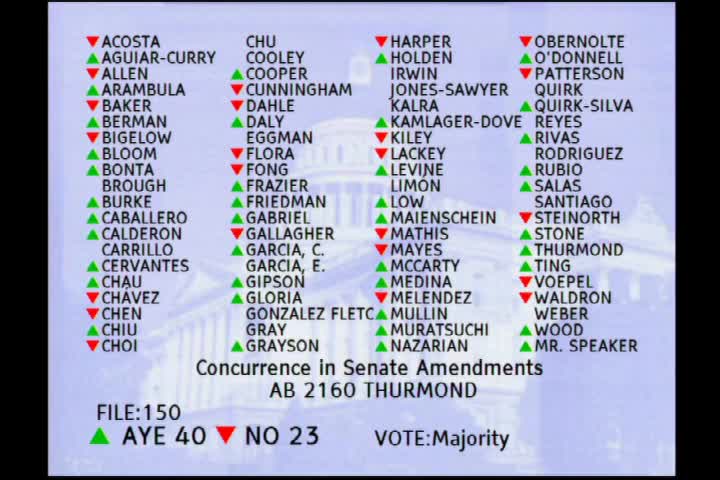


Bill Author

Bill Co-Author(s):





