AB 353: Employment policy: voluntary veterans' preference.
- Session Year: 2017-2018
- House: Assembly
- Latest Version Date: 2017-06-27
Under the California Fair Employment and Housing Act, Act (FEHA), it is an unlawful employment practice for an employer, unless based upon a bona fide occupational qualification or applicable security regulations established by the United States or the State of California, to refuse to hire or employ a person or to refuse to select a person for a training program leading to employment, or to bar or discharge a person from employment or a training program leading to employment, or to discriminate against a person in compensation or in terms, conditions, or privileges of employment because of the race, religious creed, color, national origin, ancestry, physical disability, mental disability, medical condition, genetic information, marital status, sex, gender, gender identity, gender expression, age, sexual orientation, or military and veteran status of that person. The California Fair Employment and Housing Act FEHA provides that nothing in that act relating to discrimination on account of sex affects the right of an employer to use veteran status as a factor in employee selection or to give special consideration to Vietnam-era veterans.
This bill would enact the Voluntary Veterans Preference Employment Policy Act to authorize a private employer to establish and maintain a written veterans preference employment policy, to be applied uniformly to hiring decisions, to give a voluntary preference for hiring or retaining a veteran over another qualified applicant or employee. The bill would provide that the granting of a veterans preference pursuant to the bill, in and of itself, shall be deemed not to violate any local or state equal employment opportunity law or regulation, including, but not limited to, the antidiscrimination provisions of the California Fair Employment and Housing Act. FEHA. The bill would revise the existing veteran status provision in the California Fair Employment and Housing Act FEHA to remove references to discrimination on account of sex and to Vietnam-era veterans, and would, instead, provide that nothing in that act relating to discrimination affects the right of an employer to use veteran status as a factor in hiring decisions if the employer maintains a veterans preference employment policy established in accordance with the Voluntary Veterans Preference Employment Policy Act. The bill would prohibit a veterans preference employment policy from being established or applied for the purpose of discriminating against an employment applicant on the basis of a protected classification, as specified.
Under the California Fair Employment and Housing Act, it is an unlawful employment practice for an employer, unless based upon a bona fide occupational qualification or applicable security regulations established by the United States or the State of California, to refuse to hire or employ a person or to refuse to select a person for a training program leading to employment, or to bar or discharge a person from employment or a training program leading to employment, or to discriminate against a person in compensation or in terms, conditions, or privileges of employment because of the race, religious creed, color, national origin, ancestry, physical disability, mental disability, medical condition, genetic information, marital status, sex, gender, gender identity, gender expression, age, sexual orientation, or military and veteran status of that person. The California Fair Employment and Housing Act provides that nothing in that act relating to discrimination on account of sex affects the right of an employer to use veteran status as a factor in employee selection or to give special consideration to Vietnam-era veterans.
This bill would enact the Voluntary Veterans Preference Employment Policy Act to authorize a private employer to establish and maintain a written veterans preference employment policy, to be applied uniformly to hiring decisions, to give a voluntary preference for hiring or retaining a veteran over another qualified applicant or employee. The bill would provide that the granting of a veterans preference pursuant to the bill, in and of itself, shall be deemed not to violate any local or state equal employment opportunity law or regulation, including, but not limited to, the antidiscrimination provisions of the California Fair Employment and Housing Act. The bill would revise the existing veteran status provision in the California Fair Employment and Housing Act to remove references to discrimination on account of sex and to Vietnam-era veterans, and would, instead, provide that nothing in that act relating to discrimination affects the right of an employer to use veteran status as a factor in hiring decisions if the employer maintains a veterans preference employment policy established in accordance with the Voluntary Veterans Preference Employment Policy Act. The bill would prohibit a veterans preference employment policy from being established or applied for the purpose of discriminating against an employment applicant on the basis of a protected classification, as specified.
It is an unlawful employment practice, unless based upon a bona fide occupational qualification, or, except where based upon applicable security regulations established by the United States or the State of California:
(a)For an employer, because of the race, religious creed, color, national origin, ancestry, physical disability, mental disability, medical condition, genetic information, marital status, sex, gender, gender identity, gender expression, age, sexual orientation, or military and veteran status of any person, to refuse to hire or employ the person or to refuse to select the person for a training program leading to employment, or to bar or to discharge the person from employment or from a training program leading to employment, or to discriminate against the person in compensation or in terms, conditions, or privileges of employment.
(1)This part does not prohibit an employer from refusing to hire or discharging an employee with a physical or mental disability, or subject an employer to any legal liability resulting from the refusal to employ or the discharge of an employee with a physical or mental disability, where the employee, because of his or her physical or mental disability, is unable to perform his or her essential duties even with reasonable accommodations, or cannot perform those duties in a manner that would not endanger his or her health or safety or the health or safety of others even with reasonable accommodations.
(2)This part does not prohibit an employer from refusing to hire or discharging an employee who, because of the employees medical condition, is unable to perform his or her essential duties even with reasonable accommodations, or cannot perform those duties in a manner that would not endanger the employees health or safety or the health or safety of others even with reasonable accommodations. Nothing in this part shall subject an employer to any legal liability resulting from the refusal to employ or the discharge of an employee who, because of the employees medical condition, is unable to perform his or her essential duties, or cannot perform those duties in a manner that would not endanger the employees health or safety or the health or safety of others even with reasonable accommodations.
(3)Nothing in this part relating to discrimination on account of marital status shall do either of the following:
(A)Affect the right of an employer to reasonably regulate, for reasons of supervision, safety, security, or morale, the working of spouses in the same department, division, or facility, consistent with the rules and regulations adopted by the commission.
(B)Prohibit bona fide health plans from providing additional or greater benefits to employees with dependents than to those employees without or with fewer dependents.
(4)Nothing in this part relating to discrimination shall affect the right of an employer to use veteran status as a factor in hiring decisions if the employer maintains a veterans preference employment policy established in accordance with Article 3 (commencing with Section 12958). A veterans preference employment policy shall not be established or applied for the purpose of discriminating against an employment applicant on the basis of any protected classification in this subdivision.
(5)(A)This part does not prohibit an employer from refusing to employ an individual because of his or her age if the law compels or provides for that refusal. Promotions within the existing staff, hiring or promotion on the basis of experience and training, rehiring on the basis of seniority and prior service with the employer, or hiring under an established recruiting program from high schools, colleges, universities, or trade schools do not, in and of themselves, constitute unlawful employment practices.
(B)The provisions of this part relating to discrimination on the basis of age do not prohibit an employer from providing health benefits or health care reimbursement plans to retired persons that are altered, reduced, or eliminated when the person becomes eligible for Medicare health benefits. This subparagraph applies to all retiree health benefit plans and contractual provisions or practices concerning retiree health benefits and health care reimbursement plans in effect on or after January 1, 2011.
(b)For a labor organization, because of the race, religious creed, color, national origin, ancestry, physical disability, mental disability, medical condition, genetic information, marital status, sex, gender, gender identity, gender expression, age, sexual orientation, or military and veteran status of any person, to exclude, expel, or restrict from its membership the person, or to provide only second-class or segregated membership or to discriminate against any person because of the race, religious creed, color, national origin, ancestry, physical disability, mental disability, medical condition, genetic information, marital status, sex, gender, gender identity, gender expression, age, sexual orientation, or military and veteran status of the person in the election of officers of the labor organization or in the selection of the labor organizations staff or to discriminate in any way against any of its members, any employer, or any person employed by an employer.
(c)For any person to discriminate against any person in the selection, termination, training, or other terms or treatment of that person in any apprenticeship training program, any other training program leading to employment, an unpaid internship, or another limited duration program to provide unpaid work experience for that person because of the race, religious creed, color, national origin, ancestry, physical disability, mental disability, medical condition, genetic information, marital status, sex, gender, gender identity, gender expression, age, sexual orientation, or military and veteran status of the person discriminated against.
(d)For any employer or employment agency to print or circulate or cause to be printed or circulated any publication, or to make any nonjob-related inquiry of an employee or applicant, either verbal or through use of an application form, that expresses, directly or indirectly, any limitation, specification, or discrimination as to race, religious creed, color, national origin, ancestry, physical disability, mental disability, medical condition, genetic information, marital status, sex, gender, gender identity, gender expression, age, sexual orientation, or military and veteran status, or any intent to make any such limitation, specification, or discrimination. This part does not prohibit an employer or employment agency from inquiring into the age of an applicant or from specifying age limitations, where the law compels or provides for that action.
(e)(1)Except as provided in paragraph (2) or (3), for any employer or employment agency to require any medical or psychological examination of an applicant, to make any medical or psychological inquiry of an applicant, to make any inquiry whether an applicant has a mental disability, physical disability, or medical condition, or to make any inquiry regarding the nature or severity of a physical disability, mental disability, or medical condition.
(2)Notwithstanding paragraph (1), an employer or employment agency may inquire into the ability of an applicant to perform job-related functions and may respond to an applicants request for reasonable accommodation.
(3)Notwithstanding paragraph (1), an employer or employment agency may require a medical or psychological examination or make a medical or psychological inquiry of a job applicant after an employment offer has been made but prior to the commencement of employment duties, provided that the examination or inquiry is job related and consistent with business necessity and that all entering employees in the same job classification are subject to the same examination or inquiry.
(f)(1)Except as provided in paragraph (2), for any employer or employment agency to require any medical or psychological examination of an employee, to make any medical or psychological inquiry of an employee, to make any inquiry whether an employee has a mental disability, physical disability, or medical condition, or to make any inquiry regarding the nature or severity of a physical disability, mental disability, or medical condition.
(2)Notwithstanding paragraph (1), an employer or employment agency may require any examinations or inquiries that the employer or employment agency can show to be job related and consistent with business necessity. An employer or employment agency may conduct voluntary medical examinations, including voluntary medical histories that are part of an employee health program available to employees at that worksite.
(g)For any employer, labor organization, or employment agency to harass, discharge, expel, or otherwise discriminate against any person because the person has made a report pursuant to Section 11161.8 of the Penal Code, which prohibits retaliation against hospital employees who report suspected patient abuse by health facilities or community care facilities.
(h)For any employer, labor organization, employment agency, or person to discharge, expel, or otherwise discriminate against any person because the person has opposed any practices forbidden under this part or because the person has filed a complaint, testified, or assisted in any proceeding under this part.
(i)For any person to aid, abet, incite, compel, or coerce the doing of any of the acts forbidden under this part, or to attempt to do so.
(j)(1)For an employer, labor organization, employment agency, apprenticeship training program, or any training program leading to employment, or any other person, because of race, religious creed, color, national origin, ancestry, physical disability, mental disability, medical condition, genetic information, marital status, sex, gender, gender identity, gender expression, age, sexual orientation, or military and veteran status, to harass an employee, an applicant, an unpaid intern or volunteer, or a person providing services pursuant to a contract. Harassment of an employee, an applicant, an unpaid intern or volunteer, or a person providing services pursuant to a contract by an employee, other than an agent or supervisor, shall be unlawful if the entity, or its agents or supervisors, knows or should have known of this conduct and fails to take immediate and appropriate corrective action. An employer may also be responsible for the acts of nonemployees, with respect to sexual harassment of employees, applicants, unpaid interns or volunteers, or persons providing services pursuant to a contract in the workplace, where the employer, or its agents or supervisors, knows or should have known of the conduct and fails to take immediate and appropriate corrective action. In reviewing cases involving the acts of nonemployees, the extent of the employers control and any other legal responsibility that the employer may have with respect to the conduct of those nonemployees shall be considered. An entity shall take all reasonable steps to prevent harassment from occurring. Loss of tangible job benefits shall not be necessary in order to establish harassment.
(2)This subdivision is declaratory of existing law, except for the new duties imposed on employers with regard to harassment.
(3)An employee of an entity subject to this subdivision is personally liable for any harassment prohibited by this section that is perpetrated by the employee, regardless of whether the employer or covered entity knows or should have known of the conduct and fails to take immediate and appropriate corrective action.
(4)(A)For purposes of this subdivision only, employer means any person regularly employing one or more persons or regularly receiving the services of one or more persons providing services pursuant to a contract, or any person acting as an agent of an employer, directly or indirectly, the state, or any political or civil subdivision of the state, and cities. The definition of employer in subdivision (d) of Section 12926 applies to all provisions of this section other than this subdivision.
(B)Notwithstanding subparagraph (A), for purposes of this subdivision, employer does not include a religious association or corporation not organized for private profit, except as provided in Section 12926.2.
(C)For purposes of this subdivision, harassment because of sex includes sexual harassment, gender harassment, and harassment based on pregnancy, childbirth, or related medical conditions. Sexually harassing conduct need not be motivated by sexual desire.
(5)For purposes of this subdivision, a person providing services pursuant to a contract means a person who meets all of the following criteria:
(A)The person has the right to control the performance of the contract for services and discretion as to the manner of performance.
(B)The person is customarily engaged in an independently established business.
(C)The person has control over the time and place the work is performed, supplies the tools and instruments used in the work, and performs work that requires a particular skill not ordinarily used in the course of the employers work.
(k)For an employer, labor organization, employment agency, apprenticeship training program, or any training program leading to employment, to fail to take all reasonable steps necessary to prevent discrimination and harassment from occurring.
(l)(1)For an employer or other entity covered by this part to refuse to hire or employ a person or to refuse to select a person for a training program leading to employment or to bar or to discharge a person from employment or from a training program leading to employment, or to discriminate against a person in compensation or in terms, conditions, or privileges of employment because of a conflict between the persons religious belief or observance and any employment requirement, unless the employer or other entity covered by this part demonstrates that it has explored any available reasonable alternative means of accommodating the religious belief or observance, including the possibilities of excusing the person from those duties that conflict with his or her religious belief or observance or permitting those duties to be performed at another time or by another person, but is unable to reasonably accommodate the religious belief or observance without undue hardship, as defined in subdivision (u) of Section 12926, on the conduct of the business of the employer or other entity covered by this part. Religious belief or observance, as used in this section, includes, but is not limited to, observance of a Sabbath or other religious holy day or days, reasonable time necessary for travel prior and subsequent to a religious observance, and religious dress practice and religious grooming practice as described in subdivision (q) of Section 12926. This subdivision shall also apply to an apprenticeship training program, an unpaid internship, and any other program to provide unpaid experience for a person in the workplace or industry.
(2)An accommodation of an individuals religious dress practice or religious grooming practice is not reasonable if the accommodation requires segregation of the individual from other employees or the public.
(3)An accommodation is not required under this subdivision if it would result in a violation of this part or any other law prohibiting discrimination or protecting civil rights, including subdivision (b) of Section 51 of the Civil Code and Section 11135 of this code.
(4)For an employer or other entity covered by this part to, in addition to the employee protections provided pursuant to subdivision (h), retaliate or otherwise discriminate against a person for requesting accommodation under this subdivision, regardless of whether the request was granted.
(m)(1)For an employer or other entity covered by this part to fail to make reasonable accommodation for the known physical or mental disability of an applicant or employee. Nothing in this subdivision or in paragraph (1) or (2) of subdivision (a) shall be construed to require an accommodation that is demonstrated by the employer or other covered entity to produce undue hardship, as defined in subdivision (u) of Section 12926, to its operation.
(2)For an employer or other entity covered by this part to, in addition to the employee protections provided pursuant to subdivision (h), retaliate or otherwise discriminate against a person for requesting accommodation under this subdivision, regardless of whether the request was granted.
(n)For an employer or other entity covered by this part to fail to engage in a timely, good faith, interactive process with the employee or applicant to determine effective reasonable accommodations, if any, in response to a request for reasonable accommodation by an employee or applicant with a known physical or mental disability or known medical condition.
(o)For an employer or other entity covered by this part, to subject, directly or indirectly, any employee, applicant, or other person to a test for the presence of a genetic characteristic.
(p)Nothing in this section shall be interpreted as preventing the ability of employers to identify members of the military or veterans for purposes of awarding a veterans preference as permitted by law.
SEC. 2.Article 3 (commencing with Section 12958) is added to Chapter 6 of Part 2.8 of Division 3 of Title 2 of the Government Code, to read:3.Voluntary Veterans Preference Employment Policies12958.This article shall be known, and may be cited, as the Voluntary Veterans Preference Employment Policy Act.
12958.1.As used in this article:
(a)DD 214 means United States Department of Defense Form 214 or a similarly effective form issued by that department relating to separation from military service.
(b)Private employer means a business entity in the private sector of this state with one or more employees.
(c)Veteran means a person who has served full time in the Armed Forces in time of national emergency or state military emergency or during any expedition of the Armed Forces and who has been discharged or released under conditions other than dishonorable.
(d)Veterans preference employment policy means a private employers voluntary preference for hiring or retaining a veteran over another qualified applicant or employee.
12958.2.(a)Notwithstanding any other law, a private employer may establish and maintain a written veterans preference employment policy, which shall be applied uniformly to hiring decisions.
(b)An employer with a veterans preference employment policy may require that a veteran submit a DD 214 to be eligible for the preference.
(c)The granting of a veterans preference pursuant to this article, in and of itself, shall be deemed not to violate any local or state equal employment opportunity law or regulation, including, but not limited to, this chapter.
(d)The Department of Veterans Affairs shall assist any private employer in determining if an applicant is a veteran veteran, to the extent permitted by law.
(e)Nothing in this section shall This section shall not be construed to authorize the establishment or use of a veterans preference employment policy for the purpose of discriminating against an employment applicant on the basis of any protected classification in subdivision (a) of Section 12940.
It is an unlawful employment practice, unless based upon a bona fide occupational qualification, or, except where based upon applicable security regulations established by the United States or the State of California:
(a)For an employer, because of the race, religious creed, color, national origin, ancestry, physical disability, mental disability, medical condition, genetic information, marital status, sex, gender, gender identity, gender expression, age, sexual orientation, or military and veteran status of any person, to refuse to hire or employ the person or to refuse to select the person for a training program leading to employment, or to bar or to discharge the person from employment or from a training program leading to employment, or to discriminate against the person in compensation or in terms, conditions, or privileges of employment.
(1)This part does not prohibit an employer from refusing to hire or discharging an employee with a physical or mental disability, or subject an employer to any legal liability resulting from the refusal to employ or the discharge of an employee with a physical or mental disability, where the employee, because of his or her physical or mental disability, is unable to perform his or her essential duties even with reasonable accommodations, or cannot perform those duties in a manner that would not endanger his or her health or safety or the health or safety of others even with reasonable accommodations.
(2)This part does not prohibit an employer from refusing to hire or discharging an employee who, because of the employees medical condition, is unable to perform his or her essential duties even with reasonable accommodations, or cannot perform those duties in a manner that would not endanger the employees health or safety or the health or safety of others even with reasonable accommodations. Nothing in this part shall subject an employer to any legal liability resulting from the refusal to employ or the discharge of an employee who, because of the employees medical condition, is unable to perform his or her essential duties, or cannot perform those duties in a manner that would not endanger the employees health or safety or the health or safety of others even with reasonable accommodations.
(3)Nothing in this part relating to discrimination on account of marital status shall do either of the following:
(A)Affect the right of an employer to reasonably regulate, for reasons of supervision, safety, security, or morale, the working of spouses in the same department, division, or facility, consistent with the rules and regulations adopted by the commission.
(B)Prohibit bona fide health plans from providing additional or greater benefits to employees with dependents than to those employees without or with fewer dependents.
(4)Nothing in this part relating to discrimination shall affect the right of an employer to use veteran status as a factor in hiring decisions if the employer maintains a veterans preference employment policy established in accordance with Article 3 (commencing with Section 12958). A veterans preference employment policy shall not be established or applied for the purpose of discriminating against an employment applicant on the basis of any protected classification in this subdivision.
(5)(A)This part does not prohibit an employer from refusing to employ an individual because of his or her age if the law compels or provides for that refusal. Promotions within the existing staff, hiring or promotion on the basis of experience and training, rehiring on the basis of seniority and prior service with the employer, or hiring under an established recruiting program from high schools, colleges, universities, or trade schools do not, in and of themselves, constitute unlawful employment practices.
(B)The provisions of this part relating to discrimination on the basis of age do not prohibit an employer from providing health benefits or health care reimbursement plans to retired persons that are altered, reduced, or eliminated when the person becomes eligible for Medicare health benefits. This subparagraph applies to all retiree health benefit plans and contractual provisions or practices concerning retiree health benefits and health care reimbursement plans in effect on or after January 1, 2011.
(b)For a labor organization, because of the race, religious creed, color, national origin, ancestry, physical disability, mental disability, medical condition, genetic information, marital status, sex, gender, gender identity, gender expression, age, sexual orientation, or military and veteran status of any person, to exclude, expel, or restrict from its membership the person, or to provide only second-class or segregated membership or to discriminate against any person because of the race, religious creed, color, national origin, ancestry, physical disability, mental disability, medical condition, genetic information, marital status, sex, gender, gender identity, gender expression, age, sexual orientation, or military and veteran status of the person in the election of officers of the labor organization or in the selection of the labor organizations staff or to discriminate in any way against any of its members, any employer, or any person employed by an employer.
(c)For any person to discriminate against any person in the selection, termination, training, or other terms or treatment of that person in any apprenticeship training program, any other training program leading to employment, an unpaid internship, or another limited duration program to provide unpaid work experience for that person because of the race, religious creed, color, national origin, ancestry, physical disability, mental disability, medical condition, genetic information, marital status, sex, gender, gender identity, gender expression, age, sexual orientation, or military and veteran status of the person discriminated against.
(d)For any employer or employment agency to print or circulate or cause to be printed or circulated any publication, or to make any nonjob-related inquiry of an employee or applicant, either verbal or through use of an application form, that expresses, directly or indirectly, any limitation, specification, or discrimination as to race, religious creed, color, national origin, ancestry, physical disability, mental disability, medical condition, genetic information, marital status, sex, gender, gender identity, gender expression, age, sexual orientation, or military and veteran status, or any intent to make any such limitation, specification, or discrimination. This part does not prohibit an employer or employment agency from inquiring into the age of an applicant or from specifying age limitations, where the law compels or provides for that action.
(e)(1)Except as provided in paragraph (2) or (3), for any employer or employment agency to require any medical or psychological examination of an applicant, to make any medical or psychological inquiry of an applicant, to make any inquiry whether an applicant has a mental disability, physical disability, or medical condition, or to make any inquiry regarding the nature or severity of a physical disability, mental disability, or medical condition.
(2)Notwithstanding paragraph (1), an employer or employment agency may inquire into the ability of an applicant to perform job-related functions and may respond to an applicants request for reasonable accommodation.
(3)Notwithstanding paragraph (1), an employer or employment agency may require a medical or psychological examination or make a medical or psychological inquiry of a job applicant after an employment offer has been made but prior to the commencement of employment duties, provided that the examination or inquiry is job related and consistent with business necessity and that all entering employees in the same job classification are subject to the same examination or inquiry.
(f)(1)Except as provided in paragraph (2), for any employer or employment agency to require any medical or psychological examination of an employee, to make any medical or psychological inquiry of an employee, to make any inquiry whether an employee has a mental disability, physical disability, or medical condition, or to make any inquiry regarding the nature or severity of a physical disability, mental disability, or medical condition.
(2)Notwithstanding paragraph (1), an employer or employment agency may require any examinations or inquiries that the employer or employment agency can show to be job related and consistent with business necessity. An employer or employment agency may conduct voluntary medical examinations, including voluntary medical histories that are part of an employee health program available to employees at that worksite.
(g)For any employer, labor organization, or employment agency to harass, discharge, expel, or otherwise discriminate against any person because the person has made a report pursuant to Section 11161.8 of the Penal Code, which prohibits retaliation against hospital employees who report suspected patient abuse by health facilities or community care facilities.
(h)For any employer, labor organization, employment agency, or person to discharge, expel, or otherwise discriminate against any person because the person has opposed any practices forbidden under this part or because the person has filed a complaint, testified, or assisted in any proceeding under this part.
(i)For any person to aid, abet, incite, compel, or coerce the doing of any of the acts forbidden under this part, or to attempt to do so.
(j)(1)For an employer, labor organization, employment agency, apprenticeship training program, or any training program leading to employment, or any other person, because of race, religious creed, color, national origin, ancestry, physical disability, mental disability, medical condition, genetic information, marital status, sex, gender, gender identity, gender expression, age, sexual orientation, or military and veteran status, to harass an employee, an applicant, an unpaid intern or volunteer, or a person providing services pursuant to a contract. Harassment of an employee, an applicant, an unpaid intern or volunteer, or a person providing services pursuant to a contract by an employee, other than an agent or supervisor, shall be unlawful if the entity, or its agents or supervisors, knows or should have known of this conduct and fails to take immediate and appropriate corrective action. An employer may also be responsible for the acts of nonemployees, with respect to sexual harassment of employees, applicants, unpaid interns or volunteers, or persons providing services pursuant to a contract in the workplace, where the employer, or its agents or supervisors, knows or should have known of the conduct and fails to take immediate and appropriate corrective action. In reviewing cases involving the acts of nonemployees, the extent of the employers control and any other legal responsibility that the employer may have with respect to the conduct of those nonemployees shall be considered. An entity shall take all reasonable steps to prevent harassment from occurring. Loss of tangible job benefits shall not be necessary in order to establish harassment.
(2) This subdivision is declaratory of existing law, except for the new duties imposed on employers with regard to harassment.
(3)An employee of an entity subject to this subdivision is personally liable for any harassment prohibited by this section that is perpetrated by the employee, regardless of whether the employer or covered entity knows or should have known of the conduct and fails to take immediate and appropriate corrective action.
(4)(A)For purposes of this subdivision only, employer means any person regularly employing one or more persons or regularly receiving the services of one or more persons providing services pursuant to a contract, or any person acting as an agent of an employer, directly or indirectly, the state, or any political or civil subdivision of the state, and cities. The definition of employer in subdivision (d) of Section 12926 applies to all provisions of this section other than this subdivision.
(B)Notwithstanding subparagraph (A), for purposes of this subdivision, employer does not include a religious association or corporation not organized for private profit, except as provided in Section 12926.2.
(C)For purposes of this subdivision, harassment because of sex includes sexual harassment, gender harassment, and harassment based on pregnancy, childbirth, or related medical conditions. Sexually harassing conduct need not be motivated by sexual desire.
(5)For purposes of this subdivision, a person providing services pursuant to a contract means a person who meets all of the following criteria:
(A)The person has the right to control the performance of the contract for services and discretion as to the manner of performance.
(B)The person is customarily engaged in an independently established business.
(C)The person has control over the time and place the work is performed, supplies the tools and instruments used in the work, and performs work that requires a particular skill not ordinarily used in the course of the employers work.
(k)For an employer, labor organization, employment agency, apprenticeship training program, or any training program leading to employment, to fail to take all reasonable steps necessary to prevent discrimination and harassment from occurring.
(l)(1)For an employer or other entity covered by this part to refuse to hire or employ a person or to refuse to select a person for a training program leading to employment or to bar or to discharge a person from employment or from a training program leading to employment, or to discriminate against a person in compensation or in terms, conditions, or privileges of employment because of a conflict between the persons religious belief or observance and any employment requirement, unless the employer or other entity covered by this part demonstrates that it has explored any available reasonable alternative means of accommodating the religious belief or observance, including the possibilities of excusing the person from those duties that conflict with his or her religious belief or observance or permitting those duties to be performed at another time or by another person, but is unable to reasonably accommodate the religious belief or observance without undue hardship, as defined in subdivision (u) of Section 12926, on the conduct of the business of the employer or other entity covered by this part. Religious belief or observance, as used in this section, includes, but is not limited to, observance of a Sabbath or other religious holy day or days, reasonable time necessary for travel prior and subsequent to a religious observance, and religious dress practice and religious grooming practice as described in subdivision (q) of Section 12926. This subdivision shall also apply to an apprenticeship training program, an unpaid internship, and any other program to provide unpaid experience for a person in the workplace or industry.
(2)An accommodation of an individuals religious dress practice or religious grooming practice is not reasonable if the accommodation requires segregation of the individual from other employees or the public.
(3)An accommodation is not required under this subdivision if it would result in a violation of this part or any other law prohibiting discrimination or protecting civil rights, including subdivision (b) of Section 51 of the Civil Code and Section 11135 of this code.
(4)For an employer or other entity covered by this part to, in addition to the employee protections provided pursuant to subdivision (h), retaliate or otherwise discriminate against a person for requesting accommodation under this subdivision, regardless of whether the request was granted.
(m)(1)For an employer or other entity covered by this part to fail to make reasonable accommodation for the known physical or mental disability of an applicant or employee. Nothing in this subdivision or in paragraph (1) or (2) of subdivision (a) shall be construed to require an accommodation that is demonstrated by the employer or other covered entity to produce undue hardship, as defined in subdivision (u) of Section 12926, to its operation.
(2)For an employer or other entity covered by this part to, in addition to the employee protections provided pursuant to subdivision (h), retaliate or otherwise discriminate against a person for requesting accommodation under this subdivision, regardless of whether the request was granted.
(n)For an employer or other entity covered by this part to fail to engage in a timely, good faith, interactive process with the employee or applicant to determine effective reasonable accommodations, if any, in response to a request for reasonable accommodation by an employee or applicant with a known physical or mental disability or known medical condition.
(o)For an employer or other entity covered by this part, to subject, directly or indirectly, any employee, applicant, or other person to a test for the presence of a genetic characteristic.
(p)Nothing in this section shall be interpreted as preventing the ability of employers to identify members of the military or veterans for purposes of awarding a veterans preference as permitted by law.
SEC. 2.Article 3 (commencing with Section 12958) is added to Chapter 6 of Part 2.8 of Division 3 of Title 2 of the Government Code, to read:3.Voluntary Veterans Preference Employment Policies12958.This article shall be known, and may be cited, as the Voluntary Voluntary Veterans Preference Employment Policy Act. Act.
12958.1.As used in this article:
(a)DD 214 means United States Department of Defense Form 214 or a similarly effective form issued by that department relating to separation from military service.
(b)Private employer means a business entity in the private sector of this state with one or more employees.
(c)Veteran means a person who served on active duty in the Armed Forces of the United States who was discharged or released with an honorable discharge. has served full time in the Armed Forces in time of national emergency or state military emergency or during any expedition of the Armed Forces and who has been discharged or released under conditions other than dishonorable.
(d)Veterans preference employment policy means a private employers voluntary preference for hiring or retaining a veteran over another qualified applicant or employee.
12958.2.(a)Notwithstanding any other law, a private employer may establish and maintain a written veterans preference employment policy, which shall be applied uniformly to hiring decisions.
(b)An employer with a veterans preference employment policy may require that a veteran submit a DD 214 to be eligible for the preference.
(c)The granting of a veterans preference pursuant to this article, in and of itself, shall be deemed not to violate any local or state equal employment opportunity law or regulation, including, but not limited to, this chapter.
(d)The Department of Veterans Affairs shall assist any private employer in determining if an applicant is a veteran to the extent permitted by law.
(e)Nothing in this section shall be construed to authorize the establishment or use of a veterans preference employment policy for the purpose of discriminating against an employment applicant on the basis of any protected classification in subdivision (a) of Section 12940.
It is an unlawful employment practice, unless based upon a bona fide occupational qualification, or, except where based upon applicable security regulations established by the United States or the State of California:
(a)For an employer, because of the race, religious creed, color, national origin, ancestry, physical disability, mental disability, medical condition, genetic information, marital status, sex, gender, gender identity, gender expression, age, sexual orientation, or military and veteran status of any person, to refuse to hire or employ the person or to refuse to select the person for a training program leading to employment, or to bar or to discharge the person from employment or from a training program leading to employment, or to discriminate against the person in compensation or in terms, conditions, or privileges of employment.
(1)This part does not prohibit an employer from refusing to hire or discharging an employee with a physical or mental disability, or subject an employer to any legal liability resulting from the refusal to employ or the discharge of an employee with a physical or mental disability, where the employee, because of his or her physical or mental disability, is unable to perform his or her essential duties even with reasonable accommodations, or cannot perform those duties in a manner that would not endanger his or her health or safety or the health or safety of others even with reasonable accommodations.
(2)This part does not prohibit an employer from refusing to hire or discharging an employee who, because of the employees medical condition, is unable to perform his or her essential duties even with reasonable accommodations, or cannot perform those duties in a manner that would not endanger the employees health or safety or the health or safety of others even with reasonable accommodations. Nothing in this part shall subject an employer to any legal liability resulting from the refusal to employ or the discharge of an employee who, because of the employees medical condition, is unable to perform his or her essential duties, or cannot perform those duties in a manner that would not endanger the employees health or safety or the health or safety of others even with reasonable accommodations.
(3)Nothing in this part relating to discrimination on account of marital status shall do either of the following:
(A)Affect the right of an employer to reasonably regulate, for reasons of supervision, safety, security, or morale, the working of spouses in the same department, division, or facility, consistent with the rules and regulations adopted by the commission.
(B)Prohibit bona fide health plans from providing additional or greater benefits to employees with dependents than to those employees without or with fewer dependents.
(4)Nothing in this part relating to discrimination on account of sex shall affect the right of an employer to use veteran status as a factor in employee selection hiring decisions if the employer maintains a veterans preference employment policy established in accordance with Article 3 (commencing with Section 12958). A veterans preference employment policy shall not be established or to give special consideration to Vietnam-era veterans. applied for the purpose of discriminating against an employment applicant on the basis of any protected classification in this subdivision.
(5)(A)This part does not prohibit an employer from refusing to employ an individual because of his or her age if the law compels or provides for that refusal. Promotions within the existing staff, hiring or promotion on the basis of experience and training, rehiring on the basis of seniority and prior service with the employer, or hiring under an established recruiting program from high schools, colleges, universities, or trade schools do not, in and of themselves, constitute unlawful employment practices.
(B)The provisions of this part relating to discrimination on the basis of age do not prohibit an employer from providing health benefits or health care reimbursement plans to retired persons that are altered, reduced, or eliminated when the person becomes eligible for Medicare health benefits. This subparagraph applies to all retiree health benefit plans and contractual provisions or practices concerning retiree health benefits and health care reimbursement plans in effect on or after January 1, 2011.
(b)For a labor organization, because of the race, religious creed, color, national origin, ancestry, physical disability, mental disability, medical condition, genetic information, marital status, sex, gender, gender identity, gender expression, age, sexual orientation, or military and veteran status of any person, to exclude, expel, or restrict from its membership the person, or to provide only second-class or segregated membership or to discriminate against any person because of the race, religious creed, color, national origin, ancestry, physical disability, mental disability, medical condition, genetic information, marital status, sex, gender, gender identity, gender expression, age, sexual orientation, or military and veteran status of the person in the election of officers of the labor organization or in the selection of the labor organizations staff or to discriminate in any way against any of its members or against members, any employer employer, or against any person employed by an employer.
(c)For any person to discriminate against any person in the selection, termination, training, or other terms or treatment of that person in any apprenticeship training program, any other training program leading to employment, an unpaid internship, or another limited duration program to provide unpaid work experience for that person because of the race, religious creed, color, national origin, ancestry, physical disability, mental disability, medical condition, genetic information, marital status, sex, gender, gender identity, gender expression, age, sexual orientation, or military and veteran status of the person discriminated against.
(d)For any employer or employment agency to print or circulate or cause to be printed or circulated any publication, or to make any nonjob-related inquiry of an employee or applicant, either verbal or through use of an application form, that expresses, directly or indirectly, any limitation, specification, or discrimination as to race, religious creed, color, national origin, ancestry, physical disability, mental disability, medical condition, genetic information, marital status, sex, gender, gender identity, gender expression, age, sexual orientation, or military and veteran status, or any intent to make any such limitation, specification, or discrimination. This part does not prohibit an employer or employment agency from inquiring into the age of an applicant, applicant or from specifying age limitations, where the law compels or provides for that action.
(e)(1)Except as provided in paragraph (2) or (3), for any employer or employment agency to require any medical or psychological examination of an applicant, to make any medical or psychological inquiry of an applicant, to make any inquiry whether an applicant has a mental disability or disability, physical disability disability, or medical condition, or to make any inquiry regarding the nature or severity of a physical disability, mental disability, or medical condition.
(2)Notwithstanding paragraph (1), an employer or employment agency may inquire into the ability of an applicant to perform job-related functions and may respond to an applicants request for reasonable accommodation.
(3)Notwithstanding paragraph (1), an employer or employment agency may require a medical or psychological examination or make a medical or psychological inquiry of a job applicant after an employment offer has been made but prior to the commencement of employment duties, provided that the examination or inquiry is job related and consistent with business necessity and that all entering employees in the same job classification are subject to the same examination or inquiry.
(f)(1)Except as provided in paragraph (2), for any employer or employment agency to require any medical or psychological examination of an employee, to make any medical or psychological inquiry of an employee, to make any inquiry whether an employee has a mental disability, physical disability, or medical condition, or to make any inquiry regarding the nature or severity of a physical disability, mental disability, or medical condition.
(2)Notwithstanding paragraph (1), an employer or employment agency may require any examinations or inquiries that it the employer or employment agency can show to be job related and consistent with business necessity. An employer or employment agency may conduct voluntary medical examinations, including voluntary medical histories, which histories that are part of an employee health program available to employees at that worksite.
(g)For any employer, labor organization, or employment agency to harass, discharge, expel, or otherwise discriminate against any person because the person has made a report pursuant to Section 11161.8 of the Penal Code that Code, which prohibits retaliation against hospital employees who report suspected patient abuse by health facilities or community care facilities.
(h)For any employer, labor organization, employment agency, or person to discharge, expel, or otherwise discriminate against any person because the person has opposed any practices forbidden under this part or because the person has filed a complaint, testified, or assisted in any proceeding under this part.
(i)For any person to aid, abet, incite, compel, or coerce the doing of any of the acts forbidden under this part, or to attempt to do so.
(j)(1)For an employer, labor organization, employment agency, apprenticeship training program program, or any training program leading to employment, or any other person, because of race, religious creed, color, national origin, ancestry, physical disability, mental disability, medical condition, genetic information, marital status, sex, gender, gender identity, gender expression, age, sexual orientation, or military and veteran status, to harass an employee, an applicant, an unpaid intern or volunteer, or a person providing services pursuant to a contract. Harassment of an employee, an applicant, an unpaid intern or volunteer, or a person providing services pursuant to a contract by an employee, other than an agent or supervisor, shall be unlawful if the entity, or its agents or supervisors, knows or should have known of this conduct and fails to take immediate and appropriate corrective action. An employer may also be responsible for the acts of nonemployees, with respect to sexual harassment of employees, applicants, unpaid interns or volunteers, or persons providing services pursuant to a contract in the workplace, where the employer, or its agents or supervisors, knows or should have known of the conduct and fails to take immediate and appropriate corrective action. In reviewing cases involving the acts of nonemployees, the extent of the employers control and any other legal responsibility that the employer may have with respect to the conduct of those nonemployees shall be considered. An entity shall take all reasonable steps to prevent harassment from occurring. Loss of tangible job benefits shall not be necessary in order to establish harassment.
(2) The provisions of this This subdivision are is declaratory of existing law, except for the new duties imposed on employers with regard to harassment.
(3)An employee of an entity subject to this subdivision is personally liable for any harassment prohibited by this section that is perpetrated by the employee, regardless of whether the employer or covered entity knows or should have known of the conduct and fails to take immediate and appropriate corrective action.
(4)(A)For purposes of this subdivision only, employer means any person regularly employing one or more persons or regularly receiving the services of one or more persons providing services pursuant to a contract, or any person acting as an agent of an employer, directly or indirectly, the state, or any political or civil subdivision of the state, and cities. The definition of employer in subdivision (d) of Section 12926 applies to all provisions of this section other than this subdivision.
(B)Notwithstanding subparagraph (A), for purposes of this subdivision, employer does not include a religious association or corporation not organized for private profit, except as provided in Section 12926.2.
(C)For purposes of this subdivision, harassment because of sex includes sexual harassment, gender harassment, and harassment based on pregnancy, childbirth, or related medical conditions. Sexually harassing conduct need not be motivated by sexual desire.
(5)For purposes of this subdivision, a person providing services pursuant to a contract means a person who meets all of the following criteria:
(A)The person has the right to control the performance of the contract for services and discretion as to the manner of performance.
(B)The person is customarily engaged in an independently established business.
(C)The person has control over the time and place the work is performed, supplies the tools and instruments used in the work, and performs work that requires a particular skill not ordinarily used in the course of the employers work.
(k)For an employer, labor organization, employment agency, apprenticeship training program, or any training program leading to employment, to fail to take all reasonable steps necessary to prevent discrimination and harassment from occurring.
(l)(1)For an employer or other entity covered by this part to refuse to hire or employ a person or to refuse to select a person for a training program leading to employment or to bar or to discharge a person from employment or from a training program leading to employment, or to discriminate against a person in compensation or in terms, conditions, or privileges of employment because of a conflict between the persons religious belief or observance and any employment requirement, unless the employer or other entity covered by this part demonstrates that it has explored any available reasonable alternative means of accommodating the religious belief or observance, including the possibilities of excusing the person from those duties that conflict with his or her religious belief or observance or permitting those duties to be performed at another time or by another person, but is unable to reasonably accommodate the religious belief or observance without undue hardship, as defined in subdivision (u) of Section 12926, on the conduct of the business of the employer or other entity covered by this part. Religious belief or observance, as used in this section, includes, but is not limited to, observance of a Sabbath or other religious holy day or days, reasonable time necessary for travel prior and subsequent to a religious observance, and religious dress practice and religious grooming practice as described in subdivision (q) of Section 12926. This subdivision shall also apply to an apprenticeship training program, an unpaid internship, and any other program to provide unpaid experience for a person in the workplace or industry.
(2)An accommodation of an individuals religious dress practice or religious grooming practice is not reasonable if the accommodation requires segregation of the individual from other employees or the public.
(3)An accommodation is not required under this subdivision if it would result in a violation of this part or any other law prohibiting discrimination or protecting civil rights, including subdivision (b) of Section 51 of the Civil Code and Section 11135 of this code.
(4)For an employer or other entity covered by this part to, in addition to the employee protections provided pursuant to subdivision (h), retaliate or otherwise discriminate against a person for requesting accommodation under this subdivision, regardless of whether the request was granted.
(m)(1)For an employer or other entity covered by this part to fail to make reasonable accommodation for the known physical or mental disability of an applicant or employee. Nothing in this subdivision or in paragraph (1) or (2) of subdivision (a) shall be construed to require an accommodation that is demonstrated by the employer or other covered entity to produce undue hardship, as defined in subdivision (u) of Section 12926, to its operation.
(2)For an employer or other entity covered by this part to, in addition to the employee protections provided pursuant to subdivision (h), retaliate or otherwise discriminate against a person for requesting accommodation under this subdivision, regardless of whether the request was granted.
(n)For an employer or other entity covered by this part to fail to engage in a timely, good faith, interactive process with the employee or applicant to determine effective reasonable accommodations, if any, in response to a request for reasonable accommodation by an employee or applicant with a known physical or mental disability or known medical condition.
(o)For an employer or other entity covered by this part, to subject, directly or indirectly, any employee, applicant, or other person to a test for the presence of a genetic characteristic.
(p)Nothing in this section shall be interpreted as preventing the ability of employers to identify members of the military or veterans for purposes of awarding a veterans preference as permitted by law.
SEC. 2.Article 3 (commencing with Section 12958) is added to Chapter 6 of Part 2.8 of Division 3 of Title 2 of the Government Code, to read:3.Voluntary Veterans Preference Employment Policies12958.This article shall be known, and may be cited, as the Voluntary Veterans Preference Employment Policy Act.
12958.1.As used in this article:
(a)DD 214 means United States Department of Defense Form 214 or a similarly effective form issued by that department relating to separation from military service.
(b)Private employer means a business entity in the private sector of this state with one or more employees.
(c)Veteran means a person who served on active duty in the Armed Forces of the United States who was discharged or released with an honorable discharge.
(d)Veterans preference employment policy means a private employers voluntary preference for hiring or retaining a veteran over another qualified applicant or employee.
12958.2.(a)Notwithstanding any other law, a private employer may establish and maintain a written veterans preference employment policy, which shall be applied uniformly to hiring decisions.
(b)An employer with a veterans preference employment policy may require that a veteran submit a DD 214 to be eligible for the preference.
(c)The granting of a veterans preference pursuant to this article, in and of itself, shall be deemed not to violate any local or state equal employment opportunity law or regulation, including, but not limited to, this chapter.
(d)The Department of Veterans Affairs shall assist any private employer in determining if an applicant is a veteran to the extent permitted by law.
(e)Nothing in this section shall be construed to authorize the establishment or use of a veterans preference employment policy for the purpose of discriminating against an employment applicant on the basis of any protected classification in subdivision (a) of Section 12940.
REVISIONS: HeadingLines 2, 3, and 4.|
Date
|
Status
|
|---|---|
| Jul 11, 2017 | In committee: Set, first hearing. Failed passage. Reconsideration granted. |
| Jun 27, 2017 | From committee chair, with author's amendments: Amend, and re-refer to committee. Read second time, amended, and re-referred to Com. on JUD. |
| Jun 8, 2017 | Referred to Com. on JUD. |
| May 30, 2017 | In Senate. Read first time. To Com. on RLS. for assignment. |
| May 30, 2017 | Read third time. Passed. Ordered to the Senate. (Ayes 74. Noes 0. Page 1814.) |
| May 26, 2017 | From committee: Do pass. (Ayes 17. Noes 0.) (May 26). |
| May 3, 2017 | In committee: Set, first hearing. Referred to APPR. suspense file. |
| May 2, 2017 | Re-referred to Com. on APPR. |
| May 1, 2017 | From committee chair, with author's amendments: Amend, and re-refer to Com. on APPR. Read second time and amended. |
| Apr 20, 2017 | From committee: Do pass and re-refer to Com. on APPR. (Ayes 5. Noes 0.) (April 19). Re-referred to Com. on APPR. |
| Mar 22, 2017 | From committee: Do pass and re-refer to Com. on L. & E. with recommendation: To Consent Calendar. (Ayes 10. Noes 0.) (March 21). Re-referred to Com. on L. & E. |
| Mar 20, 2017 | Coauthors revised. |
| Feb 21, 2017 | Referred to Coms. on V.A. and L. & E. |
| Feb 9, 2017 | From printer. May be heard in committee March 11. |
| Feb 8, 2017 | Read first time. To print. |
|
Date
|
Description
|
Location
|
Votes
|
|
|---|---|---|---|---|
| Jul 11, 2017 | [First] hearing set for [07-12-2017]: Failed passage in Committee. Reconsideration granted | Senate Standing Committee on Judiciary |
Passed |
|
| Jul 11, 2017 | Do pass, but first be re-referred to the Committee on [Appropriations] | Senate Standing Committee on Judiciary |
Failed |
|
| May 30, 2017 | AB 353 VOEPEL Assembly Third Reading | Assembly Floor |
Passed |
|
| May 26, 2017 | Do pass. | Assembly Standing Committee on Appropriations |
Passed |
|
| Apr 19, 2017 | Do pass and be re-referred to the Committee on [Appropriations] | Assembly Standing Committee on Labor and Employment |
Passed |
|
| Mar 21, 2017 | Do pass and be re-referred to the Committee on [Labor and Employment] with recommendation: To Consent Calendar | Assembly Standing Committee on Veterans Affairs |
Passed |
This list shows positions taken on this bill by organizations on the date displayed, which is linked to the original source.
Positions by individuals are not included.
|
Organization
|
Position
|
Date
|
|---|---|---|
| American Civil Liberties Union | ** Against | Apr 26, 2017 |
| American GI Forum | * Support | Mar 21, 2017 |
| American GI Forum of California | ** Support | Apr 26, 2017 |
| American Legion, Department Of California | ** Support | Apr 26, 2017 |
| Amvets, Department Of California | ** Support | Apr 26, 2017 |
| California Association Of County Veterans Service Officers | ** Support | Apr 26, 2017 |
| California Employment Lawyers Association | ** Against | Apr 26, 2017 |
| California Military Officer Association of America | * Support | Mar 21, 2017 |
| California Professional Association Of Specialty Contractors | ** Support | Apr 26, 2017 |
| California State Commanderes Veteran Council | * Support | Mar 21, 2017 |
| California State Commanders Veterans Council | ** Support | Apr 26, 2017 |
| California State Council of SHRM | ** Support | Apr 26, 2017 |
| Department of Defense | ** Support | Mar 20, 2017 |
| Equal Rights Advocates | * Against | Apr 19, 2017 |
| Equality California | * Against | Apr 19, 2017 |
| Lakeside Chamber of Commerce | ** Support | Apr 26, 2017 |
| San Diego East County Chamber of Commerce | ** Support | Mar 20, 2017 |
| Society For Human Resource Management | ** Support | Apr 26, 2017 |
| Vietnam Veterans Of America, California State Council | ** Support | Apr 26, 2017 |
Senator Hannah-Beth Jackson, Chair
2017-2018 Regular Session
Bill No: AB 353 (Author:Voepel)
Version: June 27, 2017
Hearing Date: July 11, 2017
Fiscal: Yes
Urgency: No
Consultant: MEC
SUBJECT
Employment policy: voluntary veterans’ preference
DESCRIPTION
This bill would enact the Voluntary Veterans’ Preference Employment Policy Act and authorize a private employer to establish a veterans’ preference employment policy.
BACKGROUND
Various statutes, such as the Fair Employment and Housing Act (FEHA) and the Unruh Civil Rights Act, prohibit discrimination in employment, housing, public accommodation and services provided by business establishments on the basis of specified personal characteristics such as sex, race, color, national origin, religion, and disability. Over time, these statutes have been amended to include other characteristics such as medical conditions, marital status, and sexual orientation. Also over time, other statutes were amended to reflect the state’s public policy against discrimination in all forms.
The Federal Uniformed Services Employment and Reemployment Rights Act (USERRA) provides employment discrimination protection for a person who is an active duty military or a veteran and has an obligation to perform service in a uniformed service (United States Armed Forces, United States Armed Forces Reserve, the United States National Guard). (38 U.S.C. Sec. 4311.) The California Military and Veterans Code incorporates this discrimination protection, and further extends it to members or veterans of the California National Guard. (Mil. & Vet. Code Sec. 394.) AB 556 (Salas, Ch. 691, Stats. 2013) incorporated protection from discrimination and retaliation for military employees and veterans into FEHA.
This bill seeks to establish the Voluntary Veterans’ Preference Employment Policy Act to allow private employers to give veteran preference in employment decisions. AB 1383 (Jones, 2016), a bill nearly identical to the one now before this committee, died in the Senate Judiciary Committee because of concerns regarding the impact the creation of a program that would give preference to a population that is 92 percent male would have on women and LGBT persons.
CHANGES TO EXISTING LAW
Existing federal law, the Uniformed Services Employment and Reemployment Rights Act (USERRA), prohibits discrimination and retaliation against active duty military and veterans on the basis of the person’s military membership, application for membership, performance of service, application for service, or obligation. (38 U.S.C. Sec. 4311.)
Existing federal law prohibits an employer’s use of the employee’s military membership, performance of service, application for service, or obligation as a motivating factor as cause for an adverse employment decision against the employee. (38 U.S.C. Sec. 4311.)
Existing federal law, the USERRA, provides that any person whose absence from a position of employment is necessitated by reason of service in the uniformed services shall be entitled to specified reemployment rights and benefits and other employment benefits of this chapter. (38 U.S.C. Sec. 4312.)
Existing law prohibits discrimination by a person, public entity, or official against any officer, warrant officer, or enlisted member of the military or naval forces because of that membership, and prohibits prejudice or injury by any person, employer, or officer or agent of any corporation, company, or firm with respect to that member’s employment, position or status or be denied or disqualified for employment by virtue of the membership. (Mil. & Vet. Code Sec. 394.)
Existing law prohibits an employer or officer or agent of any corporation, company, or firm, or other person, from: (1) discharging any person from employment because of the performance of any ordered military duty or training or by reason of being an officer, warrant officer, or enlisted member of the military or naval forces of this state; (2) preventing that person from performing any military service or from attending any military encampment or place of drill or instruction he or she may be called upon to perform or attend by proper authority; (3) using prejudice or harm against an employee in any manner in his or her employment, position, or status by reason of the employee’s performance of military service or duty or attendance at military encampments or places of drill or instruction; or (4) dissuading, preventing, or stopping any person from enlistment or accepting a warrant or commission in the California National Guard or Naval Militia by threat or injury to the employee in respect to his or her employment, position, status, trade, or business because of enlistment or acceptance of a warrant or commission. (Mil. & Vet. Code Sec. 394.)
Existing law prohibits a private employer or officer or agent of any corporation, company, or firm, or other person, from restricting or terminating any collateral benefit for employees by reason of an employee’s temporary incapacitation (any period of incapacitation of 52 weeks or less) incident to duty in the National Guard or Naval Militia. (Mil. & Vet. Code Sec. 394.)
Existing law provides that a violation of the above state employment protections is a misdemeanor, and that any person violating any of these provisions is liable for actual damages and reasonable attorney’s fees incurred by the injured party. (Mil. & Vet. Code Sec. 394.)
Existing law provides that a covered employee has an absolute right to be restored to the former office or position and status formerly had by him or her in the same locality and in the same office, board, commission, agency, or institution of the public agency upon the termination of temporary military duty. If the office or position has been eliminated during the employee’s absence, the employee must be reinstated to a position of like seniority, status, and pay if a position exists, or if no position exists, the employee will have the same rights and privileges that he or she would have had if he or she had occupied the position when it ceased to exist and had not taken temporary military leave of absence. (Mil. & Vet. Code Sec. 395.)
Existing law, the Fair Employment and Housing Act (FEHA), prohibits discrimination in housing and employment on the basis of various characteristics, including military and veteran status, defined as a member or veteran of the United States Armed Forces, United States Armed Forces Reserve, the United States National Guard, and the California National Guard. (Gov. Code Sec. 12920 et seq.)
Existing law allows the Legislature to provide civil service hiring preferences for veterans and their surviving spouses. (Cal. Const., art. VII, Sec. 6(a).)
Existing law provides that gender discrimination protection under FEHA does not affect the right of an employer to use veteran status as a factor in employee selection or to give special consideration to Vietnam-era veterans. (Gov. Code Sec. 12920(a)(4).)
This bill would instead provide that nothing in FEHA relating to discrimination shall affect the right of an employer to use veteran status as a factor in hiring decisions if the employer maintains a veterans’ preference employment policy established in accordance with the Voluntary Veteran’s Preference Employment Policy Act.
This bill would expand the employer’s right to give special consideration to all veterans and authorize the employer to use veteran status as a factor in hiring decisions if the employer maintains a veterans’ preference employment policy, as specified, and makes clear that a veterans’ preference employment policy shall not be established or applied for the purpose of discriminating against an employment applicant on the basis of any FEHA protected classification.
This bill would enact the Voluntary Veterans’ Preference Employment Policy Act and authorize a private employer to establish and maintain a written veterans’ preference employment policy, which shall be applied uniformly to hiring decisions.
This bill would authorize that employer to require that a veteran submit a DD 214 form to be eligible for the preference. (A DD 214 is a Certificate of Release or Discharge from Active Duty issued by the United States Department of Defense upon a military service member’s retirement, separation, or discharge from active-duty military.)
This bill would specify that the granting of a veterans’ preference, in and of itself, would be deemed to not violate any local or state equal employment opportunity law or regulation, including, but not limited to, FEHA.
This bill would require the Department of Veterans Affairs to assist any private employer in determining if an applicant is a veteran to the extent permitted by law.
This bill would provide the following definitions:
- “DD 214” means United States Department of Defense Form 214 or a similarly effective form issued by that department relating to separation from military service;
- “private employer” means a business entity in the private sector of this state with one or more employees;
- “veteran” means a person who served full time in the Armed Forces in time of national emergency or state military emergency or during any expedition of the Armed Forces and who has been discharged or released under conditions other than dishonorable; and
- “veterans’ preference employment policy” means a private employer’s voluntary preference for hiring or retaining a veteran over another qualified applicant or employee.
This bill would provide that nothing in the Voluntary Veteran’s Preference Employment Policy Act shall be construed to authorize the establishment or use of a veterans’ preference employment policy for the purpose of discriminating against an employment applicant on the basis of any protected classification under FEHA.
This bill also would make technical and conforming changes to various code sections.
COMMENT
1. Stated need for the bill
The author writes:
This bill corrects an outdated law, which only allows for a business to create a preference for Vietnam War era veterans. While the original legislation was relevant when first adopted, the existing law is now lacking because it only provides preference to Vietnam War era veterans, and does not encompass all veterans.
The Society for Human Resource Management (SHRM), in support, states that this bill would “establish a voluntary preference for employers to grant a veteran in hiring. This voluntary preference would expand the veteran’s preference exception to all U.S. veterans, regardless of when they served. . . . [Human Resource] professionals are keenly aware of the difficulty some veterans face when searching for employment and SHRM and our affiliate, the California State Council of SHRM (CalSHRM), (and many businesses and veteran groups) have been collaborating to assist returning veterans gain employment in our state. We believe that allowing an employer to exercise a voluntary hiring preference exception to all veterans is one small way we can thank them for their service to our country.” (Emphasis in original.)
In support, the California Professional Association of Specialty Contractors writes:
CALPASC members face a severe shortage of workers who are willing and qualified to perform construction work. Our members have experience that veterans often match well to the construction industry. It would benefit both parties for a voluntary veterans preference in hiring. CALPASC members also believe it is a good thing for California and its employers to rightfully reward those who put their life on the line to ensure the freedoms we enjoy.
2. Establishing veterans’ preference
Existing law provides that sex discrimination protections provided under the Fair Employment and Housing Act (FEHA) do not affect the right of an employer to use veteran status as a factor in employee selection or to give special consideration to Vietnam-era veterans. (Gov. Code Sec. 12940(a)(4).) This bill would provide that all of the discrimination protections provided under FEHA would not affect a private employer’s right to select a veteran over another applicant. This bill would also expand an employer’s right to give special consideration to all veterans and authorize the employer to use veteran status as a factor in hiring decisions if the employer maintains a veterans’ preference employment policy, as specified. The author argues that existing FEHA protections are outdated and should provide for hiring preference to all veterans, not just Vietnam-era veterans.
The FEHA provisions regarding Vietnam-era veterans were established in 1981. Although FEHA has been amended numerous times in the past 34 years, this veteran preference subdivision was not updated other than to make a minor revision to change “Vietnam era” to “Vietnam-era.” (AB 1814 (Buchanan, Chapter 130, Statutes of 2010).)
This bill would require the private employer, who opts to provide veteran preference in hiring decisions, to establish and maintain a written veterans’ preference employment policy. In this way, other applicants or employees would be made aware of the employer’s hiring policy. In the absence of such written policy, the employer may be liable for discrimination against another employee or applicant. Moreover, seeking to address concern that veteran’s preference policy created under this bill could be used by an employer in order to discriminate against the other protected classes under FEHA, the bill contains provisions that establish that:
- a veterans’ preference policy shall not be established or applied for the purpose of discriminating against an employment applicant on the basis of any protected classification;
- nothing in the bill shall be construed to authorize the establishment or use of a veterans’ preference employment policy for the purpose of discriminating against an employment applicant on the basis of any protected classification; and
- the veteran’s preference program shall be applied uniformly to hiring decisions.
3. Unintended consequences for women and LGBT persons
The policy goal of giving a preference to a person who served in the military is laudable. However, the population of veterans (those who would receive preference under this bill) is still predominately male. According to a United States Department of Veterans Affairs, March 2017 analysis, “Veterans are predominately men (around 92%) whereas over half of all non-Veterans are women. This difference is particularly important to remember when doing any economic comparisons. In general men earn more, are more likely to be employed, less likely to be single parents, and less likely to live in poverty than women.” (United States Department of Veterans Affairs, Profile of Veterans: 2015, Data from the American Community Survey, National Center for Veterans Analysis and Statistics (March 2017)(<https://www.va.gov/vetdata/docs/
SpecialReports/ Profile_of_Veterans_2015.pdf>) [as of June 17, 2017].)
Because the percentage of male veterans is so much higher than female veterans, males will disproportionately benefit from the veterans’ preference program this bill seeks to codify. Although well intentioned, any private business that would institute a veterans’ preference program under this bill would, by virtue of the low female veteran population, have the ability to give preference to a population that is around 92% male. Until the population of female veterans catches up to male veterans, a veterans’ preference program will benefit males to the detriment of females.
In opposition, the California Employment Lawyers Association writes:
We commend the author for his attempt to provide greater benefits to our veterans, who often may face barriers to employment. But we do not think this bill is the right approach. This bill would create a prejudicial distinction between veterans and other protected groups under the Fair Employment and Housing Act whose members face similar barriers to employment. Playing favorites among the various groups of workers who face workplace discrimination ultimately will be harmful to all.
The bill states that a “veterans’ preference employment policy shall not be established or applied for the purpose of discriminating against an employment applicants on the basis of any protected classification in this subdivision.” But while the employer’s purpose may not be to discriminate against a job applicant on the basis of a protected classification, a preference inevitably will have the effect of allowing that discrimination. In a zero-sum game, a preference for one is the opposite for another.
To illustrate this point, consider the U.S. Department of Veterans Affairs’ current projection that the percentage of U.S. Veterans who are women will be just 10 percent. As a result, a veterans’ preference in employment is a preference for a nearly all-male group. Such a hiring preference inevitably would disadvantage women, and would be especially problematic in fields where women already are underrepresented, such as science, engineering, mathematics and technology (STEM) occupations.
This bill would also have a discriminatory effect for members of the LGBT community. In their letter of opposition to this bill, Lambda Legal recounts the anti-LGBT history of the US Military. Lambda Legal highlights that the military’s policy of “Don’t Ask Don’t Tell” began in 1993 and only allowed LGBT people to serve if they successfully remained “closeted” and were not “outed” as to their sexual orientation. It was not until September 2011 that “Don’t Ask Don’t Tell” was repealed. However, Lambda Legal points out that “although the end of that policy has finally allowed military service regardless of sexual orientation, the same is not true of gender identity. Transgender people are still, to this day, prevented from enlisting.” And on June 30, 2017, the Associated Press reported that the Pentagon authorized a 6-month delay in transgender enlistments. Lambda Legal further writes the following in opposition:
Because of these past and ongoing exclusions of LGBT individuals from equal access to military careers and recognition of their honorable service, a broad hiring preference for veterans would impose new, systemic disadvantages on the very people who already have been excluded from equal opportunities. AB 353 also seems likely to encourage some who otherwise would, because of current law, hesitate to expressly favor heterosexual and cisgender (non-transgender) candidates over LGBT job applicants.
Although AB 353 is intended simply to help veterans across California in their endeavors to secure employment, there is nothing currently stopping employers from seeking out and hiring veterans, whose relevant job skills and preparation include valuable military experience. AB 353, however, goes farther than ensuring fair treatment of veterans. By allowing employers to devalue or even disregard the very same skills and preparedness of non-veterans, merely because the non-veterans developed their skills through non-military experience, the bill would prevent fair and equal consideration of all candidates, including those previously barred from serving in the military because of their sexual orientation, gender identity, sex, disability, religion or other criteria. Often, the result would be to compound prior, unjust discrimination.
4. There is a veterans’ preference in California’s civil service
The California Constitution allows the Legislature to provide civil service hiring preferences for veterans and their surviving spouses. (Cal. Const., art. VII, Sec. 6(a).) Currently, there is a veterans’ preference for some state jobs. As stated on the CalVet website:
Veterans’ Preference can be applied to a veteran’s eligibility for qualifying open and open, non-promotional examinations [and] Veterans’ Preference will be awarded as follows, starting on January 1, 2014:
1. Any veteran, widow or widower of a veteran, or spouse of a 100 percent disabled veteran, who achieves a passing score in an entrance examination, shall be ranked in the top rank of the resulting eligibility list. Any veteran who has been dishonorably discharged or released is not eligible for Veterans’ Preference.
2. An entrance examination is defined, under the law, as any open competitive examination.
3. Veterans’ Preference is not granted once a person achieves permanent civil service status.
(See <https://www.calvet.ca.gov/VetServices/Pages/State-Employment.aspx> [as of June 24, 2017].)
Support: California Professional Association of Special Contractors; Society for Human Resource Management
Opposition: American Civil Liberties Union; California Employment Lawyers Association; Equal Rights Advocates; Equality California; Lambda Legal
HISTORY
Source: The California State Council of the Society for Human Resource Management;
Related Pending Legislation: AB 1710 (Committee on Veterans Affairs, 2017) would include within the prohibitions of discrimination against enlisted members of the military, discrimination in terms, conditions, or privileges of employment. This bill is currently in the Senate Committee on Judiciary.
Prior Legislation:
AB 1383 (Jones, 2016) was substantially similar to this bill and died in the Senate Committee on Judiciary.
AB 556 (Salas, Ch. 691, Stats. 2013) See Background.
AB 1814 (Buchanan, Ch. 130, Stats. 2010) See Comment 2.
SB 36 (Baca, Ch. 201, Stats. 1999) requires any city, county, or city and county, general law or chartered, when it has established a civil service system, to implement a veterans’ preference system, or adopt a resolution identifying reasons that the local agency does not do so.
SB 1150 (Fletcher and Burns, Ch. 123, Stats. 1945) requires military veterans’ preference on civil service employment lists.
Prior Vote:
Assembly Floor (Ayes 74, Noes 0)
Assembly Appropriations Committee (Ayes 17, Noes 0)
Assembly Labor and Employment Committee (Ayes 5, Noes 0)
Assembly Veterans Affairs Committee (Ayes 10, Noes 0)
**************
ASSEMBLY THIRD READING
ATR Bill Id:AB 353
Author:(Voepel)
As Amended Ver:May 1, 2017
Majority vote
Committee | Votes | Ayes | Noes |
Veterans Affairs | 10-0 | Irwin, Chávez, Daly, Frazier, Gloria, Mathis, Cervantes, Quirk-Silva, Salas, Voepel | |
Labor | 5-0 | Thurmond, Flora, Harper, Jones-Sawyer, McCarty | |
Appropriations | 17-0 | Gonzalez Fletcher, Bigelow, Bloom, Bocanegra, Bonta, Brough, Calderon, McCarty, Quirk, Fong, Friedman, Gallagher, Eduardo Garcia, Gray, Muratsuchi, Obernolte, Reyes |
|
SUMMARY: Establishes the "Voluntary Veterans' Preference Employment Policy Act" to authorize a private employer to establish and maintain a written veterans preference employment policy. The bill also updates outdated statute authorizing the veteran's preference exception. Specifically, this bill:
- Authorizes an employer with a veterans' preference employment policy to require a veteran to submit a United States Department of Defense (DoD) form (DD 214) to be eligible for the preference.
- Specifies the granting of a veterans' preference, in and of itself, does not violate any local or state equal employment opportunity law or regulation.
- Requires the Department of Veterans Affairs (CalVet) to assist any private employer in determining if an applicant is a veteran, to the extent permitted by law.
FISCAL EFFECT: Ongoing General Fund administrative costs to CalVet in the range of $195,000 to $365,000. It is difficult to estimate the number of inquiries CalVet would receive related to veteran verification. There are 1.8 million veterans in California; roughly half are of working age. For illustration, if the department were to process 2,500 inquires annually administrative costs would be in the lower end of this range.
COMMENTS: According to the author:
This bill corrects an outdated law, which only allows for a business to create a preference for Vietnam War era veterans. While the original legislation was relevant when first adopted, the existing law is now lacking because it only provides preference to Vietnam War era veterans, and does not encompass all veterans.
According to the National Conference of State Legislatures (NCSL), similar veteran's preference laws have been enacted in 37 states across the country (including 33 states in the past three years): Alabama, Arizona, Arkansas, Florida, Georgia, Idaho, Illinois, Indiana, Iowa, Kansas, Kentucky, Louisiana, Maine, Maryland, Massachusetts, Michigan, Minnesota, Montana, Nebraska, Nevada, New Hampshire, New Jersey, North Carolina, North Dakota, Ohio, Oklahoma, Oregon, Pennsylvania, Rhode Island, South Carolina, South Dakota, Texas, Utah, Virginia, Washington, West Virginia and Wyoming.
The initiative captured by this bill is the subject of the current priorities of the Department of Defense's "Key DoD Personnel and Readiness Issues Supporting Service Members and Families
2017'':
Allow private sector employers to offer hiring preference to veterans: Private sector employers attempting to offer hiring preferences to veterans may be risking claims of discrimination from applicants lacking military experience. States may establish laws or policies that protect private sector employers from discrimination claims when offering hiring preference to veterans.
This bill is also aligned with and uses the model suggested in the DoD's "Private Sector Veteran Hiring Protection Best Practices."
This bill is aligned with similar veterans preference policies in public employment at the state and federal level.
Finally, this bill in substantially similar form passed the Assembly in 2016.
Technical considerations- This bill is double referred to Labor and Employment Committee, so if the bill moves forward, the following are some technical considerations for the author:
"Veteran"-There are a lot of different definitions of veteran in the code and there are reasons to adhere to and to deviate from uniformity. Consider whether or not to reference Military and Veterans Code 980.
"Served on Active Duty"- Although in recent times it has been extremely rare that there is anyone who doesn’t meet this requirement, it is possible during times of less conflict with Reserve and Guard servicemembers. Some definitions of active duty exclude the initial training (boot camp) that servicemembers go through. Reservists and Guard members sometimes are not called to qualifying federal active duty even after years of service. Consider refining the language as needed to meet the author's intent.
Character of discharge- The preference exception the bill authorizes is limited only to those who received an honorable characterization of discharge. The requirement of an honorable character of discharge is often included automatically. However, since this would be a voluntary preference, it would be possible to leave the characterization of discharge up to the employer to the extent permitted by the Civil Rights Act or to a greater extent than honorable discharges.
Why consider a broader scope beyond honorable discharge? Some hiring preferences are designed to help the designated group get hired more often than its members normally would due to discrimination or otherwise. Veterans with less than honorable discharge characterizations, so called “bad paper,” may have even greater difficulty gaining employment than other veterans; they may need the most help of all. While it is impossible to generalize the reasons for the bad paper, and recognizing that veterans are personally responsible for their conduct and its resulting character of discharge, there is evidence that some discharges result from conduct stemming from the military experiences of combat, injury, deployment, trauma, post-traumatic stress, etc. An employer could extend the preference broadly then consider the totality of the circumstances of each veteran.
This bill was heard by the Labor and Employment Committee after its hearing by Veterans Affairs. The Labor committee raised some concerns about, not the intent of the bill, but the potential for it to have an unintended negative disparate impact on groups such as women and Lesbian, Gay, Bisexual, and Transgender (LGBT) people who in the past were either outright prohibited or only allowed to serve in limited roles in the armed forces.
The discriminatory policies at issue have been nearly completely reversed, with the exception of service by transgender people, whose ability to serve, while not absolutely prohibited or a reason for separation, is still not in parity with the ability of cisgender people to serve. Also, while the services are moving toward opening all military jobs to women, there is still work to do. Finally, it must also be conceded that these reversals are recent and, as with racial integration of the military, it will take some time to effect cultural changes and evaluate the impact of the changes in policy.
However, while women and LGBT people have without question been subject to discrimination and even persecution in the military, they have in fact nevertheless served in large numbers. It must be taken into account in this bill analysis that by prohibiting this kind of preference a speculative negative disparate impact will be averted but a known negative impact will be created; those women, LGBT, and cisgender veterans who without question need support in transitioning to civilian life will not receive the benefit of a preference from employers that want to directly reach out to them but who are unable to do so without legal authority. The veterans of the past decade need support now, and it is a greater injustice to hold them accountable by withholding this preference until the military’s changes have taken effect than to avert a potential disparate impact of unknown extent.
For more complete discussion, please see the bill analysis of this bill by the Labor and Employment Committee.
Analysis Prepared by: John Spangler / V.A. / (916) 319-3550 FN: 0000829
Date of Hearing: May 3, 2017
ASSEMBLY COMMITTEE ON APPROPRIATIONS
Lorena Gonzalez Fletcher, Chair
ABPCA Bill Id:AB 353
Author:(Voepel) – As Amended Ver:May 1, 2017
Policy Committee: | Veterans Affairs | Vote: | 10 - 0 |
Labor and Employment | 5 - 0 | ||
|
|
Urgency: No State Mandated Local Program: No Reimbursable: No
SUMMARY: This bill establishes the "Voluntary Veterans' Preference Employment Policy Act" to authorize a private employer to establish and maintain a written veterans preference employment policy. The bill also updates outdated statute authorizing the veteran's preference exception. Specifically, this bill:
- Authorizes an employer with a veterans’ preference employment policy to require a veteran to submit a United States Department of Defense form (DD 214) to be eligible for the preference.
- Specifies the granting of a veterans’ preference, in and of itself, does not violate any local or state equal employment opportunity law or regulation.
- Requires the Department of Veterans Affairs to assist any private employer in determining if an applicant is a veteran, to the extent permitted by law.
FISCAL EFFECT:
Ongoing General Fund administrative costs to the Department of Veteran Affairs in the range of $195,000 to $365,000. It is difficult to estimate the number of inquiries the department would receive related to veteran verification. There are 1.8 million veterans in California; roughly half are of working age. For illustration, if the department were to process 2,500 inquires annually administrative costs would be in the lower end of this range.
COMMENTS:
- Purpose and Background. The California Fair Employment and Housing Act (FEHA) currently allows employers to use veterans' status as a factor in employee selection or to give special consideration to Vietnam–era veterans. According to the author, this exception is outdated and narrow. The current veteran’s preference exception only applies to Vietnam War era veterans and only immunizes employers from gender discrimination claims. This bill updates the law to apply to all veterans.
This bill also allows an employer to establish a voluntary veterans hiring preference policy and clarifies that exercising such a preference would not violate state or local anti-discrimination laws. By limiting this preference to hiring decisions, this bill is narrowly focused and intended to remedy the immediate problem of higher than normal unemployment rates for veterans and removes veteran-related hiring barriers.
- Arguments in Support. According to the sponsors, the Society for Human Resource Management (SHRM), California law is narrow and outdated in that it only applies to Vietnam War-era veterans and only immunizes employers from gender discrimination claims. As a result, this preference does not apply to any veteran that has served our country since the Vietnam War era and limits this veterans’ preference solely to males. Additionally, the unemployment rate for female veterans in California is higher than the rate for male veterans. According to the California Employment Development Department, female veterans have an unemployment rate of 6.9%, as compared to male veterans at 5.4%. This bill corrects an outdated law, which only allows for a business to create a preference for Vietnam War era veterans. Similar bills have recently been enacted into law in 32 other states.”
- Arguments in Opposition. The American Civil Liberties Union (ACLU) writes, “However well-intentioned the objective of this bill is to assist the employment prospects of veterans to whom the nation owes a great debt, veterans are already protected against discrimination under the Fair Employment and Housing Act (FEHA). The FEHA likewise protects other important groups that have suffered longstanding rejection and marginalization in the workplace, including discrimination on the basis of race and national origin, gender, sexual orientation, age, and disability.”
The ACLU continues, “Whatever rationale there may have been many decades ago when the current Vietnam veteran’s preference was enacted with respect to gender discrimination, we do not believe it is necessary or appropriate to expand that exemption in light of the subsequent addition of veterans as a protected class under the FEHA. To do so would be to elevate one protected group over another."
- Prior Legislation. AB 1383 (Jones), of the 2015-16 Legislative Session, was nearly identical to this measure and would have enacted the Voluntary Veterans’ Preference Employment Policy Act and authorized a private employer to establish a veterans’ preference employment policy. That bill failed passage in the Senate Judiciary Committee.
Analysis Prepared by: Jennifer Swenson / APPR. / (916) 319-2081
Date of Hearing: April 19, 2017
ASSEMBLY COMMITTEE ON LABOR AND EMPLOYMENT
Tony Thurmond, Chair
ABPCA Bill Id:AB 353 (
Author:Voepel) – As Introduced Ver:February 8, 2017
SUBJECT: Veterans’ preferences: voluntary policy
SUMMARY: Enacts the Voluntary Veterans’ Preference Employment Policy Act to expand the veterans preference exemption from the provisions of the Fair Employment and Housing Act (FEHA). Specifically, this bill:
- Provides that the granting of a veterans’ preference shall be deemed not to violate any local or state equal employment opportunity law or regulation, including, but not limited to, the antidiscrimination provisions of the California Fair Employment and Housing Act.
- Revises the existing veteran status provision in the California Fair Employment and Housing Act to remove references to discrimination on account of sex and to Vietnam-era veterans, and would, instead, provide that nothing in that act relating to discrimination affects the right of an employer to use veteran status as a factor in hiring decisions if the employer maintains a veterans’ preference employment policy established in accordance with the measure.
- Prohibits a veterans’ preference employment policy from being established or applied for the purpose of discriminating against an employment applicant on the basis of a protected classification, as specified.
EXISTING LAW:
- Provides that it is unlawful for any employer to discriminate against, to refuse to hire or employ a person or to refuse to select or train that person in any apprenticeship training program or any other training program leading to employment because of the race, religious creed, color, national origin, ancestry, physical disability, mental disability, medical condition, genetic information, marital status, sex, gender, gender identity, gender expression, age, sexual orientation, or military and veteran status of the person discriminated against.
- Provides that it is unlawful for an employer, labor organization, employment agency, apprenticeship training program or any training program leading to employment, or any other person, because of race, religious creed, color, national origin, ancestry, physical disability, mental disability, medical condition, genetic information, marital status, sex, gender, gender identity, gender expression, age, sexual orientation, or military and veteran status, to harass an employee, an applicant, or a person providing services pursuant to a contract.
- Provides that nothing in FEHA relating to discrimination on account of sex affects the right of an employer to use veteran status as a factor in employee selection or to give special consideration to Vietnam-era veterans.
FISCAL EFFECT: Unknown
COMMENTS:
Discrimination and Veterans Demographics
Historically, some groups have not been able to participate in military service to the same degree that they have been represented in the general population due to discriminatory military employment policies.
For example, women were initially excluded from military service, but they were allowed during war time (some of WWI and all of WWII) to serve in non-combat roles. It was not until 1948 that women were allowed to serve during peace time and granted veterans’ benefits, but still women’s roles in the military were limited. With the end of the draft, which was only for males, in 1973 and the advent of an all-volunteer military, more opportunities for women slowly opened up over the next several decades. Those opportunities have continued to expand, but it was only as recent as last year that combat roles were opened up to women. As a direct result of this historical restriction on women’s opportunities for military service, women currently represent less than 10% of all veterans.
Additionally, openly gay, lesbian, bisexual and transgender people were excluded from military service until relatively recently. The ban on openly gay, lesbian and bisexual people serving in the military was lifted in 2011 and the ban on openly transgender persons serving in the military began to be lifted by the Pentagon in 2016.
While today’s military has worked to correct previous inequality, the demographics of today’s veterans reflect the policies of previous generations.
Statutory Preferences
The federal government and California grant some form of employment preference to veterans. Veterans' preference laws have traditionally been justified as measures designed to reward veterans for the sacrifice of military service, to ease the transition from military to civilian life, to encourage patriotic service, and to attract loyal and well-disciplined people to civil service occupations.
Despite their potential for adversely affecting the employment opportunities of women in particular, veterans' preferences accorded pursuant to statute are not subject to challenge under Title VII of the Civil Rights Act of 1964, as amended, 42 U.S.C. § 2000e-11 (1982) by virtue of the exception provided in Section 712 of the Act. That section reads. “Nothing contained in this title shall be construed to repeal or modify any Federal, State, territorial, or local law creating special rights or preference for veterans.”
According to the Equal Employment Opportunity Commission the courts have found no Title VII violation where a statutory basis exists for an employment preference granted to veterans, even though the preference disadvantages women. For example, in Bannerman v. Department of Youth Authority, 436 F. Supp. 1273, 16 EPD ¶ 8145 (N.D. Cal. 1977), aff'd per curiam, 615 F.2d 847, 22 EPD ¶ 30,772 (9th Cir. 1980), the court upheld the defendants' practice of awarding veterans additional points to increase their oral interview scores in making hiring selections for parole agent positions, a practice which competitively disadvantaged female plaintiffs.
.
Voluntary Preferences
According to the EEOC and in contrast to the foregoing, where an employment preference is conferred upon veterans on the employer's own initiative and is not mandated by statute, the discriminatory impact of the preference is not shielded from scrutiny under Title VII. As the language of Section 712 makes clear, the deference provided by that section applies only to veterans' preferences that are created by law and not to those that are voluntarily accorded to veterans by employers. Falling outside the terms of Section 712, voluntary preferences are subject to Title VII adverse impact analysis.
It has been the EEOC's position that voluntarily adopted veterans' preferences have an adverse impact on women. Accordingly, in charges raising this issue, the Commission will presume the existence of adverse impact. The presumption may be rebutted, however, where an employer shows that the preference does not adversely affect female applicants or employees based on either more narrowly drawn statistics (e.g., regional or local statistics) or its own applicant flow data/workforce statistics.
Voluntary veterans' preferences have been invalidated on the basis of adverse impact by both the EEOC and the courts. For example, in Krenzer v. Ford, 429 F. Supp. 499, 14 EPD ¶ 7514 (D.D.C. 1977), the court concluded that the Veterans Administration's policy of appointing only veterans to positions on the Board of Veterans Appeals violated Title VII where the policy was not founded on any statute, had a disproportionate impact on female attorneys and female physicians, and was not sufficiently job-related to constitute an absolute precondition to appointment despite its impact on women.
Similarly, the court in Bailey v. Southeastern Area Joint Apprenticeship Committee, 561 F. Supp. 895, 31 EPD ¶ 33,604 (N.D. W.Va. 1983), found that defendant's screening mechanism for selecting apprentice boilermakers, which included awarding applicants points on the basis of prior military service, had a disparate impact on women in general and the two female plaintiffs in particular, and that the defendant had not met its burden of showing a legitimate business necessity for the practice.
Given the exemption from the provisions of Title VII for Federal, State, territorial, or local laws creating special rights or preference for veterans [42 U.S.C. § 2000e-11 (1982)] expanding California’s veteran’s preference exemption to all prohibited bases of discrimination under FEHA and all eras of veterans’ service has significant implications for state and federal civil rights remedies.
Arguments in Support
The author argues, this bill corrects an outdated law, which only allows for a business to create a preference for Vietnam War era veterans. While the original legislation was relevant when first adopted, the existing law is now lacking because it only provides preference to Vietnam War era veterans, and does not encompass all veterans.
The author continues, according to the National Conference of State Legislatures similar veteran’s preference laws have been enacted in 37 states across the country (including 33 states in the past three years): Alabama, Arizona, Arkansas, Florida, Georgia, Idaho, Illinois, Indiana, Iowa, Kansas, Kentucky, Louisiana, Maine, Maryland, Massachusetts, Michigan, Minnesota, Montana, Nebraska, Nevada, New Hampshire, New Jersey, North Carolina, North Dakota, Ohio, Oklahoma, Oregon, Pennsylvania, Rhode Island, South Carolina, South Dakota, Texas, Utah, Virginia, Washington, West Virginia and Wyoming
According to the sponsors, the Society for Human Resource Management (SHRM), California law provides for veterans’ hiring preference exception in Gov. Code 12940(a)(4). Unfortunately, the existing law is narrow and outdated, in that it only applies to Vietnam War-era veterans and only immunizes employers from gender discrimination claims. As a result, this preference does not apply to any veteran that has served our country since the Vietnam War era and limits this veterans’ preference solely to males. Additionally, the unemployment rate for female veterans in California is higher than the rate for male veterans. According to the California Employment Development Department, female veterans have an unemployment rate of 6.9%, as compared to male veterans at 5.4%.
SHRM continues that this bill, “would establish a voluntary preference for employers to grant a veteran in hiring. This voluntary preference would expand the veterans’ preference exception to all U.S. veterans, regardless of when they served. AB 353 corrects an outdated law, which only allows for a business to create a preference for Vietnam War era veterans. Similar bills have recently been enacted into law in 32 other states.”
Arguments in Opposition
The American Civil Liberties Union (ACLU) writes, “However well-intentioned the objective of this bill is to assist the employment prospects of veterans to whom the nation owes a great debt, veterans are already protected against discrimination under the Fair Employment and Housing Act (FEHA). The FEHA likewise protects other important groups that have suffered longstanding rejection and marginalization in the workplace, including discrimination on the basis of race and national origin, gender, sexual orientation, age, and disability.”
The ACLU continues, “Whatever rationale there may have been many decades ago when the current Vietnam veteran’s preference was enacted with respect to gender discrimination, we do not believe it is necessary or appropriate to expand that exemption in light of the subsequent addition of veterans as a protected class under the FEHA. To do so would be to elevate one protected group over another. It is a slippery slope to begin choosing favorites. Just as an employer’s practice of favoring a preferred racial group would not justify discrimination against persons with disabilities, so too should a preference for veterans not absolve an employer from religion or age discrimination. While it may be appropriate to take other steps to address the employment obstacles of our valued veterans, we should not permit our sympathy and respect for veterans to let employers give special privileges to one disadvantaged group at the expense of every other. We cannot right one injustice by committing another.”
California Employment Lawyers Association writes, “We commend the author for his attempt to provide greater benefits to our veterans, who often may face barriers to employment. But we do not think this bill is the right approach. This bill would create a prejudicial distinction between veterans and other protected groups under the Fair Employment and Housing Act whose members face similar barriers to employment. Playing favorites among the various groups of workers who face workplace discrimination ultimately will be harmful to all.”
Previous Legislation
AB 1383 (Jones) of 2016, which is nearly identical to this measure, would have enacted the Voluntary Veterans’ Preference Employment Policy Act and authorized a private employer to establish a veterans’ preference employment policy. AB 1383 (Jones) failed passage in the Senate Judiciary Committee.
REGISTERED SUPPORT / OPPOSITION:
Support
American GI Forum of California
American Legion, Department of California
AMVETS, Department of California
California Association of County Veterans Service officers
California Professional Association of Specialty Contractors
California State Commanders Veterans Council
California State Council of SHRM
Department of Defense, Office of Military Community and Family Policy
Lakeside Chamber of Commerce
Military Officers Association of America, California Council of Chapters
Society for Human Resource Management
Vietnam Veterans of America, California State Council
Opposition
American Civil Liberties Union
California Employment Lawyers Association
Analysis Prepared by: Jennifer Richard / L. & E. /
Date of Hearing: March 21, 2017
ASSEMBLY COMMITTEE ON VETERANS AFFAIRS
Jacqui Irwin, Chair
ABPCA Bill Id:AB 353 (
Author:Voepel) – As Introduced Ver:February 8, 2017
SUBJECT: Veterans’ preferences: voluntary policy
SUMMARY: Authorizes employers establish and utilize a veteran preference in hiring, and expands the veteran’s preference exception to all veterans, regardless of when they served.
EXISTING LAW:
- Provides that it is unlawful for any employer to discriminate against, to refuse to hire or employ a person or to refuse to select or train that person in any apprenticeship training program or any other training program leading to employment because of the race, religious creed, color, national origin, ancestry, physical disability, mental disability, medical condition, genetic information, marital status, sex, gender, gender identity, gender expression, age, sexual orientation, or military and veteran status of the person discriminated against.
- Provides that it is unlawful for an employer, labor organization, employment agency, apprenticeship training program or any training program leading to employment, or any other person, because of race, religious creed, color, national origin, ancestry, physical disability, mental disability, medical condition, genetic information, marital status, sex, gender, gender identity, gender expression, age, sexual orientation, or military and veteran status, to harass an employee, an applicant, or a person providing services pursuant to a contract.
- Allows employers, under the California Fair Employment and Housing Act (FEHA) to use veterans' status as a factor in employee selection or to give special consideration to Vietnam–era veterans.
- State of California and federal government employment processes have hiring preferences for veterans.
FISCAL EFFECT: According to the Assembly Appropriations Committee which analyzed the substantially similar AB 1383 (Jones, 2016):
Ongoing General Fund administrative costs to the Department of Veteran Affairs in the range of $195,000 to $365,000. It is difficult to estimate the number of inquiries the department would receive related to veteran verification. There are 2 million veterans in California; roughly half are of working age. For illustration, if the department were to process 2,500 inquires annually administrative costs would be in the lower end of this range.
COMMENTS: According to the author:
This bill corrects an outdated law, which only allows for a business to create a preference for Vietnam War era veterans. While the original legislation was relevant when first adopted, the existing law is now lacking because it only provides preference to Vietnam War era veterans, and does not encompass all veterans.
According to the National Conference of State Legislatures (NCSL), similar veteran’s preference laws have been enacted in 37 states across the country (including 33 states in the past three years): Alabama, Arizona, Arkansas, Florida, Georgia, Idaho, Illinois, Indiana, Iowa, Kansas, Kentucky, Louisiana, Maine, Maryland, Massachusetts, Michigan, Minnesota, Montana, Nebraska, Nevada, New Hampshire, New Jersey, North Carolina, North Dakota, Ohio, Oklahoma, Oregon, Pennsylvania, Rhode Island, South Carolina, South Dakota, Texas, Utah, Virginia, Washington, West Virginia and Wyoming.
The initiative captured by this bill is the subject of the current priorities of the Department of Defense’s “Key DoD Personnel and Readiness Issues Supporting Service Members and Families
2017”:
Allow private sector employers to offer hiring preference to veterans: Private sector employers attempting to offer hiring preferences to veterans may be risking claims of discrimination from applicants lacking military experience. States may establish laws or policies that protect private sector employers from discrimination claims when offering hiring preference to veterans.
This bill is also aligned with and uses the model suggested in the DoD’s “Private Sector Veteran Hiring Protection Best Practices.”
This bill is aligned with similar veterans preference policies in public employment at the state and federal level.
Finally, this bill in substantially similar form passed the Assembly in 2016.
Technical considerations- This bill is double referred to Labor and Employment Committee, so if the bill moves forward, the following are some technical considerations for the author:
“Veteran”-There are a lot of different definitions of veteran in the code and there are reasons to adhere to and to deviate from uniformity. Consider whether or not to reference MVC 980.
“Served on Active Duty”- Although in recent times it has been extremely rare that there is anyone who doesn’t meet this requirement, it is possible during times of less conflict with Reserve and Guard servicemembers. Some definitions of active duty exclude the initial training (boot camp) that servicemembers go through. Reservists and Guard members sometimes are not called to qualifying federal active duty even after years of service. Consider refining the language as needed to meet the author’s intent.
Character of discharge- The preference exception the bill authorizes is limited only to those who received an honorable characterization of discharge. The requirement of an honorable character of discharge is often included automatically. However, since this would be a voluntary preference, it would be possible to leave the characterization of discharge up to the employer to the extent permitted by the Civil Rights Act or to a greater extent than honorable discharges.
Why consider a broader scope beyond honorable discharge? Some hiring preferences are designed to help the designated group get hired more often than its members normally would due to discrimination or otherwise. Veterans with less than honorable discharge characterizations, so called “bad paper,” may have even greater difficulty gaining employment than other veterans; they may need the most help of all. While it is impossible to generalize the reasons for the bad paper, and recognizing that veterans are personally responsible for their conduct and its resulting character of discharge, there is evidence that some discharges result from conduct stemming from the military experiences of combat, injury, deployment, trauma, post-traumatic stress, etc. An employer could extend the preference broadly then consider the totality of the circumstances of each veteran.
This bill is double referred to Labor and Employment Committee.
REGISTERED SUPPORT / OPPOSITION:
Support
California State Council of SHRM (Sponsor)
American G.I. Forum of California
American Legion – Department of California
AMVETS-Department of California
California Association of County Veterans Services Officers
California State Commanders Veterans Council
Department of Defense
Military Officers Association of America, California Council of Chapters
San Diego East County Chamber of Commerce
Society for Human Resource Management
Vietnam Veterans of America – California State Council
Opposition
None on File.
Analysis Prepared by: John Spangler / V.A. / 916-319-3550
Discussed in Hearing
 17MIN
Senate Standing Committee on Judiciary
 5MIN
Assembly Floor
 1H
Assembly Standing Committee on Appropriations
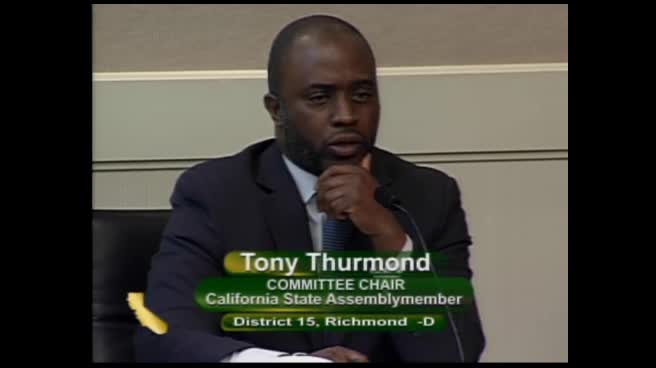 30MIN
Assembly Standing Committee on Labor and Employment
 6MIN
Assembly Standing Committee on Veterans Affairs
Bill Author