ACA 3: Elections: initiatives and referenda.
- Session Year: 2017-2018
- House: Assembly
- Latest Version Date: 2017-05-16
The California Constitution provides that the electors may propose a statute or an amendment to the California Constitution by initiative and approve or reject a statute by referendum. An initiative measure may be proposed by presenting to the Secretary of State a petition that sets forth the text of the proposed statute or amendment to the Constitution, and is certified to have been signed by the required number of electors, as prescribed. A referendum measure may be proposed by presenting to the Secretary of State a petition that sets forth the statute or part of the statute to be submitted to the electors, and is certified to have been signed by the required number of electors. Prior to Before the circulation of an initiative or referendum petition for signatures, the California Constitution requires that a copy of the petition be submitted to the Attorney General, who must prepare a title and summary of the measure. Existing statutory law also directs the Attorney General to prepare the ballot label, and the ballot title and summary that is included in the state voter information guide, for each measure that appears on a statewide ballot.
This measure would transfer from the Attorney General to the Legislative Analyst the duty of preparing the title and summary for a proposed initiative or referendum. The measure would also require, for each measure that appears on a statewide ballot, that the Legislative Analyst to prepare the ballot label, and the ballot title and summary for the ballot pamphlet.
The California Constitution provides that the electors may propose a statute or an amendment to the California Constitution by initiative and approve or reject a statute by referendum. An initiative measure may be proposed by presenting to the Secretary of State a petition that sets forth the text of the proposed statute or amendment to the Constitution, and is certified to have been signed by the required number of electors, as prescribed. A referendum measure may be proposed by presenting to the Secretary of State a petition that sets forth the statute or part of the statute to be submitted to the electors, and is certified to have been signed by the required number of electors. Prior to the circulation of an initiative or referendum petition for signatures, the California Constitution requires that a copy of the petition be submitted to the Attorney General, who must prepare a title and summary of the measure.
This measure would transfer from the Attorney General to the Legislative Analyst the duty of preparing the title and summary for a proposed initiative or referendum.
Resolved by the Assembly, the Senate concurring, That the Legislature of the State of California at its 2017-18 Regular Session commencing on the fifth day of December 2016, two-thirds of the membership of each house concurring, hereby proposes to the people of the State of California, that the Constitution of the State be amended as follows:
For each measure that appears on a statewide ballot, the Legislative Analyst shall prepare the ballot label, and the ballot title and summary for the state voter information guide.
(a)The referendum is the power of the electors to approve or reject statutes or parts of statutes except urgency statutes, statutes calling elections, and statutes providing for tax levies or appropriations for usual current expenses of the State.
(b)A referendum measure may be proposed by presenting to the Secretary of State, within 90 days after the enactment date of the statute, a petition certified to have been signed by electors equal in number to 5 percent of the votes for all candidates for Governor at the last gubernatorial election, asking that the statute or part of it be submitted to the electors. In the case of a statute enacted by a bill passed by the Legislature on or before the date the Legislature adjourns for a joint recess to reconvene in the second calendar year of the biennium of the legislative session, and in the possession of the Governor after that date, the petition may not be presented on or after January 1 next following the enactment date unless a copy of the petition is submitted to the Legislative Analyst pursuant to subdivision (d) of Section 10 before January 1.
(c)The Secretary of State shall then submit the measure at the next general election held at least 31 days after it qualifies or at a special statewide election held prior to that general election. The Governor may call a special statewide election for the measure.
(a)An initiative statute or referendum approved by a majority of votes cast thereon takes effect the day after the election unless the measure provides otherwise. If a referendum petition is filed against a part of a statute, the remainder of the statute shall not be delayed from going into effect.
(b)If provisions of two or more measures approved at the same election conflict, those of the measure receiving the highest number of votes shall prevail.
(c)The Legislature may amend or repeal a referendum statute. The Legislature may amend or repeal an initiative statute by another statute that becomes effective only when approved by the electors unless the initiative statute permits amendment or repeal without the approval of the electors.
(d)Prior to Before circulation of an initiative or referendum petition for signatures, a copy shall be submitted to the Legislative Analyst Analyst, who shall prepare a title and summary of the measure as provided by law.
(e)The Legislature shall provide the manner in which petitions shall be circulated, presented, and certified, and measures submitted to the electors.
(a)At regular sessions a bill other than the budget bill may not be heard or acted on by committee or either house until the 31st day after the bill is introduced unless the house dispenses with this requirement by rollcall vote entered in the journal, three-fourths of the membership concurring.
(b)(1)The Legislature may make no law except by statute and may enact no statute except by bill. A bill may not be passed unless it is read by title on three days in each house except that the house may dispense with this requirement by rollcall vote entered in the journal, two-thirds of the membership concurring.
(2)A bill may not be passed or ultimately become a statute unless the bill with any amendments has been printed, distributed to the members, and published on the Internet, in its final form, for at least 72 hours before the vote, except that this notice period may be waived if the Governor has submitted to the Legislature a written statement that dispensing with this notice period for that bill is necessary to address a state of emergency, as defined in paragraph (2) of subdivision (c) of Section 3 of Article XIIIB, that has been declared by the Governor, and the house considering the bill thereafter dispenses with the notice period for that bill by a separate rollcall vote entered in the journal, two thirds two-thirds of the membership concurring, prior to the vote on the bill.
(3)A bill may not be passed unless, by rollcall vote entered in the journal, a majority of the membership of each house concurs.
(c)(1)Except as provided in paragraphs (2) and (3), a statute enacted at a regular session shall go into effect on January 1 next following a 90-day period from the date of enactment of the statute and a statute enacted at a special session shall go into effect on the 91st day after adjournment of the special session at which the bill was passed.
(2)A statute, other than a statute establishing or changing boundaries of a legislative, congressional, or other election district, enacted by a bill passed by the Legislature on or before the date the Legislature adjourns for a joint recess to reconvene in the second calendar year of the biennium of the legislative session, and in the possession of the Governor after that date, shall go into effect on January 1 next following the enactment date of the statute unless, before January 1, a copy of a referendum petition affecting the statute is submitted to the Legislative Analyst pursuant to subdivision (d) of Section 10 of Article II, in which event the statute shall go into effect on the 91st day after the enactment date unless the petition has been presented to the Secretary of State pursuant to subdivision (b) of Section 9 of Article II.
(3)Statutes calling elections, statutes providing for tax levies or appropriations for the usual current expenses of the State, and urgency statutes shall go into effect immediately upon their enactment.
(d)Urgency statutes are those necessary for immediate preservation of the public peace, health, or safety. A statement of facts constituting the necessity shall be set forth in one section of the bill. In each house the section and the bill shall be passed separately, each by rollcall vote entered in the journal, two-thirds of the membership concurring. An urgency statute may not create or abolish any office or change the salary, term, or duties of any office, or grant any franchise or special privilege, or create any vested right or interest.
Resolved by the Assembly, the Senate concurring, That the Legislature of the State of California at its 2017-18 Regular Session commencing on the fifth day of December 2016, two-thirds of the membership of each house concurring, hereby proposes to the people of the State of California, that the Constitution of the State be amended as follows:
(a)The referendum is the power of the electors to approve or reject statutes or parts of statutes except urgency statutes, statutes calling elections, and statutes providing for tax levies or appropriations for usual current expenses of the State.
(b)A referendum measure may be proposed by presenting to the Secretary of State, within 90 days after the enactment date of the statute, a petition certified to have been signed by electors equal in number to 5 percent of the votes for all candidates for Governor at the last gubernatorial election, asking that the statute or part of it be submitted to the electors. In the case of a statute enacted by a bill passed by the Legislature on or before the date the Legislature adjourns for a joint recess to reconvene in the second calendar year of the biennium of the legislative session, and in the possession of the Governor after that date, the petition may not be presented on or after January 1 next following the enactment date unless a copy of the petition is submitted to the Attorney General Legislative Analyst pursuant to subdivision (d) of Section 10 of Article II before January 1.
(c)The Secretary of State shall then submit the measure at the next general election held at least 31 days after it qualifies or at a special statewide election held prior to that general election. The Governor may call a special statewide election for the measure.
(a)An initiative statute or referendum approved by a majority of votes cast thereon takes effect the day after the election unless the measure provides otherwise. If a referendum petition is filed against a part of a statute, the remainder of the statute shall not be delayed from going into effect.
(b)If provisions of 2 two or more measures approved at the same election conflict, those of the measure receiving the highest affirmative vote number of votes shall prevail.
(c)The Legislature may amend or repeal a referendum statutes. It statute. The Legislature may amend or repeal an initiative statute by another statute that becomes effective only when approved by the electors unless the initiative statute permits amendment or repeal without their the approval of the electors.
(d)Prior to circulation of an initiative or referendum petition for signatures, a copy shall be submitted to the Attorney General Legislative Analyst who shall prepare a title and summary of the measure as provided by law.
(e)The Legislature shall provide the manner in which petitions shall be circulated, presented, and certified, and measures submitted to the electors.
(a)At regular sessions no a bill other than the budget bill may not be heard or acted on by committee or either house until the 31st day after the bill is introduced unless the house dispenses with this requirement by rollcall vote entered in the journal, three fourths three-fourths of the membership concurring.
(b)(1)The Legislature may make no law except by statute and may enact no statute except by bill. No A bill may not be passed unless it is read by title on 3 three days in each house except that the house may dispense with this requirement by rollcall vote entered in the journal, two thirds two-thirds of the membership concurring.
(2)No A bill may not be passed or ultimately become a statute unless the bill with any amendments has been printed, distributed to the members, and published on the Internet, in its final form, for at least 72 hours before the vote, except that this notice period may be waived if the Governor has submitted to the Legislature a written statement that dispensing with this notice period for that bill is necessary to address a state of emergency, as defined in paragraph (2) of subdivision (c) of Section 3 of Article XIIIB, that has been declared by the Governor, and the house considering the bill thereafter dispenses with the notice period for that bill by a separate rollcall vote entered in the journal, two thirds of the membership concurring, prior to the vote on the bill.
(3)No A bill may not be passed unless, by rollcall vote entered in the journal, a majority of the membership of each house concurs.
(c)(1)Except as provided in paragraphs (2) and (3) of this subdivision, a statute enacted at a regular session shall go into effect on January 1 next following a 90-day period from the date of enactment of the statute and a statute enacted at a special session shall go into effect on the 91st day after adjournment of the special session at which the bill was passed.
(2)A statute, other than a statute establishing or changing boundaries of any a legislative, congressional, or other election district, enacted by a bill passed by the Legislature on or before the date the Legislature adjourns for a joint recess to reconvene in the second calendar year of the biennium of the legislative session, and in the possession of the Governor after that date, shall go into effect on January 1 next following the enactment date of the statute unless, before January 1, a copy of a referendum petition affecting the statute is submitted to the Attorney General Legislative Analyst pursuant to subdivision (d) of Section 10 of Article II, in which event the statute shall go into effect on the 91st day after the enactment date unless the petition has been presented to the Secretary of State pursuant to subdivision (b) of Section 9 of Article II.
(3)Statutes calling elections, statutes providing for tax levies or appropriations for the usual current expenses of the State, and urgency statutes shall go into effect immediately upon their enactment.
(d)Urgency statutes are those necessary for immediate preservation of the public peace, health, or safety. A statement of facts constituting the necessity shall be set forth in one section of the bill. In each house the section and the bill shall be passed separately, each by rollcall vote entered in the journal, two thirds two-thirds of the membership concurring. An urgency statute may not create or abolish any office or change the salary, term, or duties of any office, or grant any franchise or special privilege, or create any vested right or interest.
|
Date
|
Status
|
|---|---|
| Jan 3, 2018 | From committee: Without further action pursuant to Joint Rule 62(a). |
| Jun 28, 2017 | In committee: Set, first hearing. Failed passage. |
| May 17, 2017 | Re-referred to Com. on E. & R. |
| May 16, 2017 | From committee chair, with author's amendments: Amend, and re-refer to Com. on E. & R. Read second time and amended. |
| Apr 20, 2017 | Referred to Com. on E. & R. |
| Jan 20, 2017 | From printer. May be heard in committee February 19. |
| Jan 19, 2017 | Read first time. To print. |
|
Date
|
Description
|
Location
|
Votes
|
|
|---|---|---|---|---|
| Jun 28, 2017 | Be adopted and re-referred to the Committee on [Appropriations] | Assembly Standing Committee on Elections and Redistricting |
Failed |
This list shows positions taken on this bill by organizations on the date displayed, which is linked to the original source.
Positions by individuals are not included.
|
Organization
|
Position
|
Date
|
|---|---|---|
| Attorney General Xavier Becerra | ** Against | Jun 26, 2017 |
| California Common Cause | ** Support | Jun 26, 2017 |
| California Professional Firefighters | ** Against | Jun 26, 2017 |
| Howard Jarvis Taxpayers Association | * Support | Jun 28, 2017 |
| League of Women Voters California | * Support | Jun 28, 2017 |
Date of Hearing: June 28, 2017
ASSEMBLY COMMITTEE ON ELECTIONS AND REDISTRICTING
Marc Berman, Chair
ABPCA Bill Id:ACA 3 (
Author:Kiley) – As Amended Ver:May 16, 2017
SUBJECT: Elections: initiatives and referenda.
SUMMARY: Transfers the responsibility for preparing official summaries of state ballot measures from the Attorney General (AG) to the Legislative Analyst's Office (LAO). Specifically, this measure:
- Makes the LAO, rather than the AG, responsible for preparing the ballot label and the ballot title and summary for each statewide measure that has qualified to appear on the ballot.
- Makes the LAO, rather than the AG, responsible for preparing the circulating title and summary for each proposed state initiative and referendum measure.
- Makes technical, clarifying, and conforming changes.
EXISTING LAW:
- Requires the proponents of a state initiative or referendum measure, prior to circulating an initiative or referendum petition for signatures, to submit the text of the measure to the AG. Requires the AG to prepare a circulating title and summary of the chief purposes and points of the proposed measure in the case of an initiative, or of the proposed statute at issue in the case of a referendum. Limits the length of the circulating title and summary to not more than 100 words, as specified.
- Requires the AG to prepare a ballot title and summary and a ballot label for each measure that will be submitted to the voters of the whole state and to provide them to the Secretary of State (SOS) by a date sufficient to meet the state voter information guide public display deadlines. Limits the length of the ballot title and summary to not more than 100 words, as specified. Requires the ballot label to be a condensed version of the ballot title and summary and to contain no more than 75 words, as specified.
- Requires the AG, when preparing a circulating title and summary or a ballot title and summary, to give a true and impartial statement of the purpose of the measure in such language that the title and summary shall neither be an argument, nor be likely to create prejudice, for or against the proposed measure.
- Requires the LAO to prepare an impartial analysis of each measure that will be submitted to the voters of the whole state, including a fiscal analysis of the measure, as specified. Requires the impartial analysis to be written in clear and concise terms, so as to be easily understood by the average voter.
- Permits any elector to seek a writ of mandate alleging that an error has occurred in the printing of any official elections matter, or that the neglect of duty by an official has occurred in violation of the Elections Code or the California Constitution.
FISCAL EFFECT: Unknown
COMMENTS:
- Purpose of the Measure: According to the author:
Due to the Attorney General's position as an elected official, the politicization of initiative ballot titles and summaries has been a problem for many years. This authority has been taken advantage of by members of both political parties. Given the opportunities for abuse and potential influence from special interests, the authority to write initiative summaries would be better off in the hands of a nonpartisan entity free from those pressures. In an effort to eliminate these misleading descriptions, ACA 3 would shift that authority from the Attorney General to the Legislative Analyst's Office.
- Titles and Summaries and Ballot Labels: As detailed above, proponents of a state initiative or referendum measure are required to submit their proposed measure to the AG for the preparation of a circulating title and summary of not more than 100 words that summarizes the chief purposes and points of the measure. That circulating title and summary appears on the petitions that are circulated in an attempt to qualify the measure for the ballot. For each statewide ballot measure that appears on the ballot, including any measure placed on the ballot by the Legislature, the AG is required to prepare a ballot title and summary of not more than 100 words that summarizes the chief purposes and points of the measure. That ballot title and summary appears in the portion of the state voter information guide that contains relevant information about the measure. Finally, the AG is required to prepare a ballot label for each statewide ballot measure that will appear on the ballot. The ballot label is a condensed version (not more than 75 words) of the ballot title and summary, and is the description of the measure that appears on the ballot itself.
When preparing these official summaries, the AG is required to "give a true and impartial statement of the purpose of the measure in such language that [the summary] shall neither be an argument, nor be likely to create prejudice, for or against the proposed measure." If a title and summary or a ballot label prepared by the AG fails to meet this standard, state law permits any elector to challenge the title and summary or ballot label in court.
Whenever an entity is required to summarize the chief purpose and points of a measure using not more than 100 words (or, in the case of the ballot label, 75 words), that entity will have to make judgments as to details that should be included and excluded from the summary. Ballot measure campaigns often are contentious, touching on some of the state's most controversial public policy issues. In light of that fact, it is not surprising that ballot labels and titles and summaries are often criticized and challenged in court; opposing sides of an issue are likely to have different perspectives on which aspects of a measure are the most important and should be emphasized in the title and summary. - Legislative Analyst's Impartial Analysis of State Ballot Measures: As detailed above, pursuant to existing law, the LAO is responsible for preparing an impartial analysis of each state ballot measure. Those analyses, which typically are about three pages in length (though they can be shorter or longer depending on the measure), appear in the state voter information guide immediately following the ballot title and summary prepared by the AG. Because the length of the LAO's analyses of ballot measures are not expressly limited by law, these analyses typically contain much greater detail about the potential effect of state ballot measures than can be included in the title and summary or the ballot label.
- AG Bias in Preparing Summaries of State Ballot Measures? The author of this measure contends that the AG's position as an elected state officer has led to the politicization of official ballot summaries prepared by the AG, resulting in misleading descriptions of initiatives and other ballot measures. Background materials submitted by the author to support this claim identify differences between the AG's title and summary and the LAO's analysis on a number of recent ballot measures. Many of these examples provided by the author detail situations in which the LAO's analysis contains more detail, or includes information about provisions of the measure that aren't addressed in the AG's title and summary. Because the length of the AG's title and summary is limited while the LAO's analysis is not, it is to be expected that the AG's title and summary would not have the same level of detail as the LAO analysis.
The author references two specific examples, however, which he contends reflect political motivations by the AG in the preparation of a title and summary. The first of those examples is the summary of Proposition 1A in November 1966, the measure that created a full time Legislature, among other provisions. According to the author, the title and summary initially prepared for that measure by Democratic Attorney General Tom Lynch stated that the measure would raise legislative salaries. The author contends that the language about legislative salaries subsequently was removed from the title and summary after the AG came under pressure from the Speaker of the Assembly, who supported the measure.
The second example cited by the author was the title and summary prepared by Republican Attorney General Dan Lungren for Proposition 209 in November 1996. The author notes that while the LAO's analysis of the measure described it as eliminating affirmative action programs, the title and summary prepared by the AG did not mention affirmative action. Instead, the title and summary described the measure as prohibiting "the state, local governments, districts, public universities, colleges, and schools, and other government instrumentalities from discriminating against or giving preferential treatment to any individual or group in public employment, public education, or public contracting on the basis of race, sex, color, ethnicity, or national origin."
Notwithstanding these examples provided by the author, research published in the UC Irvine Law Review in 2013 found little evidence to support a hypothesis that California AGs have strategically manipulated the ballot labels of state ballot measures. In Are Ballot Titles Biased? Partisanship in California's Supervision of Direct Democracy (Christopher S. Elmendorf & Douglas M. Spencer, 3 U.C. Irvine L. Rev. 511 (2013)), the researchers investigated whether California AGs write ballot labels that are biased, rather than impartial. In their study, the authors analyzed both an objective measure of potential bias (the readability of the ballot label) and a subjective measure of potential bias (the perceptions of university students). The authors stated that while they "began this project with a dim view of California AGs' performance in writing ballot labels" and that they "would have certainly voted yes" if asked to vote on a measure to transfer responsibility for preparing ballot labels from the AG to the LAO, they noted that the results of their study "gave us pause." While the authors' cautioned that their study "does not prove that AGs are 'not biased'" when preparing ballot labels, the study ultimately found "little if any evidence that the AG has behaved as a strategic partisan in labeling ballot measures." - Increased Legislative Involvement in the Initiative Process: When the initiative process was adopted in California in 1911, it was promoted as a tool to allow voters to bypass the Legislature and the Governor to adopt laws and constitutional amendments. The ballot argument in support of the constitutional amendment that created California's initiative process described the process as a "safeguard which the people should retain for themselves, to supplement the work of the legislature by initiating those measures which the legislature either viciously or negligently fails or refuses to enact; and to hold the legislature in check."
By requiring the Legislative Analyst—an appointee of the Legislature—to prepare the titles and summaries of initiatives, and the ballot labels for initiative measures that qualify for the ballot, this measure will increase Legislative involvement in a process that was specifically designed to be a method for bypassing the Legislature. Not only would someone who answers to the Legislature be responsible for preparing official summaries of initiative measures, but if those summaries are challenged in court, the Legislative Analyst typically is represented by the Legislative Counsel, another appointee of the Legislature. The perception that the Legislature could unduly influence the actions of the Legislative Analyst or the Legislative Counsel with respect to official summaries of initiative measures—even in the absence of any such influence—could damage public trust in the initiative process, the Legislature, the Legislative Analyst, and the Legislative Counsel. - Are Allegations of Bias Inevitable? As detailed above, in light of the fact that state ballot measures deal with some of the state's most controversial issues, it is common for proponents or opponents of a ballot measure to allege that the title and summary or ballot label of a measure is biased, even in situations where courts have found those allegations to be unfounded. (In fact, the impartial analyses of state ballot measures that are prepared by the LAO similarly have been challenged in court by proponents and opponents, though it appears that such challenges have been less common than challenges of titles and summaries in recent elections.) The author and supporters of this measure argue that the reputation of the LAO for impartial, nonpartisan analysis make it better-suited to prepare summaries of state ballot measures than the AG. Notwithstanding the excellent reputation of the LAO, however,
it is unclear whether changing the person who is responsible for preparing official ballot summaries will have any effect on allegations of bias that are made by proponents or opponents who are seeking summaries that are favorable to their position. - Arguments in Support: In support of this measure, California Common Cause writes:
In California there is a decades-long history of accusations of bias and even litigation concerning the title & summary of initiatives. Because the Attorney General is elected to partisan office, members of the opposite party have frequently complained of misleading summaries intended to shape public opinion rather than inform it. For example, in 1978, Democrats complained when Republican Attorney General Evelle Younger wrote a summary of Proposition 13 emphasizing how the measure would reduce property taxes without explaining that "the law [would also make] it harder to pass tax increases in the Legislature." In 2015, supporters of a measure to limit public employee pensions accused Democratic Attorney General Kamala Harris of taking language that was "poll-tested by the unions" and inserting it into the summary.
ACA 3 would help reduce any perception of bias in regards to the naming and summarizing of proposed initiatives by turning this function over to the LAO, which is widely respected for its impartiality and nonpartisanship. The LAO's admirable history of analyzing ballot measures and politically-sensitive topics such as the Governor's budget with little controversy make it well-suited for also drafting the title & summary.
- Arguments in Opposition: In opposition to this measure, Attorney General Xavier Becerra writes:
Article II, section 10 of the California Constitution requires the Attorney General to prepare titles and summaries for initiative measures—as does the Political Reform Act (Howard Jarvis Taxpayers Ass'n v. Bowen (2011) 192 Cal.App.4th 110, 115). And the Elections Code gives the Attorney General authority to prepare ballot labels. (Ibid.) Under current law, all three branches of government ensure the accuracy of initiative and ballot measures: the Executive Branch through the Attorney General's title and summary; the Legislative Branch through the Legislative Analyst's estimate of fiscal impact; and the Judicial Branch through court orders issued in connection with challenges to initiative and ballot materials. Your legislation would effectively eliminate the Executive Branch from this process, in contravention of the separation of powers doctrine.
Equally important, the Constitution has given responsibility for preparing initiative and ballot titles and summaries to a constitutional officer having political accountability to the voters. The People's desire for such accountability would not be served by transferring these duties to the Legislative Analyst, who is not elected and, therefore, not directly accountable to California's voters.
Preparing the title and summary of the chief points and purposes of an initiative or ballot measure requires significant expertise and analysis into the proposed measure's legal effect on current law, which the Attorney General is in the unique position to provide, as the chief law officer of the state. (Cal. Const., art. V. § 13.) This responsibility has been vested in the Attorney General for more than 100 years. (See Howard Jarvis, supra, 192 Cal.App.4th at p. 115 [noting that the former version of Elections Code section 9051 was enacted in 1913].) The Legislative Analyst's Office, conversely, provides "fiscal and policy advice to the Legislature" and "is known for its fiscal and programmatic expertise and nonpartisan analyses of the state budget." (Legislative Analyst's Office, About Our Office <http://www.lao.ca.gov/About> [as of June 22, 2017].)
- Previous Legislation: AB 2209 (Niello) of 2008 would have required the LAO, instead of the AG, to prepare the title and summary for state initiatives and referenda and the ballot title for state measures that would appear on the ballot. AB 2209 failed passage in this committee on a 2-5 vote.
ACA 18 (Adams) of 2008 would have required the LAO, instead of the AG, to prepare the title and summary for state initiative and referendum measures. ACA 18, which was a companion measure to AB 2209, was not referred to committee until after AB 2209 had failed passage. As such, ACA 18 was not heard in this committee.
AB 319 (Niello) of 2009 would have required the LAO to prepare the title and summary for state initiatives and referenda, the fiscal estimates for proposed state initiative measures, and the ballot titles for state measures that will appear on the ballot, among other provisions. AB 319 failed passage in this committee on a 2-5 vote.
ACA 20 (Niello) of 2009 would have required the LAO, instead of the AG, to prepare the title and summary for state initiative and referendum measures. ACA 20, which was a companion measure to AB 319, failed passage in this committee on a 2-5 vote. - Related Legislation: ACA 1 (Mullin), which is pending in the Senate Elections & Constitutional Amendments Committee, provides that an initiative statute, a referendum, or a constitutional amendment or revision approved by a majority of votes cast shall take effect on the fifth day after the SOS files the statement of the vote, instead of going into effect the day after the election as is the case under existing law. ACA 1 was approved by this committee on a 7-0 vote, and by the Assembly on a 75-0 vote. ACA 1 and this measure both propose to amend Section 10 of Article II of the California Constitution.
- Approval by Voters: As a constitutional amendment, this measure requires the approval of the voters to take effect. Legislation making statutory changes necessary to implement this measure would also be required.
REGISTERED SUPPORT / OPPOSITION:
Support
California Common Cause
Howard Jarvis Taxpayers Association
League of Women Voters of California
Opposition
Attorney General Xavier Becerra
California Professional Firefighters
Analysis Prepared by: Ethan Jones / E. & R. / (916) 319-2094
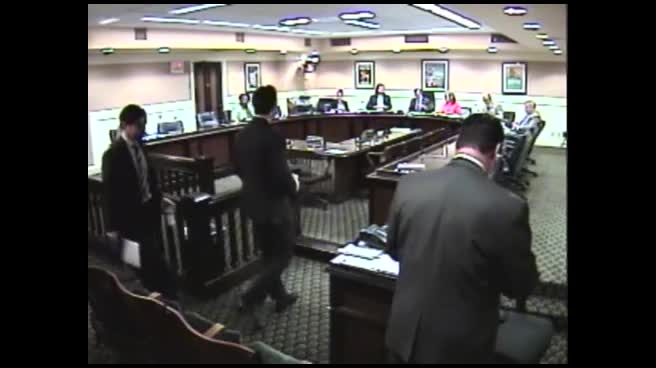
Discussed in Hearing
 37MIN
Assembly Standing Committee on Elections and Redistricting
Bill Author

Bill Co-Author(s):