SB 1027: State employee survey.
- Session Year: 2017-2018
- House: Senate
- Latest Version Date: 2018-03-12
Existing law requires specified state agencies to prepare and submit to the Secretary for Environmental Protection specified information for inclusion in an annual greenhouse gas emission reduction report card, including a list of measures that the state agency has adopted or implemented, or that are needed, to meet GHG greenhouse gas emission reduction targets, as defined, and information regarding the agencys own GHG greenhouse gas emissions. Existing law requires the specified state agencies, not less than once every 3 years, to the extent funds are available, to conduct an independent audit and verification of the actual and proposed GHG emission reductions achieved by the state agency, in order to ensure that the agency is achieving GHG emission reduction targets.
This bill would require the GHG emission reduction targets to also include targets for each employee or category of employees, and would require the information prepared and submitted for the report card to include information about employee GHG emissions. The bill would require an independent audit and verification to include actual and proposed reductions achieved for each employee or category of employees, to identify areas of improvement and determine best practices for reducing employee GHG emissions, and to revise employee GHG emission reduction targets and proposed measures for reducing employee GHG emissions pursuant to that determination. The bill would require the implementation of these provisions to be funded with moneys from the Greenhouse Gas Reduction Fund, or other funds available to carry out the purposes of these provisions, upon appropriation by the Legislature. the Department of General Services, in consultation with the State Air Resources Board, to update a specified voluntary survey on state employee commutes by July 1, 2020, and at least once every 5 years thereafter, to include calculations for associated greenhouse gas emissions, as specified. The bill would require the department to report the findings to the Legislature, Governor, and all state agencies. The bill would require the department and the state board to develop incentives to increase state employees voluntary participation in the survey.
Existing law, the California Global Warming Solutions Act of 2006, requires the State Air Resources Board to adopt a statewide greenhouse gas (GHG) emissions limit equivalent to the statewide GHG emissions level in 1990 to be achieved by 2020. The act requires the state board to adopt rules and regulations in an open public process to achieve the maximum technologically feasible and cost-effective GHG emission reductions. The act authorizes the state board to include use of market-based compliance mechanisms. The act requires all state agencies to consider and implement strategies to reduce their GHG emissions. Existing law requires all moneys, except for fines and penalties, collected by the state board from the auction or sale of allowances as part of a market-based compliance mechanism to be deposited in the Greenhouse Gas Reduction Fund and to be available upon appropriation by the Legislature.
Existing law requires specified state agencies to prepare and submit to the Secretary for Environmental Protection specified information for inclusion in an annual greenhouse gas emission reduction report card, including a list of measures that the state agency has adopted or implemented, or that are needed, to meet GHG emission reduction targets, as defined, and information regarding the agencys own GHG emissions. Existing law requires the specified state agencies, not less than once every 3 years, to the extent funds are available, to conduct an independent audit and verification of the actual and proposed GHG emission reductions achieved by the state agency, in order to ensure that the agency is achieving GHG emission reduction targets.
This bill would require the GHG emission reduction targets to also include targets for each employee or category of employees, and would require the information prepared and submitted for the report card to include information about employee GHG emissions. The bill would require an independent audit and verification to include actual and proposed reductions achieved for each employee or category of employees, to identify areas of improvement and determine best practices for reducing employee GHG emissions, and to revise employee GHG emission reduction targets and proposed measures for reducing employee GHG emissions pursuant to that determination. The bill would require the implementation of these provisions to be funded with moneys from the Greenhouse Gas Reduction Fund, or other funds available to carry out the purposes of these provisions, upon appropriation by the Legislature.
The Legislature finds and declares all of the following:
(a)The State of California currently employs over 220,000 workers.
(b)Commuting to and from work, as well as certain work-related activities, emit greenhouse gases.
(c)The state has long been a leader in the fight against climate change, including the landmark California Global Warming Solutions Act of 2006 (Division 25.5 (commencing with Section 38500) of the Health and Safety Code), relative to activities that emit greenhouse gases.
(d)The state can continue to be a leader in the fight against climate change, and create a model for others to follow, by minimizing the greenhouse gas emissions associated with state employees and state work.
(e)In order to continue to reduce greenhouse gas emissions, the state needs to determine the commuting habits of and work-related activities performed by state employees that emit greenhouse gases.
SEC. 2.Section 12892 of the Government Code is amended to read:12892.(a)On or before October 1 of each year, each state agency shall prepare and submit to the secretary in a standardized format as determined by the agency all of the following:
(1)A list of those measures that have been adopted and implemented by the state agency to meet GHG emission reduction targets, including employee targets established pursuant to paragraph (4), targets and a status report on actual GHG emissions reduced as a result of these measures.
(2)A list and timetable for the adoption of any additional measures needed to meet GHG emission reduction targets.
(3)An estimate of the state agencys own GHG emissions, and the GHG emissions of each employee or category of employees, as well as an explanation of any increase or decrease compared to the previous years emissions.
(4)A GHG emission reduction target, or updated target, for each employee or category of employees.(b)In order to reduce paperwork and workload, information required to be submitted pursuant to this section may be submitted in a standardized electronic format as determined by the agency.
(c)On or before January 1 of each year, the agency shall compile and organize the information submitted pursuant to this section into a clear, standardized format, and shall provide that information on the agencys Internet Web site in the form of a state agency greenhouse gas emission reduction report card.
(d)The report card shall compare the actions taken and proposed to be taken by individual state agencies and their projected annual GHG emission reductions against the state agency GHG emission reduction targets and statewide GHG emission reduction limits.
(e)Where appropriate, the report card shall include a statement regarding the independent audits required by Section 12893. both of the following:
(1)A statement regarding the independent audits required by Section 12893.
(2)The results and findings from the survey required pursuant to Chapter 8.9 (commencing with Section 25790) of Division 15 of the Public Resources Code.
(f)In conjunction with the Governors Budget submitted pursuant to subdivision (a) of Section 12 of Article IV of the California Constitution, on or before January 10 of each year, the agency shall submit to the Legislature a comprehensive budget display that includes both of the following:
(1)Funding proposals and base funding in the proposed Governors Budget for state agencies implementing climate solutions to meet the GHG emission reduction targets as specified in the California Global Warming Solutions Act of 2006 (Division 25.5 (commencing with Section 38500) of the Health and Safety Code).
(2)A five-year work plan summary for each department included in the comprehensive budget display that shows how staff and contracting resources will be allocated to achieve specified climate solution deliverables.
SEC. 3.Section 12893 of the Government Code is amended to read:12893.(a)Not less than once every three years, each state agency reporting pursuant to Section 12892 shall, to the extent funds are available, conduct an independent audit in a standardized format determined by the agency and verification of the actual and proposed GHG emission reductions achieved by that state agency, and the actual and proposed GHG emission reductions for each employee or category of employees, in order to ensure that the state agency is achieving GHG emission reduction targets.(b)In the independent audit conducted pursuant to subdivision (a), a state agency shall identify areas of improvement for reducing GHG emissions of each employee or category of employees, determine best practices for reducing employee GHG emissions, and revise its employee GHG emission reduction targets and proposed measures for reducing employee GHG emissions, pursuant to that determination.SEC. 4.Section 12893.1 is added to the Government Code, to read:12893.1.The implementation of this chapter shall be funded with moneys from the Greenhouse Gas Reduction Fund, created pursuant to Section 16428.8, or other funds available to carry out the purposes of this chapter, upon appropriation by the Legislature.SEC. 3.Chapter 8.9 (commencing with Section 25790) is added to Division 15 of the Public Resources Code, to read:8.9.State Employee Commute Survey25790.(a)For purposes of this section, the following terms have the following meanings:
(1)Department means the Department of General Services.
(2)State board means the State Air Resources Board.
(3)Survey means the State Your Mode 2016 Employee Commute Survey and its updates.
(b)The department, in consultation with the state board, shall update the survey by July 1, 2020, and at least once every five years thereafter, and report the findings to the Legislature, Governor, and all state agencies.
(c)(1)In addition to the questions asked in the 2016 survey, the survey also shall ask state agency employees about other work-related activities that emit greenhouse gases including, but not limited to, both of the following:
(A)Travel performed for work duties, including, but not limited to, site inspections, enforcement activities, meetings, and conferences.
(B)Equipment operated in the course of performing work-related activities.
(2)Each survey shall include an open-ended question for state agency employees to report work-related activities not covered in the survey that emit greenhouse gases.
(d)The department and the state board shall review the responses to the questions required pursuant to subdivision (c) and do all of the following:
(1)Calculate the greenhouse gas emissions associated with the responses received.
(2)Calculate the greenhouse gas emissions associated with the various classifications and titles of state employees.
(3)Include, when deemed appropriate, a question or questions about those reported activities in future surveys.
(e)Nothing in this section shall prohibit the department and the state board from removing questions from the survey they no longer deem relevant.
(f)The survey shall be voluntary for state agency employees to complete.
(g)The department and the state board shall develop incentives to increase voluntary participation in the survey.
(h)The survey shall be a comprehensive survey of state agency employees and shall not be limited to specific geographic regions.
(i)A report to be submitted pursuant to this section shall be submitted in compliance with Section 9795 of the Government Code.
For the purposes of this chapter, the following terms have the following meanings:
(a)Agency means the California Environmental Protection Agency.
(b)Climate Action Team Report means the report prepared pursuant to Executive Order S-3-05 and submitted to the Governor and the Legislature in March 2006.
(c)GHG means greenhouse gas as defined in subdivision (g) of Section 38505 of the Health and Safety Code.
(d)GHG emission reduction target means a target established for a state agency in the Climate Action Team Report, or a requirement made applicable to that state agency by an action taken by the State Air Resources Board pursuant to Division 25.5 (commencing with Section 38500) of the Health and Safety Code. Code, or a target established for an employee or category of employees pursuant to this chapter.
(e)Secretary means the Secretary for Environmental Protection.
(f)State agency means a state agency listed in the Climate Action Team Report, a state office, department, division, bureau, board, or commission whose operations or programs result in greenhouse gas emissions that are subject to Division 25.5 (commencing with Section 38500) of the Health and Safety Code, and any other state agency listed in Section 12800, as determined by the secretary.
SEC. 2.Section 12892 of the Government Code is amended to read:12892.(a)On or before October 1 of each year, each state agency shall prepare and submit to the secretary in a standardized format as determined by the agency all of the following:
(1)A list of those measures that have been adopted and implemented by the state agency to meet GHG emission reduction targets targets, including employee targets established pursuant to paragraph (4), and a status report on actual GHG emissions reduced as a result of these measures.
(2)A list and timetable for adoption of any additional measures needed to meet GHG emission reduction targets.
(3)An estimate of the departments state agencys own greenhouse gas GHG emissions, and the GHG emissions of each employee or category of employees, as well as an explanation of any increase or decrease compared to the previous years emissions.
(4)A GHG emission reduction target, or updated target, for each employee or category of employees.
(b)In order to reduce paperwork and workload, information required to be submitted pursuant to this section may be submitted in a standardized electronic format as determined by the agency.
(c)On or before January 1 of each year, the agency shall compile and organize the information submitted pursuant to this section into a clear, standardized format, and shall provide that information on the agencys Internet Web site in the form of a state agency greenhouse gas emission reduction report card.
(d)The report card shall compare the actions taken and proposed to be taken by individual state agencies and their projected annual GHG emission reductions against the state agency GHG emission reduction targets and statewide GHG emission reduction limits.
(e)Where appropriate, the report card shall include a statement regarding the independent audits required by Section 12893.(f)In conjunction with the Governors Budget submitted pursuant to subdivision (a) of Section 12 of Article IV of the California Constitution, on or before January 10 of each year, the agency shall submit to the Legislature a comprehensive budget display that includes both of the following:(1)Funding proposals and base funding in the proposed Governors Budget for state agencies implementing climate solutions to meet the greenhouse gas emissions GHG emission reduction targets as specified in the California Global Warming Solutions Act of 2006 (Division 25.5 (commencing with Section 38500) of the Health and Safety Code).
(2)A five-year work plan summary for each department included in the comprehensive budget display that shows how staff and contracting resources will be allocated to achieve specified climate solution deliverables.
SEC. 3.Section 12893 of the Government Code is amended to read:12893.(a)Not less than once every three years, each state agency reporting pursuant to Section 12892 shall, to the extent funds are available, conduct an independent audit in a standardized format determined by the agency and verification of the actual and proposed GHG emissions emission reductions achieved by that state agency agency, and the actual and proposed GHG emission reductions for each employee or category of employees, in order to ensure that the state agency is achieving GHG emission reduction targets.
(b)In the independent audit conducted pursuant to subdivision (a), a state agency shall identify areas of improvement for reducing GHG emissions of each employee or category of employees, determine best practices for reducing employee GHG emissions, and revise its employee GHG emission reduction targets and proposed measures for reducing employee GHG emissions, pursuant to that determination.
SEC. 4.Section 12893.1 is added to the Government Code, to read:12893.1.The implementation of this chapter shall be funded with moneys from the Greenhouse Gas Reduction Fund, created pursuant to Section 16428.8, or other funds available to carry out the purposes of this chapter, upon appropriation by the Legislature.
|
Date
|
Status
|
|---|---|
| May 25, 2018 | May 25 hearing: Held in committee and under submission. |
| May 18, 2018 | Set for hearing May 25. |
| Apr 16, 2018 | April 16 hearing: Placed on APPR. suspense file. |
| Apr 9, 2018 | Set for hearing April 16. |
| Apr 4, 2018 | From committee: Do pass and re-refer to Com. on APPR. (Ayes 6. Noes 0.) (April 4). Re-referred to Com. on APPR. |
| Mar 20, 2018 | Set for hearing April 4. |
| Mar 12, 2018 | From committee with author's amendments. Read second time and amended. Re-referred to Com. on EQ. |
| Feb 14, 2018 | Referred to Com. on EQ. |
| Feb 8, 2018 | From printer. May be acted upon on or after March 10. |
| Feb 7, 2018 | Introduced. Read first time. To Com. on RLS. for assignment. To print. |
|
Date
|
Description
|
Location
|
Votes
|
|
|---|---|---|---|---|
| Apr 16, 2018 | Placed on suspense file | Senate Standing Committee on Appropriations |
Passed |
|
| Apr 4, 2018 | Do pass, but first be re-referred to the Committee on [Appropriations] | Senate Standing Committee on Environmental Quality |
Passed |
This list shows positions taken on this bill by organizations on the date displayed, which is linked to the original source.
Positions by individuals are not included.
|
Organization
|
Position
|
Date
|
|---|---|---|
| Sacremento Municipal Utility District | * Support | Apr 4, 2018 |
SENATE COMMITTEE ON APPROPRIATIONS
Senator Ricardo Lara, Chair
2017 - 2018 Regular Session
SB 1027 (Pan) - State employee survey
Version: March 12, 2018 | Policy Vote: E.Q. 6 - 0 |
Urgency: No | Mandate: No |
Hearing Date: April 16, 2018 | Consultant: Narisha Bonakdar |
This bill meets the criteria for referral to the Suspense File.
Bill Summary:
SB 1027 requires the Department of General Services (DGS), in consultation with the California Air Resources Board (ARB), by July 1, 2020 and · quinquennially thereafter, to update the State Your Mode Employee Commute Survey (Survey) to incorporate questions about state agency employees work-related activities that emit greenhouse gas.
Fiscal Impact:
- Approximately $200,000 every five years (Greenhouse Gas Reduction Fund) for the ARB to consult with DGS on survey questions, to review survey responses and calculate work-related GHG emissions, to assist with drafting the survey findings report, and to assist in the development of incentives to increase voluntary participation in the survey.
- Approximately $200,000 every five years (General Fund) for the DGS to consult with ARB on survey questions, to update and conduct the survey, to review survey responses and calculate work-related GHG emissions, to assist with drafting the survey findings report, and to assist in the development of incentives to increase voluntary participation in the survey.
Background:
State Your Mode 2016 Employee Commute Survey. During the fall 2015 and 2016, DGS conducted a survey of state employees working in the Sacramento region. The information was collected to inform DGS’s regional strategic facilities planning efforts, but was available to other state agencies interested in developing site-specific transportation management strategies as well as local and regional entities to inform their planning activities.
With approximate 68,000 employees in Sacramento County, the state represents the largest employer in the region and provides an efficient means of collecting commute statistics that can be used to inform broader local and regional planning activities. Twenty-one percent of the Sacramento Area state employees surveyed in 2016 responded. Key findings from survey responses include the following:
- 56% of the respondent state employees drive alone to work. The top three reasons reported were: (1) no reasonable transit options, (2) concerns about needing to get home in an emergency, and (3) other options taking too long.
- 22% of the respondent state employees use public transit to commute to work (36% for those working in the City of Sacramento Core Area). The top three reasons cited as motivation for selecting alternate forms of commute: (1) high parking costs, (2) high fuel costs, and (3) wear and tear savings on personal vehicles.
- Respondent state employees indicated the following top three reasons would be incentives for not driving alone: (1) telework, (2) more flexible work schedule/alternative work week, and (2) monthly cash subsidy for using alternative commute modes. (73% of the respondents indicated they would be interested in participating in a telework program.)
State Agency Greenhouse Gas Reduction Report Card. SB 85 (Committee on Budget and Fiscal Review, Chapter 178, Statutes of 2007) requires the California Environmental Protection Agency (CalEPA) to annually report on state agency actions to reduce GHG emissions. The resulting State Agency Greenhouse Gas Reduction Report Card must include, among other things:
- A list of measures that have been adopted and implemented by the state agency with the actual GHG emissions reduced as a result of these measures.
- A list and timetable for adoption of any additional measures needed to meet GHG emission reduction targets.
- A comparison of the reductions from actions taken or proposed to be taken by a state agency to that agency’s GHG emission reduction targets.
- An estimate of the GHG emissions from each agency’s own operations and activities.
Proposed Law:
This bill, among other things:
Requires the DGS and ARB to update the voluntary “State Your Mode 2016 Employee Commute Survey” by July 1, 2020 and at least once every five years thereafter, and to report the findings of the survey to the Legislature, Governor, and all state agencies, as specified.
Expands the questions asked in the survey from commuting habits to include work-related activities that emit GHGs, as specified.
Requires DGS and ARB to calculate the GHG emissions associated with the responses received, as well as various classifications of state employees, as specified.
Specifies that DGS and ARB should include a question or questions in updates to the survey when they receive open-ended responses about activities that emit GHGs that are not included in the survey.
Requires that participation in the survey is voluntary.
Staff Comments:
Staff notes that this bill creates a statutory mandate that substantially expands the purpose, scope, and intended respondents of DGS’s “State Your Mode 2016 Employee Commute Survey.”
-- END --
SENATE COMMITTEE ON ENVIRONMENTAL QUALITY
Senator Wieckowski, Chair
2017 - 2018 Regular
Bill No: SB 1027
Author: | Pan | ||
Version: | 3/12/2018 | Hearing Date: | 4/4/2018 |
Urgency: | No | Fiscal: | Yes |
Consultant: | David Ernest García | ||
SUBJECT: State employee survey
ANALYSIS:
Existing law:
- Establishes the Department of General Services (DGS) to provide centralized services including, but not limited to, planning, acquisition, construction, maintenance of state buildings and property, purchasing, printing, architectural services, administrative hearings, government claims, and accounting services. (Government Code (GOV) §14600 et seq.)
- Establishes the Air Resources Board (ARB) as the air pollution control agency in California and requires ARB, among other things, to control emissions from a wide array of mobile sources and coordinate, encourage, and review the efforts of all levels of government as they affect air quality. (Health and Safety Code (HSC) §39500 et seq.)
- Requires, under the California Global Warming Solutions Act of 2006 (also known as AB 32), ARB to determine the 1990 statewide greenhouse gas (GHG) emissions level and approve a statewide GHG emissions limit that is equivalent to that level to be achieved by 2020. (HSC §38500 et seq.)
- Requires ARB to ensure that statewide GHG emissions are reduced to at least 40% below the 1990 level by December 31, 2030. (HSC §38566)
- Requires, by October 1 of each year, each state agency to prepare and submit to the Secretary of the California Environmental Protection Agency (CalEPA), a Greenhouse Gas Reduction Report Card, as specified. (GOV §12892)
This bill, among other things:
- Requires the DGS and ARB to update the voluntary “State Your Mode 2016 Employee Commute Survey” by July 1, 2020 and at least once every five years thereafter, and to report the findings of the survey to the Legislature, Governor, and all state agencies, as specified.
- Expands the questions asked in the survey from commuting habits to include work-related activities that emit GHGs, as specified.
- Requires DGS and ARB to calculate the GHG emissions associated with the responses received, as well as various classifications of state employees, as specified.
- Specifies that DGS and ARB should include a question or questions in updates to the survey when they receive open-ended responses about activities that emit GHGs that are not included in the survey.
- Requires that participation in the survey is voluntary.
Background
- State Your Mode 2016 Employee Commute Survey.
During the fall 2015 and 2016, DGS conducted a transportation survey of state employees working in the Sacramento region. The purpose of this survey was to collect information on commute choices and patterns for DGS’s regional strategic facilities planning efforts. Additionally, it was anticipated that the data would be used by individual state agencies interested in developing transportation management strategies at specific locations. As the largest employer in the region, state employee commute statistics also inform local and regional planning activities.
According to the State Controller’s Office, in 2016 there were 68,000 state employees in Sacramento County. 21% of the state employees surveyed in 2016 responded.
The 2016 survey was an update from an earlier survey in 2009, with changes to reflect completed and newly proposed light rail extensions, proposed Downtown/Riverfront Street Car Project, a question related to teleworking, among other changes.
In addition to the responses to the multiple choice questions, DGS received comments from approximately 3,400 individuals covering a wide range of topics, including observations on transit service, alternative transportation opportunities, and reasons for driving alone to work.
Key findings from survey responses include:- Region wide, 56% of state employees drive alone to work. The top three reasons people report they drive alone to work are: no reasonable transit options, respondents anticipating the need to get home in an emergency, and other option take too long.
- Region wide, 22% of state employees use public transit; for those working in the City of Sacramento Core Area, 36% report they use public transit to commute. The top three reasons that motivate people to choose alternate forms of commute are: high parking costs, high fuel costs, and wear and tear savings on personal vehicles.
- The top three reasons that would encourage people not to drive alone are: telework, more flexible work schedule/alternative work week, and monthly cash subsidy for using alternative commute modes.
- 73% of the respondents indicated they would be interested in participating in a telework program.
- Region wide, 56% of state employees drive alone to work. The top three reasons people report they drive alone to work are: no reasonable transit options, respondents anticipating the need to get home in an emergency, and other option take too long.
- State Agency Greenhouse Gas Reduction Report Card.
SB 85 (Committee on Budget and Fiscal Review, Chapter 178, Statutes of 2007) was a budget trailer bill that requires the California Environmental Protection Agency (CalEPA) to prepare an annual report describing state agency actions to reduce GHG emissions. State law directs CalEPA to compile and organize this information in the form of a State Agency Greenhouse Gas Reduction Report Card, which must include, among other things:- A list of measures that have been adopted and implemented by the state agency with the actual GHG emissions reduced as a result of these measures.
- A list and timetable for adoption of any additional measures needed to meet GHG emission reduction targets.
- A comparison of the reductions from actions taken or proposed to be taken by a state agency to that agency’s GHG emission reduction targets.
- An estimate of the GHG emissions from each agency’s own operations and activities.
- A list of measures that have been adopted and implemented by the state agency with the actual GHG emissions reduced as a result of these measures.
Comments
- Purpose of Bill. According to the author, “SB 1027 helps the state reach its greenhouse gas emission goals by identifying the average state worker’s carbon footprint. The 2016 DGS study already provides insight on how we can reduce an employee’s carbon footprint. This bill will expand on those efforts to go beyond the Sacramento region and to evaluate greenhouse gas emissions during work-related activities. The data collected will help departments create innovative solutions to reduce a worker’s footprint. SB 1027 keeps California a leader in ensuring a greener future.”
- Combining GHG Emission Reduction Information. DGS has twice performed a survey of state employees commuting practices and found that 56% of Sacramento region state employees drive alone to work. Largely, state employees reported that they drove alone because there were no transit options, they are worried about potential personal emergencies, and that other options took too much time. From the survey, DGS learned that telework, more flexible work schedule/alternative work week, and monthly cash subsidy for using alternative commute modes would reduce the number of state employees commuting to work by driving alone.
Apart from the GHG emissions associated with state employees commuting to work, CalEPA reports the GHG emissions associated each state agency’s operations and activities, which each state agency reports to CalEPA in the form of a State Agency Greenhouse Gas Reduction Report Card.
SB 1027 seeks to combine these efforts by requiring DGS and ARB to redo, and expand the scope of, the survey beyond commute practices to work-related activities that emit GHGs and require that information to be included in the State Agency Greenhouse Gas Reduction Report Card.
Related/Prior Legislation
SB 85 (Committee on Budget and Fiscal Review, Chapter 178, Statutes of 2007) requires, among other things, CalEPA to prepare an annual report describing state agency actions to reduce GHG emissions, and requires state agencies to compile and organize the needed information in the form of a State Agency Greenhouse Gas Reduction Report Card.
SOURCE:
Author
SUPPORT:
None on file
OPPOSITION:
None on file
-- END --
Discussed in Hearing
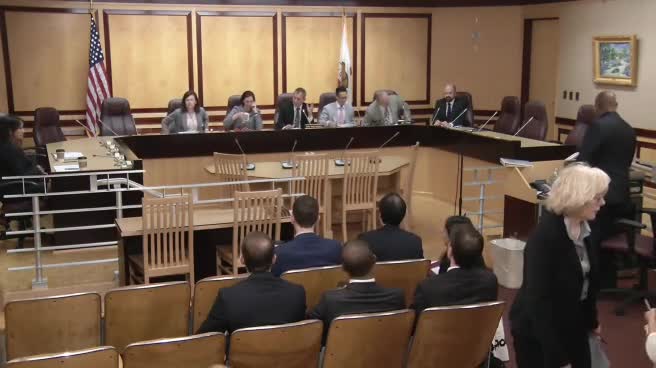 11MIN
Senate Standing Committee on Environmental Quality
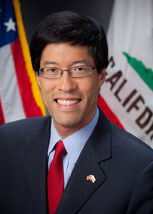
Bill Author
Bill Co-Author(s):