SB 1237: Property taxation: change in ownership.
- Session Year: 2017-2018
- House: Senate
- Latest Version Date: 2018-02-15
The California Constitution generally limits ad valorem taxes on real property to 1% of the full cash value of that property. For purposes of this limitation, full cash value is defined as the assessors valuation of real property as shown on the 197576 tax bill under full cash value or, thereafter, the appraised value of that real property when purchased, newly constructed, or a change in ownership has occurred.
Existing law specifies those circumstances in which the transfer of ownership interests in a corporation, partnership, limited liability company, or other legal entity results in a change in ownership of the real property owned by that entity, and generally provides that a change in ownership as so described occurs if a legal entity or other person obtains a controlling or majority ownership interest in the legal entity. Existing law requires the Franchise Tax Board to include a question on returns for partnerships, banks, and corporations to assist in the determination of whether a change in ownership under the circumstances described above has occurred.
This bill would additionally specify that if 90% or more of the direct or indirect ownership interests in a legal entity are sold or transferred in a single transaction, as defined, the real property owned by that legal entity has changed ownership whether or not any one legal entity or person that is a party to the transaction obtains control, as defined. The bill would require the Franchise Tax Board to include an additional question on returns for partnerships, banks, and corporations to assist in the determination of whether a change in ownership as so described has occurred. The bill would require the State Board of Equalization to prescribe regulations as may be necessary to carry out the purposes of this act. The bill would also require the State Board of Equalization to report to the Legislature, no later than January 1, 2021, regarding the implementation of these changes in ownership, including, but not limited to, the revenue impact and frequency of reassessments of real property owned by legal entities. The bill would require the Legislative Analysts Office to report to the Legislature no later than January 1, 2021, regarding the economic impact of this bill.
Existing law requires, upon a change in control or change in ownership of a legal entity that owns an interest in real property in this state, or when requested by the State Board of Equalization, that the person or legal entity acquiring ownership or control, or the legal entity that has undergone a change in ownership, file a change in ownership statement with the board, as specified. Existing law requires a penalty of 10% of the taxes applicable to the new base year value, as specified, or 10% of the current years taxes on the property, as specified, to be added to the assessment made on the roll if a person or legal entity required to file a change in ownership statement fails to do so.
This bill would require a person or legal entity acquiring ownership interests in a legal entity, if 90% or more of the ownership interests in the legal entity are sold or transferred, as described above, to file a change in ownership statement signed under penalty of perjury with the State Board of Equalization. The bill would increase the penalties for failure to file a change in ownership statement, as described above, from 10% to 15%, and would provide that the penalty shall apply for failure to file a complete statement with the State Board of Equalization following a transfer of legal entity ownership interests.
This bill would require the State Board of Equalization to notify assessors if a change in control or a change in ownership of a legal entity has occurred.
By expanding the crime of perjury and by imposing new duties upon local county officials with respect to changes in ownership, this bill would impose a state-mandated local program.
The California Constitution requires the state to reimburse local agencies and school districts for certain costs mandated by the state. Statutory provisions establish procedures for making that reimbursement.
This bill would provide that with regard to certain mandates no reimbursement is required by this act for a specified reason.
With regard to any other mandates, this bill would provide that, if the Commission on State Mandates determines that the bill contains costs so mandated by the state, reimbursement for those costs shall be made pursuant to the statutory provisions noted above.
This bill would declare that it is to take effect immediately as an urgency statute.
(a)Except as provided in subdivision (i) of Section 61 and subdivisions (c) and (d) of this section, (d), the purchase or transfer of ownership interests in legal entities, such as corporate stock or partnership or limited liability company interests, shall does not be deemed to constitute a transfer of the real property of the legal entity. This subdivision is applicable applies to the purchase or transfer of ownership interests in a partnership without regard to whether it is a continuing or a dissolved partnership.
(b)Any corporate reorganization, where all of the corporations involved are members of an affiliated group, and that qualifies as a reorganization under Section 368 of the United States Internal Revenue Code and that is accepted as a nontaxable event by similar California statutes, or any transfer of real property among members of an affiliated group, or any reorganization of farm credit institutions pursuant to the federal Farm Credit Act of 1971 (Public Law 92-181), as amended, shall not be a change of ownership. The taxpayer shall furnish proof, under penalty of perjury, to the assessor that the transfer meets the requirements of this subdivision.
For purposes of this subdivision, affiliated group means one or more chains of corporations connected through stock ownership with a common parent corporation if both of the following conditions are met:
(1)One hundred percent of the voting stock, exclusive of any share owned by directors, of each of the corporations, except the parent corporation, is owned by one or more of the other corporations.
(2)The common parent corporation owns, directly, 100 percent of the voting stock, exclusive of any shares owned by directors, of at least one of the other corporations.
(c)(1)(A)When a corporation, partnership, limited liability company, other legal entity, or any other person obtains control through direct or indirect ownership or control of more than 50 percent of the voting stock of any corporation, or obtains a majority ownership interest in any partnership, limited liability company, or other legal entity through the purchase or transfer of corporate stock, partnership, or limited liability company interest, or ownership interests in other legal entities, including any purchase or transfer of 50 percent or less of the ownership interest through which control or a majority ownership interest is obtained, the purchase or transfer of that stock or other interest shall be a change of ownership of the real property owned by the corporation, partnership, limited liability company, or other legal entity in which the controlling interest is obtained.
(B)(i)When 90 percent or more of the direct or indirect ownership interests in a legal entity are sold or transferred in a single transaction, the purchase or transfer of the ownership interests is a change in ownership of the real property owned by the legal entity, including the real property owned by legal entities under its control, whether or not any one legal entity or person that is a party to the transaction obtains control, except when the sale or transfer qualifies for an exclusion from change in ownership under any other law or does not result in a change in ownership under any other law.
(ii)For purposes of this subparagraph:
(I)Control means control as described in subparagraph (A).
(II)Legal entity means a corporation, partnership, limited liability company, or other legal entity.
(III)Ownership interests means corporate voting stock, partnership capital and profits interests, limited liability company membership interests, and other ownership interests in legal entities.
(IV)Single transaction means a plan consisting of one or more sales or transfers of ownership interests that occur on or after January 1, 2019. For purposes of this subclause, it shall be rebuttably presumed that a sale or transfer is part of a single transaction if either of the following occur:
(ia)The transferees are persons described in Section 267(b) of Title 26 of the United States Code.
(ib)The sales or transfers occur with a 36-month period, commencing on the date of the first sale or transfer of the ownership interests that occurs on or after January 1, 2019.
(V)Sold or transferred does not include either of the following:
(ia)A transfer of ownership interests that occurs upon death, without payment for the ownership interests, other than taxes due with respect to the transfer, paid by or on behalf of the transferee.
(ib)A sale of stock or interests of a publicly traded corporation or a publicly traded partnership in the regular course of a trading activity on an established securities market, as defined in Section 1.7704-1(b) of Title 26 of the Code of Federal Regulations, unless shares are acquired as part of a merger, acquisition, private equity buyout, transfer of partnership shares, or any other means by which a change in ownership would otherwise occur pursuant to this subparagraph.
(2)On or after January 1, 1996, when an owner of a majority ownership interest in any partnership obtains all of the remaining ownership interests in that partnership or otherwise becomes the sole partner, the purchase or transfer of the minority interests, subject to the appropriate application of the step-transaction doctrine, shall not be a change in ownership of the real property owned by the partnership.
(3)For purposes of this section, indirect ownership or transfer of ownership interests shall be measured proportionately.
(d)If property is transferred on or after March 1, 1975, to a legal entity in a transaction excluded from change in ownership by paragraph (2) of subdivision (a) of Section 62, then the persons holding ownership interests in that legal entity immediately after the transfer shall be considered the original coowners. Whenever shares or other ownership interests representing cumulatively more than 50 percent of the total interests in the entity are transferred by any of the original coowners in one or more transactions, a change in ownership of that real property owned by the legal entity shall have occurred, and the property that was previously excluded from change in ownership under the provisions of paragraph (2) of subdivision (a) of Section 62 shall be reappraised.
The date of reappraisal shall be the date of the transfer of the ownership interest representing individually or cumulatively more than 50 percent of the interests in the entity.
A transfer of shares or other ownership interests that results in a change in control of a corporation, partnership, limited liability company, or any other legal entity is subject to reappraisal as provided in subdivision (c) rather than this subdivision.
(e)(1)To assist in the determination of whether a change of ownership has occurred under subdivisions (c) and (d), the Franchise Tax Board shall include a question in substantially the following form on returns for partnerships, banks, and corporations (except tax-exempt organizations):
(A)If the corporation (or partnership or limited liability company) owns real property in California, has cumulatively more than 50 percent of the voting stock (or more than 50 percent of total interest in both partnership or limited liability company capital and partnership or limited liability company profits) (1) been transferred by the corporation (or partnership or limited liability company) since March 1, 1975, or (2) been acquired by another legal entity or person during the year? (See instructions.)
(B)If the corporation (or partnership or limited liability company) owns real property in California, has 90 percent or more of the direct or indirect ownership interests in that legal entity been sold or transferred (1) in a single transaction, or (2) amongst persons described in Section 267(b) of Title 26 of the United States Code, or (3) in multiple transactions (other than those occurring on an established securities market) within a 36-month period? (See instructions.)
(2) If the entity answers yes to (1) or (2) in any of the above question, questions, then the Franchise Tax Board shall furnish the names and addresses of that entity and of the stock or partnership or limited liability company ownership interest transferees to the State Board of Equalization.
(f)For purposes of this section, ownership interests counted to determine that a change in control or change in ownership of a legal entity has occurred shall not be counted again in determining whether any other sale or transfer of ownership interests results in a change in ownership of the real property reassessed as a result of the change in control or change in ownership.
(g)The board shall prescribe regulations as may be necessary to carry out the purposes of the act adding this subdivision.
SEC. 2.Section 480.1 of the Revenue and Taxation Code is amended to read:480.1.(a)Whenever there is a change in control of any corporation, partnership, limited liability company, or other legal entity, as defined in subparagraph (A) of paragraph (1) of subdivision (c) of Section 64, a signed change in ownership statement as provided for in subdivision (b), shall be filed by the person or legal entity acquiring ownership control of the corporation, partnership, limited liability company, or other legal entity with the board at its office in Sacramento within 90 days from the date of the change in control of the corporation, partnership, limited liability company, or other legal entity. The statement shall list all counties in which the corporation, partnership, limited liability company, or legal entity owns real property.
(b)The change in ownership statement as required pursuant to subdivision (a), shall be declared to be true under penalty of perjury and shall give such that information relative to the ownership control acquisition transaction as the board shall prescribe after consultation with the California Assessors Association. The information shall include, but not be limited to, a description of the property owned by the corporation, partnership, limited liability company, or other legal entity, the parties to the transaction, and the date of the ownership control acquisition. The change in ownership statement shall not include any question which is not germane to the assessment function. The statement shall contain a notice that is printed, with the title in at least 12-point boldface type and the body in at least 8-point boldface type, in the following form:
Important Notice
The law requires any person
or legal entity acquiring ownership control in any corporation, partnership, limited liability company, or other legal entity owning real property in California subject to local property taxation to complete and file a change in ownership statement with the State Board of Equalization at its office in Sacramento. The change in ownership statement must be filed within 90 days from the date of the change in control of a corporation, partnership, limited liability company, or other legal entity. The law further requires that a change in ownership statement be completed and filed whenever a written request is made therefor by the State Board of Equalization, regardless of whether a change in control of the legal entity has occurred. The failure to file a change in ownership statement within 90 days from the earlier of the date of the change in control of the corporation, partnership, limited liability company, or other legal entity, or the date of a written request by the State Board of Equalization, results in
a penalty of 10 15 percent of the taxes applicable to the new base year value reflecting the change in control of the real property owned by the corporation, partnership, limited liability company, or legal entity (or 10 15 percent of the current years taxes on that property if no change in control occurred). This penalty will be added to the assessment roll and shall be collected like any other delinquent property taxes, and be subject to the same penalties for nonpayment.
(c)In the case of a corporation, the change in ownership statement shall be signed either by an officer of the corporation or an employee or agent who has been designated in writing by the board of directors to sign such statements on behalf of the corporation. In the case of a partnership, limited liability company, or other legal entity, the statement shall be signed by an officer, partner, manager, or an employee or agent who has been designated in writing by the partnership, limited liability company, or legal entity.
(d)No person or entity acting for or on behalf of the parties to a transfer of real property shall incur liability for the consequences of assistance rendered to the transferee in preparation of any change in ownership statement, and no action may be brought or maintained against any person or entity as a result of that assistance.
Nothing in this section shall create a duty, either directly or by implication, that such assistance be rendered by any person or entity acting for or on behalf of parties to a transfer of real property.
(e)The board or assessors may inspect any and all records and documents of a corporation, partnership, limited liability company, or legal entity to ascertain whether a change in control as defined in subparagraph (A) of paragraph (1) of subdivision (c) of Section 64 has occurred. The corporation, partnership, limited liability company, or legal entity shall shall, upon request, make those documents available to the board during normal business hours.
SEC. 3.Section 480.2 of the Revenue and Taxation Code is amended to read:480.2.(a)Whenever there is a change in ownership of any corporation, partnership, limited liability company, or other legal entity, as defined in subparagraph (B) of paragraph (1) of subdivision (c) or subdivision (d) of Section 64, a signed change in ownership statement as provided in subdivision (b) shall be filed by the corporation, partnership, limited liability company, or other legal entity with the board at its office in Sacramento within 90 days from the date of the change in ownership of the corporation, partnership, limited liability company, or other legal entity. The statement shall list all counties in which the corporation, partnership, limited liability company, or legal entity owns real property.
(b)The change in ownership statement required pursuant to subdivision (a) shall be declared to be true and under penalty of perjury and shall give such that information relative to the ownership interest acquisition transaction as the board shall prescribe after consultation with the California Assessors Association. The information shall include, but not be limited to, a description of the property owned by the corporation, partnership, limited liability company, or other legal entity, the parties to the transaction, the date of the ownership interest acquisition, and a listing of the original coowners of the corporation, partnership, limited liability company, or other legal entity prior to the transaction. The change in ownership statement shall not include any question which is not germane to the assessment function. The statement shall contain a notice that is printed, with the title in at least 12-point boldface type and the body in at least 8-point boldface type, in the following form:
Important Notice
The law requires any corporation, partnership, limited liability company, or other legal entity owning real property in California subject to local property taxation and transferring shares or other ownership interest in such legal entity which constitute a change in ownership pursuant to subparagraph (B) of paragraph (1) of subdivision (c) or subdivision (d) of Section 64 of the Revenue and Taxation Code to complete and file a change in ownership statement with the State Board of Equalization at its office in Sacramento. The change in ownership statement must be filed within 90 days from the date that shares or other ownership interests representing
either (1) cumulatively more than 50 percent of the total control or ownership interests in the entity are transferred by any of the original coowners in one or more transactions. transactions, or (2) when 90 percent or more of the direct or indirect ownership interests in a legal entity are sold or transferred in a single transaction, as defined in subparagraph (B) of paragraph (1) of subdivision (c) of Section 64. The law further requires that a change in ownership statement be completed and filed whenever a written request is made therefor by the State Board of Equalization, regardless of whether a change in ownership of the legal entity has occurred. The failure to file a change in ownership statement within 90 days from the earlier of the date of the change in ownership of the corporation, partnership, limited liability company, or other legal entity, or the date of a written request by the State
Board of Equalization, results in a penalty of 10 15 percent of the taxes applicable to the new base year value reflecting the change in ownership of the real property owned by the corporation, partnership, limited liability company, or legal entity (or 10 15 percent of the current years taxes on that real property if no change in ownership occurred). This penalty will be added to the assessment roll and shall be collected like any other delinquent property taxes, and be subject to the same penalties for nonpayment.
(c)In the case of a corporation, the change in ownership statement shall be signed either by an officer of the corporation or an employee or agent who has been designated in writing by the board of directors to sign such statements on behalf of the corporation. In the case of a partnership, limited liability company, or other legal entity, the statement shall be signed by an officer, partner, manager, or an employee or agent who has been designated in writing by the partnership, limited liability company, or legal entity.
(d)No person or entity acting for or on behalf of the parties to a transfer of real property shall incur liability for the consequences of assistance rendered to the transferee in preparation of any change in ownership statement, and no action may be brought or maintained against any person or entity as a result of that assistance.
Nothing in this section shall create a duty, either directly or by implication, that such assistance be rendered by any person or entity acting for or on behalf of parties to a transfer of real property.
(e)The board or assessors may inspect any and all records and documents of a corporation, partnership, limited liability company, or legal entity to ascertain whether a change in ownership as defined in subparagraph (B) of paragraph (1) of subdivision (c) or subdivision (d) of Section 64 has occurred. The corporation, partnership, limited liability company, or legal entity shall upon request, make those documents available to the board during normal business hours.
SEC. 4.Section 480.9 is added to the Revenue and Taxation Code, to read:480.9.The board shall notify assessors if a change in control or a change in ownership described in Section 64 has occurred.
SEC. 5.Section 482 of the Revenue and Taxation Code is amended to read:482.(a)(1)If a person or legal entity required to file a statement described in Section 480 fails to do so within 90 days from the date a written request is mailed by the assessor, a penalty of either: (A) one hundred dollars ($100), or (B) 10 percent of the taxes applicable to the new base year value reflecting the change in ownership of the real property, property or manufactured home, or floating home, whichever is greater, but not to exceed five thousand dollars ($5,000) if the property is eligible for the homeowners exemption or twenty thousand dollars ($20,000) if the property is not eligible for the homeowners exemption if the failure to file was not willful, shall, except as otherwise provided in this section, be added to the assessment made on the roll. The penalty shall apply for failure to file a complete change in ownership statement notwithstanding the fact that the assessor determines that no change in ownership has occurred as defined in Chapter 2 (commencing with Section 60) of Part 0.5. The penalty may also be applied if after a request the transferee files an incomplete statement and does not supply the missing information upon a second request.
(2)The assessor shall mail the written request specified in paragraph (1) to the mailing address of the transferee as provided by subdivision (f).
(b)If a person or legal entity required to file a statement described in Section 480.1 or 480.2 fails to do so within 90 days from the earlier of (1) the date of the change in control or the change in ownership of the corporation, partnership, limited liability company, or other legal entity, or (2) the date of a written request by the State Board of Equalization, a penalty of 10 15 percent of the taxes applicable to the new base year value reflecting the change in control or change in ownership of the real property owned by the corporation, partnership, or legal entity, or 10 15 percent of the current years taxes on that property if no change in control or change in ownership occurred, shall be added by the county assessor to the assessment made on the roll. The penalty shall apply for failure to file a complete statement with the board following a transfer of legal entity ownership interests notwithstanding the fact that the board determines that no change in control or change in ownership has occurred as defined in subdivision (c) or (d) of Section 64. The penalty may also be applied if after a request the person or legal entity files an incomplete statement and does not supply the missing information upon that second request to complete the statement. That penalty shall be in lieu of the penalty provisions of subdivision (a).
(c)The penalty for failure to file a timely statement pursuant to Sections 480, 480.1, and 480.2 for any one transfer may be imposed only one time, even though the assessor may initiate a request as often as he or she deems necessary.
(d)The penalty shall be added to the roll in the same manner as a special assessment and treated, collected, and subject to the same penalties for the delinquency as all other taxes on the roll in which it is entered.
(1)When the transfer to be reported under this section is of a portion of a property or parcel appearing on the roll during the fiscal year in which the 90-day period expires, the current years taxes shall be prorated so the penalty will be computed on the proportion of property which has transferred.
(2)Any penalty added to the roll pursuant to this section between January 1 and June 30 may be entered either on the unsecured roll or the roll being prepared. After January 1, the penalty may be added to the current roll only with the approval of the tax collector.
(3)If the property is transferred or conveyed to a bona fide purchaser for value or becomes subject to a lien of a bona fide encumbrancer for value after the transfer of ownership resulting in the imposition of the penalty and before the enrollment of the penalty, the penalty shall be entered on the unsecured roll in the name of the transferee whose failure to file the change in ownership statement resulted in the imposition of the penalty.
(e)When a penalty imposed pursuant to this section is entered on the unsecured roll, the tax collector may immediately file a certificate authorized by Section 2191.3.
(f)Notice of any penalty added to either the secured or unsecured roll pursuant to this section, which shall identify the parcel or parcels for which the penalty is assessed, and the written request to file a statement specified in subdivision (a), which shall identify the real property, manufactured home, property or floating manufactured home for which the statement is required to be filed, shall be mailed by the assessor to the transferee at his or her address contained in any recorded instrument or document evidencing a transfer of an interest in real property, manufactured home, property or floating manufactured home or the address specified for mailing tax information contained in the preliminary change in ownership report. If the transferee has subsequently notified the assessor of a change in address for mailing tax information, the assessor shall mail the notice of any penalty, or the written request to file a statement specified in subdivision (a), to this address. If there is no address specified for mailing tax information on either the recorded instrument, the document evidencing a transfer of an interest in real property, property or manufactured home, or floating home or on the filed preliminary change in ownership report, and the transferee has not provided an address for purposes of mailing tax information, the assessor shall mail the notice of any penalty, or the written request to file a statement specified in subdivision (a), to the transferee at any address reasonably known to the assessor.
SEC. 6.Section 486 is added to the Revenue and Taxation Code, to read:486.(a)The board shall report to the Legislature, no later than January 1, 2021, regarding the implementation of subparagraph (B) of paragraph (1) of subdivision (c) of Section 64, including, but not limited to, the revenue impact and frequency of reassessments of real property owned by legal entities.
(b)The Legislative Analysts Office shall report to the Legislature no later than January 1, 2021, regarding the economic impact of this bill.
(c)(1)Reports submitted pursuant to subdivisions (a) and (b) shall be submitted in compliance with Section 9795 of the Government Code.
(2)Pursuant to Section 10231.5 of the Government Code, this section is repealed on January 1, 2025.
SEC. 7.No reimbursement is required by this act pursuant to Section 6 of Article XIIIB of the California Constitution for certain costs that may be incurred by a local agency or school district because, in that regard, this act creates a new crime or infraction, eliminates a crime or infraction, or changes the penalty for a crime or infraction, within the meaning of Section 17556 of the Government Code, or changes the definition of a crime within the meaning of Section 6 of Article XIIIB of the California Constitution.
However, if the Commission on State Mandates determines that this act contains other costs mandated by the state, reimbursement to local agencies and school districts for those costs shall be made pursuant to Part 7 (commencing with Section 17500) of Division 4 of Title 2 of the Government Code.
SEC. 8.This act is an urgency statute necessary for the immediate preservation of the public peace, health, or safety within the meaning of Article IV of the Constitution and shall go into immediate effect. The facts constituting the necessity are:
In order to close a loophole to provide fair and equitable tax treatment for all individuals in this state, as all property holders should be treated equally with regards to the imposition of property taxes, it is necessary that this act take effect immediately.
|
Date
|
Status
|
|---|---|
| May 16, 2018 | May 16 set for second hearing. Failed passage in committee. (Ayes 2. Noes 3.) Reconsideration granted. |
| May 8, 2018 | Set for hearing May 16. |
| May 3, 2018 | May 9 hearing postponed by committee. |
| May 2, 2018 | Set for hearing May 9. |
| Apr 30, 2018 | May 2 set for first hearing canceled at the request of author. |
| Apr 17, 2018 | Set for hearing May 2. |
| Mar 1, 2018 | Referred to Com. on GOV. & F. |
| Feb 16, 2018 | From printer. May be acted upon on or after March 18. |
| Feb 15, 2018 | Introduced. Read first time. To Com. on RLS. for assignment. To print. |
|
Date
|
Description
|
Location
|
Votes
|
|
|---|---|---|---|---|
| May 16, 2018 | [05-16-2018] hearing: Motion to Reconsider. [Reconsideration Granted.] | Senate Standing Committee on Governance and Finance |
Passed |
|
| May 16, 2018 | Do pass, but first be re-referred to the Committee on [Appropriations] | Senate Standing Committee on Governance and Finance |
Failed |
This list shows positions taken on this bill by organizations on the date displayed, which is linked to the original source.
Positions by individuals are not included.
|
Organization
|
Position
|
Date
|
|---|---|---|
| Advancement Project California | * Against | May 16, 2018 |
| California Calls | * Against | May 16, 2018 |
| California Federation Of Teachers | * Against | May 16, 2018 |
| California Tax Reform Association | * Against | May 16, 2018 |
| Howard Jarvis Taxpayers Association | * Support | May 16, 2018 |
| League of Women Voters | * Against | May 16, 2018 |
| Unknown. | ** Against | Apr 27, 2018 |
SENATE COMMITTEE ON GOVERNANCE AND FINANCE
Senator Mike McGuire, Chair
2017 - 2018 Regular
Bill No: | SB 1237 | Hearing Date: | 5/16/18 |
Author: | Bates | Tax Levy: | No |
Version: | 2/15/18 | Fiscal: | Yes |
Consultant: | Grinnell | ||
Property taxation: change in ownership
Provides that a change in ownership occurs when 90% or more of the direct or indirect ownership interests in a legal entity are sold or transferred in a single transaction.
Background
Changes in Ownership. Proposition 13 (1978) amended Article XIIIA of the California Constitution to preclude assessors from revaluing property for tax purposes unless it changes ownership. However, the initiative didn’t define the term, leaving it to the Legislature to determine just what a “change in ownership” meant. Assessors determine changes in ownership for real property by looking at property records, and reassess the property whenever any interest transfers. If a property is owned by more than one taxpayer, the assessor revalues the property in proportion to the percentage transferred. However, assessors cannot easily determine changes in ownership among legal entities, such as corporations and partnerships, where the ultimate ownership may not be clear and changes in ownership don’t show up in property records.
Shortly after passage of Proposition 13, the Assembly Committee on Revenue and Taxation appointed a task force to wrestle with the various interpretations necessary to implement the initiative. The task force’s initial recommendation concerning changes in ownership of property owned by legal entities was to adopt the “separate entity” theory, providing that so long as the same legal entity owned the property, it would not be reassessed, regardless of whether ownership interests in the entity change, such as stock in the corporation, or partners in the partnership. However, the task force subsequently added the “majority-takeover-of-corporate-stock,” or “change in control,” provision to maintain some parity with the increasing relative tax burden of residential property statewide. As enacted, assessors must reassess property to fair market value when one person or legal entity obtains “control,” defined as purchasing or otherwise acquiring more than 50% ownership of a corporation or other legal entity in a single transaction. Additionally, assessors must reassess a legal entity’s property whenever 50% of its original co-owners cumulatively transfer voting stock or other voting interest in one or more transactions.
Under the law, multiple individuals or entities can acquire another entity in a single transaction, but won’t be reassessed so long as none of the purchasers acquire more than 50% interest in the acquired entity. The initial case in point was Kaiser Steel, ownership of which was acquired by a consortium of seven separate purchasers, none of whom acquired more than 50% ownership. Even though 100% of the corporation had changed hands, no change of ownership had occurred, because no single party had acquired more than 50% ownership of the corporations. A few years later, E. & J. Gallo bought Louis M. Martini, but split the purchase among 12 Gallo family members, thus preventing the underlying property from being reassessed.
Ocean Avenue LLC has owned the Fairmont Miramar Hotel in Santa Monica since October 1999. Before September 2006, Ocean Avenue LLC was a wholly owned subsidiary of Hotel Equity Fund VII, L.P. That firm initially agreed to sell the hotel outright to MSD Capital LP, a company owned by Michael Dell, the founder and CEO of Dell, Inc., but then canceled it before closing, instead choosing to sell the legal entity itself. 49% percent was sold to Susan Dell’s (Michael Dell’s wife) property trust; 42.5 percent to Michael Dell’s MSD Capital LP, and 8.5% to a third entity in which Michael Dell held majority control. Subsequently, the Los Angeles County Assessor determined a change of ownership had occurred, and the Los Angeles County Assessment appeals board concurred. However, Mr. Dell challenged the determination, and in June, 2014, the Second District California Court of Appeal affirmed a Superior Court decision which held that no change in ownership occurred Ocean Avenue LLC v. County of Los Angeles, Case B246499 (2014). The Court held that because no single entity obtained more than 50% control of Ocean Avenue LLC, a change of ownership did not occur even if the legal entity’s ownership had changed entirely.
Legal Entity Ownership Program. To help track potential reassessments, the State Board of Equalization (BOE) created the Legal Entity Ownership Program (LEOP) in 1982 to help find and detect changes in control and ownership of corporations, partnerships, and other legal entities, which have no recorded deed or notice of a transfer of an ownership interest in a legal entity. Under LEOP, the Franchise Tax Board (FTB) sends to BOE a list of legal entities that have reported a change in control or change in ownership on income tax returns, analyzes completed statements to determine changes in control or ownership, and notifies county assessors of changes in control and ownership. To assist these efforts, the Legislature required legal entities to report transfers directly to BOE within 90 days, and established a penalty for legal entities failing to self-report a change in ownership and control to BOE equal to 10% of the tax resulting from enrolling the higher value (SB 816, Ducheny, 2009).
The author wants to amend change in ownership law to provide that transactions similar to Ocean Avenue LLC are considered changes in ownership, thereby requiring reassessment.
Proposed Law
Senate Bill 1237 provides that a change in ownership occurs when 90% or more of the direct or indirect ownership interests in a legal entity are sold or transferred in a single transaction, thereby requiring the assessor to revalue the property owned by that legal entity. The change in ownership applies regardless of whether one legal entity or person party to the transaction obtains control, except when a change in ownership exclusion in current law can apply.
The measure defines many of its terms, including “single transaction” as a plan consisting of one or more transfers that occur on or after January 1, 2019. SB 1237 enacts a rebuttable presumption that a transfer is part of a single transaction if the transferees are related parties as defined by the Internal Revenue Code, and if the transfers occur within a 36 month period commencing on the date of the first sale or transfer of interests.
The measure excludes from changes in ownership any transfer of ownership interests that occurs upon death, or sales of stocks or interests in publicly traded corporations on established securities markets, unless as part of a merger, acquisition, private equity buyout, transfer of partnership shares, or other means. Additionally, SB 1237 requires changes in ownership to be measured proportionally.
SB 1237 makes conforming changes to questions FTB must include on returns for partnerships, banks, and taxable corporations, as well as to change in ownership statements, which taxpayers obtaining property or control of legal entities must file with BOE within 90 days of the change. The measure also increases the penalty for failing to file the statement from 10% of tax to 15%.
The bill requires BOE to notify assessors if a change in control or ownership occurs. BOE must also report to the Legislature by January 1, 2021 regarding the revenue impact and frequency of reassessments of real property owned by legal entities. The measure directs the Legislative Analyst’s Office to report by the bill’s implementation, economic impact, and frequency or reassessments of legal entity real property.
State Revenue Impact
Pending.
Comments
1. Purpose of the bill. According to the author, “Proposition 13 ensures that property taxes do not get out of control for any California homeowner or business, but there is an ambiguity in it that needs to be addressed. On June 3, 2014, the Second District Court of Appeal (in Ocean Avenue LLC v. County of Los Angeles) held that the sale of the legal entity that owned Santa Monica’s Miramar Hotel did not trigger a ‘change in ownershipo’ reassessment of the hotel, as established in Ocean Avenue LLC v. County of Los Angeles, even though 100 percent of ownership interests were sold. This was because no one person obtained more than 50 percent of the entity’s ownership interests. As a result of this ruling, Los Angeles County lost over a million dollars in taxes annually. Current law extends Proposition 13 ‘change in ownership’ reassessment provisions to property of legal entities only when there is an acquisition of more than 50 percent of the ownership interest of a legal entity that owns California property by an individual or other legal entity, not the sale or transfer of such interests. As such, SB 1237 triggers a ‘change in ownership’ reassessment of legal entity property when at least 90 percent of the legal entity interests are sold, even if no one person gets a majority interest in the legal entity, revising the definition of ‘change of ownership’ in the Revenue and Tax Code for purposes of determining the property tax base value of commercial property. Under the provisions of SB 1237, the Miramar Hotel in Santa Monica would have been reassessed. To trigger reassessment, these ownership interests must be sold or transferred within a 36-month period as part of a plan. Excluded from the ‘change in ownership’ reassessments are sales of stock or a publicly traded corporation or partnership on an established securities market, as defined by federal law and transfers at death without payment for ownership interests. The bill also increases the penalty for failure to file a ‘change in ownership’ statement, from 10 to 15 percent of the taxes applicable to the new base year value (or old base year value, if there is no change in ownership). The bill requires the State Board of Equalization (BOE) to notify assessors if a legal entity change in ownership occurs. The BOE also is required to submit a report to the Legislature by 2021 regarding the implementation of the bill, including economic impact and frequency of assessment. SB 1237 corrects an outdated interpretation of property ‘change of ownership’ that has been part of a long debate regarding commercial property and Proposition 13. SB 1237 does not change Proposition 13, but simply makes changes to how it is interpreted in statute.”
2. Too narrow? Taking inspiration from the Fairmont Miramar Hotel case, SB 1237 provides that a transaction that changes 90% of ownership in a legal entity within three years triggers a reassessment of the legal entity’s property, but wouldn’t for many other transactions, such as one that changes 89.9% of ownership in the first three years, then conveys the remaining 10.1% on the first day after the three year window ends. Changing state law in response to a single case ensures that a reassessment results should taxpayers repeat the same transaction, but leaves sufficient flexibility for sophisticated taxpayers to continue to avoid reassessments through tax planning. Additionally, the bill doesn’t direct assessors to enroll new values for future property taxes for taxpayers who avoided reassessment using similar transactions in the past. The Committee may wish to consider whether SB 1237 sufficiently reforms this form of tax avoidance. If the Committee finds the scope of the measure too narrow, it could expand it in the following ways:
- Eliminate the bill’s three year cut-off, instead providing that reassessment occurs whenever the 90% threshold is reached, or,
- Direct assessors to enroll new values for property that would have been reassessed under the bill’s terms.
3. Cold war. Before Proposition 13, assessors valued property at its current fair market value. After the initiative, the Constitution prohibited assessors from doing so, directing them to only enroll a new value for property when it’s newly constructed or changes ownership. The Proposition 13 working group did the best job it could in devising rules to help assessors determine whether changes in ownership in legal entities occur in the unchartered waters after the initiative, and those rules have remained largely unchanged for more than 35 years because of disagreements between business groups, who state that limiting reassessments provides the certainty and low taxes necessary to generate additional economic growth in the state, and Proposition 13’s critics, who deride current change in ownership law as a loophole that enables wealthy parties to traffic in properties without paying their fair share. SB 1237 attempts to bridge this long-standing divide by requiring reassessment for certain forms of property sales transactions not subject to reassessment under current law.
4. How does this work? Three examples demonstrate reassessments under current law and SB 1237.
- John buys 100% of ACME Tools from Anne. The assessor revalues ACME Tools’ property to fair market value under current law because John now controls ACME Tools, and under SB 1237 because more than 90% of ACME tools transferred.
- John, Paul, and Cynthia buy 100% of ACME Tools from Anne in equal shares within three years. The assessor does not reassess the property under current law, as no single new owner obtained more than a 50% interest. However, under SB 1237, the assessor would reassess the property, because 90% or more of ACME Tools transferred, and the 50% threshold doesn’t apply.
- John, Paul, and Cynthia buy a controlling interest in ACME Tools from Anne in equal shares, but Anne maintains an 11% ownership share. The Assessor would not reassess ACME Tools under either current law or the bill, because only 89% of the company was transferred, and neither John, Paul, nor Cynthia control the company. The assessor would reassess ACME tools if Anne sold the remaining 11% to John, Paul, and Cynthia within the three-year window, but would not if Anne sold the remaining share after the three-year window.
5. Fenced off. When the stock of a publicly-traded corporation is bought or sold, no reassessment of the corporation’s property takes place, even though more than 50% of the stock has changed hands. Property owned by corporations is not reappraised as often as residential property, if ever. Two measures that were not enacted (SB 17, Escutia, 2003 and 2005) would have enacted a rebuttable presumption that a corporation’s property changes hands every three years, but SB 1237 explicitly states that changes in ownership can’t occur due to the regular activity on an established securities market, thereby fencing off the issue by law. However, the bill triggers reassessment when part of a merger, acquisition, private equity buyout, transfer of partnership shares, or other means. The Committee may wish to consider why ownership changes in publicly traded corporations occurring on stock exchanges shouldn’t trigger reassessment, when other transactions should.
6. What’s the plan? SB 1237 states that a “single transaction” means “a plan” consisting of one or more transfers, making reassessment contingent upon the more subjective determination that a coordinated plan exists, instead of a more objective, mathematical measure of ownership interest change. This approach offers more flexibility to determine whether a series of transactions triggers a reassessment, but the measure but doesn’t specifically state the agreements, contracts, or other elements necessary to be considered “a plan,” which could lead to disagreements between assessors and taxpayers regarding the degree of planning necessary to trigger a reassessment.
7. Being presumptive. SB 1237 creates a rebuttable presumption that a transfer or sale is part of a “single transaction,” thereby subjecting the legal entity’s property to potential reassessment, if it takes place between related parties, and occurs within 36 months. Rebuttable presumptions often serve as useful starting points, but what specific evidence does a taxpayer use to rebut the BOE’s or Assessor’s presumption that a transfer is within related parties, or the 36 month period?
8. Recent history. In 2015, the Committee approved SB 259 (Bates), substantially identical to this bill. The Senate Appropriations Committee subsequently held the measure on its suspense file.
9. 2/3. Because SB 1237 increases taxes on any taxpayer according to Section Three of Article XIIIA of the California Constitution, Legislative Counsel assigned the bill a 2/3 vote key.
10. Urgency. Regular statutes take effect on January 1 following their enactment; bills passed in 2018 take effect on January 1, 2019. The California Constitution allows bills with urgency clauses to take effect immediately if they're needed for the public peace, health, and safety. SB 1237 contains such an urgency clause, stating that it’s necessary to provide fair and equitable tax treatment for all individuals in this state, as all property holders should be treated equally with regards to the imposition of property taxes.
Support and Opposition
(4/14/18)
Support: California Business Properties Association, California Association of County Treasurer-Tax Collectors, Howard Jarvis Taxpayers Association, San Francisco Chamber of Commerce.
Opposition: Advancement Project California; Asian Americans and Pacific Islanders for Civic Empowerment Education Fund; Asian Pacific Environmental Network; Bend the Arc Jewish Action; California Alliance for Retired Americans; California Calls; California Federation of Teachers; California Partnership; California Tax Reform Association; Central Coast Alliance for a Sustainable Economy; Clergy and Laity United for Civil Justice; Coalition for Humane Immigrant Rights; Communities for a New California; Community Coalition; Community Economics; Congregations United for Prophetic Engagement; Courage Campaign; Dolores Huerta Foundation; Evolve California; Housing California; IE United; Inland Regional Equity Network; InnerCity Struggle; League of Women Voters of California; Los Angles Alliance for a New Economy; PICO California; PolicyLink; San Francisco Rising; Service Employees International Union (SEIU) California; TechEquity Collaborative; Warehouse Worker Resource Center; Working Partnerships USA.
-- END --
SENATE COMMITTEE ON GOVERNANCE AND FINANCE
Senator Mike McGuire, Chair
2017 - 2018 Regular
Bill No: | SB 1237 | Hearing Date: | 5/2/18 |
Author: | Bates | Tax Levy: | No |
Version: | 2/15/18 | Fiscal: | Yes |
Consultant: | Grinnell | ||
Property taxation: change in ownership
Provides that a change in ownership occurs when 90% or more of the direct or indirect ownership interests in a legal entity are sold or transferred in a single transaction.
Background
Changes in Ownership. Proposition 13 (1978) amended Article XIIIA of the California Constitution to preclude assessors from revaluing property for tax purposes unless it changes ownership. However, the initiative didn’t define the term, leaving it to the Legislature to determine just what a “change in ownership” meant. Assessors determine changes in ownership for real property by looking at property records, and reassess the property whenever any interest transfers. If a property is owned by more than one taxpayer, the assessor revalues the property in proportion to the percentage transferred. However, assessors cannot easily determine changes in ownership among legal entities, such as corporations and partnerships, where the ultimate ownership may not be clear and changes in ownership don’t show up in property records.
Shortly after passage of Proposition 13, the Assembly Committee on Revenue and Taxation appointed a task force to wrestle with the various interpretations necessary to implement the initiative. The task force’s initial recommendation concerning changes in ownership of property owned by legal entities was to adopt the “separate entity” theory, providing that so long as the same legal entity owned the property, it would not be reassessed, regardless of whether ownership interests in the entity change, such as stock in the corporation, or partners in the partnership. However, the task force subsequently added the “majority-takeover-of-corporate-stock,” or “change in control,” provision to maintain some parity with the increasing relative tax burden of residential property statewide. As enacted, assessors must reassess property to fair market value when one person or legal entity obtains “control,” defined as purchasing or otherwise acquiring more than 50% ownership of a corporation or other legal entity in a single transaction. Additionally, assessors must reassess a legal entity’s property whenever 50% of its original co-owners cumulatively transfer voting stock or other voting interest in one or more transactions.
Under the law, multiple individuals or entities can acquire another entity in a single transaction, but won’t be reassessed so long as none of the purchasers acquire more than 50% interest in the acquired entity. The initial case in point was Kaiser Steel, ownership of which was acquired by a consortium of seven separate purchasers, none of whom acquired more than 50% ownership. Even though 100% of the corporation had changed hands, no change of ownership had occurred, because no single party had acquired more than 50% ownership of the corporations. A few years later, E. & J. Gallo bought Louis M. Martini, but split the purchase among 12 Gallo family members, thus preventing the underlying property from being reassessed.
Ocean Avenue LLC has owned the Fairmont Miramar Hotel in Santa Monica since October 1999. Before September 2006, Ocean Avenue LLC was a wholly owned subsidiary of Hotel Equity Fund VII, L.P. That firm initially agreed to sell the hotel outright to MSD Capital LP, a company owned by Michael Dell, the founder and CEO of Dell, Inc., but then canceled it before closing, instead choosing to sell the legal entity itself. 49% percent was sold to Susan Dell’s (Michael Dell’s wife) property trust; 42.5 percent to Michael Dell’s MSD Capital LP, and 8.5% to a third entity in which Michael Dell held majority control. Subsequently, the Los Angeles County Assessor determined a change of ownership had occurred, and the Los Angeles County Assessment appeals board concurred. However, Mr. Dell challenged the determination, and in June, 2014, the Second District California Court of Appeal affirmed a Superior Court decision which held that no change in ownership occurred Ocean Avenue LLC v. County of Los Angeles, Case B246499 (2014). The Court held that because no single entity obtained more than 50% control of Ocean Avenue LLC, a change of ownership did not occur even if the legal entity’s ownership had changed entirely.
Legal Entity Ownership Program. To help track potential reassessments, the State Board of Equalization (BOE) created the Legal Entity Ownership Program (LEOP) in 1982 to help find and detect changes in control and ownership of corporations, partnerships, and other legal entities, which have no recorded deed or notice of a transfer of an ownership interest in a legal entity. Under LEOP, the Franchise Tax Board (FTB) sends to BOE a list of legal entities that have reported a change in control or change in ownership on income tax returns, analyzes completed statements to determine changes in control or ownership, and notifies county assessors of changes in control and ownership. To assist these efforts, the Legislature required legal entities to report transfers directly to BOE within 90 days, and established a penalty for legal entities failing to self-report a change in ownership and control to BOE equal to 10% of the tax resulting from enrolling the higher value (SB 816, Ducheny, 2009).
The author wants to amend change in ownership law to provide that transactions similar to Ocean Avenue LLC are considered changes in ownership, thereby requiring reassessment.
Proposed Law
Senate Bill 1237 provides that a change in ownership occurs when 90% or more of the direct or indirect ownership interests in a legal entity are sold or transferred in a single transaction, thereby requiring the assessor to revalue the property owned by that legal entity. The change in ownership applies regardless of whether one legal entity or person party to the transaction obtains control, except when a change in ownership exclusion in current law can apply.
The measure defines many of its terms, including “single transaction” as a plan consisting of one or more transfers that occur on or after January 1, 2019. SB 1237 enacts a rebuttable presumption that a transfer is part of a single transaction if the transferees are related parties as defined by the Internal Revenue Code, and if the transfers occur within a 36 month period commencing on the date of the first sale or transfer of interests.
The measure excludes from changes in ownership any transfer of ownership interests that occurs upon death, or sales of stocks or interests in publicly traded corporations on established securities markets, unless as part of a merger, acquisition, private equity buyout, transfer of partnership shares, or other means. Additionally, SB 1237 requires changes in ownership to be measured proportionally.
SB 1237 makes conforming changes to questions FTB must include on returns for partnerships, banks, and taxable corporations, as well as to change in ownership statements, which taxpayers obtaining property or control of legal entities must file with BOE within 90 days of the change. The measure also increases the penalty for failing to file the statement from 10% of tax to 15%.
The bill requires BOE to notify assessors if a change in control or ownership occurs. BOE must also report to the Legislature by January 1, 2021 regarding the revenue impact and frequency of reassessments of real property owned by legal entities. The measure directs the Legislative Analyst’s Office to report by the bill’s implementation, economic impact, and frequency or reassessments of legal entity real property.
State Revenue Impact
Pending.
Comments
1. Purpose of the bill. According to the author, “Proposition 13 ensures that property taxes do not get out of control for any California homeowner or business, but there is an ambiguity in it that needs to be addressed. On June 3, 2014, the Second District Court of Appeal (in Ocean Avenue LLC v. County of Los Angeles) held that the sale of the legal entity that owned Santa Monica’s Miramar Hotel did not trigger a ‘change in ownershipo’ reassessment of the hotel, as established in Ocean Avenue LLC v. County of Los Angeles, even though 100 percent of ownership interests were sold. This was because no one person obtained more than 50 percent of the entity’s ownership interests. As a result of this ruling, Los Angeles County lost over a million dollars in taxes annually. Current law extends Proposition 13 ‘change in ownership’ reassessment provisions to property of legal entities only when there is an acquisition of more than 50 percent of the ownership interest of a legal entity that owns California property by an individual or other legal entity, not the sale or transfer of such interests. As such, SB 1237 triggers a ‘change in ownership’ reassessment of legal entity property when at least 90 percent of the legal entity interests are sold, even if no one person gets a majority interest in the legal entity, revising the definition of ‘change of ownership’ in the Revenue and Tax Code for purposes of determining the property tax base value of commercial property. Under the provisions of SB 1237, the Miramar Hotel in Santa Monica would have been reassessed. To trigger reassessment, these ownership interests must be sold or transferred within a 36-month period as part of a plan. Excluded from the ‘change in ownership’ reassessments are sales of stock or a publicly traded corporation or partnership on an established securities market, as defined by federal law and transfers at death without payment for ownership interests. The bill also increases the penalty for failure to file a ‘change in ownership’ statement, from 10 to 15 percent of the taxes applicable to the new base year value (or old base year value, if there is no change in ownership). The bill requires the State Board of Equalization (BOE) to notify assessors if a legal entity change in ownership occurs. The BOE also is required to submit a report to the Legislature by 2021 regarding the implementation of the bill, including economic impact and frequency of assessment. SB 1237 corrects an outdated interpretation of property ‘change of ownership’ that has been part of a long debate regarding commercial property and Proposition 13. SB 1237 does not change Proposition 13, but simply makes changes to how it is interpreted in statute.”
2. Too narrow? Taking inspiration from the Fairmont Miramar Hotel case, SB 1237 provides that a transaction that changes 90% of ownership in a legal entity within three years triggers a reassessment of the legal entity’s property, but wouldn’t for many other transactions, such as one that changes 89.9% of ownership in the first three years, then conveys the remaining 10.1% on the first day after the three year window ends. Changing state law in response to a single case ensures that a reassessment results should taxpayers repeat the same transaction, but leaves sufficient flexibility for sophisticated taxpayers to continue to avoid reassessments through tax planning. Additionally, the bill doesn’t direct assessors to enroll new values for future property taxes for taxpayers who avoided reassessment using similar transactions in the past. The Committee may wish to consider whether SB 1237 sufficiently reforms this form of tax avoidance. If the Committee finds the scope of the measure too narrow, it could expand it in the following ways:
- Eliminate the bill’s three year cut-off, instead providing that reassessment occurs whenever the 90% threshold is reached, or,
- Direct assessors to enroll new values for property that would have been reassessed under the bill’s terms.
3. Cold war. Before Proposition 13, assessors valued property at its current fair market value. After the initiative, the Constitution prohibited assessors from doing so, directing them to only enroll a new value for property when it’s newly constructed or changes ownership. The Proposition 13 working group did the best job it could in devising rules to help assessors determine whether changes in ownership in legal entities occur in the unchartered waters after the initiative, and those rules have remained largely unchanged for more than 35 years because of disagreements between business groups, who state that limiting reassessments provides the certainty and low taxes necessary to generate additional economic growth in the state, and Proposition 13’s critics, who deride current change in ownership law as a loophole that enables wealthy parties to traffic in properties without paying their fair share. SB 1237 attempts to bridge this long-standing divide by requiring reassessment for certain forms of property sales transactions not subject to reassessment under current law.
4. How does this work? Three examples demonstrate reassessments under current law and SB 1237.
- John buys 100% of ACME Tools from Anne. The assessor revalues ACME Tools’ property to fair market value under current law because John now controls ACME Tools, and under SB 1237 because more than 90% of ACME tools transferred.
- John, Paul, and Cynthia buy 100% of ACME Tools from Anne in equal shares within three years. The assessor does not reassess the property under current law, as no single new owner obtained more than a 50% interest. However, under SB 1237, the assessor would reassess the property, because 90% or more of ACME Tools transferred, and the 50% threshold doesn’t apply.
- John, Paul, and Cynthia buy a controlling interest in ACME Tools from Anne in equal shares, but Anne maintains an 11% ownership share. The Assessor would not reassess ACME Tools under either current law or the bill, because only 89% of the company was transferred, and neither John, Paul, nor Cynthia control the company. The assessor would reassess ACME tools if Anne sold the remaining 11% to John, Paul, and Cynthia within the three-year window, but would not if Anne sold the remaining share after the three-year window.
5. Fenced off. When the stock of a publicly-traded corporation is bought or sold, no reassessment of the corporation’s property takes place, even though more than 50% of the stock has changed hands. Property owned by corporations is not reappraised as often as residential property, if ever. Two measures that were not enacted (SB 17, Escutia, 2003 and 2005) would have enacted a rebuttable presumption that a corporation’s property changes hands every three years, but SB 1237 explicitly states that changes in ownership can’t occur due to the regular activity on an established securities market, thereby fencing off the issue by law. However, the bill triggers reassessment when part of a merger, acquisition, private equity buyout, transfer of partnership shares, or other means. The Committee may wish to consider why ownership changes in publicly traded corporations occurring on stock exchanges shouldn’t trigger reassessment, when other transactions should.
6. What’s the plan? SB 1237 states that a “single transaction” means “a plan” consisting of one or more transfers, making reassessment contingent upon the more subjective determination that a coordinated plan exists, instead of a more objective, mathematical measure of ownership interest change. This approach offers more flexibility to determine whether a series of transactions triggers a reassessment, but the measure but doesn’t specifically state the agreements, contracts, or other elements necessary to be considered “a plan,” which could lead to disagreements between assessors and taxpayers regarding the degree of planning necessary to trigger a reassessment.
7. Being presumptive. SB 1237 creates a rebuttable presumption that a transfer or sale is part of a “single transaction,” thereby subjecting the legal entity’s property to potential reassessment, if it takes place between related parties, and occurs within 36 months. Rebuttable presumptions often serve as useful starting points, but what specific evidence does a taxpayer use to rebut the BOE’s or Assessor’s presumption that a transfer is within related parties, or the 36 month period?
8. Recent history. In 2015, the Committee approved SB 259 (Bates), substantially identical to this bill. The Senate Appropriations Committee subsequently held the measure on its suspense file.
9. 2/3. Because SB 1237 increases taxes on any taxpayer according to Section Three of Article XIIIA of the California Constitution, Legislative Counsel assigned the bill a 2/3 vote key.
10. Urgency. Regular statutes take effect on January 1 following their enactment; bills passed in 2018 take effect on January 1, 2019. The California Constitution allows bills with urgency clauses to take effect immediately if they're needed for the public peace, health, and safety. SB 1237 contains such an urgency clause, stating that it’s necessary to provide fair and equitable tax treatment for all individuals in this state, as all property holders should be treated equally with regards to the imposition of property taxes.
Support and Opposition
(4/6/18)
Support: California Business Properties Association, California Association of County Treasurer-Tax Collectors, Howard Jarvis Taxpayers Association, San Francisco Chamber of Commerce.
Opposition: Unknown.
-- END --
Discussed in Hearing
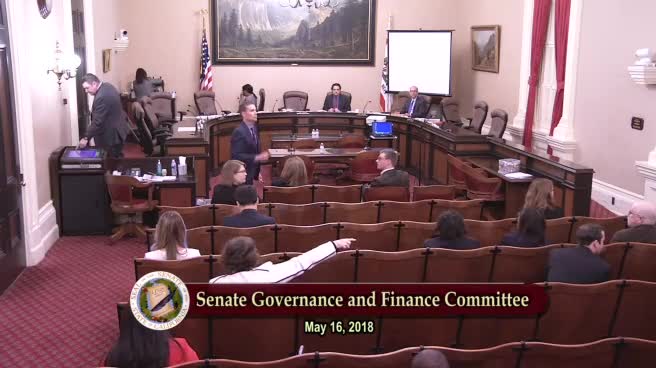 23MIN
Senate Standing Committee on Governance and Finance
Bill Author

Bill Co-Author(s):