SB 1241: Income taxes: credit: healing arts licensees: volunteers.
- Session Year: 2017-2018
- House: Senate
- Latest Version Date: 2018-05-01
The Personal Income Tax Law allows various credits against the taxes imposed by that law.
This bill would allow a refundable tax credit, for each taxable year beginning on or after January 1, 2019, to a qualified taxpayer who is a physician and surgeon, nurse practitioner, physicians assistant, podiatrist, optometrist, or dentist who is licensed and practices within his or her scope of practice for at least 40 100 hours during the taxable year as a volunteer for a nonprofit licensed health clinic located in California. The bill would require a nonprofit licensed health clinic to provide the qualified taxpayer with a document that includes certain information and would authorize the Franchise Tax Board to request that document and to create a model document for use by a nonprofit licensed health clinic.
Existing law establishes the continuously appropriated Tax Relief and Refund Account and provides that payments required to be made to taxpayers or other persons from the Personal Income Tax Fund are to be paid from that account, including any amount allowable as an earned income credit in excess of any tax liabilities.
By authorizing new payments from that account for additional amounts in excess of personal income tax liabilities, this bill would make an appropriation.
The Personal Income Tax Law allows various credits against the taxes imposed by that law.
This bill would allow a refundable tax credit, for each taxable year beginning on or after January 1, 2019, to a qualified taxpayer who is a physician and surgeon, nurse practitioner, physicians assistant, podiatrist, optometrist, or dentist who is licensed and practices within his or her scope of practice for at least 40 hours during the taxable year as a volunteer for a nonprofit licensed health clinic located in California.
Existing law establishes the continuously appropriated Tax Relief and Refund Account and provides that payments required to be made to taxpayers or other persons from the Personal Income Tax Fund are to be paid from that account, including any amount allowable as an earned income credit in excess of any tax liabilities.
By authorizing new payments from that account for additional amounts in excess of personal income tax liabilities, this bill would make an appropriation.
The Personal Income Tax Law allows various credits against the taxes imposed by that law.
This bill would allow a refundable tax credit, for each taxable year beginning on or after January 1, 2019, to a qualified taxpayer who is a physician and surgeon, nurse practitioner, physicians assistant, optometrist, or dentist who is licensed and practices within his or her scope of practice for at least 40 hours during the taxable year as a volunteer for a nonprofit licensed health clinic located in California.
Existing law establishes the continuously appropriated Tax Relief and Refund Account and provides that payments required to be made to taxpayers or other persons from the Personal Income Tax Fund are to be paid from that account, including any amount allowable as an earned income credit in excess of any tax liabilities.
By authorizing new payments from that account for additional amounts in excess of personal income tax liabilities, this bill would make an appropriation.
The Personal Income Tax Law imposes taxes upon taxable income and provides for the filing of a joint return in the case of spouses. allows various credits against the taxes imposed by that law.
This bill would make nonsubstantive changes to that provision. allow a refundable tax credit, for each taxable year beginning on or after January 1, 2019, to a qualified taxpayer who is a physician and surgeon, nurse practitioner, physicians assistant, or dentist who is licensed and practices within his or her scope of practice for at least 40 hours during the taxable year as a volunteer for a nonprofit licensed health clinic located in California.
Existing law establishes the continuously appropriated Tax Relief and Refund Account and provides that payments required to be made to taxpayers or other persons from the Personal Income Tax Fund are to be paid from that account, including any amount allowable as an earned income credit in excess of any tax liabilities.
By authorizing new payments from that account for additional amounts in excess of personal income tax liabilities, this bill would make an appropriation.
The Personal Income Tax Law imposes taxes upon taxable income and provides for the filing of a joint return in the case of spouses.
This bill would make nonsubstantive changes to that provision.
(a)For each taxable year beginning on or after January 1, 2019, there shall be allowed a credit against the net tax, as defined in Section 17039, to a qualified taxpayer in an amount equal to two thousand five hundred dollars ($2,500). taxpayer. The amount of the credit shall be as follows:
(1)Two thousand five hundred dollars ($2,500) for a qualified taxpayer filing as head of household, surviving spouse, as defined in Section 17046, or spouses filing a joint return if adjusted gross income is five hundred thousand dollars ($500,000) or less.
(2)Two thousand five hundred dollars ($2,500) for a qualified taxpayer filing a return other than as described in paragraph (1) if adjusted gross income is two hundred and fifty thousand ($250,000) dollars or less.
(b)For purposes of this section, a qualified both of the following terms shall have the following meanings:
(1)Nonprofit licensed health clinic means a community clinic or free clinic, as defined in Section 1204 of the Health and Safety Code, licensed by the State Department of Public Health.
(2)Qualified taxpayer means a physician and surgeon, nurse practitioner, physicians assistant, podiatrist, optometrist, or dentist who is licensed and practices within his or her scope of practice pursuant to Division 2 (commencing with Section 500) of the Business and Professions Code for at least 40 100 hours during the taxable year as a volunteer for a nonprofit licensed health clinic located in California.
(c)If the amount allowable as a credit under this section exceeds the tax liability computed under this part for the taxable year, the excess shall be credited against other amounts due, if any, and the balance, if any, shall be paid from the Tax Relief and Refund Account and refunded to the taxpayer.
(d)(1)A nonprofit licensed health clinic shall provide a document to the qualified taxpayer that states the number of volunteer hours performed by the qualified taxpayer at the nonprofit licensed health clinic. Upon request by the Franchise Tax Board, the qualified taxpayer shall provide the document to the Franchise Tax Board.
(2)The Franchise Tax Board may create a model document for a nonprofit licensed health clinic to use for purposes of paragraph (1).
(d)(e)Section 41 does not apply to the credit allowed by this section.
(a)For each taxable year beginning on or after January 1, 2019, there shall be allowed a credit against the net tax, as defined in Section 17039, to a qualified taxpayer in an amount equal to two thousand five hundred dollars ($2,500).
(b)For purposes of this section, a qualified taxpayer means a physician and surgeon, nurse practitioner, physicians assistant, podiatrist, optometrist, or dentist who is licensed and practices within his or her scope of practice for at least 40 hours during the taxable year as a volunteer for a nonprofit licensed health clinic located in California.
(c)If the amount allowable as a credit under this section exceeds the tax liability computed under this part for the taxable year, the excess shall be credited against other amounts due, if any, and the balance, if any, shall be paid from the Tax Relief and Refund Account and refunded to the taxpayer.
(d)Section 41 does not apply to the credit allowed by this section.
(a)For each taxable year beginning on or after January 1, 2019, there shall be allowed a credit against the net tax, as defined in Section 17039, to a qualified taxpayer in an amount equal to two thousand five hundred dollars ($2,500).
(b)For purposes of this section, a qualified taxpayer means a physician and surgeon, nurse practitioner, physicians assistant, optometrist, or dentist who is licensed and practices within his or her scope of practice for at least 40 hours during the taxable year as a volunteer for a nonprofit licensed health clinic located in California.
(c)If the amount allowable as a credit under this section exceeds the tax liability computed under this part for the taxable year, the excess shall be credited against other amounts due, if any, and the balance, if any, shall be paid from the Tax Relief and Refund Account and refunded to the taxpayer.
(d)Section 41 does not apply to the credit allowed by this section.
(a)For each taxable year beginning on or after January 1, 2019, there shall be allowed a credit against the net tax, as defined in Section 17039, to a qualified taxpayer in an amount equal to two thousand five hundred dollars ($2,500).
(b)For purposes of this section, a qualified taxpayer means a physician and surgeon, nurse practitioner, physicians assistant, or dentist who is licensed and practices within his or her scope of practice for at least 40 hours during the taxable year as a volunteer for a nonprofit licensed health clinic located in California.
(c)If the amount allowable as a credit under this section exceeds the tax liability computed under this part for the taxable year, the excess shall be credited against other amounts due, if any, and the balance, if any, shall be paid from the Tax Relief and Refund Account and refunded to the taxpayer.
(d)Section 41 does not apply to the credit allowed by this section.
SECTION 1.Section 17045 of the Revenue and Taxation Code is amended to read:17045.(a)In the case of a joint return of spouses under Section 18521, the tax imposed by Section 17041 shall be twice the tax that would be imposed if the taxable income were cut in one-half.(b)For purposes of this section, a return of a surviving spouse, as defined in Section 17046, shall be treated as a joint return of spouses.(a)In the case of a joint return of spouses under Section 18521, the tax imposed by Section 17041 shall be twice the tax which that would be imposed if the taxable income were cut in one-half.
For(b)For purposes of this section, a return of a surviving spouse (as spouse, as defined in Section 17046) 17046, shall be treated as a joint return of spouses.
|
Date
|
Status
|
|---|---|
| May 25, 2018 | May 25 hearing: Held in committee and under submission. |
| May 18, 2018 | Set for hearing May 25. |
| May 14, 2018 | May 14 hearing: Placed on APPR. suspense file. |
| May 4, 2018 | Set for hearing May 14. |
| May 1, 2018 | Read second time and amended. Re-referred to Com. on APPR. |
| Apr 30, 2018 | From committee: Do pass as amended and re-refer to Com. on APPR. (Ayes 6. Noes 0.) (April 25). |
| Apr 16, 2018 | From committee with author's amendments. Read second time and amended. Re-referred to Com. on GOV. & F. |
| Apr 10, 2018 | Set for hearing April 25. |
| Apr 9, 2018 | April 18 set for first hearing canceled at the request of author. |
| Apr 6, 2018 | Set for hearing April 18. |
| Apr 4, 2018 | Re-referred to Com. on GOV. & F. |
| Apr 2, 2018 | From committee with author's amendments. Read second time and amended. Re-referred to Com. on RLS. |
| Mar 19, 2018 | From committee with author's amendments. Read second time and amended. Re-referred to Com. on RLS. |
| Mar 1, 2018 | Referred to Com. on RLS. |
| Feb 16, 2018 | From printer. May be acted upon on or after March 18. |
| Feb 15, 2018 | Introduced. Read first time. To Com. on RLS. for assignment. To print. |
|
Date
|
Description
|
Location
|
Votes
|
|
|---|---|---|---|---|
| May 14, 2018 | Placed on suspense file | Senate Standing Committee on Appropriations |
Passed |
|
| Apr 25, 2018 | Do pass as amended, but first amend, and re-refer to the Committee on [Appropriations] | Senate Standing Committee on Governance and Finance |
Passed |
This list shows positions taken on this bill by organizations on the date displayed, which is linked to the original source.
Positions by individuals are not included.
|
Organization
|
Position
|
Date
|
|---|---|---|
| Free Community Clinic | * Support | Apr 25, 2018 |
SENATE COMMITTEE ON
Senator Ricardo Lara, Chair
2017 - 2018 Regular Session
SB 1241 (Nguyen) - Income taxes: credit: healing arts licensees: volunteers
Version: | Policy Vote: |
Urgency: | Mandate: |
Hearing Date: | Consultant: |
This bill meets the criteria for referral to the Suspense File.
Bill Summary:
SB 1241 would create a tax credit for specified health care professionals who volunteer at least 100 hours throughout the year at a free clinic or community health clinic.
Fiscal Impact:
The Franchise Tax Board (FTB) estimates that the bill would result in General Fund revenue losses of $0.5 million in 2018-19, $1.0 million in 2019-20, and $1.2 million in 2020-21. FTB’s costs to implement the bill have yet to be determined.
Background:
Tax expenditure programs (TEPs) are special tax provisions that reduce the amount of revenues the “basic” tax system would otherwise generate in order to provide (1) benefits to certain groups of taxpayers, and/or (2) incentives to encourage certain types of behavior and activities, such as charitable giving. Specifically, current law provides for, among other things, various income and corporation tax credits and deductions, as well as exemptions from the sales and use tax. The Department of Finance is required to publish a list of TEPs (currently totaling several hundred), which currently $61 billion annually.
California has 58 free clinics and 1,560 community health clinics which are licensed under the California Department of Public Health. They are nonprofit, tax-exempt organizations that are supported in whole or in part by voluntary donations, gifts, grants, government funds, or contributions which may be in money, goods, or services. While community clinics charge patients based on a sliding fee scale, free clinics do not directly charge patients for services rendered or for medication. Thus, these clinics are mostly frequented by low-income, uninsured, and undocumented individuals.
Both free clinics and community health clinics have a difficult time attracting specialists, such as optometrists, nurse practitioners, physicians and surgeons. Hiring specialists is expensive, and clinics that rely heavily on donations do not have enough funds to hire the specialists needed to meet the clinic’s demands. Without these specialists, low-income and uninsured individuals do not have the opportunity to receive the healthcare they need.
Proposed Law: This bill would, beginning in taxable year 2019, allow a $2,500 refundable tax credit for qualified taxpayers who volunteers at a free or community clinic in California for at least 100 hours during the year. The credit is only available to qualified taxpayers with adjusted gross income below specified thresholds. A “qualified taxpayer” must be licensed and practice within his or scope of practice, as specified, and is defined as follows: (1) a physician and surgeon, (2) a nurse practitioner, (3) a physician’s assistant, (4) an optometrist, (5) a dentist, or (6) a podiatrist. Finally, the bill would require a nonprofit licensed health clinic, as defined, to provide a document to the qualified taxpayer that states the number of volunteer hours performed. The qualified taxpayer shall provide the document to FTB, upon request. The bill would authorize FTB to create a model document for a nonprofit licensed health clinic to use for this purpose.
Related Legislation:
AB 2148 (Tran, 2010) would have allowed physicians to deduct the value of medical services contributed free of charge to community clinics. The bill failed to pass out of the Assembly by the constitutional deadline.
Staff Comments:
Data from the U.S. Bureau of Labor statistics indicate that 152,000 individuals are licensed and work in the fields specified by the bill, and hence would be considered “qualified taxpayers”. FTB used federal census data to estimate that 0.25 percent of individuals working in qualified fields would volunteer for more than 100 hours in 2019. Because the credit is refundable, FTB further assumes that (1) the participation rate would increase to 0.5 percent by 2023, and (2) qualified volunteers would generate the maximum credit amount of $2,500. The resulting revenue loss would be $1 million in 2019, increasing to $1.7 million by 2023.
FTB additionally notes that, historically, refundable credits generally have had significant problems with improper payments. These problems are aggravated if a refund is made that is later determined to be fraudulent. In such cases, the refund commonly cannot be recovered.
-- END --
SENATE COMMITTEE ON GOVERNANCE AND FINANCE
Senator Mike McGuire, Chair
2017 - 2018 Regular
Bill No: | SB 1241 | Hearing Date: | 4/25/18 |
Author: | Nguyen | Tax Levy: | No |
Version: | 4/16/18 | Fiscal: | Yes |
Consultant: | Brown | ||
Income taxes: credit: healing arts licensees: volunteers
Creates a $2,500 Healing Arts Licensees Tax Credit for specific health care professionals, who volunteer at least 40 hours throughout the year at a free or community health clinic.
Background
Tax expenditures. California law allows various income tax credits and deductions, as well as sales and use tax exemptions. The Legislature enacts such tax incentives to either compensate taxpayers for incurring certain expenses, such as child adoption, or to influence certain behavior, such as charitable giving. The Legislature uses tax incentives to encourage taxpayers to do something that but for the tax credit, they would otherwise not do. The Department of Finance is required to annually publish a list of tax expenditures, currently totaling around $61.3 billion per year.
Free and community health clinics in California. California has 58 free clinics and 1,560 community health clinics which are licensed under the California Department of Public Health. They are nonprofit, tax-exempt organizations that are supported in whole or in part by voluntary donations, gifts, grants, government funds, or contributions which may be in money, goods, or services. While community clinics charge patients based on a sliding fee scale, free clinics do not directly charge patients for services rendered or for drugs or medicines. These clinics are mostly frequented by low-income, uninsured, and undocumented individuals.
Both free clinics and community health clinics have a difficult time attracting specialists, such as optometrists, nurse practitioners, physicians and surgeons. Hiring specialists is expensive, and clinics that rely heavily on donations do not have enough funds to hire the specialists needed to meet the demands of the clinic. Without these specialists, low-income and uninsured individuals do not have the opportunity to receive the healthcare they need. Since these clinics rely heavily on specialists who volunteer their time, the author would like to enact an incentive that rewards certain specialists who volunteer their time at free and community health clinics.
Proposed Law
Senate Bill 1241 creates the Healing Arts Licensees Tax Credit. This refundable credit allows a qualified taxpayer—who volunteers at a free or community clinic in California for at least 40 hours during the year - a $2,500 tax credit. A qualified taxpayer is defined as follows:
- A physician and surgeon,
- A nurse practitioner,
- A physician’s assistant,
- An optometrist,
- A dentist, or
- A podiatrist.
The tax credit is available for taxable years beginning on or after January 1st, 2019.
State Revenue Impact
The Franchise Tax Board (FTB) estimates revenue losses of $3.7 million in 2018–19, $7.6 million in 2019-20, and $9.8 million in 2020-21.
Comments
1. Purpose of the bill. According to the author, “SB 1241 would reward medical professionals—including those who are retired— who currently volunteer their time, while also incentivizing other medical professionals to contribute their time and skills. Medical professionals would have extra support in paying off their student debt and more underserved Californians would have access to health care through nonprofit clinics.”
2. Costly favorable treatment. SB 1241 creates a tax credit which reduces the amount of tax a taxpayer would otherwise owe. As a result, the state will have to reduce spending or increase taxes to match the amount of foregone revenue. Also, if one group of professionals that volunteer their expertise is given a tax credit, other professional groups that volunteer their services could request the creation of their own tax credit. For example, lawyers take on cases pro bono, CPAs provide free accounting services for different nonprofit organizations, retired military veterans volunteer with the state military reserve, and registered nurses volunteer at community clinics. SB 1241 allows preferential income tax treatment to those with Healing Arts Licensees that volunteer, and could set a costly precedent for individuals seeking income tax credits for also volunteering their time.
3. Is it needed? The U.S Department of Labor’s Occupational Employment Statistics reported that in May of 2017, the average salary of a physician and surgeon in California was $214,730; a nurse practitioner in California was $126,770; a physician’s assistant in California was $112,930; an optometrist in California was $115,260; a dentist in California was $157,890; and a podiatrist in California was $112,500[1]. Yet SB 1241 provides a tax credit to specialists regardless of their income. Do these professionals need financial help from the state to volunteer their time? Additionally, SB 1241 requires a specialist to volunteer for 40 hours a year to qualify for the tax credit. This comes out to five full days or 10 half days of volunteering. Is this enough time volunteered to warrant a tax credit of this amount? The Committee may wish to consider amending SB 1241 to add an income limit and increase the number of hours volunteered for taxpayers to qualify for the credit.
4. Retired professionals. To lawfully practice medicine within the state, professionals must have a license from their industries respective oversight agency. For example, a dentist must be licensed by the Dental Board of California to practice legally in the state. To renew the license – which must be done every two years – the dentist must complete 50 hours of continuing education. While the amount of continuing education varies between medical profession (ex. optometry, dentistry, etc.), on average it’s about 50 hours every two years. According to the Journal of American Physicians and Surgeons, in 2010 it the average cost for each medical practitioner to obtain the continuing education requirements he or she needed to maintain his or her license is $2,638[2]. If dentists, for example, are currently practicing as their main source of income, volunteering imposes no additional cost because they already have to pay for continuing education to maintain their license. However, if the dentist is retired, his or her continuing education costs are a new expense. SB 1241 proponents argue that individuals who have time to volunteer are retired professionals, and the cost of maintaining their licenses create a financial barrier for these professionals to volunteer. SB 1241 provides financial assistance to retired professionals who — if not for the cost of maintaining their license — would volunteer their time.
5. Refundable credit. According to FTB and a report by the Legislative Analyst’s Office, “Options for a State Earned Income Tax Credit,” refundable credits increase the possibility of improper payments and identity theft. Historically, both the Internal Revenue Service and FTB have experienced fraud with refundable credits. More importantly, if a refund is determined to be fraudulent, the refund commonly cannot be recovered. Currently, the state only has one refundable tax credit, the Earned Income Tax Credit. The Committee may wish to amend SB 1241 to make the credit nonrefundable.
6. Section 41 shall not apply. On September 29, 2014, Governor Brown signed SB 1335 (Leno, 2014), which added Section 41 to the Revenue and Tax Code. SB 1335 recognized that the Legislature should apply the same level of review used for government spending programs to tax preference programs, including tax credits. Thus, Section 41 requires any bill introduced on or after January 1, 2015 that allows a new income tax credit to contain specific goals, purposes, and objectives that the tax credit will achieve. Additionally, Section 41 requires detailed performance indicators for the Legislature to use when measuring whether the tax credit meets the goals, purposes, and objectives. This bill provides that Section 41 shall not apply to this credit. The Committee may wish to consider whether exempting SB 1241 from Section 41 is good policy.
7. Let’s be clear. The Committee may wish to consider amending SB 1241 to add missing definitions for “nonprofit licensed health care clinic” and “practices within his or her scope.”
Support and Opposition
(4/19/18)
Support: AltaMed Health Services, Inc.; Berkeley Free Clinic; California Optometric Association; Camino Health Center; Center for Inherited Blood Disorders; Central City Community Health Center; CHOC Health Clinics; F.A.C.E.S., Inc.; Families Together of OC; Friends of Family Health Center; HOPE Clinic – NMUSD; Hurtt Family Health Center; Integrated Community Healthcare Solutions; Korean Community Services; Laguna Beach Community Clinic; Lestonnac Free Clinic; Livingstone CDC; Nhan Hoa Comprehensive Health Center; North OC Regional Health Foundation; Obria Health Clinics; Providence Speech and
Hearing Center; Serve The People Community Health Center; Share Our Selves Health Centers; Sierra Health Center; Southland Integrated Services; St. Jude, La Amistad / Puente a La Salud Health Centers; UCI Family Health Centers; VCC The Gary Center.
Opposition: None received.
-- END --
California – May 2017 OES State Occupational employment and Wage Estimates, Bls.gov. https://www.bls.gov/oes/current/oes_ca.htm ↑
Kempen, Paul Martin. “Maintenance of Certification (MOC), Maintenance of Licensure (MOL), and Continuing Medical Education (CME): the Regulatory Capture of Medicine.” Journal of American Physicians and Surgeons , 2012. ↑
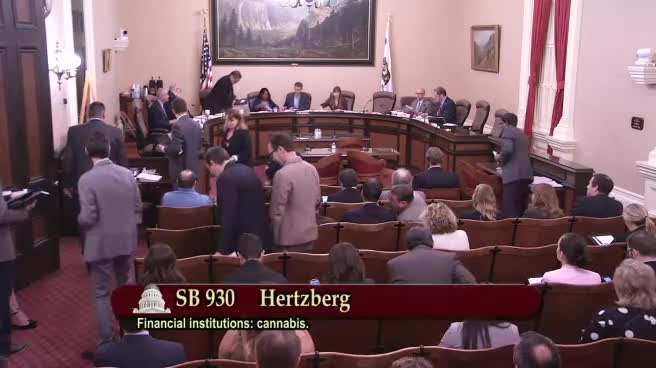
Discussed in Hearing
 10MIN
Senate Standing Committee on Governance and Finance
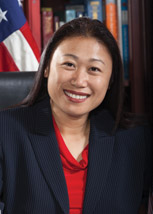
Bill Author
Bill Co-Author(s):