SB 1276: Civil proceedings: expert testimony.
- Session Year: 2017-2018
- House: Senate
- Latest Version Date: 2018-04-30
Existing law authorizes an expert witness to testify in the form of an opinion, as specified, and to state on direct examination the reasons for his or her the opinion and the matter upon which it is based, unless he or she the witness is precluded by law from using those reasons or matter as a basis for his or her the opinion. The court, in its discretion, may require that a witness, before testifying in the form of an opinion, be first examined concerning the matter upon which the experts opinion is based. Existing law also provides circumstances under which testimony in the form of an opinion based in whole or in significant part on matter that is not a proper basis for an opinion may be excluded. The California Supreme Court, in People v. Sanchez (2006) (2016) 63 Cal. 4th 665, held that statements made out of court and relied upon by an expert witness in forming the basis of the witnesss opinion are inadmissible hearsay even if an expert witness treats testifies to the content of those statements as true and accurate in support of the experts opinion.
This bill would expressly abrogate the holding in that decision as it applies to proceedings under the Family Code by providing, in civil these proceedings, that evidence of a statement used to support the opinion of an expert is not inadmissible as hearsay if the court, in its discretion, determines that the statement is reliable, and would require the court to consider certain factors in making its determination. The bill would also authorize, in civil proceedings, proceedings under the Family Code, that a witness, before testifying in the form of an opinion, be examined with regard to the factors considered by the court to determine the reliability of a statement.
The bill would also make technical, nonsubstantive changes.
Existing law authorizes an expert witness to testify in the form of an opinion, as specified, and to state on direct examination the reasons for his or her opinion and the matter upon which it is based, unless he or she is precluded by law from using those reasons or matter as a basis for his or her opinion. The court, in its discretion, may require that a witness, before testifying in the form of an opinion, be first examined concerning the matter upon which the experts opinion is based. Existing law also provides circumstances under which testimony in the form of an opinion based in whole or in significant part on matter that is not a proper basis for an opinion may be excluded. The California Supreme Court, in People v. Sanchez (2006) 63 Cal. 4th 665, held that statements made out of court are inadmissible hearsay even if an expert witness treats the content of those statements as true and accurate in support of the experts opinion.
This bill would expressly abrogate the holding in that decision by providing, in civil proceedings, that evidence of a statement used to support the opinion of an expert is not inadmissible as hearsay if the court, in its discretion, determines that the statement is reliable, and would require the court to consider certain factors in making its determination. The bill would also authorize, in civil proceedings, that a witness, before testifying in the form of an opinion, be examined with regard to the factors considered by the court to determine the reliability of a statement.
(a)The Legislature finds and declares that it is the policy of the State of California to avoid needlessly complicating the process of proof, generating delay, increasing costs, and in many cases, creating a nearly impossibly burden to obtain admissible evidence in civil proceedings. proceedings under the Family Code.
(b)Therefore, it is the intent of the Legislature to abrogate the holding in People v. Sanchez (2016) 63 Cal. 4th 665, as it applies to civil proceedings.SEC. 2.Section 801 of the Evidence Code is amended to read:801.(a)If a witness is testifying as an expert, his or her the witnesss testimony in the form of an opinion is limited to an opinion that satisfies both of the following:
(1)Relates to a subject that is sufficiently beyond common experience that the opinion of an expert would assist the trier of fact.
(2)Is based on matter, including his or her the witnesss special knowledge, skill, experience, training, and education, perceived by or personally known to the witness or made known to him or her the witness at or before the hearing, whether or not admissible, that is of a type that reasonably may be relied upon by an expert in forming an opinion upon the subject to which his or her the witnesss testimony relates.
(b)(1)In civil proceedings, a proceeding under the Family Code, evidence of a statement used to support the opinion of a witness testifying as an expert is not made inadmissible as hearsay if the court, in its discretion, determines that the statement is reliable. In
(2)In determining the reliability of a statement, a court shall consider the following:
(1)Whether,(A)Whether the expert witness routinely relies upon similar statements in his or her the witnesss professional capacity outside of the court.
(2)(B)The expertise of the expert, witness, including his or her the witnesss experience, in evaluating the trustworthiness of the sources of information relied upon in forming his or her opinions. the witnesss opinion.
SEC. 3.Section 802 of the Evidence Code is amended to read:802.A witness testifying in the form of an opinion may state on direct examination the reasons for his or her opinion and the matter upon which it is based, including, in the case of an expert, his or her the witnesss special knowledge, skill, experience, training, and education. The court, in its discretion, may require that a witness, before testifying in the form of an opinion, be examined concerning the matter upon which the witnesss opinion is based, including, in civil proceedings a proceeding under the Family Code, the factors described in paragraphs (1) and paragraph (2) of subdivision (b) of Section 801.
SEC. 4.Section 803 of the Evidence Code is amended to read:803.Except as provided by Section 801, the court may, and upon objection shall, exclude testimony in the form of an opinion that is based in whole or in significant part on matter that is not a proper basis for the opinion. In that case, the witness may, if there remains a proper basis for his or her the witnesss opinion, then state his or her the opinion after excluding from consideration the matter determined to be improper.
(a)The Legislature finds and declares that it is the policy of the State of California to avoid needlessly complicating the process of proof, generating delay, increasing costs, and in many cases, creating a nearly impossibly burden to obtain admissible evidence in civil proceedings.
(b)Therefore, it is the intent of the Legislature to abrogate the holding in People v. Sanchez (2016) 63 Cal. 4th 665, as it applies to civil proceedings.
SEC. 2.Section 801 of the Evidence Code is amended to read:801.(a)If a witness is testifying as an expert, his or her testimony in the form of an opinion is limited to such an opinion as is: that satisfies both of the following:
(a)(1)Related Relates to a subject that is sufficiently beyond common experience that the opinion of an expert would assist the trier of fact; and fact.
(b)(2)Based Is based on matter (including, including his or her special knowledge, skill, experience, training, and education) education, perceived by or personally known to the witness or made known to him or her at or before the hearing, whether or not admissible, that is of a type that reasonably may be relied upon by an expert in forming an opinion upon the subject to which his or her testimony relates, unless an expert is precluded by law from using such matter as a basis for his opinion. relates.
(b)In civil proceedings, evidence of a statement used to support the opinion of an expert is not made inadmissible as hearsay if the court, in its discretion, determines that the statement is reliable. In determining the reliability of a statement, a court shall consider the following:
(1)Whether, the expert routinely relies upon similar statements in his or her professional capacity outside of the court.
(2)The expertise of the expert, including his or her experience, in evaluating the trustworthiness of the sources of information relied upon in forming his or her opinions.
SEC. 3.Section 802 of the Evidence Code is amended to read:802.A witness testifying in the form of an opinion may state on direct examination the reasons for his or her opinion and the matter (including, upon which it is based, including, in the case of an expert, his or her special knowledge, skill, experience, training, and education) upon which it is based, unless he is precluded by law from using such reasons or matter as a basis for his opinion. education. The court court, in its discretion discretion, may require that a witness witness, before testifying in the form of an opinion opinion, be first examined concerning the matter upon which his the witnesss opinion is based. based, including, in civil proceedings, the factors described in paragraphs (1) and (2) of subdivision (b) of Section 801.
SEC. 4.Section 803 of the Evidence Code is amended to read:803.The Except as provided by Section 801, the court may, and upon objection shall, exclude testimony in the form of an opinion that is based in whole or in significant part on matter that is not a proper basis for such an the opinion. In such that case, the witness may, if there remains a proper basis for his or her opinion, then state his or her opinion after excluding from consideration the matter determined to be improper.
|
Date
|
Status
|
|---|---|
| May 8, 2018 | May 8 set for first hearing canceled at the request of author. |
| Apr 30, 2018 | From committee with author's amendments. Read second time and amended. Re-referred to Com. on JUD. |
| Apr 18, 2018 | Set for hearing May 8. |
| Mar 1, 2018 | Referred to Com. on JUD. |
| Feb 20, 2018 | From printer. May be acted upon on or after March 22. |
| Feb 16, 2018 | Introduced. Read first time. To Com. on RLS. for assignment. To print. |
This list shows positions taken on this bill by organizations on the date displayed, which is linked to the original source.
Positions by individuals are not included.
|
Organization
|
Position
|
Date
|
|---|---|---|
| Civil Justice Association Of California | ** Support | May 7, 2018 |
Senator Hannah-Beth Jackson, Chair
2017-2018 Regular Session
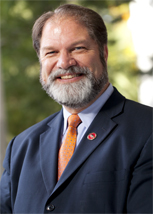
Bill No: SB 1276 (Author:Moorlach)
Version: April 30, 2018
Hearing Date: May 8, 2018
Fiscal: No
Urgency: No
Consultant: CK
SUBJECT
Civil proceedings: expert testimony
DESCRIPTION
This bill would provide that in a proceeding under the Family Code, evidence of a statement used to support the opinion of a witness testifying as an expert is not inadmissible as hearsay if the court, in its discretion, determines that the statement is reliable. In determining the reliability of a statement, a court would be required to consider (1) whether the witness routinely relies upon similar statements in the witness’s professional capacity outside of the court; and (2) the expertise of the witness, including the witness’s experience, in evaluating the trustworthiness of the sources of information relied upon in forming the witness’s opinion. This would abrogate the holding in People v. Sanchez (2016) 63 Cal.4th 665, as it applies to family law proceedings.
BACKGROUND
California’s hearsay rule provides: “‘Hearsay evidence’ is evidence of a statement that was made other than by a witness while testifying at the hearing and that is offered to prove the truth of the matter stated. . . . Except as provided by law, hearsay evidence is inadmissible.” (Evid. Code Sec. 1200.) The general exclusion of hearsay from evidence is premised on the notion that out-of-court statements are inherently more unreliable than live testimony. Specifically, hearsay statements are not made under oath, the adverse party has no opportunity to cross-examine the declarant, and the jury cannot observe the declarant’s demeanor while making the statements. (People v. Duarte (2000) 24 Cal.4th 603, 610.)
Courts developed categorical exceptions to the hearsay rule because of the perception that certain statements are inherently reliable despite the absence of direct testimony and because the need for certain evidence outweighs the risks. (See Mathews, Making the Crucial Connection: A Proposed Threat Hearsay Exception, 27 Golden Gate U. Law Rev. 117 (1993).) For example, statements made when the declarant knows he or she is about to die or excited statements made without an opportunity to reflect are considered more believable because the declarant has neither the motive nor the time to fabricate the statement. (Evid. Code Sec. 1240 (spontaneous, contemporaneous, or dying declarations as an exception to the hearsay rule).) In general, however, hearsay is presumptively unreliable.
In 2016, the California Supreme Court issued an opinion addressing the treatment of hearsay in the context of an expert’s opinion testimony. (People v. Sanchez (2016) 63 Cal.4th 665.) Specifically, the court clarified the proper application of Evidence Code Sections 801 and 802, relating to the scope of expert testimony. The court started with a general overview of how California’s evidentiary law treats the testimony of experts:
While lay witnesses are allowed to testify only about matters within their personal knowledge (Evid. Code, § 702, subd. (a)), expert witnesses are given greater latitude. “A person is qualified to testify as an expert if he has special knowledge, skill, experience, training, or education sufficient to qualify him as an expert on the subject to which his testimony relates.” (Evid. Code, § 720, subd. (a).) An expert may express an opinion on “a subject that is sufficiently beyond common experience that the opinion of an expert would assist the trier of fact.” (Evid. Code, § 801, subd. (a).) In addition to matters within their own personal knowledge, experts may relate information acquired through their training and experience, even though that information may have been derived from conversations with others, lectures, study of learned treatises, etc. This latitude is a matter of practicality. A physician is not required to personally replicate all medical experiments dating back to the time of Galen in order to relate generally accepted medical knowledge that will assist the jury in deciding the case at hand. An expert’s testimony as to information generally accepted in the expert’s area, or supported by his own experience, may usually be admitted to provide specialized context the jury will need to resolve an issue. When giving such testimony, the expert often relates relevant principles or generalized information rather than reciting specific statements made by others.
(Id. at 675.) The court identified that the hearsay rule generally did not bar an expert’s testimony regarding the expert’s general knowledge in the relevant field of expertise. (Id. at 676.) This is contrasted to the preclusion of an expert from relating case-specific facts about which the expert has no independent knowledge. (Id.) In many cases, the facts underlying the matter before the court are established by witnesses with personal knowledge of those facts, and experts are used to discern and explain the importance of those facts. This is commonly done through the use of hypotheticals posed to experts based on facts that the questioning party has independently established.
In Sanchez, the court went on to detail how traditionally the treatment of an expert’s testimony as to general background information as opposed to the expert’s testimony on case-specific hearsay was significantly different, but that the line had become blurred over time. (Id. at 678.) Ultimately, the court adopted the following rule: “When any expert relates to the jury case-specific out-of-court statements, and treats the content of those statements as true and accurate to support the expert’s opinion, the statements are hearsay.” (Id. at 686.) The court reasoned that in such situations it “cannot logically be maintained that the statements are not being admitted for their truth.” (Id.) However, the court made clear that an expert could still rely on hearsay in forming the expert’s opinion, and may even tell the jury “in general terms” that the expert did so. (Id. at 685.) The court explained:
Because the jury must independently evaluate the probative value of an expert’s testimony, Evidence Code section 802 properly allows an expert to relate generally the kind and source of the “matter” upon which his opinion rests. A jury may repose greater confidence in an expert who relies upon well-established scientific principles. It may accord less weight to the views of an expert who relies on a single article from an obscure journal or on a lone experiment whose results cannot be replicated. There is a distinction to be made between allowing an expert to describe the type or source of the matter relied upon as opposed to presenting, as fact, case-specific hearsay that does not otherwise fall under a statutory exception.
(Id. at 685-686.)
Sanchez continues to stand for the proposition that statements made out of court and relied upon by an expert in forming the expert’s opinion are inadmissible hearsay if the expert testifies to the content of those statements as true and accurate in support of the expert’s opinion.
This bill would provide that in a proceeding under the Family Code, evidence of a statement used to support the opinion of a witness testifying as an expert is not inadmissible as hearsay if the court, in its discretion, determines that the statement is reliable. In determining the reliability of a statement, a court would be required to consider (1) whether the witness routinely relies upon similar statements in the witness’s professional capacity outside of the court; and (2) the expertise of the witness, including the witness’s experience, in evaluating the trustworthiness of the sources of information relied upon in forming the witness’s opinion. This would abrogate the holding in Sanchez as it applies to family law proceedings.
CHANGES TO EXISTING LAW
Existing law, California’s hearsay rule, provides that “hearsay evidence” is evidence of a statement that was made other than by a witness while testifying at the hearing and that is offered to prove the truth of the matter stated. Except as provided by law, hearsay evidence is inadmissible. (Evid. Code Sec. 1200.)
Existing law provides numerous exceptions to the hearsay rule when certain conditions are met, including for official records, admissions of a party, and business records. (Evid. Code Sec. 1220 et seq.)
Existing law provides that if a witness is testifying as an expert, its testimony in the form of an opinion is limited to such an opinion as is:
- related to a subject that is sufficiently beyond common experience that the opinion of an expert would assist the trier of fact; and
- based on matter (including the expert’s special knowledge, skill, experience, training, and education) perceived by or personally known to the witness or made known to the witness at or before the hearing, whether or not admissible, that is of a type that reasonably may be relied upon by an expert in forming an opinion upon the subject to which the expert’s testimony relates, unless an expert is precluded by law from using such matter as a basis for its opinion. (Evid. Code Sec. 801.)
Existing law provides that a witness testifying in the form of an opinion may state on direct examination the reasons for its opinion and the matter (including, in the case of an expert, its special knowledge, skill, experience, training, and education) upon which it is based, unless the expert is precluded by law from using such reasons or matter as a basis for his opinion. The court in its discretion may require that a witness before testifying in the form of an opinion be first examined concerning the matter upon which its opinion is based. (Evid. Code Sec. 802.)
Existing law provides that the court may, and upon objection shall, exclude testimony in the form of an opinion that is based in whole or in significant part on matter that is not a proper basis for such an opinion. In such case, the witness may, if there remains a proper basis for his opinion, then state his opinion after excluding from consideration the matter determined to be improper. (Evid. Code Sec. 803.)
This bill would provide that in a proceeding under the Family Code, evidence of a statement used to support the opinion of a witness testifying as an expert is not inadmissible as hearsay if the court, in its discretion, determines that the statement is reliable. In determining the reliability of a statement, a court would be required to consider the following:
- whether the witness routinely relies upon similar statements in the witness’s professional capacity outside of the court; and
- the expertise of the witness, including the witness’s experience, in evaluating the trustworthiness of the sources of information relied upon in forming the witness’s opinion.
This bill would authorize the court to examine such witnesses regarding the matter upon which they base their opinion testimony.
COMMENT
1. Stated need for the bill
According to the author:
More time devoted to the admission of evidence in family law proceedings relied upon by expert witnesses only increases costs to the parties in a case, and as well as the institutions, such as banks, school districts, and employers, who will needlessly be brought into legal proceedings. Senate Bill 1276 does not require, but would allow a judge to use discretion to consider whether to allow the expert to use case-specific hearsay.
2. Undermining the principles of Sanchez by amending the Evidence Code for one type
of case
The Evidence Code generally governs the admissibility of evidence in civil and criminal proceedings, including the admissibility of documents and records. The hearsay rule states that “evidence of a statement that was made other than by a witness while testifying at the hearing and that is offered to prove the truth of the matter stated” is inadmissible except as otherwise provided by law. (Evid. Code Sec. 1200.)
Existing law provides that except as otherwise provided, the rules of practice and procedure applicable to civil actions generally, apply to, and constitute the rules of practice and procedure in, proceedings under the Family Code. (Fam. Code, § 210; see also Elkins v. Superior Court (2007) 41 Cal.4th 1337, 1354.)
This bill would amend Sections 801 through 803 of the Evidence Code solely as they apply to family law cases. The changes would serve to abrogate the holding of the Supreme Court in People v. Sanchez (2016) 63 Cal.4th 665 by providing that, in proceedings brought pursuant to the Family Code, evidence of a statement used to support the opinion of a witness testifying as an expert is not inadmissible as hearsay if the court determines that the statement is reliable. The court would be required to consider whether the witness routinely relies upon similar statements in the witness’s professional capacity outside of the court; and the expertise of the witness, including the witness’s experience, in evaluating the trustworthiness of the sources of information relied upon in forming the witness’s opinion.
The author argues that Sanchez will “needlessly complicate the process of proof in civil cases,” overly restricts competent information, and that this bill is needed to avoid the attendant delays and injustices. However, the author and sponsors have failed to provide clear examples of this actually occurring in California’s courts. In fact, in a recent appellate court opinion addressing the application of Sanchez to a dependency proceeding, the court was faced with a Department of Social Services report where the author was not available to testify. (J.H. v. Superior Court (2018) 20 Cal.App.5th 530, 534.) The court found that although the report was hearsay, pursuant to Sanchez, the Welfare and Institutions Code provided exceptions to the hearsay rule that made the report admissible. (Id. at 537, relying on In re Jeanette V. (1998) 68 Cal.App.4th 811, 816; In re Keyonie R. (1996) 42 Cal.App.4th 1569, 1571 [finding “an implicit exception to the hearsay rule for social service reports was created by section 281” of the Welfare and Institutions Code].)
The Executive Committee of the Family Law Section of the California Lawyers Association (FLEXCOM) has arrived at the following conclusions regarding the application of Sanchez in family law proceedings:
- Sanchez is a correct and accurate pronouncement of the rules of evidence concerning hearsay.
- Sanchez did not create new law—it returned courts to the rules regarding hearsay evidence that existed previously. As stated in the Sanchez decision: “Our conclusion restores the traditional distinction between an expert’s testimony regarding background information and case-specific facts.”
- Family law is civil law and should not be subject to a separate evidence code or rules of evidence. Family law attorneys are frequently addressing issues that have a life-altering [e]ffect on our clients: custody of children, the division of assets and the payment or receipt of support. Creating a family-law only exception to the rules of evidence concerning hearsay means that those important issues are going to be decided by evidence that would be inadmissible in all other litigation, civil or criminal.
Without more evidence indicating the necessity of the changes made by this bill, there is arguably a lack of justification for restricting the application of the sound principles in Sanchez in any civil proceedings. This premature urge to streamline the family law system by altering the rules of evidence only as they apply to the family law system is problematic and undermines the safeguards that existing law, including Sanchez, provide.
In light of the volume of cases faced by trial courts, we understand their efforts to streamline family law procedures. But family law litigants should not be subjected to second-class status or deprived of access to justice. Litigants with other civil claims are entitled to resolve their disputes in the usual adversary trial proceeding governed by the rules of evidence established by statute. It is at least as important that courts employ fair proceedings when the stakes involve a judgment providing for custody in the best interest of a child and governing a parent’s future involvement in his or her child’s life, dividing all of a family’s assets, or determining levels of spousal and child support. The same judicial resources and safeguards should be committed to a family law trial as are committed to other civil proceedings.
(Elkins v. Superior Court (2007) 41 Cal.4th 1337, 1368.)
The California Judges Association writes in opposition:
CJA is opposed to a reflexive change to [the] Evidence Code before practitioners and the courts have had the opportunity to adequately consider [Sanchez’] real impact on family law proceedings, has concerns about creating a separate family law approach to the Evidence Code, and is concerned that doing so will result in more and lengthier hearings.
Case law is still developing; there have been no appellate cases in family law proceedings that implicate Sanchez. Carving out family law, which is a part of civil law, has no sound basis. One of the tenets of the Elkins Family Law Task force is that family law proceedings should be given the same judicial resources and safeguards as other civil proceedings. The full protection of the Evidence Code is significant, and there are good reasons that hearsay is inadmissible unless an exception applies.
CJA is concerned that court workloads will increase as hearings upon hearings are needed to evaluate an expert’s opinion, an expert’s ability to tell whether an individual is telling the truth, and whether the individual told the truth to the expert.
The Executive Committee of the Family Law Section of the California Lawyers Association (FLEXCOM) also opposes the bill. It contends “the opportunity to cross-examine a witness who is providing case-specific information is an invaluable part of determining the credibility of that witness. SB 1276 would eliminate that opportunity by allowing expert witnesses to rely on and testify to case-specific hearsay information, thereby introducing evidence without the ability to cross-examine the witness who provided that information.” Several practitioners have also written in opposition to this bill. The Consumer Attorneys of California writes:
CAOC opposes legislatively overturning Sanchez. A trial is a search for the truth, and Sanchez only helps courts to that end. SB 1276 creates a large loophole that allows otherwise inadmissible hearsay to be offered to the jury as a truthful statement through the testimony of an expert. It is extremely problematic to allow experts to regurgitate hearsay on the stand without proper foundation. This leaves the cross examining party with no recourse to cross examine the expert on the stand who is quoting someone else’s statements or opinions that may or may not be truthful. This is the crux of why hearsay is inadmissible. Under current law, in order for an expert to testify to hearsay, the witness who made the statement must testify first about what was said and lay proper foundation for the truth of that statement.
SB 1276 undermines long standing law and hurts victims by preventing them from getting a fair trial.
The Civil Justice Association of California writes in support of the bill. It believes the bill “would act to alleviate some of the congestion in civil proceedings caused by burdensome evidentiary hearings thereby saving costs to litigants and tax payers.” It specifically points to issues with forensic accountants, vocational examiners, and therapists.
However, FLEXCOM indicates that it is their experience, in most cases, that “attorneys are able to work out stipulations to avoid the necessity of engaging in the multi-day trials devoted to the introduction of bank statements, academic records, or other similar records that experts commonly rely upon. In cases where opposing counsel is not being cooperative, thereby increasing the cost of litigation and frustrating both litigation and potential settlement of the matter, there are options already available under existing California law.” FLEXCOM provides a different take on the matters specifically laid out by the author and supporters of the bill:
Custody evaluations ordered under Cal. Fam. Code Sec. 3111 or Evid. Code Sec. 730 are cited by the proponents of SB 1276 as to why a legislative fix is necessary to address the consequences of People v. Sanchez in family courts. However, there are no objective studies indicating that “Sanchez” objections are clogging the judicial system in custody cases, and [in] our experience that is not the case. Further, many attorneys are now only agreeing to such evaluations when the parties stipulate to waive hearsay objections to the third-party contacts and information obtained by the court-appointed evaluator.
Moreover, there is no indication that requiring fact witnesses to come into court to buttress the opinions of a custody evaluator is a bad thing. It is not uncommon for court-appointed evaluators to incorrectly report the statements or information provided by third party (collateral) contacts. Without having the opportunity to cross-examine the actual witness who made hearsay statements to the evaluator, a party’s relationship with their child or children could be irrevocably harmed due to inaccurate information.
Even the California Association of Certified Family Law Specialists, which believes Sanchez may cause unnecessary delay, opposes this bill as “far too broad and sweeping.” It argues the bill fails to “provide any safeguards against unreliable testimony.” The California Judges Association expresses sympathy for some of the concerns expressed by the sponsors and author, but believes that “allowing the law to develop, in ways that [it is] already seeing, is a better approach.” Several groups have identified the ability of parties to stipulate to certain evidence and testimony has avoided delays in presenting relevant testimony of experts in various family law proceedings. Sanchez is less than two-years-old. Arguably, more time should be given to see how the holding is applied in practice in family law proceedings before completely uprooting its application, especially given the well-founded concerns regarding unintended consequences on the reliability of evidence being presented in such proceedings.
Support: Civil Justice Association of California
Opposition: California Association of Certified Family Law Specialists; California Judges Association; Consumer Attorneys of California; Executive Committee of the Family Law Section of the California Lawyers Association; Two individuals
HISTORY
Source: Hughes and Hughes, LLP
Related Pending Legislation: AB 1736 (Cunningham, 2017) would expand an exception to the hearsay rule for prior inconsistent statements by including conditional examinations in the types of proceedings covered and including an audio tape of the prior statement. This bill is currently in the Senate Public Safety Committee.
Prior Legislation: AB 1958 (Maienschein, 2014) would have prohibited a criminal defendant from introducing a hearsay statement or other conduct that is inconsistent with another hearsay statement by the defendant that has been introduced as evidence at trial by the prosecution. This bill died in the Assembly Public Safety Committee.
**************
Bill Author
Bill Co-Author(s):