SB 1297: Office of the State Operations.
- Session Year: 2017-2018
- House: Senate
- Latest Version Date: 2018-04-30
Existing law establishes various offices within the Governors Office office with specified duties and responsibilities.
This bill would establish the Office of the State Operations within the Governors Office office under the direct control of a chief operating officer, with specified responsibilities, to coordinate between all state agencies in order to ensure that the policies of the Governor and the Legislature are legally and thoroughly executed. The bill would require the Governor to appoint the chief operating officer.
Existing law establishes various offices within the Governors Office with specified duties and responsibilities.
This bill would establish the Office of the State Operations within the Governors Office under the direct control of a chief operating officer, with specified responsibilities, to coordinate between all state agencies in order to ensure that the policies of the Governor and the Legislature are legally and thoroughly executed. The bill would require the Governor to appoint the chief operating officer.
For purposes of this chapter, both of the following definitions shall apply:
(a)Chief Operating Officer means the Chief Operating Officer of the Office of the State Operations.
(b)Office means the Office of the State Operations.
12096.12095.1.(a)The Office of the State Operations is hereby established in state government within the Governors Office office to coordinate between all state agencies in order to ensure that the policies of the Governor and the Legislature are legally and thoroughly executed.
(b)The office shall be under the direct control of the Chief Operating Officer. The Chief Operating Officer shall be appointed by the Governor and shall hold office at the pleasure of the Governor.
(c)The Chief Operating Officer shall have primary responsibility for all of the following duties of the office:
(1)Improving the efficient and effective use of state resources.
(2)Overseeing government administrative services.
(3)Facilitating effective communication between all state agencies.
(4)Setting performance goals for, and reducing wasteful strategies and behaviors of, all state agencies.
(5)Defining financial and performance metrics to evaluate individual departments.
(6)Reporting to the Governor on matters of import and updates on operations to assist the Governor in regards to policy, and making organizational and administrative recommendations to improve performance and efficiency.
(d)The Chief Operating Officer shall meet with the head of each executive department once per quarter as necessary to discuss updates on performance goals.
For purposes of this chapter, both of the following definitions shall apply:
(a)Chief Operating Officer means the Chief Operating Officer of the Office of the State Operations.
(b)Office means the Office of the State Operations.
12096.(a)The Office of the State Operations is hereby established in state government within the Governors Office to coordinate between all state agencies in order to ensure that the policies of the Governor and the Legislature are legally and thoroughly executed.
(b)The office shall be under the direct control of a chief operating officer. the Chief Operating Officer. The chief operating officer Chief Operating Officer shall be appointed by the Governor and shall hold office at the pleasure of the Governor.
(c)The chief operating officer Chief Operating Officer shall have primary responsibility for all of the following duties of the office:
(1)Improving the efficient and effective use of state resources.
(2)Overseeing government administrative services.
(3)Facilitating effective communication between all state agencies.
(4)Setting performance goals for, and reducing wasteful strategies and behaviors of, all state agencies.
(5)Defining financial and performance metrics to evaluate individual departments.
(5)(6)Reporting to the Governor on matters of import and updates on operations to assist the Governor in regards to policy. policy, and making organizational and administrative recommendations to improve performance and efficiency.
(d)The Chief Operating Officer shall meet with the head of each executive department once per quarter to discuss updates on performance goals.
For purposes of this chapter, both of the following definitions shall apply:
(a)Chief Operating Officer means the Chief Operating Officer of the Office of the State Operations.
(b)Office means the Office of the State Operations.
12096.(a)The Office of the State Operations is hereby established in state government within the Governors Office to coordinate between all state agencies in order to ensure that the policies of the Governor and the Legislature are legally and thoroughly executed.
(b)The office shall be under the direct control of a chief operating officer. The chief operating officer shall be appointed by the Governor and shall hold office at the pleasure of the Governor.
(c)The chief operating officer shall have primary responsibility for all of the following duties of the office:
(1)Improving the efficient and effective use of state resources.
(2)Overseeing government administrative services.
(3)Facilitating effective communication between all state agencies.
(4)Setting performance goals for, and reducing wasteful strategies and behaviors of, all state agencies.
(5)Reporting to the Governor on matters of import and updates on operations to assist the Governor in regards to policy.
|
Date
|
Status
|
|---|---|
| May 25, 2018 | May 25 hearing: Held in committee and under submission. |
| May 18, 2018 | Set for hearing May 25. |
| May 14, 2018 | May 14 hearing: Placed on APPR. suspense file. |
| May 4, 2018 | Set for hearing May 14. |
| Apr 30, 2018 | Read second time and amended. Re-referred to Com. on APPR. |
| Apr 26, 2018 | From committee: Do pass as amended and re-refer to Com. on APPR. (Ayes 10. Noes 0.) (April 24). |
| Apr 2, 2018 | From committee with author's amendments. Read second time and amended. Re-referred to Com. on G.O. |
| Mar 20, 2018 | Set for hearing April 24. |
| Mar 1, 2018 | Referred to Com. on G.O. |
| Feb 20, 2018 | From printer. May be acted upon on or after March 22. |
| Feb 16, 2018 | Introduced. Read first time. To Com. on RLS. for assignment. To print. |
|
Date
|
Description
|
Location
|
Votes
|
|
|---|---|---|---|---|
| May 14, 2018 | Placed on suspense file | Senate Standing Committee on Appropriations |
Passed |
|
| Apr 24, 2018 | Do pass as amended, but first amend, and re-refer to the Committee on [Appropriations] | Senate Standing Committee on Governmental Organization |
Passed |
This list shows positions taken on this bill by organizations on the date displayed, which is linked to the original source.
Positions by individuals are not included.
SENATE COMMITTEE ON
Senator Ricardo Lara, Chair
2017 - 2018 Regular Session
SB 1297 (Moorlach) - Office of the State Operations
Version: | Policy Vote: |
Urgency: | Mandate: |
Hearing Date: | Consultant: |
This bill meets the criteria for referral to the Suspense File.
Bill Summary:
SB 1297 would establish the Office of the State Operations (OSO) within the Governor’s office under the direct control of a chief operating officer (COO), with specified responsibilities, to coordinate between all state agencies in order to ensure that the policies of the Governor and the Legislature are legally and thoroughly executed. This bill would also require the Governor to appoint the COO to OSO.
Fiscal Impact:
- Ongoing costs of approximately $3.5 - $4.5 million per year to establish and staff the OSO and for operating expenses and equipment. (GF)
- Potentially minor costs to other departments for additional workload necessary for the heads of departments to meet with the COO of OSO.
Background:
Within the private sector, a COO is responsible for the day-to-day operations of companies, ensuring that everything is running efficiently, and reports to the highest ranking executive, usually the Chief Executive Officer. A number of state and local governments are using COOs for a variety of reasons. According to a March 2017 Governing report, COOs are quite common at the city level, where there tends to be a greater emphasis on service provision. They are less common at the state level, but a 2015 National Governors Association survey found the COO position in a number of states, including Georgia, Illinois, Nebraska, New York, Tennessee and Vermont. The Governor of Missouri chose a COO in January 2017.
Proposed Law:
This bill would establish the OSO within the Governor’s office to coordinate between all state agencies in order to ensure that the policies of the Governor and the Legislature are legally and thoroughly executed. This bill would specify that OSO shall be under the direct control of the COO, who shall be appointed by the Governor and shall hold office at the pleasure of the Governor. This bill specifies the duties of the COO and specifies that the COO shall meet with the head of each executive department as necessary to discuss updates on performance goals.
Related Legislation:
SB 555 (Morrell, 2017) would have required state agencies to review and report on regulations that the agencies adopt or amend on or after January 1, 2018, five years after adoption. This bill died in the Senate Governmental Organization Committee.
AB 2711 (V. Brown, Chapter 779, Statutes of 1994) enacted the State Government Strategic Planning and Performance Review Act that required the State Controller, the Department of Finance, and the Bureau of State Audits, in consultation with the Legislative Analyst, to develop a plan for conducting performance reviews of all state agencies.
Staff Comments:
In 2012, through his Government Reorganization Plan, Governor Brown created the Government Operations Agency (GovOps). GovOps’s mission is to improve management and accountability of government programs, increase efficiency, and promote better and more coordinated operational decisions. When GovOps was created, their budget for FY 2013-14 was $3.4 million which included $2.5 million in salary and benefits for 17 positions and $900,000 for operating expenses and equipment. The scope of GovOps is narrower than the proposed OSO; however, creation of GovOps can serve as a template for the resources necessary to create the OSO, including potential deputy and administrative staff needed to support the COO.
The proposed OSO office would share some redundancies with other positions and offices currently in state government. For instance, GovOps is responsible for performing the segments of the bill that charge OSO with “improving the efficient and effective use of state resources,” “overseeing government administrative services,” and reporting to the Governor “in regards to policy, and making organizational and administrative recommendations to improve performance and efficiency.” GovOps also provides training to departments for them to be self-sufficient in setting performance goals and defining financial and performance metrics. Lastly, individual agencies and the Governor’s office are already tasked with “facilitating effective communication between all state agencies.”
-- END --
SENATE COMMITTEE ON GOVERNMENTAL ORGANIZATION
Senator Bill Dodd
Chair
2017 - 2018 Regular
Bill No: SB Hearing Date: 4/24/2018
Author: | Moorlach | ||
Version: | Amended | ||
Urgency: | Fiscal: | ||
Consultant: | |||
SUBJECT:
DIGEST: This bill establishes the Office of the State Operations (OSO) within the Governor’s Office to coordinate between all state agencies in order to ensure that the policies of the Governor and the Legislature are legally and thoroughly executed.
ANALYSIS:
Existing law:
- Article V, Section 1of the Constitution of the State of California vests the supreme executive power of the State in the Governor, and provides that the Governor shall see that the law is faithfully executed.
- Article V, Section 6 of the Constitution of the State of California specifies that authority may be provided by statute for the Governor to assign and reorganize functions among executive officers and agencies and their employees, other than elective officers and agencies administered by elective officers.
- The State Government Strategic Planning and Performance Review Act provides that each agency, department, office, or commission shall develop a strategic plan and annually report to the Governor and the Joint Legislative Budget Committee on the steps being taken to develop and adopt a strategic plan.
- States that it is the intent of the Legislature that strategic plans form the basis for conducting performance reviews or for the implementation of performance budgeting systems.
- Declares that waste and inefficiency in state government undermine the confidence of Californians in government and reduces the state government’s ability to adequately address vital public needs.
- Establishes the California State Auditor’s Office headed by the State Auditor, with specified duties that include, among others, conducting financial and performance audits as directed by statute and as approved by the .
- Provides that in order to be free of organizational impairments to independence, the State Auditor’s Office shall be independent of the executive branch and legislative control.
This bill:
- Establishes the OSO within the Governor’s Office to coordinate between all state agencies in order to ensure that the policies of the Governor and the Legislature are legally and thoroughly executed.
- Specifies that the OSO shall be under the direct control of a Chief Operating Officer (COO), who shall be appointed by the Governor and shall hold office at the pleasure of the Governor.
- States that the COO shall have primary responsibility for all of the following duties:
- Improving the efficient and effective use of state resources.
- Overseeing government administrative services.
- Facilitating effective communication between all state agencies.
- Setting performance goals for, and reducing wasteful strategies and behaviors of, all state agencies.
- Defining financial and performance metrics to evaluate individual departments.
- Reporting to the Governor on matters of import and updates on operations to assist the Governor regarding policy, and making organizational and administrative recommendations to improve performance and efficiency.
- Requires the COO to meet with the head of each executive department once per quarter to discuss updates on performance goals.
Background
Purpose of the bill. According to the author’s office, “SB 1297 creates a position that will help the state government better serve the people of California. The State COO will help execute the policies of the Executive Branch and improve the effectiveness of departments’ practices. Within the private sector, COOs are responsible for the day-to-day operations of companies, ensuring everything is running as efficiently and productively as possible. The COO reports to the CEO on matters of improving corporate and internal practices while the CEO makes high level executive decisions and acts more as the public face of the company.”
Further, the author argues that “this is a very versatile role and is used in many different facets depending on the corporate structure and the directives of the CEO. Translated to state government, the position of COO would report to the Governor on matters of public administration while the Governor focuses on matters of public policy.”
Chief Operating Officers in government. A number of state and local governments use COOs for a variety of reasons. The growing use of COOs in government can be traced to the early 1990s as part of the national effort to “reinvent” government. COOs are particularly common at the city or county level, where governments are closer to the constituents whom they serve, and there is a greater emphasis on delivery of services. For example, according to the Orange County’s Internet Web site, the COO of Orange County provides direct supervision over all appointed department heads. Additionally, important goals of the Orange County COO include allowing the County Executive Officer increased time to provide direct service to the Board of Supervisors and focus on policy making, and helping to ensure compliance with all local, state, and federal regulations.
Staff comments. As currently written, the COO is required to be responsible for a number of specified duties including, among other things, setting performance goals, reducing wasteful strategies and behavior of all state agencies, and defining financial and performance metrics to evaluate individual departments. It could be argued that a number of these tasks are best performed from within the agency or department, rather than by an outside office. Additionally, some of the duties assigned to the COO by this bill may be redundant with the roll that the State Auditor currently plays.
Policy considerations. This bill requires the COO to meet with the head of each executive department once per quarter. This may prove to be unworkable simply from a scheduling perspective. To allow for more flexibility, the author may wish to consider removing the quarterly requirement, and instead allow for the COO to meet with the head of each executive department as necessary.
Prior/Related Legislation
SB 1396 (Galgiani, 2018) establishes the Office of Accessible Technology, within the Department of Technology, to monitor and facilitate compliance of state electronic and information technology with the requirements of certain state and federal laws relating to the accessibility of technology. (Pending in the Senate Governmental Organization Committee)
SB 555 (Morrell, 2017) would have required state agencies to review and report on regulations that the agencies adopt or amend on or after January 1, 2018, five years after adoption. (Failed passage in the Senate Governmental Organization Committee)
SB 953 (Strickland, 2012) would have established the Bureaucracy Realignment and Closure Commission in state government to work with specified agencies and organizations in order to develop recommendations for the closure or realignment of state bureaucracies. (Held in the Senate Appropriations Committee)
AB 2711 (V. Brown, Chapter 779, Statutes of 1994) enacted the State Government Strategic Planning and Performance Review Act that required the State Controller, the Department of Finance, and the Bureau of State Audits, in consultation with the Legislative Analyst, to develop a plan for conducting performance reviews of all state agencies.
SB 500 (Hill, Chapter 651, Statutes of 1993) enacted the Performance and Results Act of 1993 that required the Department of Finance to develop a performance budgeting pilot project.
FISCAL EFFECT: Appropriation: No Fiscal Com.: Yes Local: No
SUPPORT:
None received
OPPOSITION:
None received
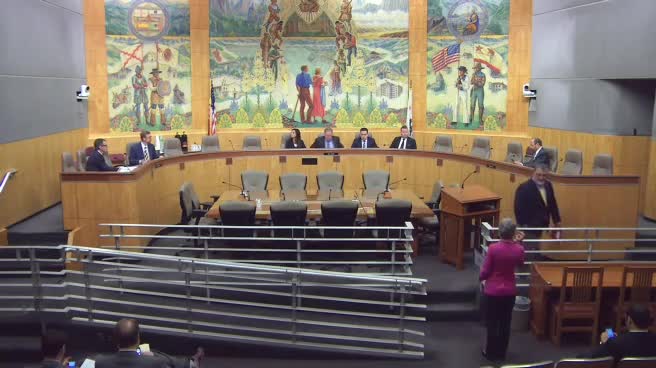
Discussed in Hearing
 5MIN
Senate Standing Committee on Governmental Organization
Bill Author

Bill Co-Author(s):