SB 1463: California Global Warming Solutions Act of 2006: scoping plan: Greenhouse Gas Reduction Fund.
- Session Year: 2017-2018
- House: Senate
- Latest Version Date: 2018-03-22
(1)The California Global Warming Solutions Act of 2006 designates the State Air Resources Board as the state agency charged with monitoring and regulating sources of emissions of greenhouse gases. The state board is required to approve a statewide greenhouse gas emissions limit equivalent to the statewide greenhouse gas emissions level in 1990 to be achieved by 2020 and to ensure that statewide greenhouse gas emissions are reduced to at least 40% below the 1990 level by 2030.
The act requires the state board to prepare and approve a scoping plan for achieving the maximum technologically feasible and cost-effective reductions in greenhouse gas emissions and to update the scoping plan at least once every 5 years.
This bill would require the state board to include greenhouse gas emissions from wildlands and forest fires in the scoping plan.
(2)The act authorizes the state board to include the use of market-based compliance mechanisms. Existing law requires all moneys, except for fines and penalties, collected by the state board as part of a market-based compliance mechanism to be deposited in the Greenhouse Gas Reduction Fund and to be available upon appropriation. Existing law continuously appropriates 35% of the annual proceeds of the fund for transit, affordable housing, and sustainable communities programs and 25% of the annual proceeds of the fund for certain components of a specified high-speed rail project.
This bill would continuously appropriate 25% of the annual proceeds of the fund to counties, with an equal percentage to each county. The bill would require counties, within 60 days of receiving an appropriation from the fund, to develop a specified plan to allocate the moneys, as specified. The bill would require counties to post the allocation plan on their Internet Web sites in real time and would require the California State Auditors Office to conduct an annual audit of each county. The bill would require the Department of Finance to redistribute any moneys that are unencumbered within 2 years of the appropriation in an equal percentage to those counties that have fully encumbered moneys within 2 years of receiving the appropriation. By adding to the duties of local governments, this bill would impose a state-mandated local program.
(3)The California Constitution requires the state to reimburse local agencies and school districts for certain costs mandated by the state. Statutory provisions establish procedures for making that reimbursement.
This bill would provide that, if the Commission on State Mandates determines that the bill contains costs mandated by the state, reimbursement for those costs shall be made pursuant to the statutory provisions noted above.
The California Global Warming Solutions Act of 2006 designates the State Air Resources Board as the state agency charged with monitoring and regulating sources of emissions of greenhouse gases. The state board is required to approve a statewide greenhouse gas emissions limit equivalent to the statewide greenhouse gas emissions level in 1990 to be achieved by 2020 and to ensure that statewide greenhouse gas emissions are reduced to at least 40% below the 1990 level by 2030. The act requires the state board to adopt rules and regulations in an open public process to achieve the maximum technologically feasible and cost-effective greenhouse gas emissions reductions. This bill would make a nonsubstantive change to these provisions.The California Global Warming Solutions Act of 2006 designates the State Air Resources Board as the state agency charged with monitoring and regulating sources of emissions of greenhouse gases. The state board is required to approve a statewide greenhouse gas emissions limit equivalent to the statewide greenhouse gas emissions level in 1990 to be achieved by 2020 and to ensure that statewide greenhouse gas emissions are reduced to at least 40% below the 1990 level by 2030. The act requires the state board to adopt rules and regulations in an open public process to achieve the maximum technologically feasible and cost-effective greenhouse gas emissions reductions.
This bill would make a nonsubstantive change to these provisions.
(a)On or before January 1, 2009, the state board shall prepare and approve a scoping plan, as that term is understood by the state board, for achieving the maximum technologically feasible and cost-effective reductions in greenhouse gas emissions from sources or categories of sources of greenhouse gases by 2020 under this division. The state board shall consult with all state agencies with jurisdiction over sources of greenhouse gases, including the Public Utilities Commission and the State Energy Resources Conservation and Development Commission, on all elements of its plan that pertain to energy-related matters including, but not limited to, electrical generation, load based-standards or requirements, the provision of reliable and affordable electrical service, petroleum refining, and statewide fuel supplies to ensure the greenhouse gas emissions reduction activities to be adopted and implemented by the state board are complementary, nonduplicative, and can be implemented in an efficient and cost-effective manner.
(b)(1)The plan shall identify and make recommendations on direct emissions reduction measures, alternative compliance mechanisms, market-based compliance mechanisms, and potential monetary and nonmonetary incentives for sources and categories of sources that the state board finds are necessary or desirable to facilitate the achievement of the maximum feasible and cost-effective reductions of greenhouse gas emissions by 2020.
(2)The state board shall include greenhouse gas emissions from wildlands and forest fires in the plan.
(c)In making the determinations required by subdivision (b), the state board shall consider all relevant information pertaining to greenhouse gas emissions reduction programs in other states, localities, and nations, including the northeastern states of the United States, Canada, and the European Union.
(d)The state board shall evaluate the total potential costs and total potential economic and noneconomic benefits of the plan for reducing greenhouse gases to Californias economy, environment, and public health, using the best available economic models, emission estimation techniques, and other scientific methods.
(e)In developing its plan, the state board shall take into account the relative contribution of each source or source category to statewide greenhouse gas emissions, and the potential for adverse effects on small businesses, and shall recommend a de minimis threshold of greenhouse gas emissions below which emissions reduction requirements will not apply.
(f)In developing its plan, the state board shall identify opportunities for emissions reduction measures from all verifiable and enforceable voluntary actions, including, but not limited to, carbon sequestration projects and best management practices.
(g)The state board shall conduct a series of public workshops to give interested parties an opportunity to comment on the plan. The state board shall conduct a portion of these workshops in regions of the state that have the most significant exposure to air pollutants, including, but not limited to, communities with minority populations, communities with low-income populations, or both.
(h)The state board shall update its plan for achieving the maximum technologically feasible and cost-effective reductions of greenhouse gas emissions at least once every five years.
SEC. 2.Section 39719 of the Health and Safety Code is amended to read:39719.(a)The Legislature shall appropriate the annual proceeds of the fund for the purpose of reducing greenhouse gas emissions in this state in accordance with the requirements of Section 39712.
(b)To carry out a portion of the requirements of subdivision (a), annual proceeds of the fund are continuously appropriated for the following:
(1)Beginning in the 201516 fiscal year, and notwithstanding Section 13340 of the Government Code, 35 percent of annual proceeds of the fund are continuously appropriated, without regard to fiscal years, for transit, affordable housing, and sustainable communities programs as following:
(A)Ten percent of the annual proceeds of the fund is hereby continuously appropriated to the Transportation Agency for the Transit and Intercity Rail Capital Program created by Part 2 (commencing with Section 75220) of Division 44 of the Public Resources Code.
(B)Five percent of the annual proceeds of the fund is hereby continuously appropriated to the Low Carbon Transit Operations Program created by Part 3 (commencing with Section 75230) of Division 44 of the Public Resources Code. Funds Moneys shall be allocated by the Controller, according to requirements of the program, and pursuant to the distribution formula in subdivision (b) or (c) of Section 99312 of, and Sections 99313 and 99314 of, the Public Utilities Code.
(C)Twenty percent of the annual proceeds of the fund is hereby continuously appropriated to the Strategic Growth Council for the Affordable Housing and Sustainable Communities Program created by Part 1 (commencing with Section 75200) of Division 44 of the Public Resources Code. Of the amount appropriated in this subparagraph, no less than 10 percent of the annual proceeds, shall be expended for affordable housing, consistent with the provisions of that program.
(2)Beginning in the 201516 fiscal year, notwithstanding Section 13340 of the Government Code, 25 percent of the annual proceeds of the fund is hereby continuously appropriated to the High-Speed Rail Authority for the following components of the initial operating segment and Phase I Blended System as described in the 2012 business plan adopted pursuant to Section 185033 of the Public Utilities Code:
(A)Acquisition and construction costs of the project.
(B)Environmental review and design costs of the project.
(C)Other capital costs of the project.
(D)Repayment of any loans made to the authority to fund the project.
(c)In determining the amount of annual proceeds of the fund for purposes of the calculation in subdivision (b), the funds subject to Section 39719.1 shall not be included.
(d)(1)Beginning with the 201920 fiscal year, 25 percent of the annual proceeds of the fund are hereby continuously appropriated, without regard to fiscal year, in an equal percentage to each of the 58 counties in the state for the purpose of reducing greenhouse gas emissions.
(2)Within 60 days of receiving an appropriation from the fund pursuant to this subdivision, a county shall develop a plan to allocate the moneys to all of the following:
(A)The hardening of the electric utility infrastructure in critical areas, including, but not limited to, recent fire areas, aging or exposed electric utility infrastructure, high risk zones included on fire hazard severity zone maps developed by the Public Utilities Commission or the Department of Forestry and Fire Protection.
(B)The mitigation and management of wildlands and forests located in fire hazard severity zones or areas recently devastated by fire.
(C)(i)Other related environmental issues to mitigate or reduce the impact of greenhouse gas emissions.
(ii)No more than 25 percent of a countys appropriation from the fund shall be allocated for the purposes of this paragraph.
(3)For any moneys that are unencumbered within two years of the county receiving the appropriation pursuant to this subdivision, the Department of Finance shall redistribute those moneys in an equal percentage to those counties that have fully encumbered moneys within two years of receiving the appropriation.
(4)For the purposes of this subdivision, a county shall do all of the following:
(A)Comply with the Ralph M. Brown Act (Chapter 9 (commencing with Section 54950) of Part 1 of Division 2 of Title 5 of the Government Code).
(B)Post the plan on the countys Internet Web site in real time.
(5)The California State Auditors Office shall conduct an annual audit of each county to ensure conformity with the requirements of this subdivision.
SEC. 3.If the Commission on State Mandates determines that this act contains costs mandated by the state, reimbursement to local agencies and school districts for those costs shall be made pursuant to Part 7 (commencing with Section 17500) of Division 4 of Title 2 of the Government Code.
SECTION 1.Section 38560 of the Health and Safety Code is amended to read:38560.The state board shall adopt rules and regulations in an open public process to achieve the maximum technologically feasible and cost-effective greenhouse gas emissions reductions from sources or categories of sources, subject to the criteria and schedules set forth in this part.The state board shall adopt rules and regulations in an open public process to achieve the maximum technologically feasible and cost-effective greenhouse gas emission emissions reductions from sources or categories of sources, subject to the criteria and schedules set forth in this part.
|
Date
|
Status
|
|---|---|
| Apr 18, 2018 | April 18 set for first hearing. Failed passage in committee. (Ayes 2. Noes 5.) Reconsideration granted. |
| Apr 6, 2018 | Set for hearing April 18. |
| Apr 4, 2018 | Re-referred to Coms. on EQ. and GOV. & F. |
| Mar 22, 2018 | From committee with author's amendments. Read second time and amended. Re-referred to Com. on RLS. |
| Mar 8, 2018 | Referred to Com. on RLS. |
| Feb 20, 2018 | From printer. May be acted upon on or after March 22. |
| Feb 16, 2018 | Introduced. Read first time. To Com. on RLS. for assignment. To print. |
|
Date
|
Description
|
Location
|
Votes
|
|
|---|---|---|---|---|
| Apr 18, 2018 | Do pass, but first be re-referred to the Committee on [Governance and Finance] | Senate Standing Committee on Environmental Quality |
Failed |
|
| Apr 18, 2018 | [First] hearing set for [04-18-2018]: Failed passage in Committee. Reconsideration granted | Senate Standing Committee on Environmental Quality |
Passed |
This list shows positions taken on this bill by organizations on the date displayed, which is linked to the original source.
Positions by individuals are not included.
SENATE COMMITTEE ON ENVIRONMENTAL QUALITY
Senator Wieckowski, Chair
2017 - 2018 Regular
Bill No: SB 1463
Author: | Moorlach | ||
Version: | 3/22/2018 | Hearing Date: | 4/18/2018 |
Urgency: | No | Fiscal: | Yes |
Consultant: | David Ernest García | ||
SUBJECT: California Global Warming Solutions Act of 2006: scoping plan: Greenhouse Gas Reduction Fund
ANALYSIS:
Existing federal law:
- Sets, through the Federal Clean Air Act (FCAA) and its implementing regulations, among other things, National Ambient Air Quality Standards (NAAQS) for six criteria pollutants, and designates air basins that do not achieve NAAQS as nonattainment. (42 U.S.C. §7401 et seq.)
Existing state law:
- Establishes the Air Resources Board (ARB) as the air pollution control agency in California and requires the ARB, among other things, to control emissions from a wide array of mobile sources and implement the FCAA. (Health and Safety Code (HSC) §39500 et seq.)
- Requires, under the California Global Warming Solutions Act of 2006 (also known as AB 32), ARB to (1) determine the 1990 statewide greenhouse gas (GHG) emissions level and approve a statewide GHG emissions limit that is equivalent to that level to be achieved by 2020; (2) ensure that statewide GHG emissions are reduced to at least 40% below the 1990 level by December 31, 2030 (i.e., SB 32); and (3) adopt regulations, until December 31, 2030, that utilize market-based compliance mechanisms to reduce GHG emissions (i.e., the cap-and-trade program). (HSC §38500 et seq.)
- Establishes the Greenhouse Gas Reduction Fund (GGRF) in the State Treasury, requires all moneys, except for fines and penalties, collected pursuant to a market-based mechanism be deposited in the fund. (Government Code §16428.8)
- Appropriates, continuously, percentages of GGRF as follows:
- 10% to the Transit and Intercity Rail Capital Program created by Part 2 (commencing with Section 75220) of Division 44 of the Public Resources Code.
- 5% to the Low Carbon Transit Operations Program created by Part 3 (commencing with Section 75230) of Division 44 of the Public Resources Code.
- 20% to the Affordable Housing and Sustainable Communities Program created by Part 1 (commencing with Section 75200) of Division 44 of the Public Resources Code.
- 25% to the High-Speed Rail Authority. (HSC §39719)
- Requires ARB to prepare and approve a scoping plan to achieve maximum technologically feasible and cost-effective reductions in GHG emissions at least once every five years, as specified. (HSC §38561)
- Requires all GHG rules and regulations adopted by ARB be consistent with the updated scoping plan. (HSC § 38592.5)
This bill:
- Requires ARB to include GHG emissions from wildlands and forest fires in the scoping plan.
- Appropriates, continuously, beginning with the 2019–20 fiscal year, 25% of GGRF in an equal portion to the 58 counties in the state for the purpose of reducing GHG emissions.
- Requires counties, within 60 days of receiving GGRF moneys appropriated by the bill, to develop a plan to allocate the moneys as follows:
- The hardening of the electric utility infrastructure in critical areas, including, but not limited to, recent fire areas, aging or exposed electric utility infrastructure, high risk zones included on fire hazard severity zone maps developed by the Public Utilities Commission or the Department of Forestry and Fire Protection.
- The mitigation and management of wildlands and forests located in fire hazard severity zones or areas recently devastated by fire.
- Other related environmental issues to mitigate or reduce the impact of GHG emissions, with a cap of 25% of the moneys received to be used for this purpose.
- The hardening of the electric utility infrastructure in critical areas, including, but not limited to, recent fire areas, aging or exposed electric utility infrastructure, high risk zones included on fire hazard severity zone maps developed by the Public Utilities Commission or the Department of Forestry and Fire Protection.
- Requires the Department of Finance to redistribute moneys unencumbered within two years of the county receiving the appropriation in an equal percentage to those counties that have fully encumbered moneys within two years of receiving the appropriation.
- Requires counties, for the purposes of this bill, to comply with the Ralph M. Brown Act (Chapter 9 (commencing with Section 54950) of Part 1 of Division 2 of Title 5 of the Government Code) and to post the plan on the county’s Internet Web site in real time.
- Requires the California State Auditor’s Office to conduct an annual audit of each county to ensure conformity with the requirements of this bill.
Background
- Implementing AB 32: The California Global Warming Solutions Act of 2006. In 2006, AB 32 (Núñez and Pavley, Chapter 488, Statutes of 2006) was signed into law, which requires ARB to determine the 1990 statewide GHG emission level and achieve a reduction in GHG emissions to that level by 2020. In addition, calls on ARB to inventory GHGs in California (including carbon dioxide, methane, nitrous oxide, hydrofluorocarbons, perfluorocarbons, and sulfur hexafluoride) and approve the aforementioned statewide GHG emissions limit.
AB 32 also requires ARB to (1) implement regulations that achieve the maximum technologically feasible and cost-effective reduction of GHG emissions, (2) identify and adopt regulations for discrete early-action measures, and (3) prepare and approve a scoping plan, to be updated at least once every five years, to achieve the maximum technologically feasible and cost-effective reduction of GHG emissions. Due to a variety of factors, most importantly being the great recession that started in 2008, California will achieve the goals of AB 32 in advance of the 2020 deadline.
In 2016, the Legislature approved, and the Governor signed, SB 32 (Pavley, Chapter 249, Statutes of 2016), which requires ARB to ensure that statewide GHG emissions are reduced to at least 40% below the 1990 level by December 31, 2030. This new goal is known as the SB 32 target. - The following year, AB 398 (E. Garcia, Chapter 135, Statutes of 2017) was enacted to extend the authority of ARB to implement a cap-and-trade program to reduce GHG emissions throughout the state. AB 398 specified a variety of requirements on the post-2020 cap-and-trade program, most notable are
(1) requiring the banking of allowances from the current cap-and-trade program into the post-2020 program, (2) specifying industry assistance factors for the post-2020 program, and (3) requiring that all GHG rules and regulations adopted by ARB must be consistent with the updated scoping plan.
- Cap-and-Trade. The cap-and-trade program was recommended in the initial Scoping Plan as a market-based compliance mechanism to reduce GHG emissions over time. Pursuant to legal authority under AB 32, ARB adopted cap-and-trade regulations and those regulations were approved on December 13, 2011.
Sources of GHG emissions included under the cap are termed “covered” entities and must surrender one “compliance instrument” for every emissions unit (i.e., metric ton of carbon dioxide equivalent or MTCO2e) that it emits at the end of a compliance period. Revenues are generated from the sale of those compliance instruments. Two forms of compliance instruments are used: allowances and offsets.
Since November 2012, ARB has conducted eight California-only, 13 joint California-Québec, and one joint California-Québec-Ontario cap-and-trade auctions. To date, $7.2 billion has been generated by the cap-and-trade auctions and deposited into the GGRF. - Use of Cap-and-Trade Auction Revenue. State law specifies that the auction revenues must be used to facilitate the achievement of measurable GHG emissions reductions and outlines various categories of allowable expenditures. Statute further requires the Department of Finance, in consultation with ARB and any other relevant state agency, to develop a three-year investment plan for the auction proceeds, which are deposited in the GGRF. ARB is required to develop guidance for administering agencies on reporting and quantifying methodologies for programs and projects funded through the GGRF to ensure the investments further the regulatory purposes of AB 32.
Several bills have provided legislative direction for the expenditure of cap-and-trade auction proceeds to help California achieve its climate goals and provide benefits to disadvantaged communities (see Related/Prior Legislation). - Legal Consideration of Cap-and-Trade Auction Revenues. Policy committees in both the Senate and Assembly have written about the legal constraints of spending GGRF moneys for various purposes; those constraints include Proposition 13 (1978), Proposition 26 (2010), and the Third District Court of Appeal decision in California Chamber of Commerce v. State Air Resources Bd., the latter of which is the current controlling determination.
The Third District Court of Appeal opinion held “that the auction sales do not equate to a tax” explaining that “the hallmarks of a tax are: 1) that it is compulsory; and 2) that the payor receives nothing of particular value for payment of the tax, that is, the payor receives nothing of specific value for the tax itself. Contrary to plaintiffs’ view, the purchase of allowances is a voluntary decision driven by business judgments as to whether it is more beneficial to the company to make the purchase than to reduce emissions …these twin aspects of the auction system, voluntary participation and purchase of a specific thing of value, preclude a finding that the auction system has the hallmarks of a tax.”
The appellate court also found that “the purchase of emissions allowances, whether directly from the Board at auction or on the secondary market, is a business driven decision, not a governmentally compelled decision [and] unlike any other tax … the purchase of an emissions allowance conveys a valuable property interest—the privilege to pollute California’s air—that may be freely sold or traded on the secondary market.”
As a result, the appellate court found that “the Sinclair Paint test is not applicable [to the cap-and-trade program], because the auction system is unlike other governmental charges that may raise the “tax or fee” question resolved thereby. The system is the voluntary purchase of a valuable commodity and not a tax under any test.” - Legislative Counsel Opinion. In a written opinion on March 20, 2018, Legislative Counsel opined on the lawful appropriation of GGRF moneys in light of the recently approved AB 398 (E. Garcia, Chapter 135, Statutes of 2017). Legislative Counsel determined that AB 398 satisfied two parts of the three part “benefit or privilege exemption” test to determine whether a charge is a fee or a tax (a fee requires a lower vote threshold to pass and puts a special trust on the money, which then cannot be used for general fund purposes). In determining that AB 398 passed the first two parts of the test, Legislative Counsel wrote, “because the payment of the cost to purchase an emissions allowance confers a valuable property interest that consists of the privilege to pollute air, we conclude that the cap-and-trade charge is imposed for the granting of a privilege and therefore satisfies,” part one of the test and part two is satisfied because, “under the cap-and-trade program, the privilege of being a large emitter of GHGs ‘is not provided to those not charged.’”
As for whether the requirement that a charge not exceed the reasonable costs to the State of granting the privilege to the payer, Legislative Counsel wrote, “in determining whether a charge was imposed for revenue purposes, courts generally look to the authorized uses of those funds. In particular, the generation of general fund revenue signals that a charge was imposed for revenue purposes and is therefore a tax … we note that a portion of the revenue from the auction of emission allowances [under AB 398] is required to be transferred from [GGRF] to the General Fund on an annual basis … in addition, the transfers from the GGRF to the General Fund must be made in amounts identical to the amount of revenue loss to the state attributable to the tax exemptions provided or extended by AB 398, some of which do not bear a reasonable relationship to reducing GHG … accordingly, it is our opinion that AB 398 imposed a tax pursuant to article XIIIA, section 3.”
As for the nature of cap-and-trade auction revenues, Legislative counsel wrote, “In the context of AB 398, it is our view that the Legislature changed the character of the cap-and-trade charge from a fee to a tax by granting new authority for the cap-and-trade charge and changing the purposes for which the revenue from the charge may be appropriated to incorporate General Fund expenditures. Moreover, because the bill received a two-thirds vote in each house of the Legislature, it is a validly enacted tax.
As for when the conversion from special fund to general fund moneys occurs, Legislative Counsel wrote, “by granting new authority for the charge for the period of January 1, 2021, through December 31, 2030 … [and] because this new authority does not commence until January 1, 2021 … it is our opinion that the operative date of the tax imposed by AB 398 is January 1, 2021, when the regulations that make programmatic changes to the cap-and-trade program become operative.”
With regard to revenues raised prior to January 1, 2021, Legislative Counsel determined, “that the revenue generated by the cap-and-trade charge before January 1, 2021, is special fund revenue that may be expended only for purposes that reasonably relate to the reduction of GHG emissions. On and after January 1, 2021, the revenue generated by the cap-and-trade charge constitutes General Fund revenue that may be appropriated for any lawful purpose.” (Emphasis added.) - Air quality standards. The Federal Clean Air Act (FCAA) passed in 1963 and has been revised many times thereafter. The FCAA and its implementing regulations are intended to protect public health and environmental quality by limiting and reducing pollution from various sources. Under the FCAA, the United States Environmental Protection Agency (US EPA) establishes National Ambient Air Quality Standards (NAAQS) that apply to outdoor air throughout the country.
In 1969 and 1971, ARB set the first air quality standards for ozone, Particulate Matter (PM), oxides of nitrogen (NOx), oxides of sulfur (SOx), and carbon monoxide due to their negative impacts on public health above specified concentrations.
The federal government followed suit and set NAAQS for six “criteria pollutants.” These included ground-level ozone, PM, NOx, SOx, and carbon monoxide, and added lead. Now, the US EPA reviews each NAAQS at five-year intervals to ensure that the standards are based on the most recent scientific information.
Regions that do not meet the national standards for any one of the standards are designated “nonattainment areas.” The FCAA sets deadlines for attainment based on the severity of nonattainment and requires states to develop comprehensive plans, known as the state implementation plan (SIP), to attain and maintain air-quality standards for each area designated nonattainment for an NAAQS.
Notably, emissions from wildfires and other natural disasters do not count against air basins with regard to their attainment status. Emissions from prescribed and agricultural burns, however, do count against air basins with regard to their attainment status.
Comments
- Purpose of Bill. According to the author, “in an effort to dramatically reduce the state’s highest source of greenhouse gas (GHG) emissions, curb the impacts of future wildfires and prevent unnecessary damage to life and property, Senate Bill 1463 will continuously appropriate 25 percent of cap and trade funds to counties to harden the state’s utility infrastructure and better manage wildlands and forests. This measure requires counties that accept funds to move swiftly in providing a plan for the funds within 6 months and the funds to be encumbered within 2 years. Any funds neither planned for nor encumbered within those timelines will be reverted to those counties making plans for the money.
“This bill also requires the California Air Resources Board (ARB) to include GHGs emissions from wildland and forest fires in their updated Scoping Plan. It is estimated that for every 2 to 3 days these wildfires burn, GHG emissions are roughly equal to the annual emissions from every car in the entire state of California. In 2017 alone, there were over 9,000 major wildfires which burned over 1.2 million acres. Several of the large fires were caused or exacerbated by sparking utility lines.
“So far, only a small percentage of cap and trade revenues have been spent on forest-health issues, even though wildfires are by far the highest emitters of GHGs in the state. Additionally, wildfires produce other co-pollutants and toxic bi-products that are damaging to public health.
“SB 1463 emphasizes full accountability by requiring funding plans be made readily available to the public. All open meeting laws shall apply to all decision-making processes. Any county receiving and spending money for this program must have their program audited by the California State Auditor’s Office.” - GHG emissions from wildlands and forest fires. In the latest version of the scoping plan, ARB wrote that they have “developed a statewide emission inventory for black carbon in support of the [Short Lived Climate Pollutant (SLCP)] Strategy, which is reported in two categories: non-forestry (anthropogenic) sources and forestry sources. The black carbon inventory will help support implementation of the SLCP Strategy, but is not part of the State’s GHG Inventory that tracks progress towards the State’s climate targets.”
As noted in the background, emissions from wildfires do not count against air basins with regard to their attainment status under the FCAA, but emissions from prescribed and agricultural burns do. For this reason, as well as state law relating to reducing SLCPs, tracking black carbon in the scoping plan is appropriate.
That being said, the reason GHG emissions from these kinds of events are not included in the state’s GHG emissions inventory is nuanced, but still relatively simple.
First, natural disasters that emit GHGs (such as wildfires) occurred before climate change, will continue to occur as the climate continues to change, and will persist even if mankind ultimately solves the problem of climate change.
While science can now conclusively attribute individual extreme events to climate change, it is important to distinguish that extreme events like the recent wildfires in California are a symptom of climate change, not the cause.
The overwhelming consensus of climate scientists is that climate change is anthropogenic, meaning human activity has caused the rising GHG concentrations in the atmosphere and, therefore, increasing average global temperatures and the extreme events climate change causes.
To include GHG emissions from natural disasters in the state’s inventory that tracks progress towards California’s climate goals, even ones that are made worse by climate change, betrays the fundamental scientific understanding that human activity is responsible for climate change.
By including new and highly variable sources of GHG emissions, such as wildfires, caps would need to be adjusted according to uncertain sources of emissions. This could make the program unworkable for those industries currently covered under Cap and Trade because the program would be over supplied with allowances until a fire occurred. At that point, the market would then tighten due to the unexpected need for allowances, which would cause huge price spikes for businesses as the supply of allowances in the program falls dramatically.
Additionally, including natural disasters, like the recent wildfires, in the state’s GHG emissions inventory would shift the focus from the true cause of climate change—human activity—to sources of GHG emissions that, while individually large, are simply not responsible for long-term climate change. This would impede the state’s ability to address climate change, if not make it impossible outright.
Finally, AB 398 required that all GHG rules and regulations adopted by ARB must be consistent with the scoping plan. By including sources of GHG emissions in the scoping plan that are not appropriate, the effectiveness of future rules and regulations promulgated by ARB would be hindered.
Given that, the Committee may wish to consider the prudence of this measure.
- Lawful uses of GGRF moneys. As noted in the background, Legislative Counsel has opined that until January 1, 2021, it is unlawful for the Legislature to use GGRF moneys for purposes that are not reasonably related to the reduction of GHG emissions. Given that the expenditures envisioned in SB 1463 are directly related the reduction of GHG emissions from a variety of sources, the program would be a lawful use of GGRF moneys.
However, SB 1463 continuously appropriates, beginning with the 2019–20 fiscal year, 25% of GGRF in an equal portions to the 58 counties in the state for the purpose of reducing GHG emissions, but only requires counties to develop a spending plan after the moneys have been appropriated. Every other program funded with GGRF moneys must have the plan in place before receiving funding. These plans must include measurements of how the funds will be used to reduce GHG emissions and benefit disadvantaged communities.
Regarding disadvantaged communities, SB 535 (de León, Chapter 830, Statutes of 2012) requires that 25% of GGRF moneys be used to benefit disadvantaged communities and requires that 10% of auction revenue be invested in disadvantaged communities. AB 1550 (Gomez, Chapter 369, Statutes of 2016) requires a minimum of 25% of GGRF moneys be spent on projects located within and benefiting disadvantaged communities and an additional minimum of 10% of GGRF moneys be spent on projects that benefit low-income households or are within, and benefit low-income communities.
A question arises as to how the state can ensure GGRF moneys will be spent lawfully if counties are given funding before they have any plan on how to spend it, and how the state can get money back that has been spent unlawfully. Moreover, another question arises as to how to the state can ensure the spending requirements in disadvantaged communities will be met given that different counties contain differing numbers of disadvantaged communities. - A question of fairness. As of 2015, according to the US Census Bureau Alpine County is the least populated county in California with approximately 1,110 people. Los Angeles County, by contrast, is the state’s most populous county with approximately 10,170,292 people. For the current fiscal year, the LAO noted that $2.6 billion of GGRF moneys were spent on various programs. 25% of that would be $650 million, which divided equally among the 58 counties, would be approximately $11 million for each county. Under this proposal, that would give Alpine County roughly $1000 per person and Los Angeles County roughly one dollar per person.
A question of fairness arises regarding the 25% of GGRF this bill proposes to split equally among the 58 counties.
As this bill conflicts with AB 32, SB 32, implementing the scoping plan, the Federal Clean Air Act, as well as the intent of these laws to decrease GHG and air pollution emissions and improve conditions in disadvantaged communities, this bill should not be approved.
Related/Prior Legislation
SB 32 (Pavley, Chapter 249, Statutes of 2016) requires ARB to ensure that statewide GHG emissions are reduced to at least 40% below the 1990 level by December 31, 2030.
AB 1550 (Gomez, Chapter 369, Statutes of 2016) requires a minimum of 25% of GGRF moneys be spent on projects located within and benefiting disadvantaged communities and an additional minimum of 10% of GGRF moneys be spent on projects that benefit low-income households or are within, and benefit low-income communities.
SB 862 (Committee on Budget and Fiscal Review, Chapter 36, Statutes of 2014) established a long-term cap-and-trade expenditure plan by continuously appropriating portions of the funds for designated programs or purposes. The legislation appropriates 25% for the state’s high-speed rail project, 20% for affordable housing and sustainable communities grants, 10% to the Transit and Intercity Rail Capital Program, and 5% for low-carbon transit operations. The remaining 40% is available for annual appropriation by the Legislature.
SB 535 (de León, Chapter 830, Statutes of 2012) requires that 25% of GGRF moneys be used to benefit disadvantaged communities and requires that 10% of auction revenue be invested in disadvantaged communities.
SB 1018 (Committee on Budget and Fiscal Review, Chapter 39, Statutes of 2012) created the GGRF, into which all auction revenue is to be deposited. The legislation requires that before departments can spend moneys from the GGRF, they must prepare a record specifying: (1) how the expenditures will be used, (2) how the expenditures will further the purposes of AB 32 (Núñez and Pavley, Chapter 488, Statutes of 2006), (3) how the expenditures will achieve GHG emission reductions, (4) how the department considered other non-GHG-related objectives, and (5) how the department will document the results of the expenditures.
AB 1532 (J. Pérez, Chapter 807, Statutes of 2012) directs the Department of Finance to develop and periodically update a three-year investment plan that identifies feasible and cost-effective GHG emission reduction investments to be funded with cap-and-trade auction revenues and specifies that reduction of GHG emissions through strategic planning and development of sustainable infrastructure projects, are eligible investments of GGRF.
AB 32 (Núñez, Pavley, Chapter 488, Statutes of 2006) establishes the California Global Warming Solutions Act of 2006, which requires ARB to monitor and regulate sources of GHG emissions that cause global warming in order to reduce emissions of GHG, as specified.
DOUBLE REFERRAL:
If this measure is approved by the Senate Environmental Quality Committee, the do pass motion must include the action to re-refer the bill to the Senate Governance and Finance Committee.
SOURCE:
Author
SUPPORT:
None on file
OPPOSITION:
None on file
-- END --
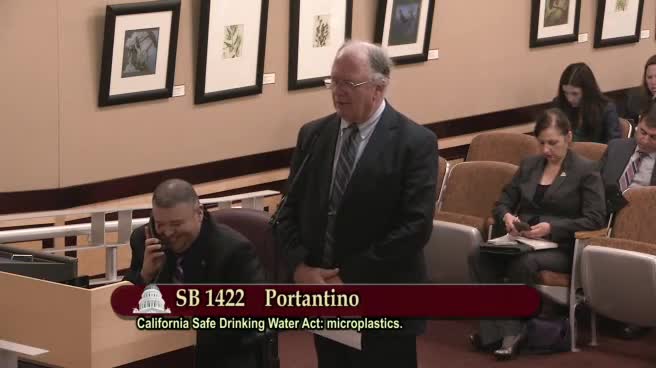
Discussed in Hearing
 13MIN
Senate Standing Committee on Environmental Quality
Bill Author
Bill Co-Author(s):