SB 483: Education finance: Higher Education Facilities Bond Act of 2018.
- Session Year: 2017-2018
- House: Senate
- Latest Version Date: 2017-05-03
(1)Under the Higher Education Facilities Bond Act of 1986, the Higher Education Facilities Bond Act of 1988, and the Higher Education Facilities Bond Act of June 1992, the issuance, pursuant to the State General Obligation Bond Law, of bonds in an amount not to exceed $400,000,000, $600,000,000, and $900,000,000, respectively, and the expenditure of the revenues therefrom, were authorized for the purpose of aid to the University of California and the California State University for, among other things, the construction and equipping of educational facilities, as specified. Existing law establishes the Higher Education Facilities Finance Committee to administer those acts, and to authorize the issuance and sale of bonds to the extent necessary to fund the education facilities construction apportionments expressly authorized by the Legislature in the annual Budget Act.
More recently, the Class Size Reduction Kindergarten-University Public Education Facilities Bond Act of 1998, the Kindergarten-University Public Education Facilities Bond Act of 2002, the Kindergarten-University Public Education Facilities Bond Act of 2004, and the Kindergarten-University Public Education Facilities Bond Act of 2006 authorized the issuance of bonds and the expenditure of revenues therefrom for the University of California and the California State University, as well as for public elementary and secondary schools.
This bill would enact the Higher Education Facilities Bond Act of 2018, which, upon approval by the state electorate, would authorize the issuance of state general obligation bonds in an amount not to exceed $2,000,000,000 with one-half of the amount designated for the University of California and the Hastings College of the Law and the other half designated for the California State University, for purposes similar to those specified in the Higher Education Facilities Bond Act of 1986, the Higher Education Facilities Bond Act of 1988, and the Higher Education Facilities Bond Act of June 1992, to be issued and sold in a manner similar to that provided under those acts.
The bill would require that any request for funds from the bonds issued pursuant to the bond act enacted by this bill be accompanied by the 5-year capital outlay plan of the particular university or college and include a schedule that prioritizes the seismic retrofitting needed to significantly reduce seismic hazards in buildings identified as high priority by the university or college, as specified.
(2)This bill would provide for the submission of the Higher Education Facilities Bond Act of 2018 to the voters at the November 6, 2018, statewide primary election, as specified.
(1)Under the Higher Education Facilities Bond Act of 1986, the Higher Education Facilities Bond Act of 1988, and the Higher Education Facilities Bond Act of June 1992, the issuance, pursuant to the State General Obligation Bond Law, of bonds in an amount not to exceed $400,000,000, $600,000,000, and $900,000,000, respectively, and the expenditure of the revenues therefrom, were authorized for the purpose of aid to the University of California and the California State University for, among other things, the construction and equipping of educational facilities, as specified. Existing law establishes the Higher Education Facilities Finance Committee to administer those acts, and to authorize the issuance and sale of bonds to the extent necessary to fund the education facilities construction apportionments expressly authorized by the Legislature in the annual Budget Act.
More recently, the Class Size Reduction Kindergarten-University Public Education Facilities Bond Act of 1998, the Kindergarten-University Public Education Facilities Bond Act of 2002, the Kindergarten-University Public Education Facilities Bond Act of 2004, and the Kindergarten-University Public Education Facilities Bond Act of 2006 authorized the issuance of bonds and the expenditure of revenues therefrom for the University of California and the California State University, as well as for public elementary and secondary schools.
This bill would enact the Higher Education Facilities Bond Act of 2018, which, upon approval by the state electorate, would authorize the issuance of state general obligation bonds in an amount not to exceed $2,000,000,000 for purposes similar to those specified in the Higher Education Facilities Bond Act of 1986, the Higher Education Facilities Bond Act of 1988, and the Higher Education Facilities Bond Act of June 1992, to be issued and sold in a manner similar to that provided under those acts.
The bill would require that any request for funds from the bonds issued pursuant to the bond act enacted by this bill be accompanied by the 5-year capital outlay plan of the particular university or college and include a schedule that prioritizes the seismic retrofitting needed to significantly reduce seismic hazards in buildings identified as high priority by the university or college, as specified.
(2)This bill would provide for the submission of the Higher Education Facilities Bond Act of 2018 to the voters at the November 6, 2018, statewide primary election, as specified.
This part shall be known, and may be cited, as the Higher Education Facilities Bond Act of 2018.
102001.The Legislature finds and declares all of the following:
(a)Californias economic and social prosperity relies on a higher education system that keeps pace with Californias growth. In the coming decades, the states economic prosperity will depend on increasing the productivity of the workforce and on the ability to compete successfully in the world marketplace.
(b)The system of public higher education in this state includes the University of California and its 10 campuses, the California State University and its 23 campuses, and the Hastings College of the Law, and their respective off-campus centers. Each of these institutions plays a vital role in maintaining Californias dominance in higher education in the United States.
(c)Over the last several years, studies have been completed by the University of California and the California State University to assess their long-term and short-term capital needs. Those studies demonstrate the long-term and short-term needs total, in the aggregate, hundreds of millions of dollars.
(d)The purpose of the Higher Education Facilities Bond Act of 2018 is to assist in meeting the capital outlay financing needs of Californias public higher education system.
102002.As used in this part, the following terms have the following meanings:
(a)Committee means the 2018 Higher Education Facilities Bond Act Finance Committee created pursuant to Section 67353. 102011.
(b)Fund means the 2018 Higher Education Capital Outlay Bond Fund created pursuant to Section 102010.
2.Higher Education Facilities Bond Act Program 102010.The proceeds of bonds issued and sold pursuant to this part shall be deposited in the 2018 Higher Education Capital Outlay Bond Fund, which is hereby created.
102011.The 2018 Higher Education Facilities Bond Act Finance Committee is hereby created. The committee shall consist of the Governor, the Controller, the Treasurer, the Director of Finance, the President of the University of California, and the Chancellor of the California State University, or their designees. The Treasurer shall serve as chairperson of the committee.
102011.102012.The committee shall be and is hereby authorized to create a debt or debts, liability or liabilities, of the State of California pursuant to this part for the purpose of funding aid to the University of California, the California State University, and the Hastings College of the Law for the construction, reconstruction, and remodeling of existing or new facilities, including the construction of buildings and the acquisition of related fixtures; the equipping of new, renovated, or reconstructed facilities; funding for the payment of preconstruction costs, including, but not necessarily limited to, preliminary plans and working drawings; renovation and reconstruction of facilities; and the construction or improvement of off-campus facilities of the California State University approved by the Trustees of the California State University on or before July 1, 2014, including the acquisition of sites upon which these facilities are to be constructed. The addition of the Hastings College of the Law to this section is not intended to mark a change from the funding authorizations made by Section 67354, as contained in the Higher Education Facilities Bond Act of 1986, or by Section 67334, as contained in the Higher Education Facilities Bond Act of 1988, but is intended to state more clearly what was intended by the Legislature in those sections as well.
102012.102013.Of the total amount, of bonds authorized by this part, one-half shall be designated for the University of California and the Hastings College of the Law and one-half shall be designated for the California State University.
3.Fiscal Provisions102020.(a)Bonds in the total amount of two billion dollars ($2,000,000,000), not including the amount of any refunding bonds issued in accordance with Section 102028, or so much thereof as is necessary, may be issued and sold to provide a fund to be used for carrying out the purposes expressed in this part and to reimburse the General Obligation Bond Expense Revolving Fund pursuant to Section 16724.5 of the Government Code. The bonds, when sold, sold, issued, and delivered, shall be and constitute a valid and binding obligation of the State of California, and the full faith and credit of the State of California is hereby pledged for the punctual payment of both the principal of and the interest on the bonds as the principal and interest become due and payable.
(b)Pursuant to this section, the Treasurer shall sell the bonds authorized by the committee at any different times necessary to service expenditures required by the apportionments.
102021.The bonds authorized by this part shall be prepared, executed, issued, sold, paid, and redeemed as provided in the State General Obligation Bond Law (Chapter 4 (commencing with Section 16720) of Part 3 of Division 4 of Title 2 of the Government Code), and all of the provisions of that law shall apply to the bonds and to this part and are hereby incorporated in this part as though set forth in full in this part. For purposes of the State General Obligation Bond Law, each state agency administering an appropriation of the bond fund is designated as the board for projects funded by those appropriations.
102022.The committee shall authorize the issuance of bonds under this chapter only to the extent necessary to fund the apportionments that are expressly authorized by the Legislature in the annual Budget Act. Pursuant to that legislative direction, the committee shall determine whether it is necessary or desirable to issue bonds authorized pursuant to this part in order to carry out the actions specified in Section 102011 102012 and, if so, the amount of bonds to be issued and sold. Successive issues of bonds may be authorized and sold to carry out those actions progressively, and it is not necessary that all of the bonds authorized to be issued be sold at any one time.
102023.There shall be collected each year and in the same manner and at the same time as other state revenue is collected, in addition to the ordinary revenues of the state, a sum in an amount required to pay the principal of, and interest on, the bonds each year, and it is the duty of all officers charged by law with any duty in regard to the collection of the revenue to do and perform each and every act that is necessary to collect that additional sum.
102024.Notwithstanding Section 13340 of the Government Code, there is hereby appropriated from the General Fund in the State Treasury, for purposes of this part, an amount that will equal the total of the following:
(a)The sum annually necessary to pay the principal of, and interest on, bonds issued and sold pursuant to this part as the principal and interest become due and payable.
(b)The sum necessary to carry out the provisions of Section 102025, appropriated without regard to fiscal years.
102025.(a)For purposes of carrying out this part, the Director of Finance may, by executive order, authorize the withdrawal from the General Fund of an amount or amounts not to exceed the amount of the unsold bonds that have been authorized by the committee to be sold for the purpose of carrying out this part. part, excluding refunding bonds authorized pursuant to Section 102028, less any amount borrowed pursuant to Section 102027. Any amounts withdrawn shall be deposited in the fund. fund to be allocated in accordance with this part. Any money made available under this section shall be returned to the General Fund, together with interest at the rate paid on moneys in the Pooled Money Investment Account, from money received from the sale of bonds for purposes of carrying out this part.
(b)Any request forwarded to the Legislature and the Department of Finance for funds from this bond issue for expenditure for the purposes described in Section 102011 102012 by the University of California or the California State University shall be accompanied by the five-year capital outlay plan of the particular university or college, and shall include a schedule that prioritizes the seismic retrofitting needed to significantly reduce, by the 202425 fiscal year, in the judgment of the particular university or college, seismic hazards in buildings identified as high priority by the university or college.
102026.All money deposited in the fund that is derived from premium and accrued interest on bonds sold shall be reserved in the fund, and shall be available for transfer to the General Fund as a credit to expenditures for bond interest.
102027.The board may make a request to the Pooled Money Investment Board for a loan from the Pooled Money Investment Account, in accordance with Section 16312 of the Government Code, and may execute those documents required by the Pooled Money Investment Board to obtain and repay the loan. The loan shall be deposited in the fund for purposes of carrying out the provisions of this part. The amount of the loan shall not exceed the amount of the unsold bonds that the committee, by resolution, has authorized to be sold for purposes of this part. part, excluding refunding bonds authorized pursuant to Section 102028, less any amount withdrawn pursuant to this section and Section 102025.
102028.Any bonds issued and sold pursuant to this part may be refunded by the issuance and sale or exchange of refunding bonds in accordance with Article 6 (commencing with Section 16780) of Chapter 4 of Part 3 of Division 4 of Title 2 of the Government Code. The approval by the electors of this state of the issuance and sale of bonds under this part includes approval of the issuance and sale or exchange of any bonds issued to refund either those bonds or any previously issued refunding bonds. Any bond refunded with the proceeds of a refunding bond as authorized by this section may be legally defeased to the extent permitted by law in the manner and to the extent set forth in the resolution, as amended from time to time, authorizing that refunded bond.
102029.Notwithstanding any provision of this chapter or the State General Obligation Bond Law set forth in Chapter 4 (commencing with Section 16720) of Part 3 of Division 4 of Title 2 of the Government Code, if the Treasurer sells bonds pursuant to this part that include a bond counsel opinion to the effect that the interest on the bonds is excluded from gross income for federal tax purposes under designated conditions, the Treasurer may maintain separate accounts for the investment of bond proceeds and the investment earnings on these proceeds, and the Treasurer shall be authorized to use or direct the use of these proceeds or earnings to pay any rebate, penalty, or other payment required under federal law or to take any other action with respect to the investment and use of bond proceeds required or desirable under federal law so as to maintain the tax-exempt status of those bonds and to obtain any other advantage under federal law on behalf of the funds of this state.
102030.Pursuant to Chapter 4 (commencing with Section 16720) of Part 3 of Division 4 of Title 2 of the Government Code, the cost of bond issuance shall be paid or reimbursed out of the bond proceeds, including premiums, if any. To the extent the cost of bond issuance is not paid from premiums received from the sale of bonds, these costs shall be allocated proportionally to each program funded through this part by the applicable bond sale.
102030.102031.The Legislature hereby finds and declares that, inasmuch as the proceeds from the sale of bonds authorized by this chapter are not proceeds of taxes as that term is used in Article XIII B of the California Constitution, the disbursement of these proceeds is not subject to the limitations imposed by that article.
SEC. 2.Section 1 of this act shall take effect upon the adoption by the voters of the Higher Education Facilities Bond Act of 2018, as set forth in Section 1 of this act.
SEC. 3.Section 1 of this act shall be submitted to the voters at the November 6, 2018, statewide election.
This part shall be known, and may be cited, as the Higher Education Facilities Bond Act of 2018.
102001.The Legislature finds and declares all of the following:
(a)Californias economic and social prosperity relies on a higher education system that keeps pace with Californias growth. In the coming decades, the states economic prosperity will depend on increasing the productivity of the workforce and on the ability to compete successfully in the world marketplace.
(b)The system of public higher education in this state includes the University of California and its 10 campuses, the California State University and its 23 campuses, and the Hastings College of the Law, and their respective off-campus centers. Each of these institutions plays a vital role in maintaining Californias dominance in higher education in the United States.
(c)Over the last several years, studies have been completed by the University of California and the California State University to assess their long-term and short-term capital needs. Those studies demonstrate the long-term and short-term needs total, in the aggregate, hundreds of millions of dollars.
(d)The purpose of the Higher Education Facilities Bond Act of 2018 is to assist in meeting the capital outlay financing needs of Californias public higher education system.
102002.As used in this part, the following terms have the following meanings:
(a)Committee means the Higher Education Facilities Finance Committee created pursuant to Section 67353.
(b)Fund means the 2018 Higher Education Capital Outlay Bond Fund created pursuant to Section 102010.
2.Higher Education Facilities Bond Act Program 102010.The proceeds of bonds issued and sold pursuant to this part shall be deposited in the 2018 Higher Education Capital Outlay Bond Fund, which is hereby created.
102011.The committee shall be and is hereby authorized to create a debt or debts, liability or liabilities, of the State of California pursuant to this part for the purpose of funding aid to the University of California, the California State University, and the Hastings College of the Law for the construction, reconstruction, and remodeling of existing or new facilities, including the construction of buildings and the acquisition of related fixtures; the equipping of new, renovated, or reconstructed facilities; funding for the payment of preconstruction costs, including, but not necessarily limited to, preliminary plans and working drawings; renovation and reconstruction of facilities; and the construction or improvement of off-campus facilities of the California State University approved by the Trustees of the California State University on or before July 1, 2014, including the acquisition of sites upon which these facilities are to be constructed. The addition of the Hastings College of the Law to this section is not intended to mark a change from the funding authorizations made by Section 67354, as contained in the Higher Education Facilities Bond Act of 1986, or by Section 67334, as contained in the Higher Education Facilities Bond Act of 1988, but is intended to state more clearly what was intended by the Legislature in those sections as well.
102012.Of the total amount, of bonds authorized by this part, one-half shall be designated for the University of California and the Hastings College of the Law and one-half shall be designated for the California State University.
3.Fiscal Provisions102020.(a)Bonds in the total amount of two billion dollars ($2,000,000,000), not including the amount of any refunding bonds issued in accordance with Section 102028, or so much thereof as is necessary, may be issued and sold to provide a fund to be used for carrying out the purposes expressed in this part and to reimburse the General Obligation Bond Expense Revolving Fund pursuant to Section 16724.5 of the Government Code. The bonds, when sold, shall be and constitute a valid and binding obligation of the State of California, and the full faith and credit of the State of California is hereby pledged for the punctual payment of both the principal of and the interest on the bonds as the principal and interest become due and payable.
(b)Pursuant to this section, the Treasurer shall sell the bonds authorized by the committee at any different times necessary to service expenditures required by the apportionments.
102021.The bonds authorized by this part shall be prepared, executed, issued, sold, paid, and redeemed as provided in the State General Obligation Bond Law (Chapter 4 (commencing with Section 16720) of Part 3 of Division 4 of Title 2 of the Government Code), and all of the provisions of that law shall apply to the bonds and to this part and are hereby incorporated in this part as though set forth in full in this part. For purposes of the State General Obligation Bond Law, each state agency administering an appropriation of the bond fund is designated as the board for projects funded by those appropriations.
102022.The committee shall authorize the issuance of bonds under this chapter only to the extent necessary to fund the apportionments that are expressly authorized by the Legislature in the annual Budget Act. Pursuant to that legislative direction, the committee shall determine whether it is necessary or desirable to issue bonds authorized pursuant to this part in order to carry out the actions specified in Section 102011 and, if so, the amount of bonds to be issued and sold. Successive issues of bonds may be authorized and sold to carry out those actions progressively, and it is not necessary that all of the bonds authorized to be issued be sold at any one time.
102023.There shall be collected each year and in the same manner and at the same time as other state revenue is collected, in addition to the ordinary revenues of the state, a sum in an amount required to pay the principal of, and interest on, the bonds each year, and it is the duty of all officers charged by law with any duty in regard to the collection of the revenue to do and perform each and every act that is necessary to collect that additional sum.
102024.Notwithstanding Section 13340 of the Government Code, there is hereby appropriated from the General Fund in the State Treasury, for purposes of this part, an amount that will equal the total of the following:
(a)The sum annually necessary to pay the principal of, and interest on, bonds issued and sold pursuant to this part as the principal and interest become due and payable.
(b)The sum necessary to carry out the provisions of Section 102025, appropriated without regard to fiscal years.
102025.(a)For purposes of carrying out this part, the Director of Finance may, by executive order, authorize the withdrawal from the General Fund of an amount or amounts not to exceed the amount of the unsold bonds that have been authorized by the committee to be sold for the purpose of carrying out this part. Any amounts withdrawn shall be deposited in the fund. Any money made available under this section shall be returned to the General Fund, together with interest at the rate paid on moneys in the Pooled Money Investment Account, from money received from the sale of bonds for purposes of carrying out this part.
(b)Any request forwarded to the Legislature and the Department of Finance for funds from this bond issue for expenditure for the purposes described in Section 102011 by the University of California or the California State University shall be accompanied by the five-year capital outlay plan of the particular university or college, and shall include a schedule that prioritizes the seismic retrofitting needed to significantly reduce, by the 202425 fiscal year, in the judgment of the particular university or college, seismic hazards in buildings identified as high priority by the university or college.
102026.All money deposited in the fund that is derived from premium and accrued interest on bonds sold shall be reserved in the fund, and shall be available for transfer to the General Fund as a credit to expenditures for bond interest.
102027.The board may make a request to the Pooled Money Investment Board for a loan from the Pooled Money Investment Account, in accordance with Section 16312 of the Government Code, and may execute those documents required by the Pooled Money Investment Board to obtain and repay the loan. The loan shall be deposited in the fund for purposes of carrying out the provisions of this part. The amount of the loan shall not exceed the amount of the unsold bonds that the committee, by resolution, has authorized to be sold for purposes of this part.
102028.Any bonds issued and sold pursuant to this part may be refunded by the issuance and sale or exchange of refunding bonds in accordance with Article 6 (commencing with Section 16780) of Chapter 4 of Part 3 of Division 4 of Title 2 of the Government Code. The approval by the electors of this state of the issuance and sale of bonds under this part includes approval of the issuance and sale or exchange of any bonds issued to refund either those bonds or any previously issued refunding bonds.
102029.Notwithstanding any provision of this chapter or the State General Obligation Bond Law set forth in Chapter 4 (commencing with Section 16720) of Part 3 of Division 4 of Title 2 of the Government Code, if the Treasurer sells bonds pursuant to this part that include a bond counsel opinion to the effect that the interest on the bonds is excluded from gross income for federal tax purposes under designated conditions, the Treasurer may maintain separate accounts for the investment of bond proceeds and the investment earnings on these proceeds, and the Treasurer shall be authorized to use or direct the use of these proceeds or earnings to pay any rebate, penalty, or other payment required under federal law or to take any other action with respect to the investment and use of bond proceeds required or desirable under federal law so as to maintain the tax-exempt status of those bonds and to obtain any other advantage under federal law on behalf of the funds of this state.
102030.The Legislature hereby finds and declares that, inasmuch as the proceeds from the sale of bonds authorized by this chapter are not proceeds of taxes as that term is used in Article XIII B of the California Constitution, the disbursement of these proceeds is not subject to the limitations imposed by that article.
SEC. 2.Section 1 of this act shall take effect upon the adoption by the voters of the Higher Education Facilities Bond Act of 2018, as set forth in Section 1 of this act.
SEC. 3.Section 1 of this act shall be submitted to the voters at the November 6, 2018, statewide election.
This part shall be known, and may be cited, as the Higher Education Facilities Bond Act of 2018.
102001.The Legislature finds and declares all of the following:
(a)Californias economic and social prosperity relies on a higher education system that keeps pace with Californias growth. In the coming decades, the states economic prosperity will depend on increasing the productivity of the workforce and on the ability to compete successfully in the world marketplace.
(b)The system of public higher education in this state includes the University of California and its 10 campuses, the California State University and its 23 campuses, and the Hastings College of the Law, and their respective off-campus centers. Each of these institutions plays a vital role in maintaining Californias dominance in higher education in the United States.
(c)Over the last several years, studies have been completed by the University of California and the California State University to assess their long-term and short-term capital needs. Those studies demonstrate the long-term and short-term needs total, in the aggregate, hundreds of millions of dollars.
(d)The purpose of the Higher Education Facilities Bond Act of 2018 is to assist in meeting the capital outlay financing needs of Californias public higher education system.
102002.As used in this part, the following terms have the following meanings:
(a)Committee means the Higher Education Facilities Finance Committee created pursuant to Section 67353.
(b)Fund means the 2018 Higher Education Capital Outlay Bond Fund created pursuant to Section 102010.
2.Higher Education Facilities Bond Act Program 102010.The proceeds of bonds issued and sold pursuant to this part shall be deposited in the 2018 Higher Education Capital Outlay Bond Fund, which is hereby created.
102011.The committee shall be and is hereby authorized to create a debt or debts, liability or liabilities, of the State of California pursuant to this part for the purpose of funding aid to the University of California, the California State University, and the Hastings College of the Law for the construction, reconstruction, and remodeling of existing or new facilities, including the construction of buildings and the acquisition of related fixtures; the equipping of new, renovated, or reconstructed facilities; funding for the payment of preconstruction costs, including, but not necessarily limited to, preliminary plans and working drawings; renovation and reconstruction of facilities; and the construction or improvement of off-campus facilities of the California State University approved by the Trustees of the California State University on or before July 1, 2014, including the acquisition of sites upon which these facilities are to be constructed. The addition of the Hastings College of the Law to this section is not intended to mark a change from the funding authorizations made by Section 67354, as contained in the Higher Education Facilities Bond Act of 1986, or by Section 67334, as contained in the Higher Education Facilities Bond Act of 1988, but is intended to state more clearly what was intended by the Legislature in those sections as well.
3.Fiscal Provisions102020.(a)Bonds in the total amount of two billion dollars ($2,000,000,000), not including the amount of any refunding bonds issued in accordance with Section 102028, or so much thereof as is necessary, may be issued and sold to provide a fund to be used for carrying out the purposes expressed in this part and to reimburse the General Obligation Bond Expense Revolving Fund pursuant to Section 16724.5 of the Government Code. The bonds, when sold, shall be and constitute a valid and binding obligation of the State of California, and the full faith and credit of the State of California is hereby pledged for the punctual payment of both the principal of and the interest on the bonds as the principal and interest become due and payable.
(b)Pursuant to this section, the Treasurer shall sell the bonds authorized by the committee at any different times necessary to service expenditures required by the apportionments.
102021.The bonds authorized by this part shall be prepared, executed, issued, sold, paid, and redeemed as provided in the State General Obligation Bond Law (Chapter 4 (commencing with Section 16720) of Part 3 of Division 4 of Title 2 of the Government Code), and all of the provisions of that law shall apply to the bonds and to this part and are hereby incorporated in this part as though set forth in full in this part. For purposes of the State General Obligation Bond Law, each state agency administering an appropriation of the bond fund is designated as the board for projects funded by those appropriations.
102022.The committee shall authorize the issuance of bonds under this chapter only to the extent necessary to fund the apportionments that are expressly authorized by the Legislature in the annual Budget Act. Pursuant to that legislative direction, the committee shall determine whether it is necessary or desirable to issue bonds authorized pursuant to this part in order to carry out the actions specified in Section 102011 and, if so, the amount of bonds to be issued and sold. Successive issues of bonds may be authorized and sold to carry out those actions progressively, and it is not necessary that all of the bonds authorized to be issued be sold at any one time.
102023.There shall be collected each year and in the same manner and at the same time as other state revenue is collected, in addition to the ordinary revenues of the state, a sum in an amount required to pay the principal of, and interest on, the bonds each year, and it is the duty of all officers charged by law with any duty in regard to the collection of the revenue to do and perform each and every act that is necessary to collect that additional sum.
102024.Notwithstanding Section 13340 of the Government Code, there is hereby appropriated from the General Fund in the State Treasury, for purposes of this part, an amount that will equal the total of the following:
(a)The sum annually necessary to pay the principal of, and interest on, bonds issued and sold pursuant to this part as the principal and interest become due and payable.
(b)The sum necessary to carry out the provisions of Section 102025, appropriated without regard to fiscal years.
102025.(a)For purposes of carrying out this part, the Director of Finance may, by executive order, authorize the withdrawal from the General Fund of an amount or amounts not to exceed the amount of the unsold bonds that have been authorized by the committee to be sold for the purpose of carrying out this part. Any amounts withdrawn shall be deposited in the fund. Any money made available under this section shall be returned to the General Fund, together with interest at the rate paid on moneys in the Pooled Money Investment Account, from money received from the sale of bonds for purposes of carrying out this part.
(b)Any request forwarded to the Legislature and the Department of Finance for funds from this bond issue for expenditure for the purposes described in Section 102011 by the University of California or the California State University shall be accompanied by the five-year capital outlay plan of the particular university or college, and shall include a schedule that prioritizes the seismic retrofitting needed to significantly reduce, by the 202425 fiscal year, in the judgment of the particular university or college, seismic hazards in buildings identified as high priority by the university or college.
102026.All money deposited in the fund that is derived from premium and accrued interest on bonds sold shall be reserved in the fund, and shall be available for transfer to the General Fund as a credit to expenditures for bond interest.
102027.The board may make a request to the Pooled Money Investment Board for a loan from the Pooled Money Investment Account, in accordance with Section 16312 of the Government Code, and may execute those documents required by the Pooled Money Investment Board to obtain and repay the loan. The loan shall be deposited in the fund for purposes of carrying out the provisions of this part. The amount of the loan shall not exceed the amount of the unsold bonds that the committee, by resolution, has authorized to be sold for purposes of this part.
102028.Any bonds issued and sold pursuant to this part may be refunded by the issuance and sale or exchange of refunding bonds in accordance with Article 6 (commencing with Section 16780) of Chapter 4 of Part 3 of Division 4 of Title 2 of the Government Code. The approval by the electors of this state of the issuance and sale of bonds under this part includes approval of the issuance and sale or exchange of any bonds issued to refund either those bonds or any previously issued refunding bonds.
102029.Notwithstanding any provision of this chapter or the State General Obligation Bond Law set forth in Chapter 4 (commencing with Section 16720) of Part 3 of Division 4 of Title 2 of the Government Code, if the Treasurer sells bonds pursuant to this part that include a bond counsel opinion to the effect that the interest on the bonds is excluded from gross income for federal tax purposes under designated conditions, the Treasurer may maintain separate accounts for the investment of bond proceeds and the investment earnings on these proceeds, and the Treasurer shall be authorized to use or direct the use of these proceeds or earnings to pay any rebate, penalty, or other payment required under federal law or to take any other action with respect to the investment and use of bond proceeds required or desirable under federal law so as to maintain the tax-exempt status of those bonds and to obtain any other advantage under federal law on behalf of the funds of this state.
102030.The Legislature hereby finds and declares that, inasmuch as the proceeds from the sale of bonds authorized by this chapter are not proceeds of taxes as that term is used in Article XIII B of the California Constitution, the disbursement of these proceeds is not subject to the limitations imposed by that article.
SEC. 2.Section 1 of this act shall take effect upon the adoption by the voters of the Higher Education Facilities Bond Act of 2018, as set forth in Section 1 of this act.
SEC. 3.Section 1 of this act shall be submitted to the voters at the November 6, 2018, statewide election.
|
Date
|
Status
|
|---|---|
| Feb 1, 2018 | Returned to Secretary of Senate pursuant to Joint Rule 56. |
| May 25, 2017 | May 25 hearing: Held in committee and under submission. |
| May 19, 2017 | Set for hearing May 25. |
| May 15, 2017 | May 15 hearing: Placed on APPR. suspense file. |
| May 5, 2017 | Set for hearing May 15. |
| May 3, 2017 | Read second time and amended. Re-referred to Com. on APPR. |
| May 2, 2017 | From committee: Do pass as amended and re-refer to Com. on APPR. (Ayes 4. Noes 1. Page 884.) (April 26). |
| Apr 21, 2017 | Set for hearing April 26. |
| Apr 20, 2017 | From committee: Do pass and re-refer to Com. on GOV. & F. (Ayes 7. Noes 0. Page 783.) (April 19). Re-referred to Com. on GOV. & F. |
| Apr 6, 2017 | From committee with author's amendments. Read second time and amended. Re-referred to Com. on ED. |
| Mar 30, 2017 | Set for hearing April 19. |
| Mar 29, 2017 | April 5 set for first hearing canceled at the request of author. |
| Mar 24, 2017 | Set for hearing April 5. |
| Mar 23, 2017 | March 29 hearing postponed by committee. |
| Mar 14, 2017 | Set for hearing March 29. |
| Mar 2, 2017 | Referred to Coms. on ED. and GOV. & F. |
| Feb 17, 2017 | From printer. May be acted upon on or after March 19. |
| Feb 16, 2017 | Introduced. Read first time. To Com. on RLS. for assignment. To print. |
|
Date
|
Description
|
Location
|
Votes
|
|
|---|---|---|---|---|
| May 15, 2017 | Placed on suspense file | Senate Standing Committee on Appropriations |
Passed |
|
| Apr 26, 2017 | Do pass as amended, but first amend, and re-refer to the Committee on [Appropriations] | Senate Standing Committee on Governance and Finance |
Passed |
|
| Apr 19, 2017 | Do pass, but first be re-referred to the Committee on [Governance and Finance] | Senate Standing Committee on Education |
Passed |
This list shows positions taken on this bill by organizations on the date displayed, which is linked to the original source.
Positions by individuals are not included.
|
Organization
|
Position
|
Date
|
|---|---|---|
| Associated Students, Inc. at Sacramento State | ** Support | Apr 18, 2017 |
| California State University | ** Support | Apr 18, 2017 |
| State Building and Construction Trades Council of California | ** Support | Apr 18, 2017 |
| Unknown. | ** Against | Apr 21, 2017 |
SENATE COMMITTEE ON
Senator Ricardo Lara, Chair
2017 - 2018 Regular Session
SB 483 (Glazer) - Education finance: Higher Education Facilities Bond Act of 2018
Version: | Policy Vote: |
Urgency: | Mandate: |
Hearing Date: | Consultant: |
This bill meets the criteria for referral to the Suspense File.
Bill Summary:
This bill places a $2 billion general obligation bond on the November 2018 ballot for the construction, reconstruction, and remodeling of existing or new facilities at the University of California (UC), the California State University (CSU), and the Hastings College of the Law.
Fiscal Impact:
The authorization of $2 billion in general obligation bonds is expected to result in General Fund costs of approximately $3.9 billion to repay, including $1.9 billion in interest, at an annual cost of $110 million.
Background:
From the late 1980s to 2006, the Legislature placed on the ballot and voters approved bonds that have included support for public higher education every two to four years. The last statewide general obligation bond to include support for public higher education was Proposition 1D (AB 127, Núñez and Perata, Chapter 35, Statutes of 2006), authorizing the sale of $10.4 billion in general obligation bonds, of which $3.087 billion was earmarked for higher education facilities. Of this amount, $1.5 billion was provided for the community colleges, $890 million for UC, and $690 million for CSU. All Proposition 1D higher education facilities funds have been depleted.
Since 2006, no general obligation bonds supporting higher education have been enacted. Instead, the higher education segments have received capital funding from lease-revenue bonds through the annual budget acts. Bond funds, whether lease-revenue or general obligation, are allocated through the budget process in accordance with the segments' five-year capital facility plans.
Proposed Law:
This bill places a $2 billion general obligation bond on the November 2018 ballot for the construction, reconstruction, and remodeling of existing or new facilities at UC, CSU, and Hastings College of the Law. Of the total amount of bonds authorized, one-half are for UC and the Hastings College of the Law and one-half are for CSU.
Specifically, this bill:
- Enacts the Higher Education Facilities Bond Act of 2018, which, upon approval at the November 2018 statewide election, authorizes no more than $2 billion of state general obligation bonds for the construction, reconstruction, and remodeling of existing or new facilities at UC, the CSU, and the Hastings College of the Law.
- Specifies that allowable uses of the funds include the following: (1) construction of buildings and the acquisition of related fixtures, (2) the equipping of new, renovated, or reconstructed facilities, including preconstruction costs, including, but not necessarily limited to, preliminary plans and working drawings, (3) renovation and reconstruction of facilities, and (4) the construction or improvement of off-campus facilities of CSU, approved by the CSU Trustees on or before July 1, 2014, including the acquisition of sites upon which these facilities are to be constructed.
- Authorizes the Higher Education Facilities Bond Act Finance Committee (Committee), consisting of the Governor, the Controller, the Treasurer (chair), the Director of Finance, the UC President, and the CSU Chancellor, to create debt or debts, liability or liabilities, of the State of California pursuant to this measure.
- States that any request forwarded to the Legislature and the Department of Finance for funds from this bond issue for expenditure by the UC or CSU shall be accompanied by the five-year capital outlay plan of the particular university or college, and shall include a schedule that prioritizes the seismic retrofitting needed to significantly reduce, by the 2024–25 fiscal year, in the judgment of the particular university or college, seismic hazards in buildings identified as high priority by the university or college.
- Specifies that the Treasurer shall sell the bonds authorized by the Committee at times necessary to service expenditures required by the apportionments and bonds authorized by this part shall be prepared, executed, issued, sold, paid, and redeemed as provided in the State General Obligation Bond Law (Chapter 4 (commencing with Section 16720) of Part 3 of Division 4 of Title 2 of the Government Code).
- Requires the Committee to authorize the issuance of bonds only to the extent necessary to fund the apportionments that are expressly authorized by the Legislature in the annual Budget Act, as specified.
Related Legislation:
AB 1433 (Gray, 2016) would have authorized an unspecified amount of state general obligation bonds for the California Community Colleges, the UC, CSU, and the Hastings College of the Law to construct and modernize education facilities. The measure was held in the Assembly Appropriations Committee.
AB 1088 (O'Donnell, 2015), would have authorized an unspecified amount of state general obligation bonds for school districts, county superintendents of schools, county boards of education, charter schools, the California Community Colleges, the UC, the Hastings College of the Law, and the CSU to construct and modernize education facilities. The measure was held in the Assembly Appropriations Committee.
Staff Comments:
The UC reports that combining the projects included in its Capital Financial Plan with its current deferred maintenance backlog puts the five- year capital need at nearly $10 billion. However, of this amount, about $3.6 billion can be funded with existing resources. The CSU reports that its capital needs for academic programs total about $6.2 billion for which approximately $1 billion is anticipated to be met with current revenue bonds. The last statewide general obligation bond supporting the segments, Proposition 1D, provided $890 million for UC and $690 million for CSU.
Based on the Legislative Analyst Office’s analysis of the costs associated with Proposition 51 of 2016, the $2 billion in bonds authorized by this bill would cost about $3.9 billion to repay, including an estimated $1.9 billion in interest, at an annual cost of about $110 million.
-- END --
SENATE COMMITTEE ON GOVERNANCE AND FINANCE
Senator Mike McGuire, Chair
2017 - 2018 Regular
Bill No: | SB 483 | Hearing Date: | 4/26/17 |
Author: | Glazer | Tax Levy: | No |
Version: | 4/6/17 | Fiscal: | Yes |
Consultant: | Grinnell | ||
Education finance: Higher Education Facilities Bond Act of 2018
Enacts the Higher Education Facilities Bond Act of 2018, which places a $2 billion bond before voters at the November 2018 general election.
Background
When public agencies issue bonds, they borrow money from investors, who provide cash in exchange for the agencies’ commitment to repay the principal amount of the bond plus interest. Bonds are usually either revenue bonds, which repay investors out of revenue generated from the project the agency buys with bond proceeds, or general obligation bonds, which the public agency pays out of general revenues and are guaranteed by its full faith and credit.
Section One of Article XVI of the California Constitution and the state’s General Obligation Bond Law guide the issuance of the state’s general obligation debt. The Constitution allows the Legislature to place general obligation bonds on the ballot for specific purposes with a two-thirds vote of the Assembly and Senate. Voters also can place bonds on the ballot by initiative, as they have for parks, water projects, high-speed rail, and stem cell research, among others. Either way, general obligation bonds must be ratified by majority vote of the state’s electorate. Unlike local general obligation bonds, approval by the state’s electorate doesn’t automatically trigger an increased tax to repay the bond. The Constitution commits the state to repay investors from general revenues above all other claims, except payments to public education. California voters approved $38.4 billion of general obligation bonds between 1974 and 1999, and approximately $112 billion since 2000.
Bond acts have standard provisions that authorize the State Treasurer to sell a specified amount of bonds, and generally include several uniform provisions that:
- Establish the state’s obligation to repay them, and pledge its full faith and credit to repayment,
- Set forth issuance procedures, and link the bond act to the state’s General Obligation Bond Law,
- Create a finance committee with specified membership, chaired by the State Treasurer,
- Charge the committee to determine whether it is “necessary or desirable” to issue the bonds, and
- Add other mechanisms necessary for the State Treasurer and the Department of Finance to implement the bond act, including allowing the board to request a loan from the Pooled Money Investment Board to advance funds for bond-funded programs prior to the bond sale, among others.
In bond acts, the Legislature generally:
- Sets forth categories of projects eligible for bond funds, such as library construction or school facility modernization,
- Chooses an administrative agency to award the funds, such as the State Librarian or the State Allocation Board,
- Details the criteria to guide the administrative agency’s funding in each category,
- Enacts enforcement and audit provisions, and
- Provides for an election to approve the bond act.
Should the voters approve the bond act, the Legislature then appropriates funds to the chosen agencies to fund projects consistent with the criteria, generally as part of the Budget Act. The Department of Finance then surveys agencies to determine the need for bond funds based on a project’s readiness, and then asks the State Treasurer to sell bonds in a specified amount. After the bond sale, the Department of Finance determines which bond acts and agencies receive bond proceeds.
Governed by the Regents of the University of California (UC), UC offers both undergraduate and graduate education, with its ten campuses enrolling approximately 265,000 students. In the 2015-16 fiscal year, UC awarded approximately 69,000 degrees. While not governed by the Board of Regents, the UC Hastings College of Law in San Francisco is the state’s oldest law school, with an enrollment of approximately 930 students.
The California State University (CSU) provides undergraduate and graduate instruction generally through the master’s degree, and its 23 campuses enroll approximately 400,000 students. In the 2015-16 fiscal year, the CSU awarded approximately 113,000 degrees. The CSU is governed by a 25-member Board of Regents.
Both CSU and UC have authority to issue their own revenue bonds, which are bonds repaid secured by a specified pledge of revenues, such as student housing or parking fees, and not backed by the full faith and credit of the state like general obligation bonds. Additionally, the State Public Works Board (SPWB) can also issue lease revenue bonds where CSU or UC lease facilities from the Board, and the Legislature appropriates funds to pay the leases. These bonds are not general obligations because the Legislature is not obligated to pay the lease rentals if the building is not available for use and occupancy. CSU currently has $180 million in outstanding lease revenue bonds. Recently, CSU issued revenue bonds to refund SPWB lease revenue bonds secured by student payment of tuition fees.
Historically, general obligation bonds and SPWB lease revenue bonds have financed many UC and CSU capital improvements. However, the Governor and the Legislature in recent years fundamentally changed the way the state funds UC and CSU capital outlay; previously, each system would distinguish capital outlay from other costs when requesting funding as part of the Budget Act. Today, UC and CSU include capital outlay with all of its other spending. To implement this change, the Legislature recently provided UC with increased flexibility to pursue capital outlay projects outside of the annual budget process, after approval by the Department of Finance (DOF) and review by the Joint Legislative Budget Committee (AB 94, Committee on Budget, 2013).
AB 94 allowed UC to pledge up to 15% of the state funds provided in its General Fund support budget less general obligation debt payments and lease payments towards capital outlay, lease revenue bond debt, and pay as you go. The Legislature recently added parallel authority for CSU almost identical to AB 94’s for UC (SB 860, Committee on Budget and Fiscal Review, 2014). The Governor’s Five-Year Infrastructure plan further reflects this change by stating that UC and CSU currently fund capital projects from their annual support budget, which is sufficient to cover debt service obligations and new capital costs, and as a result, does not include UC or CSU. The Plan notes that both UC and CSU both submit annual capital outlay proposals for Legislative review and Department of Finance approval to comply with statute. UC submitted 2017-18 capital outlay proposals totaling $265.3 million, while CSU submitted capital proposals totaling $1.8 billion.
The last statewide general obligation bond to include support for public higher education was Proposition 1D (AB 127, Núñez and Perata, 2006), which authorized the sale of $10.4 billion in general obligation bonds, of which $3 billion was earmarked for higher education facilities. Of this amount, $1.5 billion was provided for the community colleges, $890 million for UC, and $690 million for CSU. The Governor’s bond accountability website (www.bondaccountability.ca.gov) indicates that almost all of these funds have been committed. The author wants the state to issue general obligation bonds to fund additional higher education improvements.
Proposed Law
Senate Bill 483 enacts the Higher Education Facilities Bond Act of 2018, which places a $2 billion bond before voters at the November, 2018, general election ballot. The measure creates the 2018 Higher Education Capital Outlay Bond Fund, and requires that all bond proceeds be deposited in the Fund. The measure directs the Higher Education Facilities Committee, created as part of the Higher Education Facilities Bond Act of 1986, to administer the bond. The Committee consists of the Governor, the Controller, the Treasurer (as Chair), the Director of Finance, the President of the University of California, the Chancellor of the California State University, and the Chancellor of the California Community Colleges, or their designees,
The bill authorizes the Committee to create debts and liabilities on behalf of the state for the purposes of funding aid to UC, CSU, and the Hastings College of the Law for the construction, reconstruction, and remodeling of existing or new facilities authorized in the Budget Act, including:
- Preliminary plans and drawings,
- Acquisition of related fixtures,
- Equipping of new, renovated, or reconstructed facilities,
- Funding for payment of preconstruction costs,
- Construction of off-campus facilities of CSU, so long as the Trustees approved the construction on or before July 1, 2014, including acquisition of sites upon which the facilities are to be built.
Of the total amount of bonds, one-half must be designated for UC and the Hastings College of the Law, and one-half for CSU.
SB 483 charges the Committee, pursuant to legislative direction, with the duty to authorize the issuance and sale of its bonds, and incorporates standard provisions in general obligation bond law, either explicitly or by reference, with some modifications. One modification is that any funds advanced by the Director of Finance to fund expenditures authorized by the bill must be accompanied by the five-year capital outlay plan of the particular university or college, and include a schedule that prioritizes seismic retrofitting needed to reduce seismic hazards in buildings identified as high priority.
The measure contains legislative findings and declarations supporting its purposes, and language stating that its provisions clarify authorizations made in the 1986 and 1988 Bond Acts, and is not intended to mark a change.
State Revenue Impact
No estimate.
Comments
1. Purpose of the bill. According to the author, “Since 2006, despite a deteriorated fiscal condition for both the UC and CSU, no higher education-specific bonds have been authorized. Instead, the UC and CSU are able to raise capital funding in limited amounts through their General Revenue Bond Program and Systemwide Revenue Bond Program, respectively. This, however, is an unsustainable way for the segments to meet their capital needs–currently identified to be over $8 billion combined. Further, these bond programs, which must be paid back by the systems themselves, can result in higher costs to students and their families. The last higher education-specific bond passed was Proposition 153 in 1992, which authorized a bond issue of $900 million for the strengthening, upgrading and constructing of public colleges and universities throughout the state. Last November, voters approved Proposition 51, a $9 billion education facilities bond. But this bond did not include any bond money for the UC or CSU. Public support is growing for improving campus infrastructure: In a December 2016 PPIC statewide survey on higher education, two in three Californians (65%) agree with the general idea of a bond measure on the state ballot for higher education construction projects. This is an 11-point increase in support since December 2014 and the highest level of support since PPIC first began asking the question in 2007.”
2. Role reversal? SB 482 authorizes the sale of $2 billion in general obligation bonds contingent on voter approval to fund capital improvements for UC and CSU authorized in the Budget Act. However, the Legislature recently changed UC and CSU’s capital outlay programs for a future in which no general obligation bond funding would be available; instead, UC and CSU had to integrate capital outlay funding into their general request for resources, and the use that funding as security when issuing revenue bonds under its own name. The Legislature increased funding for both systems to compensate. While UC and CSU have significant capital outlay needs, and student fees have escalated dramatically in the past decade, should the Legislature again turn to general obligation bonds so soon after making the change? The Committee may wish to consider whether general obligation bonds are the right source to fund UC and CSU capital outlay given its recent shift away from that source.
3. Sixteen tons. Setting the right amount of state general obligation debt is difficult; both the State Treasurer and the Legislative Analyst’s Office state that there’s no correct amount. Instead, experts suggest that states should look at three criteria: affordability, comparability, and optimality:[1]
California currently has $73.4 billion of general obligation and $9.6 billion of lease revenue debt outstanding, which is affordable. The Governor’s 2017 Five-Year Infrastructure Plan states that the Debt Service Ratio, or the ratio between debt service and general fund revenues, as 6.48% in 2016-17 and 6.54% in 2017-18. The State Treasurer calculates a debt service ratio of 5.24% in 2016-17 and 5.01% in 2017-18; the percentages differ because the State Treasurer accounts for offsets of federal government subsidies or transfers from special funds. Annual expenditures on debt service have grown from $2.9 billion in 2000-01 to $7.7 billion in 2016-17. Additionally, 95% of outstanding debt is fixed rate, and the state holds no interest rate swaps or other derivatives. While debt service percentages are reasonable, every dollar spent on debt service reduces the funding that is available for other priorities, and debt service is one of the fastest growing state costs in recent years, according to the Plan. The Plan proposes only $338 million in new general obligation bonds.
California’s comparability to other states is less favorable, but improving. The State Treasurer’s 2016 Debt Affordability Report, issued last October, contains the following chart:
Debt Ratios Of 10 Most Populous States, Ranked By Ratio Of Debt To Personal Income | ||||
State | Moody’s/ S&P/ | Debt to personal income(b) | Debt per capita(b) | Debt as a % |
Texas | Aaa/AAA/AAA | 0.9% | $383 | .54% |
North Carolina | Aaa/AAA/AAA | 1.8% | $721 | 1.5% |
Michigan | Aa1/AA-/AA | 1.8% | $719 | 1.8% |
Florida | Aa1/AAA/AAA | 2.5% | $1,038 | 2.51% |
Pennsylvania | Aa3/AA-/AA- | 2.5% | $1,172 | 2.28% |
Ohio | Aa1/AA+/AA+ | 2.6% | $1,091 | 2.20% |
Georgia | Aaa/AAA/AAA | 2.7% | $1,029 | 2.21% |
California | Aa3/AA-/AA- | 4.7% | $2,323 | 3.94% |
Illinois | Baa2/BBB+/BBB+ | 5.2% | $2,522 | 4.41% |
New York | Aa1/AA+/AA+ | 5.4% | $3,021 | 4.29% |
Moody’s Median All States | 2.5% | $1,025 | 2.21% | |
Median For The 10 Most Populous States | 2.55% | $1,065 | 2.5% | |
(a) Moody’s, Standard & Poor’s, and Fitch Ratings as of August, 2016 (b) Figures as reported by Moody’s in its 2016 State Debt Medians Report released June 2016. As of calendar year end 2014. (c) State GDP numbers have a one-year lag. | ||||
Determining optimality or whether government is investing in the quantity and quality of public capital desired by residents, and financing the appropriate share with debt, is more difficult. LAO recommends that the Legislature consider the Five-Year Infrastructure Plan as a starting point to developing a coordinated approach to infrastructure funding, and establish a committee to focus on statewide infrastructure.
4. The good news. Ratings issued from the three major credit ratings agencies often inform investors and the public regarding the state’s creditworthiness, and assess any investment risk from investing in California general obligation bonds. Ratings agencies Fitch, Standard and Poor’s, and Moody’s praise California’s deep and diverse economy, recent balanced and on-time budgets, reduced budget deficits, and improving reserves and liquidity. However, the agencies also state that California faces challenges: a highly volatile revenue system, constitutionally-imposed governance restrictions, lack of significant reserves, high housing costs that threaten economic growth, minimal prefunding of retiree health care benefits, and a large backlog of maintenance and infrastructure needs, among others. Once considered an outlier, the difference between California bonds and other states as measured by the benchmark 30-year Municipal Market Data Index has tightened from a high of more than 150 basis points at the end of 2009 to around 10 basis points at the end of June 2016. State Treasurer John Chiang states that this improvement reflects investors’ increasing confidence in the state’s credit relative to other highly-rated states and the reduced supply of the state’s bonds offered in the market. On March 9th, the State Treasurer sold almost $2.8 billion in bonds: new borrowing accounted for $513.2 million, while refunding of existing bonds at lower interest rates totaled $2.279 billion, creating about $295 million in present value savings to taxpayers and $406 million in debt service nominal savings over the remaining lives of the bonds. With interest rates climbing recently, the State Treasurer stated that the sale was a success, with an overall true interest cost was 3.56 percent, and yields ranging from 0.6 percent for the 2017 bonds to 3.9 percent for the 2046 bonds.
5. The bad news. California has a distinct problem: of the $144 billion in general obligation bonds that voters have authorized, more than $39 billion hasn’t been issued yet. The state still hasn’t issued more than $14 billion in transportation and resources bonds, almost $9 billion to fund high speed rail, plus $7.3 billion from AB 1471’s water bond, and $7.5 billion more education bonds (Proposition 51, 2016). While the state has made great progress reducing the amount of unauthorized bonds in recent years, many bond-funded projects have not yet received required approvals. While the state issued $7.3 billion in general obligation bonds in 2015-16, $4.9 billion refunded existing bonds to achieve interest rate savings. As a result, even if the Legislature enacts and the voters approve this measure, many of its purposes may have to wait several years for funding as projects funded by previously authorized bonds get up and running.
6. Tax exemption. Ever since the inception of the federal income tax, the federal government has subsidized the cost of state and local agency-issued debt by excluding interest income from tax; the State does the same (Article XIII, Section 26). The tax exemption lowers the cost of capital for government agencies seeking to finance public improvements. However, federal law requires bond proceeds to be used for a public purpose for the tax exemption to apply, namely that less than 10% of the proceeds are used directly or indirectly by a non-governmental entity; or less than 10% of the bond proceeds are secured directly or indirectly by property used in a trade or business However, municipal bond experts warn that the federal government may be reconsidering allowing this interest exemption: former President Obama proposed limiting the exclusion for higher-income individuals, and most observers believe that the current Congress may pursue broad tax reform which may include ending the exemption.
7. Related Legislation. Additionally, four other general obligation bond proposals have been introduced in the Senate:
- The Affordable Housing Bond Act of 2018, which the Committee approved at its 3/22 hearing (SB 3, Beall),
- The Goods Movement and Clean Trucks Bond Act (SB 4, Mendoza), which the Committee approved at its 4/19 hearing,
- The California Drought, Water, Parks, Climate, Coastal Protection, and Outdoor Access for All Act of 2018 (SB 5, De Leon), which the Committee approved at its 4/19 hearing, and
- The State Resources Obligations Act of 2018 (SB 703, Hueso), currently awaiting hearing.
8. Incoming! On April 19th, the Committee on Education approved SB 483 by a vote of 7 to 0. The Committee is hearing the bill as the Committee of second reference.
9. Technicals. Committee staff recommends the following technical amendments:
- Delete the Chancellor of California Community Colleges from the Finance Committee, as the bond does not fund community college projects.
- Add “issued and delivered” next to “sold” on P. 4, L. 26.
- Add “excluding refunding bonds authorized pursuant to 102028, less any amount borrowed pursuant to 102027” after “part.” on P.5, L. 36.
- Add “to be allocated in accordance with this part” after “fund” on P. 5, L. 36.
- Add “excluding refunding bonds authorized pursuant to 102028, less any amount withdrawn pursuant to this section and section 102025” on P. 6, L. 23 after “part”
- Add defeasement language to the end of 75530 on P. 6, L. 31.
- Add new §102030 on P.7, L.8, and renumber current §102030 to §10231, to read “Pursuant to Chapter 4 (commencing with Section 16720) of Part 3 of Division 4 of Title 2 of the Government Code, the cost of bond issuance shall be paid or reimbursed out of the bond proceeds, including premiums, if any. To the extent the cost of bond issuance is not paid from premiums received from the sale of bonds, these costs shall be allocated proportionally to each program funded through this division by the applicable bond sale.”
Support and Opposition
(4/21/17)
Support: Associated Students, Inc. at Sacramento State; California State University; State Building and Construction Trades Council of California
Opposition: Unknown.
-- END --
Robert Wassmer and Ronald Fisher “Debt Burdens of California State and Local Governments: Past, Present and Future.” As requested and supported by the California Debt and Investment Advisory Commission. July 2011. ↑
SENATE COMMITTEE ON EDUCATION
Senator Benjamin Allen, Chair
2017 - 2018 Regular
Bill No: SB 483 Hearing Date: April 19, 2017
Author: | & Allen | ||
Version: | April 6, 2017 | ||
Urgency: | No | Fiscal: | Yes |
Consultant: | Ian Johnson | ||
Subject: Education finance: Higher Education Facilities Bond Act of 2018
NOTE: This bill has been referred to the Committees on Education and Governance and Finance. A "do pass" motion should include referral to the Committee on Governance and Finance.
SUMMARY
This bill places a $2 billion general obligation bond on the November 2018 ballot for the construction, reconstruction, and remodeling of existing or new facilities at the University of California (UC), the California State University (CSU), and the Hastings College of the Law.
BACKGROUND
From the late 1980s to 2006, the Legislature placed on the ballot and voters approved bonds that have included support for public higher education every two to four years. The last statewide general obligation bond to include support for public higher education was Proposition 1D (AB 127, Núñez and Perata, Chapter 35, Statutes of 2006), authorizing the sale of $10.4 billion in general obligation bonds, of which $3.087 billion was earmarked for higher education facilities. Of this amount, $1.5 billion was provided for the community colleges, $890 million for UC, and $690 million for CSU. All Proposition 1D higher education facilities funds have been depleted.
Since 2006, no general obligation bonds supporting higher education have been enacted. Instead, the higher education segments have received capital funding from lease-revenue bonds through the annual budget acts. Bond funds, whether lease-revenue or general obligation, are allocated through the budget process in accordance with the segments' five-year capital facility plans.
ANALYSIS
This bill places a $2 billion general obligation bond on the November 2018 ballot for the construction, reconstruction, and remodeling of existing or new facilities at UC, CSU, and Hastings College of the Law. Of the total amount of bonds authorized, one-half are for UC and the Hastings College of the Law and one-half are for CSU.
Specifically, this bill:
- Enacts the Higher Education Facilities Bond Act of 2018, which, upon approval at the November 2018 statewide election, authorizes no more than $2 billion of state general obligation bonds for the construction, reconstruction, and remodeling of existing or new facilities at the University of California (UC), the California State University (CSU), and the Hastings College of the Law.
- Specifies that allowable uses of the funds include the following: (1) construction of buildings and the acquisition of related fixtures, (2) the equipping of new, renovated, or reconstructed facilities, including preconstruction costs, including, but not necessarily limited to, preliminary plans and working drawings, (3) renovation and reconstruction of facilities, and (4) the construction or improvement of off-campus facilities of CSU, approved by the CSU Trustees on or before July 1, 2014, including the acquisition of sites upon which these facilities are to be constructed.
- Authorizes the Higher Education Facilities Finance Committee (Committee), consisting of the Governor, the Controller, the Treasurer (chair), the Director of Finance, the UC President, the CSU Chancellor, and the Chancellor of the California Community Colleges (CCC), to create debt or debts, liability or liabilities, of the State of California pursuant to this measure.
- States that any request forwarded to the Legislature and the Department of Finance for funds from this bond issue for expenditure by the UC or CSU shall be accompanied by the five-year capital outlay plan of the particular university or college, and shall include a schedule that prioritizes the seismic retrofitting needed to significantly reduce, by the 2024–25 fiscal year, in the judgment of the particular university or college, seismic hazards in buildings identified as high priority by the university or college.
- Specifies that the Treasurer shall sell the bonds authorized by the committee at times necessary to service expenditures required by the apportionments and bonds authorized by this part shall be prepared, executed, issued, sold, paid, and redeemed as provided in the State General Obligation Bond Law (Chapter 4 (commencing with Section 16720) of Part 3 of Division 4 of Title 2 of the Government Code).
- Requires the Committee to authorize the issuance of bonds only to the extent necessary to fund the apportionments that are expressly authorized by the Legislature in the annual Budget Act, as specified.
STAFF COMMENTS
- Need for the bill. According to the author, “Since 2006, despite a deteriorated fiscal condition for both the UC and CSU, no higher education-specific bonds have been authorized. Instead, the UC and CSU are able to raise capital funding in limited amounts through their General Revenue Bond Program and Systemwide Revenue Bond Program, respectively. This, however, is an unsustainable way for the segments to meet their capital needs–currently identified to be over $8 billion combined. Further, these bond programs, which must be paid back by the systems themselves, can result in higher costs to students and their families.
The last higher education-specific bond passed was Proposition 153 in 1992, which authorized a bond issue of $900 million for the strengthening, upgrading and constructing of public colleges and universities throughout the state.
Last November, voters approved Proposition 51, a $9 billion education facilities bond. But this bond did not include any bond money for the UC or CSU.
Public support is growing for improving campus infrastructure: In a December 2016 PPIC statewide survey on higher education, two in three Californians (65%) agree with the general idea of a bond measure on the state ballot for higher education construction projects. This is an 11-point increase in support since December 2014 and the highest level of support since PPIC first began asking the question in 2007."
- What are the facilities needs of the segments? The University of California (UC) and California State University (CSU) report the following capital needs:
- The UC reports that combining the projects included in its Capital Financial Plan with its current deferred maintenance backlog puts the five- year capital need at nearly $10 billion. However, UC concedes that, of this amount, about $3.6 billion can be funded with existing resources.
- The CSU reports their capital needs for academic programs total about $6.2 billion. However, about $1 billion of this need is anticipated to be met with current revenue bonds.
The last statewide general obligation bond supporting the segments, Proposition 1D, provided $890 million for UC and $690 million for CSU. After accounting for the available resources at UC and CSU, the capital needs of UC appear to be about $1 billion higher than CSU. The Committee may wish to consider if it is necessary or appropriate for this bill to specify that half of the $2 billion in bond funds authorized by this measure go to CSU.
- How are the segments funded for their facilities needs currently? Over the past few years, the responsibility for capital outlay projects has shifted from the state to the UC and CSU through the state’s annual budget. The segments are now able to use their general fund to support capital outlay projects or to fund revenue bond debt service, with the expectation that they prioritize their capital expenditures within their overall operating budgets. However, UC and CSU maintain that this shift does not preclude them from participating in a state general obligation bond. Further, the segments have expressed that they are not funded adequately for their operations currently, let alone at a level that can also support all of their facilities costs.
- What is the state’s cost exposure? Based on the legislative analyst office’s analysis of the costs associated with Proposition 51 of 2016, the $2 billion in bonds authorized by this bill would cost about $3.9 billion to repay, including an estimated $1.9 billion in interest, at an annual cost of about $110 million per year.
- Previous Legislation
AB 1433 (Gray, 2016) would have authorized an unspecified amount of state general obligation bonds for the California Community Colleges (CCC), the University of California (UC), the Hastings College of the Law, and the California State University (CSU) to construct and modernize education facilities. The measure was held in the Assembly Appropriations Committee.
AB 1088 (O'Donnell, 2015), would have authorized an unspecified amount of state general obligation bonds for school districts, county superintendents of schools, county boards of education, charter schools, the CCC, the UC, the Hastings College of the Law, and the CSU to construct and modernize education facilities. The measure was held in the Assembly Appropriations Committee.
SUPPORT
Associated Students, Inc. at Sacramento State
California State University
State Building and Construction Trades Council of California
OPPOSITION
None received
-- END --
Discussed in Hearing
 48MIN
Senate Standing Committee on Appropriations
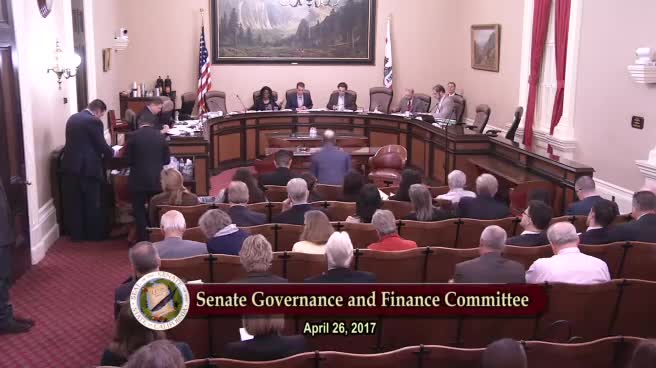 16MIN
Senate Standing Committee on Governance and Finance
 3MIN
Senate Standing Committee on Education


Bill Co-Author(s):