SB 589: Municipal separate storm sewer systems: financial capability analysis: pilot project.
- Session Year: 2017-2018
- House: Senate
- Latest Version Date: 2017-04-26
Under existing law, the State Water Resources Control Board and the California regional water quality control boards prescribe waste discharge requirements for the discharge of stormwater in accordance with the federal national pollutant discharge elimination system permit program. Existing law requires the state board or the regional boards to issue waste discharge requirements that apply and ensure compliance with the federal Clean Water Act and any more stringent effluent standards or limitations necessary to implement water quality control plans, or for the protection of beneficial uses, or to prevent nuisance.
This bill would require the state board board, in conjunction with an educational institution, to establish financial capability assessment guidelines for municipal separate storm sewer system permittees by an unspecified date. The bill would require the California Regional Water Quality Control Board, Los Angeles region to use the guidelines in a pilot project conducted by an independent or educational entity for assessing the to assess if a financial capability of analysis can be effectively used to help municipalities to implement a municipal separate storm sewer system permit. The bill would require the state board to oversee the use of the guidelines and to make statewide recommendations upon the completion of the financial capability analysis. pilot project.
Under existing law, the State Water Resources Control Board and the California regional water quality control boards prescribe waste discharge requirements for the discharge of stormwater in accordance with the federal national pollutant discharge elimination system permit program. Existing law requires the state board or the regional boards to issue waste discharge requirements that apply and ensure compliance with the federal Clean Water Act and any more stringent effluent standards or limitations necessary to implement water quality control plans, or for the protection of beneficial uses, or to prevent nuisance.
This bill would require a regional board or the state board, when approving a municipal separate storm sewer system permit, to establish schedules for compliance with water quality objectives in water quality control plans after consideration of a financial capability analysis, that includes, among other things, a consideration of the financial burden to individual customers and the permittees financial strength, as prescribed. The bill would require a regional board or the state board to renegotiate a schedule for compliance, alternative compliance pathways, or both if the financial burden to individual customers is high, as prescribed. The bill would require the regional board or state board to consider if the permittees financial strength is weak in negotiating schedules for compliance and consideration of alternative compliance pathways. The bill would authorize the regional board or state board to revise an existing schedule for compliance if the board finds certain extraordinary stressors. the state board to establish financial capability assessment guidelines by an unspecified date. The bill would require the California Regional Water Quality Control Board, Los Angeles region to use the guidelines in a pilot project conducted by an independent or educational entity for assessing the financial capability of municipalities to implement a municipal separate storm sewer system permit. The bill would require the state board to oversee the use of the guidelines and to make statewide recommendations upon the completion of the financial capability analysis.
Under existing law, the State Water Resources Control Board and the California regional water quality control boards prescribe waste discharge requirements for the discharge of stormwater in accordance with the federal national pollutant discharge elimination system permit program. Existing law requires the state board or the regional boards to issue waste discharge requirements that apply and ensure compliance with the federal Clean Water Act and any more stringent effluent standards or limitations necessary to implement water quality control plans, or for the protection of beneficial uses, or to prevent nuisance.
This bill would require a regional board or the state board, when approving a municipal separate storm sewer system permit, to establish schedules for compliance with water quality objectives in water quality control plans after consideration of a financial capability analysis, that includes, among other things, a consideration of the financial burden to individual customers and the permittees financial strength, as prescribed. The bill would require a regional board or the state board to renegotiate a schedule for compliance, alternative compliance pathways, or both if the financial burden to individual customers is high, as prescribed. The bill would require the regional board or state board to consider if the permittees financial strength is weak in negotiating schedules for compliance and consideration of alternative compliance pathways. The bill would authorize the regional board or state board to revise an existing schedule for compliance if the board finds certain extraordinary stressors.
(a)The Legislature finds and declares as follows:
(1)On November 24, 2014, the federal Environmental Protection Agency, Office of Enforcement and Compliance Assurance, announced it had adopted a refined financial capability assessment framework to aid in negotiating schedules for compliance with the municipal federal Clean Water Act requirements and in developing integrated management plans.
(2)The financial capability assessment framework does not alter or waive water quality standards, but offers alternative compliance pathways to municipal separate storm sewer system permittees and achievable schedules for compliance for disadvantaged communities.
(3)A financial capability assessment is necessary to set achievable schedules for water quality objectives in water quality control plans under the Porter-Cologne Water Quality Control Act (Division 7 (commencing with Section 13000) of the Water Code) and to develop integrated regional water management plans.
(b)It is the intent of the Legislature in enacting this measure to do all of the following:
(1)Comply with the federal Clean Water Act (33 U.S.C. Sec. 1251 et seq.).
(2)Help local governments that are making a good faith effort to be stewards of the environment but lack a dedicated revenue source for stormwater.
(3)Find solutions and share the cost of compliance for local governments that are participating in a watershed management program or an enhanced watershed management program.
(4)Not weaken environmental protections for lower income communities but rather to provide funding to achieve the same protections for all communities.
(5)Help the State Water Resources Control Board, the California regional water quality control boards, and local governments to prioritize the many competing requirements faced by communities as dealing with funding drinking water, groundwater, sanitary sewer, flood protection, and stormwater improvements.
(6)Give communities time to apply for grants to overcome the financial constraints of local government without fear of fines and third-party litigation.
SEC. 2.Section 13185 is added to the Water Code, to read:13185.(a)The state board board, in conjunction with an educational institution, shall establish financial capability assessment guidelines for municipal separate storm sewer system permittees by ____. The state board shall consider consider, but is not limited to considering, both of the following United States Environmental Protection Agency policies in drafting the financial capability assessment guidelines:
(1)Combined Sewer OverflowsGuidance for Financial Capability Assessment and Schedule Development, dated February 1997.
(2)Affordability Criteria for Small Drinking Water Systems: An EPA Science Advisory Board Report, dated December 2002.
(b)The regional board for the Los Angeles region shall use the guidelines developed by the state board in a pilot project conducted by an independent or educational entity for assessing the to assess if a financial capability of analysis can be effectively used to help municipalities to implement a municipal separate storm sewer system permit. The state board shall oversee the use of the guidelines and shall make statewide recommendations upon the completion of the financial capability analysis. pilot project.
(a)The Legislature finds and declares as follows:
(a)(1)On November 24, 2014, the federal Environmental Protection Agency, Office of Enforcement and Compliance Assurance, announced it had adopted a refined financial capability assessment framework to aid in negotiating schedules for compliance with the municipal federal Clean Water Act requirements and in developing integrated management plans.
(b)(2)The financial capability assessment framework does not alter or waive water quality standards, but offers alternative compliance pathways to municipal separate storm sewer system permittees and achievable schedules for compliance for disadvantaged communities.
(c)(3)A financial capability assessment is necessary to set achievable schedules for water quality objectives in water quality control plans under the Porter-Cologne Water Quality Control Act (Division 7 (commencing with Section 13000) of the Water Code) and to develop integrated regional water management plans.
(b)It is the intent of the Legislature in enacting this measure to do all of the following:
(1)Comply with the federal Clean Water Act (33 U.S.C. Sec. 1251 et seq.).
(2)Help local governments that are making a good faith effort to be stewards of the environment but lack a dedicated revenue source for stormwater.
(3)Find solutions and share the cost of compliance for local governments that are participating in a watershed management program or an enhanced watershed management program.
(4)Not weaken environmental protections for lower income communities but rather to provide funding to achieve the same protections for all communities.
(5)Help the State Water Resources Control Board, the California regional water quality control boards, and local governments to prioritize the many competing requirements faced by communities as dealing with funding drinking water, groundwater, sanitary sewer, flood protection, and stormwater improvements.
(6)Give communities time to apply for grants to overcome the financial constraints of local government without fear of fines and third-party litigation.
SEC. 2.Section 13263.8 is added to the Water Code, to read:13263.8.(a)When approving a municipal separate storm sewer system permit, a regional board and the state board shall establish schedules for compliance with water quality objectives in water quality control plans after consideration of a financial capability analysis.(b)As used in this section:(1)Financial strength indicator means the municipal separate storm sewer system permittees financial strength, taking into consideration metrics in the categories of debt indicators, socioeconomic indicators, and financial management indicators as described in paragraph (3) of subdivision (c).(2)Residential indicator means the financial burden to individual customers as described in paragraph (1) of subdivision (c). Two percent to 3.24 percent, inclusive, is a low burden, 3.25 percent to 4.4 percent, inclusive, is a midrange burden, and 4.5 percent or higher is a high burden.(c)A financial capability analysis shall consider the residential indicator, residential impacts, and the financial strength indicator as follows:(1)The residential indicator shall assess the annual costs that would be borne by residential households for water, flood control, wastewater, compliance with this division, and municipal separate storm sewer system permit-related expenses by dividing these annual costs by the number of households. The residential share of the annual costs of these obligations shall then be compared to the mean household income of the service area. The mean household income shall be calculated using current census data and may be adjusted based on the current Consumer Price Index. The compliance costs per household shall then be divided by the adjusted mean household income to calculate the residential indicator.(2)Where available, the following residential impact information shall be considered:(A)Income distribution.(B)Poverty rates.(C)Sewer and stormwater fees.(D)Flood control costs.(E)Water rates as a percentage of household income.(F)Flood control.(G)Sewer and water usage for classes of ratepayers or by type of dwelling unit.(H)The percent of households that own versus rent.(I)The housing cost burden of the population.(J)Average utility costs.(K)Mortgage and insurance costs.(L)The cost of living in the community.(3)The financial strength indicator shall rate a municipal separate storm sewer system permittee as weak, midrange, or strong after consideration of the following factors:(A)Bond ratings, except that bond ratings shall not be the sole basis for evaluating financial capability.(B)Service area unemployment data and trends, or other labor market indicators, including unemployment on an absolute basis.(C)Median household income, except that median household income shall not be the sole consideration.(D)Property tax revenue collection rates and the revenue collection rate of the permittees system.(4)Consideration of the following factors, as applicable:(A)Rate or revenue models, including, but not limited to, dynamic financial planning models showing the projections of impacts over the program period. All revenue sources tied to the permit obligations may be included as appropriate.(B)Rate determination studies used to develop and support rate increases.(C)Historical population trends or population projections.(D)State or local legal restrictions or limitations on property taxes, other revenue streams, or debt levels.(E)If available, anonymized data and trends on late payments, disconnection notices, service terminations, uncollectible accounts, or revenue collection rates.(F)Historical increases in rates or other dedicated revenue streams.(G)Other costs or financial obligations, including, but not limited to, those that relate to drinking water or other infrastructure that significantly affect a municipal separate storm sewer system permittees ability to raise revenue.(H)Circumstances that may affect a municipal separate storm sewer system permittees bond rating.(I)Financial plans that show the implications of incurring additional debt for a municipal separate storm sewer system permittees ability to secure financing, including projections of metrics such as debt ratios, debt service coverage, debt per customer, days of cash on hand, days of working capital, and other metrics used by rating agencies. This data should be benchmarked to metrics such as rating agency medians and relative to similar entities. This will be especially relevant where the municipal separate storm sewer system permittee does not have a bond rating.(J)Extraordinary stressors such as those from natural disasters, municipal bankruptcies, unusual capital market conditions, or other situations that impact a municipal separate storm sewer system permittees ability to raise revenue or acquire needed financing.(5)The cost to the community of compliance, including, but not limited to, the residential impact, with the municipal separate storm sewer system permit, watershed management plan, integrated or enhanced watershed management plan, the federal Clean Water Act (33 U.S.C. Sec. 1251 et seq.), the California Safe Drinking Water Act (Chapter 4 (commencing with Section 116270) of Part 12 of Division 104 of the Health and Safety Code), and this division.(6)The relative effectiveness and benefits of water quality improvements.(7)The reasonableness of the schedule for compliance and time within which the municipal separate storm sewer system permittee is required to achieve water quality objectives and comply with permit requirements.(8)A municipal separate storm sewer system permittees current municipal separate storm sewer system infrastructure, its function, and its condition.(9)Studies a city, a municipal separate storm sewer system permittee, or a municipal separate storm sewer system permit applicant would like to submit for consideration, including, but not limited to, rate studies in support of the residential indicator or financial strength indicator. The cost, if any, associated with the development of any study submitted pursuant to this paragraph shall be borne by the city, permittee, or applicant.(d)(1)If the residential indicator finds a high burden, the regional board or state board shall renegotiate a schedule for compliance, alternative compliance pathways, or both, so that the residential indicator shall result in a low burden or midrange burden.(2)If the financial strength indicator finds a weak condition, the regional board or state board shall consider this condition in negotiating schedules for compliance and consideration of alternative compliance pathways.(3)If an extraordinary stressor as described in subparagraph (J) of paragraph (4) of subdivision (c) is found, the regional board or state board may revise an existing schedule for compliance.SEC. 2.Section 13185 is added to the Water Code, to read:13185.(a)The state board shall establish financial capability assessment guidelines by ____. The state board shall consider both of the following United States Environmental Protection Agency policies in drafting the financial capability assessment guidelines:
(1)Combined Sewer OverflowsGuidance for Financial Capability Assessment and Schedule Development, dated February 1997.
(2)Affordability Criteria for Small Drinking Water Systems: An EPA Science Advisory Board Report, dated December 2002.
(b)The regional board for the Los Angeles region shall use the guidelines developed by the state board in a pilot project conducted by an independent or educational entity for assessing the financial capability of municipalities to implement a municipal separate storm sewer system permit. The state board shall oversee the use of the guidelines and shall make statewide recommendations upon the completion of the financial capability analysis.
The Legislature finds and declares as follows:
(a)On November 24, 2014, the federal Environmental Protection Agency, Office of Enforcement and Compliance Assurance, announced it had adopted a refined financial capability assessment framework to aid in negotiating schedules for compliance with the municipal federal Clean Water Act requirements and in developing integrated management plans.
(b)The financial capability assessment framework does not alter or waive water quality standards, but offers alternative compliance pathways to municipal separate storm sewer system permittees and achievable schedules for compliance for disadvantaged communities.
(c)A financial capability assessment is necessary to set achievable schedules for water quality objectives in water quality control plans under the Porter-Cologne Water Quality Control Act (Division 7 (commencing with Section 13000) of the Water Code) and to develop integrated regional water management plans.
SEC. 2.Section 13263.8 is added to the Water Code, to read:13263.8.(a)When approving a municipal separate storm sewer system permit, a regional board and the state board shall establish schedules for compliance with water quality objectives in water quality control plans after consideration of a financial capability analysis.
(b)As used in this section:
(1)Financial strength indicator means the municipal separate storm sewer system permittees financial strength, taking into consideration metrics in the categories of debt indicators, socioeconomic indicators, and financial management indicators as described in paragraph (3) of subdivision (c).
(2)Residential indicator means the financial burden to individual customers as described in paragraph (1) of subdivision (c). Two percent to 3.24 percent, inclusive, is a low burden, 3.25 percent to 4.4 percent, inclusive, is a midrange burden, and 4.5 percent or higher is a high burden.
(c)A financial capability analysis shall consider the residential indicator, residential impacts, and the financial strength indicator as follows:
(1)The residential indicator shall assess the annual costs that would be borne by residential households for water, flood control, wastewater, compliance with this division, and municipal separate storm sewer system permit-related expenses by dividing these annual costs by the number of households. The residential share of the annual costs of these obligations shall then be compared to the mean household income of the service area. The mean household income shall be calculated using current census data and may be adjusted based on the current Consumer Price Index. The compliance costs per household shall then be divided by the adjusted mean household income to calculate the residential indicator.
(2)Where available, the following residential impact information shall be considered:
(A)Income distribution.
(B)Poverty rates.
(C)Sewer and stormwater fees.
(D)Flood control costs.
(E)Water rates as a percentage of household income.
(F)Flood control.
(G)Sewer and water usage for classes of ratepayers or by type of dwelling unit.
(H)The percent of households that own versus rent.
(I)The housing cost burden of the population.
(J)Average utility costs.
(K)Mortgage and insurance costs.
(L)The cost of living in the community.
(3)The financial strength indicator shall rate a municipal separate storm sewer system permittee as weak, midrange, or strong after consideration of the following factors:
(A)Bond ratings, except that bond ratings shall not be the sole basis for evaluating financial capability.
(B)Service area unemployment data and trends, or other labor market indicators, including unemployment on an absolute basis.
(C)Median household income, except that median household income shall not be the sole consideration.
(D)Property tax revenue collection rates and the revenue collection rate of the permittees system.
(4)Consideration of the following factors, as applicable:
(A)Rate or revenue models, including, but not limited to, dynamic financial planning models showing the projections of impacts over the program period. All revenue sources tied to the permit obligations may be included as appropriate.
(B)Rate determination studies used to develop and support rate increases.
(C)Historical population trends or population projections.
(D)State or local legal restrictions or limitations on property taxes, other revenue streams, or debt levels.
(E)If available, anonymized data and trends on late payments, disconnection notices, service terminations, uncollectible accounts, or revenue collection rates.
(F)Historical increases in rates or other dedicated revenue streams.
(G)Other costs or financial obligations, including, but not limited to, those that relate to drinking water or other infrastructure that significantly affect a municipal separate storm sewer system permittees ability to raise revenue.
(H)Circumstances that may affect a municipal separate storm sewer system permittees bond rating.
(I)Financial plans that show the implications of incurring additional debt for a municipal separate storm sewer system permittees ability to secure financing, including projections of metrics such as debt ratios, debt service coverage, debt per customer, days of cash on hand, days of working capital, and other metrics used by rating agencies. This data should be benchmarked to metrics such as rating agency medians and relative to similar entities. This will be especially relevant where the municipal separate storm sewer system permittee does not have a bond rating.
(J)Extraordinary stressors such as those from natural disasters, municipal bankruptcies, unusual capital market conditions, or other situations that impact a municipal separate storm sewer system permittees ability to raise revenue or acquire needed financing.
(5)The cost to the community of compliance, including, but not limited to, the residential impact, with the municipal separate storm sewer system permit, watershed management plan, integrated or enhanced watershed management plan, the federal Clean Water Act (33 U.S.C. Sec. 1251 et seq.), the California Safe Drinking Water Act (Chapter 4 (commencing with Section 116270) of Part 12 of Division 104 of the Health and Safety Code), and this division.
(6)The relative effectiveness and benefits of water quality improvements.
(7)The reasonableness of the schedule for compliance and time within which the municipal separate storm sewer system permittee is required to achieve water quality objectives and comply with permit requirements.
(8)A municipal separate storm sewer system permittees current municipal separate storm sewer system infrastructure, its function, and its condition.
(9)Studies a city, a municipal separate storm sewer system permittee, or a municipal separate storm sewer system permit applicant would like to submit for consideration, including, but not limited to, rate studies in support of the residential indicator or financial strength indicator. The cost, if any, associated with the development of any study submitted pursuant to this paragraph shall be borne by the city, permittee, or applicant.
(d)(1)If the residential indicator finds a high burden, the regional board or state board shall renegotiate a schedule for compliance, alternative compliance pathways, or both, so that the residential indicator shall result in a low burden or midrange burden.
(2)If the financial strength indicator finds a weak condition, the regional board or state board shall consider this condition in negotiating schedules for compliance and consideration of alternative compliance pathways.
(3)If an extraordinary stressor as described in subparagraph (J) of paragraph (4) of subdivision (c) is found, the regional board or state board may revise an existing schedule for compliance.
|
Date
|
Status
|
|---|---|
| Feb 1, 2018 | Returned to Secretary of Senate pursuant to Joint Rule 56. |
| May 25, 2017 | May 25 hearing: Held in committee and under submission. |
| May 19, 2017 | Set for hearing May 25. |
| May 15, 2017 | May 15 hearing: Placed on APPR. suspense file. |
| May 4, 2017 | Set for hearing May 15. |
| May 3, 2017 | May 8 hearing postponed by committee. |
| May 1, 2017 | Set for hearing May 8. |
| Apr 26, 2017 | Read second time and amended. Re-referred to Com. on APPR. |
| Apr 25, 2017 | From committee: Do pass as amended and re-refer to Com. on APPR. (Ayes 5. Noes 0. Page 784.) (April 19). |
| Apr 6, 2017 | From committee with author's amendments. Read second time and amended. Re-referred to Com. on EQ. |
| Mar 30, 2017 | Set for hearing April 19. |
| Mar 27, 2017 | March 29 set for first hearing canceled at the request of author. |
| Mar 9, 2017 | Set for hearing March 29. |
| Mar 2, 2017 | Referred to Com. on EQ. |
| Feb 21, 2017 | From printer. May be acted upon on or after March 23. |
| Feb 17, 2017 | Introduced. Read first time. To Com. on RLS. for assignment. To print. |
|
Date
|
Description
|
Location
|
Votes
|
|
|---|---|---|---|---|
| May 15, 2017 | Placed on suspense file | Senate Standing Committee on Appropriations |
Passed |
|
| Apr 19, 2017 | Do pass as amended, but first amend, and re-refer to the Committee on [Appropriations] | Senate Standing Committee on Environmental Quality |
Passed |
This list shows positions taken on this bill by organizations on the date displayed, which is linked to the original source.
Positions by individuals are not included.
|
Organization
|
Position
|
Date
|
|---|---|---|
| California Coastkeeper Alliance | * Against | Apr 19, 2017 |
| City of Carson | * Support | Apr 19, 2017 |
| City of La Mirada | ** Support | Apr 20, 2017 |
| City of Lakewood | ** Support | Apr 20, 2017 |
| City of Monterey Park | ** Support | Apr 20, 2017 |
| City of Pasadena | * Support | May 15, 2017 |
| City of South Pasadena | * Support | Apr 19, 2017 |
| League Of California Cities | * Against | Apr 19, 2017 |
| Natural Resources Defense Council | ** Against | Apr 20, 2017 |
| San Francisco Baykeeper | * Against | Apr 19, 2017 |
SENATE COMMITTEE ON APPROPRIATIONS
Senator Ricardo Lara, Chair
2017 - 2018 Regular Session
SB 589 (Hernandez) - Municipal separate storm sewer systems: financial capability analysis: pilot project
Version: April 26, 2017 | Policy Vote: E.Q. 5 - 0 |
Urgency: No | Mandate: No |
Hearing Date: May 15, 2017 | Consultant: Narisha Bonakdar |
This bill meets the criteria for referral to the Suspense File.
Bill Summary:
- SB 589 requires the State Water Resources Control Board (SWRCB), in conjunction with an educational institution, to establish financial capability assessment guidelines for municipal separate storm sewer system permittees, and requires the Los Angeles Area Regional Water Quality Control Board (regional board) to use the guidelines in a pilot project.
Fiscal Impact:
- Approximately $1.75 million to the SWRCB (Water Discount Permit Fund) for staff in fiscal years 2017-18 through 2021-22 and contract fees. (See staff comments)
- Unknown potential costs to the University of California system or California State University system if either or both participates, some or all of which may be recovered from fees. (The language does not explicitly require or prohibit reimbursement for costs incurred.)
Background:
Existing law. Several state and federal statutes, regulations, and policies regulate various aspects of water. Those relevant to this bill are discussed below:
- The federal Clean Water Act (CWA) prohibits the discharge of any pollutant from a point source (discrete conveyances such as pipes) into navigable waters, without a permit. The National Pollutant Discharge Elimination System (NPDES) permit program (program) controls discharges, and authorizes states to implement and enforce the program as long as the state’s provisions are as stringent as the federal requirements. In California, the SWRCB is responsible for the program.
- The Porter-Cologne Water Quality Control Act (Porter-Cologne) establishes the SWRCB and regional boards to protect California’s water resources and drinking water to protect the environment, public health, and all beneficial uses, and to ensure proper water resource allocation and efficient use.
Municipal Stormwater. Municipal stormwater systems discharge both waste and pollutants. State law controls waste discharges impacting water; federal law regulates discharges of pollutants. Both require a permit to operate such systems. Municipal separate stormwater systems (sometimes called MS4) are owned or operated by a public agency with jurisdiction over waste disposal and designed or used for collecting or conveying stormwater.
The Financial Capability Assessment Framework (framework). Population growth, and the resultant increased demand on water supply; aging infrastructure; and increases in impervious surfaces exacerbated already complex local water issues. As a result, many local governments face economic challenges to implementing the programs and investing in wastewater and stormwater infrastructure necessary to improve water quality and attain CWA objectives. Recognizing this challenge, the US EPA identified, in the framework, the key elements it uses in working with permittees to evaluate how their financial capability should influence schedules. The framework attempted to implement new approaches that would achieve water quality goals at lower costs and in a manner that addresses the most pressing problems first.
Proposed Law:
This bill:
- Makes findings and declarations.
- States legislative intent to, among other things, comply with the federal CWA, help local governments that are making a good faith effort, provide funding to lower income communities to achieve the same protections for all communities, help state agencies prioritize competing priorities, and give communities time to apply for grants without fear of fines and third-party litigation.
- Requires the SWRCB, in conjunction with an educational institution, to establish financial capability assessment guidelines for municipal separate storm sewer system permittees by an unspecified date.
- Specifies that the assessment must consider both the Combined Sewer Overflows—Guidance for Financial Capability Assessment and Schedule Development (dated February 1997) and the Affordability Criteria for Small Drinking Water Systems: An EPA Science Advisory Board Report (dated December 2002).
- Requires the regional board for the Los Angeles region to use the guidelines developed by the SWRCB in a pilot project conducted to assess if a financial capability analysis can be effectively used to help municipalities.
- Requires the SWRCB to oversee the use of the guidelines and make statewide recommendations upon the completion of the pilot project.
Related Legislation:
SB 541 (Allen) requires the State Department of Education, SWRCB, and the Division of the State Architect and the Office of Public School Construction within the Department of General Services, to consult and recommend best design practices that include water capture design standards for all new, reconstructed, or altered public schools, including school grounds. The bill is pending hearing in the Senate Appropriations Committee.
SB 633 (Portantino) requires a regional board preparing a water quality control plan for a region having a population in excess of 10 million residents to additionally consider opportunities to convey stormwater to a regional site within the watershed in which the stormwater originated for capture and infiltration and to consider and balance the opportunity for stormwater capture when determining past and probable future beneficial uses of water, as specified. The bill is pending hearing in the Senate Appropriations Committee.
Staff Comments:
Fiscal impacts. The SWRCB indicates that implementation of this bill will cost approximately $1.75 million to the Waste Discharge Permit Fund from fiscal year 2018-19 through fiscal year 2021-22. This will cover approximately three staff position who will develop Financial Capability Analysis Guidelines the first two years and part-time staff to oversee the pilot and develop recommendations in years three and four. The SWRCB also anticipates approximately $700,000 over the four years to contract for the development of the Financial Capability Analysis Guidelines and to oversee Pilot Project in Los Angeles Region Develop. Annual costs will vary based on implementation activities.
-- END --
SENATE COMMITTEE ON ENVIRONMENTAL QUALITY
Senator Wieckowski, Chair
2017 - 2018 Regular
Bill No: SB 589
Author: | Hernandez | ||
Version: | 4/6/2017 | Hearing Date: | 4/19/2017 |
Urgency: | No | Fiscal: | Yes |
Consultant: | Rachel Machi Wagoner | ||
SUBJECT: Municipal separate storm sewer systems: financial capability analysis: pilot project.
ANALYSIS:
Existing federal law under the Clean Water Act (CWA):
- Establishes the structure for regulating discharges of pollutants into the waters of the United States and regulating quality standards for surface waters.
- Makes it unlawful to discharge any pollutant from a point source into navigable waters, unless a permit was obtained.
- Provides that the National Pollutant Discharge Elimination System (NPDES) permit program controls discharges. Point sources are discrete conveyances such as pipes or man-made ditches. (Individual homes that are connected to a municipal system, use a septic system, or do not have a surface discharge do not need an NPDES permit; however, industrial, municipal, and other facilities must obtain permits if their discharges go directly to surface waters.)
- Authorizes states to implement and enforce the NPDES permit program as long as the state’s provisions are as stringent as the federal requirements.
- In California, the State Water Resources Control Board (SWRCB) is the delegate agency responsible for the NPDES permit program.
Existing state law, under the Porter-Cologne Water Quality Control Act (Porter-Cologne):
- Establishes the SWRCB and regional water quality control boards (regional boards) to preserve, enhance, and restore the quality of California’s water resources and drinking water for the protection of the environment, public health, and all beneficial uses, and to ensure proper water resource allocation and efficient use, for the benefit of present and future generations.
- Requires SWRCB formulate and adopt state policy for water quality control and each regional board formulate and adopt water quality control plans (aka basin plans) for all areas within the region that ensure the reasonable protection of beneficial uses and the prevention of nuisance as specified.
This bill:
- Makes various findings about local government compliance with the CWA and the NPDES stormwater permits.
- Requires the SWRCB establish financial capability assessment guidelines by an unspecified date. In developing the guidelines, SWRCB shall consider:
- Combined Sewer Overflows—Guidance for Financial Capability Assessment and Schedule Development, dated February 1997.
- Affordability Criteria for Small Drinking Water Systems: An EPA Science Advisory Board Report, dated December 2002.
- Requires Los Angeles region regional board to use the guidelines in a pilot project conducted by an independent or educational entity for assessing the financial capability of municipalities to implement a municipal separate storm sewer system permit.
- Requires SWRCB to oversee the use of the guidelines and to make statewide recommendations upon the completion of the financial capability analysis.
Background
Municipal Stormwater. Municipal stormwater systems discharge both waste and pollutants. State law controls waste discharges impacting water. Federal law regulates discharges of pollutant[s]. Both state and later-enacted federal law require a permit to operate such systems.
The systems at issue here are municipal separate stormwater systems, sometimes referred to by the acronym MS4. A municipal separate storm sewer is a system owned or operated by a public agency with jurisdiction over disposal of waste and designed or used for collecting or conveying stormwater.
California‘s Porter-Cologne, enacted in 1969, established SWRCB, along with nine regional water quality control boards, and gave those agencies primary responsibility for the coordination and control of water quality. SWRCB establishes statewide policy. The regional boards formulate and adopt water quality control plans and issue permits governing the discharge of waste.
Porter-Cologne requires any person discharging, or proposing to discharge, waste that could affect the quality of state waters to file a report with the appropriate regional board. The regional board then prescribes requirements as to the nature of the discharge, implementing any applicable water quality control plans. The Operators must follow all requirements set by the regional board.
CWA was enacted in 1972, and also established a permitting system. CWA is a comprehensive water quality statute designed to restore and maintain the chemical, physical, and biological integrity of the nation’s waters. CWA prohibits pollutant discharges unless they comply with: (1) a permit; (2) established effluent limitations or standards; or (3) established national standards of performance.
CWA allows any state to adopt and enforce its own water quality standards and limitations, so long as those standards and limitations are not less stringent than those in effect under CWA.
CWA created NPDES, authorizing US EPA to issue a permit for any pollutant discharge that will satisfy all requirements established by CWA or the US EPA Administrator. The federal system notwithstanding, a state may administer its own permitting system if authorized by the EPA. If the EPA concludes a state has adequate authority to administer its proposed program, it must grant approval and suspend its own issuance of permits.
For a state to acquire permitting authority, the governor must give US EPA a description of the program proposed to be established and the attorney general must affirm that the laws of the state provide adequate authority to carry out the described program.
US EPA may withdraw approval of a state’s program and also retains some supervisory authority: States must inform US EPA of all permit applications received and of any action related to the consideration of a submitted application. California was the first state authorized to issue its own pollutant discharge permits. Shortly after the CWA’s enactment, the Legislature amended Porter-Cologne, to authorize state issuance of permits, specifying that state and regional boards issue waste discharge requirements ensuring compliance with all applicable provisions of CWA together with any more stringent effluent standards or limitations necessary to implement water quality control plans, or for the protection of beneficial uses, or to prevent nuisance. To align the state and federal permitting systems, the legislation provided that the term “waste discharge requirements” under the Act was equivalent to the term “permits” under the CWA. Accordingly, California’s permitting system now regulates discharges under both state and federal law.
In 1987, Congress amended the CWA to clarify that a permit is required for any discharge from a municipal storm sewer system serving a population of 100,000 or more. Under those amendments, a permit may be issued either on a system- or jurisdiction-wide basis, must effectively prohibit non-stormwater discharges into the storm sewers, and must require controls to reduce the discharge of pollutants to the maximum extent practicable. The phrase “maximum extent practicable” is not further defined.
US EPA regulations specify the information to be included in a permit application. Among other things, an applicant must set out a proposed management program that includes management practices; control techniques; and system, design, and engineering methods to reduce the discharge of pollutants to the maximum extent practicable. The permit-issuing agency has discretion to determine which practices, whether or not proposed by the applicant, will be imposed as conditions.
Municipal Stormwater Permits. Stormwater is runoff from rain or snow melt that runs off surfaces such as rooftops, paved streets, highways or parking lots and can carry with it pollutants such as: oil, pesticides, herbicides, sediment, trash, bacteria and metals. The runoff can then drain directly into a local stream, lake or bay. Often, the runoff drains into storm drains which eventually drain untreated into a local waterbody.
Municipal or urban areas commonly include large impervious surfaces which contribute to an increase in runoff flow, velocity and volume. As a result streams are hydrologically impacted through streambed and channel scouring, instream sedimentation and loss of aquatic and riparian habitat. In addition to hydrological impacts, large impervious surfaces contribute to greater pollutant loading, resulting in turbid water, nutrient enrichment, bacterial contamination, and increased temperature and trash.
SWRCB and regional water quality control boards (regional boards) are responsible for regulating stormwater discharges under the federal Clean Water Act and the NPDES permit program. To maintain the beneficial uses of receiving waters, municipalities must operate municipal separate storm sewer systems in accordance with a permit issued by the water boards.
The Municipal Storm Water Permitting Program regulates storm water discharges from municipal separate storm sewer systems (MS4s).
Large and small municipal sewer system operators must comply with MS4 permits issued by the State Water Board or applicable regional board. MS4 permits regulate stormwater entering local municipal systems under the following two-phase system:
Under Phase I, which started in 1990, regional boards have NPDES General Permit stormwater permits for medium (serving between 100,000 and 250,000 people) and large (serving 250,000 people) municipalities. Most of these permits are issued to a group of co-permittees encompassing an entire metropolitan area. These permits are reissued as the permits expire. The Phase I MS4 permits require the discharger to develop and implement a Storm Water Management Plan/Program with the goal of reducing the discharge of pollutants to the maximum extent practicable (MEP). MEP is the performance standard specified in Section 402(p) of the Clean Water Act. The management programs specify what best management practices (BMPs) will be used to address certain program areas. The program areas include public education and outreach; illicit discharge detection and elimination; construction and post-construction; and good housekeeping for municipal operations. In general, medium and large municipalities are required to conduct monitoring.
On April 30, 2003 as part of Phase II, SWRCB issued a General Permit for the Discharge of Storm Water from Small MS4s to provide permit coverage for smaller municipalities (population less than 100,000), including non-traditional Small MS4s, which are facilities such as military bases, public campuses, prison and hospital complexes. The Phase II Small MS4 General Permit covers Phase II Permittees statewide. On February 5, 2013 the Phase II Small MS4 General Permit was adopted and became effective on July 1, 2013. They will expire on June 30, 2018.
While early regulatory efforts focused on controlling pollutants and implementing best management practices, current regulatory decisions also emphasize holistic strategies that will result in multiple community benefits while concurrently managing pollution. With the focus on stormwater as a resource, newer low impact development and green infrastructure techniques are now capitalizing on opportunities to capture stormwater runoff and use it for local landscape and agricultural irrigation, and groundwater recharge, with further description as follows. Well-conceived stormwater management actions provide multiple benefits for California communities, including improved water quality, increased water supply, increased space for public recreation, increased tree canopy, enhanced stream and riparian habitat area, as well as many other benefits.
Why Is Stormwater Pollution A Problem? Stormwater pollution is a major environmental and public health issue. It leads to unsanitary living environments, unhealthy surface waters, such as lakes, creeks and rivers, unhealthy ocean and beach conditions, and street and neighborhood flooding during the rainy season. It's created when trash, cigarette butts, animal waste, pesticides, motor oil and other contaminants left on the ground are washed or thrown directly into storm drains. This toxic soup mixes with millions of gallons of rainwater and flows untreated into local creeks, rivers and the ocean - polluting our waterways, as well as degrading neighborhoods and other natural resources.
As an example, according to a factsheet posted by SWRCB in 2009:
With nearly 10 million people living in Los Angeles County, each resident’s contribution to stormwater pollution adds up quickly to create a serious public health situation. In a 1997 study conducted by Pelegrin Research Group, an estimate of the number of times per month that Los Angeles County residents engage in polluting activities was established, known as pollution volumetrics. According to an updated 2001 study, it is conservatively estimated that each month in LA County, residents contribute to stormwater pollution by:
- Dropping cigarette butts on the ground nearly 915,000 times
- Dropping litter on the ground or out a car window more than 830,000 times
- Allowing paper or trash to blow into the street more than 800,000 times
- Throwing something in the gutter or down a storm drain nearly 280,000 times
- Emptying a car ashtray into the street more than 40,000 times
- Hosing leaves or dirt off a driveway or sidewalk into the street nearly 420,000 times
- Washing off paint brushes under an outdoor faucet more than 130,000 times
- Spraying the garden or lawn with pesticide more than 210,000 times
- Walking a dog without picking up the droppings more than 82,000 times
Also, in Los Angeles County, approximately 100 million gallons of contaminated water and debris drain through the storm drain system each dry day. That would fill the Rose Bowl 1.2 times. (On rainy days the daily flow can increase to 10 billion gallons per day).
Natural Resource Degradation. Stormwater pollution in Los Angeles County has significant impacts on the region's water quality, while also posing risks to the health and safety of residents, degrading natural resources, threatening the area's tourist driven economy and lowering property values in local neighborhoods. The impacts of stormwater pollution include:
Health Impacts. Stormwater pollution increases serious health risks to people swimming or fishing in the Santa Monica or San Pedro Bay, especially within 400 yards of storm drain outlets.
A study conducted by the Santa Monica Bay Restoration Project found that stormwater pollution in the ocean leads to increased risk of viral infections, earaches, sinus problems, fever, flu and skin rashes and viral diseases such as hepatitis for those swimming in the ocean close to storm drain outfalls, especially following a rainstorm when litter and contaminants are flushed into the storm drain system. The Governor’s Clean Beaches Initiative (CBI), funded by portions of four voter-approved bond measures, has already begun the cleanup effort statewide through construction of diversion and treatment facilities. The Erase the Waste campaign provides an educational link to the CBI, focused on Los Angeles County, and helps residents become part of the solution.
The Los Angeles County Department of Health Services recognizes the increased health danger associated with stormwater pollution and has a standing rain advisory that “recommends that beach users avoid contact with ocean water, especially near flowing storm drains, creeks and rivers for a period of 3 days after rainfall ends.”
Heal the Bay’s 2002-2003 Annual Beach Report Card on the health of Los Angeles County’s beaches gave 56% of monitored beaches a failing grade during wet weather, meaning the conditions were hazardous to human health and would have adverse health effects to swimmers who enter the water.
When bacteria levels exceed the State Standards, a warning sign is posted and swimmers are encouraged not to enter the water. Stormwater contaminants are one of the main causes of increased bacteria levels at our local beaches. During 2002, there were 269 warnings posted on Los Angeles County beaches for a total of 1,181 days where the ocean was too polluted for human use.
Research conducted by regional agencies, respected environmental nonprofit organizations and academic institutions have identified stormwater pollution and urban runoff as the leading sources of pollutants to Los Angeles County’s inland rivers, creeks, the ocean and beaches along the area’s coastline. The widespread critical issue has reached a level that has prompted local, state and federal policymakers and regulatory agencies to enact and enforce more stringent stormwater permit regulations, financial penalties and other compliance measures.
Economic Impact. Beach attendance has dropped by 56% since 1983. The recreation and tourism industry is one of the top employers in the nation, and is a particularly valuable part of the Los Angeles coastal economy. Each year, Americans take more than 1.8 billion trips to water destinations, largely for recreation, spending money and creating jobs in the process. Activities related to the county’s $2 billion annual tourism industry depend largely on the access and enjoyment of clean waters. If the perception of our beaches deteriorates, it poses broader implications for the region’s financial growth.
State Funding for Stormwater Projects. Over the last decade, the Legislature recognized that assistance to local governments to fund stormwater projects was warranted. The state has provided funding through grants to local governments through bond funding and other programs. Funds through loan programs would also have been available, but as most local government do not have designated fees for stormwater to repay loans, no loans have been made. Funds for stormwater projects received specific funds from bonds as follows:
- Proposition 40 - $15 million
- Proposition 84 - $90 million
- Proposition 1 - $200 million
Stormwater projects were also eligible funding under other programs:
- Prop 50 IRWM– SWRCB administered $250 million
- Clean Beaches Initiative (from Props 13, 40, 50 and 84) - $148 million
- Areas of Special Biological Significance program grants (from Prop. 84) - $35 million
- Santa Monica Bay Restoration (from Props 50 and 84) - $38 million
Comments
- Purpose of Bill. The author states that state and federal regulators have imposed stormwater quality regulations on local governments. He asserts that compliance with these regulations is estimated to cost at least $20 billion in capital costs alone, not including operations and maintenance, over the next 20 years in the LA area.
The author states that most cities currently do not have a dedicated revenue stream available to fund these projects, unlike the east coast where stormwater and sewer are combined systems and can generate revenue through service fees. The cost of compliance must therefore come out of a city’s general fund.
According to the author the high cost of compliance is especially burdensome for residents of small cities and disadvantaged communities, where the cost of compliance per household far exceeds US EPA affordability criteria of 2% of Median Household Income for Clean Water Act compliance and 2.5% of MHI for Safe Drinking Water Act compliance.
The author believes that SB 589 will not alter or waive water quality standards, but offer flexible compliance schedules for MS4 permittees and for disadvantaged communities.
The author asserts that SB 589 requires the local regulatory agencies to take a holistic approach to adopting water quality objectives and harmonizes the Porter-Cologne Water Quality Control Act with EPA’s financial capability guidelines. Meeting water quality objectives will take the right alignment of resources and creative strategies to engage other stakeholders that can be part of the solution. Cities cannot do this on their own. Communities across the state vary with respect to economic strength, infrastructure, and geotechnical challenges and thus need greater flexibility with schedule development and compliance pathways.
- Suggested Amendments.
- The author’s intent speaks to the need to help local governments comply with stormwater permit compliance. However, the operative section of the bill does not specify that the financial capability assessment guidelines or pilot project are specific to the MS4. A financial capability assessment guideline for MS4 permit requirements is likely to be very different guidelines created for another water quality requirement or objective. Likewise, the pilot projects for various local water quality objectives are likely to be implemented differently. In order to prevent confusion over how this bill is to be implemented, an amendment is needed to specify that the guidelines and pilot project are for MS4 compliance.
- The direction to SWRCB to establish the financial capability assessment guidelines requires consideration of two publications (the Combined Sewer Overflows—Guidance for Financial Capability Assessment and Schedule Development, dated February 1997 and the Affordability Criteria for Small Drinking Water Systems: An EPA Science Advisory Board Report, dated December 2002.). While this does not constrain SWRCB from considering other factors, an amendment should be taken to clarify that these are among the considerations – not the only considerations.
- The bill requires that the pilot project be conducted by an independent or educational entity. As MS4 permit programs are implemented by local governments in conjunction with regional board oversight, it is unclear what role an independent or educational entity would have in conducting the pilot project. An amendment should be taken to have a local government conduct the pilot project in conjunction with the Los Angeles region regional board.
Related/Prior Legislation
SB 541 (Allen) requires the State Department of Education, SWRCB, and the Division of the State Architect and the Office of Public School Construction within the Department of General Services, to consult and recommend best design practices that include water capture design standards for all new, reconstructed, or altered public schools, including school grounds. SB 541 is set to be heard in the Senate Environmental Quality Committee on April 19, 2017.
SB 633 (Portantino) requires a regional board preparing a water quality control plan for a region having a population in excess of 10 million residents to additionally consider opportunities to convey stormwater to a regional site within the watershed in which the stormwater originated for capture and infiltration and to consider and balance the opportunity for stormwater capture when determining past and probable future beneficial uses of water, as specified. SB 633 is set to be heard in the Senate Environmental Quality Committee on April 19, 2017.
SOURCE:
Author
SUPPORT:
City of Lakewood
City of La Mirada
City of Monterey Park
City of Pasadena
OPPOSITION:
Natural Resources Defense Council
-- END --
Discussed in Hearing
 48MIN
Senate Standing Committee on Appropriations
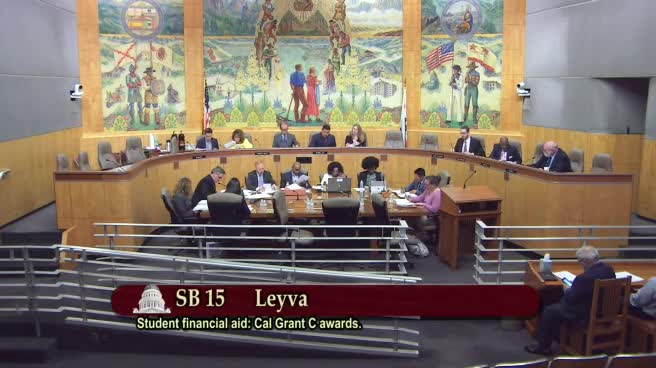 48SEC
Senate Standing Committee on Appropriations
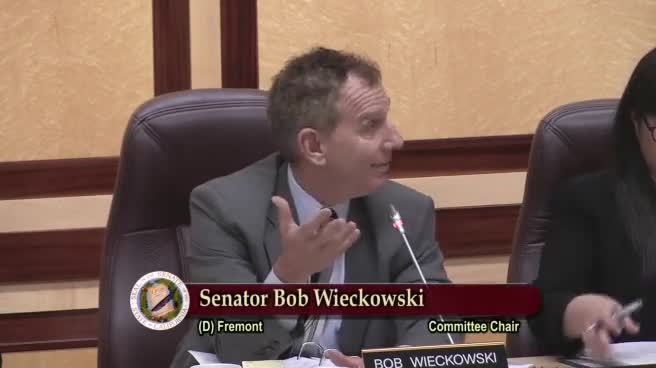 22MIN
Senate Standing Committee on Environmental Quality
Bill Author

Bill Co-Author(s):